

Poems in this theme
Desire

Ella Wheeler Wilcox
The Rape Of The Mist
The Rape Of The Mist
High o’er the clouds a Sunbeam shone,
And far down under him,
With a subtle grace that was all her own,
The Mist gleamed, fair and dim.
He looked at her with burning eyes
And longed to fall at her feet;
Of all sweet things there under the skies,
He thought her the thing most sweet.
He had wooed oft, as a Sunbeam may,
Wave, and blossom, and flower;
But never before had he felt the sway
Of a great love’s mighty power.
Tall cloud-mountains and vast space-seas,
Wind, and tempest, and fire –
What obstacles such as these
To a heart that is filled with desire?
Boldly he trod over cloud and star,
Boldly he swam through space,
She caught the glow of his eyes afar
And veiled her delicate face.
He was so strong and he was so bright,
And his breath was a breath of flame;
The Mist grew pale with a vague, strange fright,
As fond, yet fierce, he came.
Close to his heart she was clasped and kissed;
She swooned in love’s alarms,
And dead lay the beautiful pale-faced Mist
In the Sunbeam’s passionate arms.
High o’er the clouds a Sunbeam shone,
And far down under him,
With a subtle grace that was all her own,
The Mist gleamed, fair and dim.
He looked at her with burning eyes
And longed to fall at her feet;
Of all sweet things there under the skies,
He thought her the thing most sweet.
He had wooed oft, as a Sunbeam may,
Wave, and blossom, and flower;
But never before had he felt the sway
Of a great love’s mighty power.
Tall cloud-mountains and vast space-seas,
Wind, and tempest, and fire –
What obstacles such as these
To a heart that is filled with desire?
Boldly he trod over cloud and star,
Boldly he swam through space,
She caught the glow of his eyes afar
And veiled her delicate face.
He was so strong and he was so bright,
And his breath was a breath of flame;
The Mist grew pale with a vague, strange fright,
As fond, yet fierce, he came.
Close to his heart she was clasped and kissed;
She swooned in love’s alarms,
And dead lay the beautiful pale-faced Mist
In the Sunbeam’s passionate arms.
373
Ella Wheeler Wilcox
The Jealous Gods
The Jealous Gods
Oh life is wonderful,' she said,
'And all my world is bright;
Can Paradise show fairer skies,
Or more effulgent light?'
(Speak lower, lower, mortal heart,
The jealous gods may hear.)
She turned for answer; but his gaze
Cut past her like a lance,
And shone like flame on one who came
With radiant glance for glance.
(You spoke too loud, O mortal heart,
The jealous gods were near.)
They walked through green and sunlit ways;
And yet the earth seemed black,
For there were three, where two should be;
So runs the world, alack.
(The listening gods, the jealous gods,
They want no Edens here.)
Oh life is wonderful,' she said,
'And all my world is bright;
Can Paradise show fairer skies,
Or more effulgent light?'
(Speak lower, lower, mortal heart,
The jealous gods may hear.)
She turned for answer; but his gaze
Cut past her like a lance,
And shone like flame on one who came
With radiant glance for glance.
(You spoke too loud, O mortal heart,
The jealous gods were near.)
They walked through green and sunlit ways;
And yet the earth seemed black,
For there were three, where two should be;
So runs the world, alack.
(The listening gods, the jealous gods,
They want no Edens here.)
406
Ella Wheeler Wilcox
The Foolish Elm
The Foolish Elm
The bold young Autumn came riding along
One day where an elm-tree grew.
'You are fair,' he said, as she bent down her head,
'Too fair for your robe's dull hue.
You are far too young for a garb so old;
Your beauty needs color and sheen.
Oh, I would clothe you in scarlet and gold
Befitting the grace of a queen.
'For one little kiss on your lips, sweet elm,
For one little kiss, no more,
I would give you, I swear, a robe more fair
Than ever a princess wore.
One little kiss on those lips, my pet,
And lo! you shall stand, I say,
Queen of the forest, and, better yet,
Queen of my heart alway.'
She tossed her head, but he took the kiss'
Tis the way of lovers bold-
And a gorgeous dress for that sweet caress
He gave ere the morning was old.
For a week and a day she ruled a queen
In beauty and splendid attire;
For a week and a day she was loved, I ween,
With the love that is born of desire.
Then bold-eyed Autumn went on his way
In search of a tree more fair;
And mob winds tattered her garments and scattered
Her finery here and there.
Poor and faded and ragged and cold
She rocked in her wild distress,
And longed for the dull green gown she had sold
For her fickle lover's caress.
And the days went by and Winter came,
And his tyrannous tempests beat
On the shivering tree, whose robes of flame
He had trampled under his feet.
I saw her reach up to the mocking skies
Her poor arms, bare and thin;
Ah, well-a-day! it is ever the way
With a woman who trades with sin.
The bold young Autumn came riding along
One day where an elm-tree grew.
'You are fair,' he said, as she bent down her head,
'Too fair for your robe's dull hue.
You are far too young for a garb so old;
Your beauty needs color and sheen.
Oh, I would clothe you in scarlet and gold
Befitting the grace of a queen.
'For one little kiss on your lips, sweet elm,
For one little kiss, no more,
I would give you, I swear, a robe more fair
Than ever a princess wore.
One little kiss on those lips, my pet,
And lo! you shall stand, I say,
Queen of the forest, and, better yet,
Queen of my heart alway.'
She tossed her head, but he took the kiss'
Tis the way of lovers bold-
And a gorgeous dress for that sweet caress
He gave ere the morning was old.
For a week and a day she ruled a queen
In beauty and splendid attire;
For a week and a day she was loved, I ween,
With the love that is born of desire.
Then bold-eyed Autumn went on his way
In search of a tree more fair;
And mob winds tattered her garments and scattered
Her finery here and there.
Poor and faded and ragged and cold
She rocked in her wild distress,
And longed for the dull green gown she had sold
For her fickle lover's caress.
And the days went by and Winter came,
And his tyrannous tempests beat
On the shivering tree, whose robes of flame
He had trampled under his feet.
I saw her reach up to the mocking skies
Her poor arms, bare and thin;
Ah, well-a-day! it is ever the way
With a woman who trades with sin.
361
Ella Wheeler Wilcox
Sestina
Sestina
I wandered o'er the vast green plains of youth,
And searched for Pleasure. On a distant height
Fame's silhouette stood sharp against the skies.
Beyond vast crowds that thronged a broad highway
I caught the glimmer of a golden goal,
While from a blooming bower smiled siren Love.
Straight gazing in her eyes, I laughed at Love,
With all the haughty insolence of youth,
As past her bower I strode to seek my goal.
'Now will I climb to glory's dizzy height, '
I said, ' for there above the common way
Doth pleasure dwell companioned by the skies.'
But when I reached that summit near the skies,
So far from man I seemed, so far from Love'
Not here, ' I cried, 'doth Pleasure find her way, '
Seen from the distant borderland of youth.
Fame smiles upon us from her sun-kissed height,
But frowns in shadows when we reach the goal.
Then were mine eyes fixed on that glittering goal,
Dear to all sense-sunk souls beneath the skies.
Gold tempts the artist from the lofty height,
Gold lures the maiden from the arms of Love,
Gold buys the fresh ingenuous heart of youth,
'And gold, ' I said, 'will show me Pleasure's way.'
But ah! the soil and discord of that way,
Where savage hordes rushed headlong to the goal,
Dead to the best impulses of their youth,
Blind to the azure beauty of the skies;
Dulled to the voice of conscience and of love,
They wandered far from Truth's eternal height.
Then Truth spoke to me from that noble height,
Saying: 'Thou didst pass Pleasure on the way,
She with the yearning eyes so full of Love,
Whom thou disdained to seek for glory's goal.'
Two blending paths beneath God's arching skies
Lead straight to Pleasure. Ah, blind heart of youth,
Not up fame's height, not toward the base god's goal,
Doth Pleasure make her way, but 'neath calm skies
Where Duty walks with Love in endless youth.
I wandered o'er the vast green plains of youth,
And searched for Pleasure. On a distant height
Fame's silhouette stood sharp against the skies.
Beyond vast crowds that thronged a broad highway
I caught the glimmer of a golden goal,
While from a blooming bower smiled siren Love.
Straight gazing in her eyes, I laughed at Love,
With all the haughty insolence of youth,
As past her bower I strode to seek my goal.
'Now will I climb to glory's dizzy height, '
I said, ' for there above the common way
Doth pleasure dwell companioned by the skies.'
But when I reached that summit near the skies,
So far from man I seemed, so far from Love'
Not here, ' I cried, 'doth Pleasure find her way, '
Seen from the distant borderland of youth.
Fame smiles upon us from her sun-kissed height,
But frowns in shadows when we reach the goal.
Then were mine eyes fixed on that glittering goal,
Dear to all sense-sunk souls beneath the skies.
Gold tempts the artist from the lofty height,
Gold lures the maiden from the arms of Love,
Gold buys the fresh ingenuous heart of youth,
'And gold, ' I said, 'will show me Pleasure's way.'
But ah! the soil and discord of that way,
Where savage hordes rushed headlong to the goal,
Dead to the best impulses of their youth,
Blind to the azure beauty of the skies;
Dulled to the voice of conscience and of love,
They wandered far from Truth's eternal height.
Then Truth spoke to me from that noble height,
Saying: 'Thou didst pass Pleasure on the way,
She with the yearning eyes so full of Love,
Whom thou disdained to seek for glory's goal.'
Two blending paths beneath God's arching skies
Lead straight to Pleasure. Ah, blind heart of youth,
Not up fame's height, not toward the base god's goal,
Doth Pleasure make her way, but 'neath calm skies
Where Duty walks with Love in endless youth.
401
Ella Wheeler Wilcox
Over The Alley
Over The Alley
Here in my office I sit and write
Hour on hour, and day on day,
With no one to speak to from morn till night,
Though I have a neighbour just over the way.
Across the alley that yawns between
A maiden sits sewing the whole day long;
A face more lovely is seldom seen
In hall or castle or country throng.
Her curling tresses are golden brown;
Her eyes, I think, are violet blue,
Though her long, thick lashes are always down,
Jealously hiding the orbs from view;
Her neck is slender, and round, and white,
And this way and that way her soft hair blows,
As there in the window from morn till night,
She sits in her beauty, and sings and sews.
And I in my office chair, lounge and dream,
In an idle way, of a sweet 'might be, '
While the maid at her window sews her seam,
With never a glance or a thought for me.
Perhaps she is angry because I look
So long and so often across the way,
Over the top of my ledger-book;
But those stolen glances brighten the day.
And I am blameless of any wrong; She
is the transgressor, by sitting there
And making my eyes turn oft and long
To a face so delicate, pure and fair.
Work is forgotten; the page lies clean,
Untouched by the pen, while hours go by.
Oh, maid of the pensive air and mien!
Give me one glance of your violet eye.
Drop your thimble or spool of thread
Down in the alley, I pray, my sweet,
Or the comb or ribbon from that fair head,
That I may follow with nimble feet;
For how can I tell you my heart has gone
Across the alley, and lingers there,
Till I know your name, my beautiful one?
How could I venture, and how could I dare?
Just one day longer I'll wait and dream,
And then, if you grant me no other way,
I shall write you a letter: 'Maid of the seam,
You have stolen my property; now give pay,
Beautiful robber and charming thief!
Give me one glance for the deed you've done.'
Thus shall I tell you my loss and grief,
Over the alley, my beautiful one.
Here in my office I sit and write
Hour on hour, and day on day,
With no one to speak to from morn till night,
Though I have a neighbour just over the way.
Across the alley that yawns between
A maiden sits sewing the whole day long;
A face more lovely is seldom seen
In hall or castle or country throng.
Her curling tresses are golden brown;
Her eyes, I think, are violet blue,
Though her long, thick lashes are always down,
Jealously hiding the orbs from view;
Her neck is slender, and round, and white,
And this way and that way her soft hair blows,
As there in the window from morn till night,
She sits in her beauty, and sings and sews.
And I in my office chair, lounge and dream,
In an idle way, of a sweet 'might be, '
While the maid at her window sews her seam,
With never a glance or a thought for me.
Perhaps she is angry because I look
So long and so often across the way,
Over the top of my ledger-book;
But those stolen glances brighten the day.
And I am blameless of any wrong; She
is the transgressor, by sitting there
And making my eyes turn oft and long
To a face so delicate, pure and fair.
Work is forgotten; the page lies clean,
Untouched by the pen, while hours go by.
Oh, maid of the pensive air and mien!
Give me one glance of your violet eye.
Drop your thimble or spool of thread
Down in the alley, I pray, my sweet,
Or the comb or ribbon from that fair head,
That I may follow with nimble feet;
For how can I tell you my heart has gone
Across the alley, and lingers there,
Till I know your name, my beautiful one?
How could I venture, and how could I dare?
Just one day longer I'll wait and dream,
And then, if you grant me no other way,
I shall write you a letter: 'Maid of the seam,
You have stolen my property; now give pay,
Beautiful robber and charming thief!
Give me one glance for the deed you've done.'
Thus shall I tell you my loss and grief,
Over the alley, my beautiful one.
430
Ella Wheeler Wilcox
Love's Language
Love's Language
How does Love speak?
In the faint flush upon the tell-tale cheek,
And in the pallor that succeeds it; by
The quivering lid of an averted eye –
The smile that proves the parent to a sigh –
Thus doth Love speak.
How does Love speak?
By the uneven heart-throbs, and the freak
Of bounding pulses that stand still and ache,
While new emotions, like strange barques, make
Along vein-channels their disturbing course;
Still as the dawn, and with the dawn’s swift force –
Thus doth Love speak.
How does Love speak?
In the avoidance of that which we seek –
The sudden silence and reserve when near –
The eye that glistens with an unshed tear –
The joy that seems the counterpart of fear,
As the alarmed heart leaps in the breast,
And knows, and names, the greets its god-like guest –
Thus doth Love speak.
How doth Love speak?
In the proud spirit suddenly grown meek –
The haughty heart grown humble; in the tender
And unnamed light that floods the world with splendour,
In the resemblance which the fond eyes trace
In all things to one beloved face;
In the shy touch of hands that thrill and tremble;
In looks and lips that can no more dissemble –
Thus doth Love speak.
How doth Love speak?
In the wild words that uttered seem so weak
They shrink ashamed to silence; in the fire
Glance strikes with glance, swift flashing high and higher,
Like lightnings that precede the mighty storm;
In the deep, soulful stillness; in the warm,
Impassioned tide that sweeps through throbbing veins,
Between the shores of keen delights and pains;
In the embrace where madness melts in bliss,
And in convulsive rapture of a kiss –
Thus doth Love speak.
How does Love speak?
In the faint flush upon the tell-tale cheek,
And in the pallor that succeeds it; by
The quivering lid of an averted eye –
The smile that proves the parent to a sigh –
Thus doth Love speak.
How does Love speak?
By the uneven heart-throbs, and the freak
Of bounding pulses that stand still and ache,
While new emotions, like strange barques, make
Along vein-channels their disturbing course;
Still as the dawn, and with the dawn’s swift force –
Thus doth Love speak.
How does Love speak?
In the avoidance of that which we seek –
The sudden silence and reserve when near –
The eye that glistens with an unshed tear –
The joy that seems the counterpart of fear,
As the alarmed heart leaps in the breast,
And knows, and names, the greets its god-like guest –
Thus doth Love speak.
How doth Love speak?
In the proud spirit suddenly grown meek –
The haughty heart grown humble; in the tender
And unnamed light that floods the world with splendour,
In the resemblance which the fond eyes trace
In all things to one beloved face;
In the shy touch of hands that thrill and tremble;
In looks and lips that can no more dissemble –
Thus doth Love speak.
How doth Love speak?
In the wild words that uttered seem so weak
They shrink ashamed to silence; in the fire
Glance strikes with glance, swift flashing high and higher,
Like lightnings that precede the mighty storm;
In the deep, soulful stillness; in the warm,
Impassioned tide that sweeps through throbbing veins,
Between the shores of keen delights and pains;
In the embrace where madness melts in bliss,
And in convulsive rapture of a kiss –
Thus doth Love speak.
514
Ella Wheeler Wilcox
Inspiration
Inspiration
Not like a daring, bold, aggressive boy,
Is inspiration, eager to pursue,
But rather like a maiden, fond, yet coy,
Who gives herself to him who best doth woo.
Once she may smile, or thrice, thy soul to fire,
In passing by, but when she turns her face,
Thou must persist and seek her with desire,
If thou wouldst win the favor of her grace.
And if, like some winged bird she cleaves the air,
And leaves thee spent and stricken on the earth,
Still must thou strive to follow even there,
That she may know thy valor and thy worth.
Then shall she come unveiling all her charms,
Giving thee joy for pain, and smiles for tears;
Then shalt thou clasp her with possessing arms,
The while she murmurs music in thine ears.
But ere her kiss has faded from thy cheek,
She shall flee from thee over hill and glade,
So must thou seek and ever seek and seek
For each new conquest of this phantom maid.
Not like a daring, bold, aggressive boy,
Is inspiration, eager to pursue,
But rather like a maiden, fond, yet coy,
Who gives herself to him who best doth woo.
Once she may smile, or thrice, thy soul to fire,
In passing by, but when she turns her face,
Thou must persist and seek her with desire,
If thou wouldst win the favor of her grace.
And if, like some winged bird she cleaves the air,
And leaves thee spent and stricken on the earth,
Still must thou strive to follow even there,
That she may know thy valor and thy worth.
Then shall she come unveiling all her charms,
Giving thee joy for pain, and smiles for tears;
Then shalt thou clasp her with possessing arms,
The while she murmurs music in thine ears.
But ere her kiss has faded from thy cheek,
She shall flee from thee over hill and glade,
So must thou seek and ever seek and seek
For each new conquest of this phantom maid.
373
Ella Wheeler Wilcox
If--
If--
If I were a raindrop, and you were a leaf,
I would burst from the cloud above you
And lie on your breast in a rapture of rest,
And love you, love you, love you.
If I were a brown bee, and you were a rose,
I would fly to you, love, nor miss you;
I would sip and sip from your nectared lip,
And kiss you, kiss you, kiss you.
If I were a doe, dear, and you were a brook,
Ah, what would I do then, think you?
I would kneel by the bank, in the grasses dank,
And drink you, drink you, drink you.
If I were a raindrop, and you were a leaf,
I would burst from the cloud above you
And lie on your breast in a rapture of rest,
And love you, love you, love you.
If I were a brown bee, and you were a rose,
I would fly to you, love, nor miss you;
I would sip and sip from your nectared lip,
And kiss you, kiss you, kiss you.
If I were a doe, dear, and you were a brook,
Ah, what would I do then, think you?
I would kneel by the bank, in the grasses dank,
And drink you, drink you, drink you.
441
Ella Wheeler Wilcox
I Love You
I Love You
I love your lips when they're wet with wine
And red with a wild desire;
I love your eyes when the lovelight lies
Lit with a passionate fire.
I love your arms when the warm white flesh
Touches mine in a fond embrace;
I love your hair when the strands enmesh
Your kisses against my face.
Not for me the cold calm kiss
Of a virgin's bloodless love;
Not for me the saint's white bliss,
Nor the heart of a spotless dove.
But give me the love that so freely gives
And laughs at the whole world's blame,
With your body so young and warm in my arms,
It sets my poor heart aflame.
So kiss me sweet with your warm wet mouth,
Still fragrant with ruby wine,
And say with a fervor born of the South
That your body and soul are mine.
Clasp me close in your warm young arms,
While the pale stars shine above,
And we'll live our whole young lives away
In the joys of a living love.
I love your lips when they're wet with wine
And red with a wild desire;
I love your eyes when the lovelight lies
Lit with a passionate fire.
I love your arms when the warm white flesh
Touches mine in a fond embrace;
I love your hair when the strands enmesh
Your kisses against my face.
Not for me the cold calm kiss
Of a virgin's bloodless love;
Not for me the saint's white bliss,
Nor the heart of a spotless dove.
But give me the love that so freely gives
And laughs at the whole world's blame,
With your body so young and warm in my arms,
It sets my poor heart aflame.
So kiss me sweet with your warm wet mouth,
Still fragrant with ruby wine,
And say with a fervor born of the South
That your body and soul are mine.
Clasp me close in your warm young arms,
While the pale stars shine above,
And we'll live our whole young lives away
In the joys of a living love.
494
Ella Wheeler Wilcox
How does Love speak?
How does Love speak?
In the faint flush upon the tell-tale cheek,
And in the pallor that succeeds it; by
The quivering lid of an averted eye -
The smile that proves the parent of a sigh:
Thus doth Love speak.
How does Love speak?
By the uneven heart-throbs, and the freak
Of bounding pulses that stand still and ache
While new emotions, like strange barges, make
Along vein-channels their disturbing course,
Still as the dawn, and with the dawn's swift force:
Thus doth Love speak.
How does Love speak?
In the avoidance of that which we seek
The sudden silence and reserve when near;
The eye that glistens with an unshed tear;
The joy that seems the counterpart of fear,
As the alarmed heart leads in the breast,
And knows, and names, and greets its godlike guest:
Thus doth Love speak.
How does Love speak?
In the proud spirit suddenly grown meek,
The haughty heart grown humble; in the tender
And unnamed light that floods the world with splendour;
In the resemblance which the fond eyes trace
In all fair things to one beloved face;
In the shy touch of hands that thrill and tremble;
In looks and lips that can no more dissemble:
Thus doth Love speak.
How does Love speak?
In wild words that uttered seem so weak
They shrink ashamed to silence; in the fire
Glance strikes with glance, swift flashing high and higher,
Like lightnings that precede the mighty storm
In the deep, soulful stillness; in the warm,
Impassioned tide that sweeps thro' throbbing veins,
Between the shores of keen delights and pains;
In the embrace where madness melts in bliss,
And in the convulsive rapture of a kiss:
Thus doth Love speak.
In the faint flush upon the tell-tale cheek,
And in the pallor that succeeds it; by
The quivering lid of an averted eye -
The smile that proves the parent of a sigh:
Thus doth Love speak.
How does Love speak?
By the uneven heart-throbs, and the freak
Of bounding pulses that stand still and ache
While new emotions, like strange barges, make
Along vein-channels their disturbing course,
Still as the dawn, and with the dawn's swift force:
Thus doth Love speak.
How does Love speak?
In the avoidance of that which we seek
The sudden silence and reserve when near;
The eye that glistens with an unshed tear;
The joy that seems the counterpart of fear,
As the alarmed heart leads in the breast,
And knows, and names, and greets its godlike guest:
Thus doth Love speak.
How does Love speak?
In the proud spirit suddenly grown meek,
The haughty heart grown humble; in the tender
And unnamed light that floods the world with splendour;
In the resemblance which the fond eyes trace
In all fair things to one beloved face;
In the shy touch of hands that thrill and tremble;
In looks and lips that can no more dissemble:
Thus doth Love speak.
How does Love speak?
In wild words that uttered seem so weak
They shrink ashamed to silence; in the fire
Glance strikes with glance, swift flashing high and higher,
Like lightnings that precede the mighty storm
In the deep, soulful stillness; in the warm,
Impassioned tide that sweeps thro' throbbing veins,
Between the shores of keen delights and pains;
In the embrace where madness melts in bliss,
And in the convulsive rapture of a kiss:
Thus doth Love speak.
405
Ella Wheeler Wilcox
Clara Morris (Written for a Benefit Given Mrs. Morris)
Clara Morris (Written for a Benefit Given Mrs. Morris)
The Radiant Ruler of Mystic Regions
Where souls of artists are fitted for birth,
Gathered together their lovely legions
And fashioned a woman to shine on earth.
They bathed her in splendor
They made her tender:
They gave her a nature both sweet and wild.
They gave her emotions
Like storm stirred oceans,
And they gave her the heart of a little child.
These Radiant Rulers (who are not human
Nor yet divine like the gods above)
Poured all their gifts in the soul of a woman
That fragile vessel meant only for love.
Still more they taught her,
Still more they brought her-
Till they gave her the world for a harp one day,
And they bade her string it-
They bade her ring it,
While the stars all wondered to hear her play.
She touched the strings in a master fashion,
She uttered the cry of a world's despair.
Its long-hid secret, its pent-up passion,
She gave to the winds in a vibrant air.
For ah! the heart of her,
That was the art of her,
Great with the feeling that makes men kin.
Art unapproachable,
Art all uncoachable,
Fragrance and flame from the spirit within.
The earth turns ever an ear unheeding
To the sorrows of art, as it cries for more:
And she played on the harp till her hands were bleeding
And her brow was bruised by the laurels she wore.
She knew the trend of it,
She knew the end of it.
Men heard the music and men felt the thrill.
Bound to the altar
Of art, could she falter?
Then came a silence-the music was still.
And yet in the echoes we seem to hear it
In waves unbroken it circles the earth:
And we catch in the light of her dauntless spirit
A gleam from the center that gave her birth.
Still is the fame of her
Felt in the name of her.
But low lies the harp that once thrilled to her strain.
No hand has taken it,
No hand can waken it-
For the soul of her art was her secret of pain.
The Radiant Ruler of Mystic Regions
Where souls of artists are fitted for birth,
Gathered together their lovely legions
And fashioned a woman to shine on earth.
They bathed her in splendor
They made her tender:
They gave her a nature both sweet and wild.
They gave her emotions
Like storm stirred oceans,
And they gave her the heart of a little child.
These Radiant Rulers (who are not human
Nor yet divine like the gods above)
Poured all their gifts in the soul of a woman
That fragile vessel meant only for love.
Still more they taught her,
Still more they brought her-
Till they gave her the world for a harp one day,
And they bade her string it-
They bade her ring it,
While the stars all wondered to hear her play.
She touched the strings in a master fashion,
She uttered the cry of a world's despair.
Its long-hid secret, its pent-up passion,
She gave to the winds in a vibrant air.
For ah! the heart of her,
That was the art of her,
Great with the feeling that makes men kin.
Art unapproachable,
Art all uncoachable,
Fragrance and flame from the spirit within.
The earth turns ever an ear unheeding
To the sorrows of art, as it cries for more:
And she played on the harp till her hands were bleeding
And her brow was bruised by the laurels she wore.
She knew the trend of it,
She knew the end of it.
Men heard the music and men felt the thrill.
Bound to the altar
Of art, could she falter?
Then came a silence-the music was still.
And yet in the echoes we seem to hear it
In waves unbroken it circles the earth:
And we catch in the light of her dauntless spirit
A gleam from the center that gave her birth.
Still is the fame of her
Felt in the name of her.
But low lies the harp that once thrilled to her strain.
No hand has taken it,
No hand can waken it-
For the soul of her art was her secret of pain.
437
Ella Wheeler Wilcox
At The Hop
At The Hop
‘Tis time to dress. Dost hear the music surging
Like sobbing waves that roll up from the sea?
Yes, yes, I hear – I yield – no need of urging;
I know your wishes, - send Lisette to me.
I hate the ballroom; hate its gilded pleasure;
I hate the crowd within it, well you know;
But what of that? I am your lawful treasure –
And when you would display me I must go.
You bought me with a mother’s pain and trouble.
I’ve been a great expense to you always.
And now, if you can sell me, and get double
The sum cost – why, what have I to say?
You’ve done your duty: kept me in the fashion,
And shown off me at every stylish place.
‘Twas not your fault I had a heart of passion;
‘Twas not your fault I ever saw his face.
The dream was brief, and beautiful, and tender,
(O, God! to live those golden hours once more.
The silver moonlight, and his dark eyes’ splendour,
The sky above us, and the sea below.)
Come, come, Lisette, bring out those royal laces;
To-night must make the victory complete.
Among the crowd of masked and smiling faces,
I’ll move with laughter, and with smiles most sweet.
Make me most fair! with youth and grace and beauty.
I needs must conquer bloated age and gold.
She shall not say I have not done my duty;
I’m ready now – a daughter to be sold!
‘Tis time to dress. Dost hear the music surging
Like sobbing waves that roll up from the sea?
Yes, yes, I hear – I yield – no need of urging;
I know your wishes, - send Lisette to me.
I hate the ballroom; hate its gilded pleasure;
I hate the crowd within it, well you know;
But what of that? I am your lawful treasure –
And when you would display me I must go.
You bought me with a mother’s pain and trouble.
I’ve been a great expense to you always.
And now, if you can sell me, and get double
The sum cost – why, what have I to say?
You’ve done your duty: kept me in the fashion,
And shown off me at every stylish place.
‘Twas not your fault I had a heart of passion;
‘Twas not your fault I ever saw his face.
The dream was brief, and beautiful, and tender,
(O, God! to live those golden hours once more.
The silver moonlight, and his dark eyes’ splendour,
The sky above us, and the sea below.)
Come, come, Lisette, bring out those royal laces;
To-night must make the victory complete.
Among the crowd of masked and smiling faces,
I’ll move with laughter, and with smiles most sweet.
Make me most fair! with youth and grace and beauty.
I needs must conquer bloated age and gold.
She shall not say I have not done my duty;
I’m ready now – a daughter to be sold!
364
Ella Wheeler Wilcox
Angel Or Demon
Angel Or Demon
You call me an angel of love and of light,
A being of goodness and heavenly fire,
Sent out from God’s kingdom to guide you aright,
In paths where your spirits may mount and aspire.
You say that I glow like a star on its course,
Like a ray from the alter, a spark from the source.
Now list to my answer; let all the world hear it;
I speak unafraid what I know to be true:
A pure, faithful love is the creative spirit
Which makes women angels! I live in but you.
We are bound soul to soul by life’s holiest laws;
If I am an angel – why, you are the cause.
As my ship skims the sea, I look up from the deck.
Fair, firm at the wheel shines Love’s beautiful form,
And shall I curse the barque that last night went to wreck,
By the Pilot abandoned to darkness and storm?
My craft is no stauncher, she too had been lost –
Had the wheelman deserted, or slept at his post.
I laid down the wealth of my soul at your feet
(Some woman does this for some man every day) .
No desperate creature who walks in the street,
Has a wickeder heart that I might have, I say,
Had you wantonly misused the treasures you woon,
-As so many men with heart riches have done.
This flame from God’s altar, this holy love flame,
That burns like sweet incense for ever for you,
Might now be a wild conflagration of shame,
Had you tortured my heart, or been base or untrue.
For angels and devils are cast in one mould,
Till love guides them upward, or downward, I hold.
I tell you the women who make fervent wives
And sweet tender mothers, had Fate been less fair,
Are the women who might have abandoned their lives
To the madness that springs from and ends in despair.
As the fire on the hearth which sheds brightness around,
Neglected, may level the walls to the ground.
The world makes grave errors in judging these things,
Great good and great evil are born in one breast.
Love horns us and hoofs us – or gives us our wings,
And the best could be worst, as the worst could be best.
You must thank your own worth for what I grew to be,
For the demon lurked under the angel in me.
You call me an angel of love and of light,
A being of goodness and heavenly fire,
Sent out from God’s kingdom to guide you aright,
In paths where your spirits may mount and aspire.
You say that I glow like a star on its course,
Like a ray from the alter, a spark from the source.
Now list to my answer; let all the world hear it;
I speak unafraid what I know to be true:
A pure, faithful love is the creative spirit
Which makes women angels! I live in but you.
We are bound soul to soul by life’s holiest laws;
If I am an angel – why, you are the cause.
As my ship skims the sea, I look up from the deck.
Fair, firm at the wheel shines Love’s beautiful form,
And shall I curse the barque that last night went to wreck,
By the Pilot abandoned to darkness and storm?
My craft is no stauncher, she too had been lost –
Had the wheelman deserted, or slept at his post.
I laid down the wealth of my soul at your feet
(Some woman does this for some man every day) .
No desperate creature who walks in the street,
Has a wickeder heart that I might have, I say,
Had you wantonly misused the treasures you woon,
-As so many men with heart riches have done.
This flame from God’s altar, this holy love flame,
That burns like sweet incense for ever for you,
Might now be a wild conflagration of shame,
Had you tortured my heart, or been base or untrue.
For angels and devils are cast in one mould,
Till love guides them upward, or downward, I hold.
I tell you the women who make fervent wives
And sweet tender mothers, had Fate been less fair,
Are the women who might have abandoned their lives
To the madness that springs from and ends in despair.
As the fire on the hearth which sheds brightness around,
Neglected, may level the walls to the ground.
The world makes grave errors in judging these things,
Great good and great evil are born in one breast.
Love horns us and hoofs us – or gives us our wings,
And the best could be worst, as the worst could be best.
You must thank your own worth for what I grew to be,
For the demon lurked under the angel in me.
473
Ella Wheeler Wilcox
Ad Finum
Ad Finum
On the white throat of useless passion
That scorched my soul with its burning breath
I clutched my fingers in murderous fashion
And gathered them close in a grip of death;
For why should I fan, or feed with fuel,
A love that showed me but blank despair?
So my hold was firm, and my grasp was cruel -
I meant to strangle it then and there!
I thought it was dead. But, with no warning,
It rose from its grave last night and came
And stood by my bed till the early morning.
And over and over it spoke your name.
Its throat was red where my hands had held it;
It burned my brow with its scorching breath;
And I said, the moment my eyes beheld it,
'A love like this can know no death.'
For just one kiss that your lips have given
In the lost and beautiful past to me,
I would gladly barter my hopes of Heaven
And all the bliss of Eternity.
For never a joy are the angels keeping,
To lay at my feet in Paradise,
Like that of into your strong arms creeping,
And looking into your love lit eyes.
I know, in the way that sins are reckoned,
This thought is a sin of the deepest dye;
But I know too that if an angel beckoned,
Standing close by the Throne on High,
And you, adown by the gates infernal,
Should open your loving arms and smile,
I would turn my back on things supernal,
To lie on your breast a little while.
To know for an hour you were mine completely-
Mine in body and soul, my own-
I would bear unending tortures sweetly,
With not a murmur and not a moan.
A lighter sin or lesser error
Might change through hope or fear divine;
But there is no fear, and hell hath no terror,
To change or alter a love like mine.
On the white throat of useless passion
That scorched my soul with its burning breath
I clutched my fingers in murderous fashion
And gathered them close in a grip of death;
For why should I fan, or feed with fuel,
A love that showed me but blank despair?
So my hold was firm, and my grasp was cruel -
I meant to strangle it then and there!
I thought it was dead. But, with no warning,
It rose from its grave last night and came
And stood by my bed till the early morning.
And over and over it spoke your name.
Its throat was red where my hands had held it;
It burned my brow with its scorching breath;
And I said, the moment my eyes beheld it,
'A love like this can know no death.'
For just one kiss that your lips have given
In the lost and beautiful past to me,
I would gladly barter my hopes of Heaven
And all the bliss of Eternity.
For never a joy are the angels keeping,
To lay at my feet in Paradise,
Like that of into your strong arms creeping,
And looking into your love lit eyes.
I know, in the way that sins are reckoned,
This thought is a sin of the deepest dye;
But I know too that if an angel beckoned,
Standing close by the Throne on High,
And you, adown by the gates infernal,
Should open your loving arms and smile,
I would turn my back on things supernal,
To lie on your breast a little while.
To know for an hour you were mine completely-
Mine in body and soul, my own-
I would bear unending tortures sweetly,
With not a murmur and not a moan.
A lighter sin or lesser error
Might change through hope or fear divine;
But there is no fear, and hell hath no terror,
To change or alter a love like mine.
534
Ella Wheeler Wilcox
A Woman's Love
A Woman's Love
So vast the tide of Love within me surging,
It overflows like some stupendous sea,
The confines of the Present and To-be;
And 'gainst the Past's high wall I feel it urging,
As it would cry "Thou too shalt yield to me!"
All other loves my supreme love embodies;
I would be she on whose soft bosom nursed
Thy clinging infant lips to quench their thirst;
She who trod close to hidden worlds where God is,
That she might have, and hold, and see thee first.
I would be she who stirred the vague fond fancies,
Of thy still childish heart; who through bright days
Went sporting with thee in the old-time plays,
And caught the sunlight of thy boyish glances
In half-forgotten and long-buried Mays.
Forth to the end, and back to the beginning,
My love would send its inundating tide,
Wherein all landmarks of thy past should hide.
If thy life's lesson must be learned through sinning,
My grieving virtue would become thy guide.
For I would share the burden of thy errors,
So when the sun of our brief life had set,
If thou didst walk in darkness and regret,
E'en in that shadowy world of nameless terrors,
My soul and thine should be companions yet.
And I would cross with thee those troubled oceans
Of dark remorse whose waters are despair:
All things my jealous reckless love would dare,
So that thou mightst not recollect emotions
In which it did not have a part and share.
There is no limit to my love's full measure,
Its spirit gold is shaped by earth's alloy;
I would be friend and mother, mate and toy,
I'd have thee look to me for every pleasure,
And in me find all memories of joy.
Yet though I love thee in such selfish fashion,
I would wait on thee, sitting at thy feet,
And serving thee, if thou didst deem it meet.
And couldst thou give me one fond hour of passion,
I'd take that hour and call my life complete.
So vast the tide of Love within me surging,
It overflows like some stupendous sea,
The confines of the Present and To-be;
And 'gainst the Past's high wall I feel it urging,
As it would cry "Thou too shalt yield to me!"
All other loves my supreme love embodies;
I would be she on whose soft bosom nursed
Thy clinging infant lips to quench their thirst;
She who trod close to hidden worlds where God is,
That she might have, and hold, and see thee first.
I would be she who stirred the vague fond fancies,
Of thy still childish heart; who through bright days
Went sporting with thee in the old-time plays,
And caught the sunlight of thy boyish glances
In half-forgotten and long-buried Mays.
Forth to the end, and back to the beginning,
My love would send its inundating tide,
Wherein all landmarks of thy past should hide.
If thy life's lesson must be learned through sinning,
My grieving virtue would become thy guide.
For I would share the burden of thy errors,
So when the sun of our brief life had set,
If thou didst walk in darkness and regret,
E'en in that shadowy world of nameless terrors,
My soul and thine should be companions yet.
And I would cross with thee those troubled oceans
Of dark remorse whose waters are despair:
All things my jealous reckless love would dare,
So that thou mightst not recollect emotions
In which it did not have a part and share.
There is no limit to my love's full measure,
Its spirit gold is shaped by earth's alloy;
I would be friend and mother, mate and toy,
I'd have thee look to me for every pleasure,
And in me find all memories of joy.
Yet though I love thee in such selfish fashion,
I would wait on thee, sitting at thy feet,
And serving thee, if thou didst deem it meet.
And couldst thou give me one fond hour of passion,
I'd take that hour and call my life complete.
366
Ella Wheeler Wilcox
A Glass Of Wine
A Glass Of Wine
'What's in a glass of wine?'
There, set the glass where I can look within.
Now listen to me, friend, while I begin
And tell you what I see-
What I behold with my far-reaching eyes,
And what I know to be
Below the laughing bubbles that arise
Within this glass of wine.
There is a little spirit, night and day,
That cries one word, for ever and alway:
That single word is 'More!'
And whoso drinks a glass of wine, drinks him:
You fill the goblet full unto the brim,
And strive to silence him.
Glass after glass you drain to quench his thirst,
Each glass contains a spirit like the first;
And all their voices cry
Until they shriek and clamor, howl and rave,
And shout 'More!' noisily,
Till welcome death prepares the drunkard's grave,
And stills the imps that rave.
That see I in the wine:
And tears so many that I cannot guess;
And all these drops are labelled with 'Distress.'
I know you cannot see.
And at the bottom are the dregs of shame:
Oh! it is plain to me.
And there are woes too terrible to name:
Now drink your glass of wine.
'What's in a glass of wine?'
There, set the glass where I can look within.
Now listen to me, friend, while I begin
And tell you what I see-
What I behold with my far-reaching eyes,
And what I know to be
Below the laughing bubbles that arise
Within this glass of wine.
There is a little spirit, night and day,
That cries one word, for ever and alway:
That single word is 'More!'
And whoso drinks a glass of wine, drinks him:
You fill the goblet full unto the brim,
And strive to silence him.
Glass after glass you drain to quench his thirst,
Each glass contains a spirit like the first;
And all their voices cry
Until they shriek and clamor, howl and rave,
And shout 'More!' noisily,
Till welcome death prepares the drunkard's grave,
And stills the imps that rave.
That see I in the wine:
And tears so many that I cannot guess;
And all these drops are labelled with 'Distress.'
I know you cannot see.
And at the bottom are the dregs of shame:
Oh! it is plain to me.
And there are woes too terrible to name:
Now drink your glass of wine.
412

Elizabeth Bishop
Chemin De Fer
Chemin De Fer
Alone on the railroad track
I walked with pounding heart.
The ties were too close together
or maybe too far apart.
The scenery was impoverished:
scrub-pine and oak; beyond
its mingled gray-green foliage
I saw the little pond
where the dirty old hermit lives,
lie like an old tear
holding onto its injuries
lucidly year after year.
The hermit shot off his shot-gun
and the tree by his cabin shook.
Over the pond went a ripple
The pet hen went chook-chook.
"Love should be put into action!"
screamed the old hermit.
Across the pond an echo
tried and tried to confirm it.
Alone on the railroad track
I walked with pounding heart.
The ties were too close together
or maybe too far apart.
The scenery was impoverished:
scrub-pine and oak; beyond
its mingled gray-green foliage
I saw the little pond
where the dirty old hermit lives,
lie like an old tear
holding onto its injuries
lucidly year after year.
The hermit shot off his shot-gun
and the tree by his cabin shook.
Over the pond went a ripple
The pet hen went chook-chook.
"Love should be put into action!"
screamed the old hermit.
Across the pond an echo
tried and tried to confirm it.
571
Elizabeth Bishop
Conversation
Conversation
The tumult in the heart
keeps asking questions.
And then it stops and undertakes to answer
in the same tone of voice.
No one could tell the difference.
Uninnocent, these conversations start,
and then engage the senses,
only half-meaning to.
And then there is no choice,
and then there is no sense;
until a name
and all its connotation are the same.
The tumult in the heart
keeps asking questions.
And then it stops and undertakes to answer
in the same tone of voice.
No one could tell the difference.
Uninnocent, these conversations start,
and then engage the senses,
only half-meaning to.
And then there is no choice,
and then there is no sense;
until a name
and all its connotation are the same.
522
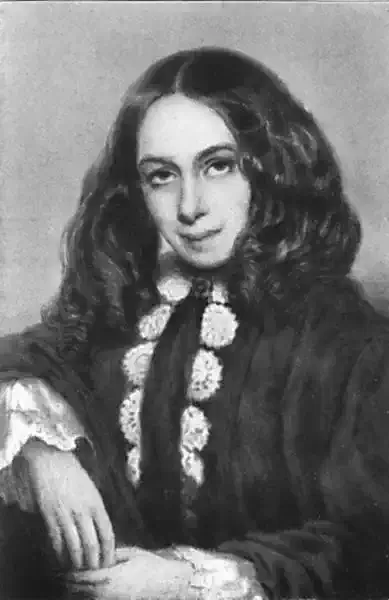
Elizabeth Barrett Browning
XIX
XIX
The soul's Rialto hath its merchandise;
I barter curl for curl upon that mart,
And from my poet's forehead to my heart
Receive this lock which outweighs argosies,--
As purply black, as erst to Pindar's eyes
The dim purpureal tresses gloomed athwart
The nine white Muse-brows. For this counterpart, . . .
The bay-crown's shade, Beloved, I surmise,
Still lingers on thy curl, it is so black !
Thus, with a fillet of smooth-kissing breath,
I tie the shadows safe from gliding back,
And lay the gift where nothing hindereth;
Here on my heart, as on thy brow, to lack
No natural heat till mine grows cold in death.
The soul's Rialto hath its merchandise;
I barter curl for curl upon that mart,
And from my poet's forehead to my heart
Receive this lock which outweighs argosies,--
As purply black, as erst to Pindar's eyes
The dim purpureal tresses gloomed athwart
The nine white Muse-brows. For this counterpart, . . .
The bay-crown's shade, Beloved, I surmise,
Still lingers on thy curl, it is so black !
Thus, with a fillet of smooth-kissing breath,
I tie the shadows safe from gliding back,
And lay the gift where nothing hindereth;
Here on my heart, as on thy brow, to lack
No natural heat till mine grows cold in death.
399
Elizabeth Barrett Browning
Sonnets from the Portuguese ii
Sonnets from the Portuguese ii
UNLIKE are we, unlike, O princely Heart!
Unlike our uses and our destinies.
Our ministering two angels look surprise
On one another, as they strike athwart
Their wings in passing. Thou, bethink thee, art
A guest for queens to social pageantries,
With gages from a hundred brighter eyes
Than tears even can make mine, to play thy part
Of chief musician. What hast thou to do
With looking from the lattice-lights at me--
A poor, tired, wandering singer, singing through
The dark, and leaning up a cypress tree?
The chrism is on thine head--on mine the dew-And
Death must dig the level where these agree.
UNLIKE are we, unlike, O princely Heart!
Unlike our uses and our destinies.
Our ministering two angels look surprise
On one another, as they strike athwart
Their wings in passing. Thou, bethink thee, art
A guest for queens to social pageantries,
With gages from a hundred brighter eyes
Than tears even can make mine, to play thy part
Of chief musician. What hast thou to do
With looking from the lattice-lights at me--
A poor, tired, wandering singer, singing through
The dark, and leaning up a cypress tree?
The chrism is on thine head--on mine the dew-And
Death must dig the level where these agree.
455
Elizabeth Barrett Browning
Sonnet XXXIV: With the Same Heart
Sonnet XXXIV: With the Same Heart
With the same heart, I said, I'll answer thee
As those, when thou shalt call me by my name--
Lo, the vain promise! is the same, the same,
Perplexed and ruffled by life's strategy?
When called before, I told how hastily
I dropped my flowers or brake off from a game,
To run and answer with the smile that came
At play last moment, and went on with me
Through my obedience. When I answer now,
I drop a grave thought, break from solitude;
Yet still my heart goes to thee--ponder how--
Not as to a single good, but all my good!
Lay thy hand on it, best one, and allow
That no child's foot could run as fast as this blood.
With the same heart, I said, I'll answer thee
As those, when thou shalt call me by my name--
Lo, the vain promise! is the same, the same,
Perplexed and ruffled by life's strategy?
When called before, I told how hastily
I dropped my flowers or brake off from a game,
To run and answer with the smile that came
At play last moment, and went on with me
Through my obedience. When I answer now,
I drop a grave thought, break from solitude;
Yet still my heart goes to thee--ponder how--
Not as to a single good, but all my good!
Lay thy hand on it, best one, and allow
That no child's foot could run as fast as this blood.
399
Elizabeth Barrett Browning
Sonnet XXVIII: My Letters
Sonnet XXVIII: My Letters
My letters-- all dead paper, mute and white!
And yet they seem alive and quivering
Against my tremulous hands which loose the string
And let them drop down on my knee to-night,
This said,--he wished to have me in his sight
Once, as a friend: this fixed a day in spring
To come and touch my hand...a simple thing,
Yet I wept for it!--this...the paper's light...
Said, Dear, I love thee; and I sank and quailed
As if God's future thundered on my past.
This said, I am thine--and so its ink has paled
With lying at my heart that beat too fast.
And this...O Love, thy words have ill availed
If, what this said, I dared repeat at last!
My letters-- all dead paper, mute and white!
And yet they seem alive and quivering
Against my tremulous hands which loose the string
And let them drop down on my knee to-night,
This said,--he wished to have me in his sight
Once, as a friend: this fixed a day in spring
To come and touch my hand...a simple thing,
Yet I wept for it!--this...the paper's light...
Said, Dear, I love thee; and I sank and quailed
As if God's future thundered on my past.
This said, I am thine--and so its ink has paled
With lying at my heart that beat too fast.
And this...O Love, thy words have ill availed
If, what this said, I dared repeat at last!
398
Elizabeth Barrett Browning
Sonnet XXVI: I Lived With Visions
Sonnet XXVI: I Lived With Visions
I lived with visions for my company
Instead of men and women, years ago,
And found them gentle mates, nor thought to know
A sweeter music than they played to me.
But soon their trailing purple was not free
Of this world's dust, their lutes did silent grow,
And I myself grew faint and blind below
Their vanishing eyes. Then thou didst come--to be,
Belovèd, what they seemed. Their shining fronts,
Their songs, their splendors (better, yet the same,
As river water hallowed into fonts),
Met in thee, and from out thee overcame
My soul with satisfaction of all wants:
Because God's gifts put man's best dreams to shame.
I lived with visions for my company
Instead of men and women, years ago,
And found them gentle mates, nor thought to know
A sweeter music than they played to me.
But soon their trailing purple was not free
Of this world's dust, their lutes did silent grow,
And I myself grew faint and blind below
Their vanishing eyes. Then thou didst come--to be,
Belovèd, what they seemed. Their shining fronts,
Their songs, their splendors (better, yet the same,
As river water hallowed into fonts),
Met in thee, and from out thee overcame
My soul with satisfaction of all wants:
Because God's gifts put man's best dreams to shame.
370
Elizabeth Barrett Browning
Sonnet XXIX: I Think of Thee
Sonnet XXIX: I Think of Thee
I think of thee!--my thoughts do twine and bud
About thee,as wild vines, about a tree,
Put out broad leaves, and soon there's nought to see
Except the straggling green which hides the wood.
Yet, O my palm-tree, be it understood
I will not have my thoughts instead of thee
Who art dearer, better! Rather, instantly
Renew thy presence; as a strong tree should,
Rustle thy boughs and set thy trunk all bare,
And let these bands of greenery which insphere thee
Drop heavily down,--burst, shattered, everywhere!
Because, in this deep joy to see and hear thee
And breathe within thy shadow a new air,
I do not think of thee--I am too near thee.
I think of thee!--my thoughts do twine and bud
About thee,as wild vines, about a tree,
Put out broad leaves, and soon there's nought to see
Except the straggling green which hides the wood.
Yet, O my palm-tree, be it understood
I will not have my thoughts instead of thee
Who art dearer, better! Rather, instantly
Renew thy presence; as a strong tree should,
Rustle thy boughs and set thy trunk all bare,
And let these bands of greenery which insphere thee
Drop heavily down,--burst, shattered, everywhere!
Because, in this deep joy to see and hear thee
And breathe within thy shadow a new air,
I do not think of thee--I am too near thee.
370