

Poems in this theme
Creativity and Inspiration

Ezra Pound
Poetic Eggs
Poetic Eggs
I am a grave poetic hen
That lays poetic eggs
And to enhance my temperament
A little quiet begs.
We make the yolk philosophy,
True beauty the albumen.
And then gum on a shell of form
To make the screed sound human.
I am a grave poetic hen
That lays poetic eggs
And to enhance my temperament
A little quiet begs.
We make the yolk philosophy,
True beauty the albumen.
And then gum on a shell of form
To make the screed sound human.
395
Ezra Pound
Mauberley
Mauberley
I
Turned from the 'eau-forte
Par Jaquemart'
To the strait head
Of Messalina:
'His true Penelope
Was Flaubert,'
And his tool
The engraver's.
Firmness,
Not the full smile,
His art, but an art
In profile;
Colourless
Pier Francesca,
Pisanello lacking the skill
To forge Achaia.
II
For three years, diabolus in the scale,
He drank ambrosia,
All passes, ANANGKE prevails,
Came end, at last, to that Arcadia.
He had moved amid her phantasmagoria,
Amid her galaxies,
NUKTIS 'AGALMA
Drifted . . . drifted precipitate,
Asking time to be rid of ...
Of his bewilderment; to designate
His new found orchid. . . .
To be certain . . . certain . . .
(Amid aerial flowers) . . . time for arrangements-
Drifted on
To the final estrangement;
Unable in the supervening blankness
To sift TO AGATHON from the chaff
Until he found his sieve . . .
Ultimately, his seismograph:
Given that is his 'fundamental passion',
This urge to convey the relation
Of eye-lid and cheek-bone
By verbal manifestations;
To present the series
Of curious heads in medallion
He had passed, inconscient, full gaze,
The wide-branded irides
And botticellian sprays implied
In their diastasis;
Which ansethesis, noted a year late,
And weighed, revealed his great affect,
(Orchid), mandate
Of Eros, a retrospect.
Mouths biting empty air,
The still stone dogs,
Caught in metamorphosis, were
Left him as epilogues.
I
Turned from the 'eau-forte
Par Jaquemart'
To the strait head
Of Messalina:
'His true Penelope
Was Flaubert,'
And his tool
The engraver's.
Firmness,
Not the full smile,
His art, but an art
In profile;
Colourless
Pier Francesca,
Pisanello lacking the skill
To forge Achaia.
II
For three years, diabolus in the scale,
He drank ambrosia,
All passes, ANANGKE prevails,
Came end, at last, to that Arcadia.
He had moved amid her phantasmagoria,
Amid her galaxies,
NUKTIS 'AGALMA
Drifted . . . drifted precipitate,
Asking time to be rid of ...
Of his bewilderment; to designate
His new found orchid. . . .
To be certain . . . certain . . .
(Amid aerial flowers) . . . time for arrangements-
Drifted on
To the final estrangement;
Unable in the supervening blankness
To sift TO AGATHON from the chaff
Until he found his sieve . . .
Ultimately, his seismograph:
Given that is his 'fundamental passion',
This urge to convey the relation
Of eye-lid and cheek-bone
By verbal manifestations;
To present the series
Of curious heads in medallion
He had passed, inconscient, full gaze,
The wide-branded irides
And botticellian sprays implied
In their diastasis;
Which ansethesis, noted a year late,
And weighed, revealed his great affect,
(Orchid), mandate
Of Eros, a retrospect.
Mouths biting empty air,
The still stone dogs,
Caught in metamorphosis, were
Left him as epilogues.
438
Ezra Pound
Further Instructions
Further Instructions
Come, my songs, let us express our baser passions.
Let us express our envy for the man with a steady job and no worry about the future.
You are very idle, my songs,
I fear you will come to a bad end.
You stand about the streets, You loiter at the corners and bus-stops,
You do next to nothing at all.
You do not even express our inner nobilitys,
You will come to a very bad end.
And I? I have gone half-cracked.
I have talked to you so much that I almost see you about me,
Insolent little beasts! Shameless! Devoid of clothing!
But you, newest song of the lot,
You are not old enough to have done much mischief.
I will get you a green coat out of China
With dragons worked upon it.
I will get you the scarlet silk trousers
From the statue of the infant Christ at Santa Maria Novella;
Lest they say we are lacking in taste,
Or that there is no caste in this family.
Come, my songs, let us express our baser passions.
Let us express our envy for the man with a steady job and no worry about the future.
You are very idle, my songs,
I fear you will come to a bad end.
You stand about the streets, You loiter at the corners and bus-stops,
You do next to nothing at all.
You do not even express our inner nobilitys,
You will come to a very bad end.
And I? I have gone half-cracked.
I have talked to you so much that I almost see you about me,
Insolent little beasts! Shameless! Devoid of clothing!
But you, newest song of the lot,
You are not old enough to have done much mischief.
I will get you a green coat out of China
With dragons worked upon it.
I will get you the scarlet silk trousers
From the statue of the infant Christ at Santa Maria Novella;
Lest they say we are lacking in taste,
Or that there is no caste in this family.
438

Emily Dickinson
When Diamonds are a Legend
When Diamonds are a Legend
397
When Diamonds are a Legend,
And Diadems-a Tale-
I Brooch and Earrings for Myself,
Do sow, and Raise for sale-
And tho' I'm scarce accounted,
My Art, a Summer Day-had PatronsOnce-
it was a Queen-
And once-a Butterfly-
397
When Diamonds are a Legend,
And Diadems-a Tale-
I Brooch and Earrings for Myself,
Do sow, and Raise for sale-
And tho' I'm scarce accounted,
My Art, a Summer Day-had PatronsOnce-
it was a Queen-
And once-a Butterfly-
283
Emily Dickinson
Perhaps I Asked Too Large
Perhaps I Asked Too Large
Perhaps I asked too large --
I take -- no less than skies --
For Earths, grow thick as
Berries, in my native town --
My Basked holds -- just -- Firmaments --
Those -- dangle easy -- on my arm,
But smaller bundles -- Cram.
Perhaps I asked too large --
I take -- no less than skies --
For Earths, grow thick as
Berries, in my native town --
My Basked holds -- just -- Firmaments --
Those -- dangle easy -- on my arm,
But smaller bundles -- Cram.
273
Emily Dickinson
I send Two Sunsets
I send Two Sunsets
308
I send Two Sunsets-
Day and I-in competition ran-
I finished Two-and several Stars-
While He-was making One-
His own was ampler-but as I
Was saying to a friendMine-
is the more convenient
To Carry in the Hand-
308
I send Two Sunsets-
Day and I-in competition ran-
I finished Two-and several Stars-
While He-was making One-
His own was ampler-but as I
Was saying to a friendMine-
is the more convenient
To Carry in the Hand-
307
Emily Dickinson
Before you thought of spring,
Before you thought of spring,
Before you thought of spring,
Except as a surmise,
You see, God bless his suddenness,
A fellow in the skies
Of independent hues,
A little weather-worn,
Inspiriting habiliments
Of indigo and brown.
With specimens of song,
As if for you to choose,
Discretion in the interval,
With gay delays he goes
To some superior tree
Without a single leaf,
And shouts for joy to nobody
But his seraphic self!
Before you thought of spring,
Except as a surmise,
You see, God bless his suddenness,
A fellow in the skies
Of independent hues,
A little weather-worn,
Inspiriting habiliments
Of indigo and brown.
With specimens of song,
As if for you to choose,
Discretion in the interval,
With gay delays he goes
To some superior tree
Without a single leaf,
And shouts for joy to nobody
But his seraphic self!
265

Ella Wheeler Wilcox
The Unattained
The Unattained
A vision beauteous as the morn,
With heavenly eyes and tresses streaming,
Slow glided o'er a field late shorn
Where walked a poet idly dreaming.
He saw her, and joy lit his face.
"Oh, vanish not at human speaking,"
He cried, "thou form of magic grace,
Thou art the poem I am seeking.
"I've sought thee long! I claim thee now---
My thought embodied, living, real."
She shook the tresses from her brow.
"Nay, nay!" she said, "I am ideal.
I am the phantom of desire---
The spirit of all great endeavour,
I am the voice that says, 'Come higher.'
That calls men up and up for ever.
"'Tis not alone the thought supreme
That here upon thy path has risen;
I am the artist's highest dream,
The ray of light he cannot prison.
I am the sweet ecstatic note
Than all glad music gladder, clearer,
That trembles in the singer's throat,
And dies without a human hearer.
"I am the greater, better yield,
That leads and cheers thy farmer neighbour,
For me he bravely tills the field
And whistles gaily at his labour.
Not thou alone, O poet soul,
Dost seek me through an endless morrow,
But to the toiling, hoping whole
I am at once the hope and sorrow.
The spirit of the unattained,
I am to those who seek to name me,
A good desired but never gained.
All shall pursue, but none shall claim me."
A vision beauteous as the morn,
With heavenly eyes and tresses streaming,
Slow glided o'er a field late shorn
Where walked a poet idly dreaming.
He saw her, and joy lit his face.
"Oh, vanish not at human speaking,"
He cried, "thou form of magic grace,
Thou art the poem I am seeking.
"I've sought thee long! I claim thee now---
My thought embodied, living, real."
She shook the tresses from her brow.
"Nay, nay!" she said, "I am ideal.
I am the phantom of desire---
The spirit of all great endeavour,
I am the voice that says, 'Come higher.'
That calls men up and up for ever.
"'Tis not alone the thought supreme
That here upon thy path has risen;
I am the artist's highest dream,
The ray of light he cannot prison.
I am the sweet ecstatic note
Than all glad music gladder, clearer,
That trembles in the singer's throat,
And dies without a human hearer.
"I am the greater, better yield,
That leads and cheers thy farmer neighbour,
For me he bravely tills the field
And whistles gaily at his labour.
Not thou alone, O poet soul,
Dost seek me through an endless morrow,
But to the toiling, hoping whole
I am at once the hope and sorrow.
The spirit of the unattained,
I am to those who seek to name me,
A good desired but never gained.
All shall pursue, but none shall claim me."
367
Ella Wheeler Wilcox
The Muse And The Poet
The Muse And The Poet
The Muse said, Let us sing a little song
Wherein no hint of wrong,
No echo of the great world need, or pain,
Shall mar the strain.
Lock fast the swinging portal of thy heart;
Keep sympathy apart.
Sing of the sunset, of the dawn, the sea;
Of any thing or nothing, so there be
No purpose to thy art.
Yea, let us make, art for Art's sake.
And sing no more unto the hearts of men,
But for the critic's pen.
With songs that are but words, sweet sounding words,
Like joyous jargon of the birds.
Tune now thy lyre, O Poet, and sing on.
Sing of
THE DAWN
The Virgin Night, all languorous with dreams
Of her belovèd Darkness, rose in fear,
Feeling the presence of another near.
Outside her curtained casement shone the gleams
Of burning orbs; and modestly she hid
Her brow and bosom with her dusky hair.
When lo! the bold intruder lurking there
Leaped through the fragile lattice, all unbid,
And half unveiled her. Then the swooning Night
Fell pale and dead, while yet her soul was white
Before that lawless Ravisher, the Light.
The Muse said, Poet, nay; thou hast not caught
My meaning. For there lurks a thought
Back of thy song.
In art, all thought is wrong.
Re-string thy lyre; and let the echoes bound
To nothing but sweet sound.
Strike now the chords
And sing of
WORDS
One day sweet Ladye Language gave to me
A little golden key.
I sat me down beside her jewel box
And turned its locks.
And oh, the wealth that lay there in my sight.
Great solitaires of words, so bright, so bright;
Words that no use can commonize; like God,
And Truth, and Love; and words of sapphire blue;
And amber words; with sunshine dripping through;
And words of that strange hue
A pearl reveals upon a wanton's hand.
Again the Muse:
Thou dost not understand;
A thought within thy song is lingering yet.
Sing but of words; all else forget, forget.
Nor let thy words convey one thought to men.
Try once again.
Down through the dusk and dew there fell a word;
Down through the dew and dusk.
And all the garments of the air it stirred
Smelled sweet as musk;
And all the little waves of air it kissed
Turned gold and amethyst.
There in the dew and dusk a heart it found;
There in the dusk and dew
The sodden silence changed to fragrant sound;
And all the world seemed new.
Upon the path that little word had trod,
There shone the smile of God.
The Muse said, Drop thy lyre.
I tire, I tire.
The Muse said, Let us sing a little song
Wherein no hint of wrong,
No echo of the great world need, or pain,
Shall mar the strain.
Lock fast the swinging portal of thy heart;
Keep sympathy apart.
Sing of the sunset, of the dawn, the sea;
Of any thing or nothing, so there be
No purpose to thy art.
Yea, let us make, art for Art's sake.
And sing no more unto the hearts of men,
But for the critic's pen.
With songs that are but words, sweet sounding words,
Like joyous jargon of the birds.
Tune now thy lyre, O Poet, and sing on.
Sing of
THE DAWN
The Virgin Night, all languorous with dreams
Of her belovèd Darkness, rose in fear,
Feeling the presence of another near.
Outside her curtained casement shone the gleams
Of burning orbs; and modestly she hid
Her brow and bosom with her dusky hair.
When lo! the bold intruder lurking there
Leaped through the fragile lattice, all unbid,
And half unveiled her. Then the swooning Night
Fell pale and dead, while yet her soul was white
Before that lawless Ravisher, the Light.
The Muse said, Poet, nay; thou hast not caught
My meaning. For there lurks a thought
Back of thy song.
In art, all thought is wrong.
Re-string thy lyre; and let the echoes bound
To nothing but sweet sound.
Strike now the chords
And sing of
WORDS
One day sweet Ladye Language gave to me
A little golden key.
I sat me down beside her jewel box
And turned its locks.
And oh, the wealth that lay there in my sight.
Great solitaires of words, so bright, so bright;
Words that no use can commonize; like God,
And Truth, and Love; and words of sapphire blue;
And amber words; with sunshine dripping through;
And words of that strange hue
A pearl reveals upon a wanton's hand.
Again the Muse:
Thou dost not understand;
A thought within thy song is lingering yet.
Sing but of words; all else forget, forget.
Nor let thy words convey one thought to men.
Try once again.
Down through the dusk and dew there fell a word;
Down through the dew and dusk.
And all the garments of the air it stirred
Smelled sweet as musk;
And all the little waves of air it kissed
Turned gold and amethyst.
There in the dew and dusk a heart it found;
There in the dusk and dew
The sodden silence changed to fragrant sound;
And all the world seemed new.
Upon the path that little word had trod,
There shone the smile of God.
The Muse said, Drop thy lyre.
I tire, I tire.
504
Ella Wheeler Wilcox
Inspiration
Inspiration
Not like a daring, bold, aggressive boy,
Is inspiration, eager to pursue,
But rather like a maiden, fond, yet coy,
Who gives herself to him who best doth woo.
Once she may smile, or thrice, thy soul to fire,
In passing by, but when she turns her face,
Thou must persist and seek her with desire,
If thou wouldst win the favor of her grace.
And if, like some winged bird she cleaves the air,
And leaves thee spent and stricken on the earth,
Still must thou strive to follow even there,
That she may know thy valor and thy worth.
Then shall she come unveiling all her charms,
Giving thee joy for pain, and smiles for tears;
Then shalt thou clasp her with possessing arms,
The while she murmurs music in thine ears.
But ere her kiss has faded from thy cheek,
She shall flee from thee over hill and glade,
So must thou seek and ever seek and seek
For each new conquest of this phantom maid.
Not like a daring, bold, aggressive boy,
Is inspiration, eager to pursue,
But rather like a maiden, fond, yet coy,
Who gives herself to him who best doth woo.
Once she may smile, or thrice, thy soul to fire,
In passing by, but when she turns her face,
Thou must persist and seek her with desire,
If thou wouldst win the favor of her grace.
And if, like some winged bird she cleaves the air,
And leaves thee spent and stricken on the earth,
Still must thou strive to follow even there,
That she may know thy valor and thy worth.
Then shall she come unveiling all her charms,
Giving thee joy for pain, and smiles for tears;
Then shalt thou clasp her with possessing arms,
The while she murmurs music in thine ears.
But ere her kiss has faded from thy cheek,
She shall flee from thee over hill and glade,
So must thou seek and ever seek and seek
For each new conquest of this phantom maid.
372
Ella Wheeler Wilcox
I Step Across The Mystic Border-Land
I Step Across The Mystic Border-Land
I step across the mystic border-land,
And look upon the wonder-world of Art.
How beautiful, how beautiful its hills!
And all its valleys, how surpassing fair!
The winding paths that lead up to the heights
Are polished by the footsteps of the great.
The mountain-peaks stand very near to God:
The chosen few whose feet have trod thereon
Have talked with Him. and with the angels walked.
Here are no sounds of discord-no profane
Or senseless gossip of unworthy things-
Only the songs of chisels and of pens,
Of busy brushes, and ecstatic strains
Of souls surcharged with music most divine.
Here is no idle sorrow, no poor grief
For any day or object left behind-
For time is counted precious, and herein
Is such complete abandonment of Self
That tears turn into rainbows, and enhance
The beauty of the land where all is fair,
Awed and afraid, I cross the border-land.
Oh, who am I, that I dare enter here
Where the great artists of the world have trod-
The genius-crowned aristocrats of Earth?
Only the singer of a little song;
Yet loving Art with such a mighty love
I hold it greater to have won a place
Just on the fair land's edge, to make my grave,
Than in the outer world of greed and gain
To sit upon a royal throne and reign.
I step across the mystic border-land,
And look upon the wonder-world of Art.
How beautiful, how beautiful its hills!
And all its valleys, how surpassing fair!
The winding paths that lead up to the heights
Are polished by the footsteps of the great.
The mountain-peaks stand very near to God:
The chosen few whose feet have trod thereon
Have talked with Him. and with the angels walked.
Here are no sounds of discord-no profane
Or senseless gossip of unworthy things-
Only the songs of chisels and of pens,
Of busy brushes, and ecstatic strains
Of souls surcharged with music most divine.
Here is no idle sorrow, no poor grief
For any day or object left behind-
For time is counted precious, and herein
Is such complete abandonment of Self
That tears turn into rainbows, and enhance
The beauty of the land where all is fair,
Awed and afraid, I cross the border-land.
Oh, who am I, that I dare enter here
Where the great artists of the world have trod-
The genius-crowned aristocrats of Earth?
Only the singer of a little song;
Yet loving Art with such a mighty love
I hold it greater to have won a place
Just on the fair land's edge, to make my grave,
Than in the outer world of greed and gain
To sit upon a royal throne and reign.
366
Ella Wheeler Wilcox
Artist's Life
Artist's Life
Of all the waltzes the great Strauss wrote,
mad with melody, rhythm--rife
From the very first to the final note,
Give me his "Artist's Life!"
It stirs my blood to my finger ends,
Thrills me and fills me with vague unrest,
And all that is sweetest and saddest blends
Together within my breast.
It brings back that night in the dim arcade,
In love's sweet morning and life's best prime,
When the great brass orchestra played and played,
And set our thoughts to rhyme.
It brings back that Winter of mad delights,
Of leaping pulses and tripping feet,
And those languid moon-washed Summer nights
When we heard the band in the street.
It brings back rapture and glee and glow,
It brings back passion and pain and strife,
And so of all the waltzes I know,
Give me the "Artist's Life."
For it is so full of the dear old time--
So full of the dear friends I knew.
And under its rhythm, and lilt, and rhyme,
I am always finding--you.
Of all the waltzes the great Strauss wrote,
mad with melody, rhythm--rife
From the very first to the final note,
Give me his "Artist's Life!"
It stirs my blood to my finger ends,
Thrills me and fills me with vague unrest,
And all that is sweetest and saddest blends
Together within my breast.
It brings back that night in the dim arcade,
In love's sweet morning and life's best prime,
When the great brass orchestra played and played,
And set our thoughts to rhyme.
It brings back that Winter of mad delights,
Of leaping pulses and tripping feet,
And those languid moon-washed Summer nights
When we heard the band in the street.
It brings back rapture and glee and glow,
It brings back passion and pain and strife,
And so of all the waltzes I know,
Give me the "Artist's Life."
For it is so full of the dear old time--
So full of the dear friends I knew.
And under its rhythm, and lilt, and rhyme,
I am always finding--you.
372
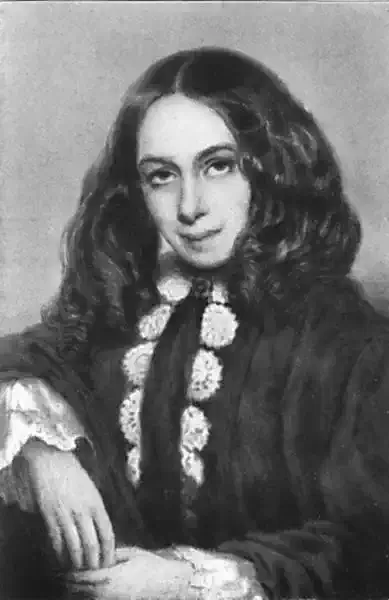
Elizabeth Barrett Browning
XVII
XVII
My poet, thou canst touch on all the notes
God set between his After and Before,
And strike up and strike off the general roar
Of the rushing worlds a melody that floats
In a serene air purely. Antidotes
Of medicated music, answering for
Mankind's forlornest uses, thou canst pour
From thence into their ears. God's will devotes
Thine to such ends, and mine to wait on thine.
How, Dearest, wilt thou have me for most use ?
A hope, to sing by gladly ? or a fine
Sad memory, with thy songs to interfuse ?
A shade, in which to sing--of palm or pine ?
A grave, on which to rest from singing ? Choose.
My poet, thou canst touch on all the notes
God set between his After and Before,
And strike up and strike off the general roar
Of the rushing worlds a melody that floats
In a serene air purely. Antidotes
Of medicated music, answering for
Mankind's forlornest uses, thou canst pour
From thence into their ears. God's will devotes
Thine to such ends, and mine to wait on thine.
How, Dearest, wilt thou have me for most use ?
A hope, to sing by gladly ? or a fine
Sad memory, with thy songs to interfuse ?
A shade, in which to sing--of palm or pine ?
A grave, on which to rest from singing ? Choose.
447
Elizabeth Barrett Browning
The Soul's Expression
The Soul's Expression
WITH stammering lips and insufficient sound
I strive and struggle to deliver right
That music of my nature, day and night
With dream and thought and feeling interwound
And inly answering all the senses round
With octaves of a mystic depth and height
Which step out grandly to the infinite
From the dark edges of the sensual ground.
This song of soul I struggle to outbear
Through portals of the sense, sublime and whole,
And utter all myself into the air:
But if I did it,--as the thunder-roll
Breaks its own cloud, my flesh would perish there,
Before that dread apocalypse of soul.
WITH stammering lips and insufficient sound
I strive and struggle to deliver right
That music of my nature, day and night
With dream and thought and feeling interwound
And inly answering all the senses round
With octaves of a mystic depth and height
Which step out grandly to the infinite
From the dark edges of the sensual ground.
This song of soul I struggle to outbear
Through portals of the sense, sublime and whole,
And utter all myself into the air:
But if I did it,--as the thunder-roll
Breaks its own cloud, my flesh would perish there,
Before that dread apocalypse of soul.
341
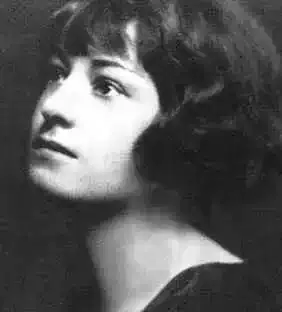
Dorothy Parker
D.G. Rossetti
D.G. Rossetti
Dante Gabriel Rossetti
Buried all of his libretti,
Thought the matter over - then
Went and dug them up again.
Dante Gabriel Rossetti
Buried all of his libretti,
Thought the matter over - then
Went and dug them up again.
453
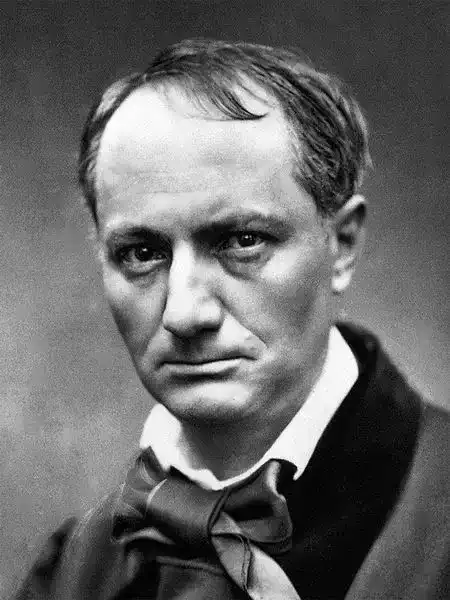
Charles Baudelaire
The Sick Muse
The Sick Muse
My impoverished muse, alas! What have you for me this morning?
Your empty eyes are stocked with nocturnal visions,
In your cheek's cold and taciturn reflection,
I see insanity and horror forming.
The green succubus and the red urchin,
Have they poured you fear and love from their urns?
The nightmare of a mutinous fist that despotically turns,
Does it drown you at the bottom of a loch beyond searching?
I wish that your breast exhaled the scent of sanity,
That your womb of thought was not a tomb more frequently
And that your Christian blood flowed around a buoy that was rhythmical,
Like the numberless sounds of antique syllables,
Where reigns in turn the father of songs,
Phoebus, and the great Pan, the harvest sovereign.
Translated by William A. Sigler
Submitted by Ryan McGuire
My impoverished muse, alas! What have you for me this morning?
Your empty eyes are stocked with nocturnal visions,
In your cheek's cold and taciturn reflection,
I see insanity and horror forming.
The green succubus and the red urchin,
Have they poured you fear and love from their urns?
The nightmare of a mutinous fist that despotically turns,
Does it drown you at the bottom of a loch beyond searching?
I wish that your breast exhaled the scent of sanity,
That your womb of thought was not a tomb more frequently
And that your Christian blood flowed around a buoy that was rhythmical,
Like the numberless sounds of antique syllables,
Where reigns in turn the father of songs,
Phoebus, and the great Pan, the harvest sovereign.
Translated by William A. Sigler
Submitted by Ryan McGuire
663

Carl Sandburg
The Answer
The Answer
You have spoken the answer.
A child searches far sometimes
Into the red dust
On a dark rose leaf
And so you have gone far
For the answer is:
Silence.
In the republic
Of the winking stars
and spent cataclysms
Sure we are it is off there the answer
is hidden and folded over,
Sleeping in the sun, careless whether
it is Sunday or any other day of
the week,
Knowing silence will bring all one way or another.
Have we not seen
Purple of the pansy
out of the mulch
and mold
crawl
into a dusk
of velvet?
blur of yellow?
Almost we thought from nowhere but it was the silence,
the future,
working.
You have spoken the answer.
A child searches far sometimes
Into the red dust
On a dark rose leaf
And so you have gone far
For the answer is:
Silence.
In the republic
Of the winking stars
and spent cataclysms
Sure we are it is off there the answer
is hidden and folded over,
Sleeping in the sun, careless whether
it is Sunday or any other day of
the week,
Knowing silence will bring all one way or another.
Have we not seen
Purple of the pansy
out of the mulch
and mold
crawl
into a dusk
of velvet?
blur of yellow?
Almost we thought from nowhere but it was the silence,
the future,
working.
343
Carl Sandburg
Style
Style
Style--go ahead talking about style.
You can tell where a man gets his style just
as you can tell where Pavlowa got her legs
or Ty Cobb his batting eye.
Go on talking.
Only don't take my style away.
It's my face.
Maybe no good
but anyway, my face.
I talk with it, I sing with it, I see, taste and feel with it,
I know why I want to keep it.
Kill my style
and you break Pavlowa's legs,
and you blind Ty Cobb's batting eye.
Style--go ahead talking about style.
You can tell where a man gets his style just
as you can tell where Pavlowa got her legs
or Ty Cobb his batting eye.
Go on talking.
Only don't take my style away.
It's my face.
Maybe no good
but anyway, my face.
I talk with it, I sing with it, I see, taste and feel with it,
I know why I want to keep it.
Kill my style
and you break Pavlowa's legs,
and you blind Ty Cobb's batting eye.
320
Boris Pasternak
Humble home. But rum, and charcoal...
Humble home. But rum, and charcoal...
Humble home. But rum, and charcoal
Grog of sketches on the wall,
And the cell becomes a mansion,
And the garret is a hall.
No more waves of housecoats: questions,
Even footsteps disappear;
Glassy mica fills the latticed
Work-encompassed vault of air.
Voice, commanding as a levy,
Does not leave a thing immune,
Smelting, fusing… In his gullet
Flows the tin of molten spoons.
What is fame for him, and glory,
Name, position in the world,
When the sudden breath of fusion
Blends his words into the Word?
He will burn for it his chattels,
Friendship, reason, daily round.
On his desk-a glass, unfinished,
World forgotten, clock unwound.
Clustered stanzas change like seething
Wax at fortune-telling times.
He will bless the sleeping children
With the steam of molten rhymes.
Humble home. But rum, and charcoal
Grog of sketches on the wall,
And the cell becomes a mansion,
And the garret is a hall.
No more waves of housecoats: questions,
Even footsteps disappear;
Glassy mica fills the latticed
Work-encompassed vault of air.
Voice, commanding as a levy,
Does not leave a thing immune,
Smelting, fusing… In his gullet
Flows the tin of molten spoons.
What is fame for him, and glory,
Name, position in the world,
When the sudden breath of fusion
Blends his words into the Word?
He will burn for it his chattels,
Friendship, reason, daily round.
On his desk-a glass, unfinished,
World forgotten, clock unwound.
Clustered stanzas change like seething
Wax at fortune-telling times.
He will bless the sleeping children
With the steam of molten rhymes.
569
Boris Pasternak
Definition of Creative Art
Definition of Creative Art
With shirt wide open at the collar,
Maned as Beethoven's bust, it stands;
Our conscience, dreams, the night and love,
Are as chessmen covered by its hands.
And one black king upon the board:
In sadness and in rage, forthright
It brings the day of doom.-Against
The pawn it brings the mounted knight.
In gardens where from icy spheres
The stars lean tender, linger near,
Tristan still sings, like a nightingale
On Isolde's vine, with trembling fear.
The gardens, ponds, and fences, made pure
By burning tears, and the whole great span,
Creation-are only burst of passion
Hoarded in the hearts of men.
With shirt wide open at the collar,
Maned as Beethoven's bust, it stands;
Our conscience, dreams, the night and love,
Are as chessmen covered by its hands.
And one black king upon the board:
In sadness and in rage, forthright
It brings the day of doom.-Against
The pawn it brings the mounted knight.
In gardens where from icy spheres
The stars lean tender, linger near,
Tristan still sings, like a nightingale
On Isolde's vine, with trembling fear.
The gardens, ponds, and fences, made pure
By burning tears, and the whole great span,
Creation-are only burst of passion
Hoarded in the hearts of men.
535
Boris Pasternak
Craft
Craft
When, having finished, I shall move my armchair,
The page will gasp, awakened from the strain.
Delirious, she is half asleep at present,
Obedient to suspense and to the rain.
The heaviness of burnt-out ships has numbed her,
Prostrated, weighted down her senseless form;
You cannot dupe this one by false pretences-
It is the poet who will keep her warm.
I told her at an hour (its secret shudder
Vouchsafed by fancy) when the winter will
Light up green screeching ice, fed up with waiting
Behind an office worker's window sill,
And clocks in banks and other public places,
While drinking in the snow and outside's dark,
Will suddenly jump up and strike-their faces
Crossed by the clockhands at the 'seven' mark-
At such a deep, at such a fateful hour,
I made the page wake up and take her chance,
To put on hood and scarf, and venture out to
Descendants, strangers, shaking off her trance.
When, having finished, I shall move my armchair,
The page will gasp, awakened from the strain.
Delirious, she is half asleep at present,
Obedient to suspense and to the rain.
The heaviness of burnt-out ships has numbed her,
Prostrated, weighted down her senseless form;
You cannot dupe this one by false pretences-
It is the poet who will keep her warm.
I told her at an hour (its secret shudder
Vouchsafed by fancy) when the winter will
Light up green screeching ice, fed up with waiting
Behind an office worker's window sill,
And clocks in banks and other public places,
While drinking in the snow and outside's dark,
Will suddenly jump up and strike-their faces
Crossed by the clockhands at the 'seven' mark-
At such a deep, at such a fateful hour,
I made the page wake up and take her chance,
To put on hood and scarf, and venture out to
Descendants, strangers, shaking off her trance.
536
Boris Pasternak
A Walts With a Tear in It
A Walts With a Tear in It
Ah, how I love it in these first few days,
Fresh from the forest and out of the snow,
Awkwardness obvious still in every bough,
When every silver thread lazily sways
And every cone begins slowly to glow
In candlelight—and the white sheet below
Hides its sore stump from our eyes.
It will not bat an eye if you heap gold
And jewels on it-this shyest of fays
In blue enamel and tinfoil enfolded
Creeps in your heart of hearts—and there it stays.
Ah, how I love it all in these first days,
All golden finery and silver shades!
All in the making-stars, flags, lanterns, flares,
There are no chocolates yet in bonbonnieres.
Even the candles are no candles—they
Look more like dull sticks of makeup by day.
This is an actress still lighting stage fright
In the tumult of her benefit night.
Ah, how I love her on this opening day,
Flushed in the coulisses before the play!
Apples to appletrees, and kicks to firtrees.
Only not this one—no kicks for the beauty.
She has a different purpose and duty.
She's the select one, receiver of favours.
Her evening party will go on forever.
Others may fear proverb s-this one does not.
Her fate is only a few firtrees' lot.
Golden and fiery, she will soar high,
Like an old prophet ascending the sky.
Ah, how I love it all in these first days,
When all the world chats and fusses and plays!
Ah, how I love it in these first few days,
Fresh from the forest and out of the snow,
Awkwardness obvious still in every bough,
When every silver thread lazily sways
And every cone begins slowly to glow
In candlelight—and the white sheet below
Hides its sore stump from our eyes.
It will not bat an eye if you heap gold
And jewels on it-this shyest of fays
In blue enamel and tinfoil enfolded
Creeps in your heart of hearts—and there it stays.
Ah, how I love it all in these first days,
All golden finery and silver shades!
All in the making-stars, flags, lanterns, flares,
There are no chocolates yet in bonbonnieres.
Even the candles are no candles—they
Look more like dull sticks of makeup by day.
This is an actress still lighting stage fright
In the tumult of her benefit night.
Ah, how I love her on this opening day,
Flushed in the coulisses before the play!
Apples to appletrees, and kicks to firtrees.
Only not this one—no kicks for the beauty.
She has a different purpose and duty.
She's the select one, receiver of favours.
Her evening party will go on forever.
Others may fear proverb s-this one does not.
Her fate is only a few firtrees' lot.
Golden and fiery, she will soar high,
Like an old prophet ascending the sky.
Ah, how I love it all in these first days,
When all the world chats and fusses and plays!
487
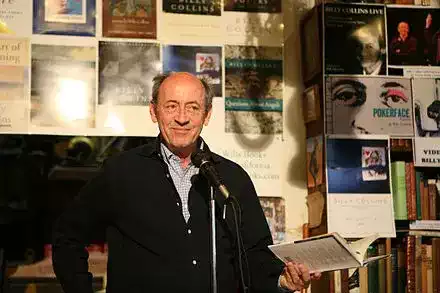
Billy Collins
The Best Cigarette
The Best Cigarette
There are many that I miss
having sent my last one out a car window
sparking along the road one night, years ago.
The heralded one, of course:
after sex, the two glowing tips
now the lights of a single ship;
at the end of a long dinner
with more wine to come
and a smoke ring coasting into the chandelier;
or on a white beach,
holding one with fingers still wet from a swim.
How bittersweet these punctuations
of flame and gesture;
but the best were on those mornings
when I would have a little something going
in the typewriter,
the sun bright in the windows,
maybe some Berlioz on in the background.
I would go into the kitchen for coffee
and on the way back to the page,
curled in its roller,
I would light one up and feel
its dry rush mix with the dark taste of coffee.
Then I would be my own locomotive,
trailing behind me as I returned to work
little puffs of smoke,
indicators of progress,
signs of industry and thought,
the signal that told the nineteenth century
it was moving forward.
That was the best cigarette,
when I would steam into the study
full of vaporous hope
and stand there,
the big headlamp of my face
pointed down at all the words in parallel lines.
There are many that I miss
having sent my last one out a car window
sparking along the road one night, years ago.
The heralded one, of course:
after sex, the two glowing tips
now the lights of a single ship;
at the end of a long dinner
with more wine to come
and a smoke ring coasting into the chandelier;
or on a white beach,
holding one with fingers still wet from a swim.
How bittersweet these punctuations
of flame and gesture;
but the best were on those mornings
when I would have a little something going
in the typewriter,
the sun bright in the windows,
maybe some Berlioz on in the background.
I would go into the kitchen for coffee
and on the way back to the page,
curled in its roller,
I would light one up and feel
its dry rush mix with the dark taste of coffee.
Then I would be my own locomotive,
trailing behind me as I returned to work
little puffs of smoke,
indicators of progress,
signs of industry and thought,
the signal that told the nineteenth century
it was moving forward.
That was the best cigarette,
when I would steam into the study
full of vaporous hope
and stand there,
the big headlamp of my face
pointed down at all the words in parallel lines.
275
Billy Collins
Man Listening To Disc
Man Listening To Disc
This is not bad -ambling
along 44th Street
with Sonny Rollins for company,
his music flowing through the soft calipers
of these earphones,
as if he were right beside me
on this clear day in March,
the pavement sparkling with sunlight,
pigeons fluttering off the curb,
nodding over a profusion of bread crumbs.
In fact, I would say
my delight at being suffused
with phrases from his saxophone -some
like honey, some like vinegar -is
surpassed only by my gratitude
to Tommy Potter for taking the time
to join us on this breezy afternoon
with his most unwieldy bass
and to the esteemed Arthur Taylor
who is somehow managing to navigate
this crowd with his cumbersome drums.
And I bow deeply to Thelonious Monk
for figuring out a way
to motorize -- or whatever -- his huge piano
so he could be with us today.
This music is loud yet so confidential.
I cannot help feeling even more
like the center of the universe
than usual as I walk along to a rapid
little version of "The Way You Look Tonight,"
and all I can say to my fellow pedestrians,
to the woman in the white sweater,
the man in the tan raincoat and the heavy glasses,
who mistake themselves for the center of the universe -all
I can say is watch your step,
because the five of us, instruments and all,
are about to angle over
to the south side of the street
and then, in our own tightly knit way,
turn the corner at Sixth Avenue.
And if any of you are curious
about where this aggregation,
this whole battery-powered crew,
is headed, let us just say
that the real center of the universe,
the only true point of view,
is full of hope that he,
the hub of the cosmos
with his hair blown sideways,
will eventually make it all the way downtown.
This is not bad -ambling
along 44th Street
with Sonny Rollins for company,
his music flowing through the soft calipers
of these earphones,
as if he were right beside me
on this clear day in March,
the pavement sparkling with sunlight,
pigeons fluttering off the curb,
nodding over a profusion of bread crumbs.
In fact, I would say
my delight at being suffused
with phrases from his saxophone -some
like honey, some like vinegar -is
surpassed only by my gratitude
to Tommy Potter for taking the time
to join us on this breezy afternoon
with his most unwieldy bass
and to the esteemed Arthur Taylor
who is somehow managing to navigate
this crowd with his cumbersome drums.
And I bow deeply to Thelonious Monk
for figuring out a way
to motorize -- or whatever -- his huge piano
so he could be with us today.
This music is loud yet so confidential.
I cannot help feeling even more
like the center of the universe
than usual as I walk along to a rapid
little version of "The Way You Look Tonight,"
and all I can say to my fellow pedestrians,
to the woman in the white sweater,
the man in the tan raincoat and the heavy glasses,
who mistake themselves for the center of the universe -all
I can say is watch your step,
because the five of us, instruments and all,
are about to angle over
to the south side of the street
and then, in our own tightly knit way,
turn the corner at Sixth Avenue.
And if any of you are curious
about where this aggregation,
this whole battery-powered crew,
is headed, let us just say
that the real center of the universe,
the only true point of view,
is full of hope that he,
the hub of the cosmos
with his hair blown sideways,
will eventually make it all the way downtown.
316