

Poems in this theme
Courage and Strength

Joyce Kilmer
To a Young Poet who Killed Himself
To a Young Poet who Killed Himself
When you had played with life a space
And made it drink and lust and sing,
You flung it back into God's face
And thought you did a noble thing.
"Lo, I have lived and loved," you said,
"And sung to fools too dull to hear me.
Now for a cool and grassy bed
With violets in blossom near me."
Well, rest is good for weary feet,
Although they ran for no great prize;
And violets are very sweet,
Although their roots are in your eyes.
But hark to what the earthworms say
Who share with you your muddy haven:
"The fight was on -- you ran away.
You are a coward and a craven."
"The rug is ruined where you bled;
It was a dirty way to die!
To put a bullet through your head
And make a silly woman cry!
You could not vex the merry stars
Nor make them heed you, dead or living.
Not all your puny anger mars
God's irresistible forgiving.
"Yes, God forgives and men forget,
And you're forgiven and forgotten.
You may be gaily sinning yet
And quick and fresh instead of rotten.
And when you think of love and fame
And all that might have come to pass,
Then don't you feel a little shame?
And don't you think you were an ass?"
When you had played with life a space
And made it drink and lust and sing,
You flung it back into God's face
And thought you did a noble thing.
"Lo, I have lived and loved," you said,
"And sung to fools too dull to hear me.
Now for a cool and grassy bed
With violets in blossom near me."
Well, rest is good for weary feet,
Although they ran for no great prize;
And violets are very sweet,
Although their roots are in your eyes.
But hark to what the earthworms say
Who share with you your muddy haven:
"The fight was on -- you ran away.
You are a coward and a craven."
"The rug is ruined where you bled;
It was a dirty way to die!
To put a bullet through your head
And make a silly woman cry!
You could not vex the merry stars
Nor make them heed you, dead or living.
Not all your puny anger mars
God's irresistible forgiving.
"Yes, God forgives and men forget,
And you're forgiven and forgotten.
You may be gaily sinning yet
And quick and fresh instead of rotten.
And when you think of love and fame
And all that might have come to pass,
Then don't you feel a little shame?
And don't you think you were an ass?"
146
Joyce Kilmer
Memorial Day
Memorial Day
"Dulce et decorum est"
The bugle echoes shrill and sweet,
But not of war it sings to-day.
The road is rhythmic with the feet
Of men-at-arms who come to pray.
The roses blossom white and red
On tombs where weary soldiers lie;
Flags wave above the honored dead
And martial music cleaves the sky.
Above their wreath-strewn graves we kneel,
They kept the faith and fought the fight.
Through flying lead and crimson steel
They plunged for Freedom and the Right.
May we, their grateful children, learn
Their strength, who lie beneath this sod,
Who went through fire and death to earn
At last the accolade of God.
In shining rank on rank arrayed
They march, the legions of the Lord;
He is their Captain unafraid,
The Prince of Peace . . . Who brought a sword.
"Dulce et decorum est"
The bugle echoes shrill and sweet,
But not of war it sings to-day.
The road is rhythmic with the feet
Of men-at-arms who come to pray.
The roses blossom white and red
On tombs where weary soldiers lie;
Flags wave above the honored dead
And martial music cleaves the sky.
Above their wreath-strewn graves we kneel,
They kept the faith and fought the fight.
Through flying lead and crimson steel
They plunged for Freedom and the Right.
May we, their grateful children, learn
Their strength, who lie beneath this sod,
Who went through fire and death to earn
At last the accolade of God.
In shining rank on rank arrayed
They march, the legions of the Lord;
He is their Captain unafraid,
The Prince of Peace . . . Who brought a sword.
139
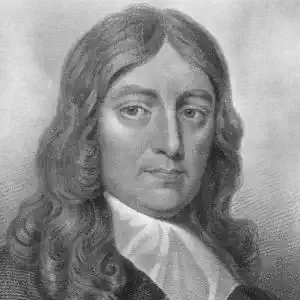
John Milton
When the Assault Was Intended to the City
When the Assault Was Intended to the City
Captain, or colonel, or knight in arms,
Whose chance on these defenceless doors may seize,
If deed of honour did thee ever please,
Guard them, and him within protect from harms.
He can requite thee, for he knows the charms
That call fame on such gentle acts as these,
And he can spread thy name o’er lands and seas,
Whatever clime the sun’s bright circle warms.
Lift not thy spear against the Muse’s bower;
The great Emathian conqueror bid spare
The house of Pindarus, when temple and tower
Went to the ground; and the repeated air
Of sad Electra’s Poet had the power
To save the Athenian walls from ruin bare.
Captain, or colonel, or knight in arms,
Whose chance on these defenceless doors may seize,
If deed of honour did thee ever please,
Guard them, and him within protect from harms.
He can requite thee, for he knows the charms
That call fame on such gentle acts as these,
And he can spread thy name o’er lands and seas,
Whatever clime the sun’s bright circle warms.
Lift not thy spear against the Muse’s bower;
The great Emathian conqueror bid spare
The house of Pindarus, when temple and tower
Went to the ground; and the repeated air
Of sad Electra’s Poet had the power
To save the Athenian walls from ruin bare.
589
John Milton
Sonnet XVI: Cromwell, our chief of men
Sonnet XVI: Cromwell, our chief of men
To the Lord General Cromwell
On the Proposals of Certain Ministers of the Committee
for the Propagation of the Gospel
Cromwell, our chief of men, who through a cloud
Not of war only, but detractions rude,
Guided by faith and matchless fortitude,
To peace and truth thy glorious way hast ploughed,
And on the neck of crowned Fortune proud
Hast reared God's trophies, and his work pursued,
While Darwen stream with blood of Scots imbrued,
And Dunbar field resounds thy praises loud,
And Worcester's laureate wreath. Yet much remains
To conquer still; peace hath her victories
No less renowned than war: new foes arise,
Threat'ning to bind our souls with secular chains:
Help us to save free conscience from the paw
Of hireling wolves, whose gospel is their maw.
To the Lord General Cromwell
On the Proposals of Certain Ministers of the Committee
for the Propagation of the Gospel
Cromwell, our chief of men, who through a cloud
Not of war only, but detractions rude,
Guided by faith and matchless fortitude,
To peace and truth thy glorious way hast ploughed,
And on the neck of crowned Fortune proud
Hast reared God's trophies, and his work pursued,
While Darwen stream with blood of Scots imbrued,
And Dunbar field resounds thy praises loud,
And Worcester's laureate wreath. Yet much remains
To conquer still; peace hath her victories
No less renowned than war: new foes arise,
Threat'ning to bind our souls with secular chains:
Help us to save free conscience from the paw
Of hireling wolves, whose gospel is their maw.
527
John Milton
Sonnet 22
Sonnet 22
XXII
Cyriac, this three years' day these eyes, though clear,
To outward view, of blemish or of spot,
Bereft of light, their seeing have forgot;
Nor to their idle orbs doth sight appear
Of sun, or moon, or star, throughout the year,
Or man, or woman. Yet I argue not
Against Heav'n's hand or will, nor bate a jot
Of heart or hope; but still bear up and steer
Right onward. What supports me, dost thou ask?
The conscience, Friend, t' have lost them overplied
In liberty's defence, my noble task,
Of which all Europe rings from side to side.
This thought might lead me through the world's vain mask
Content, though blind, had I no better guide.
XXII
Cyriac, this three years' day these eyes, though clear,
To outward view, of blemish or of spot,
Bereft of light, their seeing have forgot;
Nor to their idle orbs doth sight appear
Of sun, or moon, or star, throughout the year,
Or man, or woman. Yet I argue not
Against Heav'n's hand or will, nor bate a jot
Of heart or hope; but still bear up and steer
Right onward. What supports me, dost thou ask?
The conscience, Friend, t' have lost them overplied
In liberty's defence, my noble task,
Of which all Europe rings from side to side.
This thought might lead me through the world's vain mask
Content, though blind, had I no better guide.
531
John Milton
Sonnet 08
Sonnet 08
VIII
Captain or Colonel, or Knight in Arms,
Whose chance on these defenceless dores may sease,
If ever deed of honour did thee please,
Guard them, and him within protect from harms,
He can requite thee, for he knows the charms
That call Fame on such gentle acts as these,
And he can spred thy Name o're Lands and Seas,
What ever clime the Suns bright circle warms.
Lift not thy spear against the Muses Bowre,
The great Emathian Conqueror bid spare
The house of Pindarus, when Temple and Towre
Went to the ground: And the repeated air
Of sad Electra's Poet had the power
To save th' Athenian Walls from ruine bare.
Notes:
Camb. autograph supplies title, When the assault was intended
to the city.
3 If deed of honour did thee ever please, 1673.
VIII
Captain or Colonel, or Knight in Arms,
Whose chance on these defenceless dores may sease,
If ever deed of honour did thee please,
Guard them, and him within protect from harms,
He can requite thee, for he knows the charms
That call Fame on such gentle acts as these,
And he can spred thy Name o're Lands and Seas,
What ever clime the Suns bright circle warms.
Lift not thy spear against the Muses Bowre,
The great Emathian Conqueror bid spare
The house of Pindarus, when Temple and Towre
Went to the ground: And the repeated air
Of sad Electra's Poet had the power
To save th' Athenian Walls from ruine bare.
Notes:
Camb. autograph supplies title, When the assault was intended
to the city.
3 If deed of honour did thee ever please, 1673.
531
John Milton
Paradise Lost: Book 06
Paradise Lost: Book 06
All night the dreadless Angel, unpursued,
Through Heaven's wide champain held his way; till Morn,
Waked by the circling Hours, with rosy hand
Unbarred the gates of light. There is a cave
Within the mount of God, fast by his throne,
Where light and darkness in perpetual round
Lodge and dislodge by turns, which makes through Heaven
Grateful vicissitude, like day and night;
Light issues forth, and at the other door
Obsequious darkness enters, till her hour
To veil the Heaven, though darkness there might well
Seem twilight here: And now went forth the Morn
Such as in highest Heaven arrayed in gold
Empyreal; from before her vanished Night,
Shot through with orient beams; when all the plain
Covered with thick embattled squadrons bright,
Chariots, and flaming arms, and fiery steeds,
Reflecting blaze on blaze, first met his view:
War he perceived, war in procinct; and found
Already known what he for news had thought
To have reported: Gladly then he mixed
Among those friendly Powers, who him received
With joy and acclamations loud, that one,
That of so many myriads fallen, yet one
Returned not lost. On to the sacred hill
They led him high applauded, and present
Before the seat supreme; from whence a voice,
From midst a golden cloud, thus mild was heard.
Servant of God. Well done; well hast thou fought
The better fight, who single hast maintained
Against revolted multitudes the cause
Of truth, in word mightier than they in arms;
And for the testimony of truth hast borne
Universal reproach, far worse to bear
Than violence; for this was all thy care
To stand approved in sight of God, though worlds
Judged thee perverse: The easier conquest now
Remains thee, aided by this host of friends,
Back on thy foes more glorious to return,
Than scorned thou didst depart; and to subdue
By force, who reason for their law refuse,
Right reason for their law, and for their King
Messiah, who by right of merit reigns.
Go, Michael, of celestial armies prince,
And thou, in military prowess next,
Gabriel, lead forth to battle these my sons
Invincible; lead forth my armed Saints,
By thousands and by millions, ranged for fight,
Equal in number to that Godless crew
Rebellious: Them with fire and hostile arms
Fearless assault; and, to the brow of Heaven
Pursuing, drive them out from God and bliss,
Into their place of punishment, the gulf
Of Tartarus, which ready opens wide
His fiery Chaos to receive their fall.
So spake the Sovran Voice, and clouds began
To darken all the hill, and smoke to roll
In dusky wreaths, reluctant flames, the sign
Of wrath awaked; nor with less dread the loud
Ethereal trumpet from on high 'gan blow:
At which command the Powers militant,
That stood for Heaven, in mighty quadrate joined
Of union irresistible, moved on
In silence their bright legions, to the sound
Of instrumental harmony, that breathed
Heroick ardour to adventurous deeds
Under their God-like leaders, in the cause
Of God and his Messiah. On they move
Indissolubly firm; nor obvious hill,
Nor straitening vale, nor wood, nor stream, divides
Their perfect ranks; for high above the ground
Their march was, and the passive air upbore
Their nimble tread; as when the total kind
Of birds, in orderly array on wing,
Came summoned over Eden to receive
Their names of thee; so over many a tract
Of Heaven they marched, and many a province wide,
Tenfold the length of this terrene: At last,
Far in the horizon to the north appeared
From skirt to skirt a fiery region, stretched
In battailous aspect, and nearer view
Bristled with upright beams innumerable
Of rigid spears, and helmets thronged, and shields
Various, with boastful argument portrayed,
The banded Powers of Satan hasting on
With furious expedition; for they weened
That self-same day, by fight or by surprise,
To win the mount of God, and on his throne
To set the Envier of his state, the proud
Aspirer; but their thoughts proved fond and vain
In the mid way: Though strange to us it seemed
At first, that Angel should with Angel war,
And in fierce hosting meet, who wont to meet
So oft in festivals of joy and love
Unanimous, as sons of one great Sire,
Hymning the Eternal Father: But the shout
Of battle now began, and rushing sound
Of onset ended soon each milder thought.
High in the midst, exalted as a God,
The Apostate in his sun-bright chariot sat,
Idol of majesty divine, enclosed
With flaming Cherubim, and golden shields;
Then lighted from his gorgeous throne, for now
"twixt host and host but narrow space was left,
A dreadful interval, and front to front
Presented stood in terrible array
Of hideous length: Before the cloudy van,
On the rough edge of battle ere it joined,
Satan, with vast and haughty strides advanced,
Came towering, armed in adamant and gold;
Abdiel that sight endured not, where he stood
Among the mightiest, bent on highest deeds,
And thus his own undaunted heart explores.
O Heaven! that such resemblance of the Highest
Should yet remain, where faith and realty
Remain not: Wherefore should not strength and might
There fail where virtue fails, or weakest prove
Where boldest, though to fight unconquerable?
His puissance, trusting in the Almighty's aid,
I mean to try, whose reason I have tried
Unsound and false; nor is it aught but just,
That he, who in debate of truth hath won,
Should win in arms, in both disputes alike
Victor; though brutish that contest and foul,
When reason hath to deal with force, yet so
Most reason is that reason overcome.
So pondering, and from his armed peers
Forth stepping opposite, half-way he met
His daring foe, at this prevention more
Incensed, and thus securely him defied.
Proud, art thou met? thy hope was to have reached
The highth of thy aspiring unopposed,
The throne of God unguarded, and his side
Abandoned, at the terrour of thy power
Or potent tongue: Fool!not to think how vain
Against the Omnipotent to rise in arms;
Who out of smallest things could, without end,
Have raised incessant armies to defeat
Thy folly; or with solitary hand
Reaching beyond all limit, at one blow,
Unaided, could have finished thee, and whelmed
Thy legions under darkness: But thou seest
All are not of thy train; there be, who faith
Prefer, and piety to God, though then
To thee not visible, when I alone
Seemed in thy world erroneous to dissent
From all: My sect thou seest;now learn too late
How few sometimes may know, when thousands err.
Whom the grand foe, with scornful eye askance,
Thus answered. Ill for thee, but in wished hour
Of my revenge, first sought for, thou returnest
From flight, seditious Angel! to receive
Thy merited reward, the first assay
Of this right hand provoked, since first that tongue,
Inspired with contradiction, durst oppose
A third part of the Gods, in synod met
Their deities to assert; who, while they feel
Vigour divine within them, can allow
Omnipotence to none. But well thou comest
Before thy fellows, ambitious to win
From me some plume, that thy success may show
Destruction to the rest: This pause between,
(Unanswered lest thou boast) to let thee know,
At first I thought that Liberty and Heaven
To heavenly souls had been all one; but now
I see that most through sloth had rather serve,
Ministring Spirits, trained up in feast and song!
Such hast thou armed, the minstrelsy of Heaven,
Servility with freedom to contend,
As both their deeds compared this day shall prove.
To whom in brief thus Abdiel stern replied.
Apostate! still thou errest, nor end wilt find
Of erring, from the path of truth remote:
Unjustly thou depravest it with the name
Of servitude, to serve whom God ordains,
Or Nature: God and Nature bid the same,
When he who rules is worthiest, and excels
Them whom he governs. This is servitude,
To serve the unwise, or him who hath rebelled
Against his worthier, as thine now serve thee,
Thyself not free, but to thyself enthralled;
Yet lewdly darest our ministring upbraid.
Reign thou in Hell, thy kingdom; let me serve
In Heaven God ever blest, and his divine
Behests obey, worthiest to be obeyed;
Yet chains in Hell, not realms, expect: Mean while
From me returned, as erst thou saidst, from flight,
This greeting on thy impious crest receive.
So saying, a noble stroke he lifted high,
Which hung not, but so swift with tempest fell
On the proud crest of Satan, that no sight,
Nor motion of swift thought, less could his shield,
Such ruin intercept: Ten paces huge
He back recoiled; the tenth on bended knee
His massy spear upstaid; as if on earth
Winds under ground, or waters forcing way,
Sidelong had pushed a mountain from his seat,
Half sunk with all his pines. Amazement seised
The rebel Thrones, but greater rage, to see
Thus foiled their mightiest; ours joy filled, and shout,
Presage of victory, and fierce desire
Of battle: Whereat Michael bid sound
The Arch-Angel trumpet; through the vast of Heaven
It sounded, and the faithful armies rung
Hosanna to the Highest: Nor stood at gaze
The adverse legions, nor less hideous joined
The horrid shock. Now storming fury rose,
And clamour such as heard in Heaven till now
Was never; arms on armour clashing brayed
Horrible discord, and the madding wheels
Of brazen chariots raged; dire was the noise
Of conflict; over head the dismal hiss
Of fiery darts in flaming vollies flew,
And flying vaulted either host with fire.
So under fiery cope together rushed
Both battles main, with ruinous assault
And inextinguishable rage. All Heaven
Resounded; and had Earth been then, all Earth
Had to her center shook. What wonder? when
Millions of fierce encountering Angels fought
On either side, the least of whom could wield
These elements, and arm him with the force
Of all their regions: How much more of power
Army against army numberless to raise
Dreadful combustion warring, and disturb,
Though not destroy, their happy native seat;
Had not the Eternal King Omnipotent,
From his strong hold of Heaven, high over-ruled
And limited their might; though numbered such
As each divided legion might have seemed
A numerous host; in strength each armed hand
A legion; led in fight, yet leader seemed
Each warriour single as in chief, expert
When to advance, or stand, or turn the sway
Of battle, open when, and when to close
The ridges of grim war: No thought of flight,
None of retreat, no unbecoming deed
That argued fear; each on himself relied,
As only in his arm the moment lay
Of victory: Deeds of eternal fame
Were done, but infinite; for wide was spread
That war and various; sometimes on firm ground
A standing fight, then, soaring on main wing,
Tormented all the air; all air seemed then
Conflicting fire. Long time in even scale
The battle hung; till Satan, who that day
Prodigious power had shown, and met in arms
No equal, ranging through the dire attack
Of fighting Seraphim confused, at length
Saw where the sword of Michael smote, and felled
Squadrons at once; with huge two-handed sway
Brandished aloft, the horrid edge came down
Wide-wasting; such destruction to withstand
He hasted, and opposed the rocky orb
Of tenfold adamant, his ample shield,
A vast circumference. At his approach
The great Arch-Angel from his warlike toil
Surceased, and glad, as hoping here to end
Intestine war in Heaven, the arch-foe subdued
Or captive dragged in chains, with hostile frown
And visage all inflamed first thus began.
Author of evil, unknown till thy revolt,
Unnamed in Heaven, now plenteous as thou seest
These acts of hateful strife, hateful to all,
Though heaviest by just measure on thyself,
And thy adherents: How hast thou disturbed
Heaven's blessed peace, and into nature brought
Misery, uncreated till the crime
Of thy rebellion! how hast thou instilled
Thy malice into thousands, once upright
And faithful, now proved false! But think not here
To trouble holy rest; Heaven casts thee out
From all her confines. Heaven, the seat of bliss,
Brooks not the works of violence and war.
Hence then, and evil go with thee along,
Thy offspring, to the place of evil, Hell;
Thou and thy wicked crew! there mingle broils,
Ere this avenging sword begin thy doom,
Or some more sudden vengeance, winged from God,
Precipitate thee with augmented pain.
So spake the Prince of Angels; to whom thus
The Adversary. Nor think thou with wind
Of aery threats to awe whom yet with deeds
Thou canst not. Hast thou turned the least of these
To flight, or if to fall, but that they rise
Unvanquished, easier to transact with me
That thou shouldst hope, imperious, and with threats
To chase me hence? err not, that so shall end
The strife which thou callest evil, but we style
The strife of glory; which we mean to win,
Or turn this Heaven itself into the Hell
Thou fablest; here however to dwell free,
If not to reign: Mean while thy utmost force,
And join him named Almighty to thy aid,
I fly not, but have sought thee far and nigh.
They ended parle, and both addressed for fight
Unspeakable; for who, though with the tongue
Of Angels, can relate, or to what things
Liken on earth conspicuous, that may lift
Human imagination to such highth
Of Godlike power? for likest Gods they seemed,
Stood they or moved, in stature, motion, arms,
Fit to decide the empire of great Heaven.
Now waved their fiery swords, and in the air
Made horrid circles; two broad suns their shields
Blazed opposite, while Expectation stood
In horrour: From each hand with speed retired,
Where erst was thickest fight, the angelick throng,
And left large field, unsafe within the wind
Of such commotion; such as, to set forth
Great things by small, if, nature's concord broke,
Among the constellations war were sprung,
Two planets, rushing from aspect malign
Of fiercest opposition, in mid sky
Should combat, and their jarring spheres confound.
Together both with next to almighty arm
Up-lifted imminent, one stroke they aimed
That might determine, and not need repeat,
As not of power at once; nor odds appeared
In might or swift prevention: But the sword
Of Michael from the armoury of God
Was given him tempered so, that neither keen
Nor solid might resist that edge: it met
The sword of Satan, with steep force to smite
Descending, and in half cut sheer; nor staid,
But with swift wheel reverse, deep entering, shared
All his right side: Then Satan first knew pain,
And writhed him to and fro convolved; so sore
The griding sword with discontinuous wound
Passed through him: But the ethereal substance closed,
Not long divisible; and from the gash
A stream of necturous humour issuing flowed
Sanguine, such as celestial Spirits may bleed,
And all his armour stained, ere while so bright.
Forthwith on all sides to his aid was run
By Angels many and strong, who interposed
Defence, while others bore him on their shields
Back to his chariot, where it stood retired
From off the files of war: There they him laid
Gnashing for anguish, and despite, and shame,
To find himself not matchless, and his pride
Humbled by such rebuke, so far beneath
His confidence to equal God in power.
Yet soon he healed; for Spirits that live throughout
Vital in every part, not as frail man
In entrails, heart of head, liver or reins,
Cannot but by annihilating die;
Nor in their liquid texture mortal wound
Receive, no more than can the fluid air:
All heart they live, all head, all eye, all ear,
All intellect, all sense; and, as they please,
They limb themselves, and colour, shape, or size
Assume, as?kikes them best, condense or rare.
Mean while in other parts like deeds deserved
Memorial, where the might of Gabriel fought,
And with fierce ensigns pierced the deep array
Of Moloch, furious king; who him defied,
And at his chariot-wheels to drag him bound
Threatened, nor from the Holy One of Heaven
Refrained his tongue blasphemous; but anon
Down cloven to the waist, with shattered arms
And uncouth pain fled bellowing. On each wing
Uriel, and Raphael, his vaunting foe,
Though huge, and in a rock of diamond armed,
Vanquished Adramelech, and Asmadai,
Two potent Thrones, that to be less than Gods
Disdained, but meaner thoughts learned in their flight,
Mangled with ghastly wounds through plate and mail.
Nor stood unmindful Abdiel to annoy
The atheist crew, but with redoubled blow
Ariel, and Arioch, and the violence
Of Ramiel scorched and blasted, overthrew.
I might relate of thousands, and their names
Eternize here on earth; but those elect
Angels, contented with their fame in Heaven,
Seek not the praise of men: The other sort,
In might though wonderous and in acts of war,
Nor of renown less eager, yet by doom
Cancelled from Heaven and sacred memory,
Nameless in dark oblivion let them dwell.
For strength from truth divided, and from just,
Illaudable, nought merits but dispraise
And ignominy; yet to glory aspires
Vain-glorious, and through infamy seeks fame:
Therefore eternal silence be their doom.
And now, their mightiest quelled, the battle swerved,
With many an inroad gored; deformed rout
Entered, and foul disorder; all the ground
With shivered armour strown, and on a heap
Chariot and charioteer lay overturned,
And fiery-foaming steeds; what stood, recoiled
O'er-wearied, through the faint Satanick host
Defensive scarce, or with pale fear surprised,
Then first with fear surprised, and sense of pain,
Fled ignominious, to such evil brought
By sin of disobedience; till that hour
Not liable to fear, or flight, or pain.
Far otherwise the inviolable Saints,
In cubick phalanx firm, advanced entire,
Invulnerable, impenetrably armed;
Such high advantages their innocence
Gave them above their foes; not to have sinned,
Not to have disobeyed; in fight they stood
Unwearied, unobnoxious to be pained
By wound, though from their place by violence moved,
Now Night her course began, and, over Heaven
Inducing darkness, grateful truce imposed,
And silence on the odious din of war:
Under her cloudy covert both retired,
Victor and vanquished: On the foughten field
Michael and his Angels prevalent
Encamping, placed in guard their watches round,
Cherubick waving fires: On the other part,
Satan with his rebellious disappeared,
Far in the dark dislodged; and, void of rest,
His potentates to council called by night;
And in the midst thus undismayed began.
O now in danger tried, now known in arms
Not to be overpowered, Companions dear,
Found worthy not of liberty alone,
Too mean pretence! but what we more affect,
Honour, dominion, glory, and renown;
Who have sustained one day in doubtful fight,
(And if one day, why not eternal days?)
What Heaven's Lord had powerfullest to send
Against us from about his throne, and judged
Sufficient to subdue us to his will,
But proves not so: Then fallible, it seems,
Of future we may deem him, though till now
Omniscient thought. True is, less firmly armed,
Some disadvantage we endured and pain,
Till now not known, but, known, as soon contemned;
Since now we find this our empyreal form
Incapable of mortal injury,
Imperishable, and, though pierced with wound,
Soon closing, and by native vigour healed.
Of evil then so small as easy think
The remedy; perhaps more valid arms,
Weapons more violent, when next we meet,
May serve to better us, and worse our foes,
Or equal what between us made the odds,
In nature none: If other hidden cause
Left them superiour, while we can preserve
Unhurt our minds, and understanding sound,
Due search and consultation will disclose.
He sat; and in the assembly next upstood
Nisroch, of Principalities the prime;
As one he stood escaped from cruel fight,
Sore toiled, his riven arms to havock hewn,
And cloudy in aspect thus answering spake.
Deliverer from new Lords, leader to free
Enjoyment of our right as Gods; yet hard
For Gods, and too unequal work we find,
Against unequal arms to fight in pain,
Against unpained, impassive; from which evil
Ruin must needs ensue; for what avails
Valour or strength, though matchless, quelled with pain
Which all subdues, and makes remiss the hands
Of mightiest? Sense of pleasure we may well
Spare out of life perhaps, and not repine,
But live content, which is the calmest life:
But pain is perfect misery, the worst
Of evils, and, excessive, overturns
All patience. He, who therefore can invent
With what more forcible we may offend
Our yet unwounded enemies, or arm
Ourselves with like defence, to me deserves
No less than for deliverance what we owe.
Whereto with look composed Satan replied.
Not uninvented that, which thou aright
Believest so main to our success, I bring.
Which of us who beholds the bright surface
Of this ethereous mould whereon we stand,
This continent of spacious Heaven, adorned
With plant, fruit, flower ambrosial, gems, and gold;
Whose eye so superficially surveys
These things, as not to mind from whence they grow
Deep under ground, materials dark and crude,
Of spiritous and fiery spume, till touched
With Heaven's ray, and tempered, they shoot forth
So beauteous, opening to the ambient light?
These in their dark nativity the deep
Shall yield us, pregnant with infernal flame;
Which, into hollow engines, long and round,
Thick rammed, at the other bore with touch of fire
Dilated and infuriate, shall send forth
From far, with thundering noise, among our foes
Such implements of mischief, as shall dash
To pieces, and o'erwhelm whatever stands
Adverse, that they shall fear we have disarmed
The Thunderer of his only dreaded bolt.
Nor long shall be our labour; yet ere dawn,
Effect shall end our wish. Mean while revive;
Abandon fear; to strength and counsel joined
Think nothing hard, much less to be despaired.
He ended, and his words their drooping cheer
Enlightened, and their languished hope revived.
The invention all admired, and each, how he
To be the inventer missed; so easy it seemed
Once found, which yet unfound most would have thought
Impossible: Yet, haply, of thy race
In future days, if malice should abound,
Some one intent on mischief, or inspired
With devilish machination, might devise
Like instrument to plague the sons of men
For sin, on war and mutual slaughter bent.
Forthwith from council to the work they flew;
None arguing stood; innumerable hands
Were ready; in a moment up they turned
Wide the celestial soil, and saw beneath
The originals of nature in their crude
Conception; sulphurous and nitrous foam
They found, they mingled, and, with subtle art,
Concocted and adusted they reduced
To blackest grain, and into store conveyed:
Part hidden veins digged up (nor hath this earth
Entrails unlike) of mineral and stone,
Whereof to found their engines and their balls
Of missive ruin; part incentive reed
Provide, pernicious with one touch to fire.
So all ere day-spring, under conscious night,
Secret they finished, and in order set,
With silent circumspection, unespied.
Now when fair morn orient in Heaven appeared,
Up rose the victor-Angels, and to arms
The matin trumpet sung: In arms they stood
Of golden panoply, refulgent host,
Soon banded; others from the dawning hills
Look round, and scouts each coast light-armed scour,
Each quarter to descry the distant foe,
Where lodged, or whither fled, or if for fight,
In motion or in halt: Him soon they met
Under spread ensigns moving nigh, in slow
But firm battalion; back with speediest sail
Zophiel, of Cherubim the swiftest wing,
Came flying, and in mid air aloud thus cried.
Arm, Warriours, arm for fight; the foe at hand,
Whom fled we thought, will save us long pursuit
This day; fear not his flight;so thick a cloud
He comes, and settled in his face I see
Sad resolution, and secure: Let each
His adamantine coat gird well, and each
Fit well his helm, gripe fast his orbed shield,
Borne even or high; for this day will pour down,
If I conjecture aught, no drizzling shower,
But rattling storm of arrows barbed with fire.
So warned he them, aware themselves, and soon
In order, quit of all impediment;
Instant without disturb they took alarm,
And onward moved embattled: When behold!
Not distant far with heavy pace the foe
Approaching gross and huge, in hollow cube
Training his devilish enginery, impaled
On every side with shadowing squadrons deep,
To hide the fraud. At interview both stood
A while; but suddenly at head appeared
Satan, and thus was heard commanding loud.
Vanguard, to right and left the front unfold;
That all may see who hate us, how we seek
Peace and composure, and with open breast
Stand ready to receive them, if they like
Our overture; and turn not back perverse:
But that I doubt; however witness, Heaven!
Heaven, witness thou anon! while we discharge
Freely our part: ye, who appointed stand
Do as you have in charge, and briefly touch
What we propound, and loud that all may hear!
So scoffing in ambiguous words, he scarce
Had ended; when to right and left the front
Divided, and to either flank retired:
Which to our eyes discovered, new and strange,
A triple mounted row of pillars laid
On wheels (for like to pillars most they seemed,
Or hollowed bodies made of oak or fir,
With branches lopt, in wood or mountain felled,)
Brass, iron, stony mould, had not their mouths
With hideous orifice gaped on us wide,
Portending hollow truce: At each behind
A Seraph stood, and in his hand a reed
Stood waving tipt with fire; while we, suspense,
Collected stood within our thoughts amused,
Not long; for sudden all at once their reeds
Put forth, and to a narrow vent applied
With nicest touch. Immediate in a flame,
But soon obscured with smoke, all Heaven appeared,
From those deep-throated engines belched, whose roar
Embowelled with outrageous noise the air,
And all her entrails tore, disgorging foul
Their devilish glut, chained thunderbolts and hail
Of iron globes; which, on the victor host
Levelled, with such impetuous fury smote,
That, whom they hit, none on their feet might stand,
Though standing else as rocks, but down they fell
By thousands, Angel on Arch-Angel rolled;
The sooner for their arms; unarmed, they might
Have easily, as Spirits, evaded swift
By quick contraction or remove; but now
Foul dissipation followed, and forced rout;
Nor served it to relax their serried files.
What should they do? if on they rushed, repulse
Repeated, and indecent overthrow
Doubled, would render them yet more despised,
And to their foes a laughter; for in view
Stood ranked of Seraphim another row,
In posture to displode their second tire
Of thunder: Back defeated to return
They worse abhorred. Satan beheld their plight,
And to his mates thus in derision called.
O Friends! why come not on these victors proud
Ere while they fierce were coming; and when we,
To entertain them fair with open front
And breast, (what could we more?) propounded terms
Of composition, straight they changed their minds,
Flew off, and into strange vagaries fell,
As they would dance; yet for a dance they seemed
Somewhat extravagant and wild; perhaps
For joy of offered peace: But I suppose,
If our proposals once again were heard,
We should compel them to a quick result.
To whom thus Belial, in like gamesome mood.
Leader! the terms we sent were terms of weight,
Of hard contents, and full of force urged home;
Such as we might perceive amused them all,
And stumbled many: Who receives them right,
Had need from head to foot well understand;
Not understood, this gift they have besides,
They show us when our foes walk not upright.
So they among themselves in pleasant vein
Stood scoffing, hightened in their thoughts beyond
All doubt of victory: Eternal Might
To match with their inventions they presumed
So easy, and of his thunder made a scorn,
And all his host derided, while they stood
A while in trouble: But they stood not long;
Rage prompted them at length, and found them arms
Against such hellish mischief fit to oppose.
Forthwith (behold the excellence, the power,
Which God hath in his mighty Angels placed!)
Their arms away they threw, and to the hills
(For Earth hath this variety from Heaven
Of pleasure situate in hill and dale,)
Light as the lightning glimpse they ran, they flew;
From their foundations loosening to and fro,
They plucked the seated hills, with all their load,
Rocks, waters, woods, and by the shaggy tops
Up-lifting bore them in their hands: Amaze,
Be sure, and terrour, seized the rebel host,
When coming towards them so dread they saw
The bottom of the mountains upward turned;
Till on those cursed engines' triple-row
They saw them whelmed, and all their confidence
Under the weight of mountains buried deep;
Themselves invaded next, and on their heads
Main promontories flung, which in the air
Came shadowing, and oppressed whole legions armed;
Their armour helped their harm, crushed in and bruised
Into their substance pent, which wrought them pain
Implacable, and many a dolorous groan;
Long struggling underneath, ere they could wind
Out of such prison, though Spirits of purest light,
Purest at first, now gross by sinning grown.
The rest, in imitation, to like arms
Betook them, and the neighbouring hills uptore:
So hills amid the air encountered hills,
Hurled to and fro with jaculation dire;
That under ground they fought in dismal shade;
Infernal noise! war seemed a civil game
To this uproar; horrid confusion heaped
Upon confusion rose: And now all Heaven
Had gone to wrack, with ruin overspread;
Had not the Almighty Father, where he sits
Shrined in his sanctuary of Heaven secure,
Consulting on the sum of things, foreseen
This tumult, and permitted all, advised:
That his great purpose he might so fulfil,
To honour his anointed Son avenged
Upon his enemies, and to declare
All power on him transferred: Whence to his Son,
The Assessour of his throne, he thus began.
Effulgence of my glory, Son beloved,
Son, in whose face invisible is beheld
Visibly, what by Deity I am;
And in whose hand what by decree I do,
Second Omnipotence! two days are past,
Two days, as we compute the days of Heaven,
Since Michael and his Powers went forth to tame
These disobedient: Sore hath been their fight,
As likeliest was, when two such foes met armed;
For to themselves I left them; and thou knowest,
Equal in their creation they were formed,
Save what sin hath impaired; which yet hath wrought
Insensibly, for I suspend their doom;
Whence in perpetual fight they needs must last
Endless, and no solution will be found:
War wearied hath performed what war can do,
And to disordered rage let loose the reins
With mountains, as with weapons, armed; which makes
Wild work in Heaven, and dangerous to the main.
Two days are therefore past, the third is thine;
For thee I have ordained it; and thus far
Have suffered, that the glory may be thine
Of ending this great war, since none but Thou
Can end it. Into thee such virtue and grace
Immense I have transfused, that all may know
In Heaven and Hell thy power above compare;
And, this perverse commotion governed thus,
To manifest thee worthiest to be Heir
Of all things; to be Heir, and to be King
By sacred unction, thy deserved right.
Go then, Thou Mightiest, in thy Father's might;
Ascend my chariot, guide the rapid wheels
That shake Heaven's basis, bring forth all my war,
My bow and thunder, my almighty arms
Gird on, and sword upon thy puissant thigh;
Pursue these sons of darkness, drive them out
From all Heaven's bounds into the utter deep:
There let them learn, as likes them, to despise
God, and Messiah his anointed King.
He said, and on his Son with rays direct
Shone full; he all his Father full expressed
Ineffably into his face received;
And thus the Filial Godhead answering spake.
O Father, O Supreme of heavenly Thrones,
First, Highest, Holiest, Best; thou always seek'st
To glorify thy Son, I always thee,
As is most just: This I my glory account,
My exaltation, and my whole delight,
That thou, in me well pleased, declarest thy will
Fulfilled, which to fulfil is all my bliss.
Scepter and power, thy giving, I assume,
And gladlier shall resign, when in the end
Thou shalt be all in all, and I in thee
For ever; and in me all whom thou lovest:
But whom thou hatest, I hate, and can put on
Thy terrours, as I put thy mildness on,
Image of thee in all things; and shall soon,
Armed with thy might, rid Heaven of these rebelled;
To their prepared ill mansion driven down,
To chains of darkness, and the undying worm;
That from thy just obedience could revolt,
Whom to obey is happiness entire.
Then shall thy Saints unmixed, and from the impure
Far separate, circling thy holy mount,
Unfeigned Halleluiahs to thee sing,
Hymns of high praise, and I among them Chief.
So said, he, o'er his scepter bowing, rose
From the right hand of Glory where he sat;
And the third sacred morn began to shine,
Dawning through Heaven. Forth rushed with whirlwind sound
The chariot of Paternal Deity,
Flashing thick flames, wheel within wheel undrawn,
Itself instinct with Spirit, but convoyed
By four Cherubick shapes; four faces each
Had wonderous; as with stars, their bodies all
And wings were set with eyes; with eyes the wheels
Of beryl, and careering fires between;
Over their heads a crystal firmament,
Whereon a sapphire throne, inlaid with pure
Amber, and colours of the showery arch.
He, in celestial panoply all armed
Of radiant Urim, work divinely wrought,
Ascended; at his right hand Victory
Sat eagle-winged; beside him hung his bow
And quiver with three-bolted thunder stored;
And from about him fierce effusion rolled
Of smoke, and bickering flame, and sparkles dire:
Attended with ten thousand thousand Saints,
He onward came; far off his coming shone;
And twenty thousand (I their number heard)
Chariots of God, half on each hand, were seen;
He on the wings of Cherub rode sublime
On the crystalline sky, in sapphire throned,
Illustrious far and wide; but by his own
First seen: Them unexpected joy surprised,
When the great ensign of Messiah blazed
Aloft by Angels borne, his sign in Heaven;
Under whose conduct Michael soon reduced
His army, circumfused on either wing,
Under their Head imbodied all in one.
Before him Power Divine his way prepared;
At his command the uprooted hills retired
Each to his place; they heard his voice, and went
Obsequious; Heaven his wonted face renewed,
And with fresh flowerets hill and valley smiled.
This saw his hapless foes, but stood obdured,
And to rebellious fight rallied their Powers,
Insensate, hope conceiving from despair.
In heavenly Spirits could such perverseness dwell?
But to convince the proud what signs avail,
Or wonders move the obdurate to relent?
They, hardened more by what might most reclaim,
Grieving to see his glory, at the sight
Took envy; and, aspiring to his highth,
Stood re-embattled fierce, by force or fraud
Weening to prosper, and at length prevail
Against God and Messiah, or to fall
In universal ruin last; and now
To final battle drew, disdaining flight,
Or faint retreat; when the great Son of God
To all his host on either hand thus spake.
Stand still in bright array, ye Saints; here stand,
Ye Angels armed; this day from battle rest:
Faithful hath been your warfare, and of God
Accepted, fearless in his righteous cause;
And as ye have received, so have ye done,
Invincibly: But of this cursed crew
The punishment to other hand belongs;
Vengeance is his, or whose he sole appoints:
Number to this day's work is not ordained,
Nor multitude; stand only, and behold
God's indignation on these godless poured
By me; not you, but me, they have despised,
Yet envied; against me is all their rage,
Because the Father, to whom in Heaven s'preme
Kingdom, and power, and glory appertains,
Hath honoured me, according to his will.
Therefore to me their doom he hath assigned;
That they may have their wish, to try with me
In battle which the stronger proves; they all,
Or I alone against them; since by strength
They measure all, of other excellence
Not emulous, nor care who them excels;
Nor other strife with them do I vouchsafe.
So spake the Son, and into terrour changed
His countenance too severe to be beheld,
And full of wrath bent on his enemies.
At once the Four spread out their starry wings
With dreadful shade contiguous, and the orbs
Of his fierce chariot rolled, as with the sound
Of torrent floods, or of a numerous host.
He on his impious foes right onward drove,
Gloomy as night; under his burning wheels
The stedfast empyrean shook throughout,
All but the throne itself of God. Full soon
Among them he arrived; in his right hand
Grasping ten thousand thunders, which he sent
Before him, such as in their souls infixed
Plagues: They, astonished, all resistance lost,
All courage; down their idle weapons dropt:
O'er shields, and helms, and helmed heads he rode
Of Thrones and mighty Seraphim prostrate,
That wished the mountains now might be again
Thrown on them, as a shelter from his ire.
Nor less on either side tempestuous fell
His arrows, from the fourfold-visaged Four
Distinct with eyes, and from the living wheels
Distinct alike with multitude of eyes;
One Spirit in them ruled; and every eye
Glared lightning, and shot forth pernicious fire
Among the accursed, that withered all their strength,
And of their wonted vigour left them drained,
Exhausted, spiritless, afflicted, fallen.
Yet half his strength he put not forth, but checked
His thunder in mid volley; for he meant
Not to destroy, but root them out of Heaven:
The overthrown he raised, and as a herd
Of goats or timorous flock together thronged
Drove them before him thunder-struck, pursued
With terrours, and with furies, to the bounds
And crystal wall of Heaven; which, opening wide,
Rolled inward, and a spacious gap disclosed
Into the wasteful deep: The monstrous sight
Struck them with horrour backward, but far worse
Urged them behind: Headlong themselves they threw
Down from the verge of Heaven; eternal wrath
Burnt after them to the bottomless pit.
Hell heard the unsufferable noise, Hell saw
Heaven ruining from Heaven, and would have fled
Affrighted; but strict Fate had cast too deep
Her dark foundations, and too fast had bound.
Nine days they fell: Confounded Chaos roared,
And felt tenfold confusion in their fall
Through his wild anarchy, so huge a rout
Incumbered him with ruin: Hell at last
Yawning received them whole, and on them closed;
Hell, their fit habitation, fraught with fire
Unquenchable, the house of woe and pain.
Disburdened Heaven rejoiced, and soon repaired
Her mural breach, returning whence it rolled.
Sole victor, from the expulsion of his foes,
Messiah his triumphal chariot turned:
To meet him all his Saints, who silent stood
Eye-witnesses of his almighty acts,
With jubilee advanced; and, as they went,
Shaded with branching palm, each Order bright,
Sung triumph, and him sung victorious King,
Son, Heir, and Lord, to him dominion given,
Worthiest to reign: He, celebrated, rode
Triumphant through mid Heaven, into the courts
And temple of his Mighty Father throned
On high; who into glory him received,
Where now he sits at the right hand of bliss.
Thus, measuring things in Heaven by things on Earth,
At thy request, and that thou mayest beware
By what is past, to thee I have revealed
What might have else to human race been hid;
The discord which befel, and war in Heaven
Among the angelick Powers, and the deep fall
Of those too high aspiring, who rebelled
With Satan; he who envies now thy state,
Who now is plotting how he may seduce
Thee also from obedience, that, with him
Bereaved of happiness, thou mayest partake
His punishment, eternal misery;
Which would be all his solace and revenge,
As a despite done against the Most High,
Thee once to gain companion of his woe.
But listen not to his temptations, warn
Thy weaker; let it profit thee to have heard,
By terrible example, the reward
Of disobedience; firm they might have stood,
Yet fell; remember, and fear to transgress.
All night the dreadless Angel, unpursued,
Through Heaven's wide champain held his way; till Morn,
Waked by the circling Hours, with rosy hand
Unbarred the gates of light. There is a cave
Within the mount of God, fast by his throne,
Where light and darkness in perpetual round
Lodge and dislodge by turns, which makes through Heaven
Grateful vicissitude, like day and night;
Light issues forth, and at the other door
Obsequious darkness enters, till her hour
To veil the Heaven, though darkness there might well
Seem twilight here: And now went forth the Morn
Such as in highest Heaven arrayed in gold
Empyreal; from before her vanished Night,
Shot through with orient beams; when all the plain
Covered with thick embattled squadrons bright,
Chariots, and flaming arms, and fiery steeds,
Reflecting blaze on blaze, first met his view:
War he perceived, war in procinct; and found
Already known what he for news had thought
To have reported: Gladly then he mixed
Among those friendly Powers, who him received
With joy and acclamations loud, that one,
That of so many myriads fallen, yet one
Returned not lost. On to the sacred hill
They led him high applauded, and present
Before the seat supreme; from whence a voice,
From midst a golden cloud, thus mild was heard.
Servant of God. Well done; well hast thou fought
The better fight, who single hast maintained
Against revolted multitudes the cause
Of truth, in word mightier than they in arms;
And for the testimony of truth hast borne
Universal reproach, far worse to bear
Than violence; for this was all thy care
To stand approved in sight of God, though worlds
Judged thee perverse: The easier conquest now
Remains thee, aided by this host of friends,
Back on thy foes more glorious to return,
Than scorned thou didst depart; and to subdue
By force, who reason for their law refuse,
Right reason for their law, and for their King
Messiah, who by right of merit reigns.
Go, Michael, of celestial armies prince,
And thou, in military prowess next,
Gabriel, lead forth to battle these my sons
Invincible; lead forth my armed Saints,
By thousands and by millions, ranged for fight,
Equal in number to that Godless crew
Rebellious: Them with fire and hostile arms
Fearless assault; and, to the brow of Heaven
Pursuing, drive them out from God and bliss,
Into their place of punishment, the gulf
Of Tartarus, which ready opens wide
His fiery Chaos to receive their fall.
So spake the Sovran Voice, and clouds began
To darken all the hill, and smoke to roll
In dusky wreaths, reluctant flames, the sign
Of wrath awaked; nor with less dread the loud
Ethereal trumpet from on high 'gan blow:
At which command the Powers militant,
That stood for Heaven, in mighty quadrate joined
Of union irresistible, moved on
In silence their bright legions, to the sound
Of instrumental harmony, that breathed
Heroick ardour to adventurous deeds
Under their God-like leaders, in the cause
Of God and his Messiah. On they move
Indissolubly firm; nor obvious hill,
Nor straitening vale, nor wood, nor stream, divides
Their perfect ranks; for high above the ground
Their march was, and the passive air upbore
Their nimble tread; as when the total kind
Of birds, in orderly array on wing,
Came summoned over Eden to receive
Their names of thee; so over many a tract
Of Heaven they marched, and many a province wide,
Tenfold the length of this terrene: At last,
Far in the horizon to the north appeared
From skirt to skirt a fiery region, stretched
In battailous aspect, and nearer view
Bristled with upright beams innumerable
Of rigid spears, and helmets thronged, and shields
Various, with boastful argument portrayed,
The banded Powers of Satan hasting on
With furious expedition; for they weened
That self-same day, by fight or by surprise,
To win the mount of God, and on his throne
To set the Envier of his state, the proud
Aspirer; but their thoughts proved fond and vain
In the mid way: Though strange to us it seemed
At first, that Angel should with Angel war,
And in fierce hosting meet, who wont to meet
So oft in festivals of joy and love
Unanimous, as sons of one great Sire,
Hymning the Eternal Father: But the shout
Of battle now began, and rushing sound
Of onset ended soon each milder thought.
High in the midst, exalted as a God,
The Apostate in his sun-bright chariot sat,
Idol of majesty divine, enclosed
With flaming Cherubim, and golden shields;
Then lighted from his gorgeous throne, for now
"twixt host and host but narrow space was left,
A dreadful interval, and front to front
Presented stood in terrible array
Of hideous length: Before the cloudy van,
On the rough edge of battle ere it joined,
Satan, with vast and haughty strides advanced,
Came towering, armed in adamant and gold;
Abdiel that sight endured not, where he stood
Among the mightiest, bent on highest deeds,
And thus his own undaunted heart explores.
O Heaven! that such resemblance of the Highest
Should yet remain, where faith and realty
Remain not: Wherefore should not strength and might
There fail where virtue fails, or weakest prove
Where boldest, though to fight unconquerable?
His puissance, trusting in the Almighty's aid,
I mean to try, whose reason I have tried
Unsound and false; nor is it aught but just,
That he, who in debate of truth hath won,
Should win in arms, in both disputes alike
Victor; though brutish that contest and foul,
When reason hath to deal with force, yet so
Most reason is that reason overcome.
So pondering, and from his armed peers
Forth stepping opposite, half-way he met
His daring foe, at this prevention more
Incensed, and thus securely him defied.
Proud, art thou met? thy hope was to have reached
The highth of thy aspiring unopposed,
The throne of God unguarded, and his side
Abandoned, at the terrour of thy power
Or potent tongue: Fool!not to think how vain
Against the Omnipotent to rise in arms;
Who out of smallest things could, without end,
Have raised incessant armies to defeat
Thy folly; or with solitary hand
Reaching beyond all limit, at one blow,
Unaided, could have finished thee, and whelmed
Thy legions under darkness: But thou seest
All are not of thy train; there be, who faith
Prefer, and piety to God, though then
To thee not visible, when I alone
Seemed in thy world erroneous to dissent
From all: My sect thou seest;now learn too late
How few sometimes may know, when thousands err.
Whom the grand foe, with scornful eye askance,
Thus answered. Ill for thee, but in wished hour
Of my revenge, first sought for, thou returnest
From flight, seditious Angel! to receive
Thy merited reward, the first assay
Of this right hand provoked, since first that tongue,
Inspired with contradiction, durst oppose
A third part of the Gods, in synod met
Their deities to assert; who, while they feel
Vigour divine within them, can allow
Omnipotence to none. But well thou comest
Before thy fellows, ambitious to win
From me some plume, that thy success may show
Destruction to the rest: This pause between,
(Unanswered lest thou boast) to let thee know,
At first I thought that Liberty and Heaven
To heavenly souls had been all one; but now
I see that most through sloth had rather serve,
Ministring Spirits, trained up in feast and song!
Such hast thou armed, the minstrelsy of Heaven,
Servility with freedom to contend,
As both their deeds compared this day shall prove.
To whom in brief thus Abdiel stern replied.
Apostate! still thou errest, nor end wilt find
Of erring, from the path of truth remote:
Unjustly thou depravest it with the name
Of servitude, to serve whom God ordains,
Or Nature: God and Nature bid the same,
When he who rules is worthiest, and excels
Them whom he governs. This is servitude,
To serve the unwise, or him who hath rebelled
Against his worthier, as thine now serve thee,
Thyself not free, but to thyself enthralled;
Yet lewdly darest our ministring upbraid.
Reign thou in Hell, thy kingdom; let me serve
In Heaven God ever blest, and his divine
Behests obey, worthiest to be obeyed;
Yet chains in Hell, not realms, expect: Mean while
From me returned, as erst thou saidst, from flight,
This greeting on thy impious crest receive.
So saying, a noble stroke he lifted high,
Which hung not, but so swift with tempest fell
On the proud crest of Satan, that no sight,
Nor motion of swift thought, less could his shield,
Such ruin intercept: Ten paces huge
He back recoiled; the tenth on bended knee
His massy spear upstaid; as if on earth
Winds under ground, or waters forcing way,
Sidelong had pushed a mountain from his seat,
Half sunk with all his pines. Amazement seised
The rebel Thrones, but greater rage, to see
Thus foiled their mightiest; ours joy filled, and shout,
Presage of victory, and fierce desire
Of battle: Whereat Michael bid sound
The Arch-Angel trumpet; through the vast of Heaven
It sounded, and the faithful armies rung
Hosanna to the Highest: Nor stood at gaze
The adverse legions, nor less hideous joined
The horrid shock. Now storming fury rose,
And clamour such as heard in Heaven till now
Was never; arms on armour clashing brayed
Horrible discord, and the madding wheels
Of brazen chariots raged; dire was the noise
Of conflict; over head the dismal hiss
Of fiery darts in flaming vollies flew,
And flying vaulted either host with fire.
So under fiery cope together rushed
Both battles main, with ruinous assault
And inextinguishable rage. All Heaven
Resounded; and had Earth been then, all Earth
Had to her center shook. What wonder? when
Millions of fierce encountering Angels fought
On either side, the least of whom could wield
These elements, and arm him with the force
Of all their regions: How much more of power
Army against army numberless to raise
Dreadful combustion warring, and disturb,
Though not destroy, their happy native seat;
Had not the Eternal King Omnipotent,
From his strong hold of Heaven, high over-ruled
And limited their might; though numbered such
As each divided legion might have seemed
A numerous host; in strength each armed hand
A legion; led in fight, yet leader seemed
Each warriour single as in chief, expert
When to advance, or stand, or turn the sway
Of battle, open when, and when to close
The ridges of grim war: No thought of flight,
None of retreat, no unbecoming deed
That argued fear; each on himself relied,
As only in his arm the moment lay
Of victory: Deeds of eternal fame
Were done, but infinite; for wide was spread
That war and various; sometimes on firm ground
A standing fight, then, soaring on main wing,
Tormented all the air; all air seemed then
Conflicting fire. Long time in even scale
The battle hung; till Satan, who that day
Prodigious power had shown, and met in arms
No equal, ranging through the dire attack
Of fighting Seraphim confused, at length
Saw where the sword of Michael smote, and felled
Squadrons at once; with huge two-handed sway
Brandished aloft, the horrid edge came down
Wide-wasting; such destruction to withstand
He hasted, and opposed the rocky orb
Of tenfold adamant, his ample shield,
A vast circumference. At his approach
The great Arch-Angel from his warlike toil
Surceased, and glad, as hoping here to end
Intestine war in Heaven, the arch-foe subdued
Or captive dragged in chains, with hostile frown
And visage all inflamed first thus began.
Author of evil, unknown till thy revolt,
Unnamed in Heaven, now plenteous as thou seest
These acts of hateful strife, hateful to all,
Though heaviest by just measure on thyself,
And thy adherents: How hast thou disturbed
Heaven's blessed peace, and into nature brought
Misery, uncreated till the crime
Of thy rebellion! how hast thou instilled
Thy malice into thousands, once upright
And faithful, now proved false! But think not here
To trouble holy rest; Heaven casts thee out
From all her confines. Heaven, the seat of bliss,
Brooks not the works of violence and war.
Hence then, and evil go with thee along,
Thy offspring, to the place of evil, Hell;
Thou and thy wicked crew! there mingle broils,
Ere this avenging sword begin thy doom,
Or some more sudden vengeance, winged from God,
Precipitate thee with augmented pain.
So spake the Prince of Angels; to whom thus
The Adversary. Nor think thou with wind
Of aery threats to awe whom yet with deeds
Thou canst not. Hast thou turned the least of these
To flight, or if to fall, but that they rise
Unvanquished, easier to transact with me
That thou shouldst hope, imperious, and with threats
To chase me hence? err not, that so shall end
The strife which thou callest evil, but we style
The strife of glory; which we mean to win,
Or turn this Heaven itself into the Hell
Thou fablest; here however to dwell free,
If not to reign: Mean while thy utmost force,
And join him named Almighty to thy aid,
I fly not, but have sought thee far and nigh.
They ended parle, and both addressed for fight
Unspeakable; for who, though with the tongue
Of Angels, can relate, or to what things
Liken on earth conspicuous, that may lift
Human imagination to such highth
Of Godlike power? for likest Gods they seemed,
Stood they or moved, in stature, motion, arms,
Fit to decide the empire of great Heaven.
Now waved their fiery swords, and in the air
Made horrid circles; two broad suns their shields
Blazed opposite, while Expectation stood
In horrour: From each hand with speed retired,
Where erst was thickest fight, the angelick throng,
And left large field, unsafe within the wind
Of such commotion; such as, to set forth
Great things by small, if, nature's concord broke,
Among the constellations war were sprung,
Two planets, rushing from aspect malign
Of fiercest opposition, in mid sky
Should combat, and their jarring spheres confound.
Together both with next to almighty arm
Up-lifted imminent, one stroke they aimed
That might determine, and not need repeat,
As not of power at once; nor odds appeared
In might or swift prevention: But the sword
Of Michael from the armoury of God
Was given him tempered so, that neither keen
Nor solid might resist that edge: it met
The sword of Satan, with steep force to smite
Descending, and in half cut sheer; nor staid,
But with swift wheel reverse, deep entering, shared
All his right side: Then Satan first knew pain,
And writhed him to and fro convolved; so sore
The griding sword with discontinuous wound
Passed through him: But the ethereal substance closed,
Not long divisible; and from the gash
A stream of necturous humour issuing flowed
Sanguine, such as celestial Spirits may bleed,
And all his armour stained, ere while so bright.
Forthwith on all sides to his aid was run
By Angels many and strong, who interposed
Defence, while others bore him on their shields
Back to his chariot, where it stood retired
From off the files of war: There they him laid
Gnashing for anguish, and despite, and shame,
To find himself not matchless, and his pride
Humbled by such rebuke, so far beneath
His confidence to equal God in power.
Yet soon he healed; for Spirits that live throughout
Vital in every part, not as frail man
In entrails, heart of head, liver or reins,
Cannot but by annihilating die;
Nor in their liquid texture mortal wound
Receive, no more than can the fluid air:
All heart they live, all head, all eye, all ear,
All intellect, all sense; and, as they please,
They limb themselves, and colour, shape, or size
Assume, as?kikes them best, condense or rare.
Mean while in other parts like deeds deserved
Memorial, where the might of Gabriel fought,
And with fierce ensigns pierced the deep array
Of Moloch, furious king; who him defied,
And at his chariot-wheels to drag him bound
Threatened, nor from the Holy One of Heaven
Refrained his tongue blasphemous; but anon
Down cloven to the waist, with shattered arms
And uncouth pain fled bellowing. On each wing
Uriel, and Raphael, his vaunting foe,
Though huge, and in a rock of diamond armed,
Vanquished Adramelech, and Asmadai,
Two potent Thrones, that to be less than Gods
Disdained, but meaner thoughts learned in their flight,
Mangled with ghastly wounds through plate and mail.
Nor stood unmindful Abdiel to annoy
The atheist crew, but with redoubled blow
Ariel, and Arioch, and the violence
Of Ramiel scorched and blasted, overthrew.
I might relate of thousands, and their names
Eternize here on earth; but those elect
Angels, contented with their fame in Heaven,
Seek not the praise of men: The other sort,
In might though wonderous and in acts of war,
Nor of renown less eager, yet by doom
Cancelled from Heaven and sacred memory,
Nameless in dark oblivion let them dwell.
For strength from truth divided, and from just,
Illaudable, nought merits but dispraise
And ignominy; yet to glory aspires
Vain-glorious, and through infamy seeks fame:
Therefore eternal silence be their doom.
And now, their mightiest quelled, the battle swerved,
With many an inroad gored; deformed rout
Entered, and foul disorder; all the ground
With shivered armour strown, and on a heap
Chariot and charioteer lay overturned,
And fiery-foaming steeds; what stood, recoiled
O'er-wearied, through the faint Satanick host
Defensive scarce, or with pale fear surprised,
Then first with fear surprised, and sense of pain,
Fled ignominious, to such evil brought
By sin of disobedience; till that hour
Not liable to fear, or flight, or pain.
Far otherwise the inviolable Saints,
In cubick phalanx firm, advanced entire,
Invulnerable, impenetrably armed;
Such high advantages their innocence
Gave them above their foes; not to have sinned,
Not to have disobeyed; in fight they stood
Unwearied, unobnoxious to be pained
By wound, though from their place by violence moved,
Now Night her course began, and, over Heaven
Inducing darkness, grateful truce imposed,
And silence on the odious din of war:
Under her cloudy covert both retired,
Victor and vanquished: On the foughten field
Michael and his Angels prevalent
Encamping, placed in guard their watches round,
Cherubick waving fires: On the other part,
Satan with his rebellious disappeared,
Far in the dark dislodged; and, void of rest,
His potentates to council called by night;
And in the midst thus undismayed began.
O now in danger tried, now known in arms
Not to be overpowered, Companions dear,
Found worthy not of liberty alone,
Too mean pretence! but what we more affect,
Honour, dominion, glory, and renown;
Who have sustained one day in doubtful fight,
(And if one day, why not eternal days?)
What Heaven's Lord had powerfullest to send
Against us from about his throne, and judged
Sufficient to subdue us to his will,
But proves not so: Then fallible, it seems,
Of future we may deem him, though till now
Omniscient thought. True is, less firmly armed,
Some disadvantage we endured and pain,
Till now not known, but, known, as soon contemned;
Since now we find this our empyreal form
Incapable of mortal injury,
Imperishable, and, though pierced with wound,
Soon closing, and by native vigour healed.
Of evil then so small as easy think
The remedy; perhaps more valid arms,
Weapons more violent, when next we meet,
May serve to better us, and worse our foes,
Or equal what between us made the odds,
In nature none: If other hidden cause
Left them superiour, while we can preserve
Unhurt our minds, and understanding sound,
Due search and consultation will disclose.
He sat; and in the assembly next upstood
Nisroch, of Principalities the prime;
As one he stood escaped from cruel fight,
Sore toiled, his riven arms to havock hewn,
And cloudy in aspect thus answering spake.
Deliverer from new Lords, leader to free
Enjoyment of our right as Gods; yet hard
For Gods, and too unequal work we find,
Against unequal arms to fight in pain,
Against unpained, impassive; from which evil
Ruin must needs ensue; for what avails
Valour or strength, though matchless, quelled with pain
Which all subdues, and makes remiss the hands
Of mightiest? Sense of pleasure we may well
Spare out of life perhaps, and not repine,
But live content, which is the calmest life:
But pain is perfect misery, the worst
Of evils, and, excessive, overturns
All patience. He, who therefore can invent
With what more forcible we may offend
Our yet unwounded enemies, or arm
Ourselves with like defence, to me deserves
No less than for deliverance what we owe.
Whereto with look composed Satan replied.
Not uninvented that, which thou aright
Believest so main to our success, I bring.
Which of us who beholds the bright surface
Of this ethereous mould whereon we stand,
This continent of spacious Heaven, adorned
With plant, fruit, flower ambrosial, gems, and gold;
Whose eye so superficially surveys
These things, as not to mind from whence they grow
Deep under ground, materials dark and crude,
Of spiritous and fiery spume, till touched
With Heaven's ray, and tempered, they shoot forth
So beauteous, opening to the ambient light?
These in their dark nativity the deep
Shall yield us, pregnant with infernal flame;
Which, into hollow engines, long and round,
Thick rammed, at the other bore with touch of fire
Dilated and infuriate, shall send forth
From far, with thundering noise, among our foes
Such implements of mischief, as shall dash
To pieces, and o'erwhelm whatever stands
Adverse, that they shall fear we have disarmed
The Thunderer of his only dreaded bolt.
Nor long shall be our labour; yet ere dawn,
Effect shall end our wish. Mean while revive;
Abandon fear; to strength and counsel joined
Think nothing hard, much less to be despaired.
He ended, and his words their drooping cheer
Enlightened, and their languished hope revived.
The invention all admired, and each, how he
To be the inventer missed; so easy it seemed
Once found, which yet unfound most would have thought
Impossible: Yet, haply, of thy race
In future days, if malice should abound,
Some one intent on mischief, or inspired
With devilish machination, might devise
Like instrument to plague the sons of men
For sin, on war and mutual slaughter bent.
Forthwith from council to the work they flew;
None arguing stood; innumerable hands
Were ready; in a moment up they turned
Wide the celestial soil, and saw beneath
The originals of nature in their crude
Conception; sulphurous and nitrous foam
They found, they mingled, and, with subtle art,
Concocted and adusted they reduced
To blackest grain, and into store conveyed:
Part hidden veins digged up (nor hath this earth
Entrails unlike) of mineral and stone,
Whereof to found their engines and their balls
Of missive ruin; part incentive reed
Provide, pernicious with one touch to fire.
So all ere day-spring, under conscious night,
Secret they finished, and in order set,
With silent circumspection, unespied.
Now when fair morn orient in Heaven appeared,
Up rose the victor-Angels, and to arms
The matin trumpet sung: In arms they stood
Of golden panoply, refulgent host,
Soon banded; others from the dawning hills
Look round, and scouts each coast light-armed scour,
Each quarter to descry the distant foe,
Where lodged, or whither fled, or if for fight,
In motion or in halt: Him soon they met
Under spread ensigns moving nigh, in slow
But firm battalion; back with speediest sail
Zophiel, of Cherubim the swiftest wing,
Came flying, and in mid air aloud thus cried.
Arm, Warriours, arm for fight; the foe at hand,
Whom fled we thought, will save us long pursuit
This day; fear not his flight;so thick a cloud
He comes, and settled in his face I see
Sad resolution, and secure: Let each
His adamantine coat gird well, and each
Fit well his helm, gripe fast his orbed shield,
Borne even or high; for this day will pour down,
If I conjecture aught, no drizzling shower,
But rattling storm of arrows barbed with fire.
So warned he them, aware themselves, and soon
In order, quit of all impediment;
Instant without disturb they took alarm,
And onward moved embattled: When behold!
Not distant far with heavy pace the foe
Approaching gross and huge, in hollow cube
Training his devilish enginery, impaled
On every side with shadowing squadrons deep,
To hide the fraud. At interview both stood
A while; but suddenly at head appeared
Satan, and thus was heard commanding loud.
Vanguard, to right and left the front unfold;
That all may see who hate us, how we seek
Peace and composure, and with open breast
Stand ready to receive them, if they like
Our overture; and turn not back perverse:
But that I doubt; however witness, Heaven!
Heaven, witness thou anon! while we discharge
Freely our part: ye, who appointed stand
Do as you have in charge, and briefly touch
What we propound, and loud that all may hear!
So scoffing in ambiguous words, he scarce
Had ended; when to right and left the front
Divided, and to either flank retired:
Which to our eyes discovered, new and strange,
A triple mounted row of pillars laid
On wheels (for like to pillars most they seemed,
Or hollowed bodies made of oak or fir,
With branches lopt, in wood or mountain felled,)
Brass, iron, stony mould, had not their mouths
With hideous orifice gaped on us wide,
Portending hollow truce: At each behind
A Seraph stood, and in his hand a reed
Stood waving tipt with fire; while we, suspense,
Collected stood within our thoughts amused,
Not long; for sudden all at once their reeds
Put forth, and to a narrow vent applied
With nicest touch. Immediate in a flame,
But soon obscured with smoke, all Heaven appeared,
From those deep-throated engines belched, whose roar
Embowelled with outrageous noise the air,
And all her entrails tore, disgorging foul
Their devilish glut, chained thunderbolts and hail
Of iron globes; which, on the victor host
Levelled, with such impetuous fury smote,
That, whom they hit, none on their feet might stand,
Though standing else as rocks, but down they fell
By thousands, Angel on Arch-Angel rolled;
The sooner for their arms; unarmed, they might
Have easily, as Spirits, evaded swift
By quick contraction or remove; but now
Foul dissipation followed, and forced rout;
Nor served it to relax their serried files.
What should they do? if on they rushed, repulse
Repeated, and indecent overthrow
Doubled, would render them yet more despised,
And to their foes a laughter; for in view
Stood ranked of Seraphim another row,
In posture to displode their second tire
Of thunder: Back defeated to return
They worse abhorred. Satan beheld their plight,
And to his mates thus in derision called.
O Friends! why come not on these victors proud
Ere while they fierce were coming; and when we,
To entertain them fair with open front
And breast, (what could we more?) propounded terms
Of composition, straight they changed their minds,
Flew off, and into strange vagaries fell,
As they would dance; yet for a dance they seemed
Somewhat extravagant and wild; perhaps
For joy of offered peace: But I suppose,
If our proposals once again were heard,
We should compel them to a quick result.
To whom thus Belial, in like gamesome mood.
Leader! the terms we sent were terms of weight,
Of hard contents, and full of force urged home;
Such as we might perceive amused them all,
And stumbled many: Who receives them right,
Had need from head to foot well understand;
Not understood, this gift they have besides,
They show us when our foes walk not upright.
So they among themselves in pleasant vein
Stood scoffing, hightened in their thoughts beyond
All doubt of victory: Eternal Might
To match with their inventions they presumed
So easy, and of his thunder made a scorn,
And all his host derided, while they stood
A while in trouble: But they stood not long;
Rage prompted them at length, and found them arms
Against such hellish mischief fit to oppose.
Forthwith (behold the excellence, the power,
Which God hath in his mighty Angels placed!)
Their arms away they threw, and to the hills
(For Earth hath this variety from Heaven
Of pleasure situate in hill and dale,)
Light as the lightning glimpse they ran, they flew;
From their foundations loosening to and fro,
They plucked the seated hills, with all their load,
Rocks, waters, woods, and by the shaggy tops
Up-lifting bore them in their hands: Amaze,
Be sure, and terrour, seized the rebel host,
When coming towards them so dread they saw
The bottom of the mountains upward turned;
Till on those cursed engines' triple-row
They saw them whelmed, and all their confidence
Under the weight of mountains buried deep;
Themselves invaded next, and on their heads
Main promontories flung, which in the air
Came shadowing, and oppressed whole legions armed;
Their armour helped their harm, crushed in and bruised
Into their substance pent, which wrought them pain
Implacable, and many a dolorous groan;
Long struggling underneath, ere they could wind
Out of such prison, though Spirits of purest light,
Purest at first, now gross by sinning grown.
The rest, in imitation, to like arms
Betook them, and the neighbouring hills uptore:
So hills amid the air encountered hills,
Hurled to and fro with jaculation dire;
That under ground they fought in dismal shade;
Infernal noise! war seemed a civil game
To this uproar; horrid confusion heaped
Upon confusion rose: And now all Heaven
Had gone to wrack, with ruin overspread;
Had not the Almighty Father, where he sits
Shrined in his sanctuary of Heaven secure,
Consulting on the sum of things, foreseen
This tumult, and permitted all, advised:
That his great purpose he might so fulfil,
To honour his anointed Son avenged
Upon his enemies, and to declare
All power on him transferred: Whence to his Son,
The Assessour of his throne, he thus began.
Effulgence of my glory, Son beloved,
Son, in whose face invisible is beheld
Visibly, what by Deity I am;
And in whose hand what by decree I do,
Second Omnipotence! two days are past,
Two days, as we compute the days of Heaven,
Since Michael and his Powers went forth to tame
These disobedient: Sore hath been their fight,
As likeliest was, when two such foes met armed;
For to themselves I left them; and thou knowest,
Equal in their creation they were formed,
Save what sin hath impaired; which yet hath wrought
Insensibly, for I suspend their doom;
Whence in perpetual fight they needs must last
Endless, and no solution will be found:
War wearied hath performed what war can do,
And to disordered rage let loose the reins
With mountains, as with weapons, armed; which makes
Wild work in Heaven, and dangerous to the main.
Two days are therefore past, the third is thine;
For thee I have ordained it; and thus far
Have suffered, that the glory may be thine
Of ending this great war, since none but Thou
Can end it. Into thee such virtue and grace
Immense I have transfused, that all may know
In Heaven and Hell thy power above compare;
And, this perverse commotion governed thus,
To manifest thee worthiest to be Heir
Of all things; to be Heir, and to be King
By sacred unction, thy deserved right.
Go then, Thou Mightiest, in thy Father's might;
Ascend my chariot, guide the rapid wheels
That shake Heaven's basis, bring forth all my war,
My bow and thunder, my almighty arms
Gird on, and sword upon thy puissant thigh;
Pursue these sons of darkness, drive them out
From all Heaven's bounds into the utter deep:
There let them learn, as likes them, to despise
God, and Messiah his anointed King.
He said, and on his Son with rays direct
Shone full; he all his Father full expressed
Ineffably into his face received;
And thus the Filial Godhead answering spake.
O Father, O Supreme of heavenly Thrones,
First, Highest, Holiest, Best; thou always seek'st
To glorify thy Son, I always thee,
As is most just: This I my glory account,
My exaltation, and my whole delight,
That thou, in me well pleased, declarest thy will
Fulfilled, which to fulfil is all my bliss.
Scepter and power, thy giving, I assume,
And gladlier shall resign, when in the end
Thou shalt be all in all, and I in thee
For ever; and in me all whom thou lovest:
But whom thou hatest, I hate, and can put on
Thy terrours, as I put thy mildness on,
Image of thee in all things; and shall soon,
Armed with thy might, rid Heaven of these rebelled;
To their prepared ill mansion driven down,
To chains of darkness, and the undying worm;
That from thy just obedience could revolt,
Whom to obey is happiness entire.
Then shall thy Saints unmixed, and from the impure
Far separate, circling thy holy mount,
Unfeigned Halleluiahs to thee sing,
Hymns of high praise, and I among them Chief.
So said, he, o'er his scepter bowing, rose
From the right hand of Glory where he sat;
And the third sacred morn began to shine,
Dawning through Heaven. Forth rushed with whirlwind sound
The chariot of Paternal Deity,
Flashing thick flames, wheel within wheel undrawn,
Itself instinct with Spirit, but convoyed
By four Cherubick shapes; four faces each
Had wonderous; as with stars, their bodies all
And wings were set with eyes; with eyes the wheels
Of beryl, and careering fires between;
Over their heads a crystal firmament,
Whereon a sapphire throne, inlaid with pure
Amber, and colours of the showery arch.
He, in celestial panoply all armed
Of radiant Urim, work divinely wrought,
Ascended; at his right hand Victory
Sat eagle-winged; beside him hung his bow
And quiver with three-bolted thunder stored;
And from about him fierce effusion rolled
Of smoke, and bickering flame, and sparkles dire:
Attended with ten thousand thousand Saints,
He onward came; far off his coming shone;
And twenty thousand (I their number heard)
Chariots of God, half on each hand, were seen;
He on the wings of Cherub rode sublime
On the crystalline sky, in sapphire throned,
Illustrious far and wide; but by his own
First seen: Them unexpected joy surprised,
When the great ensign of Messiah blazed
Aloft by Angels borne, his sign in Heaven;
Under whose conduct Michael soon reduced
His army, circumfused on either wing,
Under their Head imbodied all in one.
Before him Power Divine his way prepared;
At his command the uprooted hills retired
Each to his place; they heard his voice, and went
Obsequious; Heaven his wonted face renewed,
And with fresh flowerets hill and valley smiled.
This saw his hapless foes, but stood obdured,
And to rebellious fight rallied their Powers,
Insensate, hope conceiving from despair.
In heavenly Spirits could such perverseness dwell?
But to convince the proud what signs avail,
Or wonders move the obdurate to relent?
They, hardened more by what might most reclaim,
Grieving to see his glory, at the sight
Took envy; and, aspiring to his highth,
Stood re-embattled fierce, by force or fraud
Weening to prosper, and at length prevail
Against God and Messiah, or to fall
In universal ruin last; and now
To final battle drew, disdaining flight,
Or faint retreat; when the great Son of God
To all his host on either hand thus spake.
Stand still in bright array, ye Saints; here stand,
Ye Angels armed; this day from battle rest:
Faithful hath been your warfare, and of God
Accepted, fearless in his righteous cause;
And as ye have received, so have ye done,
Invincibly: But of this cursed crew
The punishment to other hand belongs;
Vengeance is his, or whose he sole appoints:
Number to this day's work is not ordained,
Nor multitude; stand only, and behold
God's indignation on these godless poured
By me; not you, but me, they have despised,
Yet envied; against me is all their rage,
Because the Father, to whom in Heaven s'preme
Kingdom, and power, and glory appertains,
Hath honoured me, according to his will.
Therefore to me their doom he hath assigned;
That they may have their wish, to try with me
In battle which the stronger proves; they all,
Or I alone against them; since by strength
They measure all, of other excellence
Not emulous, nor care who them excels;
Nor other strife with them do I vouchsafe.
So spake the Son, and into terrour changed
His countenance too severe to be beheld,
And full of wrath bent on his enemies.
At once the Four spread out their starry wings
With dreadful shade contiguous, and the orbs
Of his fierce chariot rolled, as with the sound
Of torrent floods, or of a numerous host.
He on his impious foes right onward drove,
Gloomy as night; under his burning wheels
The stedfast empyrean shook throughout,
All but the throne itself of God. Full soon
Among them he arrived; in his right hand
Grasping ten thousand thunders, which he sent
Before him, such as in their souls infixed
Plagues: They, astonished, all resistance lost,
All courage; down their idle weapons dropt:
O'er shields, and helms, and helmed heads he rode
Of Thrones and mighty Seraphim prostrate,
That wished the mountains now might be again
Thrown on them, as a shelter from his ire.
Nor less on either side tempestuous fell
His arrows, from the fourfold-visaged Four
Distinct with eyes, and from the living wheels
Distinct alike with multitude of eyes;
One Spirit in them ruled; and every eye
Glared lightning, and shot forth pernicious fire
Among the accursed, that withered all their strength,
And of their wonted vigour left them drained,
Exhausted, spiritless, afflicted, fallen.
Yet half his strength he put not forth, but checked
His thunder in mid volley; for he meant
Not to destroy, but root them out of Heaven:
The overthrown he raised, and as a herd
Of goats or timorous flock together thronged
Drove them before him thunder-struck, pursued
With terrours, and with furies, to the bounds
And crystal wall of Heaven; which, opening wide,
Rolled inward, and a spacious gap disclosed
Into the wasteful deep: The monstrous sight
Struck them with horrour backward, but far worse
Urged them behind: Headlong themselves they threw
Down from the verge of Heaven; eternal wrath
Burnt after them to the bottomless pit.
Hell heard the unsufferable noise, Hell saw
Heaven ruining from Heaven, and would have fled
Affrighted; but strict Fate had cast too deep
Her dark foundations, and too fast had bound.
Nine days they fell: Confounded Chaos roared,
And felt tenfold confusion in their fall
Through his wild anarchy, so huge a rout
Incumbered him with ruin: Hell at last
Yawning received them whole, and on them closed;
Hell, their fit habitation, fraught with fire
Unquenchable, the house of woe and pain.
Disburdened Heaven rejoiced, and soon repaired
Her mural breach, returning whence it rolled.
Sole victor, from the expulsion of his foes,
Messiah his triumphal chariot turned:
To meet him all his Saints, who silent stood
Eye-witnesses of his almighty acts,
With jubilee advanced; and, as they went,
Shaded with branching palm, each Order bright,
Sung triumph, and him sung victorious King,
Son, Heir, and Lord, to him dominion given,
Worthiest to reign: He, celebrated, rode
Triumphant through mid Heaven, into the courts
And temple of his Mighty Father throned
On high; who into glory him received,
Where now he sits at the right hand of bliss.
Thus, measuring things in Heaven by things on Earth,
At thy request, and that thou mayest beware
By what is past, to thee I have revealed
What might have else to human race been hid;
The discord which befel, and war in Heaven
Among the angelick Powers, and the deep fall
Of those too high aspiring, who rebelled
With Satan; he who envies now thy state,
Who now is plotting how he may seduce
Thee also from obedience, that, with him
Bereaved of happiness, thou mayest partake
His punishment, eternal misery;
Which would be all his solace and revenge,
As a despite done against the Most High,
Thee once to gain companion of his woe.
But listen not to his temptations, warn
Thy weaker; let it profit thee to have heard,
By terrible example, the reward
Of disobedience; firm they might have stood,
Yet fell; remember, and fear to transgress.
591
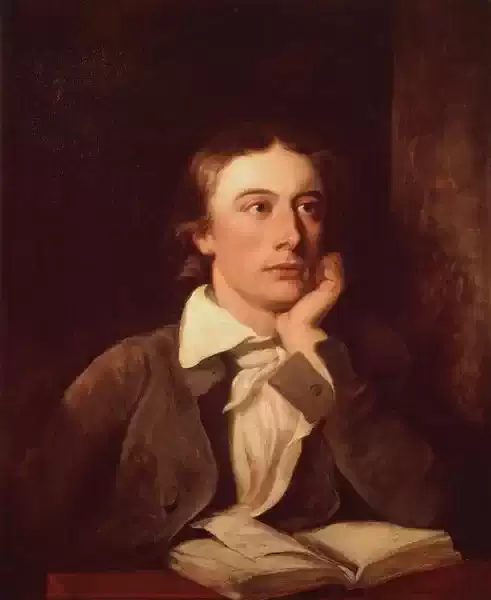
John Keats
Sonnet XI. On First Looking Into Chapman's Homer
Sonnet XI. On First Looking Into Chapman's Homer
Much have I travell'd in the realms of gold,
And many goodly states and kingdoms seen;
Round many western islands have I been
Which bards in fealty to Apollo hold.
Oft of one wide expanse had I been told
That deep-brow'd Homer ruled as his demesne;
Yet did I never breathe its pure serene
Till I heard Chapman speak out loud and bold:
Then felt I like some watcher of the skies
When a new planet swims into his ken;
Or like stout Cortez when with eagle eyes
He star'd at the Pacific -- and all his men
Look'd at each other with a wild surmise --
Silent, upon a peak in Darien.
Much have I travell'd in the realms of gold,
And many goodly states and kingdoms seen;
Round many western islands have I been
Which bards in fealty to Apollo hold.
Oft of one wide expanse had I been told
That deep-brow'd Homer ruled as his demesne;
Yet did I never breathe its pure serene
Till I heard Chapman speak out loud and bold:
Then felt I like some watcher of the skies
When a new planet swims into his ken;
Or like stout Cortez when with eagle eyes
He star'd at the Pacific -- and all his men
Look'd at each other with a wild surmise --
Silent, upon a peak in Darien.
432
John Keats
Sonnet XIII. Addressed To Haydon
Sonnet XIII. Addressed To Haydon
High-mindedness, a jealousy for good,
A loving-kindness for the great man's fame,
Dwells here and there with people of no name,
In noisome alley, and in pathless wood:
And where we think the truth least understood,
Oft may be found a 'singleness of aim,'
That ought to frighten into hooded shame
A money-mongering, pitiable brood.
How glorious this affection for the cause
Of steadfast genius, toiling gallantly!
What when a stout unbending champion awes
Envy and malice to their native sty?
Unnumbered souls breathe out a still applause,
Proud to behold him in his country's eye.
High-mindedness, a jealousy for good,
A loving-kindness for the great man's fame,
Dwells here and there with people of no name,
In noisome alley, and in pathless wood:
And where we think the truth least understood,
Oft may be found a 'singleness of aim,'
That ought to frighten into hooded shame
A money-mongering, pitiable brood.
How glorious this affection for the cause
Of steadfast genius, toiling gallantly!
What when a stout unbending champion awes
Envy and malice to their native sty?
Unnumbered souls breathe out a still applause,
Proud to behold him in his country's eye.
292
John Keats
King Stephen
King Stephen
A FRAGMENT OF A TRAGEDY
ACT I.
SCENE I. Field of Battle.
Alarum. Enter King STEPHEN, Knights, and Soldiers.
Stephen. If shame can on a soldier's vein-swoll’n front
Spread deeper crimson than the battle's toil,
Blush in your casing helmets! for see, see!
Yonder my chivalry, my pride of war,
Wrench'd with an iron hand from firm array,
Are routed loose about the plashy meads,
Of honour forfeit. O that my known voice
Could reach your dastard ears, and fright you more!
Fly, cowards, fly! Glocester is at your backs!
Throw your slack bridles o'er the flurried manes,
Ply well the rowel with faint trembling heels,
Scampering to death at last!
First Knight. The enemy
Bears his flaunt standard close upon their rear.
Second Knight. Sure of a bloody prey, seeing the fens
Will swamp them girth-deep.
Stephen. Over head and ears,
No matter! 'Tis a gallant enemy;
How like a comet he goes streaming on.
But we must plague him in the flank, hey, friends?
We are well breathed, follow!
Enter Earl BALDWIN and Soldiers, as defeated.
Stephen. De Redvers!
What is the monstrous bugbear that can fright
Baldwin?
Baldwin. No scare-crow, but the fortunate star
Of boisterous Chester, whose fell truncheon now
Points level to the goal of victory.
This way he comes, and if you would maintain
Your person unaffronted by vile odds,
Take horse, my Lord.
Stephen. And which way spur for life?
Now I thank Heaven I am in the toils,
That soldiers may bear witness how my arm
Can burst the meshes. Not the eagle more
Loves to beat up against a tyrannous blast,
Than I to meet the torrent of my foes.
This is a brag, be 't so, but if I fall,
Carve it upon my 'scutcheon'd sepulchre.
On, fellow soldiers! Earl of Redvers, back!
Not twenty Earls of Chester shall brow-beat
The diadem. [Exeunt. Alarum.
SCENE II. Another part of the Field.
Trumpets sounding a Victory. Enter GLOCESTER. Knights, and Forces.
Glocester. Now may we lift our bruised vizors up,
And take the flattering freshness of the air,
While the wide din of battle dies away
Into times past, yet to be echoed sure
In the silent pages of our chroniclers.
First Knight. Will Stephen's death be marked there, my good
Lord,
Or that we gave him lodging in yon towers?
Glocester. Fain would I know the great usurper's fate.
Enter two Captains severally.
First Captain. My Lord!
Second Captain. Most noble Earl!
First Captain. The King
Second Captain. The Empress greets
Glocester. What of the King?
First Captain. He sole and lone maintains
A hopeless bustle mid our swarming arms,
And with a nimble savageness attacks,
Escapes, makes fiercer onset, then anew
Eludes death, giving death to most that dare
Trespass within the circuit of his sword!
He must by this have fallen. Baldwin is taken;
And for the Duke of Bretagne, like a stag
He flies, for the Welsh beagles to hunt down.
God save the Empress!
Glocester. Now our dreaded Queen:
What message from her Highness?
Second Captain. Royal Maud
From the throng'd towers of Lincoln hath look'd down,
Like Pallas from the walls of Ilion,
And seen her enemies havock'd at her feet.
She greets most noble Glocester from her heart,
Intreating him, his captains, and brave knights,
To grace a banquet. The high city gates
Are envious which shall see your triumph pass;
The streets are full of music.
Enter Second Knight.
Glocester. Whence come you?
Second Knight. From Stephen, my good Prince, Stephen!
Stephen!
Glocester. Why do you make such echoing of his name?
Second Knight. Because I think, my lord, he is no man,
But a fierce demon, Anointed safe from wounds,
And misbaptized with a Christian name.
Glocester. A mighty soldier! Does he still hold out?
Second Knight. He shames our victory. His valour still
Keeps elbow-room amid our eager swords,
And holds our bladed falchions all aloof
His gleaming battle-axe being slaughter-sick,
Smote on the morion of a Flemish knight,
Broke short in his hand; upon the which he flung
The heft away with such a vengeful force,
It paunch'd the Earl of Chester's horse, who then
Spleen-hearted came in full career at him.
Glocester. Did no one take him at a vantage then?
Second Knight. Three then with tiger leap upon him flew,
Whom, with his sword swift-drawn and nimbly held,
He stung away again, and stood to breathe,
Smiling. Anon upon him rush'd once more
A throng of foes, and in this renew'd strife,
My sword met his and snapp'd off at the hilts.
Glocester. Come, lead me to this Mars and let us move
In silence, not insulting his sad doom
With clamorous trumpets. To the Empress bear
My salutation as befits the time.
[Exeunt GLOCESTER and Forces.
SCENE III. The Field of Battle. Enter STEPHEN unarmed.
Stephen. Another sword! And what if I could seize
One from Bellona's gleaming armoury,
Or choose the fairest of her sheaved spears!
Where are my enemies? Here, close at hand,
Here come the testy brood. O for a sword!
I'm faint a biting sword! A noble sword!
A hedge-stake or a ponderous stone to hurl
With brawny vengeance, like the labourer Cain.
Come on! Farewell my kingdom, and all hail
Thou superb, plum'd, and helmeted renown,
All hail I would not truck this brilliant day
To rule in Pylos with a Nestor's beard
Come on!
Enter DE KAIMS and Knights, &c.
De Kaims. Is 't madness, or a hunger after death,
That makes thee thus unarm'd throw taunts at us?
Yield, Stephen, or my sword's point dip in
'he gloomy current of a traitor's heart.
Stephen. Do it, De Kaims, I will not budge an inch.
De Kaims. Yes, of thy madness thou shalt take the meed.
Stephen. Darest thou?
De Kaims. How dare, against a man disarmed?
Stephen. What weapons has the lion but himself?
Come not near me, De Kaims, for by the price
Of all the glory I have won this day,
Being a king, I will not yield alive
To any but the second man of the realm,
Robert of Glocester.
De Kaims. Thou shalt vail to me.
Stephen. Shall I, when I have sworn against it, sir?
Thou think'st it brave to take a breathing king,
That, on a court-day bow'd to haughty Maud,
The awed presence-chamber may be bold
To whisper, there's the man who took alive
Stephen me prisoner. Certes, De Kaims,
The ambition is a noble one.
De Kaims. 'Tis true,
And, Stephen, I must compass it.
Stephen. No, no,
Do not tempt me to throttle you on the gorge,
Or with my gauntlet crush your hollow breast,
Just when your knighthood is grown ripe and full
For lordship.
A Soldier. Is an honest yeoman's spear
Of no use at a need? Take that.
Stephen. Ah, dastard!
De Kaims. What, you are vulnerable! my prisoner I
Stephen. No, not yet. I disclaim it, and demand
Death as a sovereign right unto a king
Who 'sdains to yield to any but his peer,
If not in title, yet in noble deeds,
The Earl of Glocester. Stab to the hilts, De Kaims,
For I will never by mean hands be led
From this so famous field. Do ye hear! Be quick!
[Trumpets. Enter the Earl of CHESTER and Knights.
SCENE IV. A Presence Chamber. Queen MAUD in a Chair of State, the
Earls of GLOCESTER and CHESTER, Lords, Attendants.
Maud. Glocester, no more: I will behold that Boulogne:
Set him before me. Not for the poor sake
Of regal pomp and a vain-glorious hour,
As thou with wary speech, yet near enough,
Hast hinted.
Glocester. Faithful counsel have I given ;
If wary, for your Highness' benefit.
Maud. The Heavens forbid that I should not think so,
For by thy valour have I won this realm,
Which by thy wisdom I will ever keep.
To sage advisers let me ever bend
'A meek attentive ear, so that they treat
Of the wide kingdom's rule and government,
Not trenching on our actions personal.
Advis'd, not school'd, I would be; and henceforth
Spoken to in clear, plain, and open terms,
Not side-ways sermon'd at.
Glocester. Then, in plain terms,
Once more for the fallen king
Maud. Your pardon, Brother,
I would no more of that; for, as I said,
‘Tis not for worldly pomp I wish to see
The rebel, but as dooming judge to give
A sentence something worthy of his guilt.
Glocester. If 't must be so, I'll bring him to your presence.
[Exit GLOCESTER,
Maud. A meaner summoner might do as well
My Lord of Chester, is 't true what I hear
Of Stephen of Boulogne, our prisoner,
That he, as a fit penance for his crimes,
Eats wholesome, sweet, and palatable food
Off Glocester's golden dishes drinks pure wine,
Lodgest soft?
Chester. More than that, my gracious Queen,
Has anger'd me. The noble Earl, methinks,
Full soldier as he is, and without peer
In counsel, dreams too much among his books.
It may read well, but sure 'tis out of date
To play the Alexander with Darius.
Maud. Truth! I think so. By Heavens it shall not last!
Chester. It would amaze your Highness now to mark
How Glocester overstrains his courtesy
To that crime-loving rebel, that Boulogne
Maud. That ingrate!
Chester. For whose vast ingratitude
To our late sovereign lord, your noble sire,
The generous Earl condoles in his mishaps,
And with a sort of lackeying friendliness,
Talks off the mighty frowning from his brow,
Woos him to hold a duet in a smile,
Or, if it please him, play an hour at chess
Maud. A perjured slave!
Chester. And for his perjury,
Glocester has fit rewards nay, I believe,
He sets his bustling household's wits at work
For flatteries to ease this Stephen's hours,
And make a heaven of his purgatory ;
Adorning bondage with the pleasant gloss
Of feasts and music, and all idle shows
Of indoor pageantry; while syren whispers,
Predestined for his ear, 'scape as half-check'd
From lips the courtliest and the rubiest
Of all the realm, admiring of his deeds.
Maud. A frost upon his summer!
Chester. A queen's nod
Can make his June December. Here he comes
A FRAGMENT OF A TRAGEDY
ACT I.
SCENE I. Field of Battle.
Alarum. Enter King STEPHEN, Knights, and Soldiers.
Stephen. If shame can on a soldier's vein-swoll’n front
Spread deeper crimson than the battle's toil,
Blush in your casing helmets! for see, see!
Yonder my chivalry, my pride of war,
Wrench'd with an iron hand from firm array,
Are routed loose about the plashy meads,
Of honour forfeit. O that my known voice
Could reach your dastard ears, and fright you more!
Fly, cowards, fly! Glocester is at your backs!
Throw your slack bridles o'er the flurried manes,
Ply well the rowel with faint trembling heels,
Scampering to death at last!
First Knight. The enemy
Bears his flaunt standard close upon their rear.
Second Knight. Sure of a bloody prey, seeing the fens
Will swamp them girth-deep.
Stephen. Over head and ears,
No matter! 'Tis a gallant enemy;
How like a comet he goes streaming on.
But we must plague him in the flank, hey, friends?
We are well breathed, follow!
Enter Earl BALDWIN and Soldiers, as defeated.
Stephen. De Redvers!
What is the monstrous bugbear that can fright
Baldwin?
Baldwin. No scare-crow, but the fortunate star
Of boisterous Chester, whose fell truncheon now
Points level to the goal of victory.
This way he comes, and if you would maintain
Your person unaffronted by vile odds,
Take horse, my Lord.
Stephen. And which way spur for life?
Now I thank Heaven I am in the toils,
That soldiers may bear witness how my arm
Can burst the meshes. Not the eagle more
Loves to beat up against a tyrannous blast,
Than I to meet the torrent of my foes.
This is a brag, be 't so, but if I fall,
Carve it upon my 'scutcheon'd sepulchre.
On, fellow soldiers! Earl of Redvers, back!
Not twenty Earls of Chester shall brow-beat
The diadem. [Exeunt. Alarum.
SCENE II. Another part of the Field.
Trumpets sounding a Victory. Enter GLOCESTER. Knights, and Forces.
Glocester. Now may we lift our bruised vizors up,
And take the flattering freshness of the air,
While the wide din of battle dies away
Into times past, yet to be echoed sure
In the silent pages of our chroniclers.
First Knight. Will Stephen's death be marked there, my good
Lord,
Or that we gave him lodging in yon towers?
Glocester. Fain would I know the great usurper's fate.
Enter two Captains severally.
First Captain. My Lord!
Second Captain. Most noble Earl!
First Captain. The King
Second Captain. The Empress greets
Glocester. What of the King?
First Captain. He sole and lone maintains
A hopeless bustle mid our swarming arms,
And with a nimble savageness attacks,
Escapes, makes fiercer onset, then anew
Eludes death, giving death to most that dare
Trespass within the circuit of his sword!
He must by this have fallen. Baldwin is taken;
And for the Duke of Bretagne, like a stag
He flies, for the Welsh beagles to hunt down.
God save the Empress!
Glocester. Now our dreaded Queen:
What message from her Highness?
Second Captain. Royal Maud
From the throng'd towers of Lincoln hath look'd down,
Like Pallas from the walls of Ilion,
And seen her enemies havock'd at her feet.
She greets most noble Glocester from her heart,
Intreating him, his captains, and brave knights,
To grace a banquet. The high city gates
Are envious which shall see your triumph pass;
The streets are full of music.
Enter Second Knight.
Glocester. Whence come you?
Second Knight. From Stephen, my good Prince, Stephen!
Stephen!
Glocester. Why do you make such echoing of his name?
Second Knight. Because I think, my lord, he is no man,
But a fierce demon, Anointed safe from wounds,
And misbaptized with a Christian name.
Glocester. A mighty soldier! Does he still hold out?
Second Knight. He shames our victory. His valour still
Keeps elbow-room amid our eager swords,
And holds our bladed falchions all aloof
His gleaming battle-axe being slaughter-sick,
Smote on the morion of a Flemish knight,
Broke short in his hand; upon the which he flung
The heft away with such a vengeful force,
It paunch'd the Earl of Chester's horse, who then
Spleen-hearted came in full career at him.
Glocester. Did no one take him at a vantage then?
Second Knight. Three then with tiger leap upon him flew,
Whom, with his sword swift-drawn and nimbly held,
He stung away again, and stood to breathe,
Smiling. Anon upon him rush'd once more
A throng of foes, and in this renew'd strife,
My sword met his and snapp'd off at the hilts.
Glocester. Come, lead me to this Mars and let us move
In silence, not insulting his sad doom
With clamorous trumpets. To the Empress bear
My salutation as befits the time.
[Exeunt GLOCESTER and Forces.
SCENE III. The Field of Battle. Enter STEPHEN unarmed.
Stephen. Another sword! And what if I could seize
One from Bellona's gleaming armoury,
Or choose the fairest of her sheaved spears!
Where are my enemies? Here, close at hand,
Here come the testy brood. O for a sword!
I'm faint a biting sword! A noble sword!
A hedge-stake or a ponderous stone to hurl
With brawny vengeance, like the labourer Cain.
Come on! Farewell my kingdom, and all hail
Thou superb, plum'd, and helmeted renown,
All hail I would not truck this brilliant day
To rule in Pylos with a Nestor's beard
Come on!
Enter DE KAIMS and Knights, &c.
De Kaims. Is 't madness, or a hunger after death,
That makes thee thus unarm'd throw taunts at us?
Yield, Stephen, or my sword's point dip in
'he gloomy current of a traitor's heart.
Stephen. Do it, De Kaims, I will not budge an inch.
De Kaims. Yes, of thy madness thou shalt take the meed.
Stephen. Darest thou?
De Kaims. How dare, against a man disarmed?
Stephen. What weapons has the lion but himself?
Come not near me, De Kaims, for by the price
Of all the glory I have won this day,
Being a king, I will not yield alive
To any but the second man of the realm,
Robert of Glocester.
De Kaims. Thou shalt vail to me.
Stephen. Shall I, when I have sworn against it, sir?
Thou think'st it brave to take a breathing king,
That, on a court-day bow'd to haughty Maud,
The awed presence-chamber may be bold
To whisper, there's the man who took alive
Stephen me prisoner. Certes, De Kaims,
The ambition is a noble one.
De Kaims. 'Tis true,
And, Stephen, I must compass it.
Stephen. No, no,
Do not tempt me to throttle you on the gorge,
Or with my gauntlet crush your hollow breast,
Just when your knighthood is grown ripe and full
For lordship.
A Soldier. Is an honest yeoman's spear
Of no use at a need? Take that.
Stephen. Ah, dastard!
De Kaims. What, you are vulnerable! my prisoner I
Stephen. No, not yet. I disclaim it, and demand
Death as a sovereign right unto a king
Who 'sdains to yield to any but his peer,
If not in title, yet in noble deeds,
The Earl of Glocester. Stab to the hilts, De Kaims,
For I will never by mean hands be led
From this so famous field. Do ye hear! Be quick!
[Trumpets. Enter the Earl of CHESTER and Knights.
SCENE IV. A Presence Chamber. Queen MAUD in a Chair of State, the
Earls of GLOCESTER and CHESTER, Lords, Attendants.
Maud. Glocester, no more: I will behold that Boulogne:
Set him before me. Not for the poor sake
Of regal pomp and a vain-glorious hour,
As thou with wary speech, yet near enough,
Hast hinted.
Glocester. Faithful counsel have I given ;
If wary, for your Highness' benefit.
Maud. The Heavens forbid that I should not think so,
For by thy valour have I won this realm,
Which by thy wisdom I will ever keep.
To sage advisers let me ever bend
'A meek attentive ear, so that they treat
Of the wide kingdom's rule and government,
Not trenching on our actions personal.
Advis'd, not school'd, I would be; and henceforth
Spoken to in clear, plain, and open terms,
Not side-ways sermon'd at.
Glocester. Then, in plain terms,
Once more for the fallen king
Maud. Your pardon, Brother,
I would no more of that; for, as I said,
‘Tis not for worldly pomp I wish to see
The rebel, but as dooming judge to give
A sentence something worthy of his guilt.
Glocester. If 't must be so, I'll bring him to your presence.
[Exit GLOCESTER,
Maud. A meaner summoner might do as well
My Lord of Chester, is 't true what I hear
Of Stephen of Boulogne, our prisoner,
That he, as a fit penance for his crimes,
Eats wholesome, sweet, and palatable food
Off Glocester's golden dishes drinks pure wine,
Lodgest soft?
Chester. More than that, my gracious Queen,
Has anger'd me. The noble Earl, methinks,
Full soldier as he is, and without peer
In counsel, dreams too much among his books.
It may read well, but sure 'tis out of date
To play the Alexander with Darius.
Maud. Truth! I think so. By Heavens it shall not last!
Chester. It would amaze your Highness now to mark
How Glocester overstrains his courtesy
To that crime-loving rebel, that Boulogne
Maud. That ingrate!
Chester. For whose vast ingratitude
To our late sovereign lord, your noble sire,
The generous Earl condoles in his mishaps,
And with a sort of lackeying friendliness,
Talks off the mighty frowning from his brow,
Woos him to hold a duet in a smile,
Or, if it please him, play an hour at chess
Maud. A perjured slave!
Chester. And for his perjury,
Glocester has fit rewards nay, I believe,
He sets his bustling household's wits at work
For flatteries to ease this Stephen's hours,
And make a heaven of his purgatory ;
Adorning bondage with the pleasant gloss
Of feasts and music, and all idle shows
Of indoor pageantry; while syren whispers,
Predestined for his ear, 'scape as half-check'd
From lips the courtliest and the rubiest
Of all the realm, admiring of his deeds.
Maud. A frost upon his summer!
Chester. A queen's nod
Can make his June December. Here he comes
487
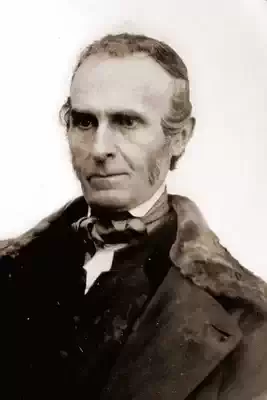
John Greenleaf Whittier
William Francis Bartlett
William Francis Bartlett
Oh, well may Essex sit forlorn
Beside her sea-blown shore;
Her well beloved, her noblest born,
Is hers in life no more!
No lapse of years can render less
Her memory's sacred claim;
No fountain of forgetfulness
Can wet the lips of Fame.
A grief alike to wound and heal,
A thought to soothe and pain,
The sad, sweet pride that mothers feel
To her must still remain.
Good men and true she has not lacked,
And brave men yet shall be;
The perfect flower, the crowning fact,
Of all her years was he!
As Galahad pure, as Merlin sage,
What worthier knight was found
To grace in Arthur's golden age
The fabled Table Round?
A voice, the battle's trumpet-note,
To welcome and restore;
A hand, that all unwilling smote,
To heal and build once more;
A soul of fire, a tender heart
Too warm for hate, he knew
The generous victor's graceful part
To sheathe the sword he drew.
When Earth, as if on evil dreams,
Looks back upon her wars,
And the white light of Christ outstreams
From the red disk of Mars,
His fame who led the stormy van
Of battle well may cease,
But never that which crowns the man
Whose victory was Peace.
Mourn, Essex, on thy sea-blown shore
Thy beautiful and brave,
Whose failing hand the olive bore,
Whose dying lips forgave!
Let age lament the youthful chief,
And tender eyes be dim;
The tears are more of joy than grief
That fall for one like him!
Oh, well may Essex sit forlorn
Beside her sea-blown shore;
Her well beloved, her noblest born,
Is hers in life no more!
No lapse of years can render less
Her memory's sacred claim;
No fountain of forgetfulness
Can wet the lips of Fame.
A grief alike to wound and heal,
A thought to soothe and pain,
The sad, sweet pride that mothers feel
To her must still remain.
Good men and true she has not lacked,
And brave men yet shall be;
The perfect flower, the crowning fact,
Of all her years was he!
As Galahad pure, as Merlin sage,
What worthier knight was found
To grace in Arthur's golden age
The fabled Table Round?
A voice, the battle's trumpet-note,
To welcome and restore;
A hand, that all unwilling smote,
To heal and build once more;
A soul of fire, a tender heart
Too warm for hate, he knew
The generous victor's graceful part
To sheathe the sword he drew.
When Earth, as if on evil dreams,
Looks back upon her wars,
And the white light of Christ outstreams
From the red disk of Mars,
His fame who led the stormy van
Of battle well may cease,
But never that which crowns the man
Whose victory was Peace.
Mourn, Essex, on thy sea-blown shore
Thy beautiful and brave,
Whose failing hand the olive bore,
Whose dying lips forgave!
Let age lament the youthful chief,
And tender eyes be dim;
The tears are more of joy than grief
That fall for one like him!
273
John Greenleaf Whittier
Voice Of New England
Voice Of New England
UP the hillside, down the glen,
Rouse the sleeping citizen;
Summon out the might of men!
Like a lion growling low,
Like a night-storm rising slow,
Like the tread of unseen foe;
It is coming, it is nigh!
Stand your homes and altars by;
On your own free thresholds die.
Clang the bells in all your spires;
On the gray hills of your sires
Fling to heaven your signal-fires.
From Wachuset, lone and bleak,
Unto Berkshire's tallest peak,
Let the flame-tougued heralds speak.
Oh, for God and duty stand,
Heart to heart and hand to hand,
Round the old graves of the land.
Whoso shrinks or falters now,
Whoso to the yoke would bow,
Brand the craven on his brow!
Freedom's soil hath only place
For a free and fearless race,
None for traitors false and base.
Perish party, perish clan;
Strike together while ye can,
Like the arm of one strong man.
Like that angel's voice sublime,
Heard above a world of crime,
Crying of the end of time;
With one heart and with one mouth,
Let the North unto the South
Speak the word befitting both:
'What though Issachar be strong!
Ye may load his back with wrong
Overmuch and over long:
'Patience with her cup o'errun,
With her weary thread outspun,
Murmurs that her work is done.
'Make our Union-bond a chain,
Weak as tow in Freedom's strain
Link by link shall snap in twain.
'Vainly shall your sand-wrought rope
Bind the starry cluster up,
Shattered over heaven's blue cope!
'Give us bright though broken rays,
Rather than eternal haze,
Clouding o'er the full-orbed blaze.
'Take your land of sun and bloom;
Only leave to Freedom room
For her plough, and forge, and loom;
'Take your slavery-blackened vales;
Leave us but our own free gales,
Blowing on our thousand sails.
'Boldly, or with treacherous art,
Strike the blood-wrought chain apart;
Break the Union's mighty heart;
'Work the ruin, if ye will;
Pluck upon your heads an ill
Which shall grow and deepen still.
'With your bondman's right arm bare,
With his heart of black despair,
Stand alone, if stand ye dare!
'Onward with your fell design;
Dig the gulf and draw the line:
Fire beneath your feet the mine:
'Deeply, when the wide abyss
Yawns between your land and this,
Shall ye feel your helplessness.
'By the hearth, and in the bed,
Shaken by a look or tread,
Ye shall own a guilty dread.
'And the curse of unpaid toil,
Downward through your generous soil
Like a fire shall burn and spoil.
'Our bleak hills shall bud and blow,
VInes our rocks shall overgrow,
Plenty in our valleys flow; —
'And when vengeance clouds your skies,
Hither shall ye turn your eyes,
As the lost on Paradise!
'We but ask our rocky strand,
Freedom's true and brother band,
Freedom's strong and honest hand;
'Valleys by the slave untrod,
And the Pilgrim's mountain sod,
Blessed of our fathers' God!'
UP the hillside, down the glen,
Rouse the sleeping citizen;
Summon out the might of men!
Like a lion growling low,
Like a night-storm rising slow,
Like the tread of unseen foe;
It is coming, it is nigh!
Stand your homes and altars by;
On your own free thresholds die.
Clang the bells in all your spires;
On the gray hills of your sires
Fling to heaven your signal-fires.
From Wachuset, lone and bleak,
Unto Berkshire's tallest peak,
Let the flame-tougued heralds speak.
Oh, for God and duty stand,
Heart to heart and hand to hand,
Round the old graves of the land.
Whoso shrinks or falters now,
Whoso to the yoke would bow,
Brand the craven on his brow!
Freedom's soil hath only place
For a free and fearless race,
None for traitors false and base.
Perish party, perish clan;
Strike together while ye can,
Like the arm of one strong man.
Like that angel's voice sublime,
Heard above a world of crime,
Crying of the end of time;
With one heart and with one mouth,
Let the North unto the South
Speak the word befitting both:
'What though Issachar be strong!
Ye may load his back with wrong
Overmuch and over long:
'Patience with her cup o'errun,
With her weary thread outspun,
Murmurs that her work is done.
'Make our Union-bond a chain,
Weak as tow in Freedom's strain
Link by link shall snap in twain.
'Vainly shall your sand-wrought rope
Bind the starry cluster up,
Shattered over heaven's blue cope!
'Give us bright though broken rays,
Rather than eternal haze,
Clouding o'er the full-orbed blaze.
'Take your land of sun and bloom;
Only leave to Freedom room
For her plough, and forge, and loom;
'Take your slavery-blackened vales;
Leave us but our own free gales,
Blowing on our thousand sails.
'Boldly, or with treacherous art,
Strike the blood-wrought chain apart;
Break the Union's mighty heart;
'Work the ruin, if ye will;
Pluck upon your heads an ill
Which shall grow and deepen still.
'With your bondman's right arm bare,
With his heart of black despair,
Stand alone, if stand ye dare!
'Onward with your fell design;
Dig the gulf and draw the line:
Fire beneath your feet the mine:
'Deeply, when the wide abyss
Yawns between your land and this,
Shall ye feel your helplessness.
'By the hearth, and in the bed,
Shaken by a look or tread,
Ye shall own a guilty dread.
'And the curse of unpaid toil,
Downward through your generous soil
Like a fire shall burn and spoil.
'Our bleak hills shall bud and blow,
VInes our rocks shall overgrow,
Plenty in our valleys flow; —
'And when vengeance clouds your skies,
Hither shall ye turn your eyes,
As the lost on Paradise!
'We but ask our rocky strand,
Freedom's true and brother band,
Freedom's strong and honest hand;
'Valleys by the slave untrod,
And the Pilgrim's mountain sod,
Blessed of our fathers' God!'
250
John Greenleaf Whittier
To William H. Seward
To William H. Seward
STATESMAN, I thank thee! and, if yet dissent
Mingles, reluctant, with my large content,
I cannot censure what was nobly meant.
But, while constrained to hold even Union less
Than Liberty and Truth and Righteousness,
I thank thee in the sweet and holy name
Of peace, for wise calm words that put to shame
Passion and party. Courage may be shown
Not in defiance of the wrong alone;
He may be bravest who, unweaponed, bears
The olive branch, and, strong in justice, spares
The rash wrong-doer, giving widest scope
To Christian charity and generous hope.
If, without damage to the sacred cause
Of Freedom and the safeguard of its laws —
If, without yielding that for which alone
We prize the Union, thou canst save it now
From a baptism of blood, upon thy brow
A wreath whose flowers no earthly soil have known,
Woven of the beatitudes, shall rest,
And the peacemaker be forever blest!
STATESMAN, I thank thee! and, if yet dissent
Mingles, reluctant, with my large content,
I cannot censure what was nobly meant.
But, while constrained to hold even Union less
Than Liberty and Truth and Righteousness,
I thank thee in the sweet and holy name
Of peace, for wise calm words that put to shame
Passion and party. Courage may be shown
Not in defiance of the wrong alone;
He may be bravest who, unweaponed, bears
The olive branch, and, strong in justice, spares
The rash wrong-doer, giving widest scope
To Christian charity and generous hope.
If, without damage to the sacred cause
Of Freedom and the safeguard of its laws —
If, without yielding that for which alone
We prize the Union, thou canst save it now
From a baptism of blood, upon thy brow
A wreath whose flowers no earthly soil have known,
Woven of the beatitudes, shall rest,
And the peacemaker be forever blest!
194
John Greenleaf Whittier
To Charles Sumner
To Charles Sumner
If I have seemed more prompt to censure wrong
Than praise the right; if seldom to thine ear
My voice hath mingled with the exultant cheer
Borne upon all our Northern winds along;
If I have failed to join the fickle throng
In wide-eyed wonder, that thou standest strong
In victory, surprised in thee to find
Brougham's scathing power with Canning's grace combined;
That he, for whom the ninefold Muses sang,
From their twined arms a giant athlete sprang,
Barbing the arrows of his native tongue
With the spent shafts Latona's archer flung,
To smite the Python of our land and time,
Fell as the monster born of Crissa's slime,
Like the blind bard who in Castalian springs
Tempered the steel that clove the crest of kings,
And on the shrine of England's freedom laid
The gifts of Cumve and of Delphi's' shade,-Small
need hast thou of words of praise from me.
Thou knowest my heart, dear friend, and well canst guess
That, even though silent, I have not the less
Rejoiced to see thy actual life agree
With the large future which I shaped for thee,
When, years ago, beside the summer sea,
White in the moon, we saw the long waves fall
Baffled and broken from the rocky wall,
That, to the menace of the brawling flood,
Opposed alone its massive quietude,
Calm as a fate; with not a leaf nor vine
Nor birch-spray trembling in the still moonshine,
Crowning it like God's peace. I sometimes think
That night-scene by the sea prophetical,
(For Nature speaks in symbols and in signs,
And through her pictures human fate divines),
That rock, wherefrom we saw the billows sink
In murmuring rout, uprising clear and tall
In the white light of heaven, the type of one
Who, momently by Error's host assailed,
Stands strong as Truth, in greaves of granite mailed;
And, tranquil-fronted, listening over all
The tumult, hears the angels say, Well done!
If I have seemed more prompt to censure wrong
Than praise the right; if seldom to thine ear
My voice hath mingled with the exultant cheer
Borne upon all our Northern winds along;
If I have failed to join the fickle throng
In wide-eyed wonder, that thou standest strong
In victory, surprised in thee to find
Brougham's scathing power with Canning's grace combined;
That he, for whom the ninefold Muses sang,
From their twined arms a giant athlete sprang,
Barbing the arrows of his native tongue
With the spent shafts Latona's archer flung,
To smite the Python of our land and time,
Fell as the monster born of Crissa's slime,
Like the blind bard who in Castalian springs
Tempered the steel that clove the crest of kings,
And on the shrine of England's freedom laid
The gifts of Cumve and of Delphi's' shade,-Small
need hast thou of words of praise from me.
Thou knowest my heart, dear friend, and well canst guess
That, even though silent, I have not the less
Rejoiced to see thy actual life agree
With the large future which I shaped for thee,
When, years ago, beside the summer sea,
White in the moon, we saw the long waves fall
Baffled and broken from the rocky wall,
That, to the menace of the brawling flood,
Opposed alone its massive quietude,
Calm as a fate; with not a leaf nor vine
Nor birch-spray trembling in the still moonshine,
Crowning it like God's peace. I sometimes think
That night-scene by the sea prophetical,
(For Nature speaks in symbols and in signs,
And through her pictures human fate divines),
That rock, wherefrom we saw the billows sink
In murmuring rout, uprising clear and tall
In the white light of heaven, the type of one
Who, momently by Error's host assailed,
Stands strong as Truth, in greaves of granite mailed;
And, tranquil-fronted, listening over all
The tumult, hears the angels say, Well done!
326
John Greenleaf Whittier
Thy Will Be Done
Thy Will Be Done
WE see not, know not; all our way
Is night, — with Thee alone is day:
From out the torrent's troubled drift,
Above the storm our prayers we lift,
Thy will be done!
The flesh may fail, the heart may faint,
But who are we to make complaint,
Or dare to plead, in times like these,
The weakness of our love of ease?
Thy will be done!
We take with solemn thankfulness
Our burden up, nor ask it less,
And count it joy that even we
May suffer, serve, or wait for Thee,
Whose will be done!
Though dim as yet in tint and line,
We trace Thy picture's wise design,
And thank Thee that our age supplies
Its dark relief of sacrifice.
Thy will be done!
And if, in our unworthiness,
Thy sacrificial wine we press;
If from Thy ordeal's heated bars
Our feet are seamed with crimson scars,
Thy will be done!
If, for the age to come, this hour
Of trial hath vicarious power,
And, blest by Thee, our present pain,
Be Liberty's eternal gain,
Thy will be done!
Strike, Thou the Master, we Thy keys,
The anthem of the destinies!
The minor of Thy loftier strain,
Our hearts shall breathe the old refrain,
Thy will be done!
WE see not, know not; all our way
Is night, — with Thee alone is day:
From out the torrent's troubled drift,
Above the storm our prayers we lift,
Thy will be done!
The flesh may fail, the heart may faint,
But who are we to make complaint,
Or dare to plead, in times like these,
The weakness of our love of ease?
Thy will be done!
We take with solemn thankfulness
Our burden up, nor ask it less,
And count it joy that even we
May suffer, serve, or wait for Thee,
Whose will be done!
Though dim as yet in tint and line,
We trace Thy picture's wise design,
And thank Thee that our age supplies
Its dark relief of sacrifice.
Thy will be done!
And if, in our unworthiness,
Thy sacrificial wine we press;
If from Thy ordeal's heated bars
Our feet are seamed with crimson scars,
Thy will be done!
If, for the age to come, this hour
Of trial hath vicarious power,
And, blest by Thee, our present pain,
Be Liberty's eternal gain,
Thy will be done!
Strike, Thou the Master, we Thy keys,
The anthem of the destinies!
The minor of Thy loftier strain,
Our hearts shall breathe the old refrain,
Thy will be done!
326
John Greenleaf Whittier
The Vow Of Washington
The Vow Of Washington
The sword was sheathed: in April's sun
Lay green the fields by Freedom won;
And severed sections, weary of debates,
Joined hands at last and were United States.
O City sitting by the Sea
How proud the day that dawned on thee,
When the new era, long desired, began,
And, in its need, the hour had found the man!
One thought the cannon salvos spoke,
The resonant bell-tower's vibrant stroke,
The voiceful streets, the plaudit-echoing halls,
And prayer and hymn borne heavenward from St. Paul's!
How felt the land in every part
The strong throb of a nation's heart,
As its great leader gave, with reverent awe,
His pledge to Union, Liberty, and Law.
That pledge the heavens above him heard,
That vow the sleep of centuries stirred;
In world-wide wonder listening peoples bent
Their gaze on Freedom's great experiment.
Could it succeed? Of honor sold
And hopes deceived all history told.
Above the wrecks that strewed the mournful past,
Was the long dream of ages true at last?
Thank God! the people's choice was just,
The one man equal to his trust,
Wise beyond lore, and without weakness good,
Calm in the strength of flawless rectitude.
His rule of justice, order, peace,
Made possible the world's release;
Taught prince and serf that power is but a trust,
And rule, alone, which serves the ruled, is just;
That Freedom generous is, but strong
In hate of fraud and selfish wrong,
Pretence that turns her holy truths to lies,
And lawless license masking in her guise.
Land of his love! with one glad voice
Let thy great sisterhood rejoice;
A century's suns o'er thee have risen and set,
And, God be praised, we are one nation yet.
And still we trust the years to be
Shall prove his hope was destiny,
Leaving our flag, with all its added stars,
Unrent by faction and unstained by wars.
Lo! where with patient toil he nursed
And trained the new-set plant at first,
The widening branches of a stately tree
Stretch from the sunrise to the sunset sea.
And in its broad and sheltering shade,
Sitting with none to make afraid,
Were we now silent, through each mighty limb,
The winds of heaven would sing the praise of him.
Our first and best!--his ashes lie
Beneath his own Virginian sky.
Forgive, forget, O true and just and brave,
The storm that swept above thy sacred grave.
For, ever in the awful strife
And dark hours of the nation's life,
Through the fierce tumult pierced his warning word,
Their father's voice his erring children heard.
The change for which he prayed and sought
In that sharp agony was wrought;
No partial interest draws its alien line
'Twixt North and South, the cypress and the pine!
One people now, all doubt beyond,
His name shall be our Union-bond;
We lift our hands to Heaven, and here and now.
Take on our lips the old Centennial vow.
For rule and trust must needs be ours;
Chooser and chosen both are powers
Equal in service as in rights; the claim
Of Duty rests on each and all the same.
Then let the sovereign millions, where
Our banner floats in sun and air,
From the warm palm-lands to Alaska's cold,
Repeat with us the pledge a century old?
The sword was sheathed: in April's sun
Lay green the fields by Freedom won;
And severed sections, weary of debates,
Joined hands at last and were United States.
O City sitting by the Sea
How proud the day that dawned on thee,
When the new era, long desired, began,
And, in its need, the hour had found the man!
One thought the cannon salvos spoke,
The resonant bell-tower's vibrant stroke,
The voiceful streets, the plaudit-echoing halls,
And prayer and hymn borne heavenward from St. Paul's!
How felt the land in every part
The strong throb of a nation's heart,
As its great leader gave, with reverent awe,
His pledge to Union, Liberty, and Law.
That pledge the heavens above him heard,
That vow the sleep of centuries stirred;
In world-wide wonder listening peoples bent
Their gaze on Freedom's great experiment.
Could it succeed? Of honor sold
And hopes deceived all history told.
Above the wrecks that strewed the mournful past,
Was the long dream of ages true at last?
Thank God! the people's choice was just,
The one man equal to his trust,
Wise beyond lore, and without weakness good,
Calm in the strength of flawless rectitude.
His rule of justice, order, peace,
Made possible the world's release;
Taught prince and serf that power is but a trust,
And rule, alone, which serves the ruled, is just;
That Freedom generous is, but strong
In hate of fraud and selfish wrong,
Pretence that turns her holy truths to lies,
And lawless license masking in her guise.
Land of his love! with one glad voice
Let thy great sisterhood rejoice;
A century's suns o'er thee have risen and set,
And, God be praised, we are one nation yet.
And still we trust the years to be
Shall prove his hope was destiny,
Leaving our flag, with all its added stars,
Unrent by faction and unstained by wars.
Lo! where with patient toil he nursed
And trained the new-set plant at first,
The widening branches of a stately tree
Stretch from the sunrise to the sunset sea.
And in its broad and sheltering shade,
Sitting with none to make afraid,
Were we now silent, through each mighty limb,
The winds of heaven would sing the praise of him.
Our first and best!--his ashes lie
Beneath his own Virginian sky.
Forgive, forget, O true and just and brave,
The storm that swept above thy sacred grave.
For, ever in the awful strife
And dark hours of the nation's life,
Through the fierce tumult pierced his warning word,
Their father's voice his erring children heard.
The change for which he prayed and sought
In that sharp agony was wrought;
No partial interest draws its alien line
'Twixt North and South, the cypress and the pine!
One people now, all doubt beyond,
His name shall be our Union-bond;
We lift our hands to Heaven, and here and now.
Take on our lips the old Centennial vow.
For rule and trust must needs be ours;
Chooser and chosen both are powers
Equal in service as in rights; the claim
Of Duty rests on each and all the same.
Then let the sovereign millions, where
Our banner floats in sun and air,
From the warm palm-lands to Alaska's cold,
Repeat with us the pledge a century old?
253
John Greenleaf Whittier
The Pipes At Lucknow
The Pipes At Lucknow
Pipes of the misty moorlands,
Voice of the glens and hills;
The droning of the torrents,
The treble of the rills!
Not the braes of bloom and heather,
Nor the mountains dark with rain,
Nor maiden bower, nor border tower,
Have heard your sweetest strain!
Dear to the Lowland reaper,
And plaided mountaineer, To
the cottage and the castle
The Scottish pipes are dear; Sweet
sounds the ancient pibroch
O'er mountain, loch, and glade;
But the sweetest of all music
The pipes at Lucknow played.
Day by day the Indian tiger
Louder yelled, and nearer crept;
Round and round the jungle-serpent
Near and nearer circles swept.
'Pray for rescue, wives and mothers, Pray
to-day!' the soldier said;
'To-morrow, death's between us
And the wrong and shame we dread.'
Oh, they listened, looked, and waited,
Till their hope became despair;
And the sobs of low bewailing
Filled the pauses of their prayer.
Then up spake a Scottish maiden.
With her ear unto the ground:
'Dinna ye hear it? - dinna ye hear it?
The pipes o' Havelock sound!'
Hushed the wounded man his groaning;
Hushed the wife her little ones;
Alone they heard the drum-roll
And the roar of Sepoy guns.
But to sounds of home and childhood
The Highland ear was true; As
her mother's cradle-crooning
The mountain pipes she knew.
Like the march of soundless music
Through the vision of the seer,
More of feeling than of hearing,
Of the heart than of the ear,
She knew the droning pibroch,
She knew the Campbell's call:
'Hark! hear ye no MacGregor's,
The grandest o' them all!'
Oh, they listened, dumb and breathless,
And they caught the sound at last;
Faint and far beyond the Goomtee
Rose and fell the piper's blast!
Then a burst of wild thanksgiving
Mingled woman's voice and man's;
'God be praised! - the march of Havelock!
The piping of the clans!'
Louder, nearer, fierce as vengeance,
Sharp and shrill as swords at strife,
Came the wild MacGregor's clan-call,
Stinging all the air to life.
But when the far-off dust-cloud
To plaided legions grew,
Full tenderly and blithesomely
The pipes of rescue blew!
Round the silver domes of Lucknow.
Moslem mosque and Pagan shrine,
Breathed the air to Britons dearest,
The air of Auld Lang Syne.
O'er the cruel roll of war-drums
Rose that sweet and homelike strain;
And the tartan clove the turban,
As the Goomtee cleaves the plain.
Dear to the corn-land reaper
And plaided mountaineer, To
the cottage and the castle
The piper's song is dear.
Sweet sounds the Gaelic pibroch
O'er mountain, glen, and glade;
But the sweetest of all music
The pipes at Lucknow played!
Pipes of the misty moorlands,
Voice of the glens and hills;
The droning of the torrents,
The treble of the rills!
Not the braes of bloom and heather,
Nor the mountains dark with rain,
Nor maiden bower, nor border tower,
Have heard your sweetest strain!
Dear to the Lowland reaper,
And plaided mountaineer, To
the cottage and the castle
The Scottish pipes are dear; Sweet
sounds the ancient pibroch
O'er mountain, loch, and glade;
But the sweetest of all music
The pipes at Lucknow played.
Day by day the Indian tiger
Louder yelled, and nearer crept;
Round and round the jungle-serpent
Near and nearer circles swept.
'Pray for rescue, wives and mothers, Pray
to-day!' the soldier said;
'To-morrow, death's between us
And the wrong and shame we dread.'
Oh, they listened, looked, and waited,
Till their hope became despair;
And the sobs of low bewailing
Filled the pauses of their prayer.
Then up spake a Scottish maiden.
With her ear unto the ground:
'Dinna ye hear it? - dinna ye hear it?
The pipes o' Havelock sound!'
Hushed the wounded man his groaning;
Hushed the wife her little ones;
Alone they heard the drum-roll
And the roar of Sepoy guns.
But to sounds of home and childhood
The Highland ear was true; As
her mother's cradle-crooning
The mountain pipes she knew.
Like the march of soundless music
Through the vision of the seer,
More of feeling than of hearing,
Of the heart than of the ear,
She knew the droning pibroch,
She knew the Campbell's call:
'Hark! hear ye no MacGregor's,
The grandest o' them all!'
Oh, they listened, dumb and breathless,
And they caught the sound at last;
Faint and far beyond the Goomtee
Rose and fell the piper's blast!
Then a burst of wild thanksgiving
Mingled woman's voice and man's;
'God be praised! - the march of Havelock!
The piping of the clans!'
Louder, nearer, fierce as vengeance,
Sharp and shrill as swords at strife,
Came the wild MacGregor's clan-call,
Stinging all the air to life.
But when the far-off dust-cloud
To plaided legions grew,
Full tenderly and blithesomely
The pipes of rescue blew!
Round the silver domes of Lucknow.
Moslem mosque and Pagan shrine,
Breathed the air to Britons dearest,
The air of Auld Lang Syne.
O'er the cruel roll of war-drums
Rose that sweet and homelike strain;
And the tartan clove the turban,
As the Goomtee cleaves the plain.
Dear to the corn-land reaper
And plaided mountaineer, To
the cottage and the castle
The piper's song is dear.
Sweet sounds the Gaelic pibroch
O'er mountain, glen, and glade;
But the sweetest of all music
The pipes at Lucknow played!
239
John Greenleaf Whittier
The Hero
The Hero
'O for a knight like Bayard,
Without reproach or fear;
My light glove on his casque of steel,
My love-knot on his spear!
'O for the white plume floating
Sad Zutphen's field above,
The lion heart in battle,
The woman's heart in love!
'O that man once more were manly,
Woman's pride, and not her scorn
That once more the pale young mother
Dared to boast `a man is born'!
'But, now life's slumberous current
No sun-bowed cascade wakes;
No tall, heroic manhood
The level dulness breaks.
'O for a knight like Bayard,
Without reproach or fear!
My light glove on his casque of steel
My love-knot on his spear!'
Then I said, my own heart throbbing
To the time her proud pulse beat,
'Life hath its regal natures yet,True,
tender, brave, and sweet!
'Smile not, fair unbeliever!
One man, at least, I know,
Who might wear the crest of Bayard
Or Sydney's plume of snow.
'Once, when over purple mountains
Died away the Grecian sun,
And the far Cyllenian ranges
Paled and darkened, one by one,
'Fell the Turk, a bolt of thunder,
Cleaving all the quiet sky,
And against his sharp steel lightnings
Stood the Suliote but to die.
'Woe for the weak and halting!
The crescent blazed behind
A curving line of sabres
Like fire before the wind!
'Last to fly, and first to rally,
Rode he of whom I speak,
When, groaning in his bridle path,
Sank down like a wounded Greek.
'With the rich Albanian costume
Wet with many a ghastly stain,
Gazing on earth and sky as one
Who might not gaze again!
'He looked forward to the mountains,
Back on foes that never spare,
Then flung him from his saddle,
And place the stranger there.
''Allah! hu!' Through flashing sabres,
Through a stormy hail of lead,
The good Thessalian charger
Up the slopes of olives sped.
'Hot spurred the turbaned riders;
He almost felt their breath,
Where a mountain stream rolled darkly down
Between the hills and death.
'One brave and manful struggle,He
gained the solid land,
And the cover of the mountains,
And the carbines of his band!'
'It was very great and noble,'
Said the moist-eyed listener then,
'But one brave deed makes no hero;
Tell me what he since hath been!'
'Still a brave and generous manhood,
Still and honor without stain,
In the prison of the Kaiser,
By the barricades of Seine.
'But dream not helm and harness
The sign of valor true;
Peace bath higher tests of manhood
Than battle ever knew.
'Wouldst know him now? Behold him,
The Cadmus of the blind,
Giving the dumb lip language,
The idiot clay a mind.
'Walking his round of duty
Serenely day by day,
With the strong man's hand of labor
And childhood's heart of play.
'True as the knights of story,
Sir Lancelot and his peers,
Brave in his calm endurance
As they in tilt of spears.
'As waves in stillest waters,
As stars in noonday skies,
All that wakes to noble action
In his noon of calmness lies.
'Wherever outraged Nature
Asks word or action brave,
Wherever struggles labor,
Wherever groans a slave,
'Wherever rise the peoples,
Wherever sinks a throne,
The throbbing heart of Freedom finds
An answer in his own.
'Knight of a better era,
Without reproach or fear!
Said I not well that Bayards
And Sidneys still are here?
'O for a knight like Bayard,
Without reproach or fear;
My light glove on his casque of steel,
My love-knot on his spear!
'O for the white plume floating
Sad Zutphen's field above,
The lion heart in battle,
The woman's heart in love!
'O that man once more were manly,
Woman's pride, and not her scorn
That once more the pale young mother
Dared to boast `a man is born'!
'But, now life's slumberous current
No sun-bowed cascade wakes;
No tall, heroic manhood
The level dulness breaks.
'O for a knight like Bayard,
Without reproach or fear!
My light glove on his casque of steel
My love-knot on his spear!'
Then I said, my own heart throbbing
To the time her proud pulse beat,
'Life hath its regal natures yet,True,
tender, brave, and sweet!
'Smile not, fair unbeliever!
One man, at least, I know,
Who might wear the crest of Bayard
Or Sydney's plume of snow.
'Once, when over purple mountains
Died away the Grecian sun,
And the far Cyllenian ranges
Paled and darkened, one by one,
'Fell the Turk, a bolt of thunder,
Cleaving all the quiet sky,
And against his sharp steel lightnings
Stood the Suliote but to die.
'Woe for the weak and halting!
The crescent blazed behind
A curving line of sabres
Like fire before the wind!
'Last to fly, and first to rally,
Rode he of whom I speak,
When, groaning in his bridle path,
Sank down like a wounded Greek.
'With the rich Albanian costume
Wet with many a ghastly stain,
Gazing on earth and sky as one
Who might not gaze again!
'He looked forward to the mountains,
Back on foes that never spare,
Then flung him from his saddle,
And place the stranger there.
''Allah! hu!' Through flashing sabres,
Through a stormy hail of lead,
The good Thessalian charger
Up the slopes of olives sped.
'Hot spurred the turbaned riders;
He almost felt their breath,
Where a mountain stream rolled darkly down
Between the hills and death.
'One brave and manful struggle,He
gained the solid land,
And the cover of the mountains,
And the carbines of his band!'
'It was very great and noble,'
Said the moist-eyed listener then,
'But one brave deed makes no hero;
Tell me what he since hath been!'
'Still a brave and generous manhood,
Still and honor without stain,
In the prison of the Kaiser,
By the barricades of Seine.
'But dream not helm and harness
The sign of valor true;
Peace bath higher tests of manhood
Than battle ever knew.
'Wouldst know him now? Behold him,
The Cadmus of the blind,
Giving the dumb lip language,
The idiot clay a mind.
'Walking his round of duty
Serenely day by day,
With the strong man's hand of labor
And childhood's heart of play.
'True as the knights of story,
Sir Lancelot and his peers,
Brave in his calm endurance
As they in tilt of spears.
'As waves in stillest waters,
As stars in noonday skies,
All that wakes to noble action
In his noon of calmness lies.
'Wherever outraged Nature
Asks word or action brave,
Wherever struggles labor,
Wherever groans a slave,
'Wherever rise the peoples,
Wherever sinks a throne,
The throbbing heart of Freedom finds
An answer in his own.
'Knight of a better era,
Without reproach or fear!
Said I not well that Bayards
And Sidneys still are here?
242
John Greenleaf Whittier
The Golden Wedding Of Longwood
The Golden Wedding Of Longwood
With fifty years between you and your well-kept wedding vow,
The Golden Age, old friends of mine, is not a fable now.
And, sweet as has life's vintage been through all your pleasant past,
Still, as at Cana's marriage-feast, the best wine is the last!
Again before me, with your names, fair Chester's landscape comes,
Its meadows, woods, and ample barns, and quaint, stone-builded homes.
The smooth-shorn vales, the wheaten slopes, the boscage green and soft,
Of which their poet sings so well from towered Cedarcroft.
And lo! from all the country-side come neighbors, kith and kin;
From city, hamlet, farm-house old, the wedding guests come in.
And they who, without scrip or purse, mob-hunted, travel-worn,
In Freedom's age of martyrs came, as victors now return.
Older and slower, yet the same, files in the long array,
And hearts are light and eyes are glad, though heads are badger-gray.
The fire-tried men of Thirty-eight who saw with me the fall,
Midst roaring flames and shouting mob, of Pennsylvania Hall;
And they of Lancaster who turned the cheeks of tyrants pale,
Singing of freedom through the grates of Moyamensing jail!
And haply with them, all unseen, old comrades, gone before,
Pass, silently as shadows pass, within your open door,-
The eagle face of Lindley Coates, brave Garrett's daring zeal,
Christian grace of Pennock, the steadfast heart of Neal.
Ah me! beyond all power to name, the worthies tried and true,
Grave men, fair women, youth and maid, pass by in hushed review.
Of varying faiths, a common cause fused all their hearts in one.
God give them now, whate'er their names, the peace of duty done!
How gladly would I tread again the old-remembered places,
Sit down beside your hearth once more and look in the dear old faces!
And thank you for the lessons your fifty years are teaching,
For honest lives that louder speak than half our noisy preaching;
For your steady faith and courage in that dark and evil time,
When the Golden Rule was treason, and to feed the hungry, crime;
For the poor slave's house of refuge when the hounds were on his track,
And saint and sinner, church and state, joined hands to send him back.
Blessings upon you!--What you did for each sad, suffering one,
So homeless, faint, and naked, unto our Lord was done!
Fair fall on Kennett's pleasant vales and Longwood's bowery ways
The mellow sunset of your lives, friends of my early days.
May many more of quiet years be added to your sum,
And, late at last, in tenderest love, the beckoning angel come.
Dear hearts are here, dear hearts are there, alike below, above;
Our friends are now in either world, and love is sure of love.
With fifty years between you and your well-kept wedding vow,
The Golden Age, old friends of mine, is not a fable now.
And, sweet as has life's vintage been through all your pleasant past,
Still, as at Cana's marriage-feast, the best wine is the last!
Again before me, with your names, fair Chester's landscape comes,
Its meadows, woods, and ample barns, and quaint, stone-builded homes.
The smooth-shorn vales, the wheaten slopes, the boscage green and soft,
Of which their poet sings so well from towered Cedarcroft.
And lo! from all the country-side come neighbors, kith and kin;
From city, hamlet, farm-house old, the wedding guests come in.
And they who, without scrip or purse, mob-hunted, travel-worn,
In Freedom's age of martyrs came, as victors now return.
Older and slower, yet the same, files in the long array,
And hearts are light and eyes are glad, though heads are badger-gray.
The fire-tried men of Thirty-eight who saw with me the fall,
Midst roaring flames and shouting mob, of Pennsylvania Hall;
And they of Lancaster who turned the cheeks of tyrants pale,
Singing of freedom through the grates of Moyamensing jail!
And haply with them, all unseen, old comrades, gone before,
Pass, silently as shadows pass, within your open door,-
The eagle face of Lindley Coates, brave Garrett's daring zeal,
Christian grace of Pennock, the steadfast heart of Neal.
Ah me! beyond all power to name, the worthies tried and true,
Grave men, fair women, youth and maid, pass by in hushed review.
Of varying faiths, a common cause fused all their hearts in one.
God give them now, whate'er their names, the peace of duty done!
How gladly would I tread again the old-remembered places,
Sit down beside your hearth once more and look in the dear old faces!
And thank you for the lessons your fifty years are teaching,
For honest lives that louder speak than half our noisy preaching;
For your steady faith and courage in that dark and evil time,
When the Golden Rule was treason, and to feed the hungry, crime;
For the poor slave's house of refuge when the hounds were on his track,
And saint and sinner, church and state, joined hands to send him back.
Blessings upon you!--What you did for each sad, suffering one,
So homeless, faint, and naked, unto our Lord was done!
Fair fall on Kennett's pleasant vales and Longwood's bowery ways
The mellow sunset of your lives, friends of my early days.
May many more of quiet years be added to your sum,
And, late at last, in tenderest love, the beckoning angel come.
Dear hearts are here, dear hearts are there, alike below, above;
Our friends are now in either world, and love is sure of love.
284
John Greenleaf Whittier
The Fishermen
The Fishermen
HURRAH! the seaward breezes
Sweep down the bay amain;
Heave up, my lads, the anchor!
Run up the sail again!
Leave to the lubber landsmen
The rail-car and the steed;
The stars of heaven shall guide us,
The breath of heaven shall speed.
From the hill-top looks the steeple,
And the lighthouse from the sand;
And the scattered pines are waving
Their farewell from the land.
One glance, my lads, behind us,
For the homes we leave one sigh,
Ere we take the change and chances
Of the ocean and the sky.
Now, brothers, for the icebergs
Of frozen Labrador,
Floating spectral in the moonshine,
Along the low, black shore!
Where like snow the gannet's feathers
On Brador's rocks are shed,
And the noisy murr are flying,
Like black scuds, overhead;
Where in mist the rock is hiding,
And the sharp reef lurks below,
And the white squall smites in summer,
And the autumn tempests blow;
Where, through gray and rolling vapor,
From evening unto morn,
A thousand, boats are hailing,
Horn answering unto horn.
Hurrah! for the Red Island,
With the white cross on its crown!
Hurrah! for Meccatina,
And its mountains bare and brown!
Where the Caribou's tall antlers
O'er the dwarf-wood freely toss,
And the footstep of the Mickmack
Has no sound upon the moss.
There we'll drop our lines, and gather
Old Ocean's treasures in,
Where'er the mottled mackerel
Turns up a steel-dark fin.
The sea's our field of harvest,
Its scaly tribes our grain;
We'll reap the teeming waters
As at home they reap the plain!
Our wet hands spread the carpet,
And light the hearth of home;
From our fish, as in the old time,
The silver coin shall come.
As the demon fled the chamber
Where the fish of Tobit lay,
So ours from all our dwellings
Shall frighten Want away.
Though the mist upon our jackets
In the bitter air congeals,
And our lines wind stiff and slowly
From off the frozen reels;
Though the fog be dark around us,
And the storm blow high and loud,
We will whistle down the wild wind,
And laugh beneath the cloud!
In the darkness as in daylight,
On the water as on land,
God's eye is looking on us,
And beneath us is His hand!
Death will find us soon or later,
On the deck or in the cot;
And we cannot meet him better
Than in working out our lot.
Hurrah! hurrah! the west-wind
Comes freshening down the bay,
The rising sails are filling;
Give way, my lads, give way!
Leave the coward landsman clinging
To the dull earth, like a weed;
The stars of heaven shall guide us,
The breath of heaven shall speed!
HURRAH! the seaward breezes
Sweep down the bay amain;
Heave up, my lads, the anchor!
Run up the sail again!
Leave to the lubber landsmen
The rail-car and the steed;
The stars of heaven shall guide us,
The breath of heaven shall speed.
From the hill-top looks the steeple,
And the lighthouse from the sand;
And the scattered pines are waving
Their farewell from the land.
One glance, my lads, behind us,
For the homes we leave one sigh,
Ere we take the change and chances
Of the ocean and the sky.
Now, brothers, for the icebergs
Of frozen Labrador,
Floating spectral in the moonshine,
Along the low, black shore!
Where like snow the gannet's feathers
On Brador's rocks are shed,
And the noisy murr are flying,
Like black scuds, overhead;
Where in mist the rock is hiding,
And the sharp reef lurks below,
And the white squall smites in summer,
And the autumn tempests blow;
Where, through gray and rolling vapor,
From evening unto morn,
A thousand, boats are hailing,
Horn answering unto horn.
Hurrah! for the Red Island,
With the white cross on its crown!
Hurrah! for Meccatina,
And its mountains bare and brown!
Where the Caribou's tall antlers
O'er the dwarf-wood freely toss,
And the footstep of the Mickmack
Has no sound upon the moss.
There we'll drop our lines, and gather
Old Ocean's treasures in,
Where'er the mottled mackerel
Turns up a steel-dark fin.
The sea's our field of harvest,
Its scaly tribes our grain;
We'll reap the teeming waters
As at home they reap the plain!
Our wet hands spread the carpet,
And light the hearth of home;
From our fish, as in the old time,
The silver coin shall come.
As the demon fled the chamber
Where the fish of Tobit lay,
So ours from all our dwellings
Shall frighten Want away.
Though the mist upon our jackets
In the bitter air congeals,
And our lines wind stiff and slowly
From off the frozen reels;
Though the fog be dark around us,
And the storm blow high and loud,
We will whistle down the wild wind,
And laugh beneath the cloud!
In the darkness as in daylight,
On the water as on land,
God's eye is looking on us,
And beneath us is His hand!
Death will find us soon or later,
On the deck or in the cot;
And we cannot meet him better
Than in working out our lot.
Hurrah! hurrah! the west-wind
Comes freshening down the bay,
The rising sails are filling;
Give way, my lads, give way!
Leave the coward landsman clinging
To the dull earth, like a weed;
The stars of heaven shall guide us,
The breath of heaven shall speed!
282
John Greenleaf Whittier
The Exiles. 1660
The Exiles. 1660
The goodman sat beside his door
One sultry afternoon,
With his young wife singing at his side
An old and goodly tune.
A glimmer of heat was in the air,The
dark green woods were still;
And the skirts of a heavy thunder-cloud
Hung over the western hill.
Black, thick, and vast arose that cloud
Above the wilderness,
As some dark world from upper air
Were stooping over this.
At times the solemn thunder pealed,
And all was still again,
Save a low murmur in the air
Of coming wind and rain.
Just as the first big rain-drop fell,
A weary stranger came,
And stood before the farmer's door,
With travel soiled and lame.
Sad seemed he, yet sustaining hope
Was in his quiet glance,
And peace, like autumn's moonlight, clothed
His tranquil countenance,
A look, like that his Master wore
In Pilate's council-hall:
It told of wrongs, but of a love
Meekly forgiving all.
'Friend! wilt thou give me shelter here?'
The stranger meekly said;
And, leaning on his oaken staff,
The goodman's features read.
'My life is hunted,-evil men
Are following in my track;
The traces of the torturer's whip
Are on my aged back;
'And much, I fear, 't will peril thee
Within thy doors to take
A hunted seeker of the Truth,
Oppressed for conscience' sake.'
Oh, kindly spoke the goodman's wife,
'Come in, old man!' quoth she,
'We will not leave thee to the storm,
Whoever thou mayst be.'
Then came the aged wanderer in,
And silent sat him down;
While all within grew dark as night
Beneath the storm-cloud's frown.
But while the sudden lightning's blaze
Filled every cottage nook,
And with the jarring thunder-roll
The loosened casements shook,
A heavy tramp of horses' feet
Came sounding up the lane,
And half a score of horse, or more,
Came plunging through the rain.
'Now, Goodman Macy, ope thy door,We
would not be house-breakers;
A rueful deed thou'st done this day,
In harboring banished Quakers.'
Out looked the cautious goodman then,
With much of fear and awe,
For there, with broad wig drenched with rain
The parish priest he saw.
Open thy door, thou wicked man,
And let thy pastor in,
And give God thanks, if forty stripes
Repay thy deadly sin.'
'What seek ye?' quoth the goodman;
'The stranger is my guest;
He is worn with toil and grievous wrong,Pray
let the old man rest.'
'Now, out upon thee, canting knave!'
And strong hands shook the door.
'Believe me, Macy,' quoth the priest,
'Thou 'lt rue thy conduct sore.'
Then kindled Macy's eye of fire
'No priest who walks the earth,
Shall pluck away the stranger-guest
Made welcome to my hearth.'
Down from his cottage wall he caught
The matchlock, hotly tried
At Preston-pans and Marston-moor,
By fiery Ireton's side;
Where Puritan, and Cavalier,
With shout and psalm contended;
And Rupert's oath, and Cromwell's prayer,
With battle-thunder blended.
Up rose the ancient stranger then
'My spirit is not free
To bring the wrath and violence
Of evil men on thee;
'And for thyself, I pray forbear,
Bethink thee of thy Lord,
Who healed again the smitten ear,
And sheathed His follower's sword.
'I go, as to the slaughter led.
Friends of the poor, farewell!'
Beneath his hand the oaken door
Back on its hinges fell.
'Come forth, old graybeard, yea and nay,'
The reckless scoffers cried,
As to a horseman's saddle-bow
The old man's arms were tied.
And of his bondage hard and long
In Boston's crowded jail,
Where suffering woman's prayer was heard,
With sickening childhood's wail,
It suits not with our tale to tell;
Those scenes have passed away;
Let the dim shadows of the past
Brood o'er that evil day.
'Ho, sheriff!' quoth the ardent priest,
'Take Goodman Macy too;
The sin of this day's heresy
His back or purse shall rue.'
'Now, goodwife, haste thee!' Macy cried.
She caught his manly arm;
Behind, the parson urged pursuit,
With outcry and alarm.
Ho! speed the Macys, neck or naught,The
river-course was near;
The plashing on its pebbled shore
Was music to their ear.
A gray rock, tasselled o'er with birch,
Above the waters hung,
And at its base, with every wave,
A small light wherry swung.
A leap-they gain the boat-and there
The goodman wields his oar;
'Ill luck betide them all,' he cried,
'The laggards on the shore.'
Down through the crashing underwood,
The burly sheriff came:'
Stand, Goodman Macy, yield thyself;
Yield in the King's own name.'
'Now out upon thy hangman's face!'
Bold Macy answered then,'
Whip women, on the village green,
But meddle not with men.'
The priest came panting to the shore,
His grave cocked hat was gone;
Behind him, like some owl's nest, hung
His wig upon a thorn.
'Come back,-come back!' the parson cried,
'The church's curse beware.'
'Curse, an' thou wilt,' said Macy, 'but
Thy blessing prithee spare.'
'Vile scoffer!' cried the baffled priest,
'Thou 'lt yet the gallows see.'
'Who's born to be hanged will not be drowned,'
Quoth Macy, merrily;
'And so, sir sheriff and priest, good-by!'
He bent him to his oar,
And the small boat glided quietly
From the twain upon the shore.
Now in the west, the heavy clouds
Scattered and fell asunder,
While feebler came the rush of rain,
And fainter growled the thunder.
And through the broken clouds, the sun
Looked out serene and warm,
Painting its holy symbol-light
Upon the passing storm.
Oh, beautiful! that rainbow span,
O'er dim Crane-neck was bended;
One bright foot touched the eastern hills,
And one with ocean blended.
By green Pentucket's southern'slope
The small boat glided fast;
The watchers of the Block-house saw
The strangers as they passed.
That night a stalwart garrison
Sat shaking in their shoes,
To hear the dip of Indian oars,
The glide of birch canoes.
The fisher-wives of SalisburyThe
men were all awayLooked
out to see the stranger oar
Upon their waters play.
Deer-Island's rocks and fir-trees threw
Their sunset-shadows o'er them,
And Newbury's spire and weathercock
Peered o'er the pines before them.
Around the Black Rocks, on their left,
The marsh lay broad and green;
And on their right, with dwarf shrubs crowned,
Plum Island's hills were seen.
With skilful hand and wary eye
The harbor-bar was crossed;
A plaything of the restless wave,
The boat on ocean tossed.
The glory of the sunset heaven
On land and water lay;
On the steep hills of Agawam,
On cape, and bluff, and bay.
They passed the gray rocks of Cape Ann,
And Gloucester's harbor-bar;
The watch-fire of the garrison
Shone like a setting star.
How brightly broke the morning
On Massachusetts Bay!
Blue wave, and bright green island,
Rejoicing in the day.
On passed the bark in safety
Round isle and headland steep;
No tempest broke above them,
No fog-cloud veiled the deep.
Far round the bleak and stormy Cape
The venturous Macy passed,
And on Nantucket's naked isle
Drew up his boat at last.
And how, in log-built cabin,
They braved the rough sea-weather;
And there, in peace and quietness,
Went down life's vale together;
How others drew around them,
And how their fishing sped,
Until to every wind of heaven
Nantucket's sails were spread;
How pale Want alternated
With Plenty's golden smile;
Behold, is it not written
In the annals of the isle?
And yet that isle remaineth
A refuge of the free,
As when true-hearted Macy
Beheld it from the sea.
Free as the winds that winnow
Her shrubless hills of sand,
Free as the waves that batter
Along her yielding land.
Than hers, at duty's summons,
No loftier spirit stirs,
Nor falls o'er human suffering
A readier tear then hers.
God bless the sea-beat island!
And grant forevermore,
That charity and freedom dwell
As now upon her shore!
The goodman sat beside his door
One sultry afternoon,
With his young wife singing at his side
An old and goodly tune.
A glimmer of heat was in the air,The
dark green woods were still;
And the skirts of a heavy thunder-cloud
Hung over the western hill.
Black, thick, and vast arose that cloud
Above the wilderness,
As some dark world from upper air
Were stooping over this.
At times the solemn thunder pealed,
And all was still again,
Save a low murmur in the air
Of coming wind and rain.
Just as the first big rain-drop fell,
A weary stranger came,
And stood before the farmer's door,
With travel soiled and lame.
Sad seemed he, yet sustaining hope
Was in his quiet glance,
And peace, like autumn's moonlight, clothed
His tranquil countenance,
A look, like that his Master wore
In Pilate's council-hall:
It told of wrongs, but of a love
Meekly forgiving all.
'Friend! wilt thou give me shelter here?'
The stranger meekly said;
And, leaning on his oaken staff,
The goodman's features read.
'My life is hunted,-evil men
Are following in my track;
The traces of the torturer's whip
Are on my aged back;
'And much, I fear, 't will peril thee
Within thy doors to take
A hunted seeker of the Truth,
Oppressed for conscience' sake.'
Oh, kindly spoke the goodman's wife,
'Come in, old man!' quoth she,
'We will not leave thee to the storm,
Whoever thou mayst be.'
Then came the aged wanderer in,
And silent sat him down;
While all within grew dark as night
Beneath the storm-cloud's frown.
But while the sudden lightning's blaze
Filled every cottage nook,
And with the jarring thunder-roll
The loosened casements shook,
A heavy tramp of horses' feet
Came sounding up the lane,
And half a score of horse, or more,
Came plunging through the rain.
'Now, Goodman Macy, ope thy door,We
would not be house-breakers;
A rueful deed thou'st done this day,
In harboring banished Quakers.'
Out looked the cautious goodman then,
With much of fear and awe,
For there, with broad wig drenched with rain
The parish priest he saw.
Open thy door, thou wicked man,
And let thy pastor in,
And give God thanks, if forty stripes
Repay thy deadly sin.'
'What seek ye?' quoth the goodman;
'The stranger is my guest;
He is worn with toil and grievous wrong,Pray
let the old man rest.'
'Now, out upon thee, canting knave!'
And strong hands shook the door.
'Believe me, Macy,' quoth the priest,
'Thou 'lt rue thy conduct sore.'
Then kindled Macy's eye of fire
'No priest who walks the earth,
Shall pluck away the stranger-guest
Made welcome to my hearth.'
Down from his cottage wall he caught
The matchlock, hotly tried
At Preston-pans and Marston-moor,
By fiery Ireton's side;
Where Puritan, and Cavalier,
With shout and psalm contended;
And Rupert's oath, and Cromwell's prayer,
With battle-thunder blended.
Up rose the ancient stranger then
'My spirit is not free
To bring the wrath and violence
Of evil men on thee;
'And for thyself, I pray forbear,
Bethink thee of thy Lord,
Who healed again the smitten ear,
And sheathed His follower's sword.
'I go, as to the slaughter led.
Friends of the poor, farewell!'
Beneath his hand the oaken door
Back on its hinges fell.
'Come forth, old graybeard, yea and nay,'
The reckless scoffers cried,
As to a horseman's saddle-bow
The old man's arms were tied.
And of his bondage hard and long
In Boston's crowded jail,
Where suffering woman's prayer was heard,
With sickening childhood's wail,
It suits not with our tale to tell;
Those scenes have passed away;
Let the dim shadows of the past
Brood o'er that evil day.
'Ho, sheriff!' quoth the ardent priest,
'Take Goodman Macy too;
The sin of this day's heresy
His back or purse shall rue.'
'Now, goodwife, haste thee!' Macy cried.
She caught his manly arm;
Behind, the parson urged pursuit,
With outcry and alarm.
Ho! speed the Macys, neck or naught,The
river-course was near;
The plashing on its pebbled shore
Was music to their ear.
A gray rock, tasselled o'er with birch,
Above the waters hung,
And at its base, with every wave,
A small light wherry swung.
A leap-they gain the boat-and there
The goodman wields his oar;
'Ill luck betide them all,' he cried,
'The laggards on the shore.'
Down through the crashing underwood,
The burly sheriff came:'
Stand, Goodman Macy, yield thyself;
Yield in the King's own name.'
'Now out upon thy hangman's face!'
Bold Macy answered then,'
Whip women, on the village green,
But meddle not with men.'
The priest came panting to the shore,
His grave cocked hat was gone;
Behind him, like some owl's nest, hung
His wig upon a thorn.
'Come back,-come back!' the parson cried,
'The church's curse beware.'
'Curse, an' thou wilt,' said Macy, 'but
Thy blessing prithee spare.'
'Vile scoffer!' cried the baffled priest,
'Thou 'lt yet the gallows see.'
'Who's born to be hanged will not be drowned,'
Quoth Macy, merrily;
'And so, sir sheriff and priest, good-by!'
He bent him to his oar,
And the small boat glided quietly
From the twain upon the shore.
Now in the west, the heavy clouds
Scattered and fell asunder,
While feebler came the rush of rain,
And fainter growled the thunder.
And through the broken clouds, the sun
Looked out serene and warm,
Painting its holy symbol-light
Upon the passing storm.
Oh, beautiful! that rainbow span,
O'er dim Crane-neck was bended;
One bright foot touched the eastern hills,
And one with ocean blended.
By green Pentucket's southern'slope
The small boat glided fast;
The watchers of the Block-house saw
The strangers as they passed.
That night a stalwart garrison
Sat shaking in their shoes,
To hear the dip of Indian oars,
The glide of birch canoes.
The fisher-wives of SalisburyThe
men were all awayLooked
out to see the stranger oar
Upon their waters play.
Deer-Island's rocks and fir-trees threw
Their sunset-shadows o'er them,
And Newbury's spire and weathercock
Peered o'er the pines before them.
Around the Black Rocks, on their left,
The marsh lay broad and green;
And on their right, with dwarf shrubs crowned,
Plum Island's hills were seen.
With skilful hand and wary eye
The harbor-bar was crossed;
A plaything of the restless wave,
The boat on ocean tossed.
The glory of the sunset heaven
On land and water lay;
On the steep hills of Agawam,
On cape, and bluff, and bay.
They passed the gray rocks of Cape Ann,
And Gloucester's harbor-bar;
The watch-fire of the garrison
Shone like a setting star.
How brightly broke the morning
On Massachusetts Bay!
Blue wave, and bright green island,
Rejoicing in the day.
On passed the bark in safety
Round isle and headland steep;
No tempest broke above them,
No fog-cloud veiled the deep.
Far round the bleak and stormy Cape
The venturous Macy passed,
And on Nantucket's naked isle
Drew up his boat at last.
And how, in log-built cabin,
They braved the rough sea-weather;
And there, in peace and quietness,
Went down life's vale together;
How others drew around them,
And how their fishing sped,
Until to every wind of heaven
Nantucket's sails were spread;
How pale Want alternated
With Plenty's golden smile;
Behold, is it not written
In the annals of the isle?
And yet that isle remaineth
A refuge of the free,
As when true-hearted Macy
Beheld it from the sea.
Free as the winds that winnow
Her shrubless hills of sand,
Free as the waves that batter
Along her yielding land.
Than hers, at duty's summons,
No loftier spirit stirs,
Nor falls o'er human suffering
A readier tear then hers.
God bless the sea-beat island!
And grant forevermore,
That charity and freedom dwell
As now upon her shore!
293
John Greenleaf Whittier
The Disenthralled
The Disenthralled
HE had bowed down to drunkenness,
An abject worshipper:
The pride of manhood's pulse had grown
Too faint and cold to stir;
And he had given his spirit up
To the unblessëd thrall,
And bowing to the poison cup,
He gloried in his fall!
There came a change —the cloud rolled off,
And light fell on his brain —
And like the passing of a dream
That cometh not again,
The shadow of the spirit fled.
He saw the gulf before,
He shuddered at the waste behind,
And was a man once more.
He shook the serpent folds away,
That gathered round his heart,
As shakes the swaying forest-oak
Its poison vine apart;
He stood erect; returning pride
Grew terrible within,
And conscience sat in judgment, on
His most familiar sin.
The light of Intellect again
Along his pathway shone;
And Reason like a monarch sat
Upon his olden throne.
The honored and the wise once more
Within his presence came;
And lingered oft on lovely lips
His once forbidden name.
There may be glory in the might,
That treadeth nations down;
Wreaths for the crimson conqueror,
Pride for the kingly crown;
But nobler is that triumph hour,
The disenthralled shall find,
When evil passion boweth down,
Unto the Godlike mind!
HE had bowed down to drunkenness,
An abject worshipper:
The pride of manhood's pulse had grown
Too faint and cold to stir;
And he had given his spirit up
To the unblessëd thrall,
And bowing to the poison cup,
He gloried in his fall!
There came a change —the cloud rolled off,
And light fell on his brain —
And like the passing of a dream
That cometh not again,
The shadow of the spirit fled.
He saw the gulf before,
He shuddered at the waste behind,
And was a man once more.
He shook the serpent folds away,
That gathered round his heart,
As shakes the swaying forest-oak
Its poison vine apart;
He stood erect; returning pride
Grew terrible within,
And conscience sat in judgment, on
His most familiar sin.
The light of Intellect again
Along his pathway shone;
And Reason like a monarch sat
Upon his olden throne.
The honored and the wise once more
Within his presence came;
And lingered oft on lovely lips
His once forbidden name.
There may be glory in the might,
That treadeth nations down;
Wreaths for the crimson conqueror,
Pride for the kingly crown;
But nobler is that triumph hour,
The disenthralled shall find,
When evil passion boweth down,
Unto the Godlike mind!
314
John Greenleaf Whittier
The Cross
The Cross
'The cross, if rightly borne, shall be
No burden, but support to thee;'
So, moved of old time for our sake,
The holy monk of Kempen spake.
Thou brave and true one! upon whom
Was laid the cross of martyrdom,
How didst thou, in thy generous youth,
Bear witness to this blessed truth!
Thy cross of suffering and of shame
A staff within thy hands became,
In paths where faith alone could see
The Master's steps supporting thee.
Thine was the seed-time; God alone
Beholds the end of what is sown;
Beyond our vision, weak and dim,
The harvest-time is hid with Him.
Yet, unforgotten where it lies,
That seed of generous sacrifice,
Though seeming on the desert cast,
Shall rise with bloom and fruit at last.
'The cross, if rightly borne, shall be
No burden, but support to thee;'
So, moved of old time for our sake,
The holy monk of Kempen spake.
Thou brave and true one! upon whom
Was laid the cross of martyrdom,
How didst thou, in thy generous youth,
Bear witness to this blessed truth!
Thy cross of suffering and of shame
A staff within thy hands became,
In paths where faith alone could see
The Master's steps supporting thee.
Thine was the seed-time; God alone
Beholds the end of what is sown;
Beyond our vision, weak and dim,
The harvest-time is hid with Him.
Yet, unforgotten where it lies,
That seed of generous sacrifice,
Though seeming on the desert cast,
Shall rise with bloom and fruit at last.
288
John Greenleaf Whittier
The Branded Hand
The Branded Hand
WELCOME home again, brave seaman! with thy thoughtful brow and gray,
And the old heroic spirit of our earlier, better day;
With that front of calm endurance, on whose steady nerve in vain
Pressed the iron of the prison, smote the fiery shafts of pain!
Is the tyrant's brand upon thee? Did the brutal cravens aim
To make God's truth thy falsehood, His holiest work thy shame?
When, all blood-quenched, from the torture the iron was withdrawn,
How laughed their evil angel the baffled fools to scorn!
They change to wrong the duty which God hath written out
On the great heart of humanity, too legible for doubt!
They, the loathsome moral lepers, blotched from footsole up to crown,
Give to shame what God hath given unto honor and renown!
Why, that brand is highest honor! than its traces never yet
Upon old armorial hatchments was a prouder blazon set;
And thy unborn generations, as they tread our rocky strand,
Shall tell with pride the story of their father's branded hand!
As the Templar home was welcome, bearing back from Syrian wars
The scars of Arab lances and of Paynim scimitars,
The pallor of the prison, and the shackle's crimson span,
So we meet thee, so we greet thee, truest friend of God and man.
He suffered for the ransom of the dear Redeemer's grave,
Thou for His living presence in the bound and bleeding slave;
He for a soil no longer by the feet of angels trod,
Thou for the true Shechinah, the present home of God!
For, while the jurist, sitting with the slave-whip o'er him swung,
From the tortured truths of freedom the lie of slavery wrung,
And the solemn priest to Moloch, on each God-deserted shrine,
Broke the bondman's heart for bread, poured the bondman's blood for wine;
While the multitude in blindness to a far-off Saviour knelt
And spurned, the while, the temple where a present Saviour dwelt;
Thou beheld'st Him in the task-field, in the prison shadows dim,
And thy mercy to the bondman, it was mercy unto Him!
In thy lone and long night-watches, sky above and wave below,
Thou didst learn a higher wisdom than the babbling schoolmen know;
God's stars and silence taught thee, as His angels only can,
That the one sole sacred thing beneath the cope of heaven is Man!
That he who treads profanely on the scrolls of law and creed,
In the depth of God's great goodness may find mercy in his need;
But woe to him who crushes the soul with chain and rod,
And herds with lower natures the awful form of God!.
Then lift that manly right-hand, bold ploughman of the wave!
Its branded palm shall prophesy, 'Salvation to the Slave!'
Hold up its fire-wrought language, that whoso reads may feel
His heart swell strong within him, his sinews change to steel.
Hold it up before our sunshine, up against our Northern air;
Ho! men of Massachusetts, for the love of God, look there!
Take it henceforth for your standard, like the Bruce's heart of yore,
In the dark strife closing round ye, let that hand be seen before!
And the masters of the slave-land shall tremble at that sign,
When it points its finger Southward along the Puritan line
Can the craft of State avail them? Can a Christless church withstand,
In the van of Freedom's onset, the coming of that hand?
WELCOME home again, brave seaman! with thy thoughtful brow and gray,
And the old heroic spirit of our earlier, better day;
With that front of calm endurance, on whose steady nerve in vain
Pressed the iron of the prison, smote the fiery shafts of pain!
Is the tyrant's brand upon thee? Did the brutal cravens aim
To make God's truth thy falsehood, His holiest work thy shame?
When, all blood-quenched, from the torture the iron was withdrawn,
How laughed their evil angel the baffled fools to scorn!
They change to wrong the duty which God hath written out
On the great heart of humanity, too legible for doubt!
They, the loathsome moral lepers, blotched from footsole up to crown,
Give to shame what God hath given unto honor and renown!
Why, that brand is highest honor! than its traces never yet
Upon old armorial hatchments was a prouder blazon set;
And thy unborn generations, as they tread our rocky strand,
Shall tell with pride the story of their father's branded hand!
As the Templar home was welcome, bearing back from Syrian wars
The scars of Arab lances and of Paynim scimitars,
The pallor of the prison, and the shackle's crimson span,
So we meet thee, so we greet thee, truest friend of God and man.
He suffered for the ransom of the dear Redeemer's grave,
Thou for His living presence in the bound and bleeding slave;
He for a soil no longer by the feet of angels trod,
Thou for the true Shechinah, the present home of God!
For, while the jurist, sitting with the slave-whip o'er him swung,
From the tortured truths of freedom the lie of slavery wrung,
And the solemn priest to Moloch, on each God-deserted shrine,
Broke the bondman's heart for bread, poured the bondman's blood for wine;
While the multitude in blindness to a far-off Saviour knelt
And spurned, the while, the temple where a present Saviour dwelt;
Thou beheld'st Him in the task-field, in the prison shadows dim,
And thy mercy to the bondman, it was mercy unto Him!
In thy lone and long night-watches, sky above and wave below,
Thou didst learn a higher wisdom than the babbling schoolmen know;
God's stars and silence taught thee, as His angels only can,
That the one sole sacred thing beneath the cope of heaven is Man!
That he who treads profanely on the scrolls of law and creed,
In the depth of God's great goodness may find mercy in his need;
But woe to him who crushes the soul with chain and rod,
And herds with lower natures the awful form of God!.
Then lift that manly right-hand, bold ploughman of the wave!
Its branded palm shall prophesy, 'Salvation to the Slave!'
Hold up its fire-wrought language, that whoso reads may feel
His heart swell strong within him, his sinews change to steel.
Hold it up before our sunshine, up against our Northern air;
Ho! men of Massachusetts, for the love of God, look there!
Take it henceforth for your standard, like the Bruce's heart of yore,
In the dark strife closing round ye, let that hand be seen before!
And the masters of the slave-land shall tremble at that sign,
When it points its finger Southward along the Puritan line
Can the craft of State avail them? Can a Christless church withstand,
In the van of Freedom's onset, the coming of that hand?
197