

Poems in this theme
Consciousness and Self-Knowledge

Robert W. Service
Ant Hill
Ant Hill
Black ants have made a musty mound
My purple pine tree under,
And I am often to be found,
Regarding it with wonder.
Yet as I watch, somehow it;s odd,
Above their busy striving
I feel like an ironic god
Surveying human striving.
Then one day came my serving maid,
And just in time I caught her,
For on each lusty arm she weighed
A pail of boiling water.
She said with glee: "When this I spill,
Of life they'll soon be lacking."
Said I: "If even one you kill,
You bitch! I'll send you packing."
Just think - ten thousand eager lives
In that toil-worn upcasting,
Their homes, their babies and their wives
Destroyed in one fell blasting!
Imagine that swift-scalding hell! . . .
And though, mayhap, it seems a
Fantastic, far-fetched parallel -
Remember . . . Hiroshima.
Black ants have made a musty mound
My purple pine tree under,
And I am often to be found,
Regarding it with wonder.
Yet as I watch, somehow it;s odd,
Above their busy striving
I feel like an ironic god
Surveying human striving.
Then one day came my serving maid,
And just in time I caught her,
For on each lusty arm she weighed
A pail of boiling water.
She said with glee: "When this I spill,
Of life they'll soon be lacking."
Said I: "If even one you kill,
You bitch! I'll send you packing."
Just think - ten thousand eager lives
In that toil-worn upcasting,
Their homes, their babies and their wives
Destroyed in one fell blasting!
Imagine that swift-scalding hell! . . .
And though, mayhap, it seems a
Fantastic, far-fetched parallel -
Remember . . . Hiroshima.
237
Robert W. Service
Apollo Belvedere
Apollo Belvedere
A-sitttin' on a cracker box an' spittin' in the stove,
I took a sudden notion that I'd kindo' like to rove;
An' so I bought a ticket, jest as easy as could be,
From Pumpkinville in Idaho to Rome in Italy;
An' found myself in seven days of mostly atmosphere
A-starin' at a statoo called Appoller Belvydeer.
Now I'm a rum-soaked sinner, an' religion ain't my plan,
Yet, I was flabbergasted by that gol-darned Vattyican;
An' when I seed Saint Peter's dome, all I could do was swear,
The which I reckon after all may be a form o' prayer;
Abut as I sought amid them sights bewildered to steer,
The king-pin was the one they called Appoller Belvydeer.
Say, I ain't got no culture an' I don't know any art,
But that there statoo got me, standin' in its room apart,
In an alcove draped wi' velvet, lookin' everlastin' bright,
Like the vision o' a poet, full o' beauty, grace an' light;
An' though I know them kind o' words sound sissy in the ear,
It's jest how I was struck by that Appoller Belvydeer.
I've gazed at them depictions in the glossy magazines,
Uv modern Art an' darned if I can make out what it means:
Will any jerk to-day outstand a thousand years of test?
Why, them old Pagans make us look like pikers at the best.
An' maybe, too, their minds was jest as luminous and clear
As that immortal statoo o' Appoller Belvydeer.
An' all yer march o' progress an' machinery as' such,
I wonder if, when all is said, they add up to so much?
An' were not these old fellers in their sweet an' simple way
Serener souled an' happier than we poor mugs to-day?
They have us licked, I thought, an' stood wi' mingled gloom an' cheer
Before that starry statoo o' Appoller Belvydeer.
So I'll go back to Pumpkinville an' to my humble home,
An' dream o' all the sights I saw in everlastin' Rome;
But I will never speak a word o' that enchanted land
That taks you bang into the Past - folks wouldn't understand;
An' midmost in my memories I'll cherish close an' dear
That bit o' frozen music, that Appoller Belvydeer.
A-sitttin' on a cracker box an' spittin' in the stove,
I took a sudden notion that I'd kindo' like to rove;
An' so I bought a ticket, jest as easy as could be,
From Pumpkinville in Idaho to Rome in Italy;
An' found myself in seven days of mostly atmosphere
A-starin' at a statoo called Appoller Belvydeer.
Now I'm a rum-soaked sinner, an' religion ain't my plan,
Yet, I was flabbergasted by that gol-darned Vattyican;
An' when I seed Saint Peter's dome, all I could do was swear,
The which I reckon after all may be a form o' prayer;
Abut as I sought amid them sights bewildered to steer,
The king-pin was the one they called Appoller Belvydeer.
Say, I ain't got no culture an' I don't know any art,
But that there statoo got me, standin' in its room apart,
In an alcove draped wi' velvet, lookin' everlastin' bright,
Like the vision o' a poet, full o' beauty, grace an' light;
An' though I know them kind o' words sound sissy in the ear,
It's jest how I was struck by that Appoller Belvydeer.
I've gazed at them depictions in the glossy magazines,
Uv modern Art an' darned if I can make out what it means:
Will any jerk to-day outstand a thousand years of test?
Why, them old Pagans make us look like pikers at the best.
An' maybe, too, their minds was jest as luminous and clear
As that immortal statoo o' Appoller Belvydeer.
An' all yer march o' progress an' machinery as' such,
I wonder if, when all is said, they add up to so much?
An' were not these old fellers in their sweet an' simple way
Serener souled an' happier than we poor mugs to-day?
They have us licked, I thought, an' stood wi' mingled gloom an' cheer
Before that starry statoo o' Appoller Belvydeer.
So I'll go back to Pumpkinville an' to my humble home,
An' dream o' all the sights I saw in everlastin' Rome;
But I will never speak a word o' that enchanted land
That taks you bang into the Past - folks wouldn't understand;
An' midmost in my memories I'll cherish close an' dear
That bit o' frozen music, that Appoller Belvydeer.
232
Robert W. Service
Agnostic Apology
Agnostic Apology
I am a stout materialist;
With abstract terms I can't agree,
And so I've made a little list
Of words that don't make sense to me.
To fool my reason I refuse,
For honest thinking is my goal;
And that is why I rarely use
Vague words like Soul.
In terms of matter I am sure
This world of our can be defined;
And so with theories obscure
I will not mystify my mind;
And though I use it more or less,
Describing alcoholic scenes,
I do not know, I must confess,
What Spirit means.
When I survey this cosmic scene,
The term "Creator" seems absurd;
The Universe has always been,
Creation never has occurred.
But in my Lexicon of Doubt
It strikes me definitely odd,
One word I never dare to flout,
One syllable the mountains shout,
Three letters that the stars spell out:
GOD.
I am a stout materialist;
With abstract terms I can't agree,
And so I've made a little list
Of words that don't make sense to me.
To fool my reason I refuse,
For honest thinking is my goal;
And that is why I rarely use
Vague words like Soul.
In terms of matter I am sure
This world of our can be defined;
And so with theories obscure
I will not mystify my mind;
And though I use it more or less,
Describing alcoholic scenes,
I do not know, I must confess,
What Spirit means.
When I survey this cosmic scene,
The term "Creator" seems absurd;
The Universe has always been,
Creation never has occurred.
But in my Lexicon of Doubt
It strikes me definitely odd,
One word I never dare to flout,
One syllable the mountains shout,
Three letters that the stars spell out:
GOD.
224
Robert W. Service
A Cabbage Patch
A Cabbage Patch
Folk ask if I'm alive,
Most think I'm not;
Yet gaily I contrive
To till my plot.
The world its way can go,
I little heed,
So long as I can grow
The grub I need.
For though long overdue,
The years to me,
Have taught a lesson true,
--Humility.
Such better men than I
I've seen pass on;
Their pay-off when they die;
--Oblivion.
And so I mock at fame,
With books unread;
No monument I claim
When I am dead;
Contented as I see
My cottage thatch
That my last goal should be
--A cabbage patch.
Folk ask if I'm alive,
Most think I'm not;
Yet gaily I contrive
To till my plot.
The world its way can go,
I little heed,
So long as I can grow
The grub I need.
For though long overdue,
The years to me,
Have taught a lesson true,
--Humility.
Such better men than I
I've seen pass on;
Their pay-off when they die;
--Oblivion.
And so I mock at fame,
With books unread;
No monument I claim
When I am dead;
Contented as I see
My cottage thatch
That my last goal should be
--A cabbage patch.
226
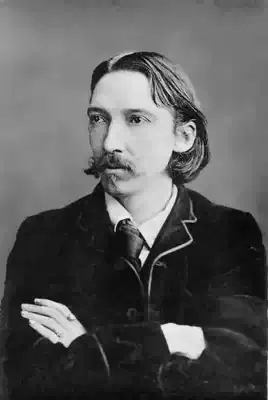
Robert Louis Stevenson
You Looked So Tempting In The Pew
You Looked So Tempting In The Pew
YOU looked so tempting in the pew,
You looked so sly and calm -
My trembling fingers played with yours
As both looked out the Psalm.
Your heart beat hard against my arm,
My foot to yours was set,
Your loosened ringlet burned my cheek
Whenever they two met.
O little, little we hearkened, dear,
And little, little cared,
Although the parson sermonised,
The congregation stared.
YOU looked so tempting in the pew,
You looked so sly and calm -
My trembling fingers played with yours
As both looked out the Psalm.
Your heart beat hard against my arm,
My foot to yours was set,
Your loosened ringlet burned my cheek
Whenever they two met.
O little, little we hearkened, dear,
And little, little cared,
Although the parson sermonised,
The congregation stared.
187
Robert Louis Stevenson
What Man May Learn, What Man May Do
What Man May Learn, What Man May Do
WHAT man may learn, what man may do,
Of right or wrong of false or true,
While, skipper-like, his course he steers
Through nine and twenty mingled years,
Half misconceived and half forgot,
So much I know and practise not.
Old are the words of wisdom, old
The counsels of the wise and bold:
To close the ears, to check the tongue,
To keep the pining spirit young;
To act the right, to say the true,
And to be kind whate'er you do.
Thus we across the modern stage
Follow the wise of every age;
And, as oaks grow and rivers run
Unchanged in the unchanging sun,
So the eternal march of man
Goes forth on an eternal plan.
WHAT man may learn, what man may do,
Of right or wrong of false or true,
While, skipper-like, his course he steers
Through nine and twenty mingled years,
Half misconceived and half forgot,
So much I know and practise not.
Old are the words of wisdom, old
The counsels of the wise and bold:
To close the ears, to check the tongue,
To keep the pining spirit young;
To act the right, to say the true,
And to be kind whate'er you do.
Thus we across the modern stage
Follow the wise of every age;
And, as oaks grow and rivers run
Unchanged in the unchanging sun,
So the eternal march of man
Goes forth on an eternal plan.
239
Robert Louis Stevenson
Katherine
Katherine
We see you as we see a face
That trembles in a forest place
Upon the mirror of a pool
Forever quiet, clear and cool;
And in the wayward glass, appears
To hover between smiles and tears,
Elfin and human, airy and true,
And backed by the reflected blue.
We see you as we see a face
That trembles in a forest place
Upon the mirror of a pool
Forever quiet, clear and cool;
And in the wayward glass, appears
To hover between smiles and tears,
Elfin and human, airy and true,
And backed by the reflected blue.
299
Robert Louis Stevenson
I Dreamed Of Forest Alleys fair
I Dreamed Of Forest Alleys fair
I.
I DREAMED of forest alleys fair
And fields of gray-flowered grass,
Where by the yellow summer moon
My Jenny seemed to pass.
I dreamed the yellow summer moon,
Behind a cedar wood,
Lay white on fields of rippling grass
Where I and Jenny stood.
I dreamed - but fallen through my dream,
In a rainy land I lie
Where wan wet morning crowns the hills
Of grim reality.
II.
I am as one that keeps awake
All night in the month of June,
That lies awake in bed to watch
The trees and great white moon.
For memories of love are more
Than the white moon there above,
And dearer than quiet moonshine
Are the thoughts of her I love.
III.
Last night I lingered long without
My last of loves to see.
Alas! the moon-white window-panes
Stared blindly back on me.
To-day I hold her very hand,
Her very waist embrace -
Like clouds across a pool, I read
Her thoughts upon her face.
And yet, as now, through her clear eyes
I seek the inner shrine -
I stoop to read her virgin heart
In doubt if it be mine -
O looking long and fondly thus,
What vision should I see?
No vision, but my own white face
That grins and mimics me.
IV.
Once more upon the same old seat
In the same sunshiny weather,
The elm-trees' shadows at their feet
And foliage move together.
The shadows shift upon the grass,
The dial point creeps on;
The clear sun shines, the loiterers pass,
As then they passed and shone.
But now deep sleep is on my heart,
Deep sleep and perfect rest.
Hope's flutterings now disturb no more
The quiet of my breast.
I.
I DREAMED of forest alleys fair
And fields of gray-flowered grass,
Where by the yellow summer moon
My Jenny seemed to pass.
I dreamed the yellow summer moon,
Behind a cedar wood,
Lay white on fields of rippling grass
Where I and Jenny stood.
I dreamed - but fallen through my dream,
In a rainy land I lie
Where wan wet morning crowns the hills
Of grim reality.
II.
I am as one that keeps awake
All night in the month of June,
That lies awake in bed to watch
The trees and great white moon.
For memories of love are more
Than the white moon there above,
And dearer than quiet moonshine
Are the thoughts of her I love.
III.
Last night I lingered long without
My last of loves to see.
Alas! the moon-white window-panes
Stared blindly back on me.
To-day I hold her very hand,
Her very waist embrace -
Like clouds across a pool, I read
Her thoughts upon her face.
And yet, as now, through her clear eyes
I seek the inner shrine -
I stoop to read her virgin heart
In doubt if it be mine -
O looking long and fondly thus,
What vision should I see?
No vision, but my own white face
That grins and mimics me.
IV.
Once more upon the same old seat
In the same sunshiny weather,
The elm-trees' shadows at their feet
And foliage move together.
The shadows shift upon the grass,
The dial point creeps on;
The clear sun shines, the loiterers pass,
As then they passed and shone.
But now deep sleep is on my heart,
Deep sleep and perfect rest.
Hope's flutterings now disturb no more
The quiet of my breast.
329

Robert Frost
The Vantage Point
The Vantage Point
If tires of trees I seek again mankind, Well I know where to hie me--in the dawn, To a
slope where the cattle keep the lawn. There amid loggin juniper reclined, Myself
unseen, I see in white defined Far off the homes of men, and farther still, The graves
of men on an opposing hill, Living or dead, whichever are to mind. And if by noon I
have too much of these, I have but to turn on my arm, and lo, The sun-burned hillside
sets my face aglow, My breathing shakes the bluet like a breeze, I smell the earth, I
smell the bruisèd plant, I look into the crater of the ant.
If tires of trees I seek again mankind, Well I know where to hie me--in the dawn, To a
slope where the cattle keep the lawn. There amid loggin juniper reclined, Myself
unseen, I see in white defined Far off the homes of men, and farther still, The graves
of men on an opposing hill, Living or dead, whichever are to mind. And if by noon I
have too much of these, I have but to turn on my arm, and lo, The sun-burned hillside
sets my face aglow, My breathing shakes the bluet like a breeze, I smell the earth, I
smell the bruisèd plant, I look into the crater of the ant.
493
Robert Frost
The Bear
The Bear
The bear puts both arms around the tree above her
And draws it down as if it were a lover
And its chokecherries lips to kiss good-by,
Then lets it snap back upright in the sky.
Her next step rocks a boulder on the wall
(She's making her cross-country in the fall).
Her great weight creaks the barbed wire in its staples
As she flings over and off down through the maples,
Leaving on one wire tooth a lock of hair.
Such is the uncaged progress of the bear.
The world has room to make a bear feel free;
The universe seems cramped to you and me.
Man acts more like the poor bear in a cage,
That all day fights a nervous inward rage,
His mood rejecting all his mind suggests.
He paces back and forth and never rests
The me-nail click and shuffle of his feet,
The telescope at one end of his beat,
And at the other end the microscope,
Two instruments of nearly equal hope,
And in conjunction giving quite a spread.
Or if he rests from scientific tread,
'Tis only to sit back and sway his head
Through ninety-odd degrees of arc, it seems,
Between two metaphysical extremes.
He sits back on his fundamental butt
With lifted snout and eyes (if any) shut
(He almost looks religious but he's not),
And back and forth he sways from cheek to cheek,
At one extreme agreeing with one Greek
At the other agreeing with another Greek
Which may be thought, but only so to speak.
A baggy figure, equally pathetic
When sedentary and when peripatetic.
The bear puts both arms around the tree above her
And draws it down as if it were a lover
And its chokecherries lips to kiss good-by,
Then lets it snap back upright in the sky.
Her next step rocks a boulder on the wall
(She's making her cross-country in the fall).
Her great weight creaks the barbed wire in its staples
As she flings over and off down through the maples,
Leaving on one wire tooth a lock of hair.
Such is the uncaged progress of the bear.
The world has room to make a bear feel free;
The universe seems cramped to you and me.
Man acts more like the poor bear in a cage,
That all day fights a nervous inward rage,
His mood rejecting all his mind suggests.
He paces back and forth and never rests
The me-nail click and shuffle of his feet,
The telescope at one end of his beat,
And at the other end the microscope,
Two instruments of nearly equal hope,
And in conjunction giving quite a spread.
Or if he rests from scientific tread,
'Tis only to sit back and sway his head
Through ninety-odd degrees of arc, it seems,
Between two metaphysical extremes.
He sits back on his fundamental butt
With lifted snout and eyes (if any) shut
(He almost looks religious but he's not),
And back and forth he sways from cheek to cheek,
At one extreme agreeing with one Greek
At the other agreeing with another Greek
Which may be thought, but only so to speak.
A baggy figure, equally pathetic
When sedentary and when peripatetic.
512
Robert Frost
For once, then Something
For once, then Something
Others taught me with having knelt at well-curbs
Always wrong to the light, so never seeing
Deeper down in the well than where the water
Gives me back in a shining surface picture
Me myself in the summer heaven godlike
Looking out of a wreath of fern and cloud puffs.
Once, when trying with chin against a well-curb,
I discerned, as I thought, beyond the picture,
Through the picture, a something white, uncertain,
Something more of the depths--and then I lost it.
Water came to rebuke the too clear water.
One drop fell from a fern, and lo, a ripple
Shook whatever it was lay there at bottom,
Blurred it, blotted it out. What was that whiteness?
Truth? A pebble of quartz? For once, then, something.
Others taught me with having knelt at well-curbs
Always wrong to the light, so never seeing
Deeper down in the well than where the water
Gives me back in a shining surface picture
Me myself in the summer heaven godlike
Looking out of a wreath of fern and cloud puffs.
Once, when trying with chin against a well-curb,
I discerned, as I thought, beyond the picture,
Through the picture, a something white, uncertain,
Something more of the depths--and then I lost it.
Water came to rebuke the too clear water.
One drop fell from a fern, and lo, a ripple
Shook whatever it was lay there at bottom,
Blurred it, blotted it out. What was that whiteness?
Truth? A pebble of quartz? For once, then, something.
419
Robert Frost
Acquainted with the Night
Acquainted with the Night
I have been one acquainted with the night.
I have walked out in rain -- and back in rain.
I have outwalked the furthest city light.
I have looked down the saddest city lane.
I have passed by the watchman on his beat
And dropped my eyes, unwilling to explain.
I have stood still and stopped the sound of feet
When far away an interrupted cry
Came over houses from another street,
But not to call me back or say good-bye;
And further still at an unearthly height,
A luminary clock against the sky
Proclaimed the time was neither wrong nor right.
I have been one acquainted with the night.
I have been one acquainted with the night.
I have walked out in rain -- and back in rain.
I have outwalked the furthest city light.
I have looked down the saddest city lane.
I have passed by the watchman on his beat
And dropped my eyes, unwilling to explain.
I have stood still and stopped the sound of feet
When far away an interrupted cry
Came over houses from another street,
But not to call me back or say good-bye;
And further still at an unearthly height,
A luminary clock against the sky
Proclaimed the time was neither wrong nor right.
I have been one acquainted with the night.
477
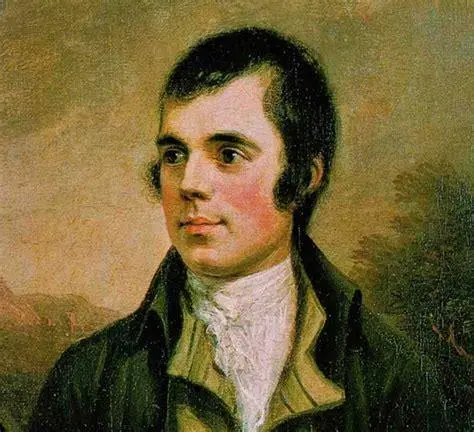
Robert Burns
To A Louse
To A Louse
On Seeing One on a Lady's Bonnet at Church
Ha! whare ye gaun' ye crowlin ferlie?
Your impudence protects you sairly;
I canna say but ye strunt rarely
Owre gauze and lace,
Tho faith! I fear ye dine but sparely
On sic a place.
Ye ugly, creepin, blastit wonner,
Detested, shunn'd by saunt an sinner,
How daur ye set your fit upon her---
Sae fine a lady!
Gae somewhere else and seek your dinner
On some poor body.
Swith! in some beggar's hauffet squattle;
There ye may creep, and sprawl, and sprattle;
Wi' ither kindred, jumping cattle;
In shoals and nations;
Whare horn nor bane ne'er daur unsettle
Your thick plantations.
Now haud you there! ye're out o' sight,
Below the fatt'rils, snug an tight,
Na, faith ye yet! ye'll no be right,
Till ye've got on it---
The vera tapmost, tow'rin height
O' Miss's bonnet.
My sooth! right bauld ye set your nose out,
As plump an grey as onie grozet:
O for some rank, mercurial rozet,
Or fell, red smeddum,
I'd gie you sic a hearty dose o't,
Wad dress your droddum!
I wad na been surpris'd to spy
You on an auld wife's flainen toy
Or aiblins some bit duddie boy,
On's wyliecoat;
But Miss's fine Lunardi! fye!
How daur ye do't?
O Jeany, dinna toss your head,
An set your beauties a' abread!
Ye little ken what cursed speed
The blastie's makin!
Thae winks an finger-ends, I dread,
Are notice takin!
O wad some Power the giftie gie us
To see oursels as ithers see us!
It wad frae monie a blunder free us
An foolish notion:
What airs in dress an gait wad lea'es us,
An ev'n devotion!
On Seeing One on a Lady's Bonnet at Church
Ha! whare ye gaun' ye crowlin ferlie?
Your impudence protects you sairly;
I canna say but ye strunt rarely
Owre gauze and lace,
Tho faith! I fear ye dine but sparely
On sic a place.
Ye ugly, creepin, blastit wonner,
Detested, shunn'd by saunt an sinner,
How daur ye set your fit upon her---
Sae fine a lady!
Gae somewhere else and seek your dinner
On some poor body.
Swith! in some beggar's hauffet squattle;
There ye may creep, and sprawl, and sprattle;
Wi' ither kindred, jumping cattle;
In shoals and nations;
Whare horn nor bane ne'er daur unsettle
Your thick plantations.
Now haud you there! ye're out o' sight,
Below the fatt'rils, snug an tight,
Na, faith ye yet! ye'll no be right,
Till ye've got on it---
The vera tapmost, tow'rin height
O' Miss's bonnet.
My sooth! right bauld ye set your nose out,
As plump an grey as onie grozet:
O for some rank, mercurial rozet,
Or fell, red smeddum,
I'd gie you sic a hearty dose o't,
Wad dress your droddum!
I wad na been surpris'd to spy
You on an auld wife's flainen toy
Or aiblins some bit duddie boy,
On's wyliecoat;
But Miss's fine Lunardi! fye!
How daur ye do't?
O Jeany, dinna toss your head,
An set your beauties a' abread!
Ye little ken what cursed speed
The blastie's makin!
Thae winks an finger-ends, I dread,
Are notice takin!
O wad some Power the giftie gie us
To see oursels as ithers see us!
It wad frae monie a blunder free us
An foolish notion:
What airs in dress an gait wad lea'es us,
An ev'n devotion!
333
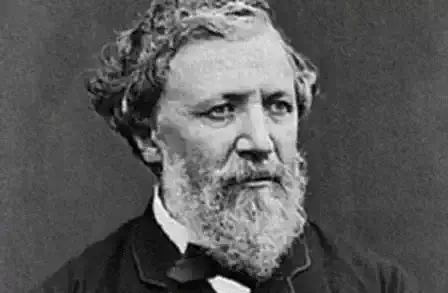
Robert Browning
Saul
Saul
I.
Said Abner, ``At last thou art come! Ere I tell, ere thou speak,
``Kiss my cheek, wish me well!'' Then I wished it, and did kiss his cheek.
And he, ``Since the King, O my friend, for thy countenance sent,
``Neither drunken nor eaten have we; nor until from his tent
``Thou return with the joyful assurance the King liveth yet,
``Shall our lip with the honey be bright, with the water be wet.
``For out of the black mid-tent's silence, a space of three days,
``Not a sound hath escaped to thy servants, of prayer nor of praise,
``To betoken that Saul and the Spirit have ended their strife,
``And that, faint in his triumph, the monarch sinks back upon life.
II.
``Yet now my heart leaps, O beloved! God's child with his dew
``On thy gracious gold hair, and those lilies still living and blue
``Just broken to twine round thy harp-strings, as if no wild beat
``Were now raging to torture the desert!''
III.
Then I, as was meet,
Knelt down to the God of my fathers, and rose on my feet,
And ran o'er the sand burnt to powder. The tent was unlooped;
I pulled up the spear that obstructed, and under I stooped
Hands and knees on the slippery grass-patch, all withered and gone,
That extends to the second enclosure, I groped my way on
Till I felt where the foldskirts fly open. Then once more I prayed,
And opened the foldskirts and entered, and was not afraid
But spoke, ``Here is David, thy servant!'' And no voice replied.
At the first I saw nought but the blackness but soon I descried
A something more black than the blackness---the vast, the upright
Main prop which sustains the pavilion: and slow into sight
Grew a figure against it, gigantic and blackest of all.
Then a sunbeam, that burst thro' the tent-roof, showed Saul.
IV.
He stood as erect as that tent-prop, both arms stretched out wide
On the great cross-support in the centre, that goes to each side;
He relaxed not a muscle, but hung there as, caught in his pangs
And waiting his change, the king-serpent all heavily hangs,
Far away from his kind, in the pine, till deliverance come
With the spring-time,---so agonized Saul, drear and stark, blind and dumb.
V.
Then I tuned my harp,---took off the lilies we twine round its chords
Lest they snap 'neath the stress of the noon-tide---those sunbeams like swords!
And I first played the tune all our sheep know, as, one after one,
So docile they come to the pen-door till folding be done.
They are white and untorn by the bushes, for lo, they have fed
Where the long grasses stifle the water within the stream's bed;
And now one after one seeks its lodging, as star follows star
Into eve and the blue far above us,---so blue and so far!
VI.
---Then the tune, for which quails on the cornland will each leave his mate
To fly after the player; then, what makes the crickets elate
Till for boldness they fight one another: and then, what has weight
To set the quick jerboa<*> amusing outside his sand house---
There are none such as he for a wonder, half bird and half mouse!
God made all the creatures and gave them our love and our fear,
To give sign, we and they are his children, one family here.
VII.
Then I played the help-tune of our reapers, their wine-song, when hand
Grasps at hand, eye lights eye in good friendship, and great hearts expand
And grow one in the sense of this world's life.---And then, the last song
When the dead man is praised on his journey---``Bear, bear him along
``With his few faults shut up like dead flowerets! Are balm-seeds not here
``To console us? The land has none left such as he on the bier.
``Oh, would we might keep thee, my brother!''---And then, the glad chaunt
Of the marriage,---first go the young maidens, next, she whom we vaunt
As the beauty, the pride of our dwelling.---And then, the great march
Wherein man runs to man to assist him and buttress an arch
Nought can break; who shall harm them, our friends?---Then, the chorus intoned
As the Levites go up to the altar in glory enthroned.
But I stopped here: for here in the darkness Saul groaned.
VIII.
And I paused, held my breath in such silence, and listened apart;
And the tent shook, for mighty Saul shuddered: and sparkles 'gan dart
From the jewels that woke in his turban, at once with a start,
All its lordly male-sapphires, and rubies courageous at heart.
So the head: but the body still moved not, still hung there erect.
And I bent once again to my playing, pursued it unchecked,
As I sang,---
IX.
``Oh, our manhood's prime vigour! No spirit feels waste,
``Not a muscle is stopped in its playing nor sinew unbraced.
``Oh, the wild joys of living! the leaping from rock up to rock,
``The strong rending of boughs from the fir-tree, the cool silver shock
``Of the plunge in a pool's living water, the hunt of the bear,
``And the sultriness showing the lion is couched in his lair.
``And the meal, the rich dates yellowed over with gold dust divine,
``And the locust-flesh steeped in the pitcher, the full draught of wine,
``And the sleep in the dried river-channel where bulrushes tell
``That the water was wont to go warbling so softly and well.
``How good is man's life, the mere living! how fit to employ
``All the heart and the soul and the senses for ever in joy!
``Hast thou loved the white locks of thy father, whose sword thou didst guard
``When he trusted thee forth with the armies, for glorious reward?
``Didst thou see the thin hands of thy mother, held up as men sung
``The low song of the nearly-departed, and bear her faint tongue
``Joining in while it could to the witness, `Let one more attest,
`` `I have lived, seen God's hand thro'a lifetime, and all was for best'?
``Then they sung thro' their tears in strong triumph, not much, but the rest.
``And thy brothers, the help and the contest, the working whence grew
``Such result as, from seething grape-bundles, the spirit strained true:
``And the friends of thy boyhood---that boyhood of wonder and hope,
``Present promise and wealth of the future beyond the eye's scope,---
``Till lo, thou art grown to a monarch; a people is thine;
``And all gifts, which the world offers singly, on one head combine!
``On one head, all the beauty and strength, love and rage (like the throe
``That, a-work in the rock, helps its labour and lets the gold go)
``High ambition and deeds which surpass it, fame crowning them,---all
``Brought to blaze on the head of one creature---King Saul!''
X.
And lo, with that leap of my spirit,---heart, hand, harp and voice,
Each lifting Saul's name out of sorrow, each bidding rejoice
Saul's fame in the light it was made for---as when, dare I say,
The Lord's army, in rapture of service, strains through its array,
And up soareth the cherubim-chariot---``Saul!'' cried I, and stopped,
And waited the thing that should follow. Then Saul, who hung propped
By the tent's cross-support in the centre, was struck by his name.
Have ye seen when Spring's arrowy summons goes right to the aim,
And some mountain, the last to withstand her, that held (he alone,
While the vale laughed in freedom and flowers) on a broad bust of stone
A year's snow bound about for a breastplate,---leaves grasp of the sheet?
Fold on fold all at once it crowds thunderously down to his feet,
And there fronts you, stark, black, but alive yet, your mountain of old,
With his rents, the successive bequeathings of ages untold---
Yea, each harm got in fighting your battles, each furrow and scar
Of his head thrust 'twixt you and the tempest---all hail, there they are!
---Now again to be softened with verdure, again hold the nest
Of the dove, tempt the goat and its young to the green on his crest
For their food in the ardours of summer. One long shudder thrilled
All the tent till the very air tingled, then sank and was stilled
At the King's self left standing before me, released and aware.
What was gone, what remained? All to traverse, 'twixt hope and despair;
Death was past, life not come: so he waited. Awhile his right hand
Held the brow, helped the eyes left too vacant forthwith to remand
To their place what new objects should enter: 'twas Saul as before.
I looked up and dared gaze at those eyes, nor was hurt any more
Than by slow pallid sunsets in autumn, ye watch from the shore,
At their sad level gaze o'er the ocean---a sun's slow decline
Over hills which, resolved in stern silence, o'erlap and entwine
Base with base to knit strength more intensely: so, arm folded arm
O'er the chest whose slow heavings subsided.
XI.
What spell or what charm,
(For, awhile there was trouble within me) what next should I urge
To sustain him where song had restored him?---Song filled to the verge
His cup with the wine of this life, pressing all that it yields
Of mere fruitage, the strength and the beauty: beyond, on what fields,
Glean a vintage more potent and perfect to brighten the eye
And bring blood to the lip, and commend them the cup they put by?
He saith, ``It is good;'' still he drinks not: he lets me praise life,
Gives assent, yet would die for his own part.
XII.
Then fancies grew rife
Which had come long ago on the pasture, when round me the sheep
Fed in silence---above, the one eagle wheeled slow as in sleep;
And I lay in my hollow and mused on the world that might lie
'Neath his ken, though I saw but the strip 'twixt the hill and the sky:
And I laughed---``Since my days are ordained to be passed with my flocks,
``Let me people at least, with my fancies, the plains and the rocks,
``Dream the life I am never to mix with, and image the show
``Of mankind as they live in those fashions I hardly shall know!
``Schemes of life, its best rules and right uses, the courage that gains,
``And the prudence that keeps what men strive for.'' And now these old trains
Of vague thought came again; I grew surer; so, once more the string
Of my harp made response to my spirit, as thus---
XIII.
``Yea, my King,''
I began---``thou dost well in rejecting mere comforts that spring
``From the mere mortal life held in common by man and by brute:
``In our flesh grows the branch of this life, in our soul it bears fruit.
``Thou hast marked the slow rise of the tree,---how its stem trembled first
``Till it passed the kid's lip, the stag's antler then safely outburst
``The fan-branches all round; and thou mindest when these too, in turn
``Broke a-bloom and the palm-tree seemed perfect: yet more was to learn,
``E'en the good that comes in with the palm-fruit. Our dates shall we slight,
``When their juice brings a cure for all sorrow? or care for the plight
``Of the palm's self whose slow growth produced them? Not so! stem and branch
``Shall decay, nor be known in their place, while the palm-wine shall staunch
``Every wound of man's spirit in winter. I pour thee such wine.
``Leave the flesh to the fate it was fit for! the spirit be thine!
``By the spirit, when age shall o'ercome thee, thou still shalt enjoy
``More indeed, than at first when inconscious, the life of a boy.
``Crush that life, and behold its wine running! Each deed thou hast done
``Dies, revives, goes to work in the world; until e'en as the sun
``Looking down on the earth, though clouds spoil him, though tempests efface,
``Can find nothing his own deed produced not, must everywhere trace
``The results of his past summer-prime'---so, each ray of thy will,
``Every flash of thy passion and prowess, long over, shall thrill
``Thy whole people, the countless, with ardour, till they too give forth
``A like cheer to their sons, who in turn, fill the South and the North
``With the radiance thy deed was the germ of. Carouse in the past!
``But the license of age has its limit; thou diest at last:
``As the lion when age dims his eyeball, the rose at her height
``So with man---so his power and his beauty for ever take flight.
``No! Again a long draught of my soul-wine! Look forth o'er the years!
``Thou hast done now with eyes for the actual; begin with the seer's!
``Is Saul dead? In the depth of the vale make his tomb---bid arise
``A grey mountain of marble heaped four-square, till, built to the skies,
``Let it mark where the great First King slumbers: whose fame would ye know?
``Up above see the rock's naked face, where the record shall go
``In great characters cut by the scribe,---Such was Saul, so he did;
``With the sages directing the work, by the populace chid,---
``For not half, they'll affirm, is comprised there! Which fault to amend,
``In the grove with his kind grows the cedar, whereon they shall spend
``(See, in tablets 'tis level before them) their praise, and record
``With the gold of the graver, Saul's story,---the statesman's great word
``Side by side with the poet's sweet comment. The river's a-wave
``With smooth paper-reeds grazing each other when prophet-winds rave:
``So the pen gives unborn generations their due and their part
``In thy being! Then, first of the mighty, thank God that thou art!''
XIV.
And behold while I sang ... but O Thou who didst grant me that day,
And before it not seldom hast granted thy help to essay,
Carry on and complete an adventure,---my shield and my sword
In that act where my soul was thy servant, thy word was my word,---
Still be with me, who then at the summit of human endeavour
And scaling the highest, man's thought could, gazed hopeless as ever
On the new stretch of heaven above me---till, mighty to save,
Just one lift of thy hand cleared that distance---God's throne from man's grave!
Let me tell out my tale to its ending---my voice to my heart
Which can scarce dare believe in what marvels last night I took part,
As this morning I gather the fragments, alone with my sheep,
And still fear lest the terrible glory evanish like sleep!
For I wake in the grey dewy covert, while Hebron<*> upheaves
The dawn struggling with night on his shoulder, and Kidron<*> retrieves
Slow the damage of yesterday's sunshine.
XV.
I say then,---my song
While I sang thus, assuring the monarch, and ever more strong
Made a proffer of good to console him---he slowly resumed
His old motions and habitudes kingly. The right-hand replumed
His black locks to their wonted composure, adjusted the swathes
Of his turban, and see---the huge sweat that his countenance bathes,
He wipes off with the robe; and he girds now his loins as of yore,
And feels slow for the armlets of price, with the clasp set before.
He is Saul, ye remember in glory,---ere error had bent
The broad brow from the daily communion; and still, though much spent
Be the life and the bearing that front you, the same, God did choose,
To receive what a man may waste, desecrate, never quite lose.
So sank he along by the tent-prop till, stayed by the pile
Of his armour and war-cloak and garments, he leaned there awhile,
And sat out my singing,---one arm round the tent-prop, to raise
His bent head, and the other hung slack---till I touched on the praise
I foresaw from all men in all time, to the man patient there;
And thus ended, the harp falling forward. Then first I was 'ware
That he sat, as I say, with my head just above his vast knees
Which were thrust out on each side around me, like oak-roots which please
To encircle a lamb when it slumbers. I looked up to know
If the best I could do had brought solace: he spoke not, but slow
Lifted up the hand slack at his side, till he laid it with care
Soft and grave, but in mild settled will, on my brow: thro' my hair
The large fingers were pushed, and he bent back my bead, with kind power---
All my face back, intent to peruse it, as men do a flower.
Thus held he me there with his great eyes that scrutinized mine---
And oh, all my heart how it loved him! but where was the sign?
I yearned---``Could I help thee, my father, inventing a bliss,
``I would add, to that life of the past, both the future and this;
``I would give thee new life altogether, as good, ages hence,
``As this moment,---had love but the warrant, love's heart to dispense!''
XVI.
Then the truth came upon me. No harp more---no song more! outbroke---
XVII.
``I have gone the whole round of creation: I saw and I spoke:
``I, a work of God's hand for that purpose, received in my brain
``And pronounced on the rest of his hand-work---returned him again
``His creation's approval or censure: I spoke as I saw:
``I report, as a man may of God's work---all's love, yet all's law.
``Now I lay down the judgeship he lent me. Each faculty tasked
``To perceive him, has gained an abyss, where a dewdrop was asked.
``Have I knowledge? confounded it shrivels at Wisdom laid bare.
``Have I forethought? how purblind, how blank, to the Infinite Care!
``Do I task any faculty highest, to image success?
``I but open my eyes,---and perfection, no more and no less,
``In the kind I imagined, full-fronts me, and God is seen God
``In the star, in the stone, in the flesh, in the soul and the clod.
``And thus looking within and around me, I ever renew
``(With that stoop of the soul which in bending upraises it too)
``The submission of man's nothing-perfect to God's all-complete,
``As by each new obeisance in spirit, I climb to his feet.
``Yet with all this abounding experience, this deity known,
``I shall dare to discover some province, some gift of my own.
``There's a faculty pleasant to exercise, hard to hoodwink,
``I am fain to keep still in abeyance, (I laugh as I think)
``Lest, insisting to claim and parade in it, wot ye, I worst
``E'en the Giver in one gift.---Behold, I could love if I durst!
``But I sink the pretension as fearing a man may o'ertake
``God's own speed in the one way of love: I abstain for love's sake.
``---What, my soul? see thus far and no farther? when doors great and small,
``Nine-and-ninety flew ope at our touch, should the hundredth appal?
``In the least things have faith, yet distrust in the greatest of all?
``Do I find love so full in my nature, God's ultimate gift,
``That I doubt his own love can compete with it? Here, the parts shift?
``Here, the creature surpass the Creator,---the end, what Began?
``Would I fain in my impotent yearning do all for this man,
``And dare doubt he alone shall not help him, who yet alone can?
``Would it ever have entered my mind, the bare will, much less power,
``To bestow on this Saul what I sang of, the marvellous dower
``Of the life he was gifted and filled with? to make such a soul,
``Such a body, and then such an earth for insphering the whole?
``And doth it not enter my mind (as my warm tears attest)
``These good things being given, to go on, and give one more, the best?
``Ay, to save and redeem and restore him, maintain at the height
``This perfection,---succeed with life's day-spring, death's minute of night?
``Interpose at the difficult minute, snatch Saul the mistake,
``Saul the failure, the ruin he seems now,---and bid him awake
``From the dream, the probation, the prelude, to find himself set
``Clear and safe in new light and new life,---a new harmony yet
``To be run, and continued, and ended---who knows?---or endure!
``The man taught enough, by life's dream, of the rest to make sure;
``By the pain-throb, triumphantly winning intensified bliss,
``And the next world's reward and repose, by the struggles in this.
XVIII.
``I believe it! 'Tis thou, God, that givest, 'tis I who receive:
``In the first is the last, in thy will is my power to believe.
``All's one gift: thou canst grant it moreover, as prompt to my prayer
``As I breathe out this breath, as I open these arms to the air.
``From thy will, stream the worlds, life and nature, thy dread Sabaoth:
``_I_ will?---the mere atoms despise me! Why am I not loth
``To look that, even that in the face too? Why is it I dare
``Think but lightly of such impuissance? What stops my despair?
``This;---'tis not what man Does which exalts him, but what man Would do!
``See the King---I would help him but cannot, the wishes fall through.
``Could I wrestle to raise him from sorrow, grow poor to enrich,
``To fill up his life, starve my own out, I would---knowing which,
``I know that my service is perfect. Oh, speak through me now!
``Would I suffer for him that I love? So wouldst thou---so wilt thou!
``So shall crown thee the topmost, ineffablest, uttermost crown---
``And thy love fill infinitude wholly, nor leave up nor down
``One spot for the creature to stand in! It is by no breath,
``Turn of eye, wave of hand, that salvation joins issue with death!
``As thy Love is discovered almighty, almighty be proved
``Thy power, that exists with and for it, of being Beloved!
``He who did most, shall bear most; the strongest shall stand the most weak.
``'Tis the weakness in strength, that I cry for! my flesh, that I seek
``In the Godhead! I seek and I find it. O Saul, it shall be
``A Face like my face that receives thee; a Man like to me,
``Thou shalt love and be loved by, for ever: a Hand like this hand
``Shall throw open the gates of new life to thee! See the Christ stand!''
XIX.
I know not too well how I found my way home in the night.
There were witnesses, cohorts about me, to left and to right,
Angels, powers, the unuttered, unseen, the alive, the aware:
I repressed, I got through them as hardly, as strugglingly there,
As a runner beset by the populace famished for news---
Life or death. The whole earth was awakened, hell loosed with her crews;
And the stars of night beat with emotion, and tingled and shot
Out in fire the strong pain of pent knowledge: but I fainted not,
For the Hand still impelled me at once and supported, suppressed
All the tumult, and quenched it with quiet, and holy behest,
Till the rapture was shut in itself, and the earth sank to rest.
Anon at the dawn, all that trouble had withered from earth---
Not so much, but I saw it die out in the day's tender birth;
In the gathered intensity brought to the grey of the hills;
In the shuddering forests' held breath; in the sudden wind-thrills;
In the startled wild beasts that bore off, each with eye sidling still
Though averted with wonder and dread; in the birds stiff and chill
That rose heavily, as I approached them, made stupid with awe:
E'en the serpent that slid away silent,---he felt the new law.
The same stared in the white humid faces upturned by the flowers;
The same worked in the heart of the cedar and moved the vine-bowers:
And the little brooks witnessing murmured, persistent and low,
With their obstinate, all but hushed voices---``E'en so, it is so!''
* The jumping hare.
* One of the three cities of Refuge.
* A brook in Jerusalem.
I.
Said Abner, ``At last thou art come! Ere I tell, ere thou speak,
``Kiss my cheek, wish me well!'' Then I wished it, and did kiss his cheek.
And he, ``Since the King, O my friend, for thy countenance sent,
``Neither drunken nor eaten have we; nor until from his tent
``Thou return with the joyful assurance the King liveth yet,
``Shall our lip with the honey be bright, with the water be wet.
``For out of the black mid-tent's silence, a space of three days,
``Not a sound hath escaped to thy servants, of prayer nor of praise,
``To betoken that Saul and the Spirit have ended their strife,
``And that, faint in his triumph, the monarch sinks back upon life.
II.
``Yet now my heart leaps, O beloved! God's child with his dew
``On thy gracious gold hair, and those lilies still living and blue
``Just broken to twine round thy harp-strings, as if no wild beat
``Were now raging to torture the desert!''
III.
Then I, as was meet,
Knelt down to the God of my fathers, and rose on my feet,
And ran o'er the sand burnt to powder. The tent was unlooped;
I pulled up the spear that obstructed, and under I stooped
Hands and knees on the slippery grass-patch, all withered and gone,
That extends to the second enclosure, I groped my way on
Till I felt where the foldskirts fly open. Then once more I prayed,
And opened the foldskirts and entered, and was not afraid
But spoke, ``Here is David, thy servant!'' And no voice replied.
At the first I saw nought but the blackness but soon I descried
A something more black than the blackness---the vast, the upright
Main prop which sustains the pavilion: and slow into sight
Grew a figure against it, gigantic and blackest of all.
Then a sunbeam, that burst thro' the tent-roof, showed Saul.
IV.
He stood as erect as that tent-prop, both arms stretched out wide
On the great cross-support in the centre, that goes to each side;
He relaxed not a muscle, but hung there as, caught in his pangs
And waiting his change, the king-serpent all heavily hangs,
Far away from his kind, in the pine, till deliverance come
With the spring-time,---so agonized Saul, drear and stark, blind and dumb.
V.
Then I tuned my harp,---took off the lilies we twine round its chords
Lest they snap 'neath the stress of the noon-tide---those sunbeams like swords!
And I first played the tune all our sheep know, as, one after one,
So docile they come to the pen-door till folding be done.
They are white and untorn by the bushes, for lo, they have fed
Where the long grasses stifle the water within the stream's bed;
And now one after one seeks its lodging, as star follows star
Into eve and the blue far above us,---so blue and so far!
VI.
---Then the tune, for which quails on the cornland will each leave his mate
To fly after the player; then, what makes the crickets elate
Till for boldness they fight one another: and then, what has weight
To set the quick jerboa<*> amusing outside his sand house---
There are none such as he for a wonder, half bird and half mouse!
God made all the creatures and gave them our love and our fear,
To give sign, we and they are his children, one family here.
VII.
Then I played the help-tune of our reapers, their wine-song, when hand
Grasps at hand, eye lights eye in good friendship, and great hearts expand
And grow one in the sense of this world's life.---And then, the last song
When the dead man is praised on his journey---``Bear, bear him along
``With his few faults shut up like dead flowerets! Are balm-seeds not here
``To console us? The land has none left such as he on the bier.
``Oh, would we might keep thee, my brother!''---And then, the glad chaunt
Of the marriage,---first go the young maidens, next, she whom we vaunt
As the beauty, the pride of our dwelling.---And then, the great march
Wherein man runs to man to assist him and buttress an arch
Nought can break; who shall harm them, our friends?---Then, the chorus intoned
As the Levites go up to the altar in glory enthroned.
But I stopped here: for here in the darkness Saul groaned.
VIII.
And I paused, held my breath in such silence, and listened apart;
And the tent shook, for mighty Saul shuddered: and sparkles 'gan dart
From the jewels that woke in his turban, at once with a start,
All its lordly male-sapphires, and rubies courageous at heart.
So the head: but the body still moved not, still hung there erect.
And I bent once again to my playing, pursued it unchecked,
As I sang,---
IX.
``Oh, our manhood's prime vigour! No spirit feels waste,
``Not a muscle is stopped in its playing nor sinew unbraced.
``Oh, the wild joys of living! the leaping from rock up to rock,
``The strong rending of boughs from the fir-tree, the cool silver shock
``Of the plunge in a pool's living water, the hunt of the bear,
``And the sultriness showing the lion is couched in his lair.
``And the meal, the rich dates yellowed over with gold dust divine,
``And the locust-flesh steeped in the pitcher, the full draught of wine,
``And the sleep in the dried river-channel where bulrushes tell
``That the water was wont to go warbling so softly and well.
``How good is man's life, the mere living! how fit to employ
``All the heart and the soul and the senses for ever in joy!
``Hast thou loved the white locks of thy father, whose sword thou didst guard
``When he trusted thee forth with the armies, for glorious reward?
``Didst thou see the thin hands of thy mother, held up as men sung
``The low song of the nearly-departed, and bear her faint tongue
``Joining in while it could to the witness, `Let one more attest,
`` `I have lived, seen God's hand thro'a lifetime, and all was for best'?
``Then they sung thro' their tears in strong triumph, not much, but the rest.
``And thy brothers, the help and the contest, the working whence grew
``Such result as, from seething grape-bundles, the spirit strained true:
``And the friends of thy boyhood---that boyhood of wonder and hope,
``Present promise and wealth of the future beyond the eye's scope,---
``Till lo, thou art grown to a monarch; a people is thine;
``And all gifts, which the world offers singly, on one head combine!
``On one head, all the beauty and strength, love and rage (like the throe
``That, a-work in the rock, helps its labour and lets the gold go)
``High ambition and deeds which surpass it, fame crowning them,---all
``Brought to blaze on the head of one creature---King Saul!''
X.
And lo, with that leap of my spirit,---heart, hand, harp and voice,
Each lifting Saul's name out of sorrow, each bidding rejoice
Saul's fame in the light it was made for---as when, dare I say,
The Lord's army, in rapture of service, strains through its array,
And up soareth the cherubim-chariot---``Saul!'' cried I, and stopped,
And waited the thing that should follow. Then Saul, who hung propped
By the tent's cross-support in the centre, was struck by his name.
Have ye seen when Spring's arrowy summons goes right to the aim,
And some mountain, the last to withstand her, that held (he alone,
While the vale laughed in freedom and flowers) on a broad bust of stone
A year's snow bound about for a breastplate,---leaves grasp of the sheet?
Fold on fold all at once it crowds thunderously down to his feet,
And there fronts you, stark, black, but alive yet, your mountain of old,
With his rents, the successive bequeathings of ages untold---
Yea, each harm got in fighting your battles, each furrow and scar
Of his head thrust 'twixt you and the tempest---all hail, there they are!
---Now again to be softened with verdure, again hold the nest
Of the dove, tempt the goat and its young to the green on his crest
For their food in the ardours of summer. One long shudder thrilled
All the tent till the very air tingled, then sank and was stilled
At the King's self left standing before me, released and aware.
What was gone, what remained? All to traverse, 'twixt hope and despair;
Death was past, life not come: so he waited. Awhile his right hand
Held the brow, helped the eyes left too vacant forthwith to remand
To their place what new objects should enter: 'twas Saul as before.
I looked up and dared gaze at those eyes, nor was hurt any more
Than by slow pallid sunsets in autumn, ye watch from the shore,
At their sad level gaze o'er the ocean---a sun's slow decline
Over hills which, resolved in stern silence, o'erlap and entwine
Base with base to knit strength more intensely: so, arm folded arm
O'er the chest whose slow heavings subsided.
XI.
What spell or what charm,
(For, awhile there was trouble within me) what next should I urge
To sustain him where song had restored him?---Song filled to the verge
His cup with the wine of this life, pressing all that it yields
Of mere fruitage, the strength and the beauty: beyond, on what fields,
Glean a vintage more potent and perfect to brighten the eye
And bring blood to the lip, and commend them the cup they put by?
He saith, ``It is good;'' still he drinks not: he lets me praise life,
Gives assent, yet would die for his own part.
XII.
Then fancies grew rife
Which had come long ago on the pasture, when round me the sheep
Fed in silence---above, the one eagle wheeled slow as in sleep;
And I lay in my hollow and mused on the world that might lie
'Neath his ken, though I saw but the strip 'twixt the hill and the sky:
And I laughed---``Since my days are ordained to be passed with my flocks,
``Let me people at least, with my fancies, the plains and the rocks,
``Dream the life I am never to mix with, and image the show
``Of mankind as they live in those fashions I hardly shall know!
``Schemes of life, its best rules and right uses, the courage that gains,
``And the prudence that keeps what men strive for.'' And now these old trains
Of vague thought came again; I grew surer; so, once more the string
Of my harp made response to my spirit, as thus---
XIII.
``Yea, my King,''
I began---``thou dost well in rejecting mere comforts that spring
``From the mere mortal life held in common by man and by brute:
``In our flesh grows the branch of this life, in our soul it bears fruit.
``Thou hast marked the slow rise of the tree,---how its stem trembled first
``Till it passed the kid's lip, the stag's antler then safely outburst
``The fan-branches all round; and thou mindest when these too, in turn
``Broke a-bloom and the palm-tree seemed perfect: yet more was to learn,
``E'en the good that comes in with the palm-fruit. Our dates shall we slight,
``When their juice brings a cure for all sorrow? or care for the plight
``Of the palm's self whose slow growth produced them? Not so! stem and branch
``Shall decay, nor be known in their place, while the palm-wine shall staunch
``Every wound of man's spirit in winter. I pour thee such wine.
``Leave the flesh to the fate it was fit for! the spirit be thine!
``By the spirit, when age shall o'ercome thee, thou still shalt enjoy
``More indeed, than at first when inconscious, the life of a boy.
``Crush that life, and behold its wine running! Each deed thou hast done
``Dies, revives, goes to work in the world; until e'en as the sun
``Looking down on the earth, though clouds spoil him, though tempests efface,
``Can find nothing his own deed produced not, must everywhere trace
``The results of his past summer-prime'---so, each ray of thy will,
``Every flash of thy passion and prowess, long over, shall thrill
``Thy whole people, the countless, with ardour, till they too give forth
``A like cheer to their sons, who in turn, fill the South and the North
``With the radiance thy deed was the germ of. Carouse in the past!
``But the license of age has its limit; thou diest at last:
``As the lion when age dims his eyeball, the rose at her height
``So with man---so his power and his beauty for ever take flight.
``No! Again a long draught of my soul-wine! Look forth o'er the years!
``Thou hast done now with eyes for the actual; begin with the seer's!
``Is Saul dead? In the depth of the vale make his tomb---bid arise
``A grey mountain of marble heaped four-square, till, built to the skies,
``Let it mark where the great First King slumbers: whose fame would ye know?
``Up above see the rock's naked face, where the record shall go
``In great characters cut by the scribe,---Such was Saul, so he did;
``With the sages directing the work, by the populace chid,---
``For not half, they'll affirm, is comprised there! Which fault to amend,
``In the grove with his kind grows the cedar, whereon they shall spend
``(See, in tablets 'tis level before them) their praise, and record
``With the gold of the graver, Saul's story,---the statesman's great word
``Side by side with the poet's sweet comment. The river's a-wave
``With smooth paper-reeds grazing each other when prophet-winds rave:
``So the pen gives unborn generations their due and their part
``In thy being! Then, first of the mighty, thank God that thou art!''
XIV.
And behold while I sang ... but O Thou who didst grant me that day,
And before it not seldom hast granted thy help to essay,
Carry on and complete an adventure,---my shield and my sword
In that act where my soul was thy servant, thy word was my word,---
Still be with me, who then at the summit of human endeavour
And scaling the highest, man's thought could, gazed hopeless as ever
On the new stretch of heaven above me---till, mighty to save,
Just one lift of thy hand cleared that distance---God's throne from man's grave!
Let me tell out my tale to its ending---my voice to my heart
Which can scarce dare believe in what marvels last night I took part,
As this morning I gather the fragments, alone with my sheep,
And still fear lest the terrible glory evanish like sleep!
For I wake in the grey dewy covert, while Hebron<*> upheaves
The dawn struggling with night on his shoulder, and Kidron<*> retrieves
Slow the damage of yesterday's sunshine.
XV.
I say then,---my song
While I sang thus, assuring the monarch, and ever more strong
Made a proffer of good to console him---he slowly resumed
His old motions and habitudes kingly. The right-hand replumed
His black locks to their wonted composure, adjusted the swathes
Of his turban, and see---the huge sweat that his countenance bathes,
He wipes off with the robe; and he girds now his loins as of yore,
And feels slow for the armlets of price, with the clasp set before.
He is Saul, ye remember in glory,---ere error had bent
The broad brow from the daily communion; and still, though much spent
Be the life and the bearing that front you, the same, God did choose,
To receive what a man may waste, desecrate, never quite lose.
So sank he along by the tent-prop till, stayed by the pile
Of his armour and war-cloak and garments, he leaned there awhile,
And sat out my singing,---one arm round the tent-prop, to raise
His bent head, and the other hung slack---till I touched on the praise
I foresaw from all men in all time, to the man patient there;
And thus ended, the harp falling forward. Then first I was 'ware
That he sat, as I say, with my head just above his vast knees
Which were thrust out on each side around me, like oak-roots which please
To encircle a lamb when it slumbers. I looked up to know
If the best I could do had brought solace: he spoke not, but slow
Lifted up the hand slack at his side, till he laid it with care
Soft and grave, but in mild settled will, on my brow: thro' my hair
The large fingers were pushed, and he bent back my bead, with kind power---
All my face back, intent to peruse it, as men do a flower.
Thus held he me there with his great eyes that scrutinized mine---
And oh, all my heart how it loved him! but where was the sign?
I yearned---``Could I help thee, my father, inventing a bliss,
``I would add, to that life of the past, both the future and this;
``I would give thee new life altogether, as good, ages hence,
``As this moment,---had love but the warrant, love's heart to dispense!''
XVI.
Then the truth came upon me. No harp more---no song more! outbroke---
XVII.
``I have gone the whole round of creation: I saw and I spoke:
``I, a work of God's hand for that purpose, received in my brain
``And pronounced on the rest of his hand-work---returned him again
``His creation's approval or censure: I spoke as I saw:
``I report, as a man may of God's work---all's love, yet all's law.
``Now I lay down the judgeship he lent me. Each faculty tasked
``To perceive him, has gained an abyss, where a dewdrop was asked.
``Have I knowledge? confounded it shrivels at Wisdom laid bare.
``Have I forethought? how purblind, how blank, to the Infinite Care!
``Do I task any faculty highest, to image success?
``I but open my eyes,---and perfection, no more and no less,
``In the kind I imagined, full-fronts me, and God is seen God
``In the star, in the stone, in the flesh, in the soul and the clod.
``And thus looking within and around me, I ever renew
``(With that stoop of the soul which in bending upraises it too)
``The submission of man's nothing-perfect to God's all-complete,
``As by each new obeisance in spirit, I climb to his feet.
``Yet with all this abounding experience, this deity known,
``I shall dare to discover some province, some gift of my own.
``There's a faculty pleasant to exercise, hard to hoodwink,
``I am fain to keep still in abeyance, (I laugh as I think)
``Lest, insisting to claim and parade in it, wot ye, I worst
``E'en the Giver in one gift.---Behold, I could love if I durst!
``But I sink the pretension as fearing a man may o'ertake
``God's own speed in the one way of love: I abstain for love's sake.
``---What, my soul? see thus far and no farther? when doors great and small,
``Nine-and-ninety flew ope at our touch, should the hundredth appal?
``In the least things have faith, yet distrust in the greatest of all?
``Do I find love so full in my nature, God's ultimate gift,
``That I doubt his own love can compete with it? Here, the parts shift?
``Here, the creature surpass the Creator,---the end, what Began?
``Would I fain in my impotent yearning do all for this man,
``And dare doubt he alone shall not help him, who yet alone can?
``Would it ever have entered my mind, the bare will, much less power,
``To bestow on this Saul what I sang of, the marvellous dower
``Of the life he was gifted and filled with? to make such a soul,
``Such a body, and then such an earth for insphering the whole?
``And doth it not enter my mind (as my warm tears attest)
``These good things being given, to go on, and give one more, the best?
``Ay, to save and redeem and restore him, maintain at the height
``This perfection,---succeed with life's day-spring, death's minute of night?
``Interpose at the difficult minute, snatch Saul the mistake,
``Saul the failure, the ruin he seems now,---and bid him awake
``From the dream, the probation, the prelude, to find himself set
``Clear and safe in new light and new life,---a new harmony yet
``To be run, and continued, and ended---who knows?---or endure!
``The man taught enough, by life's dream, of the rest to make sure;
``By the pain-throb, triumphantly winning intensified bliss,
``And the next world's reward and repose, by the struggles in this.
XVIII.
``I believe it! 'Tis thou, God, that givest, 'tis I who receive:
``In the first is the last, in thy will is my power to believe.
``All's one gift: thou canst grant it moreover, as prompt to my prayer
``As I breathe out this breath, as I open these arms to the air.
``From thy will, stream the worlds, life and nature, thy dread Sabaoth:
``_I_ will?---the mere atoms despise me! Why am I not loth
``To look that, even that in the face too? Why is it I dare
``Think but lightly of such impuissance? What stops my despair?
``This;---'tis not what man Does which exalts him, but what man Would do!
``See the King---I would help him but cannot, the wishes fall through.
``Could I wrestle to raise him from sorrow, grow poor to enrich,
``To fill up his life, starve my own out, I would---knowing which,
``I know that my service is perfect. Oh, speak through me now!
``Would I suffer for him that I love? So wouldst thou---so wilt thou!
``So shall crown thee the topmost, ineffablest, uttermost crown---
``And thy love fill infinitude wholly, nor leave up nor down
``One spot for the creature to stand in! It is by no breath,
``Turn of eye, wave of hand, that salvation joins issue with death!
``As thy Love is discovered almighty, almighty be proved
``Thy power, that exists with and for it, of being Beloved!
``He who did most, shall bear most; the strongest shall stand the most weak.
``'Tis the weakness in strength, that I cry for! my flesh, that I seek
``In the Godhead! I seek and I find it. O Saul, it shall be
``A Face like my face that receives thee; a Man like to me,
``Thou shalt love and be loved by, for ever: a Hand like this hand
``Shall throw open the gates of new life to thee! See the Christ stand!''
XIX.
I know not too well how I found my way home in the night.
There were witnesses, cohorts about me, to left and to right,
Angels, powers, the unuttered, unseen, the alive, the aware:
I repressed, I got through them as hardly, as strugglingly there,
As a runner beset by the populace famished for news---
Life or death. The whole earth was awakened, hell loosed with her crews;
And the stars of night beat with emotion, and tingled and shot
Out in fire the strong pain of pent knowledge: but I fainted not,
For the Hand still impelled me at once and supported, suppressed
All the tumult, and quenched it with quiet, and holy behest,
Till the rapture was shut in itself, and the earth sank to rest.
Anon at the dawn, all that trouble had withered from earth---
Not so much, but I saw it die out in the day's tender birth;
In the gathered intensity brought to the grey of the hills;
In the shuddering forests' held breath; in the sudden wind-thrills;
In the startled wild beasts that bore off, each with eye sidling still
Though averted with wonder and dread; in the birds stiff and chill
That rose heavily, as I approached them, made stupid with awe:
E'en the serpent that slid away silent,---he felt the new law.
The same stared in the white humid faces upturned by the flowers;
The same worked in the heart of the cedar and moved the vine-bowers:
And the little brooks witnessing murmured, persistent and low,
With their obstinate, all but hushed voices---``E'en so, it is so!''
* The jumping hare.
* One of the three cities of Refuge.
* A brook in Jerusalem.
453
Robert Browning
Prospice
Prospice
Fear death?---to feel the fog in my throat,
The mist in my face,
When the snows begin, and the blasts denote
I am nearing the place,
The power of the night, the press of the storm,
The post of the foe;
Where he stands, the Arch Fear in a visible form;
Yet the strong man must go:
For the journey is done and the summit attained,
And the barriers fall,
Though a battle's to fight ere the guerdon be gained,
The reward of it all.
I was ever a fighter, so---one fight more,
The best and the last!
I would hate that Death bandaged my eyes, and forbore,
And made me creep past.
No! let me taste the whole of it, fare like my peers,
The heroes of old,
Bear the brunt, in a minute pay glad life's arrears
Of pain, darkness and cold.
For sudden the worst turns the best to the brave.
The black minute's at end,
And the elements' rage, the fiend voices that rave,
Shall dwindle, shall blend,
Shall change, shall become first a peace out of pain.
Then a light, then thy breat,
O thou soul of my soul! I shall clasp thee again,
And with God be the rest!
Fear death?---to feel the fog in my throat,
The mist in my face,
When the snows begin, and the blasts denote
I am nearing the place,
The power of the night, the press of the storm,
The post of the foe;
Where he stands, the Arch Fear in a visible form;
Yet the strong man must go:
For the journey is done and the summit attained,
And the barriers fall,
Though a battle's to fight ere the guerdon be gained,
The reward of it all.
I was ever a fighter, so---one fight more,
The best and the last!
I would hate that Death bandaged my eyes, and forbore,
And made me creep past.
No! let me taste the whole of it, fare like my peers,
The heroes of old,
Bear the brunt, in a minute pay glad life's arrears
Of pain, darkness and cold.
For sudden the worst turns the best to the brave.
The black minute's at end,
And the elements' rage, the fiend voices that rave,
Shall dwindle, shall blend,
Shall change, shall become first a peace out of pain.
Then a light, then thy breat,
O thou soul of my soul! I shall clasp thee again,
And with God be the rest!
574
Robert Browning
From 'Pauline'
From 'Pauline'
O God, where does this tend—these struggling aims?
What would I have? What is this ‘sleep’, which seems
To bound all? can there be a ‘waking’ point
Of crowning life? The soul would never rule—
It would be first in all things—it would have
Its utmost pleasure filled,—but that complete
Commanding for commanding sickens it.
The last point I can trace is, rest beneath
Some better essence than itself—in weakness;
This is ‘myself’—not what I think should be
And what is that I hunger for but God?
My God, my God! let me for once look on thee
As tho’ nought else existed: we alone.
And as creation crumbles, my soul’s spark
Expands till I can say, ‘Even from myself
I need thee, and I feel thee, and I love thee;
I do not plead my rapture in thy works
For love of thee—or that I feel as one
Who cannot die—but there is that in me
Which turns to thee, which loves, or which should love.’
Why have I girt myself with this hell-dress?
Why have I laboured to put out my life?
Is it not in my nature to adore,
And e’en for all my reason do I not
Feel him, and thank him, and pray to him—now?
Can I forgo the trust that he loves me?
Do I not feel a love which only ONE…
O thou pale form, so dimly seen, deep-eyed,
I have denied thee calmly—do I not
Pant when I read of thy consummate deeds,
And burn to see thy calm pure truths out-flash
The brightest gleams of earth’s philosophy?
Do I not shake to hear aught question thee?
If I am erring save me, madden me,
Take from me powers and pleasures—let me die.
Ages, so I see thee: I am knit round
As with a charm, by sin and lust and pride,
Yet tho’ my wandering dreams have seen all shapes
Of strange delight, oft have I stood by thee—
Have I been keeping lonely watch with thee
In the damp night by weeping Olivet,
Or leaning on thy bosom, proudly less—
Or dying with thee on the lonely cross—
Or witnessing thy bursting from the tomb!
O God, where does this tend—these struggling aims?
What would I have? What is this ‘sleep’, which seems
To bound all? can there be a ‘waking’ point
Of crowning life? The soul would never rule—
It would be first in all things—it would have
Its utmost pleasure filled,—but that complete
Commanding for commanding sickens it.
The last point I can trace is, rest beneath
Some better essence than itself—in weakness;
This is ‘myself’—not what I think should be
And what is that I hunger for but God?
My God, my God! let me for once look on thee
As tho’ nought else existed: we alone.
And as creation crumbles, my soul’s spark
Expands till I can say, ‘Even from myself
I need thee, and I feel thee, and I love thee;
I do not plead my rapture in thy works
For love of thee—or that I feel as one
Who cannot die—but there is that in me
Which turns to thee, which loves, or which should love.’
Why have I girt myself with this hell-dress?
Why have I laboured to put out my life?
Is it not in my nature to adore,
And e’en for all my reason do I not
Feel him, and thank him, and pray to him—now?
Can I forgo the trust that he loves me?
Do I not feel a love which only ONE…
O thou pale form, so dimly seen, deep-eyed,
I have denied thee calmly—do I not
Pant when I read of thy consummate deeds,
And burn to see thy calm pure truths out-flash
The brightest gleams of earth’s philosophy?
Do I not shake to hear aught question thee?
If I am erring save me, madden me,
Take from me powers and pleasures—let me die.
Ages, so I see thee: I am knit round
As with a charm, by sin and lust and pride,
Yet tho’ my wandering dreams have seen all shapes
Of strange delight, oft have I stood by thee—
Have I been keeping lonely watch with thee
In the damp night by weeping Olivet,
Or leaning on thy bosom, proudly less—
Or dying with thee on the lonely cross—
Or witnessing thy bursting from the tomb!
319
Robert Browning
Bishop Blougram's Apology
Bishop Blougram's Apology
NO more wine? then we'll push back chairs and talk.
A final glass for me, though: cool, i' faith!
We ought to have our Abbey back, you see.
It's different, preaching in basilicas,
And doing duty in some masterpiece
Like this of brother Pugin's, bless his heart!
I doubt if they're half baked, those chalk rosettes,
Ciphers and stucco-twiddlings everywhere;
It's just like breathing in a lime-kiln: eh?
These hot long ceremonies of our church
Cost us a little--oh, they pay the price,
You take me--amply pay it! Now, we'll talk.
So, you despise me, Mr. Gigadibs.
No deprecation,--nay, I beg you, sir!
Beside 't is our engagement: don't you know,
I promised, if you'd watch a dinner out,
We'd see truth dawn together?--truth that peeps
Over the glasses' edge when dinner's done,
And body gets its sop and holds its noise
And leaves soul free a little. Now's the time:
'T is break of day! You do despise me then.
And if I say, "despise me,"--never fear!
I know you do not in a certain sense--
Not in my arm-chair, for example: here,
I well imagine you respect my place
( Status, entourage , worldly circumstance)
Quite to its value--very much indeed:
--Are up to the protesting eyes of you
In pride at being seated here for once--
You'll turn it to such capital account!
When somebody, through years and years to come,
Hints of the bishop,--names me--that's enough:
"Blougram? I knew him"--(into it you slide)
"Dined with him once, a Corpus Christi Day,
"All alone, we two; he's a clever man:
"And after dinner,--why, the wine you know,--
"Oh, there was wine, and good!--what with the wine . .
"'Faith, we began upon all sorts of talk!
"He's no bad fellow, Blougram; he had seen
"Something of mine he relished, some review:
"He's quite above their humbug in his heart,
"Half-said as much, indeed--the thing's his trade.
"I warrant, Blougram's sceptical at times:
"How otherwise? I liked him, I confess!"
Che che , my dear sir, as we say at Rome,
Don't you protest now! It's fair give and take;
You have had your turn and spoken your home-truths:
The hand's mine now, and here you follow suit.
Thus much conceded, still the first fact stays--
You do despise me; your ideal of life
Is not the bishop's: you would not be I.
You would like better to be Goethe, now,
Or Buonaparte, or, bless me, lower still,
Count D'Orsay,--so you did what you preferred,
Spoke as you thought, and, as you cannot help,
Believed or disbelieved, no matter what,
So long as on that point, whate'er it was,
You loosed your mind, were whole and sole yourself.
--That, my ideal never can include,
Upon that element of truth and worth
Never be based! for say they make me Pope--
(They can't--suppose it for our argument!)
Why, there I'm at my tether's end, I've reached
My height, and not a height which pleases you:
An unbelieving Pope won't do, you say.
It's like those eerie stories nurses tell,
Of how some actor on a stage played Death,
With pasteboard crown, sham orb and tinselled dart,
And called himself the monarch of the world;
Then, going in the tire-room afterward,
Because the play was done, to shift himself,
Got touched upon the sleeve familiarly,
The moment he had shut the closet door,
By Death himself. Thus God might touch a Pope
At unawares, ask what his baubles mean,
And whose part he presumed to play just now?
Best be yourself, imperial, plain and true!
So, drawing comfortable breath again,
You weigh and find, whatever more or less
I boast of my ideal realized,
Is nothing in the balance when opposed
To your ideal, your grand simple life,
Of which you will not realize one jot.
I am much, you are nothing; you would be all,
I would be merely much: you beat me there.
No, friend, you do not beat me: hearken why!
The common problem, yours, mine, every one's,
Is--not to fancy what were fair in life
Provided it could be,--but, finding first
What may be, then find how to make it fair
Up to our means: a very different thing!
No abstract intellectual plan of life
Quite irrespective of life's plainest laws,
But one, a man, who is man and nothing more,
May lead within a world which (by your leave)
Is Rome or London, not Fool's-paradise.
Embellish Rome, idealize away,
Make paradise of London if you can,
You're welcome, nay, you're wise.
A simile!
We mortals cross the ocean of this world
Each in his average cabin of a life;
The best's not big, the worst yields elbow-room.
Now for our six months' voyage--how prepare?
You come on shipboard with a landsman's list
Of things he calls convenient: so they are!
An India screen is pretty furniture,
A piano-forte is a fine resource,
All Balzac's novels occupy one shelf,
The new edition fifty volumes long;
And little Greek books, with the funny type
They get up well at Leipsic, fill the next:
Go on! slabbed marble, what a bath it makes!
And Parma's pride, the Jerome, let us add!
'T were pleasant could Correggio's fleeting glow
Hang full in face of one where'er one roams,
Since he more than the others brings with him
Italy's self,--the marvellous Modenese!--
Yet was not on your list before, perhaps.
--Alas, friend, here's the agent . . . is't the name?
The captain, or whoever's master here--
You see him screw his face up; what's his cry
Ere you set foot on shipboard? "Six feet square!"
If you won't understand what six feet mean,
Compute and purchase stores accordingly--
And if, in pique because he overhauls
Your Jerome, piano, bath, you come on board
Bare--why, you cut a figure at the first
While sympathetic landsmen see you off;
Not afterward, when long ere half seas over,
You peep up from your utterly naked boards
Into some snug and well-appointed berth,
Like mine for instance (try the cooler jug--
Put back the other, but don't jog the ice!)
And mortified you mutter "Well and good;
"He sits enjoying his sea-furniture;
"'T is stout and proper, and there's store of it:
"Though I've the better notion, all agree,
"Of fitting rooms up. Hang the carpenter,
"Neat ship-shape fixings and contrivances--
"I would have brought my Jerome, frame and all!"
And meantime you bring nothing: never mind--
You've proved your artist-nature: what you don't
You might bring, so despise me, as I say.
Now come, let's backward to the starting-place.
See my way: we're two college friends, suppose.
Prepare together for our voyage, then;
Each note and check the other in his work,--
Here's mine, a bishop's outfit; criticize!
What's wrong? why won't you be a bishop too?
Why first, you don't believe, you don't and can't,
(Not statedly, that is, and fixedly
And absolutely and exclusively)
In any revelation called divine.
No dogmas nail your faith; and what remains
But say so, like the honest man you are?
First, therefore, overhaul theology!
Nay, I too, not a fool, you please to think,
Must find believing every whit as hard:
And if I do not frankly say as much,
The ugly consequence is clear enough.
Now wait, my friend: well, I do not believe--
If you'll accept no faith that is not fixed,
Absolute and exclusive, as you say.
You're wrong--I mean to prove it in due time.
Meanwhile, I know where difficulties lie
I could not, cannot solve, nor ever shall,
So give up hope accordingly to solve--
(To you, and over the wine). Our dogmas then
With both of us, though in unlike degree,
Missing full credence--overboard with them!
I mean to meet you on your own premise:
Good, there go mine in company with yours!
And now what are we? unbelievers both,
Calm and complete, determinately fixed
To-day, to-morrow and for ever, pray?
You'll guarantee me that? Not so, I think!
In no wise! all we've gained is, that belief,
As unbelief before, shakes us by fits,
Confounds us like its predecessor. Where's
The gain? how can we guard our unbelief,
Make it bear fruit to us?--the problem here.
Just when we are safest, there's a sunset-touch,
A fancy from a flower-bell, some one's death,
A chorus-ending from Euripides,--
And that's enough for fifty hopes and fears
As old and new at once as nature's self,
To rap and knock and enter in our soul,
Take hands and dance there, a fantastic ring,
Round the ancient idol, on his base again,--
The grand Perhaps! We look on helplessly.
There the old misgivings, crooked questions are--
This good God,--what he could do, if he would,
Would, if he could--then must have done long since:
If so, when, where and how? some way must be,--
Once feel about, and soon or late you hit
Some sense, in which it might be, after all.
Why not, "The Way, the Truth, the Life?"
--That way
Over the mountain, which who stands upon
Is apt to doubt if it be meant for a road;
While, if he views it from the waste itself,
Up goes the line there, plain from base to brow,
Not vague, mistakeable! what's a break or two
Seen from the unbroken desert either side?
And then (to bring in fresh philosophy)
What if the breaks themselves should prove at last
The most consummate of contrivances
To train a man's eye, teach him what is faith?
And so we stumble at truth's very test!
All we have gained then by our unbelief
Is a life of doubt diversified by faith,
For one of faith diversified by doubt:
We called the chess-board white,--we call it black.
"Well," you rejoin, "the end's no worse, at least;
"We've reason for both colours on the board:
"Why not confess then, where I drop the faith
"And you the doubt, that I'm as right as you?"
Because, friend, in the next place, this being so,
And both things even,--faith and unbelief
Left to a man's choice,--we'll proceed a step,
Returning to our image, which I like.
A man's choice, yes--but a cabin-passenger's--
The man made for the special life o' the world--
Do you forget him? I remember though!
Consult our ship's conditions and you find
One and but one choice suitable to all;
The choice, that you unluckily prefer,
Turning things topsy-turvy--they or it
Going to the ground. Belief or unbelief
Bears upon life, determines its whole course,
Begins at its beginning. See the world
Such as it is,--you made it not, nor I;
I mean to take it as it is,--and you,
Not so you'll take it,--though you get nought else.
I know the special kind of life I like,
What suits the most my idiosyncrasy,
Brings out the best of me and bears me fruit
In power, peace, pleasantness and length of days.
I find that positive belief does this
For me, and unbelief, no whit of this.
--For you, it does, however?--that, we'll try!
'T is clear, I cannot lead my life, at least,
Induce the world to let me peaceably,
Without declaring at the outset, "Friends,
"I absolutely and peremptorily
"Believe!"--I say, faith is my waking life:
One sleeps, indeed, and dreams at intervals,
We know, but waking's the main point with us
And my provision's for life's waking part.
Accordingly, I use heart, head and hand
All day, I build, scheme, study, and make friends;
And when night overtakes me, down I lie,
Sleep, dream a little, and get done with it,
The sooner the better, to begin afresh.
What's midnight doubt before the dayspring's faith?
You, the philosopher, that disbelieve,
That recognize the night, give dreams their weight--
To be consistent you should keep your bed,
Abstain from healthy acts that prove you man,
For fear you drowse perhaps at unawares!
And certainly at night you'll sleep and dream,
Live through the day and bustle as you please.
And so you live to sleep as I to wake,
To unbelieve as I to still believe?
Well, and the common sense o' the world calls you
Bed-ridden,--and its good things come to me.
Its estimation, which is half the fight,
That's the first-cabin comfort I secure:
The next . . . but you perceive with half an eye!
Come, come, it's best believing, if we may;
You can't but own that!
Next, concede again,
If once we choose belief, on all accounts
We can't be too decisive in our faith,
Conclusive and exclusive in its terms,
To suit the world which gives us the good things.
In every man's career are certain points
Whereon he dares not be indifferent;
The world detects him clearly, if he dare,
As baffled at the game, and losing life.
He may care little or he may care much
For riches, honour, pleasure, work, repose,
Since various theories of life and life's
Success are extant which might easily
Comport with either estimate of these;
And whoso chooses wealth or poverty,
Labour or quiet, is not judged a fool
Because his fellow would choose otherwise:
We let him choose upon his own account
So long as he's consistent with his choice.
But certain points, left wholly to himself,
When once a man has arbitrated on,
We say he must succeed there or go hang.
Thus, he should wed the woman he loves most
Or needs most, whatsoe'er the love or need--
For he can't wed twice. Then, he must avouch,
Or follow, at the least, sufficiently,
The form of faith his conscience holds the best,
Whate'er the process of conviction was:
For nothing can compensate his mistake
On such a point, the man himself being judge:
He cannot wed twice, nor twice lose his soul.
Well now, there's one great form of Christian faith
I happened to be born in--which to teach
Was given me as I grew up, on all hands,
As best and readiest means of living by;
The same on examination being proved
The most pronounced moreover, fixed, precise
And absolute form of faith in the whole world--
Accordingly, most potent of all forms
For working on the world. Observe, my friend!
Such as you know me, I am free to say,
In these hard latter days which hamper one,
Myself--by no immoderate exercise
Of intellect and learning, but the tact
To let external forces work for me,
--Bid the street's stones be bread and they are bread;
Bid Peter's creed, or rather, Hildebrand's,
Exalt me o'er my fellows in the world
And make my life an ease and joy and pride;
It does so,--which for me's a great point gained,
Who have a soul and body that exact
A comfortable care in many ways.
There's power in me and will to dominate
Which I must exercise, they hurt me else:
In many ways I need mankind's respect,
Obedience, and the love that's born of fear:
While at the same time, there's a taste I have,
A toy of soul, a titillating thing,
Refuses to digest these dainties crude.
The naked life is gross till clothed upon:
I must take what men offer, with a grace
As though I would not, could I help it, take!
An uniform I wear though over-rich--
Something imposed on me, no choice of mine;
No fancy-dress worn for pure fancy's sake
And despicable therefore! now folk kneel
And kiss my hand--of course the Church's hand.
Thus I am made, thus life is best for me,
And thus that it should be I have procured;
And thus it could not be another way,
I venture to imagine.
You'll reply,
So far my choice, no doubt, is a success;
But were I made of better elements,
With nobler instincts, purer tastes, like you,
I hardly would account the thing success
Though it did all for me I say.
But, friend,
We speak of what is; not of what might be,
And how't were better if't were otherwise.
I am the man you see here plain enough:
Grant I'm a beast, why, beasts must lead beasts' lives!
Suppose I own at once to tail and claws;
The tailless man exceeds me: but being tailed
I'll lash out lion fashion, and leave apes
To dock their stump and dress their haunches up.
My business is not to remake myself,
But make the absolute best of what God made.
Or--our first simile--though you prove me doomed
To a viler berth still, to the steerage-hole,
The sheep-pen or the pig-stye, I should strive
To make what use of each were possible;
And as this cabin gets upholstery,
That hutch should rustle with sufficient straw.
But, friend, I don't acknowledge quite so fast
I fail of all your manhood's lofty tastes
Enumerated so complacently,
On the mere ground that you forsooth can find
In this particular life I choose to lead
No fit provision for them. Can you not?
Say you, my fault is I address myself
To grosser estimators than should judge?
And that's no way of holding up the soul,
Which, nobler, needs men's praise perhaps, yet knows
One wise man's verdict outweighs all the fools'--
Would like the two, but, forced to choose, takes that.
I pine among my million imbeciles
(You think) aware some dozen men of sense
Eye me and know me, whether I believe
In the last winking Virgin, as I vow,
And am a fool, or disbelieve in her
And am a knave,--approve in neither case,
Withhold their voices though I look their way:
Like Verdi when, at his worst opera's end
(The thing they gave at Florence,--what's its name?)
While the mad houseful's plaudits near out-bang
His orchestra of salt-box, tongs and bones,
He looks through all the roaring and the wreaths
Where sits Rossini patient in his stall.
Nay, friend, I meet you with an answer here--
That even your prime men who appraise their kind
Are men still, catch a wheel within a wheel,
See more in a truth than the truth's simple self,
Confuse themselves. You see lads walk the street
Sixty the minute; what's to note in that?
You see one lad o'erstride a chimney-stack;
Him you must watch--he's sure to fall, yet stands!
Our interest's on the dangerous edge of things.
The honest thief, the tender murderer,
The superstitious atheist, demirep
That loves and saves her soul in new French books--
We watch while these in equilibrium keep
The giddy line midway: one step aside,
They're classed and done with. I, then, keep the line
Before your sages,--just the men to shrink
From the gross weights, coarse scales and labels broad
You offer their refinement. Fool or knave?
Why needs a bishop be a fool or knave
When there's a thousand diamond weights between?
So, I enlist them. Your picked twelve, you'll find,
Profess themselves indignant, scandalized
At thus being held unable to explain
How a superior man who disbelieves
May not believe as well: that's Schelling's way!
It's through my coming in the tail of time,
Nicking the minute with a happy tact.
Had I been born three hundred years ago
They'd say, "What's strange? Blougram of course believes;"
And, seventy years since, "disbelieves of course."
But now, "He may believe; and yet, and yet
"How can he?" All eyes turn with interest.
Whereas, step off the line on either side--
You, for example, clever to a fault,
The rough and ready man who write apace,
Read somewhat seldomer, think perhaps even less--
You disbelieve! Who wonders and who cares?
Lord So-and-so--his coat bedropped with wax,
All Peter's chains about his waist, his back
Brave with the needlework of Noodledom--
Believes! Again, who wonders and who cares?
But I, the man of sense and learning too,
The able to think yet act, the this, the that,
I, to believe at this late time of day!
Enough; you see, I need not fear contempt.
--Except it's yours! Admire me as these may,
You don't. But whom at least do you admire?
Present your own perfection, your ideal,
Your pattern man for a minute--oh, make haste
Is it Napoleon you would have us grow?
Concede the means; allow his head and hand,
(A large concession, clever as you are)
Good! In our common primal element
Of unbelief (we can't believe, you know--
We're still at that admission, recollect!)
Where do you find--apart from, towering o'er
The secondary temporary aims
Which satisfy the gross taste you despise--
Where do you find his star?--his crazy trust
God knows through what or in what? it's alive
And shines and leads him, and that's all we want.
Have we aught in our sober night shall point
Such ends as his were, and direct the means
Of working out our purpose straight as his,
Nor bring a moment's trouble on success
With after-care to justify the same?
--Be a Napoleon, and yet disbelieve--
Why, the man's mad, friend, take his light away!
What's the vague good o' the world, for which you dare
With comfort to yourself blow millions up?
We neither of us see it! we do see
The blown-up millions--spatter of their brains
And writhing of their bowels and so forth,
In that bewildering entanglement
Of horrible eventualities
Past calculation to the end of time!
Can I mistake for some clear word of God
(Which were my ample warrant for it all)
His puff of hazy instinct, idle talk,
"The State, that's I," quack-nonsense about crowns,
And (when one beats the man to his last hold)
A vague idea of setting things to rights,
Policing people efficaciously,
More to their profit, most of all to his own;
The whole to end that dismallest of ends
By an Austrian marriage, cant to us the Church,
And resurrection of the old régime ?
Would I, who hope to live a dozen years,
Fight Austerlitz for reasons such and such?
No: for, concede me but the merest chance
Doubt may be wrong--there's judgment, life to come!
With just that chance, I dare not. Doubt proves right?
This present life is all?--you offer me
Its dozen noisy years, without a chance
That wedding an archduchess, wearing lace,
And getting called by divers new-coined names,
Will drive off ugly thoughts and let me dine,
Sleep, read and chat in quiet as I like!
Therefore I will not.
Take another case;
Fit up the cabin yet another way.
What say you to the poets? shall we write
Hamlet, Othello--make the world our own,
Without a risk to run of either sort?
I can't--to put the strongest reason first.
"But try," you urge, "the trying shall suffice;
"The aim, if reached or not, makes great the life:
"Try to be Shakespeare, leave the rest to fate!"
Spare my self-knowledge--there's no fooling me!
If I prefer remaining my poor self,
I say so not in self-dispraise but praise.
If I'm a Shakespeare, let the well alone;
Why should I try to be what now I am?
If I'm no Shakespeare, as too probable,--
His power and consciousness and self-delight
And all we want in common, shall I find--
Trying for ever? while on points of taste
Wherewith, to speak it humbly, he and I
Are dowered alike--I'll ask you, I or he,
Which in our two lives realizes most?
Much, he imagined--somewhat, I possess.
He had the imagination; stick to that!
Let him say, "In the face of my soul's works
"Your world is worthless and I touch it not
"Lest I should wrong them"--I'll withdraw my plea.
But does he say so? look upon his life!
Himself, who only can, gives judgment there.
He leaves his towers and gorgeous palaces
To build the trimmest house in Stratford town;
Saves money, spends it, owns the worth of things,
Giulio Romano's pictures, Dowland's lute;
Enjoys a show, respects the puppets, too,
And none more, had he seen its entry once,
Than "Pandulph, of fair Milan cardinal."
Why then should I who play that personage,
The very Pandulph Shakespeare's fancy made,
Be told that had the poet chanced to start
From where I stand now (some degree like mine
Being just the goal he ran his race to reach)
He would have run the whole race back, forsooth,
And left being Pandulph, to begin write plays?
Ah, the earth's best can be but the earth's best!
Did Shakespeare live, he could but sit at home
And get himself in dreams the Vatican,
Greek busts, Venetian paintings, Roman walls,
And English books, none equal to his own,
Which I read, bound in gold (he never did).
--Terni's fall, Naples' bay and Gothard's top--
Eh, friend? I could not fancy one of these;
But, as I pour this claret, there they are:
I've gained them--crossed St. Gothard last July
With ten mules to the carriage and a bed
Slung inside; is my hap the worse for that?
We want the same things, Shakespeare and myself,
And what I want, I have: he, gifted more,
Could fancy he too had them when he liked,
But not so thoroughly that, if fate allowed,
He would not have them also in my sense.
We play one game; I send the ball aloft
No less adroitly that of fifty strokes
Scarce five go o'er the wall so wide and high
Which sends them back to me: I wish and get
He struck balls higher and with better skill,
But at a poor fence level with his head,
And hit--his Stratford house, a coat of arms,
Successful dealings in his grain and wool,--
While I receive heaven's incense in my nose
And style myself the cousin of Queen Bess.
Ask him, if this life's all, who wins the game?
Believe--and our whole argument breaks up.
Enthusiasm's the best thing, I repeat;
Only, we can't command it; fire and life
Are all, dead matter's nothing, we agree:
And be it a mad dream or God's very breath,
The fact's the same,--belief's fire, once in us,
Makes of all else mere stuff to show itself:
We penetrate our life with such a glow
As fire lends wood and iron--this turns steel,
That burns to ash--all's one, fire proves its power
For good or ill, since men call flare success.
But paint a fire, it will not therefore burn.
Light one in me, I'll find it food enough!
Why, to be Luther--that's a life to lead,
Incomparably better than my own.
He comes, reclaims God's earth for God, he says,
Sets up God's rule again by simple means,
Re-opens a shut book, and all is done.
He flared out in the flaring of mankind;
Such Luther's luck was: how shall such be mine?
If he succeeded, nothing's left to do:
And if he did not altogether--well,
Strauss is the next advance. All Strauss should be
I might be also. But to what result?
He looks upon no future: Luther did.
What can I gain on the denying side?
Ice makes no conflagration. State the facts,
Read the text right, emancipate the world--
The emancipated world enjoys itself
With scarce a thank-you: Blougram told it first
It could not owe a farthing,--not to him
More than Saint Paul! 't would press its pay, you think?
Then add there's still that plaguy hundredth chance
Strauss may be wrong. And so a risk is run--
For what gain? not for Luther's, who secured
A real heaven in his heart throughout his life,
Supposing death a little altered things.
"Ay, but since really you lack faith," you cry,
"You run the same risk really on all sides,
"In cool indifference as bold unbelief.
"As well be Strauss as swing 'twixt Paul and him.
"It's not worth having, such imperfect faith,
"No more available to do faith's work
"Than unbelief like mine. Whole faith, or none!"
Softly, my friend! I must dispute that point
Once own the use of faith, I'll find you faith.
We're back on Christian ground. You call for faith:
I show you doubt, to prove that faith exists.
The more of doubt, the stronger faith, I say,
If faith o'ercomes doubt. How I know it does?
By life and man's free will, God gave for that!
To mould life as we choose it, shows our choice:
That's our one act, the previous work's his own.
You criticize the soul? it reared this tree--
This broad life and whatever fruit it bears!
What matter though I doubt at every pore,
Head-doubts, heart-doubts, doubts at my fingers' ends,
Doubts in the trivial work of every day,
Doubts at the very bases of my soul
In the grand moments when she probes herself--
If finally I have a life to show,
The thing I did, brought out in evidence
Against the thing done to me underground
By hell and all its brood, for aught I know?
I say, whence sprang this? shows it faith or doubt?
All's doubt in me; where's break of faith in this?
It is the idea, the feeling and the love,
God means mankind should strive for and show forth
Whatever be the process to that end,--
And not historic knowledge, logic sound,
And metaphysical acumen, sure!
"What think ye of Christ," friend? when all's done and said,
Like you this Christianity or not?
It may be false, but will you wish it true?
Has it your vote to be so if it can?
Trust you an instinct silenced long ago
That will break silence and enjoin you love
What mortified philosophy is hoarse,
And all in vain, with bidding you despise?
If you desire faith--then you've faith enough:
What else seeks God--nay, what else seek ourselves?
You form a notion of me, we'll suppose,
On hearsay; it's a favourable one:
"But still" (you add), "there was no such good man,
"Because of contradiction in the facts.
"One proves, for instance, he was born in Rome,
"This Blougram; yet throughout the tales of him
"I see he figures as an Englishman."
Well, the two things are reconcileable.
But would I rather you discovered that,
Subjoining--"Still, what matter though they be?
"Blougram concerns me nought, born here or there."
Pure faith indeed--you know not what you ask!
Naked belief in God the Omnipotent,
Omniscient, Omnipresent, sears too much
The sense of conscious creatures to be borne.
It were the seeing him, no flesh shall dare
Some think, Creation's meant to show him forth:
I say it's meant to hide him all it can,
And that's what all the blessed evil's for.
Its use in Time is to environ us,
Our breath, our drop of dew, with shield enough
Against that sight till we can bear its stress.
Under a vertical sun, the exposed brain
And lidless eye and disemprisoned heart
Less certainly would wither up at once
Than mind, confronted with the truth of him.
But time and earth case-harden us to live;
The feeblest sense is trusted most; the child
Feels God a moment, ichors o'er the place,
Plays on and grows to be a man like us.
With me, faith means perpetual unbelief
Kept quiet like the snake 'neath Michael's foot
Who stands calm just because he feels it writhe.
Or, if that's too ambitious,--here's my box--
I need the excitation of a pinch
Threatening the torpor of the inside-nose
Nigh on the imminent sneeze that never comes.
"Leave it in peace" advise the simple folk:
Make it aware of peace by itching-fits,
Say I--let doubt occasion still more faith!
You'll say, once all believed, man, woman, child,
In that dear middle-age these noodles praise.
How you'd exult if I could put you back
Six hundred years, blot out cosmogony,
Geology, ethnology, what not
(Greek endings, each the little passing-bell
That signifies some faith's about to die),
And set you square with Genesis again,--
When such a traveller told you his last news,
He saw the ark a-top of Ararat
But did not climb there since 't was getting dusk
And robber-bands infest the mountain's foot!
How should you feel, I ask, in such an age,
How act? As other people felt and did;
With soul more blank than this decanter's knob,
Believe--and yet lie, kill, rob, fornicate
Full in belief's face, like the beast you'd be!
No, when the fight begins within himself,
A man's worth something. God stoops o'er his head,
Satan looks up between his feet--both tug--
He's left, himself, i' the middle: the soul wakes
And grows. Prolong that battle through his life!
Never leave growing till the life to come!
Here, we've got callous to the Virgin's winks
That used to puzzle people wholesomely:
Men have outgrown the shame of being fools.
What are the laws of nature, not to bend
If the Church bid them?--brother Newman asks.
Up with the Immaculate Conception, then--
On to the rack with faith!--is my advice.
Will not that hurry us upon our knees,
Knocking our breasts, "It can't be--yet it shall!
"Who am I, the worm, to argue with my Pope?
"Low things confound the high things!" and so forth.
That's better than acquitting God with grace
As some folk do. He's tried--no case is proved,
Philosophy is lenient--he may go!
You'll say, the old system's not so obsolete
But men believe still: ay, but who and where?
King Bomba's lazzaroni foster yet
The sacred flame, so Antonelli writes;
But even of these, what ragamuffin-saint
Believes God watches him continually,
As he believes in fire that it will burn,
Or rain that it will drench him? Break fire's law,
Sin against rain, although the penalty
Be just a singe or soaking? "No," he smiles;
"Those laws are laws that can enforce themselves."
The sum of all is--yes, my doubt is great,
My faith's still greater, then my faith's enough.
I have read much, thought much, experienced much,
Yet would die rather than avow my fear
The Naples' liquefaction may be false,
When set to happen by the palace-clock
According to the clouds or dinner-time.
I hear you recommend, I might at least
Eliminate, decrassify my faith
Since I adopt it; keeping what I must
And leaving what I can--such points as this.
I won't--that is, I can't throw one away.
Supposing there's no truth in what I hold
About the need of trial to man's faith,
Still, when you bid me purify the same,
To such a process I discern no end.
Clearing off one excrescence to see two,
There's ever a next in size, now grown as big,
That meets the knife: I cut and cut again!
First cut the Liquefaction, what comes last
But Fichte's clever cut at God himself?
Experimentalize on sacred things!
I trust nor hand nor eye nor heart nor brain
To stop betimes: they all get drunk alike.
The first step, I am master not to take.
You'd find the cutting-process to your taste
As much as leaving growths of lies unpruned,
Nor see more danger in it,--you retort.
Your taste's worth mine; but my taste proves more wise
When we consider that the steadfast hold
On the extreme end of the chain of faith
Gives all the advantage, makes the difference
With the rough purblind mass we seek to rule:
We are their lords, or they are free of us,
Just as we tighten or relax our hold.
So, others matters equal, we'll revert
To the first problem--which, if solved my way
And thrown into the balance, turns the scale--
How we may lead a comfortable life,
How suit our luggage to the cabin's size.
Of course you are remarking all this time
How narrowly and grossly I view life,
Respect the creature-comforts, care to rule
The masses, and regard complacently
"The cabin," in our old phrase. Well, I do.
I act for, talk for, live for this world now,
As this world prizes action, life and talk:
No prejudice to what next world may prove,
Whose new laws and requirements, my best pledge
To observe then, is that I observe these now,
Shall do hereafter what I do meanwhile.
Let us concede (gratuitously though)
Next life relieves the soul of body, yields
Pure spiritual enjoyment: well, my friend,
Why lose this life i' the meantime, since its use
May be to make the next life more intense?
Do you know, I have often had a dream
(Work it up in your next month's article)
Of man's poor spirit in its progress, still
Losing true life for ever and a day
Through ever trying to be and ever being--
In the evolution of successive spheres--
Before its actual sphere and place of life,
Halfway into the next, which having reached,
It shoots with corresponding foolery
Halfway into the next still, on and off!
As when a traveller, bound from North to South,
Scouts fur in Russia: what's its use in France?
In France spurns flannel: where's its need in Spain?
In Spain drops cloth, too cumbrous for Algiers!
Linen goes next, and last the skin itself,
A superfluity at Timbuctoo.
When, through his journey, was the fool at ease?
I'm at ease now, friend; worldly in this world,
I take and like its way of life; I think
My brothers, who administer the means,
Live better for my comfort--that's good too;
And God, if he pronounce upon such life,
Approves my service, which is better still.
If he keep silence,--why, for you or me
Or that brute beast pulled-up in to-day's "Times,"
What odds is't, save to ourselves, what life we lead?
You meet me at this issue: you declare,--
All special-pleading done with--truth is truth,
And justifies itself by undreamed ways.
You don't fear but it's better, if we doubt,
To say so, act up to our truth perceived
However feebly. Do then,--act away!
'T is there I'm on the watch for you. How one acts
Is, both of us agree, our chief concern:
And how you'll act is what I fain would see
If, like the candid person you appear,
You dare to make the most of your life's scheme
As I of mine, live up to its full law
Since there's no higher law that counterchecks.
Put natural religion to the test
You've just demolished the revealed with--quick,
Down to the root of all that checks your will,
All prohibition to lie, kill and thieve,
Or even to be an atheistic priest!
Suppose a pricking to incontinence--
Philosophers deduce you chastity
Or shame, from just the fact that at the first
Whoso embraced a woman in the field,
Threw club down and forewent his brains beside,
So, stood a ready victim in the reach
Of any brother savage, club in hand;
Hence saw the use of going out of sight
In wood or cave to prosecute his loves:
I read this in a French book t' other day.
Does law so analysed coerce you much?
Oh, men spin clouds of fuzz where matters end,
But you who reach where the first thread begins,
You'll soon cut that!--which means you can, but won't,
Through certain instincts, blind, unreasoned-out,
You dare not set aside, you can't tell why,
But there they are, and so you let them rule.
Then, friend, you seem as much a slave as I,
A liar, conscious coward and hypocrite,
Without the good the slave expects to get,
In case he has a master after all!
You own your instincts? why, what else do I,
Who want, am made for, and must have a God
Ere I can be aught, do aught?--no mere name
Want, but the true thing with what proves its truth,
To wit, a relation from that thing to me,
Touching from head to foot--which touch I feel,
And with it take the rest, this life of ours!
I live my life here; yours you dare not live.
--Not as I state it, who (you please subjoin)
Disfigure such a life and call it names,
While, to your mind, remains another way
For simple men: knowledge and power have rights,
But ignorance and weakness have rights too.
There needs no crucial effort to find truth
If here or there or anywhere about:
We ought to turn each side, try hard and see,
And if we can't, be glad we've earned at least
The right, by one laborious proof the more,
To graze in peace earth's pleasant pasturage.
Men are not angels, neither are they brutes:
Something we may see, all we cannot see.
What need of lying? I say, I see all,
And swear to each detail the most minute
In what I think a Pan's face--you, mere cloud:
I swear I hear him speak and see him wink,
For fear, if once I drop the emphasis,
Mankind may doubt there's any cloud at all.
You take the simple life--ready to see,
Willing to see (for no cloud's worth a face)--
And leaving quiet what no strength can move,
And which, who bids you move? who has the right?
I bid you; but you are God's sheep, not mine:
" Pastor est tui Dominus ." You find
In this the pleasant pasture of our life
Much you may eat without the least offence,
Much you don't eat because your maw objects,
Much you would eat but that your fellow-flock
Open great eyes at you and even butt,
And thereupon you like your mates so well
You cannot please yourself, offending them;
Though when they seem exorbitantly sheep,
You weigh your pleasure with their butts and bleats
And strike the balance. Sometimes certain fears
Restrain you, real checks since you find them so;
Sometimes you please yourself and nothing checks:
And thus you graze through life with not one lie,
And like it best.
But do you, in truth's name?
If so, you beat--which means you are not I--
Who needs must make earth mine and feed my fill
Not simply unbutted at, unbickered with,
But motioned to the velvet of the sward
By those obsequious wethers' very selves.
Look at me, sir; my age is double yours:
At yours, I knew beforehand, so enjoyed,
What now I should be--as, permit the word,
I pretty well imagine your whole range
And stretch of tether twenty years to come.
We both have minds and bodies much alike:
In truth's name, don't you want my bishopric,
My daily bread, my influence and my state?
You're young. I'm old; you must be old one day;
Will you find then, as I do hour by hour,
Women their lovers kneel to, who cut curls
From your fat lap-dog's ear to grace a brooch--
Dukes, who petition just to kiss your ring--
With much beside you know or may conceive?
Suppose we die to-night: well, here am I,
Such were my gains, life bore this fruit to me,
While writing all the same my articles
On music, poetry, the fictile vase
Found at Albano, chess, Anacreon's Greek.
But you--the highest honour in your life,
The thing you'll crown yourself with, all your days,
Is--dining here and drinking this last glass
I pour you out in sign of amity
Before we part for ever. Of your power
And social influence, worldly worth in short,
Judge what's my estimation by the fact,
I do not condescend to enjoin, beseech,
Hint secrecy on one of all these words!
You're shrewd and know that should you publish one
The world would brand the lie--my enemies first,
Who'd sneer--"the bishop's an arch-hypocrite
"And knave perhaps, but not so frank a fool."
Whereas I should not dare for both my ears
Breathe one such syllable, smile one such smile,
Before the chaplain who reflects myself--
My shade's so much more potent than your flesh.
What's your reward, self-abnegating friend?
Stood you confessed of those exceptional
And privileged great natures that dwarf mine--
A zealot with a mad ideal in reach,
A poet just about to print his ode,
A statesman with a scheme to stop this war,
An artist whose religion is his art--
I should have nothing to object: such men
Carry the fire, all things grow warm to them,
Their drugget's worth my purple, they beat me.
But you,--you're just as little those as I--
You, Gigadibs, who, thirty years of age,
Write statedly for Blackwood's Magazine,
Believe you see two points in Hamlet's soul
Unseized by the Germans yet--which view you'll print--
Meantime the best you have to show being still
That lively lightsome article we took
Almost for the true Dickens,--what's its name?
"The Slum and Cellar, or Whitechapel life
"Limned after dark!" it made me laugh, I know,
And pleased a month, and brought you in ten pounds.
--Success I recognize and compliment,
And therefore give you, if you choose, three words
(The card and pencil-scratch is quite enough)
Which whether here, in Dublin or New York,
Will get you, prompt as at my eyebrow's wink,
Such terms as never you aspired to get
In all our own reviews and some not ours.
Go write your lively sketches! be the first
"Blougram, or The Eccentric Confidence"--
Or better simply say, "The Outward-bound."
Why, men as soon would throw it in my teeth
As copy and quote the infamy chalked broad
About me on the church-door opposite.
You will not wait for that experience though,
I fancy, howsoever you decide,
To discontinue--not detesting, not
Defaming, but at least--despising me!
Over his wine so smiled and talked his hour
Sylvester Blougram, styled in partibus
Episcopus, nec non --(the deuce knows what
It's changed to by our novel hierarchy)
With Gigadibs the literary man,
Who played with spoons, explored his plate's design,
And ranged the olive-stones about its edge,
While the great bishop rolled him out a mind
Long crumpled, till creased consciousness lay smooth.
For Blougram, he believed, say, half he spoke.
The other portion, as he shaped it thus
For argumentatory purposes,
He felt his foe was foolish to dispute.
Some arbitrary accidental thoughts
That crossed his mind, amusing because new,
He chose to represent as fixtures there,
Invariable convictions (such they seemed
Beside his interlocutor's loose cards
Flung daily down, and not the same way twice)
While certain hell deep instincts, man's weak tongue
Is never bold to utter in their truth
Because styled hell-deep ('t is an old mistake
To place hell at the bottom of the earth)
He ignored these,--not having in readiness
Their nomenclature and philosophy:
He said true things, but called them by wrong names.
"On the whole," he thought, "I justify myself
"On every point where cavillers like this
"Oppugn my life: he tries one kind of fence,
"I close, he's worsted, that's enough for him.
"He's on the ground: if ground should break away
"I take my stand on, there's a firmer yet
"Beneath it, both of us may sink and reach.
"His ground was over mine and broke the first:
"So, let him sit with me this many a year!"
He did not sit five minutes. Just a week
Sufficed his sudden healthy vehemence.
Something had struck him in the "Outward-bound"
Another way than Blougram's purpose was:
And having bought, not cabin-furniture
But settler's-implements (enough for three)
And started for Australia--there, I hope,
By this time he has tested his first plough,
And studied his last chapter of St. John.
NO more wine? then we'll push back chairs and talk.
A final glass for me, though: cool, i' faith!
We ought to have our Abbey back, you see.
It's different, preaching in basilicas,
And doing duty in some masterpiece
Like this of brother Pugin's, bless his heart!
I doubt if they're half baked, those chalk rosettes,
Ciphers and stucco-twiddlings everywhere;
It's just like breathing in a lime-kiln: eh?
These hot long ceremonies of our church
Cost us a little--oh, they pay the price,
You take me--amply pay it! Now, we'll talk.
So, you despise me, Mr. Gigadibs.
No deprecation,--nay, I beg you, sir!
Beside 't is our engagement: don't you know,
I promised, if you'd watch a dinner out,
We'd see truth dawn together?--truth that peeps
Over the glasses' edge when dinner's done,
And body gets its sop and holds its noise
And leaves soul free a little. Now's the time:
'T is break of day! You do despise me then.
And if I say, "despise me,"--never fear!
I know you do not in a certain sense--
Not in my arm-chair, for example: here,
I well imagine you respect my place
( Status, entourage , worldly circumstance)
Quite to its value--very much indeed:
--Are up to the protesting eyes of you
In pride at being seated here for once--
You'll turn it to such capital account!
When somebody, through years and years to come,
Hints of the bishop,--names me--that's enough:
"Blougram? I knew him"--(into it you slide)
"Dined with him once, a Corpus Christi Day,
"All alone, we two; he's a clever man:
"And after dinner,--why, the wine you know,--
"Oh, there was wine, and good!--what with the wine . .
"'Faith, we began upon all sorts of talk!
"He's no bad fellow, Blougram; he had seen
"Something of mine he relished, some review:
"He's quite above their humbug in his heart,
"Half-said as much, indeed--the thing's his trade.
"I warrant, Blougram's sceptical at times:
"How otherwise? I liked him, I confess!"
Che che , my dear sir, as we say at Rome,
Don't you protest now! It's fair give and take;
You have had your turn and spoken your home-truths:
The hand's mine now, and here you follow suit.
Thus much conceded, still the first fact stays--
You do despise me; your ideal of life
Is not the bishop's: you would not be I.
You would like better to be Goethe, now,
Or Buonaparte, or, bless me, lower still,
Count D'Orsay,--so you did what you preferred,
Spoke as you thought, and, as you cannot help,
Believed or disbelieved, no matter what,
So long as on that point, whate'er it was,
You loosed your mind, were whole and sole yourself.
--That, my ideal never can include,
Upon that element of truth and worth
Never be based! for say they make me Pope--
(They can't--suppose it for our argument!)
Why, there I'm at my tether's end, I've reached
My height, and not a height which pleases you:
An unbelieving Pope won't do, you say.
It's like those eerie stories nurses tell,
Of how some actor on a stage played Death,
With pasteboard crown, sham orb and tinselled dart,
And called himself the monarch of the world;
Then, going in the tire-room afterward,
Because the play was done, to shift himself,
Got touched upon the sleeve familiarly,
The moment he had shut the closet door,
By Death himself. Thus God might touch a Pope
At unawares, ask what his baubles mean,
And whose part he presumed to play just now?
Best be yourself, imperial, plain and true!
So, drawing comfortable breath again,
You weigh and find, whatever more or less
I boast of my ideal realized,
Is nothing in the balance when opposed
To your ideal, your grand simple life,
Of which you will not realize one jot.
I am much, you are nothing; you would be all,
I would be merely much: you beat me there.
No, friend, you do not beat me: hearken why!
The common problem, yours, mine, every one's,
Is--not to fancy what were fair in life
Provided it could be,--but, finding first
What may be, then find how to make it fair
Up to our means: a very different thing!
No abstract intellectual plan of life
Quite irrespective of life's plainest laws,
But one, a man, who is man and nothing more,
May lead within a world which (by your leave)
Is Rome or London, not Fool's-paradise.
Embellish Rome, idealize away,
Make paradise of London if you can,
You're welcome, nay, you're wise.
A simile!
We mortals cross the ocean of this world
Each in his average cabin of a life;
The best's not big, the worst yields elbow-room.
Now for our six months' voyage--how prepare?
You come on shipboard with a landsman's list
Of things he calls convenient: so they are!
An India screen is pretty furniture,
A piano-forte is a fine resource,
All Balzac's novels occupy one shelf,
The new edition fifty volumes long;
And little Greek books, with the funny type
They get up well at Leipsic, fill the next:
Go on! slabbed marble, what a bath it makes!
And Parma's pride, the Jerome, let us add!
'T were pleasant could Correggio's fleeting glow
Hang full in face of one where'er one roams,
Since he more than the others brings with him
Italy's self,--the marvellous Modenese!--
Yet was not on your list before, perhaps.
--Alas, friend, here's the agent . . . is't the name?
The captain, or whoever's master here--
You see him screw his face up; what's his cry
Ere you set foot on shipboard? "Six feet square!"
If you won't understand what six feet mean,
Compute and purchase stores accordingly--
And if, in pique because he overhauls
Your Jerome, piano, bath, you come on board
Bare--why, you cut a figure at the first
While sympathetic landsmen see you off;
Not afterward, when long ere half seas over,
You peep up from your utterly naked boards
Into some snug and well-appointed berth,
Like mine for instance (try the cooler jug--
Put back the other, but don't jog the ice!)
And mortified you mutter "Well and good;
"He sits enjoying his sea-furniture;
"'T is stout and proper, and there's store of it:
"Though I've the better notion, all agree,
"Of fitting rooms up. Hang the carpenter,
"Neat ship-shape fixings and contrivances--
"I would have brought my Jerome, frame and all!"
And meantime you bring nothing: never mind--
You've proved your artist-nature: what you don't
You might bring, so despise me, as I say.
Now come, let's backward to the starting-place.
See my way: we're two college friends, suppose.
Prepare together for our voyage, then;
Each note and check the other in his work,--
Here's mine, a bishop's outfit; criticize!
What's wrong? why won't you be a bishop too?
Why first, you don't believe, you don't and can't,
(Not statedly, that is, and fixedly
And absolutely and exclusively)
In any revelation called divine.
No dogmas nail your faith; and what remains
But say so, like the honest man you are?
First, therefore, overhaul theology!
Nay, I too, not a fool, you please to think,
Must find believing every whit as hard:
And if I do not frankly say as much,
The ugly consequence is clear enough.
Now wait, my friend: well, I do not believe--
If you'll accept no faith that is not fixed,
Absolute and exclusive, as you say.
You're wrong--I mean to prove it in due time.
Meanwhile, I know where difficulties lie
I could not, cannot solve, nor ever shall,
So give up hope accordingly to solve--
(To you, and over the wine). Our dogmas then
With both of us, though in unlike degree,
Missing full credence--overboard with them!
I mean to meet you on your own premise:
Good, there go mine in company with yours!
And now what are we? unbelievers both,
Calm and complete, determinately fixed
To-day, to-morrow and for ever, pray?
You'll guarantee me that? Not so, I think!
In no wise! all we've gained is, that belief,
As unbelief before, shakes us by fits,
Confounds us like its predecessor. Where's
The gain? how can we guard our unbelief,
Make it bear fruit to us?--the problem here.
Just when we are safest, there's a sunset-touch,
A fancy from a flower-bell, some one's death,
A chorus-ending from Euripides,--
And that's enough for fifty hopes and fears
As old and new at once as nature's self,
To rap and knock and enter in our soul,
Take hands and dance there, a fantastic ring,
Round the ancient idol, on his base again,--
The grand Perhaps! We look on helplessly.
There the old misgivings, crooked questions are--
This good God,--what he could do, if he would,
Would, if he could--then must have done long since:
If so, when, where and how? some way must be,--
Once feel about, and soon or late you hit
Some sense, in which it might be, after all.
Why not, "The Way, the Truth, the Life?"
--That way
Over the mountain, which who stands upon
Is apt to doubt if it be meant for a road;
While, if he views it from the waste itself,
Up goes the line there, plain from base to brow,
Not vague, mistakeable! what's a break or two
Seen from the unbroken desert either side?
And then (to bring in fresh philosophy)
What if the breaks themselves should prove at last
The most consummate of contrivances
To train a man's eye, teach him what is faith?
And so we stumble at truth's very test!
All we have gained then by our unbelief
Is a life of doubt diversified by faith,
For one of faith diversified by doubt:
We called the chess-board white,--we call it black.
"Well," you rejoin, "the end's no worse, at least;
"We've reason for both colours on the board:
"Why not confess then, where I drop the faith
"And you the doubt, that I'm as right as you?"
Because, friend, in the next place, this being so,
And both things even,--faith and unbelief
Left to a man's choice,--we'll proceed a step,
Returning to our image, which I like.
A man's choice, yes--but a cabin-passenger's--
The man made for the special life o' the world--
Do you forget him? I remember though!
Consult our ship's conditions and you find
One and but one choice suitable to all;
The choice, that you unluckily prefer,
Turning things topsy-turvy--they or it
Going to the ground. Belief or unbelief
Bears upon life, determines its whole course,
Begins at its beginning. See the world
Such as it is,--you made it not, nor I;
I mean to take it as it is,--and you,
Not so you'll take it,--though you get nought else.
I know the special kind of life I like,
What suits the most my idiosyncrasy,
Brings out the best of me and bears me fruit
In power, peace, pleasantness and length of days.
I find that positive belief does this
For me, and unbelief, no whit of this.
--For you, it does, however?--that, we'll try!
'T is clear, I cannot lead my life, at least,
Induce the world to let me peaceably,
Without declaring at the outset, "Friends,
"I absolutely and peremptorily
"Believe!"--I say, faith is my waking life:
One sleeps, indeed, and dreams at intervals,
We know, but waking's the main point with us
And my provision's for life's waking part.
Accordingly, I use heart, head and hand
All day, I build, scheme, study, and make friends;
And when night overtakes me, down I lie,
Sleep, dream a little, and get done with it,
The sooner the better, to begin afresh.
What's midnight doubt before the dayspring's faith?
You, the philosopher, that disbelieve,
That recognize the night, give dreams their weight--
To be consistent you should keep your bed,
Abstain from healthy acts that prove you man,
For fear you drowse perhaps at unawares!
And certainly at night you'll sleep and dream,
Live through the day and bustle as you please.
And so you live to sleep as I to wake,
To unbelieve as I to still believe?
Well, and the common sense o' the world calls you
Bed-ridden,--and its good things come to me.
Its estimation, which is half the fight,
That's the first-cabin comfort I secure:
The next . . . but you perceive with half an eye!
Come, come, it's best believing, if we may;
You can't but own that!
Next, concede again,
If once we choose belief, on all accounts
We can't be too decisive in our faith,
Conclusive and exclusive in its terms,
To suit the world which gives us the good things.
In every man's career are certain points
Whereon he dares not be indifferent;
The world detects him clearly, if he dare,
As baffled at the game, and losing life.
He may care little or he may care much
For riches, honour, pleasure, work, repose,
Since various theories of life and life's
Success are extant which might easily
Comport with either estimate of these;
And whoso chooses wealth or poverty,
Labour or quiet, is not judged a fool
Because his fellow would choose otherwise:
We let him choose upon his own account
So long as he's consistent with his choice.
But certain points, left wholly to himself,
When once a man has arbitrated on,
We say he must succeed there or go hang.
Thus, he should wed the woman he loves most
Or needs most, whatsoe'er the love or need--
For he can't wed twice. Then, he must avouch,
Or follow, at the least, sufficiently,
The form of faith his conscience holds the best,
Whate'er the process of conviction was:
For nothing can compensate his mistake
On such a point, the man himself being judge:
He cannot wed twice, nor twice lose his soul.
Well now, there's one great form of Christian faith
I happened to be born in--which to teach
Was given me as I grew up, on all hands,
As best and readiest means of living by;
The same on examination being proved
The most pronounced moreover, fixed, precise
And absolute form of faith in the whole world--
Accordingly, most potent of all forms
For working on the world. Observe, my friend!
Such as you know me, I am free to say,
In these hard latter days which hamper one,
Myself--by no immoderate exercise
Of intellect and learning, but the tact
To let external forces work for me,
--Bid the street's stones be bread and they are bread;
Bid Peter's creed, or rather, Hildebrand's,
Exalt me o'er my fellows in the world
And make my life an ease and joy and pride;
It does so,--which for me's a great point gained,
Who have a soul and body that exact
A comfortable care in many ways.
There's power in me and will to dominate
Which I must exercise, they hurt me else:
In many ways I need mankind's respect,
Obedience, and the love that's born of fear:
While at the same time, there's a taste I have,
A toy of soul, a titillating thing,
Refuses to digest these dainties crude.
The naked life is gross till clothed upon:
I must take what men offer, with a grace
As though I would not, could I help it, take!
An uniform I wear though over-rich--
Something imposed on me, no choice of mine;
No fancy-dress worn for pure fancy's sake
And despicable therefore! now folk kneel
And kiss my hand--of course the Church's hand.
Thus I am made, thus life is best for me,
And thus that it should be I have procured;
And thus it could not be another way,
I venture to imagine.
You'll reply,
So far my choice, no doubt, is a success;
But were I made of better elements,
With nobler instincts, purer tastes, like you,
I hardly would account the thing success
Though it did all for me I say.
But, friend,
We speak of what is; not of what might be,
And how't were better if't were otherwise.
I am the man you see here plain enough:
Grant I'm a beast, why, beasts must lead beasts' lives!
Suppose I own at once to tail and claws;
The tailless man exceeds me: but being tailed
I'll lash out lion fashion, and leave apes
To dock their stump and dress their haunches up.
My business is not to remake myself,
But make the absolute best of what God made.
Or--our first simile--though you prove me doomed
To a viler berth still, to the steerage-hole,
The sheep-pen or the pig-stye, I should strive
To make what use of each were possible;
And as this cabin gets upholstery,
That hutch should rustle with sufficient straw.
But, friend, I don't acknowledge quite so fast
I fail of all your manhood's lofty tastes
Enumerated so complacently,
On the mere ground that you forsooth can find
In this particular life I choose to lead
No fit provision for them. Can you not?
Say you, my fault is I address myself
To grosser estimators than should judge?
And that's no way of holding up the soul,
Which, nobler, needs men's praise perhaps, yet knows
One wise man's verdict outweighs all the fools'--
Would like the two, but, forced to choose, takes that.
I pine among my million imbeciles
(You think) aware some dozen men of sense
Eye me and know me, whether I believe
In the last winking Virgin, as I vow,
And am a fool, or disbelieve in her
And am a knave,--approve in neither case,
Withhold their voices though I look their way:
Like Verdi when, at his worst opera's end
(The thing they gave at Florence,--what's its name?)
While the mad houseful's plaudits near out-bang
His orchestra of salt-box, tongs and bones,
He looks through all the roaring and the wreaths
Where sits Rossini patient in his stall.
Nay, friend, I meet you with an answer here--
That even your prime men who appraise their kind
Are men still, catch a wheel within a wheel,
See more in a truth than the truth's simple self,
Confuse themselves. You see lads walk the street
Sixty the minute; what's to note in that?
You see one lad o'erstride a chimney-stack;
Him you must watch--he's sure to fall, yet stands!
Our interest's on the dangerous edge of things.
The honest thief, the tender murderer,
The superstitious atheist, demirep
That loves and saves her soul in new French books--
We watch while these in equilibrium keep
The giddy line midway: one step aside,
They're classed and done with. I, then, keep the line
Before your sages,--just the men to shrink
From the gross weights, coarse scales and labels broad
You offer their refinement. Fool or knave?
Why needs a bishop be a fool or knave
When there's a thousand diamond weights between?
So, I enlist them. Your picked twelve, you'll find,
Profess themselves indignant, scandalized
At thus being held unable to explain
How a superior man who disbelieves
May not believe as well: that's Schelling's way!
It's through my coming in the tail of time,
Nicking the minute with a happy tact.
Had I been born three hundred years ago
They'd say, "What's strange? Blougram of course believes;"
And, seventy years since, "disbelieves of course."
But now, "He may believe; and yet, and yet
"How can he?" All eyes turn with interest.
Whereas, step off the line on either side--
You, for example, clever to a fault,
The rough and ready man who write apace,
Read somewhat seldomer, think perhaps even less--
You disbelieve! Who wonders and who cares?
Lord So-and-so--his coat bedropped with wax,
All Peter's chains about his waist, his back
Brave with the needlework of Noodledom--
Believes! Again, who wonders and who cares?
But I, the man of sense and learning too,
The able to think yet act, the this, the that,
I, to believe at this late time of day!
Enough; you see, I need not fear contempt.
--Except it's yours! Admire me as these may,
You don't. But whom at least do you admire?
Present your own perfection, your ideal,
Your pattern man for a minute--oh, make haste
Is it Napoleon you would have us grow?
Concede the means; allow his head and hand,
(A large concession, clever as you are)
Good! In our common primal element
Of unbelief (we can't believe, you know--
We're still at that admission, recollect!)
Where do you find--apart from, towering o'er
The secondary temporary aims
Which satisfy the gross taste you despise--
Where do you find his star?--his crazy trust
God knows through what or in what? it's alive
And shines and leads him, and that's all we want.
Have we aught in our sober night shall point
Such ends as his were, and direct the means
Of working out our purpose straight as his,
Nor bring a moment's trouble on success
With after-care to justify the same?
--Be a Napoleon, and yet disbelieve--
Why, the man's mad, friend, take his light away!
What's the vague good o' the world, for which you dare
With comfort to yourself blow millions up?
We neither of us see it! we do see
The blown-up millions--spatter of their brains
And writhing of their bowels and so forth,
In that bewildering entanglement
Of horrible eventualities
Past calculation to the end of time!
Can I mistake for some clear word of God
(Which were my ample warrant for it all)
His puff of hazy instinct, idle talk,
"The State, that's I," quack-nonsense about crowns,
And (when one beats the man to his last hold)
A vague idea of setting things to rights,
Policing people efficaciously,
More to their profit, most of all to his own;
The whole to end that dismallest of ends
By an Austrian marriage, cant to us the Church,
And resurrection of the old régime ?
Would I, who hope to live a dozen years,
Fight Austerlitz for reasons such and such?
No: for, concede me but the merest chance
Doubt may be wrong--there's judgment, life to come!
With just that chance, I dare not. Doubt proves right?
This present life is all?--you offer me
Its dozen noisy years, without a chance
That wedding an archduchess, wearing lace,
And getting called by divers new-coined names,
Will drive off ugly thoughts and let me dine,
Sleep, read and chat in quiet as I like!
Therefore I will not.
Take another case;
Fit up the cabin yet another way.
What say you to the poets? shall we write
Hamlet, Othello--make the world our own,
Without a risk to run of either sort?
I can't--to put the strongest reason first.
"But try," you urge, "the trying shall suffice;
"The aim, if reached or not, makes great the life:
"Try to be Shakespeare, leave the rest to fate!"
Spare my self-knowledge--there's no fooling me!
If I prefer remaining my poor self,
I say so not in self-dispraise but praise.
If I'm a Shakespeare, let the well alone;
Why should I try to be what now I am?
If I'm no Shakespeare, as too probable,--
His power and consciousness and self-delight
And all we want in common, shall I find--
Trying for ever? while on points of taste
Wherewith, to speak it humbly, he and I
Are dowered alike--I'll ask you, I or he,
Which in our two lives realizes most?
Much, he imagined--somewhat, I possess.
He had the imagination; stick to that!
Let him say, "In the face of my soul's works
"Your world is worthless and I touch it not
"Lest I should wrong them"--I'll withdraw my plea.
But does he say so? look upon his life!
Himself, who only can, gives judgment there.
He leaves his towers and gorgeous palaces
To build the trimmest house in Stratford town;
Saves money, spends it, owns the worth of things,
Giulio Romano's pictures, Dowland's lute;
Enjoys a show, respects the puppets, too,
And none more, had he seen its entry once,
Than "Pandulph, of fair Milan cardinal."
Why then should I who play that personage,
The very Pandulph Shakespeare's fancy made,
Be told that had the poet chanced to start
From where I stand now (some degree like mine
Being just the goal he ran his race to reach)
He would have run the whole race back, forsooth,
And left being Pandulph, to begin write plays?
Ah, the earth's best can be but the earth's best!
Did Shakespeare live, he could but sit at home
And get himself in dreams the Vatican,
Greek busts, Venetian paintings, Roman walls,
And English books, none equal to his own,
Which I read, bound in gold (he never did).
--Terni's fall, Naples' bay and Gothard's top--
Eh, friend? I could not fancy one of these;
But, as I pour this claret, there they are:
I've gained them--crossed St. Gothard last July
With ten mules to the carriage and a bed
Slung inside; is my hap the worse for that?
We want the same things, Shakespeare and myself,
And what I want, I have: he, gifted more,
Could fancy he too had them when he liked,
But not so thoroughly that, if fate allowed,
He would not have them also in my sense.
We play one game; I send the ball aloft
No less adroitly that of fifty strokes
Scarce five go o'er the wall so wide and high
Which sends them back to me: I wish and get
He struck balls higher and with better skill,
But at a poor fence level with his head,
And hit--his Stratford house, a coat of arms,
Successful dealings in his grain and wool,--
While I receive heaven's incense in my nose
And style myself the cousin of Queen Bess.
Ask him, if this life's all, who wins the game?
Believe--and our whole argument breaks up.
Enthusiasm's the best thing, I repeat;
Only, we can't command it; fire and life
Are all, dead matter's nothing, we agree:
And be it a mad dream or God's very breath,
The fact's the same,--belief's fire, once in us,
Makes of all else mere stuff to show itself:
We penetrate our life with such a glow
As fire lends wood and iron--this turns steel,
That burns to ash--all's one, fire proves its power
For good or ill, since men call flare success.
But paint a fire, it will not therefore burn.
Light one in me, I'll find it food enough!
Why, to be Luther--that's a life to lead,
Incomparably better than my own.
He comes, reclaims God's earth for God, he says,
Sets up God's rule again by simple means,
Re-opens a shut book, and all is done.
He flared out in the flaring of mankind;
Such Luther's luck was: how shall such be mine?
If he succeeded, nothing's left to do:
And if he did not altogether--well,
Strauss is the next advance. All Strauss should be
I might be also. But to what result?
He looks upon no future: Luther did.
What can I gain on the denying side?
Ice makes no conflagration. State the facts,
Read the text right, emancipate the world--
The emancipated world enjoys itself
With scarce a thank-you: Blougram told it first
It could not owe a farthing,--not to him
More than Saint Paul! 't would press its pay, you think?
Then add there's still that plaguy hundredth chance
Strauss may be wrong. And so a risk is run--
For what gain? not for Luther's, who secured
A real heaven in his heart throughout his life,
Supposing death a little altered things.
"Ay, but since really you lack faith," you cry,
"You run the same risk really on all sides,
"In cool indifference as bold unbelief.
"As well be Strauss as swing 'twixt Paul and him.
"It's not worth having, such imperfect faith,
"No more available to do faith's work
"Than unbelief like mine. Whole faith, or none!"
Softly, my friend! I must dispute that point
Once own the use of faith, I'll find you faith.
We're back on Christian ground. You call for faith:
I show you doubt, to prove that faith exists.
The more of doubt, the stronger faith, I say,
If faith o'ercomes doubt. How I know it does?
By life and man's free will, God gave for that!
To mould life as we choose it, shows our choice:
That's our one act, the previous work's his own.
You criticize the soul? it reared this tree--
This broad life and whatever fruit it bears!
What matter though I doubt at every pore,
Head-doubts, heart-doubts, doubts at my fingers' ends,
Doubts in the trivial work of every day,
Doubts at the very bases of my soul
In the grand moments when she probes herself--
If finally I have a life to show,
The thing I did, brought out in evidence
Against the thing done to me underground
By hell and all its brood, for aught I know?
I say, whence sprang this? shows it faith or doubt?
All's doubt in me; where's break of faith in this?
It is the idea, the feeling and the love,
God means mankind should strive for and show forth
Whatever be the process to that end,--
And not historic knowledge, logic sound,
And metaphysical acumen, sure!
"What think ye of Christ," friend? when all's done and said,
Like you this Christianity or not?
It may be false, but will you wish it true?
Has it your vote to be so if it can?
Trust you an instinct silenced long ago
That will break silence and enjoin you love
What mortified philosophy is hoarse,
And all in vain, with bidding you despise?
If you desire faith--then you've faith enough:
What else seeks God--nay, what else seek ourselves?
You form a notion of me, we'll suppose,
On hearsay; it's a favourable one:
"But still" (you add), "there was no such good man,
"Because of contradiction in the facts.
"One proves, for instance, he was born in Rome,
"This Blougram; yet throughout the tales of him
"I see he figures as an Englishman."
Well, the two things are reconcileable.
But would I rather you discovered that,
Subjoining--"Still, what matter though they be?
"Blougram concerns me nought, born here or there."
Pure faith indeed--you know not what you ask!
Naked belief in God the Omnipotent,
Omniscient, Omnipresent, sears too much
The sense of conscious creatures to be borne.
It were the seeing him, no flesh shall dare
Some think, Creation's meant to show him forth:
I say it's meant to hide him all it can,
And that's what all the blessed evil's for.
Its use in Time is to environ us,
Our breath, our drop of dew, with shield enough
Against that sight till we can bear its stress.
Under a vertical sun, the exposed brain
And lidless eye and disemprisoned heart
Less certainly would wither up at once
Than mind, confronted with the truth of him.
But time and earth case-harden us to live;
The feeblest sense is trusted most; the child
Feels God a moment, ichors o'er the place,
Plays on and grows to be a man like us.
With me, faith means perpetual unbelief
Kept quiet like the snake 'neath Michael's foot
Who stands calm just because he feels it writhe.
Or, if that's too ambitious,--here's my box--
I need the excitation of a pinch
Threatening the torpor of the inside-nose
Nigh on the imminent sneeze that never comes.
"Leave it in peace" advise the simple folk:
Make it aware of peace by itching-fits,
Say I--let doubt occasion still more faith!
You'll say, once all believed, man, woman, child,
In that dear middle-age these noodles praise.
How you'd exult if I could put you back
Six hundred years, blot out cosmogony,
Geology, ethnology, what not
(Greek endings, each the little passing-bell
That signifies some faith's about to die),
And set you square with Genesis again,--
When such a traveller told you his last news,
He saw the ark a-top of Ararat
But did not climb there since 't was getting dusk
And robber-bands infest the mountain's foot!
How should you feel, I ask, in such an age,
How act? As other people felt and did;
With soul more blank than this decanter's knob,
Believe--and yet lie, kill, rob, fornicate
Full in belief's face, like the beast you'd be!
No, when the fight begins within himself,
A man's worth something. God stoops o'er his head,
Satan looks up between his feet--both tug--
He's left, himself, i' the middle: the soul wakes
And grows. Prolong that battle through his life!
Never leave growing till the life to come!
Here, we've got callous to the Virgin's winks
That used to puzzle people wholesomely:
Men have outgrown the shame of being fools.
What are the laws of nature, not to bend
If the Church bid them?--brother Newman asks.
Up with the Immaculate Conception, then--
On to the rack with faith!--is my advice.
Will not that hurry us upon our knees,
Knocking our breasts, "It can't be--yet it shall!
"Who am I, the worm, to argue with my Pope?
"Low things confound the high things!" and so forth.
That's better than acquitting God with grace
As some folk do. He's tried--no case is proved,
Philosophy is lenient--he may go!
You'll say, the old system's not so obsolete
But men believe still: ay, but who and where?
King Bomba's lazzaroni foster yet
The sacred flame, so Antonelli writes;
But even of these, what ragamuffin-saint
Believes God watches him continually,
As he believes in fire that it will burn,
Or rain that it will drench him? Break fire's law,
Sin against rain, although the penalty
Be just a singe or soaking? "No," he smiles;
"Those laws are laws that can enforce themselves."
The sum of all is--yes, my doubt is great,
My faith's still greater, then my faith's enough.
I have read much, thought much, experienced much,
Yet would die rather than avow my fear
The Naples' liquefaction may be false,
When set to happen by the palace-clock
According to the clouds or dinner-time.
I hear you recommend, I might at least
Eliminate, decrassify my faith
Since I adopt it; keeping what I must
And leaving what I can--such points as this.
I won't--that is, I can't throw one away.
Supposing there's no truth in what I hold
About the need of trial to man's faith,
Still, when you bid me purify the same,
To such a process I discern no end.
Clearing off one excrescence to see two,
There's ever a next in size, now grown as big,
That meets the knife: I cut and cut again!
First cut the Liquefaction, what comes last
But Fichte's clever cut at God himself?
Experimentalize on sacred things!
I trust nor hand nor eye nor heart nor brain
To stop betimes: they all get drunk alike.
The first step, I am master not to take.
You'd find the cutting-process to your taste
As much as leaving growths of lies unpruned,
Nor see more danger in it,--you retort.
Your taste's worth mine; but my taste proves more wise
When we consider that the steadfast hold
On the extreme end of the chain of faith
Gives all the advantage, makes the difference
With the rough purblind mass we seek to rule:
We are their lords, or they are free of us,
Just as we tighten or relax our hold.
So, others matters equal, we'll revert
To the first problem--which, if solved my way
And thrown into the balance, turns the scale--
How we may lead a comfortable life,
How suit our luggage to the cabin's size.
Of course you are remarking all this time
How narrowly and grossly I view life,
Respect the creature-comforts, care to rule
The masses, and regard complacently
"The cabin," in our old phrase. Well, I do.
I act for, talk for, live for this world now,
As this world prizes action, life and talk:
No prejudice to what next world may prove,
Whose new laws and requirements, my best pledge
To observe then, is that I observe these now,
Shall do hereafter what I do meanwhile.
Let us concede (gratuitously though)
Next life relieves the soul of body, yields
Pure spiritual enjoyment: well, my friend,
Why lose this life i' the meantime, since its use
May be to make the next life more intense?
Do you know, I have often had a dream
(Work it up in your next month's article)
Of man's poor spirit in its progress, still
Losing true life for ever and a day
Through ever trying to be and ever being--
In the evolution of successive spheres--
Before its actual sphere and place of life,
Halfway into the next, which having reached,
It shoots with corresponding foolery
Halfway into the next still, on and off!
As when a traveller, bound from North to South,
Scouts fur in Russia: what's its use in France?
In France spurns flannel: where's its need in Spain?
In Spain drops cloth, too cumbrous for Algiers!
Linen goes next, and last the skin itself,
A superfluity at Timbuctoo.
When, through his journey, was the fool at ease?
I'm at ease now, friend; worldly in this world,
I take and like its way of life; I think
My brothers, who administer the means,
Live better for my comfort--that's good too;
And God, if he pronounce upon such life,
Approves my service, which is better still.
If he keep silence,--why, for you or me
Or that brute beast pulled-up in to-day's "Times,"
What odds is't, save to ourselves, what life we lead?
You meet me at this issue: you declare,--
All special-pleading done with--truth is truth,
And justifies itself by undreamed ways.
You don't fear but it's better, if we doubt,
To say so, act up to our truth perceived
However feebly. Do then,--act away!
'T is there I'm on the watch for you. How one acts
Is, both of us agree, our chief concern:
And how you'll act is what I fain would see
If, like the candid person you appear,
You dare to make the most of your life's scheme
As I of mine, live up to its full law
Since there's no higher law that counterchecks.
Put natural religion to the test
You've just demolished the revealed with--quick,
Down to the root of all that checks your will,
All prohibition to lie, kill and thieve,
Or even to be an atheistic priest!
Suppose a pricking to incontinence--
Philosophers deduce you chastity
Or shame, from just the fact that at the first
Whoso embraced a woman in the field,
Threw club down and forewent his brains beside,
So, stood a ready victim in the reach
Of any brother savage, club in hand;
Hence saw the use of going out of sight
In wood or cave to prosecute his loves:
I read this in a French book t' other day.
Does law so analysed coerce you much?
Oh, men spin clouds of fuzz where matters end,
But you who reach where the first thread begins,
You'll soon cut that!--which means you can, but won't,
Through certain instincts, blind, unreasoned-out,
You dare not set aside, you can't tell why,
But there they are, and so you let them rule.
Then, friend, you seem as much a slave as I,
A liar, conscious coward and hypocrite,
Without the good the slave expects to get,
In case he has a master after all!
You own your instincts? why, what else do I,
Who want, am made for, and must have a God
Ere I can be aught, do aught?--no mere name
Want, but the true thing with what proves its truth,
To wit, a relation from that thing to me,
Touching from head to foot--which touch I feel,
And with it take the rest, this life of ours!
I live my life here; yours you dare not live.
--Not as I state it, who (you please subjoin)
Disfigure such a life and call it names,
While, to your mind, remains another way
For simple men: knowledge and power have rights,
But ignorance and weakness have rights too.
There needs no crucial effort to find truth
If here or there or anywhere about:
We ought to turn each side, try hard and see,
And if we can't, be glad we've earned at least
The right, by one laborious proof the more,
To graze in peace earth's pleasant pasturage.
Men are not angels, neither are they brutes:
Something we may see, all we cannot see.
What need of lying? I say, I see all,
And swear to each detail the most minute
In what I think a Pan's face--you, mere cloud:
I swear I hear him speak and see him wink,
For fear, if once I drop the emphasis,
Mankind may doubt there's any cloud at all.
You take the simple life--ready to see,
Willing to see (for no cloud's worth a face)--
And leaving quiet what no strength can move,
And which, who bids you move? who has the right?
I bid you; but you are God's sheep, not mine:
" Pastor est tui Dominus ." You find
In this the pleasant pasture of our life
Much you may eat without the least offence,
Much you don't eat because your maw objects,
Much you would eat but that your fellow-flock
Open great eyes at you and even butt,
And thereupon you like your mates so well
You cannot please yourself, offending them;
Though when they seem exorbitantly sheep,
You weigh your pleasure with their butts and bleats
And strike the balance. Sometimes certain fears
Restrain you, real checks since you find them so;
Sometimes you please yourself and nothing checks:
And thus you graze through life with not one lie,
And like it best.
But do you, in truth's name?
If so, you beat--which means you are not I--
Who needs must make earth mine and feed my fill
Not simply unbutted at, unbickered with,
But motioned to the velvet of the sward
By those obsequious wethers' very selves.
Look at me, sir; my age is double yours:
At yours, I knew beforehand, so enjoyed,
What now I should be--as, permit the word,
I pretty well imagine your whole range
And stretch of tether twenty years to come.
We both have minds and bodies much alike:
In truth's name, don't you want my bishopric,
My daily bread, my influence and my state?
You're young. I'm old; you must be old one day;
Will you find then, as I do hour by hour,
Women their lovers kneel to, who cut curls
From your fat lap-dog's ear to grace a brooch--
Dukes, who petition just to kiss your ring--
With much beside you know or may conceive?
Suppose we die to-night: well, here am I,
Such were my gains, life bore this fruit to me,
While writing all the same my articles
On music, poetry, the fictile vase
Found at Albano, chess, Anacreon's Greek.
But you--the highest honour in your life,
The thing you'll crown yourself with, all your days,
Is--dining here and drinking this last glass
I pour you out in sign of amity
Before we part for ever. Of your power
And social influence, worldly worth in short,
Judge what's my estimation by the fact,
I do not condescend to enjoin, beseech,
Hint secrecy on one of all these words!
You're shrewd and know that should you publish one
The world would brand the lie--my enemies first,
Who'd sneer--"the bishop's an arch-hypocrite
"And knave perhaps, but not so frank a fool."
Whereas I should not dare for both my ears
Breathe one such syllable, smile one such smile,
Before the chaplain who reflects myself--
My shade's so much more potent than your flesh.
What's your reward, self-abnegating friend?
Stood you confessed of those exceptional
And privileged great natures that dwarf mine--
A zealot with a mad ideal in reach,
A poet just about to print his ode,
A statesman with a scheme to stop this war,
An artist whose religion is his art--
I should have nothing to object: such men
Carry the fire, all things grow warm to them,
Their drugget's worth my purple, they beat me.
But you,--you're just as little those as I--
You, Gigadibs, who, thirty years of age,
Write statedly for Blackwood's Magazine,
Believe you see two points in Hamlet's soul
Unseized by the Germans yet--which view you'll print--
Meantime the best you have to show being still
That lively lightsome article we took
Almost for the true Dickens,--what's its name?
"The Slum and Cellar, or Whitechapel life
"Limned after dark!" it made me laugh, I know,
And pleased a month, and brought you in ten pounds.
--Success I recognize and compliment,
And therefore give you, if you choose, three words
(The card and pencil-scratch is quite enough)
Which whether here, in Dublin or New York,
Will get you, prompt as at my eyebrow's wink,
Such terms as never you aspired to get
In all our own reviews and some not ours.
Go write your lively sketches! be the first
"Blougram, or The Eccentric Confidence"--
Or better simply say, "The Outward-bound."
Why, men as soon would throw it in my teeth
As copy and quote the infamy chalked broad
About me on the church-door opposite.
You will not wait for that experience though,
I fancy, howsoever you decide,
To discontinue--not detesting, not
Defaming, but at least--despising me!
Over his wine so smiled and talked his hour
Sylvester Blougram, styled in partibus
Episcopus, nec non --(the deuce knows what
It's changed to by our novel hierarchy)
With Gigadibs the literary man,
Who played with spoons, explored his plate's design,
And ranged the olive-stones about its edge,
While the great bishop rolled him out a mind
Long crumpled, till creased consciousness lay smooth.
For Blougram, he believed, say, half he spoke.
The other portion, as he shaped it thus
For argumentatory purposes,
He felt his foe was foolish to dispute.
Some arbitrary accidental thoughts
That crossed his mind, amusing because new,
He chose to represent as fixtures there,
Invariable convictions (such they seemed
Beside his interlocutor's loose cards
Flung daily down, and not the same way twice)
While certain hell deep instincts, man's weak tongue
Is never bold to utter in their truth
Because styled hell-deep ('t is an old mistake
To place hell at the bottom of the earth)
He ignored these,--not having in readiness
Their nomenclature and philosophy:
He said true things, but called them by wrong names.
"On the whole," he thought, "I justify myself
"On every point where cavillers like this
"Oppugn my life: he tries one kind of fence,
"I close, he's worsted, that's enough for him.
"He's on the ground: if ground should break away
"I take my stand on, there's a firmer yet
"Beneath it, both of us may sink and reach.
"His ground was over mine and broke the first:
"So, let him sit with me this many a year!"
He did not sit five minutes. Just a week
Sufficed his sudden healthy vehemence.
Something had struck him in the "Outward-bound"
Another way than Blougram's purpose was:
And having bought, not cabin-furniture
But settler's-implements (enough for three)
And started for Australia--there, I hope,
By this time he has tested his first plough,
And studied his last chapter of St. John.
356
Robert Browning
Andrea del Sarto
Andrea del Sarto
But do not let us quarrel any more,
No, my Lucrezia; bear with me for once:
Sit down and all shall happen as you wish.
You turn your face, but does it bring your heart?
I'll work then for your friend's friend, never fear,
Treat his own subject after his own way,
Fix his own time, accept too his own price,
And shut the money into this small hand
When next it takes mine. Will it? tenderly?
Oh, I'll content him,--but to-morrow, Love!
I often am much wearier than you think,
This evening more than usual, and it seems
As if--forgive now--should you let me sit
Here by the window with your hand in mine
And look a half-hour forth on Fiesole,
Both of one mind, as married people use,
Quietly, quietly the evening through,
I might get up to-morrow to my work
Cheerful and fresh as ever. Let us try.
To-morrow, how you shall be glad for this!
Your soft hand is a woman of itself,
And mine the man's bared breast she curls inside.
Don't count the time lost, neither; you must serve
For each of the five pictures we require:
It saves a model. So! keep looking so--
My serpentining beauty, rounds on rounds!
--How could you ever prick those perfect ears,
Even to put the pearl there! oh, so sweet--
My face, my moon, my everybody's moon,
Which everybody looks on and calls his,
And, I suppose, is looked on by in turn,
While she looks--no one's: very dear, no less.
You smile? why, there's my picture ready made,
There's what we painters call our harmony!
A common greyness silvers everything,--
All in a twilight, you and I alike
--You, at the point of your first pride in me
(That's gone you know),--but I, at every point;
My youth, my hope, my art, being all toned down
To yonder sober pleasant Fiesole.
There's the bell clinking from the chapel-top;
That length of convent-wall across the way
Holds the trees safer, huddled more inside;
The last monk leaves the garden; days decrease,
And autumn grows, autumn in everything.
Eh? the whole seems to fall into a shape
As if I saw alike my work and self
And all that I was born to be and do,
A twilight-piece. Love, we are in God's hand.
How strange now, looks the life he makes us lead;
So free we seem, so fettered fast we are!
I feel he laid the fetter: let it lie!
This chamber for example--turn your head--
All that's behind us! You don't understand
Nor care to understand about my art,
But you can hear at least when people speak:
And that cartoon, the second from the door
--It is the thing, Love! so such things should be--
Behold Madonna!--I am bold to say.
I can do with my pencil what I know,
What I see, what at bottom of my heart
I wish for, if I ever wish so deep--
Do easily, too--when I say, perfectly,
I do not boast, perhaps: yourself are judge,
Who listened to the Legate's talk last week,
And just as much they used to say in France.
At any rate 'tis easy, all of it!
No sketches first, no studies, that's long past:
I do what many dream of, all their lives,
--Dream? strive to do, and agonize to do,
And fail in doing. I could count twenty such
On twice your fingers, and not leave this town,
Who strive--you don't know how the others strive
To paint a little thing like that you smeared
Carelessly passing with your robes afloat,--
Yet do much less, so much less, Someone says,
(I know his name, no matter)--so much less!
Well, less is more, Lucrezia: I am judged.
There burns a truer light of God in them,
In their vexed beating stuffed and stopped-up brain,
Heart, or whate'er else, than goes on to prompt
This low-pulsed forthright craftsman's hand of mine.
Their works drop groundward, but themselves, I know,
Reach many a time a heaven that's shut to me,
Enter and take their place there sure enough,
Though they come back and cannot tell the world.
My works are nearer heaven, but I sit here.
The sudden blood of these men! at a word--
Praise them, it boils, or blame them, it boils too.
I, painting from myself and to myself,
Know what I do, am unmoved by men's blame
Or their praise either. Somebody remarks
Morello's outline there is wrongly traced,
His hue mistaken; what of that? or else,
Rightly traced and well ordered; what of that?
Speak as they please, what does the mountain care?
Ah, but a man's reach should exceed his grasp,
Or what's a heaven for? All is silver-grey,
Placid and perfect with my art: the worse!
I know both what I want and what might gain,
And yet how profitless to know, to sigh
"Had I been two, another and myself,
"Our head would have o'erlooked the world!" No doubt.
Yonder's a work now, of that famous youth
The Urbinate who died five years ago.
('Tis copied, George Vasari sent it me.)
Well, I can fancy how he did it all,
Pouring his soul, with kings and popes to see,
Reaching, that heaven might so replenish him,
Above and through his art--for it gives way;
That arm is wrongly put--and there again--
A fault to pardon in the drawing's lines,
Its body, so to speak: its soul is right,
He means right--that, a child may understand.
Still, what an arm! and I could alter it:
But all the play, the insight and the stretch--
(Out of me, out of me! And wherefore out?
Had you enjoined them on me, given me soul,
We might have risen to Rafael, I and you!
Nay, Love, you did give all I asked, I think--
More than I merit, yes, by many times.
But had you--oh, with the same perfect brow,
And perfect eyes, and more than perfect mouth,
And the low voice my soul hears, as a bird
The fowler's pipe, and follows to the snare --
Had you, with these the same, but brought a mind!
Some women do so. Had the mouth there urged
"God and the glory! never care for gain.
"The present by the future, what is that?
"Live for fame, side by side with Agnolo!
"Rafael is waiting: up to God, all three!"
I might have done it for you. So it seems:
Perhaps not. All is as God over-rules.
Beside, incentives come from the soul's self;
The rest avail not. Why do I need you?
What wife had Rafael, or has Agnolo?
In this world, who can do a thing, will not;
And who would do it, cannot, I perceive:
Yet the will's somewhat--somewhat, too, the power--
And thus we half-men struggle. At the end,
God, I conclude, compensates, punishes.
'Tis safer for me, if the award be strict,
That I am something underrated here,
Poor this long while, despised, to speak the truth.
I dared not, do you know, leave home all day,
For fear of chancing on the Paris lords.
The best is when they pass and look aside;
But they speak sometimes; I must bear it all.
Well may they speak! That Francis, that first time,
And that long festal year at Fontainebleau!
I surely then could sometimes leave the ground,
Put on the glory, Rafael's daily wear,
In that humane great monarch's golden look,--
One finger in his beard or twisted curl
Over his mouth's good mark that made the smile,
One arm about my shoulder, round my neck,
The jingle of his gold chain in my ear,
I painting proudly with his breath on me,
All his court round him, seeing with his eyes,
Such frank French eyes, and such a fire of souls
Profuse, my hand kept plying by those hearts,--
And, best of all, this, this, this face beyond,
This in the background, waiting on my work,
To crown the issue with a last reward!
A good time, was it not, my kingly days?
And had you not grown restless... but I know--
'Tis done and past: 'twas right, my instinct said:
Too live the life grew, golden and not grey,
And I'm the weak-eyed bat no sun should tempt
Out of the grange whose four walls make his world.
How could it end in any other way?
You called me, and I came home to your heart.
The triumph was--to reach and stay there; since
I reached it ere the triumph, what is lost?
Let my hands frame your face in your hair's gold,
You beautiful Lucrezia that are mine!
"Rafael did this, Andrea painted that;
"The Roman's is the better when you pray,
"But still the other's Virgin was his wife--"
Men will excuse me. I am glad to judge
Both pictures in your presence; clearer grows
My better fortune, I resolve to think.
For, do you know, Lucrezia, as God lives,
Said one day Agnolo, his very self,
To Rafael . . . I have known it all these years . . .
(When the young man was flaming out his thoughts
Upon a palace-wall for Rome to see,
Too lifted up in heart because of it)
"Friend, there's a certain sorry little scrub
"Goes up and down our Florence, none cares how,
"Who, were he set to plan and execute
"As you are, pricked on by your popes and kings,
"Would bring the sweat into that brow of yours!"
To Rafael's!--And indeed the arm is wrong.
I hardly dare . . . yet, only you to see,
Give the chalk here--quick, thus, the line should go!
Ay, but the soul! he's Rafael! rub it out!
Still, all I care for, if he spoke the truth,
(What he? why, who but Michel Agnolo?
Do you forget already words like those?)
If really there was such a chance, so lost,--
Is, whether you're--not grateful--but more pleased.
Well, let me think so. And you smile indeed!
This hour has been an hour! Another smile?
If you would sit thus by me every night
I should work better, do you comprehend?
I mean that I should earn more, give you more.
See, it is settled dusk now; there's a star;
Morello's gone, the watch-lights show the wall,
The cue-owls speak the name we call them by.
Come from the window, love,--come in, at last,
Inside the melancholy little house
We built to be so gay with. God is just.
King Francis may forgive me: oft at nights
When I look up from painting, eyes tired out,
The walls become illumined, brick from brick
Distinct, instead of mortar, fierce bright gold,
That gold of his I did cement them with!
Let us but love each other. Must you go?
That Cousin here again? he waits outside?
Must see you--you, and not with me? Those loans?
More gaming debts to pay? you smiled for that?
Well, let smiles buy me! have you more to spend?
While hand and eye and something of a heart
Are left me, work's my ware, and what's it worth?
I'll pay my fancy. Only let me sit
The grey remainder of the evening out,
Idle, you call it, and muse perfectly
How I could paint, were I but back in France,
One picture, just one more--the Virgin's face,
Not yours this time! I want you at my side
To hear them--that is, Michel Agnolo--
Judge all I do and tell you of its worth.
Will you? To-morrow, satisfy your friend.
I take the subjects for his corridor,
Finish the portrait out of hand--there, there,
And throw him in another thing or two
If he demurs; the whole should prove enough
To pay for this same Cousin's freak. Beside,
What's better and what's all I care about,
Get you the thirteen scudi for the ruff!
Love, does that please you? Ah, but what does he,
The Cousin! what does he to please you more?
I am grown peaceful as old age to-night.
I regret little, I would change still less.
Since there my past life lies, why alter it?
The very wrong to Francis!--it is true
I took his coin, was tempted and complied,
And built this house and sinned, and all is said.
My father and my mother died of want.
Well, had I riches of my own? you see
How one gets rich! Let each one bear his lot.
They were born poor, lived poor, and poor they died:
And I have laboured somewhat in my time
And not been paid profusely. Some good son
Paint my two hundred pictures--let him try!
No doubt, there's something strikes a balance. Yes,
You loved me quite enough. it seems to-night.
This must suffice me here. What would one have?
In heaven, perhaps, new chances, one more chance--
Four great walls in the New Jerusalem,
Meted on each side by the angel's reed,
For Leonard, Rafael, Agnolo and me
To cover--the three first without a wife,
While I have mine! So--still they overcome
Because there's still Lucrezia,--as I choose.
Again the Cousin's whistle! Go, my Love.
But do not let us quarrel any more,
No, my Lucrezia; bear with me for once:
Sit down and all shall happen as you wish.
You turn your face, but does it bring your heart?
I'll work then for your friend's friend, never fear,
Treat his own subject after his own way,
Fix his own time, accept too his own price,
And shut the money into this small hand
When next it takes mine. Will it? tenderly?
Oh, I'll content him,--but to-morrow, Love!
I often am much wearier than you think,
This evening more than usual, and it seems
As if--forgive now--should you let me sit
Here by the window with your hand in mine
And look a half-hour forth on Fiesole,
Both of one mind, as married people use,
Quietly, quietly the evening through,
I might get up to-morrow to my work
Cheerful and fresh as ever. Let us try.
To-morrow, how you shall be glad for this!
Your soft hand is a woman of itself,
And mine the man's bared breast she curls inside.
Don't count the time lost, neither; you must serve
For each of the five pictures we require:
It saves a model. So! keep looking so--
My serpentining beauty, rounds on rounds!
--How could you ever prick those perfect ears,
Even to put the pearl there! oh, so sweet--
My face, my moon, my everybody's moon,
Which everybody looks on and calls his,
And, I suppose, is looked on by in turn,
While she looks--no one's: very dear, no less.
You smile? why, there's my picture ready made,
There's what we painters call our harmony!
A common greyness silvers everything,--
All in a twilight, you and I alike
--You, at the point of your first pride in me
(That's gone you know),--but I, at every point;
My youth, my hope, my art, being all toned down
To yonder sober pleasant Fiesole.
There's the bell clinking from the chapel-top;
That length of convent-wall across the way
Holds the trees safer, huddled more inside;
The last monk leaves the garden; days decrease,
And autumn grows, autumn in everything.
Eh? the whole seems to fall into a shape
As if I saw alike my work and self
And all that I was born to be and do,
A twilight-piece. Love, we are in God's hand.
How strange now, looks the life he makes us lead;
So free we seem, so fettered fast we are!
I feel he laid the fetter: let it lie!
This chamber for example--turn your head--
All that's behind us! You don't understand
Nor care to understand about my art,
But you can hear at least when people speak:
And that cartoon, the second from the door
--It is the thing, Love! so such things should be--
Behold Madonna!--I am bold to say.
I can do with my pencil what I know,
What I see, what at bottom of my heart
I wish for, if I ever wish so deep--
Do easily, too--when I say, perfectly,
I do not boast, perhaps: yourself are judge,
Who listened to the Legate's talk last week,
And just as much they used to say in France.
At any rate 'tis easy, all of it!
No sketches first, no studies, that's long past:
I do what many dream of, all their lives,
--Dream? strive to do, and agonize to do,
And fail in doing. I could count twenty such
On twice your fingers, and not leave this town,
Who strive--you don't know how the others strive
To paint a little thing like that you smeared
Carelessly passing with your robes afloat,--
Yet do much less, so much less, Someone says,
(I know his name, no matter)--so much less!
Well, less is more, Lucrezia: I am judged.
There burns a truer light of God in them,
In their vexed beating stuffed and stopped-up brain,
Heart, or whate'er else, than goes on to prompt
This low-pulsed forthright craftsman's hand of mine.
Their works drop groundward, but themselves, I know,
Reach many a time a heaven that's shut to me,
Enter and take their place there sure enough,
Though they come back and cannot tell the world.
My works are nearer heaven, but I sit here.
The sudden blood of these men! at a word--
Praise them, it boils, or blame them, it boils too.
I, painting from myself and to myself,
Know what I do, am unmoved by men's blame
Or their praise either. Somebody remarks
Morello's outline there is wrongly traced,
His hue mistaken; what of that? or else,
Rightly traced and well ordered; what of that?
Speak as they please, what does the mountain care?
Ah, but a man's reach should exceed his grasp,
Or what's a heaven for? All is silver-grey,
Placid and perfect with my art: the worse!
I know both what I want and what might gain,
And yet how profitless to know, to sigh
"Had I been two, another and myself,
"Our head would have o'erlooked the world!" No doubt.
Yonder's a work now, of that famous youth
The Urbinate who died five years ago.
('Tis copied, George Vasari sent it me.)
Well, I can fancy how he did it all,
Pouring his soul, with kings and popes to see,
Reaching, that heaven might so replenish him,
Above and through his art--for it gives way;
That arm is wrongly put--and there again--
A fault to pardon in the drawing's lines,
Its body, so to speak: its soul is right,
He means right--that, a child may understand.
Still, what an arm! and I could alter it:
But all the play, the insight and the stretch--
(Out of me, out of me! And wherefore out?
Had you enjoined them on me, given me soul,
We might have risen to Rafael, I and you!
Nay, Love, you did give all I asked, I think--
More than I merit, yes, by many times.
But had you--oh, with the same perfect brow,
And perfect eyes, and more than perfect mouth,
And the low voice my soul hears, as a bird
The fowler's pipe, and follows to the snare --
Had you, with these the same, but brought a mind!
Some women do so. Had the mouth there urged
"God and the glory! never care for gain.
"The present by the future, what is that?
"Live for fame, side by side with Agnolo!
"Rafael is waiting: up to God, all three!"
I might have done it for you. So it seems:
Perhaps not. All is as God over-rules.
Beside, incentives come from the soul's self;
The rest avail not. Why do I need you?
What wife had Rafael, or has Agnolo?
In this world, who can do a thing, will not;
And who would do it, cannot, I perceive:
Yet the will's somewhat--somewhat, too, the power--
And thus we half-men struggle. At the end,
God, I conclude, compensates, punishes.
'Tis safer for me, if the award be strict,
That I am something underrated here,
Poor this long while, despised, to speak the truth.
I dared not, do you know, leave home all day,
For fear of chancing on the Paris lords.
The best is when they pass and look aside;
But they speak sometimes; I must bear it all.
Well may they speak! That Francis, that first time,
And that long festal year at Fontainebleau!
I surely then could sometimes leave the ground,
Put on the glory, Rafael's daily wear,
In that humane great monarch's golden look,--
One finger in his beard or twisted curl
Over his mouth's good mark that made the smile,
One arm about my shoulder, round my neck,
The jingle of his gold chain in my ear,
I painting proudly with his breath on me,
All his court round him, seeing with his eyes,
Such frank French eyes, and such a fire of souls
Profuse, my hand kept plying by those hearts,--
And, best of all, this, this, this face beyond,
This in the background, waiting on my work,
To crown the issue with a last reward!
A good time, was it not, my kingly days?
And had you not grown restless... but I know--
'Tis done and past: 'twas right, my instinct said:
Too live the life grew, golden and not grey,
And I'm the weak-eyed bat no sun should tempt
Out of the grange whose four walls make his world.
How could it end in any other way?
You called me, and I came home to your heart.
The triumph was--to reach and stay there; since
I reached it ere the triumph, what is lost?
Let my hands frame your face in your hair's gold,
You beautiful Lucrezia that are mine!
"Rafael did this, Andrea painted that;
"The Roman's is the better when you pray,
"But still the other's Virgin was his wife--"
Men will excuse me. I am glad to judge
Both pictures in your presence; clearer grows
My better fortune, I resolve to think.
For, do you know, Lucrezia, as God lives,
Said one day Agnolo, his very self,
To Rafael . . . I have known it all these years . . .
(When the young man was flaming out his thoughts
Upon a palace-wall for Rome to see,
Too lifted up in heart because of it)
"Friend, there's a certain sorry little scrub
"Goes up and down our Florence, none cares how,
"Who, were he set to plan and execute
"As you are, pricked on by your popes and kings,
"Would bring the sweat into that brow of yours!"
To Rafael's!--And indeed the arm is wrong.
I hardly dare . . . yet, only you to see,
Give the chalk here--quick, thus, the line should go!
Ay, but the soul! he's Rafael! rub it out!
Still, all I care for, if he spoke the truth,
(What he? why, who but Michel Agnolo?
Do you forget already words like those?)
If really there was such a chance, so lost,--
Is, whether you're--not grateful--but more pleased.
Well, let me think so. And you smile indeed!
This hour has been an hour! Another smile?
If you would sit thus by me every night
I should work better, do you comprehend?
I mean that I should earn more, give you more.
See, it is settled dusk now; there's a star;
Morello's gone, the watch-lights show the wall,
The cue-owls speak the name we call them by.
Come from the window, love,--come in, at last,
Inside the melancholy little house
We built to be so gay with. God is just.
King Francis may forgive me: oft at nights
When I look up from painting, eyes tired out,
The walls become illumined, brick from brick
Distinct, instead of mortar, fierce bright gold,
That gold of his I did cement them with!
Let us but love each other. Must you go?
That Cousin here again? he waits outside?
Must see you--you, and not with me? Those loans?
More gaming debts to pay? you smiled for that?
Well, let smiles buy me! have you more to spend?
While hand and eye and something of a heart
Are left me, work's my ware, and what's it worth?
I'll pay my fancy. Only let me sit
The grey remainder of the evening out,
Idle, you call it, and muse perfectly
How I could paint, were I but back in France,
One picture, just one more--the Virgin's face,
Not yours this time! I want you at my side
To hear them--that is, Michel Agnolo--
Judge all I do and tell you of its worth.
Will you? To-morrow, satisfy your friend.
I take the subjects for his corridor,
Finish the portrait out of hand--there, there,
And throw him in another thing or two
If he demurs; the whole should prove enough
To pay for this same Cousin's freak. Beside,
What's better and what's all I care about,
Get you the thirteen scudi for the ruff!
Love, does that please you? Ah, but what does he,
The Cousin! what does he to please you more?
I am grown peaceful as old age to-night.
I regret little, I would change still less.
Since there my past life lies, why alter it?
The very wrong to Francis!--it is true
I took his coin, was tempted and complied,
And built this house and sinned, and all is said.
My father and my mother died of want.
Well, had I riches of my own? you see
How one gets rich! Let each one bear his lot.
They were born poor, lived poor, and poor they died:
And I have laboured somewhat in my time
And not been paid profusely. Some good son
Paint my two hundred pictures--let him try!
No doubt, there's something strikes a balance. Yes,
You loved me quite enough. it seems to-night.
This must suffice me here. What would one have?
In heaven, perhaps, new chances, one more chance--
Four great walls in the New Jerusalem,
Meted on each side by the angel's reed,
For Leonard, Rafael, Agnolo and me
To cover--the three first without a wife,
While I have mine! So--still they overcome
Because there's still Lucrezia,--as I choose.
Again the Cousin's whistle! Go, my Love.
444
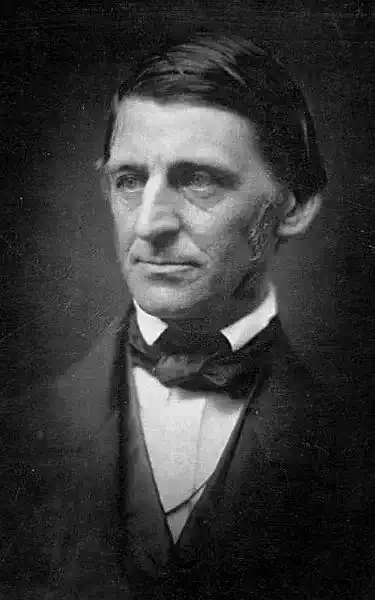
Ralph Waldo Emerson
Uriel.
Uriel.
IT fell in the ancient periods
Which the brooding soul surveys,
Or ever the wild Time coin'd itself
Into calendar months and days.
This was the lapse of Uriel,
Which in Paradise befell.
Once, among the Pleiads walking,
Sayd overheard the young gods talking;
And the treason, too long pent,
To his ears was evident.
The young deities discuss'd
Laws of form, and metre just,
Orb, quintessence, and sunbeams,
What subsisteth, and what seems.
One, with low tones that decide,
And doubt and reverend use defied,
With a look that solved the sphere,
And stirr'd the devils everywhere,
Gave his sentiment divine
Against the being of a line.
'Line in nature is not found;
Unit and universe are round;
In vain produced, all rays return;
Evil will bless, and ice will burn.'
As Uriel spoke with piercing eye,
A shudder ran around the sky;
The stern old war-gods shook their heads;
The seraphs frown'd from myrtle-beds;
Seem'd to the holy festival
The rash word boded ill to all;
The balance-beam of Fate was bent;
The bounds of good and ill were rent;
Strong Hades could not keep his own,
But all slid to confusion.
A sad self-knowledge withering fell
On the beauty of Uriel;
In heaven once eminent, the god
Withdrew that hour into his cloud;
Whether doom'd to long gyration
In the sea of generation,
Or by knowledge grown too bright
To hit the nerve of feebler sight.
Straightway a forgetting wind
Stole over the celestial kind,
And their lips the secret kept,
If in ashes the fire-seed slept.
But, now and then, truth-speaking things
Shamed the angels' veiling wings;
And, shrilling from the solar course,
Or from fruit of chemic force,
Procession of a soul in matter,
Or the speeding change of water,
Or out of the good of evil born,
Came Uriel's voice of cherub scorn,
And a blush tinged the upper sky,
And the gods shook, they knew not why
IT fell in the ancient periods
Which the brooding soul surveys,
Or ever the wild Time coin'd itself
Into calendar months and days.
This was the lapse of Uriel,
Which in Paradise befell.
Once, among the Pleiads walking,
Sayd overheard the young gods talking;
And the treason, too long pent,
To his ears was evident.
The young deities discuss'd
Laws of form, and metre just,
Orb, quintessence, and sunbeams,
What subsisteth, and what seems.
One, with low tones that decide,
And doubt and reverend use defied,
With a look that solved the sphere,
And stirr'd the devils everywhere,
Gave his sentiment divine
Against the being of a line.
'Line in nature is not found;
Unit and universe are round;
In vain produced, all rays return;
Evil will bless, and ice will burn.'
As Uriel spoke with piercing eye,
A shudder ran around the sky;
The stern old war-gods shook their heads;
The seraphs frown'd from myrtle-beds;
Seem'd to the holy festival
The rash word boded ill to all;
The balance-beam of Fate was bent;
The bounds of good and ill were rent;
Strong Hades could not keep his own,
But all slid to confusion.
A sad self-knowledge withering fell
On the beauty of Uriel;
In heaven once eminent, the god
Withdrew that hour into his cloud;
Whether doom'd to long gyration
In the sea of generation,
Or by knowledge grown too bright
To hit the nerve of feebler sight.
Straightway a forgetting wind
Stole over the celestial kind,
And their lips the secret kept,
If in ashes the fire-seed slept.
But, now and then, truth-speaking things
Shamed the angels' veiling wings;
And, shrilling from the solar course,
Or from fruit of chemic force,
Procession of a soul in matter,
Or the speeding change of water,
Or out of the good of evil born,
Came Uriel's voice of cherub scorn,
And a blush tinged the upper sky,
And the gods shook, they knew not why
615
Ralph Waldo Emerson
Initial Love
Initial Love
Venus, when her son was lost,
Cried him up and down the coast,
In hamlets, palaces, and parks,
And told the truant by his marks,
Golden curls, and quiver, and bow;—
This befell long ago.
Time and tide are strangely changed,
Men and manners much deranged;
None will now find Cupid latent
By this foolish antique patent.
He came late along the waste,
Shod like a traveller for haste,
With malice dared me to proclaim him,
That the maids and boys might name him.
Boy no more, he wears all coats,
Frocks, and blouses, capes, capôtes,
He bears no bow, or quiver, or wand,
Nor chaplet on his head or hand:
Leave his weeds and heed his eyes,
All the rest he can disguise.
In the pit of his eyes a spark
Would bring back day if it were dark,
And,—if I tell you all my thought,
Though I comprehend it not,—
In those unfathomable orbs
Every function he absorbs;
He doth eat, and drink, and fish, and shoot,
And write, and reason, and compute,
And ride, and run, and have, and hold,
And whine, and flatter, and regret,
And kiss, and couple, and beget,
By those roving eye-balls bold;
Undaunted are their courages,
Right Cossacks in their forages;
Fleeter they than any creature,
They are his steeds and not his feature,
Inquisitive, and fierce, and fasting,
Restless, predatory, hasting,—
And they pounce on other eyes,
As lions on their prey;
And round their circles is writ,
Plainer than the day,
Underneath, within, above,
Love, love, love, love.
He lives in his eyes,
There doth digest, and work, and spin,
And buy, and sell, and lose, and win;
He rolls them with delighted motion,
Joy-tides swell their mimic ocean.
Yet holds he them with tortest rein,
That they may seize and entertain
The glance that to their glance opposes,
Like fiery honey sucked from roses.
He palmistry can understand,
Imbibing virtue by his hand
As if it were a living root;
The pulse of hands will make him mute;
With all his force he gathers balms
Into those wise thrilling palms.
Cupid is a casuist,
A mystic, and a cabalist,
Can your lurking Thought surprise,
And interpret your device;
Mainly versed in occult science,
In magic, and in clairvoyance.
Oft he keeps his fine ear strained,
And reason on her tiptoe pained,
For aery intelligence,
And for strange coincidence.
But it touches his quick heart
When Fate by omens takes his part,
And chance-dropt hints from Nature's sphere
Deeply soothe his anxious ear.
Heralds high before him run,
He has ushers many a one,
Spreads his welcome where he goes,
And touches all things with his rose.
All things wait for and divine him,—
How shall I dare to malign him,
Or accuse the god of sport?—
I must end my true report,
Painting him from head to foot,
In as far as I took note,
Trusting well the matchless power
Of this young-eyed emperor
Will clear his fame from every cloud,
With the bards, and with the crowd.
He is wilful, mutable,
Shy, untamed, inscrutable,
Swifter-fashioned than the fairies,
Substance mixed of pure contraries,
His vice some elder virtue's token,
And his good is evil spoken.
Failing sometimes of his own,
He is headstrong and alone;
He affects the wood and wild,
Like a flower-hunting child,
Buries himself in summer waves,
In trees, with beasts, in mines, and caves,
Loves nature like a horned cow,
Bird, or deer, or cariboo.
Shun him, nymphs, on the fleet horses!
He has a total world of wit,
O how wise are his discourses!
But he is the arch-hypocrite,
And through all science and all art,
Seeks alone his counterpart.
He is a Pundit of the east,
He is an augur and a priest,
And his soul will melt in prayer,
But word and wisdom are a snare;
Corrupted by the present toy,
He follows joy, and only joy.
There is no mask but he will wear,
He invented oaths to swear,
He paints, he carves, he chants, he prays,
And holds all stars in his embrace,
Godlike, —but 'tis for his fine pelf,
The social quintessence of self.
Well, said I, he is hypocrite,
And folly the end of his subtle wit,
He takes a sovran privilege
Not allowed to any liege,
For he does go behind all law,
And right into himself does draw,
For he is sovranly allied.
Heaven's oldest blood flows in his side,
And interchangeably at one
With every king on every throne,
That no God dare say him nay,
Or see the fault, or seen betray;
He has the Muses by the heart,
And the Parcæ all are of his part.
His many signs cannot be told,
He has not one mode, but manifold,
Many fashions and addresses,
Piques, reproaches, hurts, caresses,
Action, service, badinage,
He will preach like a friar,
And jump like Harlequin,
He will read like a crier,
And fight like a Paladin.
Boundless is his memory,
Plans immense his term prolong,
He is not of counted age,
Meaning always to be young.
And his wish is intimacy,
Intimater intimacy,
And a stricter privacy,
The impossible shall yet be done,
And being two shall still be one.
As the wave breaks to foam on shelves,
Then runs into a wave again,
So lovers melt their sundered selves,
Yet melted would be twain.
Venus, when her son was lost,
Cried him up and down the coast,
In hamlets, palaces, and parks,
And told the truant by his marks,
Golden curls, and quiver, and bow;—
This befell long ago.
Time and tide are strangely changed,
Men and manners much deranged;
None will now find Cupid latent
By this foolish antique patent.
He came late along the waste,
Shod like a traveller for haste,
With malice dared me to proclaim him,
That the maids and boys might name him.
Boy no more, he wears all coats,
Frocks, and blouses, capes, capôtes,
He bears no bow, or quiver, or wand,
Nor chaplet on his head or hand:
Leave his weeds and heed his eyes,
All the rest he can disguise.
In the pit of his eyes a spark
Would bring back day if it were dark,
And,—if I tell you all my thought,
Though I comprehend it not,—
In those unfathomable orbs
Every function he absorbs;
He doth eat, and drink, and fish, and shoot,
And write, and reason, and compute,
And ride, and run, and have, and hold,
And whine, and flatter, and regret,
And kiss, and couple, and beget,
By those roving eye-balls bold;
Undaunted are their courages,
Right Cossacks in their forages;
Fleeter they than any creature,
They are his steeds and not his feature,
Inquisitive, and fierce, and fasting,
Restless, predatory, hasting,—
And they pounce on other eyes,
As lions on their prey;
And round their circles is writ,
Plainer than the day,
Underneath, within, above,
Love, love, love, love.
He lives in his eyes,
There doth digest, and work, and spin,
And buy, and sell, and lose, and win;
He rolls them with delighted motion,
Joy-tides swell their mimic ocean.
Yet holds he them with tortest rein,
That they may seize and entertain
The glance that to their glance opposes,
Like fiery honey sucked from roses.
He palmistry can understand,
Imbibing virtue by his hand
As if it were a living root;
The pulse of hands will make him mute;
With all his force he gathers balms
Into those wise thrilling palms.
Cupid is a casuist,
A mystic, and a cabalist,
Can your lurking Thought surprise,
And interpret your device;
Mainly versed in occult science,
In magic, and in clairvoyance.
Oft he keeps his fine ear strained,
And reason on her tiptoe pained,
For aery intelligence,
And for strange coincidence.
But it touches his quick heart
When Fate by omens takes his part,
And chance-dropt hints from Nature's sphere
Deeply soothe his anxious ear.
Heralds high before him run,
He has ushers many a one,
Spreads his welcome where he goes,
And touches all things with his rose.
All things wait for and divine him,—
How shall I dare to malign him,
Or accuse the god of sport?—
I must end my true report,
Painting him from head to foot,
In as far as I took note,
Trusting well the matchless power
Of this young-eyed emperor
Will clear his fame from every cloud,
With the bards, and with the crowd.
He is wilful, mutable,
Shy, untamed, inscrutable,
Swifter-fashioned than the fairies,
Substance mixed of pure contraries,
His vice some elder virtue's token,
And his good is evil spoken.
Failing sometimes of his own,
He is headstrong and alone;
He affects the wood and wild,
Like a flower-hunting child,
Buries himself in summer waves,
In trees, with beasts, in mines, and caves,
Loves nature like a horned cow,
Bird, or deer, or cariboo.
Shun him, nymphs, on the fleet horses!
He has a total world of wit,
O how wise are his discourses!
But he is the arch-hypocrite,
And through all science and all art,
Seeks alone his counterpart.
He is a Pundit of the east,
He is an augur and a priest,
And his soul will melt in prayer,
But word and wisdom are a snare;
Corrupted by the present toy,
He follows joy, and only joy.
There is no mask but he will wear,
He invented oaths to swear,
He paints, he carves, he chants, he prays,
And holds all stars in his embrace,
Godlike, —but 'tis for his fine pelf,
The social quintessence of self.
Well, said I, he is hypocrite,
And folly the end of his subtle wit,
He takes a sovran privilege
Not allowed to any liege,
For he does go behind all law,
And right into himself does draw,
For he is sovranly allied.
Heaven's oldest blood flows in his side,
And interchangeably at one
With every king on every throne,
That no God dare say him nay,
Or see the fault, or seen betray;
He has the Muses by the heart,
And the Parcæ all are of his part.
His many signs cannot be told,
He has not one mode, but manifold,
Many fashions and addresses,
Piques, reproaches, hurts, caresses,
Action, service, badinage,
He will preach like a friar,
And jump like Harlequin,
He will read like a crier,
And fight like a Paladin.
Boundless is his memory,
Plans immense his term prolong,
He is not of counted age,
Meaning always to be young.
And his wish is intimacy,
Intimater intimacy,
And a stricter privacy,
The impossible shall yet be done,
And being two shall still be one.
As the wave breaks to foam on shelves,
Then runs into a wave again,
So lovers melt their sundered selves,
Yet melted would be twain.
426
Ralph Waldo Emerson
Grace
Grace
How much, preventing God! how much I owe
To the defenses thou hast round me set:
Example, custom, fear, occasional slow,
These scorned bondmen were my parapet.
I dare not peep over this parapet
To gauge with glance the roaring gulf beelow,
The depths of sin to which I had descended,
Had not these me against myself defended.
How much, preventing God! how much I owe
To the defenses thou hast round me set:
Example, custom, fear, occasional slow,
These scorned bondmen were my parapet.
I dare not peep over this parapet
To gauge with glance the roaring gulf beelow,
The depths of sin to which I had descended,
Had not these me against myself defended.
382
Ralph Waldo Emerson
Astræ
Astræ
Himself it was who wrote
His rank, and quartered his own coat.
There is no king nor sovereign state
That can fix a hero's rate;
Each to all is venerable,
Cap-a-pie invulnerable,
Until he write, where all eyes rest,
Slave or master on his breast.
I saw men go up and down
In the country and the town,
With this prayer upon their neck,
"Judgment and a judge we seek."
Not to monarchs they repair,
Nor to learned jurist's chair,
But they hurry to their peers,
To their kinsfolk and their dears,
Louder than with speech they pray,
What am I? companion; say.
And the friend not hesitates
To assign just place and mates,
Answers not in word or letter,
Yet is understood the better;—
Is to his friend a looking-glass,
Reflects his figure that doth pass.
Every wayfarer he meets
What himself declared, repeats;
What himself confessed, records;
Sentences him in his words,
The form is his own corporal form,
And his thought the penal worm.
Yet shine for ever virgin minds,
Loved by stars and purest winds,
Which, o'er passion throned sedate,
Have not hazarded their state,
Disconcert the searching spy,
Rendering to a curious eye
The durance of a granite ledge
To those who gaze from the sea's edge.
It is there for benefit,
It is there for purging light,
There for purifying storms,
And its depths reflect all forms;
It cannot parley with the mean,
Pure by impure is not seen.
For there's no sequestered grot,
Lone mountain tam, or isle forgot,
But justice journeying in the sphere
Daily stoops to harbor there.
Himself it was who wrote
His rank, and quartered his own coat.
There is no king nor sovereign state
That can fix a hero's rate;
Each to all is venerable,
Cap-a-pie invulnerable,
Until he write, where all eyes rest,
Slave or master on his breast.
I saw men go up and down
In the country and the town,
With this prayer upon their neck,
"Judgment and a judge we seek."
Not to monarchs they repair,
Nor to learned jurist's chair,
But they hurry to their peers,
To their kinsfolk and their dears,
Louder than with speech they pray,
What am I? companion; say.
And the friend not hesitates
To assign just place and mates,
Answers not in word or letter,
Yet is understood the better;—
Is to his friend a looking-glass,
Reflects his figure that doth pass.
Every wayfarer he meets
What himself declared, repeats;
What himself confessed, records;
Sentences him in his words,
The form is his own corporal form,
And his thought the penal worm.
Yet shine for ever virgin minds,
Loved by stars and purest winds,
Which, o'er passion throned sedate,
Have not hazarded their state,
Disconcert the searching spy,
Rendering to a curious eye
The durance of a granite ledge
To those who gaze from the sea's edge.
It is there for benefit,
It is there for purging light,
There for purifying storms,
And its depths reflect all forms;
It cannot parley with the mean,
Pure by impure is not seen.
For there's no sequestered grot,
Lone mountain tam, or isle forgot,
But justice journeying in the sphere
Daily stoops to harbor there.
339
Rabindranath Tagore
The Gardener LXXIX: I Often Wonder
The Gardener LXXIX: I Often Wonder
I often wonder where lie hidden
the boundaries of recognition between
man and the beast whose heart knows
no spoken language.
Through what primal paradise in a
remote morning of creation ran the
simple path by which their hearts
visited each other.
Those marks of their constant tread
have not been effaced though their
kinship has been long forgotten.
Yet suddenly in some wordless
music the dim memory wakes up
and the beast gazes into the man's
face with a tender trust, and the
man looks down into its eyes with
amused affection.
It seems that the two friends meet
masked, and vaguely know each other
through the disguise.
I often wonder where lie hidden
the boundaries of recognition between
man and the beast whose heart knows
no spoken language.
Through what primal paradise in a
remote morning of creation ran the
simple path by which their hearts
visited each other.
Those marks of their constant tread
have not been effaced though their
kinship has been long forgotten.
Yet suddenly in some wordless
music the dim memory wakes up
and the beast gazes into the man's
face with a tender trust, and the
man looks down into its eyes with
amused affection.
It seems that the two friends meet
masked, and vaguely know each other
through the disguise.
502
Rabindranath Tagore
Stray Birds 11- 20
Stray Birds 11- 20
11
SOME unseen fingers, like idle breeze,
are playing upon my heart the music of the ripples.
12
'WHAT language is thine, O sea?'
'The language of eternal question.'
'What language is thy answer, O sky?
'The language of eternal silence.'
13
LISTEN,
my heart,
to the whispers of the world
with which it makes love to you.
14
THE mystery of creation
is like the darkness of night-it
is great.
Delusions of knowledge are like
the fog of the morning.
15
DO not seat your love upon a precipice because it is high.
16
I SIT at my window this morning
where the world like a passer-by stops for a moment,
nods to me and goes.
17
THESE little thoughts are the rustle of leaves;
they have their whisper of
joy in my mind.
18
WHAT you are you do not see,
what you see is your shadow.
19
MY wishes are fools, they shout across thy songs, my Master.
Let me but listen.
20
I CANNOT choose the best.
The best chooses me.
11
SOME unseen fingers, like idle breeze,
are playing upon my heart the music of the ripples.
12
'WHAT language is thine, O sea?'
'The language of eternal question.'
'What language is thy answer, O sky?
'The language of eternal silence.'
13
LISTEN,
my heart,
to the whispers of the world
with which it makes love to you.
14
THE mystery of creation
is like the darkness of night-it
is great.
Delusions of knowledge are like
the fog of the morning.
15
DO not seat your love upon a precipice because it is high.
16
I SIT at my window this morning
where the world like a passer-by stops for a moment,
nods to me and goes.
17
THESE little thoughts are the rustle of leaves;
they have their whisper of
joy in my mind.
18
WHAT you are you do not see,
what you see is your shadow.
19
MY wishes are fools, they shout across thy songs, my Master.
Let me but listen.
20
I CANNOT choose the best.
The best chooses me.
855