

Poems in this theme
Consciousness and Self-Knowledge
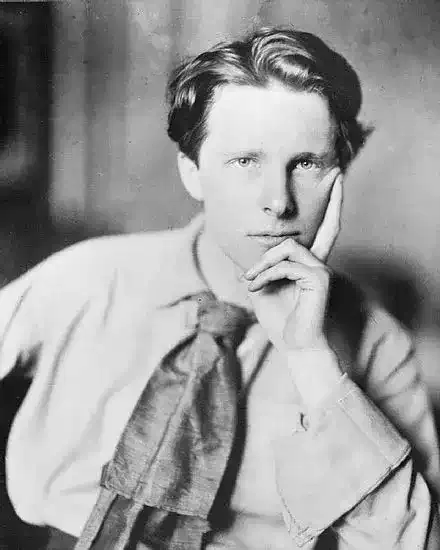
Rupert Brooke
Sonnet
Sonnet
(Suggested by some of the Proceedings of the Society for Psychical Research)
Not with vain tears, when we’re beyond the sun,
We’ll beat on the substantial doors, nor tread
Those dusty high-roads of the aimless dead
Plaintive for Earth; but rather turn and run
Down some close-covered by-way of the air,
Some low sweet alley between wind and wind,
Stoop under faint gleams, thread the shadows, find
Some whispering ghost-forgotten nook, and there
Spend in pure converse our eternal day;
Think each in each, immediately wise;
Learn all we lacked before; hear, know, and say
What this tumultuous body now denies;
And feel, who have laid our groping hands away;
And see, no longer blinded by our eyes.
(Suggested by some of the Proceedings of the Society for Psychical Research)
Not with vain tears, when we’re beyond the sun,
We’ll beat on the substantial doors, nor tread
Those dusty high-roads of the aimless dead
Plaintive for Earth; but rather turn and run
Down some close-covered by-way of the air,
Some low sweet alley between wind and wind,
Stoop under faint gleams, thread the shadows, find
Some whispering ghost-forgotten nook, and there
Spend in pure converse our eternal day;
Think each in each, immediately wise;
Learn all we lacked before; hear, know, and say
What this tumultuous body now denies;
And feel, who have laid our groping hands away;
And see, no longer blinded by our eyes.
186
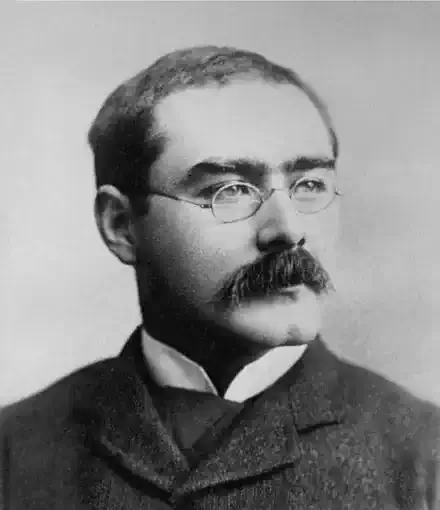
Rudyard Kipling
The Watcher
The Watcher
Put forth to watch, unschooled, alone,
'Twixt hostile earth and sky;
The mottled lizard 'neath the stone
Is wiser here than I.
What stir across the haze of heat?
What omen down the wind?
The buck that break before my feet--
They know, but I am blind!
Put forth to watch, unschooled, alone,
'Twixt hostile earth and sky;
The mottled lizard 'neath the stone
Is wiser here than I.
What stir across the haze of heat?
What omen down the wind?
The buck that break before my feet--
They know, but I am blind!
452
Rudyard Kipling
The Two-Sided Man
The Two-Sided Man
Much I owe to the Lands that grew--
More to the Lives that fed--
But most to Allah Who gave me two
Separate sides to my head.
Much I reflect on the Good and the True
In the Faiths beneath the sun,
But most to Allah Who gave me two
Sides to my head, not one.
Wesley's following, Calvin's flock,
White or yellow or bronze,
Shaman, Ju-ju or Angekok,
Minister, Mukamuk, Bonze--
Here is a health, my brothers, to you,
However your prayers are said,
And praised be Allah Who gave me two
Separate sides to my head!
I would go without shirt or shoe,
Friend, tobacco or bread,
Sooner than lose for a minute the two
Separate sides of my head!
Much I owe to the Lands that grew--
More to the Lives that fed--
But most to Allah Who gave me two
Separate sides to my head.
Much I reflect on the Good and the True
In the Faiths beneath the sun,
But most to Allah Who gave me two
Sides to my head, not one.
Wesley's following, Calvin's flock,
White or yellow or bronze,
Shaman, Ju-ju or Angekok,
Minister, Mukamuk, Bonze--
Here is a health, my brothers, to you,
However your prayers are said,
And praised be Allah Who gave me two
Separate sides to my head!
I would go without shirt or shoe,
Friend, tobacco or bread,
Sooner than lose for a minute the two
Separate sides of my head!
497
Rudyard Kipling
The Return
The Return
Peace is declared, and I return
To 'Ackneystadt, but not the same;
Things 'ave transpired which made me learn
The size and meanin' of the game.
I did no more than others did,
I don't know where the change began;
I started as a average kid,
I finished as a thinkin' man.
If England was what England seems
An' not the England of our dreams,
But only putty, brass, an' paint,
'Ow quick we'd drop 'er! But she ain't!
Before my gappin' mouth could speak
I 'eard it in my comrade's tone;
I saw it on my neighbour's cheek
Before I felt it flush my own.
An' last it come to me--not pride,
Nor yet conceit, but on the 'ole
(If such a term may be applied),
The makin's of a bloomin' soul.
Rivers at night that cluck an' jeer,
Plains which the moonshine turns to sea,
Mountains that never let you near,
An' stars to all eternity;
An' the quick-breathin' dark that fills
The 'ollows of the wilderness,
When the wind worries through the 'ills--
These may 'ave taught me more or less.
Towns without people, ten times took,
An' ten times left an' burned at last;
An' starvin' dogs that come to look
For owners when a column passed;
An' quiet, 'omesick talks between
Men, met by night, you never knew
Until--'is face--by shellfire seen--
Once--an' struck off. They taught me, too.
The day's lay-out--the mornin' sun
Beneath your 'at-brim as you sight;
The dinner-'ush from noon till one,
An' the full roar that lasts till night;
An' the pore dead that look so old
An' was so young an hour ago,
An' legs tied down before they're cold--
These are the things which make you know.
Also Time runnin' into years--
A thousand Places left be'ind--
An' Men from both two 'emispheres
Discussin' things of every kind;
So much more near than I 'ad known,
So much more great than I 'ad guessed--
An' me, like all the rest, alone--
But reachin' out to all the rest!
So 'ath it come to me--not pride,
Nor yet conceit, but on the 'ole
(If such a term may be applied),
The makin's of a bloomin' soul.
But now, discharged, I fall away
To do with little things again....
Gawd, 'oo knows all I cannot say,
Look after me in Thamesfontein!
If England was what England seems
An' not the England of our dreams,
But only putty, brass, an' paint,
'Ow quick we'd chuck 'er! But she ain't!
Peace is declared, and I return
To 'Ackneystadt, but not the same;
Things 'ave transpired which made me learn
The size and meanin' of the game.
I did no more than others did,
I don't know where the change began;
I started as a average kid,
I finished as a thinkin' man.
If England was what England seems
An' not the England of our dreams,
But only putty, brass, an' paint,
'Ow quick we'd drop 'er! But she ain't!
Before my gappin' mouth could speak
I 'eard it in my comrade's tone;
I saw it on my neighbour's cheek
Before I felt it flush my own.
An' last it come to me--not pride,
Nor yet conceit, but on the 'ole
(If such a term may be applied),
The makin's of a bloomin' soul.
Rivers at night that cluck an' jeer,
Plains which the moonshine turns to sea,
Mountains that never let you near,
An' stars to all eternity;
An' the quick-breathin' dark that fills
The 'ollows of the wilderness,
When the wind worries through the 'ills--
These may 'ave taught me more or less.
Towns without people, ten times took,
An' ten times left an' burned at last;
An' starvin' dogs that come to look
For owners when a column passed;
An' quiet, 'omesick talks between
Men, met by night, you never knew
Until--'is face--by shellfire seen--
Once--an' struck off. They taught me, too.
The day's lay-out--the mornin' sun
Beneath your 'at-brim as you sight;
The dinner-'ush from noon till one,
An' the full roar that lasts till night;
An' the pore dead that look so old
An' was so young an hour ago,
An' legs tied down before they're cold--
These are the things which make you know.
Also Time runnin' into years--
A thousand Places left be'ind--
An' Men from both two 'emispheres
Discussin' things of every kind;
So much more near than I 'ad known,
So much more great than I 'ad guessed--
An' me, like all the rest, alone--
But reachin' out to all the rest!
So 'ath it come to me--not pride,
Nor yet conceit, but on the 'ole
(If such a term may be applied),
The makin's of a bloomin' soul.
But now, discharged, I fall away
To do with little things again....
Gawd, 'oo knows all I cannot say,
Look after me in Thamesfontein!
If England was what England seems
An' not the England of our dreams,
But only putty, brass, an' paint,
'Ow quick we'd chuck 'er! But she ain't!
446
Rudyard Kipling
The Mother's Son
The Mother's Son
I have a dream -- a dreadful dream --
A dream that is never done.
I watch a man go out of his mind,
And he is My Mother's Son.
They pushed him into a Mental Home,
And that is like the grave:
For they do not let you sleep upstairs,
And you aren't allowed to shave.
And it was not disease or crime
Which got him landed there,
But because They laid on My Mother's Son
More than a man could bear.
What with noise, and fear of death,
Waking, and wounds and cold,
They filled the Cup for My Mother's Son
Fuller than it could hold.
They broke his body and his mind
And yet They made him live,
And They asked more of My Mother's Son
Than any man could give.
For, just because he had not died,
Nor been discharged nor sick,
They dragged it out with My Mother's Son
Longer than he could stick....
And no one knows when he'll get well --
So, there he'll have to be:
And, 'spite of the beard in the looking-glass,
I know that man is me!
I have a dream -- a dreadful dream --
A dream that is never done.
I watch a man go out of his mind,
And he is My Mother's Son.
They pushed him into a Mental Home,
And that is like the grave:
For they do not let you sleep upstairs,
And you aren't allowed to shave.
And it was not disease or crime
Which got him landed there,
But because They laid on My Mother's Son
More than a man could bear.
What with noise, and fear of death,
Waking, and wounds and cold,
They filled the Cup for My Mother's Son
Fuller than it could hold.
They broke his body and his mind
And yet They made him live,
And They asked more of My Mother's Son
Than any man could give.
For, just because he had not died,
Nor been discharged nor sick,
They dragged it out with My Mother's Son
Longer than he could stick....
And no one knows when he'll get well --
So, there he'll have to be:
And, 'spite of the beard in the looking-glass,
I know that man is me!
462
Rudyard Kipling
The Hour of the Angel
The Hour of the Angel
Sooner or late--in earnest or in jest--
(But the stakes are no jest) Ithuriel's Hour
Will spring on us, for the first time, the test
Of our sole unbacked competence and power
Up to the limit of our years and dower
Of judgment--or beyond. But here we have
Prepared long since our garland or our grave.
For, at that hour, the sum of all our past,
Act, habit, thought, and passion, shall be cast
In one addition, be it more or less,
And as that reading runs so shall we do;
Meeting, astounded, victory at the last,
Or, first and last, our own unworthiness.
And none can change us though they die to save!
Sooner or late--in earnest or in jest--
(But the stakes are no jest) Ithuriel's Hour
Will spring on us, for the first time, the test
Of our sole unbacked competence and power
Up to the limit of our years and dower
Of judgment--or beyond. But here we have
Prepared long since our garland or our grave.
For, at that hour, the sum of all our past,
Act, habit, thought, and passion, shall be cast
In one addition, be it more or less,
And as that reading runs so shall we do;
Meeting, astounded, victory at the last,
Or, first and last, our own unworthiness.
And none can change us though they die to save!
420
Rudyard Kipling
The Benefactors
The Benefactors
Ah! What avails the classic bent
And what the cultured word,
Against the undoctored incident
That actually occurred?
And what is Art whereto we press
Through paint and prose and rhyme--
When Nature in her nakedness
Defeats us every time?
It is not learning, grace nor gear,
Nor easy meat and drink,
But bitter pinch of pain and fear
That makes creation think.
When in this world's unpleasing youth
Our godlike race began,
The longest arm, the sharpest tooth,
Gave man control of man;
Till, bruised and bitten to the bone
And taught by pain and fear,
He learned to deal the far-off stone,
And poke the long, safe spear.
So tooth and nail were obsolete
As means against a foe,
Till, bored by uniform defeat,
Some genius built the bow.
Then stone and javelin proved as vain
As old-time tooth and nail;
Till, spurred anew by fear and pain,
Man fashioned coats of mail.
Then was there safety for the rich
And danger for the poor,
Till someone mixed a powder which
Redressed the scale once more.
Helmet and armour disappeared
With sword and bow and pike,
And, when the smoke of battle cleared,
All men were armed alike. . . .
And when ten million such were slain
To please one crazy king,
Man, schooled in bulk by fear and pain,
Grew weary of the thing;
And, at the very hour designed,
To enslave him past recall,
His tooth-stone-arrow-gun-shy mind
Turned and abolished all.
All Power, each Tyrant, every Mob
Whose head has grown too large,
Ends by destroying its own job
And works its own discharge;
And Man, whose mere necessities
Move all things from his path,
Trembles meanwhile at their decrees,
And deprecates their wrath!
Ah! What avails the classic bent
And what the cultured word,
Against the undoctored incident
That actually occurred?
And what is Art whereto we press
Through paint and prose and rhyme--
When Nature in her nakedness
Defeats us every time?
It is not learning, grace nor gear,
Nor easy meat and drink,
But bitter pinch of pain and fear
That makes creation think.
When in this world's unpleasing youth
Our godlike race began,
The longest arm, the sharpest tooth,
Gave man control of man;
Till, bruised and bitten to the bone
And taught by pain and fear,
He learned to deal the far-off stone,
And poke the long, safe spear.
So tooth and nail were obsolete
As means against a foe,
Till, bored by uniform defeat,
Some genius built the bow.
Then stone and javelin proved as vain
As old-time tooth and nail;
Till, spurred anew by fear and pain,
Man fashioned coats of mail.
Then was there safety for the rich
And danger for the poor,
Till someone mixed a powder which
Redressed the scale once more.
Helmet and armour disappeared
With sword and bow and pike,
And, when the smoke of battle cleared,
All men were armed alike. . . .
And when ten million such were slain
To please one crazy king,
Man, schooled in bulk by fear and pain,
Grew weary of the thing;
And, at the very hour designed,
To enslave him past recall,
His tooth-stone-arrow-gun-shy mind
Turned and abolished all.
All Power, each Tyrant, every Mob
Whose head has grown too large,
Ends by destroying its own job
And works its own discharge;
And Man, whose mere necessities
Move all things from his path,
Trembles meanwhile at their decrees,
And deprecates their wrath!
488
Rudyard Kipling
My Lady's Law
My Lady's Law
The Law whereby my lady moves
Was never Law to me,
But 'tis enough that she approves
Whatever Law it be.
For in that Law, and by that Law
My constant course I'll steer;
Not that I heed or deem it dread,
But that she holds it dear.
Tho' Asia sent for my content
Her richest argosies,
Those would I spurn, and bid return,
If that should give her ease.
With equal heart I'd watch depart
Each spiced sail from sight;
Sans bitterness, desiring less
Great gear than her delight.
Though Kings made swift with many a gift
My proven sword to hire--
I would not go nor serve 'em so--
Except at her desire.
With even mind, I'd put behind
Adventure and acclaim,
And clean give o'er, esteeming more
Her favour than my fame.
Yet such am I, yea, such am I--
Sore bond and freest free,
The Law that sways my lady's ways
Is mystery to me!
The Law whereby my lady moves
Was never Law to me,
But 'tis enough that she approves
Whatever Law it be.
For in that Law, and by that Law
My constant course I'll steer;
Not that I heed or deem it dread,
But that she holds it dear.
Tho' Asia sent for my content
Her richest argosies,
Those would I spurn, and bid return,
If that should give her ease.
With equal heart I'd watch depart
Each spiced sail from sight;
Sans bitterness, desiring less
Great gear than her delight.
Though Kings made swift with many a gift
My proven sword to hire--
I would not go nor serve 'em so--
Except at her desire.
With even mind, I'd put behind
Adventure and acclaim,
And clean give o'er, esteeming more
Her favour than my fame.
Yet such am I, yea, such am I--
Sore bond and freest free,
The Law that sways my lady's ways
Is mystery to me!
401
Rudyard Kipling
McAndrew's Hymn
McAndrew's Hymn
Lord, Thou hast made this world below the shadow of a dream,
An', taught by time, I tak' it so -- exceptin' always Steam.
From coupler-flange to spindle-guide I see Thy Hand, O God --
Predestination in the stride o' yon connectin'-rod.
John Calvin might ha' forged the same -- enorrmous, certain, slow --
Ay, wrought it in the furnace-flame -- ~my~ "Institutio".
I cannot get my sleep to-night; old bones are hard to please;
I'll stand the middle watch up here -- alone wi' God an' these
My engines, after ninety days o' race an' rack an' strain
Through all the seas of all Thy world, slam-bangin' home again.
Slam-bang too much -- they knock a wee -- the crosshead-gibs are loose;
But thirty thousand mile o' sea has gied them fair excuse. . . .
Fine, clear an' dark -- a full-draught breeze, wi' Ushant out o' sight,
An' Ferguson relievin' Hay. Old girl, ye'll walk to-night!
His wife's at Plymouth. . . . Seventy --
One -- Two -- Three since he began --
Three turns for Mistress Ferguson. . .and who's to blame the man?
There's none at any port for me, by drivin' fast or slow,
Since Elsie Campbell went to Thee, Lord, thirty years ago.
(The year the ~Sarah Sands~ was burned. Oh roads we used to tread,
Fra' Maryhill to Pollokshaws -- fra' Govan to Parkhead!)
Not but they're ceevil on the Board. Ye'll hear Sir Kenneth say:
"Good-morrn, M'Andrew! Back again? An' how's your bilge to-day?"
Miscallin' technicalities but handin' me my chair
To drink Madeira wi' three Earls -- the auld Fleet Engineer,
That started as a boiler-whelp -- when steam and he were low.
I mind the time we used to serve a broken pipe wi' tow.
Ten pound was all the pressure then -- Eh! Eh! -- a man wad drive;
An' here, our workin' gauges give one hunder fifty-five!
We're creepin' on wi' each new rig -- less weight an' larger power:
There'll be the loco-boiler next an' thirty knots an hour!
Thirty an' more. What I ha' seen since ocean-steam began
Leaves me no doot for the machine: but what about the man?
The man that counts, wi' all his runs, one million mile o' sea:
Four time the span from earth to moon. . . . How far, O Lord, from Thee?
That wast beside him night an' day. Ye mind my first typhoon?
It scoughed the skipper on his way to jock wi' the saloon.
Three feet were on the stokehold-floor -- just slappin' to an' fro --
An' cast me on a furnace-door. I have the marks to show.
Marks! I ha' marks o' more than burns -- deep in my soul an' black,
An' times like this, when things go smooth, my wickudness comes back.
The sins o' four and forty years, all up an' down the seas,
Clack an' repeat like valves half-fed. . . . Forgie's our trespasses.
Nights when I'd come on deck to mark, wi' envy in my gaze,
The couples kittlin' in the dark between the funnel stays;
Years when I raked the ports wi' pride to fill my cup o' wrong --
Judge not, O Lord, my steps aside at Gay Street in Hong-Kong!
Blot out the wastrel hours of mine in sin when I abode --
Jane Harrigan's an' Number Nine, The Reddick an' Grant Road!
An' waur than all -- my crownin' sin -- rank blasphemy an' wild.
I was not four and twenty then -- Ye wadna judge a child?
I'd seen the Tropics first that run -- new fruit, new smells, new air --
How could I tell -- blind-fou wi' sun -- the Deil was lurkin' there?
By day like playhouse-scenes the shore slid past our sleepy eyes;
By night those soft, lasceevious stars leered from those velvet skies,
In port (we used no cargo-steam) I'd daunder down the streets --
An ijjit grinnin' in a dream -- for shells an' parrakeets,
An' walkin'-sticks o' carved bamboo an' blowfish stuffed an' dried --
Fillin' my bunk wi' rubbishry the Chief put overside.
Till, off Sambawa Head, Ye mind, I heard a land-breeze ca',
Milk-warm wi' breath o' spice an' bloom: "M'Andrew, come awa'!"
Firm, clear an' low -- no haste, no hate -- the ghostly whisper went,
Just statin' eevidential facts beyon' all argument:
"Your mither's God's a graspin' deil, the shadow o' yoursel',
Got out o' books by meenisters clean daft on Heaven an' Hell.
They mak' Him in the Broomielaw, o' Glasgie cold an' dirt,
A jealous, pridefu' fetich, lad, that's only strong to hurt,
Ye'll not go back to Him again an' kiss His red-hot rod,
But come wi' Us" (Now, who were ~They~?) "an' know the Leevin' God,
That does not kipper souls for sport or break a life in jest,
But swells the ripenin' cocoanuts an' ripes the woman's breast."
An' there it stopped: cut off: no more; that quiet, certain voice --
For me, six months o' twenty-four, to leave or take at choice.
'Twas on me like a thunderclap -- it racked me through an' through --
Temptation past the show o' speech, unnameable an' new --
The Sin against the Holy Ghost? . . . An' under all, our screw.
That storm blew by but left behind her anchor-shiftin' swell,
Thou knowest all my heart an' mind, Thou knowest, Lord, I fell.
Third on the ~Mary Gloster~ then, and first that night in Hell!
Yet was Thy hand beneath my head, about my feet Thy care --
Fra' Deli clear to Torres Strait, the trial o' despair,
But when we touched the Barrier Reef Thy answer to my prayer!
We dared not run that sea by night but lay an' held our fire,
An' I was drowsin' on the hatch -- sick -- sick wi' doubt an' tire:
"~Better the sight of eyes that see than wanderin' o' desire!~"
Ye mind that word? Clear as our gongs -- again, an' once again,
When rippin' down through coral-trash ran out our moorin'-chain;
An' by Thy Grace I had the Light to see my duty plain.
Light on the engine-room -- no more -- bright as our carbons burn.
I've lost it since a thousand times, but never past return.
. . . . .
Obsairve. Per annum we'll have here two thousand souls aboard --
Think not I dare to justify myself before the Lord,
But -- average fifteen hunder souls safe-borne fra' port to port --
I ~am~ o' service to my kind. Ye wadna blame the thought?
Maybe they steam from grace to wrath -- to sin by folly led, --
It isna mine to judge their path -- their lives are on my head.
Mine at the last -- when all is done it all comes back to me,
The fault that leaves six thousand ton a log upon the sea.
We'll tak' one stretch -- three weeks an' odd by any road ye steer --
Fra' Cape Town east to Wellington -- ye need an engineer.
Fail there -- ye've time to weld your shaft -- ay, eat it, ere ye're spoke;
Or make Kerguelen under sail -- three jiggers burned wi' smoke!
An' home again, the Rio run: it's no child's play to go
Steamin' to bell for fourteen days o' snow an' floe an' blow --
The bergs like kelpies overside that girn an' turn an' shift
Whaur, grindin' like the Mills o' God, goes by the big South drift.
(Hail, snow an' ice that praise the Lord: I've met them at their work,
An' wished we had anither route or they anither kirk.)
Yon's strain, hard strain, o' head an' hand, for though Thy Power brings
All skill to naught, Ye'll understand a man must think o' things.
Then, at the last, we'll get to port an' hoist their baggage clear --
The passengers, wi' gloves an' canes -- an' this is what I'll hear:
"Well, thank ye for a pleasant voyage. The tender's comin' now."
While I go testin' follower-bolts an' watch the skipper bow.
They've words for every one but me -- shake hands wi' half the crew,
Except the dour Scots engineer, the man they never knew.
An' yet I like the wark for all we've dam' few pickin's here --
No pension, an' the most we earn's four hunder pound a year.
Better myself abroad? Maybe. ~I'd~ sooner starve than sail
Wi' such as call a snifter-rod ~ross~. . .French for nightingale.
Commeesion on my stores? Some do; but I can not afford
To lie like stewards wi' patty-pans --. I'm older than the Board.
A bonus on the coal I save? Ou ay, the Scots are close,
But when I grudge the strength Ye gave I'll grudge their food to ~those~.
(There's bricks that I might recommend -- an' clink the fire-bars cruel.
No! Welsh -- Wangarti at the worst -- an' damn all patent fuel!)
Inventions? Ye must stay in port to mak' a patent pay.
My Deeferential Valve-Gear taught me how that business lay,
I blame no chaps wi' clearer head for aught they make or sell.
~I~ found that I could not invent an' look to these -- as well.
So, wrestled wi' Apollyon -- Nah! -- fretted like a bairn --
But burned the workin'-plans last run wi' all I hoped to earn.
Ye know how hard an Idol dies, an' what that meant to me --
E'en tak' it for a sacrifice acceptable to Thee. . . .
~Below there! Oiler! What's your wark? Ye find it runnin' hard?
Ye needn't swill the cap wi' oil -- this isn't the Cunard!
Ye thought? Ye are not paid to think. Go, sweat that off again!~
Tck! Tck! It's deeficult to sweer nor tak' The Name in vain!
Men, ay an' women, call me stern. Wi' these to oversee
Ye'll note I've little time to burn on social repartee.
The bairns see what their elders miss; they'll hunt me to an' fro,
Till for the sake of -- well, a kiss -- I tak' 'em down below.
That minds me of our Viscount loon -- Sir Kenneth's kin -- the chap
Wi' Russia leather tennis-shoon an' spar-decked yachtin'-cap.
I showed him round last week, o'er all -- an' at the last says he:
"Mister M'Andrew, don't you think steam spoils romance at sea?"
Damned ijjit! I'd been doon that morn to see what ailed the throws,
Manholin', on my back -- the cranks three inches off my nose.
Romance! Those first-class passengers they like it very well,
Printed an' bound in little books; but why don't poets tell?
I'm sick of all their quirks an' turns -- the loves an' doves they dream --
Lord, send a man like Robbie Burns to sing the Song o' Steam!
To match wi' Scotia's noblest speech yon orchestra sublime
Whaurto -- uplifted like the Just -- the tail-rods mark the time.
The crank-throws give the double-bass, the feed-pump sobs an' heaves,
An' now the main eccentrics start their quarrel on the sheaves:
Her time, her own appointed time, the rocking link-head bides,
Till -- hear that note? -- the rod's return
whings glimmerin' through the guides.
They're all awa'! True beat, full power, the clangin' chorus goes
Clear to the tunnel where they sit, my purrin' dynamos.
Interdependence absolute, foreseen, ordained, decreed,
To work, Ye'll note, at any tilt an' every rate o' speed.
Fra' skylight-lift to furnace-bars, backed, bolted, braced an' stayed,
An' singin' like the Mornin' Stars for joy that they are made;
While, out o' touch o' vanity, the sweatin' thrust-block says:
"Not unto us the praise, or man -- not unto us the praise!"
Now, a' together, hear them lift their lesson -- theirs an' mine:
"Law, Orrder, Duty an' Restraint, Obedience, Discipline!"
Mill, forge an' try-pit taught them that when roarin' they arose,
An' whiles I wonder if a soul was gied them wi' the blows.
Oh for a man to weld it then, in one trip-hammer strain,
Till even first-class passengers could tell the meanin' plain!
But no one cares except mysel' that serve an' understand
My seven thousand horse-power here.
Eh, Lord! They're grand -- they're grand!
Uplift am I? When first in store the new-made beasties stood,
Were Ye cast down that breathed the Word declarin' all things good?
Not so! O' that warld-liftin' joy no after-fall could vex,
Ye've left a glimmer still to cheer the Man -- the Arrtifex!
~That~ holds, in spite o' knock and scale, o' friction, waste an' slip,
An' by that light -- now, mark my word -- we'll build the Perfect Ship.
I'll never last to judge her lines or take her curve -- not I.
But I ha' lived an' I ha' worked. 'Be thanks to Thee, Most High!
An' I ha' done what I ha' done -- judge Thou if ill or well --
Always Thy Grace preventin' me. . . .
Losh! Yon's the "Stand by" bell.
Pilot so soon? His flare it is. The mornin'-watch is set.
Well, God be thanked, as I was sayin', I'm no Pelagian yet.
Now I'll tak' on. . . .
~'Morrn, Ferguson. Man, have ye ever thought
What your good leddy costs in coal? . . . I'll burn 'em down to port.
Lord, Thou hast made this world below the shadow of a dream,
An', taught by time, I tak' it so -- exceptin' always Steam.
From coupler-flange to spindle-guide I see Thy Hand, O God --
Predestination in the stride o' yon connectin'-rod.
John Calvin might ha' forged the same -- enorrmous, certain, slow --
Ay, wrought it in the furnace-flame -- ~my~ "Institutio".
I cannot get my sleep to-night; old bones are hard to please;
I'll stand the middle watch up here -- alone wi' God an' these
My engines, after ninety days o' race an' rack an' strain
Through all the seas of all Thy world, slam-bangin' home again.
Slam-bang too much -- they knock a wee -- the crosshead-gibs are loose;
But thirty thousand mile o' sea has gied them fair excuse. . . .
Fine, clear an' dark -- a full-draught breeze, wi' Ushant out o' sight,
An' Ferguson relievin' Hay. Old girl, ye'll walk to-night!
His wife's at Plymouth. . . . Seventy --
One -- Two -- Three since he began --
Three turns for Mistress Ferguson. . .and who's to blame the man?
There's none at any port for me, by drivin' fast or slow,
Since Elsie Campbell went to Thee, Lord, thirty years ago.
(The year the ~Sarah Sands~ was burned. Oh roads we used to tread,
Fra' Maryhill to Pollokshaws -- fra' Govan to Parkhead!)
Not but they're ceevil on the Board. Ye'll hear Sir Kenneth say:
"Good-morrn, M'Andrew! Back again? An' how's your bilge to-day?"
Miscallin' technicalities but handin' me my chair
To drink Madeira wi' three Earls -- the auld Fleet Engineer,
That started as a boiler-whelp -- when steam and he were low.
I mind the time we used to serve a broken pipe wi' tow.
Ten pound was all the pressure then -- Eh! Eh! -- a man wad drive;
An' here, our workin' gauges give one hunder fifty-five!
We're creepin' on wi' each new rig -- less weight an' larger power:
There'll be the loco-boiler next an' thirty knots an hour!
Thirty an' more. What I ha' seen since ocean-steam began
Leaves me no doot for the machine: but what about the man?
The man that counts, wi' all his runs, one million mile o' sea:
Four time the span from earth to moon. . . . How far, O Lord, from Thee?
That wast beside him night an' day. Ye mind my first typhoon?
It scoughed the skipper on his way to jock wi' the saloon.
Three feet were on the stokehold-floor -- just slappin' to an' fro --
An' cast me on a furnace-door. I have the marks to show.
Marks! I ha' marks o' more than burns -- deep in my soul an' black,
An' times like this, when things go smooth, my wickudness comes back.
The sins o' four and forty years, all up an' down the seas,
Clack an' repeat like valves half-fed. . . . Forgie's our trespasses.
Nights when I'd come on deck to mark, wi' envy in my gaze,
The couples kittlin' in the dark between the funnel stays;
Years when I raked the ports wi' pride to fill my cup o' wrong --
Judge not, O Lord, my steps aside at Gay Street in Hong-Kong!
Blot out the wastrel hours of mine in sin when I abode --
Jane Harrigan's an' Number Nine, The Reddick an' Grant Road!
An' waur than all -- my crownin' sin -- rank blasphemy an' wild.
I was not four and twenty then -- Ye wadna judge a child?
I'd seen the Tropics first that run -- new fruit, new smells, new air --
How could I tell -- blind-fou wi' sun -- the Deil was lurkin' there?
By day like playhouse-scenes the shore slid past our sleepy eyes;
By night those soft, lasceevious stars leered from those velvet skies,
In port (we used no cargo-steam) I'd daunder down the streets --
An ijjit grinnin' in a dream -- for shells an' parrakeets,
An' walkin'-sticks o' carved bamboo an' blowfish stuffed an' dried --
Fillin' my bunk wi' rubbishry the Chief put overside.
Till, off Sambawa Head, Ye mind, I heard a land-breeze ca',
Milk-warm wi' breath o' spice an' bloom: "M'Andrew, come awa'!"
Firm, clear an' low -- no haste, no hate -- the ghostly whisper went,
Just statin' eevidential facts beyon' all argument:
"Your mither's God's a graspin' deil, the shadow o' yoursel',
Got out o' books by meenisters clean daft on Heaven an' Hell.
They mak' Him in the Broomielaw, o' Glasgie cold an' dirt,
A jealous, pridefu' fetich, lad, that's only strong to hurt,
Ye'll not go back to Him again an' kiss His red-hot rod,
But come wi' Us" (Now, who were ~They~?) "an' know the Leevin' God,
That does not kipper souls for sport or break a life in jest,
But swells the ripenin' cocoanuts an' ripes the woman's breast."
An' there it stopped: cut off: no more; that quiet, certain voice --
For me, six months o' twenty-four, to leave or take at choice.
'Twas on me like a thunderclap -- it racked me through an' through --
Temptation past the show o' speech, unnameable an' new --
The Sin against the Holy Ghost? . . . An' under all, our screw.
That storm blew by but left behind her anchor-shiftin' swell,
Thou knowest all my heart an' mind, Thou knowest, Lord, I fell.
Third on the ~Mary Gloster~ then, and first that night in Hell!
Yet was Thy hand beneath my head, about my feet Thy care --
Fra' Deli clear to Torres Strait, the trial o' despair,
But when we touched the Barrier Reef Thy answer to my prayer!
We dared not run that sea by night but lay an' held our fire,
An' I was drowsin' on the hatch -- sick -- sick wi' doubt an' tire:
"~Better the sight of eyes that see than wanderin' o' desire!~"
Ye mind that word? Clear as our gongs -- again, an' once again,
When rippin' down through coral-trash ran out our moorin'-chain;
An' by Thy Grace I had the Light to see my duty plain.
Light on the engine-room -- no more -- bright as our carbons burn.
I've lost it since a thousand times, but never past return.
. . . . .
Obsairve. Per annum we'll have here two thousand souls aboard --
Think not I dare to justify myself before the Lord,
But -- average fifteen hunder souls safe-borne fra' port to port --
I ~am~ o' service to my kind. Ye wadna blame the thought?
Maybe they steam from grace to wrath -- to sin by folly led, --
It isna mine to judge their path -- their lives are on my head.
Mine at the last -- when all is done it all comes back to me,
The fault that leaves six thousand ton a log upon the sea.
We'll tak' one stretch -- three weeks an' odd by any road ye steer --
Fra' Cape Town east to Wellington -- ye need an engineer.
Fail there -- ye've time to weld your shaft -- ay, eat it, ere ye're spoke;
Or make Kerguelen under sail -- three jiggers burned wi' smoke!
An' home again, the Rio run: it's no child's play to go
Steamin' to bell for fourteen days o' snow an' floe an' blow --
The bergs like kelpies overside that girn an' turn an' shift
Whaur, grindin' like the Mills o' God, goes by the big South drift.
(Hail, snow an' ice that praise the Lord: I've met them at their work,
An' wished we had anither route or they anither kirk.)
Yon's strain, hard strain, o' head an' hand, for though Thy Power brings
All skill to naught, Ye'll understand a man must think o' things.
Then, at the last, we'll get to port an' hoist their baggage clear --
The passengers, wi' gloves an' canes -- an' this is what I'll hear:
"Well, thank ye for a pleasant voyage. The tender's comin' now."
While I go testin' follower-bolts an' watch the skipper bow.
They've words for every one but me -- shake hands wi' half the crew,
Except the dour Scots engineer, the man they never knew.
An' yet I like the wark for all we've dam' few pickin's here --
No pension, an' the most we earn's four hunder pound a year.
Better myself abroad? Maybe. ~I'd~ sooner starve than sail
Wi' such as call a snifter-rod ~ross~. . .French for nightingale.
Commeesion on my stores? Some do; but I can not afford
To lie like stewards wi' patty-pans --. I'm older than the Board.
A bonus on the coal I save? Ou ay, the Scots are close,
But when I grudge the strength Ye gave I'll grudge their food to ~those~.
(There's bricks that I might recommend -- an' clink the fire-bars cruel.
No! Welsh -- Wangarti at the worst -- an' damn all patent fuel!)
Inventions? Ye must stay in port to mak' a patent pay.
My Deeferential Valve-Gear taught me how that business lay,
I blame no chaps wi' clearer head for aught they make or sell.
~I~ found that I could not invent an' look to these -- as well.
So, wrestled wi' Apollyon -- Nah! -- fretted like a bairn --
But burned the workin'-plans last run wi' all I hoped to earn.
Ye know how hard an Idol dies, an' what that meant to me --
E'en tak' it for a sacrifice acceptable to Thee. . . .
~Below there! Oiler! What's your wark? Ye find it runnin' hard?
Ye needn't swill the cap wi' oil -- this isn't the Cunard!
Ye thought? Ye are not paid to think. Go, sweat that off again!~
Tck! Tck! It's deeficult to sweer nor tak' The Name in vain!
Men, ay an' women, call me stern. Wi' these to oversee
Ye'll note I've little time to burn on social repartee.
The bairns see what their elders miss; they'll hunt me to an' fro,
Till for the sake of -- well, a kiss -- I tak' 'em down below.
That minds me of our Viscount loon -- Sir Kenneth's kin -- the chap
Wi' Russia leather tennis-shoon an' spar-decked yachtin'-cap.
I showed him round last week, o'er all -- an' at the last says he:
"Mister M'Andrew, don't you think steam spoils romance at sea?"
Damned ijjit! I'd been doon that morn to see what ailed the throws,
Manholin', on my back -- the cranks three inches off my nose.
Romance! Those first-class passengers they like it very well,
Printed an' bound in little books; but why don't poets tell?
I'm sick of all their quirks an' turns -- the loves an' doves they dream --
Lord, send a man like Robbie Burns to sing the Song o' Steam!
To match wi' Scotia's noblest speech yon orchestra sublime
Whaurto -- uplifted like the Just -- the tail-rods mark the time.
The crank-throws give the double-bass, the feed-pump sobs an' heaves,
An' now the main eccentrics start their quarrel on the sheaves:
Her time, her own appointed time, the rocking link-head bides,
Till -- hear that note? -- the rod's return
whings glimmerin' through the guides.
They're all awa'! True beat, full power, the clangin' chorus goes
Clear to the tunnel where they sit, my purrin' dynamos.
Interdependence absolute, foreseen, ordained, decreed,
To work, Ye'll note, at any tilt an' every rate o' speed.
Fra' skylight-lift to furnace-bars, backed, bolted, braced an' stayed,
An' singin' like the Mornin' Stars for joy that they are made;
While, out o' touch o' vanity, the sweatin' thrust-block says:
"Not unto us the praise, or man -- not unto us the praise!"
Now, a' together, hear them lift their lesson -- theirs an' mine:
"Law, Orrder, Duty an' Restraint, Obedience, Discipline!"
Mill, forge an' try-pit taught them that when roarin' they arose,
An' whiles I wonder if a soul was gied them wi' the blows.
Oh for a man to weld it then, in one trip-hammer strain,
Till even first-class passengers could tell the meanin' plain!
But no one cares except mysel' that serve an' understand
My seven thousand horse-power here.
Eh, Lord! They're grand -- they're grand!
Uplift am I? When first in store the new-made beasties stood,
Were Ye cast down that breathed the Word declarin' all things good?
Not so! O' that warld-liftin' joy no after-fall could vex,
Ye've left a glimmer still to cheer the Man -- the Arrtifex!
~That~ holds, in spite o' knock and scale, o' friction, waste an' slip,
An' by that light -- now, mark my word -- we'll build the Perfect Ship.
I'll never last to judge her lines or take her curve -- not I.
But I ha' lived an' I ha' worked. 'Be thanks to Thee, Most High!
An' I ha' done what I ha' done -- judge Thou if ill or well --
Always Thy Grace preventin' me. . . .
Losh! Yon's the "Stand by" bell.
Pilot so soon? His flare it is. The mornin'-watch is set.
Well, God be thanked, as I was sayin', I'm no Pelagian yet.
Now I'll tak' on. . . .
~'Morrn, Ferguson. Man, have ye ever thought
What your good leddy costs in coal? . . . I'll burn 'em down to port.
492
Rudyard Kipling
Kim
Kim
Unto whose use the pregnant suns are poised,
With idiot moons and stars retracting stars?
Creep thou between -- thy coming's all unnoised.
Heaven hath her high, as Earth her baser, wars.
Heir to these tumults, this affright, that fray
(By Adam's, fathers', own, sin bound alway);
Peer up, draw out thy horoscope and say
Which planet mends thy threadbare fate, or mars.
Unto whose use the pregnant suns are poised,
With idiot moons and stars retracting stars?
Creep thou between -- thy coming's all unnoised.
Heaven hath her high, as Earth her baser, wars.
Heir to these tumults, this affright, that fray
(By Adam's, fathers', own, sin bound alway);
Peer up, draw out thy horoscope and say
Which planet mends thy threadbare fate, or mars.
374

Robert W. Service
You And Me
You And Me
I'm part of people I have known
And they are part of me;
The seeds of thought that I have sown
In other minds I see.
There's something of me in the throne
And in the gallows tree.
There's something of me in each one
With whom I work and play,
For islanded there can be none
In this dynamic day;
And meshed with me perchance may be
A leper in Cathay.
There's me in you and you in me,
For deeply in us delves
Such common thought that never we
Can call ourselves ourselves.
In coils of universal fate
No man is isolate.
For you and I are History,
The all that ever was;
And woven in the tapestry
Of everlasting laws,
Persist will we in Time to be,
Forever you and me.
I'm part of people I have known
And they are part of me;
The seeds of thought that I have sown
In other minds I see.
There's something of me in the throne
And in the gallows tree.
There's something of me in each one
With whom I work and play,
For islanded there can be none
In this dynamic day;
And meshed with me perchance may be
A leper in Cathay.
There's me in you and you in me,
For deeply in us delves
Such common thought that never we
Can call ourselves ourselves.
In coils of universal fate
No man is isolate.
For you and I are History,
The all that ever was;
And woven in the tapestry
Of everlasting laws,
Persist will we in Time to be,
Forever you and me.
243
Robert W. Service
The Mystery Of Mister Smith
The Mystery Of Mister Smith
For supper we had curried tripe.
I washed the dishes, wound the clock;
Then for awhile I smoked my pipe -
Puff! Puff! We had no word of talk.
The Misses sewed - a sober pair;
Says I at last: "I need some air."
A don't know why I acted so;
I had no thought, no plot, no plan.
I did not really mean to go I'm
such a docile little man;
But suddenly I felt that I
Must change my life or I would die.
A sign I saw: A ROOM TO LET.
It had a musty, dusty smell;
It gloated gloom, it growled and yet
Somehow I felt I liked it well.
I paid the rent a month ahead:
That night I smoked my pipe in bed.
From out my world I disappeared;
My walk and talk changed over-night.
I bought black glasses, grew a beard -
Abysmally I dropped from sight;
Old Tax Collector, Mister Smith
Became a memory, a myth.
I see my wife in widow's weeds;
She's gained in weight since I have gone.
My pension serves her modest needs,
She keeps the old apartment on;
And living just a block away
I meet her nearly every day.
I hope she doesn't mourn too much;
She has a sad and worried look.
One day we passed and chanced to touch,
But as with sudden fear I shook,
So blankly in my face she peered,
I had to chuckle in my beard.
Oh, comfort is a blessed thing,
But forty years of it I had.
I never drank the wine of Spring,
No moon has ever made me mad.
I never clutched the skirts of Chance
Nor daftly dallied with Romance.
And that is why I seek to save
My soul before it is too late,
To put between me and the grave
A few years of fantastic fate:
I've won to happiness because
I've killed the man that once I was.
I've murdered Income Taxer Smith,
And now I'm Johnny Jones to you.
I have no home, no kin, no kith,
I do the things I want to do.
No matter though I've not a friend,
I've won to freedom in the end.
Bohemian born, I guess, was I;
And should my wife her widowhood
By wedlock end I will not sigh,
But pack my grip and go for good,
To live in lands where laws are lax,
And innocent of Income Tax.
For supper we had curried tripe.
I washed the dishes, wound the clock;
Then for awhile I smoked my pipe -
Puff! Puff! We had no word of talk.
The Misses sewed - a sober pair;
Says I at last: "I need some air."
A don't know why I acted so;
I had no thought, no plot, no plan.
I did not really mean to go I'm
such a docile little man;
But suddenly I felt that I
Must change my life or I would die.
A sign I saw: A ROOM TO LET.
It had a musty, dusty smell;
It gloated gloom, it growled and yet
Somehow I felt I liked it well.
I paid the rent a month ahead:
That night I smoked my pipe in bed.
From out my world I disappeared;
My walk and talk changed over-night.
I bought black glasses, grew a beard -
Abysmally I dropped from sight;
Old Tax Collector, Mister Smith
Became a memory, a myth.
I see my wife in widow's weeds;
She's gained in weight since I have gone.
My pension serves her modest needs,
She keeps the old apartment on;
And living just a block away
I meet her nearly every day.
I hope she doesn't mourn too much;
She has a sad and worried look.
One day we passed and chanced to touch,
But as with sudden fear I shook,
So blankly in my face she peered,
I had to chuckle in my beard.
Oh, comfort is a blessed thing,
But forty years of it I had.
I never drank the wine of Spring,
No moon has ever made me mad.
I never clutched the skirts of Chance
Nor daftly dallied with Romance.
And that is why I seek to save
My soul before it is too late,
To put between me and the grave
A few years of fantastic fate:
I've won to happiness because
I've killed the man that once I was.
I've murdered Income Taxer Smith,
And now I'm Johnny Jones to you.
I have no home, no kin, no kith,
I do the things I want to do.
No matter though I've not a friend,
I've won to freedom in the end.
Bohemian born, I guess, was I;
And should my wife her widowhood
By wedlock end I will not sigh,
But pack my grip and go for good,
To live in lands where laws are lax,
And innocent of Income Tax.
209
Robert W. Service
Schizophrenic
Schizophrenic
Each morning as I catch my bus,
A-fearing I'll be late,
I think: there are in all of us
Two folks quite separate;
As one I greet the office staff
With grim, official mien;
The other's when I belly-laugh,
And Home Sweet Home's the scene.
I've half a hundred men to boss,
And take my job to heart;
You'll never find me at a loss,
So well I play my part.
My voice is hard, my eye is cold,
My mouth is grimly set;
They all consider me, I'm told,
A "bloody martinet."
But when I reach my home at night
I'm happy as a boy;
My kiddies kiss me with delight,
And dance a jig of joy.
I slip into my oldest cloths,
My lines of care uncrease;
I mow the lawn, unhook the hose,
And glow with garden peace.
It's then I wonder which I am,
the boss with hard-boiled eye,
Or just the gay don't care-a-damn
Go-lucky garden guy?
Am I the starchy front who rants
As round his weight he throws,
or just old Pop with patchy pants,
Who sings and sniffs a rose?
Each morning as I catch my bus,
A-fearing I'll be late,
I think: there are in all of us
Two folks quite separate;
As one I greet the office staff
With grim, official mien;
The other's when I belly-laugh,
And Home Sweet Home's the scene.
I've half a hundred men to boss,
And take my job to heart;
You'll never find me at a loss,
So well I play my part.
My voice is hard, my eye is cold,
My mouth is grimly set;
They all consider me, I'm told,
A "bloody martinet."
But when I reach my home at night
I'm happy as a boy;
My kiddies kiss me with delight,
And dance a jig of joy.
I slip into my oldest cloths,
My lines of care uncrease;
I mow the lawn, unhook the hose,
And glow with garden peace.
It's then I wonder which I am,
the boss with hard-boiled eye,
Or just the gay don't care-a-damn
Go-lucky garden guy?
Am I the starchy front who rants
As round his weight he throws,
or just old Pop with patchy pants,
Who sings and sniffs a rose?
141
Robert W. Service
Rose Leaves
Rose Leaves
When they shall close my careless eyes
And look their last upon my face,
I fear that some will say: "her lies
A man of deep disgrace;
His thoughts were bare, his words were brittle,
He dreamed so much, he did so little.
When they shall seal y coffin lid
And this worn mask I know as ME,
Shall from the sight of man be hid
To all eternity -
Some one may say: "His sins were many,
His virtues - really, had he any?"
When I shall lie beneath my tomb,
Oh do not grave it with my name
But let one rose-bush o'er me bloom,
And heedless of my shame,
With velvet shade and loving laugh,
In petals write my epitaph.
When they shall close my careless eyes
And look their last upon my face,
I fear that some will say: "her lies
A man of deep disgrace;
His thoughts were bare, his words were brittle,
He dreamed so much, he did so little.
When they shall seal y coffin lid
And this worn mask I know as ME,
Shall from the sight of man be hid
To all eternity -
Some one may say: "His sins were many,
His virtues - really, had he any?"
When I shall lie beneath my tomb,
Oh do not grave it with my name
But let one rose-bush o'er me bloom,
And heedless of my shame,
With velvet shade and loving laugh,
In petals write my epitaph.
218
Robert W. Service
Quatrains
Quatrains
One said: Thy life is thine to make or mar,
To flicker feebly, or to soar, a star;
It lies with thee -- the choice is thine, is thine,
To hit the ties or drive thy auto-car.
I answered Her: The choice is mine -- ah, no!
We all were made or marred long, long ago.
The parts are written; hear the super wail:
"Who is stage-managing this cosmic show?"
Blind fools of fate and slaves of circumstance,
Life is a fiddler, and we all must dance.
From gloom where mocks that will-o'-wisp, Free-will
I heard a voice cry: "Say, give us a chance."
Chance! Oh, there is no chance! The scene is set.
Up with the curtain! Man, the marionette,
Resumes his part. The gods will work the wires.
They've got it all down fine, you bet, you bet!
It's all decreed -- the mighty earthquake crash,
The countless constellations' wheel and flash;
The rise and fall of empires, war's red tide;
The composition of your dinner hash.
There's no haphazard in this world of ours.
Cause and effect are grim, relentless powers.
They rule the world. (A king was shot last night;
Last night I held the joker and both bowers.)
From out the mesh of fate our heads we thrust.
We can't do what we would, but what we must.
Heredity has got us in a cinch -(
Consoling thought when you've been on a "bust".)
Hark to the song where spheral voices blend:
"There's no beginning, never will be end."
It makes us nutty; hang the astral chimes!
The tables spread; come, let us dine, my friend.
One said: Thy life is thine to make or mar,
To flicker feebly, or to soar, a star;
It lies with thee -- the choice is thine, is thine,
To hit the ties or drive thy auto-car.
I answered Her: The choice is mine -- ah, no!
We all were made or marred long, long ago.
The parts are written; hear the super wail:
"Who is stage-managing this cosmic show?"
Blind fools of fate and slaves of circumstance,
Life is a fiddler, and we all must dance.
From gloom where mocks that will-o'-wisp, Free-will
I heard a voice cry: "Say, give us a chance."
Chance! Oh, there is no chance! The scene is set.
Up with the curtain! Man, the marionette,
Resumes his part. The gods will work the wires.
They've got it all down fine, you bet, you bet!
It's all decreed -- the mighty earthquake crash,
The countless constellations' wheel and flash;
The rise and fall of empires, war's red tide;
The composition of your dinner hash.
There's no haphazard in this world of ours.
Cause and effect are grim, relentless powers.
They rule the world. (A king was shot last night;
Last night I held the joker and both bowers.)
From out the mesh of fate our heads we thrust.
We can't do what we would, but what we must.
Heredity has got us in a cinch -(
Consoling thought when you've been on a "bust".)
Hark to the song where spheral voices blend:
"There's no beginning, never will be end."
It makes us nutty; hang the astral chimes!
The tables spread; come, let us dine, my friend.
215
Robert W. Service
Pragmatic
Pragmatic
When young I was an Atheist,
Yea, pompous as a pigeon
No opportunity I missed
To satirize religion.
I sneered at Scripture, scoffed at Faith,
I blasphemed at believers:
Said I: "There's nothing after Death,-
Your priests are just deceivers."
In middle age I was not so
Contemptuous and caustic.
Thought I: "There's much I do not know:
I'd better be agnostic.
The hope of immortality
'Tis foolish to be flouting."
So in the end I came to be
A doubter of my doubting.
Now I am old, with steps inclined
To hesitate and falter;
I find I get such peace of mind
Just sitting by an altar.
So Friends, don't scorn the family pew,
The preachments of the kirks:
Religion may be false or true,
But by the Lord!--it works.
When young I was an Atheist,
Yea, pompous as a pigeon
No opportunity I missed
To satirize religion.
I sneered at Scripture, scoffed at Faith,
I blasphemed at believers:
Said I: "There's nothing after Death,-
Your priests are just deceivers."
In middle age I was not so
Contemptuous and caustic.
Thought I: "There's much I do not know:
I'd better be agnostic.
The hope of immortality
'Tis foolish to be flouting."
So in the end I came to be
A doubter of my doubting.
Now I am old, with steps inclined
To hesitate and falter;
I find I get such peace of mind
Just sitting by an altar.
So Friends, don't scorn the family pew,
The preachments of the kirks:
Religion may be false or true,
But by the Lord!--it works.
206
Robert W. Service
Portrait
Portrait
Because life's passing show
Is little to his mind,
There is a man I know
Indrawn from human kind.
His dearest friends are books;
Yet oh how glad he talks
To birds and trees and brooks
On lonely walks.
He takes the same still way
By grove and hill and sea;
He lives that each new day
May like the last one be.
He hates all kinds of change;
His step is sure and slow:
Though life has little range
He loves it so.
He makes it his one aim
His pleasure to repeat;
To always do the same,
Since sameness is so sweet;
In simple things to find
The dearest to his mood.
His true life in his mind
Is oh so good!
Please leave him to his dream,
This old, unweary man,
Who shuns the busy stream
And has outlived his span.
Just leave him on his shelf
To watch the world go by . . .
Because he is--myself:
Yea, such be I.
Because life's passing show
Is little to his mind,
There is a man I know
Indrawn from human kind.
His dearest friends are books;
Yet oh how glad he talks
To birds and trees and brooks
On lonely walks.
He takes the same still way
By grove and hill and sea;
He lives that each new day
May like the last one be.
He hates all kinds of change;
His step is sure and slow:
Though life has little range
He loves it so.
He makes it his one aim
His pleasure to repeat;
To always do the same,
Since sameness is so sweet;
In simple things to find
The dearest to his mood.
His true life in his mind
Is oh so good!
Please leave him to his dream,
This old, unweary man,
Who shuns the busy stream
And has outlived his span.
Just leave him on his shelf
To watch the world go by . . .
Because he is--myself:
Yea, such be I.
203
Robert W. Service
Old David Smail
Old David Smail
He dreamed away his hours in school;
He sat with such an absent air,
The master reckoned him a fool,
And gave him up in dull despair.
When other lads were making hay
You'd find him loafing by the stream;
He'd take a book and slip away,
And just pretend to fish . . . and dream.
His brothers passed him in the race;
They climbed the hill and clutched the prize.
He did not seem to heed, his face
Was tranquil as the evening skies.
He lived apart, he spoke with few;
Abstractedly through life he went;
Oh, what he dreamed of no one knew,
And yet he seemed to be content.
I see him now, so old and gray,
His eyes with inward vision dim;
And though he faltered on the way,
Somehow I almost envied him.
At last beside his bed I stood:
"And is Life done so soon?" he sighed;
"It's been so rich, so full, so good,
I've loved it all . . ." -- and so he died.
He dreamed away his hours in school;
He sat with such an absent air,
The master reckoned him a fool,
And gave him up in dull despair.
When other lads were making hay
You'd find him loafing by the stream;
He'd take a book and slip away,
And just pretend to fish . . . and dream.
His brothers passed him in the race;
They climbed the hill and clutched the prize.
He did not seem to heed, his face
Was tranquil as the evening skies.
He lived apart, he spoke with few;
Abstractedly through life he went;
Oh, what he dreamed of no one knew,
And yet he seemed to be content.
I see him now, so old and gray,
His eyes with inward vision dim;
And though he faltered on the way,
Somehow I almost envied him.
At last beside his bed I stood:
"And is Life done so soon?" he sighed;
"It's been so rich, so full, so good,
I've loved it all . . ." -- and so he died.
196
Robert W. Service
My Inner Life
My Inner Life
'Tis true my garments threadbare are,
And sorry poor I seem;
But inly I am richer far
Than any poet's dream.
For I've a hidden life no one
Can ever hope to see;
A sacred sanctuary none
May share with me.
Aloof I stand from out the strife,
Within my heart a song;
By virtue of my inner life
I to myself belong.
Against man-ruling I rebel,
Yet do not fear defeat,
For to my secret citadel
I may retreat.
Oh you who have an inner life
Beyond this dismal day
With wars and evil rumours rife,
Go blessedly your way.
Your refuge hold inviolate;
Unto yourself be true,
And shield serene from sordid fate
The Real You.
'Tis true my garments threadbare are,
And sorry poor I seem;
But inly I am richer far
Than any poet's dream.
For I've a hidden life no one
Can ever hope to see;
A sacred sanctuary none
May share with me.
Aloof I stand from out the strife,
Within my heart a song;
By virtue of my inner life
I to myself belong.
Against man-ruling I rebel,
Yet do not fear defeat,
For to my secret citadel
I may retreat.
Oh you who have an inner life
Beyond this dismal day
With wars and evil rumours rife,
Go blessedly your way.
Your refuge hold inviolate;
Unto yourself be true,
And shield serene from sordid fate
The Real You.
273
Robert W. Service
Moon-Lover
Moon-Lover
I
The Moon is like a ping-pong ball;
I lean against the orchard wall,
And see it soar into the void,
A silky sphere of celluloid.
Then fairy fire enkindles it,
Like gossamer by taper lit,
Until it glows above the trees
As mellow as a Cheddar cheese.
And up and up I watch it press
Into appalling loneliness;
Like realms of ice without a stain,
A corpse Moon come to life again.
Ruthless it drowns a sturdy star
That seeks its regal way to bar;
Seeming with conscious power to grow,
And sweeter, purer, gladder glow.
Dreaming serenely up the sky
Until exultantly on high,
It shimmers with superb delight,
The silver navel of the night.
II
I have a compact to commune
A monthly midnight with the Moon;
Into its face I stare and stare,
And find sweet understanding there.
As quiet as a toad I sit
And tell my tale of days to it;
The tessellated yarn I've spun
In thirty spells of star and sun.
And the Moon listens pensively,
As placid as a lamb to me;
Until I think there's just us two
In silver world of mist and dew.
In all of spangled space, but I
To stare moon-struck into the sky;
Of billion beings I alone
To praise the Moon as still as stone.
And seal a bond between us two,
Closer than mortal ever knew;
For as mute masses I intone
The Moon is mine and mine alone.
III
To know the Moon as few men may,
One must be just a little fey;
And for our friendship's sake I'm glad
That I am just a trifle mad.
And one with all the wild, wise things,
The furtive folk of fur and wings,
That hold the Moon within their eyes,
And make it nightly sacrifice.
O I will watch the maiden Moon
Dance on the sea with silver shoon;
But with the Queen Moon I will keep
My tryst when all the world's asleep.
As I have kept by land and sea
That tryst for half a century;
Entranced in sibylline suspense
Beyond a world of common-sense.
Until one night the Moon alone
Will look upon a graven stone. . . .
I wonder will it miss me then,
Its lover more than other men?
Or will my wistful ghost be there,
Down ages dim to stare and stare,
On silver nights without a stir--
The Moon's Eternal Worshipper?
I
The Moon is like a ping-pong ball;
I lean against the orchard wall,
And see it soar into the void,
A silky sphere of celluloid.
Then fairy fire enkindles it,
Like gossamer by taper lit,
Until it glows above the trees
As mellow as a Cheddar cheese.
And up and up I watch it press
Into appalling loneliness;
Like realms of ice without a stain,
A corpse Moon come to life again.
Ruthless it drowns a sturdy star
That seeks its regal way to bar;
Seeming with conscious power to grow,
And sweeter, purer, gladder glow.
Dreaming serenely up the sky
Until exultantly on high,
It shimmers with superb delight,
The silver navel of the night.
II
I have a compact to commune
A monthly midnight with the Moon;
Into its face I stare and stare,
And find sweet understanding there.
As quiet as a toad I sit
And tell my tale of days to it;
The tessellated yarn I've spun
In thirty spells of star and sun.
And the Moon listens pensively,
As placid as a lamb to me;
Until I think there's just us two
In silver world of mist and dew.
In all of spangled space, but I
To stare moon-struck into the sky;
Of billion beings I alone
To praise the Moon as still as stone.
And seal a bond between us two,
Closer than mortal ever knew;
For as mute masses I intone
The Moon is mine and mine alone.
III
To know the Moon as few men may,
One must be just a little fey;
And for our friendship's sake I'm glad
That I am just a trifle mad.
And one with all the wild, wise things,
The furtive folk of fur and wings,
That hold the Moon within their eyes,
And make it nightly sacrifice.
O I will watch the maiden Moon
Dance on the sea with silver shoon;
But with the Queen Moon I will keep
My tryst when all the world's asleep.
As I have kept by land and sea
That tryst for half a century;
Entranced in sibylline suspense
Beyond a world of common-sense.
Until one night the Moon alone
Will look upon a graven stone. . . .
I wonder will it miss me then,
Its lover more than other men?
Or will my wistful ghost be there,
Down ages dim to stare and stare,
On silver nights without a stir--
The Moon's Eternal Worshipper?
257
Robert W. Service
Longevity
Longevity
I watched one day a parrot grey - 'twas in a barber shop.
"Cuckold!" he cried, until I sighed: "You feathered devil, stop!"
Then balefully he looked at me, and slid along his perch,
With sneering eye that seemed to pry me very soul to search.
So fierce, so bold, so grim, so cold, so agate was his stare:
And then that bird I thought I heard this sentiment declare:
"As it appears, a hundred years a parrot may survive,
When you are gone I'll sit upon this perch and be alive.
In this same spot I'll drop my crot, and crack my sunflower seeds,
And cackle loud when in a shroud you rot beneath the weeds.
I'll carry on when carrion you lie beneath the yew;
With claw and beak my grub I'll seek when grubs are seeking you."
"Foul fowl! said I, "don't prophesy, I'll jolly well contrive
That when I rot in bone-yard lot you cease to be alive."
So I bespoke that barber bloke: "Joe, here's a five pound note.
It's crisp and new, and yours if you will slice that parrot's throat."
"In part," says he, "I must agree, for poor I be in pelf,
With right good will I'll take your bill, but - cut his throat yourself."
So it occurred I took that bird to my ancestral hall,
And there he sat and sniggered at the portraits on the wall.
I sought to cut his wind-pipe but he gave me such a peck,
So cross was I, I swore I'd try to wring his blasted neck;
When shrill he cried: "It's parrotcide what you propose to do;
For every time you make a rhyme you're just a parrot too."
Said I: "It's true. I bow to you. Poor parrots are we all."
And now I sense with reverence the wisdom of his poll.
For every time I want a rhyme he seems to find the word;
In any doubt he helps me out - a most amazing bird.
This line that lies before your eyes he helped me to indite;
I sling the ink but often think it's he who ought to write.
It's he who should in mystic mood concoct poetic screeds,
And I who ought to drop my crot and crackle sunflower seeds.
A parrot nears a hundred years (or so the legend goes),
So were I he this century I might see to its close.
Then I might swing within my ring while revolutions roar,
And watch a world to ruin hurled - and find it all a bore.
As upside-down I cling and clown, I might with parrot eyes
Blink blandly when excited men are moulding Paradise.
New Christs might die, while grimly I would croak and carry on,
Till gnarled and old I should behold the year TWO THOUSAND dawn.
But what a fate! How I should hate upon my perch to sit,
And nothing do to make anew a world for angels fit.
No, better far, though feeble are my lyric notes and flat,
Be dead and done than anyone who lives a life like that.
Though critic-scarred a humble bard I feel I'd rather be,
Than flap and flit and shriek and spit through all a century.
So feathered friend, until the end you may divide my den,
And make a mess, which (more or less) I clean up now and then.
But I prefer the doom to share of dead and gone compeers,
Than parrot be, and live to see ten times a hundred years.
I watched one day a parrot grey - 'twas in a barber shop.
"Cuckold!" he cried, until I sighed: "You feathered devil, stop!"
Then balefully he looked at me, and slid along his perch,
With sneering eye that seemed to pry me very soul to search.
So fierce, so bold, so grim, so cold, so agate was his stare:
And then that bird I thought I heard this sentiment declare:
"As it appears, a hundred years a parrot may survive,
When you are gone I'll sit upon this perch and be alive.
In this same spot I'll drop my crot, and crack my sunflower seeds,
And cackle loud when in a shroud you rot beneath the weeds.
I'll carry on when carrion you lie beneath the yew;
With claw and beak my grub I'll seek when grubs are seeking you."
"Foul fowl! said I, "don't prophesy, I'll jolly well contrive
That when I rot in bone-yard lot you cease to be alive."
So I bespoke that barber bloke: "Joe, here's a five pound note.
It's crisp and new, and yours if you will slice that parrot's throat."
"In part," says he, "I must agree, for poor I be in pelf,
With right good will I'll take your bill, but - cut his throat yourself."
So it occurred I took that bird to my ancestral hall,
And there he sat and sniggered at the portraits on the wall.
I sought to cut his wind-pipe but he gave me such a peck,
So cross was I, I swore I'd try to wring his blasted neck;
When shrill he cried: "It's parrotcide what you propose to do;
For every time you make a rhyme you're just a parrot too."
Said I: "It's true. I bow to you. Poor parrots are we all."
And now I sense with reverence the wisdom of his poll.
For every time I want a rhyme he seems to find the word;
In any doubt he helps me out - a most amazing bird.
This line that lies before your eyes he helped me to indite;
I sling the ink but often think it's he who ought to write.
It's he who should in mystic mood concoct poetic screeds,
And I who ought to drop my crot and crackle sunflower seeds.
A parrot nears a hundred years (or so the legend goes),
So were I he this century I might see to its close.
Then I might swing within my ring while revolutions roar,
And watch a world to ruin hurled - and find it all a bore.
As upside-down I cling and clown, I might with parrot eyes
Blink blandly when excited men are moulding Paradise.
New Christs might die, while grimly I would croak and carry on,
Till gnarled and old I should behold the year TWO THOUSAND dawn.
But what a fate! How I should hate upon my perch to sit,
And nothing do to make anew a world for angels fit.
No, better far, though feeble are my lyric notes and flat,
Be dead and done than anyone who lives a life like that.
Though critic-scarred a humble bard I feel I'd rather be,
Than flap and flit and shriek and spit through all a century.
So feathered friend, until the end you may divide my den,
And make a mess, which (more or less) I clean up now and then.
But I prefer the doom to share of dead and gone compeers,
Than parrot be, and live to see ten times a hundred years.
194
Robert W. Service
Include Me Out
Include Me Out
I grabbed the new Who's Who to see
My name - but it was not.
Said I: "The form they posted me
I filled and sent - so what?"
I searched the essies," dour with doubt . . .
Darn! It was plain as day
The scurvy knaves had left me out . . .
Oh was I mad? I'll say.
Then all at once I sensed the clue;
'Twas simple, you'll allow . . .
The book I held was Who WAS Who
Oh was I glad - and how!
I grabbed the new Who's Who to see
My name - but it was not.
Said I: "The form they posted me
I filled and sent - so what?"
I searched the essies," dour with doubt . . .
Darn! It was plain as day
The scurvy knaves had left me out . . .
Oh was I mad? I'll say.
Then all at once I sensed the clue;
'Twas simple, you'll allow . . .
The book I held was Who WAS Who
Oh was I glad - and how!
203
Robert W. Service
Ignorance
Ignorance
Oh happy he who cannot see
With scientific eyes;
Who does not know how flowers grow,
And is not planet wise;
Content to find with simple mind
Joys as they are:
To whom a rose is just a rose,
A star--a star.
It is not good, I deem, to brood
On things beyond our ken;
A rustic I would live and die,
Aloof from learned men;
And laugh and sing with zest of Spring
In life's exultant scene,--
For vain my be philosophy,
And what does meaning mean?
I'm talking rot,--I'm really not
As dumb as I pretend;
But happiness, I dimly guess,
Is what counts in the end.
To educate is to dilate
The nerves of pain:
So let us give up books and live
Like hinds again.
The best of wisdom surely is
To be not overwise;
For may not thought be evil fraught,
And truth less kind than lies?
So let me praise the golden days
I played a gay guitar,
And deemed a rose was just a rose,
A star--a star.
Oh happy he who cannot see
With scientific eyes;
Who does not know how flowers grow,
And is not planet wise;
Content to find with simple mind
Joys as they are:
To whom a rose is just a rose,
A star--a star.
It is not good, I deem, to brood
On things beyond our ken;
A rustic I would live and die,
Aloof from learned men;
And laugh and sing with zest of Spring
In life's exultant scene,--
For vain my be philosophy,
And what does meaning mean?
I'm talking rot,--I'm really not
As dumb as I pretend;
But happiness, I dimly guess,
Is what counts in the end.
To educate is to dilate
The nerves of pain:
So let us give up books and live
Like hinds again.
The best of wisdom surely is
To be not overwise;
For may not thought be evil fraught,
And truth less kind than lies?
So let me praise the golden days
I played a gay guitar,
And deemed a rose was just a rose,
A star--a star.
179
Robert W. Service
At Eighty Years
At Eighty Years
As nothingness draws near
How I can see
Inexorably clear
My vanity.
My sum of worthiness
Always so small,
Dwindles from less to less
To none at all.
As grisly destiny
Claims me at last,
How grievous seem to me
Sins of my past!
How keen a conscience edge
Can come to be!
How pitiless the dredge
Of memory!
Ye proud ones of the earth
Who count your gains,
What cherish you of worth
For all your pains?
E'er death shall slam the door,
Will you, like me,
Face fate and count the score-
FUTILITY.
As nothingness draws near
How I can see
Inexorably clear
My vanity.
My sum of worthiness
Always so small,
Dwindles from less to less
To none at all.
As grisly destiny
Claims me at last,
How grievous seem to me
Sins of my past!
How keen a conscience edge
Can come to be!
How pitiless the dredge
Of memory!
Ye proud ones of the earth
Who count your gains,
What cherish you of worth
For all your pains?
E'er death shall slam the door,
Will you, like me,
Face fate and count the score-
FUTILITY.
220