

Poems in this theme
Consciousness and Self-Knowledge
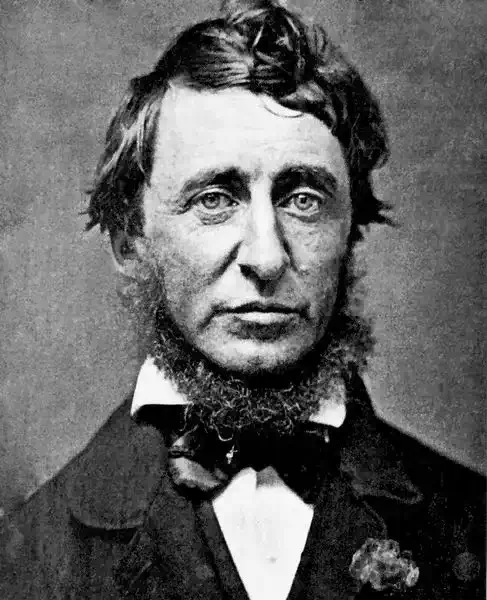
Henry David Thoreau
The Inward Morning
The Inward Morning
Packed in my mind lie all the clothes
Which outward nature wears,
And in its fashion's hourly change
It all things else repairs.
In vain I look for change abroad,
And can no difference find,
Till some new ray of peace uncalled
Illumes my inmost mind.
What is it gilds the trees and clouds,
And paints the heavens so gay,
But yonder fast-abiding light
With its unchanging ray?
Lo, when the sun streams through the wood,
Upon a winter's morn,
Where'er his silent beams intrude,
The murky night is gone.
How could the patient pine have known
The morning breeze would come,
Or humble flowers anticipate
The insect's noonday hum--
Till the new light with morning cheer
From far streamed through the aisles,
And nimbly told the forest trees
For many stretching miles?
I've heard within my inmost soul
Such cheerful morning news,
In the horizon of my mind
Have seen such orient hues,
As in the twilight of the dawn,
When the first birds awake,
Are heard within some silent wood,
Where they the small twigs break,
Or in the eastern skies are seen,
Before the sun appears,
The harbingers of summer heats
Which from afar he bears.
Packed in my mind lie all the clothes
Which outward nature wears,
And in its fashion's hourly change
It all things else repairs.
In vain I look for change abroad,
And can no difference find,
Till some new ray of peace uncalled
Illumes my inmost mind.
What is it gilds the trees and clouds,
And paints the heavens so gay,
But yonder fast-abiding light
With its unchanging ray?
Lo, when the sun streams through the wood,
Upon a winter's morn,
Where'er his silent beams intrude,
The murky night is gone.
How could the patient pine have known
The morning breeze would come,
Or humble flowers anticipate
The insect's noonday hum--
Till the new light with morning cheer
From far streamed through the aisles,
And nimbly told the forest trees
For many stretching miles?
I've heard within my inmost soul
Such cheerful morning news,
In the horizon of my mind
Have seen such orient hues,
As in the twilight of the dawn,
When the first birds awake,
Are heard within some silent wood,
Where they the small twigs break,
Or in the eastern skies are seen,
Before the sun appears,
The harbingers of summer heats
Which from afar he bears.
212
Henry David Thoreau
Inspiration
Inspiration
Whate'er we leave to God, God does,
And blesses us;
The work we choose should be our own,
God leaves alone.
If with light head erect I sing,
Though all the Muses lend their force,
From my poor love of anything,
The verse is weak and shallow as its source.
But if with bended neck I grope
Listening behind me for my wit,
With faith superior to hope,
More anxious to keep back than forward it;
Making my soul accomplice there
Unto the flame my heart hath lit,
Then will the verse forever wear--
Time cannot bend the line which God hath writ.
Always the general show of things
Floats in review before my mind,
And such true love and reverence brings,
That sometimes I forget that I am blind.
But now there comes unsought, unseen,
Some clear divine electuary,
And I, who had but sensual been,
Grow sensible, and as God is, am wary.
I hearing get, who had but ears,
And sight, who had but eyes before,
I moments live, who lived but years,
And truth discern, who knew but learning's lore.
I hear beyond the range of sound,
I see beyond the range of sight,
New earths and skies and seas around,
And in my day the sun doth pale his light.
A clear and ancient harmony
Pierces my soul through all its din,
As through its utmost melody--
Farther behind than they, farther within.
More swift its bolt than lightning is,
Its voice than thunder is more loud,
It doth expand my privacies
To all, and leave me single in the crowd.
It speaks with such authority,
With so serene and lofty tone,
That idle Time runs gadding by,
And leaves me with Eternity alone.
Now chiefly is my natal hour,
And only now my prime of life;
Of manhood's strength it is the flower,
'Tis peace's end and war's beginning strife.
It comes in summer's broadest noon,
By a grey wall or some chance place,
Unseasoning Time, insulting June,
And vexing day with its presuming face.
Such fragrance round my couch it makes,
More rich than are Arabian drugs,
That my soul scents its life and wakes
The body up beneath its perfumed rugs.
Such is the Muse, the heavenly maid,
The star that guides our mortal course,
Which shows where life's true kernel's laid,
Its wheat's fine flour, and its undying force.
She with one breath attunes the spheres,
And also my poor human heart,
With one impulse propels the years
Around, and gives my throbbing pulse its start.
I will not doubt for evermore,
Nor falter from a steadfast faith,
For thought the system be turned o'er,
God takes not back the word which once He saith.
I will not doubt the love untold
Which not my worth nor want has bought,
Which wooed me young, and woos me old,
And to this evening hath me brought.
My memory I'll educate
To know the one historic truth,
Remembering to the latest date
The only true and sole immortal youth.
Be but thy inspiration given,
No matter through what danger sought,
I'll fathom hell or climb to heaven,
And yet esteem that cheap which love has bought.
Fame cannot tempt the bard
Who's famous with his God,
Nor laurel him reward
Who has his Maker's nod.
Whate'er we leave to God, God does,
And blesses us;
The work we choose should be our own,
God leaves alone.
If with light head erect I sing,
Though all the Muses lend their force,
From my poor love of anything,
The verse is weak and shallow as its source.
But if with bended neck I grope
Listening behind me for my wit,
With faith superior to hope,
More anxious to keep back than forward it;
Making my soul accomplice there
Unto the flame my heart hath lit,
Then will the verse forever wear--
Time cannot bend the line which God hath writ.
Always the general show of things
Floats in review before my mind,
And such true love and reverence brings,
That sometimes I forget that I am blind.
But now there comes unsought, unseen,
Some clear divine electuary,
And I, who had but sensual been,
Grow sensible, and as God is, am wary.
I hearing get, who had but ears,
And sight, who had but eyes before,
I moments live, who lived but years,
And truth discern, who knew but learning's lore.
I hear beyond the range of sound,
I see beyond the range of sight,
New earths and skies and seas around,
And in my day the sun doth pale his light.
A clear and ancient harmony
Pierces my soul through all its din,
As through its utmost melody--
Farther behind than they, farther within.
More swift its bolt than lightning is,
Its voice than thunder is more loud,
It doth expand my privacies
To all, and leave me single in the crowd.
It speaks with such authority,
With so serene and lofty tone,
That idle Time runs gadding by,
And leaves me with Eternity alone.
Now chiefly is my natal hour,
And only now my prime of life;
Of manhood's strength it is the flower,
'Tis peace's end and war's beginning strife.
It comes in summer's broadest noon,
By a grey wall or some chance place,
Unseasoning Time, insulting June,
And vexing day with its presuming face.
Such fragrance round my couch it makes,
More rich than are Arabian drugs,
That my soul scents its life and wakes
The body up beneath its perfumed rugs.
Such is the Muse, the heavenly maid,
The star that guides our mortal course,
Which shows where life's true kernel's laid,
Its wheat's fine flour, and its undying force.
She with one breath attunes the spheres,
And also my poor human heart,
With one impulse propels the years
Around, and gives my throbbing pulse its start.
I will not doubt for evermore,
Nor falter from a steadfast faith,
For thought the system be turned o'er,
God takes not back the word which once He saith.
I will not doubt the love untold
Which not my worth nor want has bought,
Which wooed me young, and woos me old,
And to this evening hath me brought.
My memory I'll educate
To know the one historic truth,
Remembering to the latest date
The only true and sole immortal youth.
Be but thy inspiration given,
No matter through what danger sought,
I'll fathom hell or climb to heaven,
And yet esteem that cheap which love has bought.
Fame cannot tempt the bard
Who's famous with his God,
Nor laurel him reward
Who has his Maker's nod.
215
Henry David Thoreau
I was Made Erect and Lone
I was Made Erect and Lone
I was made erect and lone,
And within me is the bone;
Still my vision will be clear,
Still my life will not be drear,
To the center all is near.
Where I sit there is my throne.
If age choose to sit apart,
If age choose, give me the start,
Take the sap and leave the heart.
I was made erect and lone,
And within me is the bone;
Still my vision will be clear,
Still my life will not be drear,
To the center all is near.
Where I sit there is my throne.
If age choose to sit apart,
If age choose, give me the start,
Take the sap and leave the heart.
264
Henry David Thoreau
Great God, I Ask for no Meaner Pelf
Great God, I Ask for no Meaner Pelf
Great God, I ask for no meaner pelf
Than that I may not disappoint myself,
That in my action I may soar as high
As I can now discern with this clear eye.
And next in value, which thy kindness lends,
That I may greatly disappoint my friends,
Howe'er they think or hope that it may be,
They may not dream how thou'st distinguished me.
That my weak hand may equal my firm faith
And my life practice what my tongue saith
That my low conduct may not show
Nor my relenting lines
That I thy purpose did not know
Or overrated thy designs.
Great God, I ask for no meaner pelf
Than that I may not disappoint myself,
That in my action I may soar as high
As I can now discern with this clear eye.
And next in value, which thy kindness lends,
That I may greatly disappoint my friends,
Howe'er they think or hope that it may be,
They may not dream how thou'st distinguished me.
That my weak hand may equal my firm faith
And my life practice what my tongue saith
That my low conduct may not show
Nor my relenting lines
That I thy purpose did not know
Or overrated thy designs.
157

Gwendolyn Brooks
Garbageman: The Man With The Orderly Mind
Garbageman: The Man With The Orderly Mind
What do you think of us in fuzzy endeavor, you whose directions are
sterling, whose lunge is straight?
Can you make a reason, how can you pardon us who memorize the rules and never
score?
Who memorize the rules from your own text but never quite transfer them to the
game,
Who never quite receive the whistling ball, who gawk, begin to absorb the crowd's own
roar.
Is earnest enough, may earnest attract or lead to light;
Is light enough, if hands in clumsy frenzy, flimsy whimsically, enlist;
Is light enough when this bewilderment crying against the dark shuts down the
shades?
Dilute confusion. Find and explode our mist.
What do you think of us in fuzzy endeavor, you whose directions are
sterling, whose lunge is straight?
Can you make a reason, how can you pardon us who memorize the rules and never
score?
Who memorize the rules from your own text but never quite transfer them to the
game,
Who never quite receive the whistling ball, who gawk, begin to absorb the crowd's own
roar.
Is earnest enough, may earnest attract or lead to light;
Is light enough, if hands in clumsy frenzy, flimsy whimsically, enlist;
Is light enough when this bewilderment crying against the dark shuts down the
shades?
Dilute confusion. Find and explode our mist.
216
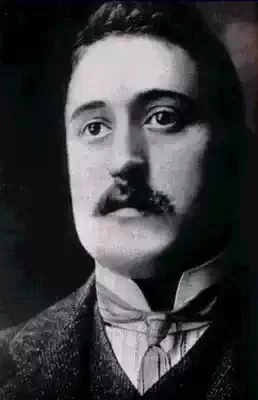
Guillaume Apollinaire
In the Sante
In the Sante
I
Before I got into my cell
I had to strip my body bare
I heard an ominous voice say Well
Guillaume what are you doing here
Lazarus steps into the ground
Not out of it as he was bid
Adieu Adieu O singing round
Of years and girls the life I led
II
I'm no longer myself in here
I know
I'm number fifteen in the eleventh
Row
The sunlight filters downward through
The panes
And on these lines bright clowns alight
Like stains
They dance under my eyes while my
Ears follow
The feet of one whose feet above
Sound hollow
III
In a bear-pit like a bear
Every morning round I tramp
Round and round and round and round
The sky is like an iron clamp
In a bear-pit like a bear
Every morning round I tramp
In the next cell at the sink
Someone lets the water run
With his bunch of keys that clink
Let the goaler go and come
In the next cell at the sink
Someone lets the water run
IV
How bored I am between bare wall and wall
Whose colour pales and pines
A fly on the paper with extremely small
Steps runs across these lines
What will become of me O God Who know
My pain Who gave it me
Have pity on my dry eyes and my pallor
My chair which creaks and is not free
And all these poor hearts beating in this prison
And Love beside me seated
Pity above all my unstable reason
And this despair which threatens to defeat it
V
How long these hours take to go
As long as a whole funeral
You'll mourn the time you mourned you know
It will be gone too soon like all
Time past
too fast too long ago
VI
I hear the noises of the city
In the turning world beyond me
I see a sky which has no pity
And bare prison walls around me
The daylight disappears and now
A lamp is lit within the prison
We're all alone here in my cell
Beautiful light Beloved reason
I
Before I got into my cell
I had to strip my body bare
I heard an ominous voice say Well
Guillaume what are you doing here
Lazarus steps into the ground
Not out of it as he was bid
Adieu Adieu O singing round
Of years and girls the life I led
II
I'm no longer myself in here
I know
I'm number fifteen in the eleventh
Row
The sunlight filters downward through
The panes
And on these lines bright clowns alight
Like stains
They dance under my eyes while my
Ears follow
The feet of one whose feet above
Sound hollow
III
In a bear-pit like a bear
Every morning round I tramp
Round and round and round and round
The sky is like an iron clamp
In a bear-pit like a bear
Every morning round I tramp
In the next cell at the sink
Someone lets the water run
With his bunch of keys that clink
Let the goaler go and come
In the next cell at the sink
Someone lets the water run
IV
How bored I am between bare wall and wall
Whose colour pales and pines
A fly on the paper with extremely small
Steps runs across these lines
What will become of me O God Who know
My pain Who gave it me
Have pity on my dry eyes and my pallor
My chair which creaks and is not free
And all these poor hearts beating in this prison
And Love beside me seated
Pity above all my unstable reason
And this despair which threatens to defeat it
V
How long these hours take to go
As long as a whole funeral
You'll mourn the time you mourned you know
It will be gone too soon like all
Time past
too fast too long ago
VI
I hear the noises of the city
In the turning world beyond me
I see a sky which has no pity
And bare prison walls around me
The daylight disappears and now
A lamp is lit within the prison
We're all alone here in my cell
Beautiful light Beloved reason
890
Guillaume Apollinaire
Annie
Annie
Sur la côte du Texas
Entre Mobile et Galveston il y a
Un grand jardin tout plein de roses
Il contient aussi une villa
Qui est une grande rose
Une femme se promène souvent
Dans le jardin toute seule
Et quand je passe sur la route bordée de tilleuls
Nous nous regardons
Comme cette femme est mennonite
Ses rosiers et ses vêtements n'ont pas de boutons
Il en manque deux à mon veston
La dame et moi suivons le même rite.
Sur la côte du Texas
Entre Mobile et Galveston il y a
Un grand jardin tout plein de roses
Il contient aussi une villa
Qui est une grande rose
Une femme se promène souvent
Dans le jardin toute seule
Et quand je passe sur la route bordée de tilleuls
Nous nous regardons
Comme cette femme est mennonite
Ses rosiers et ses vêtements n'ont pas de boutons
Il en manque deux à mon veston
La dame et moi suivons le même rite.
965
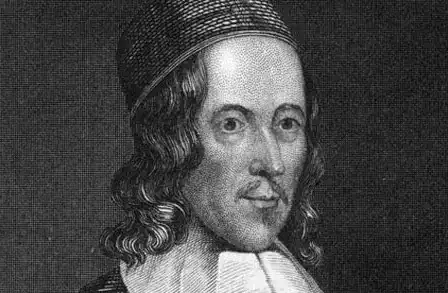
George Herbert
The Temper
The Temper
How should I praise thee, Lord! how should my rhymes
Gladly engrave thy love in steel,
If what my soul doth feel sometimes
My soul might ever feel!
Although there were some forty heav'ns, or more,
Sometimes I peer above them all;
Sometimes I hardly reach a score,
Sometimes to hell I fall.
O rack me not to such a vast extent;
Those distances belong to thee:
The world's too little for thy tent,
A grave too big for me.
Wilt thou meet arms with man, that thou dost stretch
A crum of dust from heav'n to hell?
Will great God measure with a wretch?
Shall he thy stature spell?
O let me, when thy roof my soul hath hid,
O let me roost and nestle there:
Then of a sinner thou art rid,
And I of hope and fear.
Yet take thy way; for sure thy way is best:
Stretch or contract me, thy poor debtor:
This is but tuning of my breast,
To make the music better.
Whether I fly with angels, fall with dust,
Thy hands made both, and I am there:
Thy power and love, my love and trust
Make one place ev'ry where.
How should I praise thee, Lord! how should my rhymes
Gladly engrave thy love in steel,
If what my soul doth feel sometimes
My soul might ever feel!
Although there were some forty heav'ns, or more,
Sometimes I peer above them all;
Sometimes I hardly reach a score,
Sometimes to hell I fall.
O rack me not to such a vast extent;
Those distances belong to thee:
The world's too little for thy tent,
A grave too big for me.
Wilt thou meet arms with man, that thou dost stretch
A crum of dust from heav'n to hell?
Will great God measure with a wretch?
Shall he thy stature spell?
O let me, when thy roof my soul hath hid,
O let me roost and nestle there:
Then of a sinner thou art rid,
And I of hope and fear.
Yet take thy way; for sure thy way is best:
Stretch or contract me, thy poor debtor:
This is but tuning of my breast,
To make the music better.
Whether I fly with angels, fall with dust,
Thy hands made both, and I am there:
Thy power and love, my love and trust
Make one place ev'ry where.
255
George Herbert
Church Monuments
Church Monuments
While that my soul repairs to her devotion,
Here I intomb my flesh, that it betimes
May take acquaintance of this heap of dust;
To which the blast of death's incessant motion,
Fed with the exhalation of our crimes,
Drives all at last. Therefore I gladly trust
My body to this school, that it may learn
To spell his elements, and find his birth
Written in dusty heraldry and lines;
Which dissolution sure doth best discern,
Comparing dust with dust, and earth with earth.
These laugh at jet and marble put for signs,
To sever the good fellowship of dust,
And spoil the meeting. What shall point out them,
When they shall bow, and kneel, and fall down flat
To kiss those heaps, which now they have in trust?
Dear flesh, while I do pray, learn here thy stem
And true descent, that when thou shalt grow fat
And wanton in thy cravings, thou mayst know
That flesh is but the glass which holds the dust
That measures all our time; which also shall
Be crumbled into dust. Mark, here below
How tame these ashes are, how free from lust,
That thou mayst fit thyself against thy fall.
While that my soul repairs to her devotion,
Here I intomb my flesh, that it betimes
May take acquaintance of this heap of dust;
To which the blast of death's incessant motion,
Fed with the exhalation of our crimes,
Drives all at last. Therefore I gladly trust
My body to this school, that it may learn
To spell his elements, and find his birth
Written in dusty heraldry and lines;
Which dissolution sure doth best discern,
Comparing dust with dust, and earth with earth.
These laugh at jet and marble put for signs,
To sever the good fellowship of dust,
And spoil the meeting. What shall point out them,
When they shall bow, and kneel, and fall down flat
To kiss those heaps, which now they have in trust?
Dear flesh, while I do pray, learn here thy stem
And true descent, that when thou shalt grow fat
And wanton in thy cravings, thou mayst know
That flesh is but the glass which holds the dust
That measures all our time; which also shall
Be crumbled into dust. Mark, here below
How tame these ashes are, how free from lust,
That thou mayst fit thyself against thy fall.
283
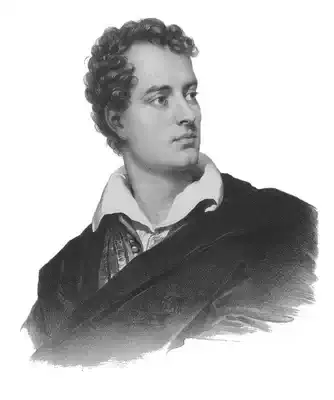
Lord Byron
The Dream
The Dream
I
Our life is twofold; Sleep hath its own world,
A boundary between the things misnamed
Death and existence: Sleep hath its own world,
And a wide realm of wild reality,
And dreams in their development have breath,
And tears, and tortures, and the touch of joy;
They leave a weight upon our waking thoughts,
They take a weight from off waking toils,
They do divide our being; they become
A portion of ourselves as of our time,
And look like heralds of eternity;
They pass like spirits of the past they
speak
Like sibyls of the future; they have power The
tyranny of pleasure and of pain;
They make us what we were not what
they will,
And shake us with the vision that's gone by,
The dread of vanished shadows Are
they so?
Is not the past all shadow? What
are they?
Creations of the mind? The
mind can make
Substances, and people planets of its own
With beings brighter than have been, and give
A breath to forms which can outlive all flesh.
I would recall a vision which I dreamed
Perchance in sleep for
in itself a thought,
A slumbering thought, is capable of years,
And curdles a long life into one hour.
II
I saw two beings in the hues of youth
Standing upon a hill, a gentle hill,
Green and of mild declivity, the last
As 'twere the cape of a long ridge of such,
Save that there was no sea to lave its base,
But a most living landscape, and the wave
Of woods and cornfields,
and the abodes of men
Scattered at intervals, and wreathing smoke
Arising from such rustic roofs: the hill
Was crowned with a peculiar diadem
Of trees, in circular array, so fixed,
Not by the sport of nature, but of man:
These two, a maiden and a youth, were there
Gazing the
one on all that was beneath
Fair as herself but
the boy gazed on her;
And both were young, and one was beautiful:
And both were young yet
not alike in youth.
As the sweet moon on the horizon's verge,
The maid was on the eve of womanhood;
The boy had fewer summers, but his heart
Had far outgrown his years, and to his eye
There was but one beloved face on earth,
And that was shining on him; he had looked
Upon it till it could not pass away;
He had no breath, no being, but in hers:
She was his voice; he did not speak to her,
But trembled on her words; she was his sight,
For his eye followed hers, and saw with hers,
Which coloured all his objects; he
had ceased
To live within himself: she was his life,
The ocean to the river of his thoughts,
Which terminated all; upon a tone,
A touch of hers, his blood would ebb and flow,
And his cheek change tempestuously his
heart
Unknowing of its cause of agony.
But she in these fond feelings had no share:
Her sighs were not for him; to her he was
Even as a brother but
no more; 'twas much,
For brotherless she was, save in the name
Her infant friendship had bestowed on him;
Herself the solitary scion left
Of a timehonoured
race. It
was a name
Which pleased him, and yet pleased him not and
why?
Time taught him a deep answer when
she loved
Another; even now she loved another,
And on the summit of that hill she stood
Looking afar if yet her lover's steed
Kept pace with her expectancy, and flew.
III
A change came o'er the spirit of my dream.
There was an ancient mansion, and before
Its walls there was a steed caparisoned:
Within an antique Oratory stood
The Boy of whom I spake; he
was alone,
And pale, and pacing to and fro: anon
He sate him down, and seized a pen, and traced
Words which I could not guess of; then he leaned
His bowed head on his hands and shook, as 'twere
With a convulsion then
rose again,
And with his teeth and quivering hands did tear
What he had written, but he shed no tears.
And he did calm himself, and fix his brow
Into a kind of quiet: as he paused,
The Lady of his love reentered
there;
She was serene and smiling then, and yet
She knew she was by him beloved; she knew For
quickly comes such knowledge that
his heart
Was darkened with her shadow, and she saw
That he was wretched, but she saw not all.
He rose, and with a cold and gentle grasp
He took her hand; a moment o'er his face
A tablet of unutterable thoughts
Was traced, and then it faded, as it came;
He dropped the hand he held, and with slow steps
Retired, but not as bidding her adieu,
For they did part with mutual smiles; he passed
From out the massy gate of that old Hall,
And mounting on his steed he went his way;
And ne'er repassed that hoary threshold more.
IV
A change came o'er the spirit of my dream.
The Boy was sprung to manhood: in the wilds
Of fiery climes he made himself a home,
And his Soul drank their sunbeams; he was girt
With strange and dusky aspects; he was not
Himself like what he had been; on the sea
And on the shore he was a wanderer;
There was a mass of many images
Crowded like waves upon me, but he was
A part of all; and in the last he lay
Reposing from the noontide sultriness,
Couched among fallen columns, in the shade
Of ruined walls that had survived the names
Of those who reared them; by his sleeping side
Stood camels grazing, and some goodly steeds
Were fastened near a fountain; and a man,
Glad in a flowing garb, did watch the while,
While many of his tribe slumbered around:
And they were canopied by the blue sky,
So cloudless, clear, and purely beautiful,
That God alone was to be seen in heaven.
V
A change came o'er the spirit of my dream.
The Lady of his love was wed with One
Who did not love her better: in her home,
A thousand leagues from his, her
native home,
She dwelt, begirt with growing Infancy,
Daughters and sons of Beauty, but
behold!
Upon her face there was a tint of grief,
The settled shadow of an inward strife,
And an unquiet drooping of the eye,
As if its lid were charged with unshed tears.
What could her grief be? she
had all she loved,
And he who had so loved her was not there
To trouble with bad hopes, or evil wish,
Or illrepressed
affliction, her pure thoughts.
What could her grief be? she
had loved him not,
Nor given him cause to deem himself beloved,
Nor could he be a part of that which preyed
Upon her mind a
spectre of the past.
VI
A change came o'er the spirit of my dream.
The Wanderer was returned. I
saw him stand
Before an altar with
a gentle bride;
Her face was fair, but was not that which made
The Starlight of his Boyhood; as
he stood
Even at the altar, o'er his brow there came
The selfsame aspect and the quivering shock
That in the antique Oratory shook
His bosom in its solitude; and then As
in that hour a
moment o'er his face
The tablet of unutterable thoughts
Was traced and
then it faded as it came,
And he stood calm and quiet, and he spoke
The fitting vows, but heard not his own words,
And all things reeled around him; he could see
Not that which was, nor that which should have been But
the old mansion, and the accustomed hall,
And the remembered chambers, and the place,
The day, the hour, the sunshine, and the shade,
All things pertaining to that place and hour,
And her who was his destiny, came back
And thrust themselves between him and the light;
What business had they there at such a time?
VII
A change came o'er the spirit of my dream.
The Lady of his love; Oh!
she was changed,
As by the sickness of the soul; her mind
Had wandered from its dwelling, and her eyes,
They had not their own lustre, but the look
Which is not of the earth; she was become
The queen of a fantastic realm; her thoughts
Were combinations of disjointed things;
And forms impalpable and unperceived
Of others' sight familiar were to hers.
And this the world calls frenzy; but the wise
Have a far deeper madness, and the glance
Of melancholy is a fearful gift;
What is it but the telescope of truth?
Which strips the distance of its fantasies,
And brings life near in utter nakedness,
Making the cold reality too real!
VIII
A change came o'er the spirit of my dream.
The Wanderer was alone as heretofore,
The beings which surrounded him were gone,
Or were at war with him; he was a mark
For blight and desolation, compassed round
With Hatred and Contention; Pain was mixed
In all which was served up to him, until,
Like to the Pontic monarch of old days,
He fed on poisons, and they had no power,
But were a kind of nutriment; he lived
Through that which had been death to many men,
And made him friends of mountains; with the stars
And the quick Spirit of the Universe
He held his dialogues: and they did teach
To him the magic of their mysteries;
To him the book of Night was opened wide,
And voices from the deep abyss revealed
A marvel and a secret. Be
it so.
IX
My dream is past; it had no further change.
It was of a strange order, that the doom
Of these two creatures should be thus traced out
Almost like a reality the
one
To end in madness both
in misery.
I
Our life is twofold; Sleep hath its own world,
A boundary between the things misnamed
Death and existence: Sleep hath its own world,
And a wide realm of wild reality,
And dreams in their development have breath,
And tears, and tortures, and the touch of joy;
They leave a weight upon our waking thoughts,
They take a weight from off waking toils,
They do divide our being; they become
A portion of ourselves as of our time,
And look like heralds of eternity;
They pass like spirits of the past they
speak
Like sibyls of the future; they have power The
tyranny of pleasure and of pain;
They make us what we were not what
they will,
And shake us with the vision that's gone by,
The dread of vanished shadows Are
they so?
Is not the past all shadow? What
are they?
Creations of the mind? The
mind can make
Substances, and people planets of its own
With beings brighter than have been, and give
A breath to forms which can outlive all flesh.
I would recall a vision which I dreamed
Perchance in sleep for
in itself a thought,
A slumbering thought, is capable of years,
And curdles a long life into one hour.
II
I saw two beings in the hues of youth
Standing upon a hill, a gentle hill,
Green and of mild declivity, the last
As 'twere the cape of a long ridge of such,
Save that there was no sea to lave its base,
But a most living landscape, and the wave
Of woods and cornfields,
and the abodes of men
Scattered at intervals, and wreathing smoke
Arising from such rustic roofs: the hill
Was crowned with a peculiar diadem
Of trees, in circular array, so fixed,
Not by the sport of nature, but of man:
These two, a maiden and a youth, were there
Gazing the
one on all that was beneath
Fair as herself but
the boy gazed on her;
And both were young, and one was beautiful:
And both were young yet
not alike in youth.
As the sweet moon on the horizon's verge,
The maid was on the eve of womanhood;
The boy had fewer summers, but his heart
Had far outgrown his years, and to his eye
There was but one beloved face on earth,
And that was shining on him; he had looked
Upon it till it could not pass away;
He had no breath, no being, but in hers:
She was his voice; he did not speak to her,
But trembled on her words; she was his sight,
For his eye followed hers, and saw with hers,
Which coloured all his objects; he
had ceased
To live within himself: she was his life,
The ocean to the river of his thoughts,
Which terminated all; upon a tone,
A touch of hers, his blood would ebb and flow,
And his cheek change tempestuously his
heart
Unknowing of its cause of agony.
But she in these fond feelings had no share:
Her sighs were not for him; to her he was
Even as a brother but
no more; 'twas much,
For brotherless she was, save in the name
Her infant friendship had bestowed on him;
Herself the solitary scion left
Of a timehonoured
race. It
was a name
Which pleased him, and yet pleased him not and
why?
Time taught him a deep answer when
she loved
Another; even now she loved another,
And on the summit of that hill she stood
Looking afar if yet her lover's steed
Kept pace with her expectancy, and flew.
III
A change came o'er the spirit of my dream.
There was an ancient mansion, and before
Its walls there was a steed caparisoned:
Within an antique Oratory stood
The Boy of whom I spake; he
was alone,
And pale, and pacing to and fro: anon
He sate him down, and seized a pen, and traced
Words which I could not guess of; then he leaned
His bowed head on his hands and shook, as 'twere
With a convulsion then
rose again,
And with his teeth and quivering hands did tear
What he had written, but he shed no tears.
And he did calm himself, and fix his brow
Into a kind of quiet: as he paused,
The Lady of his love reentered
there;
She was serene and smiling then, and yet
She knew she was by him beloved; she knew For
quickly comes such knowledge that
his heart
Was darkened with her shadow, and she saw
That he was wretched, but she saw not all.
He rose, and with a cold and gentle grasp
He took her hand; a moment o'er his face
A tablet of unutterable thoughts
Was traced, and then it faded, as it came;
He dropped the hand he held, and with slow steps
Retired, but not as bidding her adieu,
For they did part with mutual smiles; he passed
From out the massy gate of that old Hall,
And mounting on his steed he went his way;
And ne'er repassed that hoary threshold more.
IV
A change came o'er the spirit of my dream.
The Boy was sprung to manhood: in the wilds
Of fiery climes he made himself a home,
And his Soul drank their sunbeams; he was girt
With strange and dusky aspects; he was not
Himself like what he had been; on the sea
And on the shore he was a wanderer;
There was a mass of many images
Crowded like waves upon me, but he was
A part of all; and in the last he lay
Reposing from the noontide sultriness,
Couched among fallen columns, in the shade
Of ruined walls that had survived the names
Of those who reared them; by his sleeping side
Stood camels grazing, and some goodly steeds
Were fastened near a fountain; and a man,
Glad in a flowing garb, did watch the while,
While many of his tribe slumbered around:
And they were canopied by the blue sky,
So cloudless, clear, and purely beautiful,
That God alone was to be seen in heaven.
V
A change came o'er the spirit of my dream.
The Lady of his love was wed with One
Who did not love her better: in her home,
A thousand leagues from his, her
native home,
She dwelt, begirt with growing Infancy,
Daughters and sons of Beauty, but
behold!
Upon her face there was a tint of grief,
The settled shadow of an inward strife,
And an unquiet drooping of the eye,
As if its lid were charged with unshed tears.
What could her grief be? she
had all she loved,
And he who had so loved her was not there
To trouble with bad hopes, or evil wish,
Or illrepressed
affliction, her pure thoughts.
What could her grief be? she
had loved him not,
Nor given him cause to deem himself beloved,
Nor could he be a part of that which preyed
Upon her mind a
spectre of the past.
VI
A change came o'er the spirit of my dream.
The Wanderer was returned. I
saw him stand
Before an altar with
a gentle bride;
Her face was fair, but was not that which made
The Starlight of his Boyhood; as
he stood
Even at the altar, o'er his brow there came
The selfsame aspect and the quivering shock
That in the antique Oratory shook
His bosom in its solitude; and then As
in that hour a
moment o'er his face
The tablet of unutterable thoughts
Was traced and
then it faded as it came,
And he stood calm and quiet, and he spoke
The fitting vows, but heard not his own words,
And all things reeled around him; he could see
Not that which was, nor that which should have been But
the old mansion, and the accustomed hall,
And the remembered chambers, and the place,
The day, the hour, the sunshine, and the shade,
All things pertaining to that place and hour,
And her who was his destiny, came back
And thrust themselves between him and the light;
What business had they there at such a time?
VII
A change came o'er the spirit of my dream.
The Lady of his love; Oh!
she was changed,
As by the sickness of the soul; her mind
Had wandered from its dwelling, and her eyes,
They had not their own lustre, but the look
Which is not of the earth; she was become
The queen of a fantastic realm; her thoughts
Were combinations of disjointed things;
And forms impalpable and unperceived
Of others' sight familiar were to hers.
And this the world calls frenzy; but the wise
Have a far deeper madness, and the glance
Of melancholy is a fearful gift;
What is it but the telescope of truth?
Which strips the distance of its fantasies,
And brings life near in utter nakedness,
Making the cold reality too real!
VIII
A change came o'er the spirit of my dream.
The Wanderer was alone as heretofore,
The beings which surrounded him were gone,
Or were at war with him; he was a mark
For blight and desolation, compassed round
With Hatred and Contention; Pain was mixed
In all which was served up to him, until,
Like to the Pontic monarch of old days,
He fed on poisons, and they had no power,
But were a kind of nutriment; he lived
Through that which had been death to many men,
And made him friends of mountains; with the stars
And the quick Spirit of the Universe
He held his dialogues: and they did teach
To him the magic of their mysteries;
To him the book of Night was opened wide,
And voices from the deep abyss revealed
A marvel and a secret. Be
it so.
IX
My dream is past; it had no further change.
It was of a strange order, that the doom
Of these two creatures should be thus traced out
Almost like a reality the
one
To end in madness both
in misery.
688
Lord Byron
Don Juan: Canto The Seventeenth
Don Juan: Canto The Seventeenth
The world is full of orphans: firstly, those
Who are so in the strict sense of the phrase
(But many a lonely tree the loftier grows
Than others crowded in the forest's maze);
The next are such as are not doomed to lose
Their tender parents in their budding days,
But merely their parental tenderness,
Which leaves them orphans of the heart no less.
The next are 'only children', as they are styled,
Who grow up children only, since the old saw
Pronounces that an 'only' 's a spoilt child.
But not to go too far, I hold it law
That where their education, harsh or mild,
'Transgresses the great bounds of love or awe,
The sufferers, be't in heart or intellect,
Whate'er the cause are orphans in effect.
But to return unto the stricter rule
(As far as words make rules), our common notion
Of orphans paints at once a parish school,
A halfstarved
babe, a wreck upon life's ocean,
A human (what the Italians nickname) 'mule',
A theme for pity or some worse emotion;
Yet, if examined, it might be admitted
The wealthiest orphans are to be more pitied.
Too soon they are parents to themselves; for what
Are tutors, guardians, and so forth, compared
With Nature's genial genitors, so that
A child of Chancery, that Star Chamber ward
(I'll take the likeness I can first come at),
Is like a duckling by Dame Partlett reared
And frights, especially if 'tis a daughter,
The old hen by running headlong to the water.
There is a commonplace book argument,
Which glibly glides from every vulgar tongue
When any dare a new light to present:
'If you are right, then everybody's wrong.'
Suppose the converse of this precedent
So often urged, so loudly and so long:
'If you are wrong, then everybody's right.'
Was ever everybody yet so quite?
Therefore I would solicit free discussion
Upon all points, no matter what or whose,
Because as ages upon ages push on,
The last is apt the former to accuse
Of pillowing its head on a pincushion,
Heedless of pricks because it was obtuse.
What was a paradox becomes a truth or
A something like it, as bear witness Luther.
The sacraments have been reduced to two
And witches unto none, though somewhat late
Since burning aged women (save a few,
Not witches, only bitches, who create
Mischief in families, as some know or knew,
Should still be singed, but slightly let me state)
Has been declared an act of inurbanity,
Malgé Sir Matthew Hale's great humanity.
Great Galileo was debarred the sun,
Because he fixed it, and to stop his talking
How earth could round the solar orbit run,
Found his own legs embargoed from mere walking.
The man was well nigh dead, ere men begun
To think his skull had not some need of caulking,
But now it seems he's right, his notion just,
No doubt a consolation to his dust.
Pythagoras, Locke, Socrates but
pages
Might be filled up, as vainly as before,
With the sad usage of all sorts of sages,
Who in his lifetime each was deemed a bore.
The loftiest minds outrun their tardy ages;
This they must bear with and perhaps much more.
The wise man's sure when he no more can share it, he
Will have a firm post~obit on posterity.
If such doom waits each intellectual giant,
We little people in our lesser way
To life's small rubs should surely be more pliant,
And so for one will I, as well I may.
Would that I were less bilious but
oh fie on't!
Just as I make my mind up everyday
To be a totus teres stoic, sage,
The wind shifts and I fly into a rage.
Temperate I am, yet never had a temper;
Modest I am, yet with some slight assurance;
Changeable too, yet somehow idem semper;
Patient, but not enamoured of endurance;
Cheerful, but sometimes rather apt to whimper;
Mild, but at times a sort of Hercules furens;
So that I almost think that the same skin
For one without has two or three within.
Our hero was in canto the sixteenth
Left in a tender moonlight situation,
Such as enables man to show his strength
Moral or physical On this occasion
Whether his virtue triumphed, or at length
His vice for
he was of a kindling nation Is
more than I shall venture to describe,
Unless some beauty with a kiss should bribe.
I leave the thing a problem, like all things.
The morning came, and breakfast, tea and toast,
Of which most men partake, but no one sings.
The company, whose birth, wealth, worth have cost
My trembling lyre already several strings,
Assembled with our hostess and mine host.
The guests dropped in, the last but one, Her Grace,
The latest, Juan with his virgin face.
Which best is to encounter, ghost or none,
'Twere difficult to say, but Juan looked
As if he had combated with more than one,
Being wan and worn, with eyes that hardly brooked
The light that through the Gothic windows shone.
Her Grace too had a sort of air rebuked,
Seemed pale and shivered, as if she had kept
A vigil or dreamt rather more than slept.
The world is full of orphans: firstly, those
Who are so in the strict sense of the phrase
(But many a lonely tree the loftier grows
Than others crowded in the forest's maze);
The next are such as are not doomed to lose
Their tender parents in their budding days,
But merely their parental tenderness,
Which leaves them orphans of the heart no less.
The next are 'only children', as they are styled,
Who grow up children only, since the old saw
Pronounces that an 'only' 's a spoilt child.
But not to go too far, I hold it law
That where their education, harsh or mild,
'Transgresses the great bounds of love or awe,
The sufferers, be't in heart or intellect,
Whate'er the cause are orphans in effect.
But to return unto the stricter rule
(As far as words make rules), our common notion
Of orphans paints at once a parish school,
A halfstarved
babe, a wreck upon life's ocean,
A human (what the Italians nickname) 'mule',
A theme for pity or some worse emotion;
Yet, if examined, it might be admitted
The wealthiest orphans are to be more pitied.
Too soon they are parents to themselves; for what
Are tutors, guardians, and so forth, compared
With Nature's genial genitors, so that
A child of Chancery, that Star Chamber ward
(I'll take the likeness I can first come at),
Is like a duckling by Dame Partlett reared
And frights, especially if 'tis a daughter,
The old hen by running headlong to the water.
There is a commonplace book argument,
Which glibly glides from every vulgar tongue
When any dare a new light to present:
'If you are right, then everybody's wrong.'
Suppose the converse of this precedent
So often urged, so loudly and so long:
'If you are wrong, then everybody's right.'
Was ever everybody yet so quite?
Therefore I would solicit free discussion
Upon all points, no matter what or whose,
Because as ages upon ages push on,
The last is apt the former to accuse
Of pillowing its head on a pincushion,
Heedless of pricks because it was obtuse.
What was a paradox becomes a truth or
A something like it, as bear witness Luther.
The sacraments have been reduced to two
And witches unto none, though somewhat late
Since burning aged women (save a few,
Not witches, only bitches, who create
Mischief in families, as some know or knew,
Should still be singed, but slightly let me state)
Has been declared an act of inurbanity,
Malgé Sir Matthew Hale's great humanity.
Great Galileo was debarred the sun,
Because he fixed it, and to stop his talking
How earth could round the solar orbit run,
Found his own legs embargoed from mere walking.
The man was well nigh dead, ere men begun
To think his skull had not some need of caulking,
But now it seems he's right, his notion just,
No doubt a consolation to his dust.
Pythagoras, Locke, Socrates but
pages
Might be filled up, as vainly as before,
With the sad usage of all sorts of sages,
Who in his lifetime each was deemed a bore.
The loftiest minds outrun their tardy ages;
This they must bear with and perhaps much more.
The wise man's sure when he no more can share it, he
Will have a firm post~obit on posterity.
If such doom waits each intellectual giant,
We little people in our lesser way
To life's small rubs should surely be more pliant,
And so for one will I, as well I may.
Would that I were less bilious but
oh fie on't!
Just as I make my mind up everyday
To be a totus teres stoic, sage,
The wind shifts and I fly into a rage.
Temperate I am, yet never had a temper;
Modest I am, yet with some slight assurance;
Changeable too, yet somehow idem semper;
Patient, but not enamoured of endurance;
Cheerful, but sometimes rather apt to whimper;
Mild, but at times a sort of Hercules furens;
So that I almost think that the same skin
For one without has two or three within.
Our hero was in canto the sixteenth
Left in a tender moonlight situation,
Such as enables man to show his strength
Moral or physical On this occasion
Whether his virtue triumphed, or at length
His vice for
he was of a kindling nation Is
more than I shall venture to describe,
Unless some beauty with a kiss should bribe.
I leave the thing a problem, like all things.
The morning came, and breakfast, tea and toast,
Of which most men partake, but no one sings.
The company, whose birth, wealth, worth have cost
My trembling lyre already several strings,
Assembled with our hostess and mine host.
The guests dropped in, the last but one, Her Grace,
The latest, Juan with his virgin face.
Which best is to encounter, ghost or none,
'Twere difficult to say, but Juan looked
As if he had combated with more than one,
Being wan and worn, with eyes that hardly brooked
The light that through the Gothic windows shone.
Her Grace too had a sort of air rebuked,
Seemed pale and shivered, as if she had kept
A vigil or dreamt rather more than slept.
511
Lord Byron
Don Juan: Canto The Fourteenth
Don Juan: Canto The Fourteenth
If from great nature's or our own abyss
Of thought we could but snatch a certainty,
Perhaps mankind might find the path they missBut
then 'twould spoil much good philosophy.
One system eats another up, and this
Much as old Saturn ate his progeny;
For when his pious consort gave him stones
In lieu of sons, of these he made no bones.
But System doth reverse the Titan's breakfast,
And eats her parents, albeit the digestion
Is difficult. Pray tell me, can you make fast,
After due search, your faith to any question?
Look back o'er ages, ere unto the stake fast
You bind yourself, and call some mode the best one.
Nothing more true than not to trust your senses;
And yet what are your other evidences?
For me, I know nought; nothing I deny,
Admit, reject, contemn; and what know you,
Except perhaps that you were born to die?
And both may after all turn out untrue.
An age may come, Font of Eternity,
When nothing shall be either old or new.
Death, so call'd, is a thing which makes men weep,
And yet a third of life is pass'd in sleep.
A sleep without dreams, after a rough day
Of toil, is what we covet most; and yet
How clay shrinks back from more quiescent clay!
The very Suicide that pays his debt
At once without instalments (an old way
Of paying debts, which creditors regret)
Lets out impatiently his rushing breath,
Less from disgust of life than dread of death.
'Tis round him, near him, here, there, every where;
And there's a courage which grows out of fear,
Perhaps of all most desperate, which will dare
The worst to know it:when
the mountains rear
Their peaks beneath your human foot, and there
You look down o'er the precipice, and drear
The gulf of rock yawns,you
can't gaze a minute
Without an awful wish to plunge within it.
'Tis true, you don't but,
pale and struck with terror,
Retire: but look into your past impression!
And you will find, though shuddering at the mirror
Of your own thoughts, in all their selfconfession,
The lurking bias, be it truth or error,
To the unknown; a secret prepossession,
To plunge with all your fears but
where? You know not,
And that's the reason why you do or
do not.
But what's this to the purpose? you will say.
Gent. reader, nothing; a mere speculation,
For which my sole excuse is '
tis my way;
Sometimes with and sometimes without occasion
I write what's uppermost, without delay:
This narrative is not meant for narration,
But a mere airy and fantastic basis,
To build up common things with common places.
You know, or don't know, that great Bacon saith,
'Fling up a straw, 'twill show the way the wind blows;'
And such a straw, borne on by human breath,
Is poesy, according as the mind glows;
A paper kite which flies 'twixt life and death,
A shadow which the onward soul behind throws:
And mine's a bubble, not blown up for praise,
But just to play with, as an infant plays.
The world is all before me or
behind;
For I have seen a portion of that same,
And quite enough for me to keep in mind;Of
passions, too, I have proved enough to blame,
To the great pleasure of our friends, mankind,
Who like to mix some slight alloy with fame;
For I was rather famous in my time,
Until I fairly knock'd it up with rhyme.
I have brought this world about my ears, and eke
The other; that's to say, the clergy, who
Upon my head have bid their thunders break
In pious libels by no means a few.
And yet I can't help scribbling once a week,
Tiring old readers, nor discovering new.
In youth I wrote because my mind was full,
And now because I feel it growing dull.
But 'why then publish?'There
are no rewards
Of fame or profit when the world grows weary.
I ask in turn,Why
do you play at cards?
Why drink? Why read?To
make some hour less dreary.
It occupies me to turn back regards
On what I've seen or ponder'd, sad or cheery;
And what I write I cast upon the stream,
To swim or sink I
have had at least my dream.
I think that were I certain of success,
I hardly could compose another line:
So long I've battled either more or less,
That no defeat can drive me from the Nine.
This feeling 'tis not easy to express,
And yet 'tis not affected, I opine.
In play, there are two pleasures for your choosing The
one is winning, and the other losing.
Besides, my Muse by no means deals in fiction:
She gathers a repertory of facts,
Of course with some reserve and slight restriction,
But mostly sings of human things and acts And
that's one cause she meets with contradiction;
For too much truth, at first sight, ne'er attracts;
And were her object only what's call'd glory,
With more ease too she 'd tell a different story.
Love, war, a tempest surely
there 's variety;
Also a seasoning slight of lucubration;
A bird'seye
view, too, of that wild, Society;
A slight glance thrown on men of every station.
If you have nought else, here 's at least satiety
Both in performance and in preparation;
And though these lines should only line portmanteaus,
Trade will be all the better for these Cantos.
The portion of this world which I at present
Have taken up to fill the following sermon,
Is one of which there's no description recent.
The reason why is easy to determine:
Although it seems both prominent and pleasant,
There is a sameness in its gems and ermine,
A dull and family likeness through all ages,
Of no great promise for poetic pages.
With much to excite, there's little to exalt;
Nothing that speaks to all men and all times;
A sort of varnish over every fault;
A kind of commonplace,
even in their crimes;
Factitious passions, wit without much salt,
A want of that true nature which sublimes
Whate'er it shows with truth; a smooth monotony
Of character, in those at least who have got any.
Sometimes, indeed, like soldiers off parade,
They break their ranks and gladly leave the drill;
But then the rollcall
draws them back afraid,
And they must be or seem what they were: still
Doubtless it is a brilliant masquerade;
But when of the first sight you have had your fill,
It palls at
least it did so upon me,
This paradise of pleasure and ennui.
When we have made our love, and gamed our gaming,
Drest, voted, shone, and, may be, something more;
With dandies dined; heard senators declaiming;
Seen beauties brought to market by the score,
Sad rakes to sadder husbands chastely taming;
There's little left but to be bored or bore.
Witness those 'cidevant
jeunes hommes' who stem
The stream, nor leave the world which leaveth them.
'Tis said indeed
a general complaint That
no one has succeeded in describing
The monde, exactly as they ought to paint:
Some say, that authors only snatch, by bribing
The porter, some slight scandals strange and quaint,
To furnish matter for their moral gibing;
And that their books have but one style in common My
lady's prattle, filter'd through her woman.
But this can't well be true, just now; for writers
Are grown of the beau monde a part potential:
I've seen them balance even the scale with fighters,
Especially when young, for that's essential.
Why do their sketches fail them as inditers
Of what they deem themselves most consequential,
The real portrait of the highest tribe?
'Tis that, in fact, there's little to describe.
'Haud ignara loquor;' these are Nugae, 'quarum
Pars parva fui,' but still art and part.
Now I could much more easily sketch a harem,
A battle, wreck, or history of the heart,
Than these things; and besides, I wish to spare 'em,
For reasons which I choose to keep apart.
'Vetabo Cereris sacrum qui vulgarit'
Which means that vulgar people must not share it.
And therefore what I throw off is ideal Lower'd,
leaven'd, like a history of freemasons;
Which bears the same relation to the real,
As Captain Parry's voyage may do to Jason's.
The grand arcanum's not for men to see all;
My music has some mystic diapasons;
And there is much which could not be appreciated
In any manner by the uninitiated.
Alas! worlds fall and
woman, since she fell'd
The world (as, since that history less polite
Than true, hath been a creed so strictly held)
Has not yet given up the practice quite.
Poor thing of usages! coerced, compell'd,
Victim when wrong, and martyr oft when right,
Condemn'd to childbed,
as men for their sins
Have shaving too entail'd upon their chins,
A daily plague, which in the aggregate
May average on the whole with parturition.
But as to women, who can penetrate
The real sufferings of their she condition?
Man's very sympathy with their estate
Has much of selfishness, and more suspicion.
Their love, their virtue, beauty, education,
But form good housekeepers, to breed a nation.
All this were very well, and can't be better;
But even this is difficult, Heaven knows,
So many troubles from her birth beset her,
Such small distinction between friends and foes,
The gilding wears so soon from off her fetter,
That but
ask any woman if she'd choose
(Take her at thirty, that is) to have been
Female or male? a schoolboy or a queen?
'Petticoat influence' is a great reproach,
Which even those who obey would fain be thought
To fly from, as from hungry pikes a roach;
But since beneath it upon earth we are brought,
By various joltings of life's hackney coach,
I for one venerate a petticoatA
garment of a mystical sublimity,
No matter whether russet, silk, or dimity.
Much I respect, and much I have adored,
In my young days, that chaste and goodly veil,
Which holds a treasure, like a miser's hoard,
And more attracts by all it doth concealA
golden scabbard on a Damasque sword,
A loving letter with a mystic seal,
A cure for grief for
what can ever rankle
Before a petticoat and peeping ankle?
And when upon a silent, sullen day,
With a sirocco, for example, blowing,
When even the sea looks dim with all its spray,
And sulkily the river's ripple's flowing,
And the sky shows that very ancient gray,
The sober, sad antithesis to glowing,'
Tis pleasant, if then any thing is pleasant,
To catch a glimpse even of a pretty peasant.
We left our heroes and our heroines
In that fair clime which don't depend on climate,
Quite independent of the Zodiac's signs,
Though certainly more difficult to rhyme at,
Because the sun, and stars, and aught that shines,
Mountains, and all we can be most sublime at,
Are there oft dull and dreary as a dun Whether
a sky's or tradesman's is all one.
An indoor
life is less poetical;
And out of door hath showers, and mists, and sleet,
With which I could not brew a pastoral.
But be it as it may, a bard must meet
All difficulties, whether great or small,
To spoil his undertaking or complete,
And work away like spirit upon matter,
Embarrass'd somewhat both with fire and water.
Juan in
this respect, at least, like saints Was
all things unto people of all sorts,
And lived contentedly, without complaints,
In camps, in ships, in cottages, or courts Born
with that happy soul which seldom faints,
And mingling modestly in toils or sports.
He likewise could be most things to all women,
Without the coxcombry of certain she men.
A fox hunt
to a foreigner is strange;
'T is also subject to the double danger
Of tumbling first, and having in exchange
Some pleasant jesting at the awkward stranger:
But Juan had been early taught to range
The wilds, as doth an Arab turn'd avenger,
So that his horse, or charger, hunter, hack,
Knew that he had a rider on his back.
And now in this new field, with some applause,
He clear'd hedge, ditch, and double post, and rail,
And never craned, and made but few 'faux pas,'
And only fretted when the scent 'gan fail.
He broke, 'tis true, some statutes of the laws
Of hunting for
the sagest youth is frail;
Rode o'er the hounds, it may be, now and then,
And once o'er several country gentlemen.
But on the whole, to general admiration
He acquitted both himself and horse: the squires
Marvell'd at merit of another nation;
The boors cried 'Dang it? who'd have thought it?'Sires,
The Nestors of the sporting generation,
Swore praises, and recall'd their former fires;
The huntsman's self relented to a grin,
And rated him almost a whipperin.
Such were his trophiesnot
of spear and shield,
But leaps, and bursts, and sometimes foxes' brushes;
Yet I must own,although
in this I yield
To patriot sympathy a Briton's blushes,He
thought at heart like courtly Chesterfield,
Who, after a long chase o'er hills, dales, bushes,
And what not, though he rode beyond all price,
Ask'd next day, 'If men ever hunted twice?'
He also had a quality uncommon
To early risers after a long chase,
Who wake in winter ere the cock can summon
December's drowsy day to his dull race,A
quality agreeable to woman,
When her soft, liquid words run on apace,
Who likes a listener, whether saint or sinner,He
did not fall asleep just after dinner;
But, light and airy, stood on the alert,
And shone in the best part of dialogue,
By humouring always what they might assert,
And listening to the topics most in vogue;
Now grave, now gay, but never dull or pert;
And smiling but in secretcunning
rogue!
He ne'er presumed to make an error clearer;In
short, there never was a better hearer.
And then he danced;all
foreigners excel
The serious Angles in the eloquence
Of pantomime;he
danced, I say, right well,
With emphasis, and also with good senseA
thing in footing indispensable;
He danced without theatrical pretence,
Not like a balletmaster
in the van
Of his drill'd nymphs, but like a gentleman.
Chaste were his steps, each kept within due bound,
And elegance was sprinkled o'er his figure;
Like swift Camilla, he scarce skimm'd the ground,
And rather held in than put forth his vigour;
And then he had an ear for music's sound,
Which might defy a crotchet critic's rigour.
Such classic passans
flawsset
off our hero,
He glanced like a personified Bolero;
Or, like a flying Hour before Aurora,
In Guido's famous fresco which alone
Is worth a tour to Rome, although no more a
Remnant were there of the old world's sole throne.
The 'tout ensemble' of his movements wore a
Grace of the soft ideal, seldom shown,
And ne'er to be described; for to the dolour
Of bards and prosers, words are void of colour.
No marvel then he was a favourite;
A full grown
Cupid, very much admired;
A little spoilt, but by no means so quite;
At least he kept his vanity retired.
Such was his tact, he could alike delight
The chaste, and those who are not so much inspired.
The Duchess of FitzFulke,
who loved 'tracasserie,'
Began to treat him with some small 'agacerie.'
She was a fine and somewhat fullblown
blonde,
Desirable, distinguish'd, celebrated
For several winters in the grand, grand monde.
I'd rather not say what might be related
Of her exploits, for this were ticklish ground;
Besides there might be falsehood in what's stated:
Her late performance had been a dead set
At Lord Augustus FitzPlantagenet.
This noble personage began to look
A little black upon this new flirtation;
But such small licences must lovers brook,
Mere freedoms of the female corporation.
Woe to the man who ventures a rebuke!
'Twill but precipitate a situation
Extremely disagreeable, but common
To calculators when they count on woman.
The circle smiled, then whisper'd, and then sneer'd;
The Misses bridled, and the matrons frown'd;
Some hoped things might not turn out as they fear'd;
Some would not deem such women could be found;
Some ne'er believed one half of what they heard;
Some look'd perplex'd, and others look'd profound;
And several pitied with sincere regret
Poor Lord Augustus FitzPlantagenet.
But what is odd, none ever named the duke,
Who, one might think, was something in the affair;
True, he was absent, and, 'twas rumour'd, took
But small concern about the when, or where,
Or what his consort did: if he could brook
Her gaieties, none had a right to stare:
Theirs was that best of unions, past all doubt,
Which never meets, and therefore can't fall out.
But, oh! that I should ever pen so sad a line!
Fired with an abstract love of virtue, she,
My Dian of the Ephesians, Lady Adeline,
Began to think the duchess' conduct free;
Regretting much that she had chosen so bad a line,
And waxing chiller in her courtesy,
Look'd grave and pale to see her friend's fragility,
For which most friends reserve their sensibility.
There's nought in this bad world like sympathy:
'Tis so becoming to the soul and face,
Sets to soft music the harmonious sigh,
And robes sweet friendship in a Brussels lace.
Without a friend, what were humanity,
To hunt our errors up with a good grace?
Consoling us with '
Would you had thought twice!
Ah, if you had but follow'd my advice!'
O job! you had two friends: one's quite enough,
Especially when we are ill at ease;
They are but bad pilots when the weather's rough,
Doctors less famous for their cures than fees.
Let no man grumble when his friends fall off,
As they will do like leaves at the first breeze:
When your affairs come round, one way or t'other,
Go to the coffeehouse,
and take another.
But this is not my maxim: had it been,
Some heartaches
had been spared me: yet I care notI
would not be a tortoise in his screen
Of stubborn shell, which waves and weather wear not.
'Tis better on the whole to have felt and seen
That which humanity may bear, or bear not:
'Twill teach discernment to the sensitive,
And not to pour their ocean in a sieve.
Of all the horrid, hideous notes of woe,
Sadder than owlsongs
or the midnight blast,
Is that portentous phrase, 'I told you so,'
Utter'd by friends, those prophets of the past,
Who, 'stead of saying what you now should do,
Own they foresaw that you would fall at last,
And solace your slight lapse 'gainst 'bonos mores,'
With a long memorandum of old stories.
The Lady Adeline's serene severity
Was not confined to feeling for her friend,
Whose fame she rather doubted with posterity,
Unless her habits should begin to mend:
But Juan also shared in her austerity,
But mix'd with pity, pure as e'er was penn'd:
His inexperience moved her gentle ruth,
And (as her junior by six weeks) his youth.
These forty days' advantage of her yearsAnd
hers were those which can face calculation,
Boldly referring to the list of peers
And noble births, nor dread the enumerationGave
her a right to have maternal fears
For a young gentleman's fit education,
Though she was far from that leap year, whose leap,
In female dates, strikes Time all of a heap.
This may be fix'd at somewhere before thirtySay
sevenandtwenty;
for I never knew
The strictest in chronology and virtue
Advance beyond, while they could pass for new.
O Time! why dost not pause? Thy scythe, so dirty
With rust, should surely cease to hack and hew.
Reset it; shave more smoothly, also slower,
If but to keep thy credit as a mower.
But Adeline was far from that ripe age,
Whose ripeness is but bitter at the best:
'Twas rather her experience made her sage,
For she had seen the world and stood its test,
As I have said inI
forget what page;
My Muse despises reference, as you have guess'd
By this time;but
strike six from seven and
twenty,
And you will find her sum of years in plenty.
At sixteen she came out; presented, vaunted,
She put all coronets into commotion:
At seventeen, too, the world was still enchanted
With the new Venus of their brilliant ocean:
At eighteen, though below her feet still panted
A hecatomb of suitors with devotion,
She had consented to create again
That Adam, call'd 'The happiest of men.'
Since then she had sparkled through three glowing winters,
Admired, adored; but also so correct,
That she had puzzled all the acutest hinters,
Without the apparel of being circumspect:
They could not even glean the slightest splinters
From off the marble, which had no defect.
She had also snatch'd a moment since her marriage
To bear a son and heir and
one miscarriage.
Fondly the wheeling fireflies
flew around her,
Those little glitterers of the London night;
But none of these possess'd a sting to wound her She
was a pitch beyond a coxcomb's flight.
Perhaps she wish'd an aspirant profounder;
But whatsoe'er she wish'd, she acted right;
And whether coldness, pride, or virtue dignify
A woman, so she's good, what does it signify?
I hate a motive, like a lingering bottle
Which with the landlord makes too long a stand,
Leaving allclaretless
the unmoisten'd throttle,
Especially with politics on hand;
I hate it, as I hate a drove of cattle,
Who whirl the dust as simooms whirl the sand;
I hate it, as I hate an argument,
A laureate's ode, or servile peer's 'content.'
'Tis sad to hack into the roots of things,
They are so much intertwisted with the earth;
So that the branch a goodly verdure flings,
I reck not if an acorn gave it birth.
To trace all actions to their secret springs
Would make indeed some melancholy mirth;
But this is not at present my concern,
And I refer you to wise Oxenstiern.
With the kind view of saving an eclat,
Both to the duchess and diplomatist,
The Lady Adeline, as soon's she saw
That Juan was unlikely to resist
(For foreigners don't know that a faux pas
In England ranks quite on a different list
From those of other lands unblest with juries,
Whose verdict for such sin a certain cure is);
The Lady Adeline resolved to take
Such measures as she thought might best impede
The farther progress of this sad mistake.
She thought with some simplicity indeed;
But innocence is bold even at the stake,
And simple in the world, and doth not need
Nor use those palisades by dames erected,
Whose virtue lies in never being detected.
It was not that she fear'd the very worst:
His Grace was an enduring, married man,
And was not likely all at once to burst
Into a scene, and swell the clients' clan
Of Doctors' Commons: but she dreaded first
The magic of her Grace's talisman,
And next a quarrel (as he seem'd to fret)
With Lord Augustus FitzPlantagenet.
Her Grace, too, pass'd for being an intrigante,
And somewhat mechante in her amorous sphere;
One of those pretty, precious plagues, which haunt
A lover with caprices soft and dear,
That like to make a quarrel, when they can't
Find one, each day of the delightful year;
Bewitching, torturing, as they freeze or glow,
And what
is worst of all won't
let you go:
The sort of thing to turn a young man's head,
Or make a Werter of him in the end.
No wonder then a purer soul should dread
This sort of chaste liaison for a friend;
It were much better to be wed or dead,
Than wear a heart a woman loves to rend.
'T is best to pause, and think, ere you rush on,
If that a 'bonne fortune' be really 'bonne.'
And first, in the o'erflowing of her heart,
Which really knew or thought it knew no guile,
She call'd her husband now and then apart,
And bade him counsel Juan. With a smile
Lord Henry heard her plans of artless art
To wean Don Juan from the siren's wile;
And answer'd, like a statesman or a prophet,
In such guise that she could make nothing of it.
Firstly, he said, 'he never interfered
In any body's business but the king's:'
Next, that 'he never judged from what appear'd,
Without strong reason, of those sort of things:'
Thirdly, that 'Juan had more brain than beard,
And was not to be held in leading strings;'
And fourthly, what need hardly be said twice,
'That good but rarely came from good advice.'
And, therefore, doubtless to approve the truth
Of the last axiom, he advised his spouse
To leave the parties to themselves, forsooth At
least as far as bienseance allows:
That time would temper Juan's faults of youth;
That young men rarely made monastic vows;
That opposition only more attaches But
here a messenger brought in despatches:
And being of the council call'd 'the Privy,'
Lord Henry walk'd into his cabinet,
To furnish matter for some future Livy
To tell how he reduced the nation's debt;
And if their full contents I do not give ye,
It is because I do not know them yet;
But I shall add them in a brief appendix,
To come between mine epic and its index.
But ere he went, he added a slight hint,
Another gentle commonplace
or two,
Such as are coin'd in conversation's mint,
And pass, for want of better, though not new:
Then broke his packet, to see what was in 't,
And having casually glanced it through,
Retired; and, as went out, calmly kiss'd her,
Less like a young wife than an aged sister.
He was a cold, good, honourable man,
Proud of his birth, and proud of every thing;
A goodly spirit for a state divan,
A figure fit to walk before a king;
Tall, stately, form'd to lead the courtly van
On birthdays, glorious with a star and string;
The very model of a chamberlainAnd
such I mean to make him when I reign.
But there was something wanting on the wholeI
don't know what, and therefore cannot tellWhich
pretty womenthe
sweet souls!call
soul.
Certes it was not body; he was well
Proportion'd, as a poplar or a pole,
A handsome man, that human miracle;
And in each circumstance of love or war
Had still preserved his perpendicular.
Still there was something wanting, as I've said That
undefinable 'Je ne scais quoi,'
Which, for what I know, may of yore have led
To Homer's Iliad, since it drew to Troy
The Greek Eve, Helen, from the Spartan's bed;
Though on the whole, no doubt, the Dardan boy
Was much inferior to King Menelaus:But
thus it is some women will betray us.
There is an awkward thing which much perplexes,
Unless like wise Tiresias we had proved
By turns the difference of the several sexes;
Neither can show quite how they would be loved.
The sensual for a short time but connects us,
The sentimental boasts to be unmoved;
But both together form a kind of centaur,
Upon whose back 'tis better not to venture.
A something allsufficient
for the heart
Is that for which the sex are always seeking:
But how to fill up that same vacant part?
There lies the ruband
this they are but weak in.
Frail mariners afloat without a chart,
They run before the wind through high seas breaking;
And when they have made the shore through every shock,
'Tis odd, or odds, it may turn out a rock.
There is a flower call'd 'Love in Idleness,'
For which see Shakspeare's everblooming garden;I
will not make his great description less,
And beg his British godship's humble pardon,
If in my extremity of rhyme's distress,
I touch a single leaf where he is warden;But
though the flower is different, with the French
Or Swiss Rousseau, cry 'Voila la Pervenche!'
Eureka! I have found it! What I mean
To say is, not that love is idleness,
But that in love such idleness has been
An accessory, as I have cause to guess.
Hard labour's an indifferent gobetween;
Your men of business are not apt to express
Much passion, since the merchantship,
the Argo,
Convey'd Medea as her supercargo.
'Beatus ille procul!' from 'negotiis,'
Saith Horace; the great little poet's wrong;
His other maxim, 'Noscitur a sociis,'
Is much more to the purpose of his song;
Though even that were sometimes too ferocious,
Unless good company be kept too long;
But, in his teeth, whate'er their state or station,
Thrice happy they who have an occupation!
Adam exchanged his Paradise for ploughing,
Eve made up millinery with fig leaves The
earliest knowledge from the tree so knowing,
As far as I know, that the church receives:
And since that time it need not cost much showing,
That many of the ills o'er which man grieves,
And still more women, spring from not employing
Some hours to make the remnant worth enjoying.
And hence high life is oft a dreary void,
A rack of pleasures, where we must invent
A something wherewithal to be annoy'd.
Bards may sing what they please about Content;
Contented, when translated, means but cloy'd;
And hence arise the woes of sentiment,
Blue devils, and blue stockings,
and romances
Reduced to practice, and perform'd like dances.
I do declare, upon an affidavit,
Romances I ne'er read like those I have seen;
Nor, if unto the world I ever gave it,
Would some believe that such a tale had been:
But such intent I never had, nor have it;
Some truths are better kept behind a screen,
Especially when they would look like lies;
I therefore deal in generalities.
'An oyster may be cross'd in love,'and
why?
Because he mopeth idly in his shell,
And heaves a lonely subterraqueous sigh,
Much as a monk may do within his cell:
And apropos
of monks, their piety
With sloth hath found it difficult to dwell;
Those vegetables of the Catholic creed
Are apt exceedingly to run to seed.
O Wilberforce! thou man of black renown,
Whose merit none enough can sing or say,
Thou hast struck one immense Colossus down,
Thou moral Washington of Africa!
But there's another little thing, I own,
Which you should perpetrate some summer's day,
And set the other halt of earth to rights;
You have freed the blacks now
pray shut up the whites.
Shut up the baldcoot
bully Alexander!
Ship off the Holy Three to Senegal;
Teach them that 'sauce for goose is sauce for gander,'
And ask them how they like to be in thrall?
Shut up each high heroic salamander,
Who eats fire gratis (since the pay's but small);
Shut up no,
not the King, but the Pavilion,
Or else 'twill cost us all another million.
Shut up the world at large, let Bedlam out;
And you will be perhaps surprised to find
All things pursue exactly the same route,
As now with those of soi disant
sound mind.
This I could prove beyond a single doubt,
Were there a jot of sense among mankind;
But till that point d'appui is found, alas!
Like Archimedes, I leave earth as 'twas.
Our gentle Adeline had one defectHer
heart was vacant, though a splendid mansion;
Her conduct had been perfectly correct,
As she had seen nought claiming its expansion.
A wavering spirit may be easier wreck'd,
Because 'tis frailer, doubtless, than a stanch one;
But when the latter works its own undoing,
Its inner crash is like an earthquake's ruin.
She loved her lord, or thought so; but that love
Cost her an effort, which is a sad toil,
The stone of Sisyphus, if once we move
Our feelings 'gainst the nature of the soil.
She had nothing to complain of, or reprove,
No bickerings, no connubial turmoil:
Their union was a model to behold,
Serene and noble,conjugal,
but cold.
There was no great disparity of years,
Though much in temper; but they never clash'd:
They moved like stars united in their spheres,
Or like the Rhone by Leman's waters wash'd,
Where mingled and yet separate appears
The river from the lake, all bluely dash'd
Through the serene and placid glassy deep,
Which fain would lull its riverchild
to sleep.
Now when she once had ta'en an interest
In any thing, however she might flatter
Herself that her intentions were the best,
Intense intentions are a dangerous matter:
Impressions were much stronger than she guess'd,
And gather'd as they run like growing water
Upon her mind; the more so, as her breast
Was not at first too readily impress'd.
But when it was, she had that lurking demon
Of double nature, and thus doubly named Firmness
yclept in heroes, kings, and seamen,
That is, when they succeed; but greatly blamed
As obstinacy, both in men and women,
Whene'er their triumph pales, or star is tamed:And
'twill perplex the casuist in morality
To fix the due bounds of this dangerous quality.
Had Buonaparte won at Waterloo,
It had been firmness; now 'tis pertinacity:
Must the event decide between the two?
I leave it to your people of sagacity
To draw the line between the false and true,
If such can e'er be drawn by man's capacity:
My business is with Lady Adeline,
Who in her way too was a heroine.
She knew not her own heart; then how should I?
I think not she was then in love with Juan:
If so, she would have had the strength to fly
The wild sensation, unto her a new one:
She merely felt a common sympathy
(I will not say it was a false or true one)
In him, because she thought he was in danger,Her
husband's friend, her own, young, and a stranger,
She was, or thought she was, his friend and
this
Without the farce of friendship, or romance
Of Platonism, which leads so oft amiss
Ladies who have studied friendship but in France,
Or Germany, where people purely kiss.
To thus much Adeline would not advance;
But of such friendship as man's may to man be
She was as capable as woman can be.
No doubt the secret influence of the sex
Will there, as also in the ties of blood,
An innocent predominance annex,
And tune the concord to a finer mood.
If free from passion, which all friendship checks,
And your true feelings fully understood,
No friend like to a woman earth discovers,
So that you have not been nor will be lovers.
Love bears within its breast the very germ
Of change; and how should this be otherwise?
That violent things more quickly find a term
Is shown through nature's whole analogies;
And how should the most fierce of all be firm?
Would you have endless lightning in the skies?
Methinks Love's very title says enough:
How should 'the tender passion' e'er be tough?
Alas! by all experience, seldom yet
(I merely quote what I have heard from many)
Had lovers not some reason to regret
The passion which made Solomon a zany.
I've also seen some wives (not to forget
The marriage state, the best or worst of any)
Who were the very paragons of wives,
Yet made the misery of at least two lives.
I've also seen some female friends ('tis odd,
But trueas,
if expedient, I could prove)
That faithful were through thick and thin, abroad,
At home, far more than ever yet was LoveWho
did not quit me when Oppression trod
Upon me; whom no scandal could remove;
Who fought, and fight, in absence, too, my battles,
Despite the snake Society's loud rattles.
Whether Don Juan and chaste Adeline
Grew friends in this or any other sense,
Will be discuss'd hereafter, I opine:
At present I am glad of a pretence
To leave them hovering, as the effect is fine,
And keeps the atrocious reader in suspense;
The surest way for ladies and for books
To bait their tender, or their tenter, hooks.
Whether they rode, or walk'd, or studied Spanish
To read Don Quixote in the original,
A pleasure before which all others vanish;
Whether their talk was of the kind call'd 'small,'
Or serious, are the topics I must banish
To the next Canto; where perhaps I shall
Say something to the purpose, and display
Considerable talent in my way.
Above all, I beg all men to forbear
Anticipating aught about the matter:
They'll only make mistakes about the fair,
And Juan too, especially the latter.
And I shall take a much more serious air
Than I have yet done, in this epic satire.
It is not clear that Adeline and Juan
Will fall; but if they do, 'twill be their ruin.
But great things spring from little:Would
you think,
That in our youth, as dangerous a passion
As e'er brought man and woman to the brink
Of ruin, rose from such a slight occasion,
As few would ever dream could form the link
Of such a sentimental situation?
You'll never guess, I 'll bet you millions, milliardsIt
all sprung from a harmless game at billiards.
'Tis strange,but
true; for truth is always strange;
Stranger than fiction; if it could be told,
How much would novels gain by the exchange!
How differently the world would men behold!
How oft would vice and virtue places change!
The new world would be nothing to the old,
If some Columbus of the moral seas
Would show mankind their souls' antipodes.
What 'antres vast and deserts idle' then
Would be discover'd in the human soul!
What icebergs in the hearts of mighty men,
With selflove
in the centre as their pole!
What Anthropophagi are nine of ten
Of those who hold the kingdoms in control
Were things but only call'd by their right name,
Caesar himself would be ashamed of fame.
If from great nature's or our own abyss
Of thought we could but snatch a certainty,
Perhaps mankind might find the path they missBut
then 'twould spoil much good philosophy.
One system eats another up, and this
Much as old Saturn ate his progeny;
For when his pious consort gave him stones
In lieu of sons, of these he made no bones.
But System doth reverse the Titan's breakfast,
And eats her parents, albeit the digestion
Is difficult. Pray tell me, can you make fast,
After due search, your faith to any question?
Look back o'er ages, ere unto the stake fast
You bind yourself, and call some mode the best one.
Nothing more true than not to trust your senses;
And yet what are your other evidences?
For me, I know nought; nothing I deny,
Admit, reject, contemn; and what know you,
Except perhaps that you were born to die?
And both may after all turn out untrue.
An age may come, Font of Eternity,
When nothing shall be either old or new.
Death, so call'd, is a thing which makes men weep,
And yet a third of life is pass'd in sleep.
A sleep without dreams, after a rough day
Of toil, is what we covet most; and yet
How clay shrinks back from more quiescent clay!
The very Suicide that pays his debt
At once without instalments (an old way
Of paying debts, which creditors regret)
Lets out impatiently his rushing breath,
Less from disgust of life than dread of death.
'Tis round him, near him, here, there, every where;
And there's a courage which grows out of fear,
Perhaps of all most desperate, which will dare
The worst to know it:when
the mountains rear
Their peaks beneath your human foot, and there
You look down o'er the precipice, and drear
The gulf of rock yawns,you
can't gaze a minute
Without an awful wish to plunge within it.
'Tis true, you don't but,
pale and struck with terror,
Retire: but look into your past impression!
And you will find, though shuddering at the mirror
Of your own thoughts, in all their selfconfession,
The lurking bias, be it truth or error,
To the unknown; a secret prepossession,
To plunge with all your fears but
where? You know not,
And that's the reason why you do or
do not.
But what's this to the purpose? you will say.
Gent. reader, nothing; a mere speculation,
For which my sole excuse is '
tis my way;
Sometimes with and sometimes without occasion
I write what's uppermost, without delay:
This narrative is not meant for narration,
But a mere airy and fantastic basis,
To build up common things with common places.
You know, or don't know, that great Bacon saith,
'Fling up a straw, 'twill show the way the wind blows;'
And such a straw, borne on by human breath,
Is poesy, according as the mind glows;
A paper kite which flies 'twixt life and death,
A shadow which the onward soul behind throws:
And mine's a bubble, not blown up for praise,
But just to play with, as an infant plays.
The world is all before me or
behind;
For I have seen a portion of that same,
And quite enough for me to keep in mind;Of
passions, too, I have proved enough to blame,
To the great pleasure of our friends, mankind,
Who like to mix some slight alloy with fame;
For I was rather famous in my time,
Until I fairly knock'd it up with rhyme.
I have brought this world about my ears, and eke
The other; that's to say, the clergy, who
Upon my head have bid their thunders break
In pious libels by no means a few.
And yet I can't help scribbling once a week,
Tiring old readers, nor discovering new.
In youth I wrote because my mind was full,
And now because I feel it growing dull.
But 'why then publish?'There
are no rewards
Of fame or profit when the world grows weary.
I ask in turn,Why
do you play at cards?
Why drink? Why read?To
make some hour less dreary.
It occupies me to turn back regards
On what I've seen or ponder'd, sad or cheery;
And what I write I cast upon the stream,
To swim or sink I
have had at least my dream.
I think that were I certain of success,
I hardly could compose another line:
So long I've battled either more or less,
That no defeat can drive me from the Nine.
This feeling 'tis not easy to express,
And yet 'tis not affected, I opine.
In play, there are two pleasures for your choosing The
one is winning, and the other losing.
Besides, my Muse by no means deals in fiction:
She gathers a repertory of facts,
Of course with some reserve and slight restriction,
But mostly sings of human things and acts And
that's one cause she meets with contradiction;
For too much truth, at first sight, ne'er attracts;
And were her object only what's call'd glory,
With more ease too she 'd tell a different story.
Love, war, a tempest surely
there 's variety;
Also a seasoning slight of lucubration;
A bird'seye
view, too, of that wild, Society;
A slight glance thrown on men of every station.
If you have nought else, here 's at least satiety
Both in performance and in preparation;
And though these lines should only line portmanteaus,
Trade will be all the better for these Cantos.
The portion of this world which I at present
Have taken up to fill the following sermon,
Is one of which there's no description recent.
The reason why is easy to determine:
Although it seems both prominent and pleasant,
There is a sameness in its gems and ermine,
A dull and family likeness through all ages,
Of no great promise for poetic pages.
With much to excite, there's little to exalt;
Nothing that speaks to all men and all times;
A sort of varnish over every fault;
A kind of commonplace,
even in their crimes;
Factitious passions, wit without much salt,
A want of that true nature which sublimes
Whate'er it shows with truth; a smooth monotony
Of character, in those at least who have got any.
Sometimes, indeed, like soldiers off parade,
They break their ranks and gladly leave the drill;
But then the rollcall
draws them back afraid,
And they must be or seem what they were: still
Doubtless it is a brilliant masquerade;
But when of the first sight you have had your fill,
It palls at
least it did so upon me,
This paradise of pleasure and ennui.
When we have made our love, and gamed our gaming,
Drest, voted, shone, and, may be, something more;
With dandies dined; heard senators declaiming;
Seen beauties brought to market by the score,
Sad rakes to sadder husbands chastely taming;
There's little left but to be bored or bore.
Witness those 'cidevant
jeunes hommes' who stem
The stream, nor leave the world which leaveth them.
'Tis said indeed
a general complaint That
no one has succeeded in describing
The monde, exactly as they ought to paint:
Some say, that authors only snatch, by bribing
The porter, some slight scandals strange and quaint,
To furnish matter for their moral gibing;
And that their books have but one style in common My
lady's prattle, filter'd through her woman.
But this can't well be true, just now; for writers
Are grown of the beau monde a part potential:
I've seen them balance even the scale with fighters,
Especially when young, for that's essential.
Why do their sketches fail them as inditers
Of what they deem themselves most consequential,
The real portrait of the highest tribe?
'Tis that, in fact, there's little to describe.
'Haud ignara loquor;' these are Nugae, 'quarum
Pars parva fui,' but still art and part.
Now I could much more easily sketch a harem,
A battle, wreck, or history of the heart,
Than these things; and besides, I wish to spare 'em,
For reasons which I choose to keep apart.
'Vetabo Cereris sacrum qui vulgarit'
Which means that vulgar people must not share it.
And therefore what I throw off is ideal Lower'd,
leaven'd, like a history of freemasons;
Which bears the same relation to the real,
As Captain Parry's voyage may do to Jason's.
The grand arcanum's not for men to see all;
My music has some mystic diapasons;
And there is much which could not be appreciated
In any manner by the uninitiated.
Alas! worlds fall and
woman, since she fell'd
The world (as, since that history less polite
Than true, hath been a creed so strictly held)
Has not yet given up the practice quite.
Poor thing of usages! coerced, compell'd,
Victim when wrong, and martyr oft when right,
Condemn'd to childbed,
as men for their sins
Have shaving too entail'd upon their chins,
A daily plague, which in the aggregate
May average on the whole with parturition.
But as to women, who can penetrate
The real sufferings of their she condition?
Man's very sympathy with their estate
Has much of selfishness, and more suspicion.
Their love, their virtue, beauty, education,
But form good housekeepers, to breed a nation.
All this were very well, and can't be better;
But even this is difficult, Heaven knows,
So many troubles from her birth beset her,
Such small distinction between friends and foes,
The gilding wears so soon from off her fetter,
That but
ask any woman if she'd choose
(Take her at thirty, that is) to have been
Female or male? a schoolboy or a queen?
'Petticoat influence' is a great reproach,
Which even those who obey would fain be thought
To fly from, as from hungry pikes a roach;
But since beneath it upon earth we are brought,
By various joltings of life's hackney coach,
I for one venerate a petticoatA
garment of a mystical sublimity,
No matter whether russet, silk, or dimity.
Much I respect, and much I have adored,
In my young days, that chaste and goodly veil,
Which holds a treasure, like a miser's hoard,
And more attracts by all it doth concealA
golden scabbard on a Damasque sword,
A loving letter with a mystic seal,
A cure for grief for
what can ever rankle
Before a petticoat and peeping ankle?
And when upon a silent, sullen day,
With a sirocco, for example, blowing,
When even the sea looks dim with all its spray,
And sulkily the river's ripple's flowing,
And the sky shows that very ancient gray,
The sober, sad antithesis to glowing,'
Tis pleasant, if then any thing is pleasant,
To catch a glimpse even of a pretty peasant.
We left our heroes and our heroines
In that fair clime which don't depend on climate,
Quite independent of the Zodiac's signs,
Though certainly more difficult to rhyme at,
Because the sun, and stars, and aught that shines,
Mountains, and all we can be most sublime at,
Are there oft dull and dreary as a dun Whether
a sky's or tradesman's is all one.
An indoor
life is less poetical;
And out of door hath showers, and mists, and sleet,
With which I could not brew a pastoral.
But be it as it may, a bard must meet
All difficulties, whether great or small,
To spoil his undertaking or complete,
And work away like spirit upon matter,
Embarrass'd somewhat both with fire and water.
Juan in
this respect, at least, like saints Was
all things unto people of all sorts,
And lived contentedly, without complaints,
In camps, in ships, in cottages, or courts Born
with that happy soul which seldom faints,
And mingling modestly in toils or sports.
He likewise could be most things to all women,
Without the coxcombry of certain she men.
A fox hunt
to a foreigner is strange;
'T is also subject to the double danger
Of tumbling first, and having in exchange
Some pleasant jesting at the awkward stranger:
But Juan had been early taught to range
The wilds, as doth an Arab turn'd avenger,
So that his horse, or charger, hunter, hack,
Knew that he had a rider on his back.
And now in this new field, with some applause,
He clear'd hedge, ditch, and double post, and rail,
And never craned, and made but few 'faux pas,'
And only fretted when the scent 'gan fail.
He broke, 'tis true, some statutes of the laws
Of hunting for
the sagest youth is frail;
Rode o'er the hounds, it may be, now and then,
And once o'er several country gentlemen.
But on the whole, to general admiration
He acquitted both himself and horse: the squires
Marvell'd at merit of another nation;
The boors cried 'Dang it? who'd have thought it?'Sires,
The Nestors of the sporting generation,
Swore praises, and recall'd their former fires;
The huntsman's self relented to a grin,
And rated him almost a whipperin.
Such were his trophiesnot
of spear and shield,
But leaps, and bursts, and sometimes foxes' brushes;
Yet I must own,although
in this I yield
To patriot sympathy a Briton's blushes,He
thought at heart like courtly Chesterfield,
Who, after a long chase o'er hills, dales, bushes,
And what not, though he rode beyond all price,
Ask'd next day, 'If men ever hunted twice?'
He also had a quality uncommon
To early risers after a long chase,
Who wake in winter ere the cock can summon
December's drowsy day to his dull race,A
quality agreeable to woman,
When her soft, liquid words run on apace,
Who likes a listener, whether saint or sinner,He
did not fall asleep just after dinner;
But, light and airy, stood on the alert,
And shone in the best part of dialogue,
By humouring always what they might assert,
And listening to the topics most in vogue;
Now grave, now gay, but never dull or pert;
And smiling but in secretcunning
rogue!
He ne'er presumed to make an error clearer;In
short, there never was a better hearer.
And then he danced;all
foreigners excel
The serious Angles in the eloquence
Of pantomime;he
danced, I say, right well,
With emphasis, and also with good senseA
thing in footing indispensable;
He danced without theatrical pretence,
Not like a balletmaster
in the van
Of his drill'd nymphs, but like a gentleman.
Chaste were his steps, each kept within due bound,
And elegance was sprinkled o'er his figure;
Like swift Camilla, he scarce skimm'd the ground,
And rather held in than put forth his vigour;
And then he had an ear for music's sound,
Which might defy a crotchet critic's rigour.
Such classic passans
flawsset
off our hero,
He glanced like a personified Bolero;
Or, like a flying Hour before Aurora,
In Guido's famous fresco which alone
Is worth a tour to Rome, although no more a
Remnant were there of the old world's sole throne.
The 'tout ensemble' of his movements wore a
Grace of the soft ideal, seldom shown,
And ne'er to be described; for to the dolour
Of bards and prosers, words are void of colour.
No marvel then he was a favourite;
A full grown
Cupid, very much admired;
A little spoilt, but by no means so quite;
At least he kept his vanity retired.
Such was his tact, he could alike delight
The chaste, and those who are not so much inspired.
The Duchess of FitzFulke,
who loved 'tracasserie,'
Began to treat him with some small 'agacerie.'
She was a fine and somewhat fullblown
blonde,
Desirable, distinguish'd, celebrated
For several winters in the grand, grand monde.
I'd rather not say what might be related
Of her exploits, for this were ticklish ground;
Besides there might be falsehood in what's stated:
Her late performance had been a dead set
At Lord Augustus FitzPlantagenet.
This noble personage began to look
A little black upon this new flirtation;
But such small licences must lovers brook,
Mere freedoms of the female corporation.
Woe to the man who ventures a rebuke!
'Twill but precipitate a situation
Extremely disagreeable, but common
To calculators when they count on woman.
The circle smiled, then whisper'd, and then sneer'd;
The Misses bridled, and the matrons frown'd;
Some hoped things might not turn out as they fear'd;
Some would not deem such women could be found;
Some ne'er believed one half of what they heard;
Some look'd perplex'd, and others look'd profound;
And several pitied with sincere regret
Poor Lord Augustus FitzPlantagenet.
But what is odd, none ever named the duke,
Who, one might think, was something in the affair;
True, he was absent, and, 'twas rumour'd, took
But small concern about the when, or where,
Or what his consort did: if he could brook
Her gaieties, none had a right to stare:
Theirs was that best of unions, past all doubt,
Which never meets, and therefore can't fall out.
But, oh! that I should ever pen so sad a line!
Fired with an abstract love of virtue, she,
My Dian of the Ephesians, Lady Adeline,
Began to think the duchess' conduct free;
Regretting much that she had chosen so bad a line,
And waxing chiller in her courtesy,
Look'd grave and pale to see her friend's fragility,
For which most friends reserve their sensibility.
There's nought in this bad world like sympathy:
'Tis so becoming to the soul and face,
Sets to soft music the harmonious sigh,
And robes sweet friendship in a Brussels lace.
Without a friend, what were humanity,
To hunt our errors up with a good grace?
Consoling us with '
Would you had thought twice!
Ah, if you had but follow'd my advice!'
O job! you had two friends: one's quite enough,
Especially when we are ill at ease;
They are but bad pilots when the weather's rough,
Doctors less famous for their cures than fees.
Let no man grumble when his friends fall off,
As they will do like leaves at the first breeze:
When your affairs come round, one way or t'other,
Go to the coffeehouse,
and take another.
But this is not my maxim: had it been,
Some heartaches
had been spared me: yet I care notI
would not be a tortoise in his screen
Of stubborn shell, which waves and weather wear not.
'Tis better on the whole to have felt and seen
That which humanity may bear, or bear not:
'Twill teach discernment to the sensitive,
And not to pour their ocean in a sieve.
Of all the horrid, hideous notes of woe,
Sadder than owlsongs
or the midnight blast,
Is that portentous phrase, 'I told you so,'
Utter'd by friends, those prophets of the past,
Who, 'stead of saying what you now should do,
Own they foresaw that you would fall at last,
And solace your slight lapse 'gainst 'bonos mores,'
With a long memorandum of old stories.
The Lady Adeline's serene severity
Was not confined to feeling for her friend,
Whose fame she rather doubted with posterity,
Unless her habits should begin to mend:
But Juan also shared in her austerity,
But mix'd with pity, pure as e'er was penn'd:
His inexperience moved her gentle ruth,
And (as her junior by six weeks) his youth.
These forty days' advantage of her yearsAnd
hers were those which can face calculation,
Boldly referring to the list of peers
And noble births, nor dread the enumerationGave
her a right to have maternal fears
For a young gentleman's fit education,
Though she was far from that leap year, whose leap,
In female dates, strikes Time all of a heap.
This may be fix'd at somewhere before thirtySay
sevenandtwenty;
for I never knew
The strictest in chronology and virtue
Advance beyond, while they could pass for new.
O Time! why dost not pause? Thy scythe, so dirty
With rust, should surely cease to hack and hew.
Reset it; shave more smoothly, also slower,
If but to keep thy credit as a mower.
But Adeline was far from that ripe age,
Whose ripeness is but bitter at the best:
'Twas rather her experience made her sage,
For she had seen the world and stood its test,
As I have said inI
forget what page;
My Muse despises reference, as you have guess'd
By this time;but
strike six from seven and
twenty,
And you will find her sum of years in plenty.
At sixteen she came out; presented, vaunted,
She put all coronets into commotion:
At seventeen, too, the world was still enchanted
With the new Venus of their brilliant ocean:
At eighteen, though below her feet still panted
A hecatomb of suitors with devotion,
She had consented to create again
That Adam, call'd 'The happiest of men.'
Since then she had sparkled through three glowing winters,
Admired, adored; but also so correct,
That she had puzzled all the acutest hinters,
Without the apparel of being circumspect:
They could not even glean the slightest splinters
From off the marble, which had no defect.
She had also snatch'd a moment since her marriage
To bear a son and heir and
one miscarriage.
Fondly the wheeling fireflies
flew around her,
Those little glitterers of the London night;
But none of these possess'd a sting to wound her She
was a pitch beyond a coxcomb's flight.
Perhaps she wish'd an aspirant profounder;
But whatsoe'er she wish'd, she acted right;
And whether coldness, pride, or virtue dignify
A woman, so she's good, what does it signify?
I hate a motive, like a lingering bottle
Which with the landlord makes too long a stand,
Leaving allclaretless
the unmoisten'd throttle,
Especially with politics on hand;
I hate it, as I hate a drove of cattle,
Who whirl the dust as simooms whirl the sand;
I hate it, as I hate an argument,
A laureate's ode, or servile peer's 'content.'
'Tis sad to hack into the roots of things,
They are so much intertwisted with the earth;
So that the branch a goodly verdure flings,
I reck not if an acorn gave it birth.
To trace all actions to their secret springs
Would make indeed some melancholy mirth;
But this is not at present my concern,
And I refer you to wise Oxenstiern.
With the kind view of saving an eclat,
Both to the duchess and diplomatist,
The Lady Adeline, as soon's she saw
That Juan was unlikely to resist
(For foreigners don't know that a faux pas
In England ranks quite on a different list
From those of other lands unblest with juries,
Whose verdict for such sin a certain cure is);
The Lady Adeline resolved to take
Such measures as she thought might best impede
The farther progress of this sad mistake.
She thought with some simplicity indeed;
But innocence is bold even at the stake,
And simple in the world, and doth not need
Nor use those palisades by dames erected,
Whose virtue lies in never being detected.
It was not that she fear'd the very worst:
His Grace was an enduring, married man,
And was not likely all at once to burst
Into a scene, and swell the clients' clan
Of Doctors' Commons: but she dreaded first
The magic of her Grace's talisman,
And next a quarrel (as he seem'd to fret)
With Lord Augustus FitzPlantagenet.
Her Grace, too, pass'd for being an intrigante,
And somewhat mechante in her amorous sphere;
One of those pretty, precious plagues, which haunt
A lover with caprices soft and dear,
That like to make a quarrel, when they can't
Find one, each day of the delightful year;
Bewitching, torturing, as they freeze or glow,
And what
is worst of all won't
let you go:
The sort of thing to turn a young man's head,
Or make a Werter of him in the end.
No wonder then a purer soul should dread
This sort of chaste liaison for a friend;
It were much better to be wed or dead,
Than wear a heart a woman loves to rend.
'T is best to pause, and think, ere you rush on,
If that a 'bonne fortune' be really 'bonne.'
And first, in the o'erflowing of her heart,
Which really knew or thought it knew no guile,
She call'd her husband now and then apart,
And bade him counsel Juan. With a smile
Lord Henry heard her plans of artless art
To wean Don Juan from the siren's wile;
And answer'd, like a statesman or a prophet,
In such guise that she could make nothing of it.
Firstly, he said, 'he never interfered
In any body's business but the king's:'
Next, that 'he never judged from what appear'd,
Without strong reason, of those sort of things:'
Thirdly, that 'Juan had more brain than beard,
And was not to be held in leading strings;'
And fourthly, what need hardly be said twice,
'That good but rarely came from good advice.'
And, therefore, doubtless to approve the truth
Of the last axiom, he advised his spouse
To leave the parties to themselves, forsooth At
least as far as bienseance allows:
That time would temper Juan's faults of youth;
That young men rarely made monastic vows;
That opposition only more attaches But
here a messenger brought in despatches:
And being of the council call'd 'the Privy,'
Lord Henry walk'd into his cabinet,
To furnish matter for some future Livy
To tell how he reduced the nation's debt;
And if their full contents I do not give ye,
It is because I do not know them yet;
But I shall add them in a brief appendix,
To come between mine epic and its index.
But ere he went, he added a slight hint,
Another gentle commonplace
or two,
Such as are coin'd in conversation's mint,
And pass, for want of better, though not new:
Then broke his packet, to see what was in 't,
And having casually glanced it through,
Retired; and, as went out, calmly kiss'd her,
Less like a young wife than an aged sister.
He was a cold, good, honourable man,
Proud of his birth, and proud of every thing;
A goodly spirit for a state divan,
A figure fit to walk before a king;
Tall, stately, form'd to lead the courtly van
On birthdays, glorious with a star and string;
The very model of a chamberlainAnd
such I mean to make him when I reign.
But there was something wanting on the wholeI
don't know what, and therefore cannot tellWhich
pretty womenthe
sweet souls!call
soul.
Certes it was not body; he was well
Proportion'd, as a poplar or a pole,
A handsome man, that human miracle;
And in each circumstance of love or war
Had still preserved his perpendicular.
Still there was something wanting, as I've said That
undefinable 'Je ne scais quoi,'
Which, for what I know, may of yore have led
To Homer's Iliad, since it drew to Troy
The Greek Eve, Helen, from the Spartan's bed;
Though on the whole, no doubt, the Dardan boy
Was much inferior to King Menelaus:But
thus it is some women will betray us.
There is an awkward thing which much perplexes,
Unless like wise Tiresias we had proved
By turns the difference of the several sexes;
Neither can show quite how they would be loved.
The sensual for a short time but connects us,
The sentimental boasts to be unmoved;
But both together form a kind of centaur,
Upon whose back 'tis better not to venture.
A something allsufficient
for the heart
Is that for which the sex are always seeking:
But how to fill up that same vacant part?
There lies the ruband
this they are but weak in.
Frail mariners afloat without a chart,
They run before the wind through high seas breaking;
And when they have made the shore through every shock,
'Tis odd, or odds, it may turn out a rock.
There is a flower call'd 'Love in Idleness,'
For which see Shakspeare's everblooming garden;I
will not make his great description less,
And beg his British godship's humble pardon,
If in my extremity of rhyme's distress,
I touch a single leaf where he is warden;But
though the flower is different, with the French
Or Swiss Rousseau, cry 'Voila la Pervenche!'
Eureka! I have found it! What I mean
To say is, not that love is idleness,
But that in love such idleness has been
An accessory, as I have cause to guess.
Hard labour's an indifferent gobetween;
Your men of business are not apt to express
Much passion, since the merchantship,
the Argo,
Convey'd Medea as her supercargo.
'Beatus ille procul!' from 'negotiis,'
Saith Horace; the great little poet's wrong;
His other maxim, 'Noscitur a sociis,'
Is much more to the purpose of his song;
Though even that were sometimes too ferocious,
Unless good company be kept too long;
But, in his teeth, whate'er their state or station,
Thrice happy they who have an occupation!
Adam exchanged his Paradise for ploughing,
Eve made up millinery with fig leaves The
earliest knowledge from the tree so knowing,
As far as I know, that the church receives:
And since that time it need not cost much showing,
That many of the ills o'er which man grieves,
And still more women, spring from not employing
Some hours to make the remnant worth enjoying.
And hence high life is oft a dreary void,
A rack of pleasures, where we must invent
A something wherewithal to be annoy'd.
Bards may sing what they please about Content;
Contented, when translated, means but cloy'd;
And hence arise the woes of sentiment,
Blue devils, and blue stockings,
and romances
Reduced to practice, and perform'd like dances.
I do declare, upon an affidavit,
Romances I ne'er read like those I have seen;
Nor, if unto the world I ever gave it,
Would some believe that such a tale had been:
But such intent I never had, nor have it;
Some truths are better kept behind a screen,
Especially when they would look like lies;
I therefore deal in generalities.
'An oyster may be cross'd in love,'and
why?
Because he mopeth idly in his shell,
And heaves a lonely subterraqueous sigh,
Much as a monk may do within his cell:
And apropos
of monks, their piety
With sloth hath found it difficult to dwell;
Those vegetables of the Catholic creed
Are apt exceedingly to run to seed.
O Wilberforce! thou man of black renown,
Whose merit none enough can sing or say,
Thou hast struck one immense Colossus down,
Thou moral Washington of Africa!
But there's another little thing, I own,
Which you should perpetrate some summer's day,
And set the other halt of earth to rights;
You have freed the blacks now
pray shut up the whites.
Shut up the baldcoot
bully Alexander!
Ship off the Holy Three to Senegal;
Teach them that 'sauce for goose is sauce for gander,'
And ask them how they like to be in thrall?
Shut up each high heroic salamander,
Who eats fire gratis (since the pay's but small);
Shut up no,
not the King, but the Pavilion,
Or else 'twill cost us all another million.
Shut up the world at large, let Bedlam out;
And you will be perhaps surprised to find
All things pursue exactly the same route,
As now with those of soi disant
sound mind.
This I could prove beyond a single doubt,
Were there a jot of sense among mankind;
But till that point d'appui is found, alas!
Like Archimedes, I leave earth as 'twas.
Our gentle Adeline had one defectHer
heart was vacant, though a splendid mansion;
Her conduct had been perfectly correct,
As she had seen nought claiming its expansion.
A wavering spirit may be easier wreck'd,
Because 'tis frailer, doubtless, than a stanch one;
But when the latter works its own undoing,
Its inner crash is like an earthquake's ruin.
She loved her lord, or thought so; but that love
Cost her an effort, which is a sad toil,
The stone of Sisyphus, if once we move
Our feelings 'gainst the nature of the soil.
She had nothing to complain of, or reprove,
No bickerings, no connubial turmoil:
Their union was a model to behold,
Serene and noble,conjugal,
but cold.
There was no great disparity of years,
Though much in temper; but they never clash'd:
They moved like stars united in their spheres,
Or like the Rhone by Leman's waters wash'd,
Where mingled and yet separate appears
The river from the lake, all bluely dash'd
Through the serene and placid glassy deep,
Which fain would lull its riverchild
to sleep.
Now when she once had ta'en an interest
In any thing, however she might flatter
Herself that her intentions were the best,
Intense intentions are a dangerous matter:
Impressions were much stronger than she guess'd,
And gather'd as they run like growing water
Upon her mind; the more so, as her breast
Was not at first too readily impress'd.
But when it was, she had that lurking demon
Of double nature, and thus doubly named Firmness
yclept in heroes, kings, and seamen,
That is, when they succeed; but greatly blamed
As obstinacy, both in men and women,
Whene'er their triumph pales, or star is tamed:And
'twill perplex the casuist in morality
To fix the due bounds of this dangerous quality.
Had Buonaparte won at Waterloo,
It had been firmness; now 'tis pertinacity:
Must the event decide between the two?
I leave it to your people of sagacity
To draw the line between the false and true,
If such can e'er be drawn by man's capacity:
My business is with Lady Adeline,
Who in her way too was a heroine.
She knew not her own heart; then how should I?
I think not she was then in love with Juan:
If so, she would have had the strength to fly
The wild sensation, unto her a new one:
She merely felt a common sympathy
(I will not say it was a false or true one)
In him, because she thought he was in danger,Her
husband's friend, her own, young, and a stranger,
She was, or thought she was, his friend and
this
Without the farce of friendship, or romance
Of Platonism, which leads so oft amiss
Ladies who have studied friendship but in France,
Or Germany, where people purely kiss.
To thus much Adeline would not advance;
But of such friendship as man's may to man be
She was as capable as woman can be.
No doubt the secret influence of the sex
Will there, as also in the ties of blood,
An innocent predominance annex,
And tune the concord to a finer mood.
If free from passion, which all friendship checks,
And your true feelings fully understood,
No friend like to a woman earth discovers,
So that you have not been nor will be lovers.
Love bears within its breast the very germ
Of change; and how should this be otherwise?
That violent things more quickly find a term
Is shown through nature's whole analogies;
And how should the most fierce of all be firm?
Would you have endless lightning in the skies?
Methinks Love's very title says enough:
How should 'the tender passion' e'er be tough?
Alas! by all experience, seldom yet
(I merely quote what I have heard from many)
Had lovers not some reason to regret
The passion which made Solomon a zany.
I've also seen some wives (not to forget
The marriage state, the best or worst of any)
Who were the very paragons of wives,
Yet made the misery of at least two lives.
I've also seen some female friends ('tis odd,
But trueas,
if expedient, I could prove)
That faithful were through thick and thin, abroad,
At home, far more than ever yet was LoveWho
did not quit me when Oppression trod
Upon me; whom no scandal could remove;
Who fought, and fight, in absence, too, my battles,
Despite the snake Society's loud rattles.
Whether Don Juan and chaste Adeline
Grew friends in this or any other sense,
Will be discuss'd hereafter, I opine:
At present I am glad of a pretence
To leave them hovering, as the effect is fine,
And keeps the atrocious reader in suspense;
The surest way for ladies and for books
To bait their tender, or their tenter, hooks.
Whether they rode, or walk'd, or studied Spanish
To read Don Quixote in the original,
A pleasure before which all others vanish;
Whether their talk was of the kind call'd 'small,'
Or serious, are the topics I must banish
To the next Canto; where perhaps I shall
Say something to the purpose, and display
Considerable talent in my way.
Above all, I beg all men to forbear
Anticipating aught about the matter:
They'll only make mistakes about the fair,
And Juan too, especially the latter.
And I shall take a much more serious air
Than I have yet done, in this epic satire.
It is not clear that Adeline and Juan
Will fall; but if they do, 'twill be their ruin.
But great things spring from little:Would
you think,
That in our youth, as dangerous a passion
As e'er brought man and woman to the brink
Of ruin, rose from such a slight occasion,
As few would ever dream could form the link
Of such a sentimental situation?
You'll never guess, I 'll bet you millions, milliardsIt
all sprung from a harmless game at billiards.
'Tis strange,but
true; for truth is always strange;
Stranger than fiction; if it could be told,
How much would novels gain by the exchange!
How differently the world would men behold!
How oft would vice and virtue places change!
The new world would be nothing to the old,
If some Columbus of the moral seas
Would show mankind their souls' antipodes.
What 'antres vast and deserts idle' then
Would be discover'd in the human soul!
What icebergs in the hearts of mighty men,
With selflove
in the centre as their pole!
What Anthropophagi are nine of ten
Of those who hold the kingdoms in control
Were things but only call'd by their right name,
Caesar himself would be ashamed of fame.
520
Lord Byron
Don Juan: Canto the Eleventh
Don Juan: Canto the Eleventh
I
When Bishop Berkeley said "there was no matter,"
And proved it'
twas no matter what he sald:
They say his system 'tis in vain to batter,
Too subtle for the airiest human head;
And yet who can believe it! I would shatter
Gladly all matters down to stone or lead,
Or adamant, to find the World a spirit,
And wear my head, denying that I wear it.II
What a sublime discovery 'twas to make the
Universe universal egotism,
That all's idealall
ourselves: I'll stake the
World (be it what you will) that that's no schism.
Oh Doubt!if
thou be'st Doubt, for which some take thee,
But which I doubt extremelythou
sole prism
Of the Truth's rays, spoil not my draught of spirit!
Heaven's brandy, though our brain can hardly bear it.III
For ever and anon comes Indigestion
(Not the most "dainty Ariel") and perplexes
Our soarings with another sort of question:
And that which after all my spirit vexes,
Is, that I find no spot where Man can rest eye on,
Without confusion of the sorts and sexes,
Of beings, stars, and this unriddled wonder,
The World, which at the worst's a glorious blunderIV
If it be chanceor,
if it be according
To the Old Text, still better: lest it should
Turn out so, we'll say nothing 'gainst the wording,
As several people think such hazards rude.
They're right; our days are too brief for affording
Space to dispute what no one ever could
Decide, and everybody one day will
Know very clearlyor
at least lie still.V
And therefore will I leave off metaphysical
Discussion, which is neither here nor there:
If I agree that what is, is; then this I call
Being quite perspicuous and extremely fair.
The truth is, I've grown lately rather phthisical:
I don't know what the reason isthe
air
Perhaps; but as I suffer from the shocks
Of illness, I grow much more orthodox.VI
The first attack at once prov'd the Divinity
(But that I never doubted, nor the Devil);
The next, the Virgin's mystical virginity;
The third, the usual Origin of Evil;
The fourth at once establish'd the whole Trinity
On so uncontrovertible a level,
That I devoutly wish'd the three were four
On purpose to believe so much the more.VII
To our theme.The
man who has stood on the Acropolis,
And look'd down over Attica; or he
Who has sail'd where picturesque Constantinople is,
Or seen Timbuctoo, or hath taken tea
In smalley'd
China's crockeryware
metropolis,
Or sat amidst the bricks of Nineveh,
May not think much of London's first appearanceBut
ask him what he thinks of it a year hence!VIII
Don Juan had got out on Shooter's Hill;
Sunset the time, the place the same declivity
Which looks along that vale of good and ill
Where London streets ferment in full activity,
While everything around was calm and still,
Except the creak of wheels, which on their pivot he
Heard, and that beelike,
bubbling, busy hum
Of cities, that boil over with their scumIX
I say, Don Juan, wrapp'd in contemplation,
Walk'd on behind his carriage, o'er the summit,
And lost in wonder of so great a nation,
Gave way to't, since he could not overcome it.
"And here," he cried, "is Freedom's chosen station;
Here peals the People's voice nor can entomb it
Racks, prisons, inquisitions; resurrection
Awaits it, each new meeting or election.X
"Here are chaste wives, pure lives; her people pay
But what they please; and if that things be dear,
'Tis only that they love to throw away
Their cash, to show how much they have ayear.
Here laws are all inviolate; none lay
Traps for the traveller; every highway's clear;
Here"he
was interrupted by a knife,
With"
Damn your eyes! your money or your life!"XI
These freeborn
sounds proceeded from four pads
In ambush laid, who had perceiv'd him loiter
Behind his carriage; and, like handy lads,
Had seiz'd the lucky hour to reconnoitre,
In which the heedless gentleman who gads
Upon the road, unless he prove a fighter
May find himself within that isle of riches
Expos'd to lose his life as well as breeches.XII
Juan, who did not understand a word
Of English, save their shibboleth, "God damn!"
And even that he had so rarely heard,
He sometimes thought 'twas only their Salam,"
Or "God be with you!"and
'tis not absurd
To think so, for half English as I am
(To my misfortune) never can I say
I heard them wish "God with you," save that wayXIII
Juan yet quickly understood their gesture,
And being somewhat choleric and sudden,
Drew forth a pocket pistol from his vesture,
And fired it into one assailant's pudding,
Who fell, as rolls an ox o'er in his pasture,
And roar'd out, as he writh'd his native mud in,
Unto his nearest follower or henchman,
"Oh Jack! I'm floor'd by that ere bloody Frenchman!"XIV
On which Jack and his train set off at speed,
And Juan's suite, late scatter'd at a distance,
Came up, all marvelling at such a deed,
And offering, as usual, late assistance.
Juan, who saw the moon's late minion bleed
As if his veins would pour out his existence,
Stood calling out for bandages and lint,
And wish'd he had been less hasty with his flint.XV
"Perhaps,"thought he,"it is the country's wont
To welcome foreigners in this way: now
I recollect some innkeepers who don't
Differ, except in robbing with a bow,
In lieu of a bare blade and brazen front.
But what is to be done? I can't allow
The fellow to lie groaning on the road:
So take him up, I'll help you with the load."XVI
But ere they could perform this pious duty,
The dying man cried, "Hold! I've got my gruel!
Oh! for a glass of max ! We've miss'd our bootyLet
me die where I am!" And as the fuel
Of life shrunk in his heart, and thick and sooty
The drops fell from his deathwound,
and he drew ill
His breath, he from his swelling throat untied
A kerchief, crying "Give Sal that!"and
died.XVII
The cravat stain'd with bloody drops fell down
Before Don Juan's feet: he could not tell
Exactly why it was before him thrown,
Nor what the meaning of the man's farewell.
Poor Tom was once a kiddy upon town,
A thorough varmint, and a real swell,
Full flash, all fancy, until fairly diddled,
His pockets first and then his body riddled.XVIII
Don Juan, having done the best he could
In all the circumstances of the case,
As soon as "Crowner's 'quest" allow'd, pursu'd
His travels to the capital apace;
Esteeming it a little hard he should
In twelve hours' time, and very little space,
Have been oblig'd to slay a freeborn
native
In selfdefence:
this made him meditative.XIX
He from the world had cut off a great man,
Who in his time had made heroic bustle.
Who in a row like Tom could lead the van,
Booze in the ken, or at the spellken hustle?
Who queer a flat? Who (spite of Bowstreet's ban)
On the high tobyspice
so flash the muzzle?
Who on a lark, with blackeyed
Sal (his blowing),
So prime, so swell, so nutty, and so knowing?XX
But Tom's no moreand
so no more of Tom.
Heroes must die; and by God's blessing 'tis
Not long before the most of them go home.
Hail! Thamis, hail! Upon thy verge it is
That Juan's chariot, rolling like a drum
In thunder, holds the way it can't well miss,
Through Kennington and all the other "tons,"
Which make us wish ourselves in town at once;XXI
Through Groves, so called as being void of trees,
(Like lucus from no light); through prospects nam'd
Mount Pleasant, as containing nought to please,
Nor much to climb; through little boxes fram'd
Of bricks, to let the dust in at your ease,
With "To be let," upon their doors proclaim'd;
Through "Rows" most modestly call'd "Paradise,"
Which Eve might quit without much sacrifice;XXII
Through coaches, drays, chok'd turnpikes, and a whirl
Of wheels, and roar of voices, and confusion;
Here taverns wooing to a pint of "purl,"
There mails fast flying off like a delusion;
There barbers' blocks with periwigs in curl
In windows; here the lamplighter's infusion
Slowly distill'd into the glimmering glass
(For in those days we had not got to gas);XXIII
Through this, and much, and more, is the approach
Of travellers to mighty Babylon:
Whether they come by horse, or chaise, or coach,
With slight exceptions, all the ways seem one.
I could say more, but do not choose to encroach
Upon the guidebook's
privilege. The sun
Had set some time, and night was on the ridge
Of twilight, as the party cross'd the bridge.XXIV
That's rather fine, the gentle sound of ThamisWho
vindicates a moment, too, his streamThough
hardly heard through multifarious "damme's":
The lamps of Westminster's more regular gleam,
The breadth of pavement, and yon shrine where Fame is
A spectral residentwhose
pallid beam
In shape of moonshine hovers o'er the pileMake
this a sacred part of Albion's Isle.XXV
The Druid's groves are goneso
much the better:
Stonehenge is notbut
what the devil is it?But
Bedlam still exists with its sage fetter,
That madmen may not bite you on a visit;
The Bench too seats or suits full many a debtor;
The Mansion House too (though some people quiz it)
To me appears a stiff yet grand erection;
But then the Abbey's worth the whole collection.XXVI
The line of lights too, up to Charing Cross,
Pall Mall, and so forth, have a coruscation
Like gold as in comparison to dross,
Match'd with the Continent's illumination,
Whose cities Night by no means deigns to gloss.
The French were not yet a lamplighting
nation,
And when they grew soon
their newfound
lantern,
Instead of wicks, they made a wicked man turn.XXVII
A row of Gentlemen along the streets
Suspended may illuminate mankind,
As also bonfires made of country seats;
But the old way is best for the purblind:
The other looks like phosphorus on sheets,
A sort of [lang l]ignis fatuus[lang e] to the mind,
Which, though 'tis certain to perplex and frighten,
Must burn more mildly ere it can enlighten.XXVIII
But London's so well lit, that if Diogenes
Could recommence to hunt his honest man
And found him not amidst the various progenies
Of this enormous city's spreading spawn,
'Twere not for want of lamps to aid his dodging his
Yet undiscover'd treasure. What I can,
I've done to find the same throughout life's journey,
But see the World is only one attorney.XXIX
Over the stones still rattling, up Pall Mall,
Through crowds and carriages, but waxing thinner
As thunder'd knockers broke the long seal'd spell
Of doors 'gainst duns, and to an early dinner
Admitted a small party as night fell,
Don Juan, our young diplomatic sinner,
Pursu'd his path, and drove past some hotels,
St. James's Palace, and St. James's "Hells."XXX
They reach'd the hotel: forth stream'd from the front door
A tide of wellclad
waiters, and around
The mob stood, and as usual several score
Of those pedestrian Paphians who abound
In decent London when the daylight's o'er;
Commodious but immoral, they are found
Useful, like Malthus, in promoting marriage:
But Juan now is stepping from his carriageXXXI
Into one of the sweetest of hotels,
Especially for foreignersand
mostly
For those whom favour or whom fortune swells,
And cannot find a bill's small items costly.
There many an envoy either dwelt or dwells
(The den of many a diplomatic lost lie),
Until to some conspicuous square they pass,
And blazon o'er the door their names in brass.XXXII
Juan, whose was a delicate commission,
Private, though publicly important, bore
No title to point out with due precision
The exact affair on which he was sent o'er.
'Twas merely known, that on a secret mission
A foreigner of rank had grac'd our shore,
Young, handsome and accomplish'd, who was said
(In whispers) to have turn'd his Sovereign's head.XXXIII
Some rumour also of some strange adventures
Had gone before him, and his wars and loves;
And as romantic heads are pretty painters,
And, above all, an Englishwoman's roves
Into the excursive, breaking the indentures
Of sober reason, wheresoe'er it moves,
He found himself extremely in the fashion,
Which serves our thinking people for a passion.XXXIV
I don't mean that they are passionless, but quite
The contrary; but then 'tis in the head;
Yet as the consequences are as bright
As if they acted with the heart instead,
What after all can signify the site
Of ladies' lucubrations? So they lead
In safety to the place for which you start,
What matters if the road be head or heart?XXXV
Juan presented in the proper place,
To proper placement, every Russ credential;
And was receiv'd with all the due grimace
By those who govern in the mood potential,
Who, seeing a handsome stripling with smooth face,
Thought (what in state affairs is most essential)
That they as easily might do the youngster,
As hawks may pounce upon a woodland songster.XXXVI
They err'd, as aged men will do; but by
And by we'll talk of that; and if we don't,
'T will be because our notion is not high
Of politicians and their double front,
Who live by lies, yet dare not boldly lie:
Now, what I love in women is, they won't
Or can't do otherwise than lie, but do it
So well, the very truth seems falsehood to it.XXXVII
And, after all, what is a lie? 'Tis but
The truth in masquerade; and I defy
Historians, heroes, lawyers, priests, to put
A fact without some leaven of a lie.
The very shadow of true Truth would shut
Up annals, revelations, poesy,
And prophecyexcept
it should be dated
Some years before the incidents related.XXXVIII
Prais'd be all liars and all lies! Who now
Can tax my mild Muse with misanthropy?
She rings the World's "Te Deum," and her brow
Blushes for those who will not: but to sigh
Is idle; let us like most others bow,
Kiss hands, feet, any part of Majesty,
After the good example of "Green Erin,"
Whose shamrock now seems rather worse for wearing.XXXIX
Don Juan was presented, and his dress
And mien excited general admiration;
I don't know which was more admir'd or less:
One monstrous diamond drew much observation,
Which Catherine in a moment of "ivresse"
(In love or brandy's fervent fermentation)
Bestow'd upon him, as the public learn'd;
And, to say truth, it had been fairly earn'd.XL
Besides the ministers and underlings,
Who must be courteous to the accredited
Diplomatists of rather wavering kings,
Until their royal riddle's fully read,
The very clerksthose
somewhat dirty springs
Of Office, or the House of Office, fed
By foul corruption into streamseven
they
Were hardly rude enough to earn their pay.XLI
And insolence no doubt is what they are
Employ'd for, since it is their daily labour,
In the dear offices of peace or war;
And should you doubt, pray ask of your next neighbour,
When for a passport, or some other bar
To freedom, he applied (a grief and a bore),
If he found not this spawn of taxborn
riches,
Like lapdogs,
the least civil sons of b{}{
}{
}{
}{
}
s.XLII
But Juan was receiv'd with much "empressement" These
phrases of refinement I must borrow
From our next neighbours' land, where, like a chessman,
There is a move set down for joy or sorrow,
Not only in mere talking, but the press. Man
In islands is, it seems, downright and thorough,
More than on continentsas
if the sea
(See Billingsgate) made even the tongue more free.XLIII
And yet the British "Damme" 's rather Attic,
Your continental oaths are but incontinent,
And turn on things which no aristocratic
Spirit would name, and therefore even I won't anent
This subject quote; as it would be schismatic
In politesse, and have a sound affronting in 't;
But "Damme" 's quite ethereal, though too daringPlatonic
blasphemy, the soul of swearing.XLIV
For downright rudeness, ye may stay at home;
For true or false politeness (and scarce that
Now) you may cross the blue deep and white foam:
The first the emblem (rarely though) of what
You leave behind, the next of much you come
To meet. However, 'tis no time to chat
On general topics: poems must confine
Themselves to Unity, like this of mine.XLV
In the great worldwhich,
being interpreted,
Meaneth the West or worst end of a city,
And about twice two thousand people bred
By no means to be very wise or witty,
But to sit up while others lie in bed,
And look down on the Universe with pityJuan,
as an inveterate patrician,
Was well receiv'd by persons of condition.XLVI
He was a bachelor, which is a matter
Of import both to virgin and to bride,
The former's hymeneal hopes to flatter;
And (should she not hold fast by love or pride)
'Tis also of some momemt to the latter:
A rib's a thorn in a wed gallant's side,
Requires decorum, and is apt to double
The horrid sinand
what's still worse the trouble.XLVII
But Juan was a bachelorof
arts,
And parts, and hearts: he danc'd and sung, and had
An air as sentimental as Mozart's
Softest of melodies; and could be sad
Or cheerful, without any "flaws or starts,"
Just at the proper time; and though a lad,
Had seen the worldwhich
is a curious sight,
And very much unlike what people write.XLVIII
Fair virgins blush'd upon him; wedded dames
Bloom'd also in less transitory hues;
For both commodities dwell by the Thames
The painting and the painted; Youth, Ceruse,
Against his heart preferr'd their usual claims,
Such as no gentleman can quite refuse;
Daughters admir'd his dress, and pious mothers
Inquir'd his income, and if he had brothers.XLIX
The milliners who furnish "drapery Misses"
Throughout the season, upon speculation
Of payment ere the Honeymoon's last kisses
Have wan'd into a crescent's coruscation,
Thought such an opportunity as this is,
Of a rich foreigner's initiation,
Not to be overlook'dand
gave such credit,
That future bridegrooms swore, and sigh'd, and paid it.L
The Blues, that tender tribe, who sigh o'er sonnets,
And with the pages of the last Review
Line the interior of their heads or bonnets,
Advanc'd in all their azure's highest hue:
They talk'd bad French or Spanish, and upon its
Late authors ask'd him for a hint or two;
And which was softest, Russian or Castilian?
And whether in his travels he saw Ilion?LI
Juan, who was a little superficial,
And not in literature a great Drawcansir,
Examin'd by this learned and especial
Jury of matrons, scarce knew what to answer:
His duties warlike, loving or official,
His steady application as a dancer,
Had kept him from the brink of Hippocrene,
Which now he found was blue instead of green.LII
However, he replied at hazard, with
A modest confidence and calm assurance,
Which lent his learned lucubrations pith,
And pass'd for arguments of good endurance.
That prodigy, Miss Araminta Smith
(Who at sixteen translated "Hercules Furens"
Into as furious English), with her best look,
Set down his sayings in her commonplace
book.LIII
Juan knew several languagesas
well
He mightand
brought them up with skill, in time
To save his fame with each accomplish'd belle,
Who still regretted that he did not rhyme.
There wanted but this requisite to swell
His qualities (with them) into sublime:
Lady FitzFrisky,
and Miss M{ae}via Mannish,
Both long'd extremely to be sung in Spanish.LIV
However, he did pretty well, and was
Admitted as an aspirant to all
The coteries, and, as in Banquo's glass,
At great assemblies or in parties small,
He saw ten thousand living authors pass,
That being about their average numeral;
Also the eighty "greatest living poets,"
As every paltry magazine can show it's .LV
In twice five years the "greatest living poet,"
Like to the champion in the fisty ring,
Is call'd on to support his claim, or show it,
Although 'tis an imaginary thing,
Even Ialbeit
I'm sure I did not know it,
Nor sought of foolscap subjects to be kingWas
reckon'd, a considerable time,
The grand Napoleon of the realms of rhyme.LVI
But Juan was my Moscow, and Faliero
My Leipsic, and my Mont Saint Jean seem Cain:
"La Belle Alliance" of dunces down at zero,
Now that the Lion's fall'n, may rise again,
But I will fall at least as fell my hero;
Nor reign at all, or as a monarch reign;
Or to some lonely isle of jailors go,
With turncoat Southey for my turnkey Lowe.LVII
Sir Walter reign'd before me; Moore and Campbell
Before and after; but now grown more holy,
The Muses upon Sion's hill must ramble
With poets almost clergymen, or wholly;
And Pegasus has a psalmodic amble
Beneath the very Reverend Rowley Powley,
Who shoes the glorious animal with stilts,
A modern Ancient Pistol"
by the hilts!"LVIII
Still he excels that artificial hard
Labourer in the same vineyard, though the vine
Yields him but vinegar for his rewardThat
neutralis'd dull Dorus of the Nine;
That swarthy Sporus, neither man nor bard;
That ox of verse, who ploughs for every line:
Cambyses' roaring Romans beat at least
The howling Hebrews of Cybele's priest.LIX
Then there's my gentle Euphues, who, they say,
Sets up for being a sort of moral me ;
He'll find it rather difficult some day
To turn out both, or either, it may be.
Some persons think that Coleridge hath the sway;
And Wordsworth has supporters, two or three;
And that deepmouth'd
Boeotian "Savage Landor"
Has taken for a swan rogue Southey's gander.LX
John Keats, who was kill'd off by one critique,
Just as he really promis'd something great,
If not intelligible, without Greek
Contriv'd to talk about the gods of late,
Much as they might have been suppos'd to speak.
Poor fellow! His was an untoward fate;
'Tis strange the mind, that very fiery particle,
Should let itself be snuff'd out by an article.LXI
The list grows long of live and dead pretenders
To that which none will gainor
none will know
The conqueror at least; who, ere Time renders
His last award, will have the long grass grow
Above his burntout
brain, and sapless cinders.
If I might augur, I should rate but low
Their chances; they're too numerous, like the thirty
Mock tyrants, when Rome's annals wax'd but dirty.LXII
This is the literary lower empire,
Where the pr{ae}torian bands take up the matter;
A "dreadful trade," like his who "gathers samphire,"
The insolent soldiery to soothe and flatter,
With the same feelings as you'd coax a vampire,
Now, were I once at home, and in good satire,
I'd try conclusions with those Janizaries,
And show them what an intellectual war is.LXIII
I think I know a trick or two, would turn
Their flanks; but it is hardly worth my while,
With such small gear to give myself concern:
Indeed I've not the necessary bile;
My natural temper's really aught but stern,
And even my Muse's worst reproof's a smile;
And then she drops a brief and modern curtsy,
And glides away, assur'd she never hurts ye.LXIV
My Juan, whom I left in deadly peril
Amongst live poets and blue ladies, pass'd
With some small profit through that field so sterile,
Being tir'd in time, and, neither least nor last,
Left it before he had been treated very ill;
And henceforth found himself more gaily class'd
Amongst the higher spirits of the day,
The sun's true son, no vapour, but a ray.LXV
His morns he pass'd in businesswhich
dissected,
Was, like all business, a laborious nothing
That leads to lassitude, the most infected
And CentaurNessus
garb of mortal clothing,
And on our sofas makes us lie dejected,
And talk in tender horrors of our loathing
All kinds of toil, save for our country's goodWhich
grows no better, though 'tis time it should.LXVI
His afternoons he pass'd in visits, luncheons,
Lounging and boxing; and the twilight hour
In riding round those vegetable puncheons
Call'd "Parks," where there is neither fruit nor flower
Enough to gratify a bee's slight munchings;
But after all it is the only "bower"
(In Moore's phrase) where the fashionable fair
Can form a slight acquaintance with fresh air.LXVII
Then dress, then dinner, then awakes the world!
Then glare the lamps, then whirl the wheels, then roar
Through street and square fast flashing chariots hurl'd
Like harness'd meteors; then along the floor
Chalk mimics painting; then festoons are twirl'd;
Then roll the brazen thunders of the door,
Which opens to the thousand happy few
An earthly Paradise of "Or Molu."LXVIII
There stands the noble hostess, nor shall sink
With the threethousandth
curtsy; there the waltz,
The only dance which teaches girls to think,
Makes one in love even with its very faults.
Saloon, room, hall, o'erflow beyond their brink,
And long the latest of arrivals halts,
'Midst royal dukes and dames condemn'd to climb,
And gain an inch of staircase at a time.LXIX
Thrice happy he who, after a survey
Of the good company, can win a corner,
A door that's in or boudoir out of the way,
Where he may fix himself like small "Jack Horner,"
And let the Babel round run as it may,
And look on as a mourner, or a scorner,
Or an approver, or a mere spectator,
Yawning a little as the night grows later.LXX
But this won't do, save by and by; and he
Who, like Don Juan, takes an active share
Must steer with care through all that glittering sea
Of gems and plumes and pearls and silks, to where
He deems it is his proper place to be;
Dissolving in the waltz to some soft air,
Or proudlier prancing with mercurial skill,
Where Science marshals forth her own quadrille.LXXI
Or, if he dance not, but hath higher views
Upon an heiress or his neighbour's bride,
Let him take care that that which he pursues
Is not at once too palpably descried.
Full many an eager gentleman oft rues
His haste; impatience is a blundering guide
Amongst a people famous for reflection,
Who like to play the fool with circumspection.LXXII
But, if you can contrive, get next at supper;
Or, if forestalled, get opposite and ogle:
Oh, ye ambrosial moments! always upper
In mind, a sort of sentimental bogle,
Which sits for ever upon Memory's crupper,
The ghost of vanish'd pleasures once in vogue! Ill
Can tender souls relate the rise and fall
Of hopes and fears which shake a single ball.LXXIII
But these precautionary hints can touch
Only the common run, who must pursue,
And watch and ward; whose plans a word too much
Or little overturns; and not the few
Or many (for the number's sometimes such)
Whom a good mien, especially if new,
Or fame, or name, for wit, war, sense or nonsense,
Permits whate'er they please, or did not long since.LXXIV
Our hero, as a hero young and handsome,
Noble, rich, celebrated, and a stranger,
Like other slaves of course must pay his ransom
Before he can escape from so much danger
As will environ a conspicuous man. Some
Talk about poetry, and "rack and manger,"
And ugliness, disease, as toil and troubleI
wish they knew the life of a young noble.LXXV
They are young, but know not youthit
is anticipated;
Handsome but wasted, rich without a sou;
Their vigour in a thousand arms is dissipated;
Their cash comes from , their wealth goes to a Jew;
Both senates see their nightly votes participated
Between the tyrant's and the tribunes' crew;
And having voted, din'd, drunk, gam'd and whor'd,
The family vault receives another lord.LXXVI
"Where is the World," cries Young, "at eighty ? Where
The World in which a man was born?" Alas!
Where is the world of eight years past? 'Twas there I
look for it'
tis gone, a Globe of Glass!
Crack'd, shiver'd, vanish'd, scarcely gaz'd on, ere
A silent change dissolves the glittering mass.
Statesmen, chiefs, orators, queens, patriots, kings,
And dandiesall
are gone on the wind's wings.LXXVII
Where is Napoleon the Grand? God knows:
Where little Castlereagh? The devil can tell:
Where Grattan, Curran, Sheridan, all those
Who bound the Bar or Senate in their spell?
Where is the unhappy Queen, with all her woes?
And where the Daughter, whom the Isles lov'd well?
Where are those martyr'd saints the Five per Cents?
And whereoh,
where the devil are the Rents?LXXVIII
Where's Brummell? Dish'd. Where's Long Pole Wellesley? Diddled.
Where's Whitbread? Romilly? Where's George the Third?
Where is his will? (That's not so soon unriddled.)
And where is "Fum" the Fourth, our "royal bird"?
Gone down, it seems, to Scotland to be fiddled
Unto by Sawney's violin, we have heard:
"Caw me, caw thee"for
six months hath been hatching
This scene of royal itch and loyal scratching.LXXIX
Where is Lord This? And where my Lady That?
The Honourable Mistresses and Misses?
Some laid aside like an old Opera hat,
Married, unmarried, and remarried (this is
An evolution oft perform'd of late).
Where are the Dublin shoutsand
London hisses?
Where are the Grenvilles? Turn'd as usual. Where
My friends the Whigs? Exactly where they were.LXXX
Where are the Lady Carolines and Franceses?
Divorc'd or doing thereanent. Ye annals
So brilliant, where the list of routs and dances is,
Thou Morning Post, sole record of the panels
Broken in carriages, and all the phantasies
Of fashion, say what streams now fill those channels?
Some die, some fly, some languish on the Continent,
Because the times have hardly left them one tenant.LXXXI
Some who once set their caps at cautious dukes,
Have taken up at length with younger brothers:
Some heiresses have bit at sharpers' hooks:
Some maids have been made wives, some merely mothers:
Others have lost their fresh and fairy looks:
In short, the list of alterations bothers.
There's little strange in this, but something strange is
The unusual quickness of these common changes.LXXXII
Talk not of seventy years as age! in seven
I have seen more changes, down from monarchs to
The humblest individuals under heaven,
Than might suffice a moderate century through.
I knew that nought was lasting, but now even
Change grows too changeable, without being new:
Nought's permanent among the human race,
Except the Whigs not getting into place.LXXXIII
I have seen Napoleon, who seem'd quite a Jupiter,
Shrink to a Saturn. I have seen a Duke
(No matter which) turn politician stupider,
If that can well be, than his wooden look.
But it is time that I should hoist my "blue Peter,"
And sail for a new theme: I have seenand
shook
To see itthe
King hiss'd, and then caress'd;
But don't pretend to settle which was best.LXXXIV
I have seen the Landholders without a rapI
have seen Joanna SouthcoteI
have seen
The House of Commons turn'd to a taxtrapI
have seen that sad affair of the late QueenI
have seen crowns worn instead of a fool's cap
I have seen a Congress doing all that's meanI
have seen some nations, like o'erloaded asses,
Kick off their burthensmeaning
the high classes.LXXXV
I have seen small poets, and great prosers, and
Interminablenot
eternal speakersI
have seen the funds at war with house and landI
have seen the country gentlemen turn squeakers
I have seen the people ridden o'er like sand
By slaves on horsebackI
have seen malt liquors
Exchang'd for "thin potations" by John BullI
have seen John half detect himself a fool.LXXXVI
But "carpe diem," Juan, "carpe, carpe!"
Tomorrow
sees another race as gay
And transient, and devour'd by the same harpy.
"Life's a poor player"then
"play out the play,
Ye villains!" and above all keep a sharp eye
Much less on what you do than what you say:
Be hypocritical, be cautious, be
Not what you seem , but always what you see .LXXXVII
But how shall I relate in other cantos
Of what befell our hero in the land,
Which 'tis the common cry and lie to vaunt as
A moral country? But I hold my handFor
I disdain to write an Atalantis;
But 'tis as well at once to understand,
You are not a moral people, and you know it,
Without the aid of too sincere a poet.LXXXVIII
What Juan saw and underwent shall be
My topic, with of course the due restriction
Which is requir'd by proper courtesy;
And recollect the work is only fiction,
And that I sing of neither mine nor me,
Though every scribe, in some slight turn of diction,
Will hint allusions never meant . Ne'er doubt
This when
I speak, I don't hint , but speak out .LXXXIX
Whether he married with the third or fourth
Offspring of some sage husbandhunting
countess,
Or whether with some virgin of more worth
(I mean in Fortune's matrimonial bounties),
He took to regularly peopling Earth,
Of which your lawful, awful wedlock fount isOr
whether he was taken in for damages,
For being too excursive in his homagesXC
Is yet within the unread events of time.
Thus far, go forth, thou Lay, which I will back
Against the same given quantity of rhyme,
For being as much the subject of attack
As ever yet was any work sublime,
By those who love to say that white is black.
So much the better!I
may stand alone,
But would not change my free thoughts for a throne.
I
When Bishop Berkeley said "there was no matter,"
And proved it'
twas no matter what he sald:
They say his system 'tis in vain to batter,
Too subtle for the airiest human head;
And yet who can believe it! I would shatter
Gladly all matters down to stone or lead,
Or adamant, to find the World a spirit,
And wear my head, denying that I wear it.II
What a sublime discovery 'twas to make the
Universe universal egotism,
That all's idealall
ourselves: I'll stake the
World (be it what you will) that that's no schism.
Oh Doubt!if
thou be'st Doubt, for which some take thee,
But which I doubt extremelythou
sole prism
Of the Truth's rays, spoil not my draught of spirit!
Heaven's brandy, though our brain can hardly bear it.III
For ever and anon comes Indigestion
(Not the most "dainty Ariel") and perplexes
Our soarings with another sort of question:
And that which after all my spirit vexes,
Is, that I find no spot where Man can rest eye on,
Without confusion of the sorts and sexes,
Of beings, stars, and this unriddled wonder,
The World, which at the worst's a glorious blunderIV
If it be chanceor,
if it be according
To the Old Text, still better: lest it should
Turn out so, we'll say nothing 'gainst the wording,
As several people think such hazards rude.
They're right; our days are too brief for affording
Space to dispute what no one ever could
Decide, and everybody one day will
Know very clearlyor
at least lie still.V
And therefore will I leave off metaphysical
Discussion, which is neither here nor there:
If I agree that what is, is; then this I call
Being quite perspicuous and extremely fair.
The truth is, I've grown lately rather phthisical:
I don't know what the reason isthe
air
Perhaps; but as I suffer from the shocks
Of illness, I grow much more orthodox.VI
The first attack at once prov'd the Divinity
(But that I never doubted, nor the Devil);
The next, the Virgin's mystical virginity;
The third, the usual Origin of Evil;
The fourth at once establish'd the whole Trinity
On so uncontrovertible a level,
That I devoutly wish'd the three were four
On purpose to believe so much the more.VII
To our theme.The
man who has stood on the Acropolis,
And look'd down over Attica; or he
Who has sail'd where picturesque Constantinople is,
Or seen Timbuctoo, or hath taken tea
In smalley'd
China's crockeryware
metropolis,
Or sat amidst the bricks of Nineveh,
May not think much of London's first appearanceBut
ask him what he thinks of it a year hence!VIII
Don Juan had got out on Shooter's Hill;
Sunset the time, the place the same declivity
Which looks along that vale of good and ill
Where London streets ferment in full activity,
While everything around was calm and still,
Except the creak of wheels, which on their pivot he
Heard, and that beelike,
bubbling, busy hum
Of cities, that boil over with their scumIX
I say, Don Juan, wrapp'd in contemplation,
Walk'd on behind his carriage, o'er the summit,
And lost in wonder of so great a nation,
Gave way to't, since he could not overcome it.
"And here," he cried, "is Freedom's chosen station;
Here peals the People's voice nor can entomb it
Racks, prisons, inquisitions; resurrection
Awaits it, each new meeting or election.X
"Here are chaste wives, pure lives; her people pay
But what they please; and if that things be dear,
'Tis only that they love to throw away
Their cash, to show how much they have ayear.
Here laws are all inviolate; none lay
Traps for the traveller; every highway's clear;
Here"he
was interrupted by a knife,
With"
Damn your eyes! your money or your life!"XI
These freeborn
sounds proceeded from four pads
In ambush laid, who had perceiv'd him loiter
Behind his carriage; and, like handy lads,
Had seiz'd the lucky hour to reconnoitre,
In which the heedless gentleman who gads
Upon the road, unless he prove a fighter
May find himself within that isle of riches
Expos'd to lose his life as well as breeches.XII
Juan, who did not understand a word
Of English, save their shibboleth, "God damn!"
And even that he had so rarely heard,
He sometimes thought 'twas only their Salam,"
Or "God be with you!"and
'tis not absurd
To think so, for half English as I am
(To my misfortune) never can I say
I heard them wish "God with you," save that wayXIII
Juan yet quickly understood their gesture,
And being somewhat choleric and sudden,
Drew forth a pocket pistol from his vesture,
And fired it into one assailant's pudding,
Who fell, as rolls an ox o'er in his pasture,
And roar'd out, as he writh'd his native mud in,
Unto his nearest follower or henchman,
"Oh Jack! I'm floor'd by that ere bloody Frenchman!"XIV
On which Jack and his train set off at speed,
And Juan's suite, late scatter'd at a distance,
Came up, all marvelling at such a deed,
And offering, as usual, late assistance.
Juan, who saw the moon's late minion bleed
As if his veins would pour out his existence,
Stood calling out for bandages and lint,
And wish'd he had been less hasty with his flint.XV
"Perhaps,"thought he,"it is the country's wont
To welcome foreigners in this way: now
I recollect some innkeepers who don't
Differ, except in robbing with a bow,
In lieu of a bare blade and brazen front.
But what is to be done? I can't allow
The fellow to lie groaning on the road:
So take him up, I'll help you with the load."XVI
But ere they could perform this pious duty,
The dying man cried, "Hold! I've got my gruel!
Oh! for a glass of max ! We've miss'd our bootyLet
me die where I am!" And as the fuel
Of life shrunk in his heart, and thick and sooty
The drops fell from his deathwound,
and he drew ill
His breath, he from his swelling throat untied
A kerchief, crying "Give Sal that!"and
died.XVII
The cravat stain'd with bloody drops fell down
Before Don Juan's feet: he could not tell
Exactly why it was before him thrown,
Nor what the meaning of the man's farewell.
Poor Tom was once a kiddy upon town,
A thorough varmint, and a real swell,
Full flash, all fancy, until fairly diddled,
His pockets first and then his body riddled.XVIII
Don Juan, having done the best he could
In all the circumstances of the case,
As soon as "Crowner's 'quest" allow'd, pursu'd
His travels to the capital apace;
Esteeming it a little hard he should
In twelve hours' time, and very little space,
Have been oblig'd to slay a freeborn
native
In selfdefence:
this made him meditative.XIX
He from the world had cut off a great man,
Who in his time had made heroic bustle.
Who in a row like Tom could lead the van,
Booze in the ken, or at the spellken hustle?
Who queer a flat? Who (spite of Bowstreet's ban)
On the high tobyspice
so flash the muzzle?
Who on a lark, with blackeyed
Sal (his blowing),
So prime, so swell, so nutty, and so knowing?XX
But Tom's no moreand
so no more of Tom.
Heroes must die; and by God's blessing 'tis
Not long before the most of them go home.
Hail! Thamis, hail! Upon thy verge it is
That Juan's chariot, rolling like a drum
In thunder, holds the way it can't well miss,
Through Kennington and all the other "tons,"
Which make us wish ourselves in town at once;XXI
Through Groves, so called as being void of trees,
(Like lucus from no light); through prospects nam'd
Mount Pleasant, as containing nought to please,
Nor much to climb; through little boxes fram'd
Of bricks, to let the dust in at your ease,
With "To be let," upon their doors proclaim'd;
Through "Rows" most modestly call'd "Paradise,"
Which Eve might quit without much sacrifice;XXII
Through coaches, drays, chok'd turnpikes, and a whirl
Of wheels, and roar of voices, and confusion;
Here taverns wooing to a pint of "purl,"
There mails fast flying off like a delusion;
There barbers' blocks with periwigs in curl
In windows; here the lamplighter's infusion
Slowly distill'd into the glimmering glass
(For in those days we had not got to gas);XXIII
Through this, and much, and more, is the approach
Of travellers to mighty Babylon:
Whether they come by horse, or chaise, or coach,
With slight exceptions, all the ways seem one.
I could say more, but do not choose to encroach
Upon the guidebook's
privilege. The sun
Had set some time, and night was on the ridge
Of twilight, as the party cross'd the bridge.XXIV
That's rather fine, the gentle sound of ThamisWho
vindicates a moment, too, his streamThough
hardly heard through multifarious "damme's":
The lamps of Westminster's more regular gleam,
The breadth of pavement, and yon shrine where Fame is
A spectral residentwhose
pallid beam
In shape of moonshine hovers o'er the pileMake
this a sacred part of Albion's Isle.XXV
The Druid's groves are goneso
much the better:
Stonehenge is notbut
what the devil is it?But
Bedlam still exists with its sage fetter,
That madmen may not bite you on a visit;
The Bench too seats or suits full many a debtor;
The Mansion House too (though some people quiz it)
To me appears a stiff yet grand erection;
But then the Abbey's worth the whole collection.XXVI
The line of lights too, up to Charing Cross,
Pall Mall, and so forth, have a coruscation
Like gold as in comparison to dross,
Match'd with the Continent's illumination,
Whose cities Night by no means deigns to gloss.
The French were not yet a lamplighting
nation,
And when they grew soon
their newfound
lantern,
Instead of wicks, they made a wicked man turn.XXVII
A row of Gentlemen along the streets
Suspended may illuminate mankind,
As also bonfires made of country seats;
But the old way is best for the purblind:
The other looks like phosphorus on sheets,
A sort of [lang l]ignis fatuus[lang e] to the mind,
Which, though 'tis certain to perplex and frighten,
Must burn more mildly ere it can enlighten.XXVIII
But London's so well lit, that if Diogenes
Could recommence to hunt his honest man
And found him not amidst the various progenies
Of this enormous city's spreading spawn,
'Twere not for want of lamps to aid his dodging his
Yet undiscover'd treasure. What I can,
I've done to find the same throughout life's journey,
But see the World is only one attorney.XXIX
Over the stones still rattling, up Pall Mall,
Through crowds and carriages, but waxing thinner
As thunder'd knockers broke the long seal'd spell
Of doors 'gainst duns, and to an early dinner
Admitted a small party as night fell,
Don Juan, our young diplomatic sinner,
Pursu'd his path, and drove past some hotels,
St. James's Palace, and St. James's "Hells."XXX
They reach'd the hotel: forth stream'd from the front door
A tide of wellclad
waiters, and around
The mob stood, and as usual several score
Of those pedestrian Paphians who abound
In decent London when the daylight's o'er;
Commodious but immoral, they are found
Useful, like Malthus, in promoting marriage:
But Juan now is stepping from his carriageXXXI
Into one of the sweetest of hotels,
Especially for foreignersand
mostly
For those whom favour or whom fortune swells,
And cannot find a bill's small items costly.
There many an envoy either dwelt or dwells
(The den of many a diplomatic lost lie),
Until to some conspicuous square they pass,
And blazon o'er the door their names in brass.XXXII
Juan, whose was a delicate commission,
Private, though publicly important, bore
No title to point out with due precision
The exact affair on which he was sent o'er.
'Twas merely known, that on a secret mission
A foreigner of rank had grac'd our shore,
Young, handsome and accomplish'd, who was said
(In whispers) to have turn'd his Sovereign's head.XXXIII
Some rumour also of some strange adventures
Had gone before him, and his wars and loves;
And as romantic heads are pretty painters,
And, above all, an Englishwoman's roves
Into the excursive, breaking the indentures
Of sober reason, wheresoe'er it moves,
He found himself extremely in the fashion,
Which serves our thinking people for a passion.XXXIV
I don't mean that they are passionless, but quite
The contrary; but then 'tis in the head;
Yet as the consequences are as bright
As if they acted with the heart instead,
What after all can signify the site
Of ladies' lucubrations? So they lead
In safety to the place for which you start,
What matters if the road be head or heart?XXXV
Juan presented in the proper place,
To proper placement, every Russ credential;
And was receiv'd with all the due grimace
By those who govern in the mood potential,
Who, seeing a handsome stripling with smooth face,
Thought (what in state affairs is most essential)
That they as easily might do the youngster,
As hawks may pounce upon a woodland songster.XXXVI
They err'd, as aged men will do; but by
And by we'll talk of that; and if we don't,
'T will be because our notion is not high
Of politicians and their double front,
Who live by lies, yet dare not boldly lie:
Now, what I love in women is, they won't
Or can't do otherwise than lie, but do it
So well, the very truth seems falsehood to it.XXXVII
And, after all, what is a lie? 'Tis but
The truth in masquerade; and I defy
Historians, heroes, lawyers, priests, to put
A fact without some leaven of a lie.
The very shadow of true Truth would shut
Up annals, revelations, poesy,
And prophecyexcept
it should be dated
Some years before the incidents related.XXXVIII
Prais'd be all liars and all lies! Who now
Can tax my mild Muse with misanthropy?
She rings the World's "Te Deum," and her brow
Blushes for those who will not: but to sigh
Is idle; let us like most others bow,
Kiss hands, feet, any part of Majesty,
After the good example of "Green Erin,"
Whose shamrock now seems rather worse for wearing.XXXIX
Don Juan was presented, and his dress
And mien excited general admiration;
I don't know which was more admir'd or less:
One monstrous diamond drew much observation,
Which Catherine in a moment of "ivresse"
(In love or brandy's fervent fermentation)
Bestow'd upon him, as the public learn'd;
And, to say truth, it had been fairly earn'd.XL
Besides the ministers and underlings,
Who must be courteous to the accredited
Diplomatists of rather wavering kings,
Until their royal riddle's fully read,
The very clerksthose
somewhat dirty springs
Of Office, or the House of Office, fed
By foul corruption into streamseven
they
Were hardly rude enough to earn their pay.XLI
And insolence no doubt is what they are
Employ'd for, since it is their daily labour,
In the dear offices of peace or war;
And should you doubt, pray ask of your next neighbour,
When for a passport, or some other bar
To freedom, he applied (a grief and a bore),
If he found not this spawn of taxborn
riches,
Like lapdogs,
the least civil sons of b{}{
}{
}{
}{
}
s.XLII
But Juan was receiv'd with much "empressement" These
phrases of refinement I must borrow
From our next neighbours' land, where, like a chessman,
There is a move set down for joy or sorrow,
Not only in mere talking, but the press. Man
In islands is, it seems, downright and thorough,
More than on continentsas
if the sea
(See Billingsgate) made even the tongue more free.XLIII
And yet the British "Damme" 's rather Attic,
Your continental oaths are but incontinent,
And turn on things which no aristocratic
Spirit would name, and therefore even I won't anent
This subject quote; as it would be schismatic
In politesse, and have a sound affronting in 't;
But "Damme" 's quite ethereal, though too daringPlatonic
blasphemy, the soul of swearing.XLIV
For downright rudeness, ye may stay at home;
For true or false politeness (and scarce that
Now) you may cross the blue deep and white foam:
The first the emblem (rarely though) of what
You leave behind, the next of much you come
To meet. However, 'tis no time to chat
On general topics: poems must confine
Themselves to Unity, like this of mine.XLV
In the great worldwhich,
being interpreted,
Meaneth the West or worst end of a city,
And about twice two thousand people bred
By no means to be very wise or witty,
But to sit up while others lie in bed,
And look down on the Universe with pityJuan,
as an inveterate patrician,
Was well receiv'd by persons of condition.XLVI
He was a bachelor, which is a matter
Of import both to virgin and to bride,
The former's hymeneal hopes to flatter;
And (should she not hold fast by love or pride)
'Tis also of some momemt to the latter:
A rib's a thorn in a wed gallant's side,
Requires decorum, and is apt to double
The horrid sinand
what's still worse the trouble.XLVII
But Juan was a bachelorof
arts,
And parts, and hearts: he danc'd and sung, and had
An air as sentimental as Mozart's
Softest of melodies; and could be sad
Or cheerful, without any "flaws or starts,"
Just at the proper time; and though a lad,
Had seen the worldwhich
is a curious sight,
And very much unlike what people write.XLVIII
Fair virgins blush'd upon him; wedded dames
Bloom'd also in less transitory hues;
For both commodities dwell by the Thames
The painting and the painted; Youth, Ceruse,
Against his heart preferr'd their usual claims,
Such as no gentleman can quite refuse;
Daughters admir'd his dress, and pious mothers
Inquir'd his income, and if he had brothers.XLIX
The milliners who furnish "drapery Misses"
Throughout the season, upon speculation
Of payment ere the Honeymoon's last kisses
Have wan'd into a crescent's coruscation,
Thought such an opportunity as this is,
Of a rich foreigner's initiation,
Not to be overlook'dand
gave such credit,
That future bridegrooms swore, and sigh'd, and paid it.L
The Blues, that tender tribe, who sigh o'er sonnets,
And with the pages of the last Review
Line the interior of their heads or bonnets,
Advanc'd in all their azure's highest hue:
They talk'd bad French or Spanish, and upon its
Late authors ask'd him for a hint or two;
And which was softest, Russian or Castilian?
And whether in his travels he saw Ilion?LI
Juan, who was a little superficial,
And not in literature a great Drawcansir,
Examin'd by this learned and especial
Jury of matrons, scarce knew what to answer:
His duties warlike, loving or official,
His steady application as a dancer,
Had kept him from the brink of Hippocrene,
Which now he found was blue instead of green.LII
However, he replied at hazard, with
A modest confidence and calm assurance,
Which lent his learned lucubrations pith,
And pass'd for arguments of good endurance.
That prodigy, Miss Araminta Smith
(Who at sixteen translated "Hercules Furens"
Into as furious English), with her best look,
Set down his sayings in her commonplace
book.LIII
Juan knew several languagesas
well
He mightand
brought them up with skill, in time
To save his fame with each accomplish'd belle,
Who still regretted that he did not rhyme.
There wanted but this requisite to swell
His qualities (with them) into sublime:
Lady FitzFrisky,
and Miss M{ae}via Mannish,
Both long'd extremely to be sung in Spanish.LIV
However, he did pretty well, and was
Admitted as an aspirant to all
The coteries, and, as in Banquo's glass,
At great assemblies or in parties small,
He saw ten thousand living authors pass,
That being about their average numeral;
Also the eighty "greatest living poets,"
As every paltry magazine can show it's .LV
In twice five years the "greatest living poet,"
Like to the champion in the fisty ring,
Is call'd on to support his claim, or show it,
Although 'tis an imaginary thing,
Even Ialbeit
I'm sure I did not know it,
Nor sought of foolscap subjects to be kingWas
reckon'd, a considerable time,
The grand Napoleon of the realms of rhyme.LVI
But Juan was my Moscow, and Faliero
My Leipsic, and my Mont Saint Jean seem Cain:
"La Belle Alliance" of dunces down at zero,
Now that the Lion's fall'n, may rise again,
But I will fall at least as fell my hero;
Nor reign at all, or as a monarch reign;
Or to some lonely isle of jailors go,
With turncoat Southey for my turnkey Lowe.LVII
Sir Walter reign'd before me; Moore and Campbell
Before and after; but now grown more holy,
The Muses upon Sion's hill must ramble
With poets almost clergymen, or wholly;
And Pegasus has a psalmodic amble
Beneath the very Reverend Rowley Powley,
Who shoes the glorious animal with stilts,
A modern Ancient Pistol"
by the hilts!"LVIII
Still he excels that artificial hard
Labourer in the same vineyard, though the vine
Yields him but vinegar for his rewardThat
neutralis'd dull Dorus of the Nine;
That swarthy Sporus, neither man nor bard;
That ox of verse, who ploughs for every line:
Cambyses' roaring Romans beat at least
The howling Hebrews of Cybele's priest.LIX
Then there's my gentle Euphues, who, they say,
Sets up for being a sort of moral me ;
He'll find it rather difficult some day
To turn out both, or either, it may be.
Some persons think that Coleridge hath the sway;
And Wordsworth has supporters, two or three;
And that deepmouth'd
Boeotian "Savage Landor"
Has taken for a swan rogue Southey's gander.LX
John Keats, who was kill'd off by one critique,
Just as he really promis'd something great,
If not intelligible, without Greek
Contriv'd to talk about the gods of late,
Much as they might have been suppos'd to speak.
Poor fellow! His was an untoward fate;
'Tis strange the mind, that very fiery particle,
Should let itself be snuff'd out by an article.LXI
The list grows long of live and dead pretenders
To that which none will gainor
none will know
The conqueror at least; who, ere Time renders
His last award, will have the long grass grow
Above his burntout
brain, and sapless cinders.
If I might augur, I should rate but low
Their chances; they're too numerous, like the thirty
Mock tyrants, when Rome's annals wax'd but dirty.LXII
This is the literary lower empire,
Where the pr{ae}torian bands take up the matter;
A "dreadful trade," like his who "gathers samphire,"
The insolent soldiery to soothe and flatter,
With the same feelings as you'd coax a vampire,
Now, were I once at home, and in good satire,
I'd try conclusions with those Janizaries,
And show them what an intellectual war is.LXIII
I think I know a trick or two, would turn
Their flanks; but it is hardly worth my while,
With such small gear to give myself concern:
Indeed I've not the necessary bile;
My natural temper's really aught but stern,
And even my Muse's worst reproof's a smile;
And then she drops a brief and modern curtsy,
And glides away, assur'd she never hurts ye.LXIV
My Juan, whom I left in deadly peril
Amongst live poets and blue ladies, pass'd
With some small profit through that field so sterile,
Being tir'd in time, and, neither least nor last,
Left it before he had been treated very ill;
And henceforth found himself more gaily class'd
Amongst the higher spirits of the day,
The sun's true son, no vapour, but a ray.LXV
His morns he pass'd in businesswhich
dissected,
Was, like all business, a laborious nothing
That leads to lassitude, the most infected
And CentaurNessus
garb of mortal clothing,
And on our sofas makes us lie dejected,
And talk in tender horrors of our loathing
All kinds of toil, save for our country's goodWhich
grows no better, though 'tis time it should.LXVI
His afternoons he pass'd in visits, luncheons,
Lounging and boxing; and the twilight hour
In riding round those vegetable puncheons
Call'd "Parks," where there is neither fruit nor flower
Enough to gratify a bee's slight munchings;
But after all it is the only "bower"
(In Moore's phrase) where the fashionable fair
Can form a slight acquaintance with fresh air.LXVII
Then dress, then dinner, then awakes the world!
Then glare the lamps, then whirl the wheels, then roar
Through street and square fast flashing chariots hurl'd
Like harness'd meteors; then along the floor
Chalk mimics painting; then festoons are twirl'd;
Then roll the brazen thunders of the door,
Which opens to the thousand happy few
An earthly Paradise of "Or Molu."LXVIII
There stands the noble hostess, nor shall sink
With the threethousandth
curtsy; there the waltz,
The only dance which teaches girls to think,
Makes one in love even with its very faults.
Saloon, room, hall, o'erflow beyond their brink,
And long the latest of arrivals halts,
'Midst royal dukes and dames condemn'd to climb,
And gain an inch of staircase at a time.LXIX
Thrice happy he who, after a survey
Of the good company, can win a corner,
A door that's in or boudoir out of the way,
Where he may fix himself like small "Jack Horner,"
And let the Babel round run as it may,
And look on as a mourner, or a scorner,
Or an approver, or a mere spectator,
Yawning a little as the night grows later.LXX
But this won't do, save by and by; and he
Who, like Don Juan, takes an active share
Must steer with care through all that glittering sea
Of gems and plumes and pearls and silks, to where
He deems it is his proper place to be;
Dissolving in the waltz to some soft air,
Or proudlier prancing with mercurial skill,
Where Science marshals forth her own quadrille.LXXI
Or, if he dance not, but hath higher views
Upon an heiress or his neighbour's bride,
Let him take care that that which he pursues
Is not at once too palpably descried.
Full many an eager gentleman oft rues
His haste; impatience is a blundering guide
Amongst a people famous for reflection,
Who like to play the fool with circumspection.LXXII
But, if you can contrive, get next at supper;
Or, if forestalled, get opposite and ogle:
Oh, ye ambrosial moments! always upper
In mind, a sort of sentimental bogle,
Which sits for ever upon Memory's crupper,
The ghost of vanish'd pleasures once in vogue! Ill
Can tender souls relate the rise and fall
Of hopes and fears which shake a single ball.LXXIII
But these precautionary hints can touch
Only the common run, who must pursue,
And watch and ward; whose plans a word too much
Or little overturns; and not the few
Or many (for the number's sometimes such)
Whom a good mien, especially if new,
Or fame, or name, for wit, war, sense or nonsense,
Permits whate'er they please, or did not long since.LXXIV
Our hero, as a hero young and handsome,
Noble, rich, celebrated, and a stranger,
Like other slaves of course must pay his ransom
Before he can escape from so much danger
As will environ a conspicuous man. Some
Talk about poetry, and "rack and manger,"
And ugliness, disease, as toil and troubleI
wish they knew the life of a young noble.LXXV
They are young, but know not youthit
is anticipated;
Handsome but wasted, rich without a sou;
Their vigour in a thousand arms is dissipated;
Their cash comes from , their wealth goes to a Jew;
Both senates see their nightly votes participated
Between the tyrant's and the tribunes' crew;
And having voted, din'd, drunk, gam'd and whor'd,
The family vault receives another lord.LXXVI
"Where is the World," cries Young, "at eighty ? Where
The World in which a man was born?" Alas!
Where is the world of eight years past? 'Twas there I
look for it'
tis gone, a Globe of Glass!
Crack'd, shiver'd, vanish'd, scarcely gaz'd on, ere
A silent change dissolves the glittering mass.
Statesmen, chiefs, orators, queens, patriots, kings,
And dandiesall
are gone on the wind's wings.LXXVII
Where is Napoleon the Grand? God knows:
Where little Castlereagh? The devil can tell:
Where Grattan, Curran, Sheridan, all those
Who bound the Bar or Senate in their spell?
Where is the unhappy Queen, with all her woes?
And where the Daughter, whom the Isles lov'd well?
Where are those martyr'd saints the Five per Cents?
And whereoh,
where the devil are the Rents?LXXVIII
Where's Brummell? Dish'd. Where's Long Pole Wellesley? Diddled.
Where's Whitbread? Romilly? Where's George the Third?
Where is his will? (That's not so soon unriddled.)
And where is "Fum" the Fourth, our "royal bird"?
Gone down, it seems, to Scotland to be fiddled
Unto by Sawney's violin, we have heard:
"Caw me, caw thee"for
six months hath been hatching
This scene of royal itch and loyal scratching.LXXIX
Where is Lord This? And where my Lady That?
The Honourable Mistresses and Misses?
Some laid aside like an old Opera hat,
Married, unmarried, and remarried (this is
An evolution oft perform'd of late).
Where are the Dublin shoutsand
London hisses?
Where are the Grenvilles? Turn'd as usual. Where
My friends the Whigs? Exactly where they were.LXXX
Where are the Lady Carolines and Franceses?
Divorc'd or doing thereanent. Ye annals
So brilliant, where the list of routs and dances is,
Thou Morning Post, sole record of the panels
Broken in carriages, and all the phantasies
Of fashion, say what streams now fill those channels?
Some die, some fly, some languish on the Continent,
Because the times have hardly left them one tenant.LXXXI
Some who once set their caps at cautious dukes,
Have taken up at length with younger brothers:
Some heiresses have bit at sharpers' hooks:
Some maids have been made wives, some merely mothers:
Others have lost their fresh and fairy looks:
In short, the list of alterations bothers.
There's little strange in this, but something strange is
The unusual quickness of these common changes.LXXXII
Talk not of seventy years as age! in seven
I have seen more changes, down from monarchs to
The humblest individuals under heaven,
Than might suffice a moderate century through.
I knew that nought was lasting, but now even
Change grows too changeable, without being new:
Nought's permanent among the human race,
Except the Whigs not getting into place.LXXXIII
I have seen Napoleon, who seem'd quite a Jupiter,
Shrink to a Saturn. I have seen a Duke
(No matter which) turn politician stupider,
If that can well be, than his wooden look.
But it is time that I should hoist my "blue Peter,"
And sail for a new theme: I have seenand
shook
To see itthe
King hiss'd, and then caress'd;
But don't pretend to settle which was best.LXXXIV
I have seen the Landholders without a rapI
have seen Joanna SouthcoteI
have seen
The House of Commons turn'd to a taxtrapI
have seen that sad affair of the late QueenI
have seen crowns worn instead of a fool's cap
I have seen a Congress doing all that's meanI
have seen some nations, like o'erloaded asses,
Kick off their burthensmeaning
the high classes.LXXXV
I have seen small poets, and great prosers, and
Interminablenot
eternal speakersI
have seen the funds at war with house and landI
have seen the country gentlemen turn squeakers
I have seen the people ridden o'er like sand
By slaves on horsebackI
have seen malt liquors
Exchang'd for "thin potations" by John BullI
have seen John half detect himself a fool.LXXXVI
But "carpe diem," Juan, "carpe, carpe!"
Tomorrow
sees another race as gay
And transient, and devour'd by the same harpy.
"Life's a poor player"then
"play out the play,
Ye villains!" and above all keep a sharp eye
Much less on what you do than what you say:
Be hypocritical, be cautious, be
Not what you seem , but always what you see .LXXXVII
But how shall I relate in other cantos
Of what befell our hero in the land,
Which 'tis the common cry and lie to vaunt as
A moral country? But I hold my handFor
I disdain to write an Atalantis;
But 'tis as well at once to understand,
You are not a moral people, and you know it,
Without the aid of too sincere a poet.LXXXVIII
What Juan saw and underwent shall be
My topic, with of course the due restriction
Which is requir'd by proper courtesy;
And recollect the work is only fiction,
And that I sing of neither mine nor me,
Though every scribe, in some slight turn of diction,
Will hint allusions never meant . Ne'er doubt
This when
I speak, I don't hint , but speak out .LXXXIX
Whether he married with the third or fourth
Offspring of some sage husbandhunting
countess,
Or whether with some virgin of more worth
(I mean in Fortune's matrimonial bounties),
He took to regularly peopling Earth,
Of which your lawful, awful wedlock fount isOr
whether he was taken in for damages,
For being too excursive in his homagesXC
Is yet within the unread events of time.
Thus far, go forth, thou Lay, which I will back
Against the same given quantity of rhyme,
For being as much the subject of attack
As ever yet was any work sublime,
By those who love to say that white is black.
So much the better!I
may stand alone,
But would not change my free thoughts for a throne.
580
Lord Byron
Adrian's Address To His Soul When Dying
Adrian's Address To His Soul When Dying
Ah! gentle, fleeting, wav'ring sprite,
Friend and associate of this clay!
To what unknown region borne,
Wilt thou now wing thy distant flight?
No more with wonted humour gay,
But pallid, cheerless, and forlorn.
[Animula! vagula, blandula,
Hospes comesque corporis,
Quæ nunc abibis in locaPallidula,
rigida, nudula,
Nec, ut soles, dabis jocos?]
Ah! gentle, fleeting, wav'ring sprite,
Friend and associate of this clay!
To what unknown region borne,
Wilt thou now wing thy distant flight?
No more with wonted humour gay,
But pallid, cheerless, and forlorn.
[Animula! vagula, blandula,
Hospes comesque corporis,
Quæ nunc abibis in locaPallidula,
rigida, nudula,
Nec, ut soles, dabis jocos?]
329
Lord Byron
A Spirit Passed Before Me [From Job]
A Spirit Passed Before Me [From Job]
A spirit passed before me: I beheld
The face of immortality unveiledDeep
sleep came down on every eye save mineAnd
there it stood,all
formlessbut
divine:
Along my bones the creeping flesh did quake;
And as my damp hair stiffened, thus it spake:
'Is man more just than God? Is man more pure
Than He who deems even Seraphs insecure?
Creatures of clayvain
dwellers in the dust!
The moth survives you, and are ye more just?
Things of a day! you wither ere the night,
Heedless and blind to Wisdom's wasted light!'
A spirit passed before me: I beheld
The face of immortality unveiledDeep
sleep came down on every eye save mineAnd
there it stood,all
formlessbut
divine:
Along my bones the creeping flesh did quake;
And as my damp hair stiffened, thus it spake:
'Is man more just than God? Is man more pure
Than He who deems even Seraphs insecure?
Creatures of clayvain
dwellers in the dust!
The moth survives you, and are ye more just?
Things of a day! you wither ere the night,
Heedless and blind to Wisdom's wasted light!'
444
Federico García Lorca
Ditty of First Desire
Ditty of First Desire
In the green morning
I wanted to be a heart.
A heart.
And in the ripe evening
I wanted to be a nightingale.
A nightingale.
(Soul,
turn orange-colored.
Soul,
turn the color of love.)
In the vivid morning
I wanted to be myself.
A heart.
And at the evening's end
I wanted to be my voice.
A nightingale.
Soul,
turn orange-colored.
Soul,
turn the color of love.
In the green morning
I wanted to be a heart.
A heart.
And in the ripe evening
I wanted to be a nightingale.
A nightingale.
(Soul,
turn orange-colored.
Soul,
turn the color of love.)
In the vivid morning
I wanted to be myself.
A heart.
And at the evening's end
I wanted to be my voice.
A nightingale.
Soul,
turn orange-colored.
Soul,
turn the color of love.
693

Ezra Pound
The Fault of It
The Fault of It
Some may have blamed us that we cease to speak
Of things we spoke of in our verses early,
Saying: a lovely voice is such as such;
Saying: that lady's eyes were sad last week,
Wherein the world's whole joy is born and dies;
Saying: she hath this way or that, this much
Of grace, this way or that, this much
Of grace, this little misericorde;
Ask us no further word;
If we were proud, then proud to be so wise
Ask us no more of all the things ye heard;
We may not speak of them, they touch us nearly.
Some may have blamed us that we cease to speak
Of things we spoke of in our verses early,
Saying: a lovely voice is such as such;
Saying: that lady's eyes were sad last week,
Wherein the world's whole joy is born and dies;
Saying: she hath this way or that, this much
Of grace, this way or that, this much
Of grace, this little misericorde;
Ask us no further word;
If we were proud, then proud to be so wise
Ask us no more of all the things ye heard;
We may not speak of them, they touch us nearly.
398
Ezra Pound
The Encounter
The Encounter
All the while they were talking the new morality
Her eyes explored me.
And when I rose to go
Her fingers were like the tissue
Of a Japanese paper napkin.
All the while they were talking the new morality
Her eyes explored me.
And when I rose to go
Her fingers were like the tissue
Of a Japanese paper napkin.
440
Ezra Pound
Poem
Poem
(Abbreviated from the conversation with Mr. T E H.
Over the flat slope of St Eloi
A wide wall of sandbags.
Night,
In the silence desultory men
Pottering over small fires, cleaning their mess-tins:
To and fro, from the lines,
Men walk as on Piccadilly,
Making paths in the dark,
Through scattered dead horses,
Over a dead Belgian’s body.
The Germans have rockets. The English have no rockets,
Behind the lines, cannon, hidden, lying back miles.
Before the line, chaos.
My mind is a corridor. The minds about me are
corridors.
Nothing suggests itself. There is nothing to do but keep on.
(Abbreviated from the conversation with Mr. T E H.
Over the flat slope of St Eloi
A wide wall of sandbags.
Night,
In the silence desultory men
Pottering over small fires, cleaning their mess-tins:
To and fro, from the lines,
Men walk as on Piccadilly,
Making paths in the dark,
Through scattered dead horses,
Over a dead Belgian’s body.
The Germans have rockets. The English have no rockets,
Behind the lines, cannon, hidden, lying back miles.
Before the line, chaos.
My mind is a corridor. The minds about me are
corridors.
Nothing suggests itself. There is nothing to do but keep on.
442
Ezra Pound
Paracelsus In Excelsis
Paracelsus In Excelsis
‘Being no longer human, why should I
Pretend humanity or don the frail attire?
Men have I known and men, but never one
Was grown so free an essence, or become
So simply element as what I am.
The mist goes from the mirror and I see.
Behold! the world of forms is swept beneath-
Turmoil grown visible beneath our peace,
And we that are grown formless, rise above-
Fluids intangible that have been men,
We seem as statues round whose high-risen base
Some overflowing river is run mad,
In us alone the element of calm.'
‘Being no longer human, why should I
Pretend humanity or don the frail attire?
Men have I known and men, but never one
Was grown so free an essence, or become
So simply element as what I am.
The mist goes from the mirror and I see.
Behold! the world of forms is swept beneath-
Turmoil grown visible beneath our peace,
And we that are grown formless, rise above-
Fluids intangible that have been men,
We seem as statues round whose high-risen base
Some overflowing river is run mad,
In us alone the element of calm.'
456
Ezra Pound
Ortus
Ortus
How have I laboured?
How have I not laboured
To bring her soul to birth,
To give these elements a name and a centre!
She is beautiful as the sunlight, and as fluid.
She has no name, and no place.
How have I laboured to bring her soul into separation;
To give her a name and her being!
Surely you are bound and entwined,
You are mingled with the elements unborn;
I have loved a stream and a shadow.
I beseech you enter your life.
I beseech you learn to say ‘I’
When I question you;
For you are no part, but a whole,
No portion, but a being.
How have I laboured?
How have I not laboured
To bring her soul to birth,
To give these elements a name and a centre!
She is beautiful as the sunlight, and as fluid.
She has no name, and no place.
How have I laboured to bring her soul into separation;
To give her a name and her being!
Surely you are bound and entwined,
You are mingled with the elements unborn;
I have loved a stream and a shadow.
I beseech you enter your life.
I beseech you learn to say ‘I’
When I question you;
For you are no part, but a whole,
No portion, but a being.
495
Ezra Pound
Middle-Aged
Middle-Aged
‘Tis but a vague, invarious delight
As gold that rains about some buried king.
As the fine flakes,
When tourists frolicking
Stamp on his roof or in the glazing light
Try photographs, wolf down their ale and cakes
And start to inspect some further pyramid;
As the fine dust, in the hid cell
Beneath their transitory step and merriment,
Drifts through the air, and the sarcophagus
Gains yet another crust
Of useless riches for the occupant,
So I, the fires that lit once dreams
Now over and spent,
Lie dead within four walls
And so now love
Rains down and so enriches some stiff case,
And strews a mind with precious metaphors,
And so the space
Of my still consciousness
Is full of gilded snow,
The which, no cat has eyes enough
To see the brightness of.
‘Tis but a vague, invarious delight
As gold that rains about some buried king.
As the fine flakes,
When tourists frolicking
Stamp on his roof or in the glazing light
Try photographs, wolf down their ale and cakes
And start to inspect some further pyramid;
As the fine dust, in the hid cell
Beneath their transitory step and merriment,
Drifts through the air, and the sarcophagus
Gains yet another crust
Of useless riches for the occupant,
So I, the fires that lit once dreams
Now over and spent,
Lie dead within four walls
And so now love
Rains down and so enriches some stiff case,
And strews a mind with precious metaphors,
And so the space
Of my still consciousness
Is full of gilded snow,
The which, no cat has eyes enough
To see the brightness of.
428
Ezra Pound
Meditatio
Meditatio
When I carefully consider the curious habits of dogs
I am compelled to conclude
That man is the superior animal.
When I consider the curious habits of man
I confess, my friend, I am puzzled.
When I carefully consider the curious habits of dogs
I am compelled to conclude
That man is the superior animal.
When I consider the curious habits of man
I confess, my friend, I am puzzled.
504
Ezra Pound
Historion
Historion
No man hath dared to write this thing as yet,
And yet I know, how that the souls of all men great
At times pass athrough us,
And we are melted into them, and are not
Save reflexions of their souls.
Thus am I Dante for a space and am
One Francois Villon, ballad-lord and thief,
Or am such holy ones I may not write
Lest blasphemy be writ against my name;
This for an instant and the flame is gone.
'Tis as in midmost us there glows a sphere
Translucent, molten gold, that is the "I"
And into this some form projects itself:
Christus, or John, or eke the Florentine;
And as the clear space is not if a form's
Imposed thereon,
So cease we from all being for the time,
And these, the Masters of the Soul, live on.
No man hath dared to write this thing as yet,
And yet I know, how that the souls of all men great
At times pass athrough us,
And we are melted into them, and are not
Save reflexions of their souls.
Thus am I Dante for a space and am
One Francois Villon, ballad-lord and thief,
Or am such holy ones I may not write
Lest blasphemy be writ against my name;
This for an instant and the flame is gone.
'Tis as in midmost us there glows a sphere
Translucent, molten gold, that is the "I"
And into this some form projects itself:
Christus, or John, or eke the Florentine;
And as the clear space is not if a form's
Imposed thereon,
So cease we from all being for the time,
And these, the Masters of the Soul, live on.
450