

Poems in this theme
Consciousness and Self-Knowledge
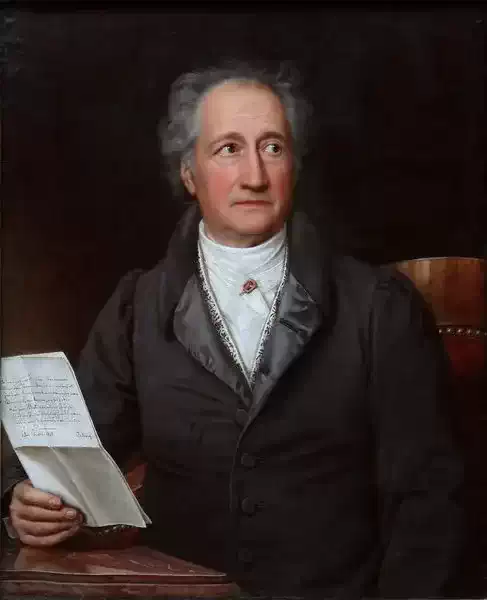
Johann Wolfgang von Goethe
Genial Impulse
Genial Impulse
THUS roll I, never taking ease,
My tub, like Saint Diogenes,
Now serious am, now seek to please;
Now love and hate in turn one sees;
The motives now are those, now these;
Now nothings, now realities.
Thus roll I, never taking ease,
My tub, like Saint Diogenes.
THUS roll I, never taking ease,
My tub, like Saint Diogenes,
Now serious am, now seek to please;
Now love and hate in turn one sees;
The motives now are those, now these;
Now nothings, now realities.
Thus roll I, never taking ease,
My tub, like Saint Diogenes.
401
Johann Wolfgang von Goethe
Dedication - The Poems Of Goeth
Dedication - The Poems Of Goeth
The morn arrived; his footstep quickly scared
The gentle sleep that round my senses clung,
And I, awak'ning, from my cottage fared,
And up the mountain side with light heart sprung;
At every step I felt my gaze ensnared
By new-born flow'rs that full of dew-drops hung;
The youthful day awoke with ecstacy,
And all things quicken'd were, to quicken me.
And as I mounted, from the valley rose
A streaky mist, that upward slowly spread,
Then bent, as though my form it would enclose,
Then, as on pinions, soar'd above my head:
My gaze could now on no fair view repose,
in mournful veil conceal'd, the world seem'd dead;
The clouds soon closed around me, as a tomb,
And I was left alone in twilight gloom.
At once the sun his lustre seem'd to pour,
And through the mist was seen a radiant light;
Here sank it gently to the ground once more,
There parted it, and climb'd o'er wood and height.
How did I yearn to greet him as of yore,
After the darkness waxing doubly bright!
The airy conflict ofttimes was renew'd,
Then blinded by a dazzling glow I stood.
Ere long an inward impulse prompted me
A hasty glance with boldness round to throw;
At first mine eyes had scarcely strength to see,
For all around appear'd to burn and glow.
Then saw I, on the clouds borne gracefully,
A godlike woman hov'ring to and fro.
In life I ne'er had seen a form so fair--
She gazed at me, and still she hover'd there.
"Dost thou not know me?" were the words she said
In tones where love and faith were sweetly bound;
"Knowest thou not Her who oftentimes hath shed
The purest balsam in each earthly wound?
Thou knows't me well; thy panting heart I led
To join me in a bond with rapture crown'd.
Did I not see thee, when a stripling, yearning
To welcome me with tears, heartfelt and burning?"
"Yes!" I exclaim'd, whilst, overcome with joy,
I sank to earth; "I long have worshipp'd thee;
Thou gav'st me rest, when passions rack'd the boy,
Pervading ev'ry limb unceasingly;
Thy heav'nly pinions thou didst then employ
The scorching sunbeams to ward off from me.
From thee alone Earth's fairest gifts I gain'd,
Through thee alone, true bliss can be obtain'd.
"Thy name I know not; yet I hear thee nam'd
By many a one who boasts thee as his own;
Each eye believes that tow'rd thy form 'tis aim'd,
Yet to most eyes thy rays are anguish-sown.
Ah! whilst I err'd, full many a friend I claim'd,
Now that I know thee, I am left alone;
With but myself can I my rapture share,
I needs must veil and hide thy radiance fair.
She smiled, and answering said: "Thou see'st how wise,
How prudent 'twas but little to unveil!
Scarce from the clumsiest cheat are clear'd thine eyes,
Scarce hast thou strength thy childish bars to scale,
When thou dost rank thee 'mongst the deities,
And so man's duties to perform would'st fail!
How dost thou differ from all other men?
Live with the world in peace, and know thee then!"
"Oh, pardon me," I cried, "I meant it well:
Not vainly did'st thou bless mine eyes with light;
For in my blood glad aspirations swell,
The value of thy gifts I know aright!
Those treasures in my breast for others dwell,
The buried pound no more I'll hide from sight.
Why did I seek the road so anxiously,
If hidden from my brethren 'twere to be?"
And as I answer'd, tow'rd me turn'd her face,
With kindly sympathy, that god-like one;
Within her eye full plainly could I trace
What I had fail'd in, and what rightly done.
She smiled, and cured me with that smile's sweet grace,
To new-born joys my spirit soar'd anon;
With inward confidence I now could dare
To draw yet closer, and observe her there.
Through the light cloud she then stretch'd forth her hand,
As if to bid the streaky vapour fly:
At once it seemed to yield to her command,
Contracted, and no mist then met mine eye.
My glance once more survey'd the smiling land,
Unclouded and serene appear'd the sky.
Nought but a veil of purest white she held,
And round her in a thousand folds it swell'd.
"I know thee, and I know thy wav'ring will.
I know the good that lives and glows in thee!"--
Thus spake she, and methinks I hear her still-
"The prize long destined, now receive from me;
That blest one will be safe from ev'ry ill,
Who takes this gift with soul of purity,--"
The veil of Minstrelsy from Truth's own hand,
Of sunlight and of morn's sweet fragrance plann'd.
"And when thou and thy friends at fierce noon-day
Are parched with heat, straight cast it in the air!
Then Zephyr's cooling breath will round you play,
Distilling balm and flowers' sweet incense there;
The tones of earthly woe will die away,
The grave become a bed of clouds so fair,
To sing to rest life's billows will be seen,
The day be lovely, and the night serene."-
Come, then, my friends! and whensoe'er ye find
Upon your way increase life's heavy load;
If by fresh-waken'd blessings flowers are twin'd
Around your path, and golden fruits bestow'd,
We'll seek the coming day with joyous mind!
Thus blest, we'll live, thus wander on our road
And when our grandsons sorrow o'er our tomb,
Our love, to glad their bosoms, still shall bloom.
The morn arrived; his footstep quickly scared
The gentle sleep that round my senses clung,
And I, awak'ning, from my cottage fared,
And up the mountain side with light heart sprung;
At every step I felt my gaze ensnared
By new-born flow'rs that full of dew-drops hung;
The youthful day awoke with ecstacy,
And all things quicken'd were, to quicken me.
And as I mounted, from the valley rose
A streaky mist, that upward slowly spread,
Then bent, as though my form it would enclose,
Then, as on pinions, soar'd above my head:
My gaze could now on no fair view repose,
in mournful veil conceal'd, the world seem'd dead;
The clouds soon closed around me, as a tomb,
And I was left alone in twilight gloom.
At once the sun his lustre seem'd to pour,
And through the mist was seen a radiant light;
Here sank it gently to the ground once more,
There parted it, and climb'd o'er wood and height.
How did I yearn to greet him as of yore,
After the darkness waxing doubly bright!
The airy conflict ofttimes was renew'd,
Then blinded by a dazzling glow I stood.
Ere long an inward impulse prompted me
A hasty glance with boldness round to throw;
At first mine eyes had scarcely strength to see,
For all around appear'd to burn and glow.
Then saw I, on the clouds borne gracefully,
A godlike woman hov'ring to and fro.
In life I ne'er had seen a form so fair--
She gazed at me, and still she hover'd there.
"Dost thou not know me?" were the words she said
In tones where love and faith were sweetly bound;
"Knowest thou not Her who oftentimes hath shed
The purest balsam in each earthly wound?
Thou knows't me well; thy panting heart I led
To join me in a bond with rapture crown'd.
Did I not see thee, when a stripling, yearning
To welcome me with tears, heartfelt and burning?"
"Yes!" I exclaim'd, whilst, overcome with joy,
I sank to earth; "I long have worshipp'd thee;
Thou gav'st me rest, when passions rack'd the boy,
Pervading ev'ry limb unceasingly;
Thy heav'nly pinions thou didst then employ
The scorching sunbeams to ward off from me.
From thee alone Earth's fairest gifts I gain'd,
Through thee alone, true bliss can be obtain'd.
"Thy name I know not; yet I hear thee nam'd
By many a one who boasts thee as his own;
Each eye believes that tow'rd thy form 'tis aim'd,
Yet to most eyes thy rays are anguish-sown.
Ah! whilst I err'd, full many a friend I claim'd,
Now that I know thee, I am left alone;
With but myself can I my rapture share,
I needs must veil and hide thy radiance fair.
She smiled, and answering said: "Thou see'st how wise,
How prudent 'twas but little to unveil!
Scarce from the clumsiest cheat are clear'd thine eyes,
Scarce hast thou strength thy childish bars to scale,
When thou dost rank thee 'mongst the deities,
And so man's duties to perform would'st fail!
How dost thou differ from all other men?
Live with the world in peace, and know thee then!"
"Oh, pardon me," I cried, "I meant it well:
Not vainly did'st thou bless mine eyes with light;
For in my blood glad aspirations swell,
The value of thy gifts I know aright!
Those treasures in my breast for others dwell,
The buried pound no more I'll hide from sight.
Why did I seek the road so anxiously,
If hidden from my brethren 'twere to be?"
And as I answer'd, tow'rd me turn'd her face,
With kindly sympathy, that god-like one;
Within her eye full plainly could I trace
What I had fail'd in, and what rightly done.
She smiled, and cured me with that smile's sweet grace,
To new-born joys my spirit soar'd anon;
With inward confidence I now could dare
To draw yet closer, and observe her there.
Through the light cloud she then stretch'd forth her hand,
As if to bid the streaky vapour fly:
At once it seemed to yield to her command,
Contracted, and no mist then met mine eye.
My glance once more survey'd the smiling land,
Unclouded and serene appear'd the sky.
Nought but a veil of purest white she held,
And round her in a thousand folds it swell'd.
"I know thee, and I know thy wav'ring will.
I know the good that lives and glows in thee!"--
Thus spake she, and methinks I hear her still-
"The prize long destined, now receive from me;
That blest one will be safe from ev'ry ill,
Who takes this gift with soul of purity,--"
The veil of Minstrelsy from Truth's own hand,
Of sunlight and of morn's sweet fragrance plann'd.
"And when thou and thy friends at fierce noon-day
Are parched with heat, straight cast it in the air!
Then Zephyr's cooling breath will round you play,
Distilling balm and flowers' sweet incense there;
The tones of earthly woe will die away,
The grave become a bed of clouds so fair,
To sing to rest life's billows will be seen,
The day be lovely, and the night serene."-
Come, then, my friends! and whensoe'er ye find
Upon your way increase life's heavy load;
If by fresh-waken'd blessings flowers are twin'd
Around your path, and golden fruits bestow'd,
We'll seek the coming day with joyous mind!
Thus blest, we'll live, thus wander on our road
And when our grandsons sorrow o'er our tomb,
Our love, to glad their bosoms, still shall bloom.
353
Johann Wolfgang von Goethe
A Legacy
A Legacy
No living atom comes at last to naught!
Active in each is still the eternal Thought:
Hold fast to Being if thou wouldst be blest.
Being is without end; for changeless laws
Bind that from which the All its glory draws
Of living treasures endlessly possessed.
Unto the wise of old this truth was known,
Such wisdom knit their noble souls in one;
Then hold thou still the lore of ancient days!
To that high power thou ow'st it, son of man,
By whose decree the earth its circuit ran
And all the planets went their various ways.
Then inward turn at once thy searching eyes;
Thence shalt thou see the central truth arise
From which no lofty soul goes e'er astray;
There shalt thou miss no needful guiding sign-
For conscience lives, and still its light divine
Shall be the sun of all thy moral day.
Next shalt thou trust thy senses' evidence,
And fear from them no treacherous offence
While the mind's watchful eye thy road commands:
With lively pleasure contemplate the scene
And roam securely, teachable, serene,
At will throughout a world of fruitful lands.
Enjoy in moderation all life gives:
Where it rejoices in each thing that lives
Let reason be thy guide and make thee see.
Then shall the distant past be present still,
The future, ere it comes, thy vision fill-
Each single moment touch eternity.
Then at the last shalt thou achieve thy quest,
And in one final, firm conviction rest:
What bears for thee true fruit alone is true.
Prove all things, watch the movement of the world
As down the various ways its tribes are whirled;
Take thou thy stand among the chosen few.
Thus hath it been of old; in solitude
The artist shaped what thing to him seemed good,
The wise man hearkened to his own soul's voice.
Thus also shalt thou find thy greatest bliss;
To lead where the elect shall follow-this
And this alone is worth a hero's choice.
No living atom comes at last to naught!
Active in each is still the eternal Thought:
Hold fast to Being if thou wouldst be blest.
Being is without end; for changeless laws
Bind that from which the All its glory draws
Of living treasures endlessly possessed.
Unto the wise of old this truth was known,
Such wisdom knit their noble souls in one;
Then hold thou still the lore of ancient days!
To that high power thou ow'st it, son of man,
By whose decree the earth its circuit ran
And all the planets went their various ways.
Then inward turn at once thy searching eyes;
Thence shalt thou see the central truth arise
From which no lofty soul goes e'er astray;
There shalt thou miss no needful guiding sign-
For conscience lives, and still its light divine
Shall be the sun of all thy moral day.
Next shalt thou trust thy senses' evidence,
And fear from them no treacherous offence
While the mind's watchful eye thy road commands:
With lively pleasure contemplate the scene
And roam securely, teachable, serene,
At will throughout a world of fruitful lands.
Enjoy in moderation all life gives:
Where it rejoices in each thing that lives
Let reason be thy guide and make thee see.
Then shall the distant past be present still,
The future, ere it comes, thy vision fill-
Each single moment touch eternity.
Then at the last shalt thou achieve thy quest,
And in one final, firm conviction rest:
What bears for thee true fruit alone is true.
Prove all things, watch the movement of the world
As down the various ways its tribes are whirled;
Take thou thy stand among the chosen few.
Thus hath it been of old; in solitude
The artist shaped what thing to him seemed good,
The wise man hearkened to his own soul's voice.
Thus also shalt thou find thy greatest bliss;
To lead where the elect shall follow-this
And this alone is worth a hero's choice.
464
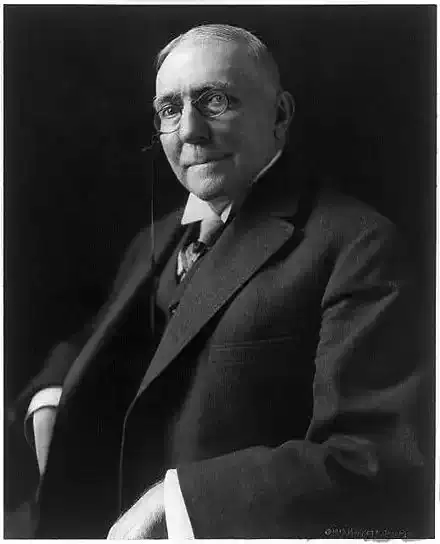
James Whitcomb Riley
Plain Sermons
Plain Sermons
I saw a man--and envied him beside--
Because of this world's goods he had great store;
But even as I envied him, he died,
And left me envious of him no more.
I saw another man--and envied still--
Because he was content with frugal lot;
But as I envied him, the rich man's will
Bequeathed him all, and envy I forgot.
Yet still another man I saw, and he
I envied for a calm and tranquil mind
That nothing fretted in the least degree--
Until, alas! I found that he was blind.
What vanity is envy! for I find
I have been rich in dross of thought, and poor
In that I was a fool, and lastly blind
For never having seen myself before!
I saw a man--and envied him beside--
Because of this world's goods he had great store;
But even as I envied him, he died,
And left me envious of him no more.
I saw another man--and envied still--
Because he was content with frugal lot;
But as I envied him, the rich man's will
Bequeathed him all, and envy I forgot.
Yet still another man I saw, and he
I envied for a calm and tranquil mind
That nothing fretted in the least degree--
Until, alas! I found that he was blind.
What vanity is envy! for I find
I have been rich in dross of thought, and poor
In that I was a fool, and lastly blind
For never having seen myself before!
319
James Whitcomb Riley
Limitations Of Genius
Limitations Of Genius
The audience entire seemed pleased--indeed
_Extremely_ pleased. And little Maymie, freed
From her task of instructing, ran to show
Her wondrous colored picture to and fro
Among the company.
'And how comes it,' said
Some one to Mr. Hammond, 'that, instead
Of the inventor's life you did not choose
The _artist's?_--since the world can better lose
A cutting-box or reaper than it can
A noble picture painted by a man
Endowed with gifts this drawing would suggest'--
Holding the picture up to show the rest.
'_There now!_' chimed in the wife, her pale face lit
Like winter snow with sunrise over it,-'
That's what _I'm_ always asking him.--But _he_-_
Well_, as he's answering _you_, he answers _me_,--
With that same silent, suffocating smile
He's wearing now!'
For quite a little while
No further speech from anyone, although
All looked at Mr. Hammond and that slow,
Immutable, mild smile of his. And then
The encouraged querist asked him yet again
_Why was it_, and etcetera--with all
The rest, expectant, waiting 'round the wall,--
Until the gentle Mr. Hammond said
He'd answer with a '_parable_,' instead--
About 'a dreamer' that he used to know-'
An artist'--'master'--_all_--in _embryo_.
The audience entire seemed pleased--indeed
_Extremely_ pleased. And little Maymie, freed
From her task of instructing, ran to show
Her wondrous colored picture to and fro
Among the company.
'And how comes it,' said
Some one to Mr. Hammond, 'that, instead
Of the inventor's life you did not choose
The _artist's?_--since the world can better lose
A cutting-box or reaper than it can
A noble picture painted by a man
Endowed with gifts this drawing would suggest'--
Holding the picture up to show the rest.
'_There now!_' chimed in the wife, her pale face lit
Like winter snow with sunrise over it,-'
That's what _I'm_ always asking him.--But _he_-_
Well_, as he's answering _you_, he answers _me_,--
With that same silent, suffocating smile
He's wearing now!'
For quite a little while
No further speech from anyone, although
All looked at Mr. Hammond and that slow,
Immutable, mild smile of his. And then
The encouraged querist asked him yet again
_Why was it_, and etcetera--with all
The rest, expectant, waiting 'round the wall,--
Until the gentle Mr. Hammond said
He'd answer with a '_parable_,' instead--
About 'a dreamer' that he used to know-'
An artist'--'master'--_all_--in _embryo_.
278
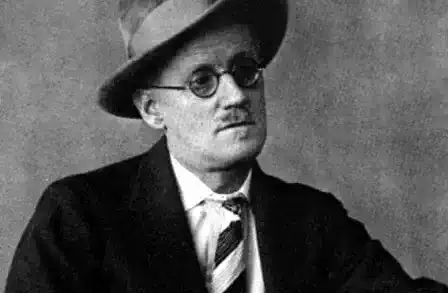
James Joyce
He Who Hath Glory Lost
He Who Hath Glory Lost
He who hath glory lost, nor hath
Found any soul to fellow his,
Among his foes in scorn and wrath
Holding to ancient nobleness,
That high unconsortable one ---
His love is his companion.
He who hath glory lost, nor hath
Found any soul to fellow his,
Among his foes in scorn and wrath
Holding to ancient nobleness,
That high unconsortable one ---
His love is his companion.
164

Jack Kerouac
The Scripture of the Golden Eternity
The Scripture of the Golden Eternity
1
Did I create that sky? Yes, for, if it was anything other than a conception in my mind I
wouldnt have said 'Sky'-That is why I am the golden eternity. There are not two of us
here, reader and writer, but one, one golden eternity, One-Which-It-Is, That-WhichEverything-
Is.
2
The awakened Buddha to show the way, the chosen Messiah to die in the degradation
of sentience, is the golden eternity. One that is what is, the golden eternity, or, God,
or, Tathagata-the name. The Named One. The human God. Sentient Godhood. Animate
Divine. The Deified One. The Verified One. The Free One. The Liberator. The Still One.
The settled One. The Established One. Golden Eternity. All is Well. The Empty One. The
Ready One. The Quitter. The Sitter. The Justified One. The Happy One.
3
That sky, if it was anything other than an illusion of my mortal mind I wouldnt have
said 'that sky.' Thus I made that sky, I am the golden eternity. I am Mortal Golden
Eternity.
4
I was awakened to show the way, chosen to die in the degradation of life, because I
am Mortal Golden Eternity.
5
I am the golden eternity in mortal animate form.
6
Strictly speaking, there is no me, because all is emptiness. I am empty, I am
non-existent. All is bliss.
7
This truth law has no more reality than the world.
8
You are the golden eternity because there is no me and no you, only one golden
eternity.
9
The Realizer. Entertain no imaginations whatever, for the thing is a no-thing. Knowing
this then is Human Godhood.
10
This world is the movie of what everything is, it is one movie, made of the same stuff
throughout, belonging to nobody, which is what everything is.
11
If we were not all the golden eternity we wouldnt be here. Because we are here we
cant help being pure. To tell man to be pure on account of the punishing angel that
punishes the bad and the rewarding angel that rewards the good would be like telling
the water 'Be Wet'-Never the less, all things depend on supreme reality, which is
already established as the record of Karma earned-fate.
12
God is not outside us but is just us, the living and the dead, the never-lived and
never-died. That we should learn it only now, is supreme reality, it was written a long
time ago in the archives of universal mind, it is already done, there's no more to do.
13
This is the knowledge that sees the golden eternity in all things, which is us, you, me,
and which is no longer us, you, me.
14
What name shall we give it which hath no name, the common eternal matter of the
mind? If we were to call it essence, some might think it meant perfume, or gold, or
honey. It is not even mind. It is not even discussible, groupable into words; it is not
even endless, in fact it is not even mysterious or inscrutably inexplicable; it is what is;
it is that; it is this. We could easily call the golden eternity 'This.' But 'what's in a
name?' asked Shakespeare. The golden eternity by another name would be as sweet. A
Tathagata, a God, a Buddha by another name, an Allah, a Sri Krishna, a Coyote, a
Brahma, a Mazda, a Messiah, an Amida, an Aremedeia, a Maitreya, a Palalakonuh, 1 2
3 4 5 6 7 8 would be as sweet. The golden eternity is X, the golden eternity is A, the
golden eternity is /\, the golden eternity is O, the golden eternity is [ ], the golden
eternity is t-h-e-g-o-l-d-e-n-e-t-e-r- n-i-t-y. In the beginning was the word; before the
beginning, in the beginningless infinite neverendingness, was the essence. Both the
word 'god' and the essence of the word, are emptiness. The form of emptiness which is
emptiness having taken the form of form, is what you see and hear and feel right now,
and what you taste and smell and think as you read this. Wait awhile, close your eyes,
let your breathing stop three seconds or so, listen to the inside silence in the womb of
the world, let your hands and nerve-ends drop, re-recognize the bliss you forgot, the
emptiness and essence and ecstasy of ever having been and ever to be the golden
eternity. This is the lesson you forgot.
15
The lesson was taught long ago in the other world systems that have naturally changed
into the empty and awake, and are here now smiling in our smile and scowling in our
scowl. It is only like the golden eternity pretending to be smiling and scowling to itself;
like a ripple on the smooth ocean of knowing. The fate of humanity is to vanish into the
golden eternity, return pouring into its hands which are not hands. The navel shall
receive, invert, and take back what'd issued forth; the ring of flesh shall close; the
personalities of long dead heroes are blank dirt.
16
The point is we're waiting, not how comfortable we are while waiting. Paleolithic man
waited by caves for the realization of why he was there, and hunted; modern men wait
in beautified homes and try to forget death and birth. We're waiting for the realization
that this is the golden eternity.
17
It came on time.
18
There is a blessedness surely to be believed, and that is that everything abides in
eternal ecstasy, now and forever.
19
Mother Kali eats herself back. All things but come to go. All these holy forms,
unmanifest, not even forms, truebodies of blank bright ecstasy, abiding in a trance, 'in
emptiness and silence' as it is pointed out in the Diamond-cutter, asked to be only
what they are: GLAD.
20
The secret God-grin in the trees and in the teapot, in ashes and fronds, fire and brick,
flesh and mental human hope. All things, far from yearning to be re-united with God,
had never left themselves and here they are, Dharmakaya, the body of the truth law,
the universal Thisness.
21
'Beyond the reach of change and fear, beyond all praise and blame,' the Lankavatara
Scripture knows to say, is he who is what he is in time and time-less-ness, in ego and
in ego-less-ness, in self and in self-less-ness.
22
Stare deep into the world before you as if it were the void: innumerable holy ghosts,
buddhies, and savior gods there hide, smiling. All the atoms emitting light inside
wavehood, there is no personal separation of any of it. A hummingbird can come into a
house and a hawk will not: so rest and be assured. While looking for the light, you may
suddenly be devoured by the darkness and find the true light.
23
Things dont tire of going and coming. The flies end up with the delicate viands.
24
The cause of the world's woe is birth, The cure of the world's woe is a bent stick.
25
Though it is everything, strictly speaking there is no golden eternity because
everything is nothing: there are no things and no goings and comings: for all is
emptiness, and emptiness is these forms, emptiness is this one formhood.
26
All these selfnesses have already vanished. Einstein measured that this present
universe is an expanding bubble, and you know what that means.
27
Discard such definite imaginations of phenomena as your own self, thou human being,
thou'rt a numberless mass of sun-motes: each mote a shrine. The same as to your
shyness of other selves, selfness as divided into infinite numbers of beings, or selfness
as identified as one self existing eternally. Be obliging and noble, be generous with
your time and help and possessions, and be kind, because the emptiness of this little
place of flesh you carry around and call your soul, your entity, is the same emptiness in
every direction of space unmeasurable emptiness, the same, one, and holy emptiness
everywhere: why be selfy and unfree, Man God, in your dream? Wake up, thou'rt
selfless and free. 'Even and upright your mind abides nowhere,' states Hui Neng of
China. We're all in heaven now.
28
Roaring dreams take place in a perfectly silent mind. Now that we know this, throw the
raft away.
29
Are you tightwad and are you mean, those are the true sins, and sin is only a
conception of ours, due to long habit. Are you generous and are you kind, those are
the true virtues, and they're only conceptions. The golden eternity rests beyond sin and
virtue, is attached to neither, is attached to nothing, is unattached, because the golden
eternity is Alone. The mold has rills but it is one mold. The field has curves but it is one
field. All things are different forms of the same thing. I call it the golden eternity-what
do you call it, brother? for the blessing and merit of virtue, and the punishment and
bad fate of sin, are alike just so many words.
30
Sociability is a big smile, and a big smile is nothing but teeth. Rest and be kind.
31
There's no need to deny that evil thing called GOOGOO, which doesnt exist, just as
there's no need to deny that evil thing called Sex and Rebirth, which also doesn't exist,
as it is only a form of emptiness. The bead of semen comes from a long line of
awakened natures that were your parent, a holy flow, a succession of saviors pouring
from the womb of the dark void and back into it, fantastic magic imagination of the
lightning, flash, plays, dreams, not even plays, dreams.
32
'The womb of exuberant fertility,' Ashvhaghosha called it, radiating forms out of its
womb of exuberant emptiness. In emptiness there is no Why, no knowledge of Why, no
ignorance of Why, no asking and no answering of Why, and no significance attached to
this.
33
A disturbed and frightened man is like the golden eternity experimentally pretending at
feeling the disturbed-and-frightened mood; a calm and joyous man, is like the golden
eternity pretending at experimenting with that experience; a man experiencing his
Sentient Being, is like the golden eternity pretending at trying that out too; a man who
has no thoughts, is like the golden eternity pretending at being itself; because the
emptiness of everything has no beginning and no end and at present is infinite.
34
'Love is all in all,' said Sainte Therese, choosing Love for her vocation and pouring out
her happiness, from her garden by the gate, with a gentle smile, pouring roses on the
earth, so that the beggar in the thunderbolt received of the endless offering of her dark
void. Man goes a-beggaring into nothingness. 'Ignorance is the father, Habit-Energy is
the Mother.' Opposites are not the same for the same reason they are the same.
35
The words 'atoms of dust' and 'the great universes' are only words. The idea that they
imply is only an idea. The belief that we live here in this existence, divided into various
beings, passing food in and out of ourselves, and casting off husks of bodies one after
another with no cessation and no definite or particular discrimination, is only an idea.
The seat of our Immortal Intelligence can be seen in that beating light between the
eyes the Wisdom Eye of the ancients: we know what we're doing: we're not disturbed:
because we're like the golden eternity pretending at playing the magic cardgame and
making believe it's real, it's a big dream, a joyous ecstasy of words and ideas and
flesh, an ethereal flower unfolding a folding back, a movie, an exuberant bunch of lines
bounding emptiness, the womb of Avalokitesvara, a vast secret silence, springtime in
the Void, happy young gods talking and drinking on a cloud. Our 32,000 chillicosms
bear all the marks of excellence. Blind milky light fills our night; and the morning is
crystal.
36
Give a gift to your brother, but there's no gift to compare with the giving of assurance
that he is the golden eternity. The true understanding of this would bring tears to your
eyes. The other shore is right here, forgive and forget, protect and reassure. Your
tormenters will be purified. Raise thy diamond hand. Have faith and wait. The course of
your days is a river rumbling over your rocky back. You're sitting at the bottom of the
world with a head of iron. Religion is thy sad heart. You're the golden eternity and it
must be done by you. And means one thing: Nothing-Ever-Happened. This is the
golden eternity.
37
When the Prince of the Kalinga severed the flesh from the limbs and body of Buddha,
even then the Buddha was free from any such ideas as his own self, other self, living
beings divided into many selves, or living beings united and identified into one eternal
self. The golden eternity isnt 'me.' Before you can know that you're dreaming you'll
wake up, Atman. Had the Buddha, the Awakened One, cherished any of these
imaginary judgments of and about things, he would have fallen into impatience and
hatred in his suffering. Instead, like Jesus on the Cross he saw the light and died kind,
loving all living things.
38
The world was spun out of a blade of grass: the world was spun out of a mind. Heaven
was spun out of a blade of grass: heaven was spun out of a mind. Neither will do you
much good, neither will do you much harm. The Oriental imperturbed, is the golden
eternity.
39
He is called a Yogi, his is called a Priest, a Minister, a Brahmin, a Parson, a Chaplain, a
Roshi, a Laoshih, a Master, a Patriarch, a Pope, a Spiritual Commissar, a Counselor,
and Adviser, a Bodhisattva-Mahasattva, an Old Man, a Saint, a Shaman, a Leader, who
thinks nothing of himself as separate from another self, not higher nor lower, no stages
and no definite attainments, no mysterious stigmata or secret holyhood, no wild dark
knowledge and no venerable authoritativeness, nay a giggling sage sweeping out of the
kitchen with a broom. After supper, a silent smoke. Because there is no definite
teaching: the world is undisciplined. Nature endlessly in every direction inward to your
body and outward into space.
40
Meditate outdoors. The dark trees at night are not really the dark trees at night, it's
only the golden eternity.
41
A mosquito as big as Mount Everest is much bigger than you think: a horse's hoof is
more delicate than it looks. An altar consecrated to the golden eternity, filled with
roses and lotuses and diamonds, is the cell of the humble prisoner, the cell so cold and
dreary. Boethius kissed the Robe of the Mother Truth in a Roman dungeon.
42
Do you think the emptiness of the sky will ever crumble away? Every little child knows
that everybody will go to heaven. Knowing that nothing ever happened is not really
knowing that nothing ever happened, it's the golden eternity. In other words, nothing
can compare with telling your brother and your sister that what happened, what is
happening, and what will happen, never really happened, is not really happening and
never will happen, it is only the golden eternity. Nothing was ever born, nothing will
ever die. Indeed, it didnt even happen that you heard about golden eternity through
the accidental reading of this scripture. The thing is easily false. There are no warnings
whatever issuing from the golden eternity: do what you want.
43
Even in dreams be kind, because anyway there is no time, no space, no mind. 'It's all
not-born,' said Bankei of Japan, whose mother heard this from her son did what we call
'died happy.' And even if she had died unhappy, dying unhappy is not really dying
unhappy, it's the golden eternity. It's impossible to exist, it's impossible to be
persecuted, it's impossible to miss your reward.
44
Eight hundred and four thousand myriads of Awakened Ones throughout numberless
swirls of epochs appeared to work hard to save a grain of sand, and it was only the
golden eternity. And their combined reward will be no greater and no lesser than what
will be won by a piece of dried turd. It's a reward beyond thought.
45
When you've understood this scripture, throw it away. If you cant understand this
scripture, throw it away. I insist on your freedom.
46
O everlasting Eternity, all things and all truth laws are no- things, in three ways, which
is the same way: AS THINGS OF TIME they dont exist because there is no furthest
atom than can be found or weighed or grasped, it is emptiness through and through,
matter and empty space too. AS THINGS OF MIND they dont exist, because the mind
that conceives and makes them out does so by seeing, hearing touching, smelling,
tasting, and mentally-noticing and without this mind they would not be seen or heard
or felt or smelled or tasted or mentally-noticed, they are discriminated that which
they're not necessarily by imaginary judgments of the mind, they are actually
dependent on the mind that makes them out, by themselves they are no-things, they
are really mental, seen only of the mind, they are really empty visions of the mind,
heaven is a vision, everything is a vision. What does it mean that I am in this endless
universe thinking I'm a man sitting under the stars on the terrace of earth, but actually
empty and awake throughout the emptiness and awakedness of everything? It means
that I am empty and awake, knowing that I am empty and awake, and that there's no
difference between me and anything else. It means that I have attained to that which
everything is.
47
The-Attainer-To-That-Which-Everything-Is, the Sanskrit Tathagata, has no ideas
whatever but abides in essence identically with the essence of all things, which is what
it is, in emptiness and silence. Imaginary meaning stretched to make mountains and as
far as the germ is concerned it stretched even further to make molehills. A million souls
dropped through hell but nobody saw them or counted them. A lot of large people isnt
really a lot of large people, it's only the golden eternity. When St. Francis went to
heaven he did not add to heaven nor detract from earth. Locate silence, possess space,
spot me the ego. 'From the beginning,' said the Sixth Patriarch of the China School,
'not a thing is.'
48
He who loves all life with his pity and intelligence isnt really he who loves all life with
his pity and intelligence, it's only natural. The universe is fully known because it is
ignored. Enlightenment comes when you dont care. This is a good tree stump I'm
sitting on. You cant even grasp your own pain let alone your eternal reward. I love you
because you're me. I love you because there's nothing else to do. It's just the natural
golden eternity.
49
What does it mean that those trees and mountains are magic and unreal?- It means
that those trees and mountains are magic and unreal. What does it mean that those
trees and mountains are not magic but real?- it means that those trees and mountains
are not magic but real. Men are just making imaginary judgments both ways, and all
the time it's just the same natural golden eternity.
50
If the golden eternity was anything other than mere words, you could not have said
'golden eternity.' This means that the words are used to point at the endless
nothingness of reality. If the endless nothingness of reality was anything other than
mere words, you could not have said 'endless nothingness of reality,' you could not
have said it. This means that the golden eternity is out of our word-reach, it refuses
steadfastly to be described, it runs away from us and leads us in. The name is not
really the name. The same way, you could not have said 'this world' if this world was
anything other than mere words. There's nothing there but just that. They've long
known that there's nothing to life but just the living of it. It Is What It Is and That's All
It Is.
51
There's no system of teaching and no reward for teaching the golden eternity, because
nothing has happened. In the golden eternity teaching and reward havent even
vanished let alone appeared. The golden eternity doesnt even have to be perfect. It is
very silly of me to talk about it. I talk about it simply because here I am dreaming that
I talk about it in a dream already ended, ages ago, from which I'm already awake, and
it was only an empty dreaming, in fact nothing whatever, in fact nothing ever
happened at all. The beauty of attaining the golden eternity is that nothing will be
acquired, at last.
52
Kindness and sympathy, understanding and encouragement, these give: they are
better than just presents and gifts: no reason in the world why not. Anyhow, be nice.
Remember the golden eternity is yourself. 'If someone will simply practice kindness,'
said Gotama to Subhuti, 'he will soon attain highest perfect wisdom.' Then he added:
'Kindness after all is only a word and it should be done on the spot without thought of
kindness.' By practicing kindness all over with everyone you will soon come into the
holy trance, infinite distinctions of personalities will become what they really
mysteriously are, our common and eternal blissstuff, the pureness of everything
forever, the great bright essence of mind, even and one thing everywhere the holy
eternal milky love, the white light everywhere everything, emptybliss, svaha, shining,
ready, and awake, the compassion in the sound of silence, the swarming myriad
trillionaire you are.
53
Everything's alright, form is emptiness and emptiness is form, and we're here forever,
in one form or another, which is empty. Everything's alright, we're not here, there, or
anywhere. Everything's alright, cats sleep.
54
The everlasting and tranquil essence, look around and see the smiling essence
everywhere. How wily was the world made, Maya, not-even-made.
55
There's the world in the daylight. If it was completely dark you wouldnt see it but it
would still be there. If you close your eyes you really see what it's like: mysterious
particle-swarming emptiness. On the moon big mosquitos of straw know this in the
kindness of their hearts. Truly speaking, unrecognizably sweet it all is. Don't worry
about nothing.
56
Imaginary judgments about things, in the Nothing-Ever-Happened wonderful void, you
dont even have to reject them, let alone accept them. 'That looks like a tree, let's call it
a tree,' said Coyote to Earthmaker at the beginning, and they walked around the
rootdrinker patting their bellies.
57
Perfectly selfless, the beauty of it, the butterfly doesnt take it as a personal
achievement, he just disappears through the trees. You too, kind and humble and
not-even-here, it wasnt in a greedy mood that you saw the light that belongs to
everybody.
58
Look at your little finger, the emptiness of it is no different than the emptiness of
infinity.
59
Cats yawn because they realize that there's nothing to do.
60
Up in heaven you wont remember all these tricks of yours. You wont even sigh 'Why?'
Whether as atomic dust or as great cities, what's the difference in all this stuff. A tree
is still only a rootdrinker. The puma's twisted face continues to look at the blue sky
with sightless eyes, Ah sweet divine and indescribable verdurous paradise planted in
mid-air! Caitanya, it's only consciousness. Not with thoughts of your mind, but in the
believing sweetness of your heart, you snap the link and open the golden door and
disappear into the bright room, the everlasting ecstasy, eternal Now. Soldier, follow
me! - there never was a war. Arjuna, dont fight! - why fight over nothing? Bless and sit
down.
61
I remember that I'm supposed to be a man and consciousness and I focus my eyes and
the print reappears and the words of the poor book are saying, 'The world, as God has
made it' and there are no words in my pitying heart to express the knowless loveliness
of the trance there was before I read those words, I had no such idea that there was a
world.
62
This world has no marks, signs, or evidence of existence, nor the noises in it, like
accident of wind or voices or heehawing animals, yet listen closely the eternal hush of
silence goes on and on throughout all this, and has been gong on, and will go on and
on. This is because the world is nothing but a dream and is just thought of and the
everlasting eternity pays no attention to it. At night under the moon, or in a quiet
room, hush now, the secret music of the Unborn goes on and on, beyond conception,
awake beyond existence. Properly speaking, awake is not really awake because the
golden eternity never went to sleep; you can tell by the constant sound of Silence
which cuts through this world like a magic diamond through the trick of your not
realizing that your mind caused the world.
63
The God of the American Plateau Indian was Coyote. He says: 'Earth! those beings
living on your surface, none of them disappearing, will all be transformed. When I have
spoken to them, when they have spoken to me, from that moment on, their words and
their bodies which they usually use to move about with, will all change. I will not have
heard them.'
64
I was smelling flowers in the yard, and when I stood up I took a deep breath and the
blood all rushed to my brain and I woke up dead on my back in the grass. I had
apparently fainted, or died, for about sixty seconds. My neighbor saw me but he
thought I had just suddenly thrown myself on the grass to enjoy the sun. During that
timeless moment of unconsciousness I saw the golden eternity. I saw heaven. In it
nothing had ever happened, the events of a million years ago were just as phantom
and ungraspable as the events of now, or the events of the next ten minutes. It was
perfect, the golden solitude, the golden emptiness, Something-Or- Other, something
surely humble. There was a rapturous ring of silence abiding perfectly. There was no
question of being alive or not being alive, of likes and dislikes, of near or far, no
question of giving or gratitude, no question of mercy or judgment, or of suffering or its
opposite or anything. It was the womb itself, aloneness, alaya vijnana the universal
store, the Great Free Treasure, the Great Victory, infinite completion, the joyful
mysterious essence of Arrangement. It seemed like one smiling smile, one adorable
adoration, one gracious and adorable charity, everlasting safety, refreshing afternoon,
roses, infinite brilliant immaterial gold ash, the Golden Age. The 'golden' came from the
sun in my eyelids, and the 'eternity' from my sudden instant realization as I woke up
that I had just been where it all came from and where it was all returning, the
everlasting So, and so never coming or going; therefore I call it the golden eternity but
you can call it anything you want. As I regained consciousness I felt so sorry I had a
body and a mind suddenly realizing I didn't even have a body and a mind and nothing
had ever happened and everything is alright forever and forever and forever, O thank
you thank you thank you.
65
This is the first teaching from the golden eternity.
66
The second teaching from the golden eternity is that there never was a first teaching
from the golden eternity. So be sure.
1
Did I create that sky? Yes, for, if it was anything other than a conception in my mind I
wouldnt have said 'Sky'-That is why I am the golden eternity. There are not two of us
here, reader and writer, but one, one golden eternity, One-Which-It-Is, That-WhichEverything-
Is.
2
The awakened Buddha to show the way, the chosen Messiah to die in the degradation
of sentience, is the golden eternity. One that is what is, the golden eternity, or, God,
or, Tathagata-the name. The Named One. The human God. Sentient Godhood. Animate
Divine. The Deified One. The Verified One. The Free One. The Liberator. The Still One.
The settled One. The Established One. Golden Eternity. All is Well. The Empty One. The
Ready One. The Quitter. The Sitter. The Justified One. The Happy One.
3
That sky, if it was anything other than an illusion of my mortal mind I wouldnt have
said 'that sky.' Thus I made that sky, I am the golden eternity. I am Mortal Golden
Eternity.
4
I was awakened to show the way, chosen to die in the degradation of life, because I
am Mortal Golden Eternity.
5
I am the golden eternity in mortal animate form.
6
Strictly speaking, there is no me, because all is emptiness. I am empty, I am
non-existent. All is bliss.
7
This truth law has no more reality than the world.
8
You are the golden eternity because there is no me and no you, only one golden
eternity.
9
The Realizer. Entertain no imaginations whatever, for the thing is a no-thing. Knowing
this then is Human Godhood.
10
This world is the movie of what everything is, it is one movie, made of the same stuff
throughout, belonging to nobody, which is what everything is.
11
If we were not all the golden eternity we wouldnt be here. Because we are here we
cant help being pure. To tell man to be pure on account of the punishing angel that
punishes the bad and the rewarding angel that rewards the good would be like telling
the water 'Be Wet'-Never the less, all things depend on supreme reality, which is
already established as the record of Karma earned-fate.
12
God is not outside us but is just us, the living and the dead, the never-lived and
never-died. That we should learn it only now, is supreme reality, it was written a long
time ago in the archives of universal mind, it is already done, there's no more to do.
13
This is the knowledge that sees the golden eternity in all things, which is us, you, me,
and which is no longer us, you, me.
14
What name shall we give it which hath no name, the common eternal matter of the
mind? If we were to call it essence, some might think it meant perfume, or gold, or
honey. It is not even mind. It is not even discussible, groupable into words; it is not
even endless, in fact it is not even mysterious or inscrutably inexplicable; it is what is;
it is that; it is this. We could easily call the golden eternity 'This.' But 'what's in a
name?' asked Shakespeare. The golden eternity by another name would be as sweet. A
Tathagata, a God, a Buddha by another name, an Allah, a Sri Krishna, a Coyote, a
Brahma, a Mazda, a Messiah, an Amida, an Aremedeia, a Maitreya, a Palalakonuh, 1 2
3 4 5 6 7 8 would be as sweet. The golden eternity is X, the golden eternity is A, the
golden eternity is /\, the golden eternity is O, the golden eternity is [ ], the golden
eternity is t-h-e-g-o-l-d-e-n-e-t-e-r- n-i-t-y. In the beginning was the word; before the
beginning, in the beginningless infinite neverendingness, was the essence. Both the
word 'god' and the essence of the word, are emptiness. The form of emptiness which is
emptiness having taken the form of form, is what you see and hear and feel right now,
and what you taste and smell and think as you read this. Wait awhile, close your eyes,
let your breathing stop three seconds or so, listen to the inside silence in the womb of
the world, let your hands and nerve-ends drop, re-recognize the bliss you forgot, the
emptiness and essence and ecstasy of ever having been and ever to be the golden
eternity. This is the lesson you forgot.
15
The lesson was taught long ago in the other world systems that have naturally changed
into the empty and awake, and are here now smiling in our smile and scowling in our
scowl. It is only like the golden eternity pretending to be smiling and scowling to itself;
like a ripple on the smooth ocean of knowing. The fate of humanity is to vanish into the
golden eternity, return pouring into its hands which are not hands. The navel shall
receive, invert, and take back what'd issued forth; the ring of flesh shall close; the
personalities of long dead heroes are blank dirt.
16
The point is we're waiting, not how comfortable we are while waiting. Paleolithic man
waited by caves for the realization of why he was there, and hunted; modern men wait
in beautified homes and try to forget death and birth. We're waiting for the realization
that this is the golden eternity.
17
It came on time.
18
There is a blessedness surely to be believed, and that is that everything abides in
eternal ecstasy, now and forever.
19
Mother Kali eats herself back. All things but come to go. All these holy forms,
unmanifest, not even forms, truebodies of blank bright ecstasy, abiding in a trance, 'in
emptiness and silence' as it is pointed out in the Diamond-cutter, asked to be only
what they are: GLAD.
20
The secret God-grin in the trees and in the teapot, in ashes and fronds, fire and brick,
flesh and mental human hope. All things, far from yearning to be re-united with God,
had never left themselves and here they are, Dharmakaya, the body of the truth law,
the universal Thisness.
21
'Beyond the reach of change and fear, beyond all praise and blame,' the Lankavatara
Scripture knows to say, is he who is what he is in time and time-less-ness, in ego and
in ego-less-ness, in self and in self-less-ness.
22
Stare deep into the world before you as if it were the void: innumerable holy ghosts,
buddhies, and savior gods there hide, smiling. All the atoms emitting light inside
wavehood, there is no personal separation of any of it. A hummingbird can come into a
house and a hawk will not: so rest and be assured. While looking for the light, you may
suddenly be devoured by the darkness and find the true light.
23
Things dont tire of going and coming. The flies end up with the delicate viands.
24
The cause of the world's woe is birth, The cure of the world's woe is a bent stick.
25
Though it is everything, strictly speaking there is no golden eternity because
everything is nothing: there are no things and no goings and comings: for all is
emptiness, and emptiness is these forms, emptiness is this one formhood.
26
All these selfnesses have already vanished. Einstein measured that this present
universe is an expanding bubble, and you know what that means.
27
Discard such definite imaginations of phenomena as your own self, thou human being,
thou'rt a numberless mass of sun-motes: each mote a shrine. The same as to your
shyness of other selves, selfness as divided into infinite numbers of beings, or selfness
as identified as one self existing eternally. Be obliging and noble, be generous with
your time and help and possessions, and be kind, because the emptiness of this little
place of flesh you carry around and call your soul, your entity, is the same emptiness in
every direction of space unmeasurable emptiness, the same, one, and holy emptiness
everywhere: why be selfy and unfree, Man God, in your dream? Wake up, thou'rt
selfless and free. 'Even and upright your mind abides nowhere,' states Hui Neng of
China. We're all in heaven now.
28
Roaring dreams take place in a perfectly silent mind. Now that we know this, throw the
raft away.
29
Are you tightwad and are you mean, those are the true sins, and sin is only a
conception of ours, due to long habit. Are you generous and are you kind, those are
the true virtues, and they're only conceptions. The golden eternity rests beyond sin and
virtue, is attached to neither, is attached to nothing, is unattached, because the golden
eternity is Alone. The mold has rills but it is one mold. The field has curves but it is one
field. All things are different forms of the same thing. I call it the golden eternity-what
do you call it, brother? for the blessing and merit of virtue, and the punishment and
bad fate of sin, are alike just so many words.
30
Sociability is a big smile, and a big smile is nothing but teeth. Rest and be kind.
31
There's no need to deny that evil thing called GOOGOO, which doesnt exist, just as
there's no need to deny that evil thing called Sex and Rebirth, which also doesn't exist,
as it is only a form of emptiness. The bead of semen comes from a long line of
awakened natures that were your parent, a holy flow, a succession of saviors pouring
from the womb of the dark void and back into it, fantastic magic imagination of the
lightning, flash, plays, dreams, not even plays, dreams.
32
'The womb of exuberant fertility,' Ashvhaghosha called it, radiating forms out of its
womb of exuberant emptiness. In emptiness there is no Why, no knowledge of Why, no
ignorance of Why, no asking and no answering of Why, and no significance attached to
this.
33
A disturbed and frightened man is like the golden eternity experimentally pretending at
feeling the disturbed-and-frightened mood; a calm and joyous man, is like the golden
eternity pretending at experimenting with that experience; a man experiencing his
Sentient Being, is like the golden eternity pretending at trying that out too; a man who
has no thoughts, is like the golden eternity pretending at being itself; because the
emptiness of everything has no beginning and no end and at present is infinite.
34
'Love is all in all,' said Sainte Therese, choosing Love for her vocation and pouring out
her happiness, from her garden by the gate, with a gentle smile, pouring roses on the
earth, so that the beggar in the thunderbolt received of the endless offering of her dark
void. Man goes a-beggaring into nothingness. 'Ignorance is the father, Habit-Energy is
the Mother.' Opposites are not the same for the same reason they are the same.
35
The words 'atoms of dust' and 'the great universes' are only words. The idea that they
imply is only an idea. The belief that we live here in this existence, divided into various
beings, passing food in and out of ourselves, and casting off husks of bodies one after
another with no cessation and no definite or particular discrimination, is only an idea.
The seat of our Immortal Intelligence can be seen in that beating light between the
eyes the Wisdom Eye of the ancients: we know what we're doing: we're not disturbed:
because we're like the golden eternity pretending at playing the magic cardgame and
making believe it's real, it's a big dream, a joyous ecstasy of words and ideas and
flesh, an ethereal flower unfolding a folding back, a movie, an exuberant bunch of lines
bounding emptiness, the womb of Avalokitesvara, a vast secret silence, springtime in
the Void, happy young gods talking and drinking on a cloud. Our 32,000 chillicosms
bear all the marks of excellence. Blind milky light fills our night; and the morning is
crystal.
36
Give a gift to your brother, but there's no gift to compare with the giving of assurance
that he is the golden eternity. The true understanding of this would bring tears to your
eyes. The other shore is right here, forgive and forget, protect and reassure. Your
tormenters will be purified. Raise thy diamond hand. Have faith and wait. The course of
your days is a river rumbling over your rocky back. You're sitting at the bottom of the
world with a head of iron. Religion is thy sad heart. You're the golden eternity and it
must be done by you. And means one thing: Nothing-Ever-Happened. This is the
golden eternity.
37
When the Prince of the Kalinga severed the flesh from the limbs and body of Buddha,
even then the Buddha was free from any such ideas as his own self, other self, living
beings divided into many selves, or living beings united and identified into one eternal
self. The golden eternity isnt 'me.' Before you can know that you're dreaming you'll
wake up, Atman. Had the Buddha, the Awakened One, cherished any of these
imaginary judgments of and about things, he would have fallen into impatience and
hatred in his suffering. Instead, like Jesus on the Cross he saw the light and died kind,
loving all living things.
38
The world was spun out of a blade of grass: the world was spun out of a mind. Heaven
was spun out of a blade of grass: heaven was spun out of a mind. Neither will do you
much good, neither will do you much harm. The Oriental imperturbed, is the golden
eternity.
39
He is called a Yogi, his is called a Priest, a Minister, a Brahmin, a Parson, a Chaplain, a
Roshi, a Laoshih, a Master, a Patriarch, a Pope, a Spiritual Commissar, a Counselor,
and Adviser, a Bodhisattva-Mahasattva, an Old Man, a Saint, a Shaman, a Leader, who
thinks nothing of himself as separate from another self, not higher nor lower, no stages
and no definite attainments, no mysterious stigmata or secret holyhood, no wild dark
knowledge and no venerable authoritativeness, nay a giggling sage sweeping out of the
kitchen with a broom. After supper, a silent smoke. Because there is no definite
teaching: the world is undisciplined. Nature endlessly in every direction inward to your
body and outward into space.
40
Meditate outdoors. The dark trees at night are not really the dark trees at night, it's
only the golden eternity.
41
A mosquito as big as Mount Everest is much bigger than you think: a horse's hoof is
more delicate than it looks. An altar consecrated to the golden eternity, filled with
roses and lotuses and diamonds, is the cell of the humble prisoner, the cell so cold and
dreary. Boethius kissed the Robe of the Mother Truth in a Roman dungeon.
42
Do you think the emptiness of the sky will ever crumble away? Every little child knows
that everybody will go to heaven. Knowing that nothing ever happened is not really
knowing that nothing ever happened, it's the golden eternity. In other words, nothing
can compare with telling your brother and your sister that what happened, what is
happening, and what will happen, never really happened, is not really happening and
never will happen, it is only the golden eternity. Nothing was ever born, nothing will
ever die. Indeed, it didnt even happen that you heard about golden eternity through
the accidental reading of this scripture. The thing is easily false. There are no warnings
whatever issuing from the golden eternity: do what you want.
43
Even in dreams be kind, because anyway there is no time, no space, no mind. 'It's all
not-born,' said Bankei of Japan, whose mother heard this from her son did what we call
'died happy.' And even if she had died unhappy, dying unhappy is not really dying
unhappy, it's the golden eternity. It's impossible to exist, it's impossible to be
persecuted, it's impossible to miss your reward.
44
Eight hundred and four thousand myriads of Awakened Ones throughout numberless
swirls of epochs appeared to work hard to save a grain of sand, and it was only the
golden eternity. And their combined reward will be no greater and no lesser than what
will be won by a piece of dried turd. It's a reward beyond thought.
45
When you've understood this scripture, throw it away. If you cant understand this
scripture, throw it away. I insist on your freedom.
46
O everlasting Eternity, all things and all truth laws are no- things, in three ways, which
is the same way: AS THINGS OF TIME they dont exist because there is no furthest
atom than can be found or weighed or grasped, it is emptiness through and through,
matter and empty space too. AS THINGS OF MIND they dont exist, because the mind
that conceives and makes them out does so by seeing, hearing touching, smelling,
tasting, and mentally-noticing and without this mind they would not be seen or heard
or felt or smelled or tasted or mentally-noticed, they are discriminated that which
they're not necessarily by imaginary judgments of the mind, they are actually
dependent on the mind that makes them out, by themselves they are no-things, they
are really mental, seen only of the mind, they are really empty visions of the mind,
heaven is a vision, everything is a vision. What does it mean that I am in this endless
universe thinking I'm a man sitting under the stars on the terrace of earth, but actually
empty and awake throughout the emptiness and awakedness of everything? It means
that I am empty and awake, knowing that I am empty and awake, and that there's no
difference between me and anything else. It means that I have attained to that which
everything is.
47
The-Attainer-To-That-Which-Everything-Is, the Sanskrit Tathagata, has no ideas
whatever but abides in essence identically with the essence of all things, which is what
it is, in emptiness and silence. Imaginary meaning stretched to make mountains and as
far as the germ is concerned it stretched even further to make molehills. A million souls
dropped through hell but nobody saw them or counted them. A lot of large people isnt
really a lot of large people, it's only the golden eternity. When St. Francis went to
heaven he did not add to heaven nor detract from earth. Locate silence, possess space,
spot me the ego. 'From the beginning,' said the Sixth Patriarch of the China School,
'not a thing is.'
48
He who loves all life with his pity and intelligence isnt really he who loves all life with
his pity and intelligence, it's only natural. The universe is fully known because it is
ignored. Enlightenment comes when you dont care. This is a good tree stump I'm
sitting on. You cant even grasp your own pain let alone your eternal reward. I love you
because you're me. I love you because there's nothing else to do. It's just the natural
golden eternity.
49
What does it mean that those trees and mountains are magic and unreal?- It means
that those trees and mountains are magic and unreal. What does it mean that those
trees and mountains are not magic but real?- it means that those trees and mountains
are not magic but real. Men are just making imaginary judgments both ways, and all
the time it's just the same natural golden eternity.
50
If the golden eternity was anything other than mere words, you could not have said
'golden eternity.' This means that the words are used to point at the endless
nothingness of reality. If the endless nothingness of reality was anything other than
mere words, you could not have said 'endless nothingness of reality,' you could not
have said it. This means that the golden eternity is out of our word-reach, it refuses
steadfastly to be described, it runs away from us and leads us in. The name is not
really the name. The same way, you could not have said 'this world' if this world was
anything other than mere words. There's nothing there but just that. They've long
known that there's nothing to life but just the living of it. It Is What It Is and That's All
It Is.
51
There's no system of teaching and no reward for teaching the golden eternity, because
nothing has happened. In the golden eternity teaching and reward havent even
vanished let alone appeared. The golden eternity doesnt even have to be perfect. It is
very silly of me to talk about it. I talk about it simply because here I am dreaming that
I talk about it in a dream already ended, ages ago, from which I'm already awake, and
it was only an empty dreaming, in fact nothing whatever, in fact nothing ever
happened at all. The beauty of attaining the golden eternity is that nothing will be
acquired, at last.
52
Kindness and sympathy, understanding and encouragement, these give: they are
better than just presents and gifts: no reason in the world why not. Anyhow, be nice.
Remember the golden eternity is yourself. 'If someone will simply practice kindness,'
said Gotama to Subhuti, 'he will soon attain highest perfect wisdom.' Then he added:
'Kindness after all is only a word and it should be done on the spot without thought of
kindness.' By practicing kindness all over with everyone you will soon come into the
holy trance, infinite distinctions of personalities will become what they really
mysteriously are, our common and eternal blissstuff, the pureness of everything
forever, the great bright essence of mind, even and one thing everywhere the holy
eternal milky love, the white light everywhere everything, emptybliss, svaha, shining,
ready, and awake, the compassion in the sound of silence, the swarming myriad
trillionaire you are.
53
Everything's alright, form is emptiness and emptiness is form, and we're here forever,
in one form or another, which is empty. Everything's alright, we're not here, there, or
anywhere. Everything's alright, cats sleep.
54
The everlasting and tranquil essence, look around and see the smiling essence
everywhere. How wily was the world made, Maya, not-even-made.
55
There's the world in the daylight. If it was completely dark you wouldnt see it but it
would still be there. If you close your eyes you really see what it's like: mysterious
particle-swarming emptiness. On the moon big mosquitos of straw know this in the
kindness of their hearts. Truly speaking, unrecognizably sweet it all is. Don't worry
about nothing.
56
Imaginary judgments about things, in the Nothing-Ever-Happened wonderful void, you
dont even have to reject them, let alone accept them. 'That looks like a tree, let's call it
a tree,' said Coyote to Earthmaker at the beginning, and they walked around the
rootdrinker patting their bellies.
57
Perfectly selfless, the beauty of it, the butterfly doesnt take it as a personal
achievement, he just disappears through the trees. You too, kind and humble and
not-even-here, it wasnt in a greedy mood that you saw the light that belongs to
everybody.
58
Look at your little finger, the emptiness of it is no different than the emptiness of
infinity.
59
Cats yawn because they realize that there's nothing to do.
60
Up in heaven you wont remember all these tricks of yours. You wont even sigh 'Why?'
Whether as atomic dust or as great cities, what's the difference in all this stuff. A tree
is still only a rootdrinker. The puma's twisted face continues to look at the blue sky
with sightless eyes, Ah sweet divine and indescribable verdurous paradise planted in
mid-air! Caitanya, it's only consciousness. Not with thoughts of your mind, but in the
believing sweetness of your heart, you snap the link and open the golden door and
disappear into the bright room, the everlasting ecstasy, eternal Now. Soldier, follow
me! - there never was a war. Arjuna, dont fight! - why fight over nothing? Bless and sit
down.
61
I remember that I'm supposed to be a man and consciousness and I focus my eyes and
the print reappears and the words of the poor book are saying, 'The world, as God has
made it' and there are no words in my pitying heart to express the knowless loveliness
of the trance there was before I read those words, I had no such idea that there was a
world.
62
This world has no marks, signs, or evidence of existence, nor the noises in it, like
accident of wind or voices or heehawing animals, yet listen closely the eternal hush of
silence goes on and on throughout all this, and has been gong on, and will go on and
on. This is because the world is nothing but a dream and is just thought of and the
everlasting eternity pays no attention to it. At night under the moon, or in a quiet
room, hush now, the secret music of the Unborn goes on and on, beyond conception,
awake beyond existence. Properly speaking, awake is not really awake because the
golden eternity never went to sleep; you can tell by the constant sound of Silence
which cuts through this world like a magic diamond through the trick of your not
realizing that your mind caused the world.
63
The God of the American Plateau Indian was Coyote. He says: 'Earth! those beings
living on your surface, none of them disappearing, will all be transformed. When I have
spoken to them, when they have spoken to me, from that moment on, their words and
their bodies which they usually use to move about with, will all change. I will not have
heard them.'
64
I was smelling flowers in the yard, and when I stood up I took a deep breath and the
blood all rushed to my brain and I woke up dead on my back in the grass. I had
apparently fainted, or died, for about sixty seconds. My neighbor saw me but he
thought I had just suddenly thrown myself on the grass to enjoy the sun. During that
timeless moment of unconsciousness I saw the golden eternity. I saw heaven. In it
nothing had ever happened, the events of a million years ago were just as phantom
and ungraspable as the events of now, or the events of the next ten minutes. It was
perfect, the golden solitude, the golden emptiness, Something-Or- Other, something
surely humble. There was a rapturous ring of silence abiding perfectly. There was no
question of being alive or not being alive, of likes and dislikes, of near or far, no
question of giving or gratitude, no question of mercy or judgment, or of suffering or its
opposite or anything. It was the womb itself, aloneness, alaya vijnana the universal
store, the Great Free Treasure, the Great Victory, infinite completion, the joyful
mysterious essence of Arrangement. It seemed like one smiling smile, one adorable
adoration, one gracious and adorable charity, everlasting safety, refreshing afternoon,
roses, infinite brilliant immaterial gold ash, the Golden Age. The 'golden' came from the
sun in my eyelids, and the 'eternity' from my sudden instant realization as I woke up
that I had just been where it all came from and where it was all returning, the
everlasting So, and so never coming or going; therefore I call it the golden eternity but
you can call it anything you want. As I regained consciousness I felt so sorry I had a
body and a mind suddenly realizing I didn't even have a body and a mind and nothing
had ever happened and everything is alright forever and forever and forever, O thank
you thank you thank you.
65
This is the first teaching from the golden eternity.
66
The second teaching from the golden eternity is that there never was a first teaching
from the golden eternity. So be sure.
426
Jack Kerouac
How to Meditate
How to Meditate
-lights outfall,
hands a-clasped, into instantaneous
ecstasy like a shot of heroin or morphine,
the gland inside of my brain discharging
the good glad fluid (Holy Fluid) as
i hap-down and hold all my body parts
down to a deadstop trance-Healing
all my sicknesses-erasing all-not
even the shred of a 'I-hope-you' or a
Loony Balloon left in it, but the mind
blank, serene, thoughtless. When a thought
comes a-springing from afar with its heldforth
figure of image, you spoof it out,
you spuff it off, you fake it, and
it fades, and thought never comes-and
with joy you realize for the first time
'thinking's just like not thinking-
So I don't have to think
any
more'
-lights outfall,
hands a-clasped, into instantaneous
ecstasy like a shot of heroin or morphine,
the gland inside of my brain discharging
the good glad fluid (Holy Fluid) as
i hap-down and hold all my body parts
down to a deadstop trance-Healing
all my sicknesses-erasing all-not
even the shred of a 'I-hope-you' or a
Loony Balloon left in it, but the mind
blank, serene, thoughtless. When a thought
comes a-springing from afar with its heldforth
figure of image, you spoof it out,
you spuff it off, you fake it, and
it fades, and thought never comes-and
with joy you realize for the first time
'thinking's just like not thinking-
So I don't have to think
any
more'
298
Jack Kerouac
th Chorus
th Chorus
The wheel of the quivering meat
conception
Turns in the void expelling human beings,
Pigs, turtles, frogs, insects, nits,
Mice, lice, lizards, rats, roan
Racinghorses, poxy bucolic pigtics,
Horrible unnameable lice of vultures,
Murderous attacking dog-armies
Of Africa, Rhinos roaming in the
jungle,
Vast boars and huge gigantic bull
Elephants, rams, eagles, condors,
Pones and Porcupines and Pills-
All the endless conception of living
beings
Gnashing everywhere in Consciousness
Throughout the ten directions of space
Occupying all the quarters in & out,
From supermicroscopic no-bug
To huge Galaxy Lightyear Bowell
Illuminating the sky of one Mind-
Poor!
I wish I was free
of that slaving meat wheel
and safe in heaven dead.
The wheel of the quivering meat
conception
Turns in the void expelling human beings,
Pigs, turtles, frogs, insects, nits,
Mice, lice, lizards, rats, roan
Racinghorses, poxy bucolic pigtics,
Horrible unnameable lice of vultures,
Murderous attacking dog-armies
Of Africa, Rhinos roaming in the
jungle,
Vast boars and huge gigantic bull
Elephants, rams, eagles, condors,
Pones and Porcupines and Pills-
All the endless conception of living
beings
Gnashing everywhere in Consciousness
Throughout the ten directions of space
Occupying all the quarters in & out,
From supermicroscopic no-bug
To huge Galaxy Lightyear Bowell
Illuminating the sky of one Mind-
Poor!
I wish I was free
of that slaving meat wheel
and safe in heaven dead.
333
Horácio
BkII:XVII We’ll Go Together
BkII:XVII We’ll Go Together
Why do you stifle me with your complaining?
It’s neither the gods’ idea nor mine to die
before you, Maecenas, you’re the great
glory, and pillar of my existence.
Ah, if some premature blow snatches away
half of my spirit, why should the rest remain,
no longer as loved, nor surviving
entire? That day shall lead us to ruin
together. I’m not making some treacherous
promise: whenever you lead the way, let’s go,
let’s go, prepared as friends to set out,
you and I, to try the final journey.
No Chimaera’s fiery breath will ever tear
me from you, or if he should rise against me
hundred handed Gyas: that’s the will
of all-powerful Justice and the Fates.
Whether Libra or fearful Scorpio shone
more powerfully on me at my natal hour,
or Capricorn, which is the ruler
of the waters that flow round Italy,
our stars were mutually aspected in their
marvellous way. Jupiter’s protection shone,
brighter for you than baleful Saturn,
and rescued you, and held back the rapid
wings of Fate, that day when the people crowding
the theatre, three times broke into wild applause:
I’d have received the trunk of a tree
on my head, if Faunus, the guardian
of Mercurial poets, hadn’t warded off
the blow with his hand. So remember to make
due offering: you build a votive shrine:
I’ll come and sacrifice a humble lamb.
Why do you stifle me with your complaining?
It’s neither the gods’ idea nor mine to die
before you, Maecenas, you’re the great
glory, and pillar of my existence.
Ah, if some premature blow snatches away
half of my spirit, why should the rest remain,
no longer as loved, nor surviving
entire? That day shall lead us to ruin
together. I’m not making some treacherous
promise: whenever you lead the way, let’s go,
let’s go, prepared as friends to set out,
you and I, to try the final journey.
No Chimaera’s fiery breath will ever tear
me from you, or if he should rise against me
hundred handed Gyas: that’s the will
of all-powerful Justice and the Fates.
Whether Libra or fearful Scorpio shone
more powerfully on me at my natal hour,
or Capricorn, which is the ruler
of the waters that flow round Italy,
our stars were mutually aspected in their
marvellous way. Jupiter’s protection shone,
brighter for you than baleful Saturn,
and rescued you, and held back the rapid
wings of Fate, that day when the people crowding
the theatre, three times broke into wild applause:
I’d have received the trunk of a tree
on my head, if Faunus, the guardian
of Mercurial poets, hadn’t warded off
the blow with his hand. So remember to make
due offering: you build a votive shrine:
I’ll come and sacrifice a humble lamb.
177
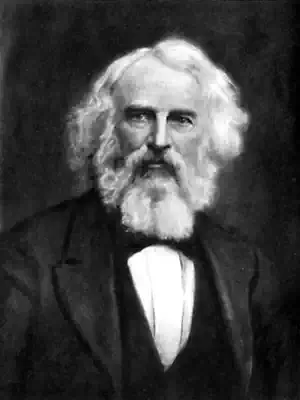
Henry Wadsworth Longfellow
Ultima Thule: Night
Ultima Thule: Night
Into the darkness and the hush of night
Slowly the landscape sinks, and fades away,
And with it fade the phantoms of the day,
The ghosts of men and things, that haunt the light,
The crowd, the clamor, the pursuit, the flight,
The unprofitable splendor and display,
The agitations, and the cares that prey
Upon our hearts, all vanish out of sight.
The better life begins; the world no more
Molests us; all its records we erase
From the dull commonplace book of our lives,
That like a palimpsest is written o'er
With trivial incidents of time and place,
And lo! the ideal, hidden beneath, revives.
Into the darkness and the hush of night
Slowly the landscape sinks, and fades away,
And with it fade the phantoms of the day,
The ghosts of men and things, that haunt the light,
The crowd, the clamor, the pursuit, the flight,
The unprofitable splendor and display,
The agitations, and the cares that prey
Upon our hearts, all vanish out of sight.
The better life begins; the world no more
Molests us; all its records we erase
From the dull commonplace book of our lives,
That like a palimpsest is written o'er
With trivial incidents of time and place,
And lo! the ideal, hidden beneath, revives.
330
Henry Wadsworth Longfellow
The Three Silences Of Molinos
The Three Silences Of Molinos
Three Silences there are: the first of speech,
The second of desire, the third of thought;
This is the lore a Spanish monk, distraught
With dreams and visions, was the first to teach.
These Silences, commingling each with each,
Made up the perfect Silence, that he sought
And prayed for, and wherein at times he caught
Mysterious sounds from realms beyond our reach.
O thou, whose daily life anticipates
The life to come, and in whose thought and word
The spiritual world preponderates.
Hermit of Amesbury! thou too hast heard
Voices and melodies from beyond the gates,
And speakest only when thy soul is stirred!
Three Silences there are: the first of speech,
The second of desire, the third of thought;
This is the lore a Spanish monk, distraught
With dreams and visions, was the first to teach.
These Silences, commingling each with each,
Made up the perfect Silence, that he sought
And prayed for, and wherein at times he caught
Mysterious sounds from realms beyond our reach.
O thou, whose daily life anticipates
The life to come, and in whose thought and word
The spiritual world preponderates.
Hermit of Amesbury! thou too hast heard
Voices and melodies from beyond the gates,
And speakest only when thy soul is stirred!
287
Henry Wadsworth Longfellow
The Poets
The Poets
O ye dead Poets, who are living still
Immortal in your verse, though life be fled,
And ye, O living Poets, who are dead
Though ye are living, if neglect can kill,
Tell me if in the darkest hours of ill,
With drops of anguish falling fast and red
From the sharp crown of thorns upon your head
Ye were not glad your errand to fulfill?
Yes; for the gift and ministry of Song
Have something in them so divinely sweet,
It can assuage the bitterness of wrong;
Not in the clamour of the crowded street,
Not in the shouts and plaudits of the throng,
But in ourselves, are triumph and defeat.
O ye dead Poets, who are living still
Immortal in your verse, though life be fled,
And ye, O living Poets, who are dead
Though ye are living, if neglect can kill,
Tell me if in the darkest hours of ill,
With drops of anguish falling fast and red
From the sharp crown of thorns upon your head
Ye were not glad your errand to fulfill?
Yes; for the gift and ministry of Song
Have something in them so divinely sweet,
It can assuage the bitterness of wrong;
Not in the clamour of the crowded street,
Not in the shouts and plaudits of the throng,
But in ourselves, are triumph and defeat.
409
Henry Wadsworth Longfellow
Song
Song
Where, from the eye of day,
The dark and silent river
Pursues through tangled woods a way
O'er which the tall trees quiver;
The silver mist, that breaks
From out that woodland cover,
Betrays the hidden path it takes,
And hangs the current over!
So oft the thoughts that burst
From hidden springs of feeling,
Like silent streams, unseen at first,
From our cold hearts are stealing:
But soon the clouds that veil
The eye of Love, when glowing,
Betray the long unwhispered tale
Of thoughts in darkness flowing!
Where, from the eye of day,
The dark and silent river
Pursues through tangled woods a way
O'er which the tall trees quiver;
The silver mist, that breaks
From out that woodland cover,
Betrays the hidden path it takes,
And hangs the current over!
So oft the thoughts that burst
From hidden springs of feeling,
Like silent streams, unseen at first,
From our cold hearts are stealing:
But soon the clouds that veil
The eye of Love, when glowing,
Betray the long unwhispered tale
Of thoughts in darkness flowing!
289
Henry Wadsworth Longfellow
Nature
Nature
As a fond mother, when the day is o'er,
Leads by the hand her little child to bed,
Half willing, half reluctant to be led,
And leave his broken playthings on the floor,
Still gazing at them through the open door,
Nor wholly reassured and comforted
By promises of others in their stead,
Which though more splendid, may not please him more;
So Nature deals with us, and takes away
Our playthings one by one, and by the hand
Leads us to rest so gently, that we go
Scarce knowing if we wish to go or stay,
Being too full of sleep to understand
How far the unknown transcends the what we know.
As a fond mother, when the day is o'er,
Leads by the hand her little child to bed,
Half willing, half reluctant to be led,
And leave his broken playthings on the floor,
Still gazing at them through the open door,
Nor wholly reassured and comforted
By promises of others in their stead,
Which though more splendid, may not please him more;
So Nature deals with us, and takes away
Our playthings one by one, and by the hand
Leads us to rest so gently, that we go
Scarce knowing if we wish to go or stay,
Being too full of sleep to understand
How far the unknown transcends the what we know.
337
Henry Wadsworth Longfellow
Musings
Musings
I sat by my window one night,
And watched how the stars grew high;
And the earth and skies were a splendid sight
To a sober and musing eye.
From heaven the silver moon shone down
With gentle and mellow ray,
And beneath the crowded roofs of the town
In broad light and shadow lay.
A glory was on the silent sea,
And mainland and island too,
Till a haze came over the lowland lea,
And shrouded that beautiful blue.
Bright in the moon the autumn wood
Its crimson scarf unrolled,
And the trees like a splendid army stood
In a panoply of gold!
I saw them waving their banners high,
As their crests to the night wind bowed,
And a distant sound on the air went by,
Like the whispering of a crowd.
Then I watched from my window how fast
The lights all around me fled,
As the wearied man to his slumber passed
And the sick one to his bed.
All faded save one, that burned
With distant and steady light;
But that, too, went out -- and I turned
Where my own lamp within shone bright!
Thus, thought I, our joys must die,
Yes -- the brightest from earth we win:
Till each turns away, with a sign,
To the lamp that burns brightly within.
I sat by my window one night,
And watched how the stars grew high;
And the earth and skies were a splendid sight
To a sober and musing eye.
From heaven the silver moon shone down
With gentle and mellow ray,
And beneath the crowded roofs of the town
In broad light and shadow lay.
A glory was on the silent sea,
And mainland and island too,
Till a haze came over the lowland lea,
And shrouded that beautiful blue.
Bright in the moon the autumn wood
Its crimson scarf unrolled,
And the trees like a splendid army stood
In a panoply of gold!
I saw them waving their banners high,
As their crests to the night wind bowed,
And a distant sound on the air went by,
Like the whispering of a crowd.
Then I watched from my window how fast
The lights all around me fled,
As the wearied man to his slumber passed
And the sick one to his bed.
All faded save one, that burned
With distant and steady light;
But that, too, went out -- and I turned
Where my own lamp within shone bright!
Thus, thought I, our joys must die,
Yes -- the brightest from earth we win:
Till each turns away, with a sign,
To the lamp that burns brightly within.
279
Henry Wadsworth Longfellow
Evangeline: Part The Second. V.
Evangeline: Part The Second. V.
IN that delightful land, which is washed by the Delaware's waters,
Guarding in sylvan shades the name of Penn the apostle.
Stands on the banks of its beautiful stream the city he founded.
There all the air is balm, and the peach is the emblem of beauty,
And the streets still re-echo the names of the trees of the forest,
As if they fain would appease the Dryads whose haunts they molested.
There from the troubled sea had Evangeline landed, an exile,
Finding among the children of Penn a home and a country.
There old René Leblanc had died; and when he departed,
Saw at his side only one of all his hundred descendants.
Something at least there was in the friendly streets of the city,
Something that spake to her heart, and made her no longer a stranger;
And her ear was pleased with the Thee and Thou of the Quakers,
For it recalled the past, the old Acadian country,
Where all men were equal, and all were brothers and sisters.
So, when the fruitless search, the disappointed endeavor,
Ended, to recommence no more upon earth, uncomplaining,
Thither, as leaves to the light, were turned her thoughts and her footsteps.
As from a mountain's top the rainy mists of the morning
Roll away, and afar we behold the landscape below us,
Sun-illumined, with shining rivers and cities and hamlets,
So fell the mists from her mind, and she saw the world far below her,
Dark no longer, but all illumined with love; and the pathway
Which she had climbed so far, lying smooth and fair in the distance.
Gabriel was not forgotten. Within her heart was his image,
Clothed in the beauty of love and youth, as last she beheld him,
Only more beautiful made by his deathlike silence and absence.
Into her thoughts of him time entered not, for it was not.
Over him years had no power; he was not changed, but transfigured;
He had become to her heart as one who is dead, and not absent;
Patience and abnegation of self, and devotion to others,
This was the lesson a life of trial and sorrow had taught her.
So was her love diffused, but, like to some odorous spices,
Suffered no waste nor loss, though filling the air with aroma.
Other hope had she none, nor wish in life, but to follow
Meekly, with reverent steps, the sacred feet of her Saviour.
Thus many years she lived as a Sister of Mercy; frequenting
Lonely and wretched roofs in the crowded lanes of the city,
Where distress and want concealed themselves from the sunlight,
Where disease and sorrow in garrets languished neglected.
Night after night, when the world was asleep, as the watchman repeated
Loud, through the gusty streets, that all was well in the city,
High at some lonely window he saw the light of her taper.
Day after day, in the gray of the dawn, as slow through the suburbs
Plodded the German farmer, with flowers and fruits for the market,
Met he that meek, pale face, returning home from its watchings.
Then it came to pass that a pestilence fell on the city,
Presaged by wondrous signs, and mostly by flocks of wild pigeons,
Darkening the sun in their flight, with naught in their craws but an acorn.
And, as the tides of the sea arise in the month of September,
Flooding some silver stream, till it spreads to a lake in the meadow,
So death flooded life, and, o'erflowing its natural margin,
Spread to a brackish lake, the silver stream of existence.
Wealth had no power to bribe, nor beauty to charm, the oppressor;
But all perished alike beneath the scourge of his anger;-
Only, alas! the poor, who had neither friends nor attendants,
Crept away to die in the almshouse, home of the homeless.
Then in the suburbs it stood, in the midst of meadows and woodlands;-
Now the city surrounds it; but still, with its gateway and wicket
Meek, in the midst of splendor, its humble walls seem to echo
Softly the words of the Lord:-'The poor ye always have with you.'
Thither, by night and by day, came the Sister of Mercy. The dying
Looked up into her face, and thought, indeed, to behold there
Gleams of celestial light encircle her forehead with splendor,
Such as the artist paints o'er the brows of saints and apostles,
Or such as hangs by night o'er a city seen at a distance.
Unto their eyes it seemed the lamps of the city celestial,
Into whose shining gates erelong their spirits would enter.
Thus, on a Sabbath morn, through the streets, deserted and silent,
Wending her quiet way, she entered the door of the almshouse.
Sweet on the summer air was the odor of flowers in the garden;
And she paused on her way to gather the fairest among them,
That the dying once more might rejoice in their fragrance and beauty.
Then, as she mounted the stairs to the corridors, cooled by the east wind,
Distant and soft on her ear fell the chimes from the belfry of Christ Church,
While, intermingled with these, across the meadows were wafted
Sounds of psalms, that were sung by the Swedes in their church at Wicaco.
Soft as descending wings fell the calm of the hour on her spirit;
Something within her said, 'At length thy trials are ended';
And, with light in her looks, she entered the chambers of sickness.
Noiselessly moved about the assiduous, careful attendants,
Moistening the feverish lip, and the aching brow, and in silence
Closing the sightless eyes of the dead, and concealing their faces,
Where on their pallets they lay, like drifts of snow by the roadside.
Many a languid head, upraised as Evangeline entered,
Turned on its pillow of pain to gaze while she passed, for her presence
Fell on their hearts like a ray of the sun on the walls of a prison.
And, as she looked around, she saw how Death, the consoler,
Laying his hand upon many a heart, had healed it forever.
Many familiar forms had disappeared in the night-time;
Vacant their places were, or filled already by strangers.
Suddenly, as if arrested by fear or a feeling of wonder,
Still she stood, with her colorless lips apart, while a shudder
Ran through her frame, and, forgotten, the flowerets dropped from her fingers,
And from her eyes and cheeks the light and bloom of the morning.
Then there escaped from her lips a cry of such terrible anguish,
That the dying heard it, and started up from their pillows.
On the pallet before her was stretched the form of an old man.
Long, and thin, and gray were the locks that shaded his temples;
But, as he lay in the morning light, his face for a moment
Seemed to assume once more the forms of its earlier manhood;
So are wont to be changed the faces of those who are dying.
Hot and red on his lips still burned the flush of the fever,
As if life, like the Hebrew, with blood had besprinkled its portals,
That the Angel of Death might see the sign, and pass over.
Motionless, senseless, dying, he lay, and his spirit exhausted
Seemed to be sinking down through infinite depths in the darkness,
Darkness of slumber and death, forever sinking and sinking.
Then through those realms of shade, in multiplied reverberations,
Heard he that cry of pain, and through the hush that succeeded
Whispered a gentle voice, in accents tender and saint-like,
'Gabriel! O my beloved!' and died away into silence.
Then he beheld, in a dream, once more the home of his childhood;
Green Acadian meadows, with sylvan rivers among them,
Village, and mountain, and woodlands; and, walking under their shadow,
As in the days of her youth, Evangeline rose in his vision.
Tears came into his eyes; and as slowly he lifted his eyelids,
Vanished the vision away, but Evangeline knelt by his bedside.
Vainly he strove to whisper her name, for the accents unuttered
Died on his lips, and their motion revealed what his tongue would have spoken.
Vainly he strove to rise; and Evangeline, kneeling beside him,
Kissed his dying lips, and laid his head on her bosom.
Sweet was the light of his eyes; but it suddenly sank into darkness,
As when a lamp is blown out by a gust of wind at a casement.
All was ended now, the hope, and the fear, and the sorrow,
All the aching of heart, the restless, unsatisfied longing,
All the dull, deep pain, and constant anguish of patience!
And, as she pressed once more the lifeless head to her bosom,
Meekly she bowed her own, and murmured, 'Father, I thank thee!'
STILL stands the forest primeval; but far away from its shadow,
Side by side, in their nameless graves, the lovers are sleeping.
Under the humble walls of the little Catholic churchyard,
In the heart of the city, they lie, unknown and unnoticed.
Daily the tides of life go ebbing and flowing beside them,
Thousands of throbbing hearts, where theirs are at rest and forever,
Thousands of aching brains, where theirs no longer are busy,
Thousands of toiling hands, where theirs have ceased from their labors,
Thousands of weary feet, where theirs have completed their journey!
Still stands the forest primeval; but under the shade of its branches
Dwells another race, with other customs and language.
Only along the shore of the mournful and misty Atlantic
Linger a few Acadian peasants, whose fathers from exile
Wandered back to their native land to die in its bosom.
In the fisherman's cot the wheel and the loom are still busy;
Maidens still wear their Norman caps and their kirtles of homespun,
And by the evening fire repeat Evangeline's story.
While from its rocky caverns the deep-voiced, neighboring ocean
Speaks, and in accents disconsolate answers the wail of the forest.
IN that delightful land, which is washed by the Delaware's waters,
Guarding in sylvan shades the name of Penn the apostle.
Stands on the banks of its beautiful stream the city he founded.
There all the air is balm, and the peach is the emblem of beauty,
And the streets still re-echo the names of the trees of the forest,
As if they fain would appease the Dryads whose haunts they molested.
There from the troubled sea had Evangeline landed, an exile,
Finding among the children of Penn a home and a country.
There old René Leblanc had died; and when he departed,
Saw at his side only one of all his hundred descendants.
Something at least there was in the friendly streets of the city,
Something that spake to her heart, and made her no longer a stranger;
And her ear was pleased with the Thee and Thou of the Quakers,
For it recalled the past, the old Acadian country,
Where all men were equal, and all were brothers and sisters.
So, when the fruitless search, the disappointed endeavor,
Ended, to recommence no more upon earth, uncomplaining,
Thither, as leaves to the light, were turned her thoughts and her footsteps.
As from a mountain's top the rainy mists of the morning
Roll away, and afar we behold the landscape below us,
Sun-illumined, with shining rivers and cities and hamlets,
So fell the mists from her mind, and she saw the world far below her,
Dark no longer, but all illumined with love; and the pathway
Which she had climbed so far, lying smooth and fair in the distance.
Gabriel was not forgotten. Within her heart was his image,
Clothed in the beauty of love and youth, as last she beheld him,
Only more beautiful made by his deathlike silence and absence.
Into her thoughts of him time entered not, for it was not.
Over him years had no power; he was not changed, but transfigured;
He had become to her heart as one who is dead, and not absent;
Patience and abnegation of self, and devotion to others,
This was the lesson a life of trial and sorrow had taught her.
So was her love diffused, but, like to some odorous spices,
Suffered no waste nor loss, though filling the air with aroma.
Other hope had she none, nor wish in life, but to follow
Meekly, with reverent steps, the sacred feet of her Saviour.
Thus many years she lived as a Sister of Mercy; frequenting
Lonely and wretched roofs in the crowded lanes of the city,
Where distress and want concealed themselves from the sunlight,
Where disease and sorrow in garrets languished neglected.
Night after night, when the world was asleep, as the watchman repeated
Loud, through the gusty streets, that all was well in the city,
High at some lonely window he saw the light of her taper.
Day after day, in the gray of the dawn, as slow through the suburbs
Plodded the German farmer, with flowers and fruits for the market,
Met he that meek, pale face, returning home from its watchings.
Then it came to pass that a pestilence fell on the city,
Presaged by wondrous signs, and mostly by flocks of wild pigeons,
Darkening the sun in their flight, with naught in their craws but an acorn.
And, as the tides of the sea arise in the month of September,
Flooding some silver stream, till it spreads to a lake in the meadow,
So death flooded life, and, o'erflowing its natural margin,
Spread to a brackish lake, the silver stream of existence.
Wealth had no power to bribe, nor beauty to charm, the oppressor;
But all perished alike beneath the scourge of his anger;-
Only, alas! the poor, who had neither friends nor attendants,
Crept away to die in the almshouse, home of the homeless.
Then in the suburbs it stood, in the midst of meadows and woodlands;-
Now the city surrounds it; but still, with its gateway and wicket
Meek, in the midst of splendor, its humble walls seem to echo
Softly the words of the Lord:-'The poor ye always have with you.'
Thither, by night and by day, came the Sister of Mercy. The dying
Looked up into her face, and thought, indeed, to behold there
Gleams of celestial light encircle her forehead with splendor,
Such as the artist paints o'er the brows of saints and apostles,
Or such as hangs by night o'er a city seen at a distance.
Unto their eyes it seemed the lamps of the city celestial,
Into whose shining gates erelong their spirits would enter.
Thus, on a Sabbath morn, through the streets, deserted and silent,
Wending her quiet way, she entered the door of the almshouse.
Sweet on the summer air was the odor of flowers in the garden;
And she paused on her way to gather the fairest among them,
That the dying once more might rejoice in their fragrance and beauty.
Then, as she mounted the stairs to the corridors, cooled by the east wind,
Distant and soft on her ear fell the chimes from the belfry of Christ Church,
While, intermingled with these, across the meadows were wafted
Sounds of psalms, that were sung by the Swedes in their church at Wicaco.
Soft as descending wings fell the calm of the hour on her spirit;
Something within her said, 'At length thy trials are ended';
And, with light in her looks, she entered the chambers of sickness.
Noiselessly moved about the assiduous, careful attendants,
Moistening the feverish lip, and the aching brow, and in silence
Closing the sightless eyes of the dead, and concealing their faces,
Where on their pallets they lay, like drifts of snow by the roadside.
Many a languid head, upraised as Evangeline entered,
Turned on its pillow of pain to gaze while she passed, for her presence
Fell on their hearts like a ray of the sun on the walls of a prison.
And, as she looked around, she saw how Death, the consoler,
Laying his hand upon many a heart, had healed it forever.
Many familiar forms had disappeared in the night-time;
Vacant their places were, or filled already by strangers.
Suddenly, as if arrested by fear or a feeling of wonder,
Still she stood, with her colorless lips apart, while a shudder
Ran through her frame, and, forgotten, the flowerets dropped from her fingers,
And from her eyes and cheeks the light and bloom of the morning.
Then there escaped from her lips a cry of such terrible anguish,
That the dying heard it, and started up from their pillows.
On the pallet before her was stretched the form of an old man.
Long, and thin, and gray were the locks that shaded his temples;
But, as he lay in the morning light, his face for a moment
Seemed to assume once more the forms of its earlier manhood;
So are wont to be changed the faces of those who are dying.
Hot and red on his lips still burned the flush of the fever,
As if life, like the Hebrew, with blood had besprinkled its portals,
That the Angel of Death might see the sign, and pass over.
Motionless, senseless, dying, he lay, and his spirit exhausted
Seemed to be sinking down through infinite depths in the darkness,
Darkness of slumber and death, forever sinking and sinking.
Then through those realms of shade, in multiplied reverberations,
Heard he that cry of pain, and through the hush that succeeded
Whispered a gentle voice, in accents tender and saint-like,
'Gabriel! O my beloved!' and died away into silence.
Then he beheld, in a dream, once more the home of his childhood;
Green Acadian meadows, with sylvan rivers among them,
Village, and mountain, and woodlands; and, walking under their shadow,
As in the days of her youth, Evangeline rose in his vision.
Tears came into his eyes; and as slowly he lifted his eyelids,
Vanished the vision away, but Evangeline knelt by his bedside.
Vainly he strove to whisper her name, for the accents unuttered
Died on his lips, and their motion revealed what his tongue would have spoken.
Vainly he strove to rise; and Evangeline, kneeling beside him,
Kissed his dying lips, and laid his head on her bosom.
Sweet was the light of his eyes; but it suddenly sank into darkness,
As when a lamp is blown out by a gust of wind at a casement.
All was ended now, the hope, and the fear, and the sorrow,
All the aching of heart, the restless, unsatisfied longing,
All the dull, deep pain, and constant anguish of patience!
And, as she pressed once more the lifeless head to her bosom,
Meekly she bowed her own, and murmured, 'Father, I thank thee!'
STILL stands the forest primeval; but far away from its shadow,
Side by side, in their nameless graves, the lovers are sleeping.
Under the humble walls of the little Catholic churchyard,
In the heart of the city, they lie, unknown and unnoticed.
Daily the tides of life go ebbing and flowing beside them,
Thousands of throbbing hearts, where theirs are at rest and forever,
Thousands of aching brains, where theirs no longer are busy,
Thousands of toiling hands, where theirs have ceased from their labors,
Thousands of weary feet, where theirs have completed their journey!
Still stands the forest primeval; but under the shade of its branches
Dwells another race, with other customs and language.
Only along the shore of the mournful and misty Atlantic
Linger a few Acadian peasants, whose fathers from exile
Wandered back to their native land to die in its bosom.
In the fisherman's cot the wheel and the loom are still busy;
Maidens still wear their Norman caps and their kirtles of homespun,
And by the evening fire repeat Evangeline's story.
While from its rocky caverns the deep-voiced, neighboring ocean
Speaks, and in accents disconsolate answers the wail of the forest.
318
Henry Wadsworth Longfellow
By The Fireside : Gaspar Becerra
By The Fireside : Gaspar Becerra
By his evening fire the artist
Pondered o'er his secret shame;
Baffled, weary, and disheartened,
Still he mused, and dreamed of fame.
'T was an image of the Virgin
That had tasked his utmost skill;
But, alas! his fair ideal
Vanished and escaped him still.
From a distant Eastern island
Had the precious wood been brought
Day and night the anxious master
At his toil untiring wrought;
Till, discouraged and desponding,
Sat he now in shadows deep,
And the day's humiliation
Found oblivion in sleep.
Then a voice cried, 'Rise, O master!
From the burning brand of oak
Shape the thought that stirs within thee!'
And the startled artist woke,--
Woke, and from the smoking embers
Seized and quenched the glowing wood;
And therefrom he carved an image,
And he saw that it was good.
O thou sculptor, painter, poet!
Take this lesson to thy heart:
That is best which lieth nearest;
Shape from that thy work of art.
By his evening fire the artist
Pondered o'er his secret shame;
Baffled, weary, and disheartened,
Still he mused, and dreamed of fame.
'T was an image of the Virgin
That had tasked his utmost skill;
But, alas! his fair ideal
Vanished and escaped him still.
From a distant Eastern island
Had the precious wood been brought
Day and night the anxious master
At his toil untiring wrought;
Till, discouraged and desponding,
Sat he now in shadows deep,
And the day's humiliation
Found oblivion in sleep.
Then a voice cried, 'Rise, O master!
From the burning brand of oak
Shape the thought that stirs within thee!'
And the startled artist woke,--
Woke, and from the smoking embers
Seized and quenched the glowing wood;
And therefrom he carved an image,
And he saw that it was good.
O thou sculptor, painter, poet!
Take this lesson to thy heart:
That is best which lieth nearest;
Shape from that thy work of art.
397
Henry Van Dyke
Stars and the Soul
Stars and the Soul
To Charles A. Young, Astronomer
"Two things," the wise man said, "fill me with awe:
The starry heavens and the moral law."
Nay, add another wonder to thy roll, --
The living marvel of the human soul!
Born in the dust and cradled in the dark,
It feels the fire of an immortal spark,
And learns to read, with patient, searching eyes,
The splendid secret of the unconscious skies.
For God thought Light before He spoke the word;
The darkness understood not, though it heard:
But man looks up to where the planets swim,
And thinks God's thoughts of glory after Him.
What knows the star that guides the sailor's way,
Or lights the lover's bower with liquid ray,
Of toil and passion, danger and distress,
Brave hope, true love, and utter faithfulness?
But human hearts that suffer good and ill,
And hold to virtue with a loyal will,
Adorn the law that rules our mortal strife
With star-surpassing victories of life.
So take our thanks, dear reader of the skies,
Devout astronomer, most humbly wise,
For lessons brighter than the stars can give,
And inward light that helps us all to live.
The world has brought the laurel-leaves to crown
The star-discoverer's name with high renown;
Accept the flower of love we lay with these
For influence sweeter than the Pleiades!
To Charles A. Young, Astronomer
"Two things," the wise man said, "fill me with awe:
The starry heavens and the moral law."
Nay, add another wonder to thy roll, --
The living marvel of the human soul!
Born in the dust and cradled in the dark,
It feels the fire of an immortal spark,
And learns to read, with patient, searching eyes,
The splendid secret of the unconscious skies.
For God thought Light before He spoke the word;
The darkness understood not, though it heard:
But man looks up to where the planets swim,
And thinks God's thoughts of glory after Him.
What knows the star that guides the sailor's way,
Or lights the lover's bower with liquid ray,
Of toil and passion, danger and distress,
Brave hope, true love, and utter faithfulness?
But human hearts that suffer good and ill,
And hold to virtue with a loyal will,
Adorn the law that rules our mortal strife
With star-surpassing victories of life.
So take our thanks, dear reader of the skies,
Devout astronomer, most humbly wise,
For lessons brighter than the stars can give,
And inward light that helps us all to live.
The world has brought the laurel-leaves to crown
The star-discoverer's name with high renown;
Accept the flower of love we lay with these
For influence sweeter than the Pleiades!
287
Henry Van Dyke
Master of Music
Master of Music
Glory of architect, glory of painter, and sculptor, and bard,
Living forever in temple and picture and statue and song, --
Look how the world with the lights that they lit is illumined and starred,
Brief was the flame of their life, but the lamps of their art burn long!
Where is the Master of Music, and how has he vanished away?
Where is the work that he wrought with his wonderful art in the air?
Gone, -- it is gone like the glow on the cloud at the close of the day!
The Master has finished his work, and the glory of music is -- where?
Once, at the wave of his wand, all the billows of musical sound
Followed his will, as the sea was ruled by the prophet of old:
Now that his hand is relaxed, and his rod has dropped to the ground,
Silent and dark are the shores where the marvellous harmonies rolled!
Nay, but not silent the hearts that were filled by that life-giving sea;
Deeper and purer forever the tides of their being will roll,
Grateful and joyful, O Master, because they have listened to thee, --
The glory of music endures in the depths of the human soul.
Glory of architect, glory of painter, and sculptor, and bard,
Living forever in temple and picture and statue and song, --
Look how the world with the lights that they lit is illumined and starred,
Brief was the flame of their life, but the lamps of their art burn long!
Where is the Master of Music, and how has he vanished away?
Where is the work that he wrought with his wonderful art in the air?
Gone, -- it is gone like the glow on the cloud at the close of the day!
The Master has finished his work, and the glory of music is -- where?
Once, at the wave of his wand, all the billows of musical sound
Followed his will, as the sea was ruled by the prophet of old:
Now that his hand is relaxed, and his rod has dropped to the ground,
Silent and dark are the shores where the marvellous harmonies rolled!
Nay, but not silent the hearts that were filled by that life-giving sea;
Deeper and purer forever the tides of their being will roll,
Grateful and joyful, O Master, because they have listened to thee, --
The glory of music endures in the depths of the human soul.
310
Henry Van Dyke
A Child in the Garden
A Child in the Garden
When to the garden of untroubled thought
I came of late, and saw the open door,
And wished again to enter, and explore
The sweet, wild ways with stainless bloom inwrought,
And bowers of innocence with beauty fraught,
It seemed some purer voice must speak before
I dared to tread that garden loved of yore,
That Eden lost unknown and found unsought.
Then just within the gate I saw a child, --
A stranger-child, yet to my heart most dear;
He held his hands to me, and softly smiled
With eyes that knew no shade of sin or fear:
"Come in," he said, "and play awhile with me;"
"I am the little child you used to be."
When to the garden of untroubled thought
I came of late, and saw the open door,
And wished again to enter, and explore
The sweet, wild ways with stainless bloom inwrought,
And bowers of innocence with beauty fraught,
It seemed some purer voice must speak before
I dared to tread that garden loved of yore,
That Eden lost unknown and found unsought.
Then just within the gate I saw a child, --
A stranger-child, yet to my heart most dear;
He held his hands to me, and softly smiled
With eyes that knew no shade of sin or fear:
"Come in," he said, "and play awhile with me;"
"I am the little child you used to be."
313

Henry Lawson
The Unknown God
The Unknown God
The President to Kingdoms,
As in the Days of Old;
The King to the Republic,
As it had been foretold.
They could not read the spelling,
They would not hear the call;
They would not brook the telling
Of Writing on the Wall.
I buy my Peace with Slaughter,
With Peace I fashion War;
I drown the land with water,
With land I build the shore.
I walk with Son and Daughter
Where Ocean rolled before.
I build a town where sea was
A tower where tempests roar.
From bays in distant islands,
And rocks in lonely seas,
With unseen Death in silence
I smite mine enemies!
The great Cathedral crashes
Where once a city stood;
I build again on ashes
And breed on clotted blood!
I link the seas together,
And at my sign and will
The train runs on the ocean bed,
The great ship climbs the hill!
For pastime I flood deserts
With water from the rill;
And in my tireless leisure hours
I empty lakes, and fill.
I plumb the seas beneath us
And fathom skies above,
Yet I make Peace for hatred
And I make War for love.
I race beneath the ranges
And sit where Mystery dwells—
Yet mankind sees no changes,
They ask for “miracles!”
I own the world and span its
Lone lands from Pole to Pole;
I live in other planets,
Yet do not know my soul—
The soul that none may fathom,
Whose secrets none may tell,
The soul that none may humble,
The Soul Unconquerable!
I am the God of Ages!
I am the Unknown God!
My life is written pages
Wherever man hath trod.
From bounds of Polar regions,
To where the Desert reigns,
I’ve left my myriad legions
On countless vanished plains.
And I shall reign for ever
On earth while oceans roll,
In shape of man, or woman,
Through my immortal soul;
Yet I can love and suffer,
Be angry, or be mild,
And I can bow me down and weep
Just like a mortal child.
I conquer Death and Living,
And Fiends in shape of men,
For I rejoice in giving
Not to receive again.
For I am Man!—and Mortal!
And Mammon’s Towers must fall,
Though Greed draws all his pencils through
The Writing on the Wall!
The President to Kingdoms,
As in the Days of Old;
The King to the Republic,
As it had been foretold.
They could not read the spelling,
They would not hear the call;
They would not brook the telling
Of Writing on the Wall.
I buy my Peace with Slaughter,
With Peace I fashion War;
I drown the land with water,
With land I build the shore.
I walk with Son and Daughter
Where Ocean rolled before.
I build a town where sea was
A tower where tempests roar.
From bays in distant islands,
And rocks in lonely seas,
With unseen Death in silence
I smite mine enemies!
The great Cathedral crashes
Where once a city stood;
I build again on ashes
And breed on clotted blood!
I link the seas together,
And at my sign and will
The train runs on the ocean bed,
The great ship climbs the hill!
For pastime I flood deserts
With water from the rill;
And in my tireless leisure hours
I empty lakes, and fill.
I plumb the seas beneath us
And fathom skies above,
Yet I make Peace for hatred
And I make War for love.
I race beneath the ranges
And sit where Mystery dwells—
Yet mankind sees no changes,
They ask for “miracles!”
I own the world and span its
Lone lands from Pole to Pole;
I live in other planets,
Yet do not know my soul—
The soul that none may fathom,
Whose secrets none may tell,
The soul that none may humble,
The Soul Unconquerable!
I am the God of Ages!
I am the Unknown God!
My life is written pages
Wherever man hath trod.
From bounds of Polar regions,
To where the Desert reigns,
I’ve left my myriad legions
On countless vanished plains.
And I shall reign for ever
On earth while oceans roll,
In shape of man, or woman,
Through my immortal soul;
Yet I can love and suffer,
Be angry, or be mild,
And I can bow me down and weep
Just like a mortal child.
I conquer Death and Living,
And Fiends in shape of men,
For I rejoice in giving
Not to receive again.
For I am Man!—and Mortal!
And Mammon’s Towers must fall,
Though Greed draws all his pencils through
The Writing on the Wall!
214
Henry Lawson
The Black Tracker (Or: Why He Lost The Track)
The Black Tracker (Or: Why He Lost The Track)
There was a tracker in the force
Of wondrous sight (the story ran):—
He never failed to track a horse,
He never failed to find his man.
They brought him from a distant town
Once more to gain reward and praise,
Nor dreamed the man he hunted down
Had saved his life in bygone days.
Away across the farthest run,
And far across the stony plain,
The outlaw’s horse’s tracks, each one,
Unto the black man’s eyes were plain.
Those tracks across the ranges wide
Right well he knew that he could trace,
And oft he turned aside to hide
The tears upon his dusky face.
Now was his time, for he could claim
Reward and praise if he prevailed!
Now was the time to win him fame,
When all the other blacks had failed.
He struggled well to play his part,
For in the art he took a pride.
But, ah! there beat a white man’s heart
Beneath his old, black wrinkled hide.
Against that heart he struggled well,
But gratitude was in the black—
He failed—and only he could tell
The reason why he lost the track.
There was a tracker in the force
Of wondrous sight (the story ran):—
He never failed to track a horse,
He never failed to find his man.
They brought him from a distant town
Once more to gain reward and praise,
Nor dreamed the man he hunted down
Had saved his life in bygone days.
Away across the farthest run,
And far across the stony plain,
The outlaw’s horse’s tracks, each one,
Unto the black man’s eyes were plain.
Those tracks across the ranges wide
Right well he knew that he could trace,
And oft he turned aside to hide
The tears upon his dusky face.
Now was his time, for he could claim
Reward and praise if he prevailed!
Now was the time to win him fame,
When all the other blacks had failed.
He struggled well to play his part,
For in the art he took a pride.
But, ah! there beat a white man’s heart
Beneath his old, black wrinkled hide.
Against that heart he struggled well,
But gratitude was in the black—
He failed—and only he could tell
The reason why he lost the track.
181
Henry Lawson
That Great Waiting Silence
That Great Waiting Silence
Where shall we go for prophecy? Where shall we go for proof?
The holiday street is crowded, pavement, window and roof;
Band and banner pass by us, and the old tunes rise and fall—
But that great waiting silence is on the people all!
Where is the cheering and laughter of the eight-hour days gone by?
When the holiday heart was careless, and the holiday spirit high—
The friendly jostling and banter, the wit and the jovial call?
But that great waiting silence is over the people all.
Oh! but my heart beats faster—and a gush that was nearly tears:
Clatter of hammers on iron! and Australian Engineers!
Goods from Australian workshops—proud to the world at last
(And I see, in a flash from the future, Australian guns go past).
The morning sun-glare, softened by a veil, like frosted glass—
There is no breath of a head-breeze as the Labour banners pass,
There seems no sign of a danger or a change for the workers now—
But for some great, new-born spirit the banners seem to bow.
Where shall we go for our platforms? Where shall we go, indeed?
Shall we follow the cackle of women that follow the jesting Reid,
Through indifferent-seeming cities—and the browned men straight and tall?
But that great waiting silence is on the people all.
Twist and tangle and mystify, bully, and weep and bluff;
Marry the truth to a glaring lie, and say it is good enough;
Boast of your vice and villainy—in your virtue rant and bawl—
But that great waiting silence is over the people all!
Brothers, who work with shovel or pen, labour by day and night:
Brothers, who think of the hearts of men, ponder and speak and write;
Work for Australia’s destiny, content till you hear the call,
For the spirit that builds a nation is over the people all.
Where shall we go for prophecy? Where shall we go for proof?
The holiday street is crowded, pavement, window and roof;
Band and banner pass by us, and the old tunes rise and fall—
But that great waiting silence is on the people all!
Where is the cheering and laughter of the eight-hour days gone by?
When the holiday heart was careless, and the holiday spirit high—
The friendly jostling and banter, the wit and the jovial call?
But that great waiting silence is over the people all.
Oh! but my heart beats faster—and a gush that was nearly tears:
Clatter of hammers on iron! and Australian Engineers!
Goods from Australian workshops—proud to the world at last
(And I see, in a flash from the future, Australian guns go past).
The morning sun-glare, softened by a veil, like frosted glass—
There is no breath of a head-breeze as the Labour banners pass,
There seems no sign of a danger or a change for the workers now—
But for some great, new-born spirit the banners seem to bow.
Where shall we go for our platforms? Where shall we go, indeed?
Shall we follow the cackle of women that follow the jesting Reid,
Through indifferent-seeming cities—and the browned men straight and tall?
But that great waiting silence is on the people all.
Twist and tangle and mystify, bully, and weep and bluff;
Marry the truth to a glaring lie, and say it is good enough;
Boast of your vice and villainy—in your virtue rant and bawl—
But that great waiting silence is over the people all!
Brothers, who work with shovel or pen, labour by day and night:
Brothers, who think of the hearts of men, ponder and speak and write;
Work for Australia’s destiny, content till you hear the call,
For the spirit that builds a nation is over the people all.
184