

Poems in this theme
Consciousness and Self-Knowledge
Kabir
To what shore would you cross
To what shore would you cross
To what shore would you cross,
O my heart?
there is no traveller before you,
there is no road:
Where is the movement,
where is the rest,
on that shore?
There is no water; no boat, no boatman, is there;
There is not so much as a rope to tow the boat, nor a man to draw it.
No earth, no sky, no time, no thing, is there: no shore, no ford!
There, there is neither body nor mind:
and where is the place that shall still the thirst of the soul?
You shall find naught in that emptiness.
Be strong, and enter into your own body:
for there your foothold is firm.
Consider it well,
O my heart!
go not elsewhere,
Kabîr says: 'Put all imaginations away,
and stand fast in that which you are.'
To what shore would you cross,
O my heart?
there is no traveller before you,
there is no road:
Where is the movement,
where is the rest,
on that shore?
There is no water; no boat, no boatman, is there;
There is not so much as a rope to tow the boat, nor a man to draw it.
No earth, no sky, no time, no thing, is there: no shore, no ford!
There, there is neither body nor mind:
and where is the place that shall still the thirst of the soul?
You shall find naught in that emptiness.
Be strong, and enter into your own body:
for there your foothold is firm.
Consider it well,
O my heart!
go not elsewhere,
Kabîr says: 'Put all imaginations away,
and stand fast in that which you are.'
347
Kabir
The Moon Shines In My Body
The Moon Shines In My Body
The moon shines in my body,
but my blind eyes cannot see it:
The moon is within me,
and so is the sun.
The unstruck drum of Eternity is sounded within me;
but my deaf ears cannot hear it.
So long as man clamours for the 'I' and the 'Mine',
his works are as naught:
When all love of the 'I' and the 'Mine' is dead,
then the work of the Lord is done.
For work has no other aim than the getting of knowledge:
When that comes, then work is put away.
The flower blooms for the fruit:
when the fruit comes, the flower withers.
The musk is in the deer,
but it seeks it not within itself:
it wanders in quest of grass.
The moon shines in my body,
but my blind eyes cannot see it:
The moon is within me,
and so is the sun.
The unstruck drum of Eternity is sounded within me;
but my deaf ears cannot hear it.
So long as man clamours for the 'I' and the 'Mine',
his works are as naught:
When all love of the 'I' and the 'Mine' is dead,
then the work of the Lord is done.
For work has no other aim than the getting of knowledge:
When that comes, then work is put away.
The flower blooms for the fruit:
when the fruit comes, the flower withers.
The musk is in the deer,
but it seeks it not within itself:
it wanders in quest of grass.
384
Kabir
The self forgets itself
The self forgets itself
The self forgets itself
as a frantic dog in a glass temple
barks himself to death;
as a lion, seeing a form in the well,
leaps on the image;
as a rutting elephant sticks his tusk
in a crystal boulder.
The monkey has his fistful of sweets
and won't let go. So
from house to house
he gibbers.
Kabir says, parrot-on-a-pole:
who has caught you?
The self forgets itself
as a frantic dog in a glass temple
barks himself to death;
as a lion, seeing a form in the well,
leaps on the image;
as a rutting elephant sticks his tusk
in a crystal boulder.
The monkey has his fistful of sweets
and won't let go. So
from house to house
he gibbers.
Kabir says, parrot-on-a-pole:
who has caught you?
295
Kabir
The Lord Is In Me
The Lord Is In Me
The Lord is in me, and the Lord is in you,
As life is hidden in every seed.
So rubble your pride, my friend,
And look for Him within you.
When I sit in the heart of His world
A million suns blaze with light,
A burning blue sea spreads across the sky,
Life's turmoil falls quiet,
All the stains of suffering wash away.
Listen to the unstruck bells and drums!
Love is here; plunge into its rapture!
Rains pour down without water;
Rivers are streams of light.
How could I ever express
How blessed I feel
To revel in such vast ecstasy
In my own body?
This is the music
Of soul and soul meeting,
Of the forgetting of all grief.
This is the music
That transcends all coming and going
The Lord is in me, and the Lord is in you,
As life is hidden in every seed.
So rubble your pride, my friend,
And look for Him within you.
When I sit in the heart of His world
A million suns blaze with light,
A burning blue sea spreads across the sky,
Life's turmoil falls quiet,
All the stains of suffering wash away.
Listen to the unstruck bells and drums!
Love is here; plunge into its rapture!
Rains pour down without water;
Rivers are streams of light.
How could I ever express
How blessed I feel
To revel in such vast ecstasy
In my own body?
This is the music
Of soul and soul meeting,
Of the forgetting of all grief.
This is the music
That transcends all coming and going
390
Kabir
Tell me Brother
Tell me Brother
Tell me, Brother, how can I renounce Maya?
When I gave up the tying of ribbons, still I tied my garment about me:
When I gave up tying my garment, still I covered my body in its folds.
So, when I give up passion, I see that anger remains;
And when I renounce anger, greed is with me still;
And when greed is vanquished, pride and vainglory remain;
When the mind is detached and casts Maya away, still it clings to the letter.
Kabîr says, 'Listen to me, dear Sadhu! the true path is rarely found.'
Tell me, Brother, how can I renounce Maya?
When I gave up the tying of ribbons, still I tied my garment about me:
When I gave up tying my garment, still I covered my body in its folds.
So, when I give up passion, I see that anger remains;
And when I renounce anger, greed is with me still;
And when greed is vanquished, pride and vainglory remain;
When the mind is detached and casts Maya away, still it clings to the letter.
Kabîr says, 'Listen to me, dear Sadhu! the true path is rarely found.'
373
Kabir
O servant where dost thou seek me
O servant where dost thou seek me
O servant, where dost thou seek Me?
O servant, where dost thou seek Me?
Lo! I am beside thee.
I am neither in temple nor in mosque:
I am neither in Kaaba nor in Kailash:
Neither am I in rites and ceremonies,
nor in Yoga and renunciation.
If thou art a true seeker, thou shalt at once see Me:
thou shalt meet Me in a moment of time.
Kabir says, ' O Sadhu! God is the breath of all breath.'
O servant, where dost thou seek Me?
O servant, where dost thou seek Me?
Lo! I am beside thee.
I am neither in temple nor in mosque:
I am neither in Kaaba nor in Kailash:
Neither am I in rites and ceremonies,
nor in Yoga and renunciation.
If thou art a true seeker, thou shalt at once see Me:
thou shalt meet Me in a moment of time.
Kabir says, ' O Sadhu! God is the breath of all breath.'
382
Kabir
O friend
O friend
O friend! hope for Him whilst you live
O friend! hope for Him whilst you live,
know whilst you live, understand whilst you live:
for in life deliverance abides.
If your bonds be not broken whilst living,
what hope of deliverance in death ?
It is but an empty dream, that the soul shall have union with Him
because it has passed from the body:
If He is found now, He is found then,
If not, we do but go to dwell in the City of Death.
If you have union now, you shall have it hereafter.
Bathe in the truth, know the true Guru,
have faith in the true Name!
Kabir says : 'It is the spirit of the quest which helps;
I am the slave of this Spirit of the quest.'
O friend! hope for Him whilst you live
O friend! hope for Him whilst you live,
know whilst you live, understand whilst you live:
for in life deliverance abides.
If your bonds be not broken whilst living,
what hope of deliverance in death ?
It is but an empty dream, that the soul shall have union with Him
because it has passed from the body:
If He is found now, He is found then,
If not, we do but go to dwell in the City of Death.
If you have union now, you shall have it hereafter.
Bathe in the truth, know the true Guru,
have faith in the true Name!
Kabir says : 'It is the spirit of the quest which helps;
I am the slave of this Spirit of the quest.'
441
Kabir
Lift The Veil
Lift The Veil
Lift the veil
that obscures
the heart
and there
you will find
what you are
looking for
Lift the veil
that obscures
the heart
and there
you will find
what you are
looking for
398
Kabir
I won’t come
I won’t come
I won’t come
I won’t go
I won’t live
I won’t die
I’ll keep uttering
The name
And lose myself
In it
I’m bowl
And I’m platter
I’m man
And I’m woman
I’m grapefruit
And I’m sweet lime
I’m Hindu
And I’m Muslim
I’m fish
And I’m net
I’m fisherman
And I’m time
I’m nothing
Says Kabir
I’m not among the living
Or the dead.
I won’t come
I won’t go
I won’t live
I won’t die
I’ll keep uttering
The name
And lose myself
In it
I’m bowl
And I’m platter
I’m man
And I’m woman
I’m grapefruit
And I’m sweet lime
I’m Hindu
And I’m Muslim
I’m fish
And I’m net
I’m fisherman
And I’m time
I’m nothing
Says Kabir
I’m not among the living
Or the dead.
303
Kabir
I said to the wanting-creature inside me
I said to the wanting-creature inside me
I said to the wanting-creature inside me:
What is this river you want to cross?
There are no travelers on the river-road, and no road.
Do you see anyone moving about on that bank, or resting?
There is no river at all, and no boat, and no boatman.
There is no towrope either, and no one to pull it.
There is no ground, no sky, no time, no bank, no ford!
And there is no body, and no mind!
Do you believe there is some place that will
make the soul less thirsty?
In that great absence you will find nothing.
Be strong then, and enter into your own body;
there you have a solid place for your feet.
Think about it carefully!
Don't go off somewhere else!
Kabir says this: just throw away all thoughts
of imaginary things.
and stand firm in that which you are.
I said to the wanting-creature inside me:
What is this river you want to cross?
There are no travelers on the river-road, and no road.
Do you see anyone moving about on that bank, or resting?
There is no river at all, and no boat, and no boatman.
There is no towrope either, and no one to pull it.
There is no ground, no sky, no time, no bank, no ford!
And there is no body, and no mind!
Do you believe there is some place that will
make the soul less thirsty?
In that great absence you will find nothing.
Be strong then, and enter into your own body;
there you have a solid place for your feet.
Think about it carefully!
Don't go off somewhere else!
Kabir says this: just throw away all thoughts
of imaginary things.
and stand firm in that which you are.
469
Kabir
I have been thinking
I have been thinking
I have been thinking...
I have been thinking of the difference between water
I have been thinkingI have been thinkingand the waves on it. Rising,
water's still water, falling back,
it is water, will you give me a hint
how to tell them apart?
Because someone has made up the word
'wave,' do I have to distinguish it
from water?
There is a Secret One inside us;
the planets in all the galaxies
pass through his hands like beads.
That is a string of beads one should look at with luminous eyes.
I have been thinking...
I have been thinking of the difference between water
I have been thinkingI have been thinkingand the waves on it. Rising,
water's still water, falling back,
it is water, will you give me a hint
how to tell them apart?
Because someone has made up the word
'wave,' do I have to distinguish it
from water?
There is a Secret One inside us;
the planets in all the galaxies
pass through his hands like beads.
That is a string of beads one should look at with luminous eyes.
525
Kabir
I Burst Into Laughter
I Burst Into Laughter
I burst into laughter
whenever I hear
that the fish is thirsty in water.
Without the knowledge of Self
people just wander to Mathura or to Kashi
like the musk-deer unaware
of the scent in his navel,
goes on running forest to forest.
In water is the lotus plant
and the plant bears flowers
and on the flowers are the bees buzzing.
Likewise all yogis and mendicants
and all those who have renounced comforts,
are on here and hereafter and the nether world contemplating.
Friend, the Supreme Indestructible Being,
on whom thousands of sages meditate
and even Brahma, Vishnu and Mahesh,
really resides within one's self.
Though He is near, He appears far away and
that is what makes one disturbed;
says Kabir, listen, O wise one,
by Guru alone is the confusion curbed.
I burst into laughter
whenever I hear
that the fish is thirsty in water.
Without the knowledge of Self
people just wander to Mathura or to Kashi
like the musk-deer unaware
of the scent in his navel,
goes on running forest to forest.
In water is the lotus plant
and the plant bears flowers
and on the flowers are the bees buzzing.
Likewise all yogis and mendicants
and all those who have renounced comforts,
are on here and hereafter and the nether world contemplating.
Friend, the Supreme Indestructible Being,
on whom thousands of sages meditate
and even Brahma, Vishnu and Mahesh,
really resides within one's self.
Though He is near, He appears far away and
that is what makes one disturbed;
says Kabir, listen, O wise one,
by Guru alone is the confusion curbed.
392
Kabir
Having Crossed The River
Having Crossed The River
Having crossed the river,
where will you go, O friend?
There's no road to tread,
No traveler ahead,
Neither a beginning, nor an end.
There's no water, no boat, no boatman, no cord;
No earth is there, no sky, no time, no bank, no ford.
You have forgotten the Self within,
Your search in the void will be in vain;
In a moment the life will ebb
And in this body you won't remain.
Be ever conscious of this, O friend,
You've to immerse within your Self;
Kabir says, salvation you won't then need,
For what you are, you would be indeed.
Having crossed the river,
where will you go, O friend?
There's no road to tread,
No traveler ahead,
Neither a beginning, nor an end.
There's no water, no boat, no boatman, no cord;
No earth is there, no sky, no time, no bank, no ford.
You have forgotten the Self within,
Your search in the void will be in vain;
In a moment the life will ebb
And in this body you won't remain.
Be ever conscious of this, O friend,
You've to immerse within your Self;
Kabir says, salvation you won't then need,
For what you are, you would be indeed.
350
Kabir
Are you looking for me?
Are you looking for me?
Are you looking for me? I am in the next seat.
My shoulder is against yours.
you will not find me in the stupas, not in Indian shrine
rooms, nor in synagogues, nor in cathedrals:
not in masses, nor kirtans, not in legs winding
around your own neck, nor in eating nothing but
vegetables.
When you really look for me, you will see me
instantly -you
will find me in the tiniest house of time.
Kabir says: Student, tell me, what is God?
He is the breath inside the breath.
Are you looking for me? I am in the next seat.
My shoulder is against yours.
you will not find me in the stupas, not in Indian shrine
rooms, nor in synagogues, nor in cathedrals:
not in masses, nor kirtans, not in legs winding
around your own neck, nor in eating nothing but
vegetables.
When you really look for me, you will see me
instantly -you
will find me in the tiniest house of time.
Kabir says: Student, tell me, what is God?
He is the breath inside the breath.
353
Kabir
Abode of the Beloved
Abode of the Beloved
Oh Companion That Abode Is Unmatched,
Where My Complete Beloved Is.
In that Place There Is No Happiness or Unhappiness,
No Truth or Untruth
Neither Sin Nor Virtue.
There Is No Day or Night, No Moon or Sun,
There Is Radiance Without Light.
There Is No Knowledge or Meditation
No Repetition of Mantra or Austerities,
Neither Speech Coming From Vedas or Books.
Doing, Not-Doing, Holding, Leaving
All These Are All Lost Too In This Place.
No Home, No Homeless, Neither Outside or Inside,
Micro and Macrocosm Are Non-Existent.
Five Elemental Constituents and the Trinity Are Both Not There
Witnessing Un-struck Shabad Sound is Also Not There.
No Root or Flower, Neither Branch or Seed,
Without a Tree Fruits are Adorning,
Primordial Om Sound, Breath-Synchronized Soham,
This and That - All Are Absent, The Breath Too Unknown
Where the Beloved Is There is Utterly Nothing
Says Kabir I Have Come To Realize.
Whoever Sees My Indicative Sign
Will Accomplish the Goal of Liberation.
Oh Companion That Abode Is Unmatched,
Where My Complete Beloved Is.
In that Place There Is No Happiness or Unhappiness,
No Truth or Untruth
Neither Sin Nor Virtue.
There Is No Day or Night, No Moon or Sun,
There Is Radiance Without Light.
There Is No Knowledge or Meditation
No Repetition of Mantra or Austerities,
Neither Speech Coming From Vedas or Books.
Doing, Not-Doing, Holding, Leaving
All These Are All Lost Too In This Place.
No Home, No Homeless, Neither Outside or Inside,
Micro and Macrocosm Are Non-Existent.
Five Elemental Constituents and the Trinity Are Both Not There
Witnessing Un-struck Shabad Sound is Also Not There.
No Root or Flower, Neither Branch or Seed,
Without a Tree Fruits are Adorning,
Primordial Om Sound, Breath-Synchronized Soham,
This and That - All Are Absent, The Breath Too Unknown
Where the Beloved Is There is Utterly Nothing
Says Kabir I Have Come To Realize.
Whoever Sees My Indicative Sign
Will Accomplish the Goal of Liberation.
365
Jorge Luis Borges
Susana Soca
Susana Soca
With lingering love she gazed at the dispersed
Colors of dusk. It pleased her utterly
To lose herself in the complex melody
Or in the cunous life to be found in verse.
lt was not the primal red but rather grays
That spun the fine thread of her destiny,
For the nicest distinctions and all spent
In waverings, ambiguities, delays.
Lacking the nerve to tread this treacherous
Labyrinth, she looked in on, whom without,
The shapes, the turbulence, the striving rout,
(Like the other lady of the looking glass.)
The gods that dwell too far away for prayer
Abandoned her to the final tiger, Fire.
With lingering love she gazed at the dispersed
Colors of dusk. It pleased her utterly
To lose herself in the complex melody
Or in the cunous life to be found in verse.
lt was not the primal red but rather grays
That spun the fine thread of her destiny,
For the nicest distinctions and all spent
In waverings, ambiguities, delays.
Lacking the nerve to tread this treacherous
Labyrinth, she looked in on, whom without,
The shapes, the turbulence, the striving rout,
(Like the other lady of the looking glass.)
The gods that dwell too far away for prayer
Abandoned her to the final tiger, Fire.
1,242
Jorge Luis Borges
Limits
Limits
Of all the streets that blur in to the sunset,
There must be one (which, I am not sure)
That I by now have walked for the last time
Without guessing it, the pawn of that Someone
Who fixes in advance omnipotent laws,
Sets up a secret and unwavering scale
for all the shadows, dreams, and forms
Woven into the texture of this life.
If there is a limit to all things and a measure
And a last time and nothing more and forgetfulness,
Who will tell us to whom in this house
We without knowing it have said farewell?
Through the dawning window night withdraws
And among the stacked books which throw
Irregular shadows on the dim table,
There must be one which I will never read.
There is in the South more than one worn gate,
With its cement urns and planted cactus,
Which is already forbidden to my entry,
Inaccessible, as in a lithograph.
There is a door you have closed forever
And some mirror is expecting you in vain;
To you the crossroads seem wide open,
Yet watching you, four-faced, is a Janus.
There is among all your memories one
Which has now been lost beyond recall.
You will not be seen going down to that fountain
Neither by white sun nor by yellow moon.
You will never recapture what the Persian
Said in his language woven with birds and roses,
When, in the sunset, before the light disperses,
You wish to give words to unforgettable things.
And the steadily flowing Rhone and the lake,
All that vast yesterday over which today I bend?
They will be as lost as Carthage,
Scourged by the Romans with fire and salt.
At dawn I seem to hear the turbulent
Murmur of crowds milling and fading away;
They are all I have been loved by, forgotten by;
Space, time, and Borges now are leaving me.
Of all the streets that blur in to the sunset,
There must be one (which, I am not sure)
That I by now have walked for the last time
Without guessing it, the pawn of that Someone
Who fixes in advance omnipotent laws,
Sets up a secret and unwavering scale
for all the shadows, dreams, and forms
Woven into the texture of this life.
If there is a limit to all things and a measure
And a last time and nothing more and forgetfulness,
Who will tell us to whom in this house
We without knowing it have said farewell?
Through the dawning window night withdraws
And among the stacked books which throw
Irregular shadows on the dim table,
There must be one which I will never read.
There is in the South more than one worn gate,
With its cement urns and planted cactus,
Which is already forbidden to my entry,
Inaccessible, as in a lithograph.
There is a door you have closed forever
And some mirror is expecting you in vain;
To you the crossroads seem wide open,
Yet watching you, four-faced, is a Janus.
There is among all your memories one
Which has now been lost beyond recall.
You will not be seen going down to that fountain
Neither by white sun nor by yellow moon.
You will never recapture what the Persian
Said in his language woven with birds and roses,
When, in the sunset, before the light disperses,
You wish to give words to unforgettable things.
And the steadily flowing Rhone and the lake,
All that vast yesterday over which today I bend?
They will be as lost as Carthage,
Scourged by the Romans with fire and salt.
At dawn I seem to hear the turbulent
Murmur of crowds milling and fading away;
They are all I have been loved by, forgotten by;
Space, time, and Borges now are leaving me.
724
Jorge Luis Borges
History of the Night
History of the Night
Throughout the course of th generations
men constructed the night.
At first she was blindness;
thorns raking bare feet,
fear of wolves.
We shall never know who forged the word
for the interval of shadow
dividing the two twilights;
we shall never know in what age it came to mean
the starry hours.
Others created the myth.
They made her the mother of the unruffled Fates
that spin our destiny,
thev sacrificed black ewes to her, and the cock
who crows his own death.
The Chaldeans assigned to her twelve houses;
to Zeno, infinite words.
She took shape from Latin hexameters
and the terror of Pascal.
Luis de Leon saw in her the homeland
of his stricken soul.
Now we feel her to be inexhuastible
like an ancient wine
and no one can gaze on her without vertigo
and time has charged her with eternity.
And to think that she wouldn't exist
except for those fragile instruments, the eyes.
Throughout the course of th generations
men constructed the night.
At first she was blindness;
thorns raking bare feet,
fear of wolves.
We shall never know who forged the word
for the interval of shadow
dividing the two twilights;
we shall never know in what age it came to mean
the starry hours.
Others created the myth.
They made her the mother of the unruffled Fates
that spin our destiny,
thev sacrificed black ewes to her, and the cock
who crows his own death.
The Chaldeans assigned to her twelve houses;
to Zeno, infinite words.
She took shape from Latin hexameters
and the terror of Pascal.
Luis de Leon saw in her the homeland
of his stricken soul.
Now we feel her to be inexhuastible
like an ancient wine
and no one can gaze on her without vertigo
and time has charged her with eternity.
And to think that she wouldn't exist
except for those fragile instruments, the eyes.
760

Jonathan Swift
On The Five Senses
On The Five Senses
All of us in one you'll find, Brethren of a wondrous kind;
Yet among us all no brother
Knows one tittle of the other;
We in frequent councils are,
And our marks of things declare,
Where, to us unknown, a clerk
Sits, and takes them in the dark.
He's the register of all
In our ken, both great and small;
By us forms his laws and rules,
He's our master, we his tools;
Yet we can with greatest ease
Turn and wind him where we please.
One of us alone can sleep,
Yet no watch the rest will keep,
But the moment that he closes,
Every brother else reposes.
If wine's brought or victuals drest,
One enjoys them for the rest.
Pierce us all with wounding steel,
One for all of us will feel.
Though ten thousand cannons roar,
Add to them ten thousand more,
Yet but one of us is found
Who regards the dreadful sound.
Do what is not fit to tell,
There's but one of us can smell.
All of us in one you'll find, Brethren of a wondrous kind;
Yet among us all no brother
Knows one tittle of the other;
We in frequent councils are,
And our marks of things declare,
Where, to us unknown, a clerk
Sits, and takes them in the dark.
He's the register of all
In our ken, both great and small;
By us forms his laws and rules,
He's our master, we his tools;
Yet we can with greatest ease
Turn and wind him where we please.
One of us alone can sleep,
Yet no watch the rest will keep,
But the moment that he closes,
Every brother else reposes.
If wine's brought or victuals drest,
One enjoys them for the rest.
Pierce us all with wounding steel,
One for all of us will feel.
Though ten thousand cannons roar,
Add to them ten thousand more,
Yet but one of us is found
Who regards the dreadful sound.
Do what is not fit to tell,
There's but one of us can smell.
258
Jonathan Swift
On A Shadow In A Glass
On A Shadow In A Glass
By something form'd, I nothing am,
Yet everything that you can name;
In no place have I ever been,
Yet everywhere I may be seen;
In all things false, yet always true,
I'm still the same—but ever new.
Lifeless, life's perfect form I wear,
Can show a nose, eye, tongue, or ear,
Yet neither smell, see, taste, or hear.
All shapes and features I can boast,
No flesh, no bones, no blood—no ghost:
All colours, without paint, put on,
And change like the cameleon.
Swiftly I come, and enter there,
Where not a chink lets in the air;
Like thought, I'm in a moment gone,
Nor can I ever be alone:
All things on earth I imitate
Faster than nature can create;
Sometimes imperial robes I wear,
Anon in beggar's rags appear;
A giant now, and straight an elf,
I'm every one, but ne'er myself;
Ne'er sad I mourn, ne'er glad rejoice,
I move my lips, but want a voice;
I ne'er was born, nor e'er can die,
Then, pr'ythee, tell me what am I?
Most things by me do rise and fall,
And, as I please, they're great and small;
Invading foes without resistance,
With ease I make to keep their distance:
Again, as I'm disposed, the foe
Will come, though not a foot they go.
Both mountains, woods, and hills, and rocks
And gamesome goats, and fleecy flocks,
And lowing herds, and piping swains,
Come dancing to me o'er the plains.
The greatest whale that swims the sea
Does instantly my power obey.
In vain from me the sailor flies,
The quickest ship I can surprise,
And turn it as I have a mind,
And move it against tide and wind.
Nay, bring me here the tallest man,
I'll squeeze him to a little span;
Or bring a tender child, and pliant,
You'll see me stretch him to a giant:
Nor shall they in the least complain,
Because my magic gives no pain.
By something form'd, I nothing am,
Yet everything that you can name;
In no place have I ever been,
Yet everywhere I may be seen;
In all things false, yet always true,
I'm still the same—but ever new.
Lifeless, life's perfect form I wear,
Can show a nose, eye, tongue, or ear,
Yet neither smell, see, taste, or hear.
All shapes and features I can boast,
No flesh, no bones, no blood—no ghost:
All colours, without paint, put on,
And change like the cameleon.
Swiftly I come, and enter there,
Where not a chink lets in the air;
Like thought, I'm in a moment gone,
Nor can I ever be alone:
All things on earth I imitate
Faster than nature can create;
Sometimes imperial robes I wear,
Anon in beggar's rags appear;
A giant now, and straight an elf,
I'm every one, but ne'er myself;
Ne'er sad I mourn, ne'er glad rejoice,
I move my lips, but want a voice;
I ne'er was born, nor e'er can die,
Then, pr'ythee, tell me what am I?
Most things by me do rise and fall,
And, as I please, they're great and small;
Invading foes without resistance,
With ease I make to keep their distance:
Again, as I'm disposed, the foe
Will come, though not a foot they go.
Both mountains, woods, and hills, and rocks
And gamesome goats, and fleecy flocks,
And lowing herds, and piping swains,
Come dancing to me o'er the plains.
The greatest whale that swims the sea
Does instantly my power obey.
In vain from me the sailor flies,
The quickest ship I can surprise,
And turn it as I have a mind,
And move it against tide and wind.
Nay, bring me here the tallest man,
I'll squeeze him to a little span;
Or bring a tender child, and pliant,
You'll see me stretch him to a giant:
Nor shall they in the least complain,
Because my magic gives no pain.
271
John Milton
Samson Agonistes (excerpts)
Samson Agonistes (excerpts)
[Samson's Opening Speech]
A little onward lend thy guiding hand
To these dark steps, a little further on;
For yonder bank hath choice of sun or shade,
There I am wont to sit, when any chance
Relieves me from my task of servile toil,
Daily in the common prison else enjoin'd me,
Where I a prisoner chain'd, scarce freely draw
The air imprison'd also, close and damp,
Unwholesome draught: but here I feel amends,
The breath of Heav'n fresh-blowing, pure and sweet,
With day-spring born; here leave me to respire.
This day a solemn feast the people hold
To Dagon, their sea-idol, and forbid
Laborious works; unwillingly this rest
Their superstition yields me; hence with leave
Retiring from the popular noise, I seek
This unfrequented place to find some ease;
Ease to the body some, none to the mind
From restless thoughts, that like a deadly swarm
Of hornets arm'd, no sooner found alone,
But rush upon me thronging, and present
Times past, what once I was, and what am now.
O wherefore was my birth from Heaven foretold
Twice by an angel, who at last in sight
Of both my parents all in flames ascended
From off the altar, where an off'ring burn'd,
As in a fiery column charioting
His godlike presence, and from some great act
Of benefit reveal'd to Abraham's race?
Why was my breeding order'd and prescrib'd
As of a person separate to God,
Design'd for great exploits; if I must die
Betray'd, captiv'd, and both my eyes put out,
Made of my enemies the scorn and gaze;
To grind in brazen fetters under task
With this Heav'n-gifted strength? O glorious strength
Put to the labour of a beast, debas'd
Lower than bondslave! Promise was that I
Should Israel from Philistian yoke deliver;
Ask for this great deliverer now, and find him
Eyeless in Gaza at the mill with slaves,
Himself in bonds under Philistian yoke.
Yet stay, let me not rashly call in doubt
Divine prediction; what if all foretold
Had been fulfill'd but through mine own default,
Whom have I to complain of but myself?
Who this high gift of strength committed to me,
In what part lodg'd, how easily bereft me,
Under the seal of silence could not keep,
But weakly to a woman must reveal it
O'ercome with importunity and tears.
O impotence of mind, in body strong!
But what is strength without a double share
Of wisdom? vast, unwieldy, burdensome,
Proudly secure, yet liable to fall
By weakest subtleties, not made to rule,
But to subserve where wisdom bears command.
God, when he gave me strength, to show withal
How slight the gift was, hung it in my hair.
But peace, I must not quarrel with the will
Of highest dispensation, which herein
Haply had ends above my reach to know:
Suffices that to me strength is my bane,
And proves the source of all my miseries;
So many, and so huge, that each apart
Would ask a life to wail, but chief of all,
O loss of sight, of thee I most complain!
Blind among enemies, O worse than chains,
Dungeon, or beggary, or decrepit age!
Light, the prime work of God, to me is extinct,
And all her various objects of delight
Annull'd, which might in part my grief have eas'd,
Inferior to the vilest now become
Of man or worm; the vilest here excel me:
They creep, yet see, I, dark in light, expos'd
To daily fraud, contempt, abuse, and wrong,
Within doors, or without, still as a fool,
In power of others, never in my own;
Scarce half I seem to live, dead more than half.
O dark, dark, dark, amid the blaze of noon,
Irrecoverably dark, total eclipse
Without all hope of day!
O first created Beam, and thou great Word,
"Let there be light, and light was over all,"
Why am I thus bereav'd thy prime decree?
The sun to me is dark
And silent as the moon,
When she deserts the night,
Hid in her vacant interlunar cave.
Since light so necessary is to life,
And almost life itself, if it be true
That light is in the soul,
She all in every part, why was the sight
To such a tender ball as th' eye confin'd?
So obvious and so easy to be quench'd,
And not as feeling through all parts diffus'd,
That she might look at will through every pore?
Then had I not been thus exil'd from light,
As in the land of darkness, yet in light,
To live a life half dead, a living death,
And buried; but O yet more miserable!
Myself my sepulchre, a moving grave;
Buried, yet not exempt
By privilege of death and burial
From worst of other evils, pains and wrongs;
But made hereby obnoxious more
To all the miseries of life,
Life in captivity
Among inhuman foes.
But who are these? for with joint pace I hear
The tread of many feet steering this way;
Perhaps my enemies who come to stare
At my affliction, and perhaps to insult,
Their daily practice to afflict me more.
...
[Chorus, Manoah, Samson]
CHORUS.
Just are the ways of God,
And justifiable to men;
Unless there be who think not God at all:
If any be, they walk obscure;
For of such doctrine never was there school,
But the heart of the fool,
And no man therein doctor but himself.
Yet more there be who doubt his ways not just,
As to his own edicts found contradicting,
Then give the reins to wand'ring thought,
Regardless of his glory's diminution;
Till by their own perplexities involv'd
They ravel more, still less resolv'd,
But never find self-satisfying solution.
As if they would confine th' interminable,
And tie him to his own prescript,
Who made our laws to bind us, not himself,
And hath full right to exempt
Whom so it pleases him by choice
From national obstriction, without taint
Of sin, or legal debt;
For with his own laws he can best dispense.
He would not else, who never wanted means,
Nor in respect of the enemy just cause
To set his people free,
Have prompted this heroic Nazarite,
Against his vow of strictest purity,
To seek in marriage that fallacious bride,
Unclean, unchaste.
Down, Reason, then; at least vain reasonings down;
Though Reason here aver
That moral verdit quits her of unclean:
Unchaste was subsequent, her stain, not his.
But see, here comes thy reverend sire,
With careful step, locks white as down,
Old Manoa: advise
Forthwith how thou ought'st to receive him.
SAMSON.
Ay me, another inward grief awak'd,
With mention of that name renews th' assault.
MANOA.
Brethren and men of Dan, for such ye seem,
Though in this uncouth place; if old respect,
As I suppose, towards your once gloried friend,
My son, now captive, hither hath inform'd
Your younger feet, while mine cast back with age
Came lagging after; say if he be here.
CHORUS.
As signal now in low dejected state,
As erst in highest, behold him where he lies.
MANOA.
O miserable change! is this the man,
That invincible Samson, far renown'd,
The dread of Israel's foes, who with a strength
Equivalent to angels' walk'd their streets,
None offering fight; who single combatant
Duell'd their armies rank'd in proud array,
Himself an army, now unequal match
To save himself against a coward arm'd
At one spear's length. O ever failing trust
In mortal strength! and oh, what not in man
Deceivable and vain! Nay what thing good
Pray'd for, but often proves our woe, our bane?
I pray'd for children, and thought barrenness
In wedlock a reproach; I gain'd a son,
And such a son as all men hail'd me happy;
Who would be now a father in my stead?
O wherefore did God grant me my request,
And as a blessing with such pomp adorn'd?
Why are his gifts desirable, to tempt
Our earnest prayers, then giv'n with solemn hand
As graces, draw a scorpion's tail behind?
For this did the Angel twice descend? for this
Ordain'd thy nurture holy, as of a plant;
Select, and sacred, glorious for a while,
The miracle of men: then in an hour
Ensnar'd, assaulted, overcome, led bound,
Thy foes' derision, captive, poor, and blind,
Into a dungeon thrust, to work with slaves?
Alas! methinks whom God hath chosen once
To worthiest deeds, if he through frailty err
He should not so o'erwhelm, and as a thrall
Subject him to so foul indignities,
Be it but for honour's sake of former deeds.
...
[Chorus, Manoh, Samson, Dalilah]
SAMSON.
His pardon I implore; but as for life,
To what end should I seek it? when in strength
All mortals I excell'd, and great in hopes
With youthful courage and magnanimous thoughts
Of birth from Heav'n foretold and high exploits,
Full of divine instinct, after some proof
Of acts indeed heroic, far beyond
The sons of Anak, famous now and blaz'd,
Fearless of danger, like a petty god
I walk'd about, admir'd of all, and dreaded
On hostile ground, none daring my affront.
Then swoll'n with pride into the snare I fell
Of fair fallacious looks, venereal trains,
Softn'd with pleasure and voluptuous life;
At length to lay my head and hallow'd pledge
Of all my strength in the lascivious lap
Of a deceitful concubine who shore me
Like a tame wether, all my precious fleece,
Then turn'd me out ridiculous, despoil'd,
Shav'n, and disarm'd among my enemies.
CHORUS.
Desire of wine and all delicious drinks,
Which many a famous warrior overturns,
Thou couldst repress, nor did the dancing ruby
Sparkling out-pour'd, the flavour, or the smell,
Or taste that cheers the heart of gods and men,
Allure thee from the cool crystalline stream.
SAMSON.
Wherever fountain or fresh current flow'd
Against the eastern ray, translucent, pure,
With touch ætherial of Heav'n's fiery rod
I drank, from the clear milky juice allaying
Thirst, and refresh'd; nor envied them the grape
Whose heads that turbulent liquor fills with fumes.
CHORUS.
O madness, to think use of strongest wines
And strongest drinks our chief support of health,
When God with these forbidd'n made choice to rear
His mighty champion, strong above compare,
Whose drink was only from the liquid brook.
SAMSON.
But what avail'd this temperance, not complete
Against another object more enticing?
What boots it at one gate to make defence,
And at another to let in the foe,
Effeminately vanquish'd? by which means,
Now blind, disheartn'd, sham'd, dishonour'd, quell'd,
To what can I be useful, wherein serve
My nation, and the work from Heav'n impos'd,
But to sit idle on the household hearth,
A burdenous drone; to visitants a gaze,
Or pitied object, these redundant locks
Robustious to no purpose clust'ring down,
Vain monument of strength; till length of years
And sedentary numbness craze my limbs
To a contemptible old age obscure?
Here rather let me drudge and earn my bread,
Till vermin or the draff of servile food
Consume me, and oft-invocated death
Hast'n the welcome end of all my pains.
MANOA.
Wilt thou then serve the Philistines with that gift
Which was expressly giv'n thee to annoy them?
Better at home lie bed-rid, not only idle,
Inglorious, unemploy'd, with age out-worn.
But God, who caus'd a fountain at thy prayer
From the dry ground to spring, thy thirst to allay
After the brunt of battle, can as easy
Cause light again within thy eyes to spring,
Wherewith to serve him better than thou hast;
And I persuade me so; why else this strength
Miraculous yet remaining in those locks?
His might continues in thee not for naught,
Nor shall his wondrous gifts be frustrate thus.
SAMSON.
All otherwise to me my thoughts portend,
That these dark orbs no more shall treat with light,
Nor th' other light of life continue long,
But yield to double darkness nigh at hand:
So much I feel my genial spirits droop,
My hopes all flat; Nature within me seems
In all her functions weary of herself;
My race of glory run, and race of shame,
And I shall shortly be with them that rest.
MANOA.
Believe not these suggestions which proceed
From anguish of the mind and humours black,
That mingle with thy fancy. I however
Must not omit a father's timely care
To prosecute the means of thy deliverance
By ransom or how else: meanwhile be calm,
And healing words from these thy friends admit.
SAMSON.
O that torment should not be confin'd
To the body's wounds and sores,
With maladies innumerable
In heart, head, breast, and reins;
But must secret passage find
To th' inmost mind,
There exercise all his fierce accidents,
And on her purest spirits prey,
As on entrails, joints, and limbs,
With answerable pains, but more intense,
Though void of corporal sense.
My griefs not only pain me
As a ling'ring disease,
But finding no redress, ferment and rage,
Nor less than wounds immedicable
Rankle, and fester, and gangrene,
To black mortification.
Thoughts, my tormentors, arm'd with deadly stings
Mangle my apprehensive tenderest parts,
Exasperate, exulcerate, and raise
Dire inflammation which no cooling herb
Or med'cinal liquor can assuage,
Nor breath of vernal air from snowy Alp.
Sleep hath forsook and giv'n me o'er
To death's benumbing opium as my only cure;
Thence faintings, swoonings of despair,
And sense of Heav'n's desertion.
I was his nursling once and choice delight,
His destin'd from the womb,
Promis'd by heavenly message twice descending.
Under his special eye
Abstemious I grew up and thriv'd amain;
He led me on to mightiest deeds
Above the nerve of mortal arm
Against the uncircumcis'd, our enemies;
But now hath cast me off as never known,
And to those cruel enemies,
Whom I by his appointment had provok'd,
Left me all helpless with th' irreparable loss
Of sight, reserv'd alive to be repeated
The subject of their cruelty, or scorn.
Nor am I in the list of them that hope;
Hopeless are all my evils, all remediless;
This one prayer yet remains, might I be heard,
No long petition, speedy death,
The close of all my miseries, and the balm.
CHORUS.
Many are the sayings of the wise
In ancient and in modern books enroll'd,
Extolling patience as the truest fortitude;
And to the bearing well of all calamities,
All chances incident to man's frail life
Consolatories writ
With studied argument, and much persuasion sought,
Lenient of grief and anxious thought;
But with th' afflicted in his pangs their sound
Little prevails, or rather seems a tune
Harsh, and of dissonant mood from his complaint,
Unless he feel within
Some source of consolation from above;
Secret refreshings, that repair his strength,
And fainting spirits uphold.
God of our Fathers, what is man!
That thou towards him with hand so various,
Or might I say contrarious,
Temper'st thy providence through his short course:
Not evenly, as thou rul'st
The Angelic orders and inferior creatures mute,
Irrational and brute.
Nor do I name of men the common rout,
That wand'ring loose about
Grow up and perish, as the summer fly,
Heads without name no more remember'd;
But such as thou has solemnly elected,
With gifts and graces eminently adorn'd
To some great work, thy glory,
And people's safety, which in part they effect:
Yet toward these thus dignifi'd, thou oft
Amidst their highth of noon,
Changest thy countenance, and thy hand with no regard
Of highest favours past
From thee on them, or them to thee of service.
Nor only dost degrade them, or remit
To life obscur'd, which were a fair dismission,
But throw'st them lower than thou didst exalt them high,
Unseemly falls in human eye,
Too grievous for the trespass or omission,
Oft leav'st them to the hostile sword
Of heathen and profane, their carcasses
To dogs and fowls a prey, or else captiv'd:
Or to the unjust tribunals, under change of times,
And condemnation of the ingrateful multitude.
If these they scape, perhaps in poverty
With sickness and disease thou bow'st them down,
Painful diseases and deform'd,
In crude old age;
Though not disordinate, yet causeless suff'ring
The punishment of dissolute days: in fine,
Just or unjust, alike seem miserable,
For oft alike both come to evil end.
So deal not with this once thy glorious champion,
The image of thy strength, and mighty minister.
What do I beg? how hast thou dealt already?
Behold him in this state calamitous, and turn
His labours, for thou canst, to peaceful end.
But who is this, what thing of sea or land?
Female of sex it seems,
That so bedeck'd, ornate, and gay,
Comes this way sailing
Like a stately ship
Of Tarsus, bound for th' isles
Of Javan or Gadire
With all her bravery on, and tackle trim,
Sails fill'd, and streamers waving,
Courted by all the winds that hold them play,
An amber scent of odorous perfume
Her harbinger, a damsel train behind;
Some rich Philistian matron she may seem,
And now at nearer view, no other certain
Than Dalila thy wife.
SAMSON.
My wife! my traitress! let her not come near me.
CHORUS.
Yet on she moves, now stands and eyes thee fix'd,
About t' have spoke, but now, with head declin'd
Like a fair flower surcharg'd with dew, she weeps,
And words address'd seem into tears dissolv'd,
Wetting the borders of her silk'n veil;
But now again she makes address to speak.
DALILAH.
With doubtful feet and wavering resolution
I came, still dreading thy displeasure, Samson,
Which to have merited, without excuse,
I cannot but acknowledge; yet if tears
May expiate (though the fact more evil drew
In the perverse event than I foresaw)
My penance hath not slack'n'd, though my pardon
No way assur'd. But conjugal affection
Prevailing over fear, and timorous doubt
Hath led me on desirous to behold
Once more thy face, and know of thy estate.
If aught in my ability may serve
To light'n what thou suffer'st, and appease
Thy mind with what amends is in my power,
Though late, yet in some part to recompense
My rash but more unfortunate misdeed.
SAMSON.
Out, out hyena! these are thy wonted arts,
And arts of every woman false like thee,
To break all faith, all vows, deceive, betray,
Then as repentant to submit, beseech,
And reconcilement move with feign'd remorse,
Confess, and promise wonders in her change,
Not truly penitent, but chief to try
Her husband, how far urg'd his patience bears,
His virtue or weakness which way to assail:
Then with more cautious and instructed skill
Again transgresses, and again submits;
That wisest and best men, full oft beguil'd,
With goodness principl'd not to reject
The penitent, but ever to forgive,
Are drawn to wear out miserable days,
Entangl'd with a pois'nous bosom-snake,
If not by quick destruction soon cut off
As I by thee, to ages an example.
...
[Chorus, Harapha, Samson]
CHORUS.
Look now for no enchanting voice, nor fear
The bait of honied words; a rougher tongue
Draws hitherward, I know him by his stride,
The giant Harapha of Gath, his look
Haughty as is his pile high-built and proud.
Comes he in peace? What wind hath blown him hither
I less conjecture than when first I saw
The sumptuous Dalila floating this way:
His habit carries peace, his brow defiance.
SAMSON.
Or peace or not, alike to me he comes.
CHORUS.
His fraught we soon shall know, he now arrives.
HARAPHA.
I come not Samson, to condole thy chance,
As these perhaps, yet wish it had not been,
Though for no friendly intent. I am of Gath;
Men call me Harapha, of stock renown'd
As Og, or Anak, and the Emims old
That Kiriathaim held: thou knowst me now
If thou at all art known. Much I have heard
Of thy prodigious might and feats perform'd
Incredible to me, in this displeas'd,
That I was never present on the place
Of those encounters, where we might have tri'd
Each other's force in camp or listed field;
And now am come to see of whom such noise
Hath walk'd about, and each limb to survey,
If thy appearance answer loud report.
SAMSON.
The way to know were not to see but taste.
HARAPHA.
Dost thou already single me; I thought
Gyves and the mill had tam'd thee? O that fortune
Had brought me to the field where thou art fam'd
To have wrought such wonders with an ass's jaw;
I should have forc'd thee soon wish other arms,
Or left thy carcase where the ass lay thrown:
So had the glory of prowess been recover'd
To Palestine, won by a Philistine
From the unforeskinn'd race, of whom thou bear'st
The highest name for valiant acts; that honour
Certain to have won by mortal duel from thee,
I lose, prevented by thy eyes put out.
SAMSON.
Boast not of what thou would'st have done, but do
What then thou would'st, thou seest it in thy hand.
HARAPHA.
To combat with a blind man I disdain,
And thou hast need much washing to be touch'd.
SAMSON.
Such usage as your honourable lords
Afford me, assassinated and betray'd,
Who durst not with their whole united powers
In fight withstand me single and unarm'd,
Nor in the house with chamber ambushes
Close-banded durst attack me, no not sleeping,
Till they had hir'd a woman with their gold,
Breaking her marriage faith to circumvent me.
Therefore without feign'd shifts let be assign'd
Some narrow place enclos'd, where sight may give thee,
Or rather flight, no great advantage on me;
Then put on all thy gorgeous arms, thy helmet
And brigandine of brass, thy broad habergeon,
Vant-brass and greaves, and gauntlet, add thy spear,
A weaver's beam, and seven-times-folded shield:
I only with an oak'n staff will meet thee,
And raise such outcries on thy clatter'd iron,
Which long shall not withhold me from thy head,
That in a little time, while breath remains thee,
Thou oft shalt wish thyself at Gath to boast
Again in safety what thou would'st have done
To Samson, but shalt never see Gath more.
HARAPHA.
Thou durst not thus disparage glorious arms
Which greatest heroes have in battle worn,
Their ornament and safety, had not spells
And black enchantments, some magician's art
Arm'd thee or charm'd thee strong, which thou from Heaven
Feign'dst at thy birth was giv'n thee in thy hair,
Where strength can least abide, though all thy hairs
Were bristles rang'd like those that ridge the back
Of chaf'd wild boars, or ruffl'd porcupines.
SAMSON.
I know no spells, use no forbidden arts;
My trust is in the living God who gave me
At my nativity this strength, diffus'd
No less through all my sinews, joints and bones,
Than thine, while I preserv'd these locks unshorn,
The pledge of my unviolated vow.
For proof hereof, if Dagon be thy god,
Go to his temple, invocate his aid
With solemnest devotion, spread before him
How highly it concerns his glory now
To frustrate and dissolve these magic spells,
Which I to be the power of Israel's God
Avow, and challenge Dagon to the test,
Offering to combat thee his champion bold,
With th' utmost of his godhead seconded:
Then thou shalt see, or rather to thy sorrow
Soon feel, whose God is strongest, thine or mine.
HARAPHA.
Presume not on thy God, whate'er he be,
Thee he regards not, owns not, hath cut off
Quite from his people, and delivered up
Into thy enemies' hand, permitted them
To put out both thine eyes, and fetter'd send thee
Into the common prison, there to grind
Among the slaves and asses thy comrades,
As good for nothing else, no better service
With those thy boist'rous locks, no worthy match
For valour to assail, nor by the sword
Of noble warrior, so to stain his honour,
But by the barber's razor best subdu'd.
SAMSON.
All these indignities, for such they are
From thine, these evils I deserve and more,
Acknowledge them from God inflicted on me
Justly, yet despair not of his final pardon
Whose ear is ever open; and his eye
Gracious to re-admit the suppliant;
In confidence whereof I once again
Defy thee to the trial of mortal fight,
By combat to decide whose god is God,
Thine or whom I with Israel's sons adore.
HARAPHA.
Fair honour that thou dost thy God, in trusting
He will accept thee to defend his cause,
A murtherer, a revolter, and a robber.
SAMSON.
Tongue-doughty giant, how dost thou prove me
these?
HARAPHA.
Is not thy nation subject to our lords?
Their magistrates confess'd it, when they took thee
As a league-breaker and deliver'd bound
Into our hands: for had'st thou not committed
Notorious murder on those thirty men
At Askalon, who never did thee harm,
Then like a robber stripp'dst them of their robes?
The Philistines, when thou hadst broke the league,
Went up with armed powers thee only seeking,
To others did no violence nor spoil.
SAMSON.
Among the daughters of the Philistines
I chose a wife, which argu'd me no foe;
And in your city held my nuptial feast:
But your ill-meaning politician lords,
Under pretence of bridal friends and guests,
Appointed to await me thirty spies,
Who threat'ning cruel death, constrain'd the bride
To wring from me and tell to them my secret,
That solv'd the riddle which I had propos'd.
When I perceiv'd all set on enmity,
As on my enemies, wherever chanc'd,
I us'd hostility, and took their spoil
To pay my underminers in their coin.
My nation was subjected to your lords?
It was the force of conquest; force with force
Is well ejected when the conquer'd can.
But I a private person, whom my country
As a league-breaker gave up bound, presum'd
Single rebellion and did hostile acts.
I was no private but a person rais'd
With strength sufficient and command from Heav'n
To free my country; if their servile minds
Me their deliverer sent would not receive,
But to their masters gave me up for nought,
Th' unworthier they; whence to this day they serve.
I was to do my part from Heav'n assign'd,
And had perform'd it if my known offence
Had not disabl'd me, not all your force:
These shifts refuted, answer thy appellant,
Though by his blindness maim'd for high attempts,
Who now defies thee thrice to single fight,
As a petty enterprise of small enforce.
HARAPHA.
With thee, a man condemn'd, a slave enroll'd,
Due by the law to capital punishment?
To fight with thee no man of arms will deign.
SAMSON.
Cam'st thou for this, vain boaster, to survey me,
To descant on my strength, and give thy verdit?
Come nearer, part not hence so slight inform'd;
But take good heed my hand survey not thee.
HARAPHA.
O Baal-zebub! can my ears unus'd
Hear these dishonours, and not render death?
SAMSON.
No man withholds thee, nothing from thy hand
Fear I incurable; bring up thy van,
My heels are fetter'd, but my fist is free.
HARAPHA.
This insolence other kind of answer fits.
SAMSON.
Go baffl'd coward, lest I run upon thee,
Though in these chains, bulk without spirit vast,
And with one buffet lay thy structure low,
Or swing thee in the air, then dash thee down
To the hazard of thy brains and shatter'd sides.
HARAPHA.
By Astaroth, ere long thou shalt lament
These braveries, in irons loaden on thee.
CHORUS.
His giantship is gone somewhat crestfall'n,
Stalking with less unconsci'nable strides,
And lower looks, but in a sultry chafe.
SAMSON.
I dread him not, nor all his giant-brood,
Though fame divulge him father of five sons
All of gigantic size, Goliah chief.
CHORUS.
He will directly to the lords, I fear,
And with malicious counsel stir them up
Some way or other yet further to afflict thee.
SAMSON.
He must allege some cause, and offer'd fight
Will not dare mention, lest a question rise
Whether he durst accept the offer or not,
And that he durst not plain enough appear'd.
Much more affliction than already felt
They cannot well impose, nor I sustain;
If they intend advantage of my labours,
The work of many hands, which earns my keeping
With no small profit daily to my owners.
But come what will, my deadliest foe will prove
My speediest friend, by death to rid me hence,
The worst that he can give, to me the best.
Yet so it may fall out, because their end
Is hate, not help to me, it may with mine
Draw their own ruin who attempt the deed.
CHORUS.
Oh how comely it is and how reviving
To the spirits of just men long oppress'd,
When God into the hands of their deliverer
Puts invincible might
To quell the mighty of the Earth, th' oppressor,
The brute and boist'rous force of violent men,
Hardy and industrious to support
Tyrannic power, but raging to pursue
The righteous and all such as honour truth;
He all their ammunition
And feats of war defeats
With plain heroic magnitude of mind
And celestial vigour arm'd;
Their armouries and magazines contemns,
Renders them useless, while
With winged expedition
Swift as the lightning glance he executes
His errand on the wicked, who surpris'd
Lose their defence distracted and amaz'd.
But patience is more oft the exercise
Of saints, the trial of their fortitude,
Making them each his own deliverer,
And victor over all
That tyranny or fortune can inflict.
Either of these is in thy lot,
Samson, with might endu'd
Above the sons of men; but sight bereav'd
May chance to number thee with those
Whom patience finally must crown.
This idol's day hath been to thee no day of rest,
Labouring thy mind
More than the working day thy hands;
And yet perhaps more trouble is behind,
For I descry this way
Some other tending; in his hand
A sceptre or quaint staff he bears,
Comes on amain, speed in his look.
By his habit I discern him now
A public officer, and now at hand.
His message will be short and voluble.
OFFICER.
Ebrews, the pris'ner Samson here I seek.
CHORUS.
His manacles remark him, there he sits.
OFFICER.
Samson, to thee our lords thus bid me say;
This day to Dagon is a solemn feast,
With sacrifices, triumph, pomp, and games;
Thy strength they know surpassing human rate,
And now some public proof thereof require
To honour this great feast, and great assembly;
Rise therefore with all speed and come along,
Where I will see thee heart'n'd and fresh clad
To appear as fits before th' illustrious lords.
SAMSON.
Thou knowst I am an Ebrew, therefore tell them,
Our law forbids at their religious rites
My presence; for that cause I cannot come.
OFFICER.
This answer, be assur'd, will not content them.
SAMSON.
Have they not sword-players, and ev'ry sort
Of gymnic artists, wrestlers, riders, runners,
Jugglers and dancers, antics, mummers, mimics,
But they must pick me out with shackles tir'd,
And over-labour'd at their public mill,
To make them sport with blind activity?
Do they not seek occasion of new quarrels
On my refusal to distress me more,
Or make a game of my calamities?
Return the way thou cam'st; I will not come.
OFFICER.
Regard thyself, this will offend them highly.
SAMSON.
Myself? my conscience and internal peace.
Can they think me so broken, so debas'd
With corporal servitude, that my mind ever
Will condescend to such absurd commands?
Although their drudge, to be their fool or jester,
And in my midst of sorrow and heart-grief
To shew them feats, and play before their god
The worst of all indignities, yet on me
Join'd with extreme contempt? I will not come.
OFFICER.
My message was impos'd on me with speed,
Brooks no delay: is this thy resolution?
SAMSON.
So take it with what speed thy message needs.
OFFICER.
I am sorry what this stoutness will produce.
SAMSON.
Perhaps thou shalt have cause to sorrow indeed.
CHORUS.
Consider, Samson; matters now are strain'd
Up to the highth, whether to hold or break;
He's gone, and who knows how he may report
Thy words by adding fuel to the flame?
Expect another message more imperious,
More lordly thund'ring than thou well wilt bear.
SAMSON.
Shall I abuse this consecrated gift
Of strength, again returning with my hair
After my great transgression, so requite
Favour renew'd, and add a greater sin
By prostituting holy things to idols;
A Nazarite in place abominable
Vaunting my strength in honour to their Dagon?
Besides, how vile, contemptible, ridiculous,
What act more execrably unclean, profane?
CHORUS.
Yet with this strength thou serv'st the Philistines,
Idolatrous, uncircumcis'd, unclean.
SAMSON.
Not in their idol worship, but by labour
Honest and lawful to deserve my food
Of those who have me in their civil power.
CHORUS.
Where the heart joins not, outward acts defile not.
SAMSON.
Where outward force constrains, the sentence holds;
But who constrains me to the temple of Dagon,
Not dragging? the Philistian lords command.
Commands are no constraints. If I obey them,
I do it freely; venturing to displease
God for the fear of man, and man prefer,
Set God behind: which in his jealousy
Shall never, unrepented, find forgiveness.
Yet that he may dispense with me or thee
Present in temples at idolatrous rites
For some important cause, thou needst not doubt.
CHORUS.
How thou wilt here come off surmounts my reach.
SAMSON.
Be of good courage, I begin to feel
Some rousing motions in me which dispose
To something extraordinary my thoughts.
I with this messenger will go along,
Nothing to do, be sure, that may dishonour
Our law, or stain my vow of Nazarite.
If there be aught of presage in the mind,
This day will be remarkable in my life
By some great act, or of my days the last.
CHORUS.
In time thou hast resolv'd, the man returns.
OFFICER.
Samson, this second message from our lords
To thee I am bid say. Art thou our slave,
Our captive, at the public mill our drudge,
And dar'st thou at our sending and command
Dispute thy coming? come without delay;
Or we shall find such engines to assail
And hamper thee, as thou shalt come of force,
Though thou wert firmlier fast'nd than a rock.
SAMSON.
I could be well content to try their art,
Which to no few of them would prove pernicious;
Yet knowing their advantages too many,
Because they shall not trail me through their streets
Like a wild beast, I am content to go.
Masters' commands come with a power resistless
To such as owe them absolute subjection;
And for a life who will not change his purpose?
(So mutable are all the ways of men)
Yet this be sure, in nothing to comply
Scandalous or forbidden in our law.
OFFICER.
I praise thy resolution, doff these links:
By this compiance thou wilt win the lords
To favour, and perhaps to set thee free.
SAMSON.
Brethren farewell, your company along
I will not wish, lest it perhaps offend them
To see me girt with friends; and how the sight
Of me as of a common enemy,
So dreaded once, may now exasperate them
I know not. Lords are lordliest in their wine;
And the well-feasted priest then soonest fir'd
With zeal, if aught religion seem concern'd:
No less the people on their holy-days
Impetuous, insolent, unquenchable;
Happ'n what may, of me expect to hear
Nothing dishonourable, impure, unworthy
Our God, our law, my nation, or myself;
The last of me or no I cannot warrant.
...
[Messenger, Manoah, Chorus]
MESSENGER.
Occasions drew me early to this city,
And as the gates I enter'd with sun-rise,
The morning trumpets festival proclaim'd
Through each high street: little I had dispatch'd
When all abroad was rumour'd that this day
Samson should be brought forth to shew the people
Proof of his mighty strength in feats and games;
I sorrow'd at his captive state, but minded
Not to be absent at that spectacle.
The building was a spacious theatre
Half round on two main pillars vaulted high,
With seats where all the lords and each degree
Of sort, might sit in order to behold,
The other side was op'n, where the throng
On banks and scaffolds under sky might stand;
I among these aloof obscurely stood.
The feast and noon grew high, and sacrifice
Had fill'd their hearts with mirth, high cheer, and wine,
When to their sports they turn'd. Immediately
Was Samson as a public servant brought,
In their state livery clad; before him pipes
And timbrels, on each side went armed guards,
Both horse and foot before him and behind,
Archers, and slingers, cataphracts and spears.
At sight of him the people with a shout
Rifted the air clamouring their god with praise,
Who had made their dreadful enemy their thrall.
He patient but undaunted, where they led him
Came to the place, and what was set before him
Which without help of eye, might be assay'd,
To heave, pull, draw, or break, he still perform'd
All with incredible, stupendous force,
None daring to appear antagonist.
At length for intermission sake they led him
Between the pillars; he his guide requested
(For so from such as nearer stood we heard)
As over-tir'd to let him lean a while
With both his arms on those two massy pillars
That to the arched roof gave main support.
He unsuspicious led him; which when Samson
Felt in his arms, with head a while inclin'd,
And eyes fast fix'd he stood, as one who pray'd,
Or some great matter in his mind revolv'd.
At last with head erect thus cried aloud,
"Hitherto, Lords, what your commands impos'd
I have perform'd, as reason was, obeying,
Not without wonder or delight beheld.
Now of my own accord such other trial
I mean to show you of my strength, yet greater,
As with amaze shall strike all who behold."
This utter'd, straining all his nerves he bow'd,
As with the force of winds and waters pent,
When mountains tremble, those two massy pillars
With horrible convulsion to and fro;
He tugg'd, he shook, till down they came and drew
The whole roof after them, with burst of thunder
Upon the heads of all who sate beneath,
Lords, ladies, captains, counsellors, or priests,
Their choice nobility and flower, not only
Of this but each Philistian city round,
Met from all parts to solemnize this feast.
Samson with these immix'd, inevitably
Pull'd down the same destruction on himself;
The vulgar only scap'd who stood without.
CHORUS.
O dearly-bought revenge, yet glorious!
Living or dying thou hast fulfill'd
The work for which thou wast foretold
To Israel, and now ly'st victorious
Among thy slain self-kill'd,
Not willingly, but tangl'd in the fold
Of dire necessity, whose law in death conjoin'd
Thee with thy slaughter'd foes in number more
Than all thy life had slain before.
SEMICHORUS.
While their hearts were jocund and sublime,
Drunk with idolatry, drunk with wine,
And fat regorg'd of bulls and goats,
Chaunting their idol, and preferring
Before our living Dread who dwells
In Silo his bright sanctuary:
Among them he a spirit of phrenzy sent,
Who hurt their minds,
And urg'd them on with mad desire
To call in haste for their destroyer;
They only set on sport and play
Unweetingly importun'd
Their own destruction to come speedy upon them.
So fond are mortal men
Fall'n into wrath divine,
As their own ruin on themselves to invite,
Insensate left, or to sense reprobate,
And with blindness internal struck.
SEMICHORUS.
But he, though blind of sight,
Despis'd and thought extinguish'd quite,
With inward eyes illuminated
His fiery virtue rous'd
From under ashes into sudden flame,
And as an ev'ning dragon came,
Assailant on the perched roosts,
And nests in order rang'd
Of tame villatic fowl; but as an eagle
His cloudless thunder bolted on their heads.
So virtue giv'n for lost,
Depress'd, and overthrown, as seem'd,
Like that self-begott'n bird
In the Arabian woods embost,
That no second knows nor third,
And lay erewhile a holocaust,
From out her ashy womb now teem'd,
Revives, reflourishes, then vigorous most
When most unactive deem'd,
And though her body die, her fame survives,
A secular bird, ages of lives.
MANOA.
Come, come, no time for lamentation now,
Nor much more cause: Samson hath quit himself
Like Samson, and heroicly hath finish'd
A life heroic, on his enemies
Fully reveng'd; hath left them years of mourning,
And lamentation to the sons of Caphtor
Through all Philistian bounds; to Israel
Honour hath left, and freedom, let but them
Find courage to lay hold on this occasion;
To himself and father's house eternal fame;
And which is best and happiest yet, all this
With God not parted from him, as was fear'd,
But favouring and assisting to the end.
Nothing is here for tears, nothing to wail
Or knock the breast, no weakness, no contempt,
Dispraise, or blame, nothing but well and fair,
And what may quiet us in a death so noble.
Let us go find the body where it lies
Soak'd in his enemies' blood, and from the stream
With layers pure and cleansing herbs wash off
The clotted gore. I with what speed the while
(Gaza is not in plight to say us nay)
Will send for all my kindred, all my friends
To fetch him hence and solemnly attend
With silent obsequy and funeral train
Home to his father's house. There will I build him
A monument, and plant it round with shade
Of laurel ever green, and branching palm,
With all his trophies hung, and acts enroll'd
In copious legend, or sweet lyric song.
Thither shall all the valiant youth resort,
And from his memory inflame their breasts
To matchless valour, and adventures high;
The virgins also shall on feastful days
Visit his tomb with flowers, only bewailing
His lot unfortunate in nuptial choice,
From whence captivity and loss of eyes.
CHORUS.
All is best, though we oft doubt,
What th' unsearchable dispose
Of Highest Wisdom brings about,
And ever best found in the close.
Oft he seems to hide his face,
But unexpectedly returns
And to his faithful champion hath in place
Bore witness gloriously; whence Gaza mourns
And all that band them to resist
His uncontrollable intent.
His servants he with new acquist
Of true experience from this great event
With peace and consolation hath dismist,
And calm of mind, all passion spent.
[Samson's Opening Speech]
A little onward lend thy guiding hand
To these dark steps, a little further on;
For yonder bank hath choice of sun or shade,
There I am wont to sit, when any chance
Relieves me from my task of servile toil,
Daily in the common prison else enjoin'd me,
Where I a prisoner chain'd, scarce freely draw
The air imprison'd also, close and damp,
Unwholesome draught: but here I feel amends,
The breath of Heav'n fresh-blowing, pure and sweet,
With day-spring born; here leave me to respire.
This day a solemn feast the people hold
To Dagon, their sea-idol, and forbid
Laborious works; unwillingly this rest
Their superstition yields me; hence with leave
Retiring from the popular noise, I seek
This unfrequented place to find some ease;
Ease to the body some, none to the mind
From restless thoughts, that like a deadly swarm
Of hornets arm'd, no sooner found alone,
But rush upon me thronging, and present
Times past, what once I was, and what am now.
O wherefore was my birth from Heaven foretold
Twice by an angel, who at last in sight
Of both my parents all in flames ascended
From off the altar, where an off'ring burn'd,
As in a fiery column charioting
His godlike presence, and from some great act
Of benefit reveal'd to Abraham's race?
Why was my breeding order'd and prescrib'd
As of a person separate to God,
Design'd for great exploits; if I must die
Betray'd, captiv'd, and both my eyes put out,
Made of my enemies the scorn and gaze;
To grind in brazen fetters under task
With this Heav'n-gifted strength? O glorious strength
Put to the labour of a beast, debas'd
Lower than bondslave! Promise was that I
Should Israel from Philistian yoke deliver;
Ask for this great deliverer now, and find him
Eyeless in Gaza at the mill with slaves,
Himself in bonds under Philistian yoke.
Yet stay, let me not rashly call in doubt
Divine prediction; what if all foretold
Had been fulfill'd but through mine own default,
Whom have I to complain of but myself?
Who this high gift of strength committed to me,
In what part lodg'd, how easily bereft me,
Under the seal of silence could not keep,
But weakly to a woman must reveal it
O'ercome with importunity and tears.
O impotence of mind, in body strong!
But what is strength without a double share
Of wisdom? vast, unwieldy, burdensome,
Proudly secure, yet liable to fall
By weakest subtleties, not made to rule,
But to subserve where wisdom bears command.
God, when he gave me strength, to show withal
How slight the gift was, hung it in my hair.
But peace, I must not quarrel with the will
Of highest dispensation, which herein
Haply had ends above my reach to know:
Suffices that to me strength is my bane,
And proves the source of all my miseries;
So many, and so huge, that each apart
Would ask a life to wail, but chief of all,
O loss of sight, of thee I most complain!
Blind among enemies, O worse than chains,
Dungeon, or beggary, or decrepit age!
Light, the prime work of God, to me is extinct,
And all her various objects of delight
Annull'd, which might in part my grief have eas'd,
Inferior to the vilest now become
Of man or worm; the vilest here excel me:
They creep, yet see, I, dark in light, expos'd
To daily fraud, contempt, abuse, and wrong,
Within doors, or without, still as a fool,
In power of others, never in my own;
Scarce half I seem to live, dead more than half.
O dark, dark, dark, amid the blaze of noon,
Irrecoverably dark, total eclipse
Without all hope of day!
O first created Beam, and thou great Word,
"Let there be light, and light was over all,"
Why am I thus bereav'd thy prime decree?
The sun to me is dark
And silent as the moon,
When she deserts the night,
Hid in her vacant interlunar cave.
Since light so necessary is to life,
And almost life itself, if it be true
That light is in the soul,
She all in every part, why was the sight
To such a tender ball as th' eye confin'd?
So obvious and so easy to be quench'd,
And not as feeling through all parts diffus'd,
That she might look at will through every pore?
Then had I not been thus exil'd from light,
As in the land of darkness, yet in light,
To live a life half dead, a living death,
And buried; but O yet more miserable!
Myself my sepulchre, a moving grave;
Buried, yet not exempt
By privilege of death and burial
From worst of other evils, pains and wrongs;
But made hereby obnoxious more
To all the miseries of life,
Life in captivity
Among inhuman foes.
But who are these? for with joint pace I hear
The tread of many feet steering this way;
Perhaps my enemies who come to stare
At my affliction, and perhaps to insult,
Their daily practice to afflict me more.
...
[Chorus, Manoah, Samson]
CHORUS.
Just are the ways of God,
And justifiable to men;
Unless there be who think not God at all:
If any be, they walk obscure;
For of such doctrine never was there school,
But the heart of the fool,
And no man therein doctor but himself.
Yet more there be who doubt his ways not just,
As to his own edicts found contradicting,
Then give the reins to wand'ring thought,
Regardless of his glory's diminution;
Till by their own perplexities involv'd
They ravel more, still less resolv'd,
But never find self-satisfying solution.
As if they would confine th' interminable,
And tie him to his own prescript,
Who made our laws to bind us, not himself,
And hath full right to exempt
Whom so it pleases him by choice
From national obstriction, without taint
Of sin, or legal debt;
For with his own laws he can best dispense.
He would not else, who never wanted means,
Nor in respect of the enemy just cause
To set his people free,
Have prompted this heroic Nazarite,
Against his vow of strictest purity,
To seek in marriage that fallacious bride,
Unclean, unchaste.
Down, Reason, then; at least vain reasonings down;
Though Reason here aver
That moral verdit quits her of unclean:
Unchaste was subsequent, her stain, not his.
But see, here comes thy reverend sire,
With careful step, locks white as down,
Old Manoa: advise
Forthwith how thou ought'st to receive him.
SAMSON.
Ay me, another inward grief awak'd,
With mention of that name renews th' assault.
MANOA.
Brethren and men of Dan, for such ye seem,
Though in this uncouth place; if old respect,
As I suppose, towards your once gloried friend,
My son, now captive, hither hath inform'd
Your younger feet, while mine cast back with age
Came lagging after; say if he be here.
CHORUS.
As signal now in low dejected state,
As erst in highest, behold him where he lies.
MANOA.
O miserable change! is this the man,
That invincible Samson, far renown'd,
The dread of Israel's foes, who with a strength
Equivalent to angels' walk'd their streets,
None offering fight; who single combatant
Duell'd their armies rank'd in proud array,
Himself an army, now unequal match
To save himself against a coward arm'd
At one spear's length. O ever failing trust
In mortal strength! and oh, what not in man
Deceivable and vain! Nay what thing good
Pray'd for, but often proves our woe, our bane?
I pray'd for children, and thought barrenness
In wedlock a reproach; I gain'd a son,
And such a son as all men hail'd me happy;
Who would be now a father in my stead?
O wherefore did God grant me my request,
And as a blessing with such pomp adorn'd?
Why are his gifts desirable, to tempt
Our earnest prayers, then giv'n with solemn hand
As graces, draw a scorpion's tail behind?
For this did the Angel twice descend? for this
Ordain'd thy nurture holy, as of a plant;
Select, and sacred, glorious for a while,
The miracle of men: then in an hour
Ensnar'd, assaulted, overcome, led bound,
Thy foes' derision, captive, poor, and blind,
Into a dungeon thrust, to work with slaves?
Alas! methinks whom God hath chosen once
To worthiest deeds, if he through frailty err
He should not so o'erwhelm, and as a thrall
Subject him to so foul indignities,
Be it but for honour's sake of former deeds.
...
[Chorus, Manoh, Samson, Dalilah]
SAMSON.
His pardon I implore; but as for life,
To what end should I seek it? when in strength
All mortals I excell'd, and great in hopes
With youthful courage and magnanimous thoughts
Of birth from Heav'n foretold and high exploits,
Full of divine instinct, after some proof
Of acts indeed heroic, far beyond
The sons of Anak, famous now and blaz'd,
Fearless of danger, like a petty god
I walk'd about, admir'd of all, and dreaded
On hostile ground, none daring my affront.
Then swoll'n with pride into the snare I fell
Of fair fallacious looks, venereal trains,
Softn'd with pleasure and voluptuous life;
At length to lay my head and hallow'd pledge
Of all my strength in the lascivious lap
Of a deceitful concubine who shore me
Like a tame wether, all my precious fleece,
Then turn'd me out ridiculous, despoil'd,
Shav'n, and disarm'd among my enemies.
CHORUS.
Desire of wine and all delicious drinks,
Which many a famous warrior overturns,
Thou couldst repress, nor did the dancing ruby
Sparkling out-pour'd, the flavour, or the smell,
Or taste that cheers the heart of gods and men,
Allure thee from the cool crystalline stream.
SAMSON.
Wherever fountain or fresh current flow'd
Against the eastern ray, translucent, pure,
With touch ætherial of Heav'n's fiery rod
I drank, from the clear milky juice allaying
Thirst, and refresh'd; nor envied them the grape
Whose heads that turbulent liquor fills with fumes.
CHORUS.
O madness, to think use of strongest wines
And strongest drinks our chief support of health,
When God with these forbidd'n made choice to rear
His mighty champion, strong above compare,
Whose drink was only from the liquid brook.
SAMSON.
But what avail'd this temperance, not complete
Against another object more enticing?
What boots it at one gate to make defence,
And at another to let in the foe,
Effeminately vanquish'd? by which means,
Now blind, disheartn'd, sham'd, dishonour'd, quell'd,
To what can I be useful, wherein serve
My nation, and the work from Heav'n impos'd,
But to sit idle on the household hearth,
A burdenous drone; to visitants a gaze,
Or pitied object, these redundant locks
Robustious to no purpose clust'ring down,
Vain monument of strength; till length of years
And sedentary numbness craze my limbs
To a contemptible old age obscure?
Here rather let me drudge and earn my bread,
Till vermin or the draff of servile food
Consume me, and oft-invocated death
Hast'n the welcome end of all my pains.
MANOA.
Wilt thou then serve the Philistines with that gift
Which was expressly giv'n thee to annoy them?
Better at home lie bed-rid, not only idle,
Inglorious, unemploy'd, with age out-worn.
But God, who caus'd a fountain at thy prayer
From the dry ground to spring, thy thirst to allay
After the brunt of battle, can as easy
Cause light again within thy eyes to spring,
Wherewith to serve him better than thou hast;
And I persuade me so; why else this strength
Miraculous yet remaining in those locks?
His might continues in thee not for naught,
Nor shall his wondrous gifts be frustrate thus.
SAMSON.
All otherwise to me my thoughts portend,
That these dark orbs no more shall treat with light,
Nor th' other light of life continue long,
But yield to double darkness nigh at hand:
So much I feel my genial spirits droop,
My hopes all flat; Nature within me seems
In all her functions weary of herself;
My race of glory run, and race of shame,
And I shall shortly be with them that rest.
MANOA.
Believe not these suggestions which proceed
From anguish of the mind and humours black,
That mingle with thy fancy. I however
Must not omit a father's timely care
To prosecute the means of thy deliverance
By ransom or how else: meanwhile be calm,
And healing words from these thy friends admit.
SAMSON.
O that torment should not be confin'd
To the body's wounds and sores,
With maladies innumerable
In heart, head, breast, and reins;
But must secret passage find
To th' inmost mind,
There exercise all his fierce accidents,
And on her purest spirits prey,
As on entrails, joints, and limbs,
With answerable pains, but more intense,
Though void of corporal sense.
My griefs not only pain me
As a ling'ring disease,
But finding no redress, ferment and rage,
Nor less than wounds immedicable
Rankle, and fester, and gangrene,
To black mortification.
Thoughts, my tormentors, arm'd with deadly stings
Mangle my apprehensive tenderest parts,
Exasperate, exulcerate, and raise
Dire inflammation which no cooling herb
Or med'cinal liquor can assuage,
Nor breath of vernal air from snowy Alp.
Sleep hath forsook and giv'n me o'er
To death's benumbing opium as my only cure;
Thence faintings, swoonings of despair,
And sense of Heav'n's desertion.
I was his nursling once and choice delight,
His destin'd from the womb,
Promis'd by heavenly message twice descending.
Under his special eye
Abstemious I grew up and thriv'd amain;
He led me on to mightiest deeds
Above the nerve of mortal arm
Against the uncircumcis'd, our enemies;
But now hath cast me off as never known,
And to those cruel enemies,
Whom I by his appointment had provok'd,
Left me all helpless with th' irreparable loss
Of sight, reserv'd alive to be repeated
The subject of their cruelty, or scorn.
Nor am I in the list of them that hope;
Hopeless are all my evils, all remediless;
This one prayer yet remains, might I be heard,
No long petition, speedy death,
The close of all my miseries, and the balm.
CHORUS.
Many are the sayings of the wise
In ancient and in modern books enroll'd,
Extolling patience as the truest fortitude;
And to the bearing well of all calamities,
All chances incident to man's frail life
Consolatories writ
With studied argument, and much persuasion sought,
Lenient of grief and anxious thought;
But with th' afflicted in his pangs their sound
Little prevails, or rather seems a tune
Harsh, and of dissonant mood from his complaint,
Unless he feel within
Some source of consolation from above;
Secret refreshings, that repair his strength,
And fainting spirits uphold.
God of our Fathers, what is man!
That thou towards him with hand so various,
Or might I say contrarious,
Temper'st thy providence through his short course:
Not evenly, as thou rul'st
The Angelic orders and inferior creatures mute,
Irrational and brute.
Nor do I name of men the common rout,
That wand'ring loose about
Grow up and perish, as the summer fly,
Heads without name no more remember'd;
But such as thou has solemnly elected,
With gifts and graces eminently adorn'd
To some great work, thy glory,
And people's safety, which in part they effect:
Yet toward these thus dignifi'd, thou oft
Amidst their highth of noon,
Changest thy countenance, and thy hand with no regard
Of highest favours past
From thee on them, or them to thee of service.
Nor only dost degrade them, or remit
To life obscur'd, which were a fair dismission,
But throw'st them lower than thou didst exalt them high,
Unseemly falls in human eye,
Too grievous for the trespass or omission,
Oft leav'st them to the hostile sword
Of heathen and profane, their carcasses
To dogs and fowls a prey, or else captiv'd:
Or to the unjust tribunals, under change of times,
And condemnation of the ingrateful multitude.
If these they scape, perhaps in poverty
With sickness and disease thou bow'st them down,
Painful diseases and deform'd,
In crude old age;
Though not disordinate, yet causeless suff'ring
The punishment of dissolute days: in fine,
Just or unjust, alike seem miserable,
For oft alike both come to evil end.
So deal not with this once thy glorious champion,
The image of thy strength, and mighty minister.
What do I beg? how hast thou dealt already?
Behold him in this state calamitous, and turn
His labours, for thou canst, to peaceful end.
But who is this, what thing of sea or land?
Female of sex it seems,
That so bedeck'd, ornate, and gay,
Comes this way sailing
Like a stately ship
Of Tarsus, bound for th' isles
Of Javan or Gadire
With all her bravery on, and tackle trim,
Sails fill'd, and streamers waving,
Courted by all the winds that hold them play,
An amber scent of odorous perfume
Her harbinger, a damsel train behind;
Some rich Philistian matron she may seem,
And now at nearer view, no other certain
Than Dalila thy wife.
SAMSON.
My wife! my traitress! let her not come near me.
CHORUS.
Yet on she moves, now stands and eyes thee fix'd,
About t' have spoke, but now, with head declin'd
Like a fair flower surcharg'd with dew, she weeps,
And words address'd seem into tears dissolv'd,
Wetting the borders of her silk'n veil;
But now again she makes address to speak.
DALILAH.
With doubtful feet and wavering resolution
I came, still dreading thy displeasure, Samson,
Which to have merited, without excuse,
I cannot but acknowledge; yet if tears
May expiate (though the fact more evil drew
In the perverse event than I foresaw)
My penance hath not slack'n'd, though my pardon
No way assur'd. But conjugal affection
Prevailing over fear, and timorous doubt
Hath led me on desirous to behold
Once more thy face, and know of thy estate.
If aught in my ability may serve
To light'n what thou suffer'st, and appease
Thy mind with what amends is in my power,
Though late, yet in some part to recompense
My rash but more unfortunate misdeed.
SAMSON.
Out, out hyena! these are thy wonted arts,
And arts of every woman false like thee,
To break all faith, all vows, deceive, betray,
Then as repentant to submit, beseech,
And reconcilement move with feign'd remorse,
Confess, and promise wonders in her change,
Not truly penitent, but chief to try
Her husband, how far urg'd his patience bears,
His virtue or weakness which way to assail:
Then with more cautious and instructed skill
Again transgresses, and again submits;
That wisest and best men, full oft beguil'd,
With goodness principl'd not to reject
The penitent, but ever to forgive,
Are drawn to wear out miserable days,
Entangl'd with a pois'nous bosom-snake,
If not by quick destruction soon cut off
As I by thee, to ages an example.
...
[Chorus, Harapha, Samson]
CHORUS.
Look now for no enchanting voice, nor fear
The bait of honied words; a rougher tongue
Draws hitherward, I know him by his stride,
The giant Harapha of Gath, his look
Haughty as is his pile high-built and proud.
Comes he in peace? What wind hath blown him hither
I less conjecture than when first I saw
The sumptuous Dalila floating this way:
His habit carries peace, his brow defiance.
SAMSON.
Or peace or not, alike to me he comes.
CHORUS.
His fraught we soon shall know, he now arrives.
HARAPHA.
I come not Samson, to condole thy chance,
As these perhaps, yet wish it had not been,
Though for no friendly intent. I am of Gath;
Men call me Harapha, of stock renown'd
As Og, or Anak, and the Emims old
That Kiriathaim held: thou knowst me now
If thou at all art known. Much I have heard
Of thy prodigious might and feats perform'd
Incredible to me, in this displeas'd,
That I was never present on the place
Of those encounters, where we might have tri'd
Each other's force in camp or listed field;
And now am come to see of whom such noise
Hath walk'd about, and each limb to survey,
If thy appearance answer loud report.
SAMSON.
The way to know were not to see but taste.
HARAPHA.
Dost thou already single me; I thought
Gyves and the mill had tam'd thee? O that fortune
Had brought me to the field where thou art fam'd
To have wrought such wonders with an ass's jaw;
I should have forc'd thee soon wish other arms,
Or left thy carcase where the ass lay thrown:
So had the glory of prowess been recover'd
To Palestine, won by a Philistine
From the unforeskinn'd race, of whom thou bear'st
The highest name for valiant acts; that honour
Certain to have won by mortal duel from thee,
I lose, prevented by thy eyes put out.
SAMSON.
Boast not of what thou would'st have done, but do
What then thou would'st, thou seest it in thy hand.
HARAPHA.
To combat with a blind man I disdain,
And thou hast need much washing to be touch'd.
SAMSON.
Such usage as your honourable lords
Afford me, assassinated and betray'd,
Who durst not with their whole united powers
In fight withstand me single and unarm'd,
Nor in the house with chamber ambushes
Close-banded durst attack me, no not sleeping,
Till they had hir'd a woman with their gold,
Breaking her marriage faith to circumvent me.
Therefore without feign'd shifts let be assign'd
Some narrow place enclos'd, where sight may give thee,
Or rather flight, no great advantage on me;
Then put on all thy gorgeous arms, thy helmet
And brigandine of brass, thy broad habergeon,
Vant-brass and greaves, and gauntlet, add thy spear,
A weaver's beam, and seven-times-folded shield:
I only with an oak'n staff will meet thee,
And raise such outcries on thy clatter'd iron,
Which long shall not withhold me from thy head,
That in a little time, while breath remains thee,
Thou oft shalt wish thyself at Gath to boast
Again in safety what thou would'st have done
To Samson, but shalt never see Gath more.
HARAPHA.
Thou durst not thus disparage glorious arms
Which greatest heroes have in battle worn,
Their ornament and safety, had not spells
And black enchantments, some magician's art
Arm'd thee or charm'd thee strong, which thou from Heaven
Feign'dst at thy birth was giv'n thee in thy hair,
Where strength can least abide, though all thy hairs
Were bristles rang'd like those that ridge the back
Of chaf'd wild boars, or ruffl'd porcupines.
SAMSON.
I know no spells, use no forbidden arts;
My trust is in the living God who gave me
At my nativity this strength, diffus'd
No less through all my sinews, joints and bones,
Than thine, while I preserv'd these locks unshorn,
The pledge of my unviolated vow.
For proof hereof, if Dagon be thy god,
Go to his temple, invocate his aid
With solemnest devotion, spread before him
How highly it concerns his glory now
To frustrate and dissolve these magic spells,
Which I to be the power of Israel's God
Avow, and challenge Dagon to the test,
Offering to combat thee his champion bold,
With th' utmost of his godhead seconded:
Then thou shalt see, or rather to thy sorrow
Soon feel, whose God is strongest, thine or mine.
HARAPHA.
Presume not on thy God, whate'er he be,
Thee he regards not, owns not, hath cut off
Quite from his people, and delivered up
Into thy enemies' hand, permitted them
To put out both thine eyes, and fetter'd send thee
Into the common prison, there to grind
Among the slaves and asses thy comrades,
As good for nothing else, no better service
With those thy boist'rous locks, no worthy match
For valour to assail, nor by the sword
Of noble warrior, so to stain his honour,
But by the barber's razor best subdu'd.
SAMSON.
All these indignities, for such they are
From thine, these evils I deserve and more,
Acknowledge them from God inflicted on me
Justly, yet despair not of his final pardon
Whose ear is ever open; and his eye
Gracious to re-admit the suppliant;
In confidence whereof I once again
Defy thee to the trial of mortal fight,
By combat to decide whose god is God,
Thine or whom I with Israel's sons adore.
HARAPHA.
Fair honour that thou dost thy God, in trusting
He will accept thee to defend his cause,
A murtherer, a revolter, and a robber.
SAMSON.
Tongue-doughty giant, how dost thou prove me
these?
HARAPHA.
Is not thy nation subject to our lords?
Their magistrates confess'd it, when they took thee
As a league-breaker and deliver'd bound
Into our hands: for had'st thou not committed
Notorious murder on those thirty men
At Askalon, who never did thee harm,
Then like a robber stripp'dst them of their robes?
The Philistines, when thou hadst broke the league,
Went up with armed powers thee only seeking,
To others did no violence nor spoil.
SAMSON.
Among the daughters of the Philistines
I chose a wife, which argu'd me no foe;
And in your city held my nuptial feast:
But your ill-meaning politician lords,
Under pretence of bridal friends and guests,
Appointed to await me thirty spies,
Who threat'ning cruel death, constrain'd the bride
To wring from me and tell to them my secret,
That solv'd the riddle which I had propos'd.
When I perceiv'd all set on enmity,
As on my enemies, wherever chanc'd,
I us'd hostility, and took their spoil
To pay my underminers in their coin.
My nation was subjected to your lords?
It was the force of conquest; force with force
Is well ejected when the conquer'd can.
But I a private person, whom my country
As a league-breaker gave up bound, presum'd
Single rebellion and did hostile acts.
I was no private but a person rais'd
With strength sufficient and command from Heav'n
To free my country; if their servile minds
Me their deliverer sent would not receive,
But to their masters gave me up for nought,
Th' unworthier they; whence to this day they serve.
I was to do my part from Heav'n assign'd,
And had perform'd it if my known offence
Had not disabl'd me, not all your force:
These shifts refuted, answer thy appellant,
Though by his blindness maim'd for high attempts,
Who now defies thee thrice to single fight,
As a petty enterprise of small enforce.
HARAPHA.
With thee, a man condemn'd, a slave enroll'd,
Due by the law to capital punishment?
To fight with thee no man of arms will deign.
SAMSON.
Cam'st thou for this, vain boaster, to survey me,
To descant on my strength, and give thy verdit?
Come nearer, part not hence so slight inform'd;
But take good heed my hand survey not thee.
HARAPHA.
O Baal-zebub! can my ears unus'd
Hear these dishonours, and not render death?
SAMSON.
No man withholds thee, nothing from thy hand
Fear I incurable; bring up thy van,
My heels are fetter'd, but my fist is free.
HARAPHA.
This insolence other kind of answer fits.
SAMSON.
Go baffl'd coward, lest I run upon thee,
Though in these chains, bulk without spirit vast,
And with one buffet lay thy structure low,
Or swing thee in the air, then dash thee down
To the hazard of thy brains and shatter'd sides.
HARAPHA.
By Astaroth, ere long thou shalt lament
These braveries, in irons loaden on thee.
CHORUS.
His giantship is gone somewhat crestfall'n,
Stalking with less unconsci'nable strides,
And lower looks, but in a sultry chafe.
SAMSON.
I dread him not, nor all his giant-brood,
Though fame divulge him father of five sons
All of gigantic size, Goliah chief.
CHORUS.
He will directly to the lords, I fear,
And with malicious counsel stir them up
Some way or other yet further to afflict thee.
SAMSON.
He must allege some cause, and offer'd fight
Will not dare mention, lest a question rise
Whether he durst accept the offer or not,
And that he durst not plain enough appear'd.
Much more affliction than already felt
They cannot well impose, nor I sustain;
If they intend advantage of my labours,
The work of many hands, which earns my keeping
With no small profit daily to my owners.
But come what will, my deadliest foe will prove
My speediest friend, by death to rid me hence,
The worst that he can give, to me the best.
Yet so it may fall out, because their end
Is hate, not help to me, it may with mine
Draw their own ruin who attempt the deed.
CHORUS.
Oh how comely it is and how reviving
To the spirits of just men long oppress'd,
When God into the hands of their deliverer
Puts invincible might
To quell the mighty of the Earth, th' oppressor,
The brute and boist'rous force of violent men,
Hardy and industrious to support
Tyrannic power, but raging to pursue
The righteous and all such as honour truth;
He all their ammunition
And feats of war defeats
With plain heroic magnitude of mind
And celestial vigour arm'd;
Their armouries and magazines contemns,
Renders them useless, while
With winged expedition
Swift as the lightning glance he executes
His errand on the wicked, who surpris'd
Lose their defence distracted and amaz'd.
But patience is more oft the exercise
Of saints, the trial of their fortitude,
Making them each his own deliverer,
And victor over all
That tyranny or fortune can inflict.
Either of these is in thy lot,
Samson, with might endu'd
Above the sons of men; but sight bereav'd
May chance to number thee with those
Whom patience finally must crown.
This idol's day hath been to thee no day of rest,
Labouring thy mind
More than the working day thy hands;
And yet perhaps more trouble is behind,
For I descry this way
Some other tending; in his hand
A sceptre or quaint staff he bears,
Comes on amain, speed in his look.
By his habit I discern him now
A public officer, and now at hand.
His message will be short and voluble.
OFFICER.
Ebrews, the pris'ner Samson here I seek.
CHORUS.
His manacles remark him, there he sits.
OFFICER.
Samson, to thee our lords thus bid me say;
This day to Dagon is a solemn feast,
With sacrifices, triumph, pomp, and games;
Thy strength they know surpassing human rate,
And now some public proof thereof require
To honour this great feast, and great assembly;
Rise therefore with all speed and come along,
Where I will see thee heart'n'd and fresh clad
To appear as fits before th' illustrious lords.
SAMSON.
Thou knowst I am an Ebrew, therefore tell them,
Our law forbids at their religious rites
My presence; for that cause I cannot come.
OFFICER.
This answer, be assur'd, will not content them.
SAMSON.
Have they not sword-players, and ev'ry sort
Of gymnic artists, wrestlers, riders, runners,
Jugglers and dancers, antics, mummers, mimics,
But they must pick me out with shackles tir'd,
And over-labour'd at their public mill,
To make them sport with blind activity?
Do they not seek occasion of new quarrels
On my refusal to distress me more,
Or make a game of my calamities?
Return the way thou cam'st; I will not come.
OFFICER.
Regard thyself, this will offend them highly.
SAMSON.
Myself? my conscience and internal peace.
Can they think me so broken, so debas'd
With corporal servitude, that my mind ever
Will condescend to such absurd commands?
Although their drudge, to be their fool or jester,
And in my midst of sorrow and heart-grief
To shew them feats, and play before their god
The worst of all indignities, yet on me
Join'd with extreme contempt? I will not come.
OFFICER.
My message was impos'd on me with speed,
Brooks no delay: is this thy resolution?
SAMSON.
So take it with what speed thy message needs.
OFFICER.
I am sorry what this stoutness will produce.
SAMSON.
Perhaps thou shalt have cause to sorrow indeed.
CHORUS.
Consider, Samson; matters now are strain'd
Up to the highth, whether to hold or break;
He's gone, and who knows how he may report
Thy words by adding fuel to the flame?
Expect another message more imperious,
More lordly thund'ring than thou well wilt bear.
SAMSON.
Shall I abuse this consecrated gift
Of strength, again returning with my hair
After my great transgression, so requite
Favour renew'd, and add a greater sin
By prostituting holy things to idols;
A Nazarite in place abominable
Vaunting my strength in honour to their Dagon?
Besides, how vile, contemptible, ridiculous,
What act more execrably unclean, profane?
CHORUS.
Yet with this strength thou serv'st the Philistines,
Idolatrous, uncircumcis'd, unclean.
SAMSON.
Not in their idol worship, but by labour
Honest and lawful to deserve my food
Of those who have me in their civil power.
CHORUS.
Where the heart joins not, outward acts defile not.
SAMSON.
Where outward force constrains, the sentence holds;
But who constrains me to the temple of Dagon,
Not dragging? the Philistian lords command.
Commands are no constraints. If I obey them,
I do it freely; venturing to displease
God for the fear of man, and man prefer,
Set God behind: which in his jealousy
Shall never, unrepented, find forgiveness.
Yet that he may dispense with me or thee
Present in temples at idolatrous rites
For some important cause, thou needst not doubt.
CHORUS.
How thou wilt here come off surmounts my reach.
SAMSON.
Be of good courage, I begin to feel
Some rousing motions in me which dispose
To something extraordinary my thoughts.
I with this messenger will go along,
Nothing to do, be sure, that may dishonour
Our law, or stain my vow of Nazarite.
If there be aught of presage in the mind,
This day will be remarkable in my life
By some great act, or of my days the last.
CHORUS.
In time thou hast resolv'd, the man returns.
OFFICER.
Samson, this second message from our lords
To thee I am bid say. Art thou our slave,
Our captive, at the public mill our drudge,
And dar'st thou at our sending and command
Dispute thy coming? come without delay;
Or we shall find such engines to assail
And hamper thee, as thou shalt come of force,
Though thou wert firmlier fast'nd than a rock.
SAMSON.
I could be well content to try their art,
Which to no few of them would prove pernicious;
Yet knowing their advantages too many,
Because they shall not trail me through their streets
Like a wild beast, I am content to go.
Masters' commands come with a power resistless
To such as owe them absolute subjection;
And for a life who will not change his purpose?
(So mutable are all the ways of men)
Yet this be sure, in nothing to comply
Scandalous or forbidden in our law.
OFFICER.
I praise thy resolution, doff these links:
By this compiance thou wilt win the lords
To favour, and perhaps to set thee free.
SAMSON.
Brethren farewell, your company along
I will not wish, lest it perhaps offend them
To see me girt with friends; and how the sight
Of me as of a common enemy,
So dreaded once, may now exasperate them
I know not. Lords are lordliest in their wine;
And the well-feasted priest then soonest fir'd
With zeal, if aught religion seem concern'd:
No less the people on their holy-days
Impetuous, insolent, unquenchable;
Happ'n what may, of me expect to hear
Nothing dishonourable, impure, unworthy
Our God, our law, my nation, or myself;
The last of me or no I cannot warrant.
...
[Messenger, Manoah, Chorus]
MESSENGER.
Occasions drew me early to this city,
And as the gates I enter'd with sun-rise,
The morning trumpets festival proclaim'd
Through each high street: little I had dispatch'd
When all abroad was rumour'd that this day
Samson should be brought forth to shew the people
Proof of his mighty strength in feats and games;
I sorrow'd at his captive state, but minded
Not to be absent at that spectacle.
The building was a spacious theatre
Half round on two main pillars vaulted high,
With seats where all the lords and each degree
Of sort, might sit in order to behold,
The other side was op'n, where the throng
On banks and scaffolds under sky might stand;
I among these aloof obscurely stood.
The feast and noon grew high, and sacrifice
Had fill'd their hearts with mirth, high cheer, and wine,
When to their sports they turn'd. Immediately
Was Samson as a public servant brought,
In their state livery clad; before him pipes
And timbrels, on each side went armed guards,
Both horse and foot before him and behind,
Archers, and slingers, cataphracts and spears.
At sight of him the people with a shout
Rifted the air clamouring their god with praise,
Who had made their dreadful enemy their thrall.
He patient but undaunted, where they led him
Came to the place, and what was set before him
Which without help of eye, might be assay'd,
To heave, pull, draw, or break, he still perform'd
All with incredible, stupendous force,
None daring to appear antagonist.
At length for intermission sake they led him
Between the pillars; he his guide requested
(For so from such as nearer stood we heard)
As over-tir'd to let him lean a while
With both his arms on those two massy pillars
That to the arched roof gave main support.
He unsuspicious led him; which when Samson
Felt in his arms, with head a while inclin'd,
And eyes fast fix'd he stood, as one who pray'd,
Or some great matter in his mind revolv'd.
At last with head erect thus cried aloud,
"Hitherto, Lords, what your commands impos'd
I have perform'd, as reason was, obeying,
Not without wonder or delight beheld.
Now of my own accord such other trial
I mean to show you of my strength, yet greater,
As with amaze shall strike all who behold."
This utter'd, straining all his nerves he bow'd,
As with the force of winds and waters pent,
When mountains tremble, those two massy pillars
With horrible convulsion to and fro;
He tugg'd, he shook, till down they came and drew
The whole roof after them, with burst of thunder
Upon the heads of all who sate beneath,
Lords, ladies, captains, counsellors, or priests,
Their choice nobility and flower, not only
Of this but each Philistian city round,
Met from all parts to solemnize this feast.
Samson with these immix'd, inevitably
Pull'd down the same destruction on himself;
The vulgar only scap'd who stood without.
CHORUS.
O dearly-bought revenge, yet glorious!
Living or dying thou hast fulfill'd
The work for which thou wast foretold
To Israel, and now ly'st victorious
Among thy slain self-kill'd,
Not willingly, but tangl'd in the fold
Of dire necessity, whose law in death conjoin'd
Thee with thy slaughter'd foes in number more
Than all thy life had slain before.
SEMICHORUS.
While their hearts were jocund and sublime,
Drunk with idolatry, drunk with wine,
And fat regorg'd of bulls and goats,
Chaunting their idol, and preferring
Before our living Dread who dwells
In Silo his bright sanctuary:
Among them he a spirit of phrenzy sent,
Who hurt their minds,
And urg'd them on with mad desire
To call in haste for their destroyer;
They only set on sport and play
Unweetingly importun'd
Their own destruction to come speedy upon them.
So fond are mortal men
Fall'n into wrath divine,
As their own ruin on themselves to invite,
Insensate left, or to sense reprobate,
And with blindness internal struck.
SEMICHORUS.
But he, though blind of sight,
Despis'd and thought extinguish'd quite,
With inward eyes illuminated
His fiery virtue rous'd
From under ashes into sudden flame,
And as an ev'ning dragon came,
Assailant on the perched roosts,
And nests in order rang'd
Of tame villatic fowl; but as an eagle
His cloudless thunder bolted on their heads.
So virtue giv'n for lost,
Depress'd, and overthrown, as seem'd,
Like that self-begott'n bird
In the Arabian woods embost,
That no second knows nor third,
And lay erewhile a holocaust,
From out her ashy womb now teem'd,
Revives, reflourishes, then vigorous most
When most unactive deem'd,
And though her body die, her fame survives,
A secular bird, ages of lives.
MANOA.
Come, come, no time for lamentation now,
Nor much more cause: Samson hath quit himself
Like Samson, and heroicly hath finish'd
A life heroic, on his enemies
Fully reveng'd; hath left them years of mourning,
And lamentation to the sons of Caphtor
Through all Philistian bounds; to Israel
Honour hath left, and freedom, let but them
Find courage to lay hold on this occasion;
To himself and father's house eternal fame;
And which is best and happiest yet, all this
With God not parted from him, as was fear'd,
But favouring and assisting to the end.
Nothing is here for tears, nothing to wail
Or knock the breast, no weakness, no contempt,
Dispraise, or blame, nothing but well and fair,
And what may quiet us in a death so noble.
Let us go find the body where it lies
Soak'd in his enemies' blood, and from the stream
With layers pure and cleansing herbs wash off
The clotted gore. I with what speed the while
(Gaza is not in plight to say us nay)
Will send for all my kindred, all my friends
To fetch him hence and solemnly attend
With silent obsequy and funeral train
Home to his father's house. There will I build him
A monument, and plant it round with shade
Of laurel ever green, and branching palm,
With all his trophies hung, and acts enroll'd
In copious legend, or sweet lyric song.
Thither shall all the valiant youth resort,
And from his memory inflame their breasts
To matchless valour, and adventures high;
The virgins also shall on feastful days
Visit his tomb with flowers, only bewailing
His lot unfortunate in nuptial choice,
From whence captivity and loss of eyes.
CHORUS.
All is best, though we oft doubt,
What th' unsearchable dispose
Of Highest Wisdom brings about,
And ever best found in the close.
Oft he seems to hide his face,
But unexpectedly returns
And to his faithful champion hath in place
Bore witness gloriously; whence Gaza mourns
And all that band them to resist
His uncontrollable intent.
His servants he with new acquist
Of true experience from this great event
With peace and consolation hath dismist,
And calm of mind, all passion spent.
772
John Milton
Paradise Lost: Book 08
Paradise Lost: Book 08
The Angel ended, and in Adam's ear
So charming left his voice, that he a while
Thought him still speaking, still stood fixed to hear;
Then, as new waked, thus gratefully replied.
What thanks sufficient, or what recompence
Equal, have I to render thee, divine
Historian, who thus largely hast allayed
The thirst I had of knowledge, and vouchsafed
This friendly condescension to relate
Things, else by me unsearchable; now heard
With wonder, but delight, and, as is due,
With glory attributed to the high
Creator! Something yet of doubt remains,
Which only thy solution can resolve.
When I behold this goodly frame, this world,
Of Heaven and Earth consisting; and compute
Their magnitudes; this Earth, a spot, a grain,
An atom, with the firmament compared
And all her numbered stars, that seem to roll
Spaces incomprehensible, (for such
Their distance argues, and their swift return
Diurnal,) merely to officiate light
Round this opacous Earth, this punctual spot,
One day and night; in all her vast survey
Useless besides; reasoning I oft admire,
How Nature wise and frugal could commit
Such disproportions, with superfluous hand
So many nobler bodies to create,
Greater so manifold, to this one use,
For aught appears, and on their orbs impose
Such restless revolution day by day
Repeated; while the sedentary Earth,
That better might with far less compass move,
Served by more noble than herself, attains
Her end without least motion, and receives,
As tribute, such a sumless journey brought
Of incorporeal speed, her warmth and light;
Speed, to describe whose swiftness number fails.
So spake our sire, and by his countenance seemed
Entering on studious thoughts abstruse; which Eve
Perceiving, where she sat retired in sight,
With lowliness majestick from her seat,
And grace that won who saw to wish her stay,
Rose, and went forth among her fruits and flowers,
To visit how they prospered, bud and bloom,
Her nursery; they at her coming sprung,
And, touched by her fair tendance, gladlier grew.
Yet went she not, as not with such discourse
Delighted, or not capable her ear
Of what was high: such pleasure she reserved,
Adam relating, she sole auditress;
Her husband the relater she preferred
Before the Angel, and of him to ask
Chose rather; he, she knew, would intermix
Grateful digressions, and solve high dispute
With conjugal caresses: from his lip
Not words alone pleased her. O! when meet now
Such pairs, in love and mutual honour joined?
With Goddess-like demeanour forth she went,
Not unattended; for on her, as Queen,
A pomp of winning Graces waited still,
And from about her shot darts of desire
Into all eyes, to wish her still in sight.
And Raphael now, to Adam's doubt proposed,
Benevolent and facile thus replied.
To ask or search, I blame thee not; for Heaven
Is as the book of God before thee set,
Wherein to read his wonderous works, and learn
His seasons, hours, or days, or months, or years:
This to attain, whether Heaven move or Earth,
Imports not, if thou reckon right; the rest
From Man or Angel the great Architect
Did wisely to conceal, and not divulge
His secrets to be scanned by them who ought
Rather admire; or, if they list to try
Conjecture, he his fabrick of the Heavens
Hath left to their disputes, perhaps to move
His laughter at their quaint opinions wide
Hereafter; when they come to model Heaven
And calculate the stars, how they will wield
The mighty frame; how build, unbuild, contrive
To save appearances; how gird the sphere
With centrick and eccentrick scribbled o'er,
Cycle and epicycle, orb in orb:
Already by thy reasoning this I guess,
Who art to lead thy offspring, and supposest
That bodies bright and greater should not serve
The less not bright, nor Heaven such journeys run,
Earth sitting still, when she alone receives
The benefit: Consider first, that great
Or bright infers not excellence: the Earth
Though, in comparison of Heaven, so small,
Nor glistering, may of solid good contain
More plenty than the sun that barren shines;
Whose virtue on itself works no effect,
But in the fruitful Earth; there first received,
His beams, unactive else, their vigour find.
Yet not to Earth are those bright luminaries
Officious; but to thee, Earth's habitant.
And for the Heaven's wide circuit, let it speak
The Maker's high magnificence, who built
So spacious, and his line stretched out so far;
That Man may know he dwells not in his own;
An edifice too large for him to fill,
Lodged in a small partition; and the rest
Ordained for uses to his Lord best known.
The swiftness of those circles attribute,
Though numberless, to his Omnipotence,
That to corporeal substances could add
Speed almost spiritual: Me thou thinkest not slow,
Who since the morning-hour set out from Heaven
Where God resides, and ere mid-day arrived
In Eden; distance inexpressible
By numbers that have name. But this I urge,
Admitting motion in the Heavens, to show
Invalid that which thee to doubt it moved;
Not that I so affirm, though so it seem
To thee who hast thy dwelling here on Earth.
God, to remove his ways from human sense,
Placed Heaven from Earth so far, that earthly sight,
If it presume, might err in things too high,
And no advantage gain. What if the sun
Be center to the world; and other stars,
By his attractive virtue and their own
Incited, dance about him various rounds?
Their wandering course now high, now low, then hid,
Progressive, retrograde, or standing still,
In six thou seest; and what if seventh to these
The planet earth, so stedfast though she seem,
Insensibly three different motions move?
Which else to several spheres thou must ascribe,
Moved contrary with thwart obliquities;
Or save the sun his labour, and that swift
Nocturnal and diurnal rhomb supposed,
Invisible else above all stars, the wheel
Of day and night; which needs not thy belief,
If earth, industrious of herself, fetch day
Travelling east, and with her part averse
From the sun's beam meet night, her other part
Still luminous by his ray. What if that light,
Sent from her through the wide transpicuous air,
To the terrestrial moon be as a star,
Enlightening her by day, as she by night
This earth? reciprocal, if land be there,
Fields and inhabitants: Her spots thou seest
As clouds, and clouds may rain, and rain produce
Fruits in her softened soil for some to eat
Allotted there; and other suns perhaps,
With their attendant moons, thou wilt descry,
Communicating male and female light;
Which two great sexes animate the world,
Stored in each orb perhaps with some that live.
For such vast room in Nature unpossessed
By living soul, desart and desolate,
Only to shine, yet scarce to contribute
Each orb a glimpse of light, conveyed so far
Down to this habitable, which returns
Light back to them, is obvious to dispute.
But whether thus these things, or whether not;
But whether the sun, predominant in Heaven,
Rise on the earth; or earth rise on the sun;
He from the east his flaming road begin;
Or she from west her silent course advance,
With inoffensive pace that spinning sleeps
On her soft axle, while she paces even,
And bears thee soft with the smooth hair along;
Sollicit not thy thoughts with matters hid;
Leave them to God above; him serve, and fear!
Of other creatures, as him pleases best,
Wherever placed, let him dispose; joy thou
In what he gives to thee, this Paradise
And thy fair Eve; Heaven is for thee too high
To know what passes there; be lowly wise:
Think only what concerns thee, and thy being;
Dream not of other worlds, what creatures there
Live, in what state, condition, or degree;
Contented that thus far hath been revealed
Not of Earth only, but of highest Heaven.
To whom thus Adam, cleared of doubt, replied.
How fully hast thou satisfied me, pure
Intelligence of Heaven, Angel serene!
And, freed from intricacies, taught to live
The easiest way; nor with perplexing thoughts
To interrupt the sweet of life, from which
God hath bid dwell far off all anxious cares,
And not molest us; unless we ourselves
Seek them with wandering thoughts, and notions vain.
But apt the mind or fancy is to rove
Unchecked, and of her roving is no end;
Till warned, or by experience taught, she learn,
That, not to know at large of things remote
From use, obscure and subtle; but, to know
That which before us lies in daily life,
Is the prime wisdom: What is more, is fume,
Or emptiness, or fond impertinence:
And renders us, in things that most concern,
Unpractised, unprepared, and still to seek.
Therefore from this high pitch let us descend
A lower flight, and speak of things at hand
Useful; whence, haply, mention may arise
Of something not unseasonable to ask,
By sufferance, and thy wonted favour, deigned.
Thee I have heard relating what was done
Ere my remembrance: now, hear me relate
My story, which perhaps thou hast not heard;
And day is not yet spent; till then thou seest
How subtly to detain thee I devise;
Inviting thee to hear while I relate;
Fond! were it not in hope of thy reply:
For, while I sit with thee, I seem in Heaven;
And sweeter thy discourse is to my ear
Than fruits of palm-tree pleasantest to thirst
And hunger both, from labour, at the hour
Of sweet repast; they satiate, and soon fill,
Though pleasant; but thy words, with grace divine
Imbued, bring to their sweetness no satiety.
To whom thus Raphael answered heavenly meek.
Nor are thy lips ungraceful, Sire of men,
Nor tongue ineloquent; for God on thee
Abundantly his gifts hath also poured
Inward and outward both, his image fair:
Speaking, or mute, all comeliness and grace
Attends thee; and each word, each motion, forms;
Nor less think we in Heaven of thee on Earth
Than of our fellow-servant, and inquire
Gladly into the ways of God with Man:
For God, we see, hath honoured thee, and set
On Man his equal love: Say therefore on;
For I that day was absent, as befel,
Bound on a voyage uncouth and obscure,
Far on excursion toward the gates of Hell;
Squared in full legion (such command we had)
To see that none thence issued forth a spy,
Or enemy, while God was in his work;
Lest he, incensed at such eruption bold,
Destruction with creation might have mixed.
Not that they durst without his leave attempt;
But us he sends upon his high behests
For state, as Sovran King; and to inure
Our prompt obedience. Fast we found, fast shut,
The dismal gates, and barricadoed strong;
But long ere our approaching heard within
Noise, other than the sound of dance or song,
Torment, and loud lament, and furious rage.
Glad we returned up to the coasts of light
Ere sabbath-evening: so we had in charge.
But thy relation now; for I attend,
Pleased with thy words no less than thou with mine.
So spake the Godlike Power, and thus our Sire.
For Man to tell how human life began
Is hard; for who himself beginning knew
Desire with thee still longer to converse
Induced me. As new waked from soundest sleep,
Soft on the flowery herb I found me laid,
In balmy sweat; which with his beams the sun
Soon dried, and on the reeking moisture fed.
Straight toward Heaven my wondering eyes I turned,
And gazed a while the ample sky; till, raised
By quick instinctive motion, up I sprung,
As thitherward endeavouring, and upright
Stood on my feet: about me round I saw
Hill, dale, and shady woods, and sunny plains,
And liquid lapse of murmuring streams; by these,
Creatures that lived and moved, and walked, or flew;
Birds on the branches warbling; all things smiled;
With fragrance and with joy my heart o'erflowed.
Myself I then perused, and limb by limb
Surveyed, and sometimes went, and sometimes ran
With supple joints, as lively vigour led:
But who I was, or where, or from what cause,
Knew not; to speak I tried, and forthwith spake;
My tongue obeyed, and readily could name
Whate'er I saw. Thou Sun, said I, fair light,
And thou enlightened Earth, so fresh and gay,
Ye Hills, and Dales, ye Rivers, Woods, and Plains,
And ye that live and move, fair Creatures, tell,
Tell, if ye saw, how I came thus, how here?--
Not of myself;--by some great Maker then,
In goodness and in power pre-eminent:
Tell me, how may I know him, how adore,
From whom I have that thus I move and live,
And feel that I am happier than I know.--
While thus I called, and strayed I knew not whither,
From where I first drew air, and first beheld
This happy light; when, answer none returned,
On a green shady bank, profuse of flowers,
Pensive I sat me down: There gentle sleep
First found me, and with soft oppression seised
My droused sense, untroubled, though I thought
I then was passing to my former state
Insensible, and forthwith to dissolve:
When suddenly stood at my head a dream,
Whose inward apparition gently moved
My fancy to believe I yet had being,
And lived: One came, methought, of shape divine,
And said, 'Thy mansion wants thee, Adam; rise,
'First Man, of men innumerable ordained
'First Father! called by thee, I come thy guide
'To the garden of bliss, thy seat prepared.'
So saying, by the hand he took me raised,
And over fields and waters, as in air
Smooth-sliding without step, last led me up
A woody mountain; whose high top was plain,
A circuit wide, enclosed, with goodliest trees
Planted, with walks, and bowers; that what I saw
Of Earth before scarce pleasant seemed. Each tree,
Loaden with fairest fruit that hung to the eye
Tempting, stirred in me sudden appetite
To pluck and eat; whereat I waked, and found
Before mine eyes all real, as the dream
Had lively shadowed: Here had new begun
My wandering, had not he, who was my guide
Up hither, from among the trees appeared,
Presence Divine. Rejoicing, but with awe,
In adoration at his feet I fell
Submiss: He reared me, and 'Whom thou soughtest I am,'
Said mildly, 'Author of all this thou seest
'Above, or round about thee, or beneath.
'This Paradise I give thee, count it thine
'To till and keep, and of the fruit to eat:
'Of every tree that in the garden grows
'Eat freely with glad heart; fear here no dearth:
'But of the tree whose operation brings
'Knowledge of good and ill, which I have set
'The pledge of thy obedience and thy faith,
'Amid the garden by the tree of life,
'Remember what I warn thee, shun to taste,
'And shun the bitter consequence: for know,
'The day thou eatest thereof, my sole command
'Transgressed, inevitably thou shalt die,
'From that day mortal; and this happy state
'Shalt lose, expelled from hence into a world
'Of woe and sorrow.' Sternly he pronounced
The rigid interdiction, which resounds
Yet dreadful in mine ear, though in my choice
Not to incur; but soon his clear aspect
Returned, and gracious purpose thus renewed.
'Not only these fair bounds, but all the Earth
'To thee and to thy race I give; as lords
'Possess it, and all things that therein live,
'Or live in sea, or air; beast, fish, and fowl.
'In sign whereof, each bird and beast behold
'After their kinds; I bring them to receive
'From thee their names, and pay thee fealty
'With low subjection; understand the same
'Of fish within their watery residence,
'Not hither summoned, since they cannot change
'Their element, to draw the thinner air.'
As thus he spake, each bird and beast behold
Approaching two and two; these cowering low
With blandishment; each bird stooped on his wing.
I named them, as they passed, and understood
Their nature, with such knowledge God endued
My sudden apprehension: But in these
I found not what methought I wanted still;
And to the heavenly Vision thus presumed.
O, by what name, for thou above all these,
Above mankind, or aught than mankind higher,
Surpassest far my naming; how may I
Adore thee, Author of this universe,
And all this good to man? for whose well being
So amply, and with hands so liberal,
Thou hast provided all things: But with me
I see not who partakes. In solitude
What happiness, who can enjoy alone,
Or, all enjoying, what contentment find?
Thus I presumptuous; and the Vision bright,
As with a smile more brightened, thus replied.
What callest thou solitude? Is not the Earth
With various living creatures, and the air
Replenished, and all these at thy command
To come and play before thee? Knowest thou not
Their language and their ways? They also know,
And reason not contemptibly: With these
Find pastime, and bear rule; thy realm is large.
So spake the Universal Lord, and seemed
So ordering: I, with leave of speech implored,
And humble deprecation, thus replied.
Let not my words offend thee, Heavenly Power;
My Maker, be propitious while I speak.
Hast thou not made me here thy substitute,
And these inferiour far beneath me set?
Among unequals what society
Can sort, what harmony, or true delight?
Which must be mutual, in proportion due
Given and received; but, in disparity
The one intense, the other still remiss,
Cannot well suit with either, but soon prove
Tedious alike: Of fellowship I speak
Such as I seek, fit to participate
All rational delight: wherein the brute
Cannot be human consort: They rejoice
Each with their kind, lion with lioness;
So fitly them in pairs thou hast combined:
Much less can bird with beast, or fish with fowl
So well converse, nor with the ox the ape;
Worse then can man with beast, and least of all.
Whereto the Almighty answered, not displeased.
A nice and subtle happiness, I see,
Thou to thyself proposest, in the choice
Of thy associates, Adam! and wilt taste
No pleasure, though in pleasure, solitary.
What thinkest thou then of me, and this my state?
Seem I to thee sufficiently possessed
Of happiness, or not? who am alone
From all eternity; for none I know
Second to me or like, equal much less.
How have I then with whom to hold converse,
Save with the creatures which I made, and those
To me inferiour, infinite descents
Beneath what other creatures are to thee?
He ceased; I lowly answered. To attain
The highth and depth of thy eternal ways
All human thoughts come short, Supreme of things!
Thou in thyself art perfect, and in thee
Is no deficience found: Not so is Man,
But in degree; the cause of his desire
By conversation with his like to help
Or solace his defects. No need that thou
Shouldst propagate, already Infinite;
And through all numbers absolute, though One:
But Man by number is to manifest
His single imperfection, and beget
Like of his like, his image multiplied,
In unity defective; which requires
Collateral love, and dearest amity.
Thou in thy secresy although alone,
Best with thyself accompanied, seekest not
Social communication; yet, so pleased,
Canst raise thy creature to what highth thou wilt
Of union or communion, deified:
I, by conversing, cannot these erect
From prone; nor in their ways complacence find.
Thus I emboldened spake, and freedom used
Permissive, and acceptance found; which gained
This answer from the gracious Voice Divine.
Thus far to try thee, Adam, I was pleased;
And find thee knowing, not of beasts alone,
Which thou hast rightly named, but of thyself;
Expressing well the spirit within thee free,
My image, not imparted to the brute;
Whose fellowship therefore unmeet for thee
Good reason was thou freely shouldst dislike;
And be so minded still: I, ere thou spakest,
Knew it not good for Man to be alone;
And no such company as then thou sawest
Intended thee; for trial only brought,
To see how thou couldest judge of fit and meet:
What next I bring shall please thee, be assured,
Thy likeness, thy fit help, thy other self,
Thy wish exactly to thy heart's desire.
He ended, or I heard no more; for now
My earthly by his heavenly overpowered,
Which it had long stood under, strained to the highth
In that celestial colloquy sublime,
As with an object that excels the sense
Dazzled and spent, sunk down; and sought repair
Of sleep, which instantly fell on me, called
By Nature as in aid, and closed mine eyes.
Mine eyes he closed, but open left the cell
Of fancy, my internal sight; by which,
Abstract as in a trance, methought I saw,
Though sleeping, where I lay, and saw the shape
Still glorious before whom awake I stood:
Who stooping opened my left side, and took
From thence a rib, with cordial spirits warm,
And life-blood streaming fresh; wide was the wound,
But suddenly with flesh filled up and healed:
The rib he formed and fashioned with his hands;
Under his forming hands a creature grew,
Man-like, but different sex; so lovely fair,
That what seemed fair in all the world, seemed now
Mean, or in her summed up, in her contained
And in her looks; which from that time infused
Sweetness into my heart, unfelt before,
And into all things from her air inspired
The spirit of love and amorous delight.
She disappeared, and left me dark; I waked
To find her, or for ever to deplore
Her loss, and other pleasures all abjure:
When out of hope, behold her, not far off,
Such as I saw her in my dream, adorned
With what all Earth or Heaven could bestow
To make her amiable: On she came,
Led by her heavenly Maker, though unseen,
And guided by his voice; nor uninformed
Of nuptial sanctity, and marriage rites:
Grace was in all her steps, Heaven in her eye,
In every gesture dignity and love.
I, overjoyed, could not forbear aloud.
This turn hath made amends; thou hast fulfilled
Thy words, Creator bounteous and benign,
Giver of all things fair! but fairest this
Of all thy gifts! nor enviest. I now see
Bone of my bone, flesh of my flesh, myself
Before me: Woman is her name;of Man
Extracted: for this cause he shall forego
Father and mother, and to his wife adhere;
And they shall be one flesh, one heart, one soul.
She heard me thus; and though divinely brought,
Yet innocence, and virgin modesty,
Her virtue, and the conscience of her worth,
That would be wooed, and not unsought be won,
Not obvious, not obtrusive, but, retired,
The more desirable; or, to say all,
Nature herself, though pure of sinful thought,
Wrought in her so, that, seeing me, she turned:
I followed her; she what was honour knew,
And with obsequious majesty approved
My pleaded reason. To the nuptial bower
I led her blushing like the morn: All Heaven,
And happy constellations, on that hour
Shed their selectest influence; the Earth
Gave sign of gratulation, and each hill;
Joyous the birds; fresh gales and gentle airs
Whispered it to the woods, and from their wings
Flung rose, flung odours from the spicy shrub,
Disporting, till the amorous bird of night
Sung spousal, and bid haste the evening-star
On his hill top, to light the bridal lamp.
Thus have I told thee all my state, and brought
My story to the sum of earthly bliss,
Which I enjoy; and must confess to find
In all things else delight indeed, but such
As, used or not, works in the mind no change,
Nor vehement desire; these delicacies
I mean of taste, sight, smell, herbs, fruits, and flowers,
Walks, and the melody of birds: but here
Far otherwise, transported I behold,
Transported touch; here passion first I felt,
Commotion strange! in all enjoyments else
Superiour and unmoved; here only weak
Against the charm of Beauty's powerful glance.
Or Nature failed in me, and left some part
Not proof enough such object to sustain;
Or, from my side subducting, took perhaps
More than enough; at least on her bestowed
Too much of ornament, in outward show
Elaborate, of inward less exact.
For well I understand in the prime end
Of Nature her the inferiour, in the mind
And inward faculties, which most excel;
In outward also her resembling less
His image who made both, and less expressing
The character of that dominion given
O'er other creatures: Yet when I approach
Her loveliness, so absolute she seems
And in herself complete, so well to know
Her own, that what she wills to do or say,
Seems wisest, virtuousest, discreetest, best:
All higher knowledge in her presence falls
Degraded; Wisdom in discourse with her
Loses discountenanced, and like Folly shows;
Authority and Reason on her wait,
As one intended first, not after made
Occasionally; and, to consummate all,
Greatness of mind and Nobleness their seat
Build in her loveliest, and create an awe
About her, as a guard angelick placed.
To whom the Angel with contracted brow.
Accuse not Nature, she hath done her part;
Do thou but thine; and be not diffident
Of Wisdom; she deserts thee not, if thou
Dismiss not her, when most thou needest her nigh,
By attributing overmuch to things
Less excellent, as thou thyself perceivest.
For, what admirest thou, what transports thee so,
An outside? fair, no doubt, and worthy well
Thy cherishing, thy honouring, and thy love;
Not thy subjection: Weigh with her thyself;
Then value: Oft-times nothing profits more
Than self-esteem, grounded on just and right
Well managed; of that skill the more thou knowest,
The more she will acknowledge thee her head,
And to realities yield all her shows:
Made so adorn for thy delight the more,
So awful, that with honour thou mayest love
Thy mate, who sees when thou art seen least wise.
But if the sense of touch, whereby mankind
Is propagated, seem such dear delight
Beyond all other; think the same vouchsafed
To cattle and each beast; which would not be
To them made common and divulged, if aught
Therein enjoyed were worthy to subdue
The soul of man, or passion in him move.
What higher in her society thou findest
Attractive, human, rational, love still;
In loving thou dost well, in passion not,
Wherein true love consists not: Love refines
The thoughts, and heart enlarges; hath his seat
In reason, and is judicious; is the scale
By which to heavenly love thou mayest ascend,
Not sunk in carnal pleasure; for which cause,
Among the beasts no mate for thee was found.
To whom thus, half abashed, Adam replied.
Neither her outside formed so fair, nor aught
In procreation common to all kinds,
(Though higher of the genial bed by far,
And with mysterious reverence I deem,)
So much delights me, as those graceful acts,
Those thousand decencies, that daily flow
From all her words and actions mixed with love
And sweet compliance, which declare unfeigned
Union of mind, or in us both one soul;
Harmony to behold in wedded pair
More grateful than harmonious sound to the ear.
Yet these subject not; I to thee disclose
What inward thence I feel, not therefore foiled,
Who meet with various objects, from the sense
Variously representing; yet, still free,
Approve the best, and follow what I approve.
To love, thou blamest me not; for Love, thou sayest,
Leads up to Heaven, is both the way and guide;
Bear with me then, if lawful what I ask:
Love not the heavenly Spirits, and how their love
Express they? by looks only? or do they mix
Irradiance, virtual or immediate touch?
To whom the Angel, with a smile that glowed
Celestial rosy red, Love's proper hue,
Answered. Let it suffice thee that thou knowest
Us happy, and without love no happiness.
Whatever pure thou in the body enjoyest,
(And pure thou wert created) we enjoy
In eminence; and obstacle find none
Of membrane, joint, or limb, exclusive bars;
Easier than air with air, if Spirits embrace,
Total they mix, union of pure with pure
Desiring, nor restrained conveyance need,
As flesh to mix with flesh, or soul with soul.
But I can now no more; the parting sun
Beyond the Earth's green Cape and verdant Isles
Hesperian sets, my signal to depart.
Be strong, live happy, and love! But, first of all,
Him, whom to love is to obey, and keep
His great command; take heed lest passion sway
Thy judgement to do aught, which else free will
Would not admit: thine, and of all thy sons,
The weal or woe in thee is placed; beware!
I in thy persevering shall rejoice,
And all the Blest: Stand fast;to stand or fall
Free in thine own arbitrement it lies.
Perfect within, no outward aid require;
And all temptation to transgress repel.
So saying, he arose; whom Adam thus
Followed with benediction. Since to part,
Go, heavenly guest, ethereal Messenger,
Sent from whose sovran goodness I adore!
Gentle to me and affable hath been
Thy condescension, and shall be honoured ever
With grateful memory: Thou to mankind
Be good and friendly still, and oft return!
So parted they; the Angel up to Heaven
From the thick shade, and Adam to his bower.
The Angel ended, and in Adam's ear
So charming left his voice, that he a while
Thought him still speaking, still stood fixed to hear;
Then, as new waked, thus gratefully replied.
What thanks sufficient, or what recompence
Equal, have I to render thee, divine
Historian, who thus largely hast allayed
The thirst I had of knowledge, and vouchsafed
This friendly condescension to relate
Things, else by me unsearchable; now heard
With wonder, but delight, and, as is due,
With glory attributed to the high
Creator! Something yet of doubt remains,
Which only thy solution can resolve.
When I behold this goodly frame, this world,
Of Heaven and Earth consisting; and compute
Their magnitudes; this Earth, a spot, a grain,
An atom, with the firmament compared
And all her numbered stars, that seem to roll
Spaces incomprehensible, (for such
Their distance argues, and their swift return
Diurnal,) merely to officiate light
Round this opacous Earth, this punctual spot,
One day and night; in all her vast survey
Useless besides; reasoning I oft admire,
How Nature wise and frugal could commit
Such disproportions, with superfluous hand
So many nobler bodies to create,
Greater so manifold, to this one use,
For aught appears, and on their orbs impose
Such restless revolution day by day
Repeated; while the sedentary Earth,
That better might with far less compass move,
Served by more noble than herself, attains
Her end without least motion, and receives,
As tribute, such a sumless journey brought
Of incorporeal speed, her warmth and light;
Speed, to describe whose swiftness number fails.
So spake our sire, and by his countenance seemed
Entering on studious thoughts abstruse; which Eve
Perceiving, where she sat retired in sight,
With lowliness majestick from her seat,
And grace that won who saw to wish her stay,
Rose, and went forth among her fruits and flowers,
To visit how they prospered, bud and bloom,
Her nursery; they at her coming sprung,
And, touched by her fair tendance, gladlier grew.
Yet went she not, as not with such discourse
Delighted, or not capable her ear
Of what was high: such pleasure she reserved,
Adam relating, she sole auditress;
Her husband the relater she preferred
Before the Angel, and of him to ask
Chose rather; he, she knew, would intermix
Grateful digressions, and solve high dispute
With conjugal caresses: from his lip
Not words alone pleased her. O! when meet now
Such pairs, in love and mutual honour joined?
With Goddess-like demeanour forth she went,
Not unattended; for on her, as Queen,
A pomp of winning Graces waited still,
And from about her shot darts of desire
Into all eyes, to wish her still in sight.
And Raphael now, to Adam's doubt proposed,
Benevolent and facile thus replied.
To ask or search, I blame thee not; for Heaven
Is as the book of God before thee set,
Wherein to read his wonderous works, and learn
His seasons, hours, or days, or months, or years:
This to attain, whether Heaven move or Earth,
Imports not, if thou reckon right; the rest
From Man or Angel the great Architect
Did wisely to conceal, and not divulge
His secrets to be scanned by them who ought
Rather admire; or, if they list to try
Conjecture, he his fabrick of the Heavens
Hath left to their disputes, perhaps to move
His laughter at their quaint opinions wide
Hereafter; when they come to model Heaven
And calculate the stars, how they will wield
The mighty frame; how build, unbuild, contrive
To save appearances; how gird the sphere
With centrick and eccentrick scribbled o'er,
Cycle and epicycle, orb in orb:
Already by thy reasoning this I guess,
Who art to lead thy offspring, and supposest
That bodies bright and greater should not serve
The less not bright, nor Heaven such journeys run,
Earth sitting still, when she alone receives
The benefit: Consider first, that great
Or bright infers not excellence: the Earth
Though, in comparison of Heaven, so small,
Nor glistering, may of solid good contain
More plenty than the sun that barren shines;
Whose virtue on itself works no effect,
But in the fruitful Earth; there first received,
His beams, unactive else, their vigour find.
Yet not to Earth are those bright luminaries
Officious; but to thee, Earth's habitant.
And for the Heaven's wide circuit, let it speak
The Maker's high magnificence, who built
So spacious, and his line stretched out so far;
That Man may know he dwells not in his own;
An edifice too large for him to fill,
Lodged in a small partition; and the rest
Ordained for uses to his Lord best known.
The swiftness of those circles attribute,
Though numberless, to his Omnipotence,
That to corporeal substances could add
Speed almost spiritual: Me thou thinkest not slow,
Who since the morning-hour set out from Heaven
Where God resides, and ere mid-day arrived
In Eden; distance inexpressible
By numbers that have name. But this I urge,
Admitting motion in the Heavens, to show
Invalid that which thee to doubt it moved;
Not that I so affirm, though so it seem
To thee who hast thy dwelling here on Earth.
God, to remove his ways from human sense,
Placed Heaven from Earth so far, that earthly sight,
If it presume, might err in things too high,
And no advantage gain. What if the sun
Be center to the world; and other stars,
By his attractive virtue and their own
Incited, dance about him various rounds?
Their wandering course now high, now low, then hid,
Progressive, retrograde, or standing still,
In six thou seest; and what if seventh to these
The planet earth, so stedfast though she seem,
Insensibly three different motions move?
Which else to several spheres thou must ascribe,
Moved contrary with thwart obliquities;
Or save the sun his labour, and that swift
Nocturnal and diurnal rhomb supposed,
Invisible else above all stars, the wheel
Of day and night; which needs not thy belief,
If earth, industrious of herself, fetch day
Travelling east, and with her part averse
From the sun's beam meet night, her other part
Still luminous by his ray. What if that light,
Sent from her through the wide transpicuous air,
To the terrestrial moon be as a star,
Enlightening her by day, as she by night
This earth? reciprocal, if land be there,
Fields and inhabitants: Her spots thou seest
As clouds, and clouds may rain, and rain produce
Fruits in her softened soil for some to eat
Allotted there; and other suns perhaps,
With their attendant moons, thou wilt descry,
Communicating male and female light;
Which two great sexes animate the world,
Stored in each orb perhaps with some that live.
For such vast room in Nature unpossessed
By living soul, desart and desolate,
Only to shine, yet scarce to contribute
Each orb a glimpse of light, conveyed so far
Down to this habitable, which returns
Light back to them, is obvious to dispute.
But whether thus these things, or whether not;
But whether the sun, predominant in Heaven,
Rise on the earth; or earth rise on the sun;
He from the east his flaming road begin;
Or she from west her silent course advance,
With inoffensive pace that spinning sleeps
On her soft axle, while she paces even,
And bears thee soft with the smooth hair along;
Sollicit not thy thoughts with matters hid;
Leave them to God above; him serve, and fear!
Of other creatures, as him pleases best,
Wherever placed, let him dispose; joy thou
In what he gives to thee, this Paradise
And thy fair Eve; Heaven is for thee too high
To know what passes there; be lowly wise:
Think only what concerns thee, and thy being;
Dream not of other worlds, what creatures there
Live, in what state, condition, or degree;
Contented that thus far hath been revealed
Not of Earth only, but of highest Heaven.
To whom thus Adam, cleared of doubt, replied.
How fully hast thou satisfied me, pure
Intelligence of Heaven, Angel serene!
And, freed from intricacies, taught to live
The easiest way; nor with perplexing thoughts
To interrupt the sweet of life, from which
God hath bid dwell far off all anxious cares,
And not molest us; unless we ourselves
Seek them with wandering thoughts, and notions vain.
But apt the mind or fancy is to rove
Unchecked, and of her roving is no end;
Till warned, or by experience taught, she learn,
That, not to know at large of things remote
From use, obscure and subtle; but, to know
That which before us lies in daily life,
Is the prime wisdom: What is more, is fume,
Or emptiness, or fond impertinence:
And renders us, in things that most concern,
Unpractised, unprepared, and still to seek.
Therefore from this high pitch let us descend
A lower flight, and speak of things at hand
Useful; whence, haply, mention may arise
Of something not unseasonable to ask,
By sufferance, and thy wonted favour, deigned.
Thee I have heard relating what was done
Ere my remembrance: now, hear me relate
My story, which perhaps thou hast not heard;
And day is not yet spent; till then thou seest
How subtly to detain thee I devise;
Inviting thee to hear while I relate;
Fond! were it not in hope of thy reply:
For, while I sit with thee, I seem in Heaven;
And sweeter thy discourse is to my ear
Than fruits of palm-tree pleasantest to thirst
And hunger both, from labour, at the hour
Of sweet repast; they satiate, and soon fill,
Though pleasant; but thy words, with grace divine
Imbued, bring to their sweetness no satiety.
To whom thus Raphael answered heavenly meek.
Nor are thy lips ungraceful, Sire of men,
Nor tongue ineloquent; for God on thee
Abundantly his gifts hath also poured
Inward and outward both, his image fair:
Speaking, or mute, all comeliness and grace
Attends thee; and each word, each motion, forms;
Nor less think we in Heaven of thee on Earth
Than of our fellow-servant, and inquire
Gladly into the ways of God with Man:
For God, we see, hath honoured thee, and set
On Man his equal love: Say therefore on;
For I that day was absent, as befel,
Bound on a voyage uncouth and obscure,
Far on excursion toward the gates of Hell;
Squared in full legion (such command we had)
To see that none thence issued forth a spy,
Or enemy, while God was in his work;
Lest he, incensed at such eruption bold,
Destruction with creation might have mixed.
Not that they durst without his leave attempt;
But us he sends upon his high behests
For state, as Sovran King; and to inure
Our prompt obedience. Fast we found, fast shut,
The dismal gates, and barricadoed strong;
But long ere our approaching heard within
Noise, other than the sound of dance or song,
Torment, and loud lament, and furious rage.
Glad we returned up to the coasts of light
Ere sabbath-evening: so we had in charge.
But thy relation now; for I attend,
Pleased with thy words no less than thou with mine.
So spake the Godlike Power, and thus our Sire.
For Man to tell how human life began
Is hard; for who himself beginning knew
Desire with thee still longer to converse
Induced me. As new waked from soundest sleep,
Soft on the flowery herb I found me laid,
In balmy sweat; which with his beams the sun
Soon dried, and on the reeking moisture fed.
Straight toward Heaven my wondering eyes I turned,
And gazed a while the ample sky; till, raised
By quick instinctive motion, up I sprung,
As thitherward endeavouring, and upright
Stood on my feet: about me round I saw
Hill, dale, and shady woods, and sunny plains,
And liquid lapse of murmuring streams; by these,
Creatures that lived and moved, and walked, or flew;
Birds on the branches warbling; all things smiled;
With fragrance and with joy my heart o'erflowed.
Myself I then perused, and limb by limb
Surveyed, and sometimes went, and sometimes ran
With supple joints, as lively vigour led:
But who I was, or where, or from what cause,
Knew not; to speak I tried, and forthwith spake;
My tongue obeyed, and readily could name
Whate'er I saw. Thou Sun, said I, fair light,
And thou enlightened Earth, so fresh and gay,
Ye Hills, and Dales, ye Rivers, Woods, and Plains,
And ye that live and move, fair Creatures, tell,
Tell, if ye saw, how I came thus, how here?--
Not of myself;--by some great Maker then,
In goodness and in power pre-eminent:
Tell me, how may I know him, how adore,
From whom I have that thus I move and live,
And feel that I am happier than I know.--
While thus I called, and strayed I knew not whither,
From where I first drew air, and first beheld
This happy light; when, answer none returned,
On a green shady bank, profuse of flowers,
Pensive I sat me down: There gentle sleep
First found me, and with soft oppression seised
My droused sense, untroubled, though I thought
I then was passing to my former state
Insensible, and forthwith to dissolve:
When suddenly stood at my head a dream,
Whose inward apparition gently moved
My fancy to believe I yet had being,
And lived: One came, methought, of shape divine,
And said, 'Thy mansion wants thee, Adam; rise,
'First Man, of men innumerable ordained
'First Father! called by thee, I come thy guide
'To the garden of bliss, thy seat prepared.'
So saying, by the hand he took me raised,
And over fields and waters, as in air
Smooth-sliding without step, last led me up
A woody mountain; whose high top was plain,
A circuit wide, enclosed, with goodliest trees
Planted, with walks, and bowers; that what I saw
Of Earth before scarce pleasant seemed. Each tree,
Loaden with fairest fruit that hung to the eye
Tempting, stirred in me sudden appetite
To pluck and eat; whereat I waked, and found
Before mine eyes all real, as the dream
Had lively shadowed: Here had new begun
My wandering, had not he, who was my guide
Up hither, from among the trees appeared,
Presence Divine. Rejoicing, but with awe,
In adoration at his feet I fell
Submiss: He reared me, and 'Whom thou soughtest I am,'
Said mildly, 'Author of all this thou seest
'Above, or round about thee, or beneath.
'This Paradise I give thee, count it thine
'To till and keep, and of the fruit to eat:
'Of every tree that in the garden grows
'Eat freely with glad heart; fear here no dearth:
'But of the tree whose operation brings
'Knowledge of good and ill, which I have set
'The pledge of thy obedience and thy faith,
'Amid the garden by the tree of life,
'Remember what I warn thee, shun to taste,
'And shun the bitter consequence: for know,
'The day thou eatest thereof, my sole command
'Transgressed, inevitably thou shalt die,
'From that day mortal; and this happy state
'Shalt lose, expelled from hence into a world
'Of woe and sorrow.' Sternly he pronounced
The rigid interdiction, which resounds
Yet dreadful in mine ear, though in my choice
Not to incur; but soon his clear aspect
Returned, and gracious purpose thus renewed.
'Not only these fair bounds, but all the Earth
'To thee and to thy race I give; as lords
'Possess it, and all things that therein live,
'Or live in sea, or air; beast, fish, and fowl.
'In sign whereof, each bird and beast behold
'After their kinds; I bring them to receive
'From thee their names, and pay thee fealty
'With low subjection; understand the same
'Of fish within their watery residence,
'Not hither summoned, since they cannot change
'Their element, to draw the thinner air.'
As thus he spake, each bird and beast behold
Approaching two and two; these cowering low
With blandishment; each bird stooped on his wing.
I named them, as they passed, and understood
Their nature, with such knowledge God endued
My sudden apprehension: But in these
I found not what methought I wanted still;
And to the heavenly Vision thus presumed.
O, by what name, for thou above all these,
Above mankind, or aught than mankind higher,
Surpassest far my naming; how may I
Adore thee, Author of this universe,
And all this good to man? for whose well being
So amply, and with hands so liberal,
Thou hast provided all things: But with me
I see not who partakes. In solitude
What happiness, who can enjoy alone,
Or, all enjoying, what contentment find?
Thus I presumptuous; and the Vision bright,
As with a smile more brightened, thus replied.
What callest thou solitude? Is not the Earth
With various living creatures, and the air
Replenished, and all these at thy command
To come and play before thee? Knowest thou not
Their language and their ways? They also know,
And reason not contemptibly: With these
Find pastime, and bear rule; thy realm is large.
So spake the Universal Lord, and seemed
So ordering: I, with leave of speech implored,
And humble deprecation, thus replied.
Let not my words offend thee, Heavenly Power;
My Maker, be propitious while I speak.
Hast thou not made me here thy substitute,
And these inferiour far beneath me set?
Among unequals what society
Can sort, what harmony, or true delight?
Which must be mutual, in proportion due
Given and received; but, in disparity
The one intense, the other still remiss,
Cannot well suit with either, but soon prove
Tedious alike: Of fellowship I speak
Such as I seek, fit to participate
All rational delight: wherein the brute
Cannot be human consort: They rejoice
Each with their kind, lion with lioness;
So fitly them in pairs thou hast combined:
Much less can bird with beast, or fish with fowl
So well converse, nor with the ox the ape;
Worse then can man with beast, and least of all.
Whereto the Almighty answered, not displeased.
A nice and subtle happiness, I see,
Thou to thyself proposest, in the choice
Of thy associates, Adam! and wilt taste
No pleasure, though in pleasure, solitary.
What thinkest thou then of me, and this my state?
Seem I to thee sufficiently possessed
Of happiness, or not? who am alone
From all eternity; for none I know
Second to me or like, equal much less.
How have I then with whom to hold converse,
Save with the creatures which I made, and those
To me inferiour, infinite descents
Beneath what other creatures are to thee?
He ceased; I lowly answered. To attain
The highth and depth of thy eternal ways
All human thoughts come short, Supreme of things!
Thou in thyself art perfect, and in thee
Is no deficience found: Not so is Man,
But in degree; the cause of his desire
By conversation with his like to help
Or solace his defects. No need that thou
Shouldst propagate, already Infinite;
And through all numbers absolute, though One:
But Man by number is to manifest
His single imperfection, and beget
Like of his like, his image multiplied,
In unity defective; which requires
Collateral love, and dearest amity.
Thou in thy secresy although alone,
Best with thyself accompanied, seekest not
Social communication; yet, so pleased,
Canst raise thy creature to what highth thou wilt
Of union or communion, deified:
I, by conversing, cannot these erect
From prone; nor in their ways complacence find.
Thus I emboldened spake, and freedom used
Permissive, and acceptance found; which gained
This answer from the gracious Voice Divine.
Thus far to try thee, Adam, I was pleased;
And find thee knowing, not of beasts alone,
Which thou hast rightly named, but of thyself;
Expressing well the spirit within thee free,
My image, not imparted to the brute;
Whose fellowship therefore unmeet for thee
Good reason was thou freely shouldst dislike;
And be so minded still: I, ere thou spakest,
Knew it not good for Man to be alone;
And no such company as then thou sawest
Intended thee; for trial only brought,
To see how thou couldest judge of fit and meet:
What next I bring shall please thee, be assured,
Thy likeness, thy fit help, thy other self,
Thy wish exactly to thy heart's desire.
He ended, or I heard no more; for now
My earthly by his heavenly overpowered,
Which it had long stood under, strained to the highth
In that celestial colloquy sublime,
As with an object that excels the sense
Dazzled and spent, sunk down; and sought repair
Of sleep, which instantly fell on me, called
By Nature as in aid, and closed mine eyes.
Mine eyes he closed, but open left the cell
Of fancy, my internal sight; by which,
Abstract as in a trance, methought I saw,
Though sleeping, where I lay, and saw the shape
Still glorious before whom awake I stood:
Who stooping opened my left side, and took
From thence a rib, with cordial spirits warm,
And life-blood streaming fresh; wide was the wound,
But suddenly with flesh filled up and healed:
The rib he formed and fashioned with his hands;
Under his forming hands a creature grew,
Man-like, but different sex; so lovely fair,
That what seemed fair in all the world, seemed now
Mean, or in her summed up, in her contained
And in her looks; which from that time infused
Sweetness into my heart, unfelt before,
And into all things from her air inspired
The spirit of love and amorous delight.
She disappeared, and left me dark; I waked
To find her, or for ever to deplore
Her loss, and other pleasures all abjure:
When out of hope, behold her, not far off,
Such as I saw her in my dream, adorned
With what all Earth or Heaven could bestow
To make her amiable: On she came,
Led by her heavenly Maker, though unseen,
And guided by his voice; nor uninformed
Of nuptial sanctity, and marriage rites:
Grace was in all her steps, Heaven in her eye,
In every gesture dignity and love.
I, overjoyed, could not forbear aloud.
This turn hath made amends; thou hast fulfilled
Thy words, Creator bounteous and benign,
Giver of all things fair! but fairest this
Of all thy gifts! nor enviest. I now see
Bone of my bone, flesh of my flesh, myself
Before me: Woman is her name;of Man
Extracted: for this cause he shall forego
Father and mother, and to his wife adhere;
And they shall be one flesh, one heart, one soul.
She heard me thus; and though divinely brought,
Yet innocence, and virgin modesty,
Her virtue, and the conscience of her worth,
That would be wooed, and not unsought be won,
Not obvious, not obtrusive, but, retired,
The more desirable; or, to say all,
Nature herself, though pure of sinful thought,
Wrought in her so, that, seeing me, she turned:
I followed her; she what was honour knew,
And with obsequious majesty approved
My pleaded reason. To the nuptial bower
I led her blushing like the morn: All Heaven,
And happy constellations, on that hour
Shed their selectest influence; the Earth
Gave sign of gratulation, and each hill;
Joyous the birds; fresh gales and gentle airs
Whispered it to the woods, and from their wings
Flung rose, flung odours from the spicy shrub,
Disporting, till the amorous bird of night
Sung spousal, and bid haste the evening-star
On his hill top, to light the bridal lamp.
Thus have I told thee all my state, and brought
My story to the sum of earthly bliss,
Which I enjoy; and must confess to find
In all things else delight indeed, but such
As, used or not, works in the mind no change,
Nor vehement desire; these delicacies
I mean of taste, sight, smell, herbs, fruits, and flowers,
Walks, and the melody of birds: but here
Far otherwise, transported I behold,
Transported touch; here passion first I felt,
Commotion strange! in all enjoyments else
Superiour and unmoved; here only weak
Against the charm of Beauty's powerful glance.
Or Nature failed in me, and left some part
Not proof enough such object to sustain;
Or, from my side subducting, took perhaps
More than enough; at least on her bestowed
Too much of ornament, in outward show
Elaborate, of inward less exact.
For well I understand in the prime end
Of Nature her the inferiour, in the mind
And inward faculties, which most excel;
In outward also her resembling less
His image who made both, and less expressing
The character of that dominion given
O'er other creatures: Yet when I approach
Her loveliness, so absolute she seems
And in herself complete, so well to know
Her own, that what she wills to do or say,
Seems wisest, virtuousest, discreetest, best:
All higher knowledge in her presence falls
Degraded; Wisdom in discourse with her
Loses discountenanced, and like Folly shows;
Authority and Reason on her wait,
As one intended first, not after made
Occasionally; and, to consummate all,
Greatness of mind and Nobleness their seat
Build in her loveliest, and create an awe
About her, as a guard angelick placed.
To whom the Angel with contracted brow.
Accuse not Nature, she hath done her part;
Do thou but thine; and be not diffident
Of Wisdom; she deserts thee not, if thou
Dismiss not her, when most thou needest her nigh,
By attributing overmuch to things
Less excellent, as thou thyself perceivest.
For, what admirest thou, what transports thee so,
An outside? fair, no doubt, and worthy well
Thy cherishing, thy honouring, and thy love;
Not thy subjection: Weigh with her thyself;
Then value: Oft-times nothing profits more
Than self-esteem, grounded on just and right
Well managed; of that skill the more thou knowest,
The more she will acknowledge thee her head,
And to realities yield all her shows:
Made so adorn for thy delight the more,
So awful, that with honour thou mayest love
Thy mate, who sees when thou art seen least wise.
But if the sense of touch, whereby mankind
Is propagated, seem such dear delight
Beyond all other; think the same vouchsafed
To cattle and each beast; which would not be
To them made common and divulged, if aught
Therein enjoyed were worthy to subdue
The soul of man, or passion in him move.
What higher in her society thou findest
Attractive, human, rational, love still;
In loving thou dost well, in passion not,
Wherein true love consists not: Love refines
The thoughts, and heart enlarges; hath his seat
In reason, and is judicious; is the scale
By which to heavenly love thou mayest ascend,
Not sunk in carnal pleasure; for which cause,
Among the beasts no mate for thee was found.
To whom thus, half abashed, Adam replied.
Neither her outside formed so fair, nor aught
In procreation common to all kinds,
(Though higher of the genial bed by far,
And with mysterious reverence I deem,)
So much delights me, as those graceful acts,
Those thousand decencies, that daily flow
From all her words and actions mixed with love
And sweet compliance, which declare unfeigned
Union of mind, or in us both one soul;
Harmony to behold in wedded pair
More grateful than harmonious sound to the ear.
Yet these subject not; I to thee disclose
What inward thence I feel, not therefore foiled,
Who meet with various objects, from the sense
Variously representing; yet, still free,
Approve the best, and follow what I approve.
To love, thou blamest me not; for Love, thou sayest,
Leads up to Heaven, is both the way and guide;
Bear with me then, if lawful what I ask:
Love not the heavenly Spirits, and how their love
Express they? by looks only? or do they mix
Irradiance, virtual or immediate touch?
To whom the Angel, with a smile that glowed
Celestial rosy red, Love's proper hue,
Answered. Let it suffice thee that thou knowest
Us happy, and without love no happiness.
Whatever pure thou in the body enjoyest,
(And pure thou wert created) we enjoy
In eminence; and obstacle find none
Of membrane, joint, or limb, exclusive bars;
Easier than air with air, if Spirits embrace,
Total they mix, union of pure with pure
Desiring, nor restrained conveyance need,
As flesh to mix with flesh, or soul with soul.
But I can now no more; the parting sun
Beyond the Earth's green Cape and verdant Isles
Hesperian sets, my signal to depart.
Be strong, live happy, and love! But, first of all,
Him, whom to love is to obey, and keep
His great command; take heed lest passion sway
Thy judgement to do aught, which else free will
Would not admit: thine, and of all thy sons,
The weal or woe in thee is placed; beware!
I in thy persevering shall rejoice,
And all the Blest: Stand fast;to stand or fall
Free in thine own arbitrement it lies.
Perfect within, no outward aid require;
And all temptation to transgress repel.
So saying, he arose; whom Adam thus
Followed with benediction. Since to part,
Go, heavenly guest, ethereal Messenger,
Sent from whose sovran goodness I adore!
Gentle to me and affable hath been
Thy condescension, and shall be honoured ever
With grateful memory: Thou to mankind
Be good and friendly still, and oft return!
So parted they; the Angel up to Heaven
From the thick shade, and Adam to his bower.
971
John Milton
Light
Light
HAIL holy light, ofspring of Heav'n first-born,
Or of th' Eternal Coeternal beam
May I express thee unblam'd? since God is light,
And never but in unapproached light
Dwelt from Eternitie, dwelt then in thee,
Bright effluence of bright essence increate.
Or hear'st thou rather pure Ethereal stream,
Whose Fountain who shall tell? before the Sun,
Before the Heavens thou wert, and at the voice
Of God, as with a Mantle didst invest
The rising world of waters dark and deep,
Won from the void and formless infinite.
Thee I re-visit now with bolder wing,
Escap't the Stygian Pool, though long detain'd
In that obscure sojourn, while in my flight
Through utter and through middle darkness borne
With other notes then to th' Orphean Lyre
I sung of Chaos and Eternal Night,
Taught by the heav'nly Muse to venture down
The dark descent, and up to reascend,
Though hard and rare: thee I revisit safe,
And feel thy sovran vital Lamp; but thou
Revisit'st not these eyes, that rowle in vain
To find thy piercing ray, and find no dawn;
So thick a drop serene hath quencht thir Orbs,
Or dim suffusion veild. Yet not the more
Cease I to wander where the Muses haunt
Cleer Spring, or shadie Grove, or Sunnie Hill,
Smit with the love of sacred song; but chief
Thee Sion and the flowrie Brooks beneath
That wash thy hallowd feet, and warbling flow,
Nightly I visit: nor somtimes forget
Those other two equal'd with me in Fate,
So were I equal'd with them in renown.
Blind Thamyris and blind Maeonides,
And Tiresias and Phineus Prophets old.
Then feed on thoughts, that voluntarie move
Harmonious numbers; as the wakeful Bird
Sings darkling, and in shadiest Covert hid
Tunes her nocturnal Note. Thus with the Year
Seasons return, but not to me returns
Day, or the sweet approach of Ev'n or Morn,
Or sight of vernal bloom, or Summers Rose,
Or flocks, or herds, or human face divine;
But cloud in stead, and ever-during dark
Surrounds me, from the chearful waies of men
Cut off, and for the Book of knowledg fair
Presented with a Universal blanc
Of Natures works to mee expung'd and ras'd,
And wisdome at one entrance quite shut out.
So much the rather thou Celestial light
Shine inward, and the mind through all her powers
Irradiate, there plant eyes, all mist from thence
Purge and disperse, that I may see and tell
Of things invisible to mortal sight.
HAIL holy light, ofspring of Heav'n first-born,
Or of th' Eternal Coeternal beam
May I express thee unblam'd? since God is light,
And never but in unapproached light
Dwelt from Eternitie, dwelt then in thee,
Bright effluence of bright essence increate.
Or hear'st thou rather pure Ethereal stream,
Whose Fountain who shall tell? before the Sun,
Before the Heavens thou wert, and at the voice
Of God, as with a Mantle didst invest
The rising world of waters dark and deep,
Won from the void and formless infinite.
Thee I re-visit now with bolder wing,
Escap't the Stygian Pool, though long detain'd
In that obscure sojourn, while in my flight
Through utter and through middle darkness borne
With other notes then to th' Orphean Lyre
I sung of Chaos and Eternal Night,
Taught by the heav'nly Muse to venture down
The dark descent, and up to reascend,
Though hard and rare: thee I revisit safe,
And feel thy sovran vital Lamp; but thou
Revisit'st not these eyes, that rowle in vain
To find thy piercing ray, and find no dawn;
So thick a drop serene hath quencht thir Orbs,
Or dim suffusion veild. Yet not the more
Cease I to wander where the Muses haunt
Cleer Spring, or shadie Grove, or Sunnie Hill,
Smit with the love of sacred song; but chief
Thee Sion and the flowrie Brooks beneath
That wash thy hallowd feet, and warbling flow,
Nightly I visit: nor somtimes forget
Those other two equal'd with me in Fate,
So were I equal'd with them in renown.
Blind Thamyris and blind Maeonides,
And Tiresias and Phineus Prophets old.
Then feed on thoughts, that voluntarie move
Harmonious numbers; as the wakeful Bird
Sings darkling, and in shadiest Covert hid
Tunes her nocturnal Note. Thus with the Year
Seasons return, but not to me returns
Day, or the sweet approach of Ev'n or Morn,
Or sight of vernal bloom, or Summers Rose,
Or flocks, or herds, or human face divine;
But cloud in stead, and ever-during dark
Surrounds me, from the chearful waies of men
Cut off, and for the Book of knowledg fair
Presented with a Universal blanc
Of Natures works to mee expung'd and ras'd,
And wisdome at one entrance quite shut out.
So much the rather thou Celestial light
Shine inward, and the mind through all her powers
Irradiate, there plant eyes, all mist from thence
Purge and disperse, that I may see and tell
Of things invisible to mortal sight.
532
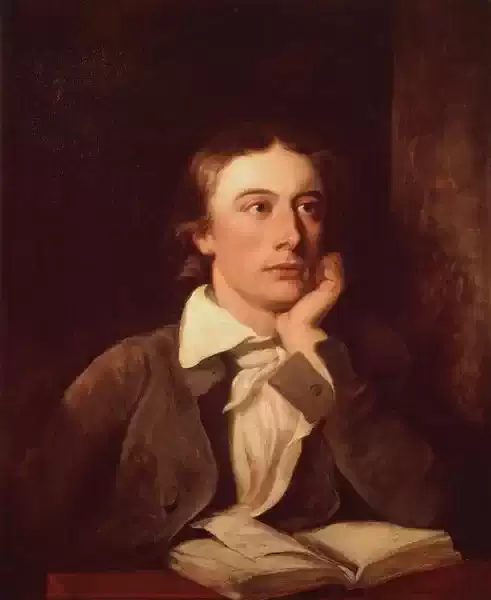
John Keats
Sonnet. Why Did I Laugh Tonight?
Sonnet. Why Did I Laugh Tonight?
Why did I laugh to-night? No voice will tell
No God, no Demon of severe response,
Deigns to reply from Heaven or from Hell
Then to my human heart I turn at once:
Heart! Thou and I are here sad and alone;
I say, why did I laugh? O mortal pain!
O Darkness! Darkness! ever must I moan,
To question Heaven and Hell and Heart in vain.
Why did I laugh? I know this Being's lease,
My fancy to its utmost blisses spreads;
Yet would I on this very midnight cease,
And all the world's gaudy ensigns see in shreds;
Verse, Fame, and Beauty are intense indeed,
But Death intenser -- Death is Life's high meed.
Why did I laugh to-night? No voice will tell
No God, no Demon of severe response,
Deigns to reply from Heaven or from Hell
Then to my human heart I turn at once:
Heart! Thou and I are here sad and alone;
I say, why did I laugh? O mortal pain!
O Darkness! Darkness! ever must I moan,
To question Heaven and Hell and Heart in vain.
Why did I laugh? I know this Being's lease,
My fancy to its utmost blisses spreads;
Yet would I on this very midnight cease,
And all the world's gaudy ensigns see in shreds;
Verse, Fame, and Beauty are intense indeed,
But Death intenser -- Death is Life's high meed.
449