

Poems in this theme
Friendship
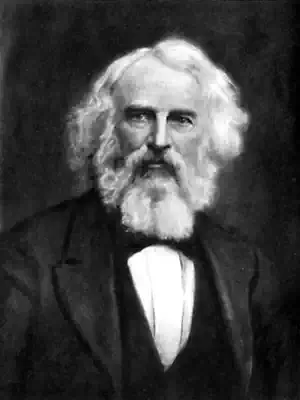
Henry Wadsworth Longfellow
The Four Princesses At Wilna. A Photograph
The Four Princesses At Wilna. A Photograph
Sweet faces, that from pictured casements lean
As from a castle window, looking down
On some gay pageant passing through a town,
Yourselves the fairest figures in the scene;
With what a gentle grace, with what serene
Unconsciousness ye wear the triple crown
Of youth and beauty and the fair renown
Of a great name, that ne'er hath tarnished been!
From your soft eyes, so innocent and sweet,
Four spirits, sweet and innocent as they,
Gaze on the world below, the sky above;
Hark! there is some one singing in the street;
'Faith, Hope, and Love! these three,' he seems to say;
'These three; and greatest of the three is Love.'
Sweet faces, that from pictured casements lean
As from a castle window, looking down
On some gay pageant passing through a town,
Yourselves the fairest figures in the scene;
With what a gentle grace, with what serene
Unconsciousness ye wear the triple crown
Of youth and beauty and the fair renown
Of a great name, that ne'er hath tarnished been!
From your soft eyes, so innocent and sweet,
Four spirits, sweet and innocent as they,
Gaze on the world below, the sky above;
Hark! there is some one singing in the street;
'Faith, Hope, and Love! these three,' he seems to say;
'These three; and greatest of the three is Love.'
342
Henry Wadsworth Longfellow
The Dwarves
The Dwarves
Loke sat and thought, till his dark eyes gleam
With joy at the deed he'd done;
When Sif looked into the crystal stream,
Her courage was wellnigh gone.
For never again her soft amber hair
Shall she braid with her hands of snow;
From the hateful image she turned in despair,
And hot tears began to flow.
In a cavern's mouth, like a crafty fox,
Loke sat 'neath the tall pine's shade,
When sudden a thundering was heard in the rocks,
And fearfully trembled the glade.
Then he knew that the noise good boded him naught,
He knew that 't was Thor who was coming;
He changed himself straight to a salmon trout,
And leaped in a fright in the Glommen.
But Thor changed too, to a huge seagull,
And the salmon trout seized in his beak;
He cried: Thou, traitor, I know thee well,
And dear shalt thou pay thy freak!
Thy caitiff's bones to a meal I'll pound,
As a millstone crusheth the grain.
When Loke that naught booted his magic found,
He took straight his own form again.
And what if thou scatter'st my limbs in air?
He spake, will it mend thy case?
Will it gain back for Sif a single hair?
Thou 'lt still a bald spouse embrace.
But if now thou 'lt pardon my heedless joke,--
For malice sure meant I none,--
I swear to thee here, by root, billow and rock,
By the moss on the Beata-stone,
By Mimer's well, and by Odin's eye,
And by Mjolmer, greatest of all,
That straight to the secret caves I'll hie,
To the dwarfs, my kinsmen small;
And thence for Sif new tresses I'll bring
Of gold ere the daylight's gone,
So that she will liken a field in spring,
With its yellow-flowered garment on.
* * * * * * * * * * *
Loke promised so well with his glozing tongue
That the Asas at length let him go,
And he sank in the earth, the dark rocks among,
Near the cold-fountain, far below.
He crept on his belly, as supple as eel,
The cracks in the hard granite through,
Till he came where the dwarfs stood hammering steel,
By the light of a furnace blue.
I trow 't was a goodly sight to see
The dwarfs, with their aprons on,
A-hammering and smelting so busily
Pure gold from the rough brown stone.
Rock crystals from sand and hard flint they made,
Which, tinged with the rosebud's dye,
They cast into rubies and carbuncles red,
And hid them in cracks hard by.
They took them fresh violets all dripping with dew,
Dwarf women had plucked them, the morn,--
And stained with their juice the clear sapphires blue,
King Dan in his crown since hath worn.
Then for emeralds they searched out the brightest green
Which the young spring meadow wears,
And dropped round pearls, without flaw or stain,
From widows' and maidens' tears.
* * * * * * * * * * *
When Loke to the dwarfs had his errand made known,
In a trice for the work they were ready;
Quoth Dvalin: O Lopter, it now shall be shown
That dwarfs in their friendship are steady.
We both trace our line from the selfsame stock;
What you ask shall be furnished with speed,
For it ne'er shall be said that the sons of the rock
Turned their backs on a kinsman in need.
They took them the skin of a large wild-boar,
The largest that they could find,
And the bellows they blew till the furnace 'gan roar,
And the fire flamed on high for the wind.
And they struck with their sledge-hammers stroke on stroke,
That the sparks from the skin flew on high,
But never a word good or bad spoke Loke,
Though foul malice lurked in his eye.
The thunderer far distant, with sorrow he thought
On all he'd engaged to obtain,
And, as summer-breeze fickle, now anxiously sought
To render the dwarf's labour vain.
Whilst the bellows plied Brok, and Sindre the hammer,
And Thor, that the sparks flew on high,
And the slides of the vaulted cave rang with the clamour,
Loke changed to a huge forest-fly.
And he sat him all swelling with venom and spite,
On Brok, the wrist just below;
But the dwarf's skin was thick, and he recked not the bite,
Nor once ceased the bellows to blow.
And now, strange to say, from the roaring fire
Came the golden-haired Gullinburste,
To serve as a charger the sun-god Frey,
Sure, of all wild-boars this the first.
They took them pure gold from their secret store.
The piece 't was but small in size,
But ere 't had been long n the furnace roar,
'T was a jewel beyond all prize.
A broad red ring all of wroughten gold,
As a snake with its tail in its head,
And a garland of gems did the rim enfold,
Together with rare art laid.
'T was solid and heavy, and wrought with care,
Thrice it passed through the white flames' glow;
A ring to produce, fit for Odin to wear,
No labour they spared, I trow.
They worked it and turned it with wondrous skill,
Till they gave it the virtue rare,
That each thrice third night from its rim there fell
Eight rings, as their parent fair.
* * * * * * * * * * *
Next they laid on the anvil a steel-bar cold,
They needed nor fire nor file;
But their sledge-hammers, following, like thunder rolled,
And Sindre sang runes the while.
When Loke now marked how the steel gat power,
And how warily out 't was beat
--'T was to make a new hammer for Ake-Thor,-He'd
recourse once more to deceit.
In a trice, of a hornet the semblance he took,
Whilst in cadence fell blow on blow,
In the leading dwarf's forehead his barbed sting he stuck,
That the blood in a stream down did flow.
Then the dwarf raised his hand to his brow for the smart,
Ere the iron well out was beat,
And they found that the haft by an inch was too short,
But to alter it then 't was too late.
* * * * * * * * * * *
His object attained, Loke no longer remained
'Neath the earth, but straight hied him to Thor,
Who owned than the hair ne'er, sure, aught more fair
His eyes had e'er looked on before.
The boar Frey bestrode, and away proudly rode,
And Thor took the ringlets and hammer;
To Valhal they hied, where the Asas reside,
'Mid of tilting and wassail the clamour.
At a full solemn ting, Thor gave Odin the ring,
And Loke his foul treachery pardoned;
But the pardon was vain, for his crimes soon again
Must do penance the arch-sinner hardened.
Loke sat and thought, till his dark eyes gleam
With joy at the deed he'd done;
When Sif looked into the crystal stream,
Her courage was wellnigh gone.
For never again her soft amber hair
Shall she braid with her hands of snow;
From the hateful image she turned in despair,
And hot tears began to flow.
In a cavern's mouth, like a crafty fox,
Loke sat 'neath the tall pine's shade,
When sudden a thundering was heard in the rocks,
And fearfully trembled the glade.
Then he knew that the noise good boded him naught,
He knew that 't was Thor who was coming;
He changed himself straight to a salmon trout,
And leaped in a fright in the Glommen.
But Thor changed too, to a huge seagull,
And the salmon trout seized in his beak;
He cried: Thou, traitor, I know thee well,
And dear shalt thou pay thy freak!
Thy caitiff's bones to a meal I'll pound,
As a millstone crusheth the grain.
When Loke that naught booted his magic found,
He took straight his own form again.
And what if thou scatter'st my limbs in air?
He spake, will it mend thy case?
Will it gain back for Sif a single hair?
Thou 'lt still a bald spouse embrace.
But if now thou 'lt pardon my heedless joke,--
For malice sure meant I none,--
I swear to thee here, by root, billow and rock,
By the moss on the Beata-stone,
By Mimer's well, and by Odin's eye,
And by Mjolmer, greatest of all,
That straight to the secret caves I'll hie,
To the dwarfs, my kinsmen small;
And thence for Sif new tresses I'll bring
Of gold ere the daylight's gone,
So that she will liken a field in spring,
With its yellow-flowered garment on.
* * * * * * * * * * *
Loke promised so well with his glozing tongue
That the Asas at length let him go,
And he sank in the earth, the dark rocks among,
Near the cold-fountain, far below.
He crept on his belly, as supple as eel,
The cracks in the hard granite through,
Till he came where the dwarfs stood hammering steel,
By the light of a furnace blue.
I trow 't was a goodly sight to see
The dwarfs, with their aprons on,
A-hammering and smelting so busily
Pure gold from the rough brown stone.
Rock crystals from sand and hard flint they made,
Which, tinged with the rosebud's dye,
They cast into rubies and carbuncles red,
And hid them in cracks hard by.
They took them fresh violets all dripping with dew,
Dwarf women had plucked them, the morn,--
And stained with their juice the clear sapphires blue,
King Dan in his crown since hath worn.
Then for emeralds they searched out the brightest green
Which the young spring meadow wears,
And dropped round pearls, without flaw or stain,
From widows' and maidens' tears.
* * * * * * * * * * *
When Loke to the dwarfs had his errand made known,
In a trice for the work they were ready;
Quoth Dvalin: O Lopter, it now shall be shown
That dwarfs in their friendship are steady.
We both trace our line from the selfsame stock;
What you ask shall be furnished with speed,
For it ne'er shall be said that the sons of the rock
Turned their backs on a kinsman in need.
They took them the skin of a large wild-boar,
The largest that they could find,
And the bellows they blew till the furnace 'gan roar,
And the fire flamed on high for the wind.
And they struck with their sledge-hammers stroke on stroke,
That the sparks from the skin flew on high,
But never a word good or bad spoke Loke,
Though foul malice lurked in his eye.
The thunderer far distant, with sorrow he thought
On all he'd engaged to obtain,
And, as summer-breeze fickle, now anxiously sought
To render the dwarf's labour vain.
Whilst the bellows plied Brok, and Sindre the hammer,
And Thor, that the sparks flew on high,
And the slides of the vaulted cave rang with the clamour,
Loke changed to a huge forest-fly.
And he sat him all swelling with venom and spite,
On Brok, the wrist just below;
But the dwarf's skin was thick, and he recked not the bite,
Nor once ceased the bellows to blow.
And now, strange to say, from the roaring fire
Came the golden-haired Gullinburste,
To serve as a charger the sun-god Frey,
Sure, of all wild-boars this the first.
They took them pure gold from their secret store.
The piece 't was but small in size,
But ere 't had been long n the furnace roar,
'T was a jewel beyond all prize.
A broad red ring all of wroughten gold,
As a snake with its tail in its head,
And a garland of gems did the rim enfold,
Together with rare art laid.
'T was solid and heavy, and wrought with care,
Thrice it passed through the white flames' glow;
A ring to produce, fit for Odin to wear,
No labour they spared, I trow.
They worked it and turned it with wondrous skill,
Till they gave it the virtue rare,
That each thrice third night from its rim there fell
Eight rings, as their parent fair.
* * * * * * * * * * *
Next they laid on the anvil a steel-bar cold,
They needed nor fire nor file;
But their sledge-hammers, following, like thunder rolled,
And Sindre sang runes the while.
When Loke now marked how the steel gat power,
And how warily out 't was beat
--'T was to make a new hammer for Ake-Thor,-He'd
recourse once more to deceit.
In a trice, of a hornet the semblance he took,
Whilst in cadence fell blow on blow,
In the leading dwarf's forehead his barbed sting he stuck,
That the blood in a stream down did flow.
Then the dwarf raised his hand to his brow for the smart,
Ere the iron well out was beat,
And they found that the haft by an inch was too short,
But to alter it then 't was too late.
* * * * * * * * * * *
His object attained, Loke no longer remained
'Neath the earth, but straight hied him to Thor,
Who owned than the hair ne'er, sure, aught more fair
His eyes had e'er looked on before.
The boar Frey bestrode, and away proudly rode,
And Thor took the ringlets and hammer;
To Valhal they hied, where the Asas reside,
'Mid of tilting and wassail the clamour.
At a full solemn ting, Thor gave Odin the ring,
And Loke his foul treachery pardoned;
But the pardon was vain, for his crimes soon again
Must do penance the arch-sinner hardened.
345
Henry Wadsworth Longfellow
The Courtship of Miles Standish
The Courtship of Miles Standish
I
MILES STANDISH
In the Old Colony days, in Plymouth the land of the Pilgrims
To and fro in a room of his simple and primitive dwelling,
Clad in doublet and hose, and boots of Cordovan leather,
Strode, with a martial air, Miles Standish the Puritan Captain.
Buried in thought he seemed, with his hands behind him, and pausing
Ever and anon to behold his glittering weapons of warfare,
Hanging in shining array along the walls of the chamber, --
Cutlass and corselet of steel, and his trusty sword of Damascus,
Curved at the point and inscribed with its mystical Arabic sentence,
While underneath, in a corner, were fowling-piece, musket, and matchlock.
Short of stature he was, but strongly built and athletic,
Broad in the shoulders, deep-chested, with muscles and sinews of iron;
Brown as a nut was his face, but his russet beard was already
Flaked with patches of snow, as hedges sometimes in November.
Near him was seated John Alden, his friend and household companion,
Writing with diligent speed at a table of pine by the window:
Fair-haired, azure-eyed, with delicate Saxon complexion,
Having the dew of his youth, and the beauty thereof, as the captives
Whom Saint Gregory saw, and exclaimed, "Not Angles, but Angels."
Youngest of all was he of the men who came in the Mayflower.
Suddenly breaking the silence, the diligent scribe interrupting,
Spake, in the pride of his heart, Miles Standish the Captain of Plymouth.
"Look at these arms," he said, "the war-like weapons that hang here
Burnished and bright and clean, as if for parade or inspection!
This is the sword of Damascus I fought with in Flanders; this breastplate,
Well I remember the day! once save my life in a skirmish;
Here in front you can see the very dint of the bullet
Fired point-blank at my heart by a Spanish arcabucero.
Had it not been of sheer steel, the forgotten bones of Miles Standish
Would at this moment be mould, in their grave in the Flemish morasses."
Thereupon answered John Alden, but looked not up from his writing:
"Truly the breath of the Lord hath slackened the speed of the bullet;
He in his mercy preserved you, to be our shield and our weapon!"
Still the Captain continued, unheeding the words of the stripling:
"See, how bright they are burnished, as if in an arsenal hanging;
That is because I have done it myself, and not left it to others.
Serve yourself, would you be well served, is an excellent adage;
So I take care of my arms, as you of your pens and your inkhorn.
Then, too, there are my soldiers, my great, invincible army,
Twelve men, all equipped, having each his rest and his matchlock,
Eighteen shillings a month, together with diet and pillage,
And, like Caesar, I know the name of each of my soldiers!"
This he said with a smile, that danced in his eyes, as the sunbeams
Dance on the waves of the sea, and vanish again in a moment.
Alden laughed as he wrote, and still the Captain continued:
"Look! you can see from this window my brazen howitzer planted
High on the roof of the church, a preacher who speaks to the purpose,
Steady, straightforward, and strong, with irresistible logic,
Orthodox, flashing conviction right into the hearts of the heathen.
Now we are ready, I think, for any assault of the Indians;
Let them come, if they like, and the sooner they try it the better, --
Let them come, if they like, be it sagamore, sachem, or pow-wow,
Aspinet, Samoset, Corbitant, Squanto, or Tokamahamon!"
Long at the window he stood, and wistfully gazed on the landscape,
Washed with a cold gray mist, the vapory breath of the east-wind,
Forest and meadow and hill, and the steel-blue rim of the ocean,
Lying silent and sad, in the afternoon shadows and sunshine.
Over his countenance flitted a shadow like those on the landscape,
Gloom intermingled with light; and his voice was subdued with emotion,
Tenderness, pity, regret, as after a pause he proceeded:
"Yonder there, on the hill by the sea, lies buried Rose Standish;
Beautiful rose of love, that bloomed for me by the wayside!
She was the first to die of all who came in the Mayflower!
Green above her is growing the field of wheat we have sown there,
Better to hide from the Indian scouts the graves of our people,
Lest they should count them and see how many already have perished!"
Sadly his face he averted, and strode up and down, and was thoughtful.
Fixed to the opposite wall was a shelf of books, and among
them Prominent three, distinguished alike for bulk and for binding:
Bariffe's Artillery Guide, and the Commentaries of Caesar
Out of the Latin translated by Arthur Goldinge of London,
And, as if guarded by these, between them was standing the Bible.
Musing a moment before them, Miles Standish paused, as if doubtful
Which of the three he should choose for his consolation and comfort,
Whether the wars of the Hebrews, the famous campaigns of the Romans,
Or the Artillery practice, designed for belligerent Christians.
Finally down from its shelf he dragged the ponderous Roman,
Seated himself at the window, and opened the book and in silence
Turned o'er the well-worn leaves, where thumb-marks thick on the margin,
Like the trample of feet, proclaimed the battle was hottest.
Nothing was heard in the room but the hurrying pen of the stripling,
Busily writing epistles important, to go by the Mayflower,
Ready to sail on the morrow, or next day at latest, God willing!
Homeward bound with the tidings of all that terrible winter,
Letters written by Alden and full of the name of Priscilla!
Full of the name and the fame of the Puritan maiden Priscilla!
II
LOVE AND FRIENDSHIP
Nothing was heard in the room but the hurrying pen of the
stripling, Or an occasional sign from the laboring heart of the Captain,
Reading the marvellous words and achievements of Julius Caesar.
After a while he exclaimed, as he smote with his hand, palm downwards,
Heavily on the page: "A wonderful man was this Caesar!
You are a writer, and I am a fighter, but here is a fellow
Who could both write and fight, and in both was equally skillful!"
Straightway answered and spake John Alden, the comely, the youthful:
"Yes, he was equally skilled, as you say, with his pen and his weapons.
Somewhere have I read, but where I forget, he could dictate
Seven letters at once, at the same time writing his memoirs."
"Truly," continued the Captain, not heeding or hearing the other,
"Truly a wonderful man was Caius Julius Caesar!
Better be first, he said, in a little Iberian village,
Than be second in Rome, and I think he was right when he said it.
Twice was he married before he was twenty, and many times after;
Battles five hundred he fought, and a thousand cities he conquered;
He, too, fought in Flanders, as he himself has recorded;
Finally he was stabbed by his friend, the orator Brutus!
Now, do you know what he did on a certain occasion in Flanders,
When the rear-guard of his army retreated, the front giving way too,
And the immortal Twelfth Legion was crowded so closely together
There was no room for their swords? Why, he seized a shield from a soldier,
Put himself straight at the head of his troops, and commanded the captains,
Calling on each by his name, to order forward the ensigns;
Then to widen the ranks, and give more room for their weapons;
So he won the day, the battle of something-or-other.
That's what I always say; if you wish a thing to be well done,
You must do it yourself, you must not leave it to others!"
All was silent again; the Captain continued his reading.
Nothing was heard in the room but the hurrying pen of the stripling
Writing epistles important to go next day by the Mayflower,
Filled with the name and the fame of the Puritan maiden Priscilla;
Every sentence began or closed with the name of Priscilla,
Till the treacherous pen, to which he confided the secret,
Strove to betray it by singing and shouting the name of Priscilla!
Finally closing his book, with a bang of the ponderous cover,
Sudden and loud as the sound of a soldier grounding his musket,
Thus to the young man spake Miles Standish the Captain of Plymouth:
"When you have finished your work, I have something important to tell you.
Be not however in haste; I can wait; I shall not be impatient!"
Straightway Alden replied, as he folded the last of his letters,
Pushing his papers aside, and giving respectful attention:
"Speak; for whenever you speak, I am always ready to listen,
Always ready to hear whatever pertains to Miles Standish."
Thereupon answered the Captain, embarrassed, and culling his phrases:
" 'T is not good for a man to be alone, say the Scriptures.
This I have said before, and again and again I repeat it;
Every hour in the day, I think it, and feel it, and say it.
Since Rose Standish died, my life has been weary and dreary;
Sick at heart have I been, beyond the healing of friendship;
Oft in my lonely hours have I thought of the maiden Priscilla.
She is alone in the world; her father and mother and brother
Died in the winter together; I saw her going and coming,
Now to the grave of the dead, and now to the bed of the dying,
Patient, courageous, and strong, and said to myself, that if ever
There were angels on earth, as there are angels in heaven,
Two have I seen and known; and the angel whose name is Priscilla
Holds in my desolate life the place which the other abandoned.
Long have I cherished the thought, but never have dared to reveal it,
Being a coward in this though valiant enough for the most part.
Go to the damsel Priscilla, the loveliest maiden of Plymouth,
Say that a blunt old Captain, a man not of words but of actions,
Offers his hand and his heart, the hand and heart of a soldier.
Not in these words, you know, but this in short is my meaning;
I am a maker of war, and not a maker of phrases.
You, who are bred as a scholar, can say it in elegant language,
Such as you read in your books of the pleadings and wooings of lovers,
Such as you think best adapted to win the heart of a maiden."
When he had spoken, John Alden, the fair-haired, taciturn stripling,
All aghast at his words, surprised, embarrassed, bewildered,
Trying to mask his dismay by treating the subject with lightness,
Trying to smile, and yet feeling his heart stand still in his bosom,
Just as a timepiece stops in a house that is stricken by lightning,
Thus made answer and spake, or rather stammered than answered:
"Such a message as that, I am sure I should mangle and mar it;
If you would have it well done, -- I am only repeating your maxim, --
You must do it yourself, you must not leave it to others!"
But with the air of a man whom nothing can turn from his purpose,
Gravely shaking his head, made answer the Captain of Plymouth:
"Truly the maxim is good, and I do not mean to gainsay it;
But we must use it discreetly, and not waste powder for nothing.
Now, as I said before, I was never a maker of phrases.
I can march up to a fortress and summon the place to surrender,
But march up to a woman with such a proposal, I dare not.
I'm not afraid of bullets, nor shot from the mouth of a cannon,
But of a thundering 'No!' point-blank from the mouth of a woman,
That I confess I'm afraid of, nor am I ashamed to confess it!
So you must grant my request, for you are an elegant scholar,
Having the graces of speech, and skill in the turning of phrases."
Taking the hand of his friend, who still was reluctant and doubtful,
Holding it long in his own, and pressing kindly, he added:
"Though I have spoken thus lightly, yet deep is the feeling that prompts me;
Surely you cannot refuse what I ask in the name of our friendship!"
Then made answer John Alden: "The name of friendship is sacred;
What you demand in that name, I have not the power to deny you!"
So the strong will prevailed, subduing and moulding the gentler,
Friendship prevailed over love, and Alden went on his errand.
III
THE LOVER'S ERRAND
So the strong will prevailed, and Alden went on his
errand, Out of the street of the village, and into the paths of the
forest, Into the tranquil woods, where bluebirds and robins were building
Towns in the populous trees, with hanging gardens of verdure,
Peaceful, aerial cities of joy and affection and freedom.
All around him was calm, but within him commotion and conflict,
Love contending with friendship, and self with each generous impulse.
To and fro in his breast his thoughts were heaving and dashing,
As in a foundering ship, with every roll of the vessel,
Washes the bitter sea, the merciless surge of the ocean!
"Must I relinquish it all," he cried with a wild lamentation, -"
Must I relinquish it all, the joy, the hope, the illusion?
Was it for this I have loved, and waited, and worshipped in silence?
Was it for this I have followed the flying feet and the shadow
Over the wintry sea, to the desolate shores of New England?
Truly the heart is deceitful, and out of its depths of corruption
Rise, like an exhalation, the misty phantoms of passion;
Angels of light they seem, but are only delusions of Satan.
All is clear to me now; I feel it, I see it distinctly!
This is the hand of the Lord; it is laid upon me in anger,
For I have followed too much the heart's desires and devices,
Worshipping Astaroth blindly, and impious idols of Baal.
This is the cross I must bear; the sin and the swift retribution."
So through the Plymouth woods John Alden went on his errand;
Crossing the brook at the ford, where it brawled over pebble and shallow,
Gathering still, as he went, the May-flowers blooming around him,
Fragrant, filling the air with a strange and wonderful sweetness,
Children lost in the woods, and covered with leaves in their slumber.
"Puritan flowers," he said, "and the type of Puritan maidens,
Modest and simple and sweet, the very type of Priscilla!
So I will take them to her; to Priscilla the Mayflower of Plymouth,
Modest and simple and sweet, as a parting gift will I take them;
Breathing their silent farewells, as they fade and wither and perish,
Soon to be thrown away as is the heart of the giver,"
So through the Plymouth woods John Alden went on his errand;
Came to an open space, and saw the disk of the ocean,
Sailless, sombre and cold with the comfortless breath of the east-wind;
Saw the new-built house, and people at work in a meadow;
Heard, as he drew near the door, the musical voice of Priscilla
Singing the hundredth Psalm, the grand old Puritan anthem,
Music that Luther sang to the sacred words of the Psalmist,
Full of the breath of the Lord, consoling and comforting many.
Then, as he opened the door, he beheld the form of the maiden
Seated beside her wheel, and the carded wool like a snow-drift
Piled at her knee, white hands feeding the ravenous spindle,
While with her foot on the treadle she guided the wheel in its motion.
Open wide on her lap lay the well-worn psalm-book of Ainsworth,
Printed in Amsterdam, the words and the music together,
Rough-hewn, angular notes, like stones in the wall of a churchyard,
Darkened and overhung by the running vine of the verses.
Such was the book from whose pages she sang the old Puritan anthem,
She, the Puritan girl, in the solitude of the forest,
Making the humble house and the modest apparel of homespun
Beautiful with her beauty, and rich with the wealth of her being!
Over him rushed, like a wind that is keen and cold and relentless,
Thoughts of what might have been, and the weight and woe of his errand:
All the dreams that had faded, and all the hopes that had vanished,
All his life henceforth a dreary and tenant-less mansion,
Haunted by vain regrets, and pallid, sorrowful faces.
Still he said to himself, and almost fiercely he said it,
"Let not him that putteth his hand to the plough look backwards;
Though the ploughshare cut through the flowers of life to its fountains,
Though it pass o'er the graves of the dead and the hearths of the living,
It is the will of the Lord; and his mercy endureth forever!"
So he entered the house: and the hum of the wheel and the singing
Suddenly ceased; for Priscilla, aroused by his step on the threshold,
Rose as he entered, and gave him her hand in signal of welcome,
Saying, "I knew it was you, when I heard your step in the passage;
For I was thinking of you, as I sat there singing and spinning."
Awkward and dumb with delight, that a thought of him had been mingled
Thus in the sacred psalm, that came from the heart of the maiden,
Silent before her he stood, and gave her the flowers for an answer,
Finding no words for his thought. He remembered that day in the winter,
After the first great snow, when he broke a path from the village,
Reeling and plunging along through the drifts that encumbered the doorway,
Stamping the snow from his feet as he entered the house, and Priscilla
Laughed at his snowy locks, and gave him a seat by the fireside,
Grateful and pleased to know he had thought of her in the snow-storm.
Had he but spoken then! perhaps not in vain had he spoken;
Now it was all too late; the golden moment had vanished!
So he stood there abashed, and gave her the flowers for an answer.
Then they sat down and talked of the birds and the beautiful Spring-time,
Talked of their friends at home, and the Mayflower that sailed on the morrow.
"I have been thinking all day," said gently the Puritan maiden,
"Dreaming all night, and thinking all day, of the hedge-rows of England, --
They are in blossom now, and the country is all like a garden:
Thinking of lanes and fields, and the song of the lark and the linnet,
Seeing the village street, and familiar faces of neighbors
Going about as of old, and stopping to gossip together,
And, at the end of the street, the village church, with the ivy
Climbing the old gray tower, and the quiet graves in the churchyard.
Kind are the people I live with, and dear to me my religion;
Still my heart is so sad, that I wish myself back in Old England.
You will say it is wrong, but I cannot help it: I almost
Wish myself back in Old England, I feel so lonely and wretched."
Thereupon answered the youth: "Indeed I do not condemn you;
Stouter hearts that a woman's have quailed in this terrible winter.
Yours is tender and trusting, and needs a stronger to lean on;
So I have come to you now, with an offer and proffer of marriage
Made by a good man and true, Miles Standish the Captain of Plymouth!"
Thus he delivered his message, the dexterous writer of letters, --
Did not embellish the theme, nor array it in beautiful phrases,
But came straight to the point, and blurted it out like a school-boy;
Even the Captain himself could hardly have said it more bluntly.
Mute with amazement and sorrow, Priscilla the Puritan maiden
Looked into Alden's face, her eyes dilated with wonder,
Feeling his words like a blow, that stunned her and rendered her speechless;
Till at length she exclaimed, interrupting the ominous silence:
"If the great Captain of Plymouth is so very eager to wed me,
Why does he not come himself, and take the trouble to woo me"
If I am not worth the wooing, I surely am not worth the winning!"
Then John Alden began explaining and smoothing the matter,
Making it worse as he went, by saying the Captain was busy, --
Had no time for such things -- such things! the words grating harshly
Fell on the ear of Priscilla; and swift as a flash she made answer:
"Has he not time for such things, as you call it, before he is married,
Would he be likely to find it, or make it, after the wedding?
That is the way with you men; you don't understand us, you cannot.
When you have made up your minds, after thinking of this one and that one,
Choosing, selecting, rejecting, comparing one with another,
Then you make known your desire, with abrupt and sudden avowal,
And are offended and hurt, and indignant perhaps, that a woman
Does not respond at once to a love that she never suspected,
Does not attain at a bound the height to which you have been climbing.
This is not right nor just: for surely a woman's affection
Is not a thing to be asked for, and had for only the asking.
When one is truly in love, one not only says it, but shows it.
Had he but waited awhile, had he only showed that he loved me,
Even this Captain of yours -- who knows? -- at last might have won me,
Old and rough as he is; but now it never can happen."
Still John Alden went on, unheeding the words of Priscilla,
Urging the suit of his friend, explaining, persuading, expanding;
Spoke of his courage and skill, and of all his battles in Flanders,
How with the people of God he had chosen to suffer affliction;
How, in return for his zeal, they had made him Captain of Plymouth;
He was a gentleman born, could trace his pedigree plainly
Back to Hugh Standish of Duxbury Hall, in Lancashire, England,
Who was the son of Ralph, and the grandson of Thurston de Standish;
Heir unto vast estates of which he was basely defrauded,
Still bore the family arms, and had for his crest a cock argent,
Combed and wattled gules, and all the rest of the blazon.
He was a man of honor, of noble and generous nature;
Thought he was rough, he was kindly; she knew how during the winter
He had attended the sick, with a hand as gentle as a woman's'
Somewhat hasty and hot, he could not deny it, and headstrong,
Stern as a soldier might be, but hearty, and placable always,
Not to be laughed at and scorned, because he was little of stature;
For he was great of heart, magnanimous, courtly, courageous;
Any woman in Plymouth, nay, any woman in England,
Might be happy and proud to be called the wife of Miles Standish!
But as he warmed and glowed, in his simple and eloquent language,
Quite forgetful of self, and full of the praise of his rival,
Archly the maiden smiled, and, with eyes overrunning with laughter,
Said, in a tremulous voice, "Why don't you speak for yourself, John?"
IV
JOHN ALDEN
Into the open air John Alden, perplexed and bewildered,
Rushed like a man insane, and wandered alone by the sea-side;
Paced up and down the sands, and bared his head to the east-wind,
Cooling his heated brow, and the fire and fever within him.
Slowly as out of the heavens, with apocalyptical splendors,
Sank the City of God, in the vision of John the Apostle,
So, with its cloudy walls of chrysolite, jasper, and sapphire,
Sank the broad red sun, and over its turrets uplifted
Glimmered the golden reed of the angel who measured the city.
"Welcome, O wind of the East!" he exclaimed in his wild exultation,
Welcome, O wind of the East, from the caves of the misty Atlantic!
Blowing o'er fields of dulse, and measureless meadows of sea-grass,
Blowing o'er rocky wastes, and the grottoes and gardens of ocean!
Lay thy cold, moist hand on my burning forehead, and wrap me
Close in thy garments of mist, to allay the fever within me!"
Like an awakened conscience, the sea was moaning and tossing,
Beating remorseful and loud the mutable sands of the sea-shore.
Fierce in his soul was the struggle and tumult of passions contending;
Love triumphant and crowned, and friendship wounded and bleeding,
Passionate cries of desire , and importunate pleadings of duty!
"Is it my fault," he said, "that the maiden has chosen between us?
Is it my fault that he failed, -- my fault that I am the victor?"
Then within him there thundered a voice, like the voice of the Prophet:
"It hath displeased the Lord!" -- and he thought of David's transgressions,
Bathsheba's beautiful face, and his friend in the front of the battle!
Shame and confusion of guilt, and abasement and self-condemnation,
Overwhelmed him at once; and he cried in the deepest contrition:
"It hath displeased the Lord! It is the temptation of Satan!"
Then, uplifting his head, he looked at the sea, and beheld there
Dimly the shadowy form of the Mayflower riding at anchor,
Rocked on the rising tide, and ready to sail on the morrow;
Heard the voices of men through the mist, the rattle of cordage
Thrown on the deck, the shouts of the mate, and the sailors' "Ay, ay, Sir!"
Clear and distinct, but not loud, in the dripping air of the twilight.
Still for a moment he stood and listened, and stared at the vessel,
Then went hurriedly on, as one who, seeing a phantom,
Stops, then quickens his pace, and follows the beckoning shadow.
"Yes, it is plain to me now," he murmured; "the hand of the Lord is
Leading me out of the land of darkness, the bondage of error,
Through the sea, that shall lift the walls of its waters around me,
Hiding me, cutting me off, from the cruel thoughts that pursue me.
Back will I go o'er the ocean, this dreary land will abandon,
Her whom I may not love, and him whom my heart has offended.
Better to be in my grave in the green old churchyard in England,
Close by my mother's side, and among the dust of my kindred;
Better be dead and forgotten, than living in shame and dishonor;
Sacred and safe and unseen, in the dark of the narrow chamber
With me my secret shall lie, like a buried jewel that glimmers
Bright on the hand that is dust, in the chambers of silence and darkness, --
Yes, as the marriage ring of the great espousal hereafter!"
Thus as he spake, he turned, in the strength of his strong resolution,
Leaving behind him the shore, and hurried along in the twilight,
Through the congenial gloom of the forest silent and sombre,
Till he beheld the lights in the seven houses of Plymouth,
Shining like seven stars in the dusk and mist of the evening.
Soon he entered his door, and found the redoubtable Captain
Sitting alone, and absorbed in the martial pages of Caesar,
Fighting some great campaign in Hainault of Brabant or Flanders.
"Long have you been on your errand," he said with a cheery demeanor,
Even as one who is waiting an answer, and fears not the issue.
"Not far off is the house, although the woods are between us;
But you have lingered so long, that while you were going and coming
I have fought ten battles and sacked and demolished a city.
Come, sit down, and in order relate to me all that has happened."
Then John Alden spake, and related the wondrous adventure,
From beginning to end, minutely, just as it happened;
How he had seen Priscilla, and how he had sped in his courtship,
Only smoothing a little, and softening down her refusal.
But when he came at length to the words Priscilla had spoken,
Words so tender and cruel: "Why don't you speak for yourself, John?"
Up leaped the Captain of Plymouth, and stamped on the floor, till his armor
Clanged on the wall, where it hung, with a sound of sinister omen.
All his pent-up wrath burst forth in a sudden explosion,
E'en as a hand-grenade, that scatters destruction around it.
Wildly he shouted, and loud: "John Alden! you have betrayed me!
Me, Miles Standish, your friend! have supplanted, defrauded, betrayed me!
One of my ancestors ran his sword through the heart of Wat Tyler;
Who shall prevent me from running my own through the heart of a traitor?
Yours is the greater treason, for yours is a treason to friendship!
You, who lived under my roof, whom I cherished and loved as a brother;
You, who have fed at my board, and drunk at my cup, to whose keeping
I have intrusted my honor, my thoughts the most sacred and secret, --
You too, Brutus! as woe to the name of friendship hereafter!
Brutus was Caesar's friend, and you were mine, but, henceforward
Let there be nothing between us save war, and implacable hatred!"
So spake the Captain of Plymouth, and strode about in the chamber,
Chafing and choking with rage; like cords were the veins on his temples.
But in the midst of his anger a man appeared at the doorway,
Bringing in uttermost haste a message of urgent importance,
Rumors of danger and war and hostile incursions of Indians!
Straightway the Captain paused, and, without further question or parley,
Took from the nail on the wall his sword with its scabbard of iron,
Buckled the belt round his waist, and, frowning fiercely, departed.
Alden was left alone. He heard the clank of the scabbard
Growing fainter and fainter, and dying away in the distance.
Then he arose from his seat, and looked forth into the darkness,
Felt the cool air blow on his cheek, that was hot with the insult,
Lifted his eyes to the heavens, and, folding his hands as in childhood,
Prayed in the silence of night to the Father who seeth in secret.
Meanwhile the choleric Captain strode wrathful away to the council,
Found it already assembled, impatiently waiting his coming;
Men in the middle of life, austere and grave in deportment,
Only one of them old, the hill that was nearest to heaven,
Covered with snow, but erect, the excellent Elder of Plymouth.
God had sifted three kingdoms to find the wheat for this planting,
Then had sifted the wheat, as the living seed of a nation;
So say the chronicles old, and such is the faith of the people!
Near them was standing an Indian, in attitude stern and defiant,
Naked down to the waist, and grim and ferocious in aspect;
While on the table before them was lying unopened a Bible,
Ponderous, bound in leather, brass-studded, printed in Holland,
And beside it outstretched the skin of a rattlesnake glittered,
Filled, like a quiver, with arrows; a signal and challenge of warfare,
Brought by the Indian, and speaking with arrowy tongues of defiance.
This Miles Standish beheld, as he entered, and heard them debating
What were an answer befitting the hostile message and menace,
Talking of this and of that, contriving, suggesting, objecting;
One voice only for peace, and that the voice of the Elder,
Judging it wise and well that some at least were converted,
Rather than any were slain, for this was but Christian behavior!
Then out spake Miles Standish, the stalwart Captain of Plymouth,
Muttering deep in his throat, for his voice was husky with anger,
"What! do you mean to make war with milk and the water of roses?
Is it to shoot red squirrels you have your howitzer planted
There on the roof of the church, or is it to shoot red devils?
Truly the only tongue that is understood by a savage
Must be the tongue of fire that speaks from the mouth of the cannon!"
Thereupon answered and said the excellent Elder of Plymouth,
Somewhat amazed and alarmed at this irreverent language;
"Not so thought St. Paul, nor yet the other Apostles;
Not from the cannon's mouth were the tongues of fire they spake with!"
But unheeded fell this mild rebuke on the Captain,
Who had advanced to the table, and thus continued discoursing:
"Leave this matter to me, for to me by right it pertaineth.
War is a terrible trade; but in the cause that is righteous,
Sweet is the smell of powder; and thus I answer the challenge!"
Then from the rattlesnake's skin, with a sudden, contemptuous gesture,
Jerking the Indian arrows, he filled it with powder and bullets
Full to the very jaws, and handed it back to the savage,
Saying, in thundering tones: "Here, take it! this is your answer!"
Silently out of the room then glided the glistening savage,
Bearing the serpent's skin, and seeming himself like a serpent,
Winding his sinuous way in the dark to the depths of the forest.
V
THE SAILING OF THE MAYFLOWER
Just in the gray of the dawn, as the mists uprose from the
meadows, There was a stir and a sound in the slumbering village of Plymouth;
Clanging and clicking of arms, and the order imperative, "Forward!"
Given in tone suppressed, a tramp of feet, and then silence.
Figures ten, in the mist, marched slowly out of the village.
Standish the stalwart it was, with eight of his valorous army,
Led by their Indian guide, by Hobomok, friend of the white men,
Northward marching to quell the sudden revolt of the savage.
Giants they seemed in the mist, or the mighty men of King David;
Giants in heart they were, who believed in God and the Bible, --
Ay, who believed in the smiting of Midianites and Philistines.
Over them gleamed far off the crimson banners of morning;
Under them loud on the sands, the serried billows, advancing,
Fired along the line, and in regular order retreated.
Many a mile had they marched, when at length the village of Plymouth
Woke from its sleep and arose, intent on its manifold labors.
Sweet was the air and soft; and slowly the smoke from the chimneys
Rose over roofs of thatch, and pointed steadily eastward;
Men came forth from the doors, and paused and talked of the weather,
Said that the wind had changed, and was blowing fair for the Mayflower;
Talked of their Captain's departure, and all the dangers that menaced,
He being gone, the town, and what should be done in his absence.
Merrily sang the birds, and the tender voices of women
Consecrated with hymns the common cares of the household.
Out of the sea rose the sun, and the billows rejoiced at his coming;
Beautiful were his feet on the purple tops of the mountains;
Beautiful on the sails of the Mayflower riding at anchor,
Battered and blackened and worn by all the storms of the winter.
Loosely against her masts was hanging and flapping her canvas,
Rent by so many gales, and patched by the hands of the sailors.
Suddenly from her side, as the sun rose over the ocean,
Darted a puff of smoke, and floated seaward; anon rang
Loud over field and forest the cannon's roar, and the echoes
Heard and repeated the sound, the signal-gun of departure!
Ah! but with louder echoes replied the hearts of the people!
Meekly, in voices subdued, the chapter was read from the Bible,
Meekly the prayer was begun, but ended in fervent entreaty!
Then from their houses in haste came forth the Pilgrims of Plymouth,
Men and women and children, all hurrying down to the sea-shore,
Eager, with tearful eyes, to say farewell to the Mayflower,
Homeward bound o'er the sea, and leaving them here in the desert.
Foremost among them was Alden. All night he had lain without slumber,
Turning and tossing about in the heat and unrest of his fever.
He had beheld Miles Standish, who came back late from the council,
Stalking into the room, and heard him mutter and murmur;
Sometimes it seemed a prayer, and sometimes it sounded like swearing.
Once he had come to the bed, and stood there a moment in silence;
Then he had turned away, and said: "I will not awake him;
Let him sleep on, it is best; for what is the use of more talking!"
Then he extinguished the light, and threw himself down on his pallet,
Dressed as he was, and ready to start at the break of the morning, --
Covered himself with the cloak he had worn in his campaigns in Flanders, --
Slept as a soldier sleeps in his bivouac, ready for action.
But with the dawn he arose; in the twilight Alden beheld him
Put on his corselet of steel, and all the rest of his armor,
Buckle about his waist his trusty blade of Damascus,
Take from the corner his musket, and so stride out of the chamber.
Often the heart of the youth had burned and yearned to embrace him,
Often his lips had essayed to speak, imploring for pardon;
All the old friendship came back, with its tender and grateful emotions;
But his pride overmastered the nobler nature within him, --
Pride, and the sense of his wrong, and the burning fire of the insult.
So he beheld his friend departing in anger, but spake not,
Saw him go forth to danger, perhaps to death, and he spake not!
Then he arose from his bed, and heard what the people were saying.
Joined in the talk at the door, with Stephen and Richard and Gilbert,
Joined in the morning prayer, and in the reading of Scripture,
And, with the others, in haste went hurrying down to the sea-shore,
Down to the Plymouth Rock, that had been to their feet as a doorstep
Into a world unknown, -- the corner-stone of a nation!
There with his boat was the Master, already a little impatient
Lest he should lose the tide, or the wind might shift to the eastward,
Square-built, hearty, and strong, with an odor of ocean about him,
Speaking with this one and that, and cramming letters and parcels
Into his pockets capacious, and messages mingled together
Into his narrow brain, till at last he was wholly bewildered.
Nearer the boat stood Alden, with one foot placed on the gunwale,
One still firm on the rock, and talking at times with the sailors,
Seated erect on the thwarts, all ready and eager for starting.
He too was eager to go, and thus put an end to his anguish,
Thinking to fly from despair, that swifter than keel is or canvas,
Thinking to drown in the sea the ghost that would rise and pursue him.
But as he gazed on the crowd, he beheld the form of Priscilla
Standing dejected among them, unconscious of all that was passing.
Fixed were her eyes upon his, as if she divined his intention,
Fixed with a look so sad, so reproachful, imploring, and patient,
That with a sudden revulsion his heart recoiled from its purpose,
As from the verge of a crag, where one step more is destruction.
Strange is the heart of man, with its quick, mysterious instincts!
Strange is the life of man, and fatal or fated are moments,
Whereupon turn, as on hinges, the gates of the wall adamantine!
"Here I remain!" he exclaimed, as he looked at the heavens above him,
Thanking the Lord whose breath had scattered the mist and the madness,
Wherein, blind and lost, to death he was staggering headlong.
"Yonder snow-white cloud, that floats in the ether above me,
Seems like a hand that is pointing and beckoning over the ocean.
There is another hand, that is not so spectral and ghost-like,
Holding me, drawing me back, and clasping mine for protection.
Float, O hand of cloud, and vanish away in the ether!
Roll thyself up like a fist, to threaten and daunt me; I heed not
Either your warning or menace, or any omen of evil!
There is no land so sacred, no air so pure and so wholesome
As is the air she breathes, and the soil that is pressed by her footsteps.
Here for her sake will I stay, and like an invisible presence
Hover around her forever, protecting, supporting her weakness;
Yes! as my foot was the first that stepped on this rock at the landing,
So, with the blessing of God, shall it be the last at the leaving!"
Meanwhile the Master alert, but with dignified air and important,
Scanning with watchful eye the tide and the wind and the weather,
Walked about on the sands, and the people crowded around him
Saying a few last words, and enforcing his careful remembrance.
Then, taking each by the hand, as if he were gripping a tiller,
Into the boat he sprang, and in haste shoved off to his vessel,
Glad in his heart to get rid of all this worry and flurry,
Glad to be gone from a land of sand and sickness and sorrow,
Short allowance of victual, and plenty of nothing but Gospel!
Lost in the sound of the oars was the last farewell of the Pilgrims.
O strong hearts and true! not one went back in the Mayflower!
No, not one looked back, who had set his hand to this ploughing!
Soon were heard on board the shouts and songs of the sailors
Heaving the windlass round, and hoisting the ponderous anchor.
Then the yards were braced, and all sails set to the west-wind,
Blowing steady and strong; and the Mayflower sailed from the harbor,
Rounded the point of the Gurnet, and leaving far to the southward
Island and cape of sand, and the Field of the First Encounter,
Took the wind on her quarter, and stood for the open Atlantic,
Borne on the send of the sea, and the swelling hearts of the Pilgrims.
Long in silence they watched the receding sail of the vessel,
Much endeared to them all, as something living and human;
Then, as if filled with the spirit, and wrapt in a vision prophetic,
Baring his hoary head, the excellent Elder of Plymouth
Said, "Let us pray!' and they prayed, and thanked the Lord and took courage.
Mournfully sobbed the waves at the base of the rock, and above them
Bowed and whispered the wheat on the hill of death, and their kindred
Seemed to awake in their graves, and to join in the prayer that they uttered.
Sun-illumined and white, on the eastern verge of the ocean
Gleamed the departing sail, like a marble slab in a graveyard;
Buried beneath it lay forever all hope of escaping.
Lo! as they turned to depart, they saw the form of an Indian,
Watching them from the hill; but while they spake with each other,
Pointing with outstretched hands, and saying, "Look!" he had vanished.
So they returned to their homes; but Alden lingered a little,
Musing alone on the shore, and watching the wash of the billows
Round the base of the rock, and the sparkle and flash of the sunshine,
Like the spirit of God, moving visibly over the waters.
VI
PRISCILLA
Thus for a while he stood, and mused by the shore of the
ocean, Thinking of many things, and most of all of Priscilla;
And as if thought had the power to draw to itself, like the loadstone,
Whatsoever it touches, by subtile laws of its nature,
Lo! as he turned to depart, Priscilla was standing beside him.
"Are you so much offended, you will not speak to me?" said she.
"Am I so much to blame, that yesterday, when you were pleading
Warmly the cause of another, my heart, impulsive and wayward,
Pleaded your own, and spake out, forgetful perhaps of decorum?
Certainly you can forgive me for speaking so frankly, for saying
What I ought not to have said, yet now I can never unsay it;
For there are moments in life, when the heart is so full of emotion,
That if by chance it be shaken, or into its depths like a pebble
Drops some careless word, it overflows, and its secret,
Spilt on the ground like water, can never be gathered together.
Yesterday I was shocked, when I heard you speak of Miles Standish,
Praising his virtues, transforming his very defects into virtues,
Praising his courage and strength, and even his fighting in Flanders,
As if by fighting alone you could win the heart of a woman,
Quite overlooking yourself and the rest, in exalting your hero.
Therefore I spake as I did, by an irresistible impulse.
You will forgive me, I hope, for the sake of the friendship between us,
Which is too true and too sacred to be so easily broken!"
Thereupon answered John Alden, the scholar, the friend of Miles Standish:
"I was not angry with you, with myself alone I was angry.
Seeing how badly I managed the matter I had in my keeping."
"No!" interrupted the maiden, with answer prompt and decisive;
"No; you were angry with me, for speaking so frankly and freely.
It was wrong, I acknowledge; for it is the fate of a woman
Long to be patient and silent, to wait like a ghost that is speechless,
Till some questioning voice dissolves the spell of its silence.
Hence is the inner life of so many suffering women
Sunless and silent and deep, like subterranean rivers
Running through caverns of darkness, unheard, unseen, and unfruitful,
Chafing their channels of stone, with endless and profitless murmurs."
Thereupon answered John Alden, the young man, the lover of women:
"Heaven forbid it, Priscilla: and truly they seem to me always
More like the beautiful rivers that watered the garden of Eden,
More like the river Euphrates, through deserts of Havilah flowing,
Filling the land with delight, and memories sweet of the garden!"
Ah, by these words, I can see," again interrupted the maiden,
"How very little you prize me, or care for what I am saying.
When from the depths of my heart, in pain and with secret misgiving,
Frankly I speak to you, asking for sympathy only and kindness,
Straightway you take up my words, that are plain and direct and in earnest,
Turn them away from their meaning, and answer with flattering phrases.
This is not right, is not just, is not true to the best that is in you;
For I know and esteem you, and feel that your nature is noble,
Lifting mine up to a higher, a more ethereal level.
Therefore I value your friendship, and feel it perhaps the more keenly
If you say aught that implies I am only as one among many,
If you make use of those common and complimentary phrases
Most men think so fine, in dealing and speaking with women,
But which women reject as insipid, if not as insulting."
Mute and amazed was Alden; and listened and looked at Priscilla,
Thinking he never had seen her more fair, more divine in her beauty.
He who but yesterday pleaded so glibly the cause of another,
Stood there embarrassed and silent, and seeking in vain for an answer.
So the maiden went on, and little divined or imagined
What was at work in his heart, that made him so awkward and speechless.
"Let us, then, be what we are, and speak what we think, and in all things
Keep ourselves loyal to truth, and the sacred professions of friendship.
It is no secret I tell you, nor am I ashamed to declare it:
I have liked to be with you, to see you, to speak with you always.
So I was hurt at your words, and a little affronted to hear you
Urge me to marry your friend, though he were the Captain Miles Standish.
For I must tell you the truth: much more to me is your friendship
Than all the love he could give, were he twice the hero you think him."
Then she extended her hand, and Alden, who eagerly grasped it,
Felt all the wounds in his heart, that were aching and bleeding so sorely,
Healed by the touch of that hand, and he said, with a voice full of feeling:
"Yes, we must ever be friends; and of all who offer you friendship
Let me be ever the first, the truest, the nearest and dearest!"
Casting a farewell look at the glimmering sail of the Mayflower,
Distant, but still in sight, and sinking below the horizon,
Homeward together they walked, with a strange, indefinite feeling,
That all the rest had departed and left them alone in the desert.
But, as they went through the fields in the blessing and smile of the sunshine,
Lighter grew their hearts, and Priscilla said very archly:
"Now that our terrible Captain has gone in pursuit of the Indians,
Where he is happier far than he would be commanding a household,
You may speak boldly, and tell me of all that happened between you,
When you returned last night, and said how ungrateful you found me."
Thereupon answered John Alden, and told her the whole of the story, --
Told her his own despair, and the direful wrath of Miles Standish.
Whereat the maiden smiled, and said between laughing and earnest,
"He is a little chimney, and heated hot in a moment!"
But as he gently rebuked her, and told her how he had suffered, --
How he had even determined to sail that day in the Mayflower,
And had remained for her sake, on hearing the dangers that threatened, --
All her manner was changed, and she said with a faltering accent,
"Truly I thank you for this: how good you have been to me always!"
Thus, as a pilgrim devout, who toward Jerusalem journeys,
Taking three steps in advance, and one reluctantly backward,
Urged by importunate zeal, and withheld by pangs of contrition;
Slowly but steadily onward, receding yet ever advancing,
Journeyed this Puritan youth to the Holy Land of his longings,
Urged by the fervor of love, and withheld by remorseful misgivings.
VII
THE MARCH OF MILES STANDISH
Meanwhile the stalwart Miles Standish was marching
steadily northward,
Winding through forest and swamp, and along the trend of the sea-shore,
All day long, with hardly a halt, the fire of his anger
Burning and crackling within, and the sulphurous odor of powder
Seeming more sweet to his nostrils than all the scents of the forest.
Silent and moody he went, and much he revolved his discomfort;
He who was used to success, and to easy victories always,
Thus to be flouted, rejected, and laughed to scorn by a maiden,
Thus to be mocked and betrayed by the friend whom most he had trusted!
Ah! 't was too much to be borne, and he fretted and chafed in his armor!
"I alone am to blame," he muttered, "for mine was the folly.
What has a rough old soldier, grown grim and gray in the harness,
Used to the camp and its ways, to do with the wooing of maidens?
'T was but a dream, -- let it pass, -- let it vanish like so many others!
What I thought was a flower, is only a weed, and is worthless;
Out of my heart will I pluck it, and throw it away, and henceforward
Be but a fighter of battles, a lover and wooer of dangers!"
Thus he revolved in his mind his sorry defeat and discomfort,
While he was marching by day or lying at night in the forest,
Looking up at the trees, and the constellations beyond them.
After a three days' march he came to an Indian encampment
Pitched on the edge of a meadow, between the sea and the forest;
Women at work by the tents, and warriors, horrid with war-paint,
Seated about a fire, and smoking and talking together;
Who, when they saw from afar the sudden approach of the white men,
Saw the flash of the sun on breastplate and sabre and musket,
Straightway leaped to their feet, and two, from among them advancing,
Came to parley with Standish, and offer him furs as a present;
Friendship was in their looks, but in their hearts there was hatred.
Braves of the tribe were these, and brothers, gigantic in stature,
Huge as Goliath of Gath, or the terrible Og, king of Bashan;
One was Pecksuot named, and the other was called Wattwamat.
Round their necks were suspended their knives in scabbards of wampum,
Two-edged, trenchant knives, with points as sharp as a needle.
Other arms had they none, for they were cunning and crafty.
"Welcome, English!" they said, -- these words they had learned from the traders
Touching at times on the coast, to barter and chaffer for peltries.
Then in their native tongue they began to parley with Standish,
Through his guide and interpreter, Hobomok, friend of the white man,
Begging for blankets and knives, but mostly for muskets and powder,
Kept by the white man, they said, concealed, with the plague, in his cellars,
Ready to be let loose, and destroy his brother the red man!
But when Standish refused, and said he would give them the Bible,
Suddenly changing their tone, they began to boast and to bluster.
Then Wattawamat advanced with a stride in front of the other,
And, with a lofty demeanor, thus vauntingly spake to the Captain:
"Now Wattawamat can see, by the fiery eyes of the Captain,
Angry is he in his heart; but the heart of the brave Wattawamat
Is not afraid at the sight. He was not born of a woman,
But on a mountain at night, from an oak-tree riven by lightning,
Forth he sprang at a bound, with all his weapons about him,
Shouting, 'Who is there here to fight with the brave Wattawamat?'"
Then he unsheathed his knife, and, whetting the blade on his left hand,
Held it aloft and displayed a woman's face on the handle;
Saying, with bitter expression and look of sinister meaning:
"I have another at home, with the face of a man on the handle;
By and by they shall marry; and there will be plenty of children!"
Then stood Pecksuot forth, self-vaunting, insulting Miles Standish:
While with his fingers he patted the knife that hung at his bosom,
Drawing it half from its sheath, and plunging it back, as he muttered,
"By and by it shall see; it shall eat; ah, ha! but shall speak not!
This is the mighty Captain the white men have sent to destroy us!
He is a little man; let him go and work with the women!"
Meanwhile Standish had noted the faces and figures of Indians
Peeping and creeping about from bush to tree in the forest,
Feigning to look for game, with arrows set on their bow-strings,
Drawing about him still closer and closer the net of their ambush.
But undaunted he stood, and dissembled and treated them smoothly;
So the old chronicles say, that were writ in the days of the fathers.
But when he heard their defiance, the boast, the taunt, and the insult,
All the hot blood of his race, of Sir Hugh and of Thurston de Standish,
Boiled and beat in his heart, and swelled in the veins of his temples.
Headlong he leaped on the boaster, and, snatching his knife from its scabbard,
Plunged it into his heart, and, reeling backward, the savage
Fell with his face to the sky and a fiend-like fierceness upon it.
Straight there arose from the forest the awful sound of the war-whoop.
And, like a flurry of snow on the whistling wind of December,
Swift and sudden and keen came a flight of feathery arrows.
Then came a cloud of smoke, and out of the cloud came the lightning,
Out of the lightning thunder; and death unseen ran before it.
Frightened the savages fled for shelter in swamp and in thicket,
Hotly pursued and beset; but their sachem, the brave Wattawamat,
Fled not; he was dead. Unswerving and swift had a bullet
Passed through his brain, and he fell with both hands clutching the greensward,
Seeming in death to hold back from his foe the land of his fathers.
There on the flowers of the meadow the warriors lay, and above them
Silent, with folded arms, stood Hobomok, friend of the white man.
Smiling at length he exclaimed to the stalwart Captain of Plymouth: -"
Pecksuot bragged very loud, of his courage, his strength, and his stature, --
Mocked the great Captain, and called him a little man; but I see now
Be enough have you been to lay him speechless before you!"
Thus the first battle was fought and won by the stalwart Miles Standish.
When the tidings thereof were brought to the village of Plymouth,
And as a trophy of war the head of the brave Wattawamat
Scowled from the roof of the fort, which at once was a church and a fortress,
All who beheld it rejoiced, and praised the Lord, and took courage.
Only Priscilla averted her face from this spectre of terror,
Thanking God in her heart that she had not married Miles Standish;
Shrinking, fearing almost, lest, coming home from his battles,
He should lay claim to her hand, as the prize and reward of his valor.
VIII
THE SPINNING-WHEEL
Month after month passed away, and in Autumn the ships
of the merchants
Came with kindred and friends, with cattle and corn for the Pilgrims.
All in the village was peace; the men were intent on their labors,
Busy with hewing and building, with garden-plot and with merestead,
Busy with breaking the glebe, and mowing the grass in the meadows,
Searching the sea for its fish, and hunting the deer in the forest.
All in the village was peace; but at times the rumor of warfare
Filled the air with alarm, and the apprehension of danger.
Bravely the stalwart Standish was scouring the land with his forces,
Waxing valiant in fight and defeating the alien armies,
Till his name had become a sound of fear to the nations.
Anger was still in his heart, but at times the remorse and contrition
Which in all noble natures succeed the passionate outbreak,
Came like a rising tide, that encounters the rush of a river,
Staying its current awhile, but making it bitter and brackish.
Meanwhile Alden at home had built him a new habitation,
Solid, substantial, of timber rough-hewn from the firs of the forest.
Wooden-barred was the door, and the roof was covered with rushes;
Latticed the windows were, and the window-panes were of paper,
Oiled to admit the light, while wind and rain were excluded.
There too he dug a well, and around it planted an orchard:
Still may be seen to this day some trace of the well and the orchard.
Close to the house was the stall, where, safe and secure from annoyance,
Raghorn, the snow-white bull, that had fallen to Alden's allotment
In the division of cattle, might ruminate in the night-time
Over the pastures he cropped, made fragrant by sweet pennyroyal.
Oft when his labor was finished, with eager feet would the dreamer
Follow the pathway that ran through the woods to the house of Priscilla,
Led by illusions romantic and subtile deceptions of fancy,
Pleasure disguised as duty, and love in the semblance of friendship.
Ever of her he thought, when he fashioned the walls of his dwelling;
Ever of her he thought, when he delved in the soil of his garden;
Ever of her he thought, when he read in his Bible on Sunday
Praise of the virtuous woman, as she is described in the Proverbs, --
How the heart of her husband doth safely trust in her always,
How all the days of her life she will do him good, and not evil,
How she seeketh the wool and the flax and worketh with gladness,
How she layeth her hand to the spindle and holdeth the distaff,
How she is not afraid of the snow for herself or her household,
Knowing her household are clothed with the scarlet cloth of her weaving!
So as she sat at her wheel one afternoon in the Autumn,
Alden, who opposite sat, and was watching her dexterous fingers,
As if the thread she was spinning were that of his life and his fortune,
After a pause in their talk, thus spake to the sound of the spindle.
"Truly, Priscilla," he said, "when I see you spinning and spinning,
Never idle a moment, but thrifty and thoughtful of others,
Suddenly you are transformed, are visibly changed in a moment;
You are no longer Priscilla, but Bertha the Beautiful Spinner."
Here the light foot on the treadle grew swifter and swifter; the spindle
Uttered an angry snarl, and the thread snapped short in her fingers;
While the impetuous speaker, not heeding the mischief, continued:
"You are the beautiful Bertha, the spinner, the queen of Helvetia;
She whose story I read at a stall in the streets of Southampton,
Who, as she rode on her palfrey, o'er valley and meadow and mountain,
Ever was spinning her thread from a distaff fixed to her saddle.
She was so thrifty and good, that her name passed into a proverb.
So shall it be with your own, when the spinning-wheel shall no longer
Hum in the house of the farmer, and fill its chambers with music.
Then shall the mothers, reproving, relate how it was in their childhood,
Praising the good old times, and the days of Priscilla the spinner!"
Straight uprose from her wheel the beautiful Puritan maiden,
Pleased with the praise of her thrift from him whose praise was the sweetest,
Drew from the reel on the table a snowy skein of her spinning,
Thus making answer, meanwhile, to the flattering phrases of Alden:
"Come, you must not be idle; if I am a pattern for housewives,
Show yourself equally worthy of being the model of husbands.
Hold this skein on your hands, while I wind it, ready for knitting;
Then who knows but hereafter, when fashions have changed and the manners,
Fathers may talk to their sons of the good old times of John Alden!"
Thus, with a jest and a laugh, the skein on his hands she adjusted,
He sitting awkwardly there, with his arms extended before him,
She standing graceful, erect, and winding the thread from his fingers,
Sometimes chiding a little his clumsy manner of holding,
Sometimes touching his hands, as she disentangled expertly
Twist or knot in the yarn, unawares -- for how could she help it? --
Sending electrical thrills through every nerve in his body.
Lo! in the midst of this scene, a breathless messenger entered,
Bringing in hurry and heat the terrible news from the village.
Yes; Miles Standish was dead! -- an Indian had brought them the tidings, --
Slain by a poisoned arrow, shot down in the front of the battle,
Into an ambush beguiled, cut off with the whole of his forces;
All the town would be burned, and all the people be murdered!
Such were the tidings of evil that burst on the hearts of the hearers.
Silent and statue-like stood Priscilla, her face looking backward
Still at the face of the speaker, her arms uplifted in horror;
But John Alden, upstarting, as if the barb of the arrow
Piercing the heart of his friend had struck his own, and had sundered
Once and forever the bonds that held him bound as a captive,
Wild with excess of sensation, the awful delight of his freedom,
Mingled with pain and regret, unconscious of what he was doing,
Clasped, almost with a groan, the motionless form of Priscilla,
Pressing her close to his heart, as forever his own, and exclaiming:
"Those whom the Lord hath united, let no man put them asunder!"
Even as rivulets twain, from distant and separate sources,
Seeing each other afar, as they leap from the rocks, and pursuing
Each one its devious path, but drawing nearer and nearer,
Rush together at last, at their trysting-place in the forest;
So these lives that had run thus far in separate channels,
Coming in sight of each other, then swerving and flowing asunder,
Parted by barriers strong, but drawing nearer and nearer,
Rushed together at last, and one was lost in the other.
IX
THE WEDDING-DAY
Forth from the curtain of clouds, from the tent of purple
and scarlet, Issued the sun, the great High-Priest, in his garments resplendent,
Holiness unto the Lord, in letters of light, on his forehead,
Round the hem of his robe the golden bells and pomegranates.
Blessing the world he came, and the bars of vapor beneath him
Gleamed like a grate of brass, and the sea at his feet was a laver!
This was the wedding morn of Priscilla the Puritan maiden.
Friends were assembled together; the Elder and Magistrate also
Graced the scene with their presence, and stood like the Law and the Gospel,
One with the sanction of earth and one with the blessing of heaven.
Simple and brief was the wedding, as that of Ruth and of Boaz.
Softly the youth and the maiden repeated the words of betrothal,
Taking each other for husband and wife in the Magistrate's presence,
After the Puritan way, and the laudable custom of Holland.
Fervently then, and devoutly, the excellent Elder of Plymouth
Prayed for the hearth and the home, that were founded that day in affection,
Speaking of life and of death, and imploring Divine benedictions.
Lo! when the service was ended, a form appeared on the threshold,
Clad in armor of steel, a sombre and sorrowful figure!
Why does the bridegroom start and stare at the strange apparition?
Why does the bride turn pale, and hide her face on his shoulder?
Is it a phantom of air, -- a bodiless, spectral illusion?
Is it a ghost from the grave, that has come to forbid the betrothal?
Long had it stood there unseen, a guest uninvited, unwelcomed;
Over its clouded eyes there had passed at times an expression
Softening the gloom and revealing the warm heart hidden beneath them,
As when across the sky the driving rack of the rain-cloud
Grows for a moment thin, and betrays the sun by its brightness.
Once it had lifted its hand, and moved its lips, but was silent,
As if an iron will had mastered the fleeting intention.
But when were ended the troth and the prayer and the last benediction,
Into the room it strode, and the people beheld with amazement
Bodily there in his armor Miles Standish, the Captain of Plymouth!
Grasping the bridegroom's hand, he said with emotion, "Forgive me!
I have been angry and hurt, -- too long have I cherished the feeling;
I have been cruel and hard, but now, thank God! it is ended.
Mine is the same hot blood that leaped in the veins of Hugh Standish,
Sensitive, swift to resent, but as swift in atoning for error.
Never so much as now was Miles Standish the friend of John Alden."
Thereupon answered the bridegroom: "Let all be forgotten between us, --
All save the dear old friendship, and that shall grow older and dearer!"
Then the Captain advanced, and bowing, saluted Priscilla,
Gravely, and after the manner of old-fashioned gentry in England,
Something of camp and of court, of town and of country, commingled,
Wishing her joy of her wedding, and loudly lauding her husband.
Then he said with a smile: "I should have remembered the adage, --
If you would be well served, you must serve yourself; and moreover,
No man can gather cherries in Kent at the season of Christmas!"
Great was the people's amazement, and greater yet their rejoicing,
Thus to behold once more the sunburnt face of their Captain,
Whom they had mourned as dead; and they gathered and crowded about him,
Eager to see him and hear him, forgetful of bride and of bridegroom,
Questioning, answering, laughing, and each interrupting the other,
Till the good Captain declared, being quite overpowered and bewildered,
He had rather by far break into an Indian encampment,
Than come again to a wedding to which he had not been invited.
Meanwhile the bridegroom went forth and stood with the bride at the doorway,
Breathing the perfumed air of that warm and beautiful morning.
Touched with autumnal tints, but lonely and sad in the sunshine.
Lay extended before them the land of toil and privation;
There were the graves of the dead, and the barren waste of the sea-shore,
There the familiar fields, the groves of pine, and the meadows;
But to their eyes transfigured, it seemed as the Garden of Eden,
Filled with the presence of God, whose voice was the sound of the ocean.
Soon was their vision disturbed by the noise and stir of departure,
Friends coming forth from the house, and impatient of longer delaying,
Each with his plan for the day, and the work that was left uncompleted.
Then from a stall near at hand, amid exclamations of wonder,
Alden the thoughtful, the careful, so happy, so proud of Priscilla,
Brought out his snow-white bull, obeying the hand of its master,
Led by a cord that was tied to an iron ring in its nostrils,
Covered with crimson cloth, and a cushion placed for a saddle.
She should not walk, he said, through the dust and heat of the noonday;
Nay, she should ride like a queen, not plod along like a peasant.
Somewhat alarmed at first, but reassured by the others,
Placing her hand on the cushion, her foot in the hand of her husband,
Gayly, with joyous laugh, Priscilla mounted her palfrey.
"Nothing is wanting now," he said with a smile, "but the distaff;
Then you would be in truth my queen, my beautiful Bertha!"
Onward the bridal procession now moved to their new habitation,
Happy husband and wife, and friends conversing together.
Pleasantly murmured the brook, as they crossed the ford in the forest,
Pleased with the image that passed, like a dream of love, through its bosom,
Tremulous, floating in air, o'er the depths of the azure abysses.
Down through the golden leaves the sun was pouring his splendors,
Gleaming on purple grapes, that, from branches above them suspended,
Mingled their odorous breath with the balm of the pine and the fir-tree,
Wild and sweet as the clusters that grew in the valley of Esheol.
Like a picture it seemed of the primitive, pastoral ages,
Fresh with the youth of the world, and recalling Rebecca and Isaac,
Old and yet ever new, and simple and beautiful always,
Love immortal and young in the endless succession of lovers.
So through the Plymouth woods passed onward the bridal procession.
I
MILES STANDISH
In the Old Colony days, in Plymouth the land of the Pilgrims
To and fro in a room of his simple and primitive dwelling,
Clad in doublet and hose, and boots of Cordovan leather,
Strode, with a martial air, Miles Standish the Puritan Captain.
Buried in thought he seemed, with his hands behind him, and pausing
Ever and anon to behold his glittering weapons of warfare,
Hanging in shining array along the walls of the chamber, --
Cutlass and corselet of steel, and his trusty sword of Damascus,
Curved at the point and inscribed with its mystical Arabic sentence,
While underneath, in a corner, were fowling-piece, musket, and matchlock.
Short of stature he was, but strongly built and athletic,
Broad in the shoulders, deep-chested, with muscles and sinews of iron;
Brown as a nut was his face, but his russet beard was already
Flaked with patches of snow, as hedges sometimes in November.
Near him was seated John Alden, his friend and household companion,
Writing with diligent speed at a table of pine by the window:
Fair-haired, azure-eyed, with delicate Saxon complexion,
Having the dew of his youth, and the beauty thereof, as the captives
Whom Saint Gregory saw, and exclaimed, "Not Angles, but Angels."
Youngest of all was he of the men who came in the Mayflower.
Suddenly breaking the silence, the diligent scribe interrupting,
Spake, in the pride of his heart, Miles Standish the Captain of Plymouth.
"Look at these arms," he said, "the war-like weapons that hang here
Burnished and bright and clean, as if for parade or inspection!
This is the sword of Damascus I fought with in Flanders; this breastplate,
Well I remember the day! once save my life in a skirmish;
Here in front you can see the very dint of the bullet
Fired point-blank at my heart by a Spanish arcabucero.
Had it not been of sheer steel, the forgotten bones of Miles Standish
Would at this moment be mould, in their grave in the Flemish morasses."
Thereupon answered John Alden, but looked not up from his writing:
"Truly the breath of the Lord hath slackened the speed of the bullet;
He in his mercy preserved you, to be our shield and our weapon!"
Still the Captain continued, unheeding the words of the stripling:
"See, how bright they are burnished, as if in an arsenal hanging;
That is because I have done it myself, and not left it to others.
Serve yourself, would you be well served, is an excellent adage;
So I take care of my arms, as you of your pens and your inkhorn.
Then, too, there are my soldiers, my great, invincible army,
Twelve men, all equipped, having each his rest and his matchlock,
Eighteen shillings a month, together with diet and pillage,
And, like Caesar, I know the name of each of my soldiers!"
This he said with a smile, that danced in his eyes, as the sunbeams
Dance on the waves of the sea, and vanish again in a moment.
Alden laughed as he wrote, and still the Captain continued:
"Look! you can see from this window my brazen howitzer planted
High on the roof of the church, a preacher who speaks to the purpose,
Steady, straightforward, and strong, with irresistible logic,
Orthodox, flashing conviction right into the hearts of the heathen.
Now we are ready, I think, for any assault of the Indians;
Let them come, if they like, and the sooner they try it the better, --
Let them come, if they like, be it sagamore, sachem, or pow-wow,
Aspinet, Samoset, Corbitant, Squanto, or Tokamahamon!"
Long at the window he stood, and wistfully gazed on the landscape,
Washed with a cold gray mist, the vapory breath of the east-wind,
Forest and meadow and hill, and the steel-blue rim of the ocean,
Lying silent and sad, in the afternoon shadows and sunshine.
Over his countenance flitted a shadow like those on the landscape,
Gloom intermingled with light; and his voice was subdued with emotion,
Tenderness, pity, regret, as after a pause he proceeded:
"Yonder there, on the hill by the sea, lies buried Rose Standish;
Beautiful rose of love, that bloomed for me by the wayside!
She was the first to die of all who came in the Mayflower!
Green above her is growing the field of wheat we have sown there,
Better to hide from the Indian scouts the graves of our people,
Lest they should count them and see how many already have perished!"
Sadly his face he averted, and strode up and down, and was thoughtful.
Fixed to the opposite wall was a shelf of books, and among
them Prominent three, distinguished alike for bulk and for binding:
Bariffe's Artillery Guide, and the Commentaries of Caesar
Out of the Latin translated by Arthur Goldinge of London,
And, as if guarded by these, between them was standing the Bible.
Musing a moment before them, Miles Standish paused, as if doubtful
Which of the three he should choose for his consolation and comfort,
Whether the wars of the Hebrews, the famous campaigns of the Romans,
Or the Artillery practice, designed for belligerent Christians.
Finally down from its shelf he dragged the ponderous Roman,
Seated himself at the window, and opened the book and in silence
Turned o'er the well-worn leaves, where thumb-marks thick on the margin,
Like the trample of feet, proclaimed the battle was hottest.
Nothing was heard in the room but the hurrying pen of the stripling,
Busily writing epistles important, to go by the Mayflower,
Ready to sail on the morrow, or next day at latest, God willing!
Homeward bound with the tidings of all that terrible winter,
Letters written by Alden and full of the name of Priscilla!
Full of the name and the fame of the Puritan maiden Priscilla!
II
LOVE AND FRIENDSHIP
Nothing was heard in the room but the hurrying pen of the
stripling, Or an occasional sign from the laboring heart of the Captain,
Reading the marvellous words and achievements of Julius Caesar.
After a while he exclaimed, as he smote with his hand, palm downwards,
Heavily on the page: "A wonderful man was this Caesar!
You are a writer, and I am a fighter, but here is a fellow
Who could both write and fight, and in both was equally skillful!"
Straightway answered and spake John Alden, the comely, the youthful:
"Yes, he was equally skilled, as you say, with his pen and his weapons.
Somewhere have I read, but where I forget, he could dictate
Seven letters at once, at the same time writing his memoirs."
"Truly," continued the Captain, not heeding or hearing the other,
"Truly a wonderful man was Caius Julius Caesar!
Better be first, he said, in a little Iberian village,
Than be second in Rome, and I think he was right when he said it.
Twice was he married before he was twenty, and many times after;
Battles five hundred he fought, and a thousand cities he conquered;
He, too, fought in Flanders, as he himself has recorded;
Finally he was stabbed by his friend, the orator Brutus!
Now, do you know what he did on a certain occasion in Flanders,
When the rear-guard of his army retreated, the front giving way too,
And the immortal Twelfth Legion was crowded so closely together
There was no room for their swords? Why, he seized a shield from a soldier,
Put himself straight at the head of his troops, and commanded the captains,
Calling on each by his name, to order forward the ensigns;
Then to widen the ranks, and give more room for their weapons;
So he won the day, the battle of something-or-other.
That's what I always say; if you wish a thing to be well done,
You must do it yourself, you must not leave it to others!"
All was silent again; the Captain continued his reading.
Nothing was heard in the room but the hurrying pen of the stripling
Writing epistles important to go next day by the Mayflower,
Filled with the name and the fame of the Puritan maiden Priscilla;
Every sentence began or closed with the name of Priscilla,
Till the treacherous pen, to which he confided the secret,
Strove to betray it by singing and shouting the name of Priscilla!
Finally closing his book, with a bang of the ponderous cover,
Sudden and loud as the sound of a soldier grounding his musket,
Thus to the young man spake Miles Standish the Captain of Plymouth:
"When you have finished your work, I have something important to tell you.
Be not however in haste; I can wait; I shall not be impatient!"
Straightway Alden replied, as he folded the last of his letters,
Pushing his papers aside, and giving respectful attention:
"Speak; for whenever you speak, I am always ready to listen,
Always ready to hear whatever pertains to Miles Standish."
Thereupon answered the Captain, embarrassed, and culling his phrases:
" 'T is not good for a man to be alone, say the Scriptures.
This I have said before, and again and again I repeat it;
Every hour in the day, I think it, and feel it, and say it.
Since Rose Standish died, my life has been weary and dreary;
Sick at heart have I been, beyond the healing of friendship;
Oft in my lonely hours have I thought of the maiden Priscilla.
She is alone in the world; her father and mother and brother
Died in the winter together; I saw her going and coming,
Now to the grave of the dead, and now to the bed of the dying,
Patient, courageous, and strong, and said to myself, that if ever
There were angels on earth, as there are angels in heaven,
Two have I seen and known; and the angel whose name is Priscilla
Holds in my desolate life the place which the other abandoned.
Long have I cherished the thought, but never have dared to reveal it,
Being a coward in this though valiant enough for the most part.
Go to the damsel Priscilla, the loveliest maiden of Plymouth,
Say that a blunt old Captain, a man not of words but of actions,
Offers his hand and his heart, the hand and heart of a soldier.
Not in these words, you know, but this in short is my meaning;
I am a maker of war, and not a maker of phrases.
You, who are bred as a scholar, can say it in elegant language,
Such as you read in your books of the pleadings and wooings of lovers,
Such as you think best adapted to win the heart of a maiden."
When he had spoken, John Alden, the fair-haired, taciturn stripling,
All aghast at his words, surprised, embarrassed, bewildered,
Trying to mask his dismay by treating the subject with lightness,
Trying to smile, and yet feeling his heart stand still in his bosom,
Just as a timepiece stops in a house that is stricken by lightning,
Thus made answer and spake, or rather stammered than answered:
"Such a message as that, I am sure I should mangle and mar it;
If you would have it well done, -- I am only repeating your maxim, --
You must do it yourself, you must not leave it to others!"
But with the air of a man whom nothing can turn from his purpose,
Gravely shaking his head, made answer the Captain of Plymouth:
"Truly the maxim is good, and I do not mean to gainsay it;
But we must use it discreetly, and not waste powder for nothing.
Now, as I said before, I was never a maker of phrases.
I can march up to a fortress and summon the place to surrender,
But march up to a woman with such a proposal, I dare not.
I'm not afraid of bullets, nor shot from the mouth of a cannon,
But of a thundering 'No!' point-blank from the mouth of a woman,
That I confess I'm afraid of, nor am I ashamed to confess it!
So you must grant my request, for you are an elegant scholar,
Having the graces of speech, and skill in the turning of phrases."
Taking the hand of his friend, who still was reluctant and doubtful,
Holding it long in his own, and pressing kindly, he added:
"Though I have spoken thus lightly, yet deep is the feeling that prompts me;
Surely you cannot refuse what I ask in the name of our friendship!"
Then made answer John Alden: "The name of friendship is sacred;
What you demand in that name, I have not the power to deny you!"
So the strong will prevailed, subduing and moulding the gentler,
Friendship prevailed over love, and Alden went on his errand.
III
THE LOVER'S ERRAND
So the strong will prevailed, and Alden went on his
errand, Out of the street of the village, and into the paths of the
forest, Into the tranquil woods, where bluebirds and robins were building
Towns in the populous trees, with hanging gardens of verdure,
Peaceful, aerial cities of joy and affection and freedom.
All around him was calm, but within him commotion and conflict,
Love contending with friendship, and self with each generous impulse.
To and fro in his breast his thoughts were heaving and dashing,
As in a foundering ship, with every roll of the vessel,
Washes the bitter sea, the merciless surge of the ocean!
"Must I relinquish it all," he cried with a wild lamentation, -"
Must I relinquish it all, the joy, the hope, the illusion?
Was it for this I have loved, and waited, and worshipped in silence?
Was it for this I have followed the flying feet and the shadow
Over the wintry sea, to the desolate shores of New England?
Truly the heart is deceitful, and out of its depths of corruption
Rise, like an exhalation, the misty phantoms of passion;
Angels of light they seem, but are only delusions of Satan.
All is clear to me now; I feel it, I see it distinctly!
This is the hand of the Lord; it is laid upon me in anger,
For I have followed too much the heart's desires and devices,
Worshipping Astaroth blindly, and impious idols of Baal.
This is the cross I must bear; the sin and the swift retribution."
So through the Plymouth woods John Alden went on his errand;
Crossing the brook at the ford, where it brawled over pebble and shallow,
Gathering still, as he went, the May-flowers blooming around him,
Fragrant, filling the air with a strange and wonderful sweetness,
Children lost in the woods, and covered with leaves in their slumber.
"Puritan flowers," he said, "and the type of Puritan maidens,
Modest and simple and sweet, the very type of Priscilla!
So I will take them to her; to Priscilla the Mayflower of Plymouth,
Modest and simple and sweet, as a parting gift will I take them;
Breathing their silent farewells, as they fade and wither and perish,
Soon to be thrown away as is the heart of the giver,"
So through the Plymouth woods John Alden went on his errand;
Came to an open space, and saw the disk of the ocean,
Sailless, sombre and cold with the comfortless breath of the east-wind;
Saw the new-built house, and people at work in a meadow;
Heard, as he drew near the door, the musical voice of Priscilla
Singing the hundredth Psalm, the grand old Puritan anthem,
Music that Luther sang to the sacred words of the Psalmist,
Full of the breath of the Lord, consoling and comforting many.
Then, as he opened the door, he beheld the form of the maiden
Seated beside her wheel, and the carded wool like a snow-drift
Piled at her knee, white hands feeding the ravenous spindle,
While with her foot on the treadle she guided the wheel in its motion.
Open wide on her lap lay the well-worn psalm-book of Ainsworth,
Printed in Amsterdam, the words and the music together,
Rough-hewn, angular notes, like stones in the wall of a churchyard,
Darkened and overhung by the running vine of the verses.
Such was the book from whose pages she sang the old Puritan anthem,
She, the Puritan girl, in the solitude of the forest,
Making the humble house and the modest apparel of homespun
Beautiful with her beauty, and rich with the wealth of her being!
Over him rushed, like a wind that is keen and cold and relentless,
Thoughts of what might have been, and the weight and woe of his errand:
All the dreams that had faded, and all the hopes that had vanished,
All his life henceforth a dreary and tenant-less mansion,
Haunted by vain regrets, and pallid, sorrowful faces.
Still he said to himself, and almost fiercely he said it,
"Let not him that putteth his hand to the plough look backwards;
Though the ploughshare cut through the flowers of life to its fountains,
Though it pass o'er the graves of the dead and the hearths of the living,
It is the will of the Lord; and his mercy endureth forever!"
So he entered the house: and the hum of the wheel and the singing
Suddenly ceased; for Priscilla, aroused by his step on the threshold,
Rose as he entered, and gave him her hand in signal of welcome,
Saying, "I knew it was you, when I heard your step in the passage;
For I was thinking of you, as I sat there singing and spinning."
Awkward and dumb with delight, that a thought of him had been mingled
Thus in the sacred psalm, that came from the heart of the maiden,
Silent before her he stood, and gave her the flowers for an answer,
Finding no words for his thought. He remembered that day in the winter,
After the first great snow, when he broke a path from the village,
Reeling and plunging along through the drifts that encumbered the doorway,
Stamping the snow from his feet as he entered the house, and Priscilla
Laughed at his snowy locks, and gave him a seat by the fireside,
Grateful and pleased to know he had thought of her in the snow-storm.
Had he but spoken then! perhaps not in vain had he spoken;
Now it was all too late; the golden moment had vanished!
So he stood there abashed, and gave her the flowers for an answer.
Then they sat down and talked of the birds and the beautiful Spring-time,
Talked of their friends at home, and the Mayflower that sailed on the morrow.
"I have been thinking all day," said gently the Puritan maiden,
"Dreaming all night, and thinking all day, of the hedge-rows of England, --
They are in blossom now, and the country is all like a garden:
Thinking of lanes and fields, and the song of the lark and the linnet,
Seeing the village street, and familiar faces of neighbors
Going about as of old, and stopping to gossip together,
And, at the end of the street, the village church, with the ivy
Climbing the old gray tower, and the quiet graves in the churchyard.
Kind are the people I live with, and dear to me my religion;
Still my heart is so sad, that I wish myself back in Old England.
You will say it is wrong, but I cannot help it: I almost
Wish myself back in Old England, I feel so lonely and wretched."
Thereupon answered the youth: "Indeed I do not condemn you;
Stouter hearts that a woman's have quailed in this terrible winter.
Yours is tender and trusting, and needs a stronger to lean on;
So I have come to you now, with an offer and proffer of marriage
Made by a good man and true, Miles Standish the Captain of Plymouth!"
Thus he delivered his message, the dexterous writer of letters, --
Did not embellish the theme, nor array it in beautiful phrases,
But came straight to the point, and blurted it out like a school-boy;
Even the Captain himself could hardly have said it more bluntly.
Mute with amazement and sorrow, Priscilla the Puritan maiden
Looked into Alden's face, her eyes dilated with wonder,
Feeling his words like a blow, that stunned her and rendered her speechless;
Till at length she exclaimed, interrupting the ominous silence:
"If the great Captain of Plymouth is so very eager to wed me,
Why does he not come himself, and take the trouble to woo me"
If I am not worth the wooing, I surely am not worth the winning!"
Then John Alden began explaining and smoothing the matter,
Making it worse as he went, by saying the Captain was busy, --
Had no time for such things -- such things! the words grating harshly
Fell on the ear of Priscilla; and swift as a flash she made answer:
"Has he not time for such things, as you call it, before he is married,
Would he be likely to find it, or make it, after the wedding?
That is the way with you men; you don't understand us, you cannot.
When you have made up your minds, after thinking of this one and that one,
Choosing, selecting, rejecting, comparing one with another,
Then you make known your desire, with abrupt and sudden avowal,
And are offended and hurt, and indignant perhaps, that a woman
Does not respond at once to a love that she never suspected,
Does not attain at a bound the height to which you have been climbing.
This is not right nor just: for surely a woman's affection
Is not a thing to be asked for, and had for only the asking.
When one is truly in love, one not only says it, but shows it.
Had he but waited awhile, had he only showed that he loved me,
Even this Captain of yours -- who knows? -- at last might have won me,
Old and rough as he is; but now it never can happen."
Still John Alden went on, unheeding the words of Priscilla,
Urging the suit of his friend, explaining, persuading, expanding;
Spoke of his courage and skill, and of all his battles in Flanders,
How with the people of God he had chosen to suffer affliction;
How, in return for his zeal, they had made him Captain of Plymouth;
He was a gentleman born, could trace his pedigree plainly
Back to Hugh Standish of Duxbury Hall, in Lancashire, England,
Who was the son of Ralph, and the grandson of Thurston de Standish;
Heir unto vast estates of which he was basely defrauded,
Still bore the family arms, and had for his crest a cock argent,
Combed and wattled gules, and all the rest of the blazon.
He was a man of honor, of noble and generous nature;
Thought he was rough, he was kindly; she knew how during the winter
He had attended the sick, with a hand as gentle as a woman's'
Somewhat hasty and hot, he could not deny it, and headstrong,
Stern as a soldier might be, but hearty, and placable always,
Not to be laughed at and scorned, because he was little of stature;
For he was great of heart, magnanimous, courtly, courageous;
Any woman in Plymouth, nay, any woman in England,
Might be happy and proud to be called the wife of Miles Standish!
But as he warmed and glowed, in his simple and eloquent language,
Quite forgetful of self, and full of the praise of his rival,
Archly the maiden smiled, and, with eyes overrunning with laughter,
Said, in a tremulous voice, "Why don't you speak for yourself, John?"
IV
JOHN ALDEN
Into the open air John Alden, perplexed and bewildered,
Rushed like a man insane, and wandered alone by the sea-side;
Paced up and down the sands, and bared his head to the east-wind,
Cooling his heated brow, and the fire and fever within him.
Slowly as out of the heavens, with apocalyptical splendors,
Sank the City of God, in the vision of John the Apostle,
So, with its cloudy walls of chrysolite, jasper, and sapphire,
Sank the broad red sun, and over its turrets uplifted
Glimmered the golden reed of the angel who measured the city.
"Welcome, O wind of the East!" he exclaimed in his wild exultation,
Welcome, O wind of the East, from the caves of the misty Atlantic!
Blowing o'er fields of dulse, and measureless meadows of sea-grass,
Blowing o'er rocky wastes, and the grottoes and gardens of ocean!
Lay thy cold, moist hand on my burning forehead, and wrap me
Close in thy garments of mist, to allay the fever within me!"
Like an awakened conscience, the sea was moaning and tossing,
Beating remorseful and loud the mutable sands of the sea-shore.
Fierce in his soul was the struggle and tumult of passions contending;
Love triumphant and crowned, and friendship wounded and bleeding,
Passionate cries of desire , and importunate pleadings of duty!
"Is it my fault," he said, "that the maiden has chosen between us?
Is it my fault that he failed, -- my fault that I am the victor?"
Then within him there thundered a voice, like the voice of the Prophet:
"It hath displeased the Lord!" -- and he thought of David's transgressions,
Bathsheba's beautiful face, and his friend in the front of the battle!
Shame and confusion of guilt, and abasement and self-condemnation,
Overwhelmed him at once; and he cried in the deepest contrition:
"It hath displeased the Lord! It is the temptation of Satan!"
Then, uplifting his head, he looked at the sea, and beheld there
Dimly the shadowy form of the Mayflower riding at anchor,
Rocked on the rising tide, and ready to sail on the morrow;
Heard the voices of men through the mist, the rattle of cordage
Thrown on the deck, the shouts of the mate, and the sailors' "Ay, ay, Sir!"
Clear and distinct, but not loud, in the dripping air of the twilight.
Still for a moment he stood and listened, and stared at the vessel,
Then went hurriedly on, as one who, seeing a phantom,
Stops, then quickens his pace, and follows the beckoning shadow.
"Yes, it is plain to me now," he murmured; "the hand of the Lord is
Leading me out of the land of darkness, the bondage of error,
Through the sea, that shall lift the walls of its waters around me,
Hiding me, cutting me off, from the cruel thoughts that pursue me.
Back will I go o'er the ocean, this dreary land will abandon,
Her whom I may not love, and him whom my heart has offended.
Better to be in my grave in the green old churchyard in England,
Close by my mother's side, and among the dust of my kindred;
Better be dead and forgotten, than living in shame and dishonor;
Sacred and safe and unseen, in the dark of the narrow chamber
With me my secret shall lie, like a buried jewel that glimmers
Bright on the hand that is dust, in the chambers of silence and darkness, --
Yes, as the marriage ring of the great espousal hereafter!"
Thus as he spake, he turned, in the strength of his strong resolution,
Leaving behind him the shore, and hurried along in the twilight,
Through the congenial gloom of the forest silent and sombre,
Till he beheld the lights in the seven houses of Plymouth,
Shining like seven stars in the dusk and mist of the evening.
Soon he entered his door, and found the redoubtable Captain
Sitting alone, and absorbed in the martial pages of Caesar,
Fighting some great campaign in Hainault of Brabant or Flanders.
"Long have you been on your errand," he said with a cheery demeanor,
Even as one who is waiting an answer, and fears not the issue.
"Not far off is the house, although the woods are between us;
But you have lingered so long, that while you were going and coming
I have fought ten battles and sacked and demolished a city.
Come, sit down, and in order relate to me all that has happened."
Then John Alden spake, and related the wondrous adventure,
From beginning to end, minutely, just as it happened;
How he had seen Priscilla, and how he had sped in his courtship,
Only smoothing a little, and softening down her refusal.
But when he came at length to the words Priscilla had spoken,
Words so tender and cruel: "Why don't you speak for yourself, John?"
Up leaped the Captain of Plymouth, and stamped on the floor, till his armor
Clanged on the wall, where it hung, with a sound of sinister omen.
All his pent-up wrath burst forth in a sudden explosion,
E'en as a hand-grenade, that scatters destruction around it.
Wildly he shouted, and loud: "John Alden! you have betrayed me!
Me, Miles Standish, your friend! have supplanted, defrauded, betrayed me!
One of my ancestors ran his sword through the heart of Wat Tyler;
Who shall prevent me from running my own through the heart of a traitor?
Yours is the greater treason, for yours is a treason to friendship!
You, who lived under my roof, whom I cherished and loved as a brother;
You, who have fed at my board, and drunk at my cup, to whose keeping
I have intrusted my honor, my thoughts the most sacred and secret, --
You too, Brutus! as woe to the name of friendship hereafter!
Brutus was Caesar's friend, and you were mine, but, henceforward
Let there be nothing between us save war, and implacable hatred!"
So spake the Captain of Plymouth, and strode about in the chamber,
Chafing and choking with rage; like cords were the veins on his temples.
But in the midst of his anger a man appeared at the doorway,
Bringing in uttermost haste a message of urgent importance,
Rumors of danger and war and hostile incursions of Indians!
Straightway the Captain paused, and, without further question or parley,
Took from the nail on the wall his sword with its scabbard of iron,
Buckled the belt round his waist, and, frowning fiercely, departed.
Alden was left alone. He heard the clank of the scabbard
Growing fainter and fainter, and dying away in the distance.
Then he arose from his seat, and looked forth into the darkness,
Felt the cool air blow on his cheek, that was hot with the insult,
Lifted his eyes to the heavens, and, folding his hands as in childhood,
Prayed in the silence of night to the Father who seeth in secret.
Meanwhile the choleric Captain strode wrathful away to the council,
Found it already assembled, impatiently waiting his coming;
Men in the middle of life, austere and grave in deportment,
Only one of them old, the hill that was nearest to heaven,
Covered with snow, but erect, the excellent Elder of Plymouth.
God had sifted three kingdoms to find the wheat for this planting,
Then had sifted the wheat, as the living seed of a nation;
So say the chronicles old, and such is the faith of the people!
Near them was standing an Indian, in attitude stern and defiant,
Naked down to the waist, and grim and ferocious in aspect;
While on the table before them was lying unopened a Bible,
Ponderous, bound in leather, brass-studded, printed in Holland,
And beside it outstretched the skin of a rattlesnake glittered,
Filled, like a quiver, with arrows; a signal and challenge of warfare,
Brought by the Indian, and speaking with arrowy tongues of defiance.
This Miles Standish beheld, as he entered, and heard them debating
What were an answer befitting the hostile message and menace,
Talking of this and of that, contriving, suggesting, objecting;
One voice only for peace, and that the voice of the Elder,
Judging it wise and well that some at least were converted,
Rather than any were slain, for this was but Christian behavior!
Then out spake Miles Standish, the stalwart Captain of Plymouth,
Muttering deep in his throat, for his voice was husky with anger,
"What! do you mean to make war with milk and the water of roses?
Is it to shoot red squirrels you have your howitzer planted
There on the roof of the church, or is it to shoot red devils?
Truly the only tongue that is understood by a savage
Must be the tongue of fire that speaks from the mouth of the cannon!"
Thereupon answered and said the excellent Elder of Plymouth,
Somewhat amazed and alarmed at this irreverent language;
"Not so thought St. Paul, nor yet the other Apostles;
Not from the cannon's mouth were the tongues of fire they spake with!"
But unheeded fell this mild rebuke on the Captain,
Who had advanced to the table, and thus continued discoursing:
"Leave this matter to me, for to me by right it pertaineth.
War is a terrible trade; but in the cause that is righteous,
Sweet is the smell of powder; and thus I answer the challenge!"
Then from the rattlesnake's skin, with a sudden, contemptuous gesture,
Jerking the Indian arrows, he filled it with powder and bullets
Full to the very jaws, and handed it back to the savage,
Saying, in thundering tones: "Here, take it! this is your answer!"
Silently out of the room then glided the glistening savage,
Bearing the serpent's skin, and seeming himself like a serpent,
Winding his sinuous way in the dark to the depths of the forest.
V
THE SAILING OF THE MAYFLOWER
Just in the gray of the dawn, as the mists uprose from the
meadows, There was a stir and a sound in the slumbering village of Plymouth;
Clanging and clicking of arms, and the order imperative, "Forward!"
Given in tone suppressed, a tramp of feet, and then silence.
Figures ten, in the mist, marched slowly out of the village.
Standish the stalwart it was, with eight of his valorous army,
Led by their Indian guide, by Hobomok, friend of the white men,
Northward marching to quell the sudden revolt of the savage.
Giants they seemed in the mist, or the mighty men of King David;
Giants in heart they were, who believed in God and the Bible, --
Ay, who believed in the smiting of Midianites and Philistines.
Over them gleamed far off the crimson banners of morning;
Under them loud on the sands, the serried billows, advancing,
Fired along the line, and in regular order retreated.
Many a mile had they marched, when at length the village of Plymouth
Woke from its sleep and arose, intent on its manifold labors.
Sweet was the air and soft; and slowly the smoke from the chimneys
Rose over roofs of thatch, and pointed steadily eastward;
Men came forth from the doors, and paused and talked of the weather,
Said that the wind had changed, and was blowing fair for the Mayflower;
Talked of their Captain's departure, and all the dangers that menaced,
He being gone, the town, and what should be done in his absence.
Merrily sang the birds, and the tender voices of women
Consecrated with hymns the common cares of the household.
Out of the sea rose the sun, and the billows rejoiced at his coming;
Beautiful were his feet on the purple tops of the mountains;
Beautiful on the sails of the Mayflower riding at anchor,
Battered and blackened and worn by all the storms of the winter.
Loosely against her masts was hanging and flapping her canvas,
Rent by so many gales, and patched by the hands of the sailors.
Suddenly from her side, as the sun rose over the ocean,
Darted a puff of smoke, and floated seaward; anon rang
Loud over field and forest the cannon's roar, and the echoes
Heard and repeated the sound, the signal-gun of departure!
Ah! but with louder echoes replied the hearts of the people!
Meekly, in voices subdued, the chapter was read from the Bible,
Meekly the prayer was begun, but ended in fervent entreaty!
Then from their houses in haste came forth the Pilgrims of Plymouth,
Men and women and children, all hurrying down to the sea-shore,
Eager, with tearful eyes, to say farewell to the Mayflower,
Homeward bound o'er the sea, and leaving them here in the desert.
Foremost among them was Alden. All night he had lain without slumber,
Turning and tossing about in the heat and unrest of his fever.
He had beheld Miles Standish, who came back late from the council,
Stalking into the room, and heard him mutter and murmur;
Sometimes it seemed a prayer, and sometimes it sounded like swearing.
Once he had come to the bed, and stood there a moment in silence;
Then he had turned away, and said: "I will not awake him;
Let him sleep on, it is best; for what is the use of more talking!"
Then he extinguished the light, and threw himself down on his pallet,
Dressed as he was, and ready to start at the break of the morning, --
Covered himself with the cloak he had worn in his campaigns in Flanders, --
Slept as a soldier sleeps in his bivouac, ready for action.
But with the dawn he arose; in the twilight Alden beheld him
Put on his corselet of steel, and all the rest of his armor,
Buckle about his waist his trusty blade of Damascus,
Take from the corner his musket, and so stride out of the chamber.
Often the heart of the youth had burned and yearned to embrace him,
Often his lips had essayed to speak, imploring for pardon;
All the old friendship came back, with its tender and grateful emotions;
But his pride overmastered the nobler nature within him, --
Pride, and the sense of his wrong, and the burning fire of the insult.
So he beheld his friend departing in anger, but spake not,
Saw him go forth to danger, perhaps to death, and he spake not!
Then he arose from his bed, and heard what the people were saying.
Joined in the talk at the door, with Stephen and Richard and Gilbert,
Joined in the morning prayer, and in the reading of Scripture,
And, with the others, in haste went hurrying down to the sea-shore,
Down to the Plymouth Rock, that had been to their feet as a doorstep
Into a world unknown, -- the corner-stone of a nation!
There with his boat was the Master, already a little impatient
Lest he should lose the tide, or the wind might shift to the eastward,
Square-built, hearty, and strong, with an odor of ocean about him,
Speaking with this one and that, and cramming letters and parcels
Into his pockets capacious, and messages mingled together
Into his narrow brain, till at last he was wholly bewildered.
Nearer the boat stood Alden, with one foot placed on the gunwale,
One still firm on the rock, and talking at times with the sailors,
Seated erect on the thwarts, all ready and eager for starting.
He too was eager to go, and thus put an end to his anguish,
Thinking to fly from despair, that swifter than keel is or canvas,
Thinking to drown in the sea the ghost that would rise and pursue him.
But as he gazed on the crowd, he beheld the form of Priscilla
Standing dejected among them, unconscious of all that was passing.
Fixed were her eyes upon his, as if she divined his intention,
Fixed with a look so sad, so reproachful, imploring, and patient,
That with a sudden revulsion his heart recoiled from its purpose,
As from the verge of a crag, where one step more is destruction.
Strange is the heart of man, with its quick, mysterious instincts!
Strange is the life of man, and fatal or fated are moments,
Whereupon turn, as on hinges, the gates of the wall adamantine!
"Here I remain!" he exclaimed, as he looked at the heavens above him,
Thanking the Lord whose breath had scattered the mist and the madness,
Wherein, blind and lost, to death he was staggering headlong.
"Yonder snow-white cloud, that floats in the ether above me,
Seems like a hand that is pointing and beckoning over the ocean.
There is another hand, that is not so spectral and ghost-like,
Holding me, drawing me back, and clasping mine for protection.
Float, O hand of cloud, and vanish away in the ether!
Roll thyself up like a fist, to threaten and daunt me; I heed not
Either your warning or menace, or any omen of evil!
There is no land so sacred, no air so pure and so wholesome
As is the air she breathes, and the soil that is pressed by her footsteps.
Here for her sake will I stay, and like an invisible presence
Hover around her forever, protecting, supporting her weakness;
Yes! as my foot was the first that stepped on this rock at the landing,
So, with the blessing of God, shall it be the last at the leaving!"
Meanwhile the Master alert, but with dignified air and important,
Scanning with watchful eye the tide and the wind and the weather,
Walked about on the sands, and the people crowded around him
Saying a few last words, and enforcing his careful remembrance.
Then, taking each by the hand, as if he were gripping a tiller,
Into the boat he sprang, and in haste shoved off to his vessel,
Glad in his heart to get rid of all this worry and flurry,
Glad to be gone from a land of sand and sickness and sorrow,
Short allowance of victual, and plenty of nothing but Gospel!
Lost in the sound of the oars was the last farewell of the Pilgrims.
O strong hearts and true! not one went back in the Mayflower!
No, not one looked back, who had set his hand to this ploughing!
Soon were heard on board the shouts and songs of the sailors
Heaving the windlass round, and hoisting the ponderous anchor.
Then the yards were braced, and all sails set to the west-wind,
Blowing steady and strong; and the Mayflower sailed from the harbor,
Rounded the point of the Gurnet, and leaving far to the southward
Island and cape of sand, and the Field of the First Encounter,
Took the wind on her quarter, and stood for the open Atlantic,
Borne on the send of the sea, and the swelling hearts of the Pilgrims.
Long in silence they watched the receding sail of the vessel,
Much endeared to them all, as something living and human;
Then, as if filled with the spirit, and wrapt in a vision prophetic,
Baring his hoary head, the excellent Elder of Plymouth
Said, "Let us pray!' and they prayed, and thanked the Lord and took courage.
Mournfully sobbed the waves at the base of the rock, and above them
Bowed and whispered the wheat on the hill of death, and their kindred
Seemed to awake in their graves, and to join in the prayer that they uttered.
Sun-illumined and white, on the eastern verge of the ocean
Gleamed the departing sail, like a marble slab in a graveyard;
Buried beneath it lay forever all hope of escaping.
Lo! as they turned to depart, they saw the form of an Indian,
Watching them from the hill; but while they spake with each other,
Pointing with outstretched hands, and saying, "Look!" he had vanished.
So they returned to their homes; but Alden lingered a little,
Musing alone on the shore, and watching the wash of the billows
Round the base of the rock, and the sparkle and flash of the sunshine,
Like the spirit of God, moving visibly over the waters.
VI
PRISCILLA
Thus for a while he stood, and mused by the shore of the
ocean, Thinking of many things, and most of all of Priscilla;
And as if thought had the power to draw to itself, like the loadstone,
Whatsoever it touches, by subtile laws of its nature,
Lo! as he turned to depart, Priscilla was standing beside him.
"Are you so much offended, you will not speak to me?" said she.
"Am I so much to blame, that yesterday, when you were pleading
Warmly the cause of another, my heart, impulsive and wayward,
Pleaded your own, and spake out, forgetful perhaps of decorum?
Certainly you can forgive me for speaking so frankly, for saying
What I ought not to have said, yet now I can never unsay it;
For there are moments in life, when the heart is so full of emotion,
That if by chance it be shaken, or into its depths like a pebble
Drops some careless word, it overflows, and its secret,
Spilt on the ground like water, can never be gathered together.
Yesterday I was shocked, when I heard you speak of Miles Standish,
Praising his virtues, transforming his very defects into virtues,
Praising his courage and strength, and even his fighting in Flanders,
As if by fighting alone you could win the heart of a woman,
Quite overlooking yourself and the rest, in exalting your hero.
Therefore I spake as I did, by an irresistible impulse.
You will forgive me, I hope, for the sake of the friendship between us,
Which is too true and too sacred to be so easily broken!"
Thereupon answered John Alden, the scholar, the friend of Miles Standish:
"I was not angry with you, with myself alone I was angry.
Seeing how badly I managed the matter I had in my keeping."
"No!" interrupted the maiden, with answer prompt and decisive;
"No; you were angry with me, for speaking so frankly and freely.
It was wrong, I acknowledge; for it is the fate of a woman
Long to be patient and silent, to wait like a ghost that is speechless,
Till some questioning voice dissolves the spell of its silence.
Hence is the inner life of so many suffering women
Sunless and silent and deep, like subterranean rivers
Running through caverns of darkness, unheard, unseen, and unfruitful,
Chafing their channels of stone, with endless and profitless murmurs."
Thereupon answered John Alden, the young man, the lover of women:
"Heaven forbid it, Priscilla: and truly they seem to me always
More like the beautiful rivers that watered the garden of Eden,
More like the river Euphrates, through deserts of Havilah flowing,
Filling the land with delight, and memories sweet of the garden!"
Ah, by these words, I can see," again interrupted the maiden,
"How very little you prize me, or care for what I am saying.
When from the depths of my heart, in pain and with secret misgiving,
Frankly I speak to you, asking for sympathy only and kindness,
Straightway you take up my words, that are plain and direct and in earnest,
Turn them away from their meaning, and answer with flattering phrases.
This is not right, is not just, is not true to the best that is in you;
For I know and esteem you, and feel that your nature is noble,
Lifting mine up to a higher, a more ethereal level.
Therefore I value your friendship, and feel it perhaps the more keenly
If you say aught that implies I am only as one among many,
If you make use of those common and complimentary phrases
Most men think so fine, in dealing and speaking with women,
But which women reject as insipid, if not as insulting."
Mute and amazed was Alden; and listened and looked at Priscilla,
Thinking he never had seen her more fair, more divine in her beauty.
He who but yesterday pleaded so glibly the cause of another,
Stood there embarrassed and silent, and seeking in vain for an answer.
So the maiden went on, and little divined or imagined
What was at work in his heart, that made him so awkward and speechless.
"Let us, then, be what we are, and speak what we think, and in all things
Keep ourselves loyal to truth, and the sacred professions of friendship.
It is no secret I tell you, nor am I ashamed to declare it:
I have liked to be with you, to see you, to speak with you always.
So I was hurt at your words, and a little affronted to hear you
Urge me to marry your friend, though he were the Captain Miles Standish.
For I must tell you the truth: much more to me is your friendship
Than all the love he could give, were he twice the hero you think him."
Then she extended her hand, and Alden, who eagerly grasped it,
Felt all the wounds in his heart, that were aching and bleeding so sorely,
Healed by the touch of that hand, and he said, with a voice full of feeling:
"Yes, we must ever be friends; and of all who offer you friendship
Let me be ever the first, the truest, the nearest and dearest!"
Casting a farewell look at the glimmering sail of the Mayflower,
Distant, but still in sight, and sinking below the horizon,
Homeward together they walked, with a strange, indefinite feeling,
That all the rest had departed and left them alone in the desert.
But, as they went through the fields in the blessing and smile of the sunshine,
Lighter grew their hearts, and Priscilla said very archly:
"Now that our terrible Captain has gone in pursuit of the Indians,
Where he is happier far than he would be commanding a household,
You may speak boldly, and tell me of all that happened between you,
When you returned last night, and said how ungrateful you found me."
Thereupon answered John Alden, and told her the whole of the story, --
Told her his own despair, and the direful wrath of Miles Standish.
Whereat the maiden smiled, and said between laughing and earnest,
"He is a little chimney, and heated hot in a moment!"
But as he gently rebuked her, and told her how he had suffered, --
How he had even determined to sail that day in the Mayflower,
And had remained for her sake, on hearing the dangers that threatened, --
All her manner was changed, and she said with a faltering accent,
"Truly I thank you for this: how good you have been to me always!"
Thus, as a pilgrim devout, who toward Jerusalem journeys,
Taking three steps in advance, and one reluctantly backward,
Urged by importunate zeal, and withheld by pangs of contrition;
Slowly but steadily onward, receding yet ever advancing,
Journeyed this Puritan youth to the Holy Land of his longings,
Urged by the fervor of love, and withheld by remorseful misgivings.
VII
THE MARCH OF MILES STANDISH
Meanwhile the stalwart Miles Standish was marching
steadily northward,
Winding through forest and swamp, and along the trend of the sea-shore,
All day long, with hardly a halt, the fire of his anger
Burning and crackling within, and the sulphurous odor of powder
Seeming more sweet to his nostrils than all the scents of the forest.
Silent and moody he went, and much he revolved his discomfort;
He who was used to success, and to easy victories always,
Thus to be flouted, rejected, and laughed to scorn by a maiden,
Thus to be mocked and betrayed by the friend whom most he had trusted!
Ah! 't was too much to be borne, and he fretted and chafed in his armor!
"I alone am to blame," he muttered, "for mine was the folly.
What has a rough old soldier, grown grim and gray in the harness,
Used to the camp and its ways, to do with the wooing of maidens?
'T was but a dream, -- let it pass, -- let it vanish like so many others!
What I thought was a flower, is only a weed, and is worthless;
Out of my heart will I pluck it, and throw it away, and henceforward
Be but a fighter of battles, a lover and wooer of dangers!"
Thus he revolved in his mind his sorry defeat and discomfort,
While he was marching by day or lying at night in the forest,
Looking up at the trees, and the constellations beyond them.
After a three days' march he came to an Indian encampment
Pitched on the edge of a meadow, between the sea and the forest;
Women at work by the tents, and warriors, horrid with war-paint,
Seated about a fire, and smoking and talking together;
Who, when they saw from afar the sudden approach of the white men,
Saw the flash of the sun on breastplate and sabre and musket,
Straightway leaped to their feet, and two, from among them advancing,
Came to parley with Standish, and offer him furs as a present;
Friendship was in their looks, but in their hearts there was hatred.
Braves of the tribe were these, and brothers, gigantic in stature,
Huge as Goliath of Gath, or the terrible Og, king of Bashan;
One was Pecksuot named, and the other was called Wattwamat.
Round their necks were suspended their knives in scabbards of wampum,
Two-edged, trenchant knives, with points as sharp as a needle.
Other arms had they none, for they were cunning and crafty.
"Welcome, English!" they said, -- these words they had learned from the traders
Touching at times on the coast, to barter and chaffer for peltries.
Then in their native tongue they began to parley with Standish,
Through his guide and interpreter, Hobomok, friend of the white man,
Begging for blankets and knives, but mostly for muskets and powder,
Kept by the white man, they said, concealed, with the plague, in his cellars,
Ready to be let loose, and destroy his brother the red man!
But when Standish refused, and said he would give them the Bible,
Suddenly changing their tone, they began to boast and to bluster.
Then Wattawamat advanced with a stride in front of the other,
And, with a lofty demeanor, thus vauntingly spake to the Captain:
"Now Wattawamat can see, by the fiery eyes of the Captain,
Angry is he in his heart; but the heart of the brave Wattawamat
Is not afraid at the sight. He was not born of a woman,
But on a mountain at night, from an oak-tree riven by lightning,
Forth he sprang at a bound, with all his weapons about him,
Shouting, 'Who is there here to fight with the brave Wattawamat?'"
Then he unsheathed his knife, and, whetting the blade on his left hand,
Held it aloft and displayed a woman's face on the handle;
Saying, with bitter expression and look of sinister meaning:
"I have another at home, with the face of a man on the handle;
By and by they shall marry; and there will be plenty of children!"
Then stood Pecksuot forth, self-vaunting, insulting Miles Standish:
While with his fingers he patted the knife that hung at his bosom,
Drawing it half from its sheath, and plunging it back, as he muttered,
"By and by it shall see; it shall eat; ah, ha! but shall speak not!
This is the mighty Captain the white men have sent to destroy us!
He is a little man; let him go and work with the women!"
Meanwhile Standish had noted the faces and figures of Indians
Peeping and creeping about from bush to tree in the forest,
Feigning to look for game, with arrows set on their bow-strings,
Drawing about him still closer and closer the net of their ambush.
But undaunted he stood, and dissembled and treated them smoothly;
So the old chronicles say, that were writ in the days of the fathers.
But when he heard their defiance, the boast, the taunt, and the insult,
All the hot blood of his race, of Sir Hugh and of Thurston de Standish,
Boiled and beat in his heart, and swelled in the veins of his temples.
Headlong he leaped on the boaster, and, snatching his knife from its scabbard,
Plunged it into his heart, and, reeling backward, the savage
Fell with his face to the sky and a fiend-like fierceness upon it.
Straight there arose from the forest the awful sound of the war-whoop.
And, like a flurry of snow on the whistling wind of December,
Swift and sudden and keen came a flight of feathery arrows.
Then came a cloud of smoke, and out of the cloud came the lightning,
Out of the lightning thunder; and death unseen ran before it.
Frightened the savages fled for shelter in swamp and in thicket,
Hotly pursued and beset; but their sachem, the brave Wattawamat,
Fled not; he was dead. Unswerving and swift had a bullet
Passed through his brain, and he fell with both hands clutching the greensward,
Seeming in death to hold back from his foe the land of his fathers.
There on the flowers of the meadow the warriors lay, and above them
Silent, with folded arms, stood Hobomok, friend of the white man.
Smiling at length he exclaimed to the stalwart Captain of Plymouth: -"
Pecksuot bragged very loud, of his courage, his strength, and his stature, --
Mocked the great Captain, and called him a little man; but I see now
Be enough have you been to lay him speechless before you!"
Thus the first battle was fought and won by the stalwart Miles Standish.
When the tidings thereof were brought to the village of Plymouth,
And as a trophy of war the head of the brave Wattawamat
Scowled from the roof of the fort, which at once was a church and a fortress,
All who beheld it rejoiced, and praised the Lord, and took courage.
Only Priscilla averted her face from this spectre of terror,
Thanking God in her heart that she had not married Miles Standish;
Shrinking, fearing almost, lest, coming home from his battles,
He should lay claim to her hand, as the prize and reward of his valor.
VIII
THE SPINNING-WHEEL
Month after month passed away, and in Autumn the ships
of the merchants
Came with kindred and friends, with cattle and corn for the Pilgrims.
All in the village was peace; the men were intent on their labors,
Busy with hewing and building, with garden-plot and with merestead,
Busy with breaking the glebe, and mowing the grass in the meadows,
Searching the sea for its fish, and hunting the deer in the forest.
All in the village was peace; but at times the rumor of warfare
Filled the air with alarm, and the apprehension of danger.
Bravely the stalwart Standish was scouring the land with his forces,
Waxing valiant in fight and defeating the alien armies,
Till his name had become a sound of fear to the nations.
Anger was still in his heart, but at times the remorse and contrition
Which in all noble natures succeed the passionate outbreak,
Came like a rising tide, that encounters the rush of a river,
Staying its current awhile, but making it bitter and brackish.
Meanwhile Alden at home had built him a new habitation,
Solid, substantial, of timber rough-hewn from the firs of the forest.
Wooden-barred was the door, and the roof was covered with rushes;
Latticed the windows were, and the window-panes were of paper,
Oiled to admit the light, while wind and rain were excluded.
There too he dug a well, and around it planted an orchard:
Still may be seen to this day some trace of the well and the orchard.
Close to the house was the stall, where, safe and secure from annoyance,
Raghorn, the snow-white bull, that had fallen to Alden's allotment
In the division of cattle, might ruminate in the night-time
Over the pastures he cropped, made fragrant by sweet pennyroyal.
Oft when his labor was finished, with eager feet would the dreamer
Follow the pathway that ran through the woods to the house of Priscilla,
Led by illusions romantic and subtile deceptions of fancy,
Pleasure disguised as duty, and love in the semblance of friendship.
Ever of her he thought, when he fashioned the walls of his dwelling;
Ever of her he thought, when he delved in the soil of his garden;
Ever of her he thought, when he read in his Bible on Sunday
Praise of the virtuous woman, as she is described in the Proverbs, --
How the heart of her husband doth safely trust in her always,
How all the days of her life she will do him good, and not evil,
How she seeketh the wool and the flax and worketh with gladness,
How she layeth her hand to the spindle and holdeth the distaff,
How she is not afraid of the snow for herself or her household,
Knowing her household are clothed with the scarlet cloth of her weaving!
So as she sat at her wheel one afternoon in the Autumn,
Alden, who opposite sat, and was watching her dexterous fingers,
As if the thread she was spinning were that of his life and his fortune,
After a pause in their talk, thus spake to the sound of the spindle.
"Truly, Priscilla," he said, "when I see you spinning and spinning,
Never idle a moment, but thrifty and thoughtful of others,
Suddenly you are transformed, are visibly changed in a moment;
You are no longer Priscilla, but Bertha the Beautiful Spinner."
Here the light foot on the treadle grew swifter and swifter; the spindle
Uttered an angry snarl, and the thread snapped short in her fingers;
While the impetuous speaker, not heeding the mischief, continued:
"You are the beautiful Bertha, the spinner, the queen of Helvetia;
She whose story I read at a stall in the streets of Southampton,
Who, as she rode on her palfrey, o'er valley and meadow and mountain,
Ever was spinning her thread from a distaff fixed to her saddle.
She was so thrifty and good, that her name passed into a proverb.
So shall it be with your own, when the spinning-wheel shall no longer
Hum in the house of the farmer, and fill its chambers with music.
Then shall the mothers, reproving, relate how it was in their childhood,
Praising the good old times, and the days of Priscilla the spinner!"
Straight uprose from her wheel the beautiful Puritan maiden,
Pleased with the praise of her thrift from him whose praise was the sweetest,
Drew from the reel on the table a snowy skein of her spinning,
Thus making answer, meanwhile, to the flattering phrases of Alden:
"Come, you must not be idle; if I am a pattern for housewives,
Show yourself equally worthy of being the model of husbands.
Hold this skein on your hands, while I wind it, ready for knitting;
Then who knows but hereafter, when fashions have changed and the manners,
Fathers may talk to their sons of the good old times of John Alden!"
Thus, with a jest and a laugh, the skein on his hands she adjusted,
He sitting awkwardly there, with his arms extended before him,
She standing graceful, erect, and winding the thread from his fingers,
Sometimes chiding a little his clumsy manner of holding,
Sometimes touching his hands, as she disentangled expertly
Twist or knot in the yarn, unawares -- for how could she help it? --
Sending electrical thrills through every nerve in his body.
Lo! in the midst of this scene, a breathless messenger entered,
Bringing in hurry and heat the terrible news from the village.
Yes; Miles Standish was dead! -- an Indian had brought them the tidings, --
Slain by a poisoned arrow, shot down in the front of the battle,
Into an ambush beguiled, cut off with the whole of his forces;
All the town would be burned, and all the people be murdered!
Such were the tidings of evil that burst on the hearts of the hearers.
Silent and statue-like stood Priscilla, her face looking backward
Still at the face of the speaker, her arms uplifted in horror;
But John Alden, upstarting, as if the barb of the arrow
Piercing the heart of his friend had struck his own, and had sundered
Once and forever the bonds that held him bound as a captive,
Wild with excess of sensation, the awful delight of his freedom,
Mingled with pain and regret, unconscious of what he was doing,
Clasped, almost with a groan, the motionless form of Priscilla,
Pressing her close to his heart, as forever his own, and exclaiming:
"Those whom the Lord hath united, let no man put them asunder!"
Even as rivulets twain, from distant and separate sources,
Seeing each other afar, as they leap from the rocks, and pursuing
Each one its devious path, but drawing nearer and nearer,
Rush together at last, at their trysting-place in the forest;
So these lives that had run thus far in separate channels,
Coming in sight of each other, then swerving and flowing asunder,
Parted by barriers strong, but drawing nearer and nearer,
Rushed together at last, and one was lost in the other.
IX
THE WEDDING-DAY
Forth from the curtain of clouds, from the tent of purple
and scarlet, Issued the sun, the great High-Priest, in his garments resplendent,
Holiness unto the Lord, in letters of light, on his forehead,
Round the hem of his robe the golden bells and pomegranates.
Blessing the world he came, and the bars of vapor beneath him
Gleamed like a grate of brass, and the sea at his feet was a laver!
This was the wedding morn of Priscilla the Puritan maiden.
Friends were assembled together; the Elder and Magistrate also
Graced the scene with their presence, and stood like the Law and the Gospel,
One with the sanction of earth and one with the blessing of heaven.
Simple and brief was the wedding, as that of Ruth and of Boaz.
Softly the youth and the maiden repeated the words of betrothal,
Taking each other for husband and wife in the Magistrate's presence,
After the Puritan way, and the laudable custom of Holland.
Fervently then, and devoutly, the excellent Elder of Plymouth
Prayed for the hearth and the home, that were founded that day in affection,
Speaking of life and of death, and imploring Divine benedictions.
Lo! when the service was ended, a form appeared on the threshold,
Clad in armor of steel, a sombre and sorrowful figure!
Why does the bridegroom start and stare at the strange apparition?
Why does the bride turn pale, and hide her face on his shoulder?
Is it a phantom of air, -- a bodiless, spectral illusion?
Is it a ghost from the grave, that has come to forbid the betrothal?
Long had it stood there unseen, a guest uninvited, unwelcomed;
Over its clouded eyes there had passed at times an expression
Softening the gloom and revealing the warm heart hidden beneath them,
As when across the sky the driving rack of the rain-cloud
Grows for a moment thin, and betrays the sun by its brightness.
Once it had lifted its hand, and moved its lips, but was silent,
As if an iron will had mastered the fleeting intention.
But when were ended the troth and the prayer and the last benediction,
Into the room it strode, and the people beheld with amazement
Bodily there in his armor Miles Standish, the Captain of Plymouth!
Grasping the bridegroom's hand, he said with emotion, "Forgive me!
I have been angry and hurt, -- too long have I cherished the feeling;
I have been cruel and hard, but now, thank God! it is ended.
Mine is the same hot blood that leaped in the veins of Hugh Standish,
Sensitive, swift to resent, but as swift in atoning for error.
Never so much as now was Miles Standish the friend of John Alden."
Thereupon answered the bridegroom: "Let all be forgotten between us, --
All save the dear old friendship, and that shall grow older and dearer!"
Then the Captain advanced, and bowing, saluted Priscilla,
Gravely, and after the manner of old-fashioned gentry in England,
Something of camp and of court, of town and of country, commingled,
Wishing her joy of her wedding, and loudly lauding her husband.
Then he said with a smile: "I should have remembered the adage, --
If you would be well served, you must serve yourself; and moreover,
No man can gather cherries in Kent at the season of Christmas!"
Great was the people's amazement, and greater yet their rejoicing,
Thus to behold once more the sunburnt face of their Captain,
Whom they had mourned as dead; and they gathered and crowded about him,
Eager to see him and hear him, forgetful of bride and of bridegroom,
Questioning, answering, laughing, and each interrupting the other,
Till the good Captain declared, being quite overpowered and bewildered,
He had rather by far break into an Indian encampment,
Than come again to a wedding to which he had not been invited.
Meanwhile the bridegroom went forth and stood with the bride at the doorway,
Breathing the perfumed air of that warm and beautiful morning.
Touched with autumnal tints, but lonely and sad in the sunshine.
Lay extended before them the land of toil and privation;
There were the graves of the dead, and the barren waste of the sea-shore,
There the familiar fields, the groves of pine, and the meadows;
But to their eyes transfigured, it seemed as the Garden of Eden,
Filled with the presence of God, whose voice was the sound of the ocean.
Soon was their vision disturbed by the noise and stir of departure,
Friends coming forth from the house, and impatient of longer delaying,
Each with his plan for the day, and the work that was left uncompleted.
Then from a stall near at hand, amid exclamations of wonder,
Alden the thoughtful, the careful, so happy, so proud of Priscilla,
Brought out his snow-white bull, obeying the hand of its master,
Led by a cord that was tied to an iron ring in its nostrils,
Covered with crimson cloth, and a cushion placed for a saddle.
She should not walk, he said, through the dust and heat of the noonday;
Nay, she should ride like a queen, not plod along like a peasant.
Somewhat alarmed at first, but reassured by the others,
Placing her hand on the cushion, her foot in the hand of her husband,
Gayly, with joyous laugh, Priscilla mounted her palfrey.
"Nothing is wanting now," he said with a smile, "but the distaff;
Then you would be in truth my queen, my beautiful Bertha!"
Onward the bridal procession now moved to their new habitation,
Happy husband and wife, and friends conversing together.
Pleasantly murmured the brook, as they crossed the ford in the forest,
Pleased with the image that passed, like a dream of love, through its bosom,
Tremulous, floating in air, o'er the depths of the azure abysses.
Down through the golden leaves the sun was pouring his splendors,
Gleaming on purple grapes, that, from branches above them suspended,
Mingled their odorous breath with the balm of the pine and the fir-tree,
Wild and sweet as the clusters that grew in the valley of Esheol.
Like a picture it seemed of the primitive, pastoral ages,
Fresh with the youth of the world, and recalling Rebecca and Isaac,
Old and yet ever new, and simple and beautiful always,
Love immortal and young in the endless succession of lovers.
So through the Plymouth woods passed onward the bridal procession.
413
Henry Wadsworth Longfellow
The Arrow and the Song
The Arrow and the Song
I shot an arrow into the air,
It fell to earth, I knew not where;
For, so swiftly it flew, the sight
Could not follow it in its flight.
I breathed a song into the air,
It fell to earth, I knew not where;
For who has sight so keen and strong,
That it can follow the flight of song?
Long, long afterward, in an oak
I found the arrow, still unbroke;
And the song, from beginning to end,
I found again in the heart of a friend.
I shot an arrow into the air,
It fell to earth, I knew not where;
For, so swiftly it flew, the sight
Could not follow it in its flight.
I breathed a song into the air,
It fell to earth, I knew not where;
For who has sight so keen and strong,
That it can follow the flight of song?
Long, long afterward, in an oak
I found the arrow, still unbroke;
And the song, from beginning to end,
I found again in the heart of a friend.
314
Henry Wadsworth Longfellow
Tales Of A Wayside Inn : Part 3. Finale
Tales Of A Wayside Inn : Part 3. Finale
These are the tales those merry guests
Told to each other, well or ill;
Like summer birds that lift their crests
Above the borders of their nests
And twitter, and again are still.
These are the tales, or new or old,
In idle moments idly told;
Flowers of the field with petals thin,
Lilies that neither toil nor spin,
And tufts of wayside weeds and gorse
Hung in the parlor of the inn
Beneath the sign of the Red Horse.
And still, reluctant to retire,
The friends sat talking by the fire
And watched the smouldering embers burn
To ashes, and flash up again
Into a momentary glow,
Lingering like them when forced to go,
And going when they would remain;
For on the morrow they must turn
Their faces homeward, and the pain
Of parting touched with its unrest
A tender nerve in every breast.
But sleep at last the victory won;
They must be stirring with the sun,
And drowsily good night they said,
And went still gossiping to bed,
And left the parlor wrapped in gloom,
The only live thing in the room
Was the old clock, that in its pace
Kept time with the revolving spheres
And constellations in their flight,
And struck with its uplifted mace
The dark, unconscious hours of night,
To senseless and unlistening ears.
Uprose the sun; and every guest,
Uprisen, was soon equipped and dressed
For journeying home and city-ward;
The old stage-coach was at the door,
With horses harnessed, long before
The sunshine reached the withered sward
Beneath the oaks, whose branches hoar
Murmured: ?Farewell forevermore.?
?Farewell!? the portly Landlord cried;
?Farewell!? the parting guests replied,
But little thought that nevermore
Their feet would pass that thershold o?er;
That nevermore together there
Would they assemble, free from care,
To hear the oaks? mysterious roar,
And breathe the wholesome country air.
Where are they now? What lands and skies
Paint pictures in their friendly eyes?
What hope deludes, what promise cheers,
What pleasant voices fill their ears?
Two are beyond the salt sea waves,
And three already in their graves.
Perchance the living still may look
Into the pages of this book,
And see the days of long ago
Floating and fleeting to and fro,
As in the well-remembered brook
They saw the inverted landscape gleam,
And their own faces like a dream
Look up upon them from below.
These are the tales those merry guests
Told to each other, well or ill;
Like summer birds that lift their crests
Above the borders of their nests
And twitter, and again are still.
These are the tales, or new or old,
In idle moments idly told;
Flowers of the field with petals thin,
Lilies that neither toil nor spin,
And tufts of wayside weeds and gorse
Hung in the parlor of the inn
Beneath the sign of the Red Horse.
And still, reluctant to retire,
The friends sat talking by the fire
And watched the smouldering embers burn
To ashes, and flash up again
Into a momentary glow,
Lingering like them when forced to go,
And going when they would remain;
For on the morrow they must turn
Their faces homeward, and the pain
Of parting touched with its unrest
A tender nerve in every breast.
But sleep at last the victory won;
They must be stirring with the sun,
And drowsily good night they said,
And went still gossiping to bed,
And left the parlor wrapped in gloom,
The only live thing in the room
Was the old clock, that in its pace
Kept time with the revolving spheres
And constellations in their flight,
And struck with its uplifted mace
The dark, unconscious hours of night,
To senseless and unlistening ears.
Uprose the sun; and every guest,
Uprisen, was soon equipped and dressed
For journeying home and city-ward;
The old stage-coach was at the door,
With horses harnessed, long before
The sunshine reached the withered sward
Beneath the oaks, whose branches hoar
Murmured: ?Farewell forevermore.?
?Farewell!? the portly Landlord cried;
?Farewell!? the parting guests replied,
But little thought that nevermore
Their feet would pass that thershold o?er;
That nevermore together there
Would they assemble, free from care,
To hear the oaks? mysterious roar,
And breathe the wholesome country air.
Where are they now? What lands and skies
Paint pictures in their friendly eyes?
What hope deludes, what promise cheers,
What pleasant voices fill their ears?
Two are beyond the salt sea waves,
And three already in their graves.
Perchance the living still may look
Into the pages of this book,
And see the days of long ago
Floating and fleeting to and fro,
As in the well-remembered brook
They saw the inverted landscape gleam,
And their own faces like a dream
Look up upon them from below.
282
Henry Wadsworth Longfellow
In The Harbour: At La Chaudeau. (From The French Of Charles Coran)
In The Harbour: At La Chaudeau. (From The French Of Charles Coran)
At La Chaudeau,--'tis long since then:
I was young,--my years twice ten;
All things smiled on the happy boy,
Dreams of love and songs of joy,
Azure of heaven and wave below,
At La Chaudeau.
At La Chaudeau I come back old:
My head is gray, my blood is cold;
Seeking along the meadow ooze,
Seeking beside the river Seymouse,
The days of my spring-time of long ago
At La Chaudeau.
At La Chaudeau nor heart nor brain
Ever grows old with grief and pain;
A sweet remembrance keeps off age;
A tender friendship doth still assuage
The burden of sorrow that one may know
At La Chaudeau.
At La Chaudeau, had fate decreed
To limit the wandering life I lead,
Peradventure I still, forsooth,
Should have preserved my fresh green youth,
Under the shadows the hill-tops throw
At La Chaudeau.
At La Chaudeau, live on, my friends,
Happy to be where God intends;
And sometimes, by the evening fire,
Think of him whose sole desire
Is again to sit in the old chateau
At La Chaudeau.
At La Chaudeau,--'tis long since then:
I was young,--my years twice ten;
All things smiled on the happy boy,
Dreams of love and songs of joy,
Azure of heaven and wave below,
At La Chaudeau.
At La Chaudeau I come back old:
My head is gray, my blood is cold;
Seeking along the meadow ooze,
Seeking beside the river Seymouse,
The days of my spring-time of long ago
At La Chaudeau.
At La Chaudeau nor heart nor brain
Ever grows old with grief and pain;
A sweet remembrance keeps off age;
A tender friendship doth still assuage
The burden of sorrow that one may know
At La Chaudeau.
At La Chaudeau, had fate decreed
To limit the wandering life I lead,
Peradventure I still, forsooth,
Should have preserved my fresh green youth,
Under the shadows the hill-tops throw
At La Chaudeau.
At La Chaudeau, live on, my friends,
Happy to be where God intends;
And sometimes, by the evening fire,
Think of him whose sole desire
Is again to sit in the old chateau
At La Chaudeau.
338
Henry Wadsworth Longfellow
Hiawatha's Lamentation
Hiawatha's Lamentation
In those days the Evil Spirits,
All the Manitos of mischief,
Fearing Hiawatha's wisdom,
And his love for Chibiabos,
Jealous of their faithful friendship,
And their noble words and actions,
Made at length a league against them,
To molest them and destroy them.
Hiawatha, wise and wary,
Often said to Chibiabos,
"O my brother! do not leave me,
Lest the Evil Spirits harm you!"
Chibiabos, young and heedless,
Laughing shook his coal-black tresses,
Answered ever sweet and childlike,
"Do not fear for me, O brother!
Harm and evil come not near me!"
Once when Peboan, the Winter,
Roofed with ice the Big-Sea-Water,
When the snow-flakes, whirling downward,
Hissed among the withered oak-leaves,
Changed the pine-trees into wigwams,
Covered all the earth with silence,
Armed with arrows, shod with snow-shoes,
Heeding not his brother's warning,
Fearing not the Evil Spirits,
Forth to hunt the deer with antlers
All alone went Chibiabos.
Right across the Big-Sea-Water
Sprang with speed the deer before him.
With the wind and snow he followed,
O'er the treacherous ice he followed,
Wild with all the fierce commotion
And the rapture of the hunting.
But beneath, the Evil Spirits
Lay in ambush, waiting for him,
Broke the treacherous ice beneath him,
Dragged him downward to the bottom,
Buried in the sand his body.
Unktahee, the god of water,
He the god of the Dacotahs,
Drowned him in the deep abysses
Of the lake of Gitche Gumee.
From the headlands Hiawatha
Sent forth such a wail of anguish,
Such a fearful lamentation,
That the bison paused to listen,
And the wolves howled from the prairies,
And the thunder in the distance
Starting answered "Baim-wawa!"
Then his face with black he painted,
With his robe his head he covered,
In his wigwam sat lamenting,
Seven long weeks he sat lamenting,
Uttering still this moan of sorrow:
"He is dead, the sweet musician!
He the sweetest of all singers!
He has gone from us forever,
He has moved a little nearer
To the Master of all music,
To the Master of all singing!
O my brother, Chibiabos!"
And the melancholy fir-trees
Waved their dark green fans above him,
Waved their purple cones above him,
Sighing with him to console him,
Mingling with his lamentation
Their complaining, their lamenting.
Came the Spring, and all the forest
Looked in vain for Chibiabos;
Sighed the rivulet, Sebowisha,
Sighed the rushes in the meadow.
From the tree-tops sang the bluebird,
Sang the bluebird, the Owaissa,
"Chibiabos! Chibiabos!
He is dead, the sweet musician!"
From the wigwam sang the robin,
Sang the robin, the Opechee,
"Chibiabos! Chibiabos!
He is dead, the sweetest singer!"
And at night through all the forest
Went the whippoorwill complaining,
Wailing went the Wawonaissa,
"Chibiabos! Chibiabos!
He is dead, the sweet musician!
He the sweetest of all singers!"
Then the Medicine-men, the Medas,
The magicians, the Wabenos,
And the Jossakeeds, the Prophets,
Came to visit Hiawatha;
Built a Sacred Lodge beside him,
To appease him, to console him,
Walked in silent, grave procession,
Bearing each a pouch of healing,
Skin of beaver, lynx, or otter,
Filled with magic roots and simples,
Filled with very potent medicines.
When he heard their steps approaching~,
Hiawatha ceased lamenting,
Called no more on Chibiabos;
Naught he questioned, naught he answered,
But his mournful head uncovered,
From his face the mourning colors
Washed he slowly and in silence,
Slowly and in silence followed
Onward to the Sacred Wigwam.
There a magic drink they gave him,
Made of Nahma-wusk, the spearmint,
And Wabeno-wusk, the yarrow,
Roots of power, and herbs of healing;
Beat their drums, and shook their rattles;
Chanted singly and in chorus,
Mystic songs like these, they chanted.
"I myself, myself! behold me!
`T Is the great Gray Eagle talking;
Come, ye white crows, come and hear him!
The loud-speaking thunder helps me;
All the unseen spirits help me;
I can hear their voices calling,
All around the sky I hear them!
I can blow you strong, my brother,
I can heal you, Hiawatha!"
"Hi-au-ha!" replied the chorus,
"Wayha-way!" the mystic chorus.
Friends of mine are all the serpents!
Hear me shake my skin of hen-hawk!
Mahng, the white loon, I can kill him;
I can shoot your heart and kill it!
I can blow you strong, my brother,
I can heal you, Hiawatha !"
"Hi-au-ha!" replied the chorus,
"Wayhaway!" the mystic chorus.
"I myself, myself! the prophet!
When I speak the wigwam trembles,
Shakes the Sacred Lodge with terror,
Hands unseen begin to shake it!
When I walk, the sky I tread on
Bends and makes a noise beneath me!
I can blow you strong, my brother!
Rise and speak, O Hiawatha!"
"Hi-au-ha!" replied the chorus,
"Way-ha-way!" the mystic chorus.
Then they shook their medicine-pouches
O'er the head of Hiawatha,
Danced their medicine-dance around him;
And upstarting wild and haggard,
Like a man from dreams awakened,
He was healed of all his madness.
As the clouds are swept from heaven,
Straightway from his brain departed
All his moody melancholy;
As the ice is swept from rivers,
Straightway from his heart departed
All his sorrow and affliction.
Then they summoned Chibiabos
From his grave beneath the waters,
From the sands of Gitche Gumee
Summoned Hiawatha's brother.
And so mighty was the magic
Of that cry and invocation,
That he heard it as he lay there
Underneath the Big-Sea-Water;
From the sand he rose and listened,
Heard the music and the singing,
Came, obedient to the summons,
To the doorway of the wigwam,
But to enter they forbade him.
Through a chink a coal they gave him,
Through the door a burning fire-brand;
Ruler in the Land of Spirits,
Ruler o'er the dead, they made him,
Telling him a fire to kindle
For all those that died thereafter,
Camp-fires for their night encampments
On their solitary journey
To the kingdom of Ponemah,
To the land of the Hereafter.
From the village of his childhood,
From the homes of those who knew him,
Passing silent through the forest,
Like a smoke-wreath wafted sideways,
Slowly vanished Chibiabos!
Where he passed, the branches moved not,
Where he trod, the grasses bent not,
And the fallen leaves of last year
Made no sound beneath his footstep.
Four whole days he journeyed onward
Down the pathway of the dead men;
On the dead-man's strawberry feasted,
Crossed the melancholy river,
On the swinging log he crossed it,
Came unto the Lake of Silver,
In the Stone Canoe was carried
To the Islands of the Blessed,
To the land of ghosts and shadows.
On that journey, moving slowly,
Many weary spirits saw he,
Panting under heavy burdens,
Laden with war-clubs, bows and arrows,
Robes of fur, and pots and kettles,
And with food that friends had given
For that solitary journey.
"Ay! why do the living," said they,
"Lay such heavy burdens on us!
Better were it to go naked,
Better were it to go fasting,
Than to bear such heavy burdens
On our long and weary journey!"
Forth then issued Hiawatha,
Wandered eastward, wandered westward,
Teaching men the use of simples
And the antidotes for poisons,
And the cure of all diseases.
Thus was first made known to mortals
All the mystery of Medamin,
All the sacred art of healing.
In those days the Evil Spirits,
All the Manitos of mischief,
Fearing Hiawatha's wisdom,
And his love for Chibiabos,
Jealous of their faithful friendship,
And their noble words and actions,
Made at length a league against them,
To molest them and destroy them.
Hiawatha, wise and wary,
Often said to Chibiabos,
"O my brother! do not leave me,
Lest the Evil Spirits harm you!"
Chibiabos, young and heedless,
Laughing shook his coal-black tresses,
Answered ever sweet and childlike,
"Do not fear for me, O brother!
Harm and evil come not near me!"
Once when Peboan, the Winter,
Roofed with ice the Big-Sea-Water,
When the snow-flakes, whirling downward,
Hissed among the withered oak-leaves,
Changed the pine-trees into wigwams,
Covered all the earth with silence,
Armed with arrows, shod with snow-shoes,
Heeding not his brother's warning,
Fearing not the Evil Spirits,
Forth to hunt the deer with antlers
All alone went Chibiabos.
Right across the Big-Sea-Water
Sprang with speed the deer before him.
With the wind and snow he followed,
O'er the treacherous ice he followed,
Wild with all the fierce commotion
And the rapture of the hunting.
But beneath, the Evil Spirits
Lay in ambush, waiting for him,
Broke the treacherous ice beneath him,
Dragged him downward to the bottom,
Buried in the sand his body.
Unktahee, the god of water,
He the god of the Dacotahs,
Drowned him in the deep abysses
Of the lake of Gitche Gumee.
From the headlands Hiawatha
Sent forth such a wail of anguish,
Such a fearful lamentation,
That the bison paused to listen,
And the wolves howled from the prairies,
And the thunder in the distance
Starting answered "Baim-wawa!"
Then his face with black he painted,
With his robe his head he covered,
In his wigwam sat lamenting,
Seven long weeks he sat lamenting,
Uttering still this moan of sorrow:
"He is dead, the sweet musician!
He the sweetest of all singers!
He has gone from us forever,
He has moved a little nearer
To the Master of all music,
To the Master of all singing!
O my brother, Chibiabos!"
And the melancholy fir-trees
Waved their dark green fans above him,
Waved their purple cones above him,
Sighing with him to console him,
Mingling with his lamentation
Their complaining, their lamenting.
Came the Spring, and all the forest
Looked in vain for Chibiabos;
Sighed the rivulet, Sebowisha,
Sighed the rushes in the meadow.
From the tree-tops sang the bluebird,
Sang the bluebird, the Owaissa,
"Chibiabos! Chibiabos!
He is dead, the sweet musician!"
From the wigwam sang the robin,
Sang the robin, the Opechee,
"Chibiabos! Chibiabos!
He is dead, the sweetest singer!"
And at night through all the forest
Went the whippoorwill complaining,
Wailing went the Wawonaissa,
"Chibiabos! Chibiabos!
He is dead, the sweet musician!
He the sweetest of all singers!"
Then the Medicine-men, the Medas,
The magicians, the Wabenos,
And the Jossakeeds, the Prophets,
Came to visit Hiawatha;
Built a Sacred Lodge beside him,
To appease him, to console him,
Walked in silent, grave procession,
Bearing each a pouch of healing,
Skin of beaver, lynx, or otter,
Filled with magic roots and simples,
Filled with very potent medicines.
When he heard their steps approaching~,
Hiawatha ceased lamenting,
Called no more on Chibiabos;
Naught he questioned, naught he answered,
But his mournful head uncovered,
From his face the mourning colors
Washed he slowly and in silence,
Slowly and in silence followed
Onward to the Sacred Wigwam.
There a magic drink they gave him,
Made of Nahma-wusk, the spearmint,
And Wabeno-wusk, the yarrow,
Roots of power, and herbs of healing;
Beat their drums, and shook their rattles;
Chanted singly and in chorus,
Mystic songs like these, they chanted.
"I myself, myself! behold me!
`T Is the great Gray Eagle talking;
Come, ye white crows, come and hear him!
The loud-speaking thunder helps me;
All the unseen spirits help me;
I can hear their voices calling,
All around the sky I hear them!
I can blow you strong, my brother,
I can heal you, Hiawatha!"
"Hi-au-ha!" replied the chorus,
"Wayha-way!" the mystic chorus.
Friends of mine are all the serpents!
Hear me shake my skin of hen-hawk!
Mahng, the white loon, I can kill him;
I can shoot your heart and kill it!
I can blow you strong, my brother,
I can heal you, Hiawatha !"
"Hi-au-ha!" replied the chorus,
"Wayhaway!" the mystic chorus.
"I myself, myself! the prophet!
When I speak the wigwam trembles,
Shakes the Sacred Lodge with terror,
Hands unseen begin to shake it!
When I walk, the sky I tread on
Bends and makes a noise beneath me!
I can blow you strong, my brother!
Rise and speak, O Hiawatha!"
"Hi-au-ha!" replied the chorus,
"Way-ha-way!" the mystic chorus.
Then they shook their medicine-pouches
O'er the head of Hiawatha,
Danced their medicine-dance around him;
And upstarting wild and haggard,
Like a man from dreams awakened,
He was healed of all his madness.
As the clouds are swept from heaven,
Straightway from his brain departed
All his moody melancholy;
As the ice is swept from rivers,
Straightway from his heart departed
All his sorrow and affliction.
Then they summoned Chibiabos
From his grave beneath the waters,
From the sands of Gitche Gumee
Summoned Hiawatha's brother.
And so mighty was the magic
Of that cry and invocation,
That he heard it as he lay there
Underneath the Big-Sea-Water;
From the sand he rose and listened,
Heard the music and the singing,
Came, obedient to the summons,
To the doorway of the wigwam,
But to enter they forbade him.
Through a chink a coal they gave him,
Through the door a burning fire-brand;
Ruler in the Land of Spirits,
Ruler o'er the dead, they made him,
Telling him a fire to kindle
For all those that died thereafter,
Camp-fires for their night encampments
On their solitary journey
To the kingdom of Ponemah,
To the land of the Hereafter.
From the village of his childhood,
From the homes of those who knew him,
Passing silent through the forest,
Like a smoke-wreath wafted sideways,
Slowly vanished Chibiabos!
Where he passed, the branches moved not,
Where he trod, the grasses bent not,
And the fallen leaves of last year
Made no sound beneath his footstep.
Four whole days he journeyed onward
Down the pathway of the dead men;
On the dead-man's strawberry feasted,
Crossed the melancholy river,
On the swinging log he crossed it,
Came unto the Lake of Silver,
In the Stone Canoe was carried
To the Islands of the Blessed,
To the land of ghosts and shadows.
On that journey, moving slowly,
Many weary spirits saw he,
Panting under heavy burdens,
Laden with war-clubs, bows and arrows,
Robes of fur, and pots and kettles,
And with food that friends had given
For that solitary journey.
"Ay! why do the living," said they,
"Lay such heavy burdens on us!
Better were it to go naked,
Better were it to go fasting,
Than to bear such heavy burdens
On our long and weary journey!"
Forth then issued Hiawatha,
Wandered eastward, wandered westward,
Teaching men the use of simples
And the antidotes for poisons,
And the cure of all diseases.
Thus was first made known to mortals
All the mystery of Medamin,
All the sacred art of healing.
312
Henry Wadsworth Longfellow
Courtship of Miles Standish, The
Courtship of Miles Standish, The
I
MILES STANDISH
In the Old Colony days, in Plymouth the land of the Pilgrims
To and fro in a room of his simple and primitive dwelling,
Clad in doublet and hose, and boots of Cordovan leather,
Strode, with a martial air, Miles Standish the Puritan Captain.
Buried in thought he seemed, with his hands behind him, and pausing
Ever and anon to behold his glittering weapons of warfare,
Hanging in shining array along the walls of the chamber, --
Cutlass and corselet of steel, and his trusty sword of Damascus,
Curved at the point and inscribed with its mystical Arabic sentence,
While underneath, in a corner, were fowling-piece, musket, and matchlock.
Short of stature he was, but strongly built and athletic,
Broad in the shoulders, deep-chested, with muscles and sinews of iron;
Brown as a nut was his face, but his russet beard was already
Flaked with patches of snow, as hedges sometimes in November.
Near him was seated John Alden, his friend and household companion,
Writing with diligent speed at a table of pine by the window:
Fair-haired, azure-eyed, with delicate Saxon complexion,
Having the dew of his youth, and the beauty thereof, as the captives
Whom Saint Gregory saw, and exclaimed, "Not Angles, but Angels."
Youngest of all was he of the men who came in the Mayflower.
Suddenly breaking the silence, the diligent scribe interrupting,
Spake, in the pride of his heart, Miles Standish the Captain of Plymouth.
"Look at these arms," he said, "the war-like weapons that hang here
Burnished and bright and clean, as if for parade or inspection!
This is the sword of Damascus I fought with in Flanders; this breastplate,
Well I remember the day! once save my life in a skirmish;
Here in front you can see the very dint of the bullet
Fired point-blank at my heart by a Spanish arcabucero.
Had it not been of sheer steel, the forgotten bones of Miles Standish
Would at this moment be mould, in their grave in the Flemish morasses."
Thereupon answered John Alden, but looked not up from his writing:
"Truly the breath of the Lord hath slackened the speed of the bullet;
He in his mercy preserved you, to be our shield and our weapon!"
Still the Captain continued, unheeding the words of the stripling:
"See, how bright they are burnished, as if in an arsenal hanging;
That is because I have done it myself, and not left it to others.
Serve yourself, would you be well served, is an excellent adage;
So I take care of my arms, as you of your pens and your inkhorn.
Then, too, there are my soldiers, my great, invincible army,
Twelve men, all equipped, having each his rest and his matchlock,
Eighteen shillings a month, together with diet and pillage,
And, like Caesar, I know the name of each of my soldiers!"
This he said with a smile, that danced in his eyes, as the sunbeams
Dance on the waves of the sea, and vanish again in a moment.
Alden laughed as he wrote, and still the Captain continued:
"Look! you can see from this window my brazen howitzer planted
High on the roof of the church, a preacher who speaks to the purpose,
Steady, straightforward, and strong, with irresistible logic,
Orthodox, flashing conviction right into the hearts of the heathen.
Now we are ready, I think, for any assault of the Indians;
Let them come, if they like, and the sooner they try it the better, --
Let them come, if they like, be it sagamore, sachem, or pow-wow,
Aspinet, Samoset, Corbitant, Squanto, or Tokamahamon!"
Long at the window he stood, and wistfully gazed on the landscape,
Washed with a cold gray mist, the vapory breath of the east-wind,
Forest and meadow and hill, and the steel-blue rim of the ocean,
Lying silent and sad, in the afternoon shadows and sunshine.
Over his countenance flitted a shadow like those on the landscape,
Gloom intermingled with light; and his voice was subdued with emotion,
Tenderness, pity, regret, as after a pause he proceeded:
"Yonder there, on the hill by the sea, lies buried Rose Standish;
Beautiful rose of love, that bloomed for me by the wayside!
She was the first to die of all who came in the Mayflower!
Green above her is growing the field of wheat we have sown there,
Better to hide from the Indian scouts the graves of our people,
Lest they should count them and see how many already have perished!"
Sadly his face he averted, and strode up and down, and was thoughtful.
Fixed to the opposite wall was a shelf of books, and among
them Prominent three, distinguished alike for bulk and for binding:
Bariffe's Artillery Guide, and the Commentaries of Caesar
Out of the Latin translated by Arthur Goldinge of London,
And, as if guarded by these, between them was standing the Bible.
Musing a moment before them, Miles Standish paused, as if doubtful
Which of the three he should choose for his consolation and comfort,
Whether the wars of the Hebrews, the famous campaigns of the Romans,
Or the Artillery practice, designed for belligerent Christians.
Finally down from its shelf he dragged the ponderous Roman,
Seated himself at the window, and opened the book and in silence
Turned o'er the well-worn leaves, where thumb-marks thick on the margin,
Like the trample of feet, proclaimed the battle was hottest.
Nothing was heard in the room but the hurrying pen of the stripling,
Busily writing epistles important, to go by the Mayflower,
Ready to sail on the morrow, or next day at latest, God willing!
Homeward bound with the tidings of all that terrible winter,
Letters written by Alden and full of the name of Priscilla!
Full of the name and the fame of the Puritan maiden Priscilla!
II
LOVE AND FRIENDSHIP
Nothing was heard in the room but the hurrying pen of the
stripling, Or an occasional sign from the laboring heart of the Captain,
Reading the marvellous words and achievements of Julius Caesar.
After a while he exclaimed, as he smote with his hand, palm downwards,
Heavily on the page: "A wonderful man was this Caesar!
You are a writer, and I am a fighter, but here is a fellow
Who could both write and fight, and in both was equally skillful!"
Straightway answered and spake John Alden, the comely, the youthful:
"Yes, he was equally skilled, as you say, with his pen and his weapons.
Somewhere have I read, but where I forget, he could dictate
Seven letters at once, at the same time writing his memoirs."
"Truly," continued the Captain, not heeding or hearing the other,
"Truly a wonderful man was Caius Julius Caesar!
Better be first, he said, in a little Iberian village,
Than be second in Rome, and I think he was right when he said it.
Twice was he married before he was twenty, and many times after;
Battles five hundred he fought, and a thousand cities he conquered;
He, too, fought in Flanders, as he himself has recorded;
Finally he was stabbed by his friend, the orator Brutus!
Now, do you know what he did on a certain occasion in Flanders,
When the rear-guard of his army retreated, the front giving way too,
And the immortal Twelfth Legion was crowded so closely together
There was no room for their swords? Why, he seized a shield from a soldier,
Put himself straight at the head of his troops, and commanded the captains,
Calling on each by his name, to order forward the ensigns;
Then to widen the ranks, and give more room for their weapons;
So he won the day, the battle of something-or-other.
That's what I always say; if you wish a thing to be well done,
You must do it yourself, you must not leave it to others!"
All was silent again; the Captain continued his reading.
Nothing was heard in the room but the hurrying pen of the stripling
Writing epistles important to go next day by the Mayflower,
Filled with the name and the fame of the Puritan maiden Priscilla;
Every sentence began or closed with the name of Priscilla,
Till the treacherous pen, to which he confided the secret,
Strove to betray it by singing and shouting the name of Priscilla!
Finally closing his book, with a bang of the ponderous cover,
Sudden and loud as the sound of a soldier grounding his musket,
Thus to the young man spake Miles Standish the Captain of Plymouth:
"When you have finished your work, I have something important to tell you.
Be not however in haste; I can wait; I shall not be impatient!"
Straightway Alden replied, as he folded the last of his letters,
Pushing his papers aside, and giving respectful attention:
"Speak; for whenever you speak, I am always ready to listen,
Always ready to hear whatever pertains to Miles Standish."
Thereupon answered the Captain, embarrassed, and culling his phrases:
" 'T is not good for a man to be alone, say the Scriptures.
This I have said before, and again and again I repeat it;
Every hour in the day, I think it, and feel it, and say it.
Since Rose Standish died, my life has been weary and dreary;
Sick at heart have I been, beyond the healing of friendship;
Oft in my lonely hours have I thought of the maiden Priscilla.
She is alone in the world; her father and mother and brother
Died in the winter together; I saw her going and coming,
Now to the grave of the dead, and now to the bed of the dying,
Patient, courageous, and strong, and said to myself, that if ever
There were angels on earth, as there are angels in heaven,
Two have I seen and known; and the angel whose name is Priscilla
Holds in my desolate life the place which the other abandoned.
Long have I cherished the thought, but never have dared to reveal it,
Being a coward in this though valiant enough for the most part.
Go to the damsel Priscilla, the loveliest maiden of Plymouth,
Say that a blunt old Captain, a man not of words but of actions,
Offers his hand and his heart, the hand and heart of a soldier.
Not in these words, you know, but this in short is my meaning;
I am a maker of war, and not a maker of phrases.
You, who are bred as a scholar, can say it in elegant language,
Such as you read in your books of the pleadings and wooings of lovers,
Such as you think best adapted to win the heart of a maiden."
When he had spoken, John Alden, the fair-haired, taciturn stripling,
All aghast at his words, surprised, embarrassed, bewildered,
Trying to mask his dismay by treating the subject with lightness,
Trying to smile, and yet feeling his heart stand still in his bosom,
Just as a timepiece stops in a house that is stricken by lightning,
Thus made answer and spake, or rather stammered than answered:
"Such a message as that, I am sure I should mangle and mar it;
If you would have it well done, -- I am only repeating your maxim, --
You must do it yourself, you must not leave it to others!"
But with the air of a man whom nothing can turn from his purpose,
Gravely shaking his head, made answer the Captain of Plymouth:
"Truly the maxim is good, and I do not mean to gainsay it;
But we must use it discreetly, and not waste powder for nothing.
Now, as I said before, I was never a maker of phrases.
I can march up to a fortress and summon the place to surrender,
But march up to a woman with such a proposal, I dare not.
I'm not afraid of bullets, nor shot from the mouth of a cannon,
But of a thundering 'No!' point-blank from the mouth of a woman,
That I confess I'm afraid of, nor am I ashamed to confess it!
So you must grant my request, for you are an elegant scholar,
Having the graces of speech, and skill in the turning of phrases."
Taking the hand of his friend, who still was reluctant and doubtful,
Holding it long in his own, and pressing kindly, he added:
"Though I have spoken thus lightly, yet deep is the feeling that prompts me;
Surely you cannot refuse what I ask in the name of our friendship!"
Then made answer John Alden: "The name of friendship is sacred;
What you demand in that name, I have not the power to deny you!"
So the strong will prevailed, subduing and moulding the gentler,
Friendship prevailed over love, and Alden went on his errand.
III
THE LOVER'S ERRAND
So the strong will prevailed, and Alden went on his
errand, Out of the street of the village, and into the paths of the
forest, Into the tranquil woods, where bluebirds and robins were building
Towns in the populous trees, with hanging gardens of verdure,
Peaceful, aerial cities of joy and affection and freedom.
All around him was calm, but within him commotion and conflict,
Love contending with friendship, and self with each generous impulse.
To and fro in his breast his thoughts were heaving and dashing,
As in a foundering ship, with every roll of the vessel,
Washes the bitter sea, the merciless surge of the ocean!
"Must I relinquish it all," he cried with a wild lamentation, -"
Must I relinquish it all, the joy, the hope, the illusion?
Was it for this I have loved, and waited, and worshipped in silence?
Was it for this I have followed the flying feet and the shadow
Over the wintry sea, to the desolate shores of New England?
Truly the heart is deceitful, and out of its depths of corruption
Rise, like an exhalation, the misty phantoms of passion;
Angels of light they seem, but are only delusions of Satan.
All is clear to me now; I feel it, I see it distinctly!
This is the hand of the Lord; it is laid upon me in anger,
For I have followed too much the heart's desires and devices,
Worshipping Astaroth blindly, and impious idols of Baal.
This is the cross I must bear; the sin and the swift retribution."
So through the Plymouth woods John Alden went on his errand;
Crossing the brook at the ford, where it brawled over pebble and shallow,
Gathering still, as he went, the May-flowers blooming around him,
Fragrant, filling the air with a strange and wonderful sweetness,
Children lost in the woods, and covered with leaves in their slumber.
"Puritan flowers," he said, "and the type of Puritan maidens,
Modest and simple and sweet, the very type of Priscilla!
So I will take them to her; to Priscilla the Mayflower of Plymouth,
Modest and simple and sweet, as a parting gift will I take them;
Breathing their silent farewells, as they fade and wither and perish,
Soon to be thrown away as is the heart of the giver,"
So through the Plymouth woods John Alden went on his errand;
Came to an open space, and saw the disk of the ocean,
Sailless, sombre and cold with the comfortless breath of the east-wind;
Saw the new-built house, and people at work in a meadow;
Heard, as he drew near the door, the musical voice of Priscilla
Singing the hundredth Psalm, the grand old Puritan anthem,
Music that Luther sang to the sacred words of the Psalmist,
Full of the breath of the Lord, consoling and comforting many.
Then, as he opened the door, he beheld the form of the maiden
Seated beside her wheel, and the carded wool like a snow-drift
Piled at her knee, white hands feeding the ravenous spindle,
While with her foot on the treadle she guided the wheel in its motion.
Open wide on her lap lay the well-worn psalm-book of Ainsworth,
Printed in Amsterdam, the words and the music together,
Rough-hewn, angular notes, like stones in the wall of a churchyard,
Darkened and overhung by the running vine of the verses.
Such was the book from whose pages she sang the old Puritan anthem,
She, the Puritan girl, in the solitude of the forest,
Making the humble house and the modest apparel of homespun
Beautiful with her beauty, and rich with the wealth of her being!
Over him rushed, like a wind that is keen and cold and relentless,
Thoughts of what might have been, and the weight and woe of his errand:
All the dreams that had faded, and all the hopes that had vanished,
All his life henceforth a dreary and tenant-less mansion,
Haunted by vain regrets, and pallid, sorrowful faces.
Still he said to himself, and almost fiercely he said it,
"Let not him that putteth his hand to the plough look backwards;
Though the ploughshare cut through the flowers of life to its fountains,
Though it pass o'er the graves of the dead and the hearths of the living,
It is the will of the Lord; and his mercy endureth forever!"
So he entered the house: and the hum of the wheel and the singing
Suddenly ceased; for Priscilla, aroused by his step on the threshold,
Rose as he entered, and gave him her hand in signal of welcome,
Saying, "I knew it was you, when I heard your step in the passage;
For I was thinking of you, as I sat there singing and spinning."
Awkward and dumb with delight, that a thought of him had been mingled
Thus in the sacred psalm, that came from the heart of the maiden,
Silent before her he stood, and gave her the flowers for an answer,
Finding no words for his thought. He remembered that day in the winter,
After the first great snow, when he broke a path from the village,
Reeling and plunging along through the drifts that encumbered the doorway,
Stamping the snow from his feet as he entered the house, and Priscilla
Laughed at his snowy locks, and gave him a seat by the fireside,
Grateful and pleased to know he had thought of her in the snow-storm.
Had he but spoken then! perhaps not in vain had he spoken;
Now it was all too late; the golden moment had vanished!
So he stood there abashed, and gave her the flowers for an answer.
Then they sat down and talked of the birds and the beautiful Spring-time,
Talked of their friends at home, and the Mayflower that sailed on the morrow.
"I have been thinking all day," said gently the Puritan maiden,
"Dreaming all night, and thinking all day, of the hedge-rows of England, --
They are in blossom now, and the country is all like a garden:
Thinking of lanes and fields, and the song of the lark and the linnet,
Seeing the village street, and familiar faces of neighbors
Going about as of old, and stopping to gossip together,
And, at the end of the street, the village church, with the ivy
Climbing the old gray tower, and the quiet graves in the churchyard.
Kind are the people I live with, and dear to me my religion;
Still my heart is so sad, that I wish myself back in Old England.
You will say it is wrong, but I cannot help it: I almost
Wish myself back in Old England, I feel so lonely and wretched."
Thereupon answered the youth: "Indeed I do not condemn you;
Stouter hearts that a woman's have quailed in this terrible winter.
Yours is tender and trusting, and needs a stronger to lean on;
So I have come to you now, with an offer and proffer of marriage
Made by a good man and true, Miles Standish the Captain of Plymouth!"
Thus he delivered his message, the dexterous writer of letters, --
Did not embellish the theme, nor array it in beautiful phrases,
But came straight to the point, and blurted it out like a school-boy;
Even the Captain himself could hardly have said it more bluntly.
Mute with amazement and sorrow, Priscilla the Puritan maiden
Looked into Alden's face, her eyes dilated with wonder,
Feeling his words like a blow, that stunned her and rendered her speechless;
Till at length she exclaimed, interrupting the ominous silence:
"If the great Captain of Plymouth is so very eager to wed me,
Why does he not come himself, and take the trouble to woo me"
If I am not worth the wooing, I surely am not worth the winning!"
Then John Alden began explaining and smoothing the matter,
Making it worse as he went, by saying the Captain was busy, --
Had no time for such things -- such things! the words grating harshly
Fell on the ear of Priscilla; and swift as a flash she made answer:
"Has he not time for such things, as you call it, before he is married,
Would he be likely to find it, or make it, after the wedding?
That is the way with you men; you don't understand us, you cannot.
When you have made up your minds, after thinking of this one and that one,
Choosing, selecting, rejecting, comparing one with another,
Then you make known your desire, with abrupt and sudden avowal,
And are offended and hurt, and indignant perhaps, that a woman
Does not respond at once to a love that she never suspected,
Does not attain at a bound the height to which you have been climbing.
This is not right nor just: for surely a woman's affection
Is not a thing to be asked for, and had for only the asking.
When one is truly in love, one not only says it, but shows it.
Had he but waited awhile, had he only showed that he loved me,
Even this Captain of yours -- who knows? -- at last might have won me,
Old and rough as he is; but now it never can happen."
Still John Alden went on, unheeding the words of Priscilla,
Urging the suit of his friend, explaining, persuading, expanding;
Spoke of his courage and skill, and of all his battles in Flanders,
How with the people of God he had chosen to suffer affliction;
How, in return for his zeal, they had made him Captain of Plymouth;
He was a gentleman born, could trace his pedigree plainly
Back to Hugh Standish of Duxbury Hall, in Lancashire, England,
Who was the son of Ralph, and the grandson of Thurston de Standish;
Heir unto vast estates of which he was basely defrauded,
Still bore the family arms, and had for his crest a cock argent,
Combed and wattled gules, and all the rest of the blazon.
He was a man of honor, of noble and generous nature;
Thought he was rough, he was kindly; she knew how during the winter
He had attended the sick, with a hand as gentle as a woman's'
Somewhat hasty and hot, he could not deny it, and headstrong,
Stern as a soldier might be, but hearty, and placable always,
Not to be laughed at and scorned, because he was little of stature;
For he was great of heart, magnanimous, courtly, courageous;
Any woman in Plymouth, nay, any woman in England,
Might be happy and proud to be called the wife of Miles Standish!
But as he warmed and glowed, in his simple and eloquent language,
Quite forgetful of self, and full of the praise of his rival,
Archly the maiden smiled, and, with eyes overrunning with laughter,
Said, in a tremulous voice, "Why don't you speak for yourself, John?"
IV
JOHN ALDEN
Into the open air John Alden, perplexed and bewildered,
Rushed like a man insane, and wandered alone by the sea-side;
Paced up and down the sands, and bared his head to the east-wind,
Cooling his heated brow, and the fire and fever within him.
Slowly as out of the heavens, with apocalyptical splendors,
Sank the City of God, in the vision of John the Apostle,
So, with its cloudy walls of chrysolite, jasper, and sapphire,
Sank the broad red sun, and over its turrets uplifted
Glimmered the golden reed of the angel who measured the city.
"Welcome, O wind of the East!" he exclaimed in his wild exultation,
Welcome, O wind of the East, from the caves of the misty Atlantic!
Blowing o'er fields of dulse, and measureless meadows of sea-grass,
Blowing o'er rocky wastes, and the grottoes and gardens of ocean!
Lay thy cold, moist hand on my burning forehead, and wrap me
Close in thy garments of mist, to allay the fever within me!"
Like an awakened conscience, the sea was moaning and tossing,
Beating remorseful and loud the mutable sands of the sea-shore.
Fierce in his soul was the struggle and tumult of passions contending;
Love triumphant and crowned, and friendship wounded and bleeding,
Passionate cries of desire , and importunate pleadings of duty!
"Is it my fault," he said, "that the maiden has chosen between us?
Is it my fault that he failed, -- my fault that I am the victor?"
Then within him there thundered a voice, like the voice of the Prophet:
"It hath displeased the Lord!" -- and he thought of David's transgressions,
Bathsheba's beautiful face, and his friend in the front of the battle!
Shame and confusion of guilt, and abasement and self-condemnation,
Overwhelmed him at once; and he cried in the deepest contrition:
"It hath displeased the Lord! It is the temptation of Satan!"
Then, uplifting his head, he looked at the sea, and beheld there
Dimly the shadowy form of the Mayflower riding at anchor,
Rocked on the rising tide, and ready to sail on the morrow;
Heard the voices of men through the mist, the rattle of cordage
Thrown on the deck, the shouts of the mate, and the sailors' "Ay, ay, Sir!"
Clear and distinct, but not loud, in the dripping air of the twilight.
Still for a moment he stood and listened, and stared at the vessel,
Then went hurriedly on, as one who, seeing a phantom,
Stops, then quickens his pace, and follows the beckoning shadow.
"Yes, it is plain to me now," he murmured; "the hand of the Lord is
Leading me out of the land of darkness, the bondage of error,
Through the sea, that shall lift the walls of its waters around me,
Hiding me, cutting me off, from the cruel thoughts that pursue me.
Back will I go o'er the ocean, this dreary land will abandon,
Her whom I may not love, and him whom my heart has offended.
Better to be in my grave in the green old churchyard in England,
Close by my mother's side, and among the dust of my kindred;
Better be dead and forgotten, than living in shame and dishonor;
Sacred and safe and unseen, in the dark of the narrow chamber
With me my secret shall lie, like a buried jewel that glimmers
Bright on the hand that is dust, in the chambers of silence and darkness, --
Yes, as the marriage ring of the great espousal hereafter!"
Thus as he spake, he turned, in the strength of his strong resolution,
Leaving behind him the shore, and hurried along in the twilight,
Through the congenial gloom of the forest silent and sombre,
Till he beheld the lights in the seven houses of Plymouth,
Shining like seven stars in the dusk and mist of the evening.
Soon he entered his door, and found the redoubtable Captain
Sitting alone, and absorbed in the martial pages of Caesar,
Fighting some great campaign in Hainault of Brabant or Flanders.
"Long have you been on your errand," he said with a cheery demeanor,
Even as one who is waiting an answer, and fears not the issue.
"Not far off is the house, although the woods are between us;
But you have lingered so long, that while you were going and coming
I have fought ten battles and sacked and demolished a city.
Come, sit down, and in order relate to me all that has happened."
Then John Alden spake, and related the wondrous adventure,
From beginning to end, minutely, just as it happened;
How he had seen Priscilla, and how he had sped in his courtship,
Only smoothing a little, and softening down her refusal.
But when he came at length to the words Priscilla had spoken,
Words so tender and cruel: "Why don't you speak for yourself, John?"
Up leaped the Captain of Plymouth, and stamped on the floor, till his armor
Clanged on the wall, where it hung, with a sound of sinister omen.
All his pent-up wrath burst forth in a sudden explosion,
E'en as a hand-grenade, that scatters destruction around it.
Wildly he shouted, and loud: "John Alden! you have betrayed me!
Me, Miles Standish, your friend! have supplanted, defrauded, betrayed me!
One of my ancestors ran his sword through the heart of Wat Tyler;
Who shall prevent me from running my own through the heart of a traitor?
Yours is the greater treason, for yours is a treason to friendship!
You, who lived under my roof, whom I cherished and loved as a brother;
You, who have fed at my board, and drunk at my cup, to whose keeping
I have intrusted my honor, my thoughts the most sacred and secret, --
You too, Brutus! as woe to the name of friendship hereafter!
Brutus was Caesar's friend, and you were mine, but, henceforward
Let there be nothing between us save war, and implacable hatred!"
So spake the Captain of Plymouth, and strode about in the chamber,
Chafing and choking with rage; like cords were the veins on his temples.
But in the midst of his anger a man appeared at the doorway,
Bringing in uttermost haste a message of urgent importance,
Rumors of danger and war and hostile incursions of Indians!
Straightway the Captain paused, and, without further question or parley,
Took from the nail on the wall his sword with its scabbard of iron,
Buckled the belt round his waist, and, frowning fiercely, departed.
Alden was left alone. He heard the clank of the scabbard
Growing fainter and fainter, and dying away in the distance.
Then he arose from his seat, and looked forth into the darkness,
Felt the cool air blow on his cheek, that was hot with the insult,
Lifted his eyes to the heavens, and, folding his hands as in childhood,
Prayed in the silence of night to the Father who seeth in secret.
Meanwhile the choleric Captain strode wrathful away to the council,
Found it already assembled, impatiently waiting his coming;
Men in the middle of life, austere and grave in deportment,
Only one of them old, the hill that was nearest to heaven,
Covered with snow, but erect, the excellent Elder of Plymouth.
God had sifted three kingdoms to find the wheat for this planting,
Then had sifted the wheat, as the living seed of a nation;
So say the chronicles old, and such is the faith of the people!
Near them was standing an Indian, in attitude stern and defiant,
Naked down to the waist, and grim and ferocious in aspect;
While on the table before them was lying unopened a Bible,
Ponderous, bound in leather, brass-studded, printed in Holland,
And beside it outstretched the skin of a rattlesnake glittered,
Filled, like a quiver, with arrows; a signal and challenge of warfare,
Brought by the Indian, and speaking with arrowy tongues of defiance.
This Miles Standish beheld, as he entered, and heard them debating
What were an answer befitting the hostile message and menace,
Talking of this and of that, contriving, suggesting, objecting;
One voice only for peace, and that the voice of the Elder,
Judging it wise and well that some at least were converted,
Rather than any were slain, for this was but Christian behavior!
Then out spake Miles Standish, the stalwart Captain of Plymouth,
Muttering deep in his throat, for his voice was husky with anger,
"What! do you mean to make war with milk and the water of roses?
Is it to shoot red squirrels you have your howitzer planted
There on the roof of the church, or is it to shoot red devils?
Truly the only tongue that is understood by a savage
Must be the tongue of fire that speaks from the mouth of the cannon!"
Thereupon answered and said the excellent Elder of Plymouth,
Somewhat amazed and alarmed at this irreverent language;
"Not so thought St. Paul, nor yet the other Apostles;
Not from the cannon's mouth were the tongues of fire they spake with!"
But unheeded fell this mild rebuke on the Captain,
Who had advanced to the table, and thus continued discoursing:
"Leave this matter to me, for to me by right it pertaineth.
War is a terrible trade; but in the cause that is righteous,
Sweet is the smell of powder; and thus I answer the challenge!"
Then from the rattlesnake's skin, with a sudden, contemptuous gesture,
Jerking the Indian arrows, he filled it with powder and bullets
Full to the very jaws, and handed it back to the savage,
Saying, in thundering tones: "Here, take it! this is your answer!"
Silently out of the room then glided the glistening savage,
Bearing the serpent's skin, and seeming himself like a serpent,
Winding his sinuous way in the dark to the depths of the forest.
V
THE SAILING OF THE MAYFLOWER
Just in the gray of the dawn, as the mists uprose from the
meadows, There was a stir and a sound in the slumbering village of Plymouth;
Clanging and clicking of arms, and the order imperative, "Forward!"
Given in tone suppressed, a tramp of feet, and then silence.
Figures ten, in the mist, marched slowly out of the village.
Standish the stalwart it was, with eight of his valorous army,
Led by their Indian guide, by Hobomok, friend of the white men,
Northward marching to quell the sudden revolt of the savage.
Giants they seemed in the mist, or the mighty men of King David;
Giants in heart they were, who believed in God and the Bible, --
Ay, who believed in the smiting of Midianites and Philistines.
Over them gleamed far off the crimson banners of morning;
Under them loud on the sands, the serried billows, advancing,
Fired along the line, and in regular order retreated.
Many a mile had they marched, when at length the village of Plymouth
Woke from its sleep and arose, intent on its manifold labors.
Sweet was the air and soft; and slowly the smoke from the chimneys
Rose over roofs of thatch, and pointed steadily eastward;
Men came forth from the doors, and paused and talked of the weather,
Said that the wind had changed, and was blowing fair for the Mayflower;
Talked of their Captain's departure, and all the dangers that menaced,
He being gone, the town, and what should be done in his absence.
Merrily sang the birds, and the tender voices of women
Consecrated with hymns the common cares of the household.
Out of the sea rose the sun, and the billows rejoiced at his coming;
Beautiful were his feet on the purple tops of the mountains;
Beautiful on the sails of the Mayflower riding at anchor,
Battered and blackened and worn by all the storms of the winter.
Loosely against her masts was hanging and flapping her canvas,
Rent by so many gales, and patched by the hands of the sailors.
Suddenly from her side, as the sun rose over the ocean,
Darted a puff of smoke, and floated seaward; anon rang
Loud over field and forest the cannon's roar, and the echoes
Heard and repeated the sound, the signal-gun of departure!
Ah! but with louder echoes replied the hearts of the people!
Meekly, in voices subdued, the chapter was read from the Bible,
Meekly the prayer was begun, but ended in fervent entreaty!
Then from their houses in haste came forth the Pilgrims of Plymouth,
Men and women and children, all hurrying down to the sea-shore,
Eager, with tearful eyes, to say farewell to the Mayflower,
Homeward bound o'er the sea, and leaving them here in the desert.
Foremost among them was Alden. All night he had lain without slumber,
Turning and tossing about in the heat and unrest of his fever.
He had beheld Miles Standish, who came back late from the council,
Stalking into the room, and heard him mutter and murmur;
Sometimes it seemed a prayer, and sometimes it sounded like swearing.
Once he had come to the bed, and stood there a moment in silence;
Then he had turned away, and said: "I will not awake him;
Let him sleep on, it is best; for what is the use of more talking!"
Then he extinguished the light, and threw himself down on his pallet,
Dressed as he was, and ready to start at the break of the morning, --
Covered himself with the cloak he had worn in his campaigns in Flanders, --
Slept as a soldier sleeps in his bivouac, ready for action.
But with the dawn he arose; in the twilight Alden beheld him
Put on his corselet of steel, and all the rest of his armor,
Buckle about his waist his trusty blade of Damascus,
Take from the corner his musket, and so stride out of the chamber.
Often the heart of the youth had burned and yearned to embrace him,
Often his lips had essayed to speak, imploring for pardon;
All the old friendship came back, with its tender and grateful emotions;
But his pride overmastered the nobler nature within him, --
Pride, and the sense of his wrong, and the burning fire of the insult.
So he beheld his friend departing in anger, but spake not,
Saw him go forth to danger, perhaps to death, and he spake not!
Then he arose from his bed, and heard what the people were saying.
Joined in the talk at the door, with Stephen and Richard and Gilbert,
Joined in the morning prayer, and in the reading of Scripture,
And, with the others, in haste went hurrying down to the sea-shore,
Down to the Plymouth Rock, that had been to their feet as a doorstep
Into a world unknown, -- the corner-stone of a nation!
There with his boat was the Master, already a little impatient
Lest he should lose the tide, or the wind might shift to the eastward,
Square-built, hearty, and strong, with an odor of ocean about him,
Speaking with this one and that, and cramming letters and parcels
Into his pockets capacious, and messages mingled together
Into his narrow brain, till at last he was wholly bewildered.
Nearer the boat stood Alden, with one foot placed on the gunwale,
One still firm on the rock, and talking at times with the sailors,
Seated erect on the thwarts, all ready and eager for starting.
He too was eager to go, and thus put an end to his anguish,
Thinking to fly from despair, that swifter than keel is or canvas,
Thinking to drown in the sea the ghost that would rise and pursue him.
But as he gazed on the crowd, he beheld the form of Priscilla
Standing dejected among them, unconscious of all that was passing.
Fixed were her eyes upon his, as if she divined his intention,
Fixed with a look so sad, so reproachful, imploring, and patient,
That with a sudden revulsion his heart recoiled from its purpose,
As from the verge of a crag, where one step more is destruction.
Strange is the heart of man, with its quick, mysterious instincts!
Strange is the life of man, and fatal or fated are moments,
Whereupon turn, as on hinges, the gates of the wall adamantine!
"Here I remain!" he exclaimed, as he looked at the heavens above him,
Thanking the Lord whose breath had scattered the mist and the madness,
Wherein, blind and lost, to death he was staggering headlong.
"Yonder snow-white cloud, that floats in the ether above me,
Seems like a hand that is pointing and beckoning over the ocean.
There is another hand, that is not so spectral and ghost-like,
Holding me, drawing me back, and clasping mine for protection.
Float, O hand of cloud, and vanish away in the ether!
Roll thyself up like a fist, to threaten and daunt me; I heed not
Either your warning or menace, or any omen of evil!
There is no land so sacred, no air so pure and so wholesome
As is the air she breathes, and the soil that is pressed by her footsteps.
Here for her sake will I stay, and like an invisible presence
Hover around her forever, protecting, supporting her weakness;
Yes! as my foot was the first that stepped on this rock at the landing,
So, with the blessing of God, shall it be the last at the leaving!"
Meanwhile the Master alert, but with dignified air and important,
Scanning with watchful eye the tide and the wind and the weather,
Walked about on the sands, and the people crowded around him
Saying a few last words, and enforcing his careful remembrance.
Then, taking each by the hand, as if he were gripping a tiller,
Into the boat he sprang, and in haste shoved off to his vessel,
Glad in his heart to get rid of all this worry and flurry,
Glad to be gone from a land of sand and sickness and sorrow,
Short allowance of victual, and plenty of nothing but Gospel!
Lost in the sound of the oars was the last farewell of the Pilgrims.
O strong hearts and true! not one went back in the Mayflower!
No, not one looked back, who had set his hand to this ploughing!
Soon were heard on board the shouts and songs of the sailors
Heaving the windlass round, and hoisting the ponderous anchor.
Then the yards were braced, and all sails set to the west-wind,
Blowing steady and strong; and the Mayflower sailed from the harbor,
Rounded the point of the Gurnet, and leaving far to the southward
Island and cape of sand, and the Field of the First Encounter,
Took the wind on her quarter, and stood for the open Atlantic,
Borne on the send of the sea, and the swelling hearts of the Pilgrims.
Long in silence they watched the receding sail of the vessel,
Much endeared to them all, as something living and human;
Then, as if filled with the spirit, and wrapt in a vision prophetic,
Baring his hoary head, the excellent Elder of Plymouth
Said, "Let us pray!' and they prayed, and thanked the Lord and took courage.
Mournfully sobbed the waves at the base of the rock, and above them
Bowed and whispered the wheat on the hill of death, and their kindred
Seemed to awake in their graves, and to join in the prayer that they uttered.
Sun-illumined and white, on the eastern verge of the ocean
Gleamed the departing sail, like a marble slab in a graveyard;
Buried beneath it lay forever all hope of escaping.
Lo! as they turned to depart, they saw the form of an Indian,
Watching them from the hill; but while they spake with each other,
Pointing with outstretched hands, and saying, "Look!" he had vanished.
So they returned to their homes; but Alden lingered a little,
Musing alone on the shore, and watching the wash of the billows
Round the base of the rock, and the sparkle and flash of the sunshine,
Like the spirit of God, moving visibly over the waters.
VI
PRISCILLA
Thus for a while he stood, and mused by the shore of the
ocean, Thinking of many things, and most of all of Priscilla;
And as if thought had the power to draw to itself, like the loadstone,
Whatsoever it touches, by subtile laws of its nature,
Lo! as he turned to depart, Priscilla was standing beside him.
"Are you so much offended, you will not speak to me?" said she.
"Am I so much to blame, that yesterday, when you were pleading
Warmly the cause of another, my heart, impulsive and wayward,
Pleaded your own, and spake out, forgetful perhaps of decorum?
Certainly you can forgive me for speaking so frankly, for saying
What I ought not to have said, yet now I can never unsay it;
For there are moments in life, when the heart is so full of emotion,
That if by chance it be shaken, or into its depths like a pebble
Drops some careless word, it overflows, and its secret,
Spilt on the ground like water, can never be gathered together.
Yesterday I was shocked, when I heard you speak of Miles Standish,
Praising his virtues, transforming his very defects into virtues,
Praising his courage and strength, and even his fighting in Flanders,
As if by fighting alone you could win the heart of a woman,
Quite overlooking yourself and the rest, in exalting your hero.
Therefore I spake as I did, by an irresistible impulse.
You will forgive me, I hope, for the sake of the friendship between us,
Which is too true and too sacred to be so easily broken!"
Thereupon answered John Alden, the scholar, the friend of Miles Standish:
"I was not angry with you, with myself alone I was angry.
Seeing how badly I managed the matter I had in my keeping."
"No!" interrupted the maiden, with answer prompt and decisive;
"No; you were angry with me, for speaking so frankly and freely.
It was wrong, I acknowledge; for it is the fate of a woman
Long to be patient and silent, to wait like a ghost that is speechless,
Till some questioning voice dissolves the spell of its silence.
Hence is the inner life of so many suffering women
Sunless and silent and deep, like subterranean rivers
Running through caverns of darkness, unheard, unseen, and unfruitful,
Chafing their channels of stone, with endless and profitless murmurs."
Thereupon answered John Alden, the young man, the lover of women:
"Heaven forbid it, Priscilla: and truly they seem to me always
More like the beautiful rivers that watered the garden of Eden,
More like the river Euphrates, through deserts of Havilah flowing,
Filling the land with delight, and memories sweet of the garden!"
Ah, by these words, I can see," again interrupted the maiden,
"How very little you prize me, or care for what I am saying.
When from the depths of my heart, in pain and with secret misgiving,
Frankly I speak to you, asking for sympathy only and kindness,
Straightway you take up my words, that are plain and direct and in earnest,
Turn them away from their meaning, and answer with flattering phrases.
This is not right, is not just, is not true to the best that is in you;
For I know and esteem you, and feel that your nature is noble,
Lifting mine up to a higher, a more ethereal level.
Therefore I value your friendship, and feel it perhaps the more keenly
If you say aught that implies I am only as one among many,
If you make use of those common and complimentary phrases
Most men think so fine, in dealing and speaking with women,
But which women reject as insipid, if not as insulting."
Mute and amazed was Alden; and listened and looked at Priscilla,
Thinking he never had seen her more fair, more divine in her beauty.
He who but yesterday pleaded so glibly the cause of another,
Stood there embarrassed and silent, and seeking in vain for an answer.
So the maiden went on, and little divined or imagined
What was at work in his heart, that made him so awkward and speechless.
"Let us, then, be what we are, and speak what we think, and in all things
Keep ourselves loyal to truth, and the sacred professions of friendship.
It is no secret I tell you, nor am I ashamed to declare it:
I have liked to be with you, to see you, to speak with you always.
So I was hurt at your words, and a little affronted to hear you
Urge me to marry your friend, though he were the Captain Miles Standish.
For I must tell you the truth: much more to me is your friendship
Than all the love he could give, were he twice the hero you think him."
Then she extended her hand, and Alden, who eagerly grasped it,
Felt all the wounds in his heart, that were aching and bleeding so sorely,
Healed by the touch of that hand, and he said, with a voice full of feeling:
"Yes, we must ever be friends; and of all who offer you friendship
Let me be ever the first, the truest, the nearest and dearest!"
Casting a farewell look at the glimmering sail of the Mayflower,
Distant, but still in sight, and sinking below the horizon,
Homeward together they walked, with a strange, indefinite feeling,
That all the rest had departed and left them alone in the desert.
But, as they went through the fields in the blessing and smile of the sunshine,
Lighter grew their hearts, and Priscilla said very archly:
"Now that our terrible Captain has gone in pursuit of the Indians,
Where he is happier far than he would be commanding a household,
You may speak boldly, and tell me of all that happened between you,
When you returned last night, and said how ungrateful you found me."
Thereupon answered John Alden, and told her the whole of the story, --
Told her his own despair, and the direful wrath of Miles Standish.
Whereat the maiden smiled, and said between laughing and earnest,
"He is a little chimney, and heated hot in a moment!"
But as he gently rebuked her, and told her how he had suffered, --
How he had even determined to sail that day in the Mayflower,
And had remained for her sake, on hearing the dangers that threatened, --
All her manner was changed, and she said with a faltering accent,
"Truly I thank you for this: how good you have been to me always!"
Thus, as a pilgrim devout, who toward Jerusalem journeys,
Taking three steps in advance, and one reluctantly backward,
Urged by importunate zeal, and withheld by pangs of contrition;
Slowly but steadily onward, receding yet ever advancing,
Journeyed this Puritan youth to the Holy Land of his longings,
Urged by the fervor of love, and withheld by remorseful misgivings.
VII
THE MARCH OF MILES STANDISH
Meanwhile the stalwart Miles Standish was marching
steadily northward,
Winding through forest and swamp, and along the trend of the sea-shore,
All day long, with hardly a halt, the fire of his anger
Burning and crackling within, and the sulphurous odor of powder
Seeming more sweet to his nostrils than all the scents of the forest.
Silent and moody he went, and much he revolved his discomfort;
He who was used to success, and to easy victories always,
Thus to be flouted, rejected, and laughed to scorn by a maiden,
Thus to be mocked and betrayed by the friend whom most he had trusted!
Ah! 't was too much to be borne, and he fretted and chafed in his armor!
"I alone am to blame," he muttered, "for mine was the folly.
What has a rough old soldier, grown grim and gray in the harness,
Used to the camp and its ways, to do with the wooing of maidens?
'T was but a dream, -- let it pass, -- let it vanish like so many others!
What I thought was a flower, is only a weed, and is worthless;
Out of my heart will I pluck it, and throw it away, and henceforward
Be but a fighter of battles, a lover and wooer of dangers!"
Thus he revolved in his mind his sorry defeat and discomfort,
While he was marching by day or lying at night in the forest,
Looking up at the trees, and the constellations beyond them.
After a three days' march he came to an Indian encampment
Pitched on the edge of a meadow, between the sea and the forest;
Women at work by the tents, and warriors, horrid with war-paint,
Seated about a fire, and smoking and talking together;
Who, when they saw from afar the sudden approach of the white meong the trend of
the sea-shore,
All day long, with hardly a halt, the fire of his anger
Burning and crackling within, and the sulphurous odor of powder
Seeming more sweet to his nostrils than all the scents of the forest.
Silent and moody he went, and much he revolved his discomfort;
He who was used to success, and to easy victories always,
Thus to be flouted, rejected, and laughed to scorn by a maiden,
Thus to be mocked and betrayed by the friend whom most he had trusted!
Ah! 't was too much to be borne, and he fretted and chafed in his armor!
"I alone am to blame," he muttered, "for mine was the folly.
What has a rough old soldier, grown grim and gray in the harness,
Used to the camp and its ways, to do with the wooing of maidens?
'T was but a dream, -- let it pass, -- let it vanish like so many others!
What I thought was a flower, is only a weed, and is worthless;
Out of my heart will I pluck it, and throw it away, and henceforward
Be but a fighter of battles, a lover and wooer of dangers!"
Thus he revolved in his mind his sorry defeat and discomfort,
While he was marching by day or lying at night in the forest,
Looking up at the trees, and the constellations beyond them.
After a three days' march he came to an Indian encampment
Pitched on the edge of a meadow, between the sea and the forest;
Women at work by the tents, and warriors, horrid with war-paint,
Seated about a fire, and smoking and talking together;
Who, when they saw from afar the sudden approach of the white men,
Saw the flash of the sun on breastplate and sabre and musket,
Straightway leaped to their feet, and two, from among them advancing,
Came to parley with Standish, and offer him furs as a present;
Friendship was in their looks, but in their hearts there was hatred.
Braves of the tribe were these, and brothers, gigantic in stature,
Huge as Goliath of Gath, or the terrible Og, king of Bashan;
One was Pecksuot named, and the other was called Wattwamat.
Round their necks were suspended their knives in scabbards of wampum,
Two-edged, trenchant knives, with points as sharp as a needle.
Other arms had they none, for they were cunning and crafty.
"Welcome, English!" they said, -- these words they had learned from the traders
Touching at times on the coast, to barter and chaffer for peltries.
Then in their native tongue they began to parley with Standish,
Through his guide and interpreter, Hobomok, friend of the white man,
Begging for blankets and knives, but mostly for muskets and powder,
Kept by the white man, they said, concealed, with the plague, in his cellars,
Ready to be let loose, and destroy his brother the red man!
But when Standish refused, and said he would give them the Bible,
Suddenly changing their tone, they began to boast and to bluster.
Then Wattawamat advanced with a stride in front of the other,
And, with a lofty demeanor, thus vauntingly spake to the Captain:
"Now Wattawamat can see, by the fiery eyes of the Captain,
Angry is he in his heart; but the heart of the brave Wattawamat
Is not afraid at the sight. He was not born of a woman,
But on a mountain at night, from an oak-tree riven by lightning,
Forth he sprang at a bound, with all his weapons about him,
Shouting, 'Who is there here to fight with the brave Wattawamat?'"
Then he unsheathed his knife, and, whetting the blade on his left hand,
Held it aloft and displayed a woman's face on the handle;
Saying, with bitter expression and look of sinister meaning:
"I have another at home, with the face of a man on the handle;
By and by they shall marry; and there will be plenty of children!"
Then stood Pecksuot forth, self-vaunting, insulting Miles Standish:
While with his fingers he patted the knife that hung at his bosom,
Drawing it half from its sheath, and plunging it back, as he muttered,
"By and by it shall see; it shall eat; ah, ha! but shall speak not!
This is the mighty Captain the white men have sent to destroy us!
He is a little man; let him go and work with the women!"
Meanwhile Standish had noted the faces and figures of Indians
Peeping and creeping about from bush to tree in the forest,
Feigning to look for game, with arrows set on their bow-strings,
Drawing about him still closer and closer the net of their ambush.
But undaunted he stood, and dissembled and treated them smoothly;
So the old chronicles say, that were writ in the days of the fathers.
But when he heard their defiance, the boast, the taunt, and the insult,
All the hot blood of his race, of Sir Hugh and of Thurston de Standish,
Boiled and beat in his heart, and swelled in the veins of his temples.
Headlong he leaped on the boaster, and, snatching his knife from its scabbard,
Plunged it into his heart, and, reeling backward, the savage
Fell with his face to the sky and a fiend-like fierceness upon it.
Straight there arose from the forest the awful sound of the war-whoop.
And, like a flurry of snow on the whistling wind of December,
Swift and sudden and keen came a flight of feathery arrows.
Then came a cloud of smoke, and out of the cloud came the lightning,
Out of the lightning thunder; and death unseen ran before it.
Frightened the savages fled for shelter in swamp and in thicket,
Hotly pursued and beset; but their sachem, the brave Wattawamat,
Fled not; he was dead. Unswerving and swift had a bullet
Passed through his brain, and he fell with both hands clutching the greensward,
Seeming in death to hold back from his foe the land of his fathers.
There on the flowers of the meadow the warriors lay, and above them
Silent, with folded arms, stood Hobomok, friend of the white man.
Smiling at length he exclaimed to the stalwart Captain of Plymouth: -"
Pecksuot bragged very loud, of his courage, his strength, and his stature, --
Mocked the great Captain, and called him a little man; but I see now
Be enough have you been to lay him speechless before you!"
Thus the first battle was fought and won by the stalwart Miles Standish.
When the tidings thereof were brought to the village of Plymouth,
And as a trophy of war the head of the brave Wattawamat
Scowled from the roof of the fort, which at once was a church and a fortress,
All who beheld it rejoiced, and praised the Lord, and took courage.
Only Priscilla averted her face from this spectre of terror,
Thanking God in her heart that she had not married Miles Standish;
Shrinking, fearing almost, lest, coming home from his battles,
He should lay claim to her hand, as the prize and reward of his valor.
VIII
THE SPINNING-WHEEL
Month after me bull, that had fallen to Alden's allotment
In the division of cattle, might ruminate in the night-time
Over the pastures he cropped, made fragrant by sweet pennyroyal.
Oft when his labor was finished, with eager feet would the dreamer
Follow the pathway that ran through the woods to the house of Priscilla,
Led by illusions romantic and subtile deceptions of fancy,
Pleasure disguised as duty, and love in the semblance of friendship.
Ever of her he thought, when he fashioned the walls of his dwelling;
Ever of her he thought, when he delved in the soil of his garden;
Ever of her he thought, when he read in his Bible on Sunday
Praise of the virtuous woman, as she is described in the Proverbs, --
How the heart of her husband doth safely trust in her always,
How all the days of her life she will do him good, and not evil,
How she seeketh the wool and the flax and worketh with gladness,
How she layeth her hand to the spindle and holdeth the distaff,
How she is not afraid of the snow for herself or her household,
Knowing her household are clothed with the scarlet cloth of her weaving!
So as she sat at her wheel one afternoon in the Autumn,
Alden, who opposite sat, and was watching her dexterous fingers,
As if the thread she was spinning were that of his life and his fortune,
After a pause in their talk, thus spake to the sound of the spindle.
"Truly, Priscilla," he said, "when I see you spinning and spinning,
Never idle a moment, but thrifty and thoughtful of others,
Suddenly you are transformed, are visibly changed in a moment;
You are no longer Priscilla, but Bertha the Beautiful Spinner."
Here the light foot on the treadle grew swifter and swifter; the spindle
Uttered an angry snarl, and the thread snapped short in her fingers;
While the impetuous speaker, not heeding the mischief, continued:
"You are the beautiful Bertha, the spinner, the queen of Helvetia;
She whose story I read at a stall in the streets of Southampton,
Who, as she rode on her palfrey, o'er valley and meadow and mountain,
Ever was spinning her thread from a distaff fixed to her saddle.
She was so thrifty and good, that her name passed into a proverb.
So shall it be with your own, when the spinning-wheel shall no longer
Hum in the house of the farmer, and fill its chambers with music.
Then shall the mothers, reproving, relate how it was in their childhood,
Praising the good old times, and the days of Priscilla the spinner!"
Straight uprose from her wheel the beautiful Puritan maiden,
Pleased with the praise of her thrift from him whose praise was the sweetest,
Drew from the reel on the table a snowy skein of her spinning,
Thus making answer, meanwhile, to the flattering phrases of Alden:
"Come, you must not be idle; if I am a pattern for housewives,
Show yourself equally worthy of being the model of husbands.
Hold this skein on your hands, while I wind it, ready for knitting;
Then who knows but hereafter, when fashions have changed and the manners,
Fathers may talk to their sons of the good old times of John Alden!"
Thus, with a jest and a laugh, the skein on his hands she adjusted,
He sitting awkwardly there, with his arms extended before him,
She standing graceful, erect, and winding the thread from his fingers,
Sometimes chiding a little his clumsy manner of holding,
Sometimes touching his hands, as she disentangled expertly
Twist or knot in the yarn, unawares -- for how could she help it? --
Sending electrical thrills through every nerve in his body.
Lo! in the midst of this scene, a breathless messenger entered,
Bringing in hurry and heat the terrible news from the village.
Yes; Miles Standish was dead! -- an Indian had brought them the tidings, --
Slain by a poisoned arrow, shot down in the front of the battle,
Into an ambush beguiled, cut off with the whole of his forces;
All the town would be burned, and all the people be murdered!
Such were the tidings of evil that burst on the hearts of the hearers.
Silent and statue-like stood Priscilla, her face looking backward
Still at the face of the speaker, her arms uplifted in horror;
But John Alden, upstarting, as if the barb of the arrow
Piercing the heart of his friend had struck his own, and had sundered
Once and forever the bonds that held him bound as a captive,
Wild with excess of sensation, the awful delight of his freedom,
Mingled with pain and regret, unconscious of what he was doing,
Clasped, almost with a groan, the motionless form of Priscilla,
Pressing her close to his heart, as forever his own, and exclaiming:
"Those whom the Lord hath united, let no man put them asunder!"
Even as rivulets twain, from distant and separate sources,
Seeing each other afar, as they leap from the rocks, and pursuing
Each one its devious path, but drawing nearer and nearer,
Rush together at last, at their trysting-place in the forest;
So these lives that had run thus far in separate channels,
Coming in sight of each other, then swerving and flowing asunder,
Parted by barriers strong, but drawing nearer and nearer,
Rushed together at last, and one was lost in the other.
IX
THE WEDDING-DAY
Forth from the curtain of clouds, from the tent of purple
and scarlet, Issued the sun, the great High-Priest, in his garments resplendent,
Holiness unto the Lord, in letters of light, on his forehead,
Round the hem of his robe the golden bells and pomegranates.
Blessing the world he came, and the bars of vapor beneath him
Gleamed like a grate of brass, and the sea at his feet was a laver!
This was the wedding morn of Priscilla the Puritan maiden.
Friends were assembled together; the Elder and Magistrate also
Graced the scene with their presence, and stood like the Law and the Gospel,
One with the sanction of earth and one with the blessing of heaven.
Simple and brief was the wedding, as that of Ruth and of Boaz.
Softly the youth and the maiden repeated the words of betrothal,
Taking each other for husband and wife in the Magistrate's presence,
After the Puritan way, and the laudable custom of Holland.
Fervently then, and devoutly, the excellent Elder of Plymouth
Prayed for the hearth and the home, that were founded that day in affection,
Speaking of life and of death, and imploring Divine benedictions.
Lo! when the service was ended, a form appeared on the threshold,
Clad in armor of steel, a sombre and sorrowful figure!
Why does the bridegroom start and stare at the strange apparition?
Why does the bride turn pale, and hide her face on his shoulder?
Is it a phantom of air, -- a bodiless, spectral illusion?
Is it a ghost from the grave, that has come to forbid the betrothal?
Long had it stood there unseen, a guest uninvited, unwelcomed;
Over its clouded eyes there had passed at times an expression
Softening the gloom and revealing the warm heart hidden beneath them,
As when across the sky the driving rack of the rain-cloud
Grows for a moment thin, and betrays the sun by its brightness.
Once it had lifted its hand, and moved its lips, but was silent,
As if an iron will had mastered the fleeting intention.
But when were ended the troth and the prayer and the last benediction,
Into the room it strode, and the people beheld with amazement
Bodily there in his armor Miles Standish, the Captain of Plymouth!
Grasping the bridegroom's hand, he said with emotion, "Forgive me!
I have been angry and hurt, -- too long have I cherished the feeling;
I have been cruel and hard, but now, thank God! it is ended.
Mine is the same hot blood that leaped in the veins of Hugh Standish,
Sensitive, swift to resent, but as swift in atoning for error.
Never so much as now was Miles Standish the friend of John Alden."
Thereupon answered the bridegroom: "Let all be forgotten between us, --
All save the dear old friendship, and that shall grow older and dearer!"
Then the Captain advanced, and bowing, saluted Priscilla,
Gravely, and after the manner of old-fashioned gentry in England,
Something of camp and of court, of town and of country, commingled,
Wishing her joy of her wedding, and loudly lauding her husband.
Then he said with a smile: "I should have remembered the adage, --
If you would be well served, you must serve yourself; and moreover,
No man can gather cherries in Kent at the season of Christmas!"
Great was the people's amazement, and greater yet their rejoicing,
Thus to behold once more the sunburnt face of their Captain,
Whom they had mourned as dead; and they gathered and crowded about him,
Eager to see him and hear him, forgetful of bride and of bridegroom,
Questioning, answering, laughing, and each interrupting the other,
Till the good Captain declared, being quite overpowered and bewildered,
He had rather by far break into an Indian encampment,
Than come again to a wedding to which he had not been invited.
Meanwhile the bridegroom went forth and stood with the bride at the doorway,
Breathing the perfumed air of that warm and beautiful morning.
Touched with autumnal tints, but lonely and sad in the sunshine.
Lay extended before them the land of toil and privation;
There were the graves of the dead, and the barren waste of the sea-shore,
There the familiar fields, the groves of pine, and the meadows;
But to their eyes transfigured, it seemed as the Garden of Eden,
Filled with the presence of God, whose voice was the sound of the ocean.
Soon was their vision disturbed by the noise and stir of departure,
Friends coming forth from the house, and impatient of longer delaying,
Each with his plan for the day, and the work that was left uncompleted.
Then from a stall near at hand, amid exclamations of wonder,
Alden the thoughtful, the careful, so happy, so proud of Priscilla,
Brought out his snow-white bull, obeying the hand of its master,
Led by a cord that was tied to an iron ring in its nostrils,
Covered with crimson cloth, and a cushion placed for a saddle.
She should not walk, he said, through the dust and heat of the noonday;
Nay, she should ride like a queen, not plod along like a peasant.
Somewhat alarmed at first, but reassured by the others,
Placing her hand on the cushion, her foot in the hand of her husband,
Gayly, with joyous laugh, Priscilla mounted her palfrey.
"Nothing is wanting now," he said with a smile, "but the distaff;
Then you would be in truth my queen, my beautiful Bertha!"
Onward the bridal procession now moved to their new habitation,
Happy husband and wife, and friends conversing together.
Pleasantly murmured the brook, as they crossed the ford in the forest,
Pleased with the image that passed, like a dream of love, through its bosom,
Tremulous, floating in air, o'er the depths of the azure abysses.
Down through the golden leaves the sun was pouring his splendors,
Gleaming on purple grapes, that, from branches above them suspended,
Mingled their odorous breath with the balm of the pine and the fir-tree,
Wild and sweet as the clusters that grew in the valley of Esheol.
Like a picture it seemed of the primitive, pastoral ages,
Fresh with the youth of the world, and recalling Rebecca and Isaac,
Old and yet ever new, and simple and beautiful always,
Love immortal and young in the endless succession of lovers.
So through the Plymouth woods passed onward the bridal procession.
I
MILES STANDISH
In the Old Colony days, in Plymouth the land of the Pilgrims
To and fro in a room of his simple and primitive dwelling,
Clad in doublet and hose, and boots of Cordovan leather,
Strode, with a martial air, Miles Standish the Puritan Captain.
Buried in thought he seemed, with his hands behind him, and pausing
Ever and anon to behold his glittering weapons of warfare,
Hanging in shining array along the walls of the chamber, --
Cutlass and corselet of steel, and his trusty sword of Damascus,
Curved at the point and inscribed with its mystical Arabic sentence,
While underneath, in a corner, were fowling-piece, musket, and matchlock.
Short of stature he was, but strongly built and athletic,
Broad in the shoulders, deep-chested, with muscles and sinews of iron;
Brown as a nut was his face, but his russet beard was already
Flaked with patches of snow, as hedges sometimes in November.
Near him was seated John Alden, his friend and household companion,
Writing with diligent speed at a table of pine by the window:
Fair-haired, azure-eyed, with delicate Saxon complexion,
Having the dew of his youth, and the beauty thereof, as the captives
Whom Saint Gregory saw, and exclaimed, "Not Angles, but Angels."
Youngest of all was he of the men who came in the Mayflower.
Suddenly breaking the silence, the diligent scribe interrupting,
Spake, in the pride of his heart, Miles Standish the Captain of Plymouth.
"Look at these arms," he said, "the war-like weapons that hang here
Burnished and bright and clean, as if for parade or inspection!
This is the sword of Damascus I fought with in Flanders; this breastplate,
Well I remember the day! once save my life in a skirmish;
Here in front you can see the very dint of the bullet
Fired point-blank at my heart by a Spanish arcabucero.
Had it not been of sheer steel, the forgotten bones of Miles Standish
Would at this moment be mould, in their grave in the Flemish morasses."
Thereupon answered John Alden, but looked not up from his writing:
"Truly the breath of the Lord hath slackened the speed of the bullet;
He in his mercy preserved you, to be our shield and our weapon!"
Still the Captain continued, unheeding the words of the stripling:
"See, how bright they are burnished, as if in an arsenal hanging;
That is because I have done it myself, and not left it to others.
Serve yourself, would you be well served, is an excellent adage;
So I take care of my arms, as you of your pens and your inkhorn.
Then, too, there are my soldiers, my great, invincible army,
Twelve men, all equipped, having each his rest and his matchlock,
Eighteen shillings a month, together with diet and pillage,
And, like Caesar, I know the name of each of my soldiers!"
This he said with a smile, that danced in his eyes, as the sunbeams
Dance on the waves of the sea, and vanish again in a moment.
Alden laughed as he wrote, and still the Captain continued:
"Look! you can see from this window my brazen howitzer planted
High on the roof of the church, a preacher who speaks to the purpose,
Steady, straightforward, and strong, with irresistible logic,
Orthodox, flashing conviction right into the hearts of the heathen.
Now we are ready, I think, for any assault of the Indians;
Let them come, if they like, and the sooner they try it the better, --
Let them come, if they like, be it sagamore, sachem, or pow-wow,
Aspinet, Samoset, Corbitant, Squanto, or Tokamahamon!"
Long at the window he stood, and wistfully gazed on the landscape,
Washed with a cold gray mist, the vapory breath of the east-wind,
Forest and meadow and hill, and the steel-blue rim of the ocean,
Lying silent and sad, in the afternoon shadows and sunshine.
Over his countenance flitted a shadow like those on the landscape,
Gloom intermingled with light; and his voice was subdued with emotion,
Tenderness, pity, regret, as after a pause he proceeded:
"Yonder there, on the hill by the sea, lies buried Rose Standish;
Beautiful rose of love, that bloomed for me by the wayside!
She was the first to die of all who came in the Mayflower!
Green above her is growing the field of wheat we have sown there,
Better to hide from the Indian scouts the graves of our people,
Lest they should count them and see how many already have perished!"
Sadly his face he averted, and strode up and down, and was thoughtful.
Fixed to the opposite wall was a shelf of books, and among
them Prominent three, distinguished alike for bulk and for binding:
Bariffe's Artillery Guide, and the Commentaries of Caesar
Out of the Latin translated by Arthur Goldinge of London,
And, as if guarded by these, between them was standing the Bible.
Musing a moment before them, Miles Standish paused, as if doubtful
Which of the three he should choose for his consolation and comfort,
Whether the wars of the Hebrews, the famous campaigns of the Romans,
Or the Artillery practice, designed for belligerent Christians.
Finally down from its shelf he dragged the ponderous Roman,
Seated himself at the window, and opened the book and in silence
Turned o'er the well-worn leaves, where thumb-marks thick on the margin,
Like the trample of feet, proclaimed the battle was hottest.
Nothing was heard in the room but the hurrying pen of the stripling,
Busily writing epistles important, to go by the Mayflower,
Ready to sail on the morrow, or next day at latest, God willing!
Homeward bound with the tidings of all that terrible winter,
Letters written by Alden and full of the name of Priscilla!
Full of the name and the fame of the Puritan maiden Priscilla!
II
LOVE AND FRIENDSHIP
Nothing was heard in the room but the hurrying pen of the
stripling, Or an occasional sign from the laboring heart of the Captain,
Reading the marvellous words and achievements of Julius Caesar.
After a while he exclaimed, as he smote with his hand, palm downwards,
Heavily on the page: "A wonderful man was this Caesar!
You are a writer, and I am a fighter, but here is a fellow
Who could both write and fight, and in both was equally skillful!"
Straightway answered and spake John Alden, the comely, the youthful:
"Yes, he was equally skilled, as you say, with his pen and his weapons.
Somewhere have I read, but where I forget, he could dictate
Seven letters at once, at the same time writing his memoirs."
"Truly," continued the Captain, not heeding or hearing the other,
"Truly a wonderful man was Caius Julius Caesar!
Better be first, he said, in a little Iberian village,
Than be second in Rome, and I think he was right when he said it.
Twice was he married before he was twenty, and many times after;
Battles five hundred he fought, and a thousand cities he conquered;
He, too, fought in Flanders, as he himself has recorded;
Finally he was stabbed by his friend, the orator Brutus!
Now, do you know what he did on a certain occasion in Flanders,
When the rear-guard of his army retreated, the front giving way too,
And the immortal Twelfth Legion was crowded so closely together
There was no room for their swords? Why, he seized a shield from a soldier,
Put himself straight at the head of his troops, and commanded the captains,
Calling on each by his name, to order forward the ensigns;
Then to widen the ranks, and give more room for their weapons;
So he won the day, the battle of something-or-other.
That's what I always say; if you wish a thing to be well done,
You must do it yourself, you must not leave it to others!"
All was silent again; the Captain continued his reading.
Nothing was heard in the room but the hurrying pen of the stripling
Writing epistles important to go next day by the Mayflower,
Filled with the name and the fame of the Puritan maiden Priscilla;
Every sentence began or closed with the name of Priscilla,
Till the treacherous pen, to which he confided the secret,
Strove to betray it by singing and shouting the name of Priscilla!
Finally closing his book, with a bang of the ponderous cover,
Sudden and loud as the sound of a soldier grounding his musket,
Thus to the young man spake Miles Standish the Captain of Plymouth:
"When you have finished your work, I have something important to tell you.
Be not however in haste; I can wait; I shall not be impatient!"
Straightway Alden replied, as he folded the last of his letters,
Pushing his papers aside, and giving respectful attention:
"Speak; for whenever you speak, I am always ready to listen,
Always ready to hear whatever pertains to Miles Standish."
Thereupon answered the Captain, embarrassed, and culling his phrases:
" 'T is not good for a man to be alone, say the Scriptures.
This I have said before, and again and again I repeat it;
Every hour in the day, I think it, and feel it, and say it.
Since Rose Standish died, my life has been weary and dreary;
Sick at heart have I been, beyond the healing of friendship;
Oft in my lonely hours have I thought of the maiden Priscilla.
She is alone in the world; her father and mother and brother
Died in the winter together; I saw her going and coming,
Now to the grave of the dead, and now to the bed of the dying,
Patient, courageous, and strong, and said to myself, that if ever
There were angels on earth, as there are angels in heaven,
Two have I seen and known; and the angel whose name is Priscilla
Holds in my desolate life the place which the other abandoned.
Long have I cherished the thought, but never have dared to reveal it,
Being a coward in this though valiant enough for the most part.
Go to the damsel Priscilla, the loveliest maiden of Plymouth,
Say that a blunt old Captain, a man not of words but of actions,
Offers his hand and his heart, the hand and heart of a soldier.
Not in these words, you know, but this in short is my meaning;
I am a maker of war, and not a maker of phrases.
You, who are bred as a scholar, can say it in elegant language,
Such as you read in your books of the pleadings and wooings of lovers,
Such as you think best adapted to win the heart of a maiden."
When he had spoken, John Alden, the fair-haired, taciturn stripling,
All aghast at his words, surprised, embarrassed, bewildered,
Trying to mask his dismay by treating the subject with lightness,
Trying to smile, and yet feeling his heart stand still in his bosom,
Just as a timepiece stops in a house that is stricken by lightning,
Thus made answer and spake, or rather stammered than answered:
"Such a message as that, I am sure I should mangle and mar it;
If you would have it well done, -- I am only repeating your maxim, --
You must do it yourself, you must not leave it to others!"
But with the air of a man whom nothing can turn from his purpose,
Gravely shaking his head, made answer the Captain of Plymouth:
"Truly the maxim is good, and I do not mean to gainsay it;
But we must use it discreetly, and not waste powder for nothing.
Now, as I said before, I was never a maker of phrases.
I can march up to a fortress and summon the place to surrender,
But march up to a woman with such a proposal, I dare not.
I'm not afraid of bullets, nor shot from the mouth of a cannon,
But of a thundering 'No!' point-blank from the mouth of a woman,
That I confess I'm afraid of, nor am I ashamed to confess it!
So you must grant my request, for you are an elegant scholar,
Having the graces of speech, and skill in the turning of phrases."
Taking the hand of his friend, who still was reluctant and doubtful,
Holding it long in his own, and pressing kindly, he added:
"Though I have spoken thus lightly, yet deep is the feeling that prompts me;
Surely you cannot refuse what I ask in the name of our friendship!"
Then made answer John Alden: "The name of friendship is sacred;
What you demand in that name, I have not the power to deny you!"
So the strong will prevailed, subduing and moulding the gentler,
Friendship prevailed over love, and Alden went on his errand.
III
THE LOVER'S ERRAND
So the strong will prevailed, and Alden went on his
errand, Out of the street of the village, and into the paths of the
forest, Into the tranquil woods, where bluebirds and robins were building
Towns in the populous trees, with hanging gardens of verdure,
Peaceful, aerial cities of joy and affection and freedom.
All around him was calm, but within him commotion and conflict,
Love contending with friendship, and self with each generous impulse.
To and fro in his breast his thoughts were heaving and dashing,
As in a foundering ship, with every roll of the vessel,
Washes the bitter sea, the merciless surge of the ocean!
"Must I relinquish it all," he cried with a wild lamentation, -"
Must I relinquish it all, the joy, the hope, the illusion?
Was it for this I have loved, and waited, and worshipped in silence?
Was it for this I have followed the flying feet and the shadow
Over the wintry sea, to the desolate shores of New England?
Truly the heart is deceitful, and out of its depths of corruption
Rise, like an exhalation, the misty phantoms of passion;
Angels of light they seem, but are only delusions of Satan.
All is clear to me now; I feel it, I see it distinctly!
This is the hand of the Lord; it is laid upon me in anger,
For I have followed too much the heart's desires and devices,
Worshipping Astaroth blindly, and impious idols of Baal.
This is the cross I must bear; the sin and the swift retribution."
So through the Plymouth woods John Alden went on his errand;
Crossing the brook at the ford, where it brawled over pebble and shallow,
Gathering still, as he went, the May-flowers blooming around him,
Fragrant, filling the air with a strange and wonderful sweetness,
Children lost in the woods, and covered with leaves in their slumber.
"Puritan flowers," he said, "and the type of Puritan maidens,
Modest and simple and sweet, the very type of Priscilla!
So I will take them to her; to Priscilla the Mayflower of Plymouth,
Modest and simple and sweet, as a parting gift will I take them;
Breathing their silent farewells, as they fade and wither and perish,
Soon to be thrown away as is the heart of the giver,"
So through the Plymouth woods John Alden went on his errand;
Came to an open space, and saw the disk of the ocean,
Sailless, sombre and cold with the comfortless breath of the east-wind;
Saw the new-built house, and people at work in a meadow;
Heard, as he drew near the door, the musical voice of Priscilla
Singing the hundredth Psalm, the grand old Puritan anthem,
Music that Luther sang to the sacred words of the Psalmist,
Full of the breath of the Lord, consoling and comforting many.
Then, as he opened the door, he beheld the form of the maiden
Seated beside her wheel, and the carded wool like a snow-drift
Piled at her knee, white hands feeding the ravenous spindle,
While with her foot on the treadle she guided the wheel in its motion.
Open wide on her lap lay the well-worn psalm-book of Ainsworth,
Printed in Amsterdam, the words and the music together,
Rough-hewn, angular notes, like stones in the wall of a churchyard,
Darkened and overhung by the running vine of the verses.
Such was the book from whose pages she sang the old Puritan anthem,
She, the Puritan girl, in the solitude of the forest,
Making the humble house and the modest apparel of homespun
Beautiful with her beauty, and rich with the wealth of her being!
Over him rushed, like a wind that is keen and cold and relentless,
Thoughts of what might have been, and the weight and woe of his errand:
All the dreams that had faded, and all the hopes that had vanished,
All his life henceforth a dreary and tenant-less mansion,
Haunted by vain regrets, and pallid, sorrowful faces.
Still he said to himself, and almost fiercely he said it,
"Let not him that putteth his hand to the plough look backwards;
Though the ploughshare cut through the flowers of life to its fountains,
Though it pass o'er the graves of the dead and the hearths of the living,
It is the will of the Lord; and his mercy endureth forever!"
So he entered the house: and the hum of the wheel and the singing
Suddenly ceased; for Priscilla, aroused by his step on the threshold,
Rose as he entered, and gave him her hand in signal of welcome,
Saying, "I knew it was you, when I heard your step in the passage;
For I was thinking of you, as I sat there singing and spinning."
Awkward and dumb with delight, that a thought of him had been mingled
Thus in the sacred psalm, that came from the heart of the maiden,
Silent before her he stood, and gave her the flowers for an answer,
Finding no words for his thought. He remembered that day in the winter,
After the first great snow, when he broke a path from the village,
Reeling and plunging along through the drifts that encumbered the doorway,
Stamping the snow from his feet as he entered the house, and Priscilla
Laughed at his snowy locks, and gave him a seat by the fireside,
Grateful and pleased to know he had thought of her in the snow-storm.
Had he but spoken then! perhaps not in vain had he spoken;
Now it was all too late; the golden moment had vanished!
So he stood there abashed, and gave her the flowers for an answer.
Then they sat down and talked of the birds and the beautiful Spring-time,
Talked of their friends at home, and the Mayflower that sailed on the morrow.
"I have been thinking all day," said gently the Puritan maiden,
"Dreaming all night, and thinking all day, of the hedge-rows of England, --
They are in blossom now, and the country is all like a garden:
Thinking of lanes and fields, and the song of the lark and the linnet,
Seeing the village street, and familiar faces of neighbors
Going about as of old, and stopping to gossip together,
And, at the end of the street, the village church, with the ivy
Climbing the old gray tower, and the quiet graves in the churchyard.
Kind are the people I live with, and dear to me my religion;
Still my heart is so sad, that I wish myself back in Old England.
You will say it is wrong, but I cannot help it: I almost
Wish myself back in Old England, I feel so lonely and wretched."
Thereupon answered the youth: "Indeed I do not condemn you;
Stouter hearts that a woman's have quailed in this terrible winter.
Yours is tender and trusting, and needs a stronger to lean on;
So I have come to you now, with an offer and proffer of marriage
Made by a good man and true, Miles Standish the Captain of Plymouth!"
Thus he delivered his message, the dexterous writer of letters, --
Did not embellish the theme, nor array it in beautiful phrases,
But came straight to the point, and blurted it out like a school-boy;
Even the Captain himself could hardly have said it more bluntly.
Mute with amazement and sorrow, Priscilla the Puritan maiden
Looked into Alden's face, her eyes dilated with wonder,
Feeling his words like a blow, that stunned her and rendered her speechless;
Till at length she exclaimed, interrupting the ominous silence:
"If the great Captain of Plymouth is so very eager to wed me,
Why does he not come himself, and take the trouble to woo me"
If I am not worth the wooing, I surely am not worth the winning!"
Then John Alden began explaining and smoothing the matter,
Making it worse as he went, by saying the Captain was busy, --
Had no time for such things -- such things! the words grating harshly
Fell on the ear of Priscilla; and swift as a flash she made answer:
"Has he not time for such things, as you call it, before he is married,
Would he be likely to find it, or make it, after the wedding?
That is the way with you men; you don't understand us, you cannot.
When you have made up your minds, after thinking of this one and that one,
Choosing, selecting, rejecting, comparing one with another,
Then you make known your desire, with abrupt and sudden avowal,
And are offended and hurt, and indignant perhaps, that a woman
Does not respond at once to a love that she never suspected,
Does not attain at a bound the height to which you have been climbing.
This is not right nor just: for surely a woman's affection
Is not a thing to be asked for, and had for only the asking.
When one is truly in love, one not only says it, but shows it.
Had he but waited awhile, had he only showed that he loved me,
Even this Captain of yours -- who knows? -- at last might have won me,
Old and rough as he is; but now it never can happen."
Still John Alden went on, unheeding the words of Priscilla,
Urging the suit of his friend, explaining, persuading, expanding;
Spoke of his courage and skill, and of all his battles in Flanders,
How with the people of God he had chosen to suffer affliction;
How, in return for his zeal, they had made him Captain of Plymouth;
He was a gentleman born, could trace his pedigree plainly
Back to Hugh Standish of Duxbury Hall, in Lancashire, England,
Who was the son of Ralph, and the grandson of Thurston de Standish;
Heir unto vast estates of which he was basely defrauded,
Still bore the family arms, and had for his crest a cock argent,
Combed and wattled gules, and all the rest of the blazon.
He was a man of honor, of noble and generous nature;
Thought he was rough, he was kindly; she knew how during the winter
He had attended the sick, with a hand as gentle as a woman's'
Somewhat hasty and hot, he could not deny it, and headstrong,
Stern as a soldier might be, but hearty, and placable always,
Not to be laughed at and scorned, because he was little of stature;
For he was great of heart, magnanimous, courtly, courageous;
Any woman in Plymouth, nay, any woman in England,
Might be happy and proud to be called the wife of Miles Standish!
But as he warmed and glowed, in his simple and eloquent language,
Quite forgetful of self, and full of the praise of his rival,
Archly the maiden smiled, and, with eyes overrunning with laughter,
Said, in a tremulous voice, "Why don't you speak for yourself, John?"
IV
JOHN ALDEN
Into the open air John Alden, perplexed and bewildered,
Rushed like a man insane, and wandered alone by the sea-side;
Paced up and down the sands, and bared his head to the east-wind,
Cooling his heated brow, and the fire and fever within him.
Slowly as out of the heavens, with apocalyptical splendors,
Sank the City of God, in the vision of John the Apostle,
So, with its cloudy walls of chrysolite, jasper, and sapphire,
Sank the broad red sun, and over its turrets uplifted
Glimmered the golden reed of the angel who measured the city.
"Welcome, O wind of the East!" he exclaimed in his wild exultation,
Welcome, O wind of the East, from the caves of the misty Atlantic!
Blowing o'er fields of dulse, and measureless meadows of sea-grass,
Blowing o'er rocky wastes, and the grottoes and gardens of ocean!
Lay thy cold, moist hand on my burning forehead, and wrap me
Close in thy garments of mist, to allay the fever within me!"
Like an awakened conscience, the sea was moaning and tossing,
Beating remorseful and loud the mutable sands of the sea-shore.
Fierce in his soul was the struggle and tumult of passions contending;
Love triumphant and crowned, and friendship wounded and bleeding,
Passionate cries of desire , and importunate pleadings of duty!
"Is it my fault," he said, "that the maiden has chosen between us?
Is it my fault that he failed, -- my fault that I am the victor?"
Then within him there thundered a voice, like the voice of the Prophet:
"It hath displeased the Lord!" -- and he thought of David's transgressions,
Bathsheba's beautiful face, and his friend in the front of the battle!
Shame and confusion of guilt, and abasement and self-condemnation,
Overwhelmed him at once; and he cried in the deepest contrition:
"It hath displeased the Lord! It is the temptation of Satan!"
Then, uplifting his head, he looked at the sea, and beheld there
Dimly the shadowy form of the Mayflower riding at anchor,
Rocked on the rising tide, and ready to sail on the morrow;
Heard the voices of men through the mist, the rattle of cordage
Thrown on the deck, the shouts of the mate, and the sailors' "Ay, ay, Sir!"
Clear and distinct, but not loud, in the dripping air of the twilight.
Still for a moment he stood and listened, and stared at the vessel,
Then went hurriedly on, as one who, seeing a phantom,
Stops, then quickens his pace, and follows the beckoning shadow.
"Yes, it is plain to me now," he murmured; "the hand of the Lord is
Leading me out of the land of darkness, the bondage of error,
Through the sea, that shall lift the walls of its waters around me,
Hiding me, cutting me off, from the cruel thoughts that pursue me.
Back will I go o'er the ocean, this dreary land will abandon,
Her whom I may not love, and him whom my heart has offended.
Better to be in my grave in the green old churchyard in England,
Close by my mother's side, and among the dust of my kindred;
Better be dead and forgotten, than living in shame and dishonor;
Sacred and safe and unseen, in the dark of the narrow chamber
With me my secret shall lie, like a buried jewel that glimmers
Bright on the hand that is dust, in the chambers of silence and darkness, --
Yes, as the marriage ring of the great espousal hereafter!"
Thus as he spake, he turned, in the strength of his strong resolution,
Leaving behind him the shore, and hurried along in the twilight,
Through the congenial gloom of the forest silent and sombre,
Till he beheld the lights in the seven houses of Plymouth,
Shining like seven stars in the dusk and mist of the evening.
Soon he entered his door, and found the redoubtable Captain
Sitting alone, and absorbed in the martial pages of Caesar,
Fighting some great campaign in Hainault of Brabant or Flanders.
"Long have you been on your errand," he said with a cheery demeanor,
Even as one who is waiting an answer, and fears not the issue.
"Not far off is the house, although the woods are between us;
But you have lingered so long, that while you were going and coming
I have fought ten battles and sacked and demolished a city.
Come, sit down, and in order relate to me all that has happened."
Then John Alden spake, and related the wondrous adventure,
From beginning to end, minutely, just as it happened;
How he had seen Priscilla, and how he had sped in his courtship,
Only smoothing a little, and softening down her refusal.
But when he came at length to the words Priscilla had spoken,
Words so tender and cruel: "Why don't you speak for yourself, John?"
Up leaped the Captain of Plymouth, and stamped on the floor, till his armor
Clanged on the wall, where it hung, with a sound of sinister omen.
All his pent-up wrath burst forth in a sudden explosion,
E'en as a hand-grenade, that scatters destruction around it.
Wildly he shouted, and loud: "John Alden! you have betrayed me!
Me, Miles Standish, your friend! have supplanted, defrauded, betrayed me!
One of my ancestors ran his sword through the heart of Wat Tyler;
Who shall prevent me from running my own through the heart of a traitor?
Yours is the greater treason, for yours is a treason to friendship!
You, who lived under my roof, whom I cherished and loved as a brother;
You, who have fed at my board, and drunk at my cup, to whose keeping
I have intrusted my honor, my thoughts the most sacred and secret, --
You too, Brutus! as woe to the name of friendship hereafter!
Brutus was Caesar's friend, and you were mine, but, henceforward
Let there be nothing between us save war, and implacable hatred!"
So spake the Captain of Plymouth, and strode about in the chamber,
Chafing and choking with rage; like cords were the veins on his temples.
But in the midst of his anger a man appeared at the doorway,
Bringing in uttermost haste a message of urgent importance,
Rumors of danger and war and hostile incursions of Indians!
Straightway the Captain paused, and, without further question or parley,
Took from the nail on the wall his sword with its scabbard of iron,
Buckled the belt round his waist, and, frowning fiercely, departed.
Alden was left alone. He heard the clank of the scabbard
Growing fainter and fainter, and dying away in the distance.
Then he arose from his seat, and looked forth into the darkness,
Felt the cool air blow on his cheek, that was hot with the insult,
Lifted his eyes to the heavens, and, folding his hands as in childhood,
Prayed in the silence of night to the Father who seeth in secret.
Meanwhile the choleric Captain strode wrathful away to the council,
Found it already assembled, impatiently waiting his coming;
Men in the middle of life, austere and grave in deportment,
Only one of them old, the hill that was nearest to heaven,
Covered with snow, but erect, the excellent Elder of Plymouth.
God had sifted three kingdoms to find the wheat for this planting,
Then had sifted the wheat, as the living seed of a nation;
So say the chronicles old, and such is the faith of the people!
Near them was standing an Indian, in attitude stern and defiant,
Naked down to the waist, and grim and ferocious in aspect;
While on the table before them was lying unopened a Bible,
Ponderous, bound in leather, brass-studded, printed in Holland,
And beside it outstretched the skin of a rattlesnake glittered,
Filled, like a quiver, with arrows; a signal and challenge of warfare,
Brought by the Indian, and speaking with arrowy tongues of defiance.
This Miles Standish beheld, as he entered, and heard them debating
What were an answer befitting the hostile message and menace,
Talking of this and of that, contriving, suggesting, objecting;
One voice only for peace, and that the voice of the Elder,
Judging it wise and well that some at least were converted,
Rather than any were slain, for this was but Christian behavior!
Then out spake Miles Standish, the stalwart Captain of Plymouth,
Muttering deep in his throat, for his voice was husky with anger,
"What! do you mean to make war with milk and the water of roses?
Is it to shoot red squirrels you have your howitzer planted
There on the roof of the church, or is it to shoot red devils?
Truly the only tongue that is understood by a savage
Must be the tongue of fire that speaks from the mouth of the cannon!"
Thereupon answered and said the excellent Elder of Plymouth,
Somewhat amazed and alarmed at this irreverent language;
"Not so thought St. Paul, nor yet the other Apostles;
Not from the cannon's mouth were the tongues of fire they spake with!"
But unheeded fell this mild rebuke on the Captain,
Who had advanced to the table, and thus continued discoursing:
"Leave this matter to me, for to me by right it pertaineth.
War is a terrible trade; but in the cause that is righteous,
Sweet is the smell of powder; and thus I answer the challenge!"
Then from the rattlesnake's skin, with a sudden, contemptuous gesture,
Jerking the Indian arrows, he filled it with powder and bullets
Full to the very jaws, and handed it back to the savage,
Saying, in thundering tones: "Here, take it! this is your answer!"
Silently out of the room then glided the glistening savage,
Bearing the serpent's skin, and seeming himself like a serpent,
Winding his sinuous way in the dark to the depths of the forest.
V
THE SAILING OF THE MAYFLOWER
Just in the gray of the dawn, as the mists uprose from the
meadows, There was a stir and a sound in the slumbering village of Plymouth;
Clanging and clicking of arms, and the order imperative, "Forward!"
Given in tone suppressed, a tramp of feet, and then silence.
Figures ten, in the mist, marched slowly out of the village.
Standish the stalwart it was, with eight of his valorous army,
Led by their Indian guide, by Hobomok, friend of the white men,
Northward marching to quell the sudden revolt of the savage.
Giants they seemed in the mist, or the mighty men of King David;
Giants in heart they were, who believed in God and the Bible, --
Ay, who believed in the smiting of Midianites and Philistines.
Over them gleamed far off the crimson banners of morning;
Under them loud on the sands, the serried billows, advancing,
Fired along the line, and in regular order retreated.
Many a mile had they marched, when at length the village of Plymouth
Woke from its sleep and arose, intent on its manifold labors.
Sweet was the air and soft; and slowly the smoke from the chimneys
Rose over roofs of thatch, and pointed steadily eastward;
Men came forth from the doors, and paused and talked of the weather,
Said that the wind had changed, and was blowing fair for the Mayflower;
Talked of their Captain's departure, and all the dangers that menaced,
He being gone, the town, and what should be done in his absence.
Merrily sang the birds, and the tender voices of women
Consecrated with hymns the common cares of the household.
Out of the sea rose the sun, and the billows rejoiced at his coming;
Beautiful were his feet on the purple tops of the mountains;
Beautiful on the sails of the Mayflower riding at anchor,
Battered and blackened and worn by all the storms of the winter.
Loosely against her masts was hanging and flapping her canvas,
Rent by so many gales, and patched by the hands of the sailors.
Suddenly from her side, as the sun rose over the ocean,
Darted a puff of smoke, and floated seaward; anon rang
Loud over field and forest the cannon's roar, and the echoes
Heard and repeated the sound, the signal-gun of departure!
Ah! but with louder echoes replied the hearts of the people!
Meekly, in voices subdued, the chapter was read from the Bible,
Meekly the prayer was begun, but ended in fervent entreaty!
Then from their houses in haste came forth the Pilgrims of Plymouth,
Men and women and children, all hurrying down to the sea-shore,
Eager, with tearful eyes, to say farewell to the Mayflower,
Homeward bound o'er the sea, and leaving them here in the desert.
Foremost among them was Alden. All night he had lain without slumber,
Turning and tossing about in the heat and unrest of his fever.
He had beheld Miles Standish, who came back late from the council,
Stalking into the room, and heard him mutter and murmur;
Sometimes it seemed a prayer, and sometimes it sounded like swearing.
Once he had come to the bed, and stood there a moment in silence;
Then he had turned away, and said: "I will not awake him;
Let him sleep on, it is best; for what is the use of more talking!"
Then he extinguished the light, and threw himself down on his pallet,
Dressed as he was, and ready to start at the break of the morning, --
Covered himself with the cloak he had worn in his campaigns in Flanders, --
Slept as a soldier sleeps in his bivouac, ready for action.
But with the dawn he arose; in the twilight Alden beheld him
Put on his corselet of steel, and all the rest of his armor,
Buckle about his waist his trusty blade of Damascus,
Take from the corner his musket, and so stride out of the chamber.
Often the heart of the youth had burned and yearned to embrace him,
Often his lips had essayed to speak, imploring for pardon;
All the old friendship came back, with its tender and grateful emotions;
But his pride overmastered the nobler nature within him, --
Pride, and the sense of his wrong, and the burning fire of the insult.
So he beheld his friend departing in anger, but spake not,
Saw him go forth to danger, perhaps to death, and he spake not!
Then he arose from his bed, and heard what the people were saying.
Joined in the talk at the door, with Stephen and Richard and Gilbert,
Joined in the morning prayer, and in the reading of Scripture,
And, with the others, in haste went hurrying down to the sea-shore,
Down to the Plymouth Rock, that had been to their feet as a doorstep
Into a world unknown, -- the corner-stone of a nation!
There with his boat was the Master, already a little impatient
Lest he should lose the tide, or the wind might shift to the eastward,
Square-built, hearty, and strong, with an odor of ocean about him,
Speaking with this one and that, and cramming letters and parcels
Into his pockets capacious, and messages mingled together
Into his narrow brain, till at last he was wholly bewildered.
Nearer the boat stood Alden, with one foot placed on the gunwale,
One still firm on the rock, and talking at times with the sailors,
Seated erect on the thwarts, all ready and eager for starting.
He too was eager to go, and thus put an end to his anguish,
Thinking to fly from despair, that swifter than keel is or canvas,
Thinking to drown in the sea the ghost that would rise and pursue him.
But as he gazed on the crowd, he beheld the form of Priscilla
Standing dejected among them, unconscious of all that was passing.
Fixed were her eyes upon his, as if she divined his intention,
Fixed with a look so sad, so reproachful, imploring, and patient,
That with a sudden revulsion his heart recoiled from its purpose,
As from the verge of a crag, where one step more is destruction.
Strange is the heart of man, with its quick, mysterious instincts!
Strange is the life of man, and fatal or fated are moments,
Whereupon turn, as on hinges, the gates of the wall adamantine!
"Here I remain!" he exclaimed, as he looked at the heavens above him,
Thanking the Lord whose breath had scattered the mist and the madness,
Wherein, blind and lost, to death he was staggering headlong.
"Yonder snow-white cloud, that floats in the ether above me,
Seems like a hand that is pointing and beckoning over the ocean.
There is another hand, that is not so spectral and ghost-like,
Holding me, drawing me back, and clasping mine for protection.
Float, O hand of cloud, and vanish away in the ether!
Roll thyself up like a fist, to threaten and daunt me; I heed not
Either your warning or menace, or any omen of evil!
There is no land so sacred, no air so pure and so wholesome
As is the air she breathes, and the soil that is pressed by her footsteps.
Here for her sake will I stay, and like an invisible presence
Hover around her forever, protecting, supporting her weakness;
Yes! as my foot was the first that stepped on this rock at the landing,
So, with the blessing of God, shall it be the last at the leaving!"
Meanwhile the Master alert, but with dignified air and important,
Scanning with watchful eye the tide and the wind and the weather,
Walked about on the sands, and the people crowded around him
Saying a few last words, and enforcing his careful remembrance.
Then, taking each by the hand, as if he were gripping a tiller,
Into the boat he sprang, and in haste shoved off to his vessel,
Glad in his heart to get rid of all this worry and flurry,
Glad to be gone from a land of sand and sickness and sorrow,
Short allowance of victual, and plenty of nothing but Gospel!
Lost in the sound of the oars was the last farewell of the Pilgrims.
O strong hearts and true! not one went back in the Mayflower!
No, not one looked back, who had set his hand to this ploughing!
Soon were heard on board the shouts and songs of the sailors
Heaving the windlass round, and hoisting the ponderous anchor.
Then the yards were braced, and all sails set to the west-wind,
Blowing steady and strong; and the Mayflower sailed from the harbor,
Rounded the point of the Gurnet, and leaving far to the southward
Island and cape of sand, and the Field of the First Encounter,
Took the wind on her quarter, and stood for the open Atlantic,
Borne on the send of the sea, and the swelling hearts of the Pilgrims.
Long in silence they watched the receding sail of the vessel,
Much endeared to them all, as something living and human;
Then, as if filled with the spirit, and wrapt in a vision prophetic,
Baring his hoary head, the excellent Elder of Plymouth
Said, "Let us pray!' and they prayed, and thanked the Lord and took courage.
Mournfully sobbed the waves at the base of the rock, and above them
Bowed and whispered the wheat on the hill of death, and their kindred
Seemed to awake in their graves, and to join in the prayer that they uttered.
Sun-illumined and white, on the eastern verge of the ocean
Gleamed the departing sail, like a marble slab in a graveyard;
Buried beneath it lay forever all hope of escaping.
Lo! as they turned to depart, they saw the form of an Indian,
Watching them from the hill; but while they spake with each other,
Pointing with outstretched hands, and saying, "Look!" he had vanished.
So they returned to their homes; but Alden lingered a little,
Musing alone on the shore, and watching the wash of the billows
Round the base of the rock, and the sparkle and flash of the sunshine,
Like the spirit of God, moving visibly over the waters.
VI
PRISCILLA
Thus for a while he stood, and mused by the shore of the
ocean, Thinking of many things, and most of all of Priscilla;
And as if thought had the power to draw to itself, like the loadstone,
Whatsoever it touches, by subtile laws of its nature,
Lo! as he turned to depart, Priscilla was standing beside him.
"Are you so much offended, you will not speak to me?" said she.
"Am I so much to blame, that yesterday, when you were pleading
Warmly the cause of another, my heart, impulsive and wayward,
Pleaded your own, and spake out, forgetful perhaps of decorum?
Certainly you can forgive me for speaking so frankly, for saying
What I ought not to have said, yet now I can never unsay it;
For there are moments in life, when the heart is so full of emotion,
That if by chance it be shaken, or into its depths like a pebble
Drops some careless word, it overflows, and its secret,
Spilt on the ground like water, can never be gathered together.
Yesterday I was shocked, when I heard you speak of Miles Standish,
Praising his virtues, transforming his very defects into virtues,
Praising his courage and strength, and even his fighting in Flanders,
As if by fighting alone you could win the heart of a woman,
Quite overlooking yourself and the rest, in exalting your hero.
Therefore I spake as I did, by an irresistible impulse.
You will forgive me, I hope, for the sake of the friendship between us,
Which is too true and too sacred to be so easily broken!"
Thereupon answered John Alden, the scholar, the friend of Miles Standish:
"I was not angry with you, with myself alone I was angry.
Seeing how badly I managed the matter I had in my keeping."
"No!" interrupted the maiden, with answer prompt and decisive;
"No; you were angry with me, for speaking so frankly and freely.
It was wrong, I acknowledge; for it is the fate of a woman
Long to be patient and silent, to wait like a ghost that is speechless,
Till some questioning voice dissolves the spell of its silence.
Hence is the inner life of so many suffering women
Sunless and silent and deep, like subterranean rivers
Running through caverns of darkness, unheard, unseen, and unfruitful,
Chafing their channels of stone, with endless and profitless murmurs."
Thereupon answered John Alden, the young man, the lover of women:
"Heaven forbid it, Priscilla: and truly they seem to me always
More like the beautiful rivers that watered the garden of Eden,
More like the river Euphrates, through deserts of Havilah flowing,
Filling the land with delight, and memories sweet of the garden!"
Ah, by these words, I can see," again interrupted the maiden,
"How very little you prize me, or care for what I am saying.
When from the depths of my heart, in pain and with secret misgiving,
Frankly I speak to you, asking for sympathy only and kindness,
Straightway you take up my words, that are plain and direct and in earnest,
Turn them away from their meaning, and answer with flattering phrases.
This is not right, is not just, is not true to the best that is in you;
For I know and esteem you, and feel that your nature is noble,
Lifting mine up to a higher, a more ethereal level.
Therefore I value your friendship, and feel it perhaps the more keenly
If you say aught that implies I am only as one among many,
If you make use of those common and complimentary phrases
Most men think so fine, in dealing and speaking with women,
But which women reject as insipid, if not as insulting."
Mute and amazed was Alden; and listened and looked at Priscilla,
Thinking he never had seen her more fair, more divine in her beauty.
He who but yesterday pleaded so glibly the cause of another,
Stood there embarrassed and silent, and seeking in vain for an answer.
So the maiden went on, and little divined or imagined
What was at work in his heart, that made him so awkward and speechless.
"Let us, then, be what we are, and speak what we think, and in all things
Keep ourselves loyal to truth, and the sacred professions of friendship.
It is no secret I tell you, nor am I ashamed to declare it:
I have liked to be with you, to see you, to speak with you always.
So I was hurt at your words, and a little affronted to hear you
Urge me to marry your friend, though he were the Captain Miles Standish.
For I must tell you the truth: much more to me is your friendship
Than all the love he could give, were he twice the hero you think him."
Then she extended her hand, and Alden, who eagerly grasped it,
Felt all the wounds in his heart, that were aching and bleeding so sorely,
Healed by the touch of that hand, and he said, with a voice full of feeling:
"Yes, we must ever be friends; and of all who offer you friendship
Let me be ever the first, the truest, the nearest and dearest!"
Casting a farewell look at the glimmering sail of the Mayflower,
Distant, but still in sight, and sinking below the horizon,
Homeward together they walked, with a strange, indefinite feeling,
That all the rest had departed and left them alone in the desert.
But, as they went through the fields in the blessing and smile of the sunshine,
Lighter grew their hearts, and Priscilla said very archly:
"Now that our terrible Captain has gone in pursuit of the Indians,
Where he is happier far than he would be commanding a household,
You may speak boldly, and tell me of all that happened between you,
When you returned last night, and said how ungrateful you found me."
Thereupon answered John Alden, and told her the whole of the story, --
Told her his own despair, and the direful wrath of Miles Standish.
Whereat the maiden smiled, and said between laughing and earnest,
"He is a little chimney, and heated hot in a moment!"
But as he gently rebuked her, and told her how he had suffered, --
How he had even determined to sail that day in the Mayflower,
And had remained for her sake, on hearing the dangers that threatened, --
All her manner was changed, and she said with a faltering accent,
"Truly I thank you for this: how good you have been to me always!"
Thus, as a pilgrim devout, who toward Jerusalem journeys,
Taking three steps in advance, and one reluctantly backward,
Urged by importunate zeal, and withheld by pangs of contrition;
Slowly but steadily onward, receding yet ever advancing,
Journeyed this Puritan youth to the Holy Land of his longings,
Urged by the fervor of love, and withheld by remorseful misgivings.
VII
THE MARCH OF MILES STANDISH
Meanwhile the stalwart Miles Standish was marching
steadily northward,
Winding through forest and swamp, and along the trend of the sea-shore,
All day long, with hardly a halt, the fire of his anger
Burning and crackling within, and the sulphurous odor of powder
Seeming more sweet to his nostrils than all the scents of the forest.
Silent and moody he went, and much he revolved his discomfort;
He who was used to success, and to easy victories always,
Thus to be flouted, rejected, and laughed to scorn by a maiden,
Thus to be mocked and betrayed by the friend whom most he had trusted!
Ah! 't was too much to be borne, and he fretted and chafed in his armor!
"I alone am to blame," he muttered, "for mine was the folly.
What has a rough old soldier, grown grim and gray in the harness,
Used to the camp and its ways, to do with the wooing of maidens?
'T was but a dream, -- let it pass, -- let it vanish like so many others!
What I thought was a flower, is only a weed, and is worthless;
Out of my heart will I pluck it, and throw it away, and henceforward
Be but a fighter of battles, a lover and wooer of dangers!"
Thus he revolved in his mind his sorry defeat and discomfort,
While he was marching by day or lying at night in the forest,
Looking up at the trees, and the constellations beyond them.
After a three days' march he came to an Indian encampment
Pitched on the edge of a meadow, between the sea and the forest;
Women at work by the tents, and warriors, horrid with war-paint,
Seated about a fire, and smoking and talking together;
Who, when they saw from afar the sudden approach of the white meong the trend of
the sea-shore,
All day long, with hardly a halt, the fire of his anger
Burning and crackling within, and the sulphurous odor of powder
Seeming more sweet to his nostrils than all the scents of the forest.
Silent and moody he went, and much he revolved his discomfort;
He who was used to success, and to easy victories always,
Thus to be flouted, rejected, and laughed to scorn by a maiden,
Thus to be mocked and betrayed by the friend whom most he had trusted!
Ah! 't was too much to be borne, and he fretted and chafed in his armor!
"I alone am to blame," he muttered, "for mine was the folly.
What has a rough old soldier, grown grim and gray in the harness,
Used to the camp and its ways, to do with the wooing of maidens?
'T was but a dream, -- let it pass, -- let it vanish like so many others!
What I thought was a flower, is only a weed, and is worthless;
Out of my heart will I pluck it, and throw it away, and henceforward
Be but a fighter of battles, a lover and wooer of dangers!"
Thus he revolved in his mind his sorry defeat and discomfort,
While he was marching by day or lying at night in the forest,
Looking up at the trees, and the constellations beyond them.
After a three days' march he came to an Indian encampment
Pitched on the edge of a meadow, between the sea and the forest;
Women at work by the tents, and warriors, horrid with war-paint,
Seated about a fire, and smoking and talking together;
Who, when they saw from afar the sudden approach of the white men,
Saw the flash of the sun on breastplate and sabre and musket,
Straightway leaped to their feet, and two, from among them advancing,
Came to parley with Standish, and offer him furs as a present;
Friendship was in their looks, but in their hearts there was hatred.
Braves of the tribe were these, and brothers, gigantic in stature,
Huge as Goliath of Gath, or the terrible Og, king of Bashan;
One was Pecksuot named, and the other was called Wattwamat.
Round their necks were suspended their knives in scabbards of wampum,
Two-edged, trenchant knives, with points as sharp as a needle.
Other arms had they none, for they were cunning and crafty.
"Welcome, English!" they said, -- these words they had learned from the traders
Touching at times on the coast, to barter and chaffer for peltries.
Then in their native tongue they began to parley with Standish,
Through his guide and interpreter, Hobomok, friend of the white man,
Begging for blankets and knives, but mostly for muskets and powder,
Kept by the white man, they said, concealed, with the plague, in his cellars,
Ready to be let loose, and destroy his brother the red man!
But when Standish refused, and said he would give them the Bible,
Suddenly changing their tone, they began to boast and to bluster.
Then Wattawamat advanced with a stride in front of the other,
And, with a lofty demeanor, thus vauntingly spake to the Captain:
"Now Wattawamat can see, by the fiery eyes of the Captain,
Angry is he in his heart; but the heart of the brave Wattawamat
Is not afraid at the sight. He was not born of a woman,
But on a mountain at night, from an oak-tree riven by lightning,
Forth he sprang at a bound, with all his weapons about him,
Shouting, 'Who is there here to fight with the brave Wattawamat?'"
Then he unsheathed his knife, and, whetting the blade on his left hand,
Held it aloft and displayed a woman's face on the handle;
Saying, with bitter expression and look of sinister meaning:
"I have another at home, with the face of a man on the handle;
By and by they shall marry; and there will be plenty of children!"
Then stood Pecksuot forth, self-vaunting, insulting Miles Standish:
While with his fingers he patted the knife that hung at his bosom,
Drawing it half from its sheath, and plunging it back, as he muttered,
"By and by it shall see; it shall eat; ah, ha! but shall speak not!
This is the mighty Captain the white men have sent to destroy us!
He is a little man; let him go and work with the women!"
Meanwhile Standish had noted the faces and figures of Indians
Peeping and creeping about from bush to tree in the forest,
Feigning to look for game, with arrows set on their bow-strings,
Drawing about him still closer and closer the net of their ambush.
But undaunted he stood, and dissembled and treated them smoothly;
So the old chronicles say, that were writ in the days of the fathers.
But when he heard their defiance, the boast, the taunt, and the insult,
All the hot blood of his race, of Sir Hugh and of Thurston de Standish,
Boiled and beat in his heart, and swelled in the veins of his temples.
Headlong he leaped on the boaster, and, snatching his knife from its scabbard,
Plunged it into his heart, and, reeling backward, the savage
Fell with his face to the sky and a fiend-like fierceness upon it.
Straight there arose from the forest the awful sound of the war-whoop.
And, like a flurry of snow on the whistling wind of December,
Swift and sudden and keen came a flight of feathery arrows.
Then came a cloud of smoke, and out of the cloud came the lightning,
Out of the lightning thunder; and death unseen ran before it.
Frightened the savages fled for shelter in swamp and in thicket,
Hotly pursued and beset; but their sachem, the brave Wattawamat,
Fled not; he was dead. Unswerving and swift had a bullet
Passed through his brain, and he fell with both hands clutching the greensward,
Seeming in death to hold back from his foe the land of his fathers.
There on the flowers of the meadow the warriors lay, and above them
Silent, with folded arms, stood Hobomok, friend of the white man.
Smiling at length he exclaimed to the stalwart Captain of Plymouth: -"
Pecksuot bragged very loud, of his courage, his strength, and his stature, --
Mocked the great Captain, and called him a little man; but I see now
Be enough have you been to lay him speechless before you!"
Thus the first battle was fought and won by the stalwart Miles Standish.
When the tidings thereof were brought to the village of Plymouth,
And as a trophy of war the head of the brave Wattawamat
Scowled from the roof of the fort, which at once was a church and a fortress,
All who beheld it rejoiced, and praised the Lord, and took courage.
Only Priscilla averted her face from this spectre of terror,
Thanking God in her heart that she had not married Miles Standish;
Shrinking, fearing almost, lest, coming home from his battles,
He should lay claim to her hand, as the prize and reward of his valor.
VIII
THE SPINNING-WHEEL
Month after me bull, that had fallen to Alden's allotment
In the division of cattle, might ruminate in the night-time
Over the pastures he cropped, made fragrant by sweet pennyroyal.
Oft when his labor was finished, with eager feet would the dreamer
Follow the pathway that ran through the woods to the house of Priscilla,
Led by illusions romantic and subtile deceptions of fancy,
Pleasure disguised as duty, and love in the semblance of friendship.
Ever of her he thought, when he fashioned the walls of his dwelling;
Ever of her he thought, when he delved in the soil of his garden;
Ever of her he thought, when he read in his Bible on Sunday
Praise of the virtuous woman, as she is described in the Proverbs, --
How the heart of her husband doth safely trust in her always,
How all the days of her life she will do him good, and not evil,
How she seeketh the wool and the flax and worketh with gladness,
How she layeth her hand to the spindle and holdeth the distaff,
How she is not afraid of the snow for herself or her household,
Knowing her household are clothed with the scarlet cloth of her weaving!
So as she sat at her wheel one afternoon in the Autumn,
Alden, who opposite sat, and was watching her dexterous fingers,
As if the thread she was spinning were that of his life and his fortune,
After a pause in their talk, thus spake to the sound of the spindle.
"Truly, Priscilla," he said, "when I see you spinning and spinning,
Never idle a moment, but thrifty and thoughtful of others,
Suddenly you are transformed, are visibly changed in a moment;
You are no longer Priscilla, but Bertha the Beautiful Spinner."
Here the light foot on the treadle grew swifter and swifter; the spindle
Uttered an angry snarl, and the thread snapped short in her fingers;
While the impetuous speaker, not heeding the mischief, continued:
"You are the beautiful Bertha, the spinner, the queen of Helvetia;
She whose story I read at a stall in the streets of Southampton,
Who, as she rode on her palfrey, o'er valley and meadow and mountain,
Ever was spinning her thread from a distaff fixed to her saddle.
She was so thrifty and good, that her name passed into a proverb.
So shall it be with your own, when the spinning-wheel shall no longer
Hum in the house of the farmer, and fill its chambers with music.
Then shall the mothers, reproving, relate how it was in their childhood,
Praising the good old times, and the days of Priscilla the spinner!"
Straight uprose from her wheel the beautiful Puritan maiden,
Pleased with the praise of her thrift from him whose praise was the sweetest,
Drew from the reel on the table a snowy skein of her spinning,
Thus making answer, meanwhile, to the flattering phrases of Alden:
"Come, you must not be idle; if I am a pattern for housewives,
Show yourself equally worthy of being the model of husbands.
Hold this skein on your hands, while I wind it, ready for knitting;
Then who knows but hereafter, when fashions have changed and the manners,
Fathers may talk to their sons of the good old times of John Alden!"
Thus, with a jest and a laugh, the skein on his hands she adjusted,
He sitting awkwardly there, with his arms extended before him,
She standing graceful, erect, and winding the thread from his fingers,
Sometimes chiding a little his clumsy manner of holding,
Sometimes touching his hands, as she disentangled expertly
Twist or knot in the yarn, unawares -- for how could she help it? --
Sending electrical thrills through every nerve in his body.
Lo! in the midst of this scene, a breathless messenger entered,
Bringing in hurry and heat the terrible news from the village.
Yes; Miles Standish was dead! -- an Indian had brought them the tidings, --
Slain by a poisoned arrow, shot down in the front of the battle,
Into an ambush beguiled, cut off with the whole of his forces;
All the town would be burned, and all the people be murdered!
Such were the tidings of evil that burst on the hearts of the hearers.
Silent and statue-like stood Priscilla, her face looking backward
Still at the face of the speaker, her arms uplifted in horror;
But John Alden, upstarting, as if the barb of the arrow
Piercing the heart of his friend had struck his own, and had sundered
Once and forever the bonds that held him bound as a captive,
Wild with excess of sensation, the awful delight of his freedom,
Mingled with pain and regret, unconscious of what he was doing,
Clasped, almost with a groan, the motionless form of Priscilla,
Pressing her close to his heart, as forever his own, and exclaiming:
"Those whom the Lord hath united, let no man put them asunder!"
Even as rivulets twain, from distant and separate sources,
Seeing each other afar, as they leap from the rocks, and pursuing
Each one its devious path, but drawing nearer and nearer,
Rush together at last, at their trysting-place in the forest;
So these lives that had run thus far in separate channels,
Coming in sight of each other, then swerving and flowing asunder,
Parted by barriers strong, but drawing nearer and nearer,
Rushed together at last, and one was lost in the other.
IX
THE WEDDING-DAY
Forth from the curtain of clouds, from the tent of purple
and scarlet, Issued the sun, the great High-Priest, in his garments resplendent,
Holiness unto the Lord, in letters of light, on his forehead,
Round the hem of his robe the golden bells and pomegranates.
Blessing the world he came, and the bars of vapor beneath him
Gleamed like a grate of brass, and the sea at his feet was a laver!
This was the wedding morn of Priscilla the Puritan maiden.
Friends were assembled together; the Elder and Magistrate also
Graced the scene with their presence, and stood like the Law and the Gospel,
One with the sanction of earth and one with the blessing of heaven.
Simple and brief was the wedding, as that of Ruth and of Boaz.
Softly the youth and the maiden repeated the words of betrothal,
Taking each other for husband and wife in the Magistrate's presence,
After the Puritan way, and the laudable custom of Holland.
Fervently then, and devoutly, the excellent Elder of Plymouth
Prayed for the hearth and the home, that were founded that day in affection,
Speaking of life and of death, and imploring Divine benedictions.
Lo! when the service was ended, a form appeared on the threshold,
Clad in armor of steel, a sombre and sorrowful figure!
Why does the bridegroom start and stare at the strange apparition?
Why does the bride turn pale, and hide her face on his shoulder?
Is it a phantom of air, -- a bodiless, spectral illusion?
Is it a ghost from the grave, that has come to forbid the betrothal?
Long had it stood there unseen, a guest uninvited, unwelcomed;
Over its clouded eyes there had passed at times an expression
Softening the gloom and revealing the warm heart hidden beneath them,
As when across the sky the driving rack of the rain-cloud
Grows for a moment thin, and betrays the sun by its brightness.
Once it had lifted its hand, and moved its lips, but was silent,
As if an iron will had mastered the fleeting intention.
But when were ended the troth and the prayer and the last benediction,
Into the room it strode, and the people beheld with amazement
Bodily there in his armor Miles Standish, the Captain of Plymouth!
Grasping the bridegroom's hand, he said with emotion, "Forgive me!
I have been angry and hurt, -- too long have I cherished the feeling;
I have been cruel and hard, but now, thank God! it is ended.
Mine is the same hot blood that leaped in the veins of Hugh Standish,
Sensitive, swift to resent, but as swift in atoning for error.
Never so much as now was Miles Standish the friend of John Alden."
Thereupon answered the bridegroom: "Let all be forgotten between us, --
All save the dear old friendship, and that shall grow older and dearer!"
Then the Captain advanced, and bowing, saluted Priscilla,
Gravely, and after the manner of old-fashioned gentry in England,
Something of camp and of court, of town and of country, commingled,
Wishing her joy of her wedding, and loudly lauding her husband.
Then he said with a smile: "I should have remembered the adage, --
If you would be well served, you must serve yourself; and moreover,
No man can gather cherries in Kent at the season of Christmas!"
Great was the people's amazement, and greater yet their rejoicing,
Thus to behold once more the sunburnt face of their Captain,
Whom they had mourned as dead; and they gathered and crowded about him,
Eager to see him and hear him, forgetful of bride and of bridegroom,
Questioning, answering, laughing, and each interrupting the other,
Till the good Captain declared, being quite overpowered and bewildered,
He had rather by far break into an Indian encampment,
Than come again to a wedding to which he had not been invited.
Meanwhile the bridegroom went forth and stood with the bride at the doorway,
Breathing the perfumed air of that warm and beautiful morning.
Touched with autumnal tints, but lonely and sad in the sunshine.
Lay extended before them the land of toil and privation;
There were the graves of the dead, and the barren waste of the sea-shore,
There the familiar fields, the groves of pine, and the meadows;
But to their eyes transfigured, it seemed as the Garden of Eden,
Filled with the presence of God, whose voice was the sound of the ocean.
Soon was their vision disturbed by the noise and stir of departure,
Friends coming forth from the house, and impatient of longer delaying,
Each with his plan for the day, and the work that was left uncompleted.
Then from a stall near at hand, amid exclamations of wonder,
Alden the thoughtful, the careful, so happy, so proud of Priscilla,
Brought out his snow-white bull, obeying the hand of its master,
Led by a cord that was tied to an iron ring in its nostrils,
Covered with crimson cloth, and a cushion placed for a saddle.
She should not walk, he said, through the dust and heat of the noonday;
Nay, she should ride like a queen, not plod along like a peasant.
Somewhat alarmed at first, but reassured by the others,
Placing her hand on the cushion, her foot in the hand of her husband,
Gayly, with joyous laugh, Priscilla mounted her palfrey.
"Nothing is wanting now," he said with a smile, "but the distaff;
Then you would be in truth my queen, my beautiful Bertha!"
Onward the bridal procession now moved to their new habitation,
Happy husband and wife, and friends conversing together.
Pleasantly murmured the brook, as they crossed the ford in the forest,
Pleased with the image that passed, like a dream of love, through its bosom,
Tremulous, floating in air, o'er the depths of the azure abysses.
Down through the golden leaves the sun was pouring his splendors,
Gleaming on purple grapes, that, from branches above them suspended,
Mingled their odorous breath with the balm of the pine and the fir-tree,
Wild and sweet as the clusters that grew in the valley of Esheol.
Like a picture it seemed of the primitive, pastoral ages,
Fresh with the youth of the world, and recalling Rebecca and Isaac,
Old and yet ever new, and simple and beautiful always,
Love immortal and young in the endless succession of lovers.
So through the Plymouth woods passed onward the bridal procession.
417
Henry Wadsworth Longfellow
Arrow and the Song, The
Arrow and the Song, The
I shot an arrow into the air,
It fell to earth, I knew not where;
For, so swiftly it flew, the sight
Could not follow it in its flight.
I breathed a song into the air,
It fell to earth, I knew not where;
For who has sight so keen and strong,
That it can follow the flight of song?
Long, long afterward, in an oak
I found the arrow, still unbroke;
And the song, from beginning to end,
I found again in the heart of a friend.
I shot an arrow into the air,
It fell to earth, I knew not where;
For, so swiftly it flew, the sight
Could not follow it in its flight.
I breathed a song into the air,
It fell to earth, I knew not where;
For who has sight so keen and strong,
That it can follow the flight of song?
Long, long afterward, in an oak
I found the arrow, still unbroke;
And the song, from beginning to end,
I found again in the heart of a friend.
505
Henry Van Dyke
Thomas Bailey Aldrich
Thomas Bailey Aldrich
I
BIRTHDAY VERSES
Dear Aldrich, now November's mellow days
Have brought another Festa round to you,
You can't refuse a loving-cup of praise
From friends the fleeting years have bound to you.
Here come your Marjorie Daw, your dear Bad Boy,
Prudence, and Judith the Bethulian,
And many more, to wish you birthday joy,
And sunny hours, and sky caerulean!
Your children all, they hurry to your den,
With wreaths of honour they have won for you,
To merry-make your threescore years and ten.
You, old? Why, life has just begun for you!
There's many a reader whom your silver songs
And crystal stories cheer in loneliness.
What though the newer writers come in throngs?
You're sure to keep your charm of only-ness.
You do your work with careful, loving touch, --
An artist to the very core of you, --
You know the magic spell of "not-too-much ":
We read, -- and wish that there was more of you.
And more there is: for while we love your books
Because their subtle skill is part of you;
We love you better, for our friendship looks
Behind them to the human heart of you.
November 24, 1906.
II
MEMORIAL SONNET
THIS is the house where little Aldrich read
The early pages of Life's wonder-book:
With boyish pleasure, in this ingle-nook
He watched the drift-wood fire of Fancy spread
Bright colours on the pictures, blue and red:
Boy-like he skipped the longer words, and took
His happy way, with searching, dreamful look
Among the deeper things more simply said.
Then, came his turn to write: and still the flame
Of Fancy played through all the tales he told,
And still he won the laurelled poet's fame
With simple words wrought into rhymes of gold.
Look, here's the face to which this house is frame, --
A man too wise to let his heart grow old!
I
BIRTHDAY VERSES
Dear Aldrich, now November's mellow days
Have brought another Festa round to you,
You can't refuse a loving-cup of praise
From friends the fleeting years have bound to you.
Here come your Marjorie Daw, your dear Bad Boy,
Prudence, and Judith the Bethulian,
And many more, to wish you birthday joy,
And sunny hours, and sky caerulean!
Your children all, they hurry to your den,
With wreaths of honour they have won for you,
To merry-make your threescore years and ten.
You, old? Why, life has just begun for you!
There's many a reader whom your silver songs
And crystal stories cheer in loneliness.
What though the newer writers come in throngs?
You're sure to keep your charm of only-ness.
You do your work with careful, loving touch, --
An artist to the very core of you, --
You know the magic spell of "not-too-much ":
We read, -- and wish that there was more of you.
And more there is: for while we love your books
Because their subtle skill is part of you;
We love you better, for our friendship looks
Behind them to the human heart of you.
November 24, 1906.
II
MEMORIAL SONNET
THIS is the house where little Aldrich read
The early pages of Life's wonder-book:
With boyish pleasure, in this ingle-nook
He watched the drift-wood fire of Fancy spread
Bright colours on the pictures, blue and red:
Boy-like he skipped the longer words, and took
His happy way, with searching, dreamful look
Among the deeper things more simply said.
Then, came his turn to write: and still the flame
Of Fancy played through all the tales he told,
And still he won the laurelled poet's fame
With simple words wrought into rhymes of gold.
Look, here's the face to which this house is frame, --
A man too wise to let his heart grow old!
284
Henry Van Dyke
New Year's Eve
New Year's Eve
I
The other night I had a dream, most clear
And comforting, complete
In every line, a crystal sphere,
And full of intimate and secret cheer.
Therefore I will repeat
That vision, dearest heart, to you,
As of a thing not feigned, but very true,
Yes, true as ever in my life befell;
And you, perhaps, can tell
Whether my dream was really sad or sweet.
II
The shadows flecked the elm-embowered street
I knew so well, long, long ago;
And on the pillared porch where Marguerite
Had sat with me, the moonlight lay like snow.
But she, my comrade and my friend of youth,
Most gaily wise,
Most innocently loved, --
She of the blue-grey eyes
That ever smiled and ever spoke the truth, --
From that familiar dwelling, where she moved
Like mirth incarnate in the years before,
Had gone into the hidden house of Death.
I thought the garden wore
White mourning for her blessed innocence,
And the syringa's breath
Came from the corner by the fence,
Where she had made her rustic seat,
With fragrance passionate, intense,
As if it breathed a sigh for Marguerite.
My heart was heavy with a sense
Of something good forever gone. I sought
Vainly for some consoling thought,
Some comfortable word that I could say
To the sad father, whom I visited again
For the first time since she had gone away.
The bell rang shrill and lonely, -- then
The door was opened, and I sent my name
To him, -- but ah! 't was Marguerite who came!
There in the dear old dusky room she stood
Beneath the lamp, just as she used to stand,
In tender mocking mood.
"You did not ask for me," she said,
"And so I will not let you take my hand;
"But I must hear what secret talk you planned
"With father. Come, my friend, be good,
"And tell me your affairs of state:
"Why you have stayed away and made me wait
"So long. Sit down beside me here, -"
And, do you know, it seemed a year
"Since we have talked together, -- why so late?"
Amazed, incredulous, confused with joy
I hardly dared to show,
And stammering like a boy,
I took the place she showed me at her side;
And then the talk flowed on with brimming tide
Through the still night,
While she with influence light
Controlled it, as the moon the flood.
She knew where I had been, what I had done,
What work was planned, and what begun;
My troubles, failures, fears she understood,
And touched them with a heart so kind,
That every care was melted from my mind,
And every hope grew bright,
And life seemed moving on to happy ends.
(Ah, what self-beggared fool was he
That said a woman cannot be
The very best of friends?)
Then there were memories of old times,
Recalled with many a gentle jest;
And at the last she brought the book of rhymes
We made together, trying to translate
The Songs of Heine (hers were always best).
"Now come," she said,
"To-night we will collaborate
"Again; I'll put you to the test.
"Here's one I never found the way to do, -"
The simplest are the hardest ones, you know, -"
I give this song to you."
And then she read:
Mein kind, wir waren Kinder,
Zei Kinder, jung und froh.
* * * * * * * * * *
But all the while a silent question stirred
Within me, though I dared not speak the word:
"Is it herself, and is she truly here,
"And was I dreaming when I heard
"That she was dead last year?
"Or was it true, and is she but a shade
"Who brings a fleeting joy to eye and ear,
"Cold though so kind, and will she gently fade
"When her sweet ghostly part is played
"And the light-curtain falls at dawn of day?"
But while my heart was troubled by this fear
So deeply that I could not speak it out,
Lest all my happiness should disappear,
I thought me of a cunning way
To hide the question and dissolve the doubt.
"Will you not give me now your hand,
"Dear Marguerite," I asked, "to touch and hold,
"That by this token I may understand
"You are the same true friend you were of old?"
She answered with a smile so bright and calm
It seemed as if I saw new stars arise
In the deep heaven of her eyes;
And smiling so, she laid her palm
In mine. Dear God, it was not cold
But warm with vital heat!
"You live!" I cried, "you live, dear Marguerite!"
Then I awoke; but strangely comforted,
Although I knew again that she was dead.
III
Yes, there's the dream! And was it sweet or sad?
Dear mistress of my waking and my sleep,
Present reward of all my heart's desire,
Watching with me beside the winter fire,
Interpret now this vision that I had.
But while you read the meaning, let me keep
The touch of you: for the Old Year with storm
Is passing through the midnight, and doth shake
The corners of the house, -- man oh! my heart would break
Unless both dreaming and awake
My hand could feel your hand was warm, warm, warm!
I
The other night I had a dream, most clear
And comforting, complete
In every line, a crystal sphere,
And full of intimate and secret cheer.
Therefore I will repeat
That vision, dearest heart, to you,
As of a thing not feigned, but very true,
Yes, true as ever in my life befell;
And you, perhaps, can tell
Whether my dream was really sad or sweet.
II
The shadows flecked the elm-embowered street
I knew so well, long, long ago;
And on the pillared porch where Marguerite
Had sat with me, the moonlight lay like snow.
But she, my comrade and my friend of youth,
Most gaily wise,
Most innocently loved, --
She of the blue-grey eyes
That ever smiled and ever spoke the truth, --
From that familiar dwelling, where she moved
Like mirth incarnate in the years before,
Had gone into the hidden house of Death.
I thought the garden wore
White mourning for her blessed innocence,
And the syringa's breath
Came from the corner by the fence,
Where she had made her rustic seat,
With fragrance passionate, intense,
As if it breathed a sigh for Marguerite.
My heart was heavy with a sense
Of something good forever gone. I sought
Vainly for some consoling thought,
Some comfortable word that I could say
To the sad father, whom I visited again
For the first time since she had gone away.
The bell rang shrill and lonely, -- then
The door was opened, and I sent my name
To him, -- but ah! 't was Marguerite who came!
There in the dear old dusky room she stood
Beneath the lamp, just as she used to stand,
In tender mocking mood.
"You did not ask for me," she said,
"And so I will not let you take my hand;
"But I must hear what secret talk you planned
"With father. Come, my friend, be good,
"And tell me your affairs of state:
"Why you have stayed away and made me wait
"So long. Sit down beside me here, -"
And, do you know, it seemed a year
"Since we have talked together, -- why so late?"
Amazed, incredulous, confused with joy
I hardly dared to show,
And stammering like a boy,
I took the place she showed me at her side;
And then the talk flowed on with brimming tide
Through the still night,
While she with influence light
Controlled it, as the moon the flood.
She knew where I had been, what I had done,
What work was planned, and what begun;
My troubles, failures, fears she understood,
And touched them with a heart so kind,
That every care was melted from my mind,
And every hope grew bright,
And life seemed moving on to happy ends.
(Ah, what self-beggared fool was he
That said a woman cannot be
The very best of friends?)
Then there were memories of old times,
Recalled with many a gentle jest;
And at the last she brought the book of rhymes
We made together, trying to translate
The Songs of Heine (hers were always best).
"Now come," she said,
"To-night we will collaborate
"Again; I'll put you to the test.
"Here's one I never found the way to do, -"
The simplest are the hardest ones, you know, -"
I give this song to you."
And then she read:
Mein kind, wir waren Kinder,
Zei Kinder, jung und froh.
* * * * * * * * * *
But all the while a silent question stirred
Within me, though I dared not speak the word:
"Is it herself, and is she truly here,
"And was I dreaming when I heard
"That she was dead last year?
"Or was it true, and is she but a shade
"Who brings a fleeting joy to eye and ear,
"Cold though so kind, and will she gently fade
"When her sweet ghostly part is played
"And the light-curtain falls at dawn of day?"
But while my heart was troubled by this fear
So deeply that I could not speak it out,
Lest all my happiness should disappear,
I thought me of a cunning way
To hide the question and dissolve the doubt.
"Will you not give me now your hand,
"Dear Marguerite," I asked, "to touch and hold,
"That by this token I may understand
"You are the same true friend you were of old?"
She answered with a smile so bright and calm
It seemed as if I saw new stars arise
In the deep heaven of her eyes;
And smiling so, she laid her palm
In mine. Dear God, it was not cold
But warm with vital heat!
"You live!" I cried, "you live, dear Marguerite!"
Then I awoke; but strangely comforted,
Although I knew again that she was dead.
III
Yes, there's the dream! And was it sweet or sad?
Dear mistress of my waking and my sleep,
Present reward of all my heart's desire,
Watching with me beside the winter fire,
Interpret now this vision that I had.
But while you read the meaning, let me keep
The touch of you: for the Old Year with storm
Is passing through the midnight, and doth shake
The corners of the house, -- man oh! my heart would break
Unless both dreaming and awake
My hand could feel your hand was warm, warm, warm!
333
Henry Van Dyke
Inscriptions for a Friend's House
Inscriptions for a Friend's House
THE HOUSE
The cornerstone in Truth is laid,
The guardian walls of Honour made,
The roof of Faith is built above,
The fire upon the hearth is Love:
Though rains descend and loud winds call,
This happy house shall never fall.
THE DOORSTEAD
The lintel low enough to keep out pomp and pride:
The threshold high enough to turn deceit aside:
The doorband strong enough from robbers to defend:
This door will open at a touch to welcome every friend.
THE HEARTHSTONE
When the logs are burning free,
Then the fire is full of glee:
When each heart gives out its best,
Then the talk is full of zest:
Light your fire and never fear,
Life was made for love and cheer.
THE SUN-DIAL
Time can never take
What Time did not give;
When my shadows have all passed,
You shall live.
THE HOUSE
The cornerstone in Truth is laid,
The guardian walls of Honour made,
The roof of Faith is built above,
The fire upon the hearth is Love:
Though rains descend and loud winds call,
This happy house shall never fall.
THE DOORSTEAD
The lintel low enough to keep out pomp and pride:
The threshold high enough to turn deceit aside:
The doorband strong enough from robbers to defend:
This door will open at a touch to welcome every friend.
THE HEARTHSTONE
When the logs are burning free,
Then the fire is full of glee:
When each heart gives out its best,
Then the talk is full of zest:
Light your fire and never fear,
Life was made for love and cheer.
THE SUN-DIAL
Time can never take
What Time did not give;
When my shadows have all passed,
You shall live.
326
Henry Van Dyke
Edmund Clarence Stedman
Edmund Clarence Stedman
Oh, quick to feel the lightest touch
Of beauty or of truth,
Rich in the thoughtfulness of age,
The hopefulness of youth,
The courage of the gentle heart,
The wisdom of the pure,
The strength of finely tempered souls
To labour and endure!
The blue of springtime in your eyes
Was never quenched by pain;
And winter brought your head the crown
Of snow without a stain.
The poet's mind, the prince's heart,
You kept until the end,
Nor ever faltered in your work,
Nor ever failed a friend.
Oh, quick to feel the lightest touch
Of beauty or of truth,
Rich in the thoughtfulness of age,
The hopefulness of youth,
The courage of the gentle heart,
The wisdom of the pure,
The strength of finely tempered souls
To labour and endure!
The blue of springtime in your eyes
Was never quenched by pain;
And winter brought your head the crown
Of snow without a stain.
The poet's mind, the prince's heart,
You kept until the end,
Nor ever faltered in your work,
Nor ever failed a friend.
310
Henry Van Dyke
A Mile With Me
A Mile With Me
O who will walk a mile with me
Along life's merry way?
A comrade blithe and full of glee,
Who dares to laugh out loud and free,
And let his frolic fancy play,
Like a happy child, through the flowers gay
That fill the field and fringe the way
Where he walks a mile with me.
And who will walk a mile with me
Along life's weary way?
A friend whose heart has eyes to see
The stars shine out o'er the darkening lea,
And the quiet rest at the end o' the day,--
A friend who knows, and dares to say,
The brave, sweet words that cheer the way
Where he walks a mile with me.
With such a comrade, such a friend,
I fain would walk till journeys end,
Through summer sunshine, winter rain,
And then?--Farewell, we shall meet again!
O who will walk a mile with me
Along life's merry way?
A comrade blithe and full of glee,
Who dares to laugh out loud and free,
And let his frolic fancy play,
Like a happy child, through the flowers gay
That fill the field and fringe the way
Where he walks a mile with me.
And who will walk a mile with me
Along life's weary way?
A friend whose heart has eyes to see
The stars shine out o'er the darkening lea,
And the quiet rest at the end o' the day,--
A friend who knows, and dares to say,
The brave, sweet words that cheer the way
Where he walks a mile with me.
With such a comrade, such a friend,
I fain would walk till journeys end,
Through summer sunshine, winter rain,
And then?--Farewell, we shall meet again!
235
Henry Van Dyke
A Health to Mark Twain
A Health to Mark Twain
At his Birthday Feast
With memories old and wishes new
We crown our cups again,
And here's to you, and here's to you
With love that ne'er shall wane!
And may you keep, at sixty-seven,
The joy of earth, the hope of heaven,
And fame well-earned, and friendship true,
And peace that comforts every pain,
And faith that fights the battle through,
And all your heart's unbounded wealth,
And all your wit, and all your health,--
Yes, here's a hearty health to you,
And here's to you, and here's to you,
Long life to you, Mark Twain.
At his Birthday Feast
With memories old and wishes new
We crown our cups again,
And here's to you, and here's to you
With love that ne'er shall wane!
And may you keep, at sixty-seven,
The joy of earth, the hope of heaven,
And fame well-earned, and friendship true,
And peace that comforts every pain,
And faith that fights the battle through,
And all your heart's unbounded wealth,
And all your wit, and all your health,--
Yes, here's a hearty health to you,
And here's to you, and here's to you,
Long life to you, Mark Twain.
219

Henry Lawson
With Dickens
With Dickens
In Windsor Terrace, number four,
I’ve taken my abode—
A little crescent from the street,
A bight from City Road;
And, hard up and in exile, I
To many fancies yield;
For it was here Micawber lived
And David Copperfield.
A bed, a table, and a chair,
A bottle and a cup.
The landlord’s waiting even now
For something to turn up.
The landlady is spiritless—
They both seem tired of life;
They cannot fight the battle like
Micawber and his wife.
But in the little open space
That lies back from the street,
The same old ancient, shabby clerk
Is sitting on a seat.
The same sad characters go by,
The ragged children play—
And things have very little changed
Since Dickens passed away.
Some seek religion in their grief,
And some for friendship yearn;
Some fly to liquor for relief,
But I to Dickens turn.
I find him ever fresh and new,
His lesson ever plain;
And every line that Dickens wrote
I’ve read and read again.
The tavern’s just across the ‘wye,’
And frowsy women there
Are gossiping and drinking gin,
And twisting up their hair.
And grubby girls go past at times,
And furtive gentry lurk—
I don’t think anyone has died
Since Dickens did his work.
There’s Jingle, Tigg, and Chevy Slyme,
And Weevle—whom you will;
And hard-up virtue proudly slinks
Into the pawnshop still.
Go east a bit from City Road,
And all the rest are there—
A friendly whistle might produce
A Chicken anywhere.
My favourite author’s heroes I
Should love, but somehow can’t.
I don’t like David Copperfield
As much as David’s Aunt,
And it may be because my mind
Has been in many fogs—
I don’t like Nicholas Nickleby
So well as Newman Noggs.
I don’t like Richard Carstone, Pip,
Or Martin Chuzzlewit,
And for the rich and fatherly
I scarcely care a bit.
The honest, sober clods are bores
Who cannot suffer much,
And with the Esther Summersons
I never was in touch.
The ‘Charleys’ and the haggard wives,
Kind hearts in poverty—
And yes! the Lizzie Hexams, too—
Are very near to me;
But men like Brothers Cheeryble,
And Madeline Bray divine,
And Nell, and Little Dorrit live
In a better world than mine.
The Nicklebys and Copperfields,
They do not stand the test;
And in my heart I don’t believe
That Dickens loved them best.
I can’t admire their ways and talk,
I do not like their looks—
Those selfish, injured sticks that stalk
Through all the Master’s books.
They’re mostly selfish in their love,
And selfish in their hate,
They marry Dora Spenlows, too,
While Agnes Wickfields wait;
And back they come to poor Tom Pinch
When hard-up for a friend;
They come to wrecks like Newman Nogga
To help them in the end.
And—well, maybe I am unjust,
And maybe I forget;
Some of us marry dolls and jilt
Our Agnes Wickfields yet.
We seek our friends when fortune frowns—
It has been ever thus—
And we neglect Joe Gargery
When fortune smiles on us.
They get some rich old grandfather
Or aunt to see them through,
And you can trace self-interest
In nearly all they do.
And scoundrels like Ralph Nickleby,
In spite of all their crimes,
And crawlers like Uriah Heep
Told bitter truths at times.
But—yes, I love the vagabonds
And failures from the ranks,
And hard old files with hidden hearts
Like Wemmick and like Pancks.
And Jaggers had his ‘poor dreams, too,’
And fond hopes like the rest—
But, somehow, somehow, all my life
I’ve loved Dick Swiveller best!
But, let us peep at Snagsby first
As softly he lays down
Beside the bed of dying Joe
Another half-a-crown.
And Nemo’s wretched pauper grave—
But we can let them be,
For Joe has said to Heaven: ‘They
Wos werry good to me.’
And Wemmick with his aged P——
No doubt has his reward;
And Jaggers, hardest nut of all,
Will be judged by the Lord.
And Pancks, the rent-collecting screw,
With laurels on his brow,
Is loved by all the bleeding hearts
In Bleeding Heart Yard now.
Tom Pinch is very happy now,
And Magwitch is at rest,
And Newman Noggs again might hold
His head up with the best;
Micawber, too, when all is said,
Drank bravely Sorrow’s cup—
Micawber worked to right them all,
And something did turn up.
How do ‘John Edward Nandy, Sir!’
And Plornish get along?
Why! if the old man is in voice
We’ll hear him pipe a song.
We’ll have a look at Baptiste, too,
While still the night is young—
With Mrs. Plornish to explain
In the Italian tongue.
Before we go we’ll ask about
Poor young John Chivery:
‘There never was a gentleman
In all his family.’
His hopeless love, his broken heart,
But to his rival true;
He came of Nature’s gentlemen,
But young John never knew.
We’ll pass the little midshipman
With heart that swells and fills,
Where Captain Ed’ard Cuttle waits
For Wal’r and Sol Gills.
Jack Bunsby stands by what he says
(Which isn’t very clear),
And Toots with his own hopeless love—
As true as any here.
And who that read has never felt
The sorrow that it cost
When Captain Cuttle read the news
The ‘Son and Heir’ was lost?
And who that read has not rejoiced
With him and ‘Heart’s Delight,’
And felt as Captain Cuttle felt
When Wal’r came that night?
And yonder, with a broken heart,
That people thought was stone,
Deserted in his ruined home,
Poor Dombey sits alone.
Who has not gulped a something down,
Whose eye has not grown dim
While feeling glad for Dombey’s sake
When Florence came to him?
(A stately house in Lincolnshire—
The scene is bleak and cold—
The footsteps on the terrace sound
To-night at Chesney Wold.
One who loved honour, wife, and truth,
If nothing else besides,
Along the dreary Avenue
Sir Leicester Dedlock rides.)
We’ll go round by Poll Sweedlepipe’s,
The bird and barber shop;
If Sairey Gamp is so dispoged
We’ll send her up a drop.
We’ll cross High Holborn to the Bull,
And, if he cares to come,
By streets that are not closed to him
We’ll see Dick Swiveller home.
He’s looking rather glum to-night,
The why I will not ask—
No matter how we act the goat,
We mostly wear a mask.
Some wear a mask to hide the false
(And some the good and true)—
I wouldn’t be surprised to know
Mark Tapley wore one too.
We wear a mask called cheerfulness
While feeling sad inside;
And men like Dombey, who was shy,
Oft wear a mask called pride.
A front of pure benevolence
The grinding ‘Patriarch’ bore;
And kind men often wear a mask
Like that which Jaggers wore.
But, never mind, Dick Swiveller!
We’ll see it out together
Beneath the wing of friendship, Dick,
That never moults a feather.
We’ll look upon the rosy yet
Full many a night, old friend,
And tread the mazy ere we woo
The balmy in the end.
Our palace walls are rather bare,
The floor is somewhat damp,
But, while there’s liquor, anywhere
Is good enough to camp.
What ho! mine host! bring forth thine ale
And let the board be spread!—
It is the hour when churchyards yawn
And wine goes to the head.
’Twas you who saved poor Kit, old chap,
When he was in a mess—
But, what ho! Varlet! bring us wine!
Here’s to the Marchioness!
‘We’ll make a scholar of her yet,’
She’ll be a lady fair,
‘And she shall go in silk attire
And siller have to spare.’
From sport to sport they hurry her
To banish her regrets,
And when we win a smile from her
We cannot pay our debts!
Left orphans at a tender age,
We’re happiest in the land—
We’re Glorious Apollos, Dick,
And you’re Perpetual Grand!
You’re king of all philosophers,
And let the Godly rust;
Here’s to the obscure citizen
Who sent the beer on trust?
It sure would be a cheerful world
If never man got tight;
You spent your money on your friends,
Dick Swiveller! Good night!
‘A dissolute and careless man—
An idle, drunken path;’
But see where Sidney Carton spills
His last drink on the hearth!
A ruined life! He lived for drink
And but one thing beside—
And Oh! it was a glorious death
That Sidney Carton died.
And ‘Which I meantersay is Pip’—
The voices hurry past—
‘Not to deceive you, sir’—‘Stand by!’
‘Awast, my lass, awast!’
‘Beware of widders, Samivel,’
And shun strong drink, my friend;
And, ‘not to put too fine a point
Upon it,’ I must end.
In Windsor Terrace, number four,
I’ve taken my abode—
A little crescent from the street,
A bight from City Road;
And, hard up and in exile, I
To many fancies yield;
For it was here Micawber lived
And David Copperfield.
A bed, a table, and a chair,
A bottle and a cup.
The landlord’s waiting even now
For something to turn up.
The landlady is spiritless—
They both seem tired of life;
They cannot fight the battle like
Micawber and his wife.
But in the little open space
That lies back from the street,
The same old ancient, shabby clerk
Is sitting on a seat.
The same sad characters go by,
The ragged children play—
And things have very little changed
Since Dickens passed away.
Some seek religion in their grief,
And some for friendship yearn;
Some fly to liquor for relief,
But I to Dickens turn.
I find him ever fresh and new,
His lesson ever plain;
And every line that Dickens wrote
I’ve read and read again.
The tavern’s just across the ‘wye,’
And frowsy women there
Are gossiping and drinking gin,
And twisting up their hair.
And grubby girls go past at times,
And furtive gentry lurk—
I don’t think anyone has died
Since Dickens did his work.
There’s Jingle, Tigg, and Chevy Slyme,
And Weevle—whom you will;
And hard-up virtue proudly slinks
Into the pawnshop still.
Go east a bit from City Road,
And all the rest are there—
A friendly whistle might produce
A Chicken anywhere.
My favourite author’s heroes I
Should love, but somehow can’t.
I don’t like David Copperfield
As much as David’s Aunt,
And it may be because my mind
Has been in many fogs—
I don’t like Nicholas Nickleby
So well as Newman Noggs.
I don’t like Richard Carstone, Pip,
Or Martin Chuzzlewit,
And for the rich and fatherly
I scarcely care a bit.
The honest, sober clods are bores
Who cannot suffer much,
And with the Esther Summersons
I never was in touch.
The ‘Charleys’ and the haggard wives,
Kind hearts in poverty—
And yes! the Lizzie Hexams, too—
Are very near to me;
But men like Brothers Cheeryble,
And Madeline Bray divine,
And Nell, and Little Dorrit live
In a better world than mine.
The Nicklebys and Copperfields,
They do not stand the test;
And in my heart I don’t believe
That Dickens loved them best.
I can’t admire their ways and talk,
I do not like their looks—
Those selfish, injured sticks that stalk
Through all the Master’s books.
They’re mostly selfish in their love,
And selfish in their hate,
They marry Dora Spenlows, too,
While Agnes Wickfields wait;
And back they come to poor Tom Pinch
When hard-up for a friend;
They come to wrecks like Newman Nogga
To help them in the end.
And—well, maybe I am unjust,
And maybe I forget;
Some of us marry dolls and jilt
Our Agnes Wickfields yet.
We seek our friends when fortune frowns—
It has been ever thus—
And we neglect Joe Gargery
When fortune smiles on us.
They get some rich old grandfather
Or aunt to see them through,
And you can trace self-interest
In nearly all they do.
And scoundrels like Ralph Nickleby,
In spite of all their crimes,
And crawlers like Uriah Heep
Told bitter truths at times.
But—yes, I love the vagabonds
And failures from the ranks,
And hard old files with hidden hearts
Like Wemmick and like Pancks.
And Jaggers had his ‘poor dreams, too,’
And fond hopes like the rest—
But, somehow, somehow, all my life
I’ve loved Dick Swiveller best!
But, let us peep at Snagsby first
As softly he lays down
Beside the bed of dying Joe
Another half-a-crown.
And Nemo’s wretched pauper grave—
But we can let them be,
For Joe has said to Heaven: ‘They
Wos werry good to me.’
And Wemmick with his aged P——
No doubt has his reward;
And Jaggers, hardest nut of all,
Will be judged by the Lord.
And Pancks, the rent-collecting screw,
With laurels on his brow,
Is loved by all the bleeding hearts
In Bleeding Heart Yard now.
Tom Pinch is very happy now,
And Magwitch is at rest,
And Newman Noggs again might hold
His head up with the best;
Micawber, too, when all is said,
Drank bravely Sorrow’s cup—
Micawber worked to right them all,
And something did turn up.
How do ‘John Edward Nandy, Sir!’
And Plornish get along?
Why! if the old man is in voice
We’ll hear him pipe a song.
We’ll have a look at Baptiste, too,
While still the night is young—
With Mrs. Plornish to explain
In the Italian tongue.
Before we go we’ll ask about
Poor young John Chivery:
‘There never was a gentleman
In all his family.’
His hopeless love, his broken heart,
But to his rival true;
He came of Nature’s gentlemen,
But young John never knew.
We’ll pass the little midshipman
With heart that swells and fills,
Where Captain Ed’ard Cuttle waits
For Wal’r and Sol Gills.
Jack Bunsby stands by what he says
(Which isn’t very clear),
And Toots with his own hopeless love—
As true as any here.
And who that read has never felt
The sorrow that it cost
When Captain Cuttle read the news
The ‘Son and Heir’ was lost?
And who that read has not rejoiced
With him and ‘Heart’s Delight,’
And felt as Captain Cuttle felt
When Wal’r came that night?
And yonder, with a broken heart,
That people thought was stone,
Deserted in his ruined home,
Poor Dombey sits alone.
Who has not gulped a something down,
Whose eye has not grown dim
While feeling glad for Dombey’s sake
When Florence came to him?
(A stately house in Lincolnshire—
The scene is bleak and cold—
The footsteps on the terrace sound
To-night at Chesney Wold.
One who loved honour, wife, and truth,
If nothing else besides,
Along the dreary Avenue
Sir Leicester Dedlock rides.)
We’ll go round by Poll Sweedlepipe’s,
The bird and barber shop;
If Sairey Gamp is so dispoged
We’ll send her up a drop.
We’ll cross High Holborn to the Bull,
And, if he cares to come,
By streets that are not closed to him
We’ll see Dick Swiveller home.
He’s looking rather glum to-night,
The why I will not ask—
No matter how we act the goat,
We mostly wear a mask.
Some wear a mask to hide the false
(And some the good and true)—
I wouldn’t be surprised to know
Mark Tapley wore one too.
We wear a mask called cheerfulness
While feeling sad inside;
And men like Dombey, who was shy,
Oft wear a mask called pride.
A front of pure benevolence
The grinding ‘Patriarch’ bore;
And kind men often wear a mask
Like that which Jaggers wore.
But, never mind, Dick Swiveller!
We’ll see it out together
Beneath the wing of friendship, Dick,
That never moults a feather.
We’ll look upon the rosy yet
Full many a night, old friend,
And tread the mazy ere we woo
The balmy in the end.
Our palace walls are rather bare,
The floor is somewhat damp,
But, while there’s liquor, anywhere
Is good enough to camp.
What ho! mine host! bring forth thine ale
And let the board be spread!—
It is the hour when churchyards yawn
And wine goes to the head.
’Twas you who saved poor Kit, old chap,
When he was in a mess—
But, what ho! Varlet! bring us wine!
Here’s to the Marchioness!
‘We’ll make a scholar of her yet,’
She’ll be a lady fair,
‘And she shall go in silk attire
And siller have to spare.’
From sport to sport they hurry her
To banish her regrets,
And when we win a smile from her
We cannot pay our debts!
Left orphans at a tender age,
We’re happiest in the land—
We’re Glorious Apollos, Dick,
And you’re Perpetual Grand!
You’re king of all philosophers,
And let the Godly rust;
Here’s to the obscure citizen
Who sent the beer on trust?
It sure would be a cheerful world
If never man got tight;
You spent your money on your friends,
Dick Swiveller! Good night!
‘A dissolute and careless man—
An idle, drunken path;’
But see where Sidney Carton spills
His last drink on the hearth!
A ruined life! He lived for drink
And but one thing beside—
And Oh! it was a glorious death
That Sidney Carton died.
And ‘Which I meantersay is Pip’—
The voices hurry past—
‘Not to deceive you, sir’—‘Stand by!’
‘Awast, my lass, awast!’
‘Beware of widders, Samivel,’
And shun strong drink, my friend;
And, ‘not to put too fine a point
Upon it,’ I must end.
254
Henry Lawson
When Your Pants Begin to Go
When Your Pants Begin to Go
When you wear a cloudy collar and a shirt that isn't white,
And you cannot sleep for thinking how you'll reach to-morrow night,
You may be a man of sorrows, and on speaking terms with Care,
And as yet be unacquainted with the Demon of Despair;
For I rather think that nothing heaps the trouble on your mind
Like the knowledge that your trousers badly need a patch behind.
I have noticed when misfortune strikes the hero of the play,
That his clothes are worn and tattered in a most unlikely way;
And the gods applaud and cheer him while he whines and loafs around,
And they never seem to notice that his pants are mostly sound;
But, of course, he cannot help it, for our mirth would mock his care,
If the ceiling of his trousers showed the patches of repair.
You are none the less a hero if you elevate your chin
When you feel the pavement wearing through the leather, sock, and skin;
You are rather more heroic than are ordinary folk
If you scorn to fish for pity under cover of a joke;
You will face the doubtful glances of the people that you know;
But -- of course, you're bound to face them when your pants begin to go.
If, when flush, you took your pleasures -- failed to make a god of Pelf,
Some will say that for your troubles you can only thank yourself --
Some will swear you'll die a beggar, but you only laugh at that,
While your garments hand together and you wear a decent hat;
You may laugh at their predictions while your soles are wearing low,
But -- a man's an awful coward when his pants begin to go.
Though the present and the future may be anything but bright,
It is best to tell the fellows that you're getting on all right,
And a man prefers to say it -- 'tis a manly lie to tell,
For the folks may be persuaded that you're doing very well;
But it's hard to be a hero, and it's hard to wear a grin,
When your most important garment is in places very thin.
Get some sympathy and comfort from the chum who knows you best,
That your sorrows won't run over in the presence of the rest;
There's a chum that you can go to when you feel inclined to whine,
He'll declare your coat is tidy, and he'll say: `Just look at mine!'
Though you may be patched all over he will say it doesn't show,
And he'll swear it can't be noticed when your pants begin to go.
Brother mine, and of misfortune! times are hard, but do not fret,
Keep your courage up and struggle, and we'll laugh at these things yet,
Though there is no corn in Egypt, surely Africa has some --
Keep your smile in working order for the better days to come!
We shall often laugh together at the hard times that we know,
And get measured by the tailor when our pants begin to go.
......
Now the lady of refinement, in the lap of comfort rocked,
Chancing on these rugged verses, will pretend that she is shocked.
Leave her to her smelling-bottle; 'tis the wealthy who decide
That the world should hide its patches 'neath the cruel look of pride;
And I think there's something noble, and I swear there's nothing low,
In the pride of Human Nature when its pants begin to go.
When you wear a cloudy collar and a shirt that isn't white,
And you cannot sleep for thinking how you'll reach to-morrow night,
You may be a man of sorrows, and on speaking terms with Care,
And as yet be unacquainted with the Demon of Despair;
For I rather think that nothing heaps the trouble on your mind
Like the knowledge that your trousers badly need a patch behind.
I have noticed when misfortune strikes the hero of the play,
That his clothes are worn and tattered in a most unlikely way;
And the gods applaud and cheer him while he whines and loafs around,
And they never seem to notice that his pants are mostly sound;
But, of course, he cannot help it, for our mirth would mock his care,
If the ceiling of his trousers showed the patches of repair.
You are none the less a hero if you elevate your chin
When you feel the pavement wearing through the leather, sock, and skin;
You are rather more heroic than are ordinary folk
If you scorn to fish for pity under cover of a joke;
You will face the doubtful glances of the people that you know;
But -- of course, you're bound to face them when your pants begin to go.
If, when flush, you took your pleasures -- failed to make a god of Pelf,
Some will say that for your troubles you can only thank yourself --
Some will swear you'll die a beggar, but you only laugh at that,
While your garments hand together and you wear a decent hat;
You may laugh at their predictions while your soles are wearing low,
But -- a man's an awful coward when his pants begin to go.
Though the present and the future may be anything but bright,
It is best to tell the fellows that you're getting on all right,
And a man prefers to say it -- 'tis a manly lie to tell,
For the folks may be persuaded that you're doing very well;
But it's hard to be a hero, and it's hard to wear a grin,
When your most important garment is in places very thin.
Get some sympathy and comfort from the chum who knows you best,
That your sorrows won't run over in the presence of the rest;
There's a chum that you can go to when you feel inclined to whine,
He'll declare your coat is tidy, and he'll say: `Just look at mine!'
Though you may be patched all over he will say it doesn't show,
And he'll swear it can't be noticed when your pants begin to go.
Brother mine, and of misfortune! times are hard, but do not fret,
Keep your courage up and struggle, and we'll laugh at these things yet,
Though there is no corn in Egypt, surely Africa has some --
Keep your smile in working order for the better days to come!
We shall often laugh together at the hard times that we know,
And get measured by the tailor when our pants begin to go.
......
Now the lady of refinement, in the lap of comfort rocked,
Chancing on these rugged verses, will pretend that she is shocked.
Leave her to her smelling-bottle; 'tis the wealthy who decide
That the world should hide its patches 'neath the cruel look of pride;
And I think there's something noble, and I swear there's nothing low,
In the pride of Human Nature when its pants begin to go.
232
Henry Lawson
When Hopes Ran High
When Hopes Ran High
When hopes ran high the world was young,
We thought that we would never die,
And glorious were the songs we sung
In those grand days when hopes ran high.
When hopes ran high the world was true
We thought that friends could never lie—
There have been bitter truths for you
And me, since days when hopes ran high.
When hopes ran high the world was young,
We thought that we would never die,
And glorious were the songs we sung
In those grand days when hopes ran high.
When hopes ran high the world was true
We thought that friends could never lie—
There have been bitter truths for you
And me, since days when hopes ran high.
222
Henry Lawson
To Tom Bracken
To Tom Bracken
O had you tracked where Kendall* trod
I think you would be kneelin’
Three times a week and thankin’ God
That you are of New Zealan’!
For this I’ll say, to make it short,
An’ keep my tongue from clacken—
The people are a kinder sort
You’re singin’ for, Tom Bracken.
O had you tracked where Kendall* trod
I think you would be kneelin’
Three times a week and thankin’ God
That you are of New Zealan’!
For this I’ll say, to make it short,
An’ keep my tongue from clacken—
The people are a kinder sort
You’re singin’ for, Tom Bracken.
280
Henry Lawson
To My Friends
To My Friends
These are songs of the Friends I neglected—
And the Foes, too, in part;
These are songs that were mostly rejected—
And songs from my heart.
Yours truly.
These are songs of the Friends I neglected—
And the Foes, too, in part;
These are songs that were mostly rejected—
And songs from my heart.
Yours truly.
196
Henry Lawson
To Jack
To Jack
SO, I’ve battled it through on my own, Jack,
I have done with all dreaming and doubt.
Though “stoney” to-night and alone, Jack,
I am watching the Old Year out.
I have finished with brooding and fears,
Jack, And the spirit is rising in me,
For the sake of the old New Years, Jack,
And the bright New Years to be.
I have fallen in worldly disgrace, Jack,
And I know very well that you heard;
They have blackened my name in this place, Jack,
And I answered them never a word.
But why should I bluster or grieve,
Jack? So narrow and paltry they be—
I knew you would never believe, Jack,
The lies that were said against me.
That is done which shall never be undone,
And I blame not, I blame not my land,
But I’m hearing the Calling of London,
And I long for the roar of the Strand.
It was always the same with our race,
Jack; You know how a vagabond feels—
We can fight a straight man face to face, Jack.
But we can’t keep the curs from our heels.
You know I loved women and drink, Jack,
And that’s how the trouble began;
But you know that I never would shrink,
Jack, From a deed that was worthy a man!
I never was paltry or mean, Jack.
And cruel I never could be,
I will give you a hand which is clean,
Jack, When we meet again over the sea.
I will bring a few wrinkles of care,
Jack; I have altered a lot, I am told;
The steel-filings show in my hair, Jack;
But my heart is as young as of old.
I have faith still in women, and men, Jack,
Though selfish and blind they may be.
I still have my soul and my pen, Jack,
And my country seems dearer to me.
I will sail when your summer sets in, Jack,
And good-bye to my own native land;
Oh, I long for a glimpse of your grin, Jack,
And I long for the grip of your hand.
We both suffered sorrow and pain, Jack,
And sinned in the days that are done;
But we’ll fight the old battle again, Jack,
Where the battle is worth being won.
SO, I’ve battled it through on my own, Jack,
I have done with all dreaming and doubt.
Though “stoney” to-night and alone, Jack,
I am watching the Old Year out.
I have finished with brooding and fears,
Jack, And the spirit is rising in me,
For the sake of the old New Years, Jack,
And the bright New Years to be.
I have fallen in worldly disgrace, Jack,
And I know very well that you heard;
They have blackened my name in this place, Jack,
And I answered them never a word.
But why should I bluster or grieve,
Jack? So narrow and paltry they be—
I knew you would never believe, Jack,
The lies that were said against me.
That is done which shall never be undone,
And I blame not, I blame not my land,
But I’m hearing the Calling of London,
And I long for the roar of the Strand.
It was always the same with our race,
Jack; You know how a vagabond feels—
We can fight a straight man face to face, Jack.
But we can’t keep the curs from our heels.
You know I loved women and drink, Jack,
And that’s how the trouble began;
But you know that I never would shrink,
Jack, From a deed that was worthy a man!
I never was paltry or mean, Jack.
And cruel I never could be,
I will give you a hand which is clean,
Jack, When we meet again over the sea.
I will bring a few wrinkles of care,
Jack; I have altered a lot, I am told;
The steel-filings show in my hair, Jack;
But my heart is as young as of old.
I have faith still in women, and men, Jack,
Though selfish and blind they may be.
I still have my soul and my pen, Jack,
And my country seems dearer to me.
I will sail when your summer sets in, Jack,
And good-bye to my own native land;
Oh, I long for a glimpse of your grin, Jack,
And I long for the grip of your hand.
We both suffered sorrow and pain, Jack,
And sinned in the days that are done;
But we’ll fight the old battle again, Jack,
Where the battle is worth being won.
232
Henry Lawson
The Way of the World
The Way of the World
When fairer faces turn from me,
And gayer friends grow cold,
And I have lost through poverty
The friendship bought with gold;
When I have served the selfish turn
Of some all-worldly few,
And Folly’s lamps have ceased to burn,
Then I’ll come back to you.
When my admirers find I’m not
The rising star they thought,
And praise or blame is all forgot
My early promise brought;
When brighter rivals lead a host
Where once I led a few,
And kinder times reward their boast,
Then I’ll come back to you.
You loved me, not for what I had
Or what I might have been,
You saw the good, but not the bad,
Was kind, for that between.
I know that you’ll forgive again—
That you will judge me true;
I’ll be too tired to explain
When I come back to you.
When fairer faces turn from me,
And gayer friends grow cold,
And I have lost through poverty
The friendship bought with gold;
When I have served the selfish turn
Of some all-worldly few,
And Folly’s lamps have ceased to burn,
Then I’ll come back to you.
When my admirers find I’m not
The rising star they thought,
And praise or blame is all forgot
My early promise brought;
When brighter rivals lead a host
Where once I led a few,
And kinder times reward their boast,
Then I’ll come back to you.
You loved me, not for what I had
Or what I might have been,
You saw the good, but not the bad,
Was kind, for that between.
I know that you’ll forgive again—
That you will judge me true;
I’ll be too tired to explain
When I come back to you.
255
Henry Lawson
The Sleeping Beauty
The Sleeping Beauty
“Call that a yarn!” said old Tom Pugh,
“What rot! I’ll lay my hat
I’ll sling you a yarn worth more nor two
Such pumped-up yarns as that.”
And thereupon old Tommy “slew”
A yarn of Lambing Flat.
“When Lambing Flat broke out,” he said,
“’Mongst others there I knew
A lanky, orkard, Lunnon-bred
Young chap named Johnny Drew,
And nicknamed for his love of bed,
The ‘Sleeping Beauty’ too.
“He sunk a duffer on the Flat,
In comp’ny with three more,
And makin’ room for this and that
They was a tidy four,
Save when the eldest, Dublin Pat,
Got drunk and raved for gore.
“This Jack at yarnin’ licked a book,
And half the night he’d spout.
But when he once turned in, it took
Old Nick to get him out.
And that is how they came to cook
The joke I tell about.
“A duffer-rush broke out one day,
I quite forget where at
(It doesn’t matter, anyway,
It didn’t feed a cat)—
And Johnnie’s party said they’d say
Good-bye to Lambing Flat.
“Next mom rose Johnnie’s mates to pack
And make an early shunt,
But all they could get out of Jack
Was ‘All right,’ or a grunt,
By pourin’ water down his back
And—when he turned—his front.
“The billy biled, the tea was made,
They sat and ate their fill,
But Jack upon his broad back laid,
Snored like a fog-horn still;
‘We’ll save some tea to scald him,’ said
The peaceful Corney Bill.
“As they their beef and damper ate
And swilled their pints of tea
A bully notion all at wonst
Dawned on that rowdy three.
And Dublin Pat, in frantic mirth,
Said, ‘Now we’ll have a spree!’
“Well, arter that, I’m safe to swear,
The beggars didn’t lag,
But packed their togs with haste and care,
And each one made his swag
With Johnnie’s moleskins, ev’ry pair,
Included in the bag.
“With nimble fingers from the pegs
They soon the strings unbent,
And off its frame as sure as eggs
They drew the blessed tent,
And rolled it up and stretched their legs,
And packed the lot—and went.
“And scarcely p’r’aps a thing to love,
The ‘Beauty’ slumbered sound,
With nought but Heaven’s blue above
And Lambing Flat around,
Until in sight some diggers hove—
Some diggers out’ard bound.
“They sez as twelve o’clock was nigh—
We’ll say for sure elev’n—
When Johnnie ope’d his right-hand eye
And looked straight up to Heav’n:
I reckon he got more surprise
Than struck the fabled Sev’n.
“Clean off his bunk he made a bound,
And when he rubbed his eyes
I’m safe to swear poor Johnnie found
His dander ’gin to rise.
For there were diggers standin’ round—
Their missuses likewise.
“O Lor’! the joke—it wasn’t lost,
Though it did well-nigh tear
The sides of them as came acrost
The flat to hear Jack swear,
They sez as how old Grimshaw tossed
His grey wig in the air.
“Some minutes on the ground Jack lay,
And bore their screamin’ jeers,
And every bloke that passed that way
Contributed his sneers;
Jack cursed aloud, that cursed day
Seemed lengthened into years.
“Then in a fury up he sprung—
A pretty sight, you bet—
And laid about him with his tongue
Advising us ‘to get’,
And praying we might all be hung—
I think I hear him yet.
“Then on a sudden, down he bent,
And grabbed a chunk of rock,
And into Grimshaw’s stomach sent
The fossil, with a shock,
And Grimshaw doubled up and went
To pieces with the knock.
“And in the sun that day Jack stood
Clad only in his shirt,
And fired with stones and bits of wood,
And with his tongue threw dirt;
He fought as long as e’er he could—
But very few were hurt.
“He stooped to tear a lump of schist
Out of the clinging soil,
By thunder, you should hear him jist,
And see the way he’d coil
Upon the ground, and hug his fist,
And scratch and dig and toil!
“’Tis very plain he’d struck it fat,
The dufferin’ Lunnon muff;
The scoff and butt of Lambing Flat,
Who always got it rough,
Could strike his fortune where he sat;
The joker held the stuff.
“Well, that’s the yarn, it ain’t so poor;
Them golden days is o’er,
And Dublin Pat was drowned, and sure
It quenched his thirst for gore;
Old Corney Bill and Dave the Cure
I never heard on more.
“The Sleepin’ Beauty’s wealthy, too,
And wears a shiny hat,
But often comes to old Tom Pugh
To have a quiet chat;
I lent him pants to get him through
His fix on Lambing Flat.”
“Call that a yarn!” said old Tom Pugh,
“What rot! I’ll lay my hat
I’ll sling you a yarn worth more nor two
Such pumped-up yarns as that.”
And thereupon old Tommy “slew”
A yarn of Lambing Flat.
“When Lambing Flat broke out,” he said,
“’Mongst others there I knew
A lanky, orkard, Lunnon-bred
Young chap named Johnny Drew,
And nicknamed for his love of bed,
The ‘Sleeping Beauty’ too.
“He sunk a duffer on the Flat,
In comp’ny with three more,
And makin’ room for this and that
They was a tidy four,
Save when the eldest, Dublin Pat,
Got drunk and raved for gore.
“This Jack at yarnin’ licked a book,
And half the night he’d spout.
But when he once turned in, it took
Old Nick to get him out.
And that is how they came to cook
The joke I tell about.
“A duffer-rush broke out one day,
I quite forget where at
(It doesn’t matter, anyway,
It didn’t feed a cat)—
And Johnnie’s party said they’d say
Good-bye to Lambing Flat.
“Next mom rose Johnnie’s mates to pack
And make an early shunt,
But all they could get out of Jack
Was ‘All right,’ or a grunt,
By pourin’ water down his back
And—when he turned—his front.
“The billy biled, the tea was made,
They sat and ate their fill,
But Jack upon his broad back laid,
Snored like a fog-horn still;
‘We’ll save some tea to scald him,’ said
The peaceful Corney Bill.
“As they their beef and damper ate
And swilled their pints of tea
A bully notion all at wonst
Dawned on that rowdy three.
And Dublin Pat, in frantic mirth,
Said, ‘Now we’ll have a spree!’
“Well, arter that, I’m safe to swear,
The beggars didn’t lag,
But packed their togs with haste and care,
And each one made his swag
With Johnnie’s moleskins, ev’ry pair,
Included in the bag.
“With nimble fingers from the pegs
They soon the strings unbent,
And off its frame as sure as eggs
They drew the blessed tent,
And rolled it up and stretched their legs,
And packed the lot—and went.
“And scarcely p’r’aps a thing to love,
The ‘Beauty’ slumbered sound,
With nought but Heaven’s blue above
And Lambing Flat around,
Until in sight some diggers hove—
Some diggers out’ard bound.
“They sez as twelve o’clock was nigh—
We’ll say for sure elev’n—
When Johnnie ope’d his right-hand eye
And looked straight up to Heav’n:
I reckon he got more surprise
Than struck the fabled Sev’n.
“Clean off his bunk he made a bound,
And when he rubbed his eyes
I’m safe to swear poor Johnnie found
His dander ’gin to rise.
For there were diggers standin’ round—
Their missuses likewise.
“O Lor’! the joke—it wasn’t lost,
Though it did well-nigh tear
The sides of them as came acrost
The flat to hear Jack swear,
They sez as how old Grimshaw tossed
His grey wig in the air.
“Some minutes on the ground Jack lay,
And bore their screamin’ jeers,
And every bloke that passed that way
Contributed his sneers;
Jack cursed aloud, that cursed day
Seemed lengthened into years.
“Then in a fury up he sprung—
A pretty sight, you bet—
And laid about him with his tongue
Advising us ‘to get’,
And praying we might all be hung—
I think I hear him yet.
“Then on a sudden, down he bent,
And grabbed a chunk of rock,
And into Grimshaw’s stomach sent
The fossil, with a shock,
And Grimshaw doubled up and went
To pieces with the knock.
“And in the sun that day Jack stood
Clad only in his shirt,
And fired with stones and bits of wood,
And with his tongue threw dirt;
He fought as long as e’er he could—
But very few were hurt.
“He stooped to tear a lump of schist
Out of the clinging soil,
By thunder, you should hear him jist,
And see the way he’d coil
Upon the ground, and hug his fist,
And scratch and dig and toil!
“’Tis very plain he’d struck it fat,
The dufferin’ Lunnon muff;
The scoff and butt of Lambing Flat,
Who always got it rough,
Could strike his fortune where he sat;
The joker held the stuff.
“Well, that’s the yarn, it ain’t so poor;
Them golden days is o’er,
And Dublin Pat was drowned, and sure
It quenched his thirst for gore;
Old Corney Bill and Dave the Cure
I never heard on more.
“The Sleepin’ Beauty’s wealthy, too,
And wears a shiny hat,
But often comes to old Tom Pugh
To have a quiet chat;
I lent him pants to get him through
His fix on Lambing Flat.”
246
Henry Lawson
The Shearers
The Shearers
No church-bell rings them from the Track,
No pulpit lights theirblindness-'
Tis hardship, drought, and homelessness
That teach those Bushmen kindness:
The mateship born, in barren lands,
Of toil and thirst and danger,
The camp-fare for the wanderer set,
The first place to the stranger.
They do the best they can to-day--
Take no thought of the morrow;
Their way is not the old-world way--
They live to lend and borrow.
When shearing's done and cheques gone wrong,
They call it "time to slither"--
They saddle up and say "So-long!"
And ride the Lord knows whither.
And though he may be brown or black,
Or wrong man there, or right man,
The mate that's steadfast to his mates
They call that man a "white man!"
They tramp in mateship side by side--
The Protestant and Roman--
They call no biped lord or sir,
And touch their hat to no man!
They carry in their swags perhaps,
A portrait and a letter--
And, maybe, deep down in their hearts,
The hope of "something better."
Where lonely miles are long to ride,
And long, hot days recurrent,
There's lots of time to think of men
They might have been--but weren't.
They turn their faces to the west
And leave the world behind them
(Their drought-dry graves are seldom set
Where even mates can find them).
They know too little of the world
To rise to wealth or greatness;
But in these lines I gladly pay
My tribute to their greatness.
No church-bell rings them from the Track,
No pulpit lights theirblindness-'
Tis hardship, drought, and homelessness
That teach those Bushmen kindness:
The mateship born, in barren lands,
Of toil and thirst and danger,
The camp-fare for the wanderer set,
The first place to the stranger.
They do the best they can to-day--
Take no thought of the morrow;
Their way is not the old-world way--
They live to lend and borrow.
When shearing's done and cheques gone wrong,
They call it "time to slither"--
They saddle up and say "So-long!"
And ride the Lord knows whither.
And though he may be brown or black,
Or wrong man there, or right man,
The mate that's steadfast to his mates
They call that man a "white man!"
They tramp in mateship side by side--
The Protestant and Roman--
They call no biped lord or sir,
And touch their hat to no man!
They carry in their swags perhaps,
A portrait and a letter--
And, maybe, deep down in their hearts,
The hope of "something better."
Where lonely miles are long to ride,
And long, hot days recurrent,
There's lots of time to think of men
They might have been--but weren't.
They turn their faces to the west
And leave the world behind them
(Their drought-dry graves are seldom set
Where even mates can find them).
They know too little of the world
To rise to wealth or greatness;
But in these lines I gladly pay
My tribute to their greatness.
255