

Poems
City and Everyday Life
Poems in this topic

Henry Lawson
The Captain of the Push
The Captain of the Push
As the night was falling slowly down on city, town and bush,
From a slum in Jones's Alley sloped the Captain of the Push;
And he scowled towards the North, and he scowled towards the South,
As he hooked his little finger in the corners of his mouth.
Then his whistle, loud and shrill, woke the echoes of the `Rocks',
And a dozen ghouls came sloping round the corners of the blocks.
There was nought to rouse their anger; yet the oath that each one swore
Seemed less fit for publication than the one that went before.
For they spoke the gutter language with the easy flow that comes
Only to the men whose childhood knew the brothels and the slums.
Then they spat in turns, and halted; and the one that came behind,
Spitting fiercely on the pavement, called on Heaven to strike him blind.
Let us first describe the captain, bottle-shouldered, pale and thin,
For he was the beau-ideal of a Sydney larrikin;
E'en his hat was most suggestive of the city where we live,
With a gallows-tilt that no one, save a larrikin, can give;
And the coat, a little shorter than the writer would desire,
Showed a more or less uncertain portion of his strange attire.
That which tailors know as `trousers' -- known by him as `bloomin' bags' --
Hanging loosely from his person, swept, with tattered ends, the flags;
And he had a pointed sternpost to the boots that peeped below
(Which he laced up from the centre of the nail of his great toe),
And he wore his shirt uncollar'd, and the tie correctly wrong;
But I think his vest was shorter than should be in one so long.
And the captain crooked his finger at a stranger on the kerb,
Whom he qualified politely with an adjective and verb,
And he begged the Gory Bleeders that they wouldn't interrupt
Till he gave an introduction -- it was painfully abrupt -`
Here's the bleedin' push, me covey -- here's a (something) from the bush!
Strike me dead, he wants to join us!' said the captain of the push.
Said the stranger: `I am nothing but a bushy and a dunce;
`But I read about the Bleeders in the WEEKLY GASBAG once;
`Sitting lonely in the humpy when the wind began to "whoosh,"
`How I longed to share the dangers and the pleasures of the push!
`Gosh! I hate the swells and good 'uns -- I could burn 'em in their beds;
`I am with you, if you'll have me, and I'll break their blazing heads.'
`Now, look here,' exclaimed the captain to the stranger from the bush,
`Now, look here -- suppose a feller was to split upon the push,
`Would you lay for him and fetch him, even if the traps were round?
`Would you lay him out and kick him to a jelly on the ground?
`Would you jump upon the nameless -- kill, or cripple him, or both?
`Speak? or else I'll SPEAK!' The stranger answered, `My kerlonial oath!'
`Now, look here,' exclaimed the captain to the stranger from the bush,
`Now, look here -- suppose the Bleeders let you come and join the push,
`Would you smash a bleedin' bobby if you got the blank alone?
`Would you break a swell or Chinkie -- split his garret with a stone?
`Would you have a "moll" to keep yer -- like to swear off work for good?'
`Yes, my oath!' replied the stranger. `My kerlonial oath! I would!'
`Now, look here,' exclaimed the captain to the stranger from the bush,
`Now, look here -- before the Bleeders let yer come and join the push,
`You must prove that you're a blazer -- you must prove that you have grit
`Worthy of a Gory Bleeder -- you must show your form a bit -`
Take a rock and smash that winder!' and the stranger, nothing loth,
Took the rock -- and smash! They only muttered, `My kerlonial oath!'
So they swore him in, and found him sure of aim and light of heel,
And his only fault, if any, lay in his excessive zeal;
He was good at throwing metal, but we chronicle with pain
That he jumped upon a victim, damaging the watch and chain,
Ere the Bleeders had secured them; yet the captain of the push
Swore a dozen oaths in favour of the stranger from the bush.
Late next morn the captain, rising, hoarse and thirsty from his lair,
Called the newly-feather'd Bleeder, but the stranger wasn't there!
Quickly going through the pockets of his `bloomin' bags,' he learned
That the stranger had been through him for the stuff his `moll' had earned;
And the language that he muttered I should scarcely like to tell.
(Stars! and notes of exclamation!! blank and dash will do as well).
In the night the captain's signal woke the echoes of the `Rocks,'
Brought the Gory Bleeders sloping thro' the shadows of the blocks;
And they swore the stranger's action was a blood-escaping shame,
While they waited for the nameless, but the nameless never came.
And the Bleeders soon forgot him; but the captain of the push
Still is `laying' round, in ballast, for the nameless `from the bush.'
As the night was falling slowly down on city, town and bush,
From a slum in Jones's Alley sloped the Captain of the Push;
And he scowled towards the North, and he scowled towards the South,
As he hooked his little finger in the corners of his mouth.
Then his whistle, loud and shrill, woke the echoes of the `Rocks',
And a dozen ghouls came sloping round the corners of the blocks.
There was nought to rouse their anger; yet the oath that each one swore
Seemed less fit for publication than the one that went before.
For they spoke the gutter language with the easy flow that comes
Only to the men whose childhood knew the brothels and the slums.
Then they spat in turns, and halted; and the one that came behind,
Spitting fiercely on the pavement, called on Heaven to strike him blind.
Let us first describe the captain, bottle-shouldered, pale and thin,
For he was the beau-ideal of a Sydney larrikin;
E'en his hat was most suggestive of the city where we live,
With a gallows-tilt that no one, save a larrikin, can give;
And the coat, a little shorter than the writer would desire,
Showed a more or less uncertain portion of his strange attire.
That which tailors know as `trousers' -- known by him as `bloomin' bags' --
Hanging loosely from his person, swept, with tattered ends, the flags;
And he had a pointed sternpost to the boots that peeped below
(Which he laced up from the centre of the nail of his great toe),
And he wore his shirt uncollar'd, and the tie correctly wrong;
But I think his vest was shorter than should be in one so long.
And the captain crooked his finger at a stranger on the kerb,
Whom he qualified politely with an adjective and verb,
And he begged the Gory Bleeders that they wouldn't interrupt
Till he gave an introduction -- it was painfully abrupt -`
Here's the bleedin' push, me covey -- here's a (something) from the bush!
Strike me dead, he wants to join us!' said the captain of the push.
Said the stranger: `I am nothing but a bushy and a dunce;
`But I read about the Bleeders in the WEEKLY GASBAG once;
`Sitting lonely in the humpy when the wind began to "whoosh,"
`How I longed to share the dangers and the pleasures of the push!
`Gosh! I hate the swells and good 'uns -- I could burn 'em in their beds;
`I am with you, if you'll have me, and I'll break their blazing heads.'
`Now, look here,' exclaimed the captain to the stranger from the bush,
`Now, look here -- suppose a feller was to split upon the push,
`Would you lay for him and fetch him, even if the traps were round?
`Would you lay him out and kick him to a jelly on the ground?
`Would you jump upon the nameless -- kill, or cripple him, or both?
`Speak? or else I'll SPEAK!' The stranger answered, `My kerlonial oath!'
`Now, look here,' exclaimed the captain to the stranger from the bush,
`Now, look here -- suppose the Bleeders let you come and join the push,
`Would you smash a bleedin' bobby if you got the blank alone?
`Would you break a swell or Chinkie -- split his garret with a stone?
`Would you have a "moll" to keep yer -- like to swear off work for good?'
`Yes, my oath!' replied the stranger. `My kerlonial oath! I would!'
`Now, look here,' exclaimed the captain to the stranger from the bush,
`Now, look here -- before the Bleeders let yer come and join the push,
`You must prove that you're a blazer -- you must prove that you have grit
`Worthy of a Gory Bleeder -- you must show your form a bit -`
Take a rock and smash that winder!' and the stranger, nothing loth,
Took the rock -- and smash! They only muttered, `My kerlonial oath!'
So they swore him in, and found him sure of aim and light of heel,
And his only fault, if any, lay in his excessive zeal;
He was good at throwing metal, but we chronicle with pain
That he jumped upon a victim, damaging the watch and chain,
Ere the Bleeders had secured them; yet the captain of the push
Swore a dozen oaths in favour of the stranger from the bush.
Late next morn the captain, rising, hoarse and thirsty from his lair,
Called the newly-feather'd Bleeder, but the stranger wasn't there!
Quickly going through the pockets of his `bloomin' bags,' he learned
That the stranger had been through him for the stuff his `moll' had earned;
And the language that he muttered I should scarcely like to tell.
(Stars! and notes of exclamation!! blank and dash will do as well).
In the night the captain's signal woke the echoes of the `Rocks,'
Brought the Gory Bleeders sloping thro' the shadows of the blocks;
And they swore the stranger's action was a blood-escaping shame,
While they waited for the nameless, but the nameless never came.
And the Bleeders soon forgot him; but the captain of the push
Still is `laying' round, in ballast, for the nameless `from the bush.'
266
Henry Lawson
The Bursting of the Boom
The Bursting of the Boom
The shipping-office clerks are ‘short,’ the manager is gruff—
‘They cannot make reductions,’ and ‘the fares are low enough.’
They ship us West with cattle, and we go like cattle too;
And fight like dogs three times a day for what we get to chew. . . .
We’ll have the pick of empty bunks and lots of stretching room,
And go for next to nothing at the Bursting of the Boom.
So wait till the Boom bursts!—we’ll all get a show:
Then when the Boom bursts is our time to go.
We’ll meet ’em coming back in shoals, with looks of deepest gloom,
But we’re the sort that battle through at the Bursting of the Boom.
The captain’s easy-going when Fremantle comes in sight;
He can’t say when you’ll get ashore—perhaps tomorrow night;
Your coins are few, the charges high; you must not linger here—
You’ll get your boxes from the hold when she’s ‘longside the pier.’
The launch will foul the gangway, and the trembling bulwarks loom
Above a fleet of harbour craft—at the Bursting of the Boom.
So wait till the Boom bursts!—we’ll all get a show;
He’ll ‘take you for a bob, sir,’ and where you want to go.
He’ll ‘take the big portmanteau, sir, if he might so presume’—
You needn’t hump your luggage at the Bursting of the Boom.
It’s loafers—Customs-loafers—and you pay and pay again;
They hinder you and cheat you from the gangway to the train;
The pubs and restaurants are full—they haven’t room for more;
They charge us each three shillings for a shakedown on the floor;
But, ‘Show this gentleman upstairs—the first front parlour room.
‘We’ll see about your luggage, sir’—at the Bursting of the Boom.
So wait till the Boom bursts!—we’ll all get a show;
And wait till the Boom bursts, and swear mighty low.
‘We mostly charge a pound a week. How do you like the room?’
And ‘Show this gentleman the bath’—at the Bursting of the Boom.
I go down to the timber-yard (I cannot face the rent)
To get some strips of oregon to frame my hessian tent;
To buy some scraps of lumber for a table or a shelf:
The boss comes up and says I might just look round for myself ;
The foreman grunts and turns away as silent as the tomb—
The boss himself will wait on me at the Bursting of the Boom.
So wait till the Boom bursts!—we’ll all get a load.
‘You had better take those scraps, sir, they’re only in the road.’
‘Now, where the hell’s the carter?’ you’ll hear the foreman fume;
And, ‘Take that timber round at once!’ at the Bursting of the Boom.
Each one-a-penny grocer, in his box of board and tin,
Will think it condescending to consent to take you in;
And not content with twice as much as what is just and right,
They charge and cheat you doubly, for the Boom is at its height.
It’s‘Take it now or leave it now;’ ‘your money or your room;’
But ‘Who’s attending Mr. Brown?’ at the Bursting of the Boom.
So wait till the Boom bursts!—and take what you can get,
‘There’s not the slightest hurry, and your bill ain’t ready yet.’
They’ll call and get your orders until the crack o’ doom,
And send them round directly, at the Bursting of the Boom.
No Country and no Brotherhood—such things are dead and cold;
A camp from all the lands or none, all mad for love of gold ;
Where T’othersider number one makes slave of number two,
And the vilest women of the world the vilest ways pursue;
And men go out and slave and bake and die in agony
In western hells that God forgot, where never man should be.
I feel a prophet in my heart that speaks the one word ‘Doom!’
And aye you’ll hear the Devil laugh at the Bursting of the Boom.
The shipping-office clerks are ‘short,’ the manager is gruff—
‘They cannot make reductions,’ and ‘the fares are low enough.’
They ship us West with cattle, and we go like cattle too;
And fight like dogs three times a day for what we get to chew. . . .
We’ll have the pick of empty bunks and lots of stretching room,
And go for next to nothing at the Bursting of the Boom.
So wait till the Boom bursts!—we’ll all get a show:
Then when the Boom bursts is our time to go.
We’ll meet ’em coming back in shoals, with looks of deepest gloom,
But we’re the sort that battle through at the Bursting of the Boom.
The captain’s easy-going when Fremantle comes in sight;
He can’t say when you’ll get ashore—perhaps tomorrow night;
Your coins are few, the charges high; you must not linger here—
You’ll get your boxes from the hold when she’s ‘longside the pier.’
The launch will foul the gangway, and the trembling bulwarks loom
Above a fleet of harbour craft—at the Bursting of the Boom.
So wait till the Boom bursts!—we’ll all get a show;
He’ll ‘take you for a bob, sir,’ and where you want to go.
He’ll ‘take the big portmanteau, sir, if he might so presume’—
You needn’t hump your luggage at the Bursting of the Boom.
It’s loafers—Customs-loafers—and you pay and pay again;
They hinder you and cheat you from the gangway to the train;
The pubs and restaurants are full—they haven’t room for more;
They charge us each three shillings for a shakedown on the floor;
But, ‘Show this gentleman upstairs—the first front parlour room.
‘We’ll see about your luggage, sir’—at the Bursting of the Boom.
So wait till the Boom bursts!—we’ll all get a show;
And wait till the Boom bursts, and swear mighty low.
‘We mostly charge a pound a week. How do you like the room?’
And ‘Show this gentleman the bath’—at the Bursting of the Boom.
I go down to the timber-yard (I cannot face the rent)
To get some strips of oregon to frame my hessian tent;
To buy some scraps of lumber for a table or a shelf:
The boss comes up and says I might just look round for myself ;
The foreman grunts and turns away as silent as the tomb—
The boss himself will wait on me at the Bursting of the Boom.
So wait till the Boom bursts!—we’ll all get a load.
‘You had better take those scraps, sir, they’re only in the road.’
‘Now, where the hell’s the carter?’ you’ll hear the foreman fume;
And, ‘Take that timber round at once!’ at the Bursting of the Boom.
Each one-a-penny grocer, in his box of board and tin,
Will think it condescending to consent to take you in;
And not content with twice as much as what is just and right,
They charge and cheat you doubly, for the Boom is at its height.
It’s‘Take it now or leave it now;’ ‘your money or your room;’
But ‘Who’s attending Mr. Brown?’ at the Bursting of the Boom.
So wait till the Boom bursts!—and take what you can get,
‘There’s not the slightest hurry, and your bill ain’t ready yet.’
They’ll call and get your orders until the crack o’ doom,
And send them round directly, at the Bursting of the Boom.
No Country and no Brotherhood—such things are dead and cold;
A camp from all the lands or none, all mad for love of gold ;
Where T’othersider number one makes slave of number two,
And the vilest women of the world the vilest ways pursue;
And men go out and slave and bake and die in agony
In western hells that God forgot, where never man should be.
I feel a prophet in my heart that speaks the one word ‘Doom!’
And aye you’ll hear the Devil laugh at the Bursting of the Boom.
262
Henry Lawson
The Bonny Port of Sydney
The Bonny Port of Sydney
The lovely Port of Sydney
Lies laughing to the sky,
The bonny Port of Sydney,
Where the ships of nations lie.
You shall never see such beauty,
Though you sail the wide world o’er,
As the sunny Port of Sydney,
As we see it from the Shore.
The shades of night are falling
On many ports of call,
But the harbour lights of Sydney
Are the grandest of them all;
Such a city set in jewels
Has ne’er been seen before
As the harbour lights of Sydney
As we see them from the Shore.
I must sail for gloomy London,
Where there are no harbour lights,
Where no sun is seen in winter,
And there are no starry nights;
And the bonny port of Sydney—
I may never see it more,
But I’ll always dream about it
As we view it from North Shore.
The lovely Port of Sydney
Lies laughing to the sky,
The bonny Port of Sydney,
Where the ships of nations lie.
You shall never see such beauty,
Though you sail the wide world o’er,
As the sunny Port of Sydney,
As we see it from the Shore.
The shades of night are falling
On many ports of call,
But the harbour lights of Sydney
Are the grandest of them all;
Such a city set in jewels
Has ne’er been seen before
As the harbour lights of Sydney
As we see them from the Shore.
I must sail for gloomy London,
Where there are no harbour lights,
Where no sun is seen in winter,
And there are no starry nights;
And the bonny port of Sydney—
I may never see it more,
But I’ll always dream about it
As we view it from North Shore.
244
Henry Lawson
Peter Anderson And Co.
Peter Anderson And Co.
He had offices in Sydney, not so many years ago,
And his shingle bore the legend `Peter Anderson and Co.',
But his real name was Careless, as the fellows understood --
And his relatives decided that he wasn't any good.
'Twas their gentle tongues that blasted any `character' he had --
He was fond of beer and leisure -- and the Co. was just as bad.
It was limited in number to a unit, was the Co. -'
Twas a bosom chum of Peter and his Christian name was Joe.
'Tis a class of men belonging to these soul-forsaken years:
Third-rate canvassers, collectors, journalists and auctioneers.
They are never very shabby, they are never very spruce --
Going cheerfully and carelessly and smoothly to the deuce.
Some are wanderers by profession, `turning up' and gone as soon,
Travelling second-class, or steerage (when it's cheap they go saloon);
Free from `ists' and `isms', troubled little by belief or doubt --
Lazy, purposeless, and useless -- knocking round and hanging out.
They will take what they can get, and they will give what they can give,
God alone knows how they manage -- God alone knows how they live!
They are nearly always hard-up, but are cheerful all the while --
Men whose energy and trousers wear out sooner than their smile!
They, no doubt, like us, are haunted by the boresome `if' or `might',
But their ghosts are ghosts of daylight -- they are men who live at night!
Peter met you with the comic smile of one who knows you well,
And is mighty glad to see you, and has got a joke to tell;
He could laugh when all was gloomy, he could grin when all was blue,
Sing a comic song and act it, and appreciate it, too.
Only cynical in cases where his own self was the jest,
And the humour of his good yarns made atonement for the rest.
Seldom serious -- doing business just as 'twere a friendly game --
Cards or billiards -- nothing graver. And the Co. was much the same.
They tried everything and nothing 'twixt the shovel and the press,
And were more or less successful in their ventures -- mostly less.
Once they ran a country paper till the plant was seized for debt,
And the local sinners chuckle over dingy copies yet.
They'd been through it all and knew it in the land of Bills and Jims --
Using Peter's own expression, they had been in `various swims'.
Now and then they'd take an office, as they called it, -- make a dash
Into business life as `agents' -- something not requiring cash.
(You can always furnish cheaply, when your cash or credit fails,
With a packing-case, a hammer, and a pound of two-inch nails --
And, maybe, a drop of varnish and sienna, too, for tints,
And a scrap or two of oilcloth, and a yard or two of chintz).
They would pull themselves together, pay a week's rent in advance,
But it never lasted longer than a month by any chance.
The office was their haven, for they lived there when hard-up --
A `daily' for a table cloth -- a jam tin for a cup;
And if the landlord's bailiff happened round in times like these
And seized the office-fittings -- well, there wasn't much to seize --
They would leave him in possession. But at other times they shot
The moon, and took an office where the landlord knew them not.
And when morning brought the bailiff there'd be nothing to be seen
Save a piece of bevelled cedar where the tenant's plate had been;
There would be no sign of Peter -- there would be no sign of Joe
Till another portal boasted `Peter Anderson and Co.'
And when times were locomotive, billiard-rooms and private bars --
Spicy parties at the cafe -- long cab-drives beneath the stars;
Private picnics down the Harbour -- shady campings-out, you know --
No one would have dreamed 'twas Peter -
no one would have thought 'twas Joe!
Free-and-easies in their `diggings', when the funds began to fail,
Bosom chums, cigars, tobacco, and a case of English ale --
Gloriously drunk and happy, till they heard the roosters crow --
And the landlady and neighbours made complaints about the Co.
But that life! it might be likened to a reckless drinking-song,
For it can't go on for ever, and it never lasted long.
. . . . .
Debt-collecting ruined Peter -- people talked him round too oft,
For his heart was soft as butter (and the Co.'s was just as soft);
He would cheer the haggard missus, and he'd tell her not to fret,
And he'd ask the worried debtor round with him to have a wet;
He would ask him round the corner, and it seemed to him and her,
After each of Peter's visits, things were brighter than they were.
But, of course, it wasn't business -- only Peter's careless way;
And perhaps it pays in heaven, but on earth it doesn't pay.
They got harder up than ever, and, to make it worse, the Co.
Went more often round the corner than was good for him to go.
`I might live,' he said to Peter, `but I haven't got the nerve --
I am going, Peter, going -- going, going -- no reserve.
Eat and drink and love they tell us, for to-morrow we may die,
Buy experience -- and we bought it -- we're experienced, you and I.'
Then, with a weary movement of his hand across his brow:
`The death of such philosophy's the death I'm dying now.
Pull yourself together, Peter; 'tis the dying wish of Joe
That the business world shall honour Peter Anderson and Co.
`When you feel your life is sinking in a dull and useless course,
And begin to find in drinking keener pleasure and remorse --
When you feel the love of leisure on your careless heart take holt,
Break away from friends and pleasure, though it give your heart a jolt.
Shun the poison breath of cities -- billiard-rooms and private bars,
Go where you can breathe God's air and see the grandeur of the stars!
Find again and follow up the old ambitions that you had --
See if you can raise a drink, old man, I'm feelin' mighty bad --
Hot and sweetened, nip o' butter -- squeeze o' lemon, Pete,' he sighed.
And, while Peter went to fetch it, Joseph went to sleep -- and died
With a smile -- anticipation, maybe, of the peace to come,
Or a joke to try on Peter -- or, perhaps, it was the rum.
. . . . .
Peter staggered, gripped the table, swerved as some old drunkard swerves --
At a gulp he drank the toddy, just to brace his shattered nerves.
It was awful, if you like. But then he hadn't time to think --
All is nothing! Nothing matters! Fill your glasses -- dead man's drink.
. . . . .
Yet, to show his heart was not of human decency bereft,
Peter paid the undertaker. He got drunk on what was left;
Then he shed some tears, half-maudlin, on the grave where lay the Co.,
And he drifted to a township where the city failures go.
Where, though haunted by the man he was, the wreck he yet might be,
Or the man he might have been, or by each spectre of the three,
And the dying words of Joseph, ringing through his own despair,
Peter `pulled himself together' and he started business there.
But his life was very lonely, and his heart was very sad,
And no help to reformation was the company he had --
Men who might have been, who had been, but who were not in the swim -'
Twas a town of wrecks and failures -- they appreciated him.
They would ask him who the Co. was -- that queer company he kept --
And he'd always answer vaguely -- he would say his partner slept;
That he had a `sleeping partner' -- jesting while his spirit broke --
And they grinned above their glasses, for they took it as a joke.
He would shout while he had money, he would joke while he had breath --
No one seemed to care or notice how he drank himself to death;
Till at last there came a morning when his smile was seen no more --
He was gone from out the office, and his shingle from the door,
And a boundary-rider jogging out across the neighb'ring run
Was attracted by a something that was blazing in the sun;
And he found that it was Peter, lying peacefully at rest,
With a bottle close beside him and the shingle on his breast.
Well, they analysed the liquor, and it would appear that he
Qualified his drink with something good for setting spirits free.
Though 'twas plainly self-destruction -- `'twas his own affair,' they said;
And the jury viewed him sadly, and they found -- that he was dead.
He had offices in Sydney, not so many years ago,
And his shingle bore the legend `Peter Anderson and Co.',
But his real name was Careless, as the fellows understood --
And his relatives decided that he wasn't any good.
'Twas their gentle tongues that blasted any `character' he had --
He was fond of beer and leisure -- and the Co. was just as bad.
It was limited in number to a unit, was the Co. -'
Twas a bosom chum of Peter and his Christian name was Joe.
'Tis a class of men belonging to these soul-forsaken years:
Third-rate canvassers, collectors, journalists and auctioneers.
They are never very shabby, they are never very spruce --
Going cheerfully and carelessly and smoothly to the deuce.
Some are wanderers by profession, `turning up' and gone as soon,
Travelling second-class, or steerage (when it's cheap they go saloon);
Free from `ists' and `isms', troubled little by belief or doubt --
Lazy, purposeless, and useless -- knocking round and hanging out.
They will take what they can get, and they will give what they can give,
God alone knows how they manage -- God alone knows how they live!
They are nearly always hard-up, but are cheerful all the while --
Men whose energy and trousers wear out sooner than their smile!
They, no doubt, like us, are haunted by the boresome `if' or `might',
But their ghosts are ghosts of daylight -- they are men who live at night!
Peter met you with the comic smile of one who knows you well,
And is mighty glad to see you, and has got a joke to tell;
He could laugh when all was gloomy, he could grin when all was blue,
Sing a comic song and act it, and appreciate it, too.
Only cynical in cases where his own self was the jest,
And the humour of his good yarns made atonement for the rest.
Seldom serious -- doing business just as 'twere a friendly game --
Cards or billiards -- nothing graver. And the Co. was much the same.
They tried everything and nothing 'twixt the shovel and the press,
And were more or less successful in their ventures -- mostly less.
Once they ran a country paper till the plant was seized for debt,
And the local sinners chuckle over dingy copies yet.
They'd been through it all and knew it in the land of Bills and Jims --
Using Peter's own expression, they had been in `various swims'.
Now and then they'd take an office, as they called it, -- make a dash
Into business life as `agents' -- something not requiring cash.
(You can always furnish cheaply, when your cash or credit fails,
With a packing-case, a hammer, and a pound of two-inch nails --
And, maybe, a drop of varnish and sienna, too, for tints,
And a scrap or two of oilcloth, and a yard or two of chintz).
They would pull themselves together, pay a week's rent in advance,
But it never lasted longer than a month by any chance.
The office was their haven, for they lived there when hard-up --
A `daily' for a table cloth -- a jam tin for a cup;
And if the landlord's bailiff happened round in times like these
And seized the office-fittings -- well, there wasn't much to seize --
They would leave him in possession. But at other times they shot
The moon, and took an office where the landlord knew them not.
And when morning brought the bailiff there'd be nothing to be seen
Save a piece of bevelled cedar where the tenant's plate had been;
There would be no sign of Peter -- there would be no sign of Joe
Till another portal boasted `Peter Anderson and Co.'
And when times were locomotive, billiard-rooms and private bars --
Spicy parties at the cafe -- long cab-drives beneath the stars;
Private picnics down the Harbour -- shady campings-out, you know --
No one would have dreamed 'twas Peter -
no one would have thought 'twas Joe!
Free-and-easies in their `diggings', when the funds began to fail,
Bosom chums, cigars, tobacco, and a case of English ale --
Gloriously drunk and happy, till they heard the roosters crow --
And the landlady and neighbours made complaints about the Co.
But that life! it might be likened to a reckless drinking-song,
For it can't go on for ever, and it never lasted long.
. . . . .
Debt-collecting ruined Peter -- people talked him round too oft,
For his heart was soft as butter (and the Co.'s was just as soft);
He would cheer the haggard missus, and he'd tell her not to fret,
And he'd ask the worried debtor round with him to have a wet;
He would ask him round the corner, and it seemed to him and her,
After each of Peter's visits, things were brighter than they were.
But, of course, it wasn't business -- only Peter's careless way;
And perhaps it pays in heaven, but on earth it doesn't pay.
They got harder up than ever, and, to make it worse, the Co.
Went more often round the corner than was good for him to go.
`I might live,' he said to Peter, `but I haven't got the nerve --
I am going, Peter, going -- going, going -- no reserve.
Eat and drink and love they tell us, for to-morrow we may die,
Buy experience -- and we bought it -- we're experienced, you and I.'
Then, with a weary movement of his hand across his brow:
`The death of such philosophy's the death I'm dying now.
Pull yourself together, Peter; 'tis the dying wish of Joe
That the business world shall honour Peter Anderson and Co.
`When you feel your life is sinking in a dull and useless course,
And begin to find in drinking keener pleasure and remorse --
When you feel the love of leisure on your careless heart take holt,
Break away from friends and pleasure, though it give your heart a jolt.
Shun the poison breath of cities -- billiard-rooms and private bars,
Go where you can breathe God's air and see the grandeur of the stars!
Find again and follow up the old ambitions that you had --
See if you can raise a drink, old man, I'm feelin' mighty bad --
Hot and sweetened, nip o' butter -- squeeze o' lemon, Pete,' he sighed.
And, while Peter went to fetch it, Joseph went to sleep -- and died
With a smile -- anticipation, maybe, of the peace to come,
Or a joke to try on Peter -- or, perhaps, it was the rum.
. . . . .
Peter staggered, gripped the table, swerved as some old drunkard swerves --
At a gulp he drank the toddy, just to brace his shattered nerves.
It was awful, if you like. But then he hadn't time to think --
All is nothing! Nothing matters! Fill your glasses -- dead man's drink.
. . . . .
Yet, to show his heart was not of human decency bereft,
Peter paid the undertaker. He got drunk on what was left;
Then he shed some tears, half-maudlin, on the grave where lay the Co.,
And he drifted to a township where the city failures go.
Where, though haunted by the man he was, the wreck he yet might be,
Or the man he might have been, or by each spectre of the three,
And the dying words of Joseph, ringing through his own despair,
Peter `pulled himself together' and he started business there.
But his life was very lonely, and his heart was very sad,
And no help to reformation was the company he had --
Men who might have been, who had been, but who were not in the swim -'
Twas a town of wrecks and failures -- they appreciated him.
They would ask him who the Co. was -- that queer company he kept --
And he'd always answer vaguely -- he would say his partner slept;
That he had a `sleeping partner' -- jesting while his spirit broke --
And they grinned above their glasses, for they took it as a joke.
He would shout while he had money, he would joke while he had breath --
No one seemed to care or notice how he drank himself to death;
Till at last there came a morning when his smile was seen no more --
He was gone from out the office, and his shingle from the door,
And a boundary-rider jogging out across the neighb'ring run
Was attracted by a something that was blazing in the sun;
And he found that it was Peter, lying peacefully at rest,
With a bottle close beside him and the shingle on his breast.
Well, they analysed the liquor, and it would appear that he
Qualified his drink with something good for setting spirits free.
Though 'twas plainly self-destruction -- `'twas his own affair,' they said;
And the jury viewed him sadly, and they found -- that he was dead.
232
Henry Lawson
Next Door
Next Door
Whenever I’m moving my furniture in
Or shifting my furniture out—
Which is nearly as often and risky as Sin
In these days of shifting about—
There isn’t a stretcher, there isn’t a stick,
Nor a mat that belongs to the floor;
There isn’t a pot (Oh, my heart groweth sick!)
That escapes from the glare of Next Door!
The Basilisk Glare of Next Door.
Be it morn, noon or night—be it early or late;
Be it summer or winter or spring,
I cannot sneak down just to list at the gate
For the song that the bottle-ohs sing;
With some bottles to sell that shall bring me a beer,
And lead up to one or two more;
But I feel in my backbone the serpentine sneer,
And the Basilisk Glare of Next Door.
The political woman Next Door.
I really can’t say, being no one of note,
Why she glares at my odds and my ends,
Excepting, maybe, I’m a frivolous Pote,
With one or two frivolous friends,
Who help me to shift and to warm up the house
For three or four glad hours or more,
In a suburb that hasn’t the soul of a louse;
And they’ve got no respect for Next Door!
They don’t give a damn for Next Door
.
Whenever I’m moving my furniture in
Or shifting my furniture out—
Which is nearly as often and risky as Sin
In these days of shifting about—
There isn’t a stretcher, there isn’t a stick,
Nor a mat that belongs to the floor;
There isn’t a pot (Oh, my heart groweth sick!)
That escapes from the glare of Next Door!
The Basilisk Glare of Next Door.
Be it morn, noon or night—be it early or late;
Be it summer or winter or spring,
I cannot sneak down just to list at the gate
For the song that the bottle-ohs sing;
With some bottles to sell that shall bring me a beer,
And lead up to one or two more;
But I feel in my backbone the serpentine sneer,
And the Basilisk Glare of Next Door.
The political woman Next Door.
I really can’t say, being no one of note,
Why she glares at my odds and my ends,
Excepting, maybe, I’m a frivolous Pote,
With one or two frivolous friends,
Who help me to shift and to warm up the house
For three or four glad hours or more,
In a suburb that hasn’t the soul of a louse;
And they’ve got no respect for Next Door!
They don’t give a damn for Next Door
.
305
Henry Lawson
Macleay Street and Red Rock Lane
Macleay Street and Red Rock Lane
Macleay Street looks to Mosman,
Across the other side,
With brave asphalted pavements
And roadway clean and wide.
Macleay Street hath its mansions,
Its grounds and greenery;
Macleay Street hath its terraces
As terraces should be.
Red Rock Lane looks to nowhere,
With pockets into hell;
Red Rock Lane is a horror
Of heat and dirt and smell.
Red Rock Lane hath its brothels,
Of houses one in three;
Red Rock Lane hath its corner pubs
As fourth-rate pubs should be.
Macleay Street, cool and quiet,
Is marked off from the town,
And standing in the centre
The tall arc lamps look down.
The jealous closed cabs vanish
That stole from out the row,
Fair women stroll bareheaded,
And theatre parties go.
Red Rock Lane, hot with riot,
Hides things that none should know;
The furtive couples vanish
Through doorways dark and low.
Lust, thievery, drink and madness
In one infernal stew—
And Mrs Johnson, raving,
Walks out—bareheaded too.
Macleay Street hath its swindles,
But on a public scale;
Macleay Street hath its razzles
Until the night grows pale.
Macleay Street hath its scandals,
But—only this is plain,
That nothing is a scandal
Down there in Red Rock Lane.
Macleay Street looks to Mosman
In morning’s rosy glow,
And freshly to the city
The summer-suited go
While wild-eyed, foul and shaking,
Red Rock Lane wakes again.
This morning at the Central
They’re fining Red Rock Lane.
The Central says “the risin’”,
“Seven days”, or what you will;
Macleay Street says, “Drive slowly”
When any one is ill.
The law sends Black Maria
When Red Rock Lane is dead.
But doctors come in motor cars
When Macleay Street’s got a head.
The grey-faced, weedy parents
Sunk in Red Rock Lane holes—
They worry, pinch, and perish
To save their children’s souls.
The fairy of Macleay Street
Shall never soil her hands—
Her Pa is independent,
Or high up in “the Lands”.
And—well, there seems no moral,
And nothing more to tell,
But because of that fierce sympathy
Of souls to souls in hell;
And because of that wild kindness
To souls in sordid pain,
My soul I’d rather venture
With some in Red Rock Lane.
Macleay Street looks to Mosman,
Across the other side,
With brave asphalted pavements
And roadway clean and wide.
Macleay Street hath its mansions,
Its grounds and greenery;
Macleay Street hath its terraces
As terraces should be.
Red Rock Lane looks to nowhere,
With pockets into hell;
Red Rock Lane is a horror
Of heat and dirt and smell.
Red Rock Lane hath its brothels,
Of houses one in three;
Red Rock Lane hath its corner pubs
As fourth-rate pubs should be.
Macleay Street, cool and quiet,
Is marked off from the town,
And standing in the centre
The tall arc lamps look down.
The jealous closed cabs vanish
That stole from out the row,
Fair women stroll bareheaded,
And theatre parties go.
Red Rock Lane, hot with riot,
Hides things that none should know;
The furtive couples vanish
Through doorways dark and low.
Lust, thievery, drink and madness
In one infernal stew—
And Mrs Johnson, raving,
Walks out—bareheaded too.
Macleay Street hath its swindles,
But on a public scale;
Macleay Street hath its razzles
Until the night grows pale.
Macleay Street hath its scandals,
But—only this is plain,
That nothing is a scandal
Down there in Red Rock Lane.
Macleay Street looks to Mosman
In morning’s rosy glow,
And freshly to the city
The summer-suited go
While wild-eyed, foul and shaking,
Red Rock Lane wakes again.
This morning at the Central
They’re fining Red Rock Lane.
The Central says “the risin’”,
“Seven days”, or what you will;
Macleay Street says, “Drive slowly”
When any one is ill.
The law sends Black Maria
When Red Rock Lane is dead.
But doctors come in motor cars
When Macleay Street’s got a head.
The grey-faced, weedy parents
Sunk in Red Rock Lane holes—
They worry, pinch, and perish
To save their children’s souls.
The fairy of Macleay Street
Shall never soil her hands—
Her Pa is independent,
Or high up in “the Lands”.
And—well, there seems no moral,
And nothing more to tell,
But because of that fierce sympathy
Of souls to souls in hell;
And because of that wild kindness
To souls in sordid pain,
My soul I’d rather venture
With some in Red Rock Lane.
187
Henry Lawson
Hawkers
Hawkers
Dust, dust, dust and a dog –
Oh! The sheep-dog won’t be last.
When the long, long, shadow of the old bay horse
With the shadow of his mate is cast.
A brick-brown woman with the brick-brown kids,
And a man with his head half-mast,
The feed-bags hung and the bedding slung,
And the blackened bucket made fast
Where the tailboard clings to the tucker and things –
So the hawker’s van goes past.
Dust, dust, dust and a dog –
Oh! The sheep-dog won’t be last.
When the long, long, shadow of the old bay horse
With the shadow of his mate is cast.
A brick-brown woman with the brick-brown kids,
And a man with his head half-mast,
The feed-bags hung and the bedding slung,
And the blackened bucket made fast
Where the tailboard clings to the tucker and things –
So the hawker’s van goes past.
198
Henry Lawson
Genoa
Genoa
A long farewell to Genoa
That rises to the skies,
Where the barren coast of Italy
Like our own coastline lies.
A sad farewell to Genoa,
And long my heart shall grieve,
The only city in the world
That I was loath to leave.
No sign of rush or strife is there,
No war of greed they wage.
The deep cool streets of Genoa
Are rock-like in their age.
No garish signs of commerce there
Are flaunting in the sun.
A rag hung from a balcony
Is by an artist done.
And she was fair in Genoa,
And she was very kind,
Those pale blind-seeming eyes that seem
Most beautifully blind.
Oh they are sad in Genoa,
Those poor soiled singing birds.
I had but three Italian words
And she three English words.
But love is cheap in Genoa,
Aye, love and wine are cheap,
And neither leaves an aching head,
Nor cuts the heart too deep;
Save when the knife goes straight, and then
There’s little time to grieve—
The only city in the world
That I was loath to leave.
I’ve said farewell to tinted days
And glorious starry nights,
I’ve said farewell to Naples with
Her long straight lines of lights;
But it is not for Naples but
For Genoa that I grieve,
The only city in the world
That I was loath to leave.
A long farewell to Genoa
That rises to the skies,
Where the barren coast of Italy
Like our own coastline lies.
A sad farewell to Genoa,
And long my heart shall grieve,
The only city in the world
That I was loath to leave.
No sign of rush or strife is there,
No war of greed they wage.
The deep cool streets of Genoa
Are rock-like in their age.
No garish signs of commerce there
Are flaunting in the sun.
A rag hung from a balcony
Is by an artist done.
And she was fair in Genoa,
And she was very kind,
Those pale blind-seeming eyes that seem
Most beautifully blind.
Oh they are sad in Genoa,
Those poor soiled singing birds.
I had but three Italian words
And she three English words.
But love is cheap in Genoa,
Aye, love and wine are cheap,
And neither leaves an aching head,
Nor cuts the heart too deep;
Save when the knife goes straight, and then
There’s little time to grieve—
The only city in the world
That I was loath to leave.
I’ve said farewell to tinted days
And glorious starry nights,
I’ve said farewell to Naples with
Her long straight lines of lights;
But it is not for Naples but
For Genoa that I grieve,
The only city in the world
That I was loath to leave.
279
Henry Lawson
For'ard
For'ard
It is stuffy in the steerage where the second-classers sleep,
For there's near a hundred for'ard, and they're stowed away like sheep, --
They are trav'lers for the most part in a straight 'n' honest path;
But their linen's rather scanty, an' there isn't any bath --
Stowed away like ewes and wethers that is shore 'n' marked 'n' draft.
But the shearers of the shearers always seem to travel aft;
In the cushioned cabins, aft,
With saloons 'n' smoke-rooms, aft --
There is sheets 'n' best of tucker for the first-salooners, aft.
Our beef is just like scrapin's from the inside of a hide,
And the spuds were pulled too early, for they're mostly green inside;
But from somewhere back amidships there's a smell o' cookin' waft,
An' I'd give my earthly prospects for a real good tuck-out aft -
Ham an' eggs 'n' coffee, aft,
Say, cold fowl for luncheon, aft,
Juicy grills an' toast 'n' cutlets -- tucker a-lor-frongsy, aft.
They feed our women sep'rate, an' they make a blessed fuss,
Just as if they couldn't trust 'em for to eat along with us!
Just because our hands are horny an' our hearts are rough with graft --
But the gentlemen and ladies always DINE together, aft -
With their ferns an' mirrors, aft,
With their flow'rs an' napkins, aft -`
I'll assist you to an orange' -- `Kindly pass the sugar', aft.
We are shabby, rough, 'n' dirty, an' our feelin's out of tune,
An' it's hard on fellers for'ard that was used to go saloon;
There's a broken swell among us -- he is barracked, he is chaffed,
An' I wish at times, poor devil, for his own sake he was aft;
For they'd understand him, aft,
(He will miss the bath-rooms aft),
Spite of all there's no denyin' that there's finer feelin's aft.
Last night we watched the moonlight as it spread across the sea -`
It is hard to make a livin',' said the broken swell to me.
`There is ups an' downs,' I answered, an' a bitter laugh he laughed --
There were brighter days an' better when he always travelled aft -
With his rug an' gladstone, aft,
With his cap an' spyglass, aft --
A careless, rovin', gay young spark as always travelled aft.
There's a notice by the gangway, an' it seems to come amiss,
For it says that second-classers `ain't allowed abaft o' this';
An' there ought to be a notice for the fellows from abaft --
But the smell an' dirt's a warnin' to the first-salooners, aft;
With their tooth and nail-brush, aft,
With their cuffs 'n' collars, aft --
Their cigars an' books an' papers, an' their cap-peaks fore-'n'-aft.
I want to breathe the mornin' breeze that blows against the boat,
For there's a swellin' in my heart -- a tightness in my throat -
We are for'ard when there's trouble! We are for'ard when there's graft!
But the men who never battle always seem to travel aft;
With their dressin'-cases, aft,
With their swell pyjamas, aft --
Yes! the idle and the careless, they have ease an' comfort, aft.
I feel so low an' wretched, as I mooch about the deck,
That I'm ripe for jumpin' over -- an' I wish there was a wreck!
We are driven to New Zealand to be shot out over there --
Scarce a shillin' in our pockets, nor a decent rag to wear,
With the everlastin' worry lest we don't get into graft --
There is little left to land for if you cannot travel aft;
No anxiety abaft,
They have stuff to land with, aft --
Oh, there's little left to land for if you cannot travel aft;
But it's grand at sea this mornin', an' Creation almost speaks,
Sailin' past the Bay of Islands with its pinnacles an' peaks,
With the sunny haze all round us an' the white-caps on the blue,
An' the orphan rocks an' breakers -- Oh, it's glorious sailin' through!
To the south a distant steamer, to the west a coastin' craft,
An' we see the beauty for'ard, better than if we were aft;
Spite of op'ra-glasses, aft;
But, ah well, they're brothers aft --
Nature seems to draw us closer -- bring us nearer fore-'n'-aft.
What's the use of bein' bitter? What's the use of gettin' mad?
What's the use of bein' narrer just because yer luck is bad?
What's the blessed use of frettin' like a child that wants the moon?
There is broken hearts an' trouble in the gilded first saloon!
We are used to bein' shabby -- we have got no overdraft --
We can laugh at troubles for'ard that they couldn't laugh at aft;
Spite o' pride an' tone abaft
(Keepin' up appearance, aft)
There's anxiety an' worry in the breezy cabins aft.
But the curse o' class distinctions from our shoulders shall be hurled,
An' the influence of woman revolutionize the world;
There'll be higher education for the toilin' starvin' clown,
An' the rich an' educated shall be educated down;
An' we all will meet amidships on this stout old earthly craft,
An' there won't be any friction 'twixt the classes fore-'n'-aft.
We'll be brothers, fore-'n'-aft!
Yes, an' sisters, fore-'n'-aft!
When the people work together, and there ain't no fore-'n'-aft.
It is stuffy in the steerage where the second-classers sleep,
For there's near a hundred for'ard, and they're stowed away like sheep, --
They are trav'lers for the most part in a straight 'n' honest path;
But their linen's rather scanty, an' there isn't any bath --
Stowed away like ewes and wethers that is shore 'n' marked 'n' draft.
But the shearers of the shearers always seem to travel aft;
In the cushioned cabins, aft,
With saloons 'n' smoke-rooms, aft --
There is sheets 'n' best of tucker for the first-salooners, aft.
Our beef is just like scrapin's from the inside of a hide,
And the spuds were pulled too early, for they're mostly green inside;
But from somewhere back amidships there's a smell o' cookin' waft,
An' I'd give my earthly prospects for a real good tuck-out aft -
Ham an' eggs 'n' coffee, aft,
Say, cold fowl for luncheon, aft,
Juicy grills an' toast 'n' cutlets -- tucker a-lor-frongsy, aft.
They feed our women sep'rate, an' they make a blessed fuss,
Just as if they couldn't trust 'em for to eat along with us!
Just because our hands are horny an' our hearts are rough with graft --
But the gentlemen and ladies always DINE together, aft -
With their ferns an' mirrors, aft,
With their flow'rs an' napkins, aft -`
I'll assist you to an orange' -- `Kindly pass the sugar', aft.
We are shabby, rough, 'n' dirty, an' our feelin's out of tune,
An' it's hard on fellers for'ard that was used to go saloon;
There's a broken swell among us -- he is barracked, he is chaffed,
An' I wish at times, poor devil, for his own sake he was aft;
For they'd understand him, aft,
(He will miss the bath-rooms aft),
Spite of all there's no denyin' that there's finer feelin's aft.
Last night we watched the moonlight as it spread across the sea -`
It is hard to make a livin',' said the broken swell to me.
`There is ups an' downs,' I answered, an' a bitter laugh he laughed --
There were brighter days an' better when he always travelled aft -
With his rug an' gladstone, aft,
With his cap an' spyglass, aft --
A careless, rovin', gay young spark as always travelled aft.
There's a notice by the gangway, an' it seems to come amiss,
For it says that second-classers `ain't allowed abaft o' this';
An' there ought to be a notice for the fellows from abaft --
But the smell an' dirt's a warnin' to the first-salooners, aft;
With their tooth and nail-brush, aft,
With their cuffs 'n' collars, aft --
Their cigars an' books an' papers, an' their cap-peaks fore-'n'-aft.
I want to breathe the mornin' breeze that blows against the boat,
For there's a swellin' in my heart -- a tightness in my throat -
We are for'ard when there's trouble! We are for'ard when there's graft!
But the men who never battle always seem to travel aft;
With their dressin'-cases, aft,
With their swell pyjamas, aft --
Yes! the idle and the careless, they have ease an' comfort, aft.
I feel so low an' wretched, as I mooch about the deck,
That I'm ripe for jumpin' over -- an' I wish there was a wreck!
We are driven to New Zealand to be shot out over there --
Scarce a shillin' in our pockets, nor a decent rag to wear,
With the everlastin' worry lest we don't get into graft --
There is little left to land for if you cannot travel aft;
No anxiety abaft,
They have stuff to land with, aft --
Oh, there's little left to land for if you cannot travel aft;
But it's grand at sea this mornin', an' Creation almost speaks,
Sailin' past the Bay of Islands with its pinnacles an' peaks,
With the sunny haze all round us an' the white-caps on the blue,
An' the orphan rocks an' breakers -- Oh, it's glorious sailin' through!
To the south a distant steamer, to the west a coastin' craft,
An' we see the beauty for'ard, better than if we were aft;
Spite of op'ra-glasses, aft;
But, ah well, they're brothers aft --
Nature seems to draw us closer -- bring us nearer fore-'n'-aft.
What's the use of bein' bitter? What's the use of gettin' mad?
What's the use of bein' narrer just because yer luck is bad?
What's the blessed use of frettin' like a child that wants the moon?
There is broken hearts an' trouble in the gilded first saloon!
We are used to bein' shabby -- we have got no overdraft --
We can laugh at troubles for'ard that they couldn't laugh at aft;
Spite o' pride an' tone abaft
(Keepin' up appearance, aft)
There's anxiety an' worry in the breezy cabins aft.
But the curse o' class distinctions from our shoulders shall be hurled,
An' the influence of woman revolutionize the world;
There'll be higher education for the toilin' starvin' clown,
An' the rich an' educated shall be educated down;
An' we all will meet amidships on this stout old earthly craft,
An' there won't be any friction 'twixt the classes fore-'n'-aft.
We'll be brothers, fore-'n'-aft!
Yes, an' sisters, fore-'n'-aft!
When the people work together, and there ain't no fore-'n'-aft.
268
Henry Lawson
Cherry- Tree Inn
Cherry- Tree Inn
The rafters are open to sun, moon, and star,
Thistles and nettles grow high in the bar --
The chimneys are crumbling, the log fires are dead,
And green mosses spring from the hearthstone instead.
The voices are silent, the bustle and din,
For the railroad hath ruined the Cherry-tree Inn.
Save the glimmer of stars, or the moon's pallid streams,
And the sounds of the 'possums that camp on the beams,
The bar-room is dark and the stable is still,
For the coach comes no more over Cherry-tree Hill.
No riders push on through the darkness to win
The rest and the comfort of Cherry-tree Inn.
I drift from my theme, for my memory strays
To the carrying, digging, and bushranging days --
Far back to the seasons that I love the best,
When a stream of wild diggers rushed into the west,
But the `rushes' grew feeble, and sluggish, and thin,
Till scarcely a swagman passed Cherry-tree Inn.
Do you think, my old mate (if it's thinking you be),
Of the days when you tramped to the goldfields with me?
Do you think of the day of our thirty-mile tramp,
When never a fire could we light on the camp,
And, weary and footsore and drenched to the skin,
We tramped through the darkness to Cherry-tree Inn?
Then I had a sweetheart and you had a wife,
And Johnny was more to his mother than life;
But we solemnly swore, ere that evening was done,
That we'd never return till our fortunes were won.
Next morning to harvests of folly and sin
We tramped o'er the ranges from Cherry-tree Inn.
. . . . .
The years have gone over with many a change,
And there comes an old swagman from over the range,
And faint 'neath the weight of his rain-sodden load,
He suddenly thinks of the inn by the road.
He tramps through the darkness the shelter to win,
And reaches the ruins of Cherry-tree Inn.
The rafters are open to sun, moon, and star,
Thistles and nettles grow high in the bar --
The chimneys are crumbling, the log fires are dead,
And green mosses spring from the hearthstone instead.
The voices are silent, the bustle and din,
For the railroad hath ruined the Cherry-tree Inn.
Save the glimmer of stars, or the moon's pallid streams,
And the sounds of the 'possums that camp on the beams,
The bar-room is dark and the stable is still,
For the coach comes no more over Cherry-tree Hill.
No riders push on through the darkness to win
The rest and the comfort of Cherry-tree Inn.
I drift from my theme, for my memory strays
To the carrying, digging, and bushranging days --
Far back to the seasons that I love the best,
When a stream of wild diggers rushed into the west,
But the `rushes' grew feeble, and sluggish, and thin,
Till scarcely a swagman passed Cherry-tree Inn.
Do you think, my old mate (if it's thinking you be),
Of the days when you tramped to the goldfields with me?
Do you think of the day of our thirty-mile tramp,
When never a fire could we light on the camp,
And, weary and footsore and drenched to the skin,
We tramped through the darkness to Cherry-tree Inn?
Then I had a sweetheart and you had a wife,
And Johnny was more to his mother than life;
But we solemnly swore, ere that evening was done,
That we'd never return till our fortunes were won.
Next morning to harvests of folly and sin
We tramped o'er the ranges from Cherry-tree Inn.
. . . . .
The years have gone over with many a change,
And there comes an old swagman from over the range,
And faint 'neath the weight of his rain-sodden load,
He suddenly thinks of the inn by the road.
He tramps through the darkness the shelter to win,
And reaches the ruins of Cherry-tree Inn.
363
Henry Lawson
Above Lavender Bay
Above Lavender Bay
’Tis glorious morning everywhere
Save where the alleys lie—
I see the fleecy steam jets bid
“Good morning” to the sky.
The gullies of the waratah
Are near, with fall and pool,
And by the shadowed western rocks
The bays are fresh and cool.
To “points” that hint of Italy—
Of Italy and Spain—
I see the busy ferry boats
Come nosing round again.
To the toy station down below
I see the toy trains run—
(I wonder when those ferry boats
Will get their business done?)
Above the Bay called Lavender
This bard is domiciled,
Where up through rich, dark greenery
The red-tiled roofs are piled—
(At least some are—I hope that soon
They all shall be red-tiled)—
A moonlight night in middle-age
That makes one feel a child.
Close over, to the nearer left—
That feels the ocean breeze—
A full moon in a dim blue sky
A church spire and dark trees.
And, further right, the harsher heights
Of Mosman, Double Bay,
And Rose Bay, with their scattered lights,
Have softened with the day.
And fair across to where we know
The shelving sea cliffs are—
The lighthouse, with a still faint glow,
Beneath a twinkling star.
Across the harbour from the right,
And fairly in a line,
The Clock-tower on the City Hall,
A ship-mast and a pine.
The pale and bright, yet dusky blue,
And crossed by fleecy bars,
Flings out the brilliant city lights,
The moonlight and the stars—
And like a transformation scene,
On sheet glass down below,
The fairy-lighted ferry boats
Are gliding to and fro.
’Tis glorious morning everywhere
Save where the alleys lie—
I see the fleecy steam jets bid
“Good morning” to the sky.
The gullies of the waratah
Are near, with fall and pool,
And by the shadowed western rocks
The bays are fresh and cool.
To “points” that hint of Italy—
Of Italy and Spain—
I see the busy ferry boats
Come nosing round again.
To the toy station down below
I see the toy trains run—
(I wonder when those ferry boats
Will get their business done?)
Above the Bay called Lavender
This bard is domiciled,
Where up through rich, dark greenery
The red-tiled roofs are piled—
(At least some are—I hope that soon
They all shall be red-tiled)—
A moonlight night in middle-age
That makes one feel a child.
Close over, to the nearer left—
That feels the ocean breeze—
A full moon in a dim blue sky
A church spire and dark trees.
And, further right, the harsher heights
Of Mosman, Double Bay,
And Rose Bay, with their scattered lights,
Have softened with the day.
And fair across to where we know
The shelving sea cliffs are—
The lighthouse, with a still faint glow,
Beneath a twinkling star.
Across the harbour from the right,
And fairly in a line,
The Clock-tower on the City Hall,
A ship-mast and a pine.
The pale and bright, yet dusky blue,
And crossed by fleecy bars,
Flings out the brilliant city lights,
The moonlight and the stars—
And like a transformation scene,
On sheet glass down below,
The fairy-lighted ferry boats
Are gliding to and fro.
300
Henry Lawson
A Word from the Bards
A Word from the Bards
IT IS New Year’s Day and I rise to state that here on the Sydney side
The Bards have commenced to fill out of late and they’re showing their binjies with
pride
They’re patting their binjies with pride, old man, and I want you to understand,
That a binjied bard is a bard indeed when he sings in the Southern Land,
Old chaps,
When he sings in the Southern Land.
For the Southern Land is the Poet’s Home, and over the world’s wide roam,
There was never till now a binjied bard that lived in a poet’s home, old man;
For the poet’s home was a hell on earth, and I want you to understand,
That it isn’t exactly a paradise down here in the Southern Land,
Old chap,
Down here in the Southern Land.
The Beer and the Bailiff were gone last night and the “temple” doorstep clean,
And our heads are clear and our hearts are light with wine from the Riverine—
With wine from the Riverine, old man, and I want you to understand
That Bard, Beer and Bailiff too long were kin down here in the Southern Land,
Old man,
Down here in the Southern Land.
It is not because of a larger fee, nor yet that the bards are free,
For the bards I know and the bards I see are married enough for three;
Are married enough for three, old man, and I want you to understand,
They’ve a right to be married enough for four, down here in the Southern Land,
My girl,
Down here in the Southern Land.
But I think it’s because a bird went round and twittered in ears of men
That bards have care and the world seems bare as seen from the rhyming den,
And twittered in ears of men, old chaps, and got folks to understand
That a poet is something more than a joke down here in the Southern Land,
Old man,
Down here in the Southern Land.
IT IS New Year’s Day and I rise to state that here on the Sydney side
The Bards have commenced to fill out of late and they’re showing their binjies with
pride
They’re patting their binjies with pride, old man, and I want you to understand,
That a binjied bard is a bard indeed when he sings in the Southern Land,
Old chaps,
When he sings in the Southern Land.
For the Southern Land is the Poet’s Home, and over the world’s wide roam,
There was never till now a binjied bard that lived in a poet’s home, old man;
For the poet’s home was a hell on earth, and I want you to understand,
That it isn’t exactly a paradise down here in the Southern Land,
Old chap,
Down here in the Southern Land.
The Beer and the Bailiff were gone last night and the “temple” doorstep clean,
And our heads are clear and our hearts are light with wine from the Riverine—
With wine from the Riverine, old man, and I want you to understand
That Bard, Beer and Bailiff too long were kin down here in the Southern Land,
Old man,
Down here in the Southern Land.
It is not because of a larger fee, nor yet that the bards are free,
For the bards I know and the bards I see are married enough for three;
Are married enough for three, old man, and I want you to understand,
They’ve a right to be married enough for four, down here in the Southern Land,
My girl,
Down here in the Southern Land.
But I think it’s because a bird went round and twittered in ears of men
That bards have care and the world seems bare as seen from the rhyming den,
And twittered in ears of men, old chaps, and got folks to understand
That a poet is something more than a joke down here in the Southern Land,
Old man,
Down here in the Southern Land.
251
Henry Lawson
A Study in the 'Nood'
A Study in the 'Nood'
He was bare—we don’t want to be rude—
(His condition was owing to drink)
They say his condition was nood,
Which amounts to the same thing, we think
(We mean his condition, we think,
’Twas a naked condition, or nood,
Which amounts to the same thing, we think)
Uncovered he lay on the grass
That shrivelled and shrunk; and he stayed
Three hot summer days, while the glass
Was one hundred and ten in the shade.
(We nearly remarked that he laid,
But that was bad grammar we thought—
It does sound bucolic, we think
It smacks of the barnyard—
Of farming—of pullets in short.)
Unheeded he lay on the dirt;
Beside him a part of his dress,
A tattered and threadbare old shirt
Was raised as a flag of distress.
(On a stick, like a flag of distress—
Reversed—we mean that the tail-end was up
half-mast—on a stick—an evident flag of distress.)
Perhaps in his dreams he persood
Bright visions of heav’nly bliss;
And artists who study the nood
Never saw such a study as this.
The ‘luggage’ went by and the guard
Looked out and his eyes fell on Grice—
We fancy he looked at him hard,
We think that he looked at him twice.
They say (if the telegram’s true)
When he woke up he wondered (good Lord!)
‘Why the engine-man didn’t heave to—
‘Why the train didn’t take him aboard.’
And now, by the case of poor Grice,
We think that a daily express
Should travel with sunshades and ice,
And a lookout for flags of distress.
He was bare—we don’t want to be rude—
(His condition was owing to drink)
They say his condition was nood,
Which amounts to the same thing, we think
(We mean his condition, we think,
’Twas a naked condition, or nood,
Which amounts to the same thing, we think)
Uncovered he lay on the grass
That shrivelled and shrunk; and he stayed
Three hot summer days, while the glass
Was one hundred and ten in the shade.
(We nearly remarked that he laid,
But that was bad grammar we thought—
It does sound bucolic, we think
It smacks of the barnyard—
Of farming—of pullets in short.)
Unheeded he lay on the dirt;
Beside him a part of his dress,
A tattered and threadbare old shirt
Was raised as a flag of distress.
(On a stick, like a flag of distress—
Reversed—we mean that the tail-end was up
half-mast—on a stick—an evident flag of distress.)
Perhaps in his dreams he persood
Bright visions of heav’nly bliss;
And artists who study the nood
Never saw such a study as this.
The ‘luggage’ went by and the guard
Looked out and his eyes fell on Grice—
We fancy he looked at him hard,
We think that he looked at him twice.
They say (if the telegram’s true)
When he woke up he wondered (good Lord!)
‘Why the engine-man didn’t heave to—
‘Why the train didn’t take him aboard.’
And now, by the case of poor Grice,
We think that a daily express
Should travel with sunshades and ice,
And a lookout for flags of distress.
274

Gwendolyn Brooks
The Blackstone Rangers
The Blackstone Rangers
I
AS SEEN BY DISCIPLINES
There they are.
Thirty at the corner.
Black, raw, ready.
Sores in the city
that do not want to heal.
II
THE LEADERS
Jeff. Gene. Geronimo. And Bop.
They cancel, cure and curry.
Hardly the dupes of the downtown thing
the cold bonbon,
the rhinestone thing. And hardly
in a hurry.
Hardly Belafonte, King,
Black Jesus, Stokely, Malcolm X or Rap.
Bungled trophies.
Their country is a Nation on no map.
Jeff, Gene, Geronimo and Bop
in the passionate noon,
in bewitching night
are the detailed men, the copious men.
They curry, cure,
they cancel, cancelled images whose Concerts
are not divine, vivacious; the different tins
are intense last entries; pagan argument;
translations of the night.
The Blackstone bitter bureaus
(bureaucracy is footloose) edit, fuse
unfashionable damnations and descent;
and exulting, monstrous hand on monstrous hand,
construct, strangely, a monstrous pearl or grace.
III
GANG GIRLS
A Rangerette
Gang Girls are sweet exotics.
Mary Ann
uses the nutrients of her orient,
but sometimes sighs for Cities of blue and jewel
beyond her Ranger rim of Cottage Grove.
(Bowery Boys, Disciples, Whip-Birds will
dissolve no margins, stop no savory sanctities.)
Mary is
a rose in a whiskey glass.
Mary’s
Februaries shudder and are gone. Aprils
fret frankly, lilac hurries on.
Summer is a hard irregular ridge.
October looks away.
And that’s the Year!
Save for her bugle-love.
Save for the bleat of not-obese devotion.
Save for Somebody Terribly Dying, under
the philanthropy of robins. Save for her Ranger
bringing
an amount of rainbow in a string-drawn bag.
“Where did you get the diamond?” Do not ask:
but swallow, straight, the spirals of his flask
and assist him at your zipper; pet his lips
and help him clutch you.
Love’s another departure.
Will there be any arrivals, confirmations?
Will there be gleaning?
Mary, the Shakedancer’s child
from the rooming-flat, pants carefully, peers at
her laboring lover ....
Mary! Mary Ann!
Settle for sandwiches! settle for stocking caps!
for sudden blood, aborted carnival,
the props and niceties of non-loneliness—
the rhymes of Leaning.
I
AS SEEN BY DISCIPLINES
There they are.
Thirty at the corner.
Black, raw, ready.
Sores in the city
that do not want to heal.
II
THE LEADERS
Jeff. Gene. Geronimo. And Bop.
They cancel, cure and curry.
Hardly the dupes of the downtown thing
the cold bonbon,
the rhinestone thing. And hardly
in a hurry.
Hardly Belafonte, King,
Black Jesus, Stokely, Malcolm X or Rap.
Bungled trophies.
Their country is a Nation on no map.
Jeff, Gene, Geronimo and Bop
in the passionate noon,
in bewitching night
are the detailed men, the copious men.
They curry, cure,
they cancel, cancelled images whose Concerts
are not divine, vivacious; the different tins
are intense last entries; pagan argument;
translations of the night.
The Blackstone bitter bureaus
(bureaucracy is footloose) edit, fuse
unfashionable damnations and descent;
and exulting, monstrous hand on monstrous hand,
construct, strangely, a monstrous pearl or grace.
III
GANG GIRLS
A Rangerette
Gang Girls are sweet exotics.
Mary Ann
uses the nutrients of her orient,
but sometimes sighs for Cities of blue and jewel
beyond her Ranger rim of Cottage Grove.
(Bowery Boys, Disciples, Whip-Birds will
dissolve no margins, stop no savory sanctities.)
Mary is
a rose in a whiskey glass.
Mary’s
Februaries shudder and are gone. Aprils
fret frankly, lilac hurries on.
Summer is a hard irregular ridge.
October looks away.
And that’s the Year!
Save for her bugle-love.
Save for the bleat of not-obese devotion.
Save for Somebody Terribly Dying, under
the philanthropy of robins. Save for her Ranger
bringing
an amount of rainbow in a string-drawn bag.
“Where did you get the diamond?” Do not ask:
but swallow, straight, the spirals of his flask
and assist him at your zipper; pet his lips
and help him clutch you.
Love’s another departure.
Will there be any arrivals, confirmations?
Will there be gleaning?
Mary, the Shakedancer’s child
from the rooming-flat, pants carefully, peers at
her laboring lover ....
Mary! Mary Ann!
Settle for sandwiches! settle for stocking caps!
for sudden blood, aborted carnival,
the props and niceties of non-loneliness—
the rhymes of Leaning.
297
Gwendolyn Brooks
Kitchenette Building
Kitchenette Building
We are things of dry hours and the involuntary plan,
Grayed in, and gray. "Dream" mate, a giddy sound, not strong
Like "rent", "feeding a wife", "satisfying a man".
But could a dream sent up through onion fumes
Its white and violet, fight with fried potatoes
And yesterday's garbage ripening in the hall,
Flutter, or sing an aria down these rooms,
Even if we were willing to let it in,
Had time to warm it, keep it very clean,
Anticipate a message, let it begin?
We wonder. But not well! not for a minute!
Since Number Five is out of the bathroom now,
We think of lukewarm water, hope to get in it.
We are things of dry hours and the involuntary plan,
Grayed in, and gray. "Dream" mate, a giddy sound, not strong
Like "rent", "feeding a wife", "satisfying a man".
But could a dream sent up through onion fumes
Its white and violet, fight with fried potatoes
And yesterday's garbage ripening in the hall,
Flutter, or sing an aria down these rooms,
Even if we were willing to let it in,
Had time to warm it, keep it very clean,
Anticipate a message, let it begin?
We wonder. But not well! not for a minute!
Since Number Five is out of the bathroom now,
We think of lukewarm water, hope to get in it.
288
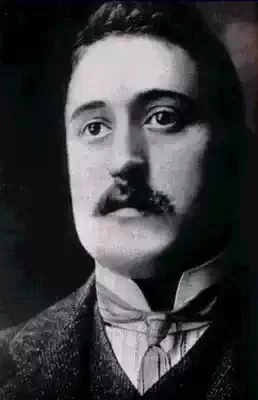
Guillaume Apollinaire
Marizibill
Marizibill
Dans la Haute-Rue à Cologne
Elle allait et venait le soir
Offerte à tous en tout mignonne
Puis buvait lasse des trottoirs
Très tard dans les brasseries borgnes
Elle se mettait sur la paille
Pour un maquereau roux et rose
C'était un juif il sentait l'ail
Et l'avait venant de Formose
Tirée d'un bordel de Changaï
Je connais des gens de toutes sortes
Ils n'égalent pas leurs destins
Indécis comme feuilles mortes
Leurs yeux sont des feux mal éteints
Leurs coeurs bougent comme leurs portes
Dans la Haute-Rue à Cologne
Elle allait et venait le soir
Offerte à tous en tout mignonne
Puis buvait lasse des trottoirs
Très tard dans les brasseries borgnes
Elle se mettait sur la paille
Pour un maquereau roux et rose
C'était un juif il sentait l'ail
Et l'avait venant de Formose
Tirée d'un bordel de Changaï
Je connais des gens de toutes sortes
Ils n'égalent pas leurs destins
Indécis comme feuilles mortes
Leurs yeux sont des feux mal éteints
Leurs coeurs bougent comme leurs portes
694
Guillaume Apollinaire
Hotels
Hotels
The room is free
Each for himself
A new arrival
Pays by the month
The boss is doubtful
Whether you’ll pay
Like a top
I spin on the way
The traffic noise
My neighbour gross
Who puffs an acrid
English smoke
O La Vallière
Who limps and smiles
In my prayers
The bedside table
And all the company
in this hotel
know the languages
of Babel
Let’s shut our doors
With a double lock
And each adore
his lonely love
The room is free
Each for himself
A new arrival
Pays by the month
The boss is doubtful
Whether you’ll pay
Like a top
I spin on the way
The traffic noise
My neighbour gross
Who puffs an acrid
English smoke
O La Vallière
Who limps and smiles
In my prayers
The bedside table
And all the company
in this hotel
know the languages
of Babel
Let’s shut our doors
With a double lock
And each adore
his lonely love
725
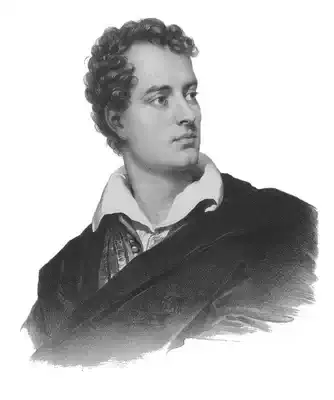
Lord Byron
Beppo, A Venetian Story
Beppo, A Venetian Story
I.
'Tis known, at least it should be, that throughout
All countries of the Catholic persuasion,
Some weeks before Shrove Tuesday comes about,
The People take their fill of recreation,
And buy repentance, ere they grow devout,
However high their rank, or low their station,
With fiddling, feasting, dancing, drinking, masking,
And other things which may be had for asking.
II.
The moment Night with dusky mantle covers
The skies (and the more duskily the better),
The Timeless
liked by husbands than by loversBegins,
and Prudery flings aside her fetter,
And Gaiety on restless tiptoe hovers,
Giggling with all the Gallants who beset her;
And there are Songs and quavers, roaring, humming,
Guitars, and every other sort of strumming.
III.
And there are dresses, splendid but fantastical,
Masks of all times and nations, Turks and Jews,
And Harlequins and Clowns, with feats gymnastical,
Greeks, Romans, Yankeedoodles,
and Hindoos;
All kinds of dress, except the ecclesiastical,
All people, as their fancies hit, may choose,
But no one in these parts may quiz the Clergy,Therefore
take heed, ye Freethinkers! I charge ye.
IV.
You'd better walk about begirt with briars,
Instead of Coat and smallclothes, than put on
A single stitch reflecting upon Friars,
Although you swore it only was in fun;
They'd haul you o'er the coals, and stir the fires
Of Phlegethon with every mother's son,
Nor say one Mass to cool the Caldron's bubble
That boil'd your bonesunless
you paid them double.
V.
But saving this, you may put on whate'er
You like by way of doublet, cape, or cloak,
Such as in Monmouth Street, or in Rag Fair,
Would rig you out in Seriousness or Joke;
And even in Italy such places are
With prettier name in softer accents spoke,
For, bating Covent Garden, I can hit on
No place that's called 'Piazza' in Great Britain.
VI.
This feast is named the Carnival, which being
Interpreted implies 'Farewell to Flesh':
So call'd, because the name and thing agreeing,
Through Lent they live on fish, both salt and fresh.
But why they usher Lent with so much glee in
Is more than I can tell, although I guess
'Tis as we take a glass with friends at parting
In the StageCoach
or Packet, just at starting.
VII.
And thus they bid farewell to Carnal dishes,
And solid meats, and highly spiced ragouts,
To live for forty days on illdress’d
fishes,
Because they have no sauces to their stewsA
thing which causes many 'poohs' and 'pishes,'
And several oaths (which would not suit the Muse)
From travellers accustom'd from a boy
To eat their Salmon, at the least, with Soy;
VIII.
And therefore humbly I would recommend
'The Curious in FishSauce,'
before they cross
The Sea, to bid their Cook, or wife, or friend,
Walk or ride to the Strand, and buy in gross
(Or if set out beforehand these may send
By any means least liable to loss)
Ketchup, Soy, ChiliVinegar,
and Harvey,
Or, by the Lord! a Lent will well nigh starve ye.
IX.
That is to say, if your Religion's Roman,
And you at Rome would do as Romans do,
According to the proverb,although
No man
If foreign is obliged to fast, and youIf
Protestant, or sicklyor
a womanWould
rather dine in sin on a ragoutDine
and be d____d! I don't mean to be coarse,
But that's the penalty, to say no worse.
X.
Of all the places where the Carnival
Was most facetious in the days of yore,
For dance, and song, and serenade, and ball,
And Masque, and Mime, and Mystery, and more
Than I have time to tell now, or at all,
Venice the bell from every city bore,
And at the moment when I fix my story,
That Seaborn
City was in all her Glory.
XI.
They've pretty faces yet, those same Venetians,
Black eyes, arch'd brows, and sweet expressions still,
Such as of old were copied from the Grecians,
In ancient Arts by Moderns mimick'd ill;
And like so many Venuses of Titian's
(The best's at Florencesee
it, if ye will),
They look when leaning over the Balcony;
Or stepp'd from out a picture by Giorgione,
XII.
Whose tints are Truth and Beauty at their best;
And when you to Manfrini's palace go,
That Picture (howsoever fine the rest)
Is loveliest to my mind of all the show;
It may perhaps be also to your Zest,
And that's the cause I rhyme upon it so:
'Tis but a portrait of his Son and Wife
And Self; but such a Woman! Love in life!
XIII.
Love in full life and length, not Love ideal,
No, nor ideal Beauty, that fine name,
But something better still, so very real,
That the sweet Model must have been the same;
A thing that you would purchase, beg, or steal,
Were't not impossible, besides a shame;
The face recalls some face, as 'twere with pain,
You once have seen, but ne'er will see again.
XIV.
One of those forms which flit by us, when we
Are young, and fix our eyes on every face;
And, oh! the Loveliness at times we see
In momentary gliding, the soft grace,
The Youth, the Bloom, the Beauty which agree
In many a nameless being we retrace,
Whose course and home we knew not, nor shall know,
Like the lost Pleiad seen no more below.
XV.
I said that like a picture by Giorgione
Venetian women were, and so they are,
Particularly seen from a balcony
(For Beauty's sometimes best set off afar)
And there, just like a heroine of Goldoni,
They peep from out the blind, or o'er the bar;
And truth to say they're mostly very pretty,
And rather like to show it, more's the Pity!
XVI.
For glances beget ogles, ogles sighs,
Sighs wishes, wishes words, and words a letter,
Which flies on wings of lightheel'd
Mercuries,
Who do such things because they know no better;
And then, God knows! what Mischief may arise,
When Love links two young people in one fetter:
Vile assignations, and adulterous beds,
Elopements, broken vows, and hearts, and heads.
XVII.
Shakespeare described the Sex in Desdemona
As very fair, but yet suspect in fame,
And to this day from Venice to Verona
Such matters may be probably the same,
Except that since those times was never known a
Husband whom mere Suspicion could inflame
To suffocate a wife no more than twenty,
Because she had a 'Cavalier Servente.'
XVIII.
Their jealousy (if they are ever jealous)
Is of a fair complexion altogether,
Not like that sooty devil of Othello's,
Which smothers women in a bed of feather,
But worthier of these much more jolly fellows,
When weary of the matrimonial tether
His head for such a wife no mortal bothers,
But takes at once another, or another's.
XIX.
Didst ever see a Gondola? For fear
You should not, I'll describe it you exactly:
'Tis a long cover'd boat that's common here,
Carved at the prow, built lightly, but compactly,
Row'd by two rowers, each call'd 'Gondolier,'
It glides along the water looking blackly,
Just like a Coffin clapt in a Canoe,
Where none can make out what you say or do.
XX.
And up and down the long Canals they go,
And under the Rialto shoot along
By night and day, all paces, swift or slow,
And round the theatres, a sable throng,
They wait in their dusk livery of woe,But
not to them do woeful things belong,
For sometimes they contain a deal of fun,
Like Mourning Coaches when the funeral’s done.
XXI.
But to my story.'
Twas some years ago,
It may be thirty, forty, more or less,
The Carnival was at its height, and so
Were all kinds of Buffoonery and dress;
A Certain Lady went to see the show,
Her real name I know not, nor can guess,
And so we'll call her Laura, if you please,
Because it slips into my verse with ease.
XXII.
She was not old, nor young, nor at the years
Which certain people call a 'certain Age,'
Which yet the most uncertain age appears,
Because I never heard, nor could engage
A person yet by prayers, or bribes, or tears,
To name, define by speech, or write on page,
The period meant precisely by that word,Which
surely is exceedingly absurd.
XXIII.
Laura was blooming still, had made the best
Of Time, and Time return'd the compliment,
And treated her genteelly, so that, 'drest,
She look'd extremely well where'er she went;
A pretty woman is a welcome guest,
And Laura's brow a frown had rarely bent;
Indeed, she shone all Smiles, and seem'd to flatter
Mankind with her black eyes for looking at her.
XXIV.
She was a married woman; 'tis convenient,
Because in Christian countries 'tis a rule
To view their little slips with eyes more lenient;
Whereas if single ladies play the fool
(Unless within the period intervenient
A welltimed
wedding makes the scandal cool),
I don't know how they ever can get over it,
Except they manage never to discover it.
XXV.
Her husband sail'd upon the Adriatic,
And made some voyages, too, in other seas,
And when he lay in Quarantine for Pratique
(A forty days' precaution 'gainst disease),
His wife would mount, at times, her highest attic,
For thence she could discern the ship with ease;
He was a Merchant trading to Aleppo,
His name Giuseppecall'd
more briefly, Beppo.
XXVI.
He was a man as dusky as a Spaniard,
Sunburnt with travel, yet a portly figure;
Though colour'd, as it were, within a tanyard,
He was a person both of sense and vigourA
better Seaman never yet did man yard;
And She, although her manners show'd no rigour,
Was deem'd a woman of the strictest principle,
So much as to be thought almost invincible.
XXVII.
But several years elapsed since they had met;
Some people thought the ship was lost, and some
That he had somehow blunder'd into debt,
And did not like the thought of steering home;
And there were several offer'd any bet,
Or that he would, or that he would not come,
For Most Men (till by losing render'd sager)
Will back their own opinions with a wager.
XXVIII.
'Tis said that their last parting was pathetic,
As partings often are, or ought to be,
And their presentiment was quite prophetic,
That they should never more each other see,
(A sort of morbid feeling, half poetic,
Which I have known occur in two or three)
When kneeling on the shore upon her sad knee
He left this Adriatic Ariadne.
XXIX.
And Laura waited long, and wept a little,
And thought of wearing weeds, as well she might;
She almost lost all appetite for victual,
And could not sleep with ease along at night;
She deem'd the windowframes
and shutters brittle
Against a daring Housebreaker
or Sprite,
And so She thought it prudent to connect her.
With a Vicehusband,
chiefly to protect her.
XXX.
She chose, (and what is there they will not choose,
If only you will but oppose their choice?)
Till Beppo should return from his long cruise,
And bid once more her faithful heart rejoice,
A Man some women like, and yet abuseA
Coxcomb was he by the public voice;
A Count of wealth, they said, as well as quality,
And (in his pleasures) of great liberality.
XXXI.
And then he was A Count, and then he knew
Music, and dancing, fiddling, French and Tuscan;
The last not easy, be it known to you.
For few Italians speak the right Etruscan.
He was a Critic upon Operas, too,
And knew all niceties of the sock and buskin;
And no Venetian audience could endure a
Song, scene, or air, when he cried 'Seccatura!'
XXXII.
His 'Bravo' was decisive—for that sound
Hush'd 'Academie' sigh'd in silent awe;
The fiddlers trembled as he look'd around,
For fear of some false note's detected flaw;
The 'Prima Donna's' tuneful heart would bound,
Dreading the deep damnation of his 'Bah!'
Soprano, Basso, even the ContraAlto,
Wish'd him five fathom under the Rialto.
XXXIII.
He patronised the Improvisatori,
Nay, could himself extemporise some stanzas;
Wrote rhymes, sang songs, could also tell a story,
Sold pictures, and was skilful in the dance as
Italians can bethough
in this their glory
Must surely yield the palm to that which France has;
In short, he was a perfect Cavaliero,
And to his very Valet seem'd a Hero.
XXXIV.
Then he was faithful too, as well as amorous;
So that no sort of female could complainAlthough
they're now and then a little clamourous,
He never put the pretty souls in pain;
His heart was one of those which most enamour us,
Wax to receive, and Marble to retain:
He was a lover of the good old School,
Who still become more constant as they cool.
XXXV.
No wonder such accomplishments should turn
A female head, however sage and steadyWith
scarce a hope that Beppo could return,
In law he was almost as good as dead, he
Nor sent, nor wrote, nor show'd the least concern,
And she had waited several years already;
And really if a Man won't let us know
That he's alive, he's dead, or should be so.
XXXVI.
Besides, within the Alps, to every woman,
(Although, God knows! it is a grievous sin)
'Tis, I may say, permitted to have two men;
I can't tell who first brought the custom in,
But 'Cavalier Serventes' are quite common,
And no one notices nor cares a pin;
And we may call this (not to say the worst)
A Second Marriage which corrupts the First.
XXXVII.
The word was formerly a 'Cicisbeo,'
But that is now grown vulgar and indecent;
The Spaniards call the person a 'Cortejo,'
For the same Mode subsists in Spain, though recent;
In short, it reaches from the Po to Teio,
And may perhaps at last be o'er the Sea sent;
But Heaven preserve Old England from such courses!
Or what becomes of damage and divorces?
XXXVIII.
However, I still think, with all due deference
To the fair single part of the Creation,
That married ladies should preserve the preference
In têteàtête
or general conversationAnd
this I say without peculiar reference
To England, France, or any other nationBecause
they know the world, and are at ease,
And being natural, naturally please.
XXXIX.
'Tis true, your budding Miss is very charming,
But shy and awkward at first coming out,
So much alarm'd, that she is quite alarming,
All Giggle, Blushhalf
Pertness, and halfPoutAnd
glancing at Mamma, for fear there's harm in
What you, she, it, or they, may be about;
The nursery still lisps out in all they utterBesides,
they always smell of Bread and Butter.
XL.
But 'Cavalier Servente' is the phrase
Used in politest circles to express
This supernumary slave, who stays
Close to the lady as a part of dressHer
word the only law which he obeys.
His is no Sinecure, as you may guess;
Coach, Servants, Gondola, he goes to call,
And carries fan and tippet, gloves and shawl.
XLI.
With all its sinful doings, I must say,
That Italy's a pleasant place to me,
Who love to see the Sun shine every day,
And vines (not nail’d to walls) from tree to tree
Festoon'd, much like the back Scene of a play,
Or Melodrame, which people flock to see
When the first act is ended by a dance
In Vineyards copied from the South of France.
XLII.
I like on Autumn evenings to ride out,
Without being forced to bid my Groom be sure
My Cloak is round his middle strapp'd about,
Because the skies are not the most secure;
I know too that, if stopp'd upon my route
Where the green alleys windingly allure,
Reeling with grapes red waggons choke the wayIn
England 'twould be dung, dust, or a dray.
XLIII.
I also like to dine on Becaficas,
To see the Sun set, sure he'll rise tomorrow,
Not through a misty morning twinkling weak as
A drunken man's dead eye in maudlin sorrow,
But with all Heaven t' himself; the Day will break as
Beauteous as cloudless, nor be forced to borrow
That sort of farthing candlelight which glimmers
Where reeking London's smoky Caldron simmers.
XLIV.
I love the language, that soft bastard Latin,
Which melts like kisses from a female mouth,
And sounds as if it should be writ on satin,
With syllables which breathe of the sweet South,
And gentle liquids gliding all so pat in
That not a single accent seems uncouthLike
our harsh Northern whistling, grunting guttural,
Which we're obliged to hiss, and spit, and sputter all.
XLV.
I like the women too (Forgive my folly!)
From the rich peasant cheek of ruddy bronze,
And large black eyes that flash on you a volley
Of rays that say a thousand things at once,
To the high Dama's brow, more melancholy,
But clear, and with a wild and liquid Glance,
Heart on her lips, and Soul within her eyes,
Soft as her clime, and Sunny as her skies.
XLVI.
Eve of the land which still is Paradise!
Italian Beauty! didst thou not inspire
Raphael, who died in thy embrace, and vies
With all we know of Heaven, or can desire
In what he hath bequeath'd us?in
what guise,
Though flashing from the fervour of the Lyre,
Would Words describe thy past and present Glow,
While yet Canova can create below?
XLVII.
'England! with all thy faults I love thee still!'
I said at Calais, and have not forgot it;
I like to speak and lucubrate my fill;
I like the Government (but that is not it);
I like the freedom of the press and quill;
I like the Hapeas Corpus (when we've got it);
I like a parliamentary debate,
Particularly when 'tis not too late;
XLVIII.
I like the taxes, when they're not too many;
I like a seacoal
fire, when not too dear;
I like a beefsteak,
too, as well as any;
Have no objection to a pot of beer;
I like the weatherwhen
it is not rainyThat
is, I like two months of every Year;
And so God save the Regent, Church, and King!
Which means that I like all and every thing.
XLIX.
Our standing Army, and disbanded Seamen,
Poor's rate, Reform, my own, the nation's debt,
Our little Riots just to show we're free men,
Our trifling Bankruptcies in the Gazette,
Our cloudy Climate, and our chilly Women;
All these I can forgive, and those forget,
And greatly venerate our recent glories,
And wish they were not owing to the Tories.
L.
But to my tale of Laurafor
I find
Digression is a sin, that by degrees
Becomes exceeding tedious to my mind,
And, therefore, may the reader too displeaseThe
gentle readerwho
may wax unkind,
And caring little for the Author’s ease,
Insist on knowing what he means, a hard
And hapless situation for a Bard.
LI.
Oh that I had the art of easy writing
What should be easy reading! could I scale
Parnassus, where the Muses sit inditing
Those pretty poems never known to fail!
How quickly would I print (the world delighting)
A Grecian, Syrian, or Assyrian tale;
And sell you, mix'd with Western sentimentalism,
Some samples of the finest Orientalism.
LII.
But I am but a nameless sort of person
(A broken Dandy lately on my travels)
And take for Rhyme, to hook my rambling Verse on,
The first that Walker's Lexicon unravels,
And when I can't find that, I put a worse on,
Not caring as I ought for Critics' cavils;
I've half a mind to tumble down to prose,
But Verse is more in fashionso
here goes!
LIII.
The Count and Laura made their new arrangement,
Which lasted, as Arrangements sometimes do,
For half a dozen years without estrangement;
They had their little differences, too;
Those jealous whiffs, which never any change meant;
In such affairs there probably are few
Who have not had this pouting sort of squabble,
From Sinners of high station to the Rabble.
LIV.
But, on the whole, they were a happy pair,
As happy as unlawful love could make them;
The Gentleman was fond, the Lady fair,
Their chains so slight 'twas not worth while to break them;
The World beheld them with indulgent air;
The Pious only wish'd 'the Devil take them!'
He took them not; he very often waits,
And leaves old Sinners to be young ones’ baits.
LV.
But they were young; Oh! what without our youth
Would Love be! What would youth be without love!
Youth lends it joy, and sweetness, vigour, truth,
Heart, soul, and all that seems as from above;
But, languishing with years, it grows uncouthOne
of few things Experience don't improve,
Which is perhaps the reason why old fellows
Are always so preposterously jealous.
LVI.
It was the Carnival, as I have said
Some six and thirty stanzas back, and so
Laura the usual preparations made,
Which you do when your mind's made up to go
Tonight
to Mrs. Boehm's Masquerade,
Spectator, or Partaker in the show;
The only difference known between the cases
Is here, we have six weeks of 'varnish'd faces.'
LVII.
Laura, when dress'd, was (as I sang before)
A pretty woman as was ever seen,
Fresh as the Angel o'er a new Inn door,
Or frontispiece of a new Magazine,
With all the Fashions which the last month wore,
Colour'd, and silver paper leaved between
That and the titlepage,
for fear the Press
Should soil with parts of speech the parts of dress.
LVIII.
They went to the Ridotto;'
tis a hall
Where people dance, and sup, and dance againIts
proper name perhaps were a masqued Ball,
But that’s of no importance to my strain;
'Tis (on a smaller scale) like our Vauxhall,
Excepting that it can't be spoilt by Rain;
The company is 'mix'd' (the phrase I quote is
As much as saying they're below your Notice).
LIX.
For a 'mix'd company' implies that, save
Yourself and friends and half a hundred more
Whom you may bow to without looking grave,
The rest are but a vulgar setthe
Bore
Of public places, where they basely brave
The fashionable stare of twenty score
Of wellbred
persons call'd 'The World'but
I,
Although I know them, really don't know why.
LX.
This is the case in England, at least was
During the dynasty of Dandies, now
Perchance succeeded by some other class
Of imitated Imitators :how
Irreparably soon decline, alas!
The Demagogues of fashion; all below
Is frail; how easily the World is lost
By Love, or War, and now and then by Frost!
LXI.
Crush'd was Napoleon by the northern Thor,
Who knock’d his army down with icy hammer,
Stopp'd by the Elements, like a Whaler, or
A blundering Novice in his new French grammar;
Good cause had he to doubt the chance of War,
And as for Fortunebut
I dare not d___n her,
Because, were I to ponder to Infinity,
The more I should believe in her Divinity.
LXII.
She rules the present, past, and all to be yet;
She gives us luck in lotteries, love, and marriage;
I cannot say that she’s done much for me yet,
Not that I mean her bounties to disparageWe've
not yet closed accountsand
we shall see yet
How much she'll make amends for past miscarriage.
Meantime the Goddess I'll no more importune,
Unless to thank her when she's made my fortune.
LXIII.
To turnand
to return, the Devil take it!
This Story slips for ever through my fingers,
Because, just as the Stanza likes to make it,
It needs must be, and so it rather lingers:
This form of verse began, I can't well break it,
But must keep time and tune like public Singers;
But if I once get through my present measure,
I'll take another when I'm at leisure.
LXIV.
They went to the Ridotto ('tis a place
To which I mean to go myself tomorrow,
Just to divert my thoughts a little space,
Because I’m rather hippish, and may borrow
Some spirits, guessing at what kind of face
May lurk beneath each mask; and as my sorrow
Slackens its pace sometimes, I'll make or find
Something shall leave it half an hour behind).
LXV.
Now Laura moves along the joyous crowdSmiles
in her eyes, and simpers on her lipsTo
some she whispers, others speaks aloud;
To some she curtsies, and to some she dips,
Complains of warmth and, this complaint avow'd,
Her lover brings the Lemonade she sips;
She then surveys, condemns, but pities still
Her dearest friends for being dress'd so ill.
LXVI.
One has false curls, another too much paint,
A thirdwhere
did She buy that frightful turban?
A fourth's so pale she fears she's going to faint,
A fifth's look's vulgar, dowdyish, and suburban,
A sixth's white silk has got a yellow taint,
A seventh's thin Muslin surely will be her bane,
And lo! an eighth appears'
I'll see no more!'
For fear, like Banquo's kings, they reach a score.
LXVII.
Meantime, while she was thus at others gazing,
Others were leveling their looks at her;
She heard the Men's halfwhisper'd
mode of praising,
And, till ’twas done, determined not to stir;
The women only thought it quite amazing
That, at her time of Life, so many were
Admirers stillbut
Men are so debased,
Those brazen creatures always suit their taste.
LXVIII.
For my part now, I ne'er could understand
Why naughty Womenbut
I won’t discuss
A thing which is a Scandal to the land;
I only don't see why it should be thus;
And if I were but in a gown and bandwww.
PoemHunter.com The
World's Poetry Archive
Just to entitle me to make a fussI'd
preach on this till Wilberforce and Romilly
Should quote in their next speeches from my homily.
LXIX.
While Laura thus was seen, and seeing, smiling,
Talking, she knew not why, and cared not what,
So that her female friends, with envy broiling,
Beheld her airs and triumph, and all that,
And welldress'd
males still kept before her filing,
And passing bow'd and mingled with her chat;
More than the rest, one person seem'd to stare
With pertinacity that's rather rare.
LXX.
He was a Turk, the colour of mahogany;
And Laura saw him, and at first was glad,
Because the Turks so much admire Phylogyny,
Although their usage of their wives is sad;
'Tis said they use no better than a dog any
Poor woman, whom they purchase like a pad;
They have a number, though they ne'er exhibit 'em,
Four Wives by law, and Concubines 'ad libitum.'
LXXI.
They lock them up, and veil and guard them daily;
They scarcely can behold their male relations,
So that their moments do not pass so gaily
As is supposed the case with Northern nations;
Confinement, too, must make them look quite palely;
And as the Turks abhor long conversations,
Their days are either pass'd in doing nothing,
Or bathing, nursing, making love, and clothing.
LXXII.
They cannot readand
so don't lisp in Criticism;
Nor writeand
so they don't affect the Muse;
Were never caught in epigram or witticism,
Have no romances, sermons, plays, reviewsIn
harams Learning soon would make a pretty schism!
But luckily these beauties are no 'Blues;'
No bustling Botherbys have they to show 'em
'That charming passage in the last new poem!'
LXXIII.
No solemn Antique gentleman of rhyme,
Who, having angled all his life for Fame
And getting but a nibble at a time,
Still fussily keeps fishing on, the same
Small 'Triton of the Minnows,' the sublime
Of mediocrity, the furious tame,
The echo’s Echo, usher of the School
Of female Wits, boy bardsin
short, a fool!
LXXIV.
A stalking Oracle of awful phrase,
The approving 'Good!' (By no means GOOD in law)
Humming like flies around the newest blaze,
The bluest of Bluebottles you e'er saw,
Teasing with blame, excruciating with praise,
Gorging the little fame he gets all raw,
Translating tongues he knows not even by letter,
And sweating plays so middling, bad were better.
LXXV.
One hates an Author that's all Author, fellows
In foolscap uniforms turn'd up with ink,
So very anxious, clever, fine, and jealous,
One don't know what to say to them, or think,
Unless to puff them with a pair of Bellows;
Of Coxcombry's worst Coxcombs e'en the pink
Are preferable to these shreds of paper,
These unquench'd snufflings of the midnight taper.
LXXVI.
Of these same we see several, and of others,
Men of the World, who know the world like men,
Scott, Rogers, Moore, and all the better brothers
Who think of something else besides the pen;
But for the Children of the 'Mighty Mother's'The
wouldbe
Wits, and can’tbe
GentlemenI
leave them to their daily 'Tea is ready,'
Smug Coterie, and Literary Lady.
LXXVII.
The poor dear Mussulwomen whom I mention
Have none of these instructive, pleasant people,
And One would seem to them a new Invention,
Unknown as bells within a Turkish steeple;
I think 'twould almost be worth while to pension
(Though bestsown
projects very often reap ill)
A Missionary Author, just to preach
Our Christian usage of the parts of Speech.
LXXVIII.
No Chemistry for them unfolds her gases,
No Metaphysics are let loose in lectures,
No Circulating Library amasses
Religious novels, moral tales, and strictures
Upon the living manners, as they pass us;
No Exhibition glares with annual pictures;
They stare not on the Stars from out their Attics,
Nor deal (thank God for that!) in Mathematics.
LXXIX.
Why I thank God for that is no great matter;
I have my reasons, you no doubt suppose,
And as perhaps they would not highly flatter,
I'll keep them for my life (to come) in prose;
I fear I have a little turn for Satire,
And yet, methinks, the older that one grows
Inclines us more to laugh than scold, though Laughter
Leaves us no doubly serious shortly after.
LXXX.
Oh, mirth and innocence! Oh, milk and water!
Ye happy mixtures of more happy days!
In these sad centuries of sin and slaughter,
Abominable Man no more allays
His thirst with such pure beverage. No matter,
I love you both, and both shall have my praise;
Oh, for old Saturn's reign of sugarcandy!
Meantime I drink to your return in Brandy.
LXXXI.
Our Laura's Turk still kept his eyes upon her,
Less in the Mussulman than Christian way,
Which seems to say, 'Madam, I do you honour,
And while I please to stare, you'll please to stay!'
Could staring win a woman, this had won her,
But Laura could not thus be led astray;
She had stood fire too long and well, is boggle
Even at this Stranger's most outlandish Ogle.
LXXXII.
The Morning now was on the point of breaking,
A turn of time at which I would advise
Ladies who have been dancing, or partaking
In any other kind of Exercise,
To make their preparations for forsaking
The Ballroom
ere the Sun begins to rise,
Because when once the lamps and candles fail,
His Blushes make them look a little pale.
LXXXIII.
I've seen some balls and revels in my time,
And stay'd them over for some silly reason;
And then I look'd (I hope it was no crime)
To see what lady best stood out the Season;
And though I've seen some thousands in their prime,
Lovely and pleasing, and who still may please on,
I never saw but One (the stars withdrawn)
Whose bloom could, after dancing, dare the dawn.
LXXXIV.
The name of this Aurora I'll not mention,
Although I might, for She was nought to me
More than that patent work of God's invention,
A charming woman, whom we like to see;
But writing names would merit reprehension,
Yet if you like to find out this fair She,
At the next London or Parisian ball
You still may mark her cheek, outblooming
all.
LXXXV.
Laura, who knew it would not do at all
To meet the daylight after seven hours' sitting
Among three thousand people at a ball,
To make her curtsy thought it right and fitting;
The Count was at her elbow with her shawl,
And they the room were on the point of quitting,
When lo! those cursed gondoliers had got
Just in the very place where they should not.
LXXXVI.
In this they're like our Coachmen, and the cause
Is much the samethe
Crowd, and pulling, haulingWith
blasphemies enough to break their jawsThey
make a neverintermitted
bawling.
At home, our Bow Street Gem'men keep the laws,
And here a Sentry stands within your calling;
But for all that, there is a deal of swearing,
And nauseous words past mentioning or bearing.
LXXXVII.
The Count and Laura found their boat at last,
And homeward floated o'er the silent tied,
Discussing all the dances gone and past;
The Dancers and their dresses, too, beside.
Some little Scandals eke; but all aghast
(As to their palacestairs
the rowers glide)
Sate Laura by the side of her Adorer,
When lo! the Mussulman was there before her!
LXXXVIII.
'Sir!' said the Count, with brow exceeding grave,
'Your unexpected presence here will make
It necessary for myself to crave
Its importbut
perhaps 'tis a mistake.
I hope it is so, and at once to waive
All complimentI
hope so for your sake;
You understand my meaning, or you shall.'
'Sir' (quoth the Turk), ''tis no mistake at all:
LXXXIX.
'That Lady is my Wife!' Much wonder paints
The Lady's changing cheek, as well it might,
But where an Englishwoman sometimes faints,
Italian females don't do so outright;
They only call a little on their Saints,
And then come to themselves, almost or quite,
Which saves much hartshorn, salts, and sprinkling faces,
And cutting stays, as usual in such cases.
XC.
She said—what could she say? why, not a word:
But the Count courteously invited in
The Stranger, much appeased by what he heard;
'Such things perhaps we'd best discuss within,'
Said he, 'don't let us make ourselves absurd
In public, by a Scene, nor raise a din,
For then the chief and only satisfaction
Will be much quizzing on the whole transaction.'
XCI.
They enter'd, and for coffee call'd; it came,
A beverage for Turks and Christians both,
Although the way they make it's not the same.
Now Laura, much recover'd, or less loth
To speak, cries 'Beppo! what's your Pagan name?
Bless me! your beard is of amazing growth!
And how came you to keep away so long?
Are you not sensible 'twas very wrong?
XCII.
'And are you really, truly, now a Turk?
With any other women did you wive?
Is't true they use their fingers for a fork?
Well, that's the prettiest Shawlas
I'm alive!
You'll give it me? They say you eat no pork.
And how so many years did you contrive
ToBless
me! did I ever? No, I never
Saw a man grown so yellow! How’s your liver?
XCIII.
'Beppo! that beard of yours becomes you not;
It shall be shaved before you're a day older;
Why do you wear it? Oh! I had forgotPray
don't you think the weather here is colder?
How do I look? You shan't stir from this spot
In that queer dress, for fear that some beholder
Should find you out, and make the story known.
How short your hair is! Lord! how grey it’s grown!'
XCIV.
What answer Beppo made to these demands
Is more than I know. He was cast away
About where Troy stood once, and Nothing stands;
Became a Slave of course, and for his pay
Had bread and bastinadoes, till some bands
Of pirates landing in a neighbouring bay,
He join'd the rogues and prosper’d, and became
A Renegado of indifferent fame.
XCV.
But he grew rich, and with his riches grew so
Keen the desire to see his home again,
He thought himself in duty bound to do so,
And not be always thieving on the Main;
Lonely he felt at times as Robin Crusoe,
And so he hired a vessel come from Spain,
Bound for Corfu: she was a fine polacca,
Mann'd with twelve hands, and laden with tobacco.
XCVI.
Himself, and much (Heaven knows how gotten!) Cash,
He then embark'd, with risk of life and limb,
And got clear off, although the attempt was rash.
He said that Providence protected him;
For my part, I say nothinglest
we clash
In our opinionswell,
the Ship was trim,
Set sail, and kept her reckoning fairly on,
Except three days of calm when off Cape Bonn.
XCVII.
They reach'd the Island, he transferr'd his lading
And self and live stock to another bottom,
And pass'd for a true TurkeyMerchant,
trading
With goods of various namesbut
I've forgot 'em.
However, he got off by this evading,
Or else the people would perhaps have shot him;
And thus at Venice landed to reclaim
His wife, religion, house, and Christian name.
XCVIII.
His Wife received, the Patriarch rebaptised
him
(He made the Church a present, by the way);
He then threw off the Garments which disguised him
And borrow'd the Count's small clothes for a day:
His friends the more for his long absence prized him,
Finding he'd wherewithal to make them gay,
With dinnerswhere
he oft became the laugh of them;
For storiesbut
I don’t believe the half of them.
XCIX.
Whate'er his Youth had suffer'd, his old Age
With wealth and talking made him some amends;
Though Laura sometimes put him in a rage,
I've heard the Count and He were always friends.
My pen is at the bottom of a page,
Which being finish'd, here the story ends;
'Tis to be wish'd it had been sooner done,
But Stories somehow lengthen when begun.
I.
'Tis known, at least it should be, that throughout
All countries of the Catholic persuasion,
Some weeks before Shrove Tuesday comes about,
The People take their fill of recreation,
And buy repentance, ere they grow devout,
However high their rank, or low their station,
With fiddling, feasting, dancing, drinking, masking,
And other things which may be had for asking.
II.
The moment Night with dusky mantle covers
The skies (and the more duskily the better),
The Timeless
liked by husbands than by loversBegins,
and Prudery flings aside her fetter,
And Gaiety on restless tiptoe hovers,
Giggling with all the Gallants who beset her;
And there are Songs and quavers, roaring, humming,
Guitars, and every other sort of strumming.
III.
And there are dresses, splendid but fantastical,
Masks of all times and nations, Turks and Jews,
And Harlequins and Clowns, with feats gymnastical,
Greeks, Romans, Yankeedoodles,
and Hindoos;
All kinds of dress, except the ecclesiastical,
All people, as their fancies hit, may choose,
But no one in these parts may quiz the Clergy,Therefore
take heed, ye Freethinkers! I charge ye.
IV.
You'd better walk about begirt with briars,
Instead of Coat and smallclothes, than put on
A single stitch reflecting upon Friars,
Although you swore it only was in fun;
They'd haul you o'er the coals, and stir the fires
Of Phlegethon with every mother's son,
Nor say one Mass to cool the Caldron's bubble
That boil'd your bonesunless
you paid them double.
V.
But saving this, you may put on whate'er
You like by way of doublet, cape, or cloak,
Such as in Monmouth Street, or in Rag Fair,
Would rig you out in Seriousness or Joke;
And even in Italy such places are
With prettier name in softer accents spoke,
For, bating Covent Garden, I can hit on
No place that's called 'Piazza' in Great Britain.
VI.
This feast is named the Carnival, which being
Interpreted implies 'Farewell to Flesh':
So call'd, because the name and thing agreeing,
Through Lent they live on fish, both salt and fresh.
But why they usher Lent with so much glee in
Is more than I can tell, although I guess
'Tis as we take a glass with friends at parting
In the StageCoach
or Packet, just at starting.
VII.
And thus they bid farewell to Carnal dishes,
And solid meats, and highly spiced ragouts,
To live for forty days on illdress’d
fishes,
Because they have no sauces to their stewsA
thing which causes many 'poohs' and 'pishes,'
And several oaths (which would not suit the Muse)
From travellers accustom'd from a boy
To eat their Salmon, at the least, with Soy;
VIII.
And therefore humbly I would recommend
'The Curious in FishSauce,'
before they cross
The Sea, to bid their Cook, or wife, or friend,
Walk or ride to the Strand, and buy in gross
(Or if set out beforehand these may send
By any means least liable to loss)
Ketchup, Soy, ChiliVinegar,
and Harvey,
Or, by the Lord! a Lent will well nigh starve ye.
IX.
That is to say, if your Religion's Roman,
And you at Rome would do as Romans do,
According to the proverb,although
No man
If foreign is obliged to fast, and youIf
Protestant, or sicklyor
a womanWould
rather dine in sin on a ragoutDine
and be d____d! I don't mean to be coarse,
But that's the penalty, to say no worse.
X.
Of all the places where the Carnival
Was most facetious in the days of yore,
For dance, and song, and serenade, and ball,
And Masque, and Mime, and Mystery, and more
Than I have time to tell now, or at all,
Venice the bell from every city bore,
And at the moment when I fix my story,
That Seaborn
City was in all her Glory.
XI.
They've pretty faces yet, those same Venetians,
Black eyes, arch'd brows, and sweet expressions still,
Such as of old were copied from the Grecians,
In ancient Arts by Moderns mimick'd ill;
And like so many Venuses of Titian's
(The best's at Florencesee
it, if ye will),
They look when leaning over the Balcony;
Or stepp'd from out a picture by Giorgione,
XII.
Whose tints are Truth and Beauty at their best;
And when you to Manfrini's palace go,
That Picture (howsoever fine the rest)
Is loveliest to my mind of all the show;
It may perhaps be also to your Zest,
And that's the cause I rhyme upon it so:
'Tis but a portrait of his Son and Wife
And Self; but such a Woman! Love in life!
XIII.
Love in full life and length, not Love ideal,
No, nor ideal Beauty, that fine name,
But something better still, so very real,
That the sweet Model must have been the same;
A thing that you would purchase, beg, or steal,
Were't not impossible, besides a shame;
The face recalls some face, as 'twere with pain,
You once have seen, but ne'er will see again.
XIV.
One of those forms which flit by us, when we
Are young, and fix our eyes on every face;
And, oh! the Loveliness at times we see
In momentary gliding, the soft grace,
The Youth, the Bloom, the Beauty which agree
In many a nameless being we retrace,
Whose course and home we knew not, nor shall know,
Like the lost Pleiad seen no more below.
XV.
I said that like a picture by Giorgione
Venetian women were, and so they are,
Particularly seen from a balcony
(For Beauty's sometimes best set off afar)
And there, just like a heroine of Goldoni,
They peep from out the blind, or o'er the bar;
And truth to say they're mostly very pretty,
And rather like to show it, more's the Pity!
XVI.
For glances beget ogles, ogles sighs,
Sighs wishes, wishes words, and words a letter,
Which flies on wings of lightheel'd
Mercuries,
Who do such things because they know no better;
And then, God knows! what Mischief may arise,
When Love links two young people in one fetter:
Vile assignations, and adulterous beds,
Elopements, broken vows, and hearts, and heads.
XVII.
Shakespeare described the Sex in Desdemona
As very fair, but yet suspect in fame,
And to this day from Venice to Verona
Such matters may be probably the same,
Except that since those times was never known a
Husband whom mere Suspicion could inflame
To suffocate a wife no more than twenty,
Because she had a 'Cavalier Servente.'
XVIII.
Their jealousy (if they are ever jealous)
Is of a fair complexion altogether,
Not like that sooty devil of Othello's,
Which smothers women in a bed of feather,
But worthier of these much more jolly fellows,
When weary of the matrimonial tether
His head for such a wife no mortal bothers,
But takes at once another, or another's.
XIX.
Didst ever see a Gondola? For fear
You should not, I'll describe it you exactly:
'Tis a long cover'd boat that's common here,
Carved at the prow, built lightly, but compactly,
Row'd by two rowers, each call'd 'Gondolier,'
It glides along the water looking blackly,
Just like a Coffin clapt in a Canoe,
Where none can make out what you say or do.
XX.
And up and down the long Canals they go,
And under the Rialto shoot along
By night and day, all paces, swift or slow,
And round the theatres, a sable throng,
They wait in their dusk livery of woe,But
not to them do woeful things belong,
For sometimes they contain a deal of fun,
Like Mourning Coaches when the funeral’s done.
XXI.
But to my story.'
Twas some years ago,
It may be thirty, forty, more or less,
The Carnival was at its height, and so
Were all kinds of Buffoonery and dress;
A Certain Lady went to see the show,
Her real name I know not, nor can guess,
And so we'll call her Laura, if you please,
Because it slips into my verse with ease.
XXII.
She was not old, nor young, nor at the years
Which certain people call a 'certain Age,'
Which yet the most uncertain age appears,
Because I never heard, nor could engage
A person yet by prayers, or bribes, or tears,
To name, define by speech, or write on page,
The period meant precisely by that word,Which
surely is exceedingly absurd.
XXIII.
Laura was blooming still, had made the best
Of Time, and Time return'd the compliment,
And treated her genteelly, so that, 'drest,
She look'd extremely well where'er she went;
A pretty woman is a welcome guest,
And Laura's brow a frown had rarely bent;
Indeed, she shone all Smiles, and seem'd to flatter
Mankind with her black eyes for looking at her.
XXIV.
She was a married woman; 'tis convenient,
Because in Christian countries 'tis a rule
To view their little slips with eyes more lenient;
Whereas if single ladies play the fool
(Unless within the period intervenient
A welltimed
wedding makes the scandal cool),
I don't know how they ever can get over it,
Except they manage never to discover it.
XXV.
Her husband sail'd upon the Adriatic,
And made some voyages, too, in other seas,
And when he lay in Quarantine for Pratique
(A forty days' precaution 'gainst disease),
His wife would mount, at times, her highest attic,
For thence she could discern the ship with ease;
He was a Merchant trading to Aleppo,
His name Giuseppecall'd
more briefly, Beppo.
XXVI.
He was a man as dusky as a Spaniard,
Sunburnt with travel, yet a portly figure;
Though colour'd, as it were, within a tanyard,
He was a person both of sense and vigourA
better Seaman never yet did man yard;
And She, although her manners show'd no rigour,
Was deem'd a woman of the strictest principle,
So much as to be thought almost invincible.
XXVII.
But several years elapsed since they had met;
Some people thought the ship was lost, and some
That he had somehow blunder'd into debt,
And did not like the thought of steering home;
And there were several offer'd any bet,
Or that he would, or that he would not come,
For Most Men (till by losing render'd sager)
Will back their own opinions with a wager.
XXVIII.
'Tis said that their last parting was pathetic,
As partings often are, or ought to be,
And their presentiment was quite prophetic,
That they should never more each other see,
(A sort of morbid feeling, half poetic,
Which I have known occur in two or three)
When kneeling on the shore upon her sad knee
He left this Adriatic Ariadne.
XXIX.
And Laura waited long, and wept a little,
And thought of wearing weeds, as well she might;
She almost lost all appetite for victual,
And could not sleep with ease along at night;
She deem'd the windowframes
and shutters brittle
Against a daring Housebreaker
or Sprite,
And so She thought it prudent to connect her.
With a Vicehusband,
chiefly to protect her.
XXX.
She chose, (and what is there they will not choose,
If only you will but oppose their choice?)
Till Beppo should return from his long cruise,
And bid once more her faithful heart rejoice,
A Man some women like, and yet abuseA
Coxcomb was he by the public voice;
A Count of wealth, they said, as well as quality,
And (in his pleasures) of great liberality.
XXXI.
And then he was A Count, and then he knew
Music, and dancing, fiddling, French and Tuscan;
The last not easy, be it known to you.
For few Italians speak the right Etruscan.
He was a Critic upon Operas, too,
And knew all niceties of the sock and buskin;
And no Venetian audience could endure a
Song, scene, or air, when he cried 'Seccatura!'
XXXII.
His 'Bravo' was decisive—for that sound
Hush'd 'Academie' sigh'd in silent awe;
The fiddlers trembled as he look'd around,
For fear of some false note's detected flaw;
The 'Prima Donna's' tuneful heart would bound,
Dreading the deep damnation of his 'Bah!'
Soprano, Basso, even the ContraAlto,
Wish'd him five fathom under the Rialto.
XXXIII.
He patronised the Improvisatori,
Nay, could himself extemporise some stanzas;
Wrote rhymes, sang songs, could also tell a story,
Sold pictures, and was skilful in the dance as
Italians can bethough
in this their glory
Must surely yield the palm to that which France has;
In short, he was a perfect Cavaliero,
And to his very Valet seem'd a Hero.
XXXIV.
Then he was faithful too, as well as amorous;
So that no sort of female could complainAlthough
they're now and then a little clamourous,
He never put the pretty souls in pain;
His heart was one of those which most enamour us,
Wax to receive, and Marble to retain:
He was a lover of the good old School,
Who still become more constant as they cool.
XXXV.
No wonder such accomplishments should turn
A female head, however sage and steadyWith
scarce a hope that Beppo could return,
In law he was almost as good as dead, he
Nor sent, nor wrote, nor show'd the least concern,
And she had waited several years already;
And really if a Man won't let us know
That he's alive, he's dead, or should be so.
XXXVI.
Besides, within the Alps, to every woman,
(Although, God knows! it is a grievous sin)
'Tis, I may say, permitted to have two men;
I can't tell who first brought the custom in,
But 'Cavalier Serventes' are quite common,
And no one notices nor cares a pin;
And we may call this (not to say the worst)
A Second Marriage which corrupts the First.
XXXVII.
The word was formerly a 'Cicisbeo,'
But that is now grown vulgar and indecent;
The Spaniards call the person a 'Cortejo,'
For the same Mode subsists in Spain, though recent;
In short, it reaches from the Po to Teio,
And may perhaps at last be o'er the Sea sent;
But Heaven preserve Old England from such courses!
Or what becomes of damage and divorces?
XXXVIII.
However, I still think, with all due deference
To the fair single part of the Creation,
That married ladies should preserve the preference
In têteàtête
or general conversationAnd
this I say without peculiar reference
To England, France, or any other nationBecause
they know the world, and are at ease,
And being natural, naturally please.
XXXIX.
'Tis true, your budding Miss is very charming,
But shy and awkward at first coming out,
So much alarm'd, that she is quite alarming,
All Giggle, Blushhalf
Pertness, and halfPoutAnd
glancing at Mamma, for fear there's harm in
What you, she, it, or they, may be about;
The nursery still lisps out in all they utterBesides,
they always smell of Bread and Butter.
XL.
But 'Cavalier Servente' is the phrase
Used in politest circles to express
This supernumary slave, who stays
Close to the lady as a part of dressHer
word the only law which he obeys.
His is no Sinecure, as you may guess;
Coach, Servants, Gondola, he goes to call,
And carries fan and tippet, gloves and shawl.
XLI.
With all its sinful doings, I must say,
That Italy's a pleasant place to me,
Who love to see the Sun shine every day,
And vines (not nail’d to walls) from tree to tree
Festoon'd, much like the back Scene of a play,
Or Melodrame, which people flock to see
When the first act is ended by a dance
In Vineyards copied from the South of France.
XLII.
I like on Autumn evenings to ride out,
Without being forced to bid my Groom be sure
My Cloak is round his middle strapp'd about,
Because the skies are not the most secure;
I know too that, if stopp'd upon my route
Where the green alleys windingly allure,
Reeling with grapes red waggons choke the wayIn
England 'twould be dung, dust, or a dray.
XLIII.
I also like to dine on Becaficas,
To see the Sun set, sure he'll rise tomorrow,
Not through a misty morning twinkling weak as
A drunken man's dead eye in maudlin sorrow,
But with all Heaven t' himself; the Day will break as
Beauteous as cloudless, nor be forced to borrow
That sort of farthing candlelight which glimmers
Where reeking London's smoky Caldron simmers.
XLIV.
I love the language, that soft bastard Latin,
Which melts like kisses from a female mouth,
And sounds as if it should be writ on satin,
With syllables which breathe of the sweet South,
And gentle liquids gliding all so pat in
That not a single accent seems uncouthLike
our harsh Northern whistling, grunting guttural,
Which we're obliged to hiss, and spit, and sputter all.
XLV.
I like the women too (Forgive my folly!)
From the rich peasant cheek of ruddy bronze,
And large black eyes that flash on you a volley
Of rays that say a thousand things at once,
To the high Dama's brow, more melancholy,
But clear, and with a wild and liquid Glance,
Heart on her lips, and Soul within her eyes,
Soft as her clime, and Sunny as her skies.
XLVI.
Eve of the land which still is Paradise!
Italian Beauty! didst thou not inspire
Raphael, who died in thy embrace, and vies
With all we know of Heaven, or can desire
In what he hath bequeath'd us?in
what guise,
Though flashing from the fervour of the Lyre,
Would Words describe thy past and present Glow,
While yet Canova can create below?
XLVII.
'England! with all thy faults I love thee still!'
I said at Calais, and have not forgot it;
I like to speak and lucubrate my fill;
I like the Government (but that is not it);
I like the freedom of the press and quill;
I like the Hapeas Corpus (when we've got it);
I like a parliamentary debate,
Particularly when 'tis not too late;
XLVIII.
I like the taxes, when they're not too many;
I like a seacoal
fire, when not too dear;
I like a beefsteak,
too, as well as any;
Have no objection to a pot of beer;
I like the weatherwhen
it is not rainyThat
is, I like two months of every Year;
And so God save the Regent, Church, and King!
Which means that I like all and every thing.
XLIX.
Our standing Army, and disbanded Seamen,
Poor's rate, Reform, my own, the nation's debt,
Our little Riots just to show we're free men,
Our trifling Bankruptcies in the Gazette,
Our cloudy Climate, and our chilly Women;
All these I can forgive, and those forget,
And greatly venerate our recent glories,
And wish they were not owing to the Tories.
L.
But to my tale of Laurafor
I find
Digression is a sin, that by degrees
Becomes exceeding tedious to my mind,
And, therefore, may the reader too displeaseThe
gentle readerwho
may wax unkind,
And caring little for the Author’s ease,
Insist on knowing what he means, a hard
And hapless situation for a Bard.
LI.
Oh that I had the art of easy writing
What should be easy reading! could I scale
Parnassus, where the Muses sit inditing
Those pretty poems never known to fail!
How quickly would I print (the world delighting)
A Grecian, Syrian, or Assyrian tale;
And sell you, mix'd with Western sentimentalism,
Some samples of the finest Orientalism.
LII.
But I am but a nameless sort of person
(A broken Dandy lately on my travels)
And take for Rhyme, to hook my rambling Verse on,
The first that Walker's Lexicon unravels,
And when I can't find that, I put a worse on,
Not caring as I ought for Critics' cavils;
I've half a mind to tumble down to prose,
But Verse is more in fashionso
here goes!
LIII.
The Count and Laura made their new arrangement,
Which lasted, as Arrangements sometimes do,
For half a dozen years without estrangement;
They had their little differences, too;
Those jealous whiffs, which never any change meant;
In such affairs there probably are few
Who have not had this pouting sort of squabble,
From Sinners of high station to the Rabble.
LIV.
But, on the whole, they were a happy pair,
As happy as unlawful love could make them;
The Gentleman was fond, the Lady fair,
Their chains so slight 'twas not worth while to break them;
The World beheld them with indulgent air;
The Pious only wish'd 'the Devil take them!'
He took them not; he very often waits,
And leaves old Sinners to be young ones’ baits.
LV.
But they were young; Oh! what without our youth
Would Love be! What would youth be without love!
Youth lends it joy, and sweetness, vigour, truth,
Heart, soul, and all that seems as from above;
But, languishing with years, it grows uncouthOne
of few things Experience don't improve,
Which is perhaps the reason why old fellows
Are always so preposterously jealous.
LVI.
It was the Carnival, as I have said
Some six and thirty stanzas back, and so
Laura the usual preparations made,
Which you do when your mind's made up to go
Tonight
to Mrs. Boehm's Masquerade,
Spectator, or Partaker in the show;
The only difference known between the cases
Is here, we have six weeks of 'varnish'd faces.'
LVII.
Laura, when dress'd, was (as I sang before)
A pretty woman as was ever seen,
Fresh as the Angel o'er a new Inn door,
Or frontispiece of a new Magazine,
With all the Fashions which the last month wore,
Colour'd, and silver paper leaved between
That and the titlepage,
for fear the Press
Should soil with parts of speech the parts of dress.
LVIII.
They went to the Ridotto;'
tis a hall
Where people dance, and sup, and dance againIts
proper name perhaps were a masqued Ball,
But that’s of no importance to my strain;
'Tis (on a smaller scale) like our Vauxhall,
Excepting that it can't be spoilt by Rain;
The company is 'mix'd' (the phrase I quote is
As much as saying they're below your Notice).
LIX.
For a 'mix'd company' implies that, save
Yourself and friends and half a hundred more
Whom you may bow to without looking grave,
The rest are but a vulgar setthe
Bore
Of public places, where they basely brave
The fashionable stare of twenty score
Of wellbred
persons call'd 'The World'but
I,
Although I know them, really don't know why.
LX.
This is the case in England, at least was
During the dynasty of Dandies, now
Perchance succeeded by some other class
Of imitated Imitators :how
Irreparably soon decline, alas!
The Demagogues of fashion; all below
Is frail; how easily the World is lost
By Love, or War, and now and then by Frost!
LXI.
Crush'd was Napoleon by the northern Thor,
Who knock’d his army down with icy hammer,
Stopp'd by the Elements, like a Whaler, or
A blundering Novice in his new French grammar;
Good cause had he to doubt the chance of War,
And as for Fortunebut
I dare not d___n her,
Because, were I to ponder to Infinity,
The more I should believe in her Divinity.
LXII.
She rules the present, past, and all to be yet;
She gives us luck in lotteries, love, and marriage;
I cannot say that she’s done much for me yet,
Not that I mean her bounties to disparageWe've
not yet closed accountsand
we shall see yet
How much she'll make amends for past miscarriage.
Meantime the Goddess I'll no more importune,
Unless to thank her when she's made my fortune.
LXIII.
To turnand
to return, the Devil take it!
This Story slips for ever through my fingers,
Because, just as the Stanza likes to make it,
It needs must be, and so it rather lingers:
This form of verse began, I can't well break it,
But must keep time and tune like public Singers;
But if I once get through my present measure,
I'll take another when I'm at leisure.
LXIV.
They went to the Ridotto ('tis a place
To which I mean to go myself tomorrow,
Just to divert my thoughts a little space,
Because I’m rather hippish, and may borrow
Some spirits, guessing at what kind of face
May lurk beneath each mask; and as my sorrow
Slackens its pace sometimes, I'll make or find
Something shall leave it half an hour behind).
LXV.
Now Laura moves along the joyous crowdSmiles
in her eyes, and simpers on her lipsTo
some she whispers, others speaks aloud;
To some she curtsies, and to some she dips,
Complains of warmth and, this complaint avow'd,
Her lover brings the Lemonade she sips;
She then surveys, condemns, but pities still
Her dearest friends for being dress'd so ill.
LXVI.
One has false curls, another too much paint,
A thirdwhere
did She buy that frightful turban?
A fourth's so pale she fears she's going to faint,
A fifth's look's vulgar, dowdyish, and suburban,
A sixth's white silk has got a yellow taint,
A seventh's thin Muslin surely will be her bane,
And lo! an eighth appears'
I'll see no more!'
For fear, like Banquo's kings, they reach a score.
LXVII.
Meantime, while she was thus at others gazing,
Others were leveling their looks at her;
She heard the Men's halfwhisper'd
mode of praising,
And, till ’twas done, determined not to stir;
The women only thought it quite amazing
That, at her time of Life, so many were
Admirers stillbut
Men are so debased,
Those brazen creatures always suit their taste.
LXVIII.
For my part now, I ne'er could understand
Why naughty Womenbut
I won’t discuss
A thing which is a Scandal to the land;
I only don't see why it should be thus;
And if I were but in a gown and bandwww.
PoemHunter.com The
World's Poetry Archive
Just to entitle me to make a fussI'd
preach on this till Wilberforce and Romilly
Should quote in their next speeches from my homily.
LXIX.
While Laura thus was seen, and seeing, smiling,
Talking, she knew not why, and cared not what,
So that her female friends, with envy broiling,
Beheld her airs and triumph, and all that,
And welldress'd
males still kept before her filing,
And passing bow'd and mingled with her chat;
More than the rest, one person seem'd to stare
With pertinacity that's rather rare.
LXX.
He was a Turk, the colour of mahogany;
And Laura saw him, and at first was glad,
Because the Turks so much admire Phylogyny,
Although their usage of their wives is sad;
'Tis said they use no better than a dog any
Poor woman, whom they purchase like a pad;
They have a number, though they ne'er exhibit 'em,
Four Wives by law, and Concubines 'ad libitum.'
LXXI.
They lock them up, and veil and guard them daily;
They scarcely can behold their male relations,
So that their moments do not pass so gaily
As is supposed the case with Northern nations;
Confinement, too, must make them look quite palely;
And as the Turks abhor long conversations,
Their days are either pass'd in doing nothing,
Or bathing, nursing, making love, and clothing.
LXXII.
They cannot readand
so don't lisp in Criticism;
Nor writeand
so they don't affect the Muse;
Were never caught in epigram or witticism,
Have no romances, sermons, plays, reviewsIn
harams Learning soon would make a pretty schism!
But luckily these beauties are no 'Blues;'
No bustling Botherbys have they to show 'em
'That charming passage in the last new poem!'
LXXIII.
No solemn Antique gentleman of rhyme,
Who, having angled all his life for Fame
And getting but a nibble at a time,
Still fussily keeps fishing on, the same
Small 'Triton of the Minnows,' the sublime
Of mediocrity, the furious tame,
The echo’s Echo, usher of the School
Of female Wits, boy bardsin
short, a fool!
LXXIV.
A stalking Oracle of awful phrase,
The approving 'Good!' (By no means GOOD in law)
Humming like flies around the newest blaze,
The bluest of Bluebottles you e'er saw,
Teasing with blame, excruciating with praise,
Gorging the little fame he gets all raw,
Translating tongues he knows not even by letter,
And sweating plays so middling, bad were better.
LXXV.
One hates an Author that's all Author, fellows
In foolscap uniforms turn'd up with ink,
So very anxious, clever, fine, and jealous,
One don't know what to say to them, or think,
Unless to puff them with a pair of Bellows;
Of Coxcombry's worst Coxcombs e'en the pink
Are preferable to these shreds of paper,
These unquench'd snufflings of the midnight taper.
LXXVI.
Of these same we see several, and of others,
Men of the World, who know the world like men,
Scott, Rogers, Moore, and all the better brothers
Who think of something else besides the pen;
But for the Children of the 'Mighty Mother's'The
wouldbe
Wits, and can’tbe
GentlemenI
leave them to their daily 'Tea is ready,'
Smug Coterie, and Literary Lady.
LXXVII.
The poor dear Mussulwomen whom I mention
Have none of these instructive, pleasant people,
And One would seem to them a new Invention,
Unknown as bells within a Turkish steeple;
I think 'twould almost be worth while to pension
(Though bestsown
projects very often reap ill)
A Missionary Author, just to preach
Our Christian usage of the parts of Speech.
LXXVIII.
No Chemistry for them unfolds her gases,
No Metaphysics are let loose in lectures,
No Circulating Library amasses
Religious novels, moral tales, and strictures
Upon the living manners, as they pass us;
No Exhibition glares with annual pictures;
They stare not on the Stars from out their Attics,
Nor deal (thank God for that!) in Mathematics.
LXXIX.
Why I thank God for that is no great matter;
I have my reasons, you no doubt suppose,
And as perhaps they would not highly flatter,
I'll keep them for my life (to come) in prose;
I fear I have a little turn for Satire,
And yet, methinks, the older that one grows
Inclines us more to laugh than scold, though Laughter
Leaves us no doubly serious shortly after.
LXXX.
Oh, mirth and innocence! Oh, milk and water!
Ye happy mixtures of more happy days!
In these sad centuries of sin and slaughter,
Abominable Man no more allays
His thirst with such pure beverage. No matter,
I love you both, and both shall have my praise;
Oh, for old Saturn's reign of sugarcandy!
Meantime I drink to your return in Brandy.
LXXXI.
Our Laura's Turk still kept his eyes upon her,
Less in the Mussulman than Christian way,
Which seems to say, 'Madam, I do you honour,
And while I please to stare, you'll please to stay!'
Could staring win a woman, this had won her,
But Laura could not thus be led astray;
She had stood fire too long and well, is boggle
Even at this Stranger's most outlandish Ogle.
LXXXII.
The Morning now was on the point of breaking,
A turn of time at which I would advise
Ladies who have been dancing, or partaking
In any other kind of Exercise,
To make their preparations for forsaking
The Ballroom
ere the Sun begins to rise,
Because when once the lamps and candles fail,
His Blushes make them look a little pale.
LXXXIII.
I've seen some balls and revels in my time,
And stay'd them over for some silly reason;
And then I look'd (I hope it was no crime)
To see what lady best stood out the Season;
And though I've seen some thousands in their prime,
Lovely and pleasing, and who still may please on,
I never saw but One (the stars withdrawn)
Whose bloom could, after dancing, dare the dawn.
LXXXIV.
The name of this Aurora I'll not mention,
Although I might, for She was nought to me
More than that patent work of God's invention,
A charming woman, whom we like to see;
But writing names would merit reprehension,
Yet if you like to find out this fair She,
At the next London or Parisian ball
You still may mark her cheek, outblooming
all.
LXXXV.
Laura, who knew it would not do at all
To meet the daylight after seven hours' sitting
Among three thousand people at a ball,
To make her curtsy thought it right and fitting;
The Count was at her elbow with her shawl,
And they the room were on the point of quitting,
When lo! those cursed gondoliers had got
Just in the very place where they should not.
LXXXVI.
In this they're like our Coachmen, and the cause
Is much the samethe
Crowd, and pulling, haulingWith
blasphemies enough to break their jawsThey
make a neverintermitted
bawling.
At home, our Bow Street Gem'men keep the laws,
And here a Sentry stands within your calling;
But for all that, there is a deal of swearing,
And nauseous words past mentioning or bearing.
LXXXVII.
The Count and Laura found their boat at last,
And homeward floated o'er the silent tied,
Discussing all the dances gone and past;
The Dancers and their dresses, too, beside.
Some little Scandals eke; but all aghast
(As to their palacestairs
the rowers glide)
Sate Laura by the side of her Adorer,
When lo! the Mussulman was there before her!
LXXXVIII.
'Sir!' said the Count, with brow exceeding grave,
'Your unexpected presence here will make
It necessary for myself to crave
Its importbut
perhaps 'tis a mistake.
I hope it is so, and at once to waive
All complimentI
hope so for your sake;
You understand my meaning, or you shall.'
'Sir' (quoth the Turk), ''tis no mistake at all:
LXXXIX.
'That Lady is my Wife!' Much wonder paints
The Lady's changing cheek, as well it might,
But where an Englishwoman sometimes faints,
Italian females don't do so outright;
They only call a little on their Saints,
And then come to themselves, almost or quite,
Which saves much hartshorn, salts, and sprinkling faces,
And cutting stays, as usual in such cases.
XC.
She said—what could she say? why, not a word:
But the Count courteously invited in
The Stranger, much appeased by what he heard;
'Such things perhaps we'd best discuss within,'
Said he, 'don't let us make ourselves absurd
In public, by a Scene, nor raise a din,
For then the chief and only satisfaction
Will be much quizzing on the whole transaction.'
XCI.
They enter'd, and for coffee call'd; it came,
A beverage for Turks and Christians both,
Although the way they make it's not the same.
Now Laura, much recover'd, or less loth
To speak, cries 'Beppo! what's your Pagan name?
Bless me! your beard is of amazing growth!
And how came you to keep away so long?
Are you not sensible 'twas very wrong?
XCII.
'And are you really, truly, now a Turk?
With any other women did you wive?
Is't true they use their fingers for a fork?
Well, that's the prettiest Shawlas
I'm alive!
You'll give it me? They say you eat no pork.
And how so many years did you contrive
ToBless
me! did I ever? No, I never
Saw a man grown so yellow! How’s your liver?
XCIII.
'Beppo! that beard of yours becomes you not;
It shall be shaved before you're a day older;
Why do you wear it? Oh! I had forgotPray
don't you think the weather here is colder?
How do I look? You shan't stir from this spot
In that queer dress, for fear that some beholder
Should find you out, and make the story known.
How short your hair is! Lord! how grey it’s grown!'
XCIV.
What answer Beppo made to these demands
Is more than I know. He was cast away
About where Troy stood once, and Nothing stands;
Became a Slave of course, and for his pay
Had bread and bastinadoes, till some bands
Of pirates landing in a neighbouring bay,
He join'd the rogues and prosper’d, and became
A Renegado of indifferent fame.
XCV.
But he grew rich, and with his riches grew so
Keen the desire to see his home again,
He thought himself in duty bound to do so,
And not be always thieving on the Main;
Lonely he felt at times as Robin Crusoe,
And so he hired a vessel come from Spain,
Bound for Corfu: she was a fine polacca,
Mann'd with twelve hands, and laden with tobacco.
XCVI.
Himself, and much (Heaven knows how gotten!) Cash,
He then embark'd, with risk of life and limb,
And got clear off, although the attempt was rash.
He said that Providence protected him;
For my part, I say nothinglest
we clash
In our opinionswell,
the Ship was trim,
Set sail, and kept her reckoning fairly on,
Except three days of calm when off Cape Bonn.
XCVII.
They reach'd the Island, he transferr'd his lading
And self and live stock to another bottom,
And pass'd for a true TurkeyMerchant,
trading
With goods of various namesbut
I've forgot 'em.
However, he got off by this evading,
Or else the people would perhaps have shot him;
And thus at Venice landed to reclaim
His wife, religion, house, and Christian name.
XCVIII.
His Wife received, the Patriarch rebaptised
him
(He made the Church a present, by the way);
He then threw off the Garments which disguised him
And borrow'd the Count's small clothes for a day:
His friends the more for his long absence prized him,
Finding he'd wherewithal to make them gay,
With dinnerswhere
he oft became the laugh of them;
For storiesbut
I don’t believe the half of them.
XCIX.
Whate'er his Youth had suffer'd, his old Age
With wealth and talking made him some amends;
Though Laura sometimes put him in a rage,
I've heard the Count and He were always friends.
My pen is at the bottom of a page,
Which being finish'd, here the story ends;
'Tis to be wish'd it had been sooner done,
But Stories somehow lengthen when begun.
707
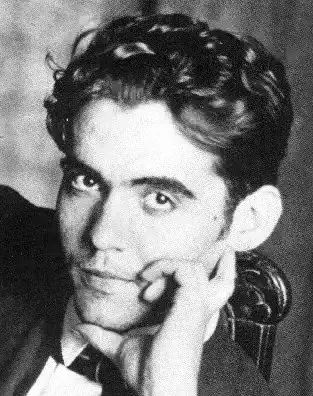
Federico García Lorca
Ode to Walt Whitman
Ode to Walt Whitman
By the East River and the Bronx
boys were singing, exposing their waists
with the wheel, with oil, leather, and the hammer.
Ninety thousand miners taking silver from the rocks
and children drawing stairs and perspectives.
But none of them could sleep,
none of them wanted to be the river,
none of them loved the huge leaves
or the shoreline's blue tongue.
By the East River and the Queensboro
boys were battling with industry
and the Jews sold to the river faun
the rose of circumcision,
and over bridges and rooftops, the mouth of the sky emptied
herds of bison driven by the wind.
But none of them paused,
none of them wanted to be a cloud,
none of them looked for ferns
or the yellow wheel of a tambourine.
As soon as the moon rises
the pulleys will spin to alter the sky;
a border of needles will besiege memory
and the coffins will bear away those who don't work.
New York, mire,
New York, mire and death.
What angel is hidden in your cheek?
Whose perfect voice will sing the truths of wheat?
Who, the terrible dream of your stained anemones?
Not for a moment, Walt Whitman, lovely old man,
have I failed to see your beard full of butterflies,
nor your corduroy shoulders frayed by the moon,
nor your thighs pure as Apollo's,
nor your voice like a column of ash,
old man, beautiful as the mist,
you moaned like a bird
with its sex pierced by a needle.
Enemy of the satyr,
enemy of the vine,
and lover of bodies beneath rough cloth...
Not for a moment, virile beauty,
who among mountains of coal, billboards, and railroads,
dreamed of becoming a river and sleeping like a river
with that comrade who would place in your breast
the small ache of an ignorant leopard.
Not for a moment, Adam of blood, Macho,
man alone at sea, Walt Whitman, lovely old man,
because on penthouse roofs,
gathered at bars,
emerging in bunches from the sewers,
trembling between the legs of chauffeurs,
or spinning on dance floors wet with absinthe,
the faggots, Walt Whitman, point you out.
He's one, too! That's right! And they land
on your luminous chaste beard,
blonds from the north, blacks from the sands,
crowds of howls and gestures,
like cats or like snakes,
the faggots, Walt Whitman, the faggots,
clouded with tears, flesh for the whip,
the boot, or the teeth of the lion tamers.
He's one, too! That's right! Stained fingers
point to the shore of your dream
when a friend eats your apple
with a slight taste of gasoline
and the sun sings in the navels
of boys who play under bridges.
But you didn't look for scratched eyes,
nor the darkest swamp where someone submerges children,
nor frozen saliva,
nor the curves slit open like a toad's belly
that the faggots wear in cars and on terraces
while the moon lashes them on the street corners of terror.
You looked for a naked body like a river.
Bull and dream who would join wheel with seaweed,
father of your agony, camellia of your death,
who would groan in the blaze of your hidden equator.
Because it's all right if a man doesn't look for his delight
in tomorrow morning's jungle of blood.
The sky has shores where life is avoided
and there are bodies that shouldn't repeat themselves in the dawn.
Agony, agony, dream, ferment, and dream.
This is the world, my friend, agony, agony.
Bodies decompose beneath the city clocks,
war passes by in tears, followed by a million gray rats,
the rich give their mistresses
small illuminated dying things,
and life is neither noble, nor good, nor sacred.
Man is able, if he wishes, to guide his desire
through a vein of coral or a heavenly naked body.
Tomorrow, loves will become stones, and Time
a breeze that drowses in the branches.
That's why I don't raise my voice, old Walt Whitman,
against the little boy who writes
the name of a girl on his pillow,
nor against the boy who dresses as a bride
in the darkness of the wardrobe,
nor against the solitary men in casinos
who drink prostitution's water with revulsion,
nor against the men with that green look in their eyes
who love other men and burn their lips in silence.
But yes against you, urban faggots,
tumescent flesh and unclean thoughts.
Mothers of mud. Harpies. Sleepless enemies
of the love that bestows crowns of joy.
Always against you, who give boys
drops of foul death with bitter poison.
Always against you,
Fairies of North America,
Pájaros of Havana,
Jotos of Mexico,
Sarasas of Cádiz,
Apios of Seville,
Cancos of Madrid,
Floras of Alicante,
Adelaidas of Portugal.
Faggots of the world, murderers of doves!
Slaves of women. Their bedroom bitches.
Opening in public squares like feverish fans
or ambushed in rigid hemlock landscapes.
No quarter given! Death
spills from your eyes
and gathers gray flowers at the mire's edge.
No quarter given! Attention!
Let the confused, the pure,
the classical, the celebrated, the supplicants
close the doors of the bacchanal to you.
And you, lovely Walt Whitman, stay asleep on the Hudson's banks
with your beard toward the pole, openhanded.
Soft clay or snow, your tongue calls for
comrades to keep watch over your unbodied gazelle.
Sleep on, nothing remains.
Dancing walls stir the prairies
and America drowns itself in machinery and lament.
I want the powerful air from the deepest night
to blow away flowers and inscriptions from the arch where you sleep,
and a black child to inform the gold-craving whites
that the kingdom of grain has arrived.
By the East River and the Bronx
boys were singing, exposing their waists
with the wheel, with oil, leather, and the hammer.
Ninety thousand miners taking silver from the rocks
and children drawing stairs and perspectives.
But none of them could sleep,
none of them wanted to be the river,
none of them loved the huge leaves
or the shoreline's blue tongue.
By the East River and the Queensboro
boys were battling with industry
and the Jews sold to the river faun
the rose of circumcision,
and over bridges and rooftops, the mouth of the sky emptied
herds of bison driven by the wind.
But none of them paused,
none of them wanted to be a cloud,
none of them looked for ferns
or the yellow wheel of a tambourine.
As soon as the moon rises
the pulleys will spin to alter the sky;
a border of needles will besiege memory
and the coffins will bear away those who don't work.
New York, mire,
New York, mire and death.
What angel is hidden in your cheek?
Whose perfect voice will sing the truths of wheat?
Who, the terrible dream of your stained anemones?
Not for a moment, Walt Whitman, lovely old man,
have I failed to see your beard full of butterflies,
nor your corduroy shoulders frayed by the moon,
nor your thighs pure as Apollo's,
nor your voice like a column of ash,
old man, beautiful as the mist,
you moaned like a bird
with its sex pierced by a needle.
Enemy of the satyr,
enemy of the vine,
and lover of bodies beneath rough cloth...
Not for a moment, virile beauty,
who among mountains of coal, billboards, and railroads,
dreamed of becoming a river and sleeping like a river
with that comrade who would place in your breast
the small ache of an ignorant leopard.
Not for a moment, Adam of blood, Macho,
man alone at sea, Walt Whitman, lovely old man,
because on penthouse roofs,
gathered at bars,
emerging in bunches from the sewers,
trembling between the legs of chauffeurs,
or spinning on dance floors wet with absinthe,
the faggots, Walt Whitman, point you out.
He's one, too! That's right! And they land
on your luminous chaste beard,
blonds from the north, blacks from the sands,
crowds of howls and gestures,
like cats or like snakes,
the faggots, Walt Whitman, the faggots,
clouded with tears, flesh for the whip,
the boot, or the teeth of the lion tamers.
He's one, too! That's right! Stained fingers
point to the shore of your dream
when a friend eats your apple
with a slight taste of gasoline
and the sun sings in the navels
of boys who play under bridges.
But you didn't look for scratched eyes,
nor the darkest swamp where someone submerges children,
nor frozen saliva,
nor the curves slit open like a toad's belly
that the faggots wear in cars and on terraces
while the moon lashes them on the street corners of terror.
You looked for a naked body like a river.
Bull and dream who would join wheel with seaweed,
father of your agony, camellia of your death,
who would groan in the blaze of your hidden equator.
Because it's all right if a man doesn't look for his delight
in tomorrow morning's jungle of blood.
The sky has shores where life is avoided
and there are bodies that shouldn't repeat themselves in the dawn.
Agony, agony, dream, ferment, and dream.
This is the world, my friend, agony, agony.
Bodies decompose beneath the city clocks,
war passes by in tears, followed by a million gray rats,
the rich give their mistresses
small illuminated dying things,
and life is neither noble, nor good, nor sacred.
Man is able, if he wishes, to guide his desire
through a vein of coral or a heavenly naked body.
Tomorrow, loves will become stones, and Time
a breeze that drowses in the branches.
That's why I don't raise my voice, old Walt Whitman,
against the little boy who writes
the name of a girl on his pillow,
nor against the boy who dresses as a bride
in the darkness of the wardrobe,
nor against the solitary men in casinos
who drink prostitution's water with revulsion,
nor against the men with that green look in their eyes
who love other men and burn their lips in silence.
But yes against you, urban faggots,
tumescent flesh and unclean thoughts.
Mothers of mud. Harpies. Sleepless enemies
of the love that bestows crowns of joy.
Always against you, who give boys
drops of foul death with bitter poison.
Always against you,
Fairies of North America,
Pájaros of Havana,
Jotos of Mexico,
Sarasas of Cádiz,
Apios of Seville,
Cancos of Madrid,
Floras of Alicante,
Adelaidas of Portugal.
Faggots of the world, murderers of doves!
Slaves of women. Their bedroom bitches.
Opening in public squares like feverish fans
or ambushed in rigid hemlock landscapes.
No quarter given! Death
spills from your eyes
and gathers gray flowers at the mire's edge.
No quarter given! Attention!
Let the confused, the pure,
the classical, the celebrated, the supplicants
close the doors of the bacchanal to you.
And you, lovely Walt Whitman, stay asleep on the Hudson's banks
with your beard toward the pole, openhanded.
Soft clay or snow, your tongue calls for
comrades to keep watch over your unbodied gazelle.
Sleep on, nothing remains.
Dancing walls stir the prairies
and America drowns itself in machinery and lament.
I want the powerful air from the deepest night
to blow away flowers and inscriptions from the arch where you sleep,
and a black child to inform the gold-craving whites
that the kingdom of grain has arrived.
744
Federico García Lorca
City That Does Not Sleep
City That Does Not Sleep
In the sky there is nobody asleep. Nobody, nobody.
Nobody is asleep.
The creatures of the moon sniff and prowl about their cabins.
The living iguanas will come and bite the men who do not dream,
and the man who rushes out with his spirit broken will meet on the
street corner
the unbelievable alligator quiet beneath the tender protest of the
stars.
Nobody is asleep on earth. Nobody, nobody.
Nobody is asleep.
In a graveyard far off there is a corpse
who has moaned for three years
because of a dry countryside on his knee;
and that boy they buried this morning cried so much
it was necessary to call out the dogs to keep him quiet.
Life is not a dream. Careful! Careful! Careful!
We fall down the stairs in order to eat the moist earth
or we climb to the knife edge of the snow with the voices of the dead
dahlias.
But forgetfulness does not exist, dreams do not exist;
flesh exists. Kisses tie our mouths
in a thicket of new veins,
and whoever his pain pains will feel that pain forever
and whoever is afraid of death will carry it on his shoulders.
One day
the horses will live in the saloons
and the enraged ants
will throw themselves on the yellow skies that take refuge in the
eyes of cows.
Another day
we will watch the preserved butterflies rise from the dead
and still walking through a country of gray sponges and silent boats
we will watch our ring flash and roses spring from our tongue.
Careful! Be careful! Be careful!
The men who still have marks of the claw and the thunderstorm,
and that boy who cries because he has never heard of the invention
of the bridge,
or that dead man who possesses now only his head and a shoe,
we must carry them to the wall where the iguanas and the snakes
are waiting,
where the bear's teeth are waiting,
where the mummified hand of the boy is waiting,
and the hair of the camel stands on end with a violent blue shudder.
Nobody is sleeping in the sky. Nobody, nobody.
Nobody is sleeping.
If someone does close his eyes,
a whip, boys, a whip!
Let there be a landscape of open eyes
and bitter wounds on fire.
No one is sleeping in this world. No one, no one.
I have said it before.
No one is sleeping.
But if someone grows too much moss on his temples during the
night,
open the stage trapdoors so he can see in the moonlight
the lying goblets, and the poison, and the skull of the theaters.
In the sky there is nobody asleep. Nobody, nobody.
Nobody is asleep.
The creatures of the moon sniff and prowl about their cabins.
The living iguanas will come and bite the men who do not dream,
and the man who rushes out with his spirit broken will meet on the
street corner
the unbelievable alligator quiet beneath the tender protest of the
stars.
Nobody is asleep on earth. Nobody, nobody.
Nobody is asleep.
In a graveyard far off there is a corpse
who has moaned for three years
because of a dry countryside on his knee;
and that boy they buried this morning cried so much
it was necessary to call out the dogs to keep him quiet.
Life is not a dream. Careful! Careful! Careful!
We fall down the stairs in order to eat the moist earth
or we climb to the knife edge of the snow with the voices of the dead
dahlias.
But forgetfulness does not exist, dreams do not exist;
flesh exists. Kisses tie our mouths
in a thicket of new veins,
and whoever his pain pains will feel that pain forever
and whoever is afraid of death will carry it on his shoulders.
One day
the horses will live in the saloons
and the enraged ants
will throw themselves on the yellow skies that take refuge in the
eyes of cows.
Another day
we will watch the preserved butterflies rise from the dead
and still walking through a country of gray sponges and silent boats
we will watch our ring flash and roses spring from our tongue.
Careful! Be careful! Be careful!
The men who still have marks of the claw and the thunderstorm,
and that boy who cries because he has never heard of the invention
of the bridge,
or that dead man who possesses now only his head and a shoe,
we must carry them to the wall where the iguanas and the snakes
are waiting,
where the bear's teeth are waiting,
where the mummified hand of the boy is waiting,
and the hair of the camel stands on end with a violent blue shudder.
Nobody is sleeping in the sky. Nobody, nobody.
Nobody is sleeping.
If someone does close his eyes,
a whip, boys, a whip!
Let there be a landscape of open eyes
and bitter wounds on fire.
No one is sleeping in this world. No one, no one.
I have said it before.
No one is sleeping.
But if someone grows too much moss on his temples during the
night,
open the stage trapdoors so he can see in the moonlight
the lying goblets, and the poison, and the skull of the theaters.
922

Ezra Pound
Women Before A Shop
Women Before A Shop
The gew-gaws of false amber and false turquoise attract them.
'Like to like nature': these agglutinous yellows!
The gew-gaws of false amber and false turquoise attract them.
'Like to like nature': these agglutinous yellows!
568
Ezra Pound
The Bellaires
The Bellaires
The good Bellaires
Do not understand the conduct of this world's affairs.
In fact they understood them so badly
That they have had to cross the Channel.
Nine lawyers, four counsels, five judges and three
proctors of the King,
Together with the respective wives, husbands, sisters
and heterogeneous connections of the good Bellaires,
Met to discuss their affairs;
But the good Bellaires have so little understood their
affairs
That now there is no one at all
Who can understand any affair of theirs. Yet
Fourteen hunters still eat in the stables of
The good Squire Bellaire;
But these may not suffer attainder,
For they may not belong to the good Squire Bellaire
But to his wife.
On the contrary, if they do not belong to his wife,
He will plead
A 'freedom from attainder'
For twelve horses and also for twelve boarhounds
From Charles the Fourth;
And a further freedom for the remainder
Of horses, from Henry the Fourth.
But the judges,
Being free of mediaeval scholarship,
Will pay no attention to this,
And there will be only the more confusion,
Replevin, estoppel, espavin and what not.
Nine lawyers, four counsels, etc.,
Met to discuss their affairs,
But the sole result was bills
From lawyers to whom no one was indebted,
And even the lawyers
Were uncertain who was supposed to be indebted to
them.
Wherefore the good Squire Bellaire
Resides now at Agde and Biaucaire,
To Carcassonne, Pui, and Alais
He fareth from day to day,
Or takes the sea air
Between Marseilles
And Beziers.
And for all this I have considerable regret,
For the good Bellaires
Are very charming people.
The good Bellaires
Do not understand the conduct of this world's affairs.
In fact they understood them so badly
That they have had to cross the Channel.
Nine lawyers, four counsels, five judges and three
proctors of the King,
Together with the respective wives, husbands, sisters
and heterogeneous connections of the good Bellaires,
Met to discuss their affairs;
But the good Bellaires have so little understood their
affairs
That now there is no one at all
Who can understand any affair of theirs. Yet
Fourteen hunters still eat in the stables of
The good Squire Bellaire;
But these may not suffer attainder,
For they may not belong to the good Squire Bellaire
But to his wife.
On the contrary, if they do not belong to his wife,
He will plead
A 'freedom from attainder'
For twelve horses and also for twelve boarhounds
From Charles the Fourth;
And a further freedom for the remainder
Of horses, from Henry the Fourth.
But the judges,
Being free of mediaeval scholarship,
Will pay no attention to this,
And there will be only the more confusion,
Replevin, estoppel, espavin and what not.
Nine lawyers, four counsels, etc.,
Met to discuss their affairs,
But the sole result was bills
From lawyers to whom no one was indebted,
And even the lawyers
Were uncertain who was supposed to be indebted to
them.
Wherefore the good Squire Bellaire
Resides now at Agde and Biaucaire,
To Carcassonne, Pui, and Alais
He fareth from day to day,
Or takes the sea air
Between Marseilles
And Beziers.
And for all this I have considerable regret,
For the good Bellaires
Are very charming people.
427
Ezra Pound
The City Of Choan
The City Of Choan
The phoenix are at play on their terrace.
The phoenix are gone, the river Hows on alone.
Flowers and grass
Cover over the dark path
where lay the dynastic house of the Go.
The bright cloths and bright caps of Shin
Are now the base of old hills.
The Three Mountains fall through the far heaven,
The isle of White Heron
splits the two streams apart.
Now the high clouds cover the sun
And I can not see Choan afar
And I am sad.
The phoenix are at play on their terrace.
The phoenix are gone, the river Hows on alone.
Flowers and grass
Cover over the dark path
where lay the dynastic house of the Go.
The bright cloths and bright caps of Shin
Are now the base of old hills.
The Three Mountains fall through the far heaven,
The isle of White Heron
splits the two streams apart.
Now the high clouds cover the sun
And I can not see Choan afar
And I am sad.
369
Ezra Pound
Ole Kate
Ole Kate
When I was only a youngster,
Sing: toodle doodlede ootl
Ole Kate would git her 'arf a pint
And wouldn't' giv' a damn hoot.
'Them stairs! them stairs, them gordam stairs
Will be the death of me/
I never heerd her say nothin'
About the priv'lege of liberty.
She'd come a sweatin' up with the coals
An a-sloshin' round with 'er mop,
Startin' in about 6 a.m.
And didn't seem never to stop.
She died on the job they tells me,
Fell plump into her pail.
Never got properly tanked as I saw,
And never got took to jail,
Just went on a sloshin'
And totin' up scuttles of coal,
And kissin9 her cat fer diversion,
Cod rest her sloshin’ soul.
‘Gimme a kissy-cuddle'
She'd say to her tibby-cat,
But she never made no mention
Of this here proletariat.
When I was only a youngster,
Sing: toodle doodlede ootl
Ole Kate would git her 'arf a pint
And wouldn't' giv' a damn hoot.
'Them stairs! them stairs, them gordam stairs
Will be the death of me/
I never heerd her say nothin'
About the priv'lege of liberty.
She'd come a sweatin' up with the coals
An a-sloshin' round with 'er mop,
Startin' in about 6 a.m.
And didn't seem never to stop.
She died on the job they tells me,
Fell plump into her pail.
Never got properly tanked as I saw,
And never got took to jail,
Just went on a sloshin'
And totin' up scuttles of coal,
And kissin9 her cat fer diversion,
Cod rest her sloshin’ soul.
‘Gimme a kissy-cuddle'
She'd say to her tibby-cat,
But she never made no mention
Of this here proletariat.
428