

Poems
Beauty
Poems in this topic

William Shakespeare
Sonnet 60: Like as the waves make towards the pebbled shore
Sonnet 60: Like as the waves make towards the pebbled shore
Like as the waves make towards the pebbled shore,
So do our minutes hasten to their end;
Each changing place with that which goes before,
In sequent toil all forwards do contend.
Nativity once in the main of light,
Crawls to maturity, wherewith being crowned,
Crookèd eclipses 'gainst his glory fight,
And Time that gave doth now his gift confound.
Time doth transfix the flourish set on youth,
And delves the parallels in beauty's brow,
Feeds on the rarities of nature's truth,
And nothing stands but for his scythe to mow.
And yet to times in hope my verse shall stand,
Praising thy worth despite his cruel hand.
Like as the waves make towards the pebbled shore,
So do our minutes hasten to their end;
Each changing place with that which goes before,
In sequent toil all forwards do contend.
Nativity once in the main of light,
Crawls to maturity, wherewith being crowned,
Crookèd eclipses 'gainst his glory fight,
And Time that gave doth now his gift confound.
Time doth transfix the flourish set on youth,
And delves the parallels in beauty's brow,
Feeds on the rarities of nature's truth,
And nothing stands but for his scythe to mow.
And yet to times in hope my verse shall stand,
Praising thy worth despite his cruel hand.
358
William Shakespeare
Sonnet 53: What is your substance, whereof are you made
Sonnet 53: What is your substance, whereof are you made
What is your substance, whereof are you made,
That millions of strange shadows on you tend?
Since everyone hath, every one, one shade,
And you, but one, can every shadow lend.
Describe Adonis, and the counterfeit
Is poorly imitated after you;
On Helen's cheek all art of beauty set,
And you in Grecian tires are painted new.
Speak of the spring, and foison of the year;
The one doth shadow of your beauty show,
The other as your bounty doth appear,
And you in every blessèd shape we know.
In all external grace you have some part,
But you like none, none you, for constant heart.
What is your substance, whereof are you made,
That millions of strange shadows on you tend?
Since everyone hath, every one, one shade,
And you, but one, can every shadow lend.
Describe Adonis, and the counterfeit
Is poorly imitated after you;
On Helen's cheek all art of beauty set,
And you in Grecian tires are painted new.
Speak of the spring, and foison of the year;
The one doth shadow of your beauty show,
The other as your bounty doth appear,
And you in every blessèd shape we know.
In all external grace you have some part,
But you like none, none you, for constant heart.
325
William Shakespeare
Sonnet 5: Those hours, that with gentle work did frame
Sonnet 5: Those hours, that with gentle work did frame
Those hours, that with gentle work did frame
The lovely gaze where every eye doth dwell,
Will play the tyrants to the very same
And that unfair which fairly doth excel;
For never-resting Time leads summer on
To hideous winter and confounds him there,
Sap checked with frost and lusty leaves quite gone,
Beauty o'ersnowed and bareness everywhere.
Then, were not summer's distillation left
A liquid prisoner pent in walls of glass,
Beauty's effect with beauty were bereft,
Nor it nor no remembrance what it was.
But flowers distilled, though they with winter meet,
Leese but their show; their substance still lives sweet.
Those hours, that with gentle work did frame
The lovely gaze where every eye doth dwell,
Will play the tyrants to the very same
And that unfair which fairly doth excel;
For never-resting Time leads summer on
To hideous winter and confounds him there,
Sap checked with frost and lusty leaves quite gone,
Beauty o'ersnowed and bareness everywhere.
Then, were not summer's distillation left
A liquid prisoner pent in walls of glass,
Beauty's effect with beauty were bereft,
Nor it nor no remembrance what it was.
But flowers distilled, though they with winter meet,
Leese but their show; their substance still lives sweet.
330
William Shakespeare
Sonnet 38:
Sonnet 38:
How can my muse want subject to invent,
While thou dost breathe, that pour'st into my verse
Thine own sweet argument, too excellent
For every vulgar paper to rehearse?
O! give thy self the thanks, if aught in me
Worthy perusal stand against thy sight;
For who's so dumb that cannot write to thee,
When thou thy self dost give invention light?
Be thou the tenth Muse, ten times more in worth
Than those old nine which rhymers invocate;
And he that calls on thee, let him bring forth
Eternal numbers to outlive long date.
If my slight muse do please these curious days,
The pain be mine, but thine shall be the praise.
How can my muse want subject to invent,
While thou dost breathe, that pour'st into my verse
Thine own sweet argument, too excellent
For every vulgar paper to rehearse?
O! give thy self the thanks, if aught in me
Worthy perusal stand against thy sight;
For who's so dumb that cannot write to thee,
When thou thy self dost give invention light?
Be thou the tenth Muse, ten times more in worth
Than those old nine which rhymers invocate;
And he that calls on thee, let him bring forth
Eternal numbers to outlive long date.
If my slight muse do please these curious days,
The pain be mine, but thine shall be the praise.
337
William Shakespeare
Sonnet 24: “Mine eye hath played the painter and hath stelled…”
Sonnet 24: “Mine eye hath played the painter and hath stelled…”
Mine eye hath played the painter and hath stelled,
Thy beauty's form in table of my heart,
My body is the frame wherein 'tis held,
And perspective it is best painter's art.
For through the painter must you see his skill,
To find where your true image pictured lies,
Which in my bosom's shop is hanging still,
That hath his windows glazed with thine eyes:
Now see what good turns eyes for eyes have done,
Mine eyes have drawn thy shape, and thine for me
Are windows to my breast, where-through the sun
Delights to peep, to gaze therein on thee;
Yet eyes this cunning want to grace their art,
They draw but what they see, know not the heart.
Mine eye hath played the painter and hath stelled,
Thy beauty's form in table of my heart,
My body is the frame wherein 'tis held,
And perspective it is best painter's art.
For through the painter must you see his skill,
To find where your true image pictured lies,
Which in my bosom's shop is hanging still,
That hath his windows glazed with thine eyes:
Now see what good turns eyes for eyes have done,
Mine eyes have drawn thy shape, and thine for me
Are windows to my breast, where-through the sun
Delights to peep, to gaze therein on thee;
Yet eyes this cunning want to grace their art,
They draw but what they see, know not the heart.
286
William Shakespeare
Sonnet 22: My glass shall not persuade me I am old
Sonnet 22: My glass shall not persuade me I am old
My glass shall not persuade me I am old
So long as youth and thou are of one date;
But when in thee Time's furrows I behold,
Then look I death my days should expiate.
For all that beauty that doth cover thee
Is but the seemly raiment of my heart,
Which in thy breast doth live, as thine in me.
How can I then be elder than thou art?
O, therefore, love, be of thyself so wary
As I not for myself, but for thee will,
Bearing thy heart, which I will keep so chary
As tender nurse her babe from faring ill.
Presume not on thy heart when mine is slain;
Thou gav'st me thine, not to give back again.
My glass shall not persuade me I am old
So long as youth and thou are of one date;
But when in thee Time's furrows I behold,
Then look I death my days should expiate.
For all that beauty that doth cover thee
Is but the seemly raiment of my heart,
Which in thy breast doth live, as thine in me.
How can I then be elder than thou art?
O, therefore, love, be of thyself so wary
As I not for myself, but for thee will,
Bearing thy heart, which I will keep so chary
As tender nurse her babe from faring ill.
Presume not on thy heart when mine is slain;
Thou gav'st me thine, not to give back again.
276
William Shakespeare
Sonnet 2:
Sonnet 2:
When forty winters shall besiege thy brow,
And dig deep trenches in thy beauty's field,
Thy youth's proud livery, so gazed on now,
Will be a tatter'd weed, of small worth held:
Then being ask'd where all thy beauty lies,
Where all the treasure of thy lusty days,
To say, within thine own deep-sunken eyes,
Were an all-eating shame and thriftless praise.
How much more praise deserved thy beauty's use,
If thou couldst answer 'This fair child of mine
Shall sum my count and make my old excuse,'
Proving his beauty by succession thine!
This were to be new made when thou art old,
And see thy blood warm when thou feel'st it cold.
When forty winters shall besiege thy brow,
And dig deep trenches in thy beauty's field,
Thy youth's proud livery, so gazed on now,
Will be a tatter'd weed, of small worth held:
Then being ask'd where all thy beauty lies,
Where all the treasure of thy lusty days,
To say, within thine own deep-sunken eyes,
Were an all-eating shame and thriftless praise.
How much more praise deserved thy beauty's use,
If thou couldst answer 'This fair child of mine
Shall sum my count and make my old excuse,'
Proving his beauty by succession thine!
This were to be new made when thou art old,
And see thy blood warm when thou feel'st it cold.
483
William Shakespeare
Sonnet 18: Shall I compare thee to a summer's day?
Sonnet 18: Shall I compare thee to a summer's day?
Shall I compare thee to a summer's day?
Thou art more lovely and more temperate.
Rough winds do shake the darling buds of May,
And summer's lease hath all too short a date.
Sometime too hot the eye of heaven shines,
And often is his gold complexion dimmed;
And every fair from fair sometime declines,
By chance, or nature's changing course untrimmed.
But thy eternal summer shall not fade
Nor lose possession of that fair thou ow'st;
Nor shall death brag thou wand'rest in his shade,
When in eternal lines to time thou grow'st,
So long as men can breathe or eyes can see,
So long lives this, and this gives life to thee.
Shall I compare thee to a summer's day?
Thou art more lovely and more temperate.
Rough winds do shake the darling buds of May,
And summer's lease hath all too short a date.
Sometime too hot the eye of heaven shines,
And often is his gold complexion dimmed;
And every fair from fair sometime declines,
By chance, or nature's changing course untrimmed.
But thy eternal summer shall not fade
Nor lose possession of that fair thou ow'st;
Nor shall death brag thou wand'rest in his shade,
When in eternal lines to time thou grow'st,
So long as men can breathe or eyes can see,
So long lives this, and this gives life to thee.
239
William Shakespeare
Sonnet 16: But wherefore do not you a mightier way
Sonnet 16: But wherefore do not you a mightier way
But wherefore do not you a mightier way
Make war upon this bloody tyrant, Time,
And fortify your self in your decay
With means more blessèd than my barren rhyme?
Now stand you on the top of happy hours,
And many maiden gardens yet unset,
With virtuous wish would bear you living flowers,
Much liker than your painted counterfeit:
So should the lines of life that life repair
Which this, Time's pencil, or my pupil pen
Neither in inward worth nor outward fair
Can make you live your self in eyes of men.
To give away your self keeps your self still,
And you must live drawn by your own sweet skill.
But wherefore do not you a mightier way
Make war upon this bloody tyrant, Time,
And fortify your self in your decay
With means more blessèd than my barren rhyme?
Now stand you on the top of happy hours,
And many maiden gardens yet unset,
With virtuous wish would bear you living flowers,
Much liker than your painted counterfeit:
So should the lines of life that life repair
Which this, Time's pencil, or my pupil pen
Neither in inward worth nor outward fair
Can make you live your self in eyes of men.
To give away your self keeps your self still,
And you must live drawn by your own sweet skill.
215
William Shakespeare
Sonnet 14: Not from the stars do I my judgement pluck
Sonnet 14: Not from the stars do I my judgement pluck
Not from the stars do I my judgement pluck,
And yet methinks I have astronomy—
But not to tell of good or evil luck,
Of plagues, of dearths, or seasons' quality;
Nor can I fortune to brief minutes tell,
'Pointing to each his thunder, rain, and wind,
Or say with princes if it shall go well
By oft predict that I in heaven find.
But from thine eyes my knowledge I derive,
And, constant stars, in them I read such art
As truth and beauty shall together thrive
If from thy self to store thou wouldst convert;
Or else of thee this I prognosticate:
Thy end is truth's and beauty's doom and date.
Not from the stars do I my judgement pluck,
And yet methinks I have astronomy—
But not to tell of good or evil luck,
Of plagues, of dearths, or seasons' quality;
Nor can I fortune to brief minutes tell,
'Pointing to each his thunder, rain, and wind,
Or say with princes if it shall go well
By oft predict that I in heaven find.
But from thine eyes my knowledge I derive,
And, constant stars, in them I read such art
As truth and beauty shall together thrive
If from thy self to store thou wouldst convert;
Or else of thee this I prognosticate:
Thy end is truth's and beauty's doom and date.
289
William Shakespeare
Sonnet 137: Thou blind fool, Love, what dost thou to mine eyes
Sonnet 137: Thou blind fool, Love, what dost thou to mine eyes
Thou blind fool, Love, what dost thou to mine eyes
That they behold and see not what they see?
They know what beauty is, see where it lies,
Yet what the best is, take the worst to be.
If eyes corrupt by overpartial looks,
Be anchored in the bay where all men ride,
Why of eyes' falsehood hast thou forgèd hooks,
Whereto the judgment of my heart is tied?
Why should my heart think that a several plot
Which my heart knows the wide world's common place?
Or mine eyes seeing this, say this is not
To put fair truth upon so foul a face?
In things right true my heart and eyes have erred,
And to this false plague are they now transferred.
Thou blind fool, Love, what dost thou to mine eyes
That they behold and see not what they see?
They know what beauty is, see where it lies,
Yet what the best is, take the worst to be.
If eyes corrupt by overpartial looks,
Be anchored in the bay where all men ride,
Why of eyes' falsehood hast thou forgèd hooks,
Whereto the judgment of my heart is tied?
Why should my heart think that a several plot
Which my heart knows the wide world's common place?
Or mine eyes seeing this, say this is not
To put fair truth upon so foul a face?
In things right true my heart and eyes have erred,
And to this false plague are they now transferred.
328
William Shakespeare
Sonnet 12: When I do count the clock that tells the time
Sonnet 12: When I do count the clock that tells the time
When I do count the clock that tells the time,
And see the brave day sunk in hideous night;
When I behold the violet past prime,
And sable curls all silvered o'er with white;
When lofty trees I see barren of leaves
Which erst from heat did canopy the herd,
And summer's green all girded up in sheaves
Borne on the bier with white and bristly beard,
Then of thy beauty do I question make
That thou among the wastes of time must go,
Since sweets and beauties do themselves forsake
And die as fast as they see others grow;
And nothing 'gainst Time's scythe can make defence
Save breed, to brave him when he takes thee hence.
When I do count the clock that tells the time,
And see the brave day sunk in hideous night;
When I behold the violet past prime,
And sable curls all silvered o'er with white;
When lofty trees I see barren of leaves
Which erst from heat did canopy the herd,
And summer's green all girded up in sheaves
Borne on the bier with white and bristly beard,
Then of thy beauty do I question make
That thou among the wastes of time must go,
Since sweets and beauties do themselves forsake
And die as fast as they see others grow;
And nothing 'gainst Time's scythe can make defence
Save breed, to brave him when he takes thee hence.
374
William Shakespeare
Sonnet 103: Alack, what poverty my Muse brings forth
Sonnet 103: Alack, what poverty my Muse brings forth
Alack, what poverty my Muse brings forth,
That having such a scope to show her pride,
The argument all bare is of more worth
Than when it hath my added praise beside.
O, blame me not if I no more can write!
Look in your glass, and there appears a face
That overgoes my blunt invention quite,
Dulling my lines, and doing me disgrace.
Were it not sinful then striving to mend,
To mar the subject that before was well?
For to no other pass my verses tend
Than of your graces and your gifts to tell;
And more, much more than in my verse can sit,
Your own glass shows you when you look in it.
Alack, what poverty my Muse brings forth,
That having such a scope to show her pride,
The argument all bare is of more worth
Than when it hath my added praise beside.
O, blame me not if I no more can write!
Look in your glass, and there appears a face
That overgoes my blunt invention quite,
Dulling my lines, and doing me disgrace.
Were it not sinful then striving to mend,
To mar the subject that before was well?
For to no other pass my verses tend
Than of your graces and your gifts to tell;
And more, much more than in my verse can sit,
Your own glass shows you when you look in it.
333
William Shakespeare
Sonnet 105: Let not my love be called idolatry
Sonnet 105: Let not my love be called idolatry
Let not my love be called idolatry,
Nor my belovèd as an idol show,
Since all alike my songs and praises be
To one, of one, still such, and ever so.
Kind is my love today, tomorrow kind,
Still constant in a wondrous excellence;
Therefore my verse to constancy confined,
One thing expressing, leaves out difference.
"Fair, kind, and true" is all my argument,
"Fair, kind, and true" varying to other words;
And in this change is my invention spent,
Three themes in one, which wondrous scope affords.
Fair, kind, and true, have often lived alone.
Which three till now never kept seat in one.
Let not my love be called idolatry,
Nor my belovèd as an idol show,
Since all alike my songs and praises be
To one, of one, still such, and ever so.
Kind is my love today, tomorrow kind,
Still constant in a wondrous excellence;
Therefore my verse to constancy confined,
One thing expressing, leaves out difference.
"Fair, kind, and true" is all my argument,
"Fair, kind, and true" varying to other words;
And in this change is my invention spent,
Three themes in one, which wondrous scope affords.
Fair, kind, and true, have often lived alone.
Which three till now never kept seat in one.
292
William Shakespeare
Sonnet 10: For shame, deny that thou bear'st love to any
Sonnet 10: For shame, deny that thou bear'st love to any
For shame, deny that thou bear'st love to any
Who for thy self art so unprovident.
Grant, if thou wilt, thou art beloved of many,
But that thou none lov'st is most evident;
For thou art so possessed with murd'rous hate,
That 'gainst thy self thou stick'st not to conspire,
Seeking that beauteous roof to ruinate
Which to repair should be thy chief desire.
O, change thy thought, that I may change my mind!
Shall hate be fairer lodged than gentle love?
Be as thy presence is gracious and kind,
Or to thy self at least kind-hearted prove,
Make thee another self, for love of me,
That beauty still may live in thine or thee.
For shame, deny that thou bear'st love to any
Who for thy self art so unprovident.
Grant, if thou wilt, thou art beloved of many,
But that thou none lov'st is most evident;
For thou art so possessed with murd'rous hate,
That 'gainst thy self thou stick'st not to conspire,
Seeking that beauteous roof to ruinate
Which to repair should be thy chief desire.
O, change thy thought, that I may change my mind!
Shall hate be fairer lodged than gentle love?
Be as thy presence is gracious and kind,
Or to thy self at least kind-hearted prove,
Make thee another self, for love of me,
That beauty still may live in thine or thee.
332
William Shakespeare
Sonnet 101: O truant Muse, what shall be thy amends
Sonnet 101: O truant Muse, what shall be thy amends
O truant Muse, what shall be thy amends
For thy neglect of truth in beauty dyed?
Both truth and beauty on my love depends;
So dost thou too, and therein dignified.
Make answer, Muse. Wilt thou not haply say,
"Truth needs no colour with his colour fixed,
Beauty no pencil, beauty's truth to lay,
But best is best, if never intermixed"?
Because he needs no praise, wilt thou be dumb?
Excuse not silence so, for't lies in thee
To make him much outlive a gilded tomb
And to be praised of ages yet to be.
Then do thy office, Muse; I teach thee how
To make him seem, long hence, as he shows now.
O truant Muse, what shall be thy amends
For thy neglect of truth in beauty dyed?
Both truth and beauty on my love depends;
So dost thou too, and therein dignified.
Make answer, Muse. Wilt thou not haply say,
"Truth needs no colour with his colour fixed,
Beauty no pencil, beauty's truth to lay,
But best is best, if never intermixed"?
Because he needs no praise, wilt thou be dumb?
Excuse not silence so, for't lies in thee
To make him much outlive a gilded tomb
And to be praised of ages yet to be.
Then do thy office, Muse; I teach thee how
To make him seem, long hence, as he shows now.
337
William Shakespeare
Silvia
Silvia
WHO is Silvia? What is she?
That all our swains commend her?
Holy, fair, and wise is she;
The heaven such grace did lend her,
That she might admired be.
Is she kind as she is fair?
For beauty lives with kindness:
Love doth to her eyes repair,
To help him of his blindness;
And, being help'd, inhabits there.
Then to Silvia let us sing,
That Silvia is excelling;
She excels each mortal thing
Upon the dull earth dwelling:
To her let us garlands bring.
WHO is Silvia? What is she?
That all our swains commend her?
Holy, fair, and wise is she;
The heaven such grace did lend her,
That she might admired be.
Is she kind as she is fair?
For beauty lives with kindness:
Love doth to her eyes repair,
To help him of his blindness;
And, being help'd, inhabits there.
Then to Silvia let us sing,
That Silvia is excelling;
She excels each mortal thing
Upon the dull earth dwelling:
To her let us garlands bring.
331
William Shakespeare
Sonnet 1:
Sonnet 1:
From fairest creatures we desire increase,
That thereby beauty's rose might never die,
But as the riper should by time decease,
His tender heir might bear his memory:
But thou, contracted to thine own bright eyes,
Feed'st thy light'st flame with self-substantial fuel,
Making a famine where abundance lies,
Thyself thy foe, to thy sweet self too cruel.
Thou that art now the world's fresh ornament
And only herald to the gaudy spring,
Within thine own bud buriest thy content
And, tender churl, makest waste in niggarding.
Pity the world, or else this glutton be,
To eat the world's due, by the grave and thee.
From fairest creatures we desire increase,
That thereby beauty's rose might never die,
But as the riper should by time decease,
His tender heir might bear his memory:
But thou, contracted to thine own bright eyes,
Feed'st thy light'st flame with self-substantial fuel,
Making a famine where abundance lies,
Thyself thy foe, to thy sweet self too cruel.
Thou that art now the world's fresh ornament
And only herald to the gaudy spring,
Within thine own bud buriest thy content
And, tender churl, makest waste in niggarding.
Pity the world, or else this glutton be,
To eat the world's due, by the grave and thee.
309
William Shakespeare
Not from the stars do I my judgment pluck (Sonnet 14)
Not from the stars do I my judgment pluck (Sonnet 14)
Not from the stars do I my judgment pluck,
And yet methinks I have astronomy;
But not to tell of good or evil luck,
Of plagues, of dearths, or seasons' quality;
Nor can I fortune to brief minutes tell,
Pointing to each his thunder, rain, and wind,
Or say with princes if it shall go well
By oft predict that I in heaven find.
But from thine eyes my knowledge I derive,
And, constant stars, in them I read such art
As truth and beauty shall together thrive
If from thyself to store thou wouldst convert:
Or else of thee this I prognosticate,
Thy end is truth's and beauty's doom and date.
Not from the stars do I my judgment pluck,
And yet methinks I have astronomy;
But not to tell of good or evil luck,
Of plagues, of dearths, or seasons' quality;
Nor can I fortune to brief minutes tell,
Pointing to each his thunder, rain, and wind,
Or say with princes if it shall go well
By oft predict that I in heaven find.
But from thine eyes my knowledge I derive,
And, constant stars, in them I read such art
As truth and beauty shall together thrive
If from thyself to store thou wouldst convert:
Or else of thee this I prognosticate,
Thy end is truth's and beauty's doom and date.
333

William Ernest Henley
Barmaid
Barmaid
Though, if you ask her name, she says Elise,
Being plain Elizabeth, e'en let it pass,
And own that, if her aspirates take their ease,
She ever makes a point, in washing glass,
Handling the engine, turning taps for tots,
And countering change, and scorning what men say,
Of posing as a dove among the pots,
Nor often gives her dignity away.
Her head's a work of art, and, if her eyes
Be tired and ignorant, she has a waist;
Cheaply the Mode she shadows; and she tries
From penny novels to amend her taste;
And, having mopped the zinc for certain years,
And faced the gas, she fades and disappears.
Though, if you ask her name, she says Elise,
Being plain Elizabeth, e'en let it pass,
And own that, if her aspirates take their ease,
She ever makes a point, in washing glass,
Handling the engine, turning taps for tots,
And countering change, and scorning what men say,
Of posing as a dove among the pots,
Nor often gives her dignity away.
Her head's a work of art, and, if her eyes
Be tired and ignorant, she has a waist;
Cheaply the Mode she shadows; and she tries
From penny novels to amend her taste;
And, having mopped the zinc for certain years,
And faced the gas, she fades and disappears.
151
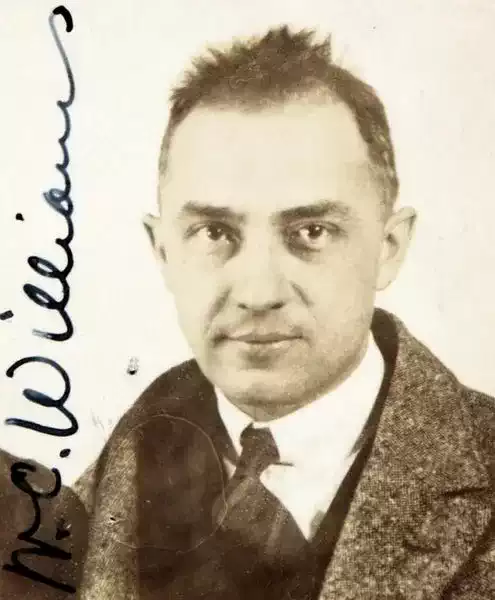
William Carlos Williams
To Elsie
To Elsie
The pure products of America
go crazy--
mountain folk from Kentucky
or the ribbed north end of
Jersey
with its isolate lakes and
valleys, its deaf-mutes, thieves
old names
and promiscuity between
devil-may-care men who have taken
to railroading
out of sheer lust of adventure--
and young slatterns, bathed
in filth
from Monday to Saturday
to be tricked out that night
with gauds
from imaginations which have no
peasant traditions to give them
character
but flutter and flaunt
sheer rags-succumbing without
emotion
save numbed terror
under some hedge of choke-cherry
or viburnumwhich
they cannot express--
Unless it be that marriage
perhaps
with a dash of Indian blood
will throw up a girl so desolate
so hemmed round
with disease or murder
that she'll be rescued by an
agent--
reared by the state and
sent out at fifteen to work in
some hard-pressed
house in the suburbs--
some doctor's family, some Elsie--
voluptuous water
expressing with broken
brain the truth about us--
her great
ungainly hips and flopping breasts
addressed to cheap
jewelry
and rich young men with fine eyes
as if the earth under our feet
were
an excrement of some sky
and we degraded prisoners
destined
to hunger until we eat filth
while the imagination strains
after deer
going by fields of goldenrod in
the stifling heat of September
Somehow
it seems to destroy us
It is only in isolate flecks that
something
is given off
No one
to witness
and adjust, no one to drive the car
The pure products of America
go crazy--
mountain folk from Kentucky
or the ribbed north end of
Jersey
with its isolate lakes and
valleys, its deaf-mutes, thieves
old names
and promiscuity between
devil-may-care men who have taken
to railroading
out of sheer lust of adventure--
and young slatterns, bathed
in filth
from Monday to Saturday
to be tricked out that night
with gauds
from imaginations which have no
peasant traditions to give them
character
but flutter and flaunt
sheer rags-succumbing without
emotion
save numbed terror
under some hedge of choke-cherry
or viburnumwhich
they cannot express--
Unless it be that marriage
perhaps
with a dash of Indian blood
will throw up a girl so desolate
so hemmed round
with disease or murder
that she'll be rescued by an
agent--
reared by the state and
sent out at fifteen to work in
some hard-pressed
house in the suburbs--
some doctor's family, some Elsie--
voluptuous water
expressing with broken
brain the truth about us--
her great
ungainly hips and flopping breasts
addressed to cheap
jewelry
and rich young men with fine eyes
as if the earth under our feet
were
an excrement of some sky
and we degraded prisoners
destined
to hunger until we eat filth
while the imagination strains
after deer
going by fields of goldenrod in
the stifling heat of September
Somehow
it seems to destroy us
It is only in isolate flecks that
something
is given off
No one
to witness
and adjust, no one to drive the car
434
William Carlos Williams
The Young Housewife
The Young Housewife
At ten AM the young housewife
moves about in negligee behind
the wooden walls of her husband’s house.
I pass solitary in my car.
Then again she comes to the curb
to call the ice-man, fish-man, and stands
shy, uncorseted, tucking in
stray ends of hair, and I compare her
to a fallen leaf.
The noiseless wheels of my car
rush with a crackling sound over
dried leaves as I bow and pass smiling.
At ten AM the young housewife
moves about in negligee behind
the wooden walls of her husband’s house.
I pass solitary in my car.
Then again she comes to the curb
to call the ice-man, fish-man, and stands
shy, uncorseted, tucking in
stray ends of hair, and I compare her
to a fallen leaf.
The noiseless wheels of my car
rush with a crackling sound over
dried leaves as I bow and pass smiling.
347
William Carlos Williams
The Spouts
The Spouts
In this world of
as fine a pair of breasts
as ever I saw
the fountain in
Madison Square
spouts up of water
a white tree
that dies and lives
as the rocking water
in the basin
turns from the stonerim
back upon the jet
and rising there
reflectively drops down again.
In this world of
as fine a pair of breasts
as ever I saw
the fountain in
Madison Square
spouts up of water
a white tree
that dies and lives
as the rocking water
in the basin
turns from the stonerim
back upon the jet
and rising there
reflectively drops down again.
282
William Carlos Williams
The Artist
The Artist
Mr T.
bareheaded
in a soiled undershirt
his hair standing out
on all sides
stood on his toes
heels together
arms gracefully
for the moment
curled above his head.
Then he whirled about
bounded
into the air
and with an entrechat
perfectly achieved
completed the figure.
My mother
taken by surprise
where she sat
in her invalid's chair
was left speechless.
Bravo! she cried at last
and clapped her hands.
The man's wife
came from the kitchen:
What goes on here? she said.
But the show was over.
Mr T.
bareheaded
in a soiled undershirt
his hair standing out
on all sides
stood on his toes
heels together
arms gracefully
for the moment
curled above his head.
Then he whirled about
bounded
into the air
and with an entrechat
perfectly achieved
completed the figure.
My mother
taken by surprise
where she sat
in her invalid's chair
was left speechless.
Bravo! she cried at last
and clapped her hands.
The man's wife
came from the kitchen:
What goes on here? she said.
But the show was over.
467