

Poems in this theme
Beauty
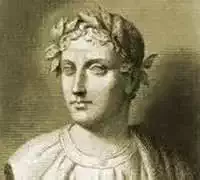
Horácio
BkII:XII Terentia’s Singing
BkII:XII Terentia’s Singing
You’d not wish the theme of Numantia’s fierce wars
matched to the lyre’s soft tones, nor cruel Hannibal,
nor the Sicilian Sea turned to dark crimson
by the Carthaginians’ blood,
nor the savage Lapiths, and drunken Hylaeus
filled with excess wine, nor Hercules with his hand
taming the sons of earth, at the danger of which
ancient Saturn’s glittering house
was shaken: you’d be better yourself, Maecenas,
at writing prose histories of Caesar’s battles,
and telling us about all those menacing kings,
now led by the neck through the streets.
The Muse wishes me to speak of the sweet singing
of your lady Terentia, and speak of her bright
flashing eyes, and speak of that heart of hers, that is
so faithful in mutual love:
she to whom it’s not unbecoming to adopt
the lead among the dancers, or compete in wit,
or, that holy day that honours Diana, give
her arm in play to shining girls.
Would you exchange now, one hair of Terentia’s
for what rich Achaemenes owned, Mygdonian
wealth of fertile Phrygia, or
the Arabians’ well-stocked homes,
while she bends her neck for those passionate kisses,
or in gentle cruelty refuses to yield them,
more than he who asks likes having them taken: then
at times surprises by taking?
You’d not wish the theme of Numantia’s fierce wars
matched to the lyre’s soft tones, nor cruel Hannibal,
nor the Sicilian Sea turned to dark crimson
by the Carthaginians’ blood,
nor the savage Lapiths, and drunken Hylaeus
filled with excess wine, nor Hercules with his hand
taming the sons of earth, at the danger of which
ancient Saturn’s glittering house
was shaken: you’d be better yourself, Maecenas,
at writing prose histories of Caesar’s battles,
and telling us about all those menacing kings,
now led by the neck through the streets.
The Muse wishes me to speak of the sweet singing
of your lady Terentia, and speak of her bright
flashing eyes, and speak of that heart of hers, that is
so faithful in mutual love:
she to whom it’s not unbecoming to adopt
the lead among the dancers, or compete in wit,
or, that holy day that honours Diana, give
her arm in play to shining girls.
Would you exchange now, one hair of Terentia’s
for what rich Achaemenes owned, Mygdonian
wealth of fertile Phrygia, or
the Arabians’ well-stocked homes,
while she bends her neck for those passionate kisses,
or in gentle cruelty refuses to yield them,
more than he who asks likes having them taken: then
at times surprises by taking?
201
Horácio
BkI:XXXVIII The Simple Myrtle
BkI:XXXVIII The Simple Myrtle
My child, how I hate Persian ostentation,
garlands twined around lime-tree bark displease me:
forget your chasing, to find all the places
where late roses fade.
You’re eager, take care, that nothing enhances
the simple myrtle: it’s not only you that
it graces, the servant, but me as I drink,
beneath the dark vine.
My child, how I hate Persian ostentation,
garlands twined around lime-tree bark displease me:
forget your chasing, to find all the places
where late roses fade.
You’re eager, take care, that nothing enhances
the simple myrtle: it’s not only you that
it graces, the servant, but me as I drink,
beneath the dark vine.
245
Horácio
BkI:XVII The Delights of the Country
BkI:XVII The Delights of the Country
Swift Faunus, the god, will quite often exchange
Arcady for my sweet Mount Lucretilis,
and while he stays he protects my goats
from the midday heat and the driving rain.
The wandering wives of the rank he-goats search,
with impunity, through the safe woodland groves,
for the hidden arbutus, and thyme,
and their kids don’t fear green poisonous snakes,
or the wolf of Mars, my lovely Tyndaris,
once my Mount Ustica’s long sloping valleys,
and its smooth worn rocks, have re-echoed
to the music of sweet divine piping.
The gods protect me: my love and devotion,
and my Muse, are dear to the gods. Here the rich
wealth of the countryside’s beauties will
flow for you, now, from the horn of plenty.
Here you’ll escape from the heat of the dog-star,
in secluded valleys, sing of bright Circe,
labouring over the Teian lyre,
and of Penelope: both loved one man.
Here you’ll bring cups of innocent Lesbian
wine, under the shade, nor will Semele’s son,
that Bacchus, battle it out with Mars,
nor shall you fear the intemperate hands
of insolent Cyrus, jealously watching,
to possess you, girl, unequal to evil,
to tear off the garland that clings to
your hair, or tear off your innocent clothes.
Swift Faunus, the god, will quite often exchange
Arcady for my sweet Mount Lucretilis,
and while he stays he protects my goats
from the midday heat and the driving rain.
The wandering wives of the rank he-goats search,
with impunity, through the safe woodland groves,
for the hidden arbutus, and thyme,
and their kids don’t fear green poisonous snakes,
or the wolf of Mars, my lovely Tyndaris,
once my Mount Ustica’s long sloping valleys,
and its smooth worn rocks, have re-echoed
to the music of sweet divine piping.
The gods protect me: my love and devotion,
and my Muse, are dear to the gods. Here the rich
wealth of the countryside’s beauties will
flow for you, now, from the horn of plenty.
Here you’ll escape from the heat of the dog-star,
in secluded valleys, sing of bright Circe,
labouring over the Teian lyre,
and of Penelope: both loved one man.
Here you’ll bring cups of innocent Lesbian
wine, under the shade, nor will Semele’s son,
that Bacchus, battle it out with Mars,
nor shall you fear the intemperate hands
of insolent Cyrus, jealously watching,
to possess you, girl, unequal to evil,
to tear off the garland that clings to
your hair, or tear off your innocent clothes.
227
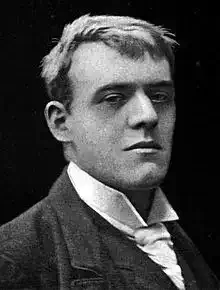
Hilaire Belloc
The Statue
The Statue
When we are dead, some Hunting-boy will pass
And find a stone half-hidden in tall grass
And grey with age: but having seen that stone
(Which was your image), ride more slowly on.
When we are dead, some Hunting-boy will pass
And find a stone half-hidden in tall grass
And grey with age: but having seen that stone
(Which was your image), ride more slowly on.
354
Hilaire Belloc
The Face
The Face
A face Sir Joshua might have painted! Yea:
Sir Joshua painted anything for pay . . .
And after all you're painted every day.
A face Sir Joshua might have painted! Yea:
Sir Joshua painted anything for pay . . .
And after all you're painted every day.
355
Hilaire Belloc
The Diamond
The Diamond
This diamond, Juliet, will adorn
Ephemeral beauties yet unborn.
While my strong verse, for ever new,
Shall still adorn immortal you.
This diamond, Juliet, will adorn
Ephemeral beauties yet unborn.
While my strong verse, for ever new,
Shall still adorn immortal you.
296
Hilaire Belloc
On the Ladies of Pixton
On the Ladies of Pixton
Three Graces; and the mother were a Grace,
But for profounder meaning in her face.
Three Graces; and the mother were a Grace,
But for profounder meaning in her face.
321
Hilaire Belloc
A Trinity
A Trinity
Of three in One and One in three
My narrow mind would doubting be
Till Beauty, Grace and Kindness met
And all at once were Juliet.
Of three in One and One in three
My narrow mind would doubting be
Till Beauty, Grace and Kindness met
And all at once were Juliet.
349
Hilaire Belloc
[Month of] April
[Month of] April
The stranger warmth of the young sun obeying,
Look! little beads of green begin to grow,
And hidden flowers have dated their tops to show
Where late such droughty dusts were rudely playing.
It's not the month, but all the world's a-maying!
Come then with me, I'll take you, for I know
Where the first hedgethorns and white windflowers blow:
We two alone,, that goes without the saying.
The month has treacherous clouds and moves in fears.
This April shames the month itself with smiles:
In whose new eyes I know no heaven of tears,
But still serene desire and between whiles,
So great a look that even April's grace
Makes only marvel at her only face.
The stranger warmth of the young sun obeying,
Look! little beads of green begin to grow,
And hidden flowers have dated their tops to show
Where late such droughty dusts were rudely playing.
It's not the month, but all the world's a-maying!
Come then with me, I'll take you, for I know
Where the first hedgethorns and white windflowers blow:
We two alone,, that goes without the saying.
The month has treacherous clouds and moves in fears.
This April shames the month itself with smiles:
In whose new eyes I know no heaven of tears,
But still serene desire and between whiles,
So great a look that even April's grace
Makes only marvel at her only face.
649
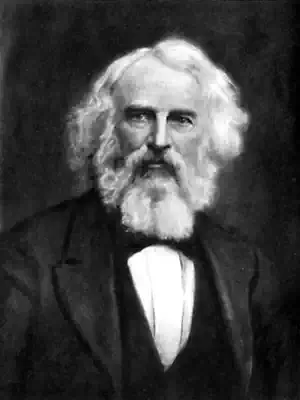
Henry Wadsworth Longfellow
Venice
Venice
White swan of cities, slumbering in thy nest
So wonderfully built among the reeds
Of the lagoon, that fences thee and feeds,
As sayeth thy old historian and thy guest!
White water-lily, cradled and caressed
By ocean streams, and from the silt and weeds
Lifting thy golden filaments and seeds,
Thy sun-illumined spires, thy crown and crest!
White phantom city, whose untrodden streets
Are rivers, and whose pavements are the shifting
Shadows of palaces and strips of sky;
I wait to see thee vanish like the fleets
Seen in mirage, or towers of cloud uplifting
In air their unsubstantial masonry.
White swan of cities, slumbering in thy nest
So wonderfully built among the reeds
Of the lagoon, that fences thee and feeds,
As sayeth thy old historian and thy guest!
White water-lily, cradled and caressed
By ocean streams, and from the silt and weeds
Lifting thy golden filaments and seeds,
Thy sun-illumined spires, thy crown and crest!
White phantom city, whose untrodden streets
Are rivers, and whose pavements are the shifting
Shadows of palaces and strips of sky;
I wait to see thee vanish like the fleets
Seen in mirage, or towers of cloud uplifting
In air their unsubstantial masonry.
314
Henry Wadsworth Longfellow
To Italy. (From Filicaja)
To Italy. (From Filicaja)
Italy! Italy! thou who'rt doomed to wear
The fatal gift of beauty and possess
The dower funest of infinite wretchedness
Written upon thy forehead by despair;
Ah! would that thou wert stronger or less fair,
That they might fear thee more or love thee less,
Who in the splendour of thy loveliness
Seem wasting, yet to mortal combat dare!
Then from the Alps I should not see descending
Such torrents of armed men, nor Gallic horde
Drinking the wave of Po, distained with gore,
Nor should I see thee girded with a sword
Not thine, and with the stranger's arm contending,
Victor or vanquished, slave for evermore.
Italy! Italy! thou who'rt doomed to wear
The fatal gift of beauty and possess
The dower funest of infinite wretchedness
Written upon thy forehead by despair;
Ah! would that thou wert stronger or less fair,
That they might fear thee more or love thee less,
Who in the splendour of thy loveliness
Seem wasting, yet to mortal combat dare!
Then from the Alps I should not see descending
Such torrents of armed men, nor Gallic horde
Drinking the wave of Po, distained with gore,
Nor should I see thee girded with a sword
Not thine, and with the stranger's arm contending,
Victor or vanquished, slave for evermore.
298
Henry Wadsworth Longfellow
The Masque Of Pandora
The Masque Of Pandora
THE WORKSHOP OF HEPHAESTUS
HEPHAESTUS (standing before the statue of Pandora.)
Not fashioned out of gold, like Hera's throne,
Nor forged of iron like the thunderbolts
Of Zeus omnipotent, or other works
Wrought by my hands at Lemnos or Olympus,
But moulded in soft clay, that unresisting
Yields itself to the touch, this lovely form
Before me stands, perfect in every part.
Not Aphrodite's self appeared more fair,
When first upwafted by caressing winds
She came to high Olympus, and the gods
Paid homage to her beauty. Thus her hair
Was cinctured; thus her floating drapery
Was like a cloud about her, and her face
Was radiant with the sunshine and the sea.
THE VOICE OF ZEUS.
Is thy work done, Hephaestus?
HEPHAESTUS.
It is finished!
THE VOICE.
Not finished till I breathe the breath of life
Into her nostrils, and she moves and speaks.
HEPHAESTUS.
Will she become immortal like ourselves?
THE VOICE.
The form that thou hast fashioned out of clay
Is of the earth and mortal; but the spirit,
The life, the exhalation of my breath,
Is of diviner essence and immortal.
The gods shall shower on her their benefactions,
She shall possess all gifts: the gift of song,
The gift of eloquence, the gift of beauty,
The fascination and the nameless charm
That shall lead all men captive.
HEPHAESTUS.
Wherefore? wherefore?
(A wind shakes the house.)
I hear the rushing of a mighty wind
Through all the halls and chambers of my house!
Her parted lips inhale it, and her bosom
Heaves with the inspiration. As a reed
Beside a river in the rippling current
Bends to and fro, she bows or lifts her head.
She gazes round about as if amazed;
She is alive; she breathes, but yet she speaks not!
(PANDORA descends from the pedestal.)
CHORUS OF THE GRACES
AGLAIA.
In the workshop of Hephaestus
What is this I see?
Have the Gods to four increased us
Who were only three?
Beautiful in form and feature,
Lovely as the day,
Can there be so fair a creature
Formed of common clay?
THALIA.
O sweet, pale face! O lovely eyes of azure,
Clear as the waters of a brook that run
Limpid and laughing in the summer sun!
O golden hair that like a miser's treasure
In its abundance overflows the measure!
O graceful form, that cloudlike floatest on
With the soft, undulating gait of one
Who moveth as if motion were a pleasure!
By what name shall I call thee? Nymph or Muse,
Callirrhoe or Urania? Some sweet name
Whose every syllable is a caress
Would best befit thee; but I cannot choose,
Nor do I care to choose; for still the same,
Nameless or named, will be thy loveliness.
EUPHROSYNE.
Dowered with all celestial gifts,
Skilled in every art
That ennobles and uplifts
And delights the heart,
Fair on earth shall be thy fame
As thy face is fair,
And Pandora be the name
Thou henceforth shalt bear.
II.
OLYMPUS
HERMES (putting on his sandals.)
Much must he toil who serves the Immortal Gods,
And I, who am their herald, most of all.
No rest have I, nor respite. I no sooner
Unclasp the winged sandals from my feet,
Than I again must clasp them, and depart
Upon some foolish errand. But to-day
The errand is not foolish. Never yet
With greater joy did I obey the summons
That sends me earthward. I will fly so swiftly
That my caduceus in the whistling air
Shall make a sound like the Pandaean pipes,
Cheating the shepherds; for to-day I go,
Commissioned by high-thundering Zeus, to lead
A maiden to Prometheus, in his tower,
And by my cunning arguments persuade him
To marry her. What mischief lies concealed
In this design I know not; but I know
Who thinks of marrying hath already taken
One step upon the road to penitence.
Such embassies delight me. Forth I launch
On the sustaining air, nor fear to fall
Like Icarus, nor swerve aside like him
Who drove amiss Hyperion's fiery steeds.
I sink, I fly! The yielding element
Folds itself round about me like an arm,
And holds me as a mother holds her child.
III.
TOWER OF PROMETHEUS ON MOUNT CAUCASUS
PROMETHEUS.
I hear the trumpet of Alectryon
Proclaim the dawn. The stars begin to fade,
And all the heavens are full of prophecies
And evil auguries. Blood-red last night
I saw great Kronos rise; the crescent moon
Sank through the mist, as if it were the scythe
His parricidal hand had flung far down
The western steeps. O ye Immortal Gods,
What evil are ye plotting and contriving?
(HERMES and PANDORA at the threshold.)
PANDORA.
I cannot cross the threshold. An unseen
And icy hand repels me. These blank walls
Oppress me with their weight!
PROMETHEUS.
Powerful ye are,
But not omnipotent. Ye cannot fight
Against Necessity. The Fates control you,
As they do us, and so far we are equals!
PANDORA.
Motionless, passionless, companionless,
He sits there muttering in his beard. His voice
Is like a river flowing underground!
HERMES.
Prometheus, hail!
PROMETHEUS.
Who calls me?
HERMES.
It is I.
Dost thou not know me?
PROMETHEUS.
By thy winged cap
And winged heels I know thee. Thou art Hermes,
Captain of thieves! Hast thou again been stealing
The heifers of Admetus in the sweet
Meadows of asphodel? or Hera's girdle?
Or the earth-shaking trident of Poseidon?
HERMES.
And thou, Prometheus; say, hast thou again
Been stealing fire from Helios' chariot-wheels
To light thy furnaces?
PROMETHEUS.
Why comest thou hither
So early in the dawn?
HERMES.
The Immortal Gods
Know naught of late or early. Zeus himself
The omnipotent hath sent me.
PROMETHEUS.
For what purpose?
HERMES.
To bring this maiden to thee.
PROMETHEUS.
I mistrust
The Gods and all their gifts. If they have sent her
It is for no good purpose.
HERMES.
What disaster
Could she bring on thy house, who is a woman?
PROMETHEUS.
The Gods are not my friends, nor am I theirs.
Whatever comes from them, though in a shape
As beautiful as this, is evil only.
Who art thou?
PANDORA.
One who, though to thee unknown,
Yet knoweth thee.
PROMETHEUS.
How shouldst thou know me, woman?
PANDORA.
Who knoweth not Prometheus the humane?
PROMETHEUS.
Prometheus the unfortunate; to whom
Both Gods and men have shown themselves ungrateful.
When every spark was quenched on every hearth
Throughout the earth, I brought to man the fire
And all its ministrations. My reward
Hath been the rock and vulture.
HERMES.
But the Gods
At last relent and pardon.
PROMETHEUS.
They relent not;
They pardon not; they are implacable,
Revengeful, unforgiving!
HERMES.
As a pledge
Of reconciliation they have sent to thee
This divine being, to be thy companion,
And bring into thy melancholy house
The sunshine and the fragrance of her youth.
PROMETHEUS.
I need them not. I have within myself
All that my heart desires; the ideal beauty
Which the creative faculty of mind
Fashions and follows in a thousand shapes
More lovely than the real. My own thoughts
Are my companions; my designs and labors
And aspirations are my only friends.
HERMES.
Decide not rashly. The decision made
Can never be recalled. The Gods implore not,
Plead not, solicit not; they only offer
Choice and occasion, which once being passed
Return no more. Dost thou accept the gift?
PROMETHEUS.
No gift of theirs, in whatsoever shape
It comes to me, with whatsoever charm
To fascinate my sense, will I receive.
Leave me.
PANDORA.
Let us go hence. I will not stay.
HERMES.
We leave thee to thy vacant dreams, and all
The silence and the solitude of thought,
The endless bitterness of unbelief,
The loneliness of existence without love.
CHORUS OF THE FATES
CLOTHO.
How the Titan, the defiant,
The self-centred, self-reliant,
Wrapped in visions and illusions,
Robs himself of life's best gifts!
Till by all the storm-winds shaken,
By the blast of fate o'ertaken,
Hopeless, helpless, and forsaken,
In the mists of his confusions
To the reefs of doom he drifts!
LACHESIS.
Sorely tried and sorely tempted,
From no agonies exempted,
In the penance of his trial,
And the discipline of pain;
Often by illusions cheated,
Often baffled and defeated
In the tasks to be completed,
He, by toil and self-denial,
To the highest shall attain.
ATROPOS.
Tempt no more the noble schemer;
Bear unto some idle dreamer
This new toy and fascination,
This new dalliance and delight!
To the garden where reposes
Epimetheus crowned with roses,
To the door that never closes
Upon pleasure and temptation,
Bring this vision of the night!
IV.
THE AIR
HERMES (returning to Olympus.)
As lonely as the tower that he inhabits,
As firm and cold as are the crags about him,
Prometheus stands. The thunderbolts of Zeus
Alone can move him; but the tender heart
Of Epimetheus, burning at white heat,
Hammers and flames like all his brother's forges!
Now as an arrow from Hyperion's bow,
My errand done, I fly, I float, I soar
Into the air, returning to Olympus.
O joy of motion! O delight to cleave
The infinite realms of space, the liquid ether,
Through the warm sunshine and the cooling cloud,
Myself as light as sunbeam or as cloud!
With one touch of my swift and winged feet,
I spurn the solid earth, and leave it rocking
As rocks the bough from which a bird takes wing.
V.
THE HOUSE OF EPIMETHEUS
EPIMETHEUS.
Beautiful apparition! go not hence!
Surely thou art a Goddess, for thy voice
Is a celestial melody, and thy form
Self-poised as if it floated on the air!
PANDORA.
No Goddess am I, nor of heavenly birth,
But a mere woman fashioned out of clay
And mortal as the rest.
EPIMETHEUS.
Thy face is fair;
There is a wonder in thine azure eyes
That fascinates me. Thy whole presence seems
A soft desire, a breathing thought of love.
Say, would thy star like Merope's grow dim
If thou shouldst wed beneath thee?
PANDORA.
Ask me not;
I cannot answer thee. I only know
The Gods have sent me hither.
EPIMETHEUS.
I believe,
And thus believing am most fortunate.
It was not Hermes led thee here, but Eros,
And swifter than his arrows were thine eves
In wounding me. There was no moment's space
Between my seeing thee and loving thee.
O, what a telltale face thou hast! Again
I see the wonder in thy tender eyes.
PANDORA.
They do but answer to the love in thine,
Yet secretly I wonder thou shouldst love me.
Thou knowest me not.
EPIMETHEUS.
Perhaps I know thee better
Than had I known thee longer. Yet it seems
That I have always known thee, and but now
Have found thee. Ah, I have been waiting long.
PANDORA.
How beautiful is this house! The atmosphere
Breathes rest and comfort, and the many chambers
Seem full of welcomes.
EPIMETHEUS.
They not only seem,
But truly are. This dwelling and its master
Belong to thee.
PANDORA.
Here let me stay forever!
There is a spell upon me.
EPIMETHEUS.
Thou thyself
Art the enchantress, and I feel thy power
Envelop me, and wrap my soul and sense
In an Elysian dream.
PANDORA.
O, let me stay.
How beautiful are all things round about me,
Multiplied by the mirrors on the walls!
What treasures hast thou here! Yon oaken chest,
Carven with figures and embossed with gold,
Is wonderful to look upon! What choice
And precious things dost thou keep hidden in it?
EPIMETHEUS.
I know not. 'T is a mystery.
PANDORA.
Hast thou never
Lifted the lid?
EPIMETHEUS.
The oracle forbids.
Safely concealed there from all mortal eyes
Forever sleeps the secret of the Gods.
Seek not to know what they have hidden from thee,
Till they themselves reveal it.
PANDORA.
As thou wilt.
EPIMETHEUS.
Let us go forth from this mysterious place.
The garden walks are pleasant at this hour;
The nightingales among the sheltering boughs
Of populous and many-nested trees
Shall teach me how to woo thee, and shall tell me
By what resistless charms or incantations
They won their mates.
PANDORA.
Thou dost not need a teacher.
(They go out.)
CHORUS OF THE EUMENIDES.
What the Immortals
Confide to thy keeping,
Tell unto no man;
Waking or sleeping,
Closed be thy portals
To friend as to foeman.
Silence conceals it;
The word that is spoken
Betrays and reveals it;
By breath or by token
The charm may be broken.
With shafts of their splendors
The Gods unforgiving
Pursue the offenders,
The dead and the living!
Fortune forsakes them,
Nor earth shall abide them,
Nor Tartarus hide them;
Swift wrath overtakes them!
With useless endeavor,
Forever, forever,
Is Sisyphus rolling
His stone up the mountain!
Immersed in the fountain,
Tantalus tastes not
The water that wastes not!
Through ages increasing
The pangs that afflict him,
With motion unceasing
The wheel of Ixion
Shall torture its victim!
VI.
IN THE GARDEN
EPIMETHEUS.
Yon snow-white cloud that sails sublime in ether
Is but the sovereign Zeus, who like a swan
Flies to fair-ankled Leda!
PANDORA.
Or perchance
Ixion's cloud, the shadowy shape of Hera,
That bore the Centaurs.
EPIMETHEUS.
The divine and human.
CHORUS OF BIRDS.
Gently swaying to and fro,
Rocked by all the winds that blow,
Bright with sunshine from above
Dark with shadow from below,
Beak to beak and breast to breast
In the cradle of their nest,
Lie the fledglings of our love.
ECHO.
Love! love!
EPIMETHEUS.
Hark! listen! Hear how sweetly overhead
The feathered flute-players pipe their songs of love,
And echo answers, love and only love.
CHORUS OF BIRDS.
Every flutter of the wing,
Every note of song we sing,
Every murmur, every tone,
Is of love and love alone.
ECHO.
Love alone!
EPIMETHEUS.
Who would not love, if loving she might be
Changed like Callisto to a star in heaven?
PANDORA.
Ah, who would love, if loving she might be
Like Semele consumed and burnt to ashes?
EPIMETHEUS.
Whence knowest thou these stories?
PANDORA.
Hermes taught me;
He told me all the history of the Gods.
CHORUS OF REEDS.
Evermore a sound shall be
In the reeds of Arcady,
Evermore a low lament
Of unrest and discontent,
As the story is retold
Of the nymph so coy and cold,
Who with frightened feet outran
The pursuing steps of Pan.
EPIMETHEUS.
The pipe of Pan out of these reeds is made,
And when he plays upon it to the shepherds
They pity him, so mournful is the sound.
Be thou not coy and cold as Syrinx was.
PANDORA.
Nor thou as Pan be rude and mannerless.
PROMETHEUS (without).
Ho! Epimetheus!
EPIMETHEUS.
'T is my brother's voice;
A sound unwelcome and inopportune
As was the braying of Silenus' ass,
Once heard in Cybele's garden.
PANDORA.
Let me go.
I would not be found here. I would not see him.
(She escapes among the trees.)
CHORUS OF DRYADES.
Haste and hide thee,
Ere too late,
In these thickets intricate;
Lest Prometheus
See and chide thee,
Lest some hurt
Or harm betide thee,
Haste and hide thee!
PROMETHEUS (entering.)
Who was it fled from here? I saw a shape
Flitting among the trees.
EPIMETHEUS.
It was Pandora.
PROMETHEUS.
O Epimetheus! Is it then in vain
That I have warned thee? Let me now implore.
Thou harborest in thy house a dangerous guest.
EPIMETHEUS.
Whom the Gods love they honor with such guests.
PROMETHEUS.
Whom the Gods would destroy they first make mad.
EPIMETHEUS.
Shall I refuse the gifts they send to me?
PROMETHEUS.
Reject all gifts that come from higher powers.
EPIMETHEUS.
Such gifts as this are not to be rejected.
PROMETHEUS.
Make not thyself the slave of any woman.
EPIMETHEUS.
Make not thyself the judge of any man.
PROMETHEUS.
I judge thee not; for thou art more than man;
Thou art descended from Titanic race,
And hast a Titan's strength, and faculties
That make thee godlike; and thou sittest here
Like Heracles spinning Omphale's flax,
And beaten with her sandals.
EPIMETHEUS.
O my brother!
Thou drivest me to madness with thy taunts.
PROMETHEUS.
And me thou drivest to madness with thy follies.
Come with me to my tower on Caucasus:
See there my forges in the roaring caverns,
Beneficent to man, and taste the joy
That springs from labor. Read with me the stars,
And learn the virtues that lie hidden in plants,
And all things that are useful.
EPIMETHEUS.
O my brother!
I am not as thou art. Thou dost inherit
Our father's strength, and I our mother's weakness:
The softness of the Oceanides,
The yielding nature that cannot resist.
PROMETHEUS.
Because thou wilt not.
EPIMETHEUS.
Nay; because I cannot.
PROMETHEUS.
Assert thyself; rise up to thy full height;
Shake from thy soul these dreams effeminate,
These passions born of indolence and ease.
Resolve, and thou art free. But breathe the air
Of mountains, and their unapproachable summits
Will lift thee to the level of themselves.
EPIMETHEUS.
The roar of forests and of waterfalls,
The rushing of a mighty wind, with loud
And undistinguishable voices calling,
Are in my ear!
PROMETHEUS.
O, listen and obey.
EPIMETHEUS.
Thou leadest me as a child, I follow thee.
(They go out.)
CHORUS OF OREADES.
Centuries old are the monntains;
Their foreheads wrinkled and rifted
Helios crowns by day,
Pallid Selene by night;
From their bosoms uptossed
The snows are driven and drifted,
Like Tithonus' beard
Streaming dishevelled and white.
Thunder and tempest of wind
Their trumpets blow in the vastness;
Phantoms of mist and rain,
Cloud and the shadow of cloud,
Pass and repass by the gates
Of their inaccessible fastness;
Ever unmoved they stand,
Solemn, eternal, and proud,
VOICES OF THE WATERS.
Flooded by rain and snow
In their inexhaustible sources,
Swollen by affluent streams
Hurrying onward and hurled
Headlong over the crags,
The impetuous water-courses,
Rush and roar and plunge
Down to the nethermost world.
Say, have the solid rocks
Into streams of silver been melted,
Flowing over the plains,
Spreading to lakes in the fields?
Or have the mountains, the giants,
The ice-helmed, the forest-belted,
Scattered their arms abroad;
Flung in the meadows their shields?
VOICES OF THE WINDS.
High on their turreted cliffs
That bolts of thunder have shattered,
Storm-winds muster and blow
Trumpets of terrible breath;
Then from the gateways rush,
And before them routed and scattered
Sullen the cloud-rack flies,
Pale with the pallor of death.
Onward the hurricane rides,
And flee for shelter the shepherds;
White are the frightened leaves,
Harvests with terror are white;
Panic seizes the herds,
And even the lions and leopards,
Prowling no longer for prey,
Crouch in their caverns with fright.
VOICES OF THE FOREST.
Guarding the mountains around
Majestic the forests are standing,
Bright are their crested helms,
Dark is their armor of leaves;
Filled with the breath of freedom
Each bosom subsiding, expanding,
Now like the ocean sinks,
Now like the ocean upheaves.
Planted firm on the rock,
With foreheads stern and defiant,
Loud they shout to the winds,
Loud to the tempest they call;
Naught but Olympian thunders,
That blasted Titan and Giant,
Them can uproot and o'erthrow,
Shaking the earth with their fall.
CHORUS OF OREADES.
These are the Voices Three
Of winds and forests and fountains,
Voices of earth and of air,
Murmur and rushing of streams,
Making together one sound,
The mysterious voice of the mountains,
Waking the sluggard that sleeps,
Waking the dreamer of dreams.
These are the Voices Three,
That speak of endless endeavor,
Speak of endurance and strength,
Triumph and fulness of fame,
Sounding about the world,
An inspiration forever,
Stirring the hearts of men,
Shaping their end and their aim.
VII.
THE HOUSE OF EPIMETHEUS
PANDORA.
Left to myself I wander as I will,
And as my fancy leads me, through this house,
Nor could I ask a dwelling more complete
Were I indeed the Goddess that he deems me.
No mansion of Olympus, framed to be
The habitation of the Immortal Gods,
Can be more beautiful. And this is mine
And more than this, the love wherewith he crowns me.
As if impelled by powers invisible
And irresistible, my steps return
Unto this spacious hall. All corridors
And passages lead hither, and all doors
But open into it. Yon mysterious chest
Attracts and fascinates me. Would I knew
What there lies hidden! But the oracle
Forbids. Ah me! The secret then is safe.
So would it be if it were in my keeping.
A crowd of shadowy faces from the mirrors
That line these walls are watching me. I dare not
Lift up the lid. A hundred times the act
Would be repeated, and the secret seen
By twice a hundred incorporeal eyes.
(She walks to the other side of the hall.)
My feet are weary, wandering to and fro,
My eyes with seeing and my heart with waiting.
I will lie here and rest till he returns,
Who is my dawn, my day, my Helios.
(Throws herself upon a couch, and falls asleep.)
ZEPHYRUS.
Come from thy caverns dark and deep.
O son of Erebus and Night;
All sense of hearing and of sight
Enfold in the serene delight
And quietude of sleep!
Set all the silent sentinels
To bar and guard the Ivory Gate,
And keep the evil dreams of fate
And falsehood and infernal hate
Imprisoned in their cells.
But open wide the Gate of Horn,
Whence, beautiful as planets, rise
The dreams of truth, with starry eyes,
And all the wondrous prophecies
And visions of the morn.
CHORUS OF DREAMS FROM THE IVORY GATE.
Ye sentinels of sleep,
It is in vain ye keep
Your drowsy watch before the Ivory Gate;
Though closed the portal seems,
The airy feet of dreams
Ye cannot thus in walls incarcerate.
We phantoms are and dreams
Born by Tartarean streams,
As ministers of the infernal powers;
O son of Erebus
And Night, behold! we thus
Elude your watchful warders on the towers!
From gloomy Tartarus
The Fates have summoned us
To whisper in her ear, who lies asleep,
A tale to fan the fire
Of her insane desire
To know a secret that the Gods would keep.
This passion, in their ire,
The Gods themselves inspire,
To vex mankind with evils manifold,
So that disease and pain
O'er the whole earth may reign,
And nevermore return the Age of Gold.
PANDORA (waking).
A voice said in my sleep: 'Do not delay:
Do not delay; the golden moments fly!
The oracle hath forbidden; yet not thee
Doth it forbid, but Epimetheus only!'
I am alone. These faces in the mirrors
Are but the shadows and phantoms of myself;
They cannot help nor hinder. No one sees me,
Save the all-seeing Gods, who, knowing good
And knowing evil, have created me
Such as I am, and filled me with desire
Of knowing good and evil like themselves.
(She approaches the chest.)
I hesitate no longer. Weal or woe,
Or life or death, the moment shall decide.
(She lifts the lid. A dense mist rises from
the chest, and fills the room. PANDORA
falls senseless on the floor. Storm without.)
CHORUS OF DREAMS FROM THE GATE OF HORN.
Yes, the moment shall decide!
It already hath decided;
And the secret once confided
To the keeping of the Titan
Now is flying far and wide,
Whispered, told on every side,
To disquiet and to frighten.
Fever of the heart and brain,
Sorrow, pestilence, and pain,
Moans of anguish, maniac laughter,
All the evils that hereafter
Shall afflict and vex mankind,
All into the air have risen
From the chambers of their prison;
Only Hope remains behind.
VIII.
IN THE GARDEN
EPIMETHEUS.
The storm is past, but it hath left behind it
Ruin and desolation. All the walks
Are strewn with shattered boughs; the birds are silent;
The flowers, downtrodden by the wind, lie dead;
The swollen rivulet sobs with secret pain,
The melancholy reeds whisper together
As if some dreadful deed had been committed
They dare not name, and all the air is heavy
With an unspoken sorrow! Premonitions,
Foreshadowings of some terrible disaster
Oppress my heart. Ye Gods, avert the omen!
PANDORA (coming from the house).
O Epimetheus, I no longer dare
To lift mine eyes to thine, nor hear thy voice,
Being no longer worthy of thy love.
EPIMETHEUS.
What hast thou done?
PANDORA.
Forgive me not, but kill me.
EPIMETHEUS.
What hast thou done?
PANDORA.
I pray for death, not pardon.
EPIMETHEUS.
What hast thou done?
PANDORA.
I dare not speak of it.
EPIMETHEUS.
Thy pallor and thy silence terrify me!
PANDORA.
I have brought wrath and ruin on thy house!
My heart hath braved the oracle that guarded
The fatal secret from us, and my hand
Lifted the lid of the mysterious chest!
EPIMETHEUS.
Then all is lost! I am indeed undone.
PANDORA.
I pray for punishment, and not for pardon.
EPIMETHEUS.
Mine is the fault not thine. On me shall fall
The vengeance of the Gods, for I betrayed
Their secret when, in evil hour, I said
It was a secret; when, in evil hour,
I left thee here alone to this temptation.
Why did I leave thee?
PANDORA.
Why didst thou return?
Eternal absence would have been to me
The greatest punishment. To be left alone
And face to face with my own crime, had been
Just retribution. Upon me, ye Gods,
Let all your vengeance fall!
EPIMETHEUS.
On thee and me.
I do not love thee less for what is done,
And cannot be undone. Thy very weakness
Hath brought thee nearer to me, and henceforth
My love will have a sense of pity in it,
Making it less a worship than before.
PANDORA.
Pity me not; pity is degradation.
Love me and kill me.
EPIMETHEUS.
Beautiful Pandora!
Thou art a Goddess still!
PANDORA.
I am a woman;
And the insurgent demon in my nature,
That made me brave the oracle, revolts
At pity and compassion. Let me die;
What else remains for me?
EPIMETHEUS.
Youth, hope, and love:
To build a new life on a ruined life,
To make the future fairer than the past,
And make the past appear a troubled dream.
Even now in passing through the garden walks
Upon the ground I saw a fallen nest
Ruined and full of rain; and over me
Beheld the uncomplaining birds already
Busy in building a new habitation.
PANDORA.
Auspicious omen!
EPIMETHEUS.
May the Eumenides
Put out their torches and behold us not,
And fling away their whips of scorpions
And touch us not.
PANDORA.
Me let them punish.
Only through punishment of our evil deeds,
Only through suffering, are we reconciled
To the immortal Gods and to ourselves.
CHORUS OF THE EUMENIDES.
Never shall souls like these
Escape the Eumenides,
The daughters dark of Acheron and Night!
Unquenched our torches glare,
Our scourges in the air
Send forth prophetic sounds before they smite.
Never by lapse of time
The soul defaced by crime
Into its former self returns again;
For every guilty deed
Holds in itself the seed
Of retribution and undying pain.
Never shall be the loss
Restored, till Helios
Hath purified them with his heavenly fires;
Then what was lost is won,
And the new life begun,
Kindled with nobler passions and desires.
THE WORKSHOP OF HEPHAESTUS
HEPHAESTUS (standing before the statue of Pandora.)
Not fashioned out of gold, like Hera's throne,
Nor forged of iron like the thunderbolts
Of Zeus omnipotent, or other works
Wrought by my hands at Lemnos or Olympus,
But moulded in soft clay, that unresisting
Yields itself to the touch, this lovely form
Before me stands, perfect in every part.
Not Aphrodite's self appeared more fair,
When first upwafted by caressing winds
She came to high Olympus, and the gods
Paid homage to her beauty. Thus her hair
Was cinctured; thus her floating drapery
Was like a cloud about her, and her face
Was radiant with the sunshine and the sea.
THE VOICE OF ZEUS.
Is thy work done, Hephaestus?
HEPHAESTUS.
It is finished!
THE VOICE.
Not finished till I breathe the breath of life
Into her nostrils, and she moves and speaks.
HEPHAESTUS.
Will she become immortal like ourselves?
THE VOICE.
The form that thou hast fashioned out of clay
Is of the earth and mortal; but the spirit,
The life, the exhalation of my breath,
Is of diviner essence and immortal.
The gods shall shower on her their benefactions,
She shall possess all gifts: the gift of song,
The gift of eloquence, the gift of beauty,
The fascination and the nameless charm
That shall lead all men captive.
HEPHAESTUS.
Wherefore? wherefore?
(A wind shakes the house.)
I hear the rushing of a mighty wind
Through all the halls and chambers of my house!
Her parted lips inhale it, and her bosom
Heaves with the inspiration. As a reed
Beside a river in the rippling current
Bends to and fro, she bows or lifts her head.
She gazes round about as if amazed;
She is alive; she breathes, but yet she speaks not!
(PANDORA descends from the pedestal.)
CHORUS OF THE GRACES
AGLAIA.
In the workshop of Hephaestus
What is this I see?
Have the Gods to four increased us
Who were only three?
Beautiful in form and feature,
Lovely as the day,
Can there be so fair a creature
Formed of common clay?
THALIA.
O sweet, pale face! O lovely eyes of azure,
Clear as the waters of a brook that run
Limpid and laughing in the summer sun!
O golden hair that like a miser's treasure
In its abundance overflows the measure!
O graceful form, that cloudlike floatest on
With the soft, undulating gait of one
Who moveth as if motion were a pleasure!
By what name shall I call thee? Nymph or Muse,
Callirrhoe or Urania? Some sweet name
Whose every syllable is a caress
Would best befit thee; but I cannot choose,
Nor do I care to choose; for still the same,
Nameless or named, will be thy loveliness.
EUPHROSYNE.
Dowered with all celestial gifts,
Skilled in every art
That ennobles and uplifts
And delights the heart,
Fair on earth shall be thy fame
As thy face is fair,
And Pandora be the name
Thou henceforth shalt bear.
II.
OLYMPUS
HERMES (putting on his sandals.)
Much must he toil who serves the Immortal Gods,
And I, who am their herald, most of all.
No rest have I, nor respite. I no sooner
Unclasp the winged sandals from my feet,
Than I again must clasp them, and depart
Upon some foolish errand. But to-day
The errand is not foolish. Never yet
With greater joy did I obey the summons
That sends me earthward. I will fly so swiftly
That my caduceus in the whistling air
Shall make a sound like the Pandaean pipes,
Cheating the shepherds; for to-day I go,
Commissioned by high-thundering Zeus, to lead
A maiden to Prometheus, in his tower,
And by my cunning arguments persuade him
To marry her. What mischief lies concealed
In this design I know not; but I know
Who thinks of marrying hath already taken
One step upon the road to penitence.
Such embassies delight me. Forth I launch
On the sustaining air, nor fear to fall
Like Icarus, nor swerve aside like him
Who drove amiss Hyperion's fiery steeds.
I sink, I fly! The yielding element
Folds itself round about me like an arm,
And holds me as a mother holds her child.
III.
TOWER OF PROMETHEUS ON MOUNT CAUCASUS
PROMETHEUS.
I hear the trumpet of Alectryon
Proclaim the dawn. The stars begin to fade,
And all the heavens are full of prophecies
And evil auguries. Blood-red last night
I saw great Kronos rise; the crescent moon
Sank through the mist, as if it were the scythe
His parricidal hand had flung far down
The western steeps. O ye Immortal Gods,
What evil are ye plotting and contriving?
(HERMES and PANDORA at the threshold.)
PANDORA.
I cannot cross the threshold. An unseen
And icy hand repels me. These blank walls
Oppress me with their weight!
PROMETHEUS.
Powerful ye are,
But not omnipotent. Ye cannot fight
Against Necessity. The Fates control you,
As they do us, and so far we are equals!
PANDORA.
Motionless, passionless, companionless,
He sits there muttering in his beard. His voice
Is like a river flowing underground!
HERMES.
Prometheus, hail!
PROMETHEUS.
Who calls me?
HERMES.
It is I.
Dost thou not know me?
PROMETHEUS.
By thy winged cap
And winged heels I know thee. Thou art Hermes,
Captain of thieves! Hast thou again been stealing
The heifers of Admetus in the sweet
Meadows of asphodel? or Hera's girdle?
Or the earth-shaking trident of Poseidon?
HERMES.
And thou, Prometheus; say, hast thou again
Been stealing fire from Helios' chariot-wheels
To light thy furnaces?
PROMETHEUS.
Why comest thou hither
So early in the dawn?
HERMES.
The Immortal Gods
Know naught of late or early. Zeus himself
The omnipotent hath sent me.
PROMETHEUS.
For what purpose?
HERMES.
To bring this maiden to thee.
PROMETHEUS.
I mistrust
The Gods and all their gifts. If they have sent her
It is for no good purpose.
HERMES.
What disaster
Could she bring on thy house, who is a woman?
PROMETHEUS.
The Gods are not my friends, nor am I theirs.
Whatever comes from them, though in a shape
As beautiful as this, is evil only.
Who art thou?
PANDORA.
One who, though to thee unknown,
Yet knoweth thee.
PROMETHEUS.
How shouldst thou know me, woman?
PANDORA.
Who knoweth not Prometheus the humane?
PROMETHEUS.
Prometheus the unfortunate; to whom
Both Gods and men have shown themselves ungrateful.
When every spark was quenched on every hearth
Throughout the earth, I brought to man the fire
And all its ministrations. My reward
Hath been the rock and vulture.
HERMES.
But the Gods
At last relent and pardon.
PROMETHEUS.
They relent not;
They pardon not; they are implacable,
Revengeful, unforgiving!
HERMES.
As a pledge
Of reconciliation they have sent to thee
This divine being, to be thy companion,
And bring into thy melancholy house
The sunshine and the fragrance of her youth.
PROMETHEUS.
I need them not. I have within myself
All that my heart desires; the ideal beauty
Which the creative faculty of mind
Fashions and follows in a thousand shapes
More lovely than the real. My own thoughts
Are my companions; my designs and labors
And aspirations are my only friends.
HERMES.
Decide not rashly. The decision made
Can never be recalled. The Gods implore not,
Plead not, solicit not; they only offer
Choice and occasion, which once being passed
Return no more. Dost thou accept the gift?
PROMETHEUS.
No gift of theirs, in whatsoever shape
It comes to me, with whatsoever charm
To fascinate my sense, will I receive.
Leave me.
PANDORA.
Let us go hence. I will not stay.
HERMES.
We leave thee to thy vacant dreams, and all
The silence and the solitude of thought,
The endless bitterness of unbelief,
The loneliness of existence without love.
CHORUS OF THE FATES
CLOTHO.
How the Titan, the defiant,
The self-centred, self-reliant,
Wrapped in visions and illusions,
Robs himself of life's best gifts!
Till by all the storm-winds shaken,
By the blast of fate o'ertaken,
Hopeless, helpless, and forsaken,
In the mists of his confusions
To the reefs of doom he drifts!
LACHESIS.
Sorely tried and sorely tempted,
From no agonies exempted,
In the penance of his trial,
And the discipline of pain;
Often by illusions cheated,
Often baffled and defeated
In the tasks to be completed,
He, by toil and self-denial,
To the highest shall attain.
ATROPOS.
Tempt no more the noble schemer;
Bear unto some idle dreamer
This new toy and fascination,
This new dalliance and delight!
To the garden where reposes
Epimetheus crowned with roses,
To the door that never closes
Upon pleasure and temptation,
Bring this vision of the night!
IV.
THE AIR
HERMES (returning to Olympus.)
As lonely as the tower that he inhabits,
As firm and cold as are the crags about him,
Prometheus stands. The thunderbolts of Zeus
Alone can move him; but the tender heart
Of Epimetheus, burning at white heat,
Hammers and flames like all his brother's forges!
Now as an arrow from Hyperion's bow,
My errand done, I fly, I float, I soar
Into the air, returning to Olympus.
O joy of motion! O delight to cleave
The infinite realms of space, the liquid ether,
Through the warm sunshine and the cooling cloud,
Myself as light as sunbeam or as cloud!
With one touch of my swift and winged feet,
I spurn the solid earth, and leave it rocking
As rocks the bough from which a bird takes wing.
V.
THE HOUSE OF EPIMETHEUS
EPIMETHEUS.
Beautiful apparition! go not hence!
Surely thou art a Goddess, for thy voice
Is a celestial melody, and thy form
Self-poised as if it floated on the air!
PANDORA.
No Goddess am I, nor of heavenly birth,
But a mere woman fashioned out of clay
And mortal as the rest.
EPIMETHEUS.
Thy face is fair;
There is a wonder in thine azure eyes
That fascinates me. Thy whole presence seems
A soft desire, a breathing thought of love.
Say, would thy star like Merope's grow dim
If thou shouldst wed beneath thee?
PANDORA.
Ask me not;
I cannot answer thee. I only know
The Gods have sent me hither.
EPIMETHEUS.
I believe,
And thus believing am most fortunate.
It was not Hermes led thee here, but Eros,
And swifter than his arrows were thine eves
In wounding me. There was no moment's space
Between my seeing thee and loving thee.
O, what a telltale face thou hast! Again
I see the wonder in thy tender eyes.
PANDORA.
They do but answer to the love in thine,
Yet secretly I wonder thou shouldst love me.
Thou knowest me not.
EPIMETHEUS.
Perhaps I know thee better
Than had I known thee longer. Yet it seems
That I have always known thee, and but now
Have found thee. Ah, I have been waiting long.
PANDORA.
How beautiful is this house! The atmosphere
Breathes rest and comfort, and the many chambers
Seem full of welcomes.
EPIMETHEUS.
They not only seem,
But truly are. This dwelling and its master
Belong to thee.
PANDORA.
Here let me stay forever!
There is a spell upon me.
EPIMETHEUS.
Thou thyself
Art the enchantress, and I feel thy power
Envelop me, and wrap my soul and sense
In an Elysian dream.
PANDORA.
O, let me stay.
How beautiful are all things round about me,
Multiplied by the mirrors on the walls!
What treasures hast thou here! Yon oaken chest,
Carven with figures and embossed with gold,
Is wonderful to look upon! What choice
And precious things dost thou keep hidden in it?
EPIMETHEUS.
I know not. 'T is a mystery.
PANDORA.
Hast thou never
Lifted the lid?
EPIMETHEUS.
The oracle forbids.
Safely concealed there from all mortal eyes
Forever sleeps the secret of the Gods.
Seek not to know what they have hidden from thee,
Till they themselves reveal it.
PANDORA.
As thou wilt.
EPIMETHEUS.
Let us go forth from this mysterious place.
The garden walks are pleasant at this hour;
The nightingales among the sheltering boughs
Of populous and many-nested trees
Shall teach me how to woo thee, and shall tell me
By what resistless charms or incantations
They won their mates.
PANDORA.
Thou dost not need a teacher.
(They go out.)
CHORUS OF THE EUMENIDES.
What the Immortals
Confide to thy keeping,
Tell unto no man;
Waking or sleeping,
Closed be thy portals
To friend as to foeman.
Silence conceals it;
The word that is spoken
Betrays and reveals it;
By breath or by token
The charm may be broken.
With shafts of their splendors
The Gods unforgiving
Pursue the offenders,
The dead and the living!
Fortune forsakes them,
Nor earth shall abide them,
Nor Tartarus hide them;
Swift wrath overtakes them!
With useless endeavor,
Forever, forever,
Is Sisyphus rolling
His stone up the mountain!
Immersed in the fountain,
Tantalus tastes not
The water that wastes not!
Through ages increasing
The pangs that afflict him,
With motion unceasing
The wheel of Ixion
Shall torture its victim!
VI.
IN THE GARDEN
EPIMETHEUS.
Yon snow-white cloud that sails sublime in ether
Is but the sovereign Zeus, who like a swan
Flies to fair-ankled Leda!
PANDORA.
Or perchance
Ixion's cloud, the shadowy shape of Hera,
That bore the Centaurs.
EPIMETHEUS.
The divine and human.
CHORUS OF BIRDS.
Gently swaying to and fro,
Rocked by all the winds that blow,
Bright with sunshine from above
Dark with shadow from below,
Beak to beak and breast to breast
In the cradle of their nest,
Lie the fledglings of our love.
ECHO.
Love! love!
EPIMETHEUS.
Hark! listen! Hear how sweetly overhead
The feathered flute-players pipe their songs of love,
And echo answers, love and only love.
CHORUS OF BIRDS.
Every flutter of the wing,
Every note of song we sing,
Every murmur, every tone,
Is of love and love alone.
ECHO.
Love alone!
EPIMETHEUS.
Who would not love, if loving she might be
Changed like Callisto to a star in heaven?
PANDORA.
Ah, who would love, if loving she might be
Like Semele consumed and burnt to ashes?
EPIMETHEUS.
Whence knowest thou these stories?
PANDORA.
Hermes taught me;
He told me all the history of the Gods.
CHORUS OF REEDS.
Evermore a sound shall be
In the reeds of Arcady,
Evermore a low lament
Of unrest and discontent,
As the story is retold
Of the nymph so coy and cold,
Who with frightened feet outran
The pursuing steps of Pan.
EPIMETHEUS.
The pipe of Pan out of these reeds is made,
And when he plays upon it to the shepherds
They pity him, so mournful is the sound.
Be thou not coy and cold as Syrinx was.
PANDORA.
Nor thou as Pan be rude and mannerless.
PROMETHEUS (without).
Ho! Epimetheus!
EPIMETHEUS.
'T is my brother's voice;
A sound unwelcome and inopportune
As was the braying of Silenus' ass,
Once heard in Cybele's garden.
PANDORA.
Let me go.
I would not be found here. I would not see him.
(She escapes among the trees.)
CHORUS OF DRYADES.
Haste and hide thee,
Ere too late,
In these thickets intricate;
Lest Prometheus
See and chide thee,
Lest some hurt
Or harm betide thee,
Haste and hide thee!
PROMETHEUS (entering.)
Who was it fled from here? I saw a shape
Flitting among the trees.
EPIMETHEUS.
It was Pandora.
PROMETHEUS.
O Epimetheus! Is it then in vain
That I have warned thee? Let me now implore.
Thou harborest in thy house a dangerous guest.
EPIMETHEUS.
Whom the Gods love they honor with such guests.
PROMETHEUS.
Whom the Gods would destroy they first make mad.
EPIMETHEUS.
Shall I refuse the gifts they send to me?
PROMETHEUS.
Reject all gifts that come from higher powers.
EPIMETHEUS.
Such gifts as this are not to be rejected.
PROMETHEUS.
Make not thyself the slave of any woman.
EPIMETHEUS.
Make not thyself the judge of any man.
PROMETHEUS.
I judge thee not; for thou art more than man;
Thou art descended from Titanic race,
And hast a Titan's strength, and faculties
That make thee godlike; and thou sittest here
Like Heracles spinning Omphale's flax,
And beaten with her sandals.
EPIMETHEUS.
O my brother!
Thou drivest me to madness with thy taunts.
PROMETHEUS.
And me thou drivest to madness with thy follies.
Come with me to my tower on Caucasus:
See there my forges in the roaring caverns,
Beneficent to man, and taste the joy
That springs from labor. Read with me the stars,
And learn the virtues that lie hidden in plants,
And all things that are useful.
EPIMETHEUS.
O my brother!
I am not as thou art. Thou dost inherit
Our father's strength, and I our mother's weakness:
The softness of the Oceanides,
The yielding nature that cannot resist.
PROMETHEUS.
Because thou wilt not.
EPIMETHEUS.
Nay; because I cannot.
PROMETHEUS.
Assert thyself; rise up to thy full height;
Shake from thy soul these dreams effeminate,
These passions born of indolence and ease.
Resolve, and thou art free. But breathe the air
Of mountains, and their unapproachable summits
Will lift thee to the level of themselves.
EPIMETHEUS.
The roar of forests and of waterfalls,
The rushing of a mighty wind, with loud
And undistinguishable voices calling,
Are in my ear!
PROMETHEUS.
O, listen and obey.
EPIMETHEUS.
Thou leadest me as a child, I follow thee.
(They go out.)
CHORUS OF OREADES.
Centuries old are the monntains;
Their foreheads wrinkled and rifted
Helios crowns by day,
Pallid Selene by night;
From their bosoms uptossed
The snows are driven and drifted,
Like Tithonus' beard
Streaming dishevelled and white.
Thunder and tempest of wind
Their trumpets blow in the vastness;
Phantoms of mist and rain,
Cloud and the shadow of cloud,
Pass and repass by the gates
Of their inaccessible fastness;
Ever unmoved they stand,
Solemn, eternal, and proud,
VOICES OF THE WATERS.
Flooded by rain and snow
In their inexhaustible sources,
Swollen by affluent streams
Hurrying onward and hurled
Headlong over the crags,
The impetuous water-courses,
Rush and roar and plunge
Down to the nethermost world.
Say, have the solid rocks
Into streams of silver been melted,
Flowing over the plains,
Spreading to lakes in the fields?
Or have the mountains, the giants,
The ice-helmed, the forest-belted,
Scattered their arms abroad;
Flung in the meadows their shields?
VOICES OF THE WINDS.
High on their turreted cliffs
That bolts of thunder have shattered,
Storm-winds muster and blow
Trumpets of terrible breath;
Then from the gateways rush,
And before them routed and scattered
Sullen the cloud-rack flies,
Pale with the pallor of death.
Onward the hurricane rides,
And flee for shelter the shepherds;
White are the frightened leaves,
Harvests with terror are white;
Panic seizes the herds,
And even the lions and leopards,
Prowling no longer for prey,
Crouch in their caverns with fright.
VOICES OF THE FOREST.
Guarding the mountains around
Majestic the forests are standing,
Bright are their crested helms,
Dark is their armor of leaves;
Filled with the breath of freedom
Each bosom subsiding, expanding,
Now like the ocean sinks,
Now like the ocean upheaves.
Planted firm on the rock,
With foreheads stern and defiant,
Loud they shout to the winds,
Loud to the tempest they call;
Naught but Olympian thunders,
That blasted Titan and Giant,
Them can uproot and o'erthrow,
Shaking the earth with their fall.
CHORUS OF OREADES.
These are the Voices Three
Of winds and forests and fountains,
Voices of earth and of air,
Murmur and rushing of streams,
Making together one sound,
The mysterious voice of the mountains,
Waking the sluggard that sleeps,
Waking the dreamer of dreams.
These are the Voices Three,
That speak of endless endeavor,
Speak of endurance and strength,
Triumph and fulness of fame,
Sounding about the world,
An inspiration forever,
Stirring the hearts of men,
Shaping their end and their aim.
VII.
THE HOUSE OF EPIMETHEUS
PANDORA.
Left to myself I wander as I will,
And as my fancy leads me, through this house,
Nor could I ask a dwelling more complete
Were I indeed the Goddess that he deems me.
No mansion of Olympus, framed to be
The habitation of the Immortal Gods,
Can be more beautiful. And this is mine
And more than this, the love wherewith he crowns me.
As if impelled by powers invisible
And irresistible, my steps return
Unto this spacious hall. All corridors
And passages lead hither, and all doors
But open into it. Yon mysterious chest
Attracts and fascinates me. Would I knew
What there lies hidden! But the oracle
Forbids. Ah me! The secret then is safe.
So would it be if it were in my keeping.
A crowd of shadowy faces from the mirrors
That line these walls are watching me. I dare not
Lift up the lid. A hundred times the act
Would be repeated, and the secret seen
By twice a hundred incorporeal eyes.
(She walks to the other side of the hall.)
My feet are weary, wandering to and fro,
My eyes with seeing and my heart with waiting.
I will lie here and rest till he returns,
Who is my dawn, my day, my Helios.
(Throws herself upon a couch, and falls asleep.)
ZEPHYRUS.
Come from thy caverns dark and deep.
O son of Erebus and Night;
All sense of hearing and of sight
Enfold in the serene delight
And quietude of sleep!
Set all the silent sentinels
To bar and guard the Ivory Gate,
And keep the evil dreams of fate
And falsehood and infernal hate
Imprisoned in their cells.
But open wide the Gate of Horn,
Whence, beautiful as planets, rise
The dreams of truth, with starry eyes,
And all the wondrous prophecies
And visions of the morn.
CHORUS OF DREAMS FROM THE IVORY GATE.
Ye sentinels of sleep,
It is in vain ye keep
Your drowsy watch before the Ivory Gate;
Though closed the portal seems,
The airy feet of dreams
Ye cannot thus in walls incarcerate.
We phantoms are and dreams
Born by Tartarean streams,
As ministers of the infernal powers;
O son of Erebus
And Night, behold! we thus
Elude your watchful warders on the towers!
From gloomy Tartarus
The Fates have summoned us
To whisper in her ear, who lies asleep,
A tale to fan the fire
Of her insane desire
To know a secret that the Gods would keep.
This passion, in their ire,
The Gods themselves inspire,
To vex mankind with evils manifold,
So that disease and pain
O'er the whole earth may reign,
And nevermore return the Age of Gold.
PANDORA (waking).
A voice said in my sleep: 'Do not delay:
Do not delay; the golden moments fly!
The oracle hath forbidden; yet not thee
Doth it forbid, but Epimetheus only!'
I am alone. These faces in the mirrors
Are but the shadows and phantoms of myself;
They cannot help nor hinder. No one sees me,
Save the all-seeing Gods, who, knowing good
And knowing evil, have created me
Such as I am, and filled me with desire
Of knowing good and evil like themselves.
(She approaches the chest.)
I hesitate no longer. Weal or woe,
Or life or death, the moment shall decide.
(She lifts the lid. A dense mist rises from
the chest, and fills the room. PANDORA
falls senseless on the floor. Storm without.)
CHORUS OF DREAMS FROM THE GATE OF HORN.
Yes, the moment shall decide!
It already hath decided;
And the secret once confided
To the keeping of the Titan
Now is flying far and wide,
Whispered, told on every side,
To disquiet and to frighten.
Fever of the heart and brain,
Sorrow, pestilence, and pain,
Moans of anguish, maniac laughter,
All the evils that hereafter
Shall afflict and vex mankind,
All into the air have risen
From the chambers of their prison;
Only Hope remains behind.
VIII.
IN THE GARDEN
EPIMETHEUS.
The storm is past, but it hath left behind it
Ruin and desolation. All the walks
Are strewn with shattered boughs; the birds are silent;
The flowers, downtrodden by the wind, lie dead;
The swollen rivulet sobs with secret pain,
The melancholy reeds whisper together
As if some dreadful deed had been committed
They dare not name, and all the air is heavy
With an unspoken sorrow! Premonitions,
Foreshadowings of some terrible disaster
Oppress my heart. Ye Gods, avert the omen!
PANDORA (coming from the house).
O Epimetheus, I no longer dare
To lift mine eyes to thine, nor hear thy voice,
Being no longer worthy of thy love.
EPIMETHEUS.
What hast thou done?
PANDORA.
Forgive me not, but kill me.
EPIMETHEUS.
What hast thou done?
PANDORA.
I pray for death, not pardon.
EPIMETHEUS.
What hast thou done?
PANDORA.
I dare not speak of it.
EPIMETHEUS.
Thy pallor and thy silence terrify me!
PANDORA.
I have brought wrath and ruin on thy house!
My heart hath braved the oracle that guarded
The fatal secret from us, and my hand
Lifted the lid of the mysterious chest!
EPIMETHEUS.
Then all is lost! I am indeed undone.
PANDORA.
I pray for punishment, and not for pardon.
EPIMETHEUS.
Mine is the fault not thine. On me shall fall
The vengeance of the Gods, for I betrayed
Their secret when, in evil hour, I said
It was a secret; when, in evil hour,
I left thee here alone to this temptation.
Why did I leave thee?
PANDORA.
Why didst thou return?
Eternal absence would have been to me
The greatest punishment. To be left alone
And face to face with my own crime, had been
Just retribution. Upon me, ye Gods,
Let all your vengeance fall!
EPIMETHEUS.
On thee and me.
I do not love thee less for what is done,
And cannot be undone. Thy very weakness
Hath brought thee nearer to me, and henceforth
My love will have a sense of pity in it,
Making it less a worship than before.
PANDORA.
Pity me not; pity is degradation.
Love me and kill me.
EPIMETHEUS.
Beautiful Pandora!
Thou art a Goddess still!
PANDORA.
I am a woman;
And the insurgent demon in my nature,
That made me brave the oracle, revolts
At pity and compassion. Let me die;
What else remains for me?
EPIMETHEUS.
Youth, hope, and love:
To build a new life on a ruined life,
To make the future fairer than the past,
And make the past appear a troubled dream.
Even now in passing through the garden walks
Upon the ground I saw a fallen nest
Ruined and full of rain; and over me
Beheld the uncomplaining birds already
Busy in building a new habitation.
PANDORA.
Auspicious omen!
EPIMETHEUS.
May the Eumenides
Put out their torches and behold us not,
And fling away their whips of scorpions
And touch us not.
PANDORA.
Me let them punish.
Only through punishment of our evil deeds,
Only through suffering, are we reconciled
To the immortal Gods and to ourselves.
CHORUS OF THE EUMENIDES.
Never shall souls like these
Escape the Eumenides,
The daughters dark of Acheron and Night!
Unquenched our torches glare,
Our scourges in the air
Send forth prophetic sounds before they smite.
Never by lapse of time
The soul defaced by crime
Into its former self returns again;
For every guilty deed
Holds in itself the seed
Of retribution and undying pain.
Never shall be the loss
Restored, till Helios
Hath purified them with his heavenly fires;
Then what was lost is won,
And the new life begun,
Kindled with nobler passions and desires.
405
Henry Wadsworth Longfellow
The Four Princesses At Wilna. A Photograph
The Four Princesses At Wilna. A Photograph
Sweet faces, that from pictured casements lean
As from a castle window, looking down
On some gay pageant passing through a town,
Yourselves the fairest figures in the scene;
With what a gentle grace, with what serene
Unconsciousness ye wear the triple crown
Of youth and beauty and the fair renown
Of a great name, that ne'er hath tarnished been!
From your soft eyes, so innocent and sweet,
Four spirits, sweet and innocent as they,
Gaze on the world below, the sky above;
Hark! there is some one singing in the street;
'Faith, Hope, and Love! these three,' he seems to say;
'These three; and greatest of the three is Love.'
Sweet faces, that from pictured casements lean
As from a castle window, looking down
On some gay pageant passing through a town,
Yourselves the fairest figures in the scene;
With what a gentle grace, with what serene
Unconsciousness ye wear the triple crown
Of youth and beauty and the fair renown
Of a great name, that ne'er hath tarnished been!
From your soft eyes, so innocent and sweet,
Four spirits, sweet and innocent as they,
Gaze on the world below, the sky above;
Hark! there is some one singing in the street;
'Faith, Hope, and Love! these three,' he seems to say;
'These three; and greatest of the three is Love.'
342
Henry Wadsworth Longfellow
The Brook. (From The Spanish)
The Brook. (From The Spanish)
Laugh of the mountain! -- lyre of bird and tree!
Pomp of the meadow! mirror of the morn!
The soul of April, unto whom are born
The rose and jessamine, leaps wild in thee!
Although, where'er thy devious current strays,
The lap of earth with gold and silver teems,
To me thy clear proceeding brighter seems
Than golden sands, that charm each shepherd's gaze.
How without guile thy bosom, all transparent
As the pure crystal, lets the curious eye
Thy secrets scan, thy smooth, round pebbles count!
How, without malice murmuring, glides thy current!
O sweet simplicity of days gone by!
Thou shun'st the haunts of man, to dwell in limpid fount!
Laugh of the mountain! -- lyre of bird and tree!
Pomp of the meadow! mirror of the morn!
The soul of April, unto whom are born
The rose and jessamine, leaps wild in thee!
Although, where'er thy devious current strays,
The lap of earth with gold and silver teems,
To me thy clear proceeding brighter seems
Than golden sands, that charm each shepherd's gaze.
How without guile thy bosom, all transparent
As the pure crystal, lets the curious eye
Thy secrets scan, thy smooth, round pebbles count!
How, without malice murmuring, glides thy current!
O sweet simplicity of days gone by!
Thou shun'st the haunts of man, to dwell in limpid fount!
398
Henry Wadsworth Longfellow
Maidenhood
Maidenhood
Maiden! with the meek, brown eyes,
In whose orbs a shadow lies
Like the dusk in evening skies!
Thou whose locks outshine the sun,
Golden tresses, wreathed in one,
As the braided streamlets run!
Standing, with reluctant feet,
Where the brook and river meet,
Womanhood and childhood fleet!
Gazing, with a timid glance,
On the brooklet's swift advance,
On the river's broad expanse!
Deep and still, that gliding stream
Beautiful to thee must seem,
As the river of a dream.
Then why pause with indecision,
When bright angels in thy vision
Beckon thee to fields Elysian?
Seest thou shadows sailing by,
As the dove, with startled eye,
Sees the falcon's shadow fly?
Hearest thou voices on the shore,
That our ears perceive no more,
Deafened by the cataract's roar?
O, thou child of many prayers!
Life hath quickeands,--Life hath snares
Care and age come unawares!
Like the swell of some sweet tune,
Morning rises into noon,
May glides onward into June.
Childhood is the bough, where slumbered
Birds and blossoms many-numbered;--
Age, that bough with snows encumbered.
Gather, then, each flower that grows,
When the young heart overflows,
To embalm that tent of snows.
Bear a lily in thy hand;
Gates of brass cannot withstand
One touch of that magic wand.
Bear through sorrow, wrong, and ruth,
In thy heart the dew of youth,
On thy lips the smile of truth1
O, that dew, like balm, shall steal
Into wounds that cannot heal,
Even as sleep our eyes doth seal;
And that smile, like sunshine, dart
Into many a sunless heart,
For a smile of God thou art.
Maiden! with the meek, brown eyes,
In whose orbs a shadow lies
Like the dusk in evening skies!
Thou whose locks outshine the sun,
Golden tresses, wreathed in one,
As the braided streamlets run!
Standing, with reluctant feet,
Where the brook and river meet,
Womanhood and childhood fleet!
Gazing, with a timid glance,
On the brooklet's swift advance,
On the river's broad expanse!
Deep and still, that gliding stream
Beautiful to thee must seem,
As the river of a dream.
Then why pause with indecision,
When bright angels in thy vision
Beckon thee to fields Elysian?
Seest thou shadows sailing by,
As the dove, with startled eye,
Sees the falcon's shadow fly?
Hearest thou voices on the shore,
That our ears perceive no more,
Deafened by the cataract's roar?
O, thou child of many prayers!
Life hath quickeands,--Life hath snares
Care and age come unawares!
Like the swell of some sweet tune,
Morning rises into noon,
May glides onward into June.
Childhood is the bough, where slumbered
Birds and blossoms many-numbered;--
Age, that bough with snows encumbered.
Gather, then, each flower that grows,
When the young heart overflows,
To embalm that tent of snows.
Bear a lily in thy hand;
Gates of brass cannot withstand
One touch of that magic wand.
Bear through sorrow, wrong, and ruth,
In thy heart the dew of youth,
On thy lips the smile of truth1
O, that dew, like balm, shall steal
Into wounds that cannot heal,
Even as sleep our eyes doth seal;
And that smile, like sunshine, dart
Into many a sunless heart,
For a smile of God thou art.
352
Henry Wadsworth Longfellow
Earlier Poems : The Spirit Of Poetry
Earlier Poems : The Spirit Of Poetry
There is a quiet spirit in these woods,
That dwells where'er the gentle south-wind blows;
Where, underneath the white-thorn, in the glade,
The wild flowers bloom, or, kissing the soft air,
The leaves above their sunny palms outspread.
With what a tender and impassioned voice
It fills the nice and delicate ear of thought,
When the fast ushering star of morning comes
O'er-riding the gray hills with golden scarf;
Or when the cowled and dusky-sandalled Eve,
In mourning weeds, from out the western gate,
Departs with silent pace! That spirit moves
In the green valley, where the silver brook,
From its full laver, pours the white cascade;
And, babbling low amid the tangled woods,
Slips down through moss-grown stones with endless laughter.
And frequent, on the everlasting hills,
Its feet go forth, when it doth wrap itself
In all the dark embroidery of the storm,
And shouts the stern, strong wind. And here, amid
The silent majesty of these deep woods,
lts presence shall uplift thy thoughts from earth,
As to the sunshine and the pure, bright air
Their tops the green trees lift. Hence gifted bards
Have ever loved the calm and quiet shades.
For them there was an eloquent voice in all
The sylvan pomp of woods, the golden sun,
The flowers, the leaves, the river on its way,
Blue skies, and silver clouds, and gentle winds,
The swelling upland, where the sidelong sun
Aslant the wooded slope, at evening, goes,
Groves, through whose broken roof the sky looks in,
Mountain, and shattered cliff, and sunny vale,
The distant lake, fountains, and mighty trees,
In many a lazy syllable, repeating
Their old poetic legends to the wind.
And this is the sweet spirit, that doth fill
The world; and, in these wayward days of youth,
My busy fancy oft embodies it,
As a bright image of the light and beauty
That dwell in nature; of the heavenly forms
We worship in our dreams, and the soft hues
That stain the wild bird's wing, and flush the clouds
When the sun sets. Within her tender eye
The heaven of April, with its changing light,
And when it wears the blue of May, is hung,
And on her lip the rich, red rose. Her hair
Is like the summer tresses of the trees,
When twilight makes them brown, and on her cheek
Blushes the richness of an autumn sky,
With ever-shifting beauty. Then her breath,
It is so like the gentle air of Spring,
As, front the morning's dewy flowers, it comes
Full of their fragrance, that it is a joy
To have it round us, and her silver voice
Is the rich music of a summer bird,
Heard in the still night, with its passionate cadence.
There is a quiet spirit in these woods,
That dwells where'er the gentle south-wind blows;
Where, underneath the white-thorn, in the glade,
The wild flowers bloom, or, kissing the soft air,
The leaves above their sunny palms outspread.
With what a tender and impassioned voice
It fills the nice and delicate ear of thought,
When the fast ushering star of morning comes
O'er-riding the gray hills with golden scarf;
Or when the cowled and dusky-sandalled Eve,
In mourning weeds, from out the western gate,
Departs with silent pace! That spirit moves
In the green valley, where the silver brook,
From its full laver, pours the white cascade;
And, babbling low amid the tangled woods,
Slips down through moss-grown stones with endless laughter.
And frequent, on the everlasting hills,
Its feet go forth, when it doth wrap itself
In all the dark embroidery of the storm,
And shouts the stern, strong wind. And here, amid
The silent majesty of these deep woods,
lts presence shall uplift thy thoughts from earth,
As to the sunshine and the pure, bright air
Their tops the green trees lift. Hence gifted bards
Have ever loved the calm and quiet shades.
For them there was an eloquent voice in all
The sylvan pomp of woods, the golden sun,
The flowers, the leaves, the river on its way,
Blue skies, and silver clouds, and gentle winds,
The swelling upland, where the sidelong sun
Aslant the wooded slope, at evening, goes,
Groves, through whose broken roof the sky looks in,
Mountain, and shattered cliff, and sunny vale,
The distant lake, fountains, and mighty trees,
In many a lazy syllable, repeating
Their old poetic legends to the wind.
And this is the sweet spirit, that doth fill
The world; and, in these wayward days of youth,
My busy fancy oft embodies it,
As a bright image of the light and beauty
That dwell in nature; of the heavenly forms
We worship in our dreams, and the soft hues
That stain the wild bird's wing, and flush the clouds
When the sun sets. Within her tender eye
The heaven of April, with its changing light,
And when it wears the blue of May, is hung,
And on her lip the rich, red rose. Her hair
Is like the summer tresses of the trees,
When twilight makes them brown, and on her cheek
Blushes the richness of an autumn sky,
With ever-shifting beauty. Then her breath,
It is so like the gentle air of Spring,
As, front the morning's dewy flowers, it comes
Full of their fragrance, that it is a joy
To have it round us, and her silver voice
Is the rich music of a summer bird,
Heard in the still night, with its passionate cadence.
226
Henry Wadsworth Longfellow
Cantos From Dante's Paradiso
Cantos From Dante's Paradiso
(Canto XXIII.)
Even as a bird, 'mid the beloved leaves,
Quiet upon the nest of her sweet brood
Throughout the night, that hideth all things from us,
Who, that she may behold their longed-for looks
And find the nourishment wherewith to feed them,
In which, to her, grave labors grateful are,
Anticipates the time on open spray
And with an ardent longing waits the sun,
Gazing intent, as soon as breaks the dawn:
Even thus my Lady standing was, erect
And vigilant, turned round towards the zone
Underneath which the sun displays least haste;
So that beholding her distraught and eager,
Such I became as he is, who desiring
For something yearns, and hoping is appeased.
But brief the space from one When to the other;
From my awaiting, say I, to the seeing
The welkin grow resplendent more and more.
And Beatrice exclaimed: 'Behold the hosts
Of the triumphant Christ, and all the fruit
Harvested by the rolling of these spheres!'
It seemed to me her face was all on flame;
And eyes she had so full of ecstasy
That I must needs pass on without describing.
As when in nights serene of the full moon
Smiles Trivia among the nymphs eternal
Who paint the heaven through all its hollow cope,
Saw I, above the myriads of lamps,
A sun that one and all of them enkindled,
E'en as our own does the supernal stars.
And through the living light transparent shone
The lucent substance so intensely clear
Into my sight, that I could not sustain it.
O Beatrice, my gentle guide and dear!
She said to me: 'That which o'ermasters thee
A virtue is which no one can resist.
There are the wisdom and omnipotence
That oped the thoroughfares 'twixt heaven and earth,
For which there erst had been so long a yearning.'
As fire from out a cloud itself discharges,
Dilating so it finds not room therein,
And down, against its nature, falls to earth,
So did my mind, among those aliments
Becoming larger, issue from itself,
And what became of it cannot remember.
'Open thine eyes, and look at what I am:
Thou hast beheld such things, that strong enough
Hast thou become to tolerate my smile.'
I was as one who still retains the feeling
Of a forgotten dream, and who endeavors
In vain to bring it back into his mind,
When I this invitation heard, deserving
Of so much gratitude, it never fades
Out of the book that chronicles the past.
It at this moment sounded all the tongues
That Polyhymnia and her sisters made
Most lubrical with their delicious milk,
To aid me, to a thousandth of the truth
It would not reach, singing the holy smile,
And how the holy aspect it illumed.
And therefore, representing Paradise,
The sacred poem must perforce leap over,
Even as a man who finds his way cut off.
But whoso thinketh of the ponderous theme,
And of the mortal shoulder that sustains it,
Should blame it not, if under this it trembles.
It is no passage for a little boat
This which goes cleaving the audacious prow,
Nor for a pilot who would spare himself.
'Why does my face so much enamor thee,
That to the garden fair thou turnest not,
Which under the rays of Christ is blossoming?
There is the rose in which the Word Divine
Became incarnate; there the lilies are
By whose perfume the good way was selected.'
Thus Beatrice; and I, who to her counsels
Was wholly ready, once again betook me
Unto the battle of the feeble brows.
As in a sunbeam, that unbroken passes
Through fractured cloud, ere now a meadow of flowers
Mine eyes with shadow covered have beheld,
So I beheld the multitudinous splendors
Refulgent from above with burning rays,
Beholding not the source of the effulgence.
O thou benignant power that so imprint'st them!
Thou didst exalt thyself to give more scope
There to the eyes, that were not strong enough.
The name of that fair flower I e'er invoke
Morning and evening utterly enthralled
My soul to gaze upon the greater fire.
And when in both mine eyes depicted were
The glory and greatness of the living star
Which conquers there, and here below it conquered,
Athwart the heavens descended a bright sheen
Formed in a circle like a coronal,
And cinctured it, and whirled itself about it.
Whatever melody most sweetly soundeth
On earth, and to itself most draws the soul,
Would seem a cloud that, rent asunder, thunders,
Compared unto the sounding of that lyre
Wherewith was crowned the sapphire beautiful,
Which gives the clearest heaven its sapphire hue.
'I am Angelic Love, that circle round
The joy sublime which breathes from out the bosom
That was the hostelry of our Desire;
And I shall circle, Lady of Heaven, while
Thou followest thy Son, and mak'st diviner
The sphere supreme, because thou enterest it.'
Thus did the circulated melody
Seal itself up; and all the other lights
Were making resonant the name of Mary.
The regal mantle of the volumes all
Of that world, which most fervid is and living
With breath of God and with his works and ways,
Extended over us its inner curve,
So very distant, that its outward show,
There where I was, not yet appeared to me.
Therefore mine eyes did not possess the power
Of following the incoronated flame,
Which had ascended near to its own seed.
And as a little child, that toward its mother
Extends its arms, when it the milk has taken,
Through impulse kindled into outward flame,
Each of those gleams of white did upward stretch
So with its summit, that the deep affection
They had for Mary was revealed to me.
Thereafter they remained there in my sight,
Regina coeli singing with such sweetness,
That ne'er from me has the delight departed.
Oh, what exuberance is garnered up
In those resplendent coffers, which had been
For sowing here below good husbandmen!
There they enjoy and live upon the treasure
Which was acquired while weeping in the exile
Of Babylon, wherein the gold was left.
There triumpheth beneath the exalted Son
Of God and Mary, in his victory,
Both with the ancient council and the new,
He who doth keep the keys of such a glory.
(Canto XXIV.)
'O company elect to the great supper
Of the Lamb benedight, who feedeth you
So that for ever full is your desire,
If by the grace of God this man foretaste
Something of that which falleth from your table,
Or ever death prescribe to him the time,
Direct your mind to his immense desire,
And him somewhat bedew; ye drinking are
For ever at the fount whence comes his thought.'
Thus Beatrice; and those souls beatified
Transformed themselves to spheres on steadfast poles,
Flaming intensely in the guise of comets.
And as the wheels in works of horologes
Revolve so that the first to the beholder
Motionless seems, and the last one to fly,
So in like manner did those carols, dancing
In different measure, of their affluence
Give me the gauge, as they were swift or slow.
From that one which I noted of most beauty
Beheld I issue forth a fire so happy
That none it left there of a greater brightness;
And around Beatrice three several times
It whirled itself with so divine a song,
My fantasy repeats it not to me;
Therefore the pen skips, and I write it not,
Since our imagination for such folds,
Much more our speech, is of a tint too glaring.
'O holy sister mine, who us implorest
With such devotion, by thine ardent love
Thou dost unbind me from that beautiful sphere!'
Thereafter, having stopped, the blessed fire
Unto my Lady did direct its breath,
Which spake in fashion as I here have said.
And she: 'O light eterne of the great man
To whom our Lord delivered up the keys
He carried down of this miraculous joy,
This one examine on points light and grave,
As good beseemeth thee, about the Faith
By means of which thou on the sea didst walk.
If he love well, and hope well, and believe,
From thee 'tis hid not; for thou hast thy sight
There where depicted everything is seen.
But since this kingdom has made citizens
By means of the true Faith, to glorify it
'Tis well he have the chance to speak thereof.'
As baccalaureate arms himself, and speaks not
Until the master doth propose the question,
To argue it, and not to terminate it,
So did I arm myself with every reason,
While she was speaking, that I might be ready
For such a questioner and such profession.
'Say, thou good Christian; manifest thyself;
What is the Faith?' Whereat I raised my brow
Unto that light wherefrom was this breathed forth.
Then turned I round to Beatrice, and she
Prompt signals made to me that I should pour
The water forth from my internal fountain.
'May grace, that suffers me to make confession,'
Began I, 'to the great centurion,
Cause my conceptions all to be explicit!'
And I continued: 'As the truthful pen,
Father, of thy dear brother wrote of it,
Who put with thee Rome into the good way,
Faith is the substance of the things we hope for,
And evidence of those that are not seen;
And this appears to me its quiddity.'
Then heard I: 'Very rightly thou perceivest,
If well thou understandest why he placed it
With substances and then with evidences.'
And I thereafterward: 'The things profound,
That here vouchsafe to me their apparition,
Unto all eyes below are so concealed,
That they exist there only in belief,
Upon the which is founded the high hope,
And hence it takes the nature of a substance.
And it behoveth us from this belief
To reason without having other sight,
And hence it has the nature of evidence.'
Then heard I: 'If whatever is acquired
Below by doctrine were thus understood,
No sophist's subtlety would there find place.'
Thus was breathed forth from that enkindled love;
Then added: 'Very well has been gone over
Already of this coin the alloy and weight;
But tell me if thou hast it in thy purse?'
And I: 'Yes, both so shining and so round
That in its stamp there is no peradventure.'
Thereafter issued from the light profound
That there resplendent was: 'This precious jewel,
Upon the which is every virtue founded,
Whence hadst thou it?' And I: 'The large outpouring
Of Holy Spirit, which has been diffused
Upon the ancient parchments and the new,
A syllogism is, which proved it to me
With such acuteness, that, compared therewith,
All demonstration seems to me obtuse.'
And then I heard: 'The ancient and the new
Postulates, that to thee are so conclusive,
Why dost thou take them for the word divine?'
And I: 'The proofs, which show the truth to me,
Are the works subsequent, whereunto Nature
Ne'er heated iron yet, nor anvil beat.'
'Twas answered me: 'Say, who assureth thee
That those works ever were? the thing itself
That must be proved, nought else to thee affirms it.'
'Were the world to Christianity converted,'
I said, 'withouten miracles, this one
Is such, the rest are not its hundredth part;
Because that poor and fasting thou didst enter
Into the field to sow there the good plant,
Which was a vine and has become a thorn!'
This being finished, the high, holy Court
Resounded through the spheres, 'One God we praise!'
In melody that there above is chanted.
And then that Baron, who from branch to branch,
Examining, had thus conducted me,
Till the extremest leaves we were approaching,
Again began: 'The Grace that dallying
Plays with thine intellect thy mouth has opened,
Up to this point, as it should opened be,
So that I do approve what forth emerged;
But now thou must express what thou believest,
And whence to thy belief it was presented.'
'O holy father, spirit who beholdest
What thou believedst so that thou o'ercamest,
Towards the sepulchre, more youthful feet,'
Began I, 'thou dost wish me in this place
The form to manifest of my prompt belief,
And likewise thou the cause thereof demandest.
And I respond: In one God I believe,
Sole and eterne, who moveth all the heavens
With love and with desire, himself unmoved;
And of such faith not only have I proofs
Physical and metaphysical, but gives them
Likewise the truth that from this place rains down
Through Moses, through the Prophets and the Psalms,
Through the Evangel, and through you, who wrote
After the fiery Spirit sanctified you;
In Persons three eterne believe, and these
One essence I believe, so one and trine
They bear conjunction both with 'sunt' and 'est.'
With the profound condition and divine
Which now I touch upon, doth stamp my mind
Ofttimes the doctrine evangelical.
This the beginning is, this is the spark
Which afterwards dilates to vivid flame,
And, like a star in heaven, is sparkling in me.'
Even as a lord who hears what pleaseth him
His servant straight embraces, gratulating
For the good news as soon as he is silent;
So, giving me its benediction, singing,
Three times encircled me, when I was silent,
The apostolic light, at whose command
I spoken had, in speaking I so pleased him.
(Canto XXV.)
If e'er it happen that the Poem Sacred,
To which both heaven and earth have set their hand,
So that it many a year hath made me lean,
O'ercome the cruelty that bars me out
From the fair sheepfold, where a lamb I slumbered,
An enemy to the wolves that war upon it,
With other voice forthwith, with other fleece
Poet will I return, and at my font
Baptismal will I take the laurel crown;
Because into the Faith that maketh known
All souls to God there entered I, and then
Peter for her sake thus my brow encircled.
Thereafterward towards us moved a light
Out of that band whence issued the first-fruits
Which of his vicars Christ behind him left,
And then my Lady, full of ecstasy,
Said unto me: 'Look, look! behold the Baron
For whom below Galicia is frequented.'
In the same way as, when a dove alights
Near his companion, both of them pour forth,
Circling about and murmuring, their affection,
So one beheld I by the other grand
Prince glorified to be with welcome greeted,
Lauding the food that there above is eaten.
But when their gratulations were complete,
Silently 'coram me' each one stood still,
So incandescent it o'ercame my sight.
Smiling thereafterwards, said Beatrice:
'Illustrious life, by whom the benefactions
Of our Basilica have been described,
Make Hope resound within this altitude;
Thou knowest as oft thou dost personify it
As Jesus to the three gave greater clearness.'-'
Lift up thy head, and make thyself assured;
For what comes hither from the mortal world
Must needs be ripened in our radiance.'
This comfort came to me from the second fire;
Wherefore mine eyes I lifted to the hills,
Which bent them down before with too great weight.
'Since, through his grace, our Emperor wills that thou
Shouldst find thee face to face, before thy death,
In the most secret chamber, with his Counts,
So that, the truth beholden of this court,
Hope, which below there rightfully enamours,
Thereby thou strengthen in thyself and others,
Say what it is, and how is flowering with it
Thy mind, and say from whence it came to thee.'
Thus did the second light again continue.
And the Compassionate, who piloted
The plumage of my wings in such high flight,
Did in reply anticipate me thus:
'No child whatever the Church Militant
Of greater hope possesses, as is written
In that Sun which irradiates all our band;
Therefore it is conceded him from Egypt
To come into Jerusalem to see,
Or ever yet his warfare be completed.
The two remaining points, that not for knowledge
Have been demanded, but that he report
How much this virtue unto thee is pleasing,
To him I leave; for hard he will not find them,
Nor of self-praise; and let him answer them;
And may the grace of God in this assist him!'
As a disciple, who his teacher follows,
Ready and willing, where he is expert,
That his proficiency may be displayed,
'Hope,' said I, 'is the certain expectation
Of future glory, which is the effect
Of grace divine and merit precedent.
From many stars this light comes unto me;
But he instilled it first into my heart
Who was chief singer unto the chief captain.
'
Sperent in te
,' in the high Theody
He sayeth, 'those who know thy name;' and who
Knoweth it not, if he my faith possess?
Thou didst instil me, then, with his instilling
In the Epistle, so that I am full,
And upon others rain again your rain.'
While I was speaking, in the living bosom
Of that combustion quivered an effulgence,
Sudden and frequent, in the guise of lightning;
Then breathed: 'The love wherewith I am inflamed
Towards the virtue still which followed me
Unto the palm and issue of the field,
Wills that I breathe to thee that thou delight
In her; and grateful to me is thy telling
Whatever things Hope promises to thee.'
And I: 'The ancient Scriptures and the new
The mark establish, and this shows it me,
Of all the souls whom God hath made his friends.
Isaiah saith, that each one garmented
In his own land shall be with twofold garments,
And his own land is this delightful life.
Thy brother, too, far more explicitly,
There where he treateth of the robes of white,
This revelation manifests to us.'
And first, and near the ending of these words,
'
Sperent in te
' from over us was heard,
To which responsive answered all the carols.
Thereafterward a light among them brightened,
So that, if Cancer one such crystal had,
Winter would have a month of one sole day.
And as uprises, goes, and enters the dance
A winsome maiden, only to do honour
To the new bride, and not from any failing,
Even thus did I behold the brightened splendour
Approach the two, who in a wheel revolved
As was beseeming to their ardent love.
Into the song and music there it entered;
And fixed on them my Lady kept her look,
Even as a bride silent and motionless.
'This is the one who lay upon the breast
Of him our Pelican; and this is he
To the great office from the cross elected.'
My Lady thus; but therefore none the more
Did move her sight from its attentive gaze
Before or afterward these words of hers.
Even as a man who gazes, and endeavours
To see the eclipsing of the sun a little,
And who, by seeing, sightless doth become,
So I became before that latest fire,
While it was said, 'Why dost thou daze thyself
To see a thing which here hath no existence?
Earth in the earth my body is, and shall be
With all the others there, until our number
With the eternal proposition tallies.
With the two garments in the blessed cloister
Are the two lights alone that have ascended:
And this shalt thou take back into your world.'
And at this utterance the flaming circle
Grew quiet, with the dulcet intermingling
Of sound that by the trinal breath was made,
As to escape from danger or fatigue
The oars that erst were in the water beaten
Are all suspended at a whistle's sound.
Ah, how much in my mind was I disturbed,
When I turned round to look on Beatrice,
That her I could not see, although I was
Close at her side and in the Happy World!
(Canto XXIII.)
Even as a bird, 'mid the beloved leaves,
Quiet upon the nest of her sweet brood
Throughout the night, that hideth all things from us,
Who, that she may behold their longed-for looks
And find the nourishment wherewith to feed them,
In which, to her, grave labors grateful are,
Anticipates the time on open spray
And with an ardent longing waits the sun,
Gazing intent, as soon as breaks the dawn:
Even thus my Lady standing was, erect
And vigilant, turned round towards the zone
Underneath which the sun displays least haste;
So that beholding her distraught and eager,
Such I became as he is, who desiring
For something yearns, and hoping is appeased.
But brief the space from one When to the other;
From my awaiting, say I, to the seeing
The welkin grow resplendent more and more.
And Beatrice exclaimed: 'Behold the hosts
Of the triumphant Christ, and all the fruit
Harvested by the rolling of these spheres!'
It seemed to me her face was all on flame;
And eyes she had so full of ecstasy
That I must needs pass on without describing.
As when in nights serene of the full moon
Smiles Trivia among the nymphs eternal
Who paint the heaven through all its hollow cope,
Saw I, above the myriads of lamps,
A sun that one and all of them enkindled,
E'en as our own does the supernal stars.
And through the living light transparent shone
The lucent substance so intensely clear
Into my sight, that I could not sustain it.
O Beatrice, my gentle guide and dear!
She said to me: 'That which o'ermasters thee
A virtue is which no one can resist.
There are the wisdom and omnipotence
That oped the thoroughfares 'twixt heaven and earth,
For which there erst had been so long a yearning.'
As fire from out a cloud itself discharges,
Dilating so it finds not room therein,
And down, against its nature, falls to earth,
So did my mind, among those aliments
Becoming larger, issue from itself,
And what became of it cannot remember.
'Open thine eyes, and look at what I am:
Thou hast beheld such things, that strong enough
Hast thou become to tolerate my smile.'
I was as one who still retains the feeling
Of a forgotten dream, and who endeavors
In vain to bring it back into his mind,
When I this invitation heard, deserving
Of so much gratitude, it never fades
Out of the book that chronicles the past.
It at this moment sounded all the tongues
That Polyhymnia and her sisters made
Most lubrical with their delicious milk,
To aid me, to a thousandth of the truth
It would not reach, singing the holy smile,
And how the holy aspect it illumed.
And therefore, representing Paradise,
The sacred poem must perforce leap over,
Even as a man who finds his way cut off.
But whoso thinketh of the ponderous theme,
And of the mortal shoulder that sustains it,
Should blame it not, if under this it trembles.
It is no passage for a little boat
This which goes cleaving the audacious prow,
Nor for a pilot who would spare himself.
'Why does my face so much enamor thee,
That to the garden fair thou turnest not,
Which under the rays of Christ is blossoming?
There is the rose in which the Word Divine
Became incarnate; there the lilies are
By whose perfume the good way was selected.'
Thus Beatrice; and I, who to her counsels
Was wholly ready, once again betook me
Unto the battle of the feeble brows.
As in a sunbeam, that unbroken passes
Through fractured cloud, ere now a meadow of flowers
Mine eyes with shadow covered have beheld,
So I beheld the multitudinous splendors
Refulgent from above with burning rays,
Beholding not the source of the effulgence.
O thou benignant power that so imprint'st them!
Thou didst exalt thyself to give more scope
There to the eyes, that were not strong enough.
The name of that fair flower I e'er invoke
Morning and evening utterly enthralled
My soul to gaze upon the greater fire.
And when in both mine eyes depicted were
The glory and greatness of the living star
Which conquers there, and here below it conquered,
Athwart the heavens descended a bright sheen
Formed in a circle like a coronal,
And cinctured it, and whirled itself about it.
Whatever melody most sweetly soundeth
On earth, and to itself most draws the soul,
Would seem a cloud that, rent asunder, thunders,
Compared unto the sounding of that lyre
Wherewith was crowned the sapphire beautiful,
Which gives the clearest heaven its sapphire hue.
'I am Angelic Love, that circle round
The joy sublime which breathes from out the bosom
That was the hostelry of our Desire;
And I shall circle, Lady of Heaven, while
Thou followest thy Son, and mak'st diviner
The sphere supreme, because thou enterest it.'
Thus did the circulated melody
Seal itself up; and all the other lights
Were making resonant the name of Mary.
The regal mantle of the volumes all
Of that world, which most fervid is and living
With breath of God and with his works and ways,
Extended over us its inner curve,
So very distant, that its outward show,
There where I was, not yet appeared to me.
Therefore mine eyes did not possess the power
Of following the incoronated flame,
Which had ascended near to its own seed.
And as a little child, that toward its mother
Extends its arms, when it the milk has taken,
Through impulse kindled into outward flame,
Each of those gleams of white did upward stretch
So with its summit, that the deep affection
They had for Mary was revealed to me.
Thereafter they remained there in my sight,
Regina coeli singing with such sweetness,
That ne'er from me has the delight departed.
Oh, what exuberance is garnered up
In those resplendent coffers, which had been
For sowing here below good husbandmen!
There they enjoy and live upon the treasure
Which was acquired while weeping in the exile
Of Babylon, wherein the gold was left.
There triumpheth beneath the exalted Son
Of God and Mary, in his victory,
Both with the ancient council and the new,
He who doth keep the keys of such a glory.
(Canto XXIV.)
'O company elect to the great supper
Of the Lamb benedight, who feedeth you
So that for ever full is your desire,
If by the grace of God this man foretaste
Something of that which falleth from your table,
Or ever death prescribe to him the time,
Direct your mind to his immense desire,
And him somewhat bedew; ye drinking are
For ever at the fount whence comes his thought.'
Thus Beatrice; and those souls beatified
Transformed themselves to spheres on steadfast poles,
Flaming intensely in the guise of comets.
And as the wheels in works of horologes
Revolve so that the first to the beholder
Motionless seems, and the last one to fly,
So in like manner did those carols, dancing
In different measure, of their affluence
Give me the gauge, as they were swift or slow.
From that one which I noted of most beauty
Beheld I issue forth a fire so happy
That none it left there of a greater brightness;
And around Beatrice three several times
It whirled itself with so divine a song,
My fantasy repeats it not to me;
Therefore the pen skips, and I write it not,
Since our imagination for such folds,
Much more our speech, is of a tint too glaring.
'O holy sister mine, who us implorest
With such devotion, by thine ardent love
Thou dost unbind me from that beautiful sphere!'
Thereafter, having stopped, the blessed fire
Unto my Lady did direct its breath,
Which spake in fashion as I here have said.
And she: 'O light eterne of the great man
To whom our Lord delivered up the keys
He carried down of this miraculous joy,
This one examine on points light and grave,
As good beseemeth thee, about the Faith
By means of which thou on the sea didst walk.
If he love well, and hope well, and believe,
From thee 'tis hid not; for thou hast thy sight
There where depicted everything is seen.
But since this kingdom has made citizens
By means of the true Faith, to glorify it
'Tis well he have the chance to speak thereof.'
As baccalaureate arms himself, and speaks not
Until the master doth propose the question,
To argue it, and not to terminate it,
So did I arm myself with every reason,
While she was speaking, that I might be ready
For such a questioner and such profession.
'Say, thou good Christian; manifest thyself;
What is the Faith?' Whereat I raised my brow
Unto that light wherefrom was this breathed forth.
Then turned I round to Beatrice, and she
Prompt signals made to me that I should pour
The water forth from my internal fountain.
'May grace, that suffers me to make confession,'
Began I, 'to the great centurion,
Cause my conceptions all to be explicit!'
And I continued: 'As the truthful pen,
Father, of thy dear brother wrote of it,
Who put with thee Rome into the good way,
Faith is the substance of the things we hope for,
And evidence of those that are not seen;
And this appears to me its quiddity.'
Then heard I: 'Very rightly thou perceivest,
If well thou understandest why he placed it
With substances and then with evidences.'
And I thereafterward: 'The things profound,
That here vouchsafe to me their apparition,
Unto all eyes below are so concealed,
That they exist there only in belief,
Upon the which is founded the high hope,
And hence it takes the nature of a substance.
And it behoveth us from this belief
To reason without having other sight,
And hence it has the nature of evidence.'
Then heard I: 'If whatever is acquired
Below by doctrine were thus understood,
No sophist's subtlety would there find place.'
Thus was breathed forth from that enkindled love;
Then added: 'Very well has been gone over
Already of this coin the alloy and weight;
But tell me if thou hast it in thy purse?'
And I: 'Yes, both so shining and so round
That in its stamp there is no peradventure.'
Thereafter issued from the light profound
That there resplendent was: 'This precious jewel,
Upon the which is every virtue founded,
Whence hadst thou it?' And I: 'The large outpouring
Of Holy Spirit, which has been diffused
Upon the ancient parchments and the new,
A syllogism is, which proved it to me
With such acuteness, that, compared therewith,
All demonstration seems to me obtuse.'
And then I heard: 'The ancient and the new
Postulates, that to thee are so conclusive,
Why dost thou take them for the word divine?'
And I: 'The proofs, which show the truth to me,
Are the works subsequent, whereunto Nature
Ne'er heated iron yet, nor anvil beat.'
'Twas answered me: 'Say, who assureth thee
That those works ever were? the thing itself
That must be proved, nought else to thee affirms it.'
'Were the world to Christianity converted,'
I said, 'withouten miracles, this one
Is such, the rest are not its hundredth part;
Because that poor and fasting thou didst enter
Into the field to sow there the good plant,
Which was a vine and has become a thorn!'
This being finished, the high, holy Court
Resounded through the spheres, 'One God we praise!'
In melody that there above is chanted.
And then that Baron, who from branch to branch,
Examining, had thus conducted me,
Till the extremest leaves we were approaching,
Again began: 'The Grace that dallying
Plays with thine intellect thy mouth has opened,
Up to this point, as it should opened be,
So that I do approve what forth emerged;
But now thou must express what thou believest,
And whence to thy belief it was presented.'
'O holy father, spirit who beholdest
What thou believedst so that thou o'ercamest,
Towards the sepulchre, more youthful feet,'
Began I, 'thou dost wish me in this place
The form to manifest of my prompt belief,
And likewise thou the cause thereof demandest.
And I respond: In one God I believe,
Sole and eterne, who moveth all the heavens
With love and with desire, himself unmoved;
And of such faith not only have I proofs
Physical and metaphysical, but gives them
Likewise the truth that from this place rains down
Through Moses, through the Prophets and the Psalms,
Through the Evangel, and through you, who wrote
After the fiery Spirit sanctified you;
In Persons three eterne believe, and these
One essence I believe, so one and trine
They bear conjunction both with 'sunt' and 'est.'
With the profound condition and divine
Which now I touch upon, doth stamp my mind
Ofttimes the doctrine evangelical.
This the beginning is, this is the spark
Which afterwards dilates to vivid flame,
And, like a star in heaven, is sparkling in me.'
Even as a lord who hears what pleaseth him
His servant straight embraces, gratulating
For the good news as soon as he is silent;
So, giving me its benediction, singing,
Three times encircled me, when I was silent,
The apostolic light, at whose command
I spoken had, in speaking I so pleased him.
(Canto XXV.)
If e'er it happen that the Poem Sacred,
To which both heaven and earth have set their hand,
So that it many a year hath made me lean,
O'ercome the cruelty that bars me out
From the fair sheepfold, where a lamb I slumbered,
An enemy to the wolves that war upon it,
With other voice forthwith, with other fleece
Poet will I return, and at my font
Baptismal will I take the laurel crown;
Because into the Faith that maketh known
All souls to God there entered I, and then
Peter for her sake thus my brow encircled.
Thereafterward towards us moved a light
Out of that band whence issued the first-fruits
Which of his vicars Christ behind him left,
And then my Lady, full of ecstasy,
Said unto me: 'Look, look! behold the Baron
For whom below Galicia is frequented.'
In the same way as, when a dove alights
Near his companion, both of them pour forth,
Circling about and murmuring, their affection,
So one beheld I by the other grand
Prince glorified to be with welcome greeted,
Lauding the food that there above is eaten.
But when their gratulations were complete,
Silently 'coram me' each one stood still,
So incandescent it o'ercame my sight.
Smiling thereafterwards, said Beatrice:
'Illustrious life, by whom the benefactions
Of our Basilica have been described,
Make Hope resound within this altitude;
Thou knowest as oft thou dost personify it
As Jesus to the three gave greater clearness.'-'
Lift up thy head, and make thyself assured;
For what comes hither from the mortal world
Must needs be ripened in our radiance.'
This comfort came to me from the second fire;
Wherefore mine eyes I lifted to the hills,
Which bent them down before with too great weight.
'Since, through his grace, our Emperor wills that thou
Shouldst find thee face to face, before thy death,
In the most secret chamber, with his Counts,
So that, the truth beholden of this court,
Hope, which below there rightfully enamours,
Thereby thou strengthen in thyself and others,
Say what it is, and how is flowering with it
Thy mind, and say from whence it came to thee.'
Thus did the second light again continue.
And the Compassionate, who piloted
The plumage of my wings in such high flight,
Did in reply anticipate me thus:
'No child whatever the Church Militant
Of greater hope possesses, as is written
In that Sun which irradiates all our band;
Therefore it is conceded him from Egypt
To come into Jerusalem to see,
Or ever yet his warfare be completed.
The two remaining points, that not for knowledge
Have been demanded, but that he report
How much this virtue unto thee is pleasing,
To him I leave; for hard he will not find them,
Nor of self-praise; and let him answer them;
And may the grace of God in this assist him!'
As a disciple, who his teacher follows,
Ready and willing, where he is expert,
That his proficiency may be displayed,
'Hope,' said I, 'is the certain expectation
Of future glory, which is the effect
Of grace divine and merit precedent.
From many stars this light comes unto me;
But he instilled it first into my heart
Who was chief singer unto the chief captain.
'
Sperent in te
,' in the high Theody
He sayeth, 'those who know thy name;' and who
Knoweth it not, if he my faith possess?
Thou didst instil me, then, with his instilling
In the Epistle, so that I am full,
And upon others rain again your rain.'
While I was speaking, in the living bosom
Of that combustion quivered an effulgence,
Sudden and frequent, in the guise of lightning;
Then breathed: 'The love wherewith I am inflamed
Towards the virtue still which followed me
Unto the palm and issue of the field,
Wills that I breathe to thee that thou delight
In her; and grateful to me is thy telling
Whatever things Hope promises to thee.'
And I: 'The ancient Scriptures and the new
The mark establish, and this shows it me,
Of all the souls whom God hath made his friends.
Isaiah saith, that each one garmented
In his own land shall be with twofold garments,
And his own land is this delightful life.
Thy brother, too, far more explicitly,
There where he treateth of the robes of white,
This revelation manifests to us.'
And first, and near the ending of these words,
'
Sperent in te
' from over us was heard,
To which responsive answered all the carols.
Thereafterward a light among them brightened,
So that, if Cancer one such crystal had,
Winter would have a month of one sole day.
And as uprises, goes, and enters the dance
A winsome maiden, only to do honour
To the new bride, and not from any failing,
Even thus did I behold the brightened splendour
Approach the two, who in a wheel revolved
As was beseeming to their ardent love.
Into the song and music there it entered;
And fixed on them my Lady kept her look,
Even as a bride silent and motionless.
'This is the one who lay upon the breast
Of him our Pelican; and this is he
To the great office from the cross elected.'
My Lady thus; but therefore none the more
Did move her sight from its attentive gaze
Before or afterward these words of hers.
Even as a man who gazes, and endeavours
To see the eclipsing of the sun a little,
And who, by seeing, sightless doth become,
So I became before that latest fire,
While it was said, 'Why dost thou daze thyself
To see a thing which here hath no existence?
Earth in the earth my body is, and shall be
With all the others there, until our number
With the eternal proposition tallies.
With the two garments in the blessed cloister
Are the two lights alone that have ascended:
And this shalt thou take back into your world.'
And at this utterance the flaming circle
Grew quiet, with the dulcet intermingling
Of sound that by the trinal breath was made,
As to escape from danger or fatigue
The oars that erst were in the water beaten
Are all suspended at a whistle's sound.
Ah, how much in my mind was I disturbed,
When I turned round to look on Beatrice,
That her I could not see, although I was
Close at her side and in the Happy World!
377
Henry Wadsworth Longfellow
An April Day
An April Day
When the warm sun, that brings
Seed-time and harvest, has returned again,
'T is sweet to visit the still wood, where springs
The first flower of the plain.
I love the season well,
When forest glades are teeming with bright forms,
Nor dark and many-folded clouds foretell
The coming-on of storms.
From the earth's loosened mould
The sapling draws its sustenance, and thrives;
Though stricken to the heart with winter's cold,
The drooping tree revives.
The softly-warbled song
Comes from the pleasant woods, and colored wings
Glance quick in the bright sun, that moves along
The forest openings.
When the bright sunset fills
The silver woods with light, the green slope throws
Its shadows in the hollows of the hills,
And wide the upland glows.
And when the eve is born,
In the blue lake the sky, o'er-reaching far,
Is hollowed out and the moon dips her horn,
And twinkles many a star.
Inverted in the tide
Stand the gray rocks, and trembling shadows throw,
And the fair trees look over, side by side,
And see themselves below.
Sweet April! many a thought
Is wedded unto thee, as hearts are wed;
Nor shall they fail, till, to its autumn brought,
Life's golden fruit is shed.
When the warm sun, that brings
Seed-time and harvest, has returned again,
'T is sweet to visit the still wood, where springs
The first flower of the plain.
I love the season well,
When forest glades are teeming with bright forms,
Nor dark and many-folded clouds foretell
The coming-on of storms.
From the earth's loosened mould
The sapling draws its sustenance, and thrives;
Though stricken to the heart with winter's cold,
The drooping tree revives.
The softly-warbled song
Comes from the pleasant woods, and colored wings
Glance quick in the bright sun, that moves along
The forest openings.
When the bright sunset fills
The silver woods with light, the green slope throws
Its shadows in the hollows of the hills,
And wide the upland glows.
And when the eve is born,
In the blue lake the sky, o'er-reaching far,
Is hollowed out and the moon dips her horn,
And twinkles many a star.
Inverted in the tide
Stand the gray rocks, and trembling shadows throw,
And the fair trees look over, side by side,
And see themselves below.
Sweet April! many a thought
Is wedded unto thee, as hearts are wed;
Nor shall they fail, till, to its autumn brought,
Life's golden fruit is shed.
496
Henry Wadsworth Longfellow
A Gleam of Sunshine
A Gleam of Sunshine
This is the place. Stand still, my steed,
Let me review the scene,
And summon from the shadowy Past
The forms that once have been.
The Past and Present here unite
Beneath Time's flowing tide,
Like footprints hidden by a brook,
But seen on either side.
Here runs the highway to the town;
There the green lane descends,
Through which I walked to church with thee,
O gentlest of my friends!
The shadow of the linden-trees
Lay moving on the grass;
Between them and the moving boughs,
A shadow, thou didst pass.
Thy dress was like the lilies,
And thy heart as pure as they:
One of God's holy messengers
Did walk with me that day.
I saw the branches of the trees
Bend down thy touch to meet,
The clover-blossoms in the grass
Rise up to kiss thy feet,
"Sleep, sleep to-day, tormenting cares,
Of earth and folly born!"
Solemnly sang the village choir
On that sweet Sabbath morn.
Through the closed blinds the golden sun
Poured in a dusty beam,
Like the celestial ladder seen
By Jacob in his dream.
And ever and anon, the wind,
Sweet-scented with the hay,
Turned o'er the hymn-book's fluttering leaves
That on the window lay.
Long was the good man's sermon,
Yet it seemed not so to me;
For he spake of Ruth the beautiful,
And still I thought of thee.
Long was the prayer he uttered,
Yet it seemed not so to me;
For in my heart I prayed with him,
And still I thought of thee.
But now, alas! the place seems changed;
Thou art no longer here:
Part of the sunshine of the scene
With thee did disappear.
Though thoughts, deep-rooted in my heart,
Like pine-trees dark and high,
Subdue the light of noon, and breathe
A low and ceaseless sigh;
This memory brightens o'er the past,
As when the sun, concealed
Behind some cloud that near us hangs
Shines on a distant field.
This is the place. Stand still, my steed,
Let me review the scene,
And summon from the shadowy Past
The forms that once have been.
The Past and Present here unite
Beneath Time's flowing tide,
Like footprints hidden by a brook,
But seen on either side.
Here runs the highway to the town;
There the green lane descends,
Through which I walked to church with thee,
O gentlest of my friends!
The shadow of the linden-trees
Lay moving on the grass;
Between them and the moving boughs,
A shadow, thou didst pass.
Thy dress was like the lilies,
And thy heart as pure as they:
One of God's holy messengers
Did walk with me that day.
I saw the branches of the trees
Bend down thy touch to meet,
The clover-blossoms in the grass
Rise up to kiss thy feet,
"Sleep, sleep to-day, tormenting cares,
Of earth and folly born!"
Solemnly sang the village choir
On that sweet Sabbath morn.
Through the closed blinds the golden sun
Poured in a dusty beam,
Like the celestial ladder seen
By Jacob in his dream.
And ever and anon, the wind,
Sweet-scented with the hay,
Turned o'er the hymn-book's fluttering leaves
That on the window lay.
Long was the good man's sermon,
Yet it seemed not so to me;
For he spake of Ruth the beautiful,
And still I thought of thee.
Long was the prayer he uttered,
Yet it seemed not so to me;
For in my heart I prayed with him,
And still I thought of thee.
But now, alas! the place seems changed;
Thou art no longer here:
Part of the sunshine of the scene
With thee did disappear.
Though thoughts, deep-rooted in my heart,
Like pine-trees dark and high,
Subdue the light of noon, and breathe
A low and ceaseless sigh;
This memory brightens o'er the past,
As when the sun, concealed
Behind some cloud that near us hangs
Shines on a distant field.
429
Henry Van Dyke
Twilight in the Alps
Twilight in the Alps
I love the hour that comes, with dusky hair
And dewy feet, along the Alpine dells
To lead the cattle forth. A thousand bells
Go chiming after her across the fair
And flowery uplands, while the rosy flare
Of sunset on the snowy mountain dwells,
And valleys darken, and the drowsy spells
Of peace are woven through the purple air.
Dear is the magic of this hour: she seems
To walk before the dark by falling rills,
And lend a sweeter song to hidden streams;
She opens all the doors of night, and fills
With moving bells the music of my dreams,
That wander far among the sleeping hills.
I love the hour that comes, with dusky hair
And dewy feet, along the Alpine dells
To lead the cattle forth. A thousand bells
Go chiming after her across the fair
And flowery uplands, while the rosy flare
Of sunset on the snowy mountain dwells,
And valleys darken, and the drowsy spells
Of peace are woven through the purple air.
Dear is the magic of this hour: she seems
To walk before the dark by falling rills,
And lend a sweeter song to hidden streams;
She opens all the doors of night, and fills
With moving bells the music of my dreams,
That wander far among the sleeping hills.
304
Henry Van Dyke
To James Whitcomb Riley
To James Whitcomb Riley
On his "Book of Joyous Children"
Yours is a garden of old-fashioned flowers;
Joyous children delight to play there;
Weary men find rest in its bowers,
Watching the lingering light of day there.
Old-time tunes and young love's laughter
Ripple and run among the roses;
Memory's echoes, murmuring after,
Fill the dusk when the long day closes.
Simple songs with a cadence olden--
These you learned in the Forest of Arden:
Friendly flowers with hearts all golden--
These you borrowed from Eden's garden.
This is the reason why all men love you;
Truth to life is the charm of art:
Other poets may soar above you--
You keep close to the human heart.
On his "Book of Joyous Children"
Yours is a garden of old-fashioned flowers;
Joyous children delight to play there;
Weary men find rest in its bowers,
Watching the lingering light of day there.
Old-time tunes and young love's laughter
Ripple and run among the roses;
Memory's echoes, murmuring after,
Fill the dusk when the long day closes.
Simple songs with a cadence olden--
These you learned in the Forest of Arden:
Friendly flowers with hearts all golden--
These you borrowed from Eden's garden.
This is the reason why all men love you;
Truth to life is the charm of art:
Other poets may soar above you--
You keep close to the human heart.
285
Henry Van Dyke
The Hermit Thrush
The Hermit Thrush
O wonderful! How liquid clear
The molten gold of that ethereal tone,
Floating and falling through the wood alone,
A hermit-hymn poured out for God to hear!
0 holy, holy, holy! Hyaline,
Long light, low light, glory of eventide!
Love far away, far up. -- up, -- love divine!
Little love, too, for ever, ever, near,
Warm love, earth love, tender love of mine,
In the leafy dark where you hide,
You are mine, -- mine, -- mine!
Ah, my belovèd, do you feel with me
The hidden virtue of that melody,
The rapture and the purity of love,
The heavenly joy that can not find the word?
Then, while we wait again to hear the bird,
Come very near to me, and do not move, --
Now, hermit of the woodland, fill anew
The cool, green cup of air with harmony,
And we will drink the wine of love with you.
O wonderful! How liquid clear
The molten gold of that ethereal tone,
Floating and falling through the wood alone,
A hermit-hymn poured out for God to hear!
0 holy, holy, holy! Hyaline,
Long light, low light, glory of eventide!
Love far away, far up. -- up, -- love divine!
Little love, too, for ever, ever, near,
Warm love, earth love, tender love of mine,
In the leafy dark where you hide,
You are mine, -- mine, -- mine!
Ah, my belovèd, do you feel with me
The hidden virtue of that melody,
The rapture and the purity of love,
The heavenly joy that can not find the word?
Then, while we wait again to hear the bird,
Come very near to me, and do not move, --
Now, hermit of the woodland, fill anew
The cool, green cup of air with harmony,
And we will drink the wine of love with you.
315
Henry Van Dyke
Love's Reason
Love's Reason
For that thy face is fair I love thee not;
Nor yet because the light of thy brown eyes
Hath gleams of wonder and of glad surprise,
Like woodland streams that cross a sunlit spot:
Nor for thy beauty, born without a blot,
Most perfect when it shines through no disguise
Pure as the star of Eve in Paradise, ---
For all these outward things I love thee not:
But for a something in thy form and face,
Thy looks and ways, of primal harmony;
A certain soothing charm, a vital grace
That breathes of the eternal womanly,
And makes me feel the warmth of Nature's breast,
When in her arms, and thine, I sink to rest.
For that thy face is fair I love thee not;
Nor yet because the light of thy brown eyes
Hath gleams of wonder and of glad surprise,
Like woodland streams that cross a sunlit spot:
Nor for thy beauty, born without a blot,
Most perfect when it shines through no disguise
Pure as the star of Eve in Paradise, ---
For all these outward things I love thee not:
But for a something in thy form and face,
Thy looks and ways, of primal harmony;
A certain soothing charm, a vital grace
That breathes of the eternal womanly,
And makes me feel the warmth of Nature's breast,
When in her arms, and thine, I sink to rest.
335
Henry Van Dyke
Love in a Look
Love in a Look
Let me but feel thy look's embrace,
Transparent, pure, and warm,
And I'll not ask to touch thy face,
Or fold thee with mine arm.
For in thine eyes a girl doth rise,
Arrayed in candid bliss,
And draws me to her with a charm
More close than any kiss.
A loving-cup of golden wine,
Songs of a silver brook,
And fragrant breaths of eglantine,
Are mingled in thy look.
More fair they are than any star,
Thy topaz eyes divine --
And deep within their trysting-nook
Thy spirit blends with mine.
Let me but feel thy look's embrace,
Transparent, pure, and warm,
And I'll not ask to touch thy face,
Or fold thee with mine arm.
For in thine eyes a girl doth rise,
Arrayed in candid bliss,
And draws me to her with a charm
More close than any kiss.
A loving-cup of golden wine,
Songs of a silver brook,
And fragrant breaths of eglantine,
Are mingled in thy look.
More fair they are than any star,
Thy topaz eyes divine --
And deep within their trysting-nook
Thy spirit blends with mine.
341