

Poems in this theme
Beauty
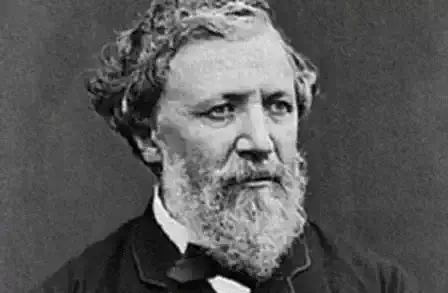
Robert Browning
Heap cassia, sandal-buds and stripes
"Heap cassia, sandal-buds and stripes"
Heap cassia, sandal-buds and stripes
Of labdanum, and aloe-balls,
Smeared with dull nard an Indian wipes
From out her hair: such balsam falls
Down sea-side mountain pedestals,
From tree-tops where tired winds are fain,
Spent with the vast and howling main,
To treasure half their island-gain.
And strew faint sweetness from some old
Egyptian's fine worm-eaten shroud
Which breaks to dust when once unrolled;
Or shredded perfume, like a cloud
From closet long to quiet vowed,
With mothed and dropping arras hung,
Mouldering her lute and books among,
As when a queen, long dead, was young.
Heap cassia, sandal-buds and stripes
Of labdanum, and aloe-balls,
Smeared with dull nard an Indian wipes
From out her hair: such balsam falls
Down sea-side mountain pedestals,
From tree-tops where tired winds are fain,
Spent with the vast and howling main,
To treasure half their island-gain.
And strew faint sweetness from some old
Egyptian's fine worm-eaten shroud
Which breaks to dust when once unrolled;
Or shredded perfume, like a cloud
From closet long to quiet vowed,
With mothed and dropping arras hung,
Mouldering her lute and books among,
As when a queen, long dead, was young.
249
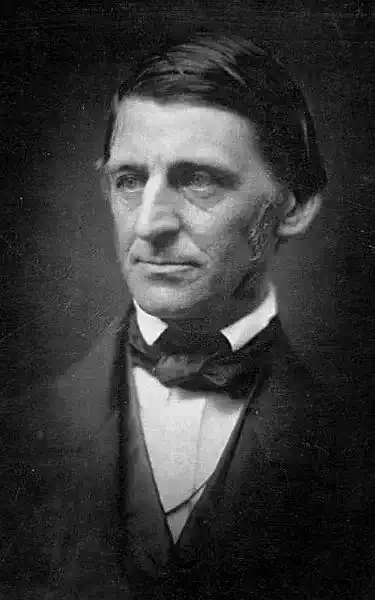
Ralph Waldo Emerson
To Eva
To Eva
O Fair and stately maid, whose eye
Was kindled in the upper sky
At the same torch that lighted mine;
For so I must interpret still
Thy sweet dominion o'er my will,
A sympathy divine.
Ah! let me blameless gaze upon
Features that seem in heart my own,
Nor fear those watchful sentinels
Which charm the more their glance forbids,
Chaste glowing underneath their lids
With fire that draws while it repels.
Thine eyes still shined for me, though far
I lonely roved the land or sea,
As I behold yon evening star,
Which yet beholds not me.
This morn I climbed the misty hill,
And roamed the pastures through;
How danced thy form before my path,
Amidst the deep-eyed dew!
When the red bird spread his sable wing,
And showed his side of flame,
When the rose-bud ripened to the rose,
In both I read thy name.
O Fair and stately maid, whose eye
Was kindled in the upper sky
At the same torch that lighted mine;
For so I must interpret still
Thy sweet dominion o'er my will,
A sympathy divine.
Ah! let me blameless gaze upon
Features that seem in heart my own,
Nor fear those watchful sentinels
Which charm the more their glance forbids,
Chaste glowing underneath their lids
With fire that draws while it repels.
Thine eyes still shined for me, though far
I lonely roved the land or sea,
As I behold yon evening star,
Which yet beholds not me.
This morn I climbed the misty hill,
And roamed the pastures through;
How danced thy form before my path,
Amidst the deep-eyed dew!
When the red bird spread his sable wing,
And showed his side of flame,
When the rose-bud ripened to the rose,
In both I read thy name.
352
Ralph Waldo Emerson
Dæmonic Love
Dæmonic Love
Man was made of social earth,
Child and brother from his birth;
Tethered by a liquid cord
Of blood through veins of kindred poured,
Next his heart the fireside band
Of mother, father, sister, stand;
Names from awful childhood heard,
Throbs of a wild religion stirred,
Their good was heaven, their harm was vice,
Till Beauty came to snap all ties,
The maid, abolishing the past,
With lotus-wine obliterates
Dear memory's stone-incarved traits,
And by herself supplants alone
Friends year by year more inly known.
When her calm eyes opened bright,
All were foreign in their light.
It was ever the self-same tale,
The old experience will not fail,—
Only two in the garden walked,
And with snake and seraph talked.
But God said;
I will have a purer gift,
There is smoke in the flame;
New flowerets bring, new prayers uplift,
And love without a name.
Fond children, ye desire
To please each other well;
Another round, a higher,
Ye shall climb on the heavenly stair,
And selfish preference forbear;
And in right deserving,
And without a swerving
Each from your proper state,
Weave roses for your mate.
Deep, deep are loving eyes,
Flowed with naphtha fiery sweet,
And the point is Paradise
Where their glances meet:
Their reach shall yet be more profound,
And a vision without bound:
The axis of those eyes sun-clear
Be the axis of the sphere;
Then shall the lights ye pour amain
Go without check or intervals,
Through from the empyrean walls,
Unto the same again.
Close, close to men,
Like undulating layer of air,
Right above their heads,
The potent plain of Dæmons spreads.
Stands to each human soul its own,
For watch, and ward, and furtherance
In the snares of nature's dance;
And the lustre and the grace
Which fascinate each human heart,
Beaming from another part,
Translucent through the mortal covers,
Is the Dæmon's form and face.
To and fro the Genius hies,
A gleam which plays and hovers
Over the maiden's head,
And dips sometimes as low as to her eyes.
Unknown, — albeit lying near, —
To men the path to the Dæmon sphere,
And they that swiftly come and go,
Leave no track on the heavenly snow.
Sometimes the airy synod bends,
And the mighty choir descends,
And the brains of men thenceforth,
In crowded and in still resorts,
Teem with unwonted thoughts.
As when a shower of meteors
Cross the orbit of the earth,
And, lit by fringent air,
Blaze near and far.
Mortals deem the planets bright
Have slipped their sacred bars,
And the lone seaman all the night
Sails astonished amid stars.
Beauty of a richer vein,
Graces of a subtler strain,
Unto men these moon-men lend,
And our shrinking sky extend.
So is man's narrow path
By strength and terror skirted,
Also (from the song the wrath
Of the Genii be averted!
The Muse the truth uncolored speaking),
The Dæmons are self-seeking;
Their fierce and limitary will
Draws men to their likeness still.
The erring painter made Love blind,
Highest Love who shines on all;
Him radiant, sharpest-sighted god
None can bewilder;
Whose eyes pierce
The Universe,
Path-finder, road-builder,
Mediator, royal giver,
Rightly-seeing, rightly-seen,
Of joyful and transparent mien.
'Tis a sparkle passing
From each to each, from me to thee,
Perpetually,
Sharing all, daring all,
Levelling, misplacing
Each obstruction, it unites
Equals remote, and seeming opposites.
And ever and forever Love
Delights to build a road;
Unheeded Danger near him strides,
Love laughs, and on a lion rides.
But Cupid wears another face
Born into Dæmons less divine,
His roses bleach apace,
His nectar smacks of wine.
The Dæmon ever builds a wall,
Himself incloses and includes,
Solitude in solitudes:
In like sort his love doth fall.
He is an oligarch,
He prizes wonder, fame, and mark,
He loveth crowns,
He scorneth drones;
He doth elect
The beautiful and fortunate,
And the sons of intellect,
And the souls of ample fate,
Who the Future's gates unbar,
Minions of the Morning Star.
In his prowess he exults,
And the multitude insults.
His impatient looks devour
Oft the humble and the poor,
And, seeing his eye glare,
They drop their few pale flowers
Gathered with hope to please
Along the mountain towers,
Lose courage, and despair.
He will never be gainsaid,
Pitiless, will not be stayed.
His hot tyranny
Burns up every other tie;
Therefore comes an hour from Jove
Which his ruthless will defies,
And the dogs of Fate unties.
Shiver the palaces of glass,
Shrivel the rainbow-colored walls
Where in bright art each god and sibyl dwelt
Secure as in the Zodiack's belt;
And the galleries and halls
Wherein every Siren sung,
Like a meteor pass.
For this fortune wanted root
In the core of God's abysm,
Was a weed of self and schism:
And ever the Dæmonic Love
Is the ancestor of wars,
And the parent of remorse.
Man was made of social earth,
Child and brother from his birth;
Tethered by a liquid cord
Of blood through veins of kindred poured,
Next his heart the fireside band
Of mother, father, sister, stand;
Names from awful childhood heard,
Throbs of a wild religion stirred,
Their good was heaven, their harm was vice,
Till Beauty came to snap all ties,
The maid, abolishing the past,
With lotus-wine obliterates
Dear memory's stone-incarved traits,
And by herself supplants alone
Friends year by year more inly known.
When her calm eyes opened bright,
All were foreign in their light.
It was ever the self-same tale,
The old experience will not fail,—
Only two in the garden walked,
And with snake and seraph talked.
But God said;
I will have a purer gift,
There is smoke in the flame;
New flowerets bring, new prayers uplift,
And love without a name.
Fond children, ye desire
To please each other well;
Another round, a higher,
Ye shall climb on the heavenly stair,
And selfish preference forbear;
And in right deserving,
And without a swerving
Each from your proper state,
Weave roses for your mate.
Deep, deep are loving eyes,
Flowed with naphtha fiery sweet,
And the point is Paradise
Where their glances meet:
Their reach shall yet be more profound,
And a vision without bound:
The axis of those eyes sun-clear
Be the axis of the sphere;
Then shall the lights ye pour amain
Go without check or intervals,
Through from the empyrean walls,
Unto the same again.
Close, close to men,
Like undulating layer of air,
Right above their heads,
The potent plain of Dæmons spreads.
Stands to each human soul its own,
For watch, and ward, and furtherance
In the snares of nature's dance;
And the lustre and the grace
Which fascinate each human heart,
Beaming from another part,
Translucent through the mortal covers,
Is the Dæmon's form and face.
To and fro the Genius hies,
A gleam which plays and hovers
Over the maiden's head,
And dips sometimes as low as to her eyes.
Unknown, — albeit lying near, —
To men the path to the Dæmon sphere,
And they that swiftly come and go,
Leave no track on the heavenly snow.
Sometimes the airy synod bends,
And the mighty choir descends,
And the brains of men thenceforth,
In crowded and in still resorts,
Teem with unwonted thoughts.
As when a shower of meteors
Cross the orbit of the earth,
And, lit by fringent air,
Blaze near and far.
Mortals deem the planets bright
Have slipped their sacred bars,
And the lone seaman all the night
Sails astonished amid stars.
Beauty of a richer vein,
Graces of a subtler strain,
Unto men these moon-men lend,
And our shrinking sky extend.
So is man's narrow path
By strength and terror skirted,
Also (from the song the wrath
Of the Genii be averted!
The Muse the truth uncolored speaking),
The Dæmons are self-seeking;
Their fierce and limitary will
Draws men to their likeness still.
The erring painter made Love blind,
Highest Love who shines on all;
Him radiant, sharpest-sighted god
None can bewilder;
Whose eyes pierce
The Universe,
Path-finder, road-builder,
Mediator, royal giver,
Rightly-seeing, rightly-seen,
Of joyful and transparent mien.
'Tis a sparkle passing
From each to each, from me to thee,
Perpetually,
Sharing all, daring all,
Levelling, misplacing
Each obstruction, it unites
Equals remote, and seeming opposites.
And ever and forever Love
Delights to build a road;
Unheeded Danger near him strides,
Love laughs, and on a lion rides.
But Cupid wears another face
Born into Dæmons less divine,
His roses bleach apace,
His nectar smacks of wine.
The Dæmon ever builds a wall,
Himself incloses and includes,
Solitude in solitudes:
In like sort his love doth fall.
He is an oligarch,
He prizes wonder, fame, and mark,
He loveth crowns,
He scorneth drones;
He doth elect
The beautiful and fortunate,
And the sons of intellect,
And the souls of ample fate,
Who the Future's gates unbar,
Minions of the Morning Star.
In his prowess he exults,
And the multitude insults.
His impatient looks devour
Oft the humble and the poor,
And, seeing his eye glare,
They drop their few pale flowers
Gathered with hope to please
Along the mountain towers,
Lose courage, and despair.
He will never be gainsaid,
Pitiless, will not be stayed.
His hot tyranny
Burns up every other tie;
Therefore comes an hour from Jove
Which his ruthless will defies,
And the dogs of Fate unties.
Shiver the palaces of glass,
Shrivel the rainbow-colored walls
Where in bright art each god and sibyl dwelt
Secure as in the Zodiack's belt;
And the galleries and halls
Wherein every Siren sung,
Like a meteor pass.
For this fortune wanted root
In the core of God's abysm,
Was a weed of self and schism:
And ever the Dæmonic Love
Is the ancestor of wars,
And the parent of remorse.
322
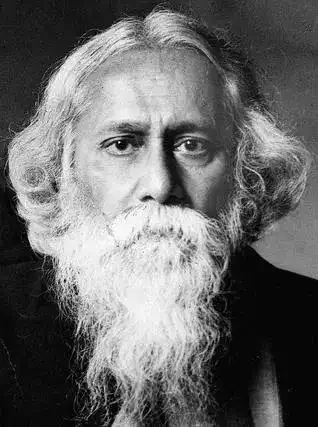
Rabindranath Tagore
The Gardener XXII: When She Passed by Me
The Gardener XXII: When She Passed by Me
When she passed by me with quick
steps, the end of her skirt touched
me.
From the unknown island of a
heart came a sudden warm breath of
spring.
A flutter of a flitting touch brushed
me and vanished in a moment, like a
torn flower petal blown in the breeze.
It fell upon my heart like a sigh of
her body and whisper of her heart.
When she passed by me with quick
steps, the end of her skirt touched
me.
From the unknown island of a
heart came a sudden warm breath of
spring.
A flutter of a flitting touch brushed
me and vanished in a moment, like a
torn flower petal blown in the breeze.
It fell upon my heart like a sigh of
her body and whisper of her heart.
504
Rabindranath Tagore
The Gardener XVI: Hands Cling to Eyes
The Gardener XVI: Hands Cling to Eyes
Hands cling to hands and eyes linger
on eyes: thus begins the record of our
hearts.
It is the moonlit night of March;
the sweet smell of henna is in the air;
my flute lies on the earth neglected
and your garland of flowers is
unfinished.
This love between you and me is
simple as a song.
Your veil of the saffron colour
makes my eyes drunk.
The jasmine wreath that you wove
me thrills to my heart like praise.
It is a game of giving and withholding,
revealing and screening again;
some smiles and some little shyness,
and some sweet useless struggles.
This love between you and me is
simple as a song.
No mystery beyond the present;
no striving for the impossible; no
shadow behind the charm; no groping
in the depth of the dark.
This love between you and me is
simple as a song.
We do not stray out of all words
into the ever silent; we do not raise
our hands to the void for things
beyond hope.
It is enough what we give and we
get.
We have not crushed the joy to
the utmost to wring from it the wine
of pain.
This love between you and me is
simple as a song.
Hands cling to hands and eyes linger
on eyes: thus begins the record of our
hearts.
It is the moonlit night of March;
the sweet smell of henna is in the air;
my flute lies on the earth neglected
and your garland of flowers is
unfinished.
This love between you and me is
simple as a song.
Your veil of the saffron colour
makes my eyes drunk.
The jasmine wreath that you wove
me thrills to my heart like praise.
It is a game of giving and withholding,
revealing and screening again;
some smiles and some little shyness,
and some sweet useless struggles.
This love between you and me is
simple as a song.
No mystery beyond the present;
no striving for the impossible; no
shadow behind the charm; no groping
in the depth of the dark.
This love between you and me is
simple as a song.
We do not stray out of all words
into the ever silent; we do not raise
our hands to the void for things
beyond hope.
It is enough what we give and we
get.
We have not crushed the joy to
the utmost to wring from it the wine
of pain.
This love between you and me is
simple as a song.
446
Rabindranath Tagore
Stray Birds 81 - 90
Stray Birds 81 - 90
81
WHAT is this unseen flame of darkness
whose sparks are the stars?
82
LET life be beautiful like summer flowers
and death like autumn leaves.
88
HE who wants to do good knocks at the gate;
he who loves
finds the gate open.
84
IN death the many becomes one;
in life the one becomes many.
Religion will be one
when God is dead.
85
THE artist is the lover of Nature,
therefore he is her slave
and her master.
86
'HOW far are you from me, O Fruit?'
'I am hidden in your heart, O Flower.'
87
THIS longing is for the one who is felt in the dark,
but not seen in the day.
88
'YOU are the big drop of dew under the lotus leaf,
I am the smaller one on its upper side,
' said the dewdrop to the lake.
89
THE scabbard is content to be dull
when it protects the keenness of the sword.
90
IN darkness
the One appears as uniform;
in the light
the One appears as manifold.
81
WHAT is this unseen flame of darkness
whose sparks are the stars?
82
LET life be beautiful like summer flowers
and death like autumn leaves.
88
HE who wants to do good knocks at the gate;
he who loves
finds the gate open.
84
IN death the many becomes one;
in life the one becomes many.
Religion will be one
when God is dead.
85
THE artist is the lover of Nature,
therefore he is her slave
and her master.
86
'HOW far are you from me, O Fruit?'
'I am hidden in your heart, O Flower.'
87
THIS longing is for the one who is felt in the dark,
but not seen in the day.
88
'YOU are the big drop of dew under the lotus leaf,
I am the smaller one on its upper side,
' said the dewdrop to the lake.
89
THE scabbard is content to be dull
when it protects the keenness of the sword.
90
IN darkness
the One appears as uniform;
in the light
the One appears as manifold.
526
Rabindranath Tagore
Lover's Gifts LIV: In the Beginning of Time
Lover's Gifts LIV: In the Beginning of Time
In the beginning of time, there rose from the churning of God's
dream two women. One is the dancer at the court of paradise, the
desired of men, she who laughs and plucks the minds of the wise
from their cold meditations and of fools from their emptiness; and
scatters them like seeds with careless hands in the extravagant
winds of March, in the flowering frenzy of May.
The other is the crowned queen of heaven, the mother, throned
on the fullness of golden autumn; she who in the harvest-time
brings straying hearts to the smile sweet as tears, the beauty deep
as the sea of silence, -brings them to the temple of the Unknown,
at the holy confluence of Life and Death.
In the beginning of time, there rose from the churning of God's
dream two women. One is the dancer at the court of paradise, the
desired of men, she who laughs and plucks the minds of the wise
from their cold meditations and of fools from their emptiness; and
scatters them like seeds with careless hands in the extravagant
winds of March, in the flowering frenzy of May.
The other is the crowned queen of heaven, the mother, throned
on the fullness of golden autumn; she who in the harvest-time
brings straying hearts to the smile sweet as tears, the beauty deep
as the sea of silence, -brings them to the temple of the Unknown,
at the holy confluence of Life and Death.
513
Rabindranath Tagore
Light
Light
Light, my light, the world-filling light,
the eye-kissing light,
heart-sweetening light!
Ah, the light dances, my darling, at the center of my life;
the light strikes, my darling, the chords of my love;
the sky opens, the wind runs wild, laughter passes over the earth.
The butterflies spread their sails on the sea of light.
Lilies and jasmines surge up on the crest of the waves of light.
The light is shattered into gold on every cloud, my darling,
and it scatters gems in profusion.
Mirth spreads from leaf to leaf, my darling,
and gladness without measure.
The heaven's river has drowned its banks
and the flood of joy is abroad.
Light, my light, the world-filling light,
the eye-kissing light,
heart-sweetening light!
Ah, the light dances, my darling, at the center of my life;
the light strikes, my darling, the chords of my love;
the sky opens, the wind runs wild, laughter passes over the earth.
The butterflies spread their sails on the sea of light.
Lilies and jasmines surge up on the crest of the waves of light.
The light is shattered into gold on every cloud, my darling,
and it scatters gems in profusion.
Mirth spreads from leaf to leaf, my darling,
and gladness without measure.
The heaven's river has drowned its banks
and the flood of joy is abroad.
585
Rabindranath Tagore
Defamation
Defamation
Whey are those tears in your eyes, my child?
How horrid of them to be always scolding you for nothing!
You have stained your fingers and face with ink while writingis
that why they call you dirty?
O, fie! Would they dare to call the full moon dirty because
it has smudged its face with ink?
For every little trifle they blame you, my child. They are
ready to find fault for nothing.
You tore your clothes while playing-is that why they call you
untidy?
O, fie! What would they call an autumn morning that smiles
through its ragged clouds?
Take no heed of what they say to you, my child.
They make a long list of your misdeeds.
Everybody knows how you love sweet things-is that why they
call you greedy?
O, fie! What then would they call us who love you?
Whey are those tears in your eyes, my child?
How horrid of them to be always scolding you for nothing!
You have stained your fingers and face with ink while writingis
that why they call you dirty?
O, fie! Would they dare to call the full moon dirty because
it has smudged its face with ink?
For every little trifle they blame you, my child. They are
ready to find fault for nothing.
You tore your clothes while playing-is that why they call you
untidy?
O, fie! What would they call an autumn morning that smiles
through its ragged clouds?
Take no heed of what they say to you, my child.
They make a long list of your misdeeds.
Everybody knows how you love sweet things-is that why they
call you greedy?
O, fie! What then would they call us who love you?
585
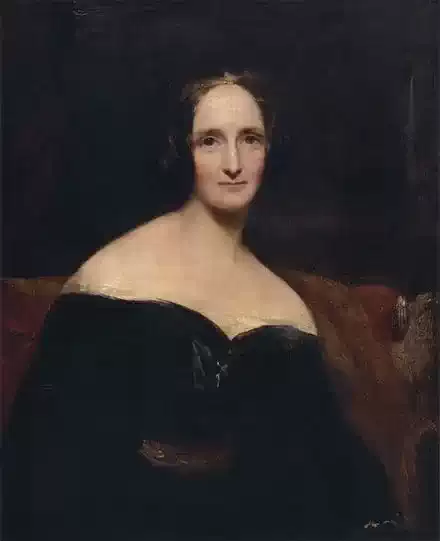
Percy Bysshe Shelley
To Jane
To Jane
The keen stars were twinkling
And the fair moon was rising among them,
Dear Jane:
The guitar was tinkling,
But the notes were not sweet till you sung them
Again.
As the moon's soft splendor
O'er the faint cold starlight of heaven
Is thrown,
So your voice most tender
To the strings without soul had then given
Its own.
The stars will awaken,
Though the moon sleep a full hour later,
Tonight;
No leaf will be shaken
Whilst the dews of your melody scatter
Delight.
Though the sound overpowers,
Sing again, with your dear voice revealing
A tone
Of some world far from ours
Where music and moonlight and feeling
Are one.
The keen stars were twinkling
And the fair moon was rising among them,
Dear Jane:
The guitar was tinkling,
But the notes were not sweet till you sung them
Again.
As the moon's soft splendor
O'er the faint cold starlight of heaven
Is thrown,
So your voice most tender
To the strings without soul had then given
Its own.
The stars will awaken,
Though the moon sleep a full hour later,
Tonight;
No leaf will be shaken
Whilst the dews of your melody scatter
Delight.
Though the sound overpowers,
Sing again, with your dear voice revealing
A tone
Of some world far from ours
Where music and moonlight and feeling
Are one.
483
Percy Bysshe Shelley
To A Skylark
To A Skylark
Hail to thee, blithe Spirit!
Bird thou never wert,
That from Heaven, or near it,
Pourest thy full heart
In profuse strains of unpremeditated art.
Higher still and higher
From the earth thou springest
Like a cloud of fire;
The blue deep thou wingest,
And singing still dost soar, and soaring ever singest.
In the golden lightning
Of the sunken sun
O'er which clouds are bright'ning,
Thou dost float and run,
Like an unbodied joy whose race is just begun.
The pale purple even
Melts around thy flight;
Like a star of Heaven
In the broad daylight
Thou art unseen, but yet I hear thy shrill delight:
Keen as are the arrows
Of that silver sphere,
Whose intense lamp narrows
In the white dawn clear
Until we hardly see--we feel that it is there.
All the earth and air
With thy voice is loud.
As, when night is bare,
From one lonely cloud
The moon rains out her beams, and heaven is overflowed.
What thou art we know not;
What is most like thee?
From rainbow clouds there flow not
Drops so bright to see
As from thy presence showers a rain of melody.
Like a poet hidden
In the light of thought,
Singing hymns unbidden,
Till the world is wrought
To sympathy with hopes and fears it heeded not:
Like a high-born maiden
In a palace tower,
Soothing her love-laden
Soul in secret hour
With music sweet as love, which overflows her bower:
Like a glow-worm golden
In a dell of dew,
Scattering unbeholden
Its aerial hue
Among the flowers and grass, which screen it from the view:
Like a rose embowered
In its own green leaves,
By warm winds deflowered,
Till the scent it gives
Makes faint with too much sweet these heavy-winged thieves.
Sound of vernal showers
On the twinkling grass,
Rain-awakened flowers,
All that ever was
Joyous, and clear, and fresh, thy music doth surpass.
Teach us, sprite or bird,
What sweet thoughts are thine:
I have never heard
Praise of love or wine
That panted forth a flood of rapture so divine.
Chorus hymeneal
Or triumphal chaunt
Matched with thine, would be all
But an empty vaunt--
A thing wherein we feel there is some hidden want.
What objects are the fountains
Of thy happy strain?
What fields, or waves, or mountains?
What shapes of sky or plain?
What love of thine own kind? what ignorance of pain?
With thy clear keen joyance
Languor cannot be:
Shadow of annoyance
Never came near thee:
Thou lovest, but ne'er knew love's sad satiety.
Waking or asleep,
Thou of death must deem
Things more true and deep
Than we mortals dream,
Or how could thy notes flow in such a crystal stream?
We look before and after,
And pine for what is not:
Our sincerest laughter
With some pain is fraught;
Our sweetest songs are those that tell of saddest thought.
Yet if we could scorn
Hate, and pride, and fear;
If we were things born
Not to shed a tear,
I know not how thy joy we ever should come near.
Better than all measures
Of delightful sound,
Better than all treasures
That in books are found,
Thy skill to poet were, thou scorner of the ground!
Teach me half the gladness
That thy brain must know,
Such harmonious madness
From my lips would flow
The world should listen then, as I am listening now!
Hail to thee, blithe Spirit!
Bird thou never wert,
That from Heaven, or near it,
Pourest thy full heart
In profuse strains of unpremeditated art.
Higher still and higher
From the earth thou springest
Like a cloud of fire;
The blue deep thou wingest,
And singing still dost soar, and soaring ever singest.
In the golden lightning
Of the sunken sun
O'er which clouds are bright'ning,
Thou dost float and run,
Like an unbodied joy whose race is just begun.
The pale purple even
Melts around thy flight;
Like a star of Heaven
In the broad daylight
Thou art unseen, but yet I hear thy shrill delight:
Keen as are the arrows
Of that silver sphere,
Whose intense lamp narrows
In the white dawn clear
Until we hardly see--we feel that it is there.
All the earth and air
With thy voice is loud.
As, when night is bare,
From one lonely cloud
The moon rains out her beams, and heaven is overflowed.
What thou art we know not;
What is most like thee?
From rainbow clouds there flow not
Drops so bright to see
As from thy presence showers a rain of melody.
Like a poet hidden
In the light of thought,
Singing hymns unbidden,
Till the world is wrought
To sympathy with hopes and fears it heeded not:
Like a high-born maiden
In a palace tower,
Soothing her love-laden
Soul in secret hour
With music sweet as love, which overflows her bower:
Like a glow-worm golden
In a dell of dew,
Scattering unbeholden
Its aerial hue
Among the flowers and grass, which screen it from the view:
Like a rose embowered
In its own green leaves,
By warm winds deflowered,
Till the scent it gives
Makes faint with too much sweet these heavy-winged thieves.
Sound of vernal showers
On the twinkling grass,
Rain-awakened flowers,
All that ever was
Joyous, and clear, and fresh, thy music doth surpass.
Teach us, sprite or bird,
What sweet thoughts are thine:
I have never heard
Praise of love or wine
That panted forth a flood of rapture so divine.
Chorus hymeneal
Or triumphal chaunt
Matched with thine, would be all
But an empty vaunt--
A thing wherein we feel there is some hidden want.
What objects are the fountains
Of thy happy strain?
What fields, or waves, or mountains?
What shapes of sky or plain?
What love of thine own kind? what ignorance of pain?
With thy clear keen joyance
Languor cannot be:
Shadow of annoyance
Never came near thee:
Thou lovest, but ne'er knew love's sad satiety.
Waking or asleep,
Thou of death must deem
Things more true and deep
Than we mortals dream,
Or how could thy notes flow in such a crystal stream?
We look before and after,
And pine for what is not:
Our sincerest laughter
With some pain is fraught;
Our sweetest songs are those that tell of saddest thought.
Yet if we could scorn
Hate, and pride, and fear;
If we were things born
Not to shed a tear,
I know not how thy joy we ever should come near.
Better than all measures
Of delightful sound,
Better than all treasures
That in books are found,
Thy skill to poet were, thou scorner of the ground!
Teach me half the gladness
That thy brain must know,
Such harmonious madness
From my lips would flow
The world should listen then, as I am listening now!
704
Percy Bysshe Shelley
The Witch Of Atlas
The Witch Of Atlas
Before those cruel twins whom at one birth
Incestuous Change bore to her father Time,
Error and Truth, had hunted from the earth
All those bright natures which adorned its prime,
And left us nothing to believe in, worth
The pains of putting into learn?d rhyme,
A Lady Witch there lived on Atlas mountain
Within a cavern by a secret fountain.
Her mother was one of the Atlantides.
The all-beholding Sun had ne'er beholden
In his wide voyage o'er continents and seas
So fair a creature, as she lay enfolden
In the warm shadow of her loveliness;
He kissed her with his beams, and made all golden
The chamber of gray rock in which she lay.
She, in that dream of joy, dissolved away.
'Tis said she first was changed into a vapor;
And then into a cloud,--such clouds as flit
(Like splendor-winged moths about a taper)
Round the red west when the Sun dies in it;
And then into a meteor, such as caper
On hill-tops when the Moon is in a fit;
Then into one of those mysterious stars
Which hide themselves between the Earth and Mars.
Ten times the Mother of the Months had ben
Her bow beside the folding-star, and bidden
With that bright sign the billows to indent
The sea-deserted sand--(like children chidden,
At her command they ever came and went)--
Since in that cave a dewy splendor hidden
Took shape and motion. With the living form
Of this embodied Power the cave grew warm.
A lovely Lady garmented in light
From her own beauty: deep her eyes as are
Two openings of unfathomable night
Seen through a temple's cloven roof; her hair
Dark; the dim brain whirls dizzy with delight,
Picturing her form. Her soft smiles shone afar;
And her low voice was heard like love, and drew
All living things towards this wonder new.
And first the spotted cameleopard came;
And then the wise and fearless elephant;
Then the sly serpent, in the golden flame
Of his own volumes intervolved. All gaunt
And sanguine beasts her gentle looks made tame,--
They drank before her at her sacred fount;
And every beast of beating heart grew bold,
Such gentleness and power even to behold.
The brinded lioness led forth her young,
That she might teach them how they should forego
Their inborn thirst of death; the pard unstrung
His sinews at her feet, and sought to know,
With looks whose motions spoke without a tongue,
How he might be as gentle as the doe.
The magic circle of her voice and eyes
All savage natures did imparadise.
And old Silenus, shaking a green stick
Of lilies, and the Wood-gods in a crew,
Came blithe as in the olive-copses thick
Cicade are, drunk with the noonday dew;
And Dryope and Faunus followed quick,
Teazing the God to sing them something new;
Till in this cave they found the Lady lone,
Sitting upon a seat of emerald stone.
And universal Pan, 'tis said, was there.
And, though none saw him,--through the adamant
Of the deep mountains, through the trackless air,
And through those living spirits like a want,--
He passed out of his everlasting lair
Where the quick heart of the great world doth pant,
And felt that wondrous Lady all alone,--
And she felt him upon her emerald throne.
And every Nymph of stream and spreading tree,
And every Shepherdess of Ocean's flocks
Who drives her white waves over the green sea,
And Ocean with the brine on his grey locks,
And quaint Priapus with his company,--
All came, much wondering how the enwombed rocks
Could have brought forth so beautiful a birth:
Her love subdued their wonder and their mirth.
The herdsmen and the mountain-maidens came,
And the rude kings of pastoral Garamant--
Their spirits shook within them, as a flame
Stirred by the air under a cavern gaunt:
Pygmies and Polyphemes, by many a name,
Centaurs and Satyrs, and such shapes as haunt
Wet clefts,--and lumps neither alive nor dead,
Dog-headed, bosom-eyed, and bird-footed.
For she was beautiful. Her beauty made
The bright world dim, and everything beside
Seemed like the fleeting image of a shade.
No thought of living spirit could abide
(Which to her looks had ever been betrayed)
On any object in the world so wide,
On any hope within the circling skies,--
But on her form, and in her inmost eyes.
Which when the Lady knew; she took her spindle,
And twined three threads of fleecy mist, and three
Long lines of light, such as the dawn may kindle
The clouds and waves and mountains with, and she
As many starbeams, ere their lamps could dwindle
In the belated moon, wound skilfully;
And with these threads a subtle veil she wove--
A shadow for the splendour of her love.
The deep recesses of her odorous dwelling
Were stored with magic treasures:--sounds of air
Which had the power all spirits of compelling,
Folded in cells of crystal silence there;
Such as we hear in youth, and think the feeling
will never die--yet, ere we are aware,
The feeling and the sound are fled and gone
And the regret they leave remains alone.
And there lay Visions swift and sweet and quaint,
Each in its thin sheath like a chrysalis;--
Some eager to burst forth; some weak and faint
With the soft burden of intensest bliss
It is their work to bear to many a saint
Whose heart adores the shrine which holiest is,
Even Love's; and others, white, green, grey, and black,
And of all shapes:--and each was at her beck.
And odours in a kind of aviary
Of ever-blooming Eden-trees she kept,
Clipped in a floating net a love-sick Fairy
Had woven from dew-beams while the moon yet slept.
As bats at the wired window of a dairy,
They beat their vans; and each was an adept--
When loosed and missioned, making wings of winds--
To stir sweet thoughts or sad in destined minds.
And liquors clear and sweet, whose healthful might
Could medicine the sick soul to happy sleep,
And change eternal death into a night
Of glorious dreams--or, if eyes needs must weep,
Could make their tears all wonder and delight--
She in her crystal phials did closely keep:
If men could drink of those clear phials, 'tis said
The living were not envied of the dead.
Her cave was stored with scrolls of strange device,
The works of some Saturnian Archimage,
Which taught the expiations at whose price
Men from the Gods might win that happy age
Too lightly lost, redeeming native vice,--
And which might quench the earth-consuming rage
Of gold and blood, till men should live and move
Harmonious as the sacred stars above:--
And how all things that seem untameable,
Not to be checked and not to be confined,
Obey the spells of Wisdom's wizard skill;
Time, earth, and fire, the ocean and the wind,
And all their shapes, and man's imperial will;--
And other scrolls whose writings did unbind
The inmost lore of love--let the profane
Tremble to ask what secrets they contain.
And wondrous works of substances unknown,
To which the enchantment of her Father's power
Had changed those ragged blocks of savage stone,
Were heaped in the recesses of her bower;
Carved lamps and chalices, and phials which shone
In their own golden beams--each like a flower
Out of whose depth a firefly shakes his light
Under a cypress in a starless night.
At first she lived alone in this wild home,
And her own thoughts were each a minister,
Clothing themselves or with the ocean-foam,
Or with the wind, or with the speed of fire,
To work whatever purposes might come
Into her mind: such power her mighty Sire
Had girt them with, whether to fly or run
Through all the regions which he shines upon.
The Ocean-nymphs and Hamadryades,
Oreads, and Naiads with long weedy locks,
Offered to do her bidding through the seas,
Under the earth, and in the hollow rocks,
And far beneath the matted roots of trees,
And in the gnarled heart of stubborn oaks;
So they might live for ever in the light
Of her sweet presence--each a satellite.
"This may not be," the Wizard Maid replied.
"The fountains where the Naiades bedew
Their shining hair at length are drained and dried;
The solid oaks forget their strength, and strew
Their latest leaf upon the mountains wide;
The boundless ocean like a drop of dew
Will be consumed; the stubborn centre must
Be scattered like a cloud of summer dust.
"And ye, with them, will perish one by one.
If I must sigh to think that this shall be,
If I must weep when the surviving Sun
Shall smile on your decay--oh ask not me
To love you till your little race is run;
I cannot die as ye must.--Over me
Your leaves shall glance--the streams in which ye dwell
Shall be my paths henceforth; and so farewell."
She spoke and wept. The dark and azure well
Sparkled beneath the shower of her bright tears,
And every little circlet where they fell
Flung to the cavern-roof inconstant spheres
And intertangled lines of light. A knell
Of sobbing voices came upon her ears
From those departing forms, o'er the serene
Of the white streams and of the forest green.
All day the Wizard Lady sat aloof;
Spelling out scrolls of dread antiquity
Under the cavern's fountain-lighted roof;
Or broidering the pictured poesy
Of some high tale upon her growing woof,
Which the sweet splendor of her smiles could dye
In hues outshining heaven--and ever she
Added some grace to the wrought poesy:--
While on her hearth lay blazing many a piece
Of sandal-wood, rare gums, and cinnamon.
Men scarcely know how beautiful fire is;
Each flame of it is as a precious stone
Dissolved in ever-moving light, and this
Belongs to each and all who gaze thereon.'
The Witch beheld it not, for in her hand
She held a woof that dimmed the burning brand.
This Lady never slept, but lay in trance
All night within the fountain--as in sleep.
Its emerald crags glowed in her beauty's glance:
Through the green splendour of the water deep
She saw the constellations reel and dance
Like fireflies--and withal did ever keep
The tenor of her contemplations calm,
With open eyes, closed feet, and folded palm.
And, when the whirlwinds and the clouds descended
From the white pinnacles of that cold hill,
She passed at dewfall to a space extended,
Where, in a lawn of flowering asphodel
Amid a wood of pines and cedars blended,
There yawned an inextinguishable well
Of crimson fire, full even to the brim,
And overflowing all the margin trim:--
Within the which she lay when the fierce war
Of wintry winds shook that innocuous liquor,
In many a mimic moon and bearded star,
O'er woods and lawns. The serpent heard it flicker
In sleep, and, dreaming still, he crept afar.
And, when the windless snow descended thicker
Than autumn-leaves, she watched it as it came
Melt on the surface of the level flame.
She had a boat which some say Vulcan wrought
For Venus, as the chariot of her star;
But it was found too feeble to be fraught
With all the ardours in that sphere which are,
And so she sold it, and Apollo bought
And gave it to this daughter: from a car,
Changed to the fairest and the lightest boat
Which ever upon mortal stream did float.
And others say that, when but three hours old,
The firstborn Love out of his cradle leapt,
And clove dun chaos with his wings of gold,
And, like a horticultural adept,
Stole a strange seed, and wrapped it up in mould,
And sowed it in his mother's star, and kept
Watering it all the summer with sweet dew,
And with his wings fanning it as it grew.
The plant grew strong and green--the snowy flower
Fell, and the long and gourd-like fruit began
To turn the light and dew by inward power
To its own substance: woven tracery ran
Of light firm texture, ribbed and branching, o'er
The solid rind, like a leaf's veined fan,--
Of which Love scooped this boat, and with soft motion
Piloted it round the circumfluous ocean.
This boat she moored upon her fount, and lit
A living spirit within all its frame,
Breathing the soul of swiftness into it.
Couched on the fountain--like a panther tame
(One of the twain at Evan's feet that sit,
Or as on Vesta's sceptre a swift flame,
Or on blind Homer's heart a winged thought--
In joyous expectation lay the boat.
Then by strange art she kneaded fire and snow
Together, tempering the repugnant mass
With liquid love--all things together grow
Through which the harmony of love can pass;
And a fair Shape out of her hands did flow--
A living image which did far surpass
In beauty that bright shape of vital stone
Which drew the heart out of Pygmalion.
A sexless thing it was, and in its growth
It seemed to have developed no defect
Of either sex, yet all the grace of both.
In gentleness and strength its limbs were decked;
The bosom lightly swelled with its full youth;
The countenance was such as might select
Some artist that his skill should never die,
lmaging forth such perfect purity.
From its smooth shoulders hung two rapid wings
Fit to have borne it to the seventh sphere,
Tipped with the speed of liquid lightenings,
Dyed in the ardours of the atmosphere.
She led her creature to the boiling springs
Where the light boat was moored, and said "Sit here,"
And pointed to the prow, and took her seat
Beside the rudder with opposing feet.
And down the streams which clove those mountains vast,
Around their inland islets, and amid
The panther-peopled forests (whose shade cast
Darkness and odors, and a pleasure hid
In melancholy gloom) the pinnace passed;
By many a star-surrounded pyramid
Of icy crag cleaving the purple sky,
And caverns yawning round unfathomably.
The silver noon into that winding dell,
With slanted gleam athwart the forest-tops,
Tempered like golden evening, feebly fell;
A green and glowing light, like that which drops
From folded lilies in which glow-worms dwell
When Earth over her face Night's mantle wraps;
Between the severed mountains lay on high,
Over the stream, a narrow rift of sky.
And, ever as she went, the Image lay
With folded wings and unawakened eyes;
And o'er its gentle countenance did play
The busy dreams, as thick as summer flies,
Chasing the rapid smiles that would not stay,
And drinking the warm tears, and the sweet sighs
Inhaling, which with busy murmur vain
They has aroused from that full heart and brain.
And ever down the prone vale, like a cloud
Upon a stream of wind, the pinnace went:
Now lingering on the pools, in which abode
The calm and darkness of the deep content
In which they paused; now o'er the shallow road
Of white and dancing waters, all besprent
With sand and polished pebbles:--mortal boat
In such a shallow rapid could not float.
And down the earthquaking cataracts, which shivcr
Their snow-like waters into golden air,
Or under chasms unfathomable ever
Sepulchre them, till in their rage they tear
A subterranean portal for the river,
It fled. The circling sunbows did upbear
Its fall down the hoar precipice of spray,
Lighting it far upon its lampless way.
And, when the Wizard Lady would ascend
The labyrinths of some many-winding vale
Which to the inmost mountain upward tend,
She called "Hermaphroditus!"--and the pale
And heavy hue which slumber could extend
Over its lips and eyes, as on the gale
A rapid shadow from a slope of grass,
Into the darkness of the stream did pass
And it unfurled its heaven-coloured pinions;
With stars of fire spotting the stream below,
And from above into the Sun's dominions
Flinging a glory like the golden glow
In which Spring clothes her emerald-winged minions,
All interwoven with fine feathery snow,
And moonlight splendour of intensest rime
With which frost paints the pines in winter-time.
And then it winnowed the elysian air
Which ever hung about that Lady bright,
With its etherial vans: and, speeding there,
Like a star up the torrent of the night,
Or a swift eagle in the morning glare
Breasting the whirlwind with impetuous flight,
The pinnace, oared by those enchanted wings,
Clove the fierce streams towards their upper springs.
The water flashed,--like sunlight, by the prow
Of a noon-wandering meteor flung to heaven;
The still air seemed as if its waves did flow
In tempest down the mountains; loosely driven,
The Lady's radiant hair streamed to and fro;
Beneath, the billows, having vainly striven
Indignant and impetuous, roared to feel
The swift and steady motion of the keel.
Or, when the weary moon was in the wane,
Or in the noon of interlunar night,
The Lady Witch in visions could not chain
Her spirit; but sailed forth under the light
Of shooting stars, and bade extend amain
Its storm-outspeeding wings the Hermaphrodite;
She to the austral waters took her way,
Beyond the fabulous Thamondocana.
Where, like a meadow which no scythe has shaven,
Which rain could never bend or whirlblast shake,
With the antarctic constellations paven,
Canopus and his crew, lay the austral lake--
There she would build herself a windless haven
Out of the clouds whose moving turrets make
The bastions of the storm, when through the sky
The spirits of the tempest thundered by:--
A haven beneath whose translucent floor
The tremulous stars sparkled unfathomably;
And around which the solid vapours hoar,
Based on the level waters, to the sky
Lifted their dreadful crags, and, like a shore
Of wintry mountains, inaccessibly
Hemmed-in with rifts and precipices grey,
And hanging crags, many a cove and bay.
And, whilst the outer lake beneath the lash
Of the wind's scourge foamed like a wounded thing
And the incessant hail with stony clash
Ploughed up the waters, and the flagging wing
Of the roused cormorant in the lightningflash
Looked like the wreck of some wind-wandering
Fragment of inky thunder-smoke--this haven
Was as a gem to copy heaven engraven.
On which that Lady played her many pranks,
Circling the image of a shooting star
(Even as a tiger on Hydaspes' banks
Outspeeds the antelopes which speediest are)
In her light boat; and many quips and cranks
She played upon the water; till the car
Of the late moon, like a sick matron wan,
To journey from the misty east began.
And then she called out of the hollow turrets
Of those high clouds, white, golden, and vermilion,
The armies of her ministering spirits.
In mighty legions million after million
They came, each troop emblazoning its merits
On meteor flags; and many a proud pavilion
Of the intertexture of the atmosphere
They pitched upon the plain of the calm mere.
They framed the imperial tent of their great Queen
Of woven exhalations, underlaid
With lambent lightning-fire, as may be seen
A dome of thin and open ivory inlaid
With crimson silk. Cressets from the serene
Hung there, and on the water for her tread
A tapestry of fleece-like mist was strewn,
Dyed in the beams of the ascending moon.
And on a throne o'erlaid with starlight, caught
Upon those wandering isles of aery dew
Which highest shoals of mountain shipwreck not,
She sate, and heard all that had happened new
Between the earth and moon since they had brought
The last intelligence: and now she grew
Pale as that moon lost in the watery night,
And now she wept, and now she laughed outright.
These were tame pleasures.--She would often climb
The steepest ladder of the crudded rack
Up to some beaked cape of cloud sublime,
And like Arion on the dolphin's back
Ride singing through the shoreless air. Oft-time,
Following the serpent lightning's winding track,
She ran upon the platforms of the wind,
And laughed to hear the fireballs roar behid.
And sometimes to those streams of upper air
Which whirl the earth in its diurnal round
She would ascend, and win the Spirits there
To let her join their chorus. Mortals found
That on those days the sky was calm and fair,
And mystic snatches of harmonious sound
Wandered upon the earth where'er she passed,
And happy thoughts of hope, too sweet to last.
But her choice sport was, in the hours of sleep,
To glide adown old Nilus, where he threads
Egypt and Ethiopia from the steep
Of utmost Axume until he spreads,
Like a calm flock of silver-fleeced sheep,
His waters on the plain,--and crested heads
Of cities and proud temples gleam amid,
And many a vapour-belted pyramid:--
By MÏris and the Mareotid lakes,
Strewn with faint blooms like bridal-chamber floors,
Where naked boys bridling tame water-snakes,
Or charioteering ghastly alligators,
Had left on the sweet waters mighty wakes
Of those huge forms;--within the brazen doors
Of the Great Labyrinth slept both boy and beast,
Tired with the pomp of their Osirian feast.
And where within the surface of the river
The shadows of the massy temples lie,
And never are erased, but tremble ever
Like things which every cloud can doom to die,--
Through lotus-paven canals, and wheresoever
The works of man pierced that serenest sky
With tombs and towers and fanes,--'twas her delight
To wander in the shadow of the night.
With motion like the spirit of that wind
Whose soft step deepens slumber, her light feet
Passed through the peopled haunts of humankind,
Scattering sweet visions from her presence sweet,--
Through fane and palace-court, and labyrinth mined
With many a dark and subterranean street
Under the Nile; through chambers high and deep
She passed, observing mortals in their sleep.
A pleasure sweet doubtless it was to see
Mortals subdued in all the shapes of sleep.
Here lay two sister-twins in infancy;
There a lone youth who in his dreams did weep;
Within, two lovers linked innocently
In their loose locks which over both did creep
Like ivy from one stem; and there lay calm
Old age with snow-bright hair and folded palm.
But other troubled forms of sleep she saw,
Not to be mirrored in a holy song,--
Distortions foul of supernatural awe,
And pale imaginings of visioned wrong,
And all the code of Custom's lawless law
Written upon the brows of old and young.
"This," said the Wizard Maiden, "is the strife
Which stirs the liquid surface of man's life."
And little did the sight disturb her soul.
We, the weak mariners of that wide lake,
Where'er its shores extend or billows roll,
Our course unpiloted and starless make
O'er its wild surface to an unknown goal;
But she in the calm depths her way could take,
Where in bright bowers immortal forms abide
Beneath the weltering of the restless tide.
And she saw princes couched under the glow
Of sunlike gems; and round each temple-court
In dormitories ranged, row after row,
She saw the priests asleep,--all of one sort,
For all were educated to be so.
The peasants in their huts, and in the port
The sailors she saw cradled on the waves,
And the dead lulled within their dreamless graves.
And all the forms in which those spirits lay
Were to her sight like the diaphanous
Veils in which those sweet ladies oft array
Their delicate limbs who would conceal from us
Only their scorn of all concealment: they
Move in the light of their own beauty thus.
But these and all now lay with sleep upon them,
And little thought a Witch was looking on them.
She all those human figures breathing there
Beheld as living spirits. To her eyes
The naked beauty of the soul lay bare,
And often through a rude and worn disguise
She saw the inner form most bright and fair:
And then she had a charm of strange device,
Which, murmured on mute lips with tender tone,
Could make that spirit mingle with her own.
Alas! Aurora, what wouldst thou have given
For such a charm, when Tithon became grey--
Or how much, Venus, of thy silver heaven
Wouldst thou have yielded, ere Proserpina
Had half (oh why not all?) the debt forgiven
Which dear Adonis had been doomed to pay--
To any witch who would have taught you it
The Heliad doth not know its value yet.
'Tis said in after times her spirit free
Knew what love was, and felt itself alone.
But holy Dian could not chaster be
Before she stooped to kiss Endymion
Than now this Lady,--like a sexless bee,
Tasting all blossoms and confined to none:
Among those mortal forms the Wizard Maiden
Passed with an eye serene and heart unladen.
To those she saw most beautiful she gave
Strange panacea in a crystal bowl.
They drank in their deep sleep of that sweet wave,
And lived thenceforward as if some control,
Mightier than life, were in them; and the grave
Of such, when death oppressed the weary soul,
Was as a green and overarching bower
Lit by the gems of many a starry flower.
For, on the night when they were buried, she
Restored the embalmer's ruining, and shook
The light out of the funeral-lamps, to be
A mimic day within that deathy nook;
And she unwound the woven imagery
Of second childhood's swaddling-bands, and took
The coffin, its last cradle, from its niche,
And threw it with contempt into a ditch,
And there the body lay, age after age,
Mute, breathing, beating, warm, and undecaying,
Like one asleep in a green hermitage,--
With gentle smiles about its eyelids playing,
And living in its dreams beyond the rage
Of death or life; while they were still arraying
In liveries ever new the rapid, blind,
And fleeting generations of mankind.
And she would write strange dreams upon the brain
Of those who were less beautiful, and make
All harsh and crooked purposes more vain
Than in the desert is the serpent's wake
Which the sand covers. All his evil gain
The miser, in such dreams, would rise and shake
Into a beggar's lap; the lying scribe
Would his own lies betray without a bribe.
The priests would write an explanation full,
Translating hieroglyphics into Greek,
How the God Apis really was a bull,
And nothing more; and bid the herald stick
The same against the temple-doors, and pull
The old cant down: they licensed all to speak
Whate'er they thought of hawks and cats and geese,
By pastoral letters to each diocese.
The king would dress an ape up in his crown
And robes, and seat him on his glorious seat,
And on the right hand of the sunlike throne
Would place a gaudy mock-bird to repeat
The chatterings of the monkey. Every one
Of the prone courtiers crawled to kiss the feet
Of their great emperor when the morning came;
And kissed--alas, how many kiss the same!
The soldiers dreamed that they were blacksmiths, and
Walked out of quarters in somnambulism;
Round the red anvils you might see them stand
Like Cyclopses in Vulcan's sooty abysm,
Beating their swords to ploughshares:--in a band
The jailors sent those of the liberal schism
Free through the streets of Memphis--much, I wis,
To the annoyance of king Amasis.
And timid lovers, who had been so coy
They hardly knew whether they loved or not,
Would rise out of their rest, and take sweet joy,
To the fulfilment of their inmost thought;
And, when next day the maiden and the boy
Met one another, both, like sinners caught,
Blushed at the thing which each believed was done
Only in fancy--till the tenth moon shone;
And then the Witch would let them take no ill;
Of many thousand schemes which lovers find,
The Witch found one,--and so they took their fill
Of happiness in marriage warm and kind.
Friends who, by practice of some envious skill,
Were torn apart (a wide wound, mind from mind)
She did unite again with visions clear
Of deep affection and of truth sincere.
These were the pranks she played among the cities
Of mortal men. And what she did to Sprites
And Gods, entangling them in her sweet ditties,
To do her will, and show their subtle sleights,
I will declare another time; for it is
A tale more fit for the weird winter-nights
Than for these garish summer-days, when we
Scarcely believe much more than we can see.
Before those cruel twins whom at one birth
Incestuous Change bore to her father Time,
Error and Truth, had hunted from the earth
All those bright natures which adorned its prime,
And left us nothing to believe in, worth
The pains of putting into learn?d rhyme,
A Lady Witch there lived on Atlas mountain
Within a cavern by a secret fountain.
Her mother was one of the Atlantides.
The all-beholding Sun had ne'er beholden
In his wide voyage o'er continents and seas
So fair a creature, as she lay enfolden
In the warm shadow of her loveliness;
He kissed her with his beams, and made all golden
The chamber of gray rock in which she lay.
She, in that dream of joy, dissolved away.
'Tis said she first was changed into a vapor;
And then into a cloud,--such clouds as flit
(Like splendor-winged moths about a taper)
Round the red west when the Sun dies in it;
And then into a meteor, such as caper
On hill-tops when the Moon is in a fit;
Then into one of those mysterious stars
Which hide themselves between the Earth and Mars.
Ten times the Mother of the Months had ben
Her bow beside the folding-star, and bidden
With that bright sign the billows to indent
The sea-deserted sand--(like children chidden,
At her command they ever came and went)--
Since in that cave a dewy splendor hidden
Took shape and motion. With the living form
Of this embodied Power the cave grew warm.
A lovely Lady garmented in light
From her own beauty: deep her eyes as are
Two openings of unfathomable night
Seen through a temple's cloven roof; her hair
Dark; the dim brain whirls dizzy with delight,
Picturing her form. Her soft smiles shone afar;
And her low voice was heard like love, and drew
All living things towards this wonder new.
And first the spotted cameleopard came;
And then the wise and fearless elephant;
Then the sly serpent, in the golden flame
Of his own volumes intervolved. All gaunt
And sanguine beasts her gentle looks made tame,--
They drank before her at her sacred fount;
And every beast of beating heart grew bold,
Such gentleness and power even to behold.
The brinded lioness led forth her young,
That she might teach them how they should forego
Their inborn thirst of death; the pard unstrung
His sinews at her feet, and sought to know,
With looks whose motions spoke without a tongue,
How he might be as gentle as the doe.
The magic circle of her voice and eyes
All savage natures did imparadise.
And old Silenus, shaking a green stick
Of lilies, and the Wood-gods in a crew,
Came blithe as in the olive-copses thick
Cicade are, drunk with the noonday dew;
And Dryope and Faunus followed quick,
Teazing the God to sing them something new;
Till in this cave they found the Lady lone,
Sitting upon a seat of emerald stone.
And universal Pan, 'tis said, was there.
And, though none saw him,--through the adamant
Of the deep mountains, through the trackless air,
And through those living spirits like a want,--
He passed out of his everlasting lair
Where the quick heart of the great world doth pant,
And felt that wondrous Lady all alone,--
And she felt him upon her emerald throne.
And every Nymph of stream and spreading tree,
And every Shepherdess of Ocean's flocks
Who drives her white waves over the green sea,
And Ocean with the brine on his grey locks,
And quaint Priapus with his company,--
All came, much wondering how the enwombed rocks
Could have brought forth so beautiful a birth:
Her love subdued their wonder and their mirth.
The herdsmen and the mountain-maidens came,
And the rude kings of pastoral Garamant--
Their spirits shook within them, as a flame
Stirred by the air under a cavern gaunt:
Pygmies and Polyphemes, by many a name,
Centaurs and Satyrs, and such shapes as haunt
Wet clefts,--and lumps neither alive nor dead,
Dog-headed, bosom-eyed, and bird-footed.
For she was beautiful. Her beauty made
The bright world dim, and everything beside
Seemed like the fleeting image of a shade.
No thought of living spirit could abide
(Which to her looks had ever been betrayed)
On any object in the world so wide,
On any hope within the circling skies,--
But on her form, and in her inmost eyes.
Which when the Lady knew; she took her spindle,
And twined three threads of fleecy mist, and three
Long lines of light, such as the dawn may kindle
The clouds and waves and mountains with, and she
As many starbeams, ere their lamps could dwindle
In the belated moon, wound skilfully;
And with these threads a subtle veil she wove--
A shadow for the splendour of her love.
The deep recesses of her odorous dwelling
Were stored with magic treasures:--sounds of air
Which had the power all spirits of compelling,
Folded in cells of crystal silence there;
Such as we hear in youth, and think the feeling
will never die--yet, ere we are aware,
The feeling and the sound are fled and gone
And the regret they leave remains alone.
And there lay Visions swift and sweet and quaint,
Each in its thin sheath like a chrysalis;--
Some eager to burst forth; some weak and faint
With the soft burden of intensest bliss
It is their work to bear to many a saint
Whose heart adores the shrine which holiest is,
Even Love's; and others, white, green, grey, and black,
And of all shapes:--and each was at her beck.
And odours in a kind of aviary
Of ever-blooming Eden-trees she kept,
Clipped in a floating net a love-sick Fairy
Had woven from dew-beams while the moon yet slept.
As bats at the wired window of a dairy,
They beat their vans; and each was an adept--
When loosed and missioned, making wings of winds--
To stir sweet thoughts or sad in destined minds.
And liquors clear and sweet, whose healthful might
Could medicine the sick soul to happy sleep,
And change eternal death into a night
Of glorious dreams--or, if eyes needs must weep,
Could make their tears all wonder and delight--
She in her crystal phials did closely keep:
If men could drink of those clear phials, 'tis said
The living were not envied of the dead.
Her cave was stored with scrolls of strange device,
The works of some Saturnian Archimage,
Which taught the expiations at whose price
Men from the Gods might win that happy age
Too lightly lost, redeeming native vice,--
And which might quench the earth-consuming rage
Of gold and blood, till men should live and move
Harmonious as the sacred stars above:--
And how all things that seem untameable,
Not to be checked and not to be confined,
Obey the spells of Wisdom's wizard skill;
Time, earth, and fire, the ocean and the wind,
And all their shapes, and man's imperial will;--
And other scrolls whose writings did unbind
The inmost lore of love--let the profane
Tremble to ask what secrets they contain.
And wondrous works of substances unknown,
To which the enchantment of her Father's power
Had changed those ragged blocks of savage stone,
Were heaped in the recesses of her bower;
Carved lamps and chalices, and phials which shone
In their own golden beams--each like a flower
Out of whose depth a firefly shakes his light
Under a cypress in a starless night.
At first she lived alone in this wild home,
And her own thoughts were each a minister,
Clothing themselves or with the ocean-foam,
Or with the wind, or with the speed of fire,
To work whatever purposes might come
Into her mind: such power her mighty Sire
Had girt them with, whether to fly or run
Through all the regions which he shines upon.
The Ocean-nymphs and Hamadryades,
Oreads, and Naiads with long weedy locks,
Offered to do her bidding through the seas,
Under the earth, and in the hollow rocks,
And far beneath the matted roots of trees,
And in the gnarled heart of stubborn oaks;
So they might live for ever in the light
Of her sweet presence--each a satellite.
"This may not be," the Wizard Maid replied.
"The fountains where the Naiades bedew
Their shining hair at length are drained and dried;
The solid oaks forget their strength, and strew
Their latest leaf upon the mountains wide;
The boundless ocean like a drop of dew
Will be consumed; the stubborn centre must
Be scattered like a cloud of summer dust.
"And ye, with them, will perish one by one.
If I must sigh to think that this shall be,
If I must weep when the surviving Sun
Shall smile on your decay--oh ask not me
To love you till your little race is run;
I cannot die as ye must.--Over me
Your leaves shall glance--the streams in which ye dwell
Shall be my paths henceforth; and so farewell."
She spoke and wept. The dark and azure well
Sparkled beneath the shower of her bright tears,
And every little circlet where they fell
Flung to the cavern-roof inconstant spheres
And intertangled lines of light. A knell
Of sobbing voices came upon her ears
From those departing forms, o'er the serene
Of the white streams and of the forest green.
All day the Wizard Lady sat aloof;
Spelling out scrolls of dread antiquity
Under the cavern's fountain-lighted roof;
Or broidering the pictured poesy
Of some high tale upon her growing woof,
Which the sweet splendor of her smiles could dye
In hues outshining heaven--and ever she
Added some grace to the wrought poesy:--
While on her hearth lay blazing many a piece
Of sandal-wood, rare gums, and cinnamon.
Men scarcely know how beautiful fire is;
Each flame of it is as a precious stone
Dissolved in ever-moving light, and this
Belongs to each and all who gaze thereon.'
The Witch beheld it not, for in her hand
She held a woof that dimmed the burning brand.
This Lady never slept, but lay in trance
All night within the fountain--as in sleep.
Its emerald crags glowed in her beauty's glance:
Through the green splendour of the water deep
She saw the constellations reel and dance
Like fireflies--and withal did ever keep
The tenor of her contemplations calm,
With open eyes, closed feet, and folded palm.
And, when the whirlwinds and the clouds descended
From the white pinnacles of that cold hill,
She passed at dewfall to a space extended,
Where, in a lawn of flowering asphodel
Amid a wood of pines and cedars blended,
There yawned an inextinguishable well
Of crimson fire, full even to the brim,
And overflowing all the margin trim:--
Within the which she lay when the fierce war
Of wintry winds shook that innocuous liquor,
In many a mimic moon and bearded star,
O'er woods and lawns. The serpent heard it flicker
In sleep, and, dreaming still, he crept afar.
And, when the windless snow descended thicker
Than autumn-leaves, she watched it as it came
Melt on the surface of the level flame.
She had a boat which some say Vulcan wrought
For Venus, as the chariot of her star;
But it was found too feeble to be fraught
With all the ardours in that sphere which are,
And so she sold it, and Apollo bought
And gave it to this daughter: from a car,
Changed to the fairest and the lightest boat
Which ever upon mortal stream did float.
And others say that, when but three hours old,
The firstborn Love out of his cradle leapt,
And clove dun chaos with his wings of gold,
And, like a horticultural adept,
Stole a strange seed, and wrapped it up in mould,
And sowed it in his mother's star, and kept
Watering it all the summer with sweet dew,
And with his wings fanning it as it grew.
The plant grew strong and green--the snowy flower
Fell, and the long and gourd-like fruit began
To turn the light and dew by inward power
To its own substance: woven tracery ran
Of light firm texture, ribbed and branching, o'er
The solid rind, like a leaf's veined fan,--
Of which Love scooped this boat, and with soft motion
Piloted it round the circumfluous ocean.
This boat she moored upon her fount, and lit
A living spirit within all its frame,
Breathing the soul of swiftness into it.
Couched on the fountain--like a panther tame
(One of the twain at Evan's feet that sit,
Or as on Vesta's sceptre a swift flame,
Or on blind Homer's heart a winged thought--
In joyous expectation lay the boat.
Then by strange art she kneaded fire and snow
Together, tempering the repugnant mass
With liquid love--all things together grow
Through which the harmony of love can pass;
And a fair Shape out of her hands did flow--
A living image which did far surpass
In beauty that bright shape of vital stone
Which drew the heart out of Pygmalion.
A sexless thing it was, and in its growth
It seemed to have developed no defect
Of either sex, yet all the grace of both.
In gentleness and strength its limbs were decked;
The bosom lightly swelled with its full youth;
The countenance was such as might select
Some artist that his skill should never die,
lmaging forth such perfect purity.
From its smooth shoulders hung two rapid wings
Fit to have borne it to the seventh sphere,
Tipped with the speed of liquid lightenings,
Dyed in the ardours of the atmosphere.
She led her creature to the boiling springs
Where the light boat was moored, and said "Sit here,"
And pointed to the prow, and took her seat
Beside the rudder with opposing feet.
And down the streams which clove those mountains vast,
Around their inland islets, and amid
The panther-peopled forests (whose shade cast
Darkness and odors, and a pleasure hid
In melancholy gloom) the pinnace passed;
By many a star-surrounded pyramid
Of icy crag cleaving the purple sky,
And caverns yawning round unfathomably.
The silver noon into that winding dell,
With slanted gleam athwart the forest-tops,
Tempered like golden evening, feebly fell;
A green and glowing light, like that which drops
From folded lilies in which glow-worms dwell
When Earth over her face Night's mantle wraps;
Between the severed mountains lay on high,
Over the stream, a narrow rift of sky.
And, ever as she went, the Image lay
With folded wings and unawakened eyes;
And o'er its gentle countenance did play
The busy dreams, as thick as summer flies,
Chasing the rapid smiles that would not stay,
And drinking the warm tears, and the sweet sighs
Inhaling, which with busy murmur vain
They has aroused from that full heart and brain.
And ever down the prone vale, like a cloud
Upon a stream of wind, the pinnace went:
Now lingering on the pools, in which abode
The calm and darkness of the deep content
In which they paused; now o'er the shallow road
Of white and dancing waters, all besprent
With sand and polished pebbles:--mortal boat
In such a shallow rapid could not float.
And down the earthquaking cataracts, which shivcr
Their snow-like waters into golden air,
Or under chasms unfathomable ever
Sepulchre them, till in their rage they tear
A subterranean portal for the river,
It fled. The circling sunbows did upbear
Its fall down the hoar precipice of spray,
Lighting it far upon its lampless way.
And, when the Wizard Lady would ascend
The labyrinths of some many-winding vale
Which to the inmost mountain upward tend,
She called "Hermaphroditus!"--and the pale
And heavy hue which slumber could extend
Over its lips and eyes, as on the gale
A rapid shadow from a slope of grass,
Into the darkness of the stream did pass
And it unfurled its heaven-coloured pinions;
With stars of fire spotting the stream below,
And from above into the Sun's dominions
Flinging a glory like the golden glow
In which Spring clothes her emerald-winged minions,
All interwoven with fine feathery snow,
And moonlight splendour of intensest rime
With which frost paints the pines in winter-time.
And then it winnowed the elysian air
Which ever hung about that Lady bright,
With its etherial vans: and, speeding there,
Like a star up the torrent of the night,
Or a swift eagle in the morning glare
Breasting the whirlwind with impetuous flight,
The pinnace, oared by those enchanted wings,
Clove the fierce streams towards their upper springs.
The water flashed,--like sunlight, by the prow
Of a noon-wandering meteor flung to heaven;
The still air seemed as if its waves did flow
In tempest down the mountains; loosely driven,
The Lady's radiant hair streamed to and fro;
Beneath, the billows, having vainly striven
Indignant and impetuous, roared to feel
The swift and steady motion of the keel.
Or, when the weary moon was in the wane,
Or in the noon of interlunar night,
The Lady Witch in visions could not chain
Her spirit; but sailed forth under the light
Of shooting stars, and bade extend amain
Its storm-outspeeding wings the Hermaphrodite;
She to the austral waters took her way,
Beyond the fabulous Thamondocana.
Where, like a meadow which no scythe has shaven,
Which rain could never bend or whirlblast shake,
With the antarctic constellations paven,
Canopus and his crew, lay the austral lake--
There she would build herself a windless haven
Out of the clouds whose moving turrets make
The bastions of the storm, when through the sky
The spirits of the tempest thundered by:--
A haven beneath whose translucent floor
The tremulous stars sparkled unfathomably;
And around which the solid vapours hoar,
Based on the level waters, to the sky
Lifted their dreadful crags, and, like a shore
Of wintry mountains, inaccessibly
Hemmed-in with rifts and precipices grey,
And hanging crags, many a cove and bay.
And, whilst the outer lake beneath the lash
Of the wind's scourge foamed like a wounded thing
And the incessant hail with stony clash
Ploughed up the waters, and the flagging wing
Of the roused cormorant in the lightningflash
Looked like the wreck of some wind-wandering
Fragment of inky thunder-smoke--this haven
Was as a gem to copy heaven engraven.
On which that Lady played her many pranks,
Circling the image of a shooting star
(Even as a tiger on Hydaspes' banks
Outspeeds the antelopes which speediest are)
In her light boat; and many quips and cranks
She played upon the water; till the car
Of the late moon, like a sick matron wan,
To journey from the misty east began.
And then she called out of the hollow turrets
Of those high clouds, white, golden, and vermilion,
The armies of her ministering spirits.
In mighty legions million after million
They came, each troop emblazoning its merits
On meteor flags; and many a proud pavilion
Of the intertexture of the atmosphere
They pitched upon the plain of the calm mere.
They framed the imperial tent of their great Queen
Of woven exhalations, underlaid
With lambent lightning-fire, as may be seen
A dome of thin and open ivory inlaid
With crimson silk. Cressets from the serene
Hung there, and on the water for her tread
A tapestry of fleece-like mist was strewn,
Dyed in the beams of the ascending moon.
And on a throne o'erlaid with starlight, caught
Upon those wandering isles of aery dew
Which highest shoals of mountain shipwreck not,
She sate, and heard all that had happened new
Between the earth and moon since they had brought
The last intelligence: and now she grew
Pale as that moon lost in the watery night,
And now she wept, and now she laughed outright.
These were tame pleasures.--She would often climb
The steepest ladder of the crudded rack
Up to some beaked cape of cloud sublime,
And like Arion on the dolphin's back
Ride singing through the shoreless air. Oft-time,
Following the serpent lightning's winding track,
She ran upon the platforms of the wind,
And laughed to hear the fireballs roar behid.
And sometimes to those streams of upper air
Which whirl the earth in its diurnal round
She would ascend, and win the Spirits there
To let her join their chorus. Mortals found
That on those days the sky was calm and fair,
And mystic snatches of harmonious sound
Wandered upon the earth where'er she passed,
And happy thoughts of hope, too sweet to last.
But her choice sport was, in the hours of sleep,
To glide adown old Nilus, where he threads
Egypt and Ethiopia from the steep
Of utmost Axume until he spreads,
Like a calm flock of silver-fleeced sheep,
His waters on the plain,--and crested heads
Of cities and proud temples gleam amid,
And many a vapour-belted pyramid:--
By MÏris and the Mareotid lakes,
Strewn with faint blooms like bridal-chamber floors,
Where naked boys bridling tame water-snakes,
Or charioteering ghastly alligators,
Had left on the sweet waters mighty wakes
Of those huge forms;--within the brazen doors
Of the Great Labyrinth slept both boy and beast,
Tired with the pomp of their Osirian feast.
And where within the surface of the river
The shadows of the massy temples lie,
And never are erased, but tremble ever
Like things which every cloud can doom to die,--
Through lotus-paven canals, and wheresoever
The works of man pierced that serenest sky
With tombs and towers and fanes,--'twas her delight
To wander in the shadow of the night.
With motion like the spirit of that wind
Whose soft step deepens slumber, her light feet
Passed through the peopled haunts of humankind,
Scattering sweet visions from her presence sweet,--
Through fane and palace-court, and labyrinth mined
With many a dark and subterranean street
Under the Nile; through chambers high and deep
She passed, observing mortals in their sleep.
A pleasure sweet doubtless it was to see
Mortals subdued in all the shapes of sleep.
Here lay two sister-twins in infancy;
There a lone youth who in his dreams did weep;
Within, two lovers linked innocently
In their loose locks which over both did creep
Like ivy from one stem; and there lay calm
Old age with snow-bright hair and folded palm.
But other troubled forms of sleep she saw,
Not to be mirrored in a holy song,--
Distortions foul of supernatural awe,
And pale imaginings of visioned wrong,
And all the code of Custom's lawless law
Written upon the brows of old and young.
"This," said the Wizard Maiden, "is the strife
Which stirs the liquid surface of man's life."
And little did the sight disturb her soul.
We, the weak mariners of that wide lake,
Where'er its shores extend or billows roll,
Our course unpiloted and starless make
O'er its wild surface to an unknown goal;
But she in the calm depths her way could take,
Where in bright bowers immortal forms abide
Beneath the weltering of the restless tide.
And she saw princes couched under the glow
Of sunlike gems; and round each temple-court
In dormitories ranged, row after row,
She saw the priests asleep,--all of one sort,
For all were educated to be so.
The peasants in their huts, and in the port
The sailors she saw cradled on the waves,
And the dead lulled within their dreamless graves.
And all the forms in which those spirits lay
Were to her sight like the diaphanous
Veils in which those sweet ladies oft array
Their delicate limbs who would conceal from us
Only their scorn of all concealment: they
Move in the light of their own beauty thus.
But these and all now lay with sleep upon them,
And little thought a Witch was looking on them.
She all those human figures breathing there
Beheld as living spirits. To her eyes
The naked beauty of the soul lay bare,
And often through a rude and worn disguise
She saw the inner form most bright and fair:
And then she had a charm of strange device,
Which, murmured on mute lips with tender tone,
Could make that spirit mingle with her own.
Alas! Aurora, what wouldst thou have given
For such a charm, when Tithon became grey--
Or how much, Venus, of thy silver heaven
Wouldst thou have yielded, ere Proserpina
Had half (oh why not all?) the debt forgiven
Which dear Adonis had been doomed to pay--
To any witch who would have taught you it
The Heliad doth not know its value yet.
'Tis said in after times her spirit free
Knew what love was, and felt itself alone.
But holy Dian could not chaster be
Before she stooped to kiss Endymion
Than now this Lady,--like a sexless bee,
Tasting all blossoms and confined to none:
Among those mortal forms the Wizard Maiden
Passed with an eye serene and heart unladen.
To those she saw most beautiful she gave
Strange panacea in a crystal bowl.
They drank in their deep sleep of that sweet wave,
And lived thenceforward as if some control,
Mightier than life, were in them; and the grave
Of such, when death oppressed the weary soul,
Was as a green and overarching bower
Lit by the gems of many a starry flower.
For, on the night when they were buried, she
Restored the embalmer's ruining, and shook
The light out of the funeral-lamps, to be
A mimic day within that deathy nook;
And she unwound the woven imagery
Of second childhood's swaddling-bands, and took
The coffin, its last cradle, from its niche,
And threw it with contempt into a ditch,
And there the body lay, age after age,
Mute, breathing, beating, warm, and undecaying,
Like one asleep in a green hermitage,--
With gentle smiles about its eyelids playing,
And living in its dreams beyond the rage
Of death or life; while they were still arraying
In liveries ever new the rapid, blind,
And fleeting generations of mankind.
And she would write strange dreams upon the brain
Of those who were less beautiful, and make
All harsh and crooked purposes more vain
Than in the desert is the serpent's wake
Which the sand covers. All his evil gain
The miser, in such dreams, would rise and shake
Into a beggar's lap; the lying scribe
Would his own lies betray without a bribe.
The priests would write an explanation full,
Translating hieroglyphics into Greek,
How the God Apis really was a bull,
And nothing more; and bid the herald stick
The same against the temple-doors, and pull
The old cant down: they licensed all to speak
Whate'er they thought of hawks and cats and geese,
By pastoral letters to each diocese.
The king would dress an ape up in his crown
And robes, and seat him on his glorious seat,
And on the right hand of the sunlike throne
Would place a gaudy mock-bird to repeat
The chatterings of the monkey. Every one
Of the prone courtiers crawled to kiss the feet
Of their great emperor when the morning came;
And kissed--alas, how many kiss the same!
The soldiers dreamed that they were blacksmiths, and
Walked out of quarters in somnambulism;
Round the red anvils you might see them stand
Like Cyclopses in Vulcan's sooty abysm,
Beating their swords to ploughshares:--in a band
The jailors sent those of the liberal schism
Free through the streets of Memphis--much, I wis,
To the annoyance of king Amasis.
And timid lovers, who had been so coy
They hardly knew whether they loved or not,
Would rise out of their rest, and take sweet joy,
To the fulfilment of their inmost thought;
And, when next day the maiden and the boy
Met one another, both, like sinners caught,
Blushed at the thing which each believed was done
Only in fancy--till the tenth moon shone;
And then the Witch would let them take no ill;
Of many thousand schemes which lovers find,
The Witch found one,--and so they took their fill
Of happiness in marriage warm and kind.
Friends who, by practice of some envious skill,
Were torn apart (a wide wound, mind from mind)
She did unite again with visions clear
Of deep affection and of truth sincere.
These were the pranks she played among the cities
Of mortal men. And what she did to Sprites
And Gods, entangling them in her sweet ditties,
To do her will, and show their subtle sleights,
I will declare another time; for it is
A tale more fit for the weird winter-nights
Than for these garish summer-days, when we
Scarcely believe much more than we can see.
552
Percy Bysshe Shelley
The Question
The Question
I dreamed that, as I wandered by the way,
Bare Winter suddenly was changed to Spring,
And gentle odours led my steps astray,
Mixed with a sound of waters murmuring
Along a shelving bank of turf, which lay
Under a copse, and hardly dared to fling
Its green arms round the bosom of the stream,
But kissed it and then fled, as thou mightest in dream.
There grew pied wind-flowers and violets,
Daisies, those pearled Arcturi of the earth,
The constellated flower that never sets;
Faint oxlips; tender bluebells, at whose birth
The sod scarce heaved; and that tall flower that wets--
Like a child, half in tenderness and mirth--
Its mother's face with Heaven's collected tears,
When the low wind, its playmate's voice, it hears.
And in the warm hedge grew lush eglantine,
Green cowbind and the moonlight-coloured may,
And cherry-blossoms, and white cups, whose wine
Was the bright dew, yet drained not by the day;
And wild roses, and ivy serpentine,
With its dark buds and leaves, wandering astray;
And flowers azure, black, and streaked with gold,
Fairer than any wakened eyes behold.
And nearer to the river's trembling edge
There grew broad flag-flowers, purple pranked with white,
And starry river buds among the sedge,
And floating water-lilies, broad and bright,
Which lit the oak that overhung the hedge
With moonlight beams of their own watery light;
And bulrushes, and reeds of such deep green
As soothed the dazzled eye with sober sheen.
Methought that of these visionary flowers
I made a nosegay, bound in such a way
That the same hues, which in their natural bowers
Were mingled or opposed, the like array
Kept these imprisoned children of the Hours
Within my hand,--and then, elate and gay,
I hastened to the spot whence I had come,
That I might there present it!--Oh! to whom?
I dreamed that, as I wandered by the way,
Bare Winter suddenly was changed to Spring,
And gentle odours led my steps astray,
Mixed with a sound of waters murmuring
Along a shelving bank of turf, which lay
Under a copse, and hardly dared to fling
Its green arms round the bosom of the stream,
But kissed it and then fled, as thou mightest in dream.
There grew pied wind-flowers and violets,
Daisies, those pearled Arcturi of the earth,
The constellated flower that never sets;
Faint oxlips; tender bluebells, at whose birth
The sod scarce heaved; and that tall flower that wets--
Like a child, half in tenderness and mirth--
Its mother's face with Heaven's collected tears,
When the low wind, its playmate's voice, it hears.
And in the warm hedge grew lush eglantine,
Green cowbind and the moonlight-coloured may,
And cherry-blossoms, and white cups, whose wine
Was the bright dew, yet drained not by the day;
And wild roses, and ivy serpentine,
With its dark buds and leaves, wandering astray;
And flowers azure, black, and streaked with gold,
Fairer than any wakened eyes behold.
And nearer to the river's trembling edge
There grew broad flag-flowers, purple pranked with white,
And starry river buds among the sedge,
And floating water-lilies, broad and bright,
Which lit the oak that overhung the hedge
With moonlight beams of their own watery light;
And bulrushes, and reeds of such deep green
As soothed the dazzled eye with sober sheen.
Methought that of these visionary flowers
I made a nosegay, bound in such a way
That the same hues, which in their natural bowers
Were mingled or opposed, the like array
Kept these imprisoned children of the Hours
Within my hand,--and then, elate and gay,
I hastened to the spot whence I had come,
That I might there present it!--Oh! to whom?
449
Percy Bysshe Shelley
Hymn to Intellectual Beauty
Hymn to Intellectual Beauty
The awful shadow of some unseen Power
Floats through unseen among us, -- visiting
This various world with as inconstant wing
As summer winds that creep from flower to flower, --
Like moonbeams that behind some piny mountain shower,
It visits with inconstant glance
Each human heart and countenance;
Like hues and harmonies of evening, --
Like clouds in starlight widely spread, --
Like memory of music fled, --
Like aught that for its grace may be
Dear, and yet dearer for its mystery.
Spirit of Beauty, that dost consecrate
With thine own hues all thou dost shine upon
Of human thought or form, -- where art thou gone?
Why dost thou pass away and leave our state,
This dim vast vale of tears, vacant and desolate?
Ask why the sunlight not for ever
Weaves rainbows o'er yon mountain-river,
Why aught should fail and fade that once is shown,
Why fear and dream and death and birth
Cast on the daylight of this earth
Such gloom, -- why man has such a scope
For love and hate, despondency and hope?
No voice from some sublimer world hath ever
To sage or poet these responses given --
Therefore the names of Demon, Ghost, and Heaven,
Remain the records of their vain endeavour,
Frail spells -- whose uttered charm might not avail to sever,
From all we hear and all we see,
Doubt, chance, and mutability.
Thy light alone -- like mist oe'er the mountains driven,
Or music by the night-wind sent
Through strings of some still instrument,
Or moonlight on a midnight stream,
Gives grace and truth to life's unquiet dream.
Love, Hope, and Self-esteem, like clouds depart
And come, for some uncertain moments lent.
Man were immortal, and omnipotent,
Didst thou, unknown and awful as thou art,
Keep with thy glorious train firm state within his heart.
Thou messgenger of sympathies,
That wax and wane in lovers' eyes --
Thou -- that to human thought art nourishment,
Like darkness to a dying flame!
Depart not as thy shadow came,
Depart not -- lest the grave should be,
Like life and fear, a dark reality.
While yet a boy I sought for ghosts, and sped
Through many a listening chamber, cave and ruin,
And starlight wood, with fearful steps pursuing
Hopes of high talk with the departed dead.
I called on poisonous names with which our youth is fed;
I was not heard -- I saw them not --
When musing deeply on the lot
Of life, at that sweet time when winds are wooing
All vital things that wake to bring
News of birds and blossoming, --
Sudden, thy shadow fell on me;
I shrieked, and clasped my hands in ecstasy!
I vowed that I would dedicate my powers
To thee and thine -- have I not kept the vow?
With beating heart and streaming eyes, even now
I call the phantoms of a thousand hours
Each from his voiceless grave: they have in visioned bowers
Of studious zeal or love's delight
Outwatched with me the envious night --
They know that never joy illumed my brow
Unlinked with hope that thou wouldst free
This world from its dark slavery,
That thou - O awful Loveliness,
Wouldst give whate'er these words cannot express.
The day becomes more solemn and serene
When noon is past -- there is a harmony
In autumn, and a lustre in its sky,
Which through the summer is not heard or seen,
As if it could not be, as if it had not been!
Thus let thy power, which like the truth
Of nature on my passive youth
Descended, to my onward life supply
Its calm -- to one who worships thee,
And every form containing thee,
Whom, Spirit fair, thy spells did bind
To fear himself, and love all human kind.
The awful shadow of some unseen Power
Floats through unseen among us, -- visiting
This various world with as inconstant wing
As summer winds that creep from flower to flower, --
Like moonbeams that behind some piny mountain shower,
It visits with inconstant glance
Each human heart and countenance;
Like hues and harmonies of evening, --
Like clouds in starlight widely spread, --
Like memory of music fled, --
Like aught that for its grace may be
Dear, and yet dearer for its mystery.
Spirit of Beauty, that dost consecrate
With thine own hues all thou dost shine upon
Of human thought or form, -- where art thou gone?
Why dost thou pass away and leave our state,
This dim vast vale of tears, vacant and desolate?
Ask why the sunlight not for ever
Weaves rainbows o'er yon mountain-river,
Why aught should fail and fade that once is shown,
Why fear and dream and death and birth
Cast on the daylight of this earth
Such gloom, -- why man has such a scope
For love and hate, despondency and hope?
No voice from some sublimer world hath ever
To sage or poet these responses given --
Therefore the names of Demon, Ghost, and Heaven,
Remain the records of their vain endeavour,
Frail spells -- whose uttered charm might not avail to sever,
From all we hear and all we see,
Doubt, chance, and mutability.
Thy light alone -- like mist oe'er the mountains driven,
Or music by the night-wind sent
Through strings of some still instrument,
Or moonlight on a midnight stream,
Gives grace and truth to life's unquiet dream.
Love, Hope, and Self-esteem, like clouds depart
And come, for some uncertain moments lent.
Man were immortal, and omnipotent,
Didst thou, unknown and awful as thou art,
Keep with thy glorious train firm state within his heart.
Thou messgenger of sympathies,
That wax and wane in lovers' eyes --
Thou -- that to human thought art nourishment,
Like darkness to a dying flame!
Depart not as thy shadow came,
Depart not -- lest the grave should be,
Like life and fear, a dark reality.
While yet a boy I sought for ghosts, and sped
Through many a listening chamber, cave and ruin,
And starlight wood, with fearful steps pursuing
Hopes of high talk with the departed dead.
I called on poisonous names with which our youth is fed;
I was not heard -- I saw them not --
When musing deeply on the lot
Of life, at that sweet time when winds are wooing
All vital things that wake to bring
News of birds and blossoming, --
Sudden, thy shadow fell on me;
I shrieked, and clasped my hands in ecstasy!
I vowed that I would dedicate my powers
To thee and thine -- have I not kept the vow?
With beating heart and streaming eyes, even now
I call the phantoms of a thousand hours
Each from his voiceless grave: they have in visioned bowers
Of studious zeal or love's delight
Outwatched with me the envious night --
They know that never joy illumed my brow
Unlinked with hope that thou wouldst free
This world from its dark slavery,
That thou - O awful Loveliness,
Wouldst give whate'er these words cannot express.
The day becomes more solemn and serene
When noon is past -- there is a harmony
In autumn, and a lustre in its sky,
Which through the summer is not heard or seen,
As if it could not be, as if it had not been!
Thus let thy power, which like the truth
Of nature on my passive youth
Descended, to my onward life supply
Its calm -- to one who worships thee,
And every form containing thee,
Whom, Spirit fair, thy spells did bind
To fear himself, and love all human kind.
1,103

Paul Laurence Dunbar
Summer in the South
Summer in the South
The Oriole sings in the greening grove
As if he were half-way waiting,
The rosebuds peep from their hoods of green,
Timid, and hesitating.
The rain comes down in a torrent sweep
And the nights smell warm and pinety,
The garden thrives, but the tender shoots
Are yellow-green and tiny.
Then a flash of sun on a waiting hill,
Streams laugh that erst were quiet,
The sky smiles down with a dazzling blue
And the woods run mad with riot.
The Oriole sings in the greening grove
As if he were half-way waiting,
The rosebuds peep from their hoods of green,
Timid, and hesitating.
The rain comes down in a torrent sweep
And the nights smell warm and pinety,
The garden thrives, but the tender shoots
Are yellow-green and tiny.
Then a flash of sun on a waiting hill,
Streams laugh that erst were quiet,
The sky smiles down with a dazzling blue
And the woods run mad with riot.
617
Paul Laurence Dunbar
Common Things
Common Things
I like to hear of wealth and gold,
And El Doradoes in their glory;
I like for silks and satins bold
To sweep and rustle through a story.
The nightingale is sweet of song;
The rare exotic smells divinely;
And knightly men who stride along,
The role heroic carry finely.
But then, upon the other hand,
Our minds have got a way of running
To things that aren't quite so grand,
Which, maybe, we are best in shunning.
For some of us still like to see
The poor man in his dwelling narrow,
The hollyhock, the bumblebee,
The meadow lark, and chirping sparrow.
We like the man who soars and sings
With high and lofty inspiration;
But he who sings of common things
Shall always share our admiration.
I like to hear of wealth and gold,
And El Doradoes in their glory;
I like for silks and satins bold
To sweep and rustle through a story.
The nightingale is sweet of song;
The rare exotic smells divinely;
And knightly men who stride along,
The role heroic carry finely.
But then, upon the other hand,
Our minds have got a way of running
To things that aren't quite so grand,
Which, maybe, we are best in shunning.
For some of us still like to see
The poor man in his dwelling narrow,
The hollyhock, the bumblebee,
The meadow lark, and chirping sparrow.
We like the man who soars and sings
With high and lofty inspiration;
But he who sings of common things
Shall always share our admiration.
514
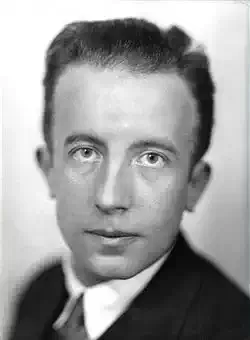
Paul Éluard
La terre est bleue
La terre est bleue
La terre est bleue comme une orange
Jamais une erreur les mots ne mentent pas
Ils ne vous donnent plus à chanter
Au tour des baisers de s'entendre
Les fous et les amours
Elle sa bouche d'alliance
Tous les secrets tous les sourires
Et quels vêtements d'indulgence
À la croire toute nue.
Les guêpes fleurissent vert
L'aube se passe autour du cou
Un collier de fenêtres
Des ailes couvrent les feuilles
Tu as toutes les joies solaires
Tout le soleil sur la terre
Sur les chemins de ta beauté.
La terre est bleue comme une orange
Jamais une erreur les mots ne mentent pas
Ils ne vous donnent plus à chanter
Au tour des baisers de s'entendre
Les fous et les amours
Elle sa bouche d'alliance
Tous les secrets tous les sourires
Et quels vêtements d'indulgence
À la croire toute nue.
Les guêpes fleurissent vert
L'aube se passe autour du cou
Un collier de fenêtres
Des ailes couvrent les feuilles
Tu as toutes les joies solaires
Tout le soleil sur la terre
Sur les chemins de ta beauté.
257

Paul Celan
With Every Thought
With Every Thought
With every Thought I went
out of the World: there you were,
you my Gentle One, you my Open One, and –
you received us.
Who
says that for us everything died,
that for us there the Eye broke?
Everything woke, all things began.
Vast, a Sun came swimming by, bright
a Soul and a Soul engaged, clear,
masterfully made a silence for it
a path ahead.
Lightly
you opened your Lap, quiet
rose a Breath in the Aether,
and what became cloud, was it not,
was it not Form, and for us then,
was it not
as good as a Name?
With every Thought I went
out of the World: there you were,
you my Gentle One, you my Open One, and –
you received us.
Who
says that for us everything died,
that for us there the Eye broke?
Everything woke, all things began.
Vast, a Sun came swimming by, bright
a Soul and a Soul engaged, clear,
masterfully made a silence for it
a path ahead.
Lightly
you opened your Lap, quiet
rose a Breath in the Aether,
and what became cloud, was it not,
was it not Form, and for us then,
was it not
as good as a Name?
448
Paul Celan
Psalm
Psalm
No-man kneads us again out of Earth and Loam,
no-man spirits our Dust.
No-man.
Praise to you, No-man.
For love of you
we will flower.
Moving
towards you.
A Nothing
we were, we are, we shall
be still, flowering:
the Nothing-, the
No-man’s-rose.
With
our Pistil soul-bright,
our Stamen heaven-torn,
our Corolla red
with the Violet-Word that we sang
over, O over
the thorn.
No-man kneads us again out of Earth and Loam,
no-man spirits our Dust.
No-man.
Praise to you, No-man.
For love of you
we will flower.
Moving
towards you.
A Nothing
we were, we are, we shall
be still, flowering:
the Nothing-, the
No-man’s-rose.
With
our Pistil soul-bright,
our Stamen heaven-torn,
our Corolla red
with the Violet-Word that we sang
over, O over
the thorn.
484
Paul Celan
Tallow Lamp
Tallow Lamp
The monks with hairy fingers opened the book: September.
Now Jason pelts with snow the newly sprouting grain.
The forest gave you a necklace of hands. So dead you walk the rope.
To your hair a darker blue is imparted; I speak of love.
Shells I speak and light clouds, and a boat buds in the rain.
A little stallion gallops across the leafing fingers--
Black the gate leaps open, I sing:
How did we live here?
(from Mohn und Gedachtnis by Paul Celan, trans. by Michael Hamburger)
The monks with hairy fingers opened the book: September.
Now Jason pelts with snow the newly sprouting grain.
The forest gave you a necklace of hands. So dead you walk the rope.
To your hair a darker blue is imparted; I speak of love.
Shells I speak and light clouds, and a boat buds in the rain.
A little stallion gallops across the leafing fingers--
Black the gate leaps open, I sing:
How did we live here?
(from Mohn und Gedachtnis by Paul Celan, trans. by Michael Hamburger)
460
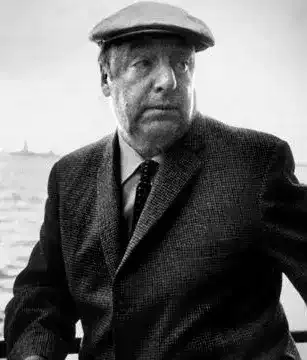
Pablo Neruda
Tower Of Light
Tower Of Light
O tower of light, sad beauty
that magnified necklaces and statues in the sea,
calcareous eye, insignia of the vast waters, cry
of the mourning petrel, tooth of the sea, wife
of the Oceanian wind, O separate rose
from the long stem of the trampled bush
that the depths, converted into archipelago,
O natural star, green diadem,
alone in your lonesome dynasty,
still unattainable, elusive, desolate
like one drop, like one grape, like the sea.
O tower of light, sad beauty
that magnified necklaces and statues in the sea,
calcareous eye, insignia of the vast waters, cry
of the mourning petrel, tooth of the sea, wife
of the Oceanian wind, O separate rose
from the long stem of the trampled bush
that the depths, converted into archipelago,
O natural star, green diadem,
alone in your lonesome dynasty,
still unattainable, elusive, desolate
like one drop, like one grape, like the sea.
596
Pablo Neruda
The Tree Is Here, Still, In Pure Stone
The Tree Is Here, Still, In Pure Stone
The tree is here, still, in pure stone,
in deep evidence, in solid beauty,
layered, through a hundred million years.
Agate, cornelian, gemstone
transmuted the timber and sap
until damp corruptions
fissured the giant's trunk
fusing a parallel being:
the living leaves
unmade themselves
and when the pillar was overthrown
fire in the forest, blaze of the dust-cloud,
celestial ashes mantled it round,
until time, and the lava, created
this gift, of translucent stone.
The tree is here, still, in pure stone,
in deep evidence, in solid beauty,
layered, through a hundred million years.
Agate, cornelian, gemstone
transmuted the timber and sap
until damp corruptions
fissured the giant's trunk
fusing a parallel being:
the living leaves
unmade themselves
and when the pillar was overthrown
fire in the forest, blaze of the dust-cloud,
celestial ashes mantled it round,
until time, and the lava, created
this gift, of translucent stone.
539
Pablo Neruda
The Queen
The Queen
I have named you queen.
There are taller than you, taller.
There are purer than you, purer.
There are lovelier than you, lovelier.
But you are the queen.
When you go through the streets
No one recognizes you.
No one sees your crystal crown, no one looks
At the carpet of red gold
That you tread as you pass,
The nonexistent carpet.
And when you appear
All the rivers sound
In my body, bells
Shake the sky,
And a hymn fills the world.
Only you and I,
Only you and I, my love,
Listen to me.
LA REINA
Yo te he nombrado reina.
Hay más altas que tú, más altas.
Hay más puras que tú, más puras.
Hay más bellas que tú, hay más bellas.
Pero tú eres la reina.
Cuando vas por las calles
nadie te reconoce.
Nadie ve tu corona de cristal, nadie mira
la alfombra de oro rojo
que pisas donde pasas,
la alfombra que no existe.
Y cuando asomas
suenan todos los ríos
en mi cuerpo, sacuden
el cielo las campanas,
y un himno llena el mundo.
Sólo tú y yo,
sólo tú y yo, amor mío,
lo escuchamos.
I have named you queen.
There are taller than you, taller.
There are purer than you, purer.
There are lovelier than you, lovelier.
But you are the queen.
When you go through the streets
No one recognizes you.
No one sees your crystal crown, no one looks
At the carpet of red gold
That you tread as you pass,
The nonexistent carpet.
And when you appear
All the rivers sound
In my body, bells
Shake the sky,
And a hymn fills the world.
Only you and I,
Only you and I, my love,
Listen to me.
LA REINA
Yo te he nombrado reina.
Hay más altas que tú, más altas.
Hay más puras que tú, más puras.
Hay más bellas que tú, hay más bellas.
Pero tú eres la reina.
Cuando vas por las calles
nadie te reconoce.
Nadie ve tu corona de cristal, nadie mira
la alfombra de oro rojo
que pisas donde pasas,
la alfombra que no existe.
Y cuando asomas
suenan todos los ríos
en mi cuerpo, sacuden
el cielo las campanas,
y un himno llena el mundo.
Sólo tú y yo,
sólo tú y yo, amor mío,
lo escuchamos.
515
Pablo Neruda
Sonnet XXV
Sonnet XXV
Before I loved you, love, nothing was my own:
I wavered through the streets, among
Objects:
Nothing mattered or had a name:
The world was made of air, which waited.
I knew rooms full of ashes,
Tunnels where the moon lived,
Rough warehouses that growled 'get lost',
Questions that insisted in the sand.
Everything was empty, dead, mute,
Fallen abandoned, and decayed:
Inconceivably alien, it all
Belonged to someone else - to no one:
Till your beauty and your poverty
Filled the autumn plentiful with gifts.
Before I loved you, love, nothing was my own:
I wavered through the streets, among
Objects:
Nothing mattered or had a name:
The world was made of air, which waited.
I knew rooms full of ashes,
Tunnels where the moon lived,
Rough warehouses that growled 'get lost',
Questions that insisted in the sand.
Everything was empty, dead, mute,
Fallen abandoned, and decayed:
Inconceivably alien, it all
Belonged to someone else - to no one:
Till your beauty and your poverty
Filled the autumn plentiful with gifts.
593