

Poems
Grandparents and Ancestors
Poems in this topic
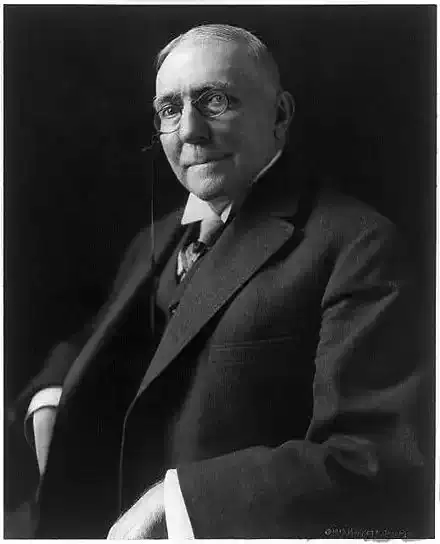
James Whitcomb Riley
The Good, Old-Fashioned People
The Good, Old-Fashioned People
When we hear Uncle Sidney tell
About the long-ago
An' old, old friends he loved so well
When _he_ was young--My-oh!--
Us childern all wish _we'd 'a'_ bin
A-livin' then with Uncle,--so
We could a-kindo' happened in
On them old friends he used to know!--
The good, old-fashioned people--
The hale, hard-working people--
The kindly country people
'At Uncle used to know!
They was God's people, Uncle says,
An' gloried in His name,
An' worked, without no selfishness,
An' loved their neighbers same
As they was kin: An' when they biled
Their tree-molasses, in the Spring,
Er butchered in the Fall, they smiled
An' sheered with all jist ever'thing!--
The good, old-fashioned people--
The hale, hard-working people--
The kindly country people
'At Uncle used to know!
He tells about 'em, lots o' times,
Till we'd all ruther hear
About 'em than the Nurs'ry Rhymes
Er Fairies--mighty near!--
Only sometimes he stops so long
An' then talks on so low an' slow,
It's purt'-nigh sad as any song
To listen to him talkin' so
Of the good, old-fashioned people--
The hale, hard-working people--
The kindly country people
'At Uncle used to know!
When we hear Uncle Sidney tell
About the long-ago
An' old, old friends he loved so well
When _he_ was young--My-oh!--
Us childern all wish _we'd 'a'_ bin
A-livin' then with Uncle,--so
We could a-kindo' happened in
On them old friends he used to know!--
The good, old-fashioned people--
The hale, hard-working people--
The kindly country people
'At Uncle used to know!
They was God's people, Uncle says,
An' gloried in His name,
An' worked, without no selfishness,
An' loved their neighbers same
As they was kin: An' when they biled
Their tree-molasses, in the Spring,
Er butchered in the Fall, they smiled
An' sheered with all jist ever'thing!--
The good, old-fashioned people--
The hale, hard-working people--
The kindly country people
'At Uncle used to know!
He tells about 'em, lots o' times,
Till we'd all ruther hear
About 'em than the Nurs'ry Rhymes
Er Fairies--mighty near!--
Only sometimes he stops so long
An' then talks on so low an' slow,
It's purt'-nigh sad as any song
To listen to him talkin' so
Of the good, old-fashioned people--
The hale, hard-working people--
The kindly country people
'At Uncle used to know!
267
James Whitcomb Riley
Jack-In-The-Box
Jack-In-The-Box
_(Grandfather, musing.)_
In childish days! O memory,
You bring such curious things to me!--
Laughs to the lip--tears to the eye,
In looking on the gifts that lie
Like broken playthings scattered o'er
Imagination's nursery floor!
Did these old hands once click the key
That let 'Jack's' box-lid upward fly,
And that blear-eyed, fur-whiskered elf
Leap, as though frightened at himself,
And quiveringly lean and stare
At me, his jailer, laughing there?
A child then! Now--I only know
They call me very old; and so
They will not let me have my way,--
But uselessly I sit all day
Here by the chimney-jamb, and poke
The lazy fire, and smoke and smoke,
And watch the wreaths swoop up the flue,
And chuckle--ay, I often do--
Seeing again, all vividly,
Jack-in-the-box leap, as in glee
To see how much he looks like me!
... They talk. I can't hear what they say--
But I am glad, clean through and through
Sometimes, in fancying that they
Are saying, 'Sweet, that fancy strays
In age back to our childish days!'
_(Grandfather, musing.)_
In childish days! O memory,
You bring such curious things to me!--
Laughs to the lip--tears to the eye,
In looking on the gifts that lie
Like broken playthings scattered o'er
Imagination's nursery floor!
Did these old hands once click the key
That let 'Jack's' box-lid upward fly,
And that blear-eyed, fur-whiskered elf
Leap, as though frightened at himself,
And quiveringly lean and stare
At me, his jailer, laughing there?
A child then! Now--I only know
They call me very old; and so
They will not let me have my way,--
But uselessly I sit all day
Here by the chimney-jamb, and poke
The lazy fire, and smoke and smoke,
And watch the wreaths swoop up the flue,
And chuckle--ay, I often do--
Seeing again, all vividly,
Jack-in-the-box leap, as in glee
To see how much he looks like me!
... They talk. I can't hear what they say--
But I am glad, clean through and through
Sometimes, in fancying that they
Are saying, 'Sweet, that fancy strays
In age back to our childish days!'
280
James Whitcomb Riley
How Did You Rest, Last Night?
How Did You Rest, Last Night?
'How did you rest, last night?'-I've
heard my gran'pap say
Them words a thousand times--that's right--
Jes them words thataway!
As punctchul-like as morning dast
To ever heave in sight
Gran'pap 'ud allus haf to ast-'
How did you rest, last night?'
Us young-uns used to grin,
At breakfast, on the sly,
And mock the wobble of his chin
And eyebrows belt so high
And kind: _'How did you rest, last night?'_
We'd mumble and let on
Our voices trimbled, and our sight
Was dim, and hearin' gone.
* * * * *
Bad as I used to be,
All I'm a-wantin' is
As puore and ca'm a sleep fer me
And sweet a sleep as his!
And so I pray, on Jedgment Day
To wake, and with its light
See _his_ face dawn, and hear him say-'
How did you rest, last night?'
'How did you rest, last night?'-I've
heard my gran'pap say
Them words a thousand times--that's right--
Jes them words thataway!
As punctchul-like as morning dast
To ever heave in sight
Gran'pap 'ud allus haf to ast-'
How did you rest, last night?'
Us young-uns used to grin,
At breakfast, on the sly,
And mock the wobble of his chin
And eyebrows belt so high
And kind: _'How did you rest, last night?'_
We'd mumble and let on
Our voices trimbled, and our sight
Was dim, and hearin' gone.
* * * * *
Bad as I used to be,
All I'm a-wantin' is
As puore and ca'm a sleep fer me
And sweet a sleep as his!
And so I pray, on Jedgment Day
To wake, and with its light
See _his_ face dawn, and hear him say-'
How did you rest, last night?'
313
James Whitcomb Riley
Grandfather Squeers
Grandfather Squeers
'My grandfather Squeers,' said The Raggedy Man,
As he solemnly lighted his pipe and began-
'The most indestructible man, for his years,
And the grandest on earth, was my grandfather Squeers!
'He said, when he rounded his three-score-and-ten,
'I've the hang of it now and can do it again!'
'He had frozen his heels so repeatedly, he
Could tell by them just what the weather would be;
'And would laugh and declare, 'while the _Almanac_ would
Most falsely prognosticate, _he_ never could!'
'Such a hale constitution had grandfather Squeers
That, 'though he'd used '_navy_' for sixty odd years,
'He still chewed a dime's-worth six days of the week,
While the seventh he passed with a chew in each cheek:
'Then my grandfather Squeers had a singular knack
Of sitting around on the small of his back,
'With his legs like a letter Y stretched o'er the grate
Wherein 'twas his custom to ex-pec-tor-ate.
'He was fond of tobacco in _manifold_ ways,
And would sit on the door-step, of sunshiny days,
'And smoke leaf-tobacco he'd raised strictly for
The pipe he'd used all through The Mexican War.'
And The Raggedy Man said, refilling the bowl
Of his own pipe and leisurely picking a coal
From the stove with his finger and thumb, 'You can see
What a tee-nacious habit he's fastened on me!
'And my grandfather Squeers took a special delight
In pruning his corns every Saturday night
'With a horn-handled razor, whose edge he excused
By saying 'twas one that his grandfather used;
'And, though deeply etched in the haft of the same
Was the ever-euphonious Wostenholm's name,
''Twas my grandfather's custom to boast of the blade
As 'A Seth Thomas razor--the best ever made!'
'No Old Settlers' Meeting, or Pioneers' Fair,
Was complete without grandfather Squeers in the chair
'To lead off the programme by telling folks how
'He used to shoot deer where the Court-House stands now'-
'How 'he felt, of a truth, to live over the past,
When the country was wild and unbroken and vast,
''That the little log cabin was just plenty fine
For himself, his companion, and fambly of nine!-
''When they didn't have even a pump, or a tin,
But drunk surface-water, year out and year in,
''From the old-fashioned gourd that was sweeter, by odds,
Than the goblets of gold at the lips of the gods!''
Then The Raggedy Man paused to plaintively say
It was clockin' along to'rds the close of the day--
And he'd _ought_ to get back to his work on the lawn,--
Then dreamily blubbered his pipe and went on:
'His teeth were imperfect--my grandfather owned
That he couldn't eat oysters unless they were 'boned';
'And his eyes were so weak, and so feeble of sight,
He couldn't sleep with them unless, every night,
'He put on his spectacles--all he possessed,--
Three pairs--with his goggles on top of the rest.
'And my grandfather always, retiring at night,
Blew down the lamp-chimney to put out the light;
'Then he'd curl up on edge like a shaving, in bed,
And puff and smoke pipes in his sleep, it is said:
'And would snore oftentimes as the legends relate,
Till his folks were wrought up to a terrible state,-
'Then he'd snort, and rear up, and roll over; and there,
In the subsequent hush they could hear him chew air.
'And so glaringly bald was the top of his head
That many's the time he has musingly said,
'As his eyes journeyed o'er its reflex in the glass,-'
I must set out a few signs of _Keep Off the Grass!_'
'So remarkably deaf was my grandfather Squeers
That he had to wear lightning-rods over his ears
'To even hear thunder--and oftentimes then
He was forced to request it to thunder again.'
'My grandfather Squeers,' said The Raggedy Man,
As he solemnly lighted his pipe and began-
'The most indestructible man, for his years,
And the grandest on earth, was my grandfather Squeers!
'He said, when he rounded his three-score-and-ten,
'I've the hang of it now and can do it again!'
'He had frozen his heels so repeatedly, he
Could tell by them just what the weather would be;
'And would laugh and declare, 'while the _Almanac_ would
Most falsely prognosticate, _he_ never could!'
'Such a hale constitution had grandfather Squeers
That, 'though he'd used '_navy_' for sixty odd years,
'He still chewed a dime's-worth six days of the week,
While the seventh he passed with a chew in each cheek:
'Then my grandfather Squeers had a singular knack
Of sitting around on the small of his back,
'With his legs like a letter Y stretched o'er the grate
Wherein 'twas his custom to ex-pec-tor-ate.
'He was fond of tobacco in _manifold_ ways,
And would sit on the door-step, of sunshiny days,
'And smoke leaf-tobacco he'd raised strictly for
The pipe he'd used all through The Mexican War.'
And The Raggedy Man said, refilling the bowl
Of his own pipe and leisurely picking a coal
From the stove with his finger and thumb, 'You can see
What a tee-nacious habit he's fastened on me!
'And my grandfather Squeers took a special delight
In pruning his corns every Saturday night
'With a horn-handled razor, whose edge he excused
By saying 'twas one that his grandfather used;
'And, though deeply etched in the haft of the same
Was the ever-euphonious Wostenholm's name,
''Twas my grandfather's custom to boast of the blade
As 'A Seth Thomas razor--the best ever made!'
'No Old Settlers' Meeting, or Pioneers' Fair,
Was complete without grandfather Squeers in the chair
'To lead off the programme by telling folks how
'He used to shoot deer where the Court-House stands now'-
'How 'he felt, of a truth, to live over the past,
When the country was wild and unbroken and vast,
''That the little log cabin was just plenty fine
For himself, his companion, and fambly of nine!-
''When they didn't have even a pump, or a tin,
But drunk surface-water, year out and year in,
''From the old-fashioned gourd that was sweeter, by odds,
Than the goblets of gold at the lips of the gods!''
Then The Raggedy Man paused to plaintively say
It was clockin' along to'rds the close of the day--
And he'd _ought_ to get back to his work on the lawn,--
Then dreamily blubbered his pipe and went on:
'His teeth were imperfect--my grandfather owned
That he couldn't eat oysters unless they were 'boned';
'And his eyes were so weak, and so feeble of sight,
He couldn't sleep with them unless, every night,
'He put on his spectacles--all he possessed,--
Three pairs--with his goggles on top of the rest.
'And my grandfather always, retiring at night,
Blew down the lamp-chimney to put out the light;
'Then he'd curl up on edge like a shaving, in bed,
And puff and smoke pipes in his sleep, it is said:
'And would snore oftentimes as the legends relate,
Till his folks were wrought up to a terrible state,-
'Then he'd snort, and rear up, and roll over; and there,
In the subsequent hush they could hear him chew air.
'And so glaringly bald was the top of his head
That many's the time he has musingly said,
'As his eyes journeyed o'er its reflex in the glass,-'
I must set out a few signs of _Keep Off the Grass!_'
'So remarkably deaf was my grandfather Squeers
That he had to wear lightning-rods over his ears
'To even hear thunder--and oftentimes then
He was forced to request it to thunder again.'
304
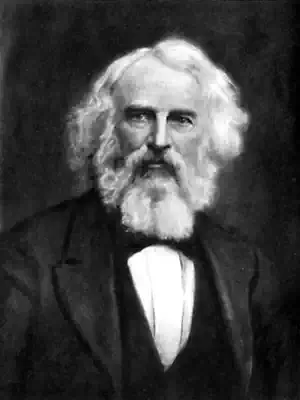
Henry Wadsworth Longfellow
The Song Of Hiawatha XIV: Picture-Writing
The Song Of Hiawatha XIV: Picture-Writing
In those days said Hiawatha,
'Lo! how all things fade and perish!
From the memory of the old men
Pass away the great traditions,
The achievements of the warriors,
The adventures of the hunters,
All the wisdom of the Medas,
All the craft of the Wabenos,
All the marvellous dreams and visions
Of the Jossakeeds, the Prophets!
'Great men die and are forgotten,
Wise men speak; their words of wisdom
Perish in the ears that hear them,
Do not reach the generations
That, as yet unborn, are waiting
In the great, mysterious darkness
Of the speechless days that shall be!
'On the grave-posts of our fathers
Are no signs, no figures painted;
Who are in those graves we know not,
Only know they are our fathers.
Of what kith they are and kindred,
From what old, ancestral Totem,
Be it Eagle, Bear, or Beaver,
They descended, this we know not,
Only know they are our fathers.
'Face to face we speak together,
But we cannot speak when absent,
Cannot send our voices from us
To the friends that dwell afar off;
Cannot send a secret message,
But the bearer learns our secret,
May pervert it, may betray it,
May reveal it unto others.'
Thus said Hiawatha, walking
In the solitary forest,
Pondering, musing in the forest,
On the welfare of his people.
From his pouch he took his colors,
Took his paints of different colors,
On the smooth bark of a birch-tree
Painted many shapes and figures,
Wonderful and mystic figures,
And each figure had a meaning,
Each some word or thought suggested.
Gitche Manito the Mighty,
He, the Master of Life, was painted
As an egg, with points projecting
To the four winds of the heavens.
Everywhere is the Great Spirit,
Was the meaning of this symbol.
Gitche Manito the Mighty,
He the dreadful Spirit of Evil,
As a serpent was depicted,
As Kenabeek, the great serpent.
Very crafty, very cunning,
Is the creeping Spirit of Evil,
Was the meaning of this symbol.
Life and Death he drew as circles,
Life was white, but Death was darkened;
Sun and moon and stars he painted,
Man and beast, and fish and reptile,
Forests, mountains, lakes, and rivers.
For the earth he drew a straight line,
For the sky a bow above it;
White the space between for daytime,
Filled with little stars for night-time;
On the left a point for sunrise,
On the right a point for sunset,
On the top a point for noontide,
And for rain and cloudy weather
Waving lines descending from it.
Footprints pointing towards a wigwam
Were a sign of invitation,
Were a sign of guests assembling;
Bloody hands with palms uplifted
Were a symbol of destruction,
Were a hostile sign and symbol.
All these things did Hiawatha
Show unto his wondering people,
And interpreted their meaning,
And he said: 'Behold, your grave-posts
Have no mark, no sign, nor symbol,
Go and paint them all with figures;
Each one with its household symbol,
With its own ancestral Totem;
So that those who follow after
May distinguish them and know them.'
And they painted on the grave-posts
On the graves yet unforgotten,
Each his own ancestral Totem,
Each the symbol of his household;
Figures of the Bear and Reindeer,
Of the Turtle, Crane, and Beaver,
Each inverted as a token
That the owner was departed,
That the chief who bore the symbol
Lay beneath in dust and ashes.
And the Jossakeeds, the Prophets,
The Wabenos, the Magicians,
And the Medicine-men, the Medas,
Painted upon bark and deer-skin
Figures for the songs they chanted,
For each song a separate symbol,
Figures mystical and awful,
Figures strange and brightly colored;
And each figure had its meaning,
Each some magic song suggested.
The Great Spirit, the Creator,
Flashing light through all the heaven;
The Great Serpent, the Kenabeek,
With his bloody crest erected,
Creeping, looking into heaven;
In the sky the sun, that listens,
And the moon eclipsed and dying;
Owl and eagle, crane and hen-hawk,
And the cormorant, bird of magic;
Headless men, that walk the heavens,
Bodies lying pierced with arrows,
Bloody hands of death uplifted,
Flags on graves, and great war-captains
Grasping both the earth and heaven!
Such as these the shapes they painted
On the birch-bark and the deer-skin;
Songs of war and songs of hunting,
Songs of medicine and of magic,
All were written in these figures,
For each figure had its meaning,
Each its separate song recorded.
Nor forgotten was the Love-Song,
The most subtle of all medicines,
The most potent spell of magic,
Dangerous more than war or hunting!
Thus the Love-Song was recorded,
Symbol and interpretation.
First a human figure standing,
Painted in the brightest scarlet;
`T Is the lover, the musician,
And the meaning is, 'My painting
Makes me powerful over others.'
Then the figure seated, singing,
Playing on a drum of magic,
And the interpretation, 'Listen!
`T Is my voice you hear, my singing!'
Then the same red figure seated
In the shelter of a wigwam,
And the meaning of the symbol,
'I will come and sit beside you
In the mystery of my passion!'
Then two figures, man and woman,
Standing hand in hand together
With their hands so clasped together
That they seemed in one united,
And the words thus represented
Are, 'I see your heart within you,
And your cheeks are red with blushes!'
Next the maiden on an island,
In the centre of an Island;
And the song this shape suggested
Was, 'Though you were at a distance,
Were upon some far-off island,
Such the spell I cast upon you,
Such the magic power of passion,
I could straightway draw you to me!'
Then the figure of the maiden
Sleeping, and the lover near her,
Whispering to her in her slumbers,
Saying, 'Though you were far from me
In the land of Sleep and Silence,
Still the voice of love would reach you!'
And the last of all the figures
Was a heart within a circle,
Drawn within a magic circle;
And the image had this meaning:
'Naked lies your heart before me,
To your naked heart I whisper!'
Thus it was that Hiawatha,
In his wisdom, taught the people
All the mysteries of painting,
All the art of Picture-Writing,
On the smooth bark of the birch-tree,
On the white skin of the reindeer,
On the grave-posts of the village.
In those days said Hiawatha,
'Lo! how all things fade and perish!
From the memory of the old men
Pass away the great traditions,
The achievements of the warriors,
The adventures of the hunters,
All the wisdom of the Medas,
All the craft of the Wabenos,
All the marvellous dreams and visions
Of the Jossakeeds, the Prophets!
'Great men die and are forgotten,
Wise men speak; their words of wisdom
Perish in the ears that hear them,
Do not reach the generations
That, as yet unborn, are waiting
In the great, mysterious darkness
Of the speechless days that shall be!
'On the grave-posts of our fathers
Are no signs, no figures painted;
Who are in those graves we know not,
Only know they are our fathers.
Of what kith they are and kindred,
From what old, ancestral Totem,
Be it Eagle, Bear, or Beaver,
They descended, this we know not,
Only know they are our fathers.
'Face to face we speak together,
But we cannot speak when absent,
Cannot send our voices from us
To the friends that dwell afar off;
Cannot send a secret message,
But the bearer learns our secret,
May pervert it, may betray it,
May reveal it unto others.'
Thus said Hiawatha, walking
In the solitary forest,
Pondering, musing in the forest,
On the welfare of his people.
From his pouch he took his colors,
Took his paints of different colors,
On the smooth bark of a birch-tree
Painted many shapes and figures,
Wonderful and mystic figures,
And each figure had a meaning,
Each some word or thought suggested.
Gitche Manito the Mighty,
He, the Master of Life, was painted
As an egg, with points projecting
To the four winds of the heavens.
Everywhere is the Great Spirit,
Was the meaning of this symbol.
Gitche Manito the Mighty,
He the dreadful Spirit of Evil,
As a serpent was depicted,
As Kenabeek, the great serpent.
Very crafty, very cunning,
Is the creeping Spirit of Evil,
Was the meaning of this symbol.
Life and Death he drew as circles,
Life was white, but Death was darkened;
Sun and moon and stars he painted,
Man and beast, and fish and reptile,
Forests, mountains, lakes, and rivers.
For the earth he drew a straight line,
For the sky a bow above it;
White the space between for daytime,
Filled with little stars for night-time;
On the left a point for sunrise,
On the right a point for sunset,
On the top a point for noontide,
And for rain and cloudy weather
Waving lines descending from it.
Footprints pointing towards a wigwam
Were a sign of invitation,
Were a sign of guests assembling;
Bloody hands with palms uplifted
Were a symbol of destruction,
Were a hostile sign and symbol.
All these things did Hiawatha
Show unto his wondering people,
And interpreted their meaning,
And he said: 'Behold, your grave-posts
Have no mark, no sign, nor symbol,
Go and paint them all with figures;
Each one with its household symbol,
With its own ancestral Totem;
So that those who follow after
May distinguish them and know them.'
And they painted on the grave-posts
On the graves yet unforgotten,
Each his own ancestral Totem,
Each the symbol of his household;
Figures of the Bear and Reindeer,
Of the Turtle, Crane, and Beaver,
Each inverted as a token
That the owner was departed,
That the chief who bore the symbol
Lay beneath in dust and ashes.
And the Jossakeeds, the Prophets,
The Wabenos, the Magicians,
And the Medicine-men, the Medas,
Painted upon bark and deer-skin
Figures for the songs they chanted,
For each song a separate symbol,
Figures mystical and awful,
Figures strange and brightly colored;
And each figure had its meaning,
Each some magic song suggested.
The Great Spirit, the Creator,
Flashing light through all the heaven;
The Great Serpent, the Kenabeek,
With his bloody crest erected,
Creeping, looking into heaven;
In the sky the sun, that listens,
And the moon eclipsed and dying;
Owl and eagle, crane and hen-hawk,
And the cormorant, bird of magic;
Headless men, that walk the heavens,
Bodies lying pierced with arrows,
Bloody hands of death uplifted,
Flags on graves, and great war-captains
Grasping both the earth and heaven!
Such as these the shapes they painted
On the birch-bark and the deer-skin;
Songs of war and songs of hunting,
Songs of medicine and of magic,
All were written in these figures,
For each figure had its meaning,
Each its separate song recorded.
Nor forgotten was the Love-Song,
The most subtle of all medicines,
The most potent spell of magic,
Dangerous more than war or hunting!
Thus the Love-Song was recorded,
Symbol and interpretation.
First a human figure standing,
Painted in the brightest scarlet;
`T Is the lover, the musician,
And the meaning is, 'My painting
Makes me powerful over others.'
Then the figure seated, singing,
Playing on a drum of magic,
And the interpretation, 'Listen!
`T Is my voice you hear, my singing!'
Then the same red figure seated
In the shelter of a wigwam,
And the meaning of the symbol,
'I will come and sit beside you
In the mystery of my passion!'
Then two figures, man and woman,
Standing hand in hand together
With their hands so clasped together
That they seemed in one united,
And the words thus represented
Are, 'I see your heart within you,
And your cheeks are red with blushes!'
Next the maiden on an island,
In the centre of an Island;
And the song this shape suggested
Was, 'Though you were at a distance,
Were upon some far-off island,
Such the spell I cast upon you,
Such the magic power of passion,
I could straightway draw you to me!'
Then the figure of the maiden
Sleeping, and the lover near her,
Whispering to her in her slumbers,
Saying, 'Though you were far from me
In the land of Sleep and Silence,
Still the voice of love would reach you!'
And the last of all the figures
Was a heart within a circle,
Drawn within a magic circle;
And the image had this meaning:
'Naked lies your heart before me,
To your naked heart I whisper!'
Thus it was that Hiawatha,
In his wisdom, taught the people
All the mysteries of painting,
All the art of Picture-Writing,
On the smooth bark of the birch-tree,
On the white skin of the reindeer,
On the grave-posts of the village.
292
Henry Wadsworth Longfellow
The Burial Of The Poet
The Burial Of The Poet
In the old churchyard of his native town,
And in the ancestral tomb beside the wall,
We laid him in the sleep that comes to all,
And left him to his rest and his renown.
The snow was falling, as if Heaven dropped down
White flowers of Paradise to strew his pall;--
The dead around him seemed to wake, and call
His name, as worthy of so white a crown.
And now the moon is shining on the scene,
And the broad sheet of snow is written o'er
With shadows cruciform of leafless trees,
As once the winding-sheet of Saladin
With chapters of the Koran; but, ah! more
Mysterious and triumphant signs are these.
In the old churchyard of his native town,
And in the ancestral tomb beside the wall,
We laid him in the sleep that comes to all,
And left him to his rest and his renown.
The snow was falling, as if Heaven dropped down
White flowers of Paradise to strew his pall;--
The dead around him seemed to wake, and call
His name, as worthy of so white a crown.
And now the moon is shining on the scene,
And the broad sheet of snow is written o'er
With shadows cruciform of leafless trees,
As once the winding-sheet of Saladin
With chapters of the Koran; but, ah! more
Mysterious and triumphant signs are these.
299
Henry Wadsworth Longfellow
Tales Of A Wayside Inn : Part 1. Interlude I.
Tales Of A Wayside Inn : Part 1. Interlude I.
The Landlord ended thus his tale,
Then rising took down from its nail
The sword that hung there, dim with dust
And cleaving to its sheath with rust,
And said, 'This sword was in the fight.'
The Poet seized it, and exclaimed,
'It is the sword of a good knight,
Though homespun was his coat-of-mail;
What matter if it be not named
Joyeuse, Colada, Durindale,
Excalibar, or Aroundight,
Or other name the books record?
Your ancestor, who bore this sword
As Colonel of the Volunteers,
Mounted upon his old gray mare,
Seen here and there and everywhere,
To me a grander shape appears
Than old Sir William, or what not,
Clinking about in foreign lands
With iron gauntlets on his hands,
And on his head an iron pot!'
All laughed; the Landlord's face grew red
As his escutcheon on the wall;
He could not comprehend at all
The drift of what the Poet said;
For those who had been longest dead
Were always greatest in his eyes;
And be was speechless with surprise
To see Sir William's pluméd head
Brought to a level with the rest,
And made the subject of a jest.
And this perceiving, to appease
The Landlord's wrath, the others' fears,
The Student said, with careless ease,
'The ladies and the cavaliers,
The arms, the loves, the courtesies,
The deeds of high emprise, I sing!
Thus Ariosto says, in words
That have the stately stride and ring
Of arméd knights and clashing swords.
Now listen to the tale I bring;
Listen! though not to me belong
The flowing draperies of his song,
The words that rouse, the voice that charms.
The Landlord's tale was one of arms,
Only a tale of love is mine,
Blending the human and divine,
A tale of the Decameron, told
In Palmieri's garden old,
By Fiametta, laurel-crowned,
While her companions lay around,
And heard the intermingled sound
Of airs that on their errands sped,
And wild birds gossiping overhead,
And lisp of leaves, and fountain's fall,
And her own voice more sweet than all,
Telling the tale, which, wanting these,
Perchance may lose its power to please.'
The Landlord ended thus his tale,
Then rising took down from its nail
The sword that hung there, dim with dust
And cleaving to its sheath with rust,
And said, 'This sword was in the fight.'
The Poet seized it, and exclaimed,
'It is the sword of a good knight,
Though homespun was his coat-of-mail;
What matter if it be not named
Joyeuse, Colada, Durindale,
Excalibar, or Aroundight,
Or other name the books record?
Your ancestor, who bore this sword
As Colonel of the Volunteers,
Mounted upon his old gray mare,
Seen here and there and everywhere,
To me a grander shape appears
Than old Sir William, or what not,
Clinking about in foreign lands
With iron gauntlets on his hands,
And on his head an iron pot!'
All laughed; the Landlord's face grew red
As his escutcheon on the wall;
He could not comprehend at all
The drift of what the Poet said;
For those who had been longest dead
Were always greatest in his eyes;
And be was speechless with surprise
To see Sir William's pluméd head
Brought to a level with the rest,
And made the subject of a jest.
And this perceiving, to appease
The Landlord's wrath, the others' fears,
The Student said, with careless ease,
'The ladies and the cavaliers,
The arms, the loves, the courtesies,
The deeds of high emprise, I sing!
Thus Ariosto says, in words
That have the stately stride and ring
Of arméd knights and clashing swords.
Now listen to the tale I bring;
Listen! though not to me belong
The flowing draperies of his song,
The words that rouse, the voice that charms.
The Landlord's tale was one of arms,
Only a tale of love is mine,
Blending the human and divine,
A tale of the Decameron, told
In Palmieri's garden old,
By Fiametta, laurel-crowned,
While her companions lay around,
And heard the intermingled sound
Of airs that on their errands sped,
And wild birds gossiping overhead,
And lisp of leaves, and fountain's fall,
And her own voice more sweet than all,
Telling the tale, which, wanting these,
Perchance may lose its power to please.'
265
Henry Wadsworth Longfellow
Picture-Writing
Picture-Writing
In those days said Hiawatha,
"Lo! how all things fade and perish!
From the memory of the old men
Pass away the great traditions,
The achievements of the warriors,
The adventures of the hunters,
All the wisdom of the Medas,
All the craft of the Wabenos,
All the marvellous dreams and visions
Of the Jossakeeds, the Prophets!
"Great men die and are forgotten,
Wise men speak; their words of wisdom
Perish in the ears that hear them,
Do not reach the generations
That, as yet unborn, are waiting
In the great, mysterious darkness
Of the speechless days that shall be!
"On the grave-posts of our fathers
Are no signs, no figures painted;
Who are in those graves we know not,
Only know they are our fathers.
Of what kith they are and kindred,
From what old, ancestral Totem,
Be it Eagle, Bear, or Beaver,
They descended, this we know not,
Only know they are our fathers.
"Face to face we speak together,
But we cannot speak when absent,
Cannot send our voices from us
To the friends that dwell afar off;
Cannot send a secret message,
But the bearer learns our secret,
May pervert it, may betray it,
May reveal it unto others."
Thus said Hiawatha, walking
In the solitary forest,
Pondering, musing in the forest,
On the welfare of his people.
From his pouch he took his colors,
Took his paints of different colors,
On the smooth bark of a birch-tree
Painted many shapes and figures,
Wonderful and mystic figures,
And each figure had a meaning,
Each some word or thought suggested.
Gitche Manito the Mighty,
He, the Master of Life, was painted
As an egg, with points projecting
To the four winds of the heavens.
Everywhere is the Great Spirit,
Was the meaning of this symbol.
Gitche Manito the Mighty,
He the dreadful Spirit of Evil,
As a serpent was depicted,
As Kenabeek, the great serpent.
Very crafty, very cunning,
Is the creeping Spirit of Evil,
Was the meaning of this symbol.
Life and Death he drew as circles,
Life was white, but Death was darkened;
Sun and moon and stars he painted,
Man and beast, and fish and reptile,
Forests, mountains, lakes, and rivers.
For the earth he drew a straight line,
For the sky a bow above it;
White the space between for daytime,
Filled with little stars for night-time;
On the left a point for sunrise,
On the right a point for sunset,
On the top a point for noontide,
And for rain and cloudy weather
Waving lines descending from it.
Footprints pointing towards a wigwam
Were a sign of invitation,
Were a sign of guests assembling;
Bloody hands with palms uplifted
Were a symbol of destruction,
Were a hostile sign and symbol.
All these things did Hiawatha
Show unto his wondering people,
And interpreted their meaning,
And he said: "Behold, your grave-posts
Have no mark, no sign, nor symbol,
Go and paint them all with figures;
Each one with its household symbol,
With its own ancestral Totem;
So that those who follow after
May distinguish them and know them."
And they painted on the grave-posts
On the graves yet unforgotten,
Each his own ancestral Totem,
Each the symbol of his household;
Figures of the Bear and Reindeer,
Of the Turtle, Crane, and Beaver,
Each inverted as a token
That the owner was departed,
That the chief who bore the symbol
Lay beneath in dust and ashes.
And the Jossakeeds, the Prophets,
The Wabenos, the Magicians,
And the Medicine-men, the Medas,
Painted upon bark and deer-skin
Figures for the songs they chanted,
For each song a separate symbol,
Figures mystical and awful,
Figures strange and brightly colored;
And each figure had its meaning,
Each some magic song suggested.
The Great Spirit, the Creator,
Flashing light through all the heaven;
The Great Serpent, the Kenabeek,
With his bloody crest erected,
Creeping, looking into heaven;
In the sky the sun, that listens,
And the moon eclipsed and dying;
Owl and eagle, crane and hen-hawk,
And the cormorant, bird of magic;
Headless men, that walk the heavens,
Bodies lying pierced with arrows,
Bloody hands of death uplifted,
Flags on graves, and great war-captains
Grasping both the earth and heaven!
Such as these the shapes they painted
On the birch-bark and the deer-skin;
Songs of war and songs of hunting,
Songs of medicine and of magic,
All were written in these figures,
For each figure had its meaning,
Each its separate song recorded.
Nor forgotten was the Love-Song,
The most subtle of all medicines,
The most potent spell of magic,
Dangerous more than war or hunting!
Thus the Love-Song was recorded,
Symbol and interpretation.
First a human figure standing,
Painted in the brightest scarlet;
`T Is the lover, the musician,
And the meaning is, "My painting
Makes me powerful over others."
Then the figure seated, singing,
Playing on a drum of magic,
And the interpretation, "Listen!
`T Is my voice you hear, my singing!"
Then the same red figure seated
In the shelter of a wigwam,
And the meaning of the symbol,
"I will come and sit beside you
In the mystery of my passion!"
Then two figures, man and woman,
Standing hand in hand together
With their hands so clasped together
That they seemed in one united,
And the words thus represented
Are, "I see your heart within you,
And your cheeks are red with blushes!"
Next the maiden on an island,
In the centre of an Island;
And the song this shape suggested
Was, "Though you were at a distance,
Were upon some far-off island,
Such the spell I cast upon you,
Such the magic power of passion,
I could straightway draw you to me!"
Then the figure of the maiden
Sleeping, and the lover near her,
Whispering to her in her slumbers,
Saying, "Though you were far from me
In the land of Sleep and Silence,
Still the voice of love would reach you!"
And the last of all the figures
Was a heart within a circle,
Drawn within a magic circle;
And the image had this meaning:
"Naked lies your heart before me,
To your naked heart I whisper!"
Thus it was that Hiawatha,
In his wisdom, taught the people
All the mysteries of painting,
All the art of Picture-Writing,
On the smooth bark of the birch-tree,
On the white skin of the reindeer,
On the grave-posts of the village.
In those days said Hiawatha,
"Lo! how all things fade and perish!
From the memory of the old men
Pass away the great traditions,
The achievements of the warriors,
The adventures of the hunters,
All the wisdom of the Medas,
All the craft of the Wabenos,
All the marvellous dreams and visions
Of the Jossakeeds, the Prophets!
"Great men die and are forgotten,
Wise men speak; their words of wisdom
Perish in the ears that hear them,
Do not reach the generations
That, as yet unborn, are waiting
In the great, mysterious darkness
Of the speechless days that shall be!
"On the grave-posts of our fathers
Are no signs, no figures painted;
Who are in those graves we know not,
Only know they are our fathers.
Of what kith they are and kindred,
From what old, ancestral Totem,
Be it Eagle, Bear, or Beaver,
They descended, this we know not,
Only know they are our fathers.
"Face to face we speak together,
But we cannot speak when absent,
Cannot send our voices from us
To the friends that dwell afar off;
Cannot send a secret message,
But the bearer learns our secret,
May pervert it, may betray it,
May reveal it unto others."
Thus said Hiawatha, walking
In the solitary forest,
Pondering, musing in the forest,
On the welfare of his people.
From his pouch he took his colors,
Took his paints of different colors,
On the smooth bark of a birch-tree
Painted many shapes and figures,
Wonderful and mystic figures,
And each figure had a meaning,
Each some word or thought suggested.
Gitche Manito the Mighty,
He, the Master of Life, was painted
As an egg, with points projecting
To the four winds of the heavens.
Everywhere is the Great Spirit,
Was the meaning of this symbol.
Gitche Manito the Mighty,
He the dreadful Spirit of Evil,
As a serpent was depicted,
As Kenabeek, the great serpent.
Very crafty, very cunning,
Is the creeping Spirit of Evil,
Was the meaning of this symbol.
Life and Death he drew as circles,
Life was white, but Death was darkened;
Sun and moon and stars he painted,
Man and beast, and fish and reptile,
Forests, mountains, lakes, and rivers.
For the earth he drew a straight line,
For the sky a bow above it;
White the space between for daytime,
Filled with little stars for night-time;
On the left a point for sunrise,
On the right a point for sunset,
On the top a point for noontide,
And for rain and cloudy weather
Waving lines descending from it.
Footprints pointing towards a wigwam
Were a sign of invitation,
Were a sign of guests assembling;
Bloody hands with palms uplifted
Were a symbol of destruction,
Were a hostile sign and symbol.
All these things did Hiawatha
Show unto his wondering people,
And interpreted their meaning,
And he said: "Behold, your grave-posts
Have no mark, no sign, nor symbol,
Go and paint them all with figures;
Each one with its household symbol,
With its own ancestral Totem;
So that those who follow after
May distinguish them and know them."
And they painted on the grave-posts
On the graves yet unforgotten,
Each his own ancestral Totem,
Each the symbol of his household;
Figures of the Bear and Reindeer,
Of the Turtle, Crane, and Beaver,
Each inverted as a token
That the owner was departed,
That the chief who bore the symbol
Lay beneath in dust and ashes.
And the Jossakeeds, the Prophets,
The Wabenos, the Magicians,
And the Medicine-men, the Medas,
Painted upon bark and deer-skin
Figures for the songs they chanted,
For each song a separate symbol,
Figures mystical and awful,
Figures strange and brightly colored;
And each figure had its meaning,
Each some magic song suggested.
The Great Spirit, the Creator,
Flashing light through all the heaven;
The Great Serpent, the Kenabeek,
With his bloody crest erected,
Creeping, looking into heaven;
In the sky the sun, that listens,
And the moon eclipsed and dying;
Owl and eagle, crane and hen-hawk,
And the cormorant, bird of magic;
Headless men, that walk the heavens,
Bodies lying pierced with arrows,
Bloody hands of death uplifted,
Flags on graves, and great war-captains
Grasping both the earth and heaven!
Such as these the shapes they painted
On the birch-bark and the deer-skin;
Songs of war and songs of hunting,
Songs of medicine and of magic,
All were written in these figures,
For each figure had its meaning,
Each its separate song recorded.
Nor forgotten was the Love-Song,
The most subtle of all medicines,
The most potent spell of magic,
Dangerous more than war or hunting!
Thus the Love-Song was recorded,
Symbol and interpretation.
First a human figure standing,
Painted in the brightest scarlet;
`T Is the lover, the musician,
And the meaning is, "My painting
Makes me powerful over others."
Then the figure seated, singing,
Playing on a drum of magic,
And the interpretation, "Listen!
`T Is my voice you hear, my singing!"
Then the same red figure seated
In the shelter of a wigwam,
And the meaning of the symbol,
"I will come and sit beside you
In the mystery of my passion!"
Then two figures, man and woman,
Standing hand in hand together
With their hands so clasped together
That they seemed in one united,
And the words thus represented
Are, "I see your heart within you,
And your cheeks are red with blushes!"
Next the maiden on an island,
In the centre of an Island;
And the song this shape suggested
Was, "Though you were at a distance,
Were upon some far-off island,
Such the spell I cast upon you,
Such the magic power of passion,
I could straightway draw you to me!"
Then the figure of the maiden
Sleeping, and the lover near her,
Whispering to her in her slumbers,
Saying, "Though you were far from me
In the land of Sleep and Silence,
Still the voice of love would reach you!"
And the last of all the figures
Was a heart within a circle,
Drawn within a magic circle;
And the image had this meaning:
"Naked lies your heart before me,
To your naked heart I whisper!"
Thus it was that Hiawatha,
In his wisdom, taught the people
All the mysteries of painting,
All the art of Picture-Writing,
On the smooth bark of the birch-tree,
On the white skin of the reindeer,
On the grave-posts of the village.
294
Henry Van Dyke
The Ancestral Dwelling
The Ancestral Dwelling
Dear to my heart are the ancestral dwellings of America,
Dearer than if they were haunted by ghosts of royal splendour;
These are the homes that were built by the brave beginners of a nation,
They are simple enough to be great, and full of a friendly dignity.
I love the old white farmhouses nestled in New England valleys,
Ample and long and low, with elm-trees feathering over them:
Borders of box in the yard, and lilacs, and old-fashioned Howers,
A fan-light above the door, and little square panes in the windows,
The wood-shed piled with maple and birch and hickory ready for winter,
The gambrel-roof with its garret crowded with household relics, --
All the tokens of prudent thrift and the spirit of self-reliance.
I love the look of the shingled houses that front the ocean;
Their backs are bowed, and their lichened sides are weather-beaten;
Soft in their colour as grey pearls, they are full of patience and courage.
They seem to grow out of the rocks, there is something indomitable about them:
Facing the briny wind in a lonely land they stand undaunted,
While the thin blue line of smoke from the square-built chimney rises,
Telling of shelter for man, with room for a hearth and a cradle.
I love the stately southern mansions with their tall white columns,
They look through avenues of trees, over fields where the cotton is growing;
I can see the flutter of white frocks along their shady porches,
Music and laughter float from the windows, the yards are full of hounds and horses.
They have all ridden away, yet the houses have not forgotten,
They are proud of their name and place, and their doors are always open,
For the thing they remember best is the pride of their ancient hospitality.
In the towns I love the discreet and tranquil Quaker dwellings,
With their demure brick faces and immaculate white-stone doorsteps;
And the gabled houses of the Dutch, with their high stoops and iron railings,
(I can see their little brass knobs shining in the morning sunlight);
And the solid houses of the descendants of the Puritans,
Fronting the street with their narrow doors and dormer-windows;
And the triple-galleried, many-pillared mansions of Charleston,
Standing sideways in their gardens full of roses and magnolias.
Yes, they are all dear to my heart, and in my eyes they are beautiful;
For under their roofs were nourished the thoughts that have made the nation;
The glory and strength of America came from her ancestral dwellings.
Dear to my heart are the ancestral dwellings of America,
Dearer than if they were haunted by ghosts of royal splendour;
These are the homes that were built by the brave beginners of a nation,
They are simple enough to be great, and full of a friendly dignity.
I love the old white farmhouses nestled in New England valleys,
Ample and long and low, with elm-trees feathering over them:
Borders of box in the yard, and lilacs, and old-fashioned Howers,
A fan-light above the door, and little square panes in the windows,
The wood-shed piled with maple and birch and hickory ready for winter,
The gambrel-roof with its garret crowded with household relics, --
All the tokens of prudent thrift and the spirit of self-reliance.
I love the look of the shingled houses that front the ocean;
Their backs are bowed, and their lichened sides are weather-beaten;
Soft in their colour as grey pearls, they are full of patience and courage.
They seem to grow out of the rocks, there is something indomitable about them:
Facing the briny wind in a lonely land they stand undaunted,
While the thin blue line of smoke from the square-built chimney rises,
Telling of shelter for man, with room for a hearth and a cradle.
I love the stately southern mansions with their tall white columns,
They look through avenues of trees, over fields where the cotton is growing;
I can see the flutter of white frocks along their shady porches,
Music and laughter float from the windows, the yards are full of hounds and horses.
They have all ridden away, yet the houses have not forgotten,
They are proud of their name and place, and their doors are always open,
For the thing they remember best is the pride of their ancient hospitality.
In the towns I love the discreet and tranquil Quaker dwellings,
With their demure brick faces and immaculate white-stone doorsteps;
And the gabled houses of the Dutch, with their high stoops and iron railings,
(I can see their little brass knobs shining in the morning sunlight);
And the solid houses of the descendants of the Puritans,
Fronting the street with their narrow doors and dormer-windows;
And the triple-galleried, many-pillared mansions of Charleston,
Standing sideways in their gardens full of roses and magnolias.
Yes, they are all dear to my heart, and in my eyes they are beautiful;
For under their roofs were nourished the thoughts that have made the nation;
The glory and strength of America came from her ancestral dwellings.
301

Henry Lawson
The Old Jimmy Woodser
The Old Jimmy Woodser
The old Jimmy Woodser comes into the bar
Unwelcomed, unnoticed, unknown,
Too old and too odd to be drunk with, by far;
So he glides to the end where the lunch baskets are
And they say that he tipples alone.
His frockcoat is green and the nap is no more,
And his hat is not quite at its best;
He wears the peaked collar our grandfathers wore,
The black-ribbon tie that was legal of yore,
And the coat buttoned over his breast.
When first he came in, for a moment I thought
That my vision or wits were astray;
For a picture and page out of Dickens he brought--‘
Twas an old file dropped in from the Chancery Court
To the wine-vault just over the way.
But I dreamed, as he tasted his “bitter” to-night
And the lights in the bar-room grew dim,
That the shades of the friends of that other day’s light,
And of girls that were bright in our grandfathers” sight,
Lifted shadowy glasses to him.
Then I opened the door, and the old man passed out,
With his short, shuffling step and bowed head;
And I sighed; for I felt, as I turned me about,
An odd sense of respect---born of whisky no doubt---
For the life that was fifty years dead.
And I thought---there are times when our memory trends
Through the future, as ‘twere on its own---
That I, out-of-date ere my pilgrimage ends,
In a new-fashioned bar to dead loves and dead friends
Might drink, like the old man, alone.
The old Jimmy Woodser comes into the bar
Unwelcomed, unnoticed, unknown,
Too old and too odd to be drunk with, by far;
So he glides to the end where the lunch baskets are
And they say that he tipples alone.
His frockcoat is green and the nap is no more,
And his hat is not quite at its best;
He wears the peaked collar our grandfathers wore,
The black-ribbon tie that was legal of yore,
And the coat buttoned over his breast.
When first he came in, for a moment I thought
That my vision or wits were astray;
For a picture and page out of Dickens he brought--‘
Twas an old file dropped in from the Chancery Court
To the wine-vault just over the way.
But I dreamed, as he tasted his “bitter” to-night
And the lights in the bar-room grew dim,
That the shades of the friends of that other day’s light,
And of girls that were bright in our grandfathers” sight,
Lifted shadowy glasses to him.
Then I opened the door, and the old man passed out,
With his short, shuffling step and bowed head;
And I sighed; for I felt, as I turned me about,
An odd sense of respect---born of whisky no doubt---
For the life that was fifty years dead.
And I thought---there are times when our memory trends
Through the future, as ‘twere on its own---
That I, out-of-date ere my pilgrimage ends,
In a new-fashioned bar to dead loves and dead friends
Might drink, like the old man, alone.
246
Henry Lawson
Joseph’s Dreams and Reuben's Brethren [A Recital in Six Chapters]
Joseph’s Dreams and Reuben's Brethren [A Recital in Six Chapters]
CHAPTER I
I cannot blame old Israel yet,
For I am not a sage—
I shall not know until I get
The son of my old age.
The mysteries of this Vale of Tears
We will perchance explain
When we have lived a thousand years
And died and come again.
No doubt old Jacob acted mean
Towards his father’s son;
But other hands were none too clean,
When all is said and done.
There were some things that had to be
In those old days, ’tis true—
But with old Jacob’s history
This tale has nought to do.
(They had to keep the birth-rate up,
And populate the land—
They did it, too, by simple means
That we can’t understand.
The Patriarchs’ way of fixing things
Would make an awful row,
And Sarah’s plain, straightforward plan
Would never answer now.)
his is a tale of simple men
And one precocious boy—
A spoilt kid, and, as usual,
His father’s hope and joy
(It mostly is the way in which
The younger sons behave
That brings the old man’s grey hairs down
In sorrow to the grave.)
Old Jacob loved the whelp, and made,
While meaning to be kind,
A coat of many colours that
Would strike a nigger blind!
It struck the brethren green, ’twas said—
I’d take a pinch of salt
Their coats had coloured patches too—
But that was not their fault.
Young Joseph had a soft thing on,
And, humbugged from his birth,
You may depend he worked the thing
For all that it was worth.
And that he grafted not but crowed,
You don’t need to be told,
And he was mighty cocky, with
His “Lo!” and his “Behold!”
He took in all his brothers said,
And went and told his Dad,
And then, when someone split on him,
No wonder they were mad.
But still he wasn’t satisfied,
And it would almost seem
He itched to rile his brethren, for
He went and dreamed a dream,
And told it to his brothers straight
(So Genesis believes):—
“Lo! we were working in the field,
And we were binding sheaves,
And my sheaf rose and stood upright,
And, straightway, for a sign,
Your sheaves came round about and made
Obeisance to mine!”
The brethren stared and made comment
In words that were not mild,
And when the meaning dawned on them
You bet that they were wild!
And Joseph left those angry men
To boil and blow off steam,
And ambled, chuckling, home agen
To dream another dream.
“Behold! I’ve dreamed a dream once more!”
He told ’em, frank and free—
“The sun, moon, and eleven stars
Have likewise bowed to me!”
(Perhaps Astronomy has changed
Since Joseph saw the light,
But I have wondered what the sun
Was doing out at night.)
And when they dropped!—you never heard,
In sheds or shanty bars,
Such awful language as escaped
From those eleven stars.
You know how Jacob-Israel loved
His hopeful youngest pup;
But, when he heard the latest dream,
It shook the old man up.
But Joseph talked his father round,
Who humoured every whim
(Perhaps old Jacob half-believed
They would bow down to him):
But, anyway, as always was,
He backed the youngest son,
And sent the others with the sheep
Out to the Check-’em run.
CHAPTER II
Now Jacob, with that wondrous tact
That doting parents show,
Or, anxious for his sons out back,
Sent, of all others, Joe!
To see if it was well with them
(And they were not asleep),
With one eye on his brothers’ camp,
And one eye on the sheep.
He drew a blank on Check-’em run—
Got bushed, too, you’ll be bound.
A certain cove—there’s always one—
Saw Joseph mooning round.
He asked him how it came to pass,
And what it was about,
And said, “They’re trav-lin’ now for grass
In Doothen—further out.”
He also muttered, “Strike me blue!”
While staring at the clothes—
He’d never seen a jackaroo
With such a coat as Joe’s.
He set the nameless on the track,
And scratched his head to think,
But gave it best, and, riding back,
Said firmly, “Strike me pink!”
’Twas blazing hot in Doothen then,
The sweat ran down in streams—
It melted out the memory
Of even Joseph’s dreams!
They’d had some trouble with the sheep,
Some Arabs and a “shirk”—
It was a favourable time
For Joe to get to work.
They saw him coming, “afar off”—
In this case, you might note,
Their eyesight wasn’t wonderful,
Considering the coat.
And what with sheep, and dust, and flies,
And damned shirks in the swim
With sheep stealers, the brethren were
For absenteeing him.
And, add to that, he scared the kine
With his infernal coat—
They trampled on the sheep and swine
And startled every goat.
The brethren had to round up then
As fast as ass could go,
And when they got to camp agen
They’d fixed it up for Joe.
Save poor old Rube—he had the blight,
But, grafting all the same,
He only looked on family rows
As just a blooming shame.
Like many an easy-going man,
He had a cunning soul.
He said, “We will not kill the kid,
But shove him in a hole,
And leave him there to dream o’ things”—
There’s not the slightest doubt
He meant to slip round after dark
And pull the youngster out,
And fill his gourd and tucker-bag,
And tell him “Not to mind”,
And start him on the back-track with
A gentle kick behind.
Some ’Tothersider prospectors
Had been there poking round;
You may depend that Reuben knew
’Twas “dry and shallow ground”.
They dropped young Joseph in a hole—
The giddy little goat—
And left him there, to cool his heels,
Without his overcoat.
(Don’t think that Moses, such a whale
On dry facts, thought it wet
To say, when they’d chucked Joseph in,
It was an empty pit!
So many things are preached and said
Where’er the Bible is
To prove that Moses never read
The “proofs” of Genesis.)
But let’s get on. While having grub,
A brethren sniffed and “seen”
Some Ishmaelites pass through the scrub—
Or O-asses, I mean.
They’d been right out to Gilead—
A rather longish trip—
For camel-loads of balm, and myrrh,
And spicery for ’Gyp.
(I’ve often seen the Afghans pass
With camel strings out back,
And thought ’twas somewhat similar
On that old Bible track.
I don’t know much of balm and myrrh,
Whatever they may be,
But e’en when sheepskins were not there,
I’ve smelt the spicery.)
It was the same in Canaan then
As it is here to-day:
A sudden thought jerked Judah up
For “brofit “ straight away.
The brethren got on one end too
When Judah jumped and said,
“We’ll sell the kid for what he brings!
He’s no good when he’s dead.”
And, to be short, they being Jews—
The “chosing” of the earth—
They sold him to the Ishmaelites
For more than twice his worth.
(Some Midianitish auctioneers
Were also on the job.)
’Twas “twenty bits of silver”, which
I s’pose was twenty bob.
So they most comfortably got
Young Joseph off their hands,
For Ishmael never bothered much
About receipts or brands.
(They spake not of his dreams and cheek,
His laziness, or “skite”;
No doubt they thought the Ishmaelites
Would see to that all right.)
Then Reuben came; he’d been around
To watch the sheep a bit,
And on his way back to the camp
He slipped round by the pit
To give young Joe a drink. He stared,
And, thinking Joe was dead,
He rent his gown like mad, and ran
For ashes for his head.
(As if that would do any good!
I only know that I
Cannot afford to rend my clothes
When my relations die.
I don’t suppose they would come back,
Or that the world would care,
If I went howling for a year
With ashes in my hair.)
You say he counted on a new
Rig-out? Yes? And you know
That Jacob tore his garment too,
So that old cock won’t crow.
Look here! You keep your smart remarks
Till after I am gone.
I won’t have Reuben silver-tailed—
Nor Pharaoh, later on.
The brethren humbugged Reuben well,
For fear he’d take the track,
And sneak in on the Ishmaelites,
And steal young Joseph back,
Or fight it out if he was caught,
And die—as it might be—
Or, at the best, go down with Joe
And into slavery.
Young Simeon slipped into the scrub,
To where the coat was hid,
And Judah stayed and wept with Rube,
While Levi killed a kid.
So they fixed up the wild-beast yarn,
And Hebrews sadly note—
Considering the price of cloth—
They had to spoil the coat.
(There was a yam about old Rube
That all true men despise,
Spread by his father’s concubines—
A vicious strumpet’s lies.
But I believe old Moses was,
As we are, well aware
That Reuben stood in this last scene
The central figure there.)
I feel for poor old Israel’s grief,
Believing all the same
(And not with atheist unbelief)
That Jacob was to blame.
’Twas ever so, and shall be done,
While one fond fool has breath—
Fond folly drives the youngest son
To ruin and to death.
The caravan went jogging on
To Pharaoh’s royal town,
But Genesis gives no account
Of Joseph’s journey down.
I wouldn’t be surprised to hear
He found it pretty rough,
But there’s a bare chance that his hide,
As well as cheek, was tough.
I see them toiling through the heat,
In patches and in dirt,
With sand-grooved sandals on their feet,
And slaves without a shirt—
The dust-caked thirst, the burning ground,
The mad and maddening flies,
That gathered like black goggles round
The piccaninnies’ eyes.
The Ishmaelites had tempers brief,
And whips of hide and gut,
And sometimes, p’raps, for Hagar’s sake,
Gave Joe an extra cut.
When, fainting by the way, he felt
The stimulating touch,
I have no doubt he often wished
He hadn’t dreamed so much.
He didn’t dream much on that trip,
Although he thought a lot.
However, they got down to ’Gyp
In good time, where he got
A wash and rest—he needed both—
And in the old slave-yard
Was sold to Captain Potiphar,
Of Pharaoh’s body-guard.
INTERLUDE
I PAUSE to state that later on
(And it seems worth the halt)
Smart Judah gat into a mess,
Though it was not his fault.
And I would only like to say,
In this most thankless task,
Wives sell to husbands every day,
And that without a mask.
But, what with family rows and drought,
And blessed women too,
The fathers of terrestrial tribes
Had quite enough to do.
They had to graft both day and night,
With no rest, save the last,
For when they were not grafting they
Were populating fast.
CHAPTER III
The Captain was a casual man,
But seemed a shrewd one too;
He got young Joseph’s measure soon,
And saw what he could do.
The Lord was with Joe, Moses said—
I know that Joe had pluck—
But I believe ’twas mostly check,
And his infernal luck.
The Captain made him manager,
Housekeeper, overseer,
And found that this arrangement paid—
That much at least is clear.
And what with merchants, clerks, and slaves,
Joe led a busy life,
With one eye on the maid-servants,
And “Jeames” and Potty’s wife.
The Captain seemed a casual man,
And “’Gyp” was on the glide:
There was a growing tendency
To live and let things slide.
He left all things in Joseph’s hands—
According to old Mose—
And knew not what he had besides
His tucker and his clothes.
I guess he had a shrewd idea,
For it is now, as then—
The world most often makes mistakes
With easy-going men.
The Captain often went away
For quietness and rest,
And, maybe, for some other things—
Well, Potiphar knew best.
Perhaps the missus knew it too—
At least, she should have known—
And Joe was handsome, strange, and new,
And she was much alone.
It seems a funny business now,
But I was never there—
Perhaps so long as cheques came in
The Captain didn’t care.
’Tis strange that Moses, such a whale
On details out of joint,
Should always come, in such a case,
So bluntly to the point.
He says Joe had a goodly form—
Or person it should be—
He says that she cast eyes on Joe,
And she said, “Lie with me.”
It took young Joseph sudden like.
He’d heard, while on the run,
Of other women who could lie,
And in more ways than one;
Of men who had been gaoled or hanged—
As they are here to-day—
(Likewise of lovers who were banged),
And so he edged away.
She never moved, and so he stayed
While she was there to hear,
For his infernal vanity
Was stronger than his fear.
He bragged his opportunity,
His strength, and godliness:
“There is no greater in the house
Than I.” (She made him less.)
’Twas cant to brag of purity
And right in that household,
For what was he if not a slave,
And basely bought and sold?
Unmanly for a man to treat
A love-starved woman so,
And cowardly to humiliate
A spirit thrust so low.
She knew that Joseph was a spy
On her and all the rest,
And this, with his outspoken “scorn”,
Made reasons manifest.
She had her passions (don’t be shocked,
For you have yours, no doubt),
And meant to take young Joseph down
And pay her husband out.
He was a slave, and bought and sold,
And I will say right here
His preaching was too manifold
And glib to be sincere,
When youth and “looks” turn goody-good—
You’ll see it at a glance—
They have one eye to woman’s help
And both on the main chance.
Now, had old Rube been in his place
(All honour to his name),
I’ll swear he would have taken things
Exactly as they came,
And kept it dark—or fought it out,
As the ungodly can—
But, whatsoe’er he might have done,
He would have been a man!
Howbeit, the missus stuck to Joe,
Vindictive, vicious, grim,
And bore his sermons and rebuffs
Until she cornered him. . . .
He left his garment in her hand,
And gat him out of that. . . .
About the merits of the case
I’ll say no more—that’s flat.
(He knew all right what she was at,
And Potiphar was out,
He went alone into the house
When no one was about.
He may have been half-drunk or mad,
He certainly was blind,
To run no further than the yard,
And leave his coat behind!)
But, seeing how our laws are fixed,
If I get in such dirt,
I’ll straightway get me out of that
If—I’ve to leave my shirt.
But I will keep the running up,
If I have common-sense,
Nor stop this side of Jericho
To think of my defence.
Joe should have streaked for Suez straight,
And tried his luck in flight
For Canaan, where they looked on things
In quite another light.
Old Jacob had experience,
And he’d have stuck to Joe.
He was a match for women’s lies
That flabbergast us so.
The missus told the self-same tale,
And in the self-same way,
As our enfranchised females do
In police courts every day.
Too cowardly to breathe a breath
Against the vilest rip,
We send straight men to gaol or death,
Just as they did in ’Gyp.
Now, Potiphar was wondrous mild—
Suspiciously, to say
The least. He didn’t operate
On Joseph straight away.
Perhaps he knew his wife no less
Than Joe, yet had regard
For his own peace and quietness—
So Joe got two years’ hard.
CHAPTER IV
The Lord was with him, Moses said,
Yet his luck didn’t fail,
For he got on the right side of
The governor of the gaol.
Perhaps he’d heard of Mrs P.,
And cases like to Joe’s,
And knew as much of woman’s work
As anybody knows.
He made Joe super-lag—a sort
Of deputy-retained
(The easy-going tendency
In Egypt seemed ingrained)—
Left everything in Joseph’s hands,
Except, maybe, the keys;
And thereafter he let things slide,
And smoked his pipe in peace.
Now Pharaoh had some trouble with
His butler and his cook,
But Pharaoh seemed most lenient
With asses bought to book—
He didn’t cut the weak end off
Each absent-minded wretch,
But mostly sent the idiots up
To “chokey” for a “stretch”.
They found themselves in Joseph’s care,
And it would almost seem
They’d got wind of his weaknesses,
For each one dreamed a dream.
“They dreamed a dream; both of them. Each
Man his dream in one night:
Each man according to his dream”
(And his own dream)—that’s right.
Next morning they made up their “mugs”,
And Joseph, passing through,
Asked them if they were feeling cronk,
And why they looked so blue?
They told him they had dreamed two dreams
(One each), and any dunce
Can understand how such remarks
Would int’rest Joe at once.
And there was no interpreter,
They said—and that was why
Joe said that that belonged to God—
But he would have a try.
I’ve noticed this with “Christians” since,
And often thought it odd—
They cannot keep their hands from things
They say belong to God.
The butler dreamed—or, anyway,
He said so (understand)—
He’d made some wine in Pharaoh’s cup,
And placed it in his hand—
And Pharaoh placed the wine inside,
I s’pose. But, anyways,
There were three branches in the dream,
Which were, of course, three days.
The butler might have one again,
And Joseph, going strong,
By evil chance get wind of it,
And diagnose it wrong!
The cook had been the butler’s mate,
And he thought (was it odd?)
That nightmare students such as Joe
Were safer far in quod.
He did repent him of his fault—
Though it was rather late—
For Pharaoh’s dreams had called a halt,
A reason of some weight.
The butler hoped to score, but ’twas
A risky thing to do,
And you will wonder, later on,
If Joe “forgat” him too.
’Twas plain to any fool, so Joe
Said: “Yet within three days
Shall Pharaoh lift thine head up, and
Restore thee to thy place.
Thou shalt deliver Pharaoh’s cup
Into his hand once more.
(And he shall drink the liquor down
Just as it was before.)
“But promise, when thou art all right,
And nothing is amiss,
To speak to Pharaoh of my case,
And get me out of this.
For I was kidnapped, likewise gaoled,
For nothing that I know.”
(And, granting his celibacy,
’Twould seem that that was so.)
The cook, he was a godless cook,
But quietly he stood,
’Til Joseph’s inspiration came—
And he saw it was good.
And then his dream he did unfold,
All straight and unrehearsed
(Without a “Lo!” or a “Behold!”
Or windmill business first):
“I’d three old baskets on me ’ed—
Now I ain’t tellin’ lies!—
The top ’un full of fancy bread
An’ pork ’n’ kidney pies.
I didn’t bother looking up,
For it was blazin’ ’ot—
There come a flock of crimson crows
And scoffed the bleedin’ lot.”
The cook he was a clever cook,
But he’d been on the spree—
He put the case as man to man,
And put it frank and free.
He patted Joseph on the back,
Told him to go ahead,
And Joseph met the cook half way,
And (man to man) he said:
“Within three days shall Pharaoh lift
Thine head from off of thee,
And he shall hang thee by the heels
To the most handy tree.
A flock of crows shall pick thy bones
(And, to be trebly sure,
His slaves shall pound them up with stones
And use them for manure).”
The butler passed an anxious night—
He wanted matters fixed—
For what if Joe’s prescriptions should
By some fool chance get mixed?
The cook—who was a careless cook—
Wrote scoff words on the wall,
But, when the time was up, he wished
He hadn’t dreamed at all.
And Pharaoh gave a feast—he’d got
Another chef this trip—
And his old butler he restored
Unto his butlership;
But hanged the cook. And after that—
Or this is how it seems—
The butler straight away forgat
Young Joseph and his dreams.
And maybe he was wise, for all
That anybody knows,
He’d seen the headless baker hanged,
And picked clean by the crows.
It struck him, too, when looking back
While calm and free from cares,
That Joseph had an off hand way
Of fixing up nightmares.
CHAPTER V
The gaol did Joseph little good,
Except by starts and fits,
But saved old Egypt for a while,
And brightened up his wits.
And, lest you thought me most unjust
In matters lately gone,
You read and know how holy Joe
Sold Egypt later on.
Her weather prophets were as good
As ours are, every bit,
But Pharaoh took to dreaming dreams,
And made a mess of it.
(And but for that—I do not care
What anybody thinks—
I’d not have lost my overcoat,
And watch and chain, and links.)
Now Joseph’s and the prisoners’ dreams
Were plain as dreams could be,
And more especially Pharaoh’s dreams,
As far as I can see—
The same man who invented them
Could well have read them too,
But any third-rate showman knows
That that would never do.
There must be “Lo’s”, “Beholds”, and “Yets”,
And “It must come to pass”,
’Til floods are gone, and tanks are dry,
And there’s no crops nor grass.
And “Likewise”, “Alsoes”, “Says unto”,
And countless weary “Ands”,
Until Japan sends Chinamen
To irrigate the lands.
And Pharaoh must take off his ring
(The one from off his hand),
To put upon Joe’s little fin,
That all might understand.
And they must ride in chariots,
Have banquets everywhere,
And launch trips up the Hawkesbury,
To see Australia there.
(I dreamed last night that cattle fed
Along the river flats,
They bore the brands of all the States,
And looked like “Queensland fats”.
And lo! a mob of strangers came,
All bones, from horn to heel,
But they had nostrils breathing flame,
And they had horns of steel.
I dreamed that seven sheep were shorn
That went by seven tracks,
And strove to live the winter through
With sackcloth on their backs.
And lo! I dreamed, from east and west
There came two blades of heat—
One blackened all the towns like fire,
Like drought one burnt the wheat.
A black slave and a white slave laid
A golden carpet down,
And yellow guards stood round about,
And he that came was brown.
Men slaved beneath the whip in pits,
Who now slave willingly—
They sold their birthright for a “score”.
Now read those dreams for me!)
But Joseph fixed up Pharaoh’s dreams
As quick as I can tell—
And, for Australia’s sake, I wish
That mine were fixed as well,
And nationalized from trusts and rings
And shady covenants;
But—we have thirteen little kings
Of thirteen Parliaments.
The years of plenty soon run out,
And, from the cricket score,
We’ll turn to face the years of drought
And might-be years of war.
With neither money, men, nor guns,
With nothing but despair—
But I get tired of printing truths
For use—no matter where.
Joe said to seek a wise man out,
And Pharaoh took the Jew—
Adventurers fix up our dreams,
And we elect them too.
I mean no slur on any tribe
(My best friend was a Yid),
But we let boodlers shape our ends,
And just as Pharaoh did.
But Joseph did spy out the land,
If not for his own good
(He only boodled on the grand,
It must be understood).
He made a corner first in wheat,
And did it thoroughly—
No “trust” has ever seen since then
So great a shark as he.
And when the fearful famine came,
And corn was in demand,
He grabbed, in God’s and Pharaoh’s name,
The money, stock, and land.
(He knew the drought was very bad
In Canaan; crops were gone;
But never once inquired how his
Old Dad was getting on.)
CHAPTER VI
And after many barren years
Of spirit-breaking work,
I see the brethren journeying down
From Canaan’s West-o’-Bourke
And into Egypt to buy corn—
As, at this very hour,
My brethren toil through blazing heat
The weary miles for flour.
’Twas noble of our Joseph then,
The Governor of the land,
To bait those weary, simple men,
With “monies” in their hand;
To gratify his secret spite,
As only cowards can;
And preen his blasted vanity,
And strike through Benjamin.
He put a cup in Benny’s sack,
And sent them on their way,
And sent the Pleece to bring ’em back
Before they’d gone a day.
The constable was well aware
Of Joseph’s little plan,
And most indignant when he caught
The wretched caravan.
He yelped: “Have such things come to pass?
Howld hard there! Jerk ’em up!
Put down yer packs from every ass,
And fork out Phairey’s cup!
It makes me sick, upon my soul,
The gratichood of man!
Ye had the feast, and then ye shtole
His silver billy-can.”
They swore that they had seen no cup,
And after each had sworn
They said the sandstorm coming up
Would simply spoil the corn.
They begged that he would wait until
They reached the nearest barn.
He said, “O that’s a wind that shook
The barley sort of yarn!
“(Now I’m no sergeant, understand—
Ye needn’t call me that—
Oi want no sugar wid me sand
Whin Joseph smells a rat.)
Take down yer sacks from off yer backs—
The other asses too—
And rip the neck of every sack—
The boys will see yer through.”
The cup was found in Benjamin’s,
As all the world’s aware—
The constable seemed most surprised,
Because he’d put it there.
“A greenhorn raised on asses’ milk!
Well, this beats all I know!”
And then, when he had cautioned them,
He took the gang in tow.
And when they started out to rend
Their turbans and their skirts,
He said, “Ye drunken lunatics,
Ye needn’t tear yer shirts—
Ye’re goin’ where there’s ladies now,
So keep yer shirts on, mind.
(The Guvnor got in trouble wanst
For leavin’ his behind.)”
And Joseph gaoled and frightened them.
(The “feast” was not amiss:
It showed him most magnanimous
With all that wasn’t his.)
He took some extra graveyard pulls
At his old Dad’s grey hairs,
’Til Judah spoke up like a man—
And spoke up unawares.
Then Joseph said that he was Joe,
With Egypt in his clutch—
You will not be surprised to know
It didn’t cheer them much.
And when he saw they were afraid,
And bowed beneath the rod,
He summoned snuffle to his aid,
And put it all on God.
And now the brethren understood,
With keen regret, no doubt,
That sin is seldom any good
Unless it’s carried out.
For after that heart-breaking trip
Across the scorching sands
They found themselves in Joseph’s grip,
With Benny on their hands.
(Poor Reuben, to persuade his dad
To let the youngster come,
Had left his own sons’ lives in pledge
For Benjamin, at home.
But life is made of many fires
And countless frying-pans—
As fast as we get rid of Joe’s
We’re plagued by Benjamin’s.)
Joe had a use for them, so he
Bade them to have no fear.
He said to them, “It was not you,
But God, who sent me here.
He sent me on to save your lives;
He hath sent you to me,
To see to you and all your wives,
And your posterity.
“The Lord God hath exalted me,
And made me His right hand—
A father unto Pharaoh, and
A ruler in the land,
And likewise lord of Egypt”—
He said a few things more,
And then he got to business straight—
I’ve heard such cant before.
Those who have read will understand
I never mean to scoff,
But I hate all hypocrisy
And blasted showing-off.
How cunningly our holy Joe
Fixed up his tribe’s affairs
For his own ends, and sprang the job
On Pharaoh unawares.
“The fame was heard in Pharaoh’s house,”
Where peace and kindness thrived,
Saying, “Joseph’s brethren are come”
(Joe’s brothers have arrived).
And Pharaoh heard, and was well pleased,
For he was white all through.
(And Moses says, without remark,
It pleased the servants too.)
But Pharaoh promptly put an end
To Joseph’s mummery.
He said, “Send waggons up, and bid
Thy people come to me.
Thou art commanded! Furnish them
With money and with food;
And say that I will give them land,
And see that it is good.”
And Jacob’s sons chucked up their runs
With blessings short and grim,
And Jacob took the stock and gear
And all his seed with him.
They sent the family tree ahead,
And Pharaoh read that same
(They found him very tired, ’twas said,
And misty when they came).
And Pharaoh unto Joseph spake
Most kind, though wearily:
“Thy father and thy brethren all
Are now come unto thee;
And Egypt is before thee now,
So in the best land make
Thy father and thy brethren dwell—
The land of Goshen take;
“And there, unhindered, let them thrive,
In comfort let them dwell,
Apart and free. My people love
All shepherds none too well—
But if thou knowest amongst them men
Of proved activity,
Then make them rulers over all
My flocks and herds for me.”
They brought five brethren unto him,
And he was very kind—
Perhaps he looked those brethren through,
And saw what lay behind.
His head he rested on his hand,
And smoothed his careworn brow,
He gazed on Israel thoughtfully,
And asked, “How old art thou?”
And Jacob told him, and was touched.
He said his days were few
And evil. They had not attained
To those his father knew.
But Jacob only had himself,
And no one else, to thank
If Joe had given his grey hairs
A second graveyard yank.
I think that Pharaoh was a man
Who always understood,
But was content to stand aside
If for his people’s good,
And seem not missed the while. He knew
His merits—and no pride—
And ’twas a grievous day for Jew
And Gentile when he died.
You know the rest of Joseph’s tale,
And well the poor Egyptians knew—
House agent on the grand old scale,
He boodled till the land was blue.
He squeezed them tight, and bled them white—
. . . . .
Until a Pharaoh came in sight
Who didn’t know him from a crow.
The Patriarchs, right back from Dad
To where the line begins,
Were great at passing “blessings” on,
Together with their sins.
Old Noah was about the first—
Cursed Ham till all was blue,
But ’twas with some effect he cursed,
And with good reason too.
And when the time had come to pass
For Jacob to be gone,
He polished up his father’s sins
And calmly passed them on.
He called his twelve sons round his bed
(Lest some good might befall),
He called his twelve sons to be blessed,
And cursed them, one and all
Save Joseph; and the rest had cause
To curse him ere they got
The English, who have every day
More cause to damn the lot.
And if they crossed the Red Sea now,
I guess we’d let them go,
With “Satan hurry Kohenstein”
And “God speed Ikey Mo!”
And lest my Jewish friends be wroth—
As they won’t be with me—
I’ll say that there is Jewish blood
In my posterity.
This verse, I trust, shall profit him
When he has ceased to grow—
My firstborn, who was known as “Jim”,
But whose true name is “Joe”.
AFTERWORD
I’ve written much that is to blame,
But I have only sought to show
That hearts of men were just the same
Some forty centuries ago.
All kindness comes with woman’s love—
That which she claims is due to her—
Not man! not man! but God above
Dare judge the wife of Potiphar.
And Jacob shall be ever blind
To reason and posterity,
In that “fond folly” of mankind
That is born of impotency.
No parents’ love or parents’ wealth
Shall ever fairly portioned be,
Faith shall not come, except by stealth,
Nor justice in one family.
And Joseph proved unto this hour—
Just what he was in Holy Writ—
A selfish tyrant in his power,
And, up or down, a hypocrite.
And Joseph still, whate’er befall,
But gives his place to Benjamin,
And Reuben bears the brunt of all,
Though Judah does the best he can.
The hearts of men shall never change
While one man dies and one is born,
We journey yet, though ways seem strange,
Down into Egypt to buy corn.
Some prosper there, and they forget;
And some go down, and are forgot;
And Pride and Self betray us yet,
Till Pharaohs rise that know us not.
But kindliness shall live for aye,
And, though we well our fate deserve,
Samaritans shall pass that way,
And kings like Pharaoh rule to serve.
We’re fighting out of Egypt’s track—
And, ah! the fight is ever grand—
Although, in Canaan or Out Back,
We never reach the Promised Land.
CHAPTER I
I cannot blame old Israel yet,
For I am not a sage—
I shall not know until I get
The son of my old age.
The mysteries of this Vale of Tears
We will perchance explain
When we have lived a thousand years
And died and come again.
No doubt old Jacob acted mean
Towards his father’s son;
But other hands were none too clean,
When all is said and done.
There were some things that had to be
In those old days, ’tis true—
But with old Jacob’s history
This tale has nought to do.
(They had to keep the birth-rate up,
And populate the land—
They did it, too, by simple means
That we can’t understand.
The Patriarchs’ way of fixing things
Would make an awful row,
And Sarah’s plain, straightforward plan
Would never answer now.)
his is a tale of simple men
And one precocious boy—
A spoilt kid, and, as usual,
His father’s hope and joy
(It mostly is the way in which
The younger sons behave
That brings the old man’s grey hairs down
In sorrow to the grave.)
Old Jacob loved the whelp, and made,
While meaning to be kind,
A coat of many colours that
Would strike a nigger blind!
It struck the brethren green, ’twas said—
I’d take a pinch of salt
Their coats had coloured patches too—
But that was not their fault.
Young Joseph had a soft thing on,
And, humbugged from his birth,
You may depend he worked the thing
For all that it was worth.
And that he grafted not but crowed,
You don’t need to be told,
And he was mighty cocky, with
His “Lo!” and his “Behold!”
He took in all his brothers said,
And went and told his Dad,
And then, when someone split on him,
No wonder they were mad.
But still he wasn’t satisfied,
And it would almost seem
He itched to rile his brethren, for
He went and dreamed a dream,
And told it to his brothers straight
(So Genesis believes):—
“Lo! we were working in the field,
And we were binding sheaves,
And my sheaf rose and stood upright,
And, straightway, for a sign,
Your sheaves came round about and made
Obeisance to mine!”
The brethren stared and made comment
In words that were not mild,
And when the meaning dawned on them
You bet that they were wild!
And Joseph left those angry men
To boil and blow off steam,
And ambled, chuckling, home agen
To dream another dream.
“Behold! I’ve dreamed a dream once more!”
He told ’em, frank and free—
“The sun, moon, and eleven stars
Have likewise bowed to me!”
(Perhaps Astronomy has changed
Since Joseph saw the light,
But I have wondered what the sun
Was doing out at night.)
And when they dropped!—you never heard,
In sheds or shanty bars,
Such awful language as escaped
From those eleven stars.
You know how Jacob-Israel loved
His hopeful youngest pup;
But, when he heard the latest dream,
It shook the old man up.
But Joseph talked his father round,
Who humoured every whim
(Perhaps old Jacob half-believed
They would bow down to him):
But, anyway, as always was,
He backed the youngest son,
And sent the others with the sheep
Out to the Check-’em run.
CHAPTER II
Now Jacob, with that wondrous tact
That doting parents show,
Or, anxious for his sons out back,
Sent, of all others, Joe!
To see if it was well with them
(And they were not asleep),
With one eye on his brothers’ camp,
And one eye on the sheep.
He drew a blank on Check-’em run—
Got bushed, too, you’ll be bound.
A certain cove—there’s always one—
Saw Joseph mooning round.
He asked him how it came to pass,
And what it was about,
And said, “They’re trav-lin’ now for grass
In Doothen—further out.”
He also muttered, “Strike me blue!”
While staring at the clothes—
He’d never seen a jackaroo
With such a coat as Joe’s.
He set the nameless on the track,
And scratched his head to think,
But gave it best, and, riding back,
Said firmly, “Strike me pink!”
’Twas blazing hot in Doothen then,
The sweat ran down in streams—
It melted out the memory
Of even Joseph’s dreams!
They’d had some trouble with the sheep,
Some Arabs and a “shirk”—
It was a favourable time
For Joe to get to work.
They saw him coming, “afar off”—
In this case, you might note,
Their eyesight wasn’t wonderful,
Considering the coat.
And what with sheep, and dust, and flies,
And damned shirks in the swim
With sheep stealers, the brethren were
For absenteeing him.
And, add to that, he scared the kine
With his infernal coat—
They trampled on the sheep and swine
And startled every goat.
The brethren had to round up then
As fast as ass could go,
And when they got to camp agen
They’d fixed it up for Joe.
Save poor old Rube—he had the blight,
But, grafting all the same,
He only looked on family rows
As just a blooming shame.
Like many an easy-going man,
He had a cunning soul.
He said, “We will not kill the kid,
But shove him in a hole,
And leave him there to dream o’ things”—
There’s not the slightest doubt
He meant to slip round after dark
And pull the youngster out,
And fill his gourd and tucker-bag,
And tell him “Not to mind”,
And start him on the back-track with
A gentle kick behind.
Some ’Tothersider prospectors
Had been there poking round;
You may depend that Reuben knew
’Twas “dry and shallow ground”.
They dropped young Joseph in a hole—
The giddy little goat—
And left him there, to cool his heels,
Without his overcoat.
(Don’t think that Moses, such a whale
On dry facts, thought it wet
To say, when they’d chucked Joseph in,
It was an empty pit!
So many things are preached and said
Where’er the Bible is
To prove that Moses never read
The “proofs” of Genesis.)
But let’s get on. While having grub,
A brethren sniffed and “seen”
Some Ishmaelites pass through the scrub—
Or O-asses, I mean.
They’d been right out to Gilead—
A rather longish trip—
For camel-loads of balm, and myrrh,
And spicery for ’Gyp.
(I’ve often seen the Afghans pass
With camel strings out back,
And thought ’twas somewhat similar
On that old Bible track.
I don’t know much of balm and myrrh,
Whatever they may be,
But e’en when sheepskins were not there,
I’ve smelt the spicery.)
It was the same in Canaan then
As it is here to-day:
A sudden thought jerked Judah up
For “brofit “ straight away.
The brethren got on one end too
When Judah jumped and said,
“We’ll sell the kid for what he brings!
He’s no good when he’s dead.”
And, to be short, they being Jews—
The “chosing” of the earth—
They sold him to the Ishmaelites
For more than twice his worth.
(Some Midianitish auctioneers
Were also on the job.)
’Twas “twenty bits of silver”, which
I s’pose was twenty bob.
So they most comfortably got
Young Joseph off their hands,
For Ishmael never bothered much
About receipts or brands.
(They spake not of his dreams and cheek,
His laziness, or “skite”;
No doubt they thought the Ishmaelites
Would see to that all right.)
Then Reuben came; he’d been around
To watch the sheep a bit,
And on his way back to the camp
He slipped round by the pit
To give young Joe a drink. He stared,
And, thinking Joe was dead,
He rent his gown like mad, and ran
For ashes for his head.
(As if that would do any good!
I only know that I
Cannot afford to rend my clothes
When my relations die.
I don’t suppose they would come back,
Or that the world would care,
If I went howling for a year
With ashes in my hair.)
You say he counted on a new
Rig-out? Yes? And you know
That Jacob tore his garment too,
So that old cock won’t crow.
Look here! You keep your smart remarks
Till after I am gone.
I won’t have Reuben silver-tailed—
Nor Pharaoh, later on.
The brethren humbugged Reuben well,
For fear he’d take the track,
And sneak in on the Ishmaelites,
And steal young Joseph back,
Or fight it out if he was caught,
And die—as it might be—
Or, at the best, go down with Joe
And into slavery.
Young Simeon slipped into the scrub,
To where the coat was hid,
And Judah stayed and wept with Rube,
While Levi killed a kid.
So they fixed up the wild-beast yarn,
And Hebrews sadly note—
Considering the price of cloth—
They had to spoil the coat.
(There was a yam about old Rube
That all true men despise,
Spread by his father’s concubines—
A vicious strumpet’s lies.
But I believe old Moses was,
As we are, well aware
That Reuben stood in this last scene
The central figure there.)
I feel for poor old Israel’s grief,
Believing all the same
(And not with atheist unbelief)
That Jacob was to blame.
’Twas ever so, and shall be done,
While one fond fool has breath—
Fond folly drives the youngest son
To ruin and to death.
The caravan went jogging on
To Pharaoh’s royal town,
But Genesis gives no account
Of Joseph’s journey down.
I wouldn’t be surprised to hear
He found it pretty rough,
But there’s a bare chance that his hide,
As well as cheek, was tough.
I see them toiling through the heat,
In patches and in dirt,
With sand-grooved sandals on their feet,
And slaves without a shirt—
The dust-caked thirst, the burning ground,
The mad and maddening flies,
That gathered like black goggles round
The piccaninnies’ eyes.
The Ishmaelites had tempers brief,
And whips of hide and gut,
And sometimes, p’raps, for Hagar’s sake,
Gave Joe an extra cut.
When, fainting by the way, he felt
The stimulating touch,
I have no doubt he often wished
He hadn’t dreamed so much.
He didn’t dream much on that trip,
Although he thought a lot.
However, they got down to ’Gyp
In good time, where he got
A wash and rest—he needed both—
And in the old slave-yard
Was sold to Captain Potiphar,
Of Pharaoh’s body-guard.
INTERLUDE
I PAUSE to state that later on
(And it seems worth the halt)
Smart Judah gat into a mess,
Though it was not his fault.
And I would only like to say,
In this most thankless task,
Wives sell to husbands every day,
And that without a mask.
But, what with family rows and drought,
And blessed women too,
The fathers of terrestrial tribes
Had quite enough to do.
They had to graft both day and night,
With no rest, save the last,
For when they were not grafting they
Were populating fast.
CHAPTER III
The Captain was a casual man,
But seemed a shrewd one too;
He got young Joseph’s measure soon,
And saw what he could do.
The Lord was with Joe, Moses said—
I know that Joe had pluck—
But I believe ’twas mostly check,
And his infernal luck.
The Captain made him manager,
Housekeeper, overseer,
And found that this arrangement paid—
That much at least is clear.
And what with merchants, clerks, and slaves,
Joe led a busy life,
With one eye on the maid-servants,
And “Jeames” and Potty’s wife.
The Captain seemed a casual man,
And “’Gyp” was on the glide:
There was a growing tendency
To live and let things slide.
He left all things in Joseph’s hands—
According to old Mose—
And knew not what he had besides
His tucker and his clothes.
I guess he had a shrewd idea,
For it is now, as then—
The world most often makes mistakes
With easy-going men.
The Captain often went away
For quietness and rest,
And, maybe, for some other things—
Well, Potiphar knew best.
Perhaps the missus knew it too—
At least, she should have known—
And Joe was handsome, strange, and new,
And she was much alone.
It seems a funny business now,
But I was never there—
Perhaps so long as cheques came in
The Captain didn’t care.
’Tis strange that Moses, such a whale
On details out of joint,
Should always come, in such a case,
So bluntly to the point.
He says Joe had a goodly form—
Or person it should be—
He says that she cast eyes on Joe,
And she said, “Lie with me.”
It took young Joseph sudden like.
He’d heard, while on the run,
Of other women who could lie,
And in more ways than one;
Of men who had been gaoled or hanged—
As they are here to-day—
(Likewise of lovers who were banged),
And so he edged away.
She never moved, and so he stayed
While she was there to hear,
For his infernal vanity
Was stronger than his fear.
He bragged his opportunity,
His strength, and godliness:
“There is no greater in the house
Than I.” (She made him less.)
’Twas cant to brag of purity
And right in that household,
For what was he if not a slave,
And basely bought and sold?
Unmanly for a man to treat
A love-starved woman so,
And cowardly to humiliate
A spirit thrust so low.
She knew that Joseph was a spy
On her and all the rest,
And this, with his outspoken “scorn”,
Made reasons manifest.
She had her passions (don’t be shocked,
For you have yours, no doubt),
And meant to take young Joseph down
And pay her husband out.
He was a slave, and bought and sold,
And I will say right here
His preaching was too manifold
And glib to be sincere,
When youth and “looks” turn goody-good—
You’ll see it at a glance—
They have one eye to woman’s help
And both on the main chance.
Now, had old Rube been in his place
(All honour to his name),
I’ll swear he would have taken things
Exactly as they came,
And kept it dark—or fought it out,
As the ungodly can—
But, whatsoe’er he might have done,
He would have been a man!
Howbeit, the missus stuck to Joe,
Vindictive, vicious, grim,
And bore his sermons and rebuffs
Until she cornered him. . . .
He left his garment in her hand,
And gat him out of that. . . .
About the merits of the case
I’ll say no more—that’s flat.
(He knew all right what she was at,
And Potiphar was out,
He went alone into the house
When no one was about.
He may have been half-drunk or mad,
He certainly was blind,
To run no further than the yard,
And leave his coat behind!)
But, seeing how our laws are fixed,
If I get in such dirt,
I’ll straightway get me out of that
If—I’ve to leave my shirt.
But I will keep the running up,
If I have common-sense,
Nor stop this side of Jericho
To think of my defence.
Joe should have streaked for Suez straight,
And tried his luck in flight
For Canaan, where they looked on things
In quite another light.
Old Jacob had experience,
And he’d have stuck to Joe.
He was a match for women’s lies
That flabbergast us so.
The missus told the self-same tale,
And in the self-same way,
As our enfranchised females do
In police courts every day.
Too cowardly to breathe a breath
Against the vilest rip,
We send straight men to gaol or death,
Just as they did in ’Gyp.
Now, Potiphar was wondrous mild—
Suspiciously, to say
The least. He didn’t operate
On Joseph straight away.
Perhaps he knew his wife no less
Than Joe, yet had regard
For his own peace and quietness—
So Joe got two years’ hard.
CHAPTER IV
The Lord was with him, Moses said,
Yet his luck didn’t fail,
For he got on the right side of
The governor of the gaol.
Perhaps he’d heard of Mrs P.,
And cases like to Joe’s,
And knew as much of woman’s work
As anybody knows.
He made Joe super-lag—a sort
Of deputy-retained
(The easy-going tendency
In Egypt seemed ingrained)—
Left everything in Joseph’s hands,
Except, maybe, the keys;
And thereafter he let things slide,
And smoked his pipe in peace.
Now Pharaoh had some trouble with
His butler and his cook,
But Pharaoh seemed most lenient
With asses bought to book—
He didn’t cut the weak end off
Each absent-minded wretch,
But mostly sent the idiots up
To “chokey” for a “stretch”.
They found themselves in Joseph’s care,
And it would almost seem
They’d got wind of his weaknesses,
For each one dreamed a dream.
“They dreamed a dream; both of them. Each
Man his dream in one night:
Each man according to his dream”
(And his own dream)—that’s right.
Next morning they made up their “mugs”,
And Joseph, passing through,
Asked them if they were feeling cronk,
And why they looked so blue?
They told him they had dreamed two dreams
(One each), and any dunce
Can understand how such remarks
Would int’rest Joe at once.
And there was no interpreter,
They said—and that was why
Joe said that that belonged to God—
But he would have a try.
I’ve noticed this with “Christians” since,
And often thought it odd—
They cannot keep their hands from things
They say belong to God.
The butler dreamed—or, anyway,
He said so (understand)—
He’d made some wine in Pharaoh’s cup,
And placed it in his hand—
And Pharaoh placed the wine inside,
I s’pose. But, anyways,
There were three branches in the dream,
Which were, of course, three days.
The butler might have one again,
And Joseph, going strong,
By evil chance get wind of it,
And diagnose it wrong!
The cook had been the butler’s mate,
And he thought (was it odd?)
That nightmare students such as Joe
Were safer far in quod.
He did repent him of his fault—
Though it was rather late—
For Pharaoh’s dreams had called a halt,
A reason of some weight.
The butler hoped to score, but ’twas
A risky thing to do,
And you will wonder, later on,
If Joe “forgat” him too.
’Twas plain to any fool, so Joe
Said: “Yet within three days
Shall Pharaoh lift thine head up, and
Restore thee to thy place.
Thou shalt deliver Pharaoh’s cup
Into his hand once more.
(And he shall drink the liquor down
Just as it was before.)
“But promise, when thou art all right,
And nothing is amiss,
To speak to Pharaoh of my case,
And get me out of this.
For I was kidnapped, likewise gaoled,
For nothing that I know.”
(And, granting his celibacy,
’Twould seem that that was so.)
The cook, he was a godless cook,
But quietly he stood,
’Til Joseph’s inspiration came—
And he saw it was good.
And then his dream he did unfold,
All straight and unrehearsed
(Without a “Lo!” or a “Behold!”
Or windmill business first):
“I’d three old baskets on me ’ed—
Now I ain’t tellin’ lies!—
The top ’un full of fancy bread
An’ pork ’n’ kidney pies.
I didn’t bother looking up,
For it was blazin’ ’ot—
There come a flock of crimson crows
And scoffed the bleedin’ lot.”
The cook he was a clever cook,
But he’d been on the spree—
He put the case as man to man,
And put it frank and free.
He patted Joseph on the back,
Told him to go ahead,
And Joseph met the cook half way,
And (man to man) he said:
“Within three days shall Pharaoh lift
Thine head from off of thee,
And he shall hang thee by the heels
To the most handy tree.
A flock of crows shall pick thy bones
(And, to be trebly sure,
His slaves shall pound them up with stones
And use them for manure).”
The butler passed an anxious night—
He wanted matters fixed—
For what if Joe’s prescriptions should
By some fool chance get mixed?
The cook—who was a careless cook—
Wrote scoff words on the wall,
But, when the time was up, he wished
He hadn’t dreamed at all.
And Pharaoh gave a feast—he’d got
Another chef this trip—
And his old butler he restored
Unto his butlership;
But hanged the cook. And after that—
Or this is how it seems—
The butler straight away forgat
Young Joseph and his dreams.
And maybe he was wise, for all
That anybody knows,
He’d seen the headless baker hanged,
And picked clean by the crows.
It struck him, too, when looking back
While calm and free from cares,
That Joseph had an off hand way
Of fixing up nightmares.
CHAPTER V
The gaol did Joseph little good,
Except by starts and fits,
But saved old Egypt for a while,
And brightened up his wits.
And, lest you thought me most unjust
In matters lately gone,
You read and know how holy Joe
Sold Egypt later on.
Her weather prophets were as good
As ours are, every bit,
But Pharaoh took to dreaming dreams,
And made a mess of it.
(And but for that—I do not care
What anybody thinks—
I’d not have lost my overcoat,
And watch and chain, and links.)
Now Joseph’s and the prisoners’ dreams
Were plain as dreams could be,
And more especially Pharaoh’s dreams,
As far as I can see—
The same man who invented them
Could well have read them too,
But any third-rate showman knows
That that would never do.
There must be “Lo’s”, “Beholds”, and “Yets”,
And “It must come to pass”,
’Til floods are gone, and tanks are dry,
And there’s no crops nor grass.
And “Likewise”, “Alsoes”, “Says unto”,
And countless weary “Ands”,
Until Japan sends Chinamen
To irrigate the lands.
And Pharaoh must take off his ring
(The one from off his hand),
To put upon Joe’s little fin,
That all might understand.
And they must ride in chariots,
Have banquets everywhere,
And launch trips up the Hawkesbury,
To see Australia there.
(I dreamed last night that cattle fed
Along the river flats,
They bore the brands of all the States,
And looked like “Queensland fats”.
And lo! a mob of strangers came,
All bones, from horn to heel,
But they had nostrils breathing flame,
And they had horns of steel.
I dreamed that seven sheep were shorn
That went by seven tracks,
And strove to live the winter through
With sackcloth on their backs.
And lo! I dreamed, from east and west
There came two blades of heat—
One blackened all the towns like fire,
Like drought one burnt the wheat.
A black slave and a white slave laid
A golden carpet down,
And yellow guards stood round about,
And he that came was brown.
Men slaved beneath the whip in pits,
Who now slave willingly—
They sold their birthright for a “score”.
Now read those dreams for me!)
But Joseph fixed up Pharaoh’s dreams
As quick as I can tell—
And, for Australia’s sake, I wish
That mine were fixed as well,
And nationalized from trusts and rings
And shady covenants;
But—we have thirteen little kings
Of thirteen Parliaments.
The years of plenty soon run out,
And, from the cricket score,
We’ll turn to face the years of drought
And might-be years of war.
With neither money, men, nor guns,
With nothing but despair—
But I get tired of printing truths
For use—no matter where.
Joe said to seek a wise man out,
And Pharaoh took the Jew—
Adventurers fix up our dreams,
And we elect them too.
I mean no slur on any tribe
(My best friend was a Yid),
But we let boodlers shape our ends,
And just as Pharaoh did.
But Joseph did spy out the land,
If not for his own good
(He only boodled on the grand,
It must be understood).
He made a corner first in wheat,
And did it thoroughly—
No “trust” has ever seen since then
So great a shark as he.
And when the fearful famine came,
And corn was in demand,
He grabbed, in God’s and Pharaoh’s name,
The money, stock, and land.
(He knew the drought was very bad
In Canaan; crops were gone;
But never once inquired how his
Old Dad was getting on.)
CHAPTER VI
And after many barren years
Of spirit-breaking work,
I see the brethren journeying down
From Canaan’s West-o’-Bourke
And into Egypt to buy corn—
As, at this very hour,
My brethren toil through blazing heat
The weary miles for flour.
’Twas noble of our Joseph then,
The Governor of the land,
To bait those weary, simple men,
With “monies” in their hand;
To gratify his secret spite,
As only cowards can;
And preen his blasted vanity,
And strike through Benjamin.
He put a cup in Benny’s sack,
And sent them on their way,
And sent the Pleece to bring ’em back
Before they’d gone a day.
The constable was well aware
Of Joseph’s little plan,
And most indignant when he caught
The wretched caravan.
He yelped: “Have such things come to pass?
Howld hard there! Jerk ’em up!
Put down yer packs from every ass,
And fork out Phairey’s cup!
It makes me sick, upon my soul,
The gratichood of man!
Ye had the feast, and then ye shtole
His silver billy-can.”
They swore that they had seen no cup,
And after each had sworn
They said the sandstorm coming up
Would simply spoil the corn.
They begged that he would wait until
They reached the nearest barn.
He said, “O that’s a wind that shook
The barley sort of yarn!
“(Now I’m no sergeant, understand—
Ye needn’t call me that—
Oi want no sugar wid me sand
Whin Joseph smells a rat.)
Take down yer sacks from off yer backs—
The other asses too—
And rip the neck of every sack—
The boys will see yer through.”
The cup was found in Benjamin’s,
As all the world’s aware—
The constable seemed most surprised,
Because he’d put it there.
“A greenhorn raised on asses’ milk!
Well, this beats all I know!”
And then, when he had cautioned them,
He took the gang in tow.
And when they started out to rend
Their turbans and their skirts,
He said, “Ye drunken lunatics,
Ye needn’t tear yer shirts—
Ye’re goin’ where there’s ladies now,
So keep yer shirts on, mind.
(The Guvnor got in trouble wanst
For leavin’ his behind.)”
And Joseph gaoled and frightened them.
(The “feast” was not amiss:
It showed him most magnanimous
With all that wasn’t his.)
He took some extra graveyard pulls
At his old Dad’s grey hairs,
’Til Judah spoke up like a man—
And spoke up unawares.
Then Joseph said that he was Joe,
With Egypt in his clutch—
You will not be surprised to know
It didn’t cheer them much.
And when he saw they were afraid,
And bowed beneath the rod,
He summoned snuffle to his aid,
And put it all on God.
And now the brethren understood,
With keen regret, no doubt,
That sin is seldom any good
Unless it’s carried out.
For after that heart-breaking trip
Across the scorching sands
They found themselves in Joseph’s grip,
With Benny on their hands.
(Poor Reuben, to persuade his dad
To let the youngster come,
Had left his own sons’ lives in pledge
For Benjamin, at home.
But life is made of many fires
And countless frying-pans—
As fast as we get rid of Joe’s
We’re plagued by Benjamin’s.)
Joe had a use for them, so he
Bade them to have no fear.
He said to them, “It was not you,
But God, who sent me here.
He sent me on to save your lives;
He hath sent you to me,
To see to you and all your wives,
And your posterity.
“The Lord God hath exalted me,
And made me His right hand—
A father unto Pharaoh, and
A ruler in the land,
And likewise lord of Egypt”—
He said a few things more,
And then he got to business straight—
I’ve heard such cant before.
Those who have read will understand
I never mean to scoff,
But I hate all hypocrisy
And blasted showing-off.
How cunningly our holy Joe
Fixed up his tribe’s affairs
For his own ends, and sprang the job
On Pharaoh unawares.
“The fame was heard in Pharaoh’s house,”
Where peace and kindness thrived,
Saying, “Joseph’s brethren are come”
(Joe’s brothers have arrived).
And Pharaoh heard, and was well pleased,
For he was white all through.
(And Moses says, without remark,
It pleased the servants too.)
But Pharaoh promptly put an end
To Joseph’s mummery.
He said, “Send waggons up, and bid
Thy people come to me.
Thou art commanded! Furnish them
With money and with food;
And say that I will give them land,
And see that it is good.”
And Jacob’s sons chucked up their runs
With blessings short and grim,
And Jacob took the stock and gear
And all his seed with him.
They sent the family tree ahead,
And Pharaoh read that same
(They found him very tired, ’twas said,
And misty when they came).
And Pharaoh unto Joseph spake
Most kind, though wearily:
“Thy father and thy brethren all
Are now come unto thee;
And Egypt is before thee now,
So in the best land make
Thy father and thy brethren dwell—
The land of Goshen take;
“And there, unhindered, let them thrive,
In comfort let them dwell,
Apart and free. My people love
All shepherds none too well—
But if thou knowest amongst them men
Of proved activity,
Then make them rulers over all
My flocks and herds for me.”
They brought five brethren unto him,
And he was very kind—
Perhaps he looked those brethren through,
And saw what lay behind.
His head he rested on his hand,
And smoothed his careworn brow,
He gazed on Israel thoughtfully,
And asked, “How old art thou?”
And Jacob told him, and was touched.
He said his days were few
And evil. They had not attained
To those his father knew.
But Jacob only had himself,
And no one else, to thank
If Joe had given his grey hairs
A second graveyard yank.
I think that Pharaoh was a man
Who always understood,
But was content to stand aside
If for his people’s good,
And seem not missed the while. He knew
His merits—and no pride—
And ’twas a grievous day for Jew
And Gentile when he died.
You know the rest of Joseph’s tale,
And well the poor Egyptians knew—
House agent on the grand old scale,
He boodled till the land was blue.
He squeezed them tight, and bled them white—
. . . . .
Until a Pharaoh came in sight
Who didn’t know him from a crow.
The Patriarchs, right back from Dad
To where the line begins,
Were great at passing “blessings” on,
Together with their sins.
Old Noah was about the first—
Cursed Ham till all was blue,
But ’twas with some effect he cursed,
And with good reason too.
And when the time had come to pass
For Jacob to be gone,
He polished up his father’s sins
And calmly passed them on.
He called his twelve sons round his bed
(Lest some good might befall),
He called his twelve sons to be blessed,
And cursed them, one and all
Save Joseph; and the rest had cause
To curse him ere they got
The English, who have every day
More cause to damn the lot.
And if they crossed the Red Sea now,
I guess we’d let them go,
With “Satan hurry Kohenstein”
And “God speed Ikey Mo!”
And lest my Jewish friends be wroth—
As they won’t be with me—
I’ll say that there is Jewish blood
In my posterity.
This verse, I trust, shall profit him
When he has ceased to grow—
My firstborn, who was known as “Jim”,
But whose true name is “Joe”.
AFTERWORD
I’ve written much that is to blame,
But I have only sought to show
That hearts of men were just the same
Some forty centuries ago.
All kindness comes with woman’s love—
That which she claims is due to her—
Not man! not man! but God above
Dare judge the wife of Potiphar.
And Jacob shall be ever blind
To reason and posterity,
In that “fond folly” of mankind
That is born of impotency.
No parents’ love or parents’ wealth
Shall ever fairly portioned be,
Faith shall not come, except by stealth,
Nor justice in one family.
And Joseph proved unto this hour—
Just what he was in Holy Writ—
A selfish tyrant in his power,
And, up or down, a hypocrite.
And Joseph still, whate’er befall,
But gives his place to Benjamin,
And Reuben bears the brunt of all,
Though Judah does the best he can.
The hearts of men shall never change
While one man dies and one is born,
We journey yet, though ways seem strange,
Down into Egypt to buy corn.
Some prosper there, and they forget;
And some go down, and are forgot;
And Pride and Self betray us yet,
Till Pharaohs rise that know us not.
But kindliness shall live for aye,
And, though we well our fate deserve,
Samaritans shall pass that way,
And kings like Pharaoh rule to serve.
We’re fighting out of Egypt’s track—
And, ah! the fight is ever grand—
Although, in Canaan or Out Back,
We never reach the Promised Land.
158
Henry Lawson
Black Bonnet
Black Bonnet
A day of seeming innocence,
A glorious sun and sky,
And, just above my picket fence,
Black Bonnet passing by.
In knitted gloves and quaint old dress,
Without a spot or smirch,
Her worn face lit with peacefulness,
Old Granny goes to church.
Her hair is richly white, like milk,
That long ago was fair --
And glossy still the old black silk
She keeps for "chapel wear";
Her bonnet, of a bygone style,
That long has passed away,
She must have kept a weary while
Just as it is to-day.
The parasol of days gone by --
Old days that seemed the best --
The hymn and prayer books carried high
Against her warm, thin breast;
As she had clasped -- come smiles come tears,
Come hardship, aye, and worse --
On market days, through faded years,
The slender household purse.
Although the road is rough and steep,
She takes it with a will,
For, since she hushed her first to sleep
Her way has been uphill.
Instinctively I bare my head
(A sinful one, alas!)
Whene'er I see, by church bells led,
Brave Old Black Bonnet pass.
For she has known the cold and heat
And dangers of the Track:
Has fought bush-fires to save the wheat
And little home Out Back.
By barren creeks the Bushman loves,
By stockyard, hut, and pen,
The withered hands in those old gloves
Have done the work of men.
.....
They called it "Service" long ago
When Granny yet was young,
And in the chapel, sweet and low,
As girls her daughters sung.
And when in church she bends her head
(But not as others do)
She sees her loved ones, and her dead
And hears their voices too.
Fair as the Saxons in her youth,
Not forward, and not shy;
And strong in healthy life and truth
As after years went by:
She often laughed with sinners vain,
Yet passed from faith to sight --
God gave her beauty back again
The more her hair grew white.
She came out in the Early Days,
(Green seas, and blue -- and grey) --
The village fair, and English ways,
Seemed worlds and worlds away.
She fought the haunting loneliness
Where brooding gum trees stood;
And won through sickness and distress
As Englishwomen could.
.....
By verdant swath and ivied wall
The congregation's seen --
White nothings where the shadows fall,
Black blots against the green.
The dull, suburban people meet
And buzz in little groups,
While down the white steps to the street
A quaint old figure stoops.
And then along my picket fence
Where staring wallflowers grow -World-
wise Old Age, and Common-sense! --
Black Bonnet, nodding slow.
But not alone; for on each side
A little dot attends
In snowy frock and sash of pride,
And these are Granny's friends.
To them her mind is clear and bright,
Her old ideas are new;
They know her "real talk" is right,
Her "fairy talk" is true.
And they converse as grown-ups may,
When all the news is told;
The one so wisely young to-day,
The two so wisely old.
At home, with dinner waiting there,
She smooths her hair and face,
And puts her bonnet by with care
And dons a cap of lace.
The table minds its p's and q's
Lest one perchance be hit
By some rare dart which is a part
Of her old-fashioned wit.
.....
Her son and son's wife are asleep,
She puts her apron on --
The quiet house is hers to keep,
With all the youngsters gone.
There's scarce a sound of dish on dish
Or cup slipped into cup,
When left alone, as is her wish,
Black Bonnet "washes up."
A day of seeming innocence,
A glorious sun and sky,
And, just above my picket fence,
Black Bonnet passing by.
In knitted gloves and quaint old dress,
Without a spot or smirch,
Her worn face lit with peacefulness,
Old Granny goes to church.
Her hair is richly white, like milk,
That long ago was fair --
And glossy still the old black silk
She keeps for "chapel wear";
Her bonnet, of a bygone style,
That long has passed away,
She must have kept a weary while
Just as it is to-day.
The parasol of days gone by --
Old days that seemed the best --
The hymn and prayer books carried high
Against her warm, thin breast;
As she had clasped -- come smiles come tears,
Come hardship, aye, and worse --
On market days, through faded years,
The slender household purse.
Although the road is rough and steep,
She takes it with a will,
For, since she hushed her first to sleep
Her way has been uphill.
Instinctively I bare my head
(A sinful one, alas!)
Whene'er I see, by church bells led,
Brave Old Black Bonnet pass.
For she has known the cold and heat
And dangers of the Track:
Has fought bush-fires to save the wheat
And little home Out Back.
By barren creeks the Bushman loves,
By stockyard, hut, and pen,
The withered hands in those old gloves
Have done the work of men.
.....
They called it "Service" long ago
When Granny yet was young,
And in the chapel, sweet and low,
As girls her daughters sung.
And when in church she bends her head
(But not as others do)
She sees her loved ones, and her dead
And hears their voices too.
Fair as the Saxons in her youth,
Not forward, and not shy;
And strong in healthy life and truth
As after years went by:
She often laughed with sinners vain,
Yet passed from faith to sight --
God gave her beauty back again
The more her hair grew white.
She came out in the Early Days,
(Green seas, and blue -- and grey) --
The village fair, and English ways,
Seemed worlds and worlds away.
She fought the haunting loneliness
Where brooding gum trees stood;
And won through sickness and distress
As Englishwomen could.
.....
By verdant swath and ivied wall
The congregation's seen --
White nothings where the shadows fall,
Black blots against the green.
The dull, suburban people meet
And buzz in little groups,
While down the white steps to the street
A quaint old figure stoops.
And then along my picket fence
Where staring wallflowers grow -World-
wise Old Age, and Common-sense! --
Black Bonnet, nodding slow.
But not alone; for on each side
A little dot attends
In snowy frock and sash of pride,
And these are Granny's friends.
To them her mind is clear and bright,
Her old ideas are new;
They know her "real talk" is right,
Her "fairy talk" is true.
And they converse as grown-ups may,
When all the news is told;
The one so wisely young to-day,
The two so wisely old.
At home, with dinner waiting there,
She smooths her hair and face,
And puts her bonnet by with care
And dons a cap of lace.
The table minds its p's and q's
Lest one perchance be hit
By some rare dart which is a part
Of her old-fashioned wit.
.....
Her son and son's wife are asleep,
She puts her apron on --
The quiet house is hers to keep,
With all the youngsters gone.
There's scarce a sound of dish on dish
Or cup slipped into cup,
When left alone, as is her wish,
Black Bonnet "washes up."
251
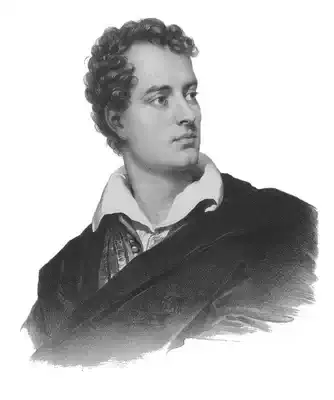
Lord Byron
Oscar Of Alva: A Tale
Oscar Of Alva: A Tale
How sweetly shines through azure skies,
The lamp of heaven on Lora's shore;
Where Alva's hoary turrets rise,
And hear the din of arms no more!
But often has yon rolling moon
On Alva's casques of silver play'd;
And view'd at midnight's silent noon,
Her chief's in gleaming mail array'd:
And on the crimson'd rocks beneath,
Which scowl o'er ocean's sullen flow,
Pale in the scatter'd runks of death,
She saw the gasping warrior low;
While many an eye which ne'er again
Could mark the rising orb of day,
T'urn'd feebly from the gory plain,
Beheld in death her fading ray.
Once to those eyes the lamp of Love,
They blest her dear propitious light;
But now she glimmer'd from above,
A sad, funereal torch of night.
Faded is Alva's noble race,
And gray her towers are seen afar;
No more her heroes urge the chase,
Or roll the crimson tide of war.
But who was last of Alva's clan?
Why grows the moss on Alva's stone?
Her towers resound no steps of man,
They echo to the gale alone.
And when that gale is fierce and high,
A sound is heard in yonder hall;
It rises hoarsely through the sky,
And vibrates o'er the mould'ring wall.
Yes, when the eddying tempest sighs,
It shakes the shield of Oscar brave;
But there no more his banners rise,
No more his plumes of sable wave.
Fair shone the sun on Oscar's birth,
When Angus hail'd his eldest born
The vassals round their chieftain's hearth
Crowd to applaud the happy morn.
They feast upon the mountain deer,
The pibroch raised its piercing note;
To gladden more their highland cheer,
The strains in martial numbers float:
And they who heard the warnotes
wild
Hoped that one day the pibroch's strain
Should play belore the hero's child
While he should lead the tartan train.
Another year is qulckly past,
And Angus hails another son;
His natal day is like the last,
Nor soon the jocund feast was done.
Taught by their sire to bend the bow,
On Alva's dusky hills of wind,
The boys in childhood chased the roe,
And left their hounds in speed behind.
But ere their years of youth are o'er,
They mingle in the ranks of war;
They lightly wheel the bright claymore
And send the whistling arrow far.
Dark was the flow of Oscar's hair,
Wildly it stream'd along the gale;
But Allan's locks were bright and fair,
And pensive seem'd his cheek, and pale.
But Oscar own'd a hero's soul,
His dark eye shone through beams of truth;
Allan had early learn'd control,
And smooth his words had been from youth.
Both, both were brave; the Saxon spear
Was shiver'd oft beneath their steel;
And Oscar's bosom scorn'd to fear,
But Oscar's bosom knew to feel;
While Allan's soul belied his form,
Unworthy with such charms to dwell:
Keen as the lightning of the storm,
On foe, his deadly vengeance fell.
From high Southannon's distant tower
Arrived a young and noble dame;
With Kenneth's lands to form her dower,
Glenalvon's blueeyed
daughter came;
And Oscar claim'd the beauteous bride,
And Angus on his Oscar srniled:
It soothed the father's feudal pride
Thus to obtain Glenalvon's child.
Hark to the pibroch's pleasing note!
Hark to the swelling nuptial song!
In joyous strains the voices float,
And still the choral peal prolong.
See how the heroes' bloodred
plumes
Assembled wave in Alva's hall;
Each youth his varied plaid assumes,
Attending on thir chieftain's call.
It is not war their aid demands,
The pibroch plays the song of peace;
To Oscar's nuptials throng the bands,
Nor yet the sounds of pleasure cease.
But where is Oscar? sure 'tis late:
Is this a bridegroom's ardent flame?
While thronging guests and ladies wait,
Nor Oscar nor his brother came.
At length young Allan join'd the bride;
'Why comes not Oscar?' Angus said:
Is he not here?' the youth replied;
'With me he roved not o'er the glade:
'Perchance, forgetful of the day,
'Tis his to chase the bounding roe;
Or ocean's waves prolong his stay;
Yet Oscar's bark is seldom slow.'
'Oh, no!' the anguish'd Sire rejoin'd,
'Nor chase nor wave, my boy delay;
Would he to Mora seem unkind?
Would aught to her impede his way?
'Oh, search, ye chiefs! oh, search around!
Allan, with these through Alva fly;
Till Oscar, till my son is found,
Haste, haste, nor dare attempt reply.'
All is confusion — through the vale
The name of Oscar hoarsely rings,
It rises on the murmuring gale,
Till night expands her dusky wings;
It breaks the stillness of the night,
But echoes through her shades in vain;
It sounds through morning's misty light,
But Oscar comes not o'er the plain.
Three days,three sleepless nights, the Chief
For Oscar search'd each mountaln cave:
Then hope is lost; in boundless grief,
His locks in graytorn
ringlets wave.
'Oscar! my son! thou God of heaven,
Restore the prop of sinking age!
Or if that hope no more is given,
Yield his assassin to my rage.
'Yes, on some desert rocky shore
My Oscar's whiten'd bones must lie;
Then grant, thou God! I ask no more,
With him his frantic sire may die!
'Yet he may live, — away, despalr!
Be calm, my soul! he yet may live;
T'arraign my fate, my voice forbear!
O God! my impious prayer forgive.
'What, if he live for me no more,
I sink forgotten in the dust,
The hope of Alva's age is o'er:
Alas! can pangs like these be just?'
Thus did the hapless parent mourn,
Till Time, which soothes severest woe,
Had bade serenity return
And made the teardrop
cease to flow.
For still some latent hope survived
That Oscar might once more appear;
His hope now droop'd and now revived,
Till Time had told a tedious year.
Days roll'd along, the orb of light
Again had run his destined race;
No Oscar bless'd his father's sight,
And sorrow left a fainter trace.
For youthful Allan still remain'd,
And now his father's only joy:
And Mora's heart was quickly gain'd,
For beauty crown'd the fairhair'd
boy.
She thought that Oscar low was laid,
And Allan's face was wondrous fair;
If Oscar lived, some other maid
Had clairn'd his faithless bosom's care.
And Angus said, if one year more
In fruitless hope was pass'd away,
His fondest scruples should be o'er,
And he would name their nuptial day.
Slow roll'd the moons, but blest at last
Arrived the dearly destined morn
The year of anxious trembling past,
What smiles the lovers' cheeks adorn!
Hark to the pibroch's pleasing note!
Hark to the swelling nuptial song!
In joyous strains the voices float,
And still the choral peal prolong.
Again the clan, in festive crowd,
Throng through the gate of Alva's hall;
The sounds of mirth reecho
loud,
And all their former joy recall.
But who is he, whose darken'd brow
Glooms in the midst of general mirth?
Before his eyes' far fiercer glow
The blue flames curdle o'er the hearth.
Dark is the robe which wraps his form,
And tall his plume of gory red;
His voice is like the rising storm,
But light and trackless is his tread.
'Tis noon of night, the pledge goes round,
The bridegroom's health is deeply quaff'd;
With shouts the vaulted roofs resound,
And all combine to hail the draught.
Sudden the strangerchief
arose,
And all the clamorous crowd are hush'd;
And Angus' cheek with wonder glows,
And Mora's tender bosom blush'd
'Old rnan!'he cried,'this pledge is done;
Thou saw'st 'twas duly drank by me;
It hail'd the nuptials of thy son:
Now will I claim a pledge from thee.
'While all around is mirth and joy,
To bless thy Allan's happy lot,
Say, hadst thou ne'er another boy?
Say, why should Oscar be forgot?'
'Alas!' the hapless sire replied,
The big tear starting as he spoke
'When Oscar left my hail, or died,
This aged heart was almost broke,
'Thrice has the earth revolved her course
Since Oscar's form has bless'd my sight;
And Allan is my last resource,
Since martial Oscar's death or flight.'
'Tis well,' replied the stranger stern,
And fiercely flash'd his rolling eye;
'Thy Oscar's fate I fain would learn;
Perhaps the hero did not die.
'Perhaps, if those whom most he loved
Would call, thy Oscar might return;
Perchance the chief has only roved;
For him thy beltane yet may burn.
'Fill high the bowl the table round,
We will not climb the pledge by stealth;
With wine let every cup be crown'd
Pledge me departed Oscar's health.'
'With all my soul,' old Angus said,
And fill'd his goblet to the brim:
'Here's to my boy! alive or dead'
I ne'er shall find a son like him'
'Bravely. old man this health has sped;
But why does Allan trembling stand?
Come, drink remembrance of the dead,
And raise thy cup with firmer hand.'
The crimson glow of Allan's face
Was turn'd at once to ghastly hue;
The drops of death each other chase
Adown in agonizing dew.
Thrice did he raise the goblet high,
And thrice his lips refused to taste;
For thrice he caught the stranger's eye
On his with deadly fury placed.
'And is it thus a brother's hails
A brother's fond remembrance here?
If thus affection's strength prevails'
What might we not expect from fear?'
Roused by the sneer, he raised the bowl,
'Would Oscar now could share our mirth!'
Internal fear appall'd his soul;
He said and dash'd the cap to earth,
'Tis he! I hear my murderer's voice!'
Loud shrieks a darkly gleaming form.
'A murderer's voice!' the roof replies,
And deeply swells the bursting storm,
The tapers wink, the chieftains shrink,
The stranger's gone, — amidst the crew,
A form was seen in tartan green,
And tall the shade terrific grew.
His waist was bound with a broad belt round,
His plume of sable stream'd on high;
But his breast was bare, with the red wounds there,
And fix'd was the glare of his glassy eye.
And thrice he smiled, with his eyes so wild,
On Angus bending low the knee;
And thrice he frown'd on a chief on the ground
Whom shivering crowds with horror see
The bolts loud roll from pole to pole
The thunders through the welkin ring,
And the gleaming form, through the mist of the storm,
Was borne on high by the whirlwind's wing
Cold was the feast, the revel ceased.
Who lies upon the stony floor?
Oblivion press'd old Angus' breast,
At length his lifepulse
throbs once more.
'Away, away! let the leech essay
To pour the light on Allan's eyes;'
His sand is done, – his race is run –
Oh! never more shall Allan rise!
But Oscar's breast is cold as clay,
His locks are lifted by the gale;
And Allan's barbed arrow lay
With him In dark Glentanar's vale.
And whence the dreadful stranger came,
Or who, no mortal wight can tell;
But no one doubts the form of flame,
For Alva's sons knew Oscar well.
Ambition nerved young Allan's hand,
Exulting demons wing'd his dart;
While Envy waved her burnng brand,
And pour'd her venom round his heart.
Swift is the shaft from Allan's bow;
Whose streaming lifeblood
stains his side?
Dark Oscar's sable crest is low,
The dart has drunk his vital tide.
And Mora's eyes could Allan move,
She bade his wounded pride rebel:
Alas! that eyes which beam'd with love
Should urge the soul to deeds of hell.
Lo! seest thou not a lonely tomb
Which rises o'er a warrior dead?
It glimmers through the twilight gloom;
Oh! that is Allan's nuptial bed.
Far distant far, the noble grave
Which held his clan's great ashes stood;
And o'er his corse no banners wave,
For they were stain'd with kindred blood.
What minstrel gray, what hoary bard,
Shall Allan's deeds on harpstrings
raise?
The song is glory's chief reward,
But who can strike a murderer's praise?
Unstrung, untouch'd, th harp must stand,
No minstrel dare the theme awake;
Guilt would benumb his palsied hand,
His harp in shuddering chords would break.
No lyre of fame, no hallow'd verse,
Shall sound his glories high in air:
A dying father's bitter curse,
A brother's deathgroan
echoes there.
How sweetly shines through azure skies,
The lamp of heaven on Lora's shore;
Where Alva's hoary turrets rise,
And hear the din of arms no more!
But often has yon rolling moon
On Alva's casques of silver play'd;
And view'd at midnight's silent noon,
Her chief's in gleaming mail array'd:
And on the crimson'd rocks beneath,
Which scowl o'er ocean's sullen flow,
Pale in the scatter'd runks of death,
She saw the gasping warrior low;
While many an eye which ne'er again
Could mark the rising orb of day,
T'urn'd feebly from the gory plain,
Beheld in death her fading ray.
Once to those eyes the lamp of Love,
They blest her dear propitious light;
But now she glimmer'd from above,
A sad, funereal torch of night.
Faded is Alva's noble race,
And gray her towers are seen afar;
No more her heroes urge the chase,
Or roll the crimson tide of war.
But who was last of Alva's clan?
Why grows the moss on Alva's stone?
Her towers resound no steps of man,
They echo to the gale alone.
And when that gale is fierce and high,
A sound is heard in yonder hall;
It rises hoarsely through the sky,
And vibrates o'er the mould'ring wall.
Yes, when the eddying tempest sighs,
It shakes the shield of Oscar brave;
But there no more his banners rise,
No more his plumes of sable wave.
Fair shone the sun on Oscar's birth,
When Angus hail'd his eldest born
The vassals round their chieftain's hearth
Crowd to applaud the happy morn.
They feast upon the mountain deer,
The pibroch raised its piercing note;
To gladden more their highland cheer,
The strains in martial numbers float:
And they who heard the warnotes
wild
Hoped that one day the pibroch's strain
Should play belore the hero's child
While he should lead the tartan train.
Another year is qulckly past,
And Angus hails another son;
His natal day is like the last,
Nor soon the jocund feast was done.
Taught by their sire to bend the bow,
On Alva's dusky hills of wind,
The boys in childhood chased the roe,
And left their hounds in speed behind.
But ere their years of youth are o'er,
They mingle in the ranks of war;
They lightly wheel the bright claymore
And send the whistling arrow far.
Dark was the flow of Oscar's hair,
Wildly it stream'd along the gale;
But Allan's locks were bright and fair,
And pensive seem'd his cheek, and pale.
But Oscar own'd a hero's soul,
His dark eye shone through beams of truth;
Allan had early learn'd control,
And smooth his words had been from youth.
Both, both were brave; the Saxon spear
Was shiver'd oft beneath their steel;
And Oscar's bosom scorn'd to fear,
But Oscar's bosom knew to feel;
While Allan's soul belied his form,
Unworthy with such charms to dwell:
Keen as the lightning of the storm,
On foe, his deadly vengeance fell.
From high Southannon's distant tower
Arrived a young and noble dame;
With Kenneth's lands to form her dower,
Glenalvon's blueeyed
daughter came;
And Oscar claim'd the beauteous bride,
And Angus on his Oscar srniled:
It soothed the father's feudal pride
Thus to obtain Glenalvon's child.
Hark to the pibroch's pleasing note!
Hark to the swelling nuptial song!
In joyous strains the voices float,
And still the choral peal prolong.
See how the heroes' bloodred
plumes
Assembled wave in Alva's hall;
Each youth his varied plaid assumes,
Attending on thir chieftain's call.
It is not war their aid demands,
The pibroch plays the song of peace;
To Oscar's nuptials throng the bands,
Nor yet the sounds of pleasure cease.
But where is Oscar? sure 'tis late:
Is this a bridegroom's ardent flame?
While thronging guests and ladies wait,
Nor Oscar nor his brother came.
At length young Allan join'd the bride;
'Why comes not Oscar?' Angus said:
Is he not here?' the youth replied;
'With me he roved not o'er the glade:
'Perchance, forgetful of the day,
'Tis his to chase the bounding roe;
Or ocean's waves prolong his stay;
Yet Oscar's bark is seldom slow.'
'Oh, no!' the anguish'd Sire rejoin'd,
'Nor chase nor wave, my boy delay;
Would he to Mora seem unkind?
Would aught to her impede his way?
'Oh, search, ye chiefs! oh, search around!
Allan, with these through Alva fly;
Till Oscar, till my son is found,
Haste, haste, nor dare attempt reply.'
All is confusion — through the vale
The name of Oscar hoarsely rings,
It rises on the murmuring gale,
Till night expands her dusky wings;
It breaks the stillness of the night,
But echoes through her shades in vain;
It sounds through morning's misty light,
But Oscar comes not o'er the plain.
Three days,three sleepless nights, the Chief
For Oscar search'd each mountaln cave:
Then hope is lost; in boundless grief,
His locks in graytorn
ringlets wave.
'Oscar! my son! thou God of heaven,
Restore the prop of sinking age!
Or if that hope no more is given,
Yield his assassin to my rage.
'Yes, on some desert rocky shore
My Oscar's whiten'd bones must lie;
Then grant, thou God! I ask no more,
With him his frantic sire may die!
'Yet he may live, — away, despalr!
Be calm, my soul! he yet may live;
T'arraign my fate, my voice forbear!
O God! my impious prayer forgive.
'What, if he live for me no more,
I sink forgotten in the dust,
The hope of Alva's age is o'er:
Alas! can pangs like these be just?'
Thus did the hapless parent mourn,
Till Time, which soothes severest woe,
Had bade serenity return
And made the teardrop
cease to flow.
For still some latent hope survived
That Oscar might once more appear;
His hope now droop'd and now revived,
Till Time had told a tedious year.
Days roll'd along, the orb of light
Again had run his destined race;
No Oscar bless'd his father's sight,
And sorrow left a fainter trace.
For youthful Allan still remain'd,
And now his father's only joy:
And Mora's heart was quickly gain'd,
For beauty crown'd the fairhair'd
boy.
She thought that Oscar low was laid,
And Allan's face was wondrous fair;
If Oscar lived, some other maid
Had clairn'd his faithless bosom's care.
And Angus said, if one year more
In fruitless hope was pass'd away,
His fondest scruples should be o'er,
And he would name their nuptial day.
Slow roll'd the moons, but blest at last
Arrived the dearly destined morn
The year of anxious trembling past,
What smiles the lovers' cheeks adorn!
Hark to the pibroch's pleasing note!
Hark to the swelling nuptial song!
In joyous strains the voices float,
And still the choral peal prolong.
Again the clan, in festive crowd,
Throng through the gate of Alva's hall;
The sounds of mirth reecho
loud,
And all their former joy recall.
But who is he, whose darken'd brow
Glooms in the midst of general mirth?
Before his eyes' far fiercer glow
The blue flames curdle o'er the hearth.
Dark is the robe which wraps his form,
And tall his plume of gory red;
His voice is like the rising storm,
But light and trackless is his tread.
'Tis noon of night, the pledge goes round,
The bridegroom's health is deeply quaff'd;
With shouts the vaulted roofs resound,
And all combine to hail the draught.
Sudden the strangerchief
arose,
And all the clamorous crowd are hush'd;
And Angus' cheek with wonder glows,
And Mora's tender bosom blush'd
'Old rnan!'he cried,'this pledge is done;
Thou saw'st 'twas duly drank by me;
It hail'd the nuptials of thy son:
Now will I claim a pledge from thee.
'While all around is mirth and joy,
To bless thy Allan's happy lot,
Say, hadst thou ne'er another boy?
Say, why should Oscar be forgot?'
'Alas!' the hapless sire replied,
The big tear starting as he spoke
'When Oscar left my hail, or died,
This aged heart was almost broke,
'Thrice has the earth revolved her course
Since Oscar's form has bless'd my sight;
And Allan is my last resource,
Since martial Oscar's death or flight.'
'Tis well,' replied the stranger stern,
And fiercely flash'd his rolling eye;
'Thy Oscar's fate I fain would learn;
Perhaps the hero did not die.
'Perhaps, if those whom most he loved
Would call, thy Oscar might return;
Perchance the chief has only roved;
For him thy beltane yet may burn.
'Fill high the bowl the table round,
We will not climb the pledge by stealth;
With wine let every cup be crown'd
Pledge me departed Oscar's health.'
'With all my soul,' old Angus said,
And fill'd his goblet to the brim:
'Here's to my boy! alive or dead'
I ne'er shall find a son like him'
'Bravely. old man this health has sped;
But why does Allan trembling stand?
Come, drink remembrance of the dead,
And raise thy cup with firmer hand.'
The crimson glow of Allan's face
Was turn'd at once to ghastly hue;
The drops of death each other chase
Adown in agonizing dew.
Thrice did he raise the goblet high,
And thrice his lips refused to taste;
For thrice he caught the stranger's eye
On his with deadly fury placed.
'And is it thus a brother's hails
A brother's fond remembrance here?
If thus affection's strength prevails'
What might we not expect from fear?'
Roused by the sneer, he raised the bowl,
'Would Oscar now could share our mirth!'
Internal fear appall'd his soul;
He said and dash'd the cap to earth,
'Tis he! I hear my murderer's voice!'
Loud shrieks a darkly gleaming form.
'A murderer's voice!' the roof replies,
And deeply swells the bursting storm,
The tapers wink, the chieftains shrink,
The stranger's gone, — amidst the crew,
A form was seen in tartan green,
And tall the shade terrific grew.
His waist was bound with a broad belt round,
His plume of sable stream'd on high;
But his breast was bare, with the red wounds there,
And fix'd was the glare of his glassy eye.
And thrice he smiled, with his eyes so wild,
On Angus bending low the knee;
And thrice he frown'd on a chief on the ground
Whom shivering crowds with horror see
The bolts loud roll from pole to pole
The thunders through the welkin ring,
And the gleaming form, through the mist of the storm,
Was borne on high by the whirlwind's wing
Cold was the feast, the revel ceased.
Who lies upon the stony floor?
Oblivion press'd old Angus' breast,
At length his lifepulse
throbs once more.
'Away, away! let the leech essay
To pour the light on Allan's eyes;'
His sand is done, – his race is run –
Oh! never more shall Allan rise!
But Oscar's breast is cold as clay,
His locks are lifted by the gale;
And Allan's barbed arrow lay
With him In dark Glentanar's vale.
And whence the dreadful stranger came,
Or who, no mortal wight can tell;
But no one doubts the form of flame,
For Alva's sons knew Oscar well.
Ambition nerved young Allan's hand,
Exulting demons wing'd his dart;
While Envy waved her burnng brand,
And pour'd her venom round his heart.
Swift is the shaft from Allan's bow;
Whose streaming lifeblood
stains his side?
Dark Oscar's sable crest is low,
The dart has drunk his vital tide.
And Mora's eyes could Allan move,
She bade his wounded pride rebel:
Alas! that eyes which beam'd with love
Should urge the soul to deeds of hell.
Lo! seest thou not a lonely tomb
Which rises o'er a warrior dead?
It glimmers through the twilight gloom;
Oh! that is Allan's nuptial bed.
Far distant far, the noble grave
Which held his clan's great ashes stood;
And o'er his corse no banners wave,
For they were stain'd with kindred blood.
What minstrel gray, what hoary bard,
Shall Allan's deeds on harpstrings
raise?
The song is glory's chief reward,
But who can strike a murderer's praise?
Unstrung, untouch'd, th harp must stand,
No minstrel dare the theme awake;
Guilt would benumb his palsied hand,
His harp in shuddering chords would break.
No lyre of fame, no hallow'd verse,
Shall sound his glories high in air:
A dying father's bitter curse,
A brother's deathgroan
echoes there.
593
Lord Byron
A Fragment: When, To Their Airy Hall
A Fragment: When, To Their Airy Hall
When, to their airy hall, my father's voice
Shall call my spirit, joyful in their choice;
When, poised upon the gale, my form shall ride,
Or, dark in mist, descend the mountains side;
Oh! may my shade behold no sculptured urns,
To mark the spot where earth to earth returns!
No lengthen'd scroll, no praiseencumber'd
stone;
My epitaph shall be my name alone:
If that with honour fail to crown my clay,
Oh! may no other fame my deeds repay!
That, only that, shall single out the spot;
By that remember'd, or with that forgot.
When, to their airy hall, my father's voice
Shall call my spirit, joyful in their choice;
When, poised upon the gale, my form shall ride,
Or, dark in mist, descend the mountains side;
Oh! may my shade behold no sculptured urns,
To mark the spot where earth to earth returns!
No lengthen'd scroll, no praiseencumber'd
stone;
My epitaph shall be my name alone:
If that with honour fail to crown my clay,
Oh! may no other fame my deeds repay!
That, only that, shall single out the spot;
By that remember'd, or with that forgot.
391

Emily Dickinson
The Mountain sat upon the Plain
The Mountain sat upon the Plain
975
The Mountain sat upon the Plain
In his tremendous Chair-
His observation omnifold,
His inquest, everywhere-
The Seasons played around his knees
Like Children round a sire-
Grandfather of the Days is He
Of Dawn, the Ancestor-
975
The Mountain sat upon the Plain
In his tremendous Chair-
His observation omnifold,
His inquest, everywhere-
The Seasons played around his knees
Like Children round a sire-
Grandfather of the Days is He
Of Dawn, the Ancestor-
278

Ella Wheeler Wilcox
The Little Bird
The Little Bird
The father sits in his lonely room,
Outside sings a little bird.
But the shadows are laden with death and gloom,
And the song is all unheard.
The father's heart is the home of sorrow;
His breast is the seat of grief!
Who will hunt the paper for him on the morrow
Who will bring him sweet relief
From wearing his thoughts with innocent chat?
Who will find his slippers and bring his hat?
Still the little bird sings
And flutters her wings;
The refrain of her song is, 'Gos knows best!
He giveth His little children rest.'
What can she know of these sorrowful things?
The mother sits by the desolate hearth,
And weeps o'er a vacant chair.
Sorrow has taken the place of mirth Joy
has resigned to despair.
Bitter the cup the mother is drinking,
So bitter the tear-drops start.
Sad are the thoughts the mother is thinking
Oh, they will break her heart.
Who will on errands, and romp and play,
And mimic the robins the livelong day?
Still the little bird sings
And flutters her wings;
'God reigns in heaven, and He will keep
The dear little children that fall asleep.'
What can she know of these sorrowful things?
Grandmother sits by the open door,
And her tears fall down like rain.
Was there ever a household so sad before,
Will it ever be glad agaiin?
Many unwelcome thoughts come flitting
Into the granddame's mind.
Who will take up the stitches she drops in knitting?
Who will her snuff-box find?
Who'll bring her glasses, and wheel her chair,
And tie her kerchief, and comb her hair?
Still the little bird sings
And flutters her wings;
'God above doeth all things well,
I sang it the same when my nestlings fell.'
Ah! this knows the bird of these sorrowful things.
The father sits in his lonely room,
Outside sings a little bird.
But the shadows are laden with death and gloom,
And the song is all unheard.
The father's heart is the home of sorrow;
His breast is the seat of grief!
Who will hunt the paper for him on the morrow
Who will bring him sweet relief
From wearing his thoughts with innocent chat?
Who will find his slippers and bring his hat?
Still the little bird sings
And flutters her wings;
The refrain of her song is, 'Gos knows best!
He giveth His little children rest.'
What can she know of these sorrowful things?
The mother sits by the desolate hearth,
And weeps o'er a vacant chair.
Sorrow has taken the place of mirth Joy
has resigned to despair.
Bitter the cup the mother is drinking,
So bitter the tear-drops start.
Sad are the thoughts the mother is thinking
Oh, they will break her heart.
Who will on errands, and romp and play,
And mimic the robins the livelong day?
Still the little bird sings
And flutters her wings;
'God reigns in heaven, and He will keep
The dear little children that fall asleep.'
What can she know of these sorrowful things?
Grandmother sits by the open door,
And her tears fall down like rain.
Was there ever a household so sad before,
Will it ever be glad agaiin?
Many unwelcome thoughts come flitting
Into the granddame's mind.
Who will take up the stitches she drops in knitting?
Who will her snuff-box find?
Who'll bring her glasses, and wheel her chair,
And tie her kerchief, and comb her hair?
Still the little bird sings
And flutters her wings;
'God above doeth all things well,
I sang it the same when my nestlings fell.'
Ah! this knows the bird of these sorrowful things.
521

Elizabeth Bishop
Manners
Manners
For a Child of 1918
My grandfather said to me
as we sat on the wagon seat,
"Be sure to remember to always
speak to everyone you meet."
We met a stranger on foot.
My grandfather's whip tapped his hat.
"Good day, sir. Good day. A fine day."
And I said it and bowed where I sat.
Then we overtook a boy we knew
with his big pet crow on his shoulder.
"Always offer everyone a ride;
don't forget that when you get older,"
my grandfather said. So Willy
climbed up with us, but the crow
gave a "Caw!" and flew off. I was worried.
How would he know where to go?
But he flew a little way at a time
from fence post to fence post, ahead;
and when Willy whistled he answered.
"A fine bird," my grandfather said,
"and he's well brought up. See, he answers
nicely when he's spoken to.
Man or beast, that's good manners.
Be sure that you both always do."
When automobiles went by,
the dust hid the people's faces,
but we shouted "Good day! Good day!
Fine day!" at the top of our voices.
When we came to Hustler Hill,
he said that the mare was tired,
so we all got down and walked,
as our good manners required.
For a Child of 1918
My grandfather said to me
as we sat on the wagon seat,
"Be sure to remember to always
speak to everyone you meet."
We met a stranger on foot.
My grandfather's whip tapped his hat.
"Good day, sir. Good day. A fine day."
And I said it and bowed where I sat.
Then we overtook a boy we knew
with his big pet crow on his shoulder.
"Always offer everyone a ride;
don't forget that when you get older,"
my grandfather said. So Willy
climbed up with us, but the crow
gave a "Caw!" and flew off. I was worried.
How would he know where to go?
But he flew a little way at a time
from fence post to fence post, ahead;
and when Willy whistled he answered.
"A fine bird," my grandfather said,
"and he's well brought up. See, he answers
nicely when he's spoken to.
Man or beast, that's good manners.
Be sure that you both always do."
When automobiles went by,
the dust hid the people's faces,
but we shouted "Good day! Good day!
Fine day!" at the top of our voices.
When we came to Hustler Hill,
he said that the mare was tired,
so we all got down and walked,
as our good manners required.
711

Edward Lear
Limerick: There Was an Old Man on a Hill
Limerick: There Was an Old Man on a Hill
There was an Old Man on a hill,
Who seldom, if ever, stood still;
He ran up and down,
In his Grandmother's gown,
Which adorned that Old Man on a hill.
There was an Old Man on a hill,
Who seldom, if ever, stood still;
He ran up and down,
In his Grandmother's gown,
Which adorned that Old Man on a hill.
227
Edward Lear
Limerick: There was a Young Person of Smyrna,
Limerick: There was a Young Person of Smyrna,
There was a Young Person of Smyrna,
Whose Grandmother threatened to burn her;
But she seized on the cat,
And said, 'Granny, burn that!
You incongruous Old Woman of Smyrna!'
There was a Young Person of Smyrna,
Whose Grandmother threatened to burn her;
But she seized on the cat,
And said, 'Granny, burn that!
You incongruous Old Woman of Smyrna!'
255

Billy Collins
The Iron Bridge
The Iron Bridge
I am standing on a disused iron bridge
that was erected in 1902,
according to the iron plaque bolted into a beam,
the year my mother turned one.
Imagine--a mother in her infancy,
and she was a Canadian infant at that,
one of the great infants of the province of Ontario.
But here I am leaning on the rusted railing
looking at the water below,
which is flat and reflective this morning,
sky-blue and streaked with high clouds,
and the more I look at the water,
which is like a talking picture,
the more I think of 1902
when workmen in shirts and caps
riveted this iron bridge together
across a thin channel joining two lakes
where wildflowers blow along the shore now
and pairs of swans float in the leafy coves.
1902--my mother was so tiny
she could have fit into one of those oval
baskets for holding apples,
which her mother could have lined with a soft cloth
and placed on the kitchen table
so she could keep an eye on infant Katherine
while she scrubbed potatoes or shelled a bag of peas,
the way I am keeping an eye on that cormorant
who just broke the glassy surface
and is moving away from me and the iron bridge,
swiveling his curious head,
slipping out to where the sun rakes the water
and filters through the trees that crowd the shore.
And now he dives,
disappears below the surface,
and while I wait for him to pop up,
I picture him flying underwater with his strange wings,
as I picture you, my tiny mother,
who disappeared last year,
flying somewhere with your strange wings,
your wide eyes, and your heavy wet dress,
kicking deeper down into a lake
with no end or name, some boundless province of water.
I am standing on a disused iron bridge
that was erected in 1902,
according to the iron plaque bolted into a beam,
the year my mother turned one.
Imagine--a mother in her infancy,
and she was a Canadian infant at that,
one of the great infants of the province of Ontario.
But here I am leaning on the rusted railing
looking at the water below,
which is flat and reflective this morning,
sky-blue and streaked with high clouds,
and the more I look at the water,
which is like a talking picture,
the more I think of 1902
when workmen in shirts and caps
riveted this iron bridge together
across a thin channel joining two lakes
where wildflowers blow along the shore now
and pairs of swans float in the leafy coves.
1902--my mother was so tiny
she could have fit into one of those oval
baskets for holding apples,
which her mother could have lined with a soft cloth
and placed on the kitchen table
so she could keep an eye on infant Katherine
while she scrubbed potatoes or shelled a bag of peas,
the way I am keeping an eye on that cormorant
who just broke the glassy surface
and is moving away from me and the iron bridge,
swiveling his curious head,
slipping out to where the sun rakes the water
and filters through the trees that crowd the shore.
And now he dives,
disappears below the surface,
and while I wait for him to pop up,
I picture him flying underwater with his strange wings,
as I picture you, my tiny mother,
who disappeared last year,
flying somewhere with your strange wings,
your wide eyes, and your heavy wet dress,
kicking deeper down into a lake
with no end or name, some boundless province of water.
250
Arthur Rimbaud
The Sideboard
The Sideboard
It is a high, carved sideboard made of oak.
The dark old wood, like old folks, seems kind;
Its drawers are open, and its odours soak
The darkness with the scent of strong old wine.
Its drawers are full, a final resting place
For scented, yellowed linens, scraps of clothes
Foe wives or children, worn and faded bows,
Grandmothers' collars made of figured lace;
There you will find old medals, locks of grey
Or yellow hair, and portraits, and a dried bouquet
Whose perfume mingles with the smell of fruit.
-O sideboard of old, you know a great deal more
And could tell us your tales, yet you stand mute
As we slowly open your old dark door.
It is a high, carved sideboard made of oak.
The dark old wood, like old folks, seems kind;
Its drawers are open, and its odours soak
The darkness with the scent of strong old wine.
Its drawers are full, a final resting place
For scented, yellowed linens, scraps of clothes
Foe wives or children, worn and faded bows,
Grandmothers' collars made of figured lace;
There you will find old medals, locks of grey
Or yellow hair, and portraits, and a dried bouquet
Whose perfume mingles with the smell of fruit.
-O sideboard of old, you know a great deal more
And could tell us your tales, yet you stand mute
As we slowly open your old dark door.
471

Anonymous
Episode
Episode
"THE bloody swath of Swedes and Geats
and the storm of their strife, were seen afar,
how folk against folk the fight had wakened.
The ancient king with his atheling band
sought his citadel, sorrowing much:
Ongentheow earl went up to his burg.
He had tested Hygelac's hardihood,
the proud one's prowess, would prove it no longer,
defied no more those fighting-wanderers
nor hoped from the seamen to save his hoard,
his bairn and his bride: so he bent him again,
old, to his earth-walls. Yet after him came
with slaughter for Swedes the standards of Hygelac
o'er peaceful plains in pride advancing,
till Hrethelings fought in the fenced town.
Then Ongentheow with edge of sword,
the hoary-bearded, was held at bay,
and the folk-king there was forced to suffer
Eofor's anger. In ire, at the king
Wulf Wonreding with weapon struck;
and the chieftain's blood, for that blow, in streams
flowed 'neath his hair. No fear felt he,
stout old Scylfing, but straightway repaid
in better bargain that bitter stroke
and faced his foe with fell intent.
Nor swift enough was the son of Wonred
answer to render the aged chief;
too soon on his head the helm was cloven;
blood-bedecked he bowed to earth,
and fell adown; not doomed was he yet,
and well he waxed, though the wound was sore.
Then the hardy Hygelac-thane,
when his brother fell, with broad brand smote,
giants' sword crashing through giants'-helm
across the shield-wall: sank the king,
his folk's old herdsman, fatally hurt.
There were many to bind the brother's wounds
and lift him, fast as fate allowed
his people to wield the place-of-war.
But Eofor took from Ongentheow,
earl from other, the iron-breastplate,
hard sword hilted, and helmet too,
and the hoar-chief's harness to Hygelac carried,
who took the trappings, and truly promised
rich fee 'mid folk, -- and fulfilled it so.
For that grim strife gave the Geatish lord,
Hrethel's offspring, when home he came,
to Eofor and Wulf a wealth of treasure,
Each of them had a hundred thousand
in land and linked rings; nor at less price reckoned
mid-earth men such mighty deeds!
And to Eofor he gave his only daughter
in pledge of grace, the pride of his home.
"Such is the feud, the foeman's rage,
death-hate of men: so I deem it sure
that the Swedish folk will seek us home
for this fall of their friends, the fighting-Scylfings,
when once they learn that our warrior leader
lifeless lies, who land and hoard
ever defended from all his foes,
furthered his folk's weal, finished his course
a hardy hero. -- Now haste is best,
that we go to gaze on our Geatish lord,
and bear the bountiful breaker-of-rings
to the funeral pyre. No fragments merely
shall burn with the warrior. Wealth of jewels,
gold untold and gained in terror,
treasure at last with his life obtained,
all of that booty the brands shall take,
fire shall eat it. No earl must carry
memorial jewel. No maiden fair
shall wreathe her neck with noble ring:
nay, sad in spirit and shorn of her gold,
oft shall she pass o'er paths of exile
now our lord all laughter has laid aside,
all mirth and revel. Many a spear
morning-cold shall be clasped amain,
lifted aloft; nor shall lilt of harp
those warriors wake; but the wan-hued raven,
fain o'er the fallen, his feast shall praise
and boast to the eagle how bravely he ate
when he and the wolf were wasting the slain."
So he told his sorrowful tidings,
and little he lied, the loyal man
of word or of work. The warriors rose;
sad, they climbed to the Cliff-of-Eagles,
went, welling with tears, the wonder to view.
Found on the sand there, stretched at rest,
their lifeless lord, who had lavished rings
of old upon them. Ending-day
had dawned on the doughty-one; death had seized
in woful slaughter the Weders' king.
There saw they, besides, the strangest being,
loathsome, lying their leader near,
prone on the field. The fiery dragon,
fearful fiend, with flame was scorched.
Reckoned by feet, it was fifty measures
in length as it lay. Aloft erewhile
it had revelled by night, and anon come back,
seeking its den; now in death's sure clutch
it had come to the end of its earth-hall joys.
By it there stood the stoups and jars;
dishes lay there, and dear-decked swords
eaten with rust, as, on earth's lap resting,
a thousand winters they waited there.
For all that heritage huge, that gold
of bygone men, was bound by a spell,
so the treasure-hall could be touched by none
of human kind, -- save that Heaven's King,
God himself, might give whom he would,
Helper of Heroes, the hoard to open, --
even such a man as seemed to him meet.
"THE bloody swath of Swedes and Geats
and the storm of their strife, were seen afar,
how folk against folk the fight had wakened.
The ancient king with his atheling band
sought his citadel, sorrowing much:
Ongentheow earl went up to his burg.
He had tested Hygelac's hardihood,
the proud one's prowess, would prove it no longer,
defied no more those fighting-wanderers
nor hoped from the seamen to save his hoard,
his bairn and his bride: so he bent him again,
old, to his earth-walls. Yet after him came
with slaughter for Swedes the standards of Hygelac
o'er peaceful plains in pride advancing,
till Hrethelings fought in the fenced town.
Then Ongentheow with edge of sword,
the hoary-bearded, was held at bay,
and the folk-king there was forced to suffer
Eofor's anger. In ire, at the king
Wulf Wonreding with weapon struck;
and the chieftain's blood, for that blow, in streams
flowed 'neath his hair. No fear felt he,
stout old Scylfing, but straightway repaid
in better bargain that bitter stroke
and faced his foe with fell intent.
Nor swift enough was the son of Wonred
answer to render the aged chief;
too soon on his head the helm was cloven;
blood-bedecked he bowed to earth,
and fell adown; not doomed was he yet,
and well he waxed, though the wound was sore.
Then the hardy Hygelac-thane,
when his brother fell, with broad brand smote,
giants' sword crashing through giants'-helm
across the shield-wall: sank the king,
his folk's old herdsman, fatally hurt.
There were many to bind the brother's wounds
and lift him, fast as fate allowed
his people to wield the place-of-war.
But Eofor took from Ongentheow,
earl from other, the iron-breastplate,
hard sword hilted, and helmet too,
and the hoar-chief's harness to Hygelac carried,
who took the trappings, and truly promised
rich fee 'mid folk, -- and fulfilled it so.
For that grim strife gave the Geatish lord,
Hrethel's offspring, when home he came,
to Eofor and Wulf a wealth of treasure,
Each of them had a hundred thousand
in land and linked rings; nor at less price reckoned
mid-earth men such mighty deeds!
And to Eofor he gave his only daughter
in pledge of grace, the pride of his home.
"Such is the feud, the foeman's rage,
death-hate of men: so I deem it sure
that the Swedish folk will seek us home
for this fall of their friends, the fighting-Scylfings,
when once they learn that our warrior leader
lifeless lies, who land and hoard
ever defended from all his foes,
furthered his folk's weal, finished his course
a hardy hero. -- Now haste is best,
that we go to gaze on our Geatish lord,
and bear the bountiful breaker-of-rings
to the funeral pyre. No fragments merely
shall burn with the warrior. Wealth of jewels,
gold untold and gained in terror,
treasure at last with his life obtained,
all of that booty the brands shall take,
fire shall eat it. No earl must carry
memorial jewel. No maiden fair
shall wreathe her neck with noble ring:
nay, sad in spirit and shorn of her gold,
oft shall she pass o'er paths of exile
now our lord all laughter has laid aside,
all mirth and revel. Many a spear
morning-cold shall be clasped amain,
lifted aloft; nor shall lilt of harp
those warriors wake; but the wan-hued raven,
fain o'er the fallen, his feast shall praise
and boast to the eagle how bravely he ate
when he and the wolf were wasting the slain."
So he told his sorrowful tidings,
and little he lied, the loyal man
of word or of work. The warriors rose;
sad, they climbed to the Cliff-of-Eagles,
went, welling with tears, the wonder to view.
Found on the sand there, stretched at rest,
their lifeless lord, who had lavished rings
of old upon them. Ending-day
had dawned on the doughty-one; death had seized
in woful slaughter the Weders' king.
There saw they, besides, the strangest being,
loathsome, lying their leader near,
prone on the field. The fiery dragon,
fearful fiend, with flame was scorched.
Reckoned by feet, it was fifty measures
in length as it lay. Aloft erewhile
it had revelled by night, and anon come back,
seeking its den; now in death's sure clutch
it had come to the end of its earth-hall joys.
By it there stood the stoups and jars;
dishes lay there, and dear-decked swords
eaten with rust, as, on earth's lap resting,
a thousand winters they waited there.
For all that heritage huge, that gold
of bygone men, was bound by a spell,
so the treasure-hall could be touched by none
of human kind, -- save that Heaven's King,
God himself, might give whom he would,
Helper of Heroes, the hoard to open, --
even such a man as seemed to him meet.
243
Anonymous
Beowulf (The Prelude)
Beowulf (The Prelude)
PRELUDE OF THE FOUNDER OF THE DANISH HOUSE
LO, praise of the prowess of people-kings
of spear-armed Danes, in days long sped,
we have heard, and what honor the athelings won!
Oft Scyld the Scefing from squadroned foes,
from many a tribe, the mead-bench tore,
awing the earls. Since erst he lay
friendless, a foundling, fate repaid him:
for he waxed under welkin, in wealth he throve,
till before him the folk, both far and near,
who house by the whale-path, heard his mandate,
gave him gifts: a good king he!
To him an heir was afterward born,
a son in his halls, whom heaven sent
to favor the folk, feeling their woe
that erst they had lacked an earl for leader
so long a while; the Lord endowed him,
the Wielder of Wonder, with world's renown.
Famed was this Beowulf: far flew the boast of him,
son of Scyld, in the Scandian lands.
So becomes it a youth to quit him well
with his father's friends, by fee and gift,
that to aid him, aged, in after days,
come warriors willing, should war draw nigh,
liegemen loyal: by lauded deeds
shall an earl have honor in every clan.
Forth he fared at the fated moment,
sturdy Scyld to the shelter of God.
Then they bore him over to ocean's billow,
loving clansmen, as late he charged them,
while wielded words the winsome Scyld,
the leader beloved who long had ruled....
In the roadstead rocked a ring-dight vessel,
ice-flecked, outbound, atheling's barge:
there laid they down their darling lord
on the breast of the boat, the breaker-of-rings,
by the mast the mighty one. Many a treasure
fetched from far was freighted with him.
No ship have I known so nobly dight
with weapons of war and weeds of battle,
with breastplate and blade: on his bosom lay
a heaped hoard that hence should go
far o'er the flood with him floating away.
No less these loaded the lordly gifts,
thanes' huge treasure, than those had done
who in former time forth had sent him
sole on the seas, a suckling child.
High o'er his head they hoist the standard,
a gold-wove banner; let billows take him,
gave him to ocean. Grave were their spirits,
mournful their mood. No man is able
to say in sooth, no son of the halls,
no hero 'neath heaven, -- who harbored that freight!
PRELUDE OF THE FOUNDER OF THE DANISH HOUSE
LO, praise of the prowess of people-kings
of spear-armed Danes, in days long sped,
we have heard, and what honor the athelings won!
Oft Scyld the Scefing from squadroned foes,
from many a tribe, the mead-bench tore,
awing the earls. Since erst he lay
friendless, a foundling, fate repaid him:
for he waxed under welkin, in wealth he throve,
till before him the folk, both far and near,
who house by the whale-path, heard his mandate,
gave him gifts: a good king he!
To him an heir was afterward born,
a son in his halls, whom heaven sent
to favor the folk, feeling their woe
that erst they had lacked an earl for leader
so long a while; the Lord endowed him,
the Wielder of Wonder, with world's renown.
Famed was this Beowulf: far flew the boast of him,
son of Scyld, in the Scandian lands.
So becomes it a youth to quit him well
with his father's friends, by fee and gift,
that to aid him, aged, in after days,
come warriors willing, should war draw nigh,
liegemen loyal: by lauded deeds
shall an earl have honor in every clan.
Forth he fared at the fated moment,
sturdy Scyld to the shelter of God.
Then they bore him over to ocean's billow,
loving clansmen, as late he charged them,
while wielded words the winsome Scyld,
the leader beloved who long had ruled....
In the roadstead rocked a ring-dight vessel,
ice-flecked, outbound, atheling's barge:
there laid they down their darling lord
on the breast of the boat, the breaker-of-rings,
by the mast the mighty one. Many a treasure
fetched from far was freighted with him.
No ship have I known so nobly dight
with weapons of war and weeds of battle,
with breastplate and blade: on his bosom lay
a heaped hoard that hence should go
far o'er the flood with him floating away.
No less these loaded the lordly gifts,
thanes' huge treasure, than those had done
who in former time forth had sent him
sole on the seas, a suckling child.
High o'er his head they hoist the standard,
a gold-wove banner; let billows take him,
gave him to ocean. Grave were their spirits,
mournful their mood. No man is able
to say in sooth, no son of the halls,
no hero 'neath heaven, -- who harbored that freight!
265
Anonymous
Beowulf (Episode )
Beowulf (Episode )
A CUP she gave him, with kindly greeting
and winsome words. Of wounden gold,
she offered, to honor him, arm-jewels twain,
corselet and rings, and of collars the noblest
that ever I knew the earth around.
Ne'er heard I so mighty, 'neath heaven's dome,
a hoard-gem of heroes, since Hama bore
to his bright-built burg the Brisings' necklace,
jewel and gem casket. -- Jealousy fled he,
Eormenric's hate: chose help eternal.
Hygelac Geat, grandson of Swerting,
on the last of his raids this ring bore with him,
under his banner the booty defending,
the war-spoil warding; but Wyrd o'erwhelmed him
what time, in his daring, dangers he sought,
feud with Frisians. Fairest of gems
he bore with him over the beaker-of-waves,
sovran strong: under shield he died.
Fell the corpse of the king into keeping of Franks,
gear of the breast, and that gorgeous ring;
weaker warriors won the spoil,
after gripe of battle, from Geatland's lord,
and held the death-field.
Din rose in hall.
Wealhtheow spake amid warriors, and said: --
"This jewel enjoy in thy jocund youth,
Beowulf lov'd, these battle-weeds wear,
a royal treasure, and richly thrive!
Preserve thy strength, and these striplings here
counsel in kindness: requital be mine.
Hast done such deeds, that for days to come
thou art famed among folk both far and near,
so wide as washeth the wave of Ocean
his windy walls. Through the ways of life
prosper, O prince! I pray for thee
rich possessions. To son of mine
be helpful in deed and uphold his joys!
Here every earl to the other is true,
mild of mood, to the master loyal!
Thanes are friendly, the throng obedient,
liegemen are revelling: list and obey!"
Went then to her place. -- That was proudest of feasts;
flowed wine for the warriors. Wyrd they knew not,
destiny dire, and the doom to be seen
by many an earl when eve should come,
and Hrothgar homeward hasten away,
royal, to rest. The room was guarded
by an army of earls, as erst was done.
They bared the bench-boards; abroad they spread
beds and bolsters. -- One beer-carouser
in danger of doom lay down in the hall. --
At their heads they set their shields of war,
bucklers bright; on the bench were there
over each atheling, easy to see,
the high battle-helmet, the haughty spear,
the corselet of rings. 'Twas their custom so
ever to be for battle prepared,
at home, or harrying, which it were,
even as oft as evil threatened
their sovran king. -- They were clansmen good.
A CUP she gave him, with kindly greeting
and winsome words. Of wounden gold,
she offered, to honor him, arm-jewels twain,
corselet and rings, and of collars the noblest
that ever I knew the earth around.
Ne'er heard I so mighty, 'neath heaven's dome,
a hoard-gem of heroes, since Hama bore
to his bright-built burg the Brisings' necklace,
jewel and gem casket. -- Jealousy fled he,
Eormenric's hate: chose help eternal.
Hygelac Geat, grandson of Swerting,
on the last of his raids this ring bore with him,
under his banner the booty defending,
the war-spoil warding; but Wyrd o'erwhelmed him
what time, in his daring, dangers he sought,
feud with Frisians. Fairest of gems
he bore with him over the beaker-of-waves,
sovran strong: under shield he died.
Fell the corpse of the king into keeping of Franks,
gear of the breast, and that gorgeous ring;
weaker warriors won the spoil,
after gripe of battle, from Geatland's lord,
and held the death-field.
Din rose in hall.
Wealhtheow spake amid warriors, and said: --
"This jewel enjoy in thy jocund youth,
Beowulf lov'd, these battle-weeds wear,
a royal treasure, and richly thrive!
Preserve thy strength, and these striplings here
counsel in kindness: requital be mine.
Hast done such deeds, that for days to come
thou art famed among folk both far and near,
so wide as washeth the wave of Ocean
his windy walls. Through the ways of life
prosper, O prince! I pray for thee
rich possessions. To son of mine
be helpful in deed and uphold his joys!
Here every earl to the other is true,
mild of mood, to the master loyal!
Thanes are friendly, the throng obedient,
liegemen are revelling: list and obey!"
Went then to her place. -- That was proudest of feasts;
flowed wine for the warriors. Wyrd they knew not,
destiny dire, and the doom to be seen
by many an earl when eve should come,
and Hrothgar homeward hasten away,
royal, to rest. The room was guarded
by an army of earls, as erst was done.
They bared the bench-boards; abroad they spread
beds and bolsters. -- One beer-carouser
in danger of doom lay down in the hall. --
At their heads they set their shields of war,
bucklers bright; on the bench were there
over each atheling, easy to see,
the high battle-helmet, the haughty spear,
the corselet of rings. 'Twas their custom so
ever to be for battle prepared,
at home, or harrying, which it were,
even as oft as evil threatened
their sovran king. -- They were clansmen good.
199