

Poems in this theme
Art
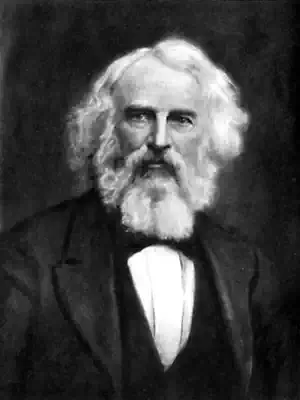
Henry Wadsworth Longfellow
Ultima Thule: Bayard Taylor
Ultima Thule: Bayard Taylor
Dead he lay among his books!
The peace of God was in his looks.
As the statues in the gloom
Watch o'er Maximilian's tomb,
So those volumes from their shelves
Watched him, silent as themselves.
Ah! his hand will nevermore
Turn their storied pages o'er;
Nevermore his lips repeat
Songs of theirs, however sweet.
Let the lifeless body rest!
He is gone, who was its guest;
Gone, as travellers haste to leave
An inn, nor tarry until eve.
Traveller! in what realms afar,
In what planet, in what star,
In what vast, aerial space,
Shines the light upon thy face?
In what gardens of delight
Rest thy weary feet to-night?
Poet! thou, whose latest verse
Was a garland on thy hearse;
Thou hast sung, with organ tone,
In Deukalion's life, thine own;
On the ruins of the Past
Blooms the perfect flower at last.
Friend! but yesterday the bells
Rang for thee their loud farewells;
And to-day they toll for thee,
Lying dead beyond the sea;
Lying dead among thy books,
The peace of God in all thy looks!
Dead he lay among his books!
The peace of God was in his looks.
As the statues in the gloom
Watch o'er Maximilian's tomb,
So those volumes from their shelves
Watched him, silent as themselves.
Ah! his hand will nevermore
Turn their storied pages o'er;
Nevermore his lips repeat
Songs of theirs, however sweet.
Let the lifeless body rest!
He is gone, who was its guest;
Gone, as travellers haste to leave
An inn, nor tarry until eve.
Traveller! in what realms afar,
In what planet, in what star,
In what vast, aerial space,
Shines the light upon thy face?
In what gardens of delight
Rest thy weary feet to-night?
Poet! thou, whose latest verse
Was a garland on thy hearse;
Thou hast sung, with organ tone,
In Deukalion's life, thine own;
On the ruins of the Past
Blooms the perfect flower at last.
Friend! but yesterday the bells
Rang for thee their loud farewells;
And to-day they toll for thee,
Lying dead beyond the sea;
Lying dead among thy books,
The peace of God in all thy looks!
410
Henry Wadsworth Longfellow
To Vittoria Colonna. (Sonnet V.)
To Vittoria Colonna. (Sonnet V.)
Lady, how can it chance--yet this we see
In long experience--that will longer last
A living image carved from quarries vast
Than its own maker, who dies presently?
Cause yieldeth to effect if this so be,
And even Nature is by Art at surpassed;
This know I, who to Art have given the past,
But see that Time is breaking faith with me.
Perhaps on both of us long life can I
Either in color or in stone bestow,
By now portraying each in look and mien;
So that a thousand years after we die,
How fair thou wast, and I how full of woe,
And wherefore I so loved thee, may be seen.
Lady, how can it chance--yet this we see
In long experience--that will longer last
A living image carved from quarries vast
Than its own maker, who dies presently?
Cause yieldeth to effect if this so be,
And even Nature is by Art at surpassed;
This know I, who to Art have given the past,
But see that Time is breaking faith with me.
Perhaps on both of us long life can I
Either in color or in stone bestow,
By now portraying each in look and mien;
So that a thousand years after we die,
How fair thou wast, and I how full of woe,
And wherefore I so loved thee, may be seen.
352
Henry Wadsworth Longfellow
The Poets
The Poets
O ye dead Poets, who are living still
Immortal in your verse, though life be fled,
And ye, O living Poets, who are dead
Though ye are living, if neglect can kill,
Tell me if in the darkest hours of ill,
With drops of anguish falling fast and red
From the sharp crown of thorns upon your head
Ye were not glad your errand to fulfill?
Yes; for the gift and ministry of Song
Have something in them so divinely sweet,
It can assuage the bitterness of wrong;
Not in the clamour of the crowded street,
Not in the shouts and plaudits of the throng,
But in ourselves, are triumph and defeat.
O ye dead Poets, who are living still
Immortal in your verse, though life be fled,
And ye, O living Poets, who are dead
Though ye are living, if neglect can kill,
Tell me if in the darkest hours of ill,
With drops of anguish falling fast and red
From the sharp crown of thorns upon your head
Ye were not glad your errand to fulfill?
Yes; for the gift and ministry of Song
Have something in them so divinely sweet,
It can assuage the bitterness of wrong;
Not in the clamour of the crowded street,
Not in the shouts and plaudits of the throng,
But in ourselves, are triumph and defeat.
409
Henry Wadsworth Longfellow
The Old Bridge At Florence
The Old Bridge At Florence
Taddeo Gaddi built me. I am old,
Five centuries old. I plant my foot of stone
Upon the Arno, as St. Michael's own
Was planted on the dragon. Fold by fold
Beneath me as it struggles. I behold
Its glistening scales. Twice hath it overthrown
My kindred and companions. Me alone
It moveth not, but is by me controlled.
I can remember when the Medici
Were driven from Florence; longer still ago
The final wars of Ghibelline and Guelf.
Florence adorns me with her jewelry;
And when I think that Michael Angelo
Hath leaned on me, I glory in myself.
Taddeo Gaddi built me. I am old,
Five centuries old. I plant my foot of stone
Upon the Arno, as St. Michael's own
Was planted on the dragon. Fold by fold
Beneath me as it struggles. I behold
Its glistening scales. Twice hath it overthrown
My kindred and companions. Me alone
It moveth not, but is by me controlled.
I can remember when the Medici
Were driven from Florence; longer still ago
The final wars of Ghibelline and Guelf.
Florence adorns me with her jewelry;
And when I think that Michael Angelo
Hath leaned on me, I glory in myself.
263
Henry Wadsworth Longfellow
The Masque Of Pandora
The Masque Of Pandora
THE WORKSHOP OF HEPHAESTUS
HEPHAESTUS (standing before the statue of Pandora.)
Not fashioned out of gold, like Hera's throne,
Nor forged of iron like the thunderbolts
Of Zeus omnipotent, or other works
Wrought by my hands at Lemnos or Olympus,
But moulded in soft clay, that unresisting
Yields itself to the touch, this lovely form
Before me stands, perfect in every part.
Not Aphrodite's self appeared more fair,
When first upwafted by caressing winds
She came to high Olympus, and the gods
Paid homage to her beauty. Thus her hair
Was cinctured; thus her floating drapery
Was like a cloud about her, and her face
Was radiant with the sunshine and the sea.
THE VOICE OF ZEUS.
Is thy work done, Hephaestus?
HEPHAESTUS.
It is finished!
THE VOICE.
Not finished till I breathe the breath of life
Into her nostrils, and she moves and speaks.
HEPHAESTUS.
Will she become immortal like ourselves?
THE VOICE.
The form that thou hast fashioned out of clay
Is of the earth and mortal; but the spirit,
The life, the exhalation of my breath,
Is of diviner essence and immortal.
The gods shall shower on her their benefactions,
She shall possess all gifts: the gift of song,
The gift of eloquence, the gift of beauty,
The fascination and the nameless charm
That shall lead all men captive.
HEPHAESTUS.
Wherefore? wherefore?
(A wind shakes the house.)
I hear the rushing of a mighty wind
Through all the halls and chambers of my house!
Her parted lips inhale it, and her bosom
Heaves with the inspiration. As a reed
Beside a river in the rippling current
Bends to and fro, she bows or lifts her head.
She gazes round about as if amazed;
She is alive; she breathes, but yet she speaks not!
(PANDORA descends from the pedestal.)
CHORUS OF THE GRACES
AGLAIA.
In the workshop of Hephaestus
What is this I see?
Have the Gods to four increased us
Who were only three?
Beautiful in form and feature,
Lovely as the day,
Can there be so fair a creature
Formed of common clay?
THALIA.
O sweet, pale face! O lovely eyes of azure,
Clear as the waters of a brook that run
Limpid and laughing in the summer sun!
O golden hair that like a miser's treasure
In its abundance overflows the measure!
O graceful form, that cloudlike floatest on
With the soft, undulating gait of one
Who moveth as if motion were a pleasure!
By what name shall I call thee? Nymph or Muse,
Callirrhoe or Urania? Some sweet name
Whose every syllable is a caress
Would best befit thee; but I cannot choose,
Nor do I care to choose; for still the same,
Nameless or named, will be thy loveliness.
EUPHROSYNE.
Dowered with all celestial gifts,
Skilled in every art
That ennobles and uplifts
And delights the heart,
Fair on earth shall be thy fame
As thy face is fair,
And Pandora be the name
Thou henceforth shalt bear.
II.
OLYMPUS
HERMES (putting on his sandals.)
Much must he toil who serves the Immortal Gods,
And I, who am their herald, most of all.
No rest have I, nor respite. I no sooner
Unclasp the winged sandals from my feet,
Than I again must clasp them, and depart
Upon some foolish errand. But to-day
The errand is not foolish. Never yet
With greater joy did I obey the summons
That sends me earthward. I will fly so swiftly
That my caduceus in the whistling air
Shall make a sound like the Pandaean pipes,
Cheating the shepherds; for to-day I go,
Commissioned by high-thundering Zeus, to lead
A maiden to Prometheus, in his tower,
And by my cunning arguments persuade him
To marry her. What mischief lies concealed
In this design I know not; but I know
Who thinks of marrying hath already taken
One step upon the road to penitence.
Such embassies delight me. Forth I launch
On the sustaining air, nor fear to fall
Like Icarus, nor swerve aside like him
Who drove amiss Hyperion's fiery steeds.
I sink, I fly! The yielding element
Folds itself round about me like an arm,
And holds me as a mother holds her child.
III.
TOWER OF PROMETHEUS ON MOUNT CAUCASUS
PROMETHEUS.
I hear the trumpet of Alectryon
Proclaim the dawn. The stars begin to fade,
And all the heavens are full of prophecies
And evil auguries. Blood-red last night
I saw great Kronos rise; the crescent moon
Sank through the mist, as if it were the scythe
His parricidal hand had flung far down
The western steeps. O ye Immortal Gods,
What evil are ye plotting and contriving?
(HERMES and PANDORA at the threshold.)
PANDORA.
I cannot cross the threshold. An unseen
And icy hand repels me. These blank walls
Oppress me with their weight!
PROMETHEUS.
Powerful ye are,
But not omnipotent. Ye cannot fight
Against Necessity. The Fates control you,
As they do us, and so far we are equals!
PANDORA.
Motionless, passionless, companionless,
He sits there muttering in his beard. His voice
Is like a river flowing underground!
HERMES.
Prometheus, hail!
PROMETHEUS.
Who calls me?
HERMES.
It is I.
Dost thou not know me?
PROMETHEUS.
By thy winged cap
And winged heels I know thee. Thou art Hermes,
Captain of thieves! Hast thou again been stealing
The heifers of Admetus in the sweet
Meadows of asphodel? or Hera's girdle?
Or the earth-shaking trident of Poseidon?
HERMES.
And thou, Prometheus; say, hast thou again
Been stealing fire from Helios' chariot-wheels
To light thy furnaces?
PROMETHEUS.
Why comest thou hither
So early in the dawn?
HERMES.
The Immortal Gods
Know naught of late or early. Zeus himself
The omnipotent hath sent me.
PROMETHEUS.
For what purpose?
HERMES.
To bring this maiden to thee.
PROMETHEUS.
I mistrust
The Gods and all their gifts. If they have sent her
It is for no good purpose.
HERMES.
What disaster
Could she bring on thy house, who is a woman?
PROMETHEUS.
The Gods are not my friends, nor am I theirs.
Whatever comes from them, though in a shape
As beautiful as this, is evil only.
Who art thou?
PANDORA.
One who, though to thee unknown,
Yet knoweth thee.
PROMETHEUS.
How shouldst thou know me, woman?
PANDORA.
Who knoweth not Prometheus the humane?
PROMETHEUS.
Prometheus the unfortunate; to whom
Both Gods and men have shown themselves ungrateful.
When every spark was quenched on every hearth
Throughout the earth, I brought to man the fire
And all its ministrations. My reward
Hath been the rock and vulture.
HERMES.
But the Gods
At last relent and pardon.
PROMETHEUS.
They relent not;
They pardon not; they are implacable,
Revengeful, unforgiving!
HERMES.
As a pledge
Of reconciliation they have sent to thee
This divine being, to be thy companion,
And bring into thy melancholy house
The sunshine and the fragrance of her youth.
PROMETHEUS.
I need them not. I have within myself
All that my heart desires; the ideal beauty
Which the creative faculty of mind
Fashions and follows in a thousand shapes
More lovely than the real. My own thoughts
Are my companions; my designs and labors
And aspirations are my only friends.
HERMES.
Decide not rashly. The decision made
Can never be recalled. The Gods implore not,
Plead not, solicit not; they only offer
Choice and occasion, which once being passed
Return no more. Dost thou accept the gift?
PROMETHEUS.
No gift of theirs, in whatsoever shape
It comes to me, with whatsoever charm
To fascinate my sense, will I receive.
Leave me.
PANDORA.
Let us go hence. I will not stay.
HERMES.
We leave thee to thy vacant dreams, and all
The silence and the solitude of thought,
The endless bitterness of unbelief,
The loneliness of existence without love.
CHORUS OF THE FATES
CLOTHO.
How the Titan, the defiant,
The self-centred, self-reliant,
Wrapped in visions and illusions,
Robs himself of life's best gifts!
Till by all the storm-winds shaken,
By the blast of fate o'ertaken,
Hopeless, helpless, and forsaken,
In the mists of his confusions
To the reefs of doom he drifts!
LACHESIS.
Sorely tried and sorely tempted,
From no agonies exempted,
In the penance of his trial,
And the discipline of pain;
Often by illusions cheated,
Often baffled and defeated
In the tasks to be completed,
He, by toil and self-denial,
To the highest shall attain.
ATROPOS.
Tempt no more the noble schemer;
Bear unto some idle dreamer
This new toy and fascination,
This new dalliance and delight!
To the garden where reposes
Epimetheus crowned with roses,
To the door that never closes
Upon pleasure and temptation,
Bring this vision of the night!
IV.
THE AIR
HERMES (returning to Olympus.)
As lonely as the tower that he inhabits,
As firm and cold as are the crags about him,
Prometheus stands. The thunderbolts of Zeus
Alone can move him; but the tender heart
Of Epimetheus, burning at white heat,
Hammers and flames like all his brother's forges!
Now as an arrow from Hyperion's bow,
My errand done, I fly, I float, I soar
Into the air, returning to Olympus.
O joy of motion! O delight to cleave
The infinite realms of space, the liquid ether,
Through the warm sunshine and the cooling cloud,
Myself as light as sunbeam or as cloud!
With one touch of my swift and winged feet,
I spurn the solid earth, and leave it rocking
As rocks the bough from which a bird takes wing.
V.
THE HOUSE OF EPIMETHEUS
EPIMETHEUS.
Beautiful apparition! go not hence!
Surely thou art a Goddess, for thy voice
Is a celestial melody, and thy form
Self-poised as if it floated on the air!
PANDORA.
No Goddess am I, nor of heavenly birth,
But a mere woman fashioned out of clay
And mortal as the rest.
EPIMETHEUS.
Thy face is fair;
There is a wonder in thine azure eyes
That fascinates me. Thy whole presence seems
A soft desire, a breathing thought of love.
Say, would thy star like Merope's grow dim
If thou shouldst wed beneath thee?
PANDORA.
Ask me not;
I cannot answer thee. I only know
The Gods have sent me hither.
EPIMETHEUS.
I believe,
And thus believing am most fortunate.
It was not Hermes led thee here, but Eros,
And swifter than his arrows were thine eves
In wounding me. There was no moment's space
Between my seeing thee and loving thee.
O, what a telltale face thou hast! Again
I see the wonder in thy tender eyes.
PANDORA.
They do but answer to the love in thine,
Yet secretly I wonder thou shouldst love me.
Thou knowest me not.
EPIMETHEUS.
Perhaps I know thee better
Than had I known thee longer. Yet it seems
That I have always known thee, and but now
Have found thee. Ah, I have been waiting long.
PANDORA.
How beautiful is this house! The atmosphere
Breathes rest and comfort, and the many chambers
Seem full of welcomes.
EPIMETHEUS.
They not only seem,
But truly are. This dwelling and its master
Belong to thee.
PANDORA.
Here let me stay forever!
There is a spell upon me.
EPIMETHEUS.
Thou thyself
Art the enchantress, and I feel thy power
Envelop me, and wrap my soul and sense
In an Elysian dream.
PANDORA.
O, let me stay.
How beautiful are all things round about me,
Multiplied by the mirrors on the walls!
What treasures hast thou here! Yon oaken chest,
Carven with figures and embossed with gold,
Is wonderful to look upon! What choice
And precious things dost thou keep hidden in it?
EPIMETHEUS.
I know not. 'T is a mystery.
PANDORA.
Hast thou never
Lifted the lid?
EPIMETHEUS.
The oracle forbids.
Safely concealed there from all mortal eyes
Forever sleeps the secret of the Gods.
Seek not to know what they have hidden from thee,
Till they themselves reveal it.
PANDORA.
As thou wilt.
EPIMETHEUS.
Let us go forth from this mysterious place.
The garden walks are pleasant at this hour;
The nightingales among the sheltering boughs
Of populous and many-nested trees
Shall teach me how to woo thee, and shall tell me
By what resistless charms or incantations
They won their mates.
PANDORA.
Thou dost not need a teacher.
(They go out.)
CHORUS OF THE EUMENIDES.
What the Immortals
Confide to thy keeping,
Tell unto no man;
Waking or sleeping,
Closed be thy portals
To friend as to foeman.
Silence conceals it;
The word that is spoken
Betrays and reveals it;
By breath or by token
The charm may be broken.
With shafts of their splendors
The Gods unforgiving
Pursue the offenders,
The dead and the living!
Fortune forsakes them,
Nor earth shall abide them,
Nor Tartarus hide them;
Swift wrath overtakes them!
With useless endeavor,
Forever, forever,
Is Sisyphus rolling
His stone up the mountain!
Immersed in the fountain,
Tantalus tastes not
The water that wastes not!
Through ages increasing
The pangs that afflict him,
With motion unceasing
The wheel of Ixion
Shall torture its victim!
VI.
IN THE GARDEN
EPIMETHEUS.
Yon snow-white cloud that sails sublime in ether
Is but the sovereign Zeus, who like a swan
Flies to fair-ankled Leda!
PANDORA.
Or perchance
Ixion's cloud, the shadowy shape of Hera,
That bore the Centaurs.
EPIMETHEUS.
The divine and human.
CHORUS OF BIRDS.
Gently swaying to and fro,
Rocked by all the winds that blow,
Bright with sunshine from above
Dark with shadow from below,
Beak to beak and breast to breast
In the cradle of their nest,
Lie the fledglings of our love.
ECHO.
Love! love!
EPIMETHEUS.
Hark! listen! Hear how sweetly overhead
The feathered flute-players pipe their songs of love,
And echo answers, love and only love.
CHORUS OF BIRDS.
Every flutter of the wing,
Every note of song we sing,
Every murmur, every tone,
Is of love and love alone.
ECHO.
Love alone!
EPIMETHEUS.
Who would not love, if loving she might be
Changed like Callisto to a star in heaven?
PANDORA.
Ah, who would love, if loving she might be
Like Semele consumed and burnt to ashes?
EPIMETHEUS.
Whence knowest thou these stories?
PANDORA.
Hermes taught me;
He told me all the history of the Gods.
CHORUS OF REEDS.
Evermore a sound shall be
In the reeds of Arcady,
Evermore a low lament
Of unrest and discontent,
As the story is retold
Of the nymph so coy and cold,
Who with frightened feet outran
The pursuing steps of Pan.
EPIMETHEUS.
The pipe of Pan out of these reeds is made,
And when he plays upon it to the shepherds
They pity him, so mournful is the sound.
Be thou not coy and cold as Syrinx was.
PANDORA.
Nor thou as Pan be rude and mannerless.
PROMETHEUS (without).
Ho! Epimetheus!
EPIMETHEUS.
'T is my brother's voice;
A sound unwelcome and inopportune
As was the braying of Silenus' ass,
Once heard in Cybele's garden.
PANDORA.
Let me go.
I would not be found here. I would not see him.
(She escapes among the trees.)
CHORUS OF DRYADES.
Haste and hide thee,
Ere too late,
In these thickets intricate;
Lest Prometheus
See and chide thee,
Lest some hurt
Or harm betide thee,
Haste and hide thee!
PROMETHEUS (entering.)
Who was it fled from here? I saw a shape
Flitting among the trees.
EPIMETHEUS.
It was Pandora.
PROMETHEUS.
O Epimetheus! Is it then in vain
That I have warned thee? Let me now implore.
Thou harborest in thy house a dangerous guest.
EPIMETHEUS.
Whom the Gods love they honor with such guests.
PROMETHEUS.
Whom the Gods would destroy they first make mad.
EPIMETHEUS.
Shall I refuse the gifts they send to me?
PROMETHEUS.
Reject all gifts that come from higher powers.
EPIMETHEUS.
Such gifts as this are not to be rejected.
PROMETHEUS.
Make not thyself the slave of any woman.
EPIMETHEUS.
Make not thyself the judge of any man.
PROMETHEUS.
I judge thee not; for thou art more than man;
Thou art descended from Titanic race,
And hast a Titan's strength, and faculties
That make thee godlike; and thou sittest here
Like Heracles spinning Omphale's flax,
And beaten with her sandals.
EPIMETHEUS.
O my brother!
Thou drivest me to madness with thy taunts.
PROMETHEUS.
And me thou drivest to madness with thy follies.
Come with me to my tower on Caucasus:
See there my forges in the roaring caverns,
Beneficent to man, and taste the joy
That springs from labor. Read with me the stars,
And learn the virtues that lie hidden in plants,
And all things that are useful.
EPIMETHEUS.
O my brother!
I am not as thou art. Thou dost inherit
Our father's strength, and I our mother's weakness:
The softness of the Oceanides,
The yielding nature that cannot resist.
PROMETHEUS.
Because thou wilt not.
EPIMETHEUS.
Nay; because I cannot.
PROMETHEUS.
Assert thyself; rise up to thy full height;
Shake from thy soul these dreams effeminate,
These passions born of indolence and ease.
Resolve, and thou art free. But breathe the air
Of mountains, and their unapproachable summits
Will lift thee to the level of themselves.
EPIMETHEUS.
The roar of forests and of waterfalls,
The rushing of a mighty wind, with loud
And undistinguishable voices calling,
Are in my ear!
PROMETHEUS.
O, listen and obey.
EPIMETHEUS.
Thou leadest me as a child, I follow thee.
(They go out.)
CHORUS OF OREADES.
Centuries old are the monntains;
Their foreheads wrinkled and rifted
Helios crowns by day,
Pallid Selene by night;
From their bosoms uptossed
The snows are driven and drifted,
Like Tithonus' beard
Streaming dishevelled and white.
Thunder and tempest of wind
Their trumpets blow in the vastness;
Phantoms of mist and rain,
Cloud and the shadow of cloud,
Pass and repass by the gates
Of their inaccessible fastness;
Ever unmoved they stand,
Solemn, eternal, and proud,
VOICES OF THE WATERS.
Flooded by rain and snow
In their inexhaustible sources,
Swollen by affluent streams
Hurrying onward and hurled
Headlong over the crags,
The impetuous water-courses,
Rush and roar and plunge
Down to the nethermost world.
Say, have the solid rocks
Into streams of silver been melted,
Flowing over the plains,
Spreading to lakes in the fields?
Or have the mountains, the giants,
The ice-helmed, the forest-belted,
Scattered their arms abroad;
Flung in the meadows their shields?
VOICES OF THE WINDS.
High on their turreted cliffs
That bolts of thunder have shattered,
Storm-winds muster and blow
Trumpets of terrible breath;
Then from the gateways rush,
And before them routed and scattered
Sullen the cloud-rack flies,
Pale with the pallor of death.
Onward the hurricane rides,
And flee for shelter the shepherds;
White are the frightened leaves,
Harvests with terror are white;
Panic seizes the herds,
And even the lions and leopards,
Prowling no longer for prey,
Crouch in their caverns with fright.
VOICES OF THE FOREST.
Guarding the mountains around
Majestic the forests are standing,
Bright are their crested helms,
Dark is their armor of leaves;
Filled with the breath of freedom
Each bosom subsiding, expanding,
Now like the ocean sinks,
Now like the ocean upheaves.
Planted firm on the rock,
With foreheads stern and defiant,
Loud they shout to the winds,
Loud to the tempest they call;
Naught but Olympian thunders,
That blasted Titan and Giant,
Them can uproot and o'erthrow,
Shaking the earth with their fall.
CHORUS OF OREADES.
These are the Voices Three
Of winds and forests and fountains,
Voices of earth and of air,
Murmur and rushing of streams,
Making together one sound,
The mysterious voice of the mountains,
Waking the sluggard that sleeps,
Waking the dreamer of dreams.
These are the Voices Three,
That speak of endless endeavor,
Speak of endurance and strength,
Triumph and fulness of fame,
Sounding about the world,
An inspiration forever,
Stirring the hearts of men,
Shaping their end and their aim.
VII.
THE HOUSE OF EPIMETHEUS
PANDORA.
Left to myself I wander as I will,
And as my fancy leads me, through this house,
Nor could I ask a dwelling more complete
Were I indeed the Goddess that he deems me.
No mansion of Olympus, framed to be
The habitation of the Immortal Gods,
Can be more beautiful. And this is mine
And more than this, the love wherewith he crowns me.
As if impelled by powers invisible
And irresistible, my steps return
Unto this spacious hall. All corridors
And passages lead hither, and all doors
But open into it. Yon mysterious chest
Attracts and fascinates me. Would I knew
What there lies hidden! But the oracle
Forbids. Ah me! The secret then is safe.
So would it be if it were in my keeping.
A crowd of shadowy faces from the mirrors
That line these walls are watching me. I dare not
Lift up the lid. A hundred times the act
Would be repeated, and the secret seen
By twice a hundred incorporeal eyes.
(She walks to the other side of the hall.)
My feet are weary, wandering to and fro,
My eyes with seeing and my heart with waiting.
I will lie here and rest till he returns,
Who is my dawn, my day, my Helios.
(Throws herself upon a couch, and falls asleep.)
ZEPHYRUS.
Come from thy caverns dark and deep.
O son of Erebus and Night;
All sense of hearing and of sight
Enfold in the serene delight
And quietude of sleep!
Set all the silent sentinels
To bar and guard the Ivory Gate,
And keep the evil dreams of fate
And falsehood and infernal hate
Imprisoned in their cells.
But open wide the Gate of Horn,
Whence, beautiful as planets, rise
The dreams of truth, with starry eyes,
And all the wondrous prophecies
And visions of the morn.
CHORUS OF DREAMS FROM THE IVORY GATE.
Ye sentinels of sleep,
It is in vain ye keep
Your drowsy watch before the Ivory Gate;
Though closed the portal seems,
The airy feet of dreams
Ye cannot thus in walls incarcerate.
We phantoms are and dreams
Born by Tartarean streams,
As ministers of the infernal powers;
O son of Erebus
And Night, behold! we thus
Elude your watchful warders on the towers!
From gloomy Tartarus
The Fates have summoned us
To whisper in her ear, who lies asleep,
A tale to fan the fire
Of her insane desire
To know a secret that the Gods would keep.
This passion, in their ire,
The Gods themselves inspire,
To vex mankind with evils manifold,
So that disease and pain
O'er the whole earth may reign,
And nevermore return the Age of Gold.
PANDORA (waking).
A voice said in my sleep: 'Do not delay:
Do not delay; the golden moments fly!
The oracle hath forbidden; yet not thee
Doth it forbid, but Epimetheus only!'
I am alone. These faces in the mirrors
Are but the shadows and phantoms of myself;
They cannot help nor hinder. No one sees me,
Save the all-seeing Gods, who, knowing good
And knowing evil, have created me
Such as I am, and filled me with desire
Of knowing good and evil like themselves.
(She approaches the chest.)
I hesitate no longer. Weal or woe,
Or life or death, the moment shall decide.
(She lifts the lid. A dense mist rises from
the chest, and fills the room. PANDORA
falls senseless on the floor. Storm without.)
CHORUS OF DREAMS FROM THE GATE OF HORN.
Yes, the moment shall decide!
It already hath decided;
And the secret once confided
To the keeping of the Titan
Now is flying far and wide,
Whispered, told on every side,
To disquiet and to frighten.
Fever of the heart and brain,
Sorrow, pestilence, and pain,
Moans of anguish, maniac laughter,
All the evils that hereafter
Shall afflict and vex mankind,
All into the air have risen
From the chambers of their prison;
Only Hope remains behind.
VIII.
IN THE GARDEN
EPIMETHEUS.
The storm is past, but it hath left behind it
Ruin and desolation. All the walks
Are strewn with shattered boughs; the birds are silent;
The flowers, downtrodden by the wind, lie dead;
The swollen rivulet sobs with secret pain,
The melancholy reeds whisper together
As if some dreadful deed had been committed
They dare not name, and all the air is heavy
With an unspoken sorrow! Premonitions,
Foreshadowings of some terrible disaster
Oppress my heart. Ye Gods, avert the omen!
PANDORA (coming from the house).
O Epimetheus, I no longer dare
To lift mine eyes to thine, nor hear thy voice,
Being no longer worthy of thy love.
EPIMETHEUS.
What hast thou done?
PANDORA.
Forgive me not, but kill me.
EPIMETHEUS.
What hast thou done?
PANDORA.
I pray for death, not pardon.
EPIMETHEUS.
What hast thou done?
PANDORA.
I dare not speak of it.
EPIMETHEUS.
Thy pallor and thy silence terrify me!
PANDORA.
I have brought wrath and ruin on thy house!
My heart hath braved the oracle that guarded
The fatal secret from us, and my hand
Lifted the lid of the mysterious chest!
EPIMETHEUS.
Then all is lost! I am indeed undone.
PANDORA.
I pray for punishment, and not for pardon.
EPIMETHEUS.
Mine is the fault not thine. On me shall fall
The vengeance of the Gods, for I betrayed
Their secret when, in evil hour, I said
It was a secret; when, in evil hour,
I left thee here alone to this temptation.
Why did I leave thee?
PANDORA.
Why didst thou return?
Eternal absence would have been to me
The greatest punishment. To be left alone
And face to face with my own crime, had been
Just retribution. Upon me, ye Gods,
Let all your vengeance fall!
EPIMETHEUS.
On thee and me.
I do not love thee less for what is done,
And cannot be undone. Thy very weakness
Hath brought thee nearer to me, and henceforth
My love will have a sense of pity in it,
Making it less a worship than before.
PANDORA.
Pity me not; pity is degradation.
Love me and kill me.
EPIMETHEUS.
Beautiful Pandora!
Thou art a Goddess still!
PANDORA.
I am a woman;
And the insurgent demon in my nature,
That made me brave the oracle, revolts
At pity and compassion. Let me die;
What else remains for me?
EPIMETHEUS.
Youth, hope, and love:
To build a new life on a ruined life,
To make the future fairer than the past,
And make the past appear a troubled dream.
Even now in passing through the garden walks
Upon the ground I saw a fallen nest
Ruined and full of rain; and over me
Beheld the uncomplaining birds already
Busy in building a new habitation.
PANDORA.
Auspicious omen!
EPIMETHEUS.
May the Eumenides
Put out their torches and behold us not,
And fling away their whips of scorpions
And touch us not.
PANDORA.
Me let them punish.
Only through punishment of our evil deeds,
Only through suffering, are we reconciled
To the immortal Gods and to ourselves.
CHORUS OF THE EUMENIDES.
Never shall souls like these
Escape the Eumenides,
The daughters dark of Acheron and Night!
Unquenched our torches glare,
Our scourges in the air
Send forth prophetic sounds before they smite.
Never by lapse of time
The soul defaced by crime
Into its former self returns again;
For every guilty deed
Holds in itself the seed
Of retribution and undying pain.
Never shall be the loss
Restored, till Helios
Hath purified them with his heavenly fires;
Then what was lost is won,
And the new life begun,
Kindled with nobler passions and desires.
THE WORKSHOP OF HEPHAESTUS
HEPHAESTUS (standing before the statue of Pandora.)
Not fashioned out of gold, like Hera's throne,
Nor forged of iron like the thunderbolts
Of Zeus omnipotent, or other works
Wrought by my hands at Lemnos or Olympus,
But moulded in soft clay, that unresisting
Yields itself to the touch, this lovely form
Before me stands, perfect in every part.
Not Aphrodite's self appeared more fair,
When first upwafted by caressing winds
She came to high Olympus, and the gods
Paid homage to her beauty. Thus her hair
Was cinctured; thus her floating drapery
Was like a cloud about her, and her face
Was radiant with the sunshine and the sea.
THE VOICE OF ZEUS.
Is thy work done, Hephaestus?
HEPHAESTUS.
It is finished!
THE VOICE.
Not finished till I breathe the breath of life
Into her nostrils, and she moves and speaks.
HEPHAESTUS.
Will she become immortal like ourselves?
THE VOICE.
The form that thou hast fashioned out of clay
Is of the earth and mortal; but the spirit,
The life, the exhalation of my breath,
Is of diviner essence and immortal.
The gods shall shower on her their benefactions,
She shall possess all gifts: the gift of song,
The gift of eloquence, the gift of beauty,
The fascination and the nameless charm
That shall lead all men captive.
HEPHAESTUS.
Wherefore? wherefore?
(A wind shakes the house.)
I hear the rushing of a mighty wind
Through all the halls and chambers of my house!
Her parted lips inhale it, and her bosom
Heaves with the inspiration. As a reed
Beside a river in the rippling current
Bends to and fro, she bows or lifts her head.
She gazes round about as if amazed;
She is alive; she breathes, but yet she speaks not!
(PANDORA descends from the pedestal.)
CHORUS OF THE GRACES
AGLAIA.
In the workshop of Hephaestus
What is this I see?
Have the Gods to four increased us
Who were only three?
Beautiful in form and feature,
Lovely as the day,
Can there be so fair a creature
Formed of common clay?
THALIA.
O sweet, pale face! O lovely eyes of azure,
Clear as the waters of a brook that run
Limpid and laughing in the summer sun!
O golden hair that like a miser's treasure
In its abundance overflows the measure!
O graceful form, that cloudlike floatest on
With the soft, undulating gait of one
Who moveth as if motion were a pleasure!
By what name shall I call thee? Nymph or Muse,
Callirrhoe or Urania? Some sweet name
Whose every syllable is a caress
Would best befit thee; but I cannot choose,
Nor do I care to choose; for still the same,
Nameless or named, will be thy loveliness.
EUPHROSYNE.
Dowered with all celestial gifts,
Skilled in every art
That ennobles and uplifts
And delights the heart,
Fair on earth shall be thy fame
As thy face is fair,
And Pandora be the name
Thou henceforth shalt bear.
II.
OLYMPUS
HERMES (putting on his sandals.)
Much must he toil who serves the Immortal Gods,
And I, who am their herald, most of all.
No rest have I, nor respite. I no sooner
Unclasp the winged sandals from my feet,
Than I again must clasp them, and depart
Upon some foolish errand. But to-day
The errand is not foolish. Never yet
With greater joy did I obey the summons
That sends me earthward. I will fly so swiftly
That my caduceus in the whistling air
Shall make a sound like the Pandaean pipes,
Cheating the shepherds; for to-day I go,
Commissioned by high-thundering Zeus, to lead
A maiden to Prometheus, in his tower,
And by my cunning arguments persuade him
To marry her. What mischief lies concealed
In this design I know not; but I know
Who thinks of marrying hath already taken
One step upon the road to penitence.
Such embassies delight me. Forth I launch
On the sustaining air, nor fear to fall
Like Icarus, nor swerve aside like him
Who drove amiss Hyperion's fiery steeds.
I sink, I fly! The yielding element
Folds itself round about me like an arm,
And holds me as a mother holds her child.
III.
TOWER OF PROMETHEUS ON MOUNT CAUCASUS
PROMETHEUS.
I hear the trumpet of Alectryon
Proclaim the dawn. The stars begin to fade,
And all the heavens are full of prophecies
And evil auguries. Blood-red last night
I saw great Kronos rise; the crescent moon
Sank through the mist, as if it were the scythe
His parricidal hand had flung far down
The western steeps. O ye Immortal Gods,
What evil are ye plotting and contriving?
(HERMES and PANDORA at the threshold.)
PANDORA.
I cannot cross the threshold. An unseen
And icy hand repels me. These blank walls
Oppress me with their weight!
PROMETHEUS.
Powerful ye are,
But not omnipotent. Ye cannot fight
Against Necessity. The Fates control you,
As they do us, and so far we are equals!
PANDORA.
Motionless, passionless, companionless,
He sits there muttering in his beard. His voice
Is like a river flowing underground!
HERMES.
Prometheus, hail!
PROMETHEUS.
Who calls me?
HERMES.
It is I.
Dost thou not know me?
PROMETHEUS.
By thy winged cap
And winged heels I know thee. Thou art Hermes,
Captain of thieves! Hast thou again been stealing
The heifers of Admetus in the sweet
Meadows of asphodel? or Hera's girdle?
Or the earth-shaking trident of Poseidon?
HERMES.
And thou, Prometheus; say, hast thou again
Been stealing fire from Helios' chariot-wheels
To light thy furnaces?
PROMETHEUS.
Why comest thou hither
So early in the dawn?
HERMES.
The Immortal Gods
Know naught of late or early. Zeus himself
The omnipotent hath sent me.
PROMETHEUS.
For what purpose?
HERMES.
To bring this maiden to thee.
PROMETHEUS.
I mistrust
The Gods and all their gifts. If they have sent her
It is for no good purpose.
HERMES.
What disaster
Could she bring on thy house, who is a woman?
PROMETHEUS.
The Gods are not my friends, nor am I theirs.
Whatever comes from them, though in a shape
As beautiful as this, is evil only.
Who art thou?
PANDORA.
One who, though to thee unknown,
Yet knoweth thee.
PROMETHEUS.
How shouldst thou know me, woman?
PANDORA.
Who knoweth not Prometheus the humane?
PROMETHEUS.
Prometheus the unfortunate; to whom
Both Gods and men have shown themselves ungrateful.
When every spark was quenched on every hearth
Throughout the earth, I brought to man the fire
And all its ministrations. My reward
Hath been the rock and vulture.
HERMES.
But the Gods
At last relent and pardon.
PROMETHEUS.
They relent not;
They pardon not; they are implacable,
Revengeful, unforgiving!
HERMES.
As a pledge
Of reconciliation they have sent to thee
This divine being, to be thy companion,
And bring into thy melancholy house
The sunshine and the fragrance of her youth.
PROMETHEUS.
I need them not. I have within myself
All that my heart desires; the ideal beauty
Which the creative faculty of mind
Fashions and follows in a thousand shapes
More lovely than the real. My own thoughts
Are my companions; my designs and labors
And aspirations are my only friends.
HERMES.
Decide not rashly. The decision made
Can never be recalled. The Gods implore not,
Plead not, solicit not; they only offer
Choice and occasion, which once being passed
Return no more. Dost thou accept the gift?
PROMETHEUS.
No gift of theirs, in whatsoever shape
It comes to me, with whatsoever charm
To fascinate my sense, will I receive.
Leave me.
PANDORA.
Let us go hence. I will not stay.
HERMES.
We leave thee to thy vacant dreams, and all
The silence and the solitude of thought,
The endless bitterness of unbelief,
The loneliness of existence without love.
CHORUS OF THE FATES
CLOTHO.
How the Titan, the defiant,
The self-centred, self-reliant,
Wrapped in visions and illusions,
Robs himself of life's best gifts!
Till by all the storm-winds shaken,
By the blast of fate o'ertaken,
Hopeless, helpless, and forsaken,
In the mists of his confusions
To the reefs of doom he drifts!
LACHESIS.
Sorely tried and sorely tempted,
From no agonies exempted,
In the penance of his trial,
And the discipline of pain;
Often by illusions cheated,
Often baffled and defeated
In the tasks to be completed,
He, by toil and self-denial,
To the highest shall attain.
ATROPOS.
Tempt no more the noble schemer;
Bear unto some idle dreamer
This new toy and fascination,
This new dalliance and delight!
To the garden where reposes
Epimetheus crowned with roses,
To the door that never closes
Upon pleasure and temptation,
Bring this vision of the night!
IV.
THE AIR
HERMES (returning to Olympus.)
As lonely as the tower that he inhabits,
As firm and cold as are the crags about him,
Prometheus stands. The thunderbolts of Zeus
Alone can move him; but the tender heart
Of Epimetheus, burning at white heat,
Hammers and flames like all his brother's forges!
Now as an arrow from Hyperion's bow,
My errand done, I fly, I float, I soar
Into the air, returning to Olympus.
O joy of motion! O delight to cleave
The infinite realms of space, the liquid ether,
Through the warm sunshine and the cooling cloud,
Myself as light as sunbeam or as cloud!
With one touch of my swift and winged feet,
I spurn the solid earth, and leave it rocking
As rocks the bough from which a bird takes wing.
V.
THE HOUSE OF EPIMETHEUS
EPIMETHEUS.
Beautiful apparition! go not hence!
Surely thou art a Goddess, for thy voice
Is a celestial melody, and thy form
Self-poised as if it floated on the air!
PANDORA.
No Goddess am I, nor of heavenly birth,
But a mere woman fashioned out of clay
And mortal as the rest.
EPIMETHEUS.
Thy face is fair;
There is a wonder in thine azure eyes
That fascinates me. Thy whole presence seems
A soft desire, a breathing thought of love.
Say, would thy star like Merope's grow dim
If thou shouldst wed beneath thee?
PANDORA.
Ask me not;
I cannot answer thee. I only know
The Gods have sent me hither.
EPIMETHEUS.
I believe,
And thus believing am most fortunate.
It was not Hermes led thee here, but Eros,
And swifter than his arrows were thine eves
In wounding me. There was no moment's space
Between my seeing thee and loving thee.
O, what a telltale face thou hast! Again
I see the wonder in thy tender eyes.
PANDORA.
They do but answer to the love in thine,
Yet secretly I wonder thou shouldst love me.
Thou knowest me not.
EPIMETHEUS.
Perhaps I know thee better
Than had I known thee longer. Yet it seems
That I have always known thee, and but now
Have found thee. Ah, I have been waiting long.
PANDORA.
How beautiful is this house! The atmosphere
Breathes rest and comfort, and the many chambers
Seem full of welcomes.
EPIMETHEUS.
They not only seem,
But truly are. This dwelling and its master
Belong to thee.
PANDORA.
Here let me stay forever!
There is a spell upon me.
EPIMETHEUS.
Thou thyself
Art the enchantress, and I feel thy power
Envelop me, and wrap my soul and sense
In an Elysian dream.
PANDORA.
O, let me stay.
How beautiful are all things round about me,
Multiplied by the mirrors on the walls!
What treasures hast thou here! Yon oaken chest,
Carven with figures and embossed with gold,
Is wonderful to look upon! What choice
And precious things dost thou keep hidden in it?
EPIMETHEUS.
I know not. 'T is a mystery.
PANDORA.
Hast thou never
Lifted the lid?
EPIMETHEUS.
The oracle forbids.
Safely concealed there from all mortal eyes
Forever sleeps the secret of the Gods.
Seek not to know what they have hidden from thee,
Till they themselves reveal it.
PANDORA.
As thou wilt.
EPIMETHEUS.
Let us go forth from this mysterious place.
The garden walks are pleasant at this hour;
The nightingales among the sheltering boughs
Of populous and many-nested trees
Shall teach me how to woo thee, and shall tell me
By what resistless charms or incantations
They won their mates.
PANDORA.
Thou dost not need a teacher.
(They go out.)
CHORUS OF THE EUMENIDES.
What the Immortals
Confide to thy keeping,
Tell unto no man;
Waking or sleeping,
Closed be thy portals
To friend as to foeman.
Silence conceals it;
The word that is spoken
Betrays and reveals it;
By breath or by token
The charm may be broken.
With shafts of their splendors
The Gods unforgiving
Pursue the offenders,
The dead and the living!
Fortune forsakes them,
Nor earth shall abide them,
Nor Tartarus hide them;
Swift wrath overtakes them!
With useless endeavor,
Forever, forever,
Is Sisyphus rolling
His stone up the mountain!
Immersed in the fountain,
Tantalus tastes not
The water that wastes not!
Through ages increasing
The pangs that afflict him,
With motion unceasing
The wheel of Ixion
Shall torture its victim!
VI.
IN THE GARDEN
EPIMETHEUS.
Yon snow-white cloud that sails sublime in ether
Is but the sovereign Zeus, who like a swan
Flies to fair-ankled Leda!
PANDORA.
Or perchance
Ixion's cloud, the shadowy shape of Hera,
That bore the Centaurs.
EPIMETHEUS.
The divine and human.
CHORUS OF BIRDS.
Gently swaying to and fro,
Rocked by all the winds that blow,
Bright with sunshine from above
Dark with shadow from below,
Beak to beak and breast to breast
In the cradle of their nest,
Lie the fledglings of our love.
ECHO.
Love! love!
EPIMETHEUS.
Hark! listen! Hear how sweetly overhead
The feathered flute-players pipe their songs of love,
And echo answers, love and only love.
CHORUS OF BIRDS.
Every flutter of the wing,
Every note of song we sing,
Every murmur, every tone,
Is of love and love alone.
ECHO.
Love alone!
EPIMETHEUS.
Who would not love, if loving she might be
Changed like Callisto to a star in heaven?
PANDORA.
Ah, who would love, if loving she might be
Like Semele consumed and burnt to ashes?
EPIMETHEUS.
Whence knowest thou these stories?
PANDORA.
Hermes taught me;
He told me all the history of the Gods.
CHORUS OF REEDS.
Evermore a sound shall be
In the reeds of Arcady,
Evermore a low lament
Of unrest and discontent,
As the story is retold
Of the nymph so coy and cold,
Who with frightened feet outran
The pursuing steps of Pan.
EPIMETHEUS.
The pipe of Pan out of these reeds is made,
And when he plays upon it to the shepherds
They pity him, so mournful is the sound.
Be thou not coy and cold as Syrinx was.
PANDORA.
Nor thou as Pan be rude and mannerless.
PROMETHEUS (without).
Ho! Epimetheus!
EPIMETHEUS.
'T is my brother's voice;
A sound unwelcome and inopportune
As was the braying of Silenus' ass,
Once heard in Cybele's garden.
PANDORA.
Let me go.
I would not be found here. I would not see him.
(She escapes among the trees.)
CHORUS OF DRYADES.
Haste and hide thee,
Ere too late,
In these thickets intricate;
Lest Prometheus
See and chide thee,
Lest some hurt
Or harm betide thee,
Haste and hide thee!
PROMETHEUS (entering.)
Who was it fled from here? I saw a shape
Flitting among the trees.
EPIMETHEUS.
It was Pandora.
PROMETHEUS.
O Epimetheus! Is it then in vain
That I have warned thee? Let me now implore.
Thou harborest in thy house a dangerous guest.
EPIMETHEUS.
Whom the Gods love they honor with such guests.
PROMETHEUS.
Whom the Gods would destroy they first make mad.
EPIMETHEUS.
Shall I refuse the gifts they send to me?
PROMETHEUS.
Reject all gifts that come from higher powers.
EPIMETHEUS.
Such gifts as this are not to be rejected.
PROMETHEUS.
Make not thyself the slave of any woman.
EPIMETHEUS.
Make not thyself the judge of any man.
PROMETHEUS.
I judge thee not; for thou art more than man;
Thou art descended from Titanic race,
And hast a Titan's strength, and faculties
That make thee godlike; and thou sittest here
Like Heracles spinning Omphale's flax,
And beaten with her sandals.
EPIMETHEUS.
O my brother!
Thou drivest me to madness with thy taunts.
PROMETHEUS.
And me thou drivest to madness with thy follies.
Come with me to my tower on Caucasus:
See there my forges in the roaring caverns,
Beneficent to man, and taste the joy
That springs from labor. Read with me the stars,
And learn the virtues that lie hidden in plants,
And all things that are useful.
EPIMETHEUS.
O my brother!
I am not as thou art. Thou dost inherit
Our father's strength, and I our mother's weakness:
The softness of the Oceanides,
The yielding nature that cannot resist.
PROMETHEUS.
Because thou wilt not.
EPIMETHEUS.
Nay; because I cannot.
PROMETHEUS.
Assert thyself; rise up to thy full height;
Shake from thy soul these dreams effeminate,
These passions born of indolence and ease.
Resolve, and thou art free. But breathe the air
Of mountains, and their unapproachable summits
Will lift thee to the level of themselves.
EPIMETHEUS.
The roar of forests and of waterfalls,
The rushing of a mighty wind, with loud
And undistinguishable voices calling,
Are in my ear!
PROMETHEUS.
O, listen and obey.
EPIMETHEUS.
Thou leadest me as a child, I follow thee.
(They go out.)
CHORUS OF OREADES.
Centuries old are the monntains;
Their foreheads wrinkled and rifted
Helios crowns by day,
Pallid Selene by night;
From their bosoms uptossed
The snows are driven and drifted,
Like Tithonus' beard
Streaming dishevelled and white.
Thunder and tempest of wind
Their trumpets blow in the vastness;
Phantoms of mist and rain,
Cloud and the shadow of cloud,
Pass and repass by the gates
Of their inaccessible fastness;
Ever unmoved they stand,
Solemn, eternal, and proud,
VOICES OF THE WATERS.
Flooded by rain and snow
In their inexhaustible sources,
Swollen by affluent streams
Hurrying onward and hurled
Headlong over the crags,
The impetuous water-courses,
Rush and roar and plunge
Down to the nethermost world.
Say, have the solid rocks
Into streams of silver been melted,
Flowing over the plains,
Spreading to lakes in the fields?
Or have the mountains, the giants,
The ice-helmed, the forest-belted,
Scattered their arms abroad;
Flung in the meadows their shields?
VOICES OF THE WINDS.
High on their turreted cliffs
That bolts of thunder have shattered,
Storm-winds muster and blow
Trumpets of terrible breath;
Then from the gateways rush,
And before them routed and scattered
Sullen the cloud-rack flies,
Pale with the pallor of death.
Onward the hurricane rides,
And flee for shelter the shepherds;
White are the frightened leaves,
Harvests with terror are white;
Panic seizes the herds,
And even the lions and leopards,
Prowling no longer for prey,
Crouch in their caverns with fright.
VOICES OF THE FOREST.
Guarding the mountains around
Majestic the forests are standing,
Bright are their crested helms,
Dark is their armor of leaves;
Filled with the breath of freedom
Each bosom subsiding, expanding,
Now like the ocean sinks,
Now like the ocean upheaves.
Planted firm on the rock,
With foreheads stern and defiant,
Loud they shout to the winds,
Loud to the tempest they call;
Naught but Olympian thunders,
That blasted Titan and Giant,
Them can uproot and o'erthrow,
Shaking the earth with their fall.
CHORUS OF OREADES.
These are the Voices Three
Of winds and forests and fountains,
Voices of earth and of air,
Murmur and rushing of streams,
Making together one sound,
The mysterious voice of the mountains,
Waking the sluggard that sleeps,
Waking the dreamer of dreams.
These are the Voices Three,
That speak of endless endeavor,
Speak of endurance and strength,
Triumph and fulness of fame,
Sounding about the world,
An inspiration forever,
Stirring the hearts of men,
Shaping their end and their aim.
VII.
THE HOUSE OF EPIMETHEUS
PANDORA.
Left to myself I wander as I will,
And as my fancy leads me, through this house,
Nor could I ask a dwelling more complete
Were I indeed the Goddess that he deems me.
No mansion of Olympus, framed to be
The habitation of the Immortal Gods,
Can be more beautiful. And this is mine
And more than this, the love wherewith he crowns me.
As if impelled by powers invisible
And irresistible, my steps return
Unto this spacious hall. All corridors
And passages lead hither, and all doors
But open into it. Yon mysterious chest
Attracts and fascinates me. Would I knew
What there lies hidden! But the oracle
Forbids. Ah me! The secret then is safe.
So would it be if it were in my keeping.
A crowd of shadowy faces from the mirrors
That line these walls are watching me. I dare not
Lift up the lid. A hundred times the act
Would be repeated, and the secret seen
By twice a hundred incorporeal eyes.
(She walks to the other side of the hall.)
My feet are weary, wandering to and fro,
My eyes with seeing and my heart with waiting.
I will lie here and rest till he returns,
Who is my dawn, my day, my Helios.
(Throws herself upon a couch, and falls asleep.)
ZEPHYRUS.
Come from thy caverns dark and deep.
O son of Erebus and Night;
All sense of hearing and of sight
Enfold in the serene delight
And quietude of sleep!
Set all the silent sentinels
To bar and guard the Ivory Gate,
And keep the evil dreams of fate
And falsehood and infernal hate
Imprisoned in their cells.
But open wide the Gate of Horn,
Whence, beautiful as planets, rise
The dreams of truth, with starry eyes,
And all the wondrous prophecies
And visions of the morn.
CHORUS OF DREAMS FROM THE IVORY GATE.
Ye sentinels of sleep,
It is in vain ye keep
Your drowsy watch before the Ivory Gate;
Though closed the portal seems,
The airy feet of dreams
Ye cannot thus in walls incarcerate.
We phantoms are and dreams
Born by Tartarean streams,
As ministers of the infernal powers;
O son of Erebus
And Night, behold! we thus
Elude your watchful warders on the towers!
From gloomy Tartarus
The Fates have summoned us
To whisper in her ear, who lies asleep,
A tale to fan the fire
Of her insane desire
To know a secret that the Gods would keep.
This passion, in their ire,
The Gods themselves inspire,
To vex mankind with evils manifold,
So that disease and pain
O'er the whole earth may reign,
And nevermore return the Age of Gold.
PANDORA (waking).
A voice said in my sleep: 'Do not delay:
Do not delay; the golden moments fly!
The oracle hath forbidden; yet not thee
Doth it forbid, but Epimetheus only!'
I am alone. These faces in the mirrors
Are but the shadows and phantoms of myself;
They cannot help nor hinder. No one sees me,
Save the all-seeing Gods, who, knowing good
And knowing evil, have created me
Such as I am, and filled me with desire
Of knowing good and evil like themselves.
(She approaches the chest.)
I hesitate no longer. Weal or woe,
Or life or death, the moment shall decide.
(She lifts the lid. A dense mist rises from
the chest, and fills the room. PANDORA
falls senseless on the floor. Storm without.)
CHORUS OF DREAMS FROM THE GATE OF HORN.
Yes, the moment shall decide!
It already hath decided;
And the secret once confided
To the keeping of the Titan
Now is flying far and wide,
Whispered, told on every side,
To disquiet and to frighten.
Fever of the heart and brain,
Sorrow, pestilence, and pain,
Moans of anguish, maniac laughter,
All the evils that hereafter
Shall afflict and vex mankind,
All into the air have risen
From the chambers of their prison;
Only Hope remains behind.
VIII.
IN THE GARDEN
EPIMETHEUS.
The storm is past, but it hath left behind it
Ruin and desolation. All the walks
Are strewn with shattered boughs; the birds are silent;
The flowers, downtrodden by the wind, lie dead;
The swollen rivulet sobs with secret pain,
The melancholy reeds whisper together
As if some dreadful deed had been committed
They dare not name, and all the air is heavy
With an unspoken sorrow! Premonitions,
Foreshadowings of some terrible disaster
Oppress my heart. Ye Gods, avert the omen!
PANDORA (coming from the house).
O Epimetheus, I no longer dare
To lift mine eyes to thine, nor hear thy voice,
Being no longer worthy of thy love.
EPIMETHEUS.
What hast thou done?
PANDORA.
Forgive me not, but kill me.
EPIMETHEUS.
What hast thou done?
PANDORA.
I pray for death, not pardon.
EPIMETHEUS.
What hast thou done?
PANDORA.
I dare not speak of it.
EPIMETHEUS.
Thy pallor and thy silence terrify me!
PANDORA.
I have brought wrath and ruin on thy house!
My heart hath braved the oracle that guarded
The fatal secret from us, and my hand
Lifted the lid of the mysterious chest!
EPIMETHEUS.
Then all is lost! I am indeed undone.
PANDORA.
I pray for punishment, and not for pardon.
EPIMETHEUS.
Mine is the fault not thine. On me shall fall
The vengeance of the Gods, for I betrayed
Their secret when, in evil hour, I said
It was a secret; when, in evil hour,
I left thee here alone to this temptation.
Why did I leave thee?
PANDORA.
Why didst thou return?
Eternal absence would have been to me
The greatest punishment. To be left alone
And face to face with my own crime, had been
Just retribution. Upon me, ye Gods,
Let all your vengeance fall!
EPIMETHEUS.
On thee and me.
I do not love thee less for what is done,
And cannot be undone. Thy very weakness
Hath brought thee nearer to me, and henceforth
My love will have a sense of pity in it,
Making it less a worship than before.
PANDORA.
Pity me not; pity is degradation.
Love me and kill me.
EPIMETHEUS.
Beautiful Pandora!
Thou art a Goddess still!
PANDORA.
I am a woman;
And the insurgent demon in my nature,
That made me brave the oracle, revolts
At pity and compassion. Let me die;
What else remains for me?
EPIMETHEUS.
Youth, hope, and love:
To build a new life on a ruined life,
To make the future fairer than the past,
And make the past appear a troubled dream.
Even now in passing through the garden walks
Upon the ground I saw a fallen nest
Ruined and full of rain; and over me
Beheld the uncomplaining birds already
Busy in building a new habitation.
PANDORA.
Auspicious omen!
EPIMETHEUS.
May the Eumenides
Put out their torches and behold us not,
And fling away their whips of scorpions
And touch us not.
PANDORA.
Me let them punish.
Only through punishment of our evil deeds,
Only through suffering, are we reconciled
To the immortal Gods and to ourselves.
CHORUS OF THE EUMENIDES.
Never shall souls like these
Escape the Eumenides,
The daughters dark of Acheron and Night!
Unquenched our torches glare,
Our scourges in the air
Send forth prophetic sounds before they smite.
Never by lapse of time
The soul defaced by crime
Into its former self returns again;
For every guilty deed
Holds in itself the seed
Of retribution and undying pain.
Never shall be the loss
Restored, till Helios
Hath purified them with his heavenly fires;
Then what was lost is won,
And the new life begun,
Kindled with nobler passions and desires.
405
Henry Wadsworth Longfellow
The Burial Of The Poet
The Burial Of The Poet
In the old churchyard of his native town,
And in the ancestral tomb beside the wall,
We laid him in the sleep that comes to all,
And left him to his rest and his renown.
The snow was falling, as if Heaven dropped down
White flowers of Paradise to strew his pall;--
The dead around him seemed to wake, and call
His name, as worthy of so white a crown.
And now the moon is shining on the scene,
And the broad sheet of snow is written o'er
With shadows cruciform of leafless trees,
As once the winding-sheet of Saladin
With chapters of the Koran; but, ah! more
Mysterious and triumphant signs are these.
In the old churchyard of his native town,
And in the ancestral tomb beside the wall,
We laid him in the sleep that comes to all,
And left him to his rest and his renown.
The snow was falling, as if Heaven dropped down
White flowers of Paradise to strew his pall;--
The dead around him seemed to wake, and call
His name, as worthy of so white a crown.
And now the moon is shining on the scene,
And the broad sheet of snow is written o'er
With shadows cruciform of leafless trees,
As once the winding-sheet of Saladin
With chapters of the Koran; but, ah! more
Mysterious and triumphant signs are these.
301
Henry Wadsworth Longfellow
The Artist. (Sonnet I.)
The Artist. (Sonnet I.)
Nothing the greatest artist can conceive
That every marble block doth not confine
Within itself; and only its design
The hand that follows intellect can achieve.
The ill I flee, the good that I believe,
In thee, fair lady, lofty and divine,
Thus hidden lie; and so that death be mine
Art, of desired success, doth me bereave.
Love is not guilty, then, nor thy fair face,
Nor fortune, cruelty, nor great disdain,
Of my disgrace, nor chance, nor destiny,
If in thy heart both death and love find place
At the same time, and if my humble brain,
Burning, can nothing draw but death from thee.
Nothing the greatest artist can conceive
That every marble block doth not confine
Within itself; and only its design
The hand that follows intellect can achieve.
The ill I flee, the good that I believe,
In thee, fair lady, lofty and divine,
Thus hidden lie; and so that death be mine
Art, of desired success, doth me bereave.
Love is not guilty, then, nor thy fair face,
Nor fortune, cruelty, nor great disdain,
Of my disgrace, nor chance, nor destiny,
If in thy heart both death and love find place
At the same time, and if my humble brain,
Burning, can nothing draw but death from thee.
273
Henry Wadsworth Longfellow
Tales Of A Wayside Inn : Part 3. Interlude II.
Tales Of A Wayside Inn : Part 3. Interlude II.
Well pleased all listened to the tale,
That drew, the Student said, its pith
And marrow from the ancient myth
Of some one with an iron flail;
Or that portentous Man of Brass
Hephaestus made in days of yore,
Who stalked about the Cretan shore,
And saw the ships appear and pass,
And threw stones at the Argonauts,
Being filled with indiscriminate ire
That tangled and perplexed his thoughts;
But, like a hospitable host,
When strangers landed on the coast,
Heated himself red-hot with fire,
And hugged them in his arms, and pressed
Their bodies to his burning breast.
The Poet answered: 'No, not thus
The legend rose; it sprang at first
Out of the hunger and the thirst
In all men for the marvellous.
And thus it filled and satisfied
The imagination of mankind,
And this ideal to the mind
Was truer than historic fact.
Fancy enlarged and multiplied
The tenors of the awful name
Of Charlemagne, till he became
Armipotent in every act,
And, clothed in mystery, appeared
Not what men saw, but what they feared.
Besides, unless my memory fail,
Your some one with an iron flail
Is not an ancient myth at all,
But comes much later on the scene
As Talus in the Faerie Queene,
The iron groom of Artegall,
Who threshed out falsehood and deceit,
And truth upheld, and righted wrong,
As was, as is the swallow, fleet,
And as the lion is, was strong.'
The Theologian said: 'Perchance
Your chronicler in writing this
Had in his mind the Anabasis,
Where Xenophon describes the advance
Of Artaxerxes to the fight;
At first the low gray cloud of dust,
And then a blackness o'er the fields
As of a passing thunder-gust,
Then flash of brazen armor bright,
And ranks of men, and spears up-thrust,
Bowmen and troops with wicker shields,
And cavalry equipped in white,
And chariots ranged in front of these
With scythes upon their axle-trees.'
To this the Student answered: 'Well,
I also have a tale to tell
Of Charlemagne; a tale that throws
A softer light, more tinged with rose,
Than your grim apparition cast
Upon the darkness of the past.
Listen, and hear in English rhyme
What the good Monk of Lauresheim
Gives as the gossip of his time,
In mediaeval Latin prose.'
Well pleased all listened to the tale,
That drew, the Student said, its pith
And marrow from the ancient myth
Of some one with an iron flail;
Or that portentous Man of Brass
Hephaestus made in days of yore,
Who stalked about the Cretan shore,
And saw the ships appear and pass,
And threw stones at the Argonauts,
Being filled with indiscriminate ire
That tangled and perplexed his thoughts;
But, like a hospitable host,
When strangers landed on the coast,
Heated himself red-hot with fire,
And hugged them in his arms, and pressed
Their bodies to his burning breast.
The Poet answered: 'No, not thus
The legend rose; it sprang at first
Out of the hunger and the thirst
In all men for the marvellous.
And thus it filled and satisfied
The imagination of mankind,
And this ideal to the mind
Was truer than historic fact.
Fancy enlarged and multiplied
The tenors of the awful name
Of Charlemagne, till he became
Armipotent in every act,
And, clothed in mystery, appeared
Not what men saw, but what they feared.
Besides, unless my memory fail,
Your some one with an iron flail
Is not an ancient myth at all,
But comes much later on the scene
As Talus in the Faerie Queene,
The iron groom of Artegall,
Who threshed out falsehood and deceit,
And truth upheld, and righted wrong,
As was, as is the swallow, fleet,
And as the lion is, was strong.'
The Theologian said: 'Perchance
Your chronicler in writing this
Had in his mind the Anabasis,
Where Xenophon describes the advance
Of Artaxerxes to the fight;
At first the low gray cloud of dust,
And then a blackness o'er the fields
As of a passing thunder-gust,
Then flash of brazen armor bright,
And ranks of men, and spears up-thrust,
Bowmen and troops with wicker shields,
And cavalry equipped in white,
And chariots ranged in front of these
With scythes upon their axle-trees.'
To this the Student answered: 'Well,
I also have a tale to tell
Of Charlemagne; a tale that throws
A softer light, more tinged with rose,
Than your grim apparition cast
Upon the darkness of the past.
Listen, and hear in English rhyme
What the good Monk of Lauresheim
Gives as the gossip of his time,
In mediaeval Latin prose.'
276
Henry Wadsworth Longfellow
Oliver Basselin. (Birds Of Passage. Flight The First)
Oliver Basselin. (Birds Of Passage. Flight The First)
In the Valley of the Vire
Still is seen an ancient mill,
With its gables quaint and queer,
And beneath the window-sill,
On the stone,
These words alone:
'Oliver Basselin lived here.'
Far above it, on the steep,
Ruined stands the old Chateau;
Nothing but the donjon-keep
Left for shelter or for show.
Its vacant eyes
Stare at the skies,
Stare at the valley green and deep.
Once a convent, old and brown,
Looked, but ah! it looks no more,
From the neighboring hillside down
On the rushing and the roar
Of the stream
Whose sunny gleam
Cheers the little Norman town.
In that darksome mill of stone,
To the water's dash and din,
Careless, humble, and unknown,
Sang the poet Basselin
Songs that fill
That ancient mill
With a splendor of its own.
Never feeling of unrest
Broke the pleasant dream he dreamed;
Only made to be his nest,
All the lovely valley seemed;
No desire
Of soaring higher
Stirred or fluttered in his breast.
True, his songs were not divine;
Were not songs of that high art,
Which, as winds do in the pine,
Find an answer in each heart;
But the mirth
Of this green earth
Laughed and revelled in his line.
From the alehouse and the inn,
Opening on the narrow street,
Came the loud, convivial din,
Singing and applause of feet,
The laughing lays
That in those days
Sang the poet Basselin.
In the castle, cased in steel,
Knights, who fought at Agincourt,
Watched and waited, spur on heel;
But the poet sang for sport
Songs that rang
Another clang,
Songs that lowlier hearts could feel.
In the convent, clad in gray,
Sat the monks in lonely cells,
Paced the cloisters, knelt to pray,
And the poet heard their bells;
But his rhymes
Found other chimes,
Nearer to the earth than they.
Gone are all the barons bold,
Gone are all the knights and squires,
Gone the abbot stern and cold,
And the brotherhood of friars;
Not a name
Remains to fame,
From those mouldering days of old!
But the poet's memory here
Of the landscape makes a part;
Like the river, swift and clear,
Flows his song through many a heart;
Haunting still
That ancient mill,
In the Valley of the Vire.
In the Valley of the Vire
Still is seen an ancient mill,
With its gables quaint and queer,
And beneath the window-sill,
On the stone,
These words alone:
'Oliver Basselin lived here.'
Far above it, on the steep,
Ruined stands the old Chateau;
Nothing but the donjon-keep
Left for shelter or for show.
Its vacant eyes
Stare at the skies,
Stare at the valley green and deep.
Once a convent, old and brown,
Looked, but ah! it looks no more,
From the neighboring hillside down
On the rushing and the roar
Of the stream
Whose sunny gleam
Cheers the little Norman town.
In that darksome mill of stone,
To the water's dash and din,
Careless, humble, and unknown,
Sang the poet Basselin
Songs that fill
That ancient mill
With a splendor of its own.
Never feeling of unrest
Broke the pleasant dream he dreamed;
Only made to be his nest,
All the lovely valley seemed;
No desire
Of soaring higher
Stirred or fluttered in his breast.
True, his songs were not divine;
Were not songs of that high art,
Which, as winds do in the pine,
Find an answer in each heart;
But the mirth
Of this green earth
Laughed and revelled in his line.
From the alehouse and the inn,
Opening on the narrow street,
Came the loud, convivial din,
Singing and applause of feet,
The laughing lays
That in those days
Sang the poet Basselin.
In the castle, cased in steel,
Knights, who fought at Agincourt,
Watched and waited, spur on heel;
But the poet sang for sport
Songs that rang
Another clang,
Songs that lowlier hearts could feel.
In the convent, clad in gray,
Sat the monks in lonely cells,
Paced the cloisters, knelt to pray,
And the poet heard their bells;
But his rhymes
Found other chimes,
Nearer to the earth than they.
Gone are all the barons bold,
Gone are all the knights and squires,
Gone the abbot stern and cold,
And the brotherhood of friars;
Not a name
Remains to fame,
From those mouldering days of old!
But the poet's memory here
Of the landscape makes a part;
Like the river, swift and clear,
Flows his song through many a heart;
Haunting still
That ancient mill,
In the Valley of the Vire.
263
Henry Wadsworth Longfellow
Milton
Milton
I pace the sounding sea-beach and behold
How the voluminous billows roll and run,
Upheaving and subsiding, while the sun
Shines through their sheeted emerald far unrolled,
And the ninth wave, slow gathering fold by fold
All its loose-flowing garments into one,
Plunges upon the shore, and floods the dun
Pale reach of sands, and changes them to gold.
So in majestic cadence rise and fall
The mighty undulations of thy song,
O sightless bard, England's Mæonides!
And ever and anon, high over all
Uplifted, a ninth wave superb and strong,
Floods all the soul with its melodious seas.
I pace the sounding sea-beach and behold
How the voluminous billows roll and run,
Upheaving and subsiding, while the sun
Shines through their sheeted emerald far unrolled,
And the ninth wave, slow gathering fold by fold
All its loose-flowing garments into one,
Plunges upon the shore, and floods the dun
Pale reach of sands, and changes them to gold.
So in majestic cadence rise and fall
The mighty undulations of thy song,
O sightless bard, England's Mæonides!
And ever and anon, high over all
Uplifted, a ninth wave superb and strong,
Floods all the soul with its melodious seas.
385
Henry Wadsworth Longfellow
Kéramos
Kéramos
Turn, turn, my wheel? Turn round and round
Without a pause, without a sound:
So spins the flying world away!
This clay, well mixed with marl and sand,
Follows the motion of my hand;
Far some must follow, and some command,
Though all are made of clay!
Thus sang the Potter at his task
Beneath the blossoming hawthorn-tree,
While o'er his features, like a mask,
The quilted sunshine and leaf-shade
Moved, as the boughs above him swayed,
And clothed him, till he seemed to be
A figure woven in tapestry,
So sumptuously was he arrayed
In that magnificent attire
Of sable tissue flaked with fire.
Like a magician he appeared,
A conjurer without book or beard;
And while he plied his magic art--
For it was magical to me--
I stood in silence and apart,
And wondered more and more to see
That shapeless, lifeless mass of clay
Rise up to meet the master's hand,
And now contract and now expand,
And even his slightest touch obey;
While ever in a thoughtful mood
He sang his ditty, and at times
Whistled a tune between the rhymes,
As a melodious interlude.
Turn, turn, my wheel! All things must change
To something new, to something strange;
Nothing that is can pause or stay;
The moon will wax, the moon will wane,
The mist and cloud will turn to rain,
The rain to mist and cloud again,
To-morrow be to-day.
Thus still the Potter sang, and still,
By some unconscious act of will,
The melody and even the words
Were intermingled with my thought
As bits of colored thread are caught
And woven into nests of birds.
And thus to regions far remote,
Beyond the ocean's vast expanse,
This wizard in the motley coat
Transported me on wings of song,
And by the northern shores of France
Bore me with restless speed along.
What land is this that seems to be
A mingling of the land and sea?
This land of sluices, dikes, and dunes?
This water-net, that tessellates
The landscape? this unending maze
Of gardens, through whose latticed gates
The imprisoned pinks and tulips gaze;
Where in long summer afternoons
The sunshine, softened by the haze,
Comes streaming down as through a screen;
Where over fields and pastures green
The painted ships float high in air,
And over all and everywhere
The sails of windmills sink and soar
Like wings of sea-gulls on the shore?
What land is this? Yon pretty town
Is Delft, with all its wares displayed;
The pride, the market-place, the crown
And centre of the Potter's trade.
See! every house and room is bright
With glimmers of reflected light
From plates that on the dresser shine;
Flagons to foam with Flemish beer,
Or sparkle with the Rhenish wine,
And pilgrim flasks with fleurs-de-lis,
And ships upon a rolling sea,
And tankards pewter topped, and queer
With comic mask and musketeer!
Each hospitable chimney smiles
A welcome from its painted tiles;
The parlor walls, the chamber floors,
The stairways and the corridors,
The borders of the garden walks,
Are beautiful with fadeless flowers,
That never droop in winds or showers,
And never wither on their stalks.
Turn, turn, my wheel! All life is brief;
What now is bud wilt soon be leaf,
What now is leaf will soon decay;
The wind blows east, the wind blows west;
The blue eyes in the robin's nest
Will soon have wings and beak and breast,
And flutter and fly away.
Now southward through the air I glide,
The song my only pursuivant,
And see across the landscape wide
The blue Charente, upon whose tide
The belfries and the spires of Saintes
Ripple and rock from side to side,
As, when an earthquake rends its walls,
A crumbling city reels and falls.
Who is it in the suburbs here,
This Potter, working with such cheer,
In this mean house, this mean attire,
His manly features bronzed with fire,
Whose figulines and rustic wares
Scarce find him bread from day to day?
This madman, as the people say,
Who breaks his tables and his chairs
To feed his furnace fires, nor cares
Who goes unfed if they are fed,
Nor who may live if they are dead?
This alchemist with hollow cheeks
And sunken, searching eyes, who seeks,
By mingled earths and ores combined
With potency of fire, to find
Some new enamel, hard and bright,
His dream, his passion, his delight?
O Palissy! within thy breast
Burned the hot fever of unrest;
Thine was the prophets vision, thine
The exultation, the divine
Insanity of noble minds,
That never falters nor abates,
But labors and endures and waits,
Till all that it foresees it finds,
Or what it cannot find creates!
Turn, turn, my wheel! This earthen jar
A touch can make, a touch can mar;
And shall it to the Potter say,
What makest thou. Thou hast no hand?
As men who think to understand
A world by their Creator planned,
Who wiser is than they.
Still guided by the dreamy song,
As in a trance I float along
Above the Pyrenean chain,
Above the fields and farms of Spain,
Above the bright Majorcan isle,
That lends its softened name to art,--
A spot, a dot upon the chart,
Whose little towns, red-roofed with tile,
Are ruby-lustred with the light
Of blazing furnaces by night,
And crowned by day with wreaths of smoke.
Then eastward, wafted in my flight
On my enchanter's magic cloak,
I sail across the Tyrrhene Sea
Into the land of Italy,
And o'er the windy Apennines,
Mantled and musical with pines.
The palaces, the princely halls,
The doors of houses and the walls
Of churches and of belfry towers,
Cloister and castle, street and mart,
Are garlanded and gay with flowers
That blossom in the fields of art.
Here Gubbio's workshops gleam and glow
With brilliant, iridescent dyes,
The dazzling whiteness of the snow,
The cobalt blue of summer skies;
And vase and scutcheon, cup and plate,
In perfect finish emulate
Faenza, Florence, Pesaro.
Forth from Urbino's gate there came
A youth with the angelic name
Of Raphael, in form and face
Himself angelic, and divine
In arts of color and design.
From him Francesco Xanto caught
Something of his transcendent grace,
And into fictile fabrics wrought
Suggestions of the master's thought.
Nor less Maestro Giorgio shines
With madre-perl and golden lines
Of arabesques, and interweaves
His birds and fruits and flowers and leaves
About some landscape, shaded brown,
With olive tints on rock and town.
Behold this cup within whose bowl,
Upon a ground of deepest blue
With yellow-lustred stars o'erlaid,
Colors of every tint and hue
Mingle in one harmonious whole!
With large blue eyes and steadfast gaze,
Her yellow hair in net and braid,
Necklace and ear-rings all ablaze
With golden lustre o'er the glaze,
A woman's portrait; on the scroll,
Cana, the Beautiful! A name
Forgotten save for such brief fame
As this memorial can bestow,--
A gift some lover long ago
Gave with his heart to this fair dame.
A nobler title to renown
Is thine, O pleasant Tuscan town,
Seated beside the Arno's stream;
For Lucca della Robbia there
Created forms so wondrous fair,
They made thy sovereignty supreme.
These choristers with lips of stone,
Whose music is not heard, but seen,
Still chant, as from their organ-screen,
Their Maker's praise; nor these alone,
But the more fragile forms of clay,
Hardly less beautiful than they,
These saints and angels that adorn
The walls of hospitals, and tell
The story of good deeds so well
That poverty seems less forlorn,
And life more like a holiday.
Here in this old neglected church,
That long eludes the traveller's search,
Lies the dead bishop on his tomb;
Earth upon earth he slumbering lies,
Life-like and death-like in the gloom;
Garlands of fruit and flowers in bloom
And foliage deck his resting place;
A shadow in the sightless eyes,
A pallor on the patient face,
Made perfect by the furnace heat;
All earthly passions and desires
Burnt out by purgatorial fires;
Seeming to say, 'Our years are fleet,
And to the weary death is sweet.'
But the most wonderful of all
The ornaments on tomb or wall
That grace the fair Ausonian shores
Are those the faithful earth restores,
Near some Apulian town concealed,
In vineyard or in harvest field,--
Vases and urns and bas-reliefs,
Memorials of forgotten griefs,
Or records of heroic deeds
Of demigods and mighty chiefs:
Figures that almost move and speak,
And, buried amid mould and weeds,
Still in their attitudes attest
The presence of the graceful Greek,--
Achilles in his armor dressed,
Alcides with the Cretan bull,
And Aphrodite with her boy,
Or lovely Helena of Troy,
Still living and still beautiful.
Turn, turn, my wheel! 'T is nature's plan
The child should grow into the man,
The man grow wrinkled, old, and gray;
In youth the heart exults and sings,
The pulses leap, the feet have wings;
In age the cricket chirps, and brings
The harvest home of day.
And now the winds that southward blow,
And cool the hot Sicilian isle,
Bear me away. I see below
The long line of the Libyan Nile,
Flooding and feeding the parched land
With annual ebb and overflow,
A fallen palm whose branches lie
Beneath the Abyssinian sky,
Whose roots are in Egyptian sands,
On either bank huge water-wheels,
Belted with jars and dripping weeds,
Send forth their melancholy moans,
As if, in their gray mantles hid,
Dead anchorites of the Thebaid
Knelt on the shore and told their beads,
Beating their breasts with loud appeals
And penitential tears and groans.
This city, walled and thickly set
With glittering mosque and minaret,
Is Cairo, in whose gay bazaars
The dreaming traveller first inhales
The perfume of Arabian gales,
And sees the fabulous earthen jars,
Huge as were those wherein the maid
Morgiana found the Forty Thieves
Concealed in midnight ambuscade;
And seeing, more than half believes
The fascinating tales that run
Through all the Thousand Nights and One,
Told by the fair Scheherezade.
More strange and wonderful than these
Are the Egyptian deities,
Ammonn, and Emeth, and the grand
Osiris, holding in his hand
The lotus; Isis, crowned and veiled;
The sacred Ibis, and the Sphinx;
Bracelets with blue enamelled links;
The Scarabee in emerald mailed,
Or spreading wide his funeral wings;
Lamps that perchance their night-watch kept
O'er Cleopatra while she slept,--
All plundered from the tombs of kings.
Turn, turn, my wheel! The human race,
Of every tongue, of every place,
Caucasian, Coptic, or Malay,
All that inhabit this great earth,
Whatever be their rank or worth,
Are kindred and allied by birth,
And made of the same clay.
O'er desert sands, o'er gulf and bay,
O'er Ganges and o'er Himalay,
Bird-like I fly, and flying sing,
To flowery kingdoms of Cathay,
And bird-like poise on balanced wing
Above the town of King-te-tching,
A burning town, or seeming so,--
Three thousand furnaces that glow
Incessantly, and fill the air
With smoke uprising, gyre on gyre
And painted by the lurid glare,
Of jets and flashes of red fire.
As leaves that in the autumn fall,
Spotted and veined with various hues,
Are swept along the avenues,
And lie in heaps by hedge and wall,
So from this grove of chimneys whirled
To all the markets of the world,
These porcelain leaves are wafted on,--
Light yellow leaves with spots and stains
Of violet and of crimson dye,
Or tender azure of a sky
Just washed by gentle April rains,
And beautiful with celadon.
Nor less the coarser household wares,--
The willow pattern, that we knew
In childhood, with its bridge of blue
Leading to unknown thoroughfares;
The solitary man who stares
At the white river flowing through
Its arches, the fantastic trees
And wild perspective of the view;
And intermingled among these
The tiles that in our nurseries
Filled us with wonder and delight,
Or haunted us in dreams at night.
And yonder by Nankin, behold!
The Tower of Porcelain, strange and old,
Uplifting to the astonished skies
Its ninefold painted balconies,
With balustrades of twining leaves,
And roofs of tile, beneath whose eaves
Hang porcelain bells that all the time
Ring with a soft, melodious chime;
While the whole fabric is ablaze
With varied tints, all fused in one
Great mass of color, like a maze
Of flowers illumined by the sun.
Turn, turn, my wheel! What is begun
At daybreak must at dark be done,
To-morrow will be another day;
To-morrow the hot furnace flame
Will search the heart and try the frame,
And stamp with honor or with shame
These vessels made of clay.
Cradled and rocked in Eastern seas,
The islands of the Japanese
Beneath me lie; o'er lake and plain
The stork, the heron, and the crane
Through the clear realms of azure drift,
And on the hillside I can see
The villages of Imari,
Whose thronged and flaming workshops lift
Their twisted columns of smoke on high,
Cloud cloisters that in ruins lie,
With sunshine streaming through each rift,
And broken arches of blue sky.
All the bright flowers that fill the land,
Ripple of waves on rock or sand,
The snow on Fusiyama's cone,
The midnight heaven so thickly sown
With constellations of bright stars,
The leaves that rustle, the reeds that make
A whisper by each stream and lake,
The saffron dawn, the sunset red,
Are painted on these lovely jars;
Again the skylark sings, again
The stork, the heron, and the crane
Float through the azure overhead,
The counterfeit and counterpart
Of Nature reproduced in Art.
Art is the child of Nature; yes,
Her darling child, in whom we trace
The features of the mother's face,
Her aspect and her attitude,
All her majestic loveliness
Chastened and softened and subdued
Into a more attractive grace,
And with a human sense imbued.
He is the greatest artist, then,
Whether of pencil or of pen,
Who follows Nature. Never man,
As artist or as artisan,
Pursuing his own fantasies,
Can touch the human heart, or please,
Or satisfy our nobler needs,
As he who sets his willing feet
In Nature's footprints, light and fleet,
And follows fearless where she leads.
Thus mused I on that morn in May,
Wrapped in my visions like the Seer,
Whose eyes behold not what is near,
But only what is far away,
When, suddenly sounding peal on peal,
The church-bell from the neighboring town
Proclaimed the welcome hour of noon.
The Potter heard, and stopped his wheel,
His apron on the grass threw down,
Whistled his quiet little tune,
Not overloud nor overlong,
And ended thus his simple song:
Stop, stop, my wheel! Too soon, too soon
The noon will be the afternoon,
Too soon to-day be yesterday;
Behind us in our path we cast
The broken potsherds of the past,
And all are ground to dust a last,
And trodden into clay!
Turn, turn, my wheel? Turn round and round
Without a pause, without a sound:
So spins the flying world away!
This clay, well mixed with marl and sand,
Follows the motion of my hand;
Far some must follow, and some command,
Though all are made of clay!
Thus sang the Potter at his task
Beneath the blossoming hawthorn-tree,
While o'er his features, like a mask,
The quilted sunshine and leaf-shade
Moved, as the boughs above him swayed,
And clothed him, till he seemed to be
A figure woven in tapestry,
So sumptuously was he arrayed
In that magnificent attire
Of sable tissue flaked with fire.
Like a magician he appeared,
A conjurer without book or beard;
And while he plied his magic art--
For it was magical to me--
I stood in silence and apart,
And wondered more and more to see
That shapeless, lifeless mass of clay
Rise up to meet the master's hand,
And now contract and now expand,
And even his slightest touch obey;
While ever in a thoughtful mood
He sang his ditty, and at times
Whistled a tune between the rhymes,
As a melodious interlude.
Turn, turn, my wheel! All things must change
To something new, to something strange;
Nothing that is can pause or stay;
The moon will wax, the moon will wane,
The mist and cloud will turn to rain,
The rain to mist and cloud again,
To-morrow be to-day.
Thus still the Potter sang, and still,
By some unconscious act of will,
The melody and even the words
Were intermingled with my thought
As bits of colored thread are caught
And woven into nests of birds.
And thus to regions far remote,
Beyond the ocean's vast expanse,
This wizard in the motley coat
Transported me on wings of song,
And by the northern shores of France
Bore me with restless speed along.
What land is this that seems to be
A mingling of the land and sea?
This land of sluices, dikes, and dunes?
This water-net, that tessellates
The landscape? this unending maze
Of gardens, through whose latticed gates
The imprisoned pinks and tulips gaze;
Where in long summer afternoons
The sunshine, softened by the haze,
Comes streaming down as through a screen;
Where over fields and pastures green
The painted ships float high in air,
And over all and everywhere
The sails of windmills sink and soar
Like wings of sea-gulls on the shore?
What land is this? Yon pretty town
Is Delft, with all its wares displayed;
The pride, the market-place, the crown
And centre of the Potter's trade.
See! every house and room is bright
With glimmers of reflected light
From plates that on the dresser shine;
Flagons to foam with Flemish beer,
Or sparkle with the Rhenish wine,
And pilgrim flasks with fleurs-de-lis,
And ships upon a rolling sea,
And tankards pewter topped, and queer
With comic mask and musketeer!
Each hospitable chimney smiles
A welcome from its painted tiles;
The parlor walls, the chamber floors,
The stairways and the corridors,
The borders of the garden walks,
Are beautiful with fadeless flowers,
That never droop in winds or showers,
And never wither on their stalks.
Turn, turn, my wheel! All life is brief;
What now is bud wilt soon be leaf,
What now is leaf will soon decay;
The wind blows east, the wind blows west;
The blue eyes in the robin's nest
Will soon have wings and beak and breast,
And flutter and fly away.
Now southward through the air I glide,
The song my only pursuivant,
And see across the landscape wide
The blue Charente, upon whose tide
The belfries and the spires of Saintes
Ripple and rock from side to side,
As, when an earthquake rends its walls,
A crumbling city reels and falls.
Who is it in the suburbs here,
This Potter, working with such cheer,
In this mean house, this mean attire,
His manly features bronzed with fire,
Whose figulines and rustic wares
Scarce find him bread from day to day?
This madman, as the people say,
Who breaks his tables and his chairs
To feed his furnace fires, nor cares
Who goes unfed if they are fed,
Nor who may live if they are dead?
This alchemist with hollow cheeks
And sunken, searching eyes, who seeks,
By mingled earths and ores combined
With potency of fire, to find
Some new enamel, hard and bright,
His dream, his passion, his delight?
O Palissy! within thy breast
Burned the hot fever of unrest;
Thine was the prophets vision, thine
The exultation, the divine
Insanity of noble minds,
That never falters nor abates,
But labors and endures and waits,
Till all that it foresees it finds,
Or what it cannot find creates!
Turn, turn, my wheel! This earthen jar
A touch can make, a touch can mar;
And shall it to the Potter say,
What makest thou. Thou hast no hand?
As men who think to understand
A world by their Creator planned,
Who wiser is than they.
Still guided by the dreamy song,
As in a trance I float along
Above the Pyrenean chain,
Above the fields and farms of Spain,
Above the bright Majorcan isle,
That lends its softened name to art,--
A spot, a dot upon the chart,
Whose little towns, red-roofed with tile,
Are ruby-lustred with the light
Of blazing furnaces by night,
And crowned by day with wreaths of smoke.
Then eastward, wafted in my flight
On my enchanter's magic cloak,
I sail across the Tyrrhene Sea
Into the land of Italy,
And o'er the windy Apennines,
Mantled and musical with pines.
The palaces, the princely halls,
The doors of houses and the walls
Of churches and of belfry towers,
Cloister and castle, street and mart,
Are garlanded and gay with flowers
That blossom in the fields of art.
Here Gubbio's workshops gleam and glow
With brilliant, iridescent dyes,
The dazzling whiteness of the snow,
The cobalt blue of summer skies;
And vase and scutcheon, cup and plate,
In perfect finish emulate
Faenza, Florence, Pesaro.
Forth from Urbino's gate there came
A youth with the angelic name
Of Raphael, in form and face
Himself angelic, and divine
In arts of color and design.
From him Francesco Xanto caught
Something of his transcendent grace,
And into fictile fabrics wrought
Suggestions of the master's thought.
Nor less Maestro Giorgio shines
With madre-perl and golden lines
Of arabesques, and interweaves
His birds and fruits and flowers and leaves
About some landscape, shaded brown,
With olive tints on rock and town.
Behold this cup within whose bowl,
Upon a ground of deepest blue
With yellow-lustred stars o'erlaid,
Colors of every tint and hue
Mingle in one harmonious whole!
With large blue eyes and steadfast gaze,
Her yellow hair in net and braid,
Necklace and ear-rings all ablaze
With golden lustre o'er the glaze,
A woman's portrait; on the scroll,
Cana, the Beautiful! A name
Forgotten save for such brief fame
As this memorial can bestow,--
A gift some lover long ago
Gave with his heart to this fair dame.
A nobler title to renown
Is thine, O pleasant Tuscan town,
Seated beside the Arno's stream;
For Lucca della Robbia there
Created forms so wondrous fair,
They made thy sovereignty supreme.
These choristers with lips of stone,
Whose music is not heard, but seen,
Still chant, as from their organ-screen,
Their Maker's praise; nor these alone,
But the more fragile forms of clay,
Hardly less beautiful than they,
These saints and angels that adorn
The walls of hospitals, and tell
The story of good deeds so well
That poverty seems less forlorn,
And life more like a holiday.
Here in this old neglected church,
That long eludes the traveller's search,
Lies the dead bishop on his tomb;
Earth upon earth he slumbering lies,
Life-like and death-like in the gloom;
Garlands of fruit and flowers in bloom
And foliage deck his resting place;
A shadow in the sightless eyes,
A pallor on the patient face,
Made perfect by the furnace heat;
All earthly passions and desires
Burnt out by purgatorial fires;
Seeming to say, 'Our years are fleet,
And to the weary death is sweet.'
But the most wonderful of all
The ornaments on tomb or wall
That grace the fair Ausonian shores
Are those the faithful earth restores,
Near some Apulian town concealed,
In vineyard or in harvest field,--
Vases and urns and bas-reliefs,
Memorials of forgotten griefs,
Or records of heroic deeds
Of demigods and mighty chiefs:
Figures that almost move and speak,
And, buried amid mould and weeds,
Still in their attitudes attest
The presence of the graceful Greek,--
Achilles in his armor dressed,
Alcides with the Cretan bull,
And Aphrodite with her boy,
Or lovely Helena of Troy,
Still living and still beautiful.
Turn, turn, my wheel! 'T is nature's plan
The child should grow into the man,
The man grow wrinkled, old, and gray;
In youth the heart exults and sings,
The pulses leap, the feet have wings;
In age the cricket chirps, and brings
The harvest home of day.
And now the winds that southward blow,
And cool the hot Sicilian isle,
Bear me away. I see below
The long line of the Libyan Nile,
Flooding and feeding the parched land
With annual ebb and overflow,
A fallen palm whose branches lie
Beneath the Abyssinian sky,
Whose roots are in Egyptian sands,
On either bank huge water-wheels,
Belted with jars and dripping weeds,
Send forth their melancholy moans,
As if, in their gray mantles hid,
Dead anchorites of the Thebaid
Knelt on the shore and told their beads,
Beating their breasts with loud appeals
And penitential tears and groans.
This city, walled and thickly set
With glittering mosque and minaret,
Is Cairo, in whose gay bazaars
The dreaming traveller first inhales
The perfume of Arabian gales,
And sees the fabulous earthen jars,
Huge as were those wherein the maid
Morgiana found the Forty Thieves
Concealed in midnight ambuscade;
And seeing, more than half believes
The fascinating tales that run
Through all the Thousand Nights and One,
Told by the fair Scheherezade.
More strange and wonderful than these
Are the Egyptian deities,
Ammonn, and Emeth, and the grand
Osiris, holding in his hand
The lotus; Isis, crowned and veiled;
The sacred Ibis, and the Sphinx;
Bracelets with blue enamelled links;
The Scarabee in emerald mailed,
Or spreading wide his funeral wings;
Lamps that perchance their night-watch kept
O'er Cleopatra while she slept,--
All plundered from the tombs of kings.
Turn, turn, my wheel! The human race,
Of every tongue, of every place,
Caucasian, Coptic, or Malay,
All that inhabit this great earth,
Whatever be their rank or worth,
Are kindred and allied by birth,
And made of the same clay.
O'er desert sands, o'er gulf and bay,
O'er Ganges and o'er Himalay,
Bird-like I fly, and flying sing,
To flowery kingdoms of Cathay,
And bird-like poise on balanced wing
Above the town of King-te-tching,
A burning town, or seeming so,--
Three thousand furnaces that glow
Incessantly, and fill the air
With smoke uprising, gyre on gyre
And painted by the lurid glare,
Of jets and flashes of red fire.
As leaves that in the autumn fall,
Spotted and veined with various hues,
Are swept along the avenues,
And lie in heaps by hedge and wall,
So from this grove of chimneys whirled
To all the markets of the world,
These porcelain leaves are wafted on,--
Light yellow leaves with spots and stains
Of violet and of crimson dye,
Or tender azure of a sky
Just washed by gentle April rains,
And beautiful with celadon.
Nor less the coarser household wares,--
The willow pattern, that we knew
In childhood, with its bridge of blue
Leading to unknown thoroughfares;
The solitary man who stares
At the white river flowing through
Its arches, the fantastic trees
And wild perspective of the view;
And intermingled among these
The tiles that in our nurseries
Filled us with wonder and delight,
Or haunted us in dreams at night.
And yonder by Nankin, behold!
The Tower of Porcelain, strange and old,
Uplifting to the astonished skies
Its ninefold painted balconies,
With balustrades of twining leaves,
And roofs of tile, beneath whose eaves
Hang porcelain bells that all the time
Ring with a soft, melodious chime;
While the whole fabric is ablaze
With varied tints, all fused in one
Great mass of color, like a maze
Of flowers illumined by the sun.
Turn, turn, my wheel! What is begun
At daybreak must at dark be done,
To-morrow will be another day;
To-morrow the hot furnace flame
Will search the heart and try the frame,
And stamp with honor or with shame
These vessels made of clay.
Cradled and rocked in Eastern seas,
The islands of the Japanese
Beneath me lie; o'er lake and plain
The stork, the heron, and the crane
Through the clear realms of azure drift,
And on the hillside I can see
The villages of Imari,
Whose thronged and flaming workshops lift
Their twisted columns of smoke on high,
Cloud cloisters that in ruins lie,
With sunshine streaming through each rift,
And broken arches of blue sky.
All the bright flowers that fill the land,
Ripple of waves on rock or sand,
The snow on Fusiyama's cone,
The midnight heaven so thickly sown
With constellations of bright stars,
The leaves that rustle, the reeds that make
A whisper by each stream and lake,
The saffron dawn, the sunset red,
Are painted on these lovely jars;
Again the skylark sings, again
The stork, the heron, and the crane
Float through the azure overhead,
The counterfeit and counterpart
Of Nature reproduced in Art.
Art is the child of Nature; yes,
Her darling child, in whom we trace
The features of the mother's face,
Her aspect and her attitude,
All her majestic loveliness
Chastened and softened and subdued
Into a more attractive grace,
And with a human sense imbued.
He is the greatest artist, then,
Whether of pencil or of pen,
Who follows Nature. Never man,
As artist or as artisan,
Pursuing his own fantasies,
Can touch the human heart, or please,
Or satisfy our nobler needs,
As he who sets his willing feet
In Nature's footprints, light and fleet,
And follows fearless where she leads.
Thus mused I on that morn in May,
Wrapped in my visions like the Seer,
Whose eyes behold not what is near,
But only what is far away,
When, suddenly sounding peal on peal,
The church-bell from the neighboring town
Proclaimed the welcome hour of noon.
The Potter heard, and stopped his wheel,
His apron on the grass threw down,
Whistled his quiet little tune,
Not overloud nor overlong,
And ended thus his simple song:
Stop, stop, my wheel! Too soon, too soon
The noon will be the afternoon,
Too soon to-day be yesterday;
Behind us in our path we cast
The broken potsherds of the past,
And all are ground to dust a last,
And trodden into clay!
348
Henry Wadsworth Longfellow
In The Harbour: Possibilities
In The Harbour: Possibilities
Where are the Poets, unto whom belong
The Olympian heights; whose singing shafts were sent
Straight to the mark, and not from bows half bent,
But with the utmost tension of the thong?
Where are the stately argosies of song,
Whose rushing keels made music as they went
Sailing in search of some new continent,
With all sail set, and steady winds and strong?
Perhaps there lives some dreamy boy, untaught
In schools, some graduate of the field or street,
Who shall become a master of the art,
An admiral sailing the high seas of thought,
Fearless and first, and steering with his fleet
For lands not yet laid down in any chart.
Where are the Poets, unto whom belong
The Olympian heights; whose singing shafts were sent
Straight to the mark, and not from bows half bent,
But with the utmost tension of the thong?
Where are the stately argosies of song,
Whose rushing keels made music as they went
Sailing in search of some new continent,
With all sail set, and steady winds and strong?
Perhaps there lives some dreamy boy, untaught
In schools, some graduate of the field or street,
Who shall become a master of the art,
An admiral sailing the high seas of thought,
Fearless and first, and steering with his fleet
For lands not yet laid down in any chart.
302
Henry Wadsworth Longfellow
In The Harbour: Elegiac Verse
In The Harbour: Elegiac Verse
I.
Peradventure of old, some bard in Ionian Islands,
Walking alone by the sea, hearing the wash of the waves,
Learned the secret from them of the beautiful verse elegiac,
Breathing into his song motion and sound of the sea.
For as the wave of the sea, upheaving in long undulations,
Plunges loud on the sands, pauses, and turns, and retreats,
So the Hexameter, rising and singing, with cadence sonorous,
Falls; and in refluent rhythm back the Pentameter flows.
II.
Not in his youth alone, but in age, may the heart of the poet
Bloom into song, as the gorse blossoms in autumn and spring.
III.
Not in tenderness wanting, yet rough are the rhymes of our poet;
Though it be Jacob's voice, Esau's, alas! are the hands.
IV.
Let us be grateful to writers for what is left in the inkstand;
When to leave off is an art only attained by the few.
V.
How can the Three be One? you ask me; I answer by asking,
Hail and snow and rain, are they not three, and yet one?
VI.
By the mirage uplifted, the land floats vague in the ether,
Ships and the shadows of ships hang in the motionless air;
So by the art of the poet our common life is uplifted,
So, transfigured, the world floats in a luminous haze.
VII.
Like a French poem is Life; being only perfect in structure
When with the masculine rhymes mingled the feminine are.
VIII.
Down from the mountain descends the brooklet, rejoicing in
freedom;
Little it dreams of the mill hid in the valley below;
Glad with the joy of existence, the child goes singing and
laughing,
Little dreaming what toils lie in the future concealed.
IX.
As the ink from our pen, so flow our thoughts and our feelings
When we begin to write, however sluggish before.
X.
Like the Kingdom of Heaven, the Fountain of Youth is within us;
If we seek it elsewhere, old shall we grow in the search.
XI.
If you would hit the mark, you must aim a little above it;
Every arrow that flies feels the attraction of earth.
XII.
Wisely the Hebrews admit no Present tense in their language;
While we are speaking the word, it is is already the Past.
XIII.
In the twilight of age all things seem strange and phantasmal,
As between daylight and dark ghost-like the landscape appears.
XIV.
Great is the art of beginning, but greater the art is of ending;
Many a poem is marred by a superfluous verse.
I.
Peradventure of old, some bard in Ionian Islands,
Walking alone by the sea, hearing the wash of the waves,
Learned the secret from them of the beautiful verse elegiac,
Breathing into his song motion and sound of the sea.
For as the wave of the sea, upheaving in long undulations,
Plunges loud on the sands, pauses, and turns, and retreats,
So the Hexameter, rising and singing, with cadence sonorous,
Falls; and in refluent rhythm back the Pentameter flows.
II.
Not in his youth alone, but in age, may the heart of the poet
Bloom into song, as the gorse blossoms in autumn and spring.
III.
Not in tenderness wanting, yet rough are the rhymes of our poet;
Though it be Jacob's voice, Esau's, alas! are the hands.
IV.
Let us be grateful to writers for what is left in the inkstand;
When to leave off is an art only attained by the few.
V.
How can the Three be One? you ask me; I answer by asking,
Hail and snow and rain, are they not three, and yet one?
VI.
By the mirage uplifted, the land floats vague in the ether,
Ships and the shadows of ships hang in the motionless air;
So by the art of the poet our common life is uplifted,
So, transfigured, the world floats in a luminous haze.
VII.
Like a French poem is Life; being only perfect in structure
When with the masculine rhymes mingled the feminine are.
VIII.
Down from the mountain descends the brooklet, rejoicing in
freedom;
Little it dreams of the mill hid in the valley below;
Glad with the joy of existence, the child goes singing and
laughing,
Little dreaming what toils lie in the future concealed.
IX.
As the ink from our pen, so flow our thoughts and our feelings
When we begin to write, however sluggish before.
X.
Like the Kingdom of Heaven, the Fountain of Youth is within us;
If we seek it elsewhere, old shall we grow in the search.
XI.
If you would hit the mark, you must aim a little above it;
Every arrow that flies feels the attraction of earth.
XII.
Wisely the Hebrews admit no Present tense in their language;
While we are speaking the word, it is is already the Past.
XIII.
In the twilight of age all things seem strange and phantasmal,
As between daylight and dark ghost-like the landscape appears.
XIV.
Great is the art of beginning, but greater the art is of ending;
Many a poem is marred by a superfluous verse.
398
Henry Wadsworth Longfellow
Il Ponte Vecchio Di Firenze
Il Ponte Vecchio Di Firenze
Gaddi mi fece; il Ponte Vecchio sono;
Cinquecent' anni giá sull' Arno pianto
Il piede, come il suo Michele Santo
Piantó sul draco. Mentre ch' io ragiono
Lo vedo torcere con flebil suono
Le rilucenti scaglie. Ha questi affranto
Due volte i miei maggior. Me solo intanto
Neppure muove, ed io non l' abbandono.
Io mi rammento quando fur cacciati
I Medici; pur quando Ghibellino
E Guelfo fecer pace mi rammento.
Fiorenza i suoi giojelli m' ha prestati;
E quando penso ch' Agnolo il divino
Su me posava, insuperbir mi sento.
Gaddi mi fece; il Ponte Vecchio sono;
Cinquecent' anni giá sull' Arno pianto
Il piede, come il suo Michele Santo
Piantó sul draco. Mentre ch' io ragiono
Lo vedo torcere con flebil suono
Le rilucenti scaglie. Ha questi affranto
Due volte i miei maggior. Me solo intanto
Neppure muove, ed io non l' abbandono.
Io mi rammento quando fur cacciati
I Medici; pur quando Ghibellino
E Guelfo fecer pace mi rammento.
Fiorenza i suoi giojelli m' ha prestati;
E quando penso ch' Agnolo il divino
Su me posava, insuperbir mi sento.
289
Henry Wadsworth Longfellow
Flower-De-Luce: Divina Commedia
Flower-De-Luce: Divina Commedia
I.
Oft have I seen at some cathedral door
A laborer, pausing in the dust and heat,
Lay down his burden, and with reverent feet
Enter, and cross himself, and on the floor
Kneel to repeat his paternoster o'er;
Far off the noises of the world retreat;
The loud vociferations of the street
Become an undistinguishable roar.
So, as I enter here from day to day,
And leave my burden at this minster gate,
Kneeling in prayer, and not ashamed to pray,
The tumult of the time disconsolate
To inarticulate murmurs dies away,
While the eternal ages watch and wait.
II.
How strange the sculptures that adorn these towers!
This crowd of statues, in whose folded sleeves
Birds build their nests; while canopied with leaves
Parvis and portal bloom like trellised bowers,
And the vast minster seems a cross of flowers!
But fiends and dragons on the gargoyled eaves
Watch the dead Christ between the living thieves,
And, underneath, the traitor Judas lowers!
Ah! from what agonies of heart and brain,
What exultations trampling on despair,
What tenderness, what tears, what hate of wrong,
What passionate outcry of a soul in pain,
Uprose this poem of the earth and air,
This medieval miracle of song!
III.
I enter, and I see thee in the gloom
Of the long aisles, O poet saturnine!
And strive to make my steps keep pace with thine.
The air is filled with some unknown perfume;
The congregation of the dead make room
For thee to pass; the votive tapers shine;
Like rooks that haunt Ravenna's groves of pine
The hovering echoes fly from tomb to tomb.
From the confessionals I hear arise
Rehearsals of forgotten tragedies,
And lamentations from the crypts below;
And then a voice celestial, that begins
With the pathetic words, 'Although your sins
As scarlet be,' and ends with 'as the snow.'
IV.
With snow-white veil and garments as of flame,
She stands before thee, who so long ago
Filled thy young heart with passion and the woe
From which thy song and all its splendors came;
And while with stern rebuke she speaks thy name,
The ice about thy heart melts as the snow
On mountain height; and in swift overflow
Comes gushing from thy lips in sobs of shame.
Thou makest full confession; and a gleam,
As of the dawn on some dark forest cast,
Seems on thy lifted forehead to increase;
Lethe and Eunoe--the remembered dream
And the forgotten sorrow--bring at last
That perfect pardon which is perfect peace.
V.
I lift mine eyes, and all the windows blaze
With forms of saints and holy men who died,
Here martyred and hereafter glorified;
And the great Rose upon its leaves displays
Christ's Triumph, and the angelic roundelays,
With splendor upon splendor multiplied;
And Beatrice again at Dante's side
No more rebukes, but smiles her words of praise.
And then the organ sounds, and unseen choirs
Sing the old Latin hymns of peace and love,
And benedictions of the Holy Ghost;
And the melodious bells among the spires
O'er all the house-tops and through heaven above
Proclaim the elevation of the Host!
VI.
O star of morning and of liberty!
O bringer of the light, whose splendor shines
Above the darkness of the Apennines,
Forerunner of the day that is to be!
The voices of the city and the sea,
The voices of the mountains and the pines,
Repeat thy song, till the familiar lines
Are footpaths for the thought of Italy!
Thy fame is blown abroad from all the heights,
Through all the nations, and a sound is heard,
As of a mighty wind, and men devout,
Strangers of Rome, and the new proselytes,
In their own language hear thy wondrous word,
And many are amazed and many doubt.
I.
Oft have I seen at some cathedral door
A laborer, pausing in the dust and heat,
Lay down his burden, and with reverent feet
Enter, and cross himself, and on the floor
Kneel to repeat his paternoster o'er;
Far off the noises of the world retreat;
The loud vociferations of the street
Become an undistinguishable roar.
So, as I enter here from day to day,
And leave my burden at this minster gate,
Kneeling in prayer, and not ashamed to pray,
The tumult of the time disconsolate
To inarticulate murmurs dies away,
While the eternal ages watch and wait.
II.
How strange the sculptures that adorn these towers!
This crowd of statues, in whose folded sleeves
Birds build their nests; while canopied with leaves
Parvis and portal bloom like trellised bowers,
And the vast minster seems a cross of flowers!
But fiends and dragons on the gargoyled eaves
Watch the dead Christ between the living thieves,
And, underneath, the traitor Judas lowers!
Ah! from what agonies of heart and brain,
What exultations trampling on despair,
What tenderness, what tears, what hate of wrong,
What passionate outcry of a soul in pain,
Uprose this poem of the earth and air,
This medieval miracle of song!
III.
I enter, and I see thee in the gloom
Of the long aisles, O poet saturnine!
And strive to make my steps keep pace with thine.
The air is filled with some unknown perfume;
The congregation of the dead make room
For thee to pass; the votive tapers shine;
Like rooks that haunt Ravenna's groves of pine
The hovering echoes fly from tomb to tomb.
From the confessionals I hear arise
Rehearsals of forgotten tragedies,
And lamentations from the crypts below;
And then a voice celestial, that begins
With the pathetic words, 'Although your sins
As scarlet be,' and ends with 'as the snow.'
IV.
With snow-white veil and garments as of flame,
She stands before thee, who so long ago
Filled thy young heart with passion and the woe
From which thy song and all its splendors came;
And while with stern rebuke she speaks thy name,
The ice about thy heart melts as the snow
On mountain height; and in swift overflow
Comes gushing from thy lips in sobs of shame.
Thou makest full confession; and a gleam,
As of the dawn on some dark forest cast,
Seems on thy lifted forehead to increase;
Lethe and Eunoe--the remembered dream
And the forgotten sorrow--bring at last
That perfect pardon which is perfect peace.
V.
I lift mine eyes, and all the windows blaze
With forms of saints and holy men who died,
Here martyred and hereafter glorified;
And the great Rose upon its leaves displays
Christ's Triumph, and the angelic roundelays,
With splendor upon splendor multiplied;
And Beatrice again at Dante's side
No more rebukes, but smiles her words of praise.
And then the organ sounds, and unseen choirs
Sing the old Latin hymns of peace and love,
And benedictions of the Holy Ghost;
And the melodious bells among the spires
O'er all the house-tops and through heaven above
Proclaim the elevation of the Host!
VI.
O star of morning and of liberty!
O bringer of the light, whose splendor shines
Above the darkness of the Apennines,
Forerunner of the day that is to be!
The voices of the city and the sea,
The voices of the mountains and the pines,
Repeat thy song, till the familiar lines
Are footpaths for the thought of Italy!
Thy fame is blown abroad from all the heights,
Through all the nations, and a sound is heard,
As of a mighty wind, and men devout,
Strangers of Rome, and the new proselytes,
In their own language hear thy wondrous word,
And many are amazed and many doubt.
273
Henry Wadsworth Longfellow
Carillon
Carillon
In the ancient town of Bruges,
In the quaint old Flemish city,
As the evening shades descended,
Low and loud and sweetly blended,
Low at times and loud at times,
And changing like a poet's rhymes,
Rang the beautiful wild chimes
From the Belfry in the market
Of the ancient town of Bruges.
Then, with deep sonorous clangor
Calmly answering their sweet anger,
When the wrangling bells had ended,
Slowly struck the clock eleven,
And, from out the silent heaven,
Silence on the town descended.
Silence, silence everywhere,
On the earth and in the air,
Save that footsteps here and there
Of some burgher home returning,
By the street lamps faintly burning,
For a moment woke the echoes
Of the ancient town of Bruges.
But amid my broken slumbers
Still I heard those magic numbers,
As they loud proclaimed the flight
And stolen marches of the night;
Till their chimes in sweet collision
Mingled with each wandering vision,
Mingled with the fortune-telling
Gypsy-bands of dreams and fancies,
Which amid the waste expanses
Of the silent land of trances
Have their solitary dwelling;
All else seemed asleep in Bruges,
In the quaint old Flemish city.
And I thought how like these chimes
Are the poet's airy rhymes,
All his rhymes and roundelays,
His conceits, and songs, and ditties,
From the belfry of his brain,
Scattered downward, though in vain,
On the roofs and stones of cities!
For by night the drowsy ear
Under its curtains cannot hear,
And by day men go their ways,
Hearing the music as they pass,
But deeming it no more, alas!
Than the hollow sound of brass.
Yet perchance a sleepless wight,
Lodging at some humble inn
In the narrow lanes of life,
When the dusk and hush of night
Shut out the incessant din
Of daylight and its toil and strife,
May listen with a calm delight
To the poet's melodies,
Till he hears, or dreams he hears,
Intermingled with the song,
Thoughts that he has cherished long;
Hears amid the chime and singing
The bells of his own village ringing,
And wakes, and finds his slumberous eyes
Wet with most delicious tears.
Thus dreamed I, as by night I lay
In Bruges, at the Fleur-de-Ble,
Listening with a wild delight
To the chimes that, through the night
Bang their changes from the Belfry
Of that quaint old Flemish city.
In the ancient town of Bruges,
In the quaint old Flemish city,
As the evening shades descended,
Low and loud and sweetly blended,
Low at times and loud at times,
And changing like a poet's rhymes,
Rang the beautiful wild chimes
From the Belfry in the market
Of the ancient town of Bruges.
Then, with deep sonorous clangor
Calmly answering their sweet anger,
When the wrangling bells had ended,
Slowly struck the clock eleven,
And, from out the silent heaven,
Silence on the town descended.
Silence, silence everywhere,
On the earth and in the air,
Save that footsteps here and there
Of some burgher home returning,
By the street lamps faintly burning,
For a moment woke the echoes
Of the ancient town of Bruges.
But amid my broken slumbers
Still I heard those magic numbers,
As they loud proclaimed the flight
And stolen marches of the night;
Till their chimes in sweet collision
Mingled with each wandering vision,
Mingled with the fortune-telling
Gypsy-bands of dreams and fancies,
Which amid the waste expanses
Of the silent land of trances
Have their solitary dwelling;
All else seemed asleep in Bruges,
In the quaint old Flemish city.
And I thought how like these chimes
Are the poet's airy rhymes,
All his rhymes and roundelays,
His conceits, and songs, and ditties,
From the belfry of his brain,
Scattered downward, though in vain,
On the roofs and stones of cities!
For by night the drowsy ear
Under its curtains cannot hear,
And by day men go their ways,
Hearing the music as they pass,
But deeming it no more, alas!
Than the hollow sound of brass.
Yet perchance a sleepless wight,
Lodging at some humble inn
In the narrow lanes of life,
When the dusk and hush of night
Shut out the incessant din
Of daylight and its toil and strife,
May listen with a calm delight
To the poet's melodies,
Till he hears, or dreams he hears,
Intermingled with the song,
Thoughts that he has cherished long;
Hears amid the chime and singing
The bells of his own village ringing,
And wakes, and finds his slumberous eyes
Wet with most delicious tears.
Thus dreamed I, as by night I lay
In Bruges, at the Fleur-de-Ble,
Listening with a wild delight
To the chimes that, through the night
Bang their changes from the Belfry
Of that quaint old Flemish city.
322
Henry Wadsworth Longfellow
By The Fireside : Gaspar Becerra
By The Fireside : Gaspar Becerra
By his evening fire the artist
Pondered o'er his secret shame;
Baffled, weary, and disheartened,
Still he mused, and dreamed of fame.
'T was an image of the Virgin
That had tasked his utmost skill;
But, alas! his fair ideal
Vanished and escaped him still.
From a distant Eastern island
Had the precious wood been brought
Day and night the anxious master
At his toil untiring wrought;
Till, discouraged and desponding,
Sat he now in shadows deep,
And the day's humiliation
Found oblivion in sleep.
Then a voice cried, 'Rise, O master!
From the burning brand of oak
Shape the thought that stirs within thee!'
And the startled artist woke,--
Woke, and from the smoking embers
Seized and quenched the glowing wood;
And therefrom he carved an image,
And he saw that it was good.
O thou sculptor, painter, poet!
Take this lesson to thy heart:
That is best which lieth nearest;
Shape from that thy work of art.
By his evening fire the artist
Pondered o'er his secret shame;
Baffled, weary, and disheartened,
Still he mused, and dreamed of fame.
'T was an image of the Virgin
That had tasked his utmost skill;
But, alas! his fair ideal
Vanished and escaped him still.
From a distant Eastern island
Had the precious wood been brought
Day and night the anxious master
At his toil untiring wrought;
Till, discouraged and desponding,
Sat he now in shadows deep,
And the day's humiliation
Found oblivion in sleep.
Then a voice cried, 'Rise, O master!
From the burning brand of oak
Shape the thought that stirs within thee!'
And the startled artist woke,--
Woke, and from the smoking embers
Seized and quenched the glowing wood;
And therefrom he carved an image,
And he saw that it was good.
O thou sculptor, painter, poet!
Take this lesson to thy heart:
That is best which lieth nearest;
Shape from that thy work of art.
397
Henry Van Dyke
Thomas Bailey Aldrich
Thomas Bailey Aldrich
I
BIRTHDAY VERSES
Dear Aldrich, now November's mellow days
Have brought another Festa round to you,
You can't refuse a loving-cup of praise
From friends the fleeting years have bound to you.
Here come your Marjorie Daw, your dear Bad Boy,
Prudence, and Judith the Bethulian,
And many more, to wish you birthday joy,
And sunny hours, and sky caerulean!
Your children all, they hurry to your den,
With wreaths of honour they have won for you,
To merry-make your threescore years and ten.
You, old? Why, life has just begun for you!
There's many a reader whom your silver songs
And crystal stories cheer in loneliness.
What though the newer writers come in throngs?
You're sure to keep your charm of only-ness.
You do your work with careful, loving touch, --
An artist to the very core of you, --
You know the magic spell of "not-too-much ":
We read, -- and wish that there was more of you.
And more there is: for while we love your books
Because their subtle skill is part of you;
We love you better, for our friendship looks
Behind them to the human heart of you.
November 24, 1906.
II
MEMORIAL SONNET
THIS is the house where little Aldrich read
The early pages of Life's wonder-book:
With boyish pleasure, in this ingle-nook
He watched the drift-wood fire of Fancy spread
Bright colours on the pictures, blue and red:
Boy-like he skipped the longer words, and took
His happy way, with searching, dreamful look
Among the deeper things more simply said.
Then, came his turn to write: and still the flame
Of Fancy played through all the tales he told,
And still he won the laurelled poet's fame
With simple words wrought into rhymes of gold.
Look, here's the face to which this house is frame, --
A man too wise to let his heart grow old!
I
BIRTHDAY VERSES
Dear Aldrich, now November's mellow days
Have brought another Festa round to you,
You can't refuse a loving-cup of praise
From friends the fleeting years have bound to you.
Here come your Marjorie Daw, your dear Bad Boy,
Prudence, and Judith the Bethulian,
And many more, to wish you birthday joy,
And sunny hours, and sky caerulean!
Your children all, they hurry to your den,
With wreaths of honour they have won for you,
To merry-make your threescore years and ten.
You, old? Why, life has just begun for you!
There's many a reader whom your silver songs
And crystal stories cheer in loneliness.
What though the newer writers come in throngs?
You're sure to keep your charm of only-ness.
You do your work with careful, loving touch, --
An artist to the very core of you, --
You know the magic spell of "not-too-much ":
We read, -- and wish that there was more of you.
And more there is: for while we love your books
Because their subtle skill is part of you;
We love you better, for our friendship looks
Behind them to the human heart of you.
November 24, 1906.
II
MEMORIAL SONNET
THIS is the house where little Aldrich read
The early pages of Life's wonder-book:
With boyish pleasure, in this ingle-nook
He watched the drift-wood fire of Fancy spread
Bright colours on the pictures, blue and red:
Boy-like he skipped the longer words, and took
His happy way, with searching, dreamful look
Among the deeper things more simply said.
Then, came his turn to write: and still the flame
Of Fancy played through all the tales he told,
And still he won the laurelled poet's fame
With simple words wrought into rhymes of gold.
Look, here's the face to which this house is frame, --
A man too wise to let his heart grow old!
284
Henry Van Dyke
Robert Browning
Robert Browning
How blind the toil that burrows like the mole,
In winding graveyard pathways underground,
For Browning's lineage! What if men have found
Poor footmen or rich merchants on the roll
Of his forbears? Did they beget his soul?
Nay, for he came of ancestry renowned
Through all the world, -- the poets laurel-crowned
With wreaths from which the autumn takes no toll.
The blazons on his coat-of-arms are these:
The flaming sign of Shelley's heart on fire,
The golden globe of Shakespeare's human stage,
The staff and scrip of Chaucer's pilgrimage,
The rose of Dante's deep, divine desire,
The tragic mask of wise Euripides.
How blind the toil that burrows like the mole,
In winding graveyard pathways underground,
For Browning's lineage! What if men have found
Poor footmen or rich merchants on the roll
Of his forbears? Did they beget his soul?
Nay, for he came of ancestry renowned
Through all the world, -- the poets laurel-crowned
With wreaths from which the autumn takes no toll.
The blazons on his coat-of-arms are these:
The flaming sign of Shelley's heart on fire,
The golden globe of Shakespeare's human stage,
The staff and scrip of Chaucer's pilgrimage,
The rose of Dante's deep, divine desire,
The tragic mask of wise Euripides.
326
Henry Van Dyke
National Monuments
National Monuments
Count not the cost of honour to the dead!
The tribute that a mighty nation pays
To those who loved her well in former days
Means more than gratitude for glories fled;
For every noble man that she hath bred,
Lives in the bronze and marble that we raise,
Immortalized by art's immortal praise,
To lead our sons as he our fathers led.
These monuments of manhood strong and high
Do more than forts or battle-ships to keep
Our dear-bought liberty. They fortify
The heart of youth with valour wise and deep;
They build eternal bulwarks, and command
Eternal strength to guard our native land.
Count not the cost of honour to the dead!
The tribute that a mighty nation pays
To those who loved her well in former days
Means more than gratitude for glories fled;
For every noble man that she hath bred,
Lives in the bronze and marble that we raise,
Immortalized by art's immortal praise,
To lead our sons as he our fathers led.
These monuments of manhood strong and high
Do more than forts or battle-ships to keep
Our dear-bought liberty. They fortify
The heart of youth with valour wise and deep;
They build eternal bulwarks, and command
Eternal strength to guard our native land.
294
Henry Van Dyke
Master of Music
Master of Music
Glory of architect, glory of painter, and sculptor, and bard,
Living forever in temple and picture and statue and song, --
Look how the world with the lights that they lit is illumined and starred,
Brief was the flame of their life, but the lamps of their art burn long!
Where is the Master of Music, and how has he vanished away?
Where is the work that he wrought with his wonderful art in the air?
Gone, -- it is gone like the glow on the cloud at the close of the day!
The Master has finished his work, and the glory of music is -- where?
Once, at the wave of his wand, all the billows of musical sound
Followed his will, as the sea was ruled by the prophet of old:
Now that his hand is relaxed, and his rod has dropped to the ground,
Silent and dark are the shores where the marvellous harmonies rolled!
Nay, but not silent the hearts that were filled by that life-giving sea;
Deeper and purer forever the tides of their being will roll,
Grateful and joyful, O Master, because they have listened to thee, --
The glory of music endures in the depths of the human soul.
Glory of architect, glory of painter, and sculptor, and bard,
Living forever in temple and picture and statue and song, --
Look how the world with the lights that they lit is illumined and starred,
Brief was the flame of their life, but the lamps of their art burn long!
Where is the Master of Music, and how has he vanished away?
Where is the work that he wrought with his wonderful art in the air?
Gone, -- it is gone like the glow on the cloud at the close of the day!
The Master has finished his work, and the glory of music is -- where?
Once, at the wave of his wand, all the billows of musical sound
Followed his will, as the sea was ruled by the prophet of old:
Now that his hand is relaxed, and his rod has dropped to the ground,
Silent and dark are the shores where the marvellous harmonies rolled!
Nay, but not silent the hearts that were filled by that life-giving sea;
Deeper and purer forever the tides of their being will roll,
Grateful and joyful, O Master, because they have listened to thee, --
The glory of music endures in the depths of the human soul.
310
Henry Van Dyke
Longfellow
Longfellow
In a great land, a new land, a land full of labour
and riches and confusion,
Where there were many running to and fro, and
shouting, and striving together,
In the midst of the hurry and the troubled noise,
I heard the voice of one singing.
"What are you doing there, O man, singing
quietly amid all this tumult?
This is the time for new inventions, mighty
shoutings, and blowings of the trumpet."
But he answered, "I am only shepherding my
sheep with music."
So he went along his chosen way, keeping his
little flock around him;
And he paused to listen, now and then, beside
the antique fountains,
Where the faces of forgotten gods were refreshed
with musically falling waters;
Or he sat for a while at the blacksmith's door,
and heard the cling-clang of the anvils;
Or he rested beneath old steeples full of bells,
that showered their chimes upon him;
Or he walked along the border of the sea,
drinking in the long roar of the billows;
Or he sunned himself in the pine-scented shipyard,
amid the tattoo of the mallets;
Or he leaned on the rail of the bridge, letting
his thoughts flow with the whispering river;
He hearkened also to ancient tales, and made
them young again with his singing.
Then a flaming arrow of death fell on his flock,
and pierced the heart of his dearest!
Silent the music now, as the shepherd entered
the mystical temple of sorrow:
Long he tarried in darkness there: but when he
came out he was singing.
And I saw the faces of men and women and
children silently turning toward him;
The youth setting out on the journey of life, and
the old man waiting beside the last mile-stone;
The toiler sweating beneath his load; and the
happy mother rocking her cradle;
The lonely sailor on far-off seas; and the greyminded
scholar in his book-room;
The mill-hand bound to a clacking machine; and
the hunter in the forest;
And the solitary soul hiding friendless in the
wilderness of the city;
Many human faces, full of care and longing, were
drawn irresistibly toward him,
By the charm of something known to every heart,
yet very strange and lovely,
And at the sound of that singing wonderfully
all their faces were lightened.
"Why do you listen, O you people, to this old
and world-worn music?
This is not for you, in the splendour of a new
age, in the democratic triumph!
Listen to the clashing cymbals, the big drums, the
brazen trumpets of your poets."
But the people made no answer, following in
their hearts the simpler music:
For it seemed to them, noise-weary, nothing
could be better worth the hearing
Than the melodies which brought sweet order
into life's confusion.
So the shepherd sang his way along, until he
came unto a mountain:
And I know not surely whether it was called
Parnassus,
But he climbed it out of sight, and still I heard
the voice of one singing.
In a great land, a new land, a land full of labour
and riches and confusion,
Where there were many running to and fro, and
shouting, and striving together,
In the midst of the hurry and the troubled noise,
I heard the voice of one singing.
"What are you doing there, O man, singing
quietly amid all this tumult?
This is the time for new inventions, mighty
shoutings, and blowings of the trumpet."
But he answered, "I am only shepherding my
sheep with music."
So he went along his chosen way, keeping his
little flock around him;
And he paused to listen, now and then, beside
the antique fountains,
Where the faces of forgotten gods were refreshed
with musically falling waters;
Or he sat for a while at the blacksmith's door,
and heard the cling-clang of the anvils;
Or he rested beneath old steeples full of bells,
that showered their chimes upon him;
Or he walked along the border of the sea,
drinking in the long roar of the billows;
Or he sunned himself in the pine-scented shipyard,
amid the tattoo of the mallets;
Or he leaned on the rail of the bridge, letting
his thoughts flow with the whispering river;
He hearkened also to ancient tales, and made
them young again with his singing.
Then a flaming arrow of death fell on his flock,
and pierced the heart of his dearest!
Silent the music now, as the shepherd entered
the mystical temple of sorrow:
Long he tarried in darkness there: but when he
came out he was singing.
And I saw the faces of men and women and
children silently turning toward him;
The youth setting out on the journey of life, and
the old man waiting beside the last mile-stone;
The toiler sweating beneath his load; and the
happy mother rocking her cradle;
The lonely sailor on far-off seas; and the greyminded
scholar in his book-room;
The mill-hand bound to a clacking machine; and
the hunter in the forest;
And the solitary soul hiding friendless in the
wilderness of the city;
Many human faces, full of care and longing, were
drawn irresistibly toward him,
By the charm of something known to every heart,
yet very strange and lovely,
And at the sound of that singing wonderfully
all their faces were lightened.
"Why do you listen, O you people, to this old
and world-worn music?
This is not for you, in the splendour of a new
age, in the democratic triumph!
Listen to the clashing cymbals, the big drums, the
brazen trumpets of your poets."
But the people made no answer, following in
their hearts the simpler music:
For it seemed to them, noise-weary, nothing
could be better worth the hearing
Than the melodies which brought sweet order
into life's confusion.
So the shepherd sang his way along, until he
came unto a mountain:
And I know not surely whether it was called
Parnassus,
But he climbed it out of sight, and still I heard
the voice of one singing.
288
Henry Van Dyke
Keats
Keats
The melancholy gift Aurora gained
From Jove, that her sad lover should not see
The face of death, no goddess asked for thee,
My Keats! But when the crimson blood-drop stained
Thy pillow, thou didst read the fate ordained, --
Brief life, wild love, a flight of poesy!
And then, -- a shadow fell on Italy:
Thy star went down before its brightness waned,
Yet thou hast won the gift Tithonus missed:
Never to feel the pain of growing old,
Nor lose the blissful sight of beauty's truth,
But with the ardent lips that music kissed
To breathe thy song, and, ere thy heart grew cold,
Become the Poet of Immortal Youth.
The melancholy gift Aurora gained
From Jove, that her sad lover should not see
The face of death, no goddess asked for thee,
My Keats! But when the crimson blood-drop stained
Thy pillow, thou didst read the fate ordained, --
Brief life, wild love, a flight of poesy!
And then, -- a shadow fell on Italy:
Thy star went down before its brightness waned,
Yet thou hast won the gift Tithonus missed:
Never to feel the pain of growing old,
Nor lose the blissful sight of beauty's truth,
But with the ardent lips that music kissed
To breathe thy song, and, ere thy heart grew cold,
Become the Poet of Immortal Youth.
248

Henry Lawson
Untitled
Untitled
When his heart is growing bitter and his hair is growing grey,
And he hears the debt-collector knocking several times a day,
And the shrill voice of the Missus, blame, reiterate, accuse—
Then the poet who was famous feels inclined to damn the muse— .....
When he hears a sudden rapping—rapping at his chamber door,
Then he knows it's no good trying to write poems any more,
Then he bursts from out his chamber and he grabs his battered hat,
And he cadges Two Bob somewhere and gets beered up on his pat.
When his heart is growing bitter and his hair is growing grey,
And he hears the debt-collector knocking several times a day,
And the shrill voice of the Missus, blame, reiterate, accuse—
Then the poet who was famous feels inclined to damn the muse— .....
When he hears a sudden rapping—rapping at his chamber door,
Then he knows it's no good trying to write poems any more,
Then he bursts from out his chamber and he grabs his battered hat,
And he cadges Two Bob somewhere and gets beered up on his pat.
257