

Poems in this theme
Regret and Guilt

Anonymous
Barbara Allen's Cruelty
Barbara Allen's Cruelty
IN Scarlet town, where I was born,
There was a fair maid dwellin',
Made every youth cry Well-a-way!
Her name was Barbara Allen.
All in the merry month of May,
When green buds they were swellin',
Young Jemmy Grove on his death-bed lay,
For love of Barbara Allen.
He sent his man in to her then,
To the town where she was dwellin',
'O haste and come to my master dear,
If your name be Barbara Allen.'
So slowly, slowly rase she up,
And slowly she came nigh him,
And when she drew the curtain by--
'Young man, I think you're dyin'.'
'O it 's I am sick and very very sick,
And it 's all for Barbara Allen.'
'O the better for me ye'se never be,
Tho' your heart's blood were a-spillin'!
'O dinna ye mind, young man,' says she,
'When the red wine ye were fillin',
That ye made the healths go round and round,
And slighted Barbara Allen?'
He turn'd his face unto the wall,
And death was with him dealin':
'Adieu, adieu, my dear friends all,
And be kind to Barbara Allen!'
As she was walking o'er the fields,
She heard the dead-bell knellin';
And every jow the dead-bell gave
Cried 'Woe to Barbara Allen.'
'O mother, mother, make my bed,
O make it saft and narrow:
My love has died for me to-day,
I'll die for him to-morrow.
'Farewell,' she said, 'ye virgins all,
And shun the fault I fell in:
Henceforth take warning by the fall
Of cruel Barbara Allen.'
IN Scarlet town, where I was born,
There was a fair maid dwellin',
Made every youth cry Well-a-way!
Her name was Barbara Allen.
All in the merry month of May,
When green buds they were swellin',
Young Jemmy Grove on his death-bed lay,
For love of Barbara Allen.
He sent his man in to her then,
To the town where she was dwellin',
'O haste and come to my master dear,
If your name be Barbara Allen.'
So slowly, slowly rase she up,
And slowly she came nigh him,
And when she drew the curtain by--
'Young man, I think you're dyin'.'
'O it 's I am sick and very very sick,
And it 's all for Barbara Allen.'
'O the better for me ye'se never be,
Tho' your heart's blood were a-spillin'!
'O dinna ye mind, young man,' says she,
'When the red wine ye were fillin',
That ye made the healths go round and round,
And slighted Barbara Allen?'
He turn'd his face unto the wall,
And death was with him dealin':
'Adieu, adieu, my dear friends all,
And be kind to Barbara Allen!'
As she was walking o'er the fields,
She heard the dead-bell knellin';
And every jow the dead-bell gave
Cried 'Woe to Barbara Allen.'
'O mother, mother, make my bed,
O make it saft and narrow:
My love has died for me to-day,
I'll die for him to-morrow.
'Farewell,' she said, 'ye virgins all,
And shun the fault I fell in:
Henceforth take warning by the fall
Of cruel Barbara Allen.'
270
Anonymous
Episode
Episode
THEN the baleful fiend its fire belched out,
and bright homes burned. The blaze stood high
all landsfolk frighting. No living thing
would that loathly one leave as aloft it flew.
Wide was the dragon's warring seen,
its fiendish fury far and near,
as the grim destroyer those Geatish people
hated and hounded. To hidden lair,
to its hoard it hastened at hint of dawn.
Folk of the land it had lapped in flame,
with bale and brand. In its barrow it trusted,
its battling and bulwarks: that boast was vain!
To Beowulf then the bale was told
quickly and truly: the king's own home,
of buildings the best, in brand-waves melted,
that gift-throne of Geats. To the good old man
sad in heart, 'twas heaviest sorrow.
The sage assumed that his sovran God
he had angered, breaking ancient law,
and embittered the Lord. His breast within
with black thoughts welled, as his wont was never.
The folk's own fastness that fiery dragon
with flame had destroyed, and the stronghold all
washed by waves; but the warlike king,
prince of the Weders, plotted vengeance.
Warriors'-bulwark, he bade them work
all of iron -- the earl's commander --
a war-shield wondrous: well he knew
that forest-wood against fire were worthless,
linden could aid not. -- Atheling brave,
he was fated to finish this fleeting life,
his days on earth, and the dragon with him,
though long it had watched o'er the wealth of thehoard! --
Shame he reckoned it, sharer-of-rings,
to follow the flyer-afar with a host,
a broad-flung band; nor the battle feared he,
nor deemed he dreadful the dragon's warring,
its vigor and valor: ventures desperate
he had passed a-plenty, and perils of war,
contest-crash, since, conqueror proud,
Hrothgar's hall he had wholly purged,
and in grapple had killed the kin of Grendel,
loathsome breed! Not least was that
of hand-to-hand fights where Hygelac fell,
when the ruler of Geats in rush of battle,
lord of his folk, in the Frisian land,
son of Hrethel, by sword-draughts died,
by brands down-beaten. Thence Beowulf fled
through strength of himself and his swimming power,
though alone, and his arms were laden with thirty
coats of mail, when he came to the sea!
Nor yet might Hetwaras haughtily boast
their craft of contest, who carried against him
shields to the fight: but few escaped
from strife with the hero to seek their homes!
Then swam over ocean Ecgtheow's son
lonely and sorrowful, seeking his land,
where Hygd made him offer of hoard and realm,
rings and royal-seat, reckoning naught
the strength of her son to save their kingdom
from hostile hordes, after Hygelac's death.
No sooner for this could the stricken ones
in any wise move that atheling's mind
over young Heardred's head as lord
and ruler of all the realm to be:
yet the hero upheld him with helpful words,
aided in honor, till, older grown,
he wielded the Weder-Geats. -- Wandering exiles
sought him o'er seas, the sons of Ohtere,
who had spurned the sway of the Scylfings'-helmet,
the bravest and best that broke the rings,
in Swedish land, of the sea-kings' line,
haughty hero. Hence Heardred's end.
For shelter he gave them, sword-death came,
the blade's fell blow, to bairn of Hygelac;
but the son of Ongentheow sought again
house and home when Heardred fell,
leaving Beowulf lord of Geats
and gift-seat's master. -- A good king he!
THEN the baleful fiend its fire belched out,
and bright homes burned. The blaze stood high
all landsfolk frighting. No living thing
would that loathly one leave as aloft it flew.
Wide was the dragon's warring seen,
its fiendish fury far and near,
as the grim destroyer those Geatish people
hated and hounded. To hidden lair,
to its hoard it hastened at hint of dawn.
Folk of the land it had lapped in flame,
with bale and brand. In its barrow it trusted,
its battling and bulwarks: that boast was vain!
To Beowulf then the bale was told
quickly and truly: the king's own home,
of buildings the best, in brand-waves melted,
that gift-throne of Geats. To the good old man
sad in heart, 'twas heaviest sorrow.
The sage assumed that his sovran God
he had angered, breaking ancient law,
and embittered the Lord. His breast within
with black thoughts welled, as his wont was never.
The folk's own fastness that fiery dragon
with flame had destroyed, and the stronghold all
washed by waves; but the warlike king,
prince of the Weders, plotted vengeance.
Warriors'-bulwark, he bade them work
all of iron -- the earl's commander --
a war-shield wondrous: well he knew
that forest-wood against fire were worthless,
linden could aid not. -- Atheling brave,
he was fated to finish this fleeting life,
his days on earth, and the dragon with him,
though long it had watched o'er the wealth of thehoard! --
Shame he reckoned it, sharer-of-rings,
to follow the flyer-afar with a host,
a broad-flung band; nor the battle feared he,
nor deemed he dreadful the dragon's warring,
its vigor and valor: ventures desperate
he had passed a-plenty, and perils of war,
contest-crash, since, conqueror proud,
Hrothgar's hall he had wholly purged,
and in grapple had killed the kin of Grendel,
loathsome breed! Not least was that
of hand-to-hand fights where Hygelac fell,
when the ruler of Geats in rush of battle,
lord of his folk, in the Frisian land,
son of Hrethel, by sword-draughts died,
by brands down-beaten. Thence Beowulf fled
through strength of himself and his swimming power,
though alone, and his arms were laden with thirty
coats of mail, when he came to the sea!
Nor yet might Hetwaras haughtily boast
their craft of contest, who carried against him
shields to the fight: but few escaped
from strife with the hero to seek their homes!
Then swam over ocean Ecgtheow's son
lonely and sorrowful, seeking his land,
where Hygd made him offer of hoard and realm,
rings and royal-seat, reckoning naught
the strength of her son to save their kingdom
from hostile hordes, after Hygelac's death.
No sooner for this could the stricken ones
in any wise move that atheling's mind
over young Heardred's head as lord
and ruler of all the realm to be:
yet the hero upheld him with helpful words,
aided in honor, till, older grown,
he wielded the Weder-Geats. -- Wandering exiles
sought him o'er seas, the sons of Ohtere,
who had spurned the sway of the Scylfings'-helmet,
the bravest and best that broke the rings,
in Swedish land, of the sea-kings' line,
haughty hero. Hence Heardred's end.
For shelter he gave them, sword-death came,
the blade's fell blow, to bairn of Hygelac;
but the son of Ongentheow sought again
house and home when Heardred fell,
leaving Beowulf lord of Geats
and gift-seat's master. -- A good king he!
251
Anonymous
Johnny, I Hardly Knew Ye
Johnny, I Hardly Knew Ye
WHILE going the road to sweet Athy,
Hurroo! hurroo!
While going the road to sweet Athy,
Hurroo! hurroo!
While going the road to sweet Athy,
A stick in my hand and a drop in my eye,
A doleful damsel I heard cry:
“Och, Johnny, I hardly knew ye!
“With drums and guns, and guns and drums,
The enemy nearly slew ye;
My darling dear, you look so queer,
Och, Johnny, I hardly knew ye!
“Where are your eyes that looked so mild?
Hurroo! hurroo!
Where are your eyes that looked so mild?
Hurroo! hurroo!
Where are your eyes that looked so mild,
When my poor heart you first beguiled?
Why did you run from me and the child?
Och, Johnny, I hardly knew ye!
With drums, etc.
“Where are the legs with which you run?
Hurroo! hurroo!
Where are thy legs with which you run?
Hurroo! hurroo!
Where are the legs with which you run
When first you went to carry a gun?
Indeed, your dancing days are done!
Och, Johnny, I hardly knew ye!
With drums, etc.
It grieved my heart to see you sail,
Hurroo! hurroo!
It grieved my heart to see you sail,
Hurroo! hurroo!
It grieved my heart to see you sail,
Though from my heart you took leg-bail;
Like a cod you’re doubled up head and tail,
Och, Johnny, I hardly knew ye!
With drums, etc.
“You haven’t an arm and you haven’t a leg,
Hurroo! hurroo!
You haven’t an arm and you haven’t a leg,
Hurroo! hurroo!
You haven’t an arm and you haven’t a leg,
You’re an eyeless, noseless, chickenless egg;
You’ll have to be put with a bowl to beg:
Och, Johnny, I hardly knew ye!
With drums, etc.
“I’m happy for to see you home,
Hurroo! hurroo!
I’m happy for to see you home,
Hurroo! hurroo!
I’m happy for to see you home,
All from the Island of Sulloon;
So low in flesh, so high in bone;
Och, Johnny, I hardly knew ye!
With drums, etc.
“But sad it is to see you so,
Hurroo! hurroo!
But sad it is to see you so,
Hurroo! hurroo!
But sad it is to see you so,
And to think of you now as an object of woe,
Your Peggy’ll still keep you on as her beau;
Och, Johnny, I hardly knew ye!
With drums and guns, and guns and drums,
The enemy nearly slew ye;
My darling dear, you look so queer,
Och, Johnny, I hardly knew ye.
WHILE going the road to sweet Athy,
Hurroo! hurroo!
While going the road to sweet Athy,
Hurroo! hurroo!
While going the road to sweet Athy,
A stick in my hand and a drop in my eye,
A doleful damsel I heard cry:
“Och, Johnny, I hardly knew ye!
“With drums and guns, and guns and drums,
The enemy nearly slew ye;
My darling dear, you look so queer,
Och, Johnny, I hardly knew ye!
“Where are your eyes that looked so mild?
Hurroo! hurroo!
Where are your eyes that looked so mild?
Hurroo! hurroo!
Where are your eyes that looked so mild,
When my poor heart you first beguiled?
Why did you run from me and the child?
Och, Johnny, I hardly knew ye!
With drums, etc.
“Where are the legs with which you run?
Hurroo! hurroo!
Where are thy legs with which you run?
Hurroo! hurroo!
Where are the legs with which you run
When first you went to carry a gun?
Indeed, your dancing days are done!
Och, Johnny, I hardly knew ye!
With drums, etc.
It grieved my heart to see you sail,
Hurroo! hurroo!
It grieved my heart to see you sail,
Hurroo! hurroo!
It grieved my heart to see you sail,
Though from my heart you took leg-bail;
Like a cod you’re doubled up head and tail,
Och, Johnny, I hardly knew ye!
With drums, etc.
“You haven’t an arm and you haven’t a leg,
Hurroo! hurroo!
You haven’t an arm and you haven’t a leg,
Hurroo! hurroo!
You haven’t an arm and you haven’t a leg,
You’re an eyeless, noseless, chickenless egg;
You’ll have to be put with a bowl to beg:
Och, Johnny, I hardly knew ye!
With drums, etc.
“I’m happy for to see you home,
Hurroo! hurroo!
I’m happy for to see you home,
Hurroo! hurroo!
I’m happy for to see you home,
All from the Island of Sulloon;
So low in flesh, so high in bone;
Och, Johnny, I hardly knew ye!
With drums, etc.
“But sad it is to see you so,
Hurroo! hurroo!
But sad it is to see you so,
Hurroo! hurroo!
But sad it is to see you so,
And to think of you now as an object of woe,
Your Peggy’ll still keep you on as her beau;
Och, Johnny, I hardly knew ye!
With drums and guns, and guns and drums,
The enemy nearly slew ye;
My darling dear, you look so queer,
Och, Johnny, I hardly knew ye.
264
Anonymous
My bag and me they sundered us,
My bag and me they sundered us,
’Twas stuffed from string to sauleen,
My bag of bags they sundered us!
Yourself and I, mo stóreen,
At every hour of night and day,
Through road and lane and bohreen
Without complaint we made our way,
Till one sore day a carman
In pity took us from the road,
And faced us towards Dungarvan
Where mortal sin hath firm abode.
An allalu mo wauleen,
Without a hole or rent in it,
’Twas stuffed from string to sauleen,
My half-year’s rent was pent in it!
My curses attend Dungarvan,
Her boats, her borough, and her fish,
May every woe that mars man
Come dancing down upon her dish!
For all the rogues behind you,
From Slaney’s bank to Shannon’s tide,
Are but poor scholars, mind you,
To the rogues you’d meet in Abbeyside!
An allalu mo wauleen,
My little bag I treasured it,
’Twas stuffed from string to sauleen,
A thousand times I measured it!
’Twas stuffed from string to sauleen,
My bag of bags they sundered us!
Yourself and I, mo stóreen,
At every hour of night and day,
Through road and lane and bohreen
Without complaint we made our way,
Till one sore day a carman
In pity took us from the road,
And faced us towards Dungarvan
Where mortal sin hath firm abode.
An allalu mo wauleen,
Without a hole or rent in it,
’Twas stuffed from string to sauleen,
My half-year’s rent was pent in it!
My curses attend Dungarvan,
Her boats, her borough, and her fish,
May every woe that mars man
Come dancing down upon her dish!
For all the rogues behind you,
From Slaney’s bank to Shannon’s tide,
Are but poor scholars, mind you,
To the rogues you’d meet in Abbeyside!
An allalu mo wauleen,
My little bag I treasured it,
’Twas stuffed from string to sauleen,
A thousand times I measured it!
191
Anonymous
O Death, O Death, Rock Me Asleep
O Death, O Death, Rock Me Asleep
O Death, O Death, rock me asleep,
Bring me to quiet rest;
Let pass my weary guiltless ghost
Out of my careful breast.
Toll on, thou passing bell;
Ring out my doleful knell;
Thy sound my death abroad will tell,
For I must die,
There is no remedy.
My pains, my pains, who can express?
Alas, they are so strong!
My dolours will not suffer strength
My life for to prolong.
Toll on, thou passing bell;
Ring out my doleful knell;
Thy sound my death abroad will tell,
For I must die,
There is no remedy.
Alone, alone in prison strong
I wail my destiny:
Woe worth this cruel hap that I
Must taste this misery!
Toll on, thou passing bell;
Ring out my doleful knell;
Thy sound my death abroad will tell,
For I must die,
There is no remedy.
Farewell, farewell, my pleasures past!
Welcome, my present pain!
I feel my torment so increase
That life cannot remain.
Cease now, thou passing bell,
Ring out my doleful knoll,
For thou my death dost tell:
Lord, pity thou my soul!
Death doth draw nigh,
Sound dolefully:
For now I die,
I die, I die.
O Death, O Death, rock me asleep,
Bring me to quiet rest;
Let pass my weary guiltless ghost
Out of my careful breast.
Toll on, thou passing bell;
Ring out my doleful knell;
Thy sound my death abroad will tell,
For I must die,
There is no remedy.
My pains, my pains, who can express?
Alas, they are so strong!
My dolours will not suffer strength
My life for to prolong.
Toll on, thou passing bell;
Ring out my doleful knell;
Thy sound my death abroad will tell,
For I must die,
There is no remedy.
Alone, alone in prison strong
I wail my destiny:
Woe worth this cruel hap that I
Must taste this misery!
Toll on, thou passing bell;
Ring out my doleful knell;
Thy sound my death abroad will tell,
For I must die,
There is no remedy.
Farewell, farewell, my pleasures past!
Welcome, my present pain!
I feel my torment so increase
That life cannot remain.
Cease now, thou passing bell,
Ring out my doleful knoll,
For thou my death dost tell:
Lord, pity thou my soul!
Death doth draw nigh,
Sound dolefully:
For now I die,
I die, I die.
273

Anne Brontë
Despondency
Despondency
I have gone backward in the work,
The labour has not sped,
Drowsy and dark my spirit lies,
Heavy and dull as lead.
How can I rouse my sinking soul
From such a lethargy?
How can I break these iron chains,
And set my spirit free?
There have been times when I have mourned,
In anguish o'er the past;
And raised my suppliant hands on high,
While tears fell thick and fast,
And prayed to have my sins forgiven
With such a fervent zeal,
An earnest grief a
strong desire
That now I cannot feel!
And vowed to trample on my sins,
And called on Heaven to aid
My spirit in her firm resolves
And hear the vows I made.
And I have felt so full of love,
So strong in spirit then,
As if my heart would never cool
Or wander back again.
And yet, alas! how many times
My feet have gone astray,
How oft have I forgot my God,
How greatly fallen away!
My sins increase, my love grows cold,
And Hope within me dies,
And Faith itself is wavering now,
O how shall I arise!
I cannot weep but I can pray,
Then let me not despair;
Lord Jesus, save me lest I die,
And hear a wretch's prayer.
I have gone backward in the work,
The labour has not sped,
Drowsy and dark my spirit lies,
Heavy and dull as lead.
How can I rouse my sinking soul
From such a lethargy?
How can I break these iron chains,
And set my spirit free?
There have been times when I have mourned,
In anguish o'er the past;
And raised my suppliant hands on high,
While tears fell thick and fast,
And prayed to have my sins forgiven
With such a fervent zeal,
An earnest grief a
strong desire
That now I cannot feel!
And vowed to trample on my sins,
And called on Heaven to aid
My spirit in her firm resolves
And hear the vows I made.
And I have felt so full of love,
So strong in spirit then,
As if my heart would never cool
Or wander back again.
And yet, alas! how many times
My feet have gone astray,
How oft have I forgot my God,
How greatly fallen away!
My sins increase, my love grows cold,
And Hope within me dies,
And Faith itself is wavering now,
O how shall I arise!
I cannot weep but I can pray,
Then let me not despair;
Lord Jesus, save me lest I die,
And hear a wretch's prayer.
70

Alice Walker
Remember
Remember
Remember
When we ended
It all
-for a weekend&
how
We knew?
You took
The tea bowl
That I
Broke
In
Carelessness
To glue together
Again
At your
House.
Remember
When we ended
It all
-for a weekend&
how
We knew?
You took
The tea bowl
That I
Broke
In
Carelessness
To glue together
Again
At your
House.
226
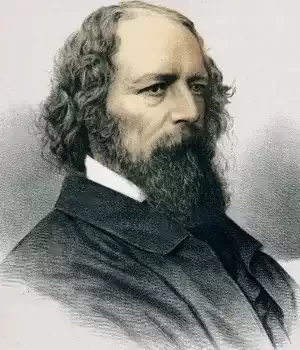
Alfred Lord Tennyson
The Letters
The Letters
Still on the tower stood the vane,
A black yew gloomed the stagnant air,
I peered athwart the chancel pane
And saw the altar cold and bare.
A clog of lead was round my feet,
A band of pain across my brow;
"Cold altar, Heaven and earth shall meet
Before you hear my marriage vow."
I turned and hummed a bitter song
That mocked the wholesome human heart,
And then we met in wrath and wrong,
We met, but only met to part.
Full cold my greeting was and dry;
She faintly smiled, she hardly moved;
I saw with half-unconscious eye
She wore the colours I approved.
She took the little ivory chest,
With half a sigh she turned the key,
Then raised her head with lips comprest,
And gave my letters back to me.
And gave the trinkets and the rings,
My gifts, when gifts of mine could please;
As looks a father on the things
Of his dead son, I looked on these.
She told me all her friends had said;
I raged against the public liar;
She talked as if her love were dead,
But in my words were seeds of fire.
"No more of love; your sex is known:
I never will be twice deceived.
Henceforth I trust the man alone,
The woman cannot be believed.
Through slander, meanest spawn of Hell -
And woman's slander is the worst,
And you, whom once I loved so well,
Through you, my life will be accurst."
I spoke with heart, and heat and force,
I shook her breast with vague alarms -
Like torrents from a mountain's source
We rushed into each other's arms.
We parted: sweetly gleamed the stars,
And sweet the vapour-braided blue,
Low breezes fanned the belfry bars,
As homeward by the church I drew.
The very graves appeared to smile,
So fresh they rose in shadowed swells;
"Dark porch," I said, "and silent aisle,
There comes a sound of marriage bells."
Still on the tower stood the vane,
A black yew gloomed the stagnant air,
I peered athwart the chancel pane
And saw the altar cold and bare.
A clog of lead was round my feet,
A band of pain across my brow;
"Cold altar, Heaven and earth shall meet
Before you hear my marriage vow."
I turned and hummed a bitter song
That mocked the wholesome human heart,
And then we met in wrath and wrong,
We met, but only met to part.
Full cold my greeting was and dry;
She faintly smiled, she hardly moved;
I saw with half-unconscious eye
She wore the colours I approved.
She took the little ivory chest,
With half a sigh she turned the key,
Then raised her head with lips comprest,
And gave my letters back to me.
And gave the trinkets and the rings,
My gifts, when gifts of mine could please;
As looks a father on the things
Of his dead son, I looked on these.
She told me all her friends had said;
I raged against the public liar;
She talked as if her love were dead,
But in my words were seeds of fire.
"No more of love; your sex is known:
I never will be twice deceived.
Henceforth I trust the man alone,
The woman cannot be believed.
Through slander, meanest spawn of Hell -
And woman's slander is the worst,
And you, whom once I loved so well,
Through you, my life will be accurst."
I spoke with heart, and heat and force,
I shook her breast with vague alarms -
Like torrents from a mountain's source
We rushed into each other's arms.
We parted: sweetly gleamed the stars,
And sweet the vapour-braided blue,
Low breezes fanned the belfry bars,
As homeward by the church I drew.
The very graves appeared to smile,
So fresh they rose in shadowed swells;
"Dark porch," I said, "and silent aisle,
There comes a sound of marriage bells."
429
Alfred Lord Tennyson
The Grandmother
The Grandmother
I.
And Willy, my eldest-born, is gone, you say, little Anne?
Ruddy and white, and strong on his legs, he looks like a man.
And Willy's wife has written: she never was over-wise,
Never the wife for Willy: he would n't take my advice.
II.
For, Annie, you see, her father was not the man to save,
Had n't a head to manage, and drank himself into his grave.
Pretty enough, very pretty! but I was against it for one.
Eh!--but he would n't hear me--and Willy, you say, is gone.
III.
Willy, my beauty, my eldest-born, the flower of the flock;
Never a man could fling him: for Willy stood like a rock.
`Here's a leg for a babe of a week!' says doctor; and he would be bound,
There was not his like that year in twenty parishes round.
IV.
Strong of his hands, and strong on his legs, but still of his tongue!
I ought to have gone before him: I wonder he went so young.
I cannot cry for him, Annie: I have not long to stay;
Perhaps I shall see him the sooner, for he lived far away.
V.
Why do you look at me, Annie? you think I am hard and cold;
But all my children have gone before me, I am so old:
I cannot weep for Willy, nor can I weep for the rest;
Only at your age, Annie, I could have wept with the best.
VI.
For I remember a quarrel I had with your father, my dear,
All for a slanderous story, that cost me many a tear.
I mean your grandfather, Annie: it cost me a world of woe,
Seventy years ago, my darling, seventy years ago.
VII.
For Jenny, my cousin, had come to the place, and I knew right well
That Jenny had tript in her time: I knew, but I would not tell.
And she to be coming and slandering me, the base little liar!
But the tongue is a fire as you know, my dear, the tongue is a fire.
VIII.
And the parson made it his text that week, and he said likewise,
That a lie which is half a truth is ever the blackest of lies,
That a lie which is all a lie may be met and fought with outright,
But a lie which is part a truth is a harder matter to fight.
IX.
And Willy had not been down to the farm for a week and a day;
And all things look'd half-dead, tho' it was the middle of May.
Jenny, to slander me, who knew what Jenny had been!
But soiling another, Annie, will never make oneself clean.
X.
And I cried myself well-nigh blind, and all of an evening late
I climb'd to the top of the garth, and stood by the road at the gate.
The moon like a rick on fire was rising over the dale,
And whit, whit, whit, in the bush beside me chirrupt the nightingale.
XI.
All of a sudden he stopt: there past by the gate of the farm,
Willy,--he did n't see me,--and Jenny hung on his arm.
Out into the road I started, and spoke I scarce knew how;
Ah, there's no fool like the old one -- it makes me angry now.
XII.
Willy stood up like a man, and look'd the thing that he meant;
Jenny, the viper, made me a mocking courtesy and went.
And I said, `Let us part: in a hundred years it'll all be the same,
You cannot love me at all, if you love not my good name.'
XIII.
And he turn'd, and I saw his eyes all wet, in the sweet moonshine:
Sweetheart, I love you so well that your good name is mine.
And what do I care for Jane, let her speak of you well of ill;
But marry me out of hand: we two shall be happy still.'
XIV.
`Marry you, Willy!' said I, `but I needs must speak my mind,
And I fear you'll listen to tales, be jealous and hard and unkind.'
But he turn'd and claspt me in his arms, and answer'd, `No, love, no;'
Seventy years ago, my darling, seventy years ago.
XV.
So Willy and I were wedded: I wore a lilac gown;
And the ringers rang with a will, and he gave the ringers a crown.
But the first that ever I bare was dead before he was born,
Shadow and shine is life, little Annie, flower and thorn.
XVI.
That was the first time, too, that ever I thought of death.
There lay the sweet little body that never had drawn a breath.
I had not wept, little Anne, not since I had been a wife;
But I wept like a child that day, for the babe had fought for his life.
XVII.
His dear little face was troubled, as if with anger or pain:
I look'd at the still little body--his trouble had all been in vain.
For Willy I cannot weep, I shall see him another morn:
But I wept like a child for the child that was dead before he was born.
XVIII.
But he cheer'd me, my good man, for he seldom said me nay:
Kind, like a man, was he; like a man, too, would have his way:
Never jealous--not he: we had many a happy year;
And he died, and I could not weep--my own time seem'd so near.
XIX.
But I wish'd it had been God's will that I, too, then could have died:
I began to be tired a little, and fain had slept at his side.
And that was ten years back, or more, if I don't forget:
But as to the children, Annie, they're all about me yet.
XX.
Pattering over the boards, my Annie who left me at two,
Patter she goes, my own little Annie, an Annie like you:
Pattering over the boards, she comes and goes at her will,
While Harry is in the five-acre and Charlie ploughing the hill.
XXI.
And Harry and Charlie, I hear them too--they sing to their team:
Often they come to the door in a pleasant kind of a dream.
They come and sit by my chair, they hover about my bed--
I am not always certain if they be alive or dead.
XXII.
And yet I know for a truth, there's none of them left alive;
For Harry went at sixty, your father at sixty- five:
And Willy, my eldest born, at nigh threescore and ten;
I knew them all as babies, and now they're elderly men.
XXIII.
For mine is a time of peace, it is not often I grieve;
I am oftener sitting at home in my father's farm at eve:
And the neighbors come and laugh and gossip, and so do I;
I find myself often laughing at things that have long gone by.
XXIV.
To be sure the preacher says, our sins should make us sad:
But mine is a time of peace, and there is Grace to be had;
And God, not man, is the Judge of us all when life shall cease;
And in this Book, little Annie, the message is one of Peace.
XXV.
And age is a time of peace, so it be free from pain,
And happy has been my life; but I would not live it again.
I seem to be tired a little, that's all, and long for rest;
Only at your age, Annie, I could have wept with the best.
XXVI.
So Willy has gone, my beauty, my eldest-born, my flower;
But how can I weep for Willy, he has but gone for an hour,--
Gone for a minute, my son, from this room into the next;
I, too, shall go in a minute. What time have I to be vext?
XXVII.
And Willy's wife has written, she never was over-wise.
Get me my glasses, Annie: thank God that I keep my eyes.
There is but a trifle left you, when I shall have past away.
But stay with the old woman now: you cannot have long to stay.
I.
And Willy, my eldest-born, is gone, you say, little Anne?
Ruddy and white, and strong on his legs, he looks like a man.
And Willy's wife has written: she never was over-wise,
Never the wife for Willy: he would n't take my advice.
II.
For, Annie, you see, her father was not the man to save,
Had n't a head to manage, and drank himself into his grave.
Pretty enough, very pretty! but I was against it for one.
Eh!--but he would n't hear me--and Willy, you say, is gone.
III.
Willy, my beauty, my eldest-born, the flower of the flock;
Never a man could fling him: for Willy stood like a rock.
`Here's a leg for a babe of a week!' says doctor; and he would be bound,
There was not his like that year in twenty parishes round.
IV.
Strong of his hands, and strong on his legs, but still of his tongue!
I ought to have gone before him: I wonder he went so young.
I cannot cry for him, Annie: I have not long to stay;
Perhaps I shall see him the sooner, for he lived far away.
V.
Why do you look at me, Annie? you think I am hard and cold;
But all my children have gone before me, I am so old:
I cannot weep for Willy, nor can I weep for the rest;
Only at your age, Annie, I could have wept with the best.
VI.
For I remember a quarrel I had with your father, my dear,
All for a slanderous story, that cost me many a tear.
I mean your grandfather, Annie: it cost me a world of woe,
Seventy years ago, my darling, seventy years ago.
VII.
For Jenny, my cousin, had come to the place, and I knew right well
That Jenny had tript in her time: I knew, but I would not tell.
And she to be coming and slandering me, the base little liar!
But the tongue is a fire as you know, my dear, the tongue is a fire.
VIII.
And the parson made it his text that week, and he said likewise,
That a lie which is half a truth is ever the blackest of lies,
That a lie which is all a lie may be met and fought with outright,
But a lie which is part a truth is a harder matter to fight.
IX.
And Willy had not been down to the farm for a week and a day;
And all things look'd half-dead, tho' it was the middle of May.
Jenny, to slander me, who knew what Jenny had been!
But soiling another, Annie, will never make oneself clean.
X.
And I cried myself well-nigh blind, and all of an evening late
I climb'd to the top of the garth, and stood by the road at the gate.
The moon like a rick on fire was rising over the dale,
And whit, whit, whit, in the bush beside me chirrupt the nightingale.
XI.
All of a sudden he stopt: there past by the gate of the farm,
Willy,--he did n't see me,--and Jenny hung on his arm.
Out into the road I started, and spoke I scarce knew how;
Ah, there's no fool like the old one -- it makes me angry now.
XII.
Willy stood up like a man, and look'd the thing that he meant;
Jenny, the viper, made me a mocking courtesy and went.
And I said, `Let us part: in a hundred years it'll all be the same,
You cannot love me at all, if you love not my good name.'
XIII.
And he turn'd, and I saw his eyes all wet, in the sweet moonshine:
Sweetheart, I love you so well that your good name is mine.
And what do I care for Jane, let her speak of you well of ill;
But marry me out of hand: we two shall be happy still.'
XIV.
`Marry you, Willy!' said I, `but I needs must speak my mind,
And I fear you'll listen to tales, be jealous and hard and unkind.'
But he turn'd and claspt me in his arms, and answer'd, `No, love, no;'
Seventy years ago, my darling, seventy years ago.
XV.
So Willy and I were wedded: I wore a lilac gown;
And the ringers rang with a will, and he gave the ringers a crown.
But the first that ever I bare was dead before he was born,
Shadow and shine is life, little Annie, flower and thorn.
XVI.
That was the first time, too, that ever I thought of death.
There lay the sweet little body that never had drawn a breath.
I had not wept, little Anne, not since I had been a wife;
But I wept like a child that day, for the babe had fought for his life.
XVII.
His dear little face was troubled, as if with anger or pain:
I look'd at the still little body--his trouble had all been in vain.
For Willy I cannot weep, I shall see him another morn:
But I wept like a child for the child that was dead before he was born.
XVIII.
But he cheer'd me, my good man, for he seldom said me nay:
Kind, like a man, was he; like a man, too, would have his way:
Never jealous--not he: we had many a happy year;
And he died, and I could not weep--my own time seem'd so near.
XIX.
But I wish'd it had been God's will that I, too, then could have died:
I began to be tired a little, and fain had slept at his side.
And that was ten years back, or more, if I don't forget:
But as to the children, Annie, they're all about me yet.
XX.
Pattering over the boards, my Annie who left me at two,
Patter she goes, my own little Annie, an Annie like you:
Pattering over the boards, she comes and goes at her will,
While Harry is in the five-acre and Charlie ploughing the hill.
XXI.
And Harry and Charlie, I hear them too--they sing to their team:
Often they come to the door in a pleasant kind of a dream.
They come and sit by my chair, they hover about my bed--
I am not always certain if they be alive or dead.
XXII.
And yet I know for a truth, there's none of them left alive;
For Harry went at sixty, your father at sixty- five:
And Willy, my eldest born, at nigh threescore and ten;
I knew them all as babies, and now they're elderly men.
XXIII.
For mine is a time of peace, it is not often I grieve;
I am oftener sitting at home in my father's farm at eve:
And the neighbors come and laugh and gossip, and so do I;
I find myself often laughing at things that have long gone by.
XXIV.
To be sure the preacher says, our sins should make us sad:
But mine is a time of peace, and there is Grace to be had;
And God, not man, is the Judge of us all when life shall cease;
And in this Book, little Annie, the message is one of Peace.
XXV.
And age is a time of peace, so it be free from pain,
And happy has been my life; but I would not live it again.
I seem to be tired a little, that's all, and long for rest;
Only at your age, Annie, I could have wept with the best.
XXVI.
So Willy has gone, my beauty, my eldest-born, my flower;
But how can I weep for Willy, he has but gone for an hour,--
Gone for a minute, my son, from this room into the next;
I, too, shall go in a minute. What time have I to be vext?
XXVII.
And Willy's wife has written, she never was over-wise.
Get me my glasses, Annie: thank God that I keep my eyes.
There is but a trifle left you, when I shall have past away.
But stay with the old woman now: you cannot have long to stay.
461
Alfred Lord Tennyson
Guinevere
Guinevere
Queen Guinevere had fled the court, and sat
There in the holy house at Almesbury
Weeping, none with her save a little maid,
A novice: one low light betwixt them burned
Blurred by the creeping mist, for all abroad,
Beneath a moon unseen albeit at full,
The white mist, like a face-cloth to the face,
Clung to the dead earth, and the land was still.
For hither had she fled, her cause of flight
Sir Modred; he that like a subtle beast
Lay couchant with his eyes upon the throne,
Ready to spring, waiting a chance: for this
He chilled the popular praises of the King
With silent smiles of slow disparagement;
And tampered with the Lords of the White Horse,
Heathen, the brood by Hengist left; and sought
To make disruption in the Table Round
Of Arthur, and to splinter it into feuds
Serving his traitorous end; and all his aims
Were sharpened by strong hate for Lancelot.
For thus it chanced one morn when all the court,
Green-suited, but with plumes that mocked the may,
Had been, their wont, a-maying and returned,
That Modred still in green, all ear and eye,
Climbed to the high top of the garden-wall
To spy some secret scandal if he might,
And saw the Queen who sat betwixt her best
Enid, and lissome Vivien, of her court
The wiliest and the worst; and more than this
He saw not, for Sir Lancelot passing by
Spied where he couched, and as the gardener's hand
Picks from the colewort a green caterpillar,
So from the high wall and the flowering grove
Of grasses Lancelot plucked him by the heel,
And cast him as a worm upon the way;
But when he knew the Prince though marred with dust,
He, reverencing king's blood in a bad man,
Made such excuses as he might, and these
Full knightly without scorn; for in those days
No knight of Arthur's noblest dealt in scorn;
But, if a man were halt or hunched, in him
By those whom God had made full-limbed and tall,
Scorn was allowed as part of his defect,
And he was answered softly by the King
And all his Table. So Sir Lancelot holp
To raise the Prince, who rising twice or thrice
Full sharply smote his knees, and smiled, and went:
But, ever after, the small violence done
Rankled in him and ruffled all his heart,
As the sharp wind that ruffles all day long
A little bitter pool about a stone
On the bare coast.
But when Sir Lancelot told
This matter to the Queen, at first she laughed
Lightly, to think of Modred's dusty fall,
Then shuddered, as the village wife who cries
`I shudder, some one steps across my grave;'
Then laughed again, but faintlier, for indeed
She half-foresaw that he, the subtle beast,
Would track her guilt until he found, and hers
Would be for evermore a name of scorn.
Henceforward rarely could she front in hall,
Or elsewhere, Modred's narrow foxy face,
Heart-hiding smile, and gray persistent eye:
Henceforward too, the Powers that tend the soul,
To help it from the death that cannot die,
And save it even in extremes, began
To vex and plague her. Many a time for hours,
Beside the placid breathings of the King,
In the dead night, grim faces came and went
Before her, or a vague spiritual fear--
Like to some doubtful noise of creaking doors,
Heard by the watcher in a haunted house,
That keeps the rust of murder on the walls--
Held her awake: or if she slept, she dreamed
An awful dream; for then she seemed to stand
On some vast plain before a setting sun,
And from the sun there swiftly made at her
A ghastly something, and its shadow flew
Before it, till it touched her, and she turned--
When lo! her own, that broadening from her feet,
And blackening, swallowed all the land, and in it
Far cities burnt, and with a cry she woke.
And all this trouble did not pass but grew;
Till even the clear face of the guileless King,
And trustful courtesies of household life,
Became her bane; and at the last she said,
`O Lancelot, get thee hence to thine own land,
For if thou tarry we shall meet again,
And if we meet again, some evil chance
Will make the smouldering scandal break and blaze
Before the people, and our lord the King.'
And Lancelot ever promised, but remained,
And still they met and met. Again she said,
`O Lancelot, if thou love me get thee hence.'
And then they were agreed upon a night
(When the good King should not be there) to meet
And part for ever. Vivien, lurking, heard.
She told Sir Modred. Passion-pale they met
And greeted. Hands in hands, and eye to eye,
Low on the border of her couch they sat
Stammering and staring. It was their last hour,
A madness of farewells. And Modred brought
His creatures to the basement of the tower
For testimony; and crying with full voice
`Traitor, come out, ye are trapt at last,' aroused
Lancelot, who rushing outward lionlike
Leapt on him, and hurled him headlong, and he fell
Stunned, and his creatures took and bare him off,
And all was still: then she, `The end is come,
And I am shamed for ever;' and he said,
`Mine be the shame; mine was the sin: but rise,
And fly to my strong castle overseas:
There will I hide thee, till my life shall end,
There hold thee with my life against the world.'
She answered, `Lancelot, wilt thou hold me so?
Nay, friend, for we have taken our farewells.
Would God that thou couldst hide me from myself!
Mine is the shame, for I was wife, and thou
Unwedded: yet rise now, and let us fly,
For I will draw me into sanctuary,
And bide my doom.' So Lancelot got her horse,
Set her thereon, and mounted on his own,
And then they rode to the divided way,
There kissed, and parted weeping: for he past,
Love-loyal to the least wish of the Queen,
Back to his land; but she to Almesbury
Fled all night long by glimmering waste and weald,
And heard the Spirits of the waste and weald
Moan as she fled, or thought she heard them moan:
And in herself she moaned `Too late, too late!'
Till in the cold wind that foreruns the morn,
A blot in heaven, the Raven, flying high,
Croaked, and she thought, `He spies a field of death;
For now the Heathen of the Northern Sea,
Lured by the crimes and frailties of the court,
Begin to slay the folk, and spoil the land.'
And when she came to Almesbury she spake
There to the nuns, and said, `Mine enemies
Pursue me, but, O peaceful Sisterhood,
Receive, and yield me sanctuary, nor ask
Her name to whom ye yield it, till her time
To tell you:' and her beauty, grace and power,
Wrought as a charm upon them, and they spared
To ask it.
So the stately Queen abode
For many a week, unknown, among the nuns;
Nor with them mixed, nor told her name, nor sought,
Wrapt in her grief, for housel or for shrift,
But communed only with the little maid,
Who pleased her with a babbling heedlessness
Which often lured her from herself; but now,
This night, a rumour wildly blown about
Came, that Sir Modred had usurped the realm,
And leagued him with the heathen, while the King
Was waging war on Lancelot: then she thought,
`With what a hate the people and the King
Must hate me,' and bowed down upon her hands
Silent, until the little maid, who brooked
No silence, brake it, uttering, `Late! so late!
What hour, I wonder, now?' and when she drew
No answer, by and by began to hum
An air the nuns had taught her; `Late, so late!'
Which when she heard, the Queen looked up, and said,
`O maiden, if indeed ye list to sing,
Sing, and unbind my heart that I may weep.'
Whereat full willingly sang the little maid.
`Late, late, so late! and dark the night and chill!
Late, late, so late! but we can enter still.
Too late, too late! ye cannot enter now.
`No light had we: for that we do repent;
And learning this, the bridegroom will relent.
Too late, too late! ye cannot enter now.
`No light: so late! and dark and chill the night!
O let us in, that we may find the light!
Too late, too late: ye cannot enter now.
`Have we not heard the bridegroom is so sweet?
O let us in, though late, to kiss his feet!
No, no, too late! ye cannot enter now.'
So sang the novice, while full passionately,
Her head upon her hands, remembering
Her thought when first she came, wept the sad Queen.
Then said the little novice prattling to her,
`O pray you, noble lady, weep no more;
But let my words, the words of one so small,
Who knowing nothing knows but to obey,
And if I do not there is penance given--
Comfort your sorrows; for they do not flow
From evil done; right sure am I of that,
Who see your tender grace and stateliness.
But weigh your sorrows with our lord the King's,
And weighing find them less; for gone is he
To wage grim war against Sir Lancelot there,
Round that strong castle where he holds the Queen;
And Modred whom he left in charge of all,
The traitor--Ah sweet lady, the King's grief
For his own self, and his own Queen, and realm,
Must needs be thrice as great as any of ours.
For me, I thank the saints, I am not great.
For if there ever come a grief to me
I cry my cry in silence, and have done.
None knows it, and my tears have brought me good:
But even were the griefs of little ones
As great as those of great ones, yet this grief
Is added to the griefs the great must bear,
That howsoever much they may desire
Silence, they cannot weep behind a cloud:
As even here they talk at Almesbury
About the good King and his wicked Queen,
And were I such a King with such a Queen,
Well might I wish to veil her wickedness,
But were I such a King, it could not be.'
Then to her own sad heart muttered the Queen,
`Will the child kill me with her innocent talk?'
But openly she answered, `Must not I,
If this false traitor have displaced his lord,
Grieve with the common grief of all the realm?'
`Yea,' said the maid, `this is all woman's grief,
That SHE is woman, whose disloyal life
Hath wrought confusion in the Table Round
Which good King Arthur founded, years ago,
With signs and miracles and wonders, there
At Camelot, ere the coming of the Queen.'
Then thought the Queen within herself again,
`Will the child kill me with her foolish prate?'
But openly she spake and said to her,
`O little maid, shut in by nunnery walls,
What canst thou know of Kings and Tables Round,
Or what of signs and wonders, but the signs
And simple miracles of thy nunnery?'
To whom the little novice garrulously,
`Yea, but I know: the land was full of signs
And wonders ere the coming of the Queen.
So said my father, and himself was knight
Of the great Table--at the founding of it;
And rode thereto from Lyonnesse, and he said
That as he rode, an hour or maybe twain
After the sunset, down the coast, he heard
Strange music, and he paused, and turning--there,
All down the lonely coast of Lyonnesse,
Each with a beacon-star upon his head,
And with a wild sea-light about his feet,
He saw them--headland after headland flame
Far on into the rich heart of the west:
And in the light the white mermaiden swam,
And strong man-breasted things stood from the sea,
And sent a deep sea-voice through all the land,
To which the little elves of chasm and cleft
Made answer, sounding like a distant horn.
So said my father--yea, and furthermore,
Next morning, while he past the dim-lit woods,
Himself beheld three spirits mad with joy
Come dashing down on a tall wayside flower,
That shook beneath them, as the thistle shakes
When three gray linnets wrangle for the seed:
And still at evenings on before his horse
The flickering fairy-circle wheeled and broke
Flying, and linked again, and wheeled and broke
Flying, for all the land was full of life.
And when at last he came to Camelot,
A wreath of airy dancers hand-in-hand
Swung round the lighted lantern of the hall;
And in the hall itself was such a feast
As never man had dreamed; for every knight
Had whatsoever meat he longed for served
By hands unseen; and even as he said
Down in the cellars merry bloated things
Shouldered the spigot, straddling on the butts
While the wine ran: so glad were spirits and men
Before the coming of the sinful Queen.'
Then spake the Queen and somewhat bitterly,
`Were they so glad? ill prophets were they all,
Spirits and men: could none of them foresee,
Not even thy wise father with his signs
And wonders, what has fallen upon the realm?'
To whom the novice garrulously again,
`Yea, one, a bard; of whom my father said,
Full many a noble war-song had he sung,
Even in the presence of an enemy's fleet,
Between the steep cliff and the coming wave;
And many a mystic lay of life and death
Had chanted on the smoky mountain-tops,
When round him bent the spirits of the hills
With all their dewy hair blown back like flame:
So said my father--and that night the bard
Sang Arthur's glorious wars, and sang the King
As wellnigh more than man, and railed at those
Who called him the false son of Gorlos:
For there was no man knew from whence he came;
But after tempest, when the long wave broke
All down the thundering shores of Bude and Bos,
There came a day as still as heaven, and then
They found a naked child upon the sands
Of dark Tintagil by the Cornish sea;
And that was Arthur; and they fostered him
Till he by miracle was approven King:
And that his grave should be a mystery
From all men, like his birth; and could he find
A woman in her womanhood as great
As he was in his manhood, then, he sang,
The twain together well might change the world.
But even in the middle of his song
He faltered, and his hand fell from the harp,
And pale he turned, and reeled, and would have fallen,
But that they stayed him up; nor would he tell
His vision; but what doubt that he foresaw
This evil work of Lancelot and the Queen?'
Then thought the Queen, `Lo! they have set her on,
Our simple-seeming Abbess and her nuns,
To play upon me,' and bowed her head nor spake.
Whereat the novice crying, with clasped hands,
Shame on her own garrulity garrulously,
Said the good nuns would check her gadding tongue
Full often, `and, sweet lady, if I seem
To vex an ear too sad to listen to me,
Unmannerly, with prattling and the tales
Which my good father told me, check me too
Nor let me shame my father's memory, one
Of noblest manners, though himself would say
Sir Lancelot had the noblest; and he died,
Killed in a tilt, come next, five summers back,
And left me; but of others who remain,
And of the two first-famed for courtesy--
And pray you check me if I ask amiss-
But pray you, which had noblest, while you moved
Among them, Lancelot or our lord the King?'
Then the pale Queen looked up and answered her,
`Sir Lancelot, as became a noble knight,
Was gracious to all ladies, and the same
In open battle or the tilting-field
Forbore his own advantage, and the King
In open battle or the tilting-field
Forbore his own advantage, and these two
Were the most nobly-mannered men of all;
For manners are not idle, but the fruit
Of loyal nature, and of noble mind.'
`Yea,' said the maid, `be manners such fair fruit?'
Then Lancelot's needs must be a thousand-fold
Less noble, being, as all rumour runs,
The most disloyal friend in all the world.'
To which a mournful answer made the Queen:
`O closed about by narrowing nunnery-walls,
What knowest thou of the world, and all its lights
And shadows, all the wealth and all the woe?
If ever Lancelot, that most noble knight,
Were for one hour less noble than himself,
Pray for him that he scape the doom of fire,
And weep for her that drew him to his doom.'
`Yea,' said the little novice, `I pray for both;
But I should all as soon believe that his,
Sir Lancelot's, were as noble as the King's,
As I could think, sweet lady, yours would be
Such as they are, were you the sinful Queen.'
So she, like many another babbler, hurt
Whom she would soothe, and harmed where she would heal;
For here a sudden flush of wrathful heat
Fired all the pale face of the Queen, who cried,
`Such as thou art be never maiden more
For ever! thou their tool, set on to plague
And play upon, and harry me, petty spy
And traitress.' When that storm of anger brake
From Guinevere, aghast the maiden rose,
White as her veil, and stood before the Queen
As tremulously as foam upon the beach
Stands in a wind, ready to break and fly,
And when the Queen had added `Get thee hence,'
Fled frighted. Then that other left alone
Sighed, and began to gather heart again,
Saying in herself, `The simple, fearful child
Meant nothing, but my own too-fearful guilt,
Simpler than any child, betrays itself.
But help me, heaven, for surely I repent.
For what is true repentance but in thought--
Not even in inmost thought to think again
The sins that made the past so pleasant to us:
And I have sworn never to see him more,
To see him more.'
And even in saying this,
Her memory from old habit of the mind
Went slipping back upon the golden days
In which she saw him first, when Lancelot came,
Reputed the best knight and goodliest man,
Ambassador, to lead her to his lord
Arthur, and led her forth, and far ahead
Of his and her retinue moving, they,
Rapt in sweet talk or lively, all on love
And sport and tilts and pleasure, (for the time
Was maytime, and as yet no sin was dreamed,)
Rode under groves that looked a paradise
Of blossom, over sheets of hyacinth
That seemed the heavens upbreaking through the earth,
And on from hill to hill, and every day
Beheld at noon in some delicious dale
The silk pavilions of King Arthur raised
For brief repast or afternoon repose
By couriers gone before; and on again,
Till yet once more ere set of sun they saw
The Dragon of the great Pendragonship,
That crowned the state pavilion of the King,
Blaze by the rushing brook or silent well.
But when the Queen immersed in such a trance,
And moving through the past unconsciously,
Came to that point where first she saw the King
Ride toward her from the city, sighed to find
Her journey done, glanced at him, thought him cold,
High, self-contained, and passionless, not like him,
`Not like my Lancelot'--while she brooded thus
And grew half-guilty in her thoughts again,
There rode an armd warrior to the doors.
A murmuring whisper through the nunnery ran,
Then on a sudden a cry, `The King.' She sat
Stiff-stricken, listening; but when armd feet
Through the long gallery from the outer doors
Rang coming, prone from off her seat she fell,
And grovelled with her face against the floor:
There with her milkwhite arms and shadowy hair
She made her face a darkness from the King:
And in the darkness heard his armd feet
Pause by her; then came silence, then a voice,
Monotonous and hollow like a Ghost's
Denouncing judgment, but though changed, the King's:
`Liest thou here so low, the child of one
I honoured, happy, dead before thy shame?
Well is it that no child is born of thee.
The children born of thee are sword and fire,
Red ruin, and the breaking up of laws,
The craft of kindred and the Godless hosts
Of heathen swarming o'er the Northern Sea;
Whom I, while yet Sir Lancelot, my right arm,
The mightiest of my knights, abode with me,
Have everywhere about this land of Christ
In twelve great battles ruining overthrown.
And knowest thou now from whence I come--from him
From waging bitter war with him: and he,
That did not shun to smite me in worse way,
Had yet that grace of courtesy in him left,
He spared to lift his hand against the King
Who made him knight: but many a knight was slain;
And many more, and all his kith and kin
Clave to him, and abode in his own land.
And many more when Modred raised revolt,
Forgetful of their troth and fealty, clave
To Modred, and a remnant stays with me.
And of this remnant will I leave a part,
True men who love me still, for whom I live,
To guard thee in the wild hour coming on,
Lest but a hair of this low head be harmed.
Fear not: thou shalt be guarded till my death.
Howbeit I know, if ancient prophecies
Have erred not, that I march to meet my doom.
Thou hast not made my life so sweet to me,
That I the King should greatly care to live;
For thou hast spoilt the purpose of my life.
Bear with me for the last time while I show,
Even for thy sake, the sin which thou hast sinned.
For when the Roman left us, and their law
Relaxed its hold upon us, and the ways
Were filled with rapine, here and there a deed
Of prowess done redressed a random wrong.
But I was first of all the kings who drew
The knighthood-errant of this realm and all
The realms together under me, their Head,
In that fair Order of my Table Round,
A glorious company, the flower of men,
To serve as model for the mighty world,
And be the fair beginning of a time.
I made them lay their hands in mine and swear
To reverence the King, as if he were
Their conscience, and their conscience as their King,
To break the heathen and uphold the Christ,
To ride abroad redressing human wrongs,
To speak no slander, no, nor listen to it,
To honour his own word as if his God's,
To lead sweet lives in purest chastity,
To love one maiden only, cleave to her,
And worship her by years of noble deeds,
Until they won her; for indeed I knew
Of no more subtle master under heaven
Than is the maiden passion for a maid,
Not only to keep down the base in man,
But teach high thought, and amiable words
And courtliness, and the desire of fame,
And love of truth, and all that makes a man.
And all this throve before I wedded thee,
Believing, "lo mine helpmate, one to feel
My purpose and rejoicing in my joy."
Then came thy shameful sin with Lancelot;
Then came the sin of Tristram and Isolt;
Then others, following these my mightiest knights,
And drawing foul ensample from fair names,
Sinned also, till the loathsome opposite
Of all my heart had destined did obtain,
And all through thee! so that this life of mine
I guard as God's high gift from scathe and wrong,
Not greatly care to lose; but rather think
How sad it were for Arthur, should he live,
To sit once more within his lonely hall,
And miss the wonted number of my knights,
And miss to hear high talk of noble deeds
As in the golden days before thy sin.
For which of us, who might be left, could speak
Of the pure heart, nor seem to glance at thee?
And in thy bowers of Camelot or of Usk
Thy shadow still would glide from room to room,
And I should evermore be vext with thee
In hanging robe or vacant ornament,
Or ghostly footfall echoing on the stair.
For think not, though thou wouldst not love thy lord,
Thy lord hast wholly lost his love for thee.
I am not made of so slight elements.
Yet must I leave thee, woman, to thy shame.
I hold that man the worst of public foes
Who either for his own or children's sake,
To save his blood from scandal, lets the wife
Whom he knows false, abide and rule the house:
For being through his cowardice allowed
Her station, taken everywhere for pure,
She like a new disease, unknown to men,
Creeps, no precaution used, among the crowd,
Makes wicked lightnings of her eyes, and saps
The fealty of our friends, and stirs the pulse
With devil's leaps, and poisons half the young.
Worst of the worst were that man he that reigns!
Better the King's waste hearth and aching heart
Than thou reseated in thy place of light,
The mockery of my people, and their bane.'
He paused, and in the pause she crept an inch
Nearer, and laid her hands about his feet.
Far off a solitary trumpet blew.
Then waiting by the doors the warhorse neighed
At a friend's voice, and he spake again:
`Yet think not that I come to urge thy crimes,
I did not come to curse thee, Guinevere,
I, whose vast pity almost makes me die
To see thee, laying there thy golden head,
My pride in happier summers, at my feet.
The wrath which forced my thoughts on that fierce law,
The doom of treason and the flaming death,
(When first I learnt thee hidden here) is past.
The pang--which while I weighed thy heart with one
Too wholly true to dream untruth in thee,
Made my tears burn--is also past--in part.
And all is past, the sin is sinned, and I,
Lo! I forgive thee, as Eternal God
Forgives: do thou for thine own soul the rest.
But how to take last leave of all I loved?
O golden hair, with which I used to play
Not knowing! O imperial-moulded form,
And beauty such as never woman wore,
Until it became a kingdom's curse with thee--
I cannot touch thy lips, they are not mine,
But Lancelot's: nay, they never were the King's.
I cannot take thy hand: that too is flesh,
And in the flesh thou hast sinned; and mine own flesh,
Here looking down on thine polluted, cries
"I loathe thee:" yet not less, O Guinevere,
For I was ever virgin save for thee,
My love through flesh hath wrought into my life
So far, that my doom is, I love thee still.
Let no man dream but that I love thee still.
Perchance, and so thou purify thy soul,
And so thou lean on our fair father Christ,
Hereafter in that world where all are pure
We two may meet before high God, and thou
Wilt spring to me, and claim me thine, and know
I am thine husband--not a smaller soul,
Nor Lancelot, nor another. Leave me that,
I charge thee, my last hope. Now must I hence.
Through the thick night I hear the trumpet blow:
They summon me their King to lead mine hosts
Far down to that great battle in the west,
Where I must strike against the man they call
My sister's son--no kin of mine, who leagues
With Lords of the White Horse, heathen, and knights,
Traitors--and strike him dead, and meet myself
Death, or I know not what mysterious doom.
And thou remaining here wilt learn the event;
But hither shall I never come again,
Never lie by thy side; see thee no more--
Farewell!'
And while she grovelled at his feet,
She felt the King's breath wander o'er her neck,
And in the darkness o'er her fallen head,
Perceived the waving of his hands that blest.
Then, listening till those armd steps were gone,
Rose the pale Queen, and in her anguish found
The casement: `peradventure,' so she thought,
`If I might see his face, and not be seen.'
And lo, he sat on horseback at the door!
And near him the sad nuns with each a light
Stood, and he gave them charge about the Queen,
To guard and foster her for evermore.
And while he spake to these his helm was lowered,
To which for crest the golden dragon clung
Of Britain; so she did not see the face,
Which then was as an angel's, but she saw,
Wet with the mists and smitten by the lights,
The Dragon of the great Pendragonship
Blaze, making all the night a steam of fire.
And even then he turned; and more and more
The moony vapour rolling round the King,
Who seemed the phantom of a Giant in it,
Enwound him fold by fold, and made him gray
And grayer, till himself became as mist
Before her, moving ghostlike to his doom.
Then she stretched out her arms and cried aloud
`Oh Arthur!' there her voice brake suddenly,
Then--as a stream that spouting from a cliff
Fails in mid air, but gathering at the base
Re-makes itself, and flashes down the vale--
Went on in passionate utterance:
`Gone--my lord!
Gone through my sin to slay and to be slain!
And he forgave me, and I could not speak.
Farewell? I should have answered his farewell.
His mercy choked me. Gone, my lord the King,
My own true lord! how dare I call him mine?
The shadow of another cleaves to me,
And makes me one pollution: he, the King,
Called me polluted: shall I kill myself?
What help in that? I cannot kill my sin,
If soul be soul; nor can I kill my shame;
No, nor by living can I live it down.
The days will grow to weeks, the weeks to months
The months will add themselves and make the years,
The years will roll into the centuries,
And mine will ever be a name of scorn.
I must not dwell on that defeat of fame.
Let the world be; that is but of the world.
What else? what hope? I think there was a hope,
Except he mocked me when he spake of hope;
His hope he called it; but he never mocks,
For mockery is the fume of little hearts.
And blessd be the King, who hath forgiven
My wickedness to him, and left me hope
That in mine own heart I can live down sin
And be his mate hereafter in the heavens
Before high God. Ah great and gentle lord,
Who wast, as is the conscience of a saint
Among his warring senses, to thy knights--
To whom my false voluptuous pride, that took
Full easily all impressions from below,
Would not look up, or half-despised the height
To which I would not or I could not climb--
I thought I could not breathe in that fine air
That pure severity of perfect light--
I yearned for warmth and colour which I found
In Lancelot--now I see thee what thou art,
Thou art the highest and most human too,
Not Lancelot, nor another. Is there none
Will tell the King I love him though so late?
Now--ere he goes to the great Battle? none:
Myself must tell him in that purer life,
But now it were too daring. Ah my God,
What might I not have made of thy fair world,
Had I but loved thy highest creature here?
It was my duty to have loved the highest:
It surely was my profit had I known:
It would have been my pleasure had I seen.
We needs must love the highest when we see it,
Not Lancelot, nor another.'
Here her hand
Grasped, made her vail her eyes: she looked and saw
The novice, weeping, suppliant, and said to her,
`Yea, little maid, for am I not forgiven?'
Then glancing up beheld the holy nuns
All round her, weeping; and her heart was loosed
Within her, and she wept with these and said,
`Ye know me then, that wicked one, who broke
The vast design and purpose of the King.
O shut me round with narrowing nunnery-walls,
Meek maidens, from the voices crying "shame."
I must not scorn myself: he loves me still.
Let no one dream but that he loves me still.
So let me, if you do not shudder at me,
Nor shun to call me sister, dwell with you;
Wear black and white, and be a nun like you,
Fast with your fasts, not feasting with your feasts;
Grieve with your griefs, not grieving at your joys,
But not rejoicing; mingle with your rites;
Pray and be prayed for; lie before your shrines;
Do each low office of your holy house;
Walk your dim cloister, and distribute dole
To poor sick people, richer in His eyes
Who ransomed us, and haler too than I;
And treat their loathsome hurts and heal mine own;
And so wear out in almsdeed and in prayer
The sombre close of that voluptuous day,
Which wrought the ruin of my lord the King.'
She said: they took her to themselves; and she
Still hoping, fearing `is it yet too late?'
Dwelt with them, till in time their Abbess died.
Then she, for her good deeds and her pure life,
And for the power of ministration in her,
And likewise for the high rank she had borne,
Was chosen Abbess, there, an Abbess, lived
For three brief years, and there, an Abbess, past
To where beyond these voices there is peace.
Queen Guinevere had fled the court, and sat
There in the holy house at Almesbury
Weeping, none with her save a little maid,
A novice: one low light betwixt them burned
Blurred by the creeping mist, for all abroad,
Beneath a moon unseen albeit at full,
The white mist, like a face-cloth to the face,
Clung to the dead earth, and the land was still.
For hither had she fled, her cause of flight
Sir Modred; he that like a subtle beast
Lay couchant with his eyes upon the throne,
Ready to spring, waiting a chance: for this
He chilled the popular praises of the King
With silent smiles of slow disparagement;
And tampered with the Lords of the White Horse,
Heathen, the brood by Hengist left; and sought
To make disruption in the Table Round
Of Arthur, and to splinter it into feuds
Serving his traitorous end; and all his aims
Were sharpened by strong hate for Lancelot.
For thus it chanced one morn when all the court,
Green-suited, but with plumes that mocked the may,
Had been, their wont, a-maying and returned,
That Modred still in green, all ear and eye,
Climbed to the high top of the garden-wall
To spy some secret scandal if he might,
And saw the Queen who sat betwixt her best
Enid, and lissome Vivien, of her court
The wiliest and the worst; and more than this
He saw not, for Sir Lancelot passing by
Spied where he couched, and as the gardener's hand
Picks from the colewort a green caterpillar,
So from the high wall and the flowering grove
Of grasses Lancelot plucked him by the heel,
And cast him as a worm upon the way;
But when he knew the Prince though marred with dust,
He, reverencing king's blood in a bad man,
Made such excuses as he might, and these
Full knightly without scorn; for in those days
No knight of Arthur's noblest dealt in scorn;
But, if a man were halt or hunched, in him
By those whom God had made full-limbed and tall,
Scorn was allowed as part of his defect,
And he was answered softly by the King
And all his Table. So Sir Lancelot holp
To raise the Prince, who rising twice or thrice
Full sharply smote his knees, and smiled, and went:
But, ever after, the small violence done
Rankled in him and ruffled all his heart,
As the sharp wind that ruffles all day long
A little bitter pool about a stone
On the bare coast.
But when Sir Lancelot told
This matter to the Queen, at first she laughed
Lightly, to think of Modred's dusty fall,
Then shuddered, as the village wife who cries
`I shudder, some one steps across my grave;'
Then laughed again, but faintlier, for indeed
She half-foresaw that he, the subtle beast,
Would track her guilt until he found, and hers
Would be for evermore a name of scorn.
Henceforward rarely could she front in hall,
Or elsewhere, Modred's narrow foxy face,
Heart-hiding smile, and gray persistent eye:
Henceforward too, the Powers that tend the soul,
To help it from the death that cannot die,
And save it even in extremes, began
To vex and plague her. Many a time for hours,
Beside the placid breathings of the King,
In the dead night, grim faces came and went
Before her, or a vague spiritual fear--
Like to some doubtful noise of creaking doors,
Heard by the watcher in a haunted house,
That keeps the rust of murder on the walls--
Held her awake: or if she slept, she dreamed
An awful dream; for then she seemed to stand
On some vast plain before a setting sun,
And from the sun there swiftly made at her
A ghastly something, and its shadow flew
Before it, till it touched her, and she turned--
When lo! her own, that broadening from her feet,
And blackening, swallowed all the land, and in it
Far cities burnt, and with a cry she woke.
And all this trouble did not pass but grew;
Till even the clear face of the guileless King,
And trustful courtesies of household life,
Became her bane; and at the last she said,
`O Lancelot, get thee hence to thine own land,
For if thou tarry we shall meet again,
And if we meet again, some evil chance
Will make the smouldering scandal break and blaze
Before the people, and our lord the King.'
And Lancelot ever promised, but remained,
And still they met and met. Again she said,
`O Lancelot, if thou love me get thee hence.'
And then they were agreed upon a night
(When the good King should not be there) to meet
And part for ever. Vivien, lurking, heard.
She told Sir Modred. Passion-pale they met
And greeted. Hands in hands, and eye to eye,
Low on the border of her couch they sat
Stammering and staring. It was their last hour,
A madness of farewells. And Modred brought
His creatures to the basement of the tower
For testimony; and crying with full voice
`Traitor, come out, ye are trapt at last,' aroused
Lancelot, who rushing outward lionlike
Leapt on him, and hurled him headlong, and he fell
Stunned, and his creatures took and bare him off,
And all was still: then she, `The end is come,
And I am shamed for ever;' and he said,
`Mine be the shame; mine was the sin: but rise,
And fly to my strong castle overseas:
There will I hide thee, till my life shall end,
There hold thee with my life against the world.'
She answered, `Lancelot, wilt thou hold me so?
Nay, friend, for we have taken our farewells.
Would God that thou couldst hide me from myself!
Mine is the shame, for I was wife, and thou
Unwedded: yet rise now, and let us fly,
For I will draw me into sanctuary,
And bide my doom.' So Lancelot got her horse,
Set her thereon, and mounted on his own,
And then they rode to the divided way,
There kissed, and parted weeping: for he past,
Love-loyal to the least wish of the Queen,
Back to his land; but she to Almesbury
Fled all night long by glimmering waste and weald,
And heard the Spirits of the waste and weald
Moan as she fled, or thought she heard them moan:
And in herself she moaned `Too late, too late!'
Till in the cold wind that foreruns the morn,
A blot in heaven, the Raven, flying high,
Croaked, and she thought, `He spies a field of death;
For now the Heathen of the Northern Sea,
Lured by the crimes and frailties of the court,
Begin to slay the folk, and spoil the land.'
And when she came to Almesbury she spake
There to the nuns, and said, `Mine enemies
Pursue me, but, O peaceful Sisterhood,
Receive, and yield me sanctuary, nor ask
Her name to whom ye yield it, till her time
To tell you:' and her beauty, grace and power,
Wrought as a charm upon them, and they spared
To ask it.
So the stately Queen abode
For many a week, unknown, among the nuns;
Nor with them mixed, nor told her name, nor sought,
Wrapt in her grief, for housel or for shrift,
But communed only with the little maid,
Who pleased her with a babbling heedlessness
Which often lured her from herself; but now,
This night, a rumour wildly blown about
Came, that Sir Modred had usurped the realm,
And leagued him with the heathen, while the King
Was waging war on Lancelot: then she thought,
`With what a hate the people and the King
Must hate me,' and bowed down upon her hands
Silent, until the little maid, who brooked
No silence, brake it, uttering, `Late! so late!
What hour, I wonder, now?' and when she drew
No answer, by and by began to hum
An air the nuns had taught her; `Late, so late!'
Which when she heard, the Queen looked up, and said,
`O maiden, if indeed ye list to sing,
Sing, and unbind my heart that I may weep.'
Whereat full willingly sang the little maid.
`Late, late, so late! and dark the night and chill!
Late, late, so late! but we can enter still.
Too late, too late! ye cannot enter now.
`No light had we: for that we do repent;
And learning this, the bridegroom will relent.
Too late, too late! ye cannot enter now.
`No light: so late! and dark and chill the night!
O let us in, that we may find the light!
Too late, too late: ye cannot enter now.
`Have we not heard the bridegroom is so sweet?
O let us in, though late, to kiss his feet!
No, no, too late! ye cannot enter now.'
So sang the novice, while full passionately,
Her head upon her hands, remembering
Her thought when first she came, wept the sad Queen.
Then said the little novice prattling to her,
`O pray you, noble lady, weep no more;
But let my words, the words of one so small,
Who knowing nothing knows but to obey,
And if I do not there is penance given--
Comfort your sorrows; for they do not flow
From evil done; right sure am I of that,
Who see your tender grace and stateliness.
But weigh your sorrows with our lord the King's,
And weighing find them less; for gone is he
To wage grim war against Sir Lancelot there,
Round that strong castle where he holds the Queen;
And Modred whom he left in charge of all,
The traitor--Ah sweet lady, the King's grief
For his own self, and his own Queen, and realm,
Must needs be thrice as great as any of ours.
For me, I thank the saints, I am not great.
For if there ever come a grief to me
I cry my cry in silence, and have done.
None knows it, and my tears have brought me good:
But even were the griefs of little ones
As great as those of great ones, yet this grief
Is added to the griefs the great must bear,
That howsoever much they may desire
Silence, they cannot weep behind a cloud:
As even here they talk at Almesbury
About the good King and his wicked Queen,
And were I such a King with such a Queen,
Well might I wish to veil her wickedness,
But were I such a King, it could not be.'
Then to her own sad heart muttered the Queen,
`Will the child kill me with her innocent talk?'
But openly she answered, `Must not I,
If this false traitor have displaced his lord,
Grieve with the common grief of all the realm?'
`Yea,' said the maid, `this is all woman's grief,
That SHE is woman, whose disloyal life
Hath wrought confusion in the Table Round
Which good King Arthur founded, years ago,
With signs and miracles and wonders, there
At Camelot, ere the coming of the Queen.'
Then thought the Queen within herself again,
`Will the child kill me with her foolish prate?'
But openly she spake and said to her,
`O little maid, shut in by nunnery walls,
What canst thou know of Kings and Tables Round,
Or what of signs and wonders, but the signs
And simple miracles of thy nunnery?'
To whom the little novice garrulously,
`Yea, but I know: the land was full of signs
And wonders ere the coming of the Queen.
So said my father, and himself was knight
Of the great Table--at the founding of it;
And rode thereto from Lyonnesse, and he said
That as he rode, an hour or maybe twain
After the sunset, down the coast, he heard
Strange music, and he paused, and turning--there,
All down the lonely coast of Lyonnesse,
Each with a beacon-star upon his head,
And with a wild sea-light about his feet,
He saw them--headland after headland flame
Far on into the rich heart of the west:
And in the light the white mermaiden swam,
And strong man-breasted things stood from the sea,
And sent a deep sea-voice through all the land,
To which the little elves of chasm and cleft
Made answer, sounding like a distant horn.
So said my father--yea, and furthermore,
Next morning, while he past the dim-lit woods,
Himself beheld three spirits mad with joy
Come dashing down on a tall wayside flower,
That shook beneath them, as the thistle shakes
When three gray linnets wrangle for the seed:
And still at evenings on before his horse
The flickering fairy-circle wheeled and broke
Flying, and linked again, and wheeled and broke
Flying, for all the land was full of life.
And when at last he came to Camelot,
A wreath of airy dancers hand-in-hand
Swung round the lighted lantern of the hall;
And in the hall itself was such a feast
As never man had dreamed; for every knight
Had whatsoever meat he longed for served
By hands unseen; and even as he said
Down in the cellars merry bloated things
Shouldered the spigot, straddling on the butts
While the wine ran: so glad were spirits and men
Before the coming of the sinful Queen.'
Then spake the Queen and somewhat bitterly,
`Were they so glad? ill prophets were they all,
Spirits and men: could none of them foresee,
Not even thy wise father with his signs
And wonders, what has fallen upon the realm?'
To whom the novice garrulously again,
`Yea, one, a bard; of whom my father said,
Full many a noble war-song had he sung,
Even in the presence of an enemy's fleet,
Between the steep cliff and the coming wave;
And many a mystic lay of life and death
Had chanted on the smoky mountain-tops,
When round him bent the spirits of the hills
With all their dewy hair blown back like flame:
So said my father--and that night the bard
Sang Arthur's glorious wars, and sang the King
As wellnigh more than man, and railed at those
Who called him the false son of Gorlos:
For there was no man knew from whence he came;
But after tempest, when the long wave broke
All down the thundering shores of Bude and Bos,
There came a day as still as heaven, and then
They found a naked child upon the sands
Of dark Tintagil by the Cornish sea;
And that was Arthur; and they fostered him
Till he by miracle was approven King:
And that his grave should be a mystery
From all men, like his birth; and could he find
A woman in her womanhood as great
As he was in his manhood, then, he sang,
The twain together well might change the world.
But even in the middle of his song
He faltered, and his hand fell from the harp,
And pale he turned, and reeled, and would have fallen,
But that they stayed him up; nor would he tell
His vision; but what doubt that he foresaw
This evil work of Lancelot and the Queen?'
Then thought the Queen, `Lo! they have set her on,
Our simple-seeming Abbess and her nuns,
To play upon me,' and bowed her head nor spake.
Whereat the novice crying, with clasped hands,
Shame on her own garrulity garrulously,
Said the good nuns would check her gadding tongue
Full often, `and, sweet lady, if I seem
To vex an ear too sad to listen to me,
Unmannerly, with prattling and the tales
Which my good father told me, check me too
Nor let me shame my father's memory, one
Of noblest manners, though himself would say
Sir Lancelot had the noblest; and he died,
Killed in a tilt, come next, five summers back,
And left me; but of others who remain,
And of the two first-famed for courtesy--
And pray you check me if I ask amiss-
But pray you, which had noblest, while you moved
Among them, Lancelot or our lord the King?'
Then the pale Queen looked up and answered her,
`Sir Lancelot, as became a noble knight,
Was gracious to all ladies, and the same
In open battle or the tilting-field
Forbore his own advantage, and the King
In open battle or the tilting-field
Forbore his own advantage, and these two
Were the most nobly-mannered men of all;
For manners are not idle, but the fruit
Of loyal nature, and of noble mind.'
`Yea,' said the maid, `be manners such fair fruit?'
Then Lancelot's needs must be a thousand-fold
Less noble, being, as all rumour runs,
The most disloyal friend in all the world.'
To which a mournful answer made the Queen:
`O closed about by narrowing nunnery-walls,
What knowest thou of the world, and all its lights
And shadows, all the wealth and all the woe?
If ever Lancelot, that most noble knight,
Were for one hour less noble than himself,
Pray for him that he scape the doom of fire,
And weep for her that drew him to his doom.'
`Yea,' said the little novice, `I pray for both;
But I should all as soon believe that his,
Sir Lancelot's, were as noble as the King's,
As I could think, sweet lady, yours would be
Such as they are, were you the sinful Queen.'
So she, like many another babbler, hurt
Whom she would soothe, and harmed where she would heal;
For here a sudden flush of wrathful heat
Fired all the pale face of the Queen, who cried,
`Such as thou art be never maiden more
For ever! thou their tool, set on to plague
And play upon, and harry me, petty spy
And traitress.' When that storm of anger brake
From Guinevere, aghast the maiden rose,
White as her veil, and stood before the Queen
As tremulously as foam upon the beach
Stands in a wind, ready to break and fly,
And when the Queen had added `Get thee hence,'
Fled frighted. Then that other left alone
Sighed, and began to gather heart again,
Saying in herself, `The simple, fearful child
Meant nothing, but my own too-fearful guilt,
Simpler than any child, betrays itself.
But help me, heaven, for surely I repent.
For what is true repentance but in thought--
Not even in inmost thought to think again
The sins that made the past so pleasant to us:
And I have sworn never to see him more,
To see him more.'
And even in saying this,
Her memory from old habit of the mind
Went slipping back upon the golden days
In which she saw him first, when Lancelot came,
Reputed the best knight and goodliest man,
Ambassador, to lead her to his lord
Arthur, and led her forth, and far ahead
Of his and her retinue moving, they,
Rapt in sweet talk or lively, all on love
And sport and tilts and pleasure, (for the time
Was maytime, and as yet no sin was dreamed,)
Rode under groves that looked a paradise
Of blossom, over sheets of hyacinth
That seemed the heavens upbreaking through the earth,
And on from hill to hill, and every day
Beheld at noon in some delicious dale
The silk pavilions of King Arthur raised
For brief repast or afternoon repose
By couriers gone before; and on again,
Till yet once more ere set of sun they saw
The Dragon of the great Pendragonship,
That crowned the state pavilion of the King,
Blaze by the rushing brook or silent well.
But when the Queen immersed in such a trance,
And moving through the past unconsciously,
Came to that point where first she saw the King
Ride toward her from the city, sighed to find
Her journey done, glanced at him, thought him cold,
High, self-contained, and passionless, not like him,
`Not like my Lancelot'--while she brooded thus
And grew half-guilty in her thoughts again,
There rode an armd warrior to the doors.
A murmuring whisper through the nunnery ran,
Then on a sudden a cry, `The King.' She sat
Stiff-stricken, listening; but when armd feet
Through the long gallery from the outer doors
Rang coming, prone from off her seat she fell,
And grovelled with her face against the floor:
There with her milkwhite arms and shadowy hair
She made her face a darkness from the King:
And in the darkness heard his armd feet
Pause by her; then came silence, then a voice,
Monotonous and hollow like a Ghost's
Denouncing judgment, but though changed, the King's:
`Liest thou here so low, the child of one
I honoured, happy, dead before thy shame?
Well is it that no child is born of thee.
The children born of thee are sword and fire,
Red ruin, and the breaking up of laws,
The craft of kindred and the Godless hosts
Of heathen swarming o'er the Northern Sea;
Whom I, while yet Sir Lancelot, my right arm,
The mightiest of my knights, abode with me,
Have everywhere about this land of Christ
In twelve great battles ruining overthrown.
And knowest thou now from whence I come--from him
From waging bitter war with him: and he,
That did not shun to smite me in worse way,
Had yet that grace of courtesy in him left,
He spared to lift his hand against the King
Who made him knight: but many a knight was slain;
And many more, and all his kith and kin
Clave to him, and abode in his own land.
And many more when Modred raised revolt,
Forgetful of their troth and fealty, clave
To Modred, and a remnant stays with me.
And of this remnant will I leave a part,
True men who love me still, for whom I live,
To guard thee in the wild hour coming on,
Lest but a hair of this low head be harmed.
Fear not: thou shalt be guarded till my death.
Howbeit I know, if ancient prophecies
Have erred not, that I march to meet my doom.
Thou hast not made my life so sweet to me,
That I the King should greatly care to live;
For thou hast spoilt the purpose of my life.
Bear with me for the last time while I show,
Even for thy sake, the sin which thou hast sinned.
For when the Roman left us, and their law
Relaxed its hold upon us, and the ways
Were filled with rapine, here and there a deed
Of prowess done redressed a random wrong.
But I was first of all the kings who drew
The knighthood-errant of this realm and all
The realms together under me, their Head,
In that fair Order of my Table Round,
A glorious company, the flower of men,
To serve as model for the mighty world,
And be the fair beginning of a time.
I made them lay their hands in mine and swear
To reverence the King, as if he were
Their conscience, and their conscience as their King,
To break the heathen and uphold the Christ,
To ride abroad redressing human wrongs,
To speak no slander, no, nor listen to it,
To honour his own word as if his God's,
To lead sweet lives in purest chastity,
To love one maiden only, cleave to her,
And worship her by years of noble deeds,
Until they won her; for indeed I knew
Of no more subtle master under heaven
Than is the maiden passion for a maid,
Not only to keep down the base in man,
But teach high thought, and amiable words
And courtliness, and the desire of fame,
And love of truth, and all that makes a man.
And all this throve before I wedded thee,
Believing, "lo mine helpmate, one to feel
My purpose and rejoicing in my joy."
Then came thy shameful sin with Lancelot;
Then came the sin of Tristram and Isolt;
Then others, following these my mightiest knights,
And drawing foul ensample from fair names,
Sinned also, till the loathsome opposite
Of all my heart had destined did obtain,
And all through thee! so that this life of mine
I guard as God's high gift from scathe and wrong,
Not greatly care to lose; but rather think
How sad it were for Arthur, should he live,
To sit once more within his lonely hall,
And miss the wonted number of my knights,
And miss to hear high talk of noble deeds
As in the golden days before thy sin.
For which of us, who might be left, could speak
Of the pure heart, nor seem to glance at thee?
And in thy bowers of Camelot or of Usk
Thy shadow still would glide from room to room,
And I should evermore be vext with thee
In hanging robe or vacant ornament,
Or ghostly footfall echoing on the stair.
For think not, though thou wouldst not love thy lord,
Thy lord hast wholly lost his love for thee.
I am not made of so slight elements.
Yet must I leave thee, woman, to thy shame.
I hold that man the worst of public foes
Who either for his own or children's sake,
To save his blood from scandal, lets the wife
Whom he knows false, abide and rule the house:
For being through his cowardice allowed
Her station, taken everywhere for pure,
She like a new disease, unknown to men,
Creeps, no precaution used, among the crowd,
Makes wicked lightnings of her eyes, and saps
The fealty of our friends, and stirs the pulse
With devil's leaps, and poisons half the young.
Worst of the worst were that man he that reigns!
Better the King's waste hearth and aching heart
Than thou reseated in thy place of light,
The mockery of my people, and their bane.'
He paused, and in the pause she crept an inch
Nearer, and laid her hands about his feet.
Far off a solitary trumpet blew.
Then waiting by the doors the warhorse neighed
At a friend's voice, and he spake again:
`Yet think not that I come to urge thy crimes,
I did not come to curse thee, Guinevere,
I, whose vast pity almost makes me die
To see thee, laying there thy golden head,
My pride in happier summers, at my feet.
The wrath which forced my thoughts on that fierce law,
The doom of treason and the flaming death,
(When first I learnt thee hidden here) is past.
The pang--which while I weighed thy heart with one
Too wholly true to dream untruth in thee,
Made my tears burn--is also past--in part.
And all is past, the sin is sinned, and I,
Lo! I forgive thee, as Eternal God
Forgives: do thou for thine own soul the rest.
But how to take last leave of all I loved?
O golden hair, with which I used to play
Not knowing! O imperial-moulded form,
And beauty such as never woman wore,
Until it became a kingdom's curse with thee--
I cannot touch thy lips, they are not mine,
But Lancelot's: nay, they never were the King's.
I cannot take thy hand: that too is flesh,
And in the flesh thou hast sinned; and mine own flesh,
Here looking down on thine polluted, cries
"I loathe thee:" yet not less, O Guinevere,
For I was ever virgin save for thee,
My love through flesh hath wrought into my life
So far, that my doom is, I love thee still.
Let no man dream but that I love thee still.
Perchance, and so thou purify thy soul,
And so thou lean on our fair father Christ,
Hereafter in that world where all are pure
We two may meet before high God, and thou
Wilt spring to me, and claim me thine, and know
I am thine husband--not a smaller soul,
Nor Lancelot, nor another. Leave me that,
I charge thee, my last hope. Now must I hence.
Through the thick night I hear the trumpet blow:
They summon me their King to lead mine hosts
Far down to that great battle in the west,
Where I must strike against the man they call
My sister's son--no kin of mine, who leagues
With Lords of the White Horse, heathen, and knights,
Traitors--and strike him dead, and meet myself
Death, or I know not what mysterious doom.
And thou remaining here wilt learn the event;
But hither shall I never come again,
Never lie by thy side; see thee no more--
Farewell!'
And while she grovelled at his feet,
She felt the King's breath wander o'er her neck,
And in the darkness o'er her fallen head,
Perceived the waving of his hands that blest.
Then, listening till those armd steps were gone,
Rose the pale Queen, and in her anguish found
The casement: `peradventure,' so she thought,
`If I might see his face, and not be seen.'
And lo, he sat on horseback at the door!
And near him the sad nuns with each a light
Stood, and he gave them charge about the Queen,
To guard and foster her for evermore.
And while he spake to these his helm was lowered,
To which for crest the golden dragon clung
Of Britain; so she did not see the face,
Which then was as an angel's, but she saw,
Wet with the mists and smitten by the lights,
The Dragon of the great Pendragonship
Blaze, making all the night a steam of fire.
And even then he turned; and more and more
The moony vapour rolling round the King,
Who seemed the phantom of a Giant in it,
Enwound him fold by fold, and made him gray
And grayer, till himself became as mist
Before her, moving ghostlike to his doom.
Then she stretched out her arms and cried aloud
`Oh Arthur!' there her voice brake suddenly,
Then--as a stream that spouting from a cliff
Fails in mid air, but gathering at the base
Re-makes itself, and flashes down the vale--
Went on in passionate utterance:
`Gone--my lord!
Gone through my sin to slay and to be slain!
And he forgave me, and I could not speak.
Farewell? I should have answered his farewell.
His mercy choked me. Gone, my lord the King,
My own true lord! how dare I call him mine?
The shadow of another cleaves to me,
And makes me one pollution: he, the King,
Called me polluted: shall I kill myself?
What help in that? I cannot kill my sin,
If soul be soul; nor can I kill my shame;
No, nor by living can I live it down.
The days will grow to weeks, the weeks to months
The months will add themselves and make the years,
The years will roll into the centuries,
And mine will ever be a name of scorn.
I must not dwell on that defeat of fame.
Let the world be; that is but of the world.
What else? what hope? I think there was a hope,
Except he mocked me when he spake of hope;
His hope he called it; but he never mocks,
For mockery is the fume of little hearts.
And blessd be the King, who hath forgiven
My wickedness to him, and left me hope
That in mine own heart I can live down sin
And be his mate hereafter in the heavens
Before high God. Ah great and gentle lord,
Who wast, as is the conscience of a saint
Among his warring senses, to thy knights--
To whom my false voluptuous pride, that took
Full easily all impressions from below,
Would not look up, or half-despised the height
To which I would not or I could not climb--
I thought I could not breathe in that fine air
That pure severity of perfect light--
I yearned for warmth and colour which I found
In Lancelot--now I see thee what thou art,
Thou art the highest and most human too,
Not Lancelot, nor another. Is there none
Will tell the King I love him though so late?
Now--ere he goes to the great Battle? none:
Myself must tell him in that purer life,
But now it were too daring. Ah my God,
What might I not have made of thy fair world,
Had I but loved thy highest creature here?
It was my duty to have loved the highest:
It surely was my profit had I known:
It would have been my pleasure had I seen.
We needs must love the highest when we see it,
Not Lancelot, nor another.'
Here her hand
Grasped, made her vail her eyes: she looked and saw
The novice, weeping, suppliant, and said to her,
`Yea, little maid, for am I not forgiven?'
Then glancing up beheld the holy nuns
All round her, weeping; and her heart was loosed
Within her, and she wept with these and said,
`Ye know me then, that wicked one, who broke
The vast design and purpose of the King.
O shut me round with narrowing nunnery-walls,
Meek maidens, from the voices crying "shame."
I must not scorn myself: he loves me still.
Let no one dream but that he loves me still.
So let me, if you do not shudder at me,
Nor shun to call me sister, dwell with you;
Wear black and white, and be a nun like you,
Fast with your fasts, not feasting with your feasts;
Grieve with your griefs, not grieving at your joys,
But not rejoicing; mingle with your rites;
Pray and be prayed for; lie before your shrines;
Do each low office of your holy house;
Walk your dim cloister, and distribute dole
To poor sick people, richer in His eyes
Who ransomed us, and haler too than I;
And treat their loathsome hurts and heal mine own;
And so wear out in almsdeed and in prayer
The sombre close of that voluptuous day,
Which wrought the ruin of my lord the King.'
She said: they took her to themselves; and she
Still hoping, fearing `is it yet too late?'
Dwelt with them, till in time their Abbess died.
Then she, for her good deeds and her pure life,
And for the power of ministration in her,
And likewise for the high rank she had borne,
Was chosen Abbess, there, an Abbess, lived
For three brief years, and there, an Abbess, past
To where beyond these voices there is peace.
511
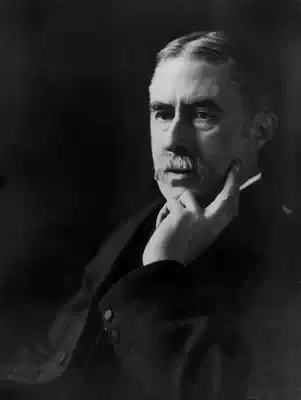
Alfred Edward Housman
When I Was One-and-Twenty
When I Was One-and-Twenty
When I was one-and-twenty
I heard a wise man say,
"Give crowns and pounds and guineas
But not your heart away;
Give pearls away and rubies
But keep your fancy free."
But I was one-and-twenty,
No use to talk to me.
When I was one-and-twenty
I heard him say again,
"The heart out of the bosom
Was never given in vain;
'Tis paid with sighs a plenty
And sold for endless rue."
And I am two-and-twenty,
And oh, 'tis true, 'tis true.
When I was one-and-twenty
I heard a wise man say,
"Give crowns and pounds and guineas
But not your heart away;
Give pearls away and rubies
But keep your fancy free."
But I was one-and-twenty,
No use to talk to me.
When I was one-and-twenty
I heard him say again,
"The heart out of the bosom
Was never given in vain;
'Tis paid with sighs a plenty
And sold for endless rue."
And I am two-and-twenty,
And oh, 'tis true, 'tis true.
786
Alfred Edward Housman
The Carpenter's Son
The Carpenter's Son
"Here the hangman stops his cart:
Now the best of friends must part.
Fare you well, for ill fare I:
Live, lads, and I will die.
"Oh, at home had I but stayed
'Prenticed to my father's trade,
Had I stuck to plane and adze,
I had not been lost, my lads.
"Then I might have built perhaps
Gallows-trees for other chaps,
Never dangled on my own,
Had I left but ill alone.
"Now, you see, they hang me high,
And the people passing by
Stop to shake their fists and curse;
So 'tis come from ill to worse.
"Here hang I, and right and left
Two poor fellows hang for theft:
All the same's the luck we prove,
Though the midmost hangs for love.
"Comrades all, that stand and gaze,
Walk henceforth in other ways;
See my neck and save your own:
Comrades all, leave ill alone.
"Make some day a decent end,
Shrewder fellows than your friend.
Fare you well, for ill fare I:
Live lads, and I will die."
"Here the hangman stops his cart:
Now the best of friends must part.
Fare you well, for ill fare I:
Live, lads, and I will die.
"Oh, at home had I but stayed
'Prenticed to my father's trade,
Had I stuck to plane and adze,
I had not been lost, my lads.
"Then I might have built perhaps
Gallows-trees for other chaps,
Never dangled on my own,
Had I left but ill alone.
"Now, you see, they hang me high,
And the people passing by
Stop to shake their fists and curse;
So 'tis come from ill to worse.
"Here hang I, and right and left
Two poor fellows hang for theft:
All the same's the luck we prove,
Though the midmost hangs for love.
"Comrades all, that stand and gaze,
Walk henceforth in other ways;
See my neck and save your own:
Comrades all, leave ill alone.
"Make some day a decent end,
Shrewder fellows than your friend.
Fare you well, for ill fare I:
Live lads, and I will die."
462
Alfred Edward Housman
Shot? So Quick, So Clean an Ending?
Shot? So Quick, So Clean an Ending?
Shot? so quick, so clean an ending?
Oh that was right, lad, that was brave:
Yours was not an ill for mending,
'Twas best to take it to the grave.
Oh you had forethought, you could reason,
And saw your road and where it led,
And early wise and brave in season
Put the pistol to your head.
Oh soon, and better so than later
After long disgrace and scorn,
You shot dead the household traitor,
The soul that should not have been born.
Right you guessed the rising morrow
And scorned to tread the mire you must:
Dust's your wages, son of sorrow,
But men may come to worse than dust.
Souls undone, undoing others,--
Long time since the tale began.
You would not live to wrong your brothers:
Oh lad, you died as fits a man.
Now to your grave shall friend and stranger
With ruth and some with envy come:
Undishonoured, clear of danger,
Clean of guilt, pass hence and home.
Turn safe to rest, no dreams, no waking;
And here, man, here's the wreath I've made:
'Tis not a gift that's worth the taking,
But wear it and it will not fade.
Shot? so quick, so clean an ending?
Oh that was right, lad, that was brave:
Yours was not an ill for mending,
'Twas best to take it to the grave.
Oh you had forethought, you could reason,
And saw your road and where it led,
And early wise and brave in season
Put the pistol to your head.
Oh soon, and better so than later
After long disgrace and scorn,
You shot dead the household traitor,
The soul that should not have been born.
Right you guessed the rising morrow
And scorned to tread the mire you must:
Dust's your wages, son of sorrow,
But men may come to worse than dust.
Souls undone, undoing others,--
Long time since the tale began.
You would not live to wrong your brothers:
Oh lad, you died as fits a man.
Now to your grave shall friend and stranger
With ruth and some with envy come:
Undishonoured, clear of danger,
Clean of guilt, pass hence and home.
Turn safe to rest, no dreams, no waking;
And here, man, here's the wreath I've made:
'Tis not a gift that's worth the taking,
But wear it and it will not fade.
442
Alfred Edward Housman
Farewell to Barn and Stack and Tree
Farewell to Barn and Stack and Tree
"Farewell to barn and stack and tree,
Farewell to Severn shore.
Terence, look your last at me,
For I come home no more.
"The sun burns on the half-mown hill,
By now the blood is dried;
And Maurice amongst the hay lies still
And my knife is in his side.
"My mother thinks us long away;
'Tis time the field were mown.
She had two sons at rising day,
To-night she'll be alone.
"And here's a bloody hand to shake,
And oh, man, here's good-bye;
We'll sweat no more on scythe and rake,
My bloody hands and I.
"I wish you strength to bring you pride,
And a love to keep you clean,
And I wish you luck, come Lammastide,
At racing on the green.
"Long for me the rick will wait,
And long will wait the fold,
And long will stand the empty plate,
And dinner will be cold."
"Farewell to barn and stack and tree,
Farewell to Severn shore.
Terence, look your last at me,
For I come home no more.
"The sun burns on the half-mown hill,
By now the blood is dried;
And Maurice amongst the hay lies still
And my knife is in his side.
"My mother thinks us long away;
'Tis time the field were mown.
She had two sons at rising day,
To-night she'll be alone.
"And here's a bloody hand to shake,
And oh, man, here's good-bye;
We'll sweat no more on scythe and rake,
My bloody hands and I.
"I wish you strength to bring you pride,
And a love to keep you clean,
And I wish you luck, come Lammastide,
At racing on the green.
"Long for me the rick will wait,
And long will wait the fold,
And long will stand the empty plate,
And dinner will be cold."
752
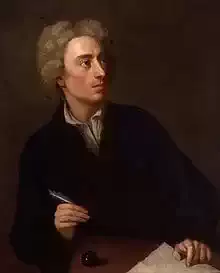
Alexander Pope
Eloisa to Abelard
Eloisa to Abelard
In these deep solitudes and awful cells,
Where heav'nly-pensive contemplation dwells,
And ever-musing melancholy reigns;
What means this tumult in a vestal's veins?
Why rove my thoughts beyond this last retreat?
Why feels my heart its long-forgotten heat?
Yet, yet I love!--From Abelard it came,
And Eloisa yet must kiss the name.
Dear fatal name! rest ever unreveal'd,
Nor pass these lips in holy silence seal'd.
Hide it, my heart, within that close disguise,
Where mix'd with God's, his lov'd idea lies:
O write it not, my hand--the name appears
Already written--wash it out, my tears!
In vain lost Eloisa weeps and prays,
Her heart still dictates, and her hand obeys.
Relentless walls! whose darksome round contains
Repentant sighs, and voluntary pains:
Ye rugged rocks! which holy knees have worn;
Ye grots and caverns shagg'd with horrid thorn!
Shrines! where their vigils pale-ey'd virgins keep,
And pitying saints, whose statues learn to weep!
Though cold like you, unmov'd, and silent grown,
I have not yet forgot myself to stone.
All is not Heav'n's while Abelard has part,
Still rebel nature holds out half my heart;
Nor pray'rs nor fasts its stubborn pulse restrain,
Nor tears, for ages, taught to flow in vain.
Soon as thy letters trembling I unclose,
That well-known name awakens all my woes.
Oh name for ever sad! for ever dear!
Still breath'd in sighs, still usher'd with a tear.
I tremble too, where'er my own I find,
Some dire misfortune follows close behind.
Line after line my gushing eyes o'erflow,
Led through a sad variety of woe:
Now warm in love, now with'ring in thy bloom,
Lost in a convent's solitary gloom!
There stern religion quench'd th' unwilling flame,
There died the best of passions, love and fame.
Yet write, oh write me all, that I may join
Griefs to thy griefs, and echo sighs to thine.
Nor foes nor fortune take this pow'r away;
And is my Abelard less kind than they?
Tears still are mine, and those I need not spare,
Love but demands what else were shed in pray'r;
No happier task these faded eyes pursue;
To read and weep is all they now can do.
Then share thy pain, allow that sad relief;
Ah, more than share it! give me all thy grief.
Heav'n first taught letters for some wretch's aid,
Some banish'd lover, or some captive maid;
They live, they speak, they breathe what love inspires,
Warm from the soul, and faithful to its fires,
The virgin's wish without her fears impart,
Excuse the blush, and pour out all the heart,
Speed the soft intercourse from soul to soul,
And waft a sigh from Indus to the Pole.
Thou know'st how guiltless first I met thy flame,
When Love approach'd me under Friendship's name;
My fancy form'd thee of angelic kind,
Some emanation of th' all-beauteous Mind.
Those smiling eyes, attemp'ring ev'ry day,
Shone sweetly lambent with celestial day.
Guiltless I gaz'd; heav'n listen'd while you sung;
And truths divine came mended from that tongue.
From lips like those what precept fail'd to move?
Too soon they taught me 'twas no sin to love.
Back through the paths of pleasing sense I ran,
Nor wish'd an Angel whom I lov'd a Man.
Dim and remote the joys of saints I see;
Nor envy them, that heav'n I lose for thee.
How oft, when press'd to marriage, have I said,
Curse on all laws but those which love has made!
Love, free as air, at sight of human ties,
Spreads his light wings, and in a moment flies,
Let wealth, let honour, wait the wedded dame,
August her deed, and sacred be her fame;
Before true passion all those views remove,
Fame, wealth, and honour! what are you to Love?
The jealous God, when we profane his fires,
Those restless passions in revenge inspires;
And bids them make mistaken mortals groan,
Who seek in love for aught but love alone.
Should at my feet the world's great master fall,
Himself, his throne, his world, I'd scorn 'em all:
Not Caesar's empress would I deign to prove;
No, make me mistress to the man I love;
If there be yet another name more free,
More fond than mistress, make me that to thee!
Oh happy state! when souls each other draw,
When love is liberty, and nature, law:
All then is full, possessing, and possess'd,
No craving void left aching in the breast:
Ev'n thought meets thought, ere from the lips it part,
And each warm wish springs mutual from the heart.
This sure is bliss (if bliss on earth there be)
And once the lot of Abelard and me.
Alas, how chang'd! what sudden horrors rise!
A naked lover bound and bleeding lies!
Where, where was Eloise? her voice, her hand,
Her poniard, had oppos'd the dire command.
Barbarian, stay! that bloody stroke restrain;
The crime was common, common be the pain.
I can no more; by shame, by rage suppress'd,
Let tears, and burning blushes speak the rest.
Canst thou forget that sad, that solemn day,
When victims at yon altar's foot we lay?
Canst thou forget what tears that moment fell,
When, warm in youth, I bade the world farewell?
As with cold lips I kiss'd the sacred veil,
The shrines all trembl'd, and the lamps grew pale:
Heav'n scarce believ'd the conquest it survey'd,
And saints with wonder heard the vows I made.
Yet then, to those dread altars as I drew,
Not on the Cross my eyes were fix'd, but you:
Not grace, or zeal, love only was my call,
And if I lose thy love, I lose my all.
Come! with thy looks, thy words, relieve my woe;
Those still at least are left thee to bestow.
Still on that breast enamour'd let me lie,
Still drink delicious poison from thy eye,
Pant on thy lip, and to thy heart be press'd;
Give all thou canst--and let me dream the rest.
Ah no! instruct me other joys to prize,
With other beauties charm my partial eyes,
Full in my view set all the bright abode,
And make my soul quit Abelard for God.
Ah, think at least thy flock deserves thy care,
Plants of thy hand, and children of thy pray'r.
From the false world in early youth they fled,
By thee to mountains, wilds, and deserts led.
You rais'd these hallow'd walls; the desert smil'd,
And Paradise was open'd in the wild.
No weeping orphan saw his father's stores
Our shrines irradiate, or emblaze the floors;
No silver saints, by dying misers giv'n,
Here brib'd the rage of ill-requited heav'n:
But such plain roofs as piety could raise,
And only vocal with the Maker's praise.
In these lone walls (their days eternal bound)
These moss-grown domes with spiry turrets crown'd,
Where awful arches make a noonday night,
And the dim windows shed a solemn light;
Thy eyes diffus'd a reconciling ray,
And gleams of glory brighten'd all the day.
But now no face divine contentment wears,
'Tis all blank sadness, or continual tears.
See how the force of others' pray'rs I try,
(O pious fraud of am'rous charity!)
But why should I on others' pray'rs depend?
Come thou, my father, brother, husband, friend!
Ah let thy handmaid, sister, daughter move,
And all those tender names in one, thy love!
The darksome pines that o'er yon rocks reclin'd
Wave high, and murmur to the hollow wind,
The wand'ring streams that shine between the hills,
The grots that echo to the tinkling rills,
The dying gales that pant upon the trees,
The lakes that quiver to the curling breeze;
No more these scenes my meditation aid,
Or lull to rest the visionary maid.
But o'er the twilight groves and dusky caves,
Long-sounding aisles, and intermingled graves,
Black Melancholy sits, and round her throws
A death-like silence, and a dread repose:
Her gloomy presence saddens all the scene,
Shades ev'ry flow'r, and darkens ev'ry green,
Deepens the murmur of the falling floods,
And breathes a browner horror on the woods.
Yet here for ever, ever must I stay;
Sad proof how well a lover can obey!
Death, only death, can break the lasting chain;
And here, ev'n then, shall my cold dust remain,
Here all its frailties, all its flames resign,
And wait till 'tis no sin to mix with thine.
Ah wretch! believ'd the spouse of God in vain,
Confess'd within the slave of love and man.
Assist me, Heav'n! but whence arose that pray'r?
Sprung it from piety, or from despair?
Ev'n here, where frozen chastity retires,
Love finds an altar for forbidden fires.
I ought to grieve, but cannot what I ought;
I mourn the lover, not lament the fault;
I view my crime, but kindle at the view,
Repent old pleasures, and solicit new;
Now turn'd to Heav'n, I weep my past offence,
Now think of thee, and curse my innocence.
Of all affliction taught a lover yet,
'Tis sure the hardest science to forget!
How shall I lose the sin, yet keep the sense,
And love th' offender, yet detest th' offence?
How the dear object from the crime remove,
Or how distinguish penitence from love?
Unequal task! a passion to resign,
For hearts so touch'd, so pierc'd, so lost as mine.
Ere such a soul regains its peaceful state,
How often must it love, how often hate!
How often hope, despair, resent, regret,
Conceal, disdain--do all things but forget.
But let Heav'n seize it, all at once 'tis fir'd;
Not touch'd, but rapt; not waken'd, but inspir'd!
Oh come! oh teach me nature to subdue,
Renounce my love, my life, myself--and you.
Fill my fond heart with God alone, for he
Alone can rival, can succeed to thee.
How happy is the blameless vestal's lot!
The world forgetting, by the world forgot.
Eternal sunshine of the spotless mind!
Each pray'r accepted, and each wish resign'd;
Labour and rest, that equal periods keep;
"Obedient slumbers that can wake and weep;"
Desires compos'd, affections ever ev'n,
Tears that delight, and sighs that waft to Heav'n.
Grace shines around her with serenest beams,
And whisp'ring angels prompt her golden dreams.
For her th' unfading rose of Eden blooms,
And wings of seraphs shed divine perfumes,
For her the Spouse prepares the bridal ring,
For her white virgins hymeneals sing,
To sounds of heav'nly harps she dies away,
And melts in visions of eternal day.
Far other dreams my erring soul employ,
Far other raptures, of unholy joy:
When at the close of each sad, sorrowing day,
Fancy restores what vengeance snatch'd away,
Then conscience sleeps, and leaving nature free,
All my loose soul unbounded springs to thee.
Oh curs'd, dear horrors of all-conscious night!
How glowing guilt exalts the keen delight!
Provoking Daemons all restraint remove,
And stir within me every source of love.
I hear thee, view thee, gaze o'er all thy charms,
And round thy phantom glue my clasping arms.
I wake--no more I hear, no more I view,
The phantom flies me, as unkind as you.
I call aloud; it hears not what I say;
I stretch my empty arms; it glides away.
To dream once more I close my willing eyes;
Ye soft illusions, dear deceits, arise!
Alas, no more--methinks we wand'ring go
Through dreary wastes, and weep each other's woe,
Where round some mould'ring tower pale ivy creeps,
And low-brow'd rocks hang nodding o'er the deeps.
Sudden you mount, you beckon from the skies;
Clouds interpose, waves roar, and winds arise.
I shriek, start up, the same sad prospect find,
And wake to all the griefs I left behind.
For thee the fates, severely kind, ordain
A cool suspense from pleasure and from pain;
Thy life a long, dead calm of fix'd repose;
No pulse that riots, and no blood that glows.
Still as the sea, ere winds were taught to blow,
Or moving spirit bade the waters flow;
Soft as the slumbers of a saint forgiv'n,
And mild as opening gleams of promis'd heav'n.
Come, Abelard! for what hast thou to dread?
The torch of Venus burns not for the dead.
Nature stands check'd; Religion disapproves;
Ev'n thou art cold--yet Eloisa loves.
Ah hopeless, lasting flames! like those that burn
To light the dead, and warm th' unfruitful urn.
What scenes appear where'er I turn my view?
The dear ideas, where I fly, pursue,
Rise in the grove, before the altar rise,
Stain all my soul, and wanton in my eyes.
I waste the matin lamp in sighs for thee,
Thy image steals between my God and me,
Thy voice I seem in ev'ry hymn to hear,
With ev'ry bead I drop too soft a tear.
When from the censer clouds of fragrance roll,
And swelling organs lift the rising soul,
One thought of thee puts all the pomp to flight,
Priests, tapers, temples, swim before my sight:
In seas of flame my plunging soul is drown'd,
While altars blaze, and angels tremble round.
While prostrate here in humble grief I lie,
Kind, virtuous drops just gath'ring in my eye,
While praying, trembling, in the dust I roll,
And dawning grace is op'ning on my soul:
Come, if thou dar'st, all charming as thou art!
Oppose thyself to Heav'n; dispute my heart;
Come, with one glance of those deluding eyes
Blot out each bright idea of the skies;
Take back that grace, those sorrows, and those tears;
Take back my fruitless penitence and pray'rs;
Snatch me, just mounting, from the blest abode;
Assist the fiends, and tear me from my God!
No, fly me, fly me, far as pole from pole;
Rise Alps between us! and whole oceans roll!
Ah, come not, write not, think not once of me,
Nor share one pang of all I felt for thee.
Thy oaths I quit, thy memory resign;
Forget, renounce me, hate whate'er was mine.
Fair eyes, and tempting looks (which yet I view!)
Long lov'd, ador'd ideas, all adieu!
Oh Grace serene! oh virtue heav'nly fair!
Divine oblivion of low-thoughted care!
Fresh blooming hope, gay daughter of the sky!
And faith, our early immortality!
Enter, each mild, each amicable guest;
Receive, and wrap me in eternal rest!
See in her cell sad Eloisa spread,
Propp'd on some tomb, a neighbour of the dead.
In each low wind methinks a spirit calls,
And more than echoes talk along the walls.
Here, as I watch'd the dying lamps around,
From yonder shrine I heard a hollow sound.
"Come, sister, come!" (it said, or seem'd to say)
"Thy place is here, sad sister, come away!
Once like thyself, I trembled, wept, and pray'd,
Love's victim then, though now a sainted maid:
But all is calm in this eternal sleep;
Here grief forgets to groan, and love to weep,
Ev'n superstition loses ev'ry fear:
For God, not man, absolves our frailties here."
I come, I come! prepare your roseate bow'rs,
Celestial palms, and ever-blooming flow'rs.
Thither, where sinners may have rest, I go,
Where flames refin'd in breasts seraphic glow:
Thou, Abelard! the last sad office pay,
And smooth my passage to the realms of day;
See my lips tremble, and my eye-balls roll,
Suck my last breath, and catch my flying soul!
Ah no--in sacred vestments may'st thou stand,
The hallow'd taper trembling in thy hand,
Present the cross before my lifted eye,
Teach me at once, and learn of me to die.
Ah then, thy once-lov'd Eloisa see!
It will be then no crime to gaze on me.
See from my cheek the transient roses fly!
See the last sparkle languish in my eye!
Till ev'ry motion, pulse, and breath be o'er;
And ev'n my Abelard be lov'd no more.
O Death all-eloquent! you only prove
What dust we dote on, when 'tis man we love.
Then too, when fate shall thy fair frame destroy,
(That cause of all my guilt, and all my joy)
In trance ecstatic may thy pangs be drown'd,
Bright clouds descend, and angels watch thee round,
From op'ning skies may streaming glories shine,
And saints embrace thee with a love like mine.
May one kind grave unite each hapless name,
And graft my love immortal on thy fame!
Then, ages hence, when all my woes are o'er,
When this rebellious heart shall beat no more;
If ever chance two wand'ring lovers brings
To Paraclete's white walls and silver springs,
O'er the pale marble shall they join their heads,
And drink the falling tears each other sheds;
Then sadly say, with mutual pity mov'd,
"Oh may we never love as these have lov'd!"
From the full choir when loud Hosannas rise,
And swell the pomp of dreadful sacrifice,
Amid that scene if some relenting eye
Glance on the stone where our cold relics lie,
Devotion's self shall steal a thought from Heav'n,
One human tear shall drop and be forgiv'n.
And sure, if fate some future bard shall join
In sad similitude of griefs to mine,
Condemn'd whole years in absence to deplore,
And image charms he must behold no more;
Such if there be, who loves so long, so well;
Let him our sad, our tender story tell;
The well-sung woes will soothe my pensive ghost;
He best can paint 'em, who shall feel 'em most.
In these deep solitudes and awful cells,
Where heav'nly-pensive contemplation dwells,
And ever-musing melancholy reigns;
What means this tumult in a vestal's veins?
Why rove my thoughts beyond this last retreat?
Why feels my heart its long-forgotten heat?
Yet, yet I love!--From Abelard it came,
And Eloisa yet must kiss the name.
Dear fatal name! rest ever unreveal'd,
Nor pass these lips in holy silence seal'd.
Hide it, my heart, within that close disguise,
Where mix'd with God's, his lov'd idea lies:
O write it not, my hand--the name appears
Already written--wash it out, my tears!
In vain lost Eloisa weeps and prays,
Her heart still dictates, and her hand obeys.
Relentless walls! whose darksome round contains
Repentant sighs, and voluntary pains:
Ye rugged rocks! which holy knees have worn;
Ye grots and caverns shagg'd with horrid thorn!
Shrines! where their vigils pale-ey'd virgins keep,
And pitying saints, whose statues learn to weep!
Though cold like you, unmov'd, and silent grown,
I have not yet forgot myself to stone.
All is not Heav'n's while Abelard has part,
Still rebel nature holds out half my heart;
Nor pray'rs nor fasts its stubborn pulse restrain,
Nor tears, for ages, taught to flow in vain.
Soon as thy letters trembling I unclose,
That well-known name awakens all my woes.
Oh name for ever sad! for ever dear!
Still breath'd in sighs, still usher'd with a tear.
I tremble too, where'er my own I find,
Some dire misfortune follows close behind.
Line after line my gushing eyes o'erflow,
Led through a sad variety of woe:
Now warm in love, now with'ring in thy bloom,
Lost in a convent's solitary gloom!
There stern religion quench'd th' unwilling flame,
There died the best of passions, love and fame.
Yet write, oh write me all, that I may join
Griefs to thy griefs, and echo sighs to thine.
Nor foes nor fortune take this pow'r away;
And is my Abelard less kind than they?
Tears still are mine, and those I need not spare,
Love but demands what else were shed in pray'r;
No happier task these faded eyes pursue;
To read and weep is all they now can do.
Then share thy pain, allow that sad relief;
Ah, more than share it! give me all thy grief.
Heav'n first taught letters for some wretch's aid,
Some banish'd lover, or some captive maid;
They live, they speak, they breathe what love inspires,
Warm from the soul, and faithful to its fires,
The virgin's wish without her fears impart,
Excuse the blush, and pour out all the heart,
Speed the soft intercourse from soul to soul,
And waft a sigh from Indus to the Pole.
Thou know'st how guiltless first I met thy flame,
When Love approach'd me under Friendship's name;
My fancy form'd thee of angelic kind,
Some emanation of th' all-beauteous Mind.
Those smiling eyes, attemp'ring ev'ry day,
Shone sweetly lambent with celestial day.
Guiltless I gaz'd; heav'n listen'd while you sung;
And truths divine came mended from that tongue.
From lips like those what precept fail'd to move?
Too soon they taught me 'twas no sin to love.
Back through the paths of pleasing sense I ran,
Nor wish'd an Angel whom I lov'd a Man.
Dim and remote the joys of saints I see;
Nor envy them, that heav'n I lose for thee.
How oft, when press'd to marriage, have I said,
Curse on all laws but those which love has made!
Love, free as air, at sight of human ties,
Spreads his light wings, and in a moment flies,
Let wealth, let honour, wait the wedded dame,
August her deed, and sacred be her fame;
Before true passion all those views remove,
Fame, wealth, and honour! what are you to Love?
The jealous God, when we profane his fires,
Those restless passions in revenge inspires;
And bids them make mistaken mortals groan,
Who seek in love for aught but love alone.
Should at my feet the world's great master fall,
Himself, his throne, his world, I'd scorn 'em all:
Not Caesar's empress would I deign to prove;
No, make me mistress to the man I love;
If there be yet another name more free,
More fond than mistress, make me that to thee!
Oh happy state! when souls each other draw,
When love is liberty, and nature, law:
All then is full, possessing, and possess'd,
No craving void left aching in the breast:
Ev'n thought meets thought, ere from the lips it part,
And each warm wish springs mutual from the heart.
This sure is bliss (if bliss on earth there be)
And once the lot of Abelard and me.
Alas, how chang'd! what sudden horrors rise!
A naked lover bound and bleeding lies!
Where, where was Eloise? her voice, her hand,
Her poniard, had oppos'd the dire command.
Barbarian, stay! that bloody stroke restrain;
The crime was common, common be the pain.
I can no more; by shame, by rage suppress'd,
Let tears, and burning blushes speak the rest.
Canst thou forget that sad, that solemn day,
When victims at yon altar's foot we lay?
Canst thou forget what tears that moment fell,
When, warm in youth, I bade the world farewell?
As with cold lips I kiss'd the sacred veil,
The shrines all trembl'd, and the lamps grew pale:
Heav'n scarce believ'd the conquest it survey'd,
And saints with wonder heard the vows I made.
Yet then, to those dread altars as I drew,
Not on the Cross my eyes were fix'd, but you:
Not grace, or zeal, love only was my call,
And if I lose thy love, I lose my all.
Come! with thy looks, thy words, relieve my woe;
Those still at least are left thee to bestow.
Still on that breast enamour'd let me lie,
Still drink delicious poison from thy eye,
Pant on thy lip, and to thy heart be press'd;
Give all thou canst--and let me dream the rest.
Ah no! instruct me other joys to prize,
With other beauties charm my partial eyes,
Full in my view set all the bright abode,
And make my soul quit Abelard for God.
Ah, think at least thy flock deserves thy care,
Plants of thy hand, and children of thy pray'r.
From the false world in early youth they fled,
By thee to mountains, wilds, and deserts led.
You rais'd these hallow'd walls; the desert smil'd,
And Paradise was open'd in the wild.
No weeping orphan saw his father's stores
Our shrines irradiate, or emblaze the floors;
No silver saints, by dying misers giv'n,
Here brib'd the rage of ill-requited heav'n:
But such plain roofs as piety could raise,
And only vocal with the Maker's praise.
In these lone walls (their days eternal bound)
These moss-grown domes with spiry turrets crown'd,
Where awful arches make a noonday night,
And the dim windows shed a solemn light;
Thy eyes diffus'd a reconciling ray,
And gleams of glory brighten'd all the day.
But now no face divine contentment wears,
'Tis all blank sadness, or continual tears.
See how the force of others' pray'rs I try,
(O pious fraud of am'rous charity!)
But why should I on others' pray'rs depend?
Come thou, my father, brother, husband, friend!
Ah let thy handmaid, sister, daughter move,
And all those tender names in one, thy love!
The darksome pines that o'er yon rocks reclin'd
Wave high, and murmur to the hollow wind,
The wand'ring streams that shine between the hills,
The grots that echo to the tinkling rills,
The dying gales that pant upon the trees,
The lakes that quiver to the curling breeze;
No more these scenes my meditation aid,
Or lull to rest the visionary maid.
But o'er the twilight groves and dusky caves,
Long-sounding aisles, and intermingled graves,
Black Melancholy sits, and round her throws
A death-like silence, and a dread repose:
Her gloomy presence saddens all the scene,
Shades ev'ry flow'r, and darkens ev'ry green,
Deepens the murmur of the falling floods,
And breathes a browner horror on the woods.
Yet here for ever, ever must I stay;
Sad proof how well a lover can obey!
Death, only death, can break the lasting chain;
And here, ev'n then, shall my cold dust remain,
Here all its frailties, all its flames resign,
And wait till 'tis no sin to mix with thine.
Ah wretch! believ'd the spouse of God in vain,
Confess'd within the slave of love and man.
Assist me, Heav'n! but whence arose that pray'r?
Sprung it from piety, or from despair?
Ev'n here, where frozen chastity retires,
Love finds an altar for forbidden fires.
I ought to grieve, but cannot what I ought;
I mourn the lover, not lament the fault;
I view my crime, but kindle at the view,
Repent old pleasures, and solicit new;
Now turn'd to Heav'n, I weep my past offence,
Now think of thee, and curse my innocence.
Of all affliction taught a lover yet,
'Tis sure the hardest science to forget!
How shall I lose the sin, yet keep the sense,
And love th' offender, yet detest th' offence?
How the dear object from the crime remove,
Or how distinguish penitence from love?
Unequal task! a passion to resign,
For hearts so touch'd, so pierc'd, so lost as mine.
Ere such a soul regains its peaceful state,
How often must it love, how often hate!
How often hope, despair, resent, regret,
Conceal, disdain--do all things but forget.
But let Heav'n seize it, all at once 'tis fir'd;
Not touch'd, but rapt; not waken'd, but inspir'd!
Oh come! oh teach me nature to subdue,
Renounce my love, my life, myself--and you.
Fill my fond heart with God alone, for he
Alone can rival, can succeed to thee.
How happy is the blameless vestal's lot!
The world forgetting, by the world forgot.
Eternal sunshine of the spotless mind!
Each pray'r accepted, and each wish resign'd;
Labour and rest, that equal periods keep;
"Obedient slumbers that can wake and weep;"
Desires compos'd, affections ever ev'n,
Tears that delight, and sighs that waft to Heav'n.
Grace shines around her with serenest beams,
And whisp'ring angels prompt her golden dreams.
For her th' unfading rose of Eden blooms,
And wings of seraphs shed divine perfumes,
For her the Spouse prepares the bridal ring,
For her white virgins hymeneals sing,
To sounds of heav'nly harps she dies away,
And melts in visions of eternal day.
Far other dreams my erring soul employ,
Far other raptures, of unholy joy:
When at the close of each sad, sorrowing day,
Fancy restores what vengeance snatch'd away,
Then conscience sleeps, and leaving nature free,
All my loose soul unbounded springs to thee.
Oh curs'd, dear horrors of all-conscious night!
How glowing guilt exalts the keen delight!
Provoking Daemons all restraint remove,
And stir within me every source of love.
I hear thee, view thee, gaze o'er all thy charms,
And round thy phantom glue my clasping arms.
I wake--no more I hear, no more I view,
The phantom flies me, as unkind as you.
I call aloud; it hears not what I say;
I stretch my empty arms; it glides away.
To dream once more I close my willing eyes;
Ye soft illusions, dear deceits, arise!
Alas, no more--methinks we wand'ring go
Through dreary wastes, and weep each other's woe,
Where round some mould'ring tower pale ivy creeps,
And low-brow'd rocks hang nodding o'er the deeps.
Sudden you mount, you beckon from the skies;
Clouds interpose, waves roar, and winds arise.
I shriek, start up, the same sad prospect find,
And wake to all the griefs I left behind.
For thee the fates, severely kind, ordain
A cool suspense from pleasure and from pain;
Thy life a long, dead calm of fix'd repose;
No pulse that riots, and no blood that glows.
Still as the sea, ere winds were taught to blow,
Or moving spirit bade the waters flow;
Soft as the slumbers of a saint forgiv'n,
And mild as opening gleams of promis'd heav'n.
Come, Abelard! for what hast thou to dread?
The torch of Venus burns not for the dead.
Nature stands check'd; Religion disapproves;
Ev'n thou art cold--yet Eloisa loves.
Ah hopeless, lasting flames! like those that burn
To light the dead, and warm th' unfruitful urn.
What scenes appear where'er I turn my view?
The dear ideas, where I fly, pursue,
Rise in the grove, before the altar rise,
Stain all my soul, and wanton in my eyes.
I waste the matin lamp in sighs for thee,
Thy image steals between my God and me,
Thy voice I seem in ev'ry hymn to hear,
With ev'ry bead I drop too soft a tear.
When from the censer clouds of fragrance roll,
And swelling organs lift the rising soul,
One thought of thee puts all the pomp to flight,
Priests, tapers, temples, swim before my sight:
In seas of flame my plunging soul is drown'd,
While altars blaze, and angels tremble round.
While prostrate here in humble grief I lie,
Kind, virtuous drops just gath'ring in my eye,
While praying, trembling, in the dust I roll,
And dawning grace is op'ning on my soul:
Come, if thou dar'st, all charming as thou art!
Oppose thyself to Heav'n; dispute my heart;
Come, with one glance of those deluding eyes
Blot out each bright idea of the skies;
Take back that grace, those sorrows, and those tears;
Take back my fruitless penitence and pray'rs;
Snatch me, just mounting, from the blest abode;
Assist the fiends, and tear me from my God!
No, fly me, fly me, far as pole from pole;
Rise Alps between us! and whole oceans roll!
Ah, come not, write not, think not once of me,
Nor share one pang of all I felt for thee.
Thy oaths I quit, thy memory resign;
Forget, renounce me, hate whate'er was mine.
Fair eyes, and tempting looks (which yet I view!)
Long lov'd, ador'd ideas, all adieu!
Oh Grace serene! oh virtue heav'nly fair!
Divine oblivion of low-thoughted care!
Fresh blooming hope, gay daughter of the sky!
And faith, our early immortality!
Enter, each mild, each amicable guest;
Receive, and wrap me in eternal rest!
See in her cell sad Eloisa spread,
Propp'd on some tomb, a neighbour of the dead.
In each low wind methinks a spirit calls,
And more than echoes talk along the walls.
Here, as I watch'd the dying lamps around,
From yonder shrine I heard a hollow sound.
"Come, sister, come!" (it said, or seem'd to say)
"Thy place is here, sad sister, come away!
Once like thyself, I trembled, wept, and pray'd,
Love's victim then, though now a sainted maid:
But all is calm in this eternal sleep;
Here grief forgets to groan, and love to weep,
Ev'n superstition loses ev'ry fear:
For God, not man, absolves our frailties here."
I come, I come! prepare your roseate bow'rs,
Celestial palms, and ever-blooming flow'rs.
Thither, where sinners may have rest, I go,
Where flames refin'd in breasts seraphic glow:
Thou, Abelard! the last sad office pay,
And smooth my passage to the realms of day;
See my lips tremble, and my eye-balls roll,
Suck my last breath, and catch my flying soul!
Ah no--in sacred vestments may'st thou stand,
The hallow'd taper trembling in thy hand,
Present the cross before my lifted eye,
Teach me at once, and learn of me to die.
Ah then, thy once-lov'd Eloisa see!
It will be then no crime to gaze on me.
See from my cheek the transient roses fly!
See the last sparkle languish in my eye!
Till ev'ry motion, pulse, and breath be o'er;
And ev'n my Abelard be lov'd no more.
O Death all-eloquent! you only prove
What dust we dote on, when 'tis man we love.
Then too, when fate shall thy fair frame destroy,
(That cause of all my guilt, and all my joy)
In trance ecstatic may thy pangs be drown'd,
Bright clouds descend, and angels watch thee round,
From op'ning skies may streaming glories shine,
And saints embrace thee with a love like mine.
May one kind grave unite each hapless name,
And graft my love immortal on thy fame!
Then, ages hence, when all my woes are o'er,
When this rebellious heart shall beat no more;
If ever chance two wand'ring lovers brings
To Paraclete's white walls and silver springs,
O'er the pale marble shall they join their heads,
And drink the falling tears each other sheds;
Then sadly say, with mutual pity mov'd,
"Oh may we never love as these have lov'd!"
From the full choir when loud Hosannas rise,
And swell the pomp of dreadful sacrifice,
Amid that scene if some relenting eye
Glance on the stone where our cold relics lie,
Devotion's self shall steal a thought from Heav'n,
One human tear shall drop and be forgiv'n.
And sure, if fate some future bard shall join
In sad similitude of griefs to mine,
Condemn'd whole years in absence to deplore,
And image charms he must behold no more;
Such if there be, who loves so long, so well;
Let him our sad, our tender story tell;
The well-sung woes will soothe my pensive ghost;
He best can paint 'em, who shall feel 'em most.
588
Previous
Page 11