

Poems in this theme
Humor e Ironia
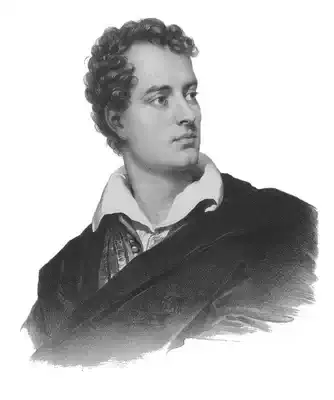
Lord Byron
On Lord Thurlow's Poems
On Lord Thurlow's Poems
When Thurlow this damn'd nonsense sent
(I hope I am not violent),
Nor men nor gods knew what he meant.
And since not even our Rogers' praise
To common sense his thoughts could raiseWhy
would they let him print his lays'
To me, divine Apollo, grantO!
Hermilda s first and second canto,
I'm fitting up a new portmanteau;
And thus to furnish decent lining,
My own and others' bays I'm twining,So,
gentle Thurlow, throw me thine in.
When Thurlow this damn'd nonsense sent
(I hope I am not violent),
Nor men nor gods knew what he meant.
And since not even our Rogers' praise
To common sense his thoughts could raiseWhy
would they let him print his lays'
To me, divine Apollo, grantO!
Hermilda s first and second canto,
I'm fitting up a new portmanteau;
And thus to furnish decent lining,
My own and others' bays I'm twining,So,
gentle Thurlow, throw me thine in.
564
Lord Byron
Lines In The Travellers' Book At Orchomenus
Lines In The Travellers' Book At Orchomenus
In this book a traveller had written:'
Fair Albion, smiling, sees her son depart
To trace the birth and nursery of art:
Noble his object, glorious is his aim;
He comes to Athens, and he writes his name.'
BENEATH WHICH LORD BYRON INSERTED THE FOLLOWING.
The modest bard, like many a bard unknown,
Rhymes on our names, but wisely hides his own;
But yet, whoe'er he be, to say no worse,
His name would bring more credit than his verse.
In this book a traveller had written:'
Fair Albion, smiling, sees her son depart
To trace the birth and nursery of art:
Noble his object, glorious is his aim;
He comes to Athens, and he writes his name.'
BENEATH WHICH LORD BYRON INSERTED THE FOLLOWING.
The modest bard, like many a bard unknown,
Rhymes on our names, but wisely hides his own;
But yet, whoe'er he be, to say no worse,
His name would bring more credit than his verse.
373
Lord Byron
Epistle From Mr. Murray To Dr. Polidori
Epistle From Mr. Murray To Dr. Polidori
Dear Doctor, I have read your play,
Which is a good one in its way,Purges
the eyes and moves the bowels,
And drenches handkerchiefs like towels
With tears, that, in a flux of grief,
Afford hysterical relief
To shatter'd nerves and quicken'd pulses,
Which your catastrophe convulses.
I like your moral and machinery;
Your plot, too, has such scope for scenery:
Your dialogue is apt and smart:
The play's concoction full of art;
Your hero raves, your heroine cries,
All stab, and everybody dies.
In short, your tragedy would be
The very thing to hear and see:
And for a piece of publication,
If I decline on this occasion,
It is not that I am not sensible
To merits in themselves ostensible,
But and
I grieve to speak itplays
Are drugs mere
drugs, sirnowadays.
I had a heavy loss by 'Manual'Too
lucky if it prove not annual,And
Sotheby, with his 'Orestes,'
(Which, by the by, the author's best is),
Has lain so very long on hand,
That I despair of all demand.
I've advertised, but see my books,
Or only watch my shopman's looks;Still
Ivan, Ina, and such lumber,
My backshop
glut, my shelves encumber.
There's Byron too, who once did better,
Has sent me, folded in a letter,
A sort ofit's
no more a drama
Than Darnley, Ivan, or Kehama:
So alter'd since last year his pen is,
I think he's lost his wits at Venice.
In short, sir, what with one and t'other,
I dare not venture on another.
I write in haste; excuse each blunder;
The coaches through the street so thunder!
My room's so fullwe've
Gifford here
Reading MS., with Hookham Frere
Pronouncing on the nouns and particles
Of some of our forthcoming Articles.
The QuarterlyAh,
sir, if you
Had but the genius to review!A
smart critique upon St. Helena,
Or if you only would but tell in a
Short compass whatbut
to resume:
As I was saying, sir, the roomThe
room's so full of wits and bards,
Crabbes, Campbells, Crokers, Freres, and Wards,
And others, neither bards nor wits:
My humble tenement admits
All persons in the dress of gent,
From Mr. Hammond to Dog Dent.
A party dines with me today,
All clever men, who make their way;
Crabbe, Malcolm, Hamilton, and Chantrey
Are all partakers of my pantry.
They're at this moment in discussion
On poor De Staël's late dissolution.
Her book, they say, was in advancePray
Heaven, she tell the truth of France!
Thus run our time and tongues away;
But, to return, sir, to your play:
Sorry, sir, but I cannot deal,
Unless 'twere acted by O'Neill;
My hands so full, my head so busy,
I'm almost dead, and always dizzy;
And so, with endless truth and hurry,
Dear Doctor, I am yours
JOHN MURRAY.
Dear Doctor, I have read your play,
Which is a good one in its way,Purges
the eyes and moves the bowels,
And drenches handkerchiefs like towels
With tears, that, in a flux of grief,
Afford hysterical relief
To shatter'd nerves and quicken'd pulses,
Which your catastrophe convulses.
I like your moral and machinery;
Your plot, too, has such scope for scenery:
Your dialogue is apt and smart:
The play's concoction full of art;
Your hero raves, your heroine cries,
All stab, and everybody dies.
In short, your tragedy would be
The very thing to hear and see:
And for a piece of publication,
If I decline on this occasion,
It is not that I am not sensible
To merits in themselves ostensible,
But and
I grieve to speak itplays
Are drugs mere
drugs, sirnowadays.
I had a heavy loss by 'Manual'Too
lucky if it prove not annual,And
Sotheby, with his 'Orestes,'
(Which, by the by, the author's best is),
Has lain so very long on hand,
That I despair of all demand.
I've advertised, but see my books,
Or only watch my shopman's looks;Still
Ivan, Ina, and such lumber,
My backshop
glut, my shelves encumber.
There's Byron too, who once did better,
Has sent me, folded in a letter,
A sort ofit's
no more a drama
Than Darnley, Ivan, or Kehama:
So alter'd since last year his pen is,
I think he's lost his wits at Venice.
In short, sir, what with one and t'other,
I dare not venture on another.
I write in haste; excuse each blunder;
The coaches through the street so thunder!
My room's so fullwe've
Gifford here
Reading MS., with Hookham Frere
Pronouncing on the nouns and particles
Of some of our forthcoming Articles.
The QuarterlyAh,
sir, if you
Had but the genius to review!A
smart critique upon St. Helena,
Or if you only would but tell in a
Short compass whatbut
to resume:
As I was saying, sir, the roomThe
room's so full of wits and bards,
Crabbes, Campbells, Crokers, Freres, and Wards,
And others, neither bards nor wits:
My humble tenement admits
All persons in the dress of gent,
From Mr. Hammond to Dog Dent.
A party dines with me today,
All clever men, who make their way;
Crabbe, Malcolm, Hamilton, and Chantrey
Are all partakers of my pantry.
They're at this moment in discussion
On poor De Staël's late dissolution.
Her book, they say, was in advancePray
Heaven, she tell the truth of France!
Thus run our time and tongues away;
But, to return, sir, to your play:
Sorry, sir, but I cannot deal,
Unless 'twere acted by O'Neill;
My hands so full, my head so busy,
I'm almost dead, and always dizzy;
And so, with endless truth and hurry,
Dear Doctor, I am yours
JOHN MURRAY.
387
Lord Byron
Epigram: The World Is A Bundle Of Hay
Epigram: The World Is A Bundle Of Hay
The world is a bundle of hay,
Mankind are the asses who pull;
Each tugs it a different way,
And the greatest of all is John Bull.
The world is a bundle of hay,
Mankind are the asses who pull;
Each tugs it a different way,
And the greatest of all is John Bull.
339
Lord Byron
Epigram, On The Braziers' Company Having Resolved To Present An Address
Epigram, On The Braziers' Company Having Resolved To Present An Address
To Queen Caroline
The braziers, it seems, are preparing to pass
An address, and present it themselves all in brass,A
superfluous pageantfor,
by the Lord Harry!
They'll find where they're going much more than they carry.
To Queen Caroline
The braziers, it seems, are preparing to pass
An address, and present it themselves all in brass,A
superfluous pageantfor,
by the Lord Harry!
They'll find where they're going much more than they carry.
430
Lord Byron
English Bards and Scotch Reviewers (excerpt)
English Bards and Scotch Reviewers (excerpt)
Time was, ere yet in these degenerate days
Ignoble themes obtain'd mistaken praise,
When sense and wit with poesy allied,
No fabl'd graces, flourish'd side by side;
From the same fount their inspiration drew,
And, rear'd by taste, bloom'd fairer as they grew.
Then, in this happy isle, a Pope's pure strain
Sought the rapt soul to charm, nor sought in vain;
A polish'd nation's praise aspir'd to claim,
And rais'd the people's, as the poet's fame.
Like him great Dryden pour'd the tide of song,
In stream less smooth, indeed, yet doubly strong.
Then Congreve's scenes could cheer, or Otway's melt
For nature then an English audience felt.
But why these names, or greater still, retrace,
When all to feebler bards resign their place?
Yet to such times our lingering looks are cast,
When taste and reason with those times are past.
Now look around, and turn each trifling page,
Survey the precious works that please the age;
This truth at least let satire's self allow,
No dearth of bards can be complain'd of now.
The loaded press beneath her labour groans,
And printers' devils shake their weary bones;
While Southey's epics cram the creaking shelves,
And Little's lyrics shine in hotpress'd
twelves.
Thus saith the Preacher: "Nought beneath the sun
Is new"; yet still from change to change we run:
What varied wonders tempt us as they pass!
The cowpox,
tractors, galvanism and gas,
In turns appear, to make the vulgar stare,
Till the swoln bubble burstsand
all is air!
Nor less new schools of Poetry arise,
Where dull pretenders grapple for the prize:
O'er taste awhile these pseudobards
prevail;
Each country bookclub
bows the knee to Baal,
And, hurling lawful genius from the throne,
Erects a shrine and idol of its own;
Some leaden calfbut
whom it matters not,
From soaring Southey down to grovelling Stott.
Behold! in various throngs the scribbling crew,
For notice eager, pass in long review:
Each spurs his jaded Pegasus apace,
And rhyme and blank maintain an equal race;
Sonnets on sonnets crowd, and ode on ode;
And tales of terror jostle on the road;
Immeasurable measures move along;
For simpering folly loves a varied song,
To strange mysterious dulness still the friend,
Admires the strain she cannot comprehend.
Thus Lays of Minstrelsmay
they be the last!
On halfstrung
harps whine mournful to the blast.
While mountain spirits prate to river sprites,
That dames may listen to the sound at nights;
And goblin brats, of Gilpin Horner's brood,
Decoy young bordernobles
through the wood,
And skip at every step, Lord knows how high,
And frighten foolish babes, the Lord knows why;
While highborn
ladies in their magic cell,
Forbidding knights to read who cannot spell,
Despatch a courier to a wizard's grave,
And fight with honest men to shield a knave.
Next view in state, proud prancing on his roan,
The goldencrested
haughty Marmion,
Now forging scrolls, now foremost in the fight,
Not quite a felon, yet but half a knight,
The gibbet or the field prepar'd to grace;
A mighty mixture of the great and base.
And think'st thou, Scott! by vain conceit perchance,
On public taste to foist thy stale romance,
Though Murray with his Miller may combine
To yield thy muse just halfacrown
per line?
No! when the sons of song descend to trade,
Their bays are sear, their former laurels fade.
Let such forego the poet's sacred name,
Who rack their brains for lucre, not for fame:
Still for stern Mammon may they toil in vain!
And sadly gaze on gold they cannot gain!
Such be their meed, such still the just reward
Of prostituted muse and hireling bard!
For this we spurn Apollo's venal son,
And bid a long "good night to Marmion."
These are the themes that claim our plaudits now;
These are the bards to whom the muse must bow;
While Milton, Dryden, Pope, alike forgot,
Resign their hallow'd bays to Walter Scott.
The time has been, when yet the muse was young,
When Homer swept the lyre, and Maro sung,
An epic scarce ten centuries could claim,
While awestruck
nations hail'd the magic name;
The work of each immortal bard appears
The single wonder of a thousand years.
Empires have moulder'd from the face of earth,
Tongues have expir'd with those who gave them birth,
Without the glory such a strain can give,
As even in ruin bids the language live.
Not so with us, though minor bards, content
On one great work a life of labour spent:
With eagle pinion soaring to the skies,
Behold the balladmonger
Southey rise!
To him let Camoëns, Milton, Tasso yield,
Whose annual strains, like armies, take the field.
First in the ranks see Joan of Arc advance,
The scourge of England and the boast of France!
Though burnt by wicked Bedford for a witch,
Behold her statue plac'd in glory's niche;
Her fetters burst, and just releas'd from prison,
A virgin phoenix from her ashes risen.
Next see tremendous Thalaba come on,
Arabia's monstrous, wild and wondrous son:
Domdaniel's dread destroyer, who o'erthrew
More mad magicians than the world e'er knew.
Immortal hero! all thy foes o'ercome,
For ever reignthe
rival of Tom Thumb!
Since startled metre fled before thy face,
Well wert thou doom'd the last of all thy race!
Well might triumphant genii bear thee hence,
Illustrious conqueror of common sense!
Now, last and greatest, Madoc spreads his sails,
Cacique in Mexico, and prince in Wales;
Tells us strange tales, as other travellers do,
More old than Mandeville's, and not so true.
Oh Southey! Southey! cease thy varied song!
A bard may chant too often and too long:
As thou art strong in verse, in mercy, spare!
A fourth, alas! were more than we could bear.
But if, in spite of all the world can say,
Thou still wilt verseward plod thy weary way;
If still in Berkley ballads most uncivil,
Thou wilt devote old women to the devil,
The babe unborn thy dread intent may rue:
"God help thee," Southey, and thy readers too.
Next comes the dull disciple of thy school,
That mild apostate from poetic rule,
The simple Wordsworth, framer of a lay
As soft as evening in his favourite May,
Who warns his friend "to shake off toil and trouble,
And quit his books, for fear of growing double";
Who, both by precept and example, shows
That prose is verse, and verse is merely prose;
Convincing all, by demonstration plain,
Poetic souls delight in prose insane;
And Christmas stories tortur'd into rhyme
Contain the essence of the true sublime.
Thus, when he tells the tale of Betty Foy,
The idiot mother of "an idiot boy";
A moonstruck,
silly lad, who lost his way,
And, like his bard, confounded night with day;
So close on each pathetic part he dwells,
And each adventure so sublimely tells,
That all who view the "idiot in his glory"
Conceive the bard the hero of the story.
Shall gentle Coleridge pass unnotic'd here,
To turgid ode and tumid stanza dear?
Though themes of innocence amuse him best,
Yet still obscurity's a welcome guest.
If Inspiration should her aid refuse
To him who takes a pixy for a muse,
Yet none in lofty numbers can surpass
The bard who soars to elegize an ass.
So well the subject suits his noble mind,
He brays the laureat of the longear'd
kind.
Time was, ere yet in these degenerate days
Ignoble themes obtain'd mistaken praise,
When sense and wit with poesy allied,
No fabl'd graces, flourish'd side by side;
From the same fount their inspiration drew,
And, rear'd by taste, bloom'd fairer as they grew.
Then, in this happy isle, a Pope's pure strain
Sought the rapt soul to charm, nor sought in vain;
A polish'd nation's praise aspir'd to claim,
And rais'd the people's, as the poet's fame.
Like him great Dryden pour'd the tide of song,
In stream less smooth, indeed, yet doubly strong.
Then Congreve's scenes could cheer, or Otway's melt
For nature then an English audience felt.
But why these names, or greater still, retrace,
When all to feebler bards resign their place?
Yet to such times our lingering looks are cast,
When taste and reason with those times are past.
Now look around, and turn each trifling page,
Survey the precious works that please the age;
This truth at least let satire's self allow,
No dearth of bards can be complain'd of now.
The loaded press beneath her labour groans,
And printers' devils shake their weary bones;
While Southey's epics cram the creaking shelves,
And Little's lyrics shine in hotpress'd
twelves.
Thus saith the Preacher: "Nought beneath the sun
Is new"; yet still from change to change we run:
What varied wonders tempt us as they pass!
The cowpox,
tractors, galvanism and gas,
In turns appear, to make the vulgar stare,
Till the swoln bubble burstsand
all is air!
Nor less new schools of Poetry arise,
Where dull pretenders grapple for the prize:
O'er taste awhile these pseudobards
prevail;
Each country bookclub
bows the knee to Baal,
And, hurling lawful genius from the throne,
Erects a shrine and idol of its own;
Some leaden calfbut
whom it matters not,
From soaring Southey down to grovelling Stott.
Behold! in various throngs the scribbling crew,
For notice eager, pass in long review:
Each spurs his jaded Pegasus apace,
And rhyme and blank maintain an equal race;
Sonnets on sonnets crowd, and ode on ode;
And tales of terror jostle on the road;
Immeasurable measures move along;
For simpering folly loves a varied song,
To strange mysterious dulness still the friend,
Admires the strain she cannot comprehend.
Thus Lays of Minstrelsmay
they be the last!
On halfstrung
harps whine mournful to the blast.
While mountain spirits prate to river sprites,
That dames may listen to the sound at nights;
And goblin brats, of Gilpin Horner's brood,
Decoy young bordernobles
through the wood,
And skip at every step, Lord knows how high,
And frighten foolish babes, the Lord knows why;
While highborn
ladies in their magic cell,
Forbidding knights to read who cannot spell,
Despatch a courier to a wizard's grave,
And fight with honest men to shield a knave.
Next view in state, proud prancing on his roan,
The goldencrested
haughty Marmion,
Now forging scrolls, now foremost in the fight,
Not quite a felon, yet but half a knight,
The gibbet or the field prepar'd to grace;
A mighty mixture of the great and base.
And think'st thou, Scott! by vain conceit perchance,
On public taste to foist thy stale romance,
Though Murray with his Miller may combine
To yield thy muse just halfacrown
per line?
No! when the sons of song descend to trade,
Their bays are sear, their former laurels fade.
Let such forego the poet's sacred name,
Who rack their brains for lucre, not for fame:
Still for stern Mammon may they toil in vain!
And sadly gaze on gold they cannot gain!
Such be their meed, such still the just reward
Of prostituted muse and hireling bard!
For this we spurn Apollo's venal son,
And bid a long "good night to Marmion."
These are the themes that claim our plaudits now;
These are the bards to whom the muse must bow;
While Milton, Dryden, Pope, alike forgot,
Resign their hallow'd bays to Walter Scott.
The time has been, when yet the muse was young,
When Homer swept the lyre, and Maro sung,
An epic scarce ten centuries could claim,
While awestruck
nations hail'd the magic name;
The work of each immortal bard appears
The single wonder of a thousand years.
Empires have moulder'd from the face of earth,
Tongues have expir'd with those who gave them birth,
Without the glory such a strain can give,
As even in ruin bids the language live.
Not so with us, though minor bards, content
On one great work a life of labour spent:
With eagle pinion soaring to the skies,
Behold the balladmonger
Southey rise!
To him let Camoëns, Milton, Tasso yield,
Whose annual strains, like armies, take the field.
First in the ranks see Joan of Arc advance,
The scourge of England and the boast of France!
Though burnt by wicked Bedford for a witch,
Behold her statue plac'd in glory's niche;
Her fetters burst, and just releas'd from prison,
A virgin phoenix from her ashes risen.
Next see tremendous Thalaba come on,
Arabia's monstrous, wild and wondrous son:
Domdaniel's dread destroyer, who o'erthrew
More mad magicians than the world e'er knew.
Immortal hero! all thy foes o'ercome,
For ever reignthe
rival of Tom Thumb!
Since startled metre fled before thy face,
Well wert thou doom'd the last of all thy race!
Well might triumphant genii bear thee hence,
Illustrious conqueror of common sense!
Now, last and greatest, Madoc spreads his sails,
Cacique in Mexico, and prince in Wales;
Tells us strange tales, as other travellers do,
More old than Mandeville's, and not so true.
Oh Southey! Southey! cease thy varied song!
A bard may chant too often and too long:
As thou art strong in verse, in mercy, spare!
A fourth, alas! were more than we could bear.
But if, in spite of all the world can say,
Thou still wilt verseward plod thy weary way;
If still in Berkley ballads most uncivil,
Thou wilt devote old women to the devil,
The babe unborn thy dread intent may rue:
"God help thee," Southey, and thy readers too.
Next comes the dull disciple of thy school,
That mild apostate from poetic rule,
The simple Wordsworth, framer of a lay
As soft as evening in his favourite May,
Who warns his friend "to shake off toil and trouble,
And quit his books, for fear of growing double";
Who, both by precept and example, shows
That prose is verse, and verse is merely prose;
Convincing all, by demonstration plain,
Poetic souls delight in prose insane;
And Christmas stories tortur'd into rhyme
Contain the essence of the true sublime.
Thus, when he tells the tale of Betty Foy,
The idiot mother of "an idiot boy";
A moonstruck,
silly lad, who lost his way,
And, like his bard, confounded night with day;
So close on each pathetic part he dwells,
And each adventure so sublimely tells,
That all who view the "idiot in his glory"
Conceive the bard the hero of the story.
Shall gentle Coleridge pass unnotic'd here,
To turgid ode and tumid stanza dear?
Though themes of innocence amuse him best,
Yet still obscurity's a welcome guest.
If Inspiration should her aid refuse
To him who takes a pixy for a muse,
Yet none in lofty numbers can surpass
The bard who soars to elegize an ass.
So well the subject suits his noble mind,
He brays the laureat of the longear'd
kind.
552
Lord Byron
Don Juan: Dedication
Don Juan: Dedication
Difficile est proprie communia dicere
HOR. Epist. ad PisonI
Bob Southey! You're a poetPoetlaureate,
And representative of all the race;
Although 'tis true that you turn'd out a Tory at
Lastyours
has lately been a common case;
And now, my Epic Renegade! what are ye at?
With all the Lakers, in and out of place?
A nest of tuneful persons, to my eye
Like "four and twenty Blackbirds in a pye;II
"Which pye being open'd they began to sing"
(This old song and new simile holds good),
"A dainty dish to set before the King,"
Or Regent, who admires such kind of food;
And Coleridge, too, has lately taken wing,
But like a hawk encumber'd with his hood,
Explaining Metaphysics to the nationI
wish he would explain his Explanation.III
You, Bob! are rather insolent, you know,
At being disappointed in your wish
To supersede all warblers here below,
And be the only Blackbird in the dish;
And then you overstrain yourself, or so,
And tumble downward like the flying fish
Gasping on deck, because you soar too high, Bob,
And fall, for lack of moisture quite adry,
Bob!IV
And Wordsworth, in a rather long "Excursion"
(I think the quarto holds five hundred pages),
Has given a sample from the vasty version
Of his new system to perplex the sages;
'Tis poetryat
least by his assertion,
And may appear so when the dogstar
ragesAnd
he who understands it would be able
To add a story to the Tower of Babel.V
YouGentlemen!
by dint of long seclusion
From better company, have kept your own
At Keswick, and, through still continu'd fusion
Of one another's minds, at last have grown
To deem as a most logical conclusion,
That Poesy has wreaths for you alone:
There is a narrowness in such a notion,
Which makes me wish you'd change your lakes for Ocean.VI
I would not imitate the petty thought,
Nor coin my selflove
to so base a vice,
For all the glory your conversion brought,
Since gold alone should not have been its price.
You have your salary; was't for that you wrought?
And Wordsworth has his place in the Excise.
You're shabby fellowstruebut
poets still,
And duly seated on the Immortal Hill.VII
Your bays may hide the baldness of your browsPerhaps
some virtuous blusheslet
them goTo
you I envy neither fruit nor boughsAnd
for the fame you would engross below,
The field is universal, and allows
Scope to all such as feel the inherent glow:
Scott, Rogers, Campbell, Moore and Crabbe, will try
'Gainst you the question with posterity.VIII
For me, who, wandering with pedestrian Muses,
Contend not with you on the winged steed,
I wish your fate may yield ye, when she chooses,
The fame you envy, and the skill you need;
And, recollect, a poet nothing loses
In giving to his brethren their full meed
Of merit, and complaint of present days
Is not the certain path to future praise.IX
He that reserves his laurels for posterity
(Who does not often claim the bright reversion)
Has generally no great crop to spare it, he
Being only injur'd by his own assertion;
And although here and there some glorious rarity
Arise like Titan from the sea's immersion,
The major part of such appellants go
ToGod
knows wherefor
no one else can know.X
If, fallen in evil days on evil tongues,
Milton appeal'd to the Avenger, Time,
If Time, the Avenger, execrates his wrongs,
And makes the word "Miltonic" mean " sublime ,"
He deign'd not to belie his soul in songs,
Nor turn his very talent to a crime;
He did not loathe the Sire to laud the Son,
But clos'd the tyranthater
he begun.XI
Think'st thou, could hethe
blind Old Manarise
Like Samuel from the grave, to freeze once more
The blood of monarchs with his prophecies
Or be alive againagain
all hoar
With time and trials, and those helpless eyes,
And heartless daughterswornand
paleand
poor;
Would he adore a sultan? he obey
The intellectual eunuch Castlereagh?XII
Coldblooded,
smoothfac'd,
placid miscreant!
Dabbling its sleek young hands in Erin's gore,
And thus for wider carnage taught to pant,
Transferr'd to gorge upon a sister shore,
The vulgarest tool that Tyranny could want,
With just enough of talent, and no more,
To lengthen fetters by another fix'd,
And offer poison long already mix'd.XIII
An orator of such set trash of phrase
Ineffablylegitimately
vile,
That even its grossest flatterers dare not praise,
Nor foesall
nationscondescend
to smile,
Not even a sprightly blunder's spark can blaze
From that Ixion grindstone's ceaseless toil,
That turns and turns to give the world a notion
Of endless torments and perpetual motion.XIV
A bungler even in its disgusting trade,
And botching, patching, leaving still behind
Something of which its masters are afraid,
States to be curb'd, and thoughts to be confin'd,
Conspiracy or Congress to be made
Cobbling at manacles for all mankindA
tinkering slavemaker,
who mends old chains,
With God and Man's abhorrence for its gains.XV
If we may judge of matter by the mind,
Emasculated to the marrow It
Hath but two objects, how to serve, and bind,
Deeming the chain it wears even men may fit,
Eutropius of its many masters, blind
To worth as freedom, wisdom as to Wit,
Fearlessbecause
no feeling dwells in ice,
Its very courage stagnates to a vice.XVI
Where shall I turn me not to view its bonds,
For I will never feel them?Italy!
Thy late reviving Roman soul desponds
Beneath the lie this Statething
breath'd o'er theeThy
clanking chain, and Erin's yet green wounds,
Have voicestongues
to cry aloud for me.
Europe has slavesallieskingsarmies
still,
And Southey lives to sing them very ill.XVII
MeantimeSir
LaureateI
proceed to dedicate,
In honest simple verse, this song to you,
And, if in flattering strains I do not predicate,
'Tis that I still retain my "buff and blue";
My politics as yet are all to educate:
Apostasy's so fashionable, too,
To keep one creed's a task grown quite Herculean;
Is it not so, my Tory, ultraJulian?
Difficile est proprie communia dicere
HOR. Epist. ad PisonI
Bob Southey! You're a poetPoetlaureate,
And representative of all the race;
Although 'tis true that you turn'd out a Tory at
Lastyours
has lately been a common case;
And now, my Epic Renegade! what are ye at?
With all the Lakers, in and out of place?
A nest of tuneful persons, to my eye
Like "four and twenty Blackbirds in a pye;II
"Which pye being open'd they began to sing"
(This old song and new simile holds good),
"A dainty dish to set before the King,"
Or Regent, who admires such kind of food;
And Coleridge, too, has lately taken wing,
But like a hawk encumber'd with his hood,
Explaining Metaphysics to the nationI
wish he would explain his Explanation.III
You, Bob! are rather insolent, you know,
At being disappointed in your wish
To supersede all warblers here below,
And be the only Blackbird in the dish;
And then you overstrain yourself, or so,
And tumble downward like the flying fish
Gasping on deck, because you soar too high, Bob,
And fall, for lack of moisture quite adry,
Bob!IV
And Wordsworth, in a rather long "Excursion"
(I think the quarto holds five hundred pages),
Has given a sample from the vasty version
Of his new system to perplex the sages;
'Tis poetryat
least by his assertion,
And may appear so when the dogstar
ragesAnd
he who understands it would be able
To add a story to the Tower of Babel.V
YouGentlemen!
by dint of long seclusion
From better company, have kept your own
At Keswick, and, through still continu'd fusion
Of one another's minds, at last have grown
To deem as a most logical conclusion,
That Poesy has wreaths for you alone:
There is a narrowness in such a notion,
Which makes me wish you'd change your lakes for Ocean.VI
I would not imitate the petty thought,
Nor coin my selflove
to so base a vice,
For all the glory your conversion brought,
Since gold alone should not have been its price.
You have your salary; was't for that you wrought?
And Wordsworth has his place in the Excise.
You're shabby fellowstruebut
poets still,
And duly seated on the Immortal Hill.VII
Your bays may hide the baldness of your browsPerhaps
some virtuous blusheslet
them goTo
you I envy neither fruit nor boughsAnd
for the fame you would engross below,
The field is universal, and allows
Scope to all such as feel the inherent glow:
Scott, Rogers, Campbell, Moore and Crabbe, will try
'Gainst you the question with posterity.VIII
For me, who, wandering with pedestrian Muses,
Contend not with you on the winged steed,
I wish your fate may yield ye, when she chooses,
The fame you envy, and the skill you need;
And, recollect, a poet nothing loses
In giving to his brethren their full meed
Of merit, and complaint of present days
Is not the certain path to future praise.IX
He that reserves his laurels for posterity
(Who does not often claim the bright reversion)
Has generally no great crop to spare it, he
Being only injur'd by his own assertion;
And although here and there some glorious rarity
Arise like Titan from the sea's immersion,
The major part of such appellants go
ToGod
knows wherefor
no one else can know.X
If, fallen in evil days on evil tongues,
Milton appeal'd to the Avenger, Time,
If Time, the Avenger, execrates his wrongs,
And makes the word "Miltonic" mean " sublime ,"
He deign'd not to belie his soul in songs,
Nor turn his very talent to a crime;
He did not loathe the Sire to laud the Son,
But clos'd the tyranthater
he begun.XI
Think'st thou, could hethe
blind Old Manarise
Like Samuel from the grave, to freeze once more
The blood of monarchs with his prophecies
Or be alive againagain
all hoar
With time and trials, and those helpless eyes,
And heartless daughterswornand
paleand
poor;
Would he adore a sultan? he obey
The intellectual eunuch Castlereagh?XII
Coldblooded,
smoothfac'd,
placid miscreant!
Dabbling its sleek young hands in Erin's gore,
And thus for wider carnage taught to pant,
Transferr'd to gorge upon a sister shore,
The vulgarest tool that Tyranny could want,
With just enough of talent, and no more,
To lengthen fetters by another fix'd,
And offer poison long already mix'd.XIII
An orator of such set trash of phrase
Ineffablylegitimately
vile,
That even its grossest flatterers dare not praise,
Nor foesall
nationscondescend
to smile,
Not even a sprightly blunder's spark can blaze
From that Ixion grindstone's ceaseless toil,
That turns and turns to give the world a notion
Of endless torments and perpetual motion.XIV
A bungler even in its disgusting trade,
And botching, patching, leaving still behind
Something of which its masters are afraid,
States to be curb'd, and thoughts to be confin'd,
Conspiracy or Congress to be made
Cobbling at manacles for all mankindA
tinkering slavemaker,
who mends old chains,
With God and Man's abhorrence for its gains.XV
If we may judge of matter by the mind,
Emasculated to the marrow It
Hath but two objects, how to serve, and bind,
Deeming the chain it wears even men may fit,
Eutropius of its many masters, blind
To worth as freedom, wisdom as to Wit,
Fearlessbecause
no feeling dwells in ice,
Its very courage stagnates to a vice.XVI
Where shall I turn me not to view its bonds,
For I will never feel them?Italy!
Thy late reviving Roman soul desponds
Beneath the lie this Statething
breath'd o'er theeThy
clanking chain, and Erin's yet green wounds,
Have voicestongues
to cry aloud for me.
Europe has slavesallieskingsarmies
still,
And Southey lives to sing them very ill.XVII
MeantimeSir
LaureateI
proceed to dedicate,
In honest simple verse, this song to you,
And, if in flattering strains I do not predicate,
'Tis that I still retain my "buff and blue";
My politics as yet are all to educate:
Apostasy's so fashionable, too,
To keep one creed's a task grown quite Herculean;
Is it not so, my Tory, ultraJulian?
492
Lord Byron
Don Juan: Canto The Sixteenth
Don Juan: Canto The Sixteenth
The antique Persians taught three useful things,
To draw the bow, to ride, and speak the truth.
This was the mode of Cyrus, best of kingsA
mode adopted since by modern youth.
Bows have they, generally with two strings;
Horses they ride without remorse or ruth;
At speaking truth perhaps they are less clever,
But draw the long bow better now than ever.
The cause of this effect, or this defect,'
For this effect defective comes by cause,'Is
what I have not leisure to inspect;
But this I must say in my own applause,
Of all the Muses that I recollect,
Whate'er may be her follies or her flaws
In some things, mine's beyond all contradiction
The most sincere that ever dealt in fiction.
And as she treats all things, and ne'er retreats
From any thing, this epic will contain
A wilderness of the most rare conceits,
Which you might elsewhere hope to find in vain.
'Tis true there be some bitters with the sweets,
Yet mix'd so slightly, that you can't complain,
But wonder they so few are, since my tale is
'De rebus cunctis et quibusdam aliis.'
But of all truths which she has told, the most
True is that which she is about to tell.
I said it was a story of a ghostWhat
then? I only know it so befell.
Have you explored the limits of the coast,
Where all the dwellers of the earth must dwell?
'Tis time to strike such puny doubters dumb as
The sceptics who would not believe Columbus.
Some people would impose now with authority,
Turpin's or Monmouth Geoffry's Chronicle;
Men whose historical superiority
Is always greatest at a miracle.
But Saint Augustine has the great priority,
Who bids all men believe the impossible,
Because 'tis so. Who nibble, scribble, quibble, he
Quiets at once with 'quia impossibile.'
And therefore, mortals, cavil not at all;
Believe:if
'tis improbable you must,
And if it is impossible, you shall:
'Tis always best to take things upon trust.
I do not speak profanely, to recall
Those holier mysteries which the wise and just
Receive as gospel, and which grow more rooted,
As all truths must, the more they are disputed:
I merely mean to say what Johnson said,
That in the course of some six thousand years,
All nations have believed that from the dead
A visitant at intervals appears;
And what is strangest upon this strange head,
Is, that whatever bar the reason rears
'Gainst such belief, there's something stronger still
In its behalf, let those deny who will.
The dinner and the soiree too were done,
The supper too discuss'd, the dames admired,
The banqueteers had dropp'd off one by one The
song was silent, and the dance expired:
The last thin petticoats were vanish'd, gone
Like fleecy Clouds into the sky retired,
And nothing brighter gleam'd through the saloon
Than dying tapers and
the peeping moon.
The evaporation of a joyous day
Is like the last glass of champagne, without
The foam which made its virgin bumper gay;
Or like a system coupled with a doubt;
Or like a soda bottle when its spray
Has sparkled and let half its spirit out;
Or like a billow left by storms behind,
Without the animation of the wind;
Or like an opiate, which brings troubled rest,
Or none; or likelike
nothing that I know
Except itself;such
is the human breast;
A thing, of which similitudes can show
No real likeness,like
the old Tyrian vest
Dyed purple, none at present can tell how,
If from a shellfish
or from cochineal.
So perish every tyrant's robe piece meal!
But next to dressing for a rout or ball,
Undressing is a woe; our robe de chambre
May sit like that of Nessus, and recall
Thoughts quite as yellow, but less clear than amber.
Titus exclaim'd, 'I've lost a day!' Of all
The nights and days most people can remember
(I have had of both, some not to be disdain'd),
I wish they 'd state how many they have gain'd.
And Juan, on retiring for the night,
Felt restless, and perplex'd, and compromised:
He thought Aurora Raby's eyes more bright
Than Adeline (such is advice) advised;
If he had known exactly his own plight,
He probably would have philosophised:
A great resource to all, and ne'er denied
Till wanted; therefore Juan only sigh'd.
He sigh'd;the
next resource is the full moon,
Where all sighs are deposited; and now
It happen'd luckily, the chaste orb shone
As clear as such a climate will allow;
And Juan's mind was in the proper tone
To hail her with the apostrophe'
O thou!'
Of amatory egotism the Tuism,
Which further to explain would be a truism.
But lover, poet, or astronomer,
Shepherd, or swain, whoever may behold,
Feel some abstraction when they gaze on her:
Great thoughts we catch from thence (besides a cold
Sometimes, unless my feelings rather err);
Deep secrets to her rolling light are told;
The ocean's tides and mortals' brains she sways,
And also hearts, if there be truth in lays.
Juan felt somewhat pensive, and disposed
For contemplation rather than his pillow:
The Gothic chamber, where he was enclosed,
Let in the rippling sound of the lake's billow,
With all the mystery by midnight caused;
Below his window waved (of course) a willow;
And he stood gazing out on the cascade
That flash'd and after darken'd in the shade.
Upon his table or his toilet,which
Of these is not exactly ascertain'd
(I state this, for I am cautious to a pitch
Of nicety, where a fact is to be gain'd),A
lamp burn'd high, while he leant from a niche,
Where many a Gothic ornament remain'd,
In chisell'd stone and painted glass, and all
That time has left our fathers of their hall.
Then, as the night was clear though cold, he threw
His chamber door wide open and
went forth
Into a gallery, of a sombre hue,
Long, furnish'd with old pictures of great worth,
Of knights and dames heroic and chaste too,
As doubtless should be people of high birth.
But by dim lights the portraits of the dead
Have something ghastly, desolate, and dread.
The forms of the grim knight and pictured saint
Look living in the moon; and as you turn
Backward and forward to the echoes faint
Of your own footsteps voices
from the urn
Appear to wake, and shadows wild and quaint
Start from the frames which fence their aspects stern,
As if to ask how you can dare to keep
A vigil there, where all but death should sleep.
And the pale smile of beauties in the grave,
The charms of other days, in starlight gleams,
Glimmer on high; their buried locks still wave
Along the canvas; their eyes glance like dreams
On ours, or spars within some dusky cave,
But death is imaged in their shadowy beams.
A picture is the past; even ere its frame
Be gilt, who sate hath ceased to be the same.
As Juan mused on mutability,
Or on his mistress terms
synonymous No
sound except the echo of his sigh
Or step ran sadly through that antique house;
When suddenly he heard, or thought so, nigh,
A supernatural agent or
a mouse,
Whose little nibbling rustle will embarrass
Most people as it plays along the arras.
It was no mouse, but lo! a monk, array'd
In cowl and beads and dusky garb, appear'd,
Now in the moonlight, and now lapsed in shade,
With steps that trod as heavy, yet unheard;
His garments only a slight murmur made;
He moved as shadowy as the sisters weird,
But slowly; and as he pass'd Juan by,
Glanced, without pausing, on him a bright eye.
Juan was petrified; he had heard a hint
Of such a spirit in these halls of old,
But thought, like most men, there was nothing in't
Beyond the rumour which such spots unfold,
Coin'd from surviving superstition's mint,
Which passes ghosts in currency like gold,
But rarely seen, like gold compared with paper.
And did he see this? or was it a vapour?
Once, twice, thrice pass'd, repass'dthe
thing of air,
Or earth beneath, or heaven, or t'other place;
And Juan gazed upon it with a stare,
Yet could not speak or move; but, on its base
As stands a statue, stood: he felt his hair
Twine like a knot of snakes around his face;
He tax'd his tongue for words, which were not granted,
To ask the reverend person what he wanted.
The third time, after a still longer pause,
The shadow pass'd awaybut
where? the hall
Was long, and thus far there was no great cause
To think his vanishing unnatural:
Doors there were many, through which, by the laws
Of physics, bodies whether short or tall
Might come or go; but Juan could not state
Through which the spectre seem'd to evaporate.
He stood how
long he knew not, but it seem'd
An age expectant,
powerless, with his eyes
Strain'd on the spot where first the figure gleam'd;
Then by degrees recall'd his energies,
And would have pass'd the whole off as a dream,
But could not wake; he was, he did surmise,
Waking already, and return'd at length
Back to his chamber, shorn of half his strength.
All there was as he left it: still his taper
Burnt, and not blue, as modest tapers use,
Receiving sprites with sympathetic vapour;
He rubb'd his eyes, and they did not refuse
Their office; he took up an old newspaper;
The paper was right easy to peruse;
He read an article the king attacking,
And a long eulogy of 'patent blacking.'
This savour'd of this world; but his hand shookHe
shut his door, and after having read
A paragraph, I think about Horne Tooke,
Undrest, and rather slowly went to bed.
There, couch'd all snugly on his pillow's nook,
With what he had seen his phantasy he fed;
And though it was no opiate, slumber crept
Upon him by degrees, and so he slept.
He woke betimes; and, as may be supposed,
Ponder'd upon his visitant or vision,
And whether it ought not to be disclosed,
At risk of being quizz'd for superstition.
The more he thought, the more his mind was posed:
In the mean time, his valet, whose precision
Was great, because his master brook'd no less,
Knock'd to inform him it was time to dress.
He dress'd; and like young people he was wont
To take some trouble with his toilet, but
This morning rather spent less time upon't;
Aside his very mirror soon was put;
His curls fell negligently o'er his front,
His clothes were not curb'd to their usual cut,
His very neckcloth's Gordian knot was tied
Almost an hair's breadth too much on one side.
And when he walk'd down into the saloon,
He sate him pensive o'er a dish of tea,
Which he perhaps had not discover'd soon,
Had it not happen'd scalding hot to be,
Which made him have recourse unto his spoon;
So much distrait he was, that all could see
That something was the matter Adeline
The first but
what she could not well divine.
She look'd, and saw him pale, and turn'd as pale
Herself; then hastily look'd down, and mutter'd
Something, but what's not stated in my tale.
Lord Henry said his muffin was ill butter'd;
The Duchess of FitzFulke
play'd with her veil,
And look'd at Juan hard, but nothing utter'd.
Aurora Raby with her large dark eyes
Survey'd him with a kind of calm surprise.
But seeing him all cold and silent still,
And everybody wondering more or less,
Fair Adeline enquired, 'If he were ill?'
He started, and said, 'Yesnoratheryes.'
The family physician had great skill,
And being present, now began to express
His readiness to feel his pulse and tell
The cause, but Juan said, 'He was quite well.'
'Quite well; yes,no.'
These
answers were mysterious,
And yet his looks appear'd to sanction both,
However they might savour of delirious;
Something like illness of a sudden growth
Weigh'd on his spirit, though by no means serious:
But for the rest, as he himself seem'd loth
To state the case, it might be ta'en for granted
It was not the physician that he wanted.
Lord Henry, who had now discuss'd his chocolate,
Also the muffin whereof he complain'd,
Said, Juan had not got his usual look elate,
At which he marvell'd, since it had not rain'd;
Then ask'd her Grace what news were of the duke of late?
Her Grace replied, his Grace was rather pain'd
With some slight, light, hereditary twinges
Of gout, which rusts aristocratic hinges.
Then Henry turn'd to Juan, and address'd
A few words of condolence on his state:
'You look,' quoth he, 'as if you had had your rest
Broke in upon by the Black Friar of late.'
'What friar?' said Juan; and he did his best
To put the question with an air sedate,
Or careless; but the effort was not valid
To hinder him from growing still more pallid.
'Oh! have you never heard of the Black Friar?
The spirit of these walls?''
In truth not I.'
'Why Famebut
Fame you know 's sometimes a liarTells
an odd story, of which by and by:
Whether with time the spectre has grown shyer,
Or that our sires had a more gifted eye
For such sights, though the tale is half believed,
The friar of late has not been oft perceived.
(Who watch'd the changes of Don Juan's brow,
And from its context thought she could divine
Connexions stronger then he chose to avow
With this same legend)'
if you but design
To jest, you'll choose some other theme just now,
Because the present tale has oft been told,
And is not much improved by growing old.'
'Jest!' quoth Milor; 'why, Adeline, you know
That we ourselves '
twas in the honeymoonBut,
come, I'll set your story to a tune.'
Graceful as Dian, when she draws her bow,
She seized her harp, whose strings were kindled soon
As touch'd, and plaintively began to play
The air of ''Twas a Friar of Orders Gray.'
'But add the words,' cried Henry, 'which you made;
For Adeline is half a poetess,'
Turning round to the rest, he smiling said.
Of course the others could not but express
In courtesy their wish to see display'd
By one three talents, for there were no lessThe
voice, the words, the harper's skill, at once
Could hardly be united by a dunce.
After some fascinating hesitation,The
charming of these charmers, who seem bound,
I can't tell why, to this dissimulation,Fair
Adeline, with eyes fix'd on the ground
At first, then kindling into animation,
Added her sweet voice to the lyric sound,
And sang with much simplicity,a
merit
Not the less precious, that we seldom hear it.
Beware! beware! of the Black Friar,
Who sitteth by Norman stone,
For he mutters his prayer in the midnight air,
And his mass of the days that are gone.
When the Lord of the Hill, Amundeville,
Made Norman Church his prey,
And expell'd the friars, one friar still
Would not be driven away.
Though he came in his might, with King Henry's right,
To turn church lands to lay,
With sword in hand, and torch to light
Their walls, if they said nay;
A monk remain'd, unchased, unchain'd,
And he did not seem form'd of clay,
For he's seen in the porch, and he 's seen in the church,
Though he is not seen by day.
And whether for good, or whether for ill,
It is not mine to say;
But still with the house of Amundeville
He abideth night and day.
By the marriagebed
of their lords, 'tis said,
He flits on the bridal eve;
And 'tis held as faith, to their bed of death
He comes but
not to grieve.
When an heir is born, he's heard to mourn,
And when aught is to befall
That ancient line, in the 'we moonshine
He walks from hall to hall.
His form you may trace, but not his face,
'Tis shadow'd by his cowl;
But his eyes may be seen from the folds between,
And they seem of a parted soul.
But beware! beware! of the Black Friar,
He still retains his sway,
For he is yet the church's heir
Whoever may be the lay.
Amundeville is lord by day,
But the monk is lord by night;
Nor wine nor wassail could raise a vassal
To question that friar's right.
Say nought to him as he walks the hall,
And he'll say nought to you;
He sweeps along in his dusky pall,
As o'er the grass the dew.
Then grammercy! for the Black Friar;
Heaven sain him, fair or foul!
And whatsoe'er may be his prayer,
Let ours be for his soul.
The lady's voice ceased, and the thrilling wires
Died from the touch that kindled them to sound;
And the pause follow'd, which when song expires
Pervades a moment those who listen round;
And then of course the circle much admires,
Nor less applauds, as in politeness bound,
The tones, the feeling, and the execution,
To the performer's diffident confusion.
Fair Adeline, though in a careless way,
As if she rated such accomplishment
As the mere pastime of an idle day,
Pursued an instant for her own content,
Would now and then as 'twere without display,
Yet with display in fact, at times relent
To such performances with haughty smile,
To show she could, if it were worth her while.
Now this (but we will whisper it aside)
Was pardon
the pedantic illustrationTrampling
on Plato's pride with greater pride,
As did the Cynic on some like occasion;
Deeming the sage would be much mortified,
Or thrown into a philosophic passion,
For a spoil'd carpet but
the 'Attic Bee'
Was much consoled by his own repartee.
Thus Adeline would throw into the shade
(By doing easily, whene'er she chose,
What dilettanti do with vast parade)
Their sort of half profession; for it grows
To something like this when too oft display'd;
And that it is so everybody knows
Who have heard Miss That or This, or Lady T'other,
Show off to
please their company or mother.
Oh! the long evenings of duets and trios!
The admirations and the speculations;
The 'Mamma Mia's!' and the 'Amor Mio's!'
The 'Tanti palpiti's' on such occasions:
The 'Lasciami's,' and quavering 'Addio's!'
Amongst our own most musical of nations;
With 'Tu mi chamas's' from Portingale,
To soothe our ears, lest Italy should fail.
In Babylon's bravuras as
the home
Heartballads
of Green Erin or Gray Highlands,
That bring Lochaber back to eyes that roam
O'er far Atlantic continents or islands,
The calentures of music which o'ercome
All mountaineers with dreams that they are nigh lands,
No more to be beheld but in such visions Was
Adeline well versed, as compositions.
She also had a twilight tinge of 'Blue,'
Could write rhymes, and compose more than she wrote,
Made epigrams occasionally too
Upon her friends, as everybody ought.
But still from that sublimer azure hue,
So much the present dye, she was remote;
Was weak enough to deem Pope a great poet,
And what was worse, was not ashamed to show it.
Aurora since
we are touching upon taste,
Which nowadays
is the thermometer
By whose degrees all characters are class'd Was
more Shakspearian, if I do not err.
The worlds beyond this world's perplexing waste
Had more of her existence, for in her
There was a depth of feeling to embrace
Thoughts, boundless, deep, but silent too as Space.
Not so her gracious, graceful, graceless Grace,
The fullgrown
Hebe of FitzFulke,
whose mind,
If she had any, was upon her face,
And that was of a fascinating kind.
A little turn for mischief you might trace
Also thereon,but
that's not much; we find
Few females without some such gentle leaven,
For fear we should suppose us quite in heaven.
I have not heard she was at all poetic,
Though once she was seen reading the 'Bath Guide,'
And 'Hayley's Triumphs,' which she deem'd pathetic,
Because she said her temper had been tried
So much, the bard had really been prophetic
Of what she had gone through with since
a bride.
But of all verse, what most ensured her praise
Were sonnets to herself, or 'bouts rimes.'
'Twere difficult to say what was the object
Of Adeline, in bringing this same lay
To bear on what appear'd to her the subject
Of Juan's nervous feelings on that day.
Perhaps she merely had the simple project
To laugh him out of his supposed dismay;
Perhaps she might wish to confirm him in it,
Though why I cannot say at
least this minute.
But so far the immediate effect
Was to restore him to his self propriety,
A thing quite necessary to the elect,
Who wish to take the tone of their society:
In which you cannot be too circumspect,
Whether the mode be persiflage or piety,
But wear the newest mantle of hypocrisy,
On pain of much displeasing the gynocracy.
And therefore Juan now began to rally
His spirits, and without more explanation
To jest upon such themes in many a sally.
Her Grace, too, also seized the same occasion,
With various similar remarks to tally,
But wish'd for a still more detail'd narration
Of this same mystic friar's curious doings,
About the present family's deaths and wooings.
Of these few could say more than has been said;
They pass'd as such things do, for superstition
With some, while others, who had more in dread
The theme, half credited the strange tradition;
And much was talk'd on all sides on that head:
But Juan, when crossquestion'd
on the vision,
Which some supposed (though he had not avow'd it)
Had stirr'd him, answer'd in a way to cloud it.
And then, the midday
having worn to one,
The company prepared to separate;
Some to their several pastimes, or to none,
Some wondering 'twas so early, some so late.
There was a goodly match too, to be run
Between some greyhounds on my lord's estate,
And a young racehorse
of old pedigree
Match'd for the spring, whom several went to see.
There was a picturedealer
who had brought
A special Titian, warranted original,
So precious that it was not to be bought,
Though princes the possessor were besieging all.
The king himself had cheapen'd it, but thought
The civil list he deigns to accept (obliging all
His subjects by his gracious acceptation)
Too scanty, in these times of low taxation.
But as Lord Henry was a connoisseur,The
friend of artists, if not arts,the
owner,
With motives the most classical and pure,
So that he would have been the very donor,
Rather than seller, had his wants been fewer,
So much he deem'd his patronage an honour,
Had brought the capo d'opera, not for sale,
But for his judgment never
known to fail.
There was a modern Goth, I mean a Gothic
Bricklayer of Babel, call'd an architect,
Brought to survey these grey walls, which though so thick,
Might have from time acquired some slight defect;
Who after rummaging the Abbey through thick
And thin, produced a plan whereby to erect
New buildings of correctest conformation,
And throw down old which
he call'd restoration.
The cost would be a trifle an
'old song,'
Set to some thousands ('tis the usual burden
Of that same tune, when people hum it long)The
price would speedily repay its worth in
An edifice no less sublime than strong,
By which Lord Henry's good taste would go forth in
Its glory, through all ages shining sunny,
For Gothic daring shown in English money.
There were two lawyers busy on a mortgage
Lord Henry wish'd to raise for a new purchase;
Also a lawsuit upon tenures burgage,
And one on tithes, which sure are Discord's torches,
Kindling Religion till she throws down her gage,
'Untying' squires 'to fight against the churches;'
There was a prize ox, a prize pig, and ploughman,
For Henry was a sort of Sabine showman.
There were two poachers caught in a steel trap,
Ready for gaol, their place of convalescence;
There was a country girl in a close cap
And scarlet cloak (I hate the sight to see, sinceSincesincein
youth, I had the sad mishapBut
luckily I have paid few parish fees since):
That scarlet cloak, alas! unclosed with rigour,
Presents the problem of a double figure.
A reel within a bottle is a mystery,
One can't tell how it e'er got in or out;
Therefore the present piece of natural history
I leave to those who are fond of solving doubt;
And merely state, though not for the consistory,
Lord Henry was a justice, and that Scout
The constable, beneath a warrant's banner,
Had bagg'd this poacher upon Nature's manor.
Now justices of peace must judge all pieces
Of mischief of all kinds, and keep the game
And morals of the country from caprices
Of those who have not a license for the same;
And of all things, excepting tithes and leases,
Perhaps these are most difficult to tame:
Preserving partridges and pretty wenches
Are puzzles to the most precautious benches.
The present culprit was extremely pale,
Pale as if painted so; her cheek being red
By nature, as in higher dames less hale
'Tis white, at least when they just rise from bed.
Perhaps she was ashamed of seeming frail,
Poor soul! for she was country born and bred,
And knew no better in her immorality
Than to wax white for
blushes are for quality.
Her black, bright, downcast, yet espiegle eye,
Had gather'd a large tear into its corner,
Which the poor thing at times essay'd to dry,
For she was not a sentimental mourner
Parading all her sensibility,
Nor insolent enough to scorn the scorner,
But stood in trembling, patient tribulation,
To be call'd up for her examination.
Of course these groups were scatter'd here and there,
Not nigh the gay saloon of ladies gent.
The lawyers in the study; and in air
The prize pig, ploughman, poachers; the men sent
From town, viz., architect and dealer, were
Both busy (as a general in his tent
Writing despatches) in their several stations,
Exulting in their brilliant lucubrations.
But this poor girl was left in the great hall,
While Scout, the parish guardian of the frail,
Discuss'd (he hated beer yclept the 'small')
A mighty mug of moral double ale.
She waited until justice could recall
Its kind attentions to their proper pale,
To name a thing in nomenclature rather
Perplexing for most virgins a
child's father.
You see here was enough of occupation
For the Lord Henry, link'd with dogs and horses.
There was much bustle too, and preparation
Below stairs on the score of second courses;
Because, as suits their rank and situation,
Those who in counties have great land resources
Have 'Public days,' when all men may carouse,
Though not exactly what's call'd 'open house.'
But once a week or fortnight, uninvited
(Thus we translate a general invitation),
All country gentlemen, esquired or knighted,
May drop in without cards, and take their station
At the full board, and sit alike delighted
With fashionable wines and conversation;
And, as the isthmus of the grand connection,
Talk o'er themselves the past and next election.
Lord Henry was a great electioneerer,
Burrowing for boroughs like a rat or rabbit;
But county contests cost him rather dearer,
Because the neighbouring Scotch Earl of Giftgabbit
Had English influence in the selfsame
sphere here;
His son, the Honourable Dick Dicedrabbit,
Was member for the 'other interest' (meaning
The same selfinterest,
with a different leaning).
Courteous and cautious therefore in his county,
He was all things to all men, and dispensed
To some civility, to others bounty,
And promises to all which
last commenced
To gather to a somewhat large amount, he
Not calculating how much they condensed;
But what with keeping some, and breaking others,
His word had the same value as another's.
A friend to freedom and freeholdersyet
No less a friend to governmenthe
held,
That he exactly the just medium hit
'Twixt place and patriotismalbeit
compell'd,
Such was his sovereign's pleasure (though unfit,
He added modestly, when rebels rail'd),
To hold some sinecures he wish'd abolish'd,
But that with them all law would be demolish'd.
He was 'free to confess' (whence comes this phrase?
Is't English? No'
tis only parliamentary)
That innovation's spirit nowadays
Had made more progress than for the last century.
He would not tread a factious path to praise,
Though for the public weal disposed to venture high;
As for his place, he could but say this of it,
That the fatigue was greater than the profit.
Heaven, and his friends, knew that a private life
Had ever been his sole and whole ambition;
But could he quit his king in times of strife,
Which threaten'd the whole country with perdition?
When demagogues would with a butcher's knife
Cut through and through (oh! damnable incision!)
The Gordian or the Geordian
knot, whose strings
Have tied together commons, lords, and kings.
Sooner 'come lace into the civil list
And champion him to the utmost'he
would keep it,
Till duly disappointed or dismiss'd:
Profit he care not for, let others reap it;
But should the day come when place ceased to exist,
The country would have far more cause to weep it:
For how could it go on? Explain who can!
He gloried in the name of Englishman.
He was as independentay,
much more
Than those who were not paid for independence,
As common soldiers, or a commonshore,
Have in their several arts or parts ascendance
O'er the irregulars in lust or gore,
Who do not give professional attendance.
Thus on the mob all statesmen are as eager
To prove their pride, as footmen to a beggar.
All this (save the last stanza) Henry said,
And thought. I say no moreI've
said too much;
For all of us have either heard or readOffor
upon the hustingssome
slight such
Hints from the independent heart or head
Of the official candidate. I'll touch
No more on thisthe
dinnerbell
hath rung,
And grace is said; the grace I should have sung
But I'm too late, and therefore must make play.
'Twas a great banquet, such as Albion old
Was wont to boastas
if a glutton's tray
Were something very glorious to behold.
But 'twas a public feast and public day,Quite
full, right dull, guests hot, and dishes cold,
Great plenty, much formality, small cheer,
And every body out of their own sphere.
The squires familiarly formal, and
My lords and ladies proudly condescending;
The very servants puzzling how to hand
Their plateswithout
it might be too much bending
From their high places by the sideboard's standYet,
like their masters, fearful of offending.
For any deviation from the graces
Might cost both man and master tootheir
places.
There were some hunters bold, and coursers keen,
Whose hounds ne'er err'd, nor greyhounds deign'd to lurch;
Some deadly shots too, Septembrizers, seen
Earliest to rise, and last to quit the search
Of the poor partridge through his stubble screen.
There were some massy members of the church,
Takers of tithes, and makers of good matches,
And several who sung fewer psalms than catches.
There were some country wags too and,
alas!
Some exiles from the town, who had been driven
To gaze, instead of pavement, upon grass,
And rise at nine in lieu of long eleven.
And lo! upon that day it came to pass,
I sate next that o'erwhelming son of heaven,
The very powerful parson, Peter Pith,
The loudest wit I e'er was deafen'd with.
I knew him in his livelier London days,
A brilliant diner out, though but a curate;
And not a joke he cut but earn'd its praise,
Until preferment, coming at a sure rate
(O Providence! how wondrous are thy ways!
Who would suppose thy gifts sometimes obdurate?),
Gave him, to lay the devil who looks o'er Lincoln,
A fat fen vicarage, and nought to think on.
His jokes were sermons, and his sermons jokes;
But both were thrown away amongst the fens;
For wit hath no great friend in aguish folks.
No longer ready ears and shorthand
pens
Imbibed the gay bonmot,
or happy hoax:
The poor priest was reduced to common sense,
Or to coarse efforts very loud and long,
To hammer a horse laugh from the thick throng.
There is a difference, says the song, 'between
A beggar and a queen,' or was (of late
The latter worse used of the two we've seenBut
we'll say nothing of affairs of state);
A difference ''twixt a bishop and a dean,'
A difference between crockery ware and plate,
As between English beef and Spartan brothAnd
yet great heroes have been bred by both.
But of all nature's discrepancies, none
Upon the whole is greater than the difference
Beheld between the country and the town,
Of which the latter merits every preference
From those who have few resources of their own,
And only think, or act, or feel, with reference
To some small plan of interest or ambitionBoth
which are limited to no condition.
But 'en avant!' The light loves languish o'er
Long banquets and too many guests, although
A slight repast makes people love much more,
Bacchus and Ceres being, as we know
Even from our grammar upwards, friends of yore
With vivifying Venus, who doth owe
To these the invention of champagne and truffles:
Temperance delights her, but long fasting ruffles.
Dully past o'er the dinner of the day;
And Juan took his place, he knew not where,
Confused, in the confusion, and distrait,
And sitting as if nail'd upon his chair:
Though knives and forks clank'd round as in a fray,
He seem'd unconscious of all passing there,
Till some one, with a groan, exprest a wish
(Unheeded twice) to have a fin of fish.
On which, at the third asking of the bans,
He started; and perceiving smiles around
Broadening to grins, he colour'd more than once,
And hastilyas
nothing can confound
A wise man more than laughter from a dunceInflicted
on the dish a deadly wound,
And with such hurry, that ere he could curb it
He had paid his neighbour's prayer with half a turbot.
This was no bad mistake, as it occurr'd,
The supplicator being an amateur;
But others, who were left with scarce a third,
Were angryas
they well might, to be sure.
They wonder'd how a young man so absurd
Lord Henry at his table should endure;
And this, and his not knowing how much oats
Had fallen last market, cost his host three votes.
They little knew, or might have sympathised,
That he the night before had seen a ghost,
A prologue which but slightly harmonised
With the substantial company engross'd
By matter, and so much materialised,
That one scarce knew at what to marvel most
Of two thingshow
(the question rather odd is)
Such bodies could have souls, or souls such bodies.
But what confused him more than smile or stare
From all the 'squires and 'squiresses around,
Who wonder'd at the abstraction of his air,
Especially as he had been renown'd
For some vivacity among the fair,
Even in the country circle's narrow bound
(For little things upon my lord's estate
Were good small talk for others still less great)
Was, that he caught Aurora's eye on his,
And something like a smile upon her cheek.
Now this he really rather took amiss:
In those who rarely smile, their smiles bespeak
A strong external motive; and in this
Smile of Aurora's there was nought to pique
Or hope, or love, with any of the wiles
Which some pretend to trace in ladies' smiles.
'Twas a mere quiet smile of contemplation,
Indicative of some surprise and pity;
And Juan grew carnation with vexation,
Which was not very wise, and still less witty,
Since he had gain'd at least her observation,
A most important outwork of the cityAs
Juan should have known, had not his senses
By last night's ghost been driven from their defences.
But what was bad, she did not blush in turn,
Nor seem embarrass'dquite
the contrary;
Her aspect was as usual, stillnot
sternAnd
she withdrew, but cast not down, her eye,
Yet grew a little palewith
what? concern?
I know not; but her colour ne'er was highThough
sometimes faintly flush'dand
always clear,
As deep seas in a sunny atmosphere.
But Adeline was occupied by fame
This day; and watching, witching, condescending
To the consumers of fish, fowl, and game,
And dignity with courtesy so blending,
As all must blend whose part it is to aim
(Especially as the sixth year is ending)
At their lord's, son's, or similar connection's
Safe conduct through the rocks of reelections.
Though this was most expedient on the whole,
And usualJuan,
when he cast a glance
On Adeline while playing her grand role,
Which she went through as though it were a dance,
Betraying only now and then her soul
By a look scarce perceptibly askance
(Of weariness or scorn), began to feel
Some doubt how much of Adeline was real;
So well she acted all and every part
By turnswith
that vivacious versatility,
Which many people take for want of heart.
They err'
tis merely what is call'd mobility,
A thing of temperament and not of art,
Though seeming so, from its supposed facility;
And falsethough
true; for surely they 're sincerest
Who are strongly acted on by what is nearest.
This makes your actors, artists, and romancers,
Heroes sometimes, though seldomsages
never;
But speakers, bards, diplomatists, and dancers,
Little that's great, but much of what is clever;
Most orators, but very few financiers,
Though all Exchequer chancellors endeavour,
Of late years, to dispense with Cocker's rigours,
And grow quite figurative with their figures.
The poets of arithmetic are they
Who, though they prove not two and two to be
Five, as they might do in a modest way,
Have plainly made it out that four are three,
Judging by what they take, and what they pay.
The Sinking Fund's unfathomable sea,
That most unliquidating liquid, leaves
The debt unsunk, yet sinks all it receives.
While Adeline dispensed her airs and graces,
The fair FitzFulke
seem'd very much at ease;
Though too well bred to quiz men to their faces,
Her laughing blue eyes with a glance could seize
The ridicules of people in all places That
honey of your fashionable bees And
store it up for mischievous enjoyment;
And this at present was her kind employment.
However, the day closed, as days must close;
The evening also waned and
coffee came.
Each carriage was announced, and ladies rose,
And curtsying off, as curtsies country dame,
Retired: with most unfashionable bows
Their docile esquires also did the same,
Delighted with their dinner and their host,
But with the Lady Adeline the most.
Some praised her beauty; others her great grace;
The warmth of her politeness, whose sincerity
Was obvious in each feature of her face,
Whose traits were radiant with the rays of verity.
Yes; she was truly worthy her high place!
No one could envy her deserved prosperity.
And then her dress what
beautiful simplicity
Draperied her form with curious felicity!
Meanwhile Sweet Adeline deserved their praises,
By an impartial indemnification
For all her past exertion and soft phrases,
In a most edifying conversation,
Which turn'd upon their late guests' miens and faces,
And families, even to the last relation;
Their hideous wives, their horrid selves and dresses,
And truculent distortion of their tresses.
True, she said little '
twas the rest that broke
Forth into universal epigram;
But then 'twas to the purpose what she spoke:
Like Addison's 'faint praise,' so wont to damn,
Her own but served to set off every joke,
As music chimes in with a melodrame.
How sweet the task to shield an absent friend!
I ask but this of mine, to not
defend.
There were but two exceptions to this keen
Skirmish of wits o'er the departed; one
Aurora, with her pure and placid mien;
And Juan, too, in general behind none
In gay remark on what he had heard or seen,
Sate silent now, his usual spirits gone:
In vain he heard the others rail or rally,
He would not join them in a single sally.
'Tis true he saw Aurora look as though
She approved his silence; she perhaps mistook
Its motive for that charity we owe
But seldom pay the absent, nor would look
Farther it
might or might not be so.
But Juan, sitting silent in his nook,
Observing little in his reverie,
Yet saw this much, which he was glad to see.
The ghost at least had done him this much good,
In making him as silent as a ghost,
If in the circumstances which ensued
He gain'd esteem where it was worth the most.
And certainly Aurora had renew'd
In him some feelings he had lately lost,
Or harden'd; feelings which, perhaps ideal,
Are so divine, that I must deem them real:
The love of higher things and better days;
The unbounded hope, and heavenly ignorance
Of what is call'd the world, and the world's ways;
The moments when we gather from a glance
More joy than from all future pride or praise,
Which kindle manhood, but can ne'er entrance
The heart in an existence of its own,
Of which another's bosom is the zone.
Who would not sigh Ai ai Tan Kuuerheian
That hath a memory, or that had a heart?
Alas! her star must fade like that of Dian:
Ray fades on ray, as years on years depart.
Anacreon only had the soul to tie an
Unwithering myrtle round the unblunted dart
Of Eros: but though thou hast play'd us many tricks,
Still we respect thee, 'Alma Venus Genetrix!'
And full of sentiments, sublime as billows
Heaving between this world and worlds beyond,
Don Juan, when the midnight hour of pillows
Arrived, retired to his; but to despond
Rather than rest. Instead of poppies, willows
Waved o'er his couch; he meditated, fond
Of those sweet bitter thoughts which banish sleep,
And make the worldling sneer, the youngling weep.
The night was as before: he was undrest,
Saving his nightgown,
which is an undress;
Completely 'sans culotte,' and without vest;
In short, he hardly could be clothed with less:
But apprehensive of his spectral guest,
He sate with feelings awkward to express
(By those who have not had such visitations),
Expectant of the ghost's fresh operations.
And not in vain he listen'd;Hush!
what's that?
I seeI
seeAh,
no!'
tis notyet
'tisYe
powers! it is thethethePooh!
the cat!
The devil may take that stealthy pace of his!
So like a spiritual pitapat,
Or tiptoe of an amatory Miss,
Gliding the first time to a rendezvous,
And dreading the chaste echoes of her shoe.
Againwhat
is't? The wind? No, nothis
time
It is the sable friar as before,
With awful footsteps regular as rhyme,
Or (as rhymes may be in these days) much more.
Again through shadows of the night sublime,
When deep sleep fell on men, and the world wore
The starry darkness round her like a girdle
Spangled with gemsthe
monk made his blood curdle.
A noise like to wet fingers drawn on glass,
Which sets the teeth on edge; and a slight clatter,
Like showers which on the midnight gusts will pass,
Sounding like very supernatural water,
Came over Juan's ear, which throbb'd, alas!
For immaterialism's a serious matter;
So that even those whose faith is the most great
In souls immortal, shun them teteatete.
Were his eyes open?Yes!
and his mouth too.
Surprise has this effectto
make one dumb,
Yet leave the gate which eloquence slips through
As wide as if a long speech were to come.
Nigh and more nigh the awful echoes drew,
Tremendous to a mortal tympanum:
His eyes were open, and (as was before
Stated) his mouth. What open'd next?the
door.
It open'd with a most infernal creak,
Like that of hell. 'Lasciate ogni speranza
Voi che entrate!' The hinge seem'd to speak,
Dreadful as Dante's rhima, or this stanza;
Or but
all words upon such themes are weak:
A single shade's sufficient to entrance
Hero for
what is substance to a spirit?
Or how is't matter trembles to come near it?
The door flew wide,not
swiftly, but, as fly
The sea gulls,
with a steady, sober flight,
And then swung back, nor close, but stood awry,
Half letting in long shadows on the light,
Which still in Juan's candlesticks burned high,
For he had two, both tolerably bright,
And in the doorway, darkening darkness, stood
The sable Friar in his solemn hood.
Between two worlds life hovers like a star,
'Twixt night and morn, upon the horizon's verge.
How little do we know that which we are!
How less what we may be! The eternal surge
Of time and tide rolls on, and bears afar
Our bubbles; as the old burst, new emerge,
Lash'd from the foam of ages; while the graves
Of empires heave but like some passing waves.
Don Juan shook, as erst he had been shaken
The night before, but being sick of shaking,
He first inclined to think he had been mistaken,
And then to be ashamed of such mistaking.
His own internal ghost began to awaken
Within him and to quell his corporal quaking,
Hinting that soul and body on the whole
Were odds against a disembodied soul.
And then his dread grew wrath, and his wrath fierce,
And he arose, advanced. The shade retreated,
But Juan, eager now the truth to pierce,
Followed, his veins no longer cold, but heated,
Resolved to thrust the mystery carte and tierce,
At whatsoever risk of being defeated.
The ghost stopped, menaced, then retired, until
He reached the ancient wall, then stood stone still.
Juan put forth one arm. Eternal powers!
It touched no soul nor body, but the wall,
On which the moonbeams fell in silvery showers
Checkered with all the tracery of the hall.
He shuddered, as no doubt the bravest cowers
When he can't tell what 'tis that doth appal.
How odd, a single hobgoblin's nonentity
Should cause more fear than a whole host's identity.
But still the shade remained, the blue eyes glared,
And rather variably for stony death.
Yet one thing rather good the grave had spared;
The ghost had a remarkably sweet breath.
A straggling curl showed he had been fairhaired.
A red lip with two rows of pearls beneath
Gleamed forth, as through the casement's ivy shroud
The moon peeped, just escaped from a grey cloud.
And Juan, puzzled but still curious, thrust
His other arm forth. Wonder upon wonder!
It pressed upon a hard but glowing bust,
Which beat as if there was a warm heart under.
He found, as people on most trials must,
That he had made at first a silly blunder
And that in his confusion he had caught
Only the wall, instead of what he sought
The ghost, if ghost it were, seemed a sweet soul
As ever lurked beneath a holy hood.
A dimpled chin, a neck of ivory stole
Forth into something much like flesh and blood.
Back fell the sable frock and dreary cowl
And they revealed, alas, that ere they should,
In full, voluptuous, but not o'ergrown bulk,
The phantom of her frolic Grace FitaFulke!
The antique Persians taught three useful things,
To draw the bow, to ride, and speak the truth.
This was the mode of Cyrus, best of kingsA
mode adopted since by modern youth.
Bows have they, generally with two strings;
Horses they ride without remorse or ruth;
At speaking truth perhaps they are less clever,
But draw the long bow better now than ever.
The cause of this effect, or this defect,'
For this effect defective comes by cause,'Is
what I have not leisure to inspect;
But this I must say in my own applause,
Of all the Muses that I recollect,
Whate'er may be her follies or her flaws
In some things, mine's beyond all contradiction
The most sincere that ever dealt in fiction.
And as she treats all things, and ne'er retreats
From any thing, this epic will contain
A wilderness of the most rare conceits,
Which you might elsewhere hope to find in vain.
'Tis true there be some bitters with the sweets,
Yet mix'd so slightly, that you can't complain,
But wonder they so few are, since my tale is
'De rebus cunctis et quibusdam aliis.'
But of all truths which she has told, the most
True is that which she is about to tell.
I said it was a story of a ghostWhat
then? I only know it so befell.
Have you explored the limits of the coast,
Where all the dwellers of the earth must dwell?
'Tis time to strike such puny doubters dumb as
The sceptics who would not believe Columbus.
Some people would impose now with authority,
Turpin's or Monmouth Geoffry's Chronicle;
Men whose historical superiority
Is always greatest at a miracle.
But Saint Augustine has the great priority,
Who bids all men believe the impossible,
Because 'tis so. Who nibble, scribble, quibble, he
Quiets at once with 'quia impossibile.'
And therefore, mortals, cavil not at all;
Believe:if
'tis improbable you must,
And if it is impossible, you shall:
'Tis always best to take things upon trust.
I do not speak profanely, to recall
Those holier mysteries which the wise and just
Receive as gospel, and which grow more rooted,
As all truths must, the more they are disputed:
I merely mean to say what Johnson said,
That in the course of some six thousand years,
All nations have believed that from the dead
A visitant at intervals appears;
And what is strangest upon this strange head,
Is, that whatever bar the reason rears
'Gainst such belief, there's something stronger still
In its behalf, let those deny who will.
The dinner and the soiree too were done,
The supper too discuss'd, the dames admired,
The banqueteers had dropp'd off one by one The
song was silent, and the dance expired:
The last thin petticoats were vanish'd, gone
Like fleecy Clouds into the sky retired,
And nothing brighter gleam'd through the saloon
Than dying tapers and
the peeping moon.
The evaporation of a joyous day
Is like the last glass of champagne, without
The foam which made its virgin bumper gay;
Or like a system coupled with a doubt;
Or like a soda bottle when its spray
Has sparkled and let half its spirit out;
Or like a billow left by storms behind,
Without the animation of the wind;
Or like an opiate, which brings troubled rest,
Or none; or likelike
nothing that I know
Except itself;such
is the human breast;
A thing, of which similitudes can show
No real likeness,like
the old Tyrian vest
Dyed purple, none at present can tell how,
If from a shellfish
or from cochineal.
So perish every tyrant's robe piece meal!
But next to dressing for a rout or ball,
Undressing is a woe; our robe de chambre
May sit like that of Nessus, and recall
Thoughts quite as yellow, but less clear than amber.
Titus exclaim'd, 'I've lost a day!' Of all
The nights and days most people can remember
(I have had of both, some not to be disdain'd),
I wish they 'd state how many they have gain'd.
And Juan, on retiring for the night,
Felt restless, and perplex'd, and compromised:
He thought Aurora Raby's eyes more bright
Than Adeline (such is advice) advised;
If he had known exactly his own plight,
He probably would have philosophised:
A great resource to all, and ne'er denied
Till wanted; therefore Juan only sigh'd.
He sigh'd;the
next resource is the full moon,
Where all sighs are deposited; and now
It happen'd luckily, the chaste orb shone
As clear as such a climate will allow;
And Juan's mind was in the proper tone
To hail her with the apostrophe'
O thou!'
Of amatory egotism the Tuism,
Which further to explain would be a truism.
But lover, poet, or astronomer,
Shepherd, or swain, whoever may behold,
Feel some abstraction when they gaze on her:
Great thoughts we catch from thence (besides a cold
Sometimes, unless my feelings rather err);
Deep secrets to her rolling light are told;
The ocean's tides and mortals' brains she sways,
And also hearts, if there be truth in lays.
Juan felt somewhat pensive, and disposed
For contemplation rather than his pillow:
The Gothic chamber, where he was enclosed,
Let in the rippling sound of the lake's billow,
With all the mystery by midnight caused;
Below his window waved (of course) a willow;
And he stood gazing out on the cascade
That flash'd and after darken'd in the shade.
Upon his table or his toilet,which
Of these is not exactly ascertain'd
(I state this, for I am cautious to a pitch
Of nicety, where a fact is to be gain'd),A
lamp burn'd high, while he leant from a niche,
Where many a Gothic ornament remain'd,
In chisell'd stone and painted glass, and all
That time has left our fathers of their hall.
Then, as the night was clear though cold, he threw
His chamber door wide open and
went forth
Into a gallery, of a sombre hue,
Long, furnish'd with old pictures of great worth,
Of knights and dames heroic and chaste too,
As doubtless should be people of high birth.
But by dim lights the portraits of the dead
Have something ghastly, desolate, and dread.
The forms of the grim knight and pictured saint
Look living in the moon; and as you turn
Backward and forward to the echoes faint
Of your own footsteps voices
from the urn
Appear to wake, and shadows wild and quaint
Start from the frames which fence their aspects stern,
As if to ask how you can dare to keep
A vigil there, where all but death should sleep.
And the pale smile of beauties in the grave,
The charms of other days, in starlight gleams,
Glimmer on high; their buried locks still wave
Along the canvas; their eyes glance like dreams
On ours, or spars within some dusky cave,
But death is imaged in their shadowy beams.
A picture is the past; even ere its frame
Be gilt, who sate hath ceased to be the same.
As Juan mused on mutability,
Or on his mistress terms
synonymous No
sound except the echo of his sigh
Or step ran sadly through that antique house;
When suddenly he heard, or thought so, nigh,
A supernatural agent or
a mouse,
Whose little nibbling rustle will embarrass
Most people as it plays along the arras.
It was no mouse, but lo! a monk, array'd
In cowl and beads and dusky garb, appear'd,
Now in the moonlight, and now lapsed in shade,
With steps that trod as heavy, yet unheard;
His garments only a slight murmur made;
He moved as shadowy as the sisters weird,
But slowly; and as he pass'd Juan by,
Glanced, without pausing, on him a bright eye.
Juan was petrified; he had heard a hint
Of such a spirit in these halls of old,
But thought, like most men, there was nothing in't
Beyond the rumour which such spots unfold,
Coin'd from surviving superstition's mint,
Which passes ghosts in currency like gold,
But rarely seen, like gold compared with paper.
And did he see this? or was it a vapour?
Once, twice, thrice pass'd, repass'dthe
thing of air,
Or earth beneath, or heaven, or t'other place;
And Juan gazed upon it with a stare,
Yet could not speak or move; but, on its base
As stands a statue, stood: he felt his hair
Twine like a knot of snakes around his face;
He tax'd his tongue for words, which were not granted,
To ask the reverend person what he wanted.
The third time, after a still longer pause,
The shadow pass'd awaybut
where? the hall
Was long, and thus far there was no great cause
To think his vanishing unnatural:
Doors there were many, through which, by the laws
Of physics, bodies whether short or tall
Might come or go; but Juan could not state
Through which the spectre seem'd to evaporate.
He stood how
long he knew not, but it seem'd
An age expectant,
powerless, with his eyes
Strain'd on the spot where first the figure gleam'd;
Then by degrees recall'd his energies,
And would have pass'd the whole off as a dream,
But could not wake; he was, he did surmise,
Waking already, and return'd at length
Back to his chamber, shorn of half his strength.
All there was as he left it: still his taper
Burnt, and not blue, as modest tapers use,
Receiving sprites with sympathetic vapour;
He rubb'd his eyes, and they did not refuse
Their office; he took up an old newspaper;
The paper was right easy to peruse;
He read an article the king attacking,
And a long eulogy of 'patent blacking.'
This savour'd of this world; but his hand shookHe
shut his door, and after having read
A paragraph, I think about Horne Tooke,
Undrest, and rather slowly went to bed.
There, couch'd all snugly on his pillow's nook,
With what he had seen his phantasy he fed;
And though it was no opiate, slumber crept
Upon him by degrees, and so he slept.
He woke betimes; and, as may be supposed,
Ponder'd upon his visitant or vision,
And whether it ought not to be disclosed,
At risk of being quizz'd for superstition.
The more he thought, the more his mind was posed:
In the mean time, his valet, whose precision
Was great, because his master brook'd no less,
Knock'd to inform him it was time to dress.
He dress'd; and like young people he was wont
To take some trouble with his toilet, but
This morning rather spent less time upon't;
Aside his very mirror soon was put;
His curls fell negligently o'er his front,
His clothes were not curb'd to their usual cut,
His very neckcloth's Gordian knot was tied
Almost an hair's breadth too much on one side.
And when he walk'd down into the saloon,
He sate him pensive o'er a dish of tea,
Which he perhaps had not discover'd soon,
Had it not happen'd scalding hot to be,
Which made him have recourse unto his spoon;
So much distrait he was, that all could see
That something was the matter Adeline
The first but
what she could not well divine.
She look'd, and saw him pale, and turn'd as pale
Herself; then hastily look'd down, and mutter'd
Something, but what's not stated in my tale.
Lord Henry said his muffin was ill butter'd;
The Duchess of FitzFulke
play'd with her veil,
And look'd at Juan hard, but nothing utter'd.
Aurora Raby with her large dark eyes
Survey'd him with a kind of calm surprise.
But seeing him all cold and silent still,
And everybody wondering more or less,
Fair Adeline enquired, 'If he were ill?'
He started, and said, 'Yesnoratheryes.'
The family physician had great skill,
And being present, now began to express
His readiness to feel his pulse and tell
The cause, but Juan said, 'He was quite well.'
'Quite well; yes,no.'
These
answers were mysterious,
And yet his looks appear'd to sanction both,
However they might savour of delirious;
Something like illness of a sudden growth
Weigh'd on his spirit, though by no means serious:
But for the rest, as he himself seem'd loth
To state the case, it might be ta'en for granted
It was not the physician that he wanted.
Lord Henry, who had now discuss'd his chocolate,
Also the muffin whereof he complain'd,
Said, Juan had not got his usual look elate,
At which he marvell'd, since it had not rain'd;
Then ask'd her Grace what news were of the duke of late?
Her Grace replied, his Grace was rather pain'd
With some slight, light, hereditary twinges
Of gout, which rusts aristocratic hinges.
Then Henry turn'd to Juan, and address'd
A few words of condolence on his state:
'You look,' quoth he, 'as if you had had your rest
Broke in upon by the Black Friar of late.'
'What friar?' said Juan; and he did his best
To put the question with an air sedate,
Or careless; but the effort was not valid
To hinder him from growing still more pallid.
'Oh! have you never heard of the Black Friar?
The spirit of these walls?''
In truth not I.'
'Why Famebut
Fame you know 's sometimes a liarTells
an odd story, of which by and by:
Whether with time the spectre has grown shyer,
Or that our sires had a more gifted eye
For such sights, though the tale is half believed,
The friar of late has not been oft perceived.
(Who watch'd the changes of Don Juan's brow,
And from its context thought she could divine
Connexions stronger then he chose to avow
With this same legend)'
if you but design
To jest, you'll choose some other theme just now,
Because the present tale has oft been told,
And is not much improved by growing old.'
'Jest!' quoth Milor; 'why, Adeline, you know
That we ourselves '
twas in the honeymoonBut,
come, I'll set your story to a tune.'
Graceful as Dian, when she draws her bow,
She seized her harp, whose strings were kindled soon
As touch'd, and plaintively began to play
The air of ''Twas a Friar of Orders Gray.'
'But add the words,' cried Henry, 'which you made;
For Adeline is half a poetess,'
Turning round to the rest, he smiling said.
Of course the others could not but express
In courtesy their wish to see display'd
By one three talents, for there were no lessThe
voice, the words, the harper's skill, at once
Could hardly be united by a dunce.
After some fascinating hesitation,The
charming of these charmers, who seem bound,
I can't tell why, to this dissimulation,Fair
Adeline, with eyes fix'd on the ground
At first, then kindling into animation,
Added her sweet voice to the lyric sound,
And sang with much simplicity,a
merit
Not the less precious, that we seldom hear it.
Beware! beware! of the Black Friar,
Who sitteth by Norman stone,
For he mutters his prayer in the midnight air,
And his mass of the days that are gone.
When the Lord of the Hill, Amundeville,
Made Norman Church his prey,
And expell'd the friars, one friar still
Would not be driven away.
Though he came in his might, with King Henry's right,
To turn church lands to lay,
With sword in hand, and torch to light
Their walls, if they said nay;
A monk remain'd, unchased, unchain'd,
And he did not seem form'd of clay,
For he's seen in the porch, and he 's seen in the church,
Though he is not seen by day.
And whether for good, or whether for ill,
It is not mine to say;
But still with the house of Amundeville
He abideth night and day.
By the marriagebed
of their lords, 'tis said,
He flits on the bridal eve;
And 'tis held as faith, to their bed of death
He comes but
not to grieve.
When an heir is born, he's heard to mourn,
And when aught is to befall
That ancient line, in the 'we moonshine
He walks from hall to hall.
His form you may trace, but not his face,
'Tis shadow'd by his cowl;
But his eyes may be seen from the folds between,
And they seem of a parted soul.
But beware! beware! of the Black Friar,
He still retains his sway,
For he is yet the church's heir
Whoever may be the lay.
Amundeville is lord by day,
But the monk is lord by night;
Nor wine nor wassail could raise a vassal
To question that friar's right.
Say nought to him as he walks the hall,
And he'll say nought to you;
He sweeps along in his dusky pall,
As o'er the grass the dew.
Then grammercy! for the Black Friar;
Heaven sain him, fair or foul!
And whatsoe'er may be his prayer,
Let ours be for his soul.
The lady's voice ceased, and the thrilling wires
Died from the touch that kindled them to sound;
And the pause follow'd, which when song expires
Pervades a moment those who listen round;
And then of course the circle much admires,
Nor less applauds, as in politeness bound,
The tones, the feeling, and the execution,
To the performer's diffident confusion.
Fair Adeline, though in a careless way,
As if she rated such accomplishment
As the mere pastime of an idle day,
Pursued an instant for her own content,
Would now and then as 'twere without display,
Yet with display in fact, at times relent
To such performances with haughty smile,
To show she could, if it were worth her while.
Now this (but we will whisper it aside)
Was pardon
the pedantic illustrationTrampling
on Plato's pride with greater pride,
As did the Cynic on some like occasion;
Deeming the sage would be much mortified,
Or thrown into a philosophic passion,
For a spoil'd carpet but
the 'Attic Bee'
Was much consoled by his own repartee.
Thus Adeline would throw into the shade
(By doing easily, whene'er she chose,
What dilettanti do with vast parade)
Their sort of half profession; for it grows
To something like this when too oft display'd;
And that it is so everybody knows
Who have heard Miss That or This, or Lady T'other,
Show off to
please their company or mother.
Oh! the long evenings of duets and trios!
The admirations and the speculations;
The 'Mamma Mia's!' and the 'Amor Mio's!'
The 'Tanti palpiti's' on such occasions:
The 'Lasciami's,' and quavering 'Addio's!'
Amongst our own most musical of nations;
With 'Tu mi chamas's' from Portingale,
To soothe our ears, lest Italy should fail.
In Babylon's bravuras as
the home
Heartballads
of Green Erin or Gray Highlands,
That bring Lochaber back to eyes that roam
O'er far Atlantic continents or islands,
The calentures of music which o'ercome
All mountaineers with dreams that they are nigh lands,
No more to be beheld but in such visions Was
Adeline well versed, as compositions.
She also had a twilight tinge of 'Blue,'
Could write rhymes, and compose more than she wrote,
Made epigrams occasionally too
Upon her friends, as everybody ought.
But still from that sublimer azure hue,
So much the present dye, she was remote;
Was weak enough to deem Pope a great poet,
And what was worse, was not ashamed to show it.
Aurora since
we are touching upon taste,
Which nowadays
is the thermometer
By whose degrees all characters are class'd Was
more Shakspearian, if I do not err.
The worlds beyond this world's perplexing waste
Had more of her existence, for in her
There was a depth of feeling to embrace
Thoughts, boundless, deep, but silent too as Space.
Not so her gracious, graceful, graceless Grace,
The fullgrown
Hebe of FitzFulke,
whose mind,
If she had any, was upon her face,
And that was of a fascinating kind.
A little turn for mischief you might trace
Also thereon,but
that's not much; we find
Few females without some such gentle leaven,
For fear we should suppose us quite in heaven.
I have not heard she was at all poetic,
Though once she was seen reading the 'Bath Guide,'
And 'Hayley's Triumphs,' which she deem'd pathetic,
Because she said her temper had been tried
So much, the bard had really been prophetic
Of what she had gone through with since
a bride.
But of all verse, what most ensured her praise
Were sonnets to herself, or 'bouts rimes.'
'Twere difficult to say what was the object
Of Adeline, in bringing this same lay
To bear on what appear'd to her the subject
Of Juan's nervous feelings on that day.
Perhaps she merely had the simple project
To laugh him out of his supposed dismay;
Perhaps she might wish to confirm him in it,
Though why I cannot say at
least this minute.
But so far the immediate effect
Was to restore him to his self propriety,
A thing quite necessary to the elect,
Who wish to take the tone of their society:
In which you cannot be too circumspect,
Whether the mode be persiflage or piety,
But wear the newest mantle of hypocrisy,
On pain of much displeasing the gynocracy.
And therefore Juan now began to rally
His spirits, and without more explanation
To jest upon such themes in many a sally.
Her Grace, too, also seized the same occasion,
With various similar remarks to tally,
But wish'd for a still more detail'd narration
Of this same mystic friar's curious doings,
About the present family's deaths and wooings.
Of these few could say more than has been said;
They pass'd as such things do, for superstition
With some, while others, who had more in dread
The theme, half credited the strange tradition;
And much was talk'd on all sides on that head:
But Juan, when crossquestion'd
on the vision,
Which some supposed (though he had not avow'd it)
Had stirr'd him, answer'd in a way to cloud it.
And then, the midday
having worn to one,
The company prepared to separate;
Some to their several pastimes, or to none,
Some wondering 'twas so early, some so late.
There was a goodly match too, to be run
Between some greyhounds on my lord's estate,
And a young racehorse
of old pedigree
Match'd for the spring, whom several went to see.
There was a picturedealer
who had brought
A special Titian, warranted original,
So precious that it was not to be bought,
Though princes the possessor were besieging all.
The king himself had cheapen'd it, but thought
The civil list he deigns to accept (obliging all
His subjects by his gracious acceptation)
Too scanty, in these times of low taxation.
But as Lord Henry was a connoisseur,The
friend of artists, if not arts,the
owner,
With motives the most classical and pure,
So that he would have been the very donor,
Rather than seller, had his wants been fewer,
So much he deem'd his patronage an honour,
Had brought the capo d'opera, not for sale,
But for his judgment never
known to fail.
There was a modern Goth, I mean a Gothic
Bricklayer of Babel, call'd an architect,
Brought to survey these grey walls, which though so thick,
Might have from time acquired some slight defect;
Who after rummaging the Abbey through thick
And thin, produced a plan whereby to erect
New buildings of correctest conformation,
And throw down old which
he call'd restoration.
The cost would be a trifle an
'old song,'
Set to some thousands ('tis the usual burden
Of that same tune, when people hum it long)The
price would speedily repay its worth in
An edifice no less sublime than strong,
By which Lord Henry's good taste would go forth in
Its glory, through all ages shining sunny,
For Gothic daring shown in English money.
There were two lawyers busy on a mortgage
Lord Henry wish'd to raise for a new purchase;
Also a lawsuit upon tenures burgage,
And one on tithes, which sure are Discord's torches,
Kindling Religion till she throws down her gage,
'Untying' squires 'to fight against the churches;'
There was a prize ox, a prize pig, and ploughman,
For Henry was a sort of Sabine showman.
There were two poachers caught in a steel trap,
Ready for gaol, their place of convalescence;
There was a country girl in a close cap
And scarlet cloak (I hate the sight to see, sinceSincesincein
youth, I had the sad mishapBut
luckily I have paid few parish fees since):
That scarlet cloak, alas! unclosed with rigour,
Presents the problem of a double figure.
A reel within a bottle is a mystery,
One can't tell how it e'er got in or out;
Therefore the present piece of natural history
I leave to those who are fond of solving doubt;
And merely state, though not for the consistory,
Lord Henry was a justice, and that Scout
The constable, beneath a warrant's banner,
Had bagg'd this poacher upon Nature's manor.
Now justices of peace must judge all pieces
Of mischief of all kinds, and keep the game
And morals of the country from caprices
Of those who have not a license for the same;
And of all things, excepting tithes and leases,
Perhaps these are most difficult to tame:
Preserving partridges and pretty wenches
Are puzzles to the most precautious benches.
The present culprit was extremely pale,
Pale as if painted so; her cheek being red
By nature, as in higher dames less hale
'Tis white, at least when they just rise from bed.
Perhaps she was ashamed of seeming frail,
Poor soul! for she was country born and bred,
And knew no better in her immorality
Than to wax white for
blushes are for quality.
Her black, bright, downcast, yet espiegle eye,
Had gather'd a large tear into its corner,
Which the poor thing at times essay'd to dry,
For she was not a sentimental mourner
Parading all her sensibility,
Nor insolent enough to scorn the scorner,
But stood in trembling, patient tribulation,
To be call'd up for her examination.
Of course these groups were scatter'd here and there,
Not nigh the gay saloon of ladies gent.
The lawyers in the study; and in air
The prize pig, ploughman, poachers; the men sent
From town, viz., architect and dealer, were
Both busy (as a general in his tent
Writing despatches) in their several stations,
Exulting in their brilliant lucubrations.
But this poor girl was left in the great hall,
While Scout, the parish guardian of the frail,
Discuss'd (he hated beer yclept the 'small')
A mighty mug of moral double ale.
She waited until justice could recall
Its kind attentions to their proper pale,
To name a thing in nomenclature rather
Perplexing for most virgins a
child's father.
You see here was enough of occupation
For the Lord Henry, link'd with dogs and horses.
There was much bustle too, and preparation
Below stairs on the score of second courses;
Because, as suits their rank and situation,
Those who in counties have great land resources
Have 'Public days,' when all men may carouse,
Though not exactly what's call'd 'open house.'
But once a week or fortnight, uninvited
(Thus we translate a general invitation),
All country gentlemen, esquired or knighted,
May drop in without cards, and take their station
At the full board, and sit alike delighted
With fashionable wines and conversation;
And, as the isthmus of the grand connection,
Talk o'er themselves the past and next election.
Lord Henry was a great electioneerer,
Burrowing for boroughs like a rat or rabbit;
But county contests cost him rather dearer,
Because the neighbouring Scotch Earl of Giftgabbit
Had English influence in the selfsame
sphere here;
His son, the Honourable Dick Dicedrabbit,
Was member for the 'other interest' (meaning
The same selfinterest,
with a different leaning).
Courteous and cautious therefore in his county,
He was all things to all men, and dispensed
To some civility, to others bounty,
And promises to all which
last commenced
To gather to a somewhat large amount, he
Not calculating how much they condensed;
But what with keeping some, and breaking others,
His word had the same value as another's.
A friend to freedom and freeholdersyet
No less a friend to governmenthe
held,
That he exactly the just medium hit
'Twixt place and patriotismalbeit
compell'd,
Such was his sovereign's pleasure (though unfit,
He added modestly, when rebels rail'd),
To hold some sinecures he wish'd abolish'd,
But that with them all law would be demolish'd.
He was 'free to confess' (whence comes this phrase?
Is't English? No'
tis only parliamentary)
That innovation's spirit nowadays
Had made more progress than for the last century.
He would not tread a factious path to praise,
Though for the public weal disposed to venture high;
As for his place, he could but say this of it,
That the fatigue was greater than the profit.
Heaven, and his friends, knew that a private life
Had ever been his sole and whole ambition;
But could he quit his king in times of strife,
Which threaten'd the whole country with perdition?
When demagogues would with a butcher's knife
Cut through and through (oh! damnable incision!)
The Gordian or the Geordian
knot, whose strings
Have tied together commons, lords, and kings.
Sooner 'come lace into the civil list
And champion him to the utmost'he
would keep it,
Till duly disappointed or dismiss'd:
Profit he care not for, let others reap it;
But should the day come when place ceased to exist,
The country would have far more cause to weep it:
For how could it go on? Explain who can!
He gloried in the name of Englishman.
He was as independentay,
much more
Than those who were not paid for independence,
As common soldiers, or a commonshore,
Have in their several arts or parts ascendance
O'er the irregulars in lust or gore,
Who do not give professional attendance.
Thus on the mob all statesmen are as eager
To prove their pride, as footmen to a beggar.
All this (save the last stanza) Henry said,
And thought. I say no moreI've
said too much;
For all of us have either heard or readOffor
upon the hustingssome
slight such
Hints from the independent heart or head
Of the official candidate. I'll touch
No more on thisthe
dinnerbell
hath rung,
And grace is said; the grace I should have sung
But I'm too late, and therefore must make play.
'Twas a great banquet, such as Albion old
Was wont to boastas
if a glutton's tray
Were something very glorious to behold.
But 'twas a public feast and public day,Quite
full, right dull, guests hot, and dishes cold,
Great plenty, much formality, small cheer,
And every body out of their own sphere.
The squires familiarly formal, and
My lords and ladies proudly condescending;
The very servants puzzling how to hand
Their plateswithout
it might be too much bending
From their high places by the sideboard's standYet,
like their masters, fearful of offending.
For any deviation from the graces
Might cost both man and master tootheir
places.
There were some hunters bold, and coursers keen,
Whose hounds ne'er err'd, nor greyhounds deign'd to lurch;
Some deadly shots too, Septembrizers, seen
Earliest to rise, and last to quit the search
Of the poor partridge through his stubble screen.
There were some massy members of the church,
Takers of tithes, and makers of good matches,
And several who sung fewer psalms than catches.
There were some country wags too and,
alas!
Some exiles from the town, who had been driven
To gaze, instead of pavement, upon grass,
And rise at nine in lieu of long eleven.
And lo! upon that day it came to pass,
I sate next that o'erwhelming son of heaven,
The very powerful parson, Peter Pith,
The loudest wit I e'er was deafen'd with.
I knew him in his livelier London days,
A brilliant diner out, though but a curate;
And not a joke he cut but earn'd its praise,
Until preferment, coming at a sure rate
(O Providence! how wondrous are thy ways!
Who would suppose thy gifts sometimes obdurate?),
Gave him, to lay the devil who looks o'er Lincoln,
A fat fen vicarage, and nought to think on.
His jokes were sermons, and his sermons jokes;
But both were thrown away amongst the fens;
For wit hath no great friend in aguish folks.
No longer ready ears and shorthand
pens
Imbibed the gay bonmot,
or happy hoax:
The poor priest was reduced to common sense,
Or to coarse efforts very loud and long,
To hammer a horse laugh from the thick throng.
There is a difference, says the song, 'between
A beggar and a queen,' or was (of late
The latter worse used of the two we've seenBut
we'll say nothing of affairs of state);
A difference ''twixt a bishop and a dean,'
A difference between crockery ware and plate,
As between English beef and Spartan brothAnd
yet great heroes have been bred by both.
But of all nature's discrepancies, none
Upon the whole is greater than the difference
Beheld between the country and the town,
Of which the latter merits every preference
From those who have few resources of their own,
And only think, or act, or feel, with reference
To some small plan of interest or ambitionBoth
which are limited to no condition.
But 'en avant!' The light loves languish o'er
Long banquets and too many guests, although
A slight repast makes people love much more,
Bacchus and Ceres being, as we know
Even from our grammar upwards, friends of yore
With vivifying Venus, who doth owe
To these the invention of champagne and truffles:
Temperance delights her, but long fasting ruffles.
Dully past o'er the dinner of the day;
And Juan took his place, he knew not where,
Confused, in the confusion, and distrait,
And sitting as if nail'd upon his chair:
Though knives and forks clank'd round as in a fray,
He seem'd unconscious of all passing there,
Till some one, with a groan, exprest a wish
(Unheeded twice) to have a fin of fish.
On which, at the third asking of the bans,
He started; and perceiving smiles around
Broadening to grins, he colour'd more than once,
And hastilyas
nothing can confound
A wise man more than laughter from a dunceInflicted
on the dish a deadly wound,
And with such hurry, that ere he could curb it
He had paid his neighbour's prayer with half a turbot.
This was no bad mistake, as it occurr'd,
The supplicator being an amateur;
But others, who were left with scarce a third,
Were angryas
they well might, to be sure.
They wonder'd how a young man so absurd
Lord Henry at his table should endure;
And this, and his not knowing how much oats
Had fallen last market, cost his host three votes.
They little knew, or might have sympathised,
That he the night before had seen a ghost,
A prologue which but slightly harmonised
With the substantial company engross'd
By matter, and so much materialised,
That one scarce knew at what to marvel most
Of two thingshow
(the question rather odd is)
Such bodies could have souls, or souls such bodies.
But what confused him more than smile or stare
From all the 'squires and 'squiresses around,
Who wonder'd at the abstraction of his air,
Especially as he had been renown'd
For some vivacity among the fair,
Even in the country circle's narrow bound
(For little things upon my lord's estate
Were good small talk for others still less great)
Was, that he caught Aurora's eye on his,
And something like a smile upon her cheek.
Now this he really rather took amiss:
In those who rarely smile, their smiles bespeak
A strong external motive; and in this
Smile of Aurora's there was nought to pique
Or hope, or love, with any of the wiles
Which some pretend to trace in ladies' smiles.
'Twas a mere quiet smile of contemplation,
Indicative of some surprise and pity;
And Juan grew carnation with vexation,
Which was not very wise, and still less witty,
Since he had gain'd at least her observation,
A most important outwork of the cityAs
Juan should have known, had not his senses
By last night's ghost been driven from their defences.
But what was bad, she did not blush in turn,
Nor seem embarrass'dquite
the contrary;
Her aspect was as usual, stillnot
sternAnd
she withdrew, but cast not down, her eye,
Yet grew a little palewith
what? concern?
I know not; but her colour ne'er was highThough
sometimes faintly flush'dand
always clear,
As deep seas in a sunny atmosphere.
But Adeline was occupied by fame
This day; and watching, witching, condescending
To the consumers of fish, fowl, and game,
And dignity with courtesy so blending,
As all must blend whose part it is to aim
(Especially as the sixth year is ending)
At their lord's, son's, or similar connection's
Safe conduct through the rocks of reelections.
Though this was most expedient on the whole,
And usualJuan,
when he cast a glance
On Adeline while playing her grand role,
Which she went through as though it were a dance,
Betraying only now and then her soul
By a look scarce perceptibly askance
(Of weariness or scorn), began to feel
Some doubt how much of Adeline was real;
So well she acted all and every part
By turnswith
that vivacious versatility,
Which many people take for want of heart.
They err'
tis merely what is call'd mobility,
A thing of temperament and not of art,
Though seeming so, from its supposed facility;
And falsethough
true; for surely they 're sincerest
Who are strongly acted on by what is nearest.
This makes your actors, artists, and romancers,
Heroes sometimes, though seldomsages
never;
But speakers, bards, diplomatists, and dancers,
Little that's great, but much of what is clever;
Most orators, but very few financiers,
Though all Exchequer chancellors endeavour,
Of late years, to dispense with Cocker's rigours,
And grow quite figurative with their figures.
The poets of arithmetic are they
Who, though they prove not two and two to be
Five, as they might do in a modest way,
Have plainly made it out that four are three,
Judging by what they take, and what they pay.
The Sinking Fund's unfathomable sea,
That most unliquidating liquid, leaves
The debt unsunk, yet sinks all it receives.
While Adeline dispensed her airs and graces,
The fair FitzFulke
seem'd very much at ease;
Though too well bred to quiz men to their faces,
Her laughing blue eyes with a glance could seize
The ridicules of people in all places That
honey of your fashionable bees And
store it up for mischievous enjoyment;
And this at present was her kind employment.
However, the day closed, as days must close;
The evening also waned and
coffee came.
Each carriage was announced, and ladies rose,
And curtsying off, as curtsies country dame,
Retired: with most unfashionable bows
Their docile esquires also did the same,
Delighted with their dinner and their host,
But with the Lady Adeline the most.
Some praised her beauty; others her great grace;
The warmth of her politeness, whose sincerity
Was obvious in each feature of her face,
Whose traits were radiant with the rays of verity.
Yes; she was truly worthy her high place!
No one could envy her deserved prosperity.
And then her dress what
beautiful simplicity
Draperied her form with curious felicity!
Meanwhile Sweet Adeline deserved their praises,
By an impartial indemnification
For all her past exertion and soft phrases,
In a most edifying conversation,
Which turn'd upon their late guests' miens and faces,
And families, even to the last relation;
Their hideous wives, their horrid selves and dresses,
And truculent distortion of their tresses.
True, she said little '
twas the rest that broke
Forth into universal epigram;
But then 'twas to the purpose what she spoke:
Like Addison's 'faint praise,' so wont to damn,
Her own but served to set off every joke,
As music chimes in with a melodrame.
How sweet the task to shield an absent friend!
I ask but this of mine, to not
defend.
There were but two exceptions to this keen
Skirmish of wits o'er the departed; one
Aurora, with her pure and placid mien;
And Juan, too, in general behind none
In gay remark on what he had heard or seen,
Sate silent now, his usual spirits gone:
In vain he heard the others rail or rally,
He would not join them in a single sally.
'Tis true he saw Aurora look as though
She approved his silence; she perhaps mistook
Its motive for that charity we owe
But seldom pay the absent, nor would look
Farther it
might or might not be so.
But Juan, sitting silent in his nook,
Observing little in his reverie,
Yet saw this much, which he was glad to see.
The ghost at least had done him this much good,
In making him as silent as a ghost,
If in the circumstances which ensued
He gain'd esteem where it was worth the most.
And certainly Aurora had renew'd
In him some feelings he had lately lost,
Or harden'd; feelings which, perhaps ideal,
Are so divine, that I must deem them real:
The love of higher things and better days;
The unbounded hope, and heavenly ignorance
Of what is call'd the world, and the world's ways;
The moments when we gather from a glance
More joy than from all future pride or praise,
Which kindle manhood, but can ne'er entrance
The heart in an existence of its own,
Of which another's bosom is the zone.
Who would not sigh Ai ai Tan Kuuerheian
That hath a memory, or that had a heart?
Alas! her star must fade like that of Dian:
Ray fades on ray, as years on years depart.
Anacreon only had the soul to tie an
Unwithering myrtle round the unblunted dart
Of Eros: but though thou hast play'd us many tricks,
Still we respect thee, 'Alma Venus Genetrix!'
And full of sentiments, sublime as billows
Heaving between this world and worlds beyond,
Don Juan, when the midnight hour of pillows
Arrived, retired to his; but to despond
Rather than rest. Instead of poppies, willows
Waved o'er his couch; he meditated, fond
Of those sweet bitter thoughts which banish sleep,
And make the worldling sneer, the youngling weep.
The night was as before: he was undrest,
Saving his nightgown,
which is an undress;
Completely 'sans culotte,' and without vest;
In short, he hardly could be clothed with less:
But apprehensive of his spectral guest,
He sate with feelings awkward to express
(By those who have not had such visitations),
Expectant of the ghost's fresh operations.
And not in vain he listen'd;Hush!
what's that?
I seeI
seeAh,
no!'
tis notyet
'tisYe
powers! it is thethethePooh!
the cat!
The devil may take that stealthy pace of his!
So like a spiritual pitapat,
Or tiptoe of an amatory Miss,
Gliding the first time to a rendezvous,
And dreading the chaste echoes of her shoe.
Againwhat
is't? The wind? No, nothis
time
It is the sable friar as before,
With awful footsteps regular as rhyme,
Or (as rhymes may be in these days) much more.
Again through shadows of the night sublime,
When deep sleep fell on men, and the world wore
The starry darkness round her like a girdle
Spangled with gemsthe
monk made his blood curdle.
A noise like to wet fingers drawn on glass,
Which sets the teeth on edge; and a slight clatter,
Like showers which on the midnight gusts will pass,
Sounding like very supernatural water,
Came over Juan's ear, which throbb'd, alas!
For immaterialism's a serious matter;
So that even those whose faith is the most great
In souls immortal, shun them teteatete.
Were his eyes open?Yes!
and his mouth too.
Surprise has this effectto
make one dumb,
Yet leave the gate which eloquence slips through
As wide as if a long speech were to come.
Nigh and more nigh the awful echoes drew,
Tremendous to a mortal tympanum:
His eyes were open, and (as was before
Stated) his mouth. What open'd next?the
door.
It open'd with a most infernal creak,
Like that of hell. 'Lasciate ogni speranza
Voi che entrate!' The hinge seem'd to speak,
Dreadful as Dante's rhima, or this stanza;
Or but
all words upon such themes are weak:
A single shade's sufficient to entrance
Hero for
what is substance to a spirit?
Or how is't matter trembles to come near it?
The door flew wide,not
swiftly, but, as fly
The sea gulls,
with a steady, sober flight,
And then swung back, nor close, but stood awry,
Half letting in long shadows on the light,
Which still in Juan's candlesticks burned high,
For he had two, both tolerably bright,
And in the doorway, darkening darkness, stood
The sable Friar in his solemn hood.
Between two worlds life hovers like a star,
'Twixt night and morn, upon the horizon's verge.
How little do we know that which we are!
How less what we may be! The eternal surge
Of time and tide rolls on, and bears afar
Our bubbles; as the old burst, new emerge,
Lash'd from the foam of ages; while the graves
Of empires heave but like some passing waves.
Don Juan shook, as erst he had been shaken
The night before, but being sick of shaking,
He first inclined to think he had been mistaken,
And then to be ashamed of such mistaking.
His own internal ghost began to awaken
Within him and to quell his corporal quaking,
Hinting that soul and body on the whole
Were odds against a disembodied soul.
And then his dread grew wrath, and his wrath fierce,
And he arose, advanced. The shade retreated,
But Juan, eager now the truth to pierce,
Followed, his veins no longer cold, but heated,
Resolved to thrust the mystery carte and tierce,
At whatsoever risk of being defeated.
The ghost stopped, menaced, then retired, until
He reached the ancient wall, then stood stone still.
Juan put forth one arm. Eternal powers!
It touched no soul nor body, but the wall,
On which the moonbeams fell in silvery showers
Checkered with all the tracery of the hall.
He shuddered, as no doubt the bravest cowers
When he can't tell what 'tis that doth appal.
How odd, a single hobgoblin's nonentity
Should cause more fear than a whole host's identity.
But still the shade remained, the blue eyes glared,
And rather variably for stony death.
Yet one thing rather good the grave had spared;
The ghost had a remarkably sweet breath.
A straggling curl showed he had been fairhaired.
A red lip with two rows of pearls beneath
Gleamed forth, as through the casement's ivy shroud
The moon peeped, just escaped from a grey cloud.
And Juan, puzzled but still curious, thrust
His other arm forth. Wonder upon wonder!
It pressed upon a hard but glowing bust,
Which beat as if there was a warm heart under.
He found, as people on most trials must,
That he had made at first a silly blunder
And that in his confusion he had caught
Only the wall, instead of what he sought
The ghost, if ghost it were, seemed a sweet soul
As ever lurked beneath a holy hood.
A dimpled chin, a neck of ivory stole
Forth into something much like flesh and blood.
Back fell the sable frock and dreary cowl
And they revealed, alas, that ere they should,
In full, voluptuous, but not o'ergrown bulk,
The phantom of her frolic Grace FitaFulke!
534
Lord Byron
Don Juan: Canto The Ninth
Don Juan: Canto The Ninth
Oh, Wellington! (or 'Villainton'for
Fame
Sounds the heroic syllables both ways;
France could not even conquer your great name,
But punn'd it down to this facetious phraseBeating
or beaten she will laugh the same),
You have obtain'd great pensions and much praise:
Glory like yours should any dare gainsay,
Humanity would rise, and thunder 'Nay!'
I don't think that you used Kinnaird quite well
In Marinet's affairin
fact, 'twas shabby,
And like some other things won't do to tell
Upon your tomb in Westminster's old abbey.
Upon the rest 'tis not worth while to dwell,
Such tales being for the teahours
of some tabby;
But though your years as man tend fast to zero,
In fact your grace is still but a young hero.
Though Britain owes (and pays you too) so much,
Yet Europe doubtless owes you greatly more:
You have repair'd Legitimacy's crutch,
A prop not quite so certain as before:
The Spanish, and the French, as well as Dutch,
Have seen, and felt, how strongly you restore;
And Waterloo has made the world your debtor
(I wish your bards would sing it rather better).
You are 'the best of cutthroats:'
do
not start;
The phrase is Shakspeare's, and not misapplied:
War's a brainspattering,
windpipeslitting
art,
Unless her cause by right be sanctified.
If you have acted once a generous part,
The world, not the world's masters, will decide,
And I shall be delighted to learn who,
Save you and yours, have gain'd by Waterloo?
I am no flattereryou
've supp'd full of flattery:
They say you like it too'
t is no great wonder.
He whose whole life has been assault and battery,
At last may get a little tired of thunder;
And swallowing eulogy much more than satire, he
May like being praised for every lucky blunder,
Call'd 'Saviour of the Nations'not
yet saved,
And 'Europe's Liberator'still
enslaved.
I've done. Now go and dine from off the plate
Presented by the Prince of the Brazils,
And send the sentinel before your gate
A slice or two from your luxurious meals:
He fought, but has not fed so well of late.
Some hunger, too, they say the people feels:There
is no doubt that you deserve your ration,
But pray give back a little to the nation.
I don't mean to reflecta
man so great as
You, my lord duke! is far above reflection:
The high Roman fashion, too, of Cincinnatus,
With modern history has but small connection:
Though as an Irishman you love potatoes,
You need not take them under your direction;
And half a million for your Sabine farm
Is rather dear!I'm
sure I mean no harm.
Great men have always scorn'd great recompenses:
Epaminondas saved his Thebes, and died,
Not leaving even his funeral expenses:
George Washington had thanks and nought beside,
Except the allcloudless
glory (which few men's is
To free his country: Pitt too had his pride,
And as a highsoul'd
minister of state is
Renown'd for ruining Great Britain gratis.
Never had mortal man such opportunity,
Except Napoleon, or abused it more:
You might have freed fallen Europe from the unity
Of tyrants, and been blest from shore to shore:
And nowwhat
is your fame? Shall the Muse tune it ye?
Nowthat
the rabble's first vain shouts are o'er?
Go! hear it in your famish'd country's cries!
Behold the world! and curse your victories!
As these new cantos touch on warlike feats,
To you the unflattering Muse deigns to inscribe
Truths, that you will not read in the Gazettes,
But which 'tis time to teach the hireling tribe
Who fatten on their country's gore, and debts,
Must be recited, andwithout
a bribe.
You did great things; but not being great in mind,
Have left undone the greatestand
mankind.
Death laughsGo
ponder o'er the skeleton
With which men image out the unknown thing
That hides the past world, like to a set sun
Which still elsewhere may rouse a brighter springDeath
laughs at all you weep for:look
upon
This hourly dread of all! whose threaten'd sting
Turns life to terror, even though in its sheath:
Mark how its lipless mouth grins without breath!
Mark how it laughs and scorns at all you are!
And yet was what you are: from ear to ear
It laughs notthere
is now no fleshy bar
So call'd; the Antic long hath ceased to hear,
But still he smiles; and whether near or far,
He strips from man that mantle (far more dear
Than even the tailor's), his incarnate skin,
White, black, or copperthe
dead bones will grin.
And thus Death laughs,it
is sad merriment,
But still it is so; and with such example
Why should not Life be equally content
With his superior, in a smile to trample
Upon the nothings which are daily spent
Like bubbles on an ocean much less ample
Than the eternal deluge, which devours
Suns as raysworlds
like atomsyears
like hours?
'To be, or not to be? that is the question,'
Says Shakspeare, who just now is much in fashion.
I am neither Alexander nor Hephaestion,
Nor ever had for abstract fame much passion;
But would much rather have a sound digestion
Than Buonaparte's cancer: could I dash on
Through fifty victories to shame or fameWithout
a stomach what were a good name?
'O dura ilia messorum!''
Oh
Ye rigid guts of reapers!' I translate
For the great benefit of those who know
What indigestion isthat
inward fate
Which makes all Styx through one small liver flow.
A peasant's sweat is worth his lord's estate:
Let this one toil for breadthat
rack for rent,
He who sleeps best may be the most content.
'To be, or not to be?'Ere
I decide,
I should be glad to know that which is being?
'T is true we speculate both far and wide,
And deem, because we see, we are allseeing:
For my part, I 'll enlist on neither side,
Until I see both sides for once agreeing.
For me, I sometimes think that life is death,
Rather than life a mere affair of breath.
'Que scaisje?'
was the motto of Montaigne,
As also of the first academicians:
That all is dubious which man may attain,
Was one of their most favourite positions.
There's no such thing as certainty, that's plain
As any of Mortality's conditions;
So little do we know what we're about in
This world, I doubt if doubt itself be doubting.
It is a pleasant voyage perhaps to float,
Like Pyrrho, on a sea of speculation;
But what if carrying sail capsize the boat?
Your wise men don't know much of navigation;
And swimming long in the abyss of thought
Is apt to tire: a calm and shallow station
Well nigh the shore, where one stoops down and gathers
Some pretty shell, is best for moderate bathers.
'But heaven,' as Cassio says, 'is above allNo
more of this, then,let
us pray!' We have
Souls to save, since Eve's slip and Adam's fall,
Which tumbled all mankind into the grave,
Besides fish, beasts, and birds. 'The sparrow's fall
Is special providence,' though how it gave
Offence, we know not; probably it perch'd
Upon the tree which Eve so fondly search'd.
Oh, ye immortal gods! what is theogony?
Oh, thou too, mortal man! what is philanthropy?
Oh, world! which was and is, what is cosmogony?
Some people have accused me of misanthropy;
And yet I know no more than the mahogany
That forms this desk, of what they mean; lykanthropy
I comprehend, for without transformation
Men become wolves on any slight occasion.
But I, the mildest, meekest of mankind,
Like Moses, or Melancthon, who have ne'er
Done anything exceedingly unkind,And
(though I could not now and then forbear
Following the bent of body or of mind)
Have always had a tendency to spare,Why
do they call me misanthrope? Because
They hate me, not I them.and
here we'll pause.
'Tis time we should proceed with our good poem,For
I maintain that it is really good,
Not only in the body but the proem,
However little both are understood
Just now,but
by and by the Truth will show 'em
Herself in her sublimest attitude:
And till she doth, I fain must be content
To share her beauty and her banishment.
Our hero (and, I trust, kind reader, yours)
Was left upon his way to the chief city
Of the immortal Peter's polish'd boors
Who still have shown themselves more brave than witty.
I know its mighty empire now allures
Much flatteryeven
Voltaire's, and that's a pity.
For me, I deem an absolute autocrat
Not a barbarian, but much worse than that.
And I will war, at least in words (andshould
My chance so happendeeds),
with all who war
With Thought;and
of Thought's foes by far most rude,
Tyrants and sycophants have been and are.
I know not who may conquer: if I could
Have such a prescience, it should be no bar
To this my plain, sworn, downright detestation
Of every depotism in every nation.
It is not that I adulate the people:
Without me, there are demagogues enough,
And infidels, to pull down every steeple,
And set up in their stead some proper stuff.
Whether they may sow scepticism to reap hell,
As is the Christian dogma rather rough,
I do not know;I
wish men to be free
As much from mobs as kingsfrom
you as me.
The consequence is, being of no party,
I shall offend all parties: never mind!
My words, at least, are more sincere and hearty
Than if I sought to sail before the wind.
He who has nought to gain can have small art: he
Who neither wishes to be bound nor bind,
May still expatiate freely, as will I,
Nor give my voice to slavery's jackal cry.
That's an appropriate simile, that jackal;I
've heard them in the Ephesian ruins howl
By night, as do that mercenary pack all,
Power's base purveyors, who for pickings prowl,
And scent the prey their masters would attack all.
However, the poor jackals are less foul
(As being the brave lions' keen providers)
Than human insects, catering for spiders.
Raise but an arm! 'twill brush their web away,
And without that, their poison and their claws
Are useless. Mind, good people! what I say
(Or rather peoples)go
on without pause!
The web of these tarantulas each day
Increases, till you shall make common cause:
None, save the Spanish fly and Attic bee,
As yet are strongly stinging to be free.
Don Juan, who had shone in the late slaughter,
Was left upon his way with the despatch,
Where blood was talk'd of as we would of water;
And carcasses that lay as thick as thatch
O'er silenced cities, merely served to flatter
Fair Catherine's pastimewho
look'd on the match
Between these nations as a main of cocks,
Wherein she liked her own to stand like rocks.
And there in a kibitka he roll'd on
(A cursed sort of carriage without springs,
Which on rough roads leaves scarcely a whole bone),
Pondering on glory, chivalry, and kings,
And orders, and on all that he had doneAnd
wishing that posthorses
had the wings
Of Pegasus, or at the least postchaises
Had feathers, when a traveller on deep ways is.
At every joltand
they were manystill
He turn'd his eyes upon his little charge,
As if he wish'd that she should fare less ill
Than he, in these sad highways left at large
To ruts, and flints, and lovely Nature's skill,
Who is no paviour, nor admits a barge
On her canals, where God takes sea and land,
Fishery and farm, both into his own hand.
At least he pays no rent, and has best right
To be the first of what we used to call
'Gentlemen farmer'a
race worn out quite,
Since lately there have been no rents at all,
And 'gentlemen' are in a piteous plight,
And 'farmers' can't raise Ceres from her fall:
She fell with BuonaparteWhat
strange thoughts
Arise, when we see emperors fall with oats!
But Juan turn'd his eyes on the sweet child
Whom he had saved from slaughterwhat
a trophy
Oh! ye who build up monuments, defiled
With gore, like Nadir Shah, that costive sophy,
Who, after leaving Hindostan a wild,
And scarce to the Mogul a cup of coffee
To soothe his woes withal, was slain, the sinner!
Because he could no more digest his dinner;
Oh ye! or we! or he! or she! reflect,
That one life saved, especially if young
Or pretty, is a thing to recollect
Far sweeter than the greenest laurels sprung
From the manure of human clay, though deck'd
With all the praises ever said or sung:
Though hymn'd by every harp, unless within
Your heart joins chorus, Fame is but a din.
Oh! ye great authors luminous, voluminous!
Ye twice ten hundred thousand daily scribes!
Whose pamphlets, volumes, newspapers, illumine us!
Whether you're paid by government in bribes,
To prove the public debt is not consuming usOr,
roughly treading on the 'courtier's kibes'
With clownish heel, your popular circulation
Feeds you by printing half the realm's starvation;
Oh, ye great authors!'
Apropos des bottes,'I
have forgotten what I meant to say,
As sometimes have been greater sages' lots;
'Twas something calculated to allay
All wrath in barracks, palaces, or cots:
Certes it would have been but thrown away,
And that's one comfort for my lost advice,
Although no doubt it was beyond all price.
But let it go:it
will one day be found
With other relics of 'a former world,'
When this world shall be former, underground,
Thrown topsyturvy,
twisted, crisp'd, and curl'd,
Baked, fried, or burnt, turn'd insideout,
or drown'd,
Like all the worlds before, which have been hurl'd
First out of, and then back again to chaos,
The superstratum which will overlay us.
So Cuvier says;and
then shall come again
Unto the new creation, rising out
From our old crash, some mystic, ancient strain
Of things destroy'd and left in airy doubt:
Like to the notions we now entertain
Of Titans, giants, fellows of about
Some hundred feet in height, not to say miles,
And mammoths, and your winged crocodiles.
Think if then George the Fourth should be dug up!
How the new worldlings of the then new East
Will wonder where such animals could sup!
(For they themselves will be but of the least:
Even worlds miscarry, when too oft they pup,
And every new creation hath decreased
In size, from overworking the materialMen
are but maggots of some huge Earth's burial.)
How willto
these young people, just thrust out
From some fresh Paradise, and set to plough,
And dig, and sweat, and turn themselves about,
And plant, and reap, and spin, and grind, and sow,
Till all the arts at length are brought about,
Especially of war and taxing,how,
I say, will these great relics, when they see 'em,
Look like the monsters of a new museum?
But I am apt to grow too metaphysical:
'The time is out of joint,'and
so am I;
I quite forget this poem's merely quizzical,
And deviate into matters rather dry.
I ne'er decide what I shall say, and this I cal
Much too poetical: men should know why
They write, and for what end; but, note or text,
I never know the word which will come next.
So on I ramble, now and then narrating,
Now pondering:it
is time we should narrate.
I left Don Juan with his horses baitingNow
we 'll get o'er the ground at a great rate.
I shall not be particular in stating
His journey, we 've so many tours of late:
Suppose him then at Petersburgh; suppose
That pleasant capital of painted snows;
Suppose him in a handsome uniform,A
scarlet coat, black facings, a long plume,
Waving, like sails new shiver'd in a storm,
Over a cock'd hat in a crowded room,
And brilliant breeches, bright as a Cairn Gorme,
Of yellow casimere we may presume,
White stocking drawn uncurdled as new milk
O'er limbs whose symmetry set off the silk;
Suppose him sword by side, and hat in hand,
Made up by youth, fame, and an army tailorThat
great enchanter, at whose rod's command
Beauty springs forth, and Nature's self turns paler,
Seeing how Art can make her work more grand
(When she don't pin men's limbs in like a gaoler),Behold
him placed as if upon a pillar! He
Seems Love turn'd a lieutenant of artillery:
His bandage slipp'd down into a cravat;
His wings subdued to epaulettes; his quiver
Shrunk to a scabbard, with his arrows at
His side as a small sword, but sharp as ever;
His bow converted into a cock'd hat;
But still so like, that Psyche were more clever
Than some wives (who make blunders no less stupid),
If she had not mistaken him for Cupid.
The courtiers stared, the ladies whisper'd, and
The empress smiled: the reigning favourite frown'dI
quite forget which of them was in hand
Just then; as they are rather numerous found,
Who took by turns that difficult command
Since first her majesty was singly crown'd:
But they were mostly nervous sixfoot
fellows,
All fit to make a Patagonian jealous.
Juan was none of these, but slight and slim,
Blushing and beardless; and yet ne'ertheless
There was a something in his turn of limb,
And still more in his eye, which seem'd to express,
That though he look'd one of the seraphim,
There lurk'd a man beneath the spirit's dress.
Besides, the empress sometimes liked a boy,
And had just buried the fairfaced
Lanskoi.
No wonder then that Yermoloff, or Momonoff,
Or Scherbatoff, or any other off
Or on, might dread her majesty had not room enough
Within her bosom (which was not too tough)
For a new flame; a thought to cast of gloom enough
Along the aspect, whether smooth or rough,
Of him who, in the language of his station,
Then held that 'high official situation.'
O, gentle ladies! should you seek to know
The import of this diplomatic phrase,
Bid Ireland's Londonderry's Marquess show
His parts of speech; and in the strange displays
Of that odd string of words, all in a row,
Which none divine, and every one obeys,
Perhaps you may pick out some queer no meaning,
Of that weak wordy harvest the sole gleaning.
I think I can explain myself without
That sad inexplicable beast of preyThat
Sphinx, whose words would ever be a doubt,
Did not his deeds unriddle them each dayThat
monstrous hieroglyphicthat
long spout
Of blood and water, leaden Castlereagh!
And here I must an anecdote relate,
But luckily of no great length or weight.
An English lady ask'd of an Italian,
What were the actual and official duties
Of the strange thing some women set a value on,
Which hovers oft about some married beauties,
Called 'Cavalier servente?'a
Pygmalion
Whose statues warm (I fear, alas! too true 'tis)
Beneath his art. The dame, press'd to disclose them,
Said'
Lady, I beseech you to suppose them.'
And thus I supplicate your supposition,
And mildest, matronlike
interpretation,
Of the imperial favourite's condition.
'T was a high place, the highest in the nation
In fact, if not in rank; and the suspicion
Of any one's attaining to his station,
No doubt gave pain, where each new pair of shoulders,
If rather broad, made stocks rise and their holders.
Juan, I said, was a most beauteous boy,
And had retain'd his boyish look beyond
The usual hirsute seasons which destroy,
With beards and whiskers, and the like, the fond
Parisian aspect which upset old Troy
And founded Doctors' Commons:I
have conn'd
The history of divorces, which, though chequer'd,
Calls Ilion's the first damages on record.
And Catherine, who loved all things (save her lord,
Who was gone to his place), and pass'd for much
Admiring those (by dainty dames abhorr'd)
Gigantic gentlemen, yet had a touch
Of sentiment; and he she most adored
Was the lamented Lanskoi, who was such
A lover as had cost her many a tear,
And yet but made a middling grenadier.
Oh thou 'teterrima causa' of all 'belli'Thou
gate of life and deaththou
nondescript!
Whence is our exit and our entrance,well
I
May pause in pondering how all souls are dipt
In thy perennial fountain:how
man fell I
Know not, since knowledge saw her branches stript
Of her first fruit; but how he falls and rises
Since, thou hast settled beyond all surmises.
Some call thee 'the worst cause of war,' but I
Maintain thou art the best: for after all
From thee we come, to thee we go, and why
To get at thee not batter down a wall,
Or waste a world? since no one can deny
Thou dost replenish worlds both great and small:
With, or without thee, all things at a stand
Are, or would be, thou sea of life's dry land!
Catherine, who was the grand epitome
Of that great cause of war, or peace, or what
You please (it causes all the things which be,
So you may take your choice of this or that)Catherine,
I say. was very glad to see
The handsome herald, on whose plumage sat
Victory; and pausing as she saw him kneel
With his despatch, forgot to break the seal.
Then recollecting the whole empress, nor
forgetting quite the woman (which composed
At least three parts of this great whole), she tore
The letter open with an air which posed
The court, that watch'd each look her visage wore,
Until a royal smile at length disclosed
Fair weather for the day. Though rather spacious,
Her face was noble, her eyes fine, mouth gracious.
Great joy was hers, or rather joys: the first
Was a ta'en city, thirty thousand slain.
Glory and triumph o'er her aspect burst,
As an East Indian sunrise on the main.
These quench'd a moment her ambition's thirstSo
Arab deserts drink in summer's rain:
In vain!As
fall the dews on quenchless sands,
Blood only serves to wash Ambition's hands!
Her next amusement was more fanciful;
She smiled at mad Suwarrow's rhymes, who threw
Into a Russian couplet rather dull
The whole gazette of thousands whom he slew.
Her third was feminine enough to annul
The shudder which runs naturally through
Our veins, when things call'd sovereigns think it best
To kill, and generals turn it into jest.
The two first feelings ran their course complete,
And lighted first her eye, and then her mouth:
The whole court look'd immediately most sweet,
Like flowers well water'd after a long drouth.
But when on the lieutenant at her feet
Her majesty, who liked to gaze on youth
Almost as much as on a new despatch,
Glanced mildly, all the world was on the watch.
Though somewhat large, exuberant, and truculent,
When wrothwhile
pleased, she was as fine a figure
As those who like things rosy, ripe, and succulent,
Would wish to look on, while they are in vigour.
She could repay each amatory look you lent
With interest, and in turn was wont with rigour
To exact of Cupid's bills the full amount
At sight, nor would permit you to discount.
With her the latter, though at times convenient,
Was not so necessary; for they tell
That she was handsome, and though fierce look'd lenient,
And always used her favourites too well.
If once beyond her boudoir's precincts in ye went,
Your 'fortune' was in a fair way 'to swell
A man' (as Giles says); for though she would widow all
Nations, she liked man as an individual.
What a strange thing is man? and what a stranger
Is woman! What a whirlwind is her head,
And what a whirlpool full of depth and danger
Is all the rest about her! Whether wed
Or widow, maid or mother, she can change her
Mind like the wind: whatever she has said
Or done, is light to what she'll say or do;The
oldest thing on record, and yet new!
Oh Catherine! (for of all interjections,
To thee both oh! and ah! belong of right
In love and war) how odd are the connections
Of human thoughts, which jostle in their flight!
Just now yours were cut out in different sections:
First Ismail's capture caught your fancy quite;
Next of new knights, the fresh and glorious batch;
And thirdly he who brought you the despatch!
Shakspeare talks of 'the herald Mercury
New lighted on a heavenkissing
hill;'
And some such visions cross'd her majesty,
While her young herald knelt before her still.
'Tis very true the hill seem'd rather high,
For a lieutenant to climb up; but skill
Smooth'd even the Simplon's steep, and by God's blessing
With youth and health all kisses are 'heavenkissing.'
Her majesty look'd down, the youth look'd upAnd
so they fell in love;she
with his face,
His grace, his Godknowswhat:
for Cupid's cup
With the first draught intoxicates apace,
A quintessential laudanum or 'black drop,'
Which makes one drunk at once, without the base
Expedient of full bumpers; for the eye
In love drinks all life's fountains (save tears) dry.
He, on the other hand, if not in love,
Fell into that no less imperious passion,
Selflovewhich,
when some sort of thing above
Ourselves, a singer, dancer, much in fashion,
Or duchess, princess, empress, 'deigns to prove'
('Tis Pope's phrase) a great longing, though a rash one,
For one especial person out of many,
Makes us believe ourselves as good as any.
Besides, he was of that delighted age
Which makes all female ages equalwhen
We don't much care with whom we may engage,
As bold as Daniel in the lion's den,
So that we can our native sun assuage
In the next ocean, which may flow just then,
To make a twilight in, just as Sol's heat is
Quench'd in the lap of the salt sea, or Thetis.
And Catherine (we must say thus much for Catherine),
Though bold and bloody, was the kind of thing
Whose temporary passion was quite flattering,
Because each lover look'd a sort of king,
Made up upon an amatory pattern,
A royal husband in all save the ringWhich,
being the damn'dest part of matrimony,
Seem'd taking out the sting to leave the honey.
And when you add to this, her womanhood
In its meridian, her blue eyes or gray
(The last, if they have soul, are quite as good,
Or better, as the best examples say:
Napoleon's, Mary's (queen of Scotland), should
Lend to that colour a transcendent ray;
And Pallas also sanctions the same hue,
Too wise to look through optics black or blue)
Her sweet smile, and her then majestic figure,
Her plumpness, her imperial condescension,
Her preference of a boy to men much bigger
(Fellows whom Messalina's self would pension),
Her prime of life, just now in juicy vigour,
With other extras, which we need not mention,All
these, or any one of these, explain
Enough to make a stripling very vain.
And that's enough, for love is vanity,
Selfish in its beginning as its end,
Except where 't is a mere insanity,
A maddening spirit which would strive to blend
Itself with beauty's frail inanity,
On which the passion's self seems to depend:
And hence some heathenish philosophers
Make love the main spring of the universe.
Besides Platonic love, besides the love
Of God, the love of sentiment, the loving
Of faithful pairs (I needs must rhyme with dove,
That good old steamboat
which keeps verses moving
'Gainst reasonReason
ne'er was handandglove
With rhyme, but always leant less to improving
The sound than sense)beside
all these pretences
To love, there are those things which words name senses;
Those movements, those improvements in our bodies
Which make all bodies anxious to get out
Of their own sandpits,
to mix with a goddess,
For such all women are at first no doubt.
How beautiful that moment! and how odd is
That fever which precedes the languid rout
Of our sensations! What a curious way
The whole thing is of clothing souls in clay!
The noblest kind of love is love Platonical,
To end or to begin with; the next grand
Is that which may be christen'd love canonical,
Because the clergy take the thing in hand;
The third sort to be noted in our chronicle
As flourishing in every Christian land,
Is when chaste matrons to their other ties
Add what may be call'd marriage in disguise.
Well, we won't analyseour
story must
Tell for itself: the sovereign was smitten,
Juan much flatter'd by her love, or lust;I
cannot stop to alter words once written,
And the two are so mix'd with human dust,
That he who names one, both perchance may hit on:
But in such matters Russia's mighty empress
Behaved no better than a common sempstress.
The whole court melted into one wide whisper,
And all lips were applied unto all ears!
The elder ladies' wrinkles curl'd much crisper
As they beheld; the younger cast some leers
On one another, and each lovely lisper
Smiled as she talk'd the matter o'er; but tears
Of rivalship rose in each clouded eye
Of all the standing army who stood by.
All the ambassadors of all the powers
Enquired, Who was this very new young man,
Who promised to be great in some few hours?
Which is full soonthough
life is but a span.
Already they beheld the silver showers
Of rubles rain, as fast as specie can,
Upon his cabinet, besides the presents
Of several ribands, and some thousand peasants.
Catherine was generous,all
such ladies are:
Love, that great opener of the heart and all
The ways that lead there, be they near or far,
Above, below, by turnpikes great or small,Love
(though she had a cursed taste for war,
And was not the best wife, unless we call
Such Clytemnestra, though perhaps 't is better
That one should die, than two drag on the fetter)
Love had made Catherine make each lover's fortune,
Unlike our own halfchaste
Elizabeth,
Whose avarice all disbursements did importune,
If history, the grand liar, ever saith
The truth; and though grief her old age might shorten,
Because she put a favourite to death,
Her vile, ambiguous method of flirtation,
And stinginess, disgrace her sex and station.
But when the levee rose, and all was bustle
In the dissolving circle, all the nations'
Ambassadors began as 'twere to hustle
Round the young man with their congratulations.
Also the softer silks were heard to rustle
Of gentle dames, among whose recreations
It is to speculate on handsome faces,
Especially when such lead to high places.
Juan, who found himself, he knew not how,
A general object of attention, made
His answers with a very graceful bow,
As if born for the ministerial trade.
Though modest, on his unembarrass'd brow
Nature had written 'gentleman.' He said
Little, but to the purpose; and his manner
Flung hovering graces o'er him like a banner.
An order from her majesty consign'd
Our young lieutenant to the genial care
Of those in office: all the world look'd kind
(As it will look sometimes with the first stare,
Which youth would not act ill to keep in mind),
As also did Miss Protasoff then there,
Named from her mystic office 'l'Eprouveuse,'
A term inexplicable to the Muse.
With her then, as in humble duty bound,
Juan retired,and
so will I, until
My Pegasus shall tire of touching ground.
We have just lit on a 'heavenkissing
hill,'
So lofty that I feel my brain turn round,
And all my fancies whirling like a mill;
Which is a signal to my nerves and brain,
To take a quiet ride in some green Lane.
Oh, Wellington! (or 'Villainton'for
Fame
Sounds the heroic syllables both ways;
France could not even conquer your great name,
But punn'd it down to this facetious phraseBeating
or beaten she will laugh the same),
You have obtain'd great pensions and much praise:
Glory like yours should any dare gainsay,
Humanity would rise, and thunder 'Nay!'
I don't think that you used Kinnaird quite well
In Marinet's affairin
fact, 'twas shabby,
And like some other things won't do to tell
Upon your tomb in Westminster's old abbey.
Upon the rest 'tis not worth while to dwell,
Such tales being for the teahours
of some tabby;
But though your years as man tend fast to zero,
In fact your grace is still but a young hero.
Though Britain owes (and pays you too) so much,
Yet Europe doubtless owes you greatly more:
You have repair'd Legitimacy's crutch,
A prop not quite so certain as before:
The Spanish, and the French, as well as Dutch,
Have seen, and felt, how strongly you restore;
And Waterloo has made the world your debtor
(I wish your bards would sing it rather better).
You are 'the best of cutthroats:'
do
not start;
The phrase is Shakspeare's, and not misapplied:
War's a brainspattering,
windpipeslitting
art,
Unless her cause by right be sanctified.
If you have acted once a generous part,
The world, not the world's masters, will decide,
And I shall be delighted to learn who,
Save you and yours, have gain'd by Waterloo?
I am no flattereryou
've supp'd full of flattery:
They say you like it too'
t is no great wonder.
He whose whole life has been assault and battery,
At last may get a little tired of thunder;
And swallowing eulogy much more than satire, he
May like being praised for every lucky blunder,
Call'd 'Saviour of the Nations'not
yet saved,
And 'Europe's Liberator'still
enslaved.
I've done. Now go and dine from off the plate
Presented by the Prince of the Brazils,
And send the sentinel before your gate
A slice or two from your luxurious meals:
He fought, but has not fed so well of late.
Some hunger, too, they say the people feels:There
is no doubt that you deserve your ration,
But pray give back a little to the nation.
I don't mean to reflecta
man so great as
You, my lord duke! is far above reflection:
The high Roman fashion, too, of Cincinnatus,
With modern history has but small connection:
Though as an Irishman you love potatoes,
You need not take them under your direction;
And half a million for your Sabine farm
Is rather dear!I'm
sure I mean no harm.
Great men have always scorn'd great recompenses:
Epaminondas saved his Thebes, and died,
Not leaving even his funeral expenses:
George Washington had thanks and nought beside,
Except the allcloudless
glory (which few men's is
To free his country: Pitt too had his pride,
And as a highsoul'd
minister of state is
Renown'd for ruining Great Britain gratis.
Never had mortal man such opportunity,
Except Napoleon, or abused it more:
You might have freed fallen Europe from the unity
Of tyrants, and been blest from shore to shore:
And nowwhat
is your fame? Shall the Muse tune it ye?
Nowthat
the rabble's first vain shouts are o'er?
Go! hear it in your famish'd country's cries!
Behold the world! and curse your victories!
As these new cantos touch on warlike feats,
To you the unflattering Muse deigns to inscribe
Truths, that you will not read in the Gazettes,
But which 'tis time to teach the hireling tribe
Who fatten on their country's gore, and debts,
Must be recited, andwithout
a bribe.
You did great things; but not being great in mind,
Have left undone the greatestand
mankind.
Death laughsGo
ponder o'er the skeleton
With which men image out the unknown thing
That hides the past world, like to a set sun
Which still elsewhere may rouse a brighter springDeath
laughs at all you weep for:look
upon
This hourly dread of all! whose threaten'd sting
Turns life to terror, even though in its sheath:
Mark how its lipless mouth grins without breath!
Mark how it laughs and scorns at all you are!
And yet was what you are: from ear to ear
It laughs notthere
is now no fleshy bar
So call'd; the Antic long hath ceased to hear,
But still he smiles; and whether near or far,
He strips from man that mantle (far more dear
Than even the tailor's), his incarnate skin,
White, black, or copperthe
dead bones will grin.
And thus Death laughs,it
is sad merriment,
But still it is so; and with such example
Why should not Life be equally content
With his superior, in a smile to trample
Upon the nothings which are daily spent
Like bubbles on an ocean much less ample
Than the eternal deluge, which devours
Suns as raysworlds
like atomsyears
like hours?
'To be, or not to be? that is the question,'
Says Shakspeare, who just now is much in fashion.
I am neither Alexander nor Hephaestion,
Nor ever had for abstract fame much passion;
But would much rather have a sound digestion
Than Buonaparte's cancer: could I dash on
Through fifty victories to shame or fameWithout
a stomach what were a good name?
'O dura ilia messorum!''
Oh
Ye rigid guts of reapers!' I translate
For the great benefit of those who know
What indigestion isthat
inward fate
Which makes all Styx through one small liver flow.
A peasant's sweat is worth his lord's estate:
Let this one toil for breadthat
rack for rent,
He who sleeps best may be the most content.
'To be, or not to be?'Ere
I decide,
I should be glad to know that which is being?
'T is true we speculate both far and wide,
And deem, because we see, we are allseeing:
For my part, I 'll enlist on neither side,
Until I see both sides for once agreeing.
For me, I sometimes think that life is death,
Rather than life a mere affair of breath.
'Que scaisje?'
was the motto of Montaigne,
As also of the first academicians:
That all is dubious which man may attain,
Was one of their most favourite positions.
There's no such thing as certainty, that's plain
As any of Mortality's conditions;
So little do we know what we're about in
This world, I doubt if doubt itself be doubting.
It is a pleasant voyage perhaps to float,
Like Pyrrho, on a sea of speculation;
But what if carrying sail capsize the boat?
Your wise men don't know much of navigation;
And swimming long in the abyss of thought
Is apt to tire: a calm and shallow station
Well nigh the shore, where one stoops down and gathers
Some pretty shell, is best for moderate bathers.
'But heaven,' as Cassio says, 'is above allNo
more of this, then,let
us pray!' We have
Souls to save, since Eve's slip and Adam's fall,
Which tumbled all mankind into the grave,
Besides fish, beasts, and birds. 'The sparrow's fall
Is special providence,' though how it gave
Offence, we know not; probably it perch'd
Upon the tree which Eve so fondly search'd.
Oh, ye immortal gods! what is theogony?
Oh, thou too, mortal man! what is philanthropy?
Oh, world! which was and is, what is cosmogony?
Some people have accused me of misanthropy;
And yet I know no more than the mahogany
That forms this desk, of what they mean; lykanthropy
I comprehend, for without transformation
Men become wolves on any slight occasion.
But I, the mildest, meekest of mankind,
Like Moses, or Melancthon, who have ne'er
Done anything exceedingly unkind,And
(though I could not now and then forbear
Following the bent of body or of mind)
Have always had a tendency to spare,Why
do they call me misanthrope? Because
They hate me, not I them.and
here we'll pause.
'Tis time we should proceed with our good poem,For
I maintain that it is really good,
Not only in the body but the proem,
However little both are understood
Just now,but
by and by the Truth will show 'em
Herself in her sublimest attitude:
And till she doth, I fain must be content
To share her beauty and her banishment.
Our hero (and, I trust, kind reader, yours)
Was left upon his way to the chief city
Of the immortal Peter's polish'd boors
Who still have shown themselves more brave than witty.
I know its mighty empire now allures
Much flatteryeven
Voltaire's, and that's a pity.
For me, I deem an absolute autocrat
Not a barbarian, but much worse than that.
And I will war, at least in words (andshould
My chance so happendeeds),
with all who war
With Thought;and
of Thought's foes by far most rude,
Tyrants and sycophants have been and are.
I know not who may conquer: if I could
Have such a prescience, it should be no bar
To this my plain, sworn, downright detestation
Of every depotism in every nation.
It is not that I adulate the people:
Without me, there are demagogues enough,
And infidels, to pull down every steeple,
And set up in their stead some proper stuff.
Whether they may sow scepticism to reap hell,
As is the Christian dogma rather rough,
I do not know;I
wish men to be free
As much from mobs as kingsfrom
you as me.
The consequence is, being of no party,
I shall offend all parties: never mind!
My words, at least, are more sincere and hearty
Than if I sought to sail before the wind.
He who has nought to gain can have small art: he
Who neither wishes to be bound nor bind,
May still expatiate freely, as will I,
Nor give my voice to slavery's jackal cry.
That's an appropriate simile, that jackal;I
've heard them in the Ephesian ruins howl
By night, as do that mercenary pack all,
Power's base purveyors, who for pickings prowl,
And scent the prey their masters would attack all.
However, the poor jackals are less foul
(As being the brave lions' keen providers)
Than human insects, catering for spiders.
Raise but an arm! 'twill brush their web away,
And without that, their poison and their claws
Are useless. Mind, good people! what I say
(Or rather peoples)go
on without pause!
The web of these tarantulas each day
Increases, till you shall make common cause:
None, save the Spanish fly and Attic bee,
As yet are strongly stinging to be free.
Don Juan, who had shone in the late slaughter,
Was left upon his way with the despatch,
Where blood was talk'd of as we would of water;
And carcasses that lay as thick as thatch
O'er silenced cities, merely served to flatter
Fair Catherine's pastimewho
look'd on the match
Between these nations as a main of cocks,
Wherein she liked her own to stand like rocks.
And there in a kibitka he roll'd on
(A cursed sort of carriage without springs,
Which on rough roads leaves scarcely a whole bone),
Pondering on glory, chivalry, and kings,
And orders, and on all that he had doneAnd
wishing that posthorses
had the wings
Of Pegasus, or at the least postchaises
Had feathers, when a traveller on deep ways is.
At every joltand
they were manystill
He turn'd his eyes upon his little charge,
As if he wish'd that she should fare less ill
Than he, in these sad highways left at large
To ruts, and flints, and lovely Nature's skill,
Who is no paviour, nor admits a barge
On her canals, where God takes sea and land,
Fishery and farm, both into his own hand.
At least he pays no rent, and has best right
To be the first of what we used to call
'Gentlemen farmer'a
race worn out quite,
Since lately there have been no rents at all,
And 'gentlemen' are in a piteous plight,
And 'farmers' can't raise Ceres from her fall:
She fell with BuonaparteWhat
strange thoughts
Arise, when we see emperors fall with oats!
But Juan turn'd his eyes on the sweet child
Whom he had saved from slaughterwhat
a trophy
Oh! ye who build up monuments, defiled
With gore, like Nadir Shah, that costive sophy,
Who, after leaving Hindostan a wild,
And scarce to the Mogul a cup of coffee
To soothe his woes withal, was slain, the sinner!
Because he could no more digest his dinner;
Oh ye! or we! or he! or she! reflect,
That one life saved, especially if young
Or pretty, is a thing to recollect
Far sweeter than the greenest laurels sprung
From the manure of human clay, though deck'd
With all the praises ever said or sung:
Though hymn'd by every harp, unless within
Your heart joins chorus, Fame is but a din.
Oh! ye great authors luminous, voluminous!
Ye twice ten hundred thousand daily scribes!
Whose pamphlets, volumes, newspapers, illumine us!
Whether you're paid by government in bribes,
To prove the public debt is not consuming usOr,
roughly treading on the 'courtier's kibes'
With clownish heel, your popular circulation
Feeds you by printing half the realm's starvation;
Oh, ye great authors!'
Apropos des bottes,'I
have forgotten what I meant to say,
As sometimes have been greater sages' lots;
'Twas something calculated to allay
All wrath in barracks, palaces, or cots:
Certes it would have been but thrown away,
And that's one comfort for my lost advice,
Although no doubt it was beyond all price.
But let it go:it
will one day be found
With other relics of 'a former world,'
When this world shall be former, underground,
Thrown topsyturvy,
twisted, crisp'd, and curl'd,
Baked, fried, or burnt, turn'd insideout,
or drown'd,
Like all the worlds before, which have been hurl'd
First out of, and then back again to chaos,
The superstratum which will overlay us.
So Cuvier says;and
then shall come again
Unto the new creation, rising out
From our old crash, some mystic, ancient strain
Of things destroy'd and left in airy doubt:
Like to the notions we now entertain
Of Titans, giants, fellows of about
Some hundred feet in height, not to say miles,
And mammoths, and your winged crocodiles.
Think if then George the Fourth should be dug up!
How the new worldlings of the then new East
Will wonder where such animals could sup!
(For they themselves will be but of the least:
Even worlds miscarry, when too oft they pup,
And every new creation hath decreased
In size, from overworking the materialMen
are but maggots of some huge Earth's burial.)
How willto
these young people, just thrust out
From some fresh Paradise, and set to plough,
And dig, and sweat, and turn themselves about,
And plant, and reap, and spin, and grind, and sow,
Till all the arts at length are brought about,
Especially of war and taxing,how,
I say, will these great relics, when they see 'em,
Look like the monsters of a new museum?
But I am apt to grow too metaphysical:
'The time is out of joint,'and
so am I;
I quite forget this poem's merely quizzical,
And deviate into matters rather dry.
I ne'er decide what I shall say, and this I cal
Much too poetical: men should know why
They write, and for what end; but, note or text,
I never know the word which will come next.
So on I ramble, now and then narrating,
Now pondering:it
is time we should narrate.
I left Don Juan with his horses baitingNow
we 'll get o'er the ground at a great rate.
I shall not be particular in stating
His journey, we 've so many tours of late:
Suppose him then at Petersburgh; suppose
That pleasant capital of painted snows;
Suppose him in a handsome uniform,A
scarlet coat, black facings, a long plume,
Waving, like sails new shiver'd in a storm,
Over a cock'd hat in a crowded room,
And brilliant breeches, bright as a Cairn Gorme,
Of yellow casimere we may presume,
White stocking drawn uncurdled as new milk
O'er limbs whose symmetry set off the silk;
Suppose him sword by side, and hat in hand,
Made up by youth, fame, and an army tailorThat
great enchanter, at whose rod's command
Beauty springs forth, and Nature's self turns paler,
Seeing how Art can make her work more grand
(When she don't pin men's limbs in like a gaoler),Behold
him placed as if upon a pillar! He
Seems Love turn'd a lieutenant of artillery:
His bandage slipp'd down into a cravat;
His wings subdued to epaulettes; his quiver
Shrunk to a scabbard, with his arrows at
His side as a small sword, but sharp as ever;
His bow converted into a cock'd hat;
But still so like, that Psyche were more clever
Than some wives (who make blunders no less stupid),
If she had not mistaken him for Cupid.
The courtiers stared, the ladies whisper'd, and
The empress smiled: the reigning favourite frown'dI
quite forget which of them was in hand
Just then; as they are rather numerous found,
Who took by turns that difficult command
Since first her majesty was singly crown'd:
But they were mostly nervous sixfoot
fellows,
All fit to make a Patagonian jealous.
Juan was none of these, but slight and slim,
Blushing and beardless; and yet ne'ertheless
There was a something in his turn of limb,
And still more in his eye, which seem'd to express,
That though he look'd one of the seraphim,
There lurk'd a man beneath the spirit's dress.
Besides, the empress sometimes liked a boy,
And had just buried the fairfaced
Lanskoi.
No wonder then that Yermoloff, or Momonoff,
Or Scherbatoff, or any other off
Or on, might dread her majesty had not room enough
Within her bosom (which was not too tough)
For a new flame; a thought to cast of gloom enough
Along the aspect, whether smooth or rough,
Of him who, in the language of his station,
Then held that 'high official situation.'
O, gentle ladies! should you seek to know
The import of this diplomatic phrase,
Bid Ireland's Londonderry's Marquess show
His parts of speech; and in the strange displays
Of that odd string of words, all in a row,
Which none divine, and every one obeys,
Perhaps you may pick out some queer no meaning,
Of that weak wordy harvest the sole gleaning.
I think I can explain myself without
That sad inexplicable beast of preyThat
Sphinx, whose words would ever be a doubt,
Did not his deeds unriddle them each dayThat
monstrous hieroglyphicthat
long spout
Of blood and water, leaden Castlereagh!
And here I must an anecdote relate,
But luckily of no great length or weight.
An English lady ask'd of an Italian,
What were the actual and official duties
Of the strange thing some women set a value on,
Which hovers oft about some married beauties,
Called 'Cavalier servente?'a
Pygmalion
Whose statues warm (I fear, alas! too true 'tis)
Beneath his art. The dame, press'd to disclose them,
Said'
Lady, I beseech you to suppose them.'
And thus I supplicate your supposition,
And mildest, matronlike
interpretation,
Of the imperial favourite's condition.
'T was a high place, the highest in the nation
In fact, if not in rank; and the suspicion
Of any one's attaining to his station,
No doubt gave pain, where each new pair of shoulders,
If rather broad, made stocks rise and their holders.
Juan, I said, was a most beauteous boy,
And had retain'd his boyish look beyond
The usual hirsute seasons which destroy,
With beards and whiskers, and the like, the fond
Parisian aspect which upset old Troy
And founded Doctors' Commons:I
have conn'd
The history of divorces, which, though chequer'd,
Calls Ilion's the first damages on record.
And Catherine, who loved all things (save her lord,
Who was gone to his place), and pass'd for much
Admiring those (by dainty dames abhorr'd)
Gigantic gentlemen, yet had a touch
Of sentiment; and he she most adored
Was the lamented Lanskoi, who was such
A lover as had cost her many a tear,
And yet but made a middling grenadier.
Oh thou 'teterrima causa' of all 'belli'Thou
gate of life and deaththou
nondescript!
Whence is our exit and our entrance,well
I
May pause in pondering how all souls are dipt
In thy perennial fountain:how
man fell I
Know not, since knowledge saw her branches stript
Of her first fruit; but how he falls and rises
Since, thou hast settled beyond all surmises.
Some call thee 'the worst cause of war,' but I
Maintain thou art the best: for after all
From thee we come, to thee we go, and why
To get at thee not batter down a wall,
Or waste a world? since no one can deny
Thou dost replenish worlds both great and small:
With, or without thee, all things at a stand
Are, or would be, thou sea of life's dry land!
Catherine, who was the grand epitome
Of that great cause of war, or peace, or what
You please (it causes all the things which be,
So you may take your choice of this or that)Catherine,
I say. was very glad to see
The handsome herald, on whose plumage sat
Victory; and pausing as she saw him kneel
With his despatch, forgot to break the seal.
Then recollecting the whole empress, nor
forgetting quite the woman (which composed
At least three parts of this great whole), she tore
The letter open with an air which posed
The court, that watch'd each look her visage wore,
Until a royal smile at length disclosed
Fair weather for the day. Though rather spacious,
Her face was noble, her eyes fine, mouth gracious.
Great joy was hers, or rather joys: the first
Was a ta'en city, thirty thousand slain.
Glory and triumph o'er her aspect burst,
As an East Indian sunrise on the main.
These quench'd a moment her ambition's thirstSo
Arab deserts drink in summer's rain:
In vain!As
fall the dews on quenchless sands,
Blood only serves to wash Ambition's hands!
Her next amusement was more fanciful;
She smiled at mad Suwarrow's rhymes, who threw
Into a Russian couplet rather dull
The whole gazette of thousands whom he slew.
Her third was feminine enough to annul
The shudder which runs naturally through
Our veins, when things call'd sovereigns think it best
To kill, and generals turn it into jest.
The two first feelings ran their course complete,
And lighted first her eye, and then her mouth:
The whole court look'd immediately most sweet,
Like flowers well water'd after a long drouth.
But when on the lieutenant at her feet
Her majesty, who liked to gaze on youth
Almost as much as on a new despatch,
Glanced mildly, all the world was on the watch.
Though somewhat large, exuberant, and truculent,
When wrothwhile
pleased, she was as fine a figure
As those who like things rosy, ripe, and succulent,
Would wish to look on, while they are in vigour.
She could repay each amatory look you lent
With interest, and in turn was wont with rigour
To exact of Cupid's bills the full amount
At sight, nor would permit you to discount.
With her the latter, though at times convenient,
Was not so necessary; for they tell
That she was handsome, and though fierce look'd lenient,
And always used her favourites too well.
If once beyond her boudoir's precincts in ye went,
Your 'fortune' was in a fair way 'to swell
A man' (as Giles says); for though she would widow all
Nations, she liked man as an individual.
What a strange thing is man? and what a stranger
Is woman! What a whirlwind is her head,
And what a whirlpool full of depth and danger
Is all the rest about her! Whether wed
Or widow, maid or mother, she can change her
Mind like the wind: whatever she has said
Or done, is light to what she'll say or do;The
oldest thing on record, and yet new!
Oh Catherine! (for of all interjections,
To thee both oh! and ah! belong of right
In love and war) how odd are the connections
Of human thoughts, which jostle in their flight!
Just now yours were cut out in different sections:
First Ismail's capture caught your fancy quite;
Next of new knights, the fresh and glorious batch;
And thirdly he who brought you the despatch!
Shakspeare talks of 'the herald Mercury
New lighted on a heavenkissing
hill;'
And some such visions cross'd her majesty,
While her young herald knelt before her still.
'Tis very true the hill seem'd rather high,
For a lieutenant to climb up; but skill
Smooth'd even the Simplon's steep, and by God's blessing
With youth and health all kisses are 'heavenkissing.'
Her majesty look'd down, the youth look'd upAnd
so they fell in love;she
with his face,
His grace, his Godknowswhat:
for Cupid's cup
With the first draught intoxicates apace,
A quintessential laudanum or 'black drop,'
Which makes one drunk at once, without the base
Expedient of full bumpers; for the eye
In love drinks all life's fountains (save tears) dry.
He, on the other hand, if not in love,
Fell into that no less imperious passion,
Selflovewhich,
when some sort of thing above
Ourselves, a singer, dancer, much in fashion,
Or duchess, princess, empress, 'deigns to prove'
('Tis Pope's phrase) a great longing, though a rash one,
For one especial person out of many,
Makes us believe ourselves as good as any.
Besides, he was of that delighted age
Which makes all female ages equalwhen
We don't much care with whom we may engage,
As bold as Daniel in the lion's den,
So that we can our native sun assuage
In the next ocean, which may flow just then,
To make a twilight in, just as Sol's heat is
Quench'd in the lap of the salt sea, or Thetis.
And Catherine (we must say thus much for Catherine),
Though bold and bloody, was the kind of thing
Whose temporary passion was quite flattering,
Because each lover look'd a sort of king,
Made up upon an amatory pattern,
A royal husband in all save the ringWhich,
being the damn'dest part of matrimony,
Seem'd taking out the sting to leave the honey.
And when you add to this, her womanhood
In its meridian, her blue eyes or gray
(The last, if they have soul, are quite as good,
Or better, as the best examples say:
Napoleon's, Mary's (queen of Scotland), should
Lend to that colour a transcendent ray;
And Pallas also sanctions the same hue,
Too wise to look through optics black or blue)
Her sweet smile, and her then majestic figure,
Her plumpness, her imperial condescension,
Her preference of a boy to men much bigger
(Fellows whom Messalina's self would pension),
Her prime of life, just now in juicy vigour,
With other extras, which we need not mention,All
these, or any one of these, explain
Enough to make a stripling very vain.
And that's enough, for love is vanity,
Selfish in its beginning as its end,
Except where 't is a mere insanity,
A maddening spirit which would strive to blend
Itself with beauty's frail inanity,
On which the passion's self seems to depend:
And hence some heathenish philosophers
Make love the main spring of the universe.
Besides Platonic love, besides the love
Of God, the love of sentiment, the loving
Of faithful pairs (I needs must rhyme with dove,
That good old steamboat
which keeps verses moving
'Gainst reasonReason
ne'er was handandglove
With rhyme, but always leant less to improving
The sound than sense)beside
all these pretences
To love, there are those things which words name senses;
Those movements, those improvements in our bodies
Which make all bodies anxious to get out
Of their own sandpits,
to mix with a goddess,
For such all women are at first no doubt.
How beautiful that moment! and how odd is
That fever which precedes the languid rout
Of our sensations! What a curious way
The whole thing is of clothing souls in clay!
The noblest kind of love is love Platonical,
To end or to begin with; the next grand
Is that which may be christen'd love canonical,
Because the clergy take the thing in hand;
The third sort to be noted in our chronicle
As flourishing in every Christian land,
Is when chaste matrons to their other ties
Add what may be call'd marriage in disguise.
Well, we won't analyseour
story must
Tell for itself: the sovereign was smitten,
Juan much flatter'd by her love, or lust;I
cannot stop to alter words once written,
And the two are so mix'd with human dust,
That he who names one, both perchance may hit on:
But in such matters Russia's mighty empress
Behaved no better than a common sempstress.
The whole court melted into one wide whisper,
And all lips were applied unto all ears!
The elder ladies' wrinkles curl'd much crisper
As they beheld; the younger cast some leers
On one another, and each lovely lisper
Smiled as she talk'd the matter o'er; but tears
Of rivalship rose in each clouded eye
Of all the standing army who stood by.
All the ambassadors of all the powers
Enquired, Who was this very new young man,
Who promised to be great in some few hours?
Which is full soonthough
life is but a span.
Already they beheld the silver showers
Of rubles rain, as fast as specie can,
Upon his cabinet, besides the presents
Of several ribands, and some thousand peasants.
Catherine was generous,all
such ladies are:
Love, that great opener of the heart and all
The ways that lead there, be they near or far,
Above, below, by turnpikes great or small,Love
(though she had a cursed taste for war,
And was not the best wife, unless we call
Such Clytemnestra, though perhaps 't is better
That one should die, than two drag on the fetter)
Love had made Catherine make each lover's fortune,
Unlike our own halfchaste
Elizabeth,
Whose avarice all disbursements did importune,
If history, the grand liar, ever saith
The truth; and though grief her old age might shorten,
Because she put a favourite to death,
Her vile, ambiguous method of flirtation,
And stinginess, disgrace her sex and station.
But when the levee rose, and all was bustle
In the dissolving circle, all the nations'
Ambassadors began as 'twere to hustle
Round the young man with their congratulations.
Also the softer silks were heard to rustle
Of gentle dames, among whose recreations
It is to speculate on handsome faces,
Especially when such lead to high places.
Juan, who found himself, he knew not how,
A general object of attention, made
His answers with a very graceful bow,
As if born for the ministerial trade.
Though modest, on his unembarrass'd brow
Nature had written 'gentleman.' He said
Little, but to the purpose; and his manner
Flung hovering graces o'er him like a banner.
An order from her majesty consign'd
Our young lieutenant to the genial care
Of those in office: all the world look'd kind
(As it will look sometimes with the first stare,
Which youth would not act ill to keep in mind),
As also did Miss Protasoff then there,
Named from her mystic office 'l'Eprouveuse,'
A term inexplicable to the Muse.
With her then, as in humble duty bound,
Juan retired,and
so will I, until
My Pegasus shall tire of touching ground.
We have just lit on a 'heavenkissing
hill,'
So lofty that I feel my brain turn round,
And all my fancies whirling like a mill;
Which is a signal to my nerves and brain,
To take a quiet ride in some green Lane.
542

Emily Dickinson
Snow flakes
Snow flakes
36
Snow flakes.
I counted till they danced so
Their slippers leaped the town,
And then I took a pencil
To note the rebels down.
And then they grew so jolly
I did resign the prig,
And ten of my once stately toes
Are marshalled for a jig!
36
Snow flakes.
I counted till they danced so
Their slippers leaped the town,
And then I took a pencil
To note the rebels down.
And then they grew so jolly
I did resign the prig,
And ten of my once stately toes
Are marshalled for a jig!
250
Emily Dickinson
My friend attacks my friend!
My friend attacks my friend!
118
My friend attacks my friend!
Oh Battle picturesque!
Then I turn Soldier too,
And he turns Satirist!
How martial is this place!
Had I a mighty gun
I think I'd shoot the human race
And then to glory run!
118
My friend attacks my friend!
Oh Battle picturesque!
Then I turn Soldier too,
And he turns Satirist!
How martial is this place!
Had I a mighty gun
I think I'd shoot the human race
And then to glory run!
359
Emily Dickinson
A happy lip-breaks sudden
A happy lip-breaks sudden
353
A happy lip-breaks sudden-
It doesn't state you how
It contemplated-smiling-
Just consummated-now-
But this one, wears its merriment
So patient-like a pain-
Fresh gilded-to elude the eyes
Unqualified, to scan-
353
A happy lip-breaks sudden-
It doesn't state you how
It contemplated-smiling-
Just consummated-now-
But this one, wears its merriment
So patient-like a pain-
Fresh gilded-to elude the eyes
Unqualified, to scan-
299

Ella Wheeler Wilcox
Theory And Practice
Theory And Practice
The man of God stands, on the Sabbath-day,
Warning the sinners from the broad highway
That leads to death. He rolls his pious eye,
And tells how wily demons hidden lie
To spring upon the thoughtless souls who pass
Along. He lifts his hands, and cries, 'Alas!
That such things be! O sinners! pause;
Gird on God's armor; let the devil see
Thou hast espoused a high and holy cause,
And all his arts are powerless on thee.'
'Tis thus the man of God in warning cries,
And tears of heart-felt sorrow fill his eyes;
And then he doffs his surplice and his gown,
And calls for wine to wash his sorrow down.
Ah! follower of the meek and lowly One,
And is it thus that thou wouldst have men shun
The road to death? Is this the better way,
Of which thou tellest on the Sabbath-day?
This wine you sip to quench your pious thirst,
Of all the devil's arts, he reckons first.
And countless legions go down to the dead,
Slain soul and body by the demon red.
Is this the holy principle you teach?
Or shall men practise, while you only preach?
The righteous churchman reads a tale of strife,
One of those countless tragedies of city life;
He sighs, and shakes his head, and sighs again,
And thanks his God he's not as other men.
And then he sips his glass of ale or rum,
And wonders if the time shall ever come
When such things cease to be. I answer, 'When
You who bear the names of Christian men
Shall with your wines, and ales, and beers dispense,
And choose the motto, 'Total Abstinence.''
The politician sighs at the nation's debt,
And groans at his heavy tax. And yet
He calls his jolly friends from near and far,
And does not sigh or groan before the bar,
But 'treats' them with a free and lavish hand,
Thus swelling the liquor tax upon the land.
And so the world goes; and will always go
As long as fools live. And their lives are long,
As all may see who look around, and so
I'll let it waggle on, and cease my song,
Hoping 'gainst hope, that some poor struggling ray
Of common sense may find its weary way
Into the stupid hearts and brains of those
Who prate of any evil this world knows,
And sip their wines and beer, and say to men,
'We only drink a little-now and then.'
The man of God stands, on the Sabbath-day,
Warning the sinners from the broad highway
That leads to death. He rolls his pious eye,
And tells how wily demons hidden lie
To spring upon the thoughtless souls who pass
Along. He lifts his hands, and cries, 'Alas!
That such things be! O sinners! pause;
Gird on God's armor; let the devil see
Thou hast espoused a high and holy cause,
And all his arts are powerless on thee.'
'Tis thus the man of God in warning cries,
And tears of heart-felt sorrow fill his eyes;
And then he doffs his surplice and his gown,
And calls for wine to wash his sorrow down.
Ah! follower of the meek and lowly One,
And is it thus that thou wouldst have men shun
The road to death? Is this the better way,
Of which thou tellest on the Sabbath-day?
This wine you sip to quench your pious thirst,
Of all the devil's arts, he reckons first.
And countless legions go down to the dead,
Slain soul and body by the demon red.
Is this the holy principle you teach?
Or shall men practise, while you only preach?
The righteous churchman reads a tale of strife,
One of those countless tragedies of city life;
He sighs, and shakes his head, and sighs again,
And thanks his God he's not as other men.
And then he sips his glass of ale or rum,
And wonders if the time shall ever come
When such things cease to be. I answer, 'When
You who bear the names of Christian men
Shall with your wines, and ales, and beers dispense,
And choose the motto, 'Total Abstinence.''
The politician sighs at the nation's debt,
And groans at his heavy tax. And yet
He calls his jolly friends from near and far,
And does not sigh or groan before the bar,
But 'treats' them with a free and lavish hand,
Thus swelling the liquor tax upon the land.
And so the world goes; and will always go
As long as fools live. And their lives are long,
As all may see who look around, and so
I'll let it waggle on, and cease my song,
Hoping 'gainst hope, that some poor struggling ray
Of common sense may find its weary way
Into the stupid hearts and brains of those
Who prate of any evil this world knows,
And sip their wines and beer, and say to men,
'We only drink a little-now and then.'
391
Ella Wheeler Wilcox
The Needle and Thread
The Needle and Thread
The Needle and Thread one day were wed,
The Thimble acted as priest,
A paper of Pins, and the Scissors twins
Were among the guests at the feast.
That dandy trim the Bodkin slim
Danced with Miss Tape-measure,
But he stepped on her trail, and she called him 'a whale,'
And that put an end to their pleasure.
Wrinkled and fat the Beeswax sat
And talked with the Needle-case.
'I am glad,' she said, 'that my niece, the Thread,
Has married into this race.
'Her mother, the Spool, was a dull old fool,
And the Needle and Thread were shy;
The result you see came all through me,
I taught her to catch his eye.'
The Emery-ball just there had a fall-
She had danced too long at one time,
And that put a stop to the merry hop,
And that brings an end to my rhyme.
The groom and the bride took their wedding ride
Down a long white-seam to the shore,
And the guests all said there never was wed
So fair a couple before.
The Needle and Thread one day were wed,
The Thimble acted as priest,
A paper of Pins, and the Scissors twins
Were among the guests at the feast.
That dandy trim the Bodkin slim
Danced with Miss Tape-measure,
But he stepped on her trail, and she called him 'a whale,'
And that put an end to their pleasure.
Wrinkled and fat the Beeswax sat
And talked with the Needle-case.
'I am glad,' she said, 'that my niece, the Thread,
Has married into this race.
'Her mother, the Spool, was a dull old fool,
And the Needle and Thread were shy;
The result you see came all through me,
I taught her to catch his eye.'
The Emery-ball just there had a fall-
She had danced too long at one time,
And that put a stop to the merry hop,
And that brings an end to my rhyme.
The groom and the bride took their wedding ride
Down a long white-seam to the shore,
And the guests all said there never was wed
So fair a couple before.
375
Ella Wheeler Wilcox
Shovel And Tongs
Shovel And Tongs
The Poker proposed to the shovel
That they should be man and wife,
'I think,' said he, 'that we could agree
As we journey along through life.'
The Shovel blushed as she answered,
'I thank you kindly, Mister,
But my promise belongs to the faithful Tongs,
So I only can be your sister.'
And when the couple were married
The Stove gave the Shovel away;
And it seemed too bad that the Poker, poor lad,
Was the Tongs' best man on that day.
But the Poker soon after was wedded
To the hearth broom, slender and slick;
And 'twas whispered about Mrs. Tongs was put out
Because he found comfort so quick.
The Poker proposed to the shovel
That they should be man and wife,
'I think,' said he, 'that we could agree
As we journey along through life.'
The Shovel blushed as she answered,
'I thank you kindly, Mister,
But my promise belongs to the faithful Tongs,
So I only can be your sister.'
And when the couple were married
The Stove gave the Shovel away;
And it seemed too bad that the Poker, poor lad,
Was the Tongs' best man on that day.
But the Poker soon after was wedded
To the hearth broom, slender and slick;
And 'twas whispered about Mrs. Tongs was put out
Because he found comfort so quick.
407

Edward Lear
There Was an Old Man with a Beard
There Was an Old Man with a Beard
There was an Old Man with a beard,
Who said, "It is just as I feared! --
Two Owls and a Hen, four Larks and a Wren,
Have all built their nests in my beard.
There was an Old Man with a beard,
Who said, "It is just as I feared! --
Two Owls and a Hen, four Larks and a Wren,
Have all built their nests in my beard.
235
Edward Lear
There was an Old Man of Thermopylae
There was an Old Man of Thermopylae
There was an old man of Thermopylæ,
Who never did anything properly;
But they said, "If you choose, To boil eggs in your shoes,
You shall never remain in Thermopylæ."
There was an old man of Thermopylæ,
Who never did anything properly;
But they said, "If you choose, To boil eggs in your shoes,
You shall never remain in Thermopylæ."
207
Edward Lear
There was an Old Man of Calcutta
There was an Old Man of Calcutta
There was an old man of Calcutta,
Who perpetually ate bread & butter;
Till a great bit of muffin on which he was stuffing,
Choked that horrid old man of Calcutta.
There was an old man of Calcutta,
Who perpetually ate bread & butter;
Till a great bit of muffin on which he was stuffing,
Choked that horrid old man of Calcutta.
369
Edward Lear
The Two Old Bachelors
The Two Old Bachelors
Two old Bachelors were living in one house;
One caught a Muffin, the other caught a Mouse.
Said he who caught the Muffin to him who caught the Mouse,-'
This happens just in time! For we've nothing in the house,
'Save a tiny slice of lemon nd a teaspoonful of honey,
'And what to do for dinner -- since we haven't any money?
'And what can we expect if we haven't any dinner,
'But to loose our teeth and eyelashes and keep on growing thinner?'
Said he who caught the Mouse to him who caught the Muffin,-'
We might cook this little Mouse, if we had only some Stuffin'!
'If we had but Sage andOnion we could do extremely well,
'But how to get that Stuffin' it is difficult to tell'--
Those two old Bachelors ran quickly to the town
And asked for Sage and Onions as they wandered up and down;
They borrowed two large Onions, but no Sage was to be found
In the Shops, or in the Market, or in all the Gardens round.
But some one said, -- 'A hill there is, a little to the north,
'And to its purpledicular top a narrow way leads forth;-'
And there among the rugged rocks abides an ancient Sage,-'
An earnest Man, who reads all day a most perplexing page.
'Climb up, and seize him by the toes! -- all studious as he sits,-'
And pull him down, -- and chop him into endless little bits!
'Then mix him with your Onion, (cut up likewise into Scraps,)-'
When your Stuffin' will be ready -- and very good: perhaps.'
Those two old Bachelors without loss of time
The nearly purpledicular crags at once began to climb;
And at the top, among the rocks, all seated in a nook,
They saw that Sage, a reading of a most enormous book.
'You earnest Sage!' aloud they cried, 'your book you've read enough in!-'
We wish to chop you into bits to mix you into Stuffin'!'--
But that old Sage looked calmly up, and with his awful book,
At those two Bachelors' bald heads a certain aim he took;-and
over crag and precipice they rolled promiscuous down,--
At once they rolled, and never stopped in lane or field or town,--
And when they reached their house, they found (besides their want
of Stuffin',)
The Mouse had fled; -- and, previously, had eaten up the Muffin.
They left their home in silence by the once convivial door.
And from that hour those Bachelors were never heard of more.
Two old Bachelors were living in one house;
One caught a Muffin, the other caught a Mouse.
Said he who caught the Muffin to him who caught the Mouse,-'
This happens just in time! For we've nothing in the house,
'Save a tiny slice of lemon nd a teaspoonful of honey,
'And what to do for dinner -- since we haven't any money?
'And what can we expect if we haven't any dinner,
'But to loose our teeth and eyelashes and keep on growing thinner?'
Said he who caught the Mouse to him who caught the Muffin,-'
We might cook this little Mouse, if we had only some Stuffin'!
'If we had but Sage andOnion we could do extremely well,
'But how to get that Stuffin' it is difficult to tell'--
Those two old Bachelors ran quickly to the town
And asked for Sage and Onions as they wandered up and down;
They borrowed two large Onions, but no Sage was to be found
In the Shops, or in the Market, or in all the Gardens round.
But some one said, -- 'A hill there is, a little to the north,
'And to its purpledicular top a narrow way leads forth;-'
And there among the rugged rocks abides an ancient Sage,-'
An earnest Man, who reads all day a most perplexing page.
'Climb up, and seize him by the toes! -- all studious as he sits,-'
And pull him down, -- and chop him into endless little bits!
'Then mix him with your Onion, (cut up likewise into Scraps,)-'
When your Stuffin' will be ready -- and very good: perhaps.'
Those two old Bachelors without loss of time
The nearly purpledicular crags at once began to climb;
And at the top, among the rocks, all seated in a nook,
They saw that Sage, a reading of a most enormous book.
'You earnest Sage!' aloud they cried, 'your book you've read enough in!-'
We wish to chop you into bits to mix you into Stuffin'!'--
But that old Sage looked calmly up, and with his awful book,
At those two Bachelors' bald heads a certain aim he took;-and
over crag and precipice they rolled promiscuous down,--
At once they rolled, and never stopped in lane or field or town,--
And when they reached their house, they found (besides their want
of Stuffin',)
The Mouse had fled; -- and, previously, had eaten up the Muffin.
They left their home in silence by the once convivial door.
And from that hour those Bachelors were never heard of more.
322
Edward Lear
There Was an Old Lady Whose Folly
There Was an Old Lady Whose Folly
There was an Old Lady whose folly
Induced her to sit in a holly:
Whereupon by a thorn
Her dress being torn,
She quickly became melancholy.
There was an Old Lady whose folly
Induced her to sit in a holly:
Whereupon by a thorn
Her dress being torn,
She quickly became melancholy.
229
Edward Lear
The Pelican Chorus
The Pelican Chorus
King and Queen of the Pelicans we;
No other Birds so grand we see!
None but we have feet like fins!
With lovely leathery throats and chins!
Ploffskin, Pluffskin, Pelican jee!
We think no birds so happy as we!
Plumpskin, Ploshkin, Pelican jill!
We think so then, and we thought so still!
We live on the Nile. The Nile we love.
By night we sleep on the cliffs above.
By day we fish, and at eve we stand
On long bare islands of yellow sand.
And when the sun sinks slowly down
And the great rock walls grow dark and brown,
Where the purple river rolls fast and dim
And the ivory Ibis starlike skim,
Wing to wing we dance around, -
Stamping our feet with a flumpy sound, -
Opening our mouths as Pelicans ought,
And this is the song we nightly snort:
Ploffskin, Pluffskin, Pelican jee!
We think no Birds so happy as we!
Plumpskin, Ploshkin, Pelican jill!
We think so then, and we thought so still.
Last year came out our Daughter, Dell;
And all the Birds received her well.
To do her honour, a feast we made
For every bird that can swim or wade.
Herons and Gulls, and Cormorants black,
Cranes, and Flamingoes with scarlet back,
Plovers and Storks, and Geese in clouds,
Swans and Dilberry Ducks in crowds.
Thousands of Birds in wondrous flight!
They ate and drank and danced all night,
And echoing back from the rocks you heard
Multitude-echoes from Bird and Bird, -
Ploffskin, Pluffskin, Pelican jee!
We think no Birds so happy as we!
Plumpskin, Ploshkin, Pelican jill!
We think so then, and we thought so still!
Yes, they came; and among the rest,
The king of the Cranes all grandly dressed.
Such a lovely tail! Its feathers float
Between the ends of his blue dress-coat;
With pea-green trowsers all so neat,
And a delicate frill to hide his feet, (
For though no one speaks of it, everyone knows,
He has got no webs between his toes!)
As soon as he saw our Daughter Dell,
In violent love that Crane King fell,
On seeing her waddling form so fair,
With a wreath of shrimps in her short white hair,
And before the end of the next long day,
Our Dell had given her heart away;
For the King of the Cranes had won that heart,
With a Crocodile's egg and a large fish-tart.
She vowed to marry the King of the Cranes,
Leaving the Nile for stranger plains;
And away they flew in a gathering crowd
Of endless birds in a lengthening cloud.
Ploffskin, Pluffskin, Pelican jee!
We think no Birds so happy as we!
Plumpskin, Ploshkin, Pelican jill!
We think so then, and we thought so still!
And far away in the twilight sky,
We heard them singing in a lessening cry, -
Farther and farther till out of sight,
And we stood alone in the silent night!
Often since, in the nights of June,
We sit on the sand and watch the moon;
-She dwells by the streams of the Chankly Bore,
And we probably never shall see her more.
Ploffskin, Pluffskin, Pelican jee!
We think no Birds so happy as we!
Plumpskin, Ploshkin, Pelican jill!
We think so then, and we thought so still!
King and Queen of the Pelicans we;
No other Birds so grand we see!
None but we have feet like fins!
With lovely leathery throats and chins!
Ploffskin, Pluffskin, Pelican jee!
We think no birds so happy as we!
Plumpskin, Ploshkin, Pelican jill!
We think so then, and we thought so still!
We live on the Nile. The Nile we love.
By night we sleep on the cliffs above.
By day we fish, and at eve we stand
On long bare islands of yellow sand.
And when the sun sinks slowly down
And the great rock walls grow dark and brown,
Where the purple river rolls fast and dim
And the ivory Ibis starlike skim,
Wing to wing we dance around, -
Stamping our feet with a flumpy sound, -
Opening our mouths as Pelicans ought,
And this is the song we nightly snort:
Ploffskin, Pluffskin, Pelican jee!
We think no Birds so happy as we!
Plumpskin, Ploshkin, Pelican jill!
We think so then, and we thought so still.
Last year came out our Daughter, Dell;
And all the Birds received her well.
To do her honour, a feast we made
For every bird that can swim or wade.
Herons and Gulls, and Cormorants black,
Cranes, and Flamingoes with scarlet back,
Plovers and Storks, and Geese in clouds,
Swans and Dilberry Ducks in crowds.
Thousands of Birds in wondrous flight!
They ate and drank and danced all night,
And echoing back from the rocks you heard
Multitude-echoes from Bird and Bird, -
Ploffskin, Pluffskin, Pelican jee!
We think no Birds so happy as we!
Plumpskin, Ploshkin, Pelican jill!
We think so then, and we thought so still!
Yes, they came; and among the rest,
The king of the Cranes all grandly dressed.
Such a lovely tail! Its feathers float
Between the ends of his blue dress-coat;
With pea-green trowsers all so neat,
And a delicate frill to hide his feet, (
For though no one speaks of it, everyone knows,
He has got no webs between his toes!)
As soon as he saw our Daughter Dell,
In violent love that Crane King fell,
On seeing her waddling form so fair,
With a wreath of shrimps in her short white hair,
And before the end of the next long day,
Our Dell had given her heart away;
For the King of the Cranes had won that heart,
With a Crocodile's egg and a large fish-tart.
She vowed to marry the King of the Cranes,
Leaving the Nile for stranger plains;
And away they flew in a gathering crowd
Of endless birds in a lengthening cloud.
Ploffskin, Pluffskin, Pelican jee!
We think no Birds so happy as we!
Plumpskin, Ploshkin, Pelican jill!
We think so then, and we thought so still!
And far away in the twilight sky,
We heard them singing in a lessening cry, -
Farther and farther till out of sight,
And we stood alone in the silent night!
Often since, in the nights of June,
We sit on the sand and watch the moon;
-She dwells by the streams of the Chankly Bore,
And we probably never shall see her more.
Ploffskin, Pluffskin, Pelican jee!
We think no Birds so happy as we!
Plumpskin, Ploshkin, Pelican jill!
We think so then, and we thought so still!
303
Edward Lear
The Quangle Wangle's Hat
The Quangle Wangle's Hat
I.
On the top of the Crumpetty Tree
The Quangle Wangle sat,
But his face you could not see,
On account of his Beaver Hat.
For his Hat was a hundred and two feet wide,
With ribbons and bibbons on every side
And bells, and buttons, and loops, and lace,
So that nobody every could see the face
Of the Quangle Wangle Quee.II.
The Quangle Wangle said
To himself on the Crumpetty Tree, -"
Jam; and jelly; and bread;
"Are the best of food for me!
"But the longer I live on this Crumpetty Tree
"The plainer than ever it seems to me
"That very few people come this way
"And that life on the whole is far from gay!"
Said the Quangle Wangle Quee.III.
But there came to the Crumpetty Tree,
Mr. and Mrs. Canary;
And they said, -- "Did every you see
"Any spot so charmingly airy?
"May we build a nest on your lovely Hat?
"Mr. Quangle Wangle, grant us that!
"O please let us come and build a nest
"Of whatever material suits you best,
"Mr. Quangle Wangle Quee!"IV.
And besides, to the Crumpetty Tree
Came the Stork, the Duck, and the Owl;
The Snail, and the Bumble-Bee,
The Frog, and the Fimble Fowl;
(The Fimble Fowl, with a corkscrew leg;)
And all of them said, -- "We humbly beg,
"We may build out homes on your lovely Hat, -"
Mr. Quangle Wangle, grant us that!
"Mr. Quangle Wangle Quee!"V.
And the Golden Grouse came there,
And the Pobble who has no toes, -And
the small Olympian bear, -
And the Dong with a luminous nose.
And the Blue Baboon, who played the Flute, -And
the Orient Calf from the Land of Tute, -And
the Attery Squash, and the Bisky Bat, -All
came and built on the lovely Hat
Of the Quangle Wangle Quee.VI.
And the Quangle Wangle said
To himself on the Crumpetty Tree, -"
When all these creatures move
"What a wonderful noise there'll be!"
And at night by the light of the Mulberry moon
They danced to the Flute of the Blue Baboon,
On the broad green leaves of the Crumpetty Tree,
And all were as happy as happy could be,
With the Quangle Wangle Quee.
I.
On the top of the Crumpetty Tree
The Quangle Wangle sat,
But his face you could not see,
On account of his Beaver Hat.
For his Hat was a hundred and two feet wide,
With ribbons and bibbons on every side
And bells, and buttons, and loops, and lace,
So that nobody every could see the face
Of the Quangle Wangle Quee.II.
The Quangle Wangle said
To himself on the Crumpetty Tree, -"
Jam; and jelly; and bread;
"Are the best of food for me!
"But the longer I live on this Crumpetty Tree
"The plainer than ever it seems to me
"That very few people come this way
"And that life on the whole is far from gay!"
Said the Quangle Wangle Quee.III.
But there came to the Crumpetty Tree,
Mr. and Mrs. Canary;
And they said, -- "Did every you see
"Any spot so charmingly airy?
"May we build a nest on your lovely Hat?
"Mr. Quangle Wangle, grant us that!
"O please let us come and build a nest
"Of whatever material suits you best,
"Mr. Quangle Wangle Quee!"IV.
And besides, to the Crumpetty Tree
Came the Stork, the Duck, and the Owl;
The Snail, and the Bumble-Bee,
The Frog, and the Fimble Fowl;
(The Fimble Fowl, with a corkscrew leg;)
And all of them said, -- "We humbly beg,
"We may build out homes on your lovely Hat, -"
Mr. Quangle Wangle, grant us that!
"Mr. Quangle Wangle Quee!"V.
And the Golden Grouse came there,
And the Pobble who has no toes, -And
the small Olympian bear, -
And the Dong with a luminous nose.
And the Blue Baboon, who played the Flute, -And
the Orient Calf from the Land of Tute, -And
the Attery Squash, and the Bisky Bat, -All
came and built on the lovely Hat
Of the Quangle Wangle Quee.VI.
And the Quangle Wangle said
To himself on the Crumpetty Tree, -"
When all these creatures move
"What a wonderful noise there'll be!"
And at night by the light of the Mulberry moon
They danced to the Flute of the Blue Baboon,
On the broad green leaves of the Crumpetty Tree,
And all were as happy as happy could be,
With the Quangle Wangle Quee.
230
Edward Lear
The Duck and the Kangaroo
The Duck and the Kangaroo
Said the Duck to the Kangaroo,
'Good gracious! how you hop!
Over the fields and the water too,
As if you never would stop!
My life is a bore in this nasty pond,
And I long to go out in the world beyond!
I wish I could hop like you!'
Said the Duck to the Kangaroo.
'Please give me a ride on your back!'
Said the Duck to the Kangaroo.
'I would sit quite still, and say nothing but 'Quack',
The whole of the long day through!
And we'd go to the Dee, and the Jelly Bo Lee,
Over the land, and over the sea;
Please take me a ride! O do!'
Said the Duck to the Kangaroo.
Said the Kangaroo to the Duck,
'This requires some little reflection;
Perhaps on the whole it might bring me luck,
And there seems but one objection,
Which is, if you'll let me speak so bold,
Your feet are unpleasantly wet and cold,
And would probably give me the roo-
Matiz!' said the Kangaroo.
Said the Duck, 'As I sat on the rocks,
I have thought over that completely,
And I bought four pairs of worsted socks
Which fit my web-feet neatly.
And to keep out the cold I've bought a cloak,
And every day a cigar I'll smoke,
All to follow my own dear true
Love of a Kangaroo!'
Said the Kangaroo, 'I'm ready!
'All in the moonlight pale;
'But to balance me well, dear Duck, sit steady!
'And quite at the end of my tail!'
So away they went with a hop and a bound,
And they hopped the whole world three times round;
And who so happy - O who,
As the Duck and the Kangaroo?
Said the Duck to the Kangaroo,
'Good gracious! how you hop!
Over the fields and the water too,
As if you never would stop!
My life is a bore in this nasty pond,
And I long to go out in the world beyond!
I wish I could hop like you!'
Said the Duck to the Kangaroo.
'Please give me a ride on your back!'
Said the Duck to the Kangaroo.
'I would sit quite still, and say nothing but 'Quack',
The whole of the long day through!
And we'd go to the Dee, and the Jelly Bo Lee,
Over the land, and over the sea;
Please take me a ride! O do!'
Said the Duck to the Kangaroo.
Said the Kangaroo to the Duck,
'This requires some little reflection;
Perhaps on the whole it might bring me luck,
And there seems but one objection,
Which is, if you'll let me speak so bold,
Your feet are unpleasantly wet and cold,
And would probably give me the roo-
Matiz!' said the Kangaroo.
Said the Duck, 'As I sat on the rocks,
I have thought over that completely,
And I bought four pairs of worsted socks
Which fit my web-feet neatly.
And to keep out the cold I've bought a cloak,
And every day a cigar I'll smoke,
All to follow my own dear true
Love of a Kangaroo!'
Said the Kangaroo, 'I'm ready!
'All in the moonlight pale;
'But to balance me well, dear Duck, sit steady!
'And quite at the end of my tail!'
So away they went with a hop and a bound,
And they hopped the whole world three times round;
And who so happy - O who,
As the Duck and the Kangaroo?
450
Edward Lear
The New Vestments
The New Vestments
There lived an old man in the kingdom of Tess,
Who invented a purely original dress;
And when it was perfectly made and complete,
He opened the door, and walked into the street.
By way of a hat, he'd a loaf of Brown Bread,
In the middle of which he inserted his head;--
His Shirt was made up of no end of dead Mice,
The warmth of whose skins was quite fluffy and nice;--
His Drawers were of Rabit-skins, -- but it is not known whose;--
His Waistcoat and Trowsers were made of Pork Chops;--
His Buttons were Jujubes, and Chocolate Drops;--
His Coat was all Pancakes with Jam for a border,
And a girdle of Biscuits to keep it in order;
And he wore over all, as a screen from bad weather,
A Cloak of green Cabbage-leaves stitched all together.
He had walked a short way, when he heard a great noise,
Of all sorts of Beasticles, Birdlings, and Boys;--
And from every long street and dark lane in the town
Beasts, Birdles, and Boys in a tumult rushed down.
Two Cows and a half ate his Cabbage-leaf Cloak;--
Four Apes seized his Girdle, which vanished like smoke;--
Three Kids ate up half of his Pancaky Coat,--
And the tails were devour'd by an ancient He Goat;--
An army of Dogs in a twinkling tore up his
Pork Waistcoat and Trowsers to give to their Puppies;--
And while they were growling, and mumbling the Chops,
Ten boys prigged the Jujubes and Chocolate Drops.--
He tried to run back to his house, but in vain,
Four Scores of fat Pigs came again and again;--
They rushed out of stables and hovels and doors,--
They tore off his stockings, his shoes, and his drawers;--
And now from the housetops with screechings descend,
Striped, spotted, white, black, and gray Cats without end,
They jumped on his shoulders and knocked off his hat,--
When Crows, Ducks, and Hens made a mincemeat of that;--
They speedily flew at his sleeves in trice,
And utterly tore up his Shirt of dead Mice;--
They swallowed the last of his Shirt with a squall,--
Whereon he ran home with no clothes on at all.
And he said to himself as he bolted the door,
'I will not wear a similar dress any more,
'Any more, any more, any morre, never more!'
There lived an old man in the kingdom of Tess,
Who invented a purely original dress;
And when it was perfectly made and complete,
He opened the door, and walked into the street.
By way of a hat, he'd a loaf of Brown Bread,
In the middle of which he inserted his head;--
His Shirt was made up of no end of dead Mice,
The warmth of whose skins was quite fluffy and nice;--
His Drawers were of Rabit-skins, -- but it is not known whose;--
His Waistcoat and Trowsers were made of Pork Chops;--
His Buttons were Jujubes, and Chocolate Drops;--
His Coat was all Pancakes with Jam for a border,
And a girdle of Biscuits to keep it in order;
And he wore over all, as a screen from bad weather,
A Cloak of green Cabbage-leaves stitched all together.
He had walked a short way, when he heard a great noise,
Of all sorts of Beasticles, Birdlings, and Boys;--
And from every long street and dark lane in the town
Beasts, Birdles, and Boys in a tumult rushed down.
Two Cows and a half ate his Cabbage-leaf Cloak;--
Four Apes seized his Girdle, which vanished like smoke;--
Three Kids ate up half of his Pancaky Coat,--
And the tails were devour'd by an ancient He Goat;--
An army of Dogs in a twinkling tore up his
Pork Waistcoat and Trowsers to give to their Puppies;--
And while they were growling, and mumbling the Chops,
Ten boys prigged the Jujubes and Chocolate Drops.--
He tried to run back to his house, but in vain,
Four Scores of fat Pigs came again and again;--
They rushed out of stables and hovels and doors,--
They tore off his stockings, his shoes, and his drawers;--
And now from the housetops with screechings descend,
Striped, spotted, white, black, and gray Cats without end,
They jumped on his shoulders and knocked off his hat,--
When Crows, Ducks, and Hens made a mincemeat of that;--
They speedily flew at his sleeves in trice,
And utterly tore up his Shirt of dead Mice;--
They swallowed the last of his Shirt with a squall,--
Whereon he ran home with no clothes on at all.
And he said to himself as he bolted the door,
'I will not wear a similar dress any more,
'Any more, any more, any morre, never more!'
256