

Poems in this theme
Humor e Ironia
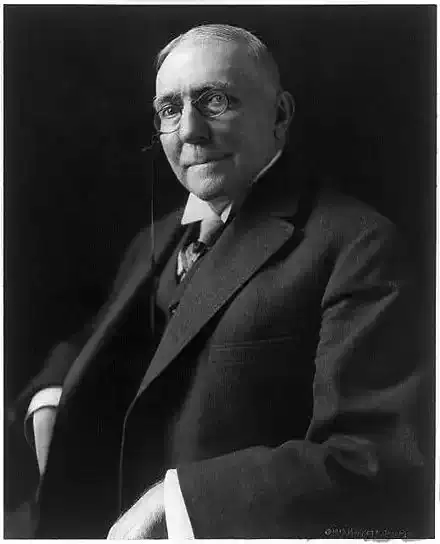
James Whitcomb Riley
Billy's Alphabetical Animal Show
Billy's Alphabetical Animal Show
A was an elegant Ape
Who tied up his ears with red tape,
And wore a long veil
Half revealing his tail
Which was trimmed with jet bugles and crape.
B was a boastful old Bear
Who used to say,--'Hoomh! I declare
I can eat--if you'll get me
The children, and let me--
Ten babies, teeth, toenails and hair!'
C was a Codfish who sighed
When snatched from the home of his pride,
But could he, embrined,
Guess this fragrance behind,
How glad he would be that he died!
D was a dandified Dog
Who said,--'Though it's raining like fog
I wear no umbrellah,
Me boy, for a fellah
Might just as well travel incog!'
E was an elderly Eel
Who would say,--'Well, I really feel--
As my grandchildren wriggle
And shout 'I should giggle'--
A trifle run down at the heel!'
F was a Fowl who conceded
_Some_ hens might hatch more eggs than _she_ did,--
But she'd children as plenty
As eighteen or twenty,
And that was quite all that she needed.
G was a gluttonous Goat
Who, dining one day, _table-d'hote,_
Ordered soup-bone, _au fait_,
And fish, _papier-mache_,
And a _filet_ of Spring overcoat.
H was a high-cultured Hound
Who could clear forty feet at a bound,
And a coon once averred
That his howl could be heard
For five miles and three-quarters around.
I was an Ibex ambitious
To dive over chasms auspicious;
He would leap down a peak
And not light for a week,
And swear that the jump was delicious.
J was a Jackass who said
He had such a bad cold in his head,
If it wasn't for leaving
The rest of us grieving,
He'd really rather be dead.
K was a profligate Kite
Who would haunt the saloons every night;
And often he ust
To reel back to his roost
Too full to set up on it right.
L was a wary old Lynx
Who would say,--'Do you know wot I thinks?--
I thinks ef you happen
To ketch me a-nappin'
I'm ready to set up the drinks!'
M was a merry old Mole,
Who would snooze all the day in his hole,
Then--all night, a-rootin'
Around and galootin'-He'd
sing 'Johnny, Fill up the Bowl!'
N was a caustical Nautilus
Who sneered, 'I suppose, when they've _caught_ all us,
Like oysters they'll serve us,
And can us, preserve us,
And barrel, and pickle, and bottle us!'
O was an autocrat Owl--
Such a wise--such a wonderful fowl!
Why, for all the night through
He would hoot and hoo-hoo,
And hoot and hoo-hooter and howl!
P was a Pelican pet,
Who gobbled up all he could get;
He could eat on until
He was full to the bill,
And there he had lodgings to let!
Q was a querulous Quail,
Who said: 'It will little avail
The efforts of those
Of my foes who propose
To attempt to put salt on my tail!'
R was a ring-tailed Raccoon,
With eyes of the tinge of the moon,
And his nose a blue-black,
And the fur on his back
A sad sort of sallow maroon.
S is a Sculpin--you'll wish
Very much to have one on your dish,
Since all his bones grow
On the outside, and so
He's a very desirable fish.
T was a Turtle, of wealth,
Who went round with particular stealth,-'
Why,' said he, 'I'm afraid
Of being waylaid
When I even walk out for my health!'
U was a Unicorn curious,
With one horn, of a growth so _luxurious_,
He could level and stab it--
If you didn't grab it--
Clean through you, he was so blamed furious!
V was a vagabond Vulture
Who said: 'I don't want to insult yer,
But when you intrude
Where in lone solitude
I'm a-preyin', you're no man o' culture!'
W was a wild _Wood_chuck,
And you can just bet that he _could_ 'chuck'
He'd eat raw potatoes,
Green corn, and tomatoes,
And tree roots, and call it all '_good_ chuck!'
X was a kind of X-cuse
Of a some-sort-o'-thing that got loose
Before we could name it,
And cage it, and tame it,
And bring it in general use.
Y is the Yellowbird,--bright
As a petrified lump of star-light,
Or a handful of lightning-
Bugs, squeezed in the tight'ning
Pink fist of a boy, at night.
Z is the Zebra, of course!--
A kind of a clown-of-a-horse,--
Each other despising,
Yet neither devising
A way to obtain a divorce!
& here is the famous--what-is-it?
Walk up, Master Billy, and quiz it:
You've seen the _rest_ of 'em-Ain't
this the _best_ of 'em,
Right at the end of your visit?
A was an elegant Ape
Who tied up his ears with red tape,
And wore a long veil
Half revealing his tail
Which was trimmed with jet bugles and crape.
B was a boastful old Bear
Who used to say,--'Hoomh! I declare
I can eat--if you'll get me
The children, and let me--
Ten babies, teeth, toenails and hair!'
C was a Codfish who sighed
When snatched from the home of his pride,
But could he, embrined,
Guess this fragrance behind,
How glad he would be that he died!
D was a dandified Dog
Who said,--'Though it's raining like fog
I wear no umbrellah,
Me boy, for a fellah
Might just as well travel incog!'
E was an elderly Eel
Who would say,--'Well, I really feel--
As my grandchildren wriggle
And shout 'I should giggle'--
A trifle run down at the heel!'
F was a Fowl who conceded
_Some_ hens might hatch more eggs than _she_ did,--
But she'd children as plenty
As eighteen or twenty,
And that was quite all that she needed.
G was a gluttonous Goat
Who, dining one day, _table-d'hote,_
Ordered soup-bone, _au fait_,
And fish, _papier-mache_,
And a _filet_ of Spring overcoat.
H was a high-cultured Hound
Who could clear forty feet at a bound,
And a coon once averred
That his howl could be heard
For five miles and three-quarters around.
I was an Ibex ambitious
To dive over chasms auspicious;
He would leap down a peak
And not light for a week,
And swear that the jump was delicious.
J was a Jackass who said
He had such a bad cold in his head,
If it wasn't for leaving
The rest of us grieving,
He'd really rather be dead.
K was a profligate Kite
Who would haunt the saloons every night;
And often he ust
To reel back to his roost
Too full to set up on it right.
L was a wary old Lynx
Who would say,--'Do you know wot I thinks?--
I thinks ef you happen
To ketch me a-nappin'
I'm ready to set up the drinks!'
M was a merry old Mole,
Who would snooze all the day in his hole,
Then--all night, a-rootin'
Around and galootin'-He'd
sing 'Johnny, Fill up the Bowl!'
N was a caustical Nautilus
Who sneered, 'I suppose, when they've _caught_ all us,
Like oysters they'll serve us,
And can us, preserve us,
And barrel, and pickle, and bottle us!'
O was an autocrat Owl--
Such a wise--such a wonderful fowl!
Why, for all the night through
He would hoot and hoo-hoo,
And hoot and hoo-hooter and howl!
P was a Pelican pet,
Who gobbled up all he could get;
He could eat on until
He was full to the bill,
And there he had lodgings to let!
Q was a querulous Quail,
Who said: 'It will little avail
The efforts of those
Of my foes who propose
To attempt to put salt on my tail!'
R was a ring-tailed Raccoon,
With eyes of the tinge of the moon,
And his nose a blue-black,
And the fur on his back
A sad sort of sallow maroon.
S is a Sculpin--you'll wish
Very much to have one on your dish,
Since all his bones grow
On the outside, and so
He's a very desirable fish.
T was a Turtle, of wealth,
Who went round with particular stealth,-'
Why,' said he, 'I'm afraid
Of being waylaid
When I even walk out for my health!'
U was a Unicorn curious,
With one horn, of a growth so _luxurious_,
He could level and stab it--
If you didn't grab it--
Clean through you, he was so blamed furious!
V was a vagabond Vulture
Who said: 'I don't want to insult yer,
But when you intrude
Where in lone solitude
I'm a-preyin', you're no man o' culture!'
W was a wild _Wood_chuck,
And you can just bet that he _could_ 'chuck'
He'd eat raw potatoes,
Green corn, and tomatoes,
And tree roots, and call it all '_good_ chuck!'
X was a kind of X-cuse
Of a some-sort-o'-thing that got loose
Before we could name it,
And cage it, and tame it,
And bring it in general use.
Y is the Yellowbird,--bright
As a petrified lump of star-light,
Or a handful of lightning-
Bugs, squeezed in the tight'ning
Pink fist of a boy, at night.
Z is the Zebra, of course!--
A kind of a clown-of-a-horse,--
Each other despising,
Yet neither devising
A way to obtain a divorce!
& here is the famous--what-is-it?
Walk up, Master Billy, and quiz it:
You've seen the _rest_ of 'em-Ain't
this the _best_ of 'em,
Right at the end of your visit?
226
James Whitcomb Riley
A Prospective Visit
A Prospective Visit
While _any_ day was notable and dear
That gave the children Noey, history here
Records his advent emphasized indeed
With sharp italics, as he came to feed
The stock one special morning, fair and bright,
When Johnty and Bud met him, with delight
Unusual even as their extra dress--
Garbed as for holiday, with much excess
Of proud self-consciousness and vain conceit
In their new finery.--Far up the street
They called to Noey, as he came, that they,
As promised, both were going back that day
To _his_ house with him!
And by time that each
Had one of Noey's hands--ceasing their speech
And coyly anxious, in their new attire,
To wake the comment of their mute desire,--
Noey seemed rendered voiceless. Quite a while
They watched him furtively.--He seemed to smile
As though he would conceal it; and they saw
Him look away, and his lips purse and draw
In curious, twitching spasms, as though he might
Be whispering,--while in his eye the white
Predominated strangely.--Then the spell
Gave way, and his pent speech burst audible:
'They wuz two stylish little boys,
and they wuz mighty bold ones,
Had two new pairs o' britches made
out o' their daddy's old ones!'
And at the inspirational outbreak,
Both joker and his victims seemed to take
An equal share of laughter,--and all through
Their morning visit kept recurring to
The funny words and jingle of the rhyme
That just kept getting funnier all the time.
While _any_ day was notable and dear
That gave the children Noey, history here
Records his advent emphasized indeed
With sharp italics, as he came to feed
The stock one special morning, fair and bright,
When Johnty and Bud met him, with delight
Unusual even as their extra dress--
Garbed as for holiday, with much excess
Of proud self-consciousness and vain conceit
In their new finery.--Far up the street
They called to Noey, as he came, that they,
As promised, both were going back that day
To _his_ house with him!
And by time that each
Had one of Noey's hands--ceasing their speech
And coyly anxious, in their new attire,
To wake the comment of their mute desire,--
Noey seemed rendered voiceless. Quite a while
They watched him furtively.--He seemed to smile
As though he would conceal it; and they saw
Him look away, and his lips purse and draw
In curious, twitching spasms, as though he might
Be whispering,--while in his eye the white
Predominated strangely.--Then the spell
Gave way, and his pent speech burst audible:
'They wuz two stylish little boys,
and they wuz mighty bold ones,
Had two new pairs o' britches made
out o' their daddy's old ones!'
And at the inspirational outbreak,
Both joker and his victims seemed to take
An equal share of laughter,--and all through
Their morning visit kept recurring to
The funny words and jingle of the rhyme
That just kept getting funnier all the time.
265
James Whitcomb Riley
A Parent Reprimanded
A Parent Reprimanded
Sometimes I think 'at Parents does
Things ist about as bad as _us_--
Wite 'fore our vurry eyes, at that!
Fer one time Pa he scold' my Ma
'Cause he can't find his hat;
An' she ist _cried_, she did! An' I
Says, 'Ef you scold my Ma
Ever again an' make her cry,
Wy, you sha'n't _be_ my Pa!'
An' nen he laugh' an' find his hat
Ist wite where Ma she said it's at!
Sometimes I think 'at Parents does
Things ist about as bad as _us_--
Wite 'fore our vurry eyes, at that!
Fer one time Pa he scold' my Ma
'Cause he can't find his hat;
An' she ist _cried_, she did! An' I
Says, 'Ef you scold my Ma
Ever again an' make her cry,
Wy, you sha'n't _be_ my Pa!'
An' nen he laugh' an' find his hat
Ist wite where Ma she said it's at!
270
James Whitcomb Riley
A New Year's Time At Willards's
A New Year's Time At Willards's
1
The Hired Man Talks
There's old man Willards; an' his wife;
An' Marg'et-- S'repty's sister--; an'
There's me-- an' I'm the hired man;
An' Tomps McClure, you better yer life!
Well now, old Willards hain't so bad,
Considerin' the chance he's had.
Of course, he's rich, an' sleeps an' eats
Whenever he's a mind to: Takes
An' leans back in the Amen-seats
An' thanks the Lord fer all he makes--.
That's purty much all folks has got
Ag'inst the old man, like as not!
But there's his woman-- jes the turn
Of them-air two wild girls o' hern-Marg'et
an' S'repty-- allus in
Fer any cuttin'-up concern--
Church festibals, and foolishin'
Round Christmas-trees, an' New Year's sprees--
Set up to watch the Old Year go
An' New Year come-- sich things as these;
An' turkey-dinners, don't you know!
S'repty's younger, an' more gay,
An' purtier, an' finer dressed
Than Marg'et is-- but, lawzy-day!
She hain't the independentest!
'Take care!' old Willards used to say,
'Take care--! Let Marg'et have her way,
An' S'repty, you go off an' play
On your melodeum--!' But, best
Of all, comes Tomps! An' I'll be bound,
Ef he hain't jes the beatin'est
Young chap in all the country round!
Ef you knowed Tomps you'd like him, shore!
They hain't no man on top o' ground
Walks into my affections more--!
An' all the Settlement'll say
That Tomps was liked jes thataway
By ever'body, till he tuk
A shine to S'repty Willards--. Then
You'd ort'o see the old man buck
An' h'ist hisse'f, an' paw the dirt,
An' hint that 'common workin'-men
That didn't want their feelin's hurt
'Ud better hunt fer 'comp'ny' where
The folks was pore an' didn't care--!'
The pine-blank facts is--, the old man,
Last Christmas was a year ago,
Found out some presents Tomps had got
Fer S'repty, an' hit made him hot--
Set down an' tuk his pen in hand
An' writ to Tomps an' told him so
On legal cap, in white an' black,
An' give him jes to understand
'No Christmas-gifts o' 'lily-white'
An' bear's-ile could fix matters right,'
An' wropped 'em up an' sent 'em back!
Well, S'repty cried an' snuffled round
Consid'able. But Marg'et she
Toed out another sock, an' wound
Her knittin' up, an' drawed the tea,
An' then set on the supper-things,
An' went up in the loft an' dressed--
An' through it all you'd never guessed
What she was up to! An' she brings
Her best hat with her an her shawl,
An' gloves, an' redicule, an' all,
An' injirubbers, an' comes down
An' tells 'em she's a-goin' to town
To he'p the Christmas goin's-on
Her Church got up. An' go she does--
The best hosswoman ever was!
'An' what'll We do while you're gone?'
The old man says, a-tryin' to be
Agreeable. 'Oh! You?' says she--,
'You kin jaw S'repty, like you did,
An' slander Tomps!' An' off she rid!
Now, this is all I'm goin' to tell
Of this-here story-- that is, I
Have done my very level best
As fur as this, an' here I 'dwell,'
As auctioneers says, winkin' sly:
Hit's old man Willards tells the rest.
2
The Old Man Talks
Adzackly jes one year ago,
This New Year's day, Tomps comes to me--
In my own house, an' whilse the folks
Was gittin' dinner--, an' he pokes
His nose right in, an' says, says he:
'I got yer note-- an' read it slow!
You don't like me, ner I don't you,'
He says--, 'we're even there, you know!
But you've said, furder that no gal
Of yourn kin marry me, er shall,
An' I'd best shet off comin', too!'
An' then he says--, 'Well, them's Your views--;
But havin' talked with S'repty, we
Have both agreed to disagree
With your peculiar notions-- some;
An', that s the reason, I refuse
To quit a-comin' here, but come--
Not fer to threat, ner raise no skeer
An' spile yer turkey-dinner here--,
But jes fer S'repty's sake, to sheer
Yer New Year's. Shall I take a cheer?'
Well, blame-don! Ef I ever see
Sich impidence! I couldn't say
Not nary word! But Mother she
Sot out a cheer fer Tomps, an' they
Shuk hands an' turnt their back on me.
Then I riz-- mad as mad could be--!
But Marg'et says--, 'Now, Pap! You set
Right where you're settin'--! Don't you fret!
An' Tomps-- you warm yer feet!' says she,
'An throw yer mitts an' comfert on
The bed there! Where is S'repty gone!
The cabbage is a-scortchin'! Ma,
Stop cryin' there an' stir the slaw!'
Well--! What was Mother cryin' fer--?
I half riz up-- but Marg'et's chin
Hit squared-- an' I set down ag'in--
I allus was afeard o' her,
I was, by jucks! So there I set,
Betwixt a sinkin'-chill an' sweat,
An' scuffled with my wrath, an' shet
My teeth to mighty tight, you bet!
An' yit, fer all that I could do,
I eeched to jes git up an' whet
The carvin'-knife a rasp er two
On Tomps's ribs-- an' so would you--!
Fer he had riz an' faced around,
An' stood there, smilin', as they brung
The turkey in, all stuffed an' browned--
Too sweet fer nose, er tooth, er tongue!
With sniffs o' sage, an' p'r'aps a dash
Of old burnt brandy, steamin'-hot
Mixed kindo' in with apple-mash
An' mince-meat, an' the Lord knows what!
Nobody was a-talkin' then,
To 'filiate any awk'ardness--
No noise o' any kind but jes
The rattle o' the dishes when
They'd fetch 'em in an' set 'em down,
An' fix an' change 'em round an' round,
Like women does-- till Mother says--,
'Vittels is ready; Abner, call
Down S'repty-- she's up-stairs, I guess--.'
And Marg'et she says, 'Ef you bawl
Like that, she'll not come down at all!
Besides, we needn't wait till she
Gits down! Here Temps, set down by me,
An' Pap: say grace...!' Well, there I was--!
What could I do! I drapped my head
Behind my fists an' groaned; an' said--:
'Indulgent Parent! In Thy cause
We bow the head an' bend the knee
An' break the bread, an' pour the wine,
Feelin'--' (The stair-door suddently
Went bang! An' S'repty flounced by me--)
'Feelin',' I says, 'this feast is Thine--
This New Year's feast--' an' rap-rap-rap!
Went Marg'ets case-knife on her plate--
An' next, I heerd a sasser drap--,
Then I looked up, an' strange to state,
There S'repty set in Tomps lap--
An' huggin' him, as shore as fate!
An' Mother kissin' him k-slap!
An' Marg'et-- she chips in to drap
The ruther peert remark to me--:
'That 'grace' o' yourn,' she says, 'won't 'gee'--
This hain't no 'New Year's feast,'' says she--,
'This is a' Infair-Dinner, Pap!'
An' so it was--! Be'n married fer
Purt' nigh a week--! 'Twas Marg'et planned
The whole thing fer 'em, through an' through.
I'm rickonciled; an' understand,
I take things jes as they occur--,
Ef Marg'et liked Tomps, Tomps 'ud do--!
But I-says-I, a-holt his hand--,
'I'm glad you didn't marry Her-'
Cause Marg'et's my guardeen-- yes-sir--!
An' S'repty's good enough fer you!'
1
The Hired Man Talks
There's old man Willards; an' his wife;
An' Marg'et-- S'repty's sister--; an'
There's me-- an' I'm the hired man;
An' Tomps McClure, you better yer life!
Well now, old Willards hain't so bad,
Considerin' the chance he's had.
Of course, he's rich, an' sleeps an' eats
Whenever he's a mind to: Takes
An' leans back in the Amen-seats
An' thanks the Lord fer all he makes--.
That's purty much all folks has got
Ag'inst the old man, like as not!
But there's his woman-- jes the turn
Of them-air two wild girls o' hern-Marg'et
an' S'repty-- allus in
Fer any cuttin'-up concern--
Church festibals, and foolishin'
Round Christmas-trees, an' New Year's sprees--
Set up to watch the Old Year go
An' New Year come-- sich things as these;
An' turkey-dinners, don't you know!
S'repty's younger, an' more gay,
An' purtier, an' finer dressed
Than Marg'et is-- but, lawzy-day!
She hain't the independentest!
'Take care!' old Willards used to say,
'Take care--! Let Marg'et have her way,
An' S'repty, you go off an' play
On your melodeum--!' But, best
Of all, comes Tomps! An' I'll be bound,
Ef he hain't jes the beatin'est
Young chap in all the country round!
Ef you knowed Tomps you'd like him, shore!
They hain't no man on top o' ground
Walks into my affections more--!
An' all the Settlement'll say
That Tomps was liked jes thataway
By ever'body, till he tuk
A shine to S'repty Willards--. Then
You'd ort'o see the old man buck
An' h'ist hisse'f, an' paw the dirt,
An' hint that 'common workin'-men
That didn't want their feelin's hurt
'Ud better hunt fer 'comp'ny' where
The folks was pore an' didn't care--!'
The pine-blank facts is--, the old man,
Last Christmas was a year ago,
Found out some presents Tomps had got
Fer S'repty, an' hit made him hot--
Set down an' tuk his pen in hand
An' writ to Tomps an' told him so
On legal cap, in white an' black,
An' give him jes to understand
'No Christmas-gifts o' 'lily-white'
An' bear's-ile could fix matters right,'
An' wropped 'em up an' sent 'em back!
Well, S'repty cried an' snuffled round
Consid'able. But Marg'et she
Toed out another sock, an' wound
Her knittin' up, an' drawed the tea,
An' then set on the supper-things,
An' went up in the loft an' dressed--
An' through it all you'd never guessed
What she was up to! An' she brings
Her best hat with her an her shawl,
An' gloves, an' redicule, an' all,
An' injirubbers, an' comes down
An' tells 'em she's a-goin' to town
To he'p the Christmas goin's-on
Her Church got up. An' go she does--
The best hosswoman ever was!
'An' what'll We do while you're gone?'
The old man says, a-tryin' to be
Agreeable. 'Oh! You?' says she--,
'You kin jaw S'repty, like you did,
An' slander Tomps!' An' off she rid!
Now, this is all I'm goin' to tell
Of this-here story-- that is, I
Have done my very level best
As fur as this, an' here I 'dwell,'
As auctioneers says, winkin' sly:
Hit's old man Willards tells the rest.
2
The Old Man Talks
Adzackly jes one year ago,
This New Year's day, Tomps comes to me--
In my own house, an' whilse the folks
Was gittin' dinner--, an' he pokes
His nose right in, an' says, says he:
'I got yer note-- an' read it slow!
You don't like me, ner I don't you,'
He says--, 'we're even there, you know!
But you've said, furder that no gal
Of yourn kin marry me, er shall,
An' I'd best shet off comin', too!'
An' then he says--, 'Well, them's Your views--;
But havin' talked with S'repty, we
Have both agreed to disagree
With your peculiar notions-- some;
An', that s the reason, I refuse
To quit a-comin' here, but come--
Not fer to threat, ner raise no skeer
An' spile yer turkey-dinner here--,
But jes fer S'repty's sake, to sheer
Yer New Year's. Shall I take a cheer?'
Well, blame-don! Ef I ever see
Sich impidence! I couldn't say
Not nary word! But Mother she
Sot out a cheer fer Tomps, an' they
Shuk hands an' turnt their back on me.
Then I riz-- mad as mad could be--!
But Marg'et says--, 'Now, Pap! You set
Right where you're settin'--! Don't you fret!
An' Tomps-- you warm yer feet!' says she,
'An throw yer mitts an' comfert on
The bed there! Where is S'repty gone!
The cabbage is a-scortchin'! Ma,
Stop cryin' there an' stir the slaw!'
Well--! What was Mother cryin' fer--?
I half riz up-- but Marg'et's chin
Hit squared-- an' I set down ag'in--
I allus was afeard o' her,
I was, by jucks! So there I set,
Betwixt a sinkin'-chill an' sweat,
An' scuffled with my wrath, an' shet
My teeth to mighty tight, you bet!
An' yit, fer all that I could do,
I eeched to jes git up an' whet
The carvin'-knife a rasp er two
On Tomps's ribs-- an' so would you--!
Fer he had riz an' faced around,
An' stood there, smilin', as they brung
The turkey in, all stuffed an' browned--
Too sweet fer nose, er tooth, er tongue!
With sniffs o' sage, an' p'r'aps a dash
Of old burnt brandy, steamin'-hot
Mixed kindo' in with apple-mash
An' mince-meat, an' the Lord knows what!
Nobody was a-talkin' then,
To 'filiate any awk'ardness--
No noise o' any kind but jes
The rattle o' the dishes when
They'd fetch 'em in an' set 'em down,
An' fix an' change 'em round an' round,
Like women does-- till Mother says--,
'Vittels is ready; Abner, call
Down S'repty-- she's up-stairs, I guess--.'
And Marg'et she says, 'Ef you bawl
Like that, she'll not come down at all!
Besides, we needn't wait till she
Gits down! Here Temps, set down by me,
An' Pap: say grace...!' Well, there I was--!
What could I do! I drapped my head
Behind my fists an' groaned; an' said--:
'Indulgent Parent! In Thy cause
We bow the head an' bend the knee
An' break the bread, an' pour the wine,
Feelin'--' (The stair-door suddently
Went bang! An' S'repty flounced by me--)
'Feelin',' I says, 'this feast is Thine--
This New Year's feast--' an' rap-rap-rap!
Went Marg'ets case-knife on her plate--
An' next, I heerd a sasser drap--,
Then I looked up, an' strange to state,
There S'repty set in Tomps lap--
An' huggin' him, as shore as fate!
An' Mother kissin' him k-slap!
An' Marg'et-- she chips in to drap
The ruther peert remark to me--:
'That 'grace' o' yourn,' she says, 'won't 'gee'--
This hain't no 'New Year's feast,'' says she--,
'This is a' Infair-Dinner, Pap!'
An' so it was--! Be'n married fer
Purt' nigh a week--! 'Twas Marg'et planned
The whole thing fer 'em, through an' through.
I'm rickonciled; an' understand,
I take things jes as they occur--,
Ef Marg'et liked Tomps, Tomps 'ud do--!
But I-says-I, a-holt his hand--,
'I'm glad you didn't marry Her-'
Cause Marg'et's my guardeen-- yes-sir--!
An' S'repty's good enough fer you!'
285
James Whitcomb Riley
A Liz Town Humorist
A Liz Town Humorist
Settin' round the stove, last night,
Down at Wess's store, was me
And Mart Strimples, Tunk, and White,
And Doc Bills, and two er three
Fellers o' the Mudsock tribe
No use tryin' to describe!
And says Doc, he says, says he--,
'Talkin' 'bout good things to eat,
Ripe mushmillon's hard to beat!'
I chawed on. And Mart he 'lowed
Wortermillon beat the mush--.
'Red,' he says, 'and juicy-- Hush--!
I'll jes' leave it to the crowd!'
Then a Mudsock chap, says he--,
'Punkin's good enough fer me--
Punkin pies, I mean,' he says--,
Them beats millons--! What say, Wess?
I chawed on. And Wess says--, 'Well,
You jes' fetch that wife of mine
All yer wortermillon-rine--,
And she'll bile it down a spell--
In with sorghum, I suppose,
And what else, Lord only knows--!
But I'm here to tell all hands
Them p'serves meets my demands!'
I chawed on. And White he says--,
'Well, I'll jes' stand, in with Wess-I'm
no hog!' And Tunk says--, 'I
Guess I'll pastur' out on pie
With the Mudsock boys!' says he;
'Now what's yourn?' he says to me:
I chawed on-- fer-- quite a spell
Then I speaks up, slow and dry--,
Jes' tobacker!' I-says-I--.
And you'd ort o' heerd 'em yell!
Settin' round the stove, last night,
Down at Wess's store, was me
And Mart Strimples, Tunk, and White,
And Doc Bills, and two er three
Fellers o' the Mudsock tribe
No use tryin' to describe!
And says Doc, he says, says he--,
'Talkin' 'bout good things to eat,
Ripe mushmillon's hard to beat!'
I chawed on. And Mart he 'lowed
Wortermillon beat the mush--.
'Red,' he says, 'and juicy-- Hush--!
I'll jes' leave it to the crowd!'
Then a Mudsock chap, says he--,
'Punkin's good enough fer me--
Punkin pies, I mean,' he says--,
Them beats millons--! What say, Wess?
I chawed on. And Wess says--, 'Well,
You jes' fetch that wife of mine
All yer wortermillon-rine--,
And she'll bile it down a spell--
In with sorghum, I suppose,
And what else, Lord only knows--!
But I'm here to tell all hands
Them p'serves meets my demands!'
I chawed on. And White he says--,
'Well, I'll jes' stand, in with Wess-I'm
no hog!' And Tunk says--, 'I
Guess I'll pastur' out on pie
With the Mudsock boys!' says he;
'Now what's yourn?' he says to me:
I chawed on-- fer-- quite a spell
Then I speaks up, slow and dry--,
Jes' tobacker!' I-says-I--.
And you'd ort o' heerd 'em yell!
284
James Whitcomb Riley
A Home-Made Fairy Tale
A Home-Made Fairy Tale
Bud, come here to your uncle a spell,
And I'll tell you something you mustn't tell--
For it's a secret and shore-'nuf true,
And maybe I oughtn't to tell it to you--!
But out in the garden, under the shade
Of the apple-trees, where we romped and played
Till the moon was up, and you thought I'd gone
Fast asleep--, That was all put on!
For I was a-watchin' something queer
Goin' on there in the grass, my dear--!
'Way down deep in it, there I see
A little dude-Fairy who winked at me,
And snapped his fingers, and laughed as low
And fine as the whine of a mus-kee-to!
I kept still-- watchin' him closer-- and
I noticed a little guitar in his hand,
Which he leant 'ginst a little dead bee-- and laid
His cigarette down on a clean grass-blade,
And then climbed up on the shell of a snail--
Carefully dusting his swallowtail--
And pulling up, by a waxed web-thread,
This little guitar, you remember. I said!
And there he trinkled and trilled a tune--,
'My Love, so Fair, Tans in the Moon!'
Till presently, out of the clover-top
He seemed to be singing to, came k'pop!
The purtiest, daintiest Fairy face
In all this world, or any place!
Then the little ser'nader waved his hand,
As much as to say, 'We'll excuse you!' and
I heard, as I squinted my eyelids to,
A kiss like the drip of a drop of dew!
Bud, come here to your uncle a spell,
And I'll tell you something you mustn't tell--
For it's a secret and shore-'nuf true,
And maybe I oughtn't to tell it to you--!
But out in the garden, under the shade
Of the apple-trees, where we romped and played
Till the moon was up, and you thought I'd gone
Fast asleep--, That was all put on!
For I was a-watchin' something queer
Goin' on there in the grass, my dear--!
'Way down deep in it, there I see
A little dude-Fairy who winked at me,
And snapped his fingers, and laughed as low
And fine as the whine of a mus-kee-to!
I kept still-- watchin' him closer-- and
I noticed a little guitar in his hand,
Which he leant 'ginst a little dead bee-- and laid
His cigarette down on a clean grass-blade,
And then climbed up on the shell of a snail--
Carefully dusting his swallowtail--
And pulling up, by a waxed web-thread,
This little guitar, you remember. I said!
And there he trinkled and trilled a tune--,
'My Love, so Fair, Tans in the Moon!'
Till presently, out of the clover-top
He seemed to be singing to, came k'pop!
The purtiest, daintiest Fairy face
In all this world, or any place!
Then the little ser'nader waved his hand,
As much as to say, 'We'll excuse you!' and
I heard, as I squinted my eyelids to,
A kiss like the drip of a drop of dew!
349

Jack Prelutsky
Dora Diller
Dora Diller
'My stomach's full of butterflies!'
lamented Dora Diller.
Her mother sighed. 'That's no surprise,
you ate a caterpillar!'
'My stomach's full of butterflies!'
lamented Dora Diller.
Her mother sighed. 'That's no surprise,
you ate a caterpillar!'
137
Jack Prelutsky
Super Samson Simpson
Super Samson Simpson
I am Super Samson Simpson,
I'm superlatively strong,
I like to carry elephants,
I do it all day long,
I pick up half a dozen
and hoist them in the air,
it's really somewhat simple,
for I have strength to spare.
My muscles are enormous,
they bulge from top to toe,
and when I carry elephants,
they ripple to and fro,
but I am not the strongest
in the Simpson family,
for when I carry elephants,
my grandma carries me.
I am Super Samson Simpson,
I'm superlatively strong,
I like to carry elephants,
I do it all day long,
I pick up half a dozen
and hoist them in the air,
it's really somewhat simple,
for I have strength to spare.
My muscles are enormous,
they bulge from top to toe,
and when I carry elephants,
they ripple to and fro,
but I am not the strongest
in the Simpson family,
for when I carry elephants,
my grandma carries me.
178
Jack Prelutsky
Be Glad Your Nose is on Your Face
Be Glad Your Nose is on Your Face
Be glad your nose is on your face,
not pasted on some other place,
for if it were where it is not,
you might dislike your nose a lot.
Imagine if your precious nose
were sandwiched in between your toes,
that clearly would not be a treat,
for you'd be forced to smell your feet.
Your nose would be a source of dread
were it attached atop your head,
it soon would drive you to despair,
forever tickled by your hair.
Within your ear, your nose would be
an absolute catastrophe,
for when you were obliged to sneeze,
your brain would rattle from the breeze.
Your nose, instead, through thick and thin,
remains between your eyes and chin,
not pasted on some other place-be
glad your nose is on your face!
Be glad your nose is on your face,
not pasted on some other place,
for if it were where it is not,
you might dislike your nose a lot.
Imagine if your precious nose
were sandwiched in between your toes,
that clearly would not be a treat,
for you'd be forced to smell your feet.
Your nose would be a source of dread
were it attached atop your head,
it soon would drive you to despair,
forever tickled by your hair.
Within your ear, your nose would be
an absolute catastrophe,
for when you were obliged to sneeze,
your brain would rattle from the breeze.
Your nose, instead, through thick and thin,
remains between your eyes and chin,
not pasted on some other place-be
glad your nose is on your face!
167
Jack Prelutsky
As Soon as Fred Gets Out of Bed
As Soon as Fred Gets Out of Bed
As soon as Fred gets out of bed,
his underwear goes on his head.
His mother laughs, "Don't put it there,
a head's no place for underwear!"
But near his ears, above his brains,
is where Fred's underwear remains.
At night when Fred goes back to bed,
he deftly plucks it off his head.
His mother switches off the light
and softly croons, "Good night! Good night!"
And then, for reasons no one knows,
Fred's underwear goes on his toes.
As soon as Fred gets out of bed,
his underwear goes on his head.
His mother laughs, "Don't put it there,
a head's no place for underwear!"
But near his ears, above his brains,
is where Fred's underwear remains.
At night when Fred goes back to bed,
he deftly plucks it off his head.
His mother switches off the light
and softly croons, "Good night! Good night!"
And then, for reasons no one knows,
Fred's underwear goes on his toes.
152
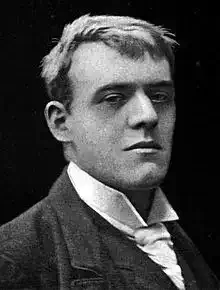
Hilaire Belloc
Epitah on the Politician Himself
Epitah on the Politician Himself
Here richly, with ridiculous display,
The Politician's corpse was laid away.
While all of his acquaintance sneered and slanged
I wept: for I had longed to see him hanged.
Another on the Same
This, the last ornament among the peers,
Bribed, bullied, swindled and blackmailed for years:
But Death's what even Politicians fail
To bribe or swindle, bully or blackmail.
On Another Politician
The Politician, dead and turned to clay,
Will make a clout to keep the wind away.
I am not fond of draughts, and yet I doubt
If I could get myself to touch that clout.
On Yet Another
Fame to her darling Shifter glory gives;
And Shifter is immortal while he lives.
Epitah Upon Himself
Lauda tu Ilarion audacem et splendidum,
Who was always beginning things and never ended 'em.
Here richly, with ridiculous display,
The Politician's corpse was laid away.
While all of his acquaintance sneered and slanged
I wept: for I had longed to see him hanged.
Another on the Same
This, the last ornament among the peers,
Bribed, bullied, swindled and blackmailed for years:
But Death's what even Politicians fail
To bribe or swindle, bully or blackmail.
On Another Politician
The Politician, dead and turned to clay,
Will make a clout to keep the wind away.
I am not fond of draughts, and yet I doubt
If I could get myself to touch that clout.
On Yet Another
Fame to her darling Shifter glory gives;
And Shifter is immortal while he lives.
Epitah Upon Himself
Lauda tu Ilarion audacem et splendidum,
Who was always beginning things and never ended 'em.
628
Hilaire Belloc
Cautionary Tales for Children: Introduction
Cautionary Tales for Children: Introduction
And is it True? It is not True.
And if it were it wouldn’t do,
For people such as me and you
Who pretty nearly all day long
Are doing something rather wrong.
Because if things were really so,
You would have perished long ago,
And I would not have lived to write
The noble lines that meet your sight,
Nor B.T.B survived to draw
The nicest things you ever saw.
And is it True? It is not True.
And if it were it wouldn’t do,
For people such as me and you
Who pretty nearly all day long
Are doing something rather wrong.
Because if things were really so,
You would have perished long ago,
And I would not have lived to write
The noble lines that meet your sight,
Nor B.T.B survived to draw
The nicest things you ever saw.
317
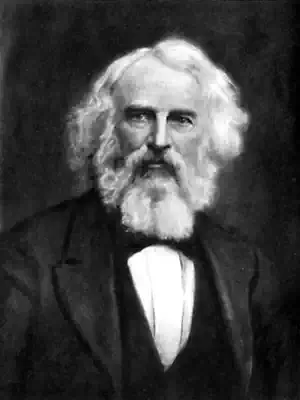
Henry Wadsworth Longfellow
Tales Of A Wayside Inn : Part 3. The Sicilian's Tale; The Monk of
Tales Of A Wayside Inn : Part 3. The Sicilian's Tale; The Monk of
Casal-Maggiore
Once on a time, some centuries ago,
In the hot sunshine two Franciscan friars
Wended their weary way, with footsteps slow
Back to their convent, whose white walls and spires
Gleamed on the hillside like a patch of snow;
Covered with dust they were, and torn by briers,
And bore like sumpter-mules upon their backs
The badge of poverty, their beggar's sacks.
The first was Brother Anthony, a spare
And silent man, with pallid cheeks and thin,
Much given to vigils, penance, fasting, prayer,
Solemn and gray, and worn with discipline,
As if his body but white ashes were,
Heaped on the living coals that glowed within;
A simple monk, like many of his day,
Whose instinct was to listen and obey.
A different man was Brother Timothy,
Of larger mould and of a coarser paste;
A rubicund and stalwart monk was he,
Broad in the shoulders, broader in the waist,
Who often filled the dull refectory
With noise by which the convent was disgraced,
But to the mass-book gave but little heed,
By reason he had never learned to read.
Now, as they passed the outskirts of a wood,
They saw, with mingled pleasure and surprise,
Fast tethered to a tree an ass, that stood
Lazily winking his large, limpid eyes.
The farmer Gilbert of that neighborhood
His owner was, who, looking for supplies
Of fagots, deeper in the wood had strayed,
Leaving his beast to ponder in the shade.
As soon as Brother Timothy espied
The patient animal, he said: 'Good-lack!
Thus for our needs doth Providence provide;
We'll lay our wallets on the creature's back.'
This being done, he leisurely untied
From head and neck the halter of the jack,
And put it round his own, and to the tree
Stood tethered fast as if the ass were he.
And, bursting forth into a merry laugh,
He cried to Brother Anthony: 'Away!
And drive the ass before you with your staff;
And when you reach the convent you may say
You left me at a farm, half tired and half
Ill with a fever, for a night and day,
And that the farmer lent this ass to bear
Our wallets, that are heavy with good fare.'
Now Brother Anthony, who knew the pranks
Of Brother Timothy, would not persuade
Or reason with him on his quirks and cranks,
But, being obedient, silently obeyed;
And, smiting with his staff the ass's flanks,
Drove him before him over hill and glade,
Safe with his provend to the convent gate,
Leaving poor Brother Timothy to his fate.
Then Gilbert, laden with fagots for his fire,
Forth issued from the wood, and stood aghast
To see the ponderous body of the friar
Standing where he had left his donkey last.
Trembling he stood, and dared not venture nigher,
But stared, and gaped, and crossed himself full fast;
For, being credulous and of little wit,
He thought it was some demon from the pit.
While speechless and bewildered thus he gazed,
And dropped his load of fagots on the ground,
Quoth Brother Timothy: 'Be not amazed
That where you left a donkey should be found
A poor Franciscan friar, half-starved and crazed,
Standing demure and with a halter bound;
But set me free, and hear the piteous story
Of Brother Timothy of Casal-Maggiore.
'I am a sinful man, although you see
I wear the consecrated cowl and cape;
You never owned an ass, but you owned me,
Changed and transformed from my own natural shape
All for the deadly sin of gluttony,
From which I could not otherwise escape,
Than by this penance, dieting on grass,
And being worked and beaten as an ass.
'Think of the ignominy I endured;
Think of the miserable life I led,
The toil and blows to which I was inured,
My wretched lodging in a windy shed,
My scanty fare so grudgingly procured,
The damp and musty straw that formed my bed!
But, having done this penance for my sins,
My life as man and monk again begins.'
The simple Gilbert, hearing words like these,
Was conscience-stricken, and fell down apace
Before the friar upon his bended knees,
And with a suppliant voice implored his grace;
And the good monk, now very much at ease,
Granted him pardon with a smiling face,
Nor could refuse to be that night his guest,
It being late, and he in need of rest.
Upon a hillside, where the olive thrives,
With figures painted on its white-washed walls,
The cottage stood; and near the humming hives
Made murmurs as of far-off waterfalls;
A place where those who love secluded lives
Might live content, and, free from noise and brawls,
Like Claudian's Old Man of Verona here
Measure by fruits the slow-revolving year.
And, coming to this cottage of content
They found his children, and the buxom wench
His wife, Dame Cicely, and his father, bent
With years and labor, seated on a bench,
Repeating over some obscure event
In the old wars of Milanese and French;
All welcomed the Franciscan, with a sense
Of sacred awe and humble reverence.
When Gilbert told them what had come to pass,
How beyond question, cavil, or surmise,
Good Brother Timothy had been their ass,
You should have seen the wonder in their eyes;
You should have heard them cry, 'Alas! alas!
Have heard their lamentations and their sighs!
For all believed the story, and began
To see a saint in this afflicted man.
Forthwith there was prepared a grand repast,
To satisfy the craving of the friar
After so rigid and prolonged a fast;
The bustling housewife stirred the kitchen fire;
Then her two barn-yard fowls, her best and last,
Were put to death, at her express desire,
And served up with a salad in a bowl,
And flasks of country wine to crown the whole.
It would not be believed should I repeat
How hungry Brother Timothy appeared;
It was a pleasure but to see him eat,
His white teeth flashing through his russet beard,
His face aglow and flushed with wine and meat,
His roguish eyes that rolled and laughed and leered!
Lord! how he drank the blood-red country wine
As if the village vintage were divine!
And all the while he talked without surcease,
And told his merry tales with jovial glee
That never flagged, but rather did increase,
And laughed aloud as if insane were he,
And wagged his red beard, matted like a fleece,
And cast such glances at Dame Cicely
That Gilbert now grew angry with his guest,
And thus in words his rising wrath expressed.
'Good father,' said he, 'easily we see
How needful in some persons, and how right,
Mortification of the flesh may be.
The indulgence you have given it to-night,
After long penance, clearly proves to me
Your strength against temptation is but slight,
And shows the dreadful peril you are in
Of a relapse into your deadly sin.
'To-morrow morning, with the rising sun,
Go back unto your convent, nor refrain
From fasting and from scourging, for you run
Great danger to become an ass again,
Since monkish flesh and asinine are one;
Therefore be wise, nor longer here remain,
Unless you wish the scourge should be applied
By other hands, that will not spare your hide.'
When this the monk had heard, his color fled
And then returned, like lightning in the air,
Till he was all one blush from foot to head,
And even the bald spot in his russet hair
Turned from its usual pallor to bright red!
The old man was asleep upon his chair.
Then all retired, and sank into the deep
And helpless imbecility of sleep.
They slept until the dawn of day drew near,
Till the cock should have crowed, but did not crow,
For they had slain the shining chanticleer
And eaten him for supper, as you know.
The monk was up betimes and of good cheer,
And, having breakfasted, made haste to go,
As if he heard the distant matin bell,
And had but little time to say farewell.
Fresh was the morning as the breath of kine;
Odors of herbs commingled with the sweet
Balsamic exhalations of the pine;
A haze was in the air presaging heat;
Uprose the sun above the Apennine,
And all the misty valleys at its feet
Were full of the delirious song of birds,
Voices of men, and bells, and low of herds.
All this to Brother Timothy was naught;
He did not care for scenery, nor here
His busy fancy found the thing it sought;
But when he saw the convent walls appear,
And smoke from kitchen chimneys upward caught
And whirled aloft into the atmosphere,
He quickened his slow footsteps, like a beast
That scents the stable a league off at least.
And as he entered through the convent gate
He saw there in the court the ass, who stood
Twirling his ears about, and seemed to wait,
Just as he found him waiting in the wood;
And told the Prior that, to alleviate
The daily labors of the brotherhood,
The owner, being a man of means and thrift,
Bestowed him on the convent as a gift.
And thereupon the Prior for many days
Revolved this serious matter in his mind,
And turned it over many different ways,
Hoping that some safe issue he might find;
But stood in fear of what the world would say,
If he accepted presents of this kind,
Employing beasts of burden for the packs,
That lazy monks should carry on their backs.
Then, to avoid all scandal of the sort,
And stop the mouth of cavil, he decreed
That he would cut the tedious matter short,
And sell the ass with all convenient speed,
Thus saving the expense of his support,
And hoarding something for a time of need.
So he despatched him to the neighboring Fair,
And freed himself from cumber and from care.
It happened now by chance, as some might say,
Others perhaps would call it destiny,
Gilbert was at the Fair; and heard a bray,
And nearer came, and saw that it was he,
And whispered in his ear, 'Ah, lackaday!
Good father, the rebellious flesh, I see,
Has changed you back into an ass again,
And all my admonitions were in vain.'
The ass, who felt this breathing in his ear,
Did not turn round to look, but shook his head,
As if he were not pleased these words to hear,
And contradicted all that had been said.
And this made Gilbert cry in voice more clear,
'I know you well; your hair is russet-red;
Do not deny it; for you are the same
Franciscan friar, and Timothy by name.'
The ass, though now the secret had come out,
Was obstinate, and shook his head again;
Until a crowd was gathered round about
To hear this dialogue between the twain;
And raised their voices in a noisy shout
When Gilbert tried to make the matter plain,
And flouted him and mocked him all day long
With laughter and with jibes and scraps of song.
'If this be Brother Timothy,' they cried,
'Buy him, and feed him on the tenderest grass;
Thou canst not do too much for one so tried
As to be twice transformed into an ass.'
So simple Gilbert bought him, and untied
His halter, and o'er mountain and morass
He led him homeward, talking as he went
Of good behavior and a mind content.
The children saw them coming, and advanced,
Shouting with joy, and hung about his neck,--
Not Gilbert's, but the ass's,--round him danced,
And wove green garlands where-withal to deck
His sacred person; for again it chanced
Their childish feelings, without rein or check,
Could not discriminate in any way
A donkey from a friar of Orders Gray.
'O Brother Timothy,' the children said,
'You have come back to us just as before;
We were afraid, and thought that you were dead,
And we should never see you any more.'
And then they kissed the white star on his head,
That like a birth-mark or a badge he wore,
And patted him upon the neck and face,
And said a thousand things with childish grace.
Thenceforward and forever he was known
As Brother Timothy, and led always
A life of luxury, till he had grown
Ungrateful being stuffed with corn and hay,
And very vicious. Then in angry tone,
Rousing himself, poor Gilbert said one day
'When simple kindness is misunderstood
A little flagellation may do good.'
His many vices need not here be told;
Among them was a habit that he had
Of flinging up his heels at young and old,
Breaking his halter, running off like mad
O'er pasture-lands and meadow, wood and wold,
And other misdemeanors quite as bad;
But worst of all was breaking from his shed
At night, and ravaging the cabbage-bed.
So Brother Timothy went back once more
To his old life of labor and distress;
Was beaten worse than he had been before.
And now, instead of comfort and caress,
Came labors manifold and trials sore;
And as his toils increased his food grew less,
Until at last the great consoler, Death,
Ended his many sufferings with his breath.
Great was the lamentation when he died;
And mainly that he died impenitent;
Dame Cicely bewailed, the children cried,
The old man still remembered the event
In the French war, and Gilbert magnified
His many virtues, as he came and went,
And said: 'Heaven pardon Brother Timothy,
And keep us from the sin of gluttony.'
Casal-Maggiore
Once on a time, some centuries ago,
In the hot sunshine two Franciscan friars
Wended their weary way, with footsteps slow
Back to their convent, whose white walls and spires
Gleamed on the hillside like a patch of snow;
Covered with dust they were, and torn by briers,
And bore like sumpter-mules upon their backs
The badge of poverty, their beggar's sacks.
The first was Brother Anthony, a spare
And silent man, with pallid cheeks and thin,
Much given to vigils, penance, fasting, prayer,
Solemn and gray, and worn with discipline,
As if his body but white ashes were,
Heaped on the living coals that glowed within;
A simple monk, like many of his day,
Whose instinct was to listen and obey.
A different man was Brother Timothy,
Of larger mould and of a coarser paste;
A rubicund and stalwart monk was he,
Broad in the shoulders, broader in the waist,
Who often filled the dull refectory
With noise by which the convent was disgraced,
But to the mass-book gave but little heed,
By reason he had never learned to read.
Now, as they passed the outskirts of a wood,
They saw, with mingled pleasure and surprise,
Fast tethered to a tree an ass, that stood
Lazily winking his large, limpid eyes.
The farmer Gilbert of that neighborhood
His owner was, who, looking for supplies
Of fagots, deeper in the wood had strayed,
Leaving his beast to ponder in the shade.
As soon as Brother Timothy espied
The patient animal, he said: 'Good-lack!
Thus for our needs doth Providence provide;
We'll lay our wallets on the creature's back.'
This being done, he leisurely untied
From head and neck the halter of the jack,
And put it round his own, and to the tree
Stood tethered fast as if the ass were he.
And, bursting forth into a merry laugh,
He cried to Brother Anthony: 'Away!
And drive the ass before you with your staff;
And when you reach the convent you may say
You left me at a farm, half tired and half
Ill with a fever, for a night and day,
And that the farmer lent this ass to bear
Our wallets, that are heavy with good fare.'
Now Brother Anthony, who knew the pranks
Of Brother Timothy, would not persuade
Or reason with him on his quirks and cranks,
But, being obedient, silently obeyed;
And, smiting with his staff the ass's flanks,
Drove him before him over hill and glade,
Safe with his provend to the convent gate,
Leaving poor Brother Timothy to his fate.
Then Gilbert, laden with fagots for his fire,
Forth issued from the wood, and stood aghast
To see the ponderous body of the friar
Standing where he had left his donkey last.
Trembling he stood, and dared not venture nigher,
But stared, and gaped, and crossed himself full fast;
For, being credulous and of little wit,
He thought it was some demon from the pit.
While speechless and bewildered thus he gazed,
And dropped his load of fagots on the ground,
Quoth Brother Timothy: 'Be not amazed
That where you left a donkey should be found
A poor Franciscan friar, half-starved and crazed,
Standing demure and with a halter bound;
But set me free, and hear the piteous story
Of Brother Timothy of Casal-Maggiore.
'I am a sinful man, although you see
I wear the consecrated cowl and cape;
You never owned an ass, but you owned me,
Changed and transformed from my own natural shape
All for the deadly sin of gluttony,
From which I could not otherwise escape,
Than by this penance, dieting on grass,
And being worked and beaten as an ass.
'Think of the ignominy I endured;
Think of the miserable life I led,
The toil and blows to which I was inured,
My wretched lodging in a windy shed,
My scanty fare so grudgingly procured,
The damp and musty straw that formed my bed!
But, having done this penance for my sins,
My life as man and monk again begins.'
The simple Gilbert, hearing words like these,
Was conscience-stricken, and fell down apace
Before the friar upon his bended knees,
And with a suppliant voice implored his grace;
And the good monk, now very much at ease,
Granted him pardon with a smiling face,
Nor could refuse to be that night his guest,
It being late, and he in need of rest.
Upon a hillside, where the olive thrives,
With figures painted on its white-washed walls,
The cottage stood; and near the humming hives
Made murmurs as of far-off waterfalls;
A place where those who love secluded lives
Might live content, and, free from noise and brawls,
Like Claudian's Old Man of Verona here
Measure by fruits the slow-revolving year.
And, coming to this cottage of content
They found his children, and the buxom wench
His wife, Dame Cicely, and his father, bent
With years and labor, seated on a bench,
Repeating over some obscure event
In the old wars of Milanese and French;
All welcomed the Franciscan, with a sense
Of sacred awe and humble reverence.
When Gilbert told them what had come to pass,
How beyond question, cavil, or surmise,
Good Brother Timothy had been their ass,
You should have seen the wonder in their eyes;
You should have heard them cry, 'Alas! alas!
Have heard their lamentations and their sighs!
For all believed the story, and began
To see a saint in this afflicted man.
Forthwith there was prepared a grand repast,
To satisfy the craving of the friar
After so rigid and prolonged a fast;
The bustling housewife stirred the kitchen fire;
Then her two barn-yard fowls, her best and last,
Were put to death, at her express desire,
And served up with a salad in a bowl,
And flasks of country wine to crown the whole.
It would not be believed should I repeat
How hungry Brother Timothy appeared;
It was a pleasure but to see him eat,
His white teeth flashing through his russet beard,
His face aglow and flushed with wine and meat,
His roguish eyes that rolled and laughed and leered!
Lord! how he drank the blood-red country wine
As if the village vintage were divine!
And all the while he talked without surcease,
And told his merry tales with jovial glee
That never flagged, but rather did increase,
And laughed aloud as if insane were he,
And wagged his red beard, matted like a fleece,
And cast such glances at Dame Cicely
That Gilbert now grew angry with his guest,
And thus in words his rising wrath expressed.
'Good father,' said he, 'easily we see
How needful in some persons, and how right,
Mortification of the flesh may be.
The indulgence you have given it to-night,
After long penance, clearly proves to me
Your strength against temptation is but slight,
And shows the dreadful peril you are in
Of a relapse into your deadly sin.
'To-morrow morning, with the rising sun,
Go back unto your convent, nor refrain
From fasting and from scourging, for you run
Great danger to become an ass again,
Since monkish flesh and asinine are one;
Therefore be wise, nor longer here remain,
Unless you wish the scourge should be applied
By other hands, that will not spare your hide.'
When this the monk had heard, his color fled
And then returned, like lightning in the air,
Till he was all one blush from foot to head,
And even the bald spot in his russet hair
Turned from its usual pallor to bright red!
The old man was asleep upon his chair.
Then all retired, and sank into the deep
And helpless imbecility of sleep.
They slept until the dawn of day drew near,
Till the cock should have crowed, but did not crow,
For they had slain the shining chanticleer
And eaten him for supper, as you know.
The monk was up betimes and of good cheer,
And, having breakfasted, made haste to go,
As if he heard the distant matin bell,
And had but little time to say farewell.
Fresh was the morning as the breath of kine;
Odors of herbs commingled with the sweet
Balsamic exhalations of the pine;
A haze was in the air presaging heat;
Uprose the sun above the Apennine,
And all the misty valleys at its feet
Were full of the delirious song of birds,
Voices of men, and bells, and low of herds.
All this to Brother Timothy was naught;
He did not care for scenery, nor here
His busy fancy found the thing it sought;
But when he saw the convent walls appear,
And smoke from kitchen chimneys upward caught
And whirled aloft into the atmosphere,
He quickened his slow footsteps, like a beast
That scents the stable a league off at least.
And as he entered through the convent gate
He saw there in the court the ass, who stood
Twirling his ears about, and seemed to wait,
Just as he found him waiting in the wood;
And told the Prior that, to alleviate
The daily labors of the brotherhood,
The owner, being a man of means and thrift,
Bestowed him on the convent as a gift.
And thereupon the Prior for many days
Revolved this serious matter in his mind,
And turned it over many different ways,
Hoping that some safe issue he might find;
But stood in fear of what the world would say,
If he accepted presents of this kind,
Employing beasts of burden for the packs,
That lazy monks should carry on their backs.
Then, to avoid all scandal of the sort,
And stop the mouth of cavil, he decreed
That he would cut the tedious matter short,
And sell the ass with all convenient speed,
Thus saving the expense of his support,
And hoarding something for a time of need.
So he despatched him to the neighboring Fair,
And freed himself from cumber and from care.
It happened now by chance, as some might say,
Others perhaps would call it destiny,
Gilbert was at the Fair; and heard a bray,
And nearer came, and saw that it was he,
And whispered in his ear, 'Ah, lackaday!
Good father, the rebellious flesh, I see,
Has changed you back into an ass again,
And all my admonitions were in vain.'
The ass, who felt this breathing in his ear,
Did not turn round to look, but shook his head,
As if he were not pleased these words to hear,
And contradicted all that had been said.
And this made Gilbert cry in voice more clear,
'I know you well; your hair is russet-red;
Do not deny it; for you are the same
Franciscan friar, and Timothy by name.'
The ass, though now the secret had come out,
Was obstinate, and shook his head again;
Until a crowd was gathered round about
To hear this dialogue between the twain;
And raised their voices in a noisy shout
When Gilbert tried to make the matter plain,
And flouted him and mocked him all day long
With laughter and with jibes and scraps of song.
'If this be Brother Timothy,' they cried,
'Buy him, and feed him on the tenderest grass;
Thou canst not do too much for one so tried
As to be twice transformed into an ass.'
So simple Gilbert bought him, and untied
His halter, and o'er mountain and morass
He led him homeward, talking as he went
Of good behavior and a mind content.
The children saw them coming, and advanced,
Shouting with joy, and hung about his neck,--
Not Gilbert's, but the ass's,--round him danced,
And wove green garlands where-withal to deck
His sacred person; for again it chanced
Their childish feelings, without rein or check,
Could not discriminate in any way
A donkey from a friar of Orders Gray.
'O Brother Timothy,' the children said,
'You have come back to us just as before;
We were afraid, and thought that you were dead,
And we should never see you any more.'
And then they kissed the white star on his head,
That like a birth-mark or a badge he wore,
And patted him upon the neck and face,
And said a thousand things with childish grace.
Thenceforward and forever he was known
As Brother Timothy, and led always
A life of luxury, till he had grown
Ungrateful being stuffed with corn and hay,
And very vicious. Then in angry tone,
Rousing himself, poor Gilbert said one day
'When simple kindness is misunderstood
A little flagellation may do good.'
His many vices need not here be told;
Among them was a habit that he had
Of flinging up his heels at young and old,
Breaking his halter, running off like mad
O'er pasture-lands and meadow, wood and wold,
And other misdemeanors quite as bad;
But worst of all was breaking from his shed
At night, and ravaging the cabbage-bed.
So Brother Timothy went back once more
To his old life of labor and distress;
Was beaten worse than he had been before.
And now, instead of comfort and caress,
Came labors manifold and trials sore;
And as his toils increased his food grew less,
Until at last the great consoler, Death,
Ended his many sufferings with his breath.
Great was the lamentation when he died;
And mainly that he died impenitent;
Dame Cicely bewailed, the children cried,
The old man still remembered the event
In the French war, and Gilbert magnified
His many virtues, as he came and went,
And said: 'Heaven pardon Brother Timothy,
And keep us from the sin of gluttony.'
255
Henry Wadsworth Longfellow
In The Churchyard At Tarrytown
In The Churchyard At Tarrytown
Here lies the gentle humorist, who died
In the bright Indian Summer of his fame!
A simple stone, with but a date and name,
Marks his secluded resting-place beside
The river that he loved and glorified.
Here in the autumn of his days he came,
But the dry leaves of life were all aflame
With tints that brightened and were multiplied.
How sweet a life was his; how sweet a death!
Living, to wing with mirth the weary hours,
Or with romantic tales the heart to cheer;
Dying, to leave a memory like the breath
Of summers full of sunshine and of showers,
A grief and gladness in the atmosphere.
Here lies the gentle humorist, who died
In the bright Indian Summer of his fame!
A simple stone, with but a date and name,
Marks his secluded resting-place beside
The river that he loved and glorified.
Here in the autumn of his days he came,
But the dry leaves of life were all aflame
With tints that brightened and were multiplied.
How sweet a life was his; how sweet a death!
Living, to wing with mirth the weary hours,
Or with romantic tales the heart to cheer;
Dying, to leave a memory like the breath
Of summers full of sunshine and of showers,
A grief and gladness in the atmosphere.
293
Henry Wadsworth Longfellow
Friar Lubin. (From The French)
Friar Lubin. (From The French)
To gallop off to town post-haste,
So oft, the times I cannot tell;
To do vile deed, nor feel disgraced,--
Friar Lubin will do it well.
But a sober life to lead,
To honor virtue, and pursue it,
That's a pious, Christian deed,--
Friar Lubin can not do it.
To mingle, with a knowing smile,
The goods of others with his own,
And leave you without cross or pile,
Friar Lubin stands alone.
To say 't is yours is all in vain,
If once he lays his finger to it;
For as to giving back again,
Friar Lubin cannot do it.
With flattering words and gentle tone,
To woo and win some guileless maid,
Cunning pander need you none,--
Friar Lubin knows the trade.
Loud preacheth he sobriety,
But as for water, doth eschew it;
Your dog may drink it,--but not he;
Friar Lubin cannot do it.
ENVOY
When an evil deed 's to do
Friar Lubin is stout and true;
Glimmers a ray of goodness through it,
Friar Lubin cannot do it.
To gallop off to town post-haste,
So oft, the times I cannot tell;
To do vile deed, nor feel disgraced,--
Friar Lubin will do it well.
But a sober life to lead,
To honor virtue, and pursue it,
That's a pious, Christian deed,--
Friar Lubin can not do it.
To mingle, with a knowing smile,
The goods of others with his own,
And leave you without cross or pile,
Friar Lubin stands alone.
To say 't is yours is all in vain,
If once he lays his finger to it;
For as to giving back again,
Friar Lubin cannot do it.
With flattering words and gentle tone,
To woo and win some guileless maid,
Cunning pander need you none,--
Friar Lubin knows the trade.
Loud preacheth he sobriety,
But as for water, doth eschew it;
Your dog may drink it,--but not he;
Friar Lubin cannot do it.
ENVOY
When an evil deed 's to do
Friar Lubin is stout and true;
Glimmers a ray of goodness through it,
Friar Lubin cannot do it.
344
Henry Wadsworth Longfellow
Flowers-De-Luce: Noël
Flowers-De-Luce: Noël
Quand les astres de Noël
Brillaient, palpitaient au ciel,
Six gaillards, et chacun ivre,
Chantaient gaiment dans le givre,
'Bons amis,
Allons donc chez Agassiz!'
Ces illustres Pelerins
D'Outre-Mer adroits et fins,
Se donnant des airs de pretre,
A l'envi se vantaient d'etre
'Bons amis,
De Jean Rudolphe Agassiz!'
Oeil-de-Perdrix, grand farceur,
Sans reproche et sans pudeur,
Dans son patois de Bourgogne,
Bredouillait comme un ivrogne,
'Bons amis,
J'ai danse chez Agassiz!'
Verzenay le Champenois,
Bon Francais, point New-Yorquois,
Mais des environs d'Avize,
Fredonne a mainte reprise,
'Bons amis,
J'ai chante chez Agassiz!'
A cote marchait un vieux
Hidalgo, mais non mousseux;
Dans le temps de Charlemagne
Fut son pere Grand d'Espagne!
'Bons amis,
J'ai dine chez Agassiz!'
Derriere eux un Bordelais,
Gascon, s'il en fut jamais,
Parfume de poesie
Riait, chantait, plein de vie,
'Bons amis,
J'ai soupe chez Agassiz!'
Avec ce beau cadet roux,
Bras dessus et bras dessous,
Mine altiere et couleur terne,
Vint le Sire de Sauterne;
'Bons amis,
J'ai couche chez Agassiz!'
Mais le dernier de ces preux,
Etait un pauvre Chartreux,
Qui disait, d'un ton robuste,
'Benedictions sur le Juste!
Bons amis,
Benissons Pere Agassiz!'
Ils arrivent trois a trois,
Montent l'escalier de bois
Clopin-clopant! quel gendarme
Peut permettre ce vacarme,
Bons amis,
A la porte d'Agassiz!
'Ouvrer donc, mon bon Seigneur,
Ouvrez vite et n'ayez peur;
Ouvrez, ouvrez, car nous sommes
Gens de bien et gentilshommes,
Bons amis
De la famille Agassiz!'
Chut, ganaches! taisez-vous!
C'en est trop de vos glouglous;
Epargnez aux Philosophes
Vos abominables strophes!
Bons amis,
Respectez mon Agassiz!
Quand les astres de Noël
Brillaient, palpitaient au ciel,
Six gaillards, et chacun ivre,
Chantaient gaiment dans le givre,
'Bons amis,
Allons donc chez Agassiz!'
Ces illustres Pelerins
D'Outre-Mer adroits et fins,
Se donnant des airs de pretre,
A l'envi se vantaient d'etre
'Bons amis,
De Jean Rudolphe Agassiz!'
Oeil-de-Perdrix, grand farceur,
Sans reproche et sans pudeur,
Dans son patois de Bourgogne,
Bredouillait comme un ivrogne,
'Bons amis,
J'ai danse chez Agassiz!'
Verzenay le Champenois,
Bon Francais, point New-Yorquois,
Mais des environs d'Avize,
Fredonne a mainte reprise,
'Bons amis,
J'ai chante chez Agassiz!'
A cote marchait un vieux
Hidalgo, mais non mousseux;
Dans le temps de Charlemagne
Fut son pere Grand d'Espagne!
'Bons amis,
J'ai dine chez Agassiz!'
Derriere eux un Bordelais,
Gascon, s'il en fut jamais,
Parfume de poesie
Riait, chantait, plein de vie,
'Bons amis,
J'ai soupe chez Agassiz!'
Avec ce beau cadet roux,
Bras dessus et bras dessous,
Mine altiere et couleur terne,
Vint le Sire de Sauterne;
'Bons amis,
J'ai couche chez Agassiz!'
Mais le dernier de ces preux,
Etait un pauvre Chartreux,
Qui disait, d'un ton robuste,
'Benedictions sur le Juste!
Bons amis,
Benissons Pere Agassiz!'
Ils arrivent trois a trois,
Montent l'escalier de bois
Clopin-clopant! quel gendarme
Peut permettre ce vacarme,
Bons amis,
A la porte d'Agassiz!
'Ouvrer donc, mon bon Seigneur,
Ouvrez vite et n'ayez peur;
Ouvrez, ouvrez, car nous sommes
Gens de bien et gentilshommes,
Bons amis
De la famille Agassiz!'
Chut, ganaches! taisez-vous!
C'en est trop de vos glouglous;
Epargnez aux Philosophes
Vos abominables strophes!
Bons amis,
Respectez mon Agassiz!
235

Henry Lawson
The Squatter, Three Cornstalks, and the Well
The Squatter, Three Cornstalks, and the Well
There was a Squatter in the land—
So runs the truthful tale I tell—
There also were three cornstalks, and
There also was the Squatter’s Well.
Singing (slowly): “Sin and sorrer, sin and sor-rer, sin and sor-r-r-rer.”
The Squatter he was full of pluck,
The Cornstalks they were full of sin,
The well it was half full of muck
That many rains had drifted in.
Singing (with increased feeling): “Sin, &c.”
The Squatter hired the Cornstalks Three
To cleanse the well of mud and clay;
And so they started willing-lee
At five-and-twenty bob a day.
Singing (apprehensively): “Sin, &c.”
At five-and-twenty bob the lot—
That’s eight-and-four the day would bring
To each; and so they thought they’d got
A rather soft and easy thing.
Singing (sadly): “Sin, &c.”
The Cornstalks cleaned the well within
A day or two, or thereabout—
And then they worked an awful sin—
A scheme to make the job last out.
Singing (reproachfully): “Sin and sorrer, &c.”
For when the well was cleaned out quite
Of all its logs and muck and clay
They tipped a drayload down at night
And worked to haul it up next day.
Singing (dismally): “Sin, &c.”
But first the eldest, christened Hodge,
He greased the dray-wheel axles, so
The super wouldn’t smell the dodge
And couldn’t let the Squatter know.
Singing (hopelessly): “Sin and sorrer, &c.”
The stuff they surfaced out each day
With some surprise the Squatter saw.
He never dreamt the sand and clay
Was three miles off the night before.
Singing (mournfully): “Sin and sorrer, &c.”
But he got something in his eye;
It wasn’t green, that’s very plain.
He said the well was rather dry,
And they could fill it up again.
Singing (mournfully and dismally): “Sin and sorrer, &c.”
The Cornstalks went to work next day
In hope, of course, of extra tin—
The Squatter watched, and, sad to say,
The mullock wouldn’t all go in.
Singing (with great pathos): “Sin and sorrer, &c.”
And though the Cornstalks twigged the ruse
Whereby the boss had done ’em brown,
They argued that the clay was loose,
And wanted time to settle down.
Singing (hopelessly): “Sin and sorrer, &c.”
The boss began to rave and tear,
And yelled with a most awful frown,
“I will not settle up, I swear,
Till that there clay is settled down!”
Singing (hopefully): “Sin, &c.”
“Before my cheques yer’Il pocket, boys,
Yer’ll put a mountain in a well”—
The Cornstalks didn’t make a noise,
They only murmured sadly—!
Singing (triumphantly): “Sin and sorrer, &c.”
MORAL:
There is a moral to my rhyme—
A moral to the dirge I sing—
That when you do go in for crime
You mustn’t overdoo the thing.
Singing (more dismally than ever): “Sin and sorrer, s-i-n and sor-r-r-r-rer!”
There was a Squatter in the land—
So runs the truthful tale I tell—
There also were three cornstalks, and
There also was the Squatter’s Well.
Singing (slowly): “Sin and sorrer, sin and sor-rer, sin and sor-r-r-rer.”
The Squatter he was full of pluck,
The Cornstalks they were full of sin,
The well it was half full of muck
That many rains had drifted in.
Singing (with increased feeling): “Sin, &c.”
The Squatter hired the Cornstalks Three
To cleanse the well of mud and clay;
And so they started willing-lee
At five-and-twenty bob a day.
Singing (apprehensively): “Sin, &c.”
At five-and-twenty bob the lot—
That’s eight-and-four the day would bring
To each; and so they thought they’d got
A rather soft and easy thing.
Singing (sadly): “Sin, &c.”
The Cornstalks cleaned the well within
A day or two, or thereabout—
And then they worked an awful sin—
A scheme to make the job last out.
Singing (reproachfully): “Sin and sorrer, &c.”
For when the well was cleaned out quite
Of all its logs and muck and clay
They tipped a drayload down at night
And worked to haul it up next day.
Singing (dismally): “Sin, &c.”
But first the eldest, christened Hodge,
He greased the dray-wheel axles, so
The super wouldn’t smell the dodge
And couldn’t let the Squatter know.
Singing (hopelessly): “Sin and sorrer, &c.”
The stuff they surfaced out each day
With some surprise the Squatter saw.
He never dreamt the sand and clay
Was three miles off the night before.
Singing (mournfully): “Sin and sorrer, &c.”
But he got something in his eye;
It wasn’t green, that’s very plain.
He said the well was rather dry,
And they could fill it up again.
Singing (mournfully and dismally): “Sin and sorrer, &c.”
The Cornstalks went to work next day
In hope, of course, of extra tin—
The Squatter watched, and, sad to say,
The mullock wouldn’t all go in.
Singing (with great pathos): “Sin and sorrer, &c.”
And though the Cornstalks twigged the ruse
Whereby the boss had done ’em brown,
They argued that the clay was loose,
And wanted time to settle down.
Singing (hopelessly): “Sin and sorrer, &c.”
The boss began to rave and tear,
And yelled with a most awful frown,
“I will not settle up, I swear,
Till that there clay is settled down!”
Singing (hopefully): “Sin, &c.”
“Before my cheques yer’Il pocket, boys,
Yer’ll put a mountain in a well”—
The Cornstalks didn’t make a noise,
They only murmured sadly—!
Singing (triumphantly): “Sin and sorrer, &c.”
MORAL:
There is a moral to my rhyme—
A moral to the dirge I sing—
That when you do go in for crime
You mustn’t overdoo the thing.
Singing (more dismally than ever): “Sin and sorrer, s-i-n and sor-r-r-r-rer!”
196
Henry Lawson
The Other Gum
The Other Gum
Well Boory, I have read your “grin”,
And listened to your whine;
I only wish you’d sent it in
Before I printed mine.
You see, I never meant to hit
The new-chum Jackaroo;
I only tried to write a skit
On poets – such as you.
We’re sinners all – the world knows that,
But damned mean sinners some –
(The ‘possum you are barking at
is up the other gum).
But sneer in safety if you choose
I’ve no hand in the game;
I will not fight the crawlers who’s
Afraid to sign his name.
I never strike without a mark –
‘Tis safer in the end;
For he who hits back in the dark
Might chance to hurt a ‘friend’!
The game is stale, your jokes are flat,
You might as well be dumb –
(The ‘possum you are howling at
Is up another gum).
Well Boory, I have read your “grin”,
And listened to your whine;
I only wish you’d sent it in
Before I printed mine.
You see, I never meant to hit
The new-chum Jackaroo;
I only tried to write a skit
On poets – such as you.
We’re sinners all – the world knows that,
But damned mean sinners some –
(The ‘possum you are barking at
is up the other gum).
But sneer in safety if you choose
I’ve no hand in the game;
I will not fight the crawlers who’s
Afraid to sign his name.
I never strike without a mark –
‘Tis safer in the end;
For he who hits back in the dark
Might chance to hurt a ‘friend’!
The game is stale, your jokes are flat,
You might as well be dumb –
(The ‘possum you are howling at
Is up another gum).
195
Henry Lawson
The Loveable Characters
The Loveable Characters
I long for the streets but the Lord knoweth best,
For there I am never a saint;
There are lovable characters out in the West,
With humour heroic and quaint;
And, be it Up Country, or be it Out Back,
When I shall have gone to my Home,
I trust to be buried 'twixt River and Track
Where my lovable characters roam.
There are lovable characters drag through the scrub,
Where the Optimist ever prevails;
There are lovable characters hang round the pub,
There are lovable jokers at sales
Where the auctioneer's one of the lovable wags
(Maybe from his "order" estranged),
And the beer is on tap, and the pigs in the bags
Of the purchasing cockies are changed.
There were lovable characters out in the West,
Of fifty hot summers, or more,
Who could not be proved, when it came to the test,
Too old to be sent to the war;
They were all forty-five and were orphans, they said,
With no one to keep them, or keep;
And mostly in France, with the world's bravest dead,
Those lovable characters sleep.
I long for the streets, but the Lord knoweth best,
For there I am never a saint;
There are lovable characters out in the West,
With humour heroic and quaint;
And, be it Up Country, or be it Out Back,
When I shall have gone to my Home,
I trust to be buried 'twixt River and Track
Where my lovable characters roam.
I long for the streets but the Lord knoweth best,
For there I am never a saint;
There are lovable characters out in the West,
With humour heroic and quaint;
And, be it Up Country, or be it Out Back,
When I shall have gone to my Home,
I trust to be buried 'twixt River and Track
Where my lovable characters roam.
There are lovable characters drag through the scrub,
Where the Optimist ever prevails;
There are lovable characters hang round the pub,
There are lovable jokers at sales
Where the auctioneer's one of the lovable wags
(Maybe from his "order" estranged),
And the beer is on tap, and the pigs in the bags
Of the purchasing cockies are changed.
There were lovable characters out in the West,
Of fifty hot summers, or more,
Who could not be proved, when it came to the test,
Too old to be sent to the war;
They were all forty-five and were orphans, they said,
With no one to keep them, or keep;
And mostly in France, with the world's bravest dead,
Those lovable characters sleep.
I long for the streets, but the Lord knoweth best,
For there I am never a saint;
There are lovable characters out in the West,
With humour heroic and quaint;
And, be it Up Country, or be it Out Back,
When I shall have gone to my Home,
I trust to be buried 'twixt River and Track
Where my lovable characters roam.
231
Henry Lawson
Robbie's Statue
Robbie's Statue
Grown tired of mourning for my sins—
And brooding over merits—
The other night with bothered brow
I went amongst the spirits;
And I met one that I knew well:
‘Oh, Scotty’s Ghost, is that you?
‘And did you see the fearsome crowd
‘At Robbie Burns’s statue?
‘They hurried up in hansom cabs,
‘Tall-hatted and frock-coated;
‘They trained it in from all the towns,
‘The weird and hairy-throated;
‘They spoke in some outlandish tongue,
‘They cut some comic capers,
‘And ilka man was wild to get
‘His name in all the papers.
‘They showed no gleam of intellect,
‘Those frauds who rushed before us;
‘They knew one verse of “Auld Lang Syne—”
‘The first one and the chorus:
‘They clacked the clack o’ Scotlan’s Bard,
‘They glibly talked of “Rabby;”
‘But what if he had come to them
‘Without a groat and shabby?
‘They drank and wept for Robbie’s sake,
‘They stood and brayed like asses
‘(The living bard’s a drunken rake,
‘The dead one loved the lasses);
‘If Robbie Burns were here, they’d sit
‘As still as any mouse is;
‘If Robbie Burns should come their way,
‘They’d turn him out their houses.
‘Oh, weep for bonny Scotland’s bard!
‘And praise the Scottish nation,
‘Who made him spy and let him die
‘Heart-broken in privation:
‘Exciseman, so that he might live
‘Through northern winters’ rigours—
‘Just as in southern lands they give
‘The hard-up rhymer figures.
‘We need some songs of stinging fun
‘To wake the States and light ’em;
‘I wish a man like Robert Burns
‘Were here to-day to write ’em!
‘But still the mockery shall survive
‘Till the Day o’ Judgment crashes—
‘The men we scorn when we’re alive
‘With praise insult our ashes.’
And Scotty’s ghost said: ‘Never mind
‘The fleas that you inherit;
‘The living bard can flick them off—
‘They cannot hurt his spirit.
‘The crawlers round the bardie’s name
‘Shall crawl through all the ages;
‘His work’s the living thing, and they
‘Are fly-dirt on the pages.’
Grown tired of mourning for my sins—
And brooding over merits—
The other night with bothered brow
I went amongst the spirits;
And I met one that I knew well:
‘Oh, Scotty’s Ghost, is that you?
‘And did you see the fearsome crowd
‘At Robbie Burns’s statue?
‘They hurried up in hansom cabs,
‘Tall-hatted and frock-coated;
‘They trained it in from all the towns,
‘The weird and hairy-throated;
‘They spoke in some outlandish tongue,
‘They cut some comic capers,
‘And ilka man was wild to get
‘His name in all the papers.
‘They showed no gleam of intellect,
‘Those frauds who rushed before us;
‘They knew one verse of “Auld Lang Syne—”
‘The first one and the chorus:
‘They clacked the clack o’ Scotlan’s Bard,
‘They glibly talked of “Rabby;”
‘But what if he had come to them
‘Without a groat and shabby?
‘They drank and wept for Robbie’s sake,
‘They stood and brayed like asses
‘(The living bard’s a drunken rake,
‘The dead one loved the lasses);
‘If Robbie Burns were here, they’d sit
‘As still as any mouse is;
‘If Robbie Burns should come their way,
‘They’d turn him out their houses.
‘Oh, weep for bonny Scotland’s bard!
‘And praise the Scottish nation,
‘Who made him spy and let him die
‘Heart-broken in privation:
‘Exciseman, so that he might live
‘Through northern winters’ rigours—
‘Just as in southern lands they give
‘The hard-up rhymer figures.
‘We need some songs of stinging fun
‘To wake the States and light ’em;
‘I wish a man like Robert Burns
‘Were here to-day to write ’em!
‘But still the mockery shall survive
‘Till the Day o’ Judgment crashes—
‘The men we scorn when we’re alive
‘With praise insult our ashes.’
And Scotty’s ghost said: ‘Never mind
‘The fleas that you inherit;
‘The living bard can flick them off—
‘They cannot hurt his spirit.
‘The crawlers round the bardie’s name
‘Shall crawl through all the ages;
‘His work’s the living thing, and they
‘Are fly-dirt on the pages.’
237
Henry Lawson
My Literary Friend
My Literary Friend
Once I wrote a little poem which I thought was very fine,
And I showed the printer’s copy to a critic friend of mine,
First he praised the thing a little, then he found a little fault;
‘The ideas are good,’ he muttered, ‘but the rhythm seems to halt.’
So I straighten’d up the rhythm where he marked it with his pen,
And I copied it and showed it to my clever friend again.
‘You’ve improved the metre greatly, but the rhymes are bad,’ he said,
As he read it slowly, scratching surplus wisdom from his head.
So I worked as he suggested (I believe in taking time),
And I burnt the ‘midnight taper’ while I straightened up the rhyme.
‘It is better now,’ he muttered, ‘you go on and you’ll succeed,
‘It has got a ring about it—the ideas are what you need.’
So I worked for hours upon it (I go on when I commence),
And I kept in view the rhythm and the jingle and the sense,
And I copied it and took it to my solemn friend once more—
It reminded him of something he had somewhere read before.
Now the people say I’d never put such horrors into print
If I wasn’t too conceited to accept a friendly hint,
And my dearest friends are certain that I’d profit in the end
If I’d always show my copy to a literary friend.
Once I wrote a little poem which I thought was very fine,
And I showed the printer’s copy to a critic friend of mine,
First he praised the thing a little, then he found a little fault;
‘The ideas are good,’ he muttered, ‘but the rhythm seems to halt.’
So I straighten’d up the rhythm where he marked it with his pen,
And I copied it and showed it to my clever friend again.
‘You’ve improved the metre greatly, but the rhymes are bad,’ he said,
As he read it slowly, scratching surplus wisdom from his head.
So I worked as he suggested (I believe in taking time),
And I burnt the ‘midnight taper’ while I straightened up the rhyme.
‘It is better now,’ he muttered, ‘you go on and you’ll succeed,
‘It has got a ring about it—the ideas are what you need.’
So I worked for hours upon it (I go on when I commence),
And I kept in view the rhythm and the jingle and the sense,
And I copied it and took it to my solemn friend once more—
It reminded him of something he had somewhere read before.
Now the people say I’d never put such horrors into print
If I wasn’t too conceited to accept a friendly hint,
And my dearest friends are certain that I’d profit in the end
If I’d always show my copy to a literary friend.
242
Henry Lawson
Laughing and Sneering
Laughing and Sneering
WHAT tho' the world does me ill turns
And cares my life environ;
I’d sooner laugh with Bobbie Burns
Than sneer with titl'd Byron.
The smile has always been the best;
’Tis stronger than the frown, sirs:
And Venus smiled the waves to rest;
She didn’t sneer them down, sirs.
WHAT tho' the world does me ill turns
And cares my life environ;
I’d sooner laugh with Bobbie Burns
Than sneer with titl'd Byron.
The smile has always been the best;
’Tis stronger than the frown, sirs:
And Venus smiled the waves to rest;
She didn’t sneer them down, sirs.
255
Henry Lawson
Here's Luck
Here's Luck
Old Time is tramping close to-day—you hear his bluchers fall,
A mighty change is on the way, an’ God protect us all;
Some dust’ll fly from beery coats—at least it’s been declared.
I’m glad that wimin has the votes—but just a trifle scared.
I’m just a trifle scared—For why? The wimin mean to rule;
It makes me feel like days gone by when I was caned at school.
The days of men is nearly dead—of double moons and stars—
They’ll soon put out our pipes, ’tis said, an’ close the public bars.
No more we’ll take a glass of ale when pushed with care an’ strife,
An’chuckle home with that old tale we used to tell the wife.
We’ll laugh an’joke an’ sing no more with jolly beery chums,
An’ shout ‘Here’s luck!’ while waitin’ for the luck that never comes.
Did we prohibit swillin’ tea clean out of common-sense
Or legislate on gossipin’ across a backyard fence?
Did we prohibit bustles—or the hoops when they was here?
The wimin never think of this—they want to stop our beer.
The track o’ life is dry enough, an’ crossed with many a rut,
But, oh! we’ll find it long an’ rough when all the pubs is shut,
When all the pubs is shut, an’ gone the doors we used to seek,
An’ we go toilin’, thirstin’ on through Sundays all the week.
For since the days when pubs was ‘inns’—in years gone past’n’ far—
Poor sinful souls have drowned their sins an’ sorrers at the bar;
An’ though at times it led to crimes, an’ debt, and such complaints—
I scarce dare think about the time when all mankind is saints.
’Twould make the bones of Bacchus leap an’ break his coffin lid;
And Burns’s ghost would wail an’ weep as Bobby never did.
But let the preachers preach in style, an’ rave and rant—’n’ buck,
I rather guess they’ll hear awhile the old war-cry: ‘Here’s Luck!’
The world might wobble round the sun, an’ all the banks go bung,
But pipes’ll smoke an’ liquor run while Auld Lang Syne is sung.
While men are driven through the mill, an’ flinty times is struck,
They’ll find a private entrance still! Here’s Luck, old man—Here’s Luck!
Old Time is tramping close to-day—you hear his bluchers fall,
A mighty change is on the way, an’ God protect us all;
Some dust’ll fly from beery coats—at least it’s been declared.
I’m glad that wimin has the votes—but just a trifle scared.
I’m just a trifle scared—For why? The wimin mean to rule;
It makes me feel like days gone by when I was caned at school.
The days of men is nearly dead—of double moons and stars—
They’ll soon put out our pipes, ’tis said, an’ close the public bars.
No more we’ll take a glass of ale when pushed with care an’ strife,
An’chuckle home with that old tale we used to tell the wife.
We’ll laugh an’joke an’ sing no more with jolly beery chums,
An’ shout ‘Here’s luck!’ while waitin’ for the luck that never comes.
Did we prohibit swillin’ tea clean out of common-sense
Or legislate on gossipin’ across a backyard fence?
Did we prohibit bustles—or the hoops when they was here?
The wimin never think of this—they want to stop our beer.
The track o’ life is dry enough, an’ crossed with many a rut,
But, oh! we’ll find it long an’ rough when all the pubs is shut,
When all the pubs is shut, an’ gone the doors we used to seek,
An’ we go toilin’, thirstin’ on through Sundays all the week.
For since the days when pubs was ‘inns’—in years gone past’n’ far—
Poor sinful souls have drowned their sins an’ sorrers at the bar;
An’ though at times it led to crimes, an’ debt, and such complaints—
I scarce dare think about the time when all mankind is saints.
’Twould make the bones of Bacchus leap an’ break his coffin lid;
And Burns’s ghost would wail an’ weep as Bobby never did.
But let the preachers preach in style, an’ rave and rant—’n’ buck,
I rather guess they’ll hear awhile the old war-cry: ‘Here’s Luck!’
The world might wobble round the sun, an’ all the banks go bung,
But pipes’ll smoke an’ liquor run while Auld Lang Syne is sung.
While men are driven through the mill, an’ flinty times is struck,
They’ll find a private entrance still! Here’s Luck, old man—Here’s Luck!
268
Henry Lawson
Australian Bards And Bush Reviewers
Australian Bards And Bush Reviewers
While you use your best endeavour to immortalise in verse
The gambling and the drink which are your country's greatest curse,
While you glorify the bully and take the spieler's part -You're
a clever southern writer, scarce inferior to Bret Harte.
If you sing of waving grasses when the plains are dry as bricks,
And discover shining rivers where there's only mud and sticks;
If you picture `mighty forests' where the mulga spoils the view -You're
superior to Kendall, and ahead of Gordon too.
If you swear there's not a country like the land that gave you birth,
And its sons are just the noblest and most glorious chaps on earth;
If in every girl a Venus your poetic eye discerns,
You are gracefully referred to as the `young Australian Burns'.
But if you should find that bushmen -- spite of all the poets say --
Are just common brother-sinners, and you're quite as good as they -You're
a drunkard, and a liar, and a cynic, and a sneak,
Your grammar's simply awful and your intellect is weak.
While you use your best endeavour to immortalise in verse
The gambling and the drink which are your country's greatest curse,
While you glorify the bully and take the spieler's part -You're
a clever southern writer, scarce inferior to Bret Harte.
If you sing of waving grasses when the plains are dry as bricks,
And discover shining rivers where there's only mud and sticks;
If you picture `mighty forests' where the mulga spoils the view -You're
superior to Kendall, and ahead of Gordon too.
If you swear there's not a country like the land that gave you birth,
And its sons are just the noblest and most glorious chaps on earth;
If in every girl a Venus your poetic eye discerns,
You are gracefully referred to as the `young Australian Burns'.
But if you should find that bushmen -- spite of all the poets say --
Are just common brother-sinners, and you're quite as good as they -You're
a drunkard, and a liar, and a cynic, and a sneak,
Your grammar's simply awful and your intellect is weak.
221