

Poems
Humor e Ironia
Poems in this topic

Ogden Nash
Good-By Now or Pardon My Gauntlet
Good-By Now or Pardon My Gauntlet
Bring down the moon for genteel Janet;
She's too refined for this gross planet.
She wears garments and you wear clothes,
You buy stockings, she purchases hose.
She say That is correct, and you say Yes,
And she disrobes and you undress.
Confronted by a mouse or moose,
You turn green, she turns chartroose.
Her speech is new-minted, freshly quarried;
She has a fore-head, you have a forehead.
Nor snake nor slowworm draweth nigh her;
You go to bed, she doth retire.
To Janet, births are blessed events,
And odors that you smell she scents.
Replete she feels, when her food is yummy,
Not in the stomach but the tummy.
If urged some novel step to show,
You say Like this, she says Like so.
Her dear ones don't die, but pass away;
Beneath her formal is lonjeray.
Of refinement she's a fount, or fountess,
And that is why she's now a countess.
She was asking for the little girls' room
And a flunky though she said the earl's room.
Bring down the moon for genteel Janet;
She's too refined for this gross planet.
She wears garments and you wear clothes,
You buy stockings, she purchases hose.
She say That is correct, and you say Yes,
And she disrobes and you undress.
Confronted by a mouse or moose,
You turn green, she turns chartroose.
Her speech is new-minted, freshly quarried;
She has a fore-head, you have a forehead.
Nor snake nor slowworm draweth nigh her;
You go to bed, she doth retire.
To Janet, births are blessed events,
And odors that you smell she scents.
Replete she feels, when her food is yummy,
Not in the stomach but the tummy.
If urged some novel step to show,
You say Like this, she says Like so.
Her dear ones don't die, but pass away;
Beneath her formal is lonjeray.
Of refinement she's a fount, or fountess,
And that is why she's now a countess.
She was asking for the little girls' room
And a flunky though she said the earl's room.
248
Ogden Nash
Family Court
Family Court
One would be in less danger
From the wiles of a stranger
If one's own kin and kith
Were more fun to be with.
One would be in less danger
From the wiles of a stranger
If one's own kin and kith
Were more fun to be with.
358
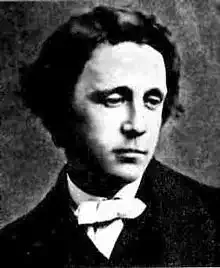
Lewis Carroll
You Are Old Father William
You Are Old Father William
"You are old, father William," the young man said,
"And your hair has become very white;
And yet you incessantly stand on your head Do
you think, at your age, it is right?
"In my youth," father William replied to his son,
"I feared it might injure the brain;
But, now that I'm perfectly sure I have none,
Why, I do it again and again."
"You are old," said the youth, "as I mentioned before,
And you have grown most uncommonly fat;
Yet you turned a backsomersault
in at the door Pray
what is the reason for that?"
"In my youth," said the sage, as he shook his grey locks,
"I kept all my limbs very supple
By the use of this ointment one
shilling a box Allow
me to sell you a couple?"
"You are old," said the youth, "and your jaws are too weak
For anything tougher than suet;
Yet you finished the goose, with the bones and the beak Pray,
how did you mange to do it?"
"In my youth," said his fater, "I took to the law,
And argued each case with my wife;
And the muscular strength, which it gave to my jaw,
Has lasted the rest of my life."
"You are old," said the youth, "one would hardly suppose
That your eye was as steady as every;
Yet you balanced an eel on the tend of your nose What
made you so awfully clever?"
"I have answered three questions, and that is enough,"
Said his father. "Don't give yourself airs!
Do you think I can listen all day to such stuff?
Be off, or I'll kick you down stairs.
"You are old, father William," the young man said,
"And your hair has become very white;
And yet you incessantly stand on your head Do
you think, at your age, it is right?
"In my youth," father William replied to his son,
"I feared it might injure the brain;
But, now that I'm perfectly sure I have none,
Why, I do it again and again."
"You are old," said the youth, "as I mentioned before,
And you have grown most uncommonly fat;
Yet you turned a backsomersault
in at the door Pray
what is the reason for that?"
"In my youth," said the sage, as he shook his grey locks,
"I kept all my limbs very supple
By the use of this ointment one
shilling a box Allow
me to sell you a couple?"
"You are old," said the youth, "and your jaws are too weak
For anything tougher than suet;
Yet you finished the goose, with the bones and the beak Pray,
how did you mange to do it?"
"In my youth," said his fater, "I took to the law,
And argued each case with my wife;
And the muscular strength, which it gave to my jaw,
Has lasted the rest of my life."
"You are old," said the youth, "one would hardly suppose
That your eye was as steady as every;
Yet you balanced an eel on the tend of your nose What
made you so awfully clever?"
"I have answered three questions, and that is enough,"
Said his father. "Don't give yourself airs!
Do you think I can listen all day to such stuff?
Be off, or I'll kick you down stairs.
508
Lewis Carroll
The White Knight's Song
The White Knight's Song
'Haddock's Eyes' or 'The Aged Aged Man' or
'Ways and Means' or 'ASitting
On A Gate'
I'll tell thee everything I can;
There's little to relate.
I saw an aged, aged man,
Asitting
on a gate.
'Who are you, aged man?' I said.
'And how is it you live?'
And his answer trickled through my head
Like water through a sieve.
He said 'I look for butterflies
That sleep among the wheat;
I make them into muttonpies,
And sell them in the street.
I sell them unto men,' he said,
'Who sail on stormy seas;
And that's the way I get my breadA
trifle, if you please.'
But I was thinking of a plan
To dye one's whiskers green,
And always use so large a fan
That it could not be seen.
So, having no reply to give
To what the old man said,
I cried, 'Come, tell me how you live!'
And thumped him on the head.
His accents mild took up the tale;
He said, 'I go my ways,
And when I find a mountainrill,
I set it in a blaze.
And thence they make a stuff they call
Rowland's Macassar OilYet
twopencehalfpenny
is all
They give me for my toil.'
But I was thinking of a way
To feed oneself on batter,
And so go on from day to day
Getting a little fatter.
I shook him well from side to side,
Until his face was blue;
'Come, tell me how you live,' I cried
'And what it is you do!'
He said, 'I hunt for haddocks' eyes
Among the heather bright,
And work them into waistcoatbuttons
In the silent night.
And these I do not sell for gold
Or coin of silvery shine,
But for a copper halfpenny,
And that will purchase nine.
'I sometimes dig for buttered rolls,
Or set limed twigs for crabs;
I sometimes search the grassy knolls
For wheels of hansomcabs.
And that's the way' (he gave a wink)
'By which I get my wealthAnd
very gladly will I drink
Your Honor's noble health.'
I heard him then, for I had just
Completed my design
To keep the Menai bridge from rust
By boiling it in wine.
I thanked him much for telling me
The way he got his wealth,
But chiefly for his wish that he
Might drink my noble health.
And now, if e'er by chance I put
My fingers into glue,
Or madly squeeze a righthand
foot
Into a lefthand
shoe,
Or if I drop upon my toe
A very heavy weight,
I weep, for it reminds me so
Of that old man I used to knowWhose
look was mild, whose speech was slow,
Whose hair was whiter than the snow,
Whose face was very like a crow
With eyes, like cinders, all aglow,
Who seemed distracted with his woe,
Who rocked his body to and fro,
And muttered mumblingly and low,
As if his mouth were full of dough,
Who snorted like a buffaloThat
summer evening long ago
Asitting
on a gate.
'Haddock's Eyes' or 'The Aged Aged Man' or
'Ways and Means' or 'ASitting
On A Gate'
I'll tell thee everything I can;
There's little to relate.
I saw an aged, aged man,
Asitting
on a gate.
'Who are you, aged man?' I said.
'And how is it you live?'
And his answer trickled through my head
Like water through a sieve.
He said 'I look for butterflies
That sleep among the wheat;
I make them into muttonpies,
And sell them in the street.
I sell them unto men,' he said,
'Who sail on stormy seas;
And that's the way I get my breadA
trifle, if you please.'
But I was thinking of a plan
To dye one's whiskers green,
And always use so large a fan
That it could not be seen.
So, having no reply to give
To what the old man said,
I cried, 'Come, tell me how you live!'
And thumped him on the head.
His accents mild took up the tale;
He said, 'I go my ways,
And when I find a mountainrill,
I set it in a blaze.
And thence they make a stuff they call
Rowland's Macassar OilYet
twopencehalfpenny
is all
They give me for my toil.'
But I was thinking of a way
To feed oneself on batter,
And so go on from day to day
Getting a little fatter.
I shook him well from side to side,
Until his face was blue;
'Come, tell me how you live,' I cried
'And what it is you do!'
He said, 'I hunt for haddocks' eyes
Among the heather bright,
And work them into waistcoatbuttons
In the silent night.
And these I do not sell for gold
Or coin of silvery shine,
But for a copper halfpenny,
And that will purchase nine.
'I sometimes dig for buttered rolls,
Or set limed twigs for crabs;
I sometimes search the grassy knolls
For wheels of hansomcabs.
And that's the way' (he gave a wink)
'By which I get my wealthAnd
very gladly will I drink
Your Honor's noble health.'
I heard him then, for I had just
Completed my design
To keep the Menai bridge from rust
By boiling it in wine.
I thanked him much for telling me
The way he got his wealth,
But chiefly for his wish that he
Might drink my noble health.
And now, if e'er by chance I put
My fingers into glue,
Or madly squeeze a righthand
foot
Into a lefthand
shoe,
Or if I drop upon my toe
A very heavy weight,
I weep, for it reminds me so
Of that old man I used to knowWhose
look was mild, whose speech was slow,
Whose hair was whiter than the snow,
Whose face was very like a crow
With eyes, like cinders, all aglow,
Who seemed distracted with his woe,
Who rocked his body to and fro,
And muttered mumblingly and low,
As if his mouth were full of dough,
Who snorted like a buffaloThat
summer evening long ago
Asitting
on a gate.
200
Lewis Carroll
Twinkle, Twinkle, Little Bat!
Twinkle, Twinkle, Little Bat!
" it
was at the great concert given by the
Queen of Hearts, and I had to sing
`Twinkle, twinkle, little bat!
How I wonder what you're at!'You know the song, perhaps?" "I've heard something
like it," said Alice. "It goes on, you know," the Hatter continued,
"in this way:
`Up above the world you fly,
Like a teatray in the sky.
Twinkle, twinkle '"
" it
was at the great concert given by the
Queen of Hearts, and I had to sing
`Twinkle, twinkle, little bat!
How I wonder what you're at!'You know the song, perhaps?" "I've heard something
like it," said Alice. "It goes on, you know," the Hatter continued,
"in this way:
`Up above the world you fly,
Like a teatray in the sky.
Twinkle, twinkle '"
213
Lewis Carroll
The Voice of the Lobster
The Voice of the Lobster
''Tis the voice of the Lobster: I heard him declare
'You have baked me too brown, I must sugar my hair.'
As a duck with its eyelids, so he with his nose
Trims his belt and his buttons, and turns out his toes.
When the sands are all dry, he is gay as a lark,
And will talk in contemptuous tones of the Shark:
But, when the tide rises and sharks are around,
His voice has a timid and tremulous sound.'
'I passed by his garden, and marked, with one eye,
How the Owl and the Panter were sharing a pie:
The Panther took piecrust,
and gravy, and meat,
While the Old had the dish as its share of the treat.
When the pie was all finished, the Owl, as a boon,
Was kindly permitted to pocket the spoon:
While the Panther received knife and fork with a growl,
And concluded the banquet by [eating the owl.]
''Tis the voice of the Lobster: I heard him declare
'You have baked me too brown, I must sugar my hair.'
As a duck with its eyelids, so he with his nose
Trims his belt and his buttons, and turns out his toes.
When the sands are all dry, he is gay as a lark,
And will talk in contemptuous tones of the Shark:
But, when the tide rises and sharks are around,
His voice has a timid and tremulous sound.'
'I passed by his garden, and marked, with one eye,
How the Owl and the Panter were sharing a pie:
The Panther took piecrust,
and gravy, and meat,
While the Old had the dish as its share of the treat.
When the pie was all finished, the Owl, as a boon,
Was kindly permitted to pocket the spoon:
While the Panther received knife and fork with a growl,
And concluded the banquet by [eating the owl.]
195
Lewis Carroll
Fit the Sixth ( Hunting of the Snark )
Fit the Sixth ( Hunting of the Snark )
The Barrister's Dream
They sought it with thimbles, they sought it with care;
They pursued it with forks and hope;
They threatened its life with a railwayshare;
They charmed it with smiles and soap.
But the Barrister, weary of proving in vain
That the Beaver's lacemaking
was wrong,
Fell asleep, and in dreams saw the creature quite plain
That his fancy had dwelt on so long.
He dreamed that he stood in a shadowy Court,
Where the Snark, with a glass in its eye,
Dressed in gown, bands, and wig, was defending a pig
On the charge of deserting its sty.
The Witnesses proved, without error or flaw,
That the sty was deserted when found:
And the Judge kept explaining the state of the law
In a soft undercurrent
of sound.
The indictment had never been clearly expressed,
And it seemed that the Snark had begun,
And had spoken three hours, before any one guessed
What the pig was supposed to have done.
The Jury had each formed a different view
(Long before the indictment was read),
And they all spoke at once, so that none of them knew
One word that the others had said.
"You must know"
said the Judge: but the Snark exclaimed "Fudge!"
That statute is obsolete quite!
Let me tell you, my friends, the whole question depends
On an ancient manorial right.
"In the matter of Treason the pig would appear
To have aided, but scarcely abetted:
While the charge of Insolvency fails, it is clear,
If you grant the plea 'never indebted'.
"The fact of Desertion I will not dispute:
But its guilt, as I trust, is removed
(So far as relates to the costs of this suit)
By the Alibi which has been proved.
"My poor client's fate now depends on your votes."
Here the speaker sat down in his place,
And directed the Judge to refer to his notes
And briefly to sum up the case.
But the Judge said he never had summed up before;
So the Snark undertook it instead,
And summed it so well that it came to far more
Than the Witnesses ever had said!
When the verdict was called for, the Jury declined,
As the word was so puzzling to spell;
But they ventured to hope that the Snark wouldn't mind
Undertaking that duty as well.
So the Snark found the verdict, although, as it owned,
It was spent with the toils of the day:
When it said the word "GUILTY!" the Jury all groaned
And some of them fainted away.
Then the Snark pronounced sentence, the Judge being quite
Too nervous to utter a word:
When it rose to its feet, there was silence like night,
And the fall of a pin might be heard.
"Transportation for life" was the sentence it gave,
"And then to be fined forty pound."
The Jury all cheered, though the Judge said he feared
That the phrase was not legally sound.
But their wild exultation was suddenly checked
When the jailer informed them, with tears,
Such a sentence would not have the slightest effect,
As the pig had been dead for some years.
The Judge left the Court, looking deeply disgusted
But the Snark, though a little aghast,
As the lawyer to whom the defence was intrusted,
Went bellowing on to the last.
Thus the Barrister dreamed, while the bellowing seemed
To grow every moment more clear:
Till he woke to the knell of a furious bell,
Which the Bellman rang close at his ear.
The Barrister's Dream
They sought it with thimbles, they sought it with care;
They pursued it with forks and hope;
They threatened its life with a railwayshare;
They charmed it with smiles and soap.
But the Barrister, weary of proving in vain
That the Beaver's lacemaking
was wrong,
Fell asleep, and in dreams saw the creature quite plain
That his fancy had dwelt on so long.
He dreamed that he stood in a shadowy Court,
Where the Snark, with a glass in its eye,
Dressed in gown, bands, and wig, was defending a pig
On the charge of deserting its sty.
The Witnesses proved, without error or flaw,
That the sty was deserted when found:
And the Judge kept explaining the state of the law
In a soft undercurrent
of sound.
The indictment had never been clearly expressed,
And it seemed that the Snark had begun,
And had spoken three hours, before any one guessed
What the pig was supposed to have done.
The Jury had each formed a different view
(Long before the indictment was read),
And they all spoke at once, so that none of them knew
One word that the others had said.
"You must know"
said the Judge: but the Snark exclaimed "Fudge!"
That statute is obsolete quite!
Let me tell you, my friends, the whole question depends
On an ancient manorial right.
"In the matter of Treason the pig would appear
To have aided, but scarcely abetted:
While the charge of Insolvency fails, it is clear,
If you grant the plea 'never indebted'.
"The fact of Desertion I will not dispute:
But its guilt, as I trust, is removed
(So far as relates to the costs of this suit)
By the Alibi which has been proved.
"My poor client's fate now depends on your votes."
Here the speaker sat down in his place,
And directed the Judge to refer to his notes
And briefly to sum up the case.
But the Judge said he never had summed up before;
So the Snark undertook it instead,
And summed it so well that it came to far more
Than the Witnesses ever had said!
When the verdict was called for, the Jury declined,
As the word was so puzzling to spell;
But they ventured to hope that the Snark wouldn't mind
Undertaking that duty as well.
So the Snark found the verdict, although, as it owned,
It was spent with the toils of the day:
When it said the word "GUILTY!" the Jury all groaned
And some of them fainted away.
Then the Snark pronounced sentence, the Judge being quite
Too nervous to utter a word:
When it rose to its feet, there was silence like night,
And the fall of a pin might be heard.
"Transportation for life" was the sentence it gave,
"And then to be fined forty pound."
The Jury all cheered, though the Judge said he feared
That the phrase was not legally sound.
But their wild exultation was suddenly checked
When the jailer informed them, with tears,
Such a sentence would not have the slightest effect,
As the pig had been dead for some years.
The Judge left the Court, looking deeply disgusted
But the Snark, though a little aghast,
As the lawyer to whom the defence was intrusted,
Went bellowing on to the last.
Thus the Barrister dreamed, while the bellowing seemed
To grow every moment more clear:
Till he woke to the knell of a furious bell,
Which the Bellman rang close at his ear.
191
Lewis Carroll
Fit the Second ( Hunting of the Snark )
Fit the Second ( Hunting of the Snark )
The Bellman's Speech
The Bellman himself they all praised to the skiesSuch
a carriage, such ease and such grace!
Such solemnity, too! One could see he was wise,
The moment one looked in his face!
He had bought a large map representing the sea,
Without the least vestige of land:
And the crew were much pleased when they found it to be
A map they could all understand.
"What's the good of Mercator's North Poles and Equators,
Tropics, Zones, and Meridian Lines?"
So the Bellman would cry: and the crew would reply
"They are merely conventional signs!
"Other maps are such shapes, with their islands and capes!
But we've got our brave Captain to thank"
(So the crew would protest) "that he's bought us the bestA
perfect and absolute blank!"
This was charming, no doubt: but they shortly found out
That the Captain they trusted so well
Had only one notion for crossing the ocean
And that was to tingle his bell.
He was thoughtful and gravebut
the orders he gave
Were enough to bewilder a crew.
When he cried "Steer to starboard, but keep her head larboard!"
What on earth was the helmsman to do?
Then the bowsprit got mixed with the rudder sometimes:
A thing, as the Bellman remarked,
That frequently happens in tropical climes,
When a vessel is, so to speak, "snarked".
But the principal failing occurred in the sailing,
And the Bellman, perplexed and distressed,
Said he had hoped, at least, when the wind blew due East,
That the ship would not travel due West!
But the danger was pastthey
had landed at last,
With their boxes, portmanteaus, and bags:
Yet at first sight the crew were not pleased with the view
Which consisted of chasms and crags.
The Bellman perceived that their spirits were low,
And repeated in musical tone
Some jokes he had kept for a season of woeBut
the crew would do nothing but groan.
He served out some grog with a liberal hand,
And bade them sit down on the beach:
And they could not but own that their Captain looked grand,
As he stood and delivered his speech.
"Friends, Romans, and countrymen, lend me your ears!"
(They were all of them fond of quotations:
So they drank to his health, and they gave him three cheers,
While he served out additional rations).
"We have sailed many months, we have sailed many weeks,
(Four weeks to the month you may mark),
But never as yet ('tis your Captain who speaks)
Have we caught the least glimpse of a Snark!
"We have sailed many weeks, we have sailed many days,
(Seven days to the week I allow),
But a Snark, on the which we might lovingly gaze,
We have never beheld till now!
"Come, listen, my men, while I tell you again
The five unmistakable marks
By which you may know, wheresoever you go,
The warranted genuine Snarks.
"Let us take them in order. The first is the taste,
Which is meagre and hollow, but crisp:
Like a coat that is rather too tight in the waist,
With a flavour of Willo'
theWisp.
"Its habit of getting up late you'll agree
That it carries too far, when I say
That it frequently breakfasts at fiveo'clock
tea,
And dines on the following day.
"The third is its slowness in taking a jest.
Should you happen to venture on one,
It will sigh like a thing that is deeply distressed:
And it always looks grave at a pun.
"The fourth is its fondness for bathingmachines,
Which it constantly carries about,
And believes that they add to the beauty of scenesA
sentiment open to doubt.
"The fifth is ambition. It next will be right
To describe each particular batch:
Distinguishing those that have feathers, and bite,
From those that have whiskers, and scratch.
"For, although common Snarks do no manner of harm,
Yet I feel it my duty to say
Some are Boojums"
The Bellman broke off in alarm,
For the Baker had fainted away.
The Bellman's Speech
The Bellman himself they all praised to the skiesSuch
a carriage, such ease and such grace!
Such solemnity, too! One could see he was wise,
The moment one looked in his face!
He had bought a large map representing the sea,
Without the least vestige of land:
And the crew were much pleased when they found it to be
A map they could all understand.
"What's the good of Mercator's North Poles and Equators,
Tropics, Zones, and Meridian Lines?"
So the Bellman would cry: and the crew would reply
"They are merely conventional signs!
"Other maps are such shapes, with their islands and capes!
But we've got our brave Captain to thank"
(So the crew would protest) "that he's bought us the bestA
perfect and absolute blank!"
This was charming, no doubt: but they shortly found out
That the Captain they trusted so well
Had only one notion for crossing the ocean
And that was to tingle his bell.
He was thoughtful and gravebut
the orders he gave
Were enough to bewilder a crew.
When he cried "Steer to starboard, but keep her head larboard!"
What on earth was the helmsman to do?
Then the bowsprit got mixed with the rudder sometimes:
A thing, as the Bellman remarked,
That frequently happens in tropical climes,
When a vessel is, so to speak, "snarked".
But the principal failing occurred in the sailing,
And the Bellman, perplexed and distressed,
Said he had hoped, at least, when the wind blew due East,
That the ship would not travel due West!
But the danger was pastthey
had landed at last,
With their boxes, portmanteaus, and bags:
Yet at first sight the crew were not pleased with the view
Which consisted of chasms and crags.
The Bellman perceived that their spirits were low,
And repeated in musical tone
Some jokes he had kept for a season of woeBut
the crew would do nothing but groan.
He served out some grog with a liberal hand,
And bade them sit down on the beach:
And they could not but own that their Captain looked grand,
As he stood and delivered his speech.
"Friends, Romans, and countrymen, lend me your ears!"
(They were all of them fond of quotations:
So they drank to his health, and they gave him three cheers,
While he served out additional rations).
"We have sailed many months, we have sailed many weeks,
(Four weeks to the month you may mark),
But never as yet ('tis your Captain who speaks)
Have we caught the least glimpse of a Snark!
"We have sailed many weeks, we have sailed many days,
(Seven days to the week I allow),
But a Snark, on the which we might lovingly gaze,
We have never beheld till now!
"Come, listen, my men, while I tell you again
The five unmistakable marks
By which you may know, wheresoever you go,
The warranted genuine Snarks.
"Let us take them in order. The first is the taste,
Which is meagre and hollow, but crisp:
Like a coat that is rather too tight in the waist,
With a flavour of Willo'
theWisp.
"Its habit of getting up late you'll agree
That it carries too far, when I say
That it frequently breakfasts at fiveo'clock
tea,
And dines on the following day.
"The third is its slowness in taking a jest.
Should you happen to venture on one,
It will sigh like a thing that is deeply distressed:
And it always looks grave at a pun.
"The fourth is its fondness for bathingmachines,
Which it constantly carries about,
And believes that they add to the beauty of scenesA
sentiment open to doubt.
"The fifth is ambition. It next will be right
To describe each particular batch:
Distinguishing those that have feathers, and bite,
From those that have whiskers, and scratch.
"For, although common Snarks do no manner of harm,
Yet I feel it my duty to say
Some are Boojums"
The Bellman broke off in alarm,
For the Baker had fainted away.
213
Lewis Carroll
Fit the First: ( Hunting of the Snark )
Fit the First: ( Hunting of the Snark )
The Landing
"Just the place for a Snark!" the Bellman cried,
As he landed his crew with care;
Supporting each man on the top of the tide
By a finger entwined in his hair.
"Just the place for a Snark! I have said it twice:
That alone should encourage the crew.
Just the place for a Snark! I have said it thrice:
What I tell you three times is true."
The crew was complete: it included a BootsA
maker of Bonnets and HoodsA
Barrister, brought to arrange their disputesAnd
a Broker, to value their goods.
A Billiardmarker,
whose skill was immense,
Might perhaps have won more than his shareBut
a Banker, engaged at enormous expense,
Had the whole of their cash in his care.
There was also a Beaver, that paced on the deck,
Or would sit making lace in the bow:
And had often (the Bellman said) saved them from wreck
Though none of the sailors knew how.
There was one who was famed for the number of things
He forgot when he entered the ship:
His umbrella, his watch, all his jewels and rings,
And the clothes he had bought for the trip.
He had fortytwo
boxes, all carefully packed,
With his name painted clearly on each:
But, since he omitted to mention the fact,
They were all left behind on the beach.
The loss of his clothes hardly mattered, because
He had seven coats on when he came,
With three pair of bootsbut
the worst of is was,
He had wholly forgotten his name.
He would answer to "Hi!" or to any loud cry,
Such as "Fry me!" or "Fritter my wig!"
To "Whatyoumaycallum!"
or "Whatwashisname!"
But especially "Thingumajig!"
While, for those who preferred a more forcible word,
He had different names from these:
His intimate friends called him "Candleends",
And his enemies "Toastedcheese"
"His form is ungainlyhis
intellect small"
(So the Bellman would often remark)"
But his courage is perfect! And that, after all,
Is the thing that one needs with a Snark."
He would joke with hyaenas, returning their stare
With an impudent wag of the head:
And he once went a walk, pawinpaw,
with a bear,
"Just to keep up its spirits," he said.
He came as a Baker: but owned, when too lateAnd
it drove the poor Bellman halfmadHe
could only bake Bridecakefor
which, I may state,
No materials were to be had.
The last of the crew needs especial remark,
Though he looked an incredible dunce:
He had just one ideabut,
that one being "Snark",
The good Bellman engaged him at once.
He came as a Butcher: but gravely declared,
When the ship had been sailing a week,
He could only kill Beavers. The Bellman looked scared,
And was almost too frightened to speak:
But at length he explained, in a tremulous tone,
There was only one Beaver on board;
And that was a tame one he had of his own,
Whose death would be deeply deplored.
The Beaver, who happened to hear the remark,
Protested, with tears in its eyes,
That not even the rapture of hunting the Snark
Could atone for that dismal surprise!
It strongly advised that the Butcher should be
Conveyed in a separate ship:
But the Bellman declared that would never agree
With the plans he had made for the trip:
Navigation was always a difficult art,
Though with only one ship and one bell:
And he feared he must really decline, for his part,
Undertaking another as well.
The Beaver's best course was, no doubt, to procure
A secondhand
daggerproof
coatSo
the baker advised itand
next, to insure
Its life in some Office of note:
This the Baker suggested, and offered for hire
(On moderate terms), or for sale,
Two excellent Policies, one Against Fire
And one Against Damage From Hail.
Yet still, ever after that sorrowful day,
Whenever the Butcher was by,
The Beaver kept looking the opposite way,
And appeared unaccountably shy.
The Landing
"Just the place for a Snark!" the Bellman cried,
As he landed his crew with care;
Supporting each man on the top of the tide
By a finger entwined in his hair.
"Just the place for a Snark! I have said it twice:
That alone should encourage the crew.
Just the place for a Snark! I have said it thrice:
What I tell you three times is true."
The crew was complete: it included a BootsA
maker of Bonnets and HoodsA
Barrister, brought to arrange their disputesAnd
a Broker, to value their goods.
A Billiardmarker,
whose skill was immense,
Might perhaps have won more than his shareBut
a Banker, engaged at enormous expense,
Had the whole of their cash in his care.
There was also a Beaver, that paced on the deck,
Or would sit making lace in the bow:
And had often (the Bellman said) saved them from wreck
Though none of the sailors knew how.
There was one who was famed for the number of things
He forgot when he entered the ship:
His umbrella, his watch, all his jewels and rings,
And the clothes he had bought for the trip.
He had fortytwo
boxes, all carefully packed,
With his name painted clearly on each:
But, since he omitted to mention the fact,
They were all left behind on the beach.
The loss of his clothes hardly mattered, because
He had seven coats on when he came,
With three pair of bootsbut
the worst of is was,
He had wholly forgotten his name.
He would answer to "Hi!" or to any loud cry,
Such as "Fry me!" or "Fritter my wig!"
To "Whatyoumaycallum!"
or "Whatwashisname!"
But especially "Thingumajig!"
While, for those who preferred a more forcible word,
He had different names from these:
His intimate friends called him "Candleends",
And his enemies "Toastedcheese"
"His form is ungainlyhis
intellect small"
(So the Bellman would often remark)"
But his courage is perfect! And that, after all,
Is the thing that one needs with a Snark."
He would joke with hyaenas, returning their stare
With an impudent wag of the head:
And he once went a walk, pawinpaw,
with a bear,
"Just to keep up its spirits," he said.
He came as a Baker: but owned, when too lateAnd
it drove the poor Bellman halfmadHe
could only bake Bridecakefor
which, I may state,
No materials were to be had.
The last of the crew needs especial remark,
Though he looked an incredible dunce:
He had just one ideabut,
that one being "Snark",
The good Bellman engaged him at once.
He came as a Butcher: but gravely declared,
When the ship had been sailing a week,
He could only kill Beavers. The Bellman looked scared,
And was almost too frightened to speak:
But at length he explained, in a tremulous tone,
There was only one Beaver on board;
And that was a tame one he had of his own,
Whose death would be deeply deplored.
The Beaver, who happened to hear the remark,
Protested, with tears in its eyes,
That not even the rapture of hunting the Snark
Could atone for that dismal surprise!
It strongly advised that the Butcher should be
Conveyed in a separate ship:
But the Bellman declared that would never agree
With the plans he had made for the trip:
Navigation was always a difficult art,
Though with only one ship and one bell:
And he feared he must really decline, for his part,
Undertaking another as well.
The Beaver's best course was, no doubt, to procure
A secondhand
daggerproof
coatSo
the baker advised itand
next, to insure
Its life in some Office of note:
This the Baker suggested, and offered for hire
(On moderate terms), or for sale,
Two excellent Policies, one Against Fire
And one Against Damage From Hail.
Yet still, ever after that sorrowful day,
Whenever the Butcher was by,
The Beaver kept looking the opposite way,
And appeared unaccountably shy.
187
Lewis Carroll
Fit the Eighth (Hunting of the Snark )
Fit the Eighth (Hunting of the Snark )
The Vanishing
They sought it with thimbles, they sought it with care;
They pursued it with forks and hope;
They threatened its life with a railwayshare;
They charmed it with smiles and soap.
They shuddered to think that the chase might fail,
And the Beaver, excited at last,
Went bounding along on the tip of its tail,
For the daylight was nearly past.
"There is Thingumbob shouting!" the Bellman said.
"He is shouting like mad, only hark!
He is waving his hands, he is wagging his head,
He has certainly found a Snark!"
They gazed in delight, while the Butcher exclaimed
"He was always a desperate wag!"
They beheld himtheir
Bakertheir
hero unnamedOn
the top of a neighbouring crag,
Erect and sublime, for one moment of time,
In the next, that wild figure they saw
(As if stung by a spasm) plunge into a chasm,
While they waited and listened in awe.
"It's a Snark!" was the sound that first came to their ears,
And seemed almost too good to be true.
Then followed a torrent of laughter and cheers:
Then the ominous words "It's a Boo"
Then, silence. Some fancied they heard in the air
A weary and wandering sigh
That sounded like "jum!"
but the others declare
It was only a breeze that went by.
They hunted till darkness came on, but they found
Not a button, or feather, or mark,
By which they could tell that they stood on the ground
Where the Baker had met with the Snark.
In the midst of the word he was trying to say
In the midst of his laughter and glee,
He had softly and suddenly vanished awayFor
the Snark was a Boojum, you see.
The Vanishing
They sought it with thimbles, they sought it with care;
They pursued it with forks and hope;
They threatened its life with a railwayshare;
They charmed it with smiles and soap.
They shuddered to think that the chase might fail,
And the Beaver, excited at last,
Went bounding along on the tip of its tail,
For the daylight was nearly past.
"There is Thingumbob shouting!" the Bellman said.
"He is shouting like mad, only hark!
He is waving his hands, he is wagging his head,
He has certainly found a Snark!"
They gazed in delight, while the Butcher exclaimed
"He was always a desperate wag!"
They beheld himtheir
Bakertheir
hero unnamedOn
the top of a neighbouring crag,
Erect and sublime, for one moment of time,
In the next, that wild figure they saw
(As if stung by a spasm) plunge into a chasm,
While they waited and listened in awe.
"It's a Snark!" was the sound that first came to their ears,
And seemed almost too good to be true.
Then followed a torrent of laughter and cheers:
Then the ominous words "It's a Boo"
Then, silence. Some fancied they heard in the air
A weary and wandering sigh
That sounded like "jum!"
but the others declare
It was only a breeze that went by.
They hunted till darkness came on, but they found
Not a button, or feather, or mark,
By which they could tell that they stood on the ground
Where the Baker had met with the Snark.
In the midst of the word he was trying to say
In the midst of his laughter and glee,
He had softly and suddenly vanished awayFor
the Snark was a Boojum, you see.
162
Lewis Carroll
Another Acrostic ( In the style of Father William )
Another Acrostic ( In the style of Father William )
"Are you deaf, Father William!" the young man said,
"Did you hear what I told you just now?
"Excuse me for shouting! Don't waggle your head
"Like a blundering, sleepy old cow!
"A little maid dwelling in Wallington Town,
"Is my friend, so I beg to remark:
"Do you think she'd be pleased if a book were sent down
"Entitled 'The Hunt of the Snark?'"
"Pack it up in brown paper!" the old man cried,
"And seal it with oliveanddove.
"I command you to do it!" he added with pride,
"Nor forget, my good fellow to send her beside
"Easter Greetings, and give her my love."
"Are you deaf, Father William!" the young man said,
"Did you hear what I told you just now?
"Excuse me for shouting! Don't waggle your head
"Like a blundering, sleepy old cow!
"A little maid dwelling in Wallington Town,
"Is my friend, so I beg to remark:
"Do you think she'd be pleased if a book were sent down
"Entitled 'The Hunt of the Snark?'"
"Pack it up in brown paper!" the old man cried,
"And seal it with oliveanddove.
"I command you to do it!" he added with pride,
"Nor forget, my good fellow to send her beside
"Easter Greetings, and give her my love."
441
Lewis Carroll
Alice And The White Knight
Alice And The White Knight
Alice was walking beside the White Knight in Looking Glass Land.
'You are sad.' the Knight said in an anxious tone: 'let me sing you a song to comfort
you.'
'Is it very long?' Alice asked, for she had heard a good deal of poetry that day.
'It's long.' said the Knight, 'but it's very, very beautiful. Everybody that hears me sing
it either
it brings tears to their eyes, or else '
'Or else what?' said Alice, for the Knight had made a sudden pause.
'Or else it doesn't, you know. The name of the song is called 'Haddocks' Eyes.''
'Oh, that's the name of the song, is it?' Alice said, trying to feel interested.
'No, you don't understand,' the Knight said, looking a little vexed. 'That's what the
name
is called. The name really is 'The Aged, Aged Man.''
'Then I ought to have said 'That's what the song is called'?' Alice corrected herself.
'No you oughtn't: that's another thing. The song is called 'Ways and Means' but that's
only
what it's called, you know!'
'Well, what is the song then?' said Alice, who was by this time completely bewildered.
'I was coming to that,' the Knight said. 'The song really is 'Asitting
On a Gate': and the
tune's my own invention.'
So saying, he stopped his horse and let the reins fall on its neck: then slowly beating
time
with one hand, and with a faint smile lighting up his gentle, foolish face, he began:
I'll tell thee everything I can;
There's little to relate.
I saw an aged, aged man,
Asitting
on a gate.
'Who are you, aged man?' I said,
' And how is it you live?'
And his answer trickled through my head
like water through a sieve.
He said 'I look for butterflies
That sleep among the wheat:
I make them into mutton pies,
And sell them in the street.
I sell them unto men,' he said,
'Who sail on stormy seas;
And that's the way I get my bread
A trifle if you please.'
But I was thinking of a plan
To dye one's whiskers green,
And always use so large a fan
That they could not be seen.
So, having no reply to give
To what the old man said,
I cried, 'Come tell me how you live!'
And thumped him on the head.
His accents mild took up the tale:
He said, 'I go my ways,
And when I find a mountainrill,
I set it in a blaze;
And thence they make a stuff they call
Rowland's Macassar Oil Yet
twopencehalfpenny
is all
They give me for my toil.'
But I was thinking of a way
To feed one's self on batter,
And so go on from day to day
Getting a little fatter.
I shook him well from side to side
Until his face was blue:
'Come tell me how you live,' I cried,
'And what it is you do!'
He said 'I hunt for haddocks' eyes
Among the heather bright,
And work them into waistcoat buttons
In the silent night.
And these I do not sell for gold
Or coin of silvery shine,
But for a copper halfpenny,
And that will purchase nine.
'I sometimes dig for buttered rolls,
Or set limed twigs for crabs;
I sometimes search for grassy knolls
For wheels of hansomcabs.
And that's the way' (he gave a wink)
'By which I get my wealth And
very gladly will I drink
Your Honour's noble health.'
I heard him then, for I had just
Completed my design
To keep the Menai Bridge from rust
By boiling it in wine.
I thanked him much for telling me
The way he got his wealth,
But chiefly for the wish that he
Might drink my noble health.
And now if e'er by chance I put
My fingers into glue,
Or madly squeeze a righthand
foot
Into a lefthand
shoe,
Or if I drop upon my toe
A very heavy weight,
I weep, for it reminds me so
Of that old man I used to know Whose
look was mild, whose speech was slow
Whose hair was whiter than the snow,
Whose face was very like a crow,
With eyes, like cinders, all aglow,
Who seemed distracted with his woe,
Who rocked his body to and fro,
And muttered mumblingly and low,
As if his mouth were full of dough,
Who snorted like a buffalo That
summer evening long ago
Asitting
on a gate.
As the Knight sang the last words of the ballad, he gathered up the reins, and turned
his horse's head along the road by which they had come.
Alice was walking beside the White Knight in Looking Glass Land.
'You are sad.' the Knight said in an anxious tone: 'let me sing you a song to comfort
you.'
'Is it very long?' Alice asked, for she had heard a good deal of poetry that day.
'It's long.' said the Knight, 'but it's very, very beautiful. Everybody that hears me sing
it either
it brings tears to their eyes, or else '
'Or else what?' said Alice, for the Knight had made a sudden pause.
'Or else it doesn't, you know. The name of the song is called 'Haddocks' Eyes.''
'Oh, that's the name of the song, is it?' Alice said, trying to feel interested.
'No, you don't understand,' the Knight said, looking a little vexed. 'That's what the
name
is called. The name really is 'The Aged, Aged Man.''
'Then I ought to have said 'That's what the song is called'?' Alice corrected herself.
'No you oughtn't: that's another thing. The song is called 'Ways and Means' but that's
only
what it's called, you know!'
'Well, what is the song then?' said Alice, who was by this time completely bewildered.
'I was coming to that,' the Knight said. 'The song really is 'Asitting
On a Gate': and the
tune's my own invention.'
So saying, he stopped his horse and let the reins fall on its neck: then slowly beating
time
with one hand, and with a faint smile lighting up his gentle, foolish face, he began:
I'll tell thee everything I can;
There's little to relate.
I saw an aged, aged man,
Asitting
on a gate.
'Who are you, aged man?' I said,
' And how is it you live?'
And his answer trickled through my head
like water through a sieve.
He said 'I look for butterflies
That sleep among the wheat:
I make them into mutton pies,
And sell them in the street.
I sell them unto men,' he said,
'Who sail on stormy seas;
And that's the way I get my bread
A trifle if you please.'
But I was thinking of a plan
To dye one's whiskers green,
And always use so large a fan
That they could not be seen.
So, having no reply to give
To what the old man said,
I cried, 'Come tell me how you live!'
And thumped him on the head.
His accents mild took up the tale:
He said, 'I go my ways,
And when I find a mountainrill,
I set it in a blaze;
And thence they make a stuff they call
Rowland's Macassar Oil Yet
twopencehalfpenny
is all
They give me for my toil.'
But I was thinking of a way
To feed one's self on batter,
And so go on from day to day
Getting a little fatter.
I shook him well from side to side
Until his face was blue:
'Come tell me how you live,' I cried,
'And what it is you do!'
He said 'I hunt for haddocks' eyes
Among the heather bright,
And work them into waistcoat buttons
In the silent night.
And these I do not sell for gold
Or coin of silvery shine,
But for a copper halfpenny,
And that will purchase nine.
'I sometimes dig for buttered rolls,
Or set limed twigs for crabs;
I sometimes search for grassy knolls
For wheels of hansomcabs.
And that's the way' (he gave a wink)
'By which I get my wealth And
very gladly will I drink
Your Honour's noble health.'
I heard him then, for I had just
Completed my design
To keep the Menai Bridge from rust
By boiling it in wine.
I thanked him much for telling me
The way he got his wealth,
But chiefly for the wish that he
Might drink my noble health.
And now if e'er by chance I put
My fingers into glue,
Or madly squeeze a righthand
foot
Into a lefthand
shoe,
Or if I drop upon my toe
A very heavy weight,
I weep, for it reminds me so
Of that old man I used to know Whose
look was mild, whose speech was slow
Whose hair was whiter than the snow,
Whose face was very like a crow,
With eyes, like cinders, all aglow,
Who seemed distracted with his woe,
Who rocked his body to and fro,
And muttered mumblingly and low,
As if his mouth were full of dough,
Who snorted like a buffalo That
summer evening long ago
Asitting
on a gate.
As the Knight sang the last words of the ballad, he gathered up the reins, and turned
his horse's head along the road by which they had come.
186

Kazi Nazrul Islam
If I was Daddy, and Daddy was Me
If I was Daddy, and Daddy was Me
If I was Daddy and Daddy was Khoka (that's me),
if he didn't finish memorizing the multiplication tables I'd tap him on the head!
If everyday was Sunday,
Oh, what fun that would be
no more multiplication tables, writing, drawing-measuring,
if I was Daddy and Daddy was Khoka (that's me)!
[Orijinal: Ami jodi baba hotam; Translation: Sajed Kamal]
If I was Daddy and Daddy was Khoka (that's me),
if he didn't finish memorizing the multiplication tables I'd tap him on the head!
If everyday was Sunday,
Oh, what fun that would be
no more multiplication tables, writing, drawing-measuring,
if I was Daddy and Daddy was Khoka (that's me)!
[Orijinal: Ami jodi baba hotam; Translation: Sajed Kamal]
565

Kabir
How do you
How do you
How do you,
Asks the chief of police,
Patrol a city
Where the butcher shops
Are guarded by vultures;
Where bulls get pregnant,
Cows are barren,
And calves give milk
Three times a day;
Where mice are boatmen
And tomcats the boats
They row;
Where frogs keep snakes
As watchdogs,
And jackals
Go after lions?
Does anyone know
What I’m talking about?
Says Kabir.
How do you,
Asks the chief of police,
Patrol a city
Where the butcher shops
Are guarded by vultures;
Where bulls get pregnant,
Cows are barren,
And calves give milk
Three times a day;
Where mice are boatmen
And tomcats the boats
They row;
Where frogs keep snakes
As watchdogs,
And jackals
Go after lions?
Does anyone know
What I’m talking about?
Says Kabir.
411

Jonathan Swift
Verses on the Death of Dr. Swift, D.S.P.D.
Verses on the Death of Dr. Swift, D.S.P.D.
As Rochefoucauld his maxims drew
From Nature, I believe 'em true:
They argue no corrupted mind
In him; the fault is in mankind.
This maxim more than all the rest
Is thought too base for human breast:
'In all distresses of our friends,
We first consult our private ends;
While Nature, kindly bent to ease us,
Points out some circumstance to please us.'
If this perhaps your patience move,
Let reason and experience prove.
We all behold with envious eyes
Our equal rais'd above our size.
Who would not at a crowded show
Stand high himself, keep others low?
I love my friend as well as you
But would not have him stop my view.
Then let him have the higher post:
I ask but for an inch at most.
If in a battle you should find
One, whom you love of all mankind,
Had some heroic action done,
A champion kill'd, or trophy won;
Rather than thus be overtopt,
Would you not wish his laurels cropt?
Dear honest Ned is in the gout,
Lies rack'd with pain, and you without:
How patiently you hear him groan!
How glad the case is not your own!
What poet would not grieve to see
His brethren write as well as he?
But rather than they should excel,
He'd wish his rivals all in hell.
Her end when emulation misses,
She turns to envy, stings and hisses:
The strongest friendship yields to pride,
Unless the odds be on our side.
Vain human kind! fantastic race!
Thy various follies who can trace?
Self-love, ambition, envy, pride,
Their empire in our hearts divide.
Give others riches, power, and station,
'Tis all on me a usurpation.
I have no title to aspire;
Yet, when you sink, I seem the higher.
In Pope I cannot read a line,
But with a sigh I wish it mine;
When he can in one couplet fix
More sense than I can do in six;
It gives me such a jealous fit,
I cry, 'Pox take him and his wit!'
Why must I be outdone by Gay
In my own hum'rous biting way?
Arbuthnot is no more my friend,
Who dares to irony pretend,
Which I was born to introduce,
Refin'd it first, and show'd its use.
St. John, as well as Pultney, knows
That I had some repute for prose;
And, till they drove me out of date,
Could maul a minister of state.
If they have mortify'd my pride,
And made me throw my pen aside;
If with such talents Heav'n has blest 'em,
Have I not reason to detest 'em?
To all my foes, dear Fortune, send
Thy gifts; but never to my friend:
I tamely can endure the first,
But this with envy makes me burst.
Thus much may serve by way of proem:
Proceed we therefore to our poem.
The time is not remote, when I
Must by the course of nature die;
When I foresee my special friends
Will try to find their private ends:
Tho' it is hardly understood
Which way my death can do them good,
Yet thus, methinks, I hear 'em speak:
'See, how the Dean begins to break!
Poor gentleman, he droops apace!
You plainly find it in his face.
That old vertigo in his head
Will never leave him till he's dead.
Besides, his memory decays:
He recollects not what he says;
He cannot call his friends to mind:
Forgets the place where last he din'd;
Plies you with stories o'er and o'er;
He told them fifty times before.
How does he fancy we can sit
To hear his out-of-fashion'd wit?
But he takes up with younger folks,
Who for his wine will bear his jokes.
Faith, he must make his stories shorter,
Or change his comrades once a quarter:
In half the time he talks them round,
There must another set be found.
'For poetry he's past his prime:
He takes an hour to find a rhyme;
His fire is out, his wit decay'd,
His fancy sunk, his Muse a jade.
I'd have him throw away his pen;-
But there's no talking to some men!'
And then their tenderness appears,
By adding largely to my years:
'He's older than he would be reckon'd
And well remembers Charles the Second.
'He hardly drinks a pint of wine;
And that, I doubt, is no good sign.
His stomach too begins to fail:
Last year we thought him strong and hale;
But now he's quite another thing:
I wish he may hold out till spring.'
Then hug themselves, and reason thus:
'It is not yet so bad with us.'
In such a case, they talk in tropes,
And by their fears express their hopes:
Some great misfortune to portend,
No enemy can match a friend.
With all the kindness they profess,
The merit of a lucky guess
(When daily 'How d'ye's' come of course,
And servants answer, 'Worse and worse!')
Would please 'em better, than to tell,
That, 'God be prais'd, the Dean is well.'
Then he who prophecy'd the best
Approves his foresight to the rest:
'You know I always fear'd the worst,
And often told you so at first.'
He'd rather choose that I should die,
Than his prediction prove a lie.
Not one foretells I shall recover;
But all agree to give me over.
Yet, should some neighbour feel a pain
Just in the parts where I complain,
How many a message would he send?
What hearty prayers that I should mend?
Inquire what regimen I kept,
What gave me ease, and how I slept?
And more lament when I was dead,
Than all the sniv'llers round my bed.
My good companions, never fear;
For though you may mistake a year,
Though your prognostics run too fast,
They must be verify'd at last.
Behold the fatal day arrive!
'How is the Dean?'-'He's just alive.'
Now the departing prayer is read;
'He hardly breathes.'-'The Dean is dead.'
Before the passing-bell begun,
The news thro' half the town has run.
'O, may we all for death prepare!
What has he left? and who's his heir?''
I know no more than what the news is;
'Tis all bequeath'd to public uses.''
To public use! a perfect whim!
What had the public done for him?
Mere envy, avarice, and pride:
He gave it all-but first he died.
And had the Dean, in all the nation,
No worthy friend, no poor relation?
So ready to do strangers good,
Forgetting his own flesh and blood?'
Now Grub-Street wits are all employ'd;
With elegies the town is cloy'd:
Some paragraph in ev'ry paper
To curse the Dean or bless the Drapier.
The doctors, tender of their fame,
Wisely on me lay all the blame:
'We must confess his case was nice;
But he would never take advice.
Had he been rul'd, for aught appears,
He might have liv'd these twenty years;
For, when we open'd him, we found
That all his vital parts were sound.'
From Dublin soon to London spread,
'Tis told at Court, the Dean is dead.
Kind Lady Suffolk in the spleen
Runs laughing up to tell the Queen.
The Queen, so gracious, mild, and good,
Cries, 'Is he gone! 'tis time he should.
He's dead, you say; why, let him rot:
I'm glad the medals were forgot.
I promis'd them, I own; but when?
I only was the Princess then;
But now, as consort of a king,
You know, 'tis quite a different thing.'
Now Chartres, at Sir Robert's levee,
Tells with a sneer the tidings heavy:
'Why, is he dead without his shoes?'
Cries Bob, 'I'm sorry for the news:
O, were the wretch but living still,
And in his place my good friend Will!
Or had a mitre on his head,
Provided Bolingbroke were dead!'
Now Curll his shop from rubbish drains:
Three genuine tomes of Swift's remains!
And then, to make them pass the glibber,
Revis'd by Tibbalds, Moore, and Cibber.
He'll treat me as he does my betters,
Publish my will, my life, my letters:
Revive the libels born to die;
Which Pope must bear, as well as I.
Here shift the scene, to represent
How those I love my death lament.
Poor Pope will grieve a month, and Gay
A week, and Arbuthnot a day.
St. John himself will scarce forbear
To bite his pen, and drop a tear.
The rest will give a shrug, and cry,
'I'm sorry-but we all must die!'
Indifference, clad in Wisdom's guise,
All fortitude of mind supplies:
For how can stony bowels melt
In those who never pity felt?
When we are lash'd, they kiss the rod,
Resigning to the will of God.
The fools, my juniors by a year,
Are tortur'd with suspense and fear;
Who wisely thought my age a screen,
When death approach'd, to stand between:
The screen remov'd, their hearts are trembling;
They mourn for me without dissembling.
My female friends, whose tender hearts
Have better learn'd to act their parts,
Receive the news in doleful dumps:
'The Dean is dead: (and what is trumps?)
Then, Lord have mercy on his soul!
(Ladies, I'll venture for the vole.)
Six deans, they say, must bear the pall:
(I wish I knew what king to call.)
Madam, your husband will attend
The funeral of so good a friend.
No, madam, 'tis a shocking sight:
And he's engag'd to-morrow night:
My Lady Club would take it ill,
If he should fail her at quadrille.
He lov'd the Dean-(I lead a heart)
But dearest friends, they say, must part.
His time was come: he ran his race;
We hope he's in a better place.'
Why do we grieve that friends should die?
No loss more easy to supply.
One year is past; a different scene!
No further mention of the Dean;
Who now, alas! no more is miss'd,
Than if he never did exist.
Where's now this fav'rite of Apollo!
Departed:-and his works must follow;
Must undergo the common fate;
His kind of wit is out of date.
Some country squire to Lintot goes,
Inquires for 'Swift in Verse and Prose.'
Says Lintot, 'I have heard the name;
He died a year ago.'-'The same.'
He searcheth all his shop in vain.
'Sir, you may find them in Duck-lane;
I sent them with a load of books,
Last Monday to the pastry-cook's.
To fancy they could live a year!
I find you're but a stranger here.
The Dean was famous in his time,
And had a kind of knack at rhyme.
His way of writing now is past;
The town hath got a better taste;
I keep no antiquated stuff,
But spick and span I have enough.
Pray do but give me leave to show 'em;
Here's Colley Cibber's birth-day poem.
This ode you never yet have seen,
By Stephen Duck, upon the Queen.
Then here's a letter finely penn'd
Against the Craftsman and his friend:
It clearly shows that all reflection
On ministers is disaffection.
Next, here's Sir Robert's vindication,
And Mr. Henley's last oration.
The hawkers have not got 'em yet:
Your honour please to buy a set?
'Here's Woolston's tracts, the twelfth edition;
'Tis read by every politician:
The country members, when in town,
To all their boroughs send them down;
You never met a thing so smart;
The courtiers have them all by heart:
Those maids of honour who can read
Are taught to use them for their creed.
The rev'rend author's good intention
Hath been rewarded with a pension.
He doth an honour to his gown,
By bravely running priestcraft down:
He shows, as sure as God's in Gloucester,
That Jesus was a grand imposter;
That all his miracles were cheats,
Perform'd as jugglers do their feats:
The church had never such a writer;
A shame he hath not got a mitre!'
Suppose me dead; and then suppose
A club assembled at the Rose ;
Where, from discourse of this and that,
I grow the subject of their chat.
And while they toss my name about,
With favour some, and some without,
One, quite indiff'rent in the cause,
My character impartial draws:
'The Dean, if we believe report,
Was never ill receiv'd at Court.
As for his works in verse and prose
I own myself no judge of those;
Nor can I tell what critics thought 'em:
But this I know, all people bought 'em.
As with a moral view design'd
To cure the vices of mankind:
His vein, ironically grave,
Expos'd the fool, and lash'd the knave.
To steal a hint was never known,
But what he writ was all his own.
'He never thought an honour done him,
Because a duke was proud to own him,
Would rather slip aside and choose
To talk with wits in dirty shoes;
Despis'd the fools with stars and garters,
So often seen caressing Chartres.
He never courted men in station,
Nor persons held in admiration;
Of no man's greatness was afraid,
Because he sought for no man's aid.
Though trusted long in great affairs
He gave himself no haughty airs:
Without regarding private ends,
Spent all his credit for his friends;
And only chose the wise and good;
No flatt'rers; no allies in blood:
But succour'd virtue in distress,
And seldom fail'd of good success;
As numbers in their hearts must own,
Who, but for him, had been unknown.
'With princes kept a due decorum,
But never stood in awe before 'em.
He follow'd David's lesson just:
'In princes never put thy trust';
And, would you make him truly sour,
Provoke him with a slave in pow'r.
The Irish senate if you nam'd,
With what impatience he declaim'd!
Fair Liberty was all his cry,
For her he stood prepar'd to die;
For her he boldly stood alone;
For her he oft expos'd his own.
Two kingdoms, just as faction led,
Had set a price upon his head;
But not a traitor could be found
To sell him for six hundred pound.
'Had he but spar'd his tongue and pen
He might have rose like other men:
But pow'r was never in his thought,
And wealth he valu'd not a groat:
Ingratitude he often found,
And pity'd those who meant the wound:
But kept the tenor of his mind,
To merit well of human kind:
Nor made a sacrifice of those
Who still were true, to please his foes.
He labour'd many a fruitless hour
To reconcile his friends in pow'r;
Saw mischief by a faction brewing,
While they pursu'd each other's ruin.
But, finding vain was all his care,
He left the Court in mere despair.
'And, oh! how short are human schemes!
Here ended all our golden dreams.
What St. John's skill in state affairs,
What Ormond's valour, Oxford's cares,
To save their sinking country lent,
Was all destroy'd by one event.
Too soon that precious life was ended,
On which alone our weal depended.
When up a dangerous faction starts,
With wrath and vengeance in their hearts;
By solemn League and Cov'nant bound,
To ruin, slaughter, and confound;
To turn religion to a fable,
And make the government a Babel;
Pervert the law, disgrace the gown,
Corrupt the senate, rob the crown;
To sacrifice old England's glory,
And make her infamous in story:
When such a tempest shook the land,
How could unguarded Virtue stand?
'With horror, grief, despair, the Dean
Beheld the dire destructive scene:
His friends in exile, or the tower,
Himself within the frown of power,
Pursu'd by base envenom'd pens,
Far to the land of slaves and fens;
A servile race in folly nurs'd,
Who truckle most when treated worst.
'By innocence and resolution,
He bore continual persecution,
While numbers to preferment rose,
Whose merits were, to be his foes;
When ev'n his own familiar friends,
Intent upon their private ends,
Like renegadoes now he feels,
Against him lifting up their heels.
'The Dean did by his pen defeat
An infamous destructive cheat;
Taught fools their int'rest how to know,
And gave them arms to ward the blow.
Envy hath own'd it was his doing,
To save that helpless land from ruin;
While they who at the steerage stood,
And reap'd the profit, sought his blood.
'To save them from their evil fate,
In him was held a crime of state.
A wicked monster on the bench,
Whose fury blood could never quench,
As vile and profligate a villain,
As modern Scroggs, or old Tresilian,
Who long all justice had discarded,
Nor fear'd he God, nor man regarded,
Vow'd on the Dean his rage to vent,
And make him of his zeal repent;
But Heav'n his innocence defends,
The grateful people stand his friends.
Not strains of law, nor judge's frown,
Nor topics brought to please the crown,
Nor witness hir'd, nor jury pick'd,
Prevail to bring him in convict.
'In exile, with a steady heart,
He spent his life's declining part;
Where folly, pride, and faction sway,
Remote from St. John, Pope, and Gay.
'His friendships there, to few confin'd,
Were always of the middling kind;
No fools of rank, a mongrel breed,
Who fain would pass for lords indeed:
Where titles gave no right or power
And peerage is a wither'd flower;
He would have held it a disgrace,
If such a wretch had known his face.
On rural squires, that kingdom's bane,
He vented oft his wrath in vain;
Biennial squires to market brought;
Who sell their souls and votes for nought;
The nation stripp'd, go joyful back,
To rob the church, their tenants rack,
Go snacks with thieves and rapparees,
And keep the peace to pick up fees;
In ev'ry job to have a share,
A jail or barrack to repair;
And turn the tax for public roads,
Commodious to their own abodes.
'Perhaps I may allow, the Dean
Had too much satire in his vein;
And seem'd determin'd not to starve it,
Because no age could more deserve it.
Yet malice never was his aim;
He lash'd the vice, but spar'd the name;
No individual could resent,
Where thousands equally were meant.
His satire points at no defect,
But what all mortals may correct;
For he abhorr'd that senseless tribe
Who call it humour when they gibe.
He spar'd a hump, or crooked nose,
Whose owners set not up for beaux.
True genuine dulness mov'd his pity,
Unless it offer'd to be witty.
Those who their ignorance confess'd
He ne'er offended with a jest;
But laugh'd to hear an idiot quote
A verse from Horace, learn'd by rote.
'He knew a hundred pleasant stories
With all the turns of Whigs and Tories:
Was cheerful to his dying day;
And friends would let him have his way.
'He gave the little wealth he had
To build a house for fools and mad;
And show'd by one satiric touch,
No nation wanted it so much.
That kingdom he hath left his debtor,
I wish it soon may have a better.'
As Rochefoucauld his maxims drew
From Nature, I believe 'em true:
They argue no corrupted mind
In him; the fault is in mankind.
This maxim more than all the rest
Is thought too base for human breast:
'In all distresses of our friends,
We first consult our private ends;
While Nature, kindly bent to ease us,
Points out some circumstance to please us.'
If this perhaps your patience move,
Let reason and experience prove.
We all behold with envious eyes
Our equal rais'd above our size.
Who would not at a crowded show
Stand high himself, keep others low?
I love my friend as well as you
But would not have him stop my view.
Then let him have the higher post:
I ask but for an inch at most.
If in a battle you should find
One, whom you love of all mankind,
Had some heroic action done,
A champion kill'd, or trophy won;
Rather than thus be overtopt,
Would you not wish his laurels cropt?
Dear honest Ned is in the gout,
Lies rack'd with pain, and you without:
How patiently you hear him groan!
How glad the case is not your own!
What poet would not grieve to see
His brethren write as well as he?
But rather than they should excel,
He'd wish his rivals all in hell.
Her end when emulation misses,
She turns to envy, stings and hisses:
The strongest friendship yields to pride,
Unless the odds be on our side.
Vain human kind! fantastic race!
Thy various follies who can trace?
Self-love, ambition, envy, pride,
Their empire in our hearts divide.
Give others riches, power, and station,
'Tis all on me a usurpation.
I have no title to aspire;
Yet, when you sink, I seem the higher.
In Pope I cannot read a line,
But with a sigh I wish it mine;
When he can in one couplet fix
More sense than I can do in six;
It gives me such a jealous fit,
I cry, 'Pox take him and his wit!'
Why must I be outdone by Gay
In my own hum'rous biting way?
Arbuthnot is no more my friend,
Who dares to irony pretend,
Which I was born to introduce,
Refin'd it first, and show'd its use.
St. John, as well as Pultney, knows
That I had some repute for prose;
And, till they drove me out of date,
Could maul a minister of state.
If they have mortify'd my pride,
And made me throw my pen aside;
If with such talents Heav'n has blest 'em,
Have I not reason to detest 'em?
To all my foes, dear Fortune, send
Thy gifts; but never to my friend:
I tamely can endure the first,
But this with envy makes me burst.
Thus much may serve by way of proem:
Proceed we therefore to our poem.
The time is not remote, when I
Must by the course of nature die;
When I foresee my special friends
Will try to find their private ends:
Tho' it is hardly understood
Which way my death can do them good,
Yet thus, methinks, I hear 'em speak:
'See, how the Dean begins to break!
Poor gentleman, he droops apace!
You plainly find it in his face.
That old vertigo in his head
Will never leave him till he's dead.
Besides, his memory decays:
He recollects not what he says;
He cannot call his friends to mind:
Forgets the place where last he din'd;
Plies you with stories o'er and o'er;
He told them fifty times before.
How does he fancy we can sit
To hear his out-of-fashion'd wit?
But he takes up with younger folks,
Who for his wine will bear his jokes.
Faith, he must make his stories shorter,
Or change his comrades once a quarter:
In half the time he talks them round,
There must another set be found.
'For poetry he's past his prime:
He takes an hour to find a rhyme;
His fire is out, his wit decay'd,
His fancy sunk, his Muse a jade.
I'd have him throw away his pen;-
But there's no talking to some men!'
And then their tenderness appears,
By adding largely to my years:
'He's older than he would be reckon'd
And well remembers Charles the Second.
'He hardly drinks a pint of wine;
And that, I doubt, is no good sign.
His stomach too begins to fail:
Last year we thought him strong and hale;
But now he's quite another thing:
I wish he may hold out till spring.'
Then hug themselves, and reason thus:
'It is not yet so bad with us.'
In such a case, they talk in tropes,
And by their fears express their hopes:
Some great misfortune to portend,
No enemy can match a friend.
With all the kindness they profess,
The merit of a lucky guess
(When daily 'How d'ye's' come of course,
And servants answer, 'Worse and worse!')
Would please 'em better, than to tell,
That, 'God be prais'd, the Dean is well.'
Then he who prophecy'd the best
Approves his foresight to the rest:
'You know I always fear'd the worst,
And often told you so at first.'
He'd rather choose that I should die,
Than his prediction prove a lie.
Not one foretells I shall recover;
But all agree to give me over.
Yet, should some neighbour feel a pain
Just in the parts where I complain,
How many a message would he send?
What hearty prayers that I should mend?
Inquire what regimen I kept,
What gave me ease, and how I slept?
And more lament when I was dead,
Than all the sniv'llers round my bed.
My good companions, never fear;
For though you may mistake a year,
Though your prognostics run too fast,
They must be verify'd at last.
Behold the fatal day arrive!
'How is the Dean?'-'He's just alive.'
Now the departing prayer is read;
'He hardly breathes.'-'The Dean is dead.'
Before the passing-bell begun,
The news thro' half the town has run.
'O, may we all for death prepare!
What has he left? and who's his heir?''
I know no more than what the news is;
'Tis all bequeath'd to public uses.''
To public use! a perfect whim!
What had the public done for him?
Mere envy, avarice, and pride:
He gave it all-but first he died.
And had the Dean, in all the nation,
No worthy friend, no poor relation?
So ready to do strangers good,
Forgetting his own flesh and blood?'
Now Grub-Street wits are all employ'd;
With elegies the town is cloy'd:
Some paragraph in ev'ry paper
To curse the Dean or bless the Drapier.
The doctors, tender of their fame,
Wisely on me lay all the blame:
'We must confess his case was nice;
But he would never take advice.
Had he been rul'd, for aught appears,
He might have liv'd these twenty years;
For, when we open'd him, we found
That all his vital parts were sound.'
From Dublin soon to London spread,
'Tis told at Court, the Dean is dead.
Kind Lady Suffolk in the spleen
Runs laughing up to tell the Queen.
The Queen, so gracious, mild, and good,
Cries, 'Is he gone! 'tis time he should.
He's dead, you say; why, let him rot:
I'm glad the medals were forgot.
I promis'd them, I own; but when?
I only was the Princess then;
But now, as consort of a king,
You know, 'tis quite a different thing.'
Now Chartres, at Sir Robert's levee,
Tells with a sneer the tidings heavy:
'Why, is he dead without his shoes?'
Cries Bob, 'I'm sorry for the news:
O, were the wretch but living still,
And in his place my good friend Will!
Or had a mitre on his head,
Provided Bolingbroke were dead!'
Now Curll his shop from rubbish drains:
Three genuine tomes of Swift's remains!
And then, to make them pass the glibber,
Revis'd by Tibbalds, Moore, and Cibber.
He'll treat me as he does my betters,
Publish my will, my life, my letters:
Revive the libels born to die;
Which Pope must bear, as well as I.
Here shift the scene, to represent
How those I love my death lament.
Poor Pope will grieve a month, and Gay
A week, and Arbuthnot a day.
St. John himself will scarce forbear
To bite his pen, and drop a tear.
The rest will give a shrug, and cry,
'I'm sorry-but we all must die!'
Indifference, clad in Wisdom's guise,
All fortitude of mind supplies:
For how can stony bowels melt
In those who never pity felt?
When we are lash'd, they kiss the rod,
Resigning to the will of God.
The fools, my juniors by a year,
Are tortur'd with suspense and fear;
Who wisely thought my age a screen,
When death approach'd, to stand between:
The screen remov'd, their hearts are trembling;
They mourn for me without dissembling.
My female friends, whose tender hearts
Have better learn'd to act their parts,
Receive the news in doleful dumps:
'The Dean is dead: (and what is trumps?)
Then, Lord have mercy on his soul!
(Ladies, I'll venture for the vole.)
Six deans, they say, must bear the pall:
(I wish I knew what king to call.)
Madam, your husband will attend
The funeral of so good a friend.
No, madam, 'tis a shocking sight:
And he's engag'd to-morrow night:
My Lady Club would take it ill,
If he should fail her at quadrille.
He lov'd the Dean-(I lead a heart)
But dearest friends, they say, must part.
His time was come: he ran his race;
We hope he's in a better place.'
Why do we grieve that friends should die?
No loss more easy to supply.
One year is past; a different scene!
No further mention of the Dean;
Who now, alas! no more is miss'd,
Than if he never did exist.
Where's now this fav'rite of Apollo!
Departed:-and his works must follow;
Must undergo the common fate;
His kind of wit is out of date.
Some country squire to Lintot goes,
Inquires for 'Swift in Verse and Prose.'
Says Lintot, 'I have heard the name;
He died a year ago.'-'The same.'
He searcheth all his shop in vain.
'Sir, you may find them in Duck-lane;
I sent them with a load of books,
Last Monday to the pastry-cook's.
To fancy they could live a year!
I find you're but a stranger here.
The Dean was famous in his time,
And had a kind of knack at rhyme.
His way of writing now is past;
The town hath got a better taste;
I keep no antiquated stuff,
But spick and span I have enough.
Pray do but give me leave to show 'em;
Here's Colley Cibber's birth-day poem.
This ode you never yet have seen,
By Stephen Duck, upon the Queen.
Then here's a letter finely penn'd
Against the Craftsman and his friend:
It clearly shows that all reflection
On ministers is disaffection.
Next, here's Sir Robert's vindication,
And Mr. Henley's last oration.
The hawkers have not got 'em yet:
Your honour please to buy a set?
'Here's Woolston's tracts, the twelfth edition;
'Tis read by every politician:
The country members, when in town,
To all their boroughs send them down;
You never met a thing so smart;
The courtiers have them all by heart:
Those maids of honour who can read
Are taught to use them for their creed.
The rev'rend author's good intention
Hath been rewarded with a pension.
He doth an honour to his gown,
By bravely running priestcraft down:
He shows, as sure as God's in Gloucester,
That Jesus was a grand imposter;
That all his miracles were cheats,
Perform'd as jugglers do their feats:
The church had never such a writer;
A shame he hath not got a mitre!'
Suppose me dead; and then suppose
A club assembled at the Rose ;
Where, from discourse of this and that,
I grow the subject of their chat.
And while they toss my name about,
With favour some, and some without,
One, quite indiff'rent in the cause,
My character impartial draws:
'The Dean, if we believe report,
Was never ill receiv'd at Court.
As for his works in verse and prose
I own myself no judge of those;
Nor can I tell what critics thought 'em:
But this I know, all people bought 'em.
As with a moral view design'd
To cure the vices of mankind:
His vein, ironically grave,
Expos'd the fool, and lash'd the knave.
To steal a hint was never known,
But what he writ was all his own.
'He never thought an honour done him,
Because a duke was proud to own him,
Would rather slip aside and choose
To talk with wits in dirty shoes;
Despis'd the fools with stars and garters,
So often seen caressing Chartres.
He never courted men in station,
Nor persons held in admiration;
Of no man's greatness was afraid,
Because he sought for no man's aid.
Though trusted long in great affairs
He gave himself no haughty airs:
Without regarding private ends,
Spent all his credit for his friends;
And only chose the wise and good;
No flatt'rers; no allies in blood:
But succour'd virtue in distress,
And seldom fail'd of good success;
As numbers in their hearts must own,
Who, but for him, had been unknown.
'With princes kept a due decorum,
But never stood in awe before 'em.
He follow'd David's lesson just:
'In princes never put thy trust';
And, would you make him truly sour,
Provoke him with a slave in pow'r.
The Irish senate if you nam'd,
With what impatience he declaim'd!
Fair Liberty was all his cry,
For her he stood prepar'd to die;
For her he boldly stood alone;
For her he oft expos'd his own.
Two kingdoms, just as faction led,
Had set a price upon his head;
But not a traitor could be found
To sell him for six hundred pound.
'Had he but spar'd his tongue and pen
He might have rose like other men:
But pow'r was never in his thought,
And wealth he valu'd not a groat:
Ingratitude he often found,
And pity'd those who meant the wound:
But kept the tenor of his mind,
To merit well of human kind:
Nor made a sacrifice of those
Who still were true, to please his foes.
He labour'd many a fruitless hour
To reconcile his friends in pow'r;
Saw mischief by a faction brewing,
While they pursu'd each other's ruin.
But, finding vain was all his care,
He left the Court in mere despair.
'And, oh! how short are human schemes!
Here ended all our golden dreams.
What St. John's skill in state affairs,
What Ormond's valour, Oxford's cares,
To save their sinking country lent,
Was all destroy'd by one event.
Too soon that precious life was ended,
On which alone our weal depended.
When up a dangerous faction starts,
With wrath and vengeance in their hearts;
By solemn League and Cov'nant bound,
To ruin, slaughter, and confound;
To turn religion to a fable,
And make the government a Babel;
Pervert the law, disgrace the gown,
Corrupt the senate, rob the crown;
To sacrifice old England's glory,
And make her infamous in story:
When such a tempest shook the land,
How could unguarded Virtue stand?
'With horror, grief, despair, the Dean
Beheld the dire destructive scene:
His friends in exile, or the tower,
Himself within the frown of power,
Pursu'd by base envenom'd pens,
Far to the land of slaves and fens;
A servile race in folly nurs'd,
Who truckle most when treated worst.
'By innocence and resolution,
He bore continual persecution,
While numbers to preferment rose,
Whose merits were, to be his foes;
When ev'n his own familiar friends,
Intent upon their private ends,
Like renegadoes now he feels,
Against him lifting up their heels.
'The Dean did by his pen defeat
An infamous destructive cheat;
Taught fools their int'rest how to know,
And gave them arms to ward the blow.
Envy hath own'd it was his doing,
To save that helpless land from ruin;
While they who at the steerage stood,
And reap'd the profit, sought his blood.
'To save them from their evil fate,
In him was held a crime of state.
A wicked monster on the bench,
Whose fury blood could never quench,
As vile and profligate a villain,
As modern Scroggs, or old Tresilian,
Who long all justice had discarded,
Nor fear'd he God, nor man regarded,
Vow'd on the Dean his rage to vent,
And make him of his zeal repent;
But Heav'n his innocence defends,
The grateful people stand his friends.
Not strains of law, nor judge's frown,
Nor topics brought to please the crown,
Nor witness hir'd, nor jury pick'd,
Prevail to bring him in convict.
'In exile, with a steady heart,
He spent his life's declining part;
Where folly, pride, and faction sway,
Remote from St. John, Pope, and Gay.
'His friendships there, to few confin'd,
Were always of the middling kind;
No fools of rank, a mongrel breed,
Who fain would pass for lords indeed:
Where titles gave no right or power
And peerage is a wither'd flower;
He would have held it a disgrace,
If such a wretch had known his face.
On rural squires, that kingdom's bane,
He vented oft his wrath in vain;
Biennial squires to market brought;
Who sell their souls and votes for nought;
The nation stripp'd, go joyful back,
To rob the church, their tenants rack,
Go snacks with thieves and rapparees,
And keep the peace to pick up fees;
In ev'ry job to have a share,
A jail or barrack to repair;
And turn the tax for public roads,
Commodious to their own abodes.
'Perhaps I may allow, the Dean
Had too much satire in his vein;
And seem'd determin'd not to starve it,
Because no age could more deserve it.
Yet malice never was his aim;
He lash'd the vice, but spar'd the name;
No individual could resent,
Where thousands equally were meant.
His satire points at no defect,
But what all mortals may correct;
For he abhorr'd that senseless tribe
Who call it humour when they gibe.
He spar'd a hump, or crooked nose,
Whose owners set not up for beaux.
True genuine dulness mov'd his pity,
Unless it offer'd to be witty.
Those who their ignorance confess'd
He ne'er offended with a jest;
But laugh'd to hear an idiot quote
A verse from Horace, learn'd by rote.
'He knew a hundred pleasant stories
With all the turns of Whigs and Tories:
Was cheerful to his dying day;
And friends would let him have his way.
'He gave the little wealth he had
To build a house for fools and mad;
And show'd by one satiric touch,
No nation wanted it so much.
That kingdom he hath left his debtor,
I wish it soon may have a better.'
287
Jonathan Swift
Toland’s Invitation To Dismal To Dine With The Calve’s Head Club
Toland’s Invitation To Dismal To Dine With The Calve’s Head Club
If, dearest Dismal, you for once can dine
Upon a single dish, and tavern wine,
Toland to you this invitation sends,
To eat the calfs head with your trusty friends.
Suspend awhile your vain ambitious hopes,
Leave hunting after bribes, forget your tropes.
To-morrow we our mystic feast prepare,
Where thou, our latest proselyte, shall share:
When we, by proper signs and symbols, tell,
How by brave hands the royal traitor fell;
The meat shall represent the tyrant's head,
The wine, his blood our predecessors shed;
Whilst an alluding hymn some artist sings,
We toast, Confusion to the race of kings!
At monarchy we nobly show our spight,
And talk, what fools call treason, all the night.
Who, by disgraces or ill fortune sunk,
Feels not his soul enliven'd when he's drunk?
Wine can clear up Godolphin's cloudy face,
And fill Jack Smith with hopes to keep his place:
By force of wine, ev'n Scarborough is brave,
Hal grows more pert, and Somers not so grave:
Wine can give Portland wit, and Cleaveland sense,
Montague learning, Bolton eloquence:
Cholmondeley, when drunk, can never lose his wand;
And Lincoln then imagines he has land.
My province is, to see that all be right,
Glasses and linen clean, and pewter bright;
From our mysterious club to keep out spies,
And Tories (dress'd like waiters) in disguise.
You shall be coupled as you best approve,
Seated at table next the man you love.
Sunderland, Orford, Boyle, and Richmond's grace
Will come; and Hampden shall have Walpole's place;
Wharton, unless prevented by a whore,
Will hardly fail; and there is room for more;
But I love elbow-room whene'er I drink;
And honest Harry is too apt to stink.
Let no pretence of bus'ness make you stay;
Yet take one word of counsel by the way.
If Guernsey calls, send word you're gone abroad;
He'll teaze you with King Charles, and Bishop Laud,
Or make you fast, and carry you to prayers;
But, if he will break in, and walk up stairs,
Steal by the back-door out, and leave him there;
Then order Squash to call a hackney chair.
If, dearest Dismal, you for once can dine
Upon a single dish, and tavern wine,
Toland to you this invitation sends,
To eat the calfs head with your trusty friends.
Suspend awhile your vain ambitious hopes,
Leave hunting after bribes, forget your tropes.
To-morrow we our mystic feast prepare,
Where thou, our latest proselyte, shall share:
When we, by proper signs and symbols, tell,
How by brave hands the royal traitor fell;
The meat shall represent the tyrant's head,
The wine, his blood our predecessors shed;
Whilst an alluding hymn some artist sings,
We toast, Confusion to the race of kings!
At monarchy we nobly show our spight,
And talk, what fools call treason, all the night.
Who, by disgraces or ill fortune sunk,
Feels not his soul enliven'd when he's drunk?
Wine can clear up Godolphin's cloudy face,
And fill Jack Smith with hopes to keep his place:
By force of wine, ev'n Scarborough is brave,
Hal grows more pert, and Somers not so grave:
Wine can give Portland wit, and Cleaveland sense,
Montague learning, Bolton eloquence:
Cholmondeley, when drunk, can never lose his wand;
And Lincoln then imagines he has land.
My province is, to see that all be right,
Glasses and linen clean, and pewter bright;
From our mysterious club to keep out spies,
And Tories (dress'd like waiters) in disguise.
You shall be coupled as you best approve,
Seated at table next the man you love.
Sunderland, Orford, Boyle, and Richmond's grace
Will come; and Hampden shall have Walpole's place;
Wharton, unless prevented by a whore,
Will hardly fail; and there is room for more;
But I love elbow-room whene'er I drink;
And honest Harry is too apt to stink.
Let no pretence of bus'ness make you stay;
Yet take one word of counsel by the way.
If Guernsey calls, send word you're gone abroad;
He'll teaze you with King Charles, and Bishop Laud,
Or make you fast, and carry you to prayers;
But, if he will break in, and walk up stairs,
Steal by the back-door out, and leave him there;
Then order Squash to call a hackney chair.
195
Jonathan Swift
The Virtues Of Sid Hamet The Magician’s Rod
The Virtues Of Sid Hamet The Magician’s Rod
The rod was but a harmless wand,
While Moses held it in his hand;
But, soon as e'er he laid it down,
Twas a devouring serpent grown.
Our great magician, Hamet Sid,
Reverses what the prophet did:
His rod was honest English wood,
That senseless in a corner stood,
Till metamorphos'd by his grasp,
It grew an all-devouring asp;
Would hiss, and sting, and roll, and twist.
By the mere virtue of his fist:
But, when he laid it down, as quick
Resum'd the figure of a stick.
So, to her midnight feasts, the hag
Rides on a broomstick for a nag,
That, rais'd by magic of her breech,
O'er sea and land conveys the witch;
But with the morning dawn resumes
The peaceful state of common brooms.
They tell us something strange and odd,
About a certain magic rod,
That, bending down its top, divines
Whene'er the soil has golden mines;
Where there are none, it stands erect,
Scorning to show the least respect:
As ready was the wand of Sid
To bend where golden mines were hid:
In Scottish hills found precious ore,
Where none e'er look'd for it before;
And by a gentle bow divine
How well a cully's purse was lined;
To a forlorn and broken rake,
Stood without motion like a stake.
The rod of Hermes was renown'd
For charms above and under ground;
To sleep could mortal eyelids fix,
And drive departed souls to Styx.
That rod was a just type of Sid's,
Which o'er a British senate's lids
Could scatter opium full as well,
And drive as many souls to hell.
Sid's rod was slender, white, and tall,
Which oft he used to fish withal;
A PLACE was fasten'd to the hook,
And many score of gudgeons took;
Yet still so happy was his fate,
He caught his fish and sav'd his bait.
Sid's brethren of the conj'ring tribe,
A circle with their rod describe,
Which proves a magical redoubt,
To keep mischievous spirits out.
Sid's rod was of a larger stride,
And made a circle thrice as wide,
Where spirits throng'd with hideous din,
And he stood there to take them in;
But when th'enchanted rod was broke,
They vanish'd in a stinking smoke.
Achilles' sceptre was of wood,
Like Sid's, but nothing near so good;
Though down from ancestors divine
Transmitted to the heroes line;
Thence, thro' a long descent of kings,
Came an HEIRLOOM, as Homer sings.
Though this description looks so big,
That sceptre was a sapless twig,
Which, from the fatal day, when first
It left the forest where 'twas nurs'd,
As Homer tells us o'er and o'er,
Nor leaf, nor fruit, nor blossom bore.
Sid's sceptre, full of juice, did shoot
In golden boughs, and golden fruit;
And he, the dragon never sleeping,
Guarded each fair Hesperian Pippin.
No hobby-horse, with gorgeous top,
The dearest in Charles Mather's shop,
Or glittering tinsel of May Fair,
Could with this rod of Sid compare.
Dear Sid, then why wert thou so mad
To break thy rod like naughty lad?
You should have kiss'd it in your distress,
And then return'd it to your mistress;
Or made it a Newmarket switch,
And not a rod for thine own breech.
But since old Sid has broken this,
His next may be a rod in piss.
The rod was but a harmless wand,
While Moses held it in his hand;
But, soon as e'er he laid it down,
Twas a devouring serpent grown.
Our great magician, Hamet Sid,
Reverses what the prophet did:
His rod was honest English wood,
That senseless in a corner stood,
Till metamorphos'd by his grasp,
It grew an all-devouring asp;
Would hiss, and sting, and roll, and twist.
By the mere virtue of his fist:
But, when he laid it down, as quick
Resum'd the figure of a stick.
So, to her midnight feasts, the hag
Rides on a broomstick for a nag,
That, rais'd by magic of her breech,
O'er sea and land conveys the witch;
But with the morning dawn resumes
The peaceful state of common brooms.
They tell us something strange and odd,
About a certain magic rod,
That, bending down its top, divines
Whene'er the soil has golden mines;
Where there are none, it stands erect,
Scorning to show the least respect:
As ready was the wand of Sid
To bend where golden mines were hid:
In Scottish hills found precious ore,
Where none e'er look'd for it before;
And by a gentle bow divine
How well a cully's purse was lined;
To a forlorn and broken rake,
Stood without motion like a stake.
The rod of Hermes was renown'd
For charms above and under ground;
To sleep could mortal eyelids fix,
And drive departed souls to Styx.
That rod was a just type of Sid's,
Which o'er a British senate's lids
Could scatter opium full as well,
And drive as many souls to hell.
Sid's rod was slender, white, and tall,
Which oft he used to fish withal;
A PLACE was fasten'd to the hook,
And many score of gudgeons took;
Yet still so happy was his fate,
He caught his fish and sav'd his bait.
Sid's brethren of the conj'ring tribe,
A circle with their rod describe,
Which proves a magical redoubt,
To keep mischievous spirits out.
Sid's rod was of a larger stride,
And made a circle thrice as wide,
Where spirits throng'd with hideous din,
And he stood there to take them in;
But when th'enchanted rod was broke,
They vanish'd in a stinking smoke.
Achilles' sceptre was of wood,
Like Sid's, but nothing near so good;
Though down from ancestors divine
Transmitted to the heroes line;
Thence, thro' a long descent of kings,
Came an HEIRLOOM, as Homer sings.
Though this description looks so big,
That sceptre was a sapless twig,
Which, from the fatal day, when first
It left the forest where 'twas nurs'd,
As Homer tells us o'er and o'er,
Nor leaf, nor fruit, nor blossom bore.
Sid's sceptre, full of juice, did shoot
In golden boughs, and golden fruit;
And he, the dragon never sleeping,
Guarded each fair Hesperian Pippin.
No hobby-horse, with gorgeous top,
The dearest in Charles Mather's shop,
Or glittering tinsel of May Fair,
Could with this rod of Sid compare.
Dear Sid, then why wert thou so mad
To break thy rod like naughty lad?
You should have kiss'd it in your distress,
And then return'd it to your mistress;
Or made it a Newmarket switch,
And not a rod for thine own breech.
But since old Sid has broken this,
His next may be a rod in piss.
290
Jonathan Swift
The Revolution At Market-Hill
The Revolution At Market-Hill
From distant regions Fortune sends
An odd triumvirate of friends;
Where Phoebus pays a scanty stipend,
Where never yet a codling ripen'd:
Hither the frantic goddess draws
Three sufferers in a ruin'd cause:
By faction banish'd, here unite,
A Dean, a Spaniard, and a Knight;
Unite, but on conditions cruel;
The Dean and Spaniard find it too well,
Condemn'd to live in service hard;
On either side his honour's guard:
The Dean to guard his honour's back,
Must build a castle at Drumlack;
The Spaniard, sore against his will,
Must raise a fort at Market-Hill.
And thus the pair of humble gentry
At north and south are posted sentry;
While in his lordly castle fixt,
The knight triumphant reigns betwixt:
And, what the wretches most resent,
To be his slaves, must pay him rent;
Attend him daily as their chief,
Decant his wine, and carve his beef.
O Fortune! 'tis a scandal for thee
To smile on those who are least worthy:
Weigh but the merits of the three,
His slaves have ten times more than he.
Proud baronet of Nova Scotia!
The Dean and Spaniard must reproach ye:
Of their two fames the world enough rings:
Where are thy services and sufferings?
What if for nothing once you kiss'd,
Against the grain, a monarch's fist?
What if, among the courtly tribe,
You lost a place and saved a bribe?
And then in surly mood came here,
To fifteen hundred pounds a-year,
And fierce against the Whigs harangu'd?
You never ventured to be hang'd.
How dare you treat your betters thus?
Are you to be compared with us?
Come, Spaniard, let us from our farms
Call forth our cottagers to arms:
Our forces let us both unite,
Attack the foe at left and right;
From Market-Hill's exalted head,
Full northward let your troops be led;
While I from Drapier's-Mount descend,
And to the south my squadrons bend.
New-River Walk, with friendly shade,
Shall keep my host in ambuscade;
While you, from where the basin stands,
Shall scale the rampart with your bands.
Nor need we doubt the fort to win;
I hold intelligence within.
True, Lady Anne no danger fears,
Brave as the Upton fan she wears;
Then, lest upon our first attack
Her valiant arm should force us back,
And we of all our hopes deprived;
I have a stratagem contrived.
By these embroider'd high-heel shoes
She shall be caught as in a noose:
So well contriv'd her toes to pinch,
She'll not have power to stir an inch:
These gaudy shoes must Hannah place
Direct before her lady's face;
The shoes put on, our faithful portress
Admits us in, to storm the fortress,
While tortured madam bound remains,
Like Montezume, in golden chains;
Or like a cat with walnuts shod,
Stumbling at every step she trod.
Sly hunters thus, in Borneo's isle,
To catch a monkey by a wile,
The mimic animal amuse;
They place before him gloves and shoes;
Which, when the brute puts awkward on:
All his agility is gone;
In vain to frisk or climb he tries;
The huntsmen seize the grinning prize.
But let us on our first assault
Secure the larder and the vault;
The valiant Dennis, you must fix on,
And I'll engage with Peggy Dixon:
Then, if we once can seize the key
And chest that keeps my lady's tea,
They must surrender at discretion!
And, soon as we have gain'd possession,
We'll act as other conquerors do,
Divide the realm between us two;
Then, (let me see,) we'll make the knight
Our clerk, for he can read and write.
But must not think, I tell him that,
Like Lorimer to wear his hat;
Yet, when we dine without a friend,
We'll place him at the lower end.
Madam, whose skill does all in dress lie,
May serve to wait on Mrs. Leslie;
But, lest it might not be so proper
That her own maid should over-top her,
To mortify the creature more,
We'll take her heels five inches lower.
For Hannah, when we have no need of her,
'Twill be our interest to get rid of her;
And when we execute our plot,
'Tis best to hang her on the spot;
As all your politicians wise,
Dispatch the rogues by whom they rise.
From distant regions Fortune sends
An odd triumvirate of friends;
Where Phoebus pays a scanty stipend,
Where never yet a codling ripen'd:
Hither the frantic goddess draws
Three sufferers in a ruin'd cause:
By faction banish'd, here unite,
A Dean, a Spaniard, and a Knight;
Unite, but on conditions cruel;
The Dean and Spaniard find it too well,
Condemn'd to live in service hard;
On either side his honour's guard:
The Dean to guard his honour's back,
Must build a castle at Drumlack;
The Spaniard, sore against his will,
Must raise a fort at Market-Hill.
And thus the pair of humble gentry
At north and south are posted sentry;
While in his lordly castle fixt,
The knight triumphant reigns betwixt:
And, what the wretches most resent,
To be his slaves, must pay him rent;
Attend him daily as their chief,
Decant his wine, and carve his beef.
O Fortune! 'tis a scandal for thee
To smile on those who are least worthy:
Weigh but the merits of the three,
His slaves have ten times more than he.
Proud baronet of Nova Scotia!
The Dean and Spaniard must reproach ye:
Of their two fames the world enough rings:
Where are thy services and sufferings?
What if for nothing once you kiss'd,
Against the grain, a monarch's fist?
What if, among the courtly tribe,
You lost a place and saved a bribe?
And then in surly mood came here,
To fifteen hundred pounds a-year,
And fierce against the Whigs harangu'd?
You never ventured to be hang'd.
How dare you treat your betters thus?
Are you to be compared with us?
Come, Spaniard, let us from our farms
Call forth our cottagers to arms:
Our forces let us both unite,
Attack the foe at left and right;
From Market-Hill's exalted head,
Full northward let your troops be led;
While I from Drapier's-Mount descend,
And to the south my squadrons bend.
New-River Walk, with friendly shade,
Shall keep my host in ambuscade;
While you, from where the basin stands,
Shall scale the rampart with your bands.
Nor need we doubt the fort to win;
I hold intelligence within.
True, Lady Anne no danger fears,
Brave as the Upton fan she wears;
Then, lest upon our first attack
Her valiant arm should force us back,
And we of all our hopes deprived;
I have a stratagem contrived.
By these embroider'd high-heel shoes
She shall be caught as in a noose:
So well contriv'd her toes to pinch,
She'll not have power to stir an inch:
These gaudy shoes must Hannah place
Direct before her lady's face;
The shoes put on, our faithful portress
Admits us in, to storm the fortress,
While tortured madam bound remains,
Like Montezume, in golden chains;
Or like a cat with walnuts shod,
Stumbling at every step she trod.
Sly hunters thus, in Borneo's isle,
To catch a monkey by a wile,
The mimic animal amuse;
They place before him gloves and shoes;
Which, when the brute puts awkward on:
All his agility is gone;
In vain to frisk or climb he tries;
The huntsmen seize the grinning prize.
But let us on our first assault
Secure the larder and the vault;
The valiant Dennis, you must fix on,
And I'll engage with Peggy Dixon:
Then, if we once can seize the key
And chest that keeps my lady's tea,
They must surrender at discretion!
And, soon as we have gain'd possession,
We'll act as other conquerors do,
Divide the realm between us two;
Then, (let me see,) we'll make the knight
Our clerk, for he can read and write.
But must not think, I tell him that,
Like Lorimer to wear his hat;
Yet, when we dine without a friend,
We'll place him at the lower end.
Madam, whose skill does all in dress lie,
May serve to wait on Mrs. Leslie;
But, lest it might not be so proper
That her own maid should over-top her,
To mortify the creature more,
We'll take her heels five inches lower.
For Hannah, when we have no need of her,
'Twill be our interest to get rid of her;
And when we execute our plot,
'Tis best to hang her on the spot;
As all your politicians wise,
Dispatch the rogues by whom they rise.
205
Jonathan Swift
The Lady's Dressing Room
The Lady's Dressing Room
By haughty Celia spent in dressing;
The goddess from her chamber issues,
Arrayed in lace, brocades, and tissues.
Strephon, who found the room was void
And Betty otherwise employed,
Stole in and took a strict survey
Of all the litter as it lay;
Whereof, to make the matter clear,
An inventory follows here.
And first a dirty smock appeared,
Beneath the arm-pits well besmeared.
Strephon, the rogue, displayed it wide
And turned it round on every side.
On such a point few words are best,
And Strephon bids us guess the rest;
And swears how damnably the men lie
In calling Celia sweet and cleanly.
Now listen while he next produces
The various combs for various uses,
Filled up with dirt so closely fixt,
No brush could force a way betwixt.
A paste of composition rare,
Sweat, dandruff, powder, lead and hair;
A forehead cloth with oil upon't
To smooth the wrinkles on her front.
Here alum flower to stop the steams
Exhaled from sour unsavory streams;
There night-gloves made of Tripsy's hide,
Bequeath'd by Tripsy when she died,
With puppy water, beauty's help,
Distilled from Tripsy's darling whelp;
Here gallypots and vials placed,
Some filled with washes, some with paste,
Some with pomatum, paints and slops,
And ointments good for scabby chops.
Hard by a filthy basin stands,
Fouled with the scouring of her hands;
The basin takes whatever comes,
The scrapings of her teeth and gums,
A nasty compound of all hues,
For here she spits, and here she spews.
But oh! it turned poor Strephon's bowels,
When he beheld and smelt the towels,
Begummed, besmattered, and beslimed
With dirt, and sweat, and ear-wax grimed.
No object Strephon's eye escapes:
Here petticoats in frowzy heaps;
Nor be the handkerchiefs forgot
All varnished o'er with snuff and snot.
The stockings, why should I expose,
Stained with the marks of stinking toes;
Or greasy coifs and pinners reeking,
Which Celia slept at least a week in?
A pair of tweezers next he found
To pluck her brows in arches round,
Or hairs that sink the forehead low,
Or on her chin like bristles grow.
The virtues we must not let pass,
Of Celia's magnifying glass.
When frighted Strephon cast his eye on't
It shewed the visage of a giant.
A glass that can to sight disclose
The smallest worm in Celia's nose,
And faithfully direct her nail
To squeeze it out from head to tail;
(For catch it nicely by the head,
It must come out alive or dead.)
Why Strephon will you tell the rest?
And must you needs describe the chest?
That careless wench! no creature warn her
To move it out from yonder corner;
But leave it standing full in sight
For you to exercise your spite.
In vain, the workman shewed his wit
With rings and hinges counterfeit
To make it seem in this disguise
A cabinet to vulgar eyes;
For Strephon ventured to look in,
Resolved to go through thick and thin;
He lifts the lid, there needs no more:
He smelt it all the time before.
As from within Pandora's box,
When Epimetheus oped the locks,
A sudden universal crew
Of humane evils upwards flew,
He still was comforted to find
That Hope at last remained behind;
So Strephon lifting up the lid
To view what in the chest was hid,
The vapours flew from out the vent.
But Strephon cautious never meant
The bottom of the pan to grope
And foul his hands in search of Hope.
O never may such vile machine
Be once in Celia's chamber seen!
O may she better learn to keep
'Those secrets of the hoary deep'!
As mutton cutlets, prime of meat,
Which, though with art you salt and beat
As laws of cookery require
And toast them at the clearest fire,
If from adown the hopeful chops
The fat upon the cinder drops,
To stinking smoke it turns the flame
Poisoning the flesh from whence it came;
And up exhales a greasy stench
For which you curse the careless wench;
So things which must not be exprest,
When plumpt into the reeking chest,
Send up an excremental smell
To taint the parts from whence they fell,
The petticoats and gown perfume,
Which waft a stink round every room.
Thus finishing his grand survey,
Disgusted Strephon stole away
Repeating in his amorous fits,
Oh! Celia, Celia, Celia shits!
But vengeance, Goddess never sleeping,
Soon punished Strephon for his peeping:
His foul Imagination links
Each dame he see with all her stinks;
And, if unsavory odors fly,
Conceives a lady standing by.
All women his description fits,
And both ideas jump like wits
By vicious fancy coupled fast,
And still appearing in contrast.
I pity wretched Strephon blind
To all the charms of female kind.
Should I the Queen of Love refuse
Because she rose from stinking ooze?
To him that looks behind the scene
Satira's but some pocky queen.
When Celia in her glory shows,
If Strephon would but stop his nose
(Who now so impiously blasphemes
Her ointments, daubs, and paints and creams,
Her washes, slops, and every clout
With which he makes so foul a rout),
He soon would learn to think like me
And bless his ravished sight to see
Such order from confusion sprung,
Such gaudy tulips raised from dung.
By haughty Celia spent in dressing;
The goddess from her chamber issues,
Arrayed in lace, brocades, and tissues.
Strephon, who found the room was void
And Betty otherwise employed,
Stole in and took a strict survey
Of all the litter as it lay;
Whereof, to make the matter clear,
An inventory follows here.
And first a dirty smock appeared,
Beneath the arm-pits well besmeared.
Strephon, the rogue, displayed it wide
And turned it round on every side.
On such a point few words are best,
And Strephon bids us guess the rest;
And swears how damnably the men lie
In calling Celia sweet and cleanly.
Now listen while he next produces
The various combs for various uses,
Filled up with dirt so closely fixt,
No brush could force a way betwixt.
A paste of composition rare,
Sweat, dandruff, powder, lead and hair;
A forehead cloth with oil upon't
To smooth the wrinkles on her front.
Here alum flower to stop the steams
Exhaled from sour unsavory streams;
There night-gloves made of Tripsy's hide,
Bequeath'd by Tripsy when she died,
With puppy water, beauty's help,
Distilled from Tripsy's darling whelp;
Here gallypots and vials placed,
Some filled with washes, some with paste,
Some with pomatum, paints and slops,
And ointments good for scabby chops.
Hard by a filthy basin stands,
Fouled with the scouring of her hands;
The basin takes whatever comes,
The scrapings of her teeth and gums,
A nasty compound of all hues,
For here she spits, and here she spews.
But oh! it turned poor Strephon's bowels,
When he beheld and smelt the towels,
Begummed, besmattered, and beslimed
With dirt, and sweat, and ear-wax grimed.
No object Strephon's eye escapes:
Here petticoats in frowzy heaps;
Nor be the handkerchiefs forgot
All varnished o'er with snuff and snot.
The stockings, why should I expose,
Stained with the marks of stinking toes;
Or greasy coifs and pinners reeking,
Which Celia slept at least a week in?
A pair of tweezers next he found
To pluck her brows in arches round,
Or hairs that sink the forehead low,
Or on her chin like bristles grow.
The virtues we must not let pass,
Of Celia's magnifying glass.
When frighted Strephon cast his eye on't
It shewed the visage of a giant.
A glass that can to sight disclose
The smallest worm in Celia's nose,
And faithfully direct her nail
To squeeze it out from head to tail;
(For catch it nicely by the head,
It must come out alive or dead.)
Why Strephon will you tell the rest?
And must you needs describe the chest?
That careless wench! no creature warn her
To move it out from yonder corner;
But leave it standing full in sight
For you to exercise your spite.
In vain, the workman shewed his wit
With rings and hinges counterfeit
To make it seem in this disguise
A cabinet to vulgar eyes;
For Strephon ventured to look in,
Resolved to go through thick and thin;
He lifts the lid, there needs no more:
He smelt it all the time before.
As from within Pandora's box,
When Epimetheus oped the locks,
A sudden universal crew
Of humane evils upwards flew,
He still was comforted to find
That Hope at last remained behind;
So Strephon lifting up the lid
To view what in the chest was hid,
The vapours flew from out the vent.
But Strephon cautious never meant
The bottom of the pan to grope
And foul his hands in search of Hope.
O never may such vile machine
Be once in Celia's chamber seen!
O may she better learn to keep
'Those secrets of the hoary deep'!
As mutton cutlets, prime of meat,
Which, though with art you salt and beat
As laws of cookery require
And toast them at the clearest fire,
If from adown the hopeful chops
The fat upon the cinder drops,
To stinking smoke it turns the flame
Poisoning the flesh from whence it came;
And up exhales a greasy stench
For which you curse the careless wench;
So things which must not be exprest,
When plumpt into the reeking chest,
Send up an excremental smell
To taint the parts from whence they fell,
The petticoats and gown perfume,
Which waft a stink round every room.
Thus finishing his grand survey,
Disgusted Strephon stole away
Repeating in his amorous fits,
Oh! Celia, Celia, Celia shits!
But vengeance, Goddess never sleeping,
Soon punished Strephon for his peeping:
His foul Imagination links
Each dame he see with all her stinks;
And, if unsavory odors fly,
Conceives a lady standing by.
All women his description fits,
And both ideas jump like wits
By vicious fancy coupled fast,
And still appearing in contrast.
I pity wretched Strephon blind
To all the charms of female kind.
Should I the Queen of Love refuse
Because she rose from stinking ooze?
To him that looks behind the scene
Satira's but some pocky queen.
When Celia in her glory shows,
If Strephon would but stop his nose
(Who now so impiously blasphemes
Her ointments, daubs, and paints and creams,
Her washes, slops, and every clout
With which he makes so foul a rout),
He soon would learn to think like me
And bless his ravished sight to see
Such order from confusion sprung,
Such gaudy tulips raised from dung.
265
Jonathan Swift
The Grand Question Debated: Whether Hamilton’s Bawn Should Be Turned
The Grand Question Debated: Whether Hamilton’s Bawn Should Be Turned
Into A Barrack Or Malt-House
Thus spoke to my lady the knight full of care,
'Let me have your advice in a weighty affair.
This Hamilton's bawn, while it sticks in my hand
I lose by the house what I get by the land;
But how to dispose of it to the best bidder,
For a barrack or malt-house, we now must consider.
'First, let me suppose I make it a malt-house,
Here I have computed the profit will fall t'us:
There's nine hundred pounds for labour and grain,
I increase it to twelve, so three hundred remain;
A handsome addition for wine and good cheer,
Three dishes a-day, and three hogsheads a-year;
With a dozen large vessels my vault shall be stored;
No little scrub joint shall come on my board;
And you and the Dean no more shall combine
To stint me at night to one bottle of wine;
Nor shall I, for his humour, permit you to purloin
A stone and a quarter of beef from my sir-loin.
If I make it a barrack, the crown is my tenant;
My dear, I have ponder'd again and again on't:
In poundage and drawbacks I lose half my rent,
Whatever they give me, I must be content,
Or join with the court in every debate;
And rather than that, I would lose my estate.'
Thus ended the knight; thus began his meek wife:
'It must, and it shall be a barrack, my life.
I'm grown a mere mopus; no company comes
But a rabble of tenants, and rusty dull rums.
With parsons what lady can keep herself clean?
I'm all over daub'd when I sit by the Dean.
But if you will give us a barrack, my dear,
The captain I'm sure will always come here;
I then shall not value his deanship a straw,
For the captain, I warrant, will keep him in awe;
Or, should he pretend to be brisk and alert,
Will tell him that chaplains should not be so pert;
That men of his coat should be minding their prayers,
And not among ladies to give themselves airs.'
Thus argued my lady, but argued in vain;
The knight his opinion resolved to maintain.
But Hannah, who listen'd to all that was past,
And could not endure so vulgar a taste,
As soon as her ladyship call'd to be dress'd,
Cried, 'Madam, why surely my master's possess'd,
Sir Arthur the maltster! how fine it will sound!
I'd rather the bawn were sunk under ground.
But, madam, I guess'd there would never come good,
When I saw him so often with Darby and Wood.
And now my dream's out; for I was a-dream'd
That I saw a huge rat—O dear, how I scream'd!
And after, methought, I had lost my new shoes;
And Molly, she said, I should hear some ill news.
'Dear Madam, had you but the spirit to tease,
You might have a barrack whenever you please:
And, madam, I always believed you so stout,
That for twenty denials you would not give out.
If I had a husband like him, I purtest,
Till he gave me my will, I would give him no rest;
And, rather than come in the same pair of sheets
With such a cross man, I would lie in the streets:
But, madam, I beg you, contrive and invent,
And worry him out, till he gives his consent.
Dear madam, whene'er of a barrack I think,
An I were to be hang'd, I can't sleep a wink:
For if a new crotchet comes into my brain,
I can't get it out, though I'd never so fain.
I fancy already a barrack contrived
At Hamilton's bawn, and the troop is arrived;
Of this to be sure, Sir Arthur has warning,
And waits on the captain betimes the next morning.
'Now see, when they meet, how their honours behave;
'Noble captain, your servant'—'Sir Arthur, your slave;
You honour me much'—'The honour is mine.'—
''Twas a sad rainy night'—'But the morning is fine.'—
'Pray, how does my lady?'—'My wife's at your service.'—
'I think I have seen her picture by Jervas.'—
'Good-morrow, good captain'—'I'll wait on you down'—
'You shan't stir a foot'—'You'll think me a clown.'—
'For all the world, captain, not half an inch farther'—
'You must be obey'd—Your servant, Sir Arthur!
My humble respects to my lady unknown.'—
'I hope you will use my house as your own.''
'Go bring me my smock, and leave off your prate,
Thou hast certainly gotten a cup in thy pate.'
'Pray, madam, be quiet: what was it I said?
You had like to have put it quite out of my head.
Next day to be sure, the captain will come,
At the head of his troop, with trumpet and drum.
Now, madam, observe how he marches in state:
The man with the kettle-drum enters the gate:
Dub, dub, adub, dub. The trumpeters follow.
Tantara, tantara; while all the boys holla.
See now comes the captain all daub'd with gold lace:
O la! the sweet gentleman! look in his face;
And see how he rides like a lord of the land,
With the fine flaming sword that he holds in his hand;
And his horse, the dear creter, it prances and rears;
With ribbons in knots at its tail and its ears:
At last comes the troop, by word of command,
Drawn up in our court; when the captain cries, STAND!
Your ladyship lifts up the sash to be seen,
For sure I had dizen'd you out like a queen.
The captain, to show he is proud of the favour,
Looks up to your window, and cocks up his beaver;
(His beaver is cock'd: pray, madam, mark that,
For a captain of horse never takes off his hat,
Because he has never a hand that is idle,
For the right holds the sword, and the left holds the bridle
Then flourishes thrice his sword in the air,
As a compliment due to a lady so fair;
(How I tremble to think of the blood it has spilt!)
Then he lowers down the point, and kisses the hilt.
Your ladyship smiles, and thus you begin:
'Pray, captain, be pleased to alight and walk in.'
The captain salutes you with congee profound,
And your ladyship curtseys half way to the ground.
'Kit, run to your master, and bid him come to us;
I'm sure he'll be proud of the honour you do us;
And, captain, you'll do us the favour to stay,
And take a short dinner here with us to-day:
You're heartily welcome; but as for good cheer,
You come in the very worst time of the year;
If I had expected so worthy a guest—'
'Lord, madam! your ladyship sure is in jest;
You banter me, madam; the kingdom must grant—'
'You officers, captain, are so complaisant!''—
'Hist, hussey, I think I hear somebody coming '—
'No madam: 'tis only Sir Arthur a-humming.
To shorten my tale, (for I hate a long story,)
The captain at dinner appears in his glory;
The dean and the doctor have humbled their pride,
For the captain's entreated to sit by your side;
And, because he's their betters, you carve for him first;
The parsons for envy are ready to burst.
The servants, amazed, are scarce ever able
To keep off their eyes, as they wait at the table;
And Molly and I have thrust in our nose,
To peep at the captain in all his fine clo'es.
Dear madam, be sure he's a fine spoken man,
Do but hear on the clergy how glib his tongue ran;
And, 'madam,' says he, 'if such dinners you give,
You'll ne'er want for parsons as long as you live.
I ne'er knew a parson without a good nose;
But the devil's as welcome, wherever he goes:
G—d d—n me! they bid us reform and repent,
But, z—s! by their looks, they never keep Lent:
Mister curate, for all your grave looks, I'm afraid
You cast a sheep's eye on her ladyship's maid:
I wish she would lend you her pretty white hand
In mending your cassock, and smoothing your band:
(For the Dean was so shabby, and look'd like a ninny,
That the captain supposed he was curate to Jinny.)
'Whenever you see a cassock and gown,
A hundred to one but it covers a clown.
Observe how a parson comes into a room;
G—d d—n me, he hobbles as bad as my groom;
A scholard, when just from his college broke loose,
Can hardly tell how to cry bo to a goose;
Your Noveds, and Bluturks, and Omurs, and stuff
By G—, they don't signify this pinch of snuff.
To give a young gentleman right education,
The army's the only good school in the nation:
My schoolmaster call'd me a dunce and a fool,
But at cuffs I was always the cock of the school;
I never could take to my book for the blood o' me,
And the puppy confess'd he expected no good o' me.
He caught me one morning coquetting his wife,
But he maul'd me, I ne'er was so maul'd in my life:
So I took to the road, and, what's very odd,
The first man I robb'd was a parson, by G—.
Now, madam, you'll think it a strange thing to say,
But the sight of a book makes me sick to this day.
'Never since I was born did I hear so much wit,
And, madam, I laugh'd till I thought I should split.
So then you look'd scornful, and snift at the Dean,
As who should say, 'Now, am I skinny and lean?'
But he durst not so much as once open his lips,
And the doctor was plaguily down in the hips.'
Thus merciless Hannah ran on in her talk,
Till she heard the Dean call, 'Will your ladyship walk?'
Her ladyship answers, 'I'm just coming down:'
Then, turning to Hannah, and forcing a frown,
Although it was plain in her heart she was glad,
Cried, 'Hussey, why sure the wench is gone mad!
How could these chimeras get into your brains!—
Come hither and take this old gown for your pains.
But the Dean, if this secret should come to his ears,
Will never have done with his gibes and his jeers:
For your life, not a word of the matter I charge ye:
Give me but a barrack, a fig for the clergy.'
We give the world to understand,
Our thriving Dean has purchased land;
A purchase which will bring him clear
Above his rent four pounds a-year;
Provided to improve the ground,
He will but add two hundred pound;
And from his endless hoarded store,
To build a house, five hundred more.
Sir Arthur, too, shall have his will,
And call the mansion Drapier's-Hill;
That, when a nation, long enslaved,
Forgets by whom it once was saved;
When none the Drapier's praise shall sing,
His signs aloft no longer swing,
His medals and his prints forgotten,
And all his handkerchiefs are rotten,
His famous letters made waste paper,
This hill may keep the name of Drapier;
In spite of envy, flourish still,
And Drapier's vie with Cooper's-Hill.
Into A Barrack Or Malt-House
Thus spoke to my lady the knight full of care,
'Let me have your advice in a weighty affair.
This Hamilton's bawn, while it sticks in my hand
I lose by the house what I get by the land;
But how to dispose of it to the best bidder,
For a barrack or malt-house, we now must consider.
'First, let me suppose I make it a malt-house,
Here I have computed the profit will fall t'us:
There's nine hundred pounds for labour and grain,
I increase it to twelve, so three hundred remain;
A handsome addition for wine and good cheer,
Three dishes a-day, and three hogsheads a-year;
With a dozen large vessels my vault shall be stored;
No little scrub joint shall come on my board;
And you and the Dean no more shall combine
To stint me at night to one bottle of wine;
Nor shall I, for his humour, permit you to purloin
A stone and a quarter of beef from my sir-loin.
If I make it a barrack, the crown is my tenant;
My dear, I have ponder'd again and again on't:
In poundage and drawbacks I lose half my rent,
Whatever they give me, I must be content,
Or join with the court in every debate;
And rather than that, I would lose my estate.'
Thus ended the knight; thus began his meek wife:
'It must, and it shall be a barrack, my life.
I'm grown a mere mopus; no company comes
But a rabble of tenants, and rusty dull rums.
With parsons what lady can keep herself clean?
I'm all over daub'd when I sit by the Dean.
But if you will give us a barrack, my dear,
The captain I'm sure will always come here;
I then shall not value his deanship a straw,
For the captain, I warrant, will keep him in awe;
Or, should he pretend to be brisk and alert,
Will tell him that chaplains should not be so pert;
That men of his coat should be minding their prayers,
And not among ladies to give themselves airs.'
Thus argued my lady, but argued in vain;
The knight his opinion resolved to maintain.
But Hannah, who listen'd to all that was past,
And could not endure so vulgar a taste,
As soon as her ladyship call'd to be dress'd,
Cried, 'Madam, why surely my master's possess'd,
Sir Arthur the maltster! how fine it will sound!
I'd rather the bawn were sunk under ground.
But, madam, I guess'd there would never come good,
When I saw him so often with Darby and Wood.
And now my dream's out; for I was a-dream'd
That I saw a huge rat—O dear, how I scream'd!
And after, methought, I had lost my new shoes;
And Molly, she said, I should hear some ill news.
'Dear Madam, had you but the spirit to tease,
You might have a barrack whenever you please:
And, madam, I always believed you so stout,
That for twenty denials you would not give out.
If I had a husband like him, I purtest,
Till he gave me my will, I would give him no rest;
And, rather than come in the same pair of sheets
With such a cross man, I would lie in the streets:
But, madam, I beg you, contrive and invent,
And worry him out, till he gives his consent.
Dear madam, whene'er of a barrack I think,
An I were to be hang'd, I can't sleep a wink:
For if a new crotchet comes into my brain,
I can't get it out, though I'd never so fain.
I fancy already a barrack contrived
At Hamilton's bawn, and the troop is arrived;
Of this to be sure, Sir Arthur has warning,
And waits on the captain betimes the next morning.
'Now see, when they meet, how their honours behave;
'Noble captain, your servant'—'Sir Arthur, your slave;
You honour me much'—'The honour is mine.'—
''Twas a sad rainy night'—'But the morning is fine.'—
'Pray, how does my lady?'—'My wife's at your service.'—
'I think I have seen her picture by Jervas.'—
'Good-morrow, good captain'—'I'll wait on you down'—
'You shan't stir a foot'—'You'll think me a clown.'—
'For all the world, captain, not half an inch farther'—
'You must be obey'd—Your servant, Sir Arthur!
My humble respects to my lady unknown.'—
'I hope you will use my house as your own.''
'Go bring me my smock, and leave off your prate,
Thou hast certainly gotten a cup in thy pate.'
'Pray, madam, be quiet: what was it I said?
You had like to have put it quite out of my head.
Next day to be sure, the captain will come,
At the head of his troop, with trumpet and drum.
Now, madam, observe how he marches in state:
The man with the kettle-drum enters the gate:
Dub, dub, adub, dub. The trumpeters follow.
Tantara, tantara; while all the boys holla.
See now comes the captain all daub'd with gold lace:
O la! the sweet gentleman! look in his face;
And see how he rides like a lord of the land,
With the fine flaming sword that he holds in his hand;
And his horse, the dear creter, it prances and rears;
With ribbons in knots at its tail and its ears:
At last comes the troop, by word of command,
Drawn up in our court; when the captain cries, STAND!
Your ladyship lifts up the sash to be seen,
For sure I had dizen'd you out like a queen.
The captain, to show he is proud of the favour,
Looks up to your window, and cocks up his beaver;
(His beaver is cock'd: pray, madam, mark that,
For a captain of horse never takes off his hat,
Because he has never a hand that is idle,
For the right holds the sword, and the left holds the bridle
Then flourishes thrice his sword in the air,
As a compliment due to a lady so fair;
(How I tremble to think of the blood it has spilt!)
Then he lowers down the point, and kisses the hilt.
Your ladyship smiles, and thus you begin:
'Pray, captain, be pleased to alight and walk in.'
The captain salutes you with congee profound,
And your ladyship curtseys half way to the ground.
'Kit, run to your master, and bid him come to us;
I'm sure he'll be proud of the honour you do us;
And, captain, you'll do us the favour to stay,
And take a short dinner here with us to-day:
You're heartily welcome; but as for good cheer,
You come in the very worst time of the year;
If I had expected so worthy a guest—'
'Lord, madam! your ladyship sure is in jest;
You banter me, madam; the kingdom must grant—'
'You officers, captain, are so complaisant!''—
'Hist, hussey, I think I hear somebody coming '—
'No madam: 'tis only Sir Arthur a-humming.
To shorten my tale, (for I hate a long story,)
The captain at dinner appears in his glory;
The dean and the doctor have humbled their pride,
For the captain's entreated to sit by your side;
And, because he's their betters, you carve for him first;
The parsons for envy are ready to burst.
The servants, amazed, are scarce ever able
To keep off their eyes, as they wait at the table;
And Molly and I have thrust in our nose,
To peep at the captain in all his fine clo'es.
Dear madam, be sure he's a fine spoken man,
Do but hear on the clergy how glib his tongue ran;
And, 'madam,' says he, 'if such dinners you give,
You'll ne'er want for parsons as long as you live.
I ne'er knew a parson without a good nose;
But the devil's as welcome, wherever he goes:
G—d d—n me! they bid us reform and repent,
But, z—s! by their looks, they never keep Lent:
Mister curate, for all your grave looks, I'm afraid
You cast a sheep's eye on her ladyship's maid:
I wish she would lend you her pretty white hand
In mending your cassock, and smoothing your band:
(For the Dean was so shabby, and look'd like a ninny,
That the captain supposed he was curate to Jinny.)
'Whenever you see a cassock and gown,
A hundred to one but it covers a clown.
Observe how a parson comes into a room;
G—d d—n me, he hobbles as bad as my groom;
A scholard, when just from his college broke loose,
Can hardly tell how to cry bo to a goose;
Your Noveds, and Bluturks, and Omurs, and stuff
By G—, they don't signify this pinch of snuff.
To give a young gentleman right education,
The army's the only good school in the nation:
My schoolmaster call'd me a dunce and a fool,
But at cuffs I was always the cock of the school;
I never could take to my book for the blood o' me,
And the puppy confess'd he expected no good o' me.
He caught me one morning coquetting his wife,
But he maul'd me, I ne'er was so maul'd in my life:
So I took to the road, and, what's very odd,
The first man I robb'd was a parson, by G—.
Now, madam, you'll think it a strange thing to say,
But the sight of a book makes me sick to this day.
'Never since I was born did I hear so much wit,
And, madam, I laugh'd till I thought I should split.
So then you look'd scornful, and snift at the Dean,
As who should say, 'Now, am I skinny and lean?'
But he durst not so much as once open his lips,
And the doctor was plaguily down in the hips.'
Thus merciless Hannah ran on in her talk,
Till she heard the Dean call, 'Will your ladyship walk?'
Her ladyship answers, 'I'm just coming down:'
Then, turning to Hannah, and forcing a frown,
Although it was plain in her heart she was glad,
Cried, 'Hussey, why sure the wench is gone mad!
How could these chimeras get into your brains!—
Come hither and take this old gown for your pains.
But the Dean, if this secret should come to his ears,
Will never have done with his gibes and his jeers:
For your life, not a word of the matter I charge ye:
Give me but a barrack, a fig for the clergy.'
We give the world to understand,
Our thriving Dean has purchased land;
A purchase which will bring him clear
Above his rent four pounds a-year;
Provided to improve the ground,
He will but add two hundred pound;
And from his endless hoarded store,
To build a house, five hundred more.
Sir Arthur, too, shall have his will,
And call the mansion Drapier's-Hill;
That, when a nation, long enslaved,
Forgets by whom it once was saved;
When none the Drapier's praise shall sing,
His signs aloft no longer swing,
His medals and his prints forgotten,
And all his handkerchiefs are rotten,
His famous letters made waste paper,
This hill may keep the name of Drapier;
In spite of envy, flourish still,
And Drapier's vie with Cooper's-Hill.
252
Jonathan Swift
The Famous Speech-Maker Of England Or Baron (Alias Barren) Lovel’s Charge
The Famous Speech-Maker Of England Or Baron (Alias Barren) Lovel’s Charge
At The Assizes At Exon, April 5, 1710
From London to Exon,
By special direction,
Came down the world's wonder,
Sir Salathiel Blunder,
With a quoif on his head
As heavy as lead;
And thus opened and said:
Gentlemen of the Grand Inquest,
Her majesty, mark it,
Appointed this circuit
For me and my brother,
Before any other;
To execute laws,
As you may suppose,
Upon such as offenders have been.
So then, not to scatter
More words on the matter,
We're beginning just now to begin.
But hold—first and foremost, I must enter a clause,
As touching and concerning our excellent laws;
Which here I aver,
Are better by far
Than them all put together abroad and beyond sea;
For I ne'er read the like, nor e'er shall, I fancy
The laws of our land
Don't abet, but withstand,
Inquisition and thrall,
And whatever may gall,
And fire withal;
And sword that devours
Wherever it scowers:
They preserve liberty and property, for which men pull and haul so,
And they are made for the support of good government also.
Her majesty, knowing
The best way of going
To work for the weal of the nation,
Builds on that rock,
Which all storms will mock,
Since Religion is made the foundation.
And, I tell you to boot, she
Resolves resolutely,
No promotion to give
To the best man alive,
In church or in state,
(I'm an instance of that,)
But only to such of a good reputation
For temper, morality, and moderation.
Fire! fire! a wild-fire,
Which greatly disturbs the queen's peace
Lies running about;
And if you don't put it out,
( That's positive) will increase:
And any may spy,
With half of an eye,
That it comes from our priests and Papistical fry.
Ye have one of these fellows,
With fiery bellows,
Come hither to blow and to puff here;
Who having been toss'd
From pillar to post,
At last vents his rascally stuff here:
Which to such as are honest must sound very oddly,
When they ought to preach nothing but what's very godly;
As here from this place we charge you to do,
As ye'll answer to man, besides ye know who.
Ye have a Diocesan,—
But I don't know the man;—
The man's a good liver,
They tell me, however,
And fiery never!
Now, ye under-pullers,
That wear such black colours,
How well would it look,
If his measures ye took,
Thus for head and for rump
Together to jump;
For there's none deserve places,
I speak't to their faces,
But men of such graces,
And I hope he will never prefer any asses;
Especially when I'm so confident on't,
For reasons of state, that her majesty won't
Know, I myself I
Was present and by,
At the great trial, where there was a great company,
Of a turbulent preacher, who, cursedly hot,
Turn'd the fifth of November, even the gun-powder plot,
Into impudent railing, and the devil knows what:
Exclaiming like fury—it was at Paul's, London—
How church was in danger, and like to be undone,
And so gave the lie to gracious Queen Anne;
And, which is far worse, to our parliament-men:
And then printed a book,
Into which men did look:
True, he made a good text;
But what follow'd next
Was nought but a dunghill of sordid abuses,
Instead of sound doctrine, with proofs to't, and uses.
It was high time of day
That such inflammation
should be extinguish'd without more delay:
But there was no engine could possibly do't,
Till the commons play'd theirs, and so quite put it out.
So the man was tried for't,
Before highest court:
Now it's plain to be seen,
It's his principles I mean,
Where they suffer'd this noisy and his lawyers to bellow:
Which over, the blade
A poor punishment had
For that racket he made.
By which ye may know
They thought as I do,
That he is but at best an inconsiderable fellow.
Upon this I find here,
And everywhere,
That the country rides rusty, and is all out of gear:
And for what?
May I not
In opinion vary,
And think the contrary,
But it must create
Unfriendly debate,
And disunion straight;
When no reason in nature
Can be given of the matter,
Any more than for shapes or for different stature?
If you love your dear selves, your religion or queen,
Ye ought in good manners to be peaceable men:
For nothing disgusts her
Like making a bluster:
And your making this riot,
Is what she could cry at,
Since all her concern's for our welfare and quiet.
I would ask any man
Of them all that maintain
Their passive obedience
With such mighty vehemence,
That damn'd doctrine, I trow!
What he means by it, ho',
To trump it up now?
Or to tell me in short,
What need there is for't?
Ye may say, I am hot;
I say I am not;
Only warm, as the subject on which I am got.
There are those alive yet,
If they do not forget,
May remember what mischiefs it did church and state:
Or at least must have heard
The deplorable calamities
It drew upon families,
About sixty years ago and upward.
And now, do ye see,
Whoever they be,
That make such an oration
In our Protestant nation,
As though church was all on a fire,—
With whatever cloak
They may cover their talk,
And wheedle the folk,
That the oaths they have took,
As our governors strictly require;—
I say they are men—(and I'm a judge, ye all know,)
That would our most excellent laws overthrow;
For the greater part of them to church never go;
Or, what's much the same, it by very great chance is,
If e'er they partake of her wise ordinances.
Their aim is, no doubt,
Were they made to speak out,
To pluck down the queen, that they make all this rout;
And to set up, moreover,
A bastardly brother;
Or at least to prevent the House of Hanover.
Ye gentlemen of the jury,
What means all this fury,
Of which I'm inform'd by good hands, I assure ye;
This insulting of persons by blows and rude speeches,
And breaking of windows, which, you know, maketh breaches?
Ye ought to resent it,
And in duty present it,
For the law is against it;
Not only the actors engaged in this job,
But those that encourage and set on the mob:
The mob, a paw word, and which I ne'er mention,
But must in this place, for the sake of distinction.
I hear that some bailiffs and some justices
Have strove what they could, all this rage to suppress;
And I hope many more
Will exert the like power,
Since none will, depend on't,
Get a jot of preferment.
But men of this kidney, as I told you before.—
I'll tell you a story: Once upon a time,
Some hot-headed fellows must needs take a whim,
And so were so weak
(Twas a mighty mistake)
To pull down and abuse
Bawdy-houses and stews;
Who, tried by the laws of the realm for high-treason,
Were hang'd, drawn, and quarter'd for that very reason.
When the time came about
For us all to set out,
We went to take leave of the queen;
Where were great men of worth,
Great heads and so forth,
The greatest that ever were seen:
And she gave us a large
And particular charge;—
Good part on't indeed
Is quite out of my head;—
But I remember she said,
We should recommend peace and good neighbourhood, wheresoever we came;
and so I do here;
For that every one, not only men and their wives,
Should do all that they can to lead peaceable lives;
And told us withal, that she fully expected
A special account how ye all stood affected;
When we've been at St. James's, you'll hear of the matter.
Again then I charge ye,
Ye men of the clergy,
That ye follow the track all
Of your own Bishop Blackall,
And preach, as ye should,
What's savoury and good;
And together all cling,
As it were, in a string;
Not falling out, quarrelling one with another,
Now we're treating with Monsieur,—that son of his mother.
Then proceeded on the common matters of the law; and concluded:
Once more, and no more, since few words are best,
I charge you all present, by way of request,
If ye honour, as I do,
Our dear royal widow,
Or have any compassion
For church or the nation;
And would live a long while
In continual smile,
And eat roast and boil,
And not be forgotten,
When ye are dead and rotten;
That ye would be quiet, and peaceably dwell,
And never fall out, but p—s all in a quill.
At The Assizes At Exon, April 5, 1710
From London to Exon,
By special direction,
Came down the world's wonder,
Sir Salathiel Blunder,
With a quoif on his head
As heavy as lead;
And thus opened and said:
Gentlemen of the Grand Inquest,
Her majesty, mark it,
Appointed this circuit
For me and my brother,
Before any other;
To execute laws,
As you may suppose,
Upon such as offenders have been.
So then, not to scatter
More words on the matter,
We're beginning just now to begin.
But hold—first and foremost, I must enter a clause,
As touching and concerning our excellent laws;
Which here I aver,
Are better by far
Than them all put together abroad and beyond sea;
For I ne'er read the like, nor e'er shall, I fancy
The laws of our land
Don't abet, but withstand,
Inquisition and thrall,
And whatever may gall,
And fire withal;
And sword that devours
Wherever it scowers:
They preserve liberty and property, for which men pull and haul so,
And they are made for the support of good government also.
Her majesty, knowing
The best way of going
To work for the weal of the nation,
Builds on that rock,
Which all storms will mock,
Since Religion is made the foundation.
And, I tell you to boot, she
Resolves resolutely,
No promotion to give
To the best man alive,
In church or in state,
(I'm an instance of that,)
But only to such of a good reputation
For temper, morality, and moderation.
Fire! fire! a wild-fire,
Which greatly disturbs the queen's peace
Lies running about;
And if you don't put it out,
( That's positive) will increase:
And any may spy,
With half of an eye,
That it comes from our priests and Papistical fry.
Ye have one of these fellows,
With fiery bellows,
Come hither to blow and to puff here;
Who having been toss'd
From pillar to post,
At last vents his rascally stuff here:
Which to such as are honest must sound very oddly,
When they ought to preach nothing but what's very godly;
As here from this place we charge you to do,
As ye'll answer to man, besides ye know who.
Ye have a Diocesan,—
But I don't know the man;—
The man's a good liver,
They tell me, however,
And fiery never!
Now, ye under-pullers,
That wear such black colours,
How well would it look,
If his measures ye took,
Thus for head and for rump
Together to jump;
For there's none deserve places,
I speak't to their faces,
But men of such graces,
And I hope he will never prefer any asses;
Especially when I'm so confident on't,
For reasons of state, that her majesty won't
Know, I myself I
Was present and by,
At the great trial, where there was a great company,
Of a turbulent preacher, who, cursedly hot,
Turn'd the fifth of November, even the gun-powder plot,
Into impudent railing, and the devil knows what:
Exclaiming like fury—it was at Paul's, London—
How church was in danger, and like to be undone,
And so gave the lie to gracious Queen Anne;
And, which is far worse, to our parliament-men:
And then printed a book,
Into which men did look:
True, he made a good text;
But what follow'd next
Was nought but a dunghill of sordid abuses,
Instead of sound doctrine, with proofs to't, and uses.
It was high time of day
That such inflammation
should be extinguish'd without more delay:
But there was no engine could possibly do't,
Till the commons play'd theirs, and so quite put it out.
So the man was tried for't,
Before highest court:
Now it's plain to be seen,
It's his principles I mean,
Where they suffer'd this noisy and his lawyers to bellow:
Which over, the blade
A poor punishment had
For that racket he made.
By which ye may know
They thought as I do,
That he is but at best an inconsiderable fellow.
Upon this I find here,
And everywhere,
That the country rides rusty, and is all out of gear:
And for what?
May I not
In opinion vary,
And think the contrary,
But it must create
Unfriendly debate,
And disunion straight;
When no reason in nature
Can be given of the matter,
Any more than for shapes or for different stature?
If you love your dear selves, your religion or queen,
Ye ought in good manners to be peaceable men:
For nothing disgusts her
Like making a bluster:
And your making this riot,
Is what she could cry at,
Since all her concern's for our welfare and quiet.
I would ask any man
Of them all that maintain
Their passive obedience
With such mighty vehemence,
That damn'd doctrine, I trow!
What he means by it, ho',
To trump it up now?
Or to tell me in short,
What need there is for't?
Ye may say, I am hot;
I say I am not;
Only warm, as the subject on which I am got.
There are those alive yet,
If they do not forget,
May remember what mischiefs it did church and state:
Or at least must have heard
The deplorable calamities
It drew upon families,
About sixty years ago and upward.
And now, do ye see,
Whoever they be,
That make such an oration
In our Protestant nation,
As though church was all on a fire,—
With whatever cloak
They may cover their talk,
And wheedle the folk,
That the oaths they have took,
As our governors strictly require;—
I say they are men—(and I'm a judge, ye all know,)
That would our most excellent laws overthrow;
For the greater part of them to church never go;
Or, what's much the same, it by very great chance is,
If e'er they partake of her wise ordinances.
Their aim is, no doubt,
Were they made to speak out,
To pluck down the queen, that they make all this rout;
And to set up, moreover,
A bastardly brother;
Or at least to prevent the House of Hanover.
Ye gentlemen of the jury,
What means all this fury,
Of which I'm inform'd by good hands, I assure ye;
This insulting of persons by blows and rude speeches,
And breaking of windows, which, you know, maketh breaches?
Ye ought to resent it,
And in duty present it,
For the law is against it;
Not only the actors engaged in this job,
But those that encourage and set on the mob:
The mob, a paw word, and which I ne'er mention,
But must in this place, for the sake of distinction.
I hear that some bailiffs and some justices
Have strove what they could, all this rage to suppress;
And I hope many more
Will exert the like power,
Since none will, depend on't,
Get a jot of preferment.
But men of this kidney, as I told you before.—
I'll tell you a story: Once upon a time,
Some hot-headed fellows must needs take a whim,
And so were so weak
(Twas a mighty mistake)
To pull down and abuse
Bawdy-houses and stews;
Who, tried by the laws of the realm for high-treason,
Were hang'd, drawn, and quarter'd for that very reason.
When the time came about
For us all to set out,
We went to take leave of the queen;
Where were great men of worth,
Great heads and so forth,
The greatest that ever were seen:
And she gave us a large
And particular charge;—
Good part on't indeed
Is quite out of my head;—
But I remember she said,
We should recommend peace and good neighbourhood, wheresoever we came;
and so I do here;
For that every one, not only men and their wives,
Should do all that they can to lead peaceable lives;
And told us withal, that she fully expected
A special account how ye all stood affected;
When we've been at St. James's, you'll hear of the matter.
Again then I charge ye,
Ye men of the clergy,
That ye follow the track all
Of your own Bishop Blackall,
And preach, as ye should,
What's savoury and good;
And together all cling,
As it were, in a string;
Not falling out, quarrelling one with another,
Now we're treating with Monsieur,—that son of his mother.
Then proceeded on the common matters of the law; and concluded:
Once more, and no more, since few words are best,
I charge you all present, by way of request,
If ye honour, as I do,
Our dear royal widow,
Or have any compassion
For church or the nation;
And would live a long while
In continual smile,
And eat roast and boil,
And not be forgotten,
When ye are dead and rotten;
That ye would be quiet, and peaceably dwell,
And never fall out, but p—s all in a quill.
211
Jonathan Swift
The Fable Of Midas
The Fable Of Midas
Midas, we are in story told,
Turn'd every thing he touch'd to gold:
He chipp'd his bread; the pieces round
Glitter'd like spangles on the ground:
A codling, ere it went his lip in,
Would straight become a golden pippin.
He call'd for drink; you saw him sup
Potable gold in golden cup:
His empty paunch that he might fill,
He suck'd his victuals thro' a quill.
Untouch'd it pass'd between his grinders,
Or't had been happy for gold-finders:
He cock'd his hat, you would have said
Mambrino's helm adorn'd his head;
Whene'er he chanced his hands to lay
On magazines of corn or hay,
Gold ready coin'd appear'd instead
Of paltry provender and bread;
Hence, we are by wise farmers told
Old hay is equal to old gold:
And hence a critic deep maintains
We learn'd to weigh our gold by grains.
This fool had got a lucky hit;
And people fancied he had wit,
Two gods their skill in music tried
And both chose Midas to decide:
He against Ph[oelig]bus' harp decreed,
And gave it for Pan's oaten reed:
The god of wit, to show his grudge,
Clapt asses' ears upon the judge,
A goodly pair, erect and wide,
Which he could neither gild nor hide.
And now the virtue of his hands
Was lost among Pactolus' sands,
Against whose torrent while he swims
The golden scurf peels off his limbs:
Fame spreads the news, and people travel
From far, to gather golden gravel;
Midas, exposed to all their jeers,
Had lost his art, and kept his ears.
This tale inclines the gentle reader
To think upon a certain leader;
To whom, from Midas down, descends
That virtue in the fingers' ends.
What else by perquisites are meant,
By pensions, bribes, and three per cent.?
By places and commissions sold,
And turning dung itself to gold?
By starving in the midst of store,
As t'other Midas did before?
None e'er did modern Midas chuse
Subject or patron of his muse,
But found him thus their merit scan,
That Phoebus must give place to Pan:
He values not the poet's praise,
Nor will exchange his plums for bays.
To Pan alone rich misers call;
And there's the jest, for Pan is ALL.
Here English wits will be to seek,
Howe'er, 'tis all one in the Greek.
Besides, it plainly now appears
Our Midas, too, has ass's ears:
Where every fool his mouth applies,
And whispers in a thousand lies;
Such gross delusions could not pass
Thro' any ears but of an ass.
But gold defiles with frequent touch,
There's nothing fouls the hand so much;
And scholars give it for the cause
Of British Midas' dirty paws;
Which, while the senate strove to scour,
They wash'd away the chemic power.
While he his utmost strength applied,
To swim against this popular tide,
The golden spoils flew off apace,
Here fell a pension, there a place:
The torrent merciless imbibes
Commissions, perquisites, and bribes,
By their own weight sunk to the bottom;
Much good may't do 'em that have caught 'em!
And Midas now neglected stands,
With ass's ears, and dirty hands.
Midas, we are in story told,
Turn'd every thing he touch'd to gold:
He chipp'd his bread; the pieces round
Glitter'd like spangles on the ground:
A codling, ere it went his lip in,
Would straight become a golden pippin.
He call'd for drink; you saw him sup
Potable gold in golden cup:
His empty paunch that he might fill,
He suck'd his victuals thro' a quill.
Untouch'd it pass'd between his grinders,
Or't had been happy for gold-finders:
He cock'd his hat, you would have said
Mambrino's helm adorn'd his head;
Whene'er he chanced his hands to lay
On magazines of corn or hay,
Gold ready coin'd appear'd instead
Of paltry provender and bread;
Hence, we are by wise farmers told
Old hay is equal to old gold:
And hence a critic deep maintains
We learn'd to weigh our gold by grains.
This fool had got a lucky hit;
And people fancied he had wit,
Two gods their skill in music tried
And both chose Midas to decide:
He against Ph[oelig]bus' harp decreed,
And gave it for Pan's oaten reed:
The god of wit, to show his grudge,
Clapt asses' ears upon the judge,
A goodly pair, erect and wide,
Which he could neither gild nor hide.
And now the virtue of his hands
Was lost among Pactolus' sands,
Against whose torrent while he swims
The golden scurf peels off his limbs:
Fame spreads the news, and people travel
From far, to gather golden gravel;
Midas, exposed to all their jeers,
Had lost his art, and kept his ears.
This tale inclines the gentle reader
To think upon a certain leader;
To whom, from Midas down, descends
That virtue in the fingers' ends.
What else by perquisites are meant,
By pensions, bribes, and three per cent.?
By places and commissions sold,
And turning dung itself to gold?
By starving in the midst of store,
As t'other Midas did before?
None e'er did modern Midas chuse
Subject or patron of his muse,
But found him thus their merit scan,
That Phoebus must give place to Pan:
He values not the poet's praise,
Nor will exchange his plums for bays.
To Pan alone rich misers call;
And there's the jest, for Pan is ALL.
Here English wits will be to seek,
Howe'er, 'tis all one in the Greek.
Besides, it plainly now appears
Our Midas, too, has ass's ears:
Where every fool his mouth applies,
And whispers in a thousand lies;
Such gross delusions could not pass
Thro' any ears but of an ass.
But gold defiles with frequent touch,
There's nothing fouls the hand so much;
And scholars give it for the cause
Of British Midas' dirty paws;
Which, while the senate strove to scour,
They wash'd away the chemic power.
While he his utmost strength applied,
To swim against this popular tide,
The golden spoils flew off apace,
Here fell a pension, there a place:
The torrent merciless imbibes
Commissions, perquisites, and bribes,
By their own weight sunk to the bottom;
Much good may't do 'em that have caught 'em!
And Midas now neglected stands,
With ass's ears, and dirty hands.
264
Jonathan Swift
The Dean’s Answer
The Dean’s Answer
The nymph who wrote this in an amorous fit,
I cannot but envy the pride of her wit,
Which thus she will venture profusely to throw
On so mean a design, and a subject so low.
For mean's her design, and her subject as mean,
The first but a rebus, the last but a dean.
A dean's but a parson: and what is a rebus?
A thing never known to the Muses or Phoebus.
The corruption of verse; for, when all is done,
It is but a paraphrase made on a pun.
But a genius like hers no subject can stifle,
It shows and discovers itself through a trifle.
By reading this trifle, I quickly began
To find her a great wit, but the dean a small man.
Rich ladies will furnish their garrets with stuff,
Which others for mantuas would think fine enough:
So the wit that is lavishly thrown away here,
Might furnish a second-rate poet a year.
Thus much for the verse, we proceed to the next,
Where the nymph has entirely forsaken her text:
Her fine panegyrics are quite out of season:
And what she describes to be merit, is treason:
The changes which faction has made in the state,
Have put the dean's politics quite out of date:
Now no one regards what he utters with freedom,
And, should he write pamphlets, no great man would read 'em;
And, should want or desert stand in need of his aid,
This racer would prove but a dull founder'd jade.
The nymph who wrote this in an amorous fit,
I cannot but envy the pride of her wit,
Which thus she will venture profusely to throw
On so mean a design, and a subject so low.
For mean's her design, and her subject as mean,
The first but a rebus, the last but a dean.
A dean's but a parson: and what is a rebus?
A thing never known to the Muses or Phoebus.
The corruption of verse; for, when all is done,
It is but a paraphrase made on a pun.
But a genius like hers no subject can stifle,
It shows and discovers itself through a trifle.
By reading this trifle, I quickly began
To find her a great wit, but the dean a small man.
Rich ladies will furnish their garrets with stuff,
Which others for mantuas would think fine enough:
So the wit that is lavishly thrown away here,
Might furnish a second-rate poet a year.
Thus much for the verse, we proceed to the next,
Where the nymph has entirely forsaken her text:
Her fine panegyrics are quite out of season:
And what she describes to be merit, is treason:
The changes which faction has made in the state,
Have put the dean's politics quite out of date:
Now no one regards what he utters with freedom,
And, should he write pamphlets, no great man would read 'em;
And, should want or desert stand in need of his aid,
This racer would prove but a dull founder'd jade.
250
Jonathan Swift
The Author Upon Himself
The Author Upon Himself
By an old ——pursued,
A crazy prelate, and a royal prude;
By dull divines, who look with envious eyes
On ev'ry genius that attempts to rise;
And pausing o'er a pipe, with doubtful nod,
Give hints, that poets ne'er believe in God.
So clowns on scholars as on wizards look,
And take a folio for a conj'ring book.
Swift had the sin of wit, no venial crime:
Nay, 'twas affirm'd, he sometimes dealt in rhyme;
Humour and mirth had place in all he writ;
He reconcil'd divinity and wit:
He moved and bow'd, and talk'd with too much grace;
Nor show'd the parson in his gait or face;
Despised luxurious wines and costly meat;
Yet still was at the tables of the great;
Frequented lords; saw those that saw the queen;
At Child's or Truby's, never once had been;
Where town and country vicars flock in tribes,
Secured by numbers from the laymen's gibes;
And deal in vices of the graver sort,
Tobacco, censure, coffee, pride, and port.
But, after sage monitions from his friends,
His talents to employ for nobler ends;
To better judgments willing to submit,
He turns to politics his dang'rous wit.
And now, the public Int'rest to support,
By Harley Swift invited, comes to court;
In favour grows with ministers of state;
Admitted private, when superiors wait:
And Harley, not ashamed his choice to own,
Takes him to Windsor in his coach alone.
At Windsor Swift no sooner can appear,
But St. John comes, and whispers in his ear:
The waiters stand in ranks: the yeomen cry,
Make room, as if a duke were passing by.
Now Finch alarms the lords: he hears for certain
This dang'rous priest is got behind the curtain.
Finch, famed for tedious elocution, proves
That Swift oils many a spring which Harley moves.
Walpole and Aislaby, to clear the doubt,
Inform the Commons, that the secret's out:
'A certain doctor is observed of late
To haunt a certain minister of state:
From whence with half an eye we may discover
The peace is made, and Perkin must come over.'
York is from Lambeth sent, to show the queen
A dang'rous treatise writ against the spleen;
Which, by the style, the matter, and the drift,
'Tis thought could be the work of none but Swift.
Poor York! the harmless tool of others' hate;
He sues for pardon, and repents too late.
Now angry Somerset her vengeance vows
On Swift's reproaches for her ******* spouse:
From her red locks her mouth with venom fills,
And thence into the royal ear instils.
The queen incensed, his services forgot,
Leaves him a victim to the vengeful Scot.
Now through the realm a proclamation spread,
To fix a price on his devoted head.
While innocent, he scorns ignoble flight;
His watchful friends preserve him by a sleight.
By Harley's favour once again he shines;
Is now caress'd by candidate divines,
Who change opinions with the changing scene:
Lord! how were they mistaken in the dean!
Now Delawar again familiar grows;
And in Swift's ear thrusts half his powder'd nose.
The Scottish nation, whom he durst offend,
Again apply that Swift would be their friend.
By faction tired, with grief he waits awhile,
His great contending friends to reconcile;
Performs what friendship, justice, truth require:
What could he more, but decently retire?
By an old ——pursued,
A crazy prelate, and a royal prude;
By dull divines, who look with envious eyes
On ev'ry genius that attempts to rise;
And pausing o'er a pipe, with doubtful nod,
Give hints, that poets ne'er believe in God.
So clowns on scholars as on wizards look,
And take a folio for a conj'ring book.
Swift had the sin of wit, no venial crime:
Nay, 'twas affirm'd, he sometimes dealt in rhyme;
Humour and mirth had place in all he writ;
He reconcil'd divinity and wit:
He moved and bow'd, and talk'd with too much grace;
Nor show'd the parson in his gait or face;
Despised luxurious wines and costly meat;
Yet still was at the tables of the great;
Frequented lords; saw those that saw the queen;
At Child's or Truby's, never once had been;
Where town and country vicars flock in tribes,
Secured by numbers from the laymen's gibes;
And deal in vices of the graver sort,
Tobacco, censure, coffee, pride, and port.
But, after sage monitions from his friends,
His talents to employ for nobler ends;
To better judgments willing to submit,
He turns to politics his dang'rous wit.
And now, the public Int'rest to support,
By Harley Swift invited, comes to court;
In favour grows with ministers of state;
Admitted private, when superiors wait:
And Harley, not ashamed his choice to own,
Takes him to Windsor in his coach alone.
At Windsor Swift no sooner can appear,
But St. John comes, and whispers in his ear:
The waiters stand in ranks: the yeomen cry,
Make room, as if a duke were passing by.
Now Finch alarms the lords: he hears for certain
This dang'rous priest is got behind the curtain.
Finch, famed for tedious elocution, proves
That Swift oils many a spring which Harley moves.
Walpole and Aislaby, to clear the doubt,
Inform the Commons, that the secret's out:
'A certain doctor is observed of late
To haunt a certain minister of state:
From whence with half an eye we may discover
The peace is made, and Perkin must come over.'
York is from Lambeth sent, to show the queen
A dang'rous treatise writ against the spleen;
Which, by the style, the matter, and the drift,
'Tis thought could be the work of none but Swift.
Poor York! the harmless tool of others' hate;
He sues for pardon, and repents too late.
Now angry Somerset her vengeance vows
On Swift's reproaches for her ******* spouse:
From her red locks her mouth with venom fills,
And thence into the royal ear instils.
The queen incensed, his services forgot,
Leaves him a victim to the vengeful Scot.
Now through the realm a proclamation spread,
To fix a price on his devoted head.
While innocent, he scorns ignoble flight;
His watchful friends preserve him by a sleight.
By Harley's favour once again he shines;
Is now caress'd by candidate divines,
Who change opinions with the changing scene:
Lord! how were they mistaken in the dean!
Now Delawar again familiar grows;
And in Swift's ear thrusts half his powder'd nose.
The Scottish nation, whom he durst offend,
Again apply that Swift would be their friend.
By faction tired, with grief he waits awhile,
His great contending friends to reconcile;
Performs what friendship, justice, truth require:
What could he more, but decently retire?
326