

Poems
Science and Reason
Poems in this topic
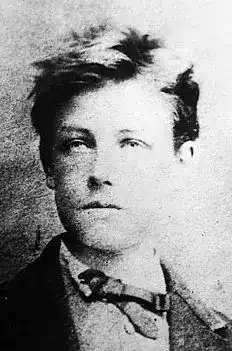
Arthur Rimbaud
To A Reason
To A Reason
A rap of your finger on the drum
fires all the sounds
and starts a new harmony.
A step of yours: the levy of new men
and their marching on.
Your head turns away:
O the new love!
Your head turns back:
O the new love!
'Change our lots, confound the plagues,
beginning with time,'
to you these children sing.
'Raise no matter where the substance
of our fortune and our desires,'
they beg you.
Arrival of all time,
who will go everywhere.
A rap of your finger on the drum
fires all the sounds
and starts a new harmony.
A step of yours: the levy of new men
and their marching on.
Your head turns away:
O the new love!
Your head turns back:
O the new love!
'Change our lots, confound the plagues,
beginning with time,'
to you these children sing.
'Raise no matter where the substance
of our fortune and our desires,'
they beg you.
Arrival of all time,
who will go everywhere.
510
Arthur Rimbaud
Movement
Movement
A winding movement on the slope beside the rapids of the river.
The abyss at the stern,
The swiftness of the incline,
The overwhelming passage of the tide,
With extraordinary lights and chemical wonders
Lead on the travelers
Through the windspouts of the valley
And the whirlpool.
These are the conquerors of the world,
Seeking their personal chemical fortune;
Sport and comfort accompany them;
They bring education for races, for classes, for animals
Within this vessel, rest adn vertigo
In diluvian light,
In terrible evenings of study.
For in this conversation in the midst of machines,
Of blood, of flowers, of fire, of jewels,
In busy calculations on this fugitive deck,
Is their stock of studies visible
-Rolling like dike beyond
The hydraulic propulsive road,
Monstrous, endlessly lighting its way -
Themselves driven into harmonic ecstasy
And the heroism of discovery.
Amid the most amazing accidents,
Two youths stand out alone upon the ark
- Can one excuse past savagery? -
And sing, upon their watch.
A winding movement on the slope beside the rapids of the river.
The abyss at the stern,
The swiftness of the incline,
The overwhelming passage of the tide,
With extraordinary lights and chemical wonders
Lead on the travelers
Through the windspouts of the valley
And the whirlpool.
These are the conquerors of the world,
Seeking their personal chemical fortune;
Sport and comfort accompany them;
They bring education for races, for classes, for animals
Within this vessel, rest adn vertigo
In diluvian light,
In terrible evenings of study.
For in this conversation in the midst of machines,
Of blood, of flowers, of fire, of jewels,
In busy calculations on this fugitive deck,
Is their stock of studies visible
-Rolling like dike beyond
The hydraulic propulsive road,
Monstrous, endlessly lighting its way -
Themselves driven into harmonic ecstasy
And the heroism of discovery.
Amid the most amazing accidents,
Two youths stand out alone upon the ark
- Can one excuse past savagery? -
And sing, upon their watch.
630
Arthur Rimbaud
Clearance Sale
Clearance Sale
For what the Jews have not sold,
what neither nobility nor crime have tasted,
what is unknown to monstrous love
and to the infernal probity of the masses!
what neither time nor science need recognize: The Voices restored;
fraternal awakening of all choral and orchestral energies
and their instantaneous application; the opportunity, the only one,
for the release of our senses! For sale Bodies without price,
outside any race, any world, any sex, any lineage! Riches gushing at every step!
Uncontrolled sale of diamonds!
For sale anarchy for the masses;
irrepressible satisfaction for rare connoisseurs;
agonizing death for the faithful and for lovers!
For sale colonization and migrations, sports,
fairylands and incomparable comforts,
and the noise and the movement
and the future they make!
For sale the application of calculations
and the incredible leaps of harmony.
Discoveries and terms never dreamed of,
-- immediate possession.
Wild and infinite flight toward invisible splendors,
toward intangible delights-and
its maddening secrets for every vice
-- and its terrifying gaiety for the mob.
For sale, the bodies, the voices,
the enormous and unquestionable wealth,
that which will never be sold.
Salesmen are not at the end of their stock!
It will be some time before travelers have to turn in their accounts.
For what the Jews have not sold,
what neither nobility nor crime have tasted,
what is unknown to monstrous love
and to the infernal probity of the masses!
what neither time nor science need recognize: The Voices restored;
fraternal awakening of all choral and orchestral energies
and their instantaneous application; the opportunity, the only one,
for the release of our senses! For sale Bodies without price,
outside any race, any world, any sex, any lineage! Riches gushing at every step!
Uncontrolled sale of diamonds!
For sale anarchy for the masses;
irrepressible satisfaction for rare connoisseurs;
agonizing death for the faithful and for lovers!
For sale colonization and migrations, sports,
fairylands and incomparable comforts,
and the noise and the movement
and the future they make!
For sale the application of calculations
and the incredible leaps of harmony.
Discoveries and terms never dreamed of,
-- immediate possession.
Wild and infinite flight toward invisible splendors,
toward intangible delights-and
its maddening secrets for every vice
-- and its terrifying gaiety for the mob.
For sale, the bodies, the voices,
the enormous and unquestionable wealth,
that which will never be sold.
Salesmen are not at the end of their stock!
It will be some time before travelers have to turn in their accounts.
464

Anne Brontë
The Three Guides
The Three Guides
1
Spirit of earth! thy hand is chill.
I've felt its icy clasp;
And shuddering I remember still
That stonyhearted
grasp.
Thine eye bids love and joy depart,
O turn its gaze from me!
It presses down my sinking heart; I
will not walk with thee!
2
'Wisdom is mine,' I've heard thee say,
'Beneath my searching eye,
All mist and darkness melt away,
Phantoms and fables fly.
Before me, truth can stand alone,
The naked, solid truth:
And man matured my worth will own,
If I am shunned by youth.
3
'Firm is my tread, and sure, though slow:
My footsteps never slide:
And he that follows me shall know
I am the surest guide.'
Thy boast is vain: but were it true
That thou couldst safely steer
Life's rough and devious pathway through
Such guidance I should fear.
4
How could I bear to walk for aye,
With eyes to earthward prone,
O'er trampled weeds, and miry clay,
And sand, and flinty stone.
Never the glorious view to greet
Of hill and dale and sky,
To see that Nature's charms are sweet
Or feel that Heaven is nigh?
5
If, in my heart arose a spring A
gush of thought divine,
At once stagnation thou wouldst bring
With that cold touch of thine!
If glancing up, I sought to snatch
But one glimpse of the sky,
My baffled gaze would only catch
Thy heartless, cold grey eye.
6
If, to the breezes wandering near,
I listened eagerly,
And deemed an angel's tongue to hear
That whispered hope to me,
That heavenly music would be drowned
In thy harsh, droning voice,
Nor inward thought, nor sight, nor sound
Might my sad soul rejoice.
7
Dull is thine ear; unheard by thee
The still small voice of Heaven.
Thine eyes are dim, and cannot see
The helps that God has given.
There is a bridge, o'er every flood,
Which thou canst not perceive,
A path, through every tangled wood;
But thou will not believe.
8
Striving to make thy way by force,
Toilspent
and bramble torn,
Thou'lt fell the tree that stops thy course,
And burst through briar and thorn;
And pausing by the river's side,
Poor reasoner, thou wilt deem,
By casting pebbles in its tide
To cross the swelling stream.
9
Right through the flinty rock thou'lt try
Thy toilsome way to bore,
Regardless of the pathway nigh
That would conduct thee o'er.
Not only are thou, then, unkind,
And freezing cold to me,
But unbelieving, deaf, and blind I
will not walk with thee!
10
Spirit of Pride! thy wings are strong;
Thine eyes like lightning shine;
Ecstatic joys to thee belong
And powers almost divine.
But 'tis a false destructive blaze,
Within those eyes I see,
Turn hence their fascinating gaze I
will not follow thee!
11
'Coward and fool!' thou mayst reply;
'Walk on the common sod;
Go trace, with timid foot and eye,
The steps by others trod.
'Tis best the beaten path to keep,
The ancient faith to hold,
To pasture with thy fellow sheep,
And lie within the fold.
12
'Cling to the earth, poor grovelling worm,
'Tis not for thee to soar
Against the fury of the storm,
Amid the thunder's roar.
There's glory in that daring strife
Unknown, undreamt by thee;
There's speechless rapture in the life
Of those who follow me!'
13
Yes; I have seen thy votaries oft,
Upheld by thee their guide,
In strength and courage mount aloft
The steepy mountainside;
I've seen them stand against the sky,
And gazing from below
Beheld thy lightning in their eye,
Thy triumph on their brow.
14
Oh! I have felt what glory then What
transport must be theirs'
So far above their fellow men,
Above their toils and cares,
Inhaling nature's purest breath,
Her riches round them spread,
The wide expanse of earth beneath,
Heaven's glories overhead!
15
But I
have seen them downwards dashed,
Down to a bloody grave;
And still thy ruthless eye has flashed,
Thy strong hand did not save!
I've seen some o'er the mountain's brow
Sustained a while by thee,
O'er rocks of ice and hills of snow
Bound fearless, wild, and free.
16
Bold and exultant was their mien
While thou didst cheer them on;
But evening fell and
then, I ween,
Their faithless guide was gone.
Alas! how fared thy favourites then
Lone, helpless, weary, cold Did
ever wanderer find again
The path he left of old?
17
Where is their glory, where the pride
That swelled their hearts before;
Where now the courage that defied
The mightiest tempest's roar?
What shall they do when night grows black,
When angry storms arise?
Who now will lead them to the track
Thou taught'st them to despise?
18
Spirit of Pride! it needs not this
To make me shun thy wiles,
Renounce thy triumph and thy bliss,
Thy honours and thy smiles.
Bright as thou art, and bold, and strong,
That fierce glance wins not me,
And I abhor thy scoffing tongue I
will not walk with thee!
19
Spirit of Faith! be thou my guide,
O, clasp my hand in thine,
And let me never quit thy side:
Thy comforts are divine!
Earth calls thee 'blind misguided one',
But who can show like thee
Past things that have been seen and done,
And things that are to be?
20
Secrets concealed from Nature's ken,
Who like thee can declare;
Or who like thee to erring men
God's holy will can bear?
Pride scorns thee for thy lowly mien;
But who like thee can rise
Above this restless, clouded scene, Beyond
the holy skies?
21
Meek is thine eye and soft thy voice
But wondrous is thy might
To make the wretched soul rejoice,
To give the simple light.
And still to all that seek thy way,
Such magic power is given E'en
while their footsteps press the clay
Their souls ascend to heaven.
22
Danger surrounds them, pain and woe
Their portion here must be;
But only they that trust thee know
What comfort dwells with thee,
Strength to sustain their drooping powers
And vigour to defend.
Thou polestar
of my darkest hours,
Affliction's firmest friend!
23
Day does not always mark our way;
Night's terrors oft appal,
But lead me, and I cannot stray;
Hold me: I shall not fall;
Sustain me, I shall never faint,
How rough soe'er may be
My upward road, nor
moan nor plaint
Shall mar my trust in thee.
24
Narrow the path by which we go;
And oft it turns aside,
From pleasant meads where roses blow
And murmuring waters glide;
Where flowery turf lies green and soft,
And gentle gales are sweet,
To where dark mountains frown aloft,
Hard rocks distress the feet.
25
Deserts beyond lie bleak and bare,
And keen winds round us blow;
But if thy hand conducts me there,
The way is right, I know.
I have no wish to turn away:
My spirit does not quail.
How can it while I hear thee say,
'Press forward and
prevail.'?
26
Even above the tempest's swell,
I hear thy voice of love.
Of hope and peace I hear thee tell,
And that blest home above.
Through pain and death, I can rejoice,
If but thy strength be mine.
Earth hath no music like thy voice;
Life owns no joy like thine!
27
Spirit of Faith! I'll go with thee:
Thou, if I hold thee fast,
Wilt guide, defend, and strengthen me,
And bring me home at last.
By thy help, all things I can do;
In thy strength all things bear.
Teach me, for thou art just and true,
Smile on me, thou
art fair!
1
Spirit of earth! thy hand is chill.
I've felt its icy clasp;
And shuddering I remember still
That stonyhearted
grasp.
Thine eye bids love and joy depart,
O turn its gaze from me!
It presses down my sinking heart; I
will not walk with thee!
2
'Wisdom is mine,' I've heard thee say,
'Beneath my searching eye,
All mist and darkness melt away,
Phantoms and fables fly.
Before me, truth can stand alone,
The naked, solid truth:
And man matured my worth will own,
If I am shunned by youth.
3
'Firm is my tread, and sure, though slow:
My footsteps never slide:
And he that follows me shall know
I am the surest guide.'
Thy boast is vain: but were it true
That thou couldst safely steer
Life's rough and devious pathway through
Such guidance I should fear.
4
How could I bear to walk for aye,
With eyes to earthward prone,
O'er trampled weeds, and miry clay,
And sand, and flinty stone.
Never the glorious view to greet
Of hill and dale and sky,
To see that Nature's charms are sweet
Or feel that Heaven is nigh?
5
If, in my heart arose a spring A
gush of thought divine,
At once stagnation thou wouldst bring
With that cold touch of thine!
If glancing up, I sought to snatch
But one glimpse of the sky,
My baffled gaze would only catch
Thy heartless, cold grey eye.
6
If, to the breezes wandering near,
I listened eagerly,
And deemed an angel's tongue to hear
That whispered hope to me,
That heavenly music would be drowned
In thy harsh, droning voice,
Nor inward thought, nor sight, nor sound
Might my sad soul rejoice.
7
Dull is thine ear; unheard by thee
The still small voice of Heaven.
Thine eyes are dim, and cannot see
The helps that God has given.
There is a bridge, o'er every flood,
Which thou canst not perceive,
A path, through every tangled wood;
But thou will not believe.
8
Striving to make thy way by force,
Toilspent
and bramble torn,
Thou'lt fell the tree that stops thy course,
And burst through briar and thorn;
And pausing by the river's side,
Poor reasoner, thou wilt deem,
By casting pebbles in its tide
To cross the swelling stream.
9
Right through the flinty rock thou'lt try
Thy toilsome way to bore,
Regardless of the pathway nigh
That would conduct thee o'er.
Not only are thou, then, unkind,
And freezing cold to me,
But unbelieving, deaf, and blind I
will not walk with thee!
10
Spirit of Pride! thy wings are strong;
Thine eyes like lightning shine;
Ecstatic joys to thee belong
And powers almost divine.
But 'tis a false destructive blaze,
Within those eyes I see,
Turn hence their fascinating gaze I
will not follow thee!
11
'Coward and fool!' thou mayst reply;
'Walk on the common sod;
Go trace, with timid foot and eye,
The steps by others trod.
'Tis best the beaten path to keep,
The ancient faith to hold,
To pasture with thy fellow sheep,
And lie within the fold.
12
'Cling to the earth, poor grovelling worm,
'Tis not for thee to soar
Against the fury of the storm,
Amid the thunder's roar.
There's glory in that daring strife
Unknown, undreamt by thee;
There's speechless rapture in the life
Of those who follow me!'
13
Yes; I have seen thy votaries oft,
Upheld by thee their guide,
In strength and courage mount aloft
The steepy mountainside;
I've seen them stand against the sky,
And gazing from below
Beheld thy lightning in their eye,
Thy triumph on their brow.
14
Oh! I have felt what glory then What
transport must be theirs'
So far above their fellow men,
Above their toils and cares,
Inhaling nature's purest breath,
Her riches round them spread,
The wide expanse of earth beneath,
Heaven's glories overhead!
15
But I
have seen them downwards dashed,
Down to a bloody grave;
And still thy ruthless eye has flashed,
Thy strong hand did not save!
I've seen some o'er the mountain's brow
Sustained a while by thee,
O'er rocks of ice and hills of snow
Bound fearless, wild, and free.
16
Bold and exultant was their mien
While thou didst cheer them on;
But evening fell and
then, I ween,
Their faithless guide was gone.
Alas! how fared thy favourites then
Lone, helpless, weary, cold Did
ever wanderer find again
The path he left of old?
17
Where is their glory, where the pride
That swelled their hearts before;
Where now the courage that defied
The mightiest tempest's roar?
What shall they do when night grows black,
When angry storms arise?
Who now will lead them to the track
Thou taught'st them to despise?
18
Spirit of Pride! it needs not this
To make me shun thy wiles,
Renounce thy triumph and thy bliss,
Thy honours and thy smiles.
Bright as thou art, and bold, and strong,
That fierce glance wins not me,
And I abhor thy scoffing tongue I
will not walk with thee!
19
Spirit of Faith! be thou my guide,
O, clasp my hand in thine,
And let me never quit thy side:
Thy comforts are divine!
Earth calls thee 'blind misguided one',
But who can show like thee
Past things that have been seen and done,
And things that are to be?
20
Secrets concealed from Nature's ken,
Who like thee can declare;
Or who like thee to erring men
God's holy will can bear?
Pride scorns thee for thy lowly mien;
But who like thee can rise
Above this restless, clouded scene, Beyond
the holy skies?
21
Meek is thine eye and soft thy voice
But wondrous is thy might
To make the wretched soul rejoice,
To give the simple light.
And still to all that seek thy way,
Such magic power is given E'en
while their footsteps press the clay
Their souls ascend to heaven.
22
Danger surrounds them, pain and woe
Their portion here must be;
But only they that trust thee know
What comfort dwells with thee,
Strength to sustain their drooping powers
And vigour to defend.
Thou polestar
of my darkest hours,
Affliction's firmest friend!
23
Day does not always mark our way;
Night's terrors oft appal,
But lead me, and I cannot stray;
Hold me: I shall not fall;
Sustain me, I shall never faint,
How rough soe'er may be
My upward road, nor
moan nor plaint
Shall mar my trust in thee.
24
Narrow the path by which we go;
And oft it turns aside,
From pleasant meads where roses blow
And murmuring waters glide;
Where flowery turf lies green and soft,
And gentle gales are sweet,
To where dark mountains frown aloft,
Hard rocks distress the feet.
25
Deserts beyond lie bleak and bare,
And keen winds round us blow;
But if thy hand conducts me there,
The way is right, I know.
I have no wish to turn away:
My spirit does not quail.
How can it while I hear thee say,
'Press forward and
prevail.'?
26
Even above the tempest's swell,
I hear thy voice of love.
Of hope and peace I hear thee tell,
And that blest home above.
Through pain and death, I can rejoice,
If but thy strength be mine.
Earth hath no music like thy voice;
Life owns no joy like thine!
27
Spirit of Faith! I'll go with thee:
Thou, if I hold thee fast,
Wilt guide, defend, and strengthen me,
And bring me home at last.
By thy help, all things I can do;
In thy strength all things bear.
Teach me, for thou art just and true,
Smile on me, thou
art fair!
84
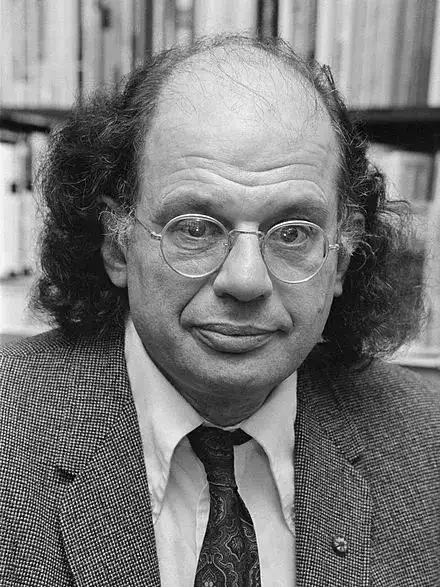
Allen Ginsberg
Cosmopolitan Greetings
Cosmopolitan Greetings
Stand up against governments, against God.
Stay irresponsible.
Say only what we know & imagine.
Absolutes are Coercion.
Change is absolute.
Ordinary mind includes eternal perceptions.
Observe what’s vivid.
Notice what you notice.
Catch yourself thinking.
Vividness is self-selecting.
If we don’t show anyone, we’re free to write anything.
Remember the future.
Freedom costs little in the U.S.
Asvise only myself.
Don’t drink yourself to death.
Two molecules clanking us against each other require an observer to become
scientific data.
The measuring instrument determines the appearance of the phenomenal
world (after Einstein).
The universe is subjective..
Walt Whitman celebrated Person.
We are observer, measuring instrument, eye, subject, Person.
Universe is Person.
Inside skull is vast as outside skull.
What’s in between thoughts?
Mind is outer space.
What do we say to ourselves in bed at night, making no sound?
“First thought, best thought.”
Mind is shapely, Art is shapely.
Maximum information, minimum number of syllables.
Syntax condensed, sound is solid.
Intense fragments of spoken idiom, best.
Move with rhythm, roll with vowels.
Consonants around vowels make sense.
Savour vowels, appreciate consonants.
Subject is known by what she sees.
Others can measure their vision by what we see.
Candour ends paranoia.
Stand up against governments, against God.
Stay irresponsible.
Say only what we know & imagine.
Absolutes are Coercion.
Change is absolute.
Ordinary mind includes eternal perceptions.
Observe what’s vivid.
Notice what you notice.
Catch yourself thinking.
Vividness is self-selecting.
If we don’t show anyone, we’re free to write anything.
Remember the future.
Freedom costs little in the U.S.
Asvise only myself.
Don’t drink yourself to death.
Two molecules clanking us against each other require an observer to become
scientific data.
The measuring instrument determines the appearance of the phenomenal
world (after Einstein).
The universe is subjective..
Walt Whitman celebrated Person.
We are observer, measuring instrument, eye, subject, Person.
Universe is Person.
Inside skull is vast as outside skull.
What’s in between thoughts?
Mind is outer space.
What do we say to ourselves in bed at night, making no sound?
“First thought, best thought.”
Mind is shapely, Art is shapely.
Maximum information, minimum number of syllables.
Syntax condensed, sound is solid.
Intense fragments of spoken idiom, best.
Move with rhythm, roll with vowels.
Consonants around vowels make sense.
Savour vowels, appreciate consonants.
Subject is known by what she sees.
Others can measure their vision by what we see.
Candour ends paranoia.
585
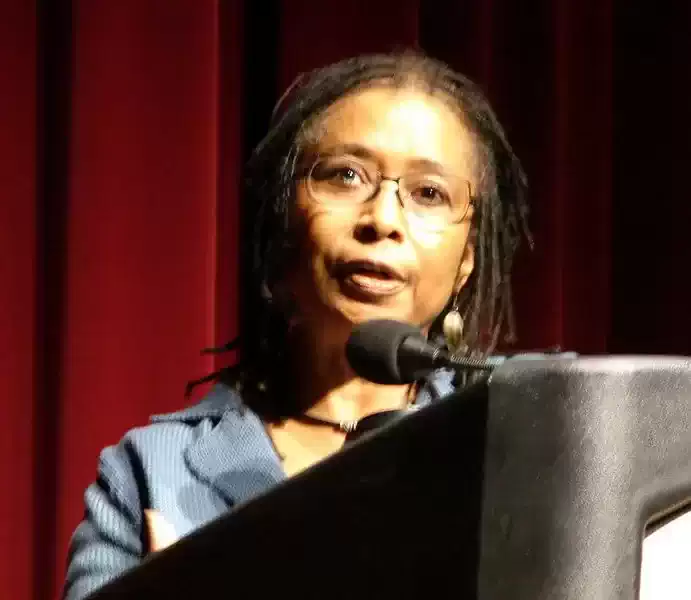
Alice Walker
What Makes The Dalai Lama Lovable?
What Makes The Dalai Lama Lovable?
His posture
From so many years
Holding his robe with one hand
Is odd.
His gait
Also.
One's own body
Aches
Witnessing
The sloping
Shoulders
& Angled
Neck;
One hopes
He
Attends
Yoga class
Or does Yoga
On his own
As part
Of prayer.
He smiles
As he bows
To Everything:
Accepting
The heavy
Burdens
Of
This earth;
It's
Toxic
Evils
& Prolific
Insults.
Even so,
He sleeps
Through
The night
Like a child
Because
Thank goodness
That is something
Else
Daylong
Meditation
Assures.
You could cry
Yourself to sleep
On his behalf
& He
Has done that
Too.
Life
Has been
A great
Endless
Tearing away
For
Him.
From
Mother, Father, Siblings, Country, Home.
And yet
Clearly
His mother
Loved him;
His brother & sister
Too:
Even his
Not so constant father,
Who
When Tenzin was
A boy
Shared
With him
Delicious
Scraps
Of
Succulent
Pork.
He laughs
Telling this
Story
Over half a century
Later
&
To who knows
How many
Puzzled
Vegetarians:
About
The way he sat
Behind
His father's chair
Like a dog,
Relishing
Each juicy
Greasy
Bite.
Whenever I see
The Dalai Lama
My first impulse
Is to laugh
I am so happy
To
Lay eyes
On
One
So effortlessly
Beautiful.
That balding head
That holds
A shine;
Those wire framed
Glasses
That might
Have come
From
Anywhere.
His look of having given
All he has.
He is my teacher;
Just staying alive.
Other teachers
I have had
Resemble him
In some way;
They too
Were
&
Are
Smart
And Humble;
Fascinated
By Science & things like
Time,
Eternity,
Cause & Effect;
The Evolution
Of the Soul.
A soul
That
Might
Or might not
Exist.
They too
See all of us
-Banker, murderer, gardener, thief -
When they look
Out across
The world:
But that is not all
They see.
They see our suffering;
Our striving
To find
The right path;
The one with heart
We may only
Have heard
About.
The Dalai Lama is Cool
A modern word
For
"Divine"
Because he wants
Only
Our collective
Health
& Happiness.
That's it!
What makes
Him
Lovable
Is
His holiness.
His posture
From so many years
Holding his robe with one hand
Is odd.
His gait
Also.
One's own body
Aches
Witnessing
The sloping
Shoulders
& Angled
Neck;
One hopes
He
Attends
Yoga class
Or does Yoga
On his own
As part
Of prayer.
He smiles
As he bows
To Everything:
Accepting
The heavy
Burdens
Of
This earth;
It's
Toxic
Evils
& Prolific
Insults.
Even so,
He sleeps
Through
The night
Like a child
Because
Thank goodness
That is something
Else
Daylong
Meditation
Assures.
You could cry
Yourself to sleep
On his behalf
& He
Has done that
Too.
Life
Has been
A great
Endless
Tearing away
For
Him.
From
Mother, Father, Siblings, Country, Home.
And yet
Clearly
His mother
Loved him;
His brother & sister
Too:
Even his
Not so constant father,
Who
When Tenzin was
A boy
Shared
With him
Delicious
Scraps
Of
Succulent
Pork.
He laughs
Telling this
Story
Over half a century
Later
&
To who knows
How many
Puzzled
Vegetarians:
About
The way he sat
Behind
His father's chair
Like a dog,
Relishing
Each juicy
Greasy
Bite.
Whenever I see
The Dalai Lama
My first impulse
Is to laugh
I am so happy
To
Lay eyes
On
One
So effortlessly
Beautiful.
That balding head
That holds
A shine;
Those wire framed
Glasses
That might
Have come
From
Anywhere.
His look of having given
All he has.
He is my teacher;
Just staying alive.
Other teachers
I have had
Resemble him
In some way;
They too
Were
&
Are
Smart
And Humble;
Fascinated
By Science & things like
Time,
Eternity,
Cause & Effect;
The Evolution
Of the Soul.
A soul
That
Might
Or might not
Exist.
They too
See all of us
-Banker, murderer, gardener, thief -
When they look
Out across
The world:
But that is not all
They see.
They see our suffering;
Our striving
To find
The right path;
The one with heart
We may only
Have heard
About.
The Dalai Lama is Cool
A modern word
For
"Divine"
Because he wants
Only
Our collective
Health
& Happiness.
That's it!
What makes
Him
Lovable
Is
His holiness.
256
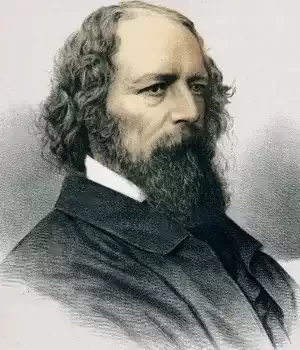
Alfred Lord Tennyson
Lucretius
Lucretius
Lucilla, wedded to Lucretius, found
Her master cold; for when the morning flush
Of passion and the first embrace had died
Between them, tho' he loved her none the less,
Yet often when the woman heard his foot
Return from pacings in the field, and ran
To greet him with a kiss, the master took
Small notice, or austerely, for his mind
Half buried in some weightier argument,
Or fancy-borne perhaps upon the rise
And long roll of the hexameter -- he past
To turn and ponder those three hundred scrolls
Left by the Teacher, whom he held divine.
She brook'd it not, but wrathful, petulant
Dreaming some rival, sought and found a witch
Who brew'd the philtre which had power, they said
To lead an errant passion home again.
And this, at times, she mingled with his drink,
And this destroy'd him; for the wicked broth
Confused the chemic labor of the blood,
And tickling the brute brain within the man's
Made havoc among those tender cells, and check'd
His power to shape. He loathed himself, and once
After a tempest woke upon a morn
That mock'd him with returning calm, and cried:
"Storm in the night! for thrice I heard the rain
Rushing; and once the flash of a thunderbolt -Methought
I never saw so fierce a fork -Struck
out the streaming mountain-side, and show'd
A riotous confluence of watercourses
Blanching and billowing in a hollow of it,
Where all but yester-eve was dusty-dry.
"Storm, and what dreams, ye holy Gods, what dreams!
For thrice I waken'd after dreams. Perchance
We do but recollect the dreams that come
Just ere the waking. Terrible: for it seem'd
A void was made in Nature, all her bonds
Crack'd; and I saw the flaring atom-streams
And torrents of her myriad universe,
Ruining along the illimitable inane,
Fly on to clash together again, and make
Another and another frame of things
For ever. That was mine, my dream, I knew it -Of
and belonging to me, as the dog
With inward yelp and restless forefoot plies
His function of the woodland; but the next!
I thought that all the blood by Sylla shed
Came driving rainlike down again on earth,
And where it dash'd the reddening meadow, sprang
No dragon warriors from Cadmean teeth,
For these I thought my dream would show to me,
But girls, Hetairai, curious in their art,
Hired animalisms, vile as those that made
The mulberry-faced Dictator's orgies worse
Than aught they fable of the quiet Gods.
And hands they mixt, and yell'd and round me drove
In narrowing circles till I yell'd again
Half-suffocated, and sprang up, and saw -Was
it the first beam of my latest day?
"Then, then, from utter gloom stood out the
The breasts of Helen, and hoveringly a sword
Now over and now under, now direct,
Pointed itself to pierce, but sank down shamed
At all that beauty; and as I stared, a fire,
The fire that left a roofless Ilion,
Shot out of them, and scorch'd me that I woke.
"Is this thy vengeance, holy Venus, thine,
Because I would not one of thine own doves,
Not even a rose, were offered to thee? thine,
Forgetful how my rich proemion makes
Thy glory fly along the Italian field,
In lays that will outlast thy deity?
"Deity? nay, thy worshippers. My tongue
Trips, or I speak profanely. Which of these
Angers thee most, or angers thee at all?
Not if thou be'st of those who, far aloof
From envy, hate and pity, and spite and scorn,
Live the great life which all our greatest fain
Would follow, centred in eternal calm.
"Nay, if thou canst,
Goddess, like ourselves
Touch, and be touch'd, then would I cry to thee
To kiss thy Mavors, roll thy tender arms
Round him, and keep him from the lust of blood
That makes a steaming slaughter-house of Rome.
"Ay, but I meant not thee; I meant riot her
Whom all the pines of Ida shook to see
Slide from that quiet heaven of hers, and tempt
The Trojan, while his neatherds were abroad
Nor her that o'er her wounded hunter wept
Her deity false in human-amorous tears;
Nor whom her beardless apple-arbiter
Decided fairest. Rather, O ye Gods,
Poet-like, as the great Sicilian called
Calliope to grace his golden verse -Ay,
and this Kypris also -- did I take
That popular name of thine to shadow forth
The all-generating powers and genial heat
Of Nature, when she strikes thro' the thick blood
Of cattle, and light is large, and lambs are glad
Nosing the mother's udder, and the bird
Makes his heart voice amid the blaze of flowers;
Which things appear the work of mighty Gods.
"The Gods! and if I go my work is left
Unfinish'd -- if I go. The Gods, who haunt
The lucid interspace of world and world,
Where never creeps a cloud, or moves a wind,
Nor ever falls the least white star of mow
Nor ever lowest roll of thunder moans,
Nor sound of human sorrow mounts to mar
Their sacred everlasting calm! and such,
Not all so fine, nor so divine a calm
Not such, nor all unlike it, man may gain
Letting his own life go. The Gods, the Godsl
If all be atoms, how then should the Gods
Being atomic not be dissoluble,
Not follow the great law? My master held
That Gods there are, for all men so believe.
I prest my footsteps into his, and meant
Surely to lead my Memmius in a train
Of fiowery clauses onward to the proof
That Gods there are, and deathless. Meant? I meant?
I have forgotten what I meant, my mind
Stumbles, and all my faculties are lamed.
"Look where another of our Gods, the Sun
Apollo, Delius, or of older use
All-seeing Hyperion -- what you will -Has
mounted yonder; since he never sware,
Except his wrath were wreak'd on wretched man,
That he would only shine among the dead
Hereafter -- tales! for never yet on earth
Could dead flesh creep, or bits of roasting ox
Moan round the spit -- nor knows he what he sees;
King of the East altho' he seem, and girt
With song and flame and fragrance, slowly lifts
His golden feet on those empurpled stairs
That climb into the windy halls of heaven
And here he glances on an eye new-born,
And gets for greeting but a wail of pain;
And here he stays upon a freezing orb
That fain would gaze upon him to the last;
And here upon a yellow eyelid fallen
And closed by those who mourn a friend in vain,
Not thankful that his troubles are no more.
And me, altho' his fire is on my face
Blinding, he sees not, nor at all can tell
Whether I mean this day to end myself.
Or lend an ear to Plato where he says,
That men like soldiers may not quit the post
Allotted by the Gods. But he that holds
The Gods are careless, wherefore need he care
Greatly for them, nor rather plunge at once,
Being troubled, wholly out of sight, and sink
Past earthquake -- ay, and gout and stone, that break
Body toward death, and palsy, death-in-life,
And wretched age -- and worst disease of all,
These prodigies of myriad nakednesses,
And twisted shapes of lust, unspeakable,
Abominable, strangers at my hearth
Not welcome, harpies miring every dish,
The phantom husks of something foully done,
And fleeting thro' the boundless universe,
And blasting the long quiet of my breast
With animal heat and dire insanity?
"How should the mind, except it loved them, clasp
These idols to herself? or do they fly
Now thinner, and now thicker, like the flakes
In a fall of snow, and so press in, perforce
Of multitude, as crowds that in an hour
Of civic tumult jam the doors, and bear
The keepers down, and throng, their rags and the
The basest, far into that council-hall
Where sit the best and stateliest of the land?
³Can I not fling this horror off me again,
Seeing with how great ease Nature can smile
Balmier and nobler from her bath of storm,
At random ravage? and how easily
The mountain there has cast his cloudy slough,
Now towering o'er him in serenest air,
A mountain o'er a mountain, -- ay, and within
All hollow as the hopes and fears of men?
"But who was he that in the garden snared
Picus and Faunus, rustic Gods? a tale
To laugh at -- more to laugh at in myself -For
look! what is it? there? yon arbutus
Totters; a noiseless riot underneath
Strikes through the wood, sets all the tops quivering -- ;
The mountain quickens into Nymph and Faun,
And here an Oread -- how the sun delights
To glance and shift about her slippery sides,
And rosy knees and supple roundedness,
And budded bosom-peaks -- who this way runs
Before the rest! -- a satyr, a satyr, see,
Follows; but him I proved impossible
Twy-natured is no nature. Yet he draws
Nearer and nearer, and I scan him now
Beastlier than any phantom of his kind
That ever butted his rough brother-brute
For lust or lusty blood or provender.
I hate, abhor, spit, sicken at him; and she
Loathes him as well; such a precipitate heel,
Fledged as it were with Mercury's ankle-wing,
Whirls her to me -- ;but will she fling herself
Shameless upon me? Catch her, goatfoot! nay,
Hide, hide them, million-myrtled wilderness,
And cavern-shadowing laurels, hide! do I wish -What?
-- ;that the bush were leafless? or to whelm
All of them in one massacre? O ye Gods
I know you careless, yet, behold, to you
From childly wont and ancient use I call -I
thought I lived securely as yourselves -No
lewdness, narrowing envy, monkey-spite,
No madness of ambition, avarice, none;
No larger feast than under plane or pine
With neighbors laid along the grass, to take
Only such cups as left us friendly-warm,
Affirming each his own philosophy
Nothing to mar the sober majesties
Of settled, sweet, Epicurean life.
But now it seems some unseen monster lays
His vast and filthy hands upon my will,
Wrenching it backward into his, and spoils
My bliss in being; and it was not great,
For save when shutting reasons up in rhythm,
Or Heliconian honey in living words,
To make a truth less harsh, I often grew
Tired of so much within our little life
Or of so little in our little life -Poor
little life that toddles half an hour
Crown'd with a flower or two, and there an end -And
since the nobler pleasure seems to fade,
Why should I, beastlike as I find myself,
Not manlike end myself? -- our privilege -- ;
What beast has heart to do it? And what man
What Roman would be dragg'd in triumph thus?
Not I; not he, who bears one name with her
Whose death-blow struck the dateless doom of kings,
When, brooking not the Tarquin in her veins,
She made her blood in sight of Collatine
And all his peers, flushing the guiltless air,
Spout from the maiden fountain in her heart.
And from it sprang the Commonwealth, which breaks
As I am breaking now!
"And therefore now
Let her, that is the womb and tomb of all
Great Nature, take, and forcing far apart
Those blind beginnings that have made me man,
Dash them anew together at her will
Thro' all her cycles -- into man once more,
Or beast or bird or fish, or opulent flower.
But till this cosmic order everywhere
Shatter'd into one earthquake m one day
Cracks all to pieces, -- and that hour perhaps
Is not so far when momentary man
Shall seem no more a something to himself,
But he, his hopes and hates, his homes and fanes
And even his bones long laid within the grave,
The very sides of the grave itself shall pass,
Vanishing, atom and void, atom and void,
Into the unseen for ever, -- till that hour,
My golden work in which I told a truth
That stays the rolling Ixionian wheel,
And numbs the Fury's ringlet-snake, and plucks
The mortal soul from out immortal hell
Shall stand. Ay, surely; then it fails at last
And perishes as I must, for O Thou
Passionless bride, divine Tranquillity,
Yearn'd after by the wisest of the wise
Who fail to find thee, being as thou art
Without one pleasure and without one pain,
Howbeit I know thou surely must be mine
Or soon or late, yet out of season, thus
I woo thee roughly, for thou carest not
How roughly men may woo thee so they win -- ;
Thus -- thus -- the soul flies out and dies in the air
With that he drove the knife into his side.
She heard him raging, heard him fall, ran in,
Beat breast, tore hair, cried out upon herself
As having fail'd in duty to him, shriek'd
That she but meant to win him back, fell on him
Clasp'd, kiss'd him, wail'd. He answer'd, "Care not thou!
Thy duty? What is duty? Fare thee well!"
Lucilla, wedded to Lucretius, found
Her master cold; for when the morning flush
Of passion and the first embrace had died
Between them, tho' he loved her none the less,
Yet often when the woman heard his foot
Return from pacings in the field, and ran
To greet him with a kiss, the master took
Small notice, or austerely, for his mind
Half buried in some weightier argument,
Or fancy-borne perhaps upon the rise
And long roll of the hexameter -- he past
To turn and ponder those three hundred scrolls
Left by the Teacher, whom he held divine.
She brook'd it not, but wrathful, petulant
Dreaming some rival, sought and found a witch
Who brew'd the philtre which had power, they said
To lead an errant passion home again.
And this, at times, she mingled with his drink,
And this destroy'd him; for the wicked broth
Confused the chemic labor of the blood,
And tickling the brute brain within the man's
Made havoc among those tender cells, and check'd
His power to shape. He loathed himself, and once
After a tempest woke upon a morn
That mock'd him with returning calm, and cried:
"Storm in the night! for thrice I heard the rain
Rushing; and once the flash of a thunderbolt -Methought
I never saw so fierce a fork -Struck
out the streaming mountain-side, and show'd
A riotous confluence of watercourses
Blanching and billowing in a hollow of it,
Where all but yester-eve was dusty-dry.
"Storm, and what dreams, ye holy Gods, what dreams!
For thrice I waken'd after dreams. Perchance
We do but recollect the dreams that come
Just ere the waking. Terrible: for it seem'd
A void was made in Nature, all her bonds
Crack'd; and I saw the flaring atom-streams
And torrents of her myriad universe,
Ruining along the illimitable inane,
Fly on to clash together again, and make
Another and another frame of things
For ever. That was mine, my dream, I knew it -Of
and belonging to me, as the dog
With inward yelp and restless forefoot plies
His function of the woodland; but the next!
I thought that all the blood by Sylla shed
Came driving rainlike down again on earth,
And where it dash'd the reddening meadow, sprang
No dragon warriors from Cadmean teeth,
For these I thought my dream would show to me,
But girls, Hetairai, curious in their art,
Hired animalisms, vile as those that made
The mulberry-faced Dictator's orgies worse
Than aught they fable of the quiet Gods.
And hands they mixt, and yell'd and round me drove
In narrowing circles till I yell'd again
Half-suffocated, and sprang up, and saw -Was
it the first beam of my latest day?
"Then, then, from utter gloom stood out the
The breasts of Helen, and hoveringly a sword
Now over and now under, now direct,
Pointed itself to pierce, but sank down shamed
At all that beauty; and as I stared, a fire,
The fire that left a roofless Ilion,
Shot out of them, and scorch'd me that I woke.
"Is this thy vengeance, holy Venus, thine,
Because I would not one of thine own doves,
Not even a rose, were offered to thee? thine,
Forgetful how my rich proemion makes
Thy glory fly along the Italian field,
In lays that will outlast thy deity?
"Deity? nay, thy worshippers. My tongue
Trips, or I speak profanely. Which of these
Angers thee most, or angers thee at all?
Not if thou be'st of those who, far aloof
From envy, hate and pity, and spite and scorn,
Live the great life which all our greatest fain
Would follow, centred in eternal calm.
"Nay, if thou canst,
Goddess, like ourselves
Touch, and be touch'd, then would I cry to thee
To kiss thy Mavors, roll thy tender arms
Round him, and keep him from the lust of blood
That makes a steaming slaughter-house of Rome.
"Ay, but I meant not thee; I meant riot her
Whom all the pines of Ida shook to see
Slide from that quiet heaven of hers, and tempt
The Trojan, while his neatherds were abroad
Nor her that o'er her wounded hunter wept
Her deity false in human-amorous tears;
Nor whom her beardless apple-arbiter
Decided fairest. Rather, O ye Gods,
Poet-like, as the great Sicilian called
Calliope to grace his golden verse -Ay,
and this Kypris also -- did I take
That popular name of thine to shadow forth
The all-generating powers and genial heat
Of Nature, when she strikes thro' the thick blood
Of cattle, and light is large, and lambs are glad
Nosing the mother's udder, and the bird
Makes his heart voice amid the blaze of flowers;
Which things appear the work of mighty Gods.
"The Gods! and if I go my work is left
Unfinish'd -- if I go. The Gods, who haunt
The lucid interspace of world and world,
Where never creeps a cloud, or moves a wind,
Nor ever falls the least white star of mow
Nor ever lowest roll of thunder moans,
Nor sound of human sorrow mounts to mar
Their sacred everlasting calm! and such,
Not all so fine, nor so divine a calm
Not such, nor all unlike it, man may gain
Letting his own life go. The Gods, the Godsl
If all be atoms, how then should the Gods
Being atomic not be dissoluble,
Not follow the great law? My master held
That Gods there are, for all men so believe.
I prest my footsteps into his, and meant
Surely to lead my Memmius in a train
Of fiowery clauses onward to the proof
That Gods there are, and deathless. Meant? I meant?
I have forgotten what I meant, my mind
Stumbles, and all my faculties are lamed.
"Look where another of our Gods, the Sun
Apollo, Delius, or of older use
All-seeing Hyperion -- what you will -Has
mounted yonder; since he never sware,
Except his wrath were wreak'd on wretched man,
That he would only shine among the dead
Hereafter -- tales! for never yet on earth
Could dead flesh creep, or bits of roasting ox
Moan round the spit -- nor knows he what he sees;
King of the East altho' he seem, and girt
With song and flame and fragrance, slowly lifts
His golden feet on those empurpled stairs
That climb into the windy halls of heaven
And here he glances on an eye new-born,
And gets for greeting but a wail of pain;
And here he stays upon a freezing orb
That fain would gaze upon him to the last;
And here upon a yellow eyelid fallen
And closed by those who mourn a friend in vain,
Not thankful that his troubles are no more.
And me, altho' his fire is on my face
Blinding, he sees not, nor at all can tell
Whether I mean this day to end myself.
Or lend an ear to Plato where he says,
That men like soldiers may not quit the post
Allotted by the Gods. But he that holds
The Gods are careless, wherefore need he care
Greatly for them, nor rather plunge at once,
Being troubled, wholly out of sight, and sink
Past earthquake -- ay, and gout and stone, that break
Body toward death, and palsy, death-in-life,
And wretched age -- and worst disease of all,
These prodigies of myriad nakednesses,
And twisted shapes of lust, unspeakable,
Abominable, strangers at my hearth
Not welcome, harpies miring every dish,
The phantom husks of something foully done,
And fleeting thro' the boundless universe,
And blasting the long quiet of my breast
With animal heat and dire insanity?
"How should the mind, except it loved them, clasp
These idols to herself? or do they fly
Now thinner, and now thicker, like the flakes
In a fall of snow, and so press in, perforce
Of multitude, as crowds that in an hour
Of civic tumult jam the doors, and bear
The keepers down, and throng, their rags and the
The basest, far into that council-hall
Where sit the best and stateliest of the land?
³Can I not fling this horror off me again,
Seeing with how great ease Nature can smile
Balmier and nobler from her bath of storm,
At random ravage? and how easily
The mountain there has cast his cloudy slough,
Now towering o'er him in serenest air,
A mountain o'er a mountain, -- ay, and within
All hollow as the hopes and fears of men?
"But who was he that in the garden snared
Picus and Faunus, rustic Gods? a tale
To laugh at -- more to laugh at in myself -For
look! what is it? there? yon arbutus
Totters; a noiseless riot underneath
Strikes through the wood, sets all the tops quivering -- ;
The mountain quickens into Nymph and Faun,
And here an Oread -- how the sun delights
To glance and shift about her slippery sides,
And rosy knees and supple roundedness,
And budded bosom-peaks -- who this way runs
Before the rest! -- a satyr, a satyr, see,
Follows; but him I proved impossible
Twy-natured is no nature. Yet he draws
Nearer and nearer, and I scan him now
Beastlier than any phantom of his kind
That ever butted his rough brother-brute
For lust or lusty blood or provender.
I hate, abhor, spit, sicken at him; and she
Loathes him as well; such a precipitate heel,
Fledged as it were with Mercury's ankle-wing,
Whirls her to me -- ;but will she fling herself
Shameless upon me? Catch her, goatfoot! nay,
Hide, hide them, million-myrtled wilderness,
And cavern-shadowing laurels, hide! do I wish -What?
-- ;that the bush were leafless? or to whelm
All of them in one massacre? O ye Gods
I know you careless, yet, behold, to you
From childly wont and ancient use I call -I
thought I lived securely as yourselves -No
lewdness, narrowing envy, monkey-spite,
No madness of ambition, avarice, none;
No larger feast than under plane or pine
With neighbors laid along the grass, to take
Only such cups as left us friendly-warm,
Affirming each his own philosophy
Nothing to mar the sober majesties
Of settled, sweet, Epicurean life.
But now it seems some unseen monster lays
His vast and filthy hands upon my will,
Wrenching it backward into his, and spoils
My bliss in being; and it was not great,
For save when shutting reasons up in rhythm,
Or Heliconian honey in living words,
To make a truth less harsh, I often grew
Tired of so much within our little life
Or of so little in our little life -Poor
little life that toddles half an hour
Crown'd with a flower or two, and there an end -And
since the nobler pleasure seems to fade,
Why should I, beastlike as I find myself,
Not manlike end myself? -- our privilege -- ;
What beast has heart to do it? And what man
What Roman would be dragg'd in triumph thus?
Not I; not he, who bears one name with her
Whose death-blow struck the dateless doom of kings,
When, brooking not the Tarquin in her veins,
She made her blood in sight of Collatine
And all his peers, flushing the guiltless air,
Spout from the maiden fountain in her heart.
And from it sprang the Commonwealth, which breaks
As I am breaking now!
"And therefore now
Let her, that is the womb and tomb of all
Great Nature, take, and forcing far apart
Those blind beginnings that have made me man,
Dash them anew together at her will
Thro' all her cycles -- into man once more,
Or beast or bird or fish, or opulent flower.
But till this cosmic order everywhere
Shatter'd into one earthquake m one day
Cracks all to pieces, -- and that hour perhaps
Is not so far when momentary man
Shall seem no more a something to himself,
But he, his hopes and hates, his homes and fanes
And even his bones long laid within the grave,
The very sides of the grave itself shall pass,
Vanishing, atom and void, atom and void,
Into the unseen for ever, -- till that hour,
My golden work in which I told a truth
That stays the rolling Ixionian wheel,
And numbs the Fury's ringlet-snake, and plucks
The mortal soul from out immortal hell
Shall stand. Ay, surely; then it fails at last
And perishes as I must, for O Thou
Passionless bride, divine Tranquillity,
Yearn'd after by the wisest of the wise
Who fail to find thee, being as thou art
Without one pleasure and without one pain,
Howbeit I know thou surely must be mine
Or soon or late, yet out of season, thus
I woo thee roughly, for thou carest not
How roughly men may woo thee so they win -- ;
Thus -- thus -- the soul flies out and dies in the air
With that he drove the knife into his side.
She heard him raging, heard him fall, ran in,
Beat breast, tore hair, cried out upon herself
As having fail'd in duty to him, shriek'd
That she but meant to win him back, fell on him
Clasp'd, kiss'd him, wail'd. He answer'd, "Care not thou!
Thy duty? What is duty? Fare thee well!"
489
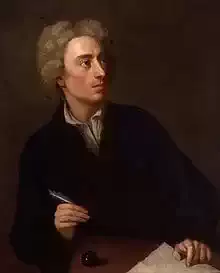
Alexander Pope
Sound and Sense
Sound and Sense
True ease in writing comes from art, not chance,
As those move easiest who have learned to dance.
'Tis not enough no harshness gives offense,
The sound must seem an echo to the sense:
Soft is the strain when Zephyr gently blows,
And the smooth stream in smoother numbers flows;
But when loud surges lash the sounding shore,
The hoarse, rough verse should like the torrent roar;
When Ajax strives some rock's vast weight to throw,
The line too labors, and the words move slow;
Not so, when swift Camilla scours the plain,
Flies o'er the unbending corn, and skims along the main.
Hear how Timotheus' varied lays surprise,
And bid alternate passions fall and rise!
True ease in writing comes from art, not chance,
As those move easiest who have learned to dance.
'Tis not enough no harshness gives offense,
The sound must seem an echo to the sense:
Soft is the strain when Zephyr gently blows,
And the smooth stream in smoother numbers flows;
But when loud surges lash the sounding shore,
The hoarse, rough verse should like the torrent roar;
When Ajax strives some rock's vast weight to throw,
The line too labors, and the words move slow;
Not so, when swift Camilla scours the plain,
Flies o'er the unbending corn, and skims along the main.
Hear how Timotheus' varied lays surprise,
And bid alternate passions fall and rise!
372
Alexander Pope
Essay on Man
Essay on Man
The First Epistle
Awake, my ST. JOHN!(1) leave all meaner things
To low ambition, and the pride of Kings.
Let us (since Life can little more supply
Than just to look about us and to die)
Expatiate(2) free o'er all this scene of Man;
A mighty maze! but not without a plan;
A Wild, where weeds and flow'rs promiscuous shoot,
Or Garden, tempting with forbidden fruit.
Together let us beat this ample field,
Try what the open, what the covert yield;
The latent tracts(3), the giddy heights explore
Of all who blindly creep, or sightless soar;
Eye Nature's walks, shoot Folly as it flies,
And catch the Manners living as they rise;
Laugh where we must, be candid where we can;
But vindicate(4) the ways of God to Man.
1. Say first, of God above, or Man below,
What can we reason, but from what we know?
Of Man what see we, but his station here,
From which to reason, or to which refer?
Thro' worlds unnumber'd tho' the God be known,
'Tis ours to trace him only in our own.
He, who thro' vast immensity can pierce,
See worlds on worlds compose one universe,
Observe how system into system runs,
What other planets circle other suns,
What vary'd being peoples ev'ry star,
May tell why Heav'n has made us as we are.
But of this frame the bearings, and the ties,
The strong connections, nice dependencies,
Gradations just, has thy pervading soul
Look'd thro'? or can a part contain the whole?
Is the great chain, that draws all to agree,
And drawn supports, upheld by God, or thee?
II. Presumptuous Man! the reason wouldst thou find,
Why form'd so weak, so little, and so blind!
First, if thou canst, the harder reason guess,
Why form'd no weaker, blinder, and no less!
Ask of thy mother earth, why oaks are made
Taller or stronger than the weeds they shade?
Or ask of yonder argent fields(5) above,
Why JOVE'S Satellites are less than JOVE?(6)
Of Systems possible, if 'tis confest
That Wisdom infinite must form the best,
Where all must full or not coherent be,
And all that rises, rise in due degree;
Then, in the scale of reas'ning life, 'tis plain
There must be, somewhere, such rank as Man;
And all the question (wrangle e'er so long)
Is only this, if God has plac'd him wrong?
Respecting Man, whatever wrong we call,
Nay, must be right, as relative to all.
In human works, tho' labour'd on with pain,
A thousand movements scarce one purpose gain;
In God's, one single can its end produce;
Yet serves to second too some other use.
So Man, who here seems principal alone,
Perhaps acts second to some sphere unknown,
Touches some wheel, or verges to some goal;
'Tis but a part we see, and not a whole.
When the proud steed shall know why Man restrains
His fiery course, or drives him o'er the plains;
When the dull Ox, why now he breaks the clod,
Is now a victim, and now Egypt's God:(7)
Then shall Man's pride and dullness comprehend
His actions', passions', being's, use and end;
Why doing, suff'ring, check'd, impell'd; and why
This hour a slave, the next a deity.
Then say not Man's imperfect, Heav'n in fault;
Say rather, Man's as perfect as he ought;
His knowledge measur'd to his state and place,
His time a moment, and a point his space.
If to be perfect in a certain sphere,
What matter, soon or late, or here or there?
The blest today is as completely so,
As who began a thousand years ago.
III. Heav'n from all creatures hides the book of Fate,
All but the page prescrib'd, their present state;
From brutes what men, from men what spirits know:
Or who could suffer Being here below?
The lamb thy riot dooms to bleed to-day,
Had he thy Reason, would he skip and play?
Pleas'd to the last, he crops the flow'ry food,
And licks the hand just rais'd to shed his blood.
Oh blindness to the future! kindly giv'n,
That each may fill the circle mark'd by Heav'n;
Who sees with equal eye, as God of all,
A hero perish, or a sparrow fall,
Atoms or systems into ruin hurl'd,
And now a bubble burst, and now a world.
Hope humbly then; with trembling pinions soar;
Wait the great teacher Death, and God adore!
What future bliss, he gives not thee to know,
But gives that Hope to be thy blessing now.
Hope springs eternal in the human breast:
Man never Is, but always To be blest:
The soul, uneasy and confin'd from home,
Rests and expatiates in a life to come.
Lo! the poor Indian, whose untutor'd mind
Sees God in clouds, or hears him in the wind;
His soul proud Science never taught to stray
Far as the solar walk, or milky way;
Yet simple Nature to his hope has giv'n,
Behind the cloud-topt hill, an humbler heav'n;
Some safer world in depth of woods embrac'd,
Some happier island in the watry waste,
Where slaves once more their native land behold,
No fiends torment, no Christians thirst for gold!
To Be, contents his natural desire,
He asks no Angel's wing, no Seraph's(8) fire;
But thinks, admitted to that equal sky,
His faithful dog shall bear him company.
IV. Go, wiser thou! and in thy scale of sense
Weigh thy Opinion against Providence;
Call Imperfection what thou fancy'st such,
Say, here he gives too little, there too much;
Destroy all creatures for thy sport or gust,(9)
Yet cry, If Man's unhappy, God's unjust;
If Man alone ingross not Heav'n's high care,
Alone made perfect here, immortal there:
Snatch from his hand the balance(10) and the rod,
Re-judge his justice, be the GOD of GOD!
In Pride, in reas'ning Pride, our error lies;
All quit their sphere, and rush into the skies.
Pride still is aiming at the blest abodes,
Men would be Angels, Angels would be Gods.
Aspiring to be Gods, if Angels fell,
Aspiring to be Angels, Men rebel;
And who but wishes to invert the laws
Of ORDER, sins against th' Eternal Cause.
V. Ask for what end the heav'nly bodies shine,
Earth for whose use? Pride answers, "Tis for mine:
For me kind Nature wakes her genial pow'r,
Suckles each herb, and spreads out ev'ry flow'r;
Annual for me, the grape, the rose renew
The juice nectareous, and the balmy dew;
For me, the mine a thousand treasures brings;
For me, health gushes from a thousand springs;
Seas roll to waft me, suns to light me rise;
My foot-stool earth, my canopy the skies."
But errs not Nature from this gracious end,
From burning suns when livid deaths descend,
When earthquakes swallow, or when tempests sweep
Towns to one grave, whole nations to the deep?
"No ('tis reply'd) the first Almighty Cause
Acts not by partial, but by gen'ral laws;
Th' exceptions few; some change since all began,
And what created perfect?" -- Why then Man?
If the great end be human Happiness,
Then Nature deviates; and can Man do less?
As much that end a constant course requires
Of show'rs and sun-shine, as of Man's desires;
As much eternal springs and cloudless skies,
As Men for ever temp'rate, calm, and wise.
If plagues or earthquakes break not Heav'n's design,
Why then a Borgia,(11) or a Catiline?(12)
Who knows but he, whose hand the light'ning forms,
Who heaves old Ocean, and who wings the storms,
Pours fierce Ambition in a Caesar's(13) mind,
Or turns young Ammon(14) loose to scourge mankind?
From pride, from pride, our very reas'ning springs;
Account for moral as for nat'ral things:
Why charge we Heav'n in those, in these acquit?
In both, to reason right is to submit.
Better for Us, perhaps, it might appear,
Were there all harmony, all virtue here;
That never air or ocean felt the wind;
That never passion discompos'd the mind:
But ALL subsists by elemental strife;
and Passions are the elements of Life.
The gen'ral ORDER, since the whole began,
Is kept in Nature, and is kept in Man.
VI. What would this Man? Now upward will he soar,
And little less than Angel,(15) would be more;
Now looking downwards, just as griev'd appears
To want the strength of bulls, the fur of bears.
Made for his use all creatures if he call,
Say what their use, had he the pow'rs of all?
Nature to these, without profusion kind,
The proper organs, proper pow'rs assign'd;
Each seeming want compensated of course,
Here with degrees of swiftness, there of force;
All in exact proportion to the state;
Nothing to add, and nothing to abate.
Each beast, each insect, happy in its own;
Is Heav'n unkind to Man, and Man alone?
Shall he alone, whom rational we call,
Be pleas'd with nothing, if not bless'd with all?
The bliss of Man (could Pride that blessing find)
Is not to act or think beyond mankind;
No pow'rs of body or of soul to share,
But what his nature and his state can bear.
Why has not Man a microscopic eye?
For this plain reason, Man is not a Fly.
Say what the use, were finer optics giv'n,
T' inspect a mite,(16) not comprehend the heav'n?
Or touch, if tremblingly alive all o'er,
To smart and agonize at ev'ry pore?
Or quick effluvia(17) darting thro' the brain,
Die of a rose in aromatic pain?
If nature thunder'd in his op'ning ears,
And stunn'd him with the music of the spheres,
How would he wish that Heav'n had left him still
The whisp'ring Zephyr,(18) and the purling rill?(19)
Who finds not Providence all good and wise,
Alike in what it gives, and what denies?
VII. Far as Creation's ample range extends,
The scale of sensual, mental pow'rs ascends:
Mark how it mounts, to Man's imperial race,
From the green myriads in the people grass:
What modes of sight betwixt each wide extreme,
The mole's dim curtain, and the lynx's beam:
Of smell, the headlong lioness between,
And hound sagacious(20) on the tainted(21) green:
Of hearing, from the life that fills the flood,(22)
To that which warbles thro' the vernal(23) wood:
The spider's touch, how exquisitely fine!
Feels at each thread, and lives along the line:
In the nice bee, what sense so subtly true
From pois'nous herbs extracts the healing dew:(24)
How Instinct varies in the grov'ling swine,
Compar'd, half-reas'ning elephant, with thine:
'Twixt that, and Reason, what a nice barrier;
For ever sep'rate, yet for ever near!
Remembrance and Reflection how ally'd;
What thin partitions Sense from Thought divide:
And Middle natures,(25) how they long to join,
Yet never pass th' insuperable line!
Without this just gradation, could they be
Subjected these to those, or all to thee?
The pow'rs of all subdu'd by thee alone,
Is not thy Reason all these pow'rs in one?
VIII. See, thro' this air, this ocean, and this earth,
All matter quick, and bursting into birth.
Above, how high progressive life may go!
Around, how wide! how deep extend below!
Vast chain of being, which from God began,
Natures ethereal,(26) human, angel, man
Beast, bird, fish, insect! what no eye can see,
No glass can reach! from Infinite to thee,
From thee to Nothing! -- On superior pow'rs
Were we to press, inferior might on ours:
Or in the full creation leave a void,
Where, one step broken, the great scale's destoy'd:
From Nature's chain whatever link you strike,
Tenth or ten thousandth, breaks the chain alike.
And if each system in gradation roll,
Alike essential to th' amazing whole;
The least confusion but in one, not all
That system only, but the whole must fall.
Let Earth unbalanc'd from her orbit fly,
Planets and Suns run lawless thro' the sky,
Let ruling Angels from their spheres be hurl'd,
Being on being wreck'd, and world on world,
Heav'n's whole foundations to their centre nod,
And Nature tremble to the throne of God:
All this dread ORDER break -- for whom? for thee?
Vile worm! -- oh, Madness, Pride, Impiety!
IX. What if the foot, ordain'd the dust to tread,
Or hand to toil, aspir'd to be the head?
What if the head, the eye, or ear repin'd(27)
To serve mere engines to the ruling Mind?
Just as absurd, to mourn the tasks or pains
The great directing MIND of ALL ordains.
All are but parts of one stupendous whole,
Whose body, Nature is, and God the soul;
That, chang'd thro' all, and yet in all the same,
Great in the earth, as in th' ethereal frame,
Warms in the sun, refreshes in the breeze,
Glows in the stars, and blossoms in the trees,
Lives thro' all life, extends thro' all extent,
Spreads undivided, operates unspent,
Breathes in our soul, informs our mortal parts,
As full, as perfect, in a hair as heart;
As full, as perfect, in vile Man that mourns,
As the rapt Seraph that adores and burns;
To him no high, no low, no great, no small;
He fills, he bounds, connects, and equals all.
X. Cease then, nor ORDER Imperfection name:
Our proper bliss depends on what we blame.
Know thy own point: This kind, this due degree
Of blindness, weakness, Heav'n bestows on thee.
Submit -- In this, or any other sphere,
Secure to be as blest as thou canst bear:
Safe in the hand of one disposing Pow'r,
Or in the natal, or the mortal hour.
All Nature is but Art, unknown to thee;
All Chance, Direction, which thou canst not see;
All Discord, Harmony, not understood;
All partial Evil, universal Good:
And, spite of Pride, in erring Reason's spite,
One truth is clear, "Whatever IS, is RIGHT."
Argument of the Second Epistle:
Of the Nature and State of Man, with respect to Himself, as an Individual. The business
of Man not to pry into God, but
to study himself.
Know then thyself, presume not God to scan;
The proper study of Mankind is Man.
Plac'd on this isthmus of a middle state,(28)
A being darkly wise, and rudely great:
With too much knowledge for the Sceptic side,
With too much weakness for the Stoic's pride,
He hangs between; in doubt to act, or rest,
In doubt to deem himself a God, or Beast;
In doubt his Mind or Body to prefer,
Born but to die, and reas'ning but to err;
Alike in ignorance, his reason such,
Whether he thinks too little, or too much:
Chaos of Thought and Passion, all confus'd;
Still by himself abus'd, or disabus'd;
Created half to rise, and half to fall;
Great lord of all things, yet a prey to all;
Sole judge of Truth, in endless Error hurl'd:
The glory, jest, and riddle of the world!
ENDNOTES:
1[His friend, Henry St. John, Lord Bolingbroke]
2[to wander]
3[hidden areas]
4[explain or defend]
5[silvery fields, i.e., the heavens]
6[the planet Jupiter]
7[ancient Egyptians sometimes worshipped oxen]
8[the highest level of angels]
9[pleasure]
10[the balance used to weigh justice]
11[Caesar Borgia (1476-1507) who used any cruelty to achieve his ends]
12[Lucious Sergius Catilina (108-62 B.C.) who was a traitor to Rome]
13[Julius Caesar (100-44 B.C.) who was thought to be overly ambitious Roman]
14[Alexander the Great (356-323 B.C.)]
15[Psalm 8:5--"Thou hast made him [man] a little lower than the angels...."]
16[small insect]
17[vapors which were believed to pass odors to the brain]
18[the West Wind]
19[stream]
20[able to pick up a scent]
21[having the odor of an animal]
22[ocean]
23[green]
24[honey was thought to have medicinal properties]
25[Animals slightly below humans on the chain of being]
26[heavenly]
27[complained]
28[i.e., on the chain of being between angels and animals]
The First Epistle
Awake, my ST. JOHN!(1) leave all meaner things
To low ambition, and the pride of Kings.
Let us (since Life can little more supply
Than just to look about us and to die)
Expatiate(2) free o'er all this scene of Man;
A mighty maze! but not without a plan;
A Wild, where weeds and flow'rs promiscuous shoot,
Or Garden, tempting with forbidden fruit.
Together let us beat this ample field,
Try what the open, what the covert yield;
The latent tracts(3), the giddy heights explore
Of all who blindly creep, or sightless soar;
Eye Nature's walks, shoot Folly as it flies,
And catch the Manners living as they rise;
Laugh where we must, be candid where we can;
But vindicate(4) the ways of God to Man.
1. Say first, of God above, or Man below,
What can we reason, but from what we know?
Of Man what see we, but his station here,
From which to reason, or to which refer?
Thro' worlds unnumber'd tho' the God be known,
'Tis ours to trace him only in our own.
He, who thro' vast immensity can pierce,
See worlds on worlds compose one universe,
Observe how system into system runs,
What other planets circle other suns,
What vary'd being peoples ev'ry star,
May tell why Heav'n has made us as we are.
But of this frame the bearings, and the ties,
The strong connections, nice dependencies,
Gradations just, has thy pervading soul
Look'd thro'? or can a part contain the whole?
Is the great chain, that draws all to agree,
And drawn supports, upheld by God, or thee?
II. Presumptuous Man! the reason wouldst thou find,
Why form'd so weak, so little, and so blind!
First, if thou canst, the harder reason guess,
Why form'd no weaker, blinder, and no less!
Ask of thy mother earth, why oaks are made
Taller or stronger than the weeds they shade?
Or ask of yonder argent fields(5) above,
Why JOVE'S Satellites are less than JOVE?(6)
Of Systems possible, if 'tis confest
That Wisdom infinite must form the best,
Where all must full or not coherent be,
And all that rises, rise in due degree;
Then, in the scale of reas'ning life, 'tis plain
There must be, somewhere, such rank as Man;
And all the question (wrangle e'er so long)
Is only this, if God has plac'd him wrong?
Respecting Man, whatever wrong we call,
Nay, must be right, as relative to all.
In human works, tho' labour'd on with pain,
A thousand movements scarce one purpose gain;
In God's, one single can its end produce;
Yet serves to second too some other use.
So Man, who here seems principal alone,
Perhaps acts second to some sphere unknown,
Touches some wheel, or verges to some goal;
'Tis but a part we see, and not a whole.
When the proud steed shall know why Man restrains
His fiery course, or drives him o'er the plains;
When the dull Ox, why now he breaks the clod,
Is now a victim, and now Egypt's God:(7)
Then shall Man's pride and dullness comprehend
His actions', passions', being's, use and end;
Why doing, suff'ring, check'd, impell'd; and why
This hour a slave, the next a deity.
Then say not Man's imperfect, Heav'n in fault;
Say rather, Man's as perfect as he ought;
His knowledge measur'd to his state and place,
His time a moment, and a point his space.
If to be perfect in a certain sphere,
What matter, soon or late, or here or there?
The blest today is as completely so,
As who began a thousand years ago.
III. Heav'n from all creatures hides the book of Fate,
All but the page prescrib'd, their present state;
From brutes what men, from men what spirits know:
Or who could suffer Being here below?
The lamb thy riot dooms to bleed to-day,
Had he thy Reason, would he skip and play?
Pleas'd to the last, he crops the flow'ry food,
And licks the hand just rais'd to shed his blood.
Oh blindness to the future! kindly giv'n,
That each may fill the circle mark'd by Heav'n;
Who sees with equal eye, as God of all,
A hero perish, or a sparrow fall,
Atoms or systems into ruin hurl'd,
And now a bubble burst, and now a world.
Hope humbly then; with trembling pinions soar;
Wait the great teacher Death, and God adore!
What future bliss, he gives not thee to know,
But gives that Hope to be thy blessing now.
Hope springs eternal in the human breast:
Man never Is, but always To be blest:
The soul, uneasy and confin'd from home,
Rests and expatiates in a life to come.
Lo! the poor Indian, whose untutor'd mind
Sees God in clouds, or hears him in the wind;
His soul proud Science never taught to stray
Far as the solar walk, or milky way;
Yet simple Nature to his hope has giv'n,
Behind the cloud-topt hill, an humbler heav'n;
Some safer world in depth of woods embrac'd,
Some happier island in the watry waste,
Where slaves once more their native land behold,
No fiends torment, no Christians thirst for gold!
To Be, contents his natural desire,
He asks no Angel's wing, no Seraph's(8) fire;
But thinks, admitted to that equal sky,
His faithful dog shall bear him company.
IV. Go, wiser thou! and in thy scale of sense
Weigh thy Opinion against Providence;
Call Imperfection what thou fancy'st such,
Say, here he gives too little, there too much;
Destroy all creatures for thy sport or gust,(9)
Yet cry, If Man's unhappy, God's unjust;
If Man alone ingross not Heav'n's high care,
Alone made perfect here, immortal there:
Snatch from his hand the balance(10) and the rod,
Re-judge his justice, be the GOD of GOD!
In Pride, in reas'ning Pride, our error lies;
All quit their sphere, and rush into the skies.
Pride still is aiming at the blest abodes,
Men would be Angels, Angels would be Gods.
Aspiring to be Gods, if Angels fell,
Aspiring to be Angels, Men rebel;
And who but wishes to invert the laws
Of ORDER, sins against th' Eternal Cause.
V. Ask for what end the heav'nly bodies shine,
Earth for whose use? Pride answers, "Tis for mine:
For me kind Nature wakes her genial pow'r,
Suckles each herb, and spreads out ev'ry flow'r;
Annual for me, the grape, the rose renew
The juice nectareous, and the balmy dew;
For me, the mine a thousand treasures brings;
For me, health gushes from a thousand springs;
Seas roll to waft me, suns to light me rise;
My foot-stool earth, my canopy the skies."
But errs not Nature from this gracious end,
From burning suns when livid deaths descend,
When earthquakes swallow, or when tempests sweep
Towns to one grave, whole nations to the deep?
"No ('tis reply'd) the first Almighty Cause
Acts not by partial, but by gen'ral laws;
Th' exceptions few; some change since all began,
And what created perfect?" -- Why then Man?
If the great end be human Happiness,
Then Nature deviates; and can Man do less?
As much that end a constant course requires
Of show'rs and sun-shine, as of Man's desires;
As much eternal springs and cloudless skies,
As Men for ever temp'rate, calm, and wise.
If plagues or earthquakes break not Heav'n's design,
Why then a Borgia,(11) or a Catiline?(12)
Who knows but he, whose hand the light'ning forms,
Who heaves old Ocean, and who wings the storms,
Pours fierce Ambition in a Caesar's(13) mind,
Or turns young Ammon(14) loose to scourge mankind?
From pride, from pride, our very reas'ning springs;
Account for moral as for nat'ral things:
Why charge we Heav'n in those, in these acquit?
In both, to reason right is to submit.
Better for Us, perhaps, it might appear,
Were there all harmony, all virtue here;
That never air or ocean felt the wind;
That never passion discompos'd the mind:
But ALL subsists by elemental strife;
and Passions are the elements of Life.
The gen'ral ORDER, since the whole began,
Is kept in Nature, and is kept in Man.
VI. What would this Man? Now upward will he soar,
And little less than Angel,(15) would be more;
Now looking downwards, just as griev'd appears
To want the strength of bulls, the fur of bears.
Made for his use all creatures if he call,
Say what their use, had he the pow'rs of all?
Nature to these, without profusion kind,
The proper organs, proper pow'rs assign'd;
Each seeming want compensated of course,
Here with degrees of swiftness, there of force;
All in exact proportion to the state;
Nothing to add, and nothing to abate.
Each beast, each insect, happy in its own;
Is Heav'n unkind to Man, and Man alone?
Shall he alone, whom rational we call,
Be pleas'd with nothing, if not bless'd with all?
The bliss of Man (could Pride that blessing find)
Is not to act or think beyond mankind;
No pow'rs of body or of soul to share,
But what his nature and his state can bear.
Why has not Man a microscopic eye?
For this plain reason, Man is not a Fly.
Say what the use, were finer optics giv'n,
T' inspect a mite,(16) not comprehend the heav'n?
Or touch, if tremblingly alive all o'er,
To smart and agonize at ev'ry pore?
Or quick effluvia(17) darting thro' the brain,
Die of a rose in aromatic pain?
If nature thunder'd in his op'ning ears,
And stunn'd him with the music of the spheres,
How would he wish that Heav'n had left him still
The whisp'ring Zephyr,(18) and the purling rill?(19)
Who finds not Providence all good and wise,
Alike in what it gives, and what denies?
VII. Far as Creation's ample range extends,
The scale of sensual, mental pow'rs ascends:
Mark how it mounts, to Man's imperial race,
From the green myriads in the people grass:
What modes of sight betwixt each wide extreme,
The mole's dim curtain, and the lynx's beam:
Of smell, the headlong lioness between,
And hound sagacious(20) on the tainted(21) green:
Of hearing, from the life that fills the flood,(22)
To that which warbles thro' the vernal(23) wood:
The spider's touch, how exquisitely fine!
Feels at each thread, and lives along the line:
In the nice bee, what sense so subtly true
From pois'nous herbs extracts the healing dew:(24)
How Instinct varies in the grov'ling swine,
Compar'd, half-reas'ning elephant, with thine:
'Twixt that, and Reason, what a nice barrier;
For ever sep'rate, yet for ever near!
Remembrance and Reflection how ally'd;
What thin partitions Sense from Thought divide:
And Middle natures,(25) how they long to join,
Yet never pass th' insuperable line!
Without this just gradation, could they be
Subjected these to those, or all to thee?
The pow'rs of all subdu'd by thee alone,
Is not thy Reason all these pow'rs in one?
VIII. See, thro' this air, this ocean, and this earth,
All matter quick, and bursting into birth.
Above, how high progressive life may go!
Around, how wide! how deep extend below!
Vast chain of being, which from God began,
Natures ethereal,(26) human, angel, man
Beast, bird, fish, insect! what no eye can see,
No glass can reach! from Infinite to thee,
From thee to Nothing! -- On superior pow'rs
Were we to press, inferior might on ours:
Or in the full creation leave a void,
Where, one step broken, the great scale's destoy'd:
From Nature's chain whatever link you strike,
Tenth or ten thousandth, breaks the chain alike.
And if each system in gradation roll,
Alike essential to th' amazing whole;
The least confusion but in one, not all
That system only, but the whole must fall.
Let Earth unbalanc'd from her orbit fly,
Planets and Suns run lawless thro' the sky,
Let ruling Angels from their spheres be hurl'd,
Being on being wreck'd, and world on world,
Heav'n's whole foundations to their centre nod,
And Nature tremble to the throne of God:
All this dread ORDER break -- for whom? for thee?
Vile worm! -- oh, Madness, Pride, Impiety!
IX. What if the foot, ordain'd the dust to tread,
Or hand to toil, aspir'd to be the head?
What if the head, the eye, or ear repin'd(27)
To serve mere engines to the ruling Mind?
Just as absurd, to mourn the tasks or pains
The great directing MIND of ALL ordains.
All are but parts of one stupendous whole,
Whose body, Nature is, and God the soul;
That, chang'd thro' all, and yet in all the same,
Great in the earth, as in th' ethereal frame,
Warms in the sun, refreshes in the breeze,
Glows in the stars, and blossoms in the trees,
Lives thro' all life, extends thro' all extent,
Spreads undivided, operates unspent,
Breathes in our soul, informs our mortal parts,
As full, as perfect, in a hair as heart;
As full, as perfect, in vile Man that mourns,
As the rapt Seraph that adores and burns;
To him no high, no low, no great, no small;
He fills, he bounds, connects, and equals all.
X. Cease then, nor ORDER Imperfection name:
Our proper bliss depends on what we blame.
Know thy own point: This kind, this due degree
Of blindness, weakness, Heav'n bestows on thee.
Submit -- In this, or any other sphere,
Secure to be as blest as thou canst bear:
Safe in the hand of one disposing Pow'r,
Or in the natal, or the mortal hour.
All Nature is but Art, unknown to thee;
All Chance, Direction, which thou canst not see;
All Discord, Harmony, not understood;
All partial Evil, universal Good:
And, spite of Pride, in erring Reason's spite,
One truth is clear, "Whatever IS, is RIGHT."
Argument of the Second Epistle:
Of the Nature and State of Man, with respect to Himself, as an Individual. The business
of Man not to pry into God, but
to study himself.
Know then thyself, presume not God to scan;
The proper study of Mankind is Man.
Plac'd on this isthmus of a middle state,(28)
A being darkly wise, and rudely great:
With too much knowledge for the Sceptic side,
With too much weakness for the Stoic's pride,
He hangs between; in doubt to act, or rest,
In doubt to deem himself a God, or Beast;
In doubt his Mind or Body to prefer,
Born but to die, and reas'ning but to err;
Alike in ignorance, his reason such,
Whether he thinks too little, or too much:
Chaos of Thought and Passion, all confus'd;
Still by himself abus'd, or disabus'd;
Created half to rise, and half to fall;
Great lord of all things, yet a prey to all;
Sole judge of Truth, in endless Error hurl'd:
The glory, jest, and riddle of the world!
ENDNOTES:
1[His friend, Henry St. John, Lord Bolingbroke]
2[to wander]
3[hidden areas]
4[explain or defend]
5[silvery fields, i.e., the heavens]
6[the planet Jupiter]
7[ancient Egyptians sometimes worshipped oxen]
8[the highest level of angels]
9[pleasure]
10[the balance used to weigh justice]
11[Caesar Borgia (1476-1507) who used any cruelty to achieve his ends]
12[Lucious Sergius Catilina (108-62 B.C.) who was a traitor to Rome]
13[Julius Caesar (100-44 B.C.) who was thought to be overly ambitious Roman]
14[Alexander the Great (356-323 B.C.)]
15[Psalm 8:5--"Thou hast made him [man] a little lower than the angels...."]
16[small insect]
17[vapors which were believed to pass odors to the brain]
18[the West Wind]
19[stream]
20[able to pick up a scent]
21[having the odor of an animal]
22[ocean]
23[green]
24[honey was thought to have medicinal properties]
25[Animals slightly below humans on the chain of being]
26[heavenly]
27[complained]
28[i.e., on the chain of being between angels and animals]
591
Alexander Pope
Chorus of Athenians
Chorus of Athenians
Strophe I.
Ye shades, where sacred truth is sought;
Groves, where immortal Sages taught;
Where heav'nly visions of Plato fir'd,
And Epicurus lay inspir'd!
In vain your guiltless laurels stood
Unspotted long with human blood.
War, horrid war, your thoughtful walks invades,
And steel now glitters in the Muses' shades.
Antistrophe I.
Oh heav'n-born sisters! source of art!
Who charm the sense, or mend the heart;
Who lead fair Virtue's train along,
Moral Truth, and mystic Song!
To what new clime, what distant sky,
Forsaken, friendless, shall ye fly?
Say, will you bless the bleak Atlantic shore?
Or bid the furious Gaul be rude no more?
Strophe II.
When Athens sinks by fates unjust,
When wild Barbarians spurn her dust;
Perhaps ev'n Britain's utmost shore,
Shall cease to blush with strager's gore.
See Arts her savage sons control,
And Athens rising near the pole!
'Till some new Tyrant lifts his purple hand,
And civil madness tears them from this land.
Antistrophe II.
Ye Gods! what justice rules the ball?
Freedom and Arts together fall;
Fools grant whate'er Ambition craves,
And men, once ignorant, are slaves.
Oh curs'd effects of civil hate,
In ev'ry age, in ev'ry state!
Still, when the lust of tyrant power succeeds,
Some Athens perishes, some Tully bleeds.
Strophe I.
Ye shades, where sacred truth is sought;
Groves, where immortal Sages taught;
Where heav'nly visions of Plato fir'd,
And Epicurus lay inspir'd!
In vain your guiltless laurels stood
Unspotted long with human blood.
War, horrid war, your thoughtful walks invades,
And steel now glitters in the Muses' shades.
Antistrophe I.
Oh heav'n-born sisters! source of art!
Who charm the sense, or mend the heart;
Who lead fair Virtue's train along,
Moral Truth, and mystic Song!
To what new clime, what distant sky,
Forsaken, friendless, shall ye fly?
Say, will you bless the bleak Atlantic shore?
Or bid the furious Gaul be rude no more?
Strophe II.
When Athens sinks by fates unjust,
When wild Barbarians spurn her dust;
Perhaps ev'n Britain's utmost shore,
Shall cease to blush with strager's gore.
See Arts her savage sons control,
And Athens rising near the pole!
'Till some new Tyrant lifts his purple hand,
And civil madness tears them from this land.
Antistrophe II.
Ye Gods! what justice rules the ball?
Freedom and Arts together fall;
Fools grant whate'er Ambition craves,
And men, once ignorant, are slaves.
Oh curs'd effects of civil hate,
In ev'ry age, in ev'ry state!
Still, when the lust of tyrant power succeeds,
Some Athens perishes, some Tully bleeds.
344
Alexander Pope
An Essay on Man in Four Epistles: Epistle 1
An Essay on Man in Four Epistles: Epistle 1
To Henry St. John, Lord Bolingbroke
Awake, my St. John! leave all meaner things
To low ambition, and the pride of kings.
Let us (since life can little more supply
Than just to look about us and to die)
Expatiate free o'er all this scene of man;
A mighty maze! but not without a plan;
A wild, where weeds and flow'rs promiscuous shoot;
Or garden, tempting with forbidden fruit.
Together let us beat this ample field,
Try what the open, what the covert yield;
The latent tracts, the giddy heights explore
Of all who blindly creep, or sightless soar;
Eye Nature's walks, shoot folly as it flies,
And catch the manners living as they rise;
Laugh where we must, be candid where we can;
But vindicate the ways of God to man.I.
Say first, of God above, or man below,
What can we reason, but from what we know?
Of man what see we, but his station here,
From which to reason, or to which refer?
Through worlds unnumber'd though the God be known,
'Tis ours to trace him only in our own.
He, who through vast immensity can pierce,
See worlds on worlds compose one universe,
Observe how system into system runs,
What other planets circle other suns,
What varied being peoples ev'ry star,
May tell why Heav'n has made us as we are.
But of this frame the bearings, and the ties,
The strong connections, nice dependencies,
Gradations just, has thy pervading soul
Look'd through? or can a part contain the whole?
Is the great chain, that draws all to agree,
And drawn supports, upheld by God, or thee?II.
Presumptuous man! the reason wouldst thou find,
Why form'd so weak, so little, and so blind?
First, if thou canst, the harder reason guess,
Why form'd no weaker, blinder, and no less?
Ask of thy mother earth, why oaks are made
Taller or stronger than the weeds they shade?
Or ask of yonder argent fields above,
Why Jove's satellites are less than Jove?
Of systems possible, if 'tis confest
That Wisdom infinite must form the best,
Where all must full or not coherent be,
And all that rises, rise in due degree;
Then, in the scale of reas'ning life, 'tis plain
There must be somewhere, such a rank as man:
And all the question (wrangle e'er so long)
Is only this, if God has plac'd him wrong?
Respecting man, whatever wrong we call,
May, must be right, as relative to all.
In human works, though labour'd on with pain,
A thousand movements scarce one purpose gain;
In God's, one single can its end produce;
Yet serves to second too some other use.
So man, who here seems principal alone,
Perhaps acts second to some sphere unknown,
Touches some wheel, or verges to some goal;
'Tis but a part we see, and not a whole.
When the proud steed shall know why man restrains
His fiery course, or drives him o'er the plains:
When the dull ox, why now he breaks the clod,
Is now a victim, and now Egypt's God:
Then shall man's pride and dulness comprehend
His actions', passions', being's, use and end;
Why doing, suff'ring, check'd, impell'd; and why
This hour a slave, the next a deity.
Then say not man's imperfect, Heav'n in fault;
Say rather, man's as perfect as he ought:
His knowledge measur'd to his state and place;
His time a moment, and a point his space.
If to be perfect in a certain sphere,
What matter, soon or late, or here or there?
The blest today is as completely so,
As who began a thousand years ago.III.
Heav'n from all creatures hides the book of fate,
All but the page prescrib'd, their present state:
From brutes what men, from men what spirits know:
Or who could suffer being here below?
The lamb thy riot dooms to bleed today,
Had he thy reason, would he skip and play?
Pleas'd to the last, he crops the flow'ry food,
And licks the hand just rais'd to shed his blood.
Oh blindness to the future! kindly giv'n,
That each may fill the circle mark'd by Heav'n:
Who sees with equal eye, as God of all,
A hero perish, or a sparrow fall,
Atoms or systems into ruin hurl'd,
And now a bubble burst, and now a world.
Hope humbly then; with trembling pinions soar;
Wait the great teacher Death; and God adore.
What future bliss, he gives not thee to know,
But gives that hope to be thy blessing now.
Hope springs eternal in the human breast:
Man never is, but always to be blest:
The soul, uneasy and confin'd from home,
Rests and expatiates in a life to come.
Lo! the poor Indian, whose untutor'd mind
Sees God in clouds, or hears him in the wind;
His soul, proud science never taught to stray
Far as the solar walk, or milky way;
Yet simple nature to his hope has giv'n,
Behind the cloud topp'd hill, an humbler heav'n;
Some safer world in depth of woods embrac'd,
Some happier island in the wat'ry waste,
Where slaves once more their native land behold,
No fiends torment, no Christians thirst for gold.
To be, contents his natural desire,
He asks no angel's wing, no seraph's fire;
But thinks, admitted to that equal sky,
His faithful dog shall bear him company.IV.
Go, wiser thou! and, in thy scale of sense
Weigh thy opinion against Providence;
Call imperfection what thou fanciest such,
Say, here he gives too little, there too much:
Destroy all creatures for thy sport or gust,
Yet cry, if man's unhappy, God's unjust;
If man alone engross not Heav'n's high care,
Alone made perfect here, immortal there:
Snatch from his hand the balance and the rod,
Rejudge his justice, be the God of God.
In pride, in reas'ning pride, our error lies;
All quit their sphere, and rush into the skies.
Pride still is aiming at the blest abodes,
Men would be angels, angels would be gods.
Aspiring to be gods, if angels fell,
Aspiring to be angels, men rebel:
And who but wishes to invert the laws
Of order, sins against th' Eternal Cause.V.
Ask for what end the heav'nly bodies shine,
Earth for whose use? Pride answers, " 'Tis for mine:
For me kind Nature wakes her genial pow'r,
Suckles each herb, and spreads out ev'ry flow'r;
Annual for me, the grape, the rose renew,
The juice nectareous, and the balmy dew;
For me, the mine a thousand treasures brings;
For me, health gushes from a thousand springs;
Seas roll to waft me, suns to light me rise;
My foot-stool earth, my canopy the skies."
But errs not Nature from this gracious end,
From burning suns when livid deaths descend,
When earthquakes swallow, or when tempests sweep
Towns to one grave, whole nations to the deep?
"No, ('tis replied) the first Almighty Cause
Acts not by partial, but by gen'ral laws;
Th' exceptions few; some change since all began:
And what created perfect?"--Why then man?
If the great end be human happiness,
Then Nature deviates; and can man do less?
As much that end a constant course requires
Of show'rs and sunshine, as of man's desires;
As much eternal springs and cloudless skies,
As men for ever temp'rate, calm, and wise.
If plagues or earthquakes break not Heav'n's design,
Why then a Borgia, or a Catiline?
Who knows but he, whose hand the lightning forms,
Who heaves old ocean, and who wings the storms;
Pours fierce ambition in a Cæsar's mind,
Or turns young Ammon loose to scourge mankind?
From pride, from pride, our very reas'ning springs;
Account for moral, as for nat'ral things:
Why charge we Heav'n in those, in these acquit?
In both, to reason right is to submit.
Better for us, perhaps, it might appear,
Were there all harmony, all virtue here;
That never air or ocean felt the wind;
That never passion discompos'd the mind.
But ALL subsists by elemental strife;
And passions are the elements of life.
The gen'ral order, since the whole began,
Is kept in nature, and is kept in man.VI.
What would this man? Now upward will he soar,
And little less than angel, would be more;
Now looking downwards, just as griev'd appears
To want the strength of bulls, the fur of bears.
Made for his use all creatures if he call,
Say what their use, had he the pow'rs of all?
Nature to these, without profusion, kind,
The proper organs, proper pow'rs assign'd;
Each seeming want compensated of course,
Here with degrees of swiftness, there of force;
All in exact proportion to the state;
Nothing to add, and nothing to abate.
Each beast, each insect, happy in its own:
Is Heav'n unkind to man, and man alone?
Shall he alone, whom rational we call,
Be pleas'd with nothing, if not bless'd with all?
The bliss of man (could pride that blessing find)
Is not to act or think beyond mankind;
No pow'rs of body or of soul to share,
But what his nature and his state can bear.
Why has not man a microscopic eye?
For this plain reason, man is not a fly.
Say what the use, were finer optics giv'n,
T' inspect a mite, not comprehend the heav'n?
Or touch, if tremblingly alive all o'er,
To smart and agonize at ev'ry pore?
Or quick effluvia darting through the brain,
Die of a rose in aromatic pain?
If nature thunder'd in his op'ning ears,
And stunn'd him with the music of the spheres,
How would he wish that Heav'n had left him still
The whisp'ring zephyr, and the purling rill?
Who finds not Providence all good and wise,
Alike in what it gives, and what denies?VII.
Far as creation's ample range extends,
The scale of sensual, mental pow'rs ascends:
Mark how it mounts, to man's imperial race,
From the green myriads in the peopled grass:
What modes of sight betwixt each wide extreme,
The mole's dim curtain, and the lynx's beam:
Of smell, the headlong lioness between,
And hound sagacious on the tainted green:
Of hearing, from the life that fills the flood,
To that which warbles through the vernal wood:
The spider's touch, how exquisitely fine!
Feels at each thread, and lives along the line:
In the nice bee, what sense so subtly true
From pois'nous herbs extracts the healing dew?
How instinct varies in the grov'lling swine,
Compar'd, half-reas'ning elephant, with thine!
'Twixt that, and reason, what a nice barrier;
For ever sep'rate, yet for ever near!
Remembrance and reflection how allied;
What thin partitions sense from thought divide:
And middle natures, how they long to join,
Yet never pass th' insuperable line!
Without this just gradation, could they be
Subjected, these to those, or all to thee?
The pow'rs of all subdu'd by thee alone,
Is not thy reason all these pow'rs in one?VIII.
See, through this air, this ocean, and this earth,
All matter quick, and bursting into birth.
Above, how high, progressive life may go!
Around, how wide! how deep extend below!
Vast chain of being, which from God began,
Natures ethereal, human, angel, man,
Beast, bird, fish, insect! what no eye can see,
No glass can reach! from infinite to thee,
From thee to nothing!--On superior pow'rs
Were we to press, inferior might on ours:
Or in the full creation leave a void,
Where, one step broken, the great scale's destroy'd:
From nature's chain whatever link you strike,
Tenth or ten thousandth, breaks the chain alike.
And, if each system in gradation roll
Alike essential to th' amazing whole,
The least confusion but in one, not all
That system only, but the whole must fall.
Let earth unbalanc'd from her orbit fly,
Planets and suns run lawless through the sky;
Let ruling angels from their spheres be hurl'd,
Being on being wreck'd, and world on world;
Heav'n's whole foundations to their centre nod,
And nature trembles to the throne of God.
All this dread order break--for whom? for thee?
Vile worm!--Oh madness, pride, impiety!IX.
What if the foot ordain'd the dust to tread,
Or hand, to toil, aspir'd to be the head?
What if the head, the eye, or ear repin'd
To serve mere engines to the ruling mind?
Just as absurd for any part to claim
To be another, in this gen'ral frame:
Just as absurd, to mourn the tasks or pains,
The great directing Mind of All ordains.
All are but parts of one stupendous whole,
Whose body Nature is, and God the soul;
That, chang'd through all, and yet in all the same,
Great in the earth, as in th' ethereal frame,
Warms in the sun, refreshes in the breeze,
Glows in the stars, and blossoms in the trees,
Lives through all life, extends through all extent,
Spreads undivided, operates unspent,
Breathes in our soul, informs our mortal part,
As full, as perfect, in a hair as heart;
As full, as perfect, in vile man that mourns,
As the rapt seraph that adores and burns;
To him no high, no low, no great, no small;
He fills, he bounds, connects, and equals all.X.
Cease then, nor order imperfection name:
Our proper bliss depends on what we blame.
Know thy own point: This kind, this due degree
Of blindness, weakness, Heav'n bestows on thee.
Submit.--In this, or any other sphere,
Secure to be as blest as thou canst bear:
Safe in the hand of one disposing pow'r,
Or in the natal, or the mortal hour.
All nature is but art, unknown to thee;
All chance, direction, which thou canst not see;
All discord, harmony, not understood;
All partial evil, universal good:
And, spite of pride, in erring reason's spite,
One truth is clear, Whatever is, is right.
To Henry St. John, Lord Bolingbroke
Awake, my St. John! leave all meaner things
To low ambition, and the pride of kings.
Let us (since life can little more supply
Than just to look about us and to die)
Expatiate free o'er all this scene of man;
A mighty maze! but not without a plan;
A wild, where weeds and flow'rs promiscuous shoot;
Or garden, tempting with forbidden fruit.
Together let us beat this ample field,
Try what the open, what the covert yield;
The latent tracts, the giddy heights explore
Of all who blindly creep, or sightless soar;
Eye Nature's walks, shoot folly as it flies,
And catch the manners living as they rise;
Laugh where we must, be candid where we can;
But vindicate the ways of God to man.I.
Say first, of God above, or man below,
What can we reason, but from what we know?
Of man what see we, but his station here,
From which to reason, or to which refer?
Through worlds unnumber'd though the God be known,
'Tis ours to trace him only in our own.
He, who through vast immensity can pierce,
See worlds on worlds compose one universe,
Observe how system into system runs,
What other planets circle other suns,
What varied being peoples ev'ry star,
May tell why Heav'n has made us as we are.
But of this frame the bearings, and the ties,
The strong connections, nice dependencies,
Gradations just, has thy pervading soul
Look'd through? or can a part contain the whole?
Is the great chain, that draws all to agree,
And drawn supports, upheld by God, or thee?II.
Presumptuous man! the reason wouldst thou find,
Why form'd so weak, so little, and so blind?
First, if thou canst, the harder reason guess,
Why form'd no weaker, blinder, and no less?
Ask of thy mother earth, why oaks are made
Taller or stronger than the weeds they shade?
Or ask of yonder argent fields above,
Why Jove's satellites are less than Jove?
Of systems possible, if 'tis confest
That Wisdom infinite must form the best,
Where all must full or not coherent be,
And all that rises, rise in due degree;
Then, in the scale of reas'ning life, 'tis plain
There must be somewhere, such a rank as man:
And all the question (wrangle e'er so long)
Is only this, if God has plac'd him wrong?
Respecting man, whatever wrong we call,
May, must be right, as relative to all.
In human works, though labour'd on with pain,
A thousand movements scarce one purpose gain;
In God's, one single can its end produce;
Yet serves to second too some other use.
So man, who here seems principal alone,
Perhaps acts second to some sphere unknown,
Touches some wheel, or verges to some goal;
'Tis but a part we see, and not a whole.
When the proud steed shall know why man restrains
His fiery course, or drives him o'er the plains:
When the dull ox, why now he breaks the clod,
Is now a victim, and now Egypt's God:
Then shall man's pride and dulness comprehend
His actions', passions', being's, use and end;
Why doing, suff'ring, check'd, impell'd; and why
This hour a slave, the next a deity.
Then say not man's imperfect, Heav'n in fault;
Say rather, man's as perfect as he ought:
His knowledge measur'd to his state and place;
His time a moment, and a point his space.
If to be perfect in a certain sphere,
What matter, soon or late, or here or there?
The blest today is as completely so,
As who began a thousand years ago.III.
Heav'n from all creatures hides the book of fate,
All but the page prescrib'd, their present state:
From brutes what men, from men what spirits know:
Or who could suffer being here below?
The lamb thy riot dooms to bleed today,
Had he thy reason, would he skip and play?
Pleas'd to the last, he crops the flow'ry food,
And licks the hand just rais'd to shed his blood.
Oh blindness to the future! kindly giv'n,
That each may fill the circle mark'd by Heav'n:
Who sees with equal eye, as God of all,
A hero perish, or a sparrow fall,
Atoms or systems into ruin hurl'd,
And now a bubble burst, and now a world.
Hope humbly then; with trembling pinions soar;
Wait the great teacher Death; and God adore.
What future bliss, he gives not thee to know,
But gives that hope to be thy blessing now.
Hope springs eternal in the human breast:
Man never is, but always to be blest:
The soul, uneasy and confin'd from home,
Rests and expatiates in a life to come.
Lo! the poor Indian, whose untutor'd mind
Sees God in clouds, or hears him in the wind;
His soul, proud science never taught to stray
Far as the solar walk, or milky way;
Yet simple nature to his hope has giv'n,
Behind the cloud topp'd hill, an humbler heav'n;
Some safer world in depth of woods embrac'd,
Some happier island in the wat'ry waste,
Where slaves once more their native land behold,
No fiends torment, no Christians thirst for gold.
To be, contents his natural desire,
He asks no angel's wing, no seraph's fire;
But thinks, admitted to that equal sky,
His faithful dog shall bear him company.IV.
Go, wiser thou! and, in thy scale of sense
Weigh thy opinion against Providence;
Call imperfection what thou fanciest such,
Say, here he gives too little, there too much:
Destroy all creatures for thy sport or gust,
Yet cry, if man's unhappy, God's unjust;
If man alone engross not Heav'n's high care,
Alone made perfect here, immortal there:
Snatch from his hand the balance and the rod,
Rejudge his justice, be the God of God.
In pride, in reas'ning pride, our error lies;
All quit their sphere, and rush into the skies.
Pride still is aiming at the blest abodes,
Men would be angels, angels would be gods.
Aspiring to be gods, if angels fell,
Aspiring to be angels, men rebel:
And who but wishes to invert the laws
Of order, sins against th' Eternal Cause.V.
Ask for what end the heav'nly bodies shine,
Earth for whose use? Pride answers, " 'Tis for mine:
For me kind Nature wakes her genial pow'r,
Suckles each herb, and spreads out ev'ry flow'r;
Annual for me, the grape, the rose renew,
The juice nectareous, and the balmy dew;
For me, the mine a thousand treasures brings;
For me, health gushes from a thousand springs;
Seas roll to waft me, suns to light me rise;
My foot-stool earth, my canopy the skies."
But errs not Nature from this gracious end,
From burning suns when livid deaths descend,
When earthquakes swallow, or when tempests sweep
Towns to one grave, whole nations to the deep?
"No, ('tis replied) the first Almighty Cause
Acts not by partial, but by gen'ral laws;
Th' exceptions few; some change since all began:
And what created perfect?"--Why then man?
If the great end be human happiness,
Then Nature deviates; and can man do less?
As much that end a constant course requires
Of show'rs and sunshine, as of man's desires;
As much eternal springs and cloudless skies,
As men for ever temp'rate, calm, and wise.
If plagues or earthquakes break not Heav'n's design,
Why then a Borgia, or a Catiline?
Who knows but he, whose hand the lightning forms,
Who heaves old ocean, and who wings the storms;
Pours fierce ambition in a Cæsar's mind,
Or turns young Ammon loose to scourge mankind?
From pride, from pride, our very reas'ning springs;
Account for moral, as for nat'ral things:
Why charge we Heav'n in those, in these acquit?
In both, to reason right is to submit.
Better for us, perhaps, it might appear,
Were there all harmony, all virtue here;
That never air or ocean felt the wind;
That never passion discompos'd the mind.
But ALL subsists by elemental strife;
And passions are the elements of life.
The gen'ral order, since the whole began,
Is kept in nature, and is kept in man.VI.
What would this man? Now upward will he soar,
And little less than angel, would be more;
Now looking downwards, just as griev'd appears
To want the strength of bulls, the fur of bears.
Made for his use all creatures if he call,
Say what their use, had he the pow'rs of all?
Nature to these, without profusion, kind,
The proper organs, proper pow'rs assign'd;
Each seeming want compensated of course,
Here with degrees of swiftness, there of force;
All in exact proportion to the state;
Nothing to add, and nothing to abate.
Each beast, each insect, happy in its own:
Is Heav'n unkind to man, and man alone?
Shall he alone, whom rational we call,
Be pleas'd with nothing, if not bless'd with all?
The bliss of man (could pride that blessing find)
Is not to act or think beyond mankind;
No pow'rs of body or of soul to share,
But what his nature and his state can bear.
Why has not man a microscopic eye?
For this plain reason, man is not a fly.
Say what the use, were finer optics giv'n,
T' inspect a mite, not comprehend the heav'n?
Or touch, if tremblingly alive all o'er,
To smart and agonize at ev'ry pore?
Or quick effluvia darting through the brain,
Die of a rose in aromatic pain?
If nature thunder'd in his op'ning ears,
And stunn'd him with the music of the spheres,
How would he wish that Heav'n had left him still
The whisp'ring zephyr, and the purling rill?
Who finds not Providence all good and wise,
Alike in what it gives, and what denies?VII.
Far as creation's ample range extends,
The scale of sensual, mental pow'rs ascends:
Mark how it mounts, to man's imperial race,
From the green myriads in the peopled grass:
What modes of sight betwixt each wide extreme,
The mole's dim curtain, and the lynx's beam:
Of smell, the headlong lioness between,
And hound sagacious on the tainted green:
Of hearing, from the life that fills the flood,
To that which warbles through the vernal wood:
The spider's touch, how exquisitely fine!
Feels at each thread, and lives along the line:
In the nice bee, what sense so subtly true
From pois'nous herbs extracts the healing dew?
How instinct varies in the grov'lling swine,
Compar'd, half-reas'ning elephant, with thine!
'Twixt that, and reason, what a nice barrier;
For ever sep'rate, yet for ever near!
Remembrance and reflection how allied;
What thin partitions sense from thought divide:
And middle natures, how they long to join,
Yet never pass th' insuperable line!
Without this just gradation, could they be
Subjected, these to those, or all to thee?
The pow'rs of all subdu'd by thee alone,
Is not thy reason all these pow'rs in one?VIII.
See, through this air, this ocean, and this earth,
All matter quick, and bursting into birth.
Above, how high, progressive life may go!
Around, how wide! how deep extend below!
Vast chain of being, which from God began,
Natures ethereal, human, angel, man,
Beast, bird, fish, insect! what no eye can see,
No glass can reach! from infinite to thee,
From thee to nothing!--On superior pow'rs
Were we to press, inferior might on ours:
Or in the full creation leave a void,
Where, one step broken, the great scale's destroy'd:
From nature's chain whatever link you strike,
Tenth or ten thousandth, breaks the chain alike.
And, if each system in gradation roll
Alike essential to th' amazing whole,
The least confusion but in one, not all
That system only, but the whole must fall.
Let earth unbalanc'd from her orbit fly,
Planets and suns run lawless through the sky;
Let ruling angels from their spheres be hurl'd,
Being on being wreck'd, and world on world;
Heav'n's whole foundations to their centre nod,
And nature trembles to the throne of God.
All this dread order break--for whom? for thee?
Vile worm!--Oh madness, pride, impiety!IX.
What if the foot ordain'd the dust to tread,
Or hand, to toil, aspir'd to be the head?
What if the head, the eye, or ear repin'd
To serve mere engines to the ruling mind?
Just as absurd for any part to claim
To be another, in this gen'ral frame:
Just as absurd, to mourn the tasks or pains,
The great directing Mind of All ordains.
All are but parts of one stupendous whole,
Whose body Nature is, and God the soul;
That, chang'd through all, and yet in all the same,
Great in the earth, as in th' ethereal frame,
Warms in the sun, refreshes in the breeze,
Glows in the stars, and blossoms in the trees,
Lives through all life, extends through all extent,
Spreads undivided, operates unspent,
Breathes in our soul, informs our mortal part,
As full, as perfect, in a hair as heart;
As full, as perfect, in vile man that mourns,
As the rapt seraph that adores and burns;
To him no high, no low, no great, no small;
He fills, he bounds, connects, and equals all.X.
Cease then, nor order imperfection name:
Our proper bliss depends on what we blame.
Know thy own point: This kind, this due degree
Of blindness, weakness, Heav'n bestows on thee.
Submit.--In this, or any other sphere,
Secure to be as blest as thou canst bear:
Safe in the hand of one disposing pow'r,
Or in the natal, or the mortal hour.
All nature is but art, unknown to thee;
All chance, direction, which thou canst not see;
All discord, harmony, not understood;
All partial evil, universal good:
And, spite of pride, in erring reason's spite,
One truth is clear, Whatever is, is right.
432
Previous
Page 5