

Poems
Science and Reason
Poems in this topic
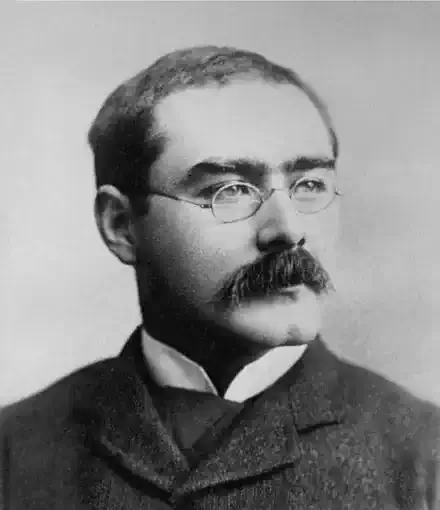
Rudyard Kipling
The Gods Of The Copybook Headings
The Gods Of The Copybook Headings
As I pass through my incarnations in every age and race,
I make my proper protestations to the Gods of the Market-Place.
Peering through reverent fingers I watch them flourish and fall.
And the Gods of the Copybook Headings, I notice, outlast them all.
We were living in trees when they met us. They showed us each in turn.
That water would certainly wet us, as Fire would certainly burn:
But we found them lacking in Uplift, Vision, and Breadth of Mind,
So we left them to teach the Gorilas while we followed the March of Mankind.
We moved as the Spirit listed. They never altered their pace,
Being neither clud nor wind-borne like the Gods of the Market-Place;
But they always caught up with our progress, and presently word would come
That a tribe had been wiped off its icefield, or the lights had gone out in Rome.
With the Hopes that our World is built on they were utterly out of touch.
They denied that the Moon was Stilton; they denied she was even Dutch.
They denied that Wishes were Horses; they denied that a Pig had Wings.
So we worshiped the Gods of the Market Who promiced these beautiful things.
When the Cambrian measures were forming, They promiced perpetual peace.
They swore, if we gave them our weapons, that the wars of the tribes would cease.
But when we disarmed They sold us and delivered us bound to our foe,
And the Gods of the Copybook Headings said: 'Stick to the Devil you know.'
On the first Feminian Sandstones we were promiced the Fuller Life
(Which started by loving our neighbor and ended by loving his wife)
Till our women had no more children and the men lost reason and faith,
And the Gods of the Copybook Headings said: 'The Wages of Sin is Death/'
In the Carboniferous Epoch we were promised abundance for all,
By robbing selective Peter to pay for collective Paul;
But, though we had plenty of money, there was nothing our money could buy,
And the Gods of the Copybook Headings said: 'If you don't work you die.'
The the Gods of the Market tumbled, and their smooth-tounged wizards withdrew,
And the hearts of the meanest were humbled and began to belive it was true
That All is not Gold that Glitters, and Two and Two make Four---
And the Gods of the Copybook Headings limped up to explain it once more
As it will be in the future, it was at the birth of Man---
There are only four things certain since Social Progress began:---
That the Dog returns to his Vomit and the Sow returns to her mire,
And the burnt Fool's bandaged finger goes wabbling back to the Fire;
And that after this is accomplished, and the brave new world begins
When all men are paid for existing and no man must pay for his sins,
As surely as Water will wet us, as surely as Fire will burn,
The Gods of the Copybook Headings with terror and slaughter return!
As I pass through my incarnations in every age and race,
I make my proper protestations to the Gods of the Market-Place.
Peering through reverent fingers I watch them flourish and fall.
And the Gods of the Copybook Headings, I notice, outlast them all.
We were living in trees when they met us. They showed us each in turn.
That water would certainly wet us, as Fire would certainly burn:
But we found them lacking in Uplift, Vision, and Breadth of Mind,
So we left them to teach the Gorilas while we followed the March of Mankind.
We moved as the Spirit listed. They never altered their pace,
Being neither clud nor wind-borne like the Gods of the Market-Place;
But they always caught up with our progress, and presently word would come
That a tribe had been wiped off its icefield, or the lights had gone out in Rome.
With the Hopes that our World is built on they were utterly out of touch.
They denied that the Moon was Stilton; they denied she was even Dutch.
They denied that Wishes were Horses; they denied that a Pig had Wings.
So we worshiped the Gods of the Market Who promiced these beautiful things.
When the Cambrian measures were forming, They promiced perpetual peace.
They swore, if we gave them our weapons, that the wars of the tribes would cease.
But when we disarmed They sold us and delivered us bound to our foe,
And the Gods of the Copybook Headings said: 'Stick to the Devil you know.'
On the first Feminian Sandstones we were promiced the Fuller Life
(Which started by loving our neighbor and ended by loving his wife)
Till our women had no more children and the men lost reason and faith,
And the Gods of the Copybook Headings said: 'The Wages of Sin is Death/'
In the Carboniferous Epoch we were promised abundance for all,
By robbing selective Peter to pay for collective Paul;
But, though we had plenty of money, there was nothing our money could buy,
And the Gods of the Copybook Headings said: 'If you don't work you die.'
The the Gods of the Market tumbled, and their smooth-tounged wizards withdrew,
And the hearts of the meanest were humbled and began to belive it was true
That All is not Gold that Glitters, and Two and Two make Four---
And the Gods of the Copybook Headings limped up to explain it once more
As it will be in the future, it was at the birth of Man---
There are only four things certain since Social Progress began:---
That the Dog returns to his Vomit and the Sow returns to her mire,
And the burnt Fool's bandaged finger goes wabbling back to the Fire;
And that after this is accomplished, and the brave new world begins
When all men are paid for existing and no man must pay for his sins,
As surely as Water will wet us, as surely as Fire will burn,
The Gods of the Copybook Headings with terror and slaughter return!
521

Robert W. Service
The God Of Common-Sense
The God Of Common-Sense
My Daddy used to wallop me for every small offense:
"Its takes a hair-brush back," said he, "to teach kids common-sense."
And still to-day I scarce can look a hair-brush in the face.
Without I want in sympathy to pat a tender place.
For Dad declared with unction: "Spare the brush and spoil the brat."
The dear old man! What e'er his faults he never did do that;
And though a score of years have gone since he departed hence,
I still revere his deity, The God of Common-sense.
How often I have played the ass (Man's universal fate),
Yet always I have saved myself before it was too late;
How often tangled with a dame - you know how these things are,
Yet always had the gumption not to carry on too far;
Remembering that fancy skirts, however high they go,
Are not to be stacked up against a bunch of hard-earned dough;
And sentiment has little weight compared with pounds and pence,
According to the gospel of the God of Common-sense.
Oh blessing on that old hair-brush my Daddy used to whack
With such benign precision on the basement of my back.
Oh blessings on his wisdom, saying: "Son, don't play the fool,
Let prudence be your counselor and reason be your rule.
Don't get romantic notions, always act with judgment calm,
Poetical emotions ain't in practice worth a damn/
let solid comfort be your goal, self-interest your guide. . . ."
Then just as if to emphasize, whack! whack! the brush he plied.
And so I often wonder if my luck is Providence,
or just my humble tribute to the God of Common-sense.
My Daddy used to wallop me for every small offense:
"Its takes a hair-brush back," said he, "to teach kids common-sense."
And still to-day I scarce can look a hair-brush in the face.
Without I want in sympathy to pat a tender place.
For Dad declared with unction: "Spare the brush and spoil the brat."
The dear old man! What e'er his faults he never did do that;
And though a score of years have gone since he departed hence,
I still revere his deity, The God of Common-sense.
How often I have played the ass (Man's universal fate),
Yet always I have saved myself before it was too late;
How often tangled with a dame - you know how these things are,
Yet always had the gumption not to carry on too far;
Remembering that fancy skirts, however high they go,
Are not to be stacked up against a bunch of hard-earned dough;
And sentiment has little weight compared with pounds and pence,
According to the gospel of the God of Common-sense.
Oh blessing on that old hair-brush my Daddy used to whack
With such benign precision on the basement of my back.
Oh blessings on his wisdom, saying: "Son, don't play the fool,
Let prudence be your counselor and reason be your rule.
Don't get romantic notions, always act with judgment calm,
Poetical emotions ain't in practice worth a damn/
let solid comfort be your goal, self-interest your guide. . . ."
Then just as if to emphasize, whack! whack! the brush he plied.
And so I often wonder if my luck is Providence,
or just my humble tribute to the God of Common-sense.
221
Robert W. Service
Innocence
Innocence
The height of wisdom seems to me
That of a child;
So let my ageing vision be
Serene and mild.
The depth of folly, I aver,
Is to fish deep
In that dark pool of science where
Truth-demons sleep.
Let me not be a bearded sage
Seeing too clear;
In issues of the atom age
Man-doom I fear.
So long as living's outward show
To me is fair,
What lies behind I do not know,
And do not care.
Of woeful fears of future ill
That earth-folk haunt,
Let me, as radiant meadow rill,
Be ignorant.
Aye, though a sorry dunce I be
In learning's school,
Lord, marvellously make of me
Your Happy Fool!
The height of wisdom seems to me
That of a child;
So let my ageing vision be
Serene and mild.
The depth of folly, I aver,
Is to fish deep
In that dark pool of science where
Truth-demons sleep.
Let me not be a bearded sage
Seeing too clear;
In issues of the atom age
Man-doom I fear.
So long as living's outward show
To me is fair,
What lies behind I do not know,
And do not care.
Of woeful fears of future ill
That earth-folk haunt,
Let me, as radiant meadow rill,
Be ignorant.
Aye, though a sorry dunce I be
In learning's school,
Lord, marvellously make of me
Your Happy Fool!
216
Robert W. Service
Ignorance
Ignorance
Oh happy he who cannot see
With scientific eyes;
Who does not know how flowers grow,
And is not planet wise;
Content to find with simple mind
Joys as they are:
To whom a rose is just a rose,
A star--a star.
It is not good, I deem, to brood
On things beyond our ken;
A rustic I would live and die,
Aloof from learned men;
And laugh and sing with zest of Spring
In life's exultant scene,--
For vain my be philosophy,
And what does meaning mean?
I'm talking rot,--I'm really not
As dumb as I pretend;
But happiness, I dimly guess,
Is what counts in the end.
To educate is to dilate
The nerves of pain:
So let us give up books and live
Like hinds again.
The best of wisdom surely is
To be not overwise;
For may not thought be evil fraught,
And truth less kind than lies?
So let me praise the golden days
I played a gay guitar,
And deemed a rose was just a rose,
A star--a star.
Oh happy he who cannot see
With scientific eyes;
Who does not know how flowers grow,
And is not planet wise;
Content to find with simple mind
Joys as they are:
To whom a rose is just a rose,
A star--a star.
It is not good, I deem, to brood
On things beyond our ken;
A rustic I would live and die,
Aloof from learned men;
And laugh and sing with zest of Spring
In life's exultant scene,--
For vain my be philosophy,
And what does meaning mean?
I'm talking rot,--I'm really not
As dumb as I pretend;
But happiness, I dimly guess,
Is what counts in the end.
To educate is to dilate
The nerves of pain:
So let us give up books and live
Like hinds again.
The best of wisdom surely is
To be not overwise;
For may not thought be evil fraught,
And truth less kind than lies?
So let me praise the golden days
I played a gay guitar,
And deemed a rose was just a rose,
A star--a star.
179
Robert W. Service
Einstein
Einstein
A little mousey man he was
With board, and chalk in hand;
And millions were awestruck because
They couldn't understand.
Said he: 'E equals Mc2:
I'll prove it true.'
No doubt you can, your marvel man,
But will it serve our good?
Will it prolong our living span
And multiply our food?
Will it bring peace between the nations
To make equations?
Our thanks are due no doubt to you
For truth beyond our ken;
But after all what did you do
To ease the lot of men?
How can a thousand 'yous' be priced
Beside a Christ?
A little mousey man he was
With board, and chalk in hand;
And millions were awestruck because
They couldn't understand.
Said he: 'E equals Mc2:
I'll prove it true.'
No doubt you can, your marvel man,
But will it serve our good?
Will it prolong our living span
And multiply our food?
Will it bring peace between the nations
To make equations?
Our thanks are due no doubt to you
For truth beyond our ken;
But after all what did you do
To ease the lot of men?
How can a thousand 'yous' be priced
Beside a Christ?
225

Robert Frost
The Bear
The Bear
The bear puts both arms around the tree above her
And draws it down as if it were a lover
And its chokecherries lips to kiss good-by,
Then lets it snap back upright in the sky.
Her next step rocks a boulder on the wall
(She's making her cross-country in the fall).
Her great weight creaks the barbed wire in its staples
As she flings over and off down through the maples,
Leaving on one wire tooth a lock of hair.
Such is the uncaged progress of the bear.
The world has room to make a bear feel free;
The universe seems cramped to you and me.
Man acts more like the poor bear in a cage,
That all day fights a nervous inward rage,
His mood rejecting all his mind suggests.
He paces back and forth and never rests
The me-nail click and shuffle of his feet,
The telescope at one end of his beat,
And at the other end the microscope,
Two instruments of nearly equal hope,
And in conjunction giving quite a spread.
Or if he rests from scientific tread,
'Tis only to sit back and sway his head
Through ninety-odd degrees of arc, it seems,
Between two metaphysical extremes.
He sits back on his fundamental butt
With lifted snout and eyes (if any) shut
(He almost looks religious but he's not),
And back and forth he sways from cheek to cheek,
At one extreme agreeing with one Greek
At the other agreeing with another Greek
Which may be thought, but only so to speak.
A baggy figure, equally pathetic
When sedentary and when peripatetic.
The bear puts both arms around the tree above her
And draws it down as if it were a lover
And its chokecherries lips to kiss good-by,
Then lets it snap back upright in the sky.
Her next step rocks a boulder on the wall
(She's making her cross-country in the fall).
Her great weight creaks the barbed wire in its staples
As she flings over and off down through the maples,
Leaving on one wire tooth a lock of hair.
Such is the uncaged progress of the bear.
The world has room to make a bear feel free;
The universe seems cramped to you and me.
Man acts more like the poor bear in a cage,
That all day fights a nervous inward rage,
His mood rejecting all his mind suggests.
He paces back and forth and never rests
The me-nail click and shuffle of his feet,
The telescope at one end of his beat,
And at the other end the microscope,
Two instruments of nearly equal hope,
And in conjunction giving quite a spread.
Or if he rests from scientific tread,
'Tis only to sit back and sway his head
Through ninety-odd degrees of arc, it seems,
Between two metaphysical extremes.
He sits back on his fundamental butt
With lifted snout and eyes (if any) shut
(He almost looks religious but he's not),
And back and forth he sways from cheek to cheek,
At one extreme agreeing with one Greek
At the other agreeing with another Greek
Which may be thought, but only so to speak.
A baggy figure, equally pathetic
When sedentary and when peripatetic.
512
Robert Frost
The Aim Was Song
The Aim Was Song
Before man to blow to right
The wind once blew itself untaught,
And did its loudest day and night
In any rough place where it caught.
Man came to tell it what was wrong:
It hadn't found the place to blow;
It blew too hard - the aim was song.
And listen - how it ought to go!
He took a little in his mouth,
And held it long enough for north
To be converted into south,
And then by measure blew it forth.
By measure. It was word and note,
The wind the wind had meant to be -
A little through the lips and throat.
The aim was song - the wind could see.
Before man to blow to right
The wind once blew itself untaught,
And did its loudest day and night
In any rough place where it caught.
Man came to tell it what was wrong:
It hadn't found the place to blow;
It blew too hard - the aim was song.
And listen - how it ought to go!
He took a little in his mouth,
And held it long enough for north
To be converted into south,
And then by measure blew it forth.
By measure. It was word and note,
The wind the wind had meant to be -
A little through the lips and throat.
The aim was song - the wind could see.
484
Robert Frost
On Looking Up by Chance at the Constellations
On Looking Up by Chance at the Constellations
You'll wait a long, long time for anything much
To happen in heaven beyond the floats of cloud
And the Northern Lights that run like tingling nerves.
The sun and moon get crossed, but they never touch,
Nor strike out fire from each other nor crash out loud.
The planets seem to interfere in their curves -
But nothing ever happens, no harm is done.
We may as well go patiently on with our life,
And look elsewhere than to stars and moon and sun
For the shocks and changes we need to keep us sane.
It is true the longest drout will end in rain,
The longest peace in China will end in strife.
Still it wouldn't reward the watcher to stay awake
In hopes of seeing the calm of heaven break
On his particular time and personal sight.
That calm seems certainly safe to last to-night.
You'll wait a long, long time for anything much
To happen in heaven beyond the floats of cloud
And the Northern Lights that run like tingling nerves.
The sun and moon get crossed, but they never touch,
Nor strike out fire from each other nor crash out loud.
The planets seem to interfere in their curves -
But nothing ever happens, no harm is done.
We may as well go patiently on with our life,
And look elsewhere than to stars and moon and sun
For the shocks and changes we need to keep us sane.
It is true the longest drout will end in rain,
The longest peace in China will end in strife.
Still it wouldn't reward the watcher to stay awake
In hopes of seeing the calm of heaven break
On his particular time and personal sight.
That calm seems certainly safe to last to-night.
450
Robert Frost
For once, then Something
For once, then Something
Others taught me with having knelt at well-curbs
Always wrong to the light, so never seeing
Deeper down in the well than where the water
Gives me back in a shining surface picture
Me myself in the summer heaven godlike
Looking out of a wreath of fern and cloud puffs.
Once, when trying with chin against a well-curb,
I discerned, as I thought, beyond the picture,
Through the picture, a something white, uncertain,
Something more of the depths--and then I lost it.
Water came to rebuke the too clear water.
One drop fell from a fern, and lo, a ripple
Shook whatever it was lay there at bottom,
Blurred it, blotted it out. What was that whiteness?
Truth? A pebble of quartz? For once, then, something.
Others taught me with having knelt at well-curbs
Always wrong to the light, so never seeing
Deeper down in the well than where the water
Gives me back in a shining surface picture
Me myself in the summer heaven godlike
Looking out of a wreath of fern and cloud puffs.
Once, when trying with chin against a well-curb,
I discerned, as I thought, beyond the picture,
Through the picture, a something white, uncertain,
Something more of the depths--and then I lost it.
Water came to rebuke the too clear water.
One drop fell from a fern, and lo, a ripple
Shook whatever it was lay there at bottom,
Blurred it, blotted it out. What was that whiteness?
Truth? A pebble of quartz? For once, then, something.
417
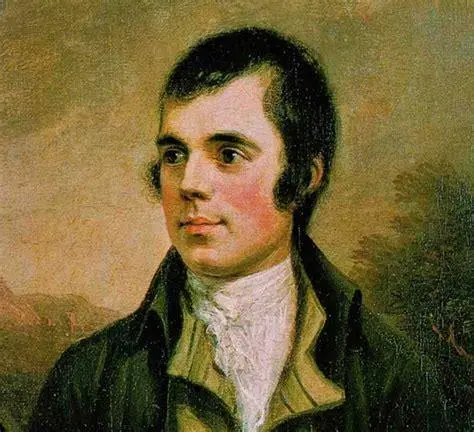
Robert Burns
Epistle to J. Lapraik (excerpt)
Epistle to J. Lapraik (excerpt)
I am nae poet, in a sense,
But just a rhymer like by chance,
An' hae to learning nae pretence;
Yet what the matter?
Whene'er my Muse does on me glance,
I jingle at her.
Your critic-folk may cock their nose,
And say, "How can you e'er propose,
You wha ken hardly verse frae prose,
To mak a sang?"
But, by your leave, my learned foes,
Ye're maybe wrang.
What's a' your jargon o' your schools,
Your Latin names for horns an' stools?
If honest nature made you fools,
What sairs your grammars?
Ye'd better taen up spades and shools,
Or knappin-hammers.
A set o' dull, conceited hashes
Confuse their brains in college classes!
They gang in stirks and come out asses,
Plain truth to speak;
An' syne they think to climb Parnassus
By dint o' Greek!
Gie me ae spark o' Nature's fire,
That's a' the learnin' I desire;
Then, tho' I drudge thro' dub an' mire
At pleugh or cart,
My Muse, though hamely in attire,
May touch the heart....
I am nae poet, in a sense,
But just a rhymer like by chance,
An' hae to learning nae pretence;
Yet what the matter?
Whene'er my Muse does on me glance,
I jingle at her.
Your critic-folk may cock their nose,
And say, "How can you e'er propose,
You wha ken hardly verse frae prose,
To mak a sang?"
But, by your leave, my learned foes,
Ye're maybe wrang.
What's a' your jargon o' your schools,
Your Latin names for horns an' stools?
If honest nature made you fools,
What sairs your grammars?
Ye'd better taen up spades and shools,
Or knappin-hammers.
A set o' dull, conceited hashes
Confuse their brains in college classes!
They gang in stirks and come out asses,
Plain truth to speak;
An' syne they think to climb Parnassus
By dint o' Greek!
Gie me ae spark o' Nature's fire,
That's a' the learnin' I desire;
Then, tho' I drudge thro' dub an' mire
At pleugh or cart,
My Muse, though hamely in attire,
May touch the heart....
259
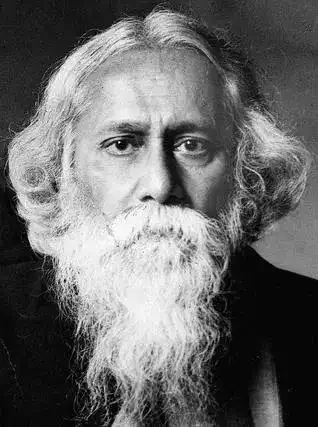
Rabindranath Tagore
Where The Mind Is Without Fear
Where The Mind Is Without Fear
Where the mind is without fear and the head is held high
Where knowledge is free
Where the world has not been broken up into fragments
By narrow domestic walls
Where words come out from the depth of truth
Where tireless striving stretches its arms towards perfection
Where the clear stream of reason has not lost its way
Into the dreary desert sand of dead habit
Where the mind is led forward by thee
Into ever-widening thought and action
Into that heaven of freedom, my Father, let my country awake
Where the mind is without fear and the head is held high
Where knowledge is free
Where the world has not been broken up into fragments
By narrow domestic walls
Where words come out from the depth of truth
Where tireless striving stretches its arms towards perfection
Where the clear stream of reason has not lost its way
Into the dreary desert sand of dead habit
Where the mind is led forward by thee
Into ever-widening thought and action
Into that heaven of freedom, my Father, let my country awake
525

Ogden Nash
Very Like a Whale
Very Like a Whale
One thing that literature would be greatly the better for
Would be a more restricted employment by the authors of simile and
metaphor.
Authors of all races, be they Greeks, Romans, Teutons or Celts,
Can't seem just to say that anything is the thing it is but have to
go out of their way to say that it is like something else.
What does it mean when we are told
That that Assyrian came down like a wolf on the fold?
In the first place, George Gordon Byron had enough experience
To know that it probably wasn't just one Assyrian, it was a lot of
Assyrians.
However, as too many arguments are apt to induce apoplexy and
thus hinder longevity.
We'll let it pass as one Assyrian for the sake of brevity.
Now then, this particular Assyrian, the one whose cohorts were
gleaming in purple and gold,
Just what does the poet mean when he says he came down like a
wold on the fold?
In heaven and earth more than is dreamed of in our philosophy
there are great many things.
But I don't imagine that among them there is a wolf with purple
and gold cohorts or purple and gold anythings.
No, no, Lord Byron, before I'll believe that this Assyrian was
actually like a wolf I must have some kind of proof;
Did he run on all fours and did he have a hairy tail and a big red
mouth and big white teeth and did he say Woof Woof?
Frankly I think it is very unlikely, and all you were entitled to say,
at the very most,
Was that the Assyrian cohorts came down like a lot of Assyrian
cohorts about to destroy the Hebrew host.
But that wasn't fancy enough for Lord Byron, oh dear me no, he
had to invent a lot of figures of speech and then interpolate them,
With the result that whenever you mention Old Testament soldiers
to people they say Oh yes, they're the ones that a lot of
wolves dressed up in gold and purple ate them.
That's the kind of thing that's being done all the time by poets,
from Homer to Tennyson;
They're always comparing ladies to lilies and veal to venison,
And they always say things like that the snow is a white blanket
after a winter storm.
Oh it is, is it, all right then, you sleep under a six-inch blanket of
snow and I'll sleep under a half-inch blanket of unpoetical
blanket material and we'll see which one keeps warm,
And after that maybe you'll begin to comprehend dimly
What I mean by too much metaphor and simile.
One thing that literature would be greatly the better for
Would be a more restricted employment by the authors of simile and
metaphor.
Authors of all races, be they Greeks, Romans, Teutons or Celts,
Can't seem just to say that anything is the thing it is but have to
go out of their way to say that it is like something else.
What does it mean when we are told
That that Assyrian came down like a wolf on the fold?
In the first place, George Gordon Byron had enough experience
To know that it probably wasn't just one Assyrian, it was a lot of
Assyrians.
However, as too many arguments are apt to induce apoplexy and
thus hinder longevity.
We'll let it pass as one Assyrian for the sake of brevity.
Now then, this particular Assyrian, the one whose cohorts were
gleaming in purple and gold,
Just what does the poet mean when he says he came down like a
wold on the fold?
In heaven and earth more than is dreamed of in our philosophy
there are great many things.
But I don't imagine that among them there is a wolf with purple
and gold cohorts or purple and gold anythings.
No, no, Lord Byron, before I'll believe that this Assyrian was
actually like a wolf I must have some kind of proof;
Did he run on all fours and did he have a hairy tail and a big red
mouth and big white teeth and did he say Woof Woof?
Frankly I think it is very unlikely, and all you were entitled to say,
at the very most,
Was that the Assyrian cohorts came down like a lot of Assyrian
cohorts about to destroy the Hebrew host.
But that wasn't fancy enough for Lord Byron, oh dear me no, he
had to invent a lot of figures of speech and then interpolate them,
With the result that whenever you mention Old Testament soldiers
to people they say Oh yes, they're the ones that a lot of
wolves dressed up in gold and purple ate them.
That's the kind of thing that's being done all the time by poets,
from Homer to Tennyson;
They're always comparing ladies to lilies and veal to venison,
And they always say things like that the snow is a white blanket
after a winter storm.
Oh it is, is it, all right then, you sleep under a six-inch blanket of
snow and I'll sleep under a half-inch blanket of unpoetical
blanket material and we'll see which one keeps warm,
And after that maybe you'll begin to comprehend dimly
What I mean by too much metaphor and simile.
269
Ogden Nash
The Firefly
The Firefly
The firefly's flame
Is something for which science has no name
I can think of nothing eerier
Than flying around with an unidentified glow on a
person's posteerier.
The firefly's flame
Is something for which science has no name
I can think of nothing eerier
Than flying around with an unidentified glow on a
person's posteerier.
198
Ogden Nash
Look What You Did, Christopher!
Look What You Did, Christopher!
In fourteen hundred and ninety-two,
Someone sailed the ocean blue.
Somebody borrowed the fare in Spain
For a business trip on the bounding main,
And to prove to the people, by actual test,
You could get to the East by sailing West.
Somebody said, Sail on! Sail on!
And studied China and China's lingo,
And cried from the bow, There's China now!
And promptly bumped into San Domingo.
Somebody murmured, Oh dear, oh dear!
I've discovered the Western Hemisphere.
And that, you may think, my friends, was that.
But it wasn't. Not by a fireman's hat.
Well enough wasn't left alone,
And Columbus was only a cornerstone.
There came the Spaniards,
There came the Greeks,
There came the Pilgrims in leather breeks.
There came the Dutch,
And the Poles and Swedes,
The Persians, too,
And perhaps the Medes,
The Letts, the Lapps, and the Lithuanians,
Regal Russians, and ripe Roumanians.
There came the French
And there came the Finns,
And the Japanese
With their formal grins.
The Tartars came,
And the Terrible Turks -
In a word, humanity shot the works.
And the country that should have been Cathay
Decided to be
The U.S.A.
And that, you may think, my friends, was that.
But it wasn't. Not by a fireman's hat.
Christopher C. was the cornerstone,
And well enough wasn't left alone.
For those who followed
When he was through,
They burned to discover something, too.
Somebody, bored with rural scenery,
Went to work and invented machinery,
While a couple of other mental giants
Got together
And thought up Science.
Platinum blondes
(They were once peroxide),
Peruvian bonds
And carbon monoxide,
Tax evaders
And Vitamin A,
Vice crusaders,
And tattletale gray -
These, with many another phobia,
We owe to that famous Twelfth of Octobia.
O misery, misery, mumble and moan!
Someone invented the telephone,
And interrupted a nation's slumbers,
Ringing wrong but similar numbers.
Someone devised the silver screen
And the intimate Hollywood magazine,
And life is a Hades
Of clicking cameras,
And foreign ladies
Behaving amorous.
Gags have erased
Amusing dialog,
As gas has replaced
The crackling firelog.
All that glitters is sold as gold,
And our daily diet grows odder and odder,
And breakfast foods are dusty and cold -
It's a wise child
That knows its fodder.
Someone invented the automobile,
And good Americans took the wheel
To view American rivers and rills
And justly famous forests and hills -
But someone equally enterprising
Had invented billboard advertising.
You linger at home
In dark despair,
And wistfully try the electric air.
You hope against hope for a quiz imperial,
And what do they give you?
A doctor serial.
Oh, Columbus was only a cornerstone,
And well enough wasn't left alone,
For the Inquisition was less tyrannical
Than the iron rules of an age mechanical,
Which, because of an error in ',
Are clamped like corsets on me and you,
While Children of Nature we'd be today
If San Domingo
Had been Cathay.
And that, you may think, my friends, is that.
But it isn't - not by a fireman's hat.
The American people,
With grins jocose,
Always survive the fatal dose.
And though our systems are slightly wobbly,
We'll fool the doctor this time, probly.
In fourteen hundred and ninety-two,
Someone sailed the ocean blue.
Somebody borrowed the fare in Spain
For a business trip on the bounding main,
And to prove to the people, by actual test,
You could get to the East by sailing West.
Somebody said, Sail on! Sail on!
And studied China and China's lingo,
And cried from the bow, There's China now!
And promptly bumped into San Domingo.
Somebody murmured, Oh dear, oh dear!
I've discovered the Western Hemisphere.
And that, you may think, my friends, was that.
But it wasn't. Not by a fireman's hat.
Well enough wasn't left alone,
And Columbus was only a cornerstone.
There came the Spaniards,
There came the Greeks,
There came the Pilgrims in leather breeks.
There came the Dutch,
And the Poles and Swedes,
The Persians, too,
And perhaps the Medes,
The Letts, the Lapps, and the Lithuanians,
Regal Russians, and ripe Roumanians.
There came the French
And there came the Finns,
And the Japanese
With their formal grins.
The Tartars came,
And the Terrible Turks -
In a word, humanity shot the works.
And the country that should have been Cathay
Decided to be
The U.S.A.
And that, you may think, my friends, was that.
But it wasn't. Not by a fireman's hat.
Christopher C. was the cornerstone,
And well enough wasn't left alone.
For those who followed
When he was through,
They burned to discover something, too.
Somebody, bored with rural scenery,
Went to work and invented machinery,
While a couple of other mental giants
Got together
And thought up Science.
Platinum blondes
(They were once peroxide),
Peruvian bonds
And carbon monoxide,
Tax evaders
And Vitamin A,
Vice crusaders,
And tattletale gray -
These, with many another phobia,
We owe to that famous Twelfth of Octobia.
O misery, misery, mumble and moan!
Someone invented the telephone,
And interrupted a nation's slumbers,
Ringing wrong but similar numbers.
Someone devised the silver screen
And the intimate Hollywood magazine,
And life is a Hades
Of clicking cameras,
And foreign ladies
Behaving amorous.
Gags have erased
Amusing dialog,
As gas has replaced
The crackling firelog.
All that glitters is sold as gold,
And our daily diet grows odder and odder,
And breakfast foods are dusty and cold -
It's a wise child
That knows its fodder.
Someone invented the automobile,
And good Americans took the wheel
To view American rivers and rills
And justly famous forests and hills -
But someone equally enterprising
Had invented billboard advertising.
You linger at home
In dark despair,
And wistfully try the electric air.
You hope against hope for a quiz imperial,
And what do they give you?
A doctor serial.
Oh, Columbus was only a cornerstone,
And well enough wasn't left alone,
For the Inquisition was less tyrannical
Than the iron rules of an age mechanical,
Which, because of an error in ',
Are clamped like corsets on me and you,
While Children of Nature we'd be today
If San Domingo
Had been Cathay.
And that, you may think, my friends, is that.
But it isn't - not by a fireman's hat.
The American people,
With grins jocose,
Always survive the fatal dose.
And though our systems are slightly wobbly,
We'll fool the doctor this time, probly.
288
Ogden Nash
Lines To Be Embroidered On A Bib
Lines To Be Embroidered On A Bib
OR
The Child Is Father Of The Man, But Not For Quite A While
So Thomas Edison
Never drank his medicine;
So Blackstone and Hoyle
Refused cod-liver oil;
So Sir Thomas Malory
Never heard of a calory;
So the Earl of Lennox
Murdered Rizzio without the aid of vitamins or calisthenox;
So Socrates and Plato
Ate dessert without finishing their potato;
So spinach was too spinachy
For Leonardo da Vinaci;
Well, it's all immaterial,
So eat your nice cereal,
And if you want to name your ration,
First go get a reputation.
OR
The Child Is Father Of The Man, But Not For Quite A While
So Thomas Edison
Never drank his medicine;
So Blackstone and Hoyle
Refused cod-liver oil;
So Sir Thomas Malory
Never heard of a calory;
So the Earl of Lennox
Murdered Rizzio without the aid of vitamins or calisthenox;
So Socrates and Plato
Ate dessert without finishing their potato;
So spinach was too spinachy
For Leonardo da Vinaci;
Well, it's all immaterial,
So eat your nice cereal,
And if you want to name your ration,
First go get a reputation.
226

Nazim Hikmet
Our Eyes
Our Eyes
Our eyes
are limpid
drops of water.
In each drop exists
a tiny sign
of our genius
which has given life to cold iron.
Our eyes
are limpid
drops of water
merged absolutely in the Ocean
that you could hardly recognize
the drop in a block of ice
in a boiling pan.
The masterpiece of these eyes
the fulfillment of their genius
the living iron.
In these eyes
filled with limpid
pure tears
had failed to emerge
from the infinite Ocean
if the strength
had dispersed,
we could never have mated
the dynamo with the turbine,
never have moved
those steel mountains in water
easily
as if made of hollow wood.
The masterpiece of these eyes
the fulfillment of their genius
of our unified labour
the living iron.
Translated by Taner Baybars
Our eyes
are limpid
drops of water.
In each drop exists
a tiny sign
of our genius
which has given life to cold iron.
Our eyes
are limpid
drops of water
merged absolutely in the Ocean
that you could hardly recognize
the drop in a block of ice
in a boiling pan.
The masterpiece of these eyes
the fulfillment of their genius
the living iron.
In these eyes
filled with limpid
pure tears
had failed to emerge
from the infinite Ocean
if the strength
had dispersed,
we could never have mated
the dynamo with the turbine,
never have moved
those steel mountains in water
easily
as if made of hollow wood.
The masterpiece of these eyes
the fulfillment of their genius
of our unified labour
the living iron.
Translated by Taner Baybars
359
Lewis Carroll
Phantasmagoria CANTO VI ( Dyscomfyture )
Phantasmagoria CANTO VI ( Dyscomfyture )
As one who strives a hill to climb,
Who never climbed before:
Who finds it, in a little time,
Grow every moment less sublime,
And votes the thing a bore:
Yet, having once begun to try,
Dares not desert his quest,
But, climbing, ever keeps his eye
On one small hut against the sky
Wherein he hopes to rest:
Who climbs till nerve and force are spent,
With many a puff and pant:
Who still, as rises the ascent,
In language grows more violent,
Although in breath more scant:
Who, climbing, gains at length the place
That crowns the upward track.
And, entering with unsteady pace,
Receives a buffet in the face
That lands him on his back:
And feels himself, like one in sleep,
Glide swiftly down again,
A helpless weight, from steep to steep,
Till, with a headlong giddy sweep,
He drops upon the plain
So I, that had resolved to bring
Conviction to a ghost,
And found it quite a different thing
From any human arguing,
Yet dared not quit my post
But, keeping still the end in view
To which I hoped to come,
I strove to prove the matter true
By putting everything I knew
Into an axiom:
Commencing every single phrase
With 'therefore' or 'because,'
I blindly reeled, a hundred ways,
About the syllogistic maze,
Unconscious where I was.
Quoth he "That's regular claptrap:
Don't bluster any more.
Now DO be cool and take a nap!
Such a ridiculous old chap
Was never seen before!
"You're like a man I used to meet,
Who got one day so furious
In arguing, the simple heat
Scorched both his slippers off his feet!"
I said "THAT'S VERY CURIOUS!"
"Well, it IS curious, I agree,
And sounds perhaps like fibs:
But still it's true as true can be As
sure as your name's Tibbs," said he.
I said "My name's NOT Tibbs."
"NOT Tibbs!" he cried his
tone became
A shade or two less hearty "
Why, no," said I. "My proper name
Is Tibbets "
"Tibbets?" "Aye, the same."
"Why, then YOU'RE NOT THE PARTY!"
With that he struck the board a blow
That shivered half the glasses.
"Why couldn't you have told me so
Three quarters of an hour ago,
You prince of all the asses?
"To walk four miles through mud and rain,
To spend the night in smoking,
And then to find that it's in vain And
I've to do it all again It's
really TOO provoking!
"Don't talk!" he cried, as I began
To mutter some excuse.
"Who can have patience with a man
That's got no more discretion than
An idiotic goose?
"To keep me waiting here, instead
Of telling me at once
That this was not the house!" he said.
"There, that'll do be
off to bed!
Don't gape like that, you dunce!"
"It's very fine to throw the blame
On ME in such a fashion!
Why didn't you enquire my name
The very minute that you came?"
I answered in a passion.
"Of course it worries you a bit
To come so far on foot
But how was I to blame for it?"
"Well, well!" said he. "I must admit
That isn't badly put.
"And certainly you've given me
The best of wine and victual Excuse
my violence," said he,
"But accidents like this, you see,
They put one out a little.
"'Twas MY fault after all, I find Shake
hands, old Turniptop!"
The name was hardly to my mind,
But, as no doubt he meant it kind,
I let the matter drop.
"Goodnight,
old Turniptop,
goodnight!
When I am gone, perhaps
They'll send you some inferior Sprite,
Who'll keep you in a constant fright
And spoil your soundest naps.
"Tell him you'll stand no sort of trick;
Then, if he leers and chuckles,
You just be handy with a stick
(Mind that it's pretty hard and thick)
And rap him on the knuckles!
"Then carelessly remark 'Old coon!
Perhaps you're not aware
That, if you don't behave, you'll soon
Be chuckling to another tune And
so you'd best take care!'
"That's the right way to cure a Sprite
Of such like goingson
But
gracious me! It's getting light!
Goodnight,
old Turniptop,
goodnight!"
A nod, and he was gone.
As one who strives a hill to climb,
Who never climbed before:
Who finds it, in a little time,
Grow every moment less sublime,
And votes the thing a bore:
Yet, having once begun to try,
Dares not desert his quest,
But, climbing, ever keeps his eye
On one small hut against the sky
Wherein he hopes to rest:
Who climbs till nerve and force are spent,
With many a puff and pant:
Who still, as rises the ascent,
In language grows more violent,
Although in breath more scant:
Who, climbing, gains at length the place
That crowns the upward track.
And, entering with unsteady pace,
Receives a buffet in the face
That lands him on his back:
And feels himself, like one in sleep,
Glide swiftly down again,
A helpless weight, from steep to steep,
Till, with a headlong giddy sweep,
He drops upon the plain
So I, that had resolved to bring
Conviction to a ghost,
And found it quite a different thing
From any human arguing,
Yet dared not quit my post
But, keeping still the end in view
To which I hoped to come,
I strove to prove the matter true
By putting everything I knew
Into an axiom:
Commencing every single phrase
With 'therefore' or 'because,'
I blindly reeled, a hundred ways,
About the syllogistic maze,
Unconscious where I was.
Quoth he "That's regular claptrap:
Don't bluster any more.
Now DO be cool and take a nap!
Such a ridiculous old chap
Was never seen before!
"You're like a man I used to meet,
Who got one day so furious
In arguing, the simple heat
Scorched both his slippers off his feet!"
I said "THAT'S VERY CURIOUS!"
"Well, it IS curious, I agree,
And sounds perhaps like fibs:
But still it's true as true can be As
sure as your name's Tibbs," said he.
I said "My name's NOT Tibbs."
"NOT Tibbs!" he cried his
tone became
A shade or two less hearty "
Why, no," said I. "My proper name
Is Tibbets "
"Tibbets?" "Aye, the same."
"Why, then YOU'RE NOT THE PARTY!"
With that he struck the board a blow
That shivered half the glasses.
"Why couldn't you have told me so
Three quarters of an hour ago,
You prince of all the asses?
"To walk four miles through mud and rain,
To spend the night in smoking,
And then to find that it's in vain And
I've to do it all again It's
really TOO provoking!
"Don't talk!" he cried, as I began
To mutter some excuse.
"Who can have patience with a man
That's got no more discretion than
An idiotic goose?
"To keep me waiting here, instead
Of telling me at once
That this was not the house!" he said.
"There, that'll do be
off to bed!
Don't gape like that, you dunce!"
"It's very fine to throw the blame
On ME in such a fashion!
Why didn't you enquire my name
The very minute that you came?"
I answered in a passion.
"Of course it worries you a bit
To come so far on foot
But how was I to blame for it?"
"Well, well!" said he. "I must admit
That isn't badly put.
"And certainly you've given me
The best of wine and victual Excuse
my violence," said he,
"But accidents like this, you see,
They put one out a little.
"'Twas MY fault after all, I find Shake
hands, old Turniptop!"
The name was hardly to my mind,
But, as no doubt he meant it kind,
I let the matter drop.
"Goodnight,
old Turniptop,
goodnight!
When I am gone, perhaps
They'll send you some inferior Sprite,
Who'll keep you in a constant fright
And spoil your soundest naps.
"Tell him you'll stand no sort of trick;
Then, if he leers and chuckles,
You just be handy with a stick
(Mind that it's pretty hard and thick)
And rap him on the knuckles!
"Then carelessly remark 'Old coon!
Perhaps you're not aware
That, if you don't behave, you'll soon
Be chuckling to another tune And
so you'd best take care!'
"That's the right way to cure a Sprite
Of such like goingson
But
gracious me! It's getting light!
Goodnight,
old Turniptop,
goodnight!"
A nod, and he was gone.
144
Langston Hughes
Problems
Problems
2 and 2 are 4.
4 and 4 are 8.
But what would happen
If the last 4 was late?
And how would it be
If one 2 was me?
Or if the first 4 was you
Divided by 2?
2 and 2 are 4.
4 and 4 are 8.
But what would happen
If the last 4 was late?
And how would it be
If one 2 was me?
Or if the first 4 was you
Divided by 2?
295
John Milton
Paradise Lost: Book 08
Paradise Lost: Book 08
The Angel ended, and in Adam's ear
So charming left his voice, that he a while
Thought him still speaking, still stood fixed to hear;
Then, as new waked, thus gratefully replied.
What thanks sufficient, or what recompence
Equal, have I to render thee, divine
Historian, who thus largely hast allayed
The thirst I had of knowledge, and vouchsafed
This friendly condescension to relate
Things, else by me unsearchable; now heard
With wonder, but delight, and, as is due,
With glory attributed to the high
Creator! Something yet of doubt remains,
Which only thy solution can resolve.
When I behold this goodly frame, this world,
Of Heaven and Earth consisting; and compute
Their magnitudes; this Earth, a spot, a grain,
An atom, with the firmament compared
And all her numbered stars, that seem to roll
Spaces incomprehensible, (for such
Their distance argues, and their swift return
Diurnal,) merely to officiate light
Round this opacous Earth, this punctual spot,
One day and night; in all her vast survey
Useless besides; reasoning I oft admire,
How Nature wise and frugal could commit
Such disproportions, with superfluous hand
So many nobler bodies to create,
Greater so manifold, to this one use,
For aught appears, and on their orbs impose
Such restless revolution day by day
Repeated; while the sedentary Earth,
That better might with far less compass move,
Served by more noble than herself, attains
Her end without least motion, and receives,
As tribute, such a sumless journey brought
Of incorporeal speed, her warmth and light;
Speed, to describe whose swiftness number fails.
So spake our sire, and by his countenance seemed
Entering on studious thoughts abstruse; which Eve
Perceiving, where she sat retired in sight,
With lowliness majestick from her seat,
And grace that won who saw to wish her stay,
Rose, and went forth among her fruits and flowers,
To visit how they prospered, bud and bloom,
Her nursery; they at her coming sprung,
And, touched by her fair tendance, gladlier grew.
Yet went she not, as not with such discourse
Delighted, or not capable her ear
Of what was high: such pleasure she reserved,
Adam relating, she sole auditress;
Her husband the relater she preferred
Before the Angel, and of him to ask
Chose rather; he, she knew, would intermix
Grateful digressions, and solve high dispute
With conjugal caresses: from his lip
Not words alone pleased her. O! when meet now
Such pairs, in love and mutual honour joined?
With Goddess-like demeanour forth she went,
Not unattended; for on her, as Queen,
A pomp of winning Graces waited still,
And from about her shot darts of desire
Into all eyes, to wish her still in sight.
And Raphael now, to Adam's doubt proposed,
Benevolent and facile thus replied.
To ask or search, I blame thee not; for Heaven
Is as the book of God before thee set,
Wherein to read his wonderous works, and learn
His seasons, hours, or days, or months, or years:
This to attain, whether Heaven move or Earth,
Imports not, if thou reckon right; the rest
From Man or Angel the great Architect
Did wisely to conceal, and not divulge
His secrets to be scanned by them who ought
Rather admire; or, if they list to try
Conjecture, he his fabrick of the Heavens
Hath left to their disputes, perhaps to move
His laughter at their quaint opinions wide
Hereafter; when they come to model Heaven
And calculate the stars, how they will wield
The mighty frame; how build, unbuild, contrive
To save appearances; how gird the sphere
With centrick and eccentrick scribbled o'er,
Cycle and epicycle, orb in orb:
Already by thy reasoning this I guess,
Who art to lead thy offspring, and supposest
That bodies bright and greater should not serve
The less not bright, nor Heaven such journeys run,
Earth sitting still, when she alone receives
The benefit: Consider first, that great
Or bright infers not excellence: the Earth
Though, in comparison of Heaven, so small,
Nor glistering, may of solid good contain
More plenty than the sun that barren shines;
Whose virtue on itself works no effect,
But in the fruitful Earth; there first received,
His beams, unactive else, their vigour find.
Yet not to Earth are those bright luminaries
Officious; but to thee, Earth's habitant.
And for the Heaven's wide circuit, let it speak
The Maker's high magnificence, who built
So spacious, and his line stretched out so far;
That Man may know he dwells not in his own;
An edifice too large for him to fill,
Lodged in a small partition; and the rest
Ordained for uses to his Lord best known.
The swiftness of those circles attribute,
Though numberless, to his Omnipotence,
That to corporeal substances could add
Speed almost spiritual: Me thou thinkest not slow,
Who since the morning-hour set out from Heaven
Where God resides, and ere mid-day arrived
In Eden; distance inexpressible
By numbers that have name. But this I urge,
Admitting motion in the Heavens, to show
Invalid that which thee to doubt it moved;
Not that I so affirm, though so it seem
To thee who hast thy dwelling here on Earth.
God, to remove his ways from human sense,
Placed Heaven from Earth so far, that earthly sight,
If it presume, might err in things too high,
And no advantage gain. What if the sun
Be center to the world; and other stars,
By his attractive virtue and their own
Incited, dance about him various rounds?
Their wandering course now high, now low, then hid,
Progressive, retrograde, or standing still,
In six thou seest; and what if seventh to these
The planet earth, so stedfast though she seem,
Insensibly three different motions move?
Which else to several spheres thou must ascribe,
Moved contrary with thwart obliquities;
Or save the sun his labour, and that swift
Nocturnal and diurnal rhomb supposed,
Invisible else above all stars, the wheel
Of day and night; which needs not thy belief,
If earth, industrious of herself, fetch day
Travelling east, and with her part averse
From the sun's beam meet night, her other part
Still luminous by his ray. What if that light,
Sent from her through the wide transpicuous air,
To the terrestrial moon be as a star,
Enlightening her by day, as she by night
This earth? reciprocal, if land be there,
Fields and inhabitants: Her spots thou seest
As clouds, and clouds may rain, and rain produce
Fruits in her softened soil for some to eat
Allotted there; and other suns perhaps,
With their attendant moons, thou wilt descry,
Communicating male and female light;
Which two great sexes animate the world,
Stored in each orb perhaps with some that live.
For such vast room in Nature unpossessed
By living soul, desart and desolate,
Only to shine, yet scarce to contribute
Each orb a glimpse of light, conveyed so far
Down to this habitable, which returns
Light back to them, is obvious to dispute.
But whether thus these things, or whether not;
But whether the sun, predominant in Heaven,
Rise on the earth; or earth rise on the sun;
He from the east his flaming road begin;
Or she from west her silent course advance,
With inoffensive pace that spinning sleeps
On her soft axle, while she paces even,
And bears thee soft with the smooth hair along;
Sollicit not thy thoughts with matters hid;
Leave them to God above; him serve, and fear!
Of other creatures, as him pleases best,
Wherever placed, let him dispose; joy thou
In what he gives to thee, this Paradise
And thy fair Eve; Heaven is for thee too high
To know what passes there; be lowly wise:
Think only what concerns thee, and thy being;
Dream not of other worlds, what creatures there
Live, in what state, condition, or degree;
Contented that thus far hath been revealed
Not of Earth only, but of highest Heaven.
To whom thus Adam, cleared of doubt, replied.
How fully hast thou satisfied me, pure
Intelligence of Heaven, Angel serene!
And, freed from intricacies, taught to live
The easiest way; nor with perplexing thoughts
To interrupt the sweet of life, from which
God hath bid dwell far off all anxious cares,
And not molest us; unless we ourselves
Seek them with wandering thoughts, and notions vain.
But apt the mind or fancy is to rove
Unchecked, and of her roving is no end;
Till warned, or by experience taught, she learn,
That, not to know at large of things remote
From use, obscure and subtle; but, to know
That which before us lies in daily life,
Is the prime wisdom: What is more, is fume,
Or emptiness, or fond impertinence:
And renders us, in things that most concern,
Unpractised, unprepared, and still to seek.
Therefore from this high pitch let us descend
A lower flight, and speak of things at hand
Useful; whence, haply, mention may arise
Of something not unseasonable to ask,
By sufferance, and thy wonted favour, deigned.
Thee I have heard relating what was done
Ere my remembrance: now, hear me relate
My story, which perhaps thou hast not heard;
And day is not yet spent; till then thou seest
How subtly to detain thee I devise;
Inviting thee to hear while I relate;
Fond! were it not in hope of thy reply:
For, while I sit with thee, I seem in Heaven;
And sweeter thy discourse is to my ear
Than fruits of palm-tree pleasantest to thirst
And hunger both, from labour, at the hour
Of sweet repast; they satiate, and soon fill,
Though pleasant; but thy words, with grace divine
Imbued, bring to their sweetness no satiety.
To whom thus Raphael answered heavenly meek.
Nor are thy lips ungraceful, Sire of men,
Nor tongue ineloquent; for God on thee
Abundantly his gifts hath also poured
Inward and outward both, his image fair:
Speaking, or mute, all comeliness and grace
Attends thee; and each word, each motion, forms;
Nor less think we in Heaven of thee on Earth
Than of our fellow-servant, and inquire
Gladly into the ways of God with Man:
For God, we see, hath honoured thee, and set
On Man his equal love: Say therefore on;
For I that day was absent, as befel,
Bound on a voyage uncouth and obscure,
Far on excursion toward the gates of Hell;
Squared in full legion (such command we had)
To see that none thence issued forth a spy,
Or enemy, while God was in his work;
Lest he, incensed at such eruption bold,
Destruction with creation might have mixed.
Not that they durst without his leave attempt;
But us he sends upon his high behests
For state, as Sovran King; and to inure
Our prompt obedience. Fast we found, fast shut,
The dismal gates, and barricadoed strong;
But long ere our approaching heard within
Noise, other than the sound of dance or song,
Torment, and loud lament, and furious rage.
Glad we returned up to the coasts of light
Ere sabbath-evening: so we had in charge.
But thy relation now; for I attend,
Pleased with thy words no less than thou with mine.
So spake the Godlike Power, and thus our Sire.
For Man to tell how human life began
Is hard; for who himself beginning knew
Desire with thee still longer to converse
Induced me. As new waked from soundest sleep,
Soft on the flowery herb I found me laid,
In balmy sweat; which with his beams the sun
Soon dried, and on the reeking moisture fed.
Straight toward Heaven my wondering eyes I turned,
And gazed a while the ample sky; till, raised
By quick instinctive motion, up I sprung,
As thitherward endeavouring, and upright
Stood on my feet: about me round I saw
Hill, dale, and shady woods, and sunny plains,
And liquid lapse of murmuring streams; by these,
Creatures that lived and moved, and walked, or flew;
Birds on the branches warbling; all things smiled;
With fragrance and with joy my heart o'erflowed.
Myself I then perused, and limb by limb
Surveyed, and sometimes went, and sometimes ran
With supple joints, as lively vigour led:
But who I was, or where, or from what cause,
Knew not; to speak I tried, and forthwith spake;
My tongue obeyed, and readily could name
Whate'er I saw. Thou Sun, said I, fair light,
And thou enlightened Earth, so fresh and gay,
Ye Hills, and Dales, ye Rivers, Woods, and Plains,
And ye that live and move, fair Creatures, tell,
Tell, if ye saw, how I came thus, how here?--
Not of myself;--by some great Maker then,
In goodness and in power pre-eminent:
Tell me, how may I know him, how adore,
From whom I have that thus I move and live,
And feel that I am happier than I know.--
While thus I called, and strayed I knew not whither,
From where I first drew air, and first beheld
This happy light; when, answer none returned,
On a green shady bank, profuse of flowers,
Pensive I sat me down: There gentle sleep
First found me, and with soft oppression seised
My droused sense, untroubled, though I thought
I then was passing to my former state
Insensible, and forthwith to dissolve:
When suddenly stood at my head a dream,
Whose inward apparition gently moved
My fancy to believe I yet had being,
And lived: One came, methought, of shape divine,
And said, 'Thy mansion wants thee, Adam; rise,
'First Man, of men innumerable ordained
'First Father! called by thee, I come thy guide
'To the garden of bliss, thy seat prepared.'
So saying, by the hand he took me raised,
And over fields and waters, as in air
Smooth-sliding without step, last led me up
A woody mountain; whose high top was plain,
A circuit wide, enclosed, with goodliest trees
Planted, with walks, and bowers; that what I saw
Of Earth before scarce pleasant seemed. Each tree,
Loaden with fairest fruit that hung to the eye
Tempting, stirred in me sudden appetite
To pluck and eat; whereat I waked, and found
Before mine eyes all real, as the dream
Had lively shadowed: Here had new begun
My wandering, had not he, who was my guide
Up hither, from among the trees appeared,
Presence Divine. Rejoicing, but with awe,
In adoration at his feet I fell
Submiss: He reared me, and 'Whom thou soughtest I am,'
Said mildly, 'Author of all this thou seest
'Above, or round about thee, or beneath.
'This Paradise I give thee, count it thine
'To till and keep, and of the fruit to eat:
'Of every tree that in the garden grows
'Eat freely with glad heart; fear here no dearth:
'But of the tree whose operation brings
'Knowledge of good and ill, which I have set
'The pledge of thy obedience and thy faith,
'Amid the garden by the tree of life,
'Remember what I warn thee, shun to taste,
'And shun the bitter consequence: for know,
'The day thou eatest thereof, my sole command
'Transgressed, inevitably thou shalt die,
'From that day mortal; and this happy state
'Shalt lose, expelled from hence into a world
'Of woe and sorrow.' Sternly he pronounced
The rigid interdiction, which resounds
Yet dreadful in mine ear, though in my choice
Not to incur; but soon his clear aspect
Returned, and gracious purpose thus renewed.
'Not only these fair bounds, but all the Earth
'To thee and to thy race I give; as lords
'Possess it, and all things that therein live,
'Or live in sea, or air; beast, fish, and fowl.
'In sign whereof, each bird and beast behold
'After their kinds; I bring them to receive
'From thee their names, and pay thee fealty
'With low subjection; understand the same
'Of fish within their watery residence,
'Not hither summoned, since they cannot change
'Their element, to draw the thinner air.'
As thus he spake, each bird and beast behold
Approaching two and two; these cowering low
With blandishment; each bird stooped on his wing.
I named them, as they passed, and understood
Their nature, with such knowledge God endued
My sudden apprehension: But in these
I found not what methought I wanted still;
And to the heavenly Vision thus presumed.
O, by what name, for thou above all these,
Above mankind, or aught than mankind higher,
Surpassest far my naming; how may I
Adore thee, Author of this universe,
And all this good to man? for whose well being
So amply, and with hands so liberal,
Thou hast provided all things: But with me
I see not who partakes. In solitude
What happiness, who can enjoy alone,
Or, all enjoying, what contentment find?
Thus I presumptuous; and the Vision bright,
As with a smile more brightened, thus replied.
What callest thou solitude? Is not the Earth
With various living creatures, and the air
Replenished, and all these at thy command
To come and play before thee? Knowest thou not
Their language and their ways? They also know,
And reason not contemptibly: With these
Find pastime, and bear rule; thy realm is large.
So spake the Universal Lord, and seemed
So ordering: I, with leave of speech implored,
And humble deprecation, thus replied.
Let not my words offend thee, Heavenly Power;
My Maker, be propitious while I speak.
Hast thou not made me here thy substitute,
And these inferiour far beneath me set?
Among unequals what society
Can sort, what harmony, or true delight?
Which must be mutual, in proportion due
Given and received; but, in disparity
The one intense, the other still remiss,
Cannot well suit with either, but soon prove
Tedious alike: Of fellowship I speak
Such as I seek, fit to participate
All rational delight: wherein the brute
Cannot be human consort: They rejoice
Each with their kind, lion with lioness;
So fitly them in pairs thou hast combined:
Much less can bird with beast, or fish with fowl
So well converse, nor with the ox the ape;
Worse then can man with beast, and least of all.
Whereto the Almighty answered, not displeased.
A nice and subtle happiness, I see,
Thou to thyself proposest, in the choice
Of thy associates, Adam! and wilt taste
No pleasure, though in pleasure, solitary.
What thinkest thou then of me, and this my state?
Seem I to thee sufficiently possessed
Of happiness, or not? who am alone
From all eternity; for none I know
Second to me or like, equal much less.
How have I then with whom to hold converse,
Save with the creatures which I made, and those
To me inferiour, infinite descents
Beneath what other creatures are to thee?
He ceased; I lowly answered. To attain
The highth and depth of thy eternal ways
All human thoughts come short, Supreme of things!
Thou in thyself art perfect, and in thee
Is no deficience found: Not so is Man,
But in degree; the cause of his desire
By conversation with his like to help
Or solace his defects. No need that thou
Shouldst propagate, already Infinite;
And through all numbers absolute, though One:
But Man by number is to manifest
His single imperfection, and beget
Like of his like, his image multiplied,
In unity defective; which requires
Collateral love, and dearest amity.
Thou in thy secresy although alone,
Best with thyself accompanied, seekest not
Social communication; yet, so pleased,
Canst raise thy creature to what highth thou wilt
Of union or communion, deified:
I, by conversing, cannot these erect
From prone; nor in their ways complacence find.
Thus I emboldened spake, and freedom used
Permissive, and acceptance found; which gained
This answer from the gracious Voice Divine.
Thus far to try thee, Adam, I was pleased;
And find thee knowing, not of beasts alone,
Which thou hast rightly named, but of thyself;
Expressing well the spirit within thee free,
My image, not imparted to the brute;
Whose fellowship therefore unmeet for thee
Good reason was thou freely shouldst dislike;
And be so minded still: I, ere thou spakest,
Knew it not good for Man to be alone;
And no such company as then thou sawest
Intended thee; for trial only brought,
To see how thou couldest judge of fit and meet:
What next I bring shall please thee, be assured,
Thy likeness, thy fit help, thy other self,
Thy wish exactly to thy heart's desire.
He ended, or I heard no more; for now
My earthly by his heavenly overpowered,
Which it had long stood under, strained to the highth
In that celestial colloquy sublime,
As with an object that excels the sense
Dazzled and spent, sunk down; and sought repair
Of sleep, which instantly fell on me, called
By Nature as in aid, and closed mine eyes.
Mine eyes he closed, but open left the cell
Of fancy, my internal sight; by which,
Abstract as in a trance, methought I saw,
Though sleeping, where I lay, and saw the shape
Still glorious before whom awake I stood:
Who stooping opened my left side, and took
From thence a rib, with cordial spirits warm,
And life-blood streaming fresh; wide was the wound,
But suddenly with flesh filled up and healed:
The rib he formed and fashioned with his hands;
Under his forming hands a creature grew,
Man-like, but different sex; so lovely fair,
That what seemed fair in all the world, seemed now
Mean, or in her summed up, in her contained
And in her looks; which from that time infused
Sweetness into my heart, unfelt before,
And into all things from her air inspired
The spirit of love and amorous delight.
She disappeared, and left me dark; I waked
To find her, or for ever to deplore
Her loss, and other pleasures all abjure:
When out of hope, behold her, not far off,
Such as I saw her in my dream, adorned
With what all Earth or Heaven could bestow
To make her amiable: On she came,
Led by her heavenly Maker, though unseen,
And guided by his voice; nor uninformed
Of nuptial sanctity, and marriage rites:
Grace was in all her steps, Heaven in her eye,
In every gesture dignity and love.
I, overjoyed, could not forbear aloud.
This turn hath made amends; thou hast fulfilled
Thy words, Creator bounteous and benign,
Giver of all things fair! but fairest this
Of all thy gifts! nor enviest. I now see
Bone of my bone, flesh of my flesh, myself
Before me: Woman is her name;of Man
Extracted: for this cause he shall forego
Father and mother, and to his wife adhere;
And they shall be one flesh, one heart, one soul.
She heard me thus; and though divinely brought,
Yet innocence, and virgin modesty,
Her virtue, and the conscience of her worth,
That would be wooed, and not unsought be won,
Not obvious, not obtrusive, but, retired,
The more desirable; or, to say all,
Nature herself, though pure of sinful thought,
Wrought in her so, that, seeing me, she turned:
I followed her; she what was honour knew,
And with obsequious majesty approved
My pleaded reason. To the nuptial bower
I led her blushing like the morn: All Heaven,
And happy constellations, on that hour
Shed their selectest influence; the Earth
Gave sign of gratulation, and each hill;
Joyous the birds; fresh gales and gentle airs
Whispered it to the woods, and from their wings
Flung rose, flung odours from the spicy shrub,
Disporting, till the amorous bird of night
Sung spousal, and bid haste the evening-star
On his hill top, to light the bridal lamp.
Thus have I told thee all my state, and brought
My story to the sum of earthly bliss,
Which I enjoy; and must confess to find
In all things else delight indeed, but such
As, used or not, works in the mind no change,
Nor vehement desire; these delicacies
I mean of taste, sight, smell, herbs, fruits, and flowers,
Walks, and the melody of birds: but here
Far otherwise, transported I behold,
Transported touch; here passion first I felt,
Commotion strange! in all enjoyments else
Superiour and unmoved; here only weak
Against the charm of Beauty's powerful glance.
Or Nature failed in me, and left some part
Not proof enough such object to sustain;
Or, from my side subducting, took perhaps
More than enough; at least on her bestowed
Too much of ornament, in outward show
Elaborate, of inward less exact.
For well I understand in the prime end
Of Nature her the inferiour, in the mind
And inward faculties, which most excel;
In outward also her resembling less
His image who made both, and less expressing
The character of that dominion given
O'er other creatures: Yet when I approach
Her loveliness, so absolute she seems
And in herself complete, so well to know
Her own, that what she wills to do or say,
Seems wisest, virtuousest, discreetest, best:
All higher knowledge in her presence falls
Degraded; Wisdom in discourse with her
Loses discountenanced, and like Folly shows;
Authority and Reason on her wait,
As one intended first, not after made
Occasionally; and, to consummate all,
Greatness of mind and Nobleness their seat
Build in her loveliest, and create an awe
About her, as a guard angelick placed.
To whom the Angel with contracted brow.
Accuse not Nature, she hath done her part;
Do thou but thine; and be not diffident
Of Wisdom; she deserts thee not, if thou
Dismiss not her, when most thou needest her nigh,
By attributing overmuch to things
Less excellent, as thou thyself perceivest.
For, what admirest thou, what transports thee so,
An outside? fair, no doubt, and worthy well
Thy cherishing, thy honouring, and thy love;
Not thy subjection: Weigh with her thyself;
Then value: Oft-times nothing profits more
Than self-esteem, grounded on just and right
Well managed; of that skill the more thou knowest,
The more she will acknowledge thee her head,
And to realities yield all her shows:
Made so adorn for thy delight the more,
So awful, that with honour thou mayest love
Thy mate, who sees when thou art seen least wise.
But if the sense of touch, whereby mankind
Is propagated, seem such dear delight
Beyond all other; think the same vouchsafed
To cattle and each beast; which would not be
To them made common and divulged, if aught
Therein enjoyed were worthy to subdue
The soul of man, or passion in him move.
What higher in her society thou findest
Attractive, human, rational, love still;
In loving thou dost well, in passion not,
Wherein true love consists not: Love refines
The thoughts, and heart enlarges; hath his seat
In reason, and is judicious; is the scale
By which to heavenly love thou mayest ascend,
Not sunk in carnal pleasure; for which cause,
Among the beasts no mate for thee was found.
To whom thus, half abashed, Adam replied.
Neither her outside formed so fair, nor aught
In procreation common to all kinds,
(Though higher of the genial bed by far,
And with mysterious reverence I deem,)
So much delights me, as those graceful acts,
Those thousand decencies, that daily flow
From all her words and actions mixed with love
And sweet compliance, which declare unfeigned
Union of mind, or in us both one soul;
Harmony to behold in wedded pair
More grateful than harmonious sound to the ear.
Yet these subject not; I to thee disclose
What inward thence I feel, not therefore foiled,
Who meet with various objects, from the sense
Variously representing; yet, still free,
Approve the best, and follow what I approve.
To love, thou blamest me not; for Love, thou sayest,
Leads up to Heaven, is both the way and guide;
Bear with me then, if lawful what I ask:
Love not the heavenly Spirits, and how their love
Express they? by looks only? or do they mix
Irradiance, virtual or immediate touch?
To whom the Angel, with a smile that glowed
Celestial rosy red, Love's proper hue,
Answered. Let it suffice thee that thou knowest
Us happy, and without love no happiness.
Whatever pure thou in the body enjoyest,
(And pure thou wert created) we enjoy
In eminence; and obstacle find none
Of membrane, joint, or limb, exclusive bars;
Easier than air with air, if Spirits embrace,
Total they mix, union of pure with pure
Desiring, nor restrained conveyance need,
As flesh to mix with flesh, or soul with soul.
But I can now no more; the parting sun
Beyond the Earth's green Cape and verdant Isles
Hesperian sets, my signal to depart.
Be strong, live happy, and love! But, first of all,
Him, whom to love is to obey, and keep
His great command; take heed lest passion sway
Thy judgement to do aught, which else free will
Would not admit: thine, and of all thy sons,
The weal or woe in thee is placed; beware!
I in thy persevering shall rejoice,
And all the Blest: Stand fast;to stand or fall
Free in thine own arbitrement it lies.
Perfect within, no outward aid require;
And all temptation to transgress repel.
So saying, he arose; whom Adam thus
Followed with benediction. Since to part,
Go, heavenly guest, ethereal Messenger,
Sent from whose sovran goodness I adore!
Gentle to me and affable hath been
Thy condescension, and shall be honoured ever
With grateful memory: Thou to mankind
Be good and friendly still, and oft return!
So parted they; the Angel up to Heaven
From the thick shade, and Adam to his bower.
The Angel ended, and in Adam's ear
So charming left his voice, that he a while
Thought him still speaking, still stood fixed to hear;
Then, as new waked, thus gratefully replied.
What thanks sufficient, or what recompence
Equal, have I to render thee, divine
Historian, who thus largely hast allayed
The thirst I had of knowledge, and vouchsafed
This friendly condescension to relate
Things, else by me unsearchable; now heard
With wonder, but delight, and, as is due,
With glory attributed to the high
Creator! Something yet of doubt remains,
Which only thy solution can resolve.
When I behold this goodly frame, this world,
Of Heaven and Earth consisting; and compute
Their magnitudes; this Earth, a spot, a grain,
An atom, with the firmament compared
And all her numbered stars, that seem to roll
Spaces incomprehensible, (for such
Their distance argues, and their swift return
Diurnal,) merely to officiate light
Round this opacous Earth, this punctual spot,
One day and night; in all her vast survey
Useless besides; reasoning I oft admire,
How Nature wise and frugal could commit
Such disproportions, with superfluous hand
So many nobler bodies to create,
Greater so manifold, to this one use,
For aught appears, and on their orbs impose
Such restless revolution day by day
Repeated; while the sedentary Earth,
That better might with far less compass move,
Served by more noble than herself, attains
Her end without least motion, and receives,
As tribute, such a sumless journey brought
Of incorporeal speed, her warmth and light;
Speed, to describe whose swiftness number fails.
So spake our sire, and by his countenance seemed
Entering on studious thoughts abstruse; which Eve
Perceiving, where she sat retired in sight,
With lowliness majestick from her seat,
And grace that won who saw to wish her stay,
Rose, and went forth among her fruits and flowers,
To visit how they prospered, bud and bloom,
Her nursery; they at her coming sprung,
And, touched by her fair tendance, gladlier grew.
Yet went she not, as not with such discourse
Delighted, or not capable her ear
Of what was high: such pleasure she reserved,
Adam relating, she sole auditress;
Her husband the relater she preferred
Before the Angel, and of him to ask
Chose rather; he, she knew, would intermix
Grateful digressions, and solve high dispute
With conjugal caresses: from his lip
Not words alone pleased her. O! when meet now
Such pairs, in love and mutual honour joined?
With Goddess-like demeanour forth she went,
Not unattended; for on her, as Queen,
A pomp of winning Graces waited still,
And from about her shot darts of desire
Into all eyes, to wish her still in sight.
And Raphael now, to Adam's doubt proposed,
Benevolent and facile thus replied.
To ask or search, I blame thee not; for Heaven
Is as the book of God before thee set,
Wherein to read his wonderous works, and learn
His seasons, hours, or days, or months, or years:
This to attain, whether Heaven move or Earth,
Imports not, if thou reckon right; the rest
From Man or Angel the great Architect
Did wisely to conceal, and not divulge
His secrets to be scanned by them who ought
Rather admire; or, if they list to try
Conjecture, he his fabrick of the Heavens
Hath left to their disputes, perhaps to move
His laughter at their quaint opinions wide
Hereafter; when they come to model Heaven
And calculate the stars, how they will wield
The mighty frame; how build, unbuild, contrive
To save appearances; how gird the sphere
With centrick and eccentrick scribbled o'er,
Cycle and epicycle, orb in orb:
Already by thy reasoning this I guess,
Who art to lead thy offspring, and supposest
That bodies bright and greater should not serve
The less not bright, nor Heaven such journeys run,
Earth sitting still, when she alone receives
The benefit: Consider first, that great
Or bright infers not excellence: the Earth
Though, in comparison of Heaven, so small,
Nor glistering, may of solid good contain
More plenty than the sun that barren shines;
Whose virtue on itself works no effect,
But in the fruitful Earth; there first received,
His beams, unactive else, their vigour find.
Yet not to Earth are those bright luminaries
Officious; but to thee, Earth's habitant.
And for the Heaven's wide circuit, let it speak
The Maker's high magnificence, who built
So spacious, and his line stretched out so far;
That Man may know he dwells not in his own;
An edifice too large for him to fill,
Lodged in a small partition; and the rest
Ordained for uses to his Lord best known.
The swiftness of those circles attribute,
Though numberless, to his Omnipotence,
That to corporeal substances could add
Speed almost spiritual: Me thou thinkest not slow,
Who since the morning-hour set out from Heaven
Where God resides, and ere mid-day arrived
In Eden; distance inexpressible
By numbers that have name. But this I urge,
Admitting motion in the Heavens, to show
Invalid that which thee to doubt it moved;
Not that I so affirm, though so it seem
To thee who hast thy dwelling here on Earth.
God, to remove his ways from human sense,
Placed Heaven from Earth so far, that earthly sight,
If it presume, might err in things too high,
And no advantage gain. What if the sun
Be center to the world; and other stars,
By his attractive virtue and their own
Incited, dance about him various rounds?
Their wandering course now high, now low, then hid,
Progressive, retrograde, or standing still,
In six thou seest; and what if seventh to these
The planet earth, so stedfast though she seem,
Insensibly three different motions move?
Which else to several spheres thou must ascribe,
Moved contrary with thwart obliquities;
Or save the sun his labour, and that swift
Nocturnal and diurnal rhomb supposed,
Invisible else above all stars, the wheel
Of day and night; which needs not thy belief,
If earth, industrious of herself, fetch day
Travelling east, and with her part averse
From the sun's beam meet night, her other part
Still luminous by his ray. What if that light,
Sent from her through the wide transpicuous air,
To the terrestrial moon be as a star,
Enlightening her by day, as she by night
This earth? reciprocal, if land be there,
Fields and inhabitants: Her spots thou seest
As clouds, and clouds may rain, and rain produce
Fruits in her softened soil for some to eat
Allotted there; and other suns perhaps,
With their attendant moons, thou wilt descry,
Communicating male and female light;
Which two great sexes animate the world,
Stored in each orb perhaps with some that live.
For such vast room in Nature unpossessed
By living soul, desart and desolate,
Only to shine, yet scarce to contribute
Each orb a glimpse of light, conveyed so far
Down to this habitable, which returns
Light back to them, is obvious to dispute.
But whether thus these things, or whether not;
But whether the sun, predominant in Heaven,
Rise on the earth; or earth rise on the sun;
He from the east his flaming road begin;
Or she from west her silent course advance,
With inoffensive pace that spinning sleeps
On her soft axle, while she paces even,
And bears thee soft with the smooth hair along;
Sollicit not thy thoughts with matters hid;
Leave them to God above; him serve, and fear!
Of other creatures, as him pleases best,
Wherever placed, let him dispose; joy thou
In what he gives to thee, this Paradise
And thy fair Eve; Heaven is for thee too high
To know what passes there; be lowly wise:
Think only what concerns thee, and thy being;
Dream not of other worlds, what creatures there
Live, in what state, condition, or degree;
Contented that thus far hath been revealed
Not of Earth only, but of highest Heaven.
To whom thus Adam, cleared of doubt, replied.
How fully hast thou satisfied me, pure
Intelligence of Heaven, Angel serene!
And, freed from intricacies, taught to live
The easiest way; nor with perplexing thoughts
To interrupt the sweet of life, from which
God hath bid dwell far off all anxious cares,
And not molest us; unless we ourselves
Seek them with wandering thoughts, and notions vain.
But apt the mind or fancy is to rove
Unchecked, and of her roving is no end;
Till warned, or by experience taught, she learn,
That, not to know at large of things remote
From use, obscure and subtle; but, to know
That which before us lies in daily life,
Is the prime wisdom: What is more, is fume,
Or emptiness, or fond impertinence:
And renders us, in things that most concern,
Unpractised, unprepared, and still to seek.
Therefore from this high pitch let us descend
A lower flight, and speak of things at hand
Useful; whence, haply, mention may arise
Of something not unseasonable to ask,
By sufferance, and thy wonted favour, deigned.
Thee I have heard relating what was done
Ere my remembrance: now, hear me relate
My story, which perhaps thou hast not heard;
And day is not yet spent; till then thou seest
How subtly to detain thee I devise;
Inviting thee to hear while I relate;
Fond! were it not in hope of thy reply:
For, while I sit with thee, I seem in Heaven;
And sweeter thy discourse is to my ear
Than fruits of palm-tree pleasantest to thirst
And hunger both, from labour, at the hour
Of sweet repast; they satiate, and soon fill,
Though pleasant; but thy words, with grace divine
Imbued, bring to their sweetness no satiety.
To whom thus Raphael answered heavenly meek.
Nor are thy lips ungraceful, Sire of men,
Nor tongue ineloquent; for God on thee
Abundantly his gifts hath also poured
Inward and outward both, his image fair:
Speaking, or mute, all comeliness and grace
Attends thee; and each word, each motion, forms;
Nor less think we in Heaven of thee on Earth
Than of our fellow-servant, and inquire
Gladly into the ways of God with Man:
For God, we see, hath honoured thee, and set
On Man his equal love: Say therefore on;
For I that day was absent, as befel,
Bound on a voyage uncouth and obscure,
Far on excursion toward the gates of Hell;
Squared in full legion (such command we had)
To see that none thence issued forth a spy,
Or enemy, while God was in his work;
Lest he, incensed at such eruption bold,
Destruction with creation might have mixed.
Not that they durst without his leave attempt;
But us he sends upon his high behests
For state, as Sovran King; and to inure
Our prompt obedience. Fast we found, fast shut,
The dismal gates, and barricadoed strong;
But long ere our approaching heard within
Noise, other than the sound of dance or song,
Torment, and loud lament, and furious rage.
Glad we returned up to the coasts of light
Ere sabbath-evening: so we had in charge.
But thy relation now; for I attend,
Pleased with thy words no less than thou with mine.
So spake the Godlike Power, and thus our Sire.
For Man to tell how human life began
Is hard; for who himself beginning knew
Desire with thee still longer to converse
Induced me. As new waked from soundest sleep,
Soft on the flowery herb I found me laid,
In balmy sweat; which with his beams the sun
Soon dried, and on the reeking moisture fed.
Straight toward Heaven my wondering eyes I turned,
And gazed a while the ample sky; till, raised
By quick instinctive motion, up I sprung,
As thitherward endeavouring, and upright
Stood on my feet: about me round I saw
Hill, dale, and shady woods, and sunny plains,
And liquid lapse of murmuring streams; by these,
Creatures that lived and moved, and walked, or flew;
Birds on the branches warbling; all things smiled;
With fragrance and with joy my heart o'erflowed.
Myself I then perused, and limb by limb
Surveyed, and sometimes went, and sometimes ran
With supple joints, as lively vigour led:
But who I was, or where, or from what cause,
Knew not; to speak I tried, and forthwith spake;
My tongue obeyed, and readily could name
Whate'er I saw. Thou Sun, said I, fair light,
And thou enlightened Earth, so fresh and gay,
Ye Hills, and Dales, ye Rivers, Woods, and Plains,
And ye that live and move, fair Creatures, tell,
Tell, if ye saw, how I came thus, how here?--
Not of myself;--by some great Maker then,
In goodness and in power pre-eminent:
Tell me, how may I know him, how adore,
From whom I have that thus I move and live,
And feel that I am happier than I know.--
While thus I called, and strayed I knew not whither,
From where I first drew air, and first beheld
This happy light; when, answer none returned,
On a green shady bank, profuse of flowers,
Pensive I sat me down: There gentle sleep
First found me, and with soft oppression seised
My droused sense, untroubled, though I thought
I then was passing to my former state
Insensible, and forthwith to dissolve:
When suddenly stood at my head a dream,
Whose inward apparition gently moved
My fancy to believe I yet had being,
And lived: One came, methought, of shape divine,
And said, 'Thy mansion wants thee, Adam; rise,
'First Man, of men innumerable ordained
'First Father! called by thee, I come thy guide
'To the garden of bliss, thy seat prepared.'
So saying, by the hand he took me raised,
And over fields and waters, as in air
Smooth-sliding without step, last led me up
A woody mountain; whose high top was plain,
A circuit wide, enclosed, with goodliest trees
Planted, with walks, and bowers; that what I saw
Of Earth before scarce pleasant seemed. Each tree,
Loaden with fairest fruit that hung to the eye
Tempting, stirred in me sudden appetite
To pluck and eat; whereat I waked, and found
Before mine eyes all real, as the dream
Had lively shadowed: Here had new begun
My wandering, had not he, who was my guide
Up hither, from among the trees appeared,
Presence Divine. Rejoicing, but with awe,
In adoration at his feet I fell
Submiss: He reared me, and 'Whom thou soughtest I am,'
Said mildly, 'Author of all this thou seest
'Above, or round about thee, or beneath.
'This Paradise I give thee, count it thine
'To till and keep, and of the fruit to eat:
'Of every tree that in the garden grows
'Eat freely with glad heart; fear here no dearth:
'But of the tree whose operation brings
'Knowledge of good and ill, which I have set
'The pledge of thy obedience and thy faith,
'Amid the garden by the tree of life,
'Remember what I warn thee, shun to taste,
'And shun the bitter consequence: for know,
'The day thou eatest thereof, my sole command
'Transgressed, inevitably thou shalt die,
'From that day mortal; and this happy state
'Shalt lose, expelled from hence into a world
'Of woe and sorrow.' Sternly he pronounced
The rigid interdiction, which resounds
Yet dreadful in mine ear, though in my choice
Not to incur; but soon his clear aspect
Returned, and gracious purpose thus renewed.
'Not only these fair bounds, but all the Earth
'To thee and to thy race I give; as lords
'Possess it, and all things that therein live,
'Or live in sea, or air; beast, fish, and fowl.
'In sign whereof, each bird and beast behold
'After their kinds; I bring them to receive
'From thee their names, and pay thee fealty
'With low subjection; understand the same
'Of fish within their watery residence,
'Not hither summoned, since they cannot change
'Their element, to draw the thinner air.'
As thus he spake, each bird and beast behold
Approaching two and two; these cowering low
With blandishment; each bird stooped on his wing.
I named them, as they passed, and understood
Their nature, with such knowledge God endued
My sudden apprehension: But in these
I found not what methought I wanted still;
And to the heavenly Vision thus presumed.
O, by what name, for thou above all these,
Above mankind, or aught than mankind higher,
Surpassest far my naming; how may I
Adore thee, Author of this universe,
And all this good to man? for whose well being
So amply, and with hands so liberal,
Thou hast provided all things: But with me
I see not who partakes. In solitude
What happiness, who can enjoy alone,
Or, all enjoying, what contentment find?
Thus I presumptuous; and the Vision bright,
As with a smile more brightened, thus replied.
What callest thou solitude? Is not the Earth
With various living creatures, and the air
Replenished, and all these at thy command
To come and play before thee? Knowest thou not
Their language and their ways? They also know,
And reason not contemptibly: With these
Find pastime, and bear rule; thy realm is large.
So spake the Universal Lord, and seemed
So ordering: I, with leave of speech implored,
And humble deprecation, thus replied.
Let not my words offend thee, Heavenly Power;
My Maker, be propitious while I speak.
Hast thou not made me here thy substitute,
And these inferiour far beneath me set?
Among unequals what society
Can sort, what harmony, or true delight?
Which must be mutual, in proportion due
Given and received; but, in disparity
The one intense, the other still remiss,
Cannot well suit with either, but soon prove
Tedious alike: Of fellowship I speak
Such as I seek, fit to participate
All rational delight: wherein the brute
Cannot be human consort: They rejoice
Each with their kind, lion with lioness;
So fitly them in pairs thou hast combined:
Much less can bird with beast, or fish with fowl
So well converse, nor with the ox the ape;
Worse then can man with beast, and least of all.
Whereto the Almighty answered, not displeased.
A nice and subtle happiness, I see,
Thou to thyself proposest, in the choice
Of thy associates, Adam! and wilt taste
No pleasure, though in pleasure, solitary.
What thinkest thou then of me, and this my state?
Seem I to thee sufficiently possessed
Of happiness, or not? who am alone
From all eternity; for none I know
Second to me or like, equal much less.
How have I then with whom to hold converse,
Save with the creatures which I made, and those
To me inferiour, infinite descents
Beneath what other creatures are to thee?
He ceased; I lowly answered. To attain
The highth and depth of thy eternal ways
All human thoughts come short, Supreme of things!
Thou in thyself art perfect, and in thee
Is no deficience found: Not so is Man,
But in degree; the cause of his desire
By conversation with his like to help
Or solace his defects. No need that thou
Shouldst propagate, already Infinite;
And through all numbers absolute, though One:
But Man by number is to manifest
His single imperfection, and beget
Like of his like, his image multiplied,
In unity defective; which requires
Collateral love, and dearest amity.
Thou in thy secresy although alone,
Best with thyself accompanied, seekest not
Social communication; yet, so pleased,
Canst raise thy creature to what highth thou wilt
Of union or communion, deified:
I, by conversing, cannot these erect
From prone; nor in their ways complacence find.
Thus I emboldened spake, and freedom used
Permissive, and acceptance found; which gained
This answer from the gracious Voice Divine.
Thus far to try thee, Adam, I was pleased;
And find thee knowing, not of beasts alone,
Which thou hast rightly named, but of thyself;
Expressing well the spirit within thee free,
My image, not imparted to the brute;
Whose fellowship therefore unmeet for thee
Good reason was thou freely shouldst dislike;
And be so minded still: I, ere thou spakest,
Knew it not good for Man to be alone;
And no such company as then thou sawest
Intended thee; for trial only brought,
To see how thou couldest judge of fit and meet:
What next I bring shall please thee, be assured,
Thy likeness, thy fit help, thy other self,
Thy wish exactly to thy heart's desire.
He ended, or I heard no more; for now
My earthly by his heavenly overpowered,
Which it had long stood under, strained to the highth
In that celestial colloquy sublime,
As with an object that excels the sense
Dazzled and spent, sunk down; and sought repair
Of sleep, which instantly fell on me, called
By Nature as in aid, and closed mine eyes.
Mine eyes he closed, but open left the cell
Of fancy, my internal sight; by which,
Abstract as in a trance, methought I saw,
Though sleeping, where I lay, and saw the shape
Still glorious before whom awake I stood:
Who stooping opened my left side, and took
From thence a rib, with cordial spirits warm,
And life-blood streaming fresh; wide was the wound,
But suddenly with flesh filled up and healed:
The rib he formed and fashioned with his hands;
Under his forming hands a creature grew,
Man-like, but different sex; so lovely fair,
That what seemed fair in all the world, seemed now
Mean, or in her summed up, in her contained
And in her looks; which from that time infused
Sweetness into my heart, unfelt before,
And into all things from her air inspired
The spirit of love and amorous delight.
She disappeared, and left me dark; I waked
To find her, or for ever to deplore
Her loss, and other pleasures all abjure:
When out of hope, behold her, not far off,
Such as I saw her in my dream, adorned
With what all Earth or Heaven could bestow
To make her amiable: On she came,
Led by her heavenly Maker, though unseen,
And guided by his voice; nor uninformed
Of nuptial sanctity, and marriage rites:
Grace was in all her steps, Heaven in her eye,
In every gesture dignity and love.
I, overjoyed, could not forbear aloud.
This turn hath made amends; thou hast fulfilled
Thy words, Creator bounteous and benign,
Giver of all things fair! but fairest this
Of all thy gifts! nor enviest. I now see
Bone of my bone, flesh of my flesh, myself
Before me: Woman is her name;of Man
Extracted: for this cause he shall forego
Father and mother, and to his wife adhere;
And they shall be one flesh, one heart, one soul.
She heard me thus; and though divinely brought,
Yet innocence, and virgin modesty,
Her virtue, and the conscience of her worth,
That would be wooed, and not unsought be won,
Not obvious, not obtrusive, but, retired,
The more desirable; or, to say all,
Nature herself, though pure of sinful thought,
Wrought in her so, that, seeing me, she turned:
I followed her; she what was honour knew,
And with obsequious majesty approved
My pleaded reason. To the nuptial bower
I led her blushing like the morn: All Heaven,
And happy constellations, on that hour
Shed their selectest influence; the Earth
Gave sign of gratulation, and each hill;
Joyous the birds; fresh gales and gentle airs
Whispered it to the woods, and from their wings
Flung rose, flung odours from the spicy shrub,
Disporting, till the amorous bird of night
Sung spousal, and bid haste the evening-star
On his hill top, to light the bridal lamp.
Thus have I told thee all my state, and brought
My story to the sum of earthly bliss,
Which I enjoy; and must confess to find
In all things else delight indeed, but such
As, used or not, works in the mind no change,
Nor vehement desire; these delicacies
I mean of taste, sight, smell, herbs, fruits, and flowers,
Walks, and the melody of birds: but here
Far otherwise, transported I behold,
Transported touch; here passion first I felt,
Commotion strange! in all enjoyments else
Superiour and unmoved; here only weak
Against the charm of Beauty's powerful glance.
Or Nature failed in me, and left some part
Not proof enough such object to sustain;
Or, from my side subducting, took perhaps
More than enough; at least on her bestowed
Too much of ornament, in outward show
Elaborate, of inward less exact.
For well I understand in the prime end
Of Nature her the inferiour, in the mind
And inward faculties, which most excel;
In outward also her resembling less
His image who made both, and less expressing
The character of that dominion given
O'er other creatures: Yet when I approach
Her loveliness, so absolute she seems
And in herself complete, so well to know
Her own, that what she wills to do or say,
Seems wisest, virtuousest, discreetest, best:
All higher knowledge in her presence falls
Degraded; Wisdom in discourse with her
Loses discountenanced, and like Folly shows;
Authority and Reason on her wait,
As one intended first, not after made
Occasionally; and, to consummate all,
Greatness of mind and Nobleness their seat
Build in her loveliest, and create an awe
About her, as a guard angelick placed.
To whom the Angel with contracted brow.
Accuse not Nature, she hath done her part;
Do thou but thine; and be not diffident
Of Wisdom; she deserts thee not, if thou
Dismiss not her, when most thou needest her nigh,
By attributing overmuch to things
Less excellent, as thou thyself perceivest.
For, what admirest thou, what transports thee so,
An outside? fair, no doubt, and worthy well
Thy cherishing, thy honouring, and thy love;
Not thy subjection: Weigh with her thyself;
Then value: Oft-times nothing profits more
Than self-esteem, grounded on just and right
Well managed; of that skill the more thou knowest,
The more she will acknowledge thee her head,
And to realities yield all her shows:
Made so adorn for thy delight the more,
So awful, that with honour thou mayest love
Thy mate, who sees when thou art seen least wise.
But if the sense of touch, whereby mankind
Is propagated, seem such dear delight
Beyond all other; think the same vouchsafed
To cattle and each beast; which would not be
To them made common and divulged, if aught
Therein enjoyed were worthy to subdue
The soul of man, or passion in him move.
What higher in her society thou findest
Attractive, human, rational, love still;
In loving thou dost well, in passion not,
Wherein true love consists not: Love refines
The thoughts, and heart enlarges; hath his seat
In reason, and is judicious; is the scale
By which to heavenly love thou mayest ascend,
Not sunk in carnal pleasure; for which cause,
Among the beasts no mate for thee was found.
To whom thus, half abashed, Adam replied.
Neither her outside formed so fair, nor aught
In procreation common to all kinds,
(Though higher of the genial bed by far,
And with mysterious reverence I deem,)
So much delights me, as those graceful acts,
Those thousand decencies, that daily flow
From all her words and actions mixed with love
And sweet compliance, which declare unfeigned
Union of mind, or in us both one soul;
Harmony to behold in wedded pair
More grateful than harmonious sound to the ear.
Yet these subject not; I to thee disclose
What inward thence I feel, not therefore foiled,
Who meet with various objects, from the sense
Variously representing; yet, still free,
Approve the best, and follow what I approve.
To love, thou blamest me not; for Love, thou sayest,
Leads up to Heaven, is both the way and guide;
Bear with me then, if lawful what I ask:
Love not the heavenly Spirits, and how their love
Express they? by looks only? or do they mix
Irradiance, virtual or immediate touch?
To whom the Angel, with a smile that glowed
Celestial rosy red, Love's proper hue,
Answered. Let it suffice thee that thou knowest
Us happy, and without love no happiness.
Whatever pure thou in the body enjoyest,
(And pure thou wert created) we enjoy
In eminence; and obstacle find none
Of membrane, joint, or limb, exclusive bars;
Easier than air with air, if Spirits embrace,
Total they mix, union of pure with pure
Desiring, nor restrained conveyance need,
As flesh to mix with flesh, or soul with soul.
But I can now no more; the parting sun
Beyond the Earth's green Cape and verdant Isles
Hesperian sets, my signal to depart.
Be strong, live happy, and love! But, first of all,
Him, whom to love is to obey, and keep
His great command; take heed lest passion sway
Thy judgement to do aught, which else free will
Would not admit: thine, and of all thy sons,
The weal or woe in thee is placed; beware!
I in thy persevering shall rejoice,
And all the Blest: Stand fast;to stand or fall
Free in thine own arbitrement it lies.
Perfect within, no outward aid require;
And all temptation to transgress repel.
So saying, he arose; whom Adam thus
Followed with benediction. Since to part,
Go, heavenly guest, ethereal Messenger,
Sent from whose sovran goodness I adore!
Gentle to me and affable hath been
Thy condescension, and shall be honoured ever
With grateful memory: Thou to mankind
Be good and friendly still, and oft return!
So parted they; the Angel up to Heaven
From the thick shade, and Adam to his bower.
970
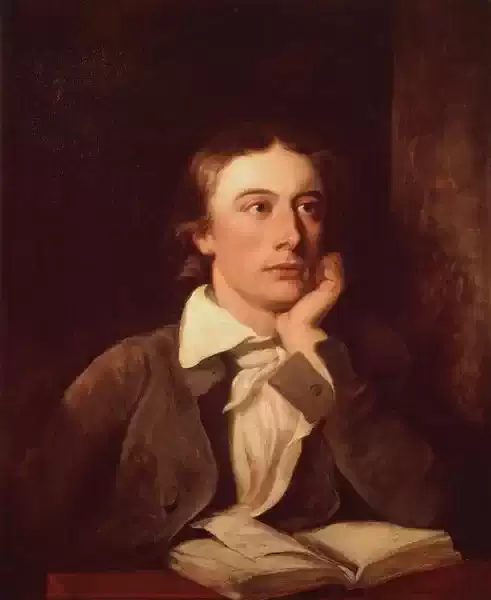
John Keats
Sonnet XI. On First Looking Into Chapman's Homer
Sonnet XI. On First Looking Into Chapman's Homer
Much have I travell'd in the realms of gold,
And many goodly states and kingdoms seen;
Round many western islands have I been
Which bards in fealty to Apollo hold.
Oft of one wide expanse had I been told
That deep-brow'd Homer ruled as his demesne;
Yet did I never breathe its pure serene
Till I heard Chapman speak out loud and bold:
Then felt I like some watcher of the skies
When a new planet swims into his ken;
Or like stout Cortez when with eagle eyes
He star'd at the Pacific -- and all his men
Look'd at each other with a wild surmise --
Silent, upon a peak in Darien.
Much have I travell'd in the realms of gold,
And many goodly states and kingdoms seen;
Round many western islands have I been
Which bards in fealty to Apollo hold.
Oft of one wide expanse had I been told
That deep-brow'd Homer ruled as his demesne;
Yet did I never breathe its pure serene
Till I heard Chapman speak out loud and bold:
Then felt I like some watcher of the skies
When a new planet swims into his ken;
Or like stout Cortez when with eagle eyes
He star'd at the Pacific -- and all his men
Look'd at each other with a wild surmise --
Silent, upon a peak in Darien.
431
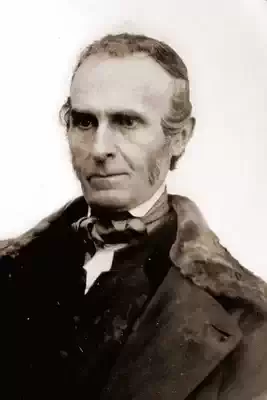
John Greenleaf Whittier
Trust
Trust
The same old baffling questions! O my friend,
I cannot answer them. In vain I send
My soul into the dark, where never burn
The lamps of science, nor the natural light
Of Reason's sun and stars! I cannot learn
Their great and solemn meanings, nor discern
The awful secrets of the eyes which turn
Evermore on us through the day and night
With silent challenge and a dumb demand,
Proffering the riddles of the dread unknown,
Like the calm Sphinxes, with their eyes of stone,
Questioning the centuries from their veils of sand!
I have no answer for myself or thee,
Save that I learned beside my mother's knee;
'All is of God that is, and is to be;
And God is good.' Let this suffice us still,
Resting in childlike trust upon His will
Who moves to His great ends unthwarted by the ill.
The same old baffling questions! O my friend,
I cannot answer them. In vain I send
My soul into the dark, where never burn
The lamps of science, nor the natural light
Of Reason's sun and stars! I cannot learn
Their great and solemn meanings, nor discern
The awful secrets of the eyes which turn
Evermore on us through the day and night
With silent challenge and a dumb demand,
Proffering the riddles of the dread unknown,
Like the calm Sphinxes, with their eyes of stone,
Questioning the centuries from their veils of sand!
I have no answer for myself or thee,
Save that I learned beside my mother's knee;
'All is of God that is, and is to be;
And God is good.' Let this suffice us still,
Resting in childlike trust upon His will
Who moves to His great ends unthwarted by the ill.
408
John Donne
To The Earl Of Doncaster
To The Earl Of Doncaster
SEE, sir, how, as the sun's hot masculine flame
Begets strange creatures on Nile's dirty slime,
In me your fatherly yet lusty rhyme
—For these songs are their fruits—have wrought the same.
But though th' engend'ring force from which they came
Be strong enough, and Nature doth admit
Seven to be born at once ; I send as yet
But six ; they say the seventh hath still some maim.
I choose your judgment, which the same degree
Doth with her sister, your invention, hold,
As fire these drossy rhymes to purify,
Or as elixir, to change them to gold.
You are that alchemist, which always had
Wit, whose one spark could make good things of bad.
SEE, sir, how, as the sun's hot masculine flame
Begets strange creatures on Nile's dirty slime,
In me your fatherly yet lusty rhyme
—For these songs are their fruits—have wrought the same.
But though th' engend'ring force from which they came
Be strong enough, and Nature doth admit
Seven to be born at once ; I send as yet
But six ; they say the seventh hath still some maim.
I choose your judgment, which the same degree
Doth with her sister, your invention, hold,
As fire these drossy rhymes to purify,
Or as elixir, to change them to gold.
You are that alchemist, which always had
Wit, whose one spark could make good things of bad.
320
John Clare
The Ants
The Ants
What wonder strikes the curious, while he views
The black ant's city, by a rotten tree,
Or woodland bank! In ignorance we muse:
Pausing, annoyed,--we know not what we see,
Such government and thought there seem to be;
Some looking on, and urging some to toil,
Dragging their loads of bent-stalks slavishly:
And what's more wonderful, when big loads foil
One ant or two to carry, quickly then
A swarm flock round to help their fellow-men.
Surely they speak a language whisperingly,
Too fine for us to hear; and sure their ways
Prove they have kings and laws, and that they be
Deformed remnants of the Fairy-days.
What wonder strikes the curious, while he views
The black ant's city, by a rotten tree,
Or woodland bank! In ignorance we muse:
Pausing, annoyed,--we know not what we see,
Such government and thought there seem to be;
Some looking on, and urging some to toil,
Dragging their loads of bent-stalks slavishly:
And what's more wonderful, when big loads foil
One ant or two to carry, quickly then
A swarm flock round to help their fellow-men.
Surely they speak a language whisperingly,
Too fine for us to hear; and sure their ways
Prove they have kings and laws, and that they be
Deformed remnants of the Fairy-days.
386
Johann Wolfgang von Goethe
The Metamorphosis Of Plants
The Metamorphosis Of Plants
THOU art confused, my beloved, at, seeing the thousandfold union
Shown in this flowery troop, over the garden dispers'd;
any a name dost thou hear assign'd; one after another
Falls on thy list'ning ear, with a barbarian sound.
None resembleth another, yet all their forms have a likeness;
Therefore, a mystical law is by the chorus proclaim'd;
Yes, a sacred enigma! Oh, dearest friend, could I only
Happily teach thee the word, which may the mystery solve!
Closely observe how the plant, by little and little progressing,
Step by step guided on, changeth to blossom and fruit!
First from the seed it unravels itself, as soon as the silent
Fruit-bearing womb of the earth kindly allows Its escape,
And to the charms of the light, the holy, the ever-in-motion,
Trusteth the delicate leaves, feebly beginning to shoot.
Simply slumber'd the force in the seed; a germ of the future,
Peacefully lock'd in itself, 'neath the integument lay,
Leaf and root, and bud, still void of colour, and shapeless;
Thus doth the kernel, while dry, cover that motionless life.
Upward then strives it to swell, in gentle moisture confiding,
And, from the night where it dwelt, straightway ascendeth to light.
Yet still simple remaineth its figure, when first it appeareth;
And 'tis a token like this, points out the child 'mid the plants.
Soon a shoot, succeeding it, riseth on high, and reneweth,
Piling-up node upon node, ever the primitive form;
Yet not ever alike: for the following leaf, as thou seest,
Ever produceth itself, fashioned in manifold ways.
Longer, more indented, in points and in parts more divided,
Which. all-deform'd until now, slept in the organ below,
So at length it attaineth the noble and destined perfection,
Which, in full many a tribe, fills thee with wondering awe.
Many ribb'd and tooth'd, on a surface juicy and swelling,
Free and unending the shoot seemeth in fullness to be;
Yet here Nature restraineth, with powerful hands, the formation,
And to a perfecter end, guideth with softness its growth,
Less abundantly yielding the sap, contracting the vessels,
So that the figure ere long gentler effects doth disclose.
Soon and in silence is check'd the growth of the vigorous branches,
And the rib of the stalk fuller becometh in form.
Leafless, however, and quick the tenderer stem then up-springeth,
And a miraculous sight doth the observer enchant.
Ranged in a circle, in numbers that now are small, and now countless,
Gather the smaller-sized leaves, close by the side of their like.
Round the axis compress'd the sheltering calyx unfoldeth,
And, as the perfectest type, brilliant-hued coronals forms.
Thus doth Nature bloom, in glory still nobler and fuller,
Showing, in order arranged, member on member uprear'd.
Wonderment fresh dost thou feel, as soon as the stem rears the flower
Over the scaffolding frail of the alternating leaves.
But this glory is only the new creation's foreteller,
Yes, the leaf with its hues feeleth the hand all divine,
And on a sudden contracteth itself; the tenderest figures
Twofold as yet, hasten on, destined to blend into one.
Lovingly now the beauteous pairs are standing together,
Gather'd in countless array, there where the altar is raised.
Hymen hovereth o'er them, and scents delicious and mighty
Stream forth their fragrance so sweet, all things enliv'ning around.
Presently, parcell'd out, unnumber'd germs are seen swelling,
Sweetly conceald in the womb, where is made perfect the fruit.
Here doth Nature close the ring of her forces eternal;
Yet doth a new one, at once, cling to the one gone before,
So that the chain be prolonged for ever through all generations,
And that the whole may have life, e'en as enjoy'd by each part.
Now, my beloved one, turn thy gaze on the many-hued thousands
Which, confusing no more, gladden the mind as they wave.
Every plant unto thee proclaimeth the laws everlasting,
Every flowered speaks louder and louder to thee;
But if thou here canst decipher the mystic words of the goddess,
Everywhere will they be seen, e'en though the features are changed.
Creeping insects may linger, the eager butterfly hasten,-
Plastic and forming, may man change e'en the figure decreed!
Oh, then, bethink thee, as well, how out of the germ of acquaintance,
Kindly intercourse sprang, slowly unfolding its leaves;
Soon how friendship with might unveil'd itself in our bosoms,
And how Amor, at length, brought forth blossom and fruit
Think of the manifold ways wherein Nature hath lent to our feelings,
Silently giving them birth, either the first or the last!
Yes, and rejoice in the present day! For love that is holy
Seeketh the noblest of fruits,--that where the thoughts are the same,
Where the opinions agree,--that the pair may, in rapt contemplation,
Lovingly blend into one,--find the more excellent world.
THOU art confused, my beloved, at, seeing the thousandfold union
Shown in this flowery troop, over the garden dispers'd;
any a name dost thou hear assign'd; one after another
Falls on thy list'ning ear, with a barbarian sound.
None resembleth another, yet all their forms have a likeness;
Therefore, a mystical law is by the chorus proclaim'd;
Yes, a sacred enigma! Oh, dearest friend, could I only
Happily teach thee the word, which may the mystery solve!
Closely observe how the plant, by little and little progressing,
Step by step guided on, changeth to blossom and fruit!
First from the seed it unravels itself, as soon as the silent
Fruit-bearing womb of the earth kindly allows Its escape,
And to the charms of the light, the holy, the ever-in-motion,
Trusteth the delicate leaves, feebly beginning to shoot.
Simply slumber'd the force in the seed; a germ of the future,
Peacefully lock'd in itself, 'neath the integument lay,
Leaf and root, and bud, still void of colour, and shapeless;
Thus doth the kernel, while dry, cover that motionless life.
Upward then strives it to swell, in gentle moisture confiding,
And, from the night where it dwelt, straightway ascendeth to light.
Yet still simple remaineth its figure, when first it appeareth;
And 'tis a token like this, points out the child 'mid the plants.
Soon a shoot, succeeding it, riseth on high, and reneweth,
Piling-up node upon node, ever the primitive form;
Yet not ever alike: for the following leaf, as thou seest,
Ever produceth itself, fashioned in manifold ways.
Longer, more indented, in points and in parts more divided,
Which. all-deform'd until now, slept in the organ below,
So at length it attaineth the noble and destined perfection,
Which, in full many a tribe, fills thee with wondering awe.
Many ribb'd and tooth'd, on a surface juicy and swelling,
Free and unending the shoot seemeth in fullness to be;
Yet here Nature restraineth, with powerful hands, the formation,
And to a perfecter end, guideth with softness its growth,
Less abundantly yielding the sap, contracting the vessels,
So that the figure ere long gentler effects doth disclose.
Soon and in silence is check'd the growth of the vigorous branches,
And the rib of the stalk fuller becometh in form.
Leafless, however, and quick the tenderer stem then up-springeth,
And a miraculous sight doth the observer enchant.
Ranged in a circle, in numbers that now are small, and now countless,
Gather the smaller-sized leaves, close by the side of their like.
Round the axis compress'd the sheltering calyx unfoldeth,
And, as the perfectest type, brilliant-hued coronals forms.
Thus doth Nature bloom, in glory still nobler and fuller,
Showing, in order arranged, member on member uprear'd.
Wonderment fresh dost thou feel, as soon as the stem rears the flower
Over the scaffolding frail of the alternating leaves.
But this glory is only the new creation's foreteller,
Yes, the leaf with its hues feeleth the hand all divine,
And on a sudden contracteth itself; the tenderest figures
Twofold as yet, hasten on, destined to blend into one.
Lovingly now the beauteous pairs are standing together,
Gather'd in countless array, there where the altar is raised.
Hymen hovereth o'er them, and scents delicious and mighty
Stream forth their fragrance so sweet, all things enliv'ning around.
Presently, parcell'd out, unnumber'd germs are seen swelling,
Sweetly conceald in the womb, where is made perfect the fruit.
Here doth Nature close the ring of her forces eternal;
Yet doth a new one, at once, cling to the one gone before,
So that the chain be prolonged for ever through all generations,
And that the whole may have life, e'en as enjoy'd by each part.
Now, my beloved one, turn thy gaze on the many-hued thousands
Which, confusing no more, gladden the mind as they wave.
Every plant unto thee proclaimeth the laws everlasting,
Every flowered speaks louder and louder to thee;
But if thou here canst decipher the mystic words of the goddess,
Everywhere will they be seen, e'en though the features are changed.
Creeping insects may linger, the eager butterfly hasten,-
Plastic and forming, may man change e'en the figure decreed!
Oh, then, bethink thee, as well, how out of the germ of acquaintance,
Kindly intercourse sprang, slowly unfolding its leaves;
Soon how friendship with might unveil'd itself in our bosoms,
And how Amor, at length, brought forth blossom and fruit
Think of the manifold ways wherein Nature hath lent to our feelings,
Silently giving them birth, either the first or the last!
Yes, and rejoice in the present day! For love that is holy
Seeketh the noblest of fruits,--that where the thoughts are the same,
Where the opinions agree,--that the pair may, in rapt contemplation,
Lovingly blend into one,--find the more excellent world.
421