

Poems in this theme
Money and Wealth
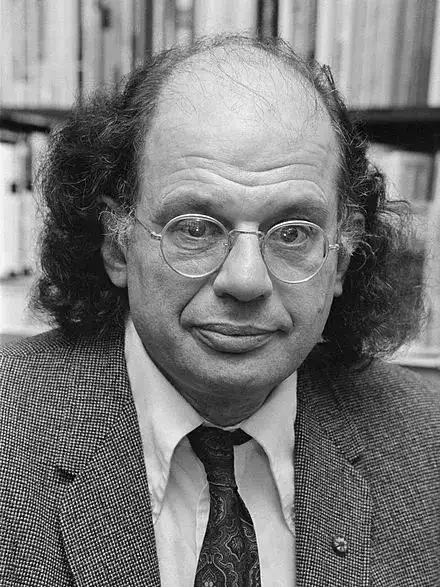
Allen Ginsberg
Kral Majales (King of May)
Kral Majales (King of May)
And the Communists have nothing to offer but fat cheeks and eyeglasses and
lying policemen
and the Capitalists proffer Napalm and money in green suitcases to the
Naked,
and the Communists create heavy industry but the heart is also heavy
and the beautiful engineers are all dead, the secret technicians conspire for
their own glamour
in the Future, in the Future, but now drink vodka and lament the Security
Forces,
and the Capitalists drink gin and whiskey on airplanes but let Indian brown
millions starve
and when Communist and Capitalist assholes tangle the Just man is arrested
or robbed or has his head cut off,
but not like Kabir, and the cigarette cough of the Just man above the clouds
in the bright sunshine is a salute to the health of the blue sky.
For I was arrested thrice in Prague, once for singing drunk on Narodni
street,
once knocked down on the midnight pavement by a mustached agent who
screamed out BOUZERANT,
once for losing my notebooks of unusual sex politics dream opinions,
and I was sent from Havana by planes by detectives in green uniform,
and I was sent from Prague by plane by detectives in Czechoslovakian
business suits,
Cardplayers out of Cezanne, the two strange dolls that entered Joseph K's
room at morn
also entered mine and ate at my table, and examined my scribbles,
and followed me night and morn from the houses of the lovers to the cafes of
Centrum -
And I am the King of May, which is the power of sexual youth,
and I am the King of May, which is long hair of Adam and Beard of my
own body
and I am the King of May, which is Kral Majales in the Czechoslovakian
tongue,
and I am the King of May, which is old Human poesy, and 100,000 people
chose my name,
and I am the King of May, and in a few minutes I will land at London
Airport,
and I am the King of May, naturally, for I am of Slavic parentage and a
Buddhist Jew
who whorships the Sacred Heart of Christ the blue body of Krishna the
straight back of Ram
the beads of Chango the Nigerian singing Shiva Shiva in a manner which
I have invented,
and the King of May is a middleeuropean honor, mine in the XX century
despite space ships and the Time Machine, because I have heard the voice of Blake
in a vision
and repeat that voice. And I am the King of May that sleeps with teenagers
laughing.
And I am the King of May, that I may be expelled from my Kingdom with
Honor, as of old,
To show the difference between Caesar's Kingdom and the Kingdom of the
May of Man
and I am the King of May because I touched my finger to my forehead
saluting
a luminous heavy girl trembling hands who said 'one moment Mr. Ginsberg'
before a fat young Plainclothesman stepped between our bodies - I was
going to England and
I am the King of May, in a giant jetplane touching Albion's airfield
trembling in fear
as the plane roars to a landing on the gray concrete, shakes & expels air,
and rolls slowly to a stop under the clouds with part of blue heaven still
visible.
And tho' I am the King of May, the Marxists have beat me upon the street,
kept me up all night in Police Station, followed me thru Springtime
Prague, detained me in secret and deported me from our kingdom by
airplane.
This I have written this poem on a jet seat in mid Heaven.
And the Communists have nothing to offer but fat cheeks and eyeglasses and
lying policemen
and the Capitalists proffer Napalm and money in green suitcases to the
Naked,
and the Communists create heavy industry but the heart is also heavy
and the beautiful engineers are all dead, the secret technicians conspire for
their own glamour
in the Future, in the Future, but now drink vodka and lament the Security
Forces,
and the Capitalists drink gin and whiskey on airplanes but let Indian brown
millions starve
and when Communist and Capitalist assholes tangle the Just man is arrested
or robbed or has his head cut off,
but not like Kabir, and the cigarette cough of the Just man above the clouds
in the bright sunshine is a salute to the health of the blue sky.
For I was arrested thrice in Prague, once for singing drunk on Narodni
street,
once knocked down on the midnight pavement by a mustached agent who
screamed out BOUZERANT,
once for losing my notebooks of unusual sex politics dream opinions,
and I was sent from Havana by planes by detectives in green uniform,
and I was sent from Prague by plane by detectives in Czechoslovakian
business suits,
Cardplayers out of Cezanne, the two strange dolls that entered Joseph K's
room at morn
also entered mine and ate at my table, and examined my scribbles,
and followed me night and morn from the houses of the lovers to the cafes of
Centrum -
And I am the King of May, which is the power of sexual youth,
and I am the King of May, which is long hair of Adam and Beard of my
own body
and I am the King of May, which is Kral Majales in the Czechoslovakian
tongue,
and I am the King of May, which is old Human poesy, and 100,000 people
chose my name,
and I am the King of May, and in a few minutes I will land at London
Airport,
and I am the King of May, naturally, for I am of Slavic parentage and a
Buddhist Jew
who whorships the Sacred Heart of Christ the blue body of Krishna the
straight back of Ram
the beads of Chango the Nigerian singing Shiva Shiva in a manner which
I have invented,
and the King of May is a middleeuropean honor, mine in the XX century
despite space ships and the Time Machine, because I have heard the voice of Blake
in a vision
and repeat that voice. And I am the King of May that sleeps with teenagers
laughing.
And I am the King of May, that I may be expelled from my Kingdom with
Honor, as of old,
To show the difference between Caesar's Kingdom and the Kingdom of the
May of Man
and I am the King of May because I touched my finger to my forehead
saluting
a luminous heavy girl trembling hands who said 'one moment Mr. Ginsberg'
before a fat young Plainclothesman stepped between our bodies - I was
going to England and
I am the King of May, in a giant jetplane touching Albion's airfield
trembling in fear
as the plane roars to a landing on the gray concrete, shakes & expels air,
and rolls slowly to a stop under the clouds with part of blue heaven still
visible.
And tho' I am the King of May, the Marxists have beat me upon the street,
kept me up all night in Police Station, followed me thru Springtime
Prague, detained me in secret and deported me from our kingdom by
airplane.
This I have written this poem on a jet seat in mid Heaven.
804
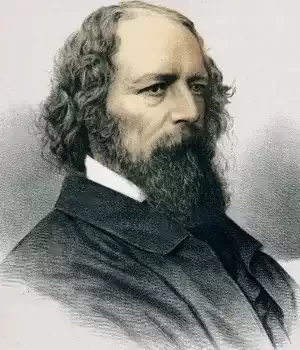
Alfred Lord Tennyson
Geraint And Enid
Geraint And Enid
O purblind race of miserable men,
How many among us at this very hour
Do forge a life-long trouble for ourselves,
By taking true for false, or false for true;
Here, through the feeble twilight of this world
Groping, how many, until we pass and reach
That other, where we see as we are seen!
So fared it with Geraint, who issuing forth
That morning, when they both had got to horse,
Perhaps because he loved her passionately,
And felt that tempest brooding round his heart,
Which, if he spoke at all, would break perforce
Upon a head so dear in thunder, said:
'Not at my side. I charge thee ride before,
Ever a good way on before; and this
I charge thee, on thy duty as a wife,
Whatever happens, not to speak to me,
No, not a word!' and Enid was aghast;
And forth they rode, but scarce three paces on,
When crying out, 'Effeminate as I am,
I will not fight my way with gilded arms,
All shall be iron;' he loosed a mighty purse,
Hung at his belt, and hurled it toward the squire.
So the last sight that Enid had of home
Was all the marble threshold flashing, strown
With gold and scattered coinage, and the squire
Chafing his shoulder: then he cried again,
'To the wilds!' and Enid leading down the tracks
Through which he bad her lead him on, they past
The marches, and by bandit-haunted holds,
Gray swamps and pools, waste places of the hern,
And wildernesses, perilous paths, they rode:
Round was their pace at first, but slackened soon:
A stranger meeting them had surely thought
They rode so slowly and they looked so pale,
That each had suffered some exceeding wrong.
For he was ever saying to himself,
'O I that wasted time to tend upon her,
To compass her with sweet observances,
To dress her beautifully and keep her true'--
And there he broke the sentence in his heart
Abruptly, as a man upon his tongue
May break it, when his passion masters him.
And she was ever praying the sweet heavens
To save her dear lord whole from any wound.
And ever in her mind she cast about
For that unnoticed failing in herself,
Which made him look so cloudy and so cold;
Till the great plover's human whistle amazed
Her heart, and glancing round the waste she feared
In ever wavering brake an ambuscade.
Then thought again, 'If there be such in me,
I might amend it by the grace of Heaven,
If he would only speak and tell me of it.'
But when the fourth part of the day was gone,
Then Enid was aware of three tall knights
On horseback, wholly armed, behind a rock
In shadow, waiting for them, caitiffs all;
And heard one crying to his fellow, 'Look,
Here comes a laggard hanging down his head,
Who seems no bolder than a beaten hound;
Come, we will slay him and will have his horse
And armour, and his damsel shall be ours.'
Then Enid pondered in her heart, and said:
'I will go back a little to my lord,
And I will tell him all their caitiff talk;
For, be he wroth even to slaying me,
Far liefer by his dear hand had I die,
Than that my lord should suffer loss or shame.'
Then she went back some paces of return,
Met his full frown timidly firm, and said;
'My lord, I saw three bandits by the rock
Waiting to fall on you, and heard them boast
That they would slay you, and possess your horse
And armour, and your damsel should be theirs.'
He made a wrathful answer: 'Did I wish
Your warning or your silence? one command
I laid upon you, not to speak to me,
And thus ye keep it! Well then, look--for now,
Whether ye wish me victory or defeat,
Long for my life, or hunger for my death,
Yourself shall see my vigour is not lost.'
Then Enid waited pale and sorrowful,
And down upon him bare the bandit three.
And at the midmost charging, Prince Geraint
Drave the long spear a cubit through his breast
And out beyond; and then against his brace
Of comrades, each of whom had broken on him
A lance that splintered like an icicle,
Swung from his brand a windy buffet out
Once, twice, to right, to left, and stunned the twain
Or slew them, and dismounting like a man
That skins the wild beast after slaying him,
Stript from the three dead wolves of woman born
The three gay suits of armour which they wore,
And let the bodies lie, but bound the suits
Of armour on their horses, each on each,
And tied the bridle-reins of all the three
Together, and said to her, 'Drive them on
Before you;' and she drove them through the waste.
He followed nearer; ruth began to work
Against his anger in him, while he watched
The being he loved best in all the world,
With difficulty in mild obedience
Driving them on: he fain had spoken to her,
And loosed in words of sudden fire the wrath
And smouldered wrong that burnt him all within;
But evermore it seemed an easier thing
At once without remorse to strike her dead,
Than to cry 'Halt,' and to her own bright face
Accuse her of the least immodesty:
And thus tongue-tied, it made him wroth the more
That she COULD speak whom his own ear had heard
Call herself false: and suffering thus he made
Minutes an age: but in scarce longer time
Than at Caerleon the full-tided Usk,
Before he turn to fall seaward again,
Pauses, did Enid, keeping watch, behold
In the first shallow shade of a deep wood,
Before a gloom of stubborn-shafted oaks,
Three other horsemen waiting, wholly armed,
Whereof one seemed far larger than her lord,
And shook her pulses, crying, 'Look, a prize!
Three horses and three goodly suits of arms,
And all in charge of whom? a girl: set on.'
'Nay,' said the second, 'yonder comes a knight.'
The third, 'A craven; how he hangs his head.'
The giant answered merrily, 'Yea, but one?
Wait here, and when he passes fall upon him.'
And Enid pondered in her heart and said,
'I will abide the coming of my lord,
And I will tell him all their villainy.
My lord is weary with the fight before,
And they will fall upon him unawares.
I needs must disobey him for his good;
How should I dare obey him to his harm?
Needs must I speak, and though he kill me for it,
I save a life dearer to me than mine.'
And she abode his coming, and said to him
With timid firmness, 'Have I leave to speak?'
He said, 'Ye take it, speaking,' and she spoke.
'There lurk three villains yonder in the wood,
And each of them is wholly armed, and one
Is larger-limbed than you are, and they say
That they will fall upon you while ye pass.'
To which he flung a wrathful answer back:
'And if there were an hundred in the wood,
And every man were larger-limbed than I,
And all at once should sally out upon me,
I swear it would not ruffle me so much
As you that not obey me. Stand aside,
And if I fall, cleave to the better man.'
And Enid stood aside to wait the event,
Not dare to watch the combat, only breathe
Short fits of prayer, at every stroke a breath.
And he, she dreaded most, bare down upon him.
Aimed at the helm, his lance erred; but Geraint's,
A little in the late encounter strained,
Struck through the bulky bandit's corselet home,
And then brake short, and down his enemy rolled,
And there lay still; as he that tells the tale
Saw once a great piece of a promontory,
That had a sapling growing on it, slide
From the long shore-cliff's windy walls to the beach,
And there lie still, and yet the sapling grew:
So lay the man transfixt. His craven pair
Of comrades making slowlier at the Prince,
When now they saw their bulwark fallen, stood;
On whom the victor, to confound them more,
Spurred with his terrible war-cry; for as one,
That listens near a torrent mountain-brook,
All through the crash of the near cataract hears
The drumming thunder of the huger fall
At distance, were the soldiers wont to hear
His voice in battle, and be kindled by it,
And foemen scared, like that false pair who turned
Flying, but, overtaken, died the death
Themselves had wrought on many an innocent.
Thereon Geraint, dismounting, picked the lance
That pleased him best, and drew from those dead wolves
Their three gay suits of armour, each from each,
And bound them on their horses, each on each,
And tied the bridle-reins of all the three
Together, and said to her, 'Drive them on
Before you,' and she drove them through the wood.
He followed nearer still: the pain she had
To keep them in the wild ways of the wood,
Two sets of three laden with jingling arms,
Together, served a little to disedge
The sharpness of that pain about her heart:
And they themselves, like creatures gently born
But into bad hands fallen, and now so long
By bandits groomed, pricked their light ears, and felt
Her low firm voice and tender government.
So through the green gloom of the wood they past,
And issuing under open heavens beheld
A little town with towers, upon a rock,
And close beneath, a meadow gemlike chased
In the brown wild, and mowers mowing in it:
And down a rocky pathway from the place
There came a fair-haired youth, that in his hand
Bare victual for the mowers: and Geraint
Had ruth again on Enid looking pale:
Then, moving downward to the meadow ground,
He, when the fair-haired youth came by him, said,
'Friend, let her eat; the damsel is so faint.'
'Yea, willingly,' replied the youth; 'and thou,
My lord, eat also, though the fare is coarse,
And only meet for mowers;' then set down
His basket, and dismounting on the sward
They let the horses graze, and ate themselves.
And Enid took a little delicately,
Less having stomach for it than desire
To close with her lord's pleasure; but Geraint
Ate all the mowers' victual unawares,
And when he found all empty, was amazed;
And 'Boy,' said he, 'I have eaten all, but take
A horse and arms for guerdon; choose the best.'
He, reddening in extremity of delight,
'My lord, you overpay me fifty-fold.'
'Ye will be all the wealthier,' cried the Prince.
'I take it as free gift, then,' said the boy,
'Not guerdon; for myself can easily,
While your good damsel rests, return, and fetch
Fresh victual for these mowers of our Earl;
For these are his, and all the field is his,
And I myself am his; and I will tell him
How great a man thou art: he loves to know
When men of mark are in his territory:
And he will have thee to his palace here,
And serve thee costlier than with mowers' fare.'
Then said Geraint, 'I wish no better fare:
I never ate with angrier appetite
Than when I left your mowers dinnerless.
And into no Earl's palace will I go.
I know, God knows, too much of palaces!
And if he want me, let him come to me.
But hire us some fair chamber for the night,
And stalling for the horses, and return
With victual for these men, and let us know.'
'Yea, my kind lord,' said the glad youth, and went,
Held his head high, and thought himself a knight,
And up the rocky pathway disappeared,
Leading the horse, and they were left alone.
But when the Prince had brought his errant eyes
Home from the rock, sideways he let them glance
At Enid, where she droopt: his own false doom,
That shadow of mistrust should never cross
Betwixt them, came upon him, and he sighed;
Then with another humorous ruth remarked
The lusty mowers labouring dinnerless,
And watched the sun blaze on the turning scythe,
And after nodded sleepily in the heat.
But she, remembering her old ruined hall,
And all the windy clamour of the daws
About her hollow turret, plucked the grass
There growing longest by the meadow's edge,
And into many a listless annulet,
Now over, now beneath her marriage ring,
Wove and unwove it, till the boy returned
And told them of a chamber, and they went;
Where, after saying to her, 'If ye will,
Call for the woman of the house,' to which
She answered, 'Thanks, my lord;' the two remained
Apart by all the chamber's width, and mute
As two creatures voiceless through the fault of birth,
Or two wild men supporters of a shield,
Painted, who stare at open space, nor glance
The one at other, parted by the shield.
On a sudden, many a voice along the street,
And heel against the pavement echoing, burst
Their drowse; and either started while the door,
Pushed from without, drave backward to the wall,
And midmost of a rout of roisterers,
Femininely fair and dissolutely pale,
Her suitor in old years before Geraint,
Entered, the wild lord of the place, Limours.
He moving up with pliant courtliness,
Greeted Geraint full face, but stealthily,
In the mid-warmth of welcome and graspt hand,
Found Enid with the corner of his eye,
And knew her sitting sad and solitary.
Then cried Geraint for wine and goodly cheer
To feed the sudden guest, and sumptuously
According to his fashion, bad the host
Call in what men soever were his friends,
And feast with these in honour of their Earl;
'And care not for the cost; the cost is mine.'
And wine and food were brought, and Earl Limours
Drank till he jested with all ease, and told
Free tales, and took the word and played upon it,
And made it of two colours; for his talk,
When wine and free companions kindled him,
Was wont to glance and sparkle like a gem
Of fifty facets; thus he moved the Prince
To laughter and his comrades to applause.
Then, when the Prince was merry, asked Limours,
'Your leave, my lord, to cross the room, and speak
To your good damsel there who sits apart,
And seems so lonely?' 'My free leave,' he said;
'Get her to speak: she doth not speak to me.'
Then rose Limours, and looking at his feet,
Like him who tries the bridge he fears may fail,
Crost and came near, lifted adoring eyes,
Bowed at her side and uttered whisperingly:
'Enid, the pilot star of my lone life,
Enid, my early and my only love,
Enid, the loss of whom hath turned me wild--
What chance is this? how is it I see you here?
Ye are in my power at last, are in my power.
Yet fear me not: I call mine own self wild,
But keep a touch of sweet civility
Here in the heart of waste and wilderness.
I thought, but that your father came between,
In former days you saw me favourably.
And if it were so do not keep it back:
Make me a little happier: let me know it:
Owe you me nothing for a life half-lost?
Yea, yea, the whole dear debt of all you are.
And, Enid, you and he, I see with joy,
Ye sit apart, you do not speak to him,
You come with no attendance, page or maid,
To serve you--doth he love you as of old?
For, call it lovers' quarrels, yet I know
Though men may bicker with the things they love,
They would not make them laughable in all eyes,
Not while they loved them; and your wretched dress,
A wretched insult on you, dumbly speaks
Your story, that this man loves you no more.
Your beauty is no beauty to him now:
A common chance--right well I know it--palled--
For I know men: nor will ye win him back,
For the man's love once gone never returns.
But here is one who loves you as of old;
With more exceeding passion than of old:
Good, speak the word: my followers ring him round:
He sits unarmed; I hold a finger up;
They understand: nay; I do not mean blood:
Nor need ye look so scared at what I say:
My malice is no deeper than a moat,
No stronger than a wall: there is the keep;
He shall not cross us more; speak but the word:
Or speak it not; but then by Him that made me
The one true lover whom you ever owned,
I will make use of all the power I have.
O pardon me! the madness of that hour,
When first I parted from thee, moves me yet.'
At this the tender sound of his own voice
And sweet self-pity, or the fancy of it,
Made his eye moist; but Enid feared his eyes,
Moist as they were, wine-heated from the feast;
And answered with such craft as women use,
Guilty or guiltless, to stave off a chance
That breaks upon them perilously, and said:
'Earl, if you love me as in former years,
And do not practise on me, come with morn,
And snatch me from him as by violence;
Leave me tonight: I am weary to the death.'
Low at leave-taking, with his brandished plume
Brushing his instep, bowed the all-amorous Earl,
And the stout Prince bad him a loud good-night.
He moving homeward babbled to his men,
How Enid never loved a man but him,
Nor cared a broken egg-shell for her lord.
But Enid left alone with Prince Geraint,
Debating his command of silence given,
And that she now perforce must violate it,
Held commune with herself, and while she held
He fell asleep, and Enid had no heart
To wake him, but hung o'er him, wholly pleased
To find him yet unwounded after fight,
And hear him breathing low and equally.
Anon she rose, and stepping lightly, heaped
The pieces of his armour in one place,
All to be there against a sudden need;
Then dozed awhile herself, but overtoiled
By that day's grief and travel, evermore
Seemed catching at a rootless thorn, and then
Went slipping down horrible precipices,
And strongly striking out her limbs awoke;
Then thought she heard the wild Earl at the door,
With all his rout of random followers,
Sound on a dreadful trumpet, summoning her;
Which was the red cock shouting to the light,
As the gray dawn stole o'er the dewy world,
And glimmered on his armour in the room.
And once again she rose to look at it,
But touched it unawares: jangling, the casque
Fell, and he started up and stared at her.
Then breaking his command of silence given,
She told him all that Earl Limours had said,
Except the passage that he loved her not;
Nor left untold the craft herself had used;
But ended with apology so sweet,
Low-spoken, and of so few words, and seemed
So justified by that necessity,
That though he thought 'was it for him she wept
In Devon?' he but gave a wrathful groan,
Saying, 'Your sweet faces make good fellows fools
And traitors. Call the host and bid him bring
Charger and palfrey.' So she glided out
Among the heavy breathings of the house,
And like a household Spirit at the walls
Beat, till she woke the sleepers, and returned:
Then tending her rough lord, though all unasked,
In silence, did him service as a squire;
Till issuing armed he found the host and cried,
'Thy reckoning, friend?' and ere he learnt it, 'Take
Five horses and their armours;' and the host
Suddenly honest, answered in amaze,
'My lord, I scarce have spent the worth of one!'
'Ye will be all the wealthier,' said the Prince,
And then to Enid, 'Forward! and today
I charge you, Enid, more especially,
What thing soever ye may hear, or see,
Or fancy (though I count it of small use
To charge you) that ye speak not but obey.'
And Enid answered, 'Yea, my lord, I know
Your wish, and would obey; but riding first,
I hear the violent threats you do not hear,
I see the danger which you cannot see:
Then not to give you warning, that seems hard;
Almost beyond me: yet I would obey.'
'Yea so,' said he, 'do it: be not too wise;
Seeing that ye are wedded to a man,
Not all mismated with a yawning clown,
But one with arms to guard his head and yours,
With eyes to find you out however far,
And ears to hear you even in his dreams.'
With that he turned and looked as keenly at her
As careful robins eye the delver's toil;
And that within her, which a wanton fool,
Or hasty judger would have called her guilt,
Made her cheek burn and either eyelid fall.
And Geraint looked and was not satisfied.
Then forward by a way which, beaten broad,
Led from the territory of false Limours
To the waste earldom of another earl,
Doorm, whom his shaking vassals called the Bull,
Went Enid with her sullen follower on.
Once she looked back, and when she saw him ride
More near by many a rood than yestermorn,
It wellnigh made her cheerful; till Geraint
Waving an angry hand as who should say
'Ye watch me,' saddened all her heart again.
But while the sun yet beat a dewy blade,
The sound of many a heavily-galloping hoof
Smote on her ear, and turning round she saw
Dust, and the points of lances bicker in it.
Then not to disobey her lord's behest,
And yet to give him warning, for he rode
As if he heard not, moving back she held
Her finger up, and pointed to the dust.
At which the warrior in his obstinacy,
Because she kept the letter of his word,
Was in a manner pleased, and turning, stood.
And in the moment after, wild Limours,
Borne on a black horse, like a thunder-cloud
Whose skirts are loosened by the breaking storm,
Half ridden off with by the thing he rode,
And all in passion uttering a dry shriek,
Dashed down on Geraint, who closed with him, and bore
Down by the length of lance and arm beyond
The crupper, and so left him stunned or dead,
And overthrew the next that followed him,
And blindly rushed on all the rout behind.
But at the flash and motion of the man
They vanished panic-stricken, like a shoal
Of darting fish, that on a summer morn
Adown the crystal dykes at Camelot
Come slipping o'er their shadows on the sand,
But if a man who stands upon the brink
But lift a shining hand against the sun,
There is not left the twinkle of a fin
Betwixt the cressy islets white in flower;
So, scared but at the motion of the man,
Fled all the boon companions of the Earl,
And left him lying in the public way;
So vanish friendships only made in wine.
Then like a stormy sunlight smiled Geraint,
Who saw the chargers of the two that fell
Start from their fallen lords, and wildly fly,
Mixt with the flyers. 'Horse and man,' he said,
'All of one mind and all right-honest friends!
Not a hoof left: and I methinks till now
Was honest--paid with horses and with arms;
I cannot steal or plunder, no nor beg:
And so what say ye, shall we strip him there
Your lover? has your palfrey heart enough
To bear his armour? shall we fast, or dine?
No?--then do thou, being right honest, pray
That we may meet the horsemen of Earl Doorm,
I too would still be honest.' Thus he said:
And sadly gazing on her bridle-reins,
And answering not one word, she led the way.
But as a man to whom a dreadful loss
Falls in a far land and he knows it not,
But coming back he learns it, and the loss
So pains him that he sickens nigh to death;
So fared it with Geraint, who being pricked
In combat with the follower of Limours,
Bled underneath his armour secretly,
And so rode on, nor told his gentle wife
What ailed him, hardly knowing it himself,
Till his eye darkened and his helmet wagged;
And at a sudden swerving of the road,
Though happily down on a bank of grass,
The Prince, without a word, from his horse fell.
And Enid heard the clashing of his fall,
Suddenly came, and at his side all pale
Dismounting, loosed the fastenings of his arms,
Nor let her true hand falter, nor blue eye
Moisten, till she had lighted on his wound,
And tearing off her veil of faded silk
Had bared her forehead to the blistering sun,
And swathed the hurt that drained her dear lord's life.
Then after all was done that hand could do,
She rested, and her desolation came
Upon her, and she wept beside the way.
And many past, but none regarded her,
For in that realm of lawless turbulence,
A woman weeping for her murdered mate
Was cared as much for as a summer shower:
One took him for a victim of Earl Doorm,
Nor dared to waste a perilous pity on him:
Another hurrying past, a man-at-arms,
Rode on a mission to the bandit Earl;
Half whistling and half singing a coarse song,
He drove the dust against her veilless eyes:
Another, flying from the wrath of Doorm
Before an ever-fancied arrow, made
The long way smoke beneath him in his fear;
At which her palfrey whinnying lifted heel,
And scoured into the coppices and was lost,
While the great charger stood, grieved like a man.
But at the point of noon the huge Earl Doorm,
Broad-faced with under-fringe of russet beard,
Bound on a foray, rolling eyes of prey,
Came riding with a hundred lances up;
But ere he came, like one that hails a ship,
Cried out with a big voice, 'What, is he dead?'
'No, no, not dead!' she answered in all haste.
'Would some of your people take him up,
And bear him hence out of this cruel sun?
Most sure am I, quite sure, he is not dead.'
Then said Earl Doorm: 'Well, if he be not dead,
Why wail ye for him thus? ye seem a child.
And be he dead, I count you for a fool;
Your wailing will not quicken him: dead or not,
Ye mar a comely face with idiot tears.
Yet, since the face IS comely--some of you,
Here, take him up, and bear him to our hall:
An if he live, we will have him of our band;
And if he die, why earth has earth enough
To hide him. See ye take the charger too,
A noble one.'
He spake, and past away,
But left two brawny spearmen, who advanced,
Each growling like a dog, when his good bone
Seems to be plucked at by the village boys
Who love to vex him eating, and he fears
To lose his bone, and lays his foot upon it,
Gnawing and growling: so the ruffians growled,
Fearing to lose, and all for a dead man,
Their chance of booty from the morning's raid,
Yet raised and laid him on a litter-bier,
Such as they brought upon their forays out
For those that might be wounded; laid him on it
All in the hollow of his shield, and took
And bore him to the naked hall of Doorm,
(His gentle charger following him unled)
And cast him and the bier in which he lay
Down on an oaken settle in the hall,
And then departed, hot in haste to join
Their luckier mates, but growling as before,
And cursing their lost time, and the dead man,
And their own Earl, and their own souls, and her.
They might as well have blest her: she was deaf
To blessing or to cursing save from one.
So for long hours sat Enid by her lord,
There in the naked hall, propping his head,
And chafing his pale hands, and calling to him.
Till at the last he wakened from his swoon,
And found his own dear bride propping his head,
And chafing his faint hands, and calling to him;
And felt the warm tears falling on his face;
And said to his own heart, 'She weeps for me:'
And yet lay still, and feigned himself as dead,
That he might prove her to the uttermost,
And say to his own heart, 'She weeps for me.'
But in the falling afternoon returned
The huge Earl Doorm with plunder to the hall.
His lusty spearmen followed him with noise:
Each hurling down a heap of things that rang
Against his pavement, cast his lance aside,
And doffed his helm: and then there fluttered in,
Half-bold, half-frighted, with dilated eyes,
A tribe of women, dressed in many hues,
And mingled with the spearmen: and Earl Doorm
Struck with a knife's haft hard against the board,
And called for flesh and wine to feed his spears.
And men brought in whole hogs and quarter beeves,
And all the hall was dim with steam of flesh:
And none spake word, but all sat down at once,
And ate with tumult in the naked hall,
Feeding like horses when you hear them feed;
Till Enid shrank far back into herself,
To shun the wild ways of the lawless tribe.
But when Earl Doorm had eaten all he would,
He rolled his eyes about the hall, and found
A damsel drooping in a corner of it.
Then he remembered her, and how she wept;
And out of her there came a power upon him;
And rising on the sudden he said, 'Eat!
I never yet beheld a thing so pale.
God's curse, it makes me mad to see you weep.
Eat! Look yourself. Good luck had your good man,
For were I dead who is it would weep for me?
Sweet lady, never since I first drew breath
Have I beheld a lily like yourself.
And so there lived some colour in your cheek,
There is not one among my gentlewomen
Were fit to wear your slipper for a glove.
But listen to me, and by me be ruled,
And I will do the thing I have not done,
For ye shall share my earldom with me, girl,
And we will live like two birds in one nest,
And I will fetch you forage from all fields,
For I compel all creatures to my will.'
He spoke: the brawny spearman let his cheek
Bulge with the unswallowed piece, and turning stared;
While some, whose souls the old serpent long had drawn
Down, as the worm draws in the withered leaf
And makes it earth, hissed each at other's ear
What shall not be recorded--women they,
Women, or what had been those gracious things,
But now desired the humbling of their best,
Yea, would have helped him to it: and all at once
They hated her, who took no thought of them,
But answered in low voice, her meek head yet
Drooping, 'I pray you of your courtesy,
He being as he is, to let me be.'
She spake so low he hardly heard her speak,
But like a mighty patron, satisfied
With what himself had done so graciously,
Assumed that she had thanked him, adding, 'Yea,
Eat and be glad, for I account you mine.'
She answered meekly, 'How should I be glad
Henceforth in all the world at anything,
Until my lord arise and look upon me?'
Here the huge Earl cried out upon her talk,
As all but empty heart and weariness
And sickly nothing; suddenly seized on her,
And bare her by main violence to the board,
And thrust the dish before her, crying, 'Eat.'
'No, no,' said Enid, vext, 'I will not eat
Till yonder man upon the bier arise,
And eat with me.' 'Drink, then,' he answered. 'Here!'
(And filled a horn with wine and held it to her,)
'Lo! I, myself, when flushed with fight, or hot,
God's curse, with anger--often I myself,
Before I well have drunken, scarce can eat:
Drink therefore and the wine will change thy will.'
'Not so,' she cried, 'by Heaven, I will not drink
Till my dear lord arise and bid me do it,
And drink with me; and if he rise no more,
I will not look at wine until I die.'
At this he turned all red and paced his hall,
Now gnawed his under, now his upper lip,
And coming up close to her, said at last:
'Girl, for I see ye scorn my courtesies,
Take warning: yonder man is surely dead;
And I compel all creatures to my will.
Not eat nor drink? And wherefore wail for one,
Who put your beauty to this flout and scorn
By dressing it in rags? Amazed am I,
Beholding how ye butt against my wish,
That I forbear you thus: cross me no more.
At least put off to please me this poor gown,
This silken rag, this beggar-woman's weed:
I love that beauty should go beautifully:
For see ye not my gentlewomen here,
How gay, how suited to the house of one
Who loves that beauty should go beautifully?
Rise therefore; robe yourself in this: obey.'
He spoke, and one among his gentlewomen
Displayed a splendid silk of foreign loom,
Where like a shoaling sea the lovely blue
Played into green, and thicker down the front
With jewels than the sward with drops of dew,
When all night long a cloud clings to the hill,
And with the dawn ascending lets the day
Strike where it clung: so thickly shone the gems.
But Enid answered, harder to be moved
Than hardest tyrants in their day of power,
With life-long injuries burning unavenged,
And now their hour has come; and Enid said:
'In this poor gown my dear lord found me first,
And loved me serving in my father's hall:
In this poor gown I rode with him to court,
And there the Queen arrayed me like the sun:
In this poor gown he bad me clothe myself,
When now we rode upon this fatal quest
Of honour, where no honour can be gained:
And this poor gown I will not cast aside
Until himself arise a living man,
And bid me cast it. I have griefs enough:
Pray you be gentle, pray you let me be:
I never loved, can never love but him:
Yea, God, I pray you of your gentleness,
He being as he is, to let me be.'
Then strode the brute Earl up and down his hall,
And took his russet beard between his teeth;
Last, coming up quite close, and in his mood
Crying, 'I count it of no more avail,
Dame, to be gentle than ungentle with you;
Take my salute,' unknightly with flat hand,
However lightly, smote her on the cheek.
Then Enid, in her utter helplessness,
And since she thought, 'He had not dared to do it,
Except he surely knew my lord was dead,'
Sent forth a sudden sharp and bitter cry,
As of a wild thing taken in the trap,
Which sees the trapper coming through the wood.
This heard Geraint, and grasping at his sword,
(It lay beside him in the hollow shield),
Made but a single bound, and with a sweep of it
Shore through the swarthy neck, and like a ball
The russet-bearded head rolled on the floor.
So died Earl Doorm by him he counted dead.
And all the men and women in the hall
Rose when they saw the dead man rise, and fled
Yelling as from a spectre, and the two
Were left alone together, and he said:
'Enid, I have used you worse than that dead man;
Done you more wrong: we both have undergone
That trouble which has left me thrice your own:
Henceforward I will rather die than doubt.
And here I lay this penance on myself,
Not, though mine own ears heard you yestermorn--
You thought me sleeping, but I heard you say,
I heard you say, that you were no true wife:
I swear I will not ask your meaning in it:
I do believe yourself against yourself,
And will henceforward rather die than doubt.'
And Enid could not say one tender word,
She felt so blunt and stupid at the heart:
She only prayed him, 'Fly, they will return
And slay you; fly, your charger is without,
My palfrey lost.' 'Then, Enid, shall you ride
Behind me.' 'Yea,' said Enid, 'let us go.'
And moving out they found the stately horse,
Who now no more a vassal to the thief,
But free to stretch his limbs in lawful fight,
Neighed with all gladness as they came, and stooped
With a low whinny toward the pair: and she
Kissed the white star upon his noble front,
Glad also; then Geraint upon the horse
Mounted, and reached a hand, and on his foot
She set her own and climbed; he turned his face
And kissed her climbing, and she cast her arms
About him, and at once they rode away.
And never yet, since high in Paradise
O'er the four rivers the first roses blew,
Came purer pleasure unto mortal kind
Than lived through her, who in that perilous hour
Put hand to hand beneath her husband's heart,
And felt him hers again: she did not weep,
But o'er her meek eyes came a happy mist
Like that which kept the heart of Eden green
Before the useful trouble of the rain:
Yet not so misty were her meek blue eyes
As not to see before them on the path,
Right in the gateway of the bandit hold,
A knight of Arthur's court, who laid his lance
In rest, and made as if to fall upon him.
Then, fearing for his hurt and loss of blood,
She, with her mind all full of what had chanced,
Shrieked to the stranger 'Slay not a dead man!'
'The voice of Enid,' said the knight; but she,
Beholding it was Edyrn son of Nudd,
Was moved so much the more, and shrieked again,
'O cousin, slay not him who gave you life.'
And Edyrn moving frankly forward spake:
'My lord Geraint, I greet you with all love;
I took you for a bandit knight of Doorm;
And fear not, Enid, I should fall upon him,
Who love you, Prince, with something of the love
Wherewith we love the Heaven that chastens us.
For once, when I was up so high in pride
That I was halfway down the slope to Hell,
By overthrowing me you threw me higher.
Now, made a knight of Arthur's Table Round,
And since I knew this Earl, when I myself
Was half a bandit in my lawless hour,
I come the mouthpiece of our King to Doorm
(The King is close behind me) bidding him
Disband himself, and scatter all his powers,
Submit, and hear the judgment of the King.'
'He hears the judgment of the King of kings,'
Cried the wan Prince; 'and lo, the powers of Doorm
Are scattered,' and he pointed to the field,
Where, huddled here and there on mound and knoll,
Were men and women staring and aghast,
While some yet fled; and then he plainlier told
How the huge Earl lay slain within his hall.
But when the knight besought him, 'Follow me,
Prince, to the camp, and in the King's own ear
Speak what has chanced; ye surely have endured
Strange chances here alone;' that other flushed,
And hung his head, and halted in reply,
Fearing the mild face of the blameless King,
And after madness acted question asked:
Till Edyrn crying, 'If ye will not go
To Arthur, then will Arthur come to you,'
'Enough,' he said, 'I follow,' and they went.
But Enid in their going had two fears,
One from the bandit scattered in the field,
And one from Edyrn. Every now and then,
When Edyrn reined his charger at her side,
She shrank a little. In a hollow land,
From which old fires have broken, men may fear
Fresh fire and ruin. He, perceiving, said:
'Fair and dear cousin, you that most had cause
To fear me, fear no longer, I am changed.
Yourself were first the blameless cause to make
My nature's prideful sparkle in the blood
Break into furious flame; being repulsed
By Yniol and yourself, I schemed and wrought
Until I overturned him; then set up
(With one main purpose ever at my heart)
My haughty jousts, and took a paramour;
Did her mock-honour as the fairest fair,
And, toppling over all antagonism,
So waxed in pride, that I believed myself
Unconquerable, for I was wellnigh mad:
And, but for my main purpose in these jousts,
I should have slain your father, seized yourself.
I lived in hope that sometime you would come
To these my lists with him whom best you loved;
And there, poor cousin, with your meek blue eyes
The truest eyes that ever answered Heaven,
Behold me overturn and trample on him.
Then, had you cried, or knelt, or prayed to me,
I should not less have killed him. And so you came,--
But once you came,--and with your own true eyes
Beheld the man you loved (I speak as one
Speaks of a service done him) overthrow
My proud self, and my purpose three years old,
And set his foot upon me, and give me life.
There was I broken down; there was I saved:
Though thence I rode all-shamed, hating the life
He gave me, meaning to be rid of it.
And all the penance the Queen laid upon me
Was but to rest awhile within her court;
Where first as sullen as a beast new-caged,
And waiting to be treated like a wolf,
Because I knew my deeds were known, I found,
Instead of scornful pity or pure scorn,
Such fine reserve and noble reticence,
Manners so kind, yet stately, such a grace
Of tenderest courtesy, that I began
To glance behind me at my former life,
And find that it had been the wolf's indeed:
And oft I talked with Dubric, the high saint,
Who, with mild heat of holy oratory,
Subdued me somewhat to that gentleness,
Which, when it weds with manhood, makes a man.
And you were often there about the Queen,
But saw me not, or marked not if you saw;
Nor did I care or dare to speak with you,
But kept myself aloof till I was changed;
And fear not, cousin; I am changed indeed.'
He spoke, and Enid easily believed,
Like simple noble natures, credulous
Of what they long for, good in friend or foe,
There most in those who most have done them ill.
And when they reached the camp the King himself
Advanced to greet them, and beholding her
Though pale, yet happy, asked her not a word,
But went apart with Edyrn, whom he held
In converse for a little, and returned,
And, gravely smiling, lifted her from horse,
And kissed her with all pureness, brother-like,
And showed an empty tent allotted her,
And glancing for a minute, till he saw her
Pass into it, turned to the Prince, and said:
'Prince, when of late ye prayed me for my leave
To move to your own land, and there defend
Your marches, I was pricked with some reproof,
As one that let foul wrong stagnate and be,
By having looked too much through alien eyes,
And wrought too long with delegated hands,
Not used mine own: but now behold me come
To cleanse this common sewer of all my realm,
With Edyrn and with others: have ye looked
At Edyrn? have ye seen how nobly changed?
This work of his is great and wonderful.
His very face with change of heart is changed.
The world will not believe a man repents:
And this wise world of ours is mainly right.
Full seldom doth a man repent, or use
Both grace and will to pick the vicious quitch
Of blood and custom wholly out of him,
And make all clean, and plant himself afresh.
Edyrn has done it, weeding all his heart
As I will weed this land before I go.
I, therefore, made him of our Table Round,
Not rashly, but have proved him everyway
One of our noblest, our most valorous,
Sanest and most obedient: and indeed
This work of Edyrn wrought upon himself
After a life of violence, seems to me
A thousand-fold more great and wonderful
Than if some knight of mine, risking his life,
My subject with my subjects under him,
Should make an onslaught single on a realm
Of robbers, though he slew them one by one,
And were himself nigh wounded to the death.'
So spake the King; low bowed the Prince, and felt
His work was neither great nor wonderful,
And past to Enid's tent; and thither came
The King's own leech to look into his hurt;
And Enid tended on him there; and there
Her constant motion round him, and the breath
Of her sweet tendance hovering over him,
Filled all the genial courses of his blood
With deeper and with ever deeper love,
As the south-west that blowing Bala lake
Fills all the sacred Dee. So past the days.
But while Geraint lay healing of his hurt,
The blameless King went forth and cast his eyes
On each of all whom Uther left in charge
Long since, to guard the justice of the King:
He looked and found them wanting; and as now
Men weed the white horse on the Berkshire hills
To keep him bright and clean as heretofore,
He rooted out the slothful officer
Or guilty, which for bribe had winked at wrong,
And in their chairs set up a stronger race
With hearts and hands, and sent a thousand men
To till the wastes, and moving everywhere
Cleared the dark places and let in the law,
And broke the bandit holds and cleansed the land.
Then, when Geraint was whole again, they past
With Arthur to Caerleon upon Usk.
There the great Queen once more embraced her friend,
And clothed her in apparel like the day.
And though Geraint could never take again
That comfort from their converse which he took
Before the Queen's fair name was breathed upon,
He rested well content that all was well.
Thence after tarrying for a space they rode,
And fifty knights rode with them to the shores
Of Severn, and they past to their own land.
And there he kept the justice of the King
So vigorously yet mildly, that all hearts
Applauded, and the spiteful whisper died:
And being ever foremost in the chase,
And victor at the tilt and tournament,
They called him the great Prince and man of men.
But Enid, whom her ladies loved to call
Enid the Fair, a grateful people named
Enid the Good; and in their halls arose
The cry of children, Enids and Geraints
Of times to be; nor did he doubt her more,
But rested in her falty, till he crowned
A happy life with a fair death, and fell
Against the heathen of the Northern Sea
In battle, fighting for the blameless King.
O purblind race of miserable men,
How many among us at this very hour
Do forge a life-long trouble for ourselves,
By taking true for false, or false for true;
Here, through the feeble twilight of this world
Groping, how many, until we pass and reach
That other, where we see as we are seen!
So fared it with Geraint, who issuing forth
That morning, when they both had got to horse,
Perhaps because he loved her passionately,
And felt that tempest brooding round his heart,
Which, if he spoke at all, would break perforce
Upon a head so dear in thunder, said:
'Not at my side. I charge thee ride before,
Ever a good way on before; and this
I charge thee, on thy duty as a wife,
Whatever happens, not to speak to me,
No, not a word!' and Enid was aghast;
And forth they rode, but scarce three paces on,
When crying out, 'Effeminate as I am,
I will not fight my way with gilded arms,
All shall be iron;' he loosed a mighty purse,
Hung at his belt, and hurled it toward the squire.
So the last sight that Enid had of home
Was all the marble threshold flashing, strown
With gold and scattered coinage, and the squire
Chafing his shoulder: then he cried again,
'To the wilds!' and Enid leading down the tracks
Through which he bad her lead him on, they past
The marches, and by bandit-haunted holds,
Gray swamps and pools, waste places of the hern,
And wildernesses, perilous paths, they rode:
Round was their pace at first, but slackened soon:
A stranger meeting them had surely thought
They rode so slowly and they looked so pale,
That each had suffered some exceeding wrong.
For he was ever saying to himself,
'O I that wasted time to tend upon her,
To compass her with sweet observances,
To dress her beautifully and keep her true'--
And there he broke the sentence in his heart
Abruptly, as a man upon his tongue
May break it, when his passion masters him.
And she was ever praying the sweet heavens
To save her dear lord whole from any wound.
And ever in her mind she cast about
For that unnoticed failing in herself,
Which made him look so cloudy and so cold;
Till the great plover's human whistle amazed
Her heart, and glancing round the waste she feared
In ever wavering brake an ambuscade.
Then thought again, 'If there be such in me,
I might amend it by the grace of Heaven,
If he would only speak and tell me of it.'
But when the fourth part of the day was gone,
Then Enid was aware of three tall knights
On horseback, wholly armed, behind a rock
In shadow, waiting for them, caitiffs all;
And heard one crying to his fellow, 'Look,
Here comes a laggard hanging down his head,
Who seems no bolder than a beaten hound;
Come, we will slay him and will have his horse
And armour, and his damsel shall be ours.'
Then Enid pondered in her heart, and said:
'I will go back a little to my lord,
And I will tell him all their caitiff talk;
For, be he wroth even to slaying me,
Far liefer by his dear hand had I die,
Than that my lord should suffer loss or shame.'
Then she went back some paces of return,
Met his full frown timidly firm, and said;
'My lord, I saw three bandits by the rock
Waiting to fall on you, and heard them boast
That they would slay you, and possess your horse
And armour, and your damsel should be theirs.'
He made a wrathful answer: 'Did I wish
Your warning or your silence? one command
I laid upon you, not to speak to me,
And thus ye keep it! Well then, look--for now,
Whether ye wish me victory or defeat,
Long for my life, or hunger for my death,
Yourself shall see my vigour is not lost.'
Then Enid waited pale and sorrowful,
And down upon him bare the bandit three.
And at the midmost charging, Prince Geraint
Drave the long spear a cubit through his breast
And out beyond; and then against his brace
Of comrades, each of whom had broken on him
A lance that splintered like an icicle,
Swung from his brand a windy buffet out
Once, twice, to right, to left, and stunned the twain
Or slew them, and dismounting like a man
That skins the wild beast after slaying him,
Stript from the three dead wolves of woman born
The three gay suits of armour which they wore,
And let the bodies lie, but bound the suits
Of armour on their horses, each on each,
And tied the bridle-reins of all the three
Together, and said to her, 'Drive them on
Before you;' and she drove them through the waste.
He followed nearer; ruth began to work
Against his anger in him, while he watched
The being he loved best in all the world,
With difficulty in mild obedience
Driving them on: he fain had spoken to her,
And loosed in words of sudden fire the wrath
And smouldered wrong that burnt him all within;
But evermore it seemed an easier thing
At once without remorse to strike her dead,
Than to cry 'Halt,' and to her own bright face
Accuse her of the least immodesty:
And thus tongue-tied, it made him wroth the more
That she COULD speak whom his own ear had heard
Call herself false: and suffering thus he made
Minutes an age: but in scarce longer time
Than at Caerleon the full-tided Usk,
Before he turn to fall seaward again,
Pauses, did Enid, keeping watch, behold
In the first shallow shade of a deep wood,
Before a gloom of stubborn-shafted oaks,
Three other horsemen waiting, wholly armed,
Whereof one seemed far larger than her lord,
And shook her pulses, crying, 'Look, a prize!
Three horses and three goodly suits of arms,
And all in charge of whom? a girl: set on.'
'Nay,' said the second, 'yonder comes a knight.'
The third, 'A craven; how he hangs his head.'
The giant answered merrily, 'Yea, but one?
Wait here, and when he passes fall upon him.'
And Enid pondered in her heart and said,
'I will abide the coming of my lord,
And I will tell him all their villainy.
My lord is weary with the fight before,
And they will fall upon him unawares.
I needs must disobey him for his good;
How should I dare obey him to his harm?
Needs must I speak, and though he kill me for it,
I save a life dearer to me than mine.'
And she abode his coming, and said to him
With timid firmness, 'Have I leave to speak?'
He said, 'Ye take it, speaking,' and she spoke.
'There lurk three villains yonder in the wood,
And each of them is wholly armed, and one
Is larger-limbed than you are, and they say
That they will fall upon you while ye pass.'
To which he flung a wrathful answer back:
'And if there were an hundred in the wood,
And every man were larger-limbed than I,
And all at once should sally out upon me,
I swear it would not ruffle me so much
As you that not obey me. Stand aside,
And if I fall, cleave to the better man.'
And Enid stood aside to wait the event,
Not dare to watch the combat, only breathe
Short fits of prayer, at every stroke a breath.
And he, she dreaded most, bare down upon him.
Aimed at the helm, his lance erred; but Geraint's,
A little in the late encounter strained,
Struck through the bulky bandit's corselet home,
And then brake short, and down his enemy rolled,
And there lay still; as he that tells the tale
Saw once a great piece of a promontory,
That had a sapling growing on it, slide
From the long shore-cliff's windy walls to the beach,
And there lie still, and yet the sapling grew:
So lay the man transfixt. His craven pair
Of comrades making slowlier at the Prince,
When now they saw their bulwark fallen, stood;
On whom the victor, to confound them more,
Spurred with his terrible war-cry; for as one,
That listens near a torrent mountain-brook,
All through the crash of the near cataract hears
The drumming thunder of the huger fall
At distance, were the soldiers wont to hear
His voice in battle, and be kindled by it,
And foemen scared, like that false pair who turned
Flying, but, overtaken, died the death
Themselves had wrought on many an innocent.
Thereon Geraint, dismounting, picked the lance
That pleased him best, and drew from those dead wolves
Their three gay suits of armour, each from each,
And bound them on their horses, each on each,
And tied the bridle-reins of all the three
Together, and said to her, 'Drive them on
Before you,' and she drove them through the wood.
He followed nearer still: the pain she had
To keep them in the wild ways of the wood,
Two sets of three laden with jingling arms,
Together, served a little to disedge
The sharpness of that pain about her heart:
And they themselves, like creatures gently born
But into bad hands fallen, and now so long
By bandits groomed, pricked their light ears, and felt
Her low firm voice and tender government.
So through the green gloom of the wood they past,
And issuing under open heavens beheld
A little town with towers, upon a rock,
And close beneath, a meadow gemlike chased
In the brown wild, and mowers mowing in it:
And down a rocky pathway from the place
There came a fair-haired youth, that in his hand
Bare victual for the mowers: and Geraint
Had ruth again on Enid looking pale:
Then, moving downward to the meadow ground,
He, when the fair-haired youth came by him, said,
'Friend, let her eat; the damsel is so faint.'
'Yea, willingly,' replied the youth; 'and thou,
My lord, eat also, though the fare is coarse,
And only meet for mowers;' then set down
His basket, and dismounting on the sward
They let the horses graze, and ate themselves.
And Enid took a little delicately,
Less having stomach for it than desire
To close with her lord's pleasure; but Geraint
Ate all the mowers' victual unawares,
And when he found all empty, was amazed;
And 'Boy,' said he, 'I have eaten all, but take
A horse and arms for guerdon; choose the best.'
He, reddening in extremity of delight,
'My lord, you overpay me fifty-fold.'
'Ye will be all the wealthier,' cried the Prince.
'I take it as free gift, then,' said the boy,
'Not guerdon; for myself can easily,
While your good damsel rests, return, and fetch
Fresh victual for these mowers of our Earl;
For these are his, and all the field is his,
And I myself am his; and I will tell him
How great a man thou art: he loves to know
When men of mark are in his territory:
And he will have thee to his palace here,
And serve thee costlier than with mowers' fare.'
Then said Geraint, 'I wish no better fare:
I never ate with angrier appetite
Than when I left your mowers dinnerless.
And into no Earl's palace will I go.
I know, God knows, too much of palaces!
And if he want me, let him come to me.
But hire us some fair chamber for the night,
And stalling for the horses, and return
With victual for these men, and let us know.'
'Yea, my kind lord,' said the glad youth, and went,
Held his head high, and thought himself a knight,
And up the rocky pathway disappeared,
Leading the horse, and they were left alone.
But when the Prince had brought his errant eyes
Home from the rock, sideways he let them glance
At Enid, where she droopt: his own false doom,
That shadow of mistrust should never cross
Betwixt them, came upon him, and he sighed;
Then with another humorous ruth remarked
The lusty mowers labouring dinnerless,
And watched the sun blaze on the turning scythe,
And after nodded sleepily in the heat.
But she, remembering her old ruined hall,
And all the windy clamour of the daws
About her hollow turret, plucked the grass
There growing longest by the meadow's edge,
And into many a listless annulet,
Now over, now beneath her marriage ring,
Wove and unwove it, till the boy returned
And told them of a chamber, and they went;
Where, after saying to her, 'If ye will,
Call for the woman of the house,' to which
She answered, 'Thanks, my lord;' the two remained
Apart by all the chamber's width, and mute
As two creatures voiceless through the fault of birth,
Or two wild men supporters of a shield,
Painted, who stare at open space, nor glance
The one at other, parted by the shield.
On a sudden, many a voice along the street,
And heel against the pavement echoing, burst
Their drowse; and either started while the door,
Pushed from without, drave backward to the wall,
And midmost of a rout of roisterers,
Femininely fair and dissolutely pale,
Her suitor in old years before Geraint,
Entered, the wild lord of the place, Limours.
He moving up with pliant courtliness,
Greeted Geraint full face, but stealthily,
In the mid-warmth of welcome and graspt hand,
Found Enid with the corner of his eye,
And knew her sitting sad and solitary.
Then cried Geraint for wine and goodly cheer
To feed the sudden guest, and sumptuously
According to his fashion, bad the host
Call in what men soever were his friends,
And feast with these in honour of their Earl;
'And care not for the cost; the cost is mine.'
And wine and food were brought, and Earl Limours
Drank till he jested with all ease, and told
Free tales, and took the word and played upon it,
And made it of two colours; for his talk,
When wine and free companions kindled him,
Was wont to glance and sparkle like a gem
Of fifty facets; thus he moved the Prince
To laughter and his comrades to applause.
Then, when the Prince was merry, asked Limours,
'Your leave, my lord, to cross the room, and speak
To your good damsel there who sits apart,
And seems so lonely?' 'My free leave,' he said;
'Get her to speak: she doth not speak to me.'
Then rose Limours, and looking at his feet,
Like him who tries the bridge he fears may fail,
Crost and came near, lifted adoring eyes,
Bowed at her side and uttered whisperingly:
'Enid, the pilot star of my lone life,
Enid, my early and my only love,
Enid, the loss of whom hath turned me wild--
What chance is this? how is it I see you here?
Ye are in my power at last, are in my power.
Yet fear me not: I call mine own self wild,
But keep a touch of sweet civility
Here in the heart of waste and wilderness.
I thought, but that your father came between,
In former days you saw me favourably.
And if it were so do not keep it back:
Make me a little happier: let me know it:
Owe you me nothing for a life half-lost?
Yea, yea, the whole dear debt of all you are.
And, Enid, you and he, I see with joy,
Ye sit apart, you do not speak to him,
You come with no attendance, page or maid,
To serve you--doth he love you as of old?
For, call it lovers' quarrels, yet I know
Though men may bicker with the things they love,
They would not make them laughable in all eyes,
Not while they loved them; and your wretched dress,
A wretched insult on you, dumbly speaks
Your story, that this man loves you no more.
Your beauty is no beauty to him now:
A common chance--right well I know it--palled--
For I know men: nor will ye win him back,
For the man's love once gone never returns.
But here is one who loves you as of old;
With more exceeding passion than of old:
Good, speak the word: my followers ring him round:
He sits unarmed; I hold a finger up;
They understand: nay; I do not mean blood:
Nor need ye look so scared at what I say:
My malice is no deeper than a moat,
No stronger than a wall: there is the keep;
He shall not cross us more; speak but the word:
Or speak it not; but then by Him that made me
The one true lover whom you ever owned,
I will make use of all the power I have.
O pardon me! the madness of that hour,
When first I parted from thee, moves me yet.'
At this the tender sound of his own voice
And sweet self-pity, or the fancy of it,
Made his eye moist; but Enid feared his eyes,
Moist as they were, wine-heated from the feast;
And answered with such craft as women use,
Guilty or guiltless, to stave off a chance
That breaks upon them perilously, and said:
'Earl, if you love me as in former years,
And do not practise on me, come with morn,
And snatch me from him as by violence;
Leave me tonight: I am weary to the death.'
Low at leave-taking, with his brandished plume
Brushing his instep, bowed the all-amorous Earl,
And the stout Prince bad him a loud good-night.
He moving homeward babbled to his men,
How Enid never loved a man but him,
Nor cared a broken egg-shell for her lord.
But Enid left alone with Prince Geraint,
Debating his command of silence given,
And that she now perforce must violate it,
Held commune with herself, and while she held
He fell asleep, and Enid had no heart
To wake him, but hung o'er him, wholly pleased
To find him yet unwounded after fight,
And hear him breathing low and equally.
Anon she rose, and stepping lightly, heaped
The pieces of his armour in one place,
All to be there against a sudden need;
Then dozed awhile herself, but overtoiled
By that day's grief and travel, evermore
Seemed catching at a rootless thorn, and then
Went slipping down horrible precipices,
And strongly striking out her limbs awoke;
Then thought she heard the wild Earl at the door,
With all his rout of random followers,
Sound on a dreadful trumpet, summoning her;
Which was the red cock shouting to the light,
As the gray dawn stole o'er the dewy world,
And glimmered on his armour in the room.
And once again she rose to look at it,
But touched it unawares: jangling, the casque
Fell, and he started up and stared at her.
Then breaking his command of silence given,
She told him all that Earl Limours had said,
Except the passage that he loved her not;
Nor left untold the craft herself had used;
But ended with apology so sweet,
Low-spoken, and of so few words, and seemed
So justified by that necessity,
That though he thought 'was it for him she wept
In Devon?' he but gave a wrathful groan,
Saying, 'Your sweet faces make good fellows fools
And traitors. Call the host and bid him bring
Charger and palfrey.' So she glided out
Among the heavy breathings of the house,
And like a household Spirit at the walls
Beat, till she woke the sleepers, and returned:
Then tending her rough lord, though all unasked,
In silence, did him service as a squire;
Till issuing armed he found the host and cried,
'Thy reckoning, friend?' and ere he learnt it, 'Take
Five horses and their armours;' and the host
Suddenly honest, answered in amaze,
'My lord, I scarce have spent the worth of one!'
'Ye will be all the wealthier,' said the Prince,
And then to Enid, 'Forward! and today
I charge you, Enid, more especially,
What thing soever ye may hear, or see,
Or fancy (though I count it of small use
To charge you) that ye speak not but obey.'
And Enid answered, 'Yea, my lord, I know
Your wish, and would obey; but riding first,
I hear the violent threats you do not hear,
I see the danger which you cannot see:
Then not to give you warning, that seems hard;
Almost beyond me: yet I would obey.'
'Yea so,' said he, 'do it: be not too wise;
Seeing that ye are wedded to a man,
Not all mismated with a yawning clown,
But one with arms to guard his head and yours,
With eyes to find you out however far,
And ears to hear you even in his dreams.'
With that he turned and looked as keenly at her
As careful robins eye the delver's toil;
And that within her, which a wanton fool,
Or hasty judger would have called her guilt,
Made her cheek burn and either eyelid fall.
And Geraint looked and was not satisfied.
Then forward by a way which, beaten broad,
Led from the territory of false Limours
To the waste earldom of another earl,
Doorm, whom his shaking vassals called the Bull,
Went Enid with her sullen follower on.
Once she looked back, and when she saw him ride
More near by many a rood than yestermorn,
It wellnigh made her cheerful; till Geraint
Waving an angry hand as who should say
'Ye watch me,' saddened all her heart again.
But while the sun yet beat a dewy blade,
The sound of many a heavily-galloping hoof
Smote on her ear, and turning round she saw
Dust, and the points of lances bicker in it.
Then not to disobey her lord's behest,
And yet to give him warning, for he rode
As if he heard not, moving back she held
Her finger up, and pointed to the dust.
At which the warrior in his obstinacy,
Because she kept the letter of his word,
Was in a manner pleased, and turning, stood.
And in the moment after, wild Limours,
Borne on a black horse, like a thunder-cloud
Whose skirts are loosened by the breaking storm,
Half ridden off with by the thing he rode,
And all in passion uttering a dry shriek,
Dashed down on Geraint, who closed with him, and bore
Down by the length of lance and arm beyond
The crupper, and so left him stunned or dead,
And overthrew the next that followed him,
And blindly rushed on all the rout behind.
But at the flash and motion of the man
They vanished panic-stricken, like a shoal
Of darting fish, that on a summer morn
Adown the crystal dykes at Camelot
Come slipping o'er their shadows on the sand,
But if a man who stands upon the brink
But lift a shining hand against the sun,
There is not left the twinkle of a fin
Betwixt the cressy islets white in flower;
So, scared but at the motion of the man,
Fled all the boon companions of the Earl,
And left him lying in the public way;
So vanish friendships only made in wine.
Then like a stormy sunlight smiled Geraint,
Who saw the chargers of the two that fell
Start from their fallen lords, and wildly fly,
Mixt with the flyers. 'Horse and man,' he said,
'All of one mind and all right-honest friends!
Not a hoof left: and I methinks till now
Was honest--paid with horses and with arms;
I cannot steal or plunder, no nor beg:
And so what say ye, shall we strip him there
Your lover? has your palfrey heart enough
To bear his armour? shall we fast, or dine?
No?--then do thou, being right honest, pray
That we may meet the horsemen of Earl Doorm,
I too would still be honest.' Thus he said:
And sadly gazing on her bridle-reins,
And answering not one word, she led the way.
But as a man to whom a dreadful loss
Falls in a far land and he knows it not,
But coming back he learns it, and the loss
So pains him that he sickens nigh to death;
So fared it with Geraint, who being pricked
In combat with the follower of Limours,
Bled underneath his armour secretly,
And so rode on, nor told his gentle wife
What ailed him, hardly knowing it himself,
Till his eye darkened and his helmet wagged;
And at a sudden swerving of the road,
Though happily down on a bank of grass,
The Prince, without a word, from his horse fell.
And Enid heard the clashing of his fall,
Suddenly came, and at his side all pale
Dismounting, loosed the fastenings of his arms,
Nor let her true hand falter, nor blue eye
Moisten, till she had lighted on his wound,
And tearing off her veil of faded silk
Had bared her forehead to the blistering sun,
And swathed the hurt that drained her dear lord's life.
Then after all was done that hand could do,
She rested, and her desolation came
Upon her, and she wept beside the way.
And many past, but none regarded her,
For in that realm of lawless turbulence,
A woman weeping for her murdered mate
Was cared as much for as a summer shower:
One took him for a victim of Earl Doorm,
Nor dared to waste a perilous pity on him:
Another hurrying past, a man-at-arms,
Rode on a mission to the bandit Earl;
Half whistling and half singing a coarse song,
He drove the dust against her veilless eyes:
Another, flying from the wrath of Doorm
Before an ever-fancied arrow, made
The long way smoke beneath him in his fear;
At which her palfrey whinnying lifted heel,
And scoured into the coppices and was lost,
While the great charger stood, grieved like a man.
But at the point of noon the huge Earl Doorm,
Broad-faced with under-fringe of russet beard,
Bound on a foray, rolling eyes of prey,
Came riding with a hundred lances up;
But ere he came, like one that hails a ship,
Cried out with a big voice, 'What, is he dead?'
'No, no, not dead!' she answered in all haste.
'Would some of your people take him up,
And bear him hence out of this cruel sun?
Most sure am I, quite sure, he is not dead.'
Then said Earl Doorm: 'Well, if he be not dead,
Why wail ye for him thus? ye seem a child.
And be he dead, I count you for a fool;
Your wailing will not quicken him: dead or not,
Ye mar a comely face with idiot tears.
Yet, since the face IS comely--some of you,
Here, take him up, and bear him to our hall:
An if he live, we will have him of our band;
And if he die, why earth has earth enough
To hide him. See ye take the charger too,
A noble one.'
He spake, and past away,
But left two brawny spearmen, who advanced,
Each growling like a dog, when his good bone
Seems to be plucked at by the village boys
Who love to vex him eating, and he fears
To lose his bone, and lays his foot upon it,
Gnawing and growling: so the ruffians growled,
Fearing to lose, and all for a dead man,
Their chance of booty from the morning's raid,
Yet raised and laid him on a litter-bier,
Such as they brought upon their forays out
For those that might be wounded; laid him on it
All in the hollow of his shield, and took
And bore him to the naked hall of Doorm,
(His gentle charger following him unled)
And cast him and the bier in which he lay
Down on an oaken settle in the hall,
And then departed, hot in haste to join
Their luckier mates, but growling as before,
And cursing their lost time, and the dead man,
And their own Earl, and their own souls, and her.
They might as well have blest her: she was deaf
To blessing or to cursing save from one.
So for long hours sat Enid by her lord,
There in the naked hall, propping his head,
And chafing his pale hands, and calling to him.
Till at the last he wakened from his swoon,
And found his own dear bride propping his head,
And chafing his faint hands, and calling to him;
And felt the warm tears falling on his face;
And said to his own heart, 'She weeps for me:'
And yet lay still, and feigned himself as dead,
That he might prove her to the uttermost,
And say to his own heart, 'She weeps for me.'
But in the falling afternoon returned
The huge Earl Doorm with plunder to the hall.
His lusty spearmen followed him with noise:
Each hurling down a heap of things that rang
Against his pavement, cast his lance aside,
And doffed his helm: and then there fluttered in,
Half-bold, half-frighted, with dilated eyes,
A tribe of women, dressed in many hues,
And mingled with the spearmen: and Earl Doorm
Struck with a knife's haft hard against the board,
And called for flesh and wine to feed his spears.
And men brought in whole hogs and quarter beeves,
And all the hall was dim with steam of flesh:
And none spake word, but all sat down at once,
And ate with tumult in the naked hall,
Feeding like horses when you hear them feed;
Till Enid shrank far back into herself,
To shun the wild ways of the lawless tribe.
But when Earl Doorm had eaten all he would,
He rolled his eyes about the hall, and found
A damsel drooping in a corner of it.
Then he remembered her, and how she wept;
And out of her there came a power upon him;
And rising on the sudden he said, 'Eat!
I never yet beheld a thing so pale.
God's curse, it makes me mad to see you weep.
Eat! Look yourself. Good luck had your good man,
For were I dead who is it would weep for me?
Sweet lady, never since I first drew breath
Have I beheld a lily like yourself.
And so there lived some colour in your cheek,
There is not one among my gentlewomen
Were fit to wear your slipper for a glove.
But listen to me, and by me be ruled,
And I will do the thing I have not done,
For ye shall share my earldom with me, girl,
And we will live like two birds in one nest,
And I will fetch you forage from all fields,
For I compel all creatures to my will.'
He spoke: the brawny spearman let his cheek
Bulge with the unswallowed piece, and turning stared;
While some, whose souls the old serpent long had drawn
Down, as the worm draws in the withered leaf
And makes it earth, hissed each at other's ear
What shall not be recorded--women they,
Women, or what had been those gracious things,
But now desired the humbling of their best,
Yea, would have helped him to it: and all at once
They hated her, who took no thought of them,
But answered in low voice, her meek head yet
Drooping, 'I pray you of your courtesy,
He being as he is, to let me be.'
She spake so low he hardly heard her speak,
But like a mighty patron, satisfied
With what himself had done so graciously,
Assumed that she had thanked him, adding, 'Yea,
Eat and be glad, for I account you mine.'
She answered meekly, 'How should I be glad
Henceforth in all the world at anything,
Until my lord arise and look upon me?'
Here the huge Earl cried out upon her talk,
As all but empty heart and weariness
And sickly nothing; suddenly seized on her,
And bare her by main violence to the board,
And thrust the dish before her, crying, 'Eat.'
'No, no,' said Enid, vext, 'I will not eat
Till yonder man upon the bier arise,
And eat with me.' 'Drink, then,' he answered. 'Here!'
(And filled a horn with wine and held it to her,)
'Lo! I, myself, when flushed with fight, or hot,
God's curse, with anger--often I myself,
Before I well have drunken, scarce can eat:
Drink therefore and the wine will change thy will.'
'Not so,' she cried, 'by Heaven, I will not drink
Till my dear lord arise and bid me do it,
And drink with me; and if he rise no more,
I will not look at wine until I die.'
At this he turned all red and paced his hall,
Now gnawed his under, now his upper lip,
And coming up close to her, said at last:
'Girl, for I see ye scorn my courtesies,
Take warning: yonder man is surely dead;
And I compel all creatures to my will.
Not eat nor drink? And wherefore wail for one,
Who put your beauty to this flout and scorn
By dressing it in rags? Amazed am I,
Beholding how ye butt against my wish,
That I forbear you thus: cross me no more.
At least put off to please me this poor gown,
This silken rag, this beggar-woman's weed:
I love that beauty should go beautifully:
For see ye not my gentlewomen here,
How gay, how suited to the house of one
Who loves that beauty should go beautifully?
Rise therefore; robe yourself in this: obey.'
He spoke, and one among his gentlewomen
Displayed a splendid silk of foreign loom,
Where like a shoaling sea the lovely blue
Played into green, and thicker down the front
With jewels than the sward with drops of dew,
When all night long a cloud clings to the hill,
And with the dawn ascending lets the day
Strike where it clung: so thickly shone the gems.
But Enid answered, harder to be moved
Than hardest tyrants in their day of power,
With life-long injuries burning unavenged,
And now their hour has come; and Enid said:
'In this poor gown my dear lord found me first,
And loved me serving in my father's hall:
In this poor gown I rode with him to court,
And there the Queen arrayed me like the sun:
In this poor gown he bad me clothe myself,
When now we rode upon this fatal quest
Of honour, where no honour can be gained:
And this poor gown I will not cast aside
Until himself arise a living man,
And bid me cast it. I have griefs enough:
Pray you be gentle, pray you let me be:
I never loved, can never love but him:
Yea, God, I pray you of your gentleness,
He being as he is, to let me be.'
Then strode the brute Earl up and down his hall,
And took his russet beard between his teeth;
Last, coming up quite close, and in his mood
Crying, 'I count it of no more avail,
Dame, to be gentle than ungentle with you;
Take my salute,' unknightly with flat hand,
However lightly, smote her on the cheek.
Then Enid, in her utter helplessness,
And since she thought, 'He had not dared to do it,
Except he surely knew my lord was dead,'
Sent forth a sudden sharp and bitter cry,
As of a wild thing taken in the trap,
Which sees the trapper coming through the wood.
This heard Geraint, and grasping at his sword,
(It lay beside him in the hollow shield),
Made but a single bound, and with a sweep of it
Shore through the swarthy neck, and like a ball
The russet-bearded head rolled on the floor.
So died Earl Doorm by him he counted dead.
And all the men and women in the hall
Rose when they saw the dead man rise, and fled
Yelling as from a spectre, and the two
Were left alone together, and he said:
'Enid, I have used you worse than that dead man;
Done you more wrong: we both have undergone
That trouble which has left me thrice your own:
Henceforward I will rather die than doubt.
And here I lay this penance on myself,
Not, though mine own ears heard you yestermorn--
You thought me sleeping, but I heard you say,
I heard you say, that you were no true wife:
I swear I will not ask your meaning in it:
I do believe yourself against yourself,
And will henceforward rather die than doubt.'
And Enid could not say one tender word,
She felt so blunt and stupid at the heart:
She only prayed him, 'Fly, they will return
And slay you; fly, your charger is without,
My palfrey lost.' 'Then, Enid, shall you ride
Behind me.' 'Yea,' said Enid, 'let us go.'
And moving out they found the stately horse,
Who now no more a vassal to the thief,
But free to stretch his limbs in lawful fight,
Neighed with all gladness as they came, and stooped
With a low whinny toward the pair: and she
Kissed the white star upon his noble front,
Glad also; then Geraint upon the horse
Mounted, and reached a hand, and on his foot
She set her own and climbed; he turned his face
And kissed her climbing, and she cast her arms
About him, and at once they rode away.
And never yet, since high in Paradise
O'er the four rivers the first roses blew,
Came purer pleasure unto mortal kind
Than lived through her, who in that perilous hour
Put hand to hand beneath her husband's heart,
And felt him hers again: she did not weep,
But o'er her meek eyes came a happy mist
Like that which kept the heart of Eden green
Before the useful trouble of the rain:
Yet not so misty were her meek blue eyes
As not to see before them on the path,
Right in the gateway of the bandit hold,
A knight of Arthur's court, who laid his lance
In rest, and made as if to fall upon him.
Then, fearing for his hurt and loss of blood,
She, with her mind all full of what had chanced,
Shrieked to the stranger 'Slay not a dead man!'
'The voice of Enid,' said the knight; but she,
Beholding it was Edyrn son of Nudd,
Was moved so much the more, and shrieked again,
'O cousin, slay not him who gave you life.'
And Edyrn moving frankly forward spake:
'My lord Geraint, I greet you with all love;
I took you for a bandit knight of Doorm;
And fear not, Enid, I should fall upon him,
Who love you, Prince, with something of the love
Wherewith we love the Heaven that chastens us.
For once, when I was up so high in pride
That I was halfway down the slope to Hell,
By overthrowing me you threw me higher.
Now, made a knight of Arthur's Table Round,
And since I knew this Earl, when I myself
Was half a bandit in my lawless hour,
I come the mouthpiece of our King to Doorm
(The King is close behind me) bidding him
Disband himself, and scatter all his powers,
Submit, and hear the judgment of the King.'
'He hears the judgment of the King of kings,'
Cried the wan Prince; 'and lo, the powers of Doorm
Are scattered,' and he pointed to the field,
Where, huddled here and there on mound and knoll,
Were men and women staring and aghast,
While some yet fled; and then he plainlier told
How the huge Earl lay slain within his hall.
But when the knight besought him, 'Follow me,
Prince, to the camp, and in the King's own ear
Speak what has chanced; ye surely have endured
Strange chances here alone;' that other flushed,
And hung his head, and halted in reply,
Fearing the mild face of the blameless King,
And after madness acted question asked:
Till Edyrn crying, 'If ye will not go
To Arthur, then will Arthur come to you,'
'Enough,' he said, 'I follow,' and they went.
But Enid in their going had two fears,
One from the bandit scattered in the field,
And one from Edyrn. Every now and then,
When Edyrn reined his charger at her side,
She shrank a little. In a hollow land,
From which old fires have broken, men may fear
Fresh fire and ruin. He, perceiving, said:
'Fair and dear cousin, you that most had cause
To fear me, fear no longer, I am changed.
Yourself were first the blameless cause to make
My nature's prideful sparkle in the blood
Break into furious flame; being repulsed
By Yniol and yourself, I schemed and wrought
Until I overturned him; then set up
(With one main purpose ever at my heart)
My haughty jousts, and took a paramour;
Did her mock-honour as the fairest fair,
And, toppling over all antagonism,
So waxed in pride, that I believed myself
Unconquerable, for I was wellnigh mad:
And, but for my main purpose in these jousts,
I should have slain your father, seized yourself.
I lived in hope that sometime you would come
To these my lists with him whom best you loved;
And there, poor cousin, with your meek blue eyes
The truest eyes that ever answered Heaven,
Behold me overturn and trample on him.
Then, had you cried, or knelt, or prayed to me,
I should not less have killed him. And so you came,--
But once you came,--and with your own true eyes
Beheld the man you loved (I speak as one
Speaks of a service done him) overthrow
My proud self, and my purpose three years old,
And set his foot upon me, and give me life.
There was I broken down; there was I saved:
Though thence I rode all-shamed, hating the life
He gave me, meaning to be rid of it.
And all the penance the Queen laid upon me
Was but to rest awhile within her court;
Where first as sullen as a beast new-caged,
And waiting to be treated like a wolf,
Because I knew my deeds were known, I found,
Instead of scornful pity or pure scorn,
Such fine reserve and noble reticence,
Manners so kind, yet stately, such a grace
Of tenderest courtesy, that I began
To glance behind me at my former life,
And find that it had been the wolf's indeed:
And oft I talked with Dubric, the high saint,
Who, with mild heat of holy oratory,
Subdued me somewhat to that gentleness,
Which, when it weds with manhood, makes a man.
And you were often there about the Queen,
But saw me not, or marked not if you saw;
Nor did I care or dare to speak with you,
But kept myself aloof till I was changed;
And fear not, cousin; I am changed indeed.'
He spoke, and Enid easily believed,
Like simple noble natures, credulous
Of what they long for, good in friend or foe,
There most in those who most have done them ill.
And when they reached the camp the King himself
Advanced to greet them, and beholding her
Though pale, yet happy, asked her not a word,
But went apart with Edyrn, whom he held
In converse for a little, and returned,
And, gravely smiling, lifted her from horse,
And kissed her with all pureness, brother-like,
And showed an empty tent allotted her,
And glancing for a minute, till he saw her
Pass into it, turned to the Prince, and said:
'Prince, when of late ye prayed me for my leave
To move to your own land, and there defend
Your marches, I was pricked with some reproof,
As one that let foul wrong stagnate and be,
By having looked too much through alien eyes,
And wrought too long with delegated hands,
Not used mine own: but now behold me come
To cleanse this common sewer of all my realm,
With Edyrn and with others: have ye looked
At Edyrn? have ye seen how nobly changed?
This work of his is great and wonderful.
His very face with change of heart is changed.
The world will not believe a man repents:
And this wise world of ours is mainly right.
Full seldom doth a man repent, or use
Both grace and will to pick the vicious quitch
Of blood and custom wholly out of him,
And make all clean, and plant himself afresh.
Edyrn has done it, weeding all his heart
As I will weed this land before I go.
I, therefore, made him of our Table Round,
Not rashly, but have proved him everyway
One of our noblest, our most valorous,
Sanest and most obedient: and indeed
This work of Edyrn wrought upon himself
After a life of violence, seems to me
A thousand-fold more great and wonderful
Than if some knight of mine, risking his life,
My subject with my subjects under him,
Should make an onslaught single on a realm
Of robbers, though he slew them one by one,
And were himself nigh wounded to the death.'
So spake the King; low bowed the Prince, and felt
His work was neither great nor wonderful,
And past to Enid's tent; and thither came
The King's own leech to look into his hurt;
And Enid tended on him there; and there
Her constant motion round him, and the breath
Of her sweet tendance hovering over him,
Filled all the genial courses of his blood
With deeper and with ever deeper love,
As the south-west that blowing Bala lake
Fills all the sacred Dee. So past the days.
But while Geraint lay healing of his hurt,
The blameless King went forth and cast his eyes
On each of all whom Uther left in charge
Long since, to guard the justice of the King:
He looked and found them wanting; and as now
Men weed the white horse on the Berkshire hills
To keep him bright and clean as heretofore,
He rooted out the slothful officer
Or guilty, which for bribe had winked at wrong,
And in their chairs set up a stronger race
With hearts and hands, and sent a thousand men
To till the wastes, and moving everywhere
Cleared the dark places and let in the law,
And broke the bandit holds and cleansed the land.
Then, when Geraint was whole again, they past
With Arthur to Caerleon upon Usk.
There the great Queen once more embraced her friend,
And clothed her in apparel like the day.
And though Geraint could never take again
That comfort from their converse which he took
Before the Queen's fair name was breathed upon,
He rested well content that all was well.
Thence after tarrying for a space they rode,
And fifty knights rode with them to the shores
Of Severn, and they past to their own land.
And there he kept the justice of the King
So vigorously yet mildly, that all hearts
Applauded, and the spiteful whisper died:
And being ever foremost in the chase,
And victor at the tilt and tournament,
They called him the great Prince and man of men.
But Enid, whom her ladies loved to call
Enid the Fair, a grateful people named
Enid the Good; and in their halls arose
The cry of children, Enids and Geraints
Of times to be; nor did he doubt her more,
But rested in her falty, till he crowned
A happy life with a fair death, and fell
Against the heathen of the Northern Sea
In battle, fighting for the blameless King.
495
Alfred Lord Tennyson
Enoch Arden
Enoch Arden
Long lines of cliff breaking have left a chasm;
And in the chasm are foam and yellow sands;
Beyond, red roofs about a narrow wharf
In cluster; then a moulder'd church; and higher
A long street climbs to one tall-tower'd mill;
And high in heaven behind it a gray down
With Danish barrows; and a hazelwood,
By autumn nutters haunted, flourishes
Green in a cuplike hollow of the down.
Here on this beach a hundred years ago,
Three children of three houses, Annie Lee,
The prettiest little damsel in the port,
And Philip Ray the miller's only son,
And Enoch Arden, a rough sailor's lad
Made orphan by a winter shipwreck, play'd
Among the waste and lumber of the shore,
Hard coils of cordage, swarthy fishing-nets,
Anchors of rusty fluke, and boats updrawn,
And built their castles of dissolving sand
To watch them overflow'd, or following up
And flying the white breaker, daily left
The little footprint daily wash'd away.
A narrow cave ran in beneath the cliff:
In this the children play'd at keeping house.
Enoch was host one day, Philip the next,
While Annie still was mistress; but at times
Enoch would hold possession for a week:
`This is my house and this my little wife.'
`Mine too' said Philip `turn and turn about:'
When, if they quarrell'd, Enoch stronger-made
Was master: then would Philip, his blue eyes
All flooded with the helpless wrath of tears,
Shriek out `I hate you, Enoch,' and at this
The little wife would weep for company,
And pray them not to quarrel for her sake,
And say she would be little wife to both.
But when the dawn of rosy childhood past,
And the new warmth of life's ascending sun
Was felt by either, either fixt his heart
On that one girl; and Enoch spoke his love,
But Philip loved in silence; and the girl
Seem'd kinder unto Philip than to him;
But she loved Enoch; tho' she knew it not,
And would if ask'd deny it. Enoch set
A purpose evermore before his eyes,
To hoard all savings to the uttermost,
To purchase his own boat, and make a home
For Annie: and so prosper'd that at last
A luckier or a bolder fisherman,
A carefuller in peril, did not breathe
For leagues along that breaker-beaten coast
Than Enoch. Likewise had he served a year
On board a merchantman, and made himself
Full sailor; and he thrice had pluck'd a life
From the dread sweep of the down-streaming seas:
And all me look'd upon him favorably:
And ere he touch'd his one-and-twentieth May
He purchased his own boat, and made a home
For Annie, neat and nestlike, halfway up
The narrow street that clamber'd toward the mill.
Then, on a golden autumn eventide,
The younger people making holiday,
With bag and sack and basket, great and small,
Went nutting to the hazels. Philip stay'd
(His father lying sick and needing him)
An hour behind; but as he climb'd the hill,
Just where the prone edge of the wood began
To feather toward the hollow, saw the pair,
Enoch and Annie, sitting hand-in-hand,
His large gray eyes and weather-beaten face
All-kindled by a still and sacred fire,
That burn'd as on an altar. Philip look'd,
And in their eyes and faces read his doom;
Then, as their faces drew together, groan'd,
And slipt aside, and like a wounded life
Crept down into the hollows of the wood;
There, while the rest were loud in merrymaking,
Had his dark hour unseen, and rose and past
Bearing a lifelong hunger in his heart.
So these were wed, and merrily rang the bells,
And merrily ran the years, seven happy years,
Seven happy years of health and competence,
And mutual love and honorable toil;
With children; first a daughter. In him woke,
With his first babe's first cry, the noble wish
To save all earnings to the uttermost,
And give his child a better bringing-up
Than his had been, or hers; a wish renew'd,
When two years after came a boy to be
The rosy idol of her solitudes,
While Enoch was abroad on wrathful seas,
Or often journeying landward; for in truth
Enoch's white horse, and Enoch's ocean-spoil
In ocean-smelling osier, and his face,
Rough-redden'd with a thousand winter gales,
Not only to the market-cross were known,
But in the leafy lanes behind the down,
Far as the portal-warding lion-whelp,
And peacock-yewtree of the lonely Hall,
Whose Friday fare was Enoch's ministering.
Then came a change, as all things human change.
Ten miles to northward of the narrow port
Open'd a larger haven: thither used
Enoch at times to go by land or sea;
And once when there, and clambering on a mast
In harbor, by mischance he slipt and fell:
A limb was broken when they lifted him;
And while he lay recovering there, his wife
Bore him another son, a sickly one:
Another hand crept too across his trade
Taking her bread and theirs: and on him fell,
Altho' a grave and staid God-fearing man,
Yet lying thus inactive, doubt and gloom.
He seem'd, as in a nightmare of the night,
To see his children leading evermore
Low miserable lives of hand-to-mouth,
And her, he loved, a beggar: then he pray'd
`Save them from this, whatever comes to me.'
And while he pray'd, the master of that ship
Enoch had served in, hearing his mischance,
Came, for he knew the man and valued him,
Reporting of his vessel China-bound,
And wanting yet a boatswain. Would he go?
There yet were many weeks before she sail'd,
Sail'd from this port. Would Enoch have the place?
And Enoch all at once assented to it,
Rejoicing at that answer to his prayer.
So now that the shadow of mischance appear'd
No graver than as when some little cloud
Cuts off the fiery highway of the sun,
And isles a light in the offing: yet the wife--
When he was gone--the children--what to do?
Then Enoch lay long-pondering on his plans;
To sell the boat--and yet he loved her well--
How many a rough sea had he weather'd in her!
He knew her, as a horseman knows his horse--
And yet to sell her--then with what she brought
Buy goods and stores--set Annie forth in trade
With all that seamen needed or their wives--
So might she keep the house while he was gone.
Should he not trade himself out yonder? go
This voyage more than once? yea twice or thrice--
As oft as needed--last, returning rich,
Become the master of a larger craft,
With fuller profits lead an easier life,
Have all his pretty young ones educated,
And pass his days in peace among his own.
Thus Enoch in his heart determined all:
Then moving homeward came on Annie pale,
Nursing the sickly babe, her latest-born.
Forward she started with a happy cry,
And laid the feeble infant in his arms;
Whom Enoch took, and handled all his limbs,
Appraised his weight and fondled fatherlike,
But had no heart to break his purposes
To Annie, till the morrow, when he spoke.
Then first since Enoch's golden ring had girt
Her finger, Annie fought against his will:
Yet not with brawling opposition she,
But manifold entreaties, many a tear,
Many a sad kiss by day and night renew'd
(Sure that all evil would come out of it)
Besought him, supplicating, if he cared
For here or his dear children, not to go.
He not for his own self caring but her,
Her and her children, let her plead in vain;
So grieving held his will, and bore it thro'.
For Enoch parted with his old sea-friend,
Bought Annie goods and stores, and set his hand
To fit their little streetward sitting-room
With shelf and corner for the goods and stores.
So all day long till Enoch's last at home,
Shaking their pretty cabin, hammer and axe,
Auger and saw, while Annie seem'd to hear
Her own death-scaffold raising, shrill'd and rang,
Till this was ended, and his careful hand,--
The space was narrow,--having order'd all
Almost as neat and close as Nature packs
Her blossom or her seedling, paused; and he,
Who needs would work for Annie to the last,
Ascending tired, heavily slept till morn.
And Enoch faced this morning of farewell
Brightly and boldly. All his Annie's fears,
Save, as his Annie's, were a laughter to him.
Yet Enoch as a brave God-fearing man
Bow'd himself down, and in that mystery
Where God-in-man is one with man-in-God,
Pray'd for a blessing on his wife and babes
Whatever came to him: and then he said
`Annie, this voyage by the grace of God
Will bring fair weather yet to all of us.
Keep a clean hearth and a clear fire for me,
For I'll be back, my girl, before you know it.'
Then lightly rocking baby's cradle `and he,
This pretty, puny, weakly little one,-Nay--
for I love him all the better for it--
God bless him, he shall sit upon my knees
And I will tell him tales of foreign parts,
And make him merry, when I come home again.
Come Annie, come, cheer up before I go.'
Him running on thus hopefully she heard,
And almost hoped herself; but when he turn'd
The current of his talk to graver things
In sailor fashion roughly sermonizing
On providence and trust in Heaven, she heard,
Heard and not heard him; as the village girl,
Who sets her pitcher underneath the spring,
Musing on him that used to fill it for her,
Hears and not hears, and lets it overflow.
At length she spoke `O Enoch, you are wise;
And yet for all your wisdom well know I
That I shall look upon your face no more.'
`Well then,' said Enoch, `I shall look on yours.
Annie, the ship I sail in passes here
(He named the day) get you a seaman's glass,
Spy out my face, and laugh at all your fears.'
But when the last of those last moments came,
`Annie my girl, cheer up, be comforted,
Look to the babes, and till I come again,
Keep everything shipshape, for I must go.
And fear no more for me; or if you fear
Cast all your cares on God; that anchor holds.
Is He not yonder in those uttermost
Parts of the morning? if I flee to these
Can I go from Him? and the sea is His,
The sea is His: He made it.'
Enoch rose,
Cast his strong arms about his drooping wife,
And kiss'd his wonder-stricken little ones;
But for the third, sickly one, who slept
After a night of feverous wakefulness,
When Annie would have raised him Enoch said
`Wake him not; let him sleep; how should this child
Remember this?' and kiss'ed him in his cot.
But Annie from her baby's forehead clipt
A tiny curl, and gave it: this he kept
Thro' all his future; but now hastily caught
His bundle, waved his hand, and went his way.
She when the day, that Enoch mention'd, came,
Borrow'd a glass, but all in vain: perhaps
She could not fix the glass to suit her eye;
Perhaps her eye was dim, hand tremulous;
She saw him not: and while he stood on deck
Waving, the moment and the vessel past.
Ev'n to the last dip of the vanishing sail
She watch'd it, and departed weeping for him;
Then, tho' she mourn'd his absence as his grave,
Set her sad will no less to chime with his,
But throve not in her trade, not being bred
To barter, nor compensating the want
By shrewdness, neither capable of lies,
Nor asking overmuch and taking less,
And still foreboding `what would Enoch say?'
For more than once, in days of difficulty
And pressure, had she sold her wares for less
Than what she gave in buying what she sold:
She fail'd and sadden'd knowing it; and thus,
Expectant of that news that never came,
Gain'd for here own a scanty sustenance,
And lived a life of silent melancholy.
Now the third child was sickly-born and grew
Yet sicklier, tho' the mother cared for it
With all a mother's care: nevertheless,
Whether her business often call'd her from it,
Or thro' the want of what it needed most,
Or means to pay the voice who best could tell
What most it needed--howsoe'er it was,
After a lingering,--ere she was aware,--
Like the caged bird escaping suddenly,
The little innocent soul flitted away.
In that same week when Annie buried it,
Philip's true heart, which hunger'd for her peace
(Since Enoch left he had not look'd upon her),
Smote him, as having kept aloof so long.
`Surely' said Philip `I may see her now,
May be some little comfort;' therefore went,
Past thro' the solitary room in front,
Paused for a moment at an inner door,
Then struck it thrice, and, no one opening,
Enter'd; but Annie, seated with her grief,
Fresh from the burial of her little one,
Cared not to look on any human face,
But turn'd her own toward the wall and wept.
Then Philip standing up said falteringly
`Annie, I came to ask a favor of you.'
He spoke; the passion in her moan'd reply
`Favor from one so sad and so forlorn
As I am!' half abash'd him; yet unask'd,
His bashfulness and tenderness at war,
He set himself beside her, saying to her:
`I came to speak to you of what he wish'd,
Enoch, your husband: I have ever said
You chose the best among us--a strong man:
For where he fixt his heart he set his hand
To do the thing he will'd, and bore it thro'.
And wherefore did he go this weary way,
And leave you lonely? not to see the world--
For pleasure?--nay, but for the wherewithal
To give his babes a better bringing-up
Than his had been, or yours: that was his wish.
And if he come again, vext will he be
To find the precious morning hours were lost.
And it would vex him even in his grave,
If he could know his babes were running wild
Like colts about the waste. So Annie, now--
Have we not known each other all our lives?
I do beseech you by the love you bear
Him and his children not to say me nay--
For, if you will, when Enoch comes again
Why then he shall repay me--if you will,
Annie--for I am rich and well-to-do.
Now let me put the boy and girl to school:
This is the favor that I came to ask.'
Then Annie with her brows against the wall
Answer'd `I cannot look you in the face;
I seem so foolish and so broken down.
When you came in my sorrow broke me down;
And now I think your kindness breaks me down;
But Enoch lives; that is borne in on me:
He will repay you: money can be repaid;
Not kindness such as yours.'
And Philip ask'd
`Then you will let me, Annie?'
There she turn'd,
She rose, and fixt her swimming eyes upon him,
And dwelt a moment on his kindly face,
Then calling down a blessing on his head
Caught at his hand and wrung it passionately,
And past into the little garth beyond.
So lifted up in spirit he moved away.
Then Philip put the boy and girl to school,
And bought them needful books, and everyway,
Like one who does his duty by his own,
Made himself theirs; and tho' for Annie's sake,
Fearing the lazy gossip of the port,
He oft denied his heart his dearest wish,
And seldom crost her threshold, yet he sent
Gifts by the children, garden-herbs and fruit,
The late and early roses from his wall,
Or conies from the down, and now and then,
With some pretext of fineness in the meal
To save the offence of charitable, flour
From his tall mill that whistled on the waste.
But Philip did not fathom Annie's mind:
Scarce could the woman when he came upon her,
Out of full heart and boundless gratitude
Light on a broken word to thank him with.
But Philip was her children's all-in-all;
From distant corners of the street they ran
To greet his hearty welcome heartily;
Lords of his house and of his mill were they;
Worried his passive ear with petty wrongs
Or pleasures, hung upon him, play'd with him
And call'd him Father Philip. Philip gain'd
As Enoch lost; for Enoch seem'd to them
Uncertain as a vision or a dream,
Faint as a figure seen in early dawn
Down at the far end of an avenue,
Going we know not where: and so ten years,
Since Enoch left his hearth and native land,
Fled forward, and no news of Enoch came.
It chanced one evening Annie's children long'd
To go with others, nutting to the wood,
And Annie would go with them; then they begg'd
For Father Philip (as they call'd him) too:
Him, like the working bee in blossom-dust,
Blanch'd with his mill, they found; and saying to him
`Come with us Father Philip' he denied;
But when the children pluck'd at him to go,
He laugh'd, and yielding readily to their wish,
For was not Annie with them? and they went.
But after scaling half the weary down,
Just where the prone edge of the wood began
To feather toward the hollow, all her force
Fail'd her; and sighing `let me rest' she said.
So Philip rested with her well-content;
While all the younger ones with jubilant cries
Broke from their elders, and tumultuously
Down thro' the whitening hazels made a plunge
To the bottom, and dispersed, and beat or broke
The lithe reluctant boughs to tear away
Their tawny clusters, crying to each other
And calling, here and there, about the wood.
But Philip sitting at her side forgot
Her presence, and remember'd one dark hour
Here in this wood, when like a wounded life
He crept into the shadow: at last he said
Lifting his honest forehead `Listen, Annie,
How merry they are down yonder in the wood.'
`Tired, Annie?' for she did not speak a word.
`Tired?' but her face had fall'n upon her hands;
At which, as with a kind anger in him,
`The ship was lost' he said `the ship was lost!
No more of that! why should you kill yourself
And make them orphans quite?' And Annie said
`I thought not of it: but--I known not why--
Their voices make me feel so solitary.'
Then Philip coming somewhat closer spoke.
`Annie, there is a thing upon my mind,
And it has been upon my mind so long,
That tho' I know not when it first came there,
I know that it will out at last. O Annie,
It is beyond all hope, against all chance,
That he who left you ten long years ago
Should still be living; well then--let me speak:
I grieve to see you poor and wanting help:
I cannot help you as I wish to do
Unless--they say that women are so quick--
Perhaps you know what I would have you know--
I wish you for my wife. I fain would prove
A father to your children: I do think
They love me as a father: I am sure
That I love them as if they were mine own;
And I believe, if you were fast my wife,
That after all these sad uncertain years,
We might be still as happy as God grants
To any of His creatures. Think upon it:
For I am well-to-do--no kin, no care,
No burthen, save my care for you and yours:
And we have known each other all our lives,
And I have loved you longer than you know.'
Then answer'd Annie; tenderly she spoke:
`You have been as God's good angel in our house.
God bless you for it, God reward you for it,
Philip, with something happier than myself.
Can one live twice? can you be ever loved
As Enoch was? what is it that you ask?'
`I am content' he answer'd `to be loved
A little after Enoch.' `O' she cried
Scared as it were `dear Philip, wait a while:
If Enoch comes--but Enoch will not come--
Yet wait a year, a year is not so long:
Surely I shall be wiser in a year:
O wait a little!' Philip sadly said
`Annie, as I have waited all my life
I well may wait a little.' `Nay' she cried
`I am bound: you have my promise--in a year:
Will you not bide your year as I bide mine?'
And Philip answer'd `I will bide my year.'
Here both were mute, till Philip glancing up
Beheld the dead flame of the fallen day
Pass from the Danish barrow overhead;
Then fearing night and chill for Annie rose,
And sent his voice beneath him thro' the wood.
Up came the children laden with their spoil;
Then all descended to the port, and there
At Annie's door he paused and gave his hand,
Saying gently `Annie, when I spoke to you,
That was your hour of weakness. I was wrong.
I am always bound to you, but you are free.'
Then Annie weeping answer'd `I am bound.'
She spoke; and in one moment as it were,
While yet she went about her household ways,
Ev'n as she dwelt upon his latest words,
That he had loved her longer than she knew,
That autumn into autumn flash'd again,
And there he stood once more before her face,
Claiming her promise. `Is it a year?' she ask'd.
`Yes, if the nuts' he said `be ripe again:
Come out and see.' But she--she put him off--
So much to look to--such a change--a month--
Give her a month--she knew that she was bound--
A month--no more. Then Philip with his eyes
Full of that lifelong hunger, and his voice
Shaking a little like a drunkard's hand,
`Take your own time, Annie, take your own time.'
And Annie could have wept for pity of him;
And yet she held him on delayingly
With many a scarce-believable excuse,
Trying his truth and his long-sufferance,
Till half-another year had slipt away.
By this the lazy gossips of the port,
Abhorrent of a calculation crost,
Began to chafe as at a personal wrong.
Some thought that Philip did but trifle with her;
Some that she but held off to draw him on;
And others laugh'd at her and Philip too,
As simple folks that knew not their own minds;
And one, in whom all evil fancies clung
Like serpent eggs together, laughingly
Would hint a worse in either. Her own son
Was silent, tho' he often look'd his wish;
But evermore the daughter prest upon her
To wed the man so dear to all of them
And lift the household out of poverty;
And Philip's rosy face contracting grew
Careworn and wan; and all these things fell on her
Sharp as reproach.
At last one night it chanced
That Annie could not sleep, but earnestly
Pray'd for a sign `my Enoch is he gone?'
Then compass'd round by the blind wall of night
Brook'd not the expectant terror of her heart,
Started from bed, and struck herself a light,
Then desperately seized the holy Book,
Suddenly set it wide to find a sign,
Suddenly put her finger on the text,
`Under a palmtree.' That was nothing to her:
No meaning there: she closed the book and slept:
When lo! her Enoch sitting on a height,
Under a palmtree, over him the Sun:
`He is gone' she thought `he is happy, he is singing
Hosanna in the highest: yonder shines
The Sun of Righteousness, and these be palms
Whereof the happy people strowing cried
"Hosanna in the highest!"' Here she woke,
Resolved, sent for him and said wildly to him
`There is no reason why we should not wed.'
`Then for God's sake,' he answer'd, `both our sakes,
So you will wed me, let it be at once.'
So these were wed and merrily rang the bells,
Merrily rang the bells and they were wed.
But never merrily beat Annie's heart.
A footstep seem'd to fall beside her path,
She knew not whence; a whisper in her ear,
She knew not what; nor loved she to be left
Alone at home, nor ventured out alone.
What ail'd her then, that ere she enter'd, often
Her hand dwelt lingeringly on the latch,
Fearing to enter: Philip thought he knew:
Such doubts and fears were common to her state,
Being with child: but when her child was born,
Then her new child was as herself renew'd,
Then the new mother came about her heart,
Then her good Philip was her all-in-all,
And that mysterious instinct wholly died.
And where was Enoch? prosperously sail'd
The ship `Good Fortune,' tho' at setting forth
The Biscay, roughly ridging eastward, shook
And almost overwhelm'd her, yet unvext
She slipt across the summer of the world,
Then after a long tumble about the Cape
And frequent interchange of foul and fair,
She passing thro' the summer world again,
The breath of heaven came continually
And sent her sweetly by the golden isles,
Till silent in her oriental haven.
There Enoch traded for himself, and bought
Quaint monsters for the market of those times,
A gilded dragon, also, for the babes.
Less lucky her home-voyage: at first indeed
Thro' many a fair sea-circle, day by day,
Scarce-rocking, her full-busted figure-head
Stared o'er the ripple feathering from her bows:
Then follow'd calms, and then winds variable,
Then baffling, a long course of them; and last
Storm, such as drove her under moonless heavens
Till hard upon the cry of `breakers' came
The crash of ruin, and the loss of all
But Enoch and two others. Half the night,
Buoy'd upon floating tackle and broken spars,
These drifted, stranding on an isle at morn
Rich, but loneliest in a lonely sea.
No want was there of human sustenance,
Soft fruitage, mighty nuts, and nourishing roots;
Nor save for pity was it hard to take
The helpless life so wild that it was tame.
There in a seaward-gazing mountain-gorge
They built, and thatch'd with leaves of palm, a hut,
Half hut, half native cavern. So the three,
Set in this Eden of all plenteousness,
Dwelt with eternal summer, ill-content.
For one, the youngest, hardly more than boy,
Hurt in that night of sudden ruin and wreck,
Lay lingering out a three-years' death-in-life.
They could not leave him. After he was gone,
The two remaining found a fallen stem;
And Enoch's comrade, careless of himself,
Fire-hollowing this in Indian fashion, fell
Sun-stricken, and that other lived alone.
In those two deaths he read God's warning `wait.'
The mountain wooded to the peak, the lawns
And winding glades high up like ways to Heaven,
The slender coco's drooping crown of plumes,
The lightning flash of insect and of bird,
The lustre of the long convolvuluses
That coil'd around the stately stems, and ran
Ev'n to the limit of the land, the glows
And glories of the broad belt of the world,
All these he saw; but what he fain had seen
He could not see, the kindly human face,
Nor ever hear a kindly voice, but heard
The myriad shriek of wheeling ocean-fowl,
The league-long roller thundering on the reef,
The moving whisper of huge trees that branch'd
And blossom'd in the zenith, or the sweep
Of some precipitous rivulet to the wave,
As down the shore he ranged, or all day long
Sat often in the seaward-gazing gorge,
A shipwreck'd sailor, waiting for a sail:
No sail from day to day, but every day
The sunrise broken into scarlet shafts
Among the palms and ferns and precipices;
The blaze upon the waters to the east;
The blaze upon his island overhead;
The blaze upon the waters to the west;
Then the great stars that globed themselves in Heaven,
The hollower-bellowing ocean, and again
The scarlet shafts of sunrise--but no sail.
There often as he watch'd or seem'd to watch,
So still, the golden lizard on him paused,
A phantom made of many phantoms moved
Before him haunting him, or he himself
Moved haunting people, things and places, known
Far in a darker isle beyond the line;
The babes, their babble, Annie, the small house,
The climbing street, the mill, the leafy lanes,
The peacock-yewtree and the lonely Hall,
The horse he drove, the boat he sold, the chill
November dawns and dewy-glooming downs,
The gentle shower, the smell of dying leaves,
And the low moan of leaden-color'd seas.
Once likewise, in the ringing of his ears,
Tho' faintly, merrily--far and far away--
He heard the pealing of his parish bells;
Then, tho' he knew not wherefore, started up
Shuddering, and when the beauteous hateful isle
Return'd upon him, had not his poor heart
Spoken with That, which being everywhere
Lets none, who speaks with Him, seem all alone,
Surely the man had died of solitude.
Thus over Enoch's early-silvering head
The sunny and rainy seasons came and went
Year after year. His hopes to see his own,
And pace the sacred old familiar fields,
Not yet had perish'd, when his lonely doom
Came suddenly to an end. Another ship
(She wanted water) blown by baffling winds,
Like the Good Fortune, from her destined course,
Stay'd by this isle, not knowing where she lay:
For since the mate had seen at early dawn
Across a break on the mist-wreathen isle
The silent water slipping from the hills,
They sent a crew that landing burst away
In search of stream or fount, and fill'd the shores
With clamor. Downward from his mountain gorge
Stept the long-hair'd long-bearded solitary,
Brown, looking hardly human, strangely clad,
Muttering and mumbling, idiotlike it seem'd,
With inarticulate rage, and making signs
They knew not what: and yet he led the way
To where the rivulets of sweet water ran;
And ever as he mingled with the crew,
And heard them talking, his long-bounden tongue
Was loosen'd, till he made them understand;
Whom, when their casks were fill'd they took aboard:
And there the tale he utter'd brokenly,
Scarce credited at first but more and more,
Amazed and melted all who listen'd to it:
And clothes they gave him and free passage home;
But oft he work'd among the rest and shook
His isolation from him. None of these
Came from his county, or could answer him,
If question'd, aught of what he cared to know.
And dull the voyage was with long delays,
The vessel scarce sea-worthy; but evermore
His fancy fled before the lazy wind
Returning, till beneath a clouded moon
He like a lover down thro' all his blood
Drew in the dewy meadowy morning-breath
Of England, blown across her ghostly wall:
And that same morning officers and men
Levied a kindly tax upon themselves,
Pitying the lonely man, and gave him it:
Then moving up the coast they landed him,
Ev'n in that harbor whence he sail'd before.
There Enoch spoke no word to anyone,
But homeward--home--what home? had he a home?
His home, he walk'd. Bright was that afternoon,
Sunny but chill; till drawn thro' either chasm,
Where either haven open'd on the deeps,
Roll'd a sea-haze and whelm'd the world in gray;
Cut off the length of highway on before,
And left but narrow breadth to left and right
Of wither'd holt or tilth or pasturage.
On the nigh-naked tree the Robin piped
Disconsolate, and thro' the dripping haze
The dead weight of the dead leaf bore it down.
Thicker the drizzle grew, deeper the gloom;
Last, as it seem'd, a great mist-blotted light
Flared on him, and he came upon the place.
Then down the long street having slowly stolen,
His heart foreshadowing all calamity,
His eyes upon the stones, he reach'd the home
Where Annie lived and loved him, and his babes
In those far-off seven happy years were born;
But finding neither light nor murmur there
(A bill of sale gleam'd thro' the drizzle) crept
Still downward thinking `dead or dead to me!'
Down to the pool and narrow wharf he went,
Seeking a tavern which of old he knew,
A front of timber-crost antiquity,
So propt, worm-eaten, ruinously old,
He thought it must have gone; but he was gone
Who kept it; and his widow, Miriam Lane,
With daily-dwindling profits held the house;
A haunt of brawling seamen once, but now
Stiller, with yet a bed for wandering men.
There Enoch rested silently many days.
But Miriam Lane was good and garrulous,
Nor let him be, but often breaking in,
Told him, with other annals of the port,
Not knowing--Enoch was so brown, so bow'd,
So broken--all the story of his house.
His baby's death, her growing poverty,
How Philip put her little ones to school,
And kept them in it, his long wooing her,
Her slow consent, and marriage, and the birth
Of Philip's child: and o'er his countenance
No shadow past, nor motion: anyone,
Regarding, well had deem'd he felt the tale
Less than the teller: only when she closed
`Enoch, poor man, was cast away and lost'
He, shaking his gray head pathetically,
Repeated muttering `cast away and lost;'
Again in deeper inward whispers `lost!'
But Enoch yearn'd to see her face again;
`If I might look on her sweet face gain
And know that she is happy.' So the thought
Haunted and harass'd him, and drove him forth,
At evening when the dull November day
Was growing duller twilight, to the hill.
There he sat down gazing on all below;
There did a thousand memories roll upon him,
Unspeakable for sadness. By and by
The ruddy square of comfortable light,
Far-blazing from the rear of Philip's house,
Allured him, as the beacon-blaze allures
The bird of passage, till he madly strikes
Against it, and beats out his weary life.
For Philip's dwelling fronted on the street,
The latest house to landward; but behind,
With one small gate that open'd on the waste,
Flourish'd a little garden square and wall'd:
And in it throve an ancient evergreen,
A yewtree, and all round it ran a walk
Of shingle, and a walk divided it:
But Enoch shunn'd the middle walk and stole
Up by the wall, behind the yew; and thence
That which he better might have shunn'd, if griefs
Like his have worse or better, Enoch saw.
For cups and silver on the burnish'd board
Sparkled and shone; so genial was the hearth:
And on the right hand of the hearth he saw
Philip, the slighted suitor of old times,
Stout, rosy, with his babe across his knees;
And o'er her second father stoopt a girl,
A later but a loftier Annie Lee,
Fair-hair'd and tall, and from her lifted hand
Dangled a length of ribbon and a ring
To tempt the babe, who rear'd his creasy arms,
Caught at and ever miss'd it, and they laugh'd:
And on the left hand of the hearth he saw
The mother glancing often toward her babe,
But turning now and then to speak with him,
Her son, who stood beside her tall and strong,
And saying that which pleased him, for he smiled.
Now when the dead man come to life beheld
His wife his wife no more, and saw the babe
Hers, yet not his, upon the father's knee,
And all the warmth, the peace, the happiness,
And his own children tall and beautiful,
And him, that other, reigning in his place,
Lord of his rights and of his children's love,--
Then he, tho' Miriam Lane had told him all,
Because things seen are mightier than things heard,
Stagger'd and shook, holding the branch, and fear'd
To send abroad a shrill and terrible cry,
Which in one moment, like the blast of doom,
Would shatter all the happiness of the hearth.
He therefore turning softly like a thief,
Lest the harsh shingle should grate underfoot,
And feeling all along the garden-wall,
Lest he should swoon and tumble and be found,
Crept to the gate, and open'd it, and closed,
As lightly as a sick man's chamber-door,
Behind him, and came out upon the waste.
And there he would have knelt, but that his knees
Were feeble, so that falling prone he dug
His fingers into the wet earth, and pray'd.
`Too hard to bear! why did they take me hence?
O God Almighty, blessed Saviour, Thou
That didst uphold me on my lonely isle,
Uphold me, Father, in my loneliness
A little longer! aid me, give me strength
Not to tell her, never to let her know.
Help me no to break in upon her peace.
My children too! must I not speak to these?
They know me not. I should betray myself.
Never: not father's kiss for me--the girl
So like her mother, and the boy, my son.'
There speech and thought and nature fail'd a little,
And he lay tranced; but when he rose and paced
Back toward his solitary home again,
All down the long and narrow street he went
Beating it in upon his weary brain,
As tho' it were the burthen of a song,
`Not to tell her, never to let her know.'
He was not all unhappy. His resolve
Upbore him, and firm faith, and evermore
Prayer from a living source within the will,
And beating up thro' all the bitter world,
Like fountains of sweet water in the sea,
Kept him a living soul. `This miller's wife'
He said to Miriam `that you told me of,
Has she no fear that her first husband lives?'
`Ay ay, poor soul' said Miriam, `fear enow!
If you could tell her you had seen him dead,
Why, that would be her comfort;' and he thought
`After the Lord has call'd me she shall know,
I wait His time' and Enoch set himself,
Scorning an alms, to work whereby to live.
Almost to all things could he turn his hand.
Cooper he was and carpenter, and wrought
To make the boatmen fishing-nets, or help'd
At lading and unlading the tall barks,
That brought the stinted commerce of those days;
Thus earn'd a scanty living for himself:
Yet since he did but labor for himself,
Work without hope, there was not life in it
Whereby the man could live; and as the year
Roll'd itself round again to meet the day
When Enoch had return'd, a languor came
Upon him, gentle sickness, gradually
Weakening the man, till he could do no more,
But kept the house, his chair, and last his bed.
And Enoch bore his weakness cheerfully.
For sure no gladlier does the stranded wreck
See thro' the gray skirts of a lifting squall
The boat that bears the hope of life approach
To save the life despair'd of, than he saw
Death dawning on him, and the close of all.
For thro' that dawning gleam'd a kindlier hope
On Enoch thinking `after I am gone,
Then may she learn I loved her to the last.'
He call'd aloud for Miriam Lane and said
`Woman, I have a secret--only swear,
Before I tell you--swear upon the book
Not to reveal it, till you see me dead.'
`Dead' clamor'd the good woman `hear him talk!
I warrant, man, that we shall bring you round.'
`Swear' add Enoch sternly `on the book.'
And on the book, half-frighted, Miriam swore.
Then Enoch rolling his gray eyes upon her,
`Did you know Enoch Arden of this town?'
`Know him?' she said `I knew him far away.
Ay, ay, I mind him coming down the street;
Held his head high, and cared for no man, he.'
Slowly and sadly Enoch answer'd her;
`His head is low, and no man cares for him.
I think I have not three days more to live;
I am the man.' At which the woman gave
A half-incredulous, half-hysterical cry.
`You Arden, you! nay,--sure he was a foot
Higher than you be.' Enoch said again
`My God has bow'd me down to what I am;
My grief and solitude have broken me;
Nevertheless, know that I am he
Who married--but that name has twice been changed--
I married her who married Philip Ray.
Sit, listen.' Then he told her of his voyage,
His wreck, his lonely life, his coming back,
His gazing in on Annie, his resolve,
And how he kept it. As the woman heard,
Fast flow'd the current of her easy tears,
While in her heart she yearn'd incessantly
To rush abroad all round the little haven,
Proclaiming Enoch Arden and his woes;
But awed and promise-bounded she forbore,
Saying only `See your bairns before you go!
Eh, let me fetch 'em, Arden,' and arose
Eager to bring them down, for Enoch hung
A moment on her words, but then replied.
`Woman, disturb me not now at the last,
But let me hold my purpose till I die.
Sit down again; mark me and understand,
While I have power to speak. I charge you now,
When you shall see her, tell her that I died
Blessing her, praying for her, loving her;
Save for the bar between us, loving her
As when she laid her head beside my own.
And tell my daughter Annie, whom I saw
So like her mother, that my latest breath
Was spent in blessing her and praying for her.
And tell my son that I died blessing him.
And say to Philip that I blest him too;
He never meant us any thing but good.
But if my children care to see me dead,
Who hardly saw me living, let them come,
I am their father; but she must not come,
For my dead face would vex her after-life.
And now there is but one of all my blood,
Who will embrace me in the world-to-be:
This hair is his: she cut it off and gave it,
And I have borne it with me all these years,
And thought to bear it with me to my grave;
But now my mind is changed, for I shall see him,
My babe in bliss: wherefore when I am gone,
Take, give her this, for it may comfort her:
It will moreover be a token to her,
That I am he.'
He ceased; and Miriam Lane
Made such a voluble answer promising all,
That once again he roll'd his eyes upon her
Repeating all he wish'd, and once again
She promised.
Then the third night after this,
While Enoch slumber'd motionless and pale,
And Miriam watch'd and dozed at intervals,
There came so loud a calling of the sea,
That all the houses in the haven rang.
He woke, he rose, he spread his arms abroad
Crying with a loud voice `a sail! a sail!
I am saved'; and so fell back and spoke no more.
So past the strong heroic soul away.
And when they buried him the little port
Had seldom seen a costlier funeral.
Long lines of cliff breaking have left a chasm;
And in the chasm are foam and yellow sands;
Beyond, red roofs about a narrow wharf
In cluster; then a moulder'd church; and higher
A long street climbs to one tall-tower'd mill;
And high in heaven behind it a gray down
With Danish barrows; and a hazelwood,
By autumn nutters haunted, flourishes
Green in a cuplike hollow of the down.
Here on this beach a hundred years ago,
Three children of three houses, Annie Lee,
The prettiest little damsel in the port,
And Philip Ray the miller's only son,
And Enoch Arden, a rough sailor's lad
Made orphan by a winter shipwreck, play'd
Among the waste and lumber of the shore,
Hard coils of cordage, swarthy fishing-nets,
Anchors of rusty fluke, and boats updrawn,
And built their castles of dissolving sand
To watch them overflow'd, or following up
And flying the white breaker, daily left
The little footprint daily wash'd away.
A narrow cave ran in beneath the cliff:
In this the children play'd at keeping house.
Enoch was host one day, Philip the next,
While Annie still was mistress; but at times
Enoch would hold possession for a week:
`This is my house and this my little wife.'
`Mine too' said Philip `turn and turn about:'
When, if they quarrell'd, Enoch stronger-made
Was master: then would Philip, his blue eyes
All flooded with the helpless wrath of tears,
Shriek out `I hate you, Enoch,' and at this
The little wife would weep for company,
And pray them not to quarrel for her sake,
And say she would be little wife to both.
But when the dawn of rosy childhood past,
And the new warmth of life's ascending sun
Was felt by either, either fixt his heart
On that one girl; and Enoch spoke his love,
But Philip loved in silence; and the girl
Seem'd kinder unto Philip than to him;
But she loved Enoch; tho' she knew it not,
And would if ask'd deny it. Enoch set
A purpose evermore before his eyes,
To hoard all savings to the uttermost,
To purchase his own boat, and make a home
For Annie: and so prosper'd that at last
A luckier or a bolder fisherman,
A carefuller in peril, did not breathe
For leagues along that breaker-beaten coast
Than Enoch. Likewise had he served a year
On board a merchantman, and made himself
Full sailor; and he thrice had pluck'd a life
From the dread sweep of the down-streaming seas:
And all me look'd upon him favorably:
And ere he touch'd his one-and-twentieth May
He purchased his own boat, and made a home
For Annie, neat and nestlike, halfway up
The narrow street that clamber'd toward the mill.
Then, on a golden autumn eventide,
The younger people making holiday,
With bag and sack and basket, great and small,
Went nutting to the hazels. Philip stay'd
(His father lying sick and needing him)
An hour behind; but as he climb'd the hill,
Just where the prone edge of the wood began
To feather toward the hollow, saw the pair,
Enoch and Annie, sitting hand-in-hand,
His large gray eyes and weather-beaten face
All-kindled by a still and sacred fire,
That burn'd as on an altar. Philip look'd,
And in their eyes and faces read his doom;
Then, as their faces drew together, groan'd,
And slipt aside, and like a wounded life
Crept down into the hollows of the wood;
There, while the rest were loud in merrymaking,
Had his dark hour unseen, and rose and past
Bearing a lifelong hunger in his heart.
So these were wed, and merrily rang the bells,
And merrily ran the years, seven happy years,
Seven happy years of health and competence,
And mutual love and honorable toil;
With children; first a daughter. In him woke,
With his first babe's first cry, the noble wish
To save all earnings to the uttermost,
And give his child a better bringing-up
Than his had been, or hers; a wish renew'd,
When two years after came a boy to be
The rosy idol of her solitudes,
While Enoch was abroad on wrathful seas,
Or often journeying landward; for in truth
Enoch's white horse, and Enoch's ocean-spoil
In ocean-smelling osier, and his face,
Rough-redden'd with a thousand winter gales,
Not only to the market-cross were known,
But in the leafy lanes behind the down,
Far as the portal-warding lion-whelp,
And peacock-yewtree of the lonely Hall,
Whose Friday fare was Enoch's ministering.
Then came a change, as all things human change.
Ten miles to northward of the narrow port
Open'd a larger haven: thither used
Enoch at times to go by land or sea;
And once when there, and clambering on a mast
In harbor, by mischance he slipt and fell:
A limb was broken when they lifted him;
And while he lay recovering there, his wife
Bore him another son, a sickly one:
Another hand crept too across his trade
Taking her bread and theirs: and on him fell,
Altho' a grave and staid God-fearing man,
Yet lying thus inactive, doubt and gloom.
He seem'd, as in a nightmare of the night,
To see his children leading evermore
Low miserable lives of hand-to-mouth,
And her, he loved, a beggar: then he pray'd
`Save them from this, whatever comes to me.'
And while he pray'd, the master of that ship
Enoch had served in, hearing his mischance,
Came, for he knew the man and valued him,
Reporting of his vessel China-bound,
And wanting yet a boatswain. Would he go?
There yet were many weeks before she sail'd,
Sail'd from this port. Would Enoch have the place?
And Enoch all at once assented to it,
Rejoicing at that answer to his prayer.
So now that the shadow of mischance appear'd
No graver than as when some little cloud
Cuts off the fiery highway of the sun,
And isles a light in the offing: yet the wife--
When he was gone--the children--what to do?
Then Enoch lay long-pondering on his plans;
To sell the boat--and yet he loved her well--
How many a rough sea had he weather'd in her!
He knew her, as a horseman knows his horse--
And yet to sell her--then with what she brought
Buy goods and stores--set Annie forth in trade
With all that seamen needed or their wives--
So might she keep the house while he was gone.
Should he not trade himself out yonder? go
This voyage more than once? yea twice or thrice--
As oft as needed--last, returning rich,
Become the master of a larger craft,
With fuller profits lead an easier life,
Have all his pretty young ones educated,
And pass his days in peace among his own.
Thus Enoch in his heart determined all:
Then moving homeward came on Annie pale,
Nursing the sickly babe, her latest-born.
Forward she started with a happy cry,
And laid the feeble infant in his arms;
Whom Enoch took, and handled all his limbs,
Appraised his weight and fondled fatherlike,
But had no heart to break his purposes
To Annie, till the morrow, when he spoke.
Then first since Enoch's golden ring had girt
Her finger, Annie fought against his will:
Yet not with brawling opposition she,
But manifold entreaties, many a tear,
Many a sad kiss by day and night renew'd
(Sure that all evil would come out of it)
Besought him, supplicating, if he cared
For here or his dear children, not to go.
He not for his own self caring but her,
Her and her children, let her plead in vain;
So grieving held his will, and bore it thro'.
For Enoch parted with his old sea-friend,
Bought Annie goods and stores, and set his hand
To fit their little streetward sitting-room
With shelf and corner for the goods and stores.
So all day long till Enoch's last at home,
Shaking their pretty cabin, hammer and axe,
Auger and saw, while Annie seem'd to hear
Her own death-scaffold raising, shrill'd and rang,
Till this was ended, and his careful hand,--
The space was narrow,--having order'd all
Almost as neat and close as Nature packs
Her blossom or her seedling, paused; and he,
Who needs would work for Annie to the last,
Ascending tired, heavily slept till morn.
And Enoch faced this morning of farewell
Brightly and boldly. All his Annie's fears,
Save, as his Annie's, were a laughter to him.
Yet Enoch as a brave God-fearing man
Bow'd himself down, and in that mystery
Where God-in-man is one with man-in-God,
Pray'd for a blessing on his wife and babes
Whatever came to him: and then he said
`Annie, this voyage by the grace of God
Will bring fair weather yet to all of us.
Keep a clean hearth and a clear fire for me,
For I'll be back, my girl, before you know it.'
Then lightly rocking baby's cradle `and he,
This pretty, puny, weakly little one,-Nay--
for I love him all the better for it--
God bless him, he shall sit upon my knees
And I will tell him tales of foreign parts,
And make him merry, when I come home again.
Come Annie, come, cheer up before I go.'
Him running on thus hopefully she heard,
And almost hoped herself; but when he turn'd
The current of his talk to graver things
In sailor fashion roughly sermonizing
On providence and trust in Heaven, she heard,
Heard and not heard him; as the village girl,
Who sets her pitcher underneath the spring,
Musing on him that used to fill it for her,
Hears and not hears, and lets it overflow.
At length she spoke `O Enoch, you are wise;
And yet for all your wisdom well know I
That I shall look upon your face no more.'
`Well then,' said Enoch, `I shall look on yours.
Annie, the ship I sail in passes here
(He named the day) get you a seaman's glass,
Spy out my face, and laugh at all your fears.'
But when the last of those last moments came,
`Annie my girl, cheer up, be comforted,
Look to the babes, and till I come again,
Keep everything shipshape, for I must go.
And fear no more for me; or if you fear
Cast all your cares on God; that anchor holds.
Is He not yonder in those uttermost
Parts of the morning? if I flee to these
Can I go from Him? and the sea is His,
The sea is His: He made it.'
Enoch rose,
Cast his strong arms about his drooping wife,
And kiss'd his wonder-stricken little ones;
But for the third, sickly one, who slept
After a night of feverous wakefulness,
When Annie would have raised him Enoch said
`Wake him not; let him sleep; how should this child
Remember this?' and kiss'ed him in his cot.
But Annie from her baby's forehead clipt
A tiny curl, and gave it: this he kept
Thro' all his future; but now hastily caught
His bundle, waved his hand, and went his way.
She when the day, that Enoch mention'd, came,
Borrow'd a glass, but all in vain: perhaps
She could not fix the glass to suit her eye;
Perhaps her eye was dim, hand tremulous;
She saw him not: and while he stood on deck
Waving, the moment and the vessel past.
Ev'n to the last dip of the vanishing sail
She watch'd it, and departed weeping for him;
Then, tho' she mourn'd his absence as his grave,
Set her sad will no less to chime with his,
But throve not in her trade, not being bred
To barter, nor compensating the want
By shrewdness, neither capable of lies,
Nor asking overmuch and taking less,
And still foreboding `what would Enoch say?'
For more than once, in days of difficulty
And pressure, had she sold her wares for less
Than what she gave in buying what she sold:
She fail'd and sadden'd knowing it; and thus,
Expectant of that news that never came,
Gain'd for here own a scanty sustenance,
And lived a life of silent melancholy.
Now the third child was sickly-born and grew
Yet sicklier, tho' the mother cared for it
With all a mother's care: nevertheless,
Whether her business often call'd her from it,
Or thro' the want of what it needed most,
Or means to pay the voice who best could tell
What most it needed--howsoe'er it was,
After a lingering,--ere she was aware,--
Like the caged bird escaping suddenly,
The little innocent soul flitted away.
In that same week when Annie buried it,
Philip's true heart, which hunger'd for her peace
(Since Enoch left he had not look'd upon her),
Smote him, as having kept aloof so long.
`Surely' said Philip `I may see her now,
May be some little comfort;' therefore went,
Past thro' the solitary room in front,
Paused for a moment at an inner door,
Then struck it thrice, and, no one opening,
Enter'd; but Annie, seated with her grief,
Fresh from the burial of her little one,
Cared not to look on any human face,
But turn'd her own toward the wall and wept.
Then Philip standing up said falteringly
`Annie, I came to ask a favor of you.'
He spoke; the passion in her moan'd reply
`Favor from one so sad and so forlorn
As I am!' half abash'd him; yet unask'd,
His bashfulness and tenderness at war,
He set himself beside her, saying to her:
`I came to speak to you of what he wish'd,
Enoch, your husband: I have ever said
You chose the best among us--a strong man:
For where he fixt his heart he set his hand
To do the thing he will'd, and bore it thro'.
And wherefore did he go this weary way,
And leave you lonely? not to see the world--
For pleasure?--nay, but for the wherewithal
To give his babes a better bringing-up
Than his had been, or yours: that was his wish.
And if he come again, vext will he be
To find the precious morning hours were lost.
And it would vex him even in his grave,
If he could know his babes were running wild
Like colts about the waste. So Annie, now--
Have we not known each other all our lives?
I do beseech you by the love you bear
Him and his children not to say me nay--
For, if you will, when Enoch comes again
Why then he shall repay me--if you will,
Annie--for I am rich and well-to-do.
Now let me put the boy and girl to school:
This is the favor that I came to ask.'
Then Annie with her brows against the wall
Answer'd `I cannot look you in the face;
I seem so foolish and so broken down.
When you came in my sorrow broke me down;
And now I think your kindness breaks me down;
But Enoch lives; that is borne in on me:
He will repay you: money can be repaid;
Not kindness such as yours.'
And Philip ask'd
`Then you will let me, Annie?'
There she turn'd,
She rose, and fixt her swimming eyes upon him,
And dwelt a moment on his kindly face,
Then calling down a blessing on his head
Caught at his hand and wrung it passionately,
And past into the little garth beyond.
So lifted up in spirit he moved away.
Then Philip put the boy and girl to school,
And bought them needful books, and everyway,
Like one who does his duty by his own,
Made himself theirs; and tho' for Annie's sake,
Fearing the lazy gossip of the port,
He oft denied his heart his dearest wish,
And seldom crost her threshold, yet he sent
Gifts by the children, garden-herbs and fruit,
The late and early roses from his wall,
Or conies from the down, and now and then,
With some pretext of fineness in the meal
To save the offence of charitable, flour
From his tall mill that whistled on the waste.
But Philip did not fathom Annie's mind:
Scarce could the woman when he came upon her,
Out of full heart and boundless gratitude
Light on a broken word to thank him with.
But Philip was her children's all-in-all;
From distant corners of the street they ran
To greet his hearty welcome heartily;
Lords of his house and of his mill were they;
Worried his passive ear with petty wrongs
Or pleasures, hung upon him, play'd with him
And call'd him Father Philip. Philip gain'd
As Enoch lost; for Enoch seem'd to them
Uncertain as a vision or a dream,
Faint as a figure seen in early dawn
Down at the far end of an avenue,
Going we know not where: and so ten years,
Since Enoch left his hearth and native land,
Fled forward, and no news of Enoch came.
It chanced one evening Annie's children long'd
To go with others, nutting to the wood,
And Annie would go with them; then they begg'd
For Father Philip (as they call'd him) too:
Him, like the working bee in blossom-dust,
Blanch'd with his mill, they found; and saying to him
`Come with us Father Philip' he denied;
But when the children pluck'd at him to go,
He laugh'd, and yielding readily to their wish,
For was not Annie with them? and they went.
But after scaling half the weary down,
Just where the prone edge of the wood began
To feather toward the hollow, all her force
Fail'd her; and sighing `let me rest' she said.
So Philip rested with her well-content;
While all the younger ones with jubilant cries
Broke from their elders, and tumultuously
Down thro' the whitening hazels made a plunge
To the bottom, and dispersed, and beat or broke
The lithe reluctant boughs to tear away
Their tawny clusters, crying to each other
And calling, here and there, about the wood.
But Philip sitting at her side forgot
Her presence, and remember'd one dark hour
Here in this wood, when like a wounded life
He crept into the shadow: at last he said
Lifting his honest forehead `Listen, Annie,
How merry they are down yonder in the wood.'
`Tired, Annie?' for she did not speak a word.
`Tired?' but her face had fall'n upon her hands;
At which, as with a kind anger in him,
`The ship was lost' he said `the ship was lost!
No more of that! why should you kill yourself
And make them orphans quite?' And Annie said
`I thought not of it: but--I known not why--
Their voices make me feel so solitary.'
Then Philip coming somewhat closer spoke.
`Annie, there is a thing upon my mind,
And it has been upon my mind so long,
That tho' I know not when it first came there,
I know that it will out at last. O Annie,
It is beyond all hope, against all chance,
That he who left you ten long years ago
Should still be living; well then--let me speak:
I grieve to see you poor and wanting help:
I cannot help you as I wish to do
Unless--they say that women are so quick--
Perhaps you know what I would have you know--
I wish you for my wife. I fain would prove
A father to your children: I do think
They love me as a father: I am sure
That I love them as if they were mine own;
And I believe, if you were fast my wife,
That after all these sad uncertain years,
We might be still as happy as God grants
To any of His creatures. Think upon it:
For I am well-to-do--no kin, no care,
No burthen, save my care for you and yours:
And we have known each other all our lives,
And I have loved you longer than you know.'
Then answer'd Annie; tenderly she spoke:
`You have been as God's good angel in our house.
God bless you for it, God reward you for it,
Philip, with something happier than myself.
Can one live twice? can you be ever loved
As Enoch was? what is it that you ask?'
`I am content' he answer'd `to be loved
A little after Enoch.' `O' she cried
Scared as it were `dear Philip, wait a while:
If Enoch comes--but Enoch will not come--
Yet wait a year, a year is not so long:
Surely I shall be wiser in a year:
O wait a little!' Philip sadly said
`Annie, as I have waited all my life
I well may wait a little.' `Nay' she cried
`I am bound: you have my promise--in a year:
Will you not bide your year as I bide mine?'
And Philip answer'd `I will bide my year.'
Here both were mute, till Philip glancing up
Beheld the dead flame of the fallen day
Pass from the Danish barrow overhead;
Then fearing night and chill for Annie rose,
And sent his voice beneath him thro' the wood.
Up came the children laden with their spoil;
Then all descended to the port, and there
At Annie's door he paused and gave his hand,
Saying gently `Annie, when I spoke to you,
That was your hour of weakness. I was wrong.
I am always bound to you, but you are free.'
Then Annie weeping answer'd `I am bound.'
She spoke; and in one moment as it were,
While yet she went about her household ways,
Ev'n as she dwelt upon his latest words,
That he had loved her longer than she knew,
That autumn into autumn flash'd again,
And there he stood once more before her face,
Claiming her promise. `Is it a year?' she ask'd.
`Yes, if the nuts' he said `be ripe again:
Come out and see.' But she--she put him off--
So much to look to--such a change--a month--
Give her a month--she knew that she was bound--
A month--no more. Then Philip with his eyes
Full of that lifelong hunger, and his voice
Shaking a little like a drunkard's hand,
`Take your own time, Annie, take your own time.'
And Annie could have wept for pity of him;
And yet she held him on delayingly
With many a scarce-believable excuse,
Trying his truth and his long-sufferance,
Till half-another year had slipt away.
By this the lazy gossips of the port,
Abhorrent of a calculation crost,
Began to chafe as at a personal wrong.
Some thought that Philip did but trifle with her;
Some that she but held off to draw him on;
And others laugh'd at her and Philip too,
As simple folks that knew not their own minds;
And one, in whom all evil fancies clung
Like serpent eggs together, laughingly
Would hint a worse in either. Her own son
Was silent, tho' he often look'd his wish;
But evermore the daughter prest upon her
To wed the man so dear to all of them
And lift the household out of poverty;
And Philip's rosy face contracting grew
Careworn and wan; and all these things fell on her
Sharp as reproach.
At last one night it chanced
That Annie could not sleep, but earnestly
Pray'd for a sign `my Enoch is he gone?'
Then compass'd round by the blind wall of night
Brook'd not the expectant terror of her heart,
Started from bed, and struck herself a light,
Then desperately seized the holy Book,
Suddenly set it wide to find a sign,
Suddenly put her finger on the text,
`Under a palmtree.' That was nothing to her:
No meaning there: she closed the book and slept:
When lo! her Enoch sitting on a height,
Under a palmtree, over him the Sun:
`He is gone' she thought `he is happy, he is singing
Hosanna in the highest: yonder shines
The Sun of Righteousness, and these be palms
Whereof the happy people strowing cried
"Hosanna in the highest!"' Here she woke,
Resolved, sent for him and said wildly to him
`There is no reason why we should not wed.'
`Then for God's sake,' he answer'd, `both our sakes,
So you will wed me, let it be at once.'
So these were wed and merrily rang the bells,
Merrily rang the bells and they were wed.
But never merrily beat Annie's heart.
A footstep seem'd to fall beside her path,
She knew not whence; a whisper in her ear,
She knew not what; nor loved she to be left
Alone at home, nor ventured out alone.
What ail'd her then, that ere she enter'd, often
Her hand dwelt lingeringly on the latch,
Fearing to enter: Philip thought he knew:
Such doubts and fears were common to her state,
Being with child: but when her child was born,
Then her new child was as herself renew'd,
Then the new mother came about her heart,
Then her good Philip was her all-in-all,
And that mysterious instinct wholly died.
And where was Enoch? prosperously sail'd
The ship `Good Fortune,' tho' at setting forth
The Biscay, roughly ridging eastward, shook
And almost overwhelm'd her, yet unvext
She slipt across the summer of the world,
Then after a long tumble about the Cape
And frequent interchange of foul and fair,
She passing thro' the summer world again,
The breath of heaven came continually
And sent her sweetly by the golden isles,
Till silent in her oriental haven.
There Enoch traded for himself, and bought
Quaint monsters for the market of those times,
A gilded dragon, also, for the babes.
Less lucky her home-voyage: at first indeed
Thro' many a fair sea-circle, day by day,
Scarce-rocking, her full-busted figure-head
Stared o'er the ripple feathering from her bows:
Then follow'd calms, and then winds variable,
Then baffling, a long course of them; and last
Storm, such as drove her under moonless heavens
Till hard upon the cry of `breakers' came
The crash of ruin, and the loss of all
But Enoch and two others. Half the night,
Buoy'd upon floating tackle and broken spars,
These drifted, stranding on an isle at morn
Rich, but loneliest in a lonely sea.
No want was there of human sustenance,
Soft fruitage, mighty nuts, and nourishing roots;
Nor save for pity was it hard to take
The helpless life so wild that it was tame.
There in a seaward-gazing mountain-gorge
They built, and thatch'd with leaves of palm, a hut,
Half hut, half native cavern. So the three,
Set in this Eden of all plenteousness,
Dwelt with eternal summer, ill-content.
For one, the youngest, hardly more than boy,
Hurt in that night of sudden ruin and wreck,
Lay lingering out a three-years' death-in-life.
They could not leave him. After he was gone,
The two remaining found a fallen stem;
And Enoch's comrade, careless of himself,
Fire-hollowing this in Indian fashion, fell
Sun-stricken, and that other lived alone.
In those two deaths he read God's warning `wait.'
The mountain wooded to the peak, the lawns
And winding glades high up like ways to Heaven,
The slender coco's drooping crown of plumes,
The lightning flash of insect and of bird,
The lustre of the long convolvuluses
That coil'd around the stately stems, and ran
Ev'n to the limit of the land, the glows
And glories of the broad belt of the world,
All these he saw; but what he fain had seen
He could not see, the kindly human face,
Nor ever hear a kindly voice, but heard
The myriad shriek of wheeling ocean-fowl,
The league-long roller thundering on the reef,
The moving whisper of huge trees that branch'd
And blossom'd in the zenith, or the sweep
Of some precipitous rivulet to the wave,
As down the shore he ranged, or all day long
Sat often in the seaward-gazing gorge,
A shipwreck'd sailor, waiting for a sail:
No sail from day to day, but every day
The sunrise broken into scarlet shafts
Among the palms and ferns and precipices;
The blaze upon the waters to the east;
The blaze upon his island overhead;
The blaze upon the waters to the west;
Then the great stars that globed themselves in Heaven,
The hollower-bellowing ocean, and again
The scarlet shafts of sunrise--but no sail.
There often as he watch'd or seem'd to watch,
So still, the golden lizard on him paused,
A phantom made of many phantoms moved
Before him haunting him, or he himself
Moved haunting people, things and places, known
Far in a darker isle beyond the line;
The babes, their babble, Annie, the small house,
The climbing street, the mill, the leafy lanes,
The peacock-yewtree and the lonely Hall,
The horse he drove, the boat he sold, the chill
November dawns and dewy-glooming downs,
The gentle shower, the smell of dying leaves,
And the low moan of leaden-color'd seas.
Once likewise, in the ringing of his ears,
Tho' faintly, merrily--far and far away--
He heard the pealing of his parish bells;
Then, tho' he knew not wherefore, started up
Shuddering, and when the beauteous hateful isle
Return'd upon him, had not his poor heart
Spoken with That, which being everywhere
Lets none, who speaks with Him, seem all alone,
Surely the man had died of solitude.
Thus over Enoch's early-silvering head
The sunny and rainy seasons came and went
Year after year. His hopes to see his own,
And pace the sacred old familiar fields,
Not yet had perish'd, when his lonely doom
Came suddenly to an end. Another ship
(She wanted water) blown by baffling winds,
Like the Good Fortune, from her destined course,
Stay'd by this isle, not knowing where she lay:
For since the mate had seen at early dawn
Across a break on the mist-wreathen isle
The silent water slipping from the hills,
They sent a crew that landing burst away
In search of stream or fount, and fill'd the shores
With clamor. Downward from his mountain gorge
Stept the long-hair'd long-bearded solitary,
Brown, looking hardly human, strangely clad,
Muttering and mumbling, idiotlike it seem'd,
With inarticulate rage, and making signs
They knew not what: and yet he led the way
To where the rivulets of sweet water ran;
And ever as he mingled with the crew,
And heard them talking, his long-bounden tongue
Was loosen'd, till he made them understand;
Whom, when their casks were fill'd they took aboard:
And there the tale he utter'd brokenly,
Scarce credited at first but more and more,
Amazed and melted all who listen'd to it:
And clothes they gave him and free passage home;
But oft he work'd among the rest and shook
His isolation from him. None of these
Came from his county, or could answer him,
If question'd, aught of what he cared to know.
And dull the voyage was with long delays,
The vessel scarce sea-worthy; but evermore
His fancy fled before the lazy wind
Returning, till beneath a clouded moon
He like a lover down thro' all his blood
Drew in the dewy meadowy morning-breath
Of England, blown across her ghostly wall:
And that same morning officers and men
Levied a kindly tax upon themselves,
Pitying the lonely man, and gave him it:
Then moving up the coast they landed him,
Ev'n in that harbor whence he sail'd before.
There Enoch spoke no word to anyone,
But homeward--home--what home? had he a home?
His home, he walk'd. Bright was that afternoon,
Sunny but chill; till drawn thro' either chasm,
Where either haven open'd on the deeps,
Roll'd a sea-haze and whelm'd the world in gray;
Cut off the length of highway on before,
And left but narrow breadth to left and right
Of wither'd holt or tilth or pasturage.
On the nigh-naked tree the Robin piped
Disconsolate, and thro' the dripping haze
The dead weight of the dead leaf bore it down.
Thicker the drizzle grew, deeper the gloom;
Last, as it seem'd, a great mist-blotted light
Flared on him, and he came upon the place.
Then down the long street having slowly stolen,
His heart foreshadowing all calamity,
His eyes upon the stones, he reach'd the home
Where Annie lived and loved him, and his babes
In those far-off seven happy years were born;
But finding neither light nor murmur there
(A bill of sale gleam'd thro' the drizzle) crept
Still downward thinking `dead or dead to me!'
Down to the pool and narrow wharf he went,
Seeking a tavern which of old he knew,
A front of timber-crost antiquity,
So propt, worm-eaten, ruinously old,
He thought it must have gone; but he was gone
Who kept it; and his widow, Miriam Lane,
With daily-dwindling profits held the house;
A haunt of brawling seamen once, but now
Stiller, with yet a bed for wandering men.
There Enoch rested silently many days.
But Miriam Lane was good and garrulous,
Nor let him be, but often breaking in,
Told him, with other annals of the port,
Not knowing--Enoch was so brown, so bow'd,
So broken--all the story of his house.
His baby's death, her growing poverty,
How Philip put her little ones to school,
And kept them in it, his long wooing her,
Her slow consent, and marriage, and the birth
Of Philip's child: and o'er his countenance
No shadow past, nor motion: anyone,
Regarding, well had deem'd he felt the tale
Less than the teller: only when she closed
`Enoch, poor man, was cast away and lost'
He, shaking his gray head pathetically,
Repeated muttering `cast away and lost;'
Again in deeper inward whispers `lost!'
But Enoch yearn'd to see her face again;
`If I might look on her sweet face gain
And know that she is happy.' So the thought
Haunted and harass'd him, and drove him forth,
At evening when the dull November day
Was growing duller twilight, to the hill.
There he sat down gazing on all below;
There did a thousand memories roll upon him,
Unspeakable for sadness. By and by
The ruddy square of comfortable light,
Far-blazing from the rear of Philip's house,
Allured him, as the beacon-blaze allures
The bird of passage, till he madly strikes
Against it, and beats out his weary life.
For Philip's dwelling fronted on the street,
The latest house to landward; but behind,
With one small gate that open'd on the waste,
Flourish'd a little garden square and wall'd:
And in it throve an ancient evergreen,
A yewtree, and all round it ran a walk
Of shingle, and a walk divided it:
But Enoch shunn'd the middle walk and stole
Up by the wall, behind the yew; and thence
That which he better might have shunn'd, if griefs
Like his have worse or better, Enoch saw.
For cups and silver on the burnish'd board
Sparkled and shone; so genial was the hearth:
And on the right hand of the hearth he saw
Philip, the slighted suitor of old times,
Stout, rosy, with his babe across his knees;
And o'er her second father stoopt a girl,
A later but a loftier Annie Lee,
Fair-hair'd and tall, and from her lifted hand
Dangled a length of ribbon and a ring
To tempt the babe, who rear'd his creasy arms,
Caught at and ever miss'd it, and they laugh'd:
And on the left hand of the hearth he saw
The mother glancing often toward her babe,
But turning now and then to speak with him,
Her son, who stood beside her tall and strong,
And saying that which pleased him, for he smiled.
Now when the dead man come to life beheld
His wife his wife no more, and saw the babe
Hers, yet not his, upon the father's knee,
And all the warmth, the peace, the happiness,
And his own children tall and beautiful,
And him, that other, reigning in his place,
Lord of his rights and of his children's love,--
Then he, tho' Miriam Lane had told him all,
Because things seen are mightier than things heard,
Stagger'd and shook, holding the branch, and fear'd
To send abroad a shrill and terrible cry,
Which in one moment, like the blast of doom,
Would shatter all the happiness of the hearth.
He therefore turning softly like a thief,
Lest the harsh shingle should grate underfoot,
And feeling all along the garden-wall,
Lest he should swoon and tumble and be found,
Crept to the gate, and open'd it, and closed,
As lightly as a sick man's chamber-door,
Behind him, and came out upon the waste.
And there he would have knelt, but that his knees
Were feeble, so that falling prone he dug
His fingers into the wet earth, and pray'd.
`Too hard to bear! why did they take me hence?
O God Almighty, blessed Saviour, Thou
That didst uphold me on my lonely isle,
Uphold me, Father, in my loneliness
A little longer! aid me, give me strength
Not to tell her, never to let her know.
Help me no to break in upon her peace.
My children too! must I not speak to these?
They know me not. I should betray myself.
Never: not father's kiss for me--the girl
So like her mother, and the boy, my son.'
There speech and thought and nature fail'd a little,
And he lay tranced; but when he rose and paced
Back toward his solitary home again,
All down the long and narrow street he went
Beating it in upon his weary brain,
As tho' it were the burthen of a song,
`Not to tell her, never to let her know.'
He was not all unhappy. His resolve
Upbore him, and firm faith, and evermore
Prayer from a living source within the will,
And beating up thro' all the bitter world,
Like fountains of sweet water in the sea,
Kept him a living soul. `This miller's wife'
He said to Miriam `that you told me of,
Has she no fear that her first husband lives?'
`Ay ay, poor soul' said Miriam, `fear enow!
If you could tell her you had seen him dead,
Why, that would be her comfort;' and he thought
`After the Lord has call'd me she shall know,
I wait His time' and Enoch set himself,
Scorning an alms, to work whereby to live.
Almost to all things could he turn his hand.
Cooper he was and carpenter, and wrought
To make the boatmen fishing-nets, or help'd
At lading and unlading the tall barks,
That brought the stinted commerce of those days;
Thus earn'd a scanty living for himself:
Yet since he did but labor for himself,
Work without hope, there was not life in it
Whereby the man could live; and as the year
Roll'd itself round again to meet the day
When Enoch had return'd, a languor came
Upon him, gentle sickness, gradually
Weakening the man, till he could do no more,
But kept the house, his chair, and last his bed.
And Enoch bore his weakness cheerfully.
For sure no gladlier does the stranded wreck
See thro' the gray skirts of a lifting squall
The boat that bears the hope of life approach
To save the life despair'd of, than he saw
Death dawning on him, and the close of all.
For thro' that dawning gleam'd a kindlier hope
On Enoch thinking `after I am gone,
Then may she learn I loved her to the last.'
He call'd aloud for Miriam Lane and said
`Woman, I have a secret--only swear,
Before I tell you--swear upon the book
Not to reveal it, till you see me dead.'
`Dead' clamor'd the good woman `hear him talk!
I warrant, man, that we shall bring you round.'
`Swear' add Enoch sternly `on the book.'
And on the book, half-frighted, Miriam swore.
Then Enoch rolling his gray eyes upon her,
`Did you know Enoch Arden of this town?'
`Know him?' she said `I knew him far away.
Ay, ay, I mind him coming down the street;
Held his head high, and cared for no man, he.'
Slowly and sadly Enoch answer'd her;
`His head is low, and no man cares for him.
I think I have not three days more to live;
I am the man.' At which the woman gave
A half-incredulous, half-hysterical cry.
`You Arden, you! nay,--sure he was a foot
Higher than you be.' Enoch said again
`My God has bow'd me down to what I am;
My grief and solitude have broken me;
Nevertheless, know that I am he
Who married--but that name has twice been changed--
I married her who married Philip Ray.
Sit, listen.' Then he told her of his voyage,
His wreck, his lonely life, his coming back,
His gazing in on Annie, his resolve,
And how he kept it. As the woman heard,
Fast flow'd the current of her easy tears,
While in her heart she yearn'd incessantly
To rush abroad all round the little haven,
Proclaiming Enoch Arden and his woes;
But awed and promise-bounded she forbore,
Saying only `See your bairns before you go!
Eh, let me fetch 'em, Arden,' and arose
Eager to bring them down, for Enoch hung
A moment on her words, but then replied.
`Woman, disturb me not now at the last,
But let me hold my purpose till I die.
Sit down again; mark me and understand,
While I have power to speak. I charge you now,
When you shall see her, tell her that I died
Blessing her, praying for her, loving her;
Save for the bar between us, loving her
As when she laid her head beside my own.
And tell my daughter Annie, whom I saw
So like her mother, that my latest breath
Was spent in blessing her and praying for her.
And tell my son that I died blessing him.
And say to Philip that I blest him too;
He never meant us any thing but good.
But if my children care to see me dead,
Who hardly saw me living, let them come,
I am their father; but she must not come,
For my dead face would vex her after-life.
And now there is but one of all my blood,
Who will embrace me in the world-to-be:
This hair is his: she cut it off and gave it,
And I have borne it with me all these years,
And thought to bear it with me to my grave;
But now my mind is changed, for I shall see him,
My babe in bliss: wherefore when I am gone,
Take, give her this, for it may comfort her:
It will moreover be a token to her,
That I am he.'
He ceased; and Miriam Lane
Made such a voluble answer promising all,
That once again he roll'd his eyes upon her
Repeating all he wish'd, and once again
She promised.
Then the third night after this,
While Enoch slumber'd motionless and pale,
And Miriam watch'd and dozed at intervals,
There came so loud a calling of the sea,
That all the houses in the haven rang.
He woke, he rose, he spread his arms abroad
Crying with a loud voice `a sail! a sail!
I am saved'; and so fell back and spoke no more.
So past the strong heroic soul away.
And when they buried him the little port
Had seldom seen a costlier funeral.
451
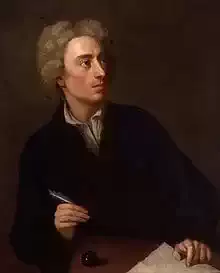
Alexander Pope
Epistles to Several Persons: Epistle IV, To Richard Boyle,
Epistles to Several Persons: Epistle IV, To Richard Boyle,
Est brevitate opus, ut currat sententia, neu se
Impediat verbis lassas onerantibus aures:
Et sermone opus est modo tristi, saepe jocoso,
Defendente vicem modo Rhetoris atque Poetae,
Interdum urbani, parcentis viribus, atque
Extenuantis eas consulto.
(Horace, Satires, I, x, 17-22)
'Tis strange, the miser should his cares employ
To gain those riches he can ne'er enjoy:
Is it less strange, the prodigal should waste
His wealth to purchase what he ne'er can taste?
Not for himself he sees, or hears, or eats;
Artists must choose his pictures, music, meats:
He buys for Topham, drawings and designs,
For Pembroke, statues, dirty gods, and coins;
Rare monkish manuscripts for Hearne alone,
And books for Mead, and butterflies for Sloane.
Think we all these are for himself? no more
Than his fine wife, alas! or finer whore.
For what his Virro painted, built, and planted?
Only to show, how many tastes he wanted.
What brought Sir Visto's ill got wealth to waste?
Some daemon whisper'd, "Visto! have a taste."
Heav'n visits with a taste the wealthy fool,
And needs no rod but Ripley with a rule.
See! sportive fate, to punish awkward pride,
Bids Bubo build, and sends him such a guide:
A standing sermon, at each year's expense,
That never coxcomb reach'd magnificence!
You show us, Rome was glorious, not profuse,
And pompous buildings once were things of use.
Yet shall (my Lord) your just, your noble rules
Fill half the land with imitating fools;
Who random drawings from your sheets shall take,
And of one beauty many blunders make;
Load some vain church with old theatric state,
Turn arcs of triumph to a garden gate;
Reverse your ornaments, and hang them all
On some patch'd dog-hole ek'd with ends of wall;
Then clap four slices of pilaster on't,
That lac'd with bits of rustic, makes a front.
Or call the winds through long arcades to roar,
Proud to catch cold at a Venetian door;
Conscious they act a true Palladian part,
And, if they starve, they starve by rules of art.
Oft have you hinted to your brother peer,
A certain truth, which many buy too dear:
Something there is more needful than expense,
And something previous ev'n to taste--'tis sense:
Good sense, which only is the gift of Heav'n,
And though no science, fairly worth the sev'n:
A light, which in yourself you must perceive;
Jones and Le Notre have it not to give.
To build, to plant, whatever you intend,
To rear the column, or the arch to bend,
To swell the terrace, or to sink the grot;
In all, let Nature never be forgot.
But treat the goddess like a modest fair,
Nor overdress, nor leave her wholly bare;
Let not each beauty ev'rywhere be spied,
Where half the skill is decently to hide.
He gains all points, who pleasingly confounds,
Surprises, varies, and conceals the bounds.
Consult the genius of the place in all;
That tells the waters or to rise, or fall;
Or helps th' ambitious hill the heav'ns to scale,
Or scoops in circling theatres the vale;
Calls in the country, catches opening glades,
Joins willing woods, and varies shades from shades,
Now breaks, or now directs, th' intending lines;
Paints as you plant, and, as you work, designs.
Still follow sense, of ev'ry art the soul,
Parts answ'ring parts shall slide into a whole,
Spontaneous beauties all around advance,
Start ev'n from difficulty, strike from chance;
Nature shall join you; time shall make it grow
A work to wonder at--perhaps a Stowe.
Without it, proud Versailles! thy glory falls;
And Nero's terraces desert their walls:
The vast parterres a thousand hands shall make,
Lo! Cobham comes, and floats them with a lake:
Or cut wide views through mountains to the plain,
You'll wish your hill or shelter'd seat again.
Ev'n in an ornament its place remark,
Nor in an hermitage set Dr. Clarke.
Behold Villario's ten years' toil complete;
His quincunx darkens, his espaliers meet;
The wood supports the plain, the parts unite,
And strength of shade contends with strength of light;
A waving glow his bloomy beds display,
Blushing in bright diversities of day,
With silver-quiv'ring rills meander'd o'er-Enjoy
them, you! Villario can no more;
Tir'd of the scene parterres and fountains yield,
He finds at last he better likes a field.
Through his young woods how pleas'd Sabinus stray'd,
Or sat delighted in the thick'ning shade,
With annual joy the redd'ning shoots to greet,
Or see the stretching branches long to meet!
His son's fine taste an op'ner vista loves,
Foe to the dryads of his father's groves;
One boundless green, or flourish'd carpet views,
With all the mournful family of yews;
The thriving plants ignoble broomsticks made,
Now sweep those alleys they were born to shade.
At Timon's villa let us pass a day,
Where all cry out, "What sums are thrown away!"
So proud, so grand of that stupendous air,
Soft and agreeable come never there.
Greatness, with Timon, dwells in such a draught
As brings all Brobdingnag before your thought.
To compass this, his building is a town,
His pond an ocean, his parterre a down:
Who but must laugh, the master when he sees,
A puny insect, shiv'ring at a breeze!
Lo, what huge heaps of littleness around!
The whole, a labour'd quarry above ground.
Two cupids squirt before: a lake behind
Improves the keenness of the Northern wind.
His gardens next your admiration call,
On ev'ry side you look, behold the wall!
No pleasing intricacies intervene,
No artful wildness to perplex the scene;
Grove nods at grove, each alley has a brother,
And half the platform just reflects the other.
The suff'ring eye inverted Nature sees,
Trees cut to statues, statues thick as trees;
With here a fountain, never to be play'd;
And there a summerhouse, that knows no shade;
Here Amphitrite sails through myrtle bow'rs;
There gladiators fight, or die in flow'rs;
Unwater'd see the drooping sea horse mourn,
And swallows roost in Nilus' dusty urn.
My Lord advances with majestic mien,
Smit with the mighty pleasure, to be seen:
But soft--by regular approach--not yet-First
through the length of yon hot terrace sweat;
And when up ten steep slopes you've dragg'd your thighs,
Just at his study door he'll bless your eyes.
His study! with what authors is it stor'd?
In books, not authors, curious is my Lord;
To all their dated backs he turns you round:
These Aldus printed, those Du Sueil has bound.
Lo, some are vellum, and the rest as good
For all his Lordship knows, but they are wood.
For Locke or Milton 'tis in vain to look,
These shelves admit not any modern book.
And now the chapel's silver bell you hear,
That summons you to all the pride of pray'r:
Light quirks of music, broken and uneven,
Make the soul dance upon a jig to heaven.
On painted ceilings you devoutly stare,
Where sprawl the saints of Verrio or Laguerre,
On gilded clouds in fair expansion lie,
And bring all paradise before your eye.
To rest, the cushion and soft dean invite,
Who never mentions Hell to ears polite.
But hark! the chiming clocks to dinner call;
A hundred footsteps scrape the marble hall:
The rich buffet well-colour'd serpents grace,
And gaping Tritons spew to wash your face.
Is this a dinner? this a genial room?
No, 'tis a temple, and a hecatomb.
A solemn sacrifice, perform'd in state,
You drink by measure, and to minutes eat.
So quick retires each flying course, you'd swear
Sancho's dread doctor and his wand were there.
Between each act the trembling salvers ring,
From soup to sweet wine, and God bless the King.
In plenty starving, tantaliz'd in state,
And complaisantly help'd to all I hate,
Treated, caress'd, and tir'd, I take my leave,
Sick of his civil pride from morn to eve;
I curse such lavish cost, and little skill,
And swear no day was ever pass'd so ill.
Yet hence the poor are cloth'd, the hungry fed;
Health to himself, and to his infants bread
The lab'rer bears: What his hard heart denies,
His charitable vanity supplies.
Another age shall see the golden ear
Embrown the slope, and nod on the parterre,
Deep harvests bury all his pride has plann'd,
And laughing Ceres reassume the land.
Who then shall grace, or who improve the soil?
Who plants like Bathurst, or who builds like Boyle.
'Tis use alone that sanctifies expense,
And splendour borrows all her rays from sense.
His father's acres who enjoys in peace,
Or makes his neighbours glad, if he increase:
Whose cheerful tenants bless their yearly toil,
Yet to their Lord owe more than to the soil;
Whose ample lawns are not asham'd to feed
The milky heifer and deserving steed;
Whose rising forests, not for pride or show,
But future buildings, future navies, grow:
Let his plantations stretch from down to down,
First shade a country, and then raise a town.
You too proceed! make falling arts your care,
Erect new wonders, and the old repair;
Jones and Palladio to themselves restore,
And be whate'er Vitruvius was before:
Till kings call forth th' ideas of your mind,
Proud to accomplish what such hands design'd,
Bid harbours open, public ways extend,
Bid temples, worthier of the God, ascend;
Bid the broad arch the dang'rous flood contain,
The mole projected break the roaring main;
Back to his bounds their subject sea command,
And roll obedient rivers through the land;
These honours, peace to happy Britain brings,
These are imperial works, and worthy kings.
Est brevitate opus, ut currat sententia, neu se
Impediat verbis lassas onerantibus aures:
Et sermone opus est modo tristi, saepe jocoso,
Defendente vicem modo Rhetoris atque Poetae,
Interdum urbani, parcentis viribus, atque
Extenuantis eas consulto.
(Horace, Satires, I, x, 17-22)
'Tis strange, the miser should his cares employ
To gain those riches he can ne'er enjoy:
Is it less strange, the prodigal should waste
His wealth to purchase what he ne'er can taste?
Not for himself he sees, or hears, or eats;
Artists must choose his pictures, music, meats:
He buys for Topham, drawings and designs,
For Pembroke, statues, dirty gods, and coins;
Rare monkish manuscripts for Hearne alone,
And books for Mead, and butterflies for Sloane.
Think we all these are for himself? no more
Than his fine wife, alas! or finer whore.
For what his Virro painted, built, and planted?
Only to show, how many tastes he wanted.
What brought Sir Visto's ill got wealth to waste?
Some daemon whisper'd, "Visto! have a taste."
Heav'n visits with a taste the wealthy fool,
And needs no rod but Ripley with a rule.
See! sportive fate, to punish awkward pride,
Bids Bubo build, and sends him such a guide:
A standing sermon, at each year's expense,
That never coxcomb reach'd magnificence!
You show us, Rome was glorious, not profuse,
And pompous buildings once were things of use.
Yet shall (my Lord) your just, your noble rules
Fill half the land with imitating fools;
Who random drawings from your sheets shall take,
And of one beauty many blunders make;
Load some vain church with old theatric state,
Turn arcs of triumph to a garden gate;
Reverse your ornaments, and hang them all
On some patch'd dog-hole ek'd with ends of wall;
Then clap four slices of pilaster on't,
That lac'd with bits of rustic, makes a front.
Or call the winds through long arcades to roar,
Proud to catch cold at a Venetian door;
Conscious they act a true Palladian part,
And, if they starve, they starve by rules of art.
Oft have you hinted to your brother peer,
A certain truth, which many buy too dear:
Something there is more needful than expense,
And something previous ev'n to taste--'tis sense:
Good sense, which only is the gift of Heav'n,
And though no science, fairly worth the sev'n:
A light, which in yourself you must perceive;
Jones and Le Notre have it not to give.
To build, to plant, whatever you intend,
To rear the column, or the arch to bend,
To swell the terrace, or to sink the grot;
In all, let Nature never be forgot.
But treat the goddess like a modest fair,
Nor overdress, nor leave her wholly bare;
Let not each beauty ev'rywhere be spied,
Where half the skill is decently to hide.
He gains all points, who pleasingly confounds,
Surprises, varies, and conceals the bounds.
Consult the genius of the place in all;
That tells the waters or to rise, or fall;
Or helps th' ambitious hill the heav'ns to scale,
Or scoops in circling theatres the vale;
Calls in the country, catches opening glades,
Joins willing woods, and varies shades from shades,
Now breaks, or now directs, th' intending lines;
Paints as you plant, and, as you work, designs.
Still follow sense, of ev'ry art the soul,
Parts answ'ring parts shall slide into a whole,
Spontaneous beauties all around advance,
Start ev'n from difficulty, strike from chance;
Nature shall join you; time shall make it grow
A work to wonder at--perhaps a Stowe.
Without it, proud Versailles! thy glory falls;
And Nero's terraces desert their walls:
The vast parterres a thousand hands shall make,
Lo! Cobham comes, and floats them with a lake:
Or cut wide views through mountains to the plain,
You'll wish your hill or shelter'd seat again.
Ev'n in an ornament its place remark,
Nor in an hermitage set Dr. Clarke.
Behold Villario's ten years' toil complete;
His quincunx darkens, his espaliers meet;
The wood supports the plain, the parts unite,
And strength of shade contends with strength of light;
A waving glow his bloomy beds display,
Blushing in bright diversities of day,
With silver-quiv'ring rills meander'd o'er-Enjoy
them, you! Villario can no more;
Tir'd of the scene parterres and fountains yield,
He finds at last he better likes a field.
Through his young woods how pleas'd Sabinus stray'd,
Or sat delighted in the thick'ning shade,
With annual joy the redd'ning shoots to greet,
Or see the stretching branches long to meet!
His son's fine taste an op'ner vista loves,
Foe to the dryads of his father's groves;
One boundless green, or flourish'd carpet views,
With all the mournful family of yews;
The thriving plants ignoble broomsticks made,
Now sweep those alleys they were born to shade.
At Timon's villa let us pass a day,
Where all cry out, "What sums are thrown away!"
So proud, so grand of that stupendous air,
Soft and agreeable come never there.
Greatness, with Timon, dwells in such a draught
As brings all Brobdingnag before your thought.
To compass this, his building is a town,
His pond an ocean, his parterre a down:
Who but must laugh, the master when he sees,
A puny insect, shiv'ring at a breeze!
Lo, what huge heaps of littleness around!
The whole, a labour'd quarry above ground.
Two cupids squirt before: a lake behind
Improves the keenness of the Northern wind.
His gardens next your admiration call,
On ev'ry side you look, behold the wall!
No pleasing intricacies intervene,
No artful wildness to perplex the scene;
Grove nods at grove, each alley has a brother,
And half the platform just reflects the other.
The suff'ring eye inverted Nature sees,
Trees cut to statues, statues thick as trees;
With here a fountain, never to be play'd;
And there a summerhouse, that knows no shade;
Here Amphitrite sails through myrtle bow'rs;
There gladiators fight, or die in flow'rs;
Unwater'd see the drooping sea horse mourn,
And swallows roost in Nilus' dusty urn.
My Lord advances with majestic mien,
Smit with the mighty pleasure, to be seen:
But soft--by regular approach--not yet-First
through the length of yon hot terrace sweat;
And when up ten steep slopes you've dragg'd your thighs,
Just at his study door he'll bless your eyes.
His study! with what authors is it stor'd?
In books, not authors, curious is my Lord;
To all their dated backs he turns you round:
These Aldus printed, those Du Sueil has bound.
Lo, some are vellum, and the rest as good
For all his Lordship knows, but they are wood.
For Locke or Milton 'tis in vain to look,
These shelves admit not any modern book.
And now the chapel's silver bell you hear,
That summons you to all the pride of pray'r:
Light quirks of music, broken and uneven,
Make the soul dance upon a jig to heaven.
On painted ceilings you devoutly stare,
Where sprawl the saints of Verrio or Laguerre,
On gilded clouds in fair expansion lie,
And bring all paradise before your eye.
To rest, the cushion and soft dean invite,
Who never mentions Hell to ears polite.
But hark! the chiming clocks to dinner call;
A hundred footsteps scrape the marble hall:
The rich buffet well-colour'd serpents grace,
And gaping Tritons spew to wash your face.
Is this a dinner? this a genial room?
No, 'tis a temple, and a hecatomb.
A solemn sacrifice, perform'd in state,
You drink by measure, and to minutes eat.
So quick retires each flying course, you'd swear
Sancho's dread doctor and his wand were there.
Between each act the trembling salvers ring,
From soup to sweet wine, and God bless the King.
In plenty starving, tantaliz'd in state,
And complaisantly help'd to all I hate,
Treated, caress'd, and tir'd, I take my leave,
Sick of his civil pride from morn to eve;
I curse such lavish cost, and little skill,
And swear no day was ever pass'd so ill.
Yet hence the poor are cloth'd, the hungry fed;
Health to himself, and to his infants bread
The lab'rer bears: What his hard heart denies,
His charitable vanity supplies.
Another age shall see the golden ear
Embrown the slope, and nod on the parterre,
Deep harvests bury all his pride has plann'd,
And laughing Ceres reassume the land.
Who then shall grace, or who improve the soil?
Who plants like Bathurst, or who builds like Boyle.
'Tis use alone that sanctifies expense,
And splendour borrows all her rays from sense.
His father's acres who enjoys in peace,
Or makes his neighbours glad, if he increase:
Whose cheerful tenants bless their yearly toil,
Yet to their Lord owe more than to the soil;
Whose ample lawns are not asham'd to feed
The milky heifer and deserving steed;
Whose rising forests, not for pride or show,
But future buildings, future navies, grow:
Let his plantations stretch from down to down,
First shade a country, and then raise a town.
You too proceed! make falling arts your care,
Erect new wonders, and the old repair;
Jones and Palladio to themselves restore,
And be whate'er Vitruvius was before:
Till kings call forth th' ideas of your mind,
Proud to accomplish what such hands design'd,
Bid harbours open, public ways extend,
Bid temples, worthier of the God, ascend;
Bid the broad arch the dang'rous flood contain,
The mole projected break the roaring main;
Back to his bounds their subject sea command,
And roll obedient rivers through the land;
These honours, peace to happy Britain brings,
These are imperial works, and worthy kings.
310
Previous
Page 13