

Poems in this theme
Ethics and Morality
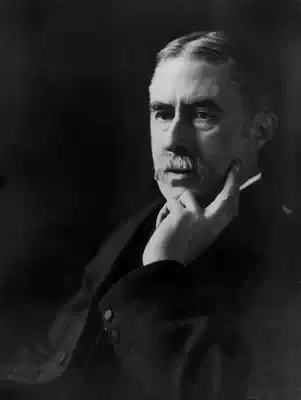
Alfred Edward Housman
On the Idle Hill of Summer
On the Idle Hill of Summer
On the idle hill of summer,
Sleepy with the flow of streams,
Far I hear the steady drummer
Drumming like a noise in dreams.
Far and near and low and louder
On the roads of earth go by,
Dear to friends and food for powder,
Soldiers marching, all to die.
East and west on fields forgotten
Bleach the bones of comrades slain,
Lovely lads and dead and rotten;
None that go return again.
Far the calling bugles hollo,
High the screaming fife replies,
Gay the files of scarlet follow:
Woman bore me, I will rise.
On the idle hill of summer,
Sleepy with the flow of streams,
Far I hear the steady drummer
Drumming like a noise in dreams.
Far and near and low and louder
On the roads of earth go by,
Dear to friends and food for powder,
Soldiers marching, all to die.
East and west on fields forgotten
Bleach the bones of comrades slain,
Lovely lads and dead and rotten;
None that go return again.
Far the calling bugles hollo,
High the screaming fife replies,
Gay the files of scarlet follow:
Woman bore me, I will rise.
435
Alfred Edward Housman
Oh Who Is That Young Sinner
Oh Who Is That Young Sinner
Oh who is that young sinner with the handcuffs on his wrists?
And what has he been after that they groan and shake their fists?
And wherefore is he wearing such a conscience-stricken air?
Oh they're taking him to prison for the color of his hair.
'Tis a shame to human nature, such a head of hair as his;
In the good old time 'twas hanging for the color that it is;
Though hanging isn't bad enough and flaying would be fair
For the nameless and abominable color of his hair.
Oh a deal of pains he's taken and a pretty price he's paid
To hide his poll or dye it of a mentionable shade;
But they've pulled the beggar's hat off for the world to see and stare,
And they're taking him to justice for the color of his hair.
Now 'tis oakum for his fingers and the treadmill for his feet,
And the quarry-gang on Portland in the cold and in the heat,
And between his spells of labor in the time he has to spare
He can curse the God that made him for the color of his hair.
Oh who is that young sinner with the handcuffs on his wrists?
And what has he been after that they groan and shake their fists?
And wherefore is he wearing such a conscience-stricken air?
Oh they're taking him to prison for the color of his hair.
'Tis a shame to human nature, such a head of hair as his;
In the good old time 'twas hanging for the color that it is;
Though hanging isn't bad enough and flaying would be fair
For the nameless and abominable color of his hair.
Oh a deal of pains he's taken and a pretty price he's paid
To hide his poll or dye it of a mentionable shade;
But they've pulled the beggar's hat off for the world to see and stare,
And they're taking him to justice for the color of his hair.
Now 'tis oakum for his fingers and the treadmill for his feet,
And the quarry-gang on Portland in the cold and in the heat,
And between his spells of labor in the time he has to spare
He can curse the God that made him for the color of his hair.
458
Alfred Edward Housman
Farewell to Barn and Stack and Tree
Farewell to Barn and Stack and Tree
"Farewell to barn and stack and tree,
Farewell to Severn shore.
Terence, look your last at me,
For I come home no more.
"The sun burns on the half-mown hill,
By now the blood is dried;
And Maurice amongst the hay lies still
And my knife is in his side.
"My mother thinks us long away;
'Tis time the field were mown.
She had two sons at rising day,
To-night she'll be alone.
"And here's a bloody hand to shake,
And oh, man, here's good-bye;
We'll sweat no more on scythe and rake,
My bloody hands and I.
"I wish you strength to bring you pride,
And a love to keep you clean,
And I wish you luck, come Lammastide,
At racing on the green.
"Long for me the rick will wait,
And long will wait the fold,
And long will stand the empty plate,
And dinner will be cold."
"Farewell to barn and stack and tree,
Farewell to Severn shore.
Terence, look your last at me,
For I come home no more.
"The sun burns on the half-mown hill,
By now the blood is dried;
And Maurice amongst the hay lies still
And my knife is in his side.
"My mother thinks us long away;
'Tis time the field were mown.
She had two sons at rising day,
To-night she'll be alone.
"And here's a bloody hand to shake,
And oh, man, here's good-bye;
We'll sweat no more on scythe and rake,
My bloody hands and I.
"I wish you strength to bring you pride,
And a love to keep you clean,
And I wish you luck, come Lammastide,
At racing on the green.
"Long for me the rick will wait,
And long will wait the fold,
And long will stand the empty plate,
And dinner will be cold."
755
Alfred Edward Housman
Epitaph On An Army of Mercenaries
Epitaph On An Army of Mercenaries
These, in the day when heaven was falling,
The hour when earth's foundations fled,
Followed their mercenary calling
And took their wages and are dead.
Their shoulders held the sky suspended;
They stood, and earth's foundations stay;
What God abandoned, these defended,
And saved the sum of things for pay.
These, in the day when heaven was falling,
The hour when earth's foundations fled,
Followed their mercenary calling
And took their wages and are dead.
Their shoulders held the sky suspended;
They stood, and earth's foundations stay;
What God abandoned, these defended,
And saved the sum of things for pay.
375
Alfred Edward Housman
From Clee to heaven the beacon burns,
From Clee to heaven the beacon burns,
The shires have seen it plain,
From north and south the sign returns
And beacons burn again.
Look left, look right, the hills are bright,
The dales are light between,
Because 'tis fifty years to-night
That God has saved the Queen.
Now, when the flame they watch not towers
About the soil they trod,
Lads, we'll remember friends of ours
Who shared the work with God.
To skies that knit their heartstrings right,
To fields that bred them brave,
The saviours come not home to-night:
Themselves they could not save.
It dawns in Asia, tombstones show
And Shropshire names are read;
And the Nile spills his overflow
Beside the Severn's dead.
We pledge in peace by farm and town
The Queen they served in war,
And fire the beacons up and down
The land they perished for.
"God save the Queen" we living sing,
From height to height 'tis heard;
And with the rest your voices ring,
Lads of the Fifty-third.
Oh, God will save her, fear you not:
Be you the men you've been,
Get you the sons your fathers got,
And God will save the Queen.
The shires have seen it plain,
From north and south the sign returns
And beacons burn again.
Look left, look right, the hills are bright,
The dales are light between,
Because 'tis fifty years to-night
That God has saved the Queen.
Now, when the flame they watch not towers
About the soil they trod,
Lads, we'll remember friends of ours
Who shared the work with God.
To skies that knit their heartstrings right,
To fields that bred them brave,
The saviours come not home to-night:
Themselves they could not save.
It dawns in Asia, tombstones show
And Shropshire names are read;
And the Nile spills his overflow
Beside the Severn's dead.
We pledge in peace by farm and town
The Queen they served in war,
And fire the beacons up and down
The land they perished for.
"God save the Queen" we living sing,
From height to height 'tis heard;
And with the rest your voices ring,
Lads of the Fifty-third.
Oh, God will save her, fear you not:
Be you the men you've been,
Get you the sons your fathers got,
And God will save the Queen.
455
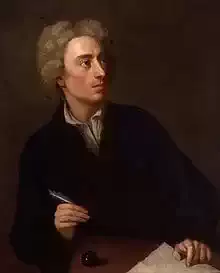
Alexander Pope
Verses Left by Mr. Pope
Verses Left by Mr. Pope
With no poetic ardour fir'd
I press the bed where Wilmot lay;
That here he lov'd, or here expir'd,
Begets no numbers grave or gay.
Beneath thy roof, Argyle, are bred
Such thoughts as prompt the brave to lie
Stretch'd out in honour's nobler bed,
Beneath a nobler roof - the sky.
Such flames as high in patriots burn,
Yet stoop to bless a child or wife;
And such as wicked kings may mourn,
When freedom is more dear than life.
With no poetic ardour fir'd
I press the bed where Wilmot lay;
That here he lov'd, or here expir'd,
Begets no numbers grave or gay.
Beneath thy roof, Argyle, are bred
Such thoughts as prompt the brave to lie
Stretch'd out in honour's nobler bed,
Beneath a nobler roof - the sky.
Such flames as high in patriots burn,
Yet stoop to bless a child or wife;
And such as wicked kings may mourn,
When freedom is more dear than life.
350
Alexander Pope
Universal Prayer
Universal Prayer
Father of all! In every age,
In ev'ry clime ador'd,
By saint, by savage, and by sage,
Jehovah, Jove, or Lord!
Thou Great First Cause, least understood,
Who all my sense confin'd
To know but this, that Thou art good,
And that myself am blind:
Yet gave me, in this dark estate,
To see the good from ill;
And, binding Nature fast in Fate,
Left free the human Will.
What Conscience dictates to be done,
Or warns me not to do;
This teach me more than Hell to shun,
That more than Heav'n pursue.
What blessings thy free bounty gives
Let me not cast away;
For God is paid when man receives;
T' enjoy is to obey.
Yet not to earth's contracted span
Thy goodness let me bound,
Or think thee Lord alone of man,
When thousand worlds are round.
Let not this weak, unknowing hand
Presume thy bolts to throw,
And teach damnation round the land
On each I judge thy foe.
If I am right, thy grace impart,
Still in the right to stay;
If I am wrong, O teach my heart
To find that better way.
Save me alike from foolish Pride
Or impious Discontent,
At aught thy wisdom has denied,
Or aught that goodness lent.
Teach me to feel another's woe,
To right the fault I see:
That mercy I to others show,
That mercy show to me.
Mean tho' I am, not wholly so,
Since quicken'd by thy breath;
O lead me whereso'er I go,
Thro' this day's life or death!
This day be bread and peace my lot:
All else beneath the sun
Though know'st if best bestow'd or not,
And let Thy will be done.
To Thee, whose temple is of Space,
Whose altar earth, sea, skies,
One chorus let all Beings raise!
All Nature's incense rise!
Father of all! In every age,
In ev'ry clime ador'd,
By saint, by savage, and by sage,
Jehovah, Jove, or Lord!
Thou Great First Cause, least understood,
Who all my sense confin'd
To know but this, that Thou art good,
And that myself am blind:
Yet gave me, in this dark estate,
To see the good from ill;
And, binding Nature fast in Fate,
Left free the human Will.
What Conscience dictates to be done,
Or warns me not to do;
This teach me more than Hell to shun,
That more than Heav'n pursue.
What blessings thy free bounty gives
Let me not cast away;
For God is paid when man receives;
T' enjoy is to obey.
Yet not to earth's contracted span
Thy goodness let me bound,
Or think thee Lord alone of man,
When thousand worlds are round.
Let not this weak, unknowing hand
Presume thy bolts to throw,
And teach damnation round the land
On each I judge thy foe.
If I am right, thy grace impart,
Still in the right to stay;
If I am wrong, O teach my heart
To find that better way.
Save me alike from foolish Pride
Or impious Discontent,
At aught thy wisdom has denied,
Or aught that goodness lent.
Teach me to feel another's woe,
To right the fault I see:
That mercy I to others show,
That mercy show to me.
Mean tho' I am, not wholly so,
Since quicken'd by thy breath;
O lead me whereso'er I go,
Thro' this day's life or death!
This day be bread and peace my lot:
All else beneath the sun
Though know'st if best bestow'd or not,
And let Thy will be done.
To Thee, whose temple is of Space,
Whose altar earth, sea, skies,
One chorus let all Beings raise!
All Nature's incense rise!
423
Alexander Pope
To Lady Mary Wortley Montagu
To Lady Mary Wortley Montagu
I.
In beauty, or wit,
No mortal as yet
To question your empire has dared:
But men of discerning
Have thought that in learning
To yield to a lady was hard.
II.
Impertinent schools,
With musty dull rules,
Have reading to females denied;
So Papists refuse
The Bible to use,
Lest flocks should be wise as their guide.
III.
'Twas a woman at first
(Indeed she was curst)
In knowledge that tasted delight,
And sages agree
The laws should decree
To the first possessor the right.
IV.
Then bravely, fair dame,
Resume the old claim,
Which to your whole sex does belong;
And let men receive,
From a second bright Eve,
The knowledge of right and of wrong.
V.
But if the first Eve
Hard doom did receive,
When only one apple had she,
What a punishment new
Shall be found out for you,
Who tasting, have robb'd the whole tree?
I.
In beauty, or wit,
No mortal as yet
To question your empire has dared:
But men of discerning
Have thought that in learning
To yield to a lady was hard.
II.
Impertinent schools,
With musty dull rules,
Have reading to females denied;
So Papists refuse
The Bible to use,
Lest flocks should be wise as their guide.
III.
'Twas a woman at first
(Indeed she was curst)
In knowledge that tasted delight,
And sages agree
The laws should decree
To the first possessor the right.
IV.
Then bravely, fair dame,
Resume the old claim,
Which to your whole sex does belong;
And let men receive,
From a second bright Eve,
The knowledge of right and of wrong.
V.
But if the first Eve
Hard doom did receive,
When only one apple had she,
What a punishment new
Shall be found out for you,
Who tasting, have robb'd the whole tree?
370
Alexander Pope
The Dunciad: Book II.
The Dunciad: Book II.
High on a gorgeous seat, that far out-shone
Henley's gilt tub, or Flecknoe's Irish throne,
Or that where on her Curlls the public pours,
All-bounteous, fragrant grains and golden showers,
Great Cibber sate: the proud Parnassian sneer,
The conscious simper, and the jealous leer,
Mix on his look: all eyes direct their rays
On him, and crowds turn coxcombs as they gaze.
His peers shine round him with reflected grace,
New edge their dulness, and new bronze their face.
So from the sun's broad beam, in shallow urns
Heaven's twinkling sparks draw light, and point their horns.
Not with more glee, by hands Pontific crown'd,
With scarlet hats wide-waving circled round,
Rome in her Capitol saw Querno sit,
Throned on seven hills, the Antichrist of wit.
And now the queen, to glad her sons, proclaims
By herald hawkers, high heroic games.
They summon all her race: an endless band
Pours forth, and leaves unpeopled half the land.
A motley mixture! in long wigs, in bags,
In silks, in crapes, in garters, and in rags,
From drawing-rooms, from colleges, from garrets,
On horse, on foot, in hacks, and gilded chariots:
All who true dunces in her cause appear'd,
And all who knew those dunces to reward.
Amid that area wide they took their stand,
Where the tall maypole once o'er-looked the Strand,
But now (so Anne and piety ordain)
A church collects the saints of Drury Lane.
With authors, stationers obey'd the call,
(The field of glory is a field for all).
Glory and gain the industrious tribe provoke;
And gentle Dulness ever loves a joke.
A poet's form she placed before their eyes,
And bade the nimblest racer seize the prize;
No meagre, muse-rid mope, adust and thin,
In a dun night-gown of his own loose skin;
But such a bulk as no twelve bards could raise,
Twelve starveling bards of these degenerate days.
All as a partridge plump, full-fed, and fair,
She form'd this image of well-bodied air;
With pert flat eyes she window'd well its head;
A brain of feathers, and a heart of lead;
And empty words she gave, and sounding strain,
But senseless, lifeless! idol void and vain!
Never was dash'd out, at one lucky hit,
A fool, so just a copy of a wit;
So like, that critics said, and courtiers swore,
A wit it was, and call'd the phantom More.
All gaze with ardour: some a poet's name,
Others a sword-knot and laced suit inflame.
But lofty Lintot in the circle rose:
'This prize is mine; who tempt it are my foes;
With me began this genius, and shall end.'
He spoke: and who with Lintot shall contend?
Fear held them mute. Alone, untaught to fear,
Stood dauntless Curll: 'Behold that rival here!
The race by vigour, not by vaunts is won;
So take the hindmost Hell.' He said, and run.
Swift as a bard the bailiff leaves behind,
He left huge Lintot, and out-stripp'd the wind.
As when a dab-chick waddles through the copse
On feet and wings, and flies, and wades, and hops:
So labouring on, with shoulders, hands, and head,
Wide as a wind-mill all his figure spread,
With arms expanded Bernard rows his state,
And left-legg'd Jacob seems to emulate.
Full in the middle way there stood a lake,
Which Curll's Corinna chanced that morn to make:
(Such was her wont, at early dawn to drop
Her evening cates before his neighbour's shop,)
Here fortuned Curll to slide; loud shout the band,
And Bernard! Bernard! rings through all the Strand.
Obscene with filth the miscreant lies bewray'd,
Fallen in the plash his wickedness had laid:
Then first (if poets aught of truth declare)
The caitiff vaticide conceived a prayer:
'Hear, Jove! whose name my bards and I adore,
As much at least as any god's, or more;
And him and his if more devotion warms,
Down with the Bible, up with the Pope's arms.'
A place there is, betwixt earth, air, and seas,
Where, from Ambrosia, Jove retires for ease.
There in his seat two spacious vents appear,
On this he sits, to that he leans his ear,
And hears the various vows of fond mankind;
Some beg an eastern, some a western wind:
All vain petitions, mounting to the sky,
With reams abundant this abode supply;
Amused he reads, and then returns the bills
Sign'd with that ichor which from gods distils.
In office here fair Cloacina stands,
And ministers to Jove with purest hands.
Forth from the heap she pick'd her votary's prayer,
And placed it next him, a distinction rare!
Oft had the goddess heard her servant's call,
From her black grottos near the Temple-wall,
Listening delighted to the jest unclean
Of link-boys vile, and watermen obscene;
Where as he fish'd her nether realms for wit,
She oft had favour'd him, and favours yet.
Renew'd by ordure's sympathetic force,
As oil'd with magic juices for the course,
Vigorous he rises; from the effluvia strong
Imbibes new life, and scours and stinks along;
Repasses Lintot, vindicates the race,
Nor heeds the brown dishonours of his face.
And now the victor stretch'd his eager hand
Where the tall Nothing stood, or seem'd to stand;
A shapeless shade, it melted from his sight,
Like forms in clouds, or visions of the night.
To seize his papers, Curll, was next thy care;
His papers light, fly diverse, toss'd in air;
Songs, sonnets, epigrams the winds uplift,
And whisk them back to Evans, Young, and Swift.
The embroider'd suit at least he deem'd his prey,
That suit an unpaid tailor snatch'd away.
No rag, no scrap, of all the beau, or wit,
That once so flutter'd, and that once so writ.
Heaven rings with laughter: of the laughter vain,
Dulness, good queen, repeats the jest again.
Three wicked imps, of her own Grub Street choir,
She deck'd like Congreve, Addison, and Prior;
Mears, Warner, Wilkins run: delusive thought!
Breval, Bond, Bezaleel, the varlets caught.
Curll stretches after Gay, but Gay is gone,
He grasps an empty Joseph for a John:
So Proteus, hunted in a nobler shape,
Became, when seized, a puppy, or an ape.
To him the goddess: 'Son! thy grief lay down,
And turn this whole illusion on the town:
As the sage dame, experienced in her trade,
By names of toasts retails each batter'd jade;
(Whence hapless Monsieur much complains at Paris
Of wrongs from duchesses and Lady Maries
Be thine, my stationer! this magic gift;
Cook shall be Prior, and Concanen, Swift:
So shall each hostile name become our own,
And we too boast our Garth and Addison.'
With that she gave him (piteous of his case,
Yet smiling at his rueful length of face)
A shaggy tapestry, worthy to be spread
On Codrus' old, or Dunton's modern bed;
Instructive work! whose wry-mouth'd portraiture
Display'd the fates her confessors endure.
Earless on high, stood unabash'd Defoe,
And Tutchin flagrant from the scourge below.
There Ridpath, Roper, cudgell'd might ye view,
The very worsted still look'd black and blue.
Himself among the storied chiefs he spies,
As, from the blanket, high in air he flies,
And oh! (he cried) what street, what lane but knows
Our purgings, pumpings, blanketings, and blows?
In every loom our labours shall be seen,
And the fresh vomit run for ever green!
See in the circle next, Eliza placed,
Two babes of love close clinging to her waist;
Fair as before her works she stands confess'd,
In flowers and pearls by bounteous Kirkall dress'd.
The goddess then: 'Who best can send on high
The salient spout, far-streaming to the sky;
His be yon Juno of majestic size,
With cow-like udders, and with ox-like eyes.
This China Jordan let the chief o'ercome
Replenish, not ingloriously, at home.'
Osborne and Curll accept the glorious strife,
(Though this his son dissuades, and that his wife
One on his manly confidence relies,
One on his vigour and superior size.
First Osborne lean'd against his letter'd post;
It rose, and labour'd to a curve at most.
So Jove's bright bow displays its watery round
(Sure sign, that no spectator shall be drown'd),
A second effort brought but new disgrace,
The wild meander wash'd the artist's face:
Thus the small jet, which hasty hands unlock,
Spurts in the gardener's eyes who turns the cock.
Not so from shameless Curll; impetuous spread
The stream, and smoking flourish'd o'er his head.
So (famed like thee for turbulence and horns)
Eridanus his humble fountain scorns;
Through half the heavens he pours the exalted urn;
His rapid waters in their passage burn.
Swift as it mounts, all follow with their eyes:
Still happy impudence obtains the prize.
Thou triumph'st, victor of the high-wrought day,
And the pleased dame, soft-smiling, lead'st away.
Osborne, through perfect modesty o'ercome,
Crown'd with the Jordan, walks contented home.
But now for authors nobler palms remain;
Room for my lord! three jockeys in his train;
Six huntsmen with a shout precede his chair:
He grins, and looks broad nonsense with a stare.
His honour's meaning Dulness thus express'd,
'He wins this patron, who can tickle best.'
He chinks his purse, and takes his seat of state:
With ready quills the dedicators wait;
Now at his head the dext'rous task commence,
And, instant, fancy feels the imputed sense;
Now gentle touches wanton o'er his face,
He struts Adonis, and affects grimace:
Rolli the feather to his ear conveys,
Then his nice taste directs our operas:
Bentley his mouth with classic flattery opes,
And the puff'd orator bursts out in tropes.
But Welsted most the poet's healing balm
Strives to extract from his soft, giving palm;
Unlucky Welsted! thy unfeeling master,
The more thou ticklest, gripes his fist the faster.
While thus each hand promotes the pleasing pain,
And quick sensations skip from vein to vein;
A youth unknown to Phoebus, in despair,
Puts his last refuge all in Heaven and prayer.
What force have pious vows! The Queen of Love
Her sister sends, her votaress, from above.
As taught by Venus, Paris learn'd the art
To touch Achilles' only tender part;
Secure, through her, the noble prize to carry,
He marches off, his Grace's secretary.
'Now turn to different sports (the goddess cries),
And learn, my sons, the wondrous power of noise.
To move, to raise, to ravish every heart,
With Shakspeare's nature, or with Jonson's art,
Let others aim: 'tis yours to shake the soul
With thunder rumbling from the mustard bowl,
With horns and trumpets now to madness swell,
Now sink in sorrows with a tolling bell;
Such happy arts attention can command,
When fancy flags, and sense is at a stand.
Improve we these. Three cat-calls be the bribe
Of him whose chattering shames the monkey tribe:
And his this drum whose hoarse heroic bass
Drowns the loud clarion of the braying ass.'
Now thousand tongues are heard in one loud din:
The monkey-mimics rush discordant in;
'Twas chattering, grinning, mouthing, jabbering all,
And noise and Norton, brangling and Breval,
Dennis and dissonance, and captious art,
And snip-snap short, and interruption smart,
And demonstration thin, and theses thick,
And major, minor, and conclusion quick.
'Hold' (cried the queen) 'a cat-call each shall win;
Equal your merits! equal is your din!
But that this well-disputed game may end,
Sound forth, nay brayers, and the welkin rend.'
As when the long-ear'd milky mothers wait
At some sick miser's triple-bolted gate,
For their defrauded, absent foals they make
A moan so loud, that all the guild awake;
Sore sighs Sir Gilbert, starting at the bray,
From dreams of millions, and three groats to pay.
So swells each windpipe; ass intones to ass,
Harmonic twang! of leather, horn, and brass;
Such as from labouring lungs the enthusiast blows,
High sound, attemper'd to the vocal nose,
Or such as bellow from the deep divine;
There, Webster! peal'd thy voice, and, Whitfield! thine.
But far o'er all, sonorous Blackmore's strain;
Walls, steeples, skies, bray back to him again.
In Tottenham fields, the brethren, with amaze,
Prick all their ears up, and forget to graze;
'Long Chancery Lane retentive rolls the sound,
And courts to courts return it round and round;
Thames wafts it thence to Rufus' roaring hall,
And Hungerford re-echoes bawl for bawl.
All hail him victor in both gifts of song,
Who sings so loudly, and who sings so long.
This labour past, by Bridewell all descend,
(As morning prayer, and flagellation end)
To where Fleet-ditch with disemboguing streams
Rolls the large tribute of dead dogs to Thames,
The king of dikes! than whom no sluice of mud
With deeper sable blots the silver flood.
'Here strip, my children! here at once leap in,
Here prove who best can dash through thick and thin,
And who the most in love of dirt excel,
Or dark dexterity of groping well.
Who flings most filth, and wide pollutes around
The stream, be his the weekly journals bound;
A pig of lead to him who dives the best;
A peck of coals a-piece shall glad the rest.'
In naked majesty Oldmixon stands,
And, Milo-like, surveys his arms and hands;
Then sighing, thus, 'And am I now threescore?
Ah why, ye gods! should two and two make four?'
He said, and climb'd a stranded lighter's height,
Shot to the black abyss, and plunged downright.
The senior's judgment all the crowd admire,
Who but to sink the deeper, rose the higher.
Next Smedley dived; slow circles dimpled o'er
The quaking mud, that closed, and oped no more.
All look, all sigh, and call on Smedley lost;
'Smedley!' in vain, resounds through all the coast.
Then Hill essay'd; scarce vanish'd out of sight,
He buoys up instant, and returns to light:
He bears no token of the sable streams,
And mounts far off among the swans of Thames.
True to the bottom, see Concanen creep,
A cold, long-winded, native of the deep:
If perseverance gain the diver's prize,
Not everlasting Blackmore this denies:
No noise, no stir, no motion can'st thou make,
The unconscious stream sleeps o'er thee like a lake.
Next plunged a feeble, but a desperate pack,
With each a sickly brother at his back:
Sons of a day! just buoyant on the flood,
Then number'd with the puppies in the mud.
Ask ye their names? I could as soon disclose
The names of these blind puppies as of those.
Fast by, like Niobe (her children gone)
Sits Mother Osborne, stupified to stone!
And monumental brass this record bears,
'These are,-ah no! these were, the gazetteers!'
Not so bold Arnall; with a weight of skull,
Furious he dives, precipitately dull.
Whirlpools and storms his circling arm invest,
With all the might of gravitation bless'd.
No crab more active in the dirty dance,
Downward to climb, and backward to advance.
He brings up half the bottom on his head,
And loudly claims the journals and the lead.
The plunging Prelate, and his ponderous Grace,
With holy envy gave one layman place.
When, lo! a burst of thunder shook the flood,
Slow rose a form, in majesty of mud:
Shaking the horrors of his sable brows,
And each ferocious feature grim with ooze.
Greater he looks, and more than mortal stares:
Then thus the wonders of the deep declares.
First he relates, how sinking to the chin,
Smit with his mien, the mud-nymphs suck'd him in:
How young Lutetia, softer than the down,
Nigrina black, and Merdamante brown,
Vied for his love in jetty bowers below,
As Hylas fair was ravish'd long ago.
Then sung, how, shown him by the nut-brown maids;
A branch of Styx here rises from the shades,
That, tinctured as it runs with Lethe's streams,
And wafting vapours from the land of dreams,
(As under seas Alpheus' secret sluice
Bears Pisa's offerings to his Arethuse,)
Pours into Thames: and hence the mingled wave
Intoxicates the pert, and lulls the grave:
Here brisker vapours o'er the Temple creep,
There, all from Paul's to Aldgate drink and sleep.
Thence to the banks where reverend bards repose,
They led him soft; each reverend bard arose;
And Milbourn chief, deputed by the rest,
Gave him the cassock, surcingle, and vest.
'Receive (he said) these robes which once were mine,
Dulness is sacred in a sound divine.'
He ceased, and spread the robe; the crowd confess
The reverend Flamen in his lengthen'd dress.
Around him wide a sable army stand,
A low-born, cell-bred, selfish, servile band,
Prompt or to guard or stab, to saint or damn,
Heaven's Swiss, who fight for any god, or man.
Through Lud's famed gates, along the well-known Fleet
Rolls the black troop, and overshades the street,
Till showers of sermons, characters, essays,
In circling fleeces whiten all the ways:
So clouds replenish'd from some bog below,
Mount in dark volumes, and descend in snow.
Here stopp'd the goddess; and in pomp proclaims
A gentler exercise to close the games.
'Ye critics! in whose heads, as equal scales,
I weigh what author's heaviness prevails,
Which most conduce to soothe the soul in slumbers,
My Henley's periods, or my Blackmore's numbers,
Attend the trial we propose to make:
If there be man, who o'er such works can wake,
Sleep's all-subduing charms who dares defy,
And boasts Ulysses' ear with Argus' eye;
To him we grant our amplest powers to sit
Judge of all present, past, and future wit;
To cavil, censure, dictate, right or wrong,
Full and eternal privilege of tongue.'
Three college Sophs, and three pert Templars came,
The same their talents, and their tastes the same;
Each prompt to query, answer, and debate,
And smit with love of poesy and prate.
The ponderous books two gentle readers bring;
The heroes sit, the vulgar form a ring.
The clamorous crowd is hush'd with mugs of mum,
Till all, tuned equal, send a general hum.
Then mount the clerks, and in one lazy tone
Through the long, heavy, painful page drawl on;
Soft creeping, words on words, the sense compose,
At every line they stretch, they yawn, they doze.
As to soft gales top-heavy pines bow low
Their heads, and lift them as they cease to blow,
Thus oft they rear, and oft the head decline,
As breathe, or pause, by fits, the airs divine;
And now to this side, now to that they nod,
As verse or prose infuse the drowsy god.
Thrice Budgell aim'd to speak, but thrice suppress'd
By potent Arthur, knock'd his chin and breast.
Toland and Tindal, prompt at priests to jeer,
Yet silent bow'd to Christ's no kingdom here.
Who sate the nearest, by the words o'ercome,
Slept first; the distant nodded to the hum.
Then down are roll'd the books; stretch'd o'er 'em lies
Each gentle clerk, and, muttering, seals his eyes,
As what a Dutchman plumps into the lakes,
One circle first, and then a second makes;
What Dulness dropp'd among her sons impress'd
Like motion from one circle to the rest;
So from the midmost the nutation spreads
Round and more round, o'er all the sea of heads.
At last Centlivre felt her voice to fail,
Motteux himself unfinished left his tale,
Boyer the state, and Law the stage gave o'er,
Morgan and Mandeville could prate no more;
Norton, from Daniel and Ostroea sprung,
Bless'd with his father's front and mother's tongue,
Hung silent down his never-blushing head;
And all was hush'd, as Polly's self lay dead.
Thus the soft gifts of sleep conclude the day,
And stretch'd on bulks, as usual, poets lay.
Why should I sing what bards the nightly Muse
Did slumbering visit, and convey to stews;
Who prouder march'd, with magistrates in state,
To some famed round-house, ever open gate!
How Henley lay inspired beside a sink,
And to mere mortals seem'd a priest in drink;
While others, timely, to the neighbouring Fleet
(Haunt of the Muses!) made their safe retreat?
High on a gorgeous seat, that far out-shone
Henley's gilt tub, or Flecknoe's Irish throne,
Or that where on her Curlls the public pours,
All-bounteous, fragrant grains and golden showers,
Great Cibber sate: the proud Parnassian sneer,
The conscious simper, and the jealous leer,
Mix on his look: all eyes direct their rays
On him, and crowds turn coxcombs as they gaze.
His peers shine round him with reflected grace,
New edge their dulness, and new bronze their face.
So from the sun's broad beam, in shallow urns
Heaven's twinkling sparks draw light, and point their horns.
Not with more glee, by hands Pontific crown'd,
With scarlet hats wide-waving circled round,
Rome in her Capitol saw Querno sit,
Throned on seven hills, the Antichrist of wit.
And now the queen, to glad her sons, proclaims
By herald hawkers, high heroic games.
They summon all her race: an endless band
Pours forth, and leaves unpeopled half the land.
A motley mixture! in long wigs, in bags,
In silks, in crapes, in garters, and in rags,
From drawing-rooms, from colleges, from garrets,
On horse, on foot, in hacks, and gilded chariots:
All who true dunces in her cause appear'd,
And all who knew those dunces to reward.
Amid that area wide they took their stand,
Where the tall maypole once o'er-looked the Strand,
But now (so Anne and piety ordain)
A church collects the saints of Drury Lane.
With authors, stationers obey'd the call,
(The field of glory is a field for all).
Glory and gain the industrious tribe provoke;
And gentle Dulness ever loves a joke.
A poet's form she placed before their eyes,
And bade the nimblest racer seize the prize;
No meagre, muse-rid mope, adust and thin,
In a dun night-gown of his own loose skin;
But such a bulk as no twelve bards could raise,
Twelve starveling bards of these degenerate days.
All as a partridge plump, full-fed, and fair,
She form'd this image of well-bodied air;
With pert flat eyes she window'd well its head;
A brain of feathers, and a heart of lead;
And empty words she gave, and sounding strain,
But senseless, lifeless! idol void and vain!
Never was dash'd out, at one lucky hit,
A fool, so just a copy of a wit;
So like, that critics said, and courtiers swore,
A wit it was, and call'd the phantom More.
All gaze with ardour: some a poet's name,
Others a sword-knot and laced suit inflame.
But lofty Lintot in the circle rose:
'This prize is mine; who tempt it are my foes;
With me began this genius, and shall end.'
He spoke: and who with Lintot shall contend?
Fear held them mute. Alone, untaught to fear,
Stood dauntless Curll: 'Behold that rival here!
The race by vigour, not by vaunts is won;
So take the hindmost Hell.' He said, and run.
Swift as a bard the bailiff leaves behind,
He left huge Lintot, and out-stripp'd the wind.
As when a dab-chick waddles through the copse
On feet and wings, and flies, and wades, and hops:
So labouring on, with shoulders, hands, and head,
Wide as a wind-mill all his figure spread,
With arms expanded Bernard rows his state,
And left-legg'd Jacob seems to emulate.
Full in the middle way there stood a lake,
Which Curll's Corinna chanced that morn to make:
(Such was her wont, at early dawn to drop
Her evening cates before his neighbour's shop,)
Here fortuned Curll to slide; loud shout the band,
And Bernard! Bernard! rings through all the Strand.
Obscene with filth the miscreant lies bewray'd,
Fallen in the plash his wickedness had laid:
Then first (if poets aught of truth declare)
The caitiff vaticide conceived a prayer:
'Hear, Jove! whose name my bards and I adore,
As much at least as any god's, or more;
And him and his if more devotion warms,
Down with the Bible, up with the Pope's arms.'
A place there is, betwixt earth, air, and seas,
Where, from Ambrosia, Jove retires for ease.
There in his seat two spacious vents appear,
On this he sits, to that he leans his ear,
And hears the various vows of fond mankind;
Some beg an eastern, some a western wind:
All vain petitions, mounting to the sky,
With reams abundant this abode supply;
Amused he reads, and then returns the bills
Sign'd with that ichor which from gods distils.
In office here fair Cloacina stands,
And ministers to Jove with purest hands.
Forth from the heap she pick'd her votary's prayer,
And placed it next him, a distinction rare!
Oft had the goddess heard her servant's call,
From her black grottos near the Temple-wall,
Listening delighted to the jest unclean
Of link-boys vile, and watermen obscene;
Where as he fish'd her nether realms for wit,
She oft had favour'd him, and favours yet.
Renew'd by ordure's sympathetic force,
As oil'd with magic juices for the course,
Vigorous he rises; from the effluvia strong
Imbibes new life, and scours and stinks along;
Repasses Lintot, vindicates the race,
Nor heeds the brown dishonours of his face.
And now the victor stretch'd his eager hand
Where the tall Nothing stood, or seem'd to stand;
A shapeless shade, it melted from his sight,
Like forms in clouds, or visions of the night.
To seize his papers, Curll, was next thy care;
His papers light, fly diverse, toss'd in air;
Songs, sonnets, epigrams the winds uplift,
And whisk them back to Evans, Young, and Swift.
The embroider'd suit at least he deem'd his prey,
That suit an unpaid tailor snatch'd away.
No rag, no scrap, of all the beau, or wit,
That once so flutter'd, and that once so writ.
Heaven rings with laughter: of the laughter vain,
Dulness, good queen, repeats the jest again.
Three wicked imps, of her own Grub Street choir,
She deck'd like Congreve, Addison, and Prior;
Mears, Warner, Wilkins run: delusive thought!
Breval, Bond, Bezaleel, the varlets caught.
Curll stretches after Gay, but Gay is gone,
He grasps an empty Joseph for a John:
So Proteus, hunted in a nobler shape,
Became, when seized, a puppy, or an ape.
To him the goddess: 'Son! thy grief lay down,
And turn this whole illusion on the town:
As the sage dame, experienced in her trade,
By names of toasts retails each batter'd jade;
(Whence hapless Monsieur much complains at Paris
Of wrongs from duchesses and Lady Maries
Be thine, my stationer! this magic gift;
Cook shall be Prior, and Concanen, Swift:
So shall each hostile name become our own,
And we too boast our Garth and Addison.'
With that she gave him (piteous of his case,
Yet smiling at his rueful length of face)
A shaggy tapestry, worthy to be spread
On Codrus' old, or Dunton's modern bed;
Instructive work! whose wry-mouth'd portraiture
Display'd the fates her confessors endure.
Earless on high, stood unabash'd Defoe,
And Tutchin flagrant from the scourge below.
There Ridpath, Roper, cudgell'd might ye view,
The very worsted still look'd black and blue.
Himself among the storied chiefs he spies,
As, from the blanket, high in air he flies,
And oh! (he cried) what street, what lane but knows
Our purgings, pumpings, blanketings, and blows?
In every loom our labours shall be seen,
And the fresh vomit run for ever green!
See in the circle next, Eliza placed,
Two babes of love close clinging to her waist;
Fair as before her works she stands confess'd,
In flowers and pearls by bounteous Kirkall dress'd.
The goddess then: 'Who best can send on high
The salient spout, far-streaming to the sky;
His be yon Juno of majestic size,
With cow-like udders, and with ox-like eyes.
This China Jordan let the chief o'ercome
Replenish, not ingloriously, at home.'
Osborne and Curll accept the glorious strife,
(Though this his son dissuades, and that his wife
One on his manly confidence relies,
One on his vigour and superior size.
First Osborne lean'd against his letter'd post;
It rose, and labour'd to a curve at most.
So Jove's bright bow displays its watery round
(Sure sign, that no spectator shall be drown'd),
A second effort brought but new disgrace,
The wild meander wash'd the artist's face:
Thus the small jet, which hasty hands unlock,
Spurts in the gardener's eyes who turns the cock.
Not so from shameless Curll; impetuous spread
The stream, and smoking flourish'd o'er his head.
So (famed like thee for turbulence and horns)
Eridanus his humble fountain scorns;
Through half the heavens he pours the exalted urn;
His rapid waters in their passage burn.
Swift as it mounts, all follow with their eyes:
Still happy impudence obtains the prize.
Thou triumph'st, victor of the high-wrought day,
And the pleased dame, soft-smiling, lead'st away.
Osborne, through perfect modesty o'ercome,
Crown'd with the Jordan, walks contented home.
But now for authors nobler palms remain;
Room for my lord! three jockeys in his train;
Six huntsmen with a shout precede his chair:
He grins, and looks broad nonsense with a stare.
His honour's meaning Dulness thus express'd,
'He wins this patron, who can tickle best.'
He chinks his purse, and takes his seat of state:
With ready quills the dedicators wait;
Now at his head the dext'rous task commence,
And, instant, fancy feels the imputed sense;
Now gentle touches wanton o'er his face,
He struts Adonis, and affects grimace:
Rolli the feather to his ear conveys,
Then his nice taste directs our operas:
Bentley his mouth with classic flattery opes,
And the puff'd orator bursts out in tropes.
But Welsted most the poet's healing balm
Strives to extract from his soft, giving palm;
Unlucky Welsted! thy unfeeling master,
The more thou ticklest, gripes his fist the faster.
While thus each hand promotes the pleasing pain,
And quick sensations skip from vein to vein;
A youth unknown to Phoebus, in despair,
Puts his last refuge all in Heaven and prayer.
What force have pious vows! The Queen of Love
Her sister sends, her votaress, from above.
As taught by Venus, Paris learn'd the art
To touch Achilles' only tender part;
Secure, through her, the noble prize to carry,
He marches off, his Grace's secretary.
'Now turn to different sports (the goddess cries),
And learn, my sons, the wondrous power of noise.
To move, to raise, to ravish every heart,
With Shakspeare's nature, or with Jonson's art,
Let others aim: 'tis yours to shake the soul
With thunder rumbling from the mustard bowl,
With horns and trumpets now to madness swell,
Now sink in sorrows with a tolling bell;
Such happy arts attention can command,
When fancy flags, and sense is at a stand.
Improve we these. Three cat-calls be the bribe
Of him whose chattering shames the monkey tribe:
And his this drum whose hoarse heroic bass
Drowns the loud clarion of the braying ass.'
Now thousand tongues are heard in one loud din:
The monkey-mimics rush discordant in;
'Twas chattering, grinning, mouthing, jabbering all,
And noise and Norton, brangling and Breval,
Dennis and dissonance, and captious art,
And snip-snap short, and interruption smart,
And demonstration thin, and theses thick,
And major, minor, and conclusion quick.
'Hold' (cried the queen) 'a cat-call each shall win;
Equal your merits! equal is your din!
But that this well-disputed game may end,
Sound forth, nay brayers, and the welkin rend.'
As when the long-ear'd milky mothers wait
At some sick miser's triple-bolted gate,
For their defrauded, absent foals they make
A moan so loud, that all the guild awake;
Sore sighs Sir Gilbert, starting at the bray,
From dreams of millions, and three groats to pay.
So swells each windpipe; ass intones to ass,
Harmonic twang! of leather, horn, and brass;
Such as from labouring lungs the enthusiast blows,
High sound, attemper'd to the vocal nose,
Or such as bellow from the deep divine;
There, Webster! peal'd thy voice, and, Whitfield! thine.
But far o'er all, sonorous Blackmore's strain;
Walls, steeples, skies, bray back to him again.
In Tottenham fields, the brethren, with amaze,
Prick all their ears up, and forget to graze;
'Long Chancery Lane retentive rolls the sound,
And courts to courts return it round and round;
Thames wafts it thence to Rufus' roaring hall,
And Hungerford re-echoes bawl for bawl.
All hail him victor in both gifts of song,
Who sings so loudly, and who sings so long.
This labour past, by Bridewell all descend,
(As morning prayer, and flagellation end)
To where Fleet-ditch with disemboguing streams
Rolls the large tribute of dead dogs to Thames,
The king of dikes! than whom no sluice of mud
With deeper sable blots the silver flood.
'Here strip, my children! here at once leap in,
Here prove who best can dash through thick and thin,
And who the most in love of dirt excel,
Or dark dexterity of groping well.
Who flings most filth, and wide pollutes around
The stream, be his the weekly journals bound;
A pig of lead to him who dives the best;
A peck of coals a-piece shall glad the rest.'
In naked majesty Oldmixon stands,
And, Milo-like, surveys his arms and hands;
Then sighing, thus, 'And am I now threescore?
Ah why, ye gods! should two and two make four?'
He said, and climb'd a stranded lighter's height,
Shot to the black abyss, and plunged downright.
The senior's judgment all the crowd admire,
Who but to sink the deeper, rose the higher.
Next Smedley dived; slow circles dimpled o'er
The quaking mud, that closed, and oped no more.
All look, all sigh, and call on Smedley lost;
'Smedley!' in vain, resounds through all the coast.
Then Hill essay'd; scarce vanish'd out of sight,
He buoys up instant, and returns to light:
He bears no token of the sable streams,
And mounts far off among the swans of Thames.
True to the bottom, see Concanen creep,
A cold, long-winded, native of the deep:
If perseverance gain the diver's prize,
Not everlasting Blackmore this denies:
No noise, no stir, no motion can'st thou make,
The unconscious stream sleeps o'er thee like a lake.
Next plunged a feeble, but a desperate pack,
With each a sickly brother at his back:
Sons of a day! just buoyant on the flood,
Then number'd with the puppies in the mud.
Ask ye their names? I could as soon disclose
The names of these blind puppies as of those.
Fast by, like Niobe (her children gone)
Sits Mother Osborne, stupified to stone!
And monumental brass this record bears,
'These are,-ah no! these were, the gazetteers!'
Not so bold Arnall; with a weight of skull,
Furious he dives, precipitately dull.
Whirlpools and storms his circling arm invest,
With all the might of gravitation bless'd.
No crab more active in the dirty dance,
Downward to climb, and backward to advance.
He brings up half the bottom on his head,
And loudly claims the journals and the lead.
The plunging Prelate, and his ponderous Grace,
With holy envy gave one layman place.
When, lo! a burst of thunder shook the flood,
Slow rose a form, in majesty of mud:
Shaking the horrors of his sable brows,
And each ferocious feature grim with ooze.
Greater he looks, and more than mortal stares:
Then thus the wonders of the deep declares.
First he relates, how sinking to the chin,
Smit with his mien, the mud-nymphs suck'd him in:
How young Lutetia, softer than the down,
Nigrina black, and Merdamante brown,
Vied for his love in jetty bowers below,
As Hylas fair was ravish'd long ago.
Then sung, how, shown him by the nut-brown maids;
A branch of Styx here rises from the shades,
That, tinctured as it runs with Lethe's streams,
And wafting vapours from the land of dreams,
(As under seas Alpheus' secret sluice
Bears Pisa's offerings to his Arethuse,)
Pours into Thames: and hence the mingled wave
Intoxicates the pert, and lulls the grave:
Here brisker vapours o'er the Temple creep,
There, all from Paul's to Aldgate drink and sleep.
Thence to the banks where reverend bards repose,
They led him soft; each reverend bard arose;
And Milbourn chief, deputed by the rest,
Gave him the cassock, surcingle, and vest.
'Receive (he said) these robes which once were mine,
Dulness is sacred in a sound divine.'
He ceased, and spread the robe; the crowd confess
The reverend Flamen in his lengthen'd dress.
Around him wide a sable army stand,
A low-born, cell-bred, selfish, servile band,
Prompt or to guard or stab, to saint or damn,
Heaven's Swiss, who fight for any god, or man.
Through Lud's famed gates, along the well-known Fleet
Rolls the black troop, and overshades the street,
Till showers of sermons, characters, essays,
In circling fleeces whiten all the ways:
So clouds replenish'd from some bog below,
Mount in dark volumes, and descend in snow.
Here stopp'd the goddess; and in pomp proclaims
A gentler exercise to close the games.
'Ye critics! in whose heads, as equal scales,
I weigh what author's heaviness prevails,
Which most conduce to soothe the soul in slumbers,
My Henley's periods, or my Blackmore's numbers,
Attend the trial we propose to make:
If there be man, who o'er such works can wake,
Sleep's all-subduing charms who dares defy,
And boasts Ulysses' ear with Argus' eye;
To him we grant our amplest powers to sit
Judge of all present, past, and future wit;
To cavil, censure, dictate, right or wrong,
Full and eternal privilege of tongue.'
Three college Sophs, and three pert Templars came,
The same their talents, and their tastes the same;
Each prompt to query, answer, and debate,
And smit with love of poesy and prate.
The ponderous books two gentle readers bring;
The heroes sit, the vulgar form a ring.
The clamorous crowd is hush'd with mugs of mum,
Till all, tuned equal, send a general hum.
Then mount the clerks, and in one lazy tone
Through the long, heavy, painful page drawl on;
Soft creeping, words on words, the sense compose,
At every line they stretch, they yawn, they doze.
As to soft gales top-heavy pines bow low
Their heads, and lift them as they cease to blow,
Thus oft they rear, and oft the head decline,
As breathe, or pause, by fits, the airs divine;
And now to this side, now to that they nod,
As verse or prose infuse the drowsy god.
Thrice Budgell aim'd to speak, but thrice suppress'd
By potent Arthur, knock'd his chin and breast.
Toland and Tindal, prompt at priests to jeer,
Yet silent bow'd to Christ's no kingdom here.
Who sate the nearest, by the words o'ercome,
Slept first; the distant nodded to the hum.
Then down are roll'd the books; stretch'd o'er 'em lies
Each gentle clerk, and, muttering, seals his eyes,
As what a Dutchman plumps into the lakes,
One circle first, and then a second makes;
What Dulness dropp'd among her sons impress'd
Like motion from one circle to the rest;
So from the midmost the nutation spreads
Round and more round, o'er all the sea of heads.
At last Centlivre felt her voice to fail,
Motteux himself unfinished left his tale,
Boyer the state, and Law the stage gave o'er,
Morgan and Mandeville could prate no more;
Norton, from Daniel and Ostroea sprung,
Bless'd with his father's front and mother's tongue,
Hung silent down his never-blushing head;
And all was hush'd, as Polly's self lay dead.
Thus the soft gifts of sleep conclude the day,
And stretch'd on bulks, as usual, poets lay.
Why should I sing what bards the nightly Muse
Did slumbering visit, and convey to stews;
Who prouder march'd, with magistrates in state,
To some famed round-house, ever open gate!
How Henley lay inspired beside a sink,
And to mere mortals seem'd a priest in drink;
While others, timely, to the neighbouring Fleet
(Haunt of the Muses!) made their safe retreat?
401
Alexander Pope
Prayer of St. Francis Xavier
Prayer of St. Francis Xavier
Thou art my God, sole object of my love;
Not for the hope of endless joys above;
Nor for the fear of endless pains below,
Which they who love thee not must undergo.
For me, and such as me, thou deign'st to bear
An ignominious cross, the nails, the spear:
A thorny crown transpierc'd thy sacred brow,
While bloody sweats from ev'ry member flow.
For me in tortures thou resignd'st thy breath,
Embrac'd me on the cross, and sav'd me by thy death.
And can these sufferings fail my heart to move?
What but thyself can now deserve my love?
Such as then was, and is, thy love to me,
Such is, and shall be still, my love to thee -
To thee, Redeemer! mercy's sacred spring!
My God, my Father, Maker, and my King!
Thou art my God, sole object of my love;
Not for the hope of endless joys above;
Nor for the fear of endless pains below,
Which they who love thee not must undergo.
For me, and such as me, thou deign'st to bear
An ignominious cross, the nails, the spear:
A thorny crown transpierc'd thy sacred brow,
While bloody sweats from ev'ry member flow.
For me in tortures thou resignd'st thy breath,
Embrac'd me on the cross, and sav'd me by thy death.
And can these sufferings fail my heart to move?
What but thyself can now deserve my love?
Such as then was, and is, thy love to me,
Such is, and shall be still, my love to thee -
To thee, Redeemer! mercy's sacred spring!
My God, my Father, Maker, and my King!
351
Alexander Pope
On Mr. Gay
On Mr. Gay
Of Manners gentle, of Affections mild;
In Wit, a Man; Simplicity, a Child:
With native Humour temp'ring virtuous Rage,
Form'd to delight at once and lash the age:
Above Temptation, in a low Estate, 5
And uncorrupted, ev'n among the Great:
A safe Companion, and an easy Friend,
Unblam'd thro' Life, lamented in thy End.
These are Thy Honours! not that here thy Bust
Is mix'd with Heroes, or with Kings thy dust; 10
But that the Worthy and the Good shall say,
Striking their pensive bosoms-
Here
lies GAY.
Of Manners gentle, of Affections mild;
In Wit, a Man; Simplicity, a Child:
With native Humour temp'ring virtuous Rage,
Form'd to delight at once and lash the age:
Above Temptation, in a low Estate, 5
And uncorrupted, ev'n among the Great:
A safe Companion, and an easy Friend,
Unblam'd thro' Life, lamented in thy End.
These are Thy Honours! not that here thy Bust
Is mix'd with Heroes, or with Kings thy dust; 10
But that the Worthy and the Good shall say,
Striking their pensive bosoms-
Here
lies GAY.
358
Alexander Pope
On Certain Ladies
On Certain Ladies
When other fair ones to the shades go down,
Still Chloe, Flavin, Delia, stay in town:
Those ghosts of beauty wandering here reside,
And haunt the places where their honour died.
When other fair ones to the shades go down,
Still Chloe, Flavin, Delia, stay in town:
Those ghosts of beauty wandering here reside,
And haunt the places where their honour died.
389
Alexander Pope
From an Essay on Man
From an Essay on Man
Heav'n from all creatures hides the book of fate,
All but the page prescrib'd, their present state:
From brutes what men, from men what spirits know:
Or who could suffer being here below?
The lamb thy riot dooms to bleed today,
Had he thy reason, would he skip and play?
Pleas'd to the last, he crops the flow'ry food,
And licks the hand just rais'd to shed his blood.
Oh blindness to the future! kindly giv'n,
That each may fill the circle mark'd by Heav'n:
Who sees with equal eye, as God of all,
A hero perish, or a sparrow fall,
Atoms or systems into ruin hurl'd,
And now a bubble burst, and now a world.
Hope humbly then; with trembling pinions soar;
Wait the great teacher Death; and God adore.
What future bliss, he gives not thee to know,
But gives that hope to be thy blessing now.
Hope springs eternal in the human breast:
Man never is, but always to be blest:
The soul, uneasy and confin'd from home,
Rests and expatiates in a life to come.
Lo! the poor Indian, whose untutor'd mind
Sees God in clouds, or hears him in the wind;
His soul, proud science never taught to stray
Far as the solar walk, or milky way;
Yet simple nature to his hope has giv'n,
Behind the cloud topp'd hill, an humbler heav'n;
Some safer world in depth of woods embrac'd,
Some happier island in the wat'ry waste,
Where slaves once more their native land behold,
No fiends torment, no Christians thirst for gold.
To be, contents his natural desire,
He asks no angel's wing, no seraph's fire;
But thinks, admitted to that equal sky.
Heav'n from all creatures hides the book of fate,
All but the page prescrib'd, their present state:
From brutes what men, from men what spirits know:
Or who could suffer being here below?
The lamb thy riot dooms to bleed today,
Had he thy reason, would he skip and play?
Pleas'd to the last, he crops the flow'ry food,
And licks the hand just rais'd to shed his blood.
Oh blindness to the future! kindly giv'n,
That each may fill the circle mark'd by Heav'n:
Who sees with equal eye, as God of all,
A hero perish, or a sparrow fall,
Atoms or systems into ruin hurl'd,
And now a bubble burst, and now a world.
Hope humbly then; with trembling pinions soar;
Wait the great teacher Death; and God adore.
What future bliss, he gives not thee to know,
But gives that hope to be thy blessing now.
Hope springs eternal in the human breast:
Man never is, but always to be blest:
The soul, uneasy and confin'd from home,
Rests and expatiates in a life to come.
Lo! the poor Indian, whose untutor'd mind
Sees God in clouds, or hears him in the wind;
His soul, proud science never taught to stray
Far as the solar walk, or milky way;
Yet simple nature to his hope has giv'n,
Behind the cloud topp'd hill, an humbler heav'n;
Some safer world in depth of woods embrac'd,
Some happier island in the wat'ry waste,
Where slaves once more their native land behold,
No fiends torment, no Christians thirst for gold.
To be, contents his natural desire,
He asks no angel's wing, no seraph's fire;
But thinks, admitted to that equal sky.
367
Alexander Pope
Epistles to Several Persons: Epistle IV, To Richard Boyle,
Epistles to Several Persons: Epistle IV, To Richard Boyle,
Est brevitate opus, ut currat sententia, neu se
Impediat verbis lassas onerantibus aures:
Et sermone opus est modo tristi, saepe jocoso,
Defendente vicem modo Rhetoris atque Poetae,
Interdum urbani, parcentis viribus, atque
Extenuantis eas consulto.
(Horace, Satires, I, x, 17-22)
'Tis strange, the miser should his cares employ
To gain those riches he can ne'er enjoy:
Is it less strange, the prodigal should waste
His wealth to purchase what he ne'er can taste?
Not for himself he sees, or hears, or eats;
Artists must choose his pictures, music, meats:
He buys for Topham, drawings and designs,
For Pembroke, statues, dirty gods, and coins;
Rare monkish manuscripts for Hearne alone,
And books for Mead, and butterflies for Sloane.
Think we all these are for himself? no more
Than his fine wife, alas! or finer whore.
For what his Virro painted, built, and planted?
Only to show, how many tastes he wanted.
What brought Sir Visto's ill got wealth to waste?
Some daemon whisper'd, "Visto! have a taste."
Heav'n visits with a taste the wealthy fool,
And needs no rod but Ripley with a rule.
See! sportive fate, to punish awkward pride,
Bids Bubo build, and sends him such a guide:
A standing sermon, at each year's expense,
That never coxcomb reach'd magnificence!
You show us, Rome was glorious, not profuse,
And pompous buildings once were things of use.
Yet shall (my Lord) your just, your noble rules
Fill half the land with imitating fools;
Who random drawings from your sheets shall take,
And of one beauty many blunders make;
Load some vain church with old theatric state,
Turn arcs of triumph to a garden gate;
Reverse your ornaments, and hang them all
On some patch'd dog-hole ek'd with ends of wall;
Then clap four slices of pilaster on't,
That lac'd with bits of rustic, makes a front.
Or call the winds through long arcades to roar,
Proud to catch cold at a Venetian door;
Conscious they act a true Palladian part,
And, if they starve, they starve by rules of art.
Oft have you hinted to your brother peer,
A certain truth, which many buy too dear:
Something there is more needful than expense,
And something previous ev'n to taste--'tis sense:
Good sense, which only is the gift of Heav'n,
And though no science, fairly worth the sev'n:
A light, which in yourself you must perceive;
Jones and Le Notre have it not to give.
To build, to plant, whatever you intend,
To rear the column, or the arch to bend,
To swell the terrace, or to sink the grot;
In all, let Nature never be forgot.
But treat the goddess like a modest fair,
Nor overdress, nor leave her wholly bare;
Let not each beauty ev'rywhere be spied,
Where half the skill is decently to hide.
He gains all points, who pleasingly confounds,
Surprises, varies, and conceals the bounds.
Consult the genius of the place in all;
That tells the waters or to rise, or fall;
Or helps th' ambitious hill the heav'ns to scale,
Or scoops in circling theatres the vale;
Calls in the country, catches opening glades,
Joins willing woods, and varies shades from shades,
Now breaks, or now directs, th' intending lines;
Paints as you plant, and, as you work, designs.
Still follow sense, of ev'ry art the soul,
Parts answ'ring parts shall slide into a whole,
Spontaneous beauties all around advance,
Start ev'n from difficulty, strike from chance;
Nature shall join you; time shall make it grow
A work to wonder at--perhaps a Stowe.
Without it, proud Versailles! thy glory falls;
And Nero's terraces desert their walls:
The vast parterres a thousand hands shall make,
Lo! Cobham comes, and floats them with a lake:
Or cut wide views through mountains to the plain,
You'll wish your hill or shelter'd seat again.
Ev'n in an ornament its place remark,
Nor in an hermitage set Dr. Clarke.
Behold Villario's ten years' toil complete;
His quincunx darkens, his espaliers meet;
The wood supports the plain, the parts unite,
And strength of shade contends with strength of light;
A waving glow his bloomy beds display,
Blushing in bright diversities of day,
With silver-quiv'ring rills meander'd o'er-Enjoy
them, you! Villario can no more;
Tir'd of the scene parterres and fountains yield,
He finds at last he better likes a field.
Through his young woods how pleas'd Sabinus stray'd,
Or sat delighted in the thick'ning shade,
With annual joy the redd'ning shoots to greet,
Or see the stretching branches long to meet!
His son's fine taste an op'ner vista loves,
Foe to the dryads of his father's groves;
One boundless green, or flourish'd carpet views,
With all the mournful family of yews;
The thriving plants ignoble broomsticks made,
Now sweep those alleys they were born to shade.
At Timon's villa let us pass a day,
Where all cry out, "What sums are thrown away!"
So proud, so grand of that stupendous air,
Soft and agreeable come never there.
Greatness, with Timon, dwells in such a draught
As brings all Brobdingnag before your thought.
To compass this, his building is a town,
His pond an ocean, his parterre a down:
Who but must laugh, the master when he sees,
A puny insect, shiv'ring at a breeze!
Lo, what huge heaps of littleness around!
The whole, a labour'd quarry above ground.
Two cupids squirt before: a lake behind
Improves the keenness of the Northern wind.
His gardens next your admiration call,
On ev'ry side you look, behold the wall!
No pleasing intricacies intervene,
No artful wildness to perplex the scene;
Grove nods at grove, each alley has a brother,
And half the platform just reflects the other.
The suff'ring eye inverted Nature sees,
Trees cut to statues, statues thick as trees;
With here a fountain, never to be play'd;
And there a summerhouse, that knows no shade;
Here Amphitrite sails through myrtle bow'rs;
There gladiators fight, or die in flow'rs;
Unwater'd see the drooping sea horse mourn,
And swallows roost in Nilus' dusty urn.
My Lord advances with majestic mien,
Smit with the mighty pleasure, to be seen:
But soft--by regular approach--not yet-First
through the length of yon hot terrace sweat;
And when up ten steep slopes you've dragg'd your thighs,
Just at his study door he'll bless your eyes.
His study! with what authors is it stor'd?
In books, not authors, curious is my Lord;
To all their dated backs he turns you round:
These Aldus printed, those Du Sueil has bound.
Lo, some are vellum, and the rest as good
For all his Lordship knows, but they are wood.
For Locke or Milton 'tis in vain to look,
These shelves admit not any modern book.
And now the chapel's silver bell you hear,
That summons you to all the pride of pray'r:
Light quirks of music, broken and uneven,
Make the soul dance upon a jig to heaven.
On painted ceilings you devoutly stare,
Where sprawl the saints of Verrio or Laguerre,
On gilded clouds in fair expansion lie,
And bring all paradise before your eye.
To rest, the cushion and soft dean invite,
Who never mentions Hell to ears polite.
But hark! the chiming clocks to dinner call;
A hundred footsteps scrape the marble hall:
The rich buffet well-colour'd serpents grace,
And gaping Tritons spew to wash your face.
Is this a dinner? this a genial room?
No, 'tis a temple, and a hecatomb.
A solemn sacrifice, perform'd in state,
You drink by measure, and to minutes eat.
So quick retires each flying course, you'd swear
Sancho's dread doctor and his wand were there.
Between each act the trembling salvers ring,
From soup to sweet wine, and God bless the King.
In plenty starving, tantaliz'd in state,
And complaisantly help'd to all I hate,
Treated, caress'd, and tir'd, I take my leave,
Sick of his civil pride from morn to eve;
I curse such lavish cost, and little skill,
And swear no day was ever pass'd so ill.
Yet hence the poor are cloth'd, the hungry fed;
Health to himself, and to his infants bread
The lab'rer bears: What his hard heart denies,
His charitable vanity supplies.
Another age shall see the golden ear
Embrown the slope, and nod on the parterre,
Deep harvests bury all his pride has plann'd,
And laughing Ceres reassume the land.
Who then shall grace, or who improve the soil?
Who plants like Bathurst, or who builds like Boyle.
'Tis use alone that sanctifies expense,
And splendour borrows all her rays from sense.
His father's acres who enjoys in peace,
Or makes his neighbours glad, if he increase:
Whose cheerful tenants bless their yearly toil,
Yet to their Lord owe more than to the soil;
Whose ample lawns are not asham'd to feed
The milky heifer and deserving steed;
Whose rising forests, not for pride or show,
But future buildings, future navies, grow:
Let his plantations stretch from down to down,
First shade a country, and then raise a town.
You too proceed! make falling arts your care,
Erect new wonders, and the old repair;
Jones and Palladio to themselves restore,
And be whate'er Vitruvius was before:
Till kings call forth th' ideas of your mind,
Proud to accomplish what such hands design'd,
Bid harbours open, public ways extend,
Bid temples, worthier of the God, ascend;
Bid the broad arch the dang'rous flood contain,
The mole projected break the roaring main;
Back to his bounds their subject sea command,
And roll obedient rivers through the land;
These honours, peace to happy Britain brings,
These are imperial works, and worthy kings.
Est brevitate opus, ut currat sententia, neu se
Impediat verbis lassas onerantibus aures:
Et sermone opus est modo tristi, saepe jocoso,
Defendente vicem modo Rhetoris atque Poetae,
Interdum urbani, parcentis viribus, atque
Extenuantis eas consulto.
(Horace, Satires, I, x, 17-22)
'Tis strange, the miser should his cares employ
To gain those riches he can ne'er enjoy:
Is it less strange, the prodigal should waste
His wealth to purchase what he ne'er can taste?
Not for himself he sees, or hears, or eats;
Artists must choose his pictures, music, meats:
He buys for Topham, drawings and designs,
For Pembroke, statues, dirty gods, and coins;
Rare monkish manuscripts for Hearne alone,
And books for Mead, and butterflies for Sloane.
Think we all these are for himself? no more
Than his fine wife, alas! or finer whore.
For what his Virro painted, built, and planted?
Only to show, how many tastes he wanted.
What brought Sir Visto's ill got wealth to waste?
Some daemon whisper'd, "Visto! have a taste."
Heav'n visits with a taste the wealthy fool,
And needs no rod but Ripley with a rule.
See! sportive fate, to punish awkward pride,
Bids Bubo build, and sends him such a guide:
A standing sermon, at each year's expense,
That never coxcomb reach'd magnificence!
You show us, Rome was glorious, not profuse,
And pompous buildings once were things of use.
Yet shall (my Lord) your just, your noble rules
Fill half the land with imitating fools;
Who random drawings from your sheets shall take,
And of one beauty many blunders make;
Load some vain church with old theatric state,
Turn arcs of triumph to a garden gate;
Reverse your ornaments, and hang them all
On some patch'd dog-hole ek'd with ends of wall;
Then clap four slices of pilaster on't,
That lac'd with bits of rustic, makes a front.
Or call the winds through long arcades to roar,
Proud to catch cold at a Venetian door;
Conscious they act a true Palladian part,
And, if they starve, they starve by rules of art.
Oft have you hinted to your brother peer,
A certain truth, which many buy too dear:
Something there is more needful than expense,
And something previous ev'n to taste--'tis sense:
Good sense, which only is the gift of Heav'n,
And though no science, fairly worth the sev'n:
A light, which in yourself you must perceive;
Jones and Le Notre have it not to give.
To build, to plant, whatever you intend,
To rear the column, or the arch to bend,
To swell the terrace, or to sink the grot;
In all, let Nature never be forgot.
But treat the goddess like a modest fair,
Nor overdress, nor leave her wholly bare;
Let not each beauty ev'rywhere be spied,
Where half the skill is decently to hide.
He gains all points, who pleasingly confounds,
Surprises, varies, and conceals the bounds.
Consult the genius of the place in all;
That tells the waters or to rise, or fall;
Or helps th' ambitious hill the heav'ns to scale,
Or scoops in circling theatres the vale;
Calls in the country, catches opening glades,
Joins willing woods, and varies shades from shades,
Now breaks, or now directs, th' intending lines;
Paints as you plant, and, as you work, designs.
Still follow sense, of ev'ry art the soul,
Parts answ'ring parts shall slide into a whole,
Spontaneous beauties all around advance,
Start ev'n from difficulty, strike from chance;
Nature shall join you; time shall make it grow
A work to wonder at--perhaps a Stowe.
Without it, proud Versailles! thy glory falls;
And Nero's terraces desert their walls:
The vast parterres a thousand hands shall make,
Lo! Cobham comes, and floats them with a lake:
Or cut wide views through mountains to the plain,
You'll wish your hill or shelter'd seat again.
Ev'n in an ornament its place remark,
Nor in an hermitage set Dr. Clarke.
Behold Villario's ten years' toil complete;
His quincunx darkens, his espaliers meet;
The wood supports the plain, the parts unite,
And strength of shade contends with strength of light;
A waving glow his bloomy beds display,
Blushing in bright diversities of day,
With silver-quiv'ring rills meander'd o'er-Enjoy
them, you! Villario can no more;
Tir'd of the scene parterres and fountains yield,
He finds at last he better likes a field.
Through his young woods how pleas'd Sabinus stray'd,
Or sat delighted in the thick'ning shade,
With annual joy the redd'ning shoots to greet,
Or see the stretching branches long to meet!
His son's fine taste an op'ner vista loves,
Foe to the dryads of his father's groves;
One boundless green, or flourish'd carpet views,
With all the mournful family of yews;
The thriving plants ignoble broomsticks made,
Now sweep those alleys they were born to shade.
At Timon's villa let us pass a day,
Where all cry out, "What sums are thrown away!"
So proud, so grand of that stupendous air,
Soft and agreeable come never there.
Greatness, with Timon, dwells in such a draught
As brings all Brobdingnag before your thought.
To compass this, his building is a town,
His pond an ocean, his parterre a down:
Who but must laugh, the master when he sees,
A puny insect, shiv'ring at a breeze!
Lo, what huge heaps of littleness around!
The whole, a labour'd quarry above ground.
Two cupids squirt before: a lake behind
Improves the keenness of the Northern wind.
His gardens next your admiration call,
On ev'ry side you look, behold the wall!
No pleasing intricacies intervene,
No artful wildness to perplex the scene;
Grove nods at grove, each alley has a brother,
And half the platform just reflects the other.
The suff'ring eye inverted Nature sees,
Trees cut to statues, statues thick as trees;
With here a fountain, never to be play'd;
And there a summerhouse, that knows no shade;
Here Amphitrite sails through myrtle bow'rs;
There gladiators fight, or die in flow'rs;
Unwater'd see the drooping sea horse mourn,
And swallows roost in Nilus' dusty urn.
My Lord advances with majestic mien,
Smit with the mighty pleasure, to be seen:
But soft--by regular approach--not yet-First
through the length of yon hot terrace sweat;
And when up ten steep slopes you've dragg'd your thighs,
Just at his study door he'll bless your eyes.
His study! with what authors is it stor'd?
In books, not authors, curious is my Lord;
To all their dated backs he turns you round:
These Aldus printed, those Du Sueil has bound.
Lo, some are vellum, and the rest as good
For all his Lordship knows, but they are wood.
For Locke or Milton 'tis in vain to look,
These shelves admit not any modern book.
And now the chapel's silver bell you hear,
That summons you to all the pride of pray'r:
Light quirks of music, broken and uneven,
Make the soul dance upon a jig to heaven.
On painted ceilings you devoutly stare,
Where sprawl the saints of Verrio or Laguerre,
On gilded clouds in fair expansion lie,
And bring all paradise before your eye.
To rest, the cushion and soft dean invite,
Who never mentions Hell to ears polite.
But hark! the chiming clocks to dinner call;
A hundred footsteps scrape the marble hall:
The rich buffet well-colour'd serpents grace,
And gaping Tritons spew to wash your face.
Is this a dinner? this a genial room?
No, 'tis a temple, and a hecatomb.
A solemn sacrifice, perform'd in state,
You drink by measure, and to minutes eat.
So quick retires each flying course, you'd swear
Sancho's dread doctor and his wand were there.
Between each act the trembling salvers ring,
From soup to sweet wine, and God bless the King.
In plenty starving, tantaliz'd in state,
And complaisantly help'd to all I hate,
Treated, caress'd, and tir'd, I take my leave,
Sick of his civil pride from morn to eve;
I curse such lavish cost, and little skill,
And swear no day was ever pass'd so ill.
Yet hence the poor are cloth'd, the hungry fed;
Health to himself, and to his infants bread
The lab'rer bears: What his hard heart denies,
His charitable vanity supplies.
Another age shall see the golden ear
Embrown the slope, and nod on the parterre,
Deep harvests bury all his pride has plann'd,
And laughing Ceres reassume the land.
Who then shall grace, or who improve the soil?
Who plants like Bathurst, or who builds like Boyle.
'Tis use alone that sanctifies expense,
And splendour borrows all her rays from sense.
His father's acres who enjoys in peace,
Or makes his neighbours glad, if he increase:
Whose cheerful tenants bless their yearly toil,
Yet to their Lord owe more than to the soil;
Whose ample lawns are not asham'd to feed
The milky heifer and deserving steed;
Whose rising forests, not for pride or show,
But future buildings, future navies, grow:
Let his plantations stretch from down to down,
First shade a country, and then raise a town.
You too proceed! make falling arts your care,
Erect new wonders, and the old repair;
Jones and Palladio to themselves restore,
And be whate'er Vitruvius was before:
Till kings call forth th' ideas of your mind,
Proud to accomplish what such hands design'd,
Bid harbours open, public ways extend,
Bid temples, worthier of the God, ascend;
Bid the broad arch the dang'rous flood contain,
The mole projected break the roaring main;
Back to his bounds their subject sea command,
And roll obedient rivers through the land;
These honours, peace to happy Britain brings,
These are imperial works, and worthy kings.
313
Alexander Pope
Eloisa to Abelard
Eloisa to Abelard
In these deep solitudes and awful cells,
Where heav'nly-pensive contemplation dwells,
And ever-musing melancholy reigns;
What means this tumult in a vestal's veins?
Why rove my thoughts beyond this last retreat?
Why feels my heart its long-forgotten heat?
Yet, yet I love!--From Abelard it came,
And Eloisa yet must kiss the name.
Dear fatal name! rest ever unreveal'd,
Nor pass these lips in holy silence seal'd.
Hide it, my heart, within that close disguise,
Where mix'd with God's, his lov'd idea lies:
O write it not, my hand--the name appears
Already written--wash it out, my tears!
In vain lost Eloisa weeps and prays,
Her heart still dictates, and her hand obeys.
Relentless walls! whose darksome round contains
Repentant sighs, and voluntary pains:
Ye rugged rocks! which holy knees have worn;
Ye grots and caverns shagg'd with horrid thorn!
Shrines! where their vigils pale-ey'd virgins keep,
And pitying saints, whose statues learn to weep!
Though cold like you, unmov'd, and silent grown,
I have not yet forgot myself to stone.
All is not Heav'n's while Abelard has part,
Still rebel nature holds out half my heart;
Nor pray'rs nor fasts its stubborn pulse restrain,
Nor tears, for ages, taught to flow in vain.
Soon as thy letters trembling I unclose,
That well-known name awakens all my woes.
Oh name for ever sad! for ever dear!
Still breath'd in sighs, still usher'd with a tear.
I tremble too, where'er my own I find,
Some dire misfortune follows close behind.
Line after line my gushing eyes o'erflow,
Led through a sad variety of woe:
Now warm in love, now with'ring in thy bloom,
Lost in a convent's solitary gloom!
There stern religion quench'd th' unwilling flame,
There died the best of passions, love and fame.
Yet write, oh write me all, that I may join
Griefs to thy griefs, and echo sighs to thine.
Nor foes nor fortune take this pow'r away;
And is my Abelard less kind than they?
Tears still are mine, and those I need not spare,
Love but demands what else were shed in pray'r;
No happier task these faded eyes pursue;
To read and weep is all they now can do.
Then share thy pain, allow that sad relief;
Ah, more than share it! give me all thy grief.
Heav'n first taught letters for some wretch's aid,
Some banish'd lover, or some captive maid;
They live, they speak, they breathe what love inspires,
Warm from the soul, and faithful to its fires,
The virgin's wish without her fears impart,
Excuse the blush, and pour out all the heart,
Speed the soft intercourse from soul to soul,
And waft a sigh from Indus to the Pole.
Thou know'st how guiltless first I met thy flame,
When Love approach'd me under Friendship's name;
My fancy form'd thee of angelic kind,
Some emanation of th' all-beauteous Mind.
Those smiling eyes, attemp'ring ev'ry day,
Shone sweetly lambent with celestial day.
Guiltless I gaz'd; heav'n listen'd while you sung;
And truths divine came mended from that tongue.
From lips like those what precept fail'd to move?
Too soon they taught me 'twas no sin to love.
Back through the paths of pleasing sense I ran,
Nor wish'd an Angel whom I lov'd a Man.
Dim and remote the joys of saints I see;
Nor envy them, that heav'n I lose for thee.
How oft, when press'd to marriage, have I said,
Curse on all laws but those which love has made!
Love, free as air, at sight of human ties,
Spreads his light wings, and in a moment flies,
Let wealth, let honour, wait the wedded dame,
August her deed, and sacred be her fame;
Before true passion all those views remove,
Fame, wealth, and honour! what are you to Love?
The jealous God, when we profane his fires,
Those restless passions in revenge inspires;
And bids them make mistaken mortals groan,
Who seek in love for aught but love alone.
Should at my feet the world's great master fall,
Himself, his throne, his world, I'd scorn 'em all:
Not Caesar's empress would I deign to prove;
No, make me mistress to the man I love;
If there be yet another name more free,
More fond than mistress, make me that to thee!
Oh happy state! when souls each other draw,
When love is liberty, and nature, law:
All then is full, possessing, and possess'd,
No craving void left aching in the breast:
Ev'n thought meets thought, ere from the lips it part,
And each warm wish springs mutual from the heart.
This sure is bliss (if bliss on earth there be)
And once the lot of Abelard and me.
Alas, how chang'd! what sudden horrors rise!
A naked lover bound and bleeding lies!
Where, where was Eloise? her voice, her hand,
Her poniard, had oppos'd the dire command.
Barbarian, stay! that bloody stroke restrain;
The crime was common, common be the pain.
I can no more; by shame, by rage suppress'd,
Let tears, and burning blushes speak the rest.
Canst thou forget that sad, that solemn day,
When victims at yon altar's foot we lay?
Canst thou forget what tears that moment fell,
When, warm in youth, I bade the world farewell?
As with cold lips I kiss'd the sacred veil,
The shrines all trembl'd, and the lamps grew pale:
Heav'n scarce believ'd the conquest it survey'd,
And saints with wonder heard the vows I made.
Yet then, to those dread altars as I drew,
Not on the Cross my eyes were fix'd, but you:
Not grace, or zeal, love only was my call,
And if I lose thy love, I lose my all.
Come! with thy looks, thy words, relieve my woe;
Those still at least are left thee to bestow.
Still on that breast enamour'd let me lie,
Still drink delicious poison from thy eye,
Pant on thy lip, and to thy heart be press'd;
Give all thou canst--and let me dream the rest.
Ah no! instruct me other joys to prize,
With other beauties charm my partial eyes,
Full in my view set all the bright abode,
And make my soul quit Abelard for God.
Ah, think at least thy flock deserves thy care,
Plants of thy hand, and children of thy pray'r.
From the false world in early youth they fled,
By thee to mountains, wilds, and deserts led.
You rais'd these hallow'd walls; the desert smil'd,
And Paradise was open'd in the wild.
No weeping orphan saw his father's stores
Our shrines irradiate, or emblaze the floors;
No silver saints, by dying misers giv'n,
Here brib'd the rage of ill-requited heav'n:
But such plain roofs as piety could raise,
And only vocal with the Maker's praise.
In these lone walls (their days eternal bound)
These moss-grown domes with spiry turrets crown'd,
Where awful arches make a noonday night,
And the dim windows shed a solemn light;
Thy eyes diffus'd a reconciling ray,
And gleams of glory brighten'd all the day.
But now no face divine contentment wears,
'Tis all blank sadness, or continual tears.
See how the force of others' pray'rs I try,
(O pious fraud of am'rous charity!)
But why should I on others' pray'rs depend?
Come thou, my father, brother, husband, friend!
Ah let thy handmaid, sister, daughter move,
And all those tender names in one, thy love!
The darksome pines that o'er yon rocks reclin'd
Wave high, and murmur to the hollow wind,
The wand'ring streams that shine between the hills,
The grots that echo to the tinkling rills,
The dying gales that pant upon the trees,
The lakes that quiver to the curling breeze;
No more these scenes my meditation aid,
Or lull to rest the visionary maid.
But o'er the twilight groves and dusky caves,
Long-sounding aisles, and intermingled graves,
Black Melancholy sits, and round her throws
A death-like silence, and a dread repose:
Her gloomy presence saddens all the scene,
Shades ev'ry flow'r, and darkens ev'ry green,
Deepens the murmur of the falling floods,
And breathes a browner horror on the woods.
Yet here for ever, ever must I stay;
Sad proof how well a lover can obey!
Death, only death, can break the lasting chain;
And here, ev'n then, shall my cold dust remain,
Here all its frailties, all its flames resign,
And wait till 'tis no sin to mix with thine.
Ah wretch! believ'd the spouse of God in vain,
Confess'd within the slave of love and man.
Assist me, Heav'n! but whence arose that pray'r?
Sprung it from piety, or from despair?
Ev'n here, where frozen chastity retires,
Love finds an altar for forbidden fires.
I ought to grieve, but cannot what I ought;
I mourn the lover, not lament the fault;
I view my crime, but kindle at the view,
Repent old pleasures, and solicit new;
Now turn'd to Heav'n, I weep my past offence,
Now think of thee, and curse my innocence.
Of all affliction taught a lover yet,
'Tis sure the hardest science to forget!
How shall I lose the sin, yet keep the sense,
And love th' offender, yet detest th' offence?
How the dear object from the crime remove,
Or how distinguish penitence from love?
Unequal task! a passion to resign,
For hearts so touch'd, so pierc'd, so lost as mine.
Ere such a soul regains its peaceful state,
How often must it love, how often hate!
How often hope, despair, resent, regret,
Conceal, disdain--do all things but forget.
But let Heav'n seize it, all at once 'tis fir'd;
Not touch'd, but rapt; not waken'd, but inspir'd!
Oh come! oh teach me nature to subdue,
Renounce my love, my life, myself--and you.
Fill my fond heart with God alone, for he
Alone can rival, can succeed to thee.
How happy is the blameless vestal's lot!
The world forgetting, by the world forgot.
Eternal sunshine of the spotless mind!
Each pray'r accepted, and each wish resign'd;
Labour and rest, that equal periods keep;
"Obedient slumbers that can wake and weep;"
Desires compos'd, affections ever ev'n,
Tears that delight, and sighs that waft to Heav'n.
Grace shines around her with serenest beams,
And whisp'ring angels prompt her golden dreams.
For her th' unfading rose of Eden blooms,
And wings of seraphs shed divine perfumes,
For her the Spouse prepares the bridal ring,
For her white virgins hymeneals sing,
To sounds of heav'nly harps she dies away,
And melts in visions of eternal day.
Far other dreams my erring soul employ,
Far other raptures, of unholy joy:
When at the close of each sad, sorrowing day,
Fancy restores what vengeance snatch'd away,
Then conscience sleeps, and leaving nature free,
All my loose soul unbounded springs to thee.
Oh curs'd, dear horrors of all-conscious night!
How glowing guilt exalts the keen delight!
Provoking Daemons all restraint remove,
And stir within me every source of love.
I hear thee, view thee, gaze o'er all thy charms,
And round thy phantom glue my clasping arms.
I wake--no more I hear, no more I view,
The phantom flies me, as unkind as you.
I call aloud; it hears not what I say;
I stretch my empty arms; it glides away.
To dream once more I close my willing eyes;
Ye soft illusions, dear deceits, arise!
Alas, no more--methinks we wand'ring go
Through dreary wastes, and weep each other's woe,
Where round some mould'ring tower pale ivy creeps,
And low-brow'd rocks hang nodding o'er the deeps.
Sudden you mount, you beckon from the skies;
Clouds interpose, waves roar, and winds arise.
I shriek, start up, the same sad prospect find,
And wake to all the griefs I left behind.
For thee the fates, severely kind, ordain
A cool suspense from pleasure and from pain;
Thy life a long, dead calm of fix'd repose;
No pulse that riots, and no blood that glows.
Still as the sea, ere winds were taught to blow,
Or moving spirit bade the waters flow;
Soft as the slumbers of a saint forgiv'n,
And mild as opening gleams of promis'd heav'n.
Come, Abelard! for what hast thou to dread?
The torch of Venus burns not for the dead.
Nature stands check'd; Religion disapproves;
Ev'n thou art cold--yet Eloisa loves.
Ah hopeless, lasting flames! like those that burn
To light the dead, and warm th' unfruitful urn.
What scenes appear where'er I turn my view?
The dear ideas, where I fly, pursue,
Rise in the grove, before the altar rise,
Stain all my soul, and wanton in my eyes.
I waste the matin lamp in sighs for thee,
Thy image steals between my God and me,
Thy voice I seem in ev'ry hymn to hear,
With ev'ry bead I drop too soft a tear.
When from the censer clouds of fragrance roll,
And swelling organs lift the rising soul,
One thought of thee puts all the pomp to flight,
Priests, tapers, temples, swim before my sight:
In seas of flame my plunging soul is drown'd,
While altars blaze, and angels tremble round.
While prostrate here in humble grief I lie,
Kind, virtuous drops just gath'ring in my eye,
While praying, trembling, in the dust I roll,
And dawning grace is op'ning on my soul:
Come, if thou dar'st, all charming as thou art!
Oppose thyself to Heav'n; dispute my heart;
Come, with one glance of those deluding eyes
Blot out each bright idea of the skies;
Take back that grace, those sorrows, and those tears;
Take back my fruitless penitence and pray'rs;
Snatch me, just mounting, from the blest abode;
Assist the fiends, and tear me from my God!
No, fly me, fly me, far as pole from pole;
Rise Alps between us! and whole oceans roll!
Ah, come not, write not, think not once of me,
Nor share one pang of all I felt for thee.
Thy oaths I quit, thy memory resign;
Forget, renounce me, hate whate'er was mine.
Fair eyes, and tempting looks (which yet I view!)
Long lov'd, ador'd ideas, all adieu!
Oh Grace serene! oh virtue heav'nly fair!
Divine oblivion of low-thoughted care!
Fresh blooming hope, gay daughter of the sky!
And faith, our early immortality!
Enter, each mild, each amicable guest;
Receive, and wrap me in eternal rest!
See in her cell sad Eloisa spread,
Propp'd on some tomb, a neighbour of the dead.
In each low wind methinks a spirit calls,
And more than echoes talk along the walls.
Here, as I watch'd the dying lamps around,
From yonder shrine I heard a hollow sound.
"Come, sister, come!" (it said, or seem'd to say)
"Thy place is here, sad sister, come away!
Once like thyself, I trembled, wept, and pray'd,
Love's victim then, though now a sainted maid:
But all is calm in this eternal sleep;
Here grief forgets to groan, and love to weep,
Ev'n superstition loses ev'ry fear:
For God, not man, absolves our frailties here."
I come, I come! prepare your roseate bow'rs,
Celestial palms, and ever-blooming flow'rs.
Thither, where sinners may have rest, I go,
Where flames refin'd in breasts seraphic glow:
Thou, Abelard! the last sad office pay,
And smooth my passage to the realms of day;
See my lips tremble, and my eye-balls roll,
Suck my last breath, and catch my flying soul!
Ah no--in sacred vestments may'st thou stand,
The hallow'd taper trembling in thy hand,
Present the cross before my lifted eye,
Teach me at once, and learn of me to die.
Ah then, thy once-lov'd Eloisa see!
It will be then no crime to gaze on me.
See from my cheek the transient roses fly!
See the last sparkle languish in my eye!
Till ev'ry motion, pulse, and breath be o'er;
And ev'n my Abelard be lov'd no more.
O Death all-eloquent! you only prove
What dust we dote on, when 'tis man we love.
Then too, when fate shall thy fair frame destroy,
(That cause of all my guilt, and all my joy)
In trance ecstatic may thy pangs be drown'd,
Bright clouds descend, and angels watch thee round,
From op'ning skies may streaming glories shine,
And saints embrace thee with a love like mine.
May one kind grave unite each hapless name,
And graft my love immortal on thy fame!
Then, ages hence, when all my woes are o'er,
When this rebellious heart shall beat no more;
If ever chance two wand'ring lovers brings
To Paraclete's white walls and silver springs,
O'er the pale marble shall they join their heads,
And drink the falling tears each other sheds;
Then sadly say, with mutual pity mov'd,
"Oh may we never love as these have lov'd!"
From the full choir when loud Hosannas rise,
And swell the pomp of dreadful sacrifice,
Amid that scene if some relenting eye
Glance on the stone where our cold relics lie,
Devotion's self shall steal a thought from Heav'n,
One human tear shall drop and be forgiv'n.
And sure, if fate some future bard shall join
In sad similitude of griefs to mine,
Condemn'd whole years in absence to deplore,
And image charms he must behold no more;
Such if there be, who loves so long, so well;
Let him our sad, our tender story tell;
The well-sung woes will soothe my pensive ghost;
He best can paint 'em, who shall feel 'em most.
In these deep solitudes and awful cells,
Where heav'nly-pensive contemplation dwells,
And ever-musing melancholy reigns;
What means this tumult in a vestal's veins?
Why rove my thoughts beyond this last retreat?
Why feels my heart its long-forgotten heat?
Yet, yet I love!--From Abelard it came,
And Eloisa yet must kiss the name.
Dear fatal name! rest ever unreveal'd,
Nor pass these lips in holy silence seal'd.
Hide it, my heart, within that close disguise,
Where mix'd with God's, his lov'd idea lies:
O write it not, my hand--the name appears
Already written--wash it out, my tears!
In vain lost Eloisa weeps and prays,
Her heart still dictates, and her hand obeys.
Relentless walls! whose darksome round contains
Repentant sighs, and voluntary pains:
Ye rugged rocks! which holy knees have worn;
Ye grots and caverns shagg'd with horrid thorn!
Shrines! where their vigils pale-ey'd virgins keep,
And pitying saints, whose statues learn to weep!
Though cold like you, unmov'd, and silent grown,
I have not yet forgot myself to stone.
All is not Heav'n's while Abelard has part,
Still rebel nature holds out half my heart;
Nor pray'rs nor fasts its stubborn pulse restrain,
Nor tears, for ages, taught to flow in vain.
Soon as thy letters trembling I unclose,
That well-known name awakens all my woes.
Oh name for ever sad! for ever dear!
Still breath'd in sighs, still usher'd with a tear.
I tremble too, where'er my own I find,
Some dire misfortune follows close behind.
Line after line my gushing eyes o'erflow,
Led through a sad variety of woe:
Now warm in love, now with'ring in thy bloom,
Lost in a convent's solitary gloom!
There stern religion quench'd th' unwilling flame,
There died the best of passions, love and fame.
Yet write, oh write me all, that I may join
Griefs to thy griefs, and echo sighs to thine.
Nor foes nor fortune take this pow'r away;
And is my Abelard less kind than they?
Tears still are mine, and those I need not spare,
Love but demands what else were shed in pray'r;
No happier task these faded eyes pursue;
To read and weep is all they now can do.
Then share thy pain, allow that sad relief;
Ah, more than share it! give me all thy grief.
Heav'n first taught letters for some wretch's aid,
Some banish'd lover, or some captive maid;
They live, they speak, they breathe what love inspires,
Warm from the soul, and faithful to its fires,
The virgin's wish without her fears impart,
Excuse the blush, and pour out all the heart,
Speed the soft intercourse from soul to soul,
And waft a sigh from Indus to the Pole.
Thou know'st how guiltless first I met thy flame,
When Love approach'd me under Friendship's name;
My fancy form'd thee of angelic kind,
Some emanation of th' all-beauteous Mind.
Those smiling eyes, attemp'ring ev'ry day,
Shone sweetly lambent with celestial day.
Guiltless I gaz'd; heav'n listen'd while you sung;
And truths divine came mended from that tongue.
From lips like those what precept fail'd to move?
Too soon they taught me 'twas no sin to love.
Back through the paths of pleasing sense I ran,
Nor wish'd an Angel whom I lov'd a Man.
Dim and remote the joys of saints I see;
Nor envy them, that heav'n I lose for thee.
How oft, when press'd to marriage, have I said,
Curse on all laws but those which love has made!
Love, free as air, at sight of human ties,
Spreads his light wings, and in a moment flies,
Let wealth, let honour, wait the wedded dame,
August her deed, and sacred be her fame;
Before true passion all those views remove,
Fame, wealth, and honour! what are you to Love?
The jealous God, when we profane his fires,
Those restless passions in revenge inspires;
And bids them make mistaken mortals groan,
Who seek in love for aught but love alone.
Should at my feet the world's great master fall,
Himself, his throne, his world, I'd scorn 'em all:
Not Caesar's empress would I deign to prove;
No, make me mistress to the man I love;
If there be yet another name more free,
More fond than mistress, make me that to thee!
Oh happy state! when souls each other draw,
When love is liberty, and nature, law:
All then is full, possessing, and possess'd,
No craving void left aching in the breast:
Ev'n thought meets thought, ere from the lips it part,
And each warm wish springs mutual from the heart.
This sure is bliss (if bliss on earth there be)
And once the lot of Abelard and me.
Alas, how chang'd! what sudden horrors rise!
A naked lover bound and bleeding lies!
Where, where was Eloise? her voice, her hand,
Her poniard, had oppos'd the dire command.
Barbarian, stay! that bloody stroke restrain;
The crime was common, common be the pain.
I can no more; by shame, by rage suppress'd,
Let tears, and burning blushes speak the rest.
Canst thou forget that sad, that solemn day,
When victims at yon altar's foot we lay?
Canst thou forget what tears that moment fell,
When, warm in youth, I bade the world farewell?
As with cold lips I kiss'd the sacred veil,
The shrines all trembl'd, and the lamps grew pale:
Heav'n scarce believ'd the conquest it survey'd,
And saints with wonder heard the vows I made.
Yet then, to those dread altars as I drew,
Not on the Cross my eyes were fix'd, but you:
Not grace, or zeal, love only was my call,
And if I lose thy love, I lose my all.
Come! with thy looks, thy words, relieve my woe;
Those still at least are left thee to bestow.
Still on that breast enamour'd let me lie,
Still drink delicious poison from thy eye,
Pant on thy lip, and to thy heart be press'd;
Give all thou canst--and let me dream the rest.
Ah no! instruct me other joys to prize,
With other beauties charm my partial eyes,
Full in my view set all the bright abode,
And make my soul quit Abelard for God.
Ah, think at least thy flock deserves thy care,
Plants of thy hand, and children of thy pray'r.
From the false world in early youth they fled,
By thee to mountains, wilds, and deserts led.
You rais'd these hallow'd walls; the desert smil'd,
And Paradise was open'd in the wild.
No weeping orphan saw his father's stores
Our shrines irradiate, or emblaze the floors;
No silver saints, by dying misers giv'n,
Here brib'd the rage of ill-requited heav'n:
But such plain roofs as piety could raise,
And only vocal with the Maker's praise.
In these lone walls (their days eternal bound)
These moss-grown domes with spiry turrets crown'd,
Where awful arches make a noonday night,
And the dim windows shed a solemn light;
Thy eyes diffus'd a reconciling ray,
And gleams of glory brighten'd all the day.
But now no face divine contentment wears,
'Tis all blank sadness, or continual tears.
See how the force of others' pray'rs I try,
(O pious fraud of am'rous charity!)
But why should I on others' pray'rs depend?
Come thou, my father, brother, husband, friend!
Ah let thy handmaid, sister, daughter move,
And all those tender names in one, thy love!
The darksome pines that o'er yon rocks reclin'd
Wave high, and murmur to the hollow wind,
The wand'ring streams that shine between the hills,
The grots that echo to the tinkling rills,
The dying gales that pant upon the trees,
The lakes that quiver to the curling breeze;
No more these scenes my meditation aid,
Or lull to rest the visionary maid.
But o'er the twilight groves and dusky caves,
Long-sounding aisles, and intermingled graves,
Black Melancholy sits, and round her throws
A death-like silence, and a dread repose:
Her gloomy presence saddens all the scene,
Shades ev'ry flow'r, and darkens ev'ry green,
Deepens the murmur of the falling floods,
And breathes a browner horror on the woods.
Yet here for ever, ever must I stay;
Sad proof how well a lover can obey!
Death, only death, can break the lasting chain;
And here, ev'n then, shall my cold dust remain,
Here all its frailties, all its flames resign,
And wait till 'tis no sin to mix with thine.
Ah wretch! believ'd the spouse of God in vain,
Confess'd within the slave of love and man.
Assist me, Heav'n! but whence arose that pray'r?
Sprung it from piety, or from despair?
Ev'n here, where frozen chastity retires,
Love finds an altar for forbidden fires.
I ought to grieve, but cannot what I ought;
I mourn the lover, not lament the fault;
I view my crime, but kindle at the view,
Repent old pleasures, and solicit new;
Now turn'd to Heav'n, I weep my past offence,
Now think of thee, and curse my innocence.
Of all affliction taught a lover yet,
'Tis sure the hardest science to forget!
How shall I lose the sin, yet keep the sense,
And love th' offender, yet detest th' offence?
How the dear object from the crime remove,
Or how distinguish penitence from love?
Unequal task! a passion to resign,
For hearts so touch'd, so pierc'd, so lost as mine.
Ere such a soul regains its peaceful state,
How often must it love, how often hate!
How often hope, despair, resent, regret,
Conceal, disdain--do all things but forget.
But let Heav'n seize it, all at once 'tis fir'd;
Not touch'd, but rapt; not waken'd, but inspir'd!
Oh come! oh teach me nature to subdue,
Renounce my love, my life, myself--and you.
Fill my fond heart with God alone, for he
Alone can rival, can succeed to thee.
How happy is the blameless vestal's lot!
The world forgetting, by the world forgot.
Eternal sunshine of the spotless mind!
Each pray'r accepted, and each wish resign'd;
Labour and rest, that equal periods keep;
"Obedient slumbers that can wake and weep;"
Desires compos'd, affections ever ev'n,
Tears that delight, and sighs that waft to Heav'n.
Grace shines around her with serenest beams,
And whisp'ring angels prompt her golden dreams.
For her th' unfading rose of Eden blooms,
And wings of seraphs shed divine perfumes,
For her the Spouse prepares the bridal ring,
For her white virgins hymeneals sing,
To sounds of heav'nly harps she dies away,
And melts in visions of eternal day.
Far other dreams my erring soul employ,
Far other raptures, of unholy joy:
When at the close of each sad, sorrowing day,
Fancy restores what vengeance snatch'd away,
Then conscience sleeps, and leaving nature free,
All my loose soul unbounded springs to thee.
Oh curs'd, dear horrors of all-conscious night!
How glowing guilt exalts the keen delight!
Provoking Daemons all restraint remove,
And stir within me every source of love.
I hear thee, view thee, gaze o'er all thy charms,
And round thy phantom glue my clasping arms.
I wake--no more I hear, no more I view,
The phantom flies me, as unkind as you.
I call aloud; it hears not what I say;
I stretch my empty arms; it glides away.
To dream once more I close my willing eyes;
Ye soft illusions, dear deceits, arise!
Alas, no more--methinks we wand'ring go
Through dreary wastes, and weep each other's woe,
Where round some mould'ring tower pale ivy creeps,
And low-brow'd rocks hang nodding o'er the deeps.
Sudden you mount, you beckon from the skies;
Clouds interpose, waves roar, and winds arise.
I shriek, start up, the same sad prospect find,
And wake to all the griefs I left behind.
For thee the fates, severely kind, ordain
A cool suspense from pleasure and from pain;
Thy life a long, dead calm of fix'd repose;
No pulse that riots, and no blood that glows.
Still as the sea, ere winds were taught to blow,
Or moving spirit bade the waters flow;
Soft as the slumbers of a saint forgiv'n,
And mild as opening gleams of promis'd heav'n.
Come, Abelard! for what hast thou to dread?
The torch of Venus burns not for the dead.
Nature stands check'd; Religion disapproves;
Ev'n thou art cold--yet Eloisa loves.
Ah hopeless, lasting flames! like those that burn
To light the dead, and warm th' unfruitful urn.
What scenes appear where'er I turn my view?
The dear ideas, where I fly, pursue,
Rise in the grove, before the altar rise,
Stain all my soul, and wanton in my eyes.
I waste the matin lamp in sighs for thee,
Thy image steals between my God and me,
Thy voice I seem in ev'ry hymn to hear,
With ev'ry bead I drop too soft a tear.
When from the censer clouds of fragrance roll,
And swelling organs lift the rising soul,
One thought of thee puts all the pomp to flight,
Priests, tapers, temples, swim before my sight:
In seas of flame my plunging soul is drown'd,
While altars blaze, and angels tremble round.
While prostrate here in humble grief I lie,
Kind, virtuous drops just gath'ring in my eye,
While praying, trembling, in the dust I roll,
And dawning grace is op'ning on my soul:
Come, if thou dar'st, all charming as thou art!
Oppose thyself to Heav'n; dispute my heart;
Come, with one glance of those deluding eyes
Blot out each bright idea of the skies;
Take back that grace, those sorrows, and those tears;
Take back my fruitless penitence and pray'rs;
Snatch me, just mounting, from the blest abode;
Assist the fiends, and tear me from my God!
No, fly me, fly me, far as pole from pole;
Rise Alps between us! and whole oceans roll!
Ah, come not, write not, think not once of me,
Nor share one pang of all I felt for thee.
Thy oaths I quit, thy memory resign;
Forget, renounce me, hate whate'er was mine.
Fair eyes, and tempting looks (which yet I view!)
Long lov'd, ador'd ideas, all adieu!
Oh Grace serene! oh virtue heav'nly fair!
Divine oblivion of low-thoughted care!
Fresh blooming hope, gay daughter of the sky!
And faith, our early immortality!
Enter, each mild, each amicable guest;
Receive, and wrap me in eternal rest!
See in her cell sad Eloisa spread,
Propp'd on some tomb, a neighbour of the dead.
In each low wind methinks a spirit calls,
And more than echoes talk along the walls.
Here, as I watch'd the dying lamps around,
From yonder shrine I heard a hollow sound.
"Come, sister, come!" (it said, or seem'd to say)
"Thy place is here, sad sister, come away!
Once like thyself, I trembled, wept, and pray'd,
Love's victim then, though now a sainted maid:
But all is calm in this eternal sleep;
Here grief forgets to groan, and love to weep,
Ev'n superstition loses ev'ry fear:
For God, not man, absolves our frailties here."
I come, I come! prepare your roseate bow'rs,
Celestial palms, and ever-blooming flow'rs.
Thither, where sinners may have rest, I go,
Where flames refin'd in breasts seraphic glow:
Thou, Abelard! the last sad office pay,
And smooth my passage to the realms of day;
See my lips tremble, and my eye-balls roll,
Suck my last breath, and catch my flying soul!
Ah no--in sacred vestments may'st thou stand,
The hallow'd taper trembling in thy hand,
Present the cross before my lifted eye,
Teach me at once, and learn of me to die.
Ah then, thy once-lov'd Eloisa see!
It will be then no crime to gaze on me.
See from my cheek the transient roses fly!
See the last sparkle languish in my eye!
Till ev'ry motion, pulse, and breath be o'er;
And ev'n my Abelard be lov'd no more.
O Death all-eloquent! you only prove
What dust we dote on, when 'tis man we love.
Then too, when fate shall thy fair frame destroy,
(That cause of all my guilt, and all my joy)
In trance ecstatic may thy pangs be drown'd,
Bright clouds descend, and angels watch thee round,
From op'ning skies may streaming glories shine,
And saints embrace thee with a love like mine.
May one kind grave unite each hapless name,
And graft my love immortal on thy fame!
Then, ages hence, when all my woes are o'er,
When this rebellious heart shall beat no more;
If ever chance two wand'ring lovers brings
To Paraclete's white walls and silver springs,
O'er the pale marble shall they join their heads,
And drink the falling tears each other sheds;
Then sadly say, with mutual pity mov'd,
"Oh may we never love as these have lov'd!"
From the full choir when loud Hosannas rise,
And swell the pomp of dreadful sacrifice,
Amid that scene if some relenting eye
Glance on the stone where our cold relics lie,
Devotion's self shall steal a thought from Heav'n,
One human tear shall drop and be forgiv'n.
And sure, if fate some future bard shall join
In sad similitude of griefs to mine,
Condemn'd whole years in absence to deplore,
And image charms he must behold no more;
Such if there be, who loves so long, so well;
Let him our sad, our tender story tell;
The well-sung woes will soothe my pensive ghost;
He best can paint 'em, who shall feel 'em most.
589
Alexander Pope
EPISTLE II: TO A LADY (Of the Characters of Women )
EPISTLE II: TO A LADY (Of the Characters of Women )
NOTHING so true as what you once let fall,
"Most Women have no Characters at all."
Matter too soft a lasting mark to bear,
And best distinguish'd by black, brown, or fair.
How many pictures of one Nymph we view,
All how unlike each other, all how true!
Arcadia's Countess, here, in ermin'd pride,
Is, there, Pastora by a fountain side.
Here Fannia, leering on her own good man,
And there, a naked Leda with a Swan.
Let then the Fair one beautifully cry,
In Magdalen's loose hair and lifted eye,
Or drest in smiles of sweet Cecilia shine,
With simpering Angels, Palms, and Harps divine;
Whether the Charmer sinner it, or saint it,
If Folly grow romantic, I must paint it.
Come then, the colours and the ground prepare!
Dip in the Rainbow, trick her off in Air;
Choose a firm Cloud, before it fall, and in it
Catch, ere she change, the Cynthia of this minute.
Rufa, whose eye quick-glancing o'er the Park,
Attracts each light gay meteor of a Spark,
Agrees as ill with Rufa studying Locke,
As Sappho's diamonds with her dirty smock;
Or Sappho at her toilet's greasy task,
With Sappho fragrant at an evening Masque:
So morning Insects that in muck begun,
Shine, buzz, and flyblow in the setting sun.
How soft is Silia! fearful to offend;
The Frail one's advocate, the Weak one's friend:
To her, Calista prov'd her conduct nice;
And good Simplicius asks of her advice.
Sudden, she storms! she raves! You tip the wink,
But spare your censure; Silia does not drink.
All eyes may see from what the change arose,
All eyes may see--a Pimple on her nose.
Papillia, wedded to her amorous spark,
Sighs for the shades--"How charming is a Park!"
A Park is purchas'd, but the Fair he sees
All bath'd in tears--"Oh odious, odious Trees!"
Ladies, like variegated Tulips, show;
'Tis to their Changes half their charms we owe;
Fine by defect, and delicately weak,
Their happy Spots the nice admirer take,
'Twas thus Calypso once each heart alarm'd,
Aw'd without Virtue, without Beauty charmed;
Her tongue bewitch'd as oddly as her Eyes,
Less Wit than Mimic, more a Wit than wise;
Strange graces still, and stranger flights she had,
Was just not ugly, and was just not mad;
Yet ne'er so sure our passion to create,
As when she touch'd the brink of all we hate.
Narcissa's nature, tolerably mild,
To make a wash, would hardly stew a child;
Has ev'n been prov'd to grant a Lover's pray'r,
And paid a Tradesman once to make him stare;
Gave alms at Easter, in a Christian trim,
And made a Widow happy, for a whim.
Why then declare Good-nature is her scorn,
When 'tis by that alone she can be borne?
Why pique all mortals, yet affect a name?
A fool to Pleasure, yet a slave to Fame:
Now deep in Taylor and the Book of Martyrs,
Now drinking citron with his Grace and Chartres:
Now Conscience chills her, and now Passion burns;
And Atheism and Religion take their turns;
A very Heathen in the carnal part,
Yet still a sad, good Christian at her heart.
See Sin in State, majestically drunk;
Proud as a Peeress, prouder as a Punk;
Chaste to her Husband, frank to all beside,
A teeming Mistress, but a barren Bride.
What then? let Blood and Body bear the fault,
Her Head's untouch'd, that noble Seat of Thought:
Such this day's doctrine--in another fit
She sins with Poets thro' pure Love of Wit.
What has not fir'd her bosom or her brain?
Caesar and Tallboy, Charles and Charlemagne.
As Helluo, late Dictator of the Feast,
The Nose of Hautgout, and the Tip of Taste,
Critick'd your wine, and analyz'd your meat,
Yet on plain Pudding deign'd at home to eat;
So Philomede, lecturing all mankind
On the soft Passion, and the Taste refin'd,
Th' Address, the Delicacy--stoops at once,
And makes her hearty meal upon a Dunce.
Flavia's a Wit, has too much sense to Pray;
To Toast our wants and wishes, is her way;
Nor asks of God, but of her Stars, to give
The mighty blessing, "while we live, to live."
Then all for Death, that Opiate of the soul!
Lucretia's dagger, Rosamonda's bowl.
Say, what can cause such impotence of mind?
A spark too fickle, or a Spouse too kind.
Wise Wretch! with Pleasures too refin'd to please;
With too much Spirit to be e'er at ease;
With too much Quickness ever to be taught;
With too much Thinking to have common Thought:
You purchase Pain with all that Joy can give,
And die of nothing but a Rage to live.
Turn then from Wits; and look on Simo's Mate,
No Ass so meek, no Ass so obstinate.
Or her, that owns her Faults, but never mends,
Because she's honest, and the best of Friends.
Or her, whose life the Church and Scandal share,
For ever in a Passion, or a Pray'r.
Or her, who laughs at Hell, but (like her Grace)
Cries, "Ah! how charming, if there's no such place!"
Or who in sweet vicissitude appears
Of Mirth and Opium, Ratafie and Tears,
The daily Anodyne, and nightly Draught,
To kill those foes to Fair ones, Time and Thought.
Woman and Fool are two hard things to hit;
For true No-meaning puzzles more than Wit.
But what are these to great Atossa's mind?
Scarce once herself, by turns all Womankind!
Who, with herself, or others, from her birth
Finds all her life one warfare upon earth:
Shines, in exposing Knaves, and painting Fools,
Yet is, whate'er she hates and ridicules.
No Thought advances, but her Eddy Brain
Whisks it about, and down it goes again.
Full sixty years the World has been her Trade,
The wisest Fool much Time has ever made.
From loveless youth to unrespected age,
No passion gratify'd except her Rage.
So much the Fury still outran the Wit,
The Pleasure miss'd her, and the Scandal hit.
Who breaks with her, provokes Revenge from Hell,
But he's a bolder man who dares be well.
Her ev'ry turn with Violence pursu'd,
Nor more a storm her Hate than Gratitude:
To that each Passion turns, or soon or late;
Love, if it makes her yield, must make her hate:
Superiors? death! and Equals? what a curse!
But an Inferior not dependant? worse.
Offend her, and she knows not to forgive;
Oblige her, and she'll hate you while you live:
But die, and she'll adore you--Then the Bust
And Temple rise--then fall again to dust.
Last night, her Lord was all that's good and great;
A Knave this morning, and his Will a Cheat.
Strange! by the Means defeated of the Ends,
By Spirit robb'd of Pow'r, by Warmth of Friends,
By Wealth of Followers! without one distress
Sick of herself thro' very selfishness!
Atossa, curs'd with ev'ry granted pray'r,
Childless with all her Children, wants an Heir.
To Heirs unknown descends th' unguarded store,
Or wanders, Heav'n-directed, to the Poor.
Pictures like these, dear Madam, to design,
Asks no firm hand, and no unerring line;
Some wandering touches, some reflected light,
Some flying stroke alone can hit 'em right:
For how should equal Colours do the knack?
Chameleons who can paint in white and black?
"Yet Chloe sure was form'd without a spot--"
Nature in her then err'd not, but forgot.
"With ev'ry pleasing, ev'ry prudent part,
Say, what can Chloe want?"--She wants a Heart.
She speaks, behaves, and acts just as she ought;
But never, never, reach'd one gen'rous Thought.
Virtue she finds too painful an endeavour,
Content to dwell in Decencies for ever.
So very reasonable, so unmov'd,
As never yet to love, or to be lov'd.
She, while her Lover pants upon her breast,
Can mark the figures on an Indian chest;
And when she sees her Friend in deep despair,
Observes how much a Chintz exceeds Mohair.
Forbid it Heav'n, a Favour or a Debt
She e'er should cancel--but she may forget.
Safe is your Secret still in Chloe's ear;
But none of Chloe's shall you ever hear.
Of all her Dears she never slander'd one,
But cares not if a thousand are undone.
Would Chloe know if you're alive or dead?
She bids her Footman put it in her head.
Chloe is prudent--Would you too be wise?
Then never break your heart when Chloe dies.
One certain Portrait may (I grant) be seen,
Which Heav'n has varnish'd out, and made a Queen:
The same for ever! and describ'd by all
With Truth and Goodness, as with Crown and Ball.
Poets heap Virtues, Painters Gems at will,
And show their zeal, and hide their want of skill.
'Tis well--but, Artists! who can paint or write,
To draw the Naked is your true delight.
That robe of Quality so struts and swells,
None see what Parts of Nature it conceals:
Th' exactest traits of Body or of Mind,
We owe to models of an humble kind.
If QUEENSBURY to strip there's no compelling,
'Tis from a Handmaid we must take a Helen.
From Peer or Bishop 'tis no easy thing
To draw the man who loves his God, or King:
Alas! I copy (or my draught would fail)
From honest Mah'met, or plain Parson Hale.
But grant, in Public Men sometimes are shown,
A Woman's seen in Private life alone:
Our bolder Talents in full light displayed;
Your Virtues open fairest in the shade.
Bred to disguise, in Public 'tis you hide;
There, none distinguish twixt your Shame or Pride,
Weakness or Delicacy; all so nice,
That each may seem a Virtue, or a Vice.
In Men, we various Ruling Passions find;
In Women, two almost divide the kind;
Those, only fix'd, they first or last obey,
The Love of Pleasure, and the Love of Sway.
That, Nature gives; and where the lesson taught
Is but to please, can Pleasure seem a fault?
Experience, this; by Man's oppression curst,
They seek the second not to lose the first.
Men, some to Business, some to pleasure take;
But ev'ry Woman is at heart a Rake:
Men, some to Quiet, some to public Strife;
But ev'ry Lady would be Queen for life.
Yet mark the fate of a whole Sex of Queens!
Pow'r all their end, but Beauty all the means:
In Youth they conquer, with so wild a rage,
As leaves them scarce a subject in their Age:
For foreign glory, foreign joy, they roam;
No thought of peace or happiness at home.
But Wisdom's triumph is a well-tim'd Retreat,
As hard a science to the Fair as Great!
Beauties, like Tyrants, old and friendless grown,
Yet hate repose, and dread to be alone,
Worn out in public, weary ev'ry eye,
Nor leave one sigh behind them when they die.
Pleasures the sex, as children Birds, pursue,
Still out of reach, yet never out of view;
Sure, if they catch, to spoil the Toy at most,
To covet flying, and regret when lost:
At last, to follies Youth could scarce defend,
It grows their Age's prudence to pretend;
Asham'd to own they gave delight before,
Reduc'd to feign it, when they give no more:
As Hags hold Sabbaths, less for joy than spite,
So these their merry, miserable Night;
Still round and round the Ghosts of Beauty glide,
And haunt the places where their Honour died.
See how the World its Veterans rewards!
A Youth of Frolics, an old Age of Cards;
Fair to no purpose, artful to no end,
Young without Lovers, old without a Friend;
A Fop their Passion, but their Prize a Sot;
Alive, ridiculous, and dead, forgot!
Ah Friend! to dazzle let the Vain design;
To raise the Thought, and touch the Heart be thine!
That Charm shall grow, while what fatigues the Ring,
Flaunts and goes down, an unregarded thing:
So when the Sun's broad beam has tir'd the sight,
All mild ascends the Moon's more sober light,
Serene in Virgin Modesty she shines,
And unobserv'd the glaring Orb declines.
Oh! blest with Temper, whose unclouded ray
Can make tomorrow cheerful as today;
She, who can love a Sister's charms, or hear
Sighs for a Daughter with unwounded ear;
She, who ne'er answers till a Husband cools,
Or, if she rules him, never shows she rules;
Charms by accepting, by submitting sways,
Yet has her humour most, when she obeys;
Let Fops or Fortune fly which way they will;
Disdains all loss of Tickets, or Codille;
Spleen, Vapours, or Smallpox, above them all,
And Mistress of herself, though China fall.
And yet, believe me, good as well as ill,
Woman's at best a Contradiction still.
Heav'n, when it strives to polish all it can
Its last best work, but forms a softer Man;
Picks from each sex, to make the Favorite blest,
Your love of Pleasure, our desire of Rest:
Blends, in exception to all general rules,
Your Taste of Follies, with our Scorn of Fools:
Reserve with Frankness, Art with Truth ally'd,
Courage with Softness, Modesty with Pride;
Fix'd Principles, with Fancy ever new;
Shakes all together, and produces--You.
Be this a Woman's Fame: with this unblest,
Toasts live a scorn, and Queens may die a jest.
This Phoebus promis'd (I forget the year)
When those blue eyes first open'd on the sphere;
Ascendant Phoebus watch'd that hour with care,
Averted half your Parents' simple Pray'r;
And gave you Beauty, but deny'd the Pelf
That buys your sex a Tyrant o'er itself.
The generous God, who Wit and Gold refines,
And ripens Spirits as he ripens Mines,
Kept Dross for Duchesses, the world shall know it,
To you gave Sense, Good Humour, and a Poet.
NOTHING so true as what you once let fall,
"Most Women have no Characters at all."
Matter too soft a lasting mark to bear,
And best distinguish'd by black, brown, or fair.
How many pictures of one Nymph we view,
All how unlike each other, all how true!
Arcadia's Countess, here, in ermin'd pride,
Is, there, Pastora by a fountain side.
Here Fannia, leering on her own good man,
And there, a naked Leda with a Swan.
Let then the Fair one beautifully cry,
In Magdalen's loose hair and lifted eye,
Or drest in smiles of sweet Cecilia shine,
With simpering Angels, Palms, and Harps divine;
Whether the Charmer sinner it, or saint it,
If Folly grow romantic, I must paint it.
Come then, the colours and the ground prepare!
Dip in the Rainbow, trick her off in Air;
Choose a firm Cloud, before it fall, and in it
Catch, ere she change, the Cynthia of this minute.
Rufa, whose eye quick-glancing o'er the Park,
Attracts each light gay meteor of a Spark,
Agrees as ill with Rufa studying Locke,
As Sappho's diamonds with her dirty smock;
Or Sappho at her toilet's greasy task,
With Sappho fragrant at an evening Masque:
So morning Insects that in muck begun,
Shine, buzz, and flyblow in the setting sun.
How soft is Silia! fearful to offend;
The Frail one's advocate, the Weak one's friend:
To her, Calista prov'd her conduct nice;
And good Simplicius asks of her advice.
Sudden, she storms! she raves! You tip the wink,
But spare your censure; Silia does not drink.
All eyes may see from what the change arose,
All eyes may see--a Pimple on her nose.
Papillia, wedded to her amorous spark,
Sighs for the shades--"How charming is a Park!"
A Park is purchas'd, but the Fair he sees
All bath'd in tears--"Oh odious, odious Trees!"
Ladies, like variegated Tulips, show;
'Tis to their Changes half their charms we owe;
Fine by defect, and delicately weak,
Their happy Spots the nice admirer take,
'Twas thus Calypso once each heart alarm'd,
Aw'd without Virtue, without Beauty charmed;
Her tongue bewitch'd as oddly as her Eyes,
Less Wit than Mimic, more a Wit than wise;
Strange graces still, and stranger flights she had,
Was just not ugly, and was just not mad;
Yet ne'er so sure our passion to create,
As when she touch'd the brink of all we hate.
Narcissa's nature, tolerably mild,
To make a wash, would hardly stew a child;
Has ev'n been prov'd to grant a Lover's pray'r,
And paid a Tradesman once to make him stare;
Gave alms at Easter, in a Christian trim,
And made a Widow happy, for a whim.
Why then declare Good-nature is her scorn,
When 'tis by that alone she can be borne?
Why pique all mortals, yet affect a name?
A fool to Pleasure, yet a slave to Fame:
Now deep in Taylor and the Book of Martyrs,
Now drinking citron with his Grace and Chartres:
Now Conscience chills her, and now Passion burns;
And Atheism and Religion take their turns;
A very Heathen in the carnal part,
Yet still a sad, good Christian at her heart.
See Sin in State, majestically drunk;
Proud as a Peeress, prouder as a Punk;
Chaste to her Husband, frank to all beside,
A teeming Mistress, but a barren Bride.
What then? let Blood and Body bear the fault,
Her Head's untouch'd, that noble Seat of Thought:
Such this day's doctrine--in another fit
She sins with Poets thro' pure Love of Wit.
What has not fir'd her bosom or her brain?
Caesar and Tallboy, Charles and Charlemagne.
As Helluo, late Dictator of the Feast,
The Nose of Hautgout, and the Tip of Taste,
Critick'd your wine, and analyz'd your meat,
Yet on plain Pudding deign'd at home to eat;
So Philomede, lecturing all mankind
On the soft Passion, and the Taste refin'd,
Th' Address, the Delicacy--stoops at once,
And makes her hearty meal upon a Dunce.
Flavia's a Wit, has too much sense to Pray;
To Toast our wants and wishes, is her way;
Nor asks of God, but of her Stars, to give
The mighty blessing, "while we live, to live."
Then all for Death, that Opiate of the soul!
Lucretia's dagger, Rosamonda's bowl.
Say, what can cause such impotence of mind?
A spark too fickle, or a Spouse too kind.
Wise Wretch! with Pleasures too refin'd to please;
With too much Spirit to be e'er at ease;
With too much Quickness ever to be taught;
With too much Thinking to have common Thought:
You purchase Pain with all that Joy can give,
And die of nothing but a Rage to live.
Turn then from Wits; and look on Simo's Mate,
No Ass so meek, no Ass so obstinate.
Or her, that owns her Faults, but never mends,
Because she's honest, and the best of Friends.
Or her, whose life the Church and Scandal share,
For ever in a Passion, or a Pray'r.
Or her, who laughs at Hell, but (like her Grace)
Cries, "Ah! how charming, if there's no such place!"
Or who in sweet vicissitude appears
Of Mirth and Opium, Ratafie and Tears,
The daily Anodyne, and nightly Draught,
To kill those foes to Fair ones, Time and Thought.
Woman and Fool are two hard things to hit;
For true No-meaning puzzles more than Wit.
But what are these to great Atossa's mind?
Scarce once herself, by turns all Womankind!
Who, with herself, or others, from her birth
Finds all her life one warfare upon earth:
Shines, in exposing Knaves, and painting Fools,
Yet is, whate'er she hates and ridicules.
No Thought advances, but her Eddy Brain
Whisks it about, and down it goes again.
Full sixty years the World has been her Trade,
The wisest Fool much Time has ever made.
From loveless youth to unrespected age,
No passion gratify'd except her Rage.
So much the Fury still outran the Wit,
The Pleasure miss'd her, and the Scandal hit.
Who breaks with her, provokes Revenge from Hell,
But he's a bolder man who dares be well.
Her ev'ry turn with Violence pursu'd,
Nor more a storm her Hate than Gratitude:
To that each Passion turns, or soon or late;
Love, if it makes her yield, must make her hate:
Superiors? death! and Equals? what a curse!
But an Inferior not dependant? worse.
Offend her, and she knows not to forgive;
Oblige her, and she'll hate you while you live:
But die, and she'll adore you--Then the Bust
And Temple rise--then fall again to dust.
Last night, her Lord was all that's good and great;
A Knave this morning, and his Will a Cheat.
Strange! by the Means defeated of the Ends,
By Spirit robb'd of Pow'r, by Warmth of Friends,
By Wealth of Followers! without one distress
Sick of herself thro' very selfishness!
Atossa, curs'd with ev'ry granted pray'r,
Childless with all her Children, wants an Heir.
To Heirs unknown descends th' unguarded store,
Or wanders, Heav'n-directed, to the Poor.
Pictures like these, dear Madam, to design,
Asks no firm hand, and no unerring line;
Some wandering touches, some reflected light,
Some flying stroke alone can hit 'em right:
For how should equal Colours do the knack?
Chameleons who can paint in white and black?
"Yet Chloe sure was form'd without a spot--"
Nature in her then err'd not, but forgot.
"With ev'ry pleasing, ev'ry prudent part,
Say, what can Chloe want?"--She wants a Heart.
She speaks, behaves, and acts just as she ought;
But never, never, reach'd one gen'rous Thought.
Virtue she finds too painful an endeavour,
Content to dwell in Decencies for ever.
So very reasonable, so unmov'd,
As never yet to love, or to be lov'd.
She, while her Lover pants upon her breast,
Can mark the figures on an Indian chest;
And when she sees her Friend in deep despair,
Observes how much a Chintz exceeds Mohair.
Forbid it Heav'n, a Favour or a Debt
She e'er should cancel--but she may forget.
Safe is your Secret still in Chloe's ear;
But none of Chloe's shall you ever hear.
Of all her Dears she never slander'd one,
But cares not if a thousand are undone.
Would Chloe know if you're alive or dead?
She bids her Footman put it in her head.
Chloe is prudent--Would you too be wise?
Then never break your heart when Chloe dies.
One certain Portrait may (I grant) be seen,
Which Heav'n has varnish'd out, and made a Queen:
The same for ever! and describ'd by all
With Truth and Goodness, as with Crown and Ball.
Poets heap Virtues, Painters Gems at will,
And show their zeal, and hide their want of skill.
'Tis well--but, Artists! who can paint or write,
To draw the Naked is your true delight.
That robe of Quality so struts and swells,
None see what Parts of Nature it conceals:
Th' exactest traits of Body or of Mind,
We owe to models of an humble kind.
If QUEENSBURY to strip there's no compelling,
'Tis from a Handmaid we must take a Helen.
From Peer or Bishop 'tis no easy thing
To draw the man who loves his God, or King:
Alas! I copy (or my draught would fail)
From honest Mah'met, or plain Parson Hale.
But grant, in Public Men sometimes are shown,
A Woman's seen in Private life alone:
Our bolder Talents in full light displayed;
Your Virtues open fairest in the shade.
Bred to disguise, in Public 'tis you hide;
There, none distinguish twixt your Shame or Pride,
Weakness or Delicacy; all so nice,
That each may seem a Virtue, or a Vice.
In Men, we various Ruling Passions find;
In Women, two almost divide the kind;
Those, only fix'd, they first or last obey,
The Love of Pleasure, and the Love of Sway.
That, Nature gives; and where the lesson taught
Is but to please, can Pleasure seem a fault?
Experience, this; by Man's oppression curst,
They seek the second not to lose the first.
Men, some to Business, some to pleasure take;
But ev'ry Woman is at heart a Rake:
Men, some to Quiet, some to public Strife;
But ev'ry Lady would be Queen for life.
Yet mark the fate of a whole Sex of Queens!
Pow'r all their end, but Beauty all the means:
In Youth they conquer, with so wild a rage,
As leaves them scarce a subject in their Age:
For foreign glory, foreign joy, they roam;
No thought of peace or happiness at home.
But Wisdom's triumph is a well-tim'd Retreat,
As hard a science to the Fair as Great!
Beauties, like Tyrants, old and friendless grown,
Yet hate repose, and dread to be alone,
Worn out in public, weary ev'ry eye,
Nor leave one sigh behind them when they die.
Pleasures the sex, as children Birds, pursue,
Still out of reach, yet never out of view;
Sure, if they catch, to spoil the Toy at most,
To covet flying, and regret when lost:
At last, to follies Youth could scarce defend,
It grows their Age's prudence to pretend;
Asham'd to own they gave delight before,
Reduc'd to feign it, when they give no more:
As Hags hold Sabbaths, less for joy than spite,
So these their merry, miserable Night;
Still round and round the Ghosts of Beauty glide,
And haunt the places where their Honour died.
See how the World its Veterans rewards!
A Youth of Frolics, an old Age of Cards;
Fair to no purpose, artful to no end,
Young without Lovers, old without a Friend;
A Fop their Passion, but their Prize a Sot;
Alive, ridiculous, and dead, forgot!
Ah Friend! to dazzle let the Vain design;
To raise the Thought, and touch the Heart be thine!
That Charm shall grow, while what fatigues the Ring,
Flaunts and goes down, an unregarded thing:
So when the Sun's broad beam has tir'd the sight,
All mild ascends the Moon's more sober light,
Serene in Virgin Modesty she shines,
And unobserv'd the glaring Orb declines.
Oh! blest with Temper, whose unclouded ray
Can make tomorrow cheerful as today;
She, who can love a Sister's charms, or hear
Sighs for a Daughter with unwounded ear;
She, who ne'er answers till a Husband cools,
Or, if she rules him, never shows she rules;
Charms by accepting, by submitting sways,
Yet has her humour most, when she obeys;
Let Fops or Fortune fly which way they will;
Disdains all loss of Tickets, or Codille;
Spleen, Vapours, or Smallpox, above them all,
And Mistress of herself, though China fall.
And yet, believe me, good as well as ill,
Woman's at best a Contradiction still.
Heav'n, when it strives to polish all it can
Its last best work, but forms a softer Man;
Picks from each sex, to make the Favorite blest,
Your love of Pleasure, our desire of Rest:
Blends, in exception to all general rules,
Your Taste of Follies, with our Scorn of Fools:
Reserve with Frankness, Art with Truth ally'd,
Courage with Softness, Modesty with Pride;
Fix'd Principles, with Fancy ever new;
Shakes all together, and produces--You.
Be this a Woman's Fame: with this unblest,
Toasts live a scorn, and Queens may die a jest.
This Phoebus promis'd (I forget the year)
When those blue eyes first open'd on the sphere;
Ascendant Phoebus watch'd that hour with care,
Averted half your Parents' simple Pray'r;
And gave you Beauty, but deny'd the Pelf
That buys your sex a Tyrant o'er itself.
The generous God, who Wit and Gold refines,
And ripens Spirits as he ripens Mines,
Kept Dross for Duchesses, the world shall know it,
To you gave Sense, Good Humour, and a Poet.
347
Alexander Pope
Chorus of Athenians
Chorus of Athenians
Strophe I.
Ye shades, where sacred truth is sought;
Groves, where immortal Sages taught;
Where heav'nly visions of Plato fir'd,
And Epicurus lay inspir'd!
In vain your guiltless laurels stood
Unspotted long with human blood.
War, horrid war, your thoughtful walks invades,
And steel now glitters in the Muses' shades.
Antistrophe I.
Oh heav'n-born sisters! source of art!
Who charm the sense, or mend the heart;
Who lead fair Virtue's train along,
Moral Truth, and mystic Song!
To what new clime, what distant sky,
Forsaken, friendless, shall ye fly?
Say, will you bless the bleak Atlantic shore?
Or bid the furious Gaul be rude no more?
Strophe II.
When Athens sinks by fates unjust,
When wild Barbarians spurn her dust;
Perhaps ev'n Britain's utmost shore,
Shall cease to blush with strager's gore.
See Arts her savage sons control,
And Athens rising near the pole!
'Till some new Tyrant lifts his purple hand,
And civil madness tears them from this land.
Antistrophe II.
Ye Gods! what justice rules the ball?
Freedom and Arts together fall;
Fools grant whate'er Ambition craves,
And men, once ignorant, are slaves.
Oh curs'd effects of civil hate,
In ev'ry age, in ev'ry state!
Still, when the lust of tyrant power succeeds,
Some Athens perishes, some Tully bleeds.
Strophe I.
Ye shades, where sacred truth is sought;
Groves, where immortal Sages taught;
Where heav'nly visions of Plato fir'd,
And Epicurus lay inspir'd!
In vain your guiltless laurels stood
Unspotted long with human blood.
War, horrid war, your thoughtful walks invades,
And steel now glitters in the Muses' shades.
Antistrophe I.
Oh heav'n-born sisters! source of art!
Who charm the sense, or mend the heart;
Who lead fair Virtue's train along,
Moral Truth, and mystic Song!
To what new clime, what distant sky,
Forsaken, friendless, shall ye fly?
Say, will you bless the bleak Atlantic shore?
Or bid the furious Gaul be rude no more?
Strophe II.
When Athens sinks by fates unjust,
When wild Barbarians spurn her dust;
Perhaps ev'n Britain's utmost shore,
Shall cease to blush with strager's gore.
See Arts her savage sons control,
And Athens rising near the pole!
'Till some new Tyrant lifts his purple hand,
And civil madness tears them from this land.
Antistrophe II.
Ye Gods! what justice rules the ball?
Freedom and Arts together fall;
Fools grant whate'er Ambition craves,
And men, once ignorant, are slaves.
Oh curs'd effects of civil hate,
In ev'ry age, in ev'ry state!
Still, when the lust of tyrant power succeeds,
Some Athens perishes, some Tully bleeds.
347
Alexander Pope
Argus
Argus
When wise Ulysses, from his native coast
Long kept by wars, and long by tempests toss'd,
Arrived at last, poor, old, disguised, alone,
To all his friends, and ev'n his Queen unknown,
Changed as he was, with age, and toils, and cares,
Furrow'd his rev'rend face, and white his hairs,
In his own palace forc'd to ask his bread,
Scorn'd by those slaves his former bounty fed,
Forgot of all his own domestic crew,
The faithful Dog alone his rightful master knew!
Unfed, unhous'd, neglected, on the clay
Like an old servant now cashier'd, he lay;
Touch'd with resentment of ungrateful man,
And longing to behold his ancient lord again.
Him when he saw he rose, and crawl'd to meet,
('Twas all he could) and fawn'd and kiss'd his feet,
Seiz'd with dumb joy; then falling by his side,
Own'd his returning lord, look'd up, and died!
When wise Ulysses, from his native coast
Long kept by wars, and long by tempests toss'd,
Arrived at last, poor, old, disguised, alone,
To all his friends, and ev'n his Queen unknown,
Changed as he was, with age, and toils, and cares,
Furrow'd his rev'rend face, and white his hairs,
In his own palace forc'd to ask his bread,
Scorn'd by those slaves his former bounty fed,
Forgot of all his own domestic crew,
The faithful Dog alone his rightful master knew!
Unfed, unhous'd, neglected, on the clay
Like an old servant now cashier'd, he lay;
Touch'd with resentment of ungrateful man,
And longing to behold his ancient lord again.
Him when he saw he rose, and crawl'd to meet,
('Twas all he could) and fawn'd and kiss'd his feet,
Seiz'd with dumb joy; then falling by his side,
Own'd his returning lord, look'd up, and died!
396
Alexander Pope
An Essay on Man in Four Epistles: Epistle 1
An Essay on Man in Four Epistles: Epistle 1
To Henry St. John, Lord Bolingbroke
Awake, my St. John! leave all meaner things
To low ambition, and the pride of kings.
Let us (since life can little more supply
Than just to look about us and to die)
Expatiate free o'er all this scene of man;
A mighty maze! but not without a plan;
A wild, where weeds and flow'rs promiscuous shoot;
Or garden, tempting with forbidden fruit.
Together let us beat this ample field,
Try what the open, what the covert yield;
The latent tracts, the giddy heights explore
Of all who blindly creep, or sightless soar;
Eye Nature's walks, shoot folly as it flies,
And catch the manners living as they rise;
Laugh where we must, be candid where we can;
But vindicate the ways of God to man.I.
Say first, of God above, or man below,
What can we reason, but from what we know?
Of man what see we, but his station here,
From which to reason, or to which refer?
Through worlds unnumber'd though the God be known,
'Tis ours to trace him only in our own.
He, who through vast immensity can pierce,
See worlds on worlds compose one universe,
Observe how system into system runs,
What other planets circle other suns,
What varied being peoples ev'ry star,
May tell why Heav'n has made us as we are.
But of this frame the bearings, and the ties,
The strong connections, nice dependencies,
Gradations just, has thy pervading soul
Look'd through? or can a part contain the whole?
Is the great chain, that draws all to agree,
And drawn supports, upheld by God, or thee?II.
Presumptuous man! the reason wouldst thou find,
Why form'd so weak, so little, and so blind?
First, if thou canst, the harder reason guess,
Why form'd no weaker, blinder, and no less?
Ask of thy mother earth, why oaks are made
Taller or stronger than the weeds they shade?
Or ask of yonder argent fields above,
Why Jove's satellites are less than Jove?
Of systems possible, if 'tis confest
That Wisdom infinite must form the best,
Where all must full or not coherent be,
And all that rises, rise in due degree;
Then, in the scale of reas'ning life, 'tis plain
There must be somewhere, such a rank as man:
And all the question (wrangle e'er so long)
Is only this, if God has plac'd him wrong?
Respecting man, whatever wrong we call,
May, must be right, as relative to all.
In human works, though labour'd on with pain,
A thousand movements scarce one purpose gain;
In God's, one single can its end produce;
Yet serves to second too some other use.
So man, who here seems principal alone,
Perhaps acts second to some sphere unknown,
Touches some wheel, or verges to some goal;
'Tis but a part we see, and not a whole.
When the proud steed shall know why man restrains
His fiery course, or drives him o'er the plains:
When the dull ox, why now he breaks the clod,
Is now a victim, and now Egypt's God:
Then shall man's pride and dulness comprehend
His actions', passions', being's, use and end;
Why doing, suff'ring, check'd, impell'd; and why
This hour a slave, the next a deity.
Then say not man's imperfect, Heav'n in fault;
Say rather, man's as perfect as he ought:
His knowledge measur'd to his state and place;
His time a moment, and a point his space.
If to be perfect in a certain sphere,
What matter, soon or late, or here or there?
The blest today is as completely so,
As who began a thousand years ago.III.
Heav'n from all creatures hides the book of fate,
All but the page prescrib'd, their present state:
From brutes what men, from men what spirits know:
Or who could suffer being here below?
The lamb thy riot dooms to bleed today,
Had he thy reason, would he skip and play?
Pleas'd to the last, he crops the flow'ry food,
And licks the hand just rais'd to shed his blood.
Oh blindness to the future! kindly giv'n,
That each may fill the circle mark'd by Heav'n:
Who sees with equal eye, as God of all,
A hero perish, or a sparrow fall,
Atoms or systems into ruin hurl'd,
And now a bubble burst, and now a world.
Hope humbly then; with trembling pinions soar;
Wait the great teacher Death; and God adore.
What future bliss, he gives not thee to know,
But gives that hope to be thy blessing now.
Hope springs eternal in the human breast:
Man never is, but always to be blest:
The soul, uneasy and confin'd from home,
Rests and expatiates in a life to come.
Lo! the poor Indian, whose untutor'd mind
Sees God in clouds, or hears him in the wind;
His soul, proud science never taught to stray
Far as the solar walk, or milky way;
Yet simple nature to his hope has giv'n,
Behind the cloud topp'd hill, an humbler heav'n;
Some safer world in depth of woods embrac'd,
Some happier island in the wat'ry waste,
Where slaves once more their native land behold,
No fiends torment, no Christians thirst for gold.
To be, contents his natural desire,
He asks no angel's wing, no seraph's fire;
But thinks, admitted to that equal sky,
His faithful dog shall bear him company.IV.
Go, wiser thou! and, in thy scale of sense
Weigh thy opinion against Providence;
Call imperfection what thou fanciest such,
Say, here he gives too little, there too much:
Destroy all creatures for thy sport or gust,
Yet cry, if man's unhappy, God's unjust;
If man alone engross not Heav'n's high care,
Alone made perfect here, immortal there:
Snatch from his hand the balance and the rod,
Rejudge his justice, be the God of God.
In pride, in reas'ning pride, our error lies;
All quit their sphere, and rush into the skies.
Pride still is aiming at the blest abodes,
Men would be angels, angels would be gods.
Aspiring to be gods, if angels fell,
Aspiring to be angels, men rebel:
And who but wishes to invert the laws
Of order, sins against th' Eternal Cause.V.
Ask for what end the heav'nly bodies shine,
Earth for whose use? Pride answers, " 'Tis for mine:
For me kind Nature wakes her genial pow'r,
Suckles each herb, and spreads out ev'ry flow'r;
Annual for me, the grape, the rose renew,
The juice nectareous, and the balmy dew;
For me, the mine a thousand treasures brings;
For me, health gushes from a thousand springs;
Seas roll to waft me, suns to light me rise;
My foot-stool earth, my canopy the skies."
But errs not Nature from this gracious end,
From burning suns when livid deaths descend,
When earthquakes swallow, or when tempests sweep
Towns to one grave, whole nations to the deep?
"No, ('tis replied) the first Almighty Cause
Acts not by partial, but by gen'ral laws;
Th' exceptions few; some change since all began:
And what created perfect?"--Why then man?
If the great end be human happiness,
Then Nature deviates; and can man do less?
As much that end a constant course requires
Of show'rs and sunshine, as of man's desires;
As much eternal springs and cloudless skies,
As men for ever temp'rate, calm, and wise.
If plagues or earthquakes break not Heav'n's design,
Why then a Borgia, or a Catiline?
Who knows but he, whose hand the lightning forms,
Who heaves old ocean, and who wings the storms;
Pours fierce ambition in a Cæsar's mind,
Or turns young Ammon loose to scourge mankind?
From pride, from pride, our very reas'ning springs;
Account for moral, as for nat'ral things:
Why charge we Heav'n in those, in these acquit?
In both, to reason right is to submit.
Better for us, perhaps, it might appear,
Were there all harmony, all virtue here;
That never air or ocean felt the wind;
That never passion discompos'd the mind.
But ALL subsists by elemental strife;
And passions are the elements of life.
The gen'ral order, since the whole began,
Is kept in nature, and is kept in man.VI.
What would this man? Now upward will he soar,
And little less than angel, would be more;
Now looking downwards, just as griev'd appears
To want the strength of bulls, the fur of bears.
Made for his use all creatures if he call,
Say what their use, had he the pow'rs of all?
Nature to these, without profusion, kind,
The proper organs, proper pow'rs assign'd;
Each seeming want compensated of course,
Here with degrees of swiftness, there of force;
All in exact proportion to the state;
Nothing to add, and nothing to abate.
Each beast, each insect, happy in its own:
Is Heav'n unkind to man, and man alone?
Shall he alone, whom rational we call,
Be pleas'd with nothing, if not bless'd with all?
The bliss of man (could pride that blessing find)
Is not to act or think beyond mankind;
No pow'rs of body or of soul to share,
But what his nature and his state can bear.
Why has not man a microscopic eye?
For this plain reason, man is not a fly.
Say what the use, were finer optics giv'n,
T' inspect a mite, not comprehend the heav'n?
Or touch, if tremblingly alive all o'er,
To smart and agonize at ev'ry pore?
Or quick effluvia darting through the brain,
Die of a rose in aromatic pain?
If nature thunder'd in his op'ning ears,
And stunn'd him with the music of the spheres,
How would he wish that Heav'n had left him still
The whisp'ring zephyr, and the purling rill?
Who finds not Providence all good and wise,
Alike in what it gives, and what denies?VII.
Far as creation's ample range extends,
The scale of sensual, mental pow'rs ascends:
Mark how it mounts, to man's imperial race,
From the green myriads in the peopled grass:
What modes of sight betwixt each wide extreme,
The mole's dim curtain, and the lynx's beam:
Of smell, the headlong lioness between,
And hound sagacious on the tainted green:
Of hearing, from the life that fills the flood,
To that which warbles through the vernal wood:
The spider's touch, how exquisitely fine!
Feels at each thread, and lives along the line:
In the nice bee, what sense so subtly true
From pois'nous herbs extracts the healing dew?
How instinct varies in the grov'lling swine,
Compar'd, half-reas'ning elephant, with thine!
'Twixt that, and reason, what a nice barrier;
For ever sep'rate, yet for ever near!
Remembrance and reflection how allied;
What thin partitions sense from thought divide:
And middle natures, how they long to join,
Yet never pass th' insuperable line!
Without this just gradation, could they be
Subjected, these to those, or all to thee?
The pow'rs of all subdu'd by thee alone,
Is not thy reason all these pow'rs in one?VIII.
See, through this air, this ocean, and this earth,
All matter quick, and bursting into birth.
Above, how high, progressive life may go!
Around, how wide! how deep extend below!
Vast chain of being, which from God began,
Natures ethereal, human, angel, man,
Beast, bird, fish, insect! what no eye can see,
No glass can reach! from infinite to thee,
From thee to nothing!--On superior pow'rs
Were we to press, inferior might on ours:
Or in the full creation leave a void,
Where, one step broken, the great scale's destroy'd:
From nature's chain whatever link you strike,
Tenth or ten thousandth, breaks the chain alike.
And, if each system in gradation roll
Alike essential to th' amazing whole,
The least confusion but in one, not all
That system only, but the whole must fall.
Let earth unbalanc'd from her orbit fly,
Planets and suns run lawless through the sky;
Let ruling angels from their spheres be hurl'd,
Being on being wreck'd, and world on world;
Heav'n's whole foundations to their centre nod,
And nature trembles to the throne of God.
All this dread order break--for whom? for thee?
Vile worm!--Oh madness, pride, impiety!IX.
What if the foot ordain'd the dust to tread,
Or hand, to toil, aspir'd to be the head?
What if the head, the eye, or ear repin'd
To serve mere engines to the ruling mind?
Just as absurd for any part to claim
To be another, in this gen'ral frame:
Just as absurd, to mourn the tasks or pains,
The great directing Mind of All ordains.
All are but parts of one stupendous whole,
Whose body Nature is, and God the soul;
That, chang'd through all, and yet in all the same,
Great in the earth, as in th' ethereal frame,
Warms in the sun, refreshes in the breeze,
Glows in the stars, and blossoms in the trees,
Lives through all life, extends through all extent,
Spreads undivided, operates unspent,
Breathes in our soul, informs our mortal part,
As full, as perfect, in a hair as heart;
As full, as perfect, in vile man that mourns,
As the rapt seraph that adores and burns;
To him no high, no low, no great, no small;
He fills, he bounds, connects, and equals all.X.
Cease then, nor order imperfection name:
Our proper bliss depends on what we blame.
Know thy own point: This kind, this due degree
Of blindness, weakness, Heav'n bestows on thee.
Submit.--In this, or any other sphere,
Secure to be as blest as thou canst bear:
Safe in the hand of one disposing pow'r,
Or in the natal, or the mortal hour.
All nature is but art, unknown to thee;
All chance, direction, which thou canst not see;
All discord, harmony, not understood;
All partial evil, universal good:
And, spite of pride, in erring reason's spite,
One truth is clear, Whatever is, is right.
To Henry St. John, Lord Bolingbroke
Awake, my St. John! leave all meaner things
To low ambition, and the pride of kings.
Let us (since life can little more supply
Than just to look about us and to die)
Expatiate free o'er all this scene of man;
A mighty maze! but not without a plan;
A wild, where weeds and flow'rs promiscuous shoot;
Or garden, tempting with forbidden fruit.
Together let us beat this ample field,
Try what the open, what the covert yield;
The latent tracts, the giddy heights explore
Of all who blindly creep, or sightless soar;
Eye Nature's walks, shoot folly as it flies,
And catch the manners living as they rise;
Laugh where we must, be candid where we can;
But vindicate the ways of God to man.I.
Say first, of God above, or man below,
What can we reason, but from what we know?
Of man what see we, but his station here,
From which to reason, or to which refer?
Through worlds unnumber'd though the God be known,
'Tis ours to trace him only in our own.
He, who through vast immensity can pierce,
See worlds on worlds compose one universe,
Observe how system into system runs,
What other planets circle other suns,
What varied being peoples ev'ry star,
May tell why Heav'n has made us as we are.
But of this frame the bearings, and the ties,
The strong connections, nice dependencies,
Gradations just, has thy pervading soul
Look'd through? or can a part contain the whole?
Is the great chain, that draws all to agree,
And drawn supports, upheld by God, or thee?II.
Presumptuous man! the reason wouldst thou find,
Why form'd so weak, so little, and so blind?
First, if thou canst, the harder reason guess,
Why form'd no weaker, blinder, and no less?
Ask of thy mother earth, why oaks are made
Taller or stronger than the weeds they shade?
Or ask of yonder argent fields above,
Why Jove's satellites are less than Jove?
Of systems possible, if 'tis confest
That Wisdom infinite must form the best,
Where all must full or not coherent be,
And all that rises, rise in due degree;
Then, in the scale of reas'ning life, 'tis plain
There must be somewhere, such a rank as man:
And all the question (wrangle e'er so long)
Is only this, if God has plac'd him wrong?
Respecting man, whatever wrong we call,
May, must be right, as relative to all.
In human works, though labour'd on with pain,
A thousand movements scarce one purpose gain;
In God's, one single can its end produce;
Yet serves to second too some other use.
So man, who here seems principal alone,
Perhaps acts second to some sphere unknown,
Touches some wheel, or verges to some goal;
'Tis but a part we see, and not a whole.
When the proud steed shall know why man restrains
His fiery course, or drives him o'er the plains:
When the dull ox, why now he breaks the clod,
Is now a victim, and now Egypt's God:
Then shall man's pride and dulness comprehend
His actions', passions', being's, use and end;
Why doing, suff'ring, check'd, impell'd; and why
This hour a slave, the next a deity.
Then say not man's imperfect, Heav'n in fault;
Say rather, man's as perfect as he ought:
His knowledge measur'd to his state and place;
His time a moment, and a point his space.
If to be perfect in a certain sphere,
What matter, soon or late, or here or there?
The blest today is as completely so,
As who began a thousand years ago.III.
Heav'n from all creatures hides the book of fate,
All but the page prescrib'd, their present state:
From brutes what men, from men what spirits know:
Or who could suffer being here below?
The lamb thy riot dooms to bleed today,
Had he thy reason, would he skip and play?
Pleas'd to the last, he crops the flow'ry food,
And licks the hand just rais'd to shed his blood.
Oh blindness to the future! kindly giv'n,
That each may fill the circle mark'd by Heav'n:
Who sees with equal eye, as God of all,
A hero perish, or a sparrow fall,
Atoms or systems into ruin hurl'd,
And now a bubble burst, and now a world.
Hope humbly then; with trembling pinions soar;
Wait the great teacher Death; and God adore.
What future bliss, he gives not thee to know,
But gives that hope to be thy blessing now.
Hope springs eternal in the human breast:
Man never is, but always to be blest:
The soul, uneasy and confin'd from home,
Rests and expatiates in a life to come.
Lo! the poor Indian, whose untutor'd mind
Sees God in clouds, or hears him in the wind;
His soul, proud science never taught to stray
Far as the solar walk, or milky way;
Yet simple nature to his hope has giv'n,
Behind the cloud topp'd hill, an humbler heav'n;
Some safer world in depth of woods embrac'd,
Some happier island in the wat'ry waste,
Where slaves once more their native land behold,
No fiends torment, no Christians thirst for gold.
To be, contents his natural desire,
He asks no angel's wing, no seraph's fire;
But thinks, admitted to that equal sky,
His faithful dog shall bear him company.IV.
Go, wiser thou! and, in thy scale of sense
Weigh thy opinion against Providence;
Call imperfection what thou fanciest such,
Say, here he gives too little, there too much:
Destroy all creatures for thy sport or gust,
Yet cry, if man's unhappy, God's unjust;
If man alone engross not Heav'n's high care,
Alone made perfect here, immortal there:
Snatch from his hand the balance and the rod,
Rejudge his justice, be the God of God.
In pride, in reas'ning pride, our error lies;
All quit their sphere, and rush into the skies.
Pride still is aiming at the blest abodes,
Men would be angels, angels would be gods.
Aspiring to be gods, if angels fell,
Aspiring to be angels, men rebel:
And who but wishes to invert the laws
Of order, sins against th' Eternal Cause.V.
Ask for what end the heav'nly bodies shine,
Earth for whose use? Pride answers, " 'Tis for mine:
For me kind Nature wakes her genial pow'r,
Suckles each herb, and spreads out ev'ry flow'r;
Annual for me, the grape, the rose renew,
The juice nectareous, and the balmy dew;
For me, the mine a thousand treasures brings;
For me, health gushes from a thousand springs;
Seas roll to waft me, suns to light me rise;
My foot-stool earth, my canopy the skies."
But errs not Nature from this gracious end,
From burning suns when livid deaths descend,
When earthquakes swallow, or when tempests sweep
Towns to one grave, whole nations to the deep?
"No, ('tis replied) the first Almighty Cause
Acts not by partial, but by gen'ral laws;
Th' exceptions few; some change since all began:
And what created perfect?"--Why then man?
If the great end be human happiness,
Then Nature deviates; and can man do less?
As much that end a constant course requires
Of show'rs and sunshine, as of man's desires;
As much eternal springs and cloudless skies,
As men for ever temp'rate, calm, and wise.
If plagues or earthquakes break not Heav'n's design,
Why then a Borgia, or a Catiline?
Who knows but he, whose hand the lightning forms,
Who heaves old ocean, and who wings the storms;
Pours fierce ambition in a Cæsar's mind,
Or turns young Ammon loose to scourge mankind?
From pride, from pride, our very reas'ning springs;
Account for moral, as for nat'ral things:
Why charge we Heav'n in those, in these acquit?
In both, to reason right is to submit.
Better for us, perhaps, it might appear,
Were there all harmony, all virtue here;
That never air or ocean felt the wind;
That never passion discompos'd the mind.
But ALL subsists by elemental strife;
And passions are the elements of life.
The gen'ral order, since the whole began,
Is kept in nature, and is kept in man.VI.
What would this man? Now upward will he soar,
And little less than angel, would be more;
Now looking downwards, just as griev'd appears
To want the strength of bulls, the fur of bears.
Made for his use all creatures if he call,
Say what their use, had he the pow'rs of all?
Nature to these, without profusion, kind,
The proper organs, proper pow'rs assign'd;
Each seeming want compensated of course,
Here with degrees of swiftness, there of force;
All in exact proportion to the state;
Nothing to add, and nothing to abate.
Each beast, each insect, happy in its own:
Is Heav'n unkind to man, and man alone?
Shall he alone, whom rational we call,
Be pleas'd with nothing, if not bless'd with all?
The bliss of man (could pride that blessing find)
Is not to act or think beyond mankind;
No pow'rs of body or of soul to share,
But what his nature and his state can bear.
Why has not man a microscopic eye?
For this plain reason, man is not a fly.
Say what the use, were finer optics giv'n,
T' inspect a mite, not comprehend the heav'n?
Or touch, if tremblingly alive all o'er,
To smart and agonize at ev'ry pore?
Or quick effluvia darting through the brain,
Die of a rose in aromatic pain?
If nature thunder'd in his op'ning ears,
And stunn'd him with the music of the spheres,
How would he wish that Heav'n had left him still
The whisp'ring zephyr, and the purling rill?
Who finds not Providence all good and wise,
Alike in what it gives, and what denies?VII.
Far as creation's ample range extends,
The scale of sensual, mental pow'rs ascends:
Mark how it mounts, to man's imperial race,
From the green myriads in the peopled grass:
What modes of sight betwixt each wide extreme,
The mole's dim curtain, and the lynx's beam:
Of smell, the headlong lioness between,
And hound sagacious on the tainted green:
Of hearing, from the life that fills the flood,
To that which warbles through the vernal wood:
The spider's touch, how exquisitely fine!
Feels at each thread, and lives along the line:
In the nice bee, what sense so subtly true
From pois'nous herbs extracts the healing dew?
How instinct varies in the grov'lling swine,
Compar'd, half-reas'ning elephant, with thine!
'Twixt that, and reason, what a nice barrier;
For ever sep'rate, yet for ever near!
Remembrance and reflection how allied;
What thin partitions sense from thought divide:
And middle natures, how they long to join,
Yet never pass th' insuperable line!
Without this just gradation, could they be
Subjected, these to those, or all to thee?
The pow'rs of all subdu'd by thee alone,
Is not thy reason all these pow'rs in one?VIII.
See, through this air, this ocean, and this earth,
All matter quick, and bursting into birth.
Above, how high, progressive life may go!
Around, how wide! how deep extend below!
Vast chain of being, which from God began,
Natures ethereal, human, angel, man,
Beast, bird, fish, insect! what no eye can see,
No glass can reach! from infinite to thee,
From thee to nothing!--On superior pow'rs
Were we to press, inferior might on ours:
Or in the full creation leave a void,
Where, one step broken, the great scale's destroy'd:
From nature's chain whatever link you strike,
Tenth or ten thousandth, breaks the chain alike.
And, if each system in gradation roll
Alike essential to th' amazing whole,
The least confusion but in one, not all
That system only, but the whole must fall.
Let earth unbalanc'd from her orbit fly,
Planets and suns run lawless through the sky;
Let ruling angels from their spheres be hurl'd,
Being on being wreck'd, and world on world;
Heav'n's whole foundations to their centre nod,
And nature trembles to the throne of God.
All this dread order break--for whom? for thee?
Vile worm!--Oh madness, pride, impiety!IX.
What if the foot ordain'd the dust to tread,
Or hand, to toil, aspir'd to be the head?
What if the head, the eye, or ear repin'd
To serve mere engines to the ruling mind?
Just as absurd for any part to claim
To be another, in this gen'ral frame:
Just as absurd, to mourn the tasks or pains,
The great directing Mind of All ordains.
All are but parts of one stupendous whole,
Whose body Nature is, and God the soul;
That, chang'd through all, and yet in all the same,
Great in the earth, as in th' ethereal frame,
Warms in the sun, refreshes in the breeze,
Glows in the stars, and blossoms in the trees,
Lives through all life, extends through all extent,
Spreads undivided, operates unspent,
Breathes in our soul, informs our mortal part,
As full, as perfect, in a hair as heart;
As full, as perfect, in vile man that mourns,
As the rapt seraph that adores and burns;
To him no high, no low, no great, no small;
He fills, he bounds, connects, and equals all.X.
Cease then, nor order imperfection name:
Our proper bliss depends on what we blame.
Know thy own point: This kind, this due degree
Of blindness, weakness, Heav'n bestows on thee.
Submit.--In this, or any other sphere,
Secure to be as blest as thou canst bear:
Safe in the hand of one disposing pow'r,
Or in the natal, or the mortal hour.
All nature is but art, unknown to thee;
All chance, direction, which thou canst not see;
All discord, harmony, not understood;
All partial evil, universal good:
And, spite of pride, in erring reason's spite,
One truth is clear, Whatever is, is right.
435
Previous
Page 73