

Poems in this theme
Ethics and Morality

Christina Rossetti
No, Thank You John
No, Thank You John
I never said I loved you, John:
Why will you tease me day by day,
And wax a weariness to think upon
With always "do" and "pray"?
You Know I never loved you, John;
No fault of mine made me your toast:
Why will you haunt me with a face as wan
As shows an hour-old ghost?
I dare say Meg or Moll would take
Pity upon you, if you'd ask:
And pray don't remain single for my sake
Who can't perform the task.
I have no heart?-Perhaps I have not;
But then you're mad to take offence
That don't give you what I have not got:
Use your common sense.
Let bygones be bygones:
Don't call me false, who owed not to be true:
I'd rather answer "No" to fifty Johns
Than answer "Yes" to you.
Let's mar our plesant days no more,
Song-birds of passage, days of youth:
Catch at today, forget the days before:
I'll wink at your untruth.
Let us strike hands as hearty friends;
No more, no less; and friendship's good:
Only don't keep in veiw ulterior ends, And points not understood
In open treaty. Rise above
Quibbles and shuffling off and on:
Here's friendship for you if you like; but love,-
No, thank you, John.
I never said I loved you, John:
Why will you tease me day by day,
And wax a weariness to think upon
With always "do" and "pray"?
You Know I never loved you, John;
No fault of mine made me your toast:
Why will you haunt me with a face as wan
As shows an hour-old ghost?
I dare say Meg or Moll would take
Pity upon you, if you'd ask:
And pray don't remain single for my sake
Who can't perform the task.
I have no heart?-Perhaps I have not;
But then you're mad to take offence
That don't give you what I have not got:
Use your common sense.
Let bygones be bygones:
Don't call me false, who owed not to be true:
I'd rather answer "No" to fifty Johns
Than answer "Yes" to you.
Let's mar our plesant days no more,
Song-birds of passage, days of youth:
Catch at today, forget the days before:
I'll wink at your untruth.
Let us strike hands as hearty friends;
No more, no less; and friendship's good:
Only don't keep in veiw ulterior ends, And points not understood
In open treaty. Rise above
Quibbles and shuffling off and on:
Here's friendship for you if you like; but love,-
No, thank you, John.
216
Christina Rossetti
None Other Lamb
None Other Lamb
None other Lamb, none other Name,
None other hope in Heav’n or earth or sea,
None other hiding place from guilt and shame,
None beside Thee!
My faith burns low, my hope burns low;
Only my heart’s desire cries out in me
By the deep thunder of its want and woe,
Cries out to Thee.
Lord, Thou art Life, though I be dead;
Love’s fire Thou art, however cold I be:
Nor Heav’n have I, nor place to lay my head,
Nor home, but Thee.
None other Lamb, none other Name,
None other hope in Heav’n or earth or sea,
None other hiding place from guilt and shame,
None beside Thee!
My faith burns low, my hope burns low;
Only my heart’s desire cries out in me
By the deep thunder of its want and woe,
Cries out to Thee.
Lord, Thou art Life, though I be dead;
Love’s fire Thou art, however cold I be:
Nor Heav’n have I, nor place to lay my head,
Nor home, but Thee.
209
Christina Rossetti
My Dream
My Dream
Hear now a curious dream I dreamed last night
Each word whereof is weighed and sifted truth.
I stood beside Euphrates while it swelled
Like overflowing Jordan in its youth:
It waxed and coloured sensibly to sight;
Till out of myriad pregnant waves there welled
Young crocodiles, a gaunt blunt-featured crew,
Fresh-hatched perhaps and daubed with birthday dew.
The rest if I should tell, I fear my friend
My closest friend would deem the facts untrue;
And therefore it were wisely left untold;
Yet if you will, why, hear it to the end.
Each crocodile was girt with massive gold
And polished stones that with their wearers grew:
But one there was who waxed beyond the rest,
Wore kinglier girdle and a kingly crown,
Whilst crowns and orbs and sceptres starred his breast.
All gleamed compact and green with scale on scale,
But special burnishment adorned his mail
And special terror weighed upon his frown;
His punier brethren quaked before his tail,
Broad as a rafter, potent as a flail.
So he grew lord and master of his kin:
But who shall tell the tale of all their woes?
An execrable appetite arose,
He battened on them, crunched, and sucked them in.
He knew no law, he feared no binding law,
But ground them with inexorable jaw:
The luscious fat distilled upon his chin,
Exuded from his nostrils and his eyes,
While still like hungry death he fed his maw;
Till every minor crocodile being dead
And buried too, himself gorged to the full,
He slept with breath oppressed and unstrung claw.
Oh marvel passing strange which next I saw:
In sleep he dwindled to the common size,
And all the empire faded from his coat.
Then from far off a winged vessel came,
Swift as a swallow, subtle as a flame:
I know not what it bore of freight or host,
But white it was as an avenging ghost.
It levelled strong Euphrates in its course;
Supreme yet weightless as an idle mote
It seemed to tame the waters without force
Till not a murmur swelled or billow beat:
Lo, as the purple shadow swept the sands,
The prudent crocodile rose on his feet
And shed appropriate tears and wrung his hands.
What can it mean? you ask. I answer not
For meaning, but myself must echo, What?
And tell it as I saw it on the spot.
Hear now a curious dream I dreamed last night
Each word whereof is weighed and sifted truth.
I stood beside Euphrates while it swelled
Like overflowing Jordan in its youth:
It waxed and coloured sensibly to sight;
Till out of myriad pregnant waves there welled
Young crocodiles, a gaunt blunt-featured crew,
Fresh-hatched perhaps and daubed with birthday dew.
The rest if I should tell, I fear my friend
My closest friend would deem the facts untrue;
And therefore it were wisely left untold;
Yet if you will, why, hear it to the end.
Each crocodile was girt with massive gold
And polished stones that with their wearers grew:
But one there was who waxed beyond the rest,
Wore kinglier girdle and a kingly crown,
Whilst crowns and orbs and sceptres starred his breast.
All gleamed compact and green with scale on scale,
But special burnishment adorned his mail
And special terror weighed upon his frown;
His punier brethren quaked before his tail,
Broad as a rafter, potent as a flail.
So he grew lord and master of his kin:
But who shall tell the tale of all their woes?
An execrable appetite arose,
He battened on them, crunched, and sucked them in.
He knew no law, he feared no binding law,
But ground them with inexorable jaw:
The luscious fat distilled upon his chin,
Exuded from his nostrils and his eyes,
While still like hungry death he fed his maw;
Till every minor crocodile being dead
And buried too, himself gorged to the full,
He slept with breath oppressed and unstrung claw.
Oh marvel passing strange which next I saw:
In sleep he dwindled to the common size,
And all the empire faded from his coat.
Then from far off a winged vessel came,
Swift as a swallow, subtle as a flame:
I know not what it bore of freight or host,
But white it was as an avenging ghost.
It levelled strong Euphrates in its course;
Supreme yet weightless as an idle mote
It seemed to tame the waters without force
Till not a murmur swelled or billow beat:
Lo, as the purple shadow swept the sands,
The prudent crocodile rose on his feet
And shed appropriate tears and wrung his hands.
What can it mean? you ask. I answer not
For meaning, but myself must echo, What?
And tell it as I saw it on the spot.
190
Christina Rossetti
Jesus, Do I Love Thee?
Jesus, Do I Love Thee?
Jesus, do I love Thee?
Thou art far above me,
Seated out of sight
Hid in Heavenly Light
Of most highest height.
Martyred hosts implore Thee,
Seraphs fall before Thee,
Angels and Archangels,
Cherub throngs adore Thee;
Blessed She that bore Thee!
All the Saints approve Thee,
All the Virgins love Thee.
I show as a blot
Blood hath cleansed not,
As a barren spot
In Thy fruitful lot.
I, fig-tree fruit-unbearing;
Thou, righteous Judge unsparing:
What canst Thou do more to me
That shall not more undo me?
Thy Justice hath a sound—
Why cumbereth it the ground?
Thy Love with stirrings stronger
Pleads—Give it one year longer.
Thou giv'st me time: but who
Save Thou shall give me dew;
Shall feed my root with Blood,
And stir my sap for good?
Oh, by Thy Gifts that shame me,
Give more lest they condemn me:
Good Lord, I ask much of Thee,
But most I ask to love Thee;
Kind Lord, be mindful of me,
Love me, and make me love Thee.
Jesus, do I love Thee?
Thou art far above me,
Seated out of sight
Hid in Heavenly Light
Of most highest height.
Martyred hosts implore Thee,
Seraphs fall before Thee,
Angels and Archangels,
Cherub throngs adore Thee;
Blessed She that bore Thee!
All the Saints approve Thee,
All the Virgins love Thee.
I show as a blot
Blood hath cleansed not,
As a barren spot
In Thy fruitful lot.
I, fig-tree fruit-unbearing;
Thou, righteous Judge unsparing:
What canst Thou do more to me
That shall not more undo me?
Thy Justice hath a sound—
Why cumbereth it the ground?
Thy Love with stirrings stronger
Pleads—Give it one year longer.
Thou giv'st me time: but who
Save Thou shall give me dew;
Shall feed my root with Blood,
And stir my sap for good?
Oh, by Thy Gifts that shame me,
Give more lest they condemn me:
Good Lord, I ask much of Thee,
But most I ask to love Thee;
Kind Lord, be mindful of me,
Love me, and make me love Thee.
177
Christina Rossetti
If The Sun Could Tell Us Half
If The Sun Could Tell Us Half
If the sun could tell us half
That he hears and sees,
Sometimes he would make us laugh,
Sometimes make us cry:
Think of all the birds that make
Homes among the trees;
Think of cruel boys who take
Birds that cannot fly.
If the sun could tell us half
That he hears and sees,
Sometimes he would make us laugh,
Sometimes make us cry:
Think of all the birds that make
Homes among the trees;
Think of cruel boys who take
Birds that cannot fly.
199
Christina Rossetti
If All Were Rain And Never Sun
If All Were Rain And Never Sun
If all were rain and never sun,
No bow could span the hill;
If all were sun and never rain,
There’d be no rainbow still.
If all were rain and never sun,
No bow could span the hill;
If all were sun and never rain,
There’d be no rainbow still.
201
Christina Rossetti
I Planted A Hand
I Planted A Hand
I planted a hand
And there came up a palm,
I planted a heart
And there came up balm.
Then I planted a wish,
But there sprang a thorn,
While heaven frowned with thunder
And earth sighed forlorn.
I planted a hand
And there came up a palm,
I planted a heart
And there came up balm.
Then I planted a wish,
But there sprang a thorn,
While heaven frowned with thunder
And earth sighed forlorn.
235
Christina Rossetti
Hurt No Living Thing
Hurt No Living Thing
Hurt no living thing:
Ladybird, nor butterfly,
Nor moth with dusty wing,
Nor cricket chirping cheerily,
Nor grasshopper so light of leap,
Nor dancing gnat, nor beetle fat,
Nor harmless worms that creep.
Hurt no living thing:
Ladybird, nor butterfly,
Nor moth with dusty wing,
Nor cricket chirping cheerily,
Nor grasshopper so light of leap,
Nor dancing gnat, nor beetle fat,
Nor harmless worms that creep.
317
Christina Rossetti
Hope Is Like A Harebell Trembling From Its Birth
Hope Is Like A Harebell Trembling From Its Birth
Hope is like a harebell trembling from its birth,
Love is like a rose the joy of all the earth;
Faith is like a lily lifted high and white,
Love is like a lovely rose the world's delight;
Harebells and sweet lilies show a thornless growth,
But the rose with all its thorns excels them both.
Hope is like a harebell trembling from its birth,
Love is like a rose the joy of all the earth;
Faith is like a lily lifted high and white,
Love is like a lovely rose the world's delight;
Harebells and sweet lilies show a thornless growth,
But the rose with all its thorns excels them both.
178
Christina Rossetti
Hopping Frog, Hop Here And Be Seen
Hopping Frog, Hop Here And Be Seen
Hopping frog, hop here and be seen,
I'll not pelt you with stick or stone:
Your cap is laced and your coat is green;
Good bye, we'll let each other alone.
Plodding toad, plod here and be looked at,
You the finger of scorn is crooked at:
But though you're lumpish, you're harmless too;
You won't hurt me, and I won't hurt you.
Hopping frog, hop here and be seen,
I'll not pelt you with stick or stone:
Your cap is laced and your coat is green;
Good bye, we'll let each other alone.
Plodding toad, plod here and be looked at,
You the finger of scorn is crooked at:
But though you're lumpish, you're harmless too;
You won't hurt me, and I won't hurt you.
308
Christina Rossetti
Herself A Rose Who Bore The Rose
Herself A Rose Who Bore The Rose
Herself a rose, who bore the Rose,
She bore the Rose and felt its thorn.
All loveliness new-born
Took on her bosom its repose,
And slept and woke there night and morn.
Lily herself, she bore the one
Fair Lily; sweeter, whiter, far
Than she or others are:
The Sun of Righteousness her Son,
She was His morning star.
She gracious, He essential Grace,
He was the Fountain, she the rill:
Her goodness to fulfil
And gladness, with proportioned pace
He led her steps through good and ill.
Christ's mirror she of grace and love,
Of beauty and of life and death:
By hope and love and faith
Transfigured to His likeness, 'Dove,
Spouse, Sister, Mother,' Jesus saith.
Herself a rose, who bore the Rose,
She bore the Rose and felt its thorn.
All loveliness new-born
Took on her bosom its repose,
And slept and woke there night and morn.
Lily herself, she bore the one
Fair Lily; sweeter, whiter, far
Than she or others are:
The Sun of Righteousness her Son,
She was His morning star.
She gracious, He essential Grace,
He was the Fountain, she the rill:
Her goodness to fulfil
And gladness, with proportioned pace
He led her steps through good and ill.
Christ's mirror she of grace and love,
Of beauty and of life and death:
By hope and love and faith
Transfigured to His likeness, 'Dove,
Spouse, Sister, Mother,' Jesus saith.
197
Christina Rossetti
Despised And Rejected
Despised And Rejected
My sun has set, I dwell
In darkness as a dead man out of sight;
And none remains, not one, that I should tell
To him mine evil plight
This bitter night.
I will make fast my door
That hollow friends may trouble me no more.
'Friend, open to Me.'—Who is this that calls?
Nay, I am deaf as are my walls:
Cease crying, for I will not hear
Thy cry of hope or fear.
Others were dear,
Others forsook me: what art thou indeed
That I should heed
Thy lamentable need?
Hungry should feed,
Or stranger lodge thee here?
'Friend, My Feet bleed.
Open thy door to Me and comfort Me.'
I will not open, trouble me no more.
Go on thy way footsore,
I will not rise and open unto thee.
'Then is it nothing to thee? Open, see
Who stands to plead with thee.
Open, lest I should pass thee by, and thou
One day entreat My Face
And howl for grace,
And I be deaf as thou art now.
Open to Me.'
Then I cried out upon him: Cease,
Leave me in peace:
Fear not that I should crave
Aught thou mayst have.
Leave me in peace, yea trouble me no more,
Lest I arise and chase thee from my door.
What, shall I not be let
Alone, that thou dost vex me yet?
But all night long that voice spake urgently:
'Open to Me.'
Still harping in mine ears:
'Rise, let Me in.'
Pleading with tears:
'Open to Me that I may come to thee.'
While the dew dropped, while the dark hours were cold:
'My Feet bleed, see My Face,
See My Hands bleed that bring thee grace,
My Heart doth bleed for thee,
Open to Me.'
So till the break of day:
Then died away
That voice, in silence as of sorrow;
Then footsteps echoing like a sigh
Passed me by,
Lingering footsteps slow to pass.
On the morrow
I saw upon the grass
Each footprint marked in blood, and on my door
The mark of blood for evermore.
My sun has set, I dwell
In darkness as a dead man out of sight;
And none remains, not one, that I should tell
To him mine evil plight
This bitter night.
I will make fast my door
That hollow friends may trouble me no more.
'Friend, open to Me.'—Who is this that calls?
Nay, I am deaf as are my walls:
Cease crying, for I will not hear
Thy cry of hope or fear.
Others were dear,
Others forsook me: what art thou indeed
That I should heed
Thy lamentable need?
Hungry should feed,
Or stranger lodge thee here?
'Friend, My Feet bleed.
Open thy door to Me and comfort Me.'
I will not open, trouble me no more.
Go on thy way footsore,
I will not rise and open unto thee.
'Then is it nothing to thee? Open, see
Who stands to plead with thee.
Open, lest I should pass thee by, and thou
One day entreat My Face
And howl for grace,
And I be deaf as thou art now.
Open to Me.'
Then I cried out upon him: Cease,
Leave me in peace:
Fear not that I should crave
Aught thou mayst have.
Leave me in peace, yea trouble me no more,
Lest I arise and chase thee from my door.
What, shall I not be let
Alone, that thou dost vex me yet?
But all night long that voice spake urgently:
'Open to Me.'
Still harping in mine ears:
'Rise, let Me in.'
Pleading with tears:
'Open to Me that I may come to thee.'
While the dew dropped, while the dark hours were cold:
'My Feet bleed, see My Face,
See My Hands bleed that bring thee grace,
My Heart doth bleed for thee,
Open to Me.'
So till the break of day:
Then died away
That voice, in silence as of sorrow;
Then footsteps echoing like a sigh
Passed me by,
Lingering footsteps slow to pass.
On the morrow
I saw upon the grass
Each footprint marked in blood, and on my door
The mark of blood for evermore.
218
Christina Rossetti
Cousin Kate
Cousin Kate
I was a cottage maiden
Hardened by sun and air
Contented with my cottage mates,
Not mindful I was fair.
Why did a great lord find me out,
And praise my flaxen hair?
Why did a great lord find me out,
To fill my heart with care?
He lured me to his palace home Woe's
me for joy thereof-
To lead a shameless shameful life,
His plaything and his love.
He wore me like a silken knot,
He changed me like a glove;
So now I moan, an unclean thing,
Who might have been a dove.
O Lady kate, my cousin Kate,
You grew more fair than I:
He saw you at your father's gate,
Chose you, and cast me by.
He watched your steps along the lane,
Your work among the rye;
He lifted you from mean estate
To sit with him on high.
Because you were so good and pure
He bound you with his ring:
The neighbors call you good and pure,
Call me an outcast thing.
Even so I sit and howl in dust,
You sit in gold and sing:
Now which of us has tenderer heart?
You had the stronger wing.
O cousin Kate, my love was true,
Your love was writ in sand:
If he had fooled not me but you,
If you stood where I stand,
He'd not have won me with his love
Nor bought me with his land;
I would have spit into his face
And not have taken his hand.
Yet I've a gift you have not got,
And seem not like to get:
For all your clothes and wedding-ring
I've little doubt you fret.
My fair-haired son, my shame, my pride,
Cling closer, closer yet:
Your father would give his lands for one
To wear his coronet.
I was a cottage maiden
Hardened by sun and air
Contented with my cottage mates,
Not mindful I was fair.
Why did a great lord find me out,
And praise my flaxen hair?
Why did a great lord find me out,
To fill my heart with care?
He lured me to his palace home Woe's
me for joy thereof-
To lead a shameless shameful life,
His plaything and his love.
He wore me like a silken knot,
He changed me like a glove;
So now I moan, an unclean thing,
Who might have been a dove.
O Lady kate, my cousin Kate,
You grew more fair than I:
He saw you at your father's gate,
Chose you, and cast me by.
He watched your steps along the lane,
Your work among the rye;
He lifted you from mean estate
To sit with him on high.
Because you were so good and pure
He bound you with his ring:
The neighbors call you good and pure,
Call me an outcast thing.
Even so I sit and howl in dust,
You sit in gold and sing:
Now which of us has tenderer heart?
You had the stronger wing.
O cousin Kate, my love was true,
Your love was writ in sand:
If he had fooled not me but you,
If you stood where I stand,
He'd not have won me with his love
Nor bought me with his land;
I would have spit into his face
And not have taken his hand.
Yet I've a gift you have not got,
And seem not like to get:
For all your clothes and wedding-ring
I've little doubt you fret.
My fair-haired son, my shame, my pride,
Cling closer, closer yet:
Your father would give his lands for one
To wear his coronet.
228
Christina Rossetti
Consider
Consider
Consider
The lilies of the field whose bloom is brief:—
We are as they;
Like them we fade away,
As doth a leaf.
Consider
The sparrows of the air of small account:
Our God doth view
Whether they fall or mount,—
He guards us too.
Consider
The lilies that do neither spin nor toil,
Yet are most fair:—
What profits all this care
And all this coil?
Consider
The birds that have no barn nor harvest-weeks;
God gives them food:—
Much more our Father seeks
To do us good.
Helen Grey
Because one loves you, Helen Grey,
Is that a reason you should pout,
And like a March wind veer about,
And frown, and say your shrewish say?
Don't strain the cord until it snaps,
Don't split the sound heart with your wedge,
Don't cut your fingers with the edge
Of your keen wit; you may, perhaps.
Because you're handsome, Helen Grey,
Is that a reason to be proud?
Your eyes are bold, your laugh is loud,
Your steps go mincing on their way;
But so you miss that modest charm
Which is the surest charm of all:
Take heed, you yet may trip and fall,
And no man care to stretch his arm.
Stoop from your cold height, Helen Grey,
Come down, and take a lowlier place;
Come down, to fill it now with grace;
Come down you must perforce some day:
For years cannot be kept at bay,
And fading years will make you old;
Then in their turn will men seem cold,
When you yourself are nipped and grey.
Consider
The lilies of the field whose bloom is brief:—
We are as they;
Like them we fade away,
As doth a leaf.
Consider
The sparrows of the air of small account:
Our God doth view
Whether they fall or mount,—
He guards us too.
Consider
The lilies that do neither spin nor toil,
Yet are most fair:—
What profits all this care
And all this coil?
Consider
The birds that have no barn nor harvest-weeks;
God gives them food:—
Much more our Father seeks
To do us good.
Helen Grey
Because one loves you, Helen Grey,
Is that a reason you should pout,
And like a March wind veer about,
And frown, and say your shrewish say?
Don't strain the cord until it snaps,
Don't split the sound heart with your wedge,
Don't cut your fingers with the edge
Of your keen wit; you may, perhaps.
Because you're handsome, Helen Grey,
Is that a reason to be proud?
Your eyes are bold, your laugh is loud,
Your steps go mincing on their way;
But so you miss that modest charm
Which is the surest charm of all:
Take heed, you yet may trip and fall,
And no man care to stretch his arm.
Stoop from your cold height, Helen Grey,
Come down, and take a lowlier place;
Come down, to fill it now with grace;
Come down you must perforce some day:
For years cannot be kept at bay,
And fading years will make you old;
Then in their turn will men seem cold,
When you yourself are nipped and grey.
228
Christina Rossetti
Bird Or Beast?
Bird Or Beast?
Did any bird come flying
After Adam and Eve,
When the door was shut against them
And they sat down to grieve?
I think not Eve's peacock
Splendid to see,
And I think not Adam's eagle;
But a dove may be.
Did any beast come pushing
Through the thorny hedge
Into the thorny thistly world,
Out from Eden's edge?
I think not a lion,
Though his strength is such;
But an innocent loving lamb
May have done as much.
If the dove preached from her bough
and the lamb from his sod,
The lamb and dove
Were preachers sent from God.
Did any bird come flying
After Adam and Eve,
When the door was shut against them
And they sat down to grieve?
I think not Eve's peacock
Splendid to see,
And I think not Adam's eagle;
But a dove may be.
Did any beast come pushing
Through the thorny hedge
Into the thorny thistly world,
Out from Eden's edge?
I think not a lion,
Though his strength is such;
But an innocent loving lamb
May have done as much.
If the dove preached from her bough
and the lamb from his sod,
The lamb and dove
Were preachers sent from God.
195
Christina Rossetti
A Portrait
A Portrait
I
She gave up beauty in her tender youth,
Gave all her hope and joy and pleasant ways;
She covered up her eyes lest they should gaze
On vanity, and chose the bitter truth.
Harsh towards herself, towards others full of ruth,
Servant of servants, little known to praise,
Long prayers and fasts trenched on her nights and days:
She schooled herself to sights and sounds uncouth
That with the poor and stricken she might make
A home, until the least of all sufficed
Her wants; her own self learned she to forsake,
Counting all earthly gain but hurt and loss.
So with calm will she chose and bore the cross
And hated all for love of Jesus Christ.
II
They knelt in silent anguish by her bed,
And could not weep; but calmly there she lay.
All pain had left her; and the sun's last ray
Shone through upon her, warming into red
The shady curtains. In her heart she said:
'Heaven opens; I leave these and go away;
The Bridegroom calls,—shall the Bride seek to stay?'
Then low upon her breast she bowed her head.
O lily flower, O gem of priceless worth,
O dove with patient voice and patient eyes,
O fruitful vine amid a land of dearth,
O maid replete with loving purities,
Thou bowedst down thy head with friends on earth
To raise it with the saints in Paradise.
I
She gave up beauty in her tender youth,
Gave all her hope and joy and pleasant ways;
She covered up her eyes lest they should gaze
On vanity, and chose the bitter truth.
Harsh towards herself, towards others full of ruth,
Servant of servants, little known to praise,
Long prayers and fasts trenched on her nights and days:
She schooled herself to sights and sounds uncouth
That with the poor and stricken she might make
A home, until the least of all sufficed
Her wants; her own self learned she to forsake,
Counting all earthly gain but hurt and loss.
So with calm will she chose and bore the cross
And hated all for love of Jesus Christ.
II
They knelt in silent anguish by her bed,
And could not weep; but calmly there she lay.
All pain had left her; and the sun's last ray
Shone through upon her, warming into red
The shady curtains. In her heart she said:
'Heaven opens; I leave these and go away;
The Bridegroom calls,—shall the Bride seek to stay?'
Then low upon her breast she bowed her head.
O lily flower, O gem of priceless worth,
O dove with patient voice and patient eyes,
O fruitful vine amid a land of dearth,
O maid replete with loving purities,
Thou bowedst down thy head with friends on earth
To raise it with the saints in Paradise.
200

Charlotte Brontë
Preference
Preference
NOT in scorn do I reprove thee,
Not in pride thy vows I waive,
But, believe, I could not love thee,
Wert thou prince, and I a slave.
These, then, are thine oaths of passion ?
This, thy tenderness for me ?
Judged, even, by thine own confession,
Thou art steeped in perfidy.
Having vanquished, thou wouldst leave me !
Thus I read thee long ago;
Therefore, dared I not deceive thee,
Even with friendship's gentle show.
Therefore, with impassive coldness
Have I ever met thy gaze;
Though, full oft, with daring boldness,
Thou thine eyes to mine didst raise.
Why that smile ? Thou now art deeming
This my coldness all untrue,But
a mask of frozen seeming,
Hiding secret fires from view.
Touch my hand, thou selfdeceiver,
Naybe
calm, for I am so:
Does it burn ? Does my lip quiver ?
Has mine eye a troubled glow ?
Canst thou call a moment's colour
To my foreheadto
my cheek ?
Canst thou tinge their tranquil pallor
With one flattering, feverish streak?
Am I marble ? What ! no woman
Could so calm before thee stand ?
Nothing living, sentient, human,
Could so coldly take thy hand ?
Yesa
sister might, a mother:
My goodwill
is sisterly:
Dream not, then, I strive to smother
Fires that inly burn for thee.
Rave not, rage not, wrath is fruitless,
Fury cannot change my mind;
I but deem the feeling rootless
Which so whirls in passion's wind.
Can I love ? Oh, deeplytrulyWarmlyfondlybut
not thee;
And my love is answered duly,
With an equal energy.
Wouldst thou see thy rival ? Hasten,
Draw that curtain soft aside,
Look where yon thick branches chasten
Noon, with shades of eventide.
In that glade, where foliage blending
Forms a green arch overhead,
Sits thy rival thoughtful bending
O'er a stand with papers spread
Motionless, his fingers plying
That untired, unresting pen;
Time and tide unnoticed flying,
There he sitsthe
first of men !
Man of conscienceman
of reason;
Stern, perchance, but ever just;
Foe to falsehood, wrong, and treason,
Honour's shield, and virtue's trust !
Worker, thinker, firm defender
Of Heaven's truthman's
liberty;
Soul of ironproof
to slander,
Rock where founders tyranny.
Fame he seeks notbut
full surely
She will seek him, in his home;
This I know, and wait securely
For the atoning hour to come.
To that man my faith is given,
Therefore, soldier, cease to sue;
While God reigns in earth and heaven,
I to him will still be true !
NOT in scorn do I reprove thee,
Not in pride thy vows I waive,
But, believe, I could not love thee,
Wert thou prince, and I a slave.
These, then, are thine oaths of passion ?
This, thy tenderness for me ?
Judged, even, by thine own confession,
Thou art steeped in perfidy.
Having vanquished, thou wouldst leave me !
Thus I read thee long ago;
Therefore, dared I not deceive thee,
Even with friendship's gentle show.
Therefore, with impassive coldness
Have I ever met thy gaze;
Though, full oft, with daring boldness,
Thou thine eyes to mine didst raise.
Why that smile ? Thou now art deeming
This my coldness all untrue,But
a mask of frozen seeming,
Hiding secret fires from view.
Touch my hand, thou selfdeceiver,
Naybe
calm, for I am so:
Does it burn ? Does my lip quiver ?
Has mine eye a troubled glow ?
Canst thou call a moment's colour
To my foreheadto
my cheek ?
Canst thou tinge their tranquil pallor
With one flattering, feverish streak?
Am I marble ? What ! no woman
Could so calm before thee stand ?
Nothing living, sentient, human,
Could so coldly take thy hand ?
Yesa
sister might, a mother:
My goodwill
is sisterly:
Dream not, then, I strive to smother
Fires that inly burn for thee.
Rave not, rage not, wrath is fruitless,
Fury cannot change my mind;
I but deem the feeling rootless
Which so whirls in passion's wind.
Can I love ? Oh, deeplytrulyWarmlyfondlybut
not thee;
And my love is answered duly,
With an equal energy.
Wouldst thou see thy rival ? Hasten,
Draw that curtain soft aside,
Look where yon thick branches chasten
Noon, with shades of eventide.
In that glade, where foliage blending
Forms a green arch overhead,
Sits thy rival thoughtful bending
O'er a stand with papers spread
Motionless, his fingers plying
That untired, unresting pen;
Time and tide unnoticed flying,
There he sitsthe
first of men !
Man of conscienceman
of reason;
Stern, perchance, but ever just;
Foe to falsehood, wrong, and treason,
Honour's shield, and virtue's trust !
Worker, thinker, firm defender
Of Heaven's truthman's
liberty;
Soul of ironproof
to slander,
Rock where founders tyranny.
Fame he seeks notbut
full surely
She will seek him, in his home;
This I know, and wait securely
For the atoning hour to come.
To that man my faith is given,
Therefore, soldier, cease to sue;
While God reigns in earth and heaven,
I to him will still be true !
246
Charlotte Brontë
Gilbert
Gilbert
I. THE GARDEN.
ABOVE the city hung the moon,
Right o'er a plot of ground
Where flowers and orchardtrees
were fenced
With lofty walls around:
'Twas Gilbert's gardenthere,
tonight
Awhile he walked alone;
And, tired with sedentary toil,
Mused where the moonlight shone.
This garden, in a cityheart,
Lay still as houseless wild,
Though manywindowed
mansion fronts
Were round it closely piled;
But thick their walls, and those within
Lived lives by noise unstirred;
Like wafting of an angel's wing,
Time's flight by them was heard.
Some soft pianonotes
alone
Were sweet as faintly given,
Where ladies, doubtless, cheered the hearth
With song, that wintereven.
The city's manymingled
sounds
Rose like the hum of ocean;
They rather lulled the heart than roused
Its pulse to faster motion.
Gilbert has paced the single walk
An hour, yet is not weary;
And, though it be a winter night,
He feels nor cold nor dreary.
The prime of life is in his veins,
And sends his blood fast flowing,
And Fancy's fervour warms the thoughts
Now in his bosom glowing.
Those thoughts recur to early love,
Or what he love would name,
Though haply Gilbert's secret deeds
Might other title claim.
Such theme not oft his mind absorbs,
He to the world clings fast,
And too much for the present lives,
To linger o'er the past.
But now the evening's deep repose
Has glided to his soul;
That moonlight falls on Memory,
And shows her fading scroll.
One name appears in every line
The gentle rays shine o'er,
And still he smiles and still repeats
That one nameElinor.
There is no sorrow in his smile,
No kindness in his tone;
The triumph of a selfish heart
Speaks coldly there alone;
He says: ' She loved me more than life;
And truly it was sweet
To see so fair a woman kneel,
In bondage, at my feet.
There was a sort of quiet bliss
To be so deeply loved,
To gaze on trembling eagerness
And sit myself unmoved.
And when it pleased my pride to grant,
At last some rare caress,
To feel the fever of that hand
My fingers deigned to press.
'Twas sweet to see her strive to hide
What every glance revealed;
Endowed, the while, with despotmight
Her destiny to wield.
I knew myself no perfect man,
Nor, as she deemed, divine;
I knew that I was gloriousbut
By her reflected shine;
Her youth, her native energy,
Her powers newborn
and fresh,
'Twas these with Godhead sanctified
My sensual frame of flesh.
Yet, like a god did I descend
At last, to meet her love;
And, like a god, I then withdrew
To my own heaven above.
And never more could she invoke
My presence to her sphere;
No prayer, no plaint, no cry of hers
Could win my awful ear.
I knew her blinded constancy
Would ne'er my deeds betray,
And, calm in conscience, whole in heart,
I went my tranquil way.
Yet, sometimes, I still feel a wish,
The fond and flattering pain
Of passion's anguish to create,
In her young breast again.
Bright was the lustre of her eyes,
When they caught fire from mine;
If I had powerthis
very hour,
Again I 'd light their shine.
But where she is, or how she lives,
I have no clue to know;
I 've heard she long my absence pined,
And left her home in woe.
But busied, then, in gathering gold,
As I am busied now,
I could not turn from such pursuit,
To weep a broken vow.
Nor could I give to fatal risk
The fame I ever prized;
Even now, I fear, that precious fame
Is too much compromised.'
An inward trouble dims his eye,
Some riddle he would solve;
Some method to unloose a knot,
His anxious thoughts revolve.
He, pensive, leans against a tree,
A leafy evergreen,
The boughs, the moonlight, intercept,
And hide him like a screen;
He startsthe
tree shakes with his tremor,
Yet nothing near him pass'd,
He hurries up the garden alley,
In strangely sudden haste.
With shaking hand, he lifts the latchet,
Steps o'er the threshold stone;
The heavy door slips from his fingers,
It shuts, and he is gone.
What touched, transfixed, appalled, his soul ?
A nervous thought, no more;
'Twill sink like stone in placid pool,
And calm close smoothly o'er.
II. THE PARLOUR.
WARM is the parlour atmosphere,
Serene the lamp's soft light;
The vivid embers, red and clear,
Proclaim a frosty night.
Books, varied, on the table lie,
Three children o'er them bend,
And all, with curious, eager eye,
The turning leaf attend.
Picture and tale alternately
Their simple hearts delight,
And interest deep, and tempered glee,
Illume their aspects bright;
The parents, from their fireside place,
Behold that pleasant scene,
And joy is on the mother's face,
Pride, in the father's mien.
As Gilbert sees his blooming wife,
Beholds his children fair,
No thought has he of transient strife,
Or past, though piercing fear.
The voice of happy infancy
Lisps sweetly in his ear,
His wife, with pleased and peaceful eye,
Sits, kindly smiling, near.
The fire glows on her silken dress,
And shows its ample grace,
And warmly tints each hazel tress,
Curled soft around her face.
The beauty that in youth he wooed,
Is beauty still, unfaded,
The brow of ever placid mood
No churlish grief has shaded.
Prosperity, in Gilbert's home,
Abides, the guest of years;
There Want or Discord never come,
And seldom Toil or Tears.
The carpets bear the peaceful print
Of comfort's velvet tread,
And golden gleams from plenty sent,
In every nook are shed.
The very silken spaniel seems
Of quiet ease to tell,
As near its mistress' feet it dreams,
Sunk in a cushion's swell;
And smiles seem native to the eyes
Of those sweet children, three;
They have but looked on tranquil skies,
And know not misery.
Alas ! that misery should come
In such an hour as this;
Why could she not so calm a home
A little longer miss ?
But she is now within the door,
Her steps advancing glide;
Her sullen shade has crossed the floor,
She stands at Gilbert's side.
She lays her hand upon his heart,
It bounds with agony;
His fireside chair shakes with the start
That shook the garden tree.
His wife towards the children looks,
She does not mark his mien;
The children, bending o'er their books,
His terror have not seen.
In his own home, by his own hearth,
He sits in solitude,
And circled round with light and mirth,
Cold horror chills his blood.
His mind would hold with desperate clutch
The scene that round him lies;
Nochanged,
as by some wizard's touch,
The present prospect flies.
A tumult vaguea
viewless strife
His futile struggles crush;
'Twixt him and his, an unknown life
And unknown feelings rush.
He seesbut
scarce can language paint
The tissue Fancy weaves;
For words oft give but echo faint
Of thoughts the mind conceives.
Noise, tumult strange, and darkness dim,
Efface both light and quiet;
No shape is in those shadows grim,
No voice in that wild riot.
Sustained and strong, a wondrous blast
Above and round him blows;
A greenish gloom, dense overcast,
Each moment denser grows.
He nothing knowsnor
clearly sees,
Resistance checks his breath,
The high, impetuous, ceaseless breeze
Blows on him. cold as death.
And still the undulating gloom
Mocks sight with formless motion;
Was such sensation Jonah's doom,
Gulphed in the depths of ocean ?
Streaking the air, the nameless vision,
Fastdriven,
deepsounding,
flows;
Oh ! whence its source, and what its mission ?
How will its terrors close ?
Longsweeping,
rushing, vast and void,
The Universe it swallows;
And still the dark, devouring tide,
A Typhoon tempest follows.
More slow it rolls; its furious race
Sinks to a solemn gliding;
The stunning roar, the wind's wild chase,
To stillness are subsiding.
And, slowly borne along, a form
The shapeless chaos varies;
Poised in the eddy to the storm,
Before the eye it tarries.
A woman drownedsunk
in the deep,
On a long wave reclining;
The circling waters' crystal sweep,
Like glass, her shape enshrining;
Her pale dead face, to Gilbert turned,
Seems as in sleep reposing;
A feeble light, now first discerned,
The features well disclosing.
No effort from the haunted air
The ghastly scene could banish;
That hovering wave, arrested there,
Rolledthrobbedbut
did not vanish.
If Gilbert upward turned his gaze,
He saw the oceanshadow;
If he looked down, the endless seas
Lay green as summer meadow.
And straight before, the pale corpse lay,
Upborne by air or billow,
So near, he could have touched the spray
That churned around its pillow.
The hollow anguish of the face
Had moved a fiend to sorrow;
Not Death's fixed calm could rase the trace
Of suffering's deepworn
furrow.
All moved; a strong returning blast,
The mass of waters raising,
Bore wave and passive carcase past,
While Gilbert yet was gazing.
Deep in her isleconceiving
womb,
It seemed the Ocean thundered,
And soon, by realms of rushing gloom,
Were seer and phantom sundered.
Then swept some timbers from a wreck,
On following surges riding;
Then seaweed,
in the turbid rack
Uptorn, went slowly gliding.
The horrid shade, by slow degrees,
A beam of light defeated,
And then the roar of raving seas,
Fast, far, and faint, retreated.
And all was gonegone
like a mist,
Corse, billows, tempest, wreck;
Three children close to Gilbert prest
And clung around his neck.
Good night ! good night ! the prattlers said
And kissed their father's cheek;
'Twas now the hour their quiet bed
And placid rest to seek.
The mother with her offspring goes
To hear their evening prayer;
She nought of Gilbert's vision knows,
And nought of his despair.
Yet, pitying God, abridge the time
Of anguish, now his fate !
Though, haply, great has been his crime,
Thy mercy, too, is great.
Gilbert, at length, uplifts his head,
Bent for some moments low,
And there is neither grief nor dread
Upon his subtle brow.
For well can he his feelings task,
And well his looks command;
His features well his heart can mask,
With smiles and smoothness bland.
Gilbert has reasoned with his mindHe
says 'twas all a dream;
He strives his inward sight to blind
Against truth's inward beam.
He pitied not that shadowy thing,
When it was flesh and blood;
Nor now can pity's balmy spring
Refresh his arid mood.
' And if that dream has spoken truth,'
Thus musingly he says;
' If Elinor be dead, in sooth,
Such chance the shock repays:
A net was woven round my feet,
I scarce could further go,
Are Shame had forced a fast retreat,
Dishonour brought me low. '
' Conceal her, then, deep, silent Sea,
Give her a secret grave !
She sleeps in peace, and I am free,
No longer Terror's slave:
And homage still, from all the world,
Shall greet my spotless name,
Since surges break and waves are curled
Above its threatened shame.'
III. THE WELCOME HOME
ABOVE the city hangs the moon,
Some clouds are boding rain,
Gilbert, erewhile on journey gone,
Tonight
comes home again.
Ten years have passed above his head,
Each year has brought him gain;
His prosperous life has smoothly sped,
Without or tear or stain.
'Tis somewhat latethe
city clocks
Twelve deep vibrations toll,
As Gilbert at the portal knocks,
Which is his journey's goal.
The street is still and desolate,
The moon hid by a cloud;
Gilbert, impatient, will not wait,His
second knock peals loud.
The clocks are hushed; there's not a light
In any window nigh,
And not a single planet bright
Looks from the clouded sky;
The air is raw, the rain descends,
A bitter northwind
blows;
His cloak the traveller scarce defendsWill
not the door unclose ?
He knocks the third time, and the last;
His summons now they hear,
Within, a footstep, hurrying fast,
Is heard approaching near.
The bolt is drawn, the clanking chain
Falls to the floor of stone;
And Gilbert to his heart will strain
His wife and children soon.
The hand that lifts the latchet, holds
A candle to his sight,
And Gilbert, on the step, beholds
A woman, clad in white.
Lo ! water from her dripping dress
Runs on the streaming floor;
From every dark and clinging tress,
The drops incessant pour.
There's none but her to welcome him;
She holds the candle high,
And, motionless in form and limb,
Stands cold and silent nigh;
There's sand and seaweed
on her robe,
Her hollow eyes are blind;
No pulse in such a frame can throb,
No life is there defined.
Gilbert turned ashywhite,
but still
His lips vouchsafed no cry;
He spurred his strength and masterwill
To pass the figure by,
But, moving slow, it faced him straight,
It would not flinch nor quail:
Then first did Gilbert's strength abate,
His stony firmness quail.
He sank upon his knees and prayed;
The shape stood rigid there;
He called aloud for human aid,
No human aid was near.
An accent strange did thus repeat
Heaven's stern but just decree:
' The measure thou to her didst mete,
To thee shall measured be !'
Gilbert sprang from his bended knees,
By the pale spectre pushed,
And, wild as one whom demons seize,
Up the hallstaircase
rushed;
Entered his chambernear
the bed
Sheathed steel and firearms
hung
Impelled by maniac purpose dread,
He chose those stores among.
Across his throat, a keenedged
knife
With vigorous hand he drew;
The wound was widehis
outraged life
Rushed rash and redly through.
And thus died, by a shameful death,
A wise and worldly man,
Who never drew but selfish breath
Since first his life began.
I. THE GARDEN.
ABOVE the city hung the moon,
Right o'er a plot of ground
Where flowers and orchardtrees
were fenced
With lofty walls around:
'Twas Gilbert's gardenthere,
tonight
Awhile he walked alone;
And, tired with sedentary toil,
Mused where the moonlight shone.
This garden, in a cityheart,
Lay still as houseless wild,
Though manywindowed
mansion fronts
Were round it closely piled;
But thick their walls, and those within
Lived lives by noise unstirred;
Like wafting of an angel's wing,
Time's flight by them was heard.
Some soft pianonotes
alone
Were sweet as faintly given,
Where ladies, doubtless, cheered the hearth
With song, that wintereven.
The city's manymingled
sounds
Rose like the hum of ocean;
They rather lulled the heart than roused
Its pulse to faster motion.
Gilbert has paced the single walk
An hour, yet is not weary;
And, though it be a winter night,
He feels nor cold nor dreary.
The prime of life is in his veins,
And sends his blood fast flowing,
And Fancy's fervour warms the thoughts
Now in his bosom glowing.
Those thoughts recur to early love,
Or what he love would name,
Though haply Gilbert's secret deeds
Might other title claim.
Such theme not oft his mind absorbs,
He to the world clings fast,
And too much for the present lives,
To linger o'er the past.
But now the evening's deep repose
Has glided to his soul;
That moonlight falls on Memory,
And shows her fading scroll.
One name appears in every line
The gentle rays shine o'er,
And still he smiles and still repeats
That one nameElinor.
There is no sorrow in his smile,
No kindness in his tone;
The triumph of a selfish heart
Speaks coldly there alone;
He says: ' She loved me more than life;
And truly it was sweet
To see so fair a woman kneel,
In bondage, at my feet.
There was a sort of quiet bliss
To be so deeply loved,
To gaze on trembling eagerness
And sit myself unmoved.
And when it pleased my pride to grant,
At last some rare caress,
To feel the fever of that hand
My fingers deigned to press.
'Twas sweet to see her strive to hide
What every glance revealed;
Endowed, the while, with despotmight
Her destiny to wield.
I knew myself no perfect man,
Nor, as she deemed, divine;
I knew that I was gloriousbut
By her reflected shine;
Her youth, her native energy,
Her powers newborn
and fresh,
'Twas these with Godhead sanctified
My sensual frame of flesh.
Yet, like a god did I descend
At last, to meet her love;
And, like a god, I then withdrew
To my own heaven above.
And never more could she invoke
My presence to her sphere;
No prayer, no plaint, no cry of hers
Could win my awful ear.
I knew her blinded constancy
Would ne'er my deeds betray,
And, calm in conscience, whole in heart,
I went my tranquil way.
Yet, sometimes, I still feel a wish,
The fond and flattering pain
Of passion's anguish to create,
In her young breast again.
Bright was the lustre of her eyes,
When they caught fire from mine;
If I had powerthis
very hour,
Again I 'd light their shine.
But where she is, or how she lives,
I have no clue to know;
I 've heard she long my absence pined,
And left her home in woe.
But busied, then, in gathering gold,
As I am busied now,
I could not turn from such pursuit,
To weep a broken vow.
Nor could I give to fatal risk
The fame I ever prized;
Even now, I fear, that precious fame
Is too much compromised.'
An inward trouble dims his eye,
Some riddle he would solve;
Some method to unloose a knot,
His anxious thoughts revolve.
He, pensive, leans against a tree,
A leafy evergreen,
The boughs, the moonlight, intercept,
And hide him like a screen;
He startsthe
tree shakes with his tremor,
Yet nothing near him pass'd,
He hurries up the garden alley,
In strangely sudden haste.
With shaking hand, he lifts the latchet,
Steps o'er the threshold stone;
The heavy door slips from his fingers,
It shuts, and he is gone.
What touched, transfixed, appalled, his soul ?
A nervous thought, no more;
'Twill sink like stone in placid pool,
And calm close smoothly o'er.
II. THE PARLOUR.
WARM is the parlour atmosphere,
Serene the lamp's soft light;
The vivid embers, red and clear,
Proclaim a frosty night.
Books, varied, on the table lie,
Three children o'er them bend,
And all, with curious, eager eye,
The turning leaf attend.
Picture and tale alternately
Their simple hearts delight,
And interest deep, and tempered glee,
Illume their aspects bright;
The parents, from their fireside place,
Behold that pleasant scene,
And joy is on the mother's face,
Pride, in the father's mien.
As Gilbert sees his blooming wife,
Beholds his children fair,
No thought has he of transient strife,
Or past, though piercing fear.
The voice of happy infancy
Lisps sweetly in his ear,
His wife, with pleased and peaceful eye,
Sits, kindly smiling, near.
The fire glows on her silken dress,
And shows its ample grace,
And warmly tints each hazel tress,
Curled soft around her face.
The beauty that in youth he wooed,
Is beauty still, unfaded,
The brow of ever placid mood
No churlish grief has shaded.
Prosperity, in Gilbert's home,
Abides, the guest of years;
There Want or Discord never come,
And seldom Toil or Tears.
The carpets bear the peaceful print
Of comfort's velvet tread,
And golden gleams from plenty sent,
In every nook are shed.
The very silken spaniel seems
Of quiet ease to tell,
As near its mistress' feet it dreams,
Sunk in a cushion's swell;
And smiles seem native to the eyes
Of those sweet children, three;
They have but looked on tranquil skies,
And know not misery.
Alas ! that misery should come
In such an hour as this;
Why could she not so calm a home
A little longer miss ?
But she is now within the door,
Her steps advancing glide;
Her sullen shade has crossed the floor,
She stands at Gilbert's side.
She lays her hand upon his heart,
It bounds with agony;
His fireside chair shakes with the start
That shook the garden tree.
His wife towards the children looks,
She does not mark his mien;
The children, bending o'er their books,
His terror have not seen.
In his own home, by his own hearth,
He sits in solitude,
And circled round with light and mirth,
Cold horror chills his blood.
His mind would hold with desperate clutch
The scene that round him lies;
Nochanged,
as by some wizard's touch,
The present prospect flies.
A tumult vaguea
viewless strife
His futile struggles crush;
'Twixt him and his, an unknown life
And unknown feelings rush.
He seesbut
scarce can language paint
The tissue Fancy weaves;
For words oft give but echo faint
Of thoughts the mind conceives.
Noise, tumult strange, and darkness dim,
Efface both light and quiet;
No shape is in those shadows grim,
No voice in that wild riot.
Sustained and strong, a wondrous blast
Above and round him blows;
A greenish gloom, dense overcast,
Each moment denser grows.
He nothing knowsnor
clearly sees,
Resistance checks his breath,
The high, impetuous, ceaseless breeze
Blows on him. cold as death.
And still the undulating gloom
Mocks sight with formless motion;
Was such sensation Jonah's doom,
Gulphed in the depths of ocean ?
Streaking the air, the nameless vision,
Fastdriven,
deepsounding,
flows;
Oh ! whence its source, and what its mission ?
How will its terrors close ?
Longsweeping,
rushing, vast and void,
The Universe it swallows;
And still the dark, devouring tide,
A Typhoon tempest follows.
More slow it rolls; its furious race
Sinks to a solemn gliding;
The stunning roar, the wind's wild chase,
To stillness are subsiding.
And, slowly borne along, a form
The shapeless chaos varies;
Poised in the eddy to the storm,
Before the eye it tarries.
A woman drownedsunk
in the deep,
On a long wave reclining;
The circling waters' crystal sweep,
Like glass, her shape enshrining;
Her pale dead face, to Gilbert turned,
Seems as in sleep reposing;
A feeble light, now first discerned,
The features well disclosing.
No effort from the haunted air
The ghastly scene could banish;
That hovering wave, arrested there,
Rolledthrobbedbut
did not vanish.
If Gilbert upward turned his gaze,
He saw the oceanshadow;
If he looked down, the endless seas
Lay green as summer meadow.
And straight before, the pale corpse lay,
Upborne by air or billow,
So near, he could have touched the spray
That churned around its pillow.
The hollow anguish of the face
Had moved a fiend to sorrow;
Not Death's fixed calm could rase the trace
Of suffering's deepworn
furrow.
All moved; a strong returning blast,
The mass of waters raising,
Bore wave and passive carcase past,
While Gilbert yet was gazing.
Deep in her isleconceiving
womb,
It seemed the Ocean thundered,
And soon, by realms of rushing gloom,
Were seer and phantom sundered.
Then swept some timbers from a wreck,
On following surges riding;
Then seaweed,
in the turbid rack
Uptorn, went slowly gliding.
The horrid shade, by slow degrees,
A beam of light defeated,
And then the roar of raving seas,
Fast, far, and faint, retreated.
And all was gonegone
like a mist,
Corse, billows, tempest, wreck;
Three children close to Gilbert prest
And clung around his neck.
Good night ! good night ! the prattlers said
And kissed their father's cheek;
'Twas now the hour their quiet bed
And placid rest to seek.
The mother with her offspring goes
To hear their evening prayer;
She nought of Gilbert's vision knows,
And nought of his despair.
Yet, pitying God, abridge the time
Of anguish, now his fate !
Though, haply, great has been his crime,
Thy mercy, too, is great.
Gilbert, at length, uplifts his head,
Bent for some moments low,
And there is neither grief nor dread
Upon his subtle brow.
For well can he his feelings task,
And well his looks command;
His features well his heart can mask,
With smiles and smoothness bland.
Gilbert has reasoned with his mindHe
says 'twas all a dream;
He strives his inward sight to blind
Against truth's inward beam.
He pitied not that shadowy thing,
When it was flesh and blood;
Nor now can pity's balmy spring
Refresh his arid mood.
' And if that dream has spoken truth,'
Thus musingly he says;
' If Elinor be dead, in sooth,
Such chance the shock repays:
A net was woven round my feet,
I scarce could further go,
Are Shame had forced a fast retreat,
Dishonour brought me low. '
' Conceal her, then, deep, silent Sea,
Give her a secret grave !
She sleeps in peace, and I am free,
No longer Terror's slave:
And homage still, from all the world,
Shall greet my spotless name,
Since surges break and waves are curled
Above its threatened shame.'
III. THE WELCOME HOME
ABOVE the city hangs the moon,
Some clouds are boding rain,
Gilbert, erewhile on journey gone,
Tonight
comes home again.
Ten years have passed above his head,
Each year has brought him gain;
His prosperous life has smoothly sped,
Without or tear or stain.
'Tis somewhat latethe
city clocks
Twelve deep vibrations toll,
As Gilbert at the portal knocks,
Which is his journey's goal.
The street is still and desolate,
The moon hid by a cloud;
Gilbert, impatient, will not wait,His
second knock peals loud.
The clocks are hushed; there's not a light
In any window nigh,
And not a single planet bright
Looks from the clouded sky;
The air is raw, the rain descends,
A bitter northwind
blows;
His cloak the traveller scarce defendsWill
not the door unclose ?
He knocks the third time, and the last;
His summons now they hear,
Within, a footstep, hurrying fast,
Is heard approaching near.
The bolt is drawn, the clanking chain
Falls to the floor of stone;
And Gilbert to his heart will strain
His wife and children soon.
The hand that lifts the latchet, holds
A candle to his sight,
And Gilbert, on the step, beholds
A woman, clad in white.
Lo ! water from her dripping dress
Runs on the streaming floor;
From every dark and clinging tress,
The drops incessant pour.
There's none but her to welcome him;
She holds the candle high,
And, motionless in form and limb,
Stands cold and silent nigh;
There's sand and seaweed
on her robe,
Her hollow eyes are blind;
No pulse in such a frame can throb,
No life is there defined.
Gilbert turned ashywhite,
but still
His lips vouchsafed no cry;
He spurred his strength and masterwill
To pass the figure by,
But, moving slow, it faced him straight,
It would not flinch nor quail:
Then first did Gilbert's strength abate,
His stony firmness quail.
He sank upon his knees and prayed;
The shape stood rigid there;
He called aloud for human aid,
No human aid was near.
An accent strange did thus repeat
Heaven's stern but just decree:
' The measure thou to her didst mete,
To thee shall measured be !'
Gilbert sprang from his bended knees,
By the pale spectre pushed,
And, wild as one whom demons seize,
Up the hallstaircase
rushed;
Entered his chambernear
the bed
Sheathed steel and firearms
hung
Impelled by maniac purpose dread,
He chose those stores among.
Across his throat, a keenedged
knife
With vigorous hand he drew;
The wound was widehis
outraged life
Rushed rash and redly through.
And thus died, by a shameful death,
A wise and worldly man,
Who never drew but selfish breath
Since first his life began.
255
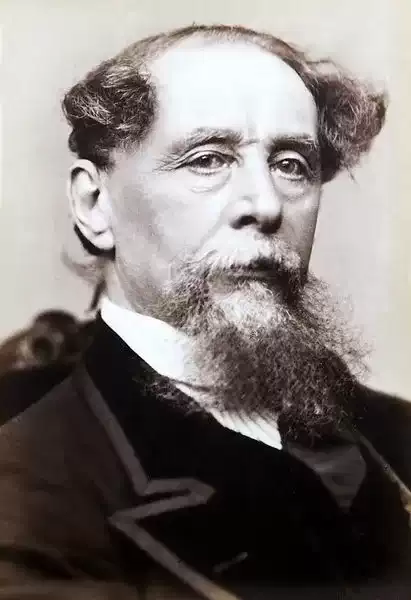
Charles Dickens
The Hymn Of The Wiltshire Laborers
The Hymn Of The Wiltshire Laborers
O God! who by Thy prophet's hand
Didst smite the rocky brake,
Whence water came, at Thy command,
Thy people's thirst to slake;
Strike, now, upon this granite wall,
Stern, obdurate, and high;
And let some drops of pity fall
For us who starve and die!
The God who took a little child
And set him in the midst,
And promised him His mercy mild,
As, by Thy Son, Thou didst:
Look down upon our children dear,
So gaunt, so cold, so spare,
And let their images appear
Where lords and gentry are!
O God! teach them to feel how we,
When our poor infants droop,
Are weakened in our trust in Thee,
And how our spirits stoop;
For, in Thy rest, so bright and fair,
All tears and sorrows sleep:
And their young looks, so full of care,
Would make Thine angels weep!
The God who with His finger drew
The judgment coming on,
Write, for these men, what must ensue,
Ere many years be gone!
O God! whose bow is in the sky,
Let them not brave and dare,
Until they look (too late) on high,
And see an Arrow there!
O God, remind them! In the bread
They break upon the knee,
These sacred words may yet be read,
'In memory of Me!'
O God! remind them of His sweet
Compassion for the poor,
And how He gave them Bread to eat,
And went from door to door!
O God! who by Thy prophet's hand
Didst smite the rocky brake,
Whence water came, at Thy command,
Thy people's thirst to slake;
Strike, now, upon this granite wall,
Stern, obdurate, and high;
And let some drops of pity fall
For us who starve and die!
The God who took a little child
And set him in the midst,
And promised him His mercy mild,
As, by Thy Son, Thou didst:
Look down upon our children dear,
So gaunt, so cold, so spare,
And let their images appear
Where lords and gentry are!
O God! teach them to feel how we,
When our poor infants droop,
Are weakened in our trust in Thee,
And how our spirits stoop;
For, in Thy rest, so bright and fair,
All tears and sorrows sleep:
And their young looks, so full of care,
Would make Thine angels weep!
The God who with His finger drew
The judgment coming on,
Write, for these men, what must ensue,
Ere many years be gone!
O God! whose bow is in the sky,
Let them not brave and dare,
Until they look (too late) on high,
And see an Arrow there!
O God, remind them! In the bread
They break upon the knee,
These sacred words may yet be read,
'In memory of Me!'
O God! remind them of His sweet
Compassion for the poor,
And how He gave them Bread to eat,
And went from door to door!
275
Charles Dickens
A fine Old English Gentleman
A fine Old English Gentleman
I'll sing you a new ballad, and I'll warrant it first-rate,
Of the days of that old gentleman who had that old estate;
When they spent the public money at a bountiful old rate
On ev'ry mistress, pimp, and scamp, at ev'ry noble gate,
In the fine old English Tory times;
Soon may they come again!
The good old laws were garnished well with gibbets, whips, and chains,
With fine old English penalties, and fine old English pains,
With rebel heads, and seas of blood once hot in rebel veins;
For all these things were requisite to guard the rich old gains
Of the fine old English Tory times;
Soon may they come again!
This brave old code, like Argus, had a hundred watchful eyes,
And ev'ry English peasant had his good old English spies,
To tempt his starving discontent with fine old English lies,
Then call the good old Yeomanry to stop his peevish cries,
In the fine old English Tory times;
Soon may they come again!
The good old times for cutting throats that cried out in their need,
The good old times for hunting men who held their fathers' creed,
The good old times when William Pitt, as all good men agreed,
Came down direct from Paradise at more than railroad speed. . . .
Oh the fine old English Tory times;
When will they come again!
In those rare days, the press was seldom known to snarl or bark,
But sweetly sang of men in pow'r, like any tuneful lark;
Grave judges, too, to all their evil deeds were in the dark;
And not a man in twenty score knew how to make his mark.
Oh the fine old English Tory times;
Soon may they come again!
Those were the days for taxes, and for war's infernal din;
For scarcity of bread, that fine old dowagers might win;
For shutting men of letters up, through iron bars to grin,
Because they didn't think the Prince was altogether thin,
In the fine old English Tory times;
Soon may they come again!
But Tolerance, though slow in flight, is strong-wing'd in the main;
That night must come on these fine days, in course of time was plain;
The pure old spirit struggled, but Its struggles were in vain;
A nation's grip was on it, and it died in choking pain,
With the fine old English Tory days,
All of the olden time.
The bright old day now dawns again; the cry runs through the land,
In England there shall be dear bread -- in Ireland, sword and brand;
And poverty, and ignorance, shall swell the rich and grand,
So, rally round the rulers with the gentle iron hand,
Of the fine old English Tory days; Hail to the coming time!
I'll sing you a new ballad, and I'll warrant it first-rate,
Of the days of that old gentleman who had that old estate;
When they spent the public money at a bountiful old rate
On ev'ry mistress, pimp, and scamp, at ev'ry noble gate,
In the fine old English Tory times;
Soon may they come again!
The good old laws were garnished well with gibbets, whips, and chains,
With fine old English penalties, and fine old English pains,
With rebel heads, and seas of blood once hot in rebel veins;
For all these things were requisite to guard the rich old gains
Of the fine old English Tory times;
Soon may they come again!
This brave old code, like Argus, had a hundred watchful eyes,
And ev'ry English peasant had his good old English spies,
To tempt his starving discontent with fine old English lies,
Then call the good old Yeomanry to stop his peevish cries,
In the fine old English Tory times;
Soon may they come again!
The good old times for cutting throats that cried out in their need,
The good old times for hunting men who held their fathers' creed,
The good old times when William Pitt, as all good men agreed,
Came down direct from Paradise at more than railroad speed. . . .
Oh the fine old English Tory times;
When will they come again!
In those rare days, the press was seldom known to snarl or bark,
But sweetly sang of men in pow'r, like any tuneful lark;
Grave judges, too, to all their evil deeds were in the dark;
And not a man in twenty score knew how to make his mark.
Oh the fine old English Tory times;
Soon may they come again!
Those were the days for taxes, and for war's infernal din;
For scarcity of bread, that fine old dowagers might win;
For shutting men of letters up, through iron bars to grin,
Because they didn't think the Prince was altogether thin,
In the fine old English Tory times;
Soon may they come again!
But Tolerance, though slow in flight, is strong-wing'd in the main;
That night must come on these fine days, in course of time was plain;
The pure old spirit struggled, but Its struggles were in vain;
A nation's grip was on it, and it died in choking pain,
With the fine old English Tory days,
All of the olden time.
The bright old day now dawns again; the cry runs through the land,
In England there shall be dear bread -- in Ireland, sword and brand;
And poverty, and ignorance, shall swell the rich and grand,
So, rally round the rulers with the gentle iron hand,
Of the fine old English Tory days; Hail to the coming time!
894
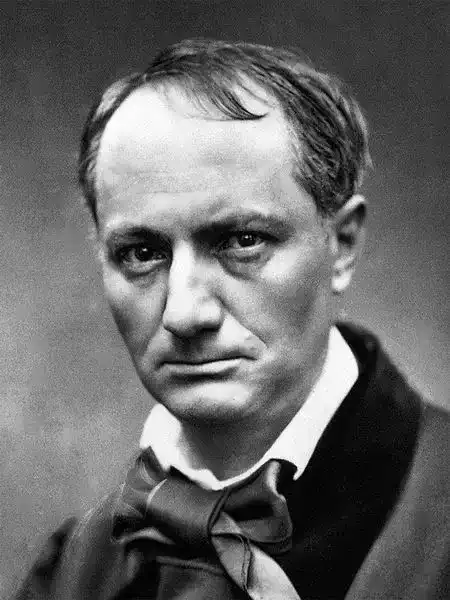
Charles Baudelaire
Voyage to Cythera
Voyage to Cythera
Free as a bird and joyfully my heart
Soared up among the rigging, in and out;
Under a cloudless sky the ship rolled on
Like an angel drunk with brilliant sun.
"That dark, grim island there--which would that be?"
"Cythera," we're told, "the legendary isle
Old bachelors tell stories of and smile.
There's really not much to it, you can see."
O place of many a mystic sacrament!
Archaic Aphrodite's splendid shade
Lingers above your waters like a scent
Infusing spirits with an amorous mood.
Worshipped from of old by every nation,
Myrtle-green isle, where each new bud discloses
Sighs of souls in loving adoration
Breathing like incense from a bank of roses
Or like a dove roo-cooing endlessly . . .
No; Cythera was a poor infertile rock,
A stony desert harrowed by the shriek
Of gulls. And yet there was something to see:
This was no temple deep in flowers and trees
With a young priestess moving to and fro,
Her body heated by a secret glow,
Her robe half-opening to every breeze;
But coasting nearer, close enough to land
To scatter flocks of birds as we passed by,
We saw a tall cypress-shaped thing at hand--
A triple gibbet black against the sky.
Ferocious birds, each perched on its own meal,
Were madly tearing at the thing that hung
And ripened; each, its filthy beak a drill,
Made little bleeding holes to root among.
The eyes were hollowed. Heavy guts cascading
Flowed like water halfway down the thighs;
The torturers, though gorged on these vile joys,
Had also put their beaks to use castrating
The corpse. A pack of dogs beneath its feet,
Their muzzles lifted, whirled and snapped and gnawed;
One bigger beast amidst this jealous lot
Looked like an executioner with his guard.
O Cytherean, child of this fair clime,
Silently you suffered these attacks,
Paying the penalty for whatever acts
Of infamy had kept you from a tomb.
Grotesquely dangling, somehow you brought on--
Violent as vomit rising from the chest,
Strong as a river bilious to taste--
A flow of sufferings I'd thought long gone.
Confronted with such dear remembered freight,
Poor devil, now it was my turn to feel
A panther's slavering jaws, a beak's cruel drill--
Once it was my flesh they loved to eat.
The sky was lovely, and the sea divine,
but something thick and binding like a shroud
Wrapped my heart in layers of black and blood;
Henceforth this allegory would be mine.
O Venus! On your isle what did I see
But my own image on the gallows tree?
O God, give me the strength to contemplate
My own heart, my own body without hate!
Free as a bird and joyfully my heart
Soared up among the rigging, in and out;
Under a cloudless sky the ship rolled on
Like an angel drunk with brilliant sun.
"That dark, grim island there--which would that be?"
"Cythera," we're told, "the legendary isle
Old bachelors tell stories of and smile.
There's really not much to it, you can see."
O place of many a mystic sacrament!
Archaic Aphrodite's splendid shade
Lingers above your waters like a scent
Infusing spirits with an amorous mood.
Worshipped from of old by every nation,
Myrtle-green isle, where each new bud discloses
Sighs of souls in loving adoration
Breathing like incense from a bank of roses
Or like a dove roo-cooing endlessly . . .
No; Cythera was a poor infertile rock,
A stony desert harrowed by the shriek
Of gulls. And yet there was something to see:
This was no temple deep in flowers and trees
With a young priestess moving to and fro,
Her body heated by a secret glow,
Her robe half-opening to every breeze;
But coasting nearer, close enough to land
To scatter flocks of birds as we passed by,
We saw a tall cypress-shaped thing at hand--
A triple gibbet black against the sky.
Ferocious birds, each perched on its own meal,
Were madly tearing at the thing that hung
And ripened; each, its filthy beak a drill,
Made little bleeding holes to root among.
The eyes were hollowed. Heavy guts cascading
Flowed like water halfway down the thighs;
The torturers, though gorged on these vile joys,
Had also put their beaks to use castrating
The corpse. A pack of dogs beneath its feet,
Their muzzles lifted, whirled and snapped and gnawed;
One bigger beast amidst this jealous lot
Looked like an executioner with his guard.
O Cytherean, child of this fair clime,
Silently you suffered these attacks,
Paying the penalty for whatever acts
Of infamy had kept you from a tomb.
Grotesquely dangling, somehow you brought on--
Violent as vomit rising from the chest,
Strong as a river bilious to taste--
A flow of sufferings I'd thought long gone.
Confronted with such dear remembered freight,
Poor devil, now it was my turn to feel
A panther's slavering jaws, a beak's cruel drill--
Once it was my flesh they loved to eat.
The sky was lovely, and the sea divine,
but something thick and binding like a shroud
Wrapped my heart in layers of black and blood;
Henceforth this allegory would be mine.
O Venus! On your isle what did I see
But my own image on the gallows tree?
O God, give me the strength to contemplate
My own heart, my own body without hate!
682
Charles Baudelaire
The Albatross
The Albatross
Often to pass the time on board, the crew
will catch an albatross, one of those big birds
which nonchalently chaperone a ship
across the bitter fathoms of the sea.
Tied to the deck, this sovereign of space,
as if embarrassed by its clumsiness,
pitiably lets its great white wings
drag at its sides like a pair of unshipped oars.
How weak and awkward, even comical
this traveller but lately so adoit -
one deckhand sticks a pipestem in its beak,
another mocks the cripple that once flew!
The Poet is like this monarch of the clouds
riding the storm above the marksman's range;
exiled on the ground, hooted and jeered,
he cannot walk because of his great wings.
Often to pass the time on board, the crew
will catch an albatross, one of those big birds
which nonchalently chaperone a ship
across the bitter fathoms of the sea.
Tied to the deck, this sovereign of space,
as if embarrassed by its clumsiness,
pitiably lets its great white wings
drag at its sides like a pair of unshipped oars.
How weak and awkward, even comical
this traveller but lately so adoit -
one deckhand sticks a pipestem in its beak,
another mocks the cripple that once flew!
The Poet is like this monarch of the clouds
riding the storm above the marksman's range;
exiled on the ground, hooted and jeered,
he cannot walk because of his great wings.
575
Charles Baudelaire
Au Lecteur
Au Lecteur
La sottise, l'erreur, le péché, la lésine,
Occupent nos esprits et travaillent nos corps,
Et nous alimentons nos aimables remords,
Comme les mendiants nourrissent leur vermine.
La sottise, l'erreur, le péché, la lésine,
Occupent nos esprits et travaillent nos corps,
Et nous alimentons nos aimables remords,
Comme les mendiants nourrissent leur vermine.
650

Carl Sandburg
Woman With A Past
Woman With A Past
There was a woman tore off a red velvet gown
And slashed the white skin of her right shoulder
And a crimson zigzag wrote a finger nail hurry.
There was a woman spoke six short words
And quit a life that was old to her
For a life that was new.
There was a woman swore an oath
And gave hoarse whisper to a prayer
And it was all over.
She was a thief and a whore and a kept woman,
She was a thing to be used and played with.
She wore an ancient scarlet sash.
The story is thin and wavering,
White as a face in the first apple blossoms,
White as a birch in the snow of a winter moon.
The story is never told.
There are white lips whisper alone.
There are red lips whisper alone.
In the cool of the old walls,
In the white of the old walls,
The red song is over.
There was a woman tore off a red velvet gown
And slashed the white skin of her right shoulder
And a crimson zigzag wrote a finger nail hurry.
There was a woman spoke six short words
And quit a life that was old to her
For a life that was new.
There was a woman swore an oath
And gave hoarse whisper to a prayer
And it was all over.
She was a thief and a whore and a kept woman,
She was a thing to be used and played with.
She wore an ancient scarlet sash.
The story is thin and wavering,
White as a face in the first apple blossoms,
White as a birch in the snow of a winter moon.
The story is never told.
There are white lips whisper alone.
There are red lips whisper alone.
In the cool of the old walls,
In the white of the old walls,
The red song is over.
266