

Poems in this theme
Ethics and Morality

Elizabeth Bishop
Chemin De Fer
Chemin De Fer
Alone on the railroad track
I walked with pounding heart.
The ties were too close together
or maybe too far apart.
The scenery was impoverished:
scrub-pine and oak; beyond
its mingled gray-green foliage
I saw the little pond
where the dirty old hermit lives,
lie like an old tear
holding onto its injuries
lucidly year after year.
The hermit shot off his shot-gun
and the tree by his cabin shook.
Over the pond went a ripple
The pet hen went chook-chook.
"Love should be put into action!"
screamed the old hermit.
Across the pond an echo
tried and tried to confirm it.
Alone on the railroad track
I walked with pounding heart.
The ties were too close together
or maybe too far apart.
The scenery was impoverished:
scrub-pine and oak; beyond
its mingled gray-green foliage
I saw the little pond
where the dirty old hermit lives,
lie like an old tear
holding onto its injuries
lucidly year after year.
The hermit shot off his shot-gun
and the tree by his cabin shook.
Over the pond went a ripple
The pet hen went chook-chook.
"Love should be put into action!"
screamed the old hermit.
Across the pond an echo
tried and tried to confirm it.
575
Elizabeth Bishop
A Prodigal
A Prodigal
The brown enormous odor he lived by
was too close, with its breathing and thick hair,
for him to judge. The floor was rotten; the sty
was plastered halfway up with glass-smooth dung.
Light-lashed, self-righteous, above moving snouts,
the pigs' eyes followed him, a cheerful stare-even
to the sow that always ate her young-till,
sickening, he leaned to scratch her head.
But sometimes mornings after drinking bouts
(he hid the pints behind the two-by-fours),
the sunrise glazed the barnyard mud with red
the burning puddles seemed to reassure.
And then he thought he almost might endure
his exile yet another year or more.
But evenings the first star came to warn.
The farmer whom he worked for came at dark
to shut the cows and horses in the barn
beneath their overhanging clouds of hay,
with pitchforks, faint forked lightnings, catching light,
safe and companionable as in the Ark.
The pigs stuck out their little feet and snored.
The lantern--like the sun, going away-laid
on the mud a pacing aureole.
Carrying a bucket along a slimy board,
he felt the bats' uncertain staggering flight,
his shuddering insights, beyond his control,
touching him. But it took him a long time
finally to make up his mind to go home.
The brown enormous odor he lived by
was too close, with its breathing and thick hair,
for him to judge. The floor was rotten; the sty
was plastered halfway up with glass-smooth dung.
Light-lashed, self-righteous, above moving snouts,
the pigs' eyes followed him, a cheerful stare-even
to the sow that always ate her young-till,
sickening, he leaned to scratch her head.
But sometimes mornings after drinking bouts
(he hid the pints behind the two-by-fours),
the sunrise glazed the barnyard mud with red
the burning puddles seemed to reassure.
And then he thought he almost might endure
his exile yet another year or more.
But evenings the first star came to warn.
The farmer whom he worked for came at dark
to shut the cows and horses in the barn
beneath their overhanging clouds of hay,
with pitchforks, faint forked lightnings, catching light,
safe and companionable as in the Ark.
The pigs stuck out their little feet and snored.
The lantern--like the sun, going away-laid
on the mud a pacing aureole.
Carrying a bucket along a slimy board,
he felt the bats' uncertain staggering flight,
his shuddering insights, beyond his control,
touching him. But it took him a long time
finally to make up his mind to go home.
740
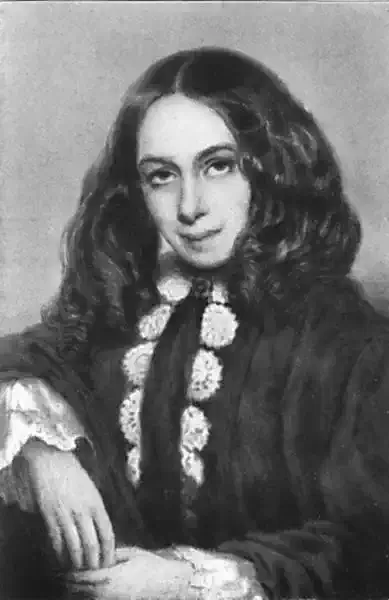
Elizabeth Barrett Browning
XIV
XIV
If thou must love me, let it be for nought
Except for love's sake only. Do not say
'I love her for her smile--her look--her way
Of speaking gently,--for a trick of thought
That falls in well with mine, and certes brought
A sense of pleasant ease on such a day'--
For these things in themselves, Beloved, may
Be changed, or change for thee,--and love, so wrought,
May be unwrought so. Neither love me for
Thine own dear pity's wiping my cheeks dry,--
A creature might forget to weep, who bore
Thy comfort long, and lose thy love thereby !
But love me for love's sake, that evermore
Thou mayst love on, through love's eternity.
If thou must love me, let it be for nought
Except for love's sake only. Do not say
'I love her for her smile--her look--her way
Of speaking gently,--for a trick of thought
That falls in well with mine, and certes brought
A sense of pleasant ease on such a day'--
For these things in themselves, Beloved, may
Be changed, or change for thee,--and love, so wrought,
May be unwrought so. Neither love me for
Thine own dear pity's wiping my cheeks dry,--
A creature might forget to weep, who bore
Thy comfort long, and lose thy love thereby !
But love me for love's sake, that evermore
Thou mayst love on, through love's eternity.
344
Elizabeth Barrett Browning
XI
XI
And therefore if to love can be desert,
I am not all unworthy. Cheeks as pale
As these you see, and trembling knees that fail
To bear the burden of a heavy heart,--
This weary minstrel-life that once was girt
To climb Aornus, and can scarce avail
To pipe now 'gainst the valley nightingale
A melancholy music,--why advert
To these things ? O Beloved, it is plain
I am not of thy worth nor for thy place !
And yet, because I love thee, I obtain
From that same love this vindicating grace,
To live on still in love, and yet in vain,--
To bless thee, yet renounce thee to thy face.
And therefore if to love can be desert,
I am not all unworthy. Cheeks as pale
As these you see, and trembling knees that fail
To bear the burden of a heavy heart,--
This weary minstrel-life that once was girt
To climb Aornus, and can scarce avail
To pipe now 'gainst the valley nightingale
A melancholy music,--why advert
To these things ? O Beloved, it is plain
I am not of thy worth nor for thy place !
And yet, because I love thee, I obtain
From that same love this vindicating grace,
To live on still in love, and yet in vain,--
To bless thee, yet renounce thee to thy face.
438
Elizabeth Barrett Browning
VIII
VIII
What can I give thee back, O liberal
And princely giver, who hast brought the gold
And purple of thine heart, unstained, untold,
And laid them on the outside of the-wall
For such as I to take or leave withal,
In unexpected largesse ? am I cold,
Ungrateful, that for these most manifold
High gifts, I render nothing back at all ?
Not so; not cold,--but very poor instead.
Ask God who knows. For frequent tears have run
The colors from my life, and left so dead
And pale a stuff, it were not fitly done
To give the same as pillow to thy head.
Go farther ! let it serve to trample on.
What can I give thee back, O liberal
And princely giver, who hast brought the gold
And purple of thine heart, unstained, untold,
And laid them on the outside of the-wall
For such as I to take or leave withal,
In unexpected largesse ? am I cold,
Ungrateful, that for these most manifold
High gifts, I render nothing back at all ?
Not so; not cold,--but very poor instead.
Ask God who knows. For frequent tears have run
The colors from my life, and left so dead
And pale a stuff, it were not fitly done
To give the same as pillow to thy head.
Go farther ! let it serve to trample on.
452
Elizabeth Barrett Browning
The Runaway Slave at Pilgrim's Point
The Runaway Slave at Pilgrim's Point
I.
I stand on the mark beside the shore
Of the first white pilgrim's bended knee,
Where exile turned to ancestor,
And God was thanked for liberty.
I have run through the night, my skin is as dark,
I bend my knee down on this mark . . .
I look on the sky and the sea.
II.
O pilgrim-souls, I speak to you!
I see you come out proud and slow
From the land of the spirits pale as dew. . .
And round me and round me ye go!
O pilgrims, I have gasped and run
All night long from the whips of one
Who in your names works sin and woe.
III.
And thus I thought that I would come
And kneel here where I knelt before,
And feel your souls around me hum
In undertone to the ocean's roar;
And lift my black face, my black hand,
Here, in your names, to curse this land
Ye blessed in freedom's evermore.
IV.
I am black, I am black;
And yet God made me, they say.
But if He did so, smiling back
He must have cast His work away
Under the feet of His white creatures,
With a look of scorn,--that the dusky features
Might be trodden again to clay.
V.
And yet He has made dark things
To be glad and merry as light.
There's a little dark bird sits and sings;
There's a dark stream ripples out of sight;
And the dark frogs chant in the safe morass,
And the sweetest stars are made to pass
O'er the face of the darkest night.
VI.
But we who are dark, we are dark!
Ah, God, we have no stars!
About our souls in care and cark
Our blackness shuts like prison bars:
The poor souls crouch so far behind,
That never a comfort can they find
By reaching through the prison-bars.
VII.
Indeed, we live beneath the sky, . . .
That great smooth Hand of God, stretched out
On all His children fatherly,
To bless them from the fear and doubt,
Which would be, if, from this low place,
All opened straight up to His face
Into the grand eternity.
VIII.
And still God's sunshine and His frost,
They make us hot, they make us cold,
As if we were not black and lost:
And the beasts and birds, in wood and fold,
Do fear and take us for very men!
Could the weep-poor-will or the cat of the glen
Look into my eyes and be bold?
IX.
I am black, I am black!--
But, once, I laughed in girlish glee;
For one of my colour stood in the track
Where the drivers drove, and looked at me--
And tender and full was the look he gave:
Could a slave look so at another slave?--
I look at the sky and the sea.
X.
And from that hour our spirits grew
As free as if unsold, unbought:
Oh, strong enough, since we were two
To conquer the world, we thought!
The drivers drove us day by day;
We did not mind, we went one way,
And no better a liberty sought.
XI.
In the sunny ground between the canes,
He said 'I love you' as he passed:
When the shingle-roof rang sharp with the rains,
I heard how he vowed it fast:
While others shook, he smiled in the hut
As he carved me a bowl of the cocoa-nut,
Through the roar of the hurricanes.
XII.
I sang his name instead of a song;
Over and over I sang his name--
Upward and downward I drew it along
My various notes; the same, the same!
I sang it low, that the slave-girls near
Might never guess from aught they could hear,
It was only a name.
XIII.
I look on the sky and the sea--
We were two to love, and two to pray,--
Yes, two, O God, who cried to Thee,
Though nothing didst Thou say.
Coldly Thou sat'st behind the sun!
And now I cry who am but one,
How wilt Thou speak to-day?--
XIV.
We were black, we were black!
We had no claim to love and bliss:
What marvel, if each turned to lack?
They wrung my cold hands out of his,--
They dragged him . . . where ? . . . I crawled to touch
His blood's mark in the dust! . . . not much,
Ye pilgrim-souls, . . . though plain as this!
XV.
Wrong, followed by a deeper wrong!
Mere grief's too good for such as I.
So the white men brought the shame ere long
To strangle the sob of my agony.
They would not leave me for my dull
Wet eyes!--it was too merciful
To let me weep pure tears and die.
XVI.
I am black, I am black!--
I wore a child upon my breast
An amulet that hung too slack,
And, in my unrest, could not rest:
Thus we went moaning, child and mother,
One to another, one to another,
Until all ended for the best:
XVII.
For hark ! I will tell you low . . . Iow . . .
I am black, you see,--
And the babe who lay on my bosom so,
Was far too white . . . too white for me;
As white as the ladies who scorned to pray
Beside me at church but yesterday;
Though my tears had washed a place for my knee.
XVIII.
My own, own child! I could not bear
To look in his face, it was so white.
I covered him up with a kerchief there;
I covered his face in close and tight:
And he moaned and struggled, as well might be,
For the white child wanted his liberty--
Ha, ha! he wanted his master right.
XIX.
He moaned and beat with his head and feet,
His little feet that never grew--
He struck them out, as it was meet,
Against my heart to break it through.
I might have sung and made him mild--
But I dared not sing to the white-faced child
The only song I knew.
XX.
I pulled the kerchief very close:
He could not see the sun, I swear,
More, then, alive, than now he does
From between the roots of the mango . . . where
. . . I know where. Close! a child and mother
Do wrong to look at one another,
When one is black and one is fair.
XXI.
Why, in that single glance I had
Of my child's face, . . . I tell you all,
I saw a look that made me mad . . .
The master's look, that used to fall
On my soul like his lash . . . or worse!
And so, to save it from my curse,
I twisted it round in my shawl.
XXII.
And he moaned and trembled from foot to head,
He shivered from head to foot;
Till, after a time, he lay instead
Too suddenly still and mute.
I felt, beside, a stiffening cold, . . .
I dared to lift up just a fold . . .
As in lifting a leaf of the mango-fruit.
XXIII.
But my fruit . . . ha, ha!--there, had been
(I laugh to think on't at this hour! . . .)
Your fine white angels, who have seen
Nearest the secret of God's power, . . .
And plucked my fruit to make them wine,
And sucked the soul of that child of mine,
As the humming-bird sucks the soul of the flower.
XXIV.
Ha, ha, for the trick of the angels white!
They freed the white child's spirit so.
I said not a word, but, day and night,
I carried the body to and fro;
And it lay on my heart like a stone . . . as chill.
--The sun may shine out as much as he will:
I am cold, though it happened a month ago.
XXV.
From the white man's house, and the black man's hut,
I carried the little body on,
The forest's arms did round us shut,
And silence through the trees did run:
They asked no question as I went,--
They stood too high for astonishment,--
They could see God sit on His throne.
XXVI.
My little body, kerchiefed fast,
I bore it on through the forest . . . on:
And when I felt it was tired at last,
I scooped a hole beneath the moon.
Through the forest-tops the angels far,
With a white sharp finger from every star,
Did point and mock at what was done.
XXVII.
Yet when it was all done aright, . . .
Earth, 'twixt me and my baby, strewed,
All, changed to black earth, . . . nothing white, . . .
A dark child in the dark,--ensued
Some comfort, and my heart grew young:
I sate down smiling there and sung
The song I learnt in my maidenhood.
XXVIII.
And thus we two were reconciled,
The white child and black mother, thus:
For, as I sang it, soft and wild
The same song, more melodious,
Rose from the grave whereon I sate!
It was the dead child singing that,
To join the souls of both of us.
XXIX.
I look on the sea and the sky!
Where the pilgrims' ships first anchored lay,
The free sun rideth gloriously;
But the pilgrim-ghosts have slid away
Through the earliest streaks of the morn.
My face is black, but it glares with a scorn
Which they dare not meet by day.
XXX.
Ah!--in their 'stead, their hunter sons!
Ah, ah! they are on me--they hunt in a ring--
Keep off! I brave you all at once--
I throw off your eyes like snakes that sting!
You have killed the black eagle at nest, I think:
Did you never stand still in your triumph, and shrink
From the stroke of her wounded wing?
XXXI.
(Man, drop that stone you dared to lift!--)
I wish you, who stand there five a-breast,
Each, for his own wife's joy and gift,
A little corpse as safely at rest
As mine in the mangos!--Yes, but she
May keep live babies on her knee,
And sing the song she liketh best.
XXXll.
I am not mad: I am black.
I see you staring in my face--
I know you, staring, shrinking back--
Ye are born of the Washington-race:
And this land is the free America:
And this mark on my wrist . . . (I prove what I say)
Ropes tied me up here to the flogging-place.
XXXIII.
You think I shrieked then? Not a sound!
I hung, as a gourd hangs in the sun.
I only cursed them all around,
As softly as I might have done
My very own child!--From these sands
Up to the mountains, lift your hands,
O slaves, and end what I begun!
XXXIV.
Whips, curses; these must answer those!
For in this UNION, you have set
Two kinds of men in adverse rows,
Each loathing each: and all forget
The seven wounds in Christ's body fair;
While HE sees gaping everywhere
Our countless wounds that pay no debt.
XXXV.
Our wounds are different. Your white men
Are, after all, not gods indeed,
Nor able to make Christs again
Do good with bleeding. We who bleed . . .
(Stand off!) we help not in our loss!
We are too heavy for our cross,
And fall and crush you and your seed.
XXXVI.
I fall, I swoon! I look at the sky:
The clouds are breaking on my brain;
I am floated along, as if I should die
Of liberty's exquisite pain--
In the name of the white child, waiting for me
In the death-dark where we may kiss and agree,
White men, I leave you all curse-free
In my broken heart's disdain!
I.
I stand on the mark beside the shore
Of the first white pilgrim's bended knee,
Where exile turned to ancestor,
And God was thanked for liberty.
I have run through the night, my skin is as dark,
I bend my knee down on this mark . . .
I look on the sky and the sea.
II.
O pilgrim-souls, I speak to you!
I see you come out proud and slow
From the land of the spirits pale as dew. . .
And round me and round me ye go!
O pilgrims, I have gasped and run
All night long from the whips of one
Who in your names works sin and woe.
III.
And thus I thought that I would come
And kneel here where I knelt before,
And feel your souls around me hum
In undertone to the ocean's roar;
And lift my black face, my black hand,
Here, in your names, to curse this land
Ye blessed in freedom's evermore.
IV.
I am black, I am black;
And yet God made me, they say.
But if He did so, smiling back
He must have cast His work away
Under the feet of His white creatures,
With a look of scorn,--that the dusky features
Might be trodden again to clay.
V.
And yet He has made dark things
To be glad and merry as light.
There's a little dark bird sits and sings;
There's a dark stream ripples out of sight;
And the dark frogs chant in the safe morass,
And the sweetest stars are made to pass
O'er the face of the darkest night.
VI.
But we who are dark, we are dark!
Ah, God, we have no stars!
About our souls in care and cark
Our blackness shuts like prison bars:
The poor souls crouch so far behind,
That never a comfort can they find
By reaching through the prison-bars.
VII.
Indeed, we live beneath the sky, . . .
That great smooth Hand of God, stretched out
On all His children fatherly,
To bless them from the fear and doubt,
Which would be, if, from this low place,
All opened straight up to His face
Into the grand eternity.
VIII.
And still God's sunshine and His frost,
They make us hot, they make us cold,
As if we were not black and lost:
And the beasts and birds, in wood and fold,
Do fear and take us for very men!
Could the weep-poor-will or the cat of the glen
Look into my eyes and be bold?
IX.
I am black, I am black!--
But, once, I laughed in girlish glee;
For one of my colour stood in the track
Where the drivers drove, and looked at me--
And tender and full was the look he gave:
Could a slave look so at another slave?--
I look at the sky and the sea.
X.
And from that hour our spirits grew
As free as if unsold, unbought:
Oh, strong enough, since we were two
To conquer the world, we thought!
The drivers drove us day by day;
We did not mind, we went one way,
And no better a liberty sought.
XI.
In the sunny ground between the canes,
He said 'I love you' as he passed:
When the shingle-roof rang sharp with the rains,
I heard how he vowed it fast:
While others shook, he smiled in the hut
As he carved me a bowl of the cocoa-nut,
Through the roar of the hurricanes.
XII.
I sang his name instead of a song;
Over and over I sang his name--
Upward and downward I drew it along
My various notes; the same, the same!
I sang it low, that the slave-girls near
Might never guess from aught they could hear,
It was only a name.
XIII.
I look on the sky and the sea--
We were two to love, and two to pray,--
Yes, two, O God, who cried to Thee,
Though nothing didst Thou say.
Coldly Thou sat'st behind the sun!
And now I cry who am but one,
How wilt Thou speak to-day?--
XIV.
We were black, we were black!
We had no claim to love and bliss:
What marvel, if each turned to lack?
They wrung my cold hands out of his,--
They dragged him . . . where ? . . . I crawled to touch
His blood's mark in the dust! . . . not much,
Ye pilgrim-souls, . . . though plain as this!
XV.
Wrong, followed by a deeper wrong!
Mere grief's too good for such as I.
So the white men brought the shame ere long
To strangle the sob of my agony.
They would not leave me for my dull
Wet eyes!--it was too merciful
To let me weep pure tears and die.
XVI.
I am black, I am black!--
I wore a child upon my breast
An amulet that hung too slack,
And, in my unrest, could not rest:
Thus we went moaning, child and mother,
One to another, one to another,
Until all ended for the best:
XVII.
For hark ! I will tell you low . . . Iow . . .
I am black, you see,--
And the babe who lay on my bosom so,
Was far too white . . . too white for me;
As white as the ladies who scorned to pray
Beside me at church but yesterday;
Though my tears had washed a place for my knee.
XVIII.
My own, own child! I could not bear
To look in his face, it was so white.
I covered him up with a kerchief there;
I covered his face in close and tight:
And he moaned and struggled, as well might be,
For the white child wanted his liberty--
Ha, ha! he wanted his master right.
XIX.
He moaned and beat with his head and feet,
His little feet that never grew--
He struck them out, as it was meet,
Against my heart to break it through.
I might have sung and made him mild--
But I dared not sing to the white-faced child
The only song I knew.
XX.
I pulled the kerchief very close:
He could not see the sun, I swear,
More, then, alive, than now he does
From between the roots of the mango . . . where
. . . I know where. Close! a child and mother
Do wrong to look at one another,
When one is black and one is fair.
XXI.
Why, in that single glance I had
Of my child's face, . . . I tell you all,
I saw a look that made me mad . . .
The master's look, that used to fall
On my soul like his lash . . . or worse!
And so, to save it from my curse,
I twisted it round in my shawl.
XXII.
And he moaned and trembled from foot to head,
He shivered from head to foot;
Till, after a time, he lay instead
Too suddenly still and mute.
I felt, beside, a stiffening cold, . . .
I dared to lift up just a fold . . .
As in lifting a leaf of the mango-fruit.
XXIII.
But my fruit . . . ha, ha!--there, had been
(I laugh to think on't at this hour! . . .)
Your fine white angels, who have seen
Nearest the secret of God's power, . . .
And plucked my fruit to make them wine,
And sucked the soul of that child of mine,
As the humming-bird sucks the soul of the flower.
XXIV.
Ha, ha, for the trick of the angels white!
They freed the white child's spirit so.
I said not a word, but, day and night,
I carried the body to and fro;
And it lay on my heart like a stone . . . as chill.
--The sun may shine out as much as he will:
I am cold, though it happened a month ago.
XXV.
From the white man's house, and the black man's hut,
I carried the little body on,
The forest's arms did round us shut,
And silence through the trees did run:
They asked no question as I went,--
They stood too high for astonishment,--
They could see God sit on His throne.
XXVI.
My little body, kerchiefed fast,
I bore it on through the forest . . . on:
And when I felt it was tired at last,
I scooped a hole beneath the moon.
Through the forest-tops the angels far,
With a white sharp finger from every star,
Did point and mock at what was done.
XXVII.
Yet when it was all done aright, . . .
Earth, 'twixt me and my baby, strewed,
All, changed to black earth, . . . nothing white, . . .
A dark child in the dark,--ensued
Some comfort, and my heart grew young:
I sate down smiling there and sung
The song I learnt in my maidenhood.
XXVIII.
And thus we two were reconciled,
The white child and black mother, thus:
For, as I sang it, soft and wild
The same song, more melodious,
Rose from the grave whereon I sate!
It was the dead child singing that,
To join the souls of both of us.
XXIX.
I look on the sea and the sky!
Where the pilgrims' ships first anchored lay,
The free sun rideth gloriously;
But the pilgrim-ghosts have slid away
Through the earliest streaks of the morn.
My face is black, but it glares with a scorn
Which they dare not meet by day.
XXX.
Ah!--in their 'stead, their hunter sons!
Ah, ah! they are on me--they hunt in a ring--
Keep off! I brave you all at once--
I throw off your eyes like snakes that sting!
You have killed the black eagle at nest, I think:
Did you never stand still in your triumph, and shrink
From the stroke of her wounded wing?
XXXI.
(Man, drop that stone you dared to lift!--)
I wish you, who stand there five a-breast,
Each, for his own wife's joy and gift,
A little corpse as safely at rest
As mine in the mangos!--Yes, but she
May keep live babies on her knee,
And sing the song she liketh best.
XXXll.
I am not mad: I am black.
I see you staring in my face--
I know you, staring, shrinking back--
Ye are born of the Washington-race:
And this land is the free America:
And this mark on my wrist . . . (I prove what I say)
Ropes tied me up here to the flogging-place.
XXXIII.
You think I shrieked then? Not a sound!
I hung, as a gourd hangs in the sun.
I only cursed them all around,
As softly as I might have done
My very own child!--From these sands
Up to the mountains, lift your hands,
O slaves, and end what I begun!
XXXIV.
Whips, curses; these must answer those!
For in this UNION, you have set
Two kinds of men in adverse rows,
Each loathing each: and all forget
The seven wounds in Christ's body fair;
While HE sees gaping everywhere
Our countless wounds that pay no debt.
XXXV.
Our wounds are different. Your white men
Are, after all, not gods indeed,
Nor able to make Christs again
Do good with bleeding. We who bleed . . .
(Stand off!) we help not in our loss!
We are too heavy for our cross,
And fall and crush you and your seed.
XXXVI.
I fall, I swoon! I look at the sky:
The clouds are breaking on my brain;
I am floated along, as if I should die
Of liberty's exquisite pain--
In the name of the white child, waiting for me
In the death-dark where we may kiss and agree,
White men, I leave you all curse-free
In my broken heart's disdain!
657
Elizabeth Barrett Browning
The Look
The Look
The Saviour looked on Peter. Ay, no word,
No gesture of reproach; the Heavens serene
Though heavy with armed justice, did not lean
Their thunders that way: the forsaken Lord
Looked only, on the traitor. None record
What that look was, none guess; for those who have seen
Wronged lovers loving through a death-pang keen,
Or pale-cheeked martyrs smiling to a sword,
Have missed Jehovah at the judgment-call.
And Peter, from the height of blasphemy-'
I never knew this man '--did quail and fall
As knowing straight THAT GOD; and turned free
And went out speechless from the face of all
And filled the silenc, weeping bitterly.
The Saviour looked on Peter. Ay, no word,
No gesture of reproach; the Heavens serene
Though heavy with armed justice, did not lean
Their thunders that way: the forsaken Lord
Looked only, on the traitor. None record
What that look was, none guess; for those who have seen
Wronged lovers loving through a death-pang keen,
Or pale-cheeked martyrs smiling to a sword,
Have missed Jehovah at the judgment-call.
And Peter, from the height of blasphemy-'
I never knew this man '--did quail and fall
As knowing straight THAT GOD; and turned free
And went out speechless from the face of all
And filled the silenc, weeping bitterly.
433
Elizabeth Barrett Browning
The Lady's Yes
The Lady's Yes
'Yes,' I answered you last night;
'No,' this morning, Sir, I say.
Colours seen by candlelight,
Will not look the same by day.
When the viols played their best,
Lamps above, and laughs below---
Love me sounded like a jest,
Fit for Yes or fit for No.
Call me false, or call me free--Vow,
whatever light may shine,
No man on your face shall see
Any grief for change on mine.
Yet the sin is on us both--Time
to dance is not to woo---
Wooer light makes fickle troth--Scorn
of me recoils on you.
Learn to win a lady's faith
Nobly, as the thing is high;
Bravely, as for life and death--With
a loyal gravity.
Lead her from the festive boards,
Point her to the starry skies,
Guard her, by your truthful words,
Pure from courtship's flatteries.
By your truth she shall be true--Ever
true, as wives of yore---
And her Yes, once said to you,
SHALL be Yes for evermore.
'Yes,' I answered you last night;
'No,' this morning, Sir, I say.
Colours seen by candlelight,
Will not look the same by day.
When the viols played their best,
Lamps above, and laughs below---
Love me sounded like a jest,
Fit for Yes or fit for No.
Call me false, or call me free--Vow,
whatever light may shine,
No man on your face shall see
Any grief for change on mine.
Yet the sin is on us both--Time
to dance is not to woo---
Wooer light makes fickle troth--Scorn
of me recoils on you.
Learn to win a lady's faith
Nobly, as the thing is high;
Bravely, as for life and death--With
a loyal gravity.
Lead her from the festive boards,
Point her to the starry skies,
Guard her, by your truthful words,
Pure from courtship's flatteries.
By your truth she shall be true--Ever
true, as wives of yore---
And her Yes, once said to you,
SHALL be Yes for evermore.
356
Elizabeth Barrett Browning
Sonnet IX
Sonnet IX
Can it be right to give what I can give ?
To let thee sit beneath the fall of tears
As salt as mine, and hear the sighing years
Re-sighing on my lips renunciative
Through those infrequent smiles which fail to live
For all thy adjurations ? O my fears,
That this can scarce be right ! We are not peers,
So to be lovers; and I own, and grieve,
That givers of such gifts as mine are, must
Be counted with the ungenerous. Out, alas !
I will not soil thy purple with my dust,
Nor breathe my poison on thy Venice-glass,
Nor give thee any love--which were unjust.
Beloved, I only love thee ! let it pass.
Can it be right to give what I can give ?
To let thee sit beneath the fall of tears
As salt as mine, and hear the sighing years
Re-sighing on my lips renunciative
Through those infrequent smiles which fail to live
For all thy adjurations ? O my fears,
That this can scarce be right ! We are not peers,
So to be lovers; and I own, and grieve,
That givers of such gifts as mine are, must
Be counted with the ungenerous. Out, alas !
I will not soil thy purple with my dust,
Nor breathe my poison on thy Venice-glass,
Nor give thee any love--which were unjust.
Beloved, I only love thee ! let it pass.
411
Elizabeth Barrett Browning
IX
IX
Can it be right to give what I can give ?
To let thee sit beneath the fall of tears
As salt as mine, and hear the sighing years
Re-sighing on my lips renunciative
Through those infrequent smiles which fail to live
For all thy adjurations ? O my fears,
That this can scarce be right ! We are not peers,
So to be lovers; and I own, and grieve,
That givers of such gifts as mine are, must
Be counted with the ungenerous. Out, alas !
I will not soil thy purple with my dust,
Nor breathe my poison on thy Venice-glass,
Nor give thee any love--which were unjust.
Beloved, I only love thee ! let it pass.
Can it be right to give what I can give ?
To let thee sit beneath the fall of tears
As salt as mine, and hear the sighing years
Re-sighing on my lips renunciative
Through those infrequent smiles which fail to live
For all thy adjurations ? O my fears,
That this can scarce be right ! We are not peers,
So to be lovers; and I own, and grieve,
That givers of such gifts as mine are, must
Be counted with the ungenerous. Out, alas !
I will not soil thy purple with my dust,
Nor breathe my poison on thy Venice-glass,
Nor give thee any love--which were unjust.
Beloved, I only love thee ! let it pass.
475
Elizabeth Barrett Browning
Exaggeration
Exaggeration
WE overstate the ills of life, and take
Imagination (given us to bring down
The choirs of singing angels overshone
By God's clear glory) down our earth to rake
The dismal snows instead, flake following flake,
To cover all the corn; we walk upon
The shadow of hills across a level thrown,
And pant like climbers: near the alder brake
We sigh so loud, the nightingale within
Refuses to sing loud, as else she would.
O brothers, let us leave the shame and sin
Of taking vainly, in a plaintive mood,
The holy name of GRIEF !--holy herein
That by the grief of ONE came all our good.
WE overstate the ills of life, and take
Imagination (given us to bring down
The choirs of singing angels overshone
By God's clear glory) down our earth to rake
The dismal snows instead, flake following flake,
To cover all the corn; we walk upon
The shadow of hills across a level thrown,
And pant like climbers: near the alder brake
We sigh so loud, the nightingale within
Refuses to sing loud, as else she would.
O brothers, let us leave the shame and sin
Of taking vainly, in a plaintive mood,
The holy name of GRIEF !--holy herein
That by the grief of ONE came all our good.
469
Elizabeth Barrett Browning
Cheerfulness Taught By Reason
Cheerfulness Taught By Reason
I THINK we are too ready with complaint
In this fair world of God's. Had we no hope
Indeed beyond the zenith and the slope
Of yon gray blank of sky, we might grow faint
To muse upon eternity's constraint
Round our aspirant souls; but since the scope
Must widen early, is it well to droop,
For a few days consumed in loss and taint ?
O pusillanimous Heart, be comforted
And, like a cheerful traveller, take the road
Singing beside the hedge. What if the bread
Be bitter in thine inn, and thou unshod
To meet the flints ? At least it may be said
' Because the way is short, I thank thee, God. '
I THINK we are too ready with complaint
In this fair world of God's. Had we no hope
Indeed beyond the zenith and the slope
Of yon gray blank of sky, we might grow faint
To muse upon eternity's constraint
Round our aspirant souls; but since the scope
Must widen early, is it well to droop,
For a few days consumed in loss and taint ?
O pusillanimous Heart, be comforted
And, like a cheerful traveller, take the road
Singing beside the hedge. What if the bread
Be bitter in thine inn, and thou unshod
To meet the flints ? At least it may be said
' Because the way is short, I thank thee, God. '
430
Elizabeth Barrett Browning
Adequacy
Adequacy
NOW, by the verdure on thy thousand hills,
Beloved England, doth the earth appear
Quite good enough for men to overbear
The will of God in, with rebellious wills !
We cannot say the morning-sun fulfils
Ingloriously its course, nor that the clear
Strong stars without significance insphere
Our habitation: we, meantime, our ills
Heap up against this good and lift a cry
Against this work-day world, this ill-spread feast,
As if ourselves were better certainly
Than what we come to. Maker and High Priest,
I ask thee not my joys to multiply,--
Only to make me worthier of the least.
NOW, by the verdure on thy thousand hills,
Beloved England, doth the earth appear
Quite good enough for men to overbear
The will of God in, with rebellious wills !
We cannot say the morning-sun fulfils
Ingloriously its course, nor that the clear
Strong stars without significance insphere
Our habitation: we, meantime, our ills
Heap up against this good and lift a cry
Against this work-day world, this ill-spread feast,
As if ourselves were better certainly
Than what we come to. Maker and High Priest,
I ask thee not my joys to multiply,--
Only to make me worthier of the least.
465
Elizabeth Barrett Browning
A Curse For A Nation
A Curse For A Nation
I heard an angel speak last night,
And he said 'Write!
Write a Nation's curse for me,
And send it over the Western Sea.'
I faltered, taking up the word:
'Not so, my lord!
If curses must be, choose another
To send thy curse against my brother.
'For I am bound by gratitude,
By love and blood,
To brothers of mine across the sea,
Who stretch out kindly hands to me.'
'Therefore,' the voice said, 'shalt thou write
My curse to-night.
From the summits of love a curse is driven,
As lightning is from the tops of heaven.'
'Not so,' I answered. 'Evermore
My heart is sore
For my own land's sins: for little feet
Of children bleeding along the street:
'For parked-up honors that gainsay
The right of way:
For almsgiving through a door that is
Not open enough for two friends to kiss:
'For love of freedom which abates
Beyond the Straits:
For patriot virtue starved to vice on
Self-praise, self-interest, and suspicion:
'For an oligarchic parliament,
And bribes well-meant.
What curse to another land assign,
When heavy-souled for the sins of mine?'
'Therefore,' the voice said, 'shalt thou write
My curse to-night.
Because thou hast strength to see and hate
A foul thing done within thy gate.'
'Not so,' I answered once again.
'To curse, choose men.
For I, a woman, have only known
How the heart melts and the tears run down.'
'Therefore,' the voice said, 'shalt thou write
My curse to-night.
Some women weep and curse, I say
(And no one marvels), night and day.
'And thou shalt take their part to-night,
Weep and write.
A curse from the depths of womanhood
Is very salt, and bitter, and good.'
So thus I wrote, and mourned indeed,
What all may read.
And thus, as was enjoined on me,
I send it over the Western Sea.
The Curse
Because ye have broken your own chain
With the strain
Of brave men climbing a Nation's height,
Yet thence bear down with brand and thong
On souls of others, -- for this wrong
This is the curse. Write.
Because yourselves are standing straight
In the state
Of Freedom's foremost acolyte,
Yet keep calm footing all the time
On writhing bond-slaves, -- for this crime
This is the curse. Write.
Because ye prosper in God's name,
With a claim
To honor in the old world's sight,
Yet do the fiend's work perfectly
In strangling martyrs, -- for this lie
This is the curse. Write.
Ye shall watch while kings conspire
Round the people's smouldering fire,
And, warm for your part,
Shall never dare -- O shame!
To utter the thought into flame
Which burns at your heart.
This is the curse. Write.
Ye shall watch while nations strive
With the bloodhounds, die or survive,
Drop faint from their jaws,
Or throttle them backward to death;
And only under your breath
Shall favor the cause.
This is the curse. Write.
Ye shall watch while strong men draw
The nets of feudal law
To strangle the weak;
And, counting the sin for a sin,
Your soul shall be sadder within
Than the word ye shall speak.
This is the curse. Write.
When good men are praying erect
That Christ may avenge His elect
And deliver the earth,
The prayer in your ears, said low,
Shall sound like the tramp of a foe
That's driving you forth.
This is the curse. Write.
When wise men give you their praise,
They shall praise in the heat of the phrase,
As if carried too far.
When ye boast your own charters kept true,
Ye shall blush; for the thing which ye do
Derides what ye are.
This is the curse. Write.
When fools cast taunts at your gate,
Your scorn ye shall somewhat abate
As ye look o'er the wall;
For your conscience, tradition, and name
Explode with a deadlier blame
Than the worst of them all.
This is the curse. Write.
Go, wherever ill deeds shall be done,
Go, plant your flag in the sun
Beside the ill-doers!
And recoil from clenching the curse
Of God's witnessing Universe
With a curse of yours.
This is the curse. Write.
I heard an angel speak last night,
And he said 'Write!
Write a Nation's curse for me,
And send it over the Western Sea.'
I faltered, taking up the word:
'Not so, my lord!
If curses must be, choose another
To send thy curse against my brother.
'For I am bound by gratitude,
By love and blood,
To brothers of mine across the sea,
Who stretch out kindly hands to me.'
'Therefore,' the voice said, 'shalt thou write
My curse to-night.
From the summits of love a curse is driven,
As lightning is from the tops of heaven.'
'Not so,' I answered. 'Evermore
My heart is sore
For my own land's sins: for little feet
Of children bleeding along the street:
'For parked-up honors that gainsay
The right of way:
For almsgiving through a door that is
Not open enough for two friends to kiss:
'For love of freedom which abates
Beyond the Straits:
For patriot virtue starved to vice on
Self-praise, self-interest, and suspicion:
'For an oligarchic parliament,
And bribes well-meant.
What curse to another land assign,
When heavy-souled for the sins of mine?'
'Therefore,' the voice said, 'shalt thou write
My curse to-night.
Because thou hast strength to see and hate
A foul thing done within thy gate.'
'Not so,' I answered once again.
'To curse, choose men.
For I, a woman, have only known
How the heart melts and the tears run down.'
'Therefore,' the voice said, 'shalt thou write
My curse to-night.
Some women weep and curse, I say
(And no one marvels), night and day.
'And thou shalt take their part to-night,
Weep and write.
A curse from the depths of womanhood
Is very salt, and bitter, and good.'
So thus I wrote, and mourned indeed,
What all may read.
And thus, as was enjoined on me,
I send it over the Western Sea.
The Curse
Because ye have broken your own chain
With the strain
Of brave men climbing a Nation's height,
Yet thence bear down with brand and thong
On souls of others, -- for this wrong
This is the curse. Write.
Because yourselves are standing straight
In the state
Of Freedom's foremost acolyte,
Yet keep calm footing all the time
On writhing bond-slaves, -- for this crime
This is the curse. Write.
Because ye prosper in God's name,
With a claim
To honor in the old world's sight,
Yet do the fiend's work perfectly
In strangling martyrs, -- for this lie
This is the curse. Write.
Ye shall watch while kings conspire
Round the people's smouldering fire,
And, warm for your part,
Shall never dare -- O shame!
To utter the thought into flame
Which burns at your heart.
This is the curse. Write.
Ye shall watch while nations strive
With the bloodhounds, die or survive,
Drop faint from their jaws,
Or throttle them backward to death;
And only under your breath
Shall favor the cause.
This is the curse. Write.
Ye shall watch while strong men draw
The nets of feudal law
To strangle the weak;
And, counting the sin for a sin,
Your soul shall be sadder within
Than the word ye shall speak.
This is the curse. Write.
When good men are praying erect
That Christ may avenge His elect
And deliver the earth,
The prayer in your ears, said low,
Shall sound like the tramp of a foe
That's driving you forth.
This is the curse. Write.
When wise men give you their praise,
They shall praise in the heat of the phrase,
As if carried too far.
When ye boast your own charters kept true,
Ye shall blush; for the thing which ye do
Derides what ye are.
This is the curse. Write.
When fools cast taunts at your gate,
Your scorn ye shall somewhat abate
As ye look o'er the wall;
For your conscience, tradition, and name
Explode with a deadlier blame
Than the worst of them all.
This is the curse. Write.
Go, wherever ill deeds shall be done,
Go, plant your flag in the sun
Beside the ill-doers!
And recoil from clenching the curse
Of God's witnessing Universe
With a curse of yours.
This is the curse. Write.
506

Edward Lear
Limerick: There was Old Man in a pew
Limerick: There was Old Man in a pew
There was Old Man in a pew,
Whose waistcoat was spotted with blue;
But he tore it in pieces
To give to his nieces,
That cheerful Old Man in a pew.
There was Old Man in a pew,
Whose waistcoat was spotted with blue;
But he tore it in pieces
To give to his nieces,
That cheerful Old Man in a pew.
199
Edward Lear
Limerick: There was an Old Person whose habits,
Limerick: There was an Old Person whose habits,
There was an Old Person whose habits,
Induced him to feed upon rabbits;
When he'd eaten eighteen,
He turned perfectly green,
Upon which he relinquished those habits.
There was an Old Person whose habits,
Induced him to feed upon rabbits;
When he'd eaten eighteen,
He turned perfectly green,
Upon which he relinquished those habits.
190
Edward Lear
Limerick: There was an Old Person of Rhodes
Limerick: There was an Old Person of Rhodes
There was an Old Person of Rhodes,
Who strongly objected to toads;
He paid several cousins,
To catch them by the dozens,
That futile Old Person of Rhodes.
There was an Old Person of Rhodes,
Who strongly objected to toads;
He paid several cousins,
To catch them by the dozens,
That futile Old Person of Rhodes.
181
Edward Lear
Limerick: There was an Old Person of Cadiz
Limerick: There was an Old Person of Cadiz
There was an Old Person of Cadiz,
Who was always polite to all ladies;
But in handing his daughter,
He fell into the water,
Which drowned that Old Person of Cadiz.
There was an Old Person of Cadiz,
Who was always polite to all ladies;
But in handing his daughter,
He fell into the water,
Which drowned that Old Person of Cadiz.
187
Edward Lear
Limerick: There was an Old Person of Basing
Limerick: There was an Old Person of Basing
There was an Old Person of Basing,
Whose presence of mind was amazing;
He purchased a steed,
Which he rode at full speed,
And escaped from the people of Basing.
There was an Old Person of Basing,
Whose presence of mind was amazing;
He purchased a steed,
Which he rode at full speed,
And escaped from the people of Basing.
210
Edward Lear
Limerick: There was an Old Man of Bohemia
Limerick: There was an Old Man of Bohemia
There was an Old Man of Bohemia,
Whose daughter was christened Euphemia,
Till one day, to his grief,
She married a thief,
Which grieved that Old Man of Bohemia.
There was an Old Man of Bohemia,
Whose daughter was christened Euphemia,
Till one day, to his grief,
She married a thief,
Which grieved that Old Man of Bohemia.
201
Edward Lear
He Lived at Dingle Bank
He Lived at Dingle Bank
He lived at Dingle Bank - he did; -
He lived at Dingle Bank;
And in his garden was one Quail,
Four tulips and a Tank:
And from his window he could see
The otion and the River Dee.
His house stood on a Cliff, - it did,
Its aspic it was cool;
And many thousand little boys
Resorted to his school,
Where if of progress they could boast
He gave them heaps of buttered toast.
But he grew rabid-wroth, he did,
If they neglected books,
And dragged them to adjacent Cliffs
With beastly Button Hooks,
And there with fatuous glee he threw
Them down into the ocean blue.
And in the sea they sway, they did, -
All playfully about,
And some eventually became
Sponges, or speckled trout: -
But Liverpool doth all bewail
Their Fate; - likewise his Garden Quail.
He lived at Dingle Bank - he did; -
He lived at Dingle Bank;
And in his garden was one Quail,
Four tulips and a Tank:
And from his window he could see
The otion and the River Dee.
His house stood on a Cliff, - it did,
Its aspic it was cool;
And many thousand little boys
Resorted to his school,
Where if of progress they could boast
He gave them heaps of buttered toast.
But he grew rabid-wroth, he did,
If they neglected books,
And dragged them to adjacent Cliffs
With beastly Button Hooks,
And there with fatuous glee he threw
Them down into the ocean blue.
And in the sea they sway, they did, -
All playfully about,
And some eventually became
Sponges, or speckled trout: -
But Liverpool doth all bewail
Their Fate; - likewise his Garden Quail.
233
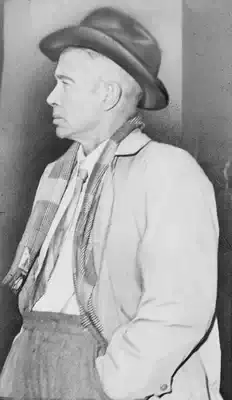
E. E. Cummings
when serpents bargain
when serpents bargain
when serpents bargain for the right to squirm
and the sun strikes to gain a living wage when
thorns regard their roses with alarm
and rainbows are insured against old age
when every thrush may sing no new moon in
if all screech-owls have not okayed his voice
-and any wave signs on the dotted line
or else an ocean is compelled to close
when the oak begs permission of the birch
to make an acorn - valleys accuse their
mountains of having altitude - and march
denounces april as a saboteur
then we'll believe in that incredible
unanimal mankind (and not until)
when serpents bargain for the right to squirm
and the sun strikes to gain a living wage when
thorns regard their roses with alarm
and rainbows are insured against old age
when every thrush may sing no new moon in
if all screech-owls have not okayed his voice
-and any wave signs on the dotted line
or else an ocean is compelled to close
when the oak begs permission of the birch
to make an acorn - valleys accuse their
mountains of having altitude - and march
denounces april as a saboteur
then we'll believe in that incredible
unanimal mankind (and not until)
583
E. E. Cummings
i sing of Olaf glad and big
i sing of Olaf glad and big
i sing of Olaf glad and big
whose warmest heart recoiled at war:
a conscientious object-or
his wellbelovéd colonel (trig
westpointer most succinctly bred)
took erring Olaf soon in hand;
but-though an host of overjoyed
noncoms (first knocking on the head
him) do through icy waters roll
that helplessness which others stroke
with brushes recently employed
anent this muddy toiletbowl,
while kindred intellects evoke
allegiance per blunt instruments-
Olaf (being to all intents
a corpse and wanting any rag
upon what God unto him gave)
responds, without getting annoyed
"I will not kiss your fucking flag"
straightaway the silver bird looked grave
(departing hurriedly to shave)
but-though all kinds of officers
(a yearning nation's blueeyed pride)
their passive prey did kick and curse
until for wear their clarion
voices and boots were much the worse,
and egged the firstclassprivates on
his rectum wickedly to tease
by means of skillfully applied
bayonets roasted hot with heat-
Olaf (upon what were once knees)
does almost ceaselessly repeat
"there is some shit I will not eat"
our president,being of which
assertions duly notified
threw the yellowsonofabitch
into a dungeon,where he died
Christ (of His mercy infinite)
i pray to see;and Olaf,too
preponderatingly because
unless statistics lie he was
more brave than me:more blond than you
i sing of Olaf glad and big
whose warmest heart recoiled at war:
a conscientious object-or
his wellbelovéd colonel (trig
westpointer most succinctly bred)
took erring Olaf soon in hand;
but-though an host of overjoyed
noncoms (first knocking on the head
him) do through icy waters roll
that helplessness which others stroke
with brushes recently employed
anent this muddy toiletbowl,
while kindred intellects evoke
allegiance per blunt instruments-
Olaf (being to all intents
a corpse and wanting any rag
upon what God unto him gave)
responds, without getting annoyed
"I will not kiss your fucking flag"
straightaway the silver bird looked grave
(departing hurriedly to shave)
but-though all kinds of officers
(a yearning nation's blueeyed pride)
their passive prey did kick and curse
until for wear their clarion
voices and boots were much the worse,
and egged the firstclassprivates on
his rectum wickedly to tease
by means of skillfully applied
bayonets roasted hot with heat-
Olaf (upon what were once knees)
does almost ceaselessly repeat
"there is some shit I will not eat"
our president,being of which
assertions duly notified
threw the yellowsonofabitch
into a dungeon,where he died
Christ (of His mercy infinite)
i pray to see;and Olaf,too
preponderatingly because
unless statistics lie he was
more brave than me:more blond than you
688
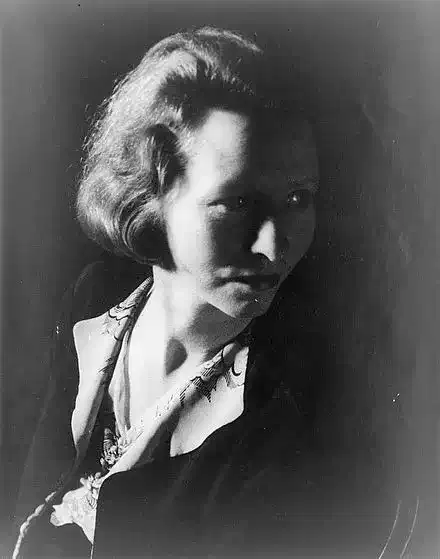
Edna St. Vincent Millay
We Talk of Taxes...
We Talk of Taxes...
We talk of taxes, and I call you friend;
Well, such you are, -- but well enough we know
How thick about us root, how rankly grow
Those subtle weeds no man has need to tend,
That flourish through neglect, and soon must send
Perfume too sweet upon us and overthrow
Our steady senses; how such matters go
We are aware, and how such matters end.
Yet shall be told no meagre passion here;
With lovers such as we forevermore
Isolde drinks the draught, and Guinevere
Receives the Table's ruin through her door,
Francesca, with the loud surf at her ear,
Lets fall the coloured book upon the floor.
We talk of taxes, and I call you friend;
Well, such you are, -- but well enough we know
How thick about us root, how rankly grow
Those subtle weeds no man has need to tend,
That flourish through neglect, and soon must send
Perfume too sweet upon us and overthrow
Our steady senses; how such matters go
We are aware, and how such matters end.
Yet shall be told no meagre passion here;
With lovers such as we forevermore
Isolde drinks the draught, and Guinevere
Receives the Table's ruin through her door,
Francesca, with the loud surf at her ear,
Lets fall the coloured book upon the floor.
328