

Poems in this theme
Ethics and Morality
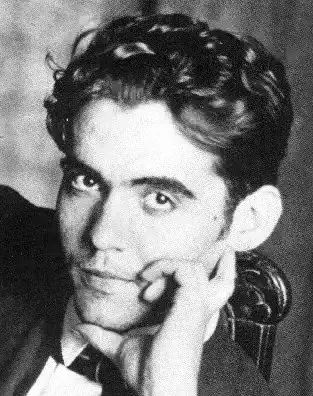
Federico García Lorca
Balada Amarilla IV
Balada Amarilla IV
Sobre el cielo
de las margaritas ando.
Yo imagino esta tarde
que soy santo.
Me pusieron la luna
en las manos.
Yo la puse otra vez
en los espacios
y el Señor me premió
con la rosa y el halo.
Sobre el cielo
de las margaritas ando.
Y ahora voy
por este campo
a librar a las niñas
de galanes malos
y dar monedas de oro
a todos los muchachos.
Sobre el cielo
de las margaritas ando.
Sobre el cielo
de las margaritas ando.
Yo imagino esta tarde
que soy santo.
Me pusieron la luna
en las manos.
Yo la puse otra vez
en los espacios
y el Señor me premió
con la rosa y el halo.
Sobre el cielo
de las margaritas ando.
Y ahora voy
por este campo
a librar a las niñas
de galanes malos
y dar monedas de oro
a todos los muchachos.
Sobre el cielo
de las margaritas ando.
562

Ezra Pound
These Fought in Any Case
These Fought in Any Case
These fought in any case,
and some believing
pro domo, in any case .....
Died some, pro patria,
walked eye-deep in hell
believing in old men's lies, then unbelieving
came home, home to a lie,
home to many deceits,
home to old lies and new infamy;
usury age-old and age-thick
and liars in public places.
Daring as never before, wastage as never before.
Young blood and high blood,
fair cheeks, and fine bodies;
fortitude as never before
frankness as never before,
disillusions as never told in the old days,
hysterias, trench confessions,
laughter out of dead bellies.
These fought in any case,
and some believing
pro domo, in any case .....
Died some, pro patria,
walked eye-deep in hell
believing in old men's lies, then unbelieving
came home, home to a lie,
home to many deceits,
home to old lies and new infamy;
usury age-old and age-thick
and liars in public places.
Daring as never before, wastage as never before.
Young blood and high blood,
fair cheeks, and fine bodies;
fortitude as never before
frankness as never before,
disillusions as never told in the old days,
hysterias, trench confessions,
laughter out of dead bellies.
479
Ezra Pound
The Seafarer
The Seafarer
(From the early Anglo-Saxon text)
May I for my own self song's truth reckon,
Journey's jargon, how I in harsh days
Hardship endured oft.
Bitter breast-cares have I abided,
Known on my keel many a care's hold,
And dire sea-surge, and there I oft spent
Narrow nightwatch nigh the ship's head
While she tossed close to cliffs. Coldly afflicted,
My feet were by frost benumbed.
Chill its chains are; chafing sighs
Hew my heart round and hunger begot
Mere-weary mood. Lest man know not
That he on dry land loveliest liveth,
List how I, care-wretched, on ice-cold sea,
Weathered the winter, wretched outcast
Deprived of my kinsmen;
Hung with hard ice-flakes, where hail-scur flew,
There I heard naught save the harsh sea
And ice-cold wave, at whiles the swan cries,
Did for my games the gannet's clamour,
Sea-fowls, loudness was for me laughter,
The mews' singing all my mead-drink.
Storms, on the stone-cliffs beaten, fell on the stern
In icy feathers; full oft the eagle screamed
With spray on his pinion.
Not any protector
May make merry man faring needy.
This he little believes, who aye in winsome life
Abides 'mid burghers some heavy business,
Wealthy and wine-flushed, how I weary oft
Must bide above brine.
Neareth nightshade, snoweth from north,
Frost froze the land, hail fell on earth then
Corn of the coldest. Nathless there knocketh now
The heart's thought that I on high streams
The salt-wavy tumult traverse alone.
Moaneth alway my mind's lust
That I fare forth, that I afar hence
Seek out a foreign fastness.
For this there's no mood-lofty man over earth's midst,
Not though he be given his good, but will have in his youth greed;
Nor his deed to the daring, nor his king to the faithful
But shall have his sorrow for sea-fare
Whatever his lord will.
He hath not heart for harping, nor in ring-having
Nor winsomeness to wife, nor world's delight
Nor any whit else save the wave's slash,
Yet longing comes upon him to fare forth on the water.
Bosque taketh blossom, cometh beauty of berries,
Fields to fairness, land fares brisker,
All this admonisheth man eager of mood,
The heart turns to travel so that he then thinks
On flood-ways to be far departing.
Cuckoo calleth with gloomy crying,
He singeth summerward, bodeth sorrow,
The bitter heart's blood. Burgher knows not --
He the prosperous man -- what some perform
Where wandering them widest draweth.
So that but now my heart burst from my breast-lock,
My mood 'mid the mere-flood,
Over the whale's acre, would wander wide.
On earth's shelter cometh oft to me,
Eager and ready, the crying lone-flyer,
Whets for the whale-path the heart irresistibly,
O'er tracks of ocean; seeing that anyhow
My lord deems to me this dead life
On loan and on land, I believe not
That any earth-weal eternal standeth
Save there be somewhat calamitous
That, ere a man's tide go, turn it to twain.
Disease or oldness or sword-hate
Beats out the breath from doom-gripped body.
And for this, every earl whatever, for those speaking after --
Laud of the living, boasteth some last word,
That he will work ere he pass onward,
Frame on the fair earth 'gainst foes his malice,
Daring ado, ...
So that all men shall honour him after
And his laud beyond them remain 'mid the English,
Aye, for ever, a lasting life's-blast,
Delight mid the doughty.
Days little durable,
And all arrogance of earthen riches,
There come now no kings nor Cæsars
Nor gold-giving lords like those gone.
Howe'er in mirth most magnified,
Whoe'er lived in life most lordliest,
Drear all this excellence, delights undurable!
Waneth the watch, but the world holdeth.
Tomb hideth trouble. The blade is layed low.
Earthly glory ageth and seareth.
No man at all going the earth's gait,
But age fares against him, his face paleth,
Grey-haired he groaneth, knows gone companions,
Lordly men are to earth o'ergiven,
Nor may he then the flesh-cover, whose life ceaseth,
Nor eat the sweet nor feel the sorry,
Nor stir hand nor think in mid heart,
And though he strew the grave with gold,
His born brothers, their buried bodies
Be an unlikely treasure hoard.
(From the early Anglo-Saxon text)
May I for my own self song's truth reckon,
Journey's jargon, how I in harsh days
Hardship endured oft.
Bitter breast-cares have I abided,
Known on my keel many a care's hold,
And dire sea-surge, and there I oft spent
Narrow nightwatch nigh the ship's head
While she tossed close to cliffs. Coldly afflicted,
My feet were by frost benumbed.
Chill its chains are; chafing sighs
Hew my heart round and hunger begot
Mere-weary mood. Lest man know not
That he on dry land loveliest liveth,
List how I, care-wretched, on ice-cold sea,
Weathered the winter, wretched outcast
Deprived of my kinsmen;
Hung with hard ice-flakes, where hail-scur flew,
There I heard naught save the harsh sea
And ice-cold wave, at whiles the swan cries,
Did for my games the gannet's clamour,
Sea-fowls, loudness was for me laughter,
The mews' singing all my mead-drink.
Storms, on the stone-cliffs beaten, fell on the stern
In icy feathers; full oft the eagle screamed
With spray on his pinion.
Not any protector
May make merry man faring needy.
This he little believes, who aye in winsome life
Abides 'mid burghers some heavy business,
Wealthy and wine-flushed, how I weary oft
Must bide above brine.
Neareth nightshade, snoweth from north,
Frost froze the land, hail fell on earth then
Corn of the coldest. Nathless there knocketh now
The heart's thought that I on high streams
The salt-wavy tumult traverse alone.
Moaneth alway my mind's lust
That I fare forth, that I afar hence
Seek out a foreign fastness.
For this there's no mood-lofty man over earth's midst,
Not though he be given his good, but will have in his youth greed;
Nor his deed to the daring, nor his king to the faithful
But shall have his sorrow for sea-fare
Whatever his lord will.
He hath not heart for harping, nor in ring-having
Nor winsomeness to wife, nor world's delight
Nor any whit else save the wave's slash,
Yet longing comes upon him to fare forth on the water.
Bosque taketh blossom, cometh beauty of berries,
Fields to fairness, land fares brisker,
All this admonisheth man eager of mood,
The heart turns to travel so that he then thinks
On flood-ways to be far departing.
Cuckoo calleth with gloomy crying,
He singeth summerward, bodeth sorrow,
The bitter heart's blood. Burgher knows not --
He the prosperous man -- what some perform
Where wandering them widest draweth.
So that but now my heart burst from my breast-lock,
My mood 'mid the mere-flood,
Over the whale's acre, would wander wide.
On earth's shelter cometh oft to me,
Eager and ready, the crying lone-flyer,
Whets for the whale-path the heart irresistibly,
O'er tracks of ocean; seeing that anyhow
My lord deems to me this dead life
On loan and on land, I believe not
That any earth-weal eternal standeth
Save there be somewhat calamitous
That, ere a man's tide go, turn it to twain.
Disease or oldness or sword-hate
Beats out the breath from doom-gripped body.
And for this, every earl whatever, for those speaking after --
Laud of the living, boasteth some last word,
That he will work ere he pass onward,
Frame on the fair earth 'gainst foes his malice,
Daring ado, ...
So that all men shall honour him after
And his laud beyond them remain 'mid the English,
Aye, for ever, a lasting life's-blast,
Delight mid the doughty.
Days little durable,
And all arrogance of earthen riches,
There come now no kings nor Cæsars
Nor gold-giving lords like those gone.
Howe'er in mirth most magnified,
Whoe'er lived in life most lordliest,
Drear all this excellence, delights undurable!
Waneth the watch, but the world holdeth.
Tomb hideth trouble. The blade is layed low.
Earthly glory ageth and seareth.
No man at all going the earth's gait,
But age fares against him, his face paleth,
Grey-haired he groaneth, knows gone companions,
Lordly men are to earth o'ergiven,
Nor may he then the flesh-cover, whose life ceaseth,
Nor eat the sweet nor feel the sorry,
Nor stir hand nor think in mid heart,
And though he strew the grave with gold,
His born brothers, their buried bodies
Be an unlikely treasure hoard.
657
Ezra Pound
The Encounter
The Encounter
All the while they were talking the new morality
Her eyes explored me.
And when I rose to go
Her fingers were like the tissue
Of a Japanese paper napkin.
All the while they were talking the new morality
Her eyes explored me.
And when I rose to go
Her fingers were like the tissue
Of a Japanese paper napkin.
441
Ezra Pound
The Bellaires
The Bellaires
The good Bellaires
Do not understand the conduct of this world's affairs.
In fact they understood them so badly
That they have had to cross the Channel.
Nine lawyers, four counsels, five judges and three
proctors of the King,
Together with the respective wives, husbands, sisters
and heterogeneous connections of the good Bellaires,
Met to discuss their affairs;
But the good Bellaires have so little understood their
affairs
That now there is no one at all
Who can understand any affair of theirs. Yet
Fourteen hunters still eat in the stables of
The good Squire Bellaire;
But these may not suffer attainder,
For they may not belong to the good Squire Bellaire
But to his wife.
On the contrary, if they do not belong to his wife,
He will plead
A 'freedom from attainder'
For twelve horses and also for twelve boarhounds
From Charles the Fourth;
And a further freedom for the remainder
Of horses, from Henry the Fourth.
But the judges,
Being free of mediaeval scholarship,
Will pay no attention to this,
And there will be only the more confusion,
Replevin, estoppel, espavin and what not.
Nine lawyers, four counsels, etc.,
Met to discuss their affairs,
But the sole result was bills
From lawyers to whom no one was indebted,
And even the lawyers
Were uncertain who was supposed to be indebted to
them.
Wherefore the good Squire Bellaire
Resides now at Agde and Biaucaire,
To Carcassonne, Pui, and Alais
He fareth from day to day,
Or takes the sea air
Between Marseilles
And Beziers.
And for all this I have considerable regret,
For the good Bellaires
Are very charming people.
The good Bellaires
Do not understand the conduct of this world's affairs.
In fact they understood them so badly
That they have had to cross the Channel.
Nine lawyers, four counsels, five judges and three
proctors of the King,
Together with the respective wives, husbands, sisters
and heterogeneous connections of the good Bellaires,
Met to discuss their affairs;
But the good Bellaires have so little understood their
affairs
That now there is no one at all
Who can understand any affair of theirs. Yet
Fourteen hunters still eat in the stables of
The good Squire Bellaire;
But these may not suffer attainder,
For they may not belong to the good Squire Bellaire
But to his wife.
On the contrary, if they do not belong to his wife,
He will plead
A 'freedom from attainder'
For twelve horses and also for twelve boarhounds
From Charles the Fourth;
And a further freedom for the remainder
Of horses, from Henry the Fourth.
But the judges,
Being free of mediaeval scholarship,
Will pay no attention to this,
And there will be only the more confusion,
Replevin, estoppel, espavin and what not.
Nine lawyers, four counsels, etc.,
Met to discuss their affairs,
But the sole result was bills
From lawyers to whom no one was indebted,
And even the lawyers
Were uncertain who was supposed to be indebted to
them.
Wherefore the good Squire Bellaire
Resides now at Agde and Biaucaire,
To Carcassonne, Pui, and Alais
He fareth from day to day,
Or takes the sea air
Between Marseilles
And Beziers.
And for all this I have considerable regret,
For the good Bellaires
Are very charming people.
428
Ezra Pound
Song Of The Six Hundred M.P.'S
Song Of The Six Hundred M.P.'S
‘We are 'ere met together
in this momentous hower,
Ter lick th' bankers' dirty boots
an' keep the Bank in power.’
We are 'ere met together
ter grind the same old axes
And keep the people in its place
a'payin' us the taxes.
We are six hundred beefy men
(but mostly gas and suet)
An’ every year we meet to let
some other feller do it.'
I see their 'igh 'ats on the seats
an' them sprawling on the benches
And thinks about a Rowton 'ouse
and a lot of small street stenches.
'O Britain, muvver of parliaments,
'ave you seen yer larst sweet litter?
Could yeh swap th' brains of orl this lot
fer 'arft a pint o' bitter?'
‘I couldn't,' she sez, ‘an' I aint tried,
They're me own,' she sez to me,
‘As footlin' a lot as was ever spawned
to defend democracy.'
‘We are 'ere met together
in this momentous hower,
Ter lick th' bankers' dirty boots
an' keep the Bank in power.’
We are 'ere met together
ter grind the same old axes
And keep the people in its place
a'payin' us the taxes.
We are six hundred beefy men
(but mostly gas and suet)
An’ every year we meet to let
some other feller do it.'
I see their 'igh 'ats on the seats
an' them sprawling on the benches
And thinks about a Rowton 'ouse
and a lot of small street stenches.
'O Britain, muvver of parliaments,
'ave you seen yer larst sweet litter?
Could yeh swap th' brains of orl this lot
fer 'arft a pint o' bitter?'
‘I couldn't,' she sez, ‘an' I aint tried,
They're me own,' she sez to me,
‘As footlin' a lot as was ever spawned
to defend democracy.'
447
Ezra Pound
Society
Society
The family position was waning,
And on this account the little Aurelia,
Who had laughed on eighteen summers,
Now bears the palsied contact of Phidippus.
The family position was waning,
And on this account the little Aurelia,
Who had laughed on eighteen summers,
Now bears the palsied contact of Phidippus.
512
Ezra Pound
Sestina: Altaforte
Sestina: Altaforte
Loquitur: En Bertrans de Born.
Dante Alighieri put this man in hell for that he was a
stirrer-up of strife.
Eccovi!
Judge ye!
Have I dug him up again?
The scene in at his castle, Altaforte. "Papiols" is his jongleur.
"The Leopard," the device of Richard (Cúur de Lion).
I
Damn it all! all this our South stinks peace.
You whoreson dog, Papiols, come! Let's to music!
I have no life save when the swords clash.
But ah! when I see the standards gold, vair, purple, opposing
And the broad fields beneath them turn crimson,
Then howl I my heart nigh mad with rejoicing.
II
In hot summer have I great rejoicing
When the tempests kill the earth's foul peace,
And the lightnings from black heav'n flash crimson,
And the fierce thunders roar me their music
And the winds shriek through the clouds mad, opposing,
And through all the riven skies God's swords clash.
III
Hell grant soon we hear again the swords clash!
And the shrill neighs of destriers in battle rejoicing,
Spiked breast to spiked breast opposing!
Better one hour's stour than a year's peace
With fat boards, bawds, wine and frail music!
Bah! there's no wine like the blood's crimson!
IV
And I love to see the sun rise blood-crimson.
And I watch his spears through the dark clash
And it fills all my heart with rejoicing
And pries wide my mouth with fast music
When I see him so scorn and defy peace,
His lone might 'gainst all darkness opposing.
V
The man who fears war and squats opposing
My words for stour, hath no blood of crimson
But is fit only to rot in womanish peace
Far from where worth's won and the swords clash
For the death of such sluts I go rejoicing;
Yea, I fill all the air with my music.
VI
Papiols, Papiols, to the music!
There's no sound like to swords swords opposing,
No cry like the battle's rejoicing
When our elbows and swords drip the crimson
And our charges 'gainst "The Leopard's" rush clash.
May God damn for ever all who cry "Peace!"
VII
And let the music of the swords make them crimson!
Hell grant soon we hear again the swords clash!
Hell blot black for always the thought "Peace!"
Loquitur: En Bertrans de Born.
Dante Alighieri put this man in hell for that he was a
stirrer-up of strife.
Eccovi!
Judge ye!
Have I dug him up again?
The scene in at his castle, Altaforte. "Papiols" is his jongleur.
"The Leopard," the device of Richard (Cúur de Lion).
I
Damn it all! all this our South stinks peace.
You whoreson dog, Papiols, come! Let's to music!
I have no life save when the swords clash.
But ah! when I see the standards gold, vair, purple, opposing
And the broad fields beneath them turn crimson,
Then howl I my heart nigh mad with rejoicing.
II
In hot summer have I great rejoicing
When the tempests kill the earth's foul peace,
And the lightnings from black heav'n flash crimson,
And the fierce thunders roar me their music
And the winds shriek through the clouds mad, opposing,
And through all the riven skies God's swords clash.
III
Hell grant soon we hear again the swords clash!
And the shrill neighs of destriers in battle rejoicing,
Spiked breast to spiked breast opposing!
Better one hour's stour than a year's peace
With fat boards, bawds, wine and frail music!
Bah! there's no wine like the blood's crimson!
IV
And I love to see the sun rise blood-crimson.
And I watch his spears through the dark clash
And it fills all my heart with rejoicing
And pries wide my mouth with fast music
When I see him so scorn and defy peace,
His lone might 'gainst all darkness opposing.
V
The man who fears war and squats opposing
My words for stour, hath no blood of crimson
But is fit only to rot in womanish peace
Far from where worth's won and the swords clash
For the death of such sluts I go rejoicing;
Yea, I fill all the air with my music.
VI
Papiols, Papiols, to the music!
There's no sound like to swords swords opposing,
No cry like the battle's rejoicing
When our elbows and swords drip the crimson
And our charges 'gainst "The Leopard's" rush clash.
May God damn for ever all who cry "Peace!"
VII
And let the music of the swords make them crimson!
Hell grant soon we hear again the swords clash!
Hell blot black for always the thought "Peace!"
490
Ezra Pound
Salvationists
Salvationists
I
Come, my songs, let us speak of perfection
We shall get ourselves rather disliked.
II
Ah yes, my songs, let us resurrect
The very excellent term Rusticus.
Let us apply it in all its opprobrium
To those to whom it applies.
And you may decline to make them immortal,
For we shall consider them and their state
In delicate
Opulent silence.
III
Come, my songs,
Let us take arms against this sea of stupidities-
Beginning with Mumpodorus;
And against this sea of vulgarities
Beginning with Nimmim;
And against this sea of imbeciles
All the Bulmenian literati.
I
Come, my songs, let us speak of perfection
We shall get ourselves rather disliked.
II
Ah yes, my songs, let us resurrect
The very excellent term Rusticus.
Let us apply it in all its opprobrium
To those to whom it applies.
And you may decline to make them immortal,
For we shall consider them and their state
In delicate
Opulent silence.
III
Come, my songs,
Let us take arms against this sea of stupidities-
Beginning with Mumpodorus;
And against this sea of vulgarities
Beginning with Nimmim;
And against this sea of imbeciles
All the Bulmenian literati.
442
Ezra Pound
Salutation The Second
Salutation The Second
You were praised, my books,
because I had just come from the country;
I was twenty years behind the times
so you found an audience ready.
I do not disown you,
do not you disown your progeny.
Here they stand without quaint devices,
Here they are with nothing archaic about them.
Observe the irritation in general:
‘Is this’ they say, 'the nonsense
that we expect of poets?’
'Where is the Picturesque ?'
‘Where is the vertigo of emotion?'
‘No! his first work was the best.’
'Poor Dear! he has lost his illusions.’
Go, little naked and impudent songs,
Go with a light foot!
(Or with two light feet, if it please you!)
Go and dance shamelessly!
Go with an impertinent frolic!
Greet the grave and the stodgy,
Salute them with your thumbs at your noses.
Here are your bells and confetti.
Go! rejuvenate things!
Rejuvenate even 'The Spectator.’
Go! and make cat calls!
Dance and make people blush,
Dance the dance of the phallus
and tell anecdotes of Cybele!
Speak of the indecorous conduct of the Gods!
(Tell it to Mr. Strachey)
Ruffle the skirts of prudes,
speak of their knees and ankles.
But, above all, go to practical people
go! jangle their door-bells!
Say that you do no work
and that you will live forever.
You were praised, my books,
because I had just come from the country;
I was twenty years behind the times
so you found an audience ready.
I do not disown you,
do not you disown your progeny.
Here they stand without quaint devices,
Here they are with nothing archaic about them.
Observe the irritation in general:
‘Is this’ they say, 'the nonsense
that we expect of poets?’
'Where is the Picturesque ?'
‘Where is the vertigo of emotion?'
‘No! his first work was the best.’
'Poor Dear! he has lost his illusions.’
Go, little naked and impudent songs,
Go with a light foot!
(Or with two light feet, if it please you!)
Go and dance shamelessly!
Go with an impertinent frolic!
Greet the grave and the stodgy,
Salute them with your thumbs at your noses.
Here are your bells and confetti.
Go! rejuvenate things!
Rejuvenate even 'The Spectator.’
Go! and make cat calls!
Dance and make people blush,
Dance the dance of the phallus
and tell anecdotes of Cybele!
Speak of the indecorous conduct of the Gods!
(Tell it to Mr. Strachey)
Ruffle the skirts of prudes,
speak of their knees and ankles.
But, above all, go to practical people
go! jangle their door-bells!
Say that you do no work
and that you will live forever.
628
Ezra Pound
Safe And Sound
Safe And Sound
My name is Nunty Cormorant
And my finance is sound,
I lend you Englishmen hot air
At one and three the pound.
I lend you Englishmen hot air
And I get all the beef
While you stalwart sheep of freedom
Are on the poor relief.
Wot oh! my buxom hearties,
What ain't got work no more
And don't know what bug is a-bitin'
To keep your feelin's sore,
There is blokes in automobiles
And their necks sunk into fur
That keep on gettin' usury
To make 'em cosier.
I read these fellers puts it
Most tidily away
And then lends out their printed slips
To keep the wolf away
From the vaults and combination
Safes in Thread and Needle street.
I wouldn't 'ave the needle
If I had more grub to eat.
Oh the needle is your portion,
My sufferin' fellow men,
Till the King shall take the notion
To own his coin again.
My name is Nunty Cormorant
And my finance is sound,
I lend you Englishmen hot air
At one and three the pound.
I lend you Englishmen hot air
And I get all the beef
While you stalwart sheep of freedom
Are on the poor relief.
Wot oh! my buxom hearties,
What ain't got work no more
And don't know what bug is a-bitin'
To keep your feelin's sore,
There is blokes in automobiles
And their necks sunk into fur
That keep on gettin' usury
To make 'em cosier.
I read these fellers puts it
Most tidily away
And then lends out their printed slips
To keep the wolf away
From the vaults and combination
Safes in Thread and Needle street.
I wouldn't 'ave the needle
If I had more grub to eat.
Oh the needle is your portion,
My sufferin' fellow men,
Till the King shall take the notion
To own his coin again.
461
Ezra Pound
Poem
Poem
(Abbreviated from the conversation with Mr. T E H.
Over the flat slope of St Eloi
A wide wall of sandbags.
Night,
In the silence desultory men
Pottering over small fires, cleaning their mess-tins:
To and fro, from the lines,
Men walk as on Piccadilly,
Making paths in the dark,
Through scattered dead horses,
Over a dead Belgian’s body.
The Germans have rockets. The English have no rockets,
Behind the lines, cannon, hidden, lying back miles.
Before the line, chaos.
My mind is a corridor. The minds about me are
corridors.
Nothing suggests itself. There is nothing to do but keep on.
(Abbreviated from the conversation with Mr. T E H.
Over the flat slope of St Eloi
A wide wall of sandbags.
Night,
In the silence desultory men
Pottering over small fires, cleaning their mess-tins:
To and fro, from the lines,
Men walk as on Piccadilly,
Making paths in the dark,
Through scattered dead horses,
Over a dead Belgian’s body.
The Germans have rockets. The English have no rockets,
Behind the lines, cannon, hidden, lying back miles.
Before the line, chaos.
My mind is a corridor. The minds about me are
corridors.
Nothing suggests itself. There is nothing to do but keep on.
445
Ezra Pound
Near Perigord
Near Perigord
I
You'd have men's hearts up from the dust
And tell their secrets, Messire Cino,
Rigkt enough? Then read between the lines of Uc St. Circ,
Solve me the riddle, for you know the tale.
Bertrans, En Bertrans, left a fine canzone:
6Maent, I love you, you have turned me out.
The voice at Montfort, Lady Agnes' hair,
Bel Miral's stature, the viscountess' throat,
Set all together, are not worthy of you. . . .'
And all the while you sing out that canzone,
Think you that Maent lived at Montaignac,
One at Chalais, another at Malemort
Hard over Brive for every lady a castle,
Each place strong.
Oh, is it easy enough?
Tairiran held hall in Montaignac,
His brother-in-law was all there was of power
In Perigord, and this good union
Gobbled all the land, and held it later for some hundred years.
And our En Bertrans was in Altafort,
Hub of the wheel, the stirrer-up of strife,
As caught by Dante in the last wallow of hell
The headless trunk 'that made its head a lamp',
For separation wrought out separation,
And he who set the strife between brother and brother
And had his way with the old English king,,
Viced in such torture for the 'counterpass'.
How would you live, with neighbours set about you
Poictiers and Brive, untaken Rochecouart,
Spread like the finger-tips of one frail hand;
And you on that great mountain of a palm
Not a neat ledge, not Foix between its streams,
But one huge back half-covered up with pine,
Worked for and snatched from the string-purse of Born
The four round towers, four brothers mostly fools
What could he do but play the desperate chess,
And stir old grudges?
‘Pawn your castles, lords!
Let the Jews pay.'
And the great scene
(That, maybe, never happened!)
Beaten at last,
Before the hard old king:
'Your son, ah, since he died
''My wit and worth are cobwebs brushed aside
'In the full flare of grief. Do what you will.'
Take the whole man, and ravel out the story.
He loved this lady in castle Montaignac ?
The castle flanked him he had need of it.
You read to-day, how long the overlords of Perigord,
The Talleyrands, have held the place; it was no transient fiction.
And Maent failed him? Or saw through the scheme?
And all his net-like thought of new alliance?
Chalais is high, a-level with the poplars.
Its lowest stones just meet the valley tips
Where the low Dronne is filled with water-lilies.
And Rochecouart can match it, stronger yet,
The very spur's end, built on sheerest cliff,
And Malemort keeps its close hold on Brive,
While Born, his own close purse, his rabbit warren,
His subterranean chamber with a dozen doors,
A-bristle with antennae to feel roads,
To sniff the traffic into Perigord.
And that hard phalanx, that unbroken line,
The ten good miles from there to Maent's castle,
All of his flank how could he do without her?
And all the road to Cahors, to Toulouse?
would he do without her?
‘Papiol,
Go forthright singing Anhes, Cembelins.
There is a throat; ah, there are two white hands;
There is a trellis full of early roses,
And all my heart is bound about with love.
Where am I come with compound flatteries
What doors are open to fine compliment?'
And every one half jealous of Maent?
He wrote the catch to pit their jealousies
Against her; give her pride in them?
Take his own speech, make what you will of it
And still the knot, the first knot, of Maent?
Is it a love poem? Did he sing of war?
Is it an intrigue to run subtly out,
Born of a jongleur's tongue, freely to pass
Up and about and in and out the land,
Mark him a craftsman and a strategist?
(St. Leider had done as much as Polhonac,
Singing a different stave, as closely hidden.)
Oh, there is precedent, legal tradition,
To sing one thing when your song means another,
'Et albirar ab lor bordon '
Foix' count knew that. What is Sir Bertrans' singing?
Maent, Maent, and yet again Maent,
Or war and broken heaumes and politics?
II
End fact. Try fiction. Let us say we see
En Bertrans, a tower-room at Hautefort,
Sunset, the ribbon-like road lies, in red cross-light,
Southward toward Montaignac, and he bends at a table
Scribbling, swearing between his teeth; by his left hand
Lie little strips of parchment covered over,
Scratched and erased with al and ochaisos.
Testing his list of rhymes, a lean man? Bilious?
With a red straggling beard?
And the green cat's-eye lifts toward Montaignac.
Or take his 'magnet' singer setting out,
Dodging his way past Aubeterre, singing at Chalais
In the vaulted hall,
Or, by a lichened tree at Rochecouart
Aimlessly watching a hawk above the valleys,
Waiting his turn in the mid-summer evening,
Thinking of Aelis, whom he loved heart and soul . . .
To find her half alone, Montfort away,
And a brown, placid, hated woman visiting her,
Spoiling his visit, with a year before the next one.
Little enough ?
Or carry him forward. 'Go through all the courts,
My Magnet,' Bertrans had said.
We came to Ventadour
In the mid love court, he sings out the canzon,
No one hears save Arrimon Luc D'Esparo
No one hears aught save the gracious sound of compliments.
Sir Arrimon counts on his fingers, Montfort,
Rochecouart, Chalais, the rest, the tactic,
Malemort, guesses beneath, sends wrord to Cceur-de-Lion:
The compact, de Born smoked out, trees felled
About his castle, cattle driven out!
Or no one sees it, and En Bertrans prospered?
And ten years after, or twenty, as you will,
Arnaut and Richard lodge beneath Chalus:
The dull round towers encroaching on the field,
The tents tight drawn, horses at tether
Further and out of reach, the purple night,
The crackling of small fires, the bannerets,
The lazy leopards on the largest banner,
Stray gleams on hanging mail, an armourer's torch-flare
Melting on steel.
And in the quietest space
They probe old scandals, say de Born is dead;
And we've the gossip (skipped six hundred years).
Richard shall die to-morrow leave him there
Talking oftrobar clus with Daniel.
And the 'best craftsman' sings out his friend's song,
Envies its vigour . . . and deplores the technique,
Dispraises his own skill? That's as you will.
And they discuss the dead man,
Plantagenet puts the riddle: 'Did he love her?'
And Arnaut parries: 'Did he love your sister?
True, he has praised her, but in some opinion
He wrote that praise only to show he had
The favour of your party; had been well received.'
'You knew the man.'
‘You knew the man.'
'I am an artist, you have tried both metiers.'
'You were born near him.'
'Do we know our friends?'
'Say that he saw the castles, say that he loved Maent!'
'Say that he loved her, does it solve the riddle?'
End the discussion, Richard goes out next day
And gets a quarrel-bolt shot through his vizard,
Pardons the bowman, dies, ,
Ends our discussion. Arnaut ends
‘In sacred odour' (that's apocryphal!)
And we can leave the talk till Dante writes:
Surely I saw, and still before my eyes
Goes on that headless trunk, that bears for light
Its own head swinging, gripped by the dead hair,
And like a swinging lamp that says, 'Ah me!
I severed men, my head and heart
Ye see here severed, my life's counterpart.’
Or take En Bertrans?
III
Bewildering spring, and by the Auvezere
Poppies and day's eyes in the green 6mail
Rose over us; and we knew all that stream,
And our two horses had traced out the valleys;
Knew the low flooded lands squared out with poplars,
In the young days when the deep sky befriended.
And great wings beat above us in the twilight,
And the great wheels in heaven
Bore us together . . . surging . . . and apart . . .
Believing we should meet with lips and hands,
High, high and sure . . . and then the counter-thrust:
‘Why do you love me? Will you always love me?
But I am like the grass, I can not love you.'
Or, ‘Love, and I love and love you,
And hate your mind, not you, your soul, your hands.'
So to this last estrangement, Tairiran!
There shut; up in his castle, Tairiran's,
She who had nor ears nor tongue save in her hands,
Gone ah, gone untouched, unreachable !
She who could never live save through one person,
She who could never speak save to one person,
And all the rest of her a shifting change,
A broken bundle of mirrors . . . !
I
You'd have men's hearts up from the dust
And tell their secrets, Messire Cino,
Rigkt enough? Then read between the lines of Uc St. Circ,
Solve me the riddle, for you know the tale.
Bertrans, En Bertrans, left a fine canzone:
6Maent, I love you, you have turned me out.
The voice at Montfort, Lady Agnes' hair,
Bel Miral's stature, the viscountess' throat,
Set all together, are not worthy of you. . . .'
And all the while you sing out that canzone,
Think you that Maent lived at Montaignac,
One at Chalais, another at Malemort
Hard over Brive for every lady a castle,
Each place strong.
Oh, is it easy enough?
Tairiran held hall in Montaignac,
His brother-in-law was all there was of power
In Perigord, and this good union
Gobbled all the land, and held it later for some hundred years.
And our En Bertrans was in Altafort,
Hub of the wheel, the stirrer-up of strife,
As caught by Dante in the last wallow of hell
The headless trunk 'that made its head a lamp',
For separation wrought out separation,
And he who set the strife between brother and brother
And had his way with the old English king,,
Viced in such torture for the 'counterpass'.
How would you live, with neighbours set about you
Poictiers and Brive, untaken Rochecouart,
Spread like the finger-tips of one frail hand;
And you on that great mountain of a palm
Not a neat ledge, not Foix between its streams,
But one huge back half-covered up with pine,
Worked for and snatched from the string-purse of Born
The four round towers, four brothers mostly fools
What could he do but play the desperate chess,
And stir old grudges?
‘Pawn your castles, lords!
Let the Jews pay.'
And the great scene
(That, maybe, never happened!)
Beaten at last,
Before the hard old king:
'Your son, ah, since he died
''My wit and worth are cobwebs brushed aside
'In the full flare of grief. Do what you will.'
Take the whole man, and ravel out the story.
He loved this lady in castle Montaignac ?
The castle flanked him he had need of it.
You read to-day, how long the overlords of Perigord,
The Talleyrands, have held the place; it was no transient fiction.
And Maent failed him? Or saw through the scheme?
And all his net-like thought of new alliance?
Chalais is high, a-level with the poplars.
Its lowest stones just meet the valley tips
Where the low Dronne is filled with water-lilies.
And Rochecouart can match it, stronger yet,
The very spur's end, built on sheerest cliff,
And Malemort keeps its close hold on Brive,
While Born, his own close purse, his rabbit warren,
His subterranean chamber with a dozen doors,
A-bristle with antennae to feel roads,
To sniff the traffic into Perigord.
And that hard phalanx, that unbroken line,
The ten good miles from there to Maent's castle,
All of his flank how could he do without her?
And all the road to Cahors, to Toulouse?
would he do without her?
‘Papiol,
Go forthright singing Anhes, Cembelins.
There is a throat; ah, there are two white hands;
There is a trellis full of early roses,
And all my heart is bound about with love.
Where am I come with compound flatteries
What doors are open to fine compliment?'
And every one half jealous of Maent?
He wrote the catch to pit their jealousies
Against her; give her pride in them?
Take his own speech, make what you will of it
And still the knot, the first knot, of Maent?
Is it a love poem? Did he sing of war?
Is it an intrigue to run subtly out,
Born of a jongleur's tongue, freely to pass
Up and about and in and out the land,
Mark him a craftsman and a strategist?
(St. Leider had done as much as Polhonac,
Singing a different stave, as closely hidden.)
Oh, there is precedent, legal tradition,
To sing one thing when your song means another,
'Et albirar ab lor bordon '
Foix' count knew that. What is Sir Bertrans' singing?
Maent, Maent, and yet again Maent,
Or war and broken heaumes and politics?
II
End fact. Try fiction. Let us say we see
En Bertrans, a tower-room at Hautefort,
Sunset, the ribbon-like road lies, in red cross-light,
Southward toward Montaignac, and he bends at a table
Scribbling, swearing between his teeth; by his left hand
Lie little strips of parchment covered over,
Scratched and erased with al and ochaisos.
Testing his list of rhymes, a lean man? Bilious?
With a red straggling beard?
And the green cat's-eye lifts toward Montaignac.
Or take his 'magnet' singer setting out,
Dodging his way past Aubeterre, singing at Chalais
In the vaulted hall,
Or, by a lichened tree at Rochecouart
Aimlessly watching a hawk above the valleys,
Waiting his turn in the mid-summer evening,
Thinking of Aelis, whom he loved heart and soul . . .
To find her half alone, Montfort away,
And a brown, placid, hated woman visiting her,
Spoiling his visit, with a year before the next one.
Little enough ?
Or carry him forward. 'Go through all the courts,
My Magnet,' Bertrans had said.
We came to Ventadour
In the mid love court, he sings out the canzon,
No one hears save Arrimon Luc D'Esparo
No one hears aught save the gracious sound of compliments.
Sir Arrimon counts on his fingers, Montfort,
Rochecouart, Chalais, the rest, the tactic,
Malemort, guesses beneath, sends wrord to Cceur-de-Lion:
The compact, de Born smoked out, trees felled
About his castle, cattle driven out!
Or no one sees it, and En Bertrans prospered?
And ten years after, or twenty, as you will,
Arnaut and Richard lodge beneath Chalus:
The dull round towers encroaching on the field,
The tents tight drawn, horses at tether
Further and out of reach, the purple night,
The crackling of small fires, the bannerets,
The lazy leopards on the largest banner,
Stray gleams on hanging mail, an armourer's torch-flare
Melting on steel.
And in the quietest space
They probe old scandals, say de Born is dead;
And we've the gossip (skipped six hundred years).
Richard shall die to-morrow leave him there
Talking oftrobar clus with Daniel.
And the 'best craftsman' sings out his friend's song,
Envies its vigour . . . and deplores the technique,
Dispraises his own skill? That's as you will.
And they discuss the dead man,
Plantagenet puts the riddle: 'Did he love her?'
And Arnaut parries: 'Did he love your sister?
True, he has praised her, but in some opinion
He wrote that praise only to show he had
The favour of your party; had been well received.'
'You knew the man.'
‘You knew the man.'
'I am an artist, you have tried both metiers.'
'You were born near him.'
'Do we know our friends?'
'Say that he saw the castles, say that he loved Maent!'
'Say that he loved her, does it solve the riddle?'
End the discussion, Richard goes out next day
And gets a quarrel-bolt shot through his vizard,
Pardons the bowman, dies, ,
Ends our discussion. Arnaut ends
‘In sacred odour' (that's apocryphal!)
And we can leave the talk till Dante writes:
Surely I saw, and still before my eyes
Goes on that headless trunk, that bears for light
Its own head swinging, gripped by the dead hair,
And like a swinging lamp that says, 'Ah me!
I severed men, my head and heart
Ye see here severed, my life's counterpart.’
Or take En Bertrans?
III
Bewildering spring, and by the Auvezere
Poppies and day's eyes in the green 6mail
Rose over us; and we knew all that stream,
And our two horses had traced out the valleys;
Knew the low flooded lands squared out with poplars,
In the young days when the deep sky befriended.
And great wings beat above us in the twilight,
And the great wheels in heaven
Bore us together . . . surging . . . and apart . . .
Believing we should meet with lips and hands,
High, high and sure . . . and then the counter-thrust:
‘Why do you love me? Will you always love me?
But I am like the grass, I can not love you.'
Or, ‘Love, and I love and love you,
And hate your mind, not you, your soul, your hands.'
So to this last estrangement, Tairiran!
There shut; up in his castle, Tairiran's,
She who had nor ears nor tongue save in her hands,
Gone ah, gone untouched, unreachable !
She who could never live save through one person,
She who could never speak save to one person,
And all the rest of her a shifting change,
A broken bundle of mirrors . . . !
563
Ezra Pound
Mr. Nixon
Mr. Nixon
In the cream gilded cabin of his steam yacht
Mr. Nixon advised me kindly, to advance with fewer
Dangers of delay. 'Consider
Carefully the reviewer.
'I was as poor as you are;
'When I began I got, of course,
'Advance on royalties, fifty at first,' said Mr. Nixon,
'Follow me, and take a column,
'Even if you have to work free.
'Butter reviewers. From fifty to three hundred
'I rose in eighteen months;
'The hardest nut I had to crack
'Was Dr. Dundas.
'I never mentioned a man but with the view
'Of selling my own works.
'The tip's a good one, as for literature
'It gives no man a sinecure.
'And no one knows, at sight, a masterpiece.
'And give up verse, my boy,
'There's nothing in it.'
Likewise a friend of Bloughram's once advised me:
Don't kick against the pricks,
Accept opinion. The 'Nineties' tried your game
And died, there's nothing in it.
X
Beneath the sagging roof
The stylist has taken shelter,
Unpaid, uncelebrated,
At last from the world's welter
Nature receives him;
With a placid and uneducated mistress
He exercises his talents
And the soil meets his distress.
The haven from sophistications and contentions
Leaks through its thatch;
He offers succulent cooking;
The door has a creaking latch.
XI
Conservatrix of Milésien'
Habits of mind and feeling,
Possibly. But in Ealing
With the most bank-clerkly of Englishmen ?
No, 'Milésian' is an exaggeration.
No instinct has survived in her
Older than those her grandmother
Told her would fit her station.
XII
‘Daphne with her thighs in bark
Stretches toward me her leafy hands,'
Subjectively. In the stuffed-satin drawing-room
I await The Lady Valentine's commands,
Knowing my coat has never been
Of precisely the fashion
To stimulate, in her,
A durable passion;
Doubtful, somewhat, of the value
Of well-gowned approbation
Of literary effort,
But never of The Lady Valentine's vocation:
Poetry, her border of ideas,
The edge, uncertain, but a means of blending
With other strata
Where the lower and higher have ending;
A hook to catch the Lady Jane's attention,
A modulation toward the theatre,
Also, in the case of revolution,
A possible friend and comforter.
Conduct, on the other hand, the soul
‘Which the highest cultures have nourished'
To Fleet St. where
Dr. Johnson flourished;
Beside this thoroughfare
The sale of half-hose has
Long since superseded the cultivation
Of Pierian roses.
In the cream gilded cabin of his steam yacht
Mr. Nixon advised me kindly, to advance with fewer
Dangers of delay. 'Consider
Carefully the reviewer.
'I was as poor as you are;
'When I began I got, of course,
'Advance on royalties, fifty at first,' said Mr. Nixon,
'Follow me, and take a column,
'Even if you have to work free.
'Butter reviewers. From fifty to three hundred
'I rose in eighteen months;
'The hardest nut I had to crack
'Was Dr. Dundas.
'I never mentioned a man but with the view
'Of selling my own works.
'The tip's a good one, as for literature
'It gives no man a sinecure.
'And no one knows, at sight, a masterpiece.
'And give up verse, my boy,
'There's nothing in it.'
Likewise a friend of Bloughram's once advised me:
Don't kick against the pricks,
Accept opinion. The 'Nineties' tried your game
And died, there's nothing in it.
X
Beneath the sagging roof
The stylist has taken shelter,
Unpaid, uncelebrated,
At last from the world's welter
Nature receives him;
With a placid and uneducated mistress
He exercises his talents
And the soil meets his distress.
The haven from sophistications and contentions
Leaks through its thatch;
He offers succulent cooking;
The door has a creaking latch.
XI
Conservatrix of Milésien'
Habits of mind and feeling,
Possibly. But in Ealing
With the most bank-clerkly of Englishmen ?
No, 'Milésian' is an exaggeration.
No instinct has survived in her
Older than those her grandmother
Told her would fit her station.
XII
‘Daphne with her thighs in bark
Stretches toward me her leafy hands,'
Subjectively. In the stuffed-satin drawing-room
I await The Lady Valentine's commands,
Knowing my coat has never been
Of precisely the fashion
To stimulate, in her,
A durable passion;
Doubtful, somewhat, of the value
Of well-gowned approbation
Of literary effort,
But never of The Lady Valentine's vocation:
Poetry, her border of ideas,
The edge, uncertain, but a means of blending
With other strata
Where the lower and higher have ending;
A hook to catch the Lady Jane's attention,
A modulation toward the theatre,
Also, in the case of revolution,
A possible friend and comforter.
Conduct, on the other hand, the soul
‘Which the highest cultures have nourished'
To Fleet St. where
Dr. Johnson flourished;
Beside this thoroughfare
The sale of half-hose has
Long since superseded the cultivation
Of Pierian roses.
509
Ezra Pound
Monumentum Aere, Etc.
Monumentum Aere, Etc.
You say that I take a good deal upon myself;
That I strut in the robes of assumption.
In a few years no one will remember the buffo,
No one will remember the trivial parts of me,
The comic detail will be absent.
As for you, you will rot in the earth,
And it is doubtful if even your manure will be rich
enough
To keep grass
Over your grave.
You say that I take a good deal upon myself;
That I strut in the robes of assumption.
In a few years no one will remember the buffo,
No one will remember the trivial parts of me,
The comic detail will be absent.
As for you, you will rot in the earth,
And it is doubtful if even your manure will be rich
enough
To keep grass
Over your grave.
464
Ezra Pound
Hugh Selwyn Mauberly (Part I)
Hugh Selwyn Mauberly (Part I)
"Vocat aestus in umbram"
Nemesianus Es. IV.
E. P. Ode pour l'élection de son sépulchre
For three years, out of key with his time,
He strove to resuscitate the dead art
Of poetry; to maintain "the sublime"
In the old sense. Wrong from the start --
No, hardly, but, seeing he had been born
In a half savage country, out of date;
Bent resolutely on wringing lilies from the acorn;
Capaneus; trout for factitious bait:
"Idmen gar toi panth, os eni Troie
Caught in the unstopped ear;
Giving the rocks small lee-way
The chopped seas held him, therefore, that year.
His true Penelope was Flaubert,
He fished by obstinate isles;
Observed the elegance of Circe's hair
Rather than the mottoes on sun-dials.
Unaffected by "the march of events",
He passed from men's memory in l'an trentiesme
De son eage; the case presents
No adjunct to the Muses' diadem.
II.
The age demanded an image
Of its accelerated grimace,
Something for the modern stage,
Not, at any rate, an Attic grace;
Not, not certainly, the obscure reveries
Of the inward gaze;
Better mendacities
Than the classics in paraphrase!
The "age demanded" chiefly a mould in plaster,
Made with no loss of time,
A prose kinema, not, not assuredly, alabaster
Or the "sculpture" of rhyme.
III.
The tea-rose, tea-gown, etc.
Supplants the mousseline of Cos,
The pianola "replaces"
Sappho's barbitos.
Christ follows Dionysus,
Phallic and ambrosial
Made way for macerations;
Caliban casts out Ariel.
All things are a flowing,
Sage Heracleitus says;
But a tawdry cheapness
Shall reign throughout our days.
Even the Christian beauty
Defects -- after Samothrace;
We see to kalon
Decreed in the market place.
Faun's flesh is not to us,
Nor the saint's vision.
We have the press for wafer;
Franchise for circumcision.
All men, in law, are equals.
Free of Peisistratus,
We choose a knave or an eunuch
To rule over us.
A bright Apollo,
tin andra, tin eroa, tina theon,
What god, man, or hero
Shall I place a tin wreath upon?
IV.
These fought, in any case,
and some believing, pro domo, in any case ..
Some quick to arm,
some for adventure,
some from fear of weakness,
some from fear of censure,
some for love of slaughter, in imagination,
learning later ...
some in fear, learning love of slaughter;
Died some pro patria, non dulce non et decor" ..
walked eye-deep in hell
believing in old men's lies, then unbelieving
came home, home to a lie,
home to many deceits,
home to old lies and new infamy;
usury age-old and age-thick
and liars in public places.
Daring as never before, wastage as never before.
Young blood and high blood,
Fair cheeks, and fine bodies;
fortitude as never before
frankness as never before,
disillusions as never told in the old days,
hysterias, trench confessions,
laughter out of dead bellies.
V.
There died a myriad,
And of the best, among them,
For an old bitch gone in the teeth,
For a botched civilization.
Charm, smiling at the good mouth,
Quick eyes gone under earth's lid,
For two gross of broken statues,
For a few thousand battered books.
Yeux Glauques
Gladstone was still respected,
When John Ruskin produced
"Kings Treasuries"; Swinburne
And Rossetti still abused.
Foetid Buchanan lifted up his voice
When that faun's head of hers
Became a pastime for
Painters and adulterers.
The Burne-Jones cartons
Have preserved her eyes;
Still, at the Tate, they teach
Cophetua to rhapsodize;
Thin like brook-water,
With a vacant gaze.
The English Rubaiyat was still-born
In those days.
The thin, clear gaze, the same
Still darts out faun-like from the half-ruin'd face,
Questing and passive ....
"Ah, poor Jenny's case" ...
Bewildered that a world
Shows no surprise
At her last maquero's
Adulteries.
"Siena Mi Fe', Disfecemi Maremma"
Among the pickled foetuses and bottled bones,
Engaged in perfecting the catalogue,
I found the last scion of the
Senatorial families of Strasbourg, Monsieur Verog.
For two hours he talked of Gallifet;
Of Dowson; of the Rhymers' Club;
Told me how Johnson (Lionel) died
By falling from a high stool in a pub ...
But showed no trace of alcohol
At the autopsy, privately performed --
Tissue preserved -- the pure mind
Arose toward Newman as the whiskey warmed.
Dowson found harlots cheaper than hotels;
Headlam for uplift; Image impartially imbued
With raptures for Bacchus, Terpsichore and the Church.
So spoke the author of "The Dorian Mood",
M. Verog, out of step with the decade,
Detached from his contemporaries,
Neglected by the young,
Because of these reveries.
Brennbaum.
The sky-like limpid eyes,
The circular infant's face,
The stiffness from spats to collar
Never relaxing into grace;
The heavy memories of Horeb, Sinai and the forty years,
Showed only when the daylight fell
Level across the face
Of Brennbaum "The Impeccable".
Mr. Nixon
In the cream gilded cabin of his steam yacht
Mr. Nixon advised me kindly, to advance with fewer
Dangers of delay. "Consider
Carefully the reviewer.
"I was as poor as you are;
"When I began I got, of course,
"Advance on royalties, fifty at first", said Mr. Nixon,
"Follow me, and take a column,
"Even if you have to work free.
"Butter reviewers. From fifty to three hundred
"I rose in eighteen months;
"The hardest nut I had to crack
"Was Dr. Dundas.
"I never mentioned a man but with the view
"Of selling my own works.
"The tip's a good one, as for literature
"It gives no man a sinecure."
And no one knows, at sight a masterpiece.
And give up verse, my boy,
There's nothing in it."
* * *
Likewise a friend of Bloughram's once advised me:
Don't kick against the pricks,
Accept opinion. The "Nineties" tried your game
And died, there's nothing in it.
X.
Beneath the sagging roof
The stylist has taken shelter,
Unpaid, uncelebrated,
At last from the world's welter
Nature receives him,
With a placid and uneducated mistress
He exercises his talents
And the soil meets his distress.
The haven from sophistications and contentions
Leaks through its thatch;
He offers succulent cooking;
The door has a creaking latch.
XI.
"Conservatrix of Milésien"
Habits of mind and feeling,
Possibly. But in Ealing
With the most bank-clerkly of Englishmen?
No, "Milésian" is an exaggeration.
No instinct has survived in her
Older than those her grandmother
Told her would fit her station.
XII.
"Daphne with her thighs in bark
Stretches toward me her leafy hands", --
Subjectively. In the stuffed-satin drawing-room
I await The Lady Valentine's commands,
Knowing my coat has never been
Of precisely the fashion
To stimulate, in her,
A durable passion;
Doubtful, somewhat, of the value
Of well-gowned approbation
Of literary effort,
But never of The Lady Valentine's vocation:
Poetry, her border of ideas,
The edge, uncertain, but a means of blending
With other strata
Where the lower and higher have ending;
A hook to catch the Lady Jane's attention,
A modulation toward the theatre,
Also, in the case of revolution,
A possible friend and comforter.
* * *
Conduct, on the other hand, the soul
"Which the highest cultures have nourished"
To Fleet St. where
Dr. Johnson flourished;
Beside this thoroughfare
The sale of half-hose has
Long since superseded the cultivation
Of Pierian roses.
"Vocat aestus in umbram"
Nemesianus Es. IV.
E. P. Ode pour l'élection de son sépulchre
For three years, out of key with his time,
He strove to resuscitate the dead art
Of poetry; to maintain "the sublime"
In the old sense. Wrong from the start --
No, hardly, but, seeing he had been born
In a half savage country, out of date;
Bent resolutely on wringing lilies from the acorn;
Capaneus; trout for factitious bait:
"Idmen gar toi panth, os eni Troie
Caught in the unstopped ear;
Giving the rocks small lee-way
The chopped seas held him, therefore, that year.
His true Penelope was Flaubert,
He fished by obstinate isles;
Observed the elegance of Circe's hair
Rather than the mottoes on sun-dials.
Unaffected by "the march of events",
He passed from men's memory in l'an trentiesme
De son eage; the case presents
No adjunct to the Muses' diadem.
II.
The age demanded an image
Of its accelerated grimace,
Something for the modern stage,
Not, at any rate, an Attic grace;
Not, not certainly, the obscure reveries
Of the inward gaze;
Better mendacities
Than the classics in paraphrase!
The "age demanded" chiefly a mould in plaster,
Made with no loss of time,
A prose kinema, not, not assuredly, alabaster
Or the "sculpture" of rhyme.
III.
The tea-rose, tea-gown, etc.
Supplants the mousseline of Cos,
The pianola "replaces"
Sappho's barbitos.
Christ follows Dionysus,
Phallic and ambrosial
Made way for macerations;
Caliban casts out Ariel.
All things are a flowing,
Sage Heracleitus says;
But a tawdry cheapness
Shall reign throughout our days.
Even the Christian beauty
Defects -- after Samothrace;
We see to kalon
Decreed in the market place.
Faun's flesh is not to us,
Nor the saint's vision.
We have the press for wafer;
Franchise for circumcision.
All men, in law, are equals.
Free of Peisistratus,
We choose a knave or an eunuch
To rule over us.
A bright Apollo,
tin andra, tin eroa, tina theon,
What god, man, or hero
Shall I place a tin wreath upon?
IV.
These fought, in any case,
and some believing, pro domo, in any case ..
Some quick to arm,
some for adventure,
some from fear of weakness,
some from fear of censure,
some for love of slaughter, in imagination,
learning later ...
some in fear, learning love of slaughter;
Died some pro patria, non dulce non et decor" ..
walked eye-deep in hell
believing in old men's lies, then unbelieving
came home, home to a lie,
home to many deceits,
home to old lies and new infamy;
usury age-old and age-thick
and liars in public places.
Daring as never before, wastage as never before.
Young blood and high blood,
Fair cheeks, and fine bodies;
fortitude as never before
frankness as never before,
disillusions as never told in the old days,
hysterias, trench confessions,
laughter out of dead bellies.
V.
There died a myriad,
And of the best, among them,
For an old bitch gone in the teeth,
For a botched civilization.
Charm, smiling at the good mouth,
Quick eyes gone under earth's lid,
For two gross of broken statues,
For a few thousand battered books.
Yeux Glauques
Gladstone was still respected,
When John Ruskin produced
"Kings Treasuries"; Swinburne
And Rossetti still abused.
Foetid Buchanan lifted up his voice
When that faun's head of hers
Became a pastime for
Painters and adulterers.
The Burne-Jones cartons
Have preserved her eyes;
Still, at the Tate, they teach
Cophetua to rhapsodize;
Thin like brook-water,
With a vacant gaze.
The English Rubaiyat was still-born
In those days.
The thin, clear gaze, the same
Still darts out faun-like from the half-ruin'd face,
Questing and passive ....
"Ah, poor Jenny's case" ...
Bewildered that a world
Shows no surprise
At her last maquero's
Adulteries.
"Siena Mi Fe', Disfecemi Maremma"
Among the pickled foetuses and bottled bones,
Engaged in perfecting the catalogue,
I found the last scion of the
Senatorial families of Strasbourg, Monsieur Verog.
For two hours he talked of Gallifet;
Of Dowson; of the Rhymers' Club;
Told me how Johnson (Lionel) died
By falling from a high stool in a pub ...
But showed no trace of alcohol
At the autopsy, privately performed --
Tissue preserved -- the pure mind
Arose toward Newman as the whiskey warmed.
Dowson found harlots cheaper than hotels;
Headlam for uplift; Image impartially imbued
With raptures for Bacchus, Terpsichore and the Church.
So spoke the author of "The Dorian Mood",
M. Verog, out of step with the decade,
Detached from his contemporaries,
Neglected by the young,
Because of these reveries.
Brennbaum.
The sky-like limpid eyes,
The circular infant's face,
The stiffness from spats to collar
Never relaxing into grace;
The heavy memories of Horeb, Sinai and the forty years,
Showed only when the daylight fell
Level across the face
Of Brennbaum "The Impeccable".
Mr. Nixon
In the cream gilded cabin of his steam yacht
Mr. Nixon advised me kindly, to advance with fewer
Dangers of delay. "Consider
Carefully the reviewer.
"I was as poor as you are;
"When I began I got, of course,
"Advance on royalties, fifty at first", said Mr. Nixon,
"Follow me, and take a column,
"Even if you have to work free.
"Butter reviewers. From fifty to three hundred
"I rose in eighteen months;
"The hardest nut I had to crack
"Was Dr. Dundas.
"I never mentioned a man but with the view
"Of selling my own works.
"The tip's a good one, as for literature
"It gives no man a sinecure."
And no one knows, at sight a masterpiece.
And give up verse, my boy,
There's nothing in it."
* * *
Likewise a friend of Bloughram's once advised me:
Don't kick against the pricks,
Accept opinion. The "Nineties" tried your game
And died, there's nothing in it.
X.
Beneath the sagging roof
The stylist has taken shelter,
Unpaid, uncelebrated,
At last from the world's welter
Nature receives him,
With a placid and uneducated mistress
He exercises his talents
And the soil meets his distress.
The haven from sophistications and contentions
Leaks through its thatch;
He offers succulent cooking;
The door has a creaking latch.
XI.
"Conservatrix of Milésien"
Habits of mind and feeling,
Possibly. But in Ealing
With the most bank-clerkly of Englishmen?
No, "Milésian" is an exaggeration.
No instinct has survived in her
Older than those her grandmother
Told her would fit her station.
XII.
"Daphne with her thighs in bark
Stretches toward me her leafy hands", --
Subjectively. In the stuffed-satin drawing-room
I await The Lady Valentine's commands,
Knowing my coat has never been
Of precisely the fashion
To stimulate, in her,
A durable passion;
Doubtful, somewhat, of the value
Of well-gowned approbation
Of literary effort,
But never of The Lady Valentine's vocation:
Poetry, her border of ideas,
The edge, uncertain, but a means of blending
With other strata
Where the lower and higher have ending;
A hook to catch the Lady Jane's attention,
A modulation toward the theatre,
Also, in the case of revolution,
A possible friend and comforter.
* * *
Conduct, on the other hand, the soul
"Which the highest cultures have nourished"
To Fleet St. where
Dr. Johnson flourished;
Beside this thoroughfare
The sale of half-hose has
Long since superseded the cultivation
Of Pierian roses.
495
Ezra Pound
Homage To Sextus Propertius - X
Homage To Sextus Propertius - X
.Light, light of my eyes, at an exceeding late hour I was wandering,
And intoxicated,
and no servant was leading me,
And a minute crowd of small boys came from opposite,
I do not know what boys,
And I am afraid of numerical estimate,
And some of them shook little torches,
and others held onto arrows,
And the rest laid their chains upon me,
and they were naked, the lot of them,
And one of the lot was given to lust.
'That incensed female has consigned him to our pleasure.'
So spoke. And the noose was over my neck.
And another said 'Get him plumb in the middle!
'Shove along there, shove along!'
And another broke in upon this:
'He thinks that we are not gods,'
'And she has been waiting for the scoundrel,
and in a new Sidonian night cap,
And with more than Arabian odours,
God knows where he has been.
She could scarcely keep her eyes open
enter that much for his bail.
Get along now!'
We were coming near to the house,
and they gave another yank to my cloak,
And it was morning, and I wanted to see if she was alone and resting,
And Cynthia was alone in her bed.
I was stupefied.
I had never seen her looking so beautiful,
No, not when she was tunick'd in purple.
Such aspect was presented to me, me recently emerged from my visions,
You will observe that pure form has its value.
‘You are a very early inspector of mistresses.
‘Do you think I have adopted your habits?'
There were upon the bed no signs of a voluptuous encounter,
No signs of a second incumbent.
She continued:
'No incubus has crushed his body against me,
‘Though spirits are celebrated for adultery.
‘And I am going to the temple of Vesta . . .'
and so on.
Since that day I have had no pleasant nights.
.Light, light of my eyes, at an exceeding late hour I was wandering,
And intoxicated,
and no servant was leading me,
And a minute crowd of small boys came from opposite,
I do not know what boys,
And I am afraid of numerical estimate,
And some of them shook little torches,
and others held onto arrows,
And the rest laid their chains upon me,
and they were naked, the lot of them,
And one of the lot was given to lust.
'That incensed female has consigned him to our pleasure.'
So spoke. And the noose was over my neck.
And another said 'Get him plumb in the middle!
'Shove along there, shove along!'
And another broke in upon this:
'He thinks that we are not gods,'
'And she has been waiting for the scoundrel,
and in a new Sidonian night cap,
And with more than Arabian odours,
God knows where he has been.
She could scarcely keep her eyes open
enter that much for his bail.
Get along now!'
We were coming near to the house,
and they gave another yank to my cloak,
And it was morning, and I wanted to see if she was alone and resting,
And Cynthia was alone in her bed.
I was stupefied.
I had never seen her looking so beautiful,
No, not when she was tunick'd in purple.
Such aspect was presented to me, me recently emerged from my visions,
You will observe that pure form has its value.
‘You are a very early inspector of mistresses.
‘Do you think I have adopted your habits?'
There were upon the bed no signs of a voluptuous encounter,
No signs of a second incumbent.
She continued:
'No incubus has crushed his body against me,
‘Though spirits are celebrated for adultery.
‘And I am going to the temple of Vesta . . .'
and so on.
Since that day I have had no pleasant nights.
402
Ezra Pound
Homage To Sextus Propertius - XII
Homage To Sextus Propertius - XII
Who, who will be the next man to entrust his girl to a friend?
Love interferes with fidelities;
The gods have brought shame on their relatives;
Each man wants the pomegranate for himself;
Amiable and harmonious people are pushed incontinent into duels,
A Trojan and adulterous person came to Menelaus under the rites of hospitium,
And there was a case in Colchis, Jason and that woman in Colchis;
And besides, Lynceus,
you were drunk.
Could you endure such promiscuity?
She was not renowned for fidelity;
But to jab a knife in my vitals, to have passed on a swig of poison,
Preferable, my dear boy, my dear Lynceus,
Comrade, comrade of my life, of my purse, of my person;
But in one bed, in one bed alone, my dear Lynceus
I deprecate your attendance;
I would ask a like boon of Jove.
And you write of Achelous, who contended with Hercules,
You write of Adrastus' horses and the funeral rites of Achenor,
And you will not leave off imitating Aeschylus.
Though you make a hash of Antimachus,
You think you are going to do Homer.
And still a girl scorns the gods,
Of all these young women
not one has enquired the cause of the world,
Nor the modus of lunar eclipses
Nor whether there be any patch left of us
After we cross the infernal ripples,
nor if the thunder fall from predestination;
Nor anything else of importance.
Upon the Actian marshes Virgil is Phoebus' chief of police,
He can tabulate Caesar's great ships.
He thrills to Ilian arms,
He shakes the Trojan weapons of Aeneas,
And casts stores on Lavinian beaches.
Make way, ye Roman authors,
clear the street, ye Greeks,
For a much larger Iliad is on the course of construction
(and to Imperial order)
Clear the streets, O ye Greeks!
And you also follow him 'neath Phrygian pine shade:
Thyrsis and Daphnis upon whittled reeds,
And how ten sins can corrupt young maidens;
Kids for a bribe and pressed udders,
Happy selling poor loves for cheap apples.
Tityrus might have sung the same vixen;
Corydon tempted Alexis,
Head farmers do likewise, and lying weary amid their oats
They get praise from tolerant Hamadryads.'
Go on, to Ascraeus' prescription, the ancient, respected, Wordsworthian:
‘A flat field for rushes, grapes grow on the slope.'
And behold me, small fortune left in my house.
Me, who had no general for a grandfather!
I shall triumph among young ladies of indeterminate character,
My talent acclaimed in their banquets,
I shall be honoured with yesterday's wreaths.
And the god strikes to the marrow.
Like a trained and performing tortoise,
I would make verse in your fashion, if she should command it,
With her husband asking a remission of sentence,
And even this infamy would not attract numerous readers
Were there an erudite or violent passion,
For the nobleness of the populace brooks nothing below its own altitude.
One must have resonance, resonance and sonority . . .
like a goose.
Varro sang Jason's expedition,
Varro, of his great passion Leucadia,
There is song in the parchment; Catullus the highly indecorous,
Of Lesbia, known above Helen;
And in the dyed pages of Calvus,
Calvus mourning Quintilia,
And but now Gallus had sung of Lycoris.
Fair, fairest Lycoris
The waters of Styx poured over the wound:
And now Propertius of Cynthia, taking his stand among these.
Who, who will be the next man to entrust his girl to a friend?
Love interferes with fidelities;
The gods have brought shame on their relatives;
Each man wants the pomegranate for himself;
Amiable and harmonious people are pushed incontinent into duels,
A Trojan and adulterous person came to Menelaus under the rites of hospitium,
And there was a case in Colchis, Jason and that woman in Colchis;
And besides, Lynceus,
you were drunk.
Could you endure such promiscuity?
She was not renowned for fidelity;
But to jab a knife in my vitals, to have passed on a swig of poison,
Preferable, my dear boy, my dear Lynceus,
Comrade, comrade of my life, of my purse, of my person;
But in one bed, in one bed alone, my dear Lynceus
I deprecate your attendance;
I would ask a like boon of Jove.
And you write of Achelous, who contended with Hercules,
You write of Adrastus' horses and the funeral rites of Achenor,
And you will not leave off imitating Aeschylus.
Though you make a hash of Antimachus,
You think you are going to do Homer.
And still a girl scorns the gods,
Of all these young women
not one has enquired the cause of the world,
Nor the modus of lunar eclipses
Nor whether there be any patch left of us
After we cross the infernal ripples,
nor if the thunder fall from predestination;
Nor anything else of importance.
Upon the Actian marshes Virgil is Phoebus' chief of police,
He can tabulate Caesar's great ships.
He thrills to Ilian arms,
He shakes the Trojan weapons of Aeneas,
And casts stores on Lavinian beaches.
Make way, ye Roman authors,
clear the street, ye Greeks,
For a much larger Iliad is on the course of construction
(and to Imperial order)
Clear the streets, O ye Greeks!
And you also follow him 'neath Phrygian pine shade:
Thyrsis and Daphnis upon whittled reeds,
And how ten sins can corrupt young maidens;
Kids for a bribe and pressed udders,
Happy selling poor loves for cheap apples.
Tityrus might have sung the same vixen;
Corydon tempted Alexis,
Head farmers do likewise, and lying weary amid their oats
They get praise from tolerant Hamadryads.'
Go on, to Ascraeus' prescription, the ancient, respected, Wordsworthian:
‘A flat field for rushes, grapes grow on the slope.'
And behold me, small fortune left in my house.
Me, who had no general for a grandfather!
I shall triumph among young ladies of indeterminate character,
My talent acclaimed in their banquets,
I shall be honoured with yesterday's wreaths.
And the god strikes to the marrow.
Like a trained and performing tortoise,
I would make verse in your fashion, if she should command it,
With her husband asking a remission of sentence,
And even this infamy would not attract numerous readers
Were there an erudite or violent passion,
For the nobleness of the populace brooks nothing below its own altitude.
One must have resonance, resonance and sonority . . .
like a goose.
Varro sang Jason's expedition,
Varro, of his great passion Leucadia,
There is song in the parchment; Catullus the highly indecorous,
Of Lesbia, known above Helen;
And in the dyed pages of Calvus,
Calvus mourning Quintilia,
And but now Gallus had sung of Lycoris.
Fair, fairest Lycoris
The waters of Styx poured over the wound:
And now Propertius of Cynthia, taking his stand among these.
699
Ezra Pound
Homage To Sextus Propertius - V
Homage To Sextus Propertius - V
1
Now if ever it is time to cleanse Helicon;
to lead Emathian horses afield,
And to name over the census of my chiefs in the Roman camp.
If I have not the faculty, 'The bare attempt would be praise-worthy.'
'In the things of similar magnitude
the mere will to act is sufficient.'
The primitive ages sang Venus,
the last sings of a tumult,
And I also will sing war when this matter of a girl is exhausted.
I with my beak hauled ashore would proceed in a more stately manner,
My Muse is eager to instruct me in a new gamut, or gambetto,
Up, up my soul, from your lowly cantilation,
put on a timely vigour.
Oh august Pierides! Now for a large-mouthed product.
Thus:
'The Euphrates denies its protection to the Parthian and
apologizes for Crassus,'
And 'It is, I think, India which now gives necks to your triumph,'
And so forth, Augustus. 'Virgin Arabia shakes in her inmost dwelling.'
If any land shrink into a distant seacoast,
it is a mere postponement of your domination.
And I shall follow the camp, I shall be duly celebrated
for singing the affairs of your cavalry.
May the fates watch over my day.
2
Yet you ask on what account I write so many love-lyrics
And whence this soft book comes into my mouth.
Neither Calliope nor Apollo sung these things into my ear,
My genius is no more than a girl.
If she with ivory fingers drive a tune through the lyre,
We look at the process.
How easy the moving fingers; if hair is mussed on her forehead,
If she goes in a gleam of Cos, in a slither of dyed stuff,
There is a volume in the matter; if her eyelids sink into sleep,
There are new jobs for the author;
And if she plays with me with her shirt off,
We shall construct many Iliads.
And whatever she does or says
We shall spin long yarns out of nothing.
Thus much the fates have allotted me, and if, Maecenas,
I were able to lead heroes into armour, I would not,
Neither would I warble of Titans, nor of Ossa
spiked onto Olympus,
Nor of causeways over Pelion,
Nor of Thebes in its ancient respectability,
nor of Homer's reputation in Pergamus,
Nor of Xerxes' two-barreled kingdom, nor of Remus and his royal family,
Nor of dignified Carthaginian characters,
Nor of Welsh mines and the profit Marus had out of them,
I should remember Caesar's affairs . . .
for a background,
Although Callimachus did without them,
and without Theseus,
Without an inferno, without Achilles attended of gods,
Without Ixion, and without the sons of Menoetius and
the Argo and without Jove's grave and the Titans.
And my ventricles do not palpitate to Caesarial ore rotundas,
Nor to the tune of the Phrygian fathers.
Sailor, of winds; a plowman, concerning his oxen;
Soldier, the enumeration of wounds; the sheep-feeder, of ewes;
We, in our narrow bed, turning aside from battles:
Each man where he can, wearing out the day in his manner.
3
It is noble to die of love, and honourable to remain
uncuckolded for a season.
And she speaks ill of light women,
and will not praise Homer
Because Helen's conduct is 'unsuitable'.
1
Now if ever it is time to cleanse Helicon;
to lead Emathian horses afield,
And to name over the census of my chiefs in the Roman camp.
If I have not the faculty, 'The bare attempt would be praise-worthy.'
'In the things of similar magnitude
the mere will to act is sufficient.'
The primitive ages sang Venus,
the last sings of a tumult,
And I also will sing war when this matter of a girl is exhausted.
I with my beak hauled ashore would proceed in a more stately manner,
My Muse is eager to instruct me in a new gamut, or gambetto,
Up, up my soul, from your lowly cantilation,
put on a timely vigour.
Oh august Pierides! Now for a large-mouthed product.
Thus:
'The Euphrates denies its protection to the Parthian and
apologizes for Crassus,'
And 'It is, I think, India which now gives necks to your triumph,'
And so forth, Augustus. 'Virgin Arabia shakes in her inmost dwelling.'
If any land shrink into a distant seacoast,
it is a mere postponement of your domination.
And I shall follow the camp, I shall be duly celebrated
for singing the affairs of your cavalry.
May the fates watch over my day.
2
Yet you ask on what account I write so many love-lyrics
And whence this soft book comes into my mouth.
Neither Calliope nor Apollo sung these things into my ear,
My genius is no more than a girl.
If she with ivory fingers drive a tune through the lyre,
We look at the process.
How easy the moving fingers; if hair is mussed on her forehead,
If she goes in a gleam of Cos, in a slither of dyed stuff,
There is a volume in the matter; if her eyelids sink into sleep,
There are new jobs for the author;
And if she plays with me with her shirt off,
We shall construct many Iliads.
And whatever she does or says
We shall spin long yarns out of nothing.
Thus much the fates have allotted me, and if, Maecenas,
I were able to lead heroes into armour, I would not,
Neither would I warble of Titans, nor of Ossa
spiked onto Olympus,
Nor of causeways over Pelion,
Nor of Thebes in its ancient respectability,
nor of Homer's reputation in Pergamus,
Nor of Xerxes' two-barreled kingdom, nor of Remus and his royal family,
Nor of dignified Carthaginian characters,
Nor of Welsh mines and the profit Marus had out of them,
I should remember Caesar's affairs . . .
for a background,
Although Callimachus did without them,
and without Theseus,
Without an inferno, without Achilles attended of gods,
Without Ixion, and without the sons of Menoetius and
the Argo and without Jove's grave and the Titans.
And my ventricles do not palpitate to Caesarial ore rotundas,
Nor to the tune of the Phrygian fathers.
Sailor, of winds; a plowman, concerning his oxen;
Soldier, the enumeration of wounds; the sheep-feeder, of ewes;
We, in our narrow bed, turning aside from battles:
Each man where he can, wearing out the day in his manner.
3
It is noble to die of love, and honourable to remain
uncuckolded for a season.
And she speaks ill of light women,
and will not praise Homer
Because Helen's conduct is 'unsuitable'.
599
Ezra Pound
Homage To Sextus Propertius - VII
Homage To Sextus Propertius - VII
Me happy, night, night full of brightness;
Oh couch made happy by iny long delectations;
How many words talked out with abundant candles;
Struggles when the lights were taken away;
Now with bared breasts she wrestled against me,
Tunic spread in delay;
And she then opening my eyelids fallen in sleep,
Her lips upon them; and it was her mouth saying:
Sluggard!
In how many varied embraces, our changing arms,
Her kisses, how many, lingering on my lips.
'Turn not Venus into a blinded motion,
Eyes are the guides of love,
Paris took Helen naked coming from the bed of Menelaus,
Endymion's naked body, bright bait for Diana,'
such at least is the story.
While our fates twine together, sate we our eyes with love;
For long night comes upon you
and a day when no day returns.
Let the gods lay chains upon us
so that no day shall unbind them.
Fool who would set a term to love's madness,
For the sun shall drive with black horses,
earth shall bring wheat from barley,
The flood shall move toward the fountain
Ere love know moderations,
The fish shall swim in dry streams.
No, now while it may be, let not the fruit of life cease.
Dry wreaths drop their petals,
their stalks are woven in baskets,
To-day we take the great breath of lovers,
to-morrow fate shuts us in.
Though you give all your kisses
you give but few.
Nor can I shift my pains to other,
Hers will I be dead,
If she confer such nights upon me,
long is my life, long in years,
If she give me many,
God am I for the time.
Me happy, night, night full of brightness;
Oh couch made happy by iny long delectations;
How many words talked out with abundant candles;
Struggles when the lights were taken away;
Now with bared breasts she wrestled against me,
Tunic spread in delay;
And she then opening my eyelids fallen in sleep,
Her lips upon them; and it was her mouth saying:
Sluggard!
In how many varied embraces, our changing arms,
Her kisses, how many, lingering on my lips.
'Turn not Venus into a blinded motion,
Eyes are the guides of love,
Paris took Helen naked coming from the bed of Menelaus,
Endymion's naked body, bright bait for Diana,'
such at least is the story.
While our fates twine together, sate we our eyes with love;
For long night comes upon you
and a day when no day returns.
Let the gods lay chains upon us
so that no day shall unbind them.
Fool who would set a term to love's madness,
For the sun shall drive with black horses,
earth shall bring wheat from barley,
The flood shall move toward the fountain
Ere love know moderations,
The fish shall swim in dry streams.
No, now while it may be, let not the fruit of life cease.
Dry wreaths drop their petals,
their stalks are woven in baskets,
To-day we take the great breath of lovers,
to-morrow fate shuts us in.
Though you give all your kisses
you give but few.
Nor can I shift my pains to other,
Hers will I be dead,
If she confer such nights upon me,
long is my life, long in years,
If she give me many,
God am I for the time.
467
Ezra Pound
Homage To Sextus Propertius - II
Homage To Sextus Propertius - II
I had been seen in the shade, recumbent on cushioned Helicon,
The water dripping from Bellerophon's horse,
Alba, your kings, and the realm your folk
have constructed with such industry
Shall be yawned out on my lyre with such industry.
My little mouth shall gobble in such great fountains,
'Wherefrom father Ennius, sitting before I came, hath drunk.'
I had rehearsed the Curian brothers, and made remarks
on the Horatian javelin
(Near Q. H. Flaccus' book-stall).
'Of’ royal Aemilia, drawn on the memorial raft,
'Of’ the victorious delay of Fabius, and the left-handed
battle at Cannae,
Of lares fleeing the 'Roman seat' . . .
I had sung of all these
And of Hannibal,
and of Jove protected by geese.
And Phoebus looking upon me from the Castalian tree,
Said then 'You idiot! What are you doing with that water:
‘Who has ordered a book about heroes?
'You need, Propertius, not think
'About acquiring that sort of a reputation.
'Soft fields must be worn by small wheels,
'Your pamphlets will be thrown, thrown often into a chair
'Where a girl waits alone for her lover;
'Why wrench your page out of its course?
'No keel will sink with your genius
'Let another oar churn the water,
'Another wheel, the arena; mid-crowd is as bad as mid-sea.'
He had spoken, and pointed me a place with his plectrum:
Orgies of vintages, an earthern image of Silenus
Strengthened with rushes, Tegaean Pan,
The small birds of the Cytharean mother,
their Punic faces dyed in the Gorgon's lake;
Nine girls, from as many countrysides
bearing her offerings in their unhardened hands,
Such my cohort and setting. And she bound ivy to his thyrsos;
Fitted song to the strings;
Roses twined in her hands.
And one among them looked at me with face offended,
Calliope:
'Content ever to move with white swans!
'Nor will the noise of high horses lead you ever to battle;
Nor will the public criers ever have your name;
in their classic horns,
'Nor Mars shout you in the wood at Aeonium,
Nor where Rome ruins German riches,
'Nor where the Rhine flows with barbarous blood,
and flood carries wounded Suevi.
'Obviously crowned lovers at unknown doors,
'Night dogs, the marks of a drunken scurry,
'These are your images, and from you the sorcerizing of
shut-in young ladies,
'The wounding of austere men by chicane.'
Thus Mistress Calliope,
Dabbling her hands in the fount, thus she
Stiffened our face with the backwash of Philetas the Coan.
I had been seen in the shade, recumbent on cushioned Helicon,
The water dripping from Bellerophon's horse,
Alba, your kings, and the realm your folk
have constructed with such industry
Shall be yawned out on my lyre with such industry.
My little mouth shall gobble in such great fountains,
'Wherefrom father Ennius, sitting before I came, hath drunk.'
I had rehearsed the Curian brothers, and made remarks
on the Horatian javelin
(Near Q. H. Flaccus' book-stall).
'Of’ royal Aemilia, drawn on the memorial raft,
'Of’ the victorious delay of Fabius, and the left-handed
battle at Cannae,
Of lares fleeing the 'Roman seat' . . .
I had sung of all these
And of Hannibal,
and of Jove protected by geese.
And Phoebus looking upon me from the Castalian tree,
Said then 'You idiot! What are you doing with that water:
‘Who has ordered a book about heroes?
'You need, Propertius, not think
'About acquiring that sort of a reputation.
'Soft fields must be worn by small wheels,
'Your pamphlets will be thrown, thrown often into a chair
'Where a girl waits alone for her lover;
'Why wrench your page out of its course?
'No keel will sink with your genius
'Let another oar churn the water,
'Another wheel, the arena; mid-crowd is as bad as mid-sea.'
He had spoken, and pointed me a place with his plectrum:
Orgies of vintages, an earthern image of Silenus
Strengthened with rushes, Tegaean Pan,
The small birds of the Cytharean mother,
their Punic faces dyed in the Gorgon's lake;
Nine girls, from as many countrysides
bearing her offerings in their unhardened hands,
Such my cohort and setting. And she bound ivy to his thyrsos;
Fitted song to the strings;
Roses twined in her hands.
And one among them looked at me with face offended,
Calliope:
'Content ever to move with white swans!
'Nor will the noise of high horses lead you ever to battle;
Nor will the public criers ever have your name;
in their classic horns,
'Nor Mars shout you in the wood at Aeonium,
Nor where Rome ruins German riches,
'Nor where the Rhine flows with barbarous blood,
and flood carries wounded Suevi.
'Obviously crowned lovers at unknown doors,
'Night dogs, the marks of a drunken scurry,
'These are your images, and from you the sorcerizing of
shut-in young ladies,
'The wounding of austere men by chicane.'
Thus Mistress Calliope,
Dabbling her hands in the fount, thus she
Stiffened our face with the backwash of Philetas the Coan.
470
Ezra Pound
Homage To Sextus Propertius - IV
Homage To Sextus Propertius - IV
DIFFERENCE OF OPINION WITH
LYGDAMUS
Tell me the truths which you hear of our constant young lady,
Lygdamus,
And may the bought yoke of a mistress lie with
equitable weight on your shoulders;
For I am swelled up with inane pleasurabilities
and deceived by your reference
To things which you think I would like to believe.
No messenger should come wholly empty,
and a slave should fear plausibilities;
Much conversation is as good as having a home.
Out with it, tell it to me, all of it, from the beginning,
I guzzle with outstretched ears.
Thus? She wept into uncombed hair,
And you saw it.
Vast waters flowed from her eyes ?
You, you Lygdamus
Saw her stretched on her bed,
was no glimpse in a mirror;
No gawds on her snowy hands, no orfevrerie,
Sad garment draped on her slender arms.
Her escritoires lay shut by the bed-feet.
Sadness hung over the house, and the desolated female attendants
Were desolated because she had told them her dreams.
She was veiled in the midst of that place,
Damp woolly handkerchiefs were stuffed into her undryable eyes,
And a querulous noise responded to our solicitous reprobations.
For which things you will get a reward from me, Lygdamus?
To say many things is equal to having a home.
And the other woman 'has not enticed me
by her pretty manners,
'She has caught me with herbaceous poison,
she twiddles the spiked wheel of a rhombus,
'She stews puffed frogs, snake's bones, the moulted
'She stews puffed frogs, snake's bones, the moulted
feathers of screech owls,
'She binds me with ravvles of shrouds.
Black spiders spin in her bedl
'Let her lovers snore at her in the morning!
May the gout cramp up her feet!
'Does he like me to sleep here alone,
Lygdamus?
'Will he say nasty things at my funeral?'
And you expect me to believe this
after twelve months of discomfort ?
DIFFERENCE OF OPINION WITH
LYGDAMUS
Tell me the truths which you hear of our constant young lady,
Lygdamus,
And may the bought yoke of a mistress lie with
equitable weight on your shoulders;
For I am swelled up with inane pleasurabilities
and deceived by your reference
To things which you think I would like to believe.
No messenger should come wholly empty,
and a slave should fear plausibilities;
Much conversation is as good as having a home.
Out with it, tell it to me, all of it, from the beginning,
I guzzle with outstretched ears.
Thus? She wept into uncombed hair,
And you saw it.
Vast waters flowed from her eyes ?
You, you Lygdamus
Saw her stretched on her bed,
was no glimpse in a mirror;
No gawds on her snowy hands, no orfevrerie,
Sad garment draped on her slender arms.
Her escritoires lay shut by the bed-feet.
Sadness hung over the house, and the desolated female attendants
Were desolated because she had told them her dreams.
She was veiled in the midst of that place,
Damp woolly handkerchiefs were stuffed into her undryable eyes,
And a querulous noise responded to our solicitous reprobations.
For which things you will get a reward from me, Lygdamus?
To say many things is equal to having a home.
And the other woman 'has not enticed me
by her pretty manners,
'She has caught me with herbaceous poison,
she twiddles the spiked wheel of a rhombus,
'She stews puffed frogs, snake's bones, the moulted
'She stews puffed frogs, snake's bones, the moulted
feathers of screech owls,
'She binds me with ravvles of shrouds.
Black spiders spin in her bedl
'Let her lovers snore at her in the morning!
May the gout cramp up her feet!
'Does he like me to sleep here alone,
Lygdamus?
'Will he say nasty things at my funeral?'
And you expect me to believe this
after twelve months of discomfort ?
485
Ezra Pound
Homage To Quintus Septimus Florentis Christianus
Homage To Quintus Septimus Florentis Christianus
I
(Ex libris Graecæ)
Theodorus will be pleased at my death,
And .someone else will be pleased at the death of Theodoras,
And yet everyone speaks evil of death.
II
This place is the Cyprian's for she has ever the fancy
To be looking out across the bright sea,
Therefore the sailors are cheered, and the waves
Keep small with reverence, beholding her image.
Anyte
III
A sad and great evil is the expectation of death
And there are also the inane expenses of the funeral;
Let us therefore cease from pitying the dead
For after death there comes no other calamity.
Palladas
IV
Troy
Whither, O city, are your profits and your gilded shrines,
And your barbecues of great oxen,
And the tall women walking your streets, in gilt clothes,
With their perfumes in little alabaster boxes?
Where is the work of your home-born sculptors?
Time's tooth is into the lot, and war's and fate's too.
Envy has taken your all,
Save your douth and your story.
Agathas Scholasticus
V
Woman? Oh, woman is a consummate rage,
but dead, or asleep, she pleases.
Take her. She has two excellent seasons.
Palladas
VI
Nicharcus upon Phidon his doctor
Phidon neither purged me, nor touched me,
But I remembered the name of his fever medicine and
died.
I
(Ex libris Graecæ)
Theodorus will be pleased at my death,
And .someone else will be pleased at the death of Theodoras,
And yet everyone speaks evil of death.
II
This place is the Cyprian's for she has ever the fancy
To be looking out across the bright sea,
Therefore the sailors are cheered, and the waves
Keep small with reverence, beholding her image.
Anyte
III
A sad and great evil is the expectation of death
And there are also the inane expenses of the funeral;
Let us therefore cease from pitying the dead
For after death there comes no other calamity.
Palladas
IV
Troy
Whither, O city, are your profits and your gilded shrines,
And your barbecues of great oxen,
And the tall women walking your streets, in gilt clothes,
With their perfumes in little alabaster boxes?
Where is the work of your home-born sculptors?
Time's tooth is into the lot, and war's and fate's too.
Envy has taken your all,
Save your douth and your story.
Agathas Scholasticus
V
Woman? Oh, woman is a consummate rage,
but dead, or asleep, she pleases.
Take her. She has two excellent seasons.
Palladas
VI
Nicharcus upon Phidon his doctor
Phidon neither purged me, nor touched me,
But I remembered the name of his fever medicine and
died.
470
Ezra Pound
Further Instructions
Further Instructions
Come, my songs, let us express our baser passions.
Let us express our envy for the man with a steady job and no worry about the future.
You are very idle, my songs,
I fear you will come to a bad end.
You stand about the streets, You loiter at the corners and bus-stops,
You do next to nothing at all.
You do not even express our inner nobilitys,
You will come to a very bad end.
And I? I have gone half-cracked.
I have talked to you so much that I almost see you about me,
Insolent little beasts! Shameless! Devoid of clothing!
But you, newest song of the lot,
You are not old enough to have done much mischief.
I will get you a green coat out of China
With dragons worked upon it.
I will get you the scarlet silk trousers
From the statue of the infant Christ at Santa Maria Novella;
Lest they say we are lacking in taste,
Or that there is no caste in this family.
Come, my songs, let us express our baser passions.
Let us express our envy for the man with a steady job and no worry about the future.
You are very idle, my songs,
I fear you will come to a bad end.
You stand about the streets, You loiter at the corners and bus-stops,
You do next to nothing at all.
You do not even express our inner nobilitys,
You will come to a very bad end.
And I? I have gone half-cracked.
I have talked to you so much that I almost see you about me,
Insolent little beasts! Shameless! Devoid of clothing!
But you, newest song of the lot,
You are not old enough to have done much mischief.
I will get you a green coat out of China
With dragons worked upon it.
I will get you the scarlet silk trousers
From the statue of the infant Christ at Santa Maria Novella;
Lest they say we are lacking in taste,
Or that there is no caste in this family.
441