

Poems in this theme
Ethics and Morality
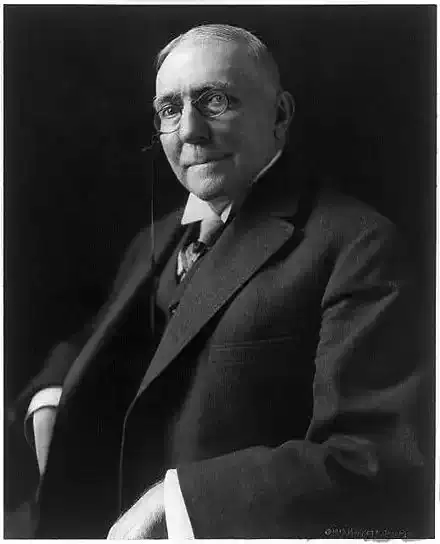
James Whitcomb Riley
Man's Devotion
Man's Devotion
A lover said, 'O Maiden, love me well,
For I must go away:
And should ANOTHER ever come to tell
Of love--What WILL you say?'
And she let fall a royal robe of hair
That folded on his arm
And made a golden pillow for her there;
Her face--as bright a charm
As ever setting held in kingly crown--
Made answer with a look,
And reading it, the lover bended down,
And, trusting, 'kissed the book.'
He took a fond farewell and went away.
And slow the time went by--
So weary--dreary was it, day by day
To love, and wait, and sigh.
She kissed his pictured face sometimes, and said:
'O Lips, so cold and dumb,
I would that you would tell me, if not dead,
Why, why do you not come?'
The picture, smiling, stared her in the face
Unmoved--e'en with the touch
Of tear-drops--HERS--bejeweling the case-'
Twas plain--she loved him much.
And, thus she grew to think of him as gay
And joyous all the while,
And SHE was sorrowing--'Ah, welladay!'
But pictures ALWAYS smile!
And years--dull years--in dull monotony
As ever went and came,
Still weaving changes on unceasingly,
And changing, changed her name.
Was she untrue?--She oftentimes was glad
And happy as a wife;
But ONE remembrance oftentimes made sad
Her matrimonial life.--
Though its few years were hardly noted, when
Again her path was strown
With thorns--the roses swept away again,
And she again alone!
And then--alas! ah THEN!--her lover came:
'I come to claim you now-
My Darling, for I know you are the same,
And I have kept my vow
Through these long, long, long years, and now no more
Shall we asundered be!'
She staggered back and, sinking to the floor,
Cried in her agony:
'I have been false!' she moaned, '_I_ am not true--
I am not worthy now,
Nor ever can I be a wife to YOU--
For I have broke my vow!'
And as she kneeled there, sobbing at his feet,
He calmly spoke--no sign
Betrayed his inward agony--'I count you meet
To be a wife of mine!'
And raised her up forgiven, though untrue;
As fond he gazed on her,
She sighed,--'SO HAPPY!' And she never knew
HE was a WIDOWER.
A lover said, 'O Maiden, love me well,
For I must go away:
And should ANOTHER ever come to tell
Of love--What WILL you say?'
And she let fall a royal robe of hair
That folded on his arm
And made a golden pillow for her there;
Her face--as bright a charm
As ever setting held in kingly crown--
Made answer with a look,
And reading it, the lover bended down,
And, trusting, 'kissed the book.'
He took a fond farewell and went away.
And slow the time went by--
So weary--dreary was it, day by day
To love, and wait, and sigh.
She kissed his pictured face sometimes, and said:
'O Lips, so cold and dumb,
I would that you would tell me, if not dead,
Why, why do you not come?'
The picture, smiling, stared her in the face
Unmoved--e'en with the touch
Of tear-drops--HERS--bejeweling the case-'
Twas plain--she loved him much.
And, thus she grew to think of him as gay
And joyous all the while,
And SHE was sorrowing--'Ah, welladay!'
But pictures ALWAYS smile!
And years--dull years--in dull monotony
As ever went and came,
Still weaving changes on unceasingly,
And changing, changed her name.
Was she untrue?--She oftentimes was glad
And happy as a wife;
But ONE remembrance oftentimes made sad
Her matrimonial life.--
Though its few years were hardly noted, when
Again her path was strown
With thorns--the roses swept away again,
And she again alone!
And then--alas! ah THEN!--her lover came:
'I come to claim you now-
My Darling, for I know you are the same,
And I have kept my vow
Through these long, long, long years, and now no more
Shall we asundered be!'
She staggered back and, sinking to the floor,
Cried in her agony:
'I have been false!' she moaned, '_I_ am not true--
I am not worthy now,
Nor ever can I be a wife to YOU--
For I have broke my vow!'
And as she kneeled there, sobbing at his feet,
He calmly spoke--no sign
Betrayed his inward agony--'I count you meet
To be a wife of mine!'
And raised her up forgiven, though untrue;
As fond he gazed on her,
She sighed,--'SO HAPPY!' And she never knew
HE was a WIDOWER.
310
James Whitcomb Riley
Limitations Of Genius
Limitations Of Genius
The audience entire seemed pleased--indeed
_Extremely_ pleased. And little Maymie, freed
From her task of instructing, ran to show
Her wondrous colored picture to and fro
Among the company.
'And how comes it,' said
Some one to Mr. Hammond, 'that, instead
Of the inventor's life you did not choose
The _artist's?_--since the world can better lose
A cutting-box or reaper than it can
A noble picture painted by a man
Endowed with gifts this drawing would suggest'--
Holding the picture up to show the rest.
'_There now!_' chimed in the wife, her pale face lit
Like winter snow with sunrise over it,-'
That's what _I'm_ always asking him.--But _he_-_
Well_, as he's answering _you_, he answers _me_,--
With that same silent, suffocating smile
He's wearing now!'
For quite a little while
No further speech from anyone, although
All looked at Mr. Hammond and that slow,
Immutable, mild smile of his. And then
The encouraged querist asked him yet again
_Why was it_, and etcetera--with all
The rest, expectant, waiting 'round the wall,--
Until the gentle Mr. Hammond said
He'd answer with a '_parable_,' instead--
About 'a dreamer' that he used to know-'
An artist'--'master'--_all_--in _embryo_.
The audience entire seemed pleased--indeed
_Extremely_ pleased. And little Maymie, freed
From her task of instructing, ran to show
Her wondrous colored picture to and fro
Among the company.
'And how comes it,' said
Some one to Mr. Hammond, 'that, instead
Of the inventor's life you did not choose
The _artist's?_--since the world can better lose
A cutting-box or reaper than it can
A noble picture painted by a man
Endowed with gifts this drawing would suggest'--
Holding the picture up to show the rest.
'_There now!_' chimed in the wife, her pale face lit
Like winter snow with sunrise over it,-'
That's what _I'm_ always asking him.--But _he_-_
Well_, as he's answering _you_, he answers _me_,--
With that same silent, suffocating smile
He's wearing now!'
For quite a little while
No further speech from anyone, although
All looked at Mr. Hammond and that slow,
Immutable, mild smile of his. And then
The encouraged querist asked him yet again
_Why was it_, and etcetera--with all
The rest, expectant, waiting 'round the wall,--
Until the gentle Mr. Hammond said
He'd answer with a '_parable_,' instead--
About 'a dreamer' that he used to know-'
An artist'--'master'--_all_--in _embryo_.
279
James Whitcomb Riley
Let Us Forget
Let Us Forget
Let us forget. What matters it that we
Once reigned o'er happy realms of long-ago,
And talked of love, and let our voices low,
And ruled for some brief sessions royally?
What if we sung, or laughed, or wept maybe?
It has availed not anything, and so
Let it go by that we may better know
How poor a thing is lost to you and me.
But yesterday I kissed your lips, and yet
Did thrill you not enough to shake the dew
From your drenched lids--and missed, with no regret,
Your kiss shot back, with sharp breaths failing you;
And so, to-day, while our worn eyes are wet
With all this waste of tears, let us forget!
Let us forget. What matters it that we
Once reigned o'er happy realms of long-ago,
And talked of love, and let our voices low,
And ruled for some brief sessions royally?
What if we sung, or laughed, or wept maybe?
It has availed not anything, and so
Let it go by that we may better know
How poor a thing is lost to you and me.
But yesterday I kissed your lips, and yet
Did thrill you not enough to shake the dew
From your drenched lids--and missed, with no regret,
Your kiss shot back, with sharp breaths failing you;
And so, to-day, while our worn eyes are wet
With all this waste of tears, let us forget!
284
James Whitcomb Riley
Johnson's Boy
Johnson's Boy
The world is turned ag'in' me,
And people says, 'They guess
That nothin' else is in me
But pure maliciousness!'
I git the blame for doin'
What other chaps destroy,
And I'm a-goin' to ruin
Because I'm 'Johnson's boy.'
THAT ain't my name--I'd ruther
They'd call me IKE or PAT--
But they've forgot the other--
And so have _I_, for that!
I reckon it's as handy,
When Nibsy breaks his toy,
Or some one steals his candy,
To say 'twas 'JOHNSON'S BOY!'
You can't git any water
At the pump, and find the spout
So durn chuck-full o' mortar
That you have to bore it out;
You tackle any scholar
In Wisdom's wise employ,
And I'll bet you half a dollar
He'll say it's 'Johnson's boy!'
Folks don't know how I suffer
In my uncomplainin' way--
They think I'm gittin' tougher
And tougher every day.
Last Sunday night, when Flinder
Was a-shoutin' out for joy,
And some one shook the winder,
He prayed for 'Johnson's boy.'
I'm tired of bein' follered
By farmers every day,
And then o' bein' collared
For coaxin' hounds away;
Hounds always plays me double-It's
a trick they all enjoy--
To git me into trouble,
Because I'm 'Johnson's boy.'
But if I git to Heaven,
I hope the Lord'll see
SOME boy has been perfect,
And lay it on to me;
I'll swell the song sonorous,
And clap my wings for joy,
And sail off on the chorus-
'Hurrah for 'Johnson's boy!''
The world is turned ag'in' me,
And people says, 'They guess
That nothin' else is in me
But pure maliciousness!'
I git the blame for doin'
What other chaps destroy,
And I'm a-goin' to ruin
Because I'm 'Johnson's boy.'
THAT ain't my name--I'd ruther
They'd call me IKE or PAT--
But they've forgot the other--
And so have _I_, for that!
I reckon it's as handy,
When Nibsy breaks his toy,
Or some one steals his candy,
To say 'twas 'JOHNSON'S BOY!'
You can't git any water
At the pump, and find the spout
So durn chuck-full o' mortar
That you have to bore it out;
You tackle any scholar
In Wisdom's wise employ,
And I'll bet you half a dollar
He'll say it's 'Johnson's boy!'
Folks don't know how I suffer
In my uncomplainin' way--
They think I'm gittin' tougher
And tougher every day.
Last Sunday night, when Flinder
Was a-shoutin' out for joy,
And some one shook the winder,
He prayed for 'Johnson's boy.'
I'm tired of bein' follered
By farmers every day,
And then o' bein' collared
For coaxin' hounds away;
Hounds always plays me double-It's
a trick they all enjoy--
To git me into trouble,
Because I'm 'Johnson's boy.'
But if I git to Heaven,
I hope the Lord'll see
SOME boy has been perfect,
And lay it on to me;
I'll swell the song sonorous,
And clap my wings for joy,
And sail off on the chorus-
'Hurrah for 'Johnson's boy!''
292
James Whitcomb Riley
John Alden And Percilly
John Alden And Percilly
We got up a Christmas-doin's
Last Christmas Eve--
Kindo' dimonstration
'At I railly believe
Give more satisfaction--
Take it up and down--
Than ary intertainment
Ever come to town!
Railly was a _theater_-That's
what it was,--
But, bein' in the church, you know,
We had a '_Santy Clause_'--
So 's to git the _old folks_
To patternize, you see,
And _back_ the institootion up
Kindo' _morally_.
Schoolteacher writ the thing-(
Was a friend o' mine),
Got it out o' Longfeller's
Pome 'Evangeline'--
Er some'rs--'bout the _Purituns_--.
_Anyway_, the part
'_John Alden_' fell to _me_--
And learnt it all by heart!
Claircy was '_Percilly_'-(
Schoolteacher 'lowed
Me and her could act them two
Best of all the crowd)-Then--
blame ef he didn't
Git her Pap, i jing!--
To take the part o' '_Santy Clause_,'
To wind up the thing.
Law! the fun o' practisun!--
Was a week er two
Me and Claircy didn't have
Nothin' else to do!--
Kep' us jes a-meetin' round,
Kindo' here and there,
Ever' night rehearsin'-like,
And gaddin' ever'where!
Game was wo'th the candle, though!--
Christmas Eve at last
Rolled around.--And 'tendance jes
Couldn't been surpassed!--
Neighbors from the country
Come from Clay and Rush--
Yes, and 'crost the county-line
Clean from Puckerbrush!
Meetin'-house jes trimbled
As 'Old Santy' went
Round amongst the childern,
With their pepperment
And sassafrac and wintergreen
Candy, and 'a ball
O' popcorn,' the preacher 'nounced,
'Free fer each and all!'
Schoolteacher suddently
Whispered in my ear,-'
Guess I got you:--_Christmas-gift_!-_
Christmas is here_!'
I give _him_ a gold pen,
And case to hold the thing,--
And _Claircy_ whispered '_Christmas-gift_!'
And I give her a _ring_.
'And now,' says I, 'jes watch _me_-Christmas-
gift,' says I,
'_I'm_ a-goin' to git one-'_
Santy's_' comin' by!'--
Then I rech and grabbed him:
And, as you'll infer,
'Course I got the old man's,
And _he_ gimme _her_!
We got up a Christmas-doin's
Last Christmas Eve--
Kindo' dimonstration
'At I railly believe
Give more satisfaction--
Take it up and down--
Than ary intertainment
Ever come to town!
Railly was a _theater_-That's
what it was,--
But, bein' in the church, you know,
We had a '_Santy Clause_'--
So 's to git the _old folks_
To patternize, you see,
And _back_ the institootion up
Kindo' _morally_.
Schoolteacher writ the thing-(
Was a friend o' mine),
Got it out o' Longfeller's
Pome 'Evangeline'--
Er some'rs--'bout the _Purituns_--.
_Anyway_, the part
'_John Alden_' fell to _me_--
And learnt it all by heart!
Claircy was '_Percilly_'-(
Schoolteacher 'lowed
Me and her could act them two
Best of all the crowd)-Then--
blame ef he didn't
Git her Pap, i jing!--
To take the part o' '_Santy Clause_,'
To wind up the thing.
Law! the fun o' practisun!--
Was a week er two
Me and Claircy didn't have
Nothin' else to do!--
Kep' us jes a-meetin' round,
Kindo' here and there,
Ever' night rehearsin'-like,
And gaddin' ever'where!
Game was wo'th the candle, though!--
Christmas Eve at last
Rolled around.--And 'tendance jes
Couldn't been surpassed!--
Neighbors from the country
Come from Clay and Rush--
Yes, and 'crost the county-line
Clean from Puckerbrush!
Meetin'-house jes trimbled
As 'Old Santy' went
Round amongst the childern,
With their pepperment
And sassafrac and wintergreen
Candy, and 'a ball
O' popcorn,' the preacher 'nounced,
'Free fer each and all!'
Schoolteacher suddently
Whispered in my ear,-'
Guess I got you:--_Christmas-gift_!-_
Christmas is here_!'
I give _him_ a gold pen,
And case to hold the thing,--
And _Claircy_ whispered '_Christmas-gift_!'
And I give her a _ring_.
'And now,' says I, 'jes watch _me_-Christmas-
gift,' says I,
'_I'm_ a-goin' to git one-'_
Santy's_' comin' by!'--
Then I rech and grabbed him:
And, as you'll infer,
'Course I got the old man's,
And _he_ gimme _her_!
256
James Whitcomb Riley
Jim
Jim
He was jes a plain ever'-day, all-round kind of a jour.,
Consumpted-Iookin'-- but la!
The jokeiest, wittiest, story-tellin', song-singin', laughin'est, jolliest
Feller you ever saw!
Worked at jes coarse work, but you kin bet he was fine enough in his talk,
And his feelin's too!
Lordy! Ef he was on'y back on his bench ag'in to-day, a- carryin' on
Like he ust to do!
Any shopmate'll tell you there never was, on top o' dirt,
A better feller'n Jim!
You want a favor, and couldn't git it anywheres else--
You could git it o' him!
Most free-heartedest man thataway in the world, I guess!
Give up ever' nickel he's worth--
And ef you'd a-wanted it, and named it to him, and it was his,
He'd a-give you the earth!
Allus a reachin' out, Jim was, and a-he'ppin' some
Pore feller onto his feet-He'd
a-never a-keered how hungry he was hisse'f,
So's the feller got somepin' to eat!
Didn't make no differ'nce at all to him how he was dressed,
He ust to say to me--,
'You togg out a tramp purty comfortable in winter-time, a huntin' a job,
And he'll git along!' says he.
Jim didn't have, ner never could git ahead, so overly much
O' this world's goods at a time--.
'Fore now I've saw him, more'n onc't, lend a dollar, and haf to, more'n
likely,
Turn round and borry a dime!
Mebby laugh and joke about it hisse'f fer awhile-- then jerk his coat,
And kindo' square his chin,
Tie on his apern, and squat hisse'f on his old shoe-bench,
And go to peggin' ag'in!
Patientest feller too, I reckon, 'at ever jes natchurly
Coughed hisse'f to death!
Long enough after his voice was lost he'd laugh in a whisper and say
He could git ever'thing but his breath-'
You fellers,' he'd sorto' twinkle his eyes and say,
'Is a-pilin' onto me
A mighty big debt fer that-air little weak-chested ghost o' mine to pack
Through all Eternity!'
Now there was a man 'at jes 'peared-like, to me,
'At ortn't a-never a-died!
'But death hain't a-showin' no favors,' the old boss said-'
On'y to Jim!' and cried:
And Wigger, who puts up the best sewed-work in the shop--
Er the whole blame neighborhood--,
He says, 'When God made Jim, I bet you He didn't do anything else that day
But jes set around and feel good!'
He was jes a plain ever'-day, all-round kind of a jour.,
Consumpted-Iookin'-- but la!
The jokeiest, wittiest, story-tellin', song-singin', laughin'est, jolliest
Feller you ever saw!
Worked at jes coarse work, but you kin bet he was fine enough in his talk,
And his feelin's too!
Lordy! Ef he was on'y back on his bench ag'in to-day, a- carryin' on
Like he ust to do!
Any shopmate'll tell you there never was, on top o' dirt,
A better feller'n Jim!
You want a favor, and couldn't git it anywheres else--
You could git it o' him!
Most free-heartedest man thataway in the world, I guess!
Give up ever' nickel he's worth--
And ef you'd a-wanted it, and named it to him, and it was his,
He'd a-give you the earth!
Allus a reachin' out, Jim was, and a-he'ppin' some
Pore feller onto his feet-He'd
a-never a-keered how hungry he was hisse'f,
So's the feller got somepin' to eat!
Didn't make no differ'nce at all to him how he was dressed,
He ust to say to me--,
'You togg out a tramp purty comfortable in winter-time, a huntin' a job,
And he'll git along!' says he.
Jim didn't have, ner never could git ahead, so overly much
O' this world's goods at a time--.
'Fore now I've saw him, more'n onc't, lend a dollar, and haf to, more'n
likely,
Turn round and borry a dime!
Mebby laugh and joke about it hisse'f fer awhile-- then jerk his coat,
And kindo' square his chin,
Tie on his apern, and squat hisse'f on his old shoe-bench,
And go to peggin' ag'in!
Patientest feller too, I reckon, 'at ever jes natchurly
Coughed hisse'f to death!
Long enough after his voice was lost he'd laugh in a whisper and say
He could git ever'thing but his breath-'
You fellers,' he'd sorto' twinkle his eyes and say,
'Is a-pilin' onto me
A mighty big debt fer that-air little weak-chested ghost o' mine to pack
Through all Eternity!'
Now there was a man 'at jes 'peared-like, to me,
'At ortn't a-never a-died!
'But death hain't a-showin' no favors,' the old boss said-'
On'y to Jim!' and cried:
And Wigger, who puts up the best sewed-work in the shop--
Er the whole blame neighborhood--,
He says, 'When God made Jim, I bet you He didn't do anything else that day
But jes set around and feel good!'
312
James Whitcomb Riley
Iry And Billy Jo
Iry And Billy Jo
Iry an' Billy an' Jo!--
Iry an' Billy's _the boys_,
An' _Jo's_ their _dog_, you know,--
Their pictures took all in a row.
Bet they kin kick up a noise--
Iry and Billy, the boys,
And that-air little dog Jo!
_Iry's_ the one 'at stands
Up there a-lookin' so mild
An' meek--with his hat in his hands,
Like such a 'bediant child-(_
Sakes-alive_!)--An' _Billy_ he sets
In the cheer an' holds onto Jo an' _sweats_
Hisse'f, a-lookin' so good! Ho-ho!
Iry an' Billy an' Jo!
Yit the way them boys, you know,
Usen to jes turn in
An' fight over that dog Jo
Wuz a burnin'-shame-an'-a-sin !--
Iry _he'd_ argy 'at, by gee-whizz!
That-air little Jo-dog wuz _his_!--
An' Billy _he'd_ claim it wuzn't so-'
Cause the dog wuz _his'n_!--An' at it they'd go,
Nip-an'-tugg, tooth-an'-toenail, you know--
Iry an' Billy an' Jo!
But their Pa--(He wuz the marshal then)
He 'tended-like 'at he _jerked 'em up_;
An' got a jury o' Brickyard men
An' helt a _trial_ about the pup:
An' _he_ says _he_ jes like to a-died
When the rest o' us town-boys _testified_--
Regardin', you know,
Iry an' Billy an' Jo.-
'Cause we all knowed, when _the Gypsies_ they
Camped down here by the crick last Fall,
They brung Jo with 'em, an' give him away
To Iry an' Billy fer nothin' at all!--
So the jury fetched in the _verdick_ so
Jo he ain't _neether_ o' theirn fer _shore_-He's
_both_ their dog, an' jes no more!
An' so
They've quit quarrelin' long ago,
Iry an' Billy an' Jo.
Iry an' Billy an' Jo!--
Iry an' Billy's _the boys_,
An' _Jo's_ their _dog_, you know,--
Their pictures took all in a row.
Bet they kin kick up a noise--
Iry and Billy, the boys,
And that-air little dog Jo!
_Iry's_ the one 'at stands
Up there a-lookin' so mild
An' meek--with his hat in his hands,
Like such a 'bediant child-(_
Sakes-alive_!)--An' _Billy_ he sets
In the cheer an' holds onto Jo an' _sweats_
Hisse'f, a-lookin' so good! Ho-ho!
Iry an' Billy an' Jo!
Yit the way them boys, you know,
Usen to jes turn in
An' fight over that dog Jo
Wuz a burnin'-shame-an'-a-sin !--
Iry _he'd_ argy 'at, by gee-whizz!
That-air little Jo-dog wuz _his_!--
An' Billy _he'd_ claim it wuzn't so-'
Cause the dog wuz _his'n_!--An' at it they'd go,
Nip-an'-tugg, tooth-an'-toenail, you know--
Iry an' Billy an' Jo!
But their Pa--(He wuz the marshal then)
He 'tended-like 'at he _jerked 'em up_;
An' got a jury o' Brickyard men
An' helt a _trial_ about the pup:
An' _he_ says _he_ jes like to a-died
When the rest o' us town-boys _testified_--
Regardin', you know,
Iry an' Billy an' Jo.-
'Cause we all knowed, when _the Gypsies_ they
Camped down here by the crick last Fall,
They brung Jo with 'em, an' give him away
To Iry an' Billy fer nothin' at all!--
So the jury fetched in the _verdick_ so
Jo he ain't _neether_ o' theirn fer _shore_-He's
_both_ their dog, an' jes no more!
An' so
They've quit quarrelin' long ago,
Iry an' Billy an' Jo.
294
James Whitcomb Riley
Ike Walton's Prayer
Ike Walton's Prayer
I crave, dear Lord,
No boundless hoard
Of gold and gear,
Nor jewels fine,
Nor lands, nor kine,
Nor treasure-heaps of anything.-
Let but a little hut be mine
Where at the hearthstore I may hear
The cricket sing,
And have the shine
Of one glad woman's eyes to make,
For my poor sake,
Our simple home a place divine;-
Just the wee cot-the cricket's chirr-
Love, and the smiling face of her.
I pray not for
Great riches, nor
For vast estates, and castle-halls,-
Give me to hear the bare footfalls
Of children o’er
An oaken floor,
New-risen with sunshine, or bespread
With but the tiny coverlet
And pillow for the baby’s head;
And pray Thou, may
The door stand open and the day
Send ever in a gentle breeze,
With fragrance from the locust-trees,
And drowsy moan of doves, and blur
Of robin-chirps, and drove of bees,
With afterhushes of the stir
Of intermingling sounds, and then
The good-wife and the smile of her
Filling the silences again-
The cricket’s call,
And the wee cot,
Dear Lord of all,
Deny me not!
I pray not that
Men tremble at
My power of place
And lordly sway, -
I only pray for simple grace
To look my neighbor in the face
Full honestly from day to day-
Yield me this horny palm to hold,
And I’ll not pray
For gold;-
The tanned face, garlanded with mirth,
It hath the kingliest smile on earth
The swart brow, diamonded with sweat,
Hath never need of coronet.
And so I reach,
Dear Lord, to Thee,
And do beseech
Thou givest me
The wee cot, and the cricket’s chirr,
Love, and the glad sweet face of her.
I crave, dear Lord,
No boundless hoard
Of gold and gear,
Nor jewels fine,
Nor lands, nor kine,
Nor treasure-heaps of anything.-
Let but a little hut be mine
Where at the hearthstore I may hear
The cricket sing,
And have the shine
Of one glad woman's eyes to make,
For my poor sake,
Our simple home a place divine;-
Just the wee cot-the cricket's chirr-
Love, and the smiling face of her.
I pray not for
Great riches, nor
For vast estates, and castle-halls,-
Give me to hear the bare footfalls
Of children o’er
An oaken floor,
New-risen with sunshine, or bespread
With but the tiny coverlet
And pillow for the baby’s head;
And pray Thou, may
The door stand open and the day
Send ever in a gentle breeze,
With fragrance from the locust-trees,
And drowsy moan of doves, and blur
Of robin-chirps, and drove of bees,
With afterhushes of the stir
Of intermingling sounds, and then
The good-wife and the smile of her
Filling the silences again-
The cricket’s call,
And the wee cot,
Dear Lord of all,
Deny me not!
I pray not that
Men tremble at
My power of place
And lordly sway, -
I only pray for simple grace
To look my neighbor in the face
Full honestly from day to day-
Yield me this horny palm to hold,
And I’ll not pray
For gold;-
The tanned face, garlanded with mirth,
It hath the kingliest smile on earth
The swart brow, diamonded with sweat,
Hath never need of coronet.
And so I reach,
Dear Lord, to Thee,
And do beseech
Thou givest me
The wee cot, and the cricket’s chirr,
Love, and the glad sweet face of her.
335
James Whitcomb Riley
If I Knew What Poets Know
If I Knew What Poets Know
If I knew what poets know,
Would I write a rhyme
Of the buds that never blow
In the summer-time?
Would I sing of golden seeds
Springing up in ironweeds?
And of rain-drops turned to snow,
If I knew what poets know?
Did I know what poets do,
Would I sing a song
Sadder than the pigeon's coo
When the days are long?
Where I found a heart in pain,
I would make it glad again;
And the false should be the true,
Did I know what poets do.
If I knew what poets know,
I would find a theme
Sweeter than the placid flow
Of the fairest dream:
I would sing of love that lives
On the errors it forgives;
And the world would better grow
If I knew what poets know.
If I knew what poets know,
Would I write a rhyme
Of the buds that never blow
In the summer-time?
Would I sing of golden seeds
Springing up in ironweeds?
And of rain-drops turned to snow,
If I knew what poets know?
Did I know what poets do,
Would I sing a song
Sadder than the pigeon's coo
When the days are long?
Where I found a heart in pain,
I would make it glad again;
And the false should be the true,
Did I know what poets do.
If I knew what poets know,
I would find a theme
Sweeter than the placid flow
Of the fairest dream:
I would sing of love that lives
On the errors it forgives;
And the world would better grow
If I knew what poets know.
285
James Whitcomb Riley
His Mother
His Mother
DEAD! my wayward boy--_my own_--
Not _the Law's!_ but _mine_--the good
God's free gift to me alone,
Sanctified by motherhood.
'Bad,' you say: Well, who is not?
'Brutal'--'with a heart of stone'--
And 'red-handed.'--Ah! the hot
Blood upon your own!
I come not, with downward eyes,
To plead for him shamedly,--
God did not apologize
When He gave the boy to me.
Simply, I make ready now
For _His_ verdict.--_You_ prepare--
You have killed us both--and how
Will you face us There!
DEAD! my wayward boy--_my own_--
Not _the Law's!_ but _mine_--the good
God's free gift to me alone,
Sanctified by motherhood.
'Bad,' you say: Well, who is not?
'Brutal'--'with a heart of stone'--
And 'red-handed.'--Ah! the hot
Blood upon your own!
I come not, with downward eyes,
To plead for him shamedly,--
God did not apologize
When He gave the boy to me.
Simply, I make ready now
For _His_ verdict.--_You_ prepare--
You have killed us both--and how
Will you face us There!
351
James Whitcomb Riley
Heat-Lightning
Heat-Lightning
There was a curious quiet for a space
Directly following: and in the face
Of one rapt listener pulsed the flush and glow
Of the heat-lightning that pent passions throw
Long ere the crash of speech.--He broke the spell--
The host:--The Traveler's story, told so well,
He said, had wakened there within his breast
A yearning, as it were, to know _the rest_--
That all unwritten sequence that the Lord
Of Righteousness must write with flame and sword,
Some awful session of His patient thought--
Just then it was, his good old mother caught
His blazing eye--so that its fire became
But as an ember--though it burned the same.
It seemed to her, she said, that she had heard
It was the _Heavenly_ Parent never erred,
And not the _earthly_ one that had such grace:
'Therefore, my son,' she said, with lifted face
And eyes, 'let no one dare anticipate
The Lord's intent. While _He_ waits, _we_ will wait'
And with a gust of reverence genuine
Then Uncle Mart was aptly ringing in-
''_If the darkened heavens lower,
Wrap thy cloak around thy form;
Though the tempest rise in power,
God is mightier than the storm!_''
Which utterance reached the restive children all
As something humorous. And then a call
For _him_ to tell a story, or to 'say
A funny piece.' His face fell right away:
He knew no story worthy. Then he must
_Declaim_ for them: In that, he could not trust
His memory. And then a happy thought
Struck some one, who reached in his vest and brought
Some scrappy clippings into light and said
There was a poem of Uncle Mart's he read
Last April in '_The Sentinel_.' He had
It there in print, and knew all would be glad
To hear it rendered by the author.
And,
All reasons for declining at command
Exhausted, the now helpless poet rose
And said: 'I am discovered, I suppose.
Though I have taken all precautions not
To sign my name to any verses wrought
By my transcendent genius, yet, you see,
Fame wrests my secret from me bodily;
So I must needs confess I did this deed
Of poetry red-handed, nor can plead
One whit of unintention in my crime--
My guilt of rhythm and my glut of rhyme.-
'Maenides rehearsed a tale of arms,
And Naso told of curious metat_mur_phoses;
Unnumbered pens have pictured woman's charms,
While crazy _I_'ve made poetry _on purposes!_'
In other words, I stand convicted--need
I say--by my own doing, as I read.
There was a curious quiet for a space
Directly following: and in the face
Of one rapt listener pulsed the flush and glow
Of the heat-lightning that pent passions throw
Long ere the crash of speech.--He broke the spell--
The host:--The Traveler's story, told so well,
He said, had wakened there within his breast
A yearning, as it were, to know _the rest_--
That all unwritten sequence that the Lord
Of Righteousness must write with flame and sword,
Some awful session of His patient thought--
Just then it was, his good old mother caught
His blazing eye--so that its fire became
But as an ember--though it burned the same.
It seemed to her, she said, that she had heard
It was the _Heavenly_ Parent never erred,
And not the _earthly_ one that had such grace:
'Therefore, my son,' she said, with lifted face
And eyes, 'let no one dare anticipate
The Lord's intent. While _He_ waits, _we_ will wait'
And with a gust of reverence genuine
Then Uncle Mart was aptly ringing in-
''_If the darkened heavens lower,
Wrap thy cloak around thy form;
Though the tempest rise in power,
God is mightier than the storm!_''
Which utterance reached the restive children all
As something humorous. And then a call
For _him_ to tell a story, or to 'say
A funny piece.' His face fell right away:
He knew no story worthy. Then he must
_Declaim_ for them: In that, he could not trust
His memory. And then a happy thought
Struck some one, who reached in his vest and brought
Some scrappy clippings into light and said
There was a poem of Uncle Mart's he read
Last April in '_The Sentinel_.' He had
It there in print, and knew all would be glad
To hear it rendered by the author.
And,
All reasons for declining at command
Exhausted, the now helpless poet rose
And said: 'I am discovered, I suppose.
Though I have taken all precautions not
To sign my name to any verses wrought
By my transcendent genius, yet, you see,
Fame wrests my secret from me bodily;
So I must needs confess I did this deed
Of poetry red-handed, nor can plead
One whit of unintention in my crime--
My guilt of rhythm and my glut of rhyme.-
'Maenides rehearsed a tale of arms,
And Naso told of curious metat_mur_phoses;
Unnumbered pens have pictured woman's charms,
While crazy _I_'ve made poetry _on purposes!_'
In other words, I stand convicted--need
I say--by my own doing, as I read.
316
James Whitcomb Riley
George Mullen's Confession
George Mullen's Confession
For the sake of guilty conscience, and the heart that ticks the
time
Of the clockworks of my nature, I desire to say that I'm
A weak and sinful creature, as regards my daily walk
The last five years and better. It ain't worth while to talk-
I've been too mean to tell it! I've been so hard, you see,
And full of pride, and--onry--now there's the word for me--
Just onry--and to show you, I'll give my history
With vital points in question, and I think you'll all agree.
I was always stiff and stubborn since I could recollect,
And had an awful temper, and never would reflect;
And always into trouble--I remember once at school
The teacher tried to flog me, and I reversed that rule.
O I was bad I tell you! And it's a funny move
That a fellow wild as I was could ever fall in love;
And it's a funny notion that an animal like me,
Under a girl's weak fingers was as tame as tame could be!
But it's so, and sets me thinking of the easy way she had
Of cooling down my temper--though I'd be fighting mad.
'My Lion Queen' I called her--when a spell of mine occurred
She'd come in a den of feelings and quell them with a word.
I'll tell you how she loved me--and what her people thought:
When I asked to marry Annie they said 'they reckoned not--
That I cut too many didoes and monkey-shines to suit
Their idea of a son-in-law, and I could go, to boot!'
I tell you that thing riled me! Why, I felt my face turn white,
And my teeth shut like a steel trap, and the fingers of my right
Hand pained me with their pressure--all the rest's a mystery
Till I heard my Annie saying--'I'm going, too, you see.'
We were coming through the gateway, and she wavered for a spell
When she heard her mother crying and her raving father yell
That she wa'n't no child of his'n--like an actor in a play
We saw at Independence, coming through the other day.
Well! that's the way we started. And for days and weeks and
months
And even years we journeyed on, regretting never once
Of starting out together upon the path of life--
Akind o' sort o' husband, but a mighty loving wife,--
And the cutest little baby--little Grace--I see her now
A-standin' on the pig-pen as her mother milked the cow--
And I can hear her shouting--as I stood unloading straw,-'
I'm ain't as big as papa, but I'm biggerest'n ma.'
Now folks that never married don't seem to understand
That a little baby's language is the sweetest ever planned--
Why, I tell you it's pure music, and I'll just go on to say
That I sometimes have a notion that the angels talk that way!
There's a chapter in this story I'd be happy to destroy;
I could burn it up before you with a mighty sight of joy;
But I'll go ahead and give it--not in detail, no, my friend,
For it takes five years of reading before you find the end.
My Annie's folks relented--at least, in some degree;
They sent one time for Annie, but they didn't send for me.
The old man wrote the message with a heart as hot and dry
As a furnace--'Annie Mullen, come and see your mother die.'
I saw the slur intended--why I fancied I could see
The old man shoot the insult like a poison dart at me;
And in that heat of passion I swore an inward oath
That if Annie pleased her father she could never please us both.
I watched her--dark and sullen--as she hurried on her shawl;
I watched her--calm and cruel, though I saw her tear-drops fall;
I watched her--cold and heartless, though I heard her moaning,
call
For mercy from high Heaven--and I smiled throughout it all.
Why even when she kissed me, and her tears were on my brow,
As she murmured, 'George, forgive me--I must go to mother now!'
Such hate there was within me that I answered not at all,
But calm, and cold and cruel, I smiled throughout it all.
But a shadow in the doorway caught my eye, and then the face
Full of innocence and sunshine of little baby Grace.
And I snatched her up and kissed her, and I softened through and
through
For a minute when she told me 'I must kiss her muvver too.'
I remember, at the starting, how I tried to freeze again
As I watched them slowly driving down the little crooked lane--
When Annie shouted something that ended in a cry,
And how I tried to whistle and it fizzled in a sigh.
I remember running after, with a glimmer in my sight--
Pretending I'd discovered that the traces wasn't right;
And the last that I remember, as they disappeared from view,
Was little Grace a-calling, 'I see papa! Howdy-do!'
And left alone to ponder, I again took up my hate
For the old man who would chuckle that I was desolate;
And I mouthed my wrongs in mutters till my pride called up the
pain
His last insult had given me--until I smiled again
Till the wild beast in my nature was raging in the den--
With no one now to quell it, and I wrote a letter then
Full of hissing things, and heated with so hot a heat of hate
That my pen flashed out black lightning at a most terrific rate.
I wrote that 'she had wronged me when she went away from me--
Though to see her dying mother 'twas her father's victory,
And a woman that could waver when her husband's pride was rent
Was no longer worthy of it.' And I shut the house and went.
To tell of my long exile would be of little good--
Though I couldn't half-way tell it, and I wouldn't if I could!
I could tell of California--of a wild and vicious life;
Of trackless plains, and mountains, and the Indian's
scalping-knife.
I could tell of gloomy forests howling wild with threats of
death;
I could tell of fiery deserts that have scorched me with their
breath;
I could tell of wretched outcasts by the hundreds, great and
small,
And could claim the nasty honor of the greatest of them all.
I could tell of toil and hardship; and of sickness and disease,
And hollow-eyed starvation, but I tell you, friend, that these
Are trifles in comparison with what a fellow feels
With that bloodhound, Remorsefulness, forever at his heels.
I remember--worn and weary of the long, long years of care,
When the frost of time was making early harvest of my hair--
I remember, wrecked and hopeless of a rest beneath the sky,
My resolve to quit the country, and to seek the East, and die.
I remember my long journey, like a dull, oppressive dream,
Across the empty prairies till I caught the distant gleam
Of a city in the beauty of its broad and shining stream
On whose bosom, flocked together, float the mighty swans of
steam.
I remember drifting with them till I found myself again
In the rush and roar and rattle of the engine and the train;
And when from my surroundings something spoke of child and wife,
It seemed the train was rumbling through a tunnel in my life.
Then I remember something--like a sudden burst of light--
That don't exactly tell it, but I couldn't tell it right--
A something clinging to me with its arms around my neck--
A little girl, for instance--or an angel, I expect--
For she kissed me, cried and called me 'her dear papa,' and I
felt
My heart was pure virgin gold, and just about to melt--
And so it did--it melted in a mist of gleaming rain
When she took my hand and whispered, 'My mama's on the train.'
There's some things I can dwell on, and get off pretty well,
But the balance of this story I know I couldn't tell;
So I ain't going to try it, for to tell the reason why-I'm
so chicken-hearted lately I'd be certain 'most to cry.
For the sake of guilty conscience, and the heart that ticks the
time
Of the clockworks of my nature, I desire to say that I'm
A weak and sinful creature, as regards my daily walk
The last five years and better. It ain't worth while to talk-
I've been too mean to tell it! I've been so hard, you see,
And full of pride, and--onry--now there's the word for me--
Just onry--and to show you, I'll give my history
With vital points in question, and I think you'll all agree.
I was always stiff and stubborn since I could recollect,
And had an awful temper, and never would reflect;
And always into trouble--I remember once at school
The teacher tried to flog me, and I reversed that rule.
O I was bad I tell you! And it's a funny move
That a fellow wild as I was could ever fall in love;
And it's a funny notion that an animal like me,
Under a girl's weak fingers was as tame as tame could be!
But it's so, and sets me thinking of the easy way she had
Of cooling down my temper--though I'd be fighting mad.
'My Lion Queen' I called her--when a spell of mine occurred
She'd come in a den of feelings and quell them with a word.
I'll tell you how she loved me--and what her people thought:
When I asked to marry Annie they said 'they reckoned not--
That I cut too many didoes and monkey-shines to suit
Their idea of a son-in-law, and I could go, to boot!'
I tell you that thing riled me! Why, I felt my face turn white,
And my teeth shut like a steel trap, and the fingers of my right
Hand pained me with their pressure--all the rest's a mystery
Till I heard my Annie saying--'I'm going, too, you see.'
We were coming through the gateway, and she wavered for a spell
When she heard her mother crying and her raving father yell
That she wa'n't no child of his'n--like an actor in a play
We saw at Independence, coming through the other day.
Well! that's the way we started. And for days and weeks and
months
And even years we journeyed on, regretting never once
Of starting out together upon the path of life--
Akind o' sort o' husband, but a mighty loving wife,--
And the cutest little baby--little Grace--I see her now
A-standin' on the pig-pen as her mother milked the cow--
And I can hear her shouting--as I stood unloading straw,-'
I'm ain't as big as papa, but I'm biggerest'n ma.'
Now folks that never married don't seem to understand
That a little baby's language is the sweetest ever planned--
Why, I tell you it's pure music, and I'll just go on to say
That I sometimes have a notion that the angels talk that way!
There's a chapter in this story I'd be happy to destroy;
I could burn it up before you with a mighty sight of joy;
But I'll go ahead and give it--not in detail, no, my friend,
For it takes five years of reading before you find the end.
My Annie's folks relented--at least, in some degree;
They sent one time for Annie, but they didn't send for me.
The old man wrote the message with a heart as hot and dry
As a furnace--'Annie Mullen, come and see your mother die.'
I saw the slur intended--why I fancied I could see
The old man shoot the insult like a poison dart at me;
And in that heat of passion I swore an inward oath
That if Annie pleased her father she could never please us both.
I watched her--dark and sullen--as she hurried on her shawl;
I watched her--calm and cruel, though I saw her tear-drops fall;
I watched her--cold and heartless, though I heard her moaning,
call
For mercy from high Heaven--and I smiled throughout it all.
Why even when she kissed me, and her tears were on my brow,
As she murmured, 'George, forgive me--I must go to mother now!'
Such hate there was within me that I answered not at all,
But calm, and cold and cruel, I smiled throughout it all.
But a shadow in the doorway caught my eye, and then the face
Full of innocence and sunshine of little baby Grace.
And I snatched her up and kissed her, and I softened through and
through
For a minute when she told me 'I must kiss her muvver too.'
I remember, at the starting, how I tried to freeze again
As I watched them slowly driving down the little crooked lane--
When Annie shouted something that ended in a cry,
And how I tried to whistle and it fizzled in a sigh.
I remember running after, with a glimmer in my sight--
Pretending I'd discovered that the traces wasn't right;
And the last that I remember, as they disappeared from view,
Was little Grace a-calling, 'I see papa! Howdy-do!'
And left alone to ponder, I again took up my hate
For the old man who would chuckle that I was desolate;
And I mouthed my wrongs in mutters till my pride called up the
pain
His last insult had given me--until I smiled again
Till the wild beast in my nature was raging in the den--
With no one now to quell it, and I wrote a letter then
Full of hissing things, and heated with so hot a heat of hate
That my pen flashed out black lightning at a most terrific rate.
I wrote that 'she had wronged me when she went away from me--
Though to see her dying mother 'twas her father's victory,
And a woman that could waver when her husband's pride was rent
Was no longer worthy of it.' And I shut the house and went.
To tell of my long exile would be of little good--
Though I couldn't half-way tell it, and I wouldn't if I could!
I could tell of California--of a wild and vicious life;
Of trackless plains, and mountains, and the Indian's
scalping-knife.
I could tell of gloomy forests howling wild with threats of
death;
I could tell of fiery deserts that have scorched me with their
breath;
I could tell of wretched outcasts by the hundreds, great and
small,
And could claim the nasty honor of the greatest of them all.
I could tell of toil and hardship; and of sickness and disease,
And hollow-eyed starvation, but I tell you, friend, that these
Are trifles in comparison with what a fellow feels
With that bloodhound, Remorsefulness, forever at his heels.
I remember--worn and weary of the long, long years of care,
When the frost of time was making early harvest of my hair--
I remember, wrecked and hopeless of a rest beneath the sky,
My resolve to quit the country, and to seek the East, and die.
I remember my long journey, like a dull, oppressive dream,
Across the empty prairies till I caught the distant gleam
Of a city in the beauty of its broad and shining stream
On whose bosom, flocked together, float the mighty swans of
steam.
I remember drifting with them till I found myself again
In the rush and roar and rattle of the engine and the train;
And when from my surroundings something spoke of child and wife,
It seemed the train was rumbling through a tunnel in my life.
Then I remember something--like a sudden burst of light--
That don't exactly tell it, but I couldn't tell it right--
A something clinging to me with its arms around my neck--
A little girl, for instance--or an angel, I expect--
For she kissed me, cried and called me 'her dear papa,' and I
felt
My heart was pure virgin gold, and just about to melt--
And so it did--it melted in a mist of gleaming rain
When she took my hand and whispered, 'My mama's on the train.'
There's some things I can dwell on, and get off pretty well,
But the balance of this story I know I couldn't tell;
So I ain't going to try it, for to tell the reason why-I'm
so chicken-hearted lately I'd be certain 'most to cry.
326
James Whitcomb Riley
Farmer Whipple--Bachelor
Farmer Whipple--Bachelor
It's a mystery to see me--a man o' fifty-four,
Who's lived a cross old bachelor fer thirty year' and more-A-
lookin' glad and smilin'! And they's none o' you can say
That you can guess the reason why I feel so good to-day!
I must tell you all about it! But I'll have to deviate
A little in beginnin', so's to set the matter straight
As to how it comes to happen that I never took a wife--
Kindo' 'crawfish' from the Present to the Springtime of my life!
I was brought up in the country: Of a family of five--
Three brothers and a sister--I'm the only one alive,--
Fer they all died little babies; and 'twas one o' Mother's ways,
You know, to want a daughter; so she took a girl to raise.
The sweetest little thing she was, with rosy cheeks, and fat--
We was little chunks o' shavers then about as high as that!
But someway we sort a' SUITED-like! and Mother she'd declare
She never laid her eyes on a more lovin' pair
Than WE was! So we growed up side by side fer thirteen year',
And every hour of it she growed to me more dear!-W'y,
even Father's dyin', as he did, I do believe
Warn't more affectin' to me than it was to see her grieve!
I was then a lad o' twenty; and I felt a flash o' pride
In thinkin' all depended on ME now to pervide
Fer Mother and fer Mary; and I went about the place
With sleeves rolled up--and workin', with a mighty smilin'
face.--
Fer SOMEPIN' ELSE was workin'! but not a word I said
Of a certain sort o' notion that was runnin' through my head,-'
Some day I'd maybe marry, and a BROTHER'S love was one
Thing--a LOVER'S was another!' was the way the notion run!
I remember onc't in harvest, when the 'cradle-in' ' was done,
(When the harvest of my summers mounted up to twenty-one),
I was ridin' home with Mary at the closin' o' the day-A-
chawin' straws and thinkin', in a lover's lazy way!
And Mary's cheeks was burnin' like the sunset down the lane:
I noticed she was thinkin', too, and ast her to explain.
Well--when she turned and KISSED ME, WITH HER ARMS AROUND
ME--LAW!
I'd a bigger load o' Heaven than I had a load o' straw!
I don't p'tend to learnin', but I'll tell you what's a fac',
They's a mighty truthful sayin' somers in a' almanac--
Er SOMERS--'bout 'puore happiness'--perhaps some folks'll laugh
At the idy--'only lastin' jest two seconds and a half.'-
But it's jest as true as preachin'!--fer that was a SISTER'S
kiss,
And a sister's lovin' confidence a-tellin' to me this:-'
SHE was happy, BEIN' PROMISED TO THE SON O' FARMER BROWN.'--
And my feelin's struck a pardnership with sunset and went down!
I don't know HOW I acted, and I don't know WHAT I said,--
Fer my heart seemed jest a-turnin' to an ice-cold lump o' lead;
And the hosses kind o'glimmered before me in the road,
And the lines fell from my fingers--And that was all I knowed-
Fer--well, I don't know HOW long--They's a dim rememberence
Of a sound o' snortin' horses, and a stake-and-ridered fence
A-whizzin' past, and wheat-sheaves a-dancin' in the air,
And Mary screamin' 'Murder!' and a-runnin' up to where
_I_ was layin' by the roadside, and the wagon upside down
A-leanin' on the gate-post, with the wheels a-whirlin' roun'!
And I tried to raise and meet her, but I couldn't, with a vague
Sort o' notion comin' to me that I had a broken leg.
Well, the women nussed me through it; but many a time I'd sigh
As I'd keep a-gittin' better instid o' goin' to die,
And wonder what was left ME worth livin' fer below,
When the girl I loved was married to another, don't you know!
And my thoughts was as rebellious as the folks was good and kind
When Brown and Mary married--Railly must 'a' been my MIND
Was kind o' out o' kilter!--fer I hated Brown, you see,
Worse'n PIZEN--and the feller whittled crutches out fer ME--
And done a thousand little ac's o' kindness and respec'--
And me a-wishin' all the time that I could break his neck!
My relief was like a mourner's when the funeral is done
When they moved to Illinois in the Fall o' Forty-one.
Then I went to work in airnest--I had nothin' much in view
But to drownd out rickollections--and it kep' me busy, too!
But I slowly thrived and prospered, tel Mother used to say
She expected yit to see me a wealthy man some day.
Then I'd think how little MONEY was, compared to happiness--
And who'd be left to use it when I died I couldn't guess!
But I've still kep' speculatin' and a-gainin' year by year,
Tel I'm payin' half the taxes in the county, mighty near!
Well!--A year ago er better, a letter comes to hand
Astin' how I'd like to dicker fer some Illinois land-'
The feller that had owned it,' it went ahead to state,
'Had jest deceased, insolvent, leavin' chance to speculate,'--
And then it closed by sayin' that I'd 'better come and see.'-
I'd never been West, anyhow--a'most too wild fer ME,
I'd allus had a notion; but a lawyer here in town
Said I'd find myself mistakend when I come to look around.
So I bids good-by to Mother, and I jumps aboard the train,
A-thinkin' what I'd bring her when I come back home again--
And ef she'd had an idy what the present was to be,
I think it's more'n likely she'd 'a' went along with me!
Cars is awful tejus ridin', fer all they go so fast!
But finally they called out my stoppin'-place at last:
And that night, at the tavern, I dreamp' I was a train
O' cars, and SKEERED at somepin', runnin' down a country lane!
Well, in the morning airly--after huntin' up the man--
The lawyer who was wantin' to swap the piece o' land--
We started fer the country; and I ast the history
Of the farm--its former owner--and so forth, etcetery!
And--well--it was interESTin'--I su'prised him, I suppose,
By the loud and frequent manner in which I blowed my nose!--
But his su'prise was greater, and it made him wonder more,
When I kissed and hugged the widder when she met us at the
door!--
IT WAS MARY: . . . They's a feelin' a-hidin' down in here--
Of course I can't explain it, ner ever make it clear.--
It was with us in that meetin', I don't want you to fergit!
And it makes me kind o'nervous when I think about it yit!
I BOUGHT that farm, and DEEDED it, afore I left the town
With 'title clear to mansions in the skies,' to Mary Brown!
And fu'thermore, I took her and the CHILDERN--fer you see,
They'd never seed their Grandma--and I fetched 'em home with me.
So NOW you've got an idy why a man o' fifty-four,
Who's lived a cross old bachelor fer thirty year' and more
Is a-lookin' glad and smilin'!--And I've jest come into town
To git a pair o' license fer to MARRY Mary Brown.
It's a mystery to see me--a man o' fifty-four,
Who's lived a cross old bachelor fer thirty year' and more-A-
lookin' glad and smilin'! And they's none o' you can say
That you can guess the reason why I feel so good to-day!
I must tell you all about it! But I'll have to deviate
A little in beginnin', so's to set the matter straight
As to how it comes to happen that I never took a wife--
Kindo' 'crawfish' from the Present to the Springtime of my life!
I was brought up in the country: Of a family of five--
Three brothers and a sister--I'm the only one alive,--
Fer they all died little babies; and 'twas one o' Mother's ways,
You know, to want a daughter; so she took a girl to raise.
The sweetest little thing she was, with rosy cheeks, and fat--
We was little chunks o' shavers then about as high as that!
But someway we sort a' SUITED-like! and Mother she'd declare
She never laid her eyes on a more lovin' pair
Than WE was! So we growed up side by side fer thirteen year',
And every hour of it she growed to me more dear!-W'y,
even Father's dyin', as he did, I do believe
Warn't more affectin' to me than it was to see her grieve!
I was then a lad o' twenty; and I felt a flash o' pride
In thinkin' all depended on ME now to pervide
Fer Mother and fer Mary; and I went about the place
With sleeves rolled up--and workin', with a mighty smilin'
face.--
Fer SOMEPIN' ELSE was workin'! but not a word I said
Of a certain sort o' notion that was runnin' through my head,-'
Some day I'd maybe marry, and a BROTHER'S love was one
Thing--a LOVER'S was another!' was the way the notion run!
I remember onc't in harvest, when the 'cradle-in' ' was done,
(When the harvest of my summers mounted up to twenty-one),
I was ridin' home with Mary at the closin' o' the day-A-
chawin' straws and thinkin', in a lover's lazy way!
And Mary's cheeks was burnin' like the sunset down the lane:
I noticed she was thinkin', too, and ast her to explain.
Well--when she turned and KISSED ME, WITH HER ARMS AROUND
ME--LAW!
I'd a bigger load o' Heaven than I had a load o' straw!
I don't p'tend to learnin', but I'll tell you what's a fac',
They's a mighty truthful sayin' somers in a' almanac--
Er SOMERS--'bout 'puore happiness'--perhaps some folks'll laugh
At the idy--'only lastin' jest two seconds and a half.'-
But it's jest as true as preachin'!--fer that was a SISTER'S
kiss,
And a sister's lovin' confidence a-tellin' to me this:-'
SHE was happy, BEIN' PROMISED TO THE SON O' FARMER BROWN.'--
And my feelin's struck a pardnership with sunset and went down!
I don't know HOW I acted, and I don't know WHAT I said,--
Fer my heart seemed jest a-turnin' to an ice-cold lump o' lead;
And the hosses kind o'glimmered before me in the road,
And the lines fell from my fingers--And that was all I knowed-
Fer--well, I don't know HOW long--They's a dim rememberence
Of a sound o' snortin' horses, and a stake-and-ridered fence
A-whizzin' past, and wheat-sheaves a-dancin' in the air,
And Mary screamin' 'Murder!' and a-runnin' up to where
_I_ was layin' by the roadside, and the wagon upside down
A-leanin' on the gate-post, with the wheels a-whirlin' roun'!
And I tried to raise and meet her, but I couldn't, with a vague
Sort o' notion comin' to me that I had a broken leg.
Well, the women nussed me through it; but many a time I'd sigh
As I'd keep a-gittin' better instid o' goin' to die,
And wonder what was left ME worth livin' fer below,
When the girl I loved was married to another, don't you know!
And my thoughts was as rebellious as the folks was good and kind
When Brown and Mary married--Railly must 'a' been my MIND
Was kind o' out o' kilter!--fer I hated Brown, you see,
Worse'n PIZEN--and the feller whittled crutches out fer ME--
And done a thousand little ac's o' kindness and respec'--
And me a-wishin' all the time that I could break his neck!
My relief was like a mourner's when the funeral is done
When they moved to Illinois in the Fall o' Forty-one.
Then I went to work in airnest--I had nothin' much in view
But to drownd out rickollections--and it kep' me busy, too!
But I slowly thrived and prospered, tel Mother used to say
She expected yit to see me a wealthy man some day.
Then I'd think how little MONEY was, compared to happiness--
And who'd be left to use it when I died I couldn't guess!
But I've still kep' speculatin' and a-gainin' year by year,
Tel I'm payin' half the taxes in the county, mighty near!
Well!--A year ago er better, a letter comes to hand
Astin' how I'd like to dicker fer some Illinois land-'
The feller that had owned it,' it went ahead to state,
'Had jest deceased, insolvent, leavin' chance to speculate,'--
And then it closed by sayin' that I'd 'better come and see.'-
I'd never been West, anyhow--a'most too wild fer ME,
I'd allus had a notion; but a lawyer here in town
Said I'd find myself mistakend when I come to look around.
So I bids good-by to Mother, and I jumps aboard the train,
A-thinkin' what I'd bring her when I come back home again--
And ef she'd had an idy what the present was to be,
I think it's more'n likely she'd 'a' went along with me!
Cars is awful tejus ridin', fer all they go so fast!
But finally they called out my stoppin'-place at last:
And that night, at the tavern, I dreamp' I was a train
O' cars, and SKEERED at somepin', runnin' down a country lane!
Well, in the morning airly--after huntin' up the man--
The lawyer who was wantin' to swap the piece o' land--
We started fer the country; and I ast the history
Of the farm--its former owner--and so forth, etcetery!
And--well--it was interESTin'--I su'prised him, I suppose,
By the loud and frequent manner in which I blowed my nose!--
But his su'prise was greater, and it made him wonder more,
When I kissed and hugged the widder when she met us at the
door!--
IT WAS MARY: . . . They's a feelin' a-hidin' down in here--
Of course I can't explain it, ner ever make it clear.--
It was with us in that meetin', I don't want you to fergit!
And it makes me kind o'nervous when I think about it yit!
I BOUGHT that farm, and DEEDED it, afore I left the town
With 'title clear to mansions in the skies,' to Mary Brown!
And fu'thermore, I took her and the CHILDERN--fer you see,
They'd never seed their Grandma--and I fetched 'em home with me.
So NOW you've got an idy why a man o' fifty-four,
Who's lived a cross old bachelor fer thirty year' and more
Is a-lookin' glad and smilin'!--And I've jest come into town
To git a pair o' license fer to MARRY Mary Brown.
375
James Whitcomb Riley
Down On Wriggle Crick
Down On Wriggle Crick
'Best time to kill a hog's when he's fat.' --Old Saw.
Mostly folks is law-abidin'
Down on Wriggle Crick--,
Seein' they's no Squire residin'
In our bailywick;
No grand juries, no suppeenies,
Ner no vested rights to pick
Out yer man, jerk up and jail ef
He's outragin' Wriggle Crick!
Wriggle Crick hain't got no lawin',
Ner no suits to beat;
Ner no court-house gee-and-hawin'
Like a County-seat;
Hain't no waitin' round fer verdick,
Ner non-gittin' witness-fees;
Ner no thiefs 'at gits 'new heain's,'
By some lawyer slick as grease!
Wriggle Cricks's leadin' spirit
Is old Johnts Culwell--,
Keeps post-office, and right near it
Owns what's called 'The Grand Hotel--'
(Warehouse now--) buys wheat and ships it;
Gits out ties, and trades in stock,
And knows all the high-toned drummers
'Twixt South Bend and Mishawauk'
Last year comes along a feller--
Sharper 'an a lance-Stovepipe-
hat and silk umbreller,
And a boughten all-wool pants--,
Tinkerin of clocks and watches:
Says a trial's all he wants--
And rents out the tavern-office
Next to Uncle Johnts.
Well--. He tacked up his k'dentials,
And got down to biz--.
Captured Johnts by cuttin' stenchils
Fer them old wheat-sacks o' his--.
Fixed his clock, in the post-office--
Painted fer him, clean and slick,
'Crost his safe, in gold-leaf letters,
'J. Culwells's Wriggle Crick.'
Any kindo' job you keered to
Resk him with, and bring,
He'd fix fer you-- jest appeared to
Turn his hand to anything--!
Rings, er earbobs, er umbrellers--
Glue a cheer er chany doll--,
W'y, of all the beatin' fellers,
He Jest beat 'em all!
Made his friends, but wouldn't stop there--,
One mistake he learnt,
That was, sleepin' in his shop there--.
And one Sund'y night it burnt!
Come in one o' jest a-sweepin'
All the whole town high and dry--
And that feller, when they waked him,
Suffocatin', mighty nigh!
Johnts he drug him from the buildin',
He'pless-- 'peared to be--,
And the women and the childern
Drenchin' him with sympathy!
But I noticed Johnts helt on him
With a' extry lovin' grip,
And the men-folks gethered round him
In most warmest pardership!
That's the whole mess, grease-and-dopin'!
Johnt's safe was saved--,
But the lock was found sprung open,
And the inside caved.
Was no trial-- ner no jury--
Ner no jedge ner court-house-click--.
Circumstances alters cases
Down on Wriggle Crick!
'Best time to kill a hog's when he's fat.' --Old Saw.
Mostly folks is law-abidin'
Down on Wriggle Crick--,
Seein' they's no Squire residin'
In our bailywick;
No grand juries, no suppeenies,
Ner no vested rights to pick
Out yer man, jerk up and jail ef
He's outragin' Wriggle Crick!
Wriggle Crick hain't got no lawin',
Ner no suits to beat;
Ner no court-house gee-and-hawin'
Like a County-seat;
Hain't no waitin' round fer verdick,
Ner non-gittin' witness-fees;
Ner no thiefs 'at gits 'new heain's,'
By some lawyer slick as grease!
Wriggle Cricks's leadin' spirit
Is old Johnts Culwell--,
Keeps post-office, and right near it
Owns what's called 'The Grand Hotel--'
(Warehouse now--) buys wheat and ships it;
Gits out ties, and trades in stock,
And knows all the high-toned drummers
'Twixt South Bend and Mishawauk'
Last year comes along a feller--
Sharper 'an a lance-Stovepipe-
hat and silk umbreller,
And a boughten all-wool pants--,
Tinkerin of clocks and watches:
Says a trial's all he wants--
And rents out the tavern-office
Next to Uncle Johnts.
Well--. He tacked up his k'dentials,
And got down to biz--.
Captured Johnts by cuttin' stenchils
Fer them old wheat-sacks o' his--.
Fixed his clock, in the post-office--
Painted fer him, clean and slick,
'Crost his safe, in gold-leaf letters,
'J. Culwells's Wriggle Crick.'
Any kindo' job you keered to
Resk him with, and bring,
He'd fix fer you-- jest appeared to
Turn his hand to anything--!
Rings, er earbobs, er umbrellers--
Glue a cheer er chany doll--,
W'y, of all the beatin' fellers,
He Jest beat 'em all!
Made his friends, but wouldn't stop there--,
One mistake he learnt,
That was, sleepin' in his shop there--.
And one Sund'y night it burnt!
Come in one o' jest a-sweepin'
All the whole town high and dry--
And that feller, when they waked him,
Suffocatin', mighty nigh!
Johnts he drug him from the buildin',
He'pless-- 'peared to be--,
And the women and the childern
Drenchin' him with sympathy!
But I noticed Johnts helt on him
With a' extry lovin' grip,
And the men-folks gethered round him
In most warmest pardership!
That's the whole mess, grease-and-dopin'!
Johnt's safe was saved--,
But the lock was found sprung open,
And the inside caved.
Was no trial-- ner no jury--
Ner no jedge ner court-house-click--.
Circumstances alters cases
Down on Wriggle Crick!
306
James Whitcomb Riley
A Monument For The Soldiers
A Monument For The Soldiers
A monument for the Soldiers!
And what will ye build it of?
Can ye build it of marble, or brass, or bronze,
Outlasting the Soldiers' love?
Can ye glorify it with legends
As grand as their blood hath writ
From the inmost shrine of this land of thine
To the outermost verge of it?
And the answer came: We would build it
Out of our hopes made sure,
And out of our purest prayers and tears,
And out of our faith secure:
We would build it out of the great white truths
Their death hath sanctified,
And the sculptured forms of the men in arms,
And their faces ere they died.
And what heroic figures
Can the sculptor carve in stone?
Can the marble breast be made to bleed,
And the marble lips to moan?
Can the marble brow be fevered?
And the marble eyes be graved
To look their last, as the flag floats past,
On the country they have saved?
And the answer came: The figures
Shall all be fair and brave,
And, as befitting, as pure and white
As the stars above their grave!
The marble lips, and breast and brow
Whereon the laurel lies,
Bequeath us right to guard the flight
Of the old flag in the skies!
A monument for the Soldiers!
Built of a people's love,
And blazoned and decked and panoplied
With the hearts ye build it oft
And see that ye build it stately,
In pillar and niche and gate,
And high in pose as the souls of those
It would commemorate!
A monument for the Soldiers!
And what will ye build it of?
Can ye build it of marble, or brass, or bronze,
Outlasting the Soldiers' love?
Can ye glorify it with legends
As grand as their blood hath writ
From the inmost shrine of this land of thine
To the outermost verge of it?
And the answer came: We would build it
Out of our hopes made sure,
And out of our purest prayers and tears,
And out of our faith secure:
We would build it out of the great white truths
Their death hath sanctified,
And the sculptured forms of the men in arms,
And their faces ere they died.
And what heroic figures
Can the sculptor carve in stone?
Can the marble breast be made to bleed,
And the marble lips to moan?
Can the marble brow be fevered?
And the marble eyes be graved
To look their last, as the flag floats past,
On the country they have saved?
And the answer came: The figures
Shall all be fair and brave,
And, as befitting, as pure and white
As the stars above their grave!
The marble lips, and breast and brow
Whereon the laurel lies,
Bequeath us right to guard the flight
Of the old flag in the skies!
A monument for the Soldiers!
Built of a people's love,
And blazoned and decked and panoplied
With the hearts ye build it oft
And see that ye build it stately,
In pillar and niche and gate,
And high in pose as the souls of those
It would commemorate!
263
James Whitcomb Riley
A Good Man
A Good Man
I
A good man never dies--
In worthy deed and prayer
And helpful hands, and honest eyes,
If smiles or tears be there:
Who lives for you and me--
Lives for the world he tries
To help--he lives eternally.
A good man never dies.
II
Who lives to bravely take
His share of toil and stress,
And, for his weaker fellows' sake,
Makes every burden less,--
He may, at last, seem worn--
Lie fallen--hands and eyes
Folded--yet, though we mourn and mourn,
A good man never dies.
I
A good man never dies--
In worthy deed and prayer
And helpful hands, and honest eyes,
If smiles or tears be there:
Who lives for you and me--
Lives for the world he tries
To help--he lives eternally.
A good man never dies.
II
Who lives to bravely take
His share of toil and stress,
And, for his weaker fellows' sake,
Makes every burden less,--
He may, at last, seem worn--
Lie fallen--hands and eyes
Folded--yet, though we mourn and mourn,
A good man never dies.
295
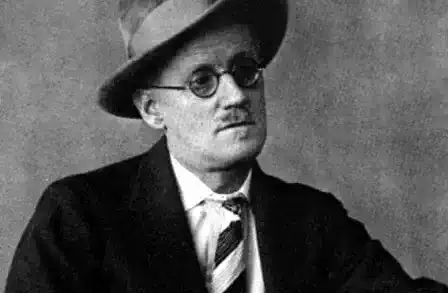
James Joyce
Winds of May
Winds of May
Winds of May, that dance on the sea,
Dancing a ring-around in glee
From furrow to furrow, while overhead
The foam flies up to be garlanded,
In silvery arches spanning the air,
Saw you my true love anywhere?
Welladay! Welladay!
For the winds of May!
Love is unhappy when love is away!
Winds of May, that dance on the sea,
Dancing a ring-around in glee
From furrow to furrow, while overhead
The foam flies up to be garlanded,
In silvery arches spanning the air,
Saw you my true love anywhere?
Welladay! Welladay!
For the winds of May!
Love is unhappy when love is away!
223
James Joyce
When the Shy Star Goes Forth in Heaven
When the Shy Star Goes Forth in Heaven
When the shy star goes forth in heaven
All maidenly, disconsolate,
Hear you amid the drowsy even
One who is singing by your gate.
His song is softer than the dew
And he is come to visit you.
O bend no more in revery
When he at eventide is calling.
Nor muse: Who may this singer be
Whose song about my heart is falling?
Know you by this, the lover's chant,
'Tis I that am your visitant.
When the shy star goes forth in heaven
All maidenly, disconsolate,
Hear you amid the drowsy even
One who is singing by your gate.
His song is softer than the dew
And he is come to visit you.
O bend no more in revery
When he at eventide is calling.
Nor muse: Who may this singer be
Whose song about my heart is falling?
Know you by this, the lover's chant,
'Tis I that am your visitant.
193
James Joyce
Watching the Needleboats at San Sabba
Watching the Needleboats at San Sabba
I heard their young hearts crying
Loveward above the glancing oar
And heard the prairie grasses sighing:
No more, return no more!
O hearts, O sighing grasses,
Vainly your loveblown bannerets mourn!
No more will the wild wind that passes
Return, no more return.
I heard their young hearts crying
Loveward above the glancing oar
And heard the prairie grasses sighing:
No more, return no more!
O hearts, O sighing grasses,
Vainly your loveblown bannerets mourn!
No more will the wild wind that passes
Return, no more return.
164
James Joyce
Tilly
Tilly
He travels after a winter sun,
Urging the cattle along a cold red road,
Calling to them, a voice they know,
He drives his beasts above Cabra.
The voice tells them home is warm.
They moo and make brute music with their hoofs.
He drives them with a flowering branch before him,
Smoke pluming their foreheads.
Boor, bond of the herd,
Tonight stretch full by the fire!
I bleed by the black stream
For my torn bough!
He travels after a winter sun,
Urging the cattle along a cold red road,
Calling to them, a voice they know,
He drives his beasts above Cabra.
The voice tells them home is warm.
They moo and make brute music with their hoofs.
He drives them with a flowering branch before him,
Smoke pluming their foreheads.
Boor, bond of the herd,
Tonight stretch full by the fire!
I bleed by the black stream
For my torn bough!
217
James Joyce
Strings in the Earth and Air
Strings in the Earth and Air
Strings in the earth and air
Make music sweet;
Strings by the river where
The willows meet.
There's music along the river
For Love wanders there,
Pale flowers on his mantle,
Dark leaves on his hair.
All softly playing,
With head to the music bent,
And fingers straying
Upon an instrument.
Strings in the earth and air
Make music sweet;
Strings by the river where
The willows meet.
There's music along the river
For Love wanders there,
Pale flowers on his mantle,
Dark leaves on his hair.
All softly playing,
With head to the music bent,
And fingers straying
Upon an instrument.
216
James Joyce
Be Not Sad
Be Not Sad
Be not sad because all men
Prefer a lying clamour before you:
Sweetheart, be at peace again -- -
Can they dishonour you?
They are sadder than all tears;
Their lives ascend as a continual sigh.
Proudly answer to their tears:
As they deny, deny.
Be not sad because all men
Prefer a lying clamour before you:
Sweetheart, be at peace again -- -
Can they dishonour you?
They are sadder than all tears;
Their lives ascend as a continual sigh.
Proudly answer to their tears:
As they deny, deny.
207

Jack Kerouac
th Chorus Mexico City Blues
th Chorus Mexico City Blues
Roosevelt was worth 6, 7 million dollars
He was Tight
Frog waits
Till poor fly
Flies by
And then they got him
The pool of clear rocks
Covered with vegetable scum
Covered the rocks
Clear the pool
Covered the warm surface
Covered the lotus
Dusted the watermelon flower
Aerial the Pad
Clean queer the clear
blue water
AND THEN THEY GOT HIM
The Oil of the Olive
Bittersweet taffies
Bittersweet cabbage
Cabbage soup made right
A hunk a grass
Sauerkraut let work
in a big barrel
Stunk but Good
Roosevelt was worth 6, 7 million dollars
He was Tight
Frog waits
Till poor fly
Flies by
And then they got him
The pool of clear rocks
Covered with vegetable scum
Covered the rocks
Clear the pool
Covered the warm surface
Covered the lotus
Dusted the watermelon flower
Aerial the Pad
Clean queer the clear
blue water
AND THEN THEY GOT HIM
The Oil of the Olive
Bittersweet taffies
Bittersweet cabbage
Cabbage soup made right
A hunk a grass
Sauerkraut let work
in a big barrel
Stunk but Good
231
Horácio
BkIV:XIV Drusus and Tiberius
BkIV:XIV Drusus and Tiberius
What care the Citizens and the Senators
shall take in immortalising your virtues,
granting you full honours, Augustus,
with titles and memorial plaques, O,
greatest of princes, wherever the sun shines
over the countries where people can live, you,
whose power in war the Vindelici
free of our Roman laws, till now, have learnt.
For, with your army, brave Drusus, demolished
the Genauni, that implacable race, in more
direct retaliation, the swift
Breuni, and their defences, established
on the formidable Alpine heights: and soon
Tiberius, the elder Nero, entered
that fierce fight, with his favourable
omens, defeating the wild Rhaetians:
it was wonderful to see with what destruction,
in contesting the war, he exhausted those minds
intent on the deaths of our freemen,
as the south wind, almost, when it troubles
the ungovernable waves, while the Pleiades’
constellation pierces the clouds, he was eager
to attack the hostile ranks, and drive
his neighing horse through the midst of their fire.
As, bull-like, the Aufidus rolls on, flowing
by the domains of Apulian Daunus,
when it rages and threatens fearful
destruction to their cultivated fields,
so Tiberius overwhelmed the armoured
ranks of barbarians, his fierce impetus
covering the earth, mowing down front
and rear, and conquering them without loss,
yours the troops, the strategy and the friendly
gods. For on that date when Alexandria
opened all its harbour, and empty
palaces to you, in supplication,
good Fortune, fifteen years later, delivered
a favourable outcome to the campaign,
and awarded fame, and the glory
hoped-for, to your imperial action.
The Spaniards, never conquered before, the Medes,
the Indians, marvel at you, the roving
Scythians, O eager protector
of Italy and Imperial Rome.
The Nile, that conceals its origin, hears you,
the Danube hears, and the swift-flowing Tigris,
the Ocean, filled with monsters, roaring
around the distant island of Britain,
and the regions of Gaul, unafraid of death,
and the stubborn Iberian land, hear you:
Sygambri, delighting in slaughter,
stand, with grounded weapons, worshipping you.
What care the Citizens and the Senators
shall take in immortalising your virtues,
granting you full honours, Augustus,
with titles and memorial plaques, O,
greatest of princes, wherever the sun shines
over the countries where people can live, you,
whose power in war the Vindelici
free of our Roman laws, till now, have learnt.
For, with your army, brave Drusus, demolished
the Genauni, that implacable race, in more
direct retaliation, the swift
Breuni, and their defences, established
on the formidable Alpine heights: and soon
Tiberius, the elder Nero, entered
that fierce fight, with his favourable
omens, defeating the wild Rhaetians:
it was wonderful to see with what destruction,
in contesting the war, he exhausted those minds
intent on the deaths of our freemen,
as the south wind, almost, when it troubles
the ungovernable waves, while the Pleiades’
constellation pierces the clouds, he was eager
to attack the hostile ranks, and drive
his neighing horse through the midst of their fire.
As, bull-like, the Aufidus rolls on, flowing
by the domains of Apulian Daunus,
when it rages and threatens fearful
destruction to their cultivated fields,
so Tiberius overwhelmed the armoured
ranks of barbarians, his fierce impetus
covering the earth, mowing down front
and rear, and conquering them without loss,
yours the troops, the strategy and the friendly
gods. For on that date when Alexandria
opened all its harbour, and empty
palaces to you, in supplication,
good Fortune, fifteen years later, delivered
a favourable outcome to the campaign,
and awarded fame, and the glory
hoped-for, to your imperial action.
The Spaniards, never conquered before, the Medes,
the Indians, marvel at you, the roving
Scythians, O eager protector
of Italy and Imperial Rome.
The Nile, that conceals its origin, hears you,
the Danube hears, and the swift-flowing Tigris,
the Ocean, filled with monsters, roaring
around the distant island of Britain,
and the regions of Gaul, unafraid of death,
and the stubborn Iberian land, hear you:
Sygambri, delighting in slaughter,
stand, with grounded weapons, worshipping you.
231