

Poems in this theme
Ethics and Morality
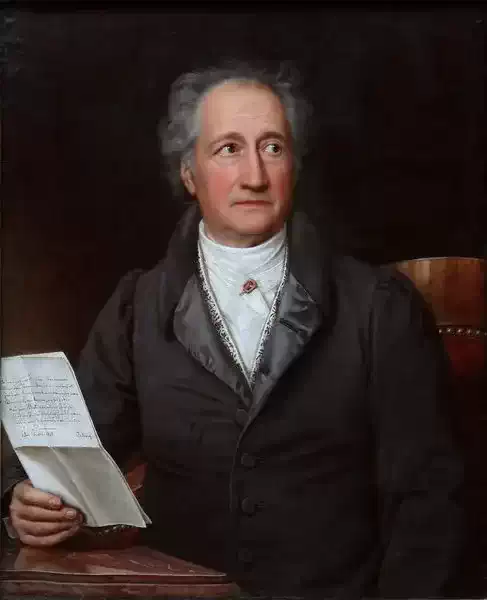
Johann Wolfgang von Goethe
Hermann And Dorothea - I. Kalliope
Hermann And Dorothea - I. Kalliope
FATE AND SYMPATHY.
'NE'ER have I seen the market and streets so thoroughly empty!
Still as the grave is the town, clear'd out! I verily fancy
Fifty at most of all our inhabitants still may be found there.
People are so inquisitive! All are running and racing
Merely to see the sad train of poor fellows driven to exile.
Down to the causeway now building, the distance nearly a league is,
And they thitherward rush, in the heat and the dust of the noonday.
As for me, I had rather not stir from my place just to stare at
Worthy and sorrowful fugitives, who, with what goods they can carry,
Leaving their own fair land on the further side of the Rhine-stream,
Over to us are crossing, and wander through the delightful
Nooks of this fruitful vale, with all its twistings and windings.
Wife, you did right well to bid our son go and meet them,
Taking with him old linen, and something to eat and to drink too,
Just to give to the poor; the rich are bound to befriend them.
How he is driving along! How well he holds in the horses!
Then the new little carriage looks very handsome; inside it
Four can easily sit, besides the one on the coachbox.
This time he is alone; how easily-turns it the corner!'
Thus to his wife the host of the Golden Lion discoursed,
Sitting at ease in the porch of his house adjoining the market.
Then replied as follows the shrewd and sensible hostess
'Father, I don't like giving old linen away, for I find it
Useful in so many ways, 'tis not to he purchased for money
Just when it's wanted. And yet to-day I gladly have given
Many excellent articles, shirts and covers and suchlike;
For I have heard of old people and children walking half-naked.
Will you forgive me, too, for having ransacked your presses?
That grand dressing-gown, cover'd with Indian flowers all over,
Made of the finest calico, lined with excellent flannel,
I have despatch'd with the rest; 'tis thin, old, quite out of fashion.'
But the worthy landlord only smiled, and then answer'd
I shall dreadfully miss that ancient calico garment,
Genuine Indian stuff! They're not to be had any longer.
Well! I shall wear it no more. And your poor husband henceforward
Always must wear a surtout, I suppose, or commonplace jacket,
Always must put on his boots; good bye to cap and to slippers!'
'See,' continued his wife, 'a few are already returning
Who have seen the procession, which long ago must have pass'd by.
See how dusty their shoes are, and how their faces are glowing
Each one carries a handkerchief, wiping the sweat from his forehead.
I, for one, wouldn't hurry and worry myself in such weather
Merely to see such a sight! I'm certain to hear all about it.'
And the worthy father, speaking with emphasis, added
'Such fine weather seldom lasts through the whole of the harvest
And we're bringing the fruit home, just as the hay we brought lately,
Perfectly dry; the sky is clear, no cloud's in the heavens,
And the whole day long delicious breezes are blowing.
Splendid weather I call it! The corn already too ripe is,
And to-morrow begin we to gather the plentiful harvest.'
Whilst he was thus discoursing, the number of men and of women
Crossing the market and going towards home kept ever increasing;
And there return'd amongst others, bringing with him his daughters,
On the other side of the market, their prosperous neighbour,
Going full speed to his newbuilt house, the principal merchant,
Riding inside an open carriage (in Landau constructed).
All the streets were alive; for the town, though small, was well peopled,
Many a factory throve there, and many a business also.
Long sat the excellent couple under the doorway, exchanging
Many a passing remark on the people who happen'd to pass them.
Presently thus to her husband exclaim'd the good-natured hostess
'See! Yon comes the minister; with him is walking the druggist:
They'll be able to give an account of all that has happen'd,
What they witness'd, and many a sight I fear which was painful.'
Both of them came in a friendly manner, and greeted the couple,
Taking their seats on the wooden benches under the doorway,
Shaking the dust from their feet, their handkerchiefs using to fan them.
Presently, after exchanging reciprocal greetings, the druggist
Open'd his mouth, and almost peevishly vented his feelings
'What strange creatures men are! They all resemble each other,
All take pleasure in staring, when troubles fall on their neighbours.
Ev'ry one runs to see the flames destroying a dwelling,
Or a poor criminal led in terror and shame to the scaffold.
All the town has been out to gaze at the sorrowing exiles,
None of them bearing in mind that a like misfortune hereafter,
Possibly almost directly, may happen to be their own portion.
I can't pardon such levity; yet 'tis the nature of all men.'
Thereupon rejoin'd the noble and excellent pastor,
He, the charm of the town, in age scarce more than a stripling:-(
He was acquainted with life, and knew the wants of his hearers,
Fully convinced of the worth of the Holy Scriptures, whose mission
Is to reveal man's fate, his inclinations to fathom;
He was also well read in the best of secular writings.)
'I don't like to find fault with any innocent impulse
Which in the mind of man Dame Nature has ever implanted;
For what reason and intellect ne'er could accomplish, is often
Done by some fortunate, quite irresistible instinct within him.
If mankind were never by curiosity driven,
Say, could they e'er have found out for themselves the wonderful manner
Things in the world range in order? For first they Novelty look for,
Then with untiring industry seek to discover the Useful,
Lastly they yearn for the Good, which makes them noble and worthy.
All through their youth frivolity serves as their joyous companion,
Hiding the presence of danger, and. swiftly effacing the traces
Caused by misfortune and grief, as soon as their onslaught is over.
Truly the man's to be praised who, as years roll onward, develops
Out of such glad disposition an intellect settled and steady,--
Who, in good fortune as well as misfortune, strives zealously, nobly;
For what is Good he brings forth, replacing whatever is injured.'
Then in a friendly voice impatiently spoke thus the hostess:-'
Tell us what have you seen; I am eagerly longing to hear it.'
Then with emphasis answer'd the druggist:--' The terrible stories
Told me to-day will serve for a long time to make me unhappy.
Words would fail to describe the manifold pictures of mis'ry.
Far in the distance saw we the dust, before we descended
Down to the meadows; the rising hillocks hid the procession
Long from our eyes, and little could we distinguish about it.
When, however, we reach'd the road that winds thro' the valley,
Great was the crowd and the noise of the emigrants mix'd with the waggons.
We unhappily saw poor fellows passing in numbers,
Some of them showing how bitter the sense of their sorrowful flight was,
Some with a feeling of joy at saving their lives in a hurry.
Sad was the sight of the manifold goods and chattels pertaining
Unto a well-managed house, which the careful owner's accustom'd
Each in its proper position to place, and in regular order,
Always ready for use, for all are wanted and useful.--
Sad was the sight of them now, on many a waggon and barrow
Heap'd in thorough confusion, and hurriedly huddled together.
Over a cupboard was placed a sieve and a coverlet woollen;
Beds in the kneeding troughs lay, and linen over the glasses.
Ah! and the danger appear'd to rob the men of their senses,
Just as in our great fire of twenty years ago happen'd,
When what was worthless they saved, and left all the best things behind them.
So on the present occasion with heedless caution they carried
Many valueless chattels, o'erlading the cattle and horses,--
Common old boards and barrels, a birdcage next to a goosepen.
Women and children were gasping beneath the weight of their bundles,
Baskets and tubs full of utterly useless articles, bearing.
(Man is always unwilling the least of his goods to abandon.)
Thus on its dusty way advanced the crowded procession,
All in hopeless confusion. First one, whose cattle were weaker,
Fain would slowly advance, while others would eagerly hasten.
Then there arose a scream of half-crush'd women and children,
And a lowing of cattle, with yelping of dogs intermingled,
And a wailing of aged and sick, all sitting and shaking,
Ranged in their beds on the top of the waggon too-heavily laden.
Next some lumbering wheel, push'd out of the track by the pressure,
Went to the edge of the roadway; the vehicle fell in the ditch then,
Rolling right over, and throwing, in falling, the men who were in it
Far in the field, screaming loudly, their persons however uninjured.
Then the boxes roll'd off and tumbled close to the waggon.
Those who saw them failing full surely expected to see them
Smash'd to pieces beneath the weight of the chests and the presses.
So the waggon lay broken, and those that it carried were helpless,
For the rest of the train went on, and hurriedly pass'd them,
Thinking only of self, and carried away by the current.
So we sped to the spot, and found the sick and the aged
Who, when at home and in bed, could scarcely endure their sad ailments,
Lying there on the ground, all sighing and groaning in anguish,
Stifled by clouds of dust, and scorch'd by the fierce sun of summer.
Then replied in tones of compassion the sensitive landlord
Hermann I trust will find them and give them refreshment and clothing.
I should unwillingly see them: I grieve at the eight of such sorrow.
Touch'd by the earliest news of the sad extent of the suffering,
Hastily sent we a trifle from out of our superabundance,
Just to comfort a few, and then our minds were more easy.
Now let us cease to discourse on such a sorrowful subject,
For men's hearts are easily overshadow'd by terror,
And by care, more odious far to me than misfortune.
Now let us go to a cooler place, the little back-parlour;
There the sun never shines, and the walls are so thick that the hot air
Never can enter; and mother shall forthwith bring us a glass each
Full of fine Eighty-three, well fitted to drive away trouble.
This is a bad place for drinking; the flies will hum round the glasses.'
So they all went inside, enjoying themselves in the coolness.
Then in a well-cut flask the mother carefully brought them
Some of that clear good wine, upon a bright metal waiter
With those greenish rummers, the fittingest goblets for Rhine wine.
So the three sat together, around the glistening polish'd
Circular large brown table-Äon massive feet it was planted.
Merrily clink'd together the glasses of host and of pastor,
But the other one thoughtfully held his glass without moving,
And in friendly fashion the host thus ask'd him to join them:-
'Drink, good neighbour, I pray! A merciful God has protected
Us in the past from misfortune, and will protect us in future.
All must confess that since He thought fit to severely chastise us,
When that terrible fire occurr'd, He has constantly bless'd us.
And watch'd over us constantly, just as man is accustom'd
His eye's precious apple to guard, that dearest of members.
Shall He not for the future preserve us, and be our Protector?
For 'tis in danger we learn to appreciate duly His Goodness.
This so flourishing town, which He built again from its ashes
By the industrious hands of its burghers, and bless'd it so richly,
Will He again destroy it, and render their toil unavailing?'
Cheerfully answer'd the excellent pastor, in accents of mildness
'Steadfastly cling to this faith, and cherish such worthy opinions;
In good fortune they'll make you prudent, and then in misfortune
Well-grounded hopes they'll supply, and furnish you true consolation.'
Then continued the host, with thoughts full of manhood and wisdom
'Oft have I greeted with wonder the rolling flood of the Rhine stream,
When, on my business trav'lling, I've once more come to its borders.
Grand has it ever appear'd, exalting my feelings and senses;
But I could never imagine that soon its beautiful margin
Into a wall would be turn'd, to keep the French from our country,
And its wide-spreading bed a ditch to hinder and check them.
So by Nature we're guarded, we're guarded by valorous Germans,
And by the Lord we're guarded; who then would foolishly tremble?
Weary the combatants are, and all things indicate peace soon;
And when at length the long-expected festival's holden
Here in our church, and the bells chime in with the organ in chorus,
And the trumpets are blowing, the noble Te Deum upraising,
Then on that selfsame day I fain would see, my good pastor,
Our dear Hermann kneel with his bride at the altar before you,
And the glad festival held through the length and breadth of the country
Will henceforward to me be a glad anniversary also!
But I am grieved to observe that the youth, who is always so active
When he is here at home, abroad is so slow and so timid.
Little at any time cares he to mix with the rest of the people;
Yes, he even avoids young maidens' society ever,
And the frolicsome dance, that great delight of young people.'
Thus he spake, and then listen'd. The sound of the stamping of horses
Drawing nearer was heard; and then the roll of the carriage,
Which, with impetuous speed, now thunder'd under the gateway.
FATE AND SYMPATHY.
'NE'ER have I seen the market and streets so thoroughly empty!
Still as the grave is the town, clear'd out! I verily fancy
Fifty at most of all our inhabitants still may be found there.
People are so inquisitive! All are running and racing
Merely to see the sad train of poor fellows driven to exile.
Down to the causeway now building, the distance nearly a league is,
And they thitherward rush, in the heat and the dust of the noonday.
As for me, I had rather not stir from my place just to stare at
Worthy and sorrowful fugitives, who, with what goods they can carry,
Leaving their own fair land on the further side of the Rhine-stream,
Over to us are crossing, and wander through the delightful
Nooks of this fruitful vale, with all its twistings and windings.
Wife, you did right well to bid our son go and meet them,
Taking with him old linen, and something to eat and to drink too,
Just to give to the poor; the rich are bound to befriend them.
How he is driving along! How well he holds in the horses!
Then the new little carriage looks very handsome; inside it
Four can easily sit, besides the one on the coachbox.
This time he is alone; how easily-turns it the corner!'
Thus to his wife the host of the Golden Lion discoursed,
Sitting at ease in the porch of his house adjoining the market.
Then replied as follows the shrewd and sensible hostess
'Father, I don't like giving old linen away, for I find it
Useful in so many ways, 'tis not to he purchased for money
Just when it's wanted. And yet to-day I gladly have given
Many excellent articles, shirts and covers and suchlike;
For I have heard of old people and children walking half-naked.
Will you forgive me, too, for having ransacked your presses?
That grand dressing-gown, cover'd with Indian flowers all over,
Made of the finest calico, lined with excellent flannel,
I have despatch'd with the rest; 'tis thin, old, quite out of fashion.'
But the worthy landlord only smiled, and then answer'd
I shall dreadfully miss that ancient calico garment,
Genuine Indian stuff! They're not to be had any longer.
Well! I shall wear it no more. And your poor husband henceforward
Always must wear a surtout, I suppose, or commonplace jacket,
Always must put on his boots; good bye to cap and to slippers!'
'See,' continued his wife, 'a few are already returning
Who have seen the procession, which long ago must have pass'd by.
See how dusty their shoes are, and how their faces are glowing
Each one carries a handkerchief, wiping the sweat from his forehead.
I, for one, wouldn't hurry and worry myself in such weather
Merely to see such a sight! I'm certain to hear all about it.'
And the worthy father, speaking with emphasis, added
'Such fine weather seldom lasts through the whole of the harvest
And we're bringing the fruit home, just as the hay we brought lately,
Perfectly dry; the sky is clear, no cloud's in the heavens,
And the whole day long delicious breezes are blowing.
Splendid weather I call it! The corn already too ripe is,
And to-morrow begin we to gather the plentiful harvest.'
Whilst he was thus discoursing, the number of men and of women
Crossing the market and going towards home kept ever increasing;
And there return'd amongst others, bringing with him his daughters,
On the other side of the market, their prosperous neighbour,
Going full speed to his newbuilt house, the principal merchant,
Riding inside an open carriage (in Landau constructed).
All the streets were alive; for the town, though small, was well peopled,
Many a factory throve there, and many a business also.
Long sat the excellent couple under the doorway, exchanging
Many a passing remark on the people who happen'd to pass them.
Presently thus to her husband exclaim'd the good-natured hostess
'See! Yon comes the minister; with him is walking the druggist:
They'll be able to give an account of all that has happen'd,
What they witness'd, and many a sight I fear which was painful.'
Both of them came in a friendly manner, and greeted the couple,
Taking their seats on the wooden benches under the doorway,
Shaking the dust from their feet, their handkerchiefs using to fan them.
Presently, after exchanging reciprocal greetings, the druggist
Open'd his mouth, and almost peevishly vented his feelings
'What strange creatures men are! They all resemble each other,
All take pleasure in staring, when troubles fall on their neighbours.
Ev'ry one runs to see the flames destroying a dwelling,
Or a poor criminal led in terror and shame to the scaffold.
All the town has been out to gaze at the sorrowing exiles,
None of them bearing in mind that a like misfortune hereafter,
Possibly almost directly, may happen to be their own portion.
I can't pardon such levity; yet 'tis the nature of all men.'
Thereupon rejoin'd the noble and excellent pastor,
He, the charm of the town, in age scarce more than a stripling:-(
He was acquainted with life, and knew the wants of his hearers,
Fully convinced of the worth of the Holy Scriptures, whose mission
Is to reveal man's fate, his inclinations to fathom;
He was also well read in the best of secular writings.)
'I don't like to find fault with any innocent impulse
Which in the mind of man Dame Nature has ever implanted;
For what reason and intellect ne'er could accomplish, is often
Done by some fortunate, quite irresistible instinct within him.
If mankind were never by curiosity driven,
Say, could they e'er have found out for themselves the wonderful manner
Things in the world range in order? For first they Novelty look for,
Then with untiring industry seek to discover the Useful,
Lastly they yearn for the Good, which makes them noble and worthy.
All through their youth frivolity serves as their joyous companion,
Hiding the presence of danger, and. swiftly effacing the traces
Caused by misfortune and grief, as soon as their onslaught is over.
Truly the man's to be praised who, as years roll onward, develops
Out of such glad disposition an intellect settled and steady,--
Who, in good fortune as well as misfortune, strives zealously, nobly;
For what is Good he brings forth, replacing whatever is injured.'
Then in a friendly voice impatiently spoke thus the hostess:-'
Tell us what have you seen; I am eagerly longing to hear it.'
Then with emphasis answer'd the druggist:--' The terrible stories
Told me to-day will serve for a long time to make me unhappy.
Words would fail to describe the manifold pictures of mis'ry.
Far in the distance saw we the dust, before we descended
Down to the meadows; the rising hillocks hid the procession
Long from our eyes, and little could we distinguish about it.
When, however, we reach'd the road that winds thro' the valley,
Great was the crowd and the noise of the emigrants mix'd with the waggons.
We unhappily saw poor fellows passing in numbers,
Some of them showing how bitter the sense of their sorrowful flight was,
Some with a feeling of joy at saving their lives in a hurry.
Sad was the sight of the manifold goods and chattels pertaining
Unto a well-managed house, which the careful owner's accustom'd
Each in its proper position to place, and in regular order,
Always ready for use, for all are wanted and useful.--
Sad was the sight of them now, on many a waggon and barrow
Heap'd in thorough confusion, and hurriedly huddled together.
Over a cupboard was placed a sieve and a coverlet woollen;
Beds in the kneeding troughs lay, and linen over the glasses.
Ah! and the danger appear'd to rob the men of their senses,
Just as in our great fire of twenty years ago happen'd,
When what was worthless they saved, and left all the best things behind them.
So on the present occasion with heedless caution they carried
Many valueless chattels, o'erlading the cattle and horses,--
Common old boards and barrels, a birdcage next to a goosepen.
Women and children were gasping beneath the weight of their bundles,
Baskets and tubs full of utterly useless articles, bearing.
(Man is always unwilling the least of his goods to abandon.)
Thus on its dusty way advanced the crowded procession,
All in hopeless confusion. First one, whose cattle were weaker,
Fain would slowly advance, while others would eagerly hasten.
Then there arose a scream of half-crush'd women and children,
And a lowing of cattle, with yelping of dogs intermingled,
And a wailing of aged and sick, all sitting and shaking,
Ranged in their beds on the top of the waggon too-heavily laden.
Next some lumbering wheel, push'd out of the track by the pressure,
Went to the edge of the roadway; the vehicle fell in the ditch then,
Rolling right over, and throwing, in falling, the men who were in it
Far in the field, screaming loudly, their persons however uninjured.
Then the boxes roll'd off and tumbled close to the waggon.
Those who saw them failing full surely expected to see them
Smash'd to pieces beneath the weight of the chests and the presses.
So the waggon lay broken, and those that it carried were helpless,
For the rest of the train went on, and hurriedly pass'd them,
Thinking only of self, and carried away by the current.
So we sped to the spot, and found the sick and the aged
Who, when at home and in bed, could scarcely endure their sad ailments,
Lying there on the ground, all sighing and groaning in anguish,
Stifled by clouds of dust, and scorch'd by the fierce sun of summer.
Then replied in tones of compassion the sensitive landlord
Hermann I trust will find them and give them refreshment and clothing.
I should unwillingly see them: I grieve at the eight of such sorrow.
Touch'd by the earliest news of the sad extent of the suffering,
Hastily sent we a trifle from out of our superabundance,
Just to comfort a few, and then our minds were more easy.
Now let us cease to discourse on such a sorrowful subject,
For men's hearts are easily overshadow'd by terror,
And by care, more odious far to me than misfortune.
Now let us go to a cooler place, the little back-parlour;
There the sun never shines, and the walls are so thick that the hot air
Never can enter; and mother shall forthwith bring us a glass each
Full of fine Eighty-three, well fitted to drive away trouble.
This is a bad place for drinking; the flies will hum round the glasses.'
So they all went inside, enjoying themselves in the coolness.
Then in a well-cut flask the mother carefully brought them
Some of that clear good wine, upon a bright metal waiter
With those greenish rummers, the fittingest goblets for Rhine wine.
So the three sat together, around the glistening polish'd
Circular large brown table-Äon massive feet it was planted.
Merrily clink'd together the glasses of host and of pastor,
But the other one thoughtfully held his glass without moving,
And in friendly fashion the host thus ask'd him to join them:-
'Drink, good neighbour, I pray! A merciful God has protected
Us in the past from misfortune, and will protect us in future.
All must confess that since He thought fit to severely chastise us,
When that terrible fire occurr'd, He has constantly bless'd us.
And watch'd over us constantly, just as man is accustom'd
His eye's precious apple to guard, that dearest of members.
Shall He not for the future preserve us, and be our Protector?
For 'tis in danger we learn to appreciate duly His Goodness.
This so flourishing town, which He built again from its ashes
By the industrious hands of its burghers, and bless'd it so richly,
Will He again destroy it, and render their toil unavailing?'
Cheerfully answer'd the excellent pastor, in accents of mildness
'Steadfastly cling to this faith, and cherish such worthy opinions;
In good fortune they'll make you prudent, and then in misfortune
Well-grounded hopes they'll supply, and furnish you true consolation.'
Then continued the host, with thoughts full of manhood and wisdom
'Oft have I greeted with wonder the rolling flood of the Rhine stream,
When, on my business trav'lling, I've once more come to its borders.
Grand has it ever appear'd, exalting my feelings and senses;
But I could never imagine that soon its beautiful margin
Into a wall would be turn'd, to keep the French from our country,
And its wide-spreading bed a ditch to hinder and check them.
So by Nature we're guarded, we're guarded by valorous Germans,
And by the Lord we're guarded; who then would foolishly tremble?
Weary the combatants are, and all things indicate peace soon;
And when at length the long-expected festival's holden
Here in our church, and the bells chime in with the organ in chorus,
And the trumpets are blowing, the noble Te Deum upraising,
Then on that selfsame day I fain would see, my good pastor,
Our dear Hermann kneel with his bride at the altar before you,
And the glad festival held through the length and breadth of the country
Will henceforward to me be a glad anniversary also!
But I am grieved to observe that the youth, who is always so active
When he is here at home, abroad is so slow and so timid.
Little at any time cares he to mix with the rest of the people;
Yes, he even avoids young maidens' society ever,
And the frolicsome dance, that great delight of young people.'
Thus he spake, and then listen'd. The sound of the stamping of horses
Drawing nearer was heard; and then the roll of the carriage,
Which, with impetuous speed, now thunder'd under the gateway.
390
Johann Wolfgang von Goethe
From Iphigenia In Tauris
From Iphigenia In Tauris
ACT IV. SCENE 5.
SONG OF THE FATES.
The deities dread!
The mastery hold they
In hands all-eternal,
And use them, unquestioned,
What manner they like.
Let him fear them doubly,
Whom they have uplifted!
On cliffs and on clouds, oh,
Round tables all-golden,
he seats are made ready.
When rises contention,
The guests are humid downwards
With shame and dishonor
To deep depths of midnight,
And vainly await they,
Bound fast in the darkness,
A just condemnation.
But they remain ever
In firmness unshaken
Round tables all-golden.
On stride they from mountain
To mountain far distant:
From out the abysses'
Dark jaws, the breath rises
Of torment-choked Titans
Up tow'rds them, like incense
In light clouds ascending.
The rulers immortal
Avert from whole peoples
Their blessing-fraught glances,
And shun, in the children,
To trace the once cherish'd,
Still, eloquent features
Their ancestors wore.
Thus chanted the Parae;
The old man, the banish'd,
In gloomy vault lying,
Their song overheareth,
Sons, grandsons remembereth,
And shaketh his head.
ACT IV. SCENE 5.
SONG OF THE FATES.
The deities dread!
The mastery hold they
In hands all-eternal,
And use them, unquestioned,
What manner they like.
Let him fear them doubly,
Whom they have uplifted!
On cliffs and on clouds, oh,
Round tables all-golden,
he seats are made ready.
When rises contention,
The guests are humid downwards
With shame and dishonor
To deep depths of midnight,
And vainly await they,
Bound fast in the darkness,
A just condemnation.
But they remain ever
In firmness unshaken
Round tables all-golden.
On stride they from mountain
To mountain far distant:
From out the abysses'
Dark jaws, the breath rises
Of torment-choked Titans
Up tow'rds them, like incense
In light clouds ascending.
The rulers immortal
Avert from whole peoples
Their blessing-fraught glances,
And shun, in the children,
To trace the once cherish'd,
Still, eloquent features
Their ancestors wore.
Thus chanted the Parae;
The old man, the banish'd,
In gloomy vault lying,
Their song overheareth,
Sons, grandsons remembereth,
And shaketh his head.
398
Johann Wolfgang von Goethe
From
From
EV'RY youth for love's sweet portion sighs,
Ev'ry maiden sighs to win man's love;
Why, alas! should bitter pain arise
From the noblest passion that we prove?
Thou, kind soul, bewailest, lov'st him well,
From disgrace his memory's saved by thee;
Lo, his spirit signs from out its cell:
BE A MAN, NOR SEEK TO FOLLOW ME.
EV'RY youth for love's sweet portion sighs,
Ev'ry maiden sighs to win man's love;
Why, alas! should bitter pain arise
From the noblest passion that we prove?
Thou, kind soul, bewailest, lov'st him well,
From disgrace his memory's saved by thee;
Lo, his spirit signs from out its cell:
BE A MAN, NOR SEEK TO FOLLOW ME.
307
Johann Wolfgang von Goethe
Found
Found
Once through the forest
Alone I went;
To seek for nothing
My thoughts were bent.
I saw i' the shadow
A flower stand there
As stars it glisten'd,
As eyes 'twas fair.
I sought to pluck it,-
It gently said:
'Shall I be gather'd
Only to fade?'
With all its roots
I dug it with care,
And took it home
To my garden fair.
In silent corner
Soon it was set;
There grows it ever,
There blooms it yet.
Once through the forest
Alone I went;
To seek for nothing
My thoughts were bent.
I saw i' the shadow
A flower stand there
As stars it glisten'd,
As eyes 'twas fair.
I sought to pluck it,-
It gently said:
'Shall I be gather'd
Only to fade?'
With all its roots
I dug it with care,
And took it home
To my garden fair.
In silent corner
Soon it was set;
There grows it ever,
There blooms it yet.
332
Johann Wolfgang von Goethe
Faithful Eckart
Faithful Eckart
"OH, would we were further! Oh, would we were home,
The phantoms of night tow'rd us hastily come,
The band of the Sorceress sisters.
They hitherward speed, and on finding us here,
They'll drink, though with toil we have fetch'd it, the beer,
And leave us the pitchers all empty."
Thus speaking, the children with fear take to flight,
When sudden an old man appears in their sight:
"Be quiet, child! children, be quiet!
From hunting they come, and their thirst they would still,
So leave them to swallow as much as they will,
And the Evil Ones then will be gracious."
As said, so 'twas done! and the phantoms draw near,
And shadowlike seem they, and grey they appear,
~Yet blithely they sip and they revel
The beer has all vanish'd, the pitchers are void;
With cries and with shouts the wild hunters, o'erjoy'd,
Speed onward o'er vale and o'er mountain.
The children in terror fly nimbly tow'rd home,
And with them the kind one is careful to come:
"My darlings, oh, be not so mournful!-
"They'll blame us and beat us, until we are dead."-"
No, no! ye will find that all goes well," he said;
"Be silent as mice, then, and listen!
"And he by whose counsels thus wisely ye're taught,
Is he who with children loves ever to sport.
The trusty and faithful old Eckart.
Ye have heard of the wonder for many a day,
But ne'er had a proof of the marvellous lay,--
Your hands hold a proof most convincing."
They arrive at their home, and their pitchers they place
By the side of their parents, with fear on their face,
Awaiting a beating and scolding.
But see what they're tasting: the choicest of beer!
Though three times and four times they quaff the good cheer
The pitchers remain still unemptied.
The marvel it lasts till the dawning of day;
All people who hear of it doubtless will say:
"What happen'd at length to the pitchers?"
In secret the children they smile, as they wait;
At last, though, they stammer, and stutter, and prate,
And straightway the pitchers were empty.
And if, children, with kindness address'd ye may be,
Whether father, or master, or alderman he,
Obey him, and follow his bidding!
And if 'tis unpleasant to bridle the tongue,
Yet talking is bad, silence good for the young--
And then will the beer fill your pitchers!
"OH, would we were further! Oh, would we were home,
The phantoms of night tow'rd us hastily come,
The band of the Sorceress sisters.
They hitherward speed, and on finding us here,
They'll drink, though with toil we have fetch'd it, the beer,
And leave us the pitchers all empty."
Thus speaking, the children with fear take to flight,
When sudden an old man appears in their sight:
"Be quiet, child! children, be quiet!
From hunting they come, and their thirst they would still,
So leave them to swallow as much as they will,
And the Evil Ones then will be gracious."
As said, so 'twas done! and the phantoms draw near,
And shadowlike seem they, and grey they appear,
~Yet blithely they sip and they revel
The beer has all vanish'd, the pitchers are void;
With cries and with shouts the wild hunters, o'erjoy'd,
Speed onward o'er vale and o'er mountain.
The children in terror fly nimbly tow'rd home,
And with them the kind one is careful to come:
"My darlings, oh, be not so mournful!-
"They'll blame us and beat us, until we are dead."-"
No, no! ye will find that all goes well," he said;
"Be silent as mice, then, and listen!
"And he by whose counsels thus wisely ye're taught,
Is he who with children loves ever to sport.
The trusty and faithful old Eckart.
Ye have heard of the wonder for many a day,
But ne'er had a proof of the marvellous lay,--
Your hands hold a proof most convincing."
They arrive at their home, and their pitchers they place
By the side of their parents, with fear on their face,
Awaiting a beating and scolding.
But see what they're tasting: the choicest of beer!
Though three times and four times they quaff the good cheer
The pitchers remain still unemptied.
The marvel it lasts till the dawning of day;
All people who hear of it doubtless will say:
"What happen'd at length to the pitchers?"
In secret the children they smile, as they wait;
At last, though, they stammer, and stutter, and prate,
And straightway the pitchers were empty.
And if, children, with kindness address'd ye may be,
Whether father, or master, or alderman he,
Obey him, and follow his bidding!
And if 'tis unpleasant to bridle the tongue,
Yet talking is bad, silence good for the young--
And then will the beer fill your pitchers!
410
Johann Wolfgang von Goethe
Explanation Of An Ancient Woodcut
Explanation Of An Ancient Woodcut
EARLY within his workshop here,
On Sundays stands our master dear;
His dirty apron he puts away,
And wears a cleanly doublet to-day;
Lets wax'd thread, hammer, and pincers rest,
And lays his awl within his chest;
The seventh day he takes repose
From many pulls and many blows.
Soon as the spring-sun meets his view,
Repose begets him labour anew;
He feels that he holds within his brain
A little world, that broods there amain,
And that begins to act and to live,
Which he to others would gladly give.
He had a skillful eye and true,
And was full kind and loving too.
For contemplation, clear and pure,--
For making all his own again, sure;
He had a tongue that charm'd when 'twas heard,
And graceful and light flow'd ev'ry word;
Which made the Muses in him rejoice,
The Master-singer of their choice.
And now a maiden enter'd there,
With swelling breast, and body fair;
With footing firm she took her place,
And moved with stately, noble grace;
She did not walk in wanton mood,
Nor look around with glances lewd.
She held a measure in her hand,
Her girdle was a golden band,
A wreath of corn was on her head,
Her eye the day's bright lustre shed;
Her name is honest Industry,
Else, Justice, Magnanimity.
She enter'd with a kindly greeting;
He felt no wonder at the meeting,
For, kind and fair as she might be,
He long had known her, fancied he.
"I have selected thee," she said,
"From all who earth's wild mazes tread,
That thou shouldst have clear-sighted sense,
And nought that's wrong shouldst e'er commence.
When others run in strange confusion,
Thy gaze shall see through each illusion
When others dolefully complain,
Thy cause with jesting thou shalt gain,
Honour and right shalt value duly,
In everything act simply, truly,--
Virtue and godliness proclaim,
And call all evil by its name,
Nought soften down, attempt no quibble,
Nought polish up, nought vainly scribble.
The world shall stand before thee, then,
As seen by Albert Durer's ken,
In manliness and changeless life,
In inward strength, with firmness rife.
Fair Nature's Genius by the hand
Shall lead thee on through every land,
Teach thee each different life to scan,
Show thee the wondrous ways of man,
His shifts, confusions, thrustings, and drubbings,
Pushings, tearings, pressings, and rubbings;
The varying madness of the crew,
The anthill's ravings bring to view;
But thou shalt see all this express'd,
As though 'twere in a magic chest.
Write these things down for folks on earth,
In hopes they may to wit give birth."--
Then she a window open'd wide,
And show'd a motley crowd outside,
All kinds of beings 'neath the sky,
As in his writings one may spy.
Our master dear was, after this,
On Nature thinking, full of bliss,
When tow'rd him, from the other side
He saw an aged woman glide;
The name she bears, Historia,
Mythologia, Fabula;
With footstep tottering and unstable
She dragg'd a large and wooden carved-table,
Where, with wide sleeves and human mien,
The Lord was catechizing seen;
Adam, Eve, Eden, the Serpent's seduction,
Gomorrah and Sodom's awful destruction,
The twelve illustrious women, too,
That mirror of honour brought to view;
All kinds of bloodthirstiness, murder, and sin,
The twelve wicked tyrants also were in,
And all kinds of goodly doctrine and law;
Saint Peter with his scourge you saw,
With the world's ways dissatisfied,
And by our Lord with power supplied.
Her train and dress, behind and before,
And e'en the seams, were painted o'er
With tales of worldly virtue and crime.--
Our master view'd all this for a time;
The sight right gladly he survey'd,
So useful for him in his trade,
Whence he was able to procure
Example good and precept sure,
Recounting all with truthful care,
As though he had been present there.
His spirit seem'd from earth to fly,
He ne'er had turned away his eye,
Did he not just behind him hear
A rattle of bells approaching near.
And now a fool doth catch his eye,
With goat and ape's leap drawing nigh
A merry interlude preparing
With fooleries and jests unsparing.
Behind him, in a line drawn out,
He dragg'd all fools, the lean and stout,
The great and little, the empty and full,
All too witty, and all too dull,
A lash he flourish'd overhead,
As though a dance of apes he led,
Abusing them with bitterness,
As though his wrath would ne'er grow less.
While on this sight our master gazed,
His head was growing well-nigh crazed:
What words for all could he e'er find,
Could such a medley be combined?
Could he continue with delight
For evermore to sing and write?
When lo, from out a cloud's dark bed
In at the upper window sped
The Muse, in all her majesty,
As fair as our loved maids we see.
With clearness she around him threw
Her truth, that ever stronger grew.
"I, to ordain thee come," she spake:
"So prosper, and my blessing take!
The holy fire that slumb'ring lies
Within thee, in bright flames shall rise;
Yet that thine ever-restless life
May still with kindly strength be rife,
I, for thine inward spirit's calm.
Have granted nourishment and balm,
That rapture may thy soul imbue,
Like some fair blossom bathed in dew."--
Behind his house then secretly
Outside the doorway pointed she,
Where, in a shady garden-nook,
A beauteous maid with downcast look
Was sitting where a stream was flowing,
With elder bushes near it growing,
She sat beneath an apple tree,
And nought around her seem'd to see.
Her lap was full of roses fair,
Which in a wreath she twined with care.
And, with them, leaves and blossoms blended:
For whom was that sweet wreath intended?
Thus sat she, modest and retired,
Her bosom throbb'd, with hope inspired;
Such deep forebodings fill'd her mind,
No room for wishing could she find,
And with the thoughts that o'er it flew,
Perchance a sigh was mingled too.
"But why should sorrow cloud thy brow?
That, dearest love, which fills thee now
Is fraught with joy and ecstasy.
Prepared in one alone for thee,
That he within thine eye may find
Solace when fortune proves unkind,
And be newborn through many a kiss,
That he receives with inward bliss;
When'er he clasps thee to his breast.
May he from all his toils find rest
When he in thy dear arms shall sink,
May he new life and vigour drink:
Fresh joys of youth shalt thou obtain,
In merry jest rejoice again.
With raillery and roguish spite,
Thou now shalt tease him, now delight.
Thus Love will nevermore grow old,
Thus will the minstrel ne'er be cold!"
While he thus lives, in secret bless'd,
Above him in the clouds doth rest
An oak-wreath, verdant and sublime,
Placed on his brow in after-time;
While they are banish'd to the slough,
Who their great master disavow.
EARLY within his workshop here,
On Sundays stands our master dear;
His dirty apron he puts away,
And wears a cleanly doublet to-day;
Lets wax'd thread, hammer, and pincers rest,
And lays his awl within his chest;
The seventh day he takes repose
From many pulls and many blows.
Soon as the spring-sun meets his view,
Repose begets him labour anew;
He feels that he holds within his brain
A little world, that broods there amain,
And that begins to act and to live,
Which he to others would gladly give.
He had a skillful eye and true,
And was full kind and loving too.
For contemplation, clear and pure,--
For making all his own again, sure;
He had a tongue that charm'd when 'twas heard,
And graceful and light flow'd ev'ry word;
Which made the Muses in him rejoice,
The Master-singer of their choice.
And now a maiden enter'd there,
With swelling breast, and body fair;
With footing firm she took her place,
And moved with stately, noble grace;
She did not walk in wanton mood,
Nor look around with glances lewd.
She held a measure in her hand,
Her girdle was a golden band,
A wreath of corn was on her head,
Her eye the day's bright lustre shed;
Her name is honest Industry,
Else, Justice, Magnanimity.
She enter'd with a kindly greeting;
He felt no wonder at the meeting,
For, kind and fair as she might be,
He long had known her, fancied he.
"I have selected thee," she said,
"From all who earth's wild mazes tread,
That thou shouldst have clear-sighted sense,
And nought that's wrong shouldst e'er commence.
When others run in strange confusion,
Thy gaze shall see through each illusion
When others dolefully complain,
Thy cause with jesting thou shalt gain,
Honour and right shalt value duly,
In everything act simply, truly,--
Virtue and godliness proclaim,
And call all evil by its name,
Nought soften down, attempt no quibble,
Nought polish up, nought vainly scribble.
The world shall stand before thee, then,
As seen by Albert Durer's ken,
In manliness and changeless life,
In inward strength, with firmness rife.
Fair Nature's Genius by the hand
Shall lead thee on through every land,
Teach thee each different life to scan,
Show thee the wondrous ways of man,
His shifts, confusions, thrustings, and drubbings,
Pushings, tearings, pressings, and rubbings;
The varying madness of the crew,
The anthill's ravings bring to view;
But thou shalt see all this express'd,
As though 'twere in a magic chest.
Write these things down for folks on earth,
In hopes they may to wit give birth."--
Then she a window open'd wide,
And show'd a motley crowd outside,
All kinds of beings 'neath the sky,
As in his writings one may spy.
Our master dear was, after this,
On Nature thinking, full of bliss,
When tow'rd him, from the other side
He saw an aged woman glide;
The name she bears, Historia,
Mythologia, Fabula;
With footstep tottering and unstable
She dragg'd a large and wooden carved-table,
Where, with wide sleeves and human mien,
The Lord was catechizing seen;
Adam, Eve, Eden, the Serpent's seduction,
Gomorrah and Sodom's awful destruction,
The twelve illustrious women, too,
That mirror of honour brought to view;
All kinds of bloodthirstiness, murder, and sin,
The twelve wicked tyrants also were in,
And all kinds of goodly doctrine and law;
Saint Peter with his scourge you saw,
With the world's ways dissatisfied,
And by our Lord with power supplied.
Her train and dress, behind and before,
And e'en the seams, were painted o'er
With tales of worldly virtue and crime.--
Our master view'd all this for a time;
The sight right gladly he survey'd,
So useful for him in his trade,
Whence he was able to procure
Example good and precept sure,
Recounting all with truthful care,
As though he had been present there.
His spirit seem'd from earth to fly,
He ne'er had turned away his eye,
Did he not just behind him hear
A rattle of bells approaching near.
And now a fool doth catch his eye,
With goat and ape's leap drawing nigh
A merry interlude preparing
With fooleries and jests unsparing.
Behind him, in a line drawn out,
He dragg'd all fools, the lean and stout,
The great and little, the empty and full,
All too witty, and all too dull,
A lash he flourish'd overhead,
As though a dance of apes he led,
Abusing them with bitterness,
As though his wrath would ne'er grow less.
While on this sight our master gazed,
His head was growing well-nigh crazed:
What words for all could he e'er find,
Could such a medley be combined?
Could he continue with delight
For evermore to sing and write?
When lo, from out a cloud's dark bed
In at the upper window sped
The Muse, in all her majesty,
As fair as our loved maids we see.
With clearness she around him threw
Her truth, that ever stronger grew.
"I, to ordain thee come," she spake:
"So prosper, and my blessing take!
The holy fire that slumb'ring lies
Within thee, in bright flames shall rise;
Yet that thine ever-restless life
May still with kindly strength be rife,
I, for thine inward spirit's calm.
Have granted nourishment and balm,
That rapture may thy soul imbue,
Like some fair blossom bathed in dew."--
Behind his house then secretly
Outside the doorway pointed she,
Where, in a shady garden-nook,
A beauteous maid with downcast look
Was sitting where a stream was flowing,
With elder bushes near it growing,
She sat beneath an apple tree,
And nought around her seem'd to see.
Her lap was full of roses fair,
Which in a wreath she twined with care.
And, with them, leaves and blossoms blended:
For whom was that sweet wreath intended?
Thus sat she, modest and retired,
Her bosom throbb'd, with hope inspired;
Such deep forebodings fill'd her mind,
No room for wishing could she find,
And with the thoughts that o'er it flew,
Perchance a sigh was mingled too.
"But why should sorrow cloud thy brow?
That, dearest love, which fills thee now
Is fraught with joy and ecstasy.
Prepared in one alone for thee,
That he within thine eye may find
Solace when fortune proves unkind,
And be newborn through many a kiss,
That he receives with inward bliss;
When'er he clasps thee to his breast.
May he from all his toils find rest
When he in thy dear arms shall sink,
May he new life and vigour drink:
Fresh joys of youth shalt thou obtain,
In merry jest rejoice again.
With raillery and roguish spite,
Thou now shalt tease him, now delight.
Thus Love will nevermore grow old,
Thus will the minstrel ne'er be cold!"
While he thus lives, in secret bless'd,
Above him in the clouds doth rest
An oak-wreath, verdant and sublime,
Placed on his brow in after-time;
While they are banish'd to the slough,
Who their great master disavow.
362
Johann Wolfgang von Goethe
Epitaph
Epitaph
As a boy, reserved and naughty;
As a youth, a coxcomb and haughty;
As a man, for action inclined;
As a greybeard, fickle in mind.--
Upon thy grave will people read:
This was a very man, indeed!
As a boy, reserved and naughty;
As a youth, a coxcomb and haughty;
As a man, for action inclined;
As a greybeard, fickle in mind.--
Upon thy grave will people read:
This was a very man, indeed!
409
Johann Wolfgang von Goethe
Celebrity
Celebrity
ON bridges small and bridges great
Stands Nepomucks in ev'ry state,
Of bronze, wood, painted, or of stone,
Some small as dolls, some giants grown;
Each passer must worship before Nepomuck,
Who to die on a bridge chanced to have the ill luck,
When once a man with head and ears
A saint in people's eyes appears,
Or has been sentenced piteously
Beneath the hangman's hand to die,
He's as a noted person prized,
In portrait is immortalized.
Engravings, woodcuts, are supplied,
And through the world spread far and wide.
Upon them all is seen his name,
And ev'ry one admits his claim;
Even the image of the Lord
Is not with greater zeal ador'd.
Strange fancy of the human race!
Half sinner frail, half child of grace
We see HERR WERTHER of the story
In all the pomp of woodcut glory.
His worth is first made duly known,
By having his sad features shown
At ev'ry fair the country round;
In ev'ry alehouse too they're found.
His stick is pointed by each dunce
"The ball would reach his brain at once!"
And each says, o'er his beer and bread:
"Thank Heav'n that 'tis not we are dead!"
ON bridges small and bridges great
Stands Nepomucks in ev'ry state,
Of bronze, wood, painted, or of stone,
Some small as dolls, some giants grown;
Each passer must worship before Nepomuck,
Who to die on a bridge chanced to have the ill luck,
When once a man with head and ears
A saint in people's eyes appears,
Or has been sentenced piteously
Beneath the hangman's hand to die,
He's as a noted person prized,
In portrait is immortalized.
Engravings, woodcuts, are supplied,
And through the world spread far and wide.
Upon them all is seen his name,
And ev'ry one admits his claim;
Even the image of the Lord
Is not with greater zeal ador'd.
Strange fancy of the human race!
Half sinner frail, half child of grace
We see HERR WERTHER of the story
In all the pomp of woodcut glory.
His worth is first made duly known,
By having his sad features shown
At ev'ry fair the country round;
In ev'ry alehouse too they're found.
His stick is pointed by each dunce
"The ball would reach his brain at once!"
And each says, o'er his beer and bread:
"Thank Heav'n that 'tis not we are dead!"
382
Johann Wolfgang von Goethe
Book Of Timur - To Suleika
Book Of Timur - To Suleika
FITTING perfumes to prepare,
And to raise thy rapture high,
Must a thousand rosebuds fair
First in fiery torments die.
One small flask's contents to glean,
Whose sweet fragrance aye may live,
Slender as thy finger e'en,
Must a world its treasures give;
Yes, a world where life is moving,
Which, with impulse full and strong,
Could forbode the Bulbul's loving,
Sweet, and spirit-stirring song.
Since they thus have swell'd our joy,
Should such torments grieve us, then?
Doth not Timur's rule destroy
Myriad souls of living men?
FITTING perfumes to prepare,
And to raise thy rapture high,
Must a thousand rosebuds fair
First in fiery torments die.
One small flask's contents to glean,
Whose sweet fragrance aye may live,
Slender as thy finger e'en,
Must a world its treasures give;
Yes, a world where life is moving,
Which, with impulse full and strong,
Could forbode the Bulbul's loving,
Sweet, and spirit-stirring song.
Since they thus have swell'd our joy,
Should such torments grieve us, then?
Doth not Timur's rule destroy
Myriad souls of living men?
298
Johann Wolfgang von Goethe
Blindman's Buff
Blindman's Buff
OH, my Theresa dear!
Thine eyes, I greatly fear,
Can through the bandage see!
Although thine eyes are bound,
By thee I'm quickly found,
And wherefore shouldst thou catch but me?
Ere long thou held'st me fast,
With arms around me cast,
Upon thy breast I fell;
Scarce was thy bandage gone,
When all my joy was flown,
Thou coldly didst the blind repel.
He groped on ev'ry side,
His limbs he sorely tried,
While scoffs arose all round;
If thou no love wilt give,
In sadness I shall live,
As if mine eyes remain'd still bound.
OH, my Theresa dear!
Thine eyes, I greatly fear,
Can through the bandage see!
Although thine eyes are bound,
By thee I'm quickly found,
And wherefore shouldst thou catch but me?
Ere long thou held'st me fast,
With arms around me cast,
Upon thy breast I fell;
Scarce was thy bandage gone,
When all my joy was flown,
Thou coldly didst the blind repel.
He groped on ev'ry side,
His limbs he sorely tried,
While scoffs arose all round;
If thou no love wilt give,
In sadness I shall live,
As if mine eyes remain'd still bound.
385
Johann Wolfgang von Goethe
As Broad As It's Long
As Broad As It's Long
MODEST men must needs endure,
And the bold must humbly bow;
Thus thy fate's the same, be sure,
Whether bold or modest thou.
MODEST men must needs endure,
And the bold must humbly bow;
Thus thy fate's the same, be sure,
Whether bold or modest thou.
382
Johann Wolfgang von Goethe
Another
Another
Go! obedient to my call,
Turn to profit thy young days,
Wiser make betimes thy breast
In Fate's balance as it sways,
Seldom is the cock at rest;
Thou must either mount, or fall,
Thou must either rule and win,
Or submissively give in,
Triumph, or else yield to clamour:
Be the anvil or the hammer.
Go! obedient to my call,
Turn to profit thy young days,
Wiser make betimes thy breast
In Fate's balance as it sways,
Seldom is the cock at rest;
Thou must either mount, or fall,
Thou must either rule and win,
Or submissively give in,
Triumph, or else yield to clamour:
Be the anvil or the hammer.
384
Johann Wolfgang von Goethe
A Symbol
A Symbol
THE mason's trade Observe them well,
Resembles life, And watch them revealing
With all its strife,--How solemn feeling
Is like the stir made And wonderment swell
By man on earth's face. The hearts of the brave.
Though weal and woe The voice of the blest,
The future may hide, And of spirits on high
Unterrified Seems loudly to cry:
We onward go "To do what is best,
In ne'er changing race. Unceasing endeavour!
A veil of dread "In silence eterne
Hangs heavier still. Here chaplets are twin'd,
Deep slumbers fill That each noble mind
The stars over-head, Its guerdon may earn.--
And the foot-trodden grave. Then hope ye for ever!"
THE mason's trade Observe them well,
Resembles life, And watch them revealing
With all its strife,--How solemn feeling
Is like the stir made And wonderment swell
By man on earth's face. The hearts of the brave.
Though weal and woe The voice of the blest,
The future may hide, And of spirits on high
Unterrified Seems loudly to cry:
We onward go "To do what is best,
In ne'er changing race. Unceasing endeavour!
A veil of dread "In silence eterne
Hangs heavier still. Here chaplets are twin'd,
Deep slumbers fill That each noble mind
The stars over-head, Its guerdon may earn.--
And the foot-trodden grave. Then hope ye for ever!"
470
Johann Wolfgang von Goethe
A Legacy
A Legacy
No living atom comes at last to naught!
Active in each is still the eternal Thought:
Hold fast to Being if thou wouldst be blest.
Being is without end; for changeless laws
Bind that from which the All its glory draws
Of living treasures endlessly possessed.
Unto the wise of old this truth was known,
Such wisdom knit their noble souls in one;
Then hold thou still the lore of ancient days!
To that high power thou ow'st it, son of man,
By whose decree the earth its circuit ran
And all the planets went their various ways.
Then inward turn at once thy searching eyes;
Thence shalt thou see the central truth arise
From which no lofty soul goes e'er astray;
There shalt thou miss no needful guiding sign-
For conscience lives, and still its light divine
Shall be the sun of all thy moral day.
Next shalt thou trust thy senses' evidence,
And fear from them no treacherous offence
While the mind's watchful eye thy road commands:
With lively pleasure contemplate the scene
And roam securely, teachable, serene,
At will throughout a world of fruitful lands.
Enjoy in moderation all life gives:
Where it rejoices in each thing that lives
Let reason be thy guide and make thee see.
Then shall the distant past be present still,
The future, ere it comes, thy vision fill-
Each single moment touch eternity.
Then at the last shalt thou achieve thy quest,
And in one final, firm conviction rest:
What bears for thee true fruit alone is true.
Prove all things, watch the movement of the world
As down the various ways its tribes are whirled;
Take thou thy stand among the chosen few.
Thus hath it been of old; in solitude
The artist shaped what thing to him seemed good,
The wise man hearkened to his own soul's voice.
Thus also shalt thou find thy greatest bliss;
To lead where the elect shall follow-this
And this alone is worth a hero's choice.
No living atom comes at last to naught!
Active in each is still the eternal Thought:
Hold fast to Being if thou wouldst be blest.
Being is without end; for changeless laws
Bind that from which the All its glory draws
Of living treasures endlessly possessed.
Unto the wise of old this truth was known,
Such wisdom knit their noble souls in one;
Then hold thou still the lore of ancient days!
To that high power thou ow'st it, son of man,
By whose decree the earth its circuit ran
And all the planets went their various ways.
Then inward turn at once thy searching eyes;
Thence shalt thou see the central truth arise
From which no lofty soul goes e'er astray;
There shalt thou miss no needful guiding sign-
For conscience lives, and still its light divine
Shall be the sun of all thy moral day.
Next shalt thou trust thy senses' evidence,
And fear from them no treacherous offence
While the mind's watchful eye thy road commands:
With lively pleasure contemplate the scene
And roam securely, teachable, serene,
At will throughout a world of fruitful lands.
Enjoy in moderation all life gives:
Where it rejoices in each thing that lives
Let reason be thy guide and make thee see.
Then shall the distant past be present still,
The future, ere it comes, thy vision fill-
Each single moment touch eternity.
Then at the last shalt thou achieve thy quest,
And in one final, firm conviction rest:
What bears for thee true fruit alone is true.
Prove all things, watch the movement of the world
As down the various ways its tribes are whirled;
Take thou thy stand among the chosen few.
Thus hath it been of old; in solitude
The artist shaped what thing to him seemed good,
The wise man hearkened to his own soul's voice.
Thus also shalt thou find thy greatest bliss;
To lead where the elect shall follow-this
And this alone is worth a hero's choice.
466
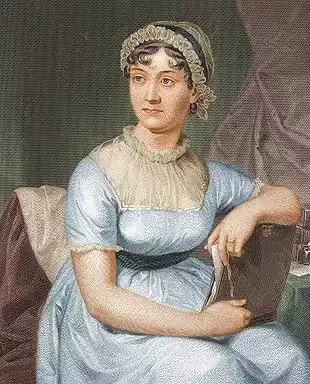
Jane Austen
Oh! Mr Best You're Very Bad
Oh! Mr Best You're Very Bad
Oh! Mr. Best, you're very bad
And all the world shall know it;
Your base behaviour shall be sung
By me, a tunefull Poet.--
You used to go to Harrowgate
Each summer as it came,
And why I pray should you refuse
To go this year the same?--
The way's as plain, the road's as smooth,
The Posting not increased;
You're scarcely stouter than you were,
Not younger Sir at least.--
If e'er the waters were of use
Why now their use forego?
You may not live another year,
All's mortal here below.--
It is your duty Mr Best
To give your health repair.
Vain else your Richard's pills will be,
And vain your Consort's care.
But yet a nobler Duty calls
You now towards the North.
Arise ennobled--as Escort
Of Martha Lloyd stand forth.
She wants your aid--she honours you
With a distinguished call.
Stand forth to be the friend of her
Who is the friend of all.--
Take her, and wonder at your luck,
In having such a Trust.
Her converse sensible and sweet
Will banish heat and dust.--
So short she'll make the journey seem
You'll bid the Chaise stand still.
T'will be like driving at full speed
From Newb'ry to Speen hill.--
Convey her safe to Morton's wife
And I'll forget the past,
And write some verses in your praise
As finely and as fast.
But if you still refuse to go
I'll never let your rest,
Buy haunt you with reproachful song
Oh! wicked Mr. Best!--
Oh! Mr. Best, you're very bad
And all the world shall know it;
Your base behaviour shall be sung
By me, a tunefull Poet.--
You used to go to Harrowgate
Each summer as it came,
And why I pray should you refuse
To go this year the same?--
The way's as plain, the road's as smooth,
The Posting not increased;
You're scarcely stouter than you were,
Not younger Sir at least.--
If e'er the waters were of use
Why now their use forego?
You may not live another year,
All's mortal here below.--
It is your duty Mr Best
To give your health repair.
Vain else your Richard's pills will be,
And vain your Consort's care.
But yet a nobler Duty calls
You now towards the North.
Arise ennobled--as Escort
Of Martha Lloyd stand forth.
She wants your aid--she honours you
With a distinguished call.
Stand forth to be the friend of her
Who is the friend of all.--
Take her, and wonder at your luck,
In having such a Trust.
Her converse sensible and sweet
Will banish heat and dust.--
So short she'll make the journey seem
You'll bid the Chaise stand still.
T'will be like driving at full speed
From Newb'ry to Speen hill.--
Convey her safe to Morton's wife
And I'll forget the past,
And write some verses in your praise
As finely and as fast.
But if you still refuse to go
I'll never let your rest,
Buy haunt you with reproachful song
Oh! wicked Mr. Best!--
144
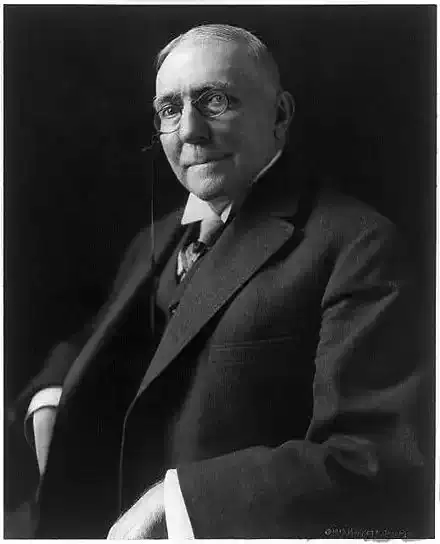
James Whitcomb Riley
Told By
Told By
Coming, clean from the Maryland-end
Of this great National Road of ours,
Through your vast West; with the time to spend,
Stopping for days in the main towns, where
Every citizen seemed a friend,
And friends grew thick as the wayside flowers,--
I found no thing that I might narrate
More singularly strange or queer
Than a thing I found in your sister-state
Ohio,--at a river-town--down here
In my notebook: _Zanesville--situate
On the stream Muskingum--broad and clear,
And navigable, through half the year,
North, to Coshocton; south, as far
As Marietta._--But these facts are
Not of the _story_, but the _scene_
Of the simple little tale I mean
To tell _directly_--from this, straight through
To the _end_ that is best worth listening to:
Eastward of Zanesville, two or three
Miles from the town, as our stage drove in,
I on the driver's seat, and he
Pointing out this and that to me,--
On beyond us--among the rest--
A grovey slope, and a fluttering throng
Of little children, which he 'guessed'
Was a picnic, as we caught their thin
High laughter, as we drove along,
Clearer and clearer. Then suddenly
He turned and asked, with a curious grin,
What were my views on _Slavery? 'Why?'_
I asked, in return, with a wary eye.
'Because,' he answered, pointing his whip
At a little, whitewashed house and shed
On the edge of the road by the grove ahead,-'
Because there are two slaves _there_,' he said-'
Two Black slaves that I've passed each trip
For eighteen years.--Though they've been set free,
They have been slaves ever since!' said he.
And, as our horses slowly drew
Nearer the little house in view,
All briefly I heard the history
Of this little old Negro woman and
Her husband, house and scrap of land;
How they were slaves and had been made free
By their dying master, years ago
In old Virginia; and then had come
North here into a _free_ state--so,
Safe forever, to found a home--
For themselves alone?--for they left South there
Five strong sons, who had, alas!
All been sold ere it came to pass
This first old master with his last breath
Had freed the _parents_.--(He went to death
Agonized and in dire despair
That the poor slave _children_ might not share
Their parents' freedom. And wildly then
He moaned for pardon and died. Amen!)
Thus, with their freedom, and little sum
Of money left them, these two had come
North, full twenty long years ago;
And, settling there, they had hopefully
Gone to work, in their simple way,
Hauling--gardening--raising sweet
Corn, and popcorn.--Bird and bee
In the garden-blooms and the apple-tree
Singing with them throughout the slow
Summer's day, with its dust and heat--
The crops that thirst and the rains that fail;
Or in Autumn chill, when the clouds hung low,
And hand-made hominy might find sale
In the near town-market; or baking pies
And cakes, to range in alluring show
At the little window, where the eyes
Of the Movers' children, driving past,
Grew fixed, till the big white wagons drew
Into a halt that would sometimes last
Even the space of an hour or two--
As the dusty, thirsty travelers made
Their noonings there in the beeches' shade
By the old black Aunty's spring-house, where,
Along with its cooling draughts, were found
Jugs of her famous sweet spruce-beer,
Served with her gingerbread-horses there,
While Aunty's snow-white cap bobbed 'round
Till the children's rapture knew no bound,
As she sang and danced for them, quavering clear
And high the chant of her old slave-days-
'Oh, Lo'd, Jinny! my toes is so',
Dancin' on yo' sandy flo'!'
Even so had they wrought all ways
To earn the pennies, and hoard them, too,--
And with what ultimate end in view?--
They were saving up money enough to be
Able, in time, to buy their own
Five children back.
Ah! the toil gone through!
And the long delays and the heartaches, too,
And self-denials that they had known!
But the pride and glory that was theirs
When they first hitched up their shackly cart
For the long, long journey South.--The start
In the first drear light of the chilly dawn,
With no friends gathered in grieving throng,--
With no farewells and favoring prayers;
But, as they creaked and jolted on,
Their chiming voices broke in song-
''Hail, all hail! don't you see the stars a-fallin'?
Hail, all hail! I'm on my way.
Gideon[1] am
A healin' ba'm--
I belong to the blood-washed army.
Gideon am
A healin' ba'm--
On my way!''
And their _return!_--with their oldest boy
Along with them! Why, their happiness
Spread abroad till it grew a joy
_Universal_--It even reached
And thrilled the town till the _Church_ was stirred
Into suspecting that wrong was wrong!--
And it stayed awake as the preacher preached
A _Real_ 'Love'-text that he had not long
To ransack for in the Holy Word.
And the son, restored, and welcomed so,
Found service readily in the town;
And, with the parents, sure and slow,
_He_ went 'saltin' de cole cash down.'
So with the _next_ boy--and each one
In turn, till _four_ of the five at last
Had been bought back; and, in each case,
With steady work and good homes not
Far from the parents, _they_ chipped in
To the family fund, with an equal grace.
Thus they managed and planned and wrought,
And the old folks throve--Till the night before
They were to start for the lone last son
In the rainy dawn--their money fast
Hid away in the house,--two mean,
Murderous robbers burst the door.
...Then, in the dark, was a scuffle--a fall--
An old man's gasping cry--and then
A woman's fife-like shriek.
...Three men
Splashing by on horseback heard
The summons: And in an instant all
Sprung to their duty, with scarce a word.
And they were _in time_--not only to save
The lives of the old folks, but to bag
Both the robbers, and buck-and-gag
And land them safe in the county-jail--
Or, as Aunty said, with a blended awe
And subtlety,--'Safe in de calaboose whah
De dawgs caint bite 'em!'
--So prevail
The faithful!--So had the Lord upheld
His servants of both deed and prayer,--
HIS the glory unparalleled-_
Theirs_ the reward,--their every son
Free, at last, as the parents were!
And, as the driver ended there
In front of the little house, I said,
All fervently, 'Well done! well done!'
At which he smiled, and turned his head
And pulled on the leaders' lines and--'See!'
He said,--''you can read old Aunty's sign?'
And, peering down through these specs of mine
On a little, square board-sign, I read:
'Stop, traveler, if you think it fit,
And quench your thirst for a-fip-and-a-bit.
The rocky spring is very clear,
And soon converted into beer.'
And, though I read aloud, I could
Scarce hear myself for laugh and shout
Of children--a glad multitude
Of little people, swarming out
Of the picnic-grounds I spoke about.--
And in their rapturous midst, I see
Again--through mists of memory--
A black old Negress laughing up
At the driver, with her broad lips rolled
Back from her teeth, chalk-white, and gums
Redder than reddest red-ripe plums.
He took from her hand the lifted cup
Of clear spring-water, pure and cold,
And passed it to me: And I raised my hat
And drank to her with a reverence that
My conscience knew was justly due
The old black face, and the old eyes, too--
The old black head, with its mossy mat
Of hair, set under its cap and frills
White as the snows on Alpine hills;
Drank to the old _black_ smile, but yet
Bright as the sun on the violet,--
Drank to the gnarled and knuckled old
Black hands whose palms had ached and bled
And pitilessly been worn pale
And white almost as the palms that hold
Slavery's lash while the victim's wail
Fails as a crippled prayer might fail.--
Aye, with a reverence infinite,
I drank to the old black face and head--
The old black breast with its life of light--
The old black hide with its heart of gold.
Coming, clean from the Maryland-end
Of this great National Road of ours,
Through your vast West; with the time to spend,
Stopping for days in the main towns, where
Every citizen seemed a friend,
And friends grew thick as the wayside flowers,--
I found no thing that I might narrate
More singularly strange or queer
Than a thing I found in your sister-state
Ohio,--at a river-town--down here
In my notebook: _Zanesville--situate
On the stream Muskingum--broad and clear,
And navigable, through half the year,
North, to Coshocton; south, as far
As Marietta._--But these facts are
Not of the _story_, but the _scene_
Of the simple little tale I mean
To tell _directly_--from this, straight through
To the _end_ that is best worth listening to:
Eastward of Zanesville, two or three
Miles from the town, as our stage drove in,
I on the driver's seat, and he
Pointing out this and that to me,--
On beyond us--among the rest--
A grovey slope, and a fluttering throng
Of little children, which he 'guessed'
Was a picnic, as we caught their thin
High laughter, as we drove along,
Clearer and clearer. Then suddenly
He turned and asked, with a curious grin,
What were my views on _Slavery? 'Why?'_
I asked, in return, with a wary eye.
'Because,' he answered, pointing his whip
At a little, whitewashed house and shed
On the edge of the road by the grove ahead,-'
Because there are two slaves _there_,' he said-'
Two Black slaves that I've passed each trip
For eighteen years.--Though they've been set free,
They have been slaves ever since!' said he.
And, as our horses slowly drew
Nearer the little house in view,
All briefly I heard the history
Of this little old Negro woman and
Her husband, house and scrap of land;
How they were slaves and had been made free
By their dying master, years ago
In old Virginia; and then had come
North here into a _free_ state--so,
Safe forever, to found a home--
For themselves alone?--for they left South there
Five strong sons, who had, alas!
All been sold ere it came to pass
This first old master with his last breath
Had freed the _parents_.--(He went to death
Agonized and in dire despair
That the poor slave _children_ might not share
Their parents' freedom. And wildly then
He moaned for pardon and died. Amen!)
Thus, with their freedom, and little sum
Of money left them, these two had come
North, full twenty long years ago;
And, settling there, they had hopefully
Gone to work, in their simple way,
Hauling--gardening--raising sweet
Corn, and popcorn.--Bird and bee
In the garden-blooms and the apple-tree
Singing with them throughout the slow
Summer's day, with its dust and heat--
The crops that thirst and the rains that fail;
Or in Autumn chill, when the clouds hung low,
And hand-made hominy might find sale
In the near town-market; or baking pies
And cakes, to range in alluring show
At the little window, where the eyes
Of the Movers' children, driving past,
Grew fixed, till the big white wagons drew
Into a halt that would sometimes last
Even the space of an hour or two--
As the dusty, thirsty travelers made
Their noonings there in the beeches' shade
By the old black Aunty's spring-house, where,
Along with its cooling draughts, were found
Jugs of her famous sweet spruce-beer,
Served with her gingerbread-horses there,
While Aunty's snow-white cap bobbed 'round
Till the children's rapture knew no bound,
As she sang and danced for them, quavering clear
And high the chant of her old slave-days-
'Oh, Lo'd, Jinny! my toes is so',
Dancin' on yo' sandy flo'!'
Even so had they wrought all ways
To earn the pennies, and hoard them, too,--
And with what ultimate end in view?--
They were saving up money enough to be
Able, in time, to buy their own
Five children back.
Ah! the toil gone through!
And the long delays and the heartaches, too,
And self-denials that they had known!
But the pride and glory that was theirs
When they first hitched up their shackly cart
For the long, long journey South.--The start
In the first drear light of the chilly dawn,
With no friends gathered in grieving throng,--
With no farewells and favoring prayers;
But, as they creaked and jolted on,
Their chiming voices broke in song-
''Hail, all hail! don't you see the stars a-fallin'?
Hail, all hail! I'm on my way.
Gideon[1] am
A healin' ba'm--
I belong to the blood-washed army.
Gideon am
A healin' ba'm--
On my way!''
And their _return!_--with their oldest boy
Along with them! Why, their happiness
Spread abroad till it grew a joy
_Universal_--It even reached
And thrilled the town till the _Church_ was stirred
Into suspecting that wrong was wrong!--
And it stayed awake as the preacher preached
A _Real_ 'Love'-text that he had not long
To ransack for in the Holy Word.
And the son, restored, and welcomed so,
Found service readily in the town;
And, with the parents, sure and slow,
_He_ went 'saltin' de cole cash down.'
So with the _next_ boy--and each one
In turn, till _four_ of the five at last
Had been bought back; and, in each case,
With steady work and good homes not
Far from the parents, _they_ chipped in
To the family fund, with an equal grace.
Thus they managed and planned and wrought,
And the old folks throve--Till the night before
They were to start for the lone last son
In the rainy dawn--their money fast
Hid away in the house,--two mean,
Murderous robbers burst the door.
...Then, in the dark, was a scuffle--a fall--
An old man's gasping cry--and then
A woman's fife-like shriek.
...Three men
Splashing by on horseback heard
The summons: And in an instant all
Sprung to their duty, with scarce a word.
And they were _in time_--not only to save
The lives of the old folks, but to bag
Both the robbers, and buck-and-gag
And land them safe in the county-jail--
Or, as Aunty said, with a blended awe
And subtlety,--'Safe in de calaboose whah
De dawgs caint bite 'em!'
--So prevail
The faithful!--So had the Lord upheld
His servants of both deed and prayer,--
HIS the glory unparalleled-_
Theirs_ the reward,--their every son
Free, at last, as the parents were!
And, as the driver ended there
In front of the little house, I said,
All fervently, 'Well done! well done!'
At which he smiled, and turned his head
And pulled on the leaders' lines and--'See!'
He said,--''you can read old Aunty's sign?'
And, peering down through these specs of mine
On a little, square board-sign, I read:
'Stop, traveler, if you think it fit,
And quench your thirst for a-fip-and-a-bit.
The rocky spring is very clear,
And soon converted into beer.'
And, though I read aloud, I could
Scarce hear myself for laugh and shout
Of children--a glad multitude
Of little people, swarming out
Of the picnic-grounds I spoke about.--
And in their rapturous midst, I see
Again--through mists of memory--
A black old Negress laughing up
At the driver, with her broad lips rolled
Back from her teeth, chalk-white, and gums
Redder than reddest red-ripe plums.
He took from her hand the lifted cup
Of clear spring-water, pure and cold,
And passed it to me: And I raised my hat
And drank to her with a reverence that
My conscience knew was justly due
The old black face, and the old eyes, too--
The old black head, with its mossy mat
Of hair, set under its cap and frills
White as the snows on Alpine hills;
Drank to the old _black_ smile, but yet
Bright as the sun on the violet,--
Drank to the gnarled and knuckled old
Black hands whose palms had ached and bled
And pitilessly been worn pale
And white almost as the palms that hold
Slavery's lash while the victim's wail
Fails as a crippled prayer might fail.--
Aye, with a reverence infinite,
I drank to the old black face and head--
The old black breast with its life of light--
The old black hide with its heart of gold.
312
James Whitcomb Riley
To a Boy Whistling
To a Boy Whistling
The smiling face of a happy boy
With its enchanted key
Is now unlocking in memory
My store of heartiest joy.
And my lost life again to-day,
In pleasant colors all aglow,
From rainbow tints, to pure white snow,
Is a panorama sliding away.
The whistled air of a simple tune
Eddies and whirls my thoughts around,
As fairy balloons of thistle-down
Sail through the air of June.
O happy boy with untaught grace!
What is there in the world to give
That can buy one hour of the life you live
Or the trivial cause of your smiling face!
The smiling face of a happy boy
With its enchanted key
Is now unlocking in memory
My store of heartiest joy.
And my lost life again to-day,
In pleasant colors all aglow,
From rainbow tints, to pure white snow,
Is a panorama sliding away.
The whistled air of a simple tune
Eddies and whirls my thoughts around,
As fairy balloons of thistle-down
Sail through the air of June.
O happy boy with untaught grace!
What is there in the world to give
That can buy one hour of the life you live
Or the trivial cause of your smiling face!
241
James Whitcomb Riley
The Curse Of The Wandering Foot
The Curse Of The Wandering Foot
All hope of rest withdrawn me?--
What dread command hath put
This awful curse upon me--
The curse of the wandering foot!
Forward and backward and thither,
And hither and yon again--
Wandering ever! And whither?
Answer them, God! Amen.
The blue skies are far o'er me---
The bleak fields near below:
Where the mother that bore me?--
Where her grave in the snow?--
Glad in her trough of a coffin--
The sad eyes frozen shut
That wept so often, often,
The curse of the wandering foot!
Here in your marts I care not
Whatsoever ye think.
Good folk many who dare not
Give me to eat and drink:
Give me to sup of your pity--
Feast me on prayers!--O ye,
Met I your Christ in the city
He would fare forth with me--
Forward and onward and thither,
And hither again and yon,
With milk for our drink together
And honey to feed upon--
Nor hope of rest withdrawn us,
Since the one Father put
The blessed curse upon us--
The curse of the wandering foot.
All hope of rest withdrawn me?--
What dread command hath put
This awful curse upon me--
The curse of the wandering foot!
Forward and backward and thither,
And hither and yon again--
Wandering ever! And whither?
Answer them, God! Amen.
The blue skies are far o'er me---
The bleak fields near below:
Where the mother that bore me?--
Where her grave in the snow?--
Glad in her trough of a coffin--
The sad eyes frozen shut
That wept so often, often,
The curse of the wandering foot!
Here in your marts I care not
Whatsoever ye think.
Good folk many who dare not
Give me to eat and drink:
Give me to sup of your pity--
Feast me on prayers!--O ye,
Met I your Christ in the city
He would fare forth with me--
Forward and onward and thither,
And hither again and yon,
With milk for our drink together
And honey to feed upon--
Nor hope of rest withdrawn us,
Since the one Father put
The blessed curse upon us--
The curse of the wandering foot.
259
James Whitcomb Riley
The Chant Of The Cross-Bearing Child
The Chant Of The Cross-Bearing Child
I bear dis cross dis many a mile.
O de cross-bearin' chile--
De cross-bearin' chile!
I bear dis cross 'long many a road
Wha' de pink ain't bloom' an' de grass done mowed.
O de cross-bearin' chile--
De cross-bearin' chile!
Hits on my conscience all dese days
Fo' ter bear de cross ut de good Lord lays
On my po' soul, an' ter lif my praise.
O de cross-bearin' chile--
De cross-bearin' chile!
I 's nigh-'bout weak ez I mos' kin be,
Yit de Marstah call an' He say,--'You 's free
Fo' ter 'cept dis cross, an' ter cringe yo' knee
To no n'er man in de worl' but me!'
O de cross-bearin' chile--
De cross-bearin' chile!
Says you guess wrong, ef I let you guess--
Says you 'spec' mo', an'-a you git less:--
Says you go eas', says you go wes',
An' whense you fine de road ut you like bes'
You betteh take ch'ice er any er de res'!
O de cross-bearin' chile--
De cross-bearin' chile!
He build my feet, an' He fix de signs
Dat de shoe hit pinch an' de shoe hit bines
Ef I on'y w'ah eights an-a wanter w'ah nines;
I hone fo' de rain, an' de sun hit shines,
An' whilse I hunt de sun, hits de rain I fines.-O-
a trim my lamp, an-a gyrd my lines!
O de cross-bearin' chile--
De cross-bearin' chile!
I wade de wet, an' I walk de dry:
I done tromp long, an' I done clim high;
An' I pilgrim on ter de jasper sky,
An' I taken de resk fo' ter cas' my eye
Wha' de Gate swing wide an' de Lord draw nigh,
An' de Trump hit blow, an' I hear de cry,-'
You lay dat cross down by an' by!--
O de Cross-bearin' Chile--
Do Cross-bearin' Chile!'
I bear dis cross dis many a mile.
O de cross-bearin' chile--
De cross-bearin' chile!
I bear dis cross 'long many a road
Wha' de pink ain't bloom' an' de grass done mowed.
O de cross-bearin' chile--
De cross-bearin' chile!
Hits on my conscience all dese days
Fo' ter bear de cross ut de good Lord lays
On my po' soul, an' ter lif my praise.
O de cross-bearin' chile--
De cross-bearin' chile!
I 's nigh-'bout weak ez I mos' kin be,
Yit de Marstah call an' He say,--'You 's free
Fo' ter 'cept dis cross, an' ter cringe yo' knee
To no n'er man in de worl' but me!'
O de cross-bearin' chile--
De cross-bearin' chile!
Says you guess wrong, ef I let you guess--
Says you 'spec' mo', an'-a you git less:--
Says you go eas', says you go wes',
An' whense you fine de road ut you like bes'
You betteh take ch'ice er any er de res'!
O de cross-bearin' chile--
De cross-bearin' chile!
He build my feet, an' He fix de signs
Dat de shoe hit pinch an' de shoe hit bines
Ef I on'y w'ah eights an-a wanter w'ah nines;
I hone fo' de rain, an' de sun hit shines,
An' whilse I hunt de sun, hits de rain I fines.-O-
a trim my lamp, an-a gyrd my lines!
O de cross-bearin' chile--
De cross-bearin' chile!
I wade de wet, an' I walk de dry:
I done tromp long, an' I done clim high;
An' I pilgrim on ter de jasper sky,
An' I taken de resk fo' ter cas' my eye
Wha' de Gate swing wide an' de Lord draw nigh,
An' de Trump hit blow, an' I hear de cry,-'
You lay dat cross down by an' by!--
O de Cross-bearin' Chile--
Do Cross-bearin' Chile!'
230
James Whitcomb Riley
Some Scattering Remarks Of Bub's
Some Scattering Remarks Of Bub's
Wunst I looked our pepper-box lid
An' cut little pie-dough biscuits, I did,
And cooked 'em on our stove one day
When our hired girl she said I may.
_Honey's_ the goodest thing--Oo-_ooh_!
And blackberry-pies is goodest, too!
But wite hot biscuits, ist soakin'-wet
Wiv tree-mullasus, is goodest yet!
Miss Maimie she's my Ma's friend,--an'
She's purtiest girl in all the lan'!--
An' sweetest smile an' voice an' face--
An' eyes ist looks like p'serves tas'e'!
I _ruther_ go to the Circus-show;
But, 'cause my _parunts_ told me so,
I ruther go to the Sund'y School,
'Cause there I learn the goldun rule.
Say, Pa,--what _is_ the goldun rule
'At's allus at the Sund'y School?
Wunst I looked our pepper-box lid
An' cut little pie-dough biscuits, I did,
And cooked 'em on our stove one day
When our hired girl she said I may.
_Honey's_ the goodest thing--Oo-_ooh_!
And blackberry-pies is goodest, too!
But wite hot biscuits, ist soakin'-wet
Wiv tree-mullasus, is goodest yet!
Miss Maimie she's my Ma's friend,--an'
She's purtiest girl in all the lan'!--
An' sweetest smile an' voice an' face--
An' eyes ist looks like p'serves tas'e'!
I _ruther_ go to the Circus-show;
But, 'cause my _parunts_ told me so,
I ruther go to the Sund'y School,
'Cause there I learn the goldun rule.
Say, Pa,--what _is_ the goldun rule
'At's allus at the Sund'y School?
256
James Whitcomb Riley
Plain Sermons
Plain Sermons
I saw a man--and envied him beside--
Because of this world's goods he had great store;
But even as I envied him, he died,
And left me envious of him no more.
I saw another man--and envied still--
Because he was content with frugal lot;
But as I envied him, the rich man's will
Bequeathed him all, and envy I forgot.
Yet still another man I saw, and he
I envied for a calm and tranquil mind
That nothing fretted in the least degree--
Until, alas! I found that he was blind.
What vanity is envy! for I find
I have been rich in dross of thought, and poor
In that I was a fool, and lastly blind
For never having seen myself before!
I saw a man--and envied him beside--
Because of this world's goods he had great store;
But even as I envied him, he died,
And left me envious of him no more.
I saw another man--and envied still--
Because he was content with frugal lot;
But as I envied him, the rich man's will
Bequeathed him all, and envy I forgot.
Yet still another man I saw, and he
I envied for a calm and tranquil mind
That nothing fretted in the least degree--
Until, alas! I found that he was blind.
What vanity is envy! for I find
I have been rich in dross of thought, and poor
In that I was a fool, and lastly blind
For never having seen myself before!
320
James Whitcomb Riley
Philiper Flash
Philiper Flash
Young Philiper Flash was a promising lad,
His intentions were good--but oh, how sad
For a person to think
How the veriest pink
And bloom of perfection may turn out bad.
Old Flash himself was a moral man,
And prided himself on a moral plan,
Of a maxim as old
As the calf of gold,
Of making that boy do what he was told.
And such a good mother had Philiper Flash;
Her voice was as soft as the creamy plash
Of the milky wave
With its musical lave
That gushed through the holes of her patent churn-dash;--
And the excellent woman loved Philiper so,
She could cry sometimes when he stumped his toe,--
And she stroked his hair
With such motherly care
When the dear little angel learned to swear.
Old Flash himself would sometimes say
That his wife had 'such a ridiculous way,-She'd,
humor that child
Till he'd soon be sp'iled,
And then there'd be the devil to pay!'
And the excellent wife, with a martyr's look,
Would tell old Flash himself 'he took
No notice at all
Of the bright-eyed doll
Unless when he spanked him for getting a fall!'
Young Philiper Flash, as time passed by,
Grew into 'a boy with a roguish eye':
He could smoke a cigar,
And seemed by far
The most promising youth.--'He's powerful sly,
Old Flash himself once told a friend,
'Every copper he gets he's sure to spend--
And,' said he, 'don't you know
If he keeps on so
What a crop of wild oats the boy will grow!'
But his dear good mother knew Philiper's ways
So--well, she managed the money to raise;
And old Flash himself
Was 'laid on the shelf,'
(In the manner of speaking we have nowadays).
For 'gracious knows, her darling child,
If he went without money he'd soon grow wild.'
So Philiper Flash
With a regular dash
'Swung on to the reins,' and went 'slingin' the cash.'
As old Flash himself, in his office one day,
Was shaving notes in a barberous way,
At the hour of four
Death entered the door
And shaved the note on his life, they say.
And he had for his grave a magnificent tomb,
Though the venturous finger that pointed 'Gone Home,'
Looked white and cold
From being so bold,
As it feared that a popular lie was told.
Young Philiper Flash was a man of style
When he first began unpacking the pile
Of the dollars and dimes
Whose jingling chimes
Had clinked to the tune of his father's smile;
And he strewed his wealth with such lavish hand,
His rakish ways were the talk of the land,
And gossipers wise
Sat winking their eyes
(A certain foreboding of fresh surprise).
A 'fast young man' was Philiper Flash,
And wore 'loud clothes' and a weak mustache,
And 'done the Park,'
For an 'afternoon lark,'
With a very fast horse of 'remarkable dash.'
And Philiper handled a billiard-cue
About as well as the best he knew,
And used to say
'He could make it pay
By playing two or three games a day.'
And Philiper Flash was his mother's joy,
He seemed to her the magic alloy
That made her glad,
When her heart was sad,
With the thought that 'she lived for her darling boy.'
His dear good mother wasn't aware
How her darling boy relished a 'tare.'--
She said 'one night
He gave her a fright
By coming home late and ACTING tight.'
Young Philiper Flash, on a winterish day,
Was published a bankrupt, so they say--
And as far as I know
I suppose it was so,
For matters went on in a singular way;
His excellent mother, I think I was told,
Died from exposure and want and cold;
And Philiper Flash,
With a horrible slash,
Whacked his jugular open and went to smash.
Young Philiper Flash was a promising lad,
His intentions were good--but oh, how sad
For a person to think
How the veriest pink
And bloom of perfection may turn out bad.
Old Flash himself was a moral man,
And prided himself on a moral plan,
Of a maxim as old
As the calf of gold,
Of making that boy do what he was told.
And such a good mother had Philiper Flash;
Her voice was as soft as the creamy plash
Of the milky wave
With its musical lave
That gushed through the holes of her patent churn-dash;--
And the excellent woman loved Philiper so,
She could cry sometimes when he stumped his toe,--
And she stroked his hair
With such motherly care
When the dear little angel learned to swear.
Old Flash himself would sometimes say
That his wife had 'such a ridiculous way,-She'd,
humor that child
Till he'd soon be sp'iled,
And then there'd be the devil to pay!'
And the excellent wife, with a martyr's look,
Would tell old Flash himself 'he took
No notice at all
Of the bright-eyed doll
Unless when he spanked him for getting a fall!'
Young Philiper Flash, as time passed by,
Grew into 'a boy with a roguish eye':
He could smoke a cigar,
And seemed by far
The most promising youth.--'He's powerful sly,
Old Flash himself once told a friend,
'Every copper he gets he's sure to spend--
And,' said he, 'don't you know
If he keeps on so
What a crop of wild oats the boy will grow!'
But his dear good mother knew Philiper's ways
So--well, she managed the money to raise;
And old Flash himself
Was 'laid on the shelf,'
(In the manner of speaking we have nowadays).
For 'gracious knows, her darling child,
If he went without money he'd soon grow wild.'
So Philiper Flash
With a regular dash
'Swung on to the reins,' and went 'slingin' the cash.'
As old Flash himself, in his office one day,
Was shaving notes in a barberous way,
At the hour of four
Death entered the door
And shaved the note on his life, they say.
And he had for his grave a magnificent tomb,
Though the venturous finger that pointed 'Gone Home,'
Looked white and cold
From being so bold,
As it feared that a popular lie was told.
Young Philiper Flash was a man of style
When he first began unpacking the pile
Of the dollars and dimes
Whose jingling chimes
Had clinked to the tune of his father's smile;
And he strewed his wealth with such lavish hand,
His rakish ways were the talk of the land,
And gossipers wise
Sat winking their eyes
(A certain foreboding of fresh surprise).
A 'fast young man' was Philiper Flash,
And wore 'loud clothes' and a weak mustache,
And 'done the Park,'
For an 'afternoon lark,'
With a very fast horse of 'remarkable dash.'
And Philiper handled a billiard-cue
About as well as the best he knew,
And used to say
'He could make it pay
By playing two or three games a day.'
And Philiper Flash was his mother's joy,
He seemed to her the magic alloy
That made her glad,
When her heart was sad,
With the thought that 'she lived for her darling boy.'
His dear good mother wasn't aware
How her darling boy relished a 'tare.'--
She said 'one night
He gave her a fright
By coming home late and ACTING tight.'
Young Philiper Flash, on a winterish day,
Was published a bankrupt, so they say--
And as far as I know
I suppose it was so,
For matters went on in a singular way;
His excellent mother, I think I was told,
Died from exposure and want and cold;
And Philiper Flash,
With a horrible slash,
Whacked his jugular open and went to smash.
280
James Whitcomb Riley
Out Of Nazareth
Out Of Nazareth
'He shall sleep unscathed of thieves
Who loves Allah and believes.'
Thus heard one who shared the tent,
In the far-off Orient,
Of the Bedouin ben Ahrzz--
Nobler never loved the stars
Through the palm-leaves nigh the dim
Dawn his courser neighed to him!
He said: 'Let the sands be swarmed
With such thieves as I, and thou
Shalt at morning rise unharmed,
Light as eyelash to the brow
Of thy camel amber-eyed,
Ever munching either side,
Striding still, with nestled knees,
Through the midnight's oases.'
'Who can rob thee an thou hast
More than this that thou hast cast
At my feet-- this dust of gold?
Simply this and that, all told!
Hast thou not a treasure of
Such a thing as men call love?'
'Can the dusky band I lead
Rob thee of thy daily need
Of a whiter soul, or steal
What thy lordly prayers reveal?
Who could be enriched of thee
By such hoard of poverty
As thy niggard hand pretends
To dole me-- thy worst of friends?
Therefore shouldst thou pause to bless
One indeed who blesses thee:
Robbing thee, I dispossess
But myself--. Pray thou for me!'
He shall sleep unscathed of thieves
Who loves Allah and believes.
'He shall sleep unscathed of thieves
Who loves Allah and believes.'
Thus heard one who shared the tent,
In the far-off Orient,
Of the Bedouin ben Ahrzz--
Nobler never loved the stars
Through the palm-leaves nigh the dim
Dawn his courser neighed to him!
He said: 'Let the sands be swarmed
With such thieves as I, and thou
Shalt at morning rise unharmed,
Light as eyelash to the brow
Of thy camel amber-eyed,
Ever munching either side,
Striding still, with nestled knees,
Through the midnight's oases.'
'Who can rob thee an thou hast
More than this that thou hast cast
At my feet-- this dust of gold?
Simply this and that, all told!
Hast thou not a treasure of
Such a thing as men call love?'
'Can the dusky band I lead
Rob thee of thy daily need
Of a whiter soul, or steal
What thy lordly prayers reveal?
Who could be enriched of thee
By such hoard of poverty
As thy niggard hand pretends
To dole me-- thy worst of friends?
Therefore shouldst thou pause to bless
One indeed who blesses thee:
Robbing thee, I dispossess
But myself--. Pray thou for me!'
He shall sleep unscathed of thieves
Who loves Allah and believes.
249
James Whitcomb Riley
Mylo Jones's Wife
Mylo Jones's Wife
'Mylo Jones's wife' was all
I heerd, mighty near, last Fall--
Visitun relations down
T'other side of Morgantown!
Mylo Jones's wife she does
This and that, and 'those' and 'thus'!-Can't
'bide babies in her sight--
Ner no childern, day and night,
Whoopin' round the premises--
NER NO NOTHIN' ELSE, I guess!
Mylo Jones's wife she 'lows
She's the boss of her own house!-Mylo--
consequences is--
Stays whare things seem SOME like HIS,--
Uses, mostly, with the stock--
Coaxin' 'Old Kate' not to balk,
Ner kick hoss-flies' branes out, ner
Act, I s'pose, so much like HER!
Yit the wimmern-folks tells you
She's PERFECTION.--Yes they do!
Mylo's wife she says she's found
Home hain't home with MEN-FOLKS round
When they's work like HERN to do-
Picklin' pears and BUTCHERN, too,
And a-rendern lard, and then
Cookin' fer a pack of men
To come trackin' up the flore
SHE'S scrubbed TEL she'll scrub no MORE!--
Yit she'd keep things clean ef they
Made her scrub tel Jedgmunt Day!
Mylo Jones's wife she sews
Carpet-rags and patches clothes
Jest year IN and OUT!--and yit
Whare's the livin' use of it?
She asts Mylo that.--And he
Gits back whare he'd ruther be,
With his team;--jest PLOWS--and don't
Never sware--like some folks won't!
Think ef HE'D CUT LOOSE, I gum!
'D he'p his heavenly chances some!
Mylo's wife don't see no use,
Ner no reason ner excuse
Fer his pore relations to
Hang round like they allus do!
Thare 'bout onc't a year--and SHE--
She jest GA'NTS 'em, folks tells me,
On spiced pears!--Pass Mylo one,
He says 'No, he don't chuse none!'
Workin'men like Mylo they
'D ort to have MEAT ev'ry day!
Dad-burn Mylo Jones's wife!
Ruther rake a blame caseknife
'Crost my wizzen than to see
Sich a womern rulin' ME!--
Ruther take and turn in and
Raise a fool mule-colt by hand'
MYLO, though--od-rot the man!--
Jest keeps ca'm--like some folks CAN--
And 'lows sich as her, I s'pose,
Is MAN'S HE'PMEET'--Mercy knows!
'Mylo Jones's wife' was all
I heerd, mighty near, last Fall--
Visitun relations down
T'other side of Morgantown!
Mylo Jones's wife she does
This and that, and 'those' and 'thus'!-Can't
'bide babies in her sight--
Ner no childern, day and night,
Whoopin' round the premises--
NER NO NOTHIN' ELSE, I guess!
Mylo Jones's wife she 'lows
She's the boss of her own house!-Mylo--
consequences is--
Stays whare things seem SOME like HIS,--
Uses, mostly, with the stock--
Coaxin' 'Old Kate' not to balk,
Ner kick hoss-flies' branes out, ner
Act, I s'pose, so much like HER!
Yit the wimmern-folks tells you
She's PERFECTION.--Yes they do!
Mylo's wife she says she's found
Home hain't home with MEN-FOLKS round
When they's work like HERN to do-
Picklin' pears and BUTCHERN, too,
And a-rendern lard, and then
Cookin' fer a pack of men
To come trackin' up the flore
SHE'S scrubbed TEL she'll scrub no MORE!--
Yit she'd keep things clean ef they
Made her scrub tel Jedgmunt Day!
Mylo Jones's wife she sews
Carpet-rags and patches clothes
Jest year IN and OUT!--and yit
Whare's the livin' use of it?
She asts Mylo that.--And he
Gits back whare he'd ruther be,
With his team;--jest PLOWS--and don't
Never sware--like some folks won't!
Think ef HE'D CUT LOOSE, I gum!
'D he'p his heavenly chances some!
Mylo's wife don't see no use,
Ner no reason ner excuse
Fer his pore relations to
Hang round like they allus do!
Thare 'bout onc't a year--and SHE--
She jest GA'NTS 'em, folks tells me,
On spiced pears!--Pass Mylo one,
He says 'No, he don't chuse none!'
Workin'men like Mylo they
'D ort to have MEAT ev'ry day!
Dad-burn Mylo Jones's wife!
Ruther rake a blame caseknife
'Crost my wizzen than to see
Sich a womern rulin' ME!--
Ruther take and turn in and
Raise a fool mule-colt by hand'
MYLO, though--od-rot the man!--
Jest keeps ca'm--like some folks CAN--
And 'lows sich as her, I s'pose,
Is MAN'S HE'PMEET'--Mercy knows!
296