

Poems in this theme
Ethics and Morality
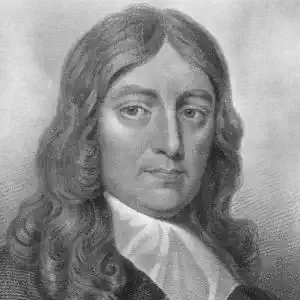
John Milton
Paradise Lost: Book 06
Paradise Lost: Book 06
All night the dreadless Angel, unpursued,
Through Heaven's wide champain held his way; till Morn,
Waked by the circling Hours, with rosy hand
Unbarred the gates of light. There is a cave
Within the mount of God, fast by his throne,
Where light and darkness in perpetual round
Lodge and dislodge by turns, which makes through Heaven
Grateful vicissitude, like day and night;
Light issues forth, and at the other door
Obsequious darkness enters, till her hour
To veil the Heaven, though darkness there might well
Seem twilight here: And now went forth the Morn
Such as in highest Heaven arrayed in gold
Empyreal; from before her vanished Night,
Shot through with orient beams; when all the plain
Covered with thick embattled squadrons bright,
Chariots, and flaming arms, and fiery steeds,
Reflecting blaze on blaze, first met his view:
War he perceived, war in procinct; and found
Already known what he for news had thought
To have reported: Gladly then he mixed
Among those friendly Powers, who him received
With joy and acclamations loud, that one,
That of so many myriads fallen, yet one
Returned not lost. On to the sacred hill
They led him high applauded, and present
Before the seat supreme; from whence a voice,
From midst a golden cloud, thus mild was heard.
Servant of God. Well done; well hast thou fought
The better fight, who single hast maintained
Against revolted multitudes the cause
Of truth, in word mightier than they in arms;
And for the testimony of truth hast borne
Universal reproach, far worse to bear
Than violence; for this was all thy care
To stand approved in sight of God, though worlds
Judged thee perverse: The easier conquest now
Remains thee, aided by this host of friends,
Back on thy foes more glorious to return,
Than scorned thou didst depart; and to subdue
By force, who reason for their law refuse,
Right reason for their law, and for their King
Messiah, who by right of merit reigns.
Go, Michael, of celestial armies prince,
And thou, in military prowess next,
Gabriel, lead forth to battle these my sons
Invincible; lead forth my armed Saints,
By thousands and by millions, ranged for fight,
Equal in number to that Godless crew
Rebellious: Them with fire and hostile arms
Fearless assault; and, to the brow of Heaven
Pursuing, drive them out from God and bliss,
Into their place of punishment, the gulf
Of Tartarus, which ready opens wide
His fiery Chaos to receive their fall.
So spake the Sovran Voice, and clouds began
To darken all the hill, and smoke to roll
In dusky wreaths, reluctant flames, the sign
Of wrath awaked; nor with less dread the loud
Ethereal trumpet from on high 'gan blow:
At which command the Powers militant,
That stood for Heaven, in mighty quadrate joined
Of union irresistible, moved on
In silence their bright legions, to the sound
Of instrumental harmony, that breathed
Heroick ardour to adventurous deeds
Under their God-like leaders, in the cause
Of God and his Messiah. On they move
Indissolubly firm; nor obvious hill,
Nor straitening vale, nor wood, nor stream, divides
Their perfect ranks; for high above the ground
Their march was, and the passive air upbore
Their nimble tread; as when the total kind
Of birds, in orderly array on wing,
Came summoned over Eden to receive
Their names of thee; so over many a tract
Of Heaven they marched, and many a province wide,
Tenfold the length of this terrene: At last,
Far in the horizon to the north appeared
From skirt to skirt a fiery region, stretched
In battailous aspect, and nearer view
Bristled with upright beams innumerable
Of rigid spears, and helmets thronged, and shields
Various, with boastful argument portrayed,
The banded Powers of Satan hasting on
With furious expedition; for they weened
That self-same day, by fight or by surprise,
To win the mount of God, and on his throne
To set the Envier of his state, the proud
Aspirer; but their thoughts proved fond and vain
In the mid way: Though strange to us it seemed
At first, that Angel should with Angel war,
And in fierce hosting meet, who wont to meet
So oft in festivals of joy and love
Unanimous, as sons of one great Sire,
Hymning the Eternal Father: But the shout
Of battle now began, and rushing sound
Of onset ended soon each milder thought.
High in the midst, exalted as a God,
The Apostate in his sun-bright chariot sat,
Idol of majesty divine, enclosed
With flaming Cherubim, and golden shields;
Then lighted from his gorgeous throne, for now
"twixt host and host but narrow space was left,
A dreadful interval, and front to front
Presented stood in terrible array
Of hideous length: Before the cloudy van,
On the rough edge of battle ere it joined,
Satan, with vast and haughty strides advanced,
Came towering, armed in adamant and gold;
Abdiel that sight endured not, where he stood
Among the mightiest, bent on highest deeds,
And thus his own undaunted heart explores.
O Heaven! that such resemblance of the Highest
Should yet remain, where faith and realty
Remain not: Wherefore should not strength and might
There fail where virtue fails, or weakest prove
Where boldest, though to fight unconquerable?
His puissance, trusting in the Almighty's aid,
I mean to try, whose reason I have tried
Unsound and false; nor is it aught but just,
That he, who in debate of truth hath won,
Should win in arms, in both disputes alike
Victor; though brutish that contest and foul,
When reason hath to deal with force, yet so
Most reason is that reason overcome.
So pondering, and from his armed peers
Forth stepping opposite, half-way he met
His daring foe, at this prevention more
Incensed, and thus securely him defied.
Proud, art thou met? thy hope was to have reached
The highth of thy aspiring unopposed,
The throne of God unguarded, and his side
Abandoned, at the terrour of thy power
Or potent tongue: Fool!not to think how vain
Against the Omnipotent to rise in arms;
Who out of smallest things could, without end,
Have raised incessant armies to defeat
Thy folly; or with solitary hand
Reaching beyond all limit, at one blow,
Unaided, could have finished thee, and whelmed
Thy legions under darkness: But thou seest
All are not of thy train; there be, who faith
Prefer, and piety to God, though then
To thee not visible, when I alone
Seemed in thy world erroneous to dissent
From all: My sect thou seest;now learn too late
How few sometimes may know, when thousands err.
Whom the grand foe, with scornful eye askance,
Thus answered. Ill for thee, but in wished hour
Of my revenge, first sought for, thou returnest
From flight, seditious Angel! to receive
Thy merited reward, the first assay
Of this right hand provoked, since first that tongue,
Inspired with contradiction, durst oppose
A third part of the Gods, in synod met
Their deities to assert; who, while they feel
Vigour divine within them, can allow
Omnipotence to none. But well thou comest
Before thy fellows, ambitious to win
From me some plume, that thy success may show
Destruction to the rest: This pause between,
(Unanswered lest thou boast) to let thee know,
At first I thought that Liberty and Heaven
To heavenly souls had been all one; but now
I see that most through sloth had rather serve,
Ministring Spirits, trained up in feast and song!
Such hast thou armed, the minstrelsy of Heaven,
Servility with freedom to contend,
As both their deeds compared this day shall prove.
To whom in brief thus Abdiel stern replied.
Apostate! still thou errest, nor end wilt find
Of erring, from the path of truth remote:
Unjustly thou depravest it with the name
Of servitude, to serve whom God ordains,
Or Nature: God and Nature bid the same,
When he who rules is worthiest, and excels
Them whom he governs. This is servitude,
To serve the unwise, or him who hath rebelled
Against his worthier, as thine now serve thee,
Thyself not free, but to thyself enthralled;
Yet lewdly darest our ministring upbraid.
Reign thou in Hell, thy kingdom; let me serve
In Heaven God ever blest, and his divine
Behests obey, worthiest to be obeyed;
Yet chains in Hell, not realms, expect: Mean while
From me returned, as erst thou saidst, from flight,
This greeting on thy impious crest receive.
So saying, a noble stroke he lifted high,
Which hung not, but so swift with tempest fell
On the proud crest of Satan, that no sight,
Nor motion of swift thought, less could his shield,
Such ruin intercept: Ten paces huge
He back recoiled; the tenth on bended knee
His massy spear upstaid; as if on earth
Winds under ground, or waters forcing way,
Sidelong had pushed a mountain from his seat,
Half sunk with all his pines. Amazement seised
The rebel Thrones, but greater rage, to see
Thus foiled their mightiest; ours joy filled, and shout,
Presage of victory, and fierce desire
Of battle: Whereat Michael bid sound
The Arch-Angel trumpet; through the vast of Heaven
It sounded, and the faithful armies rung
Hosanna to the Highest: Nor stood at gaze
The adverse legions, nor less hideous joined
The horrid shock. Now storming fury rose,
And clamour such as heard in Heaven till now
Was never; arms on armour clashing brayed
Horrible discord, and the madding wheels
Of brazen chariots raged; dire was the noise
Of conflict; over head the dismal hiss
Of fiery darts in flaming vollies flew,
And flying vaulted either host with fire.
So under fiery cope together rushed
Both battles main, with ruinous assault
And inextinguishable rage. All Heaven
Resounded; and had Earth been then, all Earth
Had to her center shook. What wonder? when
Millions of fierce encountering Angels fought
On either side, the least of whom could wield
These elements, and arm him with the force
Of all their regions: How much more of power
Army against army numberless to raise
Dreadful combustion warring, and disturb,
Though not destroy, their happy native seat;
Had not the Eternal King Omnipotent,
From his strong hold of Heaven, high over-ruled
And limited their might; though numbered such
As each divided legion might have seemed
A numerous host; in strength each armed hand
A legion; led in fight, yet leader seemed
Each warriour single as in chief, expert
When to advance, or stand, or turn the sway
Of battle, open when, and when to close
The ridges of grim war: No thought of flight,
None of retreat, no unbecoming deed
That argued fear; each on himself relied,
As only in his arm the moment lay
Of victory: Deeds of eternal fame
Were done, but infinite; for wide was spread
That war and various; sometimes on firm ground
A standing fight, then, soaring on main wing,
Tormented all the air; all air seemed then
Conflicting fire. Long time in even scale
The battle hung; till Satan, who that day
Prodigious power had shown, and met in arms
No equal, ranging through the dire attack
Of fighting Seraphim confused, at length
Saw where the sword of Michael smote, and felled
Squadrons at once; with huge two-handed sway
Brandished aloft, the horrid edge came down
Wide-wasting; such destruction to withstand
He hasted, and opposed the rocky orb
Of tenfold adamant, his ample shield,
A vast circumference. At his approach
The great Arch-Angel from his warlike toil
Surceased, and glad, as hoping here to end
Intestine war in Heaven, the arch-foe subdued
Or captive dragged in chains, with hostile frown
And visage all inflamed first thus began.
Author of evil, unknown till thy revolt,
Unnamed in Heaven, now plenteous as thou seest
These acts of hateful strife, hateful to all,
Though heaviest by just measure on thyself,
And thy adherents: How hast thou disturbed
Heaven's blessed peace, and into nature brought
Misery, uncreated till the crime
Of thy rebellion! how hast thou instilled
Thy malice into thousands, once upright
And faithful, now proved false! But think not here
To trouble holy rest; Heaven casts thee out
From all her confines. Heaven, the seat of bliss,
Brooks not the works of violence and war.
Hence then, and evil go with thee along,
Thy offspring, to the place of evil, Hell;
Thou and thy wicked crew! there mingle broils,
Ere this avenging sword begin thy doom,
Or some more sudden vengeance, winged from God,
Precipitate thee with augmented pain.
So spake the Prince of Angels; to whom thus
The Adversary. Nor think thou with wind
Of aery threats to awe whom yet with deeds
Thou canst not. Hast thou turned the least of these
To flight, or if to fall, but that they rise
Unvanquished, easier to transact with me
That thou shouldst hope, imperious, and with threats
To chase me hence? err not, that so shall end
The strife which thou callest evil, but we style
The strife of glory; which we mean to win,
Or turn this Heaven itself into the Hell
Thou fablest; here however to dwell free,
If not to reign: Mean while thy utmost force,
And join him named Almighty to thy aid,
I fly not, but have sought thee far and nigh.
They ended parle, and both addressed for fight
Unspeakable; for who, though with the tongue
Of Angels, can relate, or to what things
Liken on earth conspicuous, that may lift
Human imagination to such highth
Of Godlike power? for likest Gods they seemed,
Stood they or moved, in stature, motion, arms,
Fit to decide the empire of great Heaven.
Now waved their fiery swords, and in the air
Made horrid circles; two broad suns their shields
Blazed opposite, while Expectation stood
In horrour: From each hand with speed retired,
Where erst was thickest fight, the angelick throng,
And left large field, unsafe within the wind
Of such commotion; such as, to set forth
Great things by small, if, nature's concord broke,
Among the constellations war were sprung,
Two planets, rushing from aspect malign
Of fiercest opposition, in mid sky
Should combat, and their jarring spheres confound.
Together both with next to almighty arm
Up-lifted imminent, one stroke they aimed
That might determine, and not need repeat,
As not of power at once; nor odds appeared
In might or swift prevention: But the sword
Of Michael from the armoury of God
Was given him tempered so, that neither keen
Nor solid might resist that edge: it met
The sword of Satan, with steep force to smite
Descending, and in half cut sheer; nor staid,
But with swift wheel reverse, deep entering, shared
All his right side: Then Satan first knew pain,
And writhed him to and fro convolved; so sore
The griding sword with discontinuous wound
Passed through him: But the ethereal substance closed,
Not long divisible; and from the gash
A stream of necturous humour issuing flowed
Sanguine, such as celestial Spirits may bleed,
And all his armour stained, ere while so bright.
Forthwith on all sides to his aid was run
By Angels many and strong, who interposed
Defence, while others bore him on their shields
Back to his chariot, where it stood retired
From off the files of war: There they him laid
Gnashing for anguish, and despite, and shame,
To find himself not matchless, and his pride
Humbled by such rebuke, so far beneath
His confidence to equal God in power.
Yet soon he healed; for Spirits that live throughout
Vital in every part, not as frail man
In entrails, heart of head, liver or reins,
Cannot but by annihilating die;
Nor in their liquid texture mortal wound
Receive, no more than can the fluid air:
All heart they live, all head, all eye, all ear,
All intellect, all sense; and, as they please,
They limb themselves, and colour, shape, or size
Assume, as?kikes them best, condense or rare.
Mean while in other parts like deeds deserved
Memorial, where the might of Gabriel fought,
And with fierce ensigns pierced the deep array
Of Moloch, furious king; who him defied,
And at his chariot-wheels to drag him bound
Threatened, nor from the Holy One of Heaven
Refrained his tongue blasphemous; but anon
Down cloven to the waist, with shattered arms
And uncouth pain fled bellowing. On each wing
Uriel, and Raphael, his vaunting foe,
Though huge, and in a rock of diamond armed,
Vanquished Adramelech, and Asmadai,
Two potent Thrones, that to be less than Gods
Disdained, but meaner thoughts learned in their flight,
Mangled with ghastly wounds through plate and mail.
Nor stood unmindful Abdiel to annoy
The atheist crew, but with redoubled blow
Ariel, and Arioch, and the violence
Of Ramiel scorched and blasted, overthrew.
I might relate of thousands, and their names
Eternize here on earth; but those elect
Angels, contented with their fame in Heaven,
Seek not the praise of men: The other sort,
In might though wonderous and in acts of war,
Nor of renown less eager, yet by doom
Cancelled from Heaven and sacred memory,
Nameless in dark oblivion let them dwell.
For strength from truth divided, and from just,
Illaudable, nought merits but dispraise
And ignominy; yet to glory aspires
Vain-glorious, and through infamy seeks fame:
Therefore eternal silence be their doom.
And now, their mightiest quelled, the battle swerved,
With many an inroad gored; deformed rout
Entered, and foul disorder; all the ground
With shivered armour strown, and on a heap
Chariot and charioteer lay overturned,
And fiery-foaming steeds; what stood, recoiled
O'er-wearied, through the faint Satanick host
Defensive scarce, or with pale fear surprised,
Then first with fear surprised, and sense of pain,
Fled ignominious, to such evil brought
By sin of disobedience; till that hour
Not liable to fear, or flight, or pain.
Far otherwise the inviolable Saints,
In cubick phalanx firm, advanced entire,
Invulnerable, impenetrably armed;
Such high advantages their innocence
Gave them above their foes; not to have sinned,
Not to have disobeyed; in fight they stood
Unwearied, unobnoxious to be pained
By wound, though from their place by violence moved,
Now Night her course began, and, over Heaven
Inducing darkness, grateful truce imposed,
And silence on the odious din of war:
Under her cloudy covert both retired,
Victor and vanquished: On the foughten field
Michael and his Angels prevalent
Encamping, placed in guard their watches round,
Cherubick waving fires: On the other part,
Satan with his rebellious disappeared,
Far in the dark dislodged; and, void of rest,
His potentates to council called by night;
And in the midst thus undismayed began.
O now in danger tried, now known in arms
Not to be overpowered, Companions dear,
Found worthy not of liberty alone,
Too mean pretence! but what we more affect,
Honour, dominion, glory, and renown;
Who have sustained one day in doubtful fight,
(And if one day, why not eternal days?)
What Heaven's Lord had powerfullest to send
Against us from about his throne, and judged
Sufficient to subdue us to his will,
But proves not so: Then fallible, it seems,
Of future we may deem him, though till now
Omniscient thought. True is, less firmly armed,
Some disadvantage we endured and pain,
Till now not known, but, known, as soon contemned;
Since now we find this our empyreal form
Incapable of mortal injury,
Imperishable, and, though pierced with wound,
Soon closing, and by native vigour healed.
Of evil then so small as easy think
The remedy; perhaps more valid arms,
Weapons more violent, when next we meet,
May serve to better us, and worse our foes,
Or equal what between us made the odds,
In nature none: If other hidden cause
Left them superiour, while we can preserve
Unhurt our minds, and understanding sound,
Due search and consultation will disclose.
He sat; and in the assembly next upstood
Nisroch, of Principalities the prime;
As one he stood escaped from cruel fight,
Sore toiled, his riven arms to havock hewn,
And cloudy in aspect thus answering spake.
Deliverer from new Lords, leader to free
Enjoyment of our right as Gods; yet hard
For Gods, and too unequal work we find,
Against unequal arms to fight in pain,
Against unpained, impassive; from which evil
Ruin must needs ensue; for what avails
Valour or strength, though matchless, quelled with pain
Which all subdues, and makes remiss the hands
Of mightiest? Sense of pleasure we may well
Spare out of life perhaps, and not repine,
But live content, which is the calmest life:
But pain is perfect misery, the worst
Of evils, and, excessive, overturns
All patience. He, who therefore can invent
With what more forcible we may offend
Our yet unwounded enemies, or arm
Ourselves with like defence, to me deserves
No less than for deliverance what we owe.
Whereto with look composed Satan replied.
Not uninvented that, which thou aright
Believest so main to our success, I bring.
Which of us who beholds the bright surface
Of this ethereous mould whereon we stand,
This continent of spacious Heaven, adorned
With plant, fruit, flower ambrosial, gems, and gold;
Whose eye so superficially surveys
These things, as not to mind from whence they grow
Deep under ground, materials dark and crude,
Of spiritous and fiery spume, till touched
With Heaven's ray, and tempered, they shoot forth
So beauteous, opening to the ambient light?
These in their dark nativity the deep
Shall yield us, pregnant with infernal flame;
Which, into hollow engines, long and round,
Thick rammed, at the other bore with touch of fire
Dilated and infuriate, shall send forth
From far, with thundering noise, among our foes
Such implements of mischief, as shall dash
To pieces, and o'erwhelm whatever stands
Adverse, that they shall fear we have disarmed
The Thunderer of his only dreaded bolt.
Nor long shall be our labour; yet ere dawn,
Effect shall end our wish. Mean while revive;
Abandon fear; to strength and counsel joined
Think nothing hard, much less to be despaired.
He ended, and his words their drooping cheer
Enlightened, and their languished hope revived.
The invention all admired, and each, how he
To be the inventer missed; so easy it seemed
Once found, which yet unfound most would have thought
Impossible: Yet, haply, of thy race
In future days, if malice should abound,
Some one intent on mischief, or inspired
With devilish machination, might devise
Like instrument to plague the sons of men
For sin, on war and mutual slaughter bent.
Forthwith from council to the work they flew;
None arguing stood; innumerable hands
Were ready; in a moment up they turned
Wide the celestial soil, and saw beneath
The originals of nature in their crude
Conception; sulphurous and nitrous foam
They found, they mingled, and, with subtle art,
Concocted and adusted they reduced
To blackest grain, and into store conveyed:
Part hidden veins digged up (nor hath this earth
Entrails unlike) of mineral and stone,
Whereof to found their engines and their balls
Of missive ruin; part incentive reed
Provide, pernicious with one touch to fire.
So all ere day-spring, under conscious night,
Secret they finished, and in order set,
With silent circumspection, unespied.
Now when fair morn orient in Heaven appeared,
Up rose the victor-Angels, and to arms
The matin trumpet sung: In arms they stood
Of golden panoply, refulgent host,
Soon banded; others from the dawning hills
Look round, and scouts each coast light-armed scour,
Each quarter to descry the distant foe,
Where lodged, or whither fled, or if for fight,
In motion or in halt: Him soon they met
Under spread ensigns moving nigh, in slow
But firm battalion; back with speediest sail
Zophiel, of Cherubim the swiftest wing,
Came flying, and in mid air aloud thus cried.
Arm, Warriours, arm for fight; the foe at hand,
Whom fled we thought, will save us long pursuit
This day; fear not his flight;so thick a cloud
He comes, and settled in his face I see
Sad resolution, and secure: Let each
His adamantine coat gird well, and each
Fit well his helm, gripe fast his orbed shield,
Borne even or high; for this day will pour down,
If I conjecture aught, no drizzling shower,
But rattling storm of arrows barbed with fire.
So warned he them, aware themselves, and soon
In order, quit of all impediment;
Instant without disturb they took alarm,
And onward moved embattled: When behold!
Not distant far with heavy pace the foe
Approaching gross and huge, in hollow cube
Training his devilish enginery, impaled
On every side with shadowing squadrons deep,
To hide the fraud. At interview both stood
A while; but suddenly at head appeared
Satan, and thus was heard commanding loud.
Vanguard, to right and left the front unfold;
That all may see who hate us, how we seek
Peace and composure, and with open breast
Stand ready to receive them, if they like
Our overture; and turn not back perverse:
But that I doubt; however witness, Heaven!
Heaven, witness thou anon! while we discharge
Freely our part: ye, who appointed stand
Do as you have in charge, and briefly touch
What we propound, and loud that all may hear!
So scoffing in ambiguous words, he scarce
Had ended; when to right and left the front
Divided, and to either flank retired:
Which to our eyes discovered, new and strange,
A triple mounted row of pillars laid
On wheels (for like to pillars most they seemed,
Or hollowed bodies made of oak or fir,
With branches lopt, in wood or mountain felled,)
Brass, iron, stony mould, had not their mouths
With hideous orifice gaped on us wide,
Portending hollow truce: At each behind
A Seraph stood, and in his hand a reed
Stood waving tipt with fire; while we, suspense,
Collected stood within our thoughts amused,
Not long; for sudden all at once their reeds
Put forth, and to a narrow vent applied
With nicest touch. Immediate in a flame,
But soon obscured with smoke, all Heaven appeared,
From those deep-throated engines belched, whose roar
Embowelled with outrageous noise the air,
And all her entrails tore, disgorging foul
Their devilish glut, chained thunderbolts and hail
Of iron globes; which, on the victor host
Levelled, with such impetuous fury smote,
That, whom they hit, none on their feet might stand,
Though standing else as rocks, but down they fell
By thousands, Angel on Arch-Angel rolled;
The sooner for their arms; unarmed, they might
Have easily, as Spirits, evaded swift
By quick contraction or remove; but now
Foul dissipation followed, and forced rout;
Nor served it to relax their serried files.
What should they do? if on they rushed, repulse
Repeated, and indecent overthrow
Doubled, would render them yet more despised,
And to their foes a laughter; for in view
Stood ranked of Seraphim another row,
In posture to displode their second tire
Of thunder: Back defeated to return
They worse abhorred. Satan beheld their plight,
And to his mates thus in derision called.
O Friends! why come not on these victors proud
Ere while they fierce were coming; and when we,
To entertain them fair with open front
And breast, (what could we more?) propounded terms
Of composition, straight they changed their minds,
Flew off, and into strange vagaries fell,
As they would dance; yet for a dance they seemed
Somewhat extravagant and wild; perhaps
For joy of offered peace: But I suppose,
If our proposals once again were heard,
We should compel them to a quick result.
To whom thus Belial, in like gamesome mood.
Leader! the terms we sent were terms of weight,
Of hard contents, and full of force urged home;
Such as we might perceive amused them all,
And stumbled many: Who receives them right,
Had need from head to foot well understand;
Not understood, this gift they have besides,
They show us when our foes walk not upright.
So they among themselves in pleasant vein
Stood scoffing, hightened in their thoughts beyond
All doubt of victory: Eternal Might
To match with their inventions they presumed
So easy, and of his thunder made a scorn,
And all his host derided, while they stood
A while in trouble: But they stood not long;
Rage prompted them at length, and found them arms
Against such hellish mischief fit to oppose.
Forthwith (behold the excellence, the power,
Which God hath in his mighty Angels placed!)
Their arms away they threw, and to the hills
(For Earth hath this variety from Heaven
Of pleasure situate in hill and dale,)
Light as the lightning glimpse they ran, they flew;
From their foundations loosening to and fro,
They plucked the seated hills, with all their load,
Rocks, waters, woods, and by the shaggy tops
Up-lifting bore them in their hands: Amaze,
Be sure, and terrour, seized the rebel host,
When coming towards them so dread they saw
The bottom of the mountains upward turned;
Till on those cursed engines' triple-row
They saw them whelmed, and all their confidence
Under the weight of mountains buried deep;
Themselves invaded next, and on their heads
Main promontories flung, which in the air
Came shadowing, and oppressed whole legions armed;
Their armour helped their harm, crushed in and bruised
Into their substance pent, which wrought them pain
Implacable, and many a dolorous groan;
Long struggling underneath, ere they could wind
Out of such prison, though Spirits of purest light,
Purest at first, now gross by sinning grown.
The rest, in imitation, to like arms
Betook them, and the neighbouring hills uptore:
So hills amid the air encountered hills,
Hurled to and fro with jaculation dire;
That under ground they fought in dismal shade;
Infernal noise! war seemed a civil game
To this uproar; horrid confusion heaped
Upon confusion rose: And now all Heaven
Had gone to wrack, with ruin overspread;
Had not the Almighty Father, where he sits
Shrined in his sanctuary of Heaven secure,
Consulting on the sum of things, foreseen
This tumult, and permitted all, advised:
That his great purpose he might so fulfil,
To honour his anointed Son avenged
Upon his enemies, and to declare
All power on him transferred: Whence to his Son,
The Assessour of his throne, he thus began.
Effulgence of my glory, Son beloved,
Son, in whose face invisible is beheld
Visibly, what by Deity I am;
And in whose hand what by decree I do,
Second Omnipotence! two days are past,
Two days, as we compute the days of Heaven,
Since Michael and his Powers went forth to tame
These disobedient: Sore hath been their fight,
As likeliest was, when two such foes met armed;
For to themselves I left them; and thou knowest,
Equal in their creation they were formed,
Save what sin hath impaired; which yet hath wrought
Insensibly, for I suspend their doom;
Whence in perpetual fight they needs must last
Endless, and no solution will be found:
War wearied hath performed what war can do,
And to disordered rage let loose the reins
With mountains, as with weapons, armed; which makes
Wild work in Heaven, and dangerous to the main.
Two days are therefore past, the third is thine;
For thee I have ordained it; and thus far
Have suffered, that the glory may be thine
Of ending this great war, since none but Thou
Can end it. Into thee such virtue and grace
Immense I have transfused, that all may know
In Heaven and Hell thy power above compare;
And, this perverse commotion governed thus,
To manifest thee worthiest to be Heir
Of all things; to be Heir, and to be King
By sacred unction, thy deserved right.
Go then, Thou Mightiest, in thy Father's might;
Ascend my chariot, guide the rapid wheels
That shake Heaven's basis, bring forth all my war,
My bow and thunder, my almighty arms
Gird on, and sword upon thy puissant thigh;
Pursue these sons of darkness, drive them out
From all Heaven's bounds into the utter deep:
There let them learn, as likes them, to despise
God, and Messiah his anointed King.
He said, and on his Son with rays direct
Shone full; he all his Father full expressed
Ineffably into his face received;
And thus the Filial Godhead answering spake.
O Father, O Supreme of heavenly Thrones,
First, Highest, Holiest, Best; thou always seek'st
To glorify thy Son, I always thee,
As is most just: This I my glory account,
My exaltation, and my whole delight,
That thou, in me well pleased, declarest thy will
Fulfilled, which to fulfil is all my bliss.
Scepter and power, thy giving, I assume,
And gladlier shall resign, when in the end
Thou shalt be all in all, and I in thee
For ever; and in me all whom thou lovest:
But whom thou hatest, I hate, and can put on
Thy terrours, as I put thy mildness on,
Image of thee in all things; and shall soon,
Armed with thy might, rid Heaven of these rebelled;
To their prepared ill mansion driven down,
To chains of darkness, and the undying worm;
That from thy just obedience could revolt,
Whom to obey is happiness entire.
Then shall thy Saints unmixed, and from the impure
Far separate, circling thy holy mount,
Unfeigned Halleluiahs to thee sing,
Hymns of high praise, and I among them Chief.
So said, he, o'er his scepter bowing, rose
From the right hand of Glory where he sat;
And the third sacred morn began to shine,
Dawning through Heaven. Forth rushed with whirlwind sound
The chariot of Paternal Deity,
Flashing thick flames, wheel within wheel undrawn,
Itself instinct with Spirit, but convoyed
By four Cherubick shapes; four faces each
Had wonderous; as with stars, their bodies all
And wings were set with eyes; with eyes the wheels
Of beryl, and careering fires between;
Over their heads a crystal firmament,
Whereon a sapphire throne, inlaid with pure
Amber, and colours of the showery arch.
He, in celestial panoply all armed
Of radiant Urim, work divinely wrought,
Ascended; at his right hand Victory
Sat eagle-winged; beside him hung his bow
And quiver with three-bolted thunder stored;
And from about him fierce effusion rolled
Of smoke, and bickering flame, and sparkles dire:
Attended with ten thousand thousand Saints,
He onward came; far off his coming shone;
And twenty thousand (I their number heard)
Chariots of God, half on each hand, were seen;
He on the wings of Cherub rode sublime
On the crystalline sky, in sapphire throned,
Illustrious far and wide; but by his own
First seen: Them unexpected joy surprised,
When the great ensign of Messiah blazed
Aloft by Angels borne, his sign in Heaven;
Under whose conduct Michael soon reduced
His army, circumfused on either wing,
Under their Head imbodied all in one.
Before him Power Divine his way prepared;
At his command the uprooted hills retired
Each to his place; they heard his voice, and went
Obsequious; Heaven his wonted face renewed,
And with fresh flowerets hill and valley smiled.
This saw his hapless foes, but stood obdured,
And to rebellious fight rallied their Powers,
Insensate, hope conceiving from despair.
In heavenly Spirits could such perverseness dwell?
But to convince the proud what signs avail,
Or wonders move the obdurate to relent?
They, hardened more by what might most reclaim,
Grieving to see his glory, at the sight
Took envy; and, aspiring to his highth,
Stood re-embattled fierce, by force or fraud
Weening to prosper, and at length prevail
Against God and Messiah, or to fall
In universal ruin last; and now
To final battle drew, disdaining flight,
Or faint retreat; when the great Son of God
To all his host on either hand thus spake.
Stand still in bright array, ye Saints; here stand,
Ye Angels armed; this day from battle rest:
Faithful hath been your warfare, and of God
Accepted, fearless in his righteous cause;
And as ye have received, so have ye done,
Invincibly: But of this cursed crew
The punishment to other hand belongs;
Vengeance is his, or whose he sole appoints:
Number to this day's work is not ordained,
Nor multitude; stand only, and behold
God's indignation on these godless poured
By me; not you, but me, they have despised,
Yet envied; against me is all their rage,
Because the Father, to whom in Heaven s'preme
Kingdom, and power, and glory appertains,
Hath honoured me, according to his will.
Therefore to me their doom he hath assigned;
That they may have their wish, to try with me
In battle which the stronger proves; they all,
Or I alone against them; since by strength
They measure all, of other excellence
Not emulous, nor care who them excels;
Nor other strife with them do I vouchsafe.
So spake the Son, and into terrour changed
His countenance too severe to be beheld,
And full of wrath bent on his enemies.
At once the Four spread out their starry wings
With dreadful shade contiguous, and the orbs
Of his fierce chariot rolled, as with the sound
Of torrent floods, or of a numerous host.
He on his impious foes right onward drove,
Gloomy as night; under his burning wheels
The stedfast empyrean shook throughout,
All but the throne itself of God. Full soon
Among them he arrived; in his right hand
Grasping ten thousand thunders, which he sent
Before him, such as in their souls infixed
Plagues: They, astonished, all resistance lost,
All courage; down their idle weapons dropt:
O'er shields, and helms, and helmed heads he rode
Of Thrones and mighty Seraphim prostrate,
That wished the mountains now might be again
Thrown on them, as a shelter from his ire.
Nor less on either side tempestuous fell
His arrows, from the fourfold-visaged Four
Distinct with eyes, and from the living wheels
Distinct alike with multitude of eyes;
One Spirit in them ruled; and every eye
Glared lightning, and shot forth pernicious fire
Among the accursed, that withered all their strength,
And of their wonted vigour left them drained,
Exhausted, spiritless, afflicted, fallen.
Yet half his strength he put not forth, but checked
His thunder in mid volley; for he meant
Not to destroy, but root them out of Heaven:
The overthrown he raised, and as a herd
Of goats or timorous flock together thronged
Drove them before him thunder-struck, pursued
With terrours, and with furies, to the bounds
And crystal wall of Heaven; which, opening wide,
Rolled inward, and a spacious gap disclosed
Into the wasteful deep: The monstrous sight
Struck them with horrour backward, but far worse
Urged them behind: Headlong themselves they threw
Down from the verge of Heaven; eternal wrath
Burnt after them to the bottomless pit.
Hell heard the unsufferable noise, Hell saw
Heaven ruining from Heaven, and would have fled
Affrighted; but strict Fate had cast too deep
Her dark foundations, and too fast had bound.
Nine days they fell: Confounded Chaos roared,
And felt tenfold confusion in their fall
Through his wild anarchy, so huge a rout
Incumbered him with ruin: Hell at last
Yawning received them whole, and on them closed;
Hell, their fit habitation, fraught with fire
Unquenchable, the house of woe and pain.
Disburdened Heaven rejoiced, and soon repaired
Her mural breach, returning whence it rolled.
Sole victor, from the expulsion of his foes,
Messiah his triumphal chariot turned:
To meet him all his Saints, who silent stood
Eye-witnesses of his almighty acts,
With jubilee advanced; and, as they went,
Shaded with branching palm, each Order bright,
Sung triumph, and him sung victorious King,
Son, Heir, and Lord, to him dominion given,
Worthiest to reign: He, celebrated, rode
Triumphant through mid Heaven, into the courts
And temple of his Mighty Father throned
On high; who into glory him received,
Where now he sits at the right hand of bliss.
Thus, measuring things in Heaven by things on Earth,
At thy request, and that thou mayest beware
By what is past, to thee I have revealed
What might have else to human race been hid;
The discord which befel, and war in Heaven
Among the angelick Powers, and the deep fall
Of those too high aspiring, who rebelled
With Satan; he who envies now thy state,
Who now is plotting how he may seduce
Thee also from obedience, that, with him
Bereaved of happiness, thou mayest partake
His punishment, eternal misery;
Which would be all his solace and revenge,
As a despite done against the Most High,
Thee once to gain companion of his woe.
But listen not to his temptations, warn
Thy weaker; let it profit thee to have heard,
By terrible example, the reward
Of disobedience; firm they might have stood,
Yet fell; remember, and fear to transgress.
All night the dreadless Angel, unpursued,
Through Heaven's wide champain held his way; till Morn,
Waked by the circling Hours, with rosy hand
Unbarred the gates of light. There is a cave
Within the mount of God, fast by his throne,
Where light and darkness in perpetual round
Lodge and dislodge by turns, which makes through Heaven
Grateful vicissitude, like day and night;
Light issues forth, and at the other door
Obsequious darkness enters, till her hour
To veil the Heaven, though darkness there might well
Seem twilight here: And now went forth the Morn
Such as in highest Heaven arrayed in gold
Empyreal; from before her vanished Night,
Shot through with orient beams; when all the plain
Covered with thick embattled squadrons bright,
Chariots, and flaming arms, and fiery steeds,
Reflecting blaze on blaze, first met his view:
War he perceived, war in procinct; and found
Already known what he for news had thought
To have reported: Gladly then he mixed
Among those friendly Powers, who him received
With joy and acclamations loud, that one,
That of so many myriads fallen, yet one
Returned not lost. On to the sacred hill
They led him high applauded, and present
Before the seat supreme; from whence a voice,
From midst a golden cloud, thus mild was heard.
Servant of God. Well done; well hast thou fought
The better fight, who single hast maintained
Against revolted multitudes the cause
Of truth, in word mightier than they in arms;
And for the testimony of truth hast borne
Universal reproach, far worse to bear
Than violence; for this was all thy care
To stand approved in sight of God, though worlds
Judged thee perverse: The easier conquest now
Remains thee, aided by this host of friends,
Back on thy foes more glorious to return,
Than scorned thou didst depart; and to subdue
By force, who reason for their law refuse,
Right reason for their law, and for their King
Messiah, who by right of merit reigns.
Go, Michael, of celestial armies prince,
And thou, in military prowess next,
Gabriel, lead forth to battle these my sons
Invincible; lead forth my armed Saints,
By thousands and by millions, ranged for fight,
Equal in number to that Godless crew
Rebellious: Them with fire and hostile arms
Fearless assault; and, to the brow of Heaven
Pursuing, drive them out from God and bliss,
Into their place of punishment, the gulf
Of Tartarus, which ready opens wide
His fiery Chaos to receive their fall.
So spake the Sovran Voice, and clouds began
To darken all the hill, and smoke to roll
In dusky wreaths, reluctant flames, the sign
Of wrath awaked; nor with less dread the loud
Ethereal trumpet from on high 'gan blow:
At which command the Powers militant,
That stood for Heaven, in mighty quadrate joined
Of union irresistible, moved on
In silence their bright legions, to the sound
Of instrumental harmony, that breathed
Heroick ardour to adventurous deeds
Under their God-like leaders, in the cause
Of God and his Messiah. On they move
Indissolubly firm; nor obvious hill,
Nor straitening vale, nor wood, nor stream, divides
Their perfect ranks; for high above the ground
Their march was, and the passive air upbore
Their nimble tread; as when the total kind
Of birds, in orderly array on wing,
Came summoned over Eden to receive
Their names of thee; so over many a tract
Of Heaven they marched, and many a province wide,
Tenfold the length of this terrene: At last,
Far in the horizon to the north appeared
From skirt to skirt a fiery region, stretched
In battailous aspect, and nearer view
Bristled with upright beams innumerable
Of rigid spears, and helmets thronged, and shields
Various, with boastful argument portrayed,
The banded Powers of Satan hasting on
With furious expedition; for they weened
That self-same day, by fight or by surprise,
To win the mount of God, and on his throne
To set the Envier of his state, the proud
Aspirer; but their thoughts proved fond and vain
In the mid way: Though strange to us it seemed
At first, that Angel should with Angel war,
And in fierce hosting meet, who wont to meet
So oft in festivals of joy and love
Unanimous, as sons of one great Sire,
Hymning the Eternal Father: But the shout
Of battle now began, and rushing sound
Of onset ended soon each milder thought.
High in the midst, exalted as a God,
The Apostate in his sun-bright chariot sat,
Idol of majesty divine, enclosed
With flaming Cherubim, and golden shields;
Then lighted from his gorgeous throne, for now
"twixt host and host but narrow space was left,
A dreadful interval, and front to front
Presented stood in terrible array
Of hideous length: Before the cloudy van,
On the rough edge of battle ere it joined,
Satan, with vast and haughty strides advanced,
Came towering, armed in adamant and gold;
Abdiel that sight endured not, where he stood
Among the mightiest, bent on highest deeds,
And thus his own undaunted heart explores.
O Heaven! that such resemblance of the Highest
Should yet remain, where faith and realty
Remain not: Wherefore should not strength and might
There fail where virtue fails, or weakest prove
Where boldest, though to fight unconquerable?
His puissance, trusting in the Almighty's aid,
I mean to try, whose reason I have tried
Unsound and false; nor is it aught but just,
That he, who in debate of truth hath won,
Should win in arms, in both disputes alike
Victor; though brutish that contest and foul,
When reason hath to deal with force, yet so
Most reason is that reason overcome.
So pondering, and from his armed peers
Forth stepping opposite, half-way he met
His daring foe, at this prevention more
Incensed, and thus securely him defied.
Proud, art thou met? thy hope was to have reached
The highth of thy aspiring unopposed,
The throne of God unguarded, and his side
Abandoned, at the terrour of thy power
Or potent tongue: Fool!not to think how vain
Against the Omnipotent to rise in arms;
Who out of smallest things could, without end,
Have raised incessant armies to defeat
Thy folly; or with solitary hand
Reaching beyond all limit, at one blow,
Unaided, could have finished thee, and whelmed
Thy legions under darkness: But thou seest
All are not of thy train; there be, who faith
Prefer, and piety to God, though then
To thee not visible, when I alone
Seemed in thy world erroneous to dissent
From all: My sect thou seest;now learn too late
How few sometimes may know, when thousands err.
Whom the grand foe, with scornful eye askance,
Thus answered. Ill for thee, but in wished hour
Of my revenge, first sought for, thou returnest
From flight, seditious Angel! to receive
Thy merited reward, the first assay
Of this right hand provoked, since first that tongue,
Inspired with contradiction, durst oppose
A third part of the Gods, in synod met
Their deities to assert; who, while they feel
Vigour divine within them, can allow
Omnipotence to none. But well thou comest
Before thy fellows, ambitious to win
From me some plume, that thy success may show
Destruction to the rest: This pause between,
(Unanswered lest thou boast) to let thee know,
At first I thought that Liberty and Heaven
To heavenly souls had been all one; but now
I see that most through sloth had rather serve,
Ministring Spirits, trained up in feast and song!
Such hast thou armed, the minstrelsy of Heaven,
Servility with freedom to contend,
As both their deeds compared this day shall prove.
To whom in brief thus Abdiel stern replied.
Apostate! still thou errest, nor end wilt find
Of erring, from the path of truth remote:
Unjustly thou depravest it with the name
Of servitude, to serve whom God ordains,
Or Nature: God and Nature bid the same,
When he who rules is worthiest, and excels
Them whom he governs. This is servitude,
To serve the unwise, or him who hath rebelled
Against his worthier, as thine now serve thee,
Thyself not free, but to thyself enthralled;
Yet lewdly darest our ministring upbraid.
Reign thou in Hell, thy kingdom; let me serve
In Heaven God ever blest, and his divine
Behests obey, worthiest to be obeyed;
Yet chains in Hell, not realms, expect: Mean while
From me returned, as erst thou saidst, from flight,
This greeting on thy impious crest receive.
So saying, a noble stroke he lifted high,
Which hung not, but so swift with tempest fell
On the proud crest of Satan, that no sight,
Nor motion of swift thought, less could his shield,
Such ruin intercept: Ten paces huge
He back recoiled; the tenth on bended knee
His massy spear upstaid; as if on earth
Winds under ground, or waters forcing way,
Sidelong had pushed a mountain from his seat,
Half sunk with all his pines. Amazement seised
The rebel Thrones, but greater rage, to see
Thus foiled their mightiest; ours joy filled, and shout,
Presage of victory, and fierce desire
Of battle: Whereat Michael bid sound
The Arch-Angel trumpet; through the vast of Heaven
It sounded, and the faithful armies rung
Hosanna to the Highest: Nor stood at gaze
The adverse legions, nor less hideous joined
The horrid shock. Now storming fury rose,
And clamour such as heard in Heaven till now
Was never; arms on armour clashing brayed
Horrible discord, and the madding wheels
Of brazen chariots raged; dire was the noise
Of conflict; over head the dismal hiss
Of fiery darts in flaming vollies flew,
And flying vaulted either host with fire.
So under fiery cope together rushed
Both battles main, with ruinous assault
And inextinguishable rage. All Heaven
Resounded; and had Earth been then, all Earth
Had to her center shook. What wonder? when
Millions of fierce encountering Angels fought
On either side, the least of whom could wield
These elements, and arm him with the force
Of all their regions: How much more of power
Army against army numberless to raise
Dreadful combustion warring, and disturb,
Though not destroy, their happy native seat;
Had not the Eternal King Omnipotent,
From his strong hold of Heaven, high over-ruled
And limited their might; though numbered such
As each divided legion might have seemed
A numerous host; in strength each armed hand
A legion; led in fight, yet leader seemed
Each warriour single as in chief, expert
When to advance, or stand, or turn the sway
Of battle, open when, and when to close
The ridges of grim war: No thought of flight,
None of retreat, no unbecoming deed
That argued fear; each on himself relied,
As only in his arm the moment lay
Of victory: Deeds of eternal fame
Were done, but infinite; for wide was spread
That war and various; sometimes on firm ground
A standing fight, then, soaring on main wing,
Tormented all the air; all air seemed then
Conflicting fire. Long time in even scale
The battle hung; till Satan, who that day
Prodigious power had shown, and met in arms
No equal, ranging through the dire attack
Of fighting Seraphim confused, at length
Saw where the sword of Michael smote, and felled
Squadrons at once; with huge two-handed sway
Brandished aloft, the horrid edge came down
Wide-wasting; such destruction to withstand
He hasted, and opposed the rocky orb
Of tenfold adamant, his ample shield,
A vast circumference. At his approach
The great Arch-Angel from his warlike toil
Surceased, and glad, as hoping here to end
Intestine war in Heaven, the arch-foe subdued
Or captive dragged in chains, with hostile frown
And visage all inflamed first thus began.
Author of evil, unknown till thy revolt,
Unnamed in Heaven, now plenteous as thou seest
These acts of hateful strife, hateful to all,
Though heaviest by just measure on thyself,
And thy adherents: How hast thou disturbed
Heaven's blessed peace, and into nature brought
Misery, uncreated till the crime
Of thy rebellion! how hast thou instilled
Thy malice into thousands, once upright
And faithful, now proved false! But think not here
To trouble holy rest; Heaven casts thee out
From all her confines. Heaven, the seat of bliss,
Brooks not the works of violence and war.
Hence then, and evil go with thee along,
Thy offspring, to the place of evil, Hell;
Thou and thy wicked crew! there mingle broils,
Ere this avenging sword begin thy doom,
Or some more sudden vengeance, winged from God,
Precipitate thee with augmented pain.
So spake the Prince of Angels; to whom thus
The Adversary. Nor think thou with wind
Of aery threats to awe whom yet with deeds
Thou canst not. Hast thou turned the least of these
To flight, or if to fall, but that they rise
Unvanquished, easier to transact with me
That thou shouldst hope, imperious, and with threats
To chase me hence? err not, that so shall end
The strife which thou callest evil, but we style
The strife of glory; which we mean to win,
Or turn this Heaven itself into the Hell
Thou fablest; here however to dwell free,
If not to reign: Mean while thy utmost force,
And join him named Almighty to thy aid,
I fly not, but have sought thee far and nigh.
They ended parle, and both addressed for fight
Unspeakable; for who, though with the tongue
Of Angels, can relate, or to what things
Liken on earth conspicuous, that may lift
Human imagination to such highth
Of Godlike power? for likest Gods they seemed,
Stood they or moved, in stature, motion, arms,
Fit to decide the empire of great Heaven.
Now waved their fiery swords, and in the air
Made horrid circles; two broad suns their shields
Blazed opposite, while Expectation stood
In horrour: From each hand with speed retired,
Where erst was thickest fight, the angelick throng,
And left large field, unsafe within the wind
Of such commotion; such as, to set forth
Great things by small, if, nature's concord broke,
Among the constellations war were sprung,
Two planets, rushing from aspect malign
Of fiercest opposition, in mid sky
Should combat, and their jarring spheres confound.
Together both with next to almighty arm
Up-lifted imminent, one stroke they aimed
That might determine, and not need repeat,
As not of power at once; nor odds appeared
In might or swift prevention: But the sword
Of Michael from the armoury of God
Was given him tempered so, that neither keen
Nor solid might resist that edge: it met
The sword of Satan, with steep force to smite
Descending, and in half cut sheer; nor staid,
But with swift wheel reverse, deep entering, shared
All his right side: Then Satan first knew pain,
And writhed him to and fro convolved; so sore
The griding sword with discontinuous wound
Passed through him: But the ethereal substance closed,
Not long divisible; and from the gash
A stream of necturous humour issuing flowed
Sanguine, such as celestial Spirits may bleed,
And all his armour stained, ere while so bright.
Forthwith on all sides to his aid was run
By Angels many and strong, who interposed
Defence, while others bore him on their shields
Back to his chariot, where it stood retired
From off the files of war: There they him laid
Gnashing for anguish, and despite, and shame,
To find himself not matchless, and his pride
Humbled by such rebuke, so far beneath
His confidence to equal God in power.
Yet soon he healed; for Spirits that live throughout
Vital in every part, not as frail man
In entrails, heart of head, liver or reins,
Cannot but by annihilating die;
Nor in their liquid texture mortal wound
Receive, no more than can the fluid air:
All heart they live, all head, all eye, all ear,
All intellect, all sense; and, as they please,
They limb themselves, and colour, shape, or size
Assume, as?kikes them best, condense or rare.
Mean while in other parts like deeds deserved
Memorial, where the might of Gabriel fought,
And with fierce ensigns pierced the deep array
Of Moloch, furious king; who him defied,
And at his chariot-wheels to drag him bound
Threatened, nor from the Holy One of Heaven
Refrained his tongue blasphemous; but anon
Down cloven to the waist, with shattered arms
And uncouth pain fled bellowing. On each wing
Uriel, and Raphael, his vaunting foe,
Though huge, and in a rock of diamond armed,
Vanquished Adramelech, and Asmadai,
Two potent Thrones, that to be less than Gods
Disdained, but meaner thoughts learned in their flight,
Mangled with ghastly wounds through plate and mail.
Nor stood unmindful Abdiel to annoy
The atheist crew, but with redoubled blow
Ariel, and Arioch, and the violence
Of Ramiel scorched and blasted, overthrew.
I might relate of thousands, and their names
Eternize here on earth; but those elect
Angels, contented with their fame in Heaven,
Seek not the praise of men: The other sort,
In might though wonderous and in acts of war,
Nor of renown less eager, yet by doom
Cancelled from Heaven and sacred memory,
Nameless in dark oblivion let them dwell.
For strength from truth divided, and from just,
Illaudable, nought merits but dispraise
And ignominy; yet to glory aspires
Vain-glorious, and through infamy seeks fame:
Therefore eternal silence be their doom.
And now, their mightiest quelled, the battle swerved,
With many an inroad gored; deformed rout
Entered, and foul disorder; all the ground
With shivered armour strown, and on a heap
Chariot and charioteer lay overturned,
And fiery-foaming steeds; what stood, recoiled
O'er-wearied, through the faint Satanick host
Defensive scarce, or with pale fear surprised,
Then first with fear surprised, and sense of pain,
Fled ignominious, to such evil brought
By sin of disobedience; till that hour
Not liable to fear, or flight, or pain.
Far otherwise the inviolable Saints,
In cubick phalanx firm, advanced entire,
Invulnerable, impenetrably armed;
Such high advantages their innocence
Gave them above their foes; not to have sinned,
Not to have disobeyed; in fight they stood
Unwearied, unobnoxious to be pained
By wound, though from their place by violence moved,
Now Night her course began, and, over Heaven
Inducing darkness, grateful truce imposed,
And silence on the odious din of war:
Under her cloudy covert both retired,
Victor and vanquished: On the foughten field
Michael and his Angels prevalent
Encamping, placed in guard their watches round,
Cherubick waving fires: On the other part,
Satan with his rebellious disappeared,
Far in the dark dislodged; and, void of rest,
His potentates to council called by night;
And in the midst thus undismayed began.
O now in danger tried, now known in arms
Not to be overpowered, Companions dear,
Found worthy not of liberty alone,
Too mean pretence! but what we more affect,
Honour, dominion, glory, and renown;
Who have sustained one day in doubtful fight,
(And if one day, why not eternal days?)
What Heaven's Lord had powerfullest to send
Against us from about his throne, and judged
Sufficient to subdue us to his will,
But proves not so: Then fallible, it seems,
Of future we may deem him, though till now
Omniscient thought. True is, less firmly armed,
Some disadvantage we endured and pain,
Till now not known, but, known, as soon contemned;
Since now we find this our empyreal form
Incapable of mortal injury,
Imperishable, and, though pierced with wound,
Soon closing, and by native vigour healed.
Of evil then so small as easy think
The remedy; perhaps more valid arms,
Weapons more violent, when next we meet,
May serve to better us, and worse our foes,
Or equal what between us made the odds,
In nature none: If other hidden cause
Left them superiour, while we can preserve
Unhurt our minds, and understanding sound,
Due search and consultation will disclose.
He sat; and in the assembly next upstood
Nisroch, of Principalities the prime;
As one he stood escaped from cruel fight,
Sore toiled, his riven arms to havock hewn,
And cloudy in aspect thus answering spake.
Deliverer from new Lords, leader to free
Enjoyment of our right as Gods; yet hard
For Gods, and too unequal work we find,
Against unequal arms to fight in pain,
Against unpained, impassive; from which evil
Ruin must needs ensue; for what avails
Valour or strength, though matchless, quelled with pain
Which all subdues, and makes remiss the hands
Of mightiest? Sense of pleasure we may well
Spare out of life perhaps, and not repine,
But live content, which is the calmest life:
But pain is perfect misery, the worst
Of evils, and, excessive, overturns
All patience. He, who therefore can invent
With what more forcible we may offend
Our yet unwounded enemies, or arm
Ourselves with like defence, to me deserves
No less than for deliverance what we owe.
Whereto with look composed Satan replied.
Not uninvented that, which thou aright
Believest so main to our success, I bring.
Which of us who beholds the bright surface
Of this ethereous mould whereon we stand,
This continent of spacious Heaven, adorned
With plant, fruit, flower ambrosial, gems, and gold;
Whose eye so superficially surveys
These things, as not to mind from whence they grow
Deep under ground, materials dark and crude,
Of spiritous and fiery spume, till touched
With Heaven's ray, and tempered, they shoot forth
So beauteous, opening to the ambient light?
These in their dark nativity the deep
Shall yield us, pregnant with infernal flame;
Which, into hollow engines, long and round,
Thick rammed, at the other bore with touch of fire
Dilated and infuriate, shall send forth
From far, with thundering noise, among our foes
Such implements of mischief, as shall dash
To pieces, and o'erwhelm whatever stands
Adverse, that they shall fear we have disarmed
The Thunderer of his only dreaded bolt.
Nor long shall be our labour; yet ere dawn,
Effect shall end our wish. Mean while revive;
Abandon fear; to strength and counsel joined
Think nothing hard, much less to be despaired.
He ended, and his words their drooping cheer
Enlightened, and their languished hope revived.
The invention all admired, and each, how he
To be the inventer missed; so easy it seemed
Once found, which yet unfound most would have thought
Impossible: Yet, haply, of thy race
In future days, if malice should abound,
Some one intent on mischief, or inspired
With devilish machination, might devise
Like instrument to plague the sons of men
For sin, on war and mutual slaughter bent.
Forthwith from council to the work they flew;
None arguing stood; innumerable hands
Were ready; in a moment up they turned
Wide the celestial soil, and saw beneath
The originals of nature in their crude
Conception; sulphurous and nitrous foam
They found, they mingled, and, with subtle art,
Concocted and adusted they reduced
To blackest grain, and into store conveyed:
Part hidden veins digged up (nor hath this earth
Entrails unlike) of mineral and stone,
Whereof to found their engines and their balls
Of missive ruin; part incentive reed
Provide, pernicious with one touch to fire.
So all ere day-spring, under conscious night,
Secret they finished, and in order set,
With silent circumspection, unespied.
Now when fair morn orient in Heaven appeared,
Up rose the victor-Angels, and to arms
The matin trumpet sung: In arms they stood
Of golden panoply, refulgent host,
Soon banded; others from the dawning hills
Look round, and scouts each coast light-armed scour,
Each quarter to descry the distant foe,
Where lodged, or whither fled, or if for fight,
In motion or in halt: Him soon they met
Under spread ensigns moving nigh, in slow
But firm battalion; back with speediest sail
Zophiel, of Cherubim the swiftest wing,
Came flying, and in mid air aloud thus cried.
Arm, Warriours, arm for fight; the foe at hand,
Whom fled we thought, will save us long pursuit
This day; fear not his flight;so thick a cloud
He comes, and settled in his face I see
Sad resolution, and secure: Let each
His adamantine coat gird well, and each
Fit well his helm, gripe fast his orbed shield,
Borne even or high; for this day will pour down,
If I conjecture aught, no drizzling shower,
But rattling storm of arrows barbed with fire.
So warned he them, aware themselves, and soon
In order, quit of all impediment;
Instant without disturb they took alarm,
And onward moved embattled: When behold!
Not distant far with heavy pace the foe
Approaching gross and huge, in hollow cube
Training his devilish enginery, impaled
On every side with shadowing squadrons deep,
To hide the fraud. At interview both stood
A while; but suddenly at head appeared
Satan, and thus was heard commanding loud.
Vanguard, to right and left the front unfold;
That all may see who hate us, how we seek
Peace and composure, and with open breast
Stand ready to receive them, if they like
Our overture; and turn not back perverse:
But that I doubt; however witness, Heaven!
Heaven, witness thou anon! while we discharge
Freely our part: ye, who appointed stand
Do as you have in charge, and briefly touch
What we propound, and loud that all may hear!
So scoffing in ambiguous words, he scarce
Had ended; when to right and left the front
Divided, and to either flank retired:
Which to our eyes discovered, new and strange,
A triple mounted row of pillars laid
On wheels (for like to pillars most they seemed,
Or hollowed bodies made of oak or fir,
With branches lopt, in wood or mountain felled,)
Brass, iron, stony mould, had not their mouths
With hideous orifice gaped on us wide,
Portending hollow truce: At each behind
A Seraph stood, and in his hand a reed
Stood waving tipt with fire; while we, suspense,
Collected stood within our thoughts amused,
Not long; for sudden all at once their reeds
Put forth, and to a narrow vent applied
With nicest touch. Immediate in a flame,
But soon obscured with smoke, all Heaven appeared,
From those deep-throated engines belched, whose roar
Embowelled with outrageous noise the air,
And all her entrails tore, disgorging foul
Their devilish glut, chained thunderbolts and hail
Of iron globes; which, on the victor host
Levelled, with such impetuous fury smote,
That, whom they hit, none on their feet might stand,
Though standing else as rocks, but down they fell
By thousands, Angel on Arch-Angel rolled;
The sooner for their arms; unarmed, they might
Have easily, as Spirits, evaded swift
By quick contraction or remove; but now
Foul dissipation followed, and forced rout;
Nor served it to relax their serried files.
What should they do? if on they rushed, repulse
Repeated, and indecent overthrow
Doubled, would render them yet more despised,
And to their foes a laughter; for in view
Stood ranked of Seraphim another row,
In posture to displode their second tire
Of thunder: Back defeated to return
They worse abhorred. Satan beheld their plight,
And to his mates thus in derision called.
O Friends! why come not on these victors proud
Ere while they fierce were coming; and when we,
To entertain them fair with open front
And breast, (what could we more?) propounded terms
Of composition, straight they changed their minds,
Flew off, and into strange vagaries fell,
As they would dance; yet for a dance they seemed
Somewhat extravagant and wild; perhaps
For joy of offered peace: But I suppose,
If our proposals once again were heard,
We should compel them to a quick result.
To whom thus Belial, in like gamesome mood.
Leader! the terms we sent were terms of weight,
Of hard contents, and full of force urged home;
Such as we might perceive amused them all,
And stumbled many: Who receives them right,
Had need from head to foot well understand;
Not understood, this gift they have besides,
They show us when our foes walk not upright.
So they among themselves in pleasant vein
Stood scoffing, hightened in their thoughts beyond
All doubt of victory: Eternal Might
To match with their inventions they presumed
So easy, and of his thunder made a scorn,
And all his host derided, while they stood
A while in trouble: But they stood not long;
Rage prompted them at length, and found them arms
Against such hellish mischief fit to oppose.
Forthwith (behold the excellence, the power,
Which God hath in his mighty Angels placed!)
Their arms away they threw, and to the hills
(For Earth hath this variety from Heaven
Of pleasure situate in hill and dale,)
Light as the lightning glimpse they ran, they flew;
From their foundations loosening to and fro,
They plucked the seated hills, with all their load,
Rocks, waters, woods, and by the shaggy tops
Up-lifting bore them in their hands: Amaze,
Be sure, and terrour, seized the rebel host,
When coming towards them so dread they saw
The bottom of the mountains upward turned;
Till on those cursed engines' triple-row
They saw them whelmed, and all their confidence
Under the weight of mountains buried deep;
Themselves invaded next, and on their heads
Main promontories flung, which in the air
Came shadowing, and oppressed whole legions armed;
Their armour helped their harm, crushed in and bruised
Into their substance pent, which wrought them pain
Implacable, and many a dolorous groan;
Long struggling underneath, ere they could wind
Out of such prison, though Spirits of purest light,
Purest at first, now gross by sinning grown.
The rest, in imitation, to like arms
Betook them, and the neighbouring hills uptore:
So hills amid the air encountered hills,
Hurled to and fro with jaculation dire;
That under ground they fought in dismal shade;
Infernal noise! war seemed a civil game
To this uproar; horrid confusion heaped
Upon confusion rose: And now all Heaven
Had gone to wrack, with ruin overspread;
Had not the Almighty Father, where he sits
Shrined in his sanctuary of Heaven secure,
Consulting on the sum of things, foreseen
This tumult, and permitted all, advised:
That his great purpose he might so fulfil,
To honour his anointed Son avenged
Upon his enemies, and to declare
All power on him transferred: Whence to his Son,
The Assessour of his throne, he thus began.
Effulgence of my glory, Son beloved,
Son, in whose face invisible is beheld
Visibly, what by Deity I am;
And in whose hand what by decree I do,
Second Omnipotence! two days are past,
Two days, as we compute the days of Heaven,
Since Michael and his Powers went forth to tame
These disobedient: Sore hath been their fight,
As likeliest was, when two such foes met armed;
For to themselves I left them; and thou knowest,
Equal in their creation they were formed,
Save what sin hath impaired; which yet hath wrought
Insensibly, for I suspend their doom;
Whence in perpetual fight they needs must last
Endless, and no solution will be found:
War wearied hath performed what war can do,
And to disordered rage let loose the reins
With mountains, as with weapons, armed; which makes
Wild work in Heaven, and dangerous to the main.
Two days are therefore past, the third is thine;
For thee I have ordained it; and thus far
Have suffered, that the glory may be thine
Of ending this great war, since none but Thou
Can end it. Into thee such virtue and grace
Immense I have transfused, that all may know
In Heaven and Hell thy power above compare;
And, this perverse commotion governed thus,
To manifest thee worthiest to be Heir
Of all things; to be Heir, and to be King
By sacred unction, thy deserved right.
Go then, Thou Mightiest, in thy Father's might;
Ascend my chariot, guide the rapid wheels
That shake Heaven's basis, bring forth all my war,
My bow and thunder, my almighty arms
Gird on, and sword upon thy puissant thigh;
Pursue these sons of darkness, drive them out
From all Heaven's bounds into the utter deep:
There let them learn, as likes them, to despise
God, and Messiah his anointed King.
He said, and on his Son with rays direct
Shone full; he all his Father full expressed
Ineffably into his face received;
And thus the Filial Godhead answering spake.
O Father, O Supreme of heavenly Thrones,
First, Highest, Holiest, Best; thou always seek'st
To glorify thy Son, I always thee,
As is most just: This I my glory account,
My exaltation, and my whole delight,
That thou, in me well pleased, declarest thy will
Fulfilled, which to fulfil is all my bliss.
Scepter and power, thy giving, I assume,
And gladlier shall resign, when in the end
Thou shalt be all in all, and I in thee
For ever; and in me all whom thou lovest:
But whom thou hatest, I hate, and can put on
Thy terrours, as I put thy mildness on,
Image of thee in all things; and shall soon,
Armed with thy might, rid Heaven of these rebelled;
To their prepared ill mansion driven down,
To chains of darkness, and the undying worm;
That from thy just obedience could revolt,
Whom to obey is happiness entire.
Then shall thy Saints unmixed, and from the impure
Far separate, circling thy holy mount,
Unfeigned Halleluiahs to thee sing,
Hymns of high praise, and I among them Chief.
So said, he, o'er his scepter bowing, rose
From the right hand of Glory where he sat;
And the third sacred morn began to shine,
Dawning through Heaven. Forth rushed with whirlwind sound
The chariot of Paternal Deity,
Flashing thick flames, wheel within wheel undrawn,
Itself instinct with Spirit, but convoyed
By four Cherubick shapes; four faces each
Had wonderous; as with stars, their bodies all
And wings were set with eyes; with eyes the wheels
Of beryl, and careering fires between;
Over their heads a crystal firmament,
Whereon a sapphire throne, inlaid with pure
Amber, and colours of the showery arch.
He, in celestial panoply all armed
Of radiant Urim, work divinely wrought,
Ascended; at his right hand Victory
Sat eagle-winged; beside him hung his bow
And quiver with three-bolted thunder stored;
And from about him fierce effusion rolled
Of smoke, and bickering flame, and sparkles dire:
Attended with ten thousand thousand Saints,
He onward came; far off his coming shone;
And twenty thousand (I their number heard)
Chariots of God, half on each hand, were seen;
He on the wings of Cherub rode sublime
On the crystalline sky, in sapphire throned,
Illustrious far and wide; but by his own
First seen: Them unexpected joy surprised,
When the great ensign of Messiah blazed
Aloft by Angels borne, his sign in Heaven;
Under whose conduct Michael soon reduced
His army, circumfused on either wing,
Under their Head imbodied all in one.
Before him Power Divine his way prepared;
At his command the uprooted hills retired
Each to his place; they heard his voice, and went
Obsequious; Heaven his wonted face renewed,
And with fresh flowerets hill and valley smiled.
This saw his hapless foes, but stood obdured,
And to rebellious fight rallied their Powers,
Insensate, hope conceiving from despair.
In heavenly Spirits could such perverseness dwell?
But to convince the proud what signs avail,
Or wonders move the obdurate to relent?
They, hardened more by what might most reclaim,
Grieving to see his glory, at the sight
Took envy; and, aspiring to his highth,
Stood re-embattled fierce, by force or fraud
Weening to prosper, and at length prevail
Against God and Messiah, or to fall
In universal ruin last; and now
To final battle drew, disdaining flight,
Or faint retreat; when the great Son of God
To all his host on either hand thus spake.
Stand still in bright array, ye Saints; here stand,
Ye Angels armed; this day from battle rest:
Faithful hath been your warfare, and of God
Accepted, fearless in his righteous cause;
And as ye have received, so have ye done,
Invincibly: But of this cursed crew
The punishment to other hand belongs;
Vengeance is his, or whose he sole appoints:
Number to this day's work is not ordained,
Nor multitude; stand only, and behold
God's indignation on these godless poured
By me; not you, but me, they have despised,
Yet envied; against me is all their rage,
Because the Father, to whom in Heaven s'preme
Kingdom, and power, and glory appertains,
Hath honoured me, according to his will.
Therefore to me their doom he hath assigned;
That they may have their wish, to try with me
In battle which the stronger proves; they all,
Or I alone against them; since by strength
They measure all, of other excellence
Not emulous, nor care who them excels;
Nor other strife with them do I vouchsafe.
So spake the Son, and into terrour changed
His countenance too severe to be beheld,
And full of wrath bent on his enemies.
At once the Four spread out their starry wings
With dreadful shade contiguous, and the orbs
Of his fierce chariot rolled, as with the sound
Of torrent floods, or of a numerous host.
He on his impious foes right onward drove,
Gloomy as night; under his burning wheels
The stedfast empyrean shook throughout,
All but the throne itself of God. Full soon
Among them he arrived; in his right hand
Grasping ten thousand thunders, which he sent
Before him, such as in their souls infixed
Plagues: They, astonished, all resistance lost,
All courage; down their idle weapons dropt:
O'er shields, and helms, and helmed heads he rode
Of Thrones and mighty Seraphim prostrate,
That wished the mountains now might be again
Thrown on them, as a shelter from his ire.
Nor less on either side tempestuous fell
His arrows, from the fourfold-visaged Four
Distinct with eyes, and from the living wheels
Distinct alike with multitude of eyes;
One Spirit in them ruled; and every eye
Glared lightning, and shot forth pernicious fire
Among the accursed, that withered all their strength,
And of their wonted vigour left them drained,
Exhausted, spiritless, afflicted, fallen.
Yet half his strength he put not forth, but checked
His thunder in mid volley; for he meant
Not to destroy, but root them out of Heaven:
The overthrown he raised, and as a herd
Of goats or timorous flock together thronged
Drove them before him thunder-struck, pursued
With terrours, and with furies, to the bounds
And crystal wall of Heaven; which, opening wide,
Rolled inward, and a spacious gap disclosed
Into the wasteful deep: The monstrous sight
Struck them with horrour backward, but far worse
Urged them behind: Headlong themselves they threw
Down from the verge of Heaven; eternal wrath
Burnt after them to the bottomless pit.
Hell heard the unsufferable noise, Hell saw
Heaven ruining from Heaven, and would have fled
Affrighted; but strict Fate had cast too deep
Her dark foundations, and too fast had bound.
Nine days they fell: Confounded Chaos roared,
And felt tenfold confusion in their fall
Through his wild anarchy, so huge a rout
Incumbered him with ruin: Hell at last
Yawning received them whole, and on them closed;
Hell, their fit habitation, fraught with fire
Unquenchable, the house of woe and pain.
Disburdened Heaven rejoiced, and soon repaired
Her mural breach, returning whence it rolled.
Sole victor, from the expulsion of his foes,
Messiah his triumphal chariot turned:
To meet him all his Saints, who silent stood
Eye-witnesses of his almighty acts,
With jubilee advanced; and, as they went,
Shaded with branching palm, each Order bright,
Sung triumph, and him sung victorious King,
Son, Heir, and Lord, to him dominion given,
Worthiest to reign: He, celebrated, rode
Triumphant through mid Heaven, into the courts
And temple of his Mighty Father throned
On high; who into glory him received,
Where now he sits at the right hand of bliss.
Thus, measuring things in Heaven by things on Earth,
At thy request, and that thou mayest beware
By what is past, to thee I have revealed
What might have else to human race been hid;
The discord which befel, and war in Heaven
Among the angelick Powers, and the deep fall
Of those too high aspiring, who rebelled
With Satan; he who envies now thy state,
Who now is plotting how he may seduce
Thee also from obedience, that, with him
Bereaved of happiness, thou mayest partake
His punishment, eternal misery;
Which would be all his solace and revenge,
As a despite done against the Most High,
Thee once to gain companion of his woe.
But listen not to his temptations, warn
Thy weaker; let it profit thee to have heard,
By terrible example, the reward
Of disobedience; firm they might have stood,
Yet fell; remember, and fear to transgress.
592
John Milton
Paradise Lost: Book 04
Paradise Lost: Book 04
O, for that warning voice, which he, who saw
The Apocalypse, heard cry in Heaven aloud,
Then when the Dragon, put to second rout,
Came furious down to be revenged on men,
Woe to the inhabitants on earth! that now,
While time was, our first parents had been warned
The coming of their secret foe, and 'scaped,
Haply so 'scaped his mortal snare: For now
Satan, now first inflamed with rage, came down,
The tempter ere the accuser of mankind,
To wreak on innocent frail Man his loss
Of that first battle, and his flight to Hell:
Yet, not rejoicing in his speed, though bold
Far off and fearless, nor with cause to boast,
Begins his dire attempt; which nigh the birth
Now rolling boils in his tumultuous breast,
And like a devilish engine back recoils
Upon himself; horrour and doubt distract
His troubled thoughts, and from the bottom stir
The Hell within him; for within him Hell
He brings, and round about him, nor from Hell
One step, no more than from himself, can fly
By change of place: Now conscience wakes despair,
That slumbered; wakes the bitter memory
Of what he was, what is, and what must be
Worse; of worse deeds worse sufferings must ensue.
Sometimes towards Eden, which now in his view
Lay pleasant, his grieved look he fixes sad;
Sometimes towards Heaven, and the full-blazing sun,
Which now sat high in his meridian tower:
Then, much revolving, thus in sighs began.
O thou, that, with surpassing glory crowned,
Lookest from thy sole dominion like the God
Of this new world; at whose sight all the stars
Hide their diminished heads; to thee I call,
But with no friendly voice, and add thy name,
Of Sun! to tell thee how I hate thy beams,
That bring to my remembrance from what state
I fell, how glorious once above thy sphere;
Till pride and worse ambition threw me down
Warring in Heaven against Heaven's matchless King:
Ah, wherefore! he deserved no such return
From me, whom he created what I was
In that bright eminence, and with his good
Upbraided none; nor was his service hard.
What could be less than to afford him praise,
The easiest recompence, and pay him thanks,
How due! yet all his good proved ill in me,
And wrought but malice; lifted up so high
I sdeined subjection, and thought one step higher
Would set me highest, and in a moment quit
The debt immense of endless gratitude,
So burdensome still paying, still to owe,
Forgetful what from him I still received,
And understood not that a grateful mind
By owing owes not, but still pays, at once
Indebted and discharged; what burden then
O, had his powerful destiny ordained
Me some inferiour Angel, I had stood
Then happy; no unbounded hope had raised
Ambition! Yet why not some other Power
As great might have aspired, and me, though mean,
Drawn to his part; but other Powers as great
Fell not, but stand unshaken, from within
Or from without, to all temptations armed.
Hadst thou the same free will and power to stand?
Thou hadst: whom hast thou then or what to accuse,
But Heaven's free love dealt equally to all?
Be then his love accursed, since love or hate,
To me alike, it deals eternal woe.
Nay, cursed be thou; since against his thy will
Chose freely what it now so justly rues.
Me miserable! which way shall I fly
Infinite wrath, and infinite despair?
Which way I fly is Hell; myself am Hell;
And, in the lowest deep, a lower deep
Still threatening to devour me opens wide,
To which the Hell I suffer seems a Heaven.
O, then, at last relent: Is there no place
Left for repentance, none for pardon left?
None left but by submission; and that word
Disdain forbids me, and my dread of shame
Among the Spirits beneath, whom I seduced
With other promises and other vaunts
Than to submit, boasting I could subdue
The Omnipotent. Ay me! they little know
How dearly I abide that boast so vain,
Under what torments inwardly I groan,
While they adore me on the throne of Hell.
With diadem and scepter high advanced,
The lower still I fall, only supreme
In misery: Such joy ambition finds.
But say I could repent, and could obtain,
By act of grace, my former state; how soon
Would highth recall high thoughts, how soon unsay
What feigned submission swore? Ease would recant
Vows made in pain, as violent and void.
For never can true reconcilement grow,
Where wounds of deadly hate have pierced so deep:
Which would but lead me to a worse relapse
And heavier fall: so should I purchase dear
Short intermission bought with double smart.
This knows my Punisher; therefore as far
From granting he, as I from begging, peace;
All hope excluded thus, behold, in stead
Mankind created, and for him this world.
So farewell, hope; and with hope farewell, fear;
Farewell, remorse! all good to me is lost;
Evil, be thou my good; by thee at least
Divided empire with Heaven's King I hold,
By thee, and more than half perhaps will reign;
As Man ere long, and this new world, shall know.
Thus while he spake, each passion dimmed his face
Thrice changed with pale, ire, envy, and despair;
Which marred his borrowed visage, and betrayed
Him counterfeit, if any eye beheld.
For heavenly minds from such distempers foul
Are ever clear. Whereof he soon aware,
Each perturbation smoothed with outward calm,
Artificer of fraud; and was the first
That practised falsehood under saintly show,
Deep malice to conceal, couched with revenge:
Yet not enough had practised to deceive
Uriel once warned; whose eye pursued him down
The way he went, and on the Assyrian mount
Saw him disfigured, more than could befall
Spirit of happy sort; his gestures fierce
He marked and mad demeanour, then alone,
As he supposed, all unobserved, unseen.
So on he fares, and to the border comes
Of Eden, where delicious Paradise,
Now nearer, crowns with her enclosure green,
As with a rural mound, the champaign head
Of a steep wilderness, whose hairy sides
Access denied; and overhead upgrew
Insuperable height of loftiest shade,
Cedar, and pine, and fir, and branching palm,
A sylvan scene, and, as the ranks ascend,
Shade above shade, a woody theatre
Of stateliest view. Yet higher than their tops
The verdurous wall of Paradise upsprung;
Which to our general sire gave prospect large
Into his nether empire neighbouring round.
And higher than that wall a circling row
Of goodliest trees, loaden with fairest fruit,
Blossoms and fruits at once of golden hue,
Appeared, with gay enamelled colours mixed:
On which the sun more glad impressed his beams
Than in fair evening cloud, or humid bow,
When God hath showered the earth; so lovely seemed
That landskip: And of pure now purer air
Meets his approach, and to the heart inspires
Vernal delight and joy, able to drive
All sadness but despair: Now gentle gales,
Fanning their odoriferous wings, dispense
Native perfumes, and whisper whence they stole
Those balmy spoils. As when to them who fail
Beyond the Cape of Hope, and now are past
Mozambick, off at sea north-east winds blow
Sabean odours from the spicy shore
Of Araby the blest; with such delay
Well pleased they slack their course, and many a league
Cheered with the grateful smell old Ocean smiles:
So entertained those odorous sweets the Fiend,
Who came their bane; though with them better pleased
Than Asmodeus with the fishy fume
That drove him, though enamoured, from the spouse
Of Tobit's son, and with a vengeance sent
From Media post to Egypt, there fast bound.
Now to the ascent of that steep savage hill
Satan had journeyed on, pensive and slow;
But further way found none, so thick entwined,
As one continued brake, the undergrowth
Of shrubs and tangling bushes had perplexed
All path of man or beast that passed that way.
One gate there only was, and that looked east
On the other side: which when the arch-felon saw,
Due entrance he disdained; and, in contempt,
At one flight bound high over-leaped all bound
Of hill or highest wall, and sheer within
Lights on his feet. As when a prowling wolf,
Whom hunger drives to seek new haunt for prey,
Watching where shepherds pen their flocks at eve
In hurdled cotes amid the field secure,
Leaps o'er the fence with ease into the fold:
Or as a thief, bent to unhoard the cash
Of some rich burgher, whose substantial doors,
Cross-barred and bolted fast, fear no assault,
In at the window climbs, or o'er the tiles:
So clomb this first grand thief into God's fold;
So since into his church lewd hirelings climb.
Thence up he flew, and on the tree of life,
The middle tree and highest there that grew,
Sat like a cormorant; yet not true life
Thereby regained, but sat devising death
To them who lived; nor on the virtue thought
Of that life-giving plant, but only used
For prospect, what well used had been the pledge
Of immortality. So little knows
Any, but God alone, to value right
The good before him, but perverts best things
To worst abuse, or to their meanest use.
Beneath him with new wonder now he views,
To all delight of human sense exposed,
In narrow room, Nature's whole wealth, yea more,
A Heaven on Earth: For blissful Paradise
Of God the garden was, by him in the east
Of Eden planted; Eden stretched her line
From Auran eastward to the royal towers
Of great Seleucia, built by Grecian kings,
Of where the sons of Eden long before
Dwelt in Telassar: In this pleasant soil
His far more pleasant garden God ordained;
Out of the fertile ground he caused to grow
All trees of noblest kind for sight, smell, taste;
And all amid them stood the tree of life,
High eminent, blooming ambrosial fruit
Of vegetable gold; and next to life,
Our death, the tree of knowledge, grew fast by,
Knowledge of good bought dear by knowing ill.
Southward through Eden went a river large,
Nor changed his course, but through the shaggy hill
Passed underneath ingulfed; for God had thrown
That mountain as his garden-mould high raised
Upon the rapid current, which, through veins
Of porous earth with kindly thirst up-drawn,
Rose a fresh fountain, and with many a rill
Watered the garden; thence united fell
Down the steep glade, and met the nether flood,
Which from his darksome passage now appears,
And now, divided into four main streams,
Runs diverse, wandering many a famous realm
And country, whereof here needs no account;
But rather to tell how, if Art could tell,
How from that sapphire fount the crisped brooks,
Rolling on orient pearl and sands of gold,
With mazy errour under pendant shades
Ran nectar, visiting each plant, and fed
Flowers worthy of Paradise, which not nice Art
In beds and curious knots, but Nature boon
Poured forth profuse on hill, and dale, and plain,
Both where the morning sun first warmly smote
The open field, and where the unpierced shade
Imbrowned the noontide bowers: Thus was this place
A happy rural seat of various view;
Groves whose rich trees wept odorous gums and balm,
Others whose fruit, burnished with golden rind,
Hung amiable, Hesperian fables true,
If true, here only, and of delicious taste:
Betwixt them lawns, or level downs, and flocks
Grazing the tender herb, were interposed,
Or palmy hillock; or the flowery lap
Of some irriguous valley spread her store,
Flowers of all hue, and without thorn the rose:
Another side, umbrageous grots and caves
Of cool recess, o'er which the mantling vine
Lays forth her purple grape, and gently creeps
Luxuriant; mean while murmuring waters fall
Down the slope hills, dispersed, or in a lake,
That to the fringed bank with myrtle crowned
Her crystal mirrour holds, unite their streams.
The birds their quire apply; airs, vernal airs,
Breathing the smell of field and grove, attune
The trembling leaves, while universal Pan,
Knit with the Graces and the Hours in dance,
Led on the eternal Spring. Not that fair field
Of Enna, where Proserpine gathering flowers,
Herself a fairer flower by gloomy Dis
Was gathered, which cost Ceres all that pain
To seek her through the world; nor that sweet grove
Of Daphne by Orontes, and the inspired
Castalian spring, might with this Paradise
Of Eden strive; nor that Nyseian isle
Girt with the river Triton, where old Cham,
Whom Gentiles Ammon call and Libyan Jove,
Hid Amalthea, and her florid son
Young Bacchus, from his stepdame Rhea's eye;
Nor where Abassin kings their issue guard,
Mount Amara, though this by some supposed
True Paradise under the Ethiop line
By Nilus' head, enclosed with shining rock,
A whole day's journey high, but wide remote
From this Assyrian garden, where the Fiend
Saw, undelighted, all delight, all kind
Of living creatures, new to sight, and strange
Two of far nobler shape, erect and tall,
Godlike erect, with native honour clad
In naked majesty seemed lords of all:
And worthy seemed; for in their looks divine
The image of their glorious Maker shone,
Truth, wisdom, sanctitude severe and pure,
(Severe, but in true filial freedom placed,)
Whence true authority in men; though both
Not equal, as their sex not equal seemed;
For contemplation he and valour formed;
For softness she and sweet attractive grace;
He for God only, she for God in him:
His fair large front and eye sublime declared
Absolute rule; and hyacinthine locks
Round from his parted forelock manly hung
Clustering, but not beneath his shoulders broad:
She, as a veil, down to the slender waist
Her unadorned golden tresses wore
Dishevelled, but in wanton ringlets waved
As the vine curls her tendrils, which implied
Subjection, but required with gentle sway,
And by her yielded, by him best received,
Yielded with coy submission, modest pride,
And sweet, reluctant, amorous delay.
Nor those mysterious parts were then concealed;
Then was not guilty shame, dishonest shame
Of nature's works, honour dishonourable,
Sin-bred, how have ye troubled all mankind
With shows instead, mere shows of seeming pure,
And banished from man's life his happiest life,
Simplicity and spotless innocence!
So passed they naked on, nor shunned the sight
Of God or Angel; for they thought no ill:
So hand in hand they passed, the loveliest pair,
That ever since in love's embraces met;
Adam the goodliest man of men since born
His sons, the fairest of her daughters Eve.
Under a tuft of shade that on a green
Stood whispering soft, by a fresh fountain side
They sat them down; and, after no more toil
Of their sweet gardening labour than sufficed
To recommend cool Zephyr, and made ease
More easy, wholesome thirst and appetite
More grateful, to their supper-fruits they fell,
Nectarine fruits which the compliant boughs
Yielded them, side-long as they sat recline
On the soft downy bank damasked with flowers:
The savoury pulp they chew, and in the rind,
Still as they thirsted, scoop the brimming stream;
Nor gentle purpose, nor endearing smiles
Wanted, nor youthful dalliance, as beseems
Fair couple, linked in happy nuptial league,
Alone as they. About them frisking played
All beasts of the earth, since wild, and of all chase
In wood or wilderness, forest or den;
Sporting the lion ramped, and in his paw
Dandled the kid; bears, tigers, ounces, pards,
Gambolled before them; the unwieldy elephant,
To make them mirth, used all his might, and wreathed
His?kithetmroboscis; close the serpent sly,
Insinuating, wove with Gordian twine
His braided train, and of his fatal guile
Gave proof unheeded; others on the grass
Couched, and now filled with pasture gazing sat,
Or bedward ruminating; for the sun,
Declined, was hasting now with prone career
To the ocean isles, and in the ascending scale
Of Heaven the stars that usher evening rose:
When Satan still in gaze, as first he stood,
Scarce thus at length failed speech recovered sad.
O Hell! what do mine eyes with grief behold!
Into our room of bliss thus high advanced
Creatures of other mould, earth-born perhaps,
Not Spirits, yet to heavenly Spirits bright
Little inferiour; whom my thoughts pursue
With wonder, and could love, so lively shines
In them divine resemblance, and such grace
The hand that formed them on their shape hath poured.
Ah! gentle pair, ye little think how nigh
Your change approaches, when all these delights
Will vanish, and deliver ye to woe;
More woe, the more your taste is now of joy;
Happy, but for so happy ill secured
Long to continue, and this high seat your Heaven
Ill fenced for Heaven to keep out such a foe
As now is entered; yet no purposed foe
To you, whom I could pity thus forlorn,
Though I unpitied: League with you I seek,
And mutual amity, so strait, so close,
That I with you must dwell, or you with me
Henceforth; my dwelling haply may not please,
Like this fair Paradise, your sense; yet such
Accept your Maker's work; he gave it me,
Which I as freely give: Hell shall unfold,
To entertain you two, her widest gates,
And send forth all her kings; there will be room,
Not like these narrow limits, to receive
Your numerous offspring; if no better place,
Thank him who puts me loth to this revenge
On you who wrong me not for him who wronged.
And should I at your harmless innocence
Melt, as I do, yet publick reason just,
Honour and empire with revenge enlarged,
By conquering this new world, compels me now
To do what else, though damned, I should abhor.
So spake the Fiend, and with necessity,
The tyrant's plea, excused his devilish deeds.
Then from his lofty stand on that high tree
Down he alights among the sportful herd
Of those four-footed kinds, himself now one,
Now other, as their shape served best his end
Nearer to view his prey, and, unespied,
To mark what of their state he more might learn,
By word or action marked. About them round
A lion now he stalks with fiery glare;
Then as a tiger, who by chance hath spied
In some purlieu two gentle fawns at play,
Straight couches close, then, rising, changes oft
His couchant watch, as one who chose his ground,
Whence rushing, he might surest seize them both,
Griped in each paw: when, Adam first of men
To first of women Eve thus moving speech,
Turned him, all ear to hear new utterance flow.
Sole partner, and sole part, of all these joys,
Dearer thyself than all; needs must the Power
That made us, and for us this ample world,
Be infinitely good, and of his good
As liberal and free as infinite;
That raised us from the dust, and placed us here
In all this happiness, who at his hand
Have nothing merited, nor can perform
Aught whereof he hath need; he who requires
From us no other service than to keep
This one, this easy charge, of all the trees
In Paradise that bear delicious fruit
So various, not to taste that only tree
Of knowledge, planted by the tree of life;
So near grows death to life, whate'er death is,
Some dreadful thing no doubt; for well thou knowest
God hath pronounced it death to taste that tree,
The only sign of our obedience left,
Among so many signs of power and rule
Conferred upon us, and dominion given
Over all other creatures that possess
Earth, air, and sea. Then let us not think hard
One easy prohibition, who enjoy
Free leave so large to all things else, and choice
Unlimited of manifold delights:
But let us ever praise him, and extol
His bounty, following our delightful task,
To prune these growing plants, and tend these flowers,
Which were it toilsome, yet with thee were sweet.
To whom thus Eve replied. O thou for whom
And from whom I was formed, flesh of thy flesh,
And without whom am to no end, my guide
And head! what thou hast said is just and right.
For we to him indeed all praises owe,
And daily thanks; I chiefly, who enjoy
So far the happier lot, enjoying thee
Pre-eminent by so much odds, while thou
Like consort to thyself canst no where find.
That day I oft remember, when from sleep
I first awaked, and found myself reposed
Under a shade on flowers, much wondering where
And what I was, whence thither brought, and how.
Not distant far from thence a murmuring sound
Of waters issued from a cave, and spread
Into a liquid plain, then stood unmoved
Pure as the expanse of Heaven; I thither went
With unexperienced thought, and laid me down
On the green bank, to look into the clear
Smooth lake, that to me seemed another sky.
As I bent down to look, just opposite
A shape within the watery gleam appeared,
Bending to look on me: I started back,
It started back; but pleased I soon returned,
Pleased it returned as soon with answering looks
Of sympathy and love: There I had fixed
Mine eyes till now, and pined with vain desire,
Had not a voice thus warned me; 'What thou seest,
'What there thou seest, fair Creature, is thyself;
'With thee it came and goes: but follow me,
'And I will bring thee where no shadow stays
'Thy coming, and thy soft embraces, he
'Whose image thou art; him thou shalt enjoy
'Inseparably thine, to him shalt bear
'Multitudes like thyself, and thence be called
'Mother of human race.' What could I do,
But follow straight, invisibly thus led?
Till I espied thee, fair indeed and tall,
Under a platane; yet methought less fair,
Less winning soft, less amiably mild,
Than that smooth watery image: Back I turned;
Thou following cryedst aloud, 'Return, fair Eve;
'Whom flyest thou? whom thou flyest, of him thou art,
'His flesh, his bone; to give thee being I lent
'Out of my side to thee, nearest my heart,
'Substantial life, to have thee by my side
'Henceforth an individual solace dear;
'Part of my soul I seek thee, and thee claim
'My other half:' With that thy gentle hand
Seised mine: I yielded;and from that time see
How beauty is excelled by manly grace,
And wisdom, which alone is truly fair.
So spake our general mother, and with eyes
Of conjugal attraction unreproved,
And meek surrender, half-embracing leaned
On our first father; half her swelling breast
Naked met his, under the flowing gold
Of her loose tresses hid: he in delight
Both of her beauty, and submissive charms,
Smiled with superiour love, as Jupiter
On Juno smiles, when he impregns the clouds
That shed Mayflowers; and pressed her matron lip
With kisses pure: Aside the Devil turned
For envy; yet with jealous leer malign
Eyed them askance, and to himself thus plained.
Sight hateful, sight tormenting! thus these two,
Imparadised in one another's arms,
The happier Eden, shall enjoy their fill
Of bliss on bliss; while I to Hell am thrust,
Where neither joy nor love, but fierce desire,
Among our other torments not the least,
Still unfulfilled with pain of longing pines.
Yet let me not forget what I have gained
From their own mouths: All is not theirs, it seems;
One fatal tree there stands, of knowledge called,
Forbidden them to taste: Knowledge forbidden
Suspicious, reasonless. Why should their Lord
Envy them that? Can it be sin to know?
Can it be death? And do they only stand
By ignorance? Is that their happy state,
The proof of their obedience and their faith?
O fair foundation laid whereon to build
Their ruin! hence I will excite their minds
With more desire to know, and to reject
Envious commands, invented with design
To keep them low, whom knowledge might exalt
Equal with Gods: aspiring to be such,
They taste and die: What likelier can ensue
But first with narrow search I must walk round
This garden, and no corner leave unspied;
A chance but chance may lead where I may meet
Some wandering Spirit of Heaven by fountain side,
Or in thick shade retired, from him to draw
What further would be learned. Live while ye may,
Yet happy pair; enjoy, till I return,
Short pleasures, for long woes are to succeed!
So saying, his proud step he scornful turned,
But with sly circumspection, and began
Through wood, through waste, o'er hill, o'er dale, his roam
Mean while in utmost longitude, where Heaven
With earth and ocean meets, the setting sun
Slowly descended, and with right aspect
Against the eastern gate of Paradise
Levelled his evening rays: It was a rock
Of alabaster, piled up to the clouds,
Conspicuous far, winding with one ascent
Accessible from earth, one entrance high;
The rest was craggy cliff, that overhung
Still as it rose, impossible to climb.
Betwixt these rocky pillars Gabriel sat,
Chief of the angelick guards, awaiting night;
About him exercised heroick games
The unarmed youth of Heaven, but nigh at hand
Celestial armoury, shields, helms, and spears,
Hung high with diamond flaming, and with gold.
Thither came Uriel, gliding through the even
On a sun-beam, swift as a shooting star
In autumn thwarts the night, when vapours fired
Impress the air, and shows the mariner
From what point of his compass to beware
Impetuous winds: He thus began in haste.
Gabriel, to thee thy course by lot hath given
Charge and strict watch, that to this happy place
No evil thing approach or enter in.
This day at highth of noon came to my sphere
A Spirit, zealous, as he seemed, to know
More of the Almighty's works, and chiefly Man,
God's latest image: I described his way
Bent all on speed, and marked his aery gait;
But in the mount that lies from Eden north,
Where he first lighted, soon discerned his looks
Alien from Heaven, with passions foul obscured:
Mine eye pursued him still, but under shade
Lost sight of him: One of the banished crew,
I fear, hath ventured from the deep, to raise
New troubles; him thy care must be to find.
To whom the winged warriour thus returned.
Uriel, no wonder if thy perfect sight,
Amid the sun's bright circle where thou sitst,
See far and wide: In at this gate none pass
The vigilance here placed, but such as come
Well known from Heaven; and since meridian hour
No creature thence: If Spirit of other sort,
So minded, have o'er-leaped these earthly bounds
On purpose, hard thou knowest it to exclude
Spiritual substance with corporeal bar.
But if within the circuit of these walks,
In whatsoever shape he lurk, of whom
Thou tellest, by morrow dawning I shall know.
So promised he; and Uriel to his charge
Returned on that bright beam, whose point now raised
Bore him slope downward to the sun now fallen
Beneath the Azores; whether the prime orb,
Incredible how swift, had thither rolled
Diurnal, or this less volubil earth,
By shorter flight to the east, had left him there
Arraying with reflected purple and gold
The clouds that on his western throne attend.
Now came still Evening on, and Twilight gray
Had in her sober livery all things clad;
Silence accompanied; for beast and bird,
They to their grassy couch, these to their nests
Were slunk, all but the wakeful nightingale;
She all night long her amorous descant sung;
Silence was pleased: Now glowed the firmament
With living sapphires: Hesperus, that led
The starry host, rode brightest, till the moon,
Rising in clouded majesty, at length
Apparent queen unveiled her peerless light,
And o'er the dark her silver mantle threw.
When Adam thus to Eve. Fair Consort, the hour
Of night, and all things now retired to rest,
Mind us of like repose; since God hath set
Labour and rest, as day and night, to men
Successive; and the timely dew of sleep,
Now falling with soft slumbrous weight, inclines
Our eye-lids: Other creatures all day long
Rove idle, unemployed, and less need rest;
Man hath his daily work of body or mind
Appointed, which declares his dignity,
And the regard of Heaven on all his ways;
While other animals unactive range,
And of their doings God takes no account.
To-morrow, ere fresh morning streak the east
With first approach of light, we must be risen,
And at our pleasant labour, to reform
Yon flowery arbours, yonder alleys green,
Our walk at noon, with branches overgrown,
That mock our scant manuring, and require
More hands than ours to lop their wanton growth:
Those blossoms also, and those dropping gums,
That lie bestrown, unsightly and unsmooth,
Ask riddance, if we mean to tread with ease;
Mean while, as Nature wills, night bids us rest.
To whom thus Eve, with perfect beauty adorned
My Author and Disposer, what thou bidst
Unargued I obey: So God ordains;
God is thy law, thou mine: To know no more
Is woman's happiest knowledge, and her praise.
With thee conversing I forget all time;
All seasons, and their change, all please alike.
Sweet is the breath of Morn, her rising sweet,
With charm of earliest birds: pleasant the sun,
When first on this delightful land he spreads
His orient beams, on herb, tree, fruit, and flower,
Glistering with dew; fragrant the fertile earth
After soft showers; and sweet the coming on
Of grateful Evening mild; then silent Night,
With this her solemn bird, and this fair moon,
And these the gems of Heaven, her starry train:
But neither breath of Morn, when she ascends
With charm of earliest birds; nor rising sun
On this delightful land; nor herb, fruit, flower,
Glistering with dew; nor fragrance after showers;
Nor grateful Evening mild; nor silent Night,
With this her solemn bird, nor walk by moon,
Or glittering star-light, without thee is sweet.
But wherefore all night long shine these? for whom
This glorious sight, when sleep hath shut all eyes?
To whom our general ancestor replied.
Daughter of God and Man, accomplished Eve,
These have their course to finish round the earth,
By morrow evening, and from land to land
In order, though to nations yet unborn,
Ministring light prepared, they set and rise;
Lest total Darkness should by night regain
Her old possession, and extinguish life
In Nature and all things; which these soft fires
Not only enlighten, but with kindly heat
Of various influence foment and warm,
Temper or nourish, or in part shed down
Their stellar virtue on all kinds that grow
On earth, made hereby apter to receive
Perfection from the sun's more potent ray.
These then, though unbeheld in deep of night,
Shine not in vain; nor think, though men were none,
That Heaven would want spectators, God want praise:
Millions of spiritual creatures walk the earth
Unseen, both when we wake, and when we sleep:
All these with ceaseless praise his works behold
Both day and night: How often from the steep
Of echoing hill or thicket have we heard
Celestial voices to the midnight air,
Sole, or responsive each to others note,
Singing their great Creator? oft in bands
While they keep watch, or nightly rounding walk,
With heavenly touch of instrumental sounds
In full harmonick number joined, their songs
Divide the night, and lift our thoughts to Heaven.
Thus talking, hand in hand alone they passed
On to their blissful bower: it was a place
Chosen by the sovran Planter, when he framed
All things to Man's delightful use; the roof
Of thickest covert was inwoven shade
Laurel and myrtle, and what higher grew
Of firm and fragrant leaf; on either side
Acanthus, and each odorous bushy shrub,
Fenced up the verdant wall; each beauteous flower,
Iris all hues, roses, and jessamin,
Reared high their flourished heads between, and wrought
Mosaick; underfoot the violet,
Crocus, and hyacinth, with rich inlay
Broidered the ground, more coloured than with stone
Of costliest emblem: Other creature here,
Bird, beast, insect, or worm, durst enter none,
Such was their awe of Man. In shadier bower
More sacred and sequestered, though but feigned,
Pan or Sylvanus never slept, nor Nymph
Nor Faunus haunted. Here, in close recess,
With flowers, garlands, and sweet-smelling herbs,
Espoused Eve decked first her nuptial bed;
And heavenly quires the hymenaean sung,
What day the genial Angel to our sire
Brought her in naked beauty more adorned,
More lovely, than Pandora, whom the Gods
Endowed with all their gifts, and O! too like
In sad event, when to the unwiser son
Of Japhet brought by Hermes, she ensnared
Mankind with her fair looks, to be avenged
On him who had stole Jove's authentick fire.
Thus, at their shady lodge arrived, both stood,
Both turned, and under open sky adored
The God that made both sky, air, earth, and heaven,
Which they beheld, the moon's resplendent globe,
And starry pole: Thou also madest the night,
Maker Omnipotent, and thou the day,
Which we, in our appointed work employed,
Have finished, happy in our mutual help
And mutual love, the crown of all our bliss
Ordained by thee; and this delicious place
For us too large, where thy abundance wants
Partakers, and uncropt falls to the ground.
But thou hast promised from us two a race
To fill the earth, who shall with us extol
Thy goodness infinite, both when we wake,
And when we seek, as now, thy gift of sleep.
This said unanimous, and other rites
Observing none, but adoration pure
Which God likes best, into their inmost bower
Handed they went; and, eased the putting off
These troublesome disguises which we wear,
Straight side by side were laid; nor turned, I ween,
Adam from his fair spouse, nor Eve the rites
Mysterious of connubial love refused:
Whatever hypocrites austerely talk
Of purity, and place, and innocence,
Defaming as impure what God declares
Pure, and commands to some, leaves free to all.
Our Maker bids encrease; who bids abstain
But our Destroyer, foe to God and Man?
Hail, wedded Love, mysterious law, true source
Of human offspring, sole propriety
In Paradise of all things common else!
By thee adulterous Lust was driven from men
Among the bestial herds to range; by thee
Founded in reason, loyal, just, and pure,
Relations dear, and all the charities
Of father, son, and brother, first were known.
Far be it, that I should write thee sin or blame,
Or think thee unbefitting holiest place,
Perpetual fountain of domestick sweets,
Whose bed is undefiled and chaste pronounced,
Present, or past, as saints and patriarchs used.
Here Love his golden shafts employs, here lights
His constant lamp, and waves his purple wings,
Reigns here and revels; not in the bought smile
Of harlots, loveless, joyless, unendeared,
Casual fruition; nor in court-amours,
Mixed dance, or wanton mask, or midnight ball,
Or serenate, which the starved lover sings
To his proud fair, best quitted with disdain.
These, lulled by nightingales, embracing slept,
And on their naked limbs the flowery roof
Showered roses, which the morn repaired. Sleep on,
Blest pair; and O!yet happiest, if ye seek
No happier state, and know to know no more.
Now had night measured with her shadowy cone
Half way up hill this vast sublunar vault,
And from their ivory port the Cherubim,
Forth issuing at the accustomed hour, stood armed
To their night watches in warlike parade;
When Gabriel to his next in power thus spake.
Uzziel, half these draw off, and coast the south
With strictest watch; these other wheel the north;
Our circuit meets full west. As flame they part,
Half wheeling to the shield, half to the spear.
From these, two strong and subtle Spirits he called
That near him stood, and gave them thus in charge.
Ithuriel and Zephon, with winged speed
Search through this garden, leave unsearched no nook;
But chiefly where those two fair creatures lodge,
Now laid perhaps asleep, secure of harm.
This evening from the sun's decline arrived,
Who tells of some infernal Spirit seen
Hitherward bent (who could have thought?) escaped
The bars of Hell, on errand bad no doubt:
Such, where ye find, seise fast, and hither bring.
So saying, on he led his radiant files,
Dazzling the moon; these to the bower direct
In search of whom they sought: Him there they found
Squat like a toad, close at the ear of Eve,
Assaying by his devilish art to reach
The organs of her fancy, and with them forge
Illusions, as he list, phantasms and dreams;
Or if, inspiring venom, he might taint
The animal spirits, that from pure blood arise
Like gentle breaths from rivers pure, thence raise
At least distempered, discontented thoughts,
Vain hopes, vain aims, inordinate desires,
Blown up with high conceits ingendering pride.
Him thus intent Ithuriel with his spear
Touched lightly; for no falshood can endure
Touch of celestial temper, but returns
Of force to its own likeness: Up he starts
Discovered and surprised. As when a spark
Lights on a heap of nitrous powder, laid
Fit for the tun some magazine to store
Against a rumoured war, the smutty grain,
With sudden blaze diffused, inflames the air;
So started up in his own shape the Fiend.
Back stept those two fair Angels, half amazed
So sudden to behold the grisly king;
Yet thus, unmoved with fear, accost him soon.
Which of those rebel Spirits adjudged to Hell
Comest thou, escaped thy prison? and, transformed,
Why sat'st thou like an enemy in wait,
Here watching at the head of these that sleep?
Know ye not then said Satan, filled with scorn,
Know ye not me? ye knew me once no mate
For you, there sitting where ye durst not soar:
Not to know me argues yourselves unknown,
The lowest of your throng; or, if ye know,
Why ask ye, and superfluous begin
Your message, like to end as much in vain?
To whom thus Zephon, answering scorn with scorn.
Think not, revolted Spirit, thy shape the same,
Or undiminished brightness to be known,
As when thou stoodest in Heaven upright and pure;
That glory then, when thou no more wast good,
Departed from thee; and thou resemblest now
Thy sin and place of doom obscure and foul.
But come, for thou, be sure, shalt give account
To him who sent us, whose charge is to keep
This place inviolable, and these from harm.
So spake the Cherub; and his grave rebuke,
Severe in youthful beauty, added grace
Invincible: Abashed the Devil stood,
And felt how awful goodness is, and saw
Virtue in her shape how lovely; saw, and pined
His loss; but chiefly to find here observed
His lustre visibly impaired; yet seemed
Undaunted. If I must contend, said he,
Best with the best, the sender, not the sent,
Or all at once; more glory will be won,
Or less be lost. Thy fear, said Zephon bold,
Will save us trial what the least can do
Single against thee wicked, and thence weak.
The Fiend replied not, overcome with rage;
But, like a proud steed reined, went haughty on,
Champing his iron curb: To strive or fly
He held it vain; awe from above had quelled
His heart, not else dismayed. Now drew they nigh
The western point, where those half-rounding guards
Just met, and closing stood in squadron joined,
A waiting next command. To whom their Chief,
Gabriel, from the front thus called aloud.
O friends! I hear the tread of nimble feet
Hasting this way, and now by glimpse discern
Ithuriel and Zephon through the shade;
And with them comes a third of regal port,
But faded splendour wan; who by his gait
And fierce demeanour seems the Prince of Hell,
Not likely to part hence without contest;
Stand firm, for in his look defiance lours.
He scarce had ended, when those two approached,
And brief related whom they brought, where found,
How busied, in what form and posture couched.
To whom with stern regard thus Gabriel spake.
Why hast thou, Satan, broke the bounds prescribed
To thy transgressions, and disturbed the charge
Of others, who approve not to transgress
By thy example, but have power and right
To question thy bold entrance on this place;
Employed, it seems, to violate sleep, and those
Whose dwelling God hath planted here in bliss!
To whom thus Satan with contemptuous brow.
Gabriel? thou hadst in Heaven the esteem of wise,
And such I held thee; but this question asked
Puts me in doubt. Lives there who loves his pain!
Who would not, finding way, break loose from Hell,
Though thither doomed! Thou wouldst thyself, no doubt
And boldly venture to whatever place
Farthest from pain, where thou mightst hope to change
Torment with ease, and soonest recompense
Dole with delight, which in this place I sought;
To thee no reason, who knowest only good,
But evil hast not tried: and wilt object
His will who bounds us! Let him surer bar
His iron gates, if he intends our stay
In that dark durance: Thus much what was asked.
The rest is true, they found me where they say;
But that implies not violence or harm.
Thus he in scorn. The warlike Angel moved,
Disdainfully half smiling, thus replied.
O loss of one in Heaven to judge of wise
Since Satan fell, whom folly overthrew,
And now returns him from his prison 'scaped,
Gravely in doubt whether to hold them wise
Or not, who ask what boldness brought him hither
Unlicensed from his bounds in Hell prescribed;
So wise he judges it to fly from pain
However, and to 'scape his punishment!
So judge thou still, presumptuous! till the wrath,
Which thou incurrest by flying, meet thy flight
Sevenfold, and scourge that wisdom back to Hell,
Which taught thee yet no better, that no pain
Can equal anger infinite provoked.
But wherefore thou alone? wherefore with thee
Came not all hell broke loose? or thou than they
Less hardy to endure? Courageous Chief!
The first in flight from pain! hadst thou alleged
To thy deserted host this cause of flight,
Thou surely hadst not come sole fugitive.
To which the Fiend thus answered, frowning stern.
Not that I less endure, or shrink from pain,
Insulting Angel! well thou knowest I stood
Thy fiercest, when in battle to thy aid
The blasting vollied thunder made all speed,
And seconded thy else not dreaded spear.
But still thy words at random, as before,
Argue thy inexperience what behoves
From hard assays and ill successes past
A faithful leader, not to hazard all
Through ways of danger by himself untried:
I, therefore, I alone first undertook
To wing the desolate abyss, and spy
This new created world, whereof in Hell
Fame is not silent, here in hope to find
Better abode, and my afflicted Powers
To settle here on earth, or in mid air;
Though for possession put to try once more
What thou and thy gay legions dare against;
Whose easier business were to serve their Lord
High up in Heaven, with songs to hymn his throne,
And practised distances to cringe, not fight,
To whom the warriour Angel soon replied.
To say and straight unsay, pretending first
Wise to fly pain, professing next the spy,
Argues no leader but a liear traced,
Satan, and couldst thou faithful add? O name,
O sacred name of faithfulness profaned!
Faithful to whom? to thy rebellious crew?
Army of Fiends, fit body to fit head.
Was this your discipline and faith engaged,
Your military obedience, to dissolve
Allegiance to the acknowledged Power supreme?
And thou, sly hypocrite, who now wouldst seem
Patron of liberty, who more than thou
Once fawned, and cringed, and servily adored
Heaven's awful Monarch? wherefore, but in hope
To dispossess him, and thyself to reign?
But mark what I arreed thee now, Avant;
Fly neither whence thou fledst! If from this hour
Within these hallowed limits thou appear,
Back to the infernal pit I drag thee chained,
And seal thee so, as henceforth not to scorn
The facile gates of Hell too slightly barred.
So threatened he; but Satan to no threats
Gave heed, but waxing more in rage replied.
Then when I am thy captive talk of chains,
Proud limitary Cherub! but ere then
Far heavier load thyself expect to feel
From my prevailing arm, though Heaven's King
Ride on thy wings, and thou with thy compeers,
Us'd to the yoke, drawest his triumphant wheels
In progress through the road of Heaven star-paved.
While thus he spake, the angelick squadron bright
Turned fiery red, sharpening in mooned horns
Their phalanx, and began to hem him round
With ported spears, as thick as when a field
Of Ceres ripe for harvest waving bends
Her bearded grove of ears, which way the wind
Sways them; the careful plowman doubting stands,
Left on the threshing floor his hopeless sheaves
Prove chaff. On the other side, Satan, alarmed,
Collecting all his might, dilated stood,
Like Teneriff or Atlas, unremoved:
His stature reached the sky, and on his crest
Sat Horrour plumed; nor wanted in his grasp
What seemed both spear and shield: Now dreadful deeds
Might have ensued, nor only Paradise
In this commotion, but the starry cope
Of Heaven perhaps, or all the elements
At least had gone to wrack, disturbed and torn
With violence of this conflict, had not soon
The Eternal, to prevent such horrid fray,
Hung forth in Heaven his golden scales, yet seen
Betwixt Astrea and the Scorpion sign,
Wherein all things created first he weighed,
The pendulous round earth with balanced air
In counterpoise, now ponders all events,
Battles and realms: In these he put two weights,
The sequel each of parting and of fight:
The latter quick up flew, and kicked the beam,
Which Gabriel spying, thus bespake the Fiend.
Satan, I know thy strength, and thou knowest mine;
Neither our own, but given: What folly then
To boast what arms can do? since thine no more
Than Heaven permits, nor mine, though doubled now
To trample thee as mire: For proof look up,
And read thy lot in yon celestial sign;
Where thou art weighed, and shown how light, how weak,
If thou resist. The Fiend looked up, and knew
His mounted scale aloft: Nor more;but fled
Murmuring, and with him fled the shades of night.
O, for that warning voice, which he, who saw
The Apocalypse, heard cry in Heaven aloud,
Then when the Dragon, put to second rout,
Came furious down to be revenged on men,
Woe to the inhabitants on earth! that now,
While time was, our first parents had been warned
The coming of their secret foe, and 'scaped,
Haply so 'scaped his mortal snare: For now
Satan, now first inflamed with rage, came down,
The tempter ere the accuser of mankind,
To wreak on innocent frail Man his loss
Of that first battle, and his flight to Hell:
Yet, not rejoicing in his speed, though bold
Far off and fearless, nor with cause to boast,
Begins his dire attempt; which nigh the birth
Now rolling boils in his tumultuous breast,
And like a devilish engine back recoils
Upon himself; horrour and doubt distract
His troubled thoughts, and from the bottom stir
The Hell within him; for within him Hell
He brings, and round about him, nor from Hell
One step, no more than from himself, can fly
By change of place: Now conscience wakes despair,
That slumbered; wakes the bitter memory
Of what he was, what is, and what must be
Worse; of worse deeds worse sufferings must ensue.
Sometimes towards Eden, which now in his view
Lay pleasant, his grieved look he fixes sad;
Sometimes towards Heaven, and the full-blazing sun,
Which now sat high in his meridian tower:
Then, much revolving, thus in sighs began.
O thou, that, with surpassing glory crowned,
Lookest from thy sole dominion like the God
Of this new world; at whose sight all the stars
Hide their diminished heads; to thee I call,
But with no friendly voice, and add thy name,
Of Sun! to tell thee how I hate thy beams,
That bring to my remembrance from what state
I fell, how glorious once above thy sphere;
Till pride and worse ambition threw me down
Warring in Heaven against Heaven's matchless King:
Ah, wherefore! he deserved no such return
From me, whom he created what I was
In that bright eminence, and with his good
Upbraided none; nor was his service hard.
What could be less than to afford him praise,
The easiest recompence, and pay him thanks,
How due! yet all his good proved ill in me,
And wrought but malice; lifted up so high
I sdeined subjection, and thought one step higher
Would set me highest, and in a moment quit
The debt immense of endless gratitude,
So burdensome still paying, still to owe,
Forgetful what from him I still received,
And understood not that a grateful mind
By owing owes not, but still pays, at once
Indebted and discharged; what burden then
O, had his powerful destiny ordained
Me some inferiour Angel, I had stood
Then happy; no unbounded hope had raised
Ambition! Yet why not some other Power
As great might have aspired, and me, though mean,
Drawn to his part; but other Powers as great
Fell not, but stand unshaken, from within
Or from without, to all temptations armed.
Hadst thou the same free will and power to stand?
Thou hadst: whom hast thou then or what to accuse,
But Heaven's free love dealt equally to all?
Be then his love accursed, since love or hate,
To me alike, it deals eternal woe.
Nay, cursed be thou; since against his thy will
Chose freely what it now so justly rues.
Me miserable! which way shall I fly
Infinite wrath, and infinite despair?
Which way I fly is Hell; myself am Hell;
And, in the lowest deep, a lower deep
Still threatening to devour me opens wide,
To which the Hell I suffer seems a Heaven.
O, then, at last relent: Is there no place
Left for repentance, none for pardon left?
None left but by submission; and that word
Disdain forbids me, and my dread of shame
Among the Spirits beneath, whom I seduced
With other promises and other vaunts
Than to submit, boasting I could subdue
The Omnipotent. Ay me! they little know
How dearly I abide that boast so vain,
Under what torments inwardly I groan,
While they adore me on the throne of Hell.
With diadem and scepter high advanced,
The lower still I fall, only supreme
In misery: Such joy ambition finds.
But say I could repent, and could obtain,
By act of grace, my former state; how soon
Would highth recall high thoughts, how soon unsay
What feigned submission swore? Ease would recant
Vows made in pain, as violent and void.
For never can true reconcilement grow,
Where wounds of deadly hate have pierced so deep:
Which would but lead me to a worse relapse
And heavier fall: so should I purchase dear
Short intermission bought with double smart.
This knows my Punisher; therefore as far
From granting he, as I from begging, peace;
All hope excluded thus, behold, in stead
Mankind created, and for him this world.
So farewell, hope; and with hope farewell, fear;
Farewell, remorse! all good to me is lost;
Evil, be thou my good; by thee at least
Divided empire with Heaven's King I hold,
By thee, and more than half perhaps will reign;
As Man ere long, and this new world, shall know.
Thus while he spake, each passion dimmed his face
Thrice changed with pale, ire, envy, and despair;
Which marred his borrowed visage, and betrayed
Him counterfeit, if any eye beheld.
For heavenly minds from such distempers foul
Are ever clear. Whereof he soon aware,
Each perturbation smoothed with outward calm,
Artificer of fraud; and was the first
That practised falsehood under saintly show,
Deep malice to conceal, couched with revenge:
Yet not enough had practised to deceive
Uriel once warned; whose eye pursued him down
The way he went, and on the Assyrian mount
Saw him disfigured, more than could befall
Spirit of happy sort; his gestures fierce
He marked and mad demeanour, then alone,
As he supposed, all unobserved, unseen.
So on he fares, and to the border comes
Of Eden, where delicious Paradise,
Now nearer, crowns with her enclosure green,
As with a rural mound, the champaign head
Of a steep wilderness, whose hairy sides
Access denied; and overhead upgrew
Insuperable height of loftiest shade,
Cedar, and pine, and fir, and branching palm,
A sylvan scene, and, as the ranks ascend,
Shade above shade, a woody theatre
Of stateliest view. Yet higher than their tops
The verdurous wall of Paradise upsprung;
Which to our general sire gave prospect large
Into his nether empire neighbouring round.
And higher than that wall a circling row
Of goodliest trees, loaden with fairest fruit,
Blossoms and fruits at once of golden hue,
Appeared, with gay enamelled colours mixed:
On which the sun more glad impressed his beams
Than in fair evening cloud, or humid bow,
When God hath showered the earth; so lovely seemed
That landskip: And of pure now purer air
Meets his approach, and to the heart inspires
Vernal delight and joy, able to drive
All sadness but despair: Now gentle gales,
Fanning their odoriferous wings, dispense
Native perfumes, and whisper whence they stole
Those balmy spoils. As when to them who fail
Beyond the Cape of Hope, and now are past
Mozambick, off at sea north-east winds blow
Sabean odours from the spicy shore
Of Araby the blest; with such delay
Well pleased they slack their course, and many a league
Cheered with the grateful smell old Ocean smiles:
So entertained those odorous sweets the Fiend,
Who came their bane; though with them better pleased
Than Asmodeus with the fishy fume
That drove him, though enamoured, from the spouse
Of Tobit's son, and with a vengeance sent
From Media post to Egypt, there fast bound.
Now to the ascent of that steep savage hill
Satan had journeyed on, pensive and slow;
But further way found none, so thick entwined,
As one continued brake, the undergrowth
Of shrubs and tangling bushes had perplexed
All path of man or beast that passed that way.
One gate there only was, and that looked east
On the other side: which when the arch-felon saw,
Due entrance he disdained; and, in contempt,
At one flight bound high over-leaped all bound
Of hill or highest wall, and sheer within
Lights on his feet. As when a prowling wolf,
Whom hunger drives to seek new haunt for prey,
Watching where shepherds pen their flocks at eve
In hurdled cotes amid the field secure,
Leaps o'er the fence with ease into the fold:
Or as a thief, bent to unhoard the cash
Of some rich burgher, whose substantial doors,
Cross-barred and bolted fast, fear no assault,
In at the window climbs, or o'er the tiles:
So clomb this first grand thief into God's fold;
So since into his church lewd hirelings climb.
Thence up he flew, and on the tree of life,
The middle tree and highest there that grew,
Sat like a cormorant; yet not true life
Thereby regained, but sat devising death
To them who lived; nor on the virtue thought
Of that life-giving plant, but only used
For prospect, what well used had been the pledge
Of immortality. So little knows
Any, but God alone, to value right
The good before him, but perverts best things
To worst abuse, or to their meanest use.
Beneath him with new wonder now he views,
To all delight of human sense exposed,
In narrow room, Nature's whole wealth, yea more,
A Heaven on Earth: For blissful Paradise
Of God the garden was, by him in the east
Of Eden planted; Eden stretched her line
From Auran eastward to the royal towers
Of great Seleucia, built by Grecian kings,
Of where the sons of Eden long before
Dwelt in Telassar: In this pleasant soil
His far more pleasant garden God ordained;
Out of the fertile ground he caused to grow
All trees of noblest kind for sight, smell, taste;
And all amid them stood the tree of life,
High eminent, blooming ambrosial fruit
Of vegetable gold; and next to life,
Our death, the tree of knowledge, grew fast by,
Knowledge of good bought dear by knowing ill.
Southward through Eden went a river large,
Nor changed his course, but through the shaggy hill
Passed underneath ingulfed; for God had thrown
That mountain as his garden-mould high raised
Upon the rapid current, which, through veins
Of porous earth with kindly thirst up-drawn,
Rose a fresh fountain, and with many a rill
Watered the garden; thence united fell
Down the steep glade, and met the nether flood,
Which from his darksome passage now appears,
And now, divided into four main streams,
Runs diverse, wandering many a famous realm
And country, whereof here needs no account;
But rather to tell how, if Art could tell,
How from that sapphire fount the crisped brooks,
Rolling on orient pearl and sands of gold,
With mazy errour under pendant shades
Ran nectar, visiting each plant, and fed
Flowers worthy of Paradise, which not nice Art
In beds and curious knots, but Nature boon
Poured forth profuse on hill, and dale, and plain,
Both where the morning sun first warmly smote
The open field, and where the unpierced shade
Imbrowned the noontide bowers: Thus was this place
A happy rural seat of various view;
Groves whose rich trees wept odorous gums and balm,
Others whose fruit, burnished with golden rind,
Hung amiable, Hesperian fables true,
If true, here only, and of delicious taste:
Betwixt them lawns, or level downs, and flocks
Grazing the tender herb, were interposed,
Or palmy hillock; or the flowery lap
Of some irriguous valley spread her store,
Flowers of all hue, and without thorn the rose:
Another side, umbrageous grots and caves
Of cool recess, o'er which the mantling vine
Lays forth her purple grape, and gently creeps
Luxuriant; mean while murmuring waters fall
Down the slope hills, dispersed, or in a lake,
That to the fringed bank with myrtle crowned
Her crystal mirrour holds, unite their streams.
The birds their quire apply; airs, vernal airs,
Breathing the smell of field and grove, attune
The trembling leaves, while universal Pan,
Knit with the Graces and the Hours in dance,
Led on the eternal Spring. Not that fair field
Of Enna, where Proserpine gathering flowers,
Herself a fairer flower by gloomy Dis
Was gathered, which cost Ceres all that pain
To seek her through the world; nor that sweet grove
Of Daphne by Orontes, and the inspired
Castalian spring, might with this Paradise
Of Eden strive; nor that Nyseian isle
Girt with the river Triton, where old Cham,
Whom Gentiles Ammon call and Libyan Jove,
Hid Amalthea, and her florid son
Young Bacchus, from his stepdame Rhea's eye;
Nor where Abassin kings their issue guard,
Mount Amara, though this by some supposed
True Paradise under the Ethiop line
By Nilus' head, enclosed with shining rock,
A whole day's journey high, but wide remote
From this Assyrian garden, where the Fiend
Saw, undelighted, all delight, all kind
Of living creatures, new to sight, and strange
Two of far nobler shape, erect and tall,
Godlike erect, with native honour clad
In naked majesty seemed lords of all:
And worthy seemed; for in their looks divine
The image of their glorious Maker shone,
Truth, wisdom, sanctitude severe and pure,
(Severe, but in true filial freedom placed,)
Whence true authority in men; though both
Not equal, as their sex not equal seemed;
For contemplation he and valour formed;
For softness she and sweet attractive grace;
He for God only, she for God in him:
His fair large front and eye sublime declared
Absolute rule; and hyacinthine locks
Round from his parted forelock manly hung
Clustering, but not beneath his shoulders broad:
She, as a veil, down to the slender waist
Her unadorned golden tresses wore
Dishevelled, but in wanton ringlets waved
As the vine curls her tendrils, which implied
Subjection, but required with gentle sway,
And by her yielded, by him best received,
Yielded with coy submission, modest pride,
And sweet, reluctant, amorous delay.
Nor those mysterious parts were then concealed;
Then was not guilty shame, dishonest shame
Of nature's works, honour dishonourable,
Sin-bred, how have ye troubled all mankind
With shows instead, mere shows of seeming pure,
And banished from man's life his happiest life,
Simplicity and spotless innocence!
So passed they naked on, nor shunned the sight
Of God or Angel; for they thought no ill:
So hand in hand they passed, the loveliest pair,
That ever since in love's embraces met;
Adam the goodliest man of men since born
His sons, the fairest of her daughters Eve.
Under a tuft of shade that on a green
Stood whispering soft, by a fresh fountain side
They sat them down; and, after no more toil
Of their sweet gardening labour than sufficed
To recommend cool Zephyr, and made ease
More easy, wholesome thirst and appetite
More grateful, to their supper-fruits they fell,
Nectarine fruits which the compliant boughs
Yielded them, side-long as they sat recline
On the soft downy bank damasked with flowers:
The savoury pulp they chew, and in the rind,
Still as they thirsted, scoop the brimming stream;
Nor gentle purpose, nor endearing smiles
Wanted, nor youthful dalliance, as beseems
Fair couple, linked in happy nuptial league,
Alone as they. About them frisking played
All beasts of the earth, since wild, and of all chase
In wood or wilderness, forest or den;
Sporting the lion ramped, and in his paw
Dandled the kid; bears, tigers, ounces, pards,
Gambolled before them; the unwieldy elephant,
To make them mirth, used all his might, and wreathed
His?kithetmroboscis; close the serpent sly,
Insinuating, wove with Gordian twine
His braided train, and of his fatal guile
Gave proof unheeded; others on the grass
Couched, and now filled with pasture gazing sat,
Or bedward ruminating; for the sun,
Declined, was hasting now with prone career
To the ocean isles, and in the ascending scale
Of Heaven the stars that usher evening rose:
When Satan still in gaze, as first he stood,
Scarce thus at length failed speech recovered sad.
O Hell! what do mine eyes with grief behold!
Into our room of bliss thus high advanced
Creatures of other mould, earth-born perhaps,
Not Spirits, yet to heavenly Spirits bright
Little inferiour; whom my thoughts pursue
With wonder, and could love, so lively shines
In them divine resemblance, and such grace
The hand that formed them on their shape hath poured.
Ah! gentle pair, ye little think how nigh
Your change approaches, when all these delights
Will vanish, and deliver ye to woe;
More woe, the more your taste is now of joy;
Happy, but for so happy ill secured
Long to continue, and this high seat your Heaven
Ill fenced for Heaven to keep out such a foe
As now is entered; yet no purposed foe
To you, whom I could pity thus forlorn,
Though I unpitied: League with you I seek,
And mutual amity, so strait, so close,
That I with you must dwell, or you with me
Henceforth; my dwelling haply may not please,
Like this fair Paradise, your sense; yet such
Accept your Maker's work; he gave it me,
Which I as freely give: Hell shall unfold,
To entertain you two, her widest gates,
And send forth all her kings; there will be room,
Not like these narrow limits, to receive
Your numerous offspring; if no better place,
Thank him who puts me loth to this revenge
On you who wrong me not for him who wronged.
And should I at your harmless innocence
Melt, as I do, yet publick reason just,
Honour and empire with revenge enlarged,
By conquering this new world, compels me now
To do what else, though damned, I should abhor.
So spake the Fiend, and with necessity,
The tyrant's plea, excused his devilish deeds.
Then from his lofty stand on that high tree
Down he alights among the sportful herd
Of those four-footed kinds, himself now one,
Now other, as their shape served best his end
Nearer to view his prey, and, unespied,
To mark what of their state he more might learn,
By word or action marked. About them round
A lion now he stalks with fiery glare;
Then as a tiger, who by chance hath spied
In some purlieu two gentle fawns at play,
Straight couches close, then, rising, changes oft
His couchant watch, as one who chose his ground,
Whence rushing, he might surest seize them both,
Griped in each paw: when, Adam first of men
To first of women Eve thus moving speech,
Turned him, all ear to hear new utterance flow.
Sole partner, and sole part, of all these joys,
Dearer thyself than all; needs must the Power
That made us, and for us this ample world,
Be infinitely good, and of his good
As liberal and free as infinite;
That raised us from the dust, and placed us here
In all this happiness, who at his hand
Have nothing merited, nor can perform
Aught whereof he hath need; he who requires
From us no other service than to keep
This one, this easy charge, of all the trees
In Paradise that bear delicious fruit
So various, not to taste that only tree
Of knowledge, planted by the tree of life;
So near grows death to life, whate'er death is,
Some dreadful thing no doubt; for well thou knowest
God hath pronounced it death to taste that tree,
The only sign of our obedience left,
Among so many signs of power and rule
Conferred upon us, and dominion given
Over all other creatures that possess
Earth, air, and sea. Then let us not think hard
One easy prohibition, who enjoy
Free leave so large to all things else, and choice
Unlimited of manifold delights:
But let us ever praise him, and extol
His bounty, following our delightful task,
To prune these growing plants, and tend these flowers,
Which were it toilsome, yet with thee were sweet.
To whom thus Eve replied. O thou for whom
And from whom I was formed, flesh of thy flesh,
And without whom am to no end, my guide
And head! what thou hast said is just and right.
For we to him indeed all praises owe,
And daily thanks; I chiefly, who enjoy
So far the happier lot, enjoying thee
Pre-eminent by so much odds, while thou
Like consort to thyself canst no where find.
That day I oft remember, when from sleep
I first awaked, and found myself reposed
Under a shade on flowers, much wondering where
And what I was, whence thither brought, and how.
Not distant far from thence a murmuring sound
Of waters issued from a cave, and spread
Into a liquid plain, then stood unmoved
Pure as the expanse of Heaven; I thither went
With unexperienced thought, and laid me down
On the green bank, to look into the clear
Smooth lake, that to me seemed another sky.
As I bent down to look, just opposite
A shape within the watery gleam appeared,
Bending to look on me: I started back,
It started back; but pleased I soon returned,
Pleased it returned as soon with answering looks
Of sympathy and love: There I had fixed
Mine eyes till now, and pined with vain desire,
Had not a voice thus warned me; 'What thou seest,
'What there thou seest, fair Creature, is thyself;
'With thee it came and goes: but follow me,
'And I will bring thee where no shadow stays
'Thy coming, and thy soft embraces, he
'Whose image thou art; him thou shalt enjoy
'Inseparably thine, to him shalt bear
'Multitudes like thyself, and thence be called
'Mother of human race.' What could I do,
But follow straight, invisibly thus led?
Till I espied thee, fair indeed and tall,
Under a platane; yet methought less fair,
Less winning soft, less amiably mild,
Than that smooth watery image: Back I turned;
Thou following cryedst aloud, 'Return, fair Eve;
'Whom flyest thou? whom thou flyest, of him thou art,
'His flesh, his bone; to give thee being I lent
'Out of my side to thee, nearest my heart,
'Substantial life, to have thee by my side
'Henceforth an individual solace dear;
'Part of my soul I seek thee, and thee claim
'My other half:' With that thy gentle hand
Seised mine: I yielded;and from that time see
How beauty is excelled by manly grace,
And wisdom, which alone is truly fair.
So spake our general mother, and with eyes
Of conjugal attraction unreproved,
And meek surrender, half-embracing leaned
On our first father; half her swelling breast
Naked met his, under the flowing gold
Of her loose tresses hid: he in delight
Both of her beauty, and submissive charms,
Smiled with superiour love, as Jupiter
On Juno smiles, when he impregns the clouds
That shed Mayflowers; and pressed her matron lip
With kisses pure: Aside the Devil turned
For envy; yet with jealous leer malign
Eyed them askance, and to himself thus plained.
Sight hateful, sight tormenting! thus these two,
Imparadised in one another's arms,
The happier Eden, shall enjoy their fill
Of bliss on bliss; while I to Hell am thrust,
Where neither joy nor love, but fierce desire,
Among our other torments not the least,
Still unfulfilled with pain of longing pines.
Yet let me not forget what I have gained
From their own mouths: All is not theirs, it seems;
One fatal tree there stands, of knowledge called,
Forbidden them to taste: Knowledge forbidden
Suspicious, reasonless. Why should their Lord
Envy them that? Can it be sin to know?
Can it be death? And do they only stand
By ignorance? Is that their happy state,
The proof of their obedience and their faith?
O fair foundation laid whereon to build
Their ruin! hence I will excite their minds
With more desire to know, and to reject
Envious commands, invented with design
To keep them low, whom knowledge might exalt
Equal with Gods: aspiring to be such,
They taste and die: What likelier can ensue
But first with narrow search I must walk round
This garden, and no corner leave unspied;
A chance but chance may lead where I may meet
Some wandering Spirit of Heaven by fountain side,
Or in thick shade retired, from him to draw
What further would be learned. Live while ye may,
Yet happy pair; enjoy, till I return,
Short pleasures, for long woes are to succeed!
So saying, his proud step he scornful turned,
But with sly circumspection, and began
Through wood, through waste, o'er hill, o'er dale, his roam
Mean while in utmost longitude, where Heaven
With earth and ocean meets, the setting sun
Slowly descended, and with right aspect
Against the eastern gate of Paradise
Levelled his evening rays: It was a rock
Of alabaster, piled up to the clouds,
Conspicuous far, winding with one ascent
Accessible from earth, one entrance high;
The rest was craggy cliff, that overhung
Still as it rose, impossible to climb.
Betwixt these rocky pillars Gabriel sat,
Chief of the angelick guards, awaiting night;
About him exercised heroick games
The unarmed youth of Heaven, but nigh at hand
Celestial armoury, shields, helms, and spears,
Hung high with diamond flaming, and with gold.
Thither came Uriel, gliding through the even
On a sun-beam, swift as a shooting star
In autumn thwarts the night, when vapours fired
Impress the air, and shows the mariner
From what point of his compass to beware
Impetuous winds: He thus began in haste.
Gabriel, to thee thy course by lot hath given
Charge and strict watch, that to this happy place
No evil thing approach or enter in.
This day at highth of noon came to my sphere
A Spirit, zealous, as he seemed, to know
More of the Almighty's works, and chiefly Man,
God's latest image: I described his way
Bent all on speed, and marked his aery gait;
But in the mount that lies from Eden north,
Where he first lighted, soon discerned his looks
Alien from Heaven, with passions foul obscured:
Mine eye pursued him still, but under shade
Lost sight of him: One of the banished crew,
I fear, hath ventured from the deep, to raise
New troubles; him thy care must be to find.
To whom the winged warriour thus returned.
Uriel, no wonder if thy perfect sight,
Amid the sun's bright circle where thou sitst,
See far and wide: In at this gate none pass
The vigilance here placed, but such as come
Well known from Heaven; and since meridian hour
No creature thence: If Spirit of other sort,
So minded, have o'er-leaped these earthly bounds
On purpose, hard thou knowest it to exclude
Spiritual substance with corporeal bar.
But if within the circuit of these walks,
In whatsoever shape he lurk, of whom
Thou tellest, by morrow dawning I shall know.
So promised he; and Uriel to his charge
Returned on that bright beam, whose point now raised
Bore him slope downward to the sun now fallen
Beneath the Azores; whether the prime orb,
Incredible how swift, had thither rolled
Diurnal, or this less volubil earth,
By shorter flight to the east, had left him there
Arraying with reflected purple and gold
The clouds that on his western throne attend.
Now came still Evening on, and Twilight gray
Had in her sober livery all things clad;
Silence accompanied; for beast and bird,
They to their grassy couch, these to their nests
Were slunk, all but the wakeful nightingale;
She all night long her amorous descant sung;
Silence was pleased: Now glowed the firmament
With living sapphires: Hesperus, that led
The starry host, rode brightest, till the moon,
Rising in clouded majesty, at length
Apparent queen unveiled her peerless light,
And o'er the dark her silver mantle threw.
When Adam thus to Eve. Fair Consort, the hour
Of night, and all things now retired to rest,
Mind us of like repose; since God hath set
Labour and rest, as day and night, to men
Successive; and the timely dew of sleep,
Now falling with soft slumbrous weight, inclines
Our eye-lids: Other creatures all day long
Rove idle, unemployed, and less need rest;
Man hath his daily work of body or mind
Appointed, which declares his dignity,
And the regard of Heaven on all his ways;
While other animals unactive range,
And of their doings God takes no account.
To-morrow, ere fresh morning streak the east
With first approach of light, we must be risen,
And at our pleasant labour, to reform
Yon flowery arbours, yonder alleys green,
Our walk at noon, with branches overgrown,
That mock our scant manuring, and require
More hands than ours to lop their wanton growth:
Those blossoms also, and those dropping gums,
That lie bestrown, unsightly and unsmooth,
Ask riddance, if we mean to tread with ease;
Mean while, as Nature wills, night bids us rest.
To whom thus Eve, with perfect beauty adorned
My Author and Disposer, what thou bidst
Unargued I obey: So God ordains;
God is thy law, thou mine: To know no more
Is woman's happiest knowledge, and her praise.
With thee conversing I forget all time;
All seasons, and their change, all please alike.
Sweet is the breath of Morn, her rising sweet,
With charm of earliest birds: pleasant the sun,
When first on this delightful land he spreads
His orient beams, on herb, tree, fruit, and flower,
Glistering with dew; fragrant the fertile earth
After soft showers; and sweet the coming on
Of grateful Evening mild; then silent Night,
With this her solemn bird, and this fair moon,
And these the gems of Heaven, her starry train:
But neither breath of Morn, when she ascends
With charm of earliest birds; nor rising sun
On this delightful land; nor herb, fruit, flower,
Glistering with dew; nor fragrance after showers;
Nor grateful Evening mild; nor silent Night,
With this her solemn bird, nor walk by moon,
Or glittering star-light, without thee is sweet.
But wherefore all night long shine these? for whom
This glorious sight, when sleep hath shut all eyes?
To whom our general ancestor replied.
Daughter of God and Man, accomplished Eve,
These have their course to finish round the earth,
By morrow evening, and from land to land
In order, though to nations yet unborn,
Ministring light prepared, they set and rise;
Lest total Darkness should by night regain
Her old possession, and extinguish life
In Nature and all things; which these soft fires
Not only enlighten, but with kindly heat
Of various influence foment and warm,
Temper or nourish, or in part shed down
Their stellar virtue on all kinds that grow
On earth, made hereby apter to receive
Perfection from the sun's more potent ray.
These then, though unbeheld in deep of night,
Shine not in vain; nor think, though men were none,
That Heaven would want spectators, God want praise:
Millions of spiritual creatures walk the earth
Unseen, both when we wake, and when we sleep:
All these with ceaseless praise his works behold
Both day and night: How often from the steep
Of echoing hill or thicket have we heard
Celestial voices to the midnight air,
Sole, or responsive each to others note,
Singing their great Creator? oft in bands
While they keep watch, or nightly rounding walk,
With heavenly touch of instrumental sounds
In full harmonick number joined, their songs
Divide the night, and lift our thoughts to Heaven.
Thus talking, hand in hand alone they passed
On to their blissful bower: it was a place
Chosen by the sovran Planter, when he framed
All things to Man's delightful use; the roof
Of thickest covert was inwoven shade
Laurel and myrtle, and what higher grew
Of firm and fragrant leaf; on either side
Acanthus, and each odorous bushy shrub,
Fenced up the verdant wall; each beauteous flower,
Iris all hues, roses, and jessamin,
Reared high their flourished heads between, and wrought
Mosaick; underfoot the violet,
Crocus, and hyacinth, with rich inlay
Broidered the ground, more coloured than with stone
Of costliest emblem: Other creature here,
Bird, beast, insect, or worm, durst enter none,
Such was their awe of Man. In shadier bower
More sacred and sequestered, though but feigned,
Pan or Sylvanus never slept, nor Nymph
Nor Faunus haunted. Here, in close recess,
With flowers, garlands, and sweet-smelling herbs,
Espoused Eve decked first her nuptial bed;
And heavenly quires the hymenaean sung,
What day the genial Angel to our sire
Brought her in naked beauty more adorned,
More lovely, than Pandora, whom the Gods
Endowed with all their gifts, and O! too like
In sad event, when to the unwiser son
Of Japhet brought by Hermes, she ensnared
Mankind with her fair looks, to be avenged
On him who had stole Jove's authentick fire.
Thus, at their shady lodge arrived, both stood,
Both turned, and under open sky adored
The God that made both sky, air, earth, and heaven,
Which they beheld, the moon's resplendent globe,
And starry pole: Thou also madest the night,
Maker Omnipotent, and thou the day,
Which we, in our appointed work employed,
Have finished, happy in our mutual help
And mutual love, the crown of all our bliss
Ordained by thee; and this delicious place
For us too large, where thy abundance wants
Partakers, and uncropt falls to the ground.
But thou hast promised from us two a race
To fill the earth, who shall with us extol
Thy goodness infinite, both when we wake,
And when we seek, as now, thy gift of sleep.
This said unanimous, and other rites
Observing none, but adoration pure
Which God likes best, into their inmost bower
Handed they went; and, eased the putting off
These troublesome disguises which we wear,
Straight side by side were laid; nor turned, I ween,
Adam from his fair spouse, nor Eve the rites
Mysterious of connubial love refused:
Whatever hypocrites austerely talk
Of purity, and place, and innocence,
Defaming as impure what God declares
Pure, and commands to some, leaves free to all.
Our Maker bids encrease; who bids abstain
But our Destroyer, foe to God and Man?
Hail, wedded Love, mysterious law, true source
Of human offspring, sole propriety
In Paradise of all things common else!
By thee adulterous Lust was driven from men
Among the bestial herds to range; by thee
Founded in reason, loyal, just, and pure,
Relations dear, and all the charities
Of father, son, and brother, first were known.
Far be it, that I should write thee sin or blame,
Or think thee unbefitting holiest place,
Perpetual fountain of domestick sweets,
Whose bed is undefiled and chaste pronounced,
Present, or past, as saints and patriarchs used.
Here Love his golden shafts employs, here lights
His constant lamp, and waves his purple wings,
Reigns here and revels; not in the bought smile
Of harlots, loveless, joyless, unendeared,
Casual fruition; nor in court-amours,
Mixed dance, or wanton mask, or midnight ball,
Or serenate, which the starved lover sings
To his proud fair, best quitted with disdain.
These, lulled by nightingales, embracing slept,
And on their naked limbs the flowery roof
Showered roses, which the morn repaired. Sleep on,
Blest pair; and O!yet happiest, if ye seek
No happier state, and know to know no more.
Now had night measured with her shadowy cone
Half way up hill this vast sublunar vault,
And from their ivory port the Cherubim,
Forth issuing at the accustomed hour, stood armed
To their night watches in warlike parade;
When Gabriel to his next in power thus spake.
Uzziel, half these draw off, and coast the south
With strictest watch; these other wheel the north;
Our circuit meets full west. As flame they part,
Half wheeling to the shield, half to the spear.
From these, two strong and subtle Spirits he called
That near him stood, and gave them thus in charge.
Ithuriel and Zephon, with winged speed
Search through this garden, leave unsearched no nook;
But chiefly where those two fair creatures lodge,
Now laid perhaps asleep, secure of harm.
This evening from the sun's decline arrived,
Who tells of some infernal Spirit seen
Hitherward bent (who could have thought?) escaped
The bars of Hell, on errand bad no doubt:
Such, where ye find, seise fast, and hither bring.
So saying, on he led his radiant files,
Dazzling the moon; these to the bower direct
In search of whom they sought: Him there they found
Squat like a toad, close at the ear of Eve,
Assaying by his devilish art to reach
The organs of her fancy, and with them forge
Illusions, as he list, phantasms and dreams;
Or if, inspiring venom, he might taint
The animal spirits, that from pure blood arise
Like gentle breaths from rivers pure, thence raise
At least distempered, discontented thoughts,
Vain hopes, vain aims, inordinate desires,
Blown up with high conceits ingendering pride.
Him thus intent Ithuriel with his spear
Touched lightly; for no falshood can endure
Touch of celestial temper, but returns
Of force to its own likeness: Up he starts
Discovered and surprised. As when a spark
Lights on a heap of nitrous powder, laid
Fit for the tun some magazine to store
Against a rumoured war, the smutty grain,
With sudden blaze diffused, inflames the air;
So started up in his own shape the Fiend.
Back stept those two fair Angels, half amazed
So sudden to behold the grisly king;
Yet thus, unmoved with fear, accost him soon.
Which of those rebel Spirits adjudged to Hell
Comest thou, escaped thy prison? and, transformed,
Why sat'st thou like an enemy in wait,
Here watching at the head of these that sleep?
Know ye not then said Satan, filled with scorn,
Know ye not me? ye knew me once no mate
For you, there sitting where ye durst not soar:
Not to know me argues yourselves unknown,
The lowest of your throng; or, if ye know,
Why ask ye, and superfluous begin
Your message, like to end as much in vain?
To whom thus Zephon, answering scorn with scorn.
Think not, revolted Spirit, thy shape the same,
Or undiminished brightness to be known,
As when thou stoodest in Heaven upright and pure;
That glory then, when thou no more wast good,
Departed from thee; and thou resemblest now
Thy sin and place of doom obscure and foul.
But come, for thou, be sure, shalt give account
To him who sent us, whose charge is to keep
This place inviolable, and these from harm.
So spake the Cherub; and his grave rebuke,
Severe in youthful beauty, added grace
Invincible: Abashed the Devil stood,
And felt how awful goodness is, and saw
Virtue in her shape how lovely; saw, and pined
His loss; but chiefly to find here observed
His lustre visibly impaired; yet seemed
Undaunted. If I must contend, said he,
Best with the best, the sender, not the sent,
Or all at once; more glory will be won,
Or less be lost. Thy fear, said Zephon bold,
Will save us trial what the least can do
Single against thee wicked, and thence weak.
The Fiend replied not, overcome with rage;
But, like a proud steed reined, went haughty on,
Champing his iron curb: To strive or fly
He held it vain; awe from above had quelled
His heart, not else dismayed. Now drew they nigh
The western point, where those half-rounding guards
Just met, and closing stood in squadron joined,
A waiting next command. To whom their Chief,
Gabriel, from the front thus called aloud.
O friends! I hear the tread of nimble feet
Hasting this way, and now by glimpse discern
Ithuriel and Zephon through the shade;
And with them comes a third of regal port,
But faded splendour wan; who by his gait
And fierce demeanour seems the Prince of Hell,
Not likely to part hence without contest;
Stand firm, for in his look defiance lours.
He scarce had ended, when those two approached,
And brief related whom they brought, where found,
How busied, in what form and posture couched.
To whom with stern regard thus Gabriel spake.
Why hast thou, Satan, broke the bounds prescribed
To thy transgressions, and disturbed the charge
Of others, who approve not to transgress
By thy example, but have power and right
To question thy bold entrance on this place;
Employed, it seems, to violate sleep, and those
Whose dwelling God hath planted here in bliss!
To whom thus Satan with contemptuous brow.
Gabriel? thou hadst in Heaven the esteem of wise,
And such I held thee; but this question asked
Puts me in doubt. Lives there who loves his pain!
Who would not, finding way, break loose from Hell,
Though thither doomed! Thou wouldst thyself, no doubt
And boldly venture to whatever place
Farthest from pain, where thou mightst hope to change
Torment with ease, and soonest recompense
Dole with delight, which in this place I sought;
To thee no reason, who knowest only good,
But evil hast not tried: and wilt object
His will who bounds us! Let him surer bar
His iron gates, if he intends our stay
In that dark durance: Thus much what was asked.
The rest is true, they found me where they say;
But that implies not violence or harm.
Thus he in scorn. The warlike Angel moved,
Disdainfully half smiling, thus replied.
O loss of one in Heaven to judge of wise
Since Satan fell, whom folly overthrew,
And now returns him from his prison 'scaped,
Gravely in doubt whether to hold them wise
Or not, who ask what boldness brought him hither
Unlicensed from his bounds in Hell prescribed;
So wise he judges it to fly from pain
However, and to 'scape his punishment!
So judge thou still, presumptuous! till the wrath,
Which thou incurrest by flying, meet thy flight
Sevenfold, and scourge that wisdom back to Hell,
Which taught thee yet no better, that no pain
Can equal anger infinite provoked.
But wherefore thou alone? wherefore with thee
Came not all hell broke loose? or thou than they
Less hardy to endure? Courageous Chief!
The first in flight from pain! hadst thou alleged
To thy deserted host this cause of flight,
Thou surely hadst not come sole fugitive.
To which the Fiend thus answered, frowning stern.
Not that I less endure, or shrink from pain,
Insulting Angel! well thou knowest I stood
Thy fiercest, when in battle to thy aid
The blasting vollied thunder made all speed,
And seconded thy else not dreaded spear.
But still thy words at random, as before,
Argue thy inexperience what behoves
From hard assays and ill successes past
A faithful leader, not to hazard all
Through ways of danger by himself untried:
I, therefore, I alone first undertook
To wing the desolate abyss, and spy
This new created world, whereof in Hell
Fame is not silent, here in hope to find
Better abode, and my afflicted Powers
To settle here on earth, or in mid air;
Though for possession put to try once more
What thou and thy gay legions dare against;
Whose easier business were to serve their Lord
High up in Heaven, with songs to hymn his throne,
And practised distances to cringe, not fight,
To whom the warriour Angel soon replied.
To say and straight unsay, pretending first
Wise to fly pain, professing next the spy,
Argues no leader but a liear traced,
Satan, and couldst thou faithful add? O name,
O sacred name of faithfulness profaned!
Faithful to whom? to thy rebellious crew?
Army of Fiends, fit body to fit head.
Was this your discipline and faith engaged,
Your military obedience, to dissolve
Allegiance to the acknowledged Power supreme?
And thou, sly hypocrite, who now wouldst seem
Patron of liberty, who more than thou
Once fawned, and cringed, and servily adored
Heaven's awful Monarch? wherefore, but in hope
To dispossess him, and thyself to reign?
But mark what I arreed thee now, Avant;
Fly neither whence thou fledst! If from this hour
Within these hallowed limits thou appear,
Back to the infernal pit I drag thee chained,
And seal thee so, as henceforth not to scorn
The facile gates of Hell too slightly barred.
So threatened he; but Satan to no threats
Gave heed, but waxing more in rage replied.
Then when I am thy captive talk of chains,
Proud limitary Cherub! but ere then
Far heavier load thyself expect to feel
From my prevailing arm, though Heaven's King
Ride on thy wings, and thou with thy compeers,
Us'd to the yoke, drawest his triumphant wheels
In progress through the road of Heaven star-paved.
While thus he spake, the angelick squadron bright
Turned fiery red, sharpening in mooned horns
Their phalanx, and began to hem him round
With ported spears, as thick as when a field
Of Ceres ripe for harvest waving bends
Her bearded grove of ears, which way the wind
Sways them; the careful plowman doubting stands,
Left on the threshing floor his hopeless sheaves
Prove chaff. On the other side, Satan, alarmed,
Collecting all his might, dilated stood,
Like Teneriff or Atlas, unremoved:
His stature reached the sky, and on his crest
Sat Horrour plumed; nor wanted in his grasp
What seemed both spear and shield: Now dreadful deeds
Might have ensued, nor only Paradise
In this commotion, but the starry cope
Of Heaven perhaps, or all the elements
At least had gone to wrack, disturbed and torn
With violence of this conflict, had not soon
The Eternal, to prevent such horrid fray,
Hung forth in Heaven his golden scales, yet seen
Betwixt Astrea and the Scorpion sign,
Wherein all things created first he weighed,
The pendulous round earth with balanced air
In counterpoise, now ponders all events,
Battles and realms: In these he put two weights,
The sequel each of parting and of fight:
The latter quick up flew, and kicked the beam,
Which Gabriel spying, thus bespake the Fiend.
Satan, I know thy strength, and thou knowest mine;
Neither our own, but given: What folly then
To boast what arms can do? since thine no more
Than Heaven permits, nor mine, though doubled now
To trample thee as mire: For proof look up,
And read thy lot in yon celestial sign;
Where thou art weighed, and shown how light, how weak,
If thou resist. The Fiend looked up, and knew
His mounted scale aloft: Nor more;but fled
Murmuring, and with him fled the shades of night.
676
John Milton
Paradise Lost: Book 02
Paradise Lost: Book 02
High on a throne of royal state, which far
Outshone the wealth or Ormus and of Ind,
Or where the gorgeous East with richest hand
Showers on her kings barbaric pearl and gold,
Satan exalted sat, by merit raised
To that bad eminence; and, from despair
Thus high uplifted beyond hope, aspires
Beyond thus high, insatiate to pursue
Vain war with Heaven; and, by success untaught,
His proud imaginations thus displayed:-
"Powers and Dominions, Deities of Heaven!--
For, since no deep within her gulf can hold
Immortal vigour, though oppressed and fallen,
I give not Heaven for lost: from this descent
Celestial Virtues rising will appear
More glorious and more dread than from no fall,
And trust themselves to fear no second fate!--
Me though just right, and the fixed laws of Heaven,
Did first create your leader--next, free choice
With what besides in council or in fight
Hath been achieved of merit--yet this loss,
Thus far at least recovered, hath much more
Established in a safe, unenvied throne,
Yielded with full consent. The happier state
In Heaven, which follows dignity, might draw
Envy from each inferior; but who here
Will envy whom the highest place exposes
Foremost to stand against the Thunderer's aim
Your bulwark, and condemns to greatest share
Of endless pain? Where there is, then, no good
For which to strive, no strife can grow up there
From faction: for none sure will claim in Hell
Precedence; none whose portion is so small
Of present pain that with ambitious mind
Will covet more! With this advantage, then,
To union, and firm faith, and firm accord,
More than can be in Heaven, we now return
To claim our just inheritance of old,
Surer to prosper than prosperity
Could have assured us; and by what best way,
Whether of open war or covert guile,
We now debate. Who can advise may speak."
He ceased; and next him Moloch, sceptred king,
Stood up--the strongest and the fiercest Spirit
That fought in Heaven, now fiercer by despair.
His trust was with th' Eternal to be deemed
Equal in strength, and rather than be less
Cared not to be at all; with that care lost
Went all his fear: of God, or Hell, or worse,
He recked not, and these words thereafter spake:-
"My sentence is for open war. Of wiles,
More unexpert, I boast not: them let those
Contrive who need, or when they need; not now.
For, while they sit contriving, shall the rest--
Millions that stand in arms, and longing wait
The signal to ascend--sit lingering here,
Heaven's fugitives, and for their dwelling-place
Accept this dark opprobrious den of shame,
The prison of his ryranny who reigns
By our delay? No! let us rather choose,
Armed with Hell-flames and fury, all at once
O'er Heaven's high towers to force resistless way,
Turning our tortures into horrid arms
Against the Torturer; when, to meet the noise
Of his almighty engine, he shall hear
Infernal thunder, and, for lightning, see
Black fire and horror shot with equal rage
Among his Angels, and his throne itself
Mixed with Tartarean sulphur and strange fire,
His own invented torments. But perhaps
The way seems difficult, and steep to scale
With upright wing against a higher foe!
Let such bethink them, if the sleepy drench
Of that forgetful lake benumb not still,
That in our porper motion we ascend
Up to our native seat; descent and fall
To us is adverse. Who but felt of late,
When the fierce foe hung on our broken rear
Insulting, and pursued us through the Deep,
With what compulsion and laborious flight
We sunk thus low? Th' ascent is easy, then;
Th' event is feared! Should we again provoke
Our stronger, some worse way his wrath may find
To our destruction, if there be in Hell
Fear to be worse destroyed! What can be worse
Than to dwell here, driven out from bliss, condemned
In this abhorred deep to utter woe!
Where pain of unextinguishable fire
Must exercise us without hope of end
The vassals of his anger, when the scourge
Inexorably, and the torturing hour,
Calls us to penance? More destroyed than thus,
We should be quite abolished, and expire.
What fear we then? what doubt we to incense
His utmost ire? which, to the height enraged,
Will either quite consume us, and reduce
To nothing this essential--happier far
Than miserable to have eternal being!--
Or, if our substance be indeed divine,
And cannot cease to be, we are at worst
On this side nothing; and by proof we feel
Our power sufficient to disturb his Heaven,
And with perpetual inroads to alarm,
Though inaccessible, his fatal throne:
Which, if not victory, is yet revenge."
He ended frowning, and his look denounced
Desperate revenge, and battle dangerous
To less than gods. On th' other side up rose
Belial, in act more graceful and humane.
A fairer person lost not Heaven; he seemed
For dignity composed, and high exploit.
But all was false and hollow; though his tongue
Dropped manna, and could make the worse appear
The better reason, to perplex and dash
Maturest counsels: for his thoughts were low-To
vice industrious, but to nobler deeds
Timorous and slothful. Yet he pleased the ear,
And with persuasive accent thus began:-"
I should be much for open war, O Peers,
As not behind in hate, if what was urged
Main reason to persuade immediate war
Did not dissuade me most, and seem to cast
Ominous conjecture on the whole success;
When he who most excels in fact of arms,
In what he counsels and in what excels
Mistrustful, grounds his courage on despair
And utter dissolution, as the scope
Of all his aim, after some dire revenge.
First, what revenge? The towers of Heaven are filled
With armed watch, that render all access
Impregnable: oft on the bodering Deep
Encamp their legions, or with obscure wing
Scout far and wide into the realm of Night,
Scorning surprise. Or, could we break our way
By force, and at our heels all Hell should rise
With blackest insurrection to confound
Heaven's purest light, yet our great Enemy,
All incorruptible, would on his throne
Sit unpolluted, and th' ethereal mould,
Incapable of stain, would soon expel
Her mischief, and purge off the baser fire,
Victorious. Thus repulsed, our final hope
Is flat despair: we must exasperate
Th' Almighty Victor to spend all his rage;
And that must end us; that must be our cure--
To be no more. Sad cure! for who would lose,
Though full of pain, this intellectual being,
Those thoughts that wander through eternity,
To perish rather, swallowed up and lost
In the wide womb of uncreated Night,
Devoid of sense and motion? And who knows,
Let this be good, whether our angry Foe
Can give it, or will ever? How he can
Is doubtful; that he never will is sure.
Will he, so wise, let loose at once his ire,
Belike through impotence or unaware,
To give his enemies their wish, and end
Them in his anger whom his anger saves
To punish endless? 'Wherefore cease we, then?'
Say they who counsel war; 'we are decreed,
Reserved, and destined to eternal woe;
Whatever doing, what can we suffer more,
What can we suffer worse?' Is this, then, worst--
Thus sitting, thus consulting, thus in arms?
What when we fled amain, pursued and struck
With Heaven's afflicting thunder, and besought
The Deep to shelter us? This Hell then seemed
A refuge from those wounds. Or when we lay
Chained on the burning lake? That sure was worse.
What if the breath that kindled those grim fires,
Awaked, should blow them into sevenfold rage,
And plunge us in the flames; or from above
Should intermitted vengeance arm again
His red right hand to plague us? What if all
Her stores were opened, and this firmament
Of Hell should spout her cataracts of fire,
Impendent horrors, threatening hideous fall
One day upon our heads; while we perhaps,
Designing or exhorting glorious war,
Caught in a fiery tempest, shall be hurled,
Each on his rock transfixed, the sport and prey
Or racking whirlwinds, or for ever sunk
Under yon boiling ocean, wrapt in chains,
There to converse with everlasting groans,
Unrespited, unpitied, unreprieved,
Ages of hopeless end? This would be worse.
War, therefore, open or concealed, alike
My voice dissuades; for what can force or guile
With him, or who deceive his mind, whose eye
Views all things at one view? He from Heaven's height
All these our motions vain sees and derides,
Not more almighty to resist our might
Than wise to frustrate all our plots and wiles.
Shall we, then, live thus vile--the race of Heaven
Thus trampled, thus expelled, to suffer here
Chains and these torments? Better these than worse,
By my advice; since fate inevitable
Subdues us, and omnipotent decree,
The Victor's will. To suffer, as to do,
Our strength is equal; nor the law unjust
That so ordains. This was at first resolved,
If we were wise, against so great a foe
Contending, and so doubtful what might fall.
I laugh when those who at the spear are bold
And venturous, if that fail them, shrink, and fear
What yet they know must follow--to endure
Exile, or igominy, or bonds, or pain,
The sentence of their Conqueror. This is now
Our doom; which if we can sustain and bear,
Our Supreme Foe in time may much remit
His anger, and perhaps, thus far removed,
Not mind us not offending, satisfied
With what is punished; whence these raging fires
Will slacken, if his breath stir not their flames.
Our purer essence then will overcome
Their noxious vapour; or, inured, not feel;
Or, changed at length, and to the place conformed
In temper and in nature, will receive
Familiar the fierce heat; and, void of pain,
This horror will grow mild, this darkness light;
Besides what hope the never-ending flight
Of future days may bring, what chance, what change
Worth waiting--since our present lot appears
For happy though but ill, for ill not worst,
If we procure not to ourselves more woe."
Thus Belial, with words clothed in reason's garb,
Counselled ignoble ease and peaceful sloth,
Not peace; and after him thus Mammon spake:-"
Either to disenthrone the King of Heaven
We war, if war be best, or to regain
Our own right lost. Him to unthrone we then
May hope, when everlasting Fate shall yield
To fickle Chance, and Chaos judge the strife.
The former, vain to hope, argues as vain
The latter; for what place can be for us
Within Heaven's bound, unless Heaven's Lord supreme
We overpower? Suppose he should relent
And publish grace to all, on promise made
Of new subjection; with what eyes could we
Stand in his presence humble, and receive
Strict laws imposed, to celebrate his throne
With warbled hyms, and to his Godhead sing
Forced hallelujahs, while he lordly sits
Our envied sovereign, and his altar breathes
Ambrosial odours and ambrosial flowers,
Our servile offerings? This must be our task
In Heaven, this our delight. How wearisome
Eternity so spent in worship paid
To whom we hate! Let us not then pursue,
By force impossible, by leave obtained
Unacceptable, though in Heaven, our state
Of splendid vassalage; but rather seek
Our own good from ourselves, and from our own
Live to ourselves, though in this vast recess,
Free and to none accountable, preferring
Hard liberty before the easy yoke
Of servile pomp. Our greatness will appear
Then most conspicuous when great things of small,
Useful of hurtful, prosperous of adverse,
We can create, and in what place soe'er
Thrive under evil, and work ease out of pain
Through labour and endurance. This deep world
Of darkness do we dread? How oft amidst
Thick clouds and dark doth Heaven's all-ruling Sire
Choose to reside, his glory unobscured,
And with the majesty of darkness round
Covers his throne, from whence deep thunders roar.
Mustering their rage, and Heaven resembles Hell!
As he our darkness, cannot we his light
Imitate when we please? This desert soil
Wants not her hidden lustre, gems and gold;
Nor want we skill or art from whence to raise
Magnificence; and what can Heaven show more?
Our torments also may, in length of time,
Become our elements, these piercing fires
As soft as now severe, our temper changed
Into their temper; which must needs remove
The sensible of pain. All things invite
To peaceful counsels, and the settled state
Of order, how in safety best we may
Compose our present evils, with regard
Of what we are and where, dismissing quite
All thoughts of war. Ye have what I advise."
He scarce had finished, when such murmur filled
Th' assembly as when hollow rocks retain
The sound of blustering winds, which all night long
Had roused the sea, now with hoarse cadence lull
Seafaring men o'erwatched, whose bark by chance
Or pinnace, anchors in a craggy bay
After the tempest. Such applause was heard
As Mammon ended, and his sentence pleased,
Advising peace: for such another field
They dreaded worse than Hell; so much the fear
Of thunder and the sword of Michael
Wrought still within them; and no less desire
To found this nether empire, which might rise,
By policy and long process of time,
In emulation opposite to Heaven.
Which when Beelzebub perceived--than whom,
Satan except, none higher sat--with grave
Aspect he rose, and in his rising seemed
A pillar of state. Deep on his front engraven
Deliberation sat, and public care;
And princely counsel in his face yet shone,
Majestic, though in ruin. Sage he stood
With Atlantean shoulders, fit to bear
The weight of mightiest monarchies; his look
Drew audience and attention still as night
Or summer's noontide air, while thus he spake:-
"Thrones and Imperial Powers, Offspring of Heaven,
Ethereal Virtues! or these titles now
Must we renounce, and, changing style, be called
Princes of Hell? for so the popular vote
Inclines--here to continue, and build up here
A growing empire; doubtless! while we dream,
And know not that the King of Heaven hath doomed
This place our dungeon, not our safe retreat
Beyond his potent arm, to live exempt
From Heaven's high jurisdiction, in new league
Banded against his throne, but to remain
In strictest bondage, though thus far removed,
Under th' inevitable curb, reserved
His captive multitude. For he, to be sure,
In height or depth, still first and last will reign
Sole king, and of his kingdom lose no part
By our revolt, but over Hell extend
His empire, and with iron sceptre rule
Us here, as with his golden those in Heaven.
What sit we then projecting peace and war?
War hath determined us and foiled with loss
Irreparable; terms of peace yet none
Vouchsafed or sought; for what peace will be given
To us enslaved, but custody severe,
And stripes and arbitrary punishment
Inflicted? and what peace can we return,
But, to our power, hostility and hate,
Untamed reluctance, and revenge, though slow,
Yet ever plotting how the Conqueror least
May reap his conquest, and may least rejoice
In doing what we most in suffering feel?
Nor will occasion want, nor shall we need
With dangerous expedition to invade
Heaven, whose high walls fear no assault or siege,
Or ambush from the Deep. What if we find
Some easier enterprise? There is a place
(If ancient and prophetic fame in Heaven
Err not)--another World, the happy seat
Of some new race, called Man, about this time
To be created like to us, though less
In power and excellence, but favoured more
Of him who rules above; so was his will
Pronounced among the Gods, and by an oath
That shook Heaven's whole circumference confirmed.
Thither let us bend all our thoughts, to learn
What creatures there inhabit, of what mould
Or substance, how endued, and what their power
And where their weakness: how attempted best,
By force of subtlety. Though Heaven be shut,
And Heaven's high Arbitrator sit secure
In his own strength, this place may lie exposed,
The utmost border of his kingdom, left
To their defence who hold it: here, perhaps,
Some advantageous act may be achieved
By sudden onset--either with Hell-fire
To waste his whole creation, or possess
All as our own, and drive, as we were driven,
The puny habitants; or, if not drive,
Seduce them to our party, that their God
May prove their foe, and with repenting hand
Abolish his own works. This would surpass
Common revenge, and interrupt his joy
In our confusion, and our joy upraise
In his disturbance; when his darling sons,
Hurled headlong to partake with us, shall curse
Their frail original, and faded bliss--
Faded so soon! Advise if this be worth
Attempting, or to sit in darkness here
Hatching vain empires." Thus beelzebub
Pleaded his devilish counsel--first devised
By Satan, and in part proposed: for whence,
But from the author of all ill, could spring
So deep a malice, to confound the race
Of mankind in one root, and Earth with Hell
To mingle and involve, done all to spite
The great Creator? But their spite still serves
His glory to augment. The bold design
Pleased highly those infernal States, and joy
Sparkled in all their eyes: with full assent
They vote: whereat his speech he thus renews:-"
Well have ye judged, well ended long debate,
Synod of Gods, and, like to what ye are,
Great things resolved, which from the lowest deep
Will once more lift us up, in spite of fate,
Nearer our ancient seat--perhaps in view
Of those bright confines, whence, with neighbouring arms,
And opportune excursion, we may chance
Re-enter Heaven; or else in some mild zone
Dwell, not unvisited of Heaven's fair light,
Secure, and at the brightening orient beam
Purge off this gloom: the soft delicious air,
To heal the scar of these corrosive fires,
Shall breathe her balm. But, first, whom shall we send
In search of this new World? whom shall we find
Sufficient? who shall tempt with wandering feet
The dark, unbottomed, infinite Abyss,
And through the palpable obscure find out
His uncouth way, or spread his airy flight,
Upborne with indefatigable wings
Over the vast abrupt, ere he arrive
The happy Isle? What strength, what art, can then
Suffice, or what evasion bear him safe,
Through the strict senteries and stations thick
Of Angels watching round? Here he had need
All circumspection: and we now no less
Choice in our suffrage; for on whom we send
The weight of all, and our last hope, relies."
This said, he sat; and expectation held
His look suspense, awaiting who appeared
To second, or oppose, or undertake
The perilous attempt. But all sat mute,
Pondering the danger with deep thoughts; and each
In other's countenance read his own dismay,
Astonished. None among the choice and prime
Of those Heaven-warring champions could be found
So hardy as to proffer or accept,
Alone, the dreadful voyage; till, at last,
Satan, whom now transcendent glory raised
Above his fellows, with monarchal pride
Conscious of highest worth, unmoved thus spake:-"
O Progeny of Heaven! Empyreal Thrones!
With reason hath deep silence and demur
Seized us, though undismayed. Long is the way
And hard, that out of Hell leads up to light.
Our prison strong, this huge convex of fire,
Outrageous to devour, immures us round
Ninefold; and gates of burning adamant,
Barred over us, prohibit all egress.
These passed, if any pass, the void profound
Of unessential Night receives him next,
Wide-gaping, and with utter loss of being
Threatens him, plunged in that abortive gulf.
If thence he scape, into whatever world,
Or unknown region, what remains him less
Than unknown dangers, and as hard escape?
But I should ill become this throne, O Peers,
And this imperial sovereignty, adorned
With splendour, armed with power, if aught proposed
And judged of public moment in the shape
Of difficulty or danger, could deter
Me from attempting. Wherefore do I assume
These royalties, and not refuse to reign,
Refusing to accept as great a share
Of hazard as of honour, due alike
To him who reigns, and so much to him due
Of hazard more as he above the rest
High honoured sits? Go, therefore, mighty Powers,
Terror of Heaven, though fallen; intend at home,
While here shall be our home, what best may ease
The present misery, and render Hell
More tolerable; if there be cure or charm
To respite, or deceive, or slack the pain
Of this ill mansion: intermit no watch
Against a wakeful foe, while I abroad
Through all the coasts of dark destruction seek
Deliverance for us all. This enterprise
None shall partake with me." Thus saying, rose
The Monarch, and prevented all reply;
Prudent lest, from his resolution raised,
Others among the chief might offer now,
Certain to be refused, what erst they feared,
And, so refused, might in opinion stand
His rivals, winning cheap the high repute
Which he through hazard huge must earn. But they
Dreaded not more th' adventure than his voice
Forbidding; and at once with him they rose.
Their rising all at once was as the sound
Of thunder heard remote. Towards him they bend
With awful reverence prone, and as a God
Extol him equal to the Highest in Heaven.
Nor failed they to express how much they praised
That for the general safety he despised
His own: for neither do the Spirits damned
Lose all their virtue; lest bad men should boast
Their specious deeds on earth, which glory excites,
Or close ambition varnished o'er with zeal.
Thus they their doubtful consultations dark
Ended, rejoicing in their matchless Chief:
As, when from mountain-tops the dusky clouds
Ascending, while the north wind sleeps, o'erspread
Heaven's cheerful face, the louring element
Scowls o'er the darkened landscape snow or shower,
If chance the radiant sun, with farewell sweet,
Extend his evening beam, the fields revive,
The birds their notes renew, and bleating herds
Attest their joy, that hill and valley rings.
O shame to men! Devil with devil damned
Firm concord holds; men only disagree
Of creatures rational, though under hope
Of heavenly grace, and, God proclaiming peace,
Yet live in hatred, enmity, and strife
Among themselves, and levy cruel wars
Wasting the earth, each other to destroy:
As if (which might induce us to accord)
Man had not hellish foes enow besides,
That day and night for his destruction wait!
The Stygian council thus dissolved; and forth
In order came the grand infernal Peers:
Midst came their mighty Paramount, and seemed
Alone th' antagonist of Heaven, nor less
Than Hell's dread Emperor, with pomp supreme,
And god-like imitated state: him round
A globe of fiery Seraphim enclosed
With bright emblazonry, and horrent arms.
Then of their session ended they bid cry
With trumpet's regal sound the great result:
Toward the four winds four speedy Cherubim
Put to their mouths the sounding alchemy,
By herald's voice explained; the hollow Abyss
Heard far adn wide, and all the host of Hell
With deafening shout returned them loud acclaim.
Thence more at ease their minds, and somewhat raised
By false presumptuous hope, the ranged Powers
Disband; and, wandering, each his several way
Pursues, as inclination or sad choice
Leads him perplexed, where he may likeliest find
Truce to his restless thoughts, and entertain
The irksome hours, till his great Chief return.
Part on the plain, or in the air sublime,
Upon the wing or in swift race contend,
As at th' Olympian games or Pythian fields;
Part curb their fiery steeds, or shun the goal
With rapid wheels, or fronted brigades form:
As when, to warn proud cities, war appears
Waged in the troubled sky, and armies rush
To battle in the clouds; before each van
Prick forth the airy knights, and couch their spears,
Till thickest legions close; with feats of arms
From either end of heaven the welkin burns.
Others, with vast Typhoean rage, more fell,
Rend up both rocks and hills, and ride the air
In whirlwind; Hell scarce holds the wild uproar:--
As when Alcides, from Oechalia crowned
With conquest, felt th' envenomed robe, and tore
Through pain up by the roots Thessalian pines,
And Lichas from the top of Oeta threw
Into th' Euboic sea. Others, more mild,
Retreated in a silent valley, sing
With notes angelical to many a harp
Their own heroic deeds, and hapless fall
By doom of battle, and complain that Fate
Free Virtue should enthrall to Force or Chance.
Their song was partial; but the harmony
(What could it less when Spirits immortal sing?)
Suspended Hell, and took with ravishment
The thronging audience. In discourse more sweet
(For Eloquence the Soul, Song charms the Sense)
Others apart sat on a hill retired,
In thoughts more elevate, and reasoned high
Of Providence, Foreknowledge, Will, and Fate--
Fixed fate, free will, foreknowledge absolute,
And found no end, in wandering mazes lost.
Of good and evil much they argued then,
Of happiness and final misery,
Passion and apathy, and glory and shame:
Vain wisdom all, and false philosophy!--
Yet, with a pleasing sorcery, could charm
Pain for a while or anguish, and excite
Fallacious hope, or arm th' obdured breast
With stubborn patience as with triple steel.
Another part, in squadrons and gross bands,
On bold adventure to discover wide
That dismal world, if any clime perhaps
Might yield them easier habitation, bend
Four ways their flying march, along the banks
Of four infernal rivers, that disgorge
Into the burning lake their baleful streams--
Abhorred Styx, the flood of deadly hate;
Sad Acheron of sorrow, black and deep;
Cocytus, named of lamentation loud
Heard on the rueful stream; fierce Phlegeton,
Whose waves of torrent fire inflame with rage.
Far off from these, a slow and silent stream,
Lethe, the river of oblivion, rolls
Her watery labyrinth, whereof who drinks
Forthwith his former state and being forgets--
Forgets both joy and grief, pleasure and pain.
Beyond this flood a frozen continent
Lies dark and wild, beat with perpetual storms
Of whirlwind and dire hail, which on firm land
Thaws not, but gathers heap, and ruin seems
Of ancient pile; all else deep snow and ice,
A gulf profound as that Serbonian bog
Betwixt Damiata and Mount Casius old,
Where armies whole have sunk: the parching air
Burns frore, and cold performs th' effect of fire.
Thither, by harpy-footed Furies haled,
At certain revolutions all the damned
Are brought; and feel by turns the bitter change
Of fierce extremes, extremes by change more fierce,
From beds of raging fire to starve in ice
Their soft ethereal warmth, and there to pine
Immovable, infixed, and frozen round
Periods of time,--thence hurried back to fire.
They ferry over this Lethean sound
Both to and fro, their sorrow to augment,
And wish and struggle, as they pass, to reach
The tempting stream, with one small drop to lose
In sweet forgetfulness all pain and woe,
All in one moment, and so near the brink;
But Fate withstands, and, to oppose th' attempt,
Medusa with Gorgonian terror guards
The ford, and of itself the water flies
All taste of living wight, as once it fled
The lip of Tantalus. Thus roving on
In confused march forlorn, th' adventurous bands,
With shuddering horror pale, and eyes aghast,
Viewed first their lamentable lot, and found
No rest. Through many a dark and dreary vale
They passed, and many a region dolorous,
O'er many a frozen, many a fiery alp,
Rocks, caves, lakes, fens, bogs, dens, and shades of death--
A universe of death, which God by curse
Created evil, for evil only good;
Where all life dies, death lives, and Nature breeds,
Perverse, all monstrous, all prodigious things,
Obominable, inutterable, and worse
Than fables yet have feigned or fear conceived,
Gorgons, and Hydras, and Chimeras dire.
Meanwhile the Adversary of God and Man,
Satan, with thoughts inflamed of highest design,
Puts on swift wings, and toward the gates of Hell
Explores his solitary flight: sometimes
He scours the right hand coast, sometimes the left;
Now shaves with level wing the deep, then soars
Up to the fiery concave towering high.
As when far off at sea a fleet descried
Hangs in the clouds, by equinoctial winds
Close sailing from Bengala, or the isles
Of Ternate and Tidore, whence merchants bring
Their spicy drugs; they on the trading flood,
Through the wide Ethiopian to the Cape,
Ply stemming nightly toward the pole: so seemed
Far off the flying Fiend. At last appear
Hell-bounds, high reaching to the horrid roof,
And thrice threefold the gates; three folds were brass,
Three iron, three of adamantine rock,
Impenetrable, impaled with circling fire,
Yet unconsumed. Before the gates there sat
On either side a formidable Shape.
The one seemed woman to the waist, and fair,
But ended foul in many a scaly fold,
Voluminous and vast--a serpent armed
With mortal sting. About her middle round
A cry of Hell-hounds never-ceasing barked
With wide Cerberean mouths full loud, and rung
A hideous peal; yet, when they list, would creep,
If aught disturbed their noise, into her womb,
And kennel there; yet there still barked and howled
Within unseen. Far less abhorred than these
Vexed Scylla, bathing in the sea that parts
Calabria from the hoarse Trinacrian shore;
Nor uglier follow the night-hag, when, called
In secret, riding through the air she comes,
Lured with the smell of infant blood, to dance
With Lapland witches, while the labouring moon
Eclipses at their charms. The other Shape--
If shape it might be called that shape had none
Distinguishable in member, joint, or limb;
Or substance might be called that shadow seemed,
For each seemed either--black it stood as Night,
Fierce as ten Furies, terrible as Hell,
And shook a dreadful dart: what seemed his head
The likeness of a kingly crown had on.
Satan was now at hand, and from his seat
The monster moving onward came as fast
With horrid strides; Hell trembled as he strode.
Th' undaunted Fiend what this might be admired--
Admired, not feared (God and his Son except,
Created thing naught valued he nor shunned),
And with disdainful look thus first began:-
"Whence and what art thou, execrable Shape,
That dar'st, though grim and terrible, advance
Thy miscreated front athwart my way
To yonder gates? Through them I mean to pass,
That be assured, without leave asked of thee.
Retire; or taste thy folly, and learn by proof,
Hell-born, not to contend with Spirits of Heaven."
To whom the Goblin, full of wrath, replied:-"
Art thou that traitor Angel? art thou he,
Who first broke peace in Heaven and faith, till then
Unbroken, and in proud rebellious arms
Drew after him the third part of Heaven's sons,
Conjured against the Highest--for which both thou
And they, outcast from God, are here condemned
To waste eternal days in woe and pain?
And reckon'st thou thyself with Spirits of Heaven
Hell-doomed, and breath'st defiance here and scorn,
Where I reign king, and, to enrage thee more,
Thy king and lord? Back to thy punishment,
False fugitive; and to thy speed add wings,
Lest with a whip of scorpions I pursue
Thy lingering, or with one stroke of this dart
Strange horror seize thee, and pangs unfelt before."
So spake the grisly Terror, and in shape,
So speaking and so threatening, grew tenfold,
More dreadful and deform. On th' other side,
Incensed with indignation, Satan stood
Unterrified, and like a comet burned,
That fires the length of Ophiuchus huge
In th' arctic sky, and from his horrid hair
Shakes pestilence and war. Each at the head
Levelled his deadly aim; their fatal hands
No second stroke intend; and such a frown
Each cast at th' other as when two black clouds,
With heaven's artillery fraught, came rattling on
Over the Caspian,--then stand front to front
Hovering a space, till winds the signal blow
To join their dark encounter in mid-air.
So frowned the mighty combatants that Hell
Grew darker at their frown; so matched they stood;
For never but once more was wither like
To meet so great a foe. And now great deeds
Had been achieved, whereof all Hell had rung,
Had not the snaky Sorceress, that sat
Fast by Hell-gate and kept the fatal key,
Risen, and with hideous outcry rushed between.
"O father, what intends thy hand," she cried,
"Against thy only son? What fury, O son,
Possesses thee to bend that mortal dart
Against thy father's head? And know'st for whom?
For him who sits above, and laughs the while
At thee, ordained his drudge to execute
Whate'er his wrath, which he calls justice, bids--
His wrath, which one day will destroy ye both!"
She spake, and at her words the hellish Pest
Forbore: then these to her Satan returned:-
"So strange thy outcry, and thy words so strange
Thou interposest, that my sudden hand,
Prevented, spares to tell thee yet by deeds
What it intends, till first I know of thee
What thing thou art, thus double-formed, and why,
In this infernal vale first met, thou call'st
Me father, and that phantasm call'st my son.
I know thee not, nor ever saw till now
Sight more detestable than him and thee."
T' whom thus the Portress of Hell-gate replied:-"
Hast thou forgot me, then; and do I seem
Now in thine eye so foul?--once deemed so fair
In Heaven, when at th' assembly, and in sight
Of all the Seraphim with thee combined
In bold conspiracy against Heaven's King,
All on a sudden miserable pain
Surprised thee, dim thine eyes and dizzy swum
In darkness, while thy head flames thick and fast
Threw forth, till on the left side opening wide,
Likest to thee in shape and countenance bright,
Then shining heavenly fair, a goddess armed,
Out of thy head I sprung. Amazement seized
All th' host of Heaven; back they recoiled afraid
At first, and called me Sin, and for a sign
Portentous held me; but, familiar grown,
I pleased, and with attractive graces won
The most averse--thee chiefly, who, full oft
Thyself in me thy perfect image viewing,
Becam'st enamoured; and such joy thou took'st
With me in secret that my womb conceived
A growing burden. Meanwhile war arose,
And fields were fought in Heaven: wherein remained
(For what could else?) to our Almighty Foe
Clear victory; to our part loss and rout
Through all the Empyrean. Down they fell,
Driven headlong from the pitch of Heaven, down
Into this Deep; and in the general fall
I also: at which time this powerful key
Into my hands was given, with charge to keep
These gates for ever shut, which none can pass
Without my opening. Pensive here I sat
Alone; but long I sat not, till my womb,
Pregnant by thee, and now excessive grown,
Prodigious motion felt and rueful throes.
At last this odious offspring whom thou seest,
Thine own begotten, breaking violent way,
Tore through my entrails, that, with fear and pain
Distorted, all my nether shape thus grew
Transformed: but he my inbred enemy
Forth issued, brandishing his fatal dart,
Made to destroy. I fled, and cried out Death!
Hell trembled at the hideous name, and sighed
From all her caves, and back resounded Death!
I fled; but he pursued (though more, it seems,
Inflamed with lust than rage), and, swifter far,
Me overtook, his mother, all dismayed,
And, in embraces forcible and foul
Engendering with me, of that rape begot
These yelling monsters, that with ceaseless cry
Surround me, as thou saw'st--hourly conceived
And hourly born, with sorrow infinite
To me; for, when they list, into the womb
That bred them they return, and howl, and gnaw
My bowels, their repast; then, bursting forth
Afresh, with conscious terrors vex me round,
That rest or intermission none I find.
Before mine eyes in opposition sits
Grim Death, my son and foe, who set them on,
And me, his parent, would full soon devour
For want of other prey, but that he knows
His end with mine involved, and knows that I
Should prove a bitter morsel, and his bane,
Whenever that shall be: so Fate pronounced.
But thou, O father, I forewarn thee, shun
His deadly arrow; neither vainly hope
To be invulnerable in those bright arms,
Through tempered heavenly; for that mortal dint,
Save he who reigns above, none can resist."
She finished; and the subtle Fiend his lore
Soon learned, now milder, and thus answered smooth:-
"Dear daughter--since thou claim'st me for thy sire,
And my fair son here show'st me, the dear pledge
Of dalliance had with thee in Heaven, and joys
Then sweet, now sad to mention, through dire change
Befallen us unforeseen, unthought-of--know,
I come no enemy, but to set free
From out this dark and dismal house of pain
Both him and thee, and all the heavenly host
Of Spirits that, in our just pretences armed,
Fell with us from on high. From them I go
This uncouth errand sole, and one for all
Myself expose, with lonely steps to tread
Th' unfounded Deep, and through the void immense
To search, with wandering quest, a place foretold
Should be--and, by concurring signs, ere now
Created vast and round--a place of bliss
In the purlieus of Heaven; and therein placed
A race of upstart creatures, to supply
Perhaps our vacant room, though more removed,
Lest Heaven, surcharged with potent multitude,
Might hap to move new broils. Be this, or aught
Than this more secret, now designed, I haste
To know; and, this once known, shall soon return,
And bring ye to the place where thou and Death
Shall dwell at ease, and up and down unseen
Wing silently the buxom air, embalmed
With odours. There ye shall be fed and filled
Immeasurably; all things shall be your prey."
He ceased; for both seemed highly pleased, and Death
Grinned horrible a ghastly smile, to hear
His famine should be filled, and blessed his maw
Destined to that good hour. No less rejoiced
His mother bad, and thus bespake her sire:-
"The key of this infernal Pit, by due
And by command of Heaven's all-powerful King,
I keep, by him forbidden to unlock
These adamantine gates; against all force
Death ready stands to interpose his dart,
Fearless to be o'ermatched by living might.
But what owe I to his commands above,
Who hates me, and hath hither thrust me down
Into this gloom of Tartarus profound,
To sit in hateful office here confined,
Inhabitant of Heaven and heavenly born--
Here in perpetual agony and pain,
With terrors and with clamours compassed round
Of mine own brood, that on my bowels feed?
Thou art my father, thou my author, thou
My being gav'st me; whom should I obey
But thee? whom follow? Thou wilt bring me soon
To that new world of light and bliss, among
The gods who live at ease, where I shall reign
At thy right hand voluptuous, as beseems
Thy daughter and thy darling, without end."
Thus saying, from her side the fatal key,
Sad instrument of all our woe, she took;
And, towards the gate rolling her bestial train,
Forthwith the huge portcullis high up-drew,
Which, but herself, not all the Stygian Powers
Could once have moved; then in the key-hole turns
Th' intricate wards, and every bolt and bar
Of massy iron or solid rock with ease
Unfastens. On a sudden open fly,
With impetuous recoil and jarring sound,
Th' infernal doors, and on their hinges grate
Harsh thunder, that the lowest bottom shook
Of Erebus. She opened; but to shut
Excelled her power: the gates wide open stood,
That with extended wings a bannered host,
Under spread ensigns marching, mibht pass through
With horse and chariots ranked in loose array;
So wide they stood, and like a furnace-mouth
Cast forth redounding smoke and ruddy flame.
Before their eyes in sudden view appear
The secrets of the hoary Deep--a dark
Illimitable ocean, without bound,
Without dimension; where length, breadth, and height,
And time, and place, are lost; where eldest Night
And Chaos, ancestors of Nature, hold
Eternal anarchy, amidst the noise
Of endless wars, and by confusion stand.
For Hot, Cold, Moist, and Dry, four champions fierce,
Strive here for mastery, and to battle bring
Their embryon atoms: they around the flag
Of each his faction, in their several clans,
Light-armed or heavy, sharp, smooth, swift, or slow,
Swarm populous, unnumbered as the sands
Of Barca or Cyrene's torrid soil,
Levied to side with warring winds, and poise
Their lighter wings. To whom these most adhere
He rules a moment: Chaos umpire sits,
And by decision more embroils the fray
By which he reigns: next him, high arbiter,
Chance governs all. Into this wild Abyss,
The womb of Nature, and perhaps her grave,
Of neither sea, nor shore, nor air, nor fire,
But all these in their pregnant causes mixed
Confusedly, and which thus must ever fight,
Unless th' Almighty Maker them ordain
His dark materials to create more worlds--
Into this wild Abyss the wary Fiend
Stood on the brink of Hell and looked a while,
Pondering his voyage; for no narrow frith
He had to cross. Nor was his ear less pealed
With noises loud and ruinous (to compare
Great things with small) than when Bellona storms
With all her battering engines, bent to rase
Some capital city; or less than if this frame
Of Heaven were falling, and these elements
In mutiny had from her axle torn
The steadfast Earth. At last his sail-broad vans
He spread for flight, and, in the surging smoke
Uplifted, spurns the ground; thence many a league,
As in a cloudy chair, ascending rides
Audacious; but, that seat soon failing, meets
A vast vacuity. All unawares,
Fluttering his pennons vain, plumb-down he drops
Ten thousand fathom deep, and to this hour
Down had been falling, had not, by ill chance,
The strong rebuff of some tumultuous cloud,
Instinct with fire and nitre, hurried him
As many miles aloft. That fury stayed--
Quenched in a boggy Syrtis, neither sea,
Nor good dry land--nigh foundered, on he fares,
Treading the crude consistence, half on foot,
Half flying; behoves him now both oar and sail.
As when a gryphon through the wilderness
With winged course, o'er hill or moory dale,
Pursues the Arimaspian, who by stealth
Had from his wakeful custody purloined
The guarded gold; so eagerly the Fiend
O'er bog or steep, through strait, rough, dense, or rare,
With head, hands, wings, or feet, pursues his way,
And swims, or sinks, or wades, or creeps, or flies.
At length a universal hubbub wild
Of stunning sounds, and voices all confused,
Borne through the hollow dark, assaults his ear
With loudest vehemence. Thither he plies
Undaunted, to meet there whatever Power
Or Spirit of the nethermost Abyss
Might in that noise reside, of whom to ask
Which way the nearest coast of darkness lies
Bordering on light; when straight behold the throne
Of Chaos, and his dark pavilion spread
Wide on the wasteful Deep! With him enthroned
Sat sable-vested Night, eldest of things,
The consort of his reign; and by them stood
Orcus and Ades, and the dreaded name
Of Demogorgon; Rumour next, and Chance,
And Tumult, and Confusion, all embroiled,
And Discord with a thousand various mouths.
T' whom Satan, turning boldly, thus:--"Ye Powers
And Spirtis of this nethermost Abyss,
Chaos and ancient Night, I come no spy
With purpose to explore or to disturb
The secrets of your realm; but, by constraint
Wandering this darksome desert, as my way
Lies through your spacious empire up to light,
Alone and without guide, half lost, I seek,
What readiest path leads where your gloomy bounds
Confine with Heaven; or, if some other place,
From your dominion won, th' Ethereal King
Possesses lately, thither to arrive
I travel this profound. Direct my course:
Directed, no mean recompense it brings
To your behoof, if I that region lost,
All usurpation thence expelled, reduce
To her original darkness and your sway
(Which is my present journey), and once more
Erect the standard there of ancient Night.
Yours be th' advantage all, mine the revenge!"
Thus Satan; and him thus the Anarch old,
With faltering speech and visage incomposed,
Answered: "I know thee, stranger, who thou art--***
That mighty leading Angel, who of late
Made head against Heaven's King, though overthrown.
I saw and heard; for such a numerous host
Fled not in silence through the frighted Deep,
With ruin upon ruin, rout on rout,
Confusion worse confounded; and Heaven-gates
Poured out by millions her victorious bands,
Pursuing. I upon my frontiers here
Keep residence; if all I can will serve
That little which is left so to defend,
Encroached on still through our intestine broils
Weakening the sceptre of old Night: first, Hell,
Your dungeon, stretching far and wide beneath;
Now lately Heaven and Earth, another world
Hung o'er my realm, linked in a golden chain
To that side Heaven from whence your legions fell!
If that way be your walk, you have not far;
So much the nearer danger. Go, and speed;
Havoc, and spoil, and ruin, are my gain."
He ceased; and Satan stayed not to reply,
But, glad that now his sea should find a shore,
With fresh alacrity and force renewed
Springs upward, like a pyramid of fire,
Into the wild expanse, and through the shock
Of fighting elements, on all sides round
Environed, wins his way; harder beset
And more endangered than when Argo passed
Through Bosporus betwixt the justling rocks,
Or when Ulysses on the larboard shunned
Charybdis, and by th' other whirlpool steered.
So he with difficulty and labour hard
Moved on, with difficulty and labour he;
But, he once passed, soon after, when Man fell,
Strange alteration! Sin and Death amain,
Following his track (such was the will of Heaven)
Paved after him a broad and beaten way
Over the dark Abyss, whose boiling gulf
Tamely endured a bridge of wondrous length,
From Hell continued, reaching th' utmost orb
Of this frail World; by which the Spirits perverse
With easy intercourse pass to and fro
To tempt or punish mortals, except whom
God and good Angels guard by special grace.
But now at last the sacred influence
Of light appears, and from the walls of Heaven
Shoots far into the bosom of dim Night
A glimmering dawn. Here Nature first begins
Her farthest verge, and Chaos to retire,
As from her outmost works, a broken foe,
With tumult less and with less hostile din;
That Satan with less toil, and now with ease,
Wafts on the calmer wave by dubious light,
And, like a weather-beaten vessel, holds
Gladly the port, though shrouds and tackle torn;
Or in the emptier waste, resembling air,
Weighs his spread wings, at leisure to behold
Far off th' empyreal Heaven, extended wide
In circuit, undetermined square or round,
With opal towers and battlements adorned
Of living sapphire, once his native seat;
And, fast by, hanging in a golden chain,
This pendent World, in bigness as a star
Of smallest magnitude close by the moon.
Thither, full fraught with mischievous revenge,
Accursed, and in a cursed hour, he hies.
High on a throne of royal state, which far
Outshone the wealth or Ormus and of Ind,
Or where the gorgeous East with richest hand
Showers on her kings barbaric pearl and gold,
Satan exalted sat, by merit raised
To that bad eminence; and, from despair
Thus high uplifted beyond hope, aspires
Beyond thus high, insatiate to pursue
Vain war with Heaven; and, by success untaught,
His proud imaginations thus displayed:-
"Powers and Dominions, Deities of Heaven!--
For, since no deep within her gulf can hold
Immortal vigour, though oppressed and fallen,
I give not Heaven for lost: from this descent
Celestial Virtues rising will appear
More glorious and more dread than from no fall,
And trust themselves to fear no second fate!--
Me though just right, and the fixed laws of Heaven,
Did first create your leader--next, free choice
With what besides in council or in fight
Hath been achieved of merit--yet this loss,
Thus far at least recovered, hath much more
Established in a safe, unenvied throne,
Yielded with full consent. The happier state
In Heaven, which follows dignity, might draw
Envy from each inferior; but who here
Will envy whom the highest place exposes
Foremost to stand against the Thunderer's aim
Your bulwark, and condemns to greatest share
Of endless pain? Where there is, then, no good
For which to strive, no strife can grow up there
From faction: for none sure will claim in Hell
Precedence; none whose portion is so small
Of present pain that with ambitious mind
Will covet more! With this advantage, then,
To union, and firm faith, and firm accord,
More than can be in Heaven, we now return
To claim our just inheritance of old,
Surer to prosper than prosperity
Could have assured us; and by what best way,
Whether of open war or covert guile,
We now debate. Who can advise may speak."
He ceased; and next him Moloch, sceptred king,
Stood up--the strongest and the fiercest Spirit
That fought in Heaven, now fiercer by despair.
His trust was with th' Eternal to be deemed
Equal in strength, and rather than be less
Cared not to be at all; with that care lost
Went all his fear: of God, or Hell, or worse,
He recked not, and these words thereafter spake:-
"My sentence is for open war. Of wiles,
More unexpert, I boast not: them let those
Contrive who need, or when they need; not now.
For, while they sit contriving, shall the rest--
Millions that stand in arms, and longing wait
The signal to ascend--sit lingering here,
Heaven's fugitives, and for their dwelling-place
Accept this dark opprobrious den of shame,
The prison of his ryranny who reigns
By our delay? No! let us rather choose,
Armed with Hell-flames and fury, all at once
O'er Heaven's high towers to force resistless way,
Turning our tortures into horrid arms
Against the Torturer; when, to meet the noise
Of his almighty engine, he shall hear
Infernal thunder, and, for lightning, see
Black fire and horror shot with equal rage
Among his Angels, and his throne itself
Mixed with Tartarean sulphur and strange fire,
His own invented torments. But perhaps
The way seems difficult, and steep to scale
With upright wing against a higher foe!
Let such bethink them, if the sleepy drench
Of that forgetful lake benumb not still,
That in our porper motion we ascend
Up to our native seat; descent and fall
To us is adverse. Who but felt of late,
When the fierce foe hung on our broken rear
Insulting, and pursued us through the Deep,
With what compulsion and laborious flight
We sunk thus low? Th' ascent is easy, then;
Th' event is feared! Should we again provoke
Our stronger, some worse way his wrath may find
To our destruction, if there be in Hell
Fear to be worse destroyed! What can be worse
Than to dwell here, driven out from bliss, condemned
In this abhorred deep to utter woe!
Where pain of unextinguishable fire
Must exercise us without hope of end
The vassals of his anger, when the scourge
Inexorably, and the torturing hour,
Calls us to penance? More destroyed than thus,
We should be quite abolished, and expire.
What fear we then? what doubt we to incense
His utmost ire? which, to the height enraged,
Will either quite consume us, and reduce
To nothing this essential--happier far
Than miserable to have eternal being!--
Or, if our substance be indeed divine,
And cannot cease to be, we are at worst
On this side nothing; and by proof we feel
Our power sufficient to disturb his Heaven,
And with perpetual inroads to alarm,
Though inaccessible, his fatal throne:
Which, if not victory, is yet revenge."
He ended frowning, and his look denounced
Desperate revenge, and battle dangerous
To less than gods. On th' other side up rose
Belial, in act more graceful and humane.
A fairer person lost not Heaven; he seemed
For dignity composed, and high exploit.
But all was false and hollow; though his tongue
Dropped manna, and could make the worse appear
The better reason, to perplex and dash
Maturest counsels: for his thoughts were low-To
vice industrious, but to nobler deeds
Timorous and slothful. Yet he pleased the ear,
And with persuasive accent thus began:-"
I should be much for open war, O Peers,
As not behind in hate, if what was urged
Main reason to persuade immediate war
Did not dissuade me most, and seem to cast
Ominous conjecture on the whole success;
When he who most excels in fact of arms,
In what he counsels and in what excels
Mistrustful, grounds his courage on despair
And utter dissolution, as the scope
Of all his aim, after some dire revenge.
First, what revenge? The towers of Heaven are filled
With armed watch, that render all access
Impregnable: oft on the bodering Deep
Encamp their legions, or with obscure wing
Scout far and wide into the realm of Night,
Scorning surprise. Or, could we break our way
By force, and at our heels all Hell should rise
With blackest insurrection to confound
Heaven's purest light, yet our great Enemy,
All incorruptible, would on his throne
Sit unpolluted, and th' ethereal mould,
Incapable of stain, would soon expel
Her mischief, and purge off the baser fire,
Victorious. Thus repulsed, our final hope
Is flat despair: we must exasperate
Th' Almighty Victor to spend all his rage;
And that must end us; that must be our cure--
To be no more. Sad cure! for who would lose,
Though full of pain, this intellectual being,
Those thoughts that wander through eternity,
To perish rather, swallowed up and lost
In the wide womb of uncreated Night,
Devoid of sense and motion? And who knows,
Let this be good, whether our angry Foe
Can give it, or will ever? How he can
Is doubtful; that he never will is sure.
Will he, so wise, let loose at once his ire,
Belike through impotence or unaware,
To give his enemies their wish, and end
Them in his anger whom his anger saves
To punish endless? 'Wherefore cease we, then?'
Say they who counsel war; 'we are decreed,
Reserved, and destined to eternal woe;
Whatever doing, what can we suffer more,
What can we suffer worse?' Is this, then, worst--
Thus sitting, thus consulting, thus in arms?
What when we fled amain, pursued and struck
With Heaven's afflicting thunder, and besought
The Deep to shelter us? This Hell then seemed
A refuge from those wounds. Or when we lay
Chained on the burning lake? That sure was worse.
What if the breath that kindled those grim fires,
Awaked, should blow them into sevenfold rage,
And plunge us in the flames; or from above
Should intermitted vengeance arm again
His red right hand to plague us? What if all
Her stores were opened, and this firmament
Of Hell should spout her cataracts of fire,
Impendent horrors, threatening hideous fall
One day upon our heads; while we perhaps,
Designing or exhorting glorious war,
Caught in a fiery tempest, shall be hurled,
Each on his rock transfixed, the sport and prey
Or racking whirlwinds, or for ever sunk
Under yon boiling ocean, wrapt in chains,
There to converse with everlasting groans,
Unrespited, unpitied, unreprieved,
Ages of hopeless end? This would be worse.
War, therefore, open or concealed, alike
My voice dissuades; for what can force or guile
With him, or who deceive his mind, whose eye
Views all things at one view? He from Heaven's height
All these our motions vain sees and derides,
Not more almighty to resist our might
Than wise to frustrate all our plots and wiles.
Shall we, then, live thus vile--the race of Heaven
Thus trampled, thus expelled, to suffer here
Chains and these torments? Better these than worse,
By my advice; since fate inevitable
Subdues us, and omnipotent decree,
The Victor's will. To suffer, as to do,
Our strength is equal; nor the law unjust
That so ordains. This was at first resolved,
If we were wise, against so great a foe
Contending, and so doubtful what might fall.
I laugh when those who at the spear are bold
And venturous, if that fail them, shrink, and fear
What yet they know must follow--to endure
Exile, or igominy, or bonds, or pain,
The sentence of their Conqueror. This is now
Our doom; which if we can sustain and bear,
Our Supreme Foe in time may much remit
His anger, and perhaps, thus far removed,
Not mind us not offending, satisfied
With what is punished; whence these raging fires
Will slacken, if his breath stir not their flames.
Our purer essence then will overcome
Their noxious vapour; or, inured, not feel;
Or, changed at length, and to the place conformed
In temper and in nature, will receive
Familiar the fierce heat; and, void of pain,
This horror will grow mild, this darkness light;
Besides what hope the never-ending flight
Of future days may bring, what chance, what change
Worth waiting--since our present lot appears
For happy though but ill, for ill not worst,
If we procure not to ourselves more woe."
Thus Belial, with words clothed in reason's garb,
Counselled ignoble ease and peaceful sloth,
Not peace; and after him thus Mammon spake:-"
Either to disenthrone the King of Heaven
We war, if war be best, or to regain
Our own right lost. Him to unthrone we then
May hope, when everlasting Fate shall yield
To fickle Chance, and Chaos judge the strife.
The former, vain to hope, argues as vain
The latter; for what place can be for us
Within Heaven's bound, unless Heaven's Lord supreme
We overpower? Suppose he should relent
And publish grace to all, on promise made
Of new subjection; with what eyes could we
Stand in his presence humble, and receive
Strict laws imposed, to celebrate his throne
With warbled hyms, and to his Godhead sing
Forced hallelujahs, while he lordly sits
Our envied sovereign, and his altar breathes
Ambrosial odours and ambrosial flowers,
Our servile offerings? This must be our task
In Heaven, this our delight. How wearisome
Eternity so spent in worship paid
To whom we hate! Let us not then pursue,
By force impossible, by leave obtained
Unacceptable, though in Heaven, our state
Of splendid vassalage; but rather seek
Our own good from ourselves, and from our own
Live to ourselves, though in this vast recess,
Free and to none accountable, preferring
Hard liberty before the easy yoke
Of servile pomp. Our greatness will appear
Then most conspicuous when great things of small,
Useful of hurtful, prosperous of adverse,
We can create, and in what place soe'er
Thrive under evil, and work ease out of pain
Through labour and endurance. This deep world
Of darkness do we dread? How oft amidst
Thick clouds and dark doth Heaven's all-ruling Sire
Choose to reside, his glory unobscured,
And with the majesty of darkness round
Covers his throne, from whence deep thunders roar.
Mustering their rage, and Heaven resembles Hell!
As he our darkness, cannot we his light
Imitate when we please? This desert soil
Wants not her hidden lustre, gems and gold;
Nor want we skill or art from whence to raise
Magnificence; and what can Heaven show more?
Our torments also may, in length of time,
Become our elements, these piercing fires
As soft as now severe, our temper changed
Into their temper; which must needs remove
The sensible of pain. All things invite
To peaceful counsels, and the settled state
Of order, how in safety best we may
Compose our present evils, with regard
Of what we are and where, dismissing quite
All thoughts of war. Ye have what I advise."
He scarce had finished, when such murmur filled
Th' assembly as when hollow rocks retain
The sound of blustering winds, which all night long
Had roused the sea, now with hoarse cadence lull
Seafaring men o'erwatched, whose bark by chance
Or pinnace, anchors in a craggy bay
After the tempest. Such applause was heard
As Mammon ended, and his sentence pleased,
Advising peace: for such another field
They dreaded worse than Hell; so much the fear
Of thunder and the sword of Michael
Wrought still within them; and no less desire
To found this nether empire, which might rise,
By policy and long process of time,
In emulation opposite to Heaven.
Which when Beelzebub perceived--than whom,
Satan except, none higher sat--with grave
Aspect he rose, and in his rising seemed
A pillar of state. Deep on his front engraven
Deliberation sat, and public care;
And princely counsel in his face yet shone,
Majestic, though in ruin. Sage he stood
With Atlantean shoulders, fit to bear
The weight of mightiest monarchies; his look
Drew audience and attention still as night
Or summer's noontide air, while thus he spake:-
"Thrones and Imperial Powers, Offspring of Heaven,
Ethereal Virtues! or these titles now
Must we renounce, and, changing style, be called
Princes of Hell? for so the popular vote
Inclines--here to continue, and build up here
A growing empire; doubtless! while we dream,
And know not that the King of Heaven hath doomed
This place our dungeon, not our safe retreat
Beyond his potent arm, to live exempt
From Heaven's high jurisdiction, in new league
Banded against his throne, but to remain
In strictest bondage, though thus far removed,
Under th' inevitable curb, reserved
His captive multitude. For he, to be sure,
In height or depth, still first and last will reign
Sole king, and of his kingdom lose no part
By our revolt, but over Hell extend
His empire, and with iron sceptre rule
Us here, as with his golden those in Heaven.
What sit we then projecting peace and war?
War hath determined us and foiled with loss
Irreparable; terms of peace yet none
Vouchsafed or sought; for what peace will be given
To us enslaved, but custody severe,
And stripes and arbitrary punishment
Inflicted? and what peace can we return,
But, to our power, hostility and hate,
Untamed reluctance, and revenge, though slow,
Yet ever plotting how the Conqueror least
May reap his conquest, and may least rejoice
In doing what we most in suffering feel?
Nor will occasion want, nor shall we need
With dangerous expedition to invade
Heaven, whose high walls fear no assault or siege,
Or ambush from the Deep. What if we find
Some easier enterprise? There is a place
(If ancient and prophetic fame in Heaven
Err not)--another World, the happy seat
Of some new race, called Man, about this time
To be created like to us, though less
In power and excellence, but favoured more
Of him who rules above; so was his will
Pronounced among the Gods, and by an oath
That shook Heaven's whole circumference confirmed.
Thither let us bend all our thoughts, to learn
What creatures there inhabit, of what mould
Or substance, how endued, and what their power
And where their weakness: how attempted best,
By force of subtlety. Though Heaven be shut,
And Heaven's high Arbitrator sit secure
In his own strength, this place may lie exposed,
The utmost border of his kingdom, left
To their defence who hold it: here, perhaps,
Some advantageous act may be achieved
By sudden onset--either with Hell-fire
To waste his whole creation, or possess
All as our own, and drive, as we were driven,
The puny habitants; or, if not drive,
Seduce them to our party, that their God
May prove their foe, and with repenting hand
Abolish his own works. This would surpass
Common revenge, and interrupt his joy
In our confusion, and our joy upraise
In his disturbance; when his darling sons,
Hurled headlong to partake with us, shall curse
Their frail original, and faded bliss--
Faded so soon! Advise if this be worth
Attempting, or to sit in darkness here
Hatching vain empires." Thus beelzebub
Pleaded his devilish counsel--first devised
By Satan, and in part proposed: for whence,
But from the author of all ill, could spring
So deep a malice, to confound the race
Of mankind in one root, and Earth with Hell
To mingle and involve, done all to spite
The great Creator? But their spite still serves
His glory to augment. The bold design
Pleased highly those infernal States, and joy
Sparkled in all their eyes: with full assent
They vote: whereat his speech he thus renews:-"
Well have ye judged, well ended long debate,
Synod of Gods, and, like to what ye are,
Great things resolved, which from the lowest deep
Will once more lift us up, in spite of fate,
Nearer our ancient seat--perhaps in view
Of those bright confines, whence, with neighbouring arms,
And opportune excursion, we may chance
Re-enter Heaven; or else in some mild zone
Dwell, not unvisited of Heaven's fair light,
Secure, and at the brightening orient beam
Purge off this gloom: the soft delicious air,
To heal the scar of these corrosive fires,
Shall breathe her balm. But, first, whom shall we send
In search of this new World? whom shall we find
Sufficient? who shall tempt with wandering feet
The dark, unbottomed, infinite Abyss,
And through the palpable obscure find out
His uncouth way, or spread his airy flight,
Upborne with indefatigable wings
Over the vast abrupt, ere he arrive
The happy Isle? What strength, what art, can then
Suffice, or what evasion bear him safe,
Through the strict senteries and stations thick
Of Angels watching round? Here he had need
All circumspection: and we now no less
Choice in our suffrage; for on whom we send
The weight of all, and our last hope, relies."
This said, he sat; and expectation held
His look suspense, awaiting who appeared
To second, or oppose, or undertake
The perilous attempt. But all sat mute,
Pondering the danger with deep thoughts; and each
In other's countenance read his own dismay,
Astonished. None among the choice and prime
Of those Heaven-warring champions could be found
So hardy as to proffer or accept,
Alone, the dreadful voyage; till, at last,
Satan, whom now transcendent glory raised
Above his fellows, with monarchal pride
Conscious of highest worth, unmoved thus spake:-"
O Progeny of Heaven! Empyreal Thrones!
With reason hath deep silence and demur
Seized us, though undismayed. Long is the way
And hard, that out of Hell leads up to light.
Our prison strong, this huge convex of fire,
Outrageous to devour, immures us round
Ninefold; and gates of burning adamant,
Barred over us, prohibit all egress.
These passed, if any pass, the void profound
Of unessential Night receives him next,
Wide-gaping, and with utter loss of being
Threatens him, plunged in that abortive gulf.
If thence he scape, into whatever world,
Or unknown region, what remains him less
Than unknown dangers, and as hard escape?
But I should ill become this throne, O Peers,
And this imperial sovereignty, adorned
With splendour, armed with power, if aught proposed
And judged of public moment in the shape
Of difficulty or danger, could deter
Me from attempting. Wherefore do I assume
These royalties, and not refuse to reign,
Refusing to accept as great a share
Of hazard as of honour, due alike
To him who reigns, and so much to him due
Of hazard more as he above the rest
High honoured sits? Go, therefore, mighty Powers,
Terror of Heaven, though fallen; intend at home,
While here shall be our home, what best may ease
The present misery, and render Hell
More tolerable; if there be cure or charm
To respite, or deceive, or slack the pain
Of this ill mansion: intermit no watch
Against a wakeful foe, while I abroad
Through all the coasts of dark destruction seek
Deliverance for us all. This enterprise
None shall partake with me." Thus saying, rose
The Monarch, and prevented all reply;
Prudent lest, from his resolution raised,
Others among the chief might offer now,
Certain to be refused, what erst they feared,
And, so refused, might in opinion stand
His rivals, winning cheap the high repute
Which he through hazard huge must earn. But they
Dreaded not more th' adventure than his voice
Forbidding; and at once with him they rose.
Their rising all at once was as the sound
Of thunder heard remote. Towards him they bend
With awful reverence prone, and as a God
Extol him equal to the Highest in Heaven.
Nor failed they to express how much they praised
That for the general safety he despised
His own: for neither do the Spirits damned
Lose all their virtue; lest bad men should boast
Their specious deeds on earth, which glory excites,
Or close ambition varnished o'er with zeal.
Thus they their doubtful consultations dark
Ended, rejoicing in their matchless Chief:
As, when from mountain-tops the dusky clouds
Ascending, while the north wind sleeps, o'erspread
Heaven's cheerful face, the louring element
Scowls o'er the darkened landscape snow or shower,
If chance the radiant sun, with farewell sweet,
Extend his evening beam, the fields revive,
The birds their notes renew, and bleating herds
Attest their joy, that hill and valley rings.
O shame to men! Devil with devil damned
Firm concord holds; men only disagree
Of creatures rational, though under hope
Of heavenly grace, and, God proclaiming peace,
Yet live in hatred, enmity, and strife
Among themselves, and levy cruel wars
Wasting the earth, each other to destroy:
As if (which might induce us to accord)
Man had not hellish foes enow besides,
That day and night for his destruction wait!
The Stygian council thus dissolved; and forth
In order came the grand infernal Peers:
Midst came their mighty Paramount, and seemed
Alone th' antagonist of Heaven, nor less
Than Hell's dread Emperor, with pomp supreme,
And god-like imitated state: him round
A globe of fiery Seraphim enclosed
With bright emblazonry, and horrent arms.
Then of their session ended they bid cry
With trumpet's regal sound the great result:
Toward the four winds four speedy Cherubim
Put to their mouths the sounding alchemy,
By herald's voice explained; the hollow Abyss
Heard far adn wide, and all the host of Hell
With deafening shout returned them loud acclaim.
Thence more at ease their minds, and somewhat raised
By false presumptuous hope, the ranged Powers
Disband; and, wandering, each his several way
Pursues, as inclination or sad choice
Leads him perplexed, where he may likeliest find
Truce to his restless thoughts, and entertain
The irksome hours, till his great Chief return.
Part on the plain, or in the air sublime,
Upon the wing or in swift race contend,
As at th' Olympian games or Pythian fields;
Part curb their fiery steeds, or shun the goal
With rapid wheels, or fronted brigades form:
As when, to warn proud cities, war appears
Waged in the troubled sky, and armies rush
To battle in the clouds; before each van
Prick forth the airy knights, and couch their spears,
Till thickest legions close; with feats of arms
From either end of heaven the welkin burns.
Others, with vast Typhoean rage, more fell,
Rend up both rocks and hills, and ride the air
In whirlwind; Hell scarce holds the wild uproar:--
As when Alcides, from Oechalia crowned
With conquest, felt th' envenomed robe, and tore
Through pain up by the roots Thessalian pines,
And Lichas from the top of Oeta threw
Into th' Euboic sea. Others, more mild,
Retreated in a silent valley, sing
With notes angelical to many a harp
Their own heroic deeds, and hapless fall
By doom of battle, and complain that Fate
Free Virtue should enthrall to Force or Chance.
Their song was partial; but the harmony
(What could it less when Spirits immortal sing?)
Suspended Hell, and took with ravishment
The thronging audience. In discourse more sweet
(For Eloquence the Soul, Song charms the Sense)
Others apart sat on a hill retired,
In thoughts more elevate, and reasoned high
Of Providence, Foreknowledge, Will, and Fate--
Fixed fate, free will, foreknowledge absolute,
And found no end, in wandering mazes lost.
Of good and evil much they argued then,
Of happiness and final misery,
Passion and apathy, and glory and shame:
Vain wisdom all, and false philosophy!--
Yet, with a pleasing sorcery, could charm
Pain for a while or anguish, and excite
Fallacious hope, or arm th' obdured breast
With stubborn patience as with triple steel.
Another part, in squadrons and gross bands,
On bold adventure to discover wide
That dismal world, if any clime perhaps
Might yield them easier habitation, bend
Four ways their flying march, along the banks
Of four infernal rivers, that disgorge
Into the burning lake their baleful streams--
Abhorred Styx, the flood of deadly hate;
Sad Acheron of sorrow, black and deep;
Cocytus, named of lamentation loud
Heard on the rueful stream; fierce Phlegeton,
Whose waves of torrent fire inflame with rage.
Far off from these, a slow and silent stream,
Lethe, the river of oblivion, rolls
Her watery labyrinth, whereof who drinks
Forthwith his former state and being forgets--
Forgets both joy and grief, pleasure and pain.
Beyond this flood a frozen continent
Lies dark and wild, beat with perpetual storms
Of whirlwind and dire hail, which on firm land
Thaws not, but gathers heap, and ruin seems
Of ancient pile; all else deep snow and ice,
A gulf profound as that Serbonian bog
Betwixt Damiata and Mount Casius old,
Where armies whole have sunk: the parching air
Burns frore, and cold performs th' effect of fire.
Thither, by harpy-footed Furies haled,
At certain revolutions all the damned
Are brought; and feel by turns the bitter change
Of fierce extremes, extremes by change more fierce,
From beds of raging fire to starve in ice
Their soft ethereal warmth, and there to pine
Immovable, infixed, and frozen round
Periods of time,--thence hurried back to fire.
They ferry over this Lethean sound
Both to and fro, their sorrow to augment,
And wish and struggle, as they pass, to reach
The tempting stream, with one small drop to lose
In sweet forgetfulness all pain and woe,
All in one moment, and so near the brink;
But Fate withstands, and, to oppose th' attempt,
Medusa with Gorgonian terror guards
The ford, and of itself the water flies
All taste of living wight, as once it fled
The lip of Tantalus. Thus roving on
In confused march forlorn, th' adventurous bands,
With shuddering horror pale, and eyes aghast,
Viewed first their lamentable lot, and found
No rest. Through many a dark and dreary vale
They passed, and many a region dolorous,
O'er many a frozen, many a fiery alp,
Rocks, caves, lakes, fens, bogs, dens, and shades of death--
A universe of death, which God by curse
Created evil, for evil only good;
Where all life dies, death lives, and Nature breeds,
Perverse, all monstrous, all prodigious things,
Obominable, inutterable, and worse
Than fables yet have feigned or fear conceived,
Gorgons, and Hydras, and Chimeras dire.
Meanwhile the Adversary of God and Man,
Satan, with thoughts inflamed of highest design,
Puts on swift wings, and toward the gates of Hell
Explores his solitary flight: sometimes
He scours the right hand coast, sometimes the left;
Now shaves with level wing the deep, then soars
Up to the fiery concave towering high.
As when far off at sea a fleet descried
Hangs in the clouds, by equinoctial winds
Close sailing from Bengala, or the isles
Of Ternate and Tidore, whence merchants bring
Their spicy drugs; they on the trading flood,
Through the wide Ethiopian to the Cape,
Ply stemming nightly toward the pole: so seemed
Far off the flying Fiend. At last appear
Hell-bounds, high reaching to the horrid roof,
And thrice threefold the gates; three folds were brass,
Three iron, three of adamantine rock,
Impenetrable, impaled with circling fire,
Yet unconsumed. Before the gates there sat
On either side a formidable Shape.
The one seemed woman to the waist, and fair,
But ended foul in many a scaly fold,
Voluminous and vast--a serpent armed
With mortal sting. About her middle round
A cry of Hell-hounds never-ceasing barked
With wide Cerberean mouths full loud, and rung
A hideous peal; yet, when they list, would creep,
If aught disturbed their noise, into her womb,
And kennel there; yet there still barked and howled
Within unseen. Far less abhorred than these
Vexed Scylla, bathing in the sea that parts
Calabria from the hoarse Trinacrian shore;
Nor uglier follow the night-hag, when, called
In secret, riding through the air she comes,
Lured with the smell of infant blood, to dance
With Lapland witches, while the labouring moon
Eclipses at their charms. The other Shape--
If shape it might be called that shape had none
Distinguishable in member, joint, or limb;
Or substance might be called that shadow seemed,
For each seemed either--black it stood as Night,
Fierce as ten Furies, terrible as Hell,
And shook a dreadful dart: what seemed his head
The likeness of a kingly crown had on.
Satan was now at hand, and from his seat
The monster moving onward came as fast
With horrid strides; Hell trembled as he strode.
Th' undaunted Fiend what this might be admired--
Admired, not feared (God and his Son except,
Created thing naught valued he nor shunned),
And with disdainful look thus first began:-
"Whence and what art thou, execrable Shape,
That dar'st, though grim and terrible, advance
Thy miscreated front athwart my way
To yonder gates? Through them I mean to pass,
That be assured, without leave asked of thee.
Retire; or taste thy folly, and learn by proof,
Hell-born, not to contend with Spirits of Heaven."
To whom the Goblin, full of wrath, replied:-"
Art thou that traitor Angel? art thou he,
Who first broke peace in Heaven and faith, till then
Unbroken, and in proud rebellious arms
Drew after him the third part of Heaven's sons,
Conjured against the Highest--for which both thou
And they, outcast from God, are here condemned
To waste eternal days in woe and pain?
And reckon'st thou thyself with Spirits of Heaven
Hell-doomed, and breath'st defiance here and scorn,
Where I reign king, and, to enrage thee more,
Thy king and lord? Back to thy punishment,
False fugitive; and to thy speed add wings,
Lest with a whip of scorpions I pursue
Thy lingering, or with one stroke of this dart
Strange horror seize thee, and pangs unfelt before."
So spake the grisly Terror, and in shape,
So speaking and so threatening, grew tenfold,
More dreadful and deform. On th' other side,
Incensed with indignation, Satan stood
Unterrified, and like a comet burned,
That fires the length of Ophiuchus huge
In th' arctic sky, and from his horrid hair
Shakes pestilence and war. Each at the head
Levelled his deadly aim; their fatal hands
No second stroke intend; and such a frown
Each cast at th' other as when two black clouds,
With heaven's artillery fraught, came rattling on
Over the Caspian,--then stand front to front
Hovering a space, till winds the signal blow
To join their dark encounter in mid-air.
So frowned the mighty combatants that Hell
Grew darker at their frown; so matched they stood;
For never but once more was wither like
To meet so great a foe. And now great deeds
Had been achieved, whereof all Hell had rung,
Had not the snaky Sorceress, that sat
Fast by Hell-gate and kept the fatal key,
Risen, and with hideous outcry rushed between.
"O father, what intends thy hand," she cried,
"Against thy only son? What fury, O son,
Possesses thee to bend that mortal dart
Against thy father's head? And know'st for whom?
For him who sits above, and laughs the while
At thee, ordained his drudge to execute
Whate'er his wrath, which he calls justice, bids--
His wrath, which one day will destroy ye both!"
She spake, and at her words the hellish Pest
Forbore: then these to her Satan returned:-
"So strange thy outcry, and thy words so strange
Thou interposest, that my sudden hand,
Prevented, spares to tell thee yet by deeds
What it intends, till first I know of thee
What thing thou art, thus double-formed, and why,
In this infernal vale first met, thou call'st
Me father, and that phantasm call'st my son.
I know thee not, nor ever saw till now
Sight more detestable than him and thee."
T' whom thus the Portress of Hell-gate replied:-"
Hast thou forgot me, then; and do I seem
Now in thine eye so foul?--once deemed so fair
In Heaven, when at th' assembly, and in sight
Of all the Seraphim with thee combined
In bold conspiracy against Heaven's King,
All on a sudden miserable pain
Surprised thee, dim thine eyes and dizzy swum
In darkness, while thy head flames thick and fast
Threw forth, till on the left side opening wide,
Likest to thee in shape and countenance bright,
Then shining heavenly fair, a goddess armed,
Out of thy head I sprung. Amazement seized
All th' host of Heaven; back they recoiled afraid
At first, and called me Sin, and for a sign
Portentous held me; but, familiar grown,
I pleased, and with attractive graces won
The most averse--thee chiefly, who, full oft
Thyself in me thy perfect image viewing,
Becam'st enamoured; and such joy thou took'st
With me in secret that my womb conceived
A growing burden. Meanwhile war arose,
And fields were fought in Heaven: wherein remained
(For what could else?) to our Almighty Foe
Clear victory; to our part loss and rout
Through all the Empyrean. Down they fell,
Driven headlong from the pitch of Heaven, down
Into this Deep; and in the general fall
I also: at which time this powerful key
Into my hands was given, with charge to keep
These gates for ever shut, which none can pass
Without my opening. Pensive here I sat
Alone; but long I sat not, till my womb,
Pregnant by thee, and now excessive grown,
Prodigious motion felt and rueful throes.
At last this odious offspring whom thou seest,
Thine own begotten, breaking violent way,
Tore through my entrails, that, with fear and pain
Distorted, all my nether shape thus grew
Transformed: but he my inbred enemy
Forth issued, brandishing his fatal dart,
Made to destroy. I fled, and cried out Death!
Hell trembled at the hideous name, and sighed
From all her caves, and back resounded Death!
I fled; but he pursued (though more, it seems,
Inflamed with lust than rage), and, swifter far,
Me overtook, his mother, all dismayed,
And, in embraces forcible and foul
Engendering with me, of that rape begot
These yelling monsters, that with ceaseless cry
Surround me, as thou saw'st--hourly conceived
And hourly born, with sorrow infinite
To me; for, when they list, into the womb
That bred them they return, and howl, and gnaw
My bowels, their repast; then, bursting forth
Afresh, with conscious terrors vex me round,
That rest or intermission none I find.
Before mine eyes in opposition sits
Grim Death, my son and foe, who set them on,
And me, his parent, would full soon devour
For want of other prey, but that he knows
His end with mine involved, and knows that I
Should prove a bitter morsel, and his bane,
Whenever that shall be: so Fate pronounced.
But thou, O father, I forewarn thee, shun
His deadly arrow; neither vainly hope
To be invulnerable in those bright arms,
Through tempered heavenly; for that mortal dint,
Save he who reigns above, none can resist."
She finished; and the subtle Fiend his lore
Soon learned, now milder, and thus answered smooth:-
"Dear daughter--since thou claim'st me for thy sire,
And my fair son here show'st me, the dear pledge
Of dalliance had with thee in Heaven, and joys
Then sweet, now sad to mention, through dire change
Befallen us unforeseen, unthought-of--know,
I come no enemy, but to set free
From out this dark and dismal house of pain
Both him and thee, and all the heavenly host
Of Spirits that, in our just pretences armed,
Fell with us from on high. From them I go
This uncouth errand sole, and one for all
Myself expose, with lonely steps to tread
Th' unfounded Deep, and through the void immense
To search, with wandering quest, a place foretold
Should be--and, by concurring signs, ere now
Created vast and round--a place of bliss
In the purlieus of Heaven; and therein placed
A race of upstart creatures, to supply
Perhaps our vacant room, though more removed,
Lest Heaven, surcharged with potent multitude,
Might hap to move new broils. Be this, or aught
Than this more secret, now designed, I haste
To know; and, this once known, shall soon return,
And bring ye to the place where thou and Death
Shall dwell at ease, and up and down unseen
Wing silently the buxom air, embalmed
With odours. There ye shall be fed and filled
Immeasurably; all things shall be your prey."
He ceased; for both seemed highly pleased, and Death
Grinned horrible a ghastly smile, to hear
His famine should be filled, and blessed his maw
Destined to that good hour. No less rejoiced
His mother bad, and thus bespake her sire:-
"The key of this infernal Pit, by due
And by command of Heaven's all-powerful King,
I keep, by him forbidden to unlock
These adamantine gates; against all force
Death ready stands to interpose his dart,
Fearless to be o'ermatched by living might.
But what owe I to his commands above,
Who hates me, and hath hither thrust me down
Into this gloom of Tartarus profound,
To sit in hateful office here confined,
Inhabitant of Heaven and heavenly born--
Here in perpetual agony and pain,
With terrors and with clamours compassed round
Of mine own brood, that on my bowels feed?
Thou art my father, thou my author, thou
My being gav'st me; whom should I obey
But thee? whom follow? Thou wilt bring me soon
To that new world of light and bliss, among
The gods who live at ease, where I shall reign
At thy right hand voluptuous, as beseems
Thy daughter and thy darling, without end."
Thus saying, from her side the fatal key,
Sad instrument of all our woe, she took;
And, towards the gate rolling her bestial train,
Forthwith the huge portcullis high up-drew,
Which, but herself, not all the Stygian Powers
Could once have moved; then in the key-hole turns
Th' intricate wards, and every bolt and bar
Of massy iron or solid rock with ease
Unfastens. On a sudden open fly,
With impetuous recoil and jarring sound,
Th' infernal doors, and on their hinges grate
Harsh thunder, that the lowest bottom shook
Of Erebus. She opened; but to shut
Excelled her power: the gates wide open stood,
That with extended wings a bannered host,
Under spread ensigns marching, mibht pass through
With horse and chariots ranked in loose array;
So wide they stood, and like a furnace-mouth
Cast forth redounding smoke and ruddy flame.
Before their eyes in sudden view appear
The secrets of the hoary Deep--a dark
Illimitable ocean, without bound,
Without dimension; where length, breadth, and height,
And time, and place, are lost; where eldest Night
And Chaos, ancestors of Nature, hold
Eternal anarchy, amidst the noise
Of endless wars, and by confusion stand.
For Hot, Cold, Moist, and Dry, four champions fierce,
Strive here for mastery, and to battle bring
Their embryon atoms: they around the flag
Of each his faction, in their several clans,
Light-armed or heavy, sharp, smooth, swift, or slow,
Swarm populous, unnumbered as the sands
Of Barca or Cyrene's torrid soil,
Levied to side with warring winds, and poise
Their lighter wings. To whom these most adhere
He rules a moment: Chaos umpire sits,
And by decision more embroils the fray
By which he reigns: next him, high arbiter,
Chance governs all. Into this wild Abyss,
The womb of Nature, and perhaps her grave,
Of neither sea, nor shore, nor air, nor fire,
But all these in their pregnant causes mixed
Confusedly, and which thus must ever fight,
Unless th' Almighty Maker them ordain
His dark materials to create more worlds--
Into this wild Abyss the wary Fiend
Stood on the brink of Hell and looked a while,
Pondering his voyage; for no narrow frith
He had to cross. Nor was his ear less pealed
With noises loud and ruinous (to compare
Great things with small) than when Bellona storms
With all her battering engines, bent to rase
Some capital city; or less than if this frame
Of Heaven were falling, and these elements
In mutiny had from her axle torn
The steadfast Earth. At last his sail-broad vans
He spread for flight, and, in the surging smoke
Uplifted, spurns the ground; thence many a league,
As in a cloudy chair, ascending rides
Audacious; but, that seat soon failing, meets
A vast vacuity. All unawares,
Fluttering his pennons vain, plumb-down he drops
Ten thousand fathom deep, and to this hour
Down had been falling, had not, by ill chance,
The strong rebuff of some tumultuous cloud,
Instinct with fire and nitre, hurried him
As many miles aloft. That fury stayed--
Quenched in a boggy Syrtis, neither sea,
Nor good dry land--nigh foundered, on he fares,
Treading the crude consistence, half on foot,
Half flying; behoves him now both oar and sail.
As when a gryphon through the wilderness
With winged course, o'er hill or moory dale,
Pursues the Arimaspian, who by stealth
Had from his wakeful custody purloined
The guarded gold; so eagerly the Fiend
O'er bog or steep, through strait, rough, dense, or rare,
With head, hands, wings, or feet, pursues his way,
And swims, or sinks, or wades, or creeps, or flies.
At length a universal hubbub wild
Of stunning sounds, and voices all confused,
Borne through the hollow dark, assaults his ear
With loudest vehemence. Thither he plies
Undaunted, to meet there whatever Power
Or Spirit of the nethermost Abyss
Might in that noise reside, of whom to ask
Which way the nearest coast of darkness lies
Bordering on light; when straight behold the throne
Of Chaos, and his dark pavilion spread
Wide on the wasteful Deep! With him enthroned
Sat sable-vested Night, eldest of things,
The consort of his reign; and by them stood
Orcus and Ades, and the dreaded name
Of Demogorgon; Rumour next, and Chance,
And Tumult, and Confusion, all embroiled,
And Discord with a thousand various mouths.
T' whom Satan, turning boldly, thus:--"Ye Powers
And Spirtis of this nethermost Abyss,
Chaos and ancient Night, I come no spy
With purpose to explore or to disturb
The secrets of your realm; but, by constraint
Wandering this darksome desert, as my way
Lies through your spacious empire up to light,
Alone and without guide, half lost, I seek,
What readiest path leads where your gloomy bounds
Confine with Heaven; or, if some other place,
From your dominion won, th' Ethereal King
Possesses lately, thither to arrive
I travel this profound. Direct my course:
Directed, no mean recompense it brings
To your behoof, if I that region lost,
All usurpation thence expelled, reduce
To her original darkness and your sway
(Which is my present journey), and once more
Erect the standard there of ancient Night.
Yours be th' advantage all, mine the revenge!"
Thus Satan; and him thus the Anarch old,
With faltering speech and visage incomposed,
Answered: "I know thee, stranger, who thou art--***
That mighty leading Angel, who of late
Made head against Heaven's King, though overthrown.
I saw and heard; for such a numerous host
Fled not in silence through the frighted Deep,
With ruin upon ruin, rout on rout,
Confusion worse confounded; and Heaven-gates
Poured out by millions her victorious bands,
Pursuing. I upon my frontiers here
Keep residence; if all I can will serve
That little which is left so to defend,
Encroached on still through our intestine broils
Weakening the sceptre of old Night: first, Hell,
Your dungeon, stretching far and wide beneath;
Now lately Heaven and Earth, another world
Hung o'er my realm, linked in a golden chain
To that side Heaven from whence your legions fell!
If that way be your walk, you have not far;
So much the nearer danger. Go, and speed;
Havoc, and spoil, and ruin, are my gain."
He ceased; and Satan stayed not to reply,
But, glad that now his sea should find a shore,
With fresh alacrity and force renewed
Springs upward, like a pyramid of fire,
Into the wild expanse, and through the shock
Of fighting elements, on all sides round
Environed, wins his way; harder beset
And more endangered than when Argo passed
Through Bosporus betwixt the justling rocks,
Or when Ulysses on the larboard shunned
Charybdis, and by th' other whirlpool steered.
So he with difficulty and labour hard
Moved on, with difficulty and labour he;
But, he once passed, soon after, when Man fell,
Strange alteration! Sin and Death amain,
Following his track (such was the will of Heaven)
Paved after him a broad and beaten way
Over the dark Abyss, whose boiling gulf
Tamely endured a bridge of wondrous length,
From Hell continued, reaching th' utmost orb
Of this frail World; by which the Spirits perverse
With easy intercourse pass to and fro
To tempt or punish mortals, except whom
God and good Angels guard by special grace.
But now at last the sacred influence
Of light appears, and from the walls of Heaven
Shoots far into the bosom of dim Night
A glimmering dawn. Here Nature first begins
Her farthest verge, and Chaos to retire,
As from her outmost works, a broken foe,
With tumult less and with less hostile din;
That Satan with less toil, and now with ease,
Wafts on the calmer wave by dubious light,
And, like a weather-beaten vessel, holds
Gladly the port, though shrouds and tackle torn;
Or in the emptier waste, resembling air,
Weighs his spread wings, at leisure to behold
Far off th' empyreal Heaven, extended wide
In circuit, undetermined square or round,
With opal towers and battlements adorned
Of living sapphire, once his native seat;
And, fast by, hanging in a golden chain,
This pendent World, in bigness as a star
Of smallest magnitude close by the moon.
Thither, full fraught with mischievous revenge,
Accursed, and in a cursed hour, he hies.
629
John Milton
How Soon Hath Time
How Soon Hath Time
How soon hath Time, the subtle thief of youth,
Stoln on his wing my three and twentieth year!
My hasting days fly on wtih full career,
But my late spring no bud or blossom shew'th.
Perhaps my semblance might deceive the truth,
That I to manhood am arrived so near,
And inward ripeness doth much less appear,
That some more timely-happy spirits endu'th.
Yet be it less or more, or soon or slow,
It shall be still in strictest measure even
To that same lot, however mean or high,
Toward which Time leads me, and the will of Heaven;
All is, if I have grace to use it so,
As ever in my great Taskmaster's eye.
How soon hath Time, the subtle thief of youth,
Stoln on his wing my three and twentieth year!
My hasting days fly on wtih full career,
But my late spring no bud or blossom shew'th.
Perhaps my semblance might deceive the truth,
That I to manhood am arrived so near,
And inward ripeness doth much less appear,
That some more timely-happy spirits endu'th.
Yet be it less or more, or soon or slow,
It shall be still in strictest measure even
To that same lot, however mean or high,
Toward which Time leads me, and the will of Heaven;
All is, if I have grace to use it so,
As ever in my great Taskmaster's eye.
564
John Keats
To George Felton Mathew
To George Felton Mathew
Sweet are the pleasures that to verse belong,
And doubly sweet a brotherhood in song;
Nor can remembrance, Mathew! bring to view
A fate more pleasing, a delight more true
Than that in which the brother Poets joy'd,
Who with combined powers, their wit employ'd
To raise a trophy to the drama's muses.
The thought of this great partnership diffuses
Over the genius loving heart, a feeling
Of all that's high, and great, and good, and healing.
Too partial friend! fain would I follow thee
Past each horizon of fine poesy;
Fain would I echo back each pleasant note
As o'er Sicilian seas, clear anthems float
'Mong the light skimming gondolas far parted,
Just when the sun his farewell beam has darted:
But 'tis impossible, far different cares
Beckon me sternly from soft 'Lydian airs,'
And hold my faculties so long in thrall,
That I am oft in doubt whether at all
I shall again see Phoebus in the morning:
Or flush'd Aurora in the roseate dawning!
Or a white Naiad in a rippling stream;
Or a rapt seraph in a moonlight beam;
Or again witness what with thee I've seen,
The dew by fairy feet swept from the green,
After a night of some quaint jubilee
Which every elf and fay had come to see:
When bright processions took their airy march
Beneath the curved moon's triumphal arch.
But might I now each passing moment give
To the coy muse, with me she would not live
In this dark city, nor would condescend
'Mid contradictions her delights to lend.
Should e'er the fine-eyed maid to me be kind,
Ah! surely it must be whene'er I find
Some flowery spot, sequester'd, wild, romantic,
That often must have seen a poet frantic;
Where oaks, that erst the Druid knew, are growing,
And flowers, the glory of one day, are blowing;
Where the dark-leav'd laburnum's drooping clusters
Reflect athwart the stream their yellow lustres,
And intertwined the cassia's arms unite,
With its own drooping buds, but very white.
Where on one side are covert branches hung,
'Mong which the nightingales have always sung
In leafy quiet; where to pry, aloof,
Atween the pillars of the sylvan roof,
Would be to find where violet beds were nestling,
And where the bee with cowslip bells was wrestling.
There must be too a ruin dark, and gloomy,
To say 'joy not too much in all that's bloomy.'
Yet this is vain--O Mathew lend thy aid
To find a place where I may greet the maid--
Where we may soft humanity put on,
And sit, and rhyme and think on Chatterton;
And that warm-hearted Shakspeare sent to meet him
Four laurell'd spirits, heaven-ward to intreat him.
With reverence would we speak of all the sages
Who have left streaks of light athwart their ages:
And thou shouldst moralize on Milton's blindness,
And mourn the fearful dearth of human kindness
To those who strove with the bright golden wing
Of genius, to flap away each sting
Thrown by the pitiless world. We next could tell
Of those who in the cause of freedom fell;
Of our own Alfred, of Helvetian Tell;
Of him whose name to ev'ry heart's a solace,
High-minded and unbending William Wallace.
While to the rugged north our musing turns
We well might drop a tear for him, and Burns.
Felton! without incitements such as these,
How vain for me the niggard Muse to tease;
For thee, she will thy every dwelling grace,
And make 'a sunshine in a shady place:'
For thou wast once a flowret blooming wild,
Close to the source, bright, pure, and undefil'd,
Whence gush the streams of song: in happy hour
Came chaste Diana from her shady bower,
Just as the sun was from the east uprising;
And, as for him some gift she was devising,
Beheld thee, pluck'd thee, cast thee in the stream
To meet her glorious brother’s greeting beam.
I marvel much that thou hast never told
How, from a flower, into a fish of gold
Apollo chang'd thee; how thou next didst seem
A black-eyed swan upon the widening stream;
And when thou first didst in that mirror trace
The placid features of a human face:
That thou hast never told thy travels strange,
And all the wonders of the mazy range
O’er pebbly crystal, and o'er golden sands;
Kissing thy daily food from Naiad’s pearly hands.
Sweet are the pleasures that to verse belong,
And doubly sweet a brotherhood in song;
Nor can remembrance, Mathew! bring to view
A fate more pleasing, a delight more true
Than that in which the brother Poets joy'd,
Who with combined powers, their wit employ'd
To raise a trophy to the drama's muses.
The thought of this great partnership diffuses
Over the genius loving heart, a feeling
Of all that's high, and great, and good, and healing.
Too partial friend! fain would I follow thee
Past each horizon of fine poesy;
Fain would I echo back each pleasant note
As o'er Sicilian seas, clear anthems float
'Mong the light skimming gondolas far parted,
Just when the sun his farewell beam has darted:
But 'tis impossible, far different cares
Beckon me sternly from soft 'Lydian airs,'
And hold my faculties so long in thrall,
That I am oft in doubt whether at all
I shall again see Phoebus in the morning:
Or flush'd Aurora in the roseate dawning!
Or a white Naiad in a rippling stream;
Or a rapt seraph in a moonlight beam;
Or again witness what with thee I've seen,
The dew by fairy feet swept from the green,
After a night of some quaint jubilee
Which every elf and fay had come to see:
When bright processions took their airy march
Beneath the curved moon's triumphal arch.
But might I now each passing moment give
To the coy muse, with me she would not live
In this dark city, nor would condescend
'Mid contradictions her delights to lend.
Should e'er the fine-eyed maid to me be kind,
Ah! surely it must be whene'er I find
Some flowery spot, sequester'd, wild, romantic,
That often must have seen a poet frantic;
Where oaks, that erst the Druid knew, are growing,
And flowers, the glory of one day, are blowing;
Where the dark-leav'd laburnum's drooping clusters
Reflect athwart the stream their yellow lustres,
And intertwined the cassia's arms unite,
With its own drooping buds, but very white.
Where on one side are covert branches hung,
'Mong which the nightingales have always sung
In leafy quiet; where to pry, aloof,
Atween the pillars of the sylvan roof,
Would be to find where violet beds were nestling,
And where the bee with cowslip bells was wrestling.
There must be too a ruin dark, and gloomy,
To say 'joy not too much in all that's bloomy.'
Yet this is vain--O Mathew lend thy aid
To find a place where I may greet the maid--
Where we may soft humanity put on,
And sit, and rhyme and think on Chatterton;
And that warm-hearted Shakspeare sent to meet him
Four laurell'd spirits, heaven-ward to intreat him.
With reverence would we speak of all the sages
Who have left streaks of light athwart their ages:
And thou shouldst moralize on Milton's blindness,
And mourn the fearful dearth of human kindness
To those who strove with the bright golden wing
Of genius, to flap away each sting
Thrown by the pitiless world. We next could tell
Of those who in the cause of freedom fell;
Of our own Alfred, of Helvetian Tell;
Of him whose name to ev'ry heart's a solace,
High-minded and unbending William Wallace.
While to the rugged north our musing turns
We well might drop a tear for him, and Burns.
Felton! without incitements such as these,
How vain for me the niggard Muse to tease;
For thee, she will thy every dwelling grace,
And make 'a sunshine in a shady place:'
For thou wast once a flowret blooming wild,
Close to the source, bright, pure, and undefil'd,
Whence gush the streams of song: in happy hour
Came chaste Diana from her shady bower,
Just as the sun was from the east uprising;
And, as for him some gift she was devising,
Beheld thee, pluck'd thee, cast thee in the stream
To meet her glorious brother’s greeting beam.
I marvel much that thou hast never told
How, from a flower, into a fish of gold
Apollo chang'd thee; how thou next didst seem
A black-eyed swan upon the widening stream;
And when thou first didst in that mirror trace
The placid features of a human face:
That thou hast never told thy travels strange,
And all the wonders of the mazy range
O’er pebbly crystal, and o'er golden sands;
Kissing thy daily food from Naiad’s pearly hands.
448
John Keats
To A Friend Who Sent Me Some Roses
To A Friend Who Sent Me Some Roses
As late I rambled in the happy fields,
What time the skylark shakes the tremulous dew
From his lush clover covert;-when anew
Adventurous knights take up their dinted shields;
I saw the sweetest flower wild nature yields,
A fresh-blown musk-rose; 'twas the first that threw
Its sweets upon the summer: graceful it grew
As is the wand that Queen Titania wields.
And, as I feasted on its fragrancy,
I thought the garden-rose it far excelled;
But when, O Wells! thy roses came to me,
My sense with their deliciousness was spelled:
Soft voices had they, that with tender plea
Whispered of peace, and truth, and friendliness unquelled.
As late I rambled in the happy fields,
What time the skylark shakes the tremulous dew
From his lush clover covert;-when anew
Adventurous knights take up their dinted shields;
I saw the sweetest flower wild nature yields,
A fresh-blown musk-rose; 'twas the first that threw
Its sweets upon the summer: graceful it grew
As is the wand that Queen Titania wields.
And, as I feasted on its fragrancy,
I thought the garden-rose it far excelled;
But when, O Wells! thy roses came to me,
My sense with their deliciousness was spelled:
Soft voices had they, that with tender plea
Whispered of peace, and truth, and friendliness unquelled.
432
John Keats
Sonnet. On Peace
Sonnet. On Peace
O PEACE! and dost thou with thy presence bless
The dwellings of this war-surrounded Isle;
Soothing with placid brow our late distress,
Making the triple kingdom brightly smile?
Joyful I hail thy presence; and I hail
The sweet companions that await on thee;
Complete my joy let not my first wish fail,
Let the sweet mountain nymph thy favourite be,
With England's happiness proclaim Europa's Liberty.
O Europe! let not sceptred tyrants see
That thou must shelter in thy former state;
Keep thy chains burst, and boldly say thou art free;
Give thy kings law leave not uncurbed the great ;
So with the horrors past thou'lt win thy happier fate!
O PEACE! and dost thou with thy presence bless
The dwellings of this war-surrounded Isle;
Soothing with placid brow our late distress,
Making the triple kingdom brightly smile?
Joyful I hail thy presence; and I hail
The sweet companions that await on thee;
Complete my joy let not my first wish fail,
Let the sweet mountain nymph thy favourite be,
With England's happiness proclaim Europa's Liberty.
O Europe! let not sceptred tyrants see
That thou must shelter in thy former state;
Keep thy chains burst, and boldly say thou art free;
Give thy kings law leave not uncurbed the great ;
So with the horrors past thou'lt win thy happier fate!
550
John Keats
Sonnet XIV. Addressed To The Same (Haydon)
Sonnet XIV. Addressed To The Same (Haydon)
Great spirits now on earth are sojourning;
He of the cloud, the cataract, the lake,
Who on Helvellyn's summit, wide awake,
Catches his freshness from Archangel's wing:
He of the rose, the violet, the spring,
The social smile, the chain for Freedom's sake:
And lo!--whose stedfastness would never take
A meaner sound than Raphael’s whispering.
And other spirits there are standing apart
Upon the forehead of the age to come;
These, these will give the world another heart,
And other pulses. Hear ye not the hum
Of mighty workings?-------
Listen awhile ye nations, and be dumb.
Great spirits now on earth are sojourning;
He of the cloud, the cataract, the lake,
Who on Helvellyn's summit, wide awake,
Catches his freshness from Archangel's wing:
He of the rose, the violet, the spring,
The social smile, the chain for Freedom's sake:
And lo!--whose stedfastness would never take
A meaner sound than Raphael’s whispering.
And other spirits there are standing apart
Upon the forehead of the age to come;
These, these will give the world another heart,
And other pulses. Hear ye not the hum
Of mighty workings?-------
Listen awhile ye nations, and be dumb.
425
John Keats
Sonnet XIII. Addressed To Haydon
Sonnet XIII. Addressed To Haydon
High-mindedness, a jealousy for good,
A loving-kindness for the great man's fame,
Dwells here and there with people of no name,
In noisome alley, and in pathless wood:
And where we think the truth least understood,
Oft may be found a 'singleness of aim,'
That ought to frighten into hooded shame
A money-mongering, pitiable brood.
How glorious this affection for the cause
Of steadfast genius, toiling gallantly!
What when a stout unbending champion awes
Envy and malice to their native sty?
Unnumbered souls breathe out a still applause,
Proud to behold him in his country's eye.
High-mindedness, a jealousy for good,
A loving-kindness for the great man's fame,
Dwells here and there with people of no name,
In noisome alley, and in pathless wood:
And where we think the truth least understood,
Oft may be found a 'singleness of aim,'
That ought to frighten into hooded shame
A money-mongering, pitiable brood.
How glorious this affection for the cause
Of steadfast genius, toiling gallantly!
What when a stout unbending champion awes
Envy and malice to their native sty?
Unnumbered souls breathe out a still applause,
Proud to behold him in his country's eye.
293
John Keats
Otho The Great - Act II
Otho The Great - Act II
SCENE I.
An Ante-chamber in the Castle.
Enter LUDOLPH and SIGIFRED.
Ludolph. No more advices, no more cautioning:
I leave it all to fate to any thing!
I cannot square my conduct to time, place,
Or circumstances; to me 'tis all a mist!
Sigifred. I say no more.
Ludolph. It seems I am to wait
Here in the ante-room; that may be a trifle.
You see now how I dance attendance here,
Without that tyrant temper, you so blame,
Snapping the rein. You have medicin'd me
With good advices; and I here remain,
In this most honourable ante-room,
Your patient scholar.
Sigifred. Do not wrong me, Prince.
By Heavens, I'd rather kiss Duke Conrad's slipper,
When in the morning he doth yawn with pride,
Than see you humbled but a half-degree!
Truth is, the Emperor would fain dismiss
The nobles ere he sees you.
Enter GONFRED from the Council-room.
Ludolph. Well, sir! What?
Gonfred. Great honour to the Prince! The Emperor,
Hearing that his brave son had re-appeared,
Instant dismiss 'd the Council from his sight,
As Jove fans off the clouds. Even now they pass.
[Exit.
Enter the Nobles from the Council-room. They cross the stage,
bowing unth respect to LUDOLPH, he frowning on them.
CONRAD follows. Exeunt Nobles.
Ludolph. Not the discoloured poisons of a fen,
Which he who breathes feels warning of his death,
Could taste so nauseous to the bodily sense,
As these prodigious sycophants disgust
The soul's fine palate.
Conrad. Princely Ludolph, hail!
Welcome, thou younger sceptre to the realm!
Strength to thy virgin crownet's golden buds,
That they, against the winter of thy sire,
May burst, and swell, and flourish round thy brows,
Maturing to a weighty diadem!
Yet be that hour far off; and may he live,
Who waits for thee, as the chapp'd earth for rain.
Set my life's star! I have lived long enough,
Since under my glad roof, propitiously,
Father and son each other re-possess.
Ludolph. Fine wording, Duke! but words could never yet
Forestall the fates; have you not learnt that yet?
Let me look well: your features are the same;
Your gait the same; your hair of the same shade;
As one I knew some passed weeks ago,
Who sung far different notes into mine ears.
I have mine own particular comments on 't;
You have your own, perhaps.
Conrad. My gracious Prince,
All men may err. In truth I was deceived
In your great father's nature, as you were.
Had I known that of him I have since known,
And what you soon will learn, I would have turned
My sword to my own throat, rather than held
Its threatening edge against a good King's quiet:
Or with one word fever'd you, gentle Prince,
Who seem'd to me, as rugged times then went,
Indeed too much oppress'd. May I be bold
To tell the Emperor you will haste to him?
Ludolph. Your Dukedom's privilege will grant so much.
[Exit CONRAD
He's very close to Otho, a tight leech!
Your hand I go. Ha! here the thunder comes
Sullen against the wind! If in two angry brows
My safety lies, then Sigifred, I'm safe.
Enter OTHO and CONRAD.
Otho. Will you make Titan play the lackey-page &
To chattering pigmies? I would have you know
That such neglect of our high Majesty
Annuls all feel of kindred. What is son,
Or friend, or brother, or all ties of blood,
When the whole kingdom, centred in ourself,
Is rudely slighted ? Who am I to wait ?
By Peter's chair! I have upon my tongue
A word to fright the proudest spirit here!
Death! and slow tortures to the hardy fool,
Who dares take such large charter from our smiles!
Conrad, we would be private. Sigifred!
Off! And none pass this way on pain of death!
[Exeunt CONRAD and SIGIFRED,
Ludolph. This was but half expected, my good sire,
Yet I am griev'd at it, to the full height,
As though my hopes of favour had been whole.
Otho. How you indulge yourself! What can you hope for?
Ludolph. Nothing, my liege ; I have to hope for nothing.
I come to greet you as a loving son,
And then depart, if I may be so free,
Seeing that blood of yours in my warm veins
Has not yet mitigated into milk.
Otho. What would you, sir?
Ludolph. A lenient banishment;
So please you let me unmolested pass
This Conrad's gates, to the wide air again.
I want no more. A rebel wants no more.
Otho. And shall I let a rebel loose again
To muster kites and eagles 'gainst my head?
No, obstinate boy, you shall be kept cag'd up,
Serv'd with harsh food, with scum for Sunday-drink.
Ludolph. Indeed!
Otho. And chains too heavy for your life:
I'll choose a gaoler, whose swart monstrous face
Shall be a hell to look upon, and she
Ludolph. Ha!
Otho. Shall be your fair Auranthe.
Ludolph. Amaze! Amaze!
Otho. To-day you marry her.
Ludolph. This is a sharp jest!
Otho. No. None at all. When have I said a lie?
Ludolph. If I sleep not, I am a waking wretch.
Otho. Not a word more. Let me embrace my child.
Ludolph. I dare not. 'Twould pollute so good a father!
heavy crime! that your son's blinded eyes
Could not see all his parent's love aright,
As now I see it. Be not kind to me
Punish me not with favour.
Otho. Are you sure,
Ludolph, you have no saving plea in store?
Ludolph. My father, none!
Otho. Then you astonish me.
Ludolph. No, I have no plea. Disobedience,
Rebellion, obstinacy, blasphemy,
Are all my counsellors. If they can make
My crooked deeds show good and plausible,
Then grant me loving pardon, but not else,
Good Gods! not else, in any way, my liege!
Otho. You are a most perplexing, noble boy.
Ludolph. You not less a perplexing noble father.
Otho. Well, you shall have free passport through the gates.
Farewell!
Ludolph. Farewell! and by these tears believe,
And still remember, I repent in pain
All my misdeeds!
Otho. Ludolph, I will! I will!
But, Ludolph, ere you go, I would enquire
If you, in all your wandering, ever met
A certain Arab haunting in these parts.
Ludolph. No, my good lord, I cannot say I did.
Otho. Make not your father blind before his time;
Nor let these arms paternal hunger more
For an embrace, to dull the appetite
Of my great love for thee, my supreme child!
Come close, and let me breathe into thine ear.
knew you through disguise. You are the Arab!
You can't deny it. [Embracing him.
Ludolph. Happiest of days!
Otho. We'll make it so.
Ludolph. 'Stead of one fatted calf
Ten hecatombs shall bellow out their last,
Smote 'twixt the horns by the death-stunning mace
Of Mars, and all the soldiery shall feast
Nobly as Nimrod's masons, when the towers
Of Nineveh new kiss'd the parted clouds!
Otho. Large as a God speak out, where all is thine.
Ludolph. Aye, father, but the fire in my sad breast
Is quench 'd with inward tears! I must rejoice
For you, whose wings so shadow over me
In tender victory, but for myself
I still must mourn. The fair Auranthe mine!
Too great a boon! I prythee let me ask I
What more than I know of could so have changed
Your purpose touching her?
Otho. At a word, this:
In no deed did you give me more offense
Than your rejection of Erminia.
To my appalling, I saw too good proof
Of your keen-eyed suspicion, she is naught!
Ludolph. You are convinced?
Otho. Aye, spite of her sweet looks.
O, that my brother's daughter should so fall!
Her fame has pass'd into the grosser lips
Of soldiers in their cups.
Lndolph. 'Tis very sad.
Otho. No more of her. Auranthe Ludolph, come!
This marriage be the bond of endless peace! [Exeunt.
SCENE II. The Entrance of GERSA'S Tent in the Hungarian Camp.
Enter ERMINIA.
Erminia. Where! where! where shall I find a messenger?
A trusty soul? A good man in the camp?
Shall I go myself? Monstrous wickedness!
O cursed Conrad devilish Auranthe!
Here is proof palpable as the bright sun!
O for a voice to reach the Emperor's ears!
[Shouts in the Camp.
Enter an HUNGARIAN CAPTAIN.
Captain. Fair prisoner, hear you those joyous shouts?
The king aye, now our king, but still your slave,
Young Gersa, from a short captivity
Has just return'd. He bids me say, bright Dame,
That even the homage of his ranged chiefs
Cures not his keen impatience to behold
Such beauty once again. What ails you, lady?
Erminia. Say, is not that a German, yonder? There!
Captain. Methinks by his stout bearing he should be
Yes 'tis one Albert; a brave German knight,
And much in the emperor's favour.
Erminia. I would fain
Enquire of friends and kinsfolk; how they fared
In these rough times. Brave soldier, as you pass
To royal Gersa with my humble thanks,
Will you send yonder knight to me?
Captain. I will. [Exit.
Ermina. Yes, he was ever known to be a man
Frank, open, generous; Albert I may trust.
proof! proof! proof! Albert's an honest man;
Not Ethelbert the monk, if he were here,
Would I hold more trustworthy. Now!
Enter ALBERT.
Albert. Good Gods!
Lady Erminia! are you prisoner
In this beleaguer 'd camp? Or are you here
Of your own will? You pleas'd to send for me.
By Venus, 'tis a pity I knew not
Your plight before, and, by her Son, I swear
To do you every service you can ask.
What would the fairest?
Erminia. Albert, will you swear?
Albert. I have. Well?
Erminia. Albert, you have fame to lose.
If men, in court and camp, lie not outright,
You should be, from a thousand, chosen forth
To do an honest deed. Shall I confide?
Albert. Aye, anything to me, fair creature. Do;
Dictate my task. Sweet woman,
Erminia. Truce with that.
You understand me not; and, in your speech,
see how far the slander is abroad.
Without proof could you think me innocent?
Albert. Lady, I should rejoice to know you so.
Erminia. If you have any pity for a maid,
Suffering a daily death from evil tongues;
Any compassion for that Emperor's niece,
Who, for your bright sword and clear honesty,
Lifted you from the crowd of common men
Into the lap of honour; save me, knight!
Albert. How? Make it clear; if it be possible,
I, by the banner of Saint Maurice, swear
To right you.
Erminia. Possible! Easy. O my heart!
This letter's not so soil'd but you may read it;
Possible! There that letter! Read read it,
[Gives him a letter.
Albert (reading). 'To the Duke Conrad. Forget the threat you
made at parting, and I will forget to send the Emperor letters and
papers of your's I have become possessed of. His life is no trifle to
me; his death you shall find none to yourself.' (Speaks to himself
‘Tis me my life that's pleaded for! (Reads.) 'He, for his
own sake, will be dumb as the grave. Erminia has my shame fix'd
upon her, sure as a wen. We are safe.
AURANTHE.'A she-devil! A dragon! I her imp!
Fire of Hell! Auranthe lewd demon!
Where got you this? Where? When?
Erminia. I found it in the tent, among some spoils
Which, being noble, fell to Gersa's lot.
Come in, and see. [They go in and return.
Albert. Villainy! Villainy!
Conrad's sword, his corslet, and his helm,
And his letter. Caitiff, he shall feel
Erminia. I see you are thunderstruck. Haste, haste away!
Albert. O I am tortured by this villainy.
Erminia. You needs must be. Carry it swift to Otho;
Tell him, moreover, I am prisoner
Here in this camp, where all the sisterhood,
Forc'd from their quiet cells, are parcell'd out
For slaves among these Huns. Away! Away!
Albert. I am gone.
Erminia. Swift be your steed! Within this hour
The Emperor will see it.
Albert. Ere I sleep:
That I can swear. [Hurries out.
Gersa (without). Brave captains! thanks. Enough
Of loyal homage now!
Enter GERSA.
Erminia. Hail, royal Hun!
Gersa. What means this, fair one? Why in such alarm?
Who was it hurried by me so distract?
It seem'd you were in deep discourse together;
Your doctrine has not been so harsh to him
As to my poor deserts. Come, come, be plain.
I am no jealous fool to kill you both,
Or, for such trifles, rob the adorned world
Of such a beauteous vestal.
Erminia. I grieve, my Lord,
To hear you condescend to ribald phrase.
Gersa. This is too much! Hearken, my lady pure!
Erminia. Silence! and hear the magic of a name
Erminia! I am she, the Emperor's niece!
Prais'd be the Heavens, I now dare own myself!
Gersa. Erminia! Indeed! I've heard of her.
Prythee, fair lady, what chance brought you here?
Erminia. Ask your own soldiers.
Gersa. And you dare own your name.
For loveliness you may and for the rest
My vein is not censorious.
Erminia. Alas! poor me!
‘Tis false indeed.
Gersa. Indeed you are too fair:
the swan, soft leaning on her fledgy breast,
When to the stream she launches, looks not back
With such a tender grace ; nor are her wings
So white as your soul is, if that but be
Twin-picture to your face. Erminia!
To-day, for the first day, I am a king,
Yet would I give my unworn crown away
To know you spotless.
Erminia. Trust me one day more,
Generously, without more certain guarantee,
Than this poor face you deign to praise so much;
After that, say and do whate'er you please.
If I have any knowledge of you, sir,
I think, nay I am sure, you will grieve much
To hear my story. O be gentle to me,
For I am sick and faint with many wrongs,
Tir'd out, and weary-worn with contumelies.
Gersa. Poor lady!
Enter ETHELBERT.
Erminia. Gentle Prince, 'tis false indeed.
Good morrow, holy father! I have had
Your prayers, though I look'd for you in vain.
Ethelbert. Blessings upon you, daughter! Sure you look
Too cheerful for these foul pernicious days.
Young man, you heard this virgin say 'twas false,
‘Tis false, I say. What! can you not employ
Your temper elsewhere, 'mong these burly tents,
But you must taunt this dove, for she hath lost
The Eagle Otho to beat off assault?
Fie! fie! But I will be her guard myself;
In the Emperor's name. I here demand of you
Herself, and all her sisterhood. She false!
Gersa. Peace! peace, old man! I cannot think she is.
Ethelbert. Whom I have known from her first infancy,
Baptized her in the bosom of the Church,
Watch'd her, as anxious husbandmen the grain,
From the first shoot till the unripe mid-May,
Then to the tender ear of her June days,
Which, lifting sweet abroad its timid green,
Is blighted by the touch of calumny;
You cannot credit such a monstrous tale.
Gersa. I cannot. Take her. Fair Erminia,
I follow you to Friedburg, is't not so?
Erminia. Aye, so we purpose.
Ethelbert. Daughter, do you so?
How's this? I marvel! Yet you look not mad.
Erminia. I have good news to tell you, Ethelbert.
Gersa. Ho! ho, there! Guards!
Your blessing, father! Sweet Erminia,
Believe me, I am well nigh sure
Erminia . Farewell!
Short time will show. [Enter Chiefs.
Yes, father Ethelbert,
I have news precious as we pass along.
Ethelbert. Dear daughter, you shall guide me.
Erminia. To no ill.
Gersa. Command an escort to the Friedburg lines.
[Exeunt Chiefs.
Pray let me lead. Fair lady, forget not
Gersa, how he believ'd you innocent.
I follow you to Friedburg with all speed. [Exeunt.
SCENE I.
An Ante-chamber in the Castle.
Enter LUDOLPH and SIGIFRED.
Ludolph. No more advices, no more cautioning:
I leave it all to fate to any thing!
I cannot square my conduct to time, place,
Or circumstances; to me 'tis all a mist!
Sigifred. I say no more.
Ludolph. It seems I am to wait
Here in the ante-room; that may be a trifle.
You see now how I dance attendance here,
Without that tyrant temper, you so blame,
Snapping the rein. You have medicin'd me
With good advices; and I here remain,
In this most honourable ante-room,
Your patient scholar.
Sigifred. Do not wrong me, Prince.
By Heavens, I'd rather kiss Duke Conrad's slipper,
When in the morning he doth yawn with pride,
Than see you humbled but a half-degree!
Truth is, the Emperor would fain dismiss
The nobles ere he sees you.
Enter GONFRED from the Council-room.
Ludolph. Well, sir! What?
Gonfred. Great honour to the Prince! The Emperor,
Hearing that his brave son had re-appeared,
Instant dismiss 'd the Council from his sight,
As Jove fans off the clouds. Even now they pass.
[Exit.
Enter the Nobles from the Council-room. They cross the stage,
bowing unth respect to LUDOLPH, he frowning on them.
CONRAD follows. Exeunt Nobles.
Ludolph. Not the discoloured poisons of a fen,
Which he who breathes feels warning of his death,
Could taste so nauseous to the bodily sense,
As these prodigious sycophants disgust
The soul's fine palate.
Conrad. Princely Ludolph, hail!
Welcome, thou younger sceptre to the realm!
Strength to thy virgin crownet's golden buds,
That they, against the winter of thy sire,
May burst, and swell, and flourish round thy brows,
Maturing to a weighty diadem!
Yet be that hour far off; and may he live,
Who waits for thee, as the chapp'd earth for rain.
Set my life's star! I have lived long enough,
Since under my glad roof, propitiously,
Father and son each other re-possess.
Ludolph. Fine wording, Duke! but words could never yet
Forestall the fates; have you not learnt that yet?
Let me look well: your features are the same;
Your gait the same; your hair of the same shade;
As one I knew some passed weeks ago,
Who sung far different notes into mine ears.
I have mine own particular comments on 't;
You have your own, perhaps.
Conrad. My gracious Prince,
All men may err. In truth I was deceived
In your great father's nature, as you were.
Had I known that of him I have since known,
And what you soon will learn, I would have turned
My sword to my own throat, rather than held
Its threatening edge against a good King's quiet:
Or with one word fever'd you, gentle Prince,
Who seem'd to me, as rugged times then went,
Indeed too much oppress'd. May I be bold
To tell the Emperor you will haste to him?
Ludolph. Your Dukedom's privilege will grant so much.
[Exit CONRAD
He's very close to Otho, a tight leech!
Your hand I go. Ha! here the thunder comes
Sullen against the wind! If in two angry brows
My safety lies, then Sigifred, I'm safe.
Enter OTHO and CONRAD.
Otho. Will you make Titan play the lackey-page &
To chattering pigmies? I would have you know
That such neglect of our high Majesty
Annuls all feel of kindred. What is son,
Or friend, or brother, or all ties of blood,
When the whole kingdom, centred in ourself,
Is rudely slighted ? Who am I to wait ?
By Peter's chair! I have upon my tongue
A word to fright the proudest spirit here!
Death! and slow tortures to the hardy fool,
Who dares take such large charter from our smiles!
Conrad, we would be private. Sigifred!
Off! And none pass this way on pain of death!
[Exeunt CONRAD and SIGIFRED,
Ludolph. This was but half expected, my good sire,
Yet I am griev'd at it, to the full height,
As though my hopes of favour had been whole.
Otho. How you indulge yourself! What can you hope for?
Ludolph. Nothing, my liege ; I have to hope for nothing.
I come to greet you as a loving son,
And then depart, if I may be so free,
Seeing that blood of yours in my warm veins
Has not yet mitigated into milk.
Otho. What would you, sir?
Ludolph. A lenient banishment;
So please you let me unmolested pass
This Conrad's gates, to the wide air again.
I want no more. A rebel wants no more.
Otho. And shall I let a rebel loose again
To muster kites and eagles 'gainst my head?
No, obstinate boy, you shall be kept cag'd up,
Serv'd with harsh food, with scum for Sunday-drink.
Ludolph. Indeed!
Otho. And chains too heavy for your life:
I'll choose a gaoler, whose swart monstrous face
Shall be a hell to look upon, and she
Ludolph. Ha!
Otho. Shall be your fair Auranthe.
Ludolph. Amaze! Amaze!
Otho. To-day you marry her.
Ludolph. This is a sharp jest!
Otho. No. None at all. When have I said a lie?
Ludolph. If I sleep not, I am a waking wretch.
Otho. Not a word more. Let me embrace my child.
Ludolph. I dare not. 'Twould pollute so good a father!
heavy crime! that your son's blinded eyes
Could not see all his parent's love aright,
As now I see it. Be not kind to me
Punish me not with favour.
Otho. Are you sure,
Ludolph, you have no saving plea in store?
Ludolph. My father, none!
Otho. Then you astonish me.
Ludolph. No, I have no plea. Disobedience,
Rebellion, obstinacy, blasphemy,
Are all my counsellors. If they can make
My crooked deeds show good and plausible,
Then grant me loving pardon, but not else,
Good Gods! not else, in any way, my liege!
Otho. You are a most perplexing, noble boy.
Ludolph. You not less a perplexing noble father.
Otho. Well, you shall have free passport through the gates.
Farewell!
Ludolph. Farewell! and by these tears believe,
And still remember, I repent in pain
All my misdeeds!
Otho. Ludolph, I will! I will!
But, Ludolph, ere you go, I would enquire
If you, in all your wandering, ever met
A certain Arab haunting in these parts.
Ludolph. No, my good lord, I cannot say I did.
Otho. Make not your father blind before his time;
Nor let these arms paternal hunger more
For an embrace, to dull the appetite
Of my great love for thee, my supreme child!
Come close, and let me breathe into thine ear.
knew you through disguise. You are the Arab!
You can't deny it. [Embracing him.
Ludolph. Happiest of days!
Otho. We'll make it so.
Ludolph. 'Stead of one fatted calf
Ten hecatombs shall bellow out their last,
Smote 'twixt the horns by the death-stunning mace
Of Mars, and all the soldiery shall feast
Nobly as Nimrod's masons, when the towers
Of Nineveh new kiss'd the parted clouds!
Otho. Large as a God speak out, where all is thine.
Ludolph. Aye, father, but the fire in my sad breast
Is quench 'd with inward tears! I must rejoice
For you, whose wings so shadow over me
In tender victory, but for myself
I still must mourn. The fair Auranthe mine!
Too great a boon! I prythee let me ask I
What more than I know of could so have changed
Your purpose touching her?
Otho. At a word, this:
In no deed did you give me more offense
Than your rejection of Erminia.
To my appalling, I saw too good proof
Of your keen-eyed suspicion, she is naught!
Ludolph. You are convinced?
Otho. Aye, spite of her sweet looks.
O, that my brother's daughter should so fall!
Her fame has pass'd into the grosser lips
Of soldiers in their cups.
Lndolph. 'Tis very sad.
Otho. No more of her. Auranthe Ludolph, come!
This marriage be the bond of endless peace! [Exeunt.
SCENE II. The Entrance of GERSA'S Tent in the Hungarian Camp.
Enter ERMINIA.
Erminia. Where! where! where shall I find a messenger?
A trusty soul? A good man in the camp?
Shall I go myself? Monstrous wickedness!
O cursed Conrad devilish Auranthe!
Here is proof palpable as the bright sun!
O for a voice to reach the Emperor's ears!
[Shouts in the Camp.
Enter an HUNGARIAN CAPTAIN.
Captain. Fair prisoner, hear you those joyous shouts?
The king aye, now our king, but still your slave,
Young Gersa, from a short captivity
Has just return'd. He bids me say, bright Dame,
That even the homage of his ranged chiefs
Cures not his keen impatience to behold
Such beauty once again. What ails you, lady?
Erminia. Say, is not that a German, yonder? There!
Captain. Methinks by his stout bearing he should be
Yes 'tis one Albert; a brave German knight,
And much in the emperor's favour.
Erminia. I would fain
Enquire of friends and kinsfolk; how they fared
In these rough times. Brave soldier, as you pass
To royal Gersa with my humble thanks,
Will you send yonder knight to me?
Captain. I will. [Exit.
Ermina. Yes, he was ever known to be a man
Frank, open, generous; Albert I may trust.
proof! proof! proof! Albert's an honest man;
Not Ethelbert the monk, if he were here,
Would I hold more trustworthy. Now!
Enter ALBERT.
Albert. Good Gods!
Lady Erminia! are you prisoner
In this beleaguer 'd camp? Or are you here
Of your own will? You pleas'd to send for me.
By Venus, 'tis a pity I knew not
Your plight before, and, by her Son, I swear
To do you every service you can ask.
What would the fairest?
Erminia. Albert, will you swear?
Albert. I have. Well?
Erminia. Albert, you have fame to lose.
If men, in court and camp, lie not outright,
You should be, from a thousand, chosen forth
To do an honest deed. Shall I confide?
Albert. Aye, anything to me, fair creature. Do;
Dictate my task. Sweet woman,
Erminia. Truce with that.
You understand me not; and, in your speech,
see how far the slander is abroad.
Without proof could you think me innocent?
Albert. Lady, I should rejoice to know you so.
Erminia. If you have any pity for a maid,
Suffering a daily death from evil tongues;
Any compassion for that Emperor's niece,
Who, for your bright sword and clear honesty,
Lifted you from the crowd of common men
Into the lap of honour; save me, knight!
Albert. How? Make it clear; if it be possible,
I, by the banner of Saint Maurice, swear
To right you.
Erminia. Possible! Easy. O my heart!
This letter's not so soil'd but you may read it;
Possible! There that letter! Read read it,
[Gives him a letter.
Albert (reading). 'To the Duke Conrad. Forget the threat you
made at parting, and I will forget to send the Emperor letters and
papers of your's I have become possessed of. His life is no trifle to
me; his death you shall find none to yourself.' (Speaks to himself
‘Tis me my life that's pleaded for! (Reads.) 'He, for his
own sake, will be dumb as the grave. Erminia has my shame fix'd
upon her, sure as a wen. We are safe.
AURANTHE.'A she-devil! A dragon! I her imp!
Fire of Hell! Auranthe lewd demon!
Where got you this? Where? When?
Erminia. I found it in the tent, among some spoils
Which, being noble, fell to Gersa's lot.
Come in, and see. [They go in and return.
Albert. Villainy! Villainy!
Conrad's sword, his corslet, and his helm,
And his letter. Caitiff, he shall feel
Erminia. I see you are thunderstruck. Haste, haste away!
Albert. O I am tortured by this villainy.
Erminia. You needs must be. Carry it swift to Otho;
Tell him, moreover, I am prisoner
Here in this camp, where all the sisterhood,
Forc'd from their quiet cells, are parcell'd out
For slaves among these Huns. Away! Away!
Albert. I am gone.
Erminia. Swift be your steed! Within this hour
The Emperor will see it.
Albert. Ere I sleep:
That I can swear. [Hurries out.
Gersa (without). Brave captains! thanks. Enough
Of loyal homage now!
Enter GERSA.
Erminia. Hail, royal Hun!
Gersa. What means this, fair one? Why in such alarm?
Who was it hurried by me so distract?
It seem'd you were in deep discourse together;
Your doctrine has not been so harsh to him
As to my poor deserts. Come, come, be plain.
I am no jealous fool to kill you both,
Or, for such trifles, rob the adorned world
Of such a beauteous vestal.
Erminia. I grieve, my Lord,
To hear you condescend to ribald phrase.
Gersa. This is too much! Hearken, my lady pure!
Erminia. Silence! and hear the magic of a name
Erminia! I am she, the Emperor's niece!
Prais'd be the Heavens, I now dare own myself!
Gersa. Erminia! Indeed! I've heard of her.
Prythee, fair lady, what chance brought you here?
Erminia. Ask your own soldiers.
Gersa. And you dare own your name.
For loveliness you may and for the rest
My vein is not censorious.
Erminia. Alas! poor me!
‘Tis false indeed.
Gersa. Indeed you are too fair:
the swan, soft leaning on her fledgy breast,
When to the stream she launches, looks not back
With such a tender grace ; nor are her wings
So white as your soul is, if that but be
Twin-picture to your face. Erminia!
To-day, for the first day, I am a king,
Yet would I give my unworn crown away
To know you spotless.
Erminia. Trust me one day more,
Generously, without more certain guarantee,
Than this poor face you deign to praise so much;
After that, say and do whate'er you please.
If I have any knowledge of you, sir,
I think, nay I am sure, you will grieve much
To hear my story. O be gentle to me,
For I am sick and faint with many wrongs,
Tir'd out, and weary-worn with contumelies.
Gersa. Poor lady!
Enter ETHELBERT.
Erminia. Gentle Prince, 'tis false indeed.
Good morrow, holy father! I have had
Your prayers, though I look'd for you in vain.
Ethelbert. Blessings upon you, daughter! Sure you look
Too cheerful for these foul pernicious days.
Young man, you heard this virgin say 'twas false,
‘Tis false, I say. What! can you not employ
Your temper elsewhere, 'mong these burly tents,
But you must taunt this dove, for she hath lost
The Eagle Otho to beat off assault?
Fie! fie! But I will be her guard myself;
In the Emperor's name. I here demand of you
Herself, and all her sisterhood. She false!
Gersa. Peace! peace, old man! I cannot think she is.
Ethelbert. Whom I have known from her first infancy,
Baptized her in the bosom of the Church,
Watch'd her, as anxious husbandmen the grain,
From the first shoot till the unripe mid-May,
Then to the tender ear of her June days,
Which, lifting sweet abroad its timid green,
Is blighted by the touch of calumny;
You cannot credit such a monstrous tale.
Gersa. I cannot. Take her. Fair Erminia,
I follow you to Friedburg, is't not so?
Erminia. Aye, so we purpose.
Ethelbert. Daughter, do you so?
How's this? I marvel! Yet you look not mad.
Erminia. I have good news to tell you, Ethelbert.
Gersa. Ho! ho, there! Guards!
Your blessing, father! Sweet Erminia,
Believe me, I am well nigh sure
Erminia . Farewell!
Short time will show. [Enter Chiefs.
Yes, father Ethelbert,
I have news precious as we pass along.
Ethelbert. Dear daughter, you shall guide me.
Erminia. To no ill.
Gersa. Command an escort to the Friedburg lines.
[Exeunt Chiefs.
Pray let me lead. Fair lady, forget not
Gersa, how he believ'd you innocent.
I follow you to Friedburg with all speed. [Exeunt.
477
John Keats
Otho The Great - Act IV
Otho The Great - Act IV
SCENE I.
AURANTHE'S Apartment.
AURANTHE and CONRAD discovered.
Conrad. Well, well, I know what ugly jeopardy
We are cag'd in; you need not pester that
Into my ears. Prythee, let me be spared
A foolish tongue, that I may bethink me
Of remedies with some deliberation.
You cannot doubt but 'tis in Albert's power
To crush or save us?
Auranthe. No, I cannot doubt.
He has, assure yourself, by some strange means,
My secret ; which I ever hid from him,
Knowing his mawkish honesty.
Conrad. Curs'd slave!
Auranthe. Ay, I could almost curse him now myself.
Wretched impediment! Evil genius!
A glue upon my wings, that cannot spread,
When they should span the provinces! A snake,
A scorpion, sprawling on the first gold step,
Conducting to the throne, high canopied.
Conrad. You would not hear my council, when his life
Might have been trodden out, all sure and hush'd;
Now the dull animal forsooth must be
Intreated, managed! When can you contrive
The interview he demands?
Auranthe. As speedily
It must be done as my brib'd woman can
Unseen conduct him to me; but I fear
Twill be impossible, while the broad day
Comes through the panes with persecuting glare.
Methinks, if 't now were night I could intrigue
With darkness, bring the stars to second me,
And settle all this trouble.
Conrad. Nonsense! Child!
See him immediately; why not now?
Auranthe. Do you forget that even the senseless door-posts
Are on the watch and gape through all the house?
How many whispers there are about,
Hungry for evidence to ruin me ;
Men I have spurn 'd, and women I have taunted?
Besides, the foolish prince sends, minute whiles,
His pages so they tell me to enquire
After my health, entreating, if I please,
To see me.
Conrad. Well, suppose this Albert here;
What is your power with him?
Auranthe. He should be
My echo, my taught parrot! but I fear
He will be cur enough to bark at me ;
Have his own say ; read me some silly creed
'Bout shame and pity.
Conrad. What will you do then?
Auranthe. What I shall do, I know not: what L would
Cannot be done; for see, this chain her-floor
Will not yield to the pick-axe and the spade,
Here is no quiet depth of hollow ground.
Conrad. Sister, you have grown sensible and wise,
Seconding, ere I speak it, what is now,
I hope, resolv'd between us.
Auranthe. Say, what is 't?
Conrad. You need not be his sexton too: a man
May carry that with him shall make him die
Elsewhere, give that to him; pretend the while
You will to-morrow succumb to his wishes,
Be what they may, and send him from the Castle
On some fool's errand; let his latest groan
Frighten the wolves!
Auranthe. Alas! he must not die!
Conrad. Would you were both hears'd up in stifling lead!
Detested
Auranthe. Conrad, hold! I would not bear
The little thunder of your fretful tongue,
Tho; I alone were taken in these toils,
And you could free me; but remember, sir,
You live alone in my security:
So keep your wits at work, for your own sake,
Not mine, and be more mannerly.
Conrad. Thou wasp!
If my domains were emptied of these folk,
And I had thee to starve
Auranthe. O, marvellous!
But Conrad, now be gone; the Host is look'd for;
Cringe to the Emperor, entertain the Lords,
And, do ye mind, above all things, proclaim
My sickness, with a brother's sadden'd eye,
Condoling with Prince Ludolph. In fit time
Return to me.
Conrad. I leave you to your thoughts. [Exit.
Auranthe (sola) Down, down, proud temper! down,
Auranthe's pride!
Why do I anger him when I should kneel?
Conrad! Albert! help! help! What can I do?
wretched woman! lost, wreck'd, swallow'd up,
Accursed, blasted ! O, thou golden Crown,
Orbing along the serene firmament
Of a wide empire, like a glowing moon;
And thou, bright sceptre! lustrous in my eyes,
There as the fabled fair Hesperian tree,
Bearing a fruit more precious! graceful thing.
Delicate, godlike, magic! must I leave
Thee to melt in the visionary air,
Ere, by one grasp, this common hand is made
Imperial? I do not know the time
When I have wept for sorrow; but methinks
I could now sit upon the ground, and shed
Tears, tears of misery. O, the heavy day!
How shall I bear my life till Albert comes?
Ludolph! Erminia! Proofs! O heavy day!
Bring me some mourning weeds, that I may 'tire
Myself, as fits one wailing her own death:
Cut off these curls, and brand this lilly hand,
And throw these jewels from my loathing sight,
Fetch me a missal, and a string of beads,
A cup of bitter'd water, and a crust,
I will confess, O holy Abbot How!
What is this? Auranthe! thou fool, dolt,
Whimpering idiot! up! up! act and quell!
I am safe! Coward! why am I in fear?
Albert! he cannot stickle, chew the cud
In such a fine extreme, impossible!
Who knocks? [Goes to the Door, listens, and opens it.
Enter ALBERT.
Albert, I have been waiting for you here
With such an aching heart, such swooning throbs
On my poor brain, such cruel cruel sorrow,
That I should claim your pity! Art not well?
Albert. Yes, lady, well.
Auranthe. You look not so, alas!
But pale, as if you brought some heavy news.
Albert. You know full well what makes me look so pale.
Auranthe. No! Do I? Surely I am still to learn
Some horror; all I know, this present, is
I am near hustled to a dangerous gulph,
Which you can save me from, and therefore safe,
So trusting in thy love; that should not make
Thee pale, my Albert.
Albert. It doth make me freeze.
Auranthe. Why should it, love?
Albert. You should not ask me that,
But make your own heart monitor, and save
Me the great pain of telling. You must know.
Auranthe. Something has vexed you, Albert. There are times
When simplest things put on a sombre cast;
A melancholy mood will haunt a man,
Until most easy matters take the shape
Of unachievable tasks; small rivulets
Then seem impassable.
Albert. Do not cheat yourself
With hope that gloss of words, or suppliant action,
Or tears, or ravings, or self-threaten 'd death,
Can alter my resolve.
Auranthe. You make me tremble;
Not so much at your threats, as at your voice.
Untun'd. and harsh, and barren of all love.
Albert. You suffocate me! Stop this devil's parley,
And listen to me; know me once for all.
Auranthe. I thought I did. Alas! I am deceiv'd.
Albert. No, you are not deceiv'd. You took me for
A man detesting all inhuman crime;
And therefore kept from me your demon's plot
Against Erminia. Silent? Be so still;
For ever! Speak no more; but hear my words,
Thy fate. Your safety I have bought to-day
By blazoning a lie, which in the dawn
I expiate with truth.
Auranthe. O cruel traitor!
Albert. For I would not set eyes upon thy shame;
I would not see thee dragg'd to death by the hair,
Penanc'd, and taunted on a scaffolding!
To-night, upon the skirts of the blind wood
That blackens northward of these horrid towers,
I wait for you with horses. Choose your fate.
Farewell.
Auranthe. Albert, you jest; I'm sure you must.
You, an ambitious Soldier! I, a Queen,
One who could say, Here, rule these Provinces!
Take tribute from those cities for thyself!
Empty these armouries, these treasuries,
Muster thy warlike thousands at a nod !
Go! conquer Italy!
Albert. Auranthe, you have made
The whole world chaff to me. Your doom is fix'd.
Auranthe. Out, villain! dastard!
Albert. Look there to the door!
Who is it?
Auranthe. Conrad, traitor!
Albert. Let him in.
Enter CONRAD.
Do not affect amazement, hypocrite,
At seeing me in this chamber.
Conrad. Auranthe?
Albert. Talk not with eyes, but speak your curses out
Against me, who would sooner crush and grind
A brace of toads, than league with them to oppress
An innocent lady, gull an Emperor,
More generous to me than autumn's sun
To ripening harvests.
Auranthe. No more insult, sir!
Albert. Aye, clutch your scabbard; but, for prudence sake,
Draw not the sword; 'twould make an uproar, Duke,
You would not hear the end of. At nightfall
Your lady sister, if I guess aright,
Will leave this busy castle. You had best
Take farewell too of worldly vanities.
Conrad. Vassal!
Albert. To-morrow, when the Emperor sends
For loving Conrad, see you fawn on him.
Good even !
Auranthe. You'll be seen!
Albert. See the coast clear then.
Auranthe (as he goes). Remorseless Albert! Cruel,
cruel wretch!
[She lets him out.
Conrad. So, we must lick the dust?
Auranthe. I follow him.
Conrad. How? Where? The plan of your escape?
Auranthe. He waits
For me with horses by the forest-side,
Northward.
Conrad. Good, good! he dies. You go, say you?
Auranthe. Perforce.
Conrad. Be speedy, darkness! Till that comes,
Fiends keep you company! [Exit.
Auranthe. And you! And you!
And all men! Vanish!
[Retires to an inner Apartment.
SCENE II. An Apartment in the Castle.
Enter LUDOLPH and Page.
Page. Still very sick, my Lord; but now I went
Knowing my duty to so good a Prince;
And there her women in a mournful throng
Stood in the passage whispering: if any
Mov'd 'twas with careful steps and hush'd as death;
They bid me stop.
Ludolph. Good fellow, once again
Make soft enquiry; prythee be not stay'd
By any hindrance, but with gentlest force
Break through her weeping servants, till thou com'st
E'en to her chamber door, and there, fair boy,
If with thy mother's milk thou hast suck'd in
Any diviner eloquence ; woo her ears
With plaints for me more tender than the voice
Of dying Echo, echoed.
Page. Kindest master!
To know thee sad thus, will unloose my tongue
In mournful syllables. Let but my words reach
Her ears and she shall take them coupled with
Moans from my heart and sighs not counterfeit.
May I speed better! [Exit Page.
Ludolph. Auranthe! My Life!
Long have I lov'd thee, yet till now not lov'd:
Remembering, as I do, hard-hearted times
When I had heard even of thy death perhaps,
And thoughtless, suffered to pass alone
Into Elysium! now I follow thee
A substance or a shadow, wheresoe'er
Thou leadest me, whether thy white feet press,
With pleasant weight, the amorous-aching earth,
Or thro' the air thou pioneerest me,
A shade! Yet sadly I predestinate!
O unbenignest Love, why wilt thou let
Darkness steal out upon the sleepy world
So wearily; as if night's chariot wheels
Were clog'd in some thick cloud. O, changeful Love,
Let not her steeds with drowsy-footed pace
Pass the high stars, before sweet embassage
Comes from the pillow 'd beauty of that fair
Completion of all delicate nature's wit.
Pout her faint lips anew with rubious health
And with thine infant fingers lift the fringe
Of her sick eyelids ; that those eyes may glow
With wooing light upon me, ere the Morn
Peers with disrelish, grey, barren, and cold.
Enter GERSA and Courtiers.
Otho calls me his Lion should I blush
To be so tam'd, so
Gersa. Do me the courtesy
Gentlemen to pass on.
Courtier. We are your servants.
[Exeunt Courtiers.
Ludolph. It seems then, Sir, you have found out the man
You would confer with; me?
Gersa. If I break not
Too much upon your thoughtful mood, I will
Claim a brief while your patience.
Ludolph. For what cause
Soe'er I shall be honour 'd.
Gersa. I not less.
Ludolph. What may it be? No trifle can take place
Of such deliberate prologue, serious 'haviour.
But be it what it may I cannot fail
To listen with no common interest
For though so new your presence is to me,
I have a soldier's friendship for your fame
Please you explain.
Gersa. As thus for, pardon me,
I cannot in plain terms grossly assault
A noble nature ; and would faintly sketch
What your quick apprehension will fill up
So finely I esteem you.
Ludolph. I attend
Gersa. Your generous Father, most illustrious Otho,
Sits in the Banquet room among his chiefs
His wine is bitter, for you are not there
His eyes are fix'd still on the open doors,
And every passer in he frowns upon
Seeing no Ludolph comes.
Ludolph. I do neglect
Gersa. And for your absence, may I guess the cause?
Ludolph. Stay there! no guess? more princely you must be
Than to make guesses at me. ‘Tis enough,
I'm sorry I can hear no more.
Gersa. And I
As griev'd to force it on you so abrupt;
Yet one day you must know a grief whose sting
Will sharpen more the longer 'tis concealed.
Ludolph. Say it at once, sir, dead, dead, is she dead?
Gersa. Mine is a cruel task : she is not dead
And would for your sake she were innocent
Ludolph. Thou liest! thou amazest me beyond
All scope of thought; convulsest my heart's blood
To deadly churning Gersa you are young
As I am ; let me observe you face to face ;
Not grey-brow'd like the poisonous Ethelbert,
No rheumed eyes, no furrowing of age,
No wrinkles where all vices nestle in
Like crannied vermin no, but fresh and young
And hopeful featured. Ha! by heaven you weep
Tears, human tears Do you repent you then
Of a curs'd torturer's office! Why shouldst join
Tell me, the league of Devils? Confess confess
The Lie.
Gersa. Lie!- but begone all ceremonious points
Of honour battailous. I could not turn
My wrath against thee for the orbed world.
Ludolph. Your wrath, weak boy? Tremble at mine unless
Retraction follow close upon the heels
Of that late stounding insult: why has my sword
Not done already a sheer judgment on thee?
Despair, or eat thy words. Why, thou wast nigh
Whimpering away my reason: hark ye, Sir,
It is no secret; that Erminia,
Erminia, Sir, was hidden in your tent;
O bless 'd asylum! comfortable home!
Begone, I pity thee, thou art a Gull
Erminia's last new puppet
Gersa. Furious fire!
Thou mak'st me boil as hot as thou canst flame!
And in thy teeth I give thee back the lie!
Thou liest! Thou, Auranthe's fool, a wittol
Ludolph. Look! look at this bright sword;
There is no part of it to the very hilt
But shall indulge itself about thine heart
Draw but remember thou must cower thy plumes,
As yesterday the Arab made thee stoop
Gersa. Patience! not here, I would not spill thy blood
Here underneath this roof where Otho breathes,
Thy father almost mine
Ludolph. O faltering coward
Re-enter PAGE.
Stay, stay, here is one I have half a word with
Well What ails thee child?
Page. My lord,
Ludolph. Good fellow
Page. They are fled!
Ludolph. They who?
Page. When anxiously
I hasten 'd back, your grieving messenger,
I found the stairs all dark, the lamps extinct,
And not a foot or whisper to be heard.
I thought her dead, and on the lowest step
Sat listening; when presently came by
Two muffled up, one sighing heavily,
The other cursing low, whose voice I knew
For the Duke Conrad's. Close I follow'd them
Thro' the dark ways they chose to the open air;
And, as I follow'd, heard my lady speak.
Ludolph. Thy life answers the truth!
Page. The chamber's empty!
Ludolph. As I will be of mercy! So, at last,
This nail is in my temples!
Gersa. Be calm in this.
Ludolph. I am.
Gersa. And Albert too has disappeared;
Ere I met you, I sought him everywhere ;
You would not hearken.
Ludolph. Which way went they, boy?
Gersa. I'll hunt with you.
Ludolph. No, no, no. My senses are
Still whole. I have surviv'd. My arm is strong
My appetite sharp for revenge! I'll no sharer
In my feast; my injury is all my own,
And so is my revenge, my lawful chattels!
Terrier, ferret them out! Burn burn the witch!
Trace me their footsteps! Away!
[Exeunt.
SCENE I.
AURANTHE'S Apartment.
AURANTHE and CONRAD discovered.
Conrad. Well, well, I know what ugly jeopardy
We are cag'd in; you need not pester that
Into my ears. Prythee, let me be spared
A foolish tongue, that I may bethink me
Of remedies with some deliberation.
You cannot doubt but 'tis in Albert's power
To crush or save us?
Auranthe. No, I cannot doubt.
He has, assure yourself, by some strange means,
My secret ; which I ever hid from him,
Knowing his mawkish honesty.
Conrad. Curs'd slave!
Auranthe. Ay, I could almost curse him now myself.
Wretched impediment! Evil genius!
A glue upon my wings, that cannot spread,
When they should span the provinces! A snake,
A scorpion, sprawling on the first gold step,
Conducting to the throne, high canopied.
Conrad. You would not hear my council, when his life
Might have been trodden out, all sure and hush'd;
Now the dull animal forsooth must be
Intreated, managed! When can you contrive
The interview he demands?
Auranthe. As speedily
It must be done as my brib'd woman can
Unseen conduct him to me; but I fear
Twill be impossible, while the broad day
Comes through the panes with persecuting glare.
Methinks, if 't now were night I could intrigue
With darkness, bring the stars to second me,
And settle all this trouble.
Conrad. Nonsense! Child!
See him immediately; why not now?
Auranthe. Do you forget that even the senseless door-posts
Are on the watch and gape through all the house?
How many whispers there are about,
Hungry for evidence to ruin me ;
Men I have spurn 'd, and women I have taunted?
Besides, the foolish prince sends, minute whiles,
His pages so they tell me to enquire
After my health, entreating, if I please,
To see me.
Conrad. Well, suppose this Albert here;
What is your power with him?
Auranthe. He should be
My echo, my taught parrot! but I fear
He will be cur enough to bark at me ;
Have his own say ; read me some silly creed
'Bout shame and pity.
Conrad. What will you do then?
Auranthe. What I shall do, I know not: what L would
Cannot be done; for see, this chain her-floor
Will not yield to the pick-axe and the spade,
Here is no quiet depth of hollow ground.
Conrad. Sister, you have grown sensible and wise,
Seconding, ere I speak it, what is now,
I hope, resolv'd between us.
Auranthe. Say, what is 't?
Conrad. You need not be his sexton too: a man
May carry that with him shall make him die
Elsewhere, give that to him; pretend the while
You will to-morrow succumb to his wishes,
Be what they may, and send him from the Castle
On some fool's errand; let his latest groan
Frighten the wolves!
Auranthe. Alas! he must not die!
Conrad. Would you were both hears'd up in stifling lead!
Detested
Auranthe. Conrad, hold! I would not bear
The little thunder of your fretful tongue,
Tho; I alone were taken in these toils,
And you could free me; but remember, sir,
You live alone in my security:
So keep your wits at work, for your own sake,
Not mine, and be more mannerly.
Conrad. Thou wasp!
If my domains were emptied of these folk,
And I had thee to starve
Auranthe. O, marvellous!
But Conrad, now be gone; the Host is look'd for;
Cringe to the Emperor, entertain the Lords,
And, do ye mind, above all things, proclaim
My sickness, with a brother's sadden'd eye,
Condoling with Prince Ludolph. In fit time
Return to me.
Conrad. I leave you to your thoughts. [Exit.
Auranthe (sola) Down, down, proud temper! down,
Auranthe's pride!
Why do I anger him when I should kneel?
Conrad! Albert! help! help! What can I do?
wretched woman! lost, wreck'd, swallow'd up,
Accursed, blasted ! O, thou golden Crown,
Orbing along the serene firmament
Of a wide empire, like a glowing moon;
And thou, bright sceptre! lustrous in my eyes,
There as the fabled fair Hesperian tree,
Bearing a fruit more precious! graceful thing.
Delicate, godlike, magic! must I leave
Thee to melt in the visionary air,
Ere, by one grasp, this common hand is made
Imperial? I do not know the time
When I have wept for sorrow; but methinks
I could now sit upon the ground, and shed
Tears, tears of misery. O, the heavy day!
How shall I bear my life till Albert comes?
Ludolph! Erminia! Proofs! O heavy day!
Bring me some mourning weeds, that I may 'tire
Myself, as fits one wailing her own death:
Cut off these curls, and brand this lilly hand,
And throw these jewels from my loathing sight,
Fetch me a missal, and a string of beads,
A cup of bitter'd water, and a crust,
I will confess, O holy Abbot How!
What is this? Auranthe! thou fool, dolt,
Whimpering idiot! up! up! act and quell!
I am safe! Coward! why am I in fear?
Albert! he cannot stickle, chew the cud
In such a fine extreme, impossible!
Who knocks? [Goes to the Door, listens, and opens it.
Enter ALBERT.
Albert, I have been waiting for you here
With such an aching heart, such swooning throbs
On my poor brain, such cruel cruel sorrow,
That I should claim your pity! Art not well?
Albert. Yes, lady, well.
Auranthe. You look not so, alas!
But pale, as if you brought some heavy news.
Albert. You know full well what makes me look so pale.
Auranthe. No! Do I? Surely I am still to learn
Some horror; all I know, this present, is
I am near hustled to a dangerous gulph,
Which you can save me from, and therefore safe,
So trusting in thy love; that should not make
Thee pale, my Albert.
Albert. It doth make me freeze.
Auranthe. Why should it, love?
Albert. You should not ask me that,
But make your own heart monitor, and save
Me the great pain of telling. You must know.
Auranthe. Something has vexed you, Albert. There are times
When simplest things put on a sombre cast;
A melancholy mood will haunt a man,
Until most easy matters take the shape
Of unachievable tasks; small rivulets
Then seem impassable.
Albert. Do not cheat yourself
With hope that gloss of words, or suppliant action,
Or tears, or ravings, or self-threaten 'd death,
Can alter my resolve.
Auranthe. You make me tremble;
Not so much at your threats, as at your voice.
Untun'd. and harsh, and barren of all love.
Albert. You suffocate me! Stop this devil's parley,
And listen to me; know me once for all.
Auranthe. I thought I did. Alas! I am deceiv'd.
Albert. No, you are not deceiv'd. You took me for
A man detesting all inhuman crime;
And therefore kept from me your demon's plot
Against Erminia. Silent? Be so still;
For ever! Speak no more; but hear my words,
Thy fate. Your safety I have bought to-day
By blazoning a lie, which in the dawn
I expiate with truth.
Auranthe. O cruel traitor!
Albert. For I would not set eyes upon thy shame;
I would not see thee dragg'd to death by the hair,
Penanc'd, and taunted on a scaffolding!
To-night, upon the skirts of the blind wood
That blackens northward of these horrid towers,
I wait for you with horses. Choose your fate.
Farewell.
Auranthe. Albert, you jest; I'm sure you must.
You, an ambitious Soldier! I, a Queen,
One who could say, Here, rule these Provinces!
Take tribute from those cities for thyself!
Empty these armouries, these treasuries,
Muster thy warlike thousands at a nod !
Go! conquer Italy!
Albert. Auranthe, you have made
The whole world chaff to me. Your doom is fix'd.
Auranthe. Out, villain! dastard!
Albert. Look there to the door!
Who is it?
Auranthe. Conrad, traitor!
Albert. Let him in.
Enter CONRAD.
Do not affect amazement, hypocrite,
At seeing me in this chamber.
Conrad. Auranthe?
Albert. Talk not with eyes, but speak your curses out
Against me, who would sooner crush and grind
A brace of toads, than league with them to oppress
An innocent lady, gull an Emperor,
More generous to me than autumn's sun
To ripening harvests.
Auranthe. No more insult, sir!
Albert. Aye, clutch your scabbard; but, for prudence sake,
Draw not the sword; 'twould make an uproar, Duke,
You would not hear the end of. At nightfall
Your lady sister, if I guess aright,
Will leave this busy castle. You had best
Take farewell too of worldly vanities.
Conrad. Vassal!
Albert. To-morrow, when the Emperor sends
For loving Conrad, see you fawn on him.
Good even !
Auranthe. You'll be seen!
Albert. See the coast clear then.
Auranthe (as he goes). Remorseless Albert! Cruel,
cruel wretch!
[She lets him out.
Conrad. So, we must lick the dust?
Auranthe. I follow him.
Conrad. How? Where? The plan of your escape?
Auranthe. He waits
For me with horses by the forest-side,
Northward.
Conrad. Good, good! he dies. You go, say you?
Auranthe. Perforce.
Conrad. Be speedy, darkness! Till that comes,
Fiends keep you company! [Exit.
Auranthe. And you! And you!
And all men! Vanish!
[Retires to an inner Apartment.
SCENE II. An Apartment in the Castle.
Enter LUDOLPH and Page.
Page. Still very sick, my Lord; but now I went
Knowing my duty to so good a Prince;
And there her women in a mournful throng
Stood in the passage whispering: if any
Mov'd 'twas with careful steps and hush'd as death;
They bid me stop.
Ludolph. Good fellow, once again
Make soft enquiry; prythee be not stay'd
By any hindrance, but with gentlest force
Break through her weeping servants, till thou com'st
E'en to her chamber door, and there, fair boy,
If with thy mother's milk thou hast suck'd in
Any diviner eloquence ; woo her ears
With plaints for me more tender than the voice
Of dying Echo, echoed.
Page. Kindest master!
To know thee sad thus, will unloose my tongue
In mournful syllables. Let but my words reach
Her ears and she shall take them coupled with
Moans from my heart and sighs not counterfeit.
May I speed better! [Exit Page.
Ludolph. Auranthe! My Life!
Long have I lov'd thee, yet till now not lov'd:
Remembering, as I do, hard-hearted times
When I had heard even of thy death perhaps,
And thoughtless, suffered to pass alone
Into Elysium! now I follow thee
A substance or a shadow, wheresoe'er
Thou leadest me, whether thy white feet press,
With pleasant weight, the amorous-aching earth,
Or thro' the air thou pioneerest me,
A shade! Yet sadly I predestinate!
O unbenignest Love, why wilt thou let
Darkness steal out upon the sleepy world
So wearily; as if night's chariot wheels
Were clog'd in some thick cloud. O, changeful Love,
Let not her steeds with drowsy-footed pace
Pass the high stars, before sweet embassage
Comes from the pillow 'd beauty of that fair
Completion of all delicate nature's wit.
Pout her faint lips anew with rubious health
And with thine infant fingers lift the fringe
Of her sick eyelids ; that those eyes may glow
With wooing light upon me, ere the Morn
Peers with disrelish, grey, barren, and cold.
Enter GERSA and Courtiers.
Otho calls me his Lion should I blush
To be so tam'd, so
Gersa. Do me the courtesy
Gentlemen to pass on.
Courtier. We are your servants.
[Exeunt Courtiers.
Ludolph. It seems then, Sir, you have found out the man
You would confer with; me?
Gersa. If I break not
Too much upon your thoughtful mood, I will
Claim a brief while your patience.
Ludolph. For what cause
Soe'er I shall be honour 'd.
Gersa. I not less.
Ludolph. What may it be? No trifle can take place
Of such deliberate prologue, serious 'haviour.
But be it what it may I cannot fail
To listen with no common interest
For though so new your presence is to me,
I have a soldier's friendship for your fame
Please you explain.
Gersa. As thus for, pardon me,
I cannot in plain terms grossly assault
A noble nature ; and would faintly sketch
What your quick apprehension will fill up
So finely I esteem you.
Ludolph. I attend
Gersa. Your generous Father, most illustrious Otho,
Sits in the Banquet room among his chiefs
His wine is bitter, for you are not there
His eyes are fix'd still on the open doors,
And every passer in he frowns upon
Seeing no Ludolph comes.
Ludolph. I do neglect
Gersa. And for your absence, may I guess the cause?
Ludolph. Stay there! no guess? more princely you must be
Than to make guesses at me. ‘Tis enough,
I'm sorry I can hear no more.
Gersa. And I
As griev'd to force it on you so abrupt;
Yet one day you must know a grief whose sting
Will sharpen more the longer 'tis concealed.
Ludolph. Say it at once, sir, dead, dead, is she dead?
Gersa. Mine is a cruel task : she is not dead
And would for your sake she were innocent
Ludolph. Thou liest! thou amazest me beyond
All scope of thought; convulsest my heart's blood
To deadly churning Gersa you are young
As I am ; let me observe you face to face ;
Not grey-brow'd like the poisonous Ethelbert,
No rheumed eyes, no furrowing of age,
No wrinkles where all vices nestle in
Like crannied vermin no, but fresh and young
And hopeful featured. Ha! by heaven you weep
Tears, human tears Do you repent you then
Of a curs'd torturer's office! Why shouldst join
Tell me, the league of Devils? Confess confess
The Lie.
Gersa. Lie!- but begone all ceremonious points
Of honour battailous. I could not turn
My wrath against thee for the orbed world.
Ludolph. Your wrath, weak boy? Tremble at mine unless
Retraction follow close upon the heels
Of that late stounding insult: why has my sword
Not done already a sheer judgment on thee?
Despair, or eat thy words. Why, thou wast nigh
Whimpering away my reason: hark ye, Sir,
It is no secret; that Erminia,
Erminia, Sir, was hidden in your tent;
O bless 'd asylum! comfortable home!
Begone, I pity thee, thou art a Gull
Erminia's last new puppet
Gersa. Furious fire!
Thou mak'st me boil as hot as thou canst flame!
And in thy teeth I give thee back the lie!
Thou liest! Thou, Auranthe's fool, a wittol
Ludolph. Look! look at this bright sword;
There is no part of it to the very hilt
But shall indulge itself about thine heart
Draw but remember thou must cower thy plumes,
As yesterday the Arab made thee stoop
Gersa. Patience! not here, I would not spill thy blood
Here underneath this roof where Otho breathes,
Thy father almost mine
Ludolph. O faltering coward
Re-enter PAGE.
Stay, stay, here is one I have half a word with
Well What ails thee child?
Page. My lord,
Ludolph. Good fellow
Page. They are fled!
Ludolph. They who?
Page. When anxiously
I hasten 'd back, your grieving messenger,
I found the stairs all dark, the lamps extinct,
And not a foot or whisper to be heard.
I thought her dead, and on the lowest step
Sat listening; when presently came by
Two muffled up, one sighing heavily,
The other cursing low, whose voice I knew
For the Duke Conrad's. Close I follow'd them
Thro' the dark ways they chose to the open air;
And, as I follow'd, heard my lady speak.
Ludolph. Thy life answers the truth!
Page. The chamber's empty!
Ludolph. As I will be of mercy! So, at last,
This nail is in my temples!
Gersa. Be calm in this.
Ludolph. I am.
Gersa. And Albert too has disappeared;
Ere I met you, I sought him everywhere ;
You would not hearken.
Ludolph. Which way went they, boy?
Gersa. I'll hunt with you.
Ludolph. No, no, no. My senses are
Still whole. I have surviv'd. My arm is strong
My appetite sharp for revenge! I'll no sharer
In my feast; my injury is all my own,
And so is my revenge, my lawful chattels!
Terrier, ferret them out! Burn burn the witch!
Trace me their footsteps! Away!
[Exeunt.
448
John Greenleaf Whittier
Yorktown
Yorktown
YORKTOWN.
FROM Yorktown's ruins, ranked and still,
Two lines stretch far o'er vale and hill:
Who curbs his steed at head of one?
Hark! the low murmur: Washington!
Who bends his keen, approving glance,
Where down the gorgeous line of France
Shine knightly star and plume of snow?
Thou too art victor, Rochambeau!
The earth which bears this calm array
Shook with the war-charge yesterday,
Ploughed deep with hurrying hoof and wheel,
Shot-sown and bladed thick with steel;
October's clear and noonday sun
Paled in the breath-smoke of the gun,
And down night's double blackness fell,
Like a dropped star, the blazing shell.
Now all is hushed: the gleaming lines
Stand moveless as the neighboring pines;
While through them, sullen, grim, and slow,
The conquered hosts of England go:
O'Hara's brow belies his dress,
Gay Tarleton's troop rides bannerless:
Shout, from thy fired and wasted homes,
Thy scourge, Virginia, captive comes!
Nor thou alone: with one glad voice
Let all thy sister States rejoice;
Let Freedom, in whatever clime
She waits with sleepless eye her time,
Shouting from cave and mountain wood
Make glad her desert solitude,
While they who hunt her quail with fear;
The New World's chain lies broken here!
But who are they, who, cowering, wait
Within the shattered fortress gate?
Dark tillers of Virginia's soil,
Classed with the battle's common spoil,
With household stuffs, and fowl, and swine,
With Indian weed and planters' wine,
With stolen beeves, and foraged corn, —
Are they not men, Virginian born?
Oh, veil your faces, young and brave!
Sleep, Scammel, in thy soldier grave!
Sons of the Northland, ye who set
Stout hearts against the bayonet,
And pressed with steady footfall near
The moated battery's blazing tier,
Turn your scarred faces from the sight,
Let shame do homage to the right!
Lo! fourscore years have passed; and where
The Gallic bugles stirred the air,
And, through breached batteries, side by side,
To victory stormed the hosts allied,
And brave foes grounded, pale with pain,
The arms they might not lift again,
As abject as in that old day
The slave still toils his life away.
Oh, fields still green and fresh in story,
Old days of pride, old names of glory,
Old marvels of the tongue and pen,
Old thoughts which stirred the hearts of men,
Ye spared the wrong; and over all
Behold the avenging shadow fall!
Your world-wide honor stained with shame, —
Your freedom's self a hollow name!
Where's now the flag of that old war?
Where flows its stripe? Where burns its star?
Bear witness, Palo Alto's day,
Dark Vale of Palms, red Monterey,
Where Mexic Freedom, young and weak,
Fleshes the Northern eagle's beak;
Symbol of terror and despair,
Of chains and slaves, go seek it there!
Laugh, Prussia, midst thy iron ranks!
Laugh, Russia, from thy Neva's banks!
Brave sport to see the fledgling born
Of freedom by its parent torn!
Safe now is Speilberg's dungeon cell,
Safe drear Siberia's frozen hell:
With Slavery's flag o'er both unrolled,
What of the New World fears the Old?
YORKTOWN.
FROM Yorktown's ruins, ranked and still,
Two lines stretch far o'er vale and hill:
Who curbs his steed at head of one?
Hark! the low murmur: Washington!
Who bends his keen, approving glance,
Where down the gorgeous line of France
Shine knightly star and plume of snow?
Thou too art victor, Rochambeau!
The earth which bears this calm array
Shook with the war-charge yesterday,
Ploughed deep with hurrying hoof and wheel,
Shot-sown and bladed thick with steel;
October's clear and noonday sun
Paled in the breath-smoke of the gun,
And down night's double blackness fell,
Like a dropped star, the blazing shell.
Now all is hushed: the gleaming lines
Stand moveless as the neighboring pines;
While through them, sullen, grim, and slow,
The conquered hosts of England go:
O'Hara's brow belies his dress,
Gay Tarleton's troop rides bannerless:
Shout, from thy fired and wasted homes,
Thy scourge, Virginia, captive comes!
Nor thou alone: with one glad voice
Let all thy sister States rejoice;
Let Freedom, in whatever clime
She waits with sleepless eye her time,
Shouting from cave and mountain wood
Make glad her desert solitude,
While they who hunt her quail with fear;
The New World's chain lies broken here!
But who are they, who, cowering, wait
Within the shattered fortress gate?
Dark tillers of Virginia's soil,
Classed with the battle's common spoil,
With household stuffs, and fowl, and swine,
With Indian weed and planters' wine,
With stolen beeves, and foraged corn, —
Are they not men, Virginian born?
Oh, veil your faces, young and brave!
Sleep, Scammel, in thy soldier grave!
Sons of the Northland, ye who set
Stout hearts against the bayonet,
And pressed with steady footfall near
The moated battery's blazing tier,
Turn your scarred faces from the sight,
Let shame do homage to the right!
Lo! fourscore years have passed; and where
The Gallic bugles stirred the air,
And, through breached batteries, side by side,
To victory stormed the hosts allied,
And brave foes grounded, pale with pain,
The arms they might not lift again,
As abject as in that old day
The slave still toils his life away.
Oh, fields still green and fresh in story,
Old days of pride, old names of glory,
Old marvels of the tongue and pen,
Old thoughts which stirred the hearts of men,
Ye spared the wrong; and over all
Behold the avenging shadow fall!
Your world-wide honor stained with shame, —
Your freedom's self a hollow name!
Where's now the flag of that old war?
Where flows its stripe? Where burns its star?
Bear witness, Palo Alto's day,
Dark Vale of Palms, red Monterey,
Where Mexic Freedom, young and weak,
Fleshes the Northern eagle's beak;
Symbol of terror and despair,
Of chains and slaves, go seek it there!
Laugh, Prussia, midst thy iron ranks!
Laugh, Russia, from thy Neva's banks!
Brave sport to see the fledgling born
Of freedom by its parent torn!
Safe now is Speilberg's dungeon cell,
Safe drear Siberia's frozen hell:
With Slavery's flag o'er both unrolled,
What of the New World fears the Old?
313
John Greenleaf Whittier
What The Voice Said
What The Voice Said
MADDENED by Earth's wrong and evil,
'Lord!' I cried in sudden ire,
'From Thy right hand, clothed with thunder,
Shake the bolted fire!
'Love is lost, and Faith is dying;
With the brute the man is sold;
And the dropping blood of labor
Hardens into gold.
'Here the dying wail of Famine,
There the battle's groan of pain;
And, in silence, smooth-faced Mammon
Reaping men like grain.
''Where is God, that we should fear Him?'
Thus the earth-born Titans say
'God! if Thou art living, hear us!'
Thus the weak ones pray.'
'Thou, the patient Heaven upbraiding,'
Spake a solemn Voice within;
'Weary of our Lord's forbearance,
Art thou free from sin?
'Fearless brow to Him uplifting,
Canst thou for His thunders call,
Knowing that to guilt's attraction
Evermore they fall?
'Know'st thou not all germs of evil
In thy heart await their time?
Not thyself, but God's restraining,
Stays their growth of crime.
'Couldst thou boast, O child of weakness!
O'er the sons of wrong and strife,
Were their strong temptations planted
In thy path of life?
'Thou hast seen two streamlets gushing
From one fountain, clear and free,
But by widely varying channels
Searching for the sea.
'Glideth one through greenest valleys,
Kissing them with lips still sweet;
One, mad roaring down the mountains,
Stagnates at their feet.
'Is it choice whereby the Parsee
Kneels before his mother's fire?
In his black tent did the Tartar
Choose his wandering sire?
'He alone, whose hand is bounding
Human power and human will,
Looking through each soul's surrounding,
Knows its good or ill.
'For thyself, while wrong and sorrow
Make to thee their strong appeal,
Coward wert thou not to utter
What the heart must feel.
'Earnest words must needs be spoken
When the warm heart bleeds or burns
With its scorn of wrong, or pity
For the wronged, by turns.
'But, by all thy nature's weakness,
Hidden faults and follies known,
Be thou, in rebuking evil,
Conscious of thine own.
'Not the less shall stern-eyed Duty
To thy lips her trumpet set,
But with harsher blasts shall mingle
Wailings of regret.'
Cease not, Voice of holy speaking,
Teacher sent of God, be near,
Whispering through the day's cool silence,
Let my spirit hear!
So, when thoughts of evil-doers
Waken scorn, or hatred move,
Shall a mournful fellow-feeling
Temper all with love.
MADDENED by Earth's wrong and evil,
'Lord!' I cried in sudden ire,
'From Thy right hand, clothed with thunder,
Shake the bolted fire!
'Love is lost, and Faith is dying;
With the brute the man is sold;
And the dropping blood of labor
Hardens into gold.
'Here the dying wail of Famine,
There the battle's groan of pain;
And, in silence, smooth-faced Mammon
Reaping men like grain.
''Where is God, that we should fear Him?'
Thus the earth-born Titans say
'God! if Thou art living, hear us!'
Thus the weak ones pray.'
'Thou, the patient Heaven upbraiding,'
Spake a solemn Voice within;
'Weary of our Lord's forbearance,
Art thou free from sin?
'Fearless brow to Him uplifting,
Canst thou for His thunders call,
Knowing that to guilt's attraction
Evermore they fall?
'Know'st thou not all germs of evil
In thy heart await their time?
Not thyself, but God's restraining,
Stays their growth of crime.
'Couldst thou boast, O child of weakness!
O'er the sons of wrong and strife,
Were their strong temptations planted
In thy path of life?
'Thou hast seen two streamlets gushing
From one fountain, clear and free,
But by widely varying channels
Searching for the sea.
'Glideth one through greenest valleys,
Kissing them with lips still sweet;
One, mad roaring down the mountains,
Stagnates at their feet.
'Is it choice whereby the Parsee
Kneels before his mother's fire?
In his black tent did the Tartar
Choose his wandering sire?
'He alone, whose hand is bounding
Human power and human will,
Looking through each soul's surrounding,
Knows its good or ill.
'For thyself, while wrong and sorrow
Make to thee their strong appeal,
Coward wert thou not to utter
What the heart must feel.
'Earnest words must needs be spoken
When the warm heart bleeds or burns
With its scorn of wrong, or pity
For the wronged, by turns.
'But, by all thy nature's weakness,
Hidden faults and follies known,
Be thou, in rebuking evil,
Conscious of thine own.
'Not the less shall stern-eyed Duty
To thy lips her trumpet set,
But with harsher blasts shall mingle
Wailings of regret.'
Cease not, Voice of holy speaking,
Teacher sent of God, be near,
Whispering through the day's cool silence,
Let my spirit hear!
So, when thoughts of evil-doers
Waken scorn, or hatred move,
Shall a mournful fellow-feeling
Temper all with love.
304
John Greenleaf Whittier
William Francis Bartlett
William Francis Bartlett
Oh, well may Essex sit forlorn
Beside her sea-blown shore;
Her well beloved, her noblest born,
Is hers in life no more!
No lapse of years can render less
Her memory's sacred claim;
No fountain of forgetfulness
Can wet the lips of Fame.
A grief alike to wound and heal,
A thought to soothe and pain,
The sad, sweet pride that mothers feel
To her must still remain.
Good men and true she has not lacked,
And brave men yet shall be;
The perfect flower, the crowning fact,
Of all her years was he!
As Galahad pure, as Merlin sage,
What worthier knight was found
To grace in Arthur's golden age
The fabled Table Round?
A voice, the battle's trumpet-note,
To welcome and restore;
A hand, that all unwilling smote,
To heal and build once more;
A soul of fire, a tender heart
Too warm for hate, he knew
The generous victor's graceful part
To sheathe the sword he drew.
When Earth, as if on evil dreams,
Looks back upon her wars,
And the white light of Christ outstreams
From the red disk of Mars,
His fame who led the stormy van
Of battle well may cease,
But never that which crowns the man
Whose victory was Peace.
Mourn, Essex, on thy sea-blown shore
Thy beautiful and brave,
Whose failing hand the olive bore,
Whose dying lips forgave!
Let age lament the youthful chief,
And tender eyes be dim;
The tears are more of joy than grief
That fall for one like him!
Oh, well may Essex sit forlorn
Beside her sea-blown shore;
Her well beloved, her noblest born,
Is hers in life no more!
No lapse of years can render less
Her memory's sacred claim;
No fountain of forgetfulness
Can wet the lips of Fame.
A grief alike to wound and heal,
A thought to soothe and pain,
The sad, sweet pride that mothers feel
To her must still remain.
Good men and true she has not lacked,
And brave men yet shall be;
The perfect flower, the crowning fact,
Of all her years was he!
As Galahad pure, as Merlin sage,
What worthier knight was found
To grace in Arthur's golden age
The fabled Table Round?
A voice, the battle's trumpet-note,
To welcome and restore;
A hand, that all unwilling smote,
To heal and build once more;
A soul of fire, a tender heart
Too warm for hate, he knew
The generous victor's graceful part
To sheathe the sword he drew.
When Earth, as if on evil dreams,
Looks back upon her wars,
And the white light of Christ outstreams
From the red disk of Mars,
His fame who led the stormy van
Of battle well may cease,
But never that which crowns the man
Whose victory was Peace.
Mourn, Essex, on thy sea-blown shore
Thy beautiful and brave,
Whose failing hand the olive bore,
Whose dying lips forgave!
Let age lament the youthful chief,
And tender eyes be dim;
The tears are more of joy than grief
That fall for one like him!
273
John Greenleaf Whittier
What the Birds Said
What the Birds Said
The birds against the April wind
Flew northward, singing as they flew;
They sang, "The land we leave behind
Has swords for corn-blades, blood for dew."
"O wild-birds, flying from the South,
What saw and heard ye, gazing down?"
"We saw the mortar's upturned mouth,
The sickened camp, the blazing town!
"Beneath the bivouac's starry lamps,
We saw your march-worn children die;
In shrouds of moss, in cypress swamps,
We saw your dead uncoffined lie.
"We heard the starving prisoner's sighs
And saw, from line and trench, your sons
Follow our flight with home-sick eyes
Beyond the battery's smoking guns."
"And heard and saw ye only wrong
And pain," I cried, "O wing-worn flocks?"
"We heard," they sang, "the freedman's song,
The crash of Slavery's broken locks!
"We saw from new, uprising States
The treason-nursing mischief spurned,
As, crowding Freedom's ample gates,
The long-estranged and lost returned.
"O'er dusky faces, seamed and old,
And hands horn-hard with unpaid toil,
With hope in every rustling fold,
We saw your star-dropt flag uncoil.
"And struggling up through sounds accursed,
A grateful murmur clomb the air;
A whisper scarcely heard at first,
It filled the listening heavens with prayer.
"And sweet and far, as from a star,
Replied a voice which shall not cease,
Till, drowning all the noise of war,
It sings the blessed song of peace!"
So to me, in a doubtful day
Of chill and slowly greening spring,
Low stooping from the cloudy gray,
The wild-birds sang or seemed to sing.
They vanished in the misty air,
The song went with them in their flight;
But lo! they left the sunset fair,
And in the evening there was light.
The birds against the April wind
Flew northward, singing as they flew;
They sang, "The land we leave behind
Has swords for corn-blades, blood for dew."
"O wild-birds, flying from the South,
What saw and heard ye, gazing down?"
"We saw the mortar's upturned mouth,
The sickened camp, the blazing town!
"Beneath the bivouac's starry lamps,
We saw your march-worn children die;
In shrouds of moss, in cypress swamps,
We saw your dead uncoffined lie.
"We heard the starving prisoner's sighs
And saw, from line and trench, your sons
Follow our flight with home-sick eyes
Beyond the battery's smoking guns."
"And heard and saw ye only wrong
And pain," I cried, "O wing-worn flocks?"
"We heard," they sang, "the freedman's song,
The crash of Slavery's broken locks!
"We saw from new, uprising States
The treason-nursing mischief spurned,
As, crowding Freedom's ample gates,
The long-estranged and lost returned.
"O'er dusky faces, seamed and old,
And hands horn-hard with unpaid toil,
With hope in every rustling fold,
We saw your star-dropt flag uncoil.
"And struggling up through sounds accursed,
A grateful murmur clomb the air;
A whisper scarcely heard at first,
It filled the listening heavens with prayer.
"And sweet and far, as from a star,
Replied a voice which shall not cease,
Till, drowning all the noise of war,
It sings the blessed song of peace!"
So to me, in a doubtful day
Of chill and slowly greening spring,
Low stooping from the cloudy gray,
The wild-birds sang or seemed to sing.
They vanished in the misty air,
The song went with them in their flight;
But lo! they left the sunset fair,
And in the evening there was light.
305
John Greenleaf Whittier
Voice Of New England
Voice Of New England
UP the hillside, down the glen,
Rouse the sleeping citizen;
Summon out the might of men!
Like a lion growling low,
Like a night-storm rising slow,
Like the tread of unseen foe;
It is coming, it is nigh!
Stand your homes and altars by;
On your own free thresholds die.
Clang the bells in all your spires;
On the gray hills of your sires
Fling to heaven your signal-fires.
From Wachuset, lone and bleak,
Unto Berkshire's tallest peak,
Let the flame-tougued heralds speak.
Oh, for God and duty stand,
Heart to heart and hand to hand,
Round the old graves of the land.
Whoso shrinks or falters now,
Whoso to the yoke would bow,
Brand the craven on his brow!
Freedom's soil hath only place
For a free and fearless race,
None for traitors false and base.
Perish party, perish clan;
Strike together while ye can,
Like the arm of one strong man.
Like that angel's voice sublime,
Heard above a world of crime,
Crying of the end of time;
With one heart and with one mouth,
Let the North unto the South
Speak the word befitting both:
'What though Issachar be strong!
Ye may load his back with wrong
Overmuch and over long:
'Patience with her cup o'errun,
With her weary thread outspun,
Murmurs that her work is done.
'Make our Union-bond a chain,
Weak as tow in Freedom's strain
Link by link shall snap in twain.
'Vainly shall your sand-wrought rope
Bind the starry cluster up,
Shattered over heaven's blue cope!
'Give us bright though broken rays,
Rather than eternal haze,
Clouding o'er the full-orbed blaze.
'Take your land of sun and bloom;
Only leave to Freedom room
For her plough, and forge, and loom;
'Take your slavery-blackened vales;
Leave us but our own free gales,
Blowing on our thousand sails.
'Boldly, or with treacherous art,
Strike the blood-wrought chain apart;
Break the Union's mighty heart;
'Work the ruin, if ye will;
Pluck upon your heads an ill
Which shall grow and deepen still.
'With your bondman's right arm bare,
With his heart of black despair,
Stand alone, if stand ye dare!
'Onward with your fell design;
Dig the gulf and draw the line:
Fire beneath your feet the mine:
'Deeply, when the wide abyss
Yawns between your land and this,
Shall ye feel your helplessness.
'By the hearth, and in the bed,
Shaken by a look or tread,
Ye shall own a guilty dread.
'And the curse of unpaid toil,
Downward through your generous soil
Like a fire shall burn and spoil.
'Our bleak hills shall bud and blow,
VInes our rocks shall overgrow,
Plenty in our valleys flow; —
'And when vengeance clouds your skies,
Hither shall ye turn your eyes,
As the lost on Paradise!
'We but ask our rocky strand,
Freedom's true and brother band,
Freedom's strong and honest hand;
'Valleys by the slave untrod,
And the Pilgrim's mountain sod,
Blessed of our fathers' God!'
UP the hillside, down the glen,
Rouse the sleeping citizen;
Summon out the might of men!
Like a lion growling low,
Like a night-storm rising slow,
Like the tread of unseen foe;
It is coming, it is nigh!
Stand your homes and altars by;
On your own free thresholds die.
Clang the bells in all your spires;
On the gray hills of your sires
Fling to heaven your signal-fires.
From Wachuset, lone and bleak,
Unto Berkshire's tallest peak,
Let the flame-tougued heralds speak.
Oh, for God and duty stand,
Heart to heart and hand to hand,
Round the old graves of the land.
Whoso shrinks or falters now,
Whoso to the yoke would bow,
Brand the craven on his brow!
Freedom's soil hath only place
For a free and fearless race,
None for traitors false and base.
Perish party, perish clan;
Strike together while ye can,
Like the arm of one strong man.
Like that angel's voice sublime,
Heard above a world of crime,
Crying of the end of time;
With one heart and with one mouth,
Let the North unto the South
Speak the word befitting both:
'What though Issachar be strong!
Ye may load his back with wrong
Overmuch and over long:
'Patience with her cup o'errun,
With her weary thread outspun,
Murmurs that her work is done.
'Make our Union-bond a chain,
Weak as tow in Freedom's strain
Link by link shall snap in twain.
'Vainly shall your sand-wrought rope
Bind the starry cluster up,
Shattered over heaven's blue cope!
'Give us bright though broken rays,
Rather than eternal haze,
Clouding o'er the full-orbed blaze.
'Take your land of sun and bloom;
Only leave to Freedom room
For her plough, and forge, and loom;
'Take your slavery-blackened vales;
Leave us but our own free gales,
Blowing on our thousand sails.
'Boldly, or with treacherous art,
Strike the blood-wrought chain apart;
Break the Union's mighty heart;
'Work the ruin, if ye will;
Pluck upon your heads an ill
Which shall grow and deepen still.
'With your bondman's right arm bare,
With his heart of black despair,
Stand alone, if stand ye dare!
'Onward with your fell design;
Dig the gulf and draw the line:
Fire beneath your feet the mine:
'Deeply, when the wide abyss
Yawns between your land and this,
Shall ye feel your helplessness.
'By the hearth, and in the bed,
Shaken by a look or tread,
Ye shall own a guilty dread.
'And the curse of unpaid toil,
Downward through your generous soil
Like a fire shall burn and spoil.
'Our bleak hills shall bud and blow,
VInes our rocks shall overgrow,
Plenty in our valleys flow; —
'And when vengeance clouds your skies,
Hither shall ye turn your eyes,
As the lost on Paradise!
'We but ask our rocky strand,
Freedom's true and brother band,
Freedom's strong and honest hand;
'Valleys by the slave untrod,
And the Pilgrim's mountain sod,
Blessed of our fathers' God!'
252
John Greenleaf Whittier
Toussaint L’Ouverture
Toussaint L’Ouverture
'T WAS night. The tranquil moonlight smile
With which Heaven dreams of Earth, shed down
Its beauty on the Indian isle, —
On broad green field and white-walled town;
And inland waste of rock and wood,
In searching sunshine, wild and rude,
Rose, mellowed through the silver gleam,
Soft as the landscape of a dream.
All motionless and dewy wet,
Tree, vine, and flower in shadow met:
The myrtle with its snowy bloom,
Crossing the nightshade's solemn gloom, —
The white cecropia's silver rind
Relieved by deeper green behind,
The orange with its fruit of gold,
The lithe paullinia's verdant fold,
The passion-flower, with symbol holy,
Twining its tendrils long and lowly,
The rhexias dark, and cassia tall,
And proudly rising over all,
The kingly palm's imperial stem,.
Crowned with its leafy diadem,
Star-like, beneath whose sombre shade,
The fiery-winged cucullo played!
How lovely was thine aspect, then,
Fair island of the Western Sea!
Lavish of beauty, even whe
Thy brutes were happier than thy men,
For they, at least, were free!
Regardless of thy glorious clime,
Unmindful of thy soil of flowers,
The toiling negro sighed, that Time
No faster sped his hours.
For, by the dewy moonlight still,
He fed the weary-turning mill,
Or bent him in the chill morass,
To pluck the long and tangled grass,
And hear above his scar-worn back
The heavy slave-whip's frequent crack:
While in his heart one evil thought
In solitary madness wrought,
One baleful fire surviving still
The quenching of the immortal mind,
One sterner passion of his kind,
Which even fetters could not kill,
The savage hope, to deal, erelong,
A vengeance bitterer than his wrong!
Hark to that cry! long, loud, and shrill,
From field and forest, rock and hill,
Thrilling and horrible it rang,
Around, beneath, above;
The wild beast from his cavern sprang,
The wild bird from her grove!
Nor fear, nor joy, nor agony
Were mingled in that midnight cry;
But like the lion's growl of wrath,
When falls that hunter in his path
Whose barbed arrow, deeply set,
Is rankling in his bosom yet,
It told of hate, full, deep, and strong,
Of vengeance kindling out of wrong;
It was as if the crimes of years —
The unrequited toil, the tears,
The shame and hate, which liken well
Earth's garden to the nether hell—
Had found in nature's self a tongue,
On which the gathered horror hung;
As if from cliff, and stream, and glen
Burst on the startled ears of men
That voice which rises unto God,
Solemn and stern, —the cry of blood!
It ceased, and all was still once more,
Save ocean chafing on his shore,
The sighing of the wind between
The broad banana's leaves of green,
Or bough by restless plumage shook,
Or murmuring voice of mountain brook.
Brief was the silence. Once again
Pealed to the skies that frantic yell,
Glowed on the heavens a fiery stain,
And flashes rose and fell;
And painted on the blood-red sky,
Dark, naked arms were tossed on high;
And, round the white man's lordly hall,
Trod, fierce and free, the brute he made;
And those who crept along the wall,
And answered to his lightest call
With more than spaniel dread,
The creatures of his lawless beck,
Were trampling on his very neck!
And on the night-air, wild and clear,
Rose woman's shriek of more than fear;
For bloodied arms were round her thrown,
Aan dark cheeks pressed against her own!
Then, injured Afric! for the shame
Of thy own daughters, vengeance came
Full on the scornful hearts of those,
Who mocked thee in thy nameless woes,
And to thy hapless children gave
One choice,—pollution or the grave!
Where then was he whose fiery zeal
Had taught the trampled heart to feel,
Until despair itself grew strong,
And vengeance fed its torch from wrong?
Now, when the thunderbolt is speeding;
Now, when oppression's heart is bleeding;
Now, when the latent curse of Time
Is raining down in fire and blood,
That curse which, through long years of crime,
Has gathered, drop by drop, its flood, —
Why strikes he not, the foremost one,
Where murder's sternest deeds are done?
He stood the aged palms beneath,
That shadowed o'er his humble door,
Listening, with half-suspended breath,
To the wild sounds of fear and death,
Toussaint L'Ouverture!
What marvel that his heart beat high!
The blow for freedom had been given,
And blood had answered to the cry
Which Earth sent up to Heaven!
What marvel that a fierce delight
Smiled grimly o'er his brow of night,
As groan and shout and bursting flame
Told where the midnight tempest came,
With blood and fire along its van,
And death behind! he was a Man!
Yes, dark-souled chieftain! if the light
Of mild Religion's heavenly ray
Unveiled not to thy mental sight
The lowlier and the purer way,
In which the Holy Sufferer trod,
Meekly amidst the sons of crime;
That calm reliance upon God
For justice in His own good time;
That gentleness to which belongs
Forgiveness for its many wrongs,
Even as the primal martyr, kneeling
For mercy on the evil-dealing;
Let not the favored white man name
Thy stern appeal, with words of blame.
Has he not, with the light of heaven
Broadly around him, made the same?
Yea, on his thousand war-fields striven,
And gloried in his ghastly shame?
Kneeling amidst his brother's blood,
To offer mockery unto God,
As if the High and Holy One
Could smile on deeds of murder done!
As if a human sacrifice
Were purer in His holy eyes,
Though offered up by Christian hands,
Than the foul rites of Pagan lands!
. . . . . . . .
Sternly, amidst his household band,
His carbine grasped within his hand,
The white man stood, prepared and still,
Waiting the shock of maddened men,
Unchained, and fierce as tigers, when
The horn winds through their caverned hill.
And one was weeping in his sight,
The sweetest flower of all the isle,
The bride who seemed but yesternight
Love's fair embodied smile.
And, clinging to her trembling knee,
Looked up the form of infancy,
With tearful glance in either face
The secret of its fear to trace.
'Ha! stand or die!' The white man's eye
His steady musket gleamed along,
As a tall Negro hastened nigh,
With fearless step and strong.
'What, ho, Toussaint!' A moment more,
His shadow crossed the lighted floor.
'Away!' he shouted; 'fly with me,
The white man's bark is on the sea;
Her sails must catch the seaward wind,
For sudden vengeance sweeps behind.
Our brethren from their graves have spoken,
The yoke is spurned, the chain is broken;
On all the hills our fires are glowing,
Through all the vales red blood is flowing!
No more the mocking White shall rest
His foot upon the Negro's breast;
No more, at morn or eve, shall drip
The warm blood from the driver's whip:
Yet, though Tonssaint has vengeance sworn
For all the wrongs his race have borne,
Though for each drop of Negro blood
The white man's veins shall pour a flood;
Not all alone the sense of ill
Around his heart is lingering still,
Nor deeper can the white man feel
The generous warmth of grateful zeal.
Friends of the Negro! fly with me,
The path is open to the sea:
Away, for life!' He spoke, and pressed
The young child to his manly breast,
As, headlong, through the cracking cane,
Down swept the dark insurgent train,
Drunken and grim, with shout and yell
Howled through the dark, like sounds from hell.
Far out, in peace, the white man's sail
Swayed free before the sunrise gale.
Cloud-like that island hung afar,
Along the bright horizon's verge,
O'er which the curse of servile war
Rolled its red torrent, surge on surge;
And he, the Negro champion, where
In the fierce tumult struggled he?
Go trace him by the fiery glare
Of dwellings in the midnight air,
The yells of triumph and despair,
The streams that crimson to the sea!
Sleep calmly in thy dungeon-tomb,
Beneath Besançon's alien sky,
Dark Haytien! for the time shall come,
Yea, even now is nigh,
When, everywhere, thy name shall be
Redeemed from color's infamy;
And men shall learn to speak of thee
As one of earth's great spirits, born
In servitude, and nursed in scorn,
Casting aside the weary weight
And fetters of its low estate,
In that strong majesty of soul
Which knows no color, tongue, or clime,
Which still hath spurned the base control
Of tyrants through all time!
Far other hands than mine may wreathe
The laurel round thy brow of death,
And speak thy praise, as one whose word
A thousand fiery spirits stirred,
Who crushed his foeman as a worm,1
Whose step on human hearts fell firm:
Be mine the better task to find
A tribute for thy lofty mind,
Amidst whose gloomy vengeance shone
Some milder virtues all thine own,
Some gleams of feeling pure and warm,
Like sunshine on a sky of storm,
Proofs that the Negro's heart retains
Some nobleness amid its chains, —
That kindness to the wronged is never
Without its excellent reward,
Holy to human-kind and ever
Acceptable to God.
'T WAS night. The tranquil moonlight smile
With which Heaven dreams of Earth, shed down
Its beauty on the Indian isle, —
On broad green field and white-walled town;
And inland waste of rock and wood,
In searching sunshine, wild and rude,
Rose, mellowed through the silver gleam,
Soft as the landscape of a dream.
All motionless and dewy wet,
Tree, vine, and flower in shadow met:
The myrtle with its snowy bloom,
Crossing the nightshade's solemn gloom, —
The white cecropia's silver rind
Relieved by deeper green behind,
The orange with its fruit of gold,
The lithe paullinia's verdant fold,
The passion-flower, with symbol holy,
Twining its tendrils long and lowly,
The rhexias dark, and cassia tall,
And proudly rising over all,
The kingly palm's imperial stem,.
Crowned with its leafy diadem,
Star-like, beneath whose sombre shade,
The fiery-winged cucullo played!
How lovely was thine aspect, then,
Fair island of the Western Sea!
Lavish of beauty, even whe
Thy brutes were happier than thy men,
For they, at least, were free!
Regardless of thy glorious clime,
Unmindful of thy soil of flowers,
The toiling negro sighed, that Time
No faster sped his hours.
For, by the dewy moonlight still,
He fed the weary-turning mill,
Or bent him in the chill morass,
To pluck the long and tangled grass,
And hear above his scar-worn back
The heavy slave-whip's frequent crack:
While in his heart one evil thought
In solitary madness wrought,
One baleful fire surviving still
The quenching of the immortal mind,
One sterner passion of his kind,
Which even fetters could not kill,
The savage hope, to deal, erelong,
A vengeance bitterer than his wrong!
Hark to that cry! long, loud, and shrill,
From field and forest, rock and hill,
Thrilling and horrible it rang,
Around, beneath, above;
The wild beast from his cavern sprang,
The wild bird from her grove!
Nor fear, nor joy, nor agony
Were mingled in that midnight cry;
But like the lion's growl of wrath,
When falls that hunter in his path
Whose barbed arrow, deeply set,
Is rankling in his bosom yet,
It told of hate, full, deep, and strong,
Of vengeance kindling out of wrong;
It was as if the crimes of years —
The unrequited toil, the tears,
The shame and hate, which liken well
Earth's garden to the nether hell—
Had found in nature's self a tongue,
On which the gathered horror hung;
As if from cliff, and stream, and glen
Burst on the startled ears of men
That voice which rises unto God,
Solemn and stern, —the cry of blood!
It ceased, and all was still once more,
Save ocean chafing on his shore,
The sighing of the wind between
The broad banana's leaves of green,
Or bough by restless plumage shook,
Or murmuring voice of mountain brook.
Brief was the silence. Once again
Pealed to the skies that frantic yell,
Glowed on the heavens a fiery stain,
And flashes rose and fell;
And painted on the blood-red sky,
Dark, naked arms were tossed on high;
And, round the white man's lordly hall,
Trod, fierce and free, the brute he made;
And those who crept along the wall,
And answered to his lightest call
With more than spaniel dread,
The creatures of his lawless beck,
Were trampling on his very neck!
And on the night-air, wild and clear,
Rose woman's shriek of more than fear;
For bloodied arms were round her thrown,
Aan dark cheeks pressed against her own!
Then, injured Afric! for the shame
Of thy own daughters, vengeance came
Full on the scornful hearts of those,
Who mocked thee in thy nameless woes,
And to thy hapless children gave
One choice,—pollution or the grave!
Where then was he whose fiery zeal
Had taught the trampled heart to feel,
Until despair itself grew strong,
And vengeance fed its torch from wrong?
Now, when the thunderbolt is speeding;
Now, when oppression's heart is bleeding;
Now, when the latent curse of Time
Is raining down in fire and blood,
That curse which, through long years of crime,
Has gathered, drop by drop, its flood, —
Why strikes he not, the foremost one,
Where murder's sternest deeds are done?
He stood the aged palms beneath,
That shadowed o'er his humble door,
Listening, with half-suspended breath,
To the wild sounds of fear and death,
Toussaint L'Ouverture!
What marvel that his heart beat high!
The blow for freedom had been given,
And blood had answered to the cry
Which Earth sent up to Heaven!
What marvel that a fierce delight
Smiled grimly o'er his brow of night,
As groan and shout and bursting flame
Told where the midnight tempest came,
With blood and fire along its van,
And death behind! he was a Man!
Yes, dark-souled chieftain! if the light
Of mild Religion's heavenly ray
Unveiled not to thy mental sight
The lowlier and the purer way,
In which the Holy Sufferer trod,
Meekly amidst the sons of crime;
That calm reliance upon God
For justice in His own good time;
That gentleness to which belongs
Forgiveness for its many wrongs,
Even as the primal martyr, kneeling
For mercy on the evil-dealing;
Let not the favored white man name
Thy stern appeal, with words of blame.
Has he not, with the light of heaven
Broadly around him, made the same?
Yea, on his thousand war-fields striven,
And gloried in his ghastly shame?
Kneeling amidst his brother's blood,
To offer mockery unto God,
As if the High and Holy One
Could smile on deeds of murder done!
As if a human sacrifice
Were purer in His holy eyes,
Though offered up by Christian hands,
Than the foul rites of Pagan lands!
. . . . . . . .
Sternly, amidst his household band,
His carbine grasped within his hand,
The white man stood, prepared and still,
Waiting the shock of maddened men,
Unchained, and fierce as tigers, when
The horn winds through their caverned hill.
And one was weeping in his sight,
The sweetest flower of all the isle,
The bride who seemed but yesternight
Love's fair embodied smile.
And, clinging to her trembling knee,
Looked up the form of infancy,
With tearful glance in either face
The secret of its fear to trace.
'Ha! stand or die!' The white man's eye
His steady musket gleamed along,
As a tall Negro hastened nigh,
With fearless step and strong.
'What, ho, Toussaint!' A moment more,
His shadow crossed the lighted floor.
'Away!' he shouted; 'fly with me,
The white man's bark is on the sea;
Her sails must catch the seaward wind,
For sudden vengeance sweeps behind.
Our brethren from their graves have spoken,
The yoke is spurned, the chain is broken;
On all the hills our fires are glowing,
Through all the vales red blood is flowing!
No more the mocking White shall rest
His foot upon the Negro's breast;
No more, at morn or eve, shall drip
The warm blood from the driver's whip:
Yet, though Tonssaint has vengeance sworn
For all the wrongs his race have borne,
Though for each drop of Negro blood
The white man's veins shall pour a flood;
Not all alone the sense of ill
Around his heart is lingering still,
Nor deeper can the white man feel
The generous warmth of grateful zeal.
Friends of the Negro! fly with me,
The path is open to the sea:
Away, for life!' He spoke, and pressed
The young child to his manly breast,
As, headlong, through the cracking cane,
Down swept the dark insurgent train,
Drunken and grim, with shout and yell
Howled through the dark, like sounds from hell.
Far out, in peace, the white man's sail
Swayed free before the sunrise gale.
Cloud-like that island hung afar,
Along the bright horizon's verge,
O'er which the curse of servile war
Rolled its red torrent, surge on surge;
And he, the Negro champion, where
In the fierce tumult struggled he?
Go trace him by the fiery glare
Of dwellings in the midnight air,
The yells of triumph and despair,
The streams that crimson to the sea!
Sleep calmly in thy dungeon-tomb,
Beneath Besançon's alien sky,
Dark Haytien! for the time shall come,
Yea, even now is nigh,
When, everywhere, thy name shall be
Redeemed from color's infamy;
And men shall learn to speak of thee
As one of earth's great spirits, born
In servitude, and nursed in scorn,
Casting aside the weary weight
And fetters of its low estate,
In that strong majesty of soul
Which knows no color, tongue, or clime,
Which still hath spurned the base control
Of tyrants through all time!
Far other hands than mine may wreathe
The laurel round thy brow of death,
And speak thy praise, as one whose word
A thousand fiery spirits stirred,
Who crushed his foeman as a worm,1
Whose step on human hearts fell firm:
Be mine the better task to find
A tribute for thy lofty mind,
Amidst whose gloomy vengeance shone
Some milder virtues all thine own,
Some gleams of feeling pure and warm,
Like sunshine on a sky of storm,
Proofs that the Negro's heart retains
Some nobleness amid its chains, —
That kindness to the wronged is never
Without its excellent reward,
Holy to human-kind and ever
Acceptable to God.
209
John Greenleaf Whittier
To The Reformers Of England
To The Reformers Of England
GOD bless ye, brothers! in the fight
Ye 're waging now, ye cannot fail,
For better is your sense of right
Than king-craft's triple mail.
Than tyrant's law, or bigot's ban,
More mighty is your simplest word;
The free heart of an honest man
Than crosier or the sword.
Go, let your blinded Church rehearse
The lesson it has learned so well;
It moves not with its prayer or curse
The gates of heaven or hell.
Let the State scaffold rise again;
Did Freedom die when Russell died?
Forget ye how the blood of Vane
From earth's green bosom cried?
The great hearts of your olden time
Are beating with you, full and strong;
All holy memories and sublime
And glorious round ye throng.
The bluff, bold men of Runnymede
Are with ye still in times like these;
The shades of England's mighty dead,
Your cloud of witnesses!
The truths ye urge are borne abroad
By every wind and every tide;
The voice of Nature and of God
Speaks out upon your side.
The weapons which your hands have found
Are those which Heaven itself has wrought,
Light, Truth, and Love; your battle-ground
The free, broad field of Thought.
No partial, selfish purpose breaks
The simple beauty of your plan,
Nor lie from throne or altar shakes
Your steady faith in man.
The languid pulse of England starts
And bounds beneath your words of power,
The beating of her million hearts
Is with you at this hour!
O ye who, with undoubting eyes,
Through present cloud and gathering storm,
Behold the span of Freedom's skies,
And sunshine soft and warm;
Press bravely onward! not in vain
Your generous trust in human-kind;
The good which bloodshed could not gain
Your peaceful zeal shall find.
Press on! the triumph shall be won
Of common rights and equal laws,
The glorious dream of Harrington,
And Sidney's good old cause.
Blessing the cotter and the crown,
Sweetening worn Labor's bitter cup;
And, plucking not the highest down,
Lifting the lowest up.
Press on! and we who may not share
The toil or glory of your fight
May ask, at least, in earnest prayer,
God's blessing on the right!
GOD bless ye, brothers! in the fight
Ye 're waging now, ye cannot fail,
For better is your sense of right
Than king-craft's triple mail.
Than tyrant's law, or bigot's ban,
More mighty is your simplest word;
The free heart of an honest man
Than crosier or the sword.
Go, let your blinded Church rehearse
The lesson it has learned so well;
It moves not with its prayer or curse
The gates of heaven or hell.
Let the State scaffold rise again;
Did Freedom die when Russell died?
Forget ye how the blood of Vane
From earth's green bosom cried?
The great hearts of your olden time
Are beating with you, full and strong;
All holy memories and sublime
And glorious round ye throng.
The bluff, bold men of Runnymede
Are with ye still in times like these;
The shades of England's mighty dead,
Your cloud of witnesses!
The truths ye urge are borne abroad
By every wind and every tide;
The voice of Nature and of God
Speaks out upon your side.
The weapons which your hands have found
Are those which Heaven itself has wrought,
Light, Truth, and Love; your battle-ground
The free, broad field of Thought.
No partial, selfish purpose breaks
The simple beauty of your plan,
Nor lie from throne or altar shakes
Your steady faith in man.
The languid pulse of England starts
And bounds beneath your words of power,
The beating of her million hearts
Is with you at this hour!
O ye who, with undoubting eyes,
Through present cloud and gathering storm,
Behold the span of Freedom's skies,
And sunshine soft and warm;
Press bravely onward! not in vain
Your generous trust in human-kind;
The good which bloodshed could not gain
Your peaceful zeal shall find.
Press on! the triumph shall be won
Of common rights and equal laws,
The glorious dream of Harrington,
And Sidney's good old cause.
Blessing the cotter and the crown,
Sweetening worn Labor's bitter cup;
And, plucking not the highest down,
Lifting the lowest up.
Press on! and we who may not share
The toil or glory of your fight
May ask, at least, in earnest prayer,
God's blessing on the right!
216
John Greenleaf Whittier
To William H. Seward
To William H. Seward
STATESMAN, I thank thee! and, if yet dissent
Mingles, reluctant, with my large content,
I cannot censure what was nobly meant.
But, while constrained to hold even Union less
Than Liberty and Truth and Righteousness,
I thank thee in the sweet and holy name
Of peace, for wise calm words that put to shame
Passion and party. Courage may be shown
Not in defiance of the wrong alone;
He may be bravest who, unweaponed, bears
The olive branch, and, strong in justice, spares
The rash wrong-doer, giving widest scope
To Christian charity and generous hope.
If, without damage to the sacred cause
Of Freedom and the safeguard of its laws —
If, without yielding that for which alone
We prize the Union, thou canst save it now
From a baptism of blood, upon thy brow
A wreath whose flowers no earthly soil have known,
Woven of the beatitudes, shall rest,
And the peacemaker be forever blest!
STATESMAN, I thank thee! and, if yet dissent
Mingles, reluctant, with my large content,
I cannot censure what was nobly meant.
But, while constrained to hold even Union less
Than Liberty and Truth and Righteousness,
I thank thee in the sweet and holy name
Of peace, for wise calm words that put to shame
Passion and party. Courage may be shown
Not in defiance of the wrong alone;
He may be bravest who, unweaponed, bears
The olive branch, and, strong in justice, spares
The rash wrong-doer, giving widest scope
To Christian charity and generous hope.
If, without damage to the sacred cause
Of Freedom and the safeguard of its laws —
If, without yielding that for which alone
We prize the Union, thou canst save it now
From a baptism of blood, upon thy brow
A wreath whose flowers no earthly soil have known,
Woven of the beatitudes, shall rest,
And the peacemaker be forever blest!
194
John Greenleaf Whittier
To Ronge
To Ronge
Strike home, strong-hearted man! Down to the root
Of old oppression sink the Saxon steel.
Thy work is to hew down. In God's name then
Put nerve into thy task. Let other men
Plant, as they may, that better tree whose fruit
The wounded bosom of the Church shall heal.
Be thou the image-breaker. Let thy blows
Fall heavy as the Suabian's iron hand,
On crown or crosier, which shall interpose
Between thee and the weal of Fatherland.
Leave creeds to closet idlers. First of all,
Shake thou all German dream-land with the fall
Of that accursed tree, whose evil trunk
Was spared of old by Erfurt's stalwart monk.
Fight not with ghosts and shadows. Let us hear
The snap of chain-links. Let our gladdened ear
Catch the pale prisoner's welcome, as the light
Follows thy axe-stroke, through his cell of night.
Be faithful to both worlds; nor think to feed
Earth's starving millions with the husks of creed.
Servant of Him whose mission high and holy
Was to the wronged, the sorrowing, and the lowly,
Thrust not his Eden promise from our sphere,
Distant and dim beyond the blue sky's span;
Like him of Patmos, see it, now and here,
The New Jerusalem comes down to man
Be warned by Luther's error. Nor like him,
When the roused Teuton dashes from his limb
The rusted chain of ages, help to bind
His hands for whom thou claim'st the freedom of
the mind
Strike home, strong-hearted man! Down to the root
Of old oppression sink the Saxon steel.
Thy work is to hew down. In God's name then
Put nerve into thy task. Let other men
Plant, as they may, that better tree whose fruit
The wounded bosom of the Church shall heal.
Be thou the image-breaker. Let thy blows
Fall heavy as the Suabian's iron hand,
On crown or crosier, which shall interpose
Between thee and the weal of Fatherland.
Leave creeds to closet idlers. First of all,
Shake thou all German dream-land with the fall
Of that accursed tree, whose evil trunk
Was spared of old by Erfurt's stalwart monk.
Fight not with ghosts and shadows. Let us hear
The snap of chain-links. Let our gladdened ear
Catch the pale prisoner's welcome, as the light
Follows thy axe-stroke, through his cell of night.
Be faithful to both worlds; nor think to feed
Earth's starving millions with the husks of creed.
Servant of Him whose mission high and holy
Was to the wronged, the sorrowing, and the lowly,
Thrust not his Eden promise from our sphere,
Distant and dim beyond the blue sky's span;
Like him of Patmos, see it, now and here,
The New Jerusalem comes down to man
Be warned by Luther's error. Nor like him,
When the roused Teuton dashes from his limb
The rusted chain of ages, help to bind
His hands for whom thou claim'st the freedom of
the mind
299
John Greenleaf Whittier
To The Memory Of Charles B. Storrs
To The Memory Of Charles B. Storrs
Thou hast fallen in thine armor,
Thou martyr of the Lord
With thy last breath crying 'Onward!'
And thy hand upon the sword.
The haughty heart derideth,
And the sinful lip reviles,
But the blessing of the perishing
Around thy pillow smiles!
When to our cup of trembling
The added drop is given,
And the long-suspended thunder
Falls terribly from Heaven,-When
a new and fearful freedom
Is proffered of the Lord
To the slow-consuming Famine,
The Pestilence and Sword!
When the refuges of Falsehood
Shall be swept away in wrath,
And the temple shall be shaken,
With its idol, to the earth,
Shall not thy words of warning
Be all remembered then?
And thy now unheeded message
Burn in the hearts of men?
Oppression's hand may scatter
Its nettles on thy tomb,
And even Christian bosoms
Deny thy memory room;
For lying lips shall torture
Thy mercy into crime,
And the slanderer shall flourish
As the bay-tree for a time.
But where the south-wind lingers
On Carolina's pines,
Or falls the careless sunbeam
Down Georgia's golden mines;
Where now beneath his burthen
The toiling slave is driven;
Where now a tyrant's mockery
Is offered unto Heaven;
Where Mammon hath its altars
Wet o'er with human blood,
And pride and lust debases
The workmanship of God,-There
shall thy praise be spoken,
Redeemed from Falsehood's ban,
When the fetters shall be broken,
And the slave shall be a man!
Joy to thy spirit, brother!
A thousand hearts are warm,
A thousand kindred bosoms
Are baring to the storm.
What though red-handed Violence
With secret Fraud combine?
The wall of fire is round us,
Our Present Help was thine.
Lo, the waking up of nations,
From Slavery's fatal sleep;
The murmur of a Universe,
Deep calling unto Deep!
Joy to thy spirit, brother!
On every wind of heaven
The onward cheer and summons
Of Freedom's voice is given!
Glory to God forever!
Beyond the despot's will
The soul of Freedom liveth
Imperishable still.
The words which thou hast uttered
Are of that soul a part,
And the good seed thou hast scattered
Is springing from the heart.
In the evil days before us,
And the trials yet to come,
In the shadow of the prison,
Or the cruel martyrdom,-We
will think of thee, O brother!
And thy sainted name shall be
In the blessing of the captive,
And the anthem of the free.
Thou hast fallen in thine armor,
Thou martyr of the Lord
With thy last breath crying 'Onward!'
And thy hand upon the sword.
The haughty heart derideth,
And the sinful lip reviles,
But the blessing of the perishing
Around thy pillow smiles!
When to our cup of trembling
The added drop is given,
And the long-suspended thunder
Falls terribly from Heaven,-When
a new and fearful freedom
Is proffered of the Lord
To the slow-consuming Famine,
The Pestilence and Sword!
When the refuges of Falsehood
Shall be swept away in wrath,
And the temple shall be shaken,
With its idol, to the earth,
Shall not thy words of warning
Be all remembered then?
And thy now unheeded message
Burn in the hearts of men?
Oppression's hand may scatter
Its nettles on thy tomb,
And even Christian bosoms
Deny thy memory room;
For lying lips shall torture
Thy mercy into crime,
And the slanderer shall flourish
As the bay-tree for a time.
But where the south-wind lingers
On Carolina's pines,
Or falls the careless sunbeam
Down Georgia's golden mines;
Where now beneath his burthen
The toiling slave is driven;
Where now a tyrant's mockery
Is offered unto Heaven;
Where Mammon hath its altars
Wet o'er with human blood,
And pride and lust debases
The workmanship of God,-There
shall thy praise be spoken,
Redeemed from Falsehood's ban,
When the fetters shall be broken,
And the slave shall be a man!
Joy to thy spirit, brother!
A thousand hearts are warm,
A thousand kindred bosoms
Are baring to the storm.
What though red-handed Violence
With secret Fraud combine?
The wall of fire is round us,
Our Present Help was thine.
Lo, the waking up of nations,
From Slavery's fatal sleep;
The murmur of a Universe,
Deep calling unto Deep!
Joy to thy spirit, brother!
On every wind of heaven
The onward cheer and summons
Of Freedom's voice is given!
Glory to God forever!
Beyond the despot's will
The soul of Freedom liveth
Imperishable still.
The words which thou hast uttered
Are of that soul a part,
And the good seed thou hast scattered
Is springing from the heart.
In the evil days before us,
And the trials yet to come,
In the shadow of the prison,
Or the cruel martyrdom,-We
will think of thee, O brother!
And thy sainted name shall be
In the blessing of the captive,
And the anthem of the free.
277
John Greenleaf Whittier
To Pennsylvania
To Pennsylvania
O STATE prayer-founded! never hung
Such choice upon a people's tongue,
Such power to bless or ban,
As that which makes thy whisper Fate,
For which on thee the centuries wait,
And destinies of man!
Across thy Alleghanian chain,
With groanings from a land in pain,
The west-wind finds its way:
Wild-wailing from Missouri's flood
The crying of thy children's blood
Is in thy ears to-day!
And unto thee in Freedom's hour
Of sorest need God gives the power
To ruin or to save;
To wound or heal, to blight or bless
With fertile field or wilderness,
A free home or a grave!
Then let thy virtue match the crime,
Rise to a level with the time;
And, if a son of thine
Betray or tempt thee, Brutus-like
For Fatherland and Freedom strike
As Justice gives the sign.
Wake, sleeper, from thy dream of ease,
The great occasion's forelock seize;
And let the north-wind strong,
And golden leaves of autumn, be
Thy coronal of Victory
And thy triumphal song.
O STATE prayer-founded! never hung
Such choice upon a people's tongue,
Such power to bless or ban,
As that which makes thy whisper Fate,
For which on thee the centuries wait,
And destinies of man!
Across thy Alleghanian chain,
With groanings from a land in pain,
The west-wind finds its way:
Wild-wailing from Missouri's flood
The crying of thy children's blood
Is in thy ears to-day!
And unto thee in Freedom's hour
Of sorest need God gives the power
To ruin or to save;
To wound or heal, to blight or bless
With fertile field or wilderness,
A free home or a grave!
Then let thy virtue match the crime,
Rise to a level with the time;
And, if a son of thine
Betray or tempt thee, Brutus-like
For Fatherland and Freedom strike
As Justice gives the sign.
Wake, sleeper, from thy dream of ease,
The great occasion's forelock seize;
And let the north-wind strong,
And golden leaves of autumn, be
Thy coronal of Victory
And thy triumphal song.
278
John Greenleaf Whittier
To George B. Cheever
To George B. Cheever
So spake Esaias: so, in words of flame,
Tekoa's prophet-herdsman smote with blame
The traffickers in men, and put to shame,
All earth and heaven before,
The sacerdotal robbers of the poor.
All the dread Scripture lives for thee again,
To smite like lightning on the hands profane
Lifted to bless the slave-whip and the chain.
Once more the old Hebrew tongue
Bends with the shafts of God a bow new-strung!
Take up the mantle which the prophets wore;
Warn with their warnings, show the Christ once more
Bound, scourged, and crucified in His blameless poor;
And shake above our land
The unquenched bolts that blazed in Hosea's hand!
Not vainly shalt thou cast upon our years
The solemn burdens of the Orient seers,
And smite with truth a guilty nation's ears.
Mightier was Luther's word
Than Seckingen's mailed arm or Hutton's sword!
So spake Esaias: so, in words of flame,
Tekoa's prophet-herdsman smote with blame
The traffickers in men, and put to shame,
All earth and heaven before,
The sacerdotal robbers of the poor.
All the dread Scripture lives for thee again,
To smite like lightning on the hands profane
Lifted to bless the slave-whip and the chain.
Once more the old Hebrew tongue
Bends with the shafts of God a bow new-strung!
Take up the mantle which the prophets wore;
Warn with their warnings, show the Christ once more
Bound, scourged, and crucified in His blameless poor;
And shake above our land
The unquenched bolts that blazed in Hosea's hand!
Not vainly shalt thou cast upon our years
The solemn burdens of the Orient seers,
And smite with truth a guilty nation's ears.
Mightier was Luther's word
Than Seckingen's mailed arm or Hutton's sword!
286
John Greenleaf Whittier
To Englishmen
To Englishmen
You flung your taunt across the wave;
We bore it as became us,
Well knowing that the fettered slave
Left friendly lips no option save
To pity or to blame us.
You scoffed our plea. 'Mere lack of will,
Not lack of power,' you told us:
We showed our free-state records; still
You mocked, confounding good and ill,
Slave-haters and slaveholders.
We struck at Slavery; to the verge
Of power and means we checked it;
Lo! — presto, change! its claims you urge,
Send greetings to it o'er the surge,
And comfort and protect it.
But yesterday you scarce could shake,
In slave-abhorring rigor,
Our Northern palms for conscience' sake:
To-day you clasp the hands that ache
With 'walloping the nigger!'
O Englishmen! — in hope and creed,
In blood and tongue our brothers!
We too are heirs of Runnymede;
And Shakespeare's fame and Cromwell's deed
Are not alone our mother's.
'Thicker than water,' in one rill
Through centuries of story
Our Saxon blood has flowed, and still
We share with you its good and ill,
The shadow and the glory.
Joint heirs and kinfolk, leagues of wave
Nor length of years can part us:
Your right is ours to shrine and grave,
The common freehold of the brave,
The gift of saints and martyrs.
Our very sins and follies teach
Our kindred frail and human:
We carp at faults with bitter speech,
The while, for one unshared by each,
We have a score in common.
We bowed the heart, if not the knee,
To England's Queen, God bless her!
We praised you when your slaves went free:
We seek to unchain ours. Will ye
Join hands with the oppressor?
And is it Christian England cheers
The bruiser, not the bruisëd?
And must she run, despite the tears
And prayers of eighteen hundred years,
Amuck in Slavery's crusade?
Oh, black disgrace! Oh, shame and loss
Too deep for tongue to phrase on!
Tear from your flag its holy cross,
And in your van of battle toss
The pirate's skull-bone blazon!
You flung your taunt across the wave;
We bore it as became us,
Well knowing that the fettered slave
Left friendly lips no option save
To pity or to blame us.
You scoffed our plea. 'Mere lack of will,
Not lack of power,' you told us:
We showed our free-state records; still
You mocked, confounding good and ill,
Slave-haters and slaveholders.
We struck at Slavery; to the verge
Of power and means we checked it;
Lo! — presto, change! its claims you urge,
Send greetings to it o'er the surge,
And comfort and protect it.
But yesterday you scarce could shake,
In slave-abhorring rigor,
Our Northern palms for conscience' sake:
To-day you clasp the hands that ache
With 'walloping the nigger!'
O Englishmen! — in hope and creed,
In blood and tongue our brothers!
We too are heirs of Runnymede;
And Shakespeare's fame and Cromwell's deed
Are not alone our mother's.
'Thicker than water,' in one rill
Through centuries of story
Our Saxon blood has flowed, and still
We share with you its good and ill,
The shadow and the glory.
Joint heirs and kinfolk, leagues of wave
Nor length of years can part us:
Your right is ours to shrine and grave,
The common freehold of the brave,
The gift of saints and martyrs.
Our very sins and follies teach
Our kindred frail and human:
We carp at faults with bitter speech,
The while, for one unshared by each,
We have a score in common.
We bowed the heart, if not the knee,
To England's Queen, God bless her!
We praised you when your slaves went free:
We seek to unchain ours. Will ye
Join hands with the oppressor?
And is it Christian England cheers
The bruiser, not the bruisëd?
And must she run, despite the tears
And prayers of eighteen hundred years,
Amuck in Slavery's crusade?
Oh, black disgrace! Oh, shame and loss
Too deep for tongue to phrase on!
Tear from your flag its holy cross,
And in your van of battle toss
The pirate's skull-bone blazon!
260