

Poems in this theme
Ethics and Morality
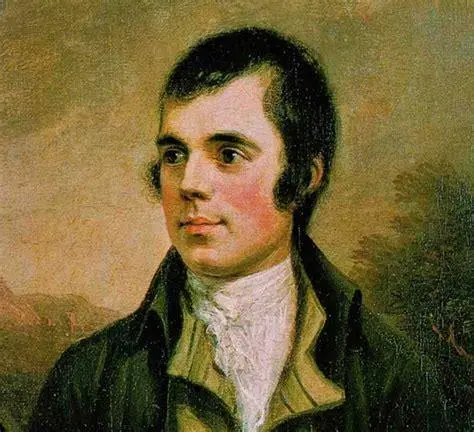
Robert Burns
Scots, Wha Hae Wi' Wallace Bled
Scots, Wha Hae Wi' Wallace Bled
Scots, wha hae wi' Wallace bled,
Scots, wham Bruce has aften led,
Welcome to your gory bed,
Or to victory!
Now's the day, and now's the hour;
See the front o' battle lour,
See approach proud Edward's power—
Chains and slavery!
Wha will be a traitor-knave?
Wha can fill a coward's grave?
Wha sae base as be a slave?
Let him turn and flee!
Wha for Scotland's king and law
Freedom's sword will strongly draw,
Freeman stand or freeman fa',
Let him follow me!
By oppression's woes and pains,
By your sons in servile chains,
We will drain our dearest veins,
But they shall be free!
Lay the proud usurpers low!
Tyrants fall in ev'ry foe!
Liberty's in ev'ry blow!
Let us do or die!
Scots, wha hae wi' Wallace bled,
Scots, wham Bruce has aften led,
Welcome to your gory bed,
Or to victory!
Now's the day, and now's the hour;
See the front o' battle lour,
See approach proud Edward's power—
Chains and slavery!
Wha will be a traitor-knave?
Wha can fill a coward's grave?
Wha sae base as be a slave?
Let him turn and flee!
Wha for Scotland's king and law
Freedom's sword will strongly draw,
Freeman stand or freeman fa',
Let him follow me!
By oppression's woes and pains,
By your sons in servile chains,
We will drain our dearest veins,
But they shall be free!
Lay the proud usurpers low!
Tyrants fall in ev'ry foe!
Liberty's in ev'ry blow!
Let us do or die!
231
Robert Burns
Holy Willie's Prayer
Holy Willie's Prayer
'And send the godly in a pet to pray.' - Pope
O Thou, that in the heavens does dwell,
Wha, as it pleases best Thysel',
Sends ane to heaven an' ten to hell,
A' for Thy glory,
And no for onie guid or ill
They've done afore Thee!
I bless and praise Thy matchless might,
When thousands Thou hast left in night,
That I am here afore Thy sight,
For gifts an' grace
A burning and a shining light
To a' this place.
What was I, or my generation,
That I should get sic exaltation,
I wha deserv'd most just damnation
For broken laws,
Sax thousand years ere my creation,
Thro' Adam's cause.
When from my mither's womb I fell,
Thou might hae plung'd me deep in hell,
To gnash my gooms, and weep and wail,
In burnin lakes,
Where daned devils roar and yell,
Chain'd to their stakes.
Yet I am here a chosen sample,
To show thy grace is great and ample;
I'm here a pillar o' Thy temple,
Strong as a rock,
A guide, a buckler, and example,
To a' Thy flock.
O Lord, Thou kens what zeal I bear,
When drinkers drink, an' swearers swear,
An' sining here, an' dancin there,
Wi great and sma';
For I am keepit by Thy fear
Free frae them a'.
But yet, O Lord! confess I must,
At times I'm fash'd wi' fleshly lust:
An' sometimes, too, in warldly trust,
Vile self gets in;
But Thou remembers we are dust,
Defil'd wi' sin.
O Lord! yestreen, Thou kens, wi' Meg -
Thy pardon I sincerely beg;
O! may't ne'er be a livin plague
To my dishonour,
An' I'll ne'er lift a lawless leg
Again upon her.
Besides, I farther maun allow,
Wi' Leezie's lass, three times I trow -
But Lord, that Friday I was fou,
When I cam near her;
Or else, Thou kens, Thy servant true
Wad never steer her.
Maybe Thou lets this fleshly thorn
Buffet Thy servant e'en and morn,
Lest he owre proud and high shou'd turn,
That he's sae gifted:
If sae, Thy han' maun e'en be borne,
Until Thou lift it.
Lord, mind Gaw'n Hamilton's deserts;
He drinks, an' swears, an' plays at cartes,
Yet has sae mony takin arts,
Wi' great and sma',
Frae God's ain priest the people's hearts
He steals awa.
An' when we chasten'd him therefor,
Thou kens how he bred sic a splore,
An' set the warld in a roar
O' laughing at us; -
Curse Thou his basket and his store,
Kail an' potatoes.
Lord, hear my earnest cry and pray'r,
Against that Presbyt'ry o' Ayr;
Thy strong right hand, Lord make it bare
Upo' their heads;
Lord visit them, an' dinna spare,
For their misdeeds.
O Lord, my God! that glib-tongu'd Aiken,
My vera heart and flesh are quakin,
To think how we stood sweatin, shakin,
An' p-'d wi' dread,
While he, wi' hingin lip an' snakin,
Held up his head.
Lord, in Thy day o' vengeance try him,
Lord, visit them wha did employ him,
And pass not in Thy mercy by them,
Nor hear them their pray'r,
But for Thy people's sake destroy them,
An' dinna spare.
But, Lord, remember me an' mine
Wi' mercies temporal and divine,
That I for grace an' gear may shine,
Excell'd by nane,
And a' the glory shall be thine,
Amen, Amen!
'And send the godly in a pet to pray.' - Pope
O Thou, that in the heavens does dwell,
Wha, as it pleases best Thysel',
Sends ane to heaven an' ten to hell,
A' for Thy glory,
And no for onie guid or ill
They've done afore Thee!
I bless and praise Thy matchless might,
When thousands Thou hast left in night,
That I am here afore Thy sight,
For gifts an' grace
A burning and a shining light
To a' this place.
What was I, or my generation,
That I should get sic exaltation,
I wha deserv'd most just damnation
For broken laws,
Sax thousand years ere my creation,
Thro' Adam's cause.
When from my mither's womb I fell,
Thou might hae plung'd me deep in hell,
To gnash my gooms, and weep and wail,
In burnin lakes,
Where daned devils roar and yell,
Chain'd to their stakes.
Yet I am here a chosen sample,
To show thy grace is great and ample;
I'm here a pillar o' Thy temple,
Strong as a rock,
A guide, a buckler, and example,
To a' Thy flock.
O Lord, Thou kens what zeal I bear,
When drinkers drink, an' swearers swear,
An' sining here, an' dancin there,
Wi great and sma';
For I am keepit by Thy fear
Free frae them a'.
But yet, O Lord! confess I must,
At times I'm fash'd wi' fleshly lust:
An' sometimes, too, in warldly trust,
Vile self gets in;
But Thou remembers we are dust,
Defil'd wi' sin.
O Lord! yestreen, Thou kens, wi' Meg -
Thy pardon I sincerely beg;
O! may't ne'er be a livin plague
To my dishonour,
An' I'll ne'er lift a lawless leg
Again upon her.
Besides, I farther maun allow,
Wi' Leezie's lass, three times I trow -
But Lord, that Friday I was fou,
When I cam near her;
Or else, Thou kens, Thy servant true
Wad never steer her.
Maybe Thou lets this fleshly thorn
Buffet Thy servant e'en and morn,
Lest he owre proud and high shou'd turn,
That he's sae gifted:
If sae, Thy han' maun e'en be borne,
Until Thou lift it.
Lord, mind Gaw'n Hamilton's deserts;
He drinks, an' swears, an' plays at cartes,
Yet has sae mony takin arts,
Wi' great and sma',
Frae God's ain priest the people's hearts
He steals awa.
An' when we chasten'd him therefor,
Thou kens how he bred sic a splore,
An' set the warld in a roar
O' laughing at us; -
Curse Thou his basket and his store,
Kail an' potatoes.
Lord, hear my earnest cry and pray'r,
Against that Presbyt'ry o' Ayr;
Thy strong right hand, Lord make it bare
Upo' their heads;
Lord visit them, an' dinna spare,
For their misdeeds.
O Lord, my God! that glib-tongu'd Aiken,
My vera heart and flesh are quakin,
To think how we stood sweatin, shakin,
An' p-'d wi' dread,
While he, wi' hingin lip an' snakin,
Held up his head.
Lord, in Thy day o' vengeance try him,
Lord, visit them wha did employ him,
And pass not in Thy mercy by them,
Nor hear them their pray'r,
But for Thy people's sake destroy them,
An' dinna spare.
But, Lord, remember me an' mine
Wi' mercies temporal and divine,
That I for grace an' gear may shine,
Excell'd by nane,
And a' the glory shall be thine,
Amen, Amen!
542
Robert Burns
Here's A Health To Them That's Awa
Here's A Health To Them That's Awa
Here's a health to them that's awa,
Here's a health to them that's awa
And wha winna wish guid luck to our cause,
May never guid luck be their fa'!
It's guid to be merry and wise,
It's guid to be honest and true,
It's guid to support Caledonia's cause
And bide by the buff and the blue.
Here's a health to them that's awa,
Here's a health to them that's awa!
Here's a health to Charlie, the chief o' the clan,
Altho that his band be sma'!
May Liberty meet wi success,
May Prudence protect her frae evil!
May tyrants and Tyranny tine i' the mist
And wander their way to the Devil!
Here's a health to them that's awa,
Here's a health to them that's awa;
Here's a health to Tammie, the Norlan' laddie,
That lives at the lug o' the Law!
Here's freedom to thern that wad read,
Here's freedom to them that would write!
There's nane ever fear'd that the truth should be heard,
But they whom the truth would indite!
Here's a health to them that's awa,
An here's to them that's awa!
Here's to Maitland and Wycombe! let wha does na like 'em
Be built in a hole in the wa'!
Here's timmer that's red at the heart,
Here's fruit that is sound at the core,
And may he that wad turn the buff and blue coat
Be turn'd to the back o' the door!
Here's a health to them that's awa,
Here's a health to them that's awa,
Here's Chieftain M'Leod, a chieftain worth gowd,
Tho' bred amang mountains o' snaw!
Here's friends on baith sides o' the Firth,
And friends on baith sides o' the Tweed,
And wha wad betray old Albion's right,
May they never eat of her bread!
Here's a health to them that's awa,
Here's a health to them that's awa
And wha winna wish guid luck to our cause,
May never guid luck be their fa'!
It's guid to be merry and wise,
It's guid to be honest and true,
It's guid to support Caledonia's cause
And bide by the buff and the blue.
Here's a health to them that's awa,
Here's a health to them that's awa!
Here's a health to Charlie, the chief o' the clan,
Altho that his band be sma'!
May Liberty meet wi success,
May Prudence protect her frae evil!
May tyrants and Tyranny tine i' the mist
And wander their way to the Devil!
Here's a health to them that's awa,
Here's a health to them that's awa;
Here's a health to Tammie, the Norlan' laddie,
That lives at the lug o' the Law!
Here's freedom to thern that wad read,
Here's freedom to them that would write!
There's nane ever fear'd that the truth should be heard,
But they whom the truth would indite!
Here's a health to them that's awa,
An here's to them that's awa!
Here's to Maitland and Wycombe! let wha does na like 'em
Be built in a hole in the wa'!
Here's timmer that's red at the heart,
Here's fruit that is sound at the core,
And may he that wad turn the buff and blue coat
Be turn'd to the back o' the door!
Here's a health to them that's awa,
Here's a health to them that's awa,
Here's Chieftain M'Leod, a chieftain worth gowd,
Tho' bred amang mountains o' snaw!
Here's friends on baith sides o' the Firth,
And friends on baith sides o' the Tweed,
And wha wad betray old Albion's right,
May they never eat of her bread!
228
Robert Burns
Handsome Nell
Handsome Nell
O, once I lov'd a bonnie lass,
Aye, and I love her still;
And whilst that virtue warms my breast
I'll love my handsome Nell.
As bonnie lasses I hae seen,
And mony full as braw,
But for a modest gracefu' mien
The like I never saw.
A bonnie lass, I will confess,
Is pleasant to the ee,
But without some letter qualities
She's no a lass for me.
But Nellie's looks are blithe and sweet,
And what is best of a'
Her reputation is complete,
And fair without a flaw.
She dresses aye sae clean and neat,
Both decent and genteel;
And then there's something in her gait
Gars ony dress look weel.
A gaudy dress and gentle air
May slightly touch the heart,
But it's innocence and modesty
That polishes the dart.
'Tis this in Nelly pleases me,
'Tis this enchants my soul
For absolutely in my breast
She reigns without control.
O, once I lov'd a bonnie lass,
Aye, and I love her still;
And whilst that virtue warms my breast
I'll love my handsome Nell.
As bonnie lasses I hae seen,
And mony full as braw,
But for a modest gracefu' mien
The like I never saw.
A bonnie lass, I will confess,
Is pleasant to the ee,
But without some letter qualities
She's no a lass for me.
But Nellie's looks are blithe and sweet,
And what is best of a'
Her reputation is complete,
And fair without a flaw.
She dresses aye sae clean and neat,
Both decent and genteel;
And then there's something in her gait
Gars ony dress look weel.
A gaudy dress and gentle air
May slightly touch the heart,
But it's innocence and modesty
That polishes the dart.
'Tis this in Nelly pleases me,
'Tis this enchants my soul
For absolutely in my breast
She reigns without control.
268
Robert Burns
For a' That and a' That
For a' That and a' That
Is there, for honest poverty,
That hings his head, an' a' that?
The coward slave, we pass him by,
We dare be poor for a' that!
For a' that, an' a' that,
Our toils obscure, an' a' that;
The rank is but the guinea's stamp;
The man's the gowd for a' that,
What tho' on hamely fare we dine,
Wear hoddin-gray, an' a' that;
Gie fools their silks, and knaves their wine,
A man's a man for a' that.
For a' that, an' a' that,
Their tinsel show an' a' that;
The honest man, tho' e'er sae poor,
Is king o' men for a' that.
Ye see yon birkie, ca'd a lord
Wha struts, an' stares, an' a' that;
Tho' hundreds worship at his word,
He's but a coof for a' that:
For a' that, an' a' that,
His riband, star, an' a' that,
The man o' independent mind,
He looks and laughs at a' that.
A prince can mak a belted knight,
A marquis, duke, an' a' that;
But an honest man's aboon his might,
Guid faith he mauna fa' that!
For a' that, an' a' that,
Their dignities, an' a' that,
The pith o' sense, an' pride o' worth,
Are higher rank than a' that.
Then let us pray that come it may,
As come it will for a' that,
That sense and worth, o'er a' the earth,
May bear the gree, an' a' that.
For a' that, an' a' that,
It's coming yet, for a' that,
That man to man, the warld o'er,
Shall brothers be for a' that.
Is there, for honest poverty,
That hings his head, an' a' that?
The coward slave, we pass him by,
We dare be poor for a' that!
For a' that, an' a' that,
Our toils obscure, an' a' that;
The rank is but the guinea's stamp;
The man's the gowd for a' that,
What tho' on hamely fare we dine,
Wear hoddin-gray, an' a' that;
Gie fools their silks, and knaves their wine,
A man's a man for a' that.
For a' that, an' a' that,
Their tinsel show an' a' that;
The honest man, tho' e'er sae poor,
Is king o' men for a' that.
Ye see yon birkie, ca'd a lord
Wha struts, an' stares, an' a' that;
Tho' hundreds worship at his word,
He's but a coof for a' that:
For a' that, an' a' that,
His riband, star, an' a' that,
The man o' independent mind,
He looks and laughs at a' that.
A prince can mak a belted knight,
A marquis, duke, an' a' that;
But an honest man's aboon his might,
Guid faith he mauna fa' that!
For a' that, an' a' that,
Their dignities, an' a' that,
The pith o' sense, an' pride o' worth,
Are higher rank than a' that.
Then let us pray that come it may,
As come it will for a' that,
That sense and worth, o'er a' the earth,
May bear the gree, an' a' that.
For a' that, an' a' that,
It's coming yet, for a' that,
That man to man, the warld o'er,
Shall brothers be for a' that.
222
Robert Burns
Address to the Unco Guid
Address to the Unco Guid
My Son, these maxims make a rule,
An' lump them aye thegither;
The Rigid Righteous is a fool,
The Rigid Wise anither:
The cleanest corn that ere was dight
May hae some pyles o' caff in;
So ne'er a fellow creature slight
For random fits o' daffin.
Solomon.--Eccles. ch. vii. verse
O ye wha are sae guid yoursel',
Sae pious and sae holy,
Ye've nought to do but mark and tell
Your neibours' fauts and folly!
Whase life is like a weel-gaun mill,
Supplied wi' store o' water;
The heapèd happer's ebbing still,
An' still the clap plays clatter.
Hear me, ye venerable core,
As counsel for poor mortals
That frequent pass douce Wisdom's door
For glaikit Folly's portals:
I, for their thoughtless, careless sakes,
Would here propone defences--
Their donsie tricks, their black mistakes,
Their failings and mischances.
Ye see your state wi' theirs compared,
And shudder at the niffer;
But cast a moment's fair regard,
What makes the mighty differ?
Discount what scant occassion gave,
That purity ye pride in;
And (what's aft mair than a' the lave)
Your better art o' hidin.
Think, when your castigated pulse
Gies now and then a wallop,
What ragings must his veins convulse,
That still eternal gallop!
Wi' wind and tide fair i' your tail,
Right on ye scud your sea-way;
But in the teeth o' baith to sail,
It maks a unco lee-way.
See Social Life and Glee sit down,
All joyous and unthinking,
Till, quite transmugrified, they're grown
Debauchery and Drinking:
O would they stay to calculate
Th' external consequences;
Or your more dreaded hell to state
Damnation of expenses!
Ye high, exalted, virtuous dames,
Tied up in godly laces,
Before ye gie poor Frailty names,
Suppose a change o' cases;
A dear-lov'd lad, convenience snug,
A treach'rous inclination--
But let me whisper i' your lug,
Ye're aiblins nae temptation.
Then gently scan your brother man,
Still gentler sister woman;
Tho' they may gang a kennin wrang,
To step aside is human;
One point must still be greatly dark,--
The moving Why they do it;
And just as lamely can ye mark,
How far perhaps they rue it.
Who made the heart, 'tis He alone
Decidedly can try us;
He knows each chord, its various tone,
Each spring, its various bias:
Then at the balance let's be mute,
We never can adjust it;
What's done we partly may compute,
But know not what's resisted.
My Son, these maxims make a rule,
An' lump them aye thegither;
The Rigid Righteous is a fool,
The Rigid Wise anither:
The cleanest corn that ere was dight
May hae some pyles o' caff in;
So ne'er a fellow creature slight
For random fits o' daffin.
Solomon.--Eccles. ch. vii. verse
O ye wha are sae guid yoursel',
Sae pious and sae holy,
Ye've nought to do but mark and tell
Your neibours' fauts and folly!
Whase life is like a weel-gaun mill,
Supplied wi' store o' water;
The heapèd happer's ebbing still,
An' still the clap plays clatter.
Hear me, ye venerable core,
As counsel for poor mortals
That frequent pass douce Wisdom's door
For glaikit Folly's portals:
I, for their thoughtless, careless sakes,
Would here propone defences--
Their donsie tricks, their black mistakes,
Their failings and mischances.
Ye see your state wi' theirs compared,
And shudder at the niffer;
But cast a moment's fair regard,
What makes the mighty differ?
Discount what scant occassion gave,
That purity ye pride in;
And (what's aft mair than a' the lave)
Your better art o' hidin.
Think, when your castigated pulse
Gies now and then a wallop,
What ragings must his veins convulse,
That still eternal gallop!
Wi' wind and tide fair i' your tail,
Right on ye scud your sea-way;
But in the teeth o' baith to sail,
It maks a unco lee-way.
See Social Life and Glee sit down,
All joyous and unthinking,
Till, quite transmugrified, they're grown
Debauchery and Drinking:
O would they stay to calculate
Th' external consequences;
Or your more dreaded hell to state
Damnation of expenses!
Ye high, exalted, virtuous dames,
Tied up in godly laces,
Before ye gie poor Frailty names,
Suppose a change o' cases;
A dear-lov'd lad, convenience snug,
A treach'rous inclination--
But let me whisper i' your lug,
Ye're aiblins nae temptation.
Then gently scan your brother man,
Still gentler sister woman;
Tho' they may gang a kennin wrang,
To step aside is human;
One point must still be greatly dark,--
The moving Why they do it;
And just as lamely can ye mark,
How far perhaps they rue it.
Who made the heart, 'tis He alone
Decidedly can try us;
He knows each chord, its various tone,
Each spring, its various bias:
Then at the balance let's be mute,
We never can adjust it;
What's done we partly may compute,
But know not what's resisted.
312
Robert Burns
A Bard's Epitaph
A Bard's Epitaph
Is there a whim-inspired fool,
Owre fast for thought, owre hot for rule,
Owre blate to seek, owre proud to snool,
Let him draw near;
And owre this grassy heap sing dool,
And drap a tear.
Is there a bard of rustic song,
Who, noteless, steals the crowds among,
That weekly this area throng,
O, pass not by!
But, with a frater-feeling strong,
Here, heave a sigh.
Is there a man, whose judgment clear
Can others teach the course to steer,
Yet runs, himself, life's mad career,
Wild as the wave,
Here pause-and, thro' the starting tear,
Survey this grave.
The poor inhabitant below
Was quick to learn the wise to know,
And keenly felt the friendly glow,
And softer flame;
But thoughtless follies laid him low,
And stain'd his name!
Reader, attend! whether thy soul
Soars fancy's flights beyond the pole,
Or darkling grubs this earthly hole,
In low pursuit:
Know, prudent, cautious, self-control
Is wisdom's root.
Is there a whim-inspired fool,
Owre fast for thought, owre hot for rule,
Owre blate to seek, owre proud to snool,
Let him draw near;
And owre this grassy heap sing dool,
And drap a tear.
Is there a bard of rustic song,
Who, noteless, steals the crowds among,
That weekly this area throng,
O, pass not by!
But, with a frater-feeling strong,
Here, heave a sigh.
Is there a man, whose judgment clear
Can others teach the course to steer,
Yet runs, himself, life's mad career,
Wild as the wave,
Here pause-and, thro' the starting tear,
Survey this grave.
The poor inhabitant below
Was quick to learn the wise to know,
And keenly felt the friendly glow,
And softer flame;
But thoughtless follies laid him low,
And stain'd his name!
Reader, attend! whether thy soul
Soars fancy's flights beyond the pole,
Or darkling grubs this earthly hole,
In low pursuit:
Know, prudent, cautious, self-control
Is wisdom's root.
501
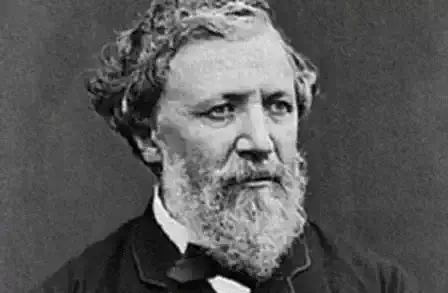
Robert Browning
To Edward Fitzgerald
To Edward Fitzgerald
I chanced upon a new book yesterday;
I opened it, and, where my finger lay
'Twixt page and uncut page, these words I read -
Some six or seven at most - and learned thereby
That you, Fitzgerald, whom by ear and eye
She never knew, "thanked God my wife was dead."
Aye, dead! and were yourself alive, good Fitz,
How to return you thanks would task my wits.
Kicking you seems the common lot of curs -
While more appropriate greeting lends you grace,
Surely to spit there glorifies your face -
Spitting from lips once sanctified by hers.
I chanced upon a new book yesterday;
I opened it, and, where my finger lay
'Twixt page and uncut page, these words I read -
Some six or seven at most - and learned thereby
That you, Fitzgerald, whom by ear and eye
She never knew, "thanked God my wife was dead."
Aye, dead! and were yourself alive, good Fitz,
How to return you thanks would task my wits.
Kicking you seems the common lot of curs -
While more appropriate greeting lends you grace,
Surely to spit there glorifies your face -
Spitting from lips once sanctified by hers.
349
Robert Browning
The Statue and the Bust
The Statue and the Bust
There's a palace in Florence, the world knows well,
And a statue watches it from the square,
And this story of both do our townsmen tell.
Ages ago, a lady there,
At the farthest window facing the East,
Asked, "Who rides by with the royal air?"
The bridesmaids' prattle around her ceased;
She leaned forth, one on either hand;
They saw how the blush of the bride increased --
They felt by its beats her heart expand --
As one at each ear and both in a breath
Whispered, "The Great-Duke Ferdinand."
That self-same instant, underneath,
The Duke rode past in his idle way,
Empty and fine like a swordless sheath.
Gay he rode, with a friend as gay,
Till he threw his head back -- "Who is she?"
-- "A bride the Riccardi brings home today."
Hair in heaps lay heavily
Over a pale brow spirit-pure --
Carved like the heart of the coal-black tree,
Crisped like a war-steed's encolure --
And vainly sought to dissemble her eyes
Of the blackest black our eyes endure.
And lo, a blade for a knight's emprise
Filled the fine empty sheath of a man, --
The Duke grew straightway brave and wise.
He looked at her, as a lover can;
She looked at him, as one who awakes:
The past was a sleep, and their life began.
Now, love so ordered for both their sakes,
A feast was held that selfsame night
In the pile which the mighty shadow makes.
(For Via Larga is three-parts light,
But the palace overshadows one,
Because of a crime which may God requite!
To Florence and God the wrong was done,
Through the first republic's murder there
By Cosimo and his cursèd son.)
The Duke (with the statue's face in the square)
Turned in the midst of his multitude
At the bright approach of the bridal pair.
Face to face the lovers stood
A single minute and no more,
While the bridegroom bent as a man subdued --
Bowed till his bonnet brushed the floor --
For the Duke on the lady a kiss conferred,
As the courtly custom was of yore.
In a minute can lovers exchange a word?
If a word did pass, which I do not think,
Only one out of the thousand heard.
That was the bridegroom. At day's brink
He and his bride were alone at last
In a bedchamber by a taper's blink.
Calmly he said that her lot was cast,
That the door she had passed was shut on her
Till the final catafalque repassed.
The world meanwhile, its noise and stir,
Through a certain window facing the East,
She could watch like a convent's chronicler.
Since passing the door might lead to a feast,
And a feast might lead to so much beside,
He, of many evils, chose the least.
"Freely I choose too," said the bride --
"Your window and its world suffice,"
Replied the tongue, while the heart replied --
"If I spend the night with that devil twice,
May his window serve as my loop of hell
Whence a damned soul looks on paradise!
"I fly to the Duke who loves me well,
Sit by his side and laugh at sorrow
Ere I count another ave-bell.
"'Tis only the coat of a page to borrow,
And tie my hair in a horse-boy's trim,
And I save my soul -- but not tomorrow" --
(She checked herself and her eye grew dim)
"My father tarries to bless my state:
I must keep it one day more for him.
"Is one day more so long to wait?
Moreover the Duke rides past, I know;
We shall see each other, sure as fate."
She turned on her side and slept. Just so!
So we resolve on a thing and sleep:
So did the lady, ages ago.
That night the Duke said, "Dear or cheap
As the cost of this cup of bliss may prove
To body or soul, I will drain it deep."
And on the morrow, bold with love,
He beckoned the bridegroom (close on call,
As his duty bade, by the Duke's alcove)
And smiled "'Twas a very funeral,
Your lady will think, this feast of ours, --
A shame to efface, whate'er befall!
"What if we break from the Arno bowers,
And try if Petraja, cool and green,
Cure last night's fault with this morning's flowers?"
The bridegroom, not a thought to be seen
On his steady brow and quiet mouth,
Said, "Too much favour for me so mean!
"But, alas! my lady leaves the South;
Each wind that comes from the Apennine
Is a menace to her tender youth:
"Nor a way exists, the wise opine,
If she quits her palace twice this year,
To avert the flower of life's decline."
Quoth the Duke, "A sage and a kindly fear.
Moreover Petraja is cold this spring:
Be our feast tonight as usual here!"
And then to himself -- "Which night shall bring
Thy bride to her lover's embraces, fool --
Or I am the fool, and thou art the king!
"Yet my passion must wait a night, nor cool --
For tonight the Envoy arrives from France
Whose heart I unlock with thyself, my tool.
"I need thee still and might miss perchance.
Today is not wholly lost, beside,
With its hope of my lady's countenance:
"For I ride -- what should I do but ride?
And passing her palace, if I list,
May glance at its window -- well betide!"
So said, so done: nor the lady missed
One ray that broke from the ardent brow,
Nor a curl of the lips where the spirit kissed.
Be sure that each renewed the vow,
No morrow's sun should arise and set
And leave them then as it left them now.
But next day passed, and next day yet,
With still fresh cause to wait one day more
Ere each leaped over the parapet.
And still, as love's brief morning wore,
With a gentle start, half smile, half sigh,
They found love not as it seemed before.
They thought it would work infallibly,
But not in despite of heaven and earth:
The rose would blow when the storm passed by.
Meantime they could profit in winter's dearth
By store of fruits that supplant the rose:
The world and its ways have a certain worth:
And to press a point while these oppose
Were simple policy; better wait:
We lose no friends and we gain no foes.
Meantime, worse fates than a lover's fate,
Who daily may ride and pass and look
Where his lady watches behind the grate!
And she -- she watched the square like a book
Holding one picture and only one,
Which daily to find she undertook:
When the picture was reached the book was done,
And she turned from the picture at night to scheme
Of tearing it out for herself next sun.
So weeks grew months, years; gleam by gleam
The glory dropped from their youth and love,
And both perceived they had dreamed a dream;
Which hovered as dreams do, still above:
But who can take a dream for a truth?
Oh, hide our eyes from the next remove!
One day as the lady saw her youth
Depart, and the silver thread that streaked
Her hair, and, worn by the serpent's tooth,
The brow so puckered, the chin so peaked, --
And wondered who the woman was,
Hollow-eyed and haggard-cheeked,
Fronting her silent in the glass --
"Summon here," she suddenly said,
"Before the rest of my old self pass,
"Him, the Carver, a hand to aid,
Who fashions the clay no love will change,
And fixes a beauty never to fade.
"Let Robbia's craft so apt and strange
Arrest the remains of young and fair,
And rivet them while the seasons range.
"Make me a face on the window there,
Waiting as ever, mute the while,
My love to pass below in the square!
"And let me think that it may beguile
Dreary days which the dead must spend
Down in their darkness under the aisle,
"To say, 'What matters it at the end?
I did no more while my heart was warm
Than does that image, my pale-faced friend.'
"Where is the use of the lip's red charm,
The heaven of hair, the pride of the brow,
And the blood that blues the inside arm --
"Unless we turn, as the soul knows how,
The earthly gift to an end divine?
A lady of clay is as good, I trow."
But long ere Robbia's cornice, fine,
With flowers and fruits which leaves enlace,
Was set where now is the empty shrine --
(And, leaning out of a bright blue space,
As a ghost might lean from a chink of sky,
The passionate pale lady's face --
Eyeing ever, with earnest eye
And quick-turned neck at its breathless stretch,
Some one who ever is passing by --)
The Duke had sighed like the simplest wretch
In Florence, "Youth -- my dream escapes!
Will its record stay?" And he bade them fetch
Some subtle moulder of brazen shapes --
"Can the soul, the will, die out of a man
Ere his body find the grave that gapes?
"John of Douay shall effect my plan,
Set me on horseback here aloft,
Alive, as the crafty sculptor can,
"In the very square I have crossed so oft:
That men may admire, when future suns
Shall touch the eyes to a purpose soft,
"While the mouth and the brow stay brave in bronze --
Admire and say, 'When he was alive
How he would take his pleasure once!'
"And it shall go hard but I contrive
To listen the while, and laugh in my tomb
At idleness which aspires to strive."
So! While these wait the trump of doom,
How do their spirits pass, I wonder,
Nights and days in the narrow room?
Still, I suppose, they sit and ponder
What a gift life was, ages ago,
Six steps out of the chapel yonder.
Only they see not God, I know,
Nor all that chivalry of his,
The soldier-saints who, row on row,
Burn upward each to his point of bliss --
Since, the end of life being manifest,
He had burned his way through the world to this.
I hear you reproach, "But delay was best,
For their end was a crime." -- Oh, a crime will do
As well, I reply, to serve for a test,
As a virtue golden through and through,
Sufficient to vindicate itself
And prove its worth at a moment's view!
Must a game be played for the sake of pelf?
Where a button goes, 'twere an epigram
To offer the stamp of the very Guelph.
The true has no value beyond the sham:
As well the counter as coin, I submit,
When your table's a hat, and your prize a dram.
Stake your counter as boldly every whit,
Venture as warily, use the same skill,
Do your best, whether winning or losing it,
If you choose to play! -- is my principle.
Let a man contend to the uttermost
For his life's set prize, be it what it will!
The counter our lovers staked was lost
As surely as if it were lawful coin:
And the sin I impute to each frustrate ghost
Is -- the unlit lamp and the ungirt loin,
Though the end in sight was a vice, I say.
You of the virtue (we issue join)
How strive you? De te, fabula.
There's a palace in Florence, the world knows well,
And a statue watches it from the square,
And this story of both do our townsmen tell.
Ages ago, a lady there,
At the farthest window facing the East,
Asked, "Who rides by with the royal air?"
The bridesmaids' prattle around her ceased;
She leaned forth, one on either hand;
They saw how the blush of the bride increased --
They felt by its beats her heart expand --
As one at each ear and both in a breath
Whispered, "The Great-Duke Ferdinand."
That self-same instant, underneath,
The Duke rode past in his idle way,
Empty and fine like a swordless sheath.
Gay he rode, with a friend as gay,
Till he threw his head back -- "Who is she?"
-- "A bride the Riccardi brings home today."
Hair in heaps lay heavily
Over a pale brow spirit-pure --
Carved like the heart of the coal-black tree,
Crisped like a war-steed's encolure --
And vainly sought to dissemble her eyes
Of the blackest black our eyes endure.
And lo, a blade for a knight's emprise
Filled the fine empty sheath of a man, --
The Duke grew straightway brave and wise.
He looked at her, as a lover can;
She looked at him, as one who awakes:
The past was a sleep, and their life began.
Now, love so ordered for both their sakes,
A feast was held that selfsame night
In the pile which the mighty shadow makes.
(For Via Larga is three-parts light,
But the palace overshadows one,
Because of a crime which may God requite!
To Florence and God the wrong was done,
Through the first republic's murder there
By Cosimo and his cursèd son.)
The Duke (with the statue's face in the square)
Turned in the midst of his multitude
At the bright approach of the bridal pair.
Face to face the lovers stood
A single minute and no more,
While the bridegroom bent as a man subdued --
Bowed till his bonnet brushed the floor --
For the Duke on the lady a kiss conferred,
As the courtly custom was of yore.
In a minute can lovers exchange a word?
If a word did pass, which I do not think,
Only one out of the thousand heard.
That was the bridegroom. At day's brink
He and his bride were alone at last
In a bedchamber by a taper's blink.
Calmly he said that her lot was cast,
That the door she had passed was shut on her
Till the final catafalque repassed.
The world meanwhile, its noise and stir,
Through a certain window facing the East,
She could watch like a convent's chronicler.
Since passing the door might lead to a feast,
And a feast might lead to so much beside,
He, of many evils, chose the least.
"Freely I choose too," said the bride --
"Your window and its world suffice,"
Replied the tongue, while the heart replied --
"If I spend the night with that devil twice,
May his window serve as my loop of hell
Whence a damned soul looks on paradise!
"I fly to the Duke who loves me well,
Sit by his side and laugh at sorrow
Ere I count another ave-bell.
"'Tis only the coat of a page to borrow,
And tie my hair in a horse-boy's trim,
And I save my soul -- but not tomorrow" --
(She checked herself and her eye grew dim)
"My father tarries to bless my state:
I must keep it one day more for him.
"Is one day more so long to wait?
Moreover the Duke rides past, I know;
We shall see each other, sure as fate."
She turned on her side and slept. Just so!
So we resolve on a thing and sleep:
So did the lady, ages ago.
That night the Duke said, "Dear or cheap
As the cost of this cup of bliss may prove
To body or soul, I will drain it deep."
And on the morrow, bold with love,
He beckoned the bridegroom (close on call,
As his duty bade, by the Duke's alcove)
And smiled "'Twas a very funeral,
Your lady will think, this feast of ours, --
A shame to efface, whate'er befall!
"What if we break from the Arno bowers,
And try if Petraja, cool and green,
Cure last night's fault with this morning's flowers?"
The bridegroom, not a thought to be seen
On his steady brow and quiet mouth,
Said, "Too much favour for me so mean!
"But, alas! my lady leaves the South;
Each wind that comes from the Apennine
Is a menace to her tender youth:
"Nor a way exists, the wise opine,
If she quits her palace twice this year,
To avert the flower of life's decline."
Quoth the Duke, "A sage and a kindly fear.
Moreover Petraja is cold this spring:
Be our feast tonight as usual here!"
And then to himself -- "Which night shall bring
Thy bride to her lover's embraces, fool --
Or I am the fool, and thou art the king!
"Yet my passion must wait a night, nor cool --
For tonight the Envoy arrives from France
Whose heart I unlock with thyself, my tool.
"I need thee still and might miss perchance.
Today is not wholly lost, beside,
With its hope of my lady's countenance:
"For I ride -- what should I do but ride?
And passing her palace, if I list,
May glance at its window -- well betide!"
So said, so done: nor the lady missed
One ray that broke from the ardent brow,
Nor a curl of the lips where the spirit kissed.
Be sure that each renewed the vow,
No morrow's sun should arise and set
And leave them then as it left them now.
But next day passed, and next day yet,
With still fresh cause to wait one day more
Ere each leaped over the parapet.
And still, as love's brief morning wore,
With a gentle start, half smile, half sigh,
They found love not as it seemed before.
They thought it would work infallibly,
But not in despite of heaven and earth:
The rose would blow when the storm passed by.
Meantime they could profit in winter's dearth
By store of fruits that supplant the rose:
The world and its ways have a certain worth:
And to press a point while these oppose
Were simple policy; better wait:
We lose no friends and we gain no foes.
Meantime, worse fates than a lover's fate,
Who daily may ride and pass and look
Where his lady watches behind the grate!
And she -- she watched the square like a book
Holding one picture and only one,
Which daily to find she undertook:
When the picture was reached the book was done,
And she turned from the picture at night to scheme
Of tearing it out for herself next sun.
So weeks grew months, years; gleam by gleam
The glory dropped from their youth and love,
And both perceived they had dreamed a dream;
Which hovered as dreams do, still above:
But who can take a dream for a truth?
Oh, hide our eyes from the next remove!
One day as the lady saw her youth
Depart, and the silver thread that streaked
Her hair, and, worn by the serpent's tooth,
The brow so puckered, the chin so peaked, --
And wondered who the woman was,
Hollow-eyed and haggard-cheeked,
Fronting her silent in the glass --
"Summon here," she suddenly said,
"Before the rest of my old self pass,
"Him, the Carver, a hand to aid,
Who fashions the clay no love will change,
And fixes a beauty never to fade.
"Let Robbia's craft so apt and strange
Arrest the remains of young and fair,
And rivet them while the seasons range.
"Make me a face on the window there,
Waiting as ever, mute the while,
My love to pass below in the square!
"And let me think that it may beguile
Dreary days which the dead must spend
Down in their darkness under the aisle,
"To say, 'What matters it at the end?
I did no more while my heart was warm
Than does that image, my pale-faced friend.'
"Where is the use of the lip's red charm,
The heaven of hair, the pride of the brow,
And the blood that blues the inside arm --
"Unless we turn, as the soul knows how,
The earthly gift to an end divine?
A lady of clay is as good, I trow."
But long ere Robbia's cornice, fine,
With flowers and fruits which leaves enlace,
Was set where now is the empty shrine --
(And, leaning out of a bright blue space,
As a ghost might lean from a chink of sky,
The passionate pale lady's face --
Eyeing ever, with earnest eye
And quick-turned neck at its breathless stretch,
Some one who ever is passing by --)
The Duke had sighed like the simplest wretch
In Florence, "Youth -- my dream escapes!
Will its record stay?" And he bade them fetch
Some subtle moulder of brazen shapes --
"Can the soul, the will, die out of a man
Ere his body find the grave that gapes?
"John of Douay shall effect my plan,
Set me on horseback here aloft,
Alive, as the crafty sculptor can,
"In the very square I have crossed so oft:
That men may admire, when future suns
Shall touch the eyes to a purpose soft,
"While the mouth and the brow stay brave in bronze --
Admire and say, 'When he was alive
How he would take his pleasure once!'
"And it shall go hard but I contrive
To listen the while, and laugh in my tomb
At idleness which aspires to strive."
So! While these wait the trump of doom,
How do their spirits pass, I wonder,
Nights and days in the narrow room?
Still, I suppose, they sit and ponder
What a gift life was, ages ago,
Six steps out of the chapel yonder.
Only they see not God, I know,
Nor all that chivalry of his,
The soldier-saints who, row on row,
Burn upward each to his point of bliss --
Since, the end of life being manifest,
He had burned his way through the world to this.
I hear you reproach, "But delay was best,
For their end was a crime." -- Oh, a crime will do
As well, I reply, to serve for a test,
As a virtue golden through and through,
Sufficient to vindicate itself
And prove its worth at a moment's view!
Must a game be played for the sake of pelf?
Where a button goes, 'twere an epigram
To offer the stamp of the very Guelph.
The true has no value beyond the sham:
As well the counter as coin, I submit,
When your table's a hat, and your prize a dram.
Stake your counter as boldly every whit,
Venture as warily, use the same skill,
Do your best, whether winning or losing it,
If you choose to play! -- is my principle.
Let a man contend to the uttermost
For his life's set prize, be it what it will!
The counter our lovers staked was lost
As surely as if it were lawful coin:
And the sin I impute to each frustrate ghost
Is -- the unlit lamp and the ungirt loin,
Though the end in sight was a vice, I say.
You of the virtue (we issue join)
How strive you? De te, fabula.
384
Robert Browning
The Lost Leader
The Lost Leader
I.
Just for a handful of silver he left us,
Just for a riband to stick in his coat---
Found the one gift of which fortune bereft us,
Lost all the others she lets us devote;
They, with the gold to give, doled him out silver,
So much was theirs who so little allowed:
How all our copper had gone for his service!
Rags---were they purple, his heart had been proud!
We that had loved him so, followed him, honoured him,
Lived in his mild and magnificent eye,
Learned his great language, caught his clear accents,
Made him our pattern to live and to die!
Shakespeare was of us, Milton was for us,
Burns, Shelley, were with us,---they watch from their graves!
He alone breaks from the van and the free-men,
---He alone sinks to the rear and the slaves!
II.
We shall march prospering,---not thro' his presence;
Songs may inspirit us,---not from his lyre;
Deeds will be done,---while he boasts his quiescence,
Still bidding crouch whom the rest bade aspire:
Blot out his name, then, record one lost soul more,
One task more declined, one more foot-path untrod,
One more devils'-triumph and sorrow for angels,
One wrong more to man, one more insult to God!
Life's night begins: let him never come back to us!
There would be doubt, hesitation and pain,
Forced praise on our part---the glimmer of twilight,
Never glad confident morning again!
Best fight on well, for we taught him---strike gallantly,
Menace our heart ere we master his own;
Then let him receive the new knowledge and wait us,
Pardoned in heaven, the first by the throne!
I.
Just for a handful of silver he left us,
Just for a riband to stick in his coat---
Found the one gift of which fortune bereft us,
Lost all the others she lets us devote;
They, with the gold to give, doled him out silver,
So much was theirs who so little allowed:
How all our copper had gone for his service!
Rags---were they purple, his heart had been proud!
We that had loved him so, followed him, honoured him,
Lived in his mild and magnificent eye,
Learned his great language, caught his clear accents,
Made him our pattern to live and to die!
Shakespeare was of us, Milton was for us,
Burns, Shelley, were with us,---they watch from their graves!
He alone breaks from the van and the free-men,
---He alone sinks to the rear and the slaves!
II.
We shall march prospering,---not thro' his presence;
Songs may inspirit us,---not from his lyre;
Deeds will be done,---while he boasts his quiescence,
Still bidding crouch whom the rest bade aspire:
Blot out his name, then, record one lost soul more,
One task more declined, one more foot-path untrod,
One more devils'-triumph and sorrow for angels,
One wrong more to man, one more insult to God!
Life's night begins: let him never come back to us!
There would be doubt, hesitation and pain,
Forced praise on our part---the glimmer of twilight,
Never glad confident morning again!
Best fight on well, for we taught him---strike gallantly,
Menace our heart ere we master his own;
Then let him receive the new knowledge and wait us,
Pardoned in heaven, the first by the throne!
554
Robert Browning
The Patriot
The Patriot
AN OLD STORY.
I.
It was roses, roses, all the way,
With myrtle mixed in my path like mad:
The house-roofs seemed to heave and sway,
The church-spires flamed, such flags they had,
A year ago on this very day.
II.
The air broke into a mist with bells,
The old walls rocked with the crowd and cries.
Had I said, ``Good folk, mere noise repels---
But give me your sun from yonder skies!''
They had answered, ``And afterward, what else?''
III.
Alack, it was I who leaped at the sun
To give it my loving friends to keep!
Nought man could do, have I left undone:
And you see my harvest, what I reap
This very day, now a year is run.
IV.
There's nobody on the house-tops now---
Just a palsied few at the windows set;
For the best of the sight is, all allow,
At the Shambles' Gate---or, better yet,
By the very scaffold's foot, I trow.
V.
I go in the rain, and, more than needs,
A rope cuts both my wrists behind;
And I think, by the feel, my forehead bleeds,
For they fling, whoever has a mind,
Stones at me for my year's misdeeds.
VI.
Thus I entered, and thus I go!
In triumphs, people have dropped down dead.
``Paid by the world, what dost thou owe
``Me?''---God might question; now instead,
'Tis God shall repay: I am safer so.
AN OLD STORY.
I.
It was roses, roses, all the way,
With myrtle mixed in my path like mad:
The house-roofs seemed to heave and sway,
The church-spires flamed, such flags they had,
A year ago on this very day.
II.
The air broke into a mist with bells,
The old walls rocked with the crowd and cries.
Had I said, ``Good folk, mere noise repels---
But give me your sun from yonder skies!''
They had answered, ``And afterward, what else?''
III.
Alack, it was I who leaped at the sun
To give it my loving friends to keep!
Nought man could do, have I left undone:
And you see my harvest, what I reap
This very day, now a year is run.
IV.
There's nobody on the house-tops now---
Just a palsied few at the windows set;
For the best of the sight is, all allow,
At the Shambles' Gate---or, better yet,
By the very scaffold's foot, I trow.
V.
I go in the rain, and, more than needs,
A rope cuts both my wrists behind;
And I think, by the feel, my forehead bleeds,
For they fling, whoever has a mind,
Stones at me for my year's misdeeds.
VI.
Thus I entered, and thus I go!
In triumphs, people have dropped down dead.
``Paid by the world, what dost thou owe
``Me?''---God might question; now instead,
'Tis God shall repay: I am safer so.
796
Robert Browning
The Italian In England
The Italian In England
That second time they hunted me
From hill to plain, from shore to sea,
And Austria, hounding far and wide
Her blood-hounds thro' the country-side,
Breathed hot and instant on my trace,---
I made six days a hiding-place
Of that dry green old aqueduct
Where I and Charles, when boys, have plucked
The fire-flies from the roof above,
Bright creeping thro' the moss they love:
---How long it seems since Charles was lost!
Six days the soldiers crossed and crossed
The country in my very sight;
And when that peril ceased at night,
The sky broke out in red dismay
With signal fires; well, there I lay
Close covered o'er in my recess,
Up to the neck in ferns and cress,
Thinking on Metternich our friend,
And Charles's miserable end,
And much beside, two days; the third,
Hunger o'ercame me when I heard
The peasants from the village go
To work among the maize; you know,
With us in Lombardy, they bring
Provisions packed on mules, a string
With little bells that cheer their task,
And casks, and boughs on every cask
To keep the sun's heat from the wine;
These I let pass in jingling line,
And, close on them, dear noisy crew,
The peasants from the village, too;
For at the very rear would troop
Their wives and sisters in a group
To help, I knew. When these had passed,
I threw my glove to strike the last,
Taking the chance: she did not start,
Much less cry out, but stooped apart,
One instant rapidly glanced round,
And saw me beckon from the ground.
A wild bush grows and hides my crypt;
She picked my glove up while she stripped
A branch off, then rejoined the rest
With that; my glove lay in her breast.
Then I drew breath; they disappeared:
It was for Italy I feared.
An hour, and she returned alone
Exactly where my glove was thrown.
Meanwhile came many thoughts: on me
Rested the hopes of Italy.
I had devised a certain tale
Which, when 'twas told her, could not fail
Persuade a peasant of its truth;
I meant to call a freak of youth
This hiding, and give hopes of pay,
And no temptation to betray.
But when I saw that woman's face,
Its calm simplicity of grace,
Our Italy's own attitude
In which she walked thus far, and stood,
Planting each naked foot so firm,
To crush the snake and spare the worm---
At first sight of her eyes, I said,
``I am that man upon whose head
``They fix the price, because I hate
``The Austrians over us: the State
``Will give you gold---oh, gold so much!---
``If you betray me to their clutch,
``And be your death, for aught I know,
``If once they find you saved their foe.
``Now, you must bring me food and drink,
``And also paper, pen and ink,
``And carry safe what I shall write
``To Padua, which you'll reach at night
``Before the duomo shuts; go in,
``And wait till Tenebr begin;
``Walk to the third confessional,
``Between the pillar and the wall,
``And kneeling whisper, _Whence comes peace?_
``Say it a second time, then cease;
``And if the voice inside returns,
``_From Christ and Freedom; what concerns
``The cause of Peace?_---for answer, slip
``My letter where you placed your lip;
``Then come back happy we have done
``Our mother service---I, the son,
``As you the daughter of our land!''
Three mornings more, she took her stand
In the same place, with the same eyes:
I was no surer of sun-rise
That of her coming. We conferred
Of her own prospects, and I heard
She had a lover---stout and tall,
She said---then let her eyelids fall,
``He could do much''---as if some doubt
Entered her heart,---then, passing out,
``She could not speak for others, who
``Had other thoughts; herself she knew:''
And so she brought me drink and food.
After four days, the scouts pursued
Another path; at last arrived
The help my Paduan friends contrived
To furnish me: she brought the news.
For the first time I could not choose
But kiss her hand, and lay my own
Upon her head---``This faith was shown
``To Italy, our mother; she
``Uses my hand and blesses thee.''
She followed down to the sea-shore;
I left and never saw her more.
How very long since I have thought
Concerning---much less wished for---aught
Beside the good of Italy,
For which I live and mean to die!
I never was in love; and since
Charles proved false, what shall now convince.
My inmost heart I have a friend?
However, if I pleased to spend
Real wishes on myself---say, three---
I know at least what one should be.
I would grasp Metternich until
I felt his red wet throat distil
In blood thro' these two hands. And next,
---Nor much for that am I perplexed---
Charles, perjured traitor, for his part,
Should die slow of a broken heart
Under his new employer. Last
---Ah, there, what should I wish? For fast
Do I grow old and out of strength.
If I resolved to seek at length
My father's house again, how scared
They all would look, and unprepared!
My brothers live in Austria's pay
---Disowned me long ago, men say;
And all my early mates who used
To praise me so---perhaps induced
More than one early step of mine---
Are turning wise: while some opine
``Freedom grows license,'' some suspect
``Haste breeds delay,'' and recollect
They always said, such premature
Beginnings never could endure!
So, with a sullen ``All's for best,''
The land seems settling to its rest.
I think then, I should wish to stand
This evening in that dear, lost land,
Over the sea the thousand miles,
And know if yet that woman smiles
With the calm smile; some little farm
She lives in there, no doubt: what harm
If I sat on the door-side bench,
And, while her spindle made a trench
Fantastically in the dust,
Inquired of all her fortunes---just
Her children's ages and their names,
And what may be the husband's aims
For each of them. I'd talk this out,
And sit there, for an hour about,
Then kiss her hand once more, and lay
Mine on her head, and go my way.
So much for idle wishing---how
It steals the time! To business now.
That second time they hunted me
From hill to plain, from shore to sea,
And Austria, hounding far and wide
Her blood-hounds thro' the country-side,
Breathed hot and instant on my trace,---
I made six days a hiding-place
Of that dry green old aqueduct
Where I and Charles, when boys, have plucked
The fire-flies from the roof above,
Bright creeping thro' the moss they love:
---How long it seems since Charles was lost!
Six days the soldiers crossed and crossed
The country in my very sight;
And when that peril ceased at night,
The sky broke out in red dismay
With signal fires; well, there I lay
Close covered o'er in my recess,
Up to the neck in ferns and cress,
Thinking on Metternich our friend,
And Charles's miserable end,
And much beside, two days; the third,
Hunger o'ercame me when I heard
The peasants from the village go
To work among the maize; you know,
With us in Lombardy, they bring
Provisions packed on mules, a string
With little bells that cheer their task,
And casks, and boughs on every cask
To keep the sun's heat from the wine;
These I let pass in jingling line,
And, close on them, dear noisy crew,
The peasants from the village, too;
For at the very rear would troop
Their wives and sisters in a group
To help, I knew. When these had passed,
I threw my glove to strike the last,
Taking the chance: she did not start,
Much less cry out, but stooped apart,
One instant rapidly glanced round,
And saw me beckon from the ground.
A wild bush grows and hides my crypt;
She picked my glove up while she stripped
A branch off, then rejoined the rest
With that; my glove lay in her breast.
Then I drew breath; they disappeared:
It was for Italy I feared.
An hour, and she returned alone
Exactly where my glove was thrown.
Meanwhile came many thoughts: on me
Rested the hopes of Italy.
I had devised a certain tale
Which, when 'twas told her, could not fail
Persuade a peasant of its truth;
I meant to call a freak of youth
This hiding, and give hopes of pay,
And no temptation to betray.
But when I saw that woman's face,
Its calm simplicity of grace,
Our Italy's own attitude
In which she walked thus far, and stood,
Planting each naked foot so firm,
To crush the snake and spare the worm---
At first sight of her eyes, I said,
``I am that man upon whose head
``They fix the price, because I hate
``The Austrians over us: the State
``Will give you gold---oh, gold so much!---
``If you betray me to their clutch,
``And be your death, for aught I know,
``If once they find you saved their foe.
``Now, you must bring me food and drink,
``And also paper, pen and ink,
``And carry safe what I shall write
``To Padua, which you'll reach at night
``Before the duomo shuts; go in,
``And wait till Tenebr begin;
``Walk to the third confessional,
``Between the pillar and the wall,
``And kneeling whisper, _Whence comes peace?_
``Say it a second time, then cease;
``And if the voice inside returns,
``_From Christ and Freedom; what concerns
``The cause of Peace?_---for answer, slip
``My letter where you placed your lip;
``Then come back happy we have done
``Our mother service---I, the son,
``As you the daughter of our land!''
Three mornings more, she took her stand
In the same place, with the same eyes:
I was no surer of sun-rise
That of her coming. We conferred
Of her own prospects, and I heard
She had a lover---stout and tall,
She said---then let her eyelids fall,
``He could do much''---as if some doubt
Entered her heart,---then, passing out,
``She could not speak for others, who
``Had other thoughts; herself she knew:''
And so she brought me drink and food.
After four days, the scouts pursued
Another path; at last arrived
The help my Paduan friends contrived
To furnish me: she brought the news.
For the first time I could not choose
But kiss her hand, and lay my own
Upon her head---``This faith was shown
``To Italy, our mother; she
``Uses my hand and blesses thee.''
She followed down to the sea-shore;
I left and never saw her more.
How very long since I have thought
Concerning---much less wished for---aught
Beside the good of Italy,
For which I live and mean to die!
I never was in love; and since
Charles proved false, what shall now convince.
My inmost heart I have a friend?
However, if I pleased to spend
Real wishes on myself---say, three---
I know at least what one should be.
I would grasp Metternich until
I felt his red wet throat distil
In blood thro' these two hands. And next,
---Nor much for that am I perplexed---
Charles, perjured traitor, for his part,
Should die slow of a broken heart
Under his new employer. Last
---Ah, there, what should I wish? For fast
Do I grow old and out of strength.
If I resolved to seek at length
My father's house again, how scared
They all would look, and unprepared!
My brothers live in Austria's pay
---Disowned me long ago, men say;
And all my early mates who used
To praise me so---perhaps induced
More than one early step of mine---
Are turning wise: while some opine
``Freedom grows license,'' some suspect
``Haste breeds delay,'' and recollect
They always said, such premature
Beginnings never could endure!
So, with a sullen ``All's for best,''
The land seems settling to its rest.
I think then, I should wish to stand
This evening in that dear, lost land,
Over the sea the thousand miles,
And know if yet that woman smiles
With the calm smile; some little farm
She lives in there, no doubt: what harm
If I sat on the door-side bench,
And, while her spindle made a trench
Fantastically in the dust,
Inquired of all her fortunes---just
Her children's ages and their names,
And what may be the husband's aims
For each of them. I'd talk this out,
And sit there, for an hour about,
Then kiss her hand once more, and lay
Mine on her head, and go my way.
So much for idle wishing---how
It steals the time! To business now.
335
Robert Browning
The Laboratory-Ancien Régime
The Laboratory-Ancien Régime
I.
Now that I, tying thy glass mask tightly,
May gaze thro' these faint smokes curling whitely,
As thou pliest thy trade in this devil's-smithy---
Which is the poison to poison her, prithee?
II.
He is with her, and they know that I know
Where they are, what they do: they believe my tears flow
While they laugh, laugh at me, at me fled to the drear
Empty church, to pray God in, for them!---I am here.
III
Grind away, moisten and mash up thy paste,
Pound at thy powder,---I am not in haste!
Better sit thus, and observe thy strange things,
Than go where men wait me and dance at the King's.
IV
That in the mortar---you call it a gum?
Ah, the brave tree whence such gold oozings come!
And yonder soft phial, the exquisite blue,
Sure to taste sweetly,---is that poison too?
V
Had I but all of them, thee and thy treasures,
What a wild crowd of invisible pleasures!
To carry pure death in an earring, a casket,
A signet, a fan-mount, a filigree basket!
VI
Soon, at the King's, a mere lozenge to give,
And Pauline should have just thirty minutes to live!
But to light a pastile, and Elise, with her head
And her breast and her arms and her hands, should drop dead!
VII
Quick---is it finished? The colour's too grim!
Why not soft like the phial's, enticing and dim?
Let it brighten her drink, let her turn it and stir,
And try it and taste, ere she fix and prefer!
VIII
What a drop! She's not little, no minion like me!
That's why she ensnared him: this never will free
The soul from those masculine eyes,---Say, ``no!''
To that pulse's magnificent come-and-go.
IX
For only last night, as they whispered, I brought
My own eyes to bear on her so, that I thought
Could I keep them one half minute fixed, she would fall
Shrivelled; she fell not; yet this does it all!
X
Not that I bid you spare her the pain;
Let death be felt and the proof remain:
Brand, burn up, bite into its grace---
He is sure to remember her dying face!
XI
Is it done? Take my mask off! Nay, be not morose;
It kills her, and this prevents seeing it close;
The delicate droplet, my whole fortune's fee!
If it hurts her, beside, can it ever hurt me?
XII
Now, take all my jewels, gorge gold to your fill,
You may kiss me, old man, on my mouth if you will!
But brush this dust off me, lest horror it brings
Ere I know it---next moment I dance at the King's!
I.
Now that I, tying thy glass mask tightly,
May gaze thro' these faint smokes curling whitely,
As thou pliest thy trade in this devil's-smithy---
Which is the poison to poison her, prithee?
II.
He is with her, and they know that I know
Where they are, what they do: they believe my tears flow
While they laugh, laugh at me, at me fled to the drear
Empty church, to pray God in, for them!---I am here.
III
Grind away, moisten and mash up thy paste,
Pound at thy powder,---I am not in haste!
Better sit thus, and observe thy strange things,
Than go where men wait me and dance at the King's.
IV
That in the mortar---you call it a gum?
Ah, the brave tree whence such gold oozings come!
And yonder soft phial, the exquisite blue,
Sure to taste sweetly,---is that poison too?
V
Had I but all of them, thee and thy treasures,
What a wild crowd of invisible pleasures!
To carry pure death in an earring, a casket,
A signet, a fan-mount, a filigree basket!
VI
Soon, at the King's, a mere lozenge to give,
And Pauline should have just thirty minutes to live!
But to light a pastile, and Elise, with her head
And her breast and her arms and her hands, should drop dead!
VII
Quick---is it finished? The colour's too grim!
Why not soft like the phial's, enticing and dim?
Let it brighten her drink, let her turn it and stir,
And try it and taste, ere she fix and prefer!
VIII
What a drop! She's not little, no minion like me!
That's why she ensnared him: this never will free
The soul from those masculine eyes,---Say, ``no!''
To that pulse's magnificent come-and-go.
IX
For only last night, as they whispered, I brought
My own eyes to bear on her so, that I thought
Could I keep them one half minute fixed, she would fall
Shrivelled; she fell not; yet this does it all!
X
Not that I bid you spare her the pain;
Let death be felt and the proof remain:
Brand, burn up, bite into its grace---
He is sure to remember her dying face!
XI
Is it done? Take my mask off! Nay, be not morose;
It kills her, and this prevents seeing it close;
The delicate droplet, my whole fortune's fee!
If it hurts her, beside, can it ever hurt me?
XII
Now, take all my jewels, gorge gold to your fill,
You may kiss me, old man, on my mouth if you will!
But brush this dust off me, lest horror it brings
Ere I know it---next moment I dance at the King's!
261
Robert Browning
The Dtatue And The Bust
The Dtatue And The Bust
There's a palace in Florence, the world knows well,
And a statue watches it from the square,
And this story of both do our townsmen tell.
Ages ago, a lady there,
At the farthest window facing the East
Asked, ``Who rides by with the royal air?''
The bridesmaids' prattle around her ceased;
She leaned forth, one on either hand;
They saw how the blush of the bride increased---
They felt by its beats her heart expand---
As one at each ear and both in a breath
Whispered, ``The Great-Duke Ferdinand.''
That self-same instant, underneath,
The Duke rode past in his idle way,
Empty and fine like a swordless sheath.
Gay he rode, with a friend as gay,
Till he threw his head back---``Who is she?''
---``A bride the Riccardi brings home to-day.''
Hair in heaps lay heavily
Over a pale brow spirit-pure---
Carved like the heart of a coal-black tree,
Crisped like a war-steed's encolure<*>---
And vainly sought to dissemble her eyes
Of the blackest black our eyes endure.
And lo, a blade for a knight's emprise
Filled the fine empty sheath of a man,---
The Duke grew straightway brave and wise.
He looked at her, as a lover can;
She looked at him, as one who awakes:
The past was a sleep, and her life began.
Now, love so ordered for both their sakes,
A feast was held that selfsame night
In the pile which the mighty shadow makes.
(For Via Larga is three-parts light,
But the palace overshadows one,
Because of a crime which may God requite!
To Florence and God the wrong was done,
Through the first republic's murder there
By Cosimo and his cursed son.)
The Duke (with the statue's face in the square)
Turned in the midst of his multitude
At the bright approach of the bridal pair.
Face to face the lovers stood
A single minute and no more,
While the bridegroom bent as a man subdued---
Bowed till his bonnet brushed the floor---
For the Duke on the lady a kiss conferred,
As the courtly custom was of yore.
In a minute can lovers exchange a word?
If a word did pass, which I do not think,
Only one out of the thousand heard.
That was the bridegroom. At day's brink
He and his bride were alone at last
In a bedchamber by a taper's blink.
Calmly he said that her lot was cast,
That the door she had passed was shut on her
Till the final catafalk<*> repassed.
The world meanwhile, its noise and stir,
Through a certain window facing the East,
She could watch like a convent's chronicler.
Since passing the door might lead to a feast,
And a feast might lead to so much beside,
He, of many evils, chose the least.
``Freely I choose too,'' said the bride---
``Your window and its world suffice,''
Replied the tongue, while the heart replied---
``If I spend the night with that devil twice,
``May his window serve as my loop of hell
``Whence a damned soul looks on paradise!
``I fly to the Duke who loves me well,
``Sit by his side and laugh at sorrow
``Ere I count another ave-bell.
``'Tis only the coat of a page to borrow,
``And tie my hair in a horse-boy's trim,
``And I save my soul---but not to-morrow''---
(She checked herself and her eye grew dim)
``My father tarries to bless my state:
``I must keep it one day more for him.
``Is one day more so long to wait?
``Moreover the Duke rides past, I know;
``We shall see each other, sure as fate.''
She turned on her side and slept. Just so!
So we resolve on a thing and sleep:
So did the lady, ages ago.
That night the Duke said, ``Dear or cheap
``As the cost of this cup of bliss may prove
``To body or soul, I will drain it deep.''
And on the morrow, bold with love,
He beckoned the bridegroom (close on call,
As his duty bade, by the Duke's alcove)
And smiled ``'Twas a very funeral,
``Your lady will think, this feast of ours,---
``A shame to efface, whate'er befall!
``What if we break from the Arno bowers,
``And try if Petraja, cool and green,
``Cure last night's fault with this morning's flowers?''
The bridegroom, not a thought to be seen
On his steady brow and quiet mouth,
Said, ``Too much favour for me so mean!
``But, alas! my lady leaves the South;
``Each wind that comes from the Apennine
``Is a menace to her tender youth:
``Nor a way exists, the wise opine,
``If she quits her palace twice this year,
``To avert the flower of life's decline.''
Quoth the Duke, ``A sage and a kindly fear.
``Moreover Petraja is cold this spring:
``Be our feast to-night as usual here!''
And then to himself---``Which night shall bring
Thy bride to her lover's embraces, fool---
Or I am the fool, and thou art the king!
``Yet my passion must wait a night, nor cool---
``For to-night the Envoy arrives from France
``Whose heart I unlock with thyself, my tool.
``I need thee still and might miss perchance.
``To-day is not wholly lost, beside,
``With its hope of my lady's countenance:
``For I ride---what should I do but ride?
``And passing her palace, if I list,
``May glance at its window---well betide!''
So said, so done: nor the lady missed
One ray that broke from the ardent brow,
Nor a curl of the lips where the spirit kissed.
Be sure that each renewed the vow,
No morrow's sun should arise---and set
And leave them then as it left them now.
But next day passed, and next day yet,
With still fresh cause to wait one day more
Ere each leaped over the parapet.
And still, as love's brief morning wore,
With a gentle start, half smile, half sigh,
They found love not as it seemed before.
They thought it would work infallibly,
But not in despite of heaven and earth:
The rose would blow when the storm passed by.
Meantime they could profit in winter's dearth
By store of fruits that supplant the rose:
The world and its ways have a certain worth:
And to press a point while these oppose
Were simple policy; better wait:
We lose no friends and we gain no foes.
Meantime, worse fates than a lover's fate,
Who daily may ride and pass and look
Where his lady watches behind the grate!
And she---she watched the square like a book
holding one picture and only one,
Which daily to find she undertook:
When the picture was reached the book was done,
And she turned from the picture at night to scheme
Of tearing it out for herself next sun.
So weeks grew months, years; gleam by gleam
The glory dropped from their youth and love,
And both perceived they had dreamed a dream;
Which hovered as dreams do, still above:
But who can take a dream for a truth?
Oh, hide our eyes from the next remove!
One day as the lady saw her youth
Depart, and the silver thread that streaked
Her hair, and, worn by the serpent's tooth,
The brow so puckered, the chin so peaked,---
And wondered who the woman was,
Hollow-eyed and haggard-cheeked,
Fronting her silent in the glass---
``Summon here,'' she suddenly said,
``Before the rest of my old self pass,
``Him, the Carver, a hand to aid,
``Who fashions the clay no love will change,
``And fixes a beauty never to fade.
``Let Robbia's craft so apt and strange
``Arrest the remains of young and fair,
``And rivet them while the seasons range.
``Make me a face on the window there,
``Waiting as ever, mute the while,
``My love to pass below in the square!
``And let me think that it may beguile
``Dreary days which the dead must spend
``Down in their darkness under the aisle,
``To say, `What matters it at the end?
`` `I did no more while my heart was warm
`` `Than does that image, my pale-faced friend.'
``Where is the use of the lip's red charm,
``The heaven of hair, the pride of the brow,
``And the blood that blues the inside arm---
``Unless we turn as the soul knows how,
``The earthly gift to an end divine?
``A lady of clay is as good, I trow.''
But long ere Robbia's cornice, fine,
With flowers and fruits which leaves enlace,
Was set where now is the empty shrine---
(And, leaning out of a bright blue space,
As a ghost might lean from a chink of sky,
The passionate pale lady's face---
Eyeing ever, with earnest eye
And quick-turned neck at its breathless stretch,
Some one who ever is passing by---)
The Duke had sighed like the simplest wretch
In Florence, ``Youth---my dream escapes!
Will its record stay?'' And he bade them fetch
Some subtle moulder of brazen shapes---
``Can the soul, the will, die out of a man
``Ere his body find the grave that gapes?
``John of Douay<*> shall effect my plan,
``Set me on horseback here aloft,
``Alive, as the crafty sculptor can,
``In the very square I have crossed so oft:
``That men may admire, when future suns
``Shall touch the eyes to a purpose soft,
``While the mouth and the brow stay brave in bronze---
``Admire and say, `When he was alive
`` `How he would take his pleasure once!'
``And it shall go hard but I contrive
``To listen the while, and laugh in my tomb
``At idleness which aspires to strive.''
------------
So! While these wait the trump of doom,
How do their spirits pass, I wonder,
Nights and days in the narrow room?
Still, I suppose, they sit and ponder
What a gift life was, ages ago,
Six steps out of the chapel yonder.
Only they see not God, I know,
Nor all that chivalry of his,
The soldier-saints who, row on row,
Burn upward each to his point of bliss---
Since, the end of life being manifest,
He had burned his way thro' the world to this.
I hear you reproach, ``But delay was best,
For their end was a crime.''---Oh, a crime will do
As well, I reply, to serve for a test,
As a virtue golden through and through,
Sufficient to vindicate itself
And prove its worth at a moment's view!
Must a game be played for the sale of pelf?
Where a button goes, 'twere an epigram
To offer the stamp of the very Guelph.
The true has no value beyond the sham:
As well the counter as coin, I submit,
When your table's a hat, and your prize a dram.
Stake your counter as boldly every whit,
Venture as warily, use the same skill,
Do your best, whether winning or losing it,
If you choose to play!---is my principle.
Let a man contend to the uttermost
For his life's set prize, be it what it will!
The counter our lovers staked was lost
As surely as if it were lawful coin:
And the sin I impute to each frustrate ghost
Is---the unlit lamp and the ungirt loin,
Though the end in sight was a vice, I say.
You of the virtue (we issue join)
How strive you? _De te, fabula!_
* Neck and shoulder of a horse.
* The stage or scaffolding for a coffin whilst
* in the church.
* Giovanni of Bologna, a sculptor.
There's a palace in Florence, the world knows well,
And a statue watches it from the square,
And this story of both do our townsmen tell.
Ages ago, a lady there,
At the farthest window facing the East
Asked, ``Who rides by with the royal air?''
The bridesmaids' prattle around her ceased;
She leaned forth, one on either hand;
They saw how the blush of the bride increased---
They felt by its beats her heart expand---
As one at each ear and both in a breath
Whispered, ``The Great-Duke Ferdinand.''
That self-same instant, underneath,
The Duke rode past in his idle way,
Empty and fine like a swordless sheath.
Gay he rode, with a friend as gay,
Till he threw his head back---``Who is she?''
---``A bride the Riccardi brings home to-day.''
Hair in heaps lay heavily
Over a pale brow spirit-pure---
Carved like the heart of a coal-black tree,
Crisped like a war-steed's encolure<*>---
And vainly sought to dissemble her eyes
Of the blackest black our eyes endure.
And lo, a blade for a knight's emprise
Filled the fine empty sheath of a man,---
The Duke grew straightway brave and wise.
He looked at her, as a lover can;
She looked at him, as one who awakes:
The past was a sleep, and her life began.
Now, love so ordered for both their sakes,
A feast was held that selfsame night
In the pile which the mighty shadow makes.
(For Via Larga is three-parts light,
But the palace overshadows one,
Because of a crime which may God requite!
To Florence and God the wrong was done,
Through the first republic's murder there
By Cosimo and his cursed son.)
The Duke (with the statue's face in the square)
Turned in the midst of his multitude
At the bright approach of the bridal pair.
Face to face the lovers stood
A single minute and no more,
While the bridegroom bent as a man subdued---
Bowed till his bonnet brushed the floor---
For the Duke on the lady a kiss conferred,
As the courtly custom was of yore.
In a minute can lovers exchange a word?
If a word did pass, which I do not think,
Only one out of the thousand heard.
That was the bridegroom. At day's brink
He and his bride were alone at last
In a bedchamber by a taper's blink.
Calmly he said that her lot was cast,
That the door she had passed was shut on her
Till the final catafalk<*> repassed.
The world meanwhile, its noise and stir,
Through a certain window facing the East,
She could watch like a convent's chronicler.
Since passing the door might lead to a feast,
And a feast might lead to so much beside,
He, of many evils, chose the least.
``Freely I choose too,'' said the bride---
``Your window and its world suffice,''
Replied the tongue, while the heart replied---
``If I spend the night with that devil twice,
``May his window serve as my loop of hell
``Whence a damned soul looks on paradise!
``I fly to the Duke who loves me well,
``Sit by his side and laugh at sorrow
``Ere I count another ave-bell.
``'Tis only the coat of a page to borrow,
``And tie my hair in a horse-boy's trim,
``And I save my soul---but not to-morrow''---
(She checked herself and her eye grew dim)
``My father tarries to bless my state:
``I must keep it one day more for him.
``Is one day more so long to wait?
``Moreover the Duke rides past, I know;
``We shall see each other, sure as fate.''
She turned on her side and slept. Just so!
So we resolve on a thing and sleep:
So did the lady, ages ago.
That night the Duke said, ``Dear or cheap
``As the cost of this cup of bliss may prove
``To body or soul, I will drain it deep.''
And on the morrow, bold with love,
He beckoned the bridegroom (close on call,
As his duty bade, by the Duke's alcove)
And smiled ``'Twas a very funeral,
``Your lady will think, this feast of ours,---
``A shame to efface, whate'er befall!
``What if we break from the Arno bowers,
``And try if Petraja, cool and green,
``Cure last night's fault with this morning's flowers?''
The bridegroom, not a thought to be seen
On his steady brow and quiet mouth,
Said, ``Too much favour for me so mean!
``But, alas! my lady leaves the South;
``Each wind that comes from the Apennine
``Is a menace to her tender youth:
``Nor a way exists, the wise opine,
``If she quits her palace twice this year,
``To avert the flower of life's decline.''
Quoth the Duke, ``A sage and a kindly fear.
``Moreover Petraja is cold this spring:
``Be our feast to-night as usual here!''
And then to himself---``Which night shall bring
Thy bride to her lover's embraces, fool---
Or I am the fool, and thou art the king!
``Yet my passion must wait a night, nor cool---
``For to-night the Envoy arrives from France
``Whose heart I unlock with thyself, my tool.
``I need thee still and might miss perchance.
``To-day is not wholly lost, beside,
``With its hope of my lady's countenance:
``For I ride---what should I do but ride?
``And passing her palace, if I list,
``May glance at its window---well betide!''
So said, so done: nor the lady missed
One ray that broke from the ardent brow,
Nor a curl of the lips where the spirit kissed.
Be sure that each renewed the vow,
No morrow's sun should arise---and set
And leave them then as it left them now.
But next day passed, and next day yet,
With still fresh cause to wait one day more
Ere each leaped over the parapet.
And still, as love's brief morning wore,
With a gentle start, half smile, half sigh,
They found love not as it seemed before.
They thought it would work infallibly,
But not in despite of heaven and earth:
The rose would blow when the storm passed by.
Meantime they could profit in winter's dearth
By store of fruits that supplant the rose:
The world and its ways have a certain worth:
And to press a point while these oppose
Were simple policy; better wait:
We lose no friends and we gain no foes.
Meantime, worse fates than a lover's fate,
Who daily may ride and pass and look
Where his lady watches behind the grate!
And she---she watched the square like a book
holding one picture and only one,
Which daily to find she undertook:
When the picture was reached the book was done,
And she turned from the picture at night to scheme
Of tearing it out for herself next sun.
So weeks grew months, years; gleam by gleam
The glory dropped from their youth and love,
And both perceived they had dreamed a dream;
Which hovered as dreams do, still above:
But who can take a dream for a truth?
Oh, hide our eyes from the next remove!
One day as the lady saw her youth
Depart, and the silver thread that streaked
Her hair, and, worn by the serpent's tooth,
The brow so puckered, the chin so peaked,---
And wondered who the woman was,
Hollow-eyed and haggard-cheeked,
Fronting her silent in the glass---
``Summon here,'' she suddenly said,
``Before the rest of my old self pass,
``Him, the Carver, a hand to aid,
``Who fashions the clay no love will change,
``And fixes a beauty never to fade.
``Let Robbia's craft so apt and strange
``Arrest the remains of young and fair,
``And rivet them while the seasons range.
``Make me a face on the window there,
``Waiting as ever, mute the while,
``My love to pass below in the square!
``And let me think that it may beguile
``Dreary days which the dead must spend
``Down in their darkness under the aisle,
``To say, `What matters it at the end?
`` `I did no more while my heart was warm
`` `Than does that image, my pale-faced friend.'
``Where is the use of the lip's red charm,
``The heaven of hair, the pride of the brow,
``And the blood that blues the inside arm---
``Unless we turn as the soul knows how,
``The earthly gift to an end divine?
``A lady of clay is as good, I trow.''
But long ere Robbia's cornice, fine,
With flowers and fruits which leaves enlace,
Was set where now is the empty shrine---
(And, leaning out of a bright blue space,
As a ghost might lean from a chink of sky,
The passionate pale lady's face---
Eyeing ever, with earnest eye
And quick-turned neck at its breathless stretch,
Some one who ever is passing by---)
The Duke had sighed like the simplest wretch
In Florence, ``Youth---my dream escapes!
Will its record stay?'' And he bade them fetch
Some subtle moulder of brazen shapes---
``Can the soul, the will, die out of a man
``Ere his body find the grave that gapes?
``John of Douay<*> shall effect my plan,
``Set me on horseback here aloft,
``Alive, as the crafty sculptor can,
``In the very square I have crossed so oft:
``That men may admire, when future suns
``Shall touch the eyes to a purpose soft,
``While the mouth and the brow stay brave in bronze---
``Admire and say, `When he was alive
`` `How he would take his pleasure once!'
``And it shall go hard but I contrive
``To listen the while, and laugh in my tomb
``At idleness which aspires to strive.''
------------
So! While these wait the trump of doom,
How do their spirits pass, I wonder,
Nights and days in the narrow room?
Still, I suppose, they sit and ponder
What a gift life was, ages ago,
Six steps out of the chapel yonder.
Only they see not God, I know,
Nor all that chivalry of his,
The soldier-saints who, row on row,
Burn upward each to his point of bliss---
Since, the end of life being manifest,
He had burned his way thro' the world to this.
I hear you reproach, ``But delay was best,
For their end was a crime.''---Oh, a crime will do
As well, I reply, to serve for a test,
As a virtue golden through and through,
Sufficient to vindicate itself
And prove its worth at a moment's view!
Must a game be played for the sale of pelf?
Where a button goes, 'twere an epigram
To offer the stamp of the very Guelph.
The true has no value beyond the sham:
As well the counter as coin, I submit,
When your table's a hat, and your prize a dram.
Stake your counter as boldly every whit,
Venture as warily, use the same skill,
Do your best, whether winning or losing it,
If you choose to play!---is my principle.
Let a man contend to the uttermost
For his life's set prize, be it what it will!
The counter our lovers staked was lost
As surely as if it were lawful coin:
And the sin I impute to each frustrate ghost
Is---the unlit lamp and the ungirt loin,
Though the end in sight was a vice, I say.
You of the virtue (we issue join)
How strive you? _De te, fabula!_
* Neck and shoulder of a horse.
* The stage or scaffolding for a coffin whilst
* in the church.
* Giovanni of Bologna, a sculptor.
386
Robert Browning
The Bishop Orders His Tomb At Saint Praxed's Church
The Bishop Orders His Tomb At Saint Praxed's Church
Vanity, saith the preacher, vanity!
Draw round my bed: is Anselm keeping back?
Nephews -- sons mine -- ah God, I know not! Well --
She, men would have to be your mother once,
Old Gandolf envied me, so fair she was!
What's done is done, and she is dead beside,
Dead long ago, and I am Bishop since,
And as she died so must we die ourselves,
And thence ye may perceive the world's a dream.
Life, how and what is it? As here I lie
In this state-chamber, dying by degrees,
Hours and long hours in the dead night, I ask
"Do I live, am I dead?" Peace, peace seems all.
Saint Praxed's ever was the church for peace;
And so, about this tomb of mine. I fought
With tooth and nail to save my niche, ye know:
-- Old Gandolf cozened me, despite my care;
Shrewd was that snatch from out the corner South
He graced his carrion with, God curse the same!
Yet still my niche is not so cramped but thence
One sees the pulpit o' the epistle-side,
And somewhat of the choir, those silent seats,
And up into the very dome where live
The angels, and a sunbeam's sure to lurk:
And I shall fill my slab of basalt there,
And 'neath my tabernacle take my rest,
With those nine columns round me, two and two,
The odd one at my feet where Anselm stands:
Peach-blossom marble all, the rare, the ripe
As fresh poured red wine of a mighty pulse
-- Old Gandolf with his paltry onion-stone,
Put me where I may look at him! True peach,
Rosy and flawless: how I earned the prize!
Draw close: that conflagration of my church
-- What then? So much was saved if aught were missed!
My sons, ye would not be my death? Go dig
The white-grape vineyard where the oil-press stood,
Drop water gently till the surface sink,
And if ye find -- Ah God, I know not, I! --
Bedded in store of rotten fig-leaves soft,
And corded up in a tight olive-frail,
Some lump, ah God, of lapis lazuli,
Big as a Jew's head cut off at the nape,
Blue as a vein o'er the Madonna's breast
Sons, all have I bequeathed you, villas, all,
That brave Frascati villa with its bath,
So, let the blue lump poise between my knees,
Like God the Father's globe on both his hands
Ye worship in the Jesu Church so gay,
For Gandolf shall not choose but see and burst!
Swift as a weaver's shuttle fleet our years:
Man goeth to the grave, and where is he?
Did I say basalt for my slab, sons? Black --
'Twas ever antique-black I meant! How else
Shall ye contrast my frieze to come beneath?
The bas-relief in bronze ye promised me.
Those Pans and Nymphs ye wot of, and perchance
Some tripod, thyrsus, with a vase or so,
The Saviour at his sermon on the mount,
Saint Praxed in a glory, and one Pan
Ready to twitch the Nymph's last garment off,
And Moses with the tables -- but I know
Ye mark me not! What do they whisper thee,
Child of my bowels, Anselm? Ah, ye hope
To revel down my villas while I gasp
Bricked o'er with beggar's mouldy travertine
Which Gandolf from his tomb-top chuckles at!
Nay, boys, ye love me -- all of jasper, then!
'Tis jasper ye stand pledged to, lest I grieve.
My bath must needs be left behind, alas!
One block, pure green as a pistachio-nut,
There's plenty jasper somewhere in the world --
And have I not Saint Praxed's ear to pray
Horses for ye, and brown Greek manuscripts,
And mistresses with great smooth marbly limbs?
-- That's if ye carve my epitaph aright,
Choice Latin, picked phrase, Tully's every word,
No gaudy ware like Gandolf's second line --
Tully, my masters? Ulpian serves his need!
And then how I shall lie through centuries,
And hear the blessed mutter of the mass,
And see God made and eaten all day long,
And feel the steady candle-flame, and taste
Good strong thick stupefying incense-smoke!
For as I lie here, hours of the dead night,
Dying in state and by such slow degrees,
I fold my arms as if they clasped a crook,
And stretch my feet forth straight as stone can point,
And let the bedclothes, for a mortcloth, drop
Into great laps and folds of sculptor's work:
And as yon tapers dwindle, and strange thoughts
Grow, with a certain humming in my ears,
About the life before I lived this life,
And this life too, popes, cardinals and priests,
Saint Praxed at his sermon on the mount,
Your tall pale mother with her talking eyes,
And new-found agate urns as fresh as day,
And marble's language, Latin pure, discreet,
-- Aha, ELUCESCEBAT quoth our friend?
No Tully, said I, Ulpian at the best!
Evil and brief hath been my pilgrimage.
All lapis, all, sons! Else I give the Pope
My villas! Will ye ever eat my heart?
Ever your eyes were as a lizard's quick,
They glitter like your mother's for my soul,
Or ye would heighten my impoverished frieze,
Piece out its starved design, and fill my vase
With grapes, and add a visor and a Term,
And to the tripod ye would tie a lynx
That in his struggle throws the thyrsus down,
To comfort me on my entablature
Whereon I am to lie till I must ask
"Do I live, am I dead?" There, leave me, there!
For ye have stabbed me with ingratitude
To death -- ye wish it -- God, ye wish it! Stone --
Gritstone, a crumble! Clammy squares which sweat
As if the corpse they keep were oozing through --
And no more lapis to delight the world!
Well, go! I bless ye. Fewer tapers there,
But in a row: and, going, turn your backs
-- Ay, like departing altar-ministrants,
And leave me in my church, the church for peace,
That I may watch at leisure if he leers --
Old Gandolf -- at me, from his onion-stone,
As still he envied me, so fair she was!
Vanity, saith the preacher, vanity!
Draw round my bed: is Anselm keeping back?
Nephews -- sons mine -- ah God, I know not! Well --
She, men would have to be your mother once,
Old Gandolf envied me, so fair she was!
What's done is done, and she is dead beside,
Dead long ago, and I am Bishop since,
And as she died so must we die ourselves,
And thence ye may perceive the world's a dream.
Life, how and what is it? As here I lie
In this state-chamber, dying by degrees,
Hours and long hours in the dead night, I ask
"Do I live, am I dead?" Peace, peace seems all.
Saint Praxed's ever was the church for peace;
And so, about this tomb of mine. I fought
With tooth and nail to save my niche, ye know:
-- Old Gandolf cozened me, despite my care;
Shrewd was that snatch from out the corner South
He graced his carrion with, God curse the same!
Yet still my niche is not so cramped but thence
One sees the pulpit o' the epistle-side,
And somewhat of the choir, those silent seats,
And up into the very dome where live
The angels, and a sunbeam's sure to lurk:
And I shall fill my slab of basalt there,
And 'neath my tabernacle take my rest,
With those nine columns round me, two and two,
The odd one at my feet where Anselm stands:
Peach-blossom marble all, the rare, the ripe
As fresh poured red wine of a mighty pulse
-- Old Gandolf with his paltry onion-stone,
Put me where I may look at him! True peach,
Rosy and flawless: how I earned the prize!
Draw close: that conflagration of my church
-- What then? So much was saved if aught were missed!
My sons, ye would not be my death? Go dig
The white-grape vineyard where the oil-press stood,
Drop water gently till the surface sink,
And if ye find -- Ah God, I know not, I! --
Bedded in store of rotten fig-leaves soft,
And corded up in a tight olive-frail,
Some lump, ah God, of lapis lazuli,
Big as a Jew's head cut off at the nape,
Blue as a vein o'er the Madonna's breast
Sons, all have I bequeathed you, villas, all,
That brave Frascati villa with its bath,
So, let the blue lump poise between my knees,
Like God the Father's globe on both his hands
Ye worship in the Jesu Church so gay,
For Gandolf shall not choose but see and burst!
Swift as a weaver's shuttle fleet our years:
Man goeth to the grave, and where is he?
Did I say basalt for my slab, sons? Black --
'Twas ever antique-black I meant! How else
Shall ye contrast my frieze to come beneath?
The bas-relief in bronze ye promised me.
Those Pans and Nymphs ye wot of, and perchance
Some tripod, thyrsus, with a vase or so,
The Saviour at his sermon on the mount,
Saint Praxed in a glory, and one Pan
Ready to twitch the Nymph's last garment off,
And Moses with the tables -- but I know
Ye mark me not! What do they whisper thee,
Child of my bowels, Anselm? Ah, ye hope
To revel down my villas while I gasp
Bricked o'er with beggar's mouldy travertine
Which Gandolf from his tomb-top chuckles at!
Nay, boys, ye love me -- all of jasper, then!
'Tis jasper ye stand pledged to, lest I grieve.
My bath must needs be left behind, alas!
One block, pure green as a pistachio-nut,
There's plenty jasper somewhere in the world --
And have I not Saint Praxed's ear to pray
Horses for ye, and brown Greek manuscripts,
And mistresses with great smooth marbly limbs?
-- That's if ye carve my epitaph aright,
Choice Latin, picked phrase, Tully's every word,
No gaudy ware like Gandolf's second line --
Tully, my masters? Ulpian serves his need!
And then how I shall lie through centuries,
And hear the blessed mutter of the mass,
And see God made and eaten all day long,
And feel the steady candle-flame, and taste
Good strong thick stupefying incense-smoke!
For as I lie here, hours of the dead night,
Dying in state and by such slow degrees,
I fold my arms as if they clasped a crook,
And stretch my feet forth straight as stone can point,
And let the bedclothes, for a mortcloth, drop
Into great laps and folds of sculptor's work:
And as yon tapers dwindle, and strange thoughts
Grow, with a certain humming in my ears,
About the life before I lived this life,
And this life too, popes, cardinals and priests,
Saint Praxed at his sermon on the mount,
Your tall pale mother with her talking eyes,
And new-found agate urns as fresh as day,
And marble's language, Latin pure, discreet,
-- Aha, ELUCESCEBAT quoth our friend?
No Tully, said I, Ulpian at the best!
Evil and brief hath been my pilgrimage.
All lapis, all, sons! Else I give the Pope
My villas! Will ye ever eat my heart?
Ever your eyes were as a lizard's quick,
They glitter like your mother's for my soul,
Or ye would heighten my impoverished frieze,
Piece out its starved design, and fill my vase
With grapes, and add a visor and a Term,
And to the tripod ye would tie a lynx
That in his struggle throws the thyrsus down,
To comfort me on my entablature
Whereon I am to lie till I must ask
"Do I live, am I dead?" There, leave me, there!
For ye have stabbed me with ingratitude
To death -- ye wish it -- God, ye wish it! Stone --
Gritstone, a crumble! Clammy squares which sweat
As if the corpse they keep were oozing through --
And no more lapis to delight the world!
Well, go! I bless ye. Fewer tapers there,
But in a row: and, going, turn your backs
-- Ay, like departing altar-ministrants,
And leave me in my church, the church for peace,
That I may watch at leisure if he leers --
Old Gandolf -- at me, from his onion-stone,
As still he envied me, so fair she was!
437
Robert Browning
Pied Piper Of Hamelin, The
Pied Piper Of Hamelin, The
A CHILD'S STORY.
(_Written for, and inscribed to, W. M. the Younger._)
I.
Hamelin Town's in Brunswick,
By famous Hanover city;
The river Weser, deep and wide,
Washes its wall on the southern side;
A pleasanter spot you never spied;
But, when begins my ditty,
Almost five hundred years ago,
To see the townsfolk suffer so
From vermin, was a pity.
II.
Rats!
They fought the dogs and killed the cats,
And bit the babies in the cradles,
And ate the cheeses out of the vats,
And licked the soup from the cooks' own ladles,
Split open the kegs of salted sprats,
Made nests inside men's Sunday hats,
And even spoiled the women's chats
By drowning their speaking
With shrieking and squeaking
In fifty different sharps and flats.
III.
At last the people in a body
To the Town Hall came flocking:
``'Tis clear,'' cried they, ``our Mayor's a noddy;
``And as for our Corporation---shocking.
``To think we buy gowns lined with ermine
``For dolts that can't or won't determine
``What's best to rid us of our vermin!
``You hope, because you're old and obese,
``To find in the furry civic robe ease?
``Rouse up, sirs! Give your brains a racking
``To find the remedy we're lacking,
``Or, sure as fate, we'll send you packing!''
At this the Mayor and Corporation
Quaked with a mighty consternation.
IV.
An hour they sat in council,
At length the Mayor broke silence:
``For a guilder I'd my ermine gown sell,
``I wish I were a mile hence!
``It's easy to bid one rack one's brain---
``I'm sure my poor head aches again,
``I've scratched it so, and all in vain.
``Oh for a trap, a trap, a trap!''
Just as he said this, what should hap
At the chamber door but a gentle tap?
``Bless us,'' cried the Mayor, ``what's that?''
(With the Corporation as he sat,
Looking little though wondrous fat;
Nor brighter was his eye, nor moister
Than a too-long-opened oyster,
Save when at noon his paunch grew mutinous
For a plate of turtle green and glutinous)
``Only a scraping of shoes on the mat?
``Anything like the sound of a rat
``Makes my heart go pit-a-pat!''
V.
``Come in!''---the Mayor cried, looking bigger:
And in did come the strangest figure!
His queer long coat from heel to head
Was half of yellow and half of red,
And he himself was tall and thin,
With sharp blue eyes, each like a pin,
And light loose hair, yet swarthy skin,
No tuft on cheek nor beard on chin,
But lips where smiles went out and in;
There was no guessing his kith and kin:
And nobody could enough admire
The tall man and his quaint attire.
Quoth one: ``It's as my great-grandsire,
``Starting up at the Trump of Doom's tone,
``Had walked this way from his painted tombstone!''
VI.
He advanced to the council-table
And, ``Please your honours,'' said he, ``I'm able,
``By means of a secret charm, to draw
``All creatures living beneath the sun,
``That creep or swim or fly or run,
``After me so as you never saw!
``And I chiefly use my charm
``On creatures that do people harm,
``The mole and toad and newt and viper;
``And people call me the Pied Piper.''
(And here they noticed round his neck
A scarf of red and yellow stripe,
To match with his coat of the self-same cheque;
And at the scarf's end hung a pipe;
And his fingers, they noticed, were ever straying
As if impatient to be playing
Upon this pipe, as low it dangled
Over his vesture so old-fangled.)
``Yet,'' said he, ``poor piper as I am,
``In Tartary I freed the Cham,
``Last June, from his huge swarms of gnats;
``I eased in Asia the Nizam
``Of a monstrous brood of vampyre-bats:
``And as for what your brain bewilders,
``If I can rid your town of rats
``Will you give me a thousand guilders?''
``One? fifty thousand!''---was the exclamation
Of the astonished Mayor and Corporation.
VII.
Into the street the Piper stept,
Smiling first a little smile,
As if he knew what magic slept
In his quiet pipe the while;
Then, like a musical adept,
To blow the pipe his lips he wrinkled,
And green and blue his sharp eyes twinkled,
Like a candle-flame where salt is sprinkled;
And ere three shrill notes the pipe uttered,
You heard as if an army muttered;
And the muttering grew to a grumbling;
And the grumbling grew to a mighty rumbling;
And out of the houses the rats came tumbling.
Great rats, small rats, lean rats, brawny rats,
Brown rats, black rats, grey rats, tawny rats,
Grave old plodders, gay young friskers,
Fathers, mothers, uncles, cousins,
Cocking tails and pricking whiskers,
Families by tens and dozens,
Brothers, sisters, husbands, wives---
Followed the Piper for their lives.
From street to street he piped advancing,
And step for step they followed dancing,
Until they came to the river Weser,
Wherein all plunged and perished!
---Save one who, stout as Julius Csar,
Swam across and lived to carry
(As he, the manuscript he cherished)
To Rat-land home his commentary:
Which was, ``At the first shrill notes of the pipe,
``I heard a sound as of scraping tripe,
``And putting apples, wondrous ripe,
``Into a cider-press's gripe:
``And a moving away of pickle-tub-boards,
``And a leaving ajar of conserve-cupboards,
``And a drawing the corks of train-oil-flasks,
``And a breaking the hoops of butter-casks:
``And it seemed as if a voice
``(Sweeter far than b harp or b psaltery
``Is breathed) called out, `Oh rats, rejoice!
`` `The world is grown to one vast drysaltery!
`` `So munch on, crunch on, take your nuncheon,
`` `Breakfast, supper, dinner, luncheon!'
``And just as a bulky sugar-puncheon,
``All ready staved, like a great sun shone
``Glorious scarce an inch before me,
``Just as methought it said, `Come, bore me!'
``---I found the Weser rolling o'er me.''
VIII.
You should have heard the Hamelin people
ringing the bells till they rocked the steeple.
``Go,'' cried the Mayor, ``and get long poles,
``Poke out the nests and block up the holes!
``Consult with carpenters and builders,
``And leave in our town not even a trace
``Of the rats!''---when suddenly, up the face
Of the Piper perked in the market-place,
With a, ``First, if you please, my thousand guilders!''
IX.
A thousand guilders! The Mayor looked blue;
So did the Corporation too.
For council dinners made rare havoc
With Claret, Moselle, Vin-de-Grave, Hock;
And half the money would replenish
Their cellar's biggest butt with Rhenish.
To pay this sum to a wandering fellow
With a gipsy coat of red and yellow!
``Beside,'' quoth the Mayor with a knowing wink,
``Our business was done at the river's brink;
``We saw with our eyes the vermin sink,
``And what's dead can't come to life, I think.
``So, friend, we're not the folks to shrink
``From the duty of giving you something for drink,
``And a matter of money to put in your poke;
``But as for the guilders, what we spoke
``Of them, as you very well know, was in joke.
``Beside, our losses have made us thrifty.
``A thousand guilders! Come, take fifty!''
X.
The Piper's face fell, and he cried
``No trifling! I can't wait, beside!
``I've promised to visit by dinnertime
``Bagdat, and accept the prime
``Of the Head-Cook's pottage, all he's rich in,
``For having left, in the Caliph's kitchen,
``Of a nest of scorpions no survivor:
``With him I proved no bargain-driver,
``With you, don't think I'll bate a stiver!
``And folks who put me in a passion
``May find me pipe after another fashion.''
XI.
``How?'' cried the Mayor, ``d'ye think I brook
``Being worse treated than a Cook?
``Insulted by a lazy ribald
``With idle pipe and vesture piebald?
``You threaten us, fellow? Do your worst,
``Blow your pipe there till you burst!''
XII.
Once more he stept into the street
And to his lips again
Laid his long pipe of smooth straight cane;
And ere he blew three notes (such sweet
Soft notes as yet musician's cunning
Never gave the enraptured air)
There was a rustling that seemed like a bustling
Of merry crowds justling at pitching and hustling,
Small feet were pattering, wooden shoes clattering,
Little hands clapping and little tongues chattering,
And, like fowls in a farm-yard when barley is scattering,
Out came the children running.
All the little boys and girls,
With rosy cheeks and flaxen curls,
And sparkling eyes and teeth like pearls,
Tripping and skipping, ran merrily after
The wonderful music with shouting and laughter.
XIII.
The Mayor was dumb, and the Council stood
As if they were changed into blocks of wood,
Unable to move a step, or cry
To the children merrily skipping by,
---Could only follow with the eye
That joyous crowd at the Piper's back.
But how the Mayor was on the rack,
And the wretched Council's bosoms beat,
As the Piper turned from the High Street
To where the Weser rolled its waters
Right in the way of their sons and daughters!
However be turned from South to West,
And to Koppelberg Hill his steps addressed,
And after him the children pressed;
Great was the joy in every breast.
``He never can cross that mighty top!
``He's forced to let the piping drop,
``And we shall see our children stop!''
When, lo, as they reached the mountain-side,
A wondrous portal opened wide,
As if a cavern was suddenly hollowed;
And the Piper advanced and the children followed,
And when all were in to the very last,
The door in the mountain-side shut fast.
Did I say, all? No! One was lame,
And could not dance the whole of the way;
And in after years, if you would blame
His sadness, he was used to say,---
``It's dull in our town since my playmates left!
``I can't forget that I'm bereft
``Of all the pleasant sights they see,
``Which the Piper also promised me.
``For he led us, he said, to a joyous land,
``Joining the town and just at hand,
``Where waters gushed and fruit-trees grew
``And flowers put forth a fairer hue,
``And everything was strange and new;
``The sparrows were brighter than peacocks here,
``And their dogs outran our fallow deer,
``And honey-bees had lost their stings,
``And horses were born with eagles' wings:
``And just as I became assured
``My lame foot would be speedily cured,
``The music stopped and I stood still,
``And found myself outside the hill,
``Left alone against my will,
``To go now limping as before,
``And never hear of that country more!''
XIV.
Alas, alas for Hamelin!
There came into many a burgher's pate
A text which says that heaven's gate
Opes to the rich at as easy rate
As the needle's eye takes a camel in!
The mayor sent East, West, North and South,
To offer the Piper, by word of mouth,
Wherever it was men's lot to find him,
Silver and gold to his heart's content,
If he'd only return the way he went,
And bring the children behind him.
But when they saw 'twas a lost endeavour,
And Piper and dancers were gone for ever,
They made a decree that lawyers never
Should think their records dated duly
If, after the day of the month and year,
These words did not as well appear,
``And so long after what happened here
``On the Twenty-second of July,
``Thirteen hundred and seventy-six:''
And the better in memory to fix
The place of the children's last retreat,
They called it, the Pied Piper's Street---
Where any one playing on pipe or tabor
Was sure for the future to lose his labour.
Nor suffered they hostelry or tavern
To shock with mirth a street so solemn;
But opposite the place of the cavern
They wrote the story on a column,
And on the great church-window painted
The same, to make the world acquainted
How their children were stolen away,
And there it stands to this very day.
And I must not omit to say
That in Transylvania there's a tribe
Of alien people who ascribe
The outlandish ways and dress
On which their neighbours lay such stress,
To their fathers and mothers having risen
Out of some subterraneous prison
Into which they were trepanned
Long time ago in a mighty band
Out of Hamelin town in Brunswick land,
But how or why, they don't understand.
XV.
So, Willy, let me and you be wipers
Of scores out with all men---especially pipers!
And, whether they pipe us free frm rats or frm mice,
If we've promised them aught, let us keep our promise!
A CHILD'S STORY.
(_Written for, and inscribed to, W. M. the Younger._)
I.
Hamelin Town's in Brunswick,
By famous Hanover city;
The river Weser, deep and wide,
Washes its wall on the southern side;
A pleasanter spot you never spied;
But, when begins my ditty,
Almost five hundred years ago,
To see the townsfolk suffer so
From vermin, was a pity.
II.
Rats!
They fought the dogs and killed the cats,
And bit the babies in the cradles,
And ate the cheeses out of the vats,
And licked the soup from the cooks' own ladles,
Split open the kegs of salted sprats,
Made nests inside men's Sunday hats,
And even spoiled the women's chats
By drowning their speaking
With shrieking and squeaking
In fifty different sharps and flats.
III.
At last the people in a body
To the Town Hall came flocking:
``'Tis clear,'' cried they, ``our Mayor's a noddy;
``And as for our Corporation---shocking.
``To think we buy gowns lined with ermine
``For dolts that can't or won't determine
``What's best to rid us of our vermin!
``You hope, because you're old and obese,
``To find in the furry civic robe ease?
``Rouse up, sirs! Give your brains a racking
``To find the remedy we're lacking,
``Or, sure as fate, we'll send you packing!''
At this the Mayor and Corporation
Quaked with a mighty consternation.
IV.
An hour they sat in council,
At length the Mayor broke silence:
``For a guilder I'd my ermine gown sell,
``I wish I were a mile hence!
``It's easy to bid one rack one's brain---
``I'm sure my poor head aches again,
``I've scratched it so, and all in vain.
``Oh for a trap, a trap, a trap!''
Just as he said this, what should hap
At the chamber door but a gentle tap?
``Bless us,'' cried the Mayor, ``what's that?''
(With the Corporation as he sat,
Looking little though wondrous fat;
Nor brighter was his eye, nor moister
Than a too-long-opened oyster,
Save when at noon his paunch grew mutinous
For a plate of turtle green and glutinous)
``Only a scraping of shoes on the mat?
``Anything like the sound of a rat
``Makes my heart go pit-a-pat!''
V.
``Come in!''---the Mayor cried, looking bigger:
And in did come the strangest figure!
His queer long coat from heel to head
Was half of yellow and half of red,
And he himself was tall and thin,
With sharp blue eyes, each like a pin,
And light loose hair, yet swarthy skin,
No tuft on cheek nor beard on chin,
But lips where smiles went out and in;
There was no guessing his kith and kin:
And nobody could enough admire
The tall man and his quaint attire.
Quoth one: ``It's as my great-grandsire,
``Starting up at the Trump of Doom's tone,
``Had walked this way from his painted tombstone!''
VI.
He advanced to the council-table
And, ``Please your honours,'' said he, ``I'm able,
``By means of a secret charm, to draw
``All creatures living beneath the sun,
``That creep or swim or fly or run,
``After me so as you never saw!
``And I chiefly use my charm
``On creatures that do people harm,
``The mole and toad and newt and viper;
``And people call me the Pied Piper.''
(And here they noticed round his neck
A scarf of red and yellow stripe,
To match with his coat of the self-same cheque;
And at the scarf's end hung a pipe;
And his fingers, they noticed, were ever straying
As if impatient to be playing
Upon this pipe, as low it dangled
Over his vesture so old-fangled.)
``Yet,'' said he, ``poor piper as I am,
``In Tartary I freed the Cham,
``Last June, from his huge swarms of gnats;
``I eased in Asia the Nizam
``Of a monstrous brood of vampyre-bats:
``And as for what your brain bewilders,
``If I can rid your town of rats
``Will you give me a thousand guilders?''
``One? fifty thousand!''---was the exclamation
Of the astonished Mayor and Corporation.
VII.
Into the street the Piper stept,
Smiling first a little smile,
As if he knew what magic slept
In his quiet pipe the while;
Then, like a musical adept,
To blow the pipe his lips he wrinkled,
And green and blue his sharp eyes twinkled,
Like a candle-flame where salt is sprinkled;
And ere three shrill notes the pipe uttered,
You heard as if an army muttered;
And the muttering grew to a grumbling;
And the grumbling grew to a mighty rumbling;
And out of the houses the rats came tumbling.
Great rats, small rats, lean rats, brawny rats,
Brown rats, black rats, grey rats, tawny rats,
Grave old plodders, gay young friskers,
Fathers, mothers, uncles, cousins,
Cocking tails and pricking whiskers,
Families by tens and dozens,
Brothers, sisters, husbands, wives---
Followed the Piper for their lives.
From street to street he piped advancing,
And step for step they followed dancing,
Until they came to the river Weser,
Wherein all plunged and perished!
---Save one who, stout as Julius C
Swam across and lived to carry
(As he, the manuscript he cherished)
To Rat-land home his commentary:
Which was, ``At the first shrill notes of the pipe,
``I heard a sound as of scraping tripe,
``And putting apples, wondrous ripe,
``Into a cider-press's gripe:
``And a moving away of pickle-tub-boards,
``And a leaving ajar of conserve-cupboards,
``And a drawing the corks of train-oil-flasks,
``And a breaking the hoops of butter-casks:
``And it seemed as if a voice
``(Sweeter far than b
``Is breathed) called out, `Oh rats, rejoice!
`` `The world is grown to one vast drysaltery!
`` `So munch on, crunch on, take your nuncheon,
`` `Breakfast, supper, dinner, luncheon!'
``And just as a bulky sugar-puncheon,
``All ready staved, like a great sun shone
``Glorious scarce an inch before me,
``Just as methought it said, `Come, bore me!'
``---I found the Weser rolling o'er me.''
VIII.
You should have heard the Hamelin people
ringing the bells till they rocked the steeple.
``Go,'' cried the Mayor, ``and get long poles,
``Poke out the nests and block up the holes!
``Consult with carpenters and builders,
``And leave in our town not even a trace
``Of the rats!''---when suddenly, up the face
Of the Piper perked in the market-place,
With a, ``First, if you please, my thousand guilders!''
IX.
A thousand guilders! The Mayor looked blue;
So did the Corporation too.
For council dinners made rare havoc
With Claret, Moselle, Vin-de-Grave, Hock;
And half the money would replenish
Their cellar's biggest butt with Rhenish.
To pay this sum to a wandering fellow
With a gipsy coat of red and yellow!
``Beside,'' quoth the Mayor with a knowing wink,
``Our business was done at the river's brink;
``We saw with our eyes the vermin sink,
``And what's dead can't come to life, I think.
``So, friend, we're not the folks to shrink
``From the duty of giving you something for drink,
``And a matter of money to put in your poke;
``But as for the guilders, what we spoke
``Of them, as you very well know, was in joke.
``Beside, our losses have made us thrifty.
``A thousand guilders! Come, take fifty!''
X.
The Piper's face fell, and he cried
``No trifling! I can't wait, beside!
``I've promised to visit by dinnertime
``Bagdat, and accept the prime
``Of the Head-Cook's pottage, all he's rich in,
``For having left, in the Caliph's kitchen,
``Of a nest of scorpions no survivor:
``With him I proved no bargain-driver,
``With you, don't think I'll bate a stiver!
``And folks who put me in a passion
``May find me pipe after another fashion.''
XI.
``How?'' cried the Mayor, ``d'ye think I brook
``Being worse treated than a Cook?
``Insulted by a lazy ribald
``With idle pipe and vesture piebald?
``You threaten us, fellow? Do your worst,
``Blow your pipe there till you burst!''
XII.
Once more he stept into the street
And to his lips again
Laid his long pipe of smooth straight cane;
And ere he blew three notes (such sweet
Soft notes as yet musician's cunning
Never gave the enraptured air)
There was a rustling that seemed like a bustling
Of merry crowds justling at pitching and hustling,
Small feet were pattering, wooden shoes clattering,
Little hands clapping and little tongues chattering,
And, like fowls in a farm-yard when barley is scattering,
Out came the children running.
All the little boys and girls,
With rosy cheeks and flaxen curls,
And sparkling eyes and teeth like pearls,
Tripping and skipping, ran merrily after
The wonderful music with shouting and laughter.
XIII.
The Mayor was dumb, and the Council stood
As if they were changed into blocks of wood,
Unable to move a step, or cry
To the children merrily skipping by,
---Could only follow with the eye
That joyous crowd at the Piper's back.
But how the Mayor was on the rack,
And the wretched Council's bosoms beat,
As the Piper turned from the High Street
To where the Weser rolled its waters
Right in the way of their sons and daughters!
However be turned from South to West,
And to Koppelberg Hill his steps addressed,
And after him the children pressed;
Great was the joy in every breast.
``He never can cross that mighty top!
``He's forced to let the piping drop,
``And we shall see our children stop!''
When, lo, as they reached the mountain-side,
A wondrous portal opened wide,
As if a cavern was suddenly hollowed;
And the Piper advanced and the children followed,
And when all were in to the very last,
The door in the mountain-side shut fast.
Did I say, all? No! One was lame,
And could not dance the whole of the way;
And in after years, if you would blame
His sadness, he was used to say,---
``It's dull in our town since my playmates left!
``I can't forget that I'm bereft
``Of all the pleasant sights they see,
``Which the Piper also promised me.
``For he led us, he said, to a joyous land,
``Joining the town and just at hand,
``Where waters gushed and fruit-trees grew
``And flowers put forth a fairer hue,
``And everything was strange and new;
``The sparrows were brighter than peacocks here,
``And their dogs outran our fallow deer,
``And honey-bees had lost their stings,
``And horses were born with eagles' wings:
``And just as I became assured
``My lame foot would be speedily cured,
``The music stopped and I stood still,
``And found myself outside the hill,
``Left alone against my will,
``To go now limping as before,
``And never hear of that country more!''
XIV.
Alas, alas for Hamelin!
There came into many a burgher's pate
A text which says that heaven's gate
Opes to the rich at as easy rate
As the needle's eye takes a camel in!
The mayor sent East, West, North and South,
To offer the Piper, by word of mouth,
Wherever it was men's lot to find him,
Silver and gold to his heart's content,
If he'd only return the way he went,
And bring the children behind him.
But when they saw 'twas a lost endeavour,
And Piper and dancers were gone for ever,
They made a decree that lawyers never
Should think their records dated duly
If, after the day of the month and year,
These words did not as well appear,
``And so long after what happened here
``On the Twenty-second of July,
``Thirteen hundred and seventy-six:''
And the better in memory to fix
The place of the children's last retreat,
They called it, the Pied Piper's Street---
Where any one playing on pipe or tabor
Was sure for the future to lose his labour.
Nor suffered they hostelry or tavern
To shock with mirth a street so solemn;
But opposite the place of the cavern
They wrote the story on a column,
And on the great church-window painted
The same, to make the world acquainted
How their children were stolen away,
And there it stands to this very day.
And I must not omit to say
That in Transylvania there's a tribe
Of alien people who ascribe
The outlandish ways and dress
On which their neighbours lay such stress,
To their fathers and mothers having risen
Out of some subterraneous prison
Into which they were trepanned
Long time ago in a mighty band
Out of Hamelin town in Brunswick land,
But how or why, they don't understand.
XV.
So, Willy, let me and you be wipers
Of scores out with all men---especially pipers!
And, whether they pipe us free fr
If we've promised them aught, let us keep our promise!
569
Robert Browning
One Way Of Love
One Way Of Love
.
All June I bound the rose in sheaves.
Now, rose by rose, I strip the leaves
And strew them where Pauline may pass.
She will not turn aside? Alas!
Let them lie. Suppose they die?
The chance was they might take her eye.
II.
How many a month I strove to suit
These stubborn fingers to the lute!
To-day I venture all I know.
She will not hear my music? So!
Break the string; fold music's wing:
Suppose Pauline had bade me sing!
III.
My whole life long I learned to love.
This hour my utmost art I prove
And speak my passion---heaven or hell?
She will not give me heaven? 'Tis well!
Lose who may---I still can say,
Those who win heaven, blest are they!
.
All June I bound the rose in sheaves.
Now, rose by rose, I strip the leaves
And strew them where Pauline may pass.
She will not turn aside? Alas!
Let them lie. Suppose they die?
The chance was they might take her eye.
II.
How many a month I strove to suit
These stubborn fingers to the lute!
To-day I venture all I know.
She will not hear my music? So!
Break the string; fold music's wing:
Suppose Pauline had bade me sing!
III.
My whole life long I learned to love.
This hour my utmost art I prove
And speak my passion---heaven or hell?
She will not give me heaven? 'Tis well!
Lose who may---I still can say,
Those who win heaven, blest are they!
302
Robert Browning
My Last Duchess
My Last Duchess
FERRARA.
That's my last Duchess painted on the wall,
Looking as if she were alive. I call
That piece a wonder, now: Fr Pandolf's hands
Worked busily a day, and there she stands.
Will't please you sit and look at her? I said
``Fr Pandolf'' by design, for never read
Strangers like you that pictured countenance,
The depth and passion of its earnest glance,
But to myself they turned (since none puts by
The curtain I have drawn for you, but I)
And seemed as they would ask me, if they durst,
How such a glance came there; so, not the first
Are you to turn and ask thus. Sir, 'twas not
Her husband's presence only, called that spot
Of joy into the Duchess' cheek: perhaps
Fr Pandolf chanced to say ``Her mantle laps
``Over my lady's wrist too much,'' or ``Paint
``Must never hope to reproduce the faint
``Half-flush that dies along her throat:'' such stuff
Was courtesy, she thought, and cause enough
For calling up that spot of joy. She had
A heart---how shall I say?---too soon made glad,
Too easily impressed; she liked whate'er
She looked on, and her looks went everywhere.
Sir, 'twas all one! My favour at her breast,
The dropping of the daylight in the West,
The bough of cherries some officious fool
Broke in the orchard for her, the white mule
She rode with round the terrace---all and each
Would draw from her alike the approving speech,
Or blush, at least. She thanked men,---good! but thanked
Somehow---I know not how---as if she ranked
My gift of a nine-hundred-years-old name
With anybody's gift. Who'd stoop to blame
This sort of trifling? Even had you skill
In speech---(which I have not)---to make your will
Quite clear to such an one, and say, ``Just this
``Or that in you disgusts me; here you miss,
``Or there exceed the mark''---and if she let
Herself be lessoned so, nor plainly set
Her wits to yours, forsooth, and made excuse,
---E'en then would be some stooping; and I choose
Never to stoop. Oh sir, she smiled, no doubt,
Whene'er I passed her; but who passed without
Much the same smile? This grew; I gave commands;
Then all smiles stopped together. There she stands
As if alive. Will't please you rise? We'll meet
The company below, then. I repeat,
The Count your master's known munificence
Is ample warrant that no just pretence
Of mine for dowry will be disallowed;
Though his fair daughter's self, as I avowed
At starting, is my object. Nay, we'll go
Together down, sir. Notice Neptune, though,
Taming a sea-horse, thought a rarity,
Which Claus of Innsbruck cast in bronze for me!
FERRARA.
That's my last Duchess painted on the wall,
Looking as if she were alive. I call
That piece a wonder, now: Fr Pandolf's hands
Worked busily a day, and there she stands.
Will't please you sit and look at her? I said
``Fr Pandolf'' by design, for never read
Strangers like you that pictured countenance,
The depth and passion of its earnest glance,
But to myself they turned (since none puts by
The curtain I have drawn for you, but I)
And seemed as they would ask me, if they durst,
How such a glance came there; so, not the first
Are you to turn and ask thus. Sir, 'twas not
Her husband's presence only, called that spot
Of joy into the Duchess' cheek: perhaps
Fr Pandolf chanced to say ``Her mantle laps
``Over my lady's wrist too much,'' or ``Paint
``Must never hope to reproduce the faint
``Half-flush that dies along her throat:'' such stuff
Was courtesy, she thought, and cause enough
For calling up that spot of joy. She had
A heart---how shall I say?---too soon made glad,
Too easily impressed; she liked whate'er
She looked on, and her looks went everywhere.
Sir, 'twas all one! My favour at her breast,
The dropping of the daylight in the West,
The bough of cherries some officious fool
Broke in the orchard for her, the white mule
She rode with round the terrace---all and each
Would draw from her alike the approving speech,
Or blush, at least. She thanked men,---good! but thanked
Somehow---I know not how---as if she ranked
My gift of a nine-hundred-years-old name
With anybody's gift. Who'd stoop to blame
This sort of trifling? Even had you skill
In speech---(which I have not)---to make your will
Quite clear to such an one, and say, ``Just this
``Or that in you disgusts me; here you miss,
``Or there exceed the mark''---and if she let
Herself be lessoned so, nor plainly set
Her wits to yours, forsooth, and made excuse,
---E'en then would be some stooping; and I choose
Never to stoop. Oh sir, she smiled, no doubt,
Whene'er I passed her; but who passed without
Much the same smile? This grew; I gave commands;
Then all smiles stopped together. There she stands
As if alive. Will't please you rise? We'll meet
The company below, then. I repeat,
The Count your master's known munificence
Is ample warrant that no just pretence
Of mine for dowry will be disallowed;
Though his fair daughter's self, as I avowed
At starting, is my object. Nay, we'll go
Together down, sir. Notice Neptune, though,
Taming a sea-horse, thought a rarity,
Which Claus of Innsbruck cast in bronze for me!
463
Robert Browning
Love Among The Ruins
Love Among The Ruins
I.
Where the quiet-coloured end of evening smiles,
Miles and miles
On the solitary pastures where our sheep
Half-asleep
Tinkle homeward thro' the twilight, stray or stop
As they crop---
Was the site once of a city great and gay,
(So they say)
Of our country's very capital, its prince
Ages since
Held his court in, gathered councils, wielding far
Peace or war.
II.
Now,---the country does not even boast a tree,
As you see,
To distinguish slopes of verdure, certain rills
From the hills
Intersect and give a name to, (else they run
Into one)
Where the domed and daring palace shot its spires
Up like fires
O'er the hundred-gated circuit of a wall
Bounding all,
Made of marble, men might march on nor be pressed,
Twelve abreast.
III.
And such plenty and perfection, see, of grass
Never was!
Such a carpet as, this summer-time, o'erspreads
And embeds
Every vestige of the city, guessed alone,
Stock or stone---
Where a multitude of men breathed joy and woe
Long ago;
Lust of glory pricked their hearts up, dread of shame
Struck them tame;
And that glory and that shame alike, the gold
Bought and sold.
IV.
Now,---the single little turret that remains
On the plains,
By the caper overrooted, by the gourd
Overscored,
While the patching houseleek's head of blossom winks
Through the chinks---
Marks the basement whence a tower in ancient time
Sprang sublime,
And a burning ring, all round, the chariots traced
As they raced,
And the monarch and his minions and his dames
Viewed the games.
V.
And I know, while thus the quiet-coloured eve
Smiles to leave
To their folding, all our many-tinkling fleece
In such peace,
And the slopes and rills in undistinguished grey
Melt away---
That a girl with eager eyes and yellow hair
Waits me there
In the turret whence the charioteers caught soul
For the goal,
When the king looked, where she looks now, breathless, dumb
Till I come.
VI.
But he looked upon the city, every side,
Far and wide,
All the mountains topped with temples, all the glades'
Colonnades,
All the causeys, bridges, aqueducts,---and then,
All the men!
When I do come, she will speak not, she will stand,
Either hand
On my shoulder, give her eyes the first embrace
Of my face,
Ere we rush, ere we extinguish sight and speech
Each on each.
VII.
In one year they sent a million fighters forth
South and North,
And they built their gods a brazen pillar high
As the sky,
Yet reserved a thousand chariots in full force---
Gold, of course.
Oh heart! oh blood that freezes, blood that burns!
Earth's returns
For whole centuries of folly, noise and sin!
Shut them in,
With their triumphs and their glories and the rest!
Love is best.
I.
Where the quiet-coloured end of evening smiles,
Miles and miles
On the solitary pastures where our sheep
Half-asleep
Tinkle homeward thro' the twilight, stray or stop
As they crop---
Was the site once of a city great and gay,
(So they say)
Of our country's very capital, its prince
Ages since
Held his court in, gathered councils, wielding far
Peace or war.
II.
Now,---the country does not even boast a tree,
As you see,
To distinguish slopes of verdure, certain rills
From the hills
Intersect and give a name to, (else they run
Into one)
Where the domed and daring palace shot its spires
Up like fires
O'er the hundred-gated circuit of a wall
Bounding all,
Made of marble, men might march on nor be pressed,
Twelve abreast.
III.
And such plenty and perfection, see, of grass
Never was!
Such a carpet as, this summer-time, o'erspreads
And embeds
Every vestige of the city, guessed alone,
Stock or stone---
Where a multitude of men breathed joy and woe
Long ago;
Lust of glory pricked their hearts up, dread of shame
Struck them tame;
And that glory and that shame alike, the gold
Bought and sold.
IV.
Now,---the single little turret that remains
On the plains,
By the caper overrooted, by the gourd
Overscored,
While the patching houseleek's head of blossom winks
Through the chinks---
Marks the basement whence a tower in ancient time
Sprang sublime,
And a burning ring, all round, the chariots traced
As they raced,
And the monarch and his minions and his dames
Viewed the games.
V.
And I know, while thus the quiet-coloured eve
Smiles to leave
To their folding, all our many-tinkling fleece
In such peace,
And the slopes and rills in undistinguished grey
Melt away---
That a girl with eager eyes and yellow hair
Waits me there
In the turret whence the charioteers caught soul
For the goal,
When the king looked, where she looks now, breathless, dumb
Till I come.
VI.
But he looked upon the city, every side,
Far and wide,
All the mountains topped with temples, all the glades'
Colonnades,
All the causeys, bridges, aqueducts,---and then,
All the men!
When I do come, she will speak not, she will stand,
Either hand
On my shoulder, give her eyes the first embrace
Of my face,
Ere we rush, ere we extinguish sight and speech
Each on each.
VII.
In one year they sent a million fighters forth
South and North,
And they built their gods a brazen pillar high
As the sky,
Yet reserved a thousand chariots in full force---
Gold, of course.
Oh heart! oh blood that freezes, blood that burns!
Earth's returns
For whole centuries of folly, noise and sin!
Shut them in,
With their triumphs and their glories and the rest!
Love is best.
531
Robert Browning
Lost Leader, The
Lost Leader, The
I.
Just for a handful of silver he left us,
Just for a riband to stick in his coat---
Found the one gift of which fortune bereft us,
Lost all the others she lets us devote;
They, with the gold to give, doled him out silver,
So much was theirs who so little allowed:
How all our copper had gone for his service!
Rags---were they purple, his heart had been proud!
We that had loved him so, followed him, honoured him,
Lived in his mild and magnificent eye,
Learned his great language, caught his clear accents,
Made him our pattern to live and to die!
Shakespeare was of us, Milton was for us,
Burns, Shelley, were with us,---they watch from their graves!
He alone breaks from the van and the free-men,
---He alone sinks to the rear and the slaves!
II.
We shall march prospering,---not thro' his presence;
Songs may inspirit us,---not from his lyre;
Deeds will be done,---while he boasts his quiescence,
Still bidding crouch whom the rest bade aspire:
Blot out his name, then, record one lost soul more,
One task more declined, one more foot-path untrod,
One more devils'-triumph and sorrow for angels,
One wrong more to man, one more insult to God!
Life's night begins: let him never come back to us!
There would be doubt, hesitation and pain,
Forced praise on our part---the glimmer of twilight,
Never glad confident morning again!
Best fight on well, for we taught him---strike gallantly,
Menace our heart ere we master his own;
Then let him receive the new knowledge and wait us,
Pardoned in heaven, the first by the throne!
I.
Just for a handful of silver he left us,
Just for a riband to stick in his coat---
Found the one gift of which fortune bereft us,
Lost all the others she lets us devote;
They, with the gold to give, doled him out silver,
So much was theirs who so little allowed:
How all our copper had gone for his service!
Rags---were they purple, his heart had been proud!
We that had loved him so, followed him, honoured him,
Lived in his mild and magnificent eye,
Learned his great language, caught his clear accents,
Made him our pattern to live and to die!
Shakespeare was of us, Milton was for us,
Burns, Shelley, were with us,---they watch from their graves!
He alone breaks from the van and the free-men,
---He alone sinks to the rear and the slaves!
II.
We shall march prospering,---not thro' his presence;
Songs may inspirit us,---not from his lyre;
Deeds will be done,---while he boasts his quiescence,
Still bidding crouch whom the rest bade aspire:
Blot out his name, then, record one lost soul more,
One task more declined, one more foot-path untrod,
One more devils'-triumph and sorrow for angels,
One wrong more to man, one more insult to God!
Life's night begins: let him never come back to us!
There would be doubt, hesitation and pain,
Forced praise on our part---the glimmer of twilight,
Never glad confident morning again!
Best fight on well, for we taught him---strike gallantly,
Menace our heart ere we master his own;
Then let him receive the new knowledge and wait us,
Pardoned in heaven, the first by the throne!
324
Robert Browning
Laboratory, The
Laboratory, The
ANCIEN RGIME.
I.
Now that I, tying thy glass mask tightly,
May gaze thro' these faint smokes curling whitely,
As thou pliest thy trade in this devil's-smithy---
Which is the poison to poison her, prithee?
II.
He is with her, and they know that I know
Where they are, what they do: they believe my tears flow
While they laugh, laugh at me, at me fled to the drear
Empty church, to pray God in, for them!---I am here.
III.
Grind away, moisten and mash up thy paste,
Pound at thy powder,---I am not in haste!
Better sit thus, and observe thy strange things,
Than go where men wait me and dance at the King's.
IV.
That in the mortar---you call it a gum?
Ah, the brave tree whence such gold oozings come!
And yonder soft phial, the exquisite blue,
Sure to taste sweetly,---is that poison too?
V.
Had I but all of them, thee and thy treasures,
What a wild crowd of invisible pleasures!
To carry pure death in an earring, a casket,
A signet, a fan-mount, a filigree basket!
VI.
Soon, at the King's, a mere lozenge to give,
And Pauline should have just thirty minutes to live!
But to light a pastile, and Elise, with her head
And her breast and her arms and her hands, should drop dead!
VII.
Quick---is it finished? The colour's too grim!
Why not soft like the phial's, enticing and dim?
Let it brighten her drink, let her turn it and stir,
And try it and taste, ere she fix and prefer!
VIII.
What a drop! She's not little, no minion like me!
That's why she ensnared him: this never will free
The soul from those masculine eyes,---Say, ``no!''
To that pulse's magnificent come-and-go.
IX.
For only last night, as they whispered, I brought
My own eyes to bear on her so, that I thought
Could I keep them one half minute fixed, she would fall
Shrivelled; she fell not; yet this does it all!
X.
Not that I bid you spare her the pain;
Let death be felt and the proof remain:
Brand, burn up, bite into its grace---
He is sure to remember her dying face!
XI.
Is it done? Take my mask off! Nay, be not morose;
It kills her, and this prevents seeing it close;
The delicate droplet, my whole fortune's fee!
If it hurts her, beside, can it ever hurt me?
XII.
Now, take all my jewels, gorge gold to your fill,
You may kiss me, old man, on my mouth if you will!
But brush this dust off me, lest horror it brings
Ere I know it---next moment I dance at the King's!
ANCIEN R
I.
Now that I, tying thy glass mask tightly,
May gaze thro' these faint smokes curling whitely,
As thou pliest thy trade in this devil's-smithy---
Which is the poison to poison her, prithee?
II.
He is with her, and they know that I know
Where they are, what they do: they believe my tears flow
While they laugh, laugh at me, at me fled to the drear
Empty church, to pray God in, for them!---I am here.
III.
Grind away, moisten and mash up thy paste,
Pound at thy powder,---I am not in haste!
Better sit thus, and observe thy strange things,
Than go where men wait me and dance at the King's.
IV.
That in the mortar---you call it a gum?
Ah, the brave tree whence such gold oozings come!
And yonder soft phial, the exquisite blue,
Sure to taste sweetly,---is that poison too?
V.
Had I but all of them, thee and thy treasures,
What a wild crowd of invisible pleasures!
To carry pure death in an earring, a casket,
A signet, a fan-mount, a filigree basket!
VI.
Soon, at the King's, a mere lozenge to give,
And Pauline should have just thirty minutes to live!
But to light a pastile, and Elise, with her head
And her breast and her arms and her hands, should drop dead!
VII.
Quick---is it finished? The colour's too grim!
Why not soft like the phial's, enticing and dim?
Let it brighten her drink, let her turn it and stir,
And try it and taste, ere she fix and prefer!
VIII.
What a drop! She's not little, no minion like me!
That's why she ensnared him: this never will free
The soul from those masculine eyes,---Say, ``no!''
To that pulse's magnificent come-and-go.
IX.
For only last night, as they whispered, I brought
My own eyes to bear on her so, that I thought
Could I keep them one half minute fixed, she would fall
Shrivelled; she fell not; yet this does it all!
X.
Not that I bid you spare her the pain;
Let death be felt and the proof remain:
Brand, burn up, bite into its grace---
He is sure to remember her dying face!
XI.
Is it done? Take my mask off! Nay, be not morose;
It kills her, and this prevents seeing it close;
The delicate droplet, my whole fortune's fee!
If it hurts her, beside, can it ever hurt me?
XII.
Now, take all my jewels, gorge gold to your fill,
You may kiss me, old man, on my mouth if you will!
But brush this dust off me, lest horror it brings
Ere I know it---next moment I dance at the King's!
334
Robert Browning
Instans Tyrannus
Instans Tyrannus
I.
Of the million or two, more or less,
I rule and possess,
One man, for some cause undefined,
Was least to my mind.
II.
I struck him, he grovelled of course---
For, what was his force?
I pinned him to earth with my weight
And persistence of hate:
And he lay, would not moan, would not curse,
As his lot might be worse.
III.
``Were the object less mean, would he stand
``At the swing of my hand!
``For obscurity helps him and blots
``The hole where he squats.''
So, I set my five wits on the stretch
To inveigle the wretch.
All in vain! Gold and jewels I threw,
Still he couched there perdue;
I tempted his blood and his flesh,
Hid in roses my mesh,
Choicest cates and the flagon's best spilth:
Still he kept to his filth.
IV.
Had he kith now or kin, were access
To his heart, did I press:
Just a son or a mother to seize!
No such booty as these.
Were it simply a friend to pursue
'Mid my million or two,
Who could pay me in person or pelf
What he owes me himself!
No: I could not but smile through my chafe:
For the fellow lay safe
As his mates do, the midge and the nit,
---Through minuteness, to wit.
V.
Then a humour more great took its place
At the thought of his face,
The droop, the low cares of the mouth,
The trouble uncouth
'Twixt the brows, all that air one is fain
To put out of its pain.
And, ``no!'' I admonished myself,
``Is one mocked by an elf,
``Is one baffled by toad or by rat?
``The gravamen's in that!
``How the lion, who crouches to suit
``His back to my foot,
``Would admire that I stand in debate!
``But the small turns the great
``If it vexes you,---that is the thing!
``Toad or rat vex the king?
``Though I waste half my realm to unearth
``Toad or rat, 'tis well worth!''
VI.
So, I soberly laid my last plan
To extinguish the man.
Round his creep-hole, with never a break
Ran my fires for his sake;
Over-head, did my thunder combine
With my underground mine:
Till I looked from my labour content
To enjoy the event.
VII.
When sudden ... how think ye, the end?
Did I say ``without friend''?
Say rather, from marge to blue marge
The whole sky grew his targe
With the sun's self for visible boss,
While an Arm ran across
Which the earth heaved beneath like a breast
Where the wretch was safe prest!
Do you see? Just my vengeance complete,
The man sprang to his feet,
Stood erect, caught at God's skirts, and prayed!
---So, _I_ was afraid!
I.
Of the million or two, more or less,
I rule and possess,
One man, for some cause undefined,
Was least to my mind.
II.
I struck him, he grovelled of course---
For, what was his force?
I pinned him to earth with my weight
And persistence of hate:
And he lay, would not moan, would not curse,
As his lot might be worse.
III.
``Were the object less mean, would he stand
``At the swing of my hand!
``For obscurity helps him and blots
``The hole where he squats.''
So, I set my five wits on the stretch
To inveigle the wretch.
All in vain! Gold and jewels I threw,
Still he couched there perdue;
I tempted his blood and his flesh,
Hid in roses my mesh,
Choicest cates and the flagon's best spilth:
Still he kept to his filth.
IV.
Had he kith now or kin, were access
To his heart, did I press:
Just a son or a mother to seize!
No such booty as these.
Were it simply a friend to pursue
'Mid my million or two,
Who could pay me in person or pelf
What he owes me himself!
No: I could not but smile through my chafe:
For the fellow lay safe
As his mates do, the midge and the nit,
---Through minuteness, to wit.
V.
Then a humour more great took its place
At the thought of his face,
The droop, the low cares of the mouth,
The trouble uncouth
'Twixt the brows, all that air one is fain
To put out of its pain.
And, ``no!'' I admonished myself,
``Is one mocked by an elf,
``Is one baffled by toad or by rat?
``The gravamen's in that!
``How the lion, who crouches to suit
``His back to my foot,
``Would admire that I stand in debate!
``But the small turns the great
``If it vexes you,---that is the thing!
``Toad or rat vex the king?
``Though I waste half my realm to unearth
``Toad or rat, 'tis well worth!''
VI.
So, I soberly laid my last plan
To extinguish the man.
Round his creep-hole, with never a break
Ran my fires for his sake;
Over-head, did my thunder combine
With my underground mine:
Till I looked from my labour content
To enjoy the event.
VII.
When sudden ... how think ye, the end?
Did I say ``without friend''?
Say rather, from marge to blue marge
The whole sky grew his targe
With the sun's self for visible boss,
While an Arm ran across
Which the earth heaved beneath like a breast
Where the wretch was safe prest!
Do you see? Just my vengeance complete,
The man sprang to his feet,
Stood erect, caught at God's skirts, and prayed!
---So, _I_ was afraid!
344
Robert Browning
Holy-Cross Day
Holy-Cross Day
ON WHICH THE JEWS WERE FORCED TO
ATTEND AN ANNUAL CHRISTIAN SERMON
IN ROME.
[``Now was come about Holy-Cross Day,
and now must my lord preach his first sermon
to the Jews: as it was of old cared for in tine
merciful bowels of the Church, that, so to
speak, a crumb at least from her conspicuous
table here in Rome should be, though but
once yearly, cast to the famishing dogs, under-trampled
and bespitten-upon beneath the feet
of the guests. And a moving sight in truth,
this, of so many of the besotted blind restif
and ready-to-perish Hebrews! now maternally
brought---nay (for He saith, `Compel them
to come in') haled, as it were, by the head and
hair, and against their obstinate hearts, to partake
of the heavenly grace. What awakening,
what striving with tears, what working of a
yeasty conscience! Nor was my lord wanting
to himself on so apt an occasion; witness
the abundance of conversions which did incontinently
reward him: though not to my
lord be altogether the glory.''---_Diary by the
Bishop's Secretary,_ .]
What the Jews really said, on thus being
driven to church, was rather to this effect:---
I.
Fee, faw, fum! bubble and squeak!
Blessedest Thursday's the fat of the week.
Rumble and tumble, sleek and rough,
Stinking and savoury, simug and gruff,
Take the church-road, for the bell's due chime
Gives us the summons---'tis sermon-time!
II.
Bob, here's Barnabas! Job, that's you?
Up stumps Solomon---bustling too?
Shame, man! greedy beyond your years
To handsel the bishop's shaving-shears?
Fair play's a jewel! Leave friends in the lurch?
Stand on a line ere you start for the church!
III.
Higgledy piggledy, packed we lie,
Rats in a hamper, swine in a stye,
Wasps in a bottle, frogs in a sieve,
Worms in a carcase, fleas in a sleeve.
Hist! square shoulders, settle your thumbs
And buzz for the bishop---here he comes.
IV.
Bow, wow, wow---a bone for the dog!
I liken his Grace to an acorned hog.
What, a boy at his side, with the bloom of a lass,
To help and handle my lord's hour-glass!
Didst ever behold so lithe a chine?
His cheek hath laps like a fresh-singed swine.
V.
Aaron's asleep---shove hip to haunch,
Or somebody deal him a dig in the paunch!
Look at the purse with the tassel and knob,
And the gown with the angel and thingumbob!
What's he at, quotha? reading his text!
Now you've his curtsey---and what comes next?
VI.
See to our converts---you doomed black dozen---
No stealing away---nor cog nor cozen!
You five, that were thieves, deserve it fairly;
You seven, that were beggars, will live less sparely;
You took your turn and dipped in the hat,
Got fortune---and fortune gets you; mind that!
VII.
Give your first groan---compunction's at work;
And soft! from a Jew you mount to a Turk.
Lo, Micah,---the selfsame beard on chin
He was four times already converted in!
Here's a knife, clip quick---it's a sign of grace---
Or he ruins us all with his hanging-face.
VIII.
Whom now is the bishop a-leering at?
I know a point where his text falls pat.
I'll tell him to-morrow, a word just now
Went to my heart and made me vow
I meddle no more with the worst of trades---
Let somebody else pay his serenades.
IX.
Groan all together now, whee-hee-hee!
It's a-work, it's a-work, ah, woe is me!
It began, when a herd of us, picked and placed,
Were spurred through the Corso, stripped to the waist;
Jew brutes, with sweat and blood well spent
To usher in worthily Christian Lent.
X.
It grew, when the hangman entered our bounds,
Yelled, pricked us out to his church like hounds:
It got to a pitch, when the hand indeed
Which gutted my purse would throttle my creed:
And it overflows when, to even the odd,
Men I helped to their sins help me to their God.
XI.
But now, while the scapegoats leave our flock,
And the rest sit silent and count the clock,
Since forced to muse the appointed time
On these precious facts and truths sublime,---
Let us fitly ennploy it, under our breath,
In saying Ben Ezra's Song of Death.
XII.
For Rabbi Ben Ezra, the night he died,
Called sons and sons' sons to his side,
And spoke, ``This world has been harsh and strange;
``Something is wrong: there needeth a change.
``But what, or where? at the last or first?
``In one point only we sinned, at worst.
XIII.
``The Lord will have mercy on Jacob yet,
``And again in his border see Israel set.
``When Judah beholds Jerusalem,
``The stranger-seed shall be joined to them:
``To Jacob's House shall the Gentiles cleave.
``So the Prophet saith and his sons believe.
XIV.
``Ay, the children of the chosen race
``Shall carry and bring them to their place:
``In the land of the Lord shall lead the same,
``Bondsmen and handmaids. Who shall blame,
``When the slaves enslave, the oppressed ones o'er
``The oppressor triumph for evermore?
XV.
``God spoke, and gave us the word to keep,
``Bade never fold the hands nor sleep
``'Mid a faithless world,---at watch and ward,
``Till Christ at the end relieve our guard.
``By His servant Moses the watch was set:
``Though near upon cock-crow, we keep it yet.
XVI.
``Thou! if thou wast He, who at mid-watch came,
``By the starlight, naming a dubious name!
``And if, too heavy with sleep---too rash
``With fear---O Thou, if that martyr-gash
``Fell on Thee coming to take thine own,
``And we gave the Cross, when we owed the Throne---
XVII.
``Thou art the Judge. We are bruised thus.
``But, the Judgment over, join sides with us!
``Thine too is the cause! and not more thine
``Than ours, is the work of these dogs and swine,
``Whose life laughs through and spits at their creed!
``Who maintain Thee in word, and defy Thee in deed!
XVIII.
``We withstood Christ then? Be mindful how
``At least we withstand Barabbas now!
``Was our outrage sore? But the worst we spared,
``To have called these---Christians, had we dared!
``Let defiance to them pay mistrust of Thee,
``And Rome make amends for Calvary!
XIX.
``By the torture, prolonged from age to age,
``By the infamy, Israel's heritage,
``By the Ghetto's plague, by the garb's disgrace,
``By the badge of shame, by the felon's place,
``By the branding-tool, the bloody whip,
``And the summons to Christian fellowship,---
XX.
``We boast our proof that at least the Jew
``Would wrest Christ's name from the Devil's crew.
``Thy face took never so deep a shade
``But we fought them in it, God our aid!
``A trophy to bear, as we marchs, thy band,
``South, East, and on to the Pleasant Land!''
[_Pope Gregory XVI. abolished this bad
business of the Sermon._---R. B.]
ON WHICH THE JEWS WERE FORCED TO
ATTEND AN ANNUAL CHRISTIAN SERMON
IN ROME.
[``Now was come about Holy-Cross Day,
and now must my lord preach his first sermon
to the Jews: as it was of old cared for in tine
merciful bowels of the Church, that, so to
speak, a crumb at least from her conspicuous
table here in Rome should be, though but
once yearly, cast to the famishing dogs, under-trampled
and bespitten-upon beneath the feet
of the guests. And a moving sight in truth,
this, of so many of the besotted blind restif
and ready-to-perish Hebrews! now maternally
brought---nay (for He saith, `Compel them
to come in') haled, as it were, by the head and
hair, and against their obstinate hearts, to partake
of the heavenly grace. What awakening,
what striving with tears, what working of a
yeasty conscience! Nor was my lord wanting
to himself on so apt an occasion; witness
the abundance of conversions which did incontinently
reward him: though not to my
lord be altogether the glory.''---_Diary by the
Bishop's Secretary,_ .]
What the Jews really said, on thus being
driven to church, was rather to this effect:---
I.
Fee, faw, fum! bubble and squeak!
Blessedest Thursday's the fat of the week.
Rumble and tumble, sleek and rough,
Stinking and savoury, simug and gruff,
Take the church-road, for the bell's due chime
Gives us the summons---'tis sermon-time!
II.
Bob, here's Barnabas! Job, that's you?
Up stumps Solomon---bustling too?
Shame, man! greedy beyond your years
To handsel the bishop's shaving-shears?
Fair play's a jewel! Leave friends in the lurch?
Stand on a line ere you start for the church!
III.
Higgledy piggledy, packed we lie,
Rats in a hamper, swine in a stye,
Wasps in a bottle, frogs in a sieve,
Worms in a carcase, fleas in a sleeve.
Hist! square shoulders, settle your thumbs
And buzz for the bishop---here he comes.
IV.
Bow, wow, wow---a bone for the dog!
I liken his Grace to an acorned hog.
What, a boy at his side, with the bloom of a lass,
To help and handle my lord's hour-glass!
Didst ever behold so lithe a chine?
His cheek hath laps like a fresh-singed swine.
V.
Aaron's asleep---shove hip to haunch,
Or somebody deal him a dig in the paunch!
Look at the purse with the tassel and knob,
And the gown with the angel and thingumbob!
What's he at, quotha? reading his text!
Now you've his curtsey---and what comes next?
VI.
See to our converts---you doomed black dozen---
No stealing away---nor cog nor cozen!
You five, that were thieves, deserve it fairly;
You seven, that were beggars, will live less sparely;
You took your turn and dipped in the hat,
Got fortune---and fortune gets you; mind that!
VII.
Give your first groan---compunction's at work;
And soft! from a Jew you mount to a Turk.
Lo, Micah,---the selfsame beard on chin
He was four times already converted in!
Here's a knife, clip quick---it's a sign of grace---
Or he ruins us all with his hanging-face.
VIII.
Whom now is the bishop a-leering at?
I know a point where his text falls pat.
I'll tell him to-morrow, a word just now
Went to my heart and made me vow
I meddle no more with the worst of trades---
Let somebody else pay his serenades.
IX.
Groan all together now, whee-hee-hee!
It's a-work, it's a-work, ah, woe is me!
It began, when a herd of us, picked and placed,
Were spurred through the Corso, stripped to the waist;
Jew brutes, with sweat and blood well spent
To usher in worthily Christian Lent.
X.
It grew, when the hangman entered our bounds,
Yelled, pricked us out to his church like hounds:
It got to a pitch, when the hand indeed
Which gutted my purse would throttle my creed:
And it overflows when, to even the odd,
Men I helped to their sins help me to their God.
XI.
But now, while the scapegoats leave our flock,
And the rest sit silent and count the clock,
Since forced to muse the appointed time
On these precious facts and truths sublime,---
Let us fitly ennploy it, under our breath,
In saying Ben Ezra's Song of Death.
XII.
For Rabbi Ben Ezra, the night he died,
Called sons and sons' sons to his side,
And spoke, ``This world has been harsh and strange;
``Something is wrong: there needeth a change.
``But what, or where? at the last or first?
``In one point only we sinned, at worst.
XIII.
``The Lord will have mercy on Jacob yet,
``And again in his border see Israel set.
``When Judah beholds Jerusalem,
``The stranger-seed shall be joined to them:
``To Jacob's House shall the Gentiles cleave.
``So the Prophet saith and his sons believe.
XIV.
``Ay, the children of the chosen race
``Shall carry and bring them to their place:
``In the land of the Lord shall lead the same,
``Bondsmen and handmaids. Who shall blame,
``When the slaves enslave, the oppressed ones o'er
``The oppressor triumph for evermore?
XV.
``God spoke, and gave us the word to keep,
``Bade never fold the hands nor sleep
``'Mid a faithless world,---at watch and ward,
``Till Christ at the end relieve our guard.
``By His servant Moses the watch was set:
``Though near upon cock-crow, we keep it yet.
XVI.
``Thou! if thou wast He, who at mid-watch came,
``By the starlight, naming a dubious name!
``And if, too heavy with sleep---too rash
``With fear---O Thou, if that martyr-gash
``Fell on Thee coming to take thine own,
``And we gave the Cross, when we owed the Throne---
XVII.
``Thou art the Judge. We are bruised thus.
``But, the Judgment over, join sides with us!
``Thine too is the cause! and not more thine
``Than ours, is the work of these dogs and swine,
``Whose life laughs through and spits at their creed!
``Who maintain Thee in word, and defy Thee in deed!
XVIII.
``We withstood Christ then? Be mindful how
``At least we withstand Barabbas now!
``Was our outrage sore? But the worst we spared,
``To have called these---Christians, had we dared!
``Let defiance to them pay mistrust of Thee,
``And Rome make amends for Calvary!
XIX.
``By the torture, prolonged from age to age,
``By the infamy, Israel's heritage,
``By the Ghetto's plague, by the garb's disgrace,
``By the badge of shame, by the felon's place,
``By the branding-tool, the bloody whip,
``And the summons to Christian fellowship,---
XX.
``We boast our proof that at least the Jew
``Would wrest Christ's name from the Devil's crew.
``Thy face took never so deep a shade
``But we fought them in it, God our aid!
``A trophy to bear, as we marchs, thy band,
``South, East, and on to the Pleasant Land!''
[_Pope Gregory XVI. abolished this bad
business of the Sermon._---R. B.]
440
Robert Browning
Glove, The
Glove, The
(PETER RONSARD _loquitur_.)
``Heigho!'' yawned one day King Francis,
``Distance all value enhances!
``When a man's busy, why, leisure
``Strikes him as wonderful pleasure:
`` 'Faith, and at leisure once is he?
``Straightway he wants to be busy.
``Here we've got peace; and aghast I'm
``Caught thinking war the true pastime.
``Is there a reason in metre?
``Give us your speech, master Peter!''
I who, if mortal dare say so,
Ne'er am at loss with my Naso,
``Sire,'' I replied, ``joys prove cloudlets:
``Men are the merest Ixions''---
Here the King whistled aloud, ``Let's
``---Heigho---go look at our lions!''
Such are the sorrowful chances
If you talk fine to King Francis.
And so, to the courtyard proceeding,
Our company, Francis was leading,
Increased by new followers tenfold
Before be arrived at the penfold;
Lords, ladies, like clouds which bedizen
At sunset the western horizon.
And Sir De Lorge pressed 'mid the foremost
With the dame he professed to adore most.
Oh, what a face! One by fits eyed
Her, and the horrible pitside;
For the penfold surrounded a hollow
Which led where the eye scarce dared follow,
And shelved to the chamber secluded
Where Bluebeard, the great lion, brooded.
The King bailed his keeper, an Arab
As glossy and black as a scarab,*
And bade him make sport and at once stir
Up and out of his den the old monster.
They opened a hole in the wire-work
Across it, and dropped there a firework,
And fled: one's heart's beating redoubled;
A pause, while the pit's mouth was troubled,
The blackness and silence so utter,
By the firework's slow sparkling and sputter;
Then earth in a sudden contortion
Gave out to our gaze her abortion.
Such a brute! Were I friend Clement Marot
(Whose experience of nature's but narrow,
And whose faculties move in no small mist
When he versifies David the Psalmist)
I should study that brute to describe you
_Illim Juda Leonem de Tribu_.
One's whole blood grew curdling and creepy
To see the black mane, vast and heapy,
The tail in the air stiff and straining,
The wide eyes, nor waxing nor waning,
As over the barrier which bounded
His platform, and us who surrounded
The barrier, they reached and they rested
On space that might stand him in best stead:
For who knew, he thought, what the amazement,
The eruption of clatter and blaze meant,
And if, in this minute of wonder,
No outlet, 'mid lightning and thunder,
Lay broad, and, his shackles all shivered,
The lion at last was delivered?
Ay, that was the open sky o'erhead!
And you saw by the flash on his forehead,
By the hope in those eyes wide and steady,
He was leagues in the desert already,
Driving the flocks up the mountain,
Or catlike couched hard by the fountain
To waylay the date-gathering negress:
So guarded he entrance or egress.
``How he stands!'' quoth the King: ``we may well swear,
(``No novice, we've won our spurs elsewhere
``And so can afford the confession,)
``We exercise wholesome discretion
``In keeping aloof from his threshold;
``Once hold you, those jaws want no fresh hold,
``Their first would too pleasantly purloin
``The visitor's brisket or surloin:
``But who's he would prove so fool-hardy?
``Not the best man of Marignan, pardie!''
The sentence no sooner was uttered,
Than over the rails a glove flattered,
Fell close to the lion, and rested:
The dame 'twas, who flung it and jested
With life so, De Lorge had been wooing
For months past; he sat there pursuing
His suit, weighing out with nonchalance
Fine speeches like gold from a balance.
Sound the trumpet, no true knight's a tarrier!
De Lorge made one leap at the barrier,
Walked straight to the glove,---while the lion
Neer moved, kept his far-reaching eye on
The palm-tree-edged desert-spring's sapphire,
And the musky oiled skin of the Kaffir,---
Picked it up, and as calmly retreated,
Leaped back where the lady was seated,
And full in the face of its owner
Flung the glove.
``Your heart's queen, you dethrone her?
``So should I!''---cried the King---``'twas mere vanity,
``Not love, set that task to humanity!''
Lords and ladies alike turned with loathing
From such a proved wolf in sheep's clothing.
Not so, I; for I caught an expression
In her brow's undisturbed self-possession
Amid the Court's scoffing and merriment,---
As if from no pleasing experiment
She rose, yet of pain not much heedful
So long as the process was needful,---
As if she had tried in a crucible,
To what ``speeches like gold'' were reducible,
And, finding the finest prove copper,
Felt the smoke in her face was but proper;
To know what she had _not_ to trust to,
Was worth all the ashes and dust too.
She went out 'mid hooting and laughter;
Clement Marot stayed; I followed after,
And asked, as a grace, what it all meant?
If she wished not the rash deed's recalment?
``For I''---so I spoke---``am a poet:
``Human nature,---behoves that I know it!''
She told me, ``Too long had I heard
``Of the deed proved alone by the word:
``For my love---what De Lorge would not dare!
``With my scorn---what De Lorge could compare!
``And the endless descriptions of death
``He would brave when my lip formed a breath,
``I must reckon as braved, or, of course,
``Doubt his word---and moreover, perforce,
``For such gifts as no lady could spurn,
``Must offer my love in return.
``When I looked on your lion, it brought
``All the dangers at once to my thought,
``Encountered by all sorts of men,
``Before he was lodged in his den,---
``From the poor slave whose club or bare hands
``Dug the trap, set the snare on the sands,
``With no King and no Court to applaud,
``By no shame, should he shrink, overawed,
``Yet to capture the creature made shift,
``That his rude boys might laugh at the gift,
``---To the page who last leaped o'er the fence
``Of the pit, on no greater pretence
``Than to get back the bonnet he dropped,
``Lest his pay for a week should be stopped.
``So, wiser I judged it to make
``One trial what `death for my sake'
``Really meant, while the power was yet mine,
``Than to wait until time should define
``Such a phrase not so simply as I,
``Who took it to mean just `to die.'
``The blow a glove gives is but weak:
``Does the mark yet discolour my cheek?
``But when the heart suffers a blow,
``Will the pain pass so soon, do you know?''
I looked, as away she was sweeping,
And saw a youth eagerly keeping
As close as he dared to the doorway.
No doubt that a noble should more weigh
His life than befits a plebeian;
And yet, had our brute been Nemean---
(I judge by a certain calm fervour
The youth stepped with, forward to serve her)
---He'd have scarce thought you did him the worst turn
If you whispered ``Friend, what you'd get, first earn!''
And when, shortly after, she carried
Her shame from the Court, and they married,
To that marriage some happiness, maugre
The voice of the Court, I dared augur.
For De Lorge, he made women with men vie,
Those in wonder and praise, these in envy;
And in short stood so plain a head taller
That he wooed and won ... how do you call her?
The beauty, that rose in the sequel
To the King's love, who loved her a week well.
And 'twas noticed he never would honour
De Lorge (who looked daggers upon her)
With the easy commission of stretching
His legs in the service, and fetching
His wife, from her chamber, those straying
Sad gloves she was always mislaying,
While the King took the closet to chat in,---
But of course this adventure came pat in.
And never the King told the story,
How bringing a glove brought such glory,
But the wife smiled---``His nerves are grown firmer:
``Mine he brings now and utters no murmur.''
_Venienti occurrite morbo!_
With which moral I drop my theorbo.
* A beetle.
(PETER RONSARD _loquitur_.)
``Heigho!'' yawned one day King Francis,
``Distance all value enhances!
``When a man's busy, why, leisure
``Strikes him as wonderful pleasure:
`` 'Faith, and at leisure once is he?
``Straightway he wants to be busy.
``Here we've got peace; and aghast I'm
``Caught thinking war the true pastime.
``Is there a reason in metre?
``Give us your speech, master Peter!''
I who, if mortal dare say so,
Ne'er am at loss with my Naso,
``Sire,'' I replied, ``joys prove cloudlets:
``Men are the merest Ixions''---
Here the King whistled aloud, ``Let's
``---Heigho---go look at our lions!''
Such are the sorrowful chances
If you talk fine to King Francis.
And so, to the courtyard proceeding,
Our company, Francis was leading,
Increased by new followers tenfold
Before be arrived at the penfold;
Lords, ladies, like clouds which bedizen
At sunset the western horizon.
And Sir De Lorge pressed 'mid the foremost
With the dame he professed to adore most.
Oh, what a face! One by fits eyed
Her, and the horrible pitside;
For the penfold surrounded a hollow
Which led where the eye scarce dared follow,
And shelved to the chamber secluded
Where Bluebeard, the great lion, brooded.
The King bailed his keeper, an Arab
As glossy and black as a scarab,*
And bade him make sport and at once stir
Up and out of his den the old monster.
They opened a hole in the wire-work
Across it, and dropped there a firework,
And fled: one's heart's beating redoubled;
A pause, while the pit's mouth was troubled,
The blackness and silence so utter,
By the firework's slow sparkling and sputter;
Then earth in a sudden contortion
Gave out to our gaze her abortion.
Such a brute! Were I friend Clement Marot
(Whose experience of nature's but narrow,
And whose faculties move in no small mist
When he versifies David the Psalmist)
I should study that brute to describe you
_Illim Juda Leonem de Tribu_.
One's whole blood grew curdling and creepy
To see the black mane, vast and heapy,
The tail in the air stiff and straining,
The wide eyes, nor waxing nor waning,
As over the barrier which bounded
His platform, and us who surrounded
The barrier, they reached and they rested
On space that might stand him in best stead:
For who knew, he thought, what the amazement,
The eruption of clatter and blaze meant,
And if, in this minute of wonder,
No outlet, 'mid lightning and thunder,
Lay broad, and, his shackles all shivered,
The lion at last was delivered?
Ay, that was the open sky o'erhead!
And you saw by the flash on his forehead,
By the hope in those eyes wide and steady,
He was leagues in the desert already,
Driving the flocks up the mountain,
Or catlike couched hard by the fountain
To waylay the date-gathering negress:
So guarded he entrance or egress.
``How he stands!'' quoth the King: ``we may well swear,
(``No novice, we've won our spurs elsewhere
``And so can afford the confession,)
``We exercise wholesome discretion
``In keeping aloof from his threshold;
``Once hold you, those jaws want no fresh hold,
``Their first would too pleasantly purloin
``The visitor's brisket or surloin:
``But who's he would prove so fool-hardy?
``Not the best man of Marignan, pardie!''
The sentence no sooner was uttered,
Than over the rails a glove flattered,
Fell close to the lion, and rested:
The dame 'twas, who flung it and jested
With life so, De Lorge had been wooing
For months past; he sat there pursuing
His suit, weighing out with nonchalance
Fine speeches like gold from a balance.
Sound the trumpet, no true knight's a tarrier!
De Lorge made one leap at the barrier,
Walked straight to the glove,---while the lion
Neer moved, kept his far-reaching eye on
The palm-tree-edged desert-spring's sapphire,
And the musky oiled skin of the Kaffir,---
Picked it up, and as calmly retreated,
Leaped back where the lady was seated,
And full in the face of its owner
Flung the glove.
``Your heart's queen, you dethrone her?
``So should I!''---cried the King---``'twas mere vanity,
``Not love, set that task to humanity!''
Lords and ladies alike turned with loathing
From such a proved wolf in sheep's clothing.
Not so, I; for I caught an expression
In her brow's undisturbed self-possession
Amid the Court's scoffing and merriment,---
As if from no pleasing experiment
She rose, yet of pain not much heedful
So long as the process was needful,---
As if she had tried in a crucible,
To what ``speeches like gold'' were reducible,
And, finding the finest prove copper,
Felt the smoke in her face was but proper;
To know what she had _not_ to trust to,
Was worth all the ashes and dust too.
She went out 'mid hooting and laughter;
Clement Marot stayed; I followed after,
And asked, as a grace, what it all meant?
If she wished not the rash deed's recalment?
``For I''---so I spoke---``am a poet:
``Human nature,---behoves that I know it!''
She told me, ``Too long had I heard
``Of the deed proved alone by the word:
``For my love---what De Lorge would not dare!
``With my scorn---what De Lorge could compare!
``And the endless descriptions of death
``He would brave when my lip formed a breath,
``I must reckon as braved, or, of course,
``Doubt his word---and moreover, perforce,
``For such gifts as no lady could spurn,
``Must offer my love in return.
``When I looked on your lion, it brought
``All the dangers at once to my thought,
``Encountered by all sorts of men,
``Before he was lodged in his den,---
``From the poor slave whose club or bare hands
``Dug the trap, set the snare on the sands,
``With no King and no Court to applaud,
``By no shame, should he shrink, overawed,
``Yet to capture the creature made shift,
``That his rude boys might laugh at the gift,
``---To the page who last leaped o'er the fence
``Of the pit, on no greater pretence
``Than to get back the bonnet he dropped,
``Lest his pay for a week should be stopped.
``So, wiser I judged it to make
``One trial what `death for my sake'
``Really meant, while the power was yet mine,
``Than to wait until time should define
``Such a phrase not so simply as I,
``Who took it to mean just `to die.'
``The blow a glove gives is but weak:
``Does the mark yet discolour my cheek?
``But when the heart suffers a blow,
``Will the pain pass so soon, do you know?''
I looked, as away she was sweeping,
And saw a youth eagerly keeping
As close as he dared to the doorway.
No doubt that a noble should more weigh
His life than befits a plebeian;
And yet, had our brute been Nemean---
(I judge by a certain calm fervour
The youth stepped with, forward to serve her)
---He'd have scarce thought you did him the worst turn
If you whispered ``Friend, what you'd get, first earn!''
And when, shortly after, she carried
Her shame from the Court, and they married,
To that marriage some happiness, maugre
The voice of the Court, I dared augur.
For De Lorge, he made women with men vie,
Those in wonder and praise, these in envy;
And in short stood so plain a head taller
That he wooed and won ... how do you call her?
The beauty, that rose in the sequel
To the King's love, who loved her a week well.
And 'twas noticed he never would honour
De Lorge (who looked daggers upon her)
With the easy commission of stretching
His legs in the service, and fetching
His wife, from her chamber, those straying
Sad gloves she was always mislaying,
While the King took the closet to chat in,---
But of course this adventure came pat in.
And never the King told the story,
How bringing a glove brought such glory,
But the wife smiled---``His nerves are grown firmer:
``Mine he brings now and utters no murmur.''
_Venienti occurrite morbo!_
With which moral I drop my theorbo.
* A beetle.
323