

Poems in this theme
Ethics and Morality
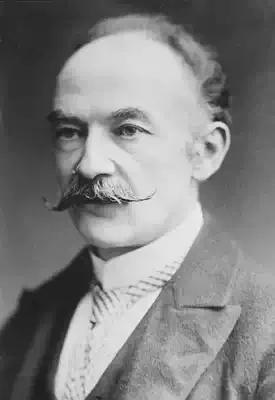
Thomas Hardy
Neutral Tones
Neutral Tones
WE stood by a pond that winter day,
And the sun was white, as though chidden of God,
And a few leaves lay on the starving sod,
--They had fallen from an ash, and were gray.
Your eyes on me were as eyes that rove
Over tedious riddles solved years ago;
And some words played between us to and fro--
On which lost the more by our love.
The smile on your mouth was the deadest thing
Alive enough to have strength to die;
And a grin of bitterness swept thereby
Like an ominous bird a-wing....
Since then, keen lessons that love deceives,
And wrings with wrong, have shaped to me
Your face, and the God-curst sun, and a tree,
And a pond edged with grayish leaves.
WE stood by a pond that winter day,
And the sun was white, as though chidden of God,
And a few leaves lay on the starving sod,
--They had fallen from an ash, and were gray.
Your eyes on me were as eyes that rove
Over tedious riddles solved years ago;
And some words played between us to and fro--
On which lost the more by our love.
The smile on your mouth was the deadest thing
Alive enough to have strength to die;
And a grin of bitterness swept thereby
Like an ominous bird a-wing....
Since then, keen lessons that love deceives,
And wrings with wrong, have shaped to me
Your face, and the God-curst sun, and a tree,
And a pond edged with grayish leaves.
208
Thomas Hardy
Mute Opinion
Mute Opinion
I
I traversed a dominion
Whose spokesmen spake out strong
Their purpose and opinion
Through pulpit, press, and song.
I scarce had means to note there
A large-eyed few, and dumb,
Who thought not as those thought there
That stirred the heat and hum.
II
When, grown a Shade, beholding
That land in lifetime trode,
To learn if its unfolding
Fulfilled its clamoured code,
I saw, in web unbroken,
Its history outwrought
Not as the loud had spoken,
But as the mute had thought.
I
I traversed a dominion
Whose spokesmen spake out strong
Their purpose and opinion
Through pulpit, press, and song.
I scarce had means to note there
A large-eyed few, and dumb,
Who thought not as those thought there
That stirred the heat and hum.
II
When, grown a Shade, beholding
That land in lifetime trode,
To learn if its unfolding
Fulfilled its clamoured code,
I saw, in web unbroken,
Its history outwrought
Not as the loud had spoken,
But as the mute had thought.
182
Thomas Hardy
Mad Judy
Mad Judy
When the hamlet hailed a birth
Judy used to cry:
When she heard our christening mirth
She would kneel and sigh.
She was crazed, we knew, and we
Humoured her infirmity.
When the daughters and the sons
Gathered them to wed,
And we like-intending ones
Danced till dawn was red,
She would rock and mutter, "More
Comers to this stony shore!"
When old Headsman Death laid hands
On a babe or twain,
She would feast, and by her brands
Sing her songs again.
What she liked we let her do,
Judy was insane, we knew.
When the hamlet hailed a birth
Judy used to cry:
When she heard our christening mirth
She would kneel and sigh.
She was crazed, we knew, and we
Humoured her infirmity.
When the daughters and the sons
Gathered them to wed,
And we like-intending ones
Danced till dawn was red,
She would rock and mutter, "More
Comers to this stony shore!"
When old Headsman Death laid hands
On a babe or twain,
She would feast, and by her brands
Sing her songs again.
What she liked we let her do,
Judy was insane, we knew.
221
Thomas Hardy
Lines On The Loss Of The Titanic
Lines On The Loss Of The "Titanic"
In a solitude of the sea
Deep from human vanity,
And the Pride of Life that planned her, stilly couches she.
Steel chambers, late the pyres
Of her salamandrine fires,
Cold currents thrid, and turn to rhythmic tidal lyres.
Over the mirrors meant
To glass the opulent
The sea-worm crawls -- grotesque, slimed, dumb, indifferent.
Jewels in joy designed
To ravish the sensuous mind
Lie lightless, all their sparkles bleared and black and blind.
Dim moon-eyed fishes near
Gaze at the gilded gear
And query: "What does this vaingloriousness down here?" ...
Well: while was fashioning
This creature of cleaving wing,
The Immanent Will that stirs and urges everything
Prepared a sinister mate
For her -- so gaily great --
A Shape of Ice, for the time far and dissociate.
And as the smart ship grew
In stature, grace, and hue,
In shadowy silent distance grew the Iceberg too.
Alien they seemed to be;
No mortal eye could see
The intimate welding of their later history,
Or sign that they were bent
By paths coincident
On being anon twin halves of one august event,
Till the Spinner of the Years
Said "Now!" And each one hears,
And consummation comes, and jars two hemispheres.
In a solitude of the sea
Deep from human vanity,
And the Pride of Life that planned her, stilly couches she.
Steel chambers, late the pyres
Of her salamandrine fires,
Cold currents thrid, and turn to rhythmic tidal lyres.
Over the mirrors meant
To glass the opulent
The sea-worm crawls -- grotesque, slimed, dumb, indifferent.
Jewels in joy designed
To ravish the sensuous mind
Lie lightless, all their sparkles bleared and black and blind.
Dim moon-eyed fishes near
Gaze at the gilded gear
And query: "What does this vaingloriousness down here?" ...
Well: while was fashioning
This creature of cleaving wing,
The Immanent Will that stirs and urges everything
Prepared a sinister mate
For her -- so gaily great --
A Shape of Ice, for the time far and dissociate.
And as the smart ship grew
In stature, grace, and hue,
In shadowy silent distance grew the Iceberg too.
Alien they seemed to be;
No mortal eye could see
The intimate welding of their later history,
Or sign that they were bent
By paths coincident
On being anon twin halves of one august event,
Till the Spinner of the Years
Said "Now!" And each one hears,
And consummation comes, and jars two hemispheres.
362
Thomas Hardy
Lausanne, In Gibbon's Old Garden: - p.m.
Lausanne, In Gibbon's Old Garden: - p.m.
(The th anniversary of the completion of the "Decline and Fall" at the same hour
and place)
A spirit seems to pass,
Formal in pose, but grave and grand withal:
He contemplates a volume stout and tall,
And far lamps fleck him through the thin acacias.
Anon the book is closed,
With "It is finished!" And at the alley's end
He turns, and soon on me his glances bend;
And, as from earth, comes speech--small, muted, yet composed.
"How fares the Truth now?--Ill?
--Do pens but slily further her advance?
May one not speed her but in phrase askance?
Do scribes aver the Comic to be Reverend still?
"Still rule those minds on earth
At whom sage Milton's wormwood words were hurled:
'Truth like a bastard comes into the world
Never without ill-fame to him who gives her birth'?"
(The th anniversary of the completion of the "Decline and Fall" at the same hour
and place)
A spirit seems to pass,
Formal in pose, but grave and grand withal:
He contemplates a volume stout and tall,
And far lamps fleck him through the thin acacias.
Anon the book is closed,
With "It is finished!" And at the alley's end
He turns, and soon on me his glances bend;
And, as from earth, comes speech--small, muted, yet composed.
"How fares the Truth now?--Ill?
--Do pens but slily further her advance?
May one not speed her but in phrase askance?
Do scribes aver the Comic to be Reverend still?
"Still rule those minds on earth
At whom sage Milton's wormwood words were hurled:
'Truth like a bastard comes into the world
Never without ill-fame to him who gives her birth'?"
186
Thomas Hardy
Her Dilemma
Her Dilemma
THE two were silent in a sunless church,
Whose mildewed walls, uneven paving-stones,
And wasted carvings passed antique research;
And nothing broke the clock's dull monotones.
Leaning against a wormy poppy-head,
So wan and worn that he could scarcely stand,
--For he was soon to die,--he softly said,
"Tell me you love me!"--holding hard her hand.
She would have given a world to breathe "yes" truly,
So much his life seemed hanging on her mind,
And hence she lied, her heart persuaded throughly,
'Twas worth her soul to be a moment kind.
But the sad need thereof, his nearing death,
So mocked humanity that she shamed to prize
A world conditioned thus, or care for breath
Where Nature such dilemmas could devise.
THE two were silent in a sunless church,
Whose mildewed walls, uneven paving-stones,
And wasted carvings passed antique research;
And nothing broke the clock's dull monotones.
Leaning against a wormy poppy-head,
So wan and worn that he could scarcely stand,
--For he was soon to die,--he softly said,
"Tell me you love me!"--holding hard her hand.
She would have given a world to breathe "yes" truly,
So much his life seemed hanging on her mind,
And hence she lied, her heart persuaded throughly,
'Twas worth her soul to be a moment kind.
But the sad need thereof, his nearing death,
So mocked humanity that she shamed to prize
A world conditioned thus, or care for breath
Where Nature such dilemmas could devise.
261
Thomas Hardy
Doom and She
Doom and She
I
There dwells a mighty pair -
Slow, statuesque, intense -
Amid the vague Immense:
None can their chronicle declare,
Nor why they be, nor whence.
,h II
Mother of all things made,
Matchless in artistry,
Unlit with sight is she. -
And though her ever well-obeyed
Vacant of feeling he.
III
The Matron mildly asks -
A throb in every word -
"Our clay-made creatures, lord,
How fare they in their mortal tasks
Upon Earth's bounded bord?
IV
"The fate of those I bear,
Dear lord, pray turn and view,
And notify me true;
Shapings that eyelessly I dare
Maybe I would undo.
V
"Sometimes from lairs of life
Methinks I catch a groan,
Or multitudinous moan,
As though I had schemed a world of strife,
Working by touch alone."
VI
"World-weaver!" he replies,
"I scan all thy domain;
But since nor joy nor pain
Doth my clear substance recognize,
I read thy realms in vain.
VII
"World-weaver! what IS Grief?
And what are Right, and Wrong,
And Feeling, that belong
To creatures all who owe thee fief?
What worse is Weak than Strong?" . . .
VIII
--Unlightened, curious, meek,
She broods in sad surmise . . .
--Some say they have heard her sighs
On Alpine height or Polar peak
When the night tempests rise.
I
There dwells a mighty pair -
Slow, statuesque, intense -
Amid the vague Immense:
None can their chronicle declare,
Nor why they be, nor whence.
,h II
Mother of all things made,
Matchless in artistry,
Unlit with sight is she. -
And though her ever well-obeyed
Vacant of feeling he.
III
The Matron mildly asks -
A throb in every word -
"Our clay-made creatures, lord,
How fare they in their mortal tasks
Upon Earth's bounded bord?
IV
"The fate of those I bear,
Dear lord, pray turn and view,
And notify me true;
Shapings that eyelessly I dare
Maybe I would undo.
V
"Sometimes from lairs of life
Methinks I catch a groan,
Or multitudinous moan,
As though I had schemed a world of strife,
Working by touch alone."
VI
"World-weaver!" he replies,
"I scan all thy domain;
But since nor joy nor pain
Doth my clear substance recognize,
I read thy realms in vain.
VII
"World-weaver! what IS Grief?
And what are Right, and Wrong,
And Feeling, that belong
To creatures all who owe thee fief?
What worse is Weak than Strong?" . . .
VIII
--Unlightened, curious, meek,
She broods in sad surmise . . .
--Some say they have heard her sighs
On Alpine height or Polar peak
When the night tempests rise.
263
Thomas Hardy
Departure (Southampton Docks: October, )
Departure (Southampton Docks: October, )
While the far farewell music thins and fails,
And the broad bottoms rip the bearing brine -
All smalling slowly to the gray sea line -
And each significant red smoke-shaft pales,
Keen sense of severance everywhere prevails,
Which shapes the late long tramp of mounting men
To seeming words that ask and ask again:
"How long, O striving Teutons, Slavs, and Gaels
Must your wroth reasonings trade on lives like these,
That are as puppets in a playing hand? -
When shall the saner softer polities
Whereof we dream, have play in each proud land,
And patriotism, grown Godlike, scorn to stand
Bondslave to realms, but circle earth and seas?"
While the far farewell music thins and fails,
And the broad bottoms rip the bearing brine -
All smalling slowly to the gray sea line -
And each significant red smoke-shaft pales,
Keen sense of severance everywhere prevails,
Which shapes the late long tramp of mounting men
To seeming words that ask and ask again:
"How long, O striving Teutons, Slavs, and Gaels
Must your wroth reasonings trade on lives like these,
That are as puppets in a playing hand? -
When shall the saner softer polities
Whereof we dream, have play in each proud land,
And patriotism, grown Godlike, scorn to stand
Bondslave to realms, but circle earth and seas?"
193
Thomas Hardy
Channel Firing
Channel Firing
That night your great guns, unawares,
Shook all our coffins as we lay,
And broke the chancel window-squares,
We thought it was the judgement day
And sat upright. While drearisome
Arose the howl of wakened hounds:
The mouse let fall the altar-crumb,
The worms drew back into the mounds,
The glebe cow drooled. Till God called, "No;
It's gunnery practice out at sea
Just as before you went below;
The world is as it used to be:
"All nations striving strong to make
Red war yet redder. Mad as hatters
They do more for Christés sake
Than you who are helpless in such matters.
"That this is not the judgment hour
For some of them's a blessed thing,
For if it were they'd have to scour
Hells floor for so much threatening...
"Ha, ha. It will be warmer when
I blow the trumpet (if indeed
I ever do; for you are men,
And rest eternal sorely need)."
So down we lay again. "I wonder,
Will the world ever saner be,"
Said one, "than when He sent us under
In our indifferent century!"
And many a skeleton shook his head.
"Instead of preaching forty year,"
My neighbor Oarson Thirdly said,
"I wish I had stuck to pipes and beer."
Again the guns disturbed the hour,
Roaring their readiness to avenge,
As far inland as Stourton Tower,
And Camelot, and starlit Stonehenge.
That night your great guns, unawares,
Shook all our coffins as we lay,
And broke the chancel window-squares,
We thought it was the judgement day
And sat upright. While drearisome
Arose the howl of wakened hounds:
The mouse let fall the altar-crumb,
The worms drew back into the mounds,
The glebe cow drooled. Till God called, "No;
It's gunnery practice out at sea
Just as before you went below;
The world is as it used to be:
"All nations striving strong to make
Red war yet redder. Mad as hatters
They do more for Christés sake
Than you who are helpless in such matters.
"That this is not the judgment hour
For some of them's a blessed thing,
For if it were they'd have to scour
Hells floor for so much threatening...
"Ha, ha. It will be warmer when
I blow the trumpet (if indeed
I ever do; for you are men,
And rest eternal sorely need)."
So down we lay again. "I wonder,
Will the world ever saner be,"
Said one, "than when He sent us under
In our indifferent century!"
And many a skeleton shook his head.
"Instead of preaching forty year,"
My neighbor Oarson Thirdly said,
"I wish I had stuck to pipes and beer."
Again the guns disturbed the hour,
Roaring their readiness to avenge,
As far inland as Stourton Tower,
And Camelot, and starlit Stonehenge.
231
Thomas Hardy
Cardinal Bembo's Epitaph on Raphael
Cardinal Bembo's Epitaph on Raphael
Here's one in whom Nature feared--faint at such vying -
Eclipse while he lived, and decease at his dying.
Here's one in whom Nature feared--faint at such vying -
Eclipse while he lived, and decease at his dying.
262
Thomas Hardy
At the War Office, London (Affixing the Lists of Killed and Wounded:
At the War Office, London (Affixing the Lists of Killed and Wounded:
December, )
I
Last year I called this world of gain-givings
The darkest thinkable, and questioned sadly
If my own land could heave its pulse less gladly,
So charged it seemed with circumstance whence springs
The tragedy of things.
II
Yet at that censured time no heart was rent
Or feature blanched of parent, wife, or daughter
By hourly blazoned sheets of listed slaughter;
Death waited Nature's wont; Peace smiled unshent
From Ind to Occident.
December, )
I
Last year I called this world of gain-givings
The darkest thinkable, and questioned sadly
If my own land could heave its pulse less gladly,
So charged it seemed with circumstance whence springs
The tragedy of things.
II
Yet at that censured time no heart was rent
Or feature blanched of parent, wife, or daughter
By hourly blazoned sheets of listed slaughter;
Death waited Nature's wont; Peace smiled unshent
From Ind to Occident.
193
Thomas Hardy
At Lulworth Cove a Century Back
At Lulworth Cove a Century Back
Had I but lived a hundred years ago
I might have gone, as I have gone this year,
By Warmwell Cross on to a Cove I know,
And Time have placed his finger on me there:
"You see that man?" -- I might have looked, and said,
"O yes: I see him. One that boat has brought
Which dropped down Channel round Saint Alban's Head.
So commonplace a youth calls not my thought."
"You see that man?" -- "Why yes; I told you; yes:
Of an idling town-sort; thin; hair brown in hue;
And as the evening light scants less and less
He looks up at a star, as many do."
"You see that man?" -- "Nay, leave me!" then I plead,
"I have fifteen miles to vamp across the lea,
And it grows dark, and I am weary-kneed:
I have said the third time; yes, that man I see!"
"Good. That man goes to Rome -- to death, despair;
And no one notes him now but you and I:
A hundred years, and the world will follow him there,
And bend with reverence where his ashes lie."
Had I but lived a hundred years ago
I might have gone, as I have gone this year,
By Warmwell Cross on to a Cove I know,
And Time have placed his finger on me there:
"You see that man?" -- I might have looked, and said,
"O yes: I see him. One that boat has brought
Which dropped down Channel round Saint Alban's Head.
So commonplace a youth calls not my thought."
"You see that man?" -- "Why yes; I told you; yes:
Of an idling town-sort; thin; hair brown in hue;
And as the evening light scants less and less
He looks up at a star, as many do."
"You see that man?" -- "Nay, leave me!" then I plead,
"I have fifteen miles to vamp across the lea,
And it grows dark, and I am weary-kneed:
I have said the third time; yes, that man I see!"
"Good. That man goes to Rome -- to death, despair;
And no one notes him now but you and I:
A hundred years, and the world will follow him there,
And bend with reverence where his ashes lie."
243
Thomas Hardy
At a Lunar Eclipse
At a Lunar Eclipse
Thy shadow, Earth, from Pole to Central Sea,
Now steals along upon the Moon's meek shine
In even monochrome and curving line
Of imperturbable serenity.
How shall I link such sun-cast symmetry
With the torn troubled form I know as thine,
That profile, placid as a brow divine,
With continents of moil and misery?
And can immense Mortality but throw
So small a shade, and Heaven's high human scheme
Be hemmed within the coasts yon arc implies?
Is such the stellar gauge of earthly show,
Nation at war with nation, brains that teem,
Heroes, and women fairer than the skies?
Thy shadow, Earth, from Pole to Central Sea,
Now steals along upon the Moon's meek shine
In even monochrome and curving line
Of imperturbable serenity.
How shall I link such sun-cast symmetry
With the torn troubled form I know as thine,
That profile, placid as a brow divine,
With continents of moil and misery?
And can immense Mortality but throw
So small a shade, and Heaven's high human scheme
Be hemmed within the coasts yon arc implies?
Is such the stellar gauge of earthly show,
Nation at war with nation, brains that teem,
Heroes, and women fairer than the skies?
219
Thomas Hardy
At A Bridal
At A Bridal
WHEN you paced forth, to wait maternity,
A dream of other offspring held my mind,
Compounded of us twain as Love designed;
Rare forms, that corporate now will never be!
Should I, too, wed as slave to Mode's decree,
And each thus found apart, of false desire,
A stolid line, whom no high aims will fire
As had fired ours could ever have mingled we;
And, grieved that lives so matched should miscompose,
Each mourn the double waste; and question dare
To the Great Dame whence incarnation flows,
Why those high-purposed children never were:
What will she answer? That she does not care
If the race all such sovereign types unknows.
WHEN you paced forth, to wait maternity,
A dream of other offspring held my mind,
Compounded of us twain as Love designed;
Rare forms, that corporate now will never be!
Should I, too, wed as slave to Mode's decree,
And each thus found apart, of false desire,
A stolid line, whom no high aims will fire
As had fired ours could ever have mingled we;
And, grieved that lives so matched should miscompose,
Each mourn the double waste; and question dare
To the Great Dame whence incarnation flows,
Why those high-purposed children never were:
What will she answer? That she does not care
If the race all such sovereign types unknows.
281
Thomas Hardy
After Schiller
After Schiller
Knight, a true sister-love
This heart retains;
Ask me no other love,
That way lie pains!
Calm must I view thee come,
Calm see thee go;
Tale-telling tears of thine
I must not know!
Knight, a true sister-love
This heart retains;
Ask me no other love,
That way lie pains!
Calm must I view thee come,
Calm see thee go;
Tale-telling tears of thine
I must not know!
173
Thomas Hardy
Ah, Are You Digging on My Grave?
Ah, Are You Digging on My Grave?
"Ah, are you digging on my grave,
My loved one? -- planting rue?"
-- "No: yesterday he went to wed
One of the brightest wealth has bred.
'It cannot hurt her now,' he said,
'That I should not be true.'"
"Then who is digging on my grave,
My nearest dearest kin?"
-- "Ah, no: they sit and think, 'What use!
What good will planting flowers produce?
No tendance of her mound can loose
Her spirit from Death's gin.'"
"But someone digs upon my grave?
My enemy? -- prodding sly?"
-- "Nay: when she heard you had passed the Gate
That shuts on all flesh soon or late,
She thought you no more worth her hate,
And cares not where you lie.
"Then, who is digging on my grave?
Say -- since I have not guessed!"
-- "O it is I, my mistress dear,
Your little dog , who still lives near,
And much I hope my movements here
Have not disturbed your rest?"
"Ah yes! You dig upon my grave...
Why flashed it not to me
That one true heart was left behind!
What feeling do we ever find
To equal among human kind
A dog's fidelity!"
"Mistress, I dug upon your grave
To bury a bone, in case
I should be hungry near this spot
When passing on my daily trot.
I am sorry, but I quite forgot
It was your resting place."
"Ah, are you digging on my grave,
My loved one? -- planting rue?"
-- "No: yesterday he went to wed
One of the brightest wealth has bred.
'It cannot hurt her now,' he said,
'That I should not be true.'"
"Then who is digging on my grave,
My nearest dearest kin?"
-- "Ah, no: they sit and think, 'What use!
What good will planting flowers produce?
No tendance of her mound can loose
Her spirit from Death's gin.'"
"But someone digs upon my grave?
My enemy? -- prodding sly?"
-- "Nay: when she heard you had passed the Gate
That shuts on all flesh soon or late,
She thought you no more worth her hate,
And cares not where you lie.
"Then, who is digging on my grave?
Say -- since I have not guessed!"
-- "O it is I, my mistress dear,
Your little dog , who still lives near,
And much I hope my movements here
Have not disturbed your rest?"
"Ah yes! You dig upon my grave...
Why flashed it not to me
That one true heart was left behind!
What feeling do we ever find
To equal among human kind
A dog's fidelity!"
"Mistress, I dug upon your grave
To bury a bone, in case
I should be hungry near this spot
When passing on my daily trot.
I am sorry, but I quite forgot
It was your resting place."
329
Thomas Hardy
A Wife in London (December, )
A Wife in London (December, )
I--The Tragedy
She sits in the tawny vapour
That the City lanes have uprolled,
Behind whose webby fold on fold
Like a waning taper
The street-lamp glimmers cold.
A messenger's knock cracks smartly,
Flashed news is in her hand
Of meaning it dazes to understand
Though shaped so shortly:
He--has fallen--in the far South Land . . .
II--The Irony
'Tis the morrow; the fog hangs thicker,
The postman nears and goes:
A letter is brought whose lines disclose
By the firelight flicker
His hand, whom the worm now knows:
Fresh--firm--penned in highest feather -
Page-full of his hoped return,
And of home-planned jaunts by brake and burn
In the summer weather,
And of new love that they would learn.
I--The Tragedy
She sits in the tawny vapour
That the City lanes have uprolled,
Behind whose webby fold on fold
Like a waning taper
The street-lamp glimmers cold.
A messenger's knock cracks smartly,
Flashed news is in her hand
Of meaning it dazes to understand
Though shaped so shortly:
He--has fallen--in the far South Land . . .
II--The Irony
'Tis the morrow; the fog hangs thicker,
The postman nears and goes:
A letter is brought whose lines disclose
By the firelight flicker
His hand, whom the worm now knows:
Fresh--firm--penned in highest feather -
Page-full of his hoped return,
And of home-planned jaunts by brake and burn
In the summer weather,
And of new love that they would learn.
278
Thomas Hardy
A Meeting With Despair
A Meeting With Despair
AS evening shaped I found me on a moor
Which sight could scarce sustain:
The black lean land, of featureless contour,
Was like a tract in pain.
"This scene, like my own life," I said, "is one
Where many glooms abide;
Toned by its fortune to a deadly dun--
Lightless on every side.
I glanced aloft and halted, pleasure-caught
To see the contrast there:
The ray-lit clouds gleamed glory; and I thought,
"There's solace everywhere!"
Then bitter self-reproaches as I stood
I dealt me silently
As one perverse--misrepresenting Good
In graceless mutiny.
Against the horizon's dim-descernèd wheel
A form rose, strange of mould:
That he was hideous, hopeless, I could feel
Rather than could behold.
"'Tis a dead spot, where even the light lies spent
To darkness!" croaked the Thing.
"Not if you look aloft!" said I, intent
On my new reasoning.
"Yea--but await awhile!" he cried. "Ho-ho!--
Look now aloft and see!"
I looked. There, too, sat night: Heaven's radiant show
Had gone. Then chuckled he.
AS evening shaped I found me on a moor
Which sight could scarce sustain:
The black lean land, of featureless contour,
Was like a tract in pain.
"This scene, like my own life," I said, "is one
Where many glooms abide;
Toned by its fortune to a deadly dun--
Lightless on every side.
I glanced aloft and halted, pleasure-caught
To see the contrast there:
The ray-lit clouds gleamed glory; and I thought,
"There's solace everywhere!"
Then bitter self-reproaches as I stood
I dealt me silently
As one perverse--misrepresenting Good
In graceless mutiny.
Against the horizon's dim-descernèd wheel
A form rose, strange of mould:
That he was hideous, hopeless, I could feel
Rather than could behold.
"'Tis a dead spot, where even the light lies spent
To darkness!" croaked the Thing.
"Not if you look aloft!" said I, intent
On my new reasoning.
"Yea--but await awhile!" he cried. "Ho-ho!--
Look now aloft and see!"
I looked. There, too, sat night: Heaven's radiant show
Had gone. Then chuckled he.
249
Thomas Hardy
A Confession To A Friend in Trouble
A Confession To A Friend in Trouble
YOUR troubles shrink not, though I feel them less
Here, far away, than when I tarried near;
I even smile old smiles--with listlessness--
Yet smiles they are, not ghastly mockeries mere.
A thought too strange to house within my brain
Haunting its outer precincts I discern:
--That I will not show zeal again to learn
Your griefs, and, sharing them, renew my pain....
It goes, like murky bird or buccaneer
That shapes its lawless figure on the main,
And each new impulse tends to make outflee
The unseemly instinct that had lodgment here;
Yet, comrade old, can bitterer knowledge be
Than that, though banned, such instinct was in me!
YOUR troubles shrink not, though I feel them less
Here, far away, than when I tarried near;
I even smile old smiles--with listlessness--
Yet smiles they are, not ghastly mockeries mere.
A thought too strange to house within my brain
Haunting its outer precincts I discern:
--That I will not show zeal again to learn
Your griefs, and, sharing them, renew my pain....
It goes, like murky bird or buccaneer
That shapes its lawless figure on the main,
And each new impulse tends to make outflee
The unseemly instinct that had lodgment here;
Yet, comrade old, can bitterer knowledge be
Than that, though banned, such instinct was in me!
246
Thomas Hardy
A Christmas Ghost Story.
A Christmas Ghost Story.
South of the Line, inland from far Durban,
A mouldering soldier lies--your countryman.
Awry and doubled up are his gray bones,
And on the breeze his puzzled phantom moans
Nightly to clear Canopus: "I would know
By whom and when the All-Earth-gladdening Law
Of Peace, brought in by that Man Crucified,
Was ruled to be inept, and set aside?
And what of logic or of truth appears
In tacking 'Anno Domini' to the years?
Near twenty-hundred livened thus have hied,
But tarries yet the Cause for which He died."
South of the Line, inland from far Durban,
A mouldering soldier lies--your countryman.
Awry and doubled up are his gray bones,
And on the breeze his puzzled phantom moans
Nightly to clear Canopus: "I would know
By whom and when the All-Earth-gladdening Law
Of Peace, brought in by that Man Crucified,
Was ruled to be inept, and set aside?
And what of logic or of truth appears
In tacking 'Anno Domini' to the years?
Near twenty-hundred livened thus have hied,
But tarries yet the Cause for which He died."
187
Thomas Hardy
[Greek Title]
[Greek Title]
Long have I framed weak phantasies of Thee,
O Willer masked and dumb!
Who makest Life become, -
As though by labouring all-unknowingly,
Like one whom reveries numb.
How much of consciousness informs Thy will
Thy biddings, as if blind,
Of death-inducing kind,
Nought shows to us ephemeral ones who fill
But moments in Thy mind.
Perhaps Thy ancient rote-restricted ways
Thy ripening rule transcends;
That listless effort tends
To grow percipient with advance of days,
And with percipience mends.
For, in unwonted purlieus, far and nigh,
At whiles or short or long,
May be discerned a wrong
Dying as of self-slaughter; whereat I
Would raise my voice in song.
Long have I framed weak phantasies of Thee,
O Willer masked and dumb!
Who makest Life become, -
As though by labouring all-unknowingly,
Like one whom reveries numb.
How much of consciousness informs Thy will
Thy biddings, as if blind,
Of death-inducing kind,
Nought shows to us ephemeral ones who fill
But moments in Thy mind.
Perhaps Thy ancient rote-restricted ways
Thy ripening rule transcends;
That listless effort tends
To grow percipient with advance of days,
And with percipience mends.
For, in unwonted purlieus, far and nigh,
At whiles or short or long,
May be discerned a wrong
Dying as of self-slaughter; whereat I
Would raise my voice in song.
230
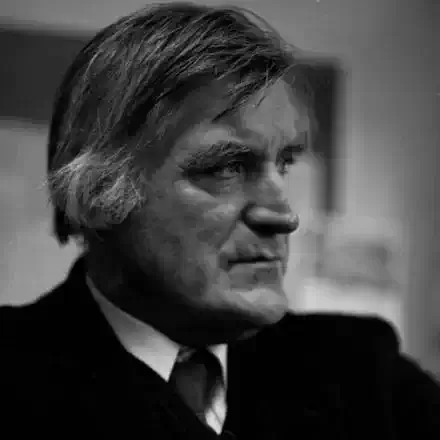
Ted Hughes
Tractor
Tractor
The tractor stands frozen - an agony
To think of. All night
Snow packed its open entrails. Now a head-pincering gale,
A spill of molten ice, smoking snow,
Pours into its steel.
At white heat of numbness it stands
In the aimed hosing of ground-level fieriness.
It defied flesh and won't start.
Hands are like wounds already
Inside armour gloves, and feet are unbelievable
As if the toe-nails were all just torn off.
I stare at it in hatred. Beyond it
The copse hisses - capitulates miserably
In the fleeing, failing light. Starlings,
A dirtier sleetier snow, blow smokily, unendingly, over
Towards plantations Eastward.
All the time the tractor is sinking
Through the degrees, deepening
Into its hell of ice.
The starting lever
Cracks its action, like a snapping knuckle.
The battery is alive - but like a lamb
Trying to nudge its solid-frozen mother -
While the seat claims my buttock-bones, bites
With the space-cold of earth, which it has joined
In one solid lump.
I squirt commercial sure-fire
Down the black throat - it just coughs.
It ridicules me - a trap of iron stupidity
I've stepped into. I drive the battery
As if I were hammering and hammering
The frozen arrangement to pieces with a hammer
And it jabbers laughing pain-crying mockingly
Into happy life.
And stands
Shuddering itself full of heat, seeming to enlarge slowly
Like a demon demonstrating
A more-than-usually-complete materialization -
Suddenly it jerks from its solidarity
With the concrete, and lurches towards a stanchion
Bursting with superhuman well-being and abandon
Shouting Where Where?
Worse iron is waiting. Power-lift kneels
Levers awake imprisoned deadweight,
Shackle-pins bedded in cast-iron cow-shit.
The blind and vibrating condemned obedience
Of iron to the cruelty of iron,
Wheels screeched out of their night-locks -
Fingers
Among the tormented
Tonnage and burning of iron
Eyes
Weeping in the wind of chloroform
And the tractor, streaming with sweat,
Raging and trembling and rejoicing.
The tractor stands frozen - an agony
To think of. All night
Snow packed its open entrails. Now a head-pincering gale,
A spill of molten ice, smoking snow,
Pours into its steel.
At white heat of numbness it stands
In the aimed hosing of ground-level fieriness.
It defied flesh and won't start.
Hands are like wounds already
Inside armour gloves, and feet are unbelievable
As if the toe-nails were all just torn off.
I stare at it in hatred. Beyond it
The copse hisses - capitulates miserably
In the fleeing, failing light. Starlings,
A dirtier sleetier snow, blow smokily, unendingly, over
Towards plantations Eastward.
All the time the tractor is sinking
Through the degrees, deepening
Into its hell of ice.
The starting lever
Cracks its action, like a snapping knuckle.
The battery is alive - but like a lamb
Trying to nudge its solid-frozen mother -
While the seat claims my buttock-bones, bites
With the space-cold of earth, which it has joined
In one solid lump.
I squirt commercial sure-fire
Down the black throat - it just coughs.
It ridicules me - a trap of iron stupidity
I've stepped into. I drive the battery
As if I were hammering and hammering
The frozen arrangement to pieces with a hammer
And it jabbers laughing pain-crying mockingly
Into happy life.
And stands
Shuddering itself full of heat, seeming to enlarge slowly
Like a demon demonstrating
A more-than-usually-complete materialization -
Suddenly it jerks from its solidarity
With the concrete, and lurches towards a stanchion
Bursting with superhuman well-being and abandon
Shouting Where Where?
Worse iron is waiting. Power-lift kneels
Levers awake imprisoned deadweight,
Shackle-pins bedded in cast-iron cow-shit.
The blind and vibrating condemned obedience
Of iron to the cruelty of iron,
Wheels screeched out of their night-locks -
Fingers
Among the tormented
Tonnage and burning of iron
Eyes
Weeping in the wind of chloroform
And the tractor, streaming with sweat,
Raging and trembling and rejoicing.
425
Ted Hughes
Thistles
Thistles
Against the rubber tongues of cows and the hoeing hands of men
Thistles spike the summer air
And crackle open under a blue-black pressure.
Every one a revengeful burst
Of resurrection, a grasped fistful
Of splintered weapons and Icelandic frost thrust up
From the underground stain of a decayed Viking.
They are like pale hair and the gutturals of dialects.
Every one manages a plume of blood.
Then they grow grey like men.
Mown down, it is a feud. Their sons appear
Stiff with weapons, fighting back over the same ground.
Against the rubber tongues of cows and the hoeing hands of men
Thistles spike the summer air
And crackle open under a blue-black pressure.
Every one a revengeful burst
Of resurrection, a grasped fistful
Of splintered weapons and Icelandic frost thrust up
From the underground stain of a decayed Viking.
They are like pale hair and the gutturals of dialects.
Every one manages a plume of blood.
Then they grow grey like men.
Mown down, it is a feud. Their sons appear
Stiff with weapons, fighting back over the same ground.
536
Ted Hughes
The Minotaur
The Minotaur
The mahogany table-top you smashed
Had been the broad plank top
Of my mother's heirloom sideboard-
Mapped with the scars of my whole life.
That came under the hammer.
That high stool you swung that day
Demented by my being
Twenty minutes late for baby-minding.
'Marvellous!' I shouted, 'Go on,
Smash it into kindling.
That's the stuff you're keeping out of your poems!'
And later, considered and calmer,
'Get that shoulder under your stanzas
And we'll be away.' Deep in the cave of your ear
The goblin snapped his fingers.
So what had I given him?
The bloody end of the skein
That unravelled your marriage,
Left your children echoing
Like tunnels in a labyrinth.
Left your mother a dead-end,
Brought you to the horned, bellowing
Grave of your risen father
And your own corpse in it.
The mahogany table-top you smashed
Had been the broad plank top
Of my mother's heirloom sideboard-
Mapped with the scars of my whole life.
That came under the hammer.
That high stool you swung that day
Demented by my being
Twenty minutes late for baby-minding.
'Marvellous!' I shouted, 'Go on,
Smash it into kindling.
That's the stuff you're keeping out of your poems!'
And later, considered and calmer,
'Get that shoulder under your stanzas
And we'll be away.' Deep in the cave of your ear
The goblin snapped his fingers.
So what had I given him?
The bloody end of the skein
That unravelled your marriage,
Left your children echoing
Like tunnels in a labyrinth.
Left your mother a dead-end,
Brought you to the horned, bellowing
Grave of your risen father
And your own corpse in it.
359