

Poems in this theme
Ethics and Morality
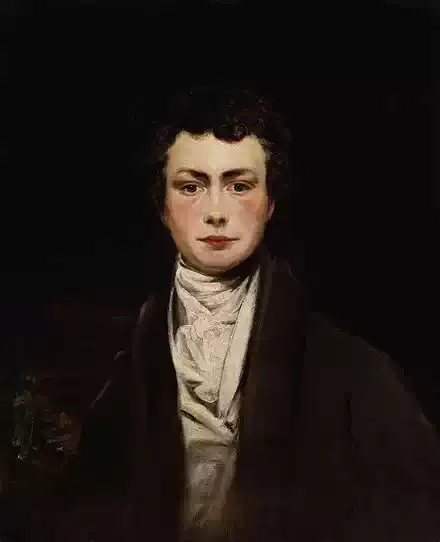
Thomas Moore
The Minstrel Boy
The Minstrel Boy
The Minstrel-Boy to the war is gone,
In the ranks of death you'll find him;
His father's sword he has girded on,
And his wild harp slung behind him.
"Land of song!" said the warrior-bard,
"Though all the world betrays thee,
One sword, at least, thy rights shall guard,
One faithful harp shall praise thee!"
The Minstrel fell! -- but the foeman's chain
Could not bring his proud soul under;
The harp he loved ne'er spoke again,
For he tore its chords asunder;
And said, "No chains shall sully thee,
Thou soul of love and bravery!
Thy songs were made for the pure and free,
They shall never sound in slavery."
The Minstrel-Boy to the war is gone,
In the ranks of death you'll find him;
His father's sword he has girded on,
And his wild harp slung behind him.
"Land of song!" said the warrior-bard,
"Though all the world betrays thee,
One sword, at least, thy rights shall guard,
One faithful harp shall praise thee!"
The Minstrel fell! -- but the foeman's chain
Could not bring his proud soul under;
The harp he loved ne'er spoke again,
For he tore its chords asunder;
And said, "No chains shall sully thee,
Thou soul of love and bravery!
Thy songs were made for the pure and free,
They shall never sound in slavery."
207
Thomas Moore
The Ghost of Miltiades
The Ghost of Miltiades
The Ghost of Miltiades came at night,
And he stood by the bed of the Benthamite,
And he said, in a voice, that thrill'd the frame,
"If ever the sound of Marathon's name
Hath fir'd they blood or flush'd thy brow,
Lover of Liberty, rise thee now!"
The Benthamite, yawning, left his bed --
Away to the Stock Exchange he sped,
And he found the Scrip of Greece so high,
That it fir'd his blood, it flush'd his eye,
And oh, 'twas a sight to see,
For never was Greek more Greek than he!
And still as the premium higher went,
His ecstas rose - so much per cent.,
(As we see in a glass, that tells the weather,
The heat and the silver rise together,)
And Liberty sung from the patriot's lip,
While a voice from pocket whisper'd "Scrip!"
The Ghost of Miltiades came again; --
He smil'd as the pale moon smiles through rain,
For his soul was glad at the patriot strain;
(And poor, dear ghost -- how little he knew
The jobs and the tricks of the Philhellene crew!)
"Blessings and thanks!" was all he said,
Then, melting away, like a night-dream, fled!
The Benthamite hears -- amaz'd that ghosts
Could be such fools -- and away he posts,
A patriot still? Ah no, ah no --
Goddess of Freedom, thy scrip is low,
And, warm and fond as they lovers are,
Thou triest their passion, when under par.
The Benthamite's ardour fast decays,
By turns he weeps, and swears, and prays,
And wishes the d--l had Crescent and Cross,
Ere he had been forc'd to sell at a loss.
They quote thim the Stock of various nations,
But, spite of his classical associations,
Lord how he loathes the Greek quotations!
"Who'll buy my Scrip! Who'll buy my Scrip?"
Is now the theme of the patriot's lip,
And he runs to tell how hard his lot is
To Messrs. Orlando and Luriottis,
And says, "Oh Greece, for Liberty's sake,
Do buy my Scrip and I vow to break
Those dark, unholy bonds of thine --
If you'll only consent to buy up mine!"
The Ghost of Miltiades came once more; --
His brow, like the night, was lowering o'er,
And he said, with a look that flash'd dismay,
"Of Liberty's foes the worst are they
Who turn to a trade her cause divine,
And gamble for gold on Freedom's shrine!"
Thus saying, the Ghost, as he took his flight,
Gave a Parthian kick to the Benthamite,
Which sent him, whimpering, off to Jerry --
And vanish'd away to the Stygian ferry!
The Ghost of Miltiades came at night,
And he stood by the bed of the Benthamite,
And he said, in a voice, that thrill'd the frame,
"If ever the sound of Marathon's name
Hath fir'd they blood or flush'd thy brow,
Lover of Liberty, rise thee now!"
The Benthamite, yawning, left his bed --
Away to the Stock Exchange he sped,
And he found the Scrip of Greece so high,
That it fir'd his blood, it flush'd his eye,
And oh, 'twas a sight to see,
For never was Greek more Greek than he!
And still as the premium higher went,
His ecstas rose - so much per cent.,
(As we see in a glass, that tells the weather,
The heat and the silver rise together,)
And Liberty sung from the patriot's lip,
While a voice from pocket whisper'd "Scrip!"
The Ghost of Miltiades came again; --
He smil'd as the pale moon smiles through rain,
For his soul was glad at the patriot strain;
(And poor, dear ghost -- how little he knew
The jobs and the tricks of the Philhellene crew!)
"Blessings and thanks!" was all he said,
Then, melting away, like a night-dream, fled!
The Benthamite hears -- amaz'd that ghosts
Could be such fools -- and away he posts,
A patriot still? Ah no, ah no --
Goddess of Freedom, thy scrip is low,
And, warm and fond as they lovers are,
Thou triest their passion, when under par.
The Benthamite's ardour fast decays,
By turns he weeps, and swears, and prays,
And wishes the d--l had Crescent and Cross,
Ere he had been forc'd to sell at a loss.
They quote thim the Stock of various nations,
But, spite of his classical associations,
Lord how he loathes the Greek quotations!
"Who'll buy my Scrip! Who'll buy my Scrip?"
Is now the theme of the patriot's lip,
And he runs to tell how hard his lot is
To Messrs. Orlando and Luriottis,
And says, "Oh Greece, for Liberty's sake,
Do buy my Scrip and I vow to break
Those dark, unholy bonds of thine --
If you'll only consent to buy up mine!"
The Ghost of Miltiades came once more; --
His brow, like the night, was lowering o'er,
And he said, with a look that flash'd dismay,
"Of Liberty's foes the worst are they
Who turn to a trade her cause divine,
And gamble for gold on Freedom's shrine!"
Thus saying, the Ghost, as he took his flight,
Gave a Parthian kick to the Benthamite,
Which sent him, whimpering, off to Jerry --
And vanish'd away to the Stygian ferry!
189
Thomas Moore
The Dream of Those Days
The Dream of Those Days
The dream of those days when first I sung thee is o'er
Thy triumph hath stain'd the charm thy sorrows then wore;
And even the light which Hope once shed o'er thy chains,
Alas, not a gleam to grace thy freedom remains.
Say, is it that slavery sunk so deep in thy heart,
That still the dark brand is there, though chainless thou art;
And Freedom's sweet fruit, for which thy spirit long burn'd,
Now, reaching at last thy lip, to ashes hath turn'd?
Up Liberty's steep by Truth and Eloquence led,
With eyes on her temple fix'd, how proud was thy tread!
Ah, better thou ne'er hadst lived that summit to gain,
Denied in the porch, than thus dishonour the fane.
The dream of those days when first I sung thee is o'er
Thy triumph hath stain'd the charm thy sorrows then wore;
And even the light which Hope once shed o'er thy chains,
Alas, not a gleam to grace thy freedom remains.
Say, is it that slavery sunk so deep in thy heart,
That still the dark brand is there, though chainless thou art;
And Freedom's sweet fruit, for which thy spirit long burn'd,
Now, reaching at last thy lip, to ashes hath turn'd?
Up Liberty's steep by Truth and Eloquence led,
With eyes on her temple fix'd, how proud was thy tread!
Ah, better thou ne'er hadst lived that summit to gain,
Denied in the porch, than thus dishonour the fane.
190
Thomas Moore
Sublime Was the Warning
Sublime Was the Warning
Sublime was the warning that liberty spoke,
And grand was the moment when Spaniards awoke
Into life and revenge from the conqueror's chain.
Oh, Liberty! let not this spirit have rest,
Till it move, like a breeze, o'er the waves of the west --
Give the light of your look to each sorrowing spot,
Nor, oh, be the Shamrock of Erin forgot
While you add to your garland the Olive of Spain.
If the fame of our fathers, bequeathed with their rights,
Give to country its charm, and to home its delights;
If deceit be a wound, and suspicion a stain,
Then, ye men of Iberia, our cause is the same!
And oh! may his tomb want a tear and a name,
Who would ask for a nobler, a holier death,
Than to turn his last sigh into victory's breath,
For the Shamrock of Erin and the Olive of Spain!
Ye Blakes and O'Donnels, whose fathers resign'd
The green hills of their youth, among strangers to find
That repose which, at home, they had sigh'd for in vain,
Join, join in our hope that the flame, which you light,
May be felt yet in Erin, as calm and as bright,
And forgive even Albion while blushing she draws,
Like a truant, her sword, in the long-slighted cause
Of the Shamrock of Erin and Olive of Spain!
God prosper the cause! -- oh, it cannot but thrive,
While the pulse of one patriot heart is alive,
Its devotion to feel, and its rights to maintain;
Then, how sainted by sorrow its martyrs will die!
The finger of Glory shall point where they lie;
While, far from the footstep of coward or slave,
The young spirit of Freedom shall shelter their grave,
Beneath Shamrocks of Erin and Olives of Spain!
Sublime was the warning that liberty spoke,
And grand was the moment when Spaniards awoke
Into life and revenge from the conqueror's chain.
Oh, Liberty! let not this spirit have rest,
Till it move, like a breeze, o'er the waves of the west --
Give the light of your look to each sorrowing spot,
Nor, oh, be the Shamrock of Erin forgot
While you add to your garland the Olive of Spain.
If the fame of our fathers, bequeathed with their rights,
Give to country its charm, and to home its delights;
If deceit be a wound, and suspicion a stain,
Then, ye men of Iberia, our cause is the same!
And oh! may his tomb want a tear and a name,
Who would ask for a nobler, a holier death,
Than to turn his last sigh into victory's breath,
For the Shamrock of Erin and the Olive of Spain!
Ye Blakes and O'Donnels, whose fathers resign'd
The green hills of their youth, among strangers to find
That repose which, at home, they had sigh'd for in vain,
Join, join in our hope that the flame, which you light,
May be felt yet in Erin, as calm and as bright,
And forgive even Albion while blushing she draws,
Like a truant, her sword, in the long-slighted cause
Of the Shamrock of Erin and Olive of Spain!
God prosper the cause! -- oh, it cannot but thrive,
While the pulse of one patriot heart is alive,
Its devotion to feel, and its rights to maintain;
Then, how sainted by sorrow its martyrs will die!
The finger of Glory shall point where they lie;
While, far from the footstep of coward or slave,
The young spirit of Freedom shall shelter their grave,
Beneath Shamrocks of Erin and Olives of Spain!
189
Thomas Moore
Song of the Battle Eve
Song of the Battle Eve
(Time -- the Ninth Century)
To-morrow, comrade, we
On the battle-plain must be,
There to conquer, or both lie low!
The morning star is up --
But there's wine still in the cup,
And we'll take another quaff, ere we go, boy, go;
We'll take another quaff, ere we go.
'Tis true, in manliest eyes
A passing tear will rise,
When we think of the friends we leave lone;
But what can wailing do?
See, our goblet's weeping too!
With its tears we'll chase away our own, boy, our own;
With its tears we'll chase away our own.
But daylight's stealing on;
The last that o'er us shone
Saw our children around us play;
The next -- ah! where shall we
And those rosy urchins be?
But -- no matter -- grasp thy sword and away, boy, away;
No matter -- grasp thy sword and away!
Let those, who brook the chain
Of Saxon or of Dane,
Ignobly by their fire-sides stay;
One sigh to home be given,
One heartfelt prayer to heaven,
Then, for Erin and her cause, boy, hurra! hurra! hurra!
Then, for Erin and her cause, hurra!
(Time -- the Ninth Century)
To-morrow, comrade, we
On the battle-plain must be,
There to conquer, or both lie low!
The morning star is up --
But there's wine still in the cup,
And we'll take another quaff, ere we go, boy, go;
We'll take another quaff, ere we go.
'Tis true, in manliest eyes
A passing tear will rise,
When we think of the friends we leave lone;
But what can wailing do?
See, our goblet's weeping too!
With its tears we'll chase away our own, boy, our own;
With its tears we'll chase away our own.
But daylight's stealing on;
The last that o'er us shone
Saw our children around us play;
The next -- ah! where shall we
And those rosy urchins be?
But -- no matter -- grasp thy sword and away, boy, away;
No matter -- grasp thy sword and away!
Let those, who brook the chain
Of Saxon or of Dane,
Ignobly by their fire-sides stay;
One sigh to home be given,
One heartfelt prayer to heaven,
Then, for Erin and her cause, boy, hurra! hurra! hurra!
Then, for Erin and her cause, hurra!
181
Thomas Moore
Sing, Sweet Harp
Sing, Sweet Harp
Sing, sweet Harp, oh sing to me
Some song of ancient days,
Whose sounds, in this sad memory,
Long-buried dreams shall raise; --
Some lay that tells of vanish'd fame,
Whose light once round us shone,
Of noble pride, now turn'd to shame,
And hopes for ever gone.
Sing, sad Harp, thus sing to me;
Alike our doom is cast,
Both lost to all but memory,
We live but in the past.
How mournfully the midnight air
Among thy chords doth sigh,
As if it sought some echo there,
Of voices long gone by; --
Of chieftains, now forgot, who seem'd
The foremost then in fame;
Of Bards who, once immortal deem'd,
Now sleep without a name.
In vain, sad Harp, the midnight air
Among thy chords doth sigh;
In vain it seeks an echo there
Of voices long gone by.
Couldst thou but call those spirits round,
Who once, in bower and hall,
Sate listening to thy magic sound,
Now mute and mouldering all; --
But, no; they would but wake to weep
Their children's slavery;
Then leave them in their dreamless sleep,
The dead, at least are free!
Hush, hush, sad Harp, that dreary tone,
That knell of Freedom's day;
Or, listening to its death-like moan,
Let me, too, die away.
Sing, sweet Harp, oh sing to me
Some song of ancient days,
Whose sounds, in this sad memory,
Long-buried dreams shall raise; --
Some lay that tells of vanish'd fame,
Whose light once round us shone,
Of noble pride, now turn'd to shame,
And hopes for ever gone.
Sing, sad Harp, thus sing to me;
Alike our doom is cast,
Both lost to all but memory,
We live but in the past.
How mournfully the midnight air
Among thy chords doth sigh,
As if it sought some echo there,
Of voices long gone by; --
Of chieftains, now forgot, who seem'd
The foremost then in fame;
Of Bards who, once immortal deem'd,
Now sleep without a name.
In vain, sad Harp, the midnight air
Among thy chords doth sigh;
In vain it seeks an echo there
Of voices long gone by.
Couldst thou but call those spirits round,
Who once, in bower and hall,
Sate listening to thy magic sound,
Now mute and mouldering all; --
But, no; they would but wake to weep
Their children's slavery;
Then leave them in their dreamless sleep,
The dead, at least are free!
Hush, hush, sad Harp, that dreary tone,
That knell of Freedom's day;
Or, listening to its death-like moan,
Let me, too, die away.
167
Thomas Moore
Forget Not the Field
Forget Not the Field
Forget not the field where they perish'd,
The truest, the last of the brave,
All gone -- and the bright hope we cherish'd
Gone with them, and quench'd in their grave!
Oh! could we from death but recover
Those hearts as they bounded before,
In the face of high heaven to fight over
That combat for freedom once more; --
Could the chain for an instant be riven
Which Tyranny flung round us then,
No, 'tis not in Man, nor in Heaven,
To let Tyranny bind it again!
But 'tis past -- and, though blazon'd in story
The name of our Victor may be,
Accurst is the march of that glory
Which treads o'er the hearts of the free.
For dearer the grave or the prison,
Illumed by one patriot name,
Than the trophies of all who have risen
On Liberty's ruins to fame.
Forget not the field where they perish'd,
The truest, the last of the brave,
All gone -- and the bright hope we cherish'd
Gone with them, and quench'd in their grave!
Oh! could we from death but recover
Those hearts as they bounded before,
In the face of high heaven to fight over
That combat for freedom once more; --
Could the chain for an instant be riven
Which Tyranny flung round us then,
No, 'tis not in Man, nor in Heaven,
To let Tyranny bind it again!
But 'tis past -- and, though blazon'd in story
The name of our Victor may be,
Accurst is the march of that glory
Which treads o'er the hearts of the free.
For dearer the grave or the prison,
Illumed by one patriot name,
Than the trophies of all who have risen
On Liberty's ruins to fame.
174
Thomas Moore
Cotton and Corn
Cotton and Corn
Said Cotton to Corn, t'other day,
As they met and exchang'd salute--
(Squire Corn in his carriage so gay,
Poor Cotton, half famish'd on foot):
"Great Squire, if it isn't uncivil
To hint at starvation before you,
Look down on a poor hungry devil,
And give him some bread, I implore you!"
Quoth Corn, then, in answer to Cotton,
Perceiving he meant to make free --
"Low fellow, you've surely forgotten
The distance between you and me!
To expect that we, Peers of high birth,
Should waste our illustrious acres,
For no other purpose on earth
Than to fatten curst calico-makers! --
That Biships to hobbins should bend --
Should stoop from their Bench's sublimity,
Great dealers in lawn, to befriend
Such contemptible dealers in dimity!
"No -- vile Manufacture! ne'er harbour
A hope to be fed at our boards; --
Base offspring of Arkwright the barber,
What claim canst thou have upon Lords?
"No -- thanks to the taxes and debt,
And the triumph of paper o'er guineas,
Our race of Lord Jemmys, as yet,
May defy your whole rabble of Jennys!"
So saying -- whip, crack and away
Went Corn in his chaise through the throng,
So headlong, I heard them all say,
"Squire Corn would be down, before long."
Said Cotton to Corn, t'other day,
As they met and exchang'd salute--
(Squire Corn in his carriage so gay,
Poor Cotton, half famish'd on foot):
"Great Squire, if it isn't uncivil
To hint at starvation before you,
Look down on a poor hungry devil,
And give him some bread, I implore you!"
Quoth Corn, then, in answer to Cotton,
Perceiving he meant to make free --
"Low fellow, you've surely forgotten
The distance between you and me!
To expect that we, Peers of high birth,
Should waste our illustrious acres,
For no other purpose on earth
Than to fatten curst calico-makers! --
That Biships to hobbins should bend --
Should stoop from their Bench's sublimity,
Great dealers in lawn, to befriend
Such contemptible dealers in dimity!
"No -- vile Manufacture! ne'er harbour
A hope to be fed at our boards; --
Base offspring of Arkwright the barber,
What claim canst thou have upon Lords?
"No -- thanks to the taxes and debt,
And the triumph of paper o'er guineas,
Our race of Lord Jemmys, as yet,
May defy your whole rabble of Jennys!"
So saying -- whip, crack and away
Went Corn in his chaise through the throng,
So headlong, I heard them all say,
"Squire Corn would be down, before long."
279
Thomas Moore
Avenging and Bright
Avenging and Bright
Avenging and bright fall the swift sword of Erin
On him who the brave sons of Usna betray'd! --
For every fond eye he hath waken'd a tear in
A drop from his heart-wounds shall weep o'er her blade.
By the red cloud that hung over Conor's dark dwelling,
When Ulad's three champions lay sleeping in gore --
By the billows of war, which so often, high swelling,,
Have wafted these heroes to victory's shore --
We swear to avenge them! -- no joy shall be tasted,
The harp shall be silent, the maiden unwed,
Our halls shall be mute, and our fields shall lie wasted,
Till vengeance is wreak'd on the murderer's head.
Yes, monarch! though sweet are our home recollections,
Though sweet are the tears that from tenderness fall;
Though sweet are our friendships, our hopes, our affections,
Revenge on a tyrant is sweetest of all!
Avenging and bright fall the swift sword of Erin
On him who the brave sons of Usna betray'd! --
For every fond eye he hath waken'd a tear in
A drop from his heart-wounds shall weep o'er her blade.
By the red cloud that hung over Conor's dark dwelling,
When Ulad's three champions lay sleeping in gore --
By the billows of war, which so often, high swelling,,
Have wafted these heroes to victory's shore --
We swear to avenge them! -- no joy shall be tasted,
The harp shall be silent, the maiden unwed,
Our halls shall be mute, and our fields shall lie wasted,
Till vengeance is wreak'd on the murderer's head.
Yes, monarch! though sweet are our home recollections,
Though sweet are the tears that from tenderness fall;
Though sweet are our friendships, our hopes, our affections,
Revenge on a tyrant is sweetest of all!
200
Thomas Moore
As Vanquish'd Erin
As Vanquish'd Erin
As vanquish'd Erin wept beside
The Boyne's ill-fated river,
She saw where Discord, in the tide,
Had dropp'd his loaded quiver.
"Lie hid," she cried, "ye venom'd darts,
Where mortal eye may shun you;
Lie hid -- the stain of manly hearts,
That bled for me, is on you."
But vain her wish, her weeping vain --
As Time too well hath taught her --
Each year the Fiend returns again,
And dives into that water;
And brings, triumphant, from beneath
His shafts of desolation,
And sends them, wing'd with worse than death,
Through all her maddening nation.
Alas for her who sits and mourns,
Even now, beside that river --
Unwearied still the Fiend returns,
And stored is still his quiver.
"When will this end, ye Powers of Good?"
She weeping asks for ever;
But only hears, from out that flood,
The Demon answer, "Never!"
As vanquish'd Erin wept beside
The Boyne's ill-fated river,
She saw where Discord, in the tide,
Had dropp'd his loaded quiver.
"Lie hid," she cried, "ye venom'd darts,
Where mortal eye may shun you;
Lie hid -- the stain of manly hearts,
That bled for me, is on you."
But vain her wish, her weeping vain --
As Time too well hath taught her --
Each year the Fiend returns again,
And dives into that water;
And brings, triumphant, from beneath
His shafts of desolation,
And sends them, wing'd with worse than death,
Through all her maddening nation.
Alas for her who sits and mourns,
Even now, beside that river --
Unwearied still the Fiend returns,
And stored is still his quiver.
"When will this end, ye Powers of Good?"
She weeping asks for ever;
But only hears, from out that flood,
The Demon answer, "Never!"
186
Thomas Moore
An Argument
An Argument
I've oft been told by learned friars,
That wishing and the crime are one,
And Heaven punishes desires
As much as if the deed were done.
If wishing damns us, you and I
Are damned to all our heart's content;
Come, then, at least we may enjoy
Some pleasure for our punishment!
I've oft been told by learned friars,
That wishing and the crime are one,
And Heaven punishes desires
As much as if the deed were done.
If wishing damns us, you and I
Are damned to all our heart's content;
Come, then, at least we may enjoy
Some pleasure for our punishment!
181
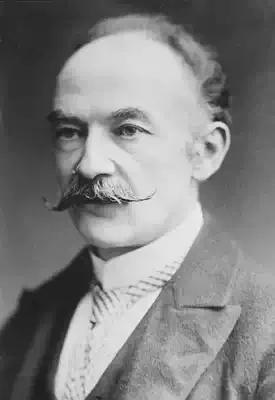
Thomas Hardy
Then and Now
Then and Now
When battles were fought
With a chivalrous sense of should and ought,
In spirit men said,
"End we quick or dead,
Honour is some reward!
Let us fight fair -- for our own best or worst;
So, Gentlemen of the Guard,
Fire first!"
In the open they stood,
Man to man in his knightlihood:
They would not deign
To profit by a stain
On the honourable rules,
Knowing that practise perfidy no man durst
Who in the heroic schools
Was nurst.
But now, behold, what
Is war with those where honour is not!
Rama laments
Its dead innocents;
Herod howls: "Sly slaughter
Rules now! Let us, by modes once called accurst,
Overhead, under water,
Stab first."
When battles were fought
With a chivalrous sense of should and ought,
In spirit men said,
"End we quick or dead,
Honour is some reward!
Let us fight fair -- for our own best or worst;
So, Gentlemen of the Guard,
Fire first!"
In the open they stood,
Man to man in his knightlihood:
They would not deign
To profit by a stain
On the honourable rules,
Knowing that practise perfidy no man durst
Who in the heroic schools
Was nurst.
But now, behold, what
Is war with those where honour is not!
Rama laments
Its dead innocents;
Herod howls: "Sly slaughter
Rules now! Let us, by modes once called accurst,
Overhead, under water,
Stab first."
269
Thomas Hardy
The Tree: An Old Man's Story
The Tree: An Old Man's Story
I
Its roots are bristling in the air
Like some mad Earth-god's spiny hair;
The loud south-wester's swell and yell
Smote it at midnight, and it fell.
Thus ends the tree
Where Some One sat with me.
II
Its boughs, which none but darers trod,
A child may step on from the sod,
And twigs that earliest met the dawn
Are lit the last upon the lawn.
Cart off the tree
Beneath whose trunk sat we!
III
Yes, there we sat: she cooed content,
And bats ringed round, and daylight went;
The gnarl, our seat, is wrenched and sunk,
Prone that queer pocket in the trunk
Where lay the key
To her pale mystery.
IV
"Years back, within this pocket-hole
I found, my Love, a hurried scrawl
Meant not for me," at length said I;
"I glanced thereat, and let it lie:
The words were three -
'Beloved, I agree.'
V
"Who placed it here; to what request
It gave assent, I never guessed.
Some prayer of some hot heart, no doubt,
To some coy maiden hereabout,
Just as, maybe,
With you, Sweet Heart, and me."
VI
She waited, till with quickened breath
She spoke, as one who banisheth
Reserves that lovecraft heeds so well,
To ease some mighty wish to tell:
"'Twas I," said she,
"Who wrote thus clinchingly.
VII
"My lover's wife--aye, wife!--knew nought
Of what we felt, and bore, and thought . . .
He'd said: 'I wed with thee or die:
She stands between, 'tis true. But why?
Do thou agree,
And--she shalt cease to be.'
VIII
"How I held back, how love supreme
Involved me madly in his scheme
Why should I say? . . . I wrote assent
(You found it hid) to his intent . . .
She--DIED . . . But he
Came not to wed with me.
IX
"O shrink not, Love!--Had these eyes seen
But once thine own, such had not been!
But we were strangers . . . Thus the plot
Cleared passion's path.--Why came he not
To wed with me? . . .
He wived the gibbet-tree."
X
- Under that oak of heretofore
Sat Sweetheart mine with me no more:
By many a Fiord, and Strom, and Fleuve
Have I since wandered . . . Soon, for love,
Distraught went she -
'Twas said for love of me.
I
Its roots are bristling in the air
Like some mad Earth-god's spiny hair;
The loud south-wester's swell and yell
Smote it at midnight, and it fell.
Thus ends the tree
Where Some One sat with me.
II
Its boughs, which none but darers trod,
A child may step on from the sod,
And twigs that earliest met the dawn
Are lit the last upon the lawn.
Cart off the tree
Beneath whose trunk sat we!
III
Yes, there we sat: she cooed content,
And bats ringed round, and daylight went;
The gnarl, our seat, is wrenched and sunk,
Prone that queer pocket in the trunk
Where lay the key
To her pale mystery.
IV
"Years back, within this pocket-hole
I found, my Love, a hurried scrawl
Meant not for me," at length said I;
"I glanced thereat, and let it lie:
The words were three -
'Beloved, I agree.'
V
"Who placed it here; to what request
It gave assent, I never guessed.
Some prayer of some hot heart, no doubt,
To some coy maiden hereabout,
Just as, maybe,
With you, Sweet Heart, and me."
VI
She waited, till with quickened breath
She spoke, as one who banisheth
Reserves that lovecraft heeds so well,
To ease some mighty wish to tell:
"'Twas I," said she,
"Who wrote thus clinchingly.
VII
"My lover's wife--aye, wife!--knew nought
Of what we felt, and bore, and thought . . .
He'd said: 'I wed with thee or die:
She stands between, 'tis true. But why?
Do thou agree,
And--she shalt cease to be.'
VIII
"How I held back, how love supreme
Involved me madly in his scheme
Why should I say? . . . I wrote assent
(You found it hid) to his intent . . .
She--DIED . . . But he
Came not to wed with me.
IX
"O shrink not, Love!--Had these eyes seen
But once thine own, such had not been!
But we were strangers . . . Thus the plot
Cleared passion's path.--Why came he not
To wed with me? . . .
He wived the gibbet-tree."
X
- Under that oak of heretofore
Sat Sweetheart mine with me no more:
By many a Fiord, and Strom, and Fleuve
Have I since wandered . . . Soon, for love,
Distraught went she -
'Twas said for love of me.
222
Thomas Hardy
The Supplanter: A Tale
The Supplanter: A Tale
I
He bends his travel-tarnished feet
To where she wastes in clay:
From day-dawn until eve he fares
Along the wintry way;
From day-dawn until eve repairs
Unto her mound to pray.
II
"Are these the gravestone shapes that meet
My forward-straining view?
Or forms that cross a window-blind
In circle, knot, and queue:
Gay forms, that cross and whirl and wind
To music throbbing through?" -
III
"The Keeper of the Field of Tombs
Dwells by its gateway-pier;
He celebrates with feast and dance
His daughter's twentieth year:
He celebrates with wine of France
The birthday of his dear." -
IV
"The gates are shut when evening glooms:
Lay down your wreath, sad wight;
To-morrow is a time more fit
For placing flowers aright:
The morning is the time for it;
Come, wake with us to-night!" -
V
He grounds his wreath, and enters in,
And sits, and shares their cheer. -
"I fain would foot with you, young man,
Before all others here;
I fain would foot it for a span
With such a cavalier!"
VI
She coaxes, clasps, nor fails to win
His first-unwilling hand:
The merry music strikes its staves,
The dancers quickly band;
And with the damsel of the graves
He duly takes his stand.
VII
"You dance divinely, stranger swain,
Such grace I've never known.
O longer stay! Breathe not adieu
And leave me here alone!
O longer stay: to her be true
Whose heart is all your own!" -
VIII
"I mark a phantom through the pane,
That beckons in despair,
Its mouth all drawn with heavy moan -
Her to whom once I sware!" -
"Nay; 'tis the lately carven stone
Of some strange girl laid there!" -
IX
"I see white flowers upon the floor
Betrodden to a clot;
My wreath were they?"--"Nay; love me much,
Swear you'll forget me not!
'Twas but a wreath! Full many such
Are brought here and forgot."
* * *
X
The watches of the night grow hoar,
He rises ere the sun;
"Now could I kill thee here!" he says,
"For winning me from one
Who ever in her living days
Was pure as cloistered nun!"
XI
She cowers, and he takes his track
Afar for many a mile,
For evermore to be apart
From her who could beguile
His senses by her burning heart,
And win his love awhile.
XII
A year: and he is travelling back
To her who wastes in clay;
From day-dawn until eve he fares
Along the wintry way,
From day-dawn until eve repairs
Unto her mound to pray.
XIII
And there he sets him to fulfil
His frustrate first intent:
And lay upon her bed, at last,
The offering earlier meant:
When, on his stooping figure, ghast
And haggard eyes are bent.
XIV
"O surely for a little while
You can be kind to me!
For do you love her, do you hate,
She knows not--cares not she:
Only the living feel the weight
Of loveless misery!
XV
"I own my sin; I've paid its cost,
Being outcast, shamed, and bare:
I give you daily my whole heart,
Your babe my tender care,
I pour you prayers; and aye to part
Is more than I can bear!"
XVI
He turns--unpitying, passion-tossed;
"I know you not!" he cries,
"Nor know your child. I knew this maid,
But she's in Paradise!"
And swiftly in the winter shade
He breaks from her and flies.
I
He bends his travel-tarnished feet
To where she wastes in clay:
From day-dawn until eve he fares
Along the wintry way;
From day-dawn until eve repairs
Unto her mound to pray.
II
"Are these the gravestone shapes that meet
My forward-straining view?
Or forms that cross a window-blind
In circle, knot, and queue:
Gay forms, that cross and whirl and wind
To music throbbing through?" -
III
"The Keeper of the Field of Tombs
Dwells by its gateway-pier;
He celebrates with feast and dance
His daughter's twentieth year:
He celebrates with wine of France
The birthday of his dear." -
IV
"The gates are shut when evening glooms:
Lay down your wreath, sad wight;
To-morrow is a time more fit
For placing flowers aright:
The morning is the time for it;
Come, wake with us to-night!" -
V
He grounds his wreath, and enters in,
And sits, and shares their cheer. -
"I fain would foot with you, young man,
Before all others here;
I fain would foot it for a span
With such a cavalier!"
VI
She coaxes, clasps, nor fails to win
His first-unwilling hand:
The merry music strikes its staves,
The dancers quickly band;
And with the damsel of the graves
He duly takes his stand.
VII
"You dance divinely, stranger swain,
Such grace I've never known.
O longer stay! Breathe not adieu
And leave me here alone!
O longer stay: to her be true
Whose heart is all your own!" -
VIII
"I mark a phantom through the pane,
That beckons in despair,
Its mouth all drawn with heavy moan -
Her to whom once I sware!" -
"Nay; 'tis the lately carven stone
Of some strange girl laid there!" -
IX
"I see white flowers upon the floor
Betrodden to a clot;
My wreath were they?"--"Nay; love me much,
Swear you'll forget me not!
'Twas but a wreath! Full many such
Are brought here and forgot."
* * *
X
The watches of the night grow hoar,
He rises ere the sun;
"Now could I kill thee here!" he says,
"For winning me from one
Who ever in her living days
Was pure as cloistered nun!"
XI
She cowers, and he takes his track
Afar for many a mile,
For evermore to be apart
From her who could beguile
His senses by her burning heart,
And win his love awhile.
XII
A year: and he is travelling back
To her who wastes in clay;
From day-dawn until eve he fares
Along the wintry way,
From day-dawn until eve repairs
Unto her mound to pray.
XIII
And there he sets him to fulfil
His frustrate first intent:
And lay upon her bed, at last,
The offering earlier meant:
When, on his stooping figure, ghast
And haggard eyes are bent.
XIV
"O surely for a little while
You can be kind to me!
For do you love her, do you hate,
She knows not--cares not she:
Only the living feel the weight
Of loveless misery!
XV
"I own my sin; I've paid its cost,
Being outcast, shamed, and bare:
I give you daily my whole heart,
Your babe my tender care,
I pour you prayers; and aye to part
Is more than I can bear!"
XVI
He turns--unpitying, passion-tossed;
"I know you not!" he cries,
"Nor know your child. I knew this maid,
But she's in Paradise!"
And swiftly in the winter shade
He breaks from her and flies.
187
Thomas Hardy
The Stranger's Song
The Stranger's Song
(As sung by Mr. Charles Charrington in the play of "The Three Wayfarers")
O MY trade it is the rarest one,
Simple shepherds all--
My trade is a sight to see;
For my customers I tie, and take 'em up on high,
And waft 'em to a far countree!
My tools are but common ones,
Simple shepherds all--
My tools are no sight to see:
A little hempen string, and a post whereon to swing,
Are implements enough for me!
To-morrow is my working day,
Simple shepherds all--
To-morrow is a working day for me:
For the farmer's sheep is slain, and the lad who did it ta'en,
And on his soul may God ha' mer-cy!
(As sung by Mr. Charles Charrington in the play of "The Three Wayfarers")
O MY trade it is the rarest one,
Simple shepherds all--
My trade is a sight to see;
For my customers I tie, and take 'em up on high,
And waft 'em to a far countree!
My tools are but common ones,
Simple shepherds all--
My tools are no sight to see:
A little hempen string, and a post whereon to swing,
Are implements enough for me!
To-morrow is my working day,
Simple shepherds all--
To-morrow is a working day for me:
For the farmer's sheep is slain, and the lad who did it ta'en,
And on his soul may God ha' mer-cy!
235
Thomas Hardy
The Sick God
The Sick God
I
In days when men had joy of war,
A God of Battles sped each mortal jar;
The peoples pledged him heart and hand,
From Israel's land to isles afar.
II
His crimson form, with clang and chime,
Flashed on each murk and murderous meeting-time,
And kings invoked, for rape and raid,
His fearsome aid in rune and rhyme.
III
On bruise and blood-hole, scar and seam,
On blade and bolt, he flung his fulgid beam:
His haloes rayed the very gore,
And corpses wore his glory-gleam.
IV
Often an early King or Queen,
And storied hero onward, knew his sheen;
'Twas glimpsed by Wolfe, by Ney anon,
And Nelson on his blue demesne.
V
But new light spread. That god's gold nimb
And blazon have waned dimmer and more dim;
Even his flushed form begins to fade,
Till but a shade is left of him.
VI
That modern meditation broke
His spell, that penmen's pleadings dealt a stroke,
Say some; and some that crimes too dire
Did much to mire his crimson cloak.
VII
Yea, seeds of crescive sympathy
Were sown by those more excellent than he,
Long known, though long contemned till then -
The gods of men in amity.
VIII
Souls have grown seers, and thought out-brings
The mournful many-sidedness of things
With foes as friends, enfeebling ires
And fury-fires by gaingivings!
IX
He scarce impassions champions now;
They do and dare, but tensely--pale of brow;
And would they fain uplift the arm
Of that faint form they know not how.
X
Yet wars arise, though zest grows cold;
Wherefore, at whiles, as 'twere in ancient mould
He looms, bepatched with paint and lath;
But never hath he seemed the old!
XI
Let men rejoice, let men deplore.
The lurid Deity of heretofore
Succumbs to one of saner nod;
The Battle-god is god no more.
I
In days when men had joy of war,
A God of Battles sped each mortal jar;
The peoples pledged him heart and hand,
From Israel's land to isles afar.
II
His crimson form, with clang and chime,
Flashed on each murk and murderous meeting-time,
And kings invoked, for rape and raid,
His fearsome aid in rune and rhyme.
III
On bruise and blood-hole, scar and seam,
On blade and bolt, he flung his fulgid beam:
His haloes rayed the very gore,
And corpses wore his glory-gleam.
IV
Often an early King or Queen,
And storied hero onward, knew his sheen;
'Twas glimpsed by Wolfe, by Ney anon,
And Nelson on his blue demesne.
V
But new light spread. That god's gold nimb
And blazon have waned dimmer and more dim;
Even his flushed form begins to fade,
Till but a shade is left of him.
VI
That modern meditation broke
His spell, that penmen's pleadings dealt a stroke,
Say some; and some that crimes too dire
Did much to mire his crimson cloak.
VII
Yea, seeds of crescive sympathy
Were sown by those more excellent than he,
Long known, though long contemned till then -
The gods of men in amity.
VIII
Souls have grown seers, and thought out-brings
The mournful many-sidedness of things
With foes as friends, enfeebling ires
And fury-fires by gaingivings!
IX
He scarce impassions champions now;
They do and dare, but tensely--pale of brow;
And would they fain uplift the arm
Of that faint form they know not how.
X
Yet wars arise, though zest grows cold;
Wherefore, at whiles, as 'twere in ancient mould
He looms, bepatched with paint and lath;
But never hath he seemed the old!
XI
Let men rejoice, let men deplore.
The lurid Deity of heretofore
Succumbs to one of saner nod;
The Battle-god is god no more.
229
Thomas Hardy
The Puzzled Game-Birds
The Puzzled Game-Birds
They are not those who used to feed us
When we were young--they cannot be -
These shapes that now bereave and bleed us?
They are not those who used to feed us, -
For would they not fair terms concede us?
- If hearts can house such treachery
They are not those who used to feed us
When we were young--they cannot be!
They are not those who used to feed us
When we were young--they cannot be -
These shapes that now bereave and bleed us?
They are not those who used to feed us, -
For would they not fair terms concede us?
- If hearts can house such treachery
They are not those who used to feed us
When we were young--they cannot be!
258
Thomas Hardy
The Pity Of It
The Pity Of It
I walked in loamy Wessex lanes, afar
From rail-track and from highway, and I heard
In field and farmstead many an ancient word
Of local lineage like "Thu bist," "Er war,"
"Ich woll," "Er sholl," and by-talk similar,
Nigh as they speak who in this month's moon gird
At England's very loins, thereunto spurred
By gangs whose glory threats and slaughters are.
Then seemed a Heart crying: "Whosoever they be
At root and bottom of this, who flung this flame
Between kin folk kin tongued even as are we,
Sinister, ugly, lurid, be their fame;
May their familiars grow to shun their name,
And their brood perish everlastingly."
I walked in loamy Wessex lanes, afar
From rail-track and from highway, and I heard
In field and farmstead many an ancient word
Of local lineage like "Thu bist," "Er war,"
"Ich woll," "Er sholl," and by-talk similar,
Nigh as they speak who in this month's moon gird
At England's very loins, thereunto spurred
By gangs whose glory threats and slaughters are.
Then seemed a Heart crying: "Whosoever they be
At root and bottom of this, who flung this flame
Between kin folk kin tongued even as are we,
Sinister, ugly, lurid, be their fame;
May their familiars grow to shun their name,
And their brood perish everlastingly."
236
Thomas Hardy
The Peasent's Confession
The Peasent's Confession
"Si le maréchal Grouchy avait été rejoint par l'officier que
Napoléon lui avait expédié la veille à dix heures du soir, toute
question eût disparu. Mais cet officier n'était point parvenu à sa
destination, ainsi que le maréchal n'a cessé de l'affirmer toute sa
vie, et il faut l'en croire, car autrement il n'aurait eu aucune
raison pour hésiter. Cet officier avait-il été pris? avait-il passé à
l'ennemi? C'est ce qu'on a toujours ignoré."
--Thiers: Histoire de l'Empire. "Waterloo."
GOOD Father!... 'Twas an eve in middle June,
And war was waged anew
By great Napoleon, who for years had strewn
Men's bones all Europe through.
Three nights ere this, with columned corps he'd crossed
The Sambre at Charleroi,
To move on Brussels, where the English host
Dallied in Parc and Bois.
The yestertide we'd heard the gloomy gun
Growl through the long-sunned day
From Quatre-Bras and Ligny; till the dun
Twilight suppressed the fray;
Albeit therein--as lated tongues bespoke--
Brunswick's high heart was drained,
And Prussia's Line and Landwehr, though unbroke,
Stood cornered and constrained.
And at next noon-time Grouchy slowly passed
With thirty thousand men:
We hoped thenceforth no army, small or vast,
Would trouble us again.
My hut lay deeply in a vale recessed,
And never a soul seemed nigh
When, reassured at length, we went to rest--
My children, wife, and I.
But what was this that broke our humble ease?
What noise, above the rain,
Above the dripping of the poplar trees
That smote along the pane?
--A call of mastery, bidding me arise,
Compelled me to the door,
At which a horseman stood in martial guise--
Splashed--sweating from every pore.
Had I seen Grouchy? Yes? Which track took he?
Could I lead thither on?--
Fulfilment would ensure gold pieces three,
Perchance more gifts anon.
"I bear the Emperor's mandate," then he said,
"Charging the Marshal straight
To strike between the double host ahead
Ere they co-operate,
"Engaging Blücher till the Emperor put
Lord Wellington to flight,
And next the Prussians. This to set afoot
Is my emprise to-night."
I joined him in the mist; but, pausing, sought
To estimate his say,
Grouchy had made for Wavre; and yet, on thought,
I did not lead that way.
I mused: "If Grouchy thus instructed be,
The clash comes sheer hereon;
My farm is stript. While, as for pieces three,
Money the French have none.
"Grouchy unwarned, moreo'er, the English win,
And mine is left to me--
They buy, not borrow."--Hence did I begin
To lead him treacherously.
By Joidoigne, near to east, as we ondrew,
Dawn pierced the humid air;
And eastward faced I with him, though I knew
Never marched Grouchy there.
Near Ottignies we passed, across the Dyle
(Lim'lette left far aside),
And thence direct toward Pervez and Noville
Through green grain, till he cried:
"I doubt thy conduct, man! no track is here
I doubt they gagèd word!"
Thereat he scowled on me, and pranced me near,
And pricked me with his sword.
"Nay, Captain, hold! We skirt, not trace the course
Of Grouchy," said I then:
"As we go, yonder went he, with his force
Of thirty thousand men."
--At length noon nighed, when west, from Saint-John's-Mound,
A hoarse artillery boomed,
And from Saint-Lambert's upland, chapel-crowned,
The Prussian squadrons loomed.
Then to the wayless wet gray ground he leapt;
"My mission fails!" he cried;
"Too late for Grouchy now to intercept,
For, peasant, you have lied!"
He turned to pistol me. I sprang, and drew
The sabre from his flank,
And 'twixt his nape and shoulder, ere he knew,
I struck, and dead he sank.
I hid him deep in nodding rye and oat--
His shroud green stalks and loam;
His requiem the corn-blade's husky note--
And then I hastened home....
--Two armies writhe in coils of red and blue,
And brass and iron clang
From Goumont, past the front of Waterloo,
To Pap'lotte and Smohain.
The Guard Imperial wavered on the height;
The Emperor's face grew glum;
"I sent," he said, "to Grouchy yesternight,
And yet he does not come!"
'Twas then, Good Father, that the French espied,
Streaking the summer land,
The men of Blücher. But the Emperor cried,
"Grouchy is now at hand!"
And meanwhile Vand'leur, Vivian, Maitland, Kempt,
Met d'Erlon, Friant, Ney;
But Grouchy--mis-sent, blamed, yet blame-exempt--
Grouchy was far away.
Be even, slain or struck, Michel the strong,
Bold Travers, Dnop, Delord,
Smart Guyot, Reil-le, l'Heriter, Friant.
Scattered that champaign o'er.
Fallen likewise wronged Duhesme, and skilled Lobau
Did that red sunset see;
Colbert, Legros, Blancard!... And of the foe
Picton and Ponsonby;
With Gordon, Canning, Blackman, Ompteda,
L'Estrange, Delancey, Packe,
Grose, D'Oyly, Stables, Morice, Howard, Hay,
Von Schwerin, Watzdorf, Boek,
Smith, Phelips, Fuller, Lind, and Battersby,
And hosts of ranksmen round...
Memorials linger yet to speak to thee
Of those that bit the ground!
The Guards' last column yielded; dykes of dead
Lay between vale and ridge,
As, thinned yet closing, faint yet fierce, they sped
In packs to Genappe Bridge.
Safe was my stock; my capple cow unslain;
Intact each cock and hen;
But Grouchy far at Wavre all day had lain,
And thirty thousand men.
O Saints, had I but lost my earing corn
And saved the cause once prized!
O Saints, why such false witness had I borne
When late I'd sympathized!...
So, now, being old, my children eye askance
My slowly dwindling store,
And crave my mite; till, worn with tarriance,
I care for life no more.
To Almighty God henceforth I stand confessed,
And Virgin-Saint Marie;
O Michael, John, and Holy Ones in rest,
Entreat the Lord for me!
"Si le maréchal Grouchy avait été rejoint par l'officier que
Napoléon lui avait expédié la veille à dix heures du soir, toute
question eût disparu. Mais cet officier n'était point parvenu à sa
destination, ainsi que le maréchal n'a cessé de l'affirmer toute sa
vie, et il faut l'en croire, car autrement il n'aurait eu aucune
raison pour hésiter. Cet officier avait-il été pris? avait-il passé à
l'ennemi? C'est ce qu'on a toujours ignoré."
--Thiers: Histoire de l'Empire. "Waterloo."
GOOD Father!... 'Twas an eve in middle June,
And war was waged anew
By great Napoleon, who for years had strewn
Men's bones all Europe through.
Three nights ere this, with columned corps he'd crossed
The Sambre at Charleroi,
To move on Brussels, where the English host
Dallied in Parc and Bois.
The yestertide we'd heard the gloomy gun
Growl through the long-sunned day
From Quatre-Bras and Ligny; till the dun
Twilight suppressed the fray;
Albeit therein--as lated tongues bespoke--
Brunswick's high heart was drained,
And Prussia's Line and Landwehr, though unbroke,
Stood cornered and constrained.
And at next noon-time Grouchy slowly passed
With thirty thousand men:
We hoped thenceforth no army, small or vast,
Would trouble us again.
My hut lay deeply in a vale recessed,
And never a soul seemed nigh
When, reassured at length, we went to rest--
My children, wife, and I.
But what was this that broke our humble ease?
What noise, above the rain,
Above the dripping of the poplar trees
That smote along the pane?
--A call of mastery, bidding me arise,
Compelled me to the door,
At which a horseman stood in martial guise--
Splashed--sweating from every pore.
Had I seen Grouchy? Yes? Which track took he?
Could I lead thither on?--
Fulfilment would ensure gold pieces three,
Perchance more gifts anon.
"I bear the Emperor's mandate," then he said,
"Charging the Marshal straight
To strike between the double host ahead
Ere they co-operate,
"Engaging Blücher till the Emperor put
Lord Wellington to flight,
And next the Prussians. This to set afoot
Is my emprise to-night."
I joined him in the mist; but, pausing, sought
To estimate his say,
Grouchy had made for Wavre; and yet, on thought,
I did not lead that way.
I mused: "If Grouchy thus instructed be,
The clash comes sheer hereon;
My farm is stript. While, as for pieces three,
Money the French have none.
"Grouchy unwarned, moreo'er, the English win,
And mine is left to me--
They buy, not borrow."--Hence did I begin
To lead him treacherously.
By Joidoigne, near to east, as we ondrew,
Dawn pierced the humid air;
And eastward faced I with him, though I knew
Never marched Grouchy there.
Near Ottignies we passed, across the Dyle
(Lim'lette left far aside),
And thence direct toward Pervez and Noville
Through green grain, till he cried:
"I doubt thy conduct, man! no track is here
I doubt they gagèd word!"
Thereat he scowled on me, and pranced me near,
And pricked me with his sword.
"Nay, Captain, hold! We skirt, not trace the course
Of Grouchy," said I then:
"As we go, yonder went he, with his force
Of thirty thousand men."
--At length noon nighed, when west, from Saint-John's-Mound,
A hoarse artillery boomed,
And from Saint-Lambert's upland, chapel-crowned,
The Prussian squadrons loomed.
Then to the wayless wet gray ground he leapt;
"My mission fails!" he cried;
"Too late for Grouchy now to intercept,
For, peasant, you have lied!"
He turned to pistol me. I sprang, and drew
The sabre from his flank,
And 'twixt his nape and shoulder, ere he knew,
I struck, and dead he sank.
I hid him deep in nodding rye and oat--
His shroud green stalks and loam;
His requiem the corn-blade's husky note--
And then I hastened home....
--Two armies writhe in coils of red and blue,
And brass and iron clang
From Goumont, past the front of Waterloo,
To Pap'lotte and Smohain.
The Guard Imperial wavered on the height;
The Emperor's face grew glum;
"I sent," he said, "to Grouchy yesternight,
And yet he does not come!"
'Twas then, Good Father, that the French espied,
Streaking the summer land,
The men of Blücher. But the Emperor cried,
"Grouchy is now at hand!"
And meanwhile Vand'leur, Vivian, Maitland, Kempt,
Met d'Erlon, Friant, Ney;
But Grouchy--mis-sent, blamed, yet blame-exempt--
Grouchy was far away.
Be even, slain or struck, Michel the strong,
Bold Travers, Dnop, Delord,
Smart Guyot, Reil-le, l'Heriter, Friant.
Scattered that champaign o'er.
Fallen likewise wronged Duhesme, and skilled Lobau
Did that red sunset see;
Colbert, Legros, Blancard!... And of the foe
Picton and Ponsonby;
With Gordon, Canning, Blackman, Ompteda,
L'Estrange, Delancey, Packe,
Grose, D'Oyly, Stables, Morice, Howard, Hay,
Von Schwerin, Watzdorf, Boek,
Smith, Phelips, Fuller, Lind, and Battersby,
And hosts of ranksmen round...
Memorials linger yet to speak to thee
Of those that bit the ground!
The Guards' last column yielded; dykes of dead
Lay between vale and ridge,
As, thinned yet closing, faint yet fierce, they sped
In packs to Genappe Bridge.
Safe was my stock; my capple cow unslain;
Intact each cock and hen;
But Grouchy far at Wavre all day had lain,
And thirty thousand men.
O Saints, had I but lost my earing corn
And saved the cause once prized!
O Saints, why such false witness had I borne
When late I'd sympathized!...
So, now, being old, my children eye askance
My slowly dwindling store,
And crave my mite; till, worn with tarriance,
I care for life no more.
To Almighty God henceforth I stand confessed,
And Virgin-Saint Marie;
O Michael, John, and Holy Ones in rest,
Entreat the Lord for me!
536
Thomas Hardy
The Fire at Tranter Sweatley’s
The Fire at Tranter Sweatley’s
The Fire at Tranter Sweatley’s
They had long met o’ Zundays—her true love and she—
And at junketings, maypoles, and flings;
But she bode wi’ a thirtover uncle, and he
Swore by noon and by night that her goodman should be
Naibor Sweatley—a gaffer oft weak at the knee
From taking o’ sommat more cheerful than tea—
Who tranted, and moved people’s things.
She cried, “O pray pity me!” Nought would he hear;
Then with wild rainy eyes she obeyed,
She chid when her Love was for clinking off wi’ her.
The pa’son was told, as the season drew near
To throw over pu’pit the names of the peäir
As fitting one flesh to be made.
The wedding-day dawned and the morning drew on;
The couple stood bridegroom and bride;
The evening was passed, and when midnight had gone
The folks horned out, “God save the King,” and anon
The two home-along gloomily hied.
The lover Tim Tankens mourned heart-sick and drear
To be thus of his darling deprived:
He roamed in the dark ath’art field, mound, and mere,
And, a’most without knowing it, found himself near
The house of the tranter, and now of his Dear,
Where the lantern-light showed ’em arrived.
The bride sought her cham’er so calm and so pale
That a Northern had thought her resigned;
But to eyes that had seen her in tide-times of weal,
Like the white cloud o’ smoke, the red battlefield’s vail,
That look spak’ of havoc behind.
The bridegroom yet laitered a beaker to drain,
Then reeled to the linhay for more,
When the candle-snoff kindled some chaff from his grain—
Flames spread, and red vlankers, wi’ might and wi’ main,
And round beams, thatch, and chimley-tun roar.
Young Tim away yond, rafted up by the light,
Through brimble and underwood tears,
Till he comes to the orchet, when crooping thereright
In the lewth of a codlin-tree, bivering wi’ fright,
Wi’ on’y her night-rail to screen her from sight,
His lonesome young Barbree appears.
Her cwold little figure half-naked he views
Played about by the frolicsome breeze,
Her light-tripping totties, her ten little tooes,
All bare and besprinkled wi’ Fall’s chilly dews,
While her great gallied eyes, through her hair hanging loose,
Sheened as stars through a tardle o’ trees.
She eyed en; and, as when a weir-hatch is drawn,
Her tears, penned by terror afore,
With a rushing of sobs in a shower were strawn,
Till her power to pour ’em seemed wasted and gone
From the heft o’ misfortune she bore.
“O Tim, my own Tim I must call ’ee—I will!
All the world ha’ turned round on me so!
Can you help her who loved ’ee, though acting so ill?
Can you pity her misery—feel for her still?
When worse than her body so quivering and chill
Is her heart in its winter o’ woe!
“I think I mid almost ha’ borne it,” she said,
“Had my griefs one by one come to hand;
But O, to be slave to thik husbird for bread,
And then, upon top o’ that, driven to wed,
And then, upon top o’ that, burnt out o’ bed,
Is more than my nater can stand!”
Tim’s soul like a lion ’ithin en outsprung—
(Tim had a great soul when his feelings were wrung)—
“Feel for ’ee, dear Barbree?” he cried;
And his warm working-jacket about her he flung,
Made a back, horsed her up, till behind him she clung
Like a chiel on a gipsy, her figure uphung
By the sleeves that around her he tied.
Over piggeries, and mixens, and apples, and hay,
They lumpered straight into the night;
And finding bylong where a halter-path lay,
At dawn reached Tim’s house, on’y seen on their way
By a naibor or two who were up wi’ the day;
But they gathered no clue to the sight.
Then tender Tim Tankens he searched here and there
For some garment to clothe her fair skin;
But though he had breeches and waistcoats to spare,
He had nothing quite seemly for Barbree to wear,
Who, half shrammed to death, stood and cried on a chair
At the caddle she found herself in.
There was one thing to do, and that one thing he did,
He lent her some clouts of his own,
And she took ’em perforce; and while in ’em she slid,
Tim turned to the winder, as modesty bid,
Thinking, “O that the picter my duty keeps hid
To the sight o’ my eyes mid be shown!”
In the tallet he stowed her; there huddied she lay,
Shortening sleeves, legs, and tails to her limbs;
But most o’ the time in a mortal bad way,
Well knowing that there’d be the divel to pay
If ’twere found that, instead o’ the elements’ prey,
She was living in lodgings at Tim’s.
“Where’s the tranter?” said men and boys; “where can er be?”
“Where’s the tranter?” said Barbree alone.
“Where on e’th is the tranter?” said everybod-y:
They sifted the dust of his perished roof-tree,
And all they could find was a bone.
Then the uncle cried, “Lord, pray have mercy on me!”
And in terror began to repent.
But before ’twas complete, and till sure she was free,
Barbree drew up her loft-ladder, tight turned her key—
Tim bringing up breakfast and dinner and tea—
Till the news of her hiding got vent.
Then followed the custom-kept rout, shout, and flare
Of a skimmington-ride through the naiborhood, ere
Folk had proof o’ wold Sweatley’s decay.
Whereupon decent people all stood in a stare,
Saying Tim and his lodger should risk it, and pair:
So he took her to church. An’ some laughing lads there
Cried to Tim, “After Sweatley!” She said, “I declare
I stand as a maiden to-day!”
The Fire at Tranter Sweatley’s
They had long met o’ Zundays—her true love and she—
And at junketings, maypoles, and flings;
But she bode wi’ a thirtover uncle, and he
Swore by noon and by night that her goodman should be
Naibor Sweatley—a gaffer oft weak at the knee
From taking o’ sommat more cheerful than tea—
Who tranted, and moved people’s things.
She cried, “O pray pity me!” Nought would he hear;
Then with wild rainy eyes she obeyed,
She chid when her Love was for clinking off wi’ her.
The pa’son was told, as the season drew near
To throw over pu’pit the names of the peäir
As fitting one flesh to be made.
The wedding-day dawned and the morning drew on;
The couple stood bridegroom and bride;
The evening was passed, and when midnight had gone
The folks horned out, “God save the King,” and anon
The two home-along gloomily hied.
The lover Tim Tankens mourned heart-sick and drear
To be thus of his darling deprived:
He roamed in the dark ath’art field, mound, and mere,
And, a’most without knowing it, found himself near
The house of the tranter, and now of his Dear,
Where the lantern-light showed ’em arrived.
The bride sought her cham’er so calm and so pale
That a Northern had thought her resigned;
But to eyes that had seen her in tide-times of weal,
Like the white cloud o’ smoke, the red battlefield’s vail,
That look spak’ of havoc behind.
The bridegroom yet laitered a beaker to drain,
Then reeled to the linhay for more,
When the candle-snoff kindled some chaff from his grain—
Flames spread, and red vlankers, wi’ might and wi’ main,
And round beams, thatch, and chimley-tun roar.
Young Tim away yond, rafted up by the light,
Through brimble and underwood tears,
Till he comes to the orchet, when crooping thereright
In the lewth of a codlin-tree, bivering wi’ fright,
Wi’ on’y her night-rail to screen her from sight,
His lonesome young Barbree appears.
Her cwold little figure half-naked he views
Played about by the frolicsome breeze,
Her light-tripping totties, her ten little tooes,
All bare and besprinkled wi’ Fall’s chilly dews,
While her great gallied eyes, through her hair hanging loose,
Sheened as stars through a tardle o’ trees.
She eyed en; and, as when a weir-hatch is drawn,
Her tears, penned by terror afore,
With a rushing of sobs in a shower were strawn,
Till her power to pour ’em seemed wasted and gone
From the heft o’ misfortune she bore.
“O Tim, my own Tim I must call ’ee—I will!
All the world ha’ turned round on me so!
Can you help her who loved ’ee, though acting so ill?
Can you pity her misery—feel for her still?
When worse than her body so quivering and chill
Is her heart in its winter o’ woe!
“I think I mid almost ha’ borne it,” she said,
“Had my griefs one by one come to hand;
But O, to be slave to thik husbird for bread,
And then, upon top o’ that, driven to wed,
And then, upon top o’ that, burnt out o’ bed,
Is more than my nater can stand!”
Tim’s soul like a lion ’ithin en outsprung—
(Tim had a great soul when his feelings were wrung)—
“Feel for ’ee, dear Barbree?” he cried;
And his warm working-jacket about her he flung,
Made a back, horsed her up, till behind him she clung
Like a chiel on a gipsy, her figure uphung
By the sleeves that around her he tied.
Over piggeries, and mixens, and apples, and hay,
They lumpered straight into the night;
And finding bylong where a halter-path lay,
At dawn reached Tim’s house, on’y seen on their way
By a naibor or two who were up wi’ the day;
But they gathered no clue to the sight.
Then tender Tim Tankens he searched here and there
For some garment to clothe her fair skin;
But though he had breeches and waistcoats to spare,
He had nothing quite seemly for Barbree to wear,
Who, half shrammed to death, stood and cried on a chair
At the caddle she found herself in.
There was one thing to do, and that one thing he did,
He lent her some clouts of his own,
And she took ’em perforce; and while in ’em she slid,
Tim turned to the winder, as modesty bid,
Thinking, “O that the picter my duty keeps hid
To the sight o’ my eyes mid be shown!”
In the tallet he stowed her; there huddied she lay,
Shortening sleeves, legs, and tails to her limbs;
But most o’ the time in a mortal bad way,
Well knowing that there’d be the divel to pay
If ’twere found that, instead o’ the elements’ prey,
She was living in lodgings at Tim’s.
“Where’s the tranter?” said men and boys; “where can er be?”
“Where’s the tranter?” said Barbree alone.
“Where on e’th is the tranter?” said everybod-y:
They sifted the dust of his perished roof-tree,
And all they could find was a bone.
Then the uncle cried, “Lord, pray have mercy on me!”
And in terror began to repent.
But before ’twas complete, and till sure she was free,
Barbree drew up her loft-ladder, tight turned her key—
Tim bringing up breakfast and dinner and tea—
Till the news of her hiding got vent.
Then followed the custom-kept rout, shout, and flare
Of a skimmington-ride through the naiborhood, ere
Folk had proof o’ wold Sweatley’s decay.
Whereupon decent people all stood in a stare,
Saying Tim and his lodger should risk it, and pair:
So he took her to church. An’ some laughing lads there
Cried to Tim, “After Sweatley!” She said, “I declare
I stand as a maiden to-day!”
212
Thomas Hardy
The Dame of Athelhall
The Dame of Athelhall
I
"Soul! Shall I see thy face," she said,
"In one brief hour?
And away with thee from a loveless bed
To a far-off sun, to a vine-wrapt bower,
And be thine own unseparated,
And challenge the world's white glower?
II
She quickened her feet, and met him where
They had predesigned:
And they clasped, and mounted, and cleft the air
Upon whirling wheels; till the will to bind
Her life with his made the moments there
Efface the years behind.
III
Miles slid, and the sight of the port upgrew
As they sped on;
When slipping its bond the bracelet flew
From her fondled arm. Replaced anon,
Its cameo of the abjured one drew
Her musings thereupon.
IV
The gaud with his image once had been
A gift from him:
And so it was that its carving keen
Refurbished memories wearing dim,
Which set in her soul a throe of teen,
And a tear on her lashes' brim.
V
"I may not go!" she at length upspake,
"Thoughts call me back -
I would still lose all for your dear, dear sake;
My heart is thine, friend! But my track
I home to Athelhall must take
To hinder household wrack!"
VI
He appealed. But they parted, weak and wan:
And he left the shore;
His ship diminished, was low, was gone;
And she heard in the waves as the daytide wore,
And read in the leer of the sun that shone,
That they parted for evermore.
VII
She homed as she came, at the dip of eve
On Athel Coomb
Regaining the Hall she had sworn to leave . . .
The house was soundless as a tomb,
And she entered her chamber, there to grieve
Lone, kneeling, in the gloom.
VIII
From the lawn without rose her husband's voice
To one his friend:
"Another her Love, another my choice,
Her going is good. Our conditions mend;
In a change of mates we shall both rejoice;
I hoped that it thus might end!
IX
"A quick divorce; she will make him hers,
And I wed mine.
So Time rights all things in long, long years -
Or rather she, by her bold design!
I admire a woman no balk deters:
She has blessed my life, in fine.
X
"I shall build new rooms for my new true bride,
Let the bygone be:
By now, no doubt, she has crossed the tide
With the man to her mind. Far happier she
In some warm vineland by his side
Than ever she was with me."
I
"Soul! Shall I see thy face," she said,
"In one brief hour?
And away with thee from a loveless bed
To a far-off sun, to a vine-wrapt bower,
And be thine own unseparated,
And challenge the world's white glower?
II
She quickened her feet, and met him where
They had predesigned:
And they clasped, and mounted, and cleft the air
Upon whirling wheels; till the will to bind
Her life with his made the moments there
Efface the years behind.
III
Miles slid, and the sight of the port upgrew
As they sped on;
When slipping its bond the bracelet flew
From her fondled arm. Replaced anon,
Its cameo of the abjured one drew
Her musings thereupon.
IV
The gaud with his image once had been
A gift from him:
And so it was that its carving keen
Refurbished memories wearing dim,
Which set in her soul a throe of teen,
And a tear on her lashes' brim.
V
"I may not go!" she at length upspake,
"Thoughts call me back -
I would still lose all for your dear, dear sake;
My heart is thine, friend! But my track
I home to Athelhall must take
To hinder household wrack!"
VI
He appealed. But they parted, weak and wan:
And he left the shore;
His ship diminished, was low, was gone;
And she heard in the waves as the daytide wore,
And read in the leer of the sun that shone,
That they parted for evermore.
VII
She homed as she came, at the dip of eve
On Athel Coomb
Regaining the Hall she had sworn to leave . . .
The house was soundless as a tomb,
And she entered her chamber, there to grieve
Lone, kneeling, in the gloom.
VIII
From the lawn without rose her husband's voice
To one his friend:
"Another her Love, another my choice,
Her going is good. Our conditions mend;
In a change of mates we shall both rejoice;
I hoped that it thus might end!
IX
"A quick divorce; she will make him hers,
And I wed mine.
So Time rights all things in long, long years -
Or rather she, by her bold design!
I admire a woman no balk deters:
She has blessed my life, in fine.
X
"I shall build new rooms for my new true bride,
Let the bygone be:
By now, no doubt, she has crossed the tide
With the man to her mind. Far happier she
In some warm vineland by his side
Than ever she was with me."
241
Thomas Hardy
The Bridge of Lodi (Spring, )
The Bridge of Lodi (Spring, )
I
When of tender mind and body
I was moved by minstrelsy,
And that strain "The Bridge of Lodi"
Brought a strange delight to me.
II
In the battle-breathing jingle
Of its forward-footing tune
I could see the armies mingle,
And the columns cleft and hewn
III
On that far-famed spot by Lodi
Where Napoleon clove his way
To his fame, when like a god he
Bent the nations to his sway.
IV
Hence the tune came capering to me
While I traced the Rhone and Po;
Nor could Milan's Marvel woo me
From the spot englamoured so.
V
And to-day, sunlit and smiling,
Here I stand upon the scene,
With its saffron walls, dun tiling,
And its meads of maiden green,
VI
Even as when the trackway thundered
With the charge of grenadiers,
And the blood of forty hundred
Splashed its parapets and piers . . .
VII
Any ancient crone I'd toady
Like a lass in young-eyed prime,
Could she tell some tale of Lodi
At that moving mighty time.
VIII
So, I ask the wives of Lodi
For traditions of that day;
But alas! not anybody
Seems to know of such a fray.
IX
And they heed but transitory
Marketings in cheese and meat,
Till I judge that Lodi's story
Is extinct in Lodi's street.
X
Yet while here and there they thrid them
In their zest to sell and buy,
Let me sit me down amid them
And behold those thousands die . . .
XI
- Not a creature cares in Lodi
How Napoleon swept each arch,
Or where up and downward trod he,
Or for his memorial March!
XII
So that wherefore should I be here,
Watching Adda lip the lea,
When the whole romance to see here
Is the dream I bring with me?
XIII
And why sing "The Bridge of Lodi"
As I sit thereon and swing,
When none shows by smile or nod he
Guesses why or what I sing? . . .
XIV
Since all Lodi, low and head ones,
Seem to pass that story by,
It may be the Lodi-bred ones
Rate it truly, and not I.
XV
Once engrossing Bridge of Lodi,
Is thy claim to glory gone?
Must I pipe a palinody,
Or be silent thereupon?
XVI
And if here, from strand to steeple,
Be no stone to fame the fight,
Must I say the Lodi people
Are but viewing crime aright?
Nay; I'll sing "The Bridge of Lodi" -
That long-loved, romantic thing,
Though none show by smile or nod he
Guesses why and what I sing!
I
When of tender mind and body
I was moved by minstrelsy,
And that strain "The Bridge of Lodi"
Brought a strange delight to me.
II
In the battle-breathing jingle
Of its forward-footing tune
I could see the armies mingle,
And the columns cleft and hewn
III
On that far-famed spot by Lodi
Where Napoleon clove his way
To his fame, when like a god he
Bent the nations to his sway.
IV
Hence the tune came capering to me
While I traced the Rhone and Po;
Nor could Milan's Marvel woo me
From the spot englamoured so.
V
And to-day, sunlit and smiling,
Here I stand upon the scene,
With its saffron walls, dun tiling,
And its meads of maiden green,
VI
Even as when the trackway thundered
With the charge of grenadiers,
And the blood of forty hundred
Splashed its parapets and piers . . .
VII
Any ancient crone I'd toady
Like a lass in young-eyed prime,
Could she tell some tale of Lodi
At that moving mighty time.
VIII
So, I ask the wives of Lodi
For traditions of that day;
But alas! not anybody
Seems to know of such a fray.
IX
And they heed but transitory
Marketings in cheese and meat,
Till I judge that Lodi's story
Is extinct in Lodi's street.
X
Yet while here and there they thrid them
In their zest to sell and buy,
Let me sit me down amid them
And behold those thousands die . . .
XI
- Not a creature cares in Lodi
How Napoleon swept each arch,
Or where up and downward trod he,
Or for his memorial March!
XII
So that wherefore should I be here,
Watching Adda lip the lea,
When the whole romance to see here
Is the dream I bring with me?
XIII
And why sing "The Bridge of Lodi"
As I sit thereon and swing,
When none shows by smile or nod he
Guesses why or what I sing? . . .
XIV
Since all Lodi, low and head ones,
Seem to pass that story by,
It may be the Lodi-bred ones
Rate it truly, and not I.
XV
Once engrossing Bridge of Lodi,
Is thy claim to glory gone?
Must I pipe a palinody,
Or be silent thereupon?
XVI
And if here, from strand to steeple,
Be no stone to fame the fight,
Must I say the Lodi people
Are but viewing crime aright?
Nay; I'll sing "The Bridge of Lodi" -
That long-loved, romantic thing,
Though none show by smile or nod he
Guesses why and what I sing!
243
Thomas Hardy
The Alarm
The Alarm
In Memory of one of the Writer's Family who was a Volunteer during the War
with Napoleon
In a ferny byway
Near the great South-Wessex Highway,
A homestead raised its breakfast-smoke aloft;
The dew-damps still lay steamless, for the sun had made no sky-way,
And twilight cloaked the croft.
'Twas hard to realize on
This snug side the mute horizon
That beyond it hostile armaments might steer,
Save from seeing in the porchway a fair woman weep with eyes on
A harnessed Volunteer.
In haste he'd flown there
To his comely wife alone there,
While marching south hard by, to still her fears,
For she soon would be a mother, and few messengers were known there
In these campaigning years.
'Twas time to be Good-bying,
Since the assembly-hour was nighing
In royal George's town at six that morn;
And betwixt its wharves and this retreat were ten good miles of hieing
Ere ring of bugle-horn.
"I've laid in food, Dear,
And broached the spiced and brewed, Dear;
And if our July hope should antedate,
Let the char-wench mount and gallop by the halterpath and wood, Dear,
And fetch assistance straight.
"As for Buonaparte, forget him;
He's not like to land! But let him,
Those strike with aim who strike for wives and sons!
And the war-boats built to float him; 'twere but wanted to upset him
A slat from Nelson's guns!
"But, to assure thee,
And of creeping fears to cure thee,
If he should be rumored anchoring in the Road,
Drive with the nurse to Kingsbere; and let nothing thence allure thee
Till we've him safe-bestowed.
"Now, to turn to marching matters:--
I've my knapsack, firelock, spatters,
Crossbelts, priming-horn, stock, bay'net, blackball, clay,
Pouch, magazine, flints, flint-box that at every quick-step clatters;
...My heart, Dear; that must stay!"
--With breathings broken
Farewell was kissed unspoken,
And they parted there as morning stroked the panes;
And the Volunteer went on, and turned, and twirled his glove for
token,
And took the coastward lanes.
When above He'th Hills he found him,
He saw, on gazing round him,
The Barrow-Beacon burning--burning low,
As if, perhaps, uplighted ever since he'd homeward bound him;
And it meant: Expect the Foe!
Leaving the byway,
And following swift the highway,
Car and chariot met he, faring fast inland;
"He's anchored, Soldier!" shouted some:
"God save thee, marching thy way,
Th'lt front him on the strand!"
He slowed; he stopped; he paltered
Awhile with self, and faltered,
"Why courting misadventure shoreward roam?
To Molly, surely! Seek the woods with her till times have altered;
Charity favors home.
"Else, my denying
He would come she'll read as lying--
Think the Barrow-Beacon must have met my eyes--
That my words were not unwareness, but deceit of her, while trying
My life to jeopardize.
"At home is stocked provision,
And to-night, without suspicion,
We might bear it with us to a covert near;
Such sin, to save a childing wife, would earn it Christ's remission,
Though none forgive it here!"
While thus he, thinking,
A little bird, quick drinking
Among the crowfoot tufts the river bore,
Was tangled in their stringy arms, and fluttered, well-nigh sinking,
Near him, upon the moor.
He stepped in, reached, and seized it,
And, preening, had released it
But that a thought of Holy Writ occurred,
And Signs Divine ere battle, till it seemed him Heaven had pleased it
As guide to send the bird.
"O Lord, direct me!...
Doth Duty now expect me
To march a-coast, or guard my weak ones near?
Give this bird a flight according, that I thence know to elect me
The southward or the rear."
He loosed his clasp; when, rising,
The bird--as if surmising--
Bore due to southward, crossing by the Froom,
And Durnover Great-Field and Fort, the soldier clear advising--
Prompted he wist by Whom.
Then on he panted
By grim Mai-Don, and slanted
Up the steep Ridge-way, hearkening betwixt whiles,
Till, nearing coast and harbor, he beheld the shore-line planted
With Foot and Horse for miles.
Mistrusting not the omen,
He gained the beach, where Yeomen,
Militia, Fencibles, and Pikemen bold,
With Regulars in thousands, were enmassed to meet the Foemen,
Whose fleet had not yet shoaled.
Captain and Colonel,
Sere Generals, Ensigns vernal,
Were there, of neighbor-natives, Michel, Smith,
Meggs, Bingham, Gambier, Cunningham, roused by the hued nocturnal
Swoop on their land and kith.
But Buonaparte still tarried;
His project had miscarried;
At the last hour, equipped for victory,
The fleet had paused; his subtle combinations had been parried
By British strategy.
Homeward returning
Anon, no beacons burning,
No alarms, the Volunteer, in modest bliss,
Te Deum sang with wife and friends: "We praise Thee, Lord, discerning
That Thou hast helped in this!"
In Memory of one of the Writer's Family who was a Volunteer during the War
with Napoleon
In a ferny byway
Near the great South-Wessex Highway,
A homestead raised its breakfast-smoke aloft;
The dew-damps still lay steamless, for the sun had made no sky-way,
And twilight cloaked the croft.
'Twas hard to realize on
This snug side the mute horizon
That beyond it hostile armaments might steer,
Save from seeing in the porchway a fair woman weep with eyes on
A harnessed Volunteer.
In haste he'd flown there
To his comely wife alone there,
While marching south hard by, to still her fears,
For she soon would be a mother, and few messengers were known there
In these campaigning years.
'Twas time to be Good-bying,
Since the assembly-hour was nighing
In royal George's town at six that morn;
And betwixt its wharves and this retreat were ten good miles of hieing
Ere ring of bugle-horn.
"I've laid in food, Dear,
And broached the spiced and brewed, Dear;
And if our July hope should antedate,
Let the char-wench mount and gallop by the halterpath and wood, Dear,
And fetch assistance straight.
"As for Buonaparte, forget him;
He's not like to land! But let him,
Those strike with aim who strike for wives and sons!
And the war-boats built to float him; 'twere but wanted to upset him
A slat from Nelson's guns!
"But, to assure thee,
And of creeping fears to cure thee,
If he should be rumored anchoring in the Road,
Drive with the nurse to Kingsbere; and let nothing thence allure thee
Till we've him safe-bestowed.
"Now, to turn to marching matters:--
I've my knapsack, firelock, spatters,
Crossbelts, priming-horn, stock, bay'net, blackball, clay,
Pouch, magazine, flints, flint-box that at every quick-step clatters;
...My heart, Dear; that must stay!"
--With breathings broken
Farewell was kissed unspoken,
And they parted there as morning stroked the panes;
And the Volunteer went on, and turned, and twirled his glove for
token,
And took the coastward lanes.
When above He'th Hills he found him,
He saw, on gazing round him,
The Barrow-Beacon burning--burning low,
As if, perhaps, uplighted ever since he'd homeward bound him;
And it meant: Expect the Foe!
Leaving the byway,
And following swift the highway,
Car and chariot met he, faring fast inland;
"He's anchored, Soldier!" shouted some:
"God save thee, marching thy way,
Th'lt front him on the strand!"
He slowed; he stopped; he paltered
Awhile with self, and faltered,
"Why courting misadventure shoreward roam?
To Molly, surely! Seek the woods with her till times have altered;
Charity favors home.
"Else, my denying
He would come she'll read as lying--
Think the Barrow-Beacon must have met my eyes--
That my words were not unwareness, but deceit of her, while trying
My life to jeopardize.
"At home is stocked provision,
And to-night, without suspicion,
We might bear it with us to a covert near;
Such sin, to save a childing wife, would earn it Christ's remission,
Though none forgive it here!"
While thus he, thinking,
A little bird, quick drinking
Among the crowfoot tufts the river bore,
Was tangled in their stringy arms, and fluttered, well-nigh sinking,
Near him, upon the moor.
He stepped in, reached, and seized it,
And, preening, had released it
But that a thought of Holy Writ occurred,
And Signs Divine ere battle, till it seemed him Heaven had pleased it
As guide to send the bird.
"O Lord, direct me!...
Doth Duty now expect me
To march a-coast, or guard my weak ones near?
Give this bird a flight according, that I thence know to elect me
The southward or the rear."
He loosed his clasp; when, rising,
The bird--as if surmising--
Bore due to southward, crossing by the Froom,
And Durnover Great-Field and Fort, the soldier clear advising--
Prompted he wist by Whom.
Then on he panted
By grim Mai-Don, and slanted
Up the steep Ridge-way, hearkening betwixt whiles,
Till, nearing coast and harbor, he beheld the shore-line planted
With Foot and Horse for miles.
Mistrusting not the omen,
He gained the beach, where Yeomen,
Militia, Fencibles, and Pikemen bold,
With Regulars in thousands, were enmassed to meet the Foemen,
Whose fleet had not yet shoaled.
Captain and Colonel,
Sere Generals, Ensigns vernal,
Were there, of neighbor-natives, Michel, Smith,
Meggs, Bingham, Gambier, Cunningham, roused by the hued nocturnal
Swoop on their land and kith.
But Buonaparte still tarried;
His project had miscarried;
At the last hour, equipped for victory,
The fleet had paused; his subtle combinations had been parried
By British strategy.
Homeward returning
Anon, no beacons burning,
No alarms, the Volunteer, in modest bliss,
Te Deum sang with wife and friends: "We praise Thee, Lord, discerning
That Thou hast helped in this!"
265
Thomas Hardy
San Sebastian
San Sebastian
With Thoughts of Sergeant M---- (Pensioner), who died -
"WHY, Sergeant, stray on the Ivel Way,
As though at home there were spectres rife?
From first to last 'twas a proud career!
And your sunny years with a gracious wife
Have brought you a daughter dear.
"I watched her to-day; a more comely maid,
As she danced in her muslin bowed with blue,
Round a Hintock maypole never gayed."
--"Aye, aye; I watched her this day, too,
As it happens," the Sergeant said.
"My daughter is now," he again began,
"Of just such an age as one I knew
When we of the Line, in the Foot-Guard van,
On an August morning--a chosen few--
Stormed San Sebastian.
"She's a score less three; so about was she--
The maiden I wronged in Peninsular days....
You may prate of your prowess in lusty times,
But as years gnaw inward you blink your bays,
And see too well your crimes!
"We'd stormed it at night, by the vlanker-light
Of burning towers, and the mortar's boom:
We'd topped the breach but had failed to stay,
For our files were misled by the baffling gloom;
And we said we'd storm by day.
"So, out of the trenches, with features set,
On that hot, still morning, in measured pace,
Our column climbed; climbed higher yet,
Past the fauss'bray, scarp, up the curtain-face,
And along the parapet.
"From the batteried hornwork the cannoneers
Hove crashing balls of iron fire;
On the shaking gap mount the volunteers
In files, and as they mount expire
Amid curses, groans, and cheers.
"Five hours did we storm, five hours re-form,
As Death cooled those hot blood pricked on;
Till our cause was helped by a woe within;
They swayed from the summit we'd leapt upon,
And madly we entered in.
"On end for plunder, 'mid rain and thunder
That burst with the lull of our cannonade,
We vamped the streets in the stifling air--
Our hunger unsoothed, our thirst unstayed--
And ransacked the buildings there.
"Down the stony steps of the house-fronts white
We rolled rich puncheons of Spanish grape,
Till at length, with the fire of the wine alight,
I saw at a doorway a fair fresh shape--
A woman, a sylph, or sprite.
"Afeard she fled, and with heated head
I pursued to the chamber she called her own;
--When might is right no qualms deter,
And having her helpless and alone
I wreaked my lust on her.
"She raised her beseeching eyes to me,
And I heard the words of prayer she sent
In her own soft language.... Seemingly
I copied those eyes for my punishment
In begetting the girl you see!
"So, to-day I stand with a God-set brand
Like Cain's, when he wandered from kindred's ken....
I served through the war that made Europe free;
I wived me in peace-year. But, hid from men,
I bear that mark on me.
"And I nightly stray on the Ivel Way
As though at home there were spectres rife;
I delight me not in my proud career;
And 'tis coals of fire that a gracious wife
Should have brought me a daughter dear!"
With Thoughts of Sergeant M---- (Pensioner), who died -
"WHY, Sergeant, stray on the Ivel Way,
As though at home there were spectres rife?
From first to last 'twas a proud career!
And your sunny years with a gracious wife
Have brought you a daughter dear.
"I watched her to-day; a more comely maid,
As she danced in her muslin bowed with blue,
Round a Hintock maypole never gayed."
--"Aye, aye; I watched her this day, too,
As it happens," the Sergeant said.
"My daughter is now," he again began,
"Of just such an age as one I knew
When we of the Line, in the Foot-Guard van,
On an August morning--a chosen few--
Stormed San Sebastian.
"She's a score less three; so about was she--
The maiden I wronged in Peninsular days....
You may prate of your prowess in lusty times,
But as years gnaw inward you blink your bays,
And see too well your crimes!
"We'd stormed it at night, by the vlanker-light
Of burning towers, and the mortar's boom:
We'd topped the breach but had failed to stay,
For our files were misled by the baffling gloom;
And we said we'd storm by day.
"So, out of the trenches, with features set,
On that hot, still morning, in measured pace,
Our column climbed; climbed higher yet,
Past the fauss'bray, scarp, up the curtain-face,
And along the parapet.
"From the batteried hornwork the cannoneers
Hove crashing balls of iron fire;
On the shaking gap mount the volunteers
In files, and as they mount expire
Amid curses, groans, and cheers.
"Five hours did we storm, five hours re-form,
As Death cooled those hot blood pricked on;
Till our cause was helped by a woe within;
They swayed from the summit we'd leapt upon,
And madly we entered in.
"On end for plunder, 'mid rain and thunder
That burst with the lull of our cannonade,
We vamped the streets in the stifling air--
Our hunger unsoothed, our thirst unstayed--
And ransacked the buildings there.
"Down the stony steps of the house-fronts white
We rolled rich puncheons of Spanish grape,
Till at length, with the fire of the wine alight,
I saw at a doorway a fair fresh shape--
A woman, a sylph, or sprite.
"Afeard she fled, and with heated head
I pursued to the chamber she called her own;
--When might is right no qualms deter,
And having her helpless and alone
I wreaked my lust on her.
"She raised her beseeching eyes to me,
And I heard the words of prayer she sent
In her own soft language.... Seemingly
I copied those eyes for my punishment
In begetting the girl you see!
"So, to-day I stand with a God-set brand
Like Cain's, when he wandered from kindred's ken....
I served through the war that made Europe free;
I wived me in peace-year. But, hid from men,
I bear that mark on me.
"And I nightly stray on the Ivel Way
As though at home there were spectres rife;
I delight me not in my proud career;
And 'tis coals of fire that a gracious wife
Should have brought me a daughter dear!"
185