
Premio Internacional Menéndez Pelayo
Premio Menéndez Pelayo
Description
History and Origin of the Award
The Premio Internacional Menéndez Pelayo, established by the Universidad Internacional Menéndez Pelayo (UIMP) in 1987, is one of the most prestigious awards in Spain in the field of humanities and social sciences. The award aims to honor and distinguish internationally renowned personalities whose professional and intellectual careers have significantly contributed to the advancement of knowledge, critical reflection, and the dissemination of thought in areas such as philosophy, history, sociology, literature, art, and law.
Tribute to Marcelino Menéndez Pelayo
The award's name is a tribute to Marcelino Menéndez Pelayo, one of the most prominent Spanish intellectuals of the 19th century and early 20th century, a philologist, historian, literary critic, and essayist, whose work is a landmark in Spanish culture.
The Organizing Institution
The UIMP, the organizing institution, is a summer higher education institution based in Santander, founded in 1932, which aims to promote cultural and scientific exchange, hosting an extensive program of courses, seminars, and conferences annually with the participation of distinguished academics and personalities from various fields.
Selection Criteria and Process
The award is not limited to a single category but rather recognizes a global body of work or career, valuing the depth of research, the originality of proposals, the ability to dialogue between different disciplines, and the social and cultural impact of the laureate's work. The selection criteria, while not rigidly defined in terms of specific categories, focus on academic excellence, the relevance of the contribution to human knowledge, and the ability to inspire and train new generations of thinkers.
The jury is composed of renowned personalities in the academic and cultural world, ensuring impartiality and rigor in the selection of winners.
Diversity of Laureates
Over the years, the Premio Internacional Menéndez Pelayo has been awarded to a diverse range of intellectuals, including philosophers, historians, sociologists, jurists, writers, and artists, of different nationalities, reflecting the universality of knowledge and the importance of international cooperation in the advancement of the humanities.
Award Ceremony
The award ceremony, which usually takes place in Santander during the summer, is an event of great cultural significance, bringing together academics, students, authorities, and the general public, and serves as a platform for reflection on contemporary challenges and the role of the humanities in society.
Impact and Importance of the Award
The importance of the award lies not only in the individual recognition of the laureates but also in the valorization of the fields of knowledge it celebrates, in a context where the humanities and social sciences sometimes face challenges of funding and public recognition. The Premio Menéndez Pelayo thus acts as a beacon, illuminating and promoting critical thinking and in-depth research, essential for understanding the world and building a more just and informed future. Its longevity and the caliber of its laureates attest to its solidity and its fundamental role in the international cultural and academic landscape.
Winners
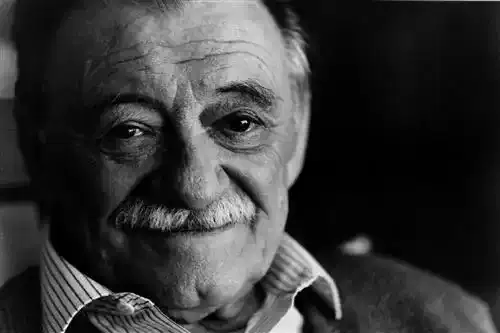
Mario Benedetti

Mario Benedetti foi um renomado escritor, poeta, dramaturgo e jornalista uruguaio, considerado um dos nomes mais importantes da literatura latino-americana. Sua obra é caracterizada por uma linguagem acessível, um tom coloquial e uma profunda sensibilidade social. Benedetti abordou temas universais como o amor, a solidão, a política e a vida cotidiana, conectando-se com um vasto público leitor por meio de uma poesia e prosa que refletem as angústias e esperanças do homem comum.
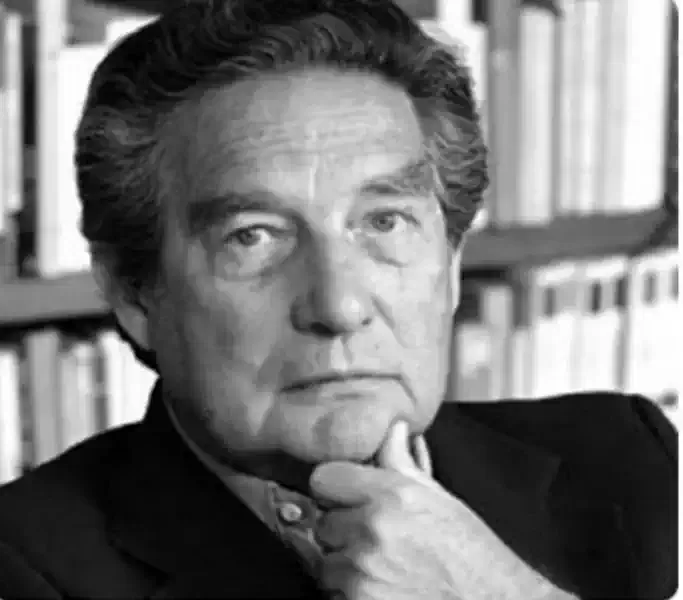
Octavio Paz

Octavio Paz foi um dos mais importantes poetas e ensaístas do século XX, laureado com o Prémio Nobel de Literatura em 1990. Sua obra é vasta e multifacetada, explorando temas como o amor, a solidão, a identidade mexicana, a condição humana, o tempo e a busca pela transcendência. Com uma linguagem rica e inovadora, Paz transitou entre a poesia lírica, a reflexão filosófica e a crítica cultural, deixando um legado intelectual e artístico de valor inestimável.