
Poems List
Explore poems from our collection
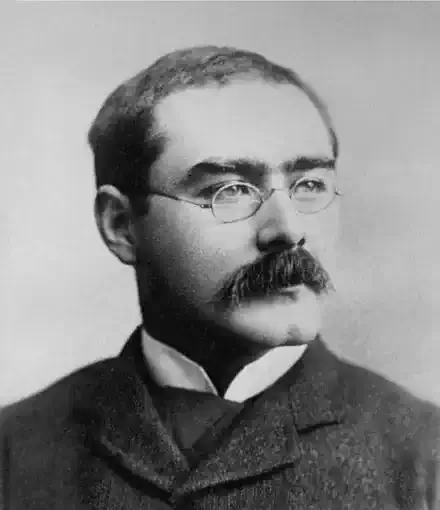
Rudyard Kipling
My Lady's Law
My Lady's Law
The Law whereby my lady moves
Was never Law to me,
But 'tis enough that she approves
Whatever Law it be.
For in that Law, and by that Law
My constant course I'll steer;
Not that I heed or deem it dread,
But that she holds it dear.
Tho' Asia sent for my content
Her richest argosies,
Those would I spurn, and bid return,
If that should give her ease.
With equal heart I'd watch depart
Each spiced sail from sight;
Sans bitterness, desiring less
Great gear than her delight.
Though Kings made swift with many a gift
My proven sword to hire--
I would not go nor serve 'em so--
Except at her desire.
With even mind, I'd put behind
Adventure and acclaim,
And clean give o'er, esteeming more
Her favour than my fame.
Yet such am I, yea, such am I--
Sore bond and freest free,
The Law that sways my lady's ways
Is mystery to me!
The Law whereby my lady moves
Was never Law to me,
But 'tis enough that she approves
Whatever Law it be.
For in that Law, and by that Law
My constant course I'll steer;
Not that I heed or deem it dread,
But that she holds it dear.
Tho' Asia sent for my content
Her richest argosies,
Those would I spurn, and bid return,
If that should give her ease.
With equal heart I'd watch depart
Each spiced sail from sight;
Sans bitterness, desiring less
Great gear than her delight.
Though Kings made swift with many a gift
My proven sword to hire--
I would not go nor serve 'em so--
Except at her desire.
With even mind, I'd put behind
Adventure and acclaim,
And clean give o'er, esteeming more
Her favour than my fame.
Yet such am I, yea, such am I--
Sore bond and freest free,
The Law that sways my lady's ways
Is mystery to me!
383
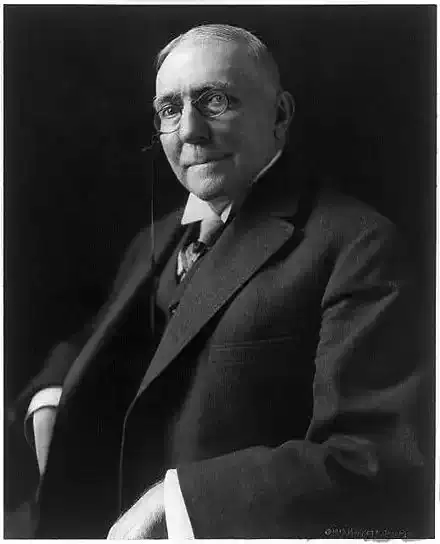
James Whitcomb Riley
A Noted Traveler
A Noted Traveler
Even in such a scene of senseless play
The children were surprised one summer-day
By a strange man who called across the fence,
Inquiring for their father's residence;
And, being answered that this was the place,
Opened the gate, and with a radiant face,
Came in and sat down with them in the shade
And waited--till the absent father made
His noon appearance, with a warmth and zest
That told he had no ordinary guest
In this man whose low-spoken name he knew
At once, demurring as the stranger drew
A stuffy notebook out and turned and set
A big fat finger on a page and let
The writing thereon testify instead
Of further speech. And as the father read
All silently, the curious children took
Exacting inventory both of book
And man:--He wore a long-napped white fur-hat
Pulled firmly on his head, and under that
Rather long silvery hair, or iron-gray--
For he was not an old man,--anyway,
Not beyond sixty. And he wore a pair
Of square-framed spectacles--or rather there
Were two more than a pair,--the extra two
Flared at the corners, at the eyes' side-view,
In as redundant vision as the eyes
Of grasshoppers or bees or dragonflies.
Later the children heard the father say
He was 'A Noted Traveler,' and would stay
Some days with them--In which time host and guest
Discussed, alone, in deepest interest,
Some vague, mysterious matter that defied
The wistful children, loitering outside
The spare-room door. There Bud acquired a quite
New list of big words--such as 'Disunite,'
And 'Shibboleth,' and 'Aristocracy,'
And 'Juggernaut,' and 'Squatter Sovereignty,'
And 'Anti-slavery,' 'Emancipate,'
'Irrepressible conflict,' and 'The Great
Battle of Armageddon'--obviously
A pamphlet brought from Washington, D. C.,
And spread among such friends as might occur
Of like views with 'The Noted Traveler.'
Even in such a scene of senseless play
The children were surprised one summer-day
By a strange man who called across the fence,
Inquiring for their father's residence;
And, being answered that this was the place,
Opened the gate, and with a radiant face,
Came in and sat down with them in the shade
And waited--till the absent father made
His noon appearance, with a warmth and zest
That told he had no ordinary guest
In this man whose low-spoken name he knew
At once, demurring as the stranger drew
A stuffy notebook out and turned and set
A big fat finger on a page and let
The writing thereon testify instead
Of further speech. And as the father read
All silently, the curious children took
Exacting inventory both of book
And man:--He wore a long-napped white fur-hat
Pulled firmly on his head, and under that
Rather long silvery hair, or iron-gray--
For he was not an old man,--anyway,
Not beyond sixty. And he wore a pair
Of square-framed spectacles--or rather there
Were two more than a pair,--the extra two
Flared at the corners, at the eyes' side-view,
In as redundant vision as the eyes
Of grasshoppers or bees or dragonflies.
Later the children heard the father say
He was 'A Noted Traveler,' and would stay
Some days with them--In which time host and guest
Discussed, alone, in deepest interest,
Some vague, mysterious matter that defied
The wistful children, loitering outside
The spare-room door. There Bud acquired a quite
New list of big words--such as 'Disunite,'
And 'Shibboleth,' and 'Aristocracy,'
And 'Juggernaut,' and 'Squatter Sovereignty,'
And 'Anti-slavery,' 'Emancipate,'
'Irrepressible conflict,' and 'The Great
Battle of Armageddon'--obviously
A pamphlet brought from Washington, D. C.,
And spread among such friends as might occur
Of like views with 'The Noted Traveler.'
283
Rudyard Kipling
My Boy Jack
My Boy Jack
-
'Have you news of my boy Jack?'
Not this tide.
'When d'you think that he'll come back?'
Not with this wind blowing, and this tide.
'Has anyone else had word of him?'
Not this tide.
For what is sunk will hardly swim,
Not with this wind blowing and this tide.
'Oh, dear, what comfort can I find?'
None this tide,
Nor any tide,
Except he did not shame his kind-
Not even with that wind blowing, and that tide.
Then hold your head up all the more,
This tide,
And every tide;
Because he was the son you bore,
And gave to that wind blowing and that tide!
-
'Have you news of my boy Jack?'
Not this tide.
'When d'you think that he'll come back?'
Not with this wind blowing, and this tide.
'Has anyone else had word of him?'
Not this tide.
For what is sunk will hardly swim,
Not with this wind blowing and this tide.
'Oh, dear, what comfort can I find?'
None this tide,
Nor any tide,
Except he did not shame his kind-
Not even with that wind blowing, and that tide.
Then hold your head up all the more,
This tide,
And every tide;
Because he was the son you bore,
And gave to that wind blowing and that tide!
435
James Whitcomb Riley
A New Year's Time At Willards's
A New Year's Time At Willards's
1
The Hired Man Talks
There's old man Willards; an' his wife;
An' Marg'et-- S'repty's sister--; an'
There's me-- an' I'm the hired man;
An' Tomps McClure, you better yer life!
Well now, old Willards hain't so bad,
Considerin' the chance he's had.
Of course, he's rich, an' sleeps an' eats
Whenever he's a mind to: Takes
An' leans back in the Amen-seats
An' thanks the Lord fer all he makes--.
That's purty much all folks has got
Ag'inst the old man, like as not!
But there's his woman-- jes the turn
Of them-air two wild girls o' hern-Marg'et
an' S'repty-- allus in
Fer any cuttin'-up concern--
Church festibals, and foolishin'
Round Christmas-trees, an' New Year's sprees--
Set up to watch the Old Year go
An' New Year come-- sich things as these;
An' turkey-dinners, don't you know!
S'repty's younger, an' more gay,
An' purtier, an' finer dressed
Than Marg'et is-- but, lawzy-day!
She hain't the independentest!
'Take care!' old Willards used to say,
'Take care--! Let Marg'et have her way,
An' S'repty, you go off an' play
On your melodeum--!' But, best
Of all, comes Tomps! An' I'll be bound,
Ef he hain't jes the beatin'est
Young chap in all the country round!
Ef you knowed Tomps you'd like him, shore!
They hain't no man on top o' ground
Walks into my affections more--!
An' all the Settlement'll say
That Tomps was liked jes thataway
By ever'body, till he tuk
A shine to S'repty Willards--. Then
You'd ort'o see the old man buck
An' h'ist hisse'f, an' paw the dirt,
An' hint that 'common workin'-men
That didn't want their feelin's hurt
'Ud better hunt fer 'comp'ny' where
The folks was pore an' didn't care--!'
The pine-blank facts is--, the old man,
Last Christmas was a year ago,
Found out some presents Tomps had got
Fer S'repty, an' hit made him hot--
Set down an' tuk his pen in hand
An' writ to Tomps an' told him so
On legal cap, in white an' black,
An' give him jes to understand
'No Christmas-gifts o' 'lily-white'
An' bear's-ile could fix matters right,'
An' wropped 'em up an' sent 'em back!
Well, S'repty cried an' snuffled round
Consid'able. But Marg'et she
Toed out another sock, an' wound
Her knittin' up, an' drawed the tea,
An' then set on the supper-things,
An' went up in the loft an' dressed--
An' through it all you'd never guessed
What she was up to! An' she brings
Her best hat with her an her shawl,
An' gloves, an' redicule, an' all,
An' injirubbers, an' comes down
An' tells 'em she's a-goin' to town
To he'p the Christmas goin's-on
Her Church got up. An' go she does--
The best hosswoman ever was!
'An' what'll We do while you're gone?'
The old man says, a-tryin' to be
Agreeable. 'Oh! You?' says she--,
'You kin jaw S'repty, like you did,
An' slander Tomps!' An' off she rid!
Now, this is all I'm goin' to tell
Of this-here story-- that is, I
Have done my very level best
As fur as this, an' here I 'dwell,'
As auctioneers says, winkin' sly:
Hit's old man Willards tells the rest.
2
The Old Man Talks
Adzackly jes one year ago,
This New Year's day, Tomps comes to me--
In my own house, an' whilse the folks
Was gittin' dinner--, an' he pokes
His nose right in, an' says, says he:
'I got yer note-- an' read it slow!
You don't like me, ner I don't you,'
He says--, 'we're even there, you know!
But you've said, furder that no gal
Of yourn kin marry me, er shall,
An' I'd best shet off comin', too!'
An' then he says--, 'Well, them's Your views--;
But havin' talked with S'repty, we
Have both agreed to disagree
With your peculiar notions-- some;
An', that s the reason, I refuse
To quit a-comin' here, but come--
Not fer to threat, ner raise no skeer
An' spile yer turkey-dinner here--,
But jes fer S'repty's sake, to sheer
Yer New Year's. Shall I take a cheer?'
Well, blame-don! Ef I ever see
Sich impidence! I couldn't say
Not nary word! But Mother she
Sot out a cheer fer Tomps, an' they
Shuk hands an' turnt their back on me.
Then I riz-- mad as mad could be--!
But Marg'et says--, 'Now, Pap! You set
Right where you're settin'--! Don't you fret!
An' Tomps-- you warm yer feet!' says she,
'An throw yer mitts an' comfert on
The bed there! Where is S'repty gone!
The cabbage is a-scortchin'! Ma,
Stop cryin' there an' stir the slaw!'
Well--! What was Mother cryin' fer--?
I half riz up-- but Marg'et's chin
Hit squared-- an' I set down ag'in--
I allus was afeard o' her,
I was, by jucks! So there I set,
Betwixt a sinkin'-chill an' sweat,
An' scuffled with my wrath, an' shet
My teeth to mighty tight, you bet!
An' yit, fer all that I could do,
I eeched to jes git up an' whet
The carvin'-knife a rasp er two
On Tomps's ribs-- an' so would you--!
Fer he had riz an' faced around,
An' stood there, smilin', as they brung
The turkey in, all stuffed an' browned--
Too sweet fer nose, er tooth, er tongue!
With sniffs o' sage, an' p'r'aps a dash
Of old burnt brandy, steamin'-hot
Mixed kindo' in with apple-mash
An' mince-meat, an' the Lord knows what!
Nobody was a-talkin' then,
To 'filiate any awk'ardness--
No noise o' any kind but jes
The rattle o' the dishes when
They'd fetch 'em in an' set 'em down,
An' fix an' change 'em round an' round,
Like women does-- till Mother says--,
'Vittels is ready; Abner, call
Down S'repty-- she's up-stairs, I guess--.'
And Marg'et she says, 'Ef you bawl
Like that, she'll not come down at all!
Besides, we needn't wait till she
Gits down! Here Temps, set down by me,
An' Pap: say grace...!' Well, there I was--!
What could I do! I drapped my head
Behind my fists an' groaned; an' said--:
'Indulgent Parent! In Thy cause
We bow the head an' bend the knee
An' break the bread, an' pour the wine,
Feelin'--' (The stair-door suddently
Went bang! An' S'repty flounced by me--)
'Feelin',' I says, 'this feast is Thine--
This New Year's feast--' an' rap-rap-rap!
Went Marg'ets case-knife on her plate--
An' next, I heerd a sasser drap--,
Then I looked up, an' strange to state,
There S'repty set in Tomps lap--
An' huggin' him, as shore as fate!
An' Mother kissin' him k-slap!
An' Marg'et-- she chips in to drap
The ruther peert remark to me--:
'That 'grace' o' yourn,' she says, 'won't 'gee'--
This hain't no 'New Year's feast,'' says she--,
'This is a' Infair-Dinner, Pap!'
An' so it was--! Be'n married fer
Purt' nigh a week--! 'Twas Marg'et planned
The whole thing fer 'em, through an' through.
I'm rickonciled; an' understand,
I take things jes as they occur--,
Ef Marg'et liked Tomps, Tomps 'ud do--!
But I-says-I, a-holt his hand--,
'I'm glad you didn't marry Her-'
Cause Marg'et's my guardeen-- yes-sir--!
An' S'repty's good enough fer you!'
1
The Hired Man Talks
There's old man Willards; an' his wife;
An' Marg'et-- S'repty's sister--; an'
There's me-- an' I'm the hired man;
An' Tomps McClure, you better yer life!
Well now, old Willards hain't so bad,
Considerin' the chance he's had.
Of course, he's rich, an' sleeps an' eats
Whenever he's a mind to: Takes
An' leans back in the Amen-seats
An' thanks the Lord fer all he makes--.
That's purty much all folks has got
Ag'inst the old man, like as not!
But there's his woman-- jes the turn
Of them-air two wild girls o' hern-Marg'et
an' S'repty-- allus in
Fer any cuttin'-up concern--
Church festibals, and foolishin'
Round Christmas-trees, an' New Year's sprees--
Set up to watch the Old Year go
An' New Year come-- sich things as these;
An' turkey-dinners, don't you know!
S'repty's younger, an' more gay,
An' purtier, an' finer dressed
Than Marg'et is-- but, lawzy-day!
She hain't the independentest!
'Take care!' old Willards used to say,
'Take care--! Let Marg'et have her way,
An' S'repty, you go off an' play
On your melodeum--!' But, best
Of all, comes Tomps! An' I'll be bound,
Ef he hain't jes the beatin'est
Young chap in all the country round!
Ef you knowed Tomps you'd like him, shore!
They hain't no man on top o' ground
Walks into my affections more--!
An' all the Settlement'll say
That Tomps was liked jes thataway
By ever'body, till he tuk
A shine to S'repty Willards--. Then
You'd ort'o see the old man buck
An' h'ist hisse'f, an' paw the dirt,
An' hint that 'common workin'-men
That didn't want their feelin's hurt
'Ud better hunt fer 'comp'ny' where
The folks was pore an' didn't care--!'
The pine-blank facts is--, the old man,
Last Christmas was a year ago,
Found out some presents Tomps had got
Fer S'repty, an' hit made him hot--
Set down an' tuk his pen in hand
An' writ to Tomps an' told him so
On legal cap, in white an' black,
An' give him jes to understand
'No Christmas-gifts o' 'lily-white'
An' bear's-ile could fix matters right,'
An' wropped 'em up an' sent 'em back!
Well, S'repty cried an' snuffled round
Consid'able. But Marg'et she
Toed out another sock, an' wound
Her knittin' up, an' drawed the tea,
An' then set on the supper-things,
An' went up in the loft an' dressed--
An' through it all you'd never guessed
What she was up to! An' she brings
Her best hat with her an her shawl,
An' gloves, an' redicule, an' all,
An' injirubbers, an' comes down
An' tells 'em she's a-goin' to town
To he'p the Christmas goin's-on
Her Church got up. An' go she does--
The best hosswoman ever was!
'An' what'll We do while you're gone?'
The old man says, a-tryin' to be
Agreeable. 'Oh! You?' says she--,
'You kin jaw S'repty, like you did,
An' slander Tomps!' An' off she rid!
Now, this is all I'm goin' to tell
Of this-here story-- that is, I
Have done my very level best
As fur as this, an' here I 'dwell,'
As auctioneers says, winkin' sly:
Hit's old man Willards tells the rest.
2
The Old Man Talks
Adzackly jes one year ago,
This New Year's day, Tomps comes to me--
In my own house, an' whilse the folks
Was gittin' dinner--, an' he pokes
His nose right in, an' says, says he:
'I got yer note-- an' read it slow!
You don't like me, ner I don't you,'
He says--, 'we're even there, you know!
But you've said, furder that no gal
Of yourn kin marry me, er shall,
An' I'd best shet off comin', too!'
An' then he says--, 'Well, them's Your views--;
But havin' talked with S'repty, we
Have both agreed to disagree
With your peculiar notions-- some;
An', that s the reason, I refuse
To quit a-comin' here, but come--
Not fer to threat, ner raise no skeer
An' spile yer turkey-dinner here--,
But jes fer S'repty's sake, to sheer
Yer New Year's. Shall I take a cheer?'
Well, blame-don! Ef I ever see
Sich impidence! I couldn't say
Not nary word! But Mother she
Sot out a cheer fer Tomps, an' they
Shuk hands an' turnt their back on me.
Then I riz-- mad as mad could be--!
But Marg'et says--, 'Now, Pap! You set
Right where you're settin'--! Don't you fret!
An' Tomps-- you warm yer feet!' says she,
'An throw yer mitts an' comfert on
The bed there! Where is S'repty gone!
The cabbage is a-scortchin'! Ma,
Stop cryin' there an' stir the slaw!'
Well--! What was Mother cryin' fer--?
I half riz up-- but Marg'et's chin
Hit squared-- an' I set down ag'in--
I allus was afeard o' her,
I was, by jucks! So there I set,
Betwixt a sinkin'-chill an' sweat,
An' scuffled with my wrath, an' shet
My teeth to mighty tight, you bet!
An' yit, fer all that I could do,
I eeched to jes git up an' whet
The carvin'-knife a rasp er two
On Tomps's ribs-- an' so would you--!
Fer he had riz an' faced around,
An' stood there, smilin', as they brung
The turkey in, all stuffed an' browned--
Too sweet fer nose, er tooth, er tongue!
With sniffs o' sage, an' p'r'aps a dash
Of old burnt brandy, steamin'-hot
Mixed kindo' in with apple-mash
An' mince-meat, an' the Lord knows what!
Nobody was a-talkin' then,
To 'filiate any awk'ardness--
No noise o' any kind but jes
The rattle o' the dishes when
They'd fetch 'em in an' set 'em down,
An' fix an' change 'em round an' round,
Like women does-- till Mother says--,
'Vittels is ready; Abner, call
Down S'repty-- she's up-stairs, I guess--.'
And Marg'et she says, 'Ef you bawl
Like that, she'll not come down at all!
Besides, we needn't wait till she
Gits down! Here Temps, set down by me,
An' Pap: say grace...!' Well, there I was--!
What could I do! I drapped my head
Behind my fists an' groaned; an' said--:
'Indulgent Parent! In Thy cause
We bow the head an' bend the knee
An' break the bread, an' pour the wine,
Feelin'--' (The stair-door suddently
Went bang! An' S'repty flounced by me--)
'Feelin',' I says, 'this feast is Thine--
This New Year's feast--' an' rap-rap-rap!
Went Marg'ets case-knife on her plate--
An' next, I heerd a sasser drap--,
Then I looked up, an' strange to state,
There S'repty set in Tomps lap--
An' huggin' him, as shore as fate!
An' Mother kissin' him k-slap!
An' Marg'et-- she chips in to drap
The ruther peert remark to me--:
'That 'grace' o' yourn,' she says, 'won't 'gee'--
This hain't no 'New Year's feast,'' says she--,
'This is a' Infair-Dinner, Pap!'
An' so it was--! Be'n married fer
Purt' nigh a week--! 'Twas Marg'et planned
The whole thing fer 'em, through an' through.
I'm rickonciled; an' understand,
I take things jes as they occur--,
Ef Marg'et liked Tomps, Tomps 'ud do--!
But I-says-I, a-holt his hand--,
'I'm glad you didn't marry Her-'
Cause Marg'et's my guardeen-- yes-sir--!
An' S'repty's good enough fer you!'
269
Rudyard Kipling
Mulholland's Contract
Mulholland's Contract
The fear was on the cattle, for the gale was on the sea,
An' the pens broke up on the lower deck an' let the creatures free --
An' the lights went out on the lower deck, an' no one near but me.
I had been singin' to them to keep 'em quiet there,
For the lower deck is the dangerousest, requirin' constant care,
An' give to me as the strongest man, though used to drink and swear.
I see my chance was certain of bein' horned or trod,
For the lower deck was packed with steers thicker'n peas in a pod,
An' more pens broke at every roll -- so I made a Contract with God.
An' by the terms of the Contract, as I have read the same,
If He got me to port alive I would exalt His Name,
An' praise His Holy Majesty till further orders came.
He saved me from the cattle an' He saved me from the sea,
For they found me 'tween two drownded ones where the roll had landed me --
An' a four-inch crack on top of my head, as crazy as could be.
But that were done by a stanchion, an' not by a bullock at all,
An' I lay still for seven weeks convalessing of the fall,
An' readin' the shiny Scripture texts in the Seaman's Hospital.
An' I spoke to God of our Contract, an' He says to my prayer:
"I never puts on My ministers no more than they can bear.
So back you go to the cattle-boats an' preach My Gospel there.
"For human life is chancy at any kind of trade,
But most of all, as well you know, when the steers are mad-afraid;
So you go back to the cattle-boats an' preach 'em as I've said.
"They must quit drinkin' an' swearin', they mustn't knife on a blow,
They must quit gamblin' their wages, and you must preach it so;
For now those boats are more like Hell than anything else I know."
I didn't want to do it, for I knew what I should get,
An' I wanted to preach Religion, handsome an' out of the wet,
But the Word of the Lord were lain on me, an' I done what I was set.
I have been smit an' bruis]\ed, as warned would be the case,
An' turned my cheek to the smiter exactly as Scripture says;
But following that, I knocked him down an' led him up to Grace.
An' we have preaching on Sundays whenever the sea is calm,
An' I use no knife or pistol an' I never take no harm,
For the Lord abideth back of me to guide my fighting arm.
An' I sign for four-pound-ten a month and save the money clear,
An' I am in charge of the lower deck, an' I never lose a steer;
An' I believe in Almighty God an' preach His Gospel here.
The skippers say I'm crazy, but I can prove 'em wrong,
For I am in charge of the lower deck with all that doth belong --
~Which they would not give to a lunatic, and the competition so strong!~
The fear was on the cattle, for the gale was on the sea,
An' the pens broke up on the lower deck an' let the creatures free --
An' the lights went out on the lower deck, an' no one near but me.
I had been singin' to them to keep 'em quiet there,
For the lower deck is the dangerousest, requirin' constant care,
An' give to me as the strongest man, though used to drink and swear.
I see my chance was certain of bein' horned or trod,
For the lower deck was packed with steers thicker'n peas in a pod,
An' more pens broke at every roll -- so I made a Contract with God.
An' by the terms of the Contract, as I have read the same,
If He got me to port alive I would exalt His Name,
An' praise His Holy Majesty till further orders came.
He saved me from the cattle an' He saved me from the sea,
For they found me 'tween two drownded ones where the roll had landed me --
An' a four-inch crack on top of my head, as crazy as could be.
But that were done by a stanchion, an' not by a bullock at all,
An' I lay still for seven weeks convalessing of the fall,
An' readin' the shiny Scripture texts in the Seaman's Hospital.
An' I spoke to God of our Contract, an' He says to my prayer:
"I never puts on My ministers no more than they can bear.
So back you go to the cattle-boats an' preach My Gospel there.
"For human life is chancy at any kind of trade,
But most of all, as well you know, when the steers are mad-afraid;
So you go back to the cattle-boats an' preach 'em as I've said.
"They must quit drinkin' an' swearin', they mustn't knife on a blow,
They must quit gamblin' their wages, and you must preach it so;
For now those boats are more like Hell than anything else I know."
I didn't want to do it, for I knew what I should get,
An' I wanted to preach Religion, handsome an' out of the wet,
But the Word of the Lord were lain on me, an' I done what I was set.
I have been smit an' bruis]\ed, as warned would be the case,
An' turned my cheek to the smiter exactly as Scripture says;
But following that, I knocked him down an' led him up to Grace.
An' we have preaching on Sundays whenever the sea is calm,
An' I use no knife or pistol an' I never take no harm,
For the Lord abideth back of me to guide my fighting arm.
An' I sign for four-pound-ten a month and save the money clear,
An' I am in charge of the lower deck, an' I never lose a steer;
An' I believe in Almighty God an' preach His Gospel here.
The skippers say I'm crazy, but I can prove 'em wrong,
For I am in charge of the lower deck with all that doth belong --
~Which they would not give to a lunatic, and the competition so strong!~
452
James Whitcomb Riley
A Monument For The Soldiers
A Monument For The Soldiers
A monument for the Soldiers!
And what will ye build it of?
Can ye build it of marble, or brass, or bronze,
Outlasting the Soldiers' love?
Can ye glorify it with legends
As grand as their blood hath writ
From the inmost shrine of this land of thine
To the outermost verge of it?
And the answer came: We would build it
Out of our hopes made sure,
And out of our purest prayers and tears,
And out of our faith secure:
We would build it out of the great white truths
Their death hath sanctified,
And the sculptured forms of the men in arms,
And their faces ere they died.
And what heroic figures
Can the sculptor carve in stone?
Can the marble breast be made to bleed,
And the marble lips to moan?
Can the marble brow be fevered?
And the marble eyes be graved
To look their last, as the flag floats past,
On the country they have saved?
And the answer came: The figures
Shall all be fair and brave,
And, as befitting, as pure and white
As the stars above their grave!
The marble lips, and breast and brow
Whereon the laurel lies,
Bequeath us right to guard the flight
Of the old flag in the skies!
A monument for the Soldiers!
Built of a people's love,
And blazoned and decked and panoplied
With the hearts ye build it oft
And see that ye build it stately,
In pillar and niche and gate,
And high in pose as the souls of those
It would commemorate!
A monument for the Soldiers!
And what will ye build it of?
Can ye build it of marble, or brass, or bronze,
Outlasting the Soldiers' love?
Can ye glorify it with legends
As grand as their blood hath writ
From the inmost shrine of this land of thine
To the outermost verge of it?
And the answer came: We would build it
Out of our hopes made sure,
And out of our purest prayers and tears,
And out of our faith secure:
We would build it out of the great white truths
Their death hath sanctified,
And the sculptured forms of the men in arms,
And their faces ere they died.
And what heroic figures
Can the sculptor carve in stone?
Can the marble breast be made to bleed,
And the marble lips to moan?
Can the marble brow be fevered?
And the marble eyes be graved
To look their last, as the flag floats past,
On the country they have saved?
And the answer came: The figures
Shall all be fair and brave,
And, as befitting, as pure and white
As the stars above their grave!
The marble lips, and breast and brow
Whereon the laurel lies,
Bequeath us right to guard the flight
Of the old flag in the skies!
A monument for the Soldiers!
Built of a people's love,
And blazoned and decked and panoplied
With the hearts ye build it oft
And see that ye build it stately,
In pillar and niche and gate,
And high in pose as the souls of those
It would commemorate!
246
Rudyard Kipling
Mowgli's Song
Mowgli's Song
THAT HE SANG AT THE COUNCIL ROCK WHEN HE DANCED ON SHERE KHAN'S
HIDE
The Song of Mowgli -- I, Mowgli, am singing. Let
the jungle listen to the things I have done.
Shere Khan said he would kill -- would kill! At the
gates in the twilight he would kill Mowgli, the
Frog!
He ate and he drank. Drink deep, Shere Khan, for
when wilt thou drink again? Sleep and dream
of the kill.
I am alone on the grazing-grounds. Gray Brother,
come to me! Come to me, Lone Wolf, for there
is big game afoot.
Bring up the great bull-buffaloes, the blue-skinned
herd-bulls with the angry eyes. Drive them to
and fro as I order.
Sleepest thou still, Shere Khan? Wake, O wake!
Here come I, and the bulls are behind.
Rama, the King of the Buffaloes, stamped with his
foot. Waters of the Waingunga, whither went
Shere Khan?
He is not Ikki to dig holes, nor Mao, the Peacock, that
he should fly. He is not Mang, the Bat, to hang
in the branches. Little bamboos that creak together,
tell me where he ran?
Ow! He is there. Ahoo! He is there. Under the
feet of Rama lies the Lame One! Up, Shere
Khan! Up and kill! Here is meat; break the
necks of the bulls!
Hsh! He is asleep. We will not wake him, for his
strength is very great. The kites have come down
to see it. The black ants have come up to know
it. There is a great assembly in his honour.
Alala! I have no cloth to wrap me. The kites will
see that I am naked. I am ashamed to meet all
these people.
Lend me thy coat, Shere Khan. Lend me thy gay
striped coat that I may go to the Council Rock.
By the Bull that bought me I have made a promise --
a little promise. Only thy coat is lacking before I
keep my word.
With the knife -- with the knife that men use -- with
the knife of the hunter, the man, I will stoop down
for my gift.
Waters of the Waingunga, bear witness that Shere
Khan gives me his coat for the love that he bears
me. Pull, Gray Brother! Pull, Akela! Heavy is
the hide of Shere Khan.
The Man Pack are angry. They throw stones and talk
child's talk. My mouth is bleeding. Let us run
away.
Through the night, through the hot night, run swiftly
with me, my brothers. We will leave the lights
of the village and go to the low moon.
Waters of the Waingunga, the Man Pack have cast me
out. I did them no harm, but they were afraid of
me. Why?
Wolf Pack, ye have cast me out too. The jungle is
shut to me and the village gates are shut. Why?
As Mang flies between the beasts and the birds so fly
I between the village and the jungle. Why?
I dance on the hide of Shere Khan, but my heart is
very heavy. My mouth is cut and wounded with
the stones from the village, but my heart is very
light because I have come back to the jungle.
Why?
These two things fight together in me as the snakes
fight in the spring. The water comes out of my
eyes; yet I laugh while it falls. Why?
I am two Mowglis, but the hide of Shere Khan is under
my feet.
All the jungle knows that I have killed Shere Khan.
Look -- look well, O Wolves!
Ahae! My heart is heavy with the things that I do
not understand.
Oh! hush thee, my baby, the night is behind us,
And black are the waters that sparkled so green.
The moon, o'er the combers, looks downward to find us
At rest in the hollows that rustle between.
Where billow meets billow, there soft be thy pillow;
Ah, weary wee flipperling, curl at thy ease!
The storm shall not wake thee, nor shark overtake thee,
Asleep in the arms of the slow-swinging seas.
THAT HE SANG AT THE COUNCIL ROCK WHEN HE DANCED ON SHERE KHAN'S
HIDE
The Song of Mowgli -- I, Mowgli, am singing. Let
the jungle listen to the things I have done.
Shere Khan said he would kill -- would kill! At the
gates in the twilight he would kill Mowgli, the
Frog!
He ate and he drank. Drink deep, Shere Khan, for
when wilt thou drink again? Sleep and dream
of the kill.
I am alone on the grazing-grounds. Gray Brother,
come to me! Come to me, Lone Wolf, for there
is big game afoot.
Bring up the great bull-buffaloes, the blue-skinned
herd-bulls with the angry eyes. Drive them to
and fro as I order.
Sleepest thou still, Shere Khan? Wake, O wake!
Here come I, and the bulls are behind.
Rama, the King of the Buffaloes, stamped with his
foot. Waters of the Waingunga, whither went
Shere Khan?
He is not Ikki to dig holes, nor Mao, the Peacock, that
he should fly. He is not Mang, the Bat, to hang
in the branches. Little bamboos that creak together,
tell me where he ran?
Ow! He is there. Ahoo! He is there. Under the
feet of Rama lies the Lame One! Up, Shere
Khan! Up and kill! Here is meat; break the
necks of the bulls!
Hsh! He is asleep. We will not wake him, for his
strength is very great. The kites have come down
to see it. The black ants have come up to know
it. There is a great assembly in his honour.
Alala! I have no cloth to wrap me. The kites will
see that I am naked. I am ashamed to meet all
these people.
Lend me thy coat, Shere Khan. Lend me thy gay
striped coat that I may go to the Council Rock.
By the Bull that bought me I have made a promise --
a little promise. Only thy coat is lacking before I
keep my word.
With the knife -- with the knife that men use -- with
the knife of the hunter, the man, I will stoop down
for my gift.
Waters of the Waingunga, bear witness that Shere
Khan gives me his coat for the love that he bears
me. Pull, Gray Brother! Pull, Akela! Heavy is
the hide of Shere Khan.
The Man Pack are angry. They throw stones and talk
child's talk. My mouth is bleeding. Let us run
away.
Through the night, through the hot night, run swiftly
with me, my brothers. We will leave the lights
of the village and go to the low moon.
Waters of the Waingunga, the Man Pack have cast me
out. I did them no harm, but they were afraid of
me. Why?
Wolf Pack, ye have cast me out too. The jungle is
shut to me and the village gates are shut. Why?
As Mang flies between the beasts and the birds so fly
I between the village and the jungle. Why?
I dance on the hide of Shere Khan, but my heart is
very heavy. My mouth is cut and wounded with
the stones from the village, but my heart is very
light because I have come back to the jungle.
Why?
These two things fight together in me as the snakes
fight in the spring. The water comes out of my
eyes; yet I laugh while it falls. Why?
I am two Mowglis, but the hide of Shere Khan is under
my feet.
All the jungle knows that I have killed Shere Khan.
Look -- look well, O Wolves!
Ahae! My heart is heavy with the things that I do
not understand.
Oh! hush thee, my baby, the night is behind us,
And black are the waters that sparkled so green.
The moon, o'er the combers, looks downward to find us
At rest in the hollows that rustle between.
Where billow meets billow, there soft be thy pillow;
Ah, weary wee flipperling, curl at thy ease!
The storm shall not wake thee, nor shark overtake thee,
Asleep in the arms of the slow-swinging seas.
491
James Whitcomb Riley
A Man Of Many Parts
A Man Of Many Parts
It was a man of many parts,
Who in his coffer mind
Had stored the Classics and the Arts
And Sciences combined;
The purest gems of poesy
Came flashing from his pen--
The wholesome truths of History
He gave his fellow men.
He knew the stars from 'Dog' to Mars;
And he could tell you, too,
Their distances--as though the cars
Had often checked him through--
And time 'twould take to reach the sun,
Or by the 'Milky Way,'
Drop in upon the moon, or run
The homeward trip, or stay.
With Logic at his fingers' ends,
Theology in mind,
He often entertained his friends
Until they died resigned;
And with inquiring mind intent
Upon Alchemic arts
A dynamite experiment-.
. . . . . .
A man of many parts!
It was a man of many parts,
Who in his coffer mind
Had stored the Classics and the Arts
And Sciences combined;
The purest gems of poesy
Came flashing from his pen--
The wholesome truths of History
He gave his fellow men.
He knew the stars from 'Dog' to Mars;
And he could tell you, too,
Their distances--as though the cars
Had often checked him through--
And time 'twould take to reach the sun,
Or by the 'Milky Way,'
Drop in upon the moon, or run
The homeward trip, or stay.
With Logic at his fingers' ends,
Theology in mind,
He often entertained his friends
Until they died resigned;
And with inquiring mind intent
Upon Alchemic arts
A dynamite experiment-.
. . . . . .
A man of many parts!
273
Rudyard Kipling
Mother o' Mine
Mother o' Mine
If I were hanged on the highest hill,
Mother o' mine, O mother o' mine!
I know whose love would follow me still,
Mother o' mine, O mother o' mine!
If I were drowned in the deepest sea,
Mother o' mine, O mother o' mine!
I know whose tears would come down to me,
Mother o' mine, O mother o' mine!
If I were damned of body and soul,
I know whose prayers would make me whole,
Mother o' mine, O mother o' mine!
If I were hanged on the highest hill,
Mother o' mine, O mother o' mine!
I know whose love would follow me still,
Mother o' mine, O mother o' mine!
If I were drowned in the deepest sea,
Mother o' mine, O mother o' mine!
I know whose tears would come down to me,
Mother o' mine, O mother o' mine!
If I were damned of body and soul,
I know whose prayers would make me whole,
Mother o' mine, O mother o' mine!
495
James Whitcomb Riley
A Liz Town Humorist
A Liz Town Humorist
Settin' round the stove, last night,
Down at Wess's store, was me
And Mart Strimples, Tunk, and White,
And Doc Bills, and two er three
Fellers o' the Mudsock tribe
No use tryin' to describe!
And says Doc, he says, says he--,
'Talkin' 'bout good things to eat,
Ripe mushmillon's hard to beat!'
I chawed on. And Mart he 'lowed
Wortermillon beat the mush--.
'Red,' he says, 'and juicy-- Hush--!
I'll jes' leave it to the crowd!'
Then a Mudsock chap, says he--,
'Punkin's good enough fer me--
Punkin pies, I mean,' he says--,
Them beats millons--! What say, Wess?
I chawed on. And Wess says--, 'Well,
You jes' fetch that wife of mine
All yer wortermillon-rine--,
And she'll bile it down a spell--
In with sorghum, I suppose,
And what else, Lord only knows--!
But I'm here to tell all hands
Them p'serves meets my demands!'
I chawed on. And White he says--,
'Well, I'll jes' stand, in with Wess-I'm
no hog!' And Tunk says--, 'I
Guess I'll pastur' out on pie
With the Mudsock boys!' says he;
'Now what's yourn?' he says to me:
I chawed on-- fer-- quite a spell
Then I speaks up, slow and dry--,
Jes' tobacker!' I-says-I--.
And you'd ort o' heerd 'em yell!
Settin' round the stove, last night,
Down at Wess's store, was me
And Mart Strimples, Tunk, and White,
And Doc Bills, and two er three
Fellers o' the Mudsock tribe
No use tryin' to describe!
And says Doc, he says, says he--,
'Talkin' 'bout good things to eat,
Ripe mushmillon's hard to beat!'
I chawed on. And Mart he 'lowed
Wortermillon beat the mush--.
'Red,' he says, 'and juicy-- Hush--!
I'll jes' leave it to the crowd!'
Then a Mudsock chap, says he--,
'Punkin's good enough fer me--
Punkin pies, I mean,' he says--,
Them beats millons--! What say, Wess?
I chawed on. And Wess says--, 'Well,
You jes' fetch that wife of mine
All yer wortermillon-rine--,
And she'll bile it down a spell--
In with sorghum, I suppose,
And what else, Lord only knows--!
But I'm here to tell all hands
Them p'serves meets my demands!'
I chawed on. And White he says--,
'Well, I'll jes' stand, in with Wess-I'm
no hog!' And Tunk says--, 'I
Guess I'll pastur' out on pie
With the Mudsock boys!' says he;
'Now what's yourn?' he says to me:
I chawed on-- fer-- quite a spell
Then I speaks up, slow and dry--,
Jes' tobacker!' I-says-I--.
And you'd ort o' heerd 'em yell!
271
Rudyard Kipling
Mesopotamia
Mesopotamia
They shall not return to us, the resolute, the young,
The eager and whole-hearted whom we gave:
But the men who left them thriftily to die in their own dung,
Shall they come with years and honour to the grave?
They shall not return to us; the strong men coldly slain
In sight of help denied from day to day:
But the men who edged their agonies and chid them in their pain,
Are they too strong and wise to put away?
Our dead shall not return to us while Day and Night divide--
Never while the bars of sunset hold.
But the idle-minded overlings who quibbled while they died,
Shall they thrust for high employments as of old?
Shall we only threaten and be angry for an hour:
When the storm is ended shall we find
How softly but how swiftly they have sidled back to power
By the favour and contrivance of their kind?
Even while they soothe us, while they promise large amends,
Even while they make a show of fear,
Do they call upon their debtors, and take counsel with their
friends,
To conform and re-establish each career?
Their lives cannot repay us--their death could not undo--
The shame that they have laid upon our race.
But the slothfulness that wasted and the arrogance that slew,
Shell we leave it unabated in its place?
They shall not return to us, the resolute, the young,
The eager and whole-hearted whom we gave:
But the men who left them thriftily to die in their own dung,
Shall they come with years and honour to the grave?
They shall not return to us; the strong men coldly slain
In sight of help denied from day to day:
But the men who edged their agonies and chid them in their pain,
Are they too strong and wise to put away?
Our dead shall not return to us while Day and Night divide--
Never while the bars of sunset hold.
But the idle-minded overlings who quibbled while they died,
Shall they thrust for high employments as of old?
Shall we only threaten and be angry for an hour:
When the storm is ended shall we find
How softly but how swiftly they have sidled back to power
By the favour and contrivance of their kind?
Even while they soothe us, while they promise large amends,
Even while they make a show of fear,
Do they call upon their debtors, and take counsel with their
friends,
To conform and re-establish each career?
Their lives cannot repay us--their death could not undo--
The shame that they have laid upon our race.
But the slothfulness that wasted and the arrogance that slew,
Shell we leave it unabated in its place?
439
James Whitcomb Riley
A Letter To A Friend
A Letter To A Friend
The past is like a story
I have listened to in dreams
That vanished in the glory
Of the Morning's early gleams;
And--at my shadow glancing--
I feel a loss of strength,
As the Day of Life advancing
Leaves it shorn of half its length.
But it's all in vain to worry
At the rapid race of Time--
And he flies in such a flurry
When I trip him with a rhyme,
I'll bother him no longer
Than to thank you for the thought
That 'my fame is growing stronger
As you really think it ought.'
And though I fall below it,
I might know as much of mirth
To live and die a poet
Of unacknowledged worth;
For Fame is but a vagrant--
Though a loyal one and brave,
And his laurels ne'er so fragrant
As when scattered o'er the grave.
The past is like a story
I have listened to in dreams
That vanished in the glory
Of the Morning's early gleams;
And--at my shadow glancing--
I feel a loss of strength,
As the Day of Life advancing
Leaves it shorn of half its length.
But it's all in vain to worry
At the rapid race of Time--
And he flies in such a flurry
When I trip him with a rhyme,
I'll bother him no longer
Than to thank you for the thought
That 'my fame is growing stronger
As you really think it ought.'
And though I fall below it,
I might know as much of mirth
To live and die a poet
Of unacknowledged worth;
For Fame is but a vagrant--
Though a loyal one and brave,
And his laurels ne'er so fragrant
As when scattered o'er the grave.
238
Rudyard Kipling
McAndrew's Hymn
McAndrew's Hymn
Lord, Thou hast made this world below the shadow of a dream,
An', taught by time, I tak' it so -- exceptin' always Steam.
From coupler-flange to spindle-guide I see Thy Hand, O God --
Predestination in the stride o' yon connectin'-rod.
John Calvin might ha' forged the same -- enorrmous, certain, slow --
Ay, wrought it in the furnace-flame -- ~my~ "Institutio".
I cannot get my sleep to-night; old bones are hard to please;
I'll stand the middle watch up here -- alone wi' God an' these
My engines, after ninety days o' race an' rack an' strain
Through all the seas of all Thy world, slam-bangin' home again.
Slam-bang too much -- they knock a wee -- the crosshead-gibs are loose;
But thirty thousand mile o' sea has gied them fair excuse. . . .
Fine, clear an' dark -- a full-draught breeze, wi' Ushant out o' sight,
An' Ferguson relievin' Hay. Old girl, ye'll walk to-night!
His wife's at Plymouth. . . . Seventy --
One -- Two -- Three since he began --
Three turns for Mistress Ferguson. . .and who's to blame the man?
There's none at any port for me, by drivin' fast or slow,
Since Elsie Campbell went to Thee, Lord, thirty years ago.
(The year the ~Sarah Sands~ was burned. Oh roads we used to tread,
Fra' Maryhill to Pollokshaws -- fra' Govan to Parkhead!)
Not but they're ceevil on the Board. Ye'll hear Sir Kenneth say:
"Good-morrn, M'Andrew! Back again? An' how's your bilge to-day?"
Miscallin' technicalities but handin' me my chair
To drink Madeira wi' three Earls -- the auld Fleet Engineer,
That started as a boiler-whelp -- when steam and he were low.
I mind the time we used to serve a broken pipe wi' tow.
Ten pound was all the pressure then -- Eh! Eh! -- a man wad drive;
An' here, our workin' gauges give one hunder fifty-five!
We're creepin' on wi' each new rig -- less weight an' larger power:
There'll be the loco-boiler next an' thirty knots an hour!
Thirty an' more. What I ha' seen since ocean-steam began
Leaves me no doot for the machine: but what about the man?
The man that counts, wi' all his runs, one million mile o' sea:
Four time the span from earth to moon. . . . How far, O Lord, from Thee?
That wast beside him night an' day. Ye mind my first typhoon?
It scoughed the skipper on his way to jock wi' the saloon.
Three feet were on the stokehold-floor -- just slappin' to an' fro --
An' cast me on a furnace-door. I have the marks to show.
Marks! I ha' marks o' more than burns -- deep in my soul an' black,
An' times like this, when things go smooth, my wickudness comes back.
The sins o' four and forty years, all up an' down the seas,
Clack an' repeat like valves half-fed. . . . Forgie's our trespasses.
Nights when I'd come on deck to mark, wi' envy in my gaze,
The couples kittlin' in the dark between the funnel stays;
Years when I raked the ports wi' pride to fill my cup o' wrong --
Judge not, O Lord, my steps aside at Gay Street in Hong-Kong!
Blot out the wastrel hours of mine in sin when I abode --
Jane Harrigan's an' Number Nine, The Reddick an' Grant Road!
An' waur than all -- my crownin' sin -- rank blasphemy an' wild.
I was not four and twenty then -- Ye wadna judge a child?
I'd seen the Tropics first that run -- new fruit, new smells, new air --
How could I tell -- blind-fou wi' sun -- the Deil was lurkin' there?
By day like playhouse-scenes the shore slid past our sleepy eyes;
By night those soft, lasceevious stars leered from those velvet skies,
In port (we used no cargo-steam) I'd daunder down the streets --
An ijjit grinnin' in a dream -- for shells an' parrakeets,
An' walkin'-sticks o' carved bamboo an' blowfish stuffed an' dried --
Fillin' my bunk wi' rubbishry the Chief put overside.
Till, off Sambawa Head, Ye mind, I heard a land-breeze ca',
Milk-warm wi' breath o' spice an' bloom: "M'Andrew, come awa'!"
Firm, clear an' low -- no haste, no hate -- the ghostly whisper went,
Just statin' eevidential facts beyon' all argument:
"Your mither's God's a graspin' deil, the shadow o' yoursel',
Got out o' books by meenisters clean daft on Heaven an' Hell.
They mak' Him in the Broomielaw, o' Glasgie cold an' dirt,
A jealous, pridefu' fetich, lad, that's only strong to hurt,
Ye'll not go back to Him again an' kiss His red-hot rod,
But come wi' Us" (Now, who were ~They~?) "an' know the Leevin' God,
That does not kipper souls for sport or break a life in jest,
But swells the ripenin' cocoanuts an' ripes the woman's breast."
An' there it stopped: cut off: no more; that quiet, certain voice --
For me, six months o' twenty-four, to leave or take at choice.
'Twas on me like a thunderclap -- it racked me through an' through --
Temptation past the show o' speech, unnameable an' new --
The Sin against the Holy Ghost? . . . An' under all, our screw.
That storm blew by but left behind her anchor-shiftin' swell,
Thou knowest all my heart an' mind, Thou knowest, Lord, I fell.
Third on the ~Mary Gloster~ then, and first that night in Hell!
Yet was Thy hand beneath my head, about my feet Thy care --
Fra' Deli clear to Torres Strait, the trial o' despair,
But when we touched the Barrier Reef Thy answer to my prayer!
We dared not run that sea by night but lay an' held our fire,
An' I was drowsin' on the hatch -- sick -- sick wi' doubt an' tire:
"~Better the sight of eyes that see than wanderin' o' desire!~"
Ye mind that word? Clear as our gongs -- again, an' once again,
When rippin' down through coral-trash ran out our moorin'-chain;
An' by Thy Grace I had the Light to see my duty plain.
Light on the engine-room -- no more -- bright as our carbons burn.
I've lost it since a thousand times, but never past return.
. . . . .
Obsairve. Per annum we'll have here two thousand souls aboard --
Think not I dare to justify myself before the Lord,
But -- average fifteen hunder souls safe-borne fra' port to port --
I ~am~ o' service to my kind. Ye wadna blame the thought?
Maybe they steam from grace to wrath -- to sin by folly led, --
It isna mine to judge their path -- their lives are on my head.
Mine at the last -- when all is done it all comes back to me,
The fault that leaves six thousand ton a log upon the sea.
We'll tak' one stretch -- three weeks an' odd by any road ye steer --
Fra' Cape Town east to Wellington -- ye need an engineer.
Fail there -- ye've time to weld your shaft -- ay, eat it, ere ye're spoke;
Or make Kerguelen under sail -- three jiggers burned wi' smoke!
An' home again, the Rio run: it's no child's play to go
Steamin' to bell for fourteen days o' snow an' floe an' blow --
The bergs like kelpies overside that girn an' turn an' shift
Whaur, grindin' like the Mills o' God, goes by the big South drift.
(Hail, snow an' ice that praise the Lord: I've met them at their work,
An' wished we had anither route or they anither kirk.)
Yon's strain, hard strain, o' head an' hand, for though Thy Power brings
All skill to naught, Ye'll understand a man must think o' things.
Then, at the last, we'll get to port an' hoist their baggage clear --
The passengers, wi' gloves an' canes -- an' this is what I'll hear:
"Well, thank ye for a pleasant voyage. The tender's comin' now."
While I go testin' follower-bolts an' watch the skipper bow.
They've words for every one but me -- shake hands wi' half the crew,
Except the dour Scots engineer, the man they never knew.
An' yet I like the wark for all we've dam' few pickin's here --
No pension, an' the most we earn's four hunder pound a year.
Better myself abroad? Maybe. ~I'd~ sooner starve than sail
Wi' such as call a snifter-rod ~ross~. . .French for nightingale.
Commeesion on my stores? Some do; but I can not afford
To lie like stewards wi' patty-pans --. I'm older than the Board.
A bonus on the coal I save? Ou ay, the Scots are close,
But when I grudge the strength Ye gave I'll grudge their food to ~those~.
(There's bricks that I might recommend -- an' clink the fire-bars cruel.
No! Welsh -- Wangarti at the worst -- an' damn all patent fuel!)
Inventions? Ye must stay in port to mak' a patent pay.
My Deeferential Valve-Gear taught me how that business lay,
I blame no chaps wi' clearer head for aught they make or sell.
~I~ found that I could not invent an' look to these -- as well.
So, wrestled wi' Apollyon -- Nah! -- fretted like a bairn --
But burned the workin'-plans last run wi' all I hoped to earn.
Ye know how hard an Idol dies, an' what that meant to me --
E'en tak' it for a sacrifice acceptable to Thee. . . .
~Below there! Oiler! What's your wark? Ye find it runnin' hard?
Ye needn't swill the cap wi' oil -- this isn't the Cunard!
Ye thought? Ye are not paid to think. Go, sweat that off again!~
Tck! Tck! It's deeficult to sweer nor tak' The Name in vain!
Men, ay an' women, call me stern. Wi' these to oversee
Ye'll note I've little time to burn on social repartee.
The bairns see what their elders miss; they'll hunt me to an' fro,
Till for the sake of -- well, a kiss -- I tak' 'em down below.
That minds me of our Viscount loon -- Sir Kenneth's kin -- the chap
Wi' Russia leather tennis-shoon an' spar-decked yachtin'-cap.
I showed him round last week, o'er all -- an' at the last says he:
"Mister M'Andrew, don't you think steam spoils romance at sea?"
Damned ijjit! I'd been doon that morn to see what ailed the throws,
Manholin', on my back -- the cranks three inches off my nose.
Romance! Those first-class passengers they like it very well,
Printed an' bound in little books; but why don't poets tell?
I'm sick of all their quirks an' turns -- the loves an' doves they dream --
Lord, send a man like Robbie Burns to sing the Song o' Steam!
To match wi' Scotia's noblest speech yon orchestra sublime
Whaurto -- uplifted like the Just -- the tail-rods mark the time.
The crank-throws give the double-bass, the feed-pump sobs an' heaves,
An' now the main eccentrics start their quarrel on the sheaves:
Her time, her own appointed time, the rocking link-head bides,
Till -- hear that note? -- the rod's return
whings glimmerin' through the guides.
They're all awa'! True beat, full power, the clangin' chorus goes
Clear to the tunnel where they sit, my purrin' dynamos.
Interdependence absolute, foreseen, ordained, decreed,
To work, Ye'll note, at any tilt an' every rate o' speed.
Fra' skylight-lift to furnace-bars, backed, bolted, braced an' stayed,
An' singin' like the Mornin' Stars for joy that they are made;
While, out o' touch o' vanity, the sweatin' thrust-block says:
"Not unto us the praise, or man -- not unto us the praise!"
Now, a' together, hear them lift their lesson -- theirs an' mine:
"Law, Orrder, Duty an' Restraint, Obedience, Discipline!"
Mill, forge an' try-pit taught them that when roarin' they arose,
An' whiles I wonder if a soul was gied them wi' the blows.
Oh for a man to weld it then, in one trip-hammer strain,
Till even first-class passengers could tell the meanin' plain!
But no one cares except mysel' that serve an' understand
My seven thousand horse-power here.
Eh, Lord! They're grand -- they're grand!
Uplift am I? When first in store the new-made beasties stood,
Were Ye cast down that breathed the Word declarin' all things good?
Not so! O' that warld-liftin' joy no after-fall could vex,
Ye've left a glimmer still to cheer the Man -- the Arrtifex!
~That~ holds, in spite o' knock and scale, o' friction, waste an' slip,
An' by that light -- now, mark my word -- we'll build the Perfect Ship.
I'll never last to judge her lines or take her curve -- not I.
But I ha' lived an' I ha' worked. 'Be thanks to Thee, Most High!
An' I ha' done what I ha' done -- judge Thou if ill or well --
Always Thy Grace preventin' me. . . .
Losh! Yon's the "Stand by" bell.
Pilot so soon? His flare it is. The mornin'-watch is set.
Well, God be thanked, as I was sayin', I'm no Pelagian yet.
Now I'll tak' on. . . .
~'Morrn, Ferguson. Man, have ye ever thought
What your good leddy costs in coal? . . . I'll burn 'em down to port.
Lord, Thou hast made this world below the shadow of a dream,
An', taught by time, I tak' it so -- exceptin' always Steam.
From coupler-flange to spindle-guide I see Thy Hand, O God --
Predestination in the stride o' yon connectin'-rod.
John Calvin might ha' forged the same -- enorrmous, certain, slow --
Ay, wrought it in the furnace-flame -- ~my~ "Institutio".
I cannot get my sleep to-night; old bones are hard to please;
I'll stand the middle watch up here -- alone wi' God an' these
My engines, after ninety days o' race an' rack an' strain
Through all the seas of all Thy world, slam-bangin' home again.
Slam-bang too much -- they knock a wee -- the crosshead-gibs are loose;
But thirty thousand mile o' sea has gied them fair excuse. . . .
Fine, clear an' dark -- a full-draught breeze, wi' Ushant out o' sight,
An' Ferguson relievin' Hay. Old girl, ye'll walk to-night!
His wife's at Plymouth. . . . Seventy --
One -- Two -- Three since he began --
Three turns for Mistress Ferguson. . .and who's to blame the man?
There's none at any port for me, by drivin' fast or slow,
Since Elsie Campbell went to Thee, Lord, thirty years ago.
(The year the ~Sarah Sands~ was burned. Oh roads we used to tread,
Fra' Maryhill to Pollokshaws -- fra' Govan to Parkhead!)
Not but they're ceevil on the Board. Ye'll hear Sir Kenneth say:
"Good-morrn, M'Andrew! Back again? An' how's your bilge to-day?"
Miscallin' technicalities but handin' me my chair
To drink Madeira wi' three Earls -- the auld Fleet Engineer,
That started as a boiler-whelp -- when steam and he were low.
I mind the time we used to serve a broken pipe wi' tow.
Ten pound was all the pressure then -- Eh! Eh! -- a man wad drive;
An' here, our workin' gauges give one hunder fifty-five!
We're creepin' on wi' each new rig -- less weight an' larger power:
There'll be the loco-boiler next an' thirty knots an hour!
Thirty an' more. What I ha' seen since ocean-steam began
Leaves me no doot for the machine: but what about the man?
The man that counts, wi' all his runs, one million mile o' sea:
Four time the span from earth to moon. . . . How far, O Lord, from Thee?
That wast beside him night an' day. Ye mind my first typhoon?
It scoughed the skipper on his way to jock wi' the saloon.
Three feet were on the stokehold-floor -- just slappin' to an' fro --
An' cast me on a furnace-door. I have the marks to show.
Marks! I ha' marks o' more than burns -- deep in my soul an' black,
An' times like this, when things go smooth, my wickudness comes back.
The sins o' four and forty years, all up an' down the seas,
Clack an' repeat like valves half-fed. . . . Forgie's our trespasses.
Nights when I'd come on deck to mark, wi' envy in my gaze,
The couples kittlin' in the dark between the funnel stays;
Years when I raked the ports wi' pride to fill my cup o' wrong --
Judge not, O Lord, my steps aside at Gay Street in Hong-Kong!
Blot out the wastrel hours of mine in sin when I abode --
Jane Harrigan's an' Number Nine, The Reddick an' Grant Road!
An' waur than all -- my crownin' sin -- rank blasphemy an' wild.
I was not four and twenty then -- Ye wadna judge a child?
I'd seen the Tropics first that run -- new fruit, new smells, new air --
How could I tell -- blind-fou wi' sun -- the Deil was lurkin' there?
By day like playhouse-scenes the shore slid past our sleepy eyes;
By night those soft, lasceevious stars leered from those velvet skies,
In port (we used no cargo-steam) I'd daunder down the streets --
An ijjit grinnin' in a dream -- for shells an' parrakeets,
An' walkin'-sticks o' carved bamboo an' blowfish stuffed an' dried --
Fillin' my bunk wi' rubbishry the Chief put overside.
Till, off Sambawa Head, Ye mind, I heard a land-breeze ca',
Milk-warm wi' breath o' spice an' bloom: "M'Andrew, come awa'!"
Firm, clear an' low -- no haste, no hate -- the ghostly whisper went,
Just statin' eevidential facts beyon' all argument:
"Your mither's God's a graspin' deil, the shadow o' yoursel',
Got out o' books by meenisters clean daft on Heaven an' Hell.
They mak' Him in the Broomielaw, o' Glasgie cold an' dirt,
A jealous, pridefu' fetich, lad, that's only strong to hurt,
Ye'll not go back to Him again an' kiss His red-hot rod,
But come wi' Us" (Now, who were ~They~?) "an' know the Leevin' God,
That does not kipper souls for sport or break a life in jest,
But swells the ripenin' cocoanuts an' ripes the woman's breast."
An' there it stopped: cut off: no more; that quiet, certain voice --
For me, six months o' twenty-four, to leave or take at choice.
'Twas on me like a thunderclap -- it racked me through an' through --
Temptation past the show o' speech, unnameable an' new --
The Sin against the Holy Ghost? . . . An' under all, our screw.
That storm blew by but left behind her anchor-shiftin' swell,
Thou knowest all my heart an' mind, Thou knowest, Lord, I fell.
Third on the ~Mary Gloster~ then, and first that night in Hell!
Yet was Thy hand beneath my head, about my feet Thy care --
Fra' Deli clear to Torres Strait, the trial o' despair,
But when we touched the Barrier Reef Thy answer to my prayer!
We dared not run that sea by night but lay an' held our fire,
An' I was drowsin' on the hatch -- sick -- sick wi' doubt an' tire:
"~Better the sight of eyes that see than wanderin' o' desire!~"
Ye mind that word? Clear as our gongs -- again, an' once again,
When rippin' down through coral-trash ran out our moorin'-chain;
An' by Thy Grace I had the Light to see my duty plain.
Light on the engine-room -- no more -- bright as our carbons burn.
I've lost it since a thousand times, but never past return.
. . . . .
Obsairve. Per annum we'll have here two thousand souls aboard --
Think not I dare to justify myself before the Lord,
But -- average fifteen hunder souls safe-borne fra' port to port --
I ~am~ o' service to my kind. Ye wadna blame the thought?
Maybe they steam from grace to wrath -- to sin by folly led, --
It isna mine to judge their path -- their lives are on my head.
Mine at the last -- when all is done it all comes back to me,
The fault that leaves six thousand ton a log upon the sea.
We'll tak' one stretch -- three weeks an' odd by any road ye steer --
Fra' Cape Town east to Wellington -- ye need an engineer.
Fail there -- ye've time to weld your shaft -- ay, eat it, ere ye're spoke;
Or make Kerguelen under sail -- three jiggers burned wi' smoke!
An' home again, the Rio run: it's no child's play to go
Steamin' to bell for fourteen days o' snow an' floe an' blow --
The bergs like kelpies overside that girn an' turn an' shift
Whaur, grindin' like the Mills o' God, goes by the big South drift.
(Hail, snow an' ice that praise the Lord: I've met them at their work,
An' wished we had anither route or they anither kirk.)
Yon's strain, hard strain, o' head an' hand, for though Thy Power brings
All skill to naught, Ye'll understand a man must think o' things.
Then, at the last, we'll get to port an' hoist their baggage clear --
The passengers, wi' gloves an' canes -- an' this is what I'll hear:
"Well, thank ye for a pleasant voyage. The tender's comin' now."
While I go testin' follower-bolts an' watch the skipper bow.
They've words for every one but me -- shake hands wi' half the crew,
Except the dour Scots engineer, the man they never knew.
An' yet I like the wark for all we've dam' few pickin's here --
No pension, an' the most we earn's four hunder pound a year.
Better myself abroad? Maybe. ~I'd~ sooner starve than sail
Wi' such as call a snifter-rod ~ross~. . .French for nightingale.
Commeesion on my stores? Some do; but I can not afford
To lie like stewards wi' patty-pans --. I'm older than the Board.
A bonus on the coal I save? Ou ay, the Scots are close,
But when I grudge the strength Ye gave I'll grudge their food to ~those~.
(There's bricks that I might recommend -- an' clink the fire-bars cruel.
No! Welsh -- Wangarti at the worst -- an' damn all patent fuel!)
Inventions? Ye must stay in port to mak' a patent pay.
My Deeferential Valve-Gear taught me how that business lay,
I blame no chaps wi' clearer head for aught they make or sell.
~I~ found that I could not invent an' look to these -- as well.
So, wrestled wi' Apollyon -- Nah! -- fretted like a bairn --
But burned the workin'-plans last run wi' all I hoped to earn.
Ye know how hard an Idol dies, an' what that meant to me --
E'en tak' it for a sacrifice acceptable to Thee. . . .
~Below there! Oiler! What's your wark? Ye find it runnin' hard?
Ye needn't swill the cap wi' oil -- this isn't the Cunard!
Ye thought? Ye are not paid to think. Go, sweat that off again!~
Tck! Tck! It's deeficult to sweer nor tak' The Name in vain!
Men, ay an' women, call me stern. Wi' these to oversee
Ye'll note I've little time to burn on social repartee.
The bairns see what their elders miss; they'll hunt me to an' fro,
Till for the sake of -- well, a kiss -- I tak' 'em down below.
That minds me of our Viscount loon -- Sir Kenneth's kin -- the chap
Wi' Russia leather tennis-shoon an' spar-decked yachtin'-cap.
I showed him round last week, o'er all -- an' at the last says he:
"Mister M'Andrew, don't you think steam spoils romance at sea?"
Damned ijjit! I'd been doon that morn to see what ailed the throws,
Manholin', on my back -- the cranks three inches off my nose.
Romance! Those first-class passengers they like it very well,
Printed an' bound in little books; but why don't poets tell?
I'm sick of all their quirks an' turns -- the loves an' doves they dream --
Lord, send a man like Robbie Burns to sing the Song o' Steam!
To match wi' Scotia's noblest speech yon orchestra sublime
Whaurto -- uplifted like the Just -- the tail-rods mark the time.
The crank-throws give the double-bass, the feed-pump sobs an' heaves,
An' now the main eccentrics start their quarrel on the sheaves:
Her time, her own appointed time, the rocking link-head bides,
Till -- hear that note? -- the rod's return
whings glimmerin' through the guides.
They're all awa'! True beat, full power, the clangin' chorus goes
Clear to the tunnel where they sit, my purrin' dynamos.
Interdependence absolute, foreseen, ordained, decreed,
To work, Ye'll note, at any tilt an' every rate o' speed.
Fra' skylight-lift to furnace-bars, backed, bolted, braced an' stayed,
An' singin' like the Mornin' Stars for joy that they are made;
While, out o' touch o' vanity, the sweatin' thrust-block says:
"Not unto us the praise, or man -- not unto us the praise!"
Now, a' together, hear them lift their lesson -- theirs an' mine:
"Law, Orrder, Duty an' Restraint, Obedience, Discipline!"
Mill, forge an' try-pit taught them that when roarin' they arose,
An' whiles I wonder if a soul was gied them wi' the blows.
Oh for a man to weld it then, in one trip-hammer strain,
Till even first-class passengers could tell the meanin' plain!
But no one cares except mysel' that serve an' understand
My seven thousand horse-power here.
Eh, Lord! They're grand -- they're grand!
Uplift am I? When first in store the new-made beasties stood,
Were Ye cast down that breathed the Word declarin' all things good?
Not so! O' that warld-liftin' joy no after-fall could vex,
Ye've left a glimmer still to cheer the Man -- the Arrtifex!
~That~ holds, in spite o' knock and scale, o' friction, waste an' slip,
An' by that light -- now, mark my word -- we'll build the Perfect Ship.
I'll never last to judge her lines or take her curve -- not I.
But I ha' lived an' I ha' worked. 'Be thanks to Thee, Most High!
An' I ha' done what I ha' done -- judge Thou if ill or well --
Always Thy Grace preventin' me. . . .
Losh! Yon's the "Stand by" bell.
Pilot so soon? His flare it is. The mornin'-watch is set.
Well, God be thanked, as I was sayin', I'm no Pelagian yet.
Now I'll tak' on. . . .
~'Morrn, Ferguson. Man, have ye ever thought
What your good leddy costs in coal? . . . I'll burn 'em down to port.
469
James Whitcomb Riley
A Home-Made Fairy Tale
A Home-Made Fairy Tale
Bud, come here to your uncle a spell,
And I'll tell you something you mustn't tell--
For it's a secret and shore-'nuf true,
And maybe I oughtn't to tell it to you--!
But out in the garden, under the shade
Of the apple-trees, where we romped and played
Till the moon was up, and you thought I'd gone
Fast asleep--, That was all put on!
For I was a-watchin' something queer
Goin' on there in the grass, my dear--!
'Way down deep in it, there I see
A little dude-Fairy who winked at me,
And snapped his fingers, and laughed as low
And fine as the whine of a mus-kee-to!
I kept still-- watchin' him closer-- and
I noticed a little guitar in his hand,
Which he leant 'ginst a little dead bee-- and laid
His cigarette down on a clean grass-blade,
And then climbed up on the shell of a snail--
Carefully dusting his swallowtail--
And pulling up, by a waxed web-thread,
This little guitar, you remember. I said!
And there he trinkled and trilled a tune--,
'My Love, so Fair, Tans in the Moon!'
Till presently, out of the clover-top
He seemed to be singing to, came k'pop!
The purtiest, daintiest Fairy face
In all this world, or any place!
Then the little ser'nader waved his hand,
As much as to say, 'We'll excuse you!' and
I heard, as I squinted my eyelids to,
A kiss like the drip of a drop of dew!
Bud, come here to your uncle a spell,
And I'll tell you something you mustn't tell--
For it's a secret and shore-'nuf true,
And maybe I oughtn't to tell it to you--!
But out in the garden, under the shade
Of the apple-trees, where we romped and played
Till the moon was up, and you thought I'd gone
Fast asleep--, That was all put on!
For I was a-watchin' something queer
Goin' on there in the grass, my dear--!
'Way down deep in it, there I see
A little dude-Fairy who winked at me,
And snapped his fingers, and laughed as low
And fine as the whine of a mus-kee-to!
I kept still-- watchin' him closer-- and
I noticed a little guitar in his hand,
Which he leant 'ginst a little dead bee-- and laid
His cigarette down on a clean grass-blade,
And then climbed up on the shell of a snail--
Carefully dusting his swallowtail--
And pulling up, by a waxed web-thread,
This little guitar, you remember. I said!
And there he trinkled and trilled a tune--,
'My Love, so Fair, Tans in the Moon!'
Till presently, out of the clover-top
He seemed to be singing to, came k'pop!
The purtiest, daintiest Fairy face
In all this world, or any place!
Then the little ser'nader waved his hand,
As much as to say, 'We'll excuse you!' and
I heard, as I squinted my eyelids to,
A kiss like the drip of a drop of dew!
337
Rudyard Kipling
Mary, Pity Women!
Mary, Pity Women!
You call yourself a man,
For all you used to swear,
An' leave me, as you can,
My certain shame to bear?
I 'ear! You do not care --
You done the worst you know.
I 'ate you, grinnin' there. . . .
Ah, Gawd, I love you so!
Nice while it lasted, an' now it is over --
Tear out your 'eart an' good-bye to your lover!
What's the use o' grievin', when the mother that bore you
(Mary, pity women!) knew it all before you?
It aren't no false alarm,
The finish to your fun;
You -- you 'ave brung the 'arm,
An' I'm the ruined one;
An' now you'll off an' run
With some new fool in tow.
Your 'eart? You 'aven't none. . . .
Ah, Gawd, I love you so!
When a man is tired there is naught will bind 'im;
All 'e solemn promised 'e will shove be'ind 'im.
What's the good o' prayin' for The Wrath to strike 'im
(Mary, pity women!), when the rest are like 'im?
What 'ope for me or -- it?
What's left for us to do?
I've walked with men a bit,
But this -- but this is you.
So 'elp me Christ, it's true!
Where can I 'ide or go?
You coward through and through! . . .
Ah, Gawd, I love you so!
All the more you give 'em the less are they for givin' --
Love lies dead, an' you cannot kiss 'im livin'.
Down the road 'e led you there is no returnin'
(Mary, pity women!), but you're late in learnin'!
You'd like to treat me fair?
You can't, because we're pore?
We'd starve? What do I care!
We might, but ~this~ is shore!
I want the name -- no more --
The name, an' lines to show,
An' not to be an 'ore. . . .
Ah, Gawd, I love you so!
What's the good o' pleadin', when the mother that bore you
(Mary, pity women!) knew it all before you?
Sleep on 'is promises an' wake to your sorrow
(Mary, pity women!), for we sail to-morrow!
You call yourself a man,
For all you used to swear,
An' leave me, as you can,
My certain shame to bear?
I 'ear! You do not care --
You done the worst you know.
I 'ate you, grinnin' there. . . .
Ah, Gawd, I love you so!
Nice while it lasted, an' now it is over --
Tear out your 'eart an' good-bye to your lover!
What's the use o' grievin', when the mother that bore you
(Mary, pity women!) knew it all before you?
It aren't no false alarm,
The finish to your fun;
You -- you 'ave brung the 'arm,
An' I'm the ruined one;
An' now you'll off an' run
With some new fool in tow.
Your 'eart? You 'aven't none. . . .
Ah, Gawd, I love you so!
When a man is tired there is naught will bind 'im;
All 'e solemn promised 'e will shove be'ind 'im.
What's the good o' prayin' for The Wrath to strike 'im
(Mary, pity women!), when the rest are like 'im?
What 'ope for me or -- it?
What's left for us to do?
I've walked with men a bit,
But this -- but this is you.
So 'elp me Christ, it's true!
Where can I 'ide or go?
You coward through and through! . . .
Ah, Gawd, I love you so!
All the more you give 'em the less are they for givin' --
Love lies dead, an' you cannot kiss 'im livin'.
Down the road 'e led you there is no returnin'
(Mary, pity women!), but you're late in learnin'!
You'd like to treat me fair?
You can't, because we're pore?
We'd starve? What do I care!
We might, but ~this~ is shore!
I want the name -- no more --
The name, an' lines to show,
An' not to be an 'ore. . . .
Ah, Gawd, I love you so!
What's the good o' pleadin', when the mother that bore you
(Mary, pity women!) knew it all before you?
Sleep on 'is promises an' wake to your sorrow
(Mary, pity women!), for we sail to-morrow!
423
James Whitcomb Riley
A Good Man
A Good Man
I
A good man never dies--
In worthy deed and prayer
And helpful hands, and honest eyes,
If smiles or tears be there:
Who lives for you and me--
Lives for the world he tries
To help--he lives eternally.
A good man never dies.
II
Who lives to bravely take
His share of toil and stress,
And, for his weaker fellows' sake,
Makes every burden less,--
He may, at last, seem worn--
Lie fallen--hands and eyes
Folded--yet, though we mourn and mourn,
A good man never dies.
I
A good man never dies--
In worthy deed and prayer
And helpful hands, and honest eyes,
If smiles or tears be there:
Who lives for you and me--
Lives for the world he tries
To help--he lives eternally.
A good man never dies.
II
Who lives to bravely take
His share of toil and stress,
And, for his weaker fellows' sake,
Makes every burden less,--
He may, at last, seem worn--
Lie fallen--hands and eyes
Folded--yet, though we mourn and mourn,
A good man never dies.
281
Rudyard Kipling
M'Andrew's Hymn
M'Andrew's Hymn
Lord, Thou hast made this world below the shadow of a dream,
An', taught by time, I tak' it so -- exceptin' always Steam.
From coupler-flange to spindle-guide I see Thy Hand, O God --
Predestination in the stride o' yon connectin'-rod.
John Calvin might ha' forged the same -- enorrmous, certain, slow --
Ay, wrought it in the furnace-flame -- ~my~ "Institutio".
I cannot get my sleep to-night; old bones are hard to please;
I'll stand the middle watch up here -- alone wi' God an' these
My engines, after ninety days o' race an' rack an' strain
Through all the seas of all Thy world, slam-bangin' home again.
Slam-bang too much -- they knock a wee -- the crosshead-gibs are loose;
But thirty thousand mile o' sea has gied them fair excuse. . . .
Fine, clear an' dark -- a full-draught breeze, wi' Ushant out o' sight,
An' Ferguson relievin' Hay. Old girl, ye'll walk to-night!
His wife's at Plymouth. . . . Seventy --
One -- Two -- Three since he began --
Three turns for Mistress Ferguson. . .and who's to blame the man?
There's none at any port for me, by drivin' fast or slow,
Since Elsie Campbell went to Thee, Lord, thirty years ago.
(The year the ~Sarah Sands~ was burned. Oh roads we used to tread,
Fra' Maryhill to Pollokshaws -- fra' Govan to Parkhead!)
Not but they're ceevil on the Board. Ye'll hear Sir Kenneth say:
"Good-morrn, M'Andrew! Back again? An' how's your bilge to-day?"
Miscallin' technicalities but handin' me my chair
To drink Madeira wi' three Earls -- the auld Fleet Engineer,
That started as a boiler-whelp -- when steam and he were low.
I mind the time we used to serve a broken pipe wi' tow.
Ten pound was all the pressure then -- Eh! Eh! -- a man wad drive;
An' here, our workin' gauges give one hunder fifty-five!
We're creepin' on wi' each new rig -- less weight an' larger power:
There'll be the loco-boiler next an' thirty knots an hour!
Thirty an' more. What I ha' seen since ocean-steam began
Leaves me no doot for the machine: but what about the man?
The man that counts, wi' all his runs, one million mile o' sea:
Four time the span from earth to moon. . . . How far, O Lord, from Thee?
That wast beside him night an' day. Ye mind my first typhoon?
It scoughed the skipper on his way to jock wi' the saloon.
Three feet were on the stokehold-floor -- just slappin' to an' fro --
An' cast me on a furnace-door. I have the marks to show.
Marks! I ha' marks o' more than burns -- deep in my soul an' black,
An' times like this, when things go smooth, my wickudness comes back.
The sins o' four and forty years, all up an' down the seas,
Clack an' repeat like valves half-fed. . . . Forgie's our trespasses.
Nights when I'd come on deck to mark, wi' envy in my gaze,
The couples kittlin' in the dark between the funnel stays;
Years when I raked the ports wi' pride to fill my cup o' wrong --
Judge not, O Lord, my steps aside at Gay Street in Hong-Kong!
Blot out the wastrel hours of mine in sin when I abode --
Jane Harrigan's an' Number Nine, The Reddick an' Grant Road!
An' waur than all -- my crownin' sin -- rank blasphemy an' wild.
I was not four and twenty then -- Ye wadna judge a child?
I'd seen the Tropics first that run -- new fruit, new smells, new air --
How could I tell -- blind-fou wi' sun -- the Deil was lurkin' there?
By day like playhouse-scenes the shore slid past our sleepy eyes;
By night those soft, lasceevious stars leered from those velvet skies,
In port (we used no cargo-steam) I'd daunder down the streets --
An ijjit grinnin' in a dream -- for shells an' parrakeets,
An' walkin'-sticks o' carved bamboo an' blowfish stuffed an' dried --
Fillin' my bunk wi' rubbishry the Chief put overside.
Till, off Sambawa Head, Ye mind, I heard a land-breeze ca',
Milk-warm wi' breath o' spice an' bloom: "M'Andrew, come awa'!"
Firm, clear an' low -- no haste, no hate -- the ghostly whisper went,
Just statin' eevidential facts beyon' all argument:
"Your mither's God's a graspin' deil, the shadow o' yoursel',
Got out o' books by meenisters clean daft on Heaven an' Hell.
They mak' Him in the Broomielaw, o' Glasgie cold an' dirt,
A jealous, pridefu' fetich, lad, that's only strong to hurt,
Ye'll not go back to Him again an' kiss His red-hot rod,
But come wi' Us" (Now, who were ~They~?) "an' know the Leevin' God,
That does not kipper souls for sport or break a life in jest,
But swells the ripenin' cocoanuts an' ripes the woman's breast."
An' there it stopped: cut off: no more; that quiet, certain voice --
For me, six months o' twenty-four, to leave or take at choice.
'Twas on me like a thunderclap -- it racked me through an' through --
Temptation past the show o' speech, unnameable an' new --
The Sin against the Holy Ghost? . . . An' under all, our screw.
That storm blew by but left behind her anchor-shiftin' swell,
Thou knowest all my heart an' mind, Thou knowest, Lord, I fell.
Third on the ~Mary Gloster~ then, and first that night in Hell!
Yet was Thy hand beneath my head, about my feet Thy care --
Fra' Deli clear to Torres Strait, the trial o' despair,
But when we touched the Barrier Reef Thy answer to my prayer!
We dared not run that sea by night but lay an' held our fire,
An' I was drowsin' on the hatch -- sick -- sick wi' doubt an' tire:
"~Better the sight of eyes that see than wanderin' o' desire!~"
Ye mind that word? Clear as our gongs -- again, an' once again,
When rippin' down through coral-trash ran out our moorin'-chain;
An' by Thy Grace I had the Light to see my duty plain.
Light on the engine-room -- no more -- bright as our carbons burn.
I've lost it since a thousand times, but never past return.
Obsairve. Per annum we'll have here two thousand souls aboard --
Think not I dare to justify myself before the Lord,
But -- average fifteen hunder souls safe-borne fra' port to port --
I ~am~ o' service to my kind. Ye wadna blame the thought?
Maybe they steam from grace to wrath -- to sin by folly led, --
It isna mine to judge their path -- their lives are on my head.
Mine at the last -- when all is done it all comes back to me,
The fault that leaves six thousand ton a log upon the sea.
We'll tak' one stretch -- three weeks an' odd by any road ye steer --
Fra' Cape Town east to Wellington -- ye need an engineer.
Fail there -- ye've time to weld your shaft -- ay, eat it, ere ye're spoke;
Or make Kerguelen under sail -- three jiggers burned wi' smoke!
An' home again, the Rio run: it's no child's play to go
Steamin' to bell for fourteen days o' snow an' floe an' blow --
The bergs like kelpies overside that girn an' turn an' shift
Whaur, grindin' like the Mills o' God, goes by the big South drift.
(Hail, snow an' ice that praise the Lord: I've met them at their work,
An' wished we had anither route or they anither kirk.)
Yon's strain, hard strain, o' head an' hand, for though Thy Power brings
All skill to naught, Ye'll understand a man must think o' things.
Then, at the last, we'll get to port an' hoist their baggage clear --
The passengers, wi' gloves an' canes -- an' this is what I'll hear:
"Well, thank ye for a pleasant voyage. The tender's comin' now."
While I go testin' follower-bolts an' watch the skipper bow.
They've words for every one but me -- shake hands wi' half the crew,
Except the dour Scots engineer, the man they never knew.
An' yet I like the wark for all we've dam' few pickin's here --
No pension, an' the most we earn's four hunder pound a year.
Better myself abroad? Maybe. ~I'd~ sooner starve than sail
Wi' such as call a snifter-rod ~ross~. . .French for nightingale.
Commeesion on my stores? Some do; but I can not afford
To lie like stewards wi' patty-pans --. I'm older than the Board.
A bonus on the coal I save? Ou ay, the Scots are close,
But when I grudge the strength Ye gave I'll grudge their food to ~those~.
(There's bricks that I might recommend -- an' clink the fire-bars cruel.
No! Welsh -- Wangarti at the worst -- an' damn all patent fuel!)
Inventions? Ye must stay in port to mak' a patent pay.
My Deeferential Valve-Gear taught me how that business lay,
I blame no chaps wi' clearer head for aught they make or sell.
~I~ found that I could not invent an' look to these -- as well.
So, wrestled wi' Apollyon -- Nah! -- fretted like a bairn --
But burned the workin'-plans last run wi' all I hoped to earn.
Ye know how hard an Idol dies, an' what that meant to me --
E'en tak' it for a sacrifice acceptable to Thee. . . .
~Below there! Oiler! What's your wark? Ye find it runnin' hard?
Ye needn't swill the cap wi' oil -- this isn't the Cunard!
Ye thought? Ye are not paid to think. Go, sweat that off again!~
Tck! Tck! It's deeficult to sweer nor tak' The Name in vain!
Men, ay an' women, call me stern. Wi' these to oversee
Ye'll note I've little time to burn on social repartee.
The bairns see what their elders miss; they'll hunt me to an' fro,
Till for the sake of -- well, a kiss -- I tak' 'em down below.
That minds me of our Viscount loon -- Sir Kenneth's kin -- the chap
Wi' Russia leather tennis-shoon an' spar-decked yachtin'-cap.
I showed him round last week, o'er all -- an' at the last says he:
"Mister M'Andrew, don't you think steam spoils romance at sea?"
Damned ijjit! I'd been doon that morn to see what ailed the throws,
Manholin', on my back -- the cranks three inches off my nose.
Romance! Those first-class passengers they like it very well,
Printed an' bound in little books; but why don't poets tell?
I'm sick of all their quirks an' turns -- the loves an' doves they dream --
Lord, send a man like Robbie Burns to sing the Song o' Steam!
To match wi' Scotia's noblest speech yon orchestra sublime
Whaurto -- uplifted like the Just -- the tail-rods mark the time.
The crank-throws give the double-bass, the feed-pump sobs an' heaves,
An' now the main eccentrics start their quarrel on the sheaves:
Her time, her own appointed time, the rocking link-head bides,
Till -- hear that note? -- the rod's return
whings glimmerin' through the guides.
They're all awa'! True beat, full power, the clangin' chorus goes
Clear to the tunnel where they sit, my purrin' dynamos.
Interdependence absolute, foreseen, ordained, decreed,
To work, Ye'll note, at any tilt an' every rate o' speed.
Fra' skylight-lift to furnace-bars, backed, bolted, braced an' stayed,
An' singin' like the Mornin' Stars for joy that they are made;
While, out o' touch o' vanity, the sweatin' thrust-block says:
"Not unto us the praise, or man -- not unto us the praise!"
Now, a' together, hear them lift their lesson -- theirs an' mine:
"Law, Orrder, Duty an' Restraint, Obedience, Discipline!"
Mill, forge an' try-pit taught them that when roarin' they arose,
An' whiles I wonder if a soul was gied them wi' the blows.
Oh for a man to weld it then, in one trip-hammer strain,
Till even first-class passengers could tell the meanin' plain!
But no one cares except mysel' that serve an' understand
My seven thousand horse-power here.
Eh, Lord! They're grand -- they're grand!
Uplift am I? When first in store the new-made beasties stood,
Were Ye cast down that breathed the Word declarin' all things good?
Not so! O' that warld-liftin' joy no after-fall could vex,
Ye've left a glimmer still to cheer the Man -- the Arrtifex!
~That~ holds, in spite o' knock and scale, o' friction, waste an' slip,
An' by that light -- now, mark my word -- we'll build the Perfect Ship.
I'll never last to judge her lines or take her curve -- not I.
But I ha' lived an' I ha' worked. 'Be thanks to Thee, Most High!
An' I ha' done what I ha' done -- judge Thou if ill or well --
Always Thy Grace preventin' me. . . .
Losh! Yon's the "Stand by" bell.
Pilot so soon? His flare it is. The mornin'-watch is set.
Well, God be thanked, as I was sayin', I'm no Pelagian yet.
Now I'll tak' on. . . .
~'Morrn, Ferguson. Man, have ye ever thought
What your good leddy costs in coal? . . . I'll burn 'em down to port.
Lord, Thou hast made this world below the shadow of a dream,
An', taught by time, I tak' it so -- exceptin' always Steam.
From coupler-flange to spindle-guide I see Thy Hand, O God --
Predestination in the stride o' yon connectin'-rod.
John Calvin might ha' forged the same -- enorrmous, certain, slow --
Ay, wrought it in the furnace-flame -- ~my~ "Institutio".
I cannot get my sleep to-night; old bones are hard to please;
I'll stand the middle watch up here -- alone wi' God an' these
My engines, after ninety days o' race an' rack an' strain
Through all the seas of all Thy world, slam-bangin' home again.
Slam-bang too much -- they knock a wee -- the crosshead-gibs are loose;
But thirty thousand mile o' sea has gied them fair excuse. . . .
Fine, clear an' dark -- a full-draught breeze, wi' Ushant out o' sight,
An' Ferguson relievin' Hay. Old girl, ye'll walk to-night!
His wife's at Plymouth. . . . Seventy --
One -- Two -- Three since he began --
Three turns for Mistress Ferguson. . .and who's to blame the man?
There's none at any port for me, by drivin' fast or slow,
Since Elsie Campbell went to Thee, Lord, thirty years ago.
(The year the ~Sarah Sands~ was burned. Oh roads we used to tread,
Fra' Maryhill to Pollokshaws -- fra' Govan to Parkhead!)
Not but they're ceevil on the Board. Ye'll hear Sir Kenneth say:
"Good-morrn, M'Andrew! Back again? An' how's your bilge to-day?"
Miscallin' technicalities but handin' me my chair
To drink Madeira wi' three Earls -- the auld Fleet Engineer,
That started as a boiler-whelp -- when steam and he were low.
I mind the time we used to serve a broken pipe wi' tow.
Ten pound was all the pressure then -- Eh! Eh! -- a man wad drive;
An' here, our workin' gauges give one hunder fifty-five!
We're creepin' on wi' each new rig -- less weight an' larger power:
There'll be the loco-boiler next an' thirty knots an hour!
Thirty an' more. What I ha' seen since ocean-steam began
Leaves me no doot for the machine: but what about the man?
The man that counts, wi' all his runs, one million mile o' sea:
Four time the span from earth to moon. . . . How far, O Lord, from Thee?
That wast beside him night an' day. Ye mind my first typhoon?
It scoughed the skipper on his way to jock wi' the saloon.
Three feet were on the stokehold-floor -- just slappin' to an' fro --
An' cast me on a furnace-door. I have the marks to show.
Marks! I ha' marks o' more than burns -- deep in my soul an' black,
An' times like this, when things go smooth, my wickudness comes back.
The sins o' four and forty years, all up an' down the seas,
Clack an' repeat like valves half-fed. . . . Forgie's our trespasses.
Nights when I'd come on deck to mark, wi' envy in my gaze,
The couples kittlin' in the dark between the funnel stays;
Years when I raked the ports wi' pride to fill my cup o' wrong --
Judge not, O Lord, my steps aside at Gay Street in Hong-Kong!
Blot out the wastrel hours of mine in sin when I abode --
Jane Harrigan's an' Number Nine, The Reddick an' Grant Road!
An' waur than all -- my crownin' sin -- rank blasphemy an' wild.
I was not four and twenty then -- Ye wadna judge a child?
I'd seen the Tropics first that run -- new fruit, new smells, new air --
How could I tell -- blind-fou wi' sun -- the Deil was lurkin' there?
By day like playhouse-scenes the shore slid past our sleepy eyes;
By night those soft, lasceevious stars leered from those velvet skies,
In port (we used no cargo-steam) I'd daunder down the streets --
An ijjit grinnin' in a dream -- for shells an' parrakeets,
An' walkin'-sticks o' carved bamboo an' blowfish stuffed an' dried --
Fillin' my bunk wi' rubbishry the Chief put overside.
Till, off Sambawa Head, Ye mind, I heard a land-breeze ca',
Milk-warm wi' breath o' spice an' bloom: "M'Andrew, come awa'!"
Firm, clear an' low -- no haste, no hate -- the ghostly whisper went,
Just statin' eevidential facts beyon' all argument:
"Your mither's God's a graspin' deil, the shadow o' yoursel',
Got out o' books by meenisters clean daft on Heaven an' Hell.
They mak' Him in the Broomielaw, o' Glasgie cold an' dirt,
A jealous, pridefu' fetich, lad, that's only strong to hurt,
Ye'll not go back to Him again an' kiss His red-hot rod,
But come wi' Us" (Now, who were ~They~?) "an' know the Leevin' God,
That does not kipper souls for sport or break a life in jest,
But swells the ripenin' cocoanuts an' ripes the woman's breast."
An' there it stopped: cut off: no more; that quiet, certain voice --
For me, six months o' twenty-four, to leave or take at choice.
'Twas on me like a thunderclap -- it racked me through an' through --
Temptation past the show o' speech, unnameable an' new --
The Sin against the Holy Ghost? . . . An' under all, our screw.
That storm blew by but left behind her anchor-shiftin' swell,
Thou knowest all my heart an' mind, Thou knowest, Lord, I fell.
Third on the ~Mary Gloster~ then, and first that night in Hell!
Yet was Thy hand beneath my head, about my feet Thy care --
Fra' Deli clear to Torres Strait, the trial o' despair,
But when we touched the Barrier Reef Thy answer to my prayer!
We dared not run that sea by night but lay an' held our fire,
An' I was drowsin' on the hatch -- sick -- sick wi' doubt an' tire:
"~Better the sight of eyes that see than wanderin' o' desire!~"
Ye mind that word? Clear as our gongs -- again, an' once again,
When rippin' down through coral-trash ran out our moorin'-chain;
An' by Thy Grace I had the Light to see my duty plain.
Light on the engine-room -- no more -- bright as our carbons burn.
I've lost it since a thousand times, but never past return.
Obsairve. Per annum we'll have here two thousand souls aboard --
Think not I dare to justify myself before the Lord,
But -- average fifteen hunder souls safe-borne fra' port to port --
I ~am~ o' service to my kind. Ye wadna blame the thought?
Maybe they steam from grace to wrath -- to sin by folly led, --
It isna mine to judge their path -- their lives are on my head.
Mine at the last -- when all is done it all comes back to me,
The fault that leaves six thousand ton a log upon the sea.
We'll tak' one stretch -- three weeks an' odd by any road ye steer --
Fra' Cape Town east to Wellington -- ye need an engineer.
Fail there -- ye've time to weld your shaft -- ay, eat it, ere ye're spoke;
Or make Kerguelen under sail -- three jiggers burned wi' smoke!
An' home again, the Rio run: it's no child's play to go
Steamin' to bell for fourteen days o' snow an' floe an' blow --
The bergs like kelpies overside that girn an' turn an' shift
Whaur, grindin' like the Mills o' God, goes by the big South drift.
(Hail, snow an' ice that praise the Lord: I've met them at their work,
An' wished we had anither route or they anither kirk.)
Yon's strain, hard strain, o' head an' hand, for though Thy Power brings
All skill to naught, Ye'll understand a man must think o' things.
Then, at the last, we'll get to port an' hoist their baggage clear --
The passengers, wi' gloves an' canes -- an' this is what I'll hear:
"Well, thank ye for a pleasant voyage. The tender's comin' now."
While I go testin' follower-bolts an' watch the skipper bow.
They've words for every one but me -- shake hands wi' half the crew,
Except the dour Scots engineer, the man they never knew.
An' yet I like the wark for all we've dam' few pickin's here --
No pension, an' the most we earn's four hunder pound a year.
Better myself abroad? Maybe. ~I'd~ sooner starve than sail
Wi' such as call a snifter-rod ~ross~. . .French for nightingale.
Commeesion on my stores? Some do; but I can not afford
To lie like stewards wi' patty-pans --. I'm older than the Board.
A bonus on the coal I save? Ou ay, the Scots are close,
But when I grudge the strength Ye gave I'll grudge their food to ~those~.
(There's bricks that I might recommend -- an' clink the fire-bars cruel.
No! Welsh -- Wangarti at the worst -- an' damn all patent fuel!)
Inventions? Ye must stay in port to mak' a patent pay.
My Deeferential Valve-Gear taught me how that business lay,
I blame no chaps wi' clearer head for aught they make or sell.
~I~ found that I could not invent an' look to these -- as well.
So, wrestled wi' Apollyon -- Nah! -- fretted like a bairn --
But burned the workin'-plans last run wi' all I hoped to earn.
Ye know how hard an Idol dies, an' what that meant to me --
E'en tak' it for a sacrifice acceptable to Thee. . . .
~Below there! Oiler! What's your wark? Ye find it runnin' hard?
Ye needn't swill the cap wi' oil -- this isn't the Cunard!
Ye thought? Ye are not paid to think. Go, sweat that off again!~
Tck! Tck! It's deeficult to sweer nor tak' The Name in vain!
Men, ay an' women, call me stern. Wi' these to oversee
Ye'll note I've little time to burn on social repartee.
The bairns see what their elders miss; they'll hunt me to an' fro,
Till for the sake of -- well, a kiss -- I tak' 'em down below.
That minds me of our Viscount loon -- Sir Kenneth's kin -- the chap
Wi' Russia leather tennis-shoon an' spar-decked yachtin'-cap.
I showed him round last week, o'er all -- an' at the last says he:
"Mister M'Andrew, don't you think steam spoils romance at sea?"
Damned ijjit! I'd been doon that morn to see what ailed the throws,
Manholin', on my back -- the cranks three inches off my nose.
Romance! Those first-class passengers they like it very well,
Printed an' bound in little books; but why don't poets tell?
I'm sick of all their quirks an' turns -- the loves an' doves they dream --
Lord, send a man like Robbie Burns to sing the Song o' Steam!
To match wi' Scotia's noblest speech yon orchestra sublime
Whaurto -- uplifted like the Just -- the tail-rods mark the time.
The crank-throws give the double-bass, the feed-pump sobs an' heaves,
An' now the main eccentrics start their quarrel on the sheaves:
Her time, her own appointed time, the rocking link-head bides,
Till -- hear that note? -- the rod's return
whings glimmerin' through the guides.
They're all awa'! True beat, full power, the clangin' chorus goes
Clear to the tunnel where they sit, my purrin' dynamos.
Interdependence absolute, foreseen, ordained, decreed,
To work, Ye'll note, at any tilt an' every rate o' speed.
Fra' skylight-lift to furnace-bars, backed, bolted, braced an' stayed,
An' singin' like the Mornin' Stars for joy that they are made;
While, out o' touch o' vanity, the sweatin' thrust-block says:
"Not unto us the praise, or man -- not unto us the praise!"
Now, a' together, hear them lift their lesson -- theirs an' mine:
"Law, Orrder, Duty an' Restraint, Obedience, Discipline!"
Mill, forge an' try-pit taught them that when roarin' they arose,
An' whiles I wonder if a soul was gied them wi' the blows.
Oh for a man to weld it then, in one trip-hammer strain,
Till even first-class passengers could tell the meanin' plain!
But no one cares except mysel' that serve an' understand
My seven thousand horse-power here.
Eh, Lord! They're grand -- they're grand!
Uplift am I? When first in store the new-made beasties stood,
Were Ye cast down that breathed the Word declarin' all things good?
Not so! O' that warld-liftin' joy no after-fall could vex,
Ye've left a glimmer still to cheer the Man -- the Arrtifex!
~That~ holds, in spite o' knock and scale, o' friction, waste an' slip,
An' by that light -- now, mark my word -- we'll build the Perfect Ship.
I'll never last to judge her lines or take her curve -- not I.
But I ha' lived an' I ha' worked. 'Be thanks to Thee, Most High!
An' I ha' done what I ha' done -- judge Thou if ill or well --
Always Thy Grace preventin' me. . . .
Losh! Yon's the "Stand by" bell.
Pilot so soon? His flare it is. The mornin'-watch is set.
Well, God be thanked, as I was sayin', I'm no Pelagian yet.
Now I'll tak' on. . . .
~'Morrn, Ferguson. Man, have ye ever thought
What your good leddy costs in coal? . . . I'll burn 'em down to port.
396
James Whitcomb Riley
A Full Harvest
A Full Harvest
Seems like a feller'd ort 'o jes' to-day
Git down and roll and waller, don't you know,
In that-air stubble, and flop up and crow,
Seein' sich craps! I'll undertake to say
There're no wheat's ever turned out thataway
Afore this season!--Folks is keerless tho',
And too fergitful--'caze we'd ort 'o show
More thankfulness!--Jes' looky hyonder, hey?--
And watch that little reaper wadin' thue
That last old yaller hunk o' harvest-ground--
Jes' natchur'ly a-slicin' it in-two
Like honey-comb, and gaumin' it around
The field--like it had nothin' else to do
On'y jes' waste it all on me and you!
Seems like a feller'd ort 'o jes' to-day
Git down and roll and waller, don't you know,
In that-air stubble, and flop up and crow,
Seein' sich craps! I'll undertake to say
There're no wheat's ever turned out thataway
Afore this season!--Folks is keerless tho',
And too fergitful--'caze we'd ort 'o show
More thankfulness!--Jes' looky hyonder, hey?--
And watch that little reaper wadin' thue
That last old yaller hunk o' harvest-ground--
Jes' natchur'ly a-slicin' it in-two
Like honey-comb, and gaumin' it around
The field--like it had nothin' else to do
On'y jes' waste it all on me and you!
301
Rudyard Kipling
Macdonough's Song
Macdonough's Song
Whether the State can loose and bind
In Heaven as well as on Earth:
If it be wiser to kill mankind
Before or after the birth--
These are matters of high concern
Where State-kept schoolmen are;
But Holy State (we have lived to learn)
Endeth in Holy War.
Whether The People be led by The Lord,
Or lured by the loudest throat:
If it be quicker to die by the sword
Or cheaper to die by vote--
These are things we have dealt with once,
(And they will not rise from their grave)
For Holy People, however it runs,
Endeth in wholly Slave.
Whatsoever, for any cause,
Seeketh to take or give
Power above or beyond the Laws,
Suffer it not to live!
Holy State or Holy King--
Or Holy People's Will--
Have no truck with the senseless thing.
Order the guns and kill!
Saying --after--me:--
Once there was The People--Terror gave it birth;
Once there was The People and it made a Hell of Earth.
Earth arose and crushed it. Listen, O ye slain!
Once there was The People--it shall never be again!
Whether the State can loose and bind
In Heaven as well as on Earth:
If it be wiser to kill mankind
Before or after the birth--
These are matters of high concern
Where State-kept schoolmen are;
But Holy State (we have lived to learn)
Endeth in Holy War.
Whether The People be led by The Lord,
Or lured by the loudest throat:
If it be quicker to die by the sword
Or cheaper to die by vote--
These are things we have dealt with once,
(And they will not rise from their grave)
For Holy People, however it runs,
Endeth in wholly Slave.
Whatsoever, for any cause,
Seeketh to take or give
Power above or beyond the Laws,
Suffer it not to live!
Holy State or Holy King--
Or Holy People's Will--
Have no truck with the senseless thing.
Order the guns and kill!
Saying --after--me:--
Once there was The People--Terror gave it birth;
Once there was The People and it made a Hell of Earth.
Earth arose and crushed it. Listen, O ye slain!
Once there was The People--it shall never be again!
478
James Whitcomb Riley
A Feel In The Chris'mas-Air
A Feel In The Chris'mas-Air
They's a kind o' _feel_ in the air, to me.
When the Chris'mas-times sets in.
That's about as much of a mystery
As ever I've run ag'in!--
Fer instunce, now, whilse I gain in weight
And gineral health, I swear
They's a _goneness_ somers I can't quite state--
A kind o' _feel_ in the air.
They's a feel in the Chris'mas-air goes right
To the spot where a man _lives_ at!--
It gives a feller a' appetite--
They ain't no doubt about _that_!--
And yit they's _somepin_'--I don't know what--
That follers me, here and there,
And ha'nts and worries and spares me not--
A kind o' feel in the air!
They's a _feel_, as I say, in the air that's jest
As blame-don sad as sweet!--
In the same ra-sho as I feel the best
And am spryest on my feet,
They's allus a kind o' sort of a' _ache_
That I can't lo-cate no-where;--
But it comes with _Chris'mas_, and no mistake!--
A kind o' feel in the air.
Is it the racket the childern raise?-W'y,
_no_!--God bless 'em!--_no_!--
Is it the eyes and the cheeks ablaze--
Like my _own_ wuz, long ago?--
Is it the bleat o' the whistle and beat
O' the little toy-drum and blare
O' the horn?--_No! no!_--it is jest the sweet--
The sad-sweet feel in the air.
They's a kind o' _feel_ in the air, to me.
When the Chris'mas-times sets in.
That's about as much of a mystery
As ever I've run ag'in!--
Fer instunce, now, whilse I gain in weight
And gineral health, I swear
They's a _goneness_ somers I can't quite state--
A kind o' _feel_ in the air.
They's a feel in the Chris'mas-air goes right
To the spot where a man _lives_ at!--
It gives a feller a' appetite--
They ain't no doubt about _that_!--
And yit they's _somepin_'--I don't know what--
That follers me, here and there,
And ha'nts and worries and spares me not--
A kind o' feel in the air!
They's a _feel_, as I say, in the air that's jest
As blame-don sad as sweet!--
In the same ra-sho as I feel the best
And am spryest on my feet,
They's allus a kind o' sort of a' _ache_
That I can't lo-cate no-where;--
But it comes with _Chris'mas_, and no mistake!--
A kind o' feel in the air.
Is it the racket the childern raise?-W'y,
_no_!--God bless 'em!--_no_!--
Is it the eyes and the cheeks ablaze--
Like my _own_ wuz, long ago?--
Is it the bleat o' the whistle and beat
O' the little toy-drum and blare
O' the horn?--_No! no!_--it is jest the sweet--
The sad-sweet feel in the air.
270
Rudyard Kipling
Lord Roberts
Lord Roberts
He passed in the very battle-smoke
Of the war that he had descried.
Three hundred mile of cannon spoke
When the Master-Gunner died.
He passed to the very sound of the guns;
But, before his eye grew dim,
He had seen the faces of the sons
Whose sires had served with him,
He had touched their sword-hilts and greeted
With the old sure word of praise;
And there was virtue in touch and speech
As it had been in old days.
So he dismissed them and took his rest,
And the steadfast spirit went forth
Between the adoring East and West
And the tireless guns of the North.
Clean, simple, valiant, well-beloved,
Flawless in faith and fame,
Whom neither ease nor honours moved
An hair's-breadth from his aim.
Never again the war-wise face,
The weighed and urgent word
That pleaded in the market-place-
Pleaded and was not heard!
Yet from his life a new life springs
Through all the hosts to come,
And Glory is the least of things
That follow this man home.
He passed in the very battle-smoke
Of the war that he had descried.
Three hundred mile of cannon spoke
When the Master-Gunner died.
He passed to the very sound of the guns;
But, before his eye grew dim,
He had seen the faces of the sons
Whose sires had served with him,
He had touched their sword-hilts and greeted
With the old sure word of praise;
And there was virtue in touch and speech
As it had been in old days.
So he dismissed them and took his rest,
And the steadfast spirit went forth
Between the adoring East and West
And the tireless guns of the North.
Clean, simple, valiant, well-beloved,
Flawless in faith and fame,
Whom neither ease nor honours moved
An hair's-breadth from his aim.
Never again the war-wise face,
The weighed and urgent word
That pleaded in the market-place-
Pleaded and was not heard!
Yet from his life a new life springs
Through all the hosts to come,
And Glory is the least of things
That follow this man home.
403
James Whitcomb Riley
A Dream Of Long Ago
A Dream Of Long Ago
Lying listless in the mosses
Underneath a tree that tosses
Flakes of sunshine, and embosses
Its green shadow with the snow-Drowsy-
eyed, I sink in slumber
Born of fancies without number--
Tangled fancies that encumber
Me with dreams of long ago.
Ripples of the river singing;
And the water-lilies swinging
Bells of Parian, and ringing
Peals of perfume faint and fine,
While old forms and fairy faces
Leap from out their hiding-places
In the past, with glad embraces
Fraught with kisses sweet as wine.
Willows dip their slender fingers
O'er the little fisher's stringers,
While he baits his hook and lingers
Till the shadows gather dim;
And afar off comes a calling
Like the sounds of water falling,
With the lazy echoes drawling
Messages of haste to him.
Little naked feet that tinkle
Through the stubble-fields, and twinkle
Down the winding road, and sprinkle
Little mists of dusty rain,
While in pasture-lands the cattle
Cease their grazing with a rattle
Of the bells whose clappers tattle
To their masters down the lane.
Trees that hold their tempting treasures
O'er the orchard's hedge embrasures,
Furnish their forbidden pleasures
As in Eden lands of old;
And the coming of the master
Indicates a like disaster
To the frightened heart that faster
Beats pulsations manifold.
Puckered lips whose pipings tingle
In staccato notes that mingle
Musically with the jingle-
Haunted winds that lightly fan
Mellow twilights, crimson-tinted
By the sun, and picture-printed
Like a book that sweetly hinted
Of the Nights Arabian.
Porticoes with columns plaited
And entwined with vines and freighted
With a bloom all radiated
With the light of moon and star;
Where some tender voice is winging
In sad flights of song, and singing
To the dancing fingers flinging
Dripping from the sweet guitar.
Would my dreams were never taken
From me: that with faith unshaken
I might sleep and never waken
On a weary world of woe!
Links of love would never sever
As I dreamed them, never, never!
I would glide along forever
Through the dreams of long ago.
Lying listless in the mosses
Underneath a tree that tosses
Flakes of sunshine, and embosses
Its green shadow with the snow-Drowsy-
eyed, I sink in slumber
Born of fancies without number--
Tangled fancies that encumber
Me with dreams of long ago.
Ripples of the river singing;
And the water-lilies swinging
Bells of Parian, and ringing
Peals of perfume faint and fine,
While old forms and fairy faces
Leap from out their hiding-places
In the past, with glad embraces
Fraught with kisses sweet as wine.
Willows dip their slender fingers
O'er the little fisher's stringers,
While he baits his hook and lingers
Till the shadows gather dim;
And afar off comes a calling
Like the sounds of water falling,
With the lazy echoes drawling
Messages of haste to him.
Little naked feet that tinkle
Through the stubble-fields, and twinkle
Down the winding road, and sprinkle
Little mists of dusty rain,
While in pasture-lands the cattle
Cease their grazing with a rattle
Of the bells whose clappers tattle
To their masters down the lane.
Trees that hold their tempting treasures
O'er the orchard's hedge embrasures,
Furnish their forbidden pleasures
As in Eden lands of old;
And the coming of the master
Indicates a like disaster
To the frightened heart that faster
Beats pulsations manifold.
Puckered lips whose pipings tingle
In staccato notes that mingle
Musically with the jingle-
Haunted winds that lightly fan
Mellow twilights, crimson-tinted
By the sun, and picture-printed
Like a book that sweetly hinted
Of the Nights Arabian.
Porticoes with columns plaited
And entwined with vines and freighted
With a bloom all radiated
With the light of moon and star;
Where some tender voice is winging
In sad flights of song, and singing
To the dancing fingers flinging
Dripping from the sweet guitar.
Would my dreams were never taken
From me: that with faith unshaken
I might sleep and never waken
On a weary world of woe!
Links of love would never sever
As I dreamed them, never, never!
I would glide along forever
Through the dreams of long ago.
246
Rudyard Kipling
Lispeth
Lispeth
Look, you have cast out Love! What Gods are these
You bid me please?
The Three in One, the One in Three? Not so!
To my own Gods I go.
It may be they shall give me greater ease
Than your cold Christ and tangled Trinities.
Look, you have cast out Love! What Gods are these
You bid me please?
The Three in One, the One in Three? Not so!
To my own Gods I go.
It may be they shall give me greater ease
Than your cold Christ and tangled Trinities.
452
James Whitcomb Riley
A Dream
A Dream
I dreamed I was a spider;
A big, fat, hungry spider;
A lusty, rusty spider
With a dozen palsied limbs;
With a dozen limbs that dangled
Where three wretched flies were tangled
And their buzzing wings were strangled
In the middle of their hymns.
And I mocked them like a demon--
A demoniacal demon
Who delights to be a demon
For the sake of sin alone;
And with fondly false embraces
Did I weave my mystic laces
Round their horror-stricken faces
Till I muffled every groan.
And I smiled to see them weeping,
For to see an insect weeping,
Sadly, sorrowfully weeping,
Fattens every spider's mirth;
And to note a fly's heart quaking,
And with anguish ever aching
Till you see it slowly breaking
Is the sweetest thing on earth.
I experienced a pleasure,
Such a highly-flavored pleasure,
Such intoxicating pleasure,
That I drank of it like wine;
And my mortal soul engages
That no spider on the pages
Of the history of ages
Felt a rapture more divine.
I careened around and capered--
Madly, mystically capered--
For three days and nights I capered
Round my web in wild delight;
Till with fierce ambition burning,
And an inward thirst and yearning
I hastened my returning
With a fiendish appetite.
And I found my victims dying,
'Ha!' they whispered, 'we are dying!'
Faintly whispered, 'we are dying,
And our earthly course is run.'
And the scene was so impressing
That I breathed a special blessing,
As I killed them with caressing
And devoured them one by one.
I dreamed I was a spider;
A big, fat, hungry spider;
A lusty, rusty spider
With a dozen palsied limbs;
With a dozen limbs that dangled
Where three wretched flies were tangled
And their buzzing wings were strangled
In the middle of their hymns.
And I mocked them like a demon--
A demoniacal demon
Who delights to be a demon
For the sake of sin alone;
And with fondly false embraces
Did I weave my mystic laces
Round their horror-stricken faces
Till I muffled every groan.
And I smiled to see them weeping,
For to see an insect weeping,
Sadly, sorrowfully weeping,
Fattens every spider's mirth;
And to note a fly's heart quaking,
And with anguish ever aching
Till you see it slowly breaking
Is the sweetest thing on earth.
I experienced a pleasure,
Such a highly-flavored pleasure,
Such intoxicating pleasure,
That I drank of it like wine;
And my mortal soul engages
That no spider on the pages
Of the history of ages
Felt a rapture more divine.
I careened around and capered--
Madly, mystically capered--
For three days and nights I capered
Round my web in wild delight;
Till with fierce ambition burning,
And an inward thirst and yearning
I hastened my returning
With a fiendish appetite.
And I found my victims dying,
'Ha!' they whispered, 'we are dying!'
Faintly whispered, 'we are dying,
And our earthly course is run.'
And the scene was so impressing
That I breathed a special blessing,
As I killed them with caressing
And devoured them one by one.
271