
Poems List
Explore poems from our collection
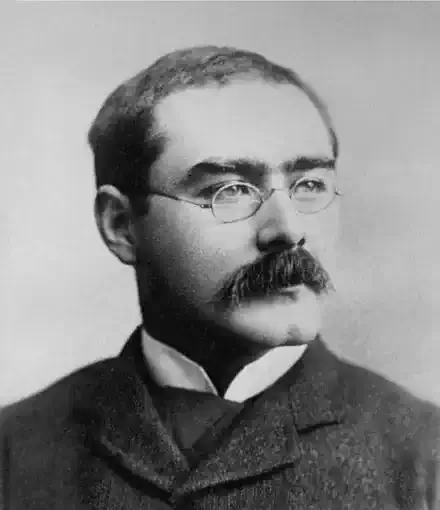
Rudyard Kipling
Snarleyow
Snarleyow
This 'appened in a battle to a batt'ry of the corps
Which is first among the women an' amazin' first in war;
An' what the bloomin' battle was I don't remember now,
But Two's off-lead 'e answered to the name o' ~Snarleyow~.
Down in the Infantry, nobody cares;
Down in the Cavalry, Colonel 'e swears;
But down in the lead with the wheel at the flog
Turns the bold Bombardier to a little whipped dog!
They was movin' into action, they was needed very sore,
To learn a little schoolin' to a native army corps,
They 'ad nipped against an uphill, they was tuckin' down the brow,
When a tricky, trundlin' roundshot give the knock to ~Snarleyow~.
They cut 'im loose an' left 'im -- 'e was almost tore in two --
But he tried to follow after as a well-trained 'orse should do;
'E went an' fouled the limber, an' the Driver's Brother squeals:
"Pull up, pull up for ~Snarleyow~ -- 'is head's between 'is 'eels!"
The Driver 'umped 'is shoulder, for the wheels was goin' round,
An' there ain't no "Stop, conductor!" when a batt'ry's changin' ground;
Sez 'e: "I broke the beggar in, an' very sad I feels,
But I couldn't pull up, not for ~you~ -- your 'ead between your 'eels!"
'E 'adn't 'ardly spoke the word, before a droppin' shell
A little right the batt'ry an' between the sections fell;
An' when the smoke 'ad cleared away, before the limber wheels,
There lay the Driver's Brother with 'is 'ead between 'is 'eels.
Then sez the Driver's Brother, an' 'is words was very plain,
"For Gawd's own sake get over me, an' put me out o' pain."
They saw 'is wounds was mortial, an' they judged that it was best,
So they took an' drove the limber straight across 'is back an' chest.
The Driver 'e give nothin' 'cept a little coughin' grunt,
But 'e swung 'is 'orses 'andsome when it came to "Action Front!"
An' if one wheel was juicy, you may lay your Monday head
'Twas juicier for the niggers when the case begun to spread.
The moril of this story, it is plainly to be seen:
You 'avn't got no families when servin' of the Queen --
You 'avn't got no brothers, fathers, sisters, wives, or sons --
If you want to win your battles take an' work your bloomin' guns!
Down in the Infantry, nobody cares;
Down in the Cavalry, Colonel 'e swears;
But down in the lead with the wheel at the flog
Turns the bold Bombardier to a little whipped dog!
This 'appened in a battle to a batt'ry of the corps
Which is first among the women an' amazin' first in war;
An' what the bloomin' battle was I don't remember now,
But Two's off-lead 'e answered to the name o' ~Snarleyow~.
Down in the Infantry, nobody cares;
Down in the Cavalry, Colonel 'e swears;
But down in the lead with the wheel at the flog
Turns the bold Bombardier to a little whipped dog!
They was movin' into action, they was needed very sore,
To learn a little schoolin' to a native army corps,
They 'ad nipped against an uphill, they was tuckin' down the brow,
When a tricky, trundlin' roundshot give the knock to ~Snarleyow~.
They cut 'im loose an' left 'im -- 'e was almost tore in two --
But he tried to follow after as a well-trained 'orse should do;
'E went an' fouled the limber, an' the Driver's Brother squeals:
"Pull up, pull up for ~Snarleyow~ -- 'is head's between 'is 'eels!"
The Driver 'umped 'is shoulder, for the wheels was goin' round,
An' there ain't no "Stop, conductor!" when a batt'ry's changin' ground;
Sez 'e: "I broke the beggar in, an' very sad I feels,
But I couldn't pull up, not for ~you~ -- your 'ead between your 'eels!"
'E 'adn't 'ardly spoke the word, before a droppin' shell
A little right the batt'ry an' between the sections fell;
An' when the smoke 'ad cleared away, before the limber wheels,
There lay the Driver's Brother with 'is 'ead between 'is 'eels.
Then sez the Driver's Brother, an' 'is words was very plain,
"For Gawd's own sake get over me, an' put me out o' pain."
They saw 'is wounds was mortial, an' they judged that it was best,
So they took an' drove the limber straight across 'is back an' chest.
The Driver 'e give nothin' 'cept a little coughin' grunt,
But 'e swung 'is 'orses 'andsome when it came to "Action Front!"
An' if one wheel was juicy, you may lay your Monday head
'Twas juicier for the niggers when the case begun to spread.
The moril of this story, it is plainly to be seen:
You 'avn't got no families when servin' of the Queen --
You 'avn't got no brothers, fathers, sisters, wives, or sons --
If you want to win your battles take an' work your bloomin' guns!
Down in the Infantry, nobody cares;
Down in the Cavalry, Colonel 'e swears;
But down in the lead with the wheel at the flog
Turns the bold Bombardier to a little whipped dog!
443
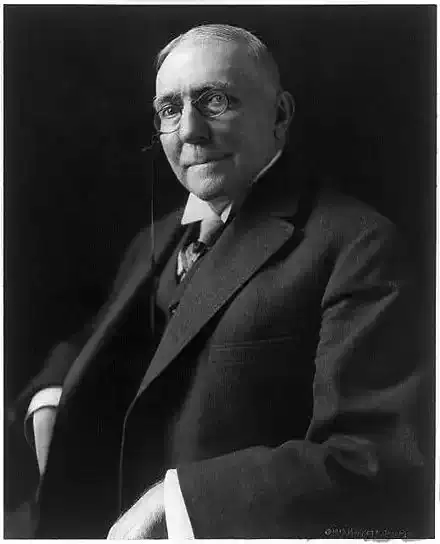
James Whitcomb Riley
Away
Away
I cannot say, and I will not say
That he is dead--. He is just away!
With a cheery smile, and a wave of the hand
He has wandered into an unknown land,
And left us dreaming how very fair
It needs must be, since he lingers there.
And you-- O you, who the wildest yearn
For the old-time step and the glad return--,
Think of him faring on, as dear
In the love of There as the love of Here;
And loyal still, as he gave the blows
Of his warrior-strength to his country's foes--.
Mild and gentle, as he was brave--,
When the sweetest love of his life he gave
To simple things--: Where the violets grew
Blue as the eyes they were likened to,
The touches of his hands have strayed
As reverently as his lips have prayed:
When the little brown thrush that harshly chirred
Was dear to him as the mocking-bird;
And he pitied as much as a man in pain
A writhing honey-bee wet with rain--.
Think of him still as the same, I say:
He is not dead-- he is just away!
I cannot say, and I will not say
That he is dead--. He is just away!
With a cheery smile, and a wave of the hand
He has wandered into an unknown land,
And left us dreaming how very fair
It needs must be, since he lingers there.
And you-- O you, who the wildest yearn
For the old-time step and the glad return--,
Think of him faring on, as dear
In the love of There as the love of Here;
And loyal still, as he gave the blows
Of his warrior-strength to his country's foes--.
Mild and gentle, as he was brave--,
When the sweetest love of his life he gave
To simple things--: Where the violets grew
Blue as the eyes they were likened to,
The touches of his hands have strayed
As reverently as his lips have prayed:
When the little brown thrush that harshly chirred
Was dear to him as the mocking-bird;
And he pitied as much as a man in pain
A writhing honey-bee wet with rain--.
Think of him still as the same, I say:
He is not dead-- he is just away!
302
Rudyard Kipling
Shillin' A Day
Shillin' A Day
My name is O'Kelly, I've heard the Revelly
From Birr to Bareilly, from Leeds to Lahore,
Hong-Kong and Peshawur,
Lucknow and Etawah,
And fifty-five more all endin' in "pore".
Black Death and his quickness, the depth and the thickness,
Of sorrow and sickness I've known on my way,
But I'm old and I'm nervis,
I'm cast from the Service,
And all I deserve is a shillin' a day.
(~Chorus~) Shillin' a day,
Bloomin' good pay --
Lucky to touch it, a shillin' a day!
Oh, it drives me half crazy to think of the days I
Went slap for the Ghazi, my sword at my side,
When we rode Hell-for-leather
Both squadrons together,
That didn't care whether we lived or we died.
But it's no use despairin', my wife must go charin'
An' me commissairin' the pay-bills to better,
So if me you be'old
In the wet and the cold,
By the Grand Metropold, won't you give me a letter?
(~Full chorus~) Give 'im a letter --
'Can't do no better,
Late Troop-Sergeant-Major an' -- runs with a letter!
Think what 'e's been,
Think what 'e's seen,
Think of his pension an' ----
GAWD SAVE THE QUEEN.
My name is O'Kelly, I've heard the Revelly
From Birr to Bareilly, from Leeds to Lahore,
Hong-Kong and Peshawur,
Lucknow and Etawah,
And fifty-five more all endin' in "pore".
Black Death and his quickness, the depth and the thickness,
Of sorrow and sickness I've known on my way,
But I'm old and I'm nervis,
I'm cast from the Service,
And all I deserve is a shillin' a day.
(~Chorus~) Shillin' a day,
Bloomin' good pay --
Lucky to touch it, a shillin' a day!
Oh, it drives me half crazy to think of the days I
Went slap for the Ghazi, my sword at my side,
When we rode Hell-for-leather
Both squadrons together,
That didn't care whether we lived or we died.
But it's no use despairin', my wife must go charin'
An' me commissairin' the pay-bills to better,
So if me you be'old
In the wet and the cold,
By the Grand Metropold, won't you give me a letter?
(~Full chorus~) Give 'im a letter --
'Can't do no better,
Late Troop-Sergeant-Major an' -- runs with a letter!
Think what 'e's been,
Think what 'e's seen,
Think of his pension an' ----
GAWD SAVE THE QUEEN.
449
James Whitcomb Riley
August
August
A day of torpor in the sullen heat
Of Summer's passion: In the sluggish stream
The panting cattle lave their lazy feet,
With drowsy eyes, and dream.
Long since the winds have died, and in the sky
There lives no cloud to hint of Nature's grief;
The sun glares ever like an evil eye,
And withers flower and leaf.
Upon the gleaming harvest-field remote
The thresher lies deserted, like some old
Dismantled galleon that hangs afloat
Upon a sea of gold.
The yearning cry of some bewildered bird
Above an empty nest, and truant boys
Along the river's shady margin heard--
A harmony of noise--
A melody of wrangling voices blent
With liquid laughter, and with rippling calls
Of piping lips and thrilling echoes sent
To mimic waterfalls.
And through the hazy veil the atmosphere
Has draped about the gleaming face of Day,
The sifted glances of the sun appear
In splinterings of spray.
The dusty highway, like a cloud of dawn,
Trails o'er the hillside, and the passer-by,
A tired ghost in misty shroud, toils on
His journey to the sky.
And down across the valley's drooping sweep,
Withdrawn to farthest limit of the glade,
The forest stands in silence, drinking deep
Its purple wine of shade.
The gossamer floats up on phantom wing;
The sailor-vision voyages the skies
And carries into chaos everything
That freights the weary eyes:
Till, throbbing on and on, the pulse of heat
Increases--reaches--passes fever's height,
And Day sinks into slumber, cool and sweet,
Within the arms of Night.
A day of torpor in the sullen heat
Of Summer's passion: In the sluggish stream
The panting cattle lave their lazy feet,
With drowsy eyes, and dream.
Long since the winds have died, and in the sky
There lives no cloud to hint of Nature's grief;
The sun glares ever like an evil eye,
And withers flower and leaf.
Upon the gleaming harvest-field remote
The thresher lies deserted, like some old
Dismantled galleon that hangs afloat
Upon a sea of gold.
The yearning cry of some bewildered bird
Above an empty nest, and truant boys
Along the river's shady margin heard--
A harmony of noise--
A melody of wrangling voices blent
With liquid laughter, and with rippling calls
Of piping lips and thrilling echoes sent
To mimic waterfalls.
And through the hazy veil the atmosphere
Has draped about the gleaming face of Day,
The sifted glances of the sun appear
In splinterings of spray.
The dusty highway, like a cloud of dawn,
Trails o'er the hillside, and the passer-by,
A tired ghost in misty shroud, toils on
His journey to the sky.
And down across the valley's drooping sweep,
Withdrawn to farthest limit of the glade,
The forest stands in silence, drinking deep
Its purple wine of shade.
The gossamer floats up on phantom wing;
The sailor-vision voyages the skies
And carries into chaos everything
That freights the weary eyes:
Till, throbbing on and on, the pulse of heat
Increases--reaches--passes fever's height,
And Day sinks into slumber, cool and sweet,
Within the arms of Night.
295
Rudyard Kipling
Sestina Of The Tramp-Royal
Sestina Of The Tramp-Royal
Speakin' in general, I 'ave tried 'em all,
The 'appy roads that take you o'er the world.
Speakin' in general, I 'ave found them good
For such as cannot use one bed too long,
But must get 'ence, the same as I 'ave done,
An' go observin' matters till they die.
What do it matter where or 'ow we die,
So long as we've our 'ealth to watch it all --
The different ways that different things are done,
An' men an' women lovin' in this world --
Takin' our chances as they come along,
An' when they ain't, pretendin' they are good?
In cash or credit -- no, it aren't no good;
You 'ave to 'ave the 'abit or you'd die,
Unless you lived your life but one day long,
Nor didn't prophesy nor fret at all,
But drew your tucker some'ow from the world,
An' never bothered what you might ha' done.
But, Gawd, what things are they I 'aven't done?
I've turned my 'and to most, an' turned it good,
In various situations round the world --
For 'im that doth not work must surely die;
But that's no reason man should labour all
'Is life on one same shift; life's none so long.
Therefore, from job to job I've moved along.
Pay couldn't 'old me when my time was done,
For something in my 'ead upset me all,
Till I 'ad dropped whatever 'twas for good,
An', out at sea, be'eld the dock-lights die,
An' met my mate -- the wind that tramps the world!
It's like a book, I think, this bloomin' world,
Which you can read and care for just so long,
But presently you feel that you will die
Unless you get the page you're readin' done,
An' turn another -- likely not so good;
But what you're after is to turn 'em all.
Gawd bless this world! Whatever she 'ath done --
Excep' when awful long -- I've found it good.
So write, before I die, "'E liked it all!"
Speakin' in general, I 'ave tried 'em all,
The 'appy roads that take you o'er the world.
Speakin' in general, I 'ave found them good
For such as cannot use one bed too long,
But must get 'ence, the same as I 'ave done,
An' go observin' matters till they die.
What do it matter where or 'ow we die,
So long as we've our 'ealth to watch it all --
The different ways that different things are done,
An' men an' women lovin' in this world --
Takin' our chances as they come along,
An' when they ain't, pretendin' they are good?
In cash or credit -- no, it aren't no good;
You 'ave to 'ave the 'abit or you'd die,
Unless you lived your life but one day long,
Nor didn't prophesy nor fret at all,
But drew your tucker some'ow from the world,
An' never bothered what you might ha' done.
But, Gawd, what things are they I 'aven't done?
I've turned my 'and to most, an' turned it good,
In various situations round the world --
For 'im that doth not work must surely die;
But that's no reason man should labour all
'Is life on one same shift; life's none so long.
Therefore, from job to job I've moved along.
Pay couldn't 'old me when my time was done,
For something in my 'ead upset me all,
Till I 'ad dropped whatever 'twas for good,
An', out at sea, be'eld the dock-lights die,
An' met my mate -- the wind that tramps the world!
It's like a book, I think, this bloomin' world,
Which you can read and care for just so long,
But presently you feel that you will die
Unless you get the page you're readin' done,
An' turn another -- likely not so good;
But what you're after is to turn 'em all.
Gawd bless this world! Whatever she 'ath done --
Excep' when awful long -- I've found it good.
So write, before I die, "'E liked it all!"
533
James Whitcomb Riley
At Sea
At Sea
O we go down to sea in ships--
But Hope remains behind,
And Love, with laughter on his lips,
And Peace, of passive mind;
While out across the deeps of night,
With lifted sails of prayer,
We voyage off in quest of light,
Nor find it anywhere.
O Thou who wroughtest earth and sea,
Yet keepest from our eyes
The shores of an eternity
In calms of Paradise,
Blow back upon our foolish quest
With all the driving rain
Of blinding tears and wild unrest,
And waft us home again.
O we go down to sea in ships--
But Hope remains behind,
And Love, with laughter on his lips,
And Peace, of passive mind;
While out across the deeps of night,
With lifted sails of prayer,
We voyage off in quest of light,
Nor find it anywhere.
O Thou who wroughtest earth and sea,
Yet keepest from our eyes
The shores of an eternity
In calms of Paradise,
Blow back upon our foolish quest
With all the driving rain
Of blinding tears and wild unrest,
And waft us home again.
234
Rudyard Kipling
Sea-Wife
Sea-Wife
There dwells a wife by the Northern Gate,
And a wealthy wife is she;
She breeds a breed o' rovin' men
And casts them over sea.
And some are drowned in deep water,
And some in sight o' shore,
And word goes back to the weary wife
And ever she sends more.
For since that wife had gate or gear,
Or hearth or garth or bield,
She willed her sons to the white harvest,
And that is a bitter yield.
She wills her sons to the wet ploughing,
To ride the horse of tree,
And syne her sons come back again
Far-spent from out the sea.
The good wife's sons come home again
With little into their hands,
But the lore of men that ha' dealt with men
In the new and naked lands;
But the faith of men that ha' brothered men
By more than easy breath,
And the eyes o' men that ha' read wi' men
In the open books of death.
Rich are they, rich in wonders seen,
But poor in the goods o' men;
So what they ha' got by the skin o' their teeth
They sell for their teeth again.
For whether they lose to the naked life
Or win to their hearts' desire,
They tell it all to the weary wife
That nods beside the fire.
Her hearth is wide to every wind
That makes the white ash spin;
And tide and tide and 'tween the tides
Her sons go out and in;
(Out with great mirth that do desire
Hazard of trackless ways,
In with content to wait their watch
And warm before the blaze);
And some return by failing light,
And some in waking dream,
For she hears the heels of the dripping ghosts
That ride the rough roof-beam.
Home, they come home from all the ports,
The living and the dead;
The good wife's sons come home again
For her blessing on their head!
There dwells a wife by the Northern Gate,
And a wealthy wife is she;
She breeds a breed o' rovin' men
And casts them over sea.
And some are drowned in deep water,
And some in sight o' shore,
And word goes back to the weary wife
And ever she sends more.
For since that wife had gate or gear,
Or hearth or garth or bield,
She willed her sons to the white harvest,
And that is a bitter yield.
She wills her sons to the wet ploughing,
To ride the horse of tree,
And syne her sons come back again
Far-spent from out the sea.
The good wife's sons come home again
With little into their hands,
But the lore of men that ha' dealt with men
In the new and naked lands;
But the faith of men that ha' brothered men
By more than easy breath,
And the eyes o' men that ha' read wi' men
In the open books of death.
Rich are they, rich in wonders seen,
But poor in the goods o' men;
So what they ha' got by the skin o' their teeth
They sell for their teeth again.
For whether they lose to the naked life
Or win to their hearts' desire,
They tell it all to the weary wife
That nods beside the fire.
Her hearth is wide to every wind
That makes the white ash spin;
And tide and tide and 'tween the tides
Her sons go out and in;
(Out with great mirth that do desire
Hazard of trackless ways,
In with content to wait their watch
And warm before the blaze);
And some return by failing light,
And some in waking dream,
For she hears the heels of the dripping ghosts
That ride the rough roof-beam.
Home, they come home from all the ports,
The living and the dead;
The good wife's sons come home again
For her blessing on their head!
454
James Whitcomb Riley
At Noey's House
At Noey's House
At Noey's house--when they arrived with him--
How snug seemed everything, and neat and trim:
The little picket-fence, and little gate-It's
little pulley, and its little weight,--
All glib as clock-work, as it clicked behind
Them, on the little red brick pathway, lined
With little paint-keg-vases and teapots
Of wee moss-blossoms and forgetmenots:
And in the windows, either side the door,
Were ranged as many little boxes more
Of like old-fashioned larkspurs, pinks and moss
And fern and phlox; while up and down across
Them rioted the morning-glory-vines
On taut-set cotton-strings, whose snowy lines
Whipt in and out and under the bright green
Like basting-threads; and, here and there between,
A showy, shiny hollyhock would flare
Its pink among the white and purple there.--
And still behind the vines, the children saw
A strange, bleached, wistful face that seemed to draw
A vague, indefinite sympathy. A face
It was of some newcomer to the place.--
In explanation, Noey, briefly, said
That it was 'Jason,' as he turned and led
The little fellows 'round the house to show
Them his menagerie of pets. And so
For quite a time the face of the strange guest
Was partially forgotten, as they pressed
About the squirrel-cage and rousted both
The lazy inmates out, though wholly loath
To whirl the wheel for them.--And then with awe
They walked 'round Noey's big pet owl, and saw
Him film his great, clear, liquid eyes and stare
And turn and turn and turn his head 'round there
The same way they kept circling--as though he
Could turn it one way thus eternally.
Behind the kitchen, then, with special pride
Noey stirred up a terrapin inside
The rain-barrel where he lived, with three or four
Little mud-turtles of a size not more
In neat circumference than the tiny toy
Dumb-watches worn by every little boy.
Then, back of the old shop, beneath the tree
Of 'rusty-coats,' as Noey called them, he
Next took the boys, to show his favorite new
Pet 'coon--pulled rather coyly into view
Up through a square hole in the bottom of
An old inverted tub he bent above,
Yanking a little chain, with 'Hey! you, sir!
Here's _comp'ny_ come to see you, Bolivur!'
Explanatory, he went on to say,
'I named him '_Bolivur_' jes thisaway,--
He looks so _round_ and _ovalish_ and _fat_,
'Peared like no other name 'ud fit but that.'
Here Noey's father called and sent him on
Some errand. 'Wait,' he said--'I won't be gone
A half a' hour.--Take Bud, and go on in
Where Jason is, tel I git back agin.'
Whoever _Jason_ was, they found him there
Still at the front-room window.--By his chair
Leaned a new pair of crutches; and from one
Knee down, a leg was bandaged.--'Jason done
That-air with one o' these-'ere tools _we_ call
A '_shin-hoe_'--but a _foot-adz_ mostly all
_Hardware_-store-keepers calls 'em.'--(_Noey_ made
This explanation later.)
Jason paid
But little notice to the boys as they
Came in the room:--An idle volume lay
Upon his lap--the only book in sight--
And Johnty read the title,--'Light, More Light,
There's Danger in the Dark,'--though _first_ and best--
In fact, the _whole_ of Jason's interest
Seemed centered on a little _dog_--one pet
Of Noey's all uncelebrated yet--
Though _Jason_, certainly, avowed his worth,
And niched him over all the pets on earth--
As the observant Johnty would relate
The _Jason_-episode, and imitate
The all-enthusiastic speech and air
Of Noey's kinsman and his tribute there:--
At Noey's house--when they arrived with him--
How snug seemed everything, and neat and trim:
The little picket-fence, and little gate-It's
little pulley, and its little weight,--
All glib as clock-work, as it clicked behind
Them, on the little red brick pathway, lined
With little paint-keg-vases and teapots
Of wee moss-blossoms and forgetmenots:
And in the windows, either side the door,
Were ranged as many little boxes more
Of like old-fashioned larkspurs, pinks and moss
And fern and phlox; while up and down across
Them rioted the morning-glory-vines
On taut-set cotton-strings, whose snowy lines
Whipt in and out and under the bright green
Like basting-threads; and, here and there between,
A showy, shiny hollyhock would flare
Its pink among the white and purple there.--
And still behind the vines, the children saw
A strange, bleached, wistful face that seemed to draw
A vague, indefinite sympathy. A face
It was of some newcomer to the place.--
In explanation, Noey, briefly, said
That it was 'Jason,' as he turned and led
The little fellows 'round the house to show
Them his menagerie of pets. And so
For quite a time the face of the strange guest
Was partially forgotten, as they pressed
About the squirrel-cage and rousted both
The lazy inmates out, though wholly loath
To whirl the wheel for them.--And then with awe
They walked 'round Noey's big pet owl, and saw
Him film his great, clear, liquid eyes and stare
And turn and turn and turn his head 'round there
The same way they kept circling--as though he
Could turn it one way thus eternally.
Behind the kitchen, then, with special pride
Noey stirred up a terrapin inside
The rain-barrel where he lived, with three or four
Little mud-turtles of a size not more
In neat circumference than the tiny toy
Dumb-watches worn by every little boy.
Then, back of the old shop, beneath the tree
Of 'rusty-coats,' as Noey called them, he
Next took the boys, to show his favorite new
Pet 'coon--pulled rather coyly into view
Up through a square hole in the bottom of
An old inverted tub he bent above,
Yanking a little chain, with 'Hey! you, sir!
Here's _comp'ny_ come to see you, Bolivur!'
Explanatory, he went on to say,
'I named him '_Bolivur_' jes thisaway,--
He looks so _round_ and _ovalish_ and _fat_,
'Peared like no other name 'ud fit but that.'
Here Noey's father called and sent him on
Some errand. 'Wait,' he said--'I won't be gone
A half a' hour.--Take Bud, and go on in
Where Jason is, tel I git back agin.'
Whoever _Jason_ was, they found him there
Still at the front-room window.--By his chair
Leaned a new pair of crutches; and from one
Knee down, a leg was bandaged.--'Jason done
That-air with one o' these-'ere tools _we_ call
A '_shin-hoe_'--but a _foot-adz_ mostly all
_Hardware_-store-keepers calls 'em.'--(_Noey_ made
This explanation later.)
Jason paid
But little notice to the boys as they
Came in the room:--An idle volume lay
Upon his lap--the only book in sight--
And Johnty read the title,--'Light, More Light,
There's Danger in the Dark,'--though _first_ and best--
In fact, the _whole_ of Jason's interest
Seemed centered on a little _dog_--one pet
Of Noey's all uncelebrated yet--
Though _Jason_, certainly, avowed his worth,
And niched him over all the pets on earth--
As the observant Johnty would relate
The _Jason_-episode, and imitate
The all-enthusiastic speech and air
Of Noey's kinsman and his tribute there:--
221
Rudyard Kipling
Screw-Guns
Screw-Guns
Smokin' my pipe on the mountings, sniffin' the mornin' cool,
I walks in my old brown gaiters along o' my old brown mule,
With seventy gunners be'ind me, an' never a beggar forgets
It's only the pick of the Army
that handles the dear little pets -- 'Tss! 'Tss!
For you all love the screw-guns -- the screw-guns they all love you!
So when we call round with a few guns,
o' course you will know what to do -- hoo! hoo!
Jest send in your Chief an' surrender --
it's worse if you fights or you runs:
You can go where you please, you can skid up the trees,
but you don't get away from the guns!
They sends us along where the roads are, but mostly we goes where they ain't:
We'd climb up the side of a sign-board an' trust to the stick o' the paint:
We've chivied the Naga an' Looshai, we've give the Afreedeeman fits,
For we fancies ourselves at two thousand,
we guns that are built in two bits -- 'Tss! 'Tss!
For you all love the screw-guns . . .
If a man doesn't work, why, we drills 'im an' teaches 'im 'ow to behave;
If a beggar can't march, why, we kills 'im an' rattles 'im into 'is grave.
You've got to stand up to our business an' spring without snatchin' or fuss.
D'you say that you sweat with the field-guns?
By God, you must lather with us -- 'Tss! 'Tss!
For you all love the screw-guns . . .
The eagles is screamin' around us, the river's a-moanin' below,
We're clear o' the pine an' the oak-scrub,
we're out on the rocks an' the snow,
An' the wind is as thin as a whip-lash what carries away to the plains
The rattle an' stamp o' the lead-mules --
the jinglety-jink o' the chains -- 'Tss! 'Tss!
For you all love the screw-guns . . .
There's a wheel on the Horns o' the Mornin',
an' a wheel on the edge o' the Pit,
An' a drop into nothin' beneath you as straight as a beggar can spit:
With the sweat runnin' out o' your shirt-sleeves,
an' the sun off the snow in your face,
An' 'arf o' the men on the drag-ropes
to hold the old gun in 'er place -- 'Tss! 'Tss!
For you all love the screw-guns . . .
Smokin' my pipe on the mountings, sniffin' the mornin' cool,
I climbs in my old brown gaiters along o' my old brown mule.
The monkey can say what our road was --
the wild-goat 'e knows where we passed.
Stand easy, you long-eared old darlin's!
Out drag-ropes! With shrapnel! Hold fast -- 'Tss! 'Tss!
For you all love the screw-guns -- the screw-guns they all love you!
So when we take tea with a few guns,
o' course you will know what to do -- hoo! hoo!
Jest send in your Chief an' surrender --
it's worse if you fights or you runs:
You may hide in the caves, they'll be only your graves,
but you can't get away from the guns!
Smokin' my pipe on the mountings, sniffin' the mornin' cool,
I walks in my old brown gaiters along o' my old brown mule,
With seventy gunners be'ind me, an' never a beggar forgets
It's only the pick of the Army
that handles the dear little pets -- 'Tss! 'Tss!
For you all love the screw-guns -- the screw-guns they all love you!
So when we call round with a few guns,
o' course you will know what to do -- hoo! hoo!
Jest send in your Chief an' surrender --
it's worse if you fights or you runs:
You can go where you please, you can skid up the trees,
but you don't get away from the guns!
They sends us along where the roads are, but mostly we goes where they ain't:
We'd climb up the side of a sign-board an' trust to the stick o' the paint:
We've chivied the Naga an' Looshai, we've give the Afreedeeman fits,
For we fancies ourselves at two thousand,
we guns that are built in two bits -- 'Tss! 'Tss!
For you all love the screw-guns . . .
If a man doesn't work, why, we drills 'im an' teaches 'im 'ow to behave;
If a beggar can't march, why, we kills 'im an' rattles 'im into 'is grave.
You've got to stand up to our business an' spring without snatchin' or fuss.
D'you say that you sweat with the field-guns?
By God, you must lather with us -- 'Tss! 'Tss!
For you all love the screw-guns . . .
The eagles is screamin' around us, the river's a-moanin' below,
We're clear o' the pine an' the oak-scrub,
we're out on the rocks an' the snow,
An' the wind is as thin as a whip-lash what carries away to the plains
The rattle an' stamp o' the lead-mules --
the jinglety-jink o' the chains -- 'Tss! 'Tss!
For you all love the screw-guns . . .
There's a wheel on the Horns o' the Mornin',
an' a wheel on the edge o' the Pit,
An' a drop into nothin' beneath you as straight as a beggar can spit:
With the sweat runnin' out o' your shirt-sleeves,
an' the sun off the snow in your face,
An' 'arf o' the men on the drag-ropes
to hold the old gun in 'er place -- 'Tss! 'Tss!
For you all love the screw-guns . . .
Smokin' my pipe on the mountings, sniffin' the mornin' cool,
I climbs in my old brown gaiters along o' my old brown mule.
The monkey can say what our road was --
the wild-goat 'e knows where we passed.
Stand easy, you long-eared old darlin's!
Out drag-ropes! With shrapnel! Hold fast -- 'Tss! 'Tss!
For you all love the screw-guns -- the screw-guns they all love you!
So when we take tea with a few guns,
o' course you will know what to do -- hoo! hoo!
Jest send in your Chief an' surrender --
it's worse if you fights or you runs:
You may hide in the caves, they'll be only your graves,
but you can't get away from the guns!
606
James Whitcomb Riley
At Crown Hill
At Crown Hill
Leave him here in the fresh
greening grasses and trees
And the symbols of love, and the solace of these-
The saintly white lilies and blossoms he keeps
In endless caress as
he breathlessly sleeps.
The tears of our eyes wrong the scene of his rest,
For the sky's at its clearest-the sun's at its best-
The earth at its greenest- its wild bud and bloom
At its sweetest-and sweetest its honey'd perfume.
Home! Home!-Leave him here in his lordly estate,
And with never a tear as we turn from the gate!
Turn back to the home that will know him no more,-
The vines at the window-the sun through the door,-
Nor sound of his voice, nor the light of his face!...
But the birds will sing on, and the rose, in his place,
Will tenderly smile til we daringly feign
He is home with us still, though the tremulous rain
Of our tears reappear, and again all is bloom,
And all prayerless we sob in the long-darkened room.
Heaven portions it thus-the old mystery dim,-
It is midnight to us-it is morning to him
Leave him here in the fresh
greening grasses and trees
And the symbols of love, and the solace of these-
The saintly white lilies and blossoms he keeps
In endless caress as
he breathlessly sleeps.
The tears of our eyes wrong the scene of his rest,
For the sky's at its clearest-the sun's at its best-
The earth at its greenest- its wild bud and bloom
At its sweetest-and sweetest its honey'd perfume.
Home! Home!-Leave him here in his lordly estate,
And with never a tear as we turn from the gate!
Turn back to the home that will know him no more,-
The vines at the window-the sun through the door,-
Nor sound of his voice, nor the light of his face!...
But the birds will sing on, and the rose, in his place,
Will tenderly smile til we daringly feign
He is home with us still, though the tremulous rain
Of our tears reappear, and again all is bloom,
And all prayerless we sob in the long-darkened room.
Heaven portions it thus-the old mystery dim,-
It is midnight to us-it is morning to him
270
Rudyard Kipling
Russia to the Pacifists
Russia to the Pacifists
God rest you, peaceful gentlemen, let nothing you dismay,
But--leave your sports a little while--the dead are borne
this way!
Armies dead and Cities dead, past all count or care.
God rest you, merry gentlemen, what portent see you there?
Singing:--Break ground for a wearied host
That have no ground to keep.
Give them the rest that they covet most . . .
And who shall next to sleep, good sirs,
In such a trench to sleep?
God rest you, peaceful gentlemen, but give us leave to pass.
We go to dig a nation's grave as great as England was.
For this Kingdom and this Glory and this Power and this Pride
Three hundred years it flourished--in three hundred days it
died.
Singing:--Pour oil for a frozen throng,
That lie about the ways.
Give them the warmth they have lacked so
long . . .
And what shall be next to blaze, good sirs,
On such a pyre to blaze?
God rest you, thoughtful gentlemen, and send your sleep is light!
Remains of this dominion no shadow, sound, or sight,
Except the sound of weeping and the sight of burning fire,
And the shadow of a people that is trampled into mire.
Singing:--Break bread for a starving folk
That perish in the field.
Give them their food as they take the yoke . . .
And who shall be next to yield, good sirs,
For such a bribe to yield?
God rest you merry gentlemen, and keep you in your mirth!
Was ever Kingdom turned so soon to ashes, blood and earth?
'Twixt the summer and the snow-seeding-time and frost--
Arms and victual, hope and counsel, name and country lost!
Singing:--Let down by the foot and the head--
Shovel and smooth it all !
So do we bury a Nation dead . . .
And who shall be next to fall, good sirs,
With your good help to fall?
God rest you, peaceful gentlemen, let nothing you dismay,
But--leave your sports a little while--the dead are borne
this way!
Armies dead and Cities dead, past all count or care.
God rest you, merry gentlemen, what portent see you there?
Singing:--Break ground for a wearied host
That have no ground to keep.
Give them the rest that they covet most . . .
And who shall next to sleep, good sirs,
In such a trench to sleep?
God rest you, peaceful gentlemen, but give us leave to pass.
We go to dig a nation's grave as great as England was.
For this Kingdom and this Glory and this Power and this Pride
Three hundred years it flourished--in three hundred days it
died.
Singing:--Pour oil for a frozen throng,
That lie about the ways.
Give them the warmth they have lacked so
long . . .
And what shall be next to blaze, good sirs,
On such a pyre to blaze?
God rest you, thoughtful gentlemen, and send your sleep is light!
Remains of this dominion no shadow, sound, or sight,
Except the sound of weeping and the sight of burning fire,
And the shadow of a people that is trampled into mire.
Singing:--Break bread for a starving folk
That perish in the field.
Give them their food as they take the yoke . . .
And who shall be next to yield, good sirs,
For such a bribe to yield?
God rest you merry gentlemen, and keep you in your mirth!
Was ever Kingdom turned so soon to ashes, blood and earth?
'Twixt the summer and the snow-seeding-time and frost--
Arms and victual, hope and counsel, name and country lost!
Singing:--Let down by the foot and the head--
Shovel and smooth it all !
So do we bury a Nation dead . . .
And who shall be next to fall, good sirs,
With your good help to fall?
426
James Whitcomb Riley
As My Uncle Used To Say
As My Uncle Used To Say
I've thought a power on men and things,
As my uncle ust to say,--
And ef folks don't work as they pray, i jings!
W'y, they ain't no use to pray!
Ef you want somepin', and jes dead-set
A-pleadin' fer it with both eyes wet,
And _tears_ won't bring it, w'y, you try _sweat_,
As my uncle ust to say.
They's some don't know their A, B, Cs,
As my uncle ust to say,
And yit don't waste no candle-grease,
Ner whistle their lives away!
But ef they can't write no book, ner rhyme
No ringin' song fer to last all time,
They can blaze the way fer the march sublime,
As my uncle ust to say.
Whoever's Foreman of all things here,
As my uncle ust to say,
He knows each job 'at we 're best fit fer,
And our round-up, night and day:
And a-sizin' _His_ work, east and west,
And north and south, and worst and best
I ain't got nothin' to suggest,
As my uncle ust to say.
I've thought a power on men and things,
As my uncle ust to say,--
And ef folks don't work as they pray, i jings!
W'y, they ain't no use to pray!
Ef you want somepin', and jes dead-set
A-pleadin' fer it with both eyes wet,
And _tears_ won't bring it, w'y, you try _sweat_,
As my uncle ust to say.
They's some don't know their A, B, Cs,
As my uncle ust to say,
And yit don't waste no candle-grease,
Ner whistle their lives away!
But ef they can't write no book, ner rhyme
No ringin' song fer to last all time,
They can blaze the way fer the march sublime,
As my uncle ust to say.
Whoever's Foreman of all things here,
As my uncle ust to say,
He knows each job 'at we 're best fit fer,
And our round-up, night and day:
And a-sizin' _His_ work, east and west,
And north and south, and worst and best
I ain't got nothin' to suggest,
As my uncle ust to say.
277
Rudyard Kipling
Romulus and Remus
Romulus and Remus
Canadian
Oh, little did the Wolf-Child care--
When first he planned his home,
What City should arise and bear
The weight and state of Rome.
A shiftless, westward-wandering tramp,
Checked by the Tiber flood,
He reared a wall around his camp
Of uninspired mud.
But when his brother leaped the Wall
And mocked its height and make,
He guessed the future of it all
And slew him for its sake.
Swift was the blow--swift as the thought
Which showed him in that hour
How unbelief may bring to naught
The early steps of Power.
Foreseeing Time's imperilled hopes
Of Glory, Grace, and Love--
All singers, Caesars, artists, Popes--
Would fail if Remus throve,
He sent his brother to the Gods,
And, when the fit was o'er,
Went on collecting turves and clods
To build the Wall once more!
Canadian
Oh, little did the Wolf-Child care--
When first he planned his home,
What City should arise and bear
The weight and state of Rome.
A shiftless, westward-wandering tramp,
Checked by the Tiber flood,
He reared a wall around his camp
Of uninspired mud.
But when his brother leaped the Wall
And mocked its height and make,
He guessed the future of it all
And slew him for its sake.
Swift was the blow--swift as the thought
Which showed him in that hour
How unbelief may bring to naught
The early steps of Power.
Foreseeing Time's imperilled hopes
Of Glory, Grace, and Love--
All singers, Caesars, artists, Popes--
Would fail if Remus throve,
He sent his brother to the Gods,
And, when the fit was o'er,
Went on collecting turves and clods
To build the Wall once more!
438
James Whitcomb Riley
Art And Love
Art And Love
He faced his canvas (as a seer whose ken
Pierces the crust of this existence through)
And smiled beyond on that his genius knew
Ere mated with his being. Conscious then
Of his high theme alone, he smiled again
Straight back upon himself in many a hue
And tint, and light and shade, which slowly grew
Enfeatured of a fair girl's face, as when
First time she smiles for love's sake with no fear.
So wrought he, witless that behind him leant
A woman, with old features, dim and sear,
And glamoured eyes that felt the brimming tear,
And with a voice, like some sad instrument,
That sighing said, 'I'm dead there; love me here!'
He faced his canvas (as a seer whose ken
Pierces the crust of this existence through)
And smiled beyond on that his genius knew
Ere mated with his being. Conscious then
Of his high theme alone, he smiled again
Straight back upon himself in many a hue
And tint, and light and shade, which slowly grew
Enfeatured of a fair girl's face, as when
First time she smiles for love's sake with no fear.
So wrought he, witless that behind him leant
A woman, with old features, dim and sear,
And glamoured eyes that felt the brimming tear,
And with a voice, like some sad instrument,
That sighing said, 'I'm dead there; love me here!'
299
Rudyard Kipling
Rimmon
Rimmon
-- After Boer War
Duly with knees that feign to quake--
Bent head and shaded brow,--
Yet once again, for my father's sake,
In Rimmon's House I bow.
The curtains part, the trumpet blares,
And the eunuchs howl aloud;
And the gilt, swag-bellied idol glares
Insolent over the crowd.
"This is Rimmon, Lord of the Earth--
"Fear Him and bow the knee!"
And I watch my comrades hide their mirth
That rode to the wars with me.
For we remember the sun and the sand
And the rocks whereon we trod,
Ere we came to a scorched and a scornful land
That did not know our God;
As we remember the sacrifice,
Dead men an hundred laid--
Slain while they served His mysteries,
And that He would not aid--
Not though we gashed ourselves and wept,
For the high-priest bade us wait;
Saying He went on a journey or slept,
Or was drunk or had taken a mate.
(Praise ye Rimmon, King of Kings,
Who ruleth Earth and Sky!
And again I bow as the censer swings
And the God Enthroned goes by.)
Ay, we remember His sacred ark
And the virtuous men that knelt
To the dark and the hush behind the dark
Wherein we dreamed He dwelt;
Until we entered to hale Him out
And found no more than an old
Uncleanly image girded about
The loins with scarlet and gold.
Him we o'erset with the butts of our spears--
Him and his vast designs--
To be scorn of our muleteers
And the jest of our halted line.
By the picket-pins that the dogs defile,
In the dung and the dust He lay,
Till the priests ran and chattered awhile
And we wiped Him and took Him away.
Hushing the matter before it was known,
They returned to our fathers afar,
And hastily set Him afresh on His throne
Because he had won us the war.
Wherefore with knees that feign to quake--
Bent head and shaded brow--
To this dog, for my father's sake,
In the Rimmon's House I bow!
-- After Boer War
Duly with knees that feign to quake--
Bent head and shaded brow,--
Yet once again, for my father's sake,
In Rimmon's House I bow.
The curtains part, the trumpet blares,
And the eunuchs howl aloud;
And the gilt, swag-bellied idol glares
Insolent over the crowd.
"This is Rimmon, Lord of the Earth--
"Fear Him and bow the knee!"
And I watch my comrades hide their mirth
That rode to the wars with me.
For we remember the sun and the sand
And the rocks whereon we trod,
Ere we came to a scorched and a scornful land
That did not know our God;
As we remember the sacrifice,
Dead men an hundred laid--
Slain while they served His mysteries,
And that He would not aid--
Not though we gashed ourselves and wept,
For the high-priest bade us wait;
Saying He went on a journey or slept,
Or was drunk or had taken a mate.
(Praise ye Rimmon, King of Kings,
Who ruleth Earth and Sky!
And again I bow as the censer swings
And the God Enthroned goes by.)
Ay, we remember His sacred ark
And the virtuous men that knelt
To the dark and the hush behind the dark
Wherein we dreamed He dwelt;
Until we entered to hale Him out
And found no more than an old
Uncleanly image girded about
The loins with scarlet and gold.
Him we o'erset with the butts of our spears--
Him and his vast designs--
To be scorn of our muleteers
And the jest of our halted line.
By the picket-pins that the dogs defile,
In the dung and the dust He lay,
Till the priests ran and chattered awhile
And we wiped Him and took Him away.
Hushing the matter before it was known,
They returned to our fathers afar,
And hastily set Him afresh on His throne
Because he had won us the war.
Wherefore with knees that feign to quake--
Bent head and shaded brow--
To this dog, for my father's sake,
In the Rimmon's House I bow!
446
James Whitcomb Riley
An Out-Worn Sappho
An Out-Worn Sappho
How tired I am! I sink down all alone
Here by the wayside of the Present. Lo,
Even as a child I hide my face and moan--
A little girl that may no farther go;
The path above me only seems to grow
More rugged, climbing still, and ever briered
With keener thorns of pain than these below;
And O the bleeding feet that falter so
And are so very tired!
Why, I have journeyed from the far-off Lands
Of Babyhood--where baby-lilies blew
Their trumpets in mine ears, and filled my hands
With treasures of perfume and honey-dew,
And where the orchard shadows ever drew
Their cool arms round me when my cheeks were fired
With too much joy, and lulled mine eyelids to,
And only let the starshine trickle through
In sprays, when I was tired!
Yet I remember, when the butterfly
Went flickering about me like a flame
That quenched itself in roses suddenly,
How oft I wished that _I_ might blaze the same,
And in some rose-wreath nestle with my name,
While all the world looked on it and admired.--
Poor moth!--Along my wavering flight toward fame
The winds drive backward, and my wings are lame
And broken, bruised and tired!
I hardly know the path from those old times;
I know at first it was a smoother one
Than this that hurries past me now, and climbs
So high, its far cliffs even hide the sun
And shroud in gloom my journey scarce begun.
I could not do quite all the world required--
I could not do quite all I should have done,
And in my eagerness I have outrun
My strength--and I am tired....
Just tired! But when of old I had the stay
Of mother-hands, O very sweet indeed
It was to dream that all the weary way
I should but follow where I now must lead--
For long ago they left me in my need,
And, groping on alone, I tripped and mired
Among rank grasses where the serpents breed
In knotted coils about the feet of speed.--
There first it was I tired.
And yet I staggered on, and bore my load
Right gallantly: The sun, in summer-time,
In lazy belts came slipping down the road
To woo me on, with many a glimmering rhyme
Rained from the golden rim of some fair clime,
That, hovering beyond the clouds, inspired
My failing heart with fancies so sublime
I half forgot my path of dust and grime,
Though I was growing tired.
And there were many voices cheering me:
I listened to sweet praises where the wind
Went laughing o'er my shoulders gleefully
And scattering my love-songs far behind;--
Until, at last, I thought the world so kind--
So rich in all my yearning soul desired--
So generous--so loyally inclined,
I grew to love and trust it.... I was blind--
Yea, blind as I was tired!
And yet one hand held me in creature-touch:
And O, how fair it was, how true and strong,
How it did hold my heart up like a crutch,
Till, in my dreams, I joyed to walk along
The toilsome way, contented with a song-'
Twas all of earthly things I had acquired,
And 'twas enough, I feigned, or right or wrong,
Since, binding me to man--a mortal thong--
It stayed me, growing tired....
Yea, I had e'en resigned me to the strait
Of earthly rulership--had bowed my head
Acceptant of the master-mind--the great
One lover--lord of all,--the perfected
Kiss-comrade of my soul;--had stammering said
My prayers to him;--all--all that he desired
I rendered sacredly as we were wed.-Nay--
nay!--'twas but a myth I worshipped.--
And--God of love!--how tired!
For, O my friends, to lose the latest grasp--
To feel the last hope slipping from its hold--
To feel the one fond hand within your clasp
Fall slack, and loosen with a touch so cold
Its pressure may not warm you as of old
Before the light of love had thus expired--
To know your tears are worthless, though they rolled
Their torrents out in molten drops of gold.-God's
pity! I am tired!
And I must rest.--Yet do not say 'She _died_,'
In speaking of me, sleeping here alone.
I kiss the grassy grave I sink beside,
And close mine eyes in slumber all mine own:
Hereafter I shall neither sob nor moan
Nor murmur one complaint;--all I desired,
And failed in life to find, will now be known--
So let me dream. Good night! And on the stone
Say simply: She was tired.
How tired I am! I sink down all alone
Here by the wayside of the Present. Lo,
Even as a child I hide my face and moan--
A little girl that may no farther go;
The path above me only seems to grow
More rugged, climbing still, and ever briered
With keener thorns of pain than these below;
And O the bleeding feet that falter so
And are so very tired!
Why, I have journeyed from the far-off Lands
Of Babyhood--where baby-lilies blew
Their trumpets in mine ears, and filled my hands
With treasures of perfume and honey-dew,
And where the orchard shadows ever drew
Their cool arms round me when my cheeks were fired
With too much joy, and lulled mine eyelids to,
And only let the starshine trickle through
In sprays, when I was tired!
Yet I remember, when the butterfly
Went flickering about me like a flame
That quenched itself in roses suddenly,
How oft I wished that _I_ might blaze the same,
And in some rose-wreath nestle with my name,
While all the world looked on it and admired.--
Poor moth!--Along my wavering flight toward fame
The winds drive backward, and my wings are lame
And broken, bruised and tired!
I hardly know the path from those old times;
I know at first it was a smoother one
Than this that hurries past me now, and climbs
So high, its far cliffs even hide the sun
And shroud in gloom my journey scarce begun.
I could not do quite all the world required--
I could not do quite all I should have done,
And in my eagerness I have outrun
My strength--and I am tired....
Just tired! But when of old I had the stay
Of mother-hands, O very sweet indeed
It was to dream that all the weary way
I should but follow where I now must lead--
For long ago they left me in my need,
And, groping on alone, I tripped and mired
Among rank grasses where the serpents breed
In knotted coils about the feet of speed.--
There first it was I tired.
And yet I staggered on, and bore my load
Right gallantly: The sun, in summer-time,
In lazy belts came slipping down the road
To woo me on, with many a glimmering rhyme
Rained from the golden rim of some fair clime,
That, hovering beyond the clouds, inspired
My failing heart with fancies so sublime
I half forgot my path of dust and grime,
Though I was growing tired.
And there were many voices cheering me:
I listened to sweet praises where the wind
Went laughing o'er my shoulders gleefully
And scattering my love-songs far behind;--
Until, at last, I thought the world so kind--
So rich in all my yearning soul desired--
So generous--so loyally inclined,
I grew to love and trust it.... I was blind--
Yea, blind as I was tired!
And yet one hand held me in creature-touch:
And O, how fair it was, how true and strong,
How it did hold my heart up like a crutch,
Till, in my dreams, I joyed to walk along
The toilsome way, contented with a song-'
Twas all of earthly things I had acquired,
And 'twas enough, I feigned, or right or wrong,
Since, binding me to man--a mortal thong--
It stayed me, growing tired....
Yea, I had e'en resigned me to the strait
Of earthly rulership--had bowed my head
Acceptant of the master-mind--the great
One lover--lord of all,--the perfected
Kiss-comrade of my soul;--had stammering said
My prayers to him;--all--all that he desired
I rendered sacredly as we were wed.-Nay--
nay!--'twas but a myth I worshipped.--
And--God of love!--how tired!
For, O my friends, to lose the latest grasp--
To feel the last hope slipping from its hold--
To feel the one fond hand within your clasp
Fall slack, and loosen with a touch so cold
Its pressure may not warm you as of old
Before the light of love had thus expired--
To know your tears are worthless, though they rolled
Their torrents out in molten drops of gold.-God's
pity! I am tired!
And I must rest.--Yet do not say 'She _died_,'
In speaking of me, sleeping here alone.
I kiss the grassy grave I sink beside,
And close mine eyes in slumber all mine own:
Hereafter I shall neither sob nor moan
Nor murmur one complaint;--all I desired,
And failed in life to find, will now be known--
So let me dream. Good night! And on the stone
Say simply: She was tired.
269
Rudyard Kipling
Rikki-Tikki-Tavi
Rikki-Tikki-Tavi
At the hole where he went in
Red-Eye called to Wrinkle-Skin.
Hear what little Red-Eye saith:
"Nag, come up and dance with death! "
Eye to eye and head to head,
(Keep the measure, Nag.)
This shall end when one is dead;
(At thy pleasure, Nag.)
Turn for turn and twist for twist--
(Run and hide thee, Nag.)
Hah! The hooded Death has missed!
( Woe betide thee, Nag!)
At the hole where he went in
Red-Eye called to Wrinkle-Skin.
Hear what little Red-Eye saith:
"Nag, come up and dance with death! "
Eye to eye and head to head,
(Keep the measure, Nag.)
This shall end when one is dead;
(At thy pleasure, Nag.)
Turn for turn and twist for twist--
(Run and hide thee, Nag.)
Hah! The hooded Death has missed!
( Woe betide thee, Nag!)
368
James Whitcomb Riley
An Old Sweetheart Of Mine
An Old Sweetheart Of Mine
As one who cons at evening o'er an album all alone,
And muses on the faces of the friends that he has known,
So I turn the leaves of Fancy, till in shadowy design
I find the smiling features of an old sweetheart of mine.
The lamplight seems to glimmer with a flicker of surprise,
As I turn it low, to rest me of the dazzle in my eyes,
And light my pipe in silence, save a sigh that seems to yoke
Its fate with my tobacco, and to vanish with the smoke.
'Tis a fragrant retrospection, for the loving thoughts that start
Into being are like perfumes from the blossom of the heart;
And to dream the old dreams over is a luxury divine—
When my truant fancies wander with that old sweetheart of mine.
Though I hear, beneath my study, like a fluttering of wings,
The voices of my children and the mother as she sings,
I feel no twinge of conscience to deny me any theme
When Care has cast her anchor in the harbor of a dream.
In fact, to speak in earnest, I believe it adds a charm
To spice the good a trifle with a little dust of harm;
For I find an extra flavor in Memory's mellow wine
That makes me drink the deeper to that old sweetheart of mine.
A face of lily-beauty, with a form of airy grace,
Floats out of my tobacco as the genii from the vase;
And I thrill beneath the glances of a pair of azure eyes,
As glowing as the summer and as tender as the skies.
I can see the pink sunbonnet and the little checkered dress
She wore when first I kissed her, and she answered the caress
With the written declaration that, 'as surely as the vine
Grew round the stump,' she loved me,—that old sweetheart of mine!
And again I feel the pressure of her slender little hand,
As we used to talk together of the future we had planned:
When I should be a poet, and with nothing else to do
But write the tender verses that she set the music to;
When we should live together in a cozy little cot,
Hid in a nest of roses, with a fairy garden-spot,
Where the vines were ever fruited, and the weather ever fine,
And the birds were ever singing for that old sweetheart of mine;
And I should be her lover forever and a day,
And she my faithful sweetheart till the golden hair was gray;
And we should be so happy that when either's lips were dumb
They would not smile in heaven till the other's kiss had come.
But ah! my dream is broken by a step upon the stair,
And the door is softly opened, and my wife is standing there!
Yet with eagerness and rapture all my visions I resign
To greet the living presence of that old sweetheart of mine.
As one who cons at evening o'er an album all alone,
And muses on the faces of the friends that he has known,
So I turn the leaves of Fancy, till in shadowy design
I find the smiling features of an old sweetheart of mine.
The lamplight seems to glimmer with a flicker of surprise,
As I turn it low, to rest me of the dazzle in my eyes,
And light my pipe in silence, save a sigh that seems to yoke
Its fate with my tobacco, and to vanish with the smoke.
'Tis a fragrant retrospection, for the loving thoughts that start
Into being are like perfumes from the blossom of the heart;
And to dream the old dreams over is a luxury divine—
When my truant fancies wander with that old sweetheart of mine.
Though I hear, beneath my study, like a fluttering of wings,
The voices of my children and the mother as she sings,
I feel no twinge of conscience to deny me any theme
When Care has cast her anchor in the harbor of a dream.
In fact, to speak in earnest, I believe it adds a charm
To spice the good a trifle with a little dust of harm;
For I find an extra flavor in Memory's mellow wine
That makes me drink the deeper to that old sweetheart of mine.
A face of lily-beauty, with a form of airy grace,
Floats out of my tobacco as the genii from the vase;
And I thrill beneath the glances of a pair of azure eyes,
As glowing as the summer and as tender as the skies.
I can see the pink sunbonnet and the little checkered dress
She wore when first I kissed her, and she answered the caress
With the written declaration that, 'as surely as the vine
Grew round the stump,' she loved me,—that old sweetheart of mine!
And again I feel the pressure of her slender little hand,
As we used to talk together of the future we had planned:
When I should be a poet, and with nothing else to do
But write the tender verses that she set the music to;
When we should live together in a cozy little cot,
Hid in a nest of roses, with a fairy garden-spot,
Where the vines were ever fruited, and the weather ever fine,
And the birds were ever singing for that old sweetheart of mine;
And I should be her lover forever and a day,
And she my faithful sweetheart till the golden hair was gray;
And we should be so happy that when either's lips were dumb
They would not smile in heaven till the other's kiss had come.
But ah! my dream is broken by a step upon the stair,
And the door is softly opened, and my wife is standing there!
Yet with eagerness and rapture all my visions I resign
To greet the living presence of that old sweetheart of mine.
327
Rudyard Kipling
Red Dog
Red Dog
For our white and our excellent nights--for the nights of swift
running,
Fair ranging, far seeing, good hunting, sure cunning!
For the smells of the dawning, untainted, ere dew has departed!
For the rush through the mist, and the quarry blind-started!
For the cry of our mates when the sambhur has wheeled and is
standing at bay!
For the risk and the riot of night!
For the sleep at the lair-mouth by day!
It is met, and we go to the fight.
Bay! O bay!
For our white and our excellent nights--for the nights of swift
running,
Fair ranging, far seeing, good hunting, sure cunning!
For the smells of the dawning, untainted, ere dew has departed!
For the rush through the mist, and the quarry blind-started!
For the cry of our mates when the sambhur has wheeled and is
standing at bay!
For the risk and the riot of night!
For the sleep at the lair-mouth by day!
It is met, and we go to the fight.
Bay! O bay!
374
James Whitcomb Riley
An Impetuous Resolve
An Impetuous Resolve
When little Dickie Swope's a man,
He's go' to be a Sailor;
An' little Hamey Tincher, he's
A-go' to be a Tailor:
Bud Mitchell, he's a-go' to be
A stylish Carriage-Maker;
An' when _I_ grow a grea'-big man,
I'm go' to be a Baker!
An' Dick'll buy his sailor-suit
O' Hame; and Hame'll take it
An' buy as fine a double-rigg
As ever Bud can make it:
An' nen all three'll drive roun' fer me
An' we'll drive off togevver,
A-slingin' pie-crust 'long the road
Ferever an' ferever!
When little Dickie Swope's a man,
He's go' to be a Sailor;
An' little Hamey Tincher, he's
A-go' to be a Tailor:
Bud Mitchell, he's a-go' to be
A stylish Carriage-Maker;
An' when _I_ grow a grea'-big man,
I'm go' to be a Baker!
An' Dick'll buy his sailor-suit
O' Hame; and Hame'll take it
An' buy as fine a double-rigg
As ever Bud can make it:
An' nen all three'll drive roun' fer me
An' we'll drive off togevver,
A-slingin' pie-crust 'long the road
Ferever an' ferever!
314
Rudyard Kipling
Recessional
Recessional
June ,
God of our fathers, known of old—
Lord of our far-flung battle-line—
Beneath whose awful Hand we hold
Dominion over palm and pine—
Lord God of Hosts, be with us yet,
Lest we forget, lest we forget!
The tumult and the shouting dies—
The captains and the kings depart—
Still stands Thine ancient sacrifice,
An humble and a contrite heart.
Lord God of Hosts, be with us yet,
Lest we forget, lest we forget!
Far-call’d our navies melt away—
On dune and headland sinks the fire—
Lo, all our pomp of yesterday
Is one with Nineveh and Tyre!
Judge of the Nations, spare us yet,
Lest we forget, lest we forget!
If, drunk with sight of power, we loose
Wild tongues that have not Thee in awe—
Such boasting as the Gentiles use
Or lesser breeds without the Law—
Lord God of Hosts, be with us yet,
Lest we forget, lest we forget!
For heathen heart that puts her trust
In reeking tube and iron shard—
All valiant dust that builds on dust,
And guarding calls not Thee to guard—
For frantic boast and foolish word,
Thy Mercy on Thy People, Lord!
June ,
God of our fathers, known of old—
Lord of our far-flung battle-line—
Beneath whose awful Hand we hold
Dominion over palm and pine—
Lord God of Hosts, be with us yet,
Lest we forget, lest we forget!
The tumult and the shouting dies—
The captains and the kings depart—
Still stands Thine ancient sacrifice,
An humble and a contrite heart.
Lord God of Hosts, be with us yet,
Lest we forget, lest we forget!
Far-call’d our navies melt away—
On dune and headland sinks the fire—
Lo, all our pomp of yesterday
Is one with Nineveh and Tyre!
Judge of the Nations, spare us yet,
Lest we forget, lest we forget!
If, drunk with sight of power, we loose
Wild tongues that have not Thee in awe—
Such boasting as the Gentiles use
Or lesser breeds without the Law—
Lord God of Hosts, be with us yet,
Lest we forget, lest we forget!
For heathen heart that puts her trust
In reeking tube and iron shard—
All valiant dust that builds on dust,
And guarding calls not Thee to guard—
For frantic boast and foolish word,
Thy Mercy on Thy People, Lord!
570
James Whitcomb Riley
An Autumnal Extravaganza
An Autumnal Extravaganza
With a sweeter voice than birds
Dare to twitter in their sleep,
Pipe for me a tune of words,
Till my dancing fancies leap
Into freedom vaster far
Than the realms of Reason are!
Sing for me with wilder fire
Than the lover ever sung,
From the time he twanged the lyre
When the world was baby-young.
O my maiden Autumn, you--
You have filled me through and through
With a passion so intense,
All of earthly eloquence
Fails, and falls, and swoons away
In your presence. Like as one
Who essays to look the sun
Fairly in the face, I say,
Though my eyes you dazzle blind
Greater dazzled is my mind.
So, my Autumn, let me kneel
At your feet and worship you!
Be my sweetheart; let me feel
Your caress; and tell me too
Why your smiles bewilder me--
Glancing into laughter, then
Trancing into calm again,
Till your meaning drowning lies
In the dim depths of your eyes.
Let me see the things you see
Down the depths of mystery!
Blow aside the hazy veil
From the daylight of your face
With the fragrance-ladened gale
Of your spicy breath and chase
Every dimple to its place.
Lift your gipsy finger-tips
To the roses of your lips,
And fling down to me a bud--
But an unblown kiss--but one--
It shall blossom in my blood,
Even after life is done--
When I dare to touch the brow
Your rare hair is veiling now--
When the rich, red-golden strands
Of the treasure in my hands
Shall be all of worldly worth
Heaven lifted from the earth,
Like a banner to have set
On its highest minaret.
With a sweeter voice than birds
Dare to twitter in their sleep,
Pipe for me a tune of words,
Till my dancing fancies leap
Into freedom vaster far
Than the realms of Reason are!
Sing for me with wilder fire
Than the lover ever sung,
From the time he twanged the lyre
When the world was baby-young.
O my maiden Autumn, you--
You have filled me through and through
With a passion so intense,
All of earthly eloquence
Fails, and falls, and swoons away
In your presence. Like as one
Who essays to look the sun
Fairly in the face, I say,
Though my eyes you dazzle blind
Greater dazzled is my mind.
So, my Autumn, let me kneel
At your feet and worship you!
Be my sweetheart; let me feel
Your caress; and tell me too
Why your smiles bewilder me--
Glancing into laughter, then
Trancing into calm again,
Till your meaning drowning lies
In the dim depths of your eyes.
Let me see the things you see
Down the depths of mystery!
Blow aside the hazy veil
From the daylight of your face
With the fragrance-ladened gale
Of your spicy breath and chase
Every dimple to its place.
Lift your gipsy finger-tips
To the roses of your lips,
And fling down to me a bud--
But an unblown kiss--but one--
It shall blossom in my blood,
Even after life is done--
When I dare to touch the brow
Your rare hair is veiling now--
When the rich, red-golden strands
Of the treasure in my hands
Shall be all of worldly worth
Heaven lifted from the earth,
Like a banner to have set
On its highest minaret.
257
Rudyard Kipling
Quiquern
Quiquern
The People of the Eastern Ice, they are melting like the snow--
They beg for coffee and sugar; they go where the white men go.
The People of the Western Ice, they learn to steal and fight;
They sell their furs to the trading-post; they sell their souls to
the white.
The People of the Southern Ice, they trade with the whaler's
crew;
Their women have many ribbons, but their tents are torn and few.
But the People of the Elder Ice, beyond the white man's ken--
Their spears are made of the narwhal-horn, and they are the last
of the Men!
The People of the Eastern Ice, they are melting like the snow--
They beg for coffee and sugar; they go where the white men go.
The People of the Western Ice, they learn to steal and fight;
They sell their furs to the trading-post; they sell their souls to
the white.
The People of the Southern Ice, they trade with the whaler's
crew;
Their women have many ribbons, but their tents are torn and few.
But the People of the Elder Ice, beyond the white man's ken--
Their spears are made of the narwhal-horn, and they are the last
of the Men!
593
James Whitcomb Riley
A Wrangdillion
A Wrangdillion
Dexery-tethery! down in the dike,
Under the ooze and the slime,
Nestles the wraith of a reticent Gryke,
Blubbering bubbles of rhyme:
Though the reeds touch him and tickle his teeth--
Though the Graigroll and the Cheest
Pluck at the leaves of his laureate-wreath,
Nothing affects him the least.
He sinks to the dregs in the dead o' the night,
And he shuffles the shadows about
As he gathers the stars in a nest of delight
And sets there and hatches them out:
The Zhederrill peers from his watery mine
In scorn with the Will-o'-the-wisp,
As he twinkles his eyes in a whisper of shine
That ends in a luminous lisp.
The Morning is born like a baby of gold,
And it lies in a spasm of pink,
And rallies the Cheest for the horrible cold
He has dragged to the willowy brink,
The Gryke blots his tears with a scrap of his grief,
And growls at the wary Graigroll
As he twunkers a tune on a Tiljicum leaf
And hums like a telegraph pole.
Dexery-tethery! down in the dike,
Under the ooze and the slime,
Nestles the wraith of a reticent Gryke,
Blubbering bubbles of rhyme:
Though the reeds touch him and tickle his teeth--
Though the Graigroll and the Cheest
Pluck at the leaves of his laureate-wreath,
Nothing affects him the least.
He sinks to the dregs in the dead o' the night,
And he shuffles the shadows about
As he gathers the stars in a nest of delight
And sets there and hatches them out:
The Zhederrill peers from his watery mine
In scorn with the Will-o'-the-wisp,
As he twinkles his eyes in a whisper of shine
That ends in a luminous lisp.
The Morning is born like a baby of gold,
And it lies in a spasm of pink,
And rallies the Cheest for the horrible cold
He has dragged to the willowy brink,
The Gryke blots his tears with a scrap of his grief,
And growls at the wary Graigroll
As he twunkers a tune on a Tiljicum leaf
And hums like a telegraph pole.
242