
Poems List
Explore poems from our collection

William Shakespeare
Sonnet LXIII
Sonnet LXIII
Against my love shall be, as I am now,
With Time's injurious hand crush'd and o'er-worn;
When hours have drain'd his blood and fill'd his brow
With lines and wrinkles; when his youthful morn
Hath travell'd on to age's steepy night,
And all those beauties whereof now he's king
Are vanishing or vanish'd out of sight,
Stealing away the treasure of his spring;
For such a time do I now fortify
Against confounding age's cruel knife,
That he shall never cut from memory
My sweet love's beauty, though my lover's life:
His beauty shall in these black lines be seen,
And they shall live, and he in them still green.
Against my love shall be, as I am now,
With Time's injurious hand crush'd and o'er-worn;
When hours have drain'd his blood and fill'd his brow
With lines and wrinkles; when his youthful morn
Hath travell'd on to age's steepy night,
And all those beauties whereof now he's king
Are vanishing or vanish'd out of sight,
Stealing away the treasure of his spring;
For such a time do I now fortify
Against confounding age's cruel knife,
That he shall never cut from memory
My sweet love's beauty, though my lover's life:
His beauty shall in these black lines be seen,
And they shall live, and he in them still green.
299
William Shakespeare
Sonnet LXI
Sonnet LXI
Is it thy will thy image should keep open
My heavy eyelids to the weary night?
Dost thou desire my slumbers should be broken,
While shadows like to thee do mock my sight?
Is it thy spirit that thou send'st from thee
So far from home into my deeds to pry,
To find out shames and idle hours in me,
The scope and tenor of thy jealousy?
O, no! thy love, though much, is not so great:
It is my love that keeps mine eye awake;
Mine own true love that doth my rest defeat,
To play the watchman ever for thy sake:
For thee watch I whilst thou dost wake elsewhere,
From me far off, with others all too near.
Is it thy will thy image should keep open
My heavy eyelids to the weary night?
Dost thou desire my slumbers should be broken,
While shadows like to thee do mock my sight?
Is it thy spirit that thou send'st from thee
So far from home into my deeds to pry,
To find out shames and idle hours in me,
The scope and tenor of thy jealousy?
O, no! thy love, though much, is not so great:
It is my love that keeps mine eye awake;
Mine own true love that doth my rest defeat,
To play the watchman ever for thy sake:
For thee watch I whilst thou dost wake elsewhere,
From me far off, with others all too near.
308
William Shakespeare
Sonnet LVIII
Sonnet LVIII
That god forbid that made me first your slave,
I should in thought control your times of pleasure,
Or at your hand the account of hours to crave,
Being your vassal, bound to stay your leisure!
O, let me suffer, being at your beck,
The imprison'd absence of your liberty;
And patience, tame to sufferance, bide each cheque,
Without accusing you of injury.
Be where you list, your charter is so strong
That you yourself may privilege your time
To what you will; to you it doth belong
Yourself to pardon of self-doing crime.
I am to wait, though waiting so be hell;
Not blame your pleasure, be it ill or well.
That god forbid that made me first your slave,
I should in thought control your times of pleasure,
Or at your hand the account of hours to crave,
Being your vassal, bound to stay your leisure!
O, let me suffer, being at your beck,
The imprison'd absence of your liberty;
And patience, tame to sufferance, bide each cheque,
Without accusing you of injury.
Be where you list, your charter is so strong
That you yourself may privilege your time
To what you will; to you it doth belong
Yourself to pardon of self-doing crime.
I am to wait, though waiting so be hell;
Not blame your pleasure, be it ill or well.
347
William Shakespeare
Sonnet LVI
Sonnet LVI
Sweet love, renew thy force; be it not said
Thy edge should blunter be than appetite,
Which but to-day by feeding is allay'd,
To-morrow sharpen'd in his former might:
So, love, be thou; although to-day thou fill
Thy hungry eyes even till they wink with fullness,
To-morrow see again, and do not kill
The spirit of love with a perpetual dullness.
Let this sad interim like the ocean be
Which parts the shore, where two contracted new
Come daily to the banks, that, when they see
Return of love, more blest may be the view;
Else call it winter, which being full of care
Makes summer's welcome thrice more wish'd, more rare.
Sweet love, renew thy force; be it not said
Thy edge should blunter be than appetite,
Which but to-day by feeding is allay'd,
To-morrow sharpen'd in his former might:
So, love, be thou; although to-day thou fill
Thy hungry eyes even till they wink with fullness,
To-morrow see again, and do not kill
The spirit of love with a perpetual dullness.
Let this sad interim like the ocean be
Which parts the shore, where two contracted new
Come daily to the banks, that, when they see
Return of love, more blest may be the view;
Else call it winter, which being full of care
Makes summer's welcome thrice more wish'd, more rare.
344
William Shakespeare
Sonnet LIX
Sonnet LIX
If there be nothing new, but that which is
Hath been before, how are our brains beguiled,
Which, labouring for invention, bear amiss
The second burden of a former child!
O, that record could with a backward look,
Even of five hundred courses of the sun,
Show me your image in some antique book,
Since mind at first in character was done!
That I might see what the old world could say
To this composed wonder of your frame;
Whether we are mended, or whether better they,
Or whether revolution be the same.
O, sure I am, the wits of former days
To subjects worse have given admiring praise.
If there be nothing new, but that which is
Hath been before, how are our brains beguiled,
Which, labouring for invention, bear amiss
The second burden of a former child!
O, that record could with a backward look,
Even of five hundred courses of the sun,
Show me your image in some antique book,
Since mind at first in character was done!
That I might see what the old world could say
To this composed wonder of your frame;
Whether we are mended, or whether better they,
Or whether revolution be the same.
O, sure I am, the wits of former days
To subjects worse have given admiring praise.
294
William Shakespeare
Sonnet LII
Sonnet LII
So am I as the rich, whose blessed key
Can bring him to his sweet up-locked treasure,
The which he will not every hour survey,
For blunting the fine point of seldom pleasure.
Therefore are feasts so solemn and so rare,
Since, seldom coming, in the long year set,
Like stones of worth they thinly placed are,
Or captain jewels in the carcanet.
So is the time that keeps you as my chest,
Or as the wardrobe which the robe doth hide,
To make some special instant special blest,
By new unfolding his imprison'd pride.
Blessed are you, whose worthiness gives scope,
Being had, to triumph, being lack'd, to hope.
So am I as the rich, whose blessed key
Can bring him to his sweet up-locked treasure,
The which he will not every hour survey,
For blunting the fine point of seldom pleasure.
Therefore are feasts so solemn and so rare,
Since, seldom coming, in the long year set,
Like stones of worth they thinly placed are,
Or captain jewels in the carcanet.
So is the time that keeps you as my chest,
Or as the wardrobe which the robe doth hide,
To make some special instant special blest,
By new unfolding his imprison'd pride.
Blessed are you, whose worthiness gives scope,
Being had, to triumph, being lack'd, to hope.
336
William Shakespeare
Sonnet L
Sonnet L
How heavy do I journey on the way,
When what I seek, my weary travel's end,
Doth teach that ease and that repose to say
'Thus far the miles are measured from thy friend!'
The beast that bears me, tired with my woe,
Plods dully on, to bear that weight in me,
As if by some instinct the wretch did know
His rider loved not speed, being made from thee:
The bloody spur cannot provoke him on
That sometimes anger thrusts into his hide;
Which heavily he answers with a groan,
More sharp to me than spurring to his side;
For that same groan doth put this in my mind;
My grief lies onward and my joy behind.
How heavy do I journey on the way,
When what I seek, my weary travel's end,
Doth teach that ease and that repose to say
'Thus far the miles are measured from thy friend!'
The beast that bears me, tired with my woe,
Plods dully on, to bear that weight in me,
As if by some instinct the wretch did know
His rider loved not speed, being made from thee:
The bloody spur cannot provoke him on
That sometimes anger thrusts into his hide;
Which heavily he answers with a groan,
More sharp to me than spurring to his side;
For that same groan doth put this in my mind;
My grief lies onward and my joy behind.
296
William Shakespeare
Sonnet IV: Unthrifty Loveliness, Why Dost Thou Spend
Sonnet IV: Unthrifty Loveliness, Why Dost Thou Spend
Unthrifty loveliness, why dost thou spend
Upon thy self thy beauty's legacy?
Nature's bequest gives nothing, but doth lend,
And being frank she lends to those are free:
Then, beauteous niggard, why dost thou abuse
The bounteous largess given thee to give?
Profitless usurer, why dost thou use
So great a sum of sums, yet canst not live?
For having traffic with thy self alone,
Thou of thy self thy sweet self dost deceive:
Then how when nature calls thee to be gone,
What acceptable audit canst thou leave?
Thy unused beauty must be tombed with thee,
Which, used, lives th' executor to be.
Unthrifty loveliness, why dost thou spend
Upon thy self thy beauty's legacy?
Nature's bequest gives nothing, but doth lend,
And being frank she lends to those are free:
Then, beauteous niggard, why dost thou abuse
The bounteous largess given thee to give?
Profitless usurer, why dost thou use
So great a sum of sums, yet canst not live?
For having traffic with thy self alone,
Thou of thy self thy sweet self dost deceive:
Then how when nature calls thee to be gone,
What acceptable audit canst thou leave?
Thy unused beauty must be tombed with thee,
Which, used, lives th' executor to be.
286
William Shakespeare
Sonnet II: When Forty Winters Shall Besiege Thy Brow
Sonnet II: When Forty Winters Shall Besiege Thy Brow
When forty winters shall besiege thy brow,
And dig deep trenches in thy beauty's field,
Thy youth's proud livery, so gazed on now,
Will be a tatter'd weed, of small worth held:
Then being ask'd where all thy beauty lies,
Where all the treasure of thy lusty days,
To say, within thine own deep-sunken eyes,
Were an all-eating shame and thriftless praise.
How much more praise deserved thy beauty's use,
If thou couldst answer 'This fair child of mine
Shall sum my count and make my old excuse,'
Proving his beauty by succession thine!
This were to be new made when thou art old,
And see thy blood warm when thou feel'st it cold.
When forty winters shall besiege thy brow,
And dig deep trenches in thy beauty's field,
Thy youth's proud livery, so gazed on now,
Will be a tatter'd weed, of small worth held:
Then being ask'd where all thy beauty lies,
Where all the treasure of thy lusty days,
To say, within thine own deep-sunken eyes,
Were an all-eating shame and thriftless praise.
How much more praise deserved thy beauty's use,
If thou couldst answer 'This fair child of mine
Shall sum my count and make my old excuse,'
Proving his beauty by succession thine!
This were to be new made when thou art old,
And see thy blood warm when thou feel'st it cold.
300
William Shakespeare
Sonnet CXXXVIII
Sonnet CXXXVIII
When my love swears that she is made of truth
I do believe her, though I know she lies,
That she might think me some untutor'd youth,
Unlearned in the world's false subtleties.
Thus vainly thinking that she thinks me young,
Although she knows my days are past the best,
Simply I credit her false speaking tongue:
On both sides thus is simple truth suppress'd.
But wherefore says she not she is unjust?
And wherefore say not I that I am old?
O, love's best habit is in seeming trust,
And age in love loves not to have years told:
Therefore I lie with her and she with me,
And in our faults by lies we flatter'd be.
When my love swears that she is made of truth
I do believe her, though I know she lies,
That she might think me some untutor'd youth,
Unlearned in the world's false subtleties.
Thus vainly thinking that she thinks me young,
Although she knows my days are past the best,
Simply I credit her false speaking tongue:
On both sides thus is simple truth suppress'd.
But wherefore says she not she is unjust?
And wherefore say not I that I am old?
O, love's best habit is in seeming trust,
And age in love loves not to have years told:
Therefore I lie with her and she with me,
And in our faults by lies we flatter'd be.
278
William Shakespeare
Sonnet CXXXVI
Sonnet CXXXVI
If thy soul cheque thee that I come so near,
Swear to thy blind soul that I was thy 'Will,'
And will, thy soul knows, is admitted there;
Thus far for love my love-suit, sweet, fulfil.
'Will' will fulfil the treasure of thy love,
Ay, fill it full with wills, and my will one.
In things of great receipt with ease we prove
Among a number one is reckon'd none:
Then in the number let me pass untold,
Though in thy stores' account I one must be;
For nothing hold me, so it please thee hold
That nothing me, a something sweet to thee:
Make but my name thy love, and love that still,
And then thou lovest me, for my name is 'Will.'
If thy soul cheque thee that I come so near,
Swear to thy blind soul that I was thy 'Will,'
And will, thy soul knows, is admitted there;
Thus far for love my love-suit, sweet, fulfil.
'Will' will fulfil the treasure of thy love,
Ay, fill it full with wills, and my will one.
In things of great receipt with ease we prove
Among a number one is reckon'd none:
Then in the number let me pass untold,
Though in thy stores' account I one must be;
For nothing hold me, so it please thee hold
That nothing me, a something sweet to thee:
Make but my name thy love, and love that still,
And then thou lovest me, for my name is 'Will.'
319
William Shakespeare
Sonnet CXXXIX
Sonnet CXXXIX
O, call not me to justify the wrong
That thy unkindness lays upon my heart;
Wound me not with thine eye but with thy tongue;
Use power with power and slay me not by art.
Tell me thou lovest elsewhere, but in my sight,
Dear heart, forbear to glance thine eye aside:
What need'st thou wound with cunning when thy might
Is more than my o'er-press'd defense can bide?
Let me excuse thee: ah! my love well knows
Her pretty looks have been mine enemies,
And therefore from my face she turns my foes,
That they elsewhere might dart their injuries:
Yet do not so; but since I am near slain,
Kill me outright with looks and rid my pain.
O, call not me to justify the wrong
That thy unkindness lays upon my heart;
Wound me not with thine eye but with thy tongue;
Use power with power and slay me not by art.
Tell me thou lovest elsewhere, but in my sight,
Dear heart, forbear to glance thine eye aside:
What need'st thou wound with cunning when thy might
Is more than my o'er-press'd defense can bide?
Let me excuse thee: ah! my love well knows
Her pretty looks have been mine enemies,
And therefore from my face she turns my foes,
That they elsewhere might dart their injuries:
Yet do not so; but since I am near slain,
Kill me outright with looks and rid my pain.
280
William Shakespeare
Sonnet CXXXIII
Sonnet CXXXIII
Beshrew that heart that makes my heart to groan
For that deep wound it gives my friend and me!
Is't not enough to torture me alone,
But slave to slavery my sweet'st friend must be?
Me from myself thy cruel eye hath taken,
And my next self thou harder hast engross'd:
Of him, myself, and thee, I am forsaken;
A torment thrice threefold thus to be cross'd.
Prison my heart in thy steel bosom's ward,
But then my friend's heart let my poor heart bail;
Whoe'er keeps me, let my heart be his guard;
Thou canst not then use rigor in my gaol:
And yet thou wilt; for I, being pent in thee,
Perforce am thine, and all that is in me.
Beshrew that heart that makes my heart to groan
For that deep wound it gives my friend and me!
Is't not enough to torture me alone,
But slave to slavery my sweet'st friend must be?
Me from myself thy cruel eye hath taken,
And my next self thou harder hast engross'd:
Of him, myself, and thee, I am forsaken;
A torment thrice threefold thus to be cross'd.
Prison my heart in thy steel bosom's ward,
But then my friend's heart let my poor heart bail;
Whoe'er keeps me, let my heart be his guard;
Thou canst not then use rigor in my gaol:
And yet thou wilt; for I, being pent in thee,
Perforce am thine, and all that is in me.
327
William Shakespeare
Sonnet CXXXI
Sonnet CXXXI
Thou art as tyrannous, so as thou art,
As those whose beauties proudly make them cruel;
For well thou know'st to my dear doting heart
Thou art the fairest and most precious jewel.
Yet, in good faith, some say that thee behold
Thy face hath not the power to make love groan:
To say they err I dare not be so bold,
Although I swear it to myself alone.
And, to be sure that is not false I swear,
A thousand groans, but thinking on thy face,
One on another's neck, do witness bear
Thy black is fairest in my judgment's place.
In nothing art thou black save in thy deeds,
And thence this slander, as I think, proceeds.
Thou art as tyrannous, so as thou art,
As those whose beauties proudly make them cruel;
For well thou know'st to my dear doting heart
Thou art the fairest and most precious jewel.
Yet, in good faith, some say that thee behold
Thy face hath not the power to make love groan:
To say they err I dare not be so bold,
Although I swear it to myself alone.
And, to be sure that is not false I swear,
A thousand groans, but thinking on thy face,
One on another's neck, do witness bear
Thy black is fairest in my judgment's place.
In nothing art thou black save in thy deeds,
And thence this slander, as I think, proceeds.
211
William Shakespeare
Sonnet CXXX
Sonnet CXXX
My mistress' eyes are nothing like the sun;
Coral is far more red than her lips' red;
If snow be white, why then her breasts are dun;
If hairs be wires, black wires grow on her head.
I have seen roses damask'd, red and white,
But no such roses see I in her cheeks;
And in some perfumes is there more delight
Than in the breath that from my mistress reeks.
I love to hear her speak, yet well I know
That music hath a far more pleasing sound;
I grant I never saw a goddess go;
My mistress, when she walks, treads on the ground:
And yet, by heaven, I think my love as rare
As any she belied with false compare.
My mistress' eyes are nothing like the sun;
Coral is far more red than her lips' red;
If snow be white, why then her breasts are dun;
If hairs be wires, black wires grow on her head.
I have seen roses damask'd, red and white,
But no such roses see I in her cheeks;
And in some perfumes is there more delight
Than in the breath that from my mistress reeks.
I love to hear her speak, yet well I know
That music hath a far more pleasing sound;
I grant I never saw a goddess go;
My mistress, when she walks, treads on the ground:
And yet, by heaven, I think my love as rare
As any she belied with false compare.
365
William Shakespeare
Sonnet CXXVI
Sonnet CXXVI
O thou, my lovely boy, who in thy power
Dost hold Time's fickle glass, his sickle, hour;
Who hast by waning grown, and therein show'st
Thy lovers withering as thy sweet self grow'st;
If Nature, sovereign mistress over wrack,
As thou goest onwards, still will pluck thee back,
She keeps thee to this purpose, that her skill
May time disgrace and wretched minutes kill.
Yet fear her, O thou minion of her pleasure!
She may detain, but not still keep, her treasure:
Her audit, though delay'd, answer'd must be,
And her quietus is to render thee.
O thou, my lovely boy, who in thy power
Dost hold Time's fickle glass, his sickle, hour;
Who hast by waning grown, and therein show'st
Thy lovers withering as thy sweet self grow'st;
If Nature, sovereign mistress over wrack,
As thou goest onwards, still will pluck thee back,
She keeps thee to this purpose, that her skill
May time disgrace and wretched minutes kill.
Yet fear her, O thou minion of her pleasure!
She may detain, but not still keep, her treasure:
Her audit, though delay'd, answer'd must be,
And her quietus is to render thee.
233
William Shakespeare
Sonnet CXXIX
Sonnet CXXIX
The expense of spirit in a waste of shame
Is lust in action; and till action, lust
Is perjured, murderous, bloody, full of blame,
Savage, extreme, rude, cruel, not to trust,
Enjoy'd no sooner but despised straight,
Past reason hunted, and no sooner had
Past reason hated, as a swallow'd bait
On purpose laid to make the taker mad;
Mad in pursuit and in possession so;
Had, having, and in quest to have, extreme;
A bliss in proof, and proved, a very woe;
Before, a joy proposed; behind, a dream.
All this the world well knows; yet none knows well
To shun the heaven that leads men to this hell.
The expense of spirit in a waste of shame
Is lust in action; and till action, lust
Is perjured, murderous, bloody, full of blame,
Savage, extreme, rude, cruel, not to trust,
Enjoy'd no sooner but despised straight,
Past reason hunted, and no sooner had
Past reason hated, as a swallow'd bait
On purpose laid to make the taker mad;
Mad in pursuit and in possession so;
Had, having, and in quest to have, extreme;
A bliss in proof, and proved, a very woe;
Before, a joy proposed; behind, a dream.
All this the world well knows; yet none knows well
To shun the heaven that leads men to this hell.
223
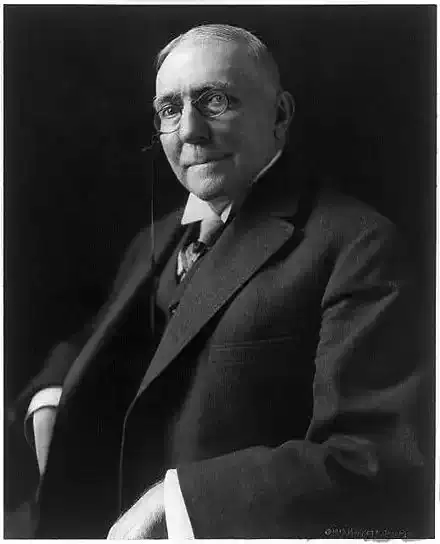
James Whitcomb Riley
Harlie
Harlie
Fold the little waxen hands
Lightly. Let your warmest tears
Speak regrets, but never fears,--
Heaven understands!
Let the sad heart, o'er the tomb,
Lift again and burst in bloom
Fragrant with a prayer as sweet
As the lily at your feet.
Bend and kiss the folded eyes--
They are only feigning sleep
While their truant glances peep
Into Paradise.
See, the face, though cold and white,
Holds a hint of some delight
E'en with Death, whose finger-tips
Rest upon the frozen lips.
When, within the years to come,
Vanished echoes live once more--
Pattering footsteps on the floor,
And the sounds of home,--
Let your arms in fancy fold
Little Harlie as of old--
As of old and as he waits
At the City's golden gates.
Fold the little waxen hands
Lightly. Let your warmest tears
Speak regrets, but never fears,--
Heaven understands!
Let the sad heart, o'er the tomb,
Lift again and burst in bloom
Fragrant with a prayer as sweet
As the lily at your feet.
Bend and kiss the folded eyes--
They are only feigning sleep
While their truant glances peep
Into Paradise.
See, the face, though cold and white,
Holds a hint of some delight
E'en with Death, whose finger-tips
Rest upon the frozen lips.
When, within the years to come,
Vanished echoes live once more--
Pattering footsteps on the floor,
And the sounds of home,--
Let your arms in fancy fold
Little Harlie as of old--
As of old and as he waits
At the City's golden gates.
267
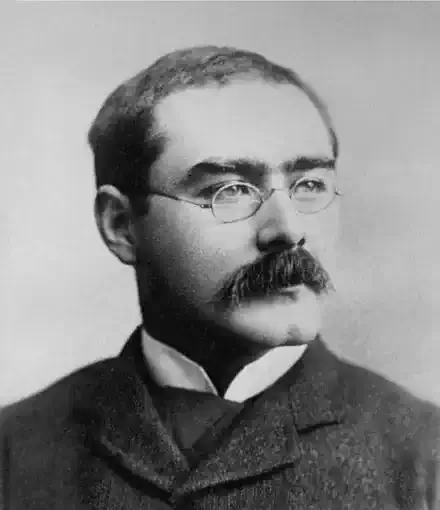
Rudyard Kipling
The Conversion of Aurelian McGoggin
The Conversion of Aurelian McGoggin
Ride with an idle whip, ride with an unused heel,
But, once in a way, there will come a day
When the colt must be taught to feel
The lash that falls, and the curb that galls, and the sting
of the rowelled steel.
Ride with an idle whip, ride with an unused heel,
But, once in a way, there will come a day
When the colt must be taught to feel
The lash that falls, and the curb that galls, and the sting
of the rowelled steel.
352
James Whitcomb Riley
Green Fields And Running Brooks
Green Fields And Running Brooks
Ho! green fields and running brooks!
Knotted strings and fishing-hooks
Of the truant, stealing down
Weedy backways of the town.
Where the sunshine overlooks,
By green fields and running brooks,
All intruding guests of chance
With a golden tolerance,
Cooing doves, or pensive pair
Of picnickers, straying there--
By green fields and running brooks,
Sylvan shades and mossy nooks!
And--O Dreamer of the Days,
Murmurer of roundelays
All unsung of words or books,
Sing green fields and running brooks!
Ho! green fields and running brooks!
Knotted strings and fishing-hooks
Of the truant, stealing down
Weedy backways of the town.
Where the sunshine overlooks,
By green fields and running brooks,
All intruding guests of chance
With a golden tolerance,
Cooing doves, or pensive pair
Of picnickers, straying there--
By green fields and running brooks,
Sylvan shades and mossy nooks!
And--O Dreamer of the Days,
Murmurer of roundelays
All unsung of words or books,
Sing green fields and running brooks!
249
Rudyard Kipling
The Consolations of Memory
The Consolations of Memory
Circa -- Done out of Boethius by Geoffrey Chaucer
Blessed was our first age and morning-time. Then were no
waies tarren, ne no cars numberen, but each followed his owne
playing-busyness to go about singly or by large interspaces,
for to leden his viage after his luste and layen under clene hedge.
Jungling there was not, nor the overtaking wheele, and all those
now cruel clarions were full-hushed and full-still. Then nobile
horses, lest they should make the chariots moveable to run by
cause of this new feare, we did not press, and were apayed by
sweete thankes of him that drave. There was not cursings ne
adventure of death blinded bankes betweene, but good-fellowship
of yoke-mates at ignorance equal, and a one pillar of dust covered
all exodus.... But, see now how the blacke road hath
strippen herself of hearte and beauty where the dumbe lampe of
Tartarus winketh red, etc.
Circa -- Done out of Boethius by Geoffrey Chaucer
Blessed was our first age and morning-time. Then were no
waies tarren, ne no cars numberen, but each followed his owne
playing-busyness to go about singly or by large interspaces,
for to leden his viage after his luste and layen under clene hedge.
Jungling there was not, nor the overtaking wheele, and all those
now cruel clarions were full-hushed and full-still. Then nobile
horses, lest they should make the chariots moveable to run by
cause of this new feare, we did not press, and were apayed by
sweete thankes of him that drave. There was not cursings ne
adventure of death blinded bankes betweene, but good-fellowship
of yoke-mates at ignorance equal, and a one pillar of dust covered
all exodus.... But, see now how the blacke road hath
strippen herself of hearte and beauty where the dumbe lampe of
Tartarus winketh red, etc.
450
James Whitcomb Riley
Grant At Rest-- August 8, 1885
Grant At Rest-- August 8, 1885
Sir Launcelot rode overthwart and endlong in a wide forest, and held no
path but as wild adventure led him... And he returned and came again to his
horse, and took off his saddle and his bridle, and let him pasture; and
unlaced his helm, and ungirdled his sword, and laid him down to sleep upon
his shield before the cross. --Age of Chivalary
_Grant_
What shall we say of the soldier. Grant,
His sword put by and his great soul free?
How shall we cheer him now or chant
His requiem befittingly?
The fields of his conquest now are seen
Ranged no more with his armed men--
But the rank and file of the gold and green
Of the waving grain is there again.
Though his valiant life is a nation's pride,
And his death heroic and half divine,
And our grief as great as the world is wide,
There breaks in speech but a single line--:
We loved him living, revere him dead--!
A silence then on our lips is laid:
We can say no thing that has not been said,
Nor pray one prayer that has not been prayed.
But a spirit within us speaks: and lo,
We lean and listen to wondrous words
That have a sound as of winds that blow,
And the voice of waters and low of herds;
And we hear, as the song flows on serene,
The neigh of horses, and then the beat
Of hooves that skurry o'er pastures green,
And the patter and pad of a boy's bare feet.
A brave lad, wearing a manly brow,
Knit as with problems of grave dispute,
And a face, like the bloom of the orchard bough,
Pink and pallid, but resolute;
And flushed it grows as the clover-bloom,
And fresh it gleams as the morning dew,
As he reins his steed where the quick quails boom
Up from the grasses he races through.
And ho! As he rides what dreams are his?
And what have the breezes to suggest--?
Do they whisper to him of shells that whiz
O'er fields made ruddy with wrongs redressed?
Does the hawk above him an Eagle float?
Does he thrill and his boyish heart beat high,
Hearing the ribbon about his throat
Flap as a Flag as the winds go by?
And does he dream of the Warrior's fame--
This Western boy in his rustic dress?
For in miniature, this is the man that came
Riding out of the Wilderness--!
The selfsame figure-- the knitted brow--
The eyes full steady-- the lips full mute--
And the face, like the bloom of the orchard bough,
Pink and pallid, but resolute.
Ay, this is the man, with features grim
And stoical as the Sphinx's own,
That heard the harsh guns calling him,
As musical as the bugle blown,
When the sweet spring heavens were clouded o'er
With a tempest, glowering and wild,
And our country's flag bowed down before
Its bursting wrath as a stricken child.
Thus, ready mounted and booted and spurred,
He loosed his bridle and dashed away--!
Like a roll of drums were his hoof-beats heard,
Like the shriek of the fife his charger's neigh!
And over his shoulder and backward blown,
We heard his voice, and we saw the sod
Reel, as our wild steeds chased his own
As though hurled on by the hand of God!
And still, in fancy, we see him ride
In the blood-red front of a hundred frays,
His face set stolid, but glorified
As a knight's of the old Arthurian days:
And victor ever as courtly too,
Gently lifting the vanquished foe,
And staying him with a hand as true
As dealt the deadly avenging blow.
So brighter than all of the cluster of stars
Of the flag enshrouding his form to-day,
His face shines forth from the grime of wars
With a glory that shall not pass away:
He rests at last: he has borne his part
Of salutes and salvos and cheers on cheers--
But O the sobs of his country's heart,
And the driving rain of a nations tears!
Sir Launcelot rode overthwart and endlong in a wide forest, and held no
path but as wild adventure led him... And he returned and came again to his
horse, and took off his saddle and his bridle, and let him pasture; and
unlaced his helm, and ungirdled his sword, and laid him down to sleep upon
his shield before the cross. --Age of Chivalary
_Grant_
What shall we say of the soldier. Grant,
His sword put by and his great soul free?
How shall we cheer him now or chant
His requiem befittingly?
The fields of his conquest now are seen
Ranged no more with his armed men--
But the rank and file of the gold and green
Of the waving grain is there again.
Though his valiant life is a nation's pride,
And his death heroic and half divine,
And our grief as great as the world is wide,
There breaks in speech but a single line--:
We loved him living, revere him dead--!
A silence then on our lips is laid:
We can say no thing that has not been said,
Nor pray one prayer that has not been prayed.
But a spirit within us speaks: and lo,
We lean and listen to wondrous words
That have a sound as of winds that blow,
And the voice of waters and low of herds;
And we hear, as the song flows on serene,
The neigh of horses, and then the beat
Of hooves that skurry o'er pastures green,
And the patter and pad of a boy's bare feet.
A brave lad, wearing a manly brow,
Knit as with problems of grave dispute,
And a face, like the bloom of the orchard bough,
Pink and pallid, but resolute;
And flushed it grows as the clover-bloom,
And fresh it gleams as the morning dew,
As he reins his steed where the quick quails boom
Up from the grasses he races through.
And ho! As he rides what dreams are his?
And what have the breezes to suggest--?
Do they whisper to him of shells that whiz
O'er fields made ruddy with wrongs redressed?
Does the hawk above him an Eagle float?
Does he thrill and his boyish heart beat high,
Hearing the ribbon about his throat
Flap as a Flag as the winds go by?
And does he dream of the Warrior's fame--
This Western boy in his rustic dress?
For in miniature, this is the man that came
Riding out of the Wilderness--!
The selfsame figure-- the knitted brow--
The eyes full steady-- the lips full mute--
And the face, like the bloom of the orchard bough,
Pink and pallid, but resolute.
Ay, this is the man, with features grim
And stoical as the Sphinx's own,
That heard the harsh guns calling him,
As musical as the bugle blown,
When the sweet spring heavens were clouded o'er
With a tempest, glowering and wild,
And our country's flag bowed down before
Its bursting wrath as a stricken child.
Thus, ready mounted and booted and spurred,
He loosed his bridle and dashed away--!
Like a roll of drums were his hoof-beats heard,
Like the shriek of the fife his charger's neigh!
And over his shoulder and backward blown,
We heard his voice, and we saw the sod
Reel, as our wild steeds chased his own
As though hurled on by the hand of God!
And still, in fancy, we see him ride
In the blood-red front of a hundred frays,
His face set stolid, but glorified
As a knight's of the old Arthurian days:
And victor ever as courtly too,
Gently lifting the vanquished foe,
And staying him with a hand as true
As dealt the deadly avenging blow.
So brighter than all of the cluster of stars
Of the flag enshrouding his form to-day,
His face shines forth from the grime of wars
With a glory that shall not pass away:
He rests at last: he has borne his part
Of salutes and salvos and cheers on cheers--
But O the sobs of his country's heart,
And the driving rain of a nations tears!
290
Rudyard Kipling
The Coiner
The Coiner
To be sung by the unlearned to the tune of "King John and the Abbot of
Canterbury," and by the learned to "Tempest-a-brewing."
Against the Bermudas we foundered, whereby
This Master, that Swabber, yon Bo'sun, and I
(Our pinnace and crew being drowned in the main)
Must beg for our bread through old England again.
For a bite and a sup, and a bed of clean straw,
We'll tell you such marvels as man never saw,
On a Magical Island which no one did spy
Save this Master, that Swabber, yon Bo'sun, and I.
Seven months among Mermaids and Devils and Sprites,
And Voices that howl in the cedars o'nights,
With further enchantments we underwent there.
Good Sirs, 'tis a tale to draw guts from a bear!
'Twixt Dover and Southwark it paid us our way,
Where we found some poor players were labouring a play;
And, willing to search what such business might be,
We entered the yard, both to hear and to see.
One hailed us for seamen and courteous-ly
Did guide us apart to a tavern near by
Where we told him our tale (as to many of late),
And he gave us good cheer, so we gave him good weight.
Mulled sack and strong waters on bellies well lined
With beef and black pudding do strengthen the mind;
And seeing him greedy for marvels, at last
From plain salted truth to flat leasing we passed.
But he, when on midnight our reckoning he paid,
Says, "Never match coins with a Coiner by trade,
Or he'll turn your lead pieces to metal as rare
As shall fill him this globe, and leave something to spare...."
We slept where they laid us, and when we awoke
Was a crown or five shillings in every man's poke.
We bit them and rang them, and, finding them good,
We drank to that Coiner as honest men should!
For a cup and a crust, and a truss, etc.
To be sung by the unlearned to the tune of "King John and the Abbot of
Canterbury," and by the learned to "Tempest-a-brewing."
Against the Bermudas we foundered, whereby
This Master, that Swabber, yon Bo'sun, and I
(Our pinnace and crew being drowned in the main)
Must beg for our bread through old England again.
For a bite and a sup, and a bed of clean straw,
We'll tell you such marvels as man never saw,
On a Magical Island which no one did spy
Save this Master, that Swabber, yon Bo'sun, and I.
Seven months among Mermaids and Devils and Sprites,
And Voices that howl in the cedars o'nights,
With further enchantments we underwent there.
Good Sirs, 'tis a tale to draw guts from a bear!
'Twixt Dover and Southwark it paid us our way,
Where we found some poor players were labouring a play;
And, willing to search what such business might be,
We entered the yard, both to hear and to see.
One hailed us for seamen and courteous-ly
Did guide us apart to a tavern near by
Where we told him our tale (as to many of late),
And he gave us good cheer, so we gave him good weight.
Mulled sack and strong waters on bellies well lined
With beef and black pudding do strengthen the mind;
And seeing him greedy for marvels, at last
From plain salted truth to flat leasing we passed.
But he, when on midnight our reckoning he paid,
Says, "Never match coins with a Coiner by trade,
Or he'll turn your lead pieces to metal as rare
As shall fill him this globe, and leave something to spare...."
We slept where they laid us, and when we awoke
Was a crown or five shillings in every man's poke.
We bit them and rang them, and, finding them good,
We drank to that Coiner as honest men should!
For a cup and a crust, and a truss, etc.
448
James Whitcomb Riley
Grandfather Squeers
Grandfather Squeers
'My grandfather Squeers,' said The Raggedy Man,
As he solemnly lighted his pipe and began-
'The most indestructible man, for his years,
And the grandest on earth, was my grandfather Squeers!
'He said, when he rounded his three-score-and-ten,
'I've the hang of it now and can do it again!'
'He had frozen his heels so repeatedly, he
Could tell by them just what the weather would be;
'And would laugh and declare, 'while the _Almanac_ would
Most falsely prognosticate, _he_ never could!'
'Such a hale constitution had grandfather Squeers
That, 'though he'd used '_navy_' for sixty odd years,
'He still chewed a dime's-worth six days of the week,
While the seventh he passed with a chew in each cheek:
'Then my grandfather Squeers had a singular knack
Of sitting around on the small of his back,
'With his legs like a letter Y stretched o'er the grate
Wherein 'twas his custom to ex-pec-tor-ate.
'He was fond of tobacco in _manifold_ ways,
And would sit on the door-step, of sunshiny days,
'And smoke leaf-tobacco he'd raised strictly for
The pipe he'd used all through The Mexican War.'
And The Raggedy Man said, refilling the bowl
Of his own pipe and leisurely picking a coal
From the stove with his finger and thumb, 'You can see
What a tee-nacious habit he's fastened on me!
'And my grandfather Squeers took a special delight
In pruning his corns every Saturday night
'With a horn-handled razor, whose edge he excused
By saying 'twas one that his grandfather used;
'And, though deeply etched in the haft of the same
Was the ever-euphonious Wostenholm's name,
''Twas my grandfather's custom to boast of the blade
As 'A Seth Thomas razor--the best ever made!'
'No Old Settlers' Meeting, or Pioneers' Fair,
Was complete without grandfather Squeers in the chair
'To lead off the programme by telling folks how
'He used to shoot deer where the Court-House stands now'-
'How 'he felt, of a truth, to live over the past,
When the country was wild and unbroken and vast,
''That the little log cabin was just plenty fine
For himself, his companion, and fambly of nine!-
''When they didn't have even a pump, or a tin,
But drunk surface-water, year out and year in,
''From the old-fashioned gourd that was sweeter, by odds,
Than the goblets of gold at the lips of the gods!''
Then The Raggedy Man paused to plaintively say
It was clockin' along to'rds the close of the day--
And he'd _ought_ to get back to his work on the lawn,--
Then dreamily blubbered his pipe and went on:
'His teeth were imperfect--my grandfather owned
That he couldn't eat oysters unless they were 'boned';
'And his eyes were so weak, and so feeble of sight,
He couldn't sleep with them unless, every night,
'He put on his spectacles--all he possessed,--
Three pairs--with his goggles on top of the rest.
'And my grandfather always, retiring at night,
Blew down the lamp-chimney to put out the light;
'Then he'd curl up on edge like a shaving, in bed,
And puff and smoke pipes in his sleep, it is said:
'And would snore oftentimes as the legends relate,
Till his folks were wrought up to a terrible state,-
'Then he'd snort, and rear up, and roll over; and there,
In the subsequent hush they could hear him chew air.
'And so glaringly bald was the top of his head
That many's the time he has musingly said,
'As his eyes journeyed o'er its reflex in the glass,-'
I must set out a few signs of _Keep Off the Grass!_'
'So remarkably deaf was my grandfather Squeers
That he had to wear lightning-rods over his ears
'To even hear thunder--and oftentimes then
He was forced to request it to thunder again.'
'My grandfather Squeers,' said The Raggedy Man,
As he solemnly lighted his pipe and began-
'The most indestructible man, for his years,
And the grandest on earth, was my grandfather Squeers!
'He said, when he rounded his three-score-and-ten,
'I've the hang of it now and can do it again!'
'He had frozen his heels so repeatedly, he
Could tell by them just what the weather would be;
'And would laugh and declare, 'while the _Almanac_ would
Most falsely prognosticate, _he_ never could!'
'Such a hale constitution had grandfather Squeers
That, 'though he'd used '_navy_' for sixty odd years,
'He still chewed a dime's-worth six days of the week,
While the seventh he passed with a chew in each cheek:
'Then my grandfather Squeers had a singular knack
Of sitting around on the small of his back,
'With his legs like a letter Y stretched o'er the grate
Wherein 'twas his custom to ex-pec-tor-ate.
'He was fond of tobacco in _manifold_ ways,
And would sit on the door-step, of sunshiny days,
'And smoke leaf-tobacco he'd raised strictly for
The pipe he'd used all through The Mexican War.'
And The Raggedy Man said, refilling the bowl
Of his own pipe and leisurely picking a coal
From the stove with his finger and thumb, 'You can see
What a tee-nacious habit he's fastened on me!
'And my grandfather Squeers took a special delight
In pruning his corns every Saturday night
'With a horn-handled razor, whose edge he excused
By saying 'twas one that his grandfather used;
'And, though deeply etched in the haft of the same
Was the ever-euphonious Wostenholm's name,
''Twas my grandfather's custom to boast of the blade
As 'A Seth Thomas razor--the best ever made!'
'No Old Settlers' Meeting, or Pioneers' Fair,
Was complete without grandfather Squeers in the chair
'To lead off the programme by telling folks how
'He used to shoot deer where the Court-House stands now'-
'How 'he felt, of a truth, to live over the past,
When the country was wild and unbroken and vast,
''That the little log cabin was just plenty fine
For himself, his companion, and fambly of nine!-
''When they didn't have even a pump, or a tin,
But drunk surface-water, year out and year in,
''From the old-fashioned gourd that was sweeter, by odds,
Than the goblets of gold at the lips of the gods!''
Then The Raggedy Man paused to plaintively say
It was clockin' along to'rds the close of the day--
And he'd _ought_ to get back to his work on the lawn,--
Then dreamily blubbered his pipe and went on:
'His teeth were imperfect--my grandfather owned
That he couldn't eat oysters unless they were 'boned';
'And his eyes were so weak, and so feeble of sight,
He couldn't sleep with them unless, every night,
'He put on his spectacles--all he possessed,--
Three pairs--with his goggles on top of the rest.
'And my grandfather always, retiring at night,
Blew down the lamp-chimney to put out the light;
'Then he'd curl up on edge like a shaving, in bed,
And puff and smoke pipes in his sleep, it is said:
'And would snore oftentimes as the legends relate,
Till his folks were wrought up to a terrible state,-
'Then he'd snort, and rear up, and roll over; and there,
In the subsequent hush they could hear him chew air.
'And so glaringly bald was the top of his head
That many's the time he has musingly said,
'As his eyes journeyed o'er its reflex in the glass,-'
I must set out a few signs of _Keep Off the Grass!_'
'So remarkably deaf was my grandfather Squeers
That he had to wear lightning-rods over his ears
'To even hear thunder--and oftentimes then
He was forced to request it to thunder again.'
288