
Quotes
Quotes to inspire and reflect
Belua multorum es capitum .
Laudator temporis acti .
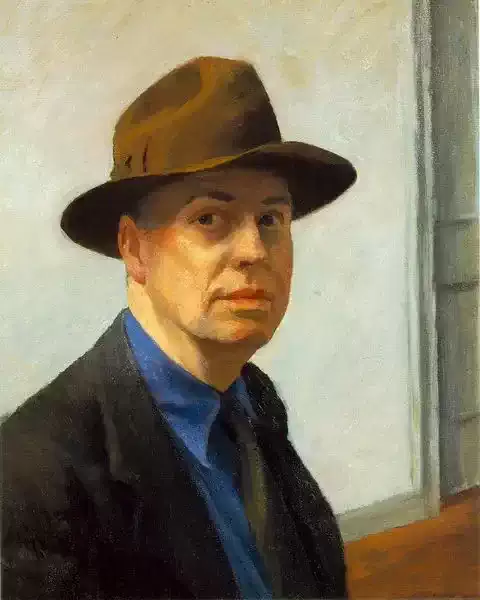
If you could say it in words there’d be no reason to paint.
Multa renascentur quae iam cecidere, cadentque
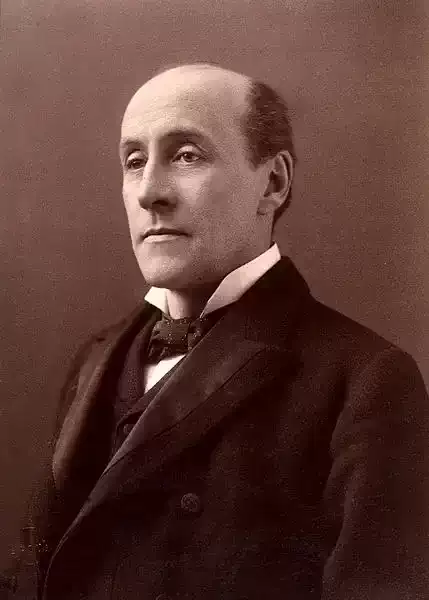
His foe was folly & his weapon wit.
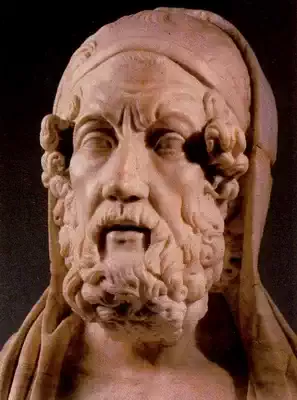
The wine-dark sea.
[ Of Odysseus :] Tell me, muse, of the man of many resources who wandered far and wide after he had sacked the holy citadel of Troy, and he saw the cities and learned the thoughts of many men.
The most preferable of evils.
Speaking, he addressed her winged words.
From his tongue flowed speech sweeter than honey.
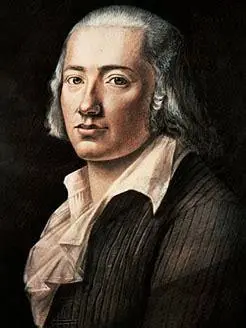
Near and
Sing, goddess, the wrath of Peleus’ son Achilles, a destroying wrath which brought upon the Achaeans myriad woes, and sent forth to Hades most valiant souls of heroes.

[ Remark, ca. 1946 :] It is better to sniff the French dung for a while than eat China’s all our lives.
Nothing is more precious than independence and liberty.
Men and women, old and young, regardless of creeds, political parties, or nationalities, all the Vietnamese must stand up to fight the French colonialists to save the fatherland. Those who have rifles will use their rifles; those who have swords will use their swords; those who have no swords will use spades, hoes, or sticks.
All men are created equal; they are endowed by their creator with certain inalienable rights; among these are Life, Liberty and the pursuit of happiness. This immortal statement was made in the Declaration of Independence of the United States of America in 1776. In a broader sense, this means: All the peoples on the earth are equal from birth, all the peoples have a right to live, to be happy and free.
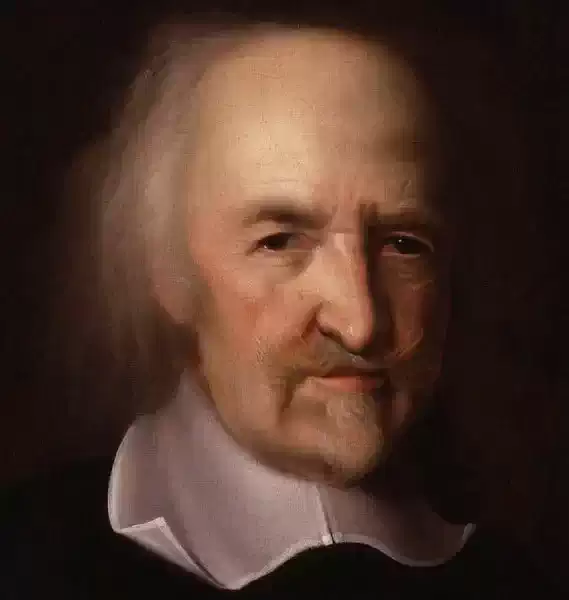
[ “Last words” :] Death, is a leap into the dark.
Religion ; which by reason of the different fancies, judgments, and passions of several men, hath grown up into ceremonies so different, that those which are used by one man, are for the most part ridiculous to another.
The power of a man, to take it universally, is his present means, to obtain some future apparent good; and is either original or instrumental. . . . Reputation of power, is power.
True and False are attributes of speech, not of things. And where speech is not, there is neither Truth nor Falsehood.
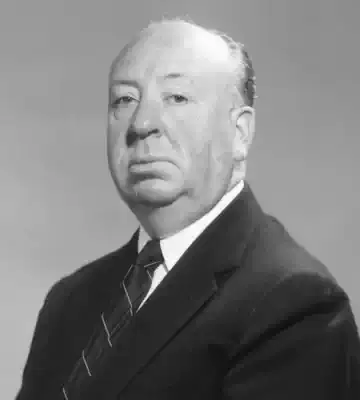
In regard to the tune, we have a name in the studio, and we call it the “MacGuffin.” It is the mechanical element that usually crops up in any story. In crook stories it is always the necklace and in spy stories it is always the papers. We just try to be a little more original.
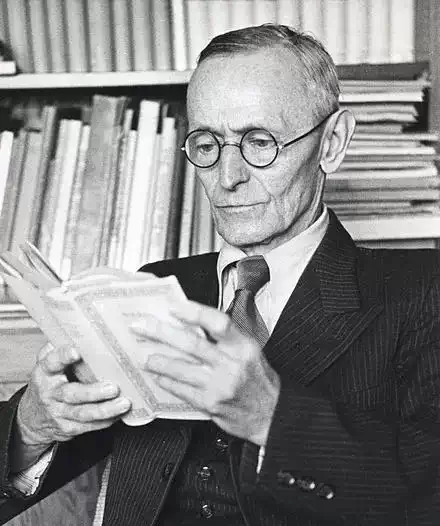
I understood it all. I understood Pablo. I understood Mozart, and somewhere behind me I heard his ghastly laughter. I knew that all the hundred thousand pieces of life’s game were in my pocket. . . . I would traverse not once more, but often, the hell of my inner being. One day I would be a better hand at the game. One day I would learn how to laugh. Pablo was waiting for me, and Mozart too.
Wisdom cannot be passed on. Wisdom which a wise man tries to pass on to someone always sounds like foolishness.
He went on two legs, wore clothes, and was a human being, but nevertheless he was in reality a wolf of the Steppes. He had learned a good deal . . . and was a fairly clever fellow. What he had not learned, however, was this: to find contentment in himself and his own life. The cause of this apparently was that at the bottom of his heart he knew all the time (or thought he knew) that he was in reality not a man, but a wolf of the Steppes.
I looked at my life, and it was also a river.
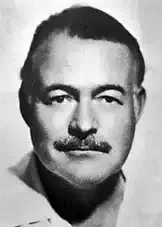
[ Example of a short story consisting of only six words :] For sale. Baby shoes. Never worn.
I started out very quiet and I beat Mr. Turgenev. Then I trained hard and I beat Mr. de Maupassant. I’ve fought two draws with Mr. Stendhal and I think I had an edge in the last one. But nobody’s going to get me in any ring with Mr. Tolstoy unless I’m crazy or I keep getting better.
Poor Faulkner. Does he really think big emotions come from big words? He thinks I don’t know the ten-dollar words. I know them all right. But there are older and simpler and better words, and those are the ones I use.
Time is the least thing we have of.
His [F. Scott Fitzgerald’s] talent was as natural as the pattern that was made by the dust on a butterfly’s wings. At one time he understood it no more than the butterfly did and he did not know when it was brushed or marred. Later he became conscious of his damaged wings and of their construction and he learned to think and could not fly any more because the love of flight was gone and he could only remember when it had been effortless.
The old man was dreaming about the lions.
“I would like to take the great DiMaggio fishing,” the old man said. “They say his father was a fisherman. Maybe he was as poor as we are and would understand.”
A writer should be of as great probity and honesty as a priest of God. He is either honest or not, as a woman is either chaste or not, and after one piece of dishonest writing he is never the same again.
[ Referring to kissing :] Where do the noses go? I always wondered where the noses would go.
The rich were dull and they drank too much. . . . He remembered poor Julian and his romantic awe of them and how he had started a story once that began, “The very rich are different from you and me.” And how someone had said to Julian, Yes, they have more money.
Kilimanjaro is a snow-covered mountain 19,710 feet high, and is said to be the highest mountain in Africa. Its western summit is called the Masai “Ngàje Ngài,” the House of God. Close to the western summit there is the dried and frozen carcass of a leopard. No one has explained what the leopard was seeking at that altitude.
All modern American literature comes from one book by Mark Twain called Huckleberry Finn . All American writing comes from that. There was nothing before. There has been nothing as good since.
No matter how a man alone ain’t got no bloody fucking chance.
All good books are alike in that they are truer than if they had really happened and after you are finished reading one you will feel that all that happened to you and afterwards it all belongs to you; the good and the bad, the ecstasy, the remorse and sorrow, the people and the places and how the weather was. If you can get so that you can give that to people, then you are a writer.
If he wrote it he could get rid of it. He had gotten rid of many things by writing them.
If a writer of prose knows enough about what he is writing about he may omit things that he knows and the reader, if the writer is writing truly enough, will have a feeling of those things as strongly as though the writer had stated them. The dignity of movement of an ice-berg is due to only one-eighth of it being above water. A writer who omits things because he does not know them only makes hollow places in his writing.
I was trying to write then and I found the greatest difficulty, aside from knowing truly what you really felt, rather than what you were supposed to feel, had been taught to feel, was to put down what really happened in action; what the actual things were which produced the emotion that you experienced . . . the real thing, the sequence of motion and fact which made the emotion and which would be as valid in a year or in ten years or, with luck and if you stated it purely enough, always.
It was like saying good-bye to a statue. After a while I went out and left the hospital and walked back to the hotel in the rain.
You never had time to learn. They threw you in and told you the rules and the first time they caught you off base they killed you.
I had seen nothing sacred, and the things that were glorious had no glory and the sacrifices were like the stockyards at Chicago if nothing was done with the meat except to bury it. . . . Abstract words such as glory, honor, courage, or hallow were obscene.
In the late summer of that year we lived in a house in a village that looked across the river and the plain to the mountains. In the bed of the river there were pebbles and boulders, dry and white in the sun, and the water was clear and swiftly moving and blue in the channels.
In the fall the war was always there but we did not go to it any more.
“Oh, Jake,” Brett said, “we could have had such a damned good time together.” . . .