

Quotes
Quotes to inspire and reflect

Love is a joint experience between two persons—but the fact that it is a joint experience does not mean that it is a similar experience to the two people involved. There are the lover and the beloved, but these two come from different countries. Often the beloved is only a stimulus for all the stored-up love which has lain quiet within the lover for a long time hitherto.
The Heart Is a Lonely Hunter.

He knew only that the child was his warrant.
You forget what you want to remember and you remember what you want to forget.
It’s a mess, aint it Sheriff?
You never know what worse luck your bad luck has saved you from.
It takes very little to govern good people. Very little. And bad people cant be governed at all. Or if they could I never heard of it.
What’s the most you ever saw lost on a coin toss?
He never sleeps, the judge. He is dancing, dancing. He says that he will never die.
Scars have the strange power to remind us that our past is real.
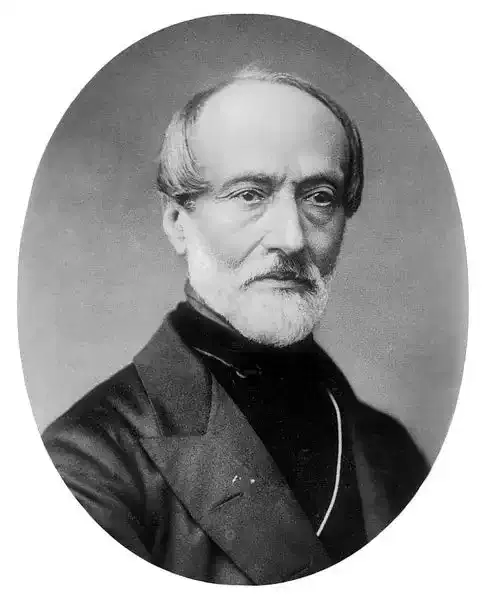
[Thomas Carlyle] loves silence somewhat platonically.
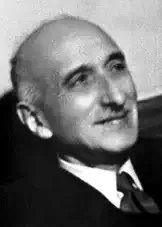
I love Germany so dearly that I hope there will always be two of them.
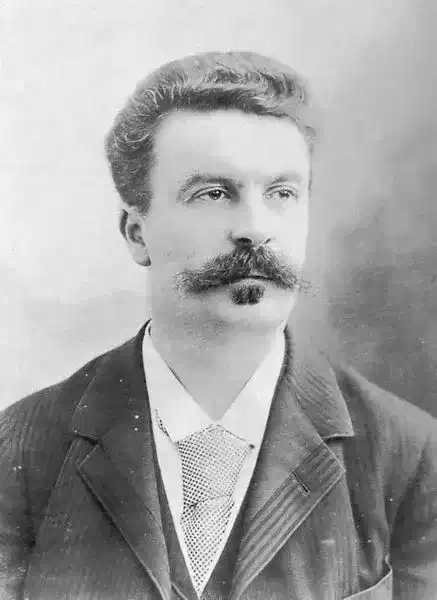
What would have happened if she hadn’t lost the necklace? Who knows? Who knows? How strange life is, how full of changes! How little it takes to doom you or save you!
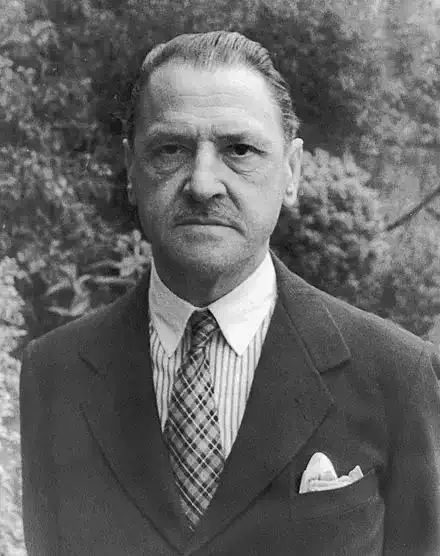
It is a funny thing about life, if you refuse to accept anything but the best, you very often get it: if you utterly decline to make do with what you get, then somehow or other you are very likely to get what you want.
You cannot imagine the kindness I’ve received at the hands of perfect strangers.
From the earliest times the old have rubbed it into the young that they are wiser than they, and before the young had discovered what nonsense this was they were old too, and it profited them to carry on the imposture.
Poor Henry [James], he’s spending eternity wandering round and round a stately park and the fence is just too high for him to peep over and they’re having tea just too far away for him to hear what the countess is saying.
The tragedy of love is indifference.
I forget who it was that recommended men for their soul’s good to do each day two things they disliked . . . it is a precept that I have followed scrupulously; for every day I have got up and I have gone to bed.
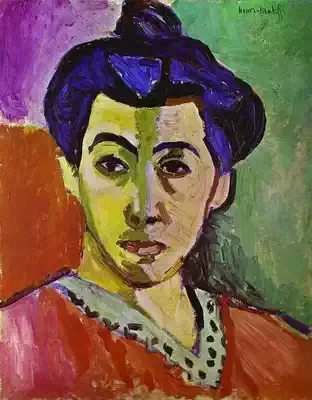
I want to reach that state of condensation of sensations which constitutes a picture.
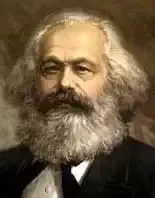
The Communists disdain to conceal their views and aims. They openly declare that their ends can be attained only by the forcible overthrow of all existing social conditions. Let the ruling classes tremble at a Communist revolution. The proletarians have nothing to lose but their chains. They have a world to win. Working men of all countries, unite!
What else does the history of ideas prove, than that intellectual production changes in character in proportion as material production is changed? The ruling ideas of each age have ever been the ideas of its ruling class.
In this sense, the theory of the Communists may be summed up in the single sentence: Abolition of private property.
The bourgeoisie has subjected the country to the rule of the towns. It has created enormous cities, has greatly increased the urban population as compared with the rural, and has thus rescued a considerable part of the population from the idiocy of rural life.
The executive of the modern State is but a committee for managing the common affairs of the whole bourgeoisie.
The bourgeoisie, wherever it has got the upper hand, has put an end to all feudal, patriarchal, idyllic relations. It has pitilessly torn asunder the motley feudal ties that bound man to his “natural superiors,” and has left remaining no other bond between man and man than naked self-interest, than callous “cash payment.”
Ce qu’il y a de certain, c’est que moi je ne suis pas Marxiste .
The centralization of the means of production and the socialization of labor reach a point at which they become incompatible with their capitalist integument. This integument is burst asunder. The knell of capitalist private property sounds. The expropriators are expropriated.
[ Of John Stuart Mill :] On a level plain, simple mounds look like hills; and the insipid flatness of our present bourgeoisie is to be measured by the altitude of its “great intellects.”
[The effect of capitalist development is to] distort the worker into a fragment of a man, . . . degrade him to the level of an appendage of a machine, they destroy the actual content of his labor by turning it into a torment.
Society does not consist of individuals; it expresses the sum of connections and relationships in which individuals find themselves.
Nothing can be a value without being an object of utility. If the thing is useless, so is the labor contained in it; the labor does not count as labor, and therefore creates no value.
Men make their own history, but they do not make it just as they please; they do not make it under circumstances chosen by themselves, but under circumstances directly encountered, given, and transmitted from the past. The tradition of all the dead generations weighs like a nightmare on the brain of the living.
My own contribution was: 1. to show that the existence of classes is merely bound up with certain historical phases in the development of production ; 2. that the class struggle necessarily leads to the dictatorship of the proletariat ; 3. that this dictatorship itself constitutes no more than a transition to the abolition of all classes and to a classless society .
The criticism of religion is the basis of all criticism.
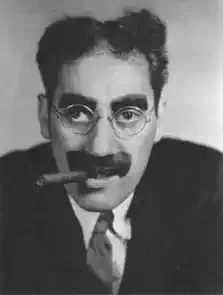
[ Responding to a beach club telling him he couldn’t join because he was Jewish :] My son’s only half Jewish. Would it be all right if he went in the water up to his knees?
I’ve been around so long, I knew Doris Day before she was a virgin.
[ Explaining his resignation from the Hollywood chapter of the Friars Club :] I don’t want to belong to any club that would accept me as one of its members.
Say the secret word and win a hundred dollars.
I never forget a face—but I’m going to make an exception in your case.
[ Question asked of losers on quiz show so that they would go away with some money :] Who is buried in Grant’s Tomb?
[ Responding to a woman contestant who, explaining why she had twenty-two children, said “because I love children, and I think that’s our purpose here on earth, and I love my husband” :] I love my cigar too, but I take it out of my mouth once in a while.
What a revoltin’ development this is!
[ J. Cheever Loophole, played by Groucho Marx, speaking :] I bet your father spent the first year of your life throwing rocks at the stork.
[ J. Cheever Loophole, played by Groucho Marx, after being told that “the bottom of your shoe creates a suction that holds you up in the ceiling” :] No, no, I’d rather not. I have an agreement with the houseflies. The flies don’t practice law and I don’t walk on the ceiling.
[ Gordon Miller, played by Groucho Marx, speaking :] Room service? Send up a larger room.
[ Otis B. Driftwood, played by Groucho Marx, speaking :] That’s—that’s in every contract. That’s—that’s what they call a sanity clause.
[ “Doctor” Hugo Z. Hackenbush, played by Groucho Marx, attempting to take Harpo’s pulse :] Either he’s dead, or my watch has stopped.