
Quotes
Quotes to inspire and reflect
There is no God and Mary is His Mother.

Equal to the gods seems to me that man who sits facing you and hears you nearby sweetly speaking and softly laughing. This sets my heart to fluttering in my breast, for when I look on you a moment, then can I speak no more, but my tongue falls silent, and at once a delicate flame courses beneath my skin, and with my eyes I see nothing, and my ears hum, and a cold sweat bathes me, and a trembling seizes me all over, and I am paler than grass, and I feel that I am near to death.
There is nothing impossible, therefore, in the existence of the supernatural; its existence seems to me decidedly probable; there is infinite room for it on every side.
It is a great advantage for a system of philosophy to be substantially true.
My atheism, like that of Spinoza, is true piety towards the universe and denies only gods fashioned by men in their own image, to be servants of their human interests.
Scepticism is the chastity of the intellect, and it is shameful to surrender it too soon or to the first comer.
Miracles are propitious accidents, the natural causes of which are too complicated to be readily understood.
I like to walk about amidst the beautiful things that adorn the world; but private wealth I should decline, or any sort of personal possessions, because they would take away my liberty.
What religion a man shall have is a historical accident, quite as much as what language he shall speak.
Each religion, so dear to those whose life it sanctifies, and fulfilling so necessary a function in the society that has adopted it, necessarily contradicts every other religion, and probably contradicts itself.
Dear World, I am leaving you because I am bored. I feel I have lived long enough. I am leaving you with your worries in this sweet cesspool. Good luck.
That life is worth living is the most necessary of assumptions, and were it not assumed, the most impossible of conclusions.

Why is there always a secret singing
The people will live on.
Two years, ten years, and passengers ask the conductor:
What place is this?
I am the people—the mob—the crowd—the mass.
And they tell me you are brutal and my reply is: On the faces of women and children I have seen the marks of wanton hunger.
They tell me you are wicked and I believe them, for I have seen your painted women under the gas lamps luring the farm boys.
Art for art’s sake is an empty phrase. Art for the sake of the true, art for the sake of the good and the beautiful, that is the faith I am searching for.
Faith is an excitement and an enthusiasm, a state of intellectual magnificence which we must safeguard like a treasure, not squander on our way through life in the small coin of empty words and inexact, pedantic arguments.
Happiness lies in the consciousness we have of it.

Punica fide .
[ Of Rome :] A venal city ripe to perish, if a buyer can be found.

Freedom of thought is the only guarantee of the feasibility of a scientific democratic approach to politics, economy, and culture.
Intellectual freedom is essential to human society—freedom to obtain and distribute information, freedom for open-minded and unfearing debate, and freedom from pressure by officialdom and prejudices.
It is much more difficult to judge oneself than to judge others. If you succeed in judging yourself rightly, then you are indeed a man of true wisdom.
Although human life is priceless, we always act as if something had an even greater price than life. . . . But what is that something?
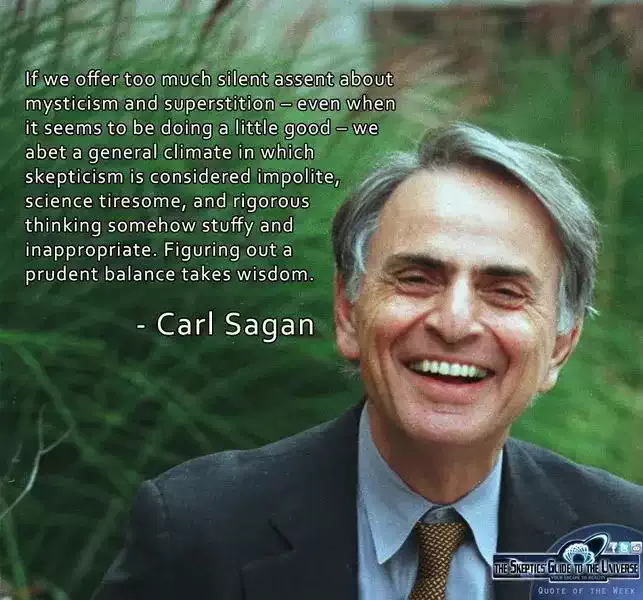
In science it often happens that scientists say,
A galaxy is composed of gas and dust and stars—billions upon billions of stars.
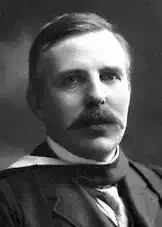
[Science may be divided into either one of] physics and stamp-collecting.
If you can’t explain your physics to a barmaid, it is probably not very good physics.
[ Responding to the statement, “Lucky fellow Rutherford, always on the crest of the wave” :] Well, I made the wave, didn’t I?
From the results so far obtained it is difficult to avoid the conclusion that the long-range atoms arising from collision of *3 particles with nitrogen are not nitrogen atoms but probably atoms of hydrogen, or atoms of mass 2. If this be the case, we must conclude that the nitrogen atom is disintegrated under the intense forces developed in a close collision with a swift *3 particle, and that the hydrogen atom which is liberated formed a constituent part of the nitrogen nucleus.
In order to explain these and other results, it is necessary to assume that the electrified particle passes through an intense electric field within the atom. The scattering of the electrified particles is considered for a type of atom which consists of a central electric charge concentrated at a point and surrounded by a uniform spherical distribution of opposite electricity equal in amount.
Radioactivity is shown to be accompanied by chemical changes in which new types of matter are being continually produced. . . . The conclusion is drawn that these chemical changes must be sub-atomic in character.
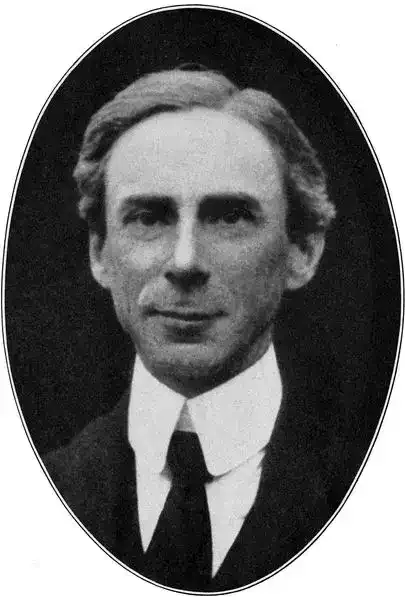
[ Of Aldous Huxley :] You could always tell by his conversation which volume of the Encyclopedia Britannica he’d been reading. One day it would be Alps, Andes, and Apennines, and the next it would be the Himalayas and the Hippocratic Oath.
The opinions that are held with passion are always those for which no good ground exists; indeed the passion is the measure of the holder’s lack of rational conviction. Opinions in politics and religion are almost always held passionately.
Aristotle maintained that women have fewer teeth than men; although he was twice married, it never occurred to him to verify this statement by examining his wives’ mouths.
A dog cannot relate his autobiography; however eloquently he may bark, he cannot tell you that his parents were honest but poor.
The psychology of adultery has been falsified by conventional morals, which assume, in monogamous countries, that attraction to one person cannot coexist with a serious affection for another. Everybody knows that this is untrue.
One is often told that it is a very wrong thing to attack religion, because religion makes men virtuous. So I am told; I have not noticed it.
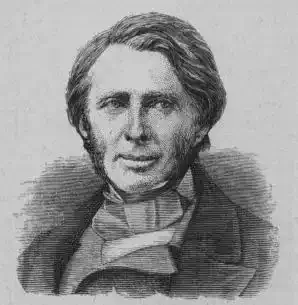
There was a rocky valley between Buxton and Bakewell. . . . You enterprised a railroad . . . you blasted its rocks away. . . . And now, every fool in Buxton can be at Bakewell in half-an-hour, and every fool in Bakewell at Buxton.
We are thus led to a somewhat vague distinction between what we may call “hard” data and “soft” data. . . . I mean by “hard” data those which resist the solvent influence of critical reflection, and by “soft” data those which, under the operation of this process, become to our minds more or less doubtful.
The first duty of a State is to see that every child born therein shall be well housed, clothed, fed, and educated, till it attains years of discretion.
Great nations write their autobiographies in three manuscripts—the book of their deeds, the book of their words, and the book of their art.
Taste . . . is the only morality. . . . Tell me what you like, and I’ll tell you what you are.
Life being very short, and the quiet hours of it few, we ought to waste none of them in reading valueless books.