
Quotes
Quotes to inspire and reflect
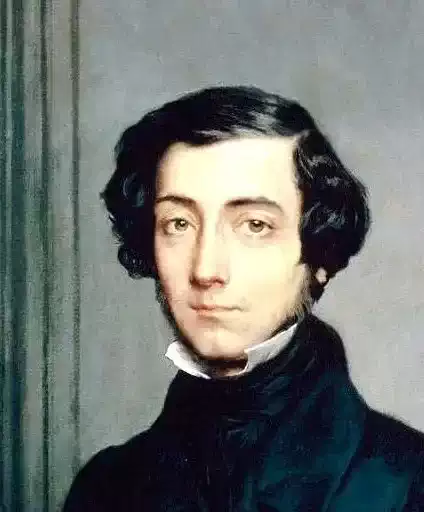
Not only does democracy make everyman forget his ancestors, but it hides his descendants and separates his contemporaries from him; it throws him back forever upon himself alone and threatens to the end to confine him entirely within the solitude of his own heart.
Wherever at the head of some new undertaking you see the government in France, or a man ofrank in England, in the United States you will be sure to find an association.
There are, at the present time, two great nations in the world, which seem to tend towards the same end, although they started from different points: I allude to the Russians and the Americans. . . . Their starting-point is different, and their courses are not the same; yet each of them seems marked out by the will of Heaven to sway the destinies of half the globe.
Democratic nations care but little for whathas been, but they are haunted by visions of what will be; in this direction their unbounded imagination grows and dilates beyond all measure. . . . Democracy, which shuts the past against the poet, opens the future before him.
The time will therefore come when onehundred and fifty millions of men will be living in North America, equal in condition, the progeny of one race, owing their origin to the same cause, and preserving the same civilization, the same language, the same religion, the same habits, the same manners, and imbued with the same opinions, propagated under the same forms.
The jury . . . may be regarded as a gratuitous public school, ever open, in which every juror learns to exercise his rights, enters into daily communication with the most learned and enlightened members of the upper classes, and becomes practically acquainted with the laws of his country.
The more we reflect upon all that occursin the United States, the more shall we be persuaded that the lawyers as a body, form the most powerful, if not the only counterpoise to the democratic element. In that country we perceive how eminently the legal profession is qualified by its powers, and even by its defects, to neutralize the vices which are inherent in popular government.
Scarcely any question arises in the UnitedStates which does not become, sooner or later, a subject of judicial debate; hence all parties are obliged to borrow the ideas, and even the language usual in judicial proceedings, in their daily controversies. . . . The language of the law thus becomes, in some measure, a vulgar tongue; the spirit of the law, which is produced in the schools and courts of justice, gradually penetrates beyond their walls into the bosom of society, where it descends to the lowest classes, so that the whole people contracts the habits and the tastes of the magistrate.
In America there are no nobles or literarymen, and the people is apt to mistrust thewealthy; lawyers consequently form the highest political class, and the most cultivated circle ofsociety. They have therefore nothing to gain by innovation, which adds a conservative interest to their natural taste for public order. If I were asked where I place the American aristocracy, I should reply without hesitation, that it is notcomposed of the rich, who are united together by no common tie, but that it occupies the judicial bench and the bar.
I cannot believe that a republic could subsist at the present time, if the influence of lawyers in public business did not increase in proportion to the power of the people.
[ Section title :] Tyranny of the Majority.
In countries where associations are free, secret societies are unknown. In America there are numerous factions, but no conspiracies.
There is no medium between servitudeand extreme licence; in order to enjoy theinestimable benefits which the liberty of the press ensures, it is necessary to submit to the inevitable evils which it engenders.
I have never been more struck by the goodsense and the practical judgment of the Americans than in the ingenious devices by which they elude the numberless difficulties resulting from their Federal Constitution.
I know of no country, indeed, where the love of money has taken stronger hold on the affections of men, and where a profounder contempt is expressed for the theory of the permanent equality of property.
The power vested in the American courtsof justice of pronouncing a statute to be unconstitutional, forms one of the most powerful barriers which has ever beendevised against the tyranny of political assemblies.
How is it possible, woman, in the awful andmagnificent times we live in, to be preoccupied exclusively with the piddling?
You Could Look It Up.
He knows all about art, but he doesn’t knowwhat he likes.
I love the idea of there being two sexes, don’t you?
Then, with that faint fleeting smile playingabout his lips, he faced the firing squad; erect and motionless, proud and disdainful, Walter Mitty, the undefeated, inscrutable to the last.
The Secret Life of Walter Mitty.
He doesn’t know anything except facts.
The War Between Men and Women.
All right, have it your way—you heard a sealbark!
I suppose that the high-water mark of my youth in Columbus, Ohio was the night the bed fellon my father.
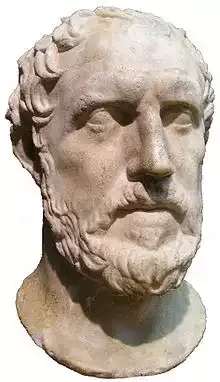
Revolution . . . ran its course from city to city, and the places which it arrived at last, fromhaving heard what had been done beforecarried to a still greater excess the refinementof their inventions, as manifested to thecunning of their enterprises and the atrocityof their reprisals. Words had to change theirordinary meaning and to take that which wasnow given them.
The absence of romance in my history will, I fear, detract somewhat from its interest; but if it be judged useful by those inquirers who desirean exact interpretation of the future, which inthe course of human things must resemble ifit does not reflect it, I shall be content. In fine, I have written my work, not as an essay which is to win the applause of the moment, but as a possession for all time.
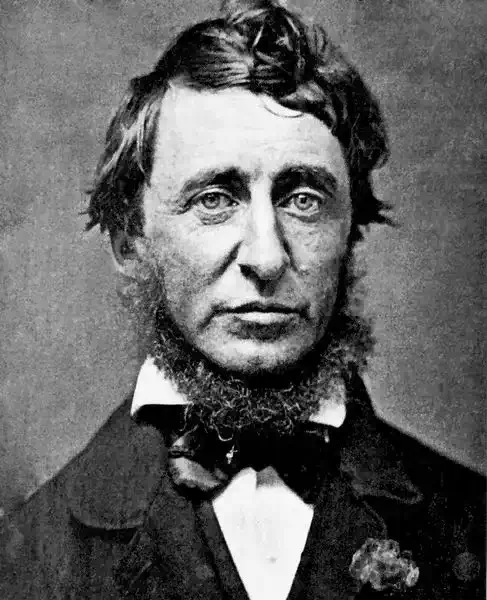
[ Reply to Ralph Waldo Emerson’s questioning whyThoreau had gone to jail in 1843 for not paying the Massachusetts poll tax as a protest against slavery :] Why are you not here also?
If a man walk in the woods for love of them half of each day, he is in danger of beingregarded as a loafer; but if he spends his whole day as a speculator, shearing off those woods and making earth bald before her time, he is esteemed an industrious and enterprising citizen. As if the town had no interest in its forests but to cut them down!
We preserve the so-called peace of acommunity by deeds of petty violence everyday. Look at the policeman’s billy and handcuffs!Look at the jail! Look at the gallows!
The West of which I speak is but another name for the Wild; and what I have been preparingto say is, that in Wildness is the preservation ofthe World.
I hear many condemn these men because theywere so few. When were the good and the braveever in a majority?
Don’t spend your time in drilling soldiers, whomay turn out hirelings after all, but give to undrilled peasantry a country to fight for.
[ Of wood stumps :] They warmed me twice—once while I was splitting them, and again whenthey were on the fire.
I had three chairs in my house; one forsolitude, two for friendship; three for society.When visitors came in larger and unexpectednumbers there was but the third chair for themall, but they generally economized the room bystanding up.
Our life is frittered away by detail. . . . Simplify, simplify.
We do not ride on the railroad; it rides upon us.
Our inventions are wont to be pretty toys, which distract our attention from serious things. They are but improved means to an unimproved end. . . . We are in great haste to construct a magnetic telegraph from Maine to Texas, but Maine and Texas, it may be, have nothing important to communicate.
The mass of men lead lives of quietdesperation. What is called resignation isconfirmed desperation.
The fate of the country . . . does not dependon what kind of paper you drop into the ballot box once a year, but on what kind of man you drop from your chamber into the street every morning.
It is remarkable that, notwithstanding theuniversal favor with which the New Testamentis outwardly received, and even the bigotry with which it is defended, there is no hospitalityshown to, there is no appreciation of, the order of truth with which it deals. I know of no book that has so few readers. There is none so truly strange, and heretical, and unpopular.
I do not hesitate to say, that those who call themselves Abolitionists should at onceeffectually withdraw their support, both in person and property, from the government of Massachusetts, and not wait until theyconstitute a majority of one, before they sufferthe right to prevail through them. I think thatit is enough if they have God on their side, without waiting for that other one. Moreover, any man more right than his neighborsconstitutes a majority of one already.
When I meet a government which says to me, “Your money or your life,” why should I be in haste to give it my money?
As for adopting the ways which the State has provided for remedying the evil, I know notof such ways. They take too much time, and aman’s life will be gone. I have other affairs toattend to. I came into this world, not chiefly tomake this a good place to live in, but to live init, be it good or bad.
If the injustice is part of the necessary friction of the machine of government, let it go, let itgo: perchance it will wear smooth,—certainly the machine will wear out. If the injusticehas a spring, or a pulley, or a rope, or acrank, exclusively for itself, then perhaps you may consider whether the remedy will notbe worse than the evil; but if it is of such anature that it requires you to be the agent ofinjustice to another, then, I say, break the law.Let your life be a counter-friction to stop themachine.
I think that we should be men first, andsubjects afterwards. It is not desirable tocultivate a respect for the law, so much as forthe right. The only obligation which I havea right to assume is to do at any time what Ithink right.
The mass of men serve the state thus, notas men mainly, but as machines, with their bodies. They are the standing army, and themilitia, jailers, constables, posse comitatus, etc.In most cases there is no free exercise whateverof the judgement or of the moral sense; butthey put themselves on a level with wood andearth and stones; and wooden men can perhapsbe manufactured that will serve the purposeas well.