
Quotes
Quotes to inspire and reflect
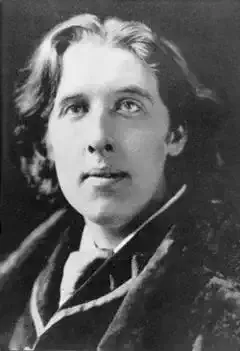
All art is immoral. . . . For emotion for the sake of emotion is the aim of art, and emotion for the sake of action is the aim of life, and of that practical organization of life that we call society.
The criticism which I have quoted is criticism of the highest kind. It treats the work of art simply as a starting-point for a new creation. It does not confine itself . . . to discovering the real intention of the artist and accepting that as final.
More difficult to do a thing than to talk about it? Not at all. That is a gross popular error. It is very much more difficult to talk about a thing than to do it. In the sphere of actual life that is of course obvious. Anybody can make history. Only a great man can write it.
Anybody can write a three-volumed novel. It merely requires a complete ignorance of both life and literature.
[George] Meredith’s a prose Browning, and so is Browning. He used poetry as medium for writing in prose.
Day by day the old order of things changes, and new modes of thought pass over our world, and it may be that, before many years, talking will have taken the place of literature, and the personal screech silenced the music of impersonal utterance. Something of the dignity of the literary calling will probably be lost, and it is perhaps a dangerous thing for a country to be too eloquent.
Pathology is rapidly becoming the basis of sensational literature, and in art, as in politics, there is a great future for monsters.
That he is indeed one of the very greatest masters of painting is my opinion. And I may add that in this opinion Mr. Whistler himself entirely concurs.
The things of nature do not really belong tous; we should leave them to our children as we have received them.
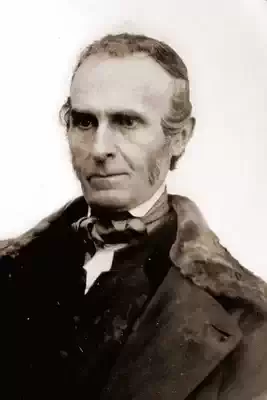
“Who touches a hair of yon gray head
Blessings on thee, little man,
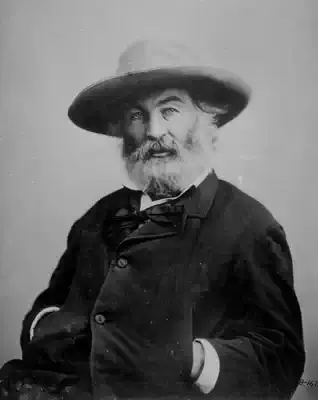
The Real War Will Never Get in the Books . And so good-bye to the war.
A noiseless patient spider,
Out of the cradle endlessly rocking,
The untold want by life and land ne’er granted,
Passage to India.
The ship is anchor’d safe and sound, its voyage closed and done,
I too am not a bit tamed, I too am untranslatable,
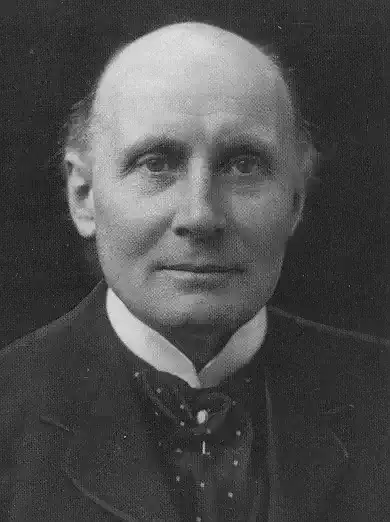
The ideas of Freud were popularized by people who only imperfectly understood them, who were incapable of the great effort required to grasp them in their relationship to larger truths, and who therefore assigned to them a prominence out of all proportion to their true importance.
Walt Whitman, a kosmos, of Manhattan the son,
The science of pure mathematics, in its modern developments, may claim to be the most original creation of the human spirit.
The greatest invention of the nineteenth century was the invention of the method of invention.
To come very near to a true theory, and to grasp its precise application, are two very differentthings, as the history of a science teaches us. Everything of importance has been said before by somebody who did not discover it.
It is a profoundly erroneous truism, repeated by all copy-books and by eminent people when they are making speeches, that we should cultivate the habit of thinking of what we are doing. The precise opposite is the case. Civilization advances by extending the number of important operations which we can perform without thinking about them. Operations of thought are like cavalry charges in a battle—they are strictly limited in number, they require fresh horses, and must only be made at decisivemoments.

So that, in the end, there was no end.
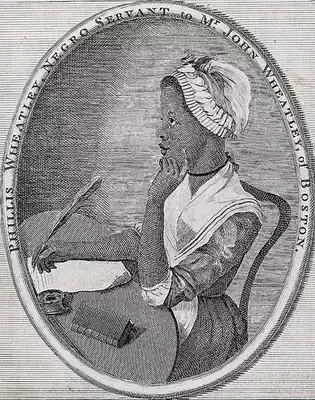
In every human breast, God has implanted a principle, which we call love of freedom; it is impatient of oppression, and pants for deliverance; and by the leave of our modern Egyptians I will assert, that the same principle lives in us.
Imagination! who can sing thy force?
Wisdom is higher than a fool can reach.
’Twas mercy brought me from my Pagan land,
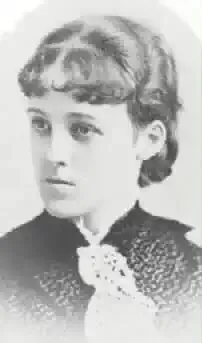
The worst of doing one’s duty was that it apparently unfitted one for doing anything else.
In the rotation of crops there was a recognized season for wild oats; but they were not sown more than once.
It was the old New York way of taking life “without effusion of blood”: the way of people who dreaded scandal more than disease, who placed decency above courage, and who considered that nothing was more ill-bred than “scenes,” except the behavior of those who gave rise to them.
Almost everybody in the neighborhood had “troubles,” frankly localized and specified; but only the chosen had “complications.” To have them was in itself a distinction, though it was also, in most cases, a death warrant. People struggled on for years with “troubles,” but they almost always succumbed to “complications.”
He seemed a part of the mute melancholy landscape, an incarnation of its frozen woe, with all that was warm and sentient in him fast bound below the surface.
There are two ways of spreading light; to be
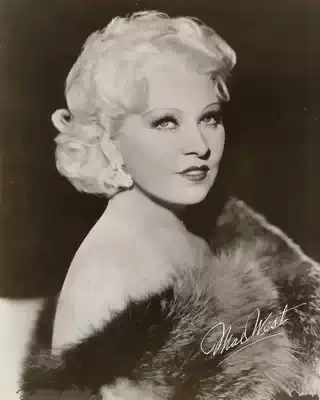
Too much of a good thing can be wonderful.
Catherine was a great empress. She also had three hundred lovers. I did the best I could in a couple of hours.
[ Letter to Royal Air Force, 1941, when the term “Mae West,” referring to an inflatable life jacket used by airmen in World War II, was entered into a dictionary :] I’ve been in Who’s Who , and I know what’s what, but it’ll be the first time Iever made the dictionary.
[ Flower Belle Lee, played by Mae West, speaking :] I generally avoid temptation unless I can’t resist it.
[ Flower Belle Lee, played by Mae West, replying to judge’s question, “Are you trying to show contempt for the court?” :] No, I’m doing my best to hide it.
[ Peaches O’Day, played by Mae West, speaking :] I always say, keep a diary and someday it’ll keep you.
[Flower Belle Lee, played by Mae West, speaking:] Oh, arithmetic. I was always pretty good at figures myself.
[ The Frisco Doll, played by Mae West, speaking :] Between two evils, I always pick the one I never tried before.
[ Ruby Carter, played by Mae West, speaking :] It’s better to be looked over than overlooked.
[ Lady Lou, played by Mae West, speaking :] When women go wrong, men go right after them.
[ Lady Lou, played by Mae West, speaking :] Why don’t you come up sometime and see me?
[ Mandie Triplett, played by Mae West, respondingto being told, “Goodness, what beautifuldiamonds” :] Goodness had nothing to do withit, dearie.
[ Tira, played by Mae West, speaking :] Peel me a grape.