
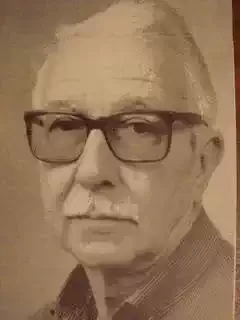
Papiniano Carlos
1918–2012
· lived 94 years
 MZ
MZ
MZ
Papiniano Carlos was a Portuguese poet, playwright, novelist, and literary critic, whose work is part of the context of modernism and postmodernism. With a writing style marked by formal experimentation, irony, and a profound reflection on language and the human condition, Carlos explored themes such as memory, time, identity, and the nature of art. He is recognized for his contribution to the renewal of Portuguese poetry, with a challenging and innovative language.
n. 1918-11-09, Maputo · m. 2012-12-05, Pedrouços
5
Views
Bio
Identification and basic context
Papiniano Carlos was born in Lisbon in 1926. He was a prominent figure in 20th-century Portuguese literature, known for his multifaceted activity as a poet, playwright, novelist, and literary critic. He was Portuguese and wrote in Portuguese. He lived in a period of great political and social upheavals in Portugal, including the Estado Novo and the transition to democracy, a context that inevitably shaped his critical vision and his work.Childhood and education
Little is known about his childhood and early education in detail. However, his vast literary culture and his deep knowledge of various artistic and philosophical currents indicate a solid education, possibly largely self-taught, complemented by university studies in fields such as philology or literature.Literary career
Papiniano Carlos's literary career began in the 1950s, with publications in literary magazines and anthologies. He quickly distinguished himself by his innovative approach to poetic language and his critical insight. Over the decades, he developed a diverse body of work, including poems, plays, novels, and critical essays, consolidating himself as a unique voice in contemporary Portuguese literature.Work, style, and literary characteristics
Papiniano Carlos's work is characterized by experimentation with language, irony, humor, and a constant questioning of the limits of representation and art itself. In poetry, he frequently uses free verse, exploring fragmentation, the collage of different linguistic registers, and metalanguage. Recurring themes include memory, the ephemerality of time, the search for identity, the solitude of the individual in modern society, and criticism of social and literary conventions. His style is erudite, but also playful and provocative, with an often essayistic and philosophical tone. He introduced formal and thematic innovations by questioning the very nature of poetry and narrative.Work, style, and literary characteristics
Cultural and historical context Papiniano Carlos is often associated with a context of late modernism and postmodernism in Portuguese literature. He was in dialogue with other writers and intellectuals of his time, participating in debates about art and culture in a changing Portugal. His work reflects the complexity of the contemporary world, philosophical uncertainties, and social transformations, in critical dialogue with literary tradition and artistic vanguards.Work, style, and literary characteristics
Personal life Detailed information about Papiniano Carlos's personal life is scarce in public sources. It is known that he dedicated a large part of his life to the literary craft, both in creation and criticism. His intellectual stance and his work suggest a reflective personality and a deep interest in existential and artistic questions.Work, style, and literary characteristics
Recognition and reception Papiniano Carlos is an author valued by critics and by a more restricted audience, appreciative of more challenging literary proposals. Although he may not have achieved massive popularity, his name is respected in Portuguese literary circles for the originality and quality of his work. His contribution to the renewal of Portuguese poetry and prose is undeniable.Work, style, and literary characteristics
Influences and legacy His influences range from Portuguese literary tradition to European avant-garde currents. His legacy lies in his ability to have expanded the boundaries of poetic and narrative language in Portugal, encouraging a more attentive and critical reading of the word. He influenced poets who sought to renew lyrical expressiveness and question literary genres.Work, style, and literary characteristics
Interpretation and critical analysis Papiniano Carlos's work invites analysis that focuses on its formal and thematic complexity. His forays into metalanguage, his irony, and his critique of the human condition are central points for critical interpretation. The way he deconstructs and reconstructs language to explore new expressive possibilities is one of his great merits.Work, style, and literary characteristics
Curiosities and lesser-known aspects His facet as a literary critic and art theorist is an important aspect of his intellectual output, often less explored than his fiction and poetry. His ability to move between artistic creation and reflective analysis demonstrates a breadth of talent.Work, style, and literary characteristics
Death and memory Papiniano Carlos passed away in 1994. His memory is kept alive through his work, which continues to be the subject of study and appreciation by readers and academics interested in contemporary Portuguese literature.Poems
0No poems found
Comments (0)
Log in
to post a comment.
No comments yet. Be the first to comment.