
Ah! que la vie est quotidienne.
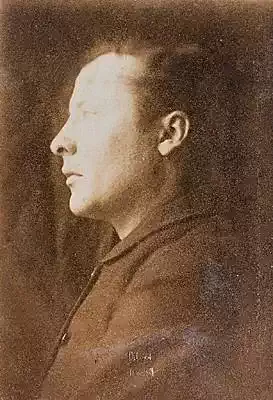
Jules Laforgue
1860–1887
· lived 27 years
 FR
FR
FR
Jules Laforgue was a French poet and literary critic, a transitional figure between symbolism and modernism. Known for his irony, melancholy, and formal experimentation, his work explored themes such as love, death, time, and the human condition with a skeptical and disillusioned perspective. Despite a relatively short literary output and limited recognition during his lifetime, his innovative style and unique vision of modernity exerted a significant influence on 20th-century poetry, particularly on American modernist poets.
n. 1860-08-16, Montevidéu · m. 1887-08-20, Paris
4
Views
Bio
Identification and basic context
Jules Laforgue was a French poet and literary critic, primarily known for using the pseudonym "Sincerus Sciencius". He was born into a family of French origin, but settled in Montevideo, Uruguay. His nationality was French and his writing language was French.Childhood and education
His childhood and youth took place in Montevideo, where he received his primary education. Later, he returned to France to continue his studies, attending the Lycée de Saint-Cloud, in Paris. His education was marked by a strong influence of French literature and the absorption of philosophical and artistic currents of the time, including the ideas of Schopenhauer and the symbolist movement.Literary career
Laforgue began his literary activity early, but it was in Paris that he developed his career. He collaborated with various publications, including the "Revue Indépendante". His work evolved from an early phase more influenced by Parnassianism to a more personal and innovative style, characterized by irony and the exploration of free verse. His output, although concise, left an indelible mark on French poetry.Work, style, and literary characteristics
Work, style, and literary characteristics His main works include "Les Complaintes" (1885), "L'Imitation de Notre-Dame la Lune" (1886), and "Les Moralités Légendaires" (1887). The recurring themes in his poetry are love (often approached ironically and with disillusionment), death, time, nature, and the existential condition of modern man. Laforgue was a master in the use of free verse and fixed form, experimenting innovatively with metrics and rhythms. His style is marked by colloquial language mixed with erudite terms, a unique imagistic density, and frequent use of metaphor and irony. His poetic voice is often confessional, but imbued with philosophical skepticism. He introduced an unprecedented perspective on modernity, engaging with literary tradition but breaking away from it through his subjectivity and fragmented approach.Work, style, and literary characteristics
Cultural and historical context Laforgue lived in a period of cultural effervescence in Paris, with the height of Symbolism and the emergence of new artistic currents. He himself is considered a transitional figure, influencing Modernism. His work reflects the discontent and disillusionment of the era with bourgeois society and traditional values.Work, style, and literary characteristics
Personal life His personal and romantic relationships, particularly with the English painter Aimée Lubin de Courcy, had an impact on his work, often reflecting the complexities and frustrations of love. Laforgue did not live solely from his writing, having held administrative positions.Work, style, and literary characteristics
Recognition and reception During his lifetime, Laforgue had limited recognition. It was only after his death that his work began to be more widely disseminated and valued, especially through the influence he exerted on Anglo-Saxon modernist poets like T.S. Eliot. Today, he is considered one of the precursors of modern poetry.Work, style, and literary characteristics
Influences and legacy Laforgue was influenced by poets such as Baudelaire and Verlaine, but also by philosophers like Schopenhauer. His legacy is notable for how he anticipated many of the concerns and experiments of 20th-century poetry, directly influencing poets such as Ezra Pound and T.S. Eliot, who recognized his importance. His work continues to be studied for its originality and its unique perspective on modernity.Work, style, and literary characteristics
Interpretation and critical analysis Laforgue's work has been interpreted from various perspectives, highlighting his ironic approach to the human condition, his skepticism towards grand narratives, and his exploration of the fragmentation of the self. The tension between lyricism and irony is a central point of critical analysis.Work, style, and literary characteristics
Curiosities and lesser-known aspects A curiosity about Laforgue is his connection to Uruguay, where he spent much of his childhood and youth, something that contrasts with his deeply French literary identity. His writing was marked by a habit of intense reflection and a constant search for new forms of poetic expression.Work, style, and literary characteristics
Death and memory Jules Laforgue died prematurely due to tuberculosis. After his death, his work gained greater visibility and his memory was perpetuated through the recognition of his fundamental role in the evolution of modern poetry.Poems
0No poems found
Quotes
1No poems found
Comments (0)
Log in
to post a comment.
No comments yet. Be the first to comment.