
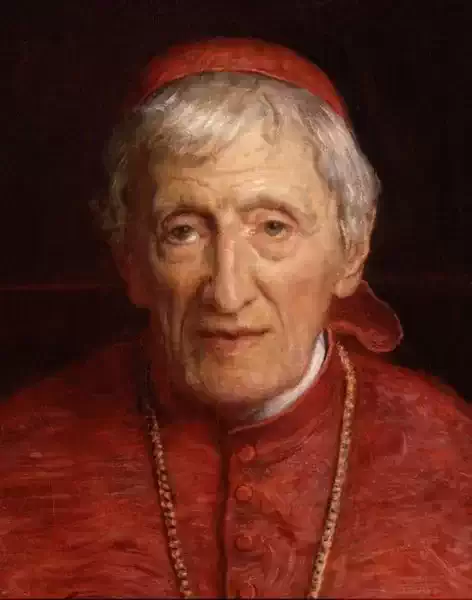
John Henry Newman
1801–1890
· lived 89 years
 GB
GB
GB
John Henry Newman was a prominent theologian, cardinal, and influential figure in the Catholic revival in England in the 19th century. Initially a leading Anglican clergyman in the Oxford Movement, he converted to Catholicism in 1845, an event that had a significant impact on the British religious landscape. His intellectual work spanned theology, philosophy, and education, and he is known for his profound reflection on faith, reason, and the Church.
n. 1801-02-21, Londres · m. 1890-08-11, Edgbaston
532
Views
Bio
John Henry Newman (1801-1890) was one of the most important theologians and religious thinkers of the 19th century. Born in London, he began his career as an Anglican clergyman and leader of the Oxford Movement, which sought to revive the liturgical and doctrinal tradition of the Anglican Church. His spiritual journey led him to deeply question the nature of the Church and religious authority, culminating in his conversion to Catholicism in 1845. This event caused great upheaval and isolated him from many of his former colleagues, but also propelled him into a new phase of his intellectual and pastoral life. As a Catholic, Newman was ordained a priest and later appointed cardinal by Pope Leo XIII in 1879. He founded the Oratorian Order in England and played a crucial role in the founding of the Catholic University of Ireland. His work 'Apologia Pro Vita Sua' is a spiritual autobiography detailing his search for truth and his conversion. Newman is recognized for his rhetorical skill, his deep theological analysis, and his defense of freedom of conscience within the Church. He was canonized as Saint John Henry Newman in 2019. His influence endures in theology and the philosophy of religion, being posthumously considered one of the 'Fathers of the Second Vatican Council'.
Poems
0No poems found
Quotes
29No poems found
Comments (0)
Log in
to post a comment.
No comments yet. Be the first to comment.