
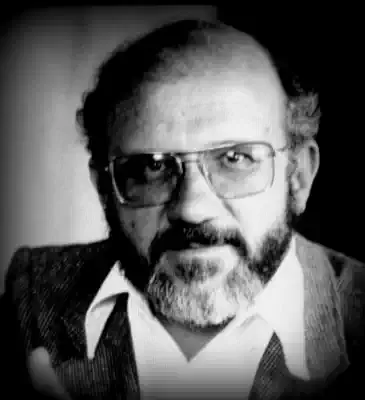
Horst Bienek
 DE
DE
Horst Bienek was a prominent German novelist, poet, and playwright, known for his works that frequently explored the complexities of German identity and the memories of World War II and the post-war period. His writing is marked by a profound reflection on the human condition, guilt, and the search for redemption in a divided world. Bienek is especially remembered for his tetralogy "The Earth and the Sky," which offers a multifaceted portrait of life in East and West Germany. His poetry, though less known than his prose, shares similar themes of memory, loss, and the fragility of existence.
n. 1930-05-07, Gliwice · m. 1990-12-07, Munique
Bio
Identification and Basic Context
Horst Bienek (May 25, 1930 - November 18, 1990) was a German novelist, poet, playwright, and journalist. He is an important figure in post-war German literature, known for his reflections on German identity, the consequences of war, and life in divided Germany.Childhood and Education
Bienek was born in Gliwice (Gleiwitz), Upper Silesia, a region that after World War II became part of Poland. His childhood was marked by the turmoil of war and his family's subsequent expulsion from their homeland. These traumatic experiences of displacement and loss of identity profoundly shaped his worldview and literary work. He studied literature and journalism, and was a student of Bertolt Brecht.Literary Career
Bienek's literary career began with poetry and theater. His life experiences in East Germany, where he was arrested and persecuted by the communist regime, became a central source for his writing. After leaving East Germany, he settled in West Germany, where he developed his work as a novelist and journalist. His most famous work is the tetralogy "The Earth and the Sky," which established him as one of the leading chroniclers of German history.Work, Style, and Literary Characteristics
Bienek's work is characterized by a lyrical and introspective style, often tinged with melancholy and pessimism, but also with profound humanity. His central themes include memory, guilt, loss, exile, the search for identity, and criticism of totalitarian regimes. His prose is detailed and evocative, capable of recreating dense atmospheres and complex characters. In his poetry, he explores the fragility of existence and the beauty found in pain. Major works include the tetralogy "The Earth and the Sky": "The Night of the Crows" (1960), "The Bridge of Sighs" (1961), "The First Hour" (1962), and "The Road to the Fields" (1965).Cultural and Historical Context
Bienek lived and wrote during a crucial period in German history, witnessing the rise of Nazism, World War II, the division of Germany, and the Cold War. His works directly reflect the collective trauma and political divisions that plagued the country. He was a vocal critic of totalitarian regimes, both Nazi and communist, and his personal life was marked by political persecution.Personal Life
Bienek's life was profoundly affected by the political and historical upheavals of his time. The loss of his homeland in childhood, persecution in East Germany, and his eventual exile in West Germany left indelible marks. These personal experiences not only informed his writing but also shaped his perspective on the human condition and the search for home and meaning.Recognition and Reception
Horst Bienek received several literary awards during his career, including the Agnes Miegel Prize and the cultural prize of the German Publishers and Booksellers Association. His work, especially the tetralogy "The Earth and the Sky," was critically acclaimed and translated into several languages, securing him a prominent place in German literature.Influences and Legacy
His main literary influences included authors such as Bertolt Brecht, Thomas Mann, and Franz Kafka. Bienek's legacy lies in his ability to explore the depths of the German experience in the 20th century, offering a powerful testament to memory, guilt, and human resilience. His work continues to be studied and appreciated for its historical relevance and literary depth.Interpretation and Critical Analysis
Bienek's work is often analyzed from the perspective of "guilt literature" and "exile literature." His narratives explore the complexities of German identity in a post-war world, the difficulty of dealing with the past, and the search for reconciliation with oneself and with history. His poetry offers a more intimate perspective on existential anguish.Curiosities and Lesser-Known Aspects
A little-known aspect of his life is his work as an investigative journalist, where he used his literary skills to expose injustices. Bienek also kept a detailed diary that, after his death, revealed even more about his thoughts and feelings.Death and Memory
Horst Bienek died in Munich, Germany, in 1990, after a long illness. His work continues to be published and studied, ensuring his memory as one of the most important voices in post-war German literature.Poems
0No poems found
Comments (0)
No comments yet. Be the first to comment.