Identification and Basic Context
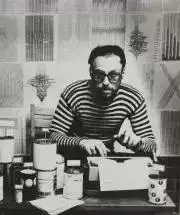
Dmitri Aleksandrovich Prigov (Дмитрий Александрович Пригов) was born in Moscow, Soviet Union. He was a poet, visual artist, playwright, and a prominent figure in the Russian underground cultural scene. He is widely recognized as one of the leading Russian poets of the second half of the 20th century, associated with the concept of Russian conceptual poetry. His work is characterized by linguistic experimentation and social and political criticism.
Childhood and Education
Prigov studied mechanical engineering at the Moscow Institute of Engineering, graduating in 1966. He later studied art history. His technical and artistic education influenced his approach to poetry, combining structural rigor with creative freedom. He grew up during the Soviet era, a period that profoundly shaped his worldview and his work.
Literary Career
Dmitri Prigov's literary career began in the Moscow underground poetry circles in the 1960s and 1970s. Due to censorship and lack of official publication, his work circulated in samizdat (clandestine publications). Prigov was one of the founders of Russian conceptual poetry, a movement that challenged traditional notions of authorship and artwork. His activity extended beyond poetry to include performance, visual arts, and theater. From the 1980s onwards, he began to gain greater international recognition, and after the fall of the Soviet Union, his work was widely published and celebrated.
Work, Style, and Literary Characteristics
Prigov's work is vast and multifaceted, encompassing poetry, prose, plays, and manifestos. His style is characterized by appropriation, fragmentation, the use of colloquial language, and clichés from mass culture and Soviet propaganda. Prigov frequently employed the figure of the "parrot" (the personification of the "common Soviet man") and his poetry engaged with the Russian literary tradition, from Pushkin to the poets of the 20th century, subverting it with irony and irreverence. Recurring themes include power, Russian identity, death, the absurdity of everyday life, and the relationship between the individual and the system. Prigov was a natural performer, and many of his works were conceived to be read aloud, often with elements of improvisation and audience interaction. He used free verse and explored the musicality of the Russian language.
Cultural and Historical Context
Dmitri Prigov lived and produced his work during most of the Cold War and the subsequent transition of post-Soviet Russia. He was a scathing critic of the Soviet regime, its ideology, and its cultural repression, but he also addressed the complexities and contradictions of post-communist Russia. He belonged to the generation of poets who resisted the officialization of art, opting for experimentation and marginality. His work reflects the discontent, the search for meaning, and the resilience of Russian society in times of radical change.
Personal Life
Prigov led a life dedicated to art and poetry, often in precarious conditions due to the lack of official recognition during the Soviet era. His connection to the cultural underground shaped his relationships and lifestyle. His vast artistic output and his commitment to experimentation were central to his existence. There are no extensive records of his personal life outside his involvement with the artistic and literary scene.
Recognition and Reception
Initially marginalized and censored in the Soviet Union, Dmitri Prigov gained international recognition in the later decades of his life and posthumously. His work began to be studied in universities, and his poetry is considered fundamental to understanding contemporary Russian literature. He received several awards and distinctions, and his influence extends to many Russian and international poets and artists.
Influences and Legacy
Prigov was influenced by poets such as Vladimir Mayakovsky and the Russian futurists, as well as by philosophers and visual artists. His legacy is immense; he was one of the main architects of Russian conceptual poetry and a master in the art of subverting language and cultural symbols. He influenced generations of poets and artists who saw in his work a model of creative freedom and critical engagement with reality.
Interpretation and Critical Analysis
Prigov's work is complex and open to multiple interpretations. His exploration of language as a battlefield between the individual and power, his critique of totality, and his ability to find the universal in the everyday are central aspects of critical analysis. His "dialogisms" and his ability to blend registers are frequently highlighted.
Curiosities and Lesser-Known Aspects
Dmitri Prigov was known for his energetic nature and his improvisational skills, both in writing and performance. His home was a meeting place for artists and intellectuals. His work is vast and, in part, is still being compiled and studied, revealing his tireless artistic production.
Death and Memory
Dmitri Prigov died suddenly in Moscow in 2007. His premature death shocked the artistic community. Posthumously, his work has been the subject of extensive publication, editing, and study, consolidating his place as one of the most important poets and artists of the 20th and 21st centuries.

 RU
RU