
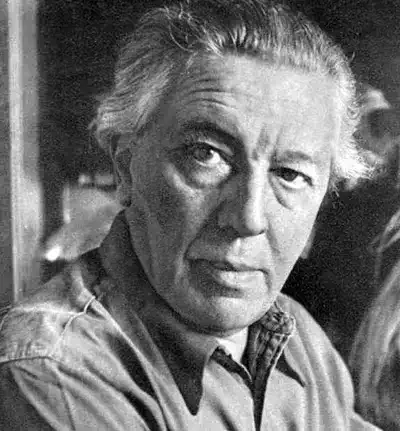

Always for the First Time
Always for the First Time
Always for the first time
Hardly do I know you by sight
You return at some hour of the night to a house at an angle to my window
A wholly imaginary house
It is there that from one second to the next
In the inviolate darkness
I anticipate once more the fascinating rift occurring
The one and only rift
In the facade and in my heart
The closer I come to you
In reality
The more the key sings at the door of the unknown room
Where you appear alone before me
At first you coalesce entirely with the brightness
The elusive angle of a curtain
It's a field of jasmine I gazed upon at dawn on a road in the vicinity of Grasse
With the diagonal slant of its girls picking
Behind them the dark falling wing of the plants stripped bare
Before them a T-square of dazzling light
The curtain invisibly raised
In a frenzy all the flowers swarm back in
It is you at grips with that too long hour never dim enough until sleep
You as though you could be
The same except that I shall perhaps never meet you
You pretend not to know I am watching you
Marvelously I am no longer sure you know
You idleness brings tears to my eyes
A swarm of interpretations surrounds each of your gestures
It's a honeydew hunt
There are rocking chairs on a deck there are branches that may well scratch you in the
forest
There are in a shop window in the rue Notre-Dame-de-Lorette
Two lovely crossed legs caught in long stockings
Flaring out in the center of a great white clover
There is a silken ladder rolled out over the ivy
There is
By my leaning over the precipice
Of your presence and your absence in hopeless fusion
My finding the secret
Of loving you
Always for the first time
Always for the first time
Hardly do I know you by sight
You return at some hour of the night to a house at an angle to my window
A wholly imaginary house
It is there that from one second to the next
In the inviolate darkness
I anticipate once more the fascinating rift occurring
The one and only rift
In the facade and in my heart
The closer I come to you
In reality
The more the key sings at the door of the unknown room
Where you appear alone before me
At first you coalesce entirely with the brightness
The elusive angle of a curtain
It's a field of jasmine I gazed upon at dawn on a road in the vicinity of Grasse
With the diagonal slant of its girls picking
Behind them the dark falling wing of the plants stripped bare
Before them a T-square of dazzling light
The curtain invisibly raised
In a frenzy all the flowers swarm back in
It is you at grips with that too long hour never dim enough until sleep
You as though you could be
The same except that I shall perhaps never meet you
You pretend not to know I am watching you
Marvelously I am no longer sure you know
You idleness brings tears to my eyes
A swarm of interpretations surrounds each of your gestures
It's a honeydew hunt
There are rocking chairs on a deck there are branches that may well scratch you in the
forest
There are in a shop window in the rue Notre-Dame-de-Lorette
Two lovely crossed legs caught in long stockings
Flaring out in the center of a great white clover
There is a silken ladder rolled out over the ivy
There is
By my leaning over the precipice
Of your presence and your absence in hopeless fusion
My finding the secret
Of loving you
Always for the first time