
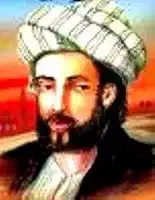
Abu Nuwas

Abu Nuwas was an Arab poet of the Abbasid era, famous for his poetry that celebrated wine, homoerotic love, and the pleasures of life, in contrast to the more traditional and moralistic poetry of the time. His irreverent style and linguistic mastery profoundly marked Arab literature, making him an iconic and, at times, controversial figure. His work offers a vivid glimpse into the urban life and customs of Baghdad in his time.
n. 756ac, Ahvaz · m. 0814-01-01, Bagdá
8
Views
Bio
Identification and Basic Context
Abu Nuwas, whose full name was Abu Ali al-Hasan ibn Hani al-Hakami, was one of the most celebrated poets of the Abbasid era. Born in Ahvaz, in present-day Iran, he lived most of his life in Baghdad, the cultural and political heart of the caliphate. He was known for his pseudonym and for his work that challenged the social and religious conventions of the time. He wrote in Arabic, the dominant literary language in the medieval Islamic world.Childhood and Education
Born to an Arab father and a Persian mother, Abu Nuwas had a childhood marked by a careful education. He learned the Quran and religious science, but his bohemian nature and talent for poetry led him to deviate from the traditional academic path. He is said to have been a disciple of the Iraqi poet Khalaf Ahmar, who initiated him into the secrets of the Arabic language and poetry.Literary Career
Abu Nuwas began his poetic career in Basra, but it was in Baghdad that he achieved fame. He became a favorite at the courts of the caliphs Al-Mahdi, Al-Hadi, and especially Harun al-Rashid, although his relationship with the caliphs was sometimes strained due to the content of his works. His poetry was often commissioned for festive occasions and court events.Work, Style, and Literary Characteristics
Abu Nuwas's work is vast and diverse, but he is best known for his poems of "khamriyya" (about wine) and "ghilmaniyya" (about male adolescent love). He broke with the tradition of pre-Islamic Arabic poetry and the moralistic panegyric of his time, introducing more mundane and hedonistic themes. His style is characterized by spontaneity, linguistic vivacity, humor, and irony. He used a rich vocabulary and versatile meter, often adapted to the themes he addressed. His poetry is a celebration of sensory pleasures, ephemeral beauty, and individual freedom, often in a confessional and provocative tone.Cultural and Historical Context
Abu Nuwas lived during the height of the Abbasid Caliphate, a period of great cultural, scientific, and artistic flourishing in Baghdad. This metropolis was a melting pot of cultures, bringing together Arabs, Persians, and other ethnicities, and a center of knowledge and hedonism. His poetry reflects the cosmopolitan and, at times, decadent atmosphere of Abbasid Baghdad, in contrast to the more conservative religious values that also coexisted.Personal Life
Abu Nuwas was known for his bohemian life, his love of wine, and his love affairs with young men. He led a licentious life, which was openly reflected in his poetry, bringing him both admiration and condemnation. His personality was seen as witty, irreverent, and defiant of established norms.Recognition and Reception
Abu Nuwas was immensely popular during his lifetime and immediately after his death, being quoted and imitated by many later poets. However, the libertine nature of his poetry also generated criticism and attempts at censorship by more conservative scholars and religious figures. Despite this, his work was gradually absorbed into the Arab literary canon for its linguistic genius and its vivid depiction of Abbasid society.Influences and Legacy
Abu Nuwas profoundly influenced later Arab poetry, especially regarding the treatment of themes such as wine and love, and in the introduction of a more personal and colloquial tone. His ability to blend the scholarly with the popular and the sacred with the profane opened new avenues for poetic expression. He is considered a precursor to certain forms of modern lyricism for his authenticity and his exploration of subjectivity.Interpretation and Critical Analysis
Abu Nuwas's work has been the subject of various interpretations. Some see it as a genuine expression of the pursuit of happiness and freedom in an oppressive environment, while others consider it a reflection of the moral decadence of the time. His explorations of love and pleasure are often analyzed from the perspective of individual freedom and social transgression.Curiosities and Lesser-Known Aspects
Abu Nuwas is often portrayed in popular tales, such as "One Thousand and One Nights," where he appears in comical and witty situations. The episode where, arrested for drunkenness, he composed a poem that impressed the caliph and secured his release is famous. His apparent contradiction between a religious upbringing and a dissolute life is an intriguing aspect of his figure.Death and Memory
The exact circumstances of Abu Nuwas's death are uncertain, but he is believed to have died in Baghdad. His memory endures through his vast poetic work, which continues to be read, studied, and admired, not only in the Arab world but also in international translations and academic studies, as one of the great masters of Arab poetry.Poems
0No poems found
Comments (0)
Log in
to post a comment.
No comments yet. Be the first to comment.